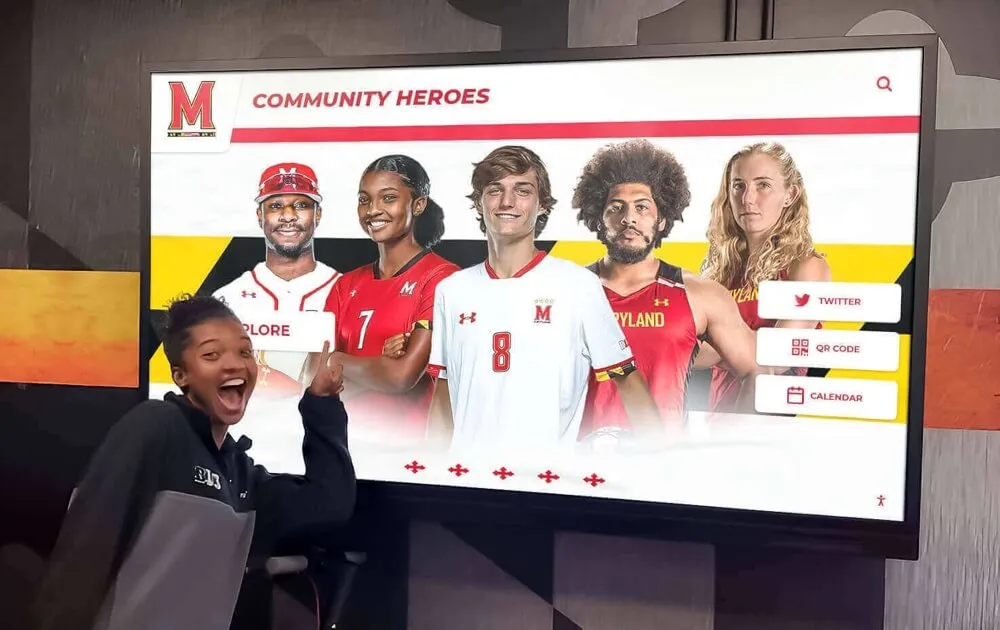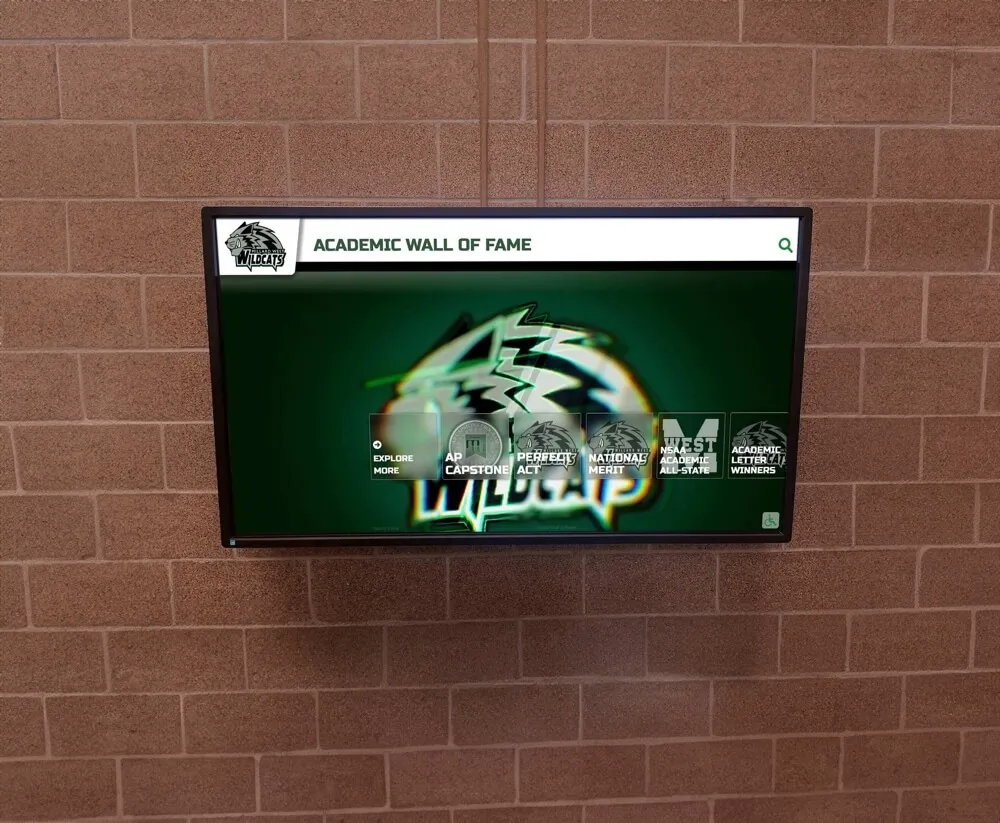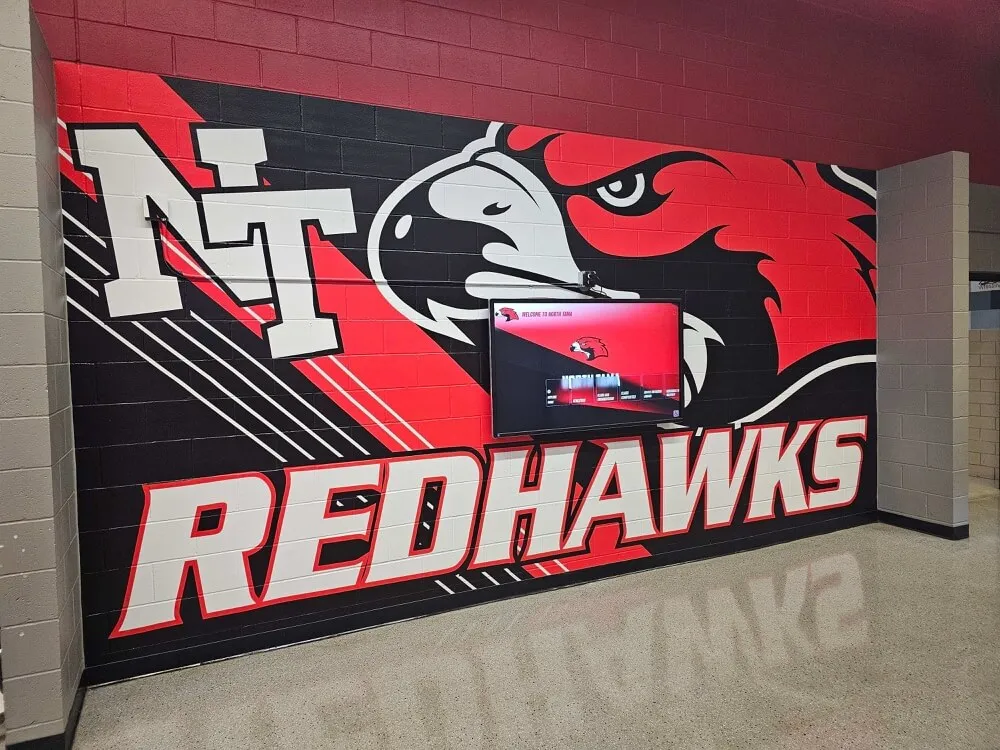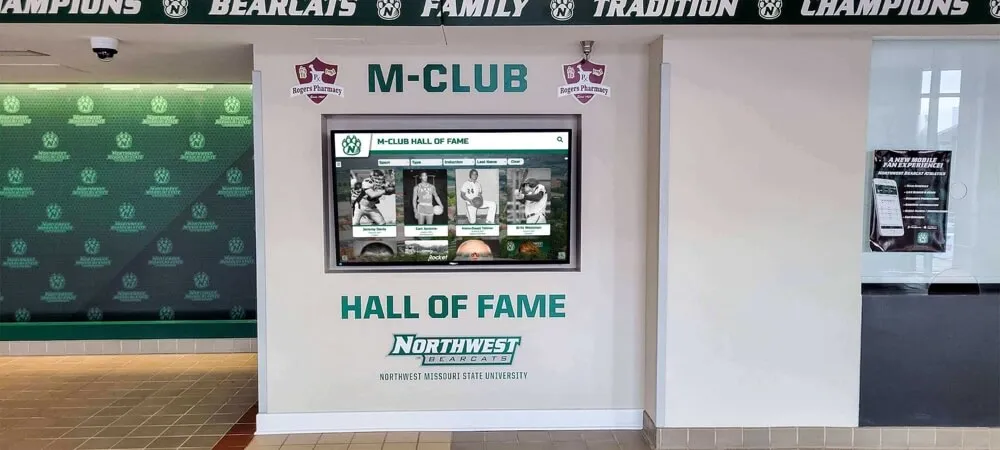
Students who achieve ACT scores of 30 or higher represent the top 7% of all test-takers nationally—an elite group demonstrating exceptional college readiness across all academic domains. Yet many schools struggle to leverage these achievements effectively, relying on static announcements that provide fleeting recognition while missing the motivational power of ongoing, visible celebration. A digital leaderboard showcasing ACT 30+ scorers transforms academic culture by providing real-time recognition that inspires current students, motivates underclassmen, and demonstrates institutional commitment to measurable academic excellence.
Traditional recognition approaches—morning announcements, physical plaques, or printed lists—face persistent limitations including space constraints forcing difficult choices about whose achievements appear, static presentation preventing updates without physical modification, and limited engagement offering no interactive exploration or connection opportunities. Digital leaderboards eliminate these constraints while introducing capabilities that fundamentally change how schools celebrate standardized test excellence and motivate continued achievement.
This comprehensive guide explores evidence-based strategies for implementing ACT 30+ digital leaderboards that create lasting motivation, strengthen college preparation culture, and provide the dynamic recognition that exceptional academic achievement deserves.
When schools implement digital leaderboards celebrating ACT 30+ achievement, they create visible manifestations of academic excellence that operate continuously rather than appearing briefly then disappearing. Students passing through hallways encounter recognition daily, underclassmen see aspirational examples of what peers achieved through dedicated preparation, and families can access and share these accomplishments remotely through web-connected platforms extending recognition beyond physical school boundaries.

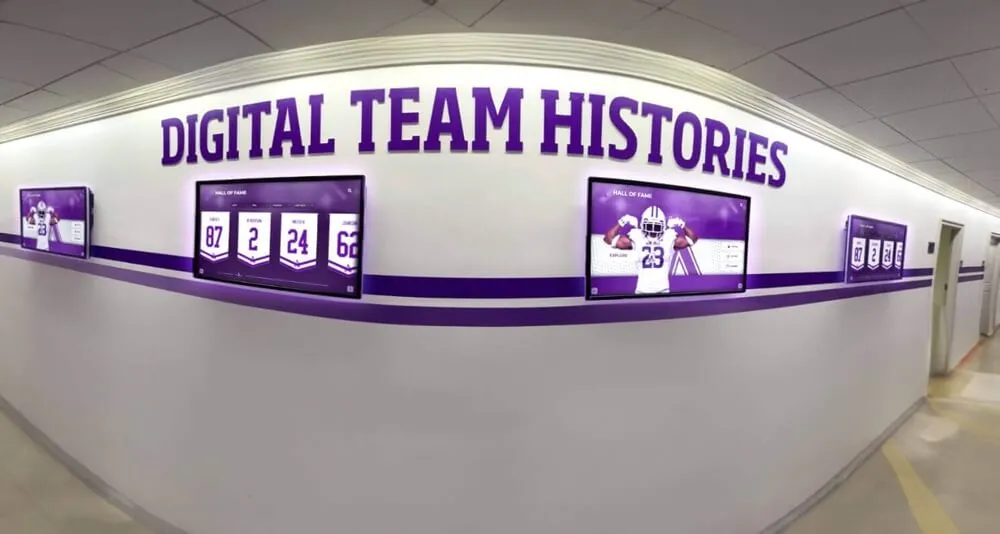
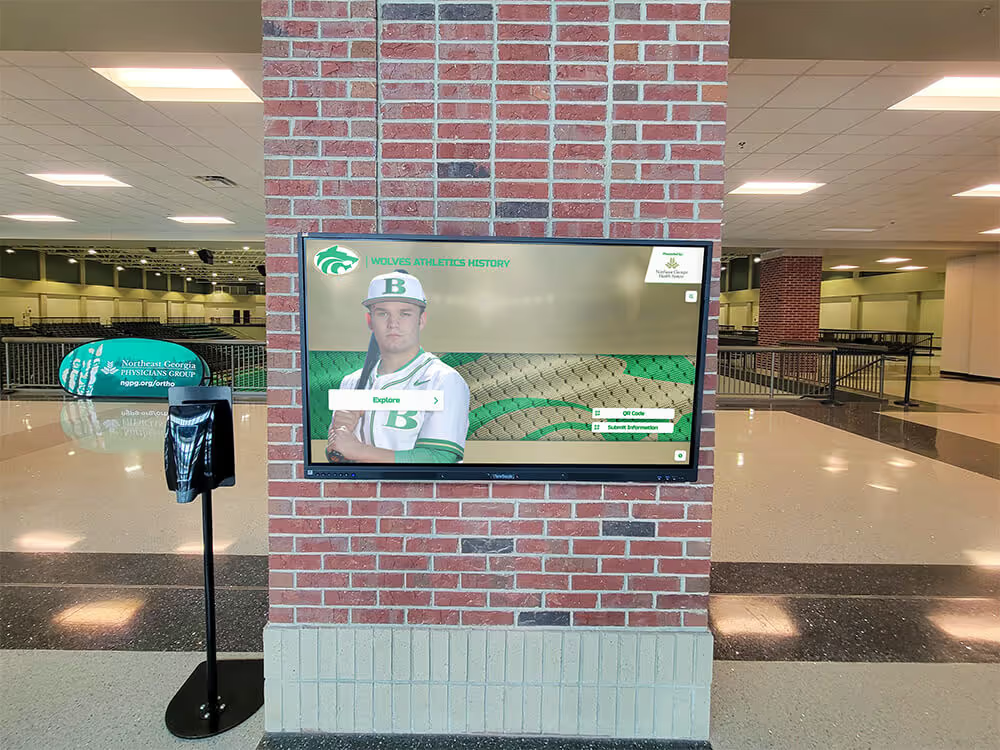
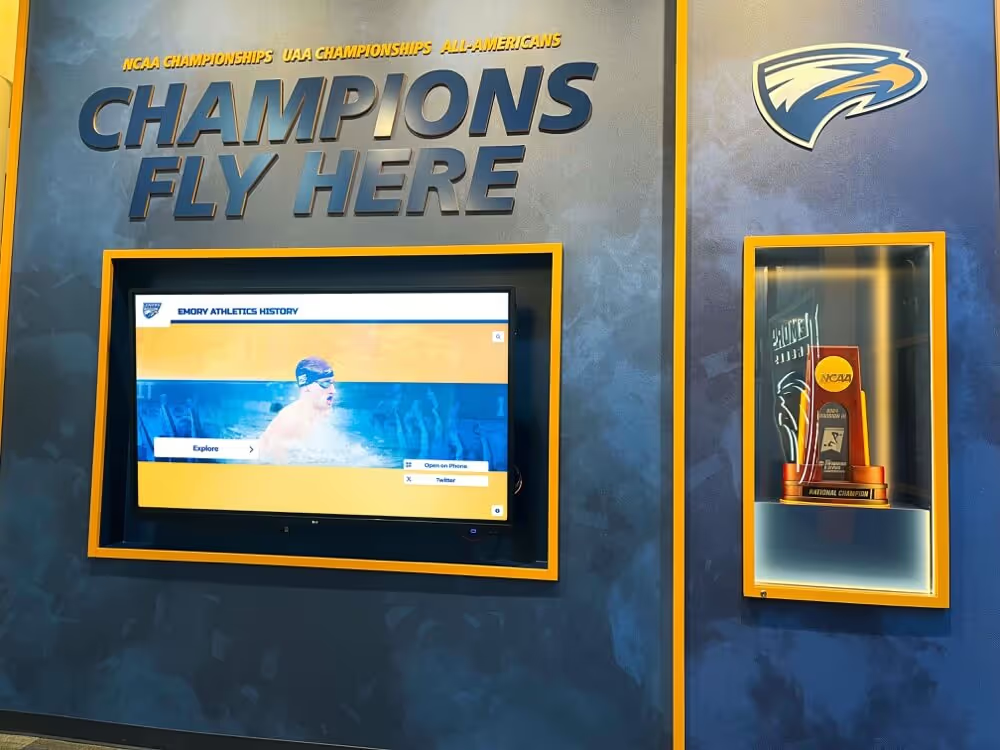
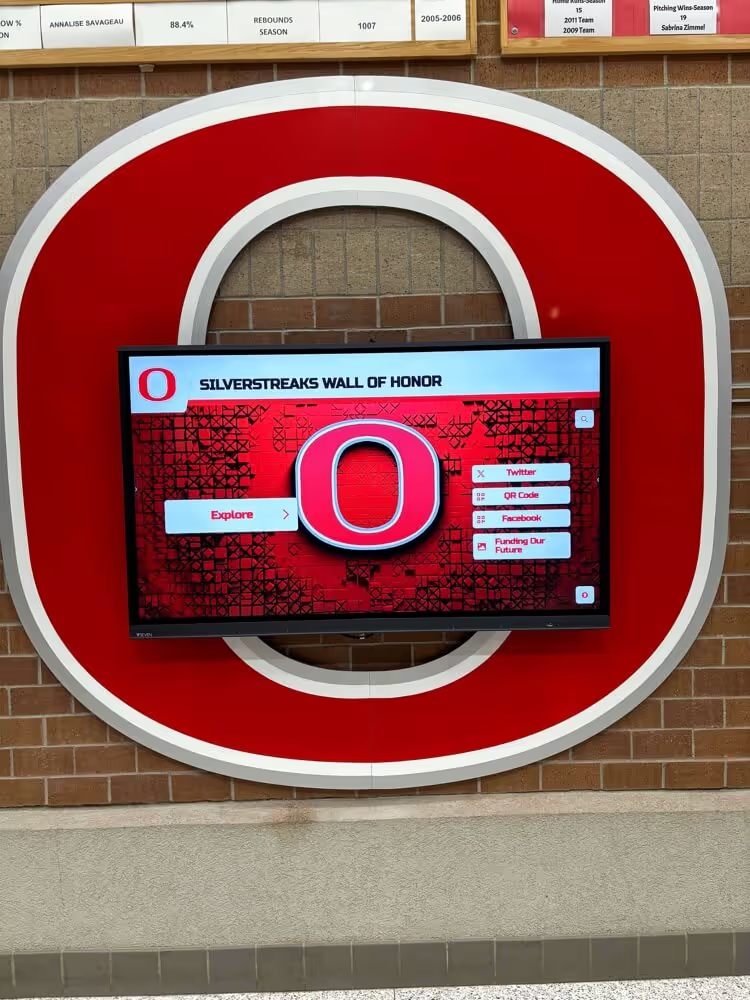
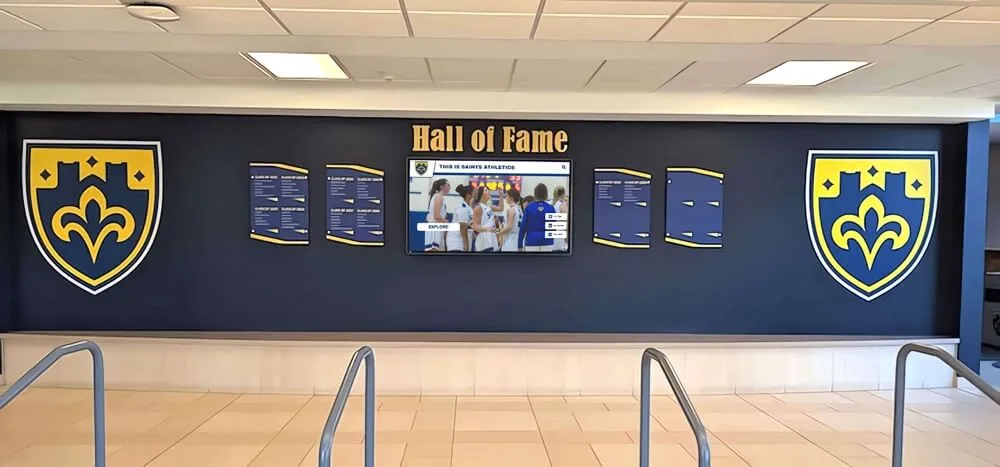
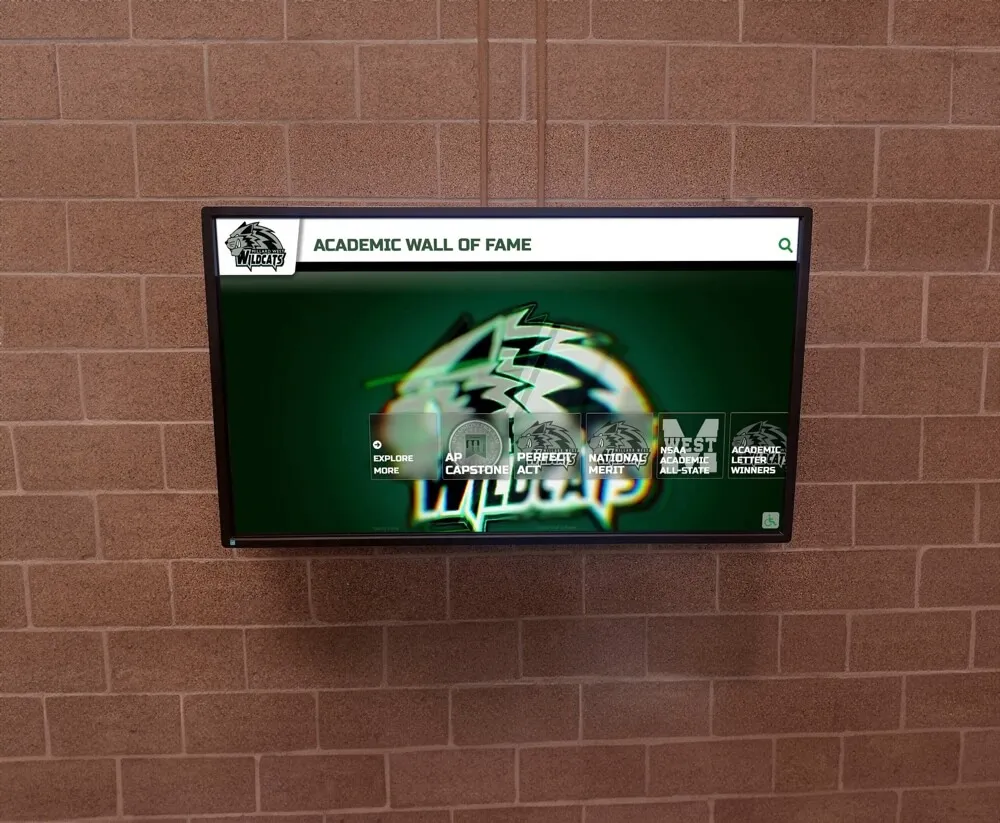
Modern digital leaderboards make ACT 30+ achievement visible throughout school communities, creating continuous motivation and celebration
Understanding the ACT 30+ Achievement Threshold
Before implementing recognition programs, understanding what ACT 30+ scores represent provides essential context for designing appropriate celebration matching achievement significance.
The Statistical Significance of ACT 30+ Scores
According to ACT, Inc., composite scores of 30 or higher place students in the 93rd percentile nationally—meaning they outperformed approximately 93% of all test-takers. This statistical rarity reflects exceptional academic preparation across all four tested domains: English, Mathematics, Reading, and Science.
National Context and Rarity
Approximately 1.35 million students take the ACT annually. With only 7% achieving composite scores of 30+, this translates to roughly 95,000 students nationwide reaching this threshold each year. Within individual high schools, ACT 30+ achievers typically represent an even smaller percentage of graduating classes, making these accomplishments particularly noteworthy and worthy of prominent recognition.
College Readiness Indicators
ACT 30+ scores signal readiness for rigorous college coursework across disciplines. Research from ACT demonstrates that students achieving these scores show substantially higher college retention rates, first-year GPAs, and four-year graduation rates compared to peers with lower test performance. Universities recognize ACT 30+ as indicators of students who can handle competitive academic programs without remediation.
Scholarship and Admissions Advantages
Students achieving ACT 30+ significantly enhance college application competitiveness. According to admissions data from selective institutions, ACT scores in this range qualify students for consideration at top-tier universities including Ivy League schools, highly selective public universities, and competitive honors programs. Additionally, many institutions offer automatic merit scholarships to students reaching ACT 30+ thresholds, with awards frequently ranging from partial tuition to full-ride packages depending on institutional priorities and financial aid policies.
This combination of statistical rarity, demonstrated college readiness, and tangible admissions advantages makes ACT 30+ achievement worthy of prominent, ongoing recognition that communicates institutional priorities while motivating other students toward similar excellence.
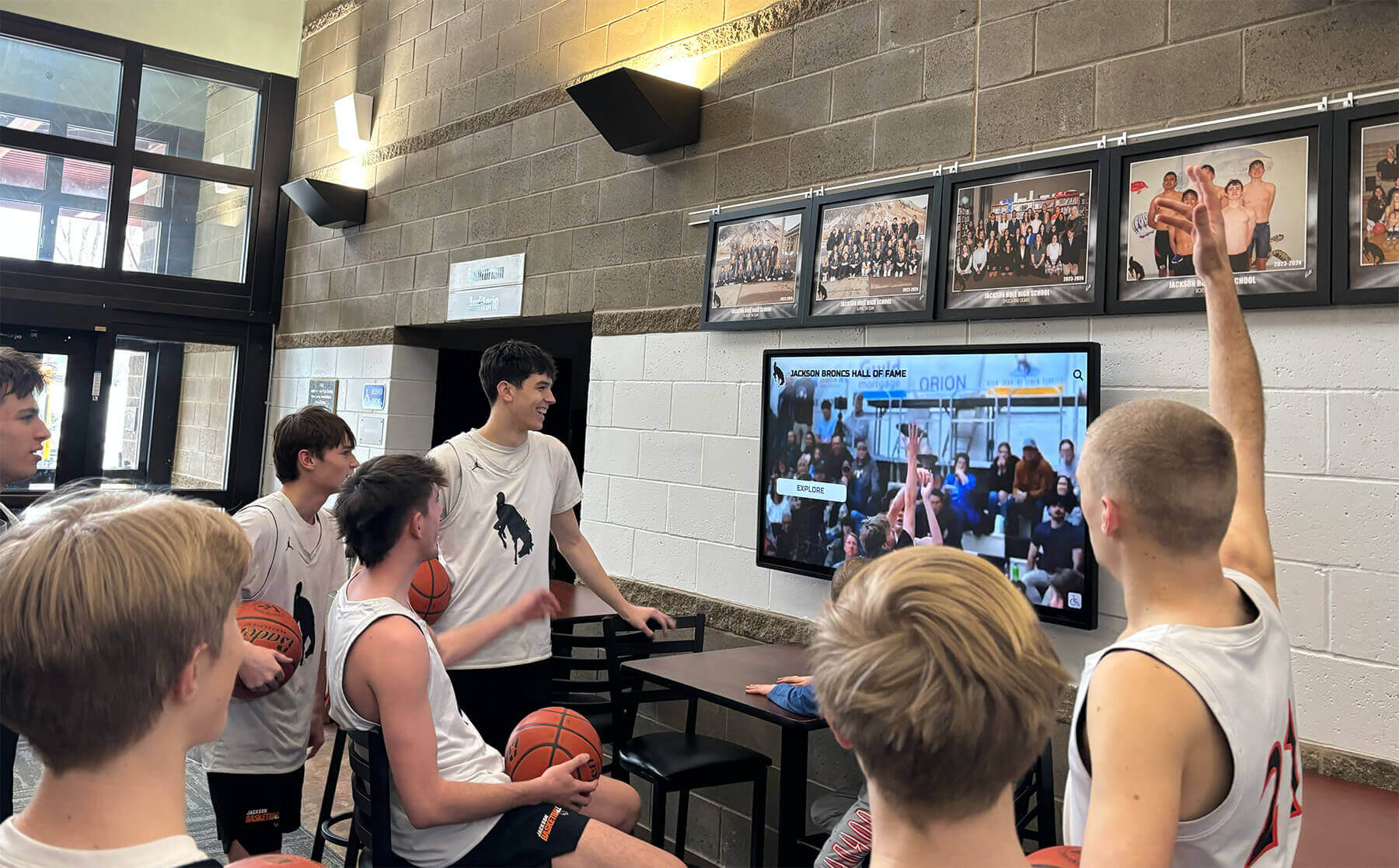
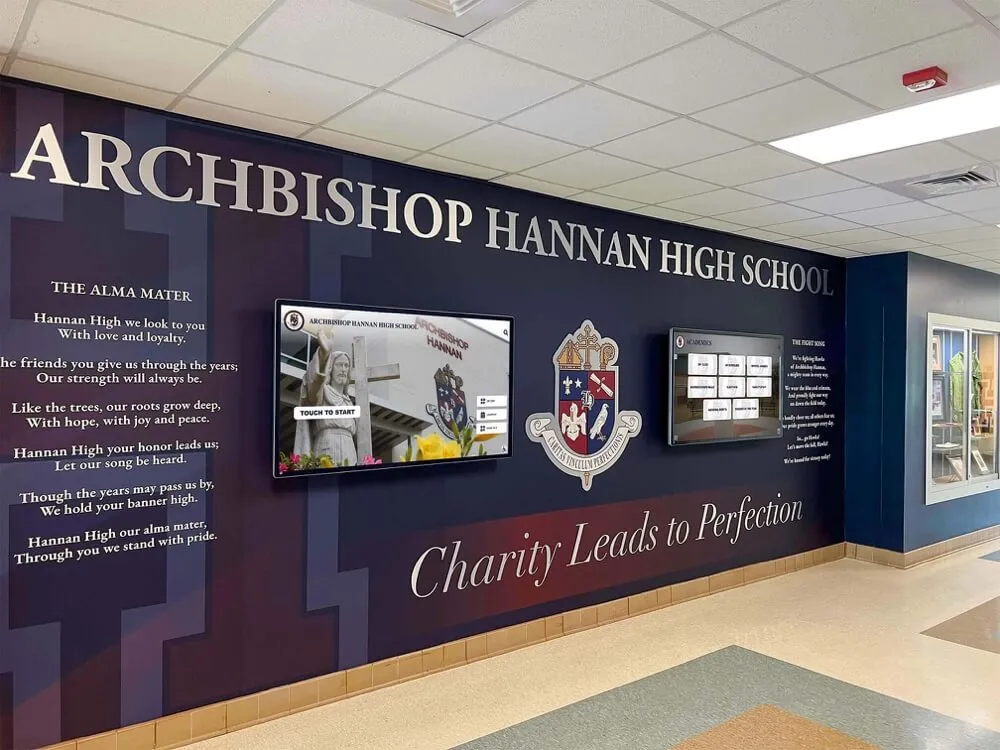
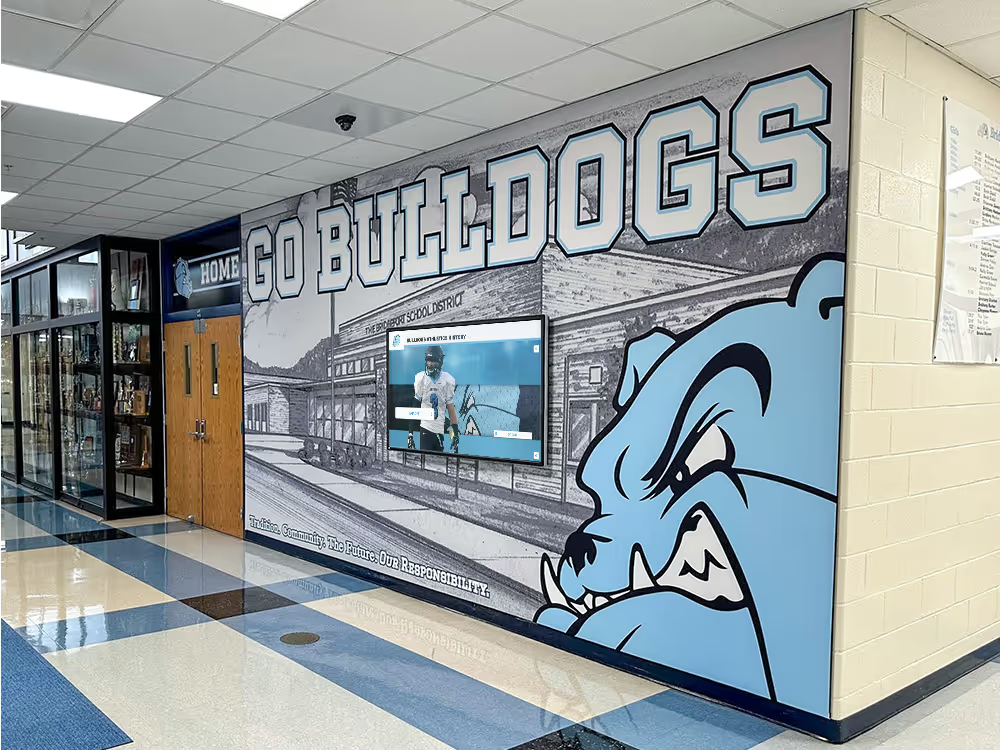
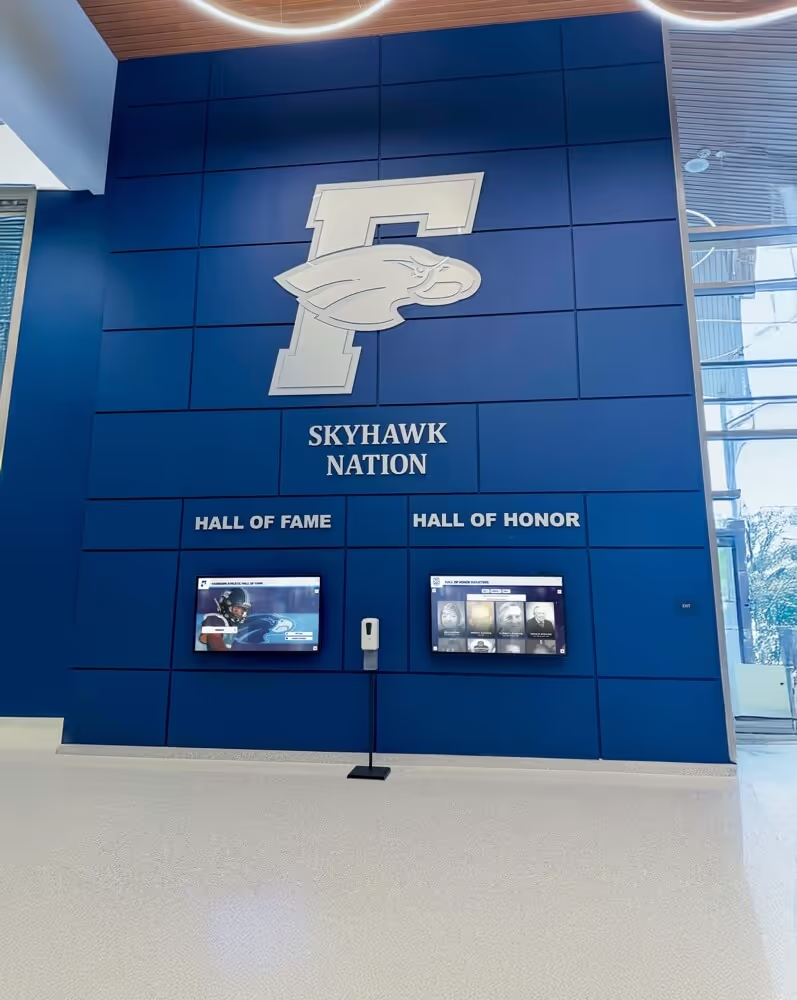
Interactive leaderboards create natural engagement opportunities as students explore peer achievements and academic excellence
Composite vs. Section Score Recognition
Schools implementing ACT leaderboards must determine whether to recognize composite scores exclusively or include section-specific achievements:
Composite Score Focus
Most schools prioritize composite scores (averages across all four sections) because they represent comprehensive academic achievement rather than isolated strengths. Composite scores provide clearest indicators of overall college readiness and match how most universities evaluate ACT performance in admissions processes.
Leaderboards focused exclusively on composite scores maintain simplicity while ensuring recognition honors balanced excellence across multiple academic domains rather than single-subject mastery that might not translate to broader college success.
Section Score Recognition
Some schools supplement composite recognition with section-specific leaderboards celebrating perfect or near-perfect scores (35-36) in individual testing areas. This approach acknowledges exceptional subject mastery while providing more recognition opportunities across student populations.
For example, students achieving perfect English scores (36) receive acknowledgment even if Math performance lowered composite results below 30. Section recognition can motivate subject-specific preparation while honoring diverse academic strengths that composite-only approaches might overlook.
Balanced Recognition Approaches
The most comprehensive systems display both composite and section achievements, creating layered recognition that celebrates:
- Overall college readiness through composite scores of 30+
- Subject mastery through perfect or exceptional section scores
- Balanced excellence for students achieving high performance across all domains
- Specialized strengths for students excelling in particular academic areas
Digital platforms make this multi-dimensional recognition feasible without space limitations or physical complexity that would make traditional displays impractical. Solutions like Rocket Alumni Solutions provide filtering and sorting capabilities enabling users to view achievements by composite score, section performance, graduation year, or any combination of criteria schools choose to track.
Setting Appropriate Recognition Thresholds
While ACT 30+ represents a natural threshold based on statistical significance and college readiness benchmarks, schools should consider whether additional tiers provide appropriate recognition structure:
Single Threshold Approach
Many schools establish ACT 30 as the exclusive threshold for leaderboard inclusion. This approach maintains clarity and prestige—only students achieving genuinely exceptional performance receive recognition, preserving program significance and aspirational nature.
Single thresholds work particularly well in schools where multiple students typically achieve ACT 30+ annually, ensuring leaderboards feature sufficient achievers to create visible tradition while maintaining high standards preventing recognition from becoming too common to feel meaningful.
Multi-Tier Recognition Structure
Other schools implement graduated recognition levels acknowledging various achievement ranges:
- Elite Tier (34-36): Highest recognition for 99th percentile achievement
- Exceptional Tier (32-33): Strong recognition for 97th-98th percentile performance
- Excellence Tier (30-31): Foundational recognition for 93rd-96th percentile results
Multi-tier approaches provide more entry points while maintaining special distinction for highest achievers. Digital leaderboards can visually differentiate tiers through color coding, position hierarchy, or special badges creating clear recognition levels matching achievement rarity.
Schools should select thresholds based on historical achievement patterns—ensuring enough students qualify annually to sustain program relevance while maintaining standards high enough that inclusion feels genuinely noteworthy and motivating to underclassmen considering whether to invest in serious test preparation.
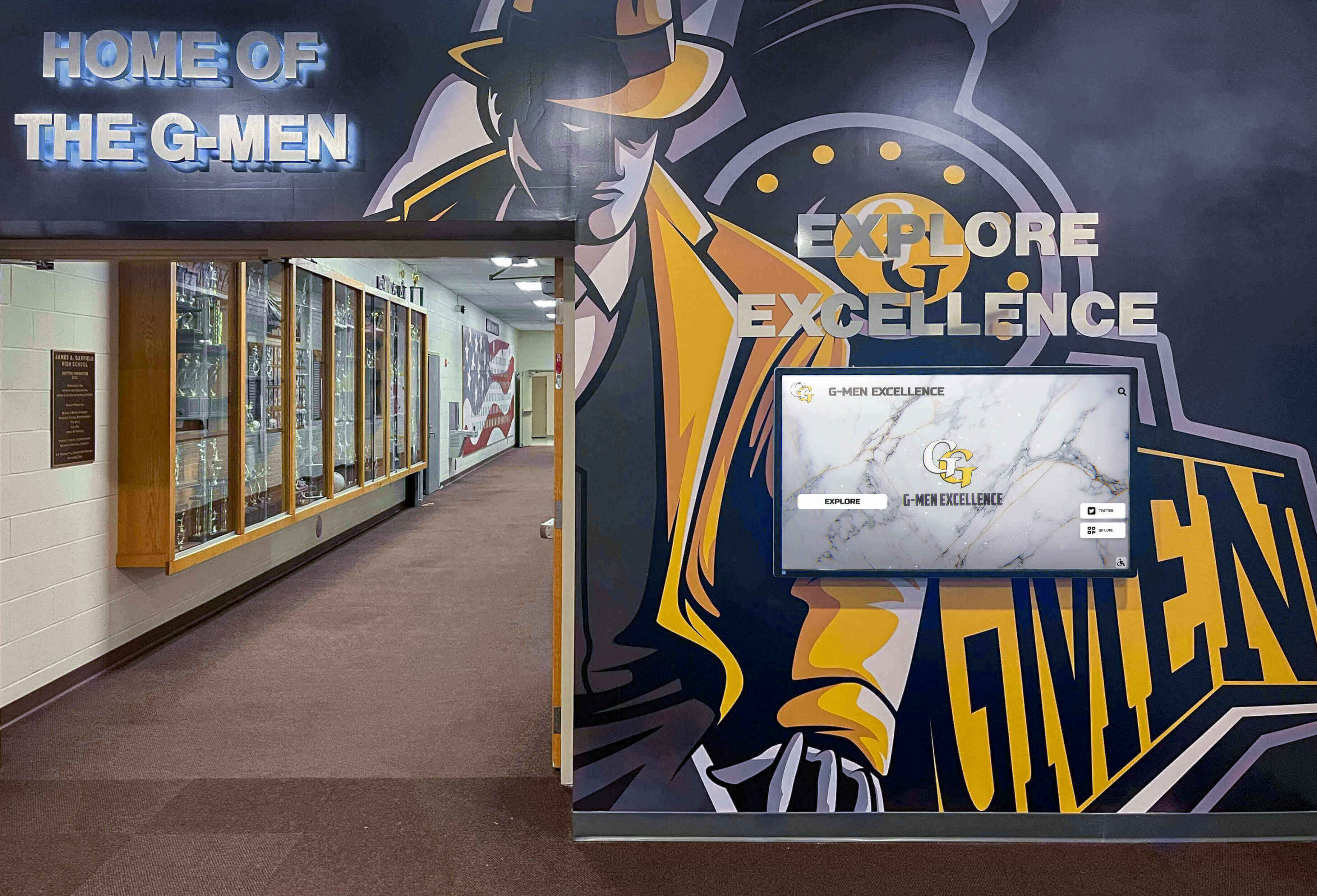
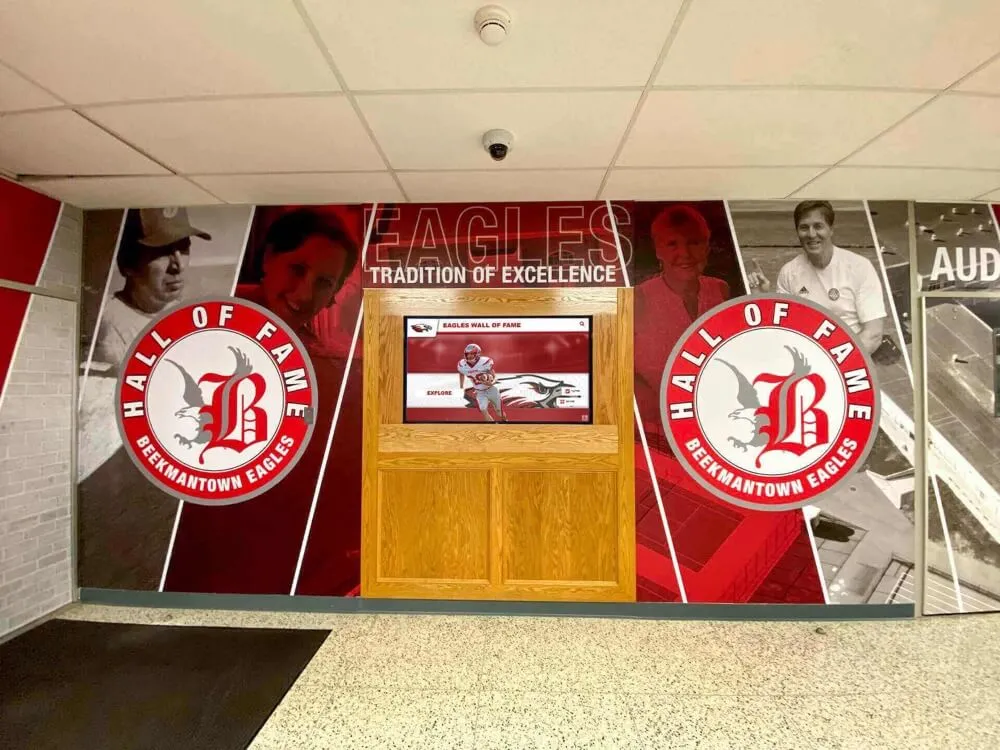
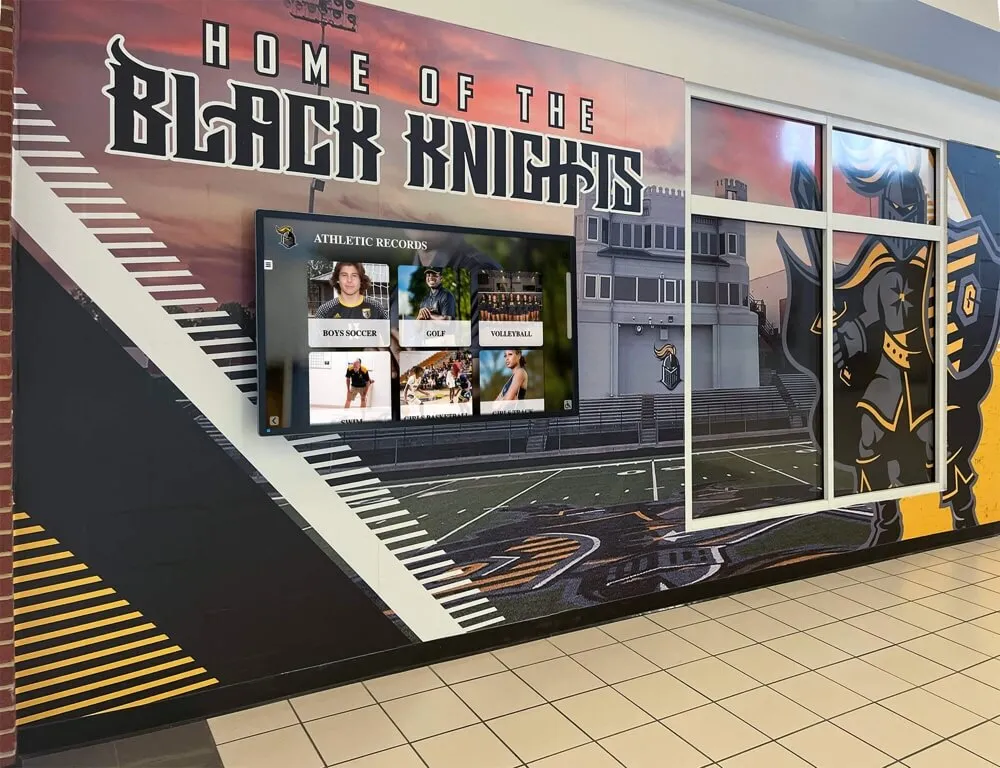
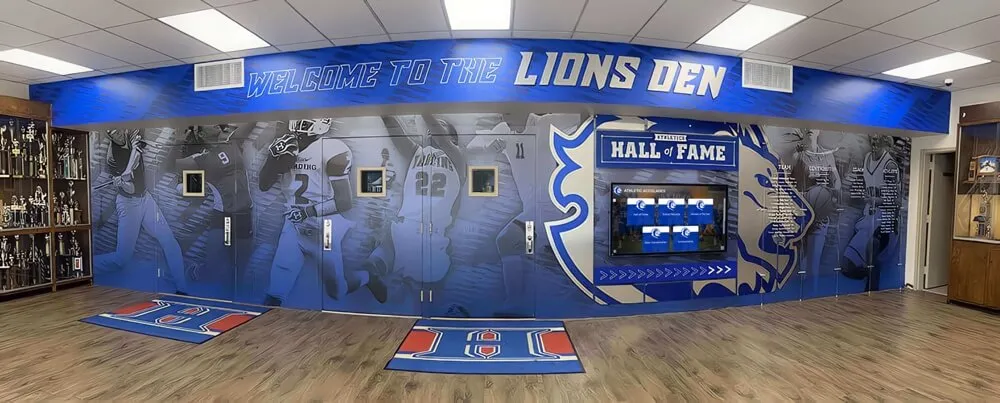
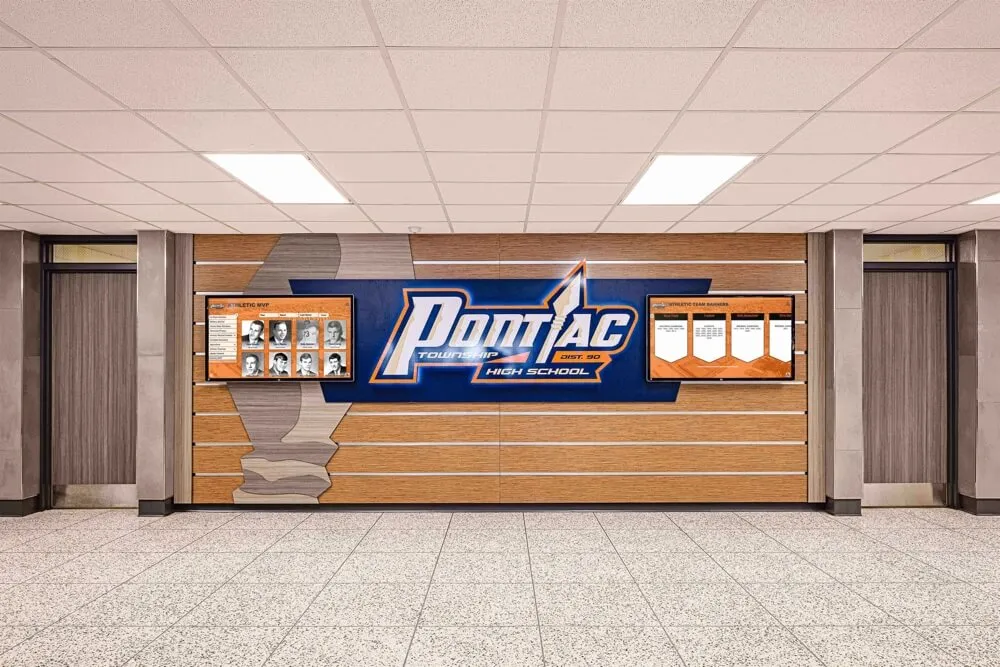
Strategic integration of digital leaderboards with existing school environments creates comprehensive academic celebration spaces
Why Digital Leaderboards Outperform Traditional Recognition
The shift from physical plaques to digital leaderboards represents more than technological upgrade—it fundamentally transforms what schools can achieve with academic recognition programs.
Unlimited Capacity and Historical Preservation
Physical displays face inevitable space constraints forcing difficult decisions about whose achievements receive visibility. Traditional plaques might accommodate 20-30 names before running out of room, requiring removal of historical recognition to add current achievers—an unsatisfying compromise that diminishes past accomplishments while limiting future recognition potential.
Digital leaderboards eliminate capacity concerns entirely. Whether your school celebrates 5 ACT 30+ scorers annually or 50, digital platforms accommodate unlimited recognition across unlimited years. The 100th student achieving excellence receives equal display capacity as the first, and historical achievements from decades past remain as accessible as current recognition.
This unlimited capacity enables schools to honestly commit to recognizing every ACT 30+ achiever perpetually rather than implementing recognition programs with implicit expiration dates when physical space inevitably runs out.
Real-Time Updates and Immediate Recognition
Traditional plaques require weeks or months to update—ordering custom engraving, scheduling installation, coordinating unveiling ceremonies. During these delays, current achievements feel stale while motivational impact diminishes as time passes between accomplishment and recognition.
Digital leaderboards enable immediate updates adding new ACT 30+ achievers within hours of score verification. Students who receive exceptional scores see their recognition appear almost instantly, providing timely acknowledgment while achievement feels current and relevant. This immediacy strengthens motivational impact—other students observe that exceptional performance receives prompt celebration rather than waiting months for delayed recognition that arrives long after excitement fades.
Cloud-based content management systems allow counselors or administrators to add recognition from any internet-connected device without technical expertise, physical access to displays, or coordination with vendors. This ease of updating ensures leaderboards remain current rather than falling behind due to administrative complexity or resource limitations.
Interactive Engagement and Exploration
Static plaques offer passive viewing—students glance at names while walking past, gaining minimal information beyond basic recognition. Digital leaderboards transform recognition into interactive experiences where users actively explore achievements through touchscreen interfaces or web-based platforms.
Search and Filtering Capabilities
Students can search by name finding themselves, friends, or mentors who achieved ACT 30+ scores in previous years. Filtering by graduation year enables exploration of class-specific achievement patterns, while sorting by score reveals highest performers and school records. These interactive features create engagement impossible with static displays while helping users discover inspirational examples most relevant to their personal interests and aspirations.
Detailed Achievement Profiles
Digital platforms support comprehensive recognition far beyond names and scores. Each ACT 30+ achiever can receive detailed profiles including:
- Student photos creating visual connection and recognition
- Complete score breakdowns showing performance across all sections
- Test preparation approaches describing study strategies and resources used
- Academic context noting concurrent achievements and honor designations
- College outcomes showing where students gained admission and scholarships received
- Personal reflections offering advice to future test-takers
This rich storytelling transforms simple acknowledgment into valuable resources helping underclassmen understand concrete pathways toward similar achievement rather than viewing exceptional scores as mysterious accomplishments only possible for naturally gifted students.
Solutions like those offered by Rocket Alumni Solutions specialize in creating these comprehensive profiles with intuitive content management enabling non-technical staff to maintain professional, engaging recognition without requiring ongoing vendor support or technical expertise.
Discover how digital recognition platforms create engaging celebration that traditional approaches cannot match.
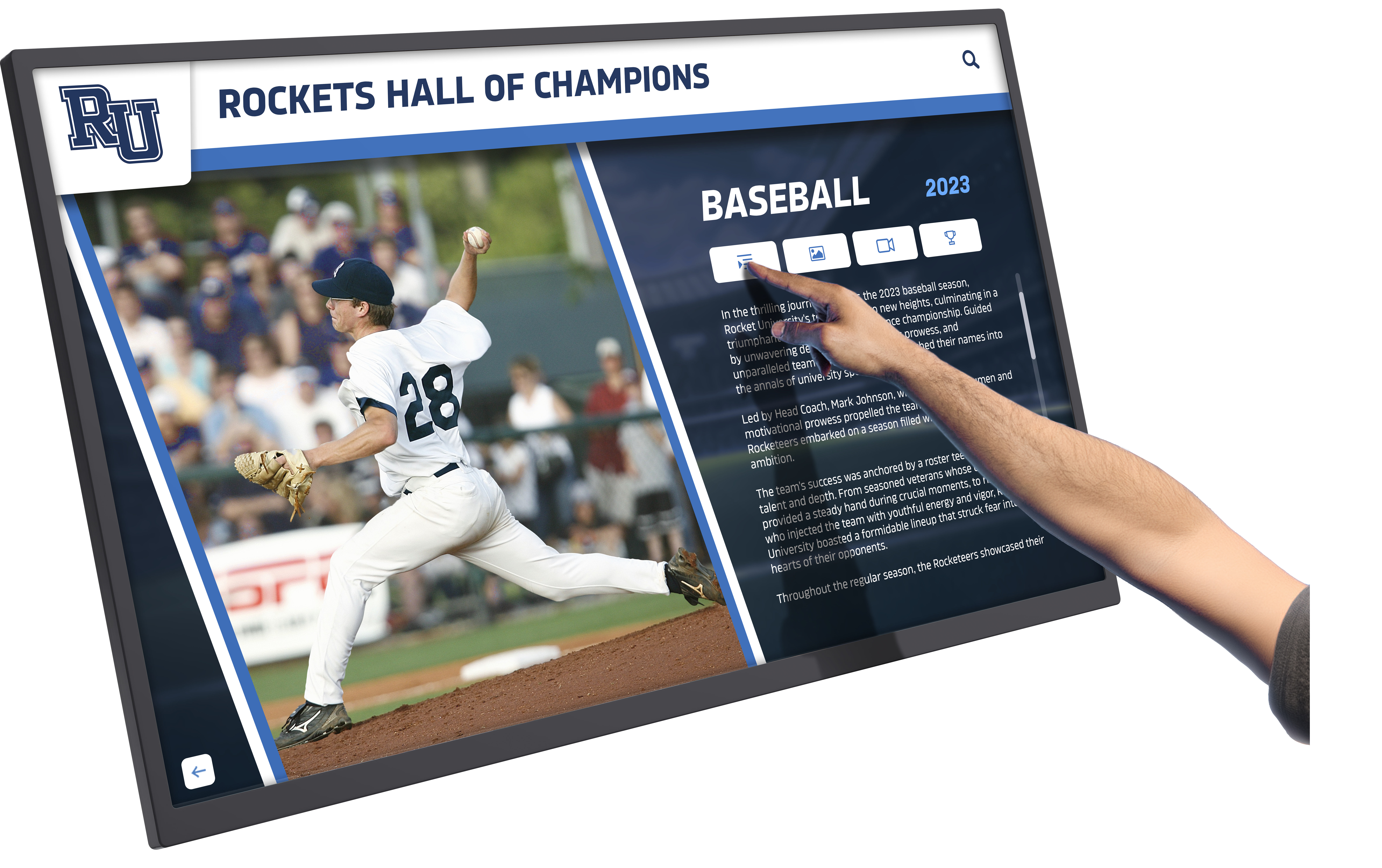
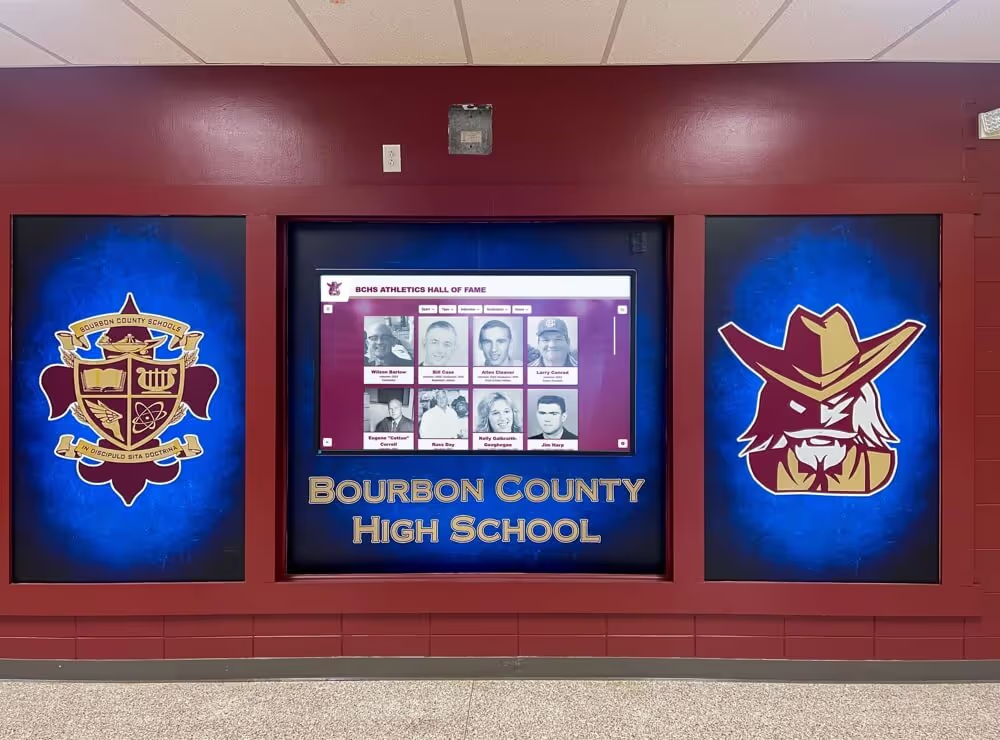
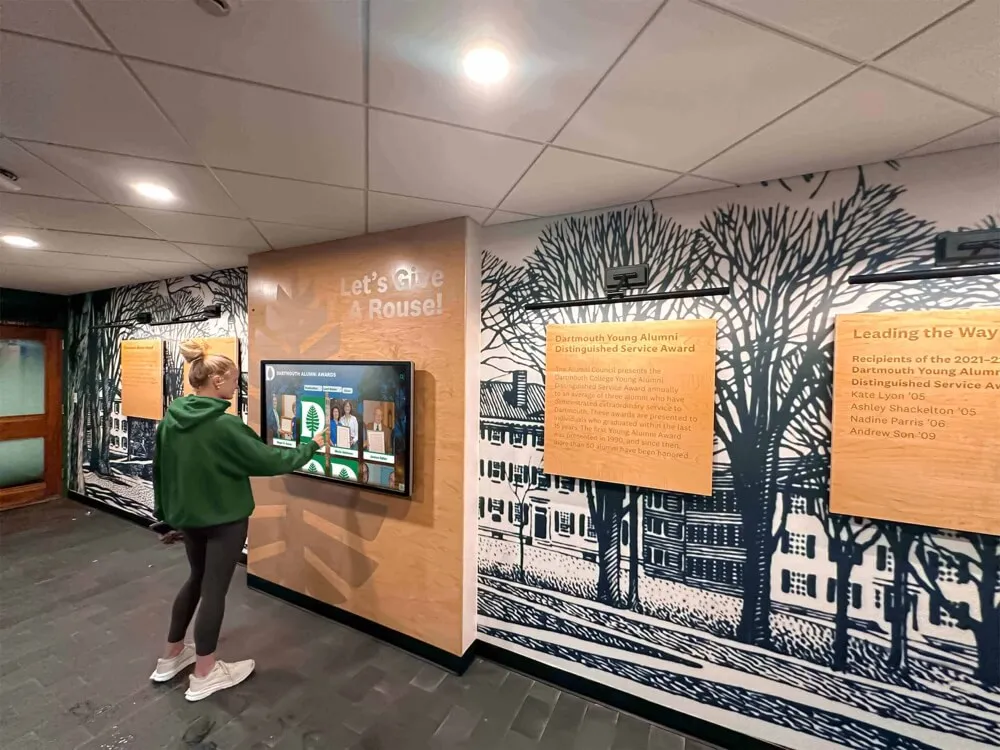
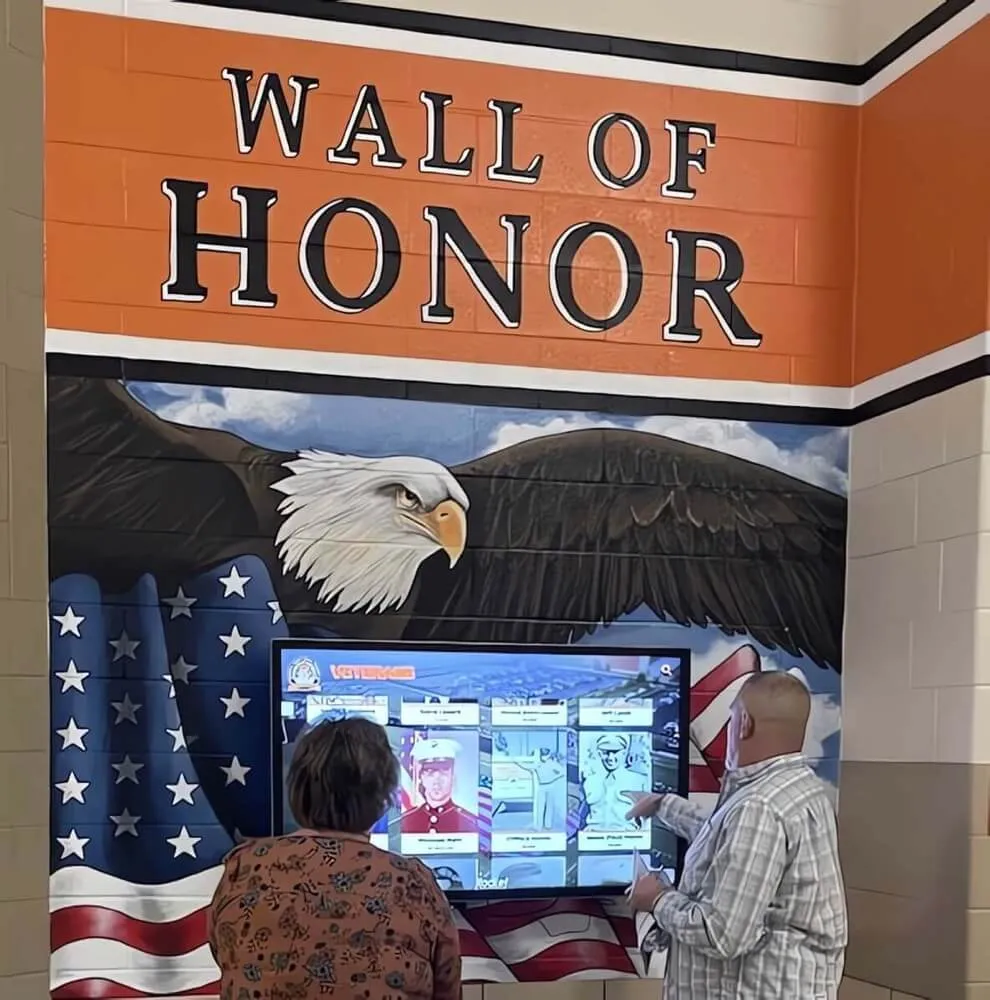
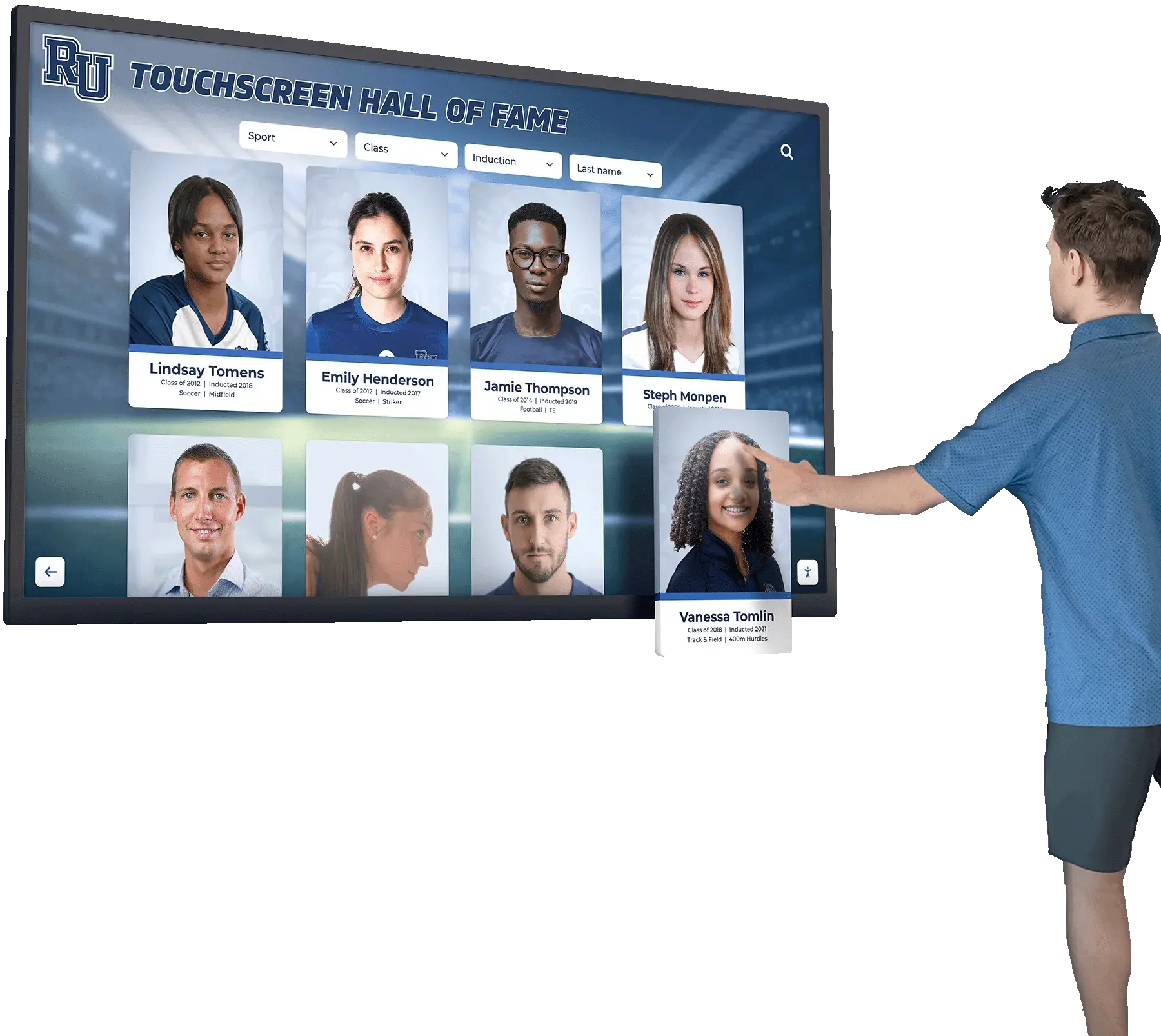
Touchscreen interfaces invite active exploration, transforming passive viewing into engaging discovery of academic excellence
Extended Accessibility Through Web Integration
Physical displays limit recognition to students, families, and visitors who physically visit school facilities. Alumni living across the country, extended family members unable to attend school events, and prospective families evaluating schools all miss traditional recognition confined to physical locations.
Digital leaderboards with web accessibility extend recognition globally. Cloud-based platforms enable viewing from any device—students can share their ACT 30+ recognition with relatives worldwide, alumni can explore current achievers maintaining school connections, and prospective families can evaluate academic culture before enrollment decisions.
This extended reach amplifies recognition value while serving multiple stakeholder groups traditional displays could never accommodate regardless of how prominently positioned within school facilities.
Data Analytics and Program Assessment
Traditional plaques provide no insights about engagement, effectiveness, or recognition impact beyond subjective observations about whether students seem to notice displays. Digital leaderboards generate quantitative analytics informing program optimization:
Engagement Metrics
Digital platforms track how students interact with recognition including session duration revealing how long users explore content, search patterns showing which students or achievements generate most interest, feature utilization indicating which interactive elements receive engagement, and time-based trends revealing when leaderboards receive most attention.
Impact Indicators
Schools can correlate leaderboard implementation with measurable outcomes including changes in school-wide ACT average scores, test preparation program enrollment rates, multiple-attempt retake patterns, and college application behaviors. While correlation doesn’t prove causation, schools implementing digital ACT leaderboards frequently report improved test preparation culture and higher average performance suggesting recognition programs contribute to broader achievement gains.
This data-driven approach enables continuous improvement ensuring recognition programs achieve intended motivational objectives rather than simply existing as static acknowledgment students rarely engage with meaningfully.
Implementing Effective ACT 30+ Digital Leaderboards
Strategic implementation ensures leaderboards create genuine motivation while avoiding potential pitfalls that could undermine effectiveness or create unintended negative consequences.
Display Location and Visibility Strategies
Leaderboard placement significantly impacts engagement and motivational effectiveness. Schools should prioritize locations ensuring maximum student exposure during regular school activities:
High-Traffic Primary Locations
Ideal placement sites include main entrance lobbies where all students pass daily at arrival and dismissal, guidance or college counseling office areas where college-bound students spend time, cafeteria or student lounge spaces facilitating exploration during free periods, library or media center locations connecting recognition with academic environments, and main hallway intersections capturing student attention during class transitions.
Primary displays should feature larger screens (55-75 inches) ensuring visibility from distance and supporting multiple simultaneous users exploring touchscreen features without crowding.
Strategic Secondary Displays
Larger schools benefit from distributed recognition with multiple displays across campus. Secondary locations might include academic department wings highlighting relevant subject achievements, athletic facilities ensuring equal academic and athletic recognition visibility, senior areas celebrating near-graduate accomplishments, and administrative offices enabling family viewing during meetings and conferences.
Multiple display strategies ensure diverse student populations encounter recognition regardless of which facilities they frequent, maximizing program reach and motivational impact across entire school communities.
Accessibility Compliance
All installations must meet accessibility requirements including ADA-compliant mounting heights enabling wheelchair users to interact with touchscreen features, high-contrast display modes supporting visually impaired users, and adjustable text sizing ensuring readability across vision capabilities. Web-based companion platforms provide alternative access methods for users unable to physically interact with in-school displays, ensuring inclusive recognition accessible to all stakeholders regardless of physical limitations or location.
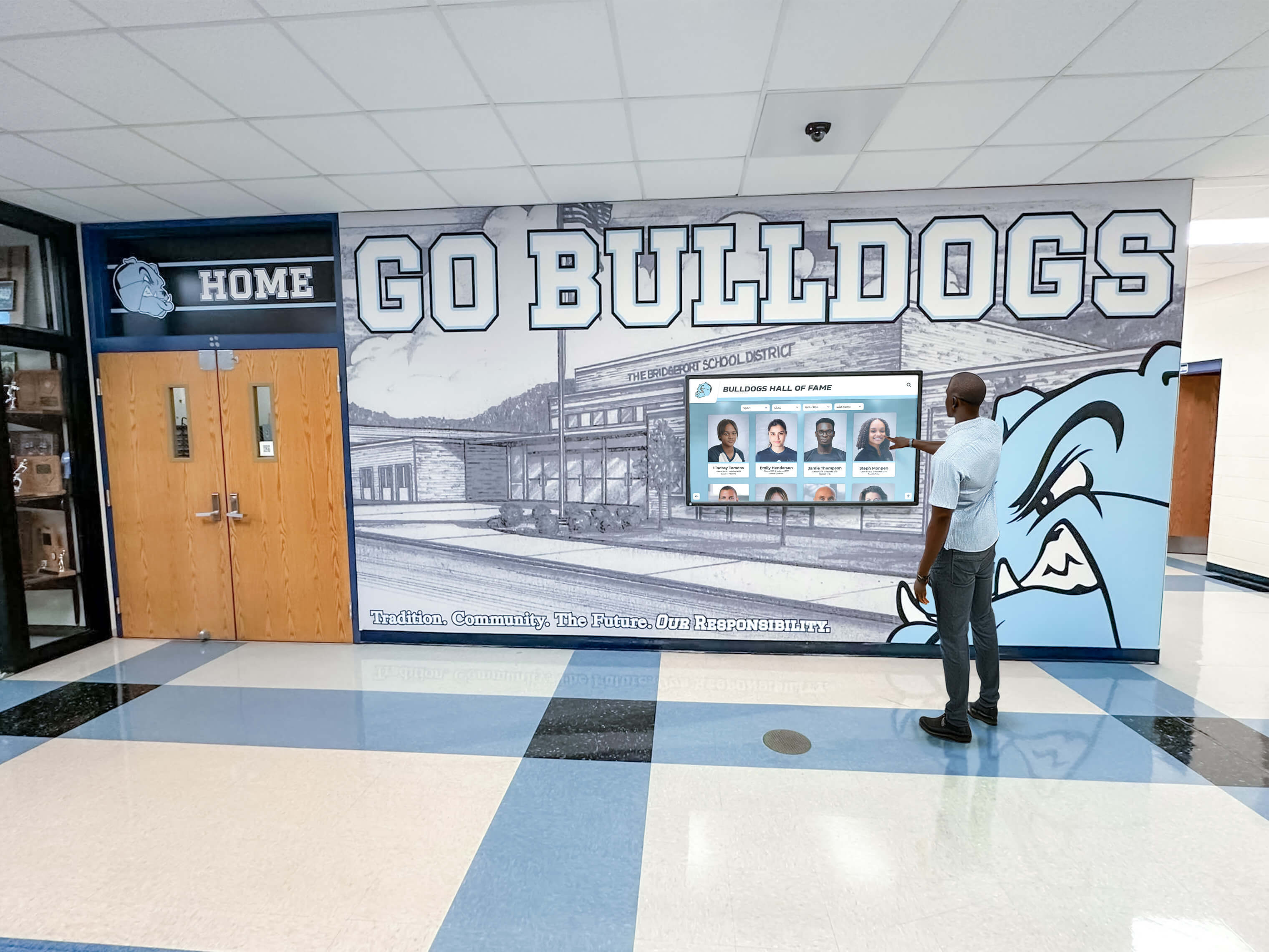
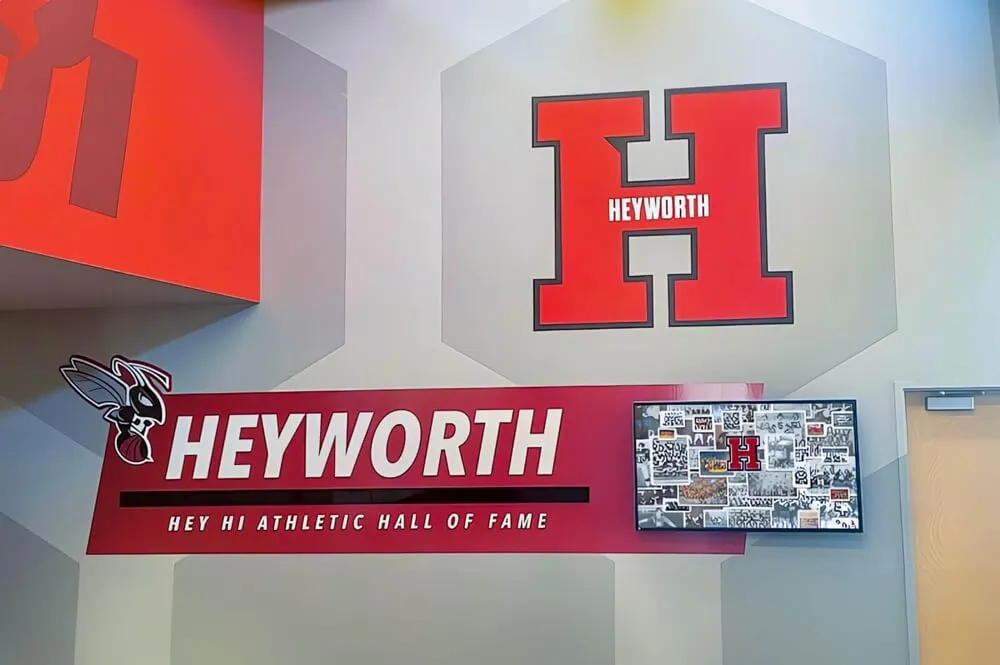
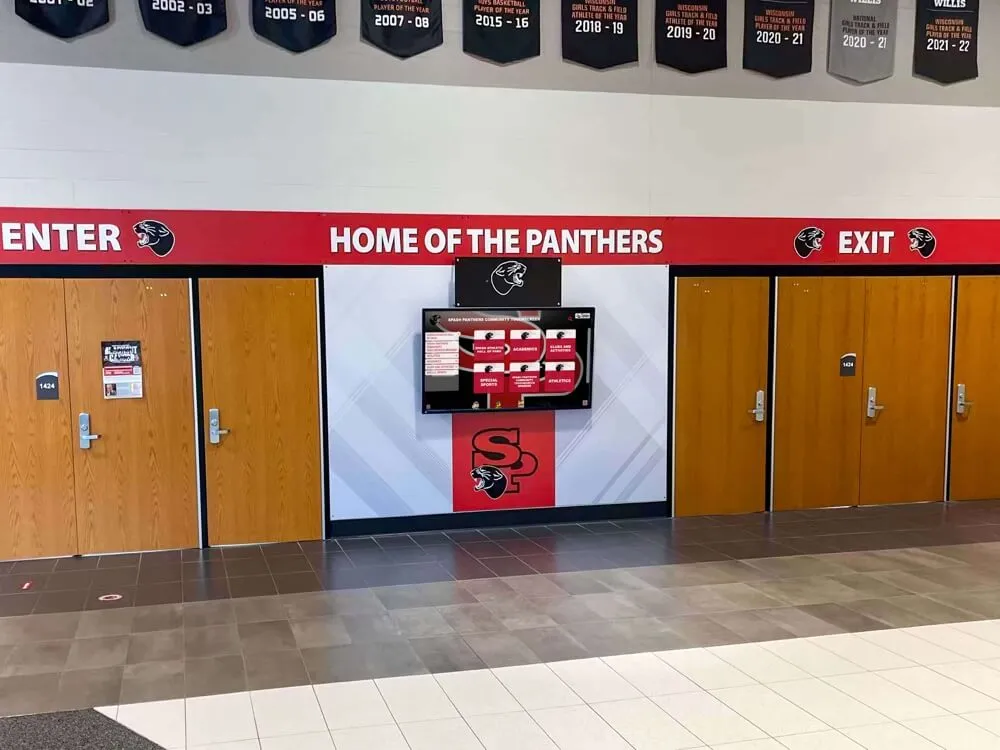
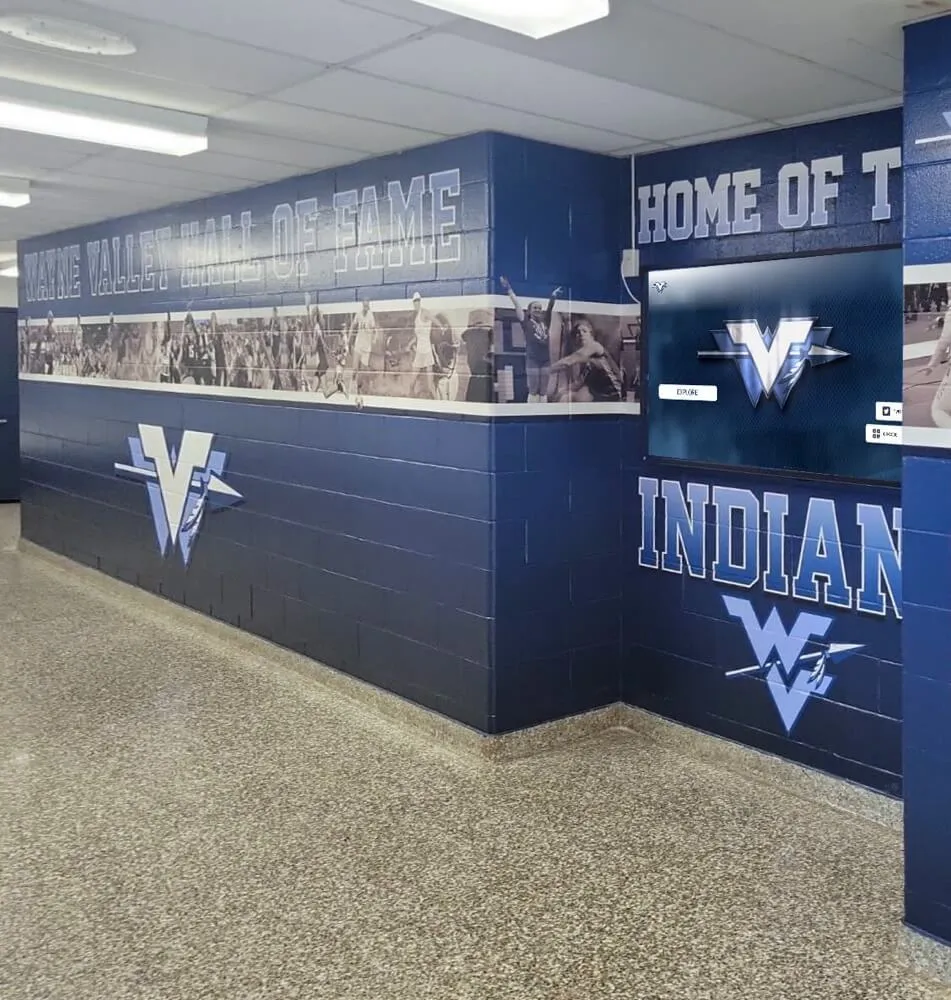
Strategic hallway placement creates natural engagement opportunities as students pass between classes throughout school day
Content Development and Profile Creation
Comprehensive recognition requires systematic content development ensuring each ACT 30+ achiever receives appropriate acknowledgment:
Essential Information Elements
Minimum viable profiles should include student full name and graduation year, composite ACT score and testing date, high-quality photo creating visual connection, and achievement date providing temporal context. These core elements enable basic recognition while maintaining professional presentation.
Enhanced Recognition Components
Richer profiles elevate recognition through section score breakdowns showing performance across all tested areas, test preparation strategies describing study approaches and resources used, academic context including GPA, class rank, and concurrent honors, college outcomes documenting acceptances and scholarship awards, extracurricular involvement demonstrating well-rounded achievement, and personal reflections offering advice to underclassmen pursuing similar goals.
Enhanced content transforms simple acknowledgment into inspirational storytelling that motivates while providing practical guidance helping future students understand achievement pathways rather than viewing exceptional performance as unreachable or mysterious.
Efficient Collection Processes
Schools should establish streamlined processes for gathering recognition information including digital submission forms students complete upon achieving qualifying scores, optional expanded questionnaires for enhanced profile creation, photo collection through yearbook systems or dedicated recognition photography, verification procedures confirming score accuracy before publication, and consent processes ensuring students and families approve public recognition and photo usage.
Efficient workflows ensure timely recognition without creating administrative burdens preventing sustainable program management as increasing numbers of achievers require profile creation over time.
Design and Presentation Standards
Professional, consistent presentation ensures leaderboards maintain credibility while creating positive associations with academic achievement:
Visual Hierarchy and Organization
Effective leaderboards use clear visual structure including prominent headline identifying recognition purpose (“ACT 30+ Club” or “Exceptional Achievement: ACT 30+ Scorers”), logical sorting options enabling users to view by score level, graduation year, or alphabetical order, visual differentiation distinguishing achievement tiers if multi-level recognition structure exists, and balanced layouts preventing cluttered or overwhelming presentations that discourage exploration.
Branding and School Identity Integration
Leaderboards should reflect institutional identity through school colors, logos, and mascots creating consistent visual connection with broader school branding, typography matching other official school materials and communications, photographic style aligning with yearbook and promotional materials, and language and tone consistent with institutional voice and academic culture values.
Professional design prevents recognition from feeling generic or disconnected from school identity, strengthening associations between ACT excellence and institutional pride.
Dynamic Content Rotation
Even digital displays benefit from variety preventing recognition from becoming static background viewers unconsciously ignore. Rotation strategies might include featured achiever spotlights highlighting individual students periodically, historical comparisons showing achievement trends over decades, upcoming testing date reminders connecting recognition to preparation timelines, test preparation tip sections sharing strategies from recent high achievers, and college outcome updates documenting scholarship awards and acceptance announcements.
Dynamic content maintains freshness encouraging repeated engagement rather than one-time viewing followed by habitual disregard as displays become familiar fixtures students mentally filter out during daily routines.
Explore how academic recognition programs create comprehensive celebration frameworks integrating standardized test achievement with broader academic excellence.

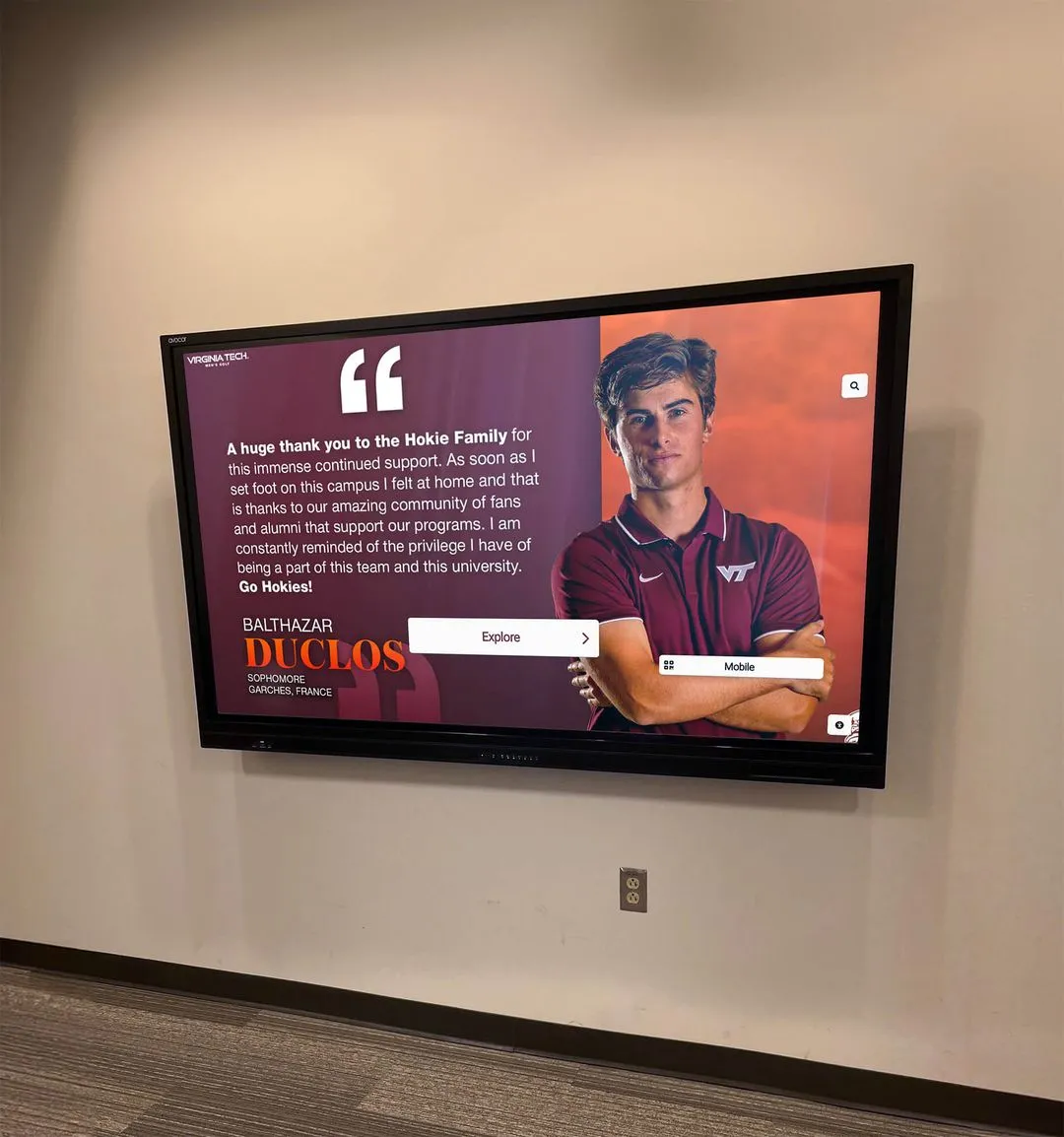
Individual achievement profiles create personalized recognition honoring each student's specific accomplishments and academic journey
Creating Motivational Impact Through Strategic Recognition
Leaderboards achieve greatest value when schools leverage recognition strategically to inspire improved academic performance and strengthen college preparation culture.
Connecting Recognition to Test Preparation Programs
Digital leaderboards create natural connections to test preparation resources and programs, transforming recognition from passive acknowledgment into active motivation encouraging serious preparation investment:
Preparation Program Promotion
Display content should highlight available resources including school-sponsored ACT prep courses and study sessions, partnerships with test preparation providers offering student discounts, free practice test opportunities and diagnostic assessments, subject-specific tutoring for students addressing content gaps, and financial aid covering test registration and preparation costs for economically disadvantaged students.
By connecting recognition to accessible preparation resources, schools demonstrate commitment to helping all students achieve ACT 30+ rather than simply celebrating those who independently reach excellence through private resources or natural academic gifts.
Strategy Sharing and Peer Mentorship
Leaderboard profiles can facilitate peer learning through preparation approach documentation in achiever profiles explaining what worked for successful students, video testimonials from recent 30+ scorers offering encouragement and advice, peer tutoring programs connecting current ACT 30+ achievers with underclassmen preparing for tests, and study group formation tools helping students find preparation partners and accountability systems.
This peer mentorship transforms recognition into practical resource helping students understand concrete pathways toward similar achievement rather than viewing exceptional scores as unreachable outcomes only available to naturally gifted peers.
Preparation Timeline Guidance
Recognition content can provide strategic guidance about when students should begin preparation including grade-level recommendations (starting practice as sophomores, serious preparation junior year), testing date strategies discussing optimal timing for first attempts and retakes, preparation duration guidance helping students understand necessary time investment, and incremental goal-setting encouraging students to target progressive improvement across multiple test attempts rather than expecting immediate perfect performance.
Timeline guidance demystifies achievement pathways, making ACT 30+ feel attainable through systematic preparation rather than mysterious accomplishment requiring unexplainable academic gifts.
Building Competitive Motivation and Achievement Culture
Leaderboard formats naturally create competitive elements that can drive positive motivation when implemented thoughtfully:
Healthy Competition Framework
Schools can leverage competitive instincts productively through class-year comparisons showing achievement counts by graduating class creating friendly inter-cohort competition, improvement tracking celebrating score increases across multiple attempts rewarding persistence and growth, subject-specific leaderboards acknowledging diverse strengths preventing single-metric competition, and school historical context positioning current students as potential record-breakers continuing legacy of excellence.
This structured competition channels achievement motivation productively rather than creating destructive peer pressure or environments where students feel academic success requires undermining classmates.
Collective Excellence Celebration
Balance individual recognition with collective achievement acknowledgment including annual cohort statistics showing percentage of class achieving ACT 30+ annually, multi-year trend data revealing whether school-wide performance improves over time, comparative context positioning school performance relative to state and national averages, and whole-school goals encouraging communities to collectively pursue higher achievement rates through supportive rather than competitive approaches.
Collective framing prevents recognition from becoming zero-sum competition where some students’ success implies others’ failure, instead creating environments where all students can pursue excellence knowing celebration doesn’t diminish with multiple achievers.
Recognition Beyond Absolute Performance
Comprehensive programs acknowledge diverse achievement dimensions including most improved scores celebrating dramatic increases regardless of final composite level, subject mastery recognition honoring perfect section scores even when other areas prevent ACT 30+ composite achievement, effort and persistence acknowledgment recognizing students who attempted multiple tests demonstrating commitment to improvement, and balanced achievement celebration noting students who reach ACT 30+ while maintaining strong extracurricular involvement and well-rounded development.
This multi-dimensional approach ensures recognition opportunities exist for diverse student populations rather than creating narrow definition of success that excludes most learners regardless of genuine effort and dedication.
Learn about creating comprehensive academic recognition that motivates while maintaining inclusive culture valuing all forms of achievement.
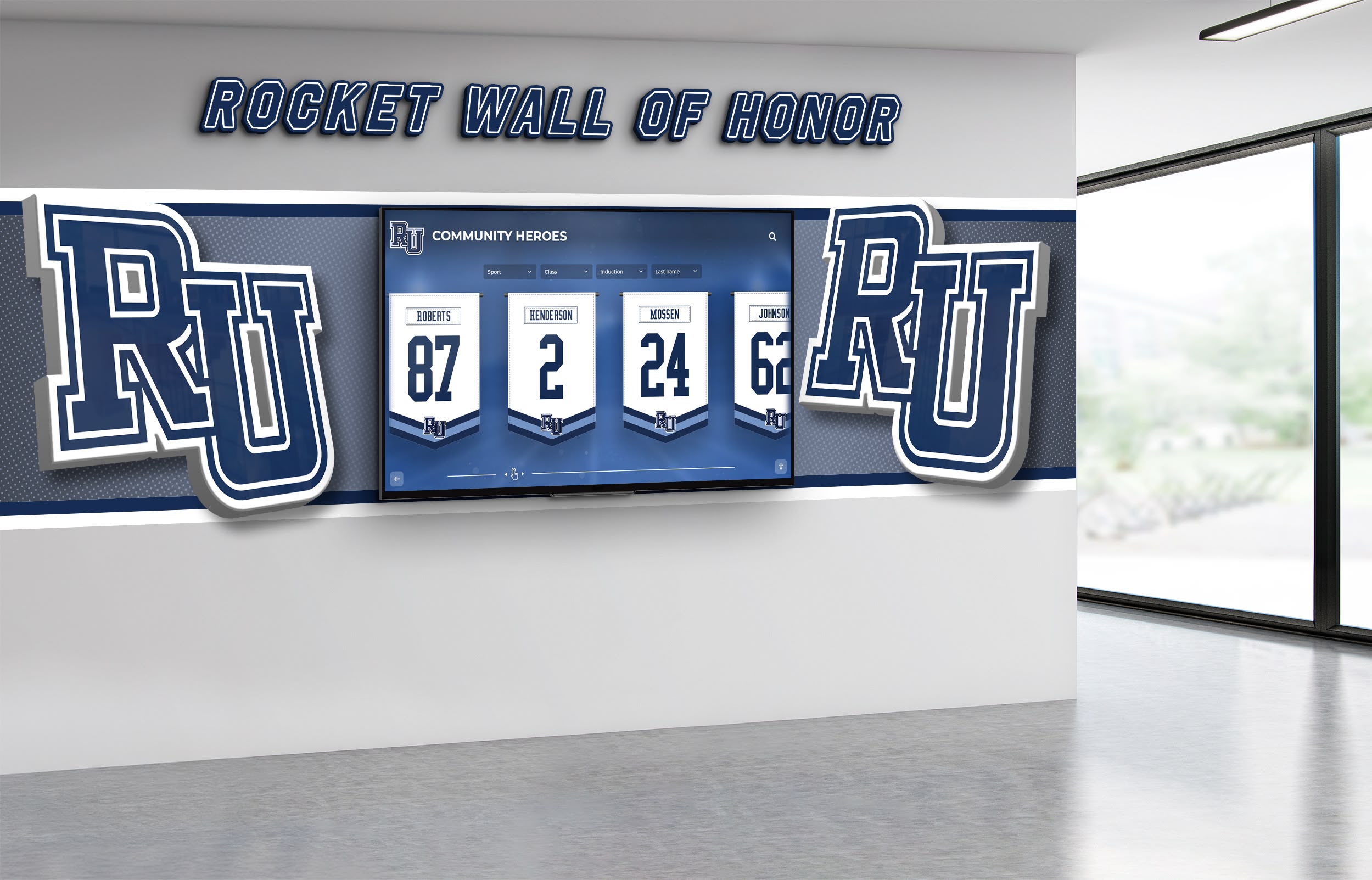
Multi-display installations enable comprehensive recognition across diverse achievement categories creating balanced institutional priorities
Connecting Recognition to College Outcomes
ACT 30+ recognition gains additional motivational power when schools document how exceptional test performance translates to tangible college admissions and scholarship benefits:
Admissions Outcome Tracking
For graduated students, leaderboard profiles can include selective institutions where students gained admission demonstrating ACT 30+ opens doors to competitive programs, honors program acceptances showing special academic opportunities these scores unlock, merit scholarship awards quantifying financial benefits resulting from exceptional performance, and specific program admissions revealing how test scores facilitated entry to specialized competitive tracks.
This outcome documentation helps current students understand concrete advantages of ACT 30+ achievement beyond abstract discussion of college readiness, creating tangible motivation through demonstrated real-world benefits that justify substantial test preparation investment.
Alumni Success Connections
Schools can create powerful long-term motivation by periodically updating profiles with post-graduation outcomes including college academic performance and dean’s list recognition, graduate school admissions to prestigious programs, career achievements and professional success, and community leadership roles demonstrating how early academic excellence predicted sustained accomplishment.
These alumni connections demonstrate that ACT 30+ achievement represents more than isolated test performance—it signals broader patterns of dedication and intellectual capability that contribute to lifelong success deserving early recognition and celebration.
Scholarship Opportunity Awareness
Leaderboards can explicitly connect recognition to scholarship potential by highlighting merit awards available to ACT 30+ students at specific universities, total scholarship dollars earned by previous achievers from your school, application strategies for competitive national scholarships requiring exceptional test scores, and financial aid maximization approaches leveraging ACT performance in negotiation and appeals.
By explicitly connecting recognition to substantial financial benefits, schools help families understand that test preparation represents legitimate investment with measurable returns potentially worth tens or hundreds of thousands of dollars through merit scholarships earned over four-year college careers.
Discover strategies for showcasing student achievement that demonstrates concrete benefits motivating continued excellence.
Technology Platform Selection and Implementation
Choosing appropriate technology ensures leaderboards achieve intended recognition objectives while remaining manageable for school staff with varying technical expertise.
Purpose-Built Recognition Platforms vs. Generic Digital Signage
Schools considering digital leaderboards face fundamental decisions about technology approach:
Purpose-Built Recognition Solutions
Specialized platforms designed specifically for educational achievement recognition offer significant advantages including intuitive content management requiring no technical training, pre-built templates ensuring professional presentation automatically, achievement-specific features like filtering, sorting, and search optimized for recognition contexts, unlimited capacity accommodating growth across decades without platform limitations, cloud-based architecture enabling remote management from any device, and dedicated support from vendors understanding educational recognition needs.
Solutions like Rocket Alumni Solutions exemplify purpose-built approaches providing complete recognition ecosystems rather than generic displays requiring extensive customization to serve achievement celebration effectively.
Generic Digital Signage Systems
Some schools attempt using general-purpose digital signage platforms not designed specifically for recognition. While potentially less expensive initially, generic approaches face challenges including complex configuration requiring technical expertise most schools lack, limited interactive features inadequate for engaging achievement exploration, capacity constraints as databases grow beyond what platforms anticipated, difficulty integrating with web-based access alumni and families expect, and generic support unable to advise on recognition best practices and strategic implementation.
Schools should carefully evaluate whether apparent initial cost savings justify ongoing complexity, limited capabilities, and substantial staff time requirements generic solutions impose compared to purpose-built platforms offering comprehensive recognition features designed specifically for educational contexts.
Hardware Considerations for Physical Displays
Schools installing physical leaderboard displays should select appropriate hardware ensuring reliable performance and professional appearance:
Display Specifications
Commercial-grade touchscreen monitors (55-75 inches for hallway visibility) designed for continuous operation rather than consumer TVs intended for intermittent residential use, high brightness levels (500+ nits) ensuring visibility in naturally lit school environments, scratch-resistant touchscreen surfaces withstanding heavy student interaction, commercial warranty support providing replacement coverage beyond limited consumer warranties, and landscape or portrait orientation flexibility matching installation space requirements.
Installation and Mounting
Professional mounting solutions including wall-mounted installations for space-efficient integration, freestanding kiosk enclosures creating prominent standalone recognition stations, ADA-compliant height positioning enabling wheelchair user access, secure mounting preventing theft or vandalism, and cable management systems maintaining clean professional appearance without exposed wiring.
Supporting Infrastructure
Reliable connectivity ensuring responsive performance including wired ethernet connections providing better reliability than WiFi for fixed installations, adequate power outlets with surge protection, environmental controls maintaining appropriate temperature ranges for electronic equipment, and regular maintenance schedules preventing dust accumulation and ensuring touchscreen responsiveness remains consistent.
Schools should work with experienced integrators understanding educational environments rather than attempting DIY installations that risk poor positioning, inadequate infrastructure, or unprofessional appearance undermining recognition program credibility.
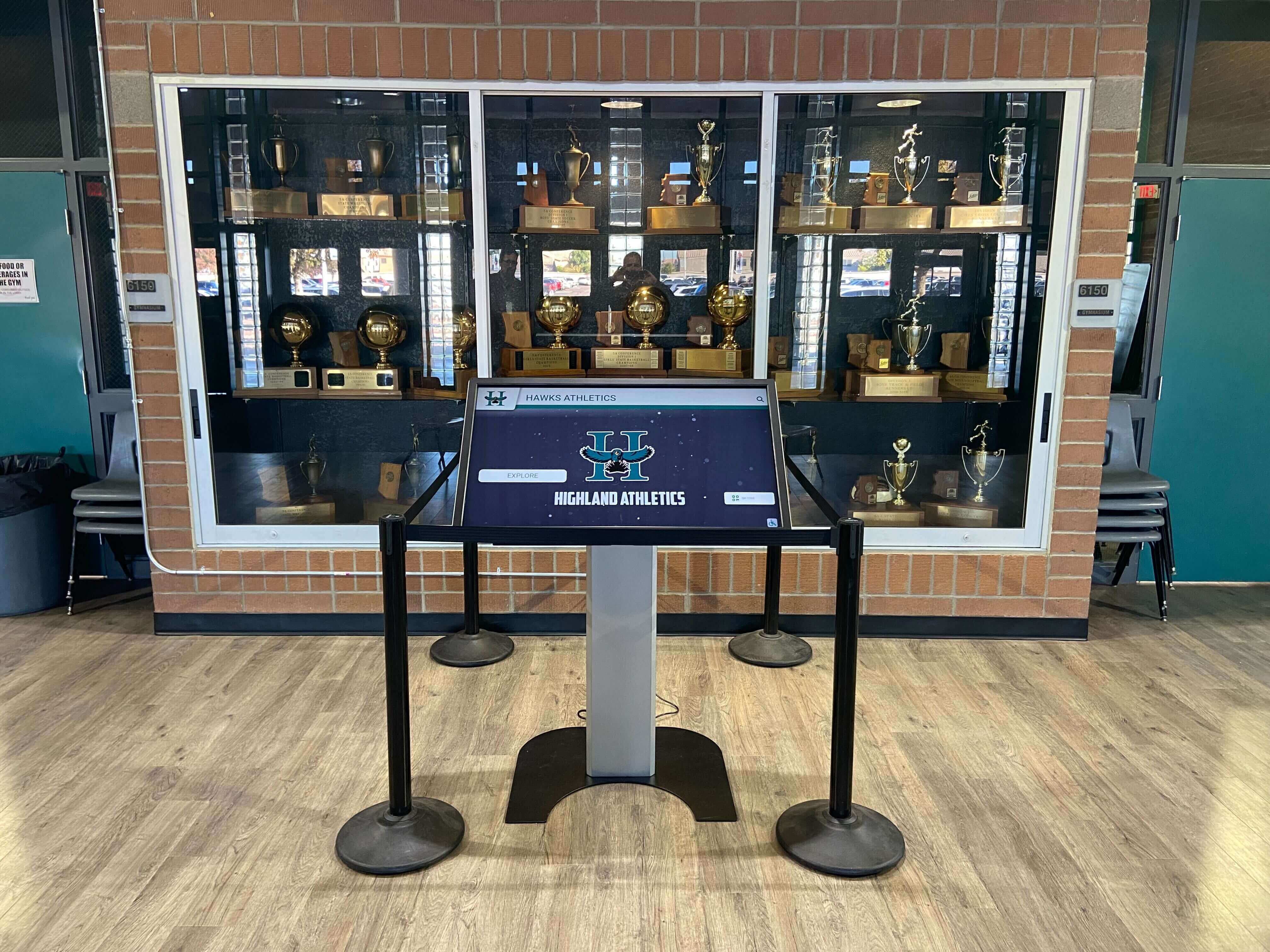
Integrated installations combine digital recognition with traditional school elements creating comprehensive celebration environments
Cloud-Based Content Management Systems
Effective leaderboards require intuitive administration enabling non-technical staff to maintain recognition without ongoing vendor dependence:
Essential Management Features
Platforms should provide drag-and-drop media uploading for photos and documents, web-based interfaces accessible from any device eliminating software installation requirements, template systems ensuring consistent professional presentation, bulk import tools enabling efficient addition of multiple students simultaneously, role-based permissions allowing appropriate staff access without security risks, scheduled publishing automatically displaying content at specified dates and times, version control and backup preventing accidental data loss, and mobile optimization enabling smartphone-based management for maximum administrative flexibility.
Integration Capabilities
Advanced platforms can connect with existing school systems including student information systems providing automatic enrollment data, photo management systems streamlining image collection from yearbook workflows, school websites extending recognition beyond physical displays, social media platforms amplifying achievement announcement reach, and analytics systems tracking engagement measuring recognition program effectiveness.
Integration reduces administrative burden while extending recognition reach and impact across multiple channels simultaneously rather than requiring separate manual processes for each communication platform.
Vendor Support and Training
Quality platforms include comprehensive support including initial setup assistance and customization, administrator training ensuring staff confidence managing systems independently, ongoing technical support resolving issues and answering questions, regular platform updates adding features and maintaining security, and best practice consulting helping schools optimize recognition approaches based on what similar institutions achieve successfully.
This support ensures schools can implement and sustain recognition programs effectively regardless of internal technical expertise levels, preventing platforms from becoming abandoned infrastructure staff cannot maintain after initial enthusiasm fades.
Program Sustainability and Long-Term Success
Effective recognition requires systematic management ensuring leaderboards remain current and engaging across staff transitions and evolving institutional priorities.
Establishing Clear Administrative Responsibility
Recognition programs require designated ownership preventing situations where unclear accountability leads to neglected updates and outdated content:
Primary Administrator Designation
Schools should explicitly assign leaderboard management responsibility typically to college counselors managing ACT processes naturally, administrative assistants handling student records and recognition, technology coordinators comfortable with digital systems, or designated academic achievement coordinators in schools with formal positions overseeing recognition programs.
Clear responsibility ensures someone monitors score submissions, creates profiles for new achievers, and maintains platform currency rather than assuming undefined “someone” will handle these critical tasks.
Backup Administrator Training
Sustainable programs avoid single-person dependencies through cross-training ensuring at least two staff members understand platform management and can maintain continuity during vacations, transitions, or unexpected absences.
Documented procedures further ensure knowledge preservation across staff changes preventing situations where recognition programs collapse when specific individuals leave institutions taking undocumented expertise with them.
Regular Content Updates and Enhancement
Leaderboards require ongoing attention maintaining currency and engagement:
New Achiever Addition Protocols
Establish systematic processes including score submission deadlines and verification procedures, profile creation timelines ensuring prompt recognition, photography and content collection from students, quality review confirming accuracy before publication, and family notification celebrating achievements and sharing access information.
Prompt addition of new achievers—ideally within one week of score verification—maintains recognition relevance and demonstrates that exceptional performance receives immediate acknowledgment rather than delayed response suggesting lack of genuine institutional priority.
Historical Content Enhancement
Periodically enhance existing recognition through college outcome updates for graduated students, alumni career success additions connecting early achievement to long-term accomplishment, additional photo collection from school events and ceremonies, and expanded preparation strategy documentation gathered through follow-up interviews with past achievers.
This ongoing enhancement demonstrates sustained institutional commitment to recognition excellence rather than minimal-effort maintenance suggesting programs exist primarily as checkbox compliance rather than genuine priorities deserving continuous improvement.
Engagement Monitoring and Program Assessment
Data-driven evaluation ensures leaderboards achieve intended motivational objectives:
Quantitative Engagement Metrics
Track objective indicators including display interaction frequency and duration, search patterns revealing which content generates interest, peak usage times informing content update scheduling, feature utilization showing which interactive elements engage users, and web platform traffic from remote families and alumni.
Achievement Impact Analysis
Monitor potential correlations between leaderboard implementation and measurable outcomes including school-wide ACT average score trends, test preparation program enrollment changes, multiple-attempt retake rates suggesting serious improvement investment, ACT 30+ achiever count trends revealing whether recognition motivates more students to reach threshold, and college counseling engagement patterns as students seek help maximizing scores.
While correlation doesn’t prove causation, schools implementing prominent ACT recognition frequently report improved test preparation culture and higher average performance suggesting leaderboards contribute to broader achievement gains beyond simply acknowledging existing high performers.
Stakeholder Feedback Collection
Supplement quantitative data with qualitative insights through student surveys about recognition awareness and motivational impact, family feedback regarding ease of access and sharing experiences, teacher observations about changes in academic culture and test preparation attitudes, college counselor perspectives on recognition influence regarding student goals and preparation investment, and alumni reflections about how recognition influenced their high school academic identity and college preparation approaches.
This comprehensive assessment enables continuous improvement ensuring recognition programs evolve based on stakeholder needs and demonstrable effectiveness rather than static assumptions about what should motivate students theoretically.
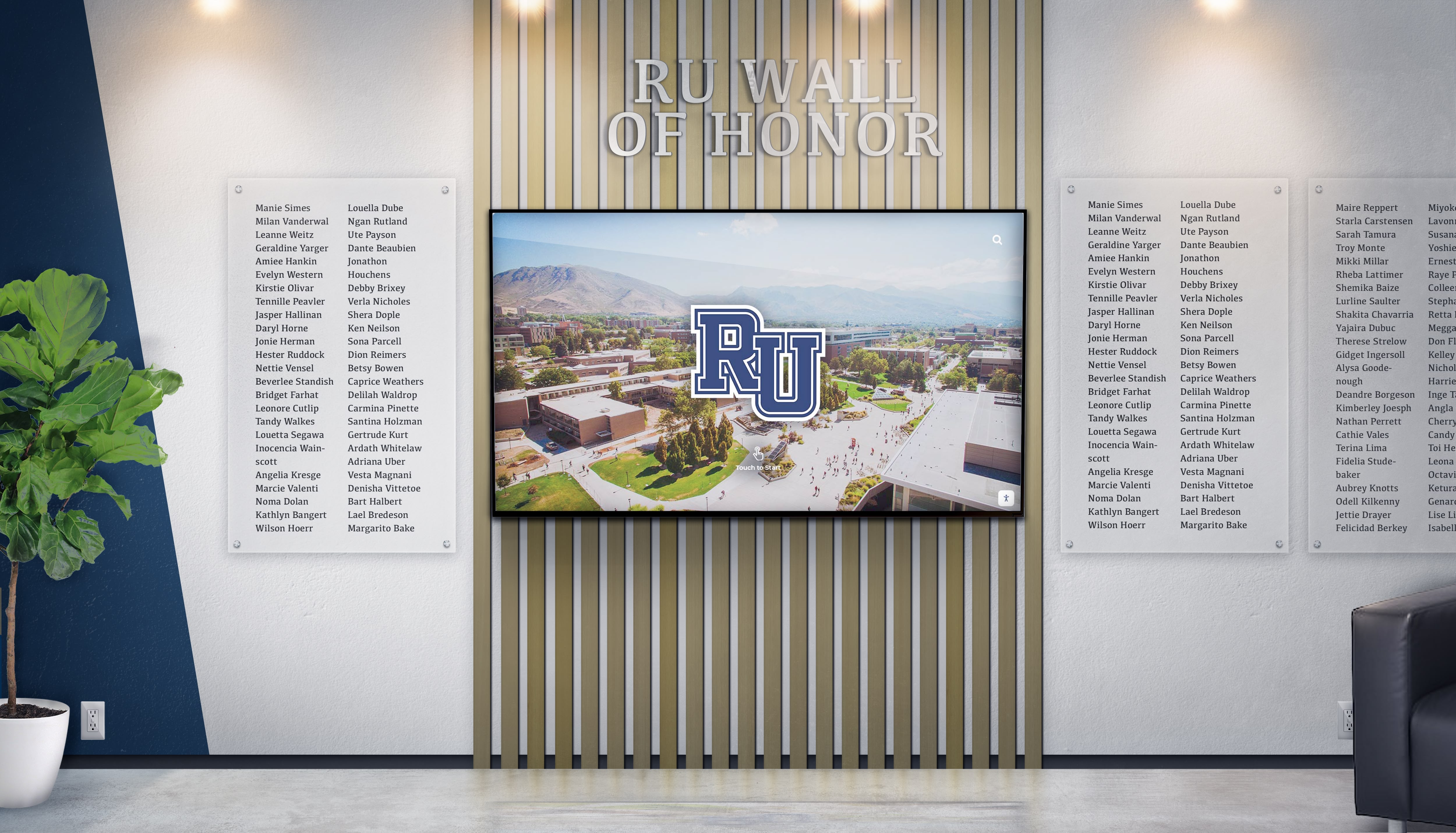
Integrated recognition systems preserve traditional elements while adding digital capabilities creating comprehensive celebration honoring past and present achievement
Addressing Common Implementation Concerns
Schools considering ACT leaderboards frequently raise legitimate questions deserving thoughtful consideration and response.
Concern: Overemphasis on Standardized Testing
Some educators worry that prominent ACT recognition sends problematic messages overvaluing standardized testing while undervaluing other learning dimensions, creativity, character development, and diverse intelligences deserving equal recognition.
Balanced Recognition Framework Response
Schools can address this legitimate concern by positioning ACT leaderboards within comprehensive recognition ecosystems celebrating diverse achievement types including classroom academic performance and GPA recognition, arts achievement and creative accomplishment, service learning and community contribution, leadership development and character growth, athletic excellence and physical achievement, and specialized talents reflecting diverse student strengths.
The goal involves elevating standardized test achievement to visibility comparable with athletic success—not positioning ACT scores as sole or even primary measure of student worth and capability. When academic recognition achieves equality with existing athletic celebration rather than displacing other recognition forms, concerns about overemphasis diminish substantially.
Concern: Inequitable Access to Test Preparation Resources
Critics rightfully note that ACT performance correlates with family socioeconomic status, with wealthy students accessing expensive test preparation, tutoring, and multiple test attempts that economically disadvantaged peers cannot afford, potentially making recognition programs celebrations of privilege rather than genuine achievement.
Equitable Preparation Support Response
Schools serious about ACT recognition should simultaneously invest in ensuring equitable preparation access through school-sponsored free ACT prep courses and study sessions available to all students regardless of ability to pay, test registration fee waivers covering costs for economically disadvantaged students, loaner materials providing practice books and resources, partnerships with test prep providers offering substantial student discounts, academic support addressing content gaps that limit performance, and explicit messaging that preparation resources exist helping all students achieve recognition thresholds regardless of family resources.
When schools combine prominent recognition with substantial equitable preparation support, they demonstrate commitment to helping all students achieve excellence rather than simply celebrating those who independently reach high performance through private advantages.
Additionally, schools can implement complementary recognition programs celebrating improvement and growth regardless of absolute scores, acknowledging students who overcome disadvantages to achieve college readiness even without reaching ACT 30+, and honoring diverse pathways to college success including test-optional admissions approaches serving students whose standardized testing doesn’t reflect their capabilities.
Concern: Creating Unhealthy Pressure or Competition
Some stakeholders worry that visible leaderboards create harmful competitive environments, excessive pressure undermining student wellbeing, and messaging that only highest achievers deserve recognition or institutional pride.
Healthy Achievement Culture Response
Research suggests appropriate recognition actually reduces anxiety by creating clear achievement pathways and transparent expectations reducing uncertainty, normalizing rigorous preparation as valued dimension of school experience, providing multiple recognition opportunities ensuring accessibility, celebrating effort and improvement alongside absolute performance, and framing achievement as personal growth rather than zero-sum competition against peers where others’ success diminishes one’s own accomplishments.
Schools can implement recognition emphasizing personal bests and growth trajectories while still celebrating exceptional absolute achievement, creating motivational environments without fostering destructive competition or pressure that damages student mental health and academic engagement.
Additionally, multi-tiered recognition with varied thresholds ensures opportunities exist for students across performance levels rather than creating narrow definition of success accessible only to small elite populations regardless of substantial effort and dedication from other students.
Explore frameworks for creating healthy academic recognition that motivates without creating harmful pressure or competitive environments.
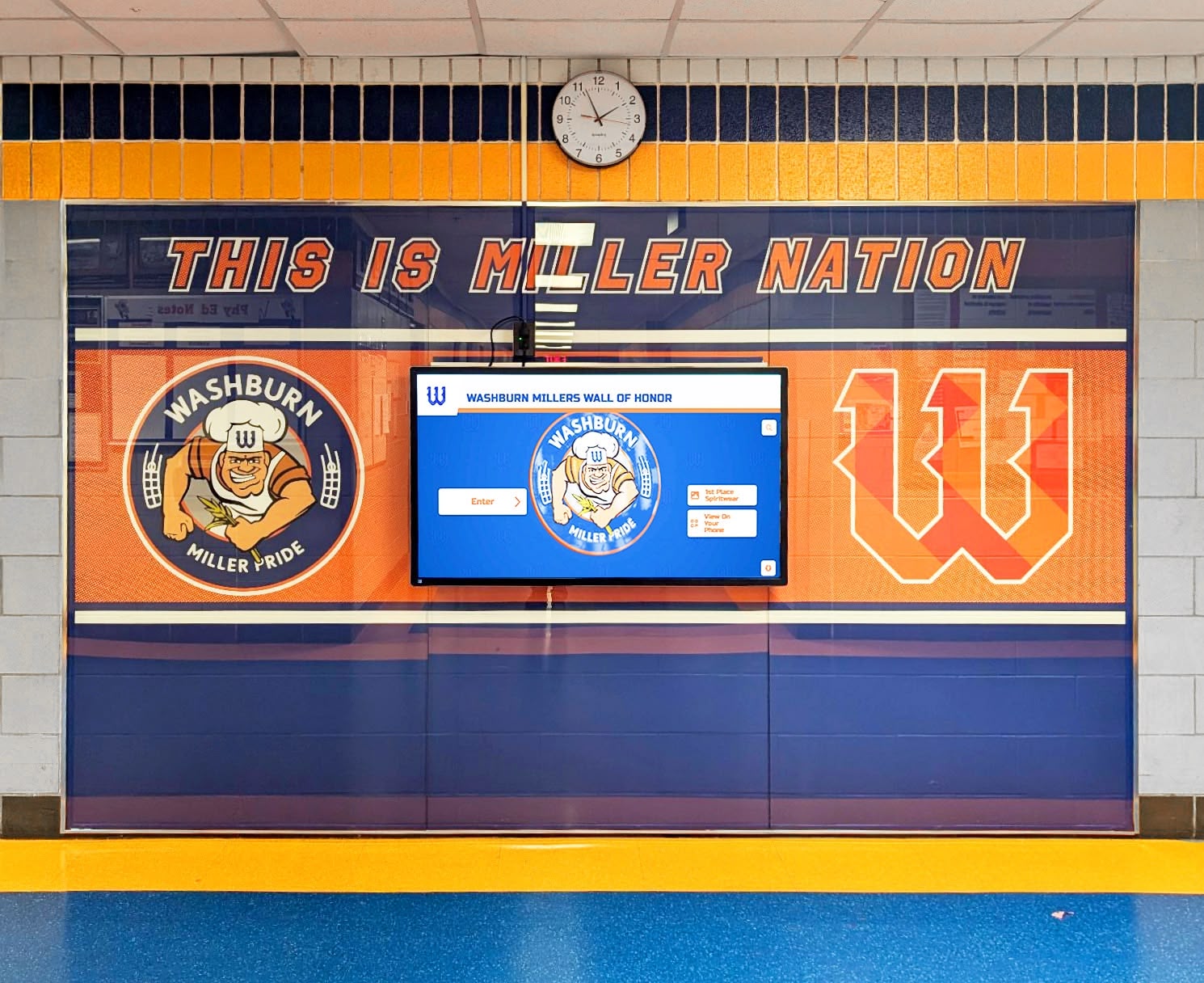
Hallway installations create constant visibility maintaining achievement awareness throughout daily school activities
Cost Considerations and Budget Planning
Understanding comprehensive implementation costs enables realistic planning and appropriate stakeholder expectations.
Initial Implementation Investment
Comprehensive digital ACT leaderboard programs typically require:
Hardware Costs (Physical Display Option)
- Commercial-grade 55-65" touchscreen display: $3,500-$6,500
- Professional mounting or kiosk enclosure: $1,200-$2,800
- Media player or embedded computer: $600-$1,200
- Installation labor and configuration: $800-$2,000
- Network infrastructure enhancement if needed: $500-$1,500
Software Platform Setup
- Recognition platform license and setup: $2,000-$4,500
- Initial content development and design customization: $1,500-$3,500
- Historical achievement data migration: $800-$2,200
- Administrator training and onboarding: $500-$1,200
Total First-Year Investment Range: $11,400-$25,400 for comprehensive single-display implementations including hardware, software, installation, initial content, and training.
Schools implementing web-based leaderboards without physical displays substantially reduce initial costs by eliminating hardware and installation expenses, with first-year investment potentially dropping to $4,800-$11,400 covering software platform, content development, and training.
Ongoing Annual Operating Costs
Sustainable programs require continued investment maintaining quality and currency:
Platform and Technical Costs
- Software subscription and cloud hosting: $1,800-$3,600 annually
- Technical support and platform maintenance: $600-$1,200 annually
- Hardware extended warranty or replacement reserve: $400-$800 annually
Content Management and Enhancement
- Staff time for ongoing updates and profile creation: $1,200-$2,400 annually (primarily existing staff capacity rather than new positions)
- Photography and content collection: $400-$1,000 annually
- Periodic content enhancement and feature additions: $600-$1,400 annually
Total Annual Operating Costs: $5,000-$10,400 maintaining recognition program quality, currency, and engagement.
These ongoing costs compare favorably to traditional plaque approaches requiring physical updates—engraving new plates ($40-$80 per name), installation labor for adding plaques, eventual replacement when displays fill completely, and physical maintenance addressing deterioration over time.
Funding Strategies and Budget Integration
Schools employ diverse approaches financing ACT recognition investments:
Operating Budget Integration
- Educational technology budget allocations
- College counseling program enhancements
- Student recognition and awards programming
- Academic achievement initiatives
- Capital improvement funds for permanent installations
External Funding Sources
- Parent organization fundraising for academic programs
- Alumni association contributions supporting achievement recognition
- Corporate sponsorships from local businesses supporting education
- Community foundation grants for academic excellence initiatives
- Memorial gift opportunities honoring accomplished alumni
Phased Implementation
- Begin with web-based recognition requiring minimal hardware investment
- Add physical displays as funding becomes available
- Expand to multiple locations systematically over several years
- Implement basic recognition initially with enhancement as resources allow
Most schools successfully fund comprehensive recognition through combination of operating budget allocation and targeted fundraising, with initial investment representing multi-year asset serving institutions for decades rather than annual expense requiring repeated justification.
Launch Strategies and Community Engagement
Strategic rollout maximizes program visibility, stakeholder engagement, and motivational impact.
Pre-Launch Planning and Stakeholder Communication
Successful implementations begin months before public debut:
Internal Preparation Phase
- Administrative approval and budget confirmation
- Technology platform selection and contract finalization
- Staff training ensuring comfortable platform management
- Initial content development creating launch-ready recognition
- Testing and quality assurance identifying issues before public visibility
Stakeholder Communication Strategy
- Faculty and staff announcement explaining program purpose and operations
- Student assembly introducing recognition and encouraging score submission
- Family communication through newsletters and email explaining access and benefits
- Board of education presentation demonstrating institutional commitment to academic excellence
This advance communication builds anticipation while ensuring stakeholders understand recognition program significance and how to engage with leaderboards effectively rather than discovering them accidentally without context or guidance.
Launch Event and Initial Recognition Ceremony
High-profile introductions generate awareness and establish recognition program importance:
Public Unveiling Strategies
- Coordinate launch timing with significant school events (academic awards ceremony, college decision day, back-to-school assembly)
- Feature inaugural recognized students as founding members establishing tradition
- Provide hands-on exploration opportunities with staff available answering questions
- Celebrate program launch as milestone demonstrating institutional academic commitment
- Generate media coverage through press releases and community announcements
Ceremonial launches communicate that leaderboards represent genuine priorities deserving celebration rather than minor additions installed quietly without acknowledgment or community awareness.
Sustained Visibility and Ongoing Promotion
Leaderboards require continued marketing maintaining awareness and engagement:
Regular Communication Touchpoints
- Social media features highlighting individual recognized students periodically
- Newsletter articles celebrating recent additions and program milestones
- Morning announcements when new achievers join leaderboard
- College counseling office promotion during test preparation discussions
- Student ambassador programs connecting past achievers with underclassmen preparing for ACT
Annual Recognition Events
- Year-end ceremonies honoring all new ACT 30+ achievers from preceding year
- Senior recognition during graduation season celebrating departing students
- Alumni gatherings showcasing historical achievement connecting generations
- College decision day integration highlighting scholarship awards earned through exceptional performance
Consistent communication ensures recognition programs remain visible and valued rather than becoming background infrastructure communities stop actively noticing despite continued availability.
Discover comprehensive approaches to implementing digital recognition that creates lasting stakeholder engagement and motivational impact.
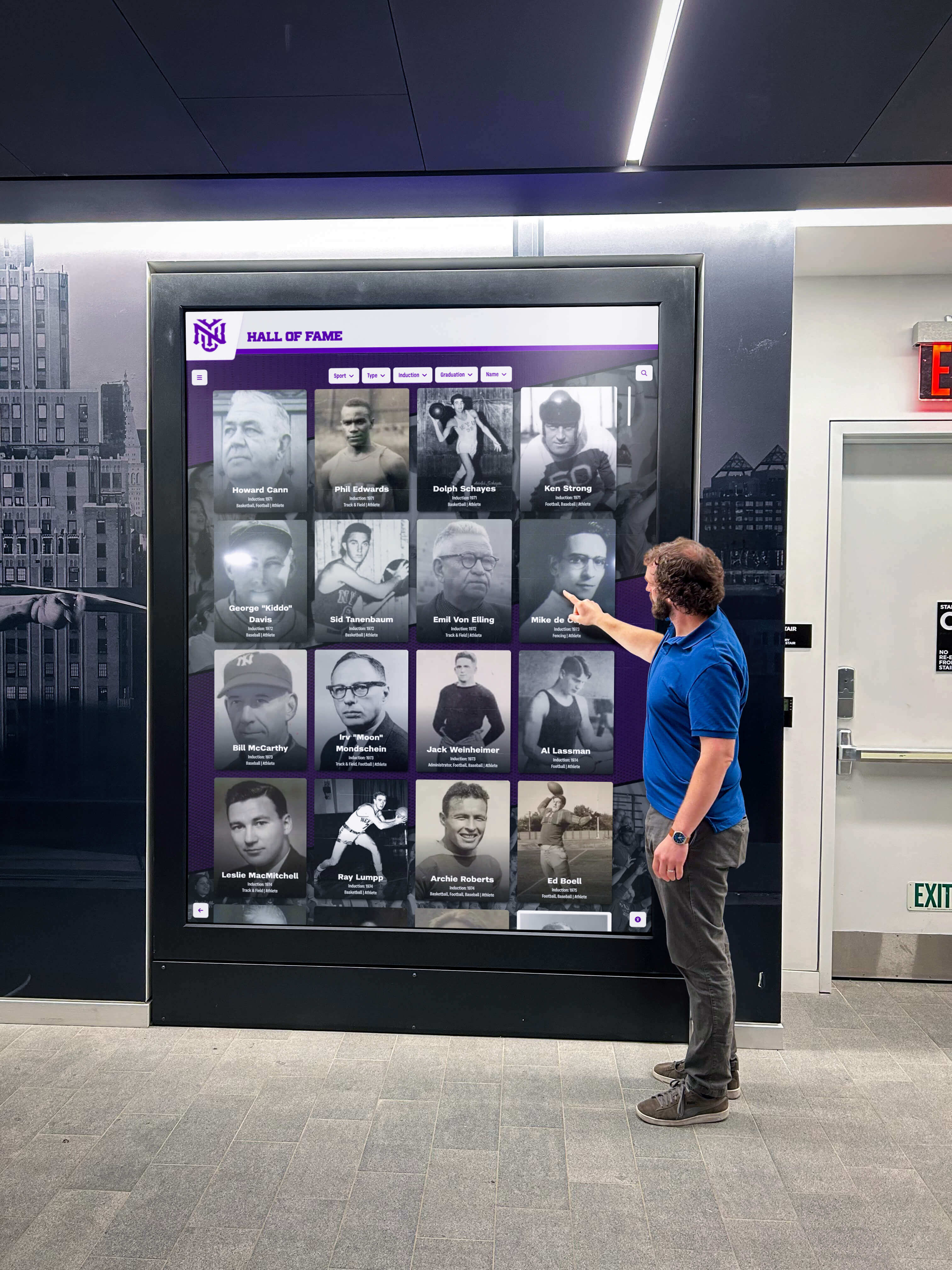
Interactive displays create natural engagement opportunities enabling families and visitors to explore academic excellence
Conclusion: Transforming Academic Culture Through Digital Recognition
Digital leaderboards showcasing ACT 30+ achievement represent far more than technology upgrades replacing physical plaques—they fundamentally transform how schools celebrate academic excellence, motivate student achievement, and demonstrate institutional commitment to measurable college preparation outcomes. When schools implement comprehensive recognition programs providing real-time updates, interactive exploration, and permanent historical preservation, they create motivational systems that inspire students daily rather than providing fleeting acknowledgment quickly forgotten.
Traditional recognition approaches—morning announcements, static plaques, or occasional newsletter features—fail to leverage achievement visibility for sustained motivational impact. These methods provide brief acknowledgment then disappear, offering no lasting presence maintaining awareness or creating continuous inspiration for underclassmen encountering recognition repeatedly throughout school careers.
Digital leaderboards eliminate these limitations while introducing capabilities impossible through traditional approaches including unlimited recognition capacity accommodating every ACT 30+ achiever across unlimited years, real-time updates providing immediate acknowledgment when students achieve qualifying scores, interactive features enabling exploration of detailed achievement profiles and preparation strategies, web accessibility extending recognition globally to alumni and distant families, and data analytics revealing engagement patterns informing continuous program improvement.
Create Inspiring ACT Achievement Recognition
Discover how digital leaderboard solutions can transform how you celebrate ACT 30+ excellence, motivate test preparation investment, and build thriving academic culture where intellectual achievement receives the visibility it deserves.
Book a demoModern platforms like Rocket Alumni Solutions provide purpose-built recognition systems designed specifically for educational achievement celebration, offering intuitive management requiring no technical expertise, comprehensive profile capabilities supporting rich storytelling beyond simple names and scores, unlimited capacity accommodating decades of future achievement, cloud-based architecture enabling remote management and web access, and dedicated support from vendors understanding educational recognition needs and best practices.
Students who achieve ACT 30+ scores represent the top 7% of test-takers nationally—an elite group demonstrating exceptional college readiness deserving prominent, ongoing recognition matching achievement significance. Digital leaderboards provide the visibility, engagement, and motivation that traditional approaches cannot deliver regardless of investment, creating recognition programs that inspire continued excellence while honoring past achievement appropriately.
Whether your school seeks to elevate academic achievement culture, motivate increased test preparation investment, celebrate growing numbers of high achievers traditional displays cannot accommodate, or simply provide ACT excellence with visibility comparable to athletic success, digital leaderboard solutions exist transforming recognition from constrained acknowledgment into comprehensive programs worthy of the dedication and achievement they honor.
Your students’ academic excellence deserves recognition that lasts, inspires, and motivates effectively. With thoughtful planning, appropriate technology investment, strategic implementation, and sustained commitment, you can create ACT 30+ leaderboards that transform academic culture while providing the celebration that exceptional standardized test achievement truly deserves.
Ready to explore digital recognition for your school? Learn about comprehensive academic achievement recognition or discover strategies for celebrating standardized test excellence that inspires continued achievement across entire school communities.