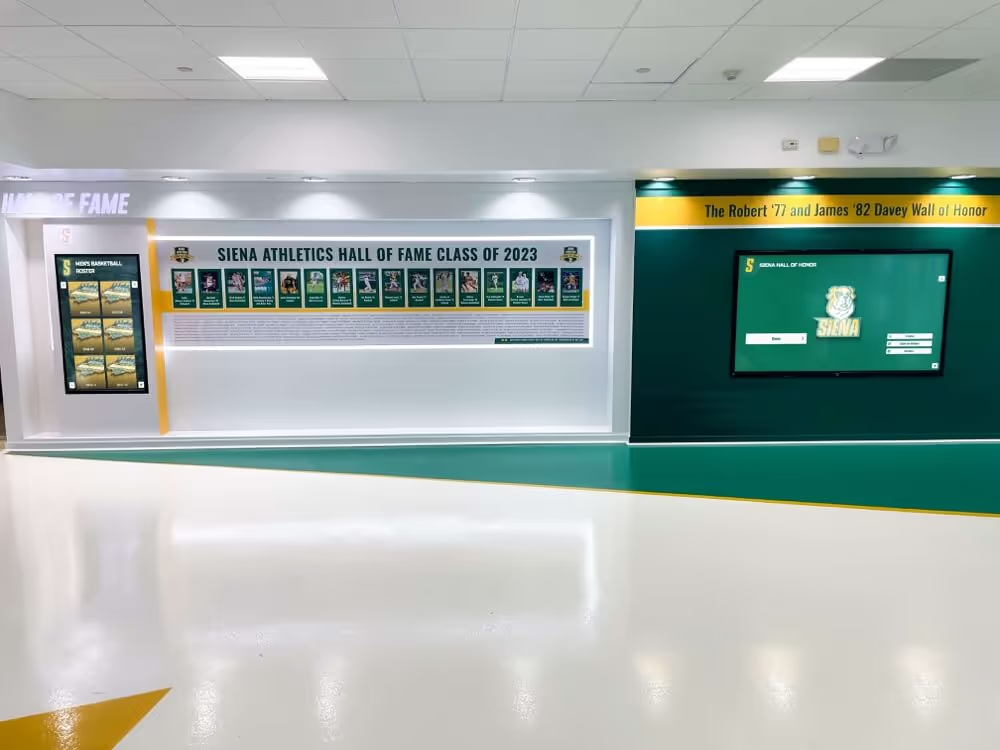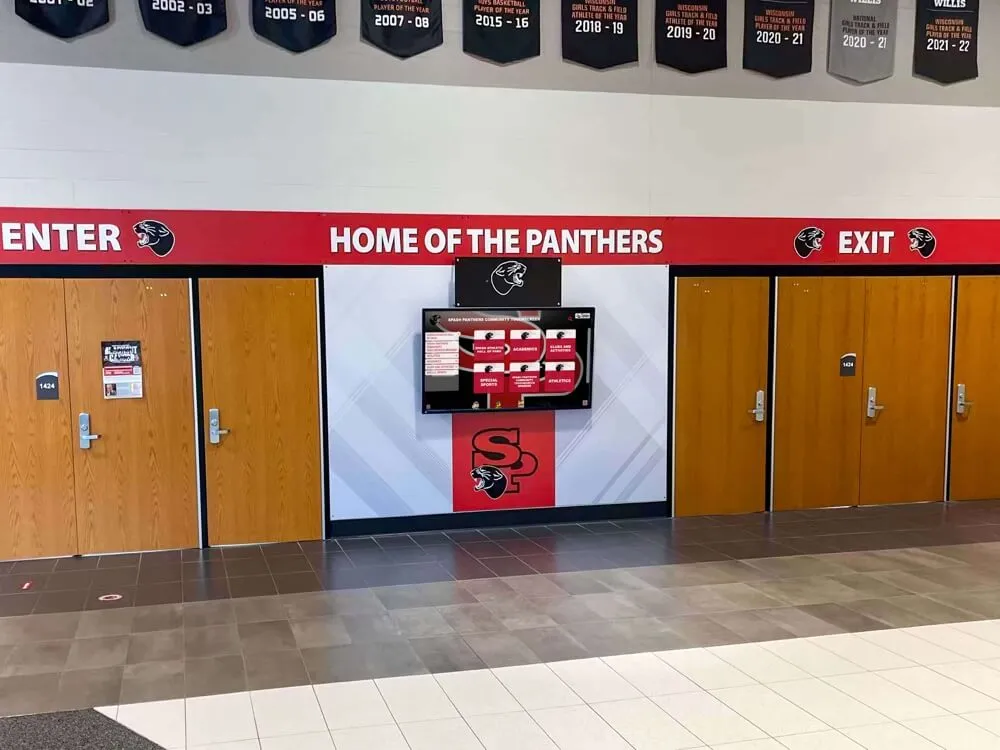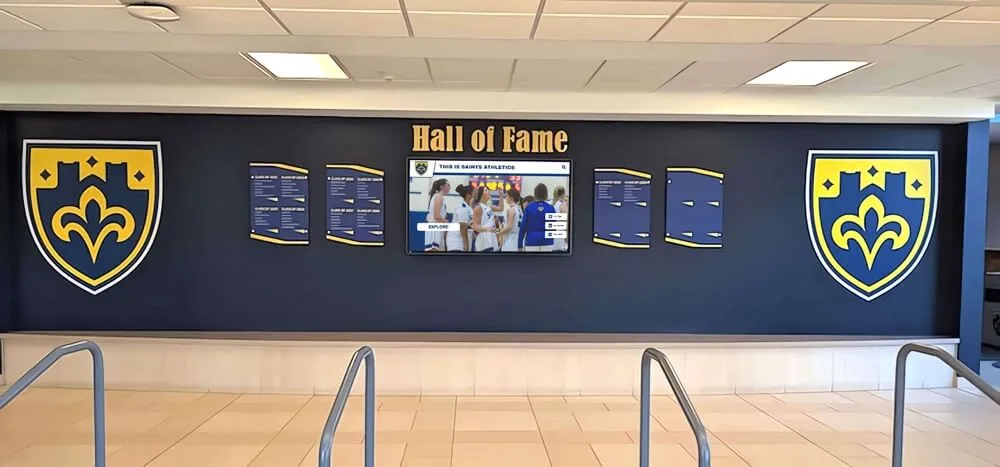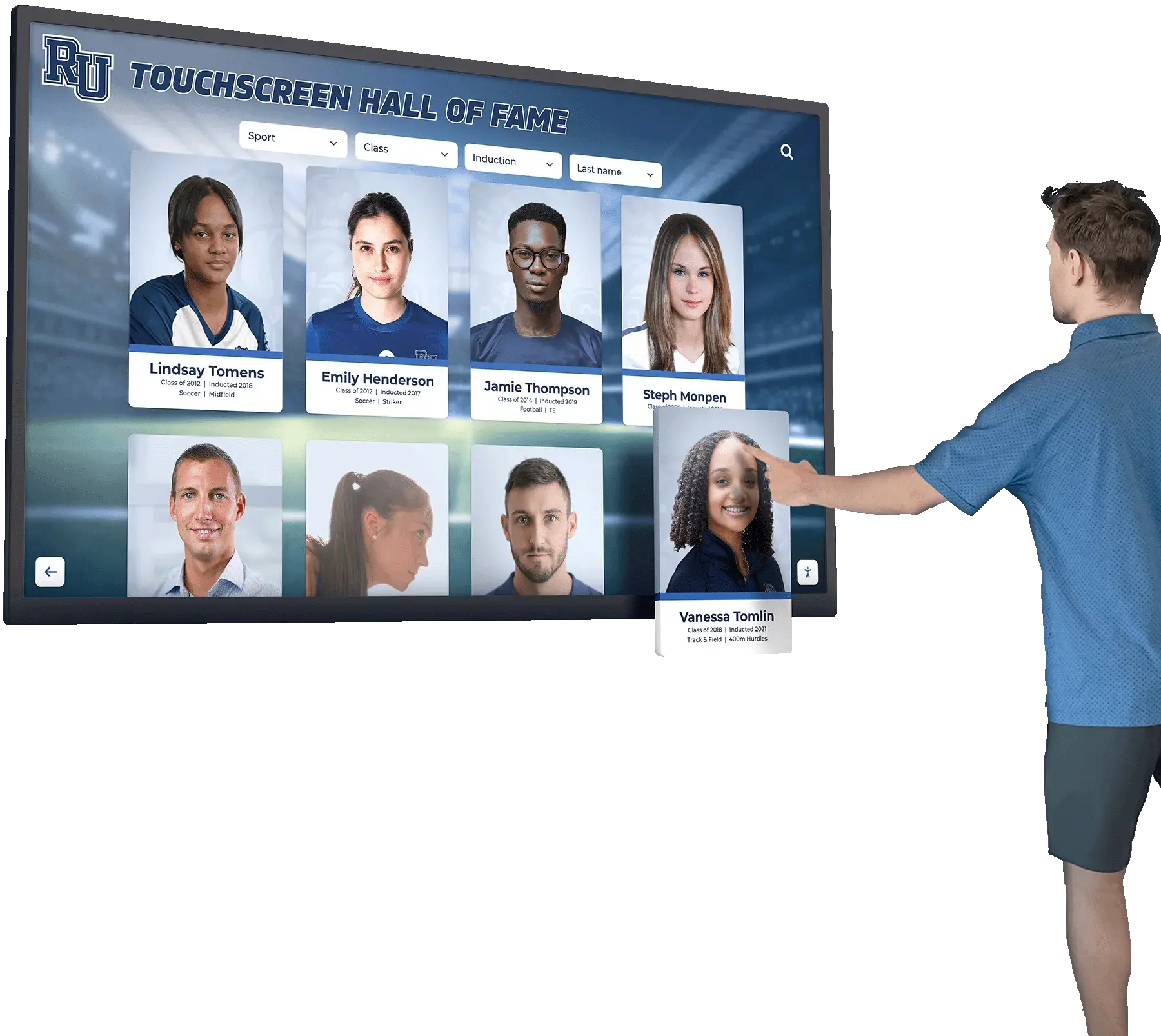
As America approaches its 250th birthday in 2026, museums, heritage organizations, schools, and community institutions face an extraordinary opportunity to commemorate this milestone through meaningful recognition of both historical legacy and contemporary contributions. The semiquincentennial celebration presents unique challenges for advancement teams: how to honor founding principles while recognizing modern donors whose support preserves these stories, how to make centuries of history accessible to digital-native audiences, and how to create lasting commemorative installations that serve educational purposes long after 2026 concludes.
Traditional static donor walls and historical exhibits fail to capture the scope and significance of this moment. Fixed plaques cannot accommodate the stories of 250 years of community builders, veterans, educators, civic leaders, and philanthropists whose contributions shaped local expressions of American ideals. Vinyl timelines and printed panels cannot engage visitors who expect interactive exploration. Physical displays lack the flexibility to coordinate content with anniversary programming, educational initiatives, and fundraising campaigns tied to this once-in-a-generation milestone.
Museum history touchscreens provide the solution advancement teams need to commemorate America’s 250th celebration appropriately. Interactive digital displays accommodate unlimited historical content and donor recognition without space constraints, enable dynamic storytelling that connects past sacrifices to present philanthropy, support multimedia presentations combining archival materials with contemporary donor messaging, provide searchable databases helping visitors discover personal connections to historical narratives, and integrate with fundraising campaigns by demonstrating how current gifts preserve heritage for future generations. Organizations implementing touchscreen recognition systems for the semiquincentennial create installations that serve commemoration, stewardship, and educational missions simultaneously.
Museums and heritage organizations preparing for the 2026 semiquincentennial recognize that this milestone demands more than temporary exhibits. Anniversary programming must honor historical legacy while building long-term engagement infrastructure that strengthens community connections, recognizes philanthropic partners, and provides educational resources for decades beyond the celebration year itself.

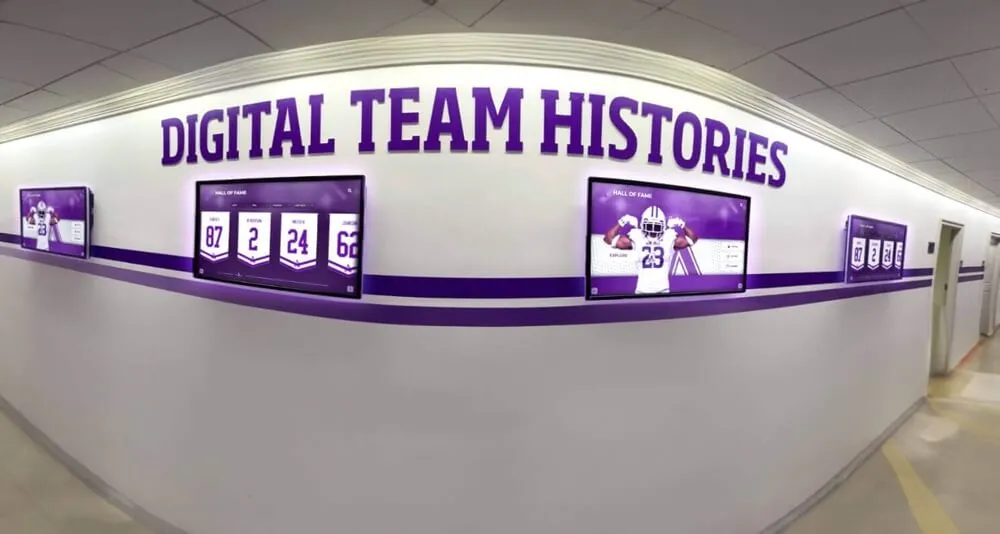
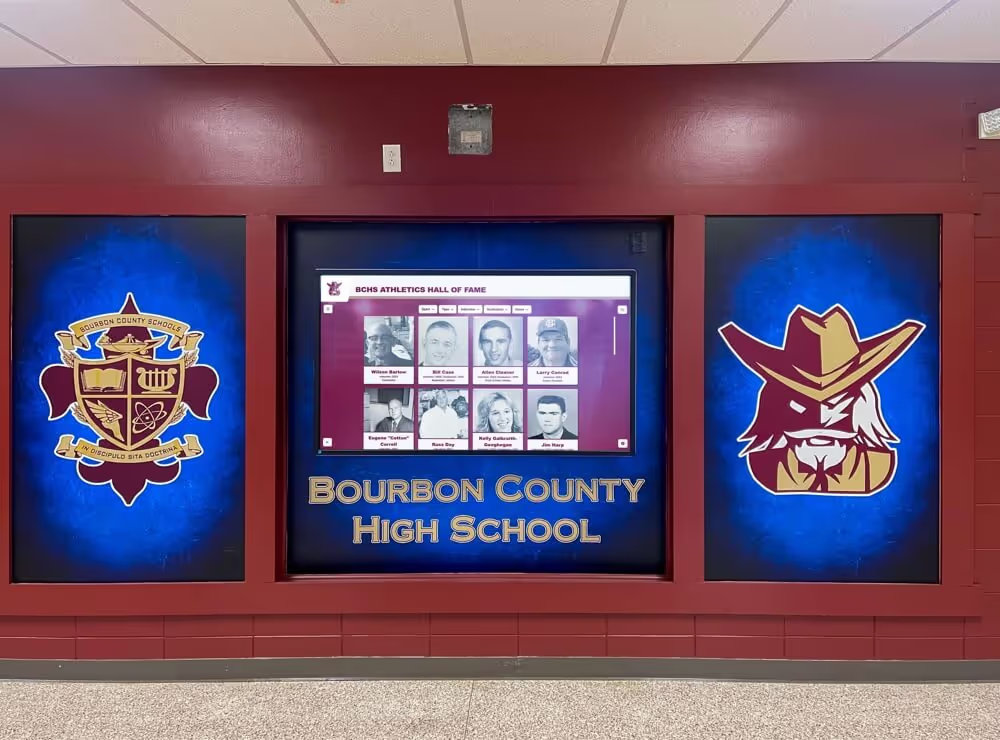
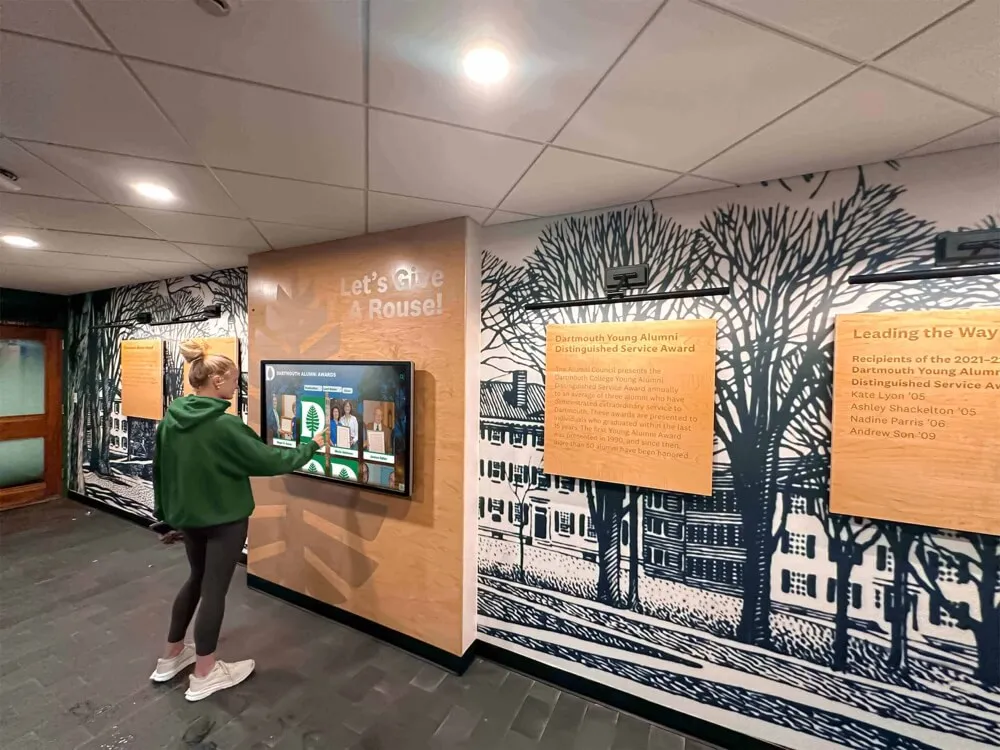
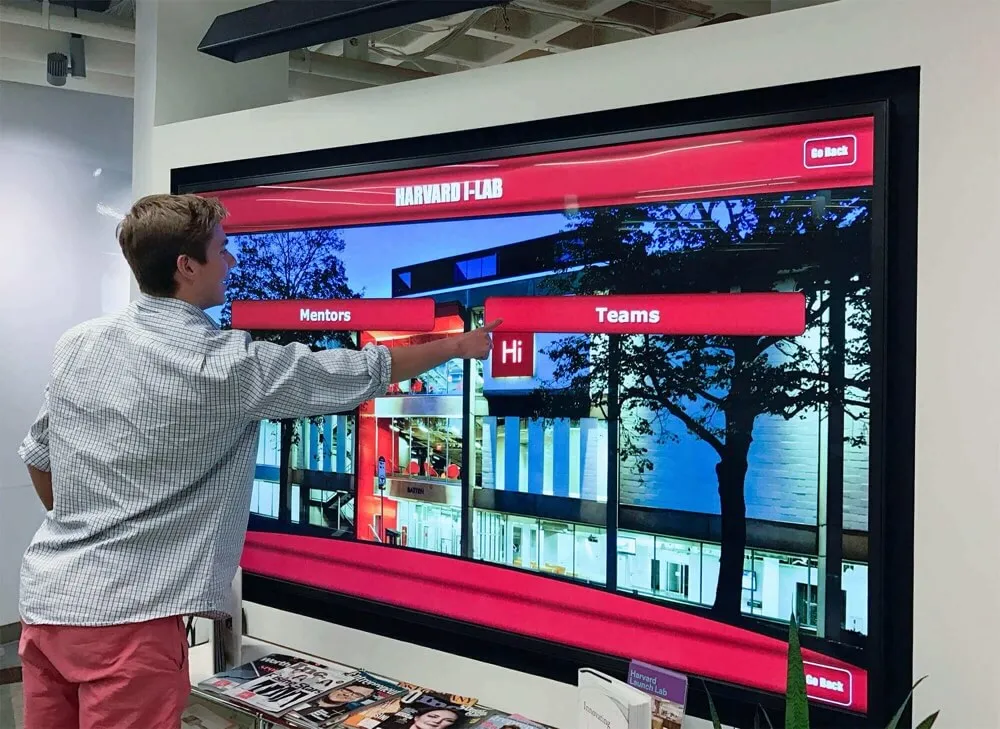
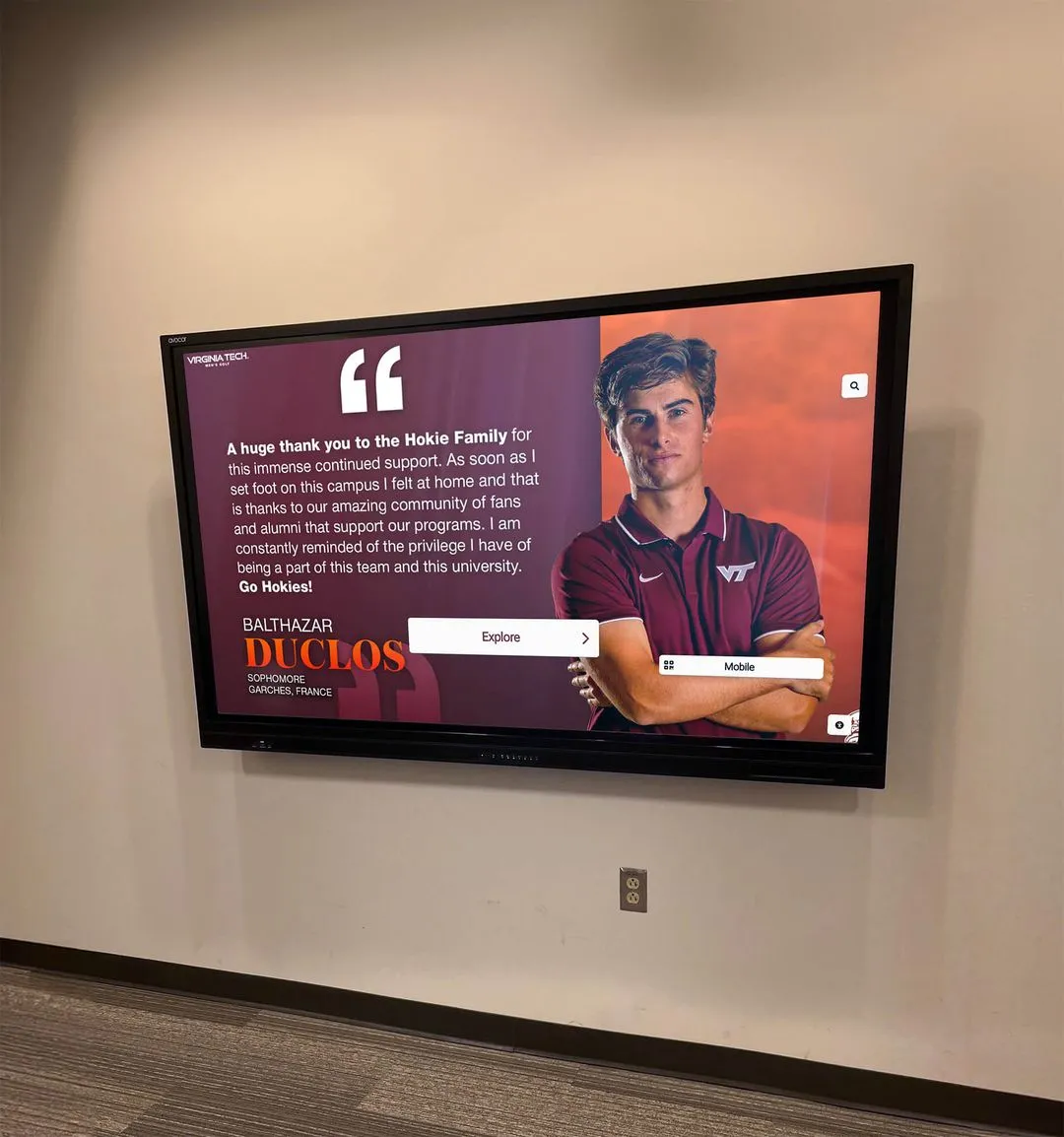
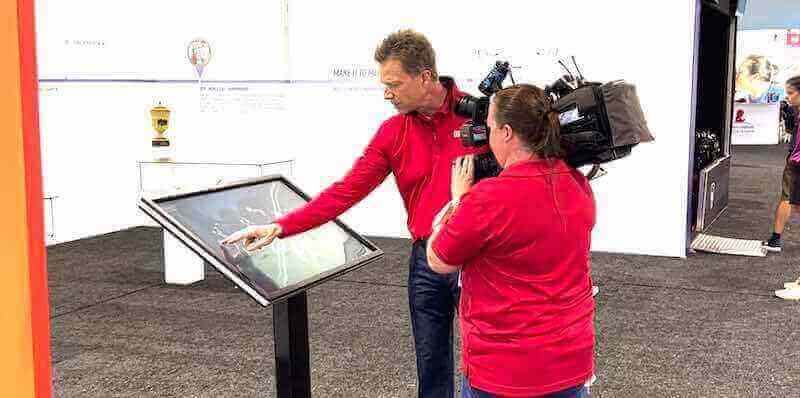
Interactive touchscreen technology transforms historical commemoration into engaging exploration
Understanding the America 250 Opportunity for Heritage Organizations
The semiquincentennial represents more than a calendar milestone. For advancement teams at museums, historical societies, schools, and community organizations, 2026 offers strategic opportunities to strengthen donor relationships, expand educational programming, and build recognition infrastructure serving institutional missions for decades.
Why the 250th Anniversary Matters for Donor Stewardship
Major national anniversaries create natural fundraising momentum and donor engagement opportunities that advancement teams should maximize through thoughtful recognition planning.
Patriotic Giving Motivations
Anniversary years generate elevated philanthropic interest in heritage preservation, historical education, and community commemoration. Donors respond to campaigns framed around preserving founding principles, honoring veterans and civic leaders, educating younger generations about American history, and creating lasting tributes marking this generational milestone. Capital campaigns tied to the semiquincentennial achieve higher participation rates and larger gifts compared to routine annual giving.
According to fundraising research, organizations running anniversary-themed campaigns typically experience 25-35% increases in major gift commitments compared to non-anniversary years, as donors seek meaningful ways to mark significant milestones through charitable giving.
Legacy and Permanence Appeals
The rarity of 250-year milestones creates compelling legacy messaging. Donors understand their contributions during this anniversary year will be permanently associated with America’s semiquincentennial commemoration. Recognition installations created for 2026 become historical artifacts themselves, preserving donor names alongside the very history their philanthropy helped present. This permanence appeals to major gift prospects seeking enduring impact and multi-generational recognition.
Coordination with Community Celebrations
Communities nationwide are planning 2026 programming including parades, concerts, educational events, historical reenactments, and commemorative installations. Museums and heritage organizations positioned as central participants in local celebrations gain elevated visibility, expanded audiences, and natural fundraising momentum. Donor recognition displays coordinating with community-wide activities demonstrate organizational leadership while creating public touchpoints where recognition and stewardship happen simultaneously.
The Educational Imperative of Interactive History
Beyond donor stewardship, the semiquincentennial creates educational opportunities and responsibilities for heritage organizations serving schools and communities.
Engaging Digital-Native Audiences
Students and younger visitors who will experience only one 250th anniversary in their lifetimes expect interactive digital experiences rather than passive text displays. Static exhibits fail to capture attention or encourage exploration among audiences raised with smartphones, tablets, and constant interactivity. When historical institutions present America’s 250th through dated formats, they miss opportunities to build lifelong engagement with heritage content.
Interactive touchscreen displays meet visitor expectations through intuitive interfaces, searchable databases enabling personalized discovery, multimedia presentations combining video, audio, and high-resolution imagery, and self-guided exploration accommodating different interest levels and learning styles.
Connecting Local Stories to National Narratives
The most effective semiquincentennial commemoration connects broad national themes to specific local expressions. Abstract concepts about founding principles become meaningful when illustrated through hometown examples. Students understand historical sacrifice when exploring local veterans from their communities. Civic values resonate when demonstrated through generations of local leaders and educators preserved in searchable archives.
Digital tools that bring history to life enable organizations to present comprehensive local historical content within the broader context of American development, creating relevant educational experiences impossible through limited physical displays.
Coordinating Classroom Curriculum Integration
Many schools are developing America 250-focused curriculum for 2026-2027 academic years. Museums and heritage organizations providing interactive digital archives become valuable educational partners supporting classroom instruction. Teachers assign research projects exploring local historical figures. Students access searchable databases discovering community connections to national events. Classes visit museums specifically to explore touchscreen exhibits coordinating with curriculum standards.
When heritage organizations position themselves as curriculum resources through accessible digital content, they build sustainable school partnerships extending far beyond anniversary programming.
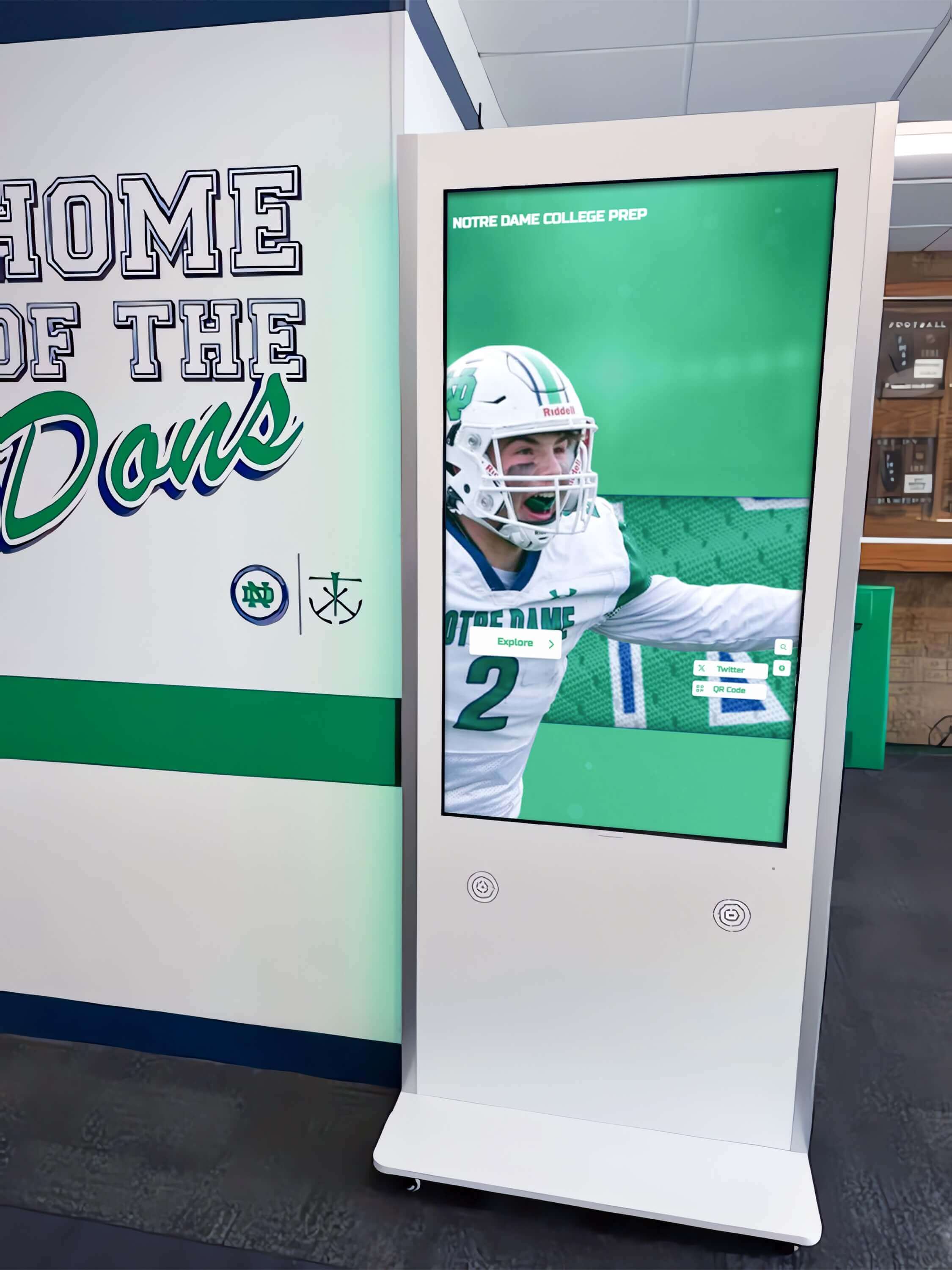
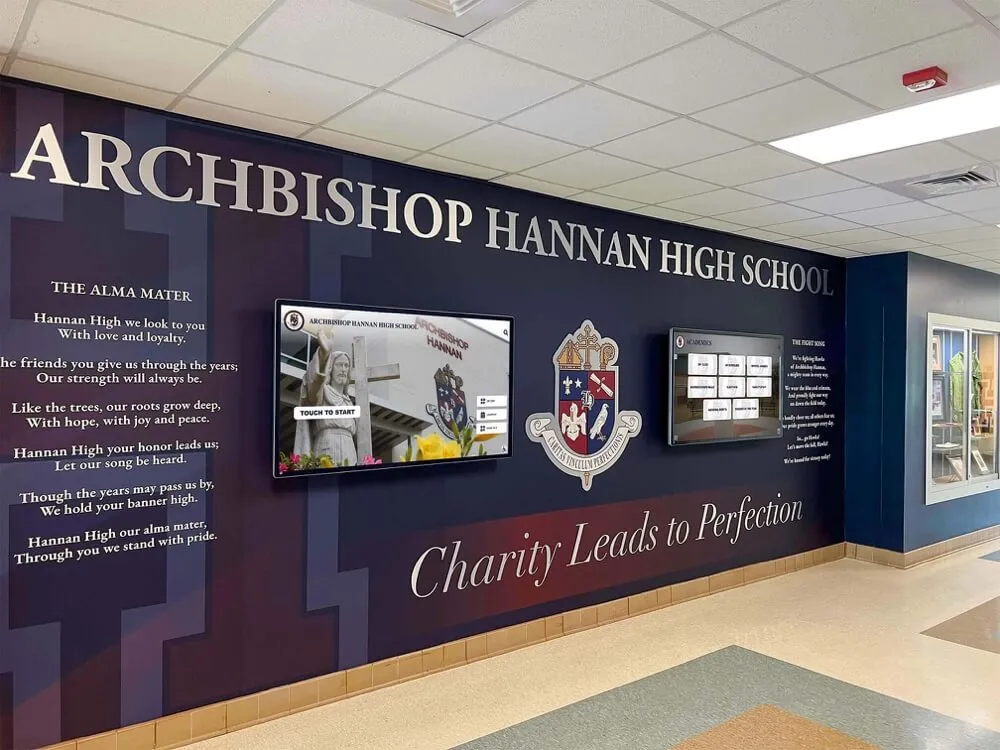
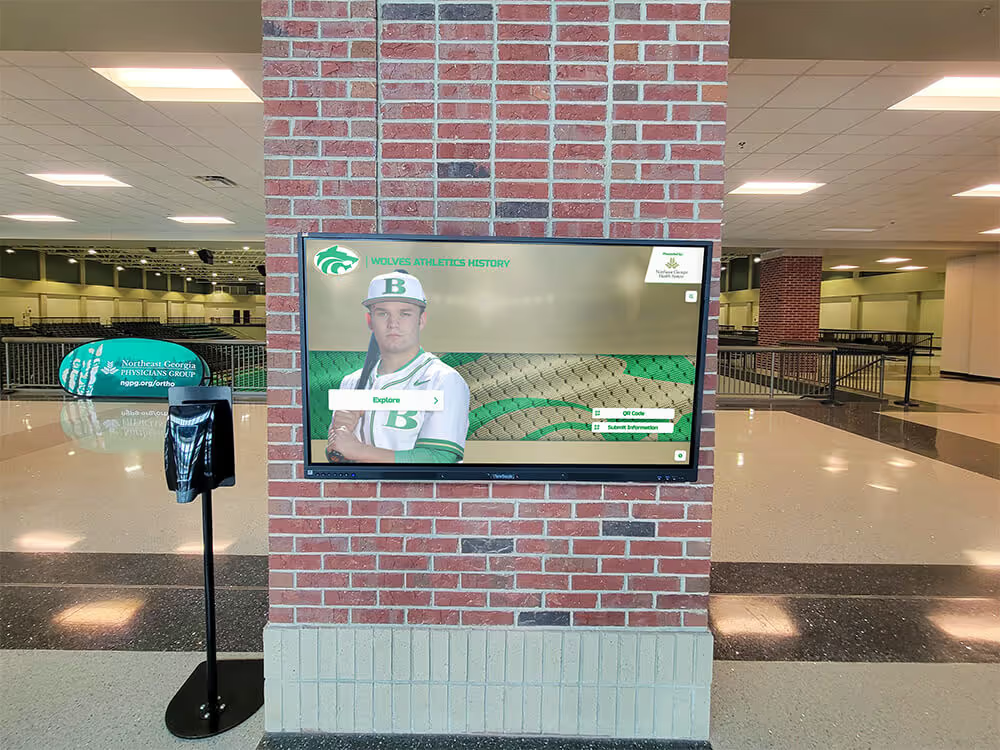
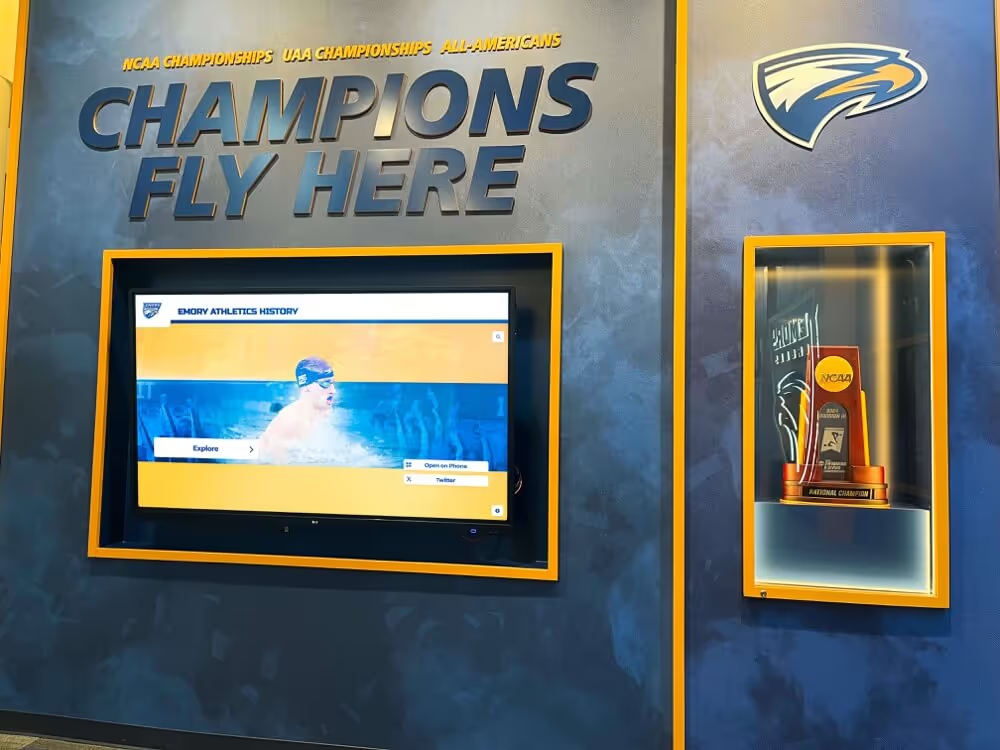
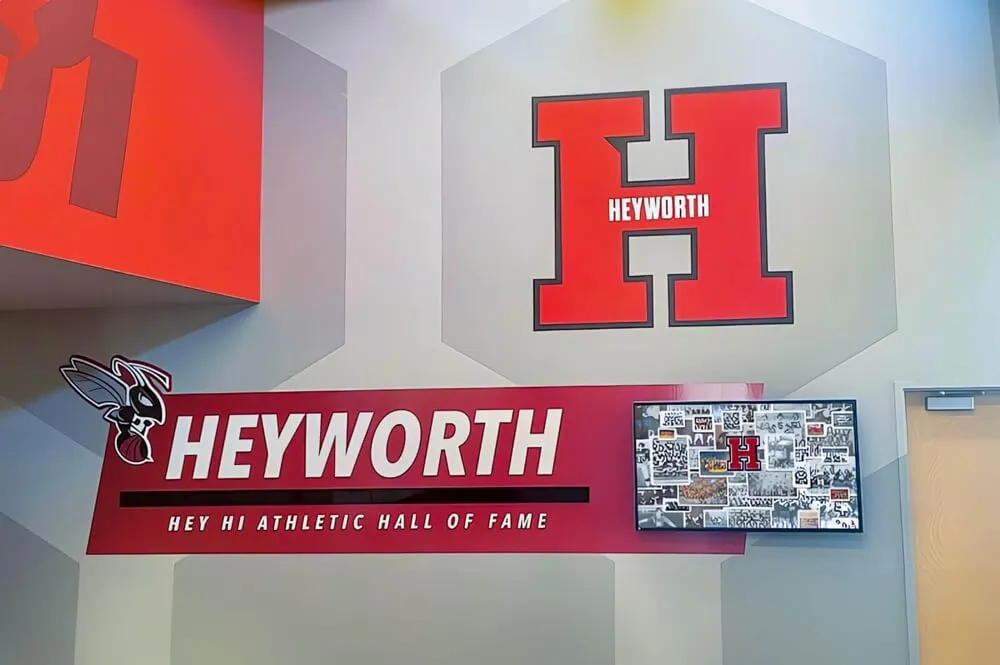
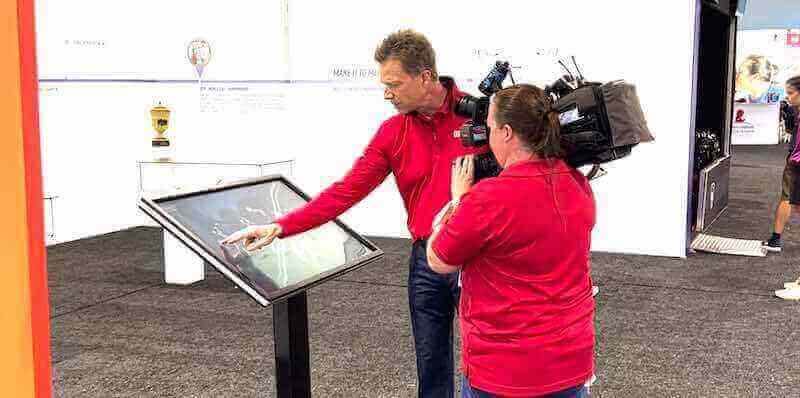
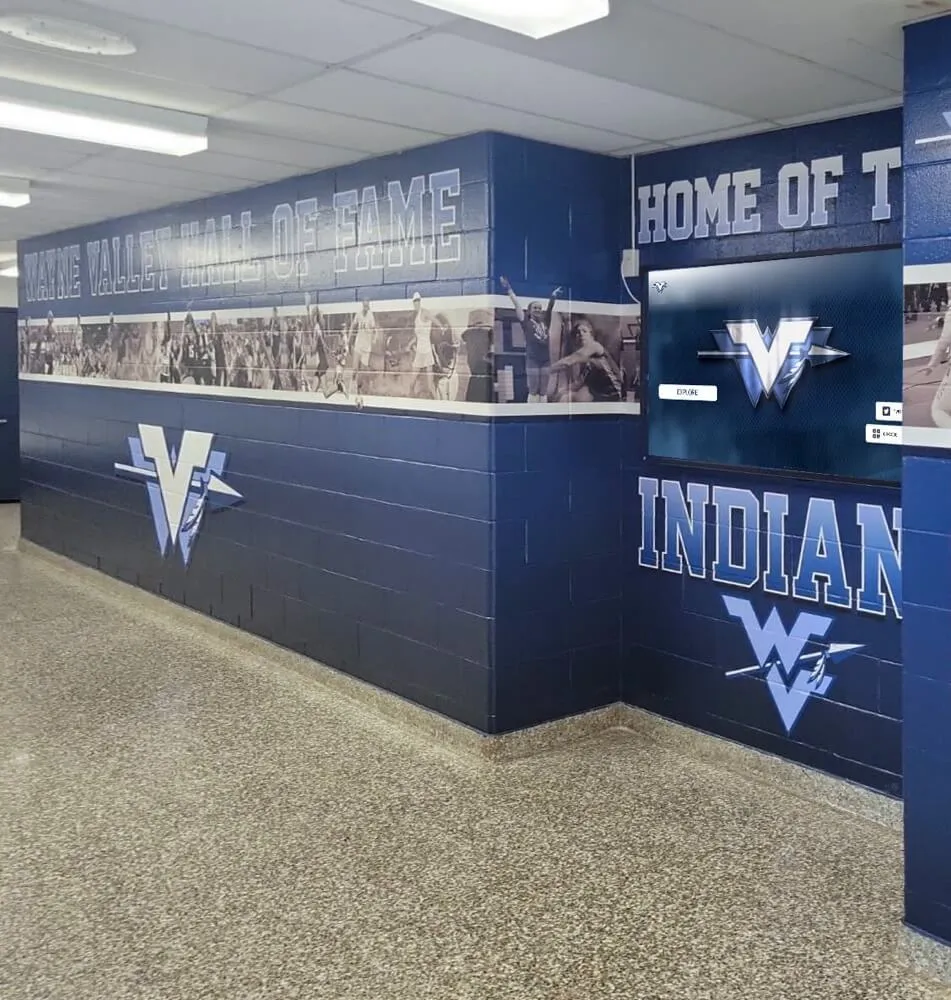
Touchscreen installations in high-traffic areas maximize visitor engagement with historical content
Planning Museum History Touchscreens for Anniversary Commemoration
Effective semiquincentennial recognition displays require strategic planning that balances historical storytelling, donor stewardship, and long-term institutional goals.
Content Strategy: Balancing History and Recognition
The most successful anniversary installations integrate historical narrative with contemporary donor recognition rather than treating them as separate elements.
Chronological Historical Timelines
Foundation content should present comprehensive local history organized chronologically from founding era through present day. Visitors explore different periods discovering community evolution, significant events, influential figures, and institutional development across 250 years. High-resolution historical photographs, digitized documents, newspaper excerpts, and archival materials create rich multimedia presentations bringing each era to life.
Timeline formats work particularly well for anniversary commemoration because they emphasize historical progression and longevity while providing natural framework for organizing diverse content categories.
Thematic Heritage Sections
Beyond chronological organization, thematic sections enable focused exploration of specific aspects of local history including military service and veteran contributions across all conflicts, educational institution development and notable educators, civic leadership and government service, business and economic development shaping communities, cultural and religious institutional history, and athletic and recreational program evolution.
Thematic organization helps visitors find personal interest areas while demonstrating the breadth of community contributions across different sectors throughout 250 years.
Integrated Donor Recognition
Rather than creating separate donor sections disconnected from historical content, the most effective anniversary displays integrate recognition within historical narratives. Donor names appear alongside the historical content their gifts helped preserve and present. Recognition messaging explains how contemporary philanthropy protects heritage and enables educational access to historical materials.
This integration demonstrates to donors that their support directly serves historical preservation missions while ensuring recognition feels organic rather than transactional. Visitors understand the relationship between charitable giving and institutional ability to maintain collections, develop exhibits, and provide public access to heritage content.
Technical Implementation Considerations
Museum history touchscreens for anniversary commemoration require careful technical planning ensuring reliable performance throughout high-traffic celebration periods.
Commercial-Grade Hardware Requirements
Anniversary installations will experience elevated visitor volumes during 2026 celebration periods, requiring durable hardware specifications including commercial-grade touchscreen displays rated for continuous operation, high-brightness screens maintaining visibility in varied lighting conditions, responsive touch sensors supporting rapid user interaction, and protective enclosures preventing vandalism while enabling maintenance access.
Consumer-grade tablets and displays designed for light home use fail quickly under constant museum visitor interaction. Organizations should specify commercial equipment designed specifically for public installation environments.
Content Management System Accessibility
Advancement teams and museum staff need intuitive tools for updating content throughout anniversary programming without requiring IT support for every change. Cloud-based content management systems enable authorized staff to add donor names and gift levels as campaign commitments arrive, update historical content as new materials are digitized or discovered, rotate featured content coordinating with anniversary events and programming, and correct errors or outdated information immediately without vendor intervention.
Solutions like Rocket Alumni Solutions provide museum-friendly content management requiring no technical expertise, enabling historians and advancement staff to maintain displays as easily as updating website content.
Scalability for Growing Content
Historical collections and donor commitments grow continuously throughout capital campaigns and anniversary years. Recognition systems must accommodate unlimited additions without capacity constraints or performance degradation. Advancing teams should verify that platforms can support thousands of historical photographs, hundreds of donor entries across multiple giving levels, extensive biographical content for notable historical figures, and multimedia assets including video footage and audio recordings.
Fixed-capacity systems requiring hardware upgrades or platform migrations when content grows create unnecessary expense and administrative burden during critical campaign periods.
Accessibility and Universal Design
Anniversary installations serving diverse public audiences must meet accessibility standards ensuring all community members can explore historical content regardless of physical abilities or technological familiarity.
ADA Compliance Standards
Museum touchscreen installations must accommodate visitors with various disabilities through appropriate mounting heights enabling wheelchair access, alternative input methods beyond touch for visitors with mobility limitations, audio descriptions supporting vision-impaired exploration, high-contrast display modes improving readability for visitors with vision challenges, and caption support for video content assisting hearing-impaired visitors.
Organizations receiving federal funding or operating in government facilities face particular scrutiny regarding accessibility compliance during high-profile anniversary installations.
Multi-Generational Interface Design
Semiquincentennial visitors will span age ranges from elementary students to centenarians, requiring interface designs accommodating varied technological fluency. Intuitive navigation using familiar patterns requires minimal instruction, large touch targets and readable fonts accommodate older visitors with declining vision or dexterity, simple search functionality enables discovery without complex queries, and clear navigation enabling users to return to starting points without confusion.
When interfaces require extensive instruction or technical knowledge to operate, museums lose engagement opportunities with significant visitor segments who avoid interaction rather than struggling with confusing technology.
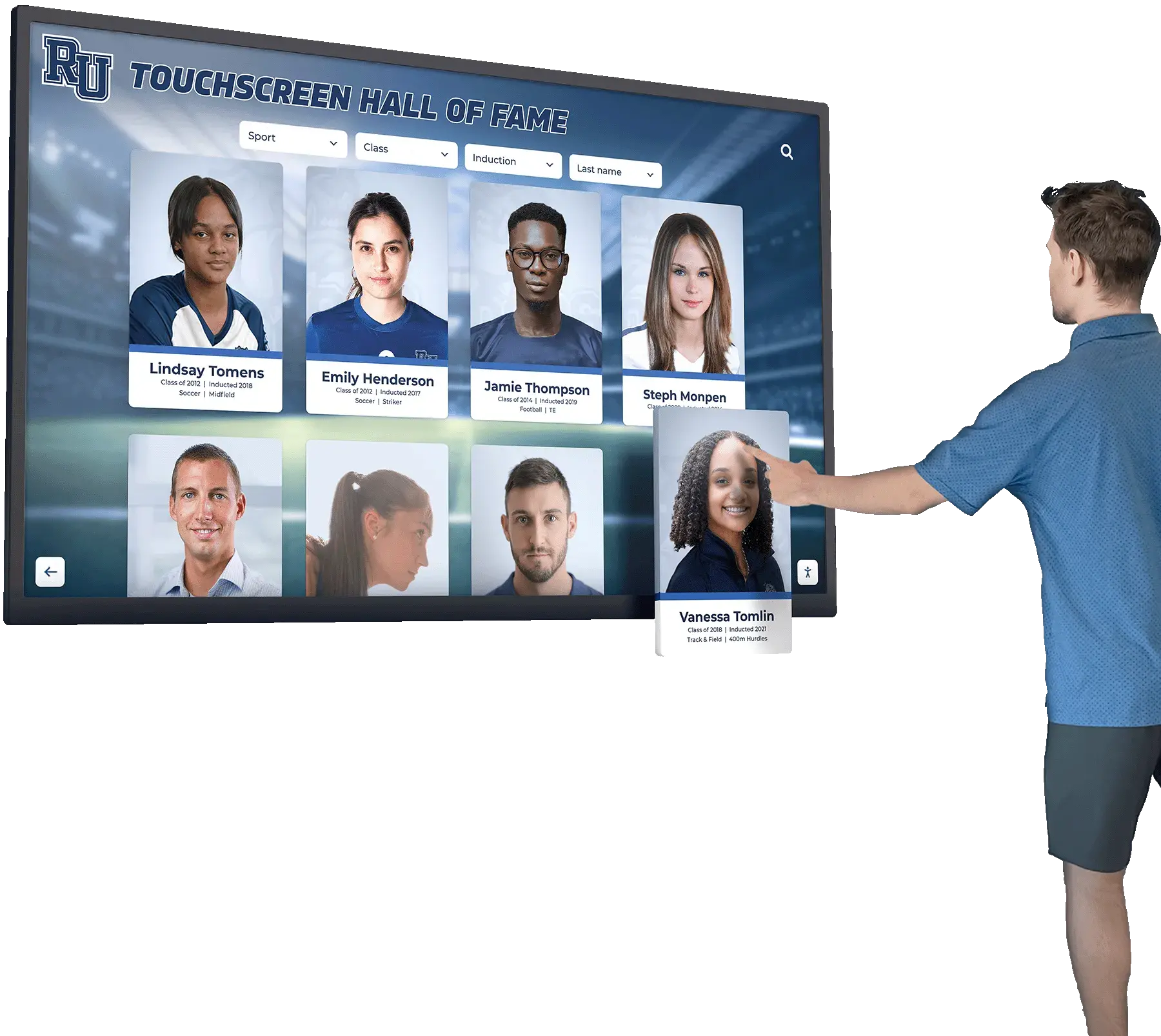
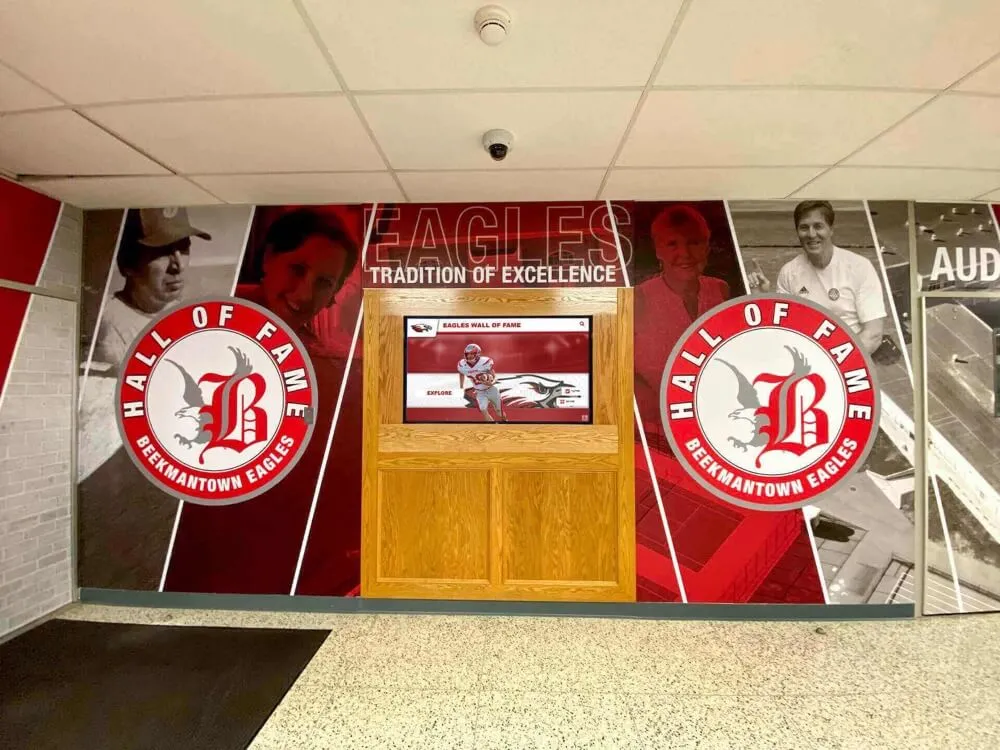
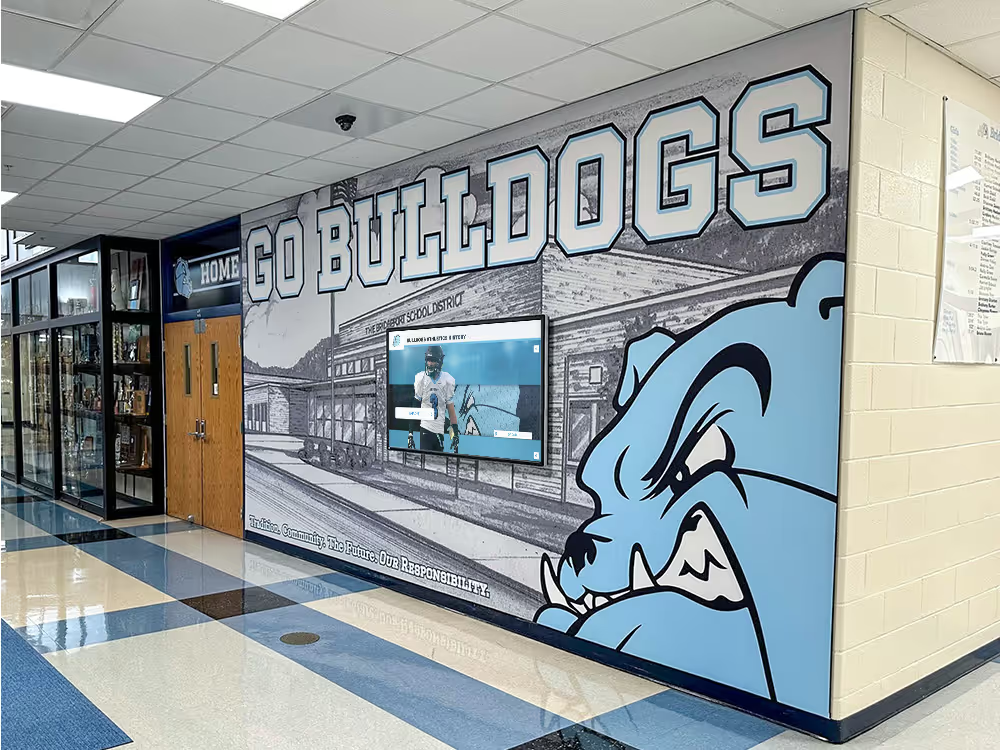
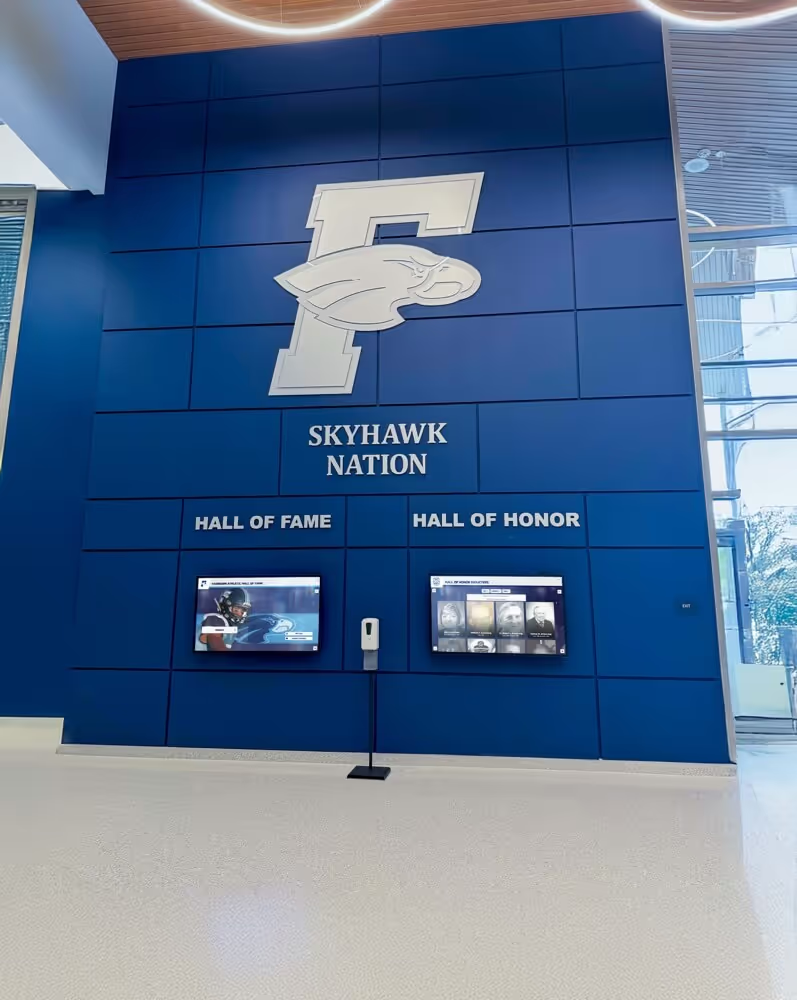
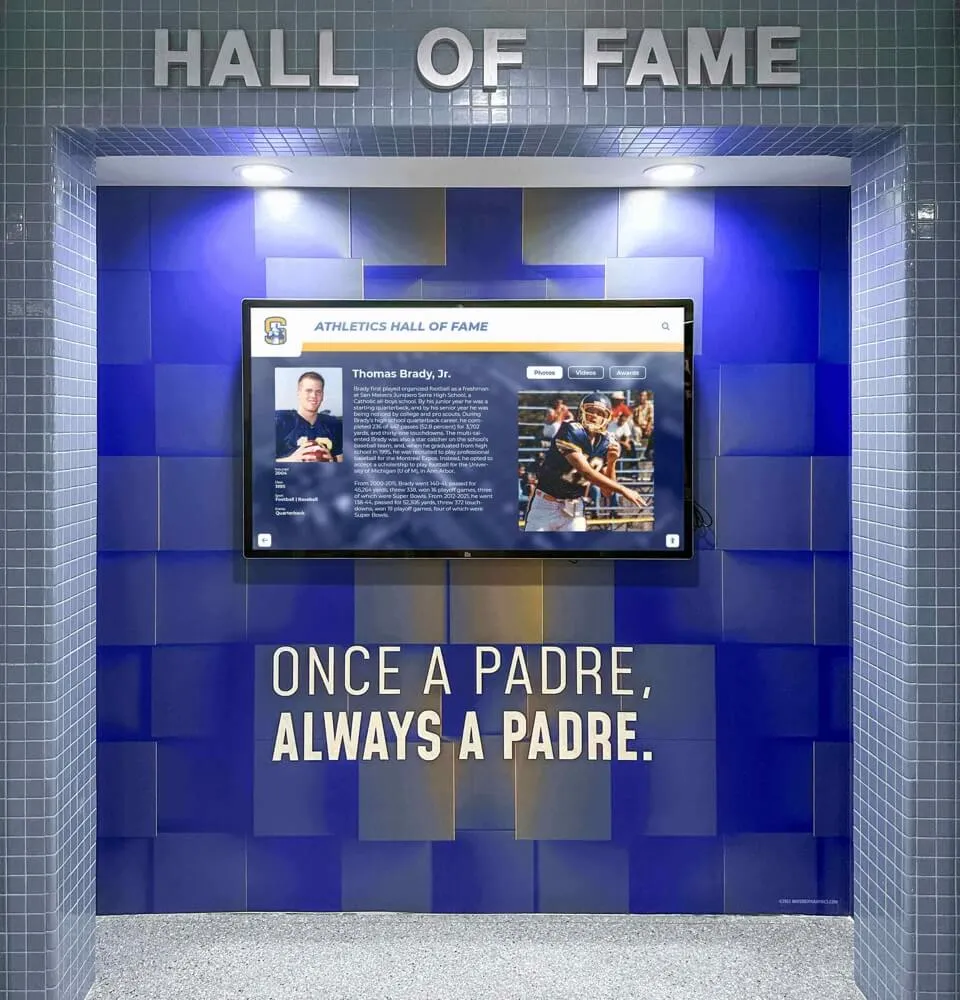
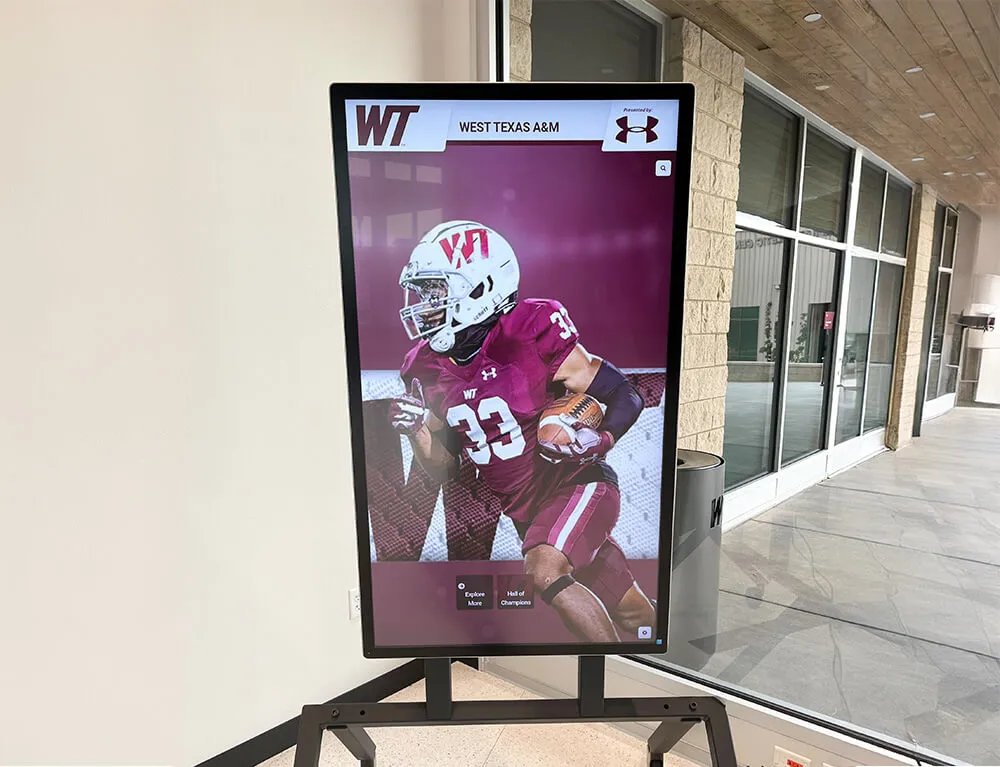
User-friendly interfaces encourage extended exploration of historical content and donor recognition
Donor Recognition Strategies for Anniversary Campaigns
Anniversary capital campaigns tied to America’s 250th celebration create opportunities for creative recognition approaches that honor both contemporary philanthropy and historical legacy.
Tiered Recognition Messaging
Anniversary campaigns typically employ tiered giving structures requiring recognition messaging that appropriately honors different commitment levels while maintaining donor privacy preferences.
Founding Patron Societies
Major gift levels might be branded as “Founding Patron” or “Heritage Founder” societies connecting contemporary donors to founding-era themes. Recognition for these leadership donors can include prominent placement on touchscreen home screens, detailed biographical profiles highlighting donor connections to institutional missions, dedicated sections showing campaign impact made possible by major gifts, and permanent association with semiquincentennial commemoration.
Messaging should emphasize how major gifts enable comprehensive historical preservation, support educational programming reaching thousands of students, and create lasting community resources serving future generations.
Historical Society Membership Tiers
Mid-level recognition might organize donors into named historical societies honoring significant community figures, time periods, or values. For example: “Revolutionary Society” ($10,000-$24,999), “Constitutional Society” ($25,000-$49,999), or “Liberty Society” ($50,000-$99,999). Within touchscreen displays, society membership lists can be organized alphabetically within each tier, with brief explanations connecting society names to historical significance.
This approach provides clear giving level differentiation while maintaining appropriate donor privacy since specific gift amounts are not displayed publicly.
Memorial and Tribute Giving Options
Anniversary campaigns naturally attract memorial and tribute gifts honoring deceased community members, veterans, or family members. Touchscreen displays should accommodate these gifts through dedicated memorial sections, ability to link memorial gifts to historical figures being honored, tribute designations noting “In Memory Of” or “In Honor Of” relationships, and flexible text fields enabling personal messages when donors desire.
Memorial giving represents significant revenue in anniversary campaigns, requiring recognition approaches that honor both donors and the individuals being remembered.
Campaign Progress Visualization
Interactive displays provide unique opportunities to demonstrate campaign momentum and community participation throughout anniversary fundraising periods.
Real-Time Campaign Thermometers
Touchscreen home screens can display dynamic campaign progress indicators showing total commitments against goals, number of donors participating at various levels, progress toward specific campaign components (endowment, facility, programming), and countdown timers building urgency as anniversary milestones approach.
Regular updates demonstrating growing support encourage additional participation through social proof while publicly recognizing campaign success.
Geographic Participation Mapping
For organizations with geographically distributed supporter bases, interactive maps showing donor participation by location create compelling visualization. Alumni living worldwide, seasonal residents, or descendants of historical community members see their participation represented within broader recognition of campaign reach.
Geographic displays particularly benefit heritage organizations serving communities with significant out-migration where diaspora populations maintain connections to hometown history.
Historical Comparison Context
Anniversary displays might include historical fundraising context showing how the current campaign compares to previous major institutional initiatives. For example, showing construction costs and donor participation from a 1926 centennial building campaign alongside the current semiquincentennial effort demonstrates institutional continuity while illustrating how contemporary donors continue traditions of community support.
This historical framing elevates current donor recognition by positioning modern philanthropy within long heritage of civic generosity.
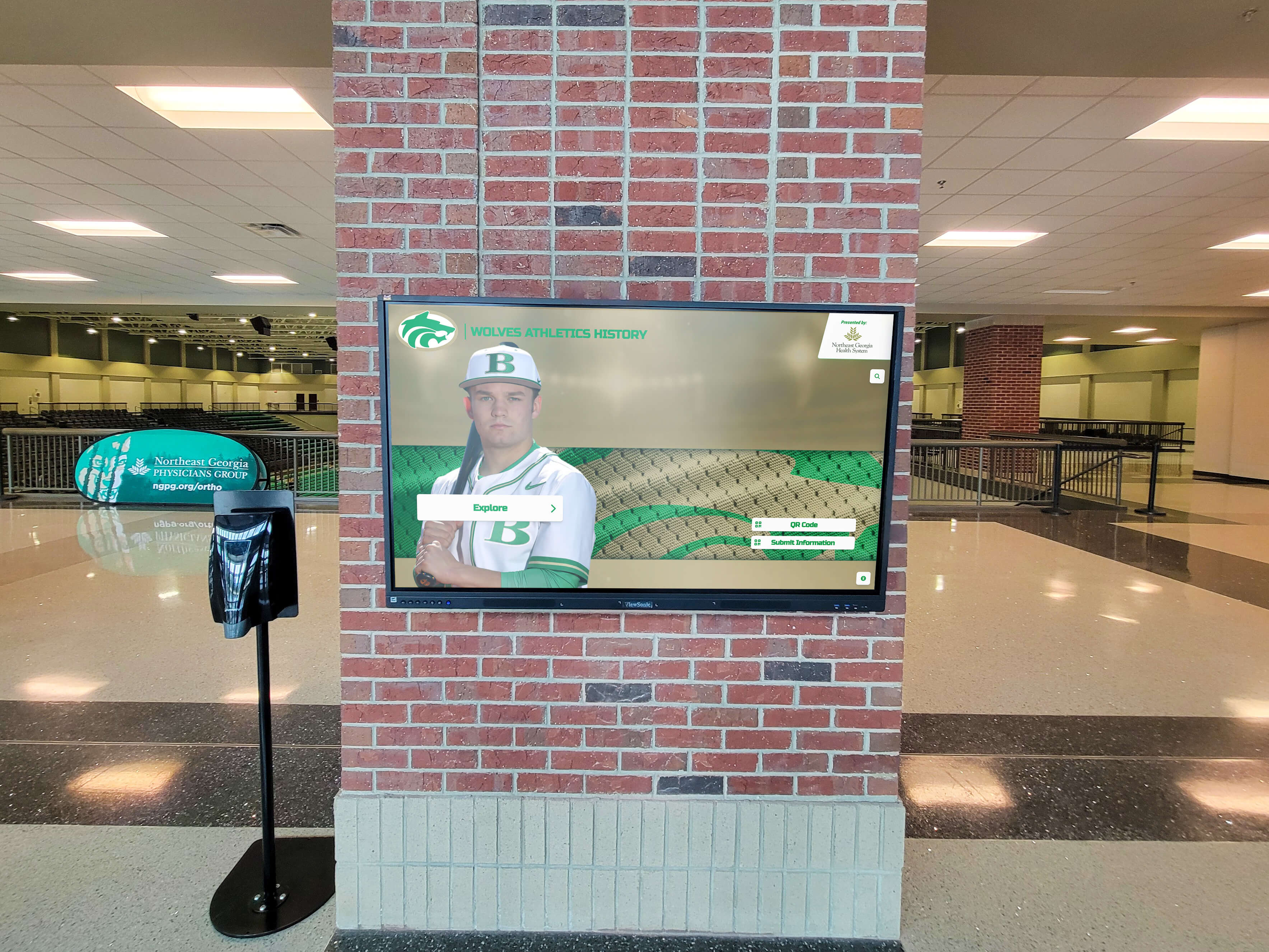
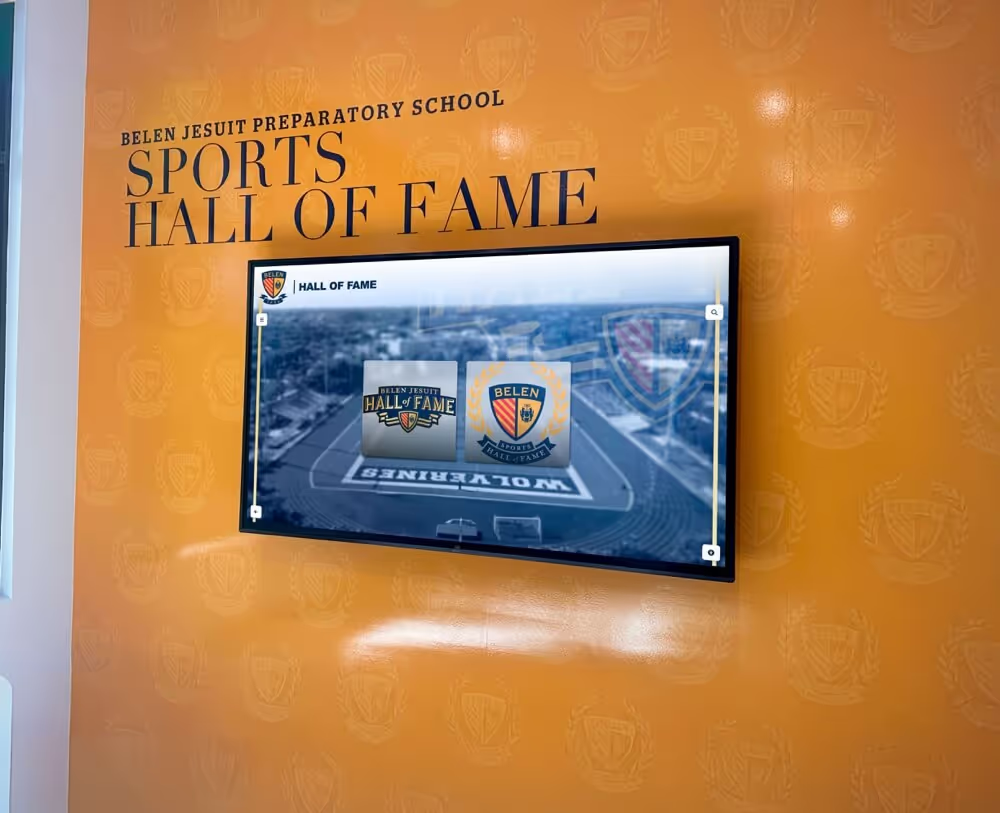
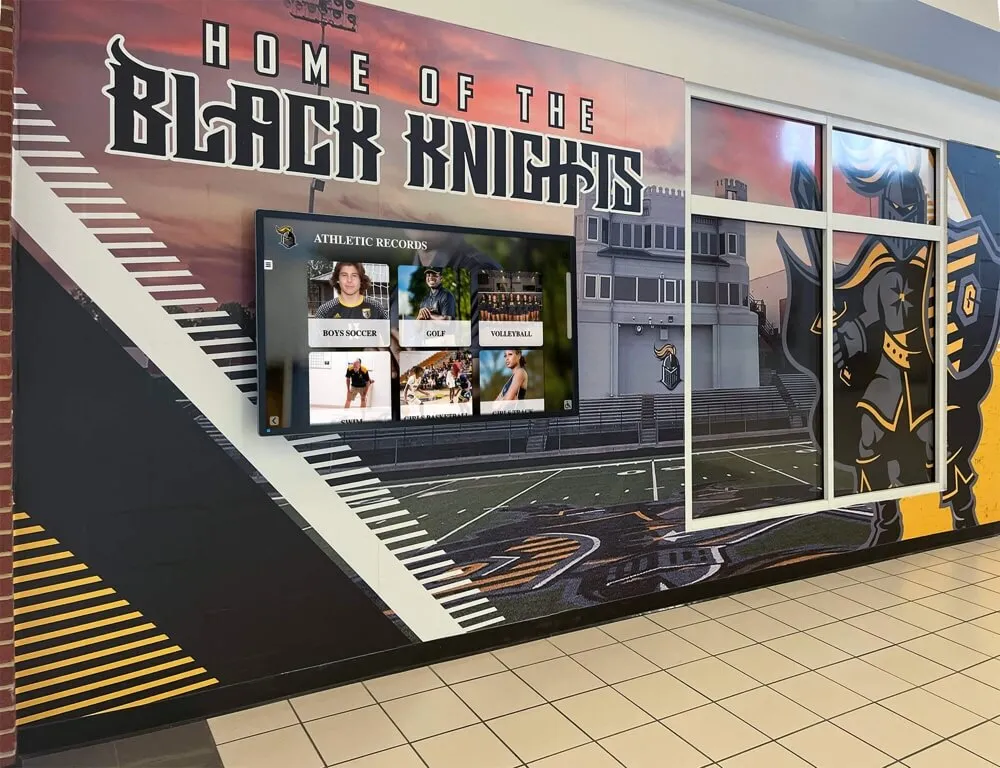
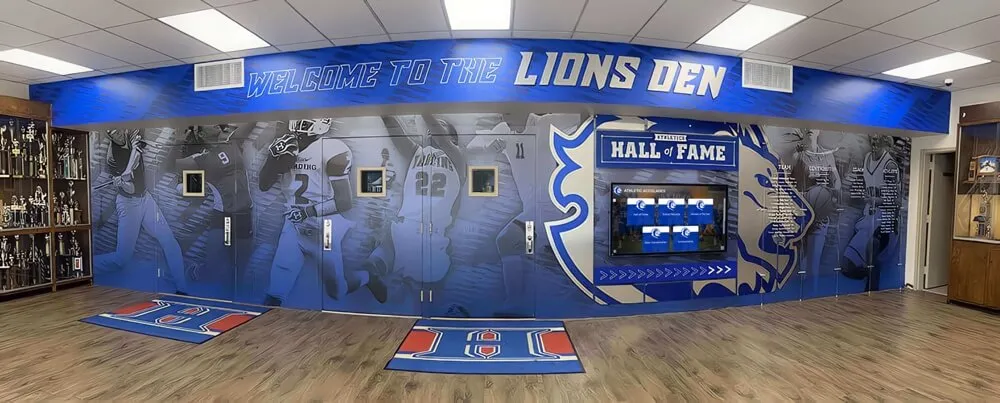
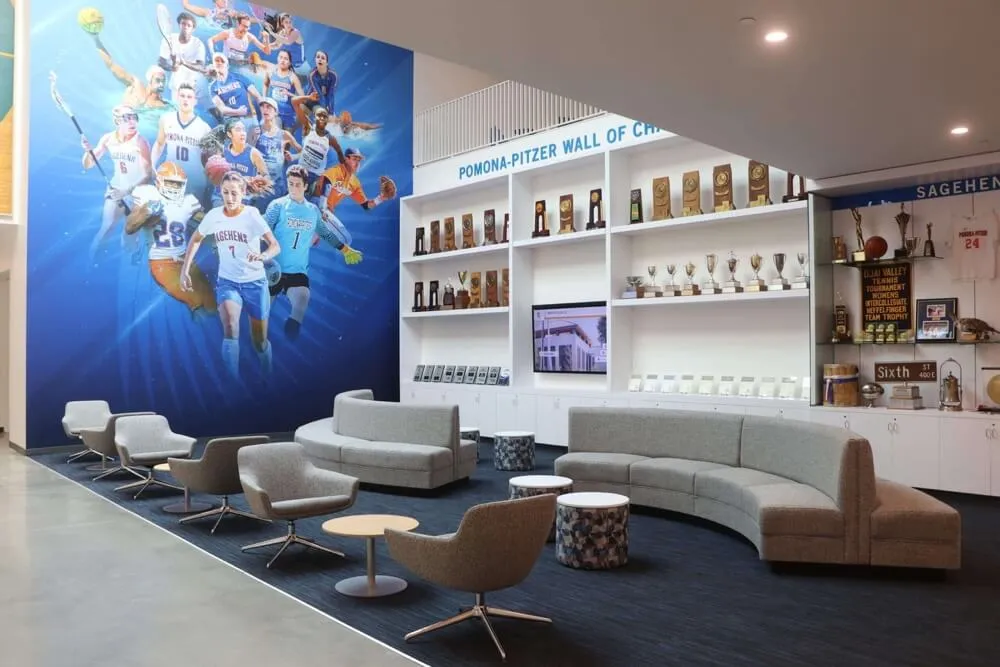
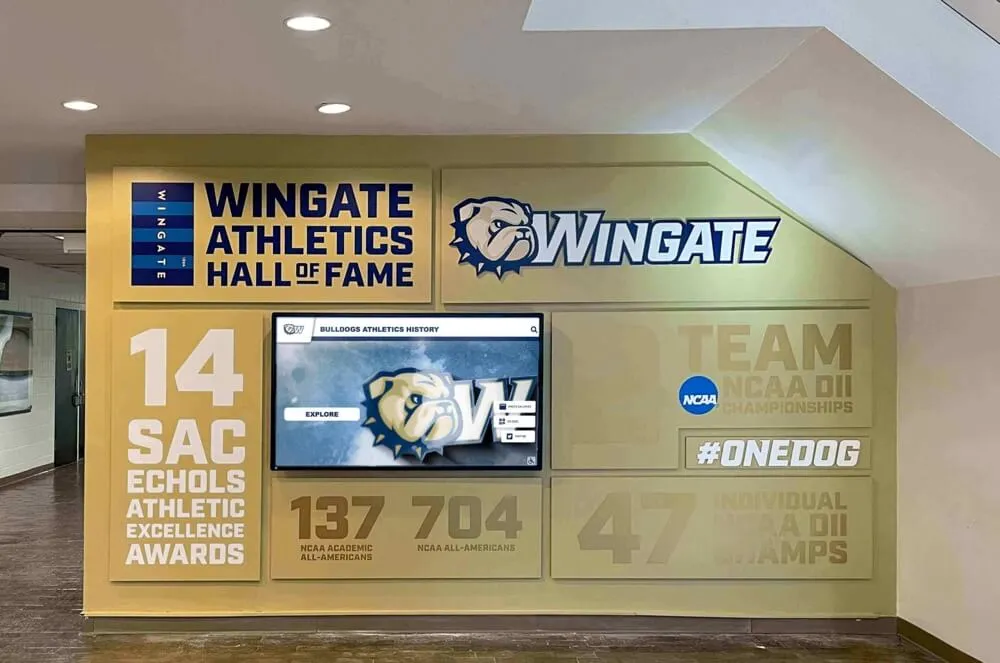
Integrated donor recognition within historical displays demonstrates connection between philanthropy and heritage preservation
Content Development: Building Comprehensive Historical Archives
The most valuable anniversary installations provide deep historical content that serves educational purposes long after 2026 celebration programming concludes.
Digitizing Historical Materials
Comprehensive touchscreen content requires systematic digitization of existing physical collections transforming inaccessible materials into discoverable digital assets.
Prioritizing Materials for Digitization
Most heritage organizations possess more historical materials than budgets allow digitizing simultaneously. Anniversary projects should prioritize materials with highest educational value and visitor interest including historical photographs showing community evolution, institutional records documenting organizational development, biographical information about notable local figures, archival documents providing primary source access, and newspaper articles covering significant local events.
Digitization projects typically require 3-6 months for substantial collections depending on volume and desired detail level, necessitating early project starts for 2026 deadlines.
Metadata and Searchability
Digitized materials gain value through comprehensive metadata enabling discovery. Each photograph, document, or artifact should include detailed descriptions enabling text search, date information supporting chronological browsing, subject tags connecting related materials across time periods, person names enabling biographical research, and location data supporting geographic exploration.
Without detailed metadata, even extensive digitized collections become difficult to explore effectively through touchscreen interfaces. Museum kiosk software should include intuitive tools enabling non-technical staff to add metadata as materials are processed rather than requiring specialized database expertise.
Quality Standards and Preservation
Digitization serves dual purposes: creating interactive display content and preserving deteriorating original materials. Scanning specifications should balance file size constraints for interactive display performance with archival quality preservation goals. Generally this means creating high-resolution archival masters stored separately while generating optimized versions for touchscreen display.
Organizations should establish consistent quality standards across digitization efforts ensuring professional presentation while maintaining reasonable processing timelines and costs.
Biographical Content Development
Personal stories create emotional connections to history more effectively than abstract institutional narratives. Anniversary touchscreen content should include biographical profiles for notable community figures across different eras and contribution areas.
Identifying Figures for Inclusion
Biographical content might include founding generation community leaders and early institution builders, military veterans from all conflicts with local connections, educators, administrators, and school leaders across generations, business leaders and entrepreneurs shaping economic development, elected officials and civic leaders serving community governance, religious leaders from various faith traditions, artists, musicians, and cultural contributors, and athletic figures and recreational program developers.
Biographical inclusion criteria should emphasize demonstrated community impact rather than fame or wealth, ensuring diverse representation across socioeconomic, racial, ethnic, and gender categories reflecting actual community composition.
Content Elements for Rich Profiles
Effective biographical entries combine multiple content types creating engaging multimedia presentations including historical photographs showing subjects at various life stages, biographical narrative covering birth, education, career, and community contributions, specific achievements and their lasting community impact, historical context explaining circumstances and challenges subjects faced, family connections and multi-generational community ties, and quotations from historical sources preserving authentic voices.
Profiles combining these elements transform name listings into memorable stories visitors explore extensively rather than scanning briefly.
Ongoing Research and Updates
Historical research continues beyond initial installation. Organizations should build processes for ongoing biographical research enabling continuous content enrichment as new information emerges from family donations, academic research, or community oral history projects.
Cloud-based content management enabling immediate updates ensures historical displays remain current scholarly resources rather than fixed snapshots of understanding at specific points in time.
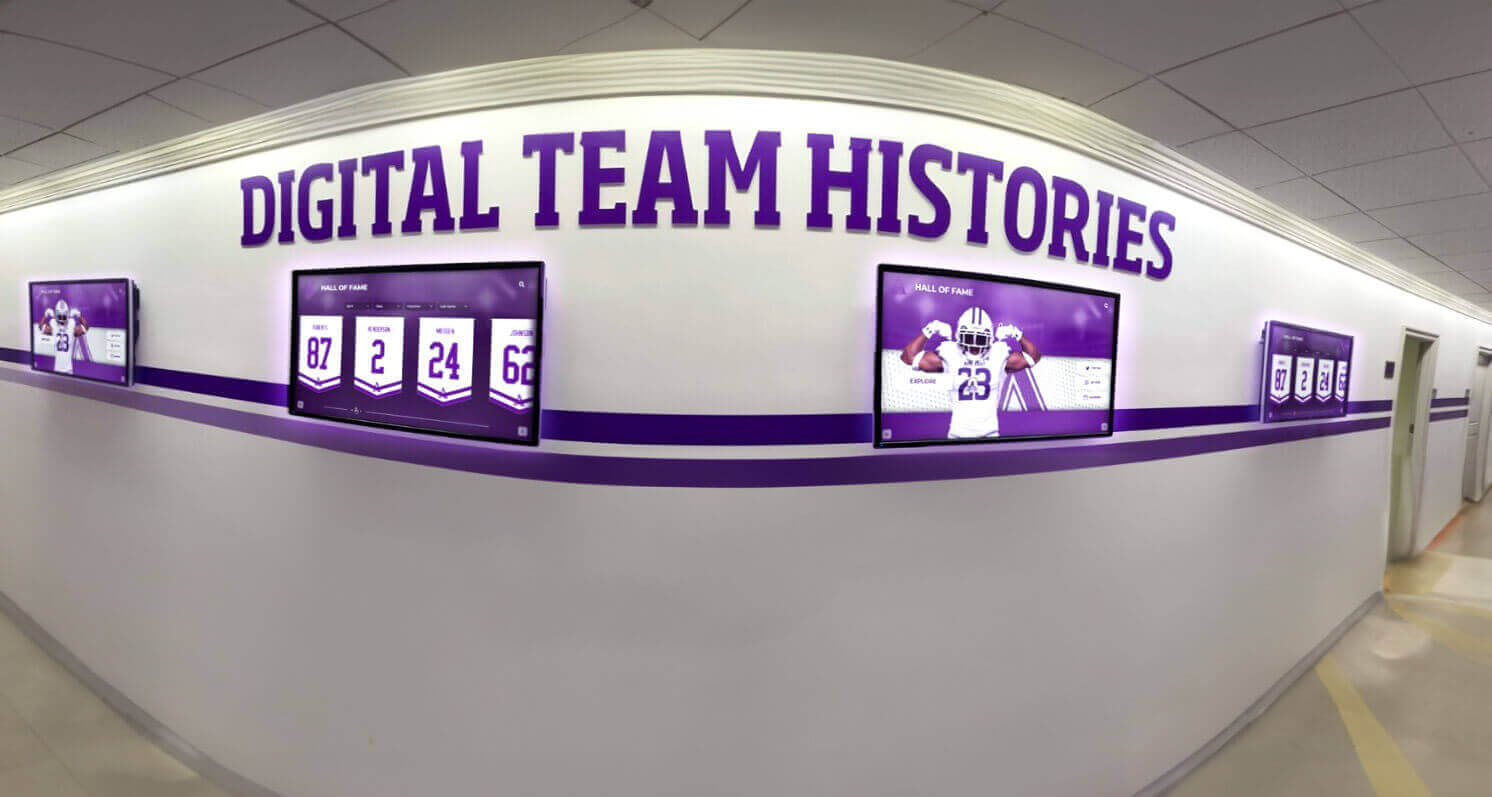
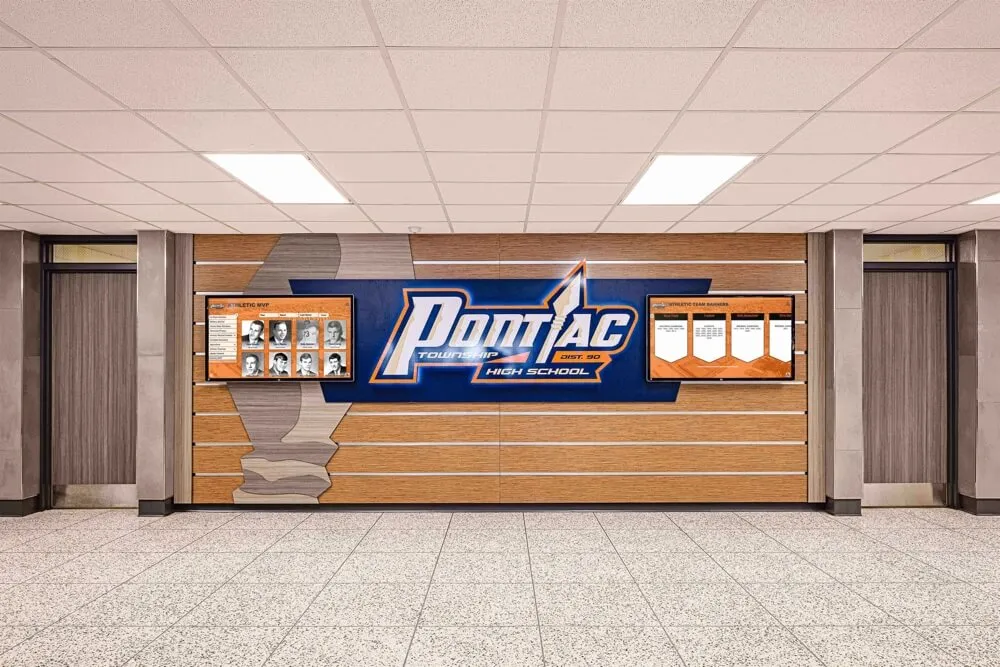
Digital timeline displays present decades of institutional history in organized, explorable formats
Integration with Anniversary Programming and Events
Touchscreen installations gain maximum impact through coordination with broader semiquincentennial programming creating multiple touchpoints between audiences and historical content.
Coordination with Educational Initiatives
Anniversary years typically feature expanded educational programming for schools and community groups requiring coordination with digital resources.
Curriculum Development Partnerships
Museums can partner with local schools developing America 250 curriculum by providing touchscreen access supporting specific learning objectives, creating educator guides connecting historical content to state standards, offering student research assignments exploring local connections to national themes, and hosting school field trips structured around touchscreen exploration activities.
When positioned as curriculum resources rather than generic field trip destinations, museums build sustainable school partnerships extending beyond anniversary years while demonstrating educational impact to donors and funding agencies.
Student Research Projects and Contests
Anniversary programming might include student research competitions exploring local history using touchscreen archives as primary resources. Essay contests, documentary video projects, or public history presentations encourage deep engagement with historical materials while generating student-created content that museums can later feature within displays or educational programming.
Research competitions also drive repeated museum visits as students conduct investigation, building familiarity with collections and interactive systems.
Professional Development for Educators
Museums offering teacher workshops on using historical resources and digital archives for classroom instruction build educator advocates while demonstrating commitment to educational missions beyond public exhibits. When teachers understand touchscreen capabilities and content depth, they design learning activities specifically leveraging these resources throughout academic years.
Educator professional development also provides valuable feedback on content gaps, usability issues, and desired features informing ongoing platform improvements.
Event-Based Content Programming
Interactive displays enable dynamic content programming coordinating with anniversary events throughout multi-year celebration periods.
Featured Content Rotation
Home screen content and featured sections can rotate throughout anniversary years highlighting themes connecting to specific events, programs, or historical anniversaries. For example: highlighting military history content around Memorial Day and Veterans Day, featuring founding-era content during July 4th celebrations, presenting educational history during back-to-school periods, or displaying relevant historical context for visiting speaker programs or special exhibitions.
This rotation keeps regular visitors discovering new content while demonstrating display versatility and ongoing curatorial attention.
Event Check-In and Participation Tracking
Some organizations use touchscreen displays as check-in points for anniversary events, collecting contact information while encouraging historical content exploration. Visitors attending commemorative programs, fundraising events, or educational activities interact with displays before or after scheduled programming, building familiarity with permanent installations while capturing engagement metrics demonstrating community participation levels.
Social Media Integration
Anniversary content can extend beyond physical displays through social media sharing features enabling visitors to share historical photographs, biographical profiles, or personal discoveries to their networks. Hashtag campaigns coordinating across physical touchscreen content and digital channels amplify reach while building distributed awareness of anniversary programming and institutional resources.
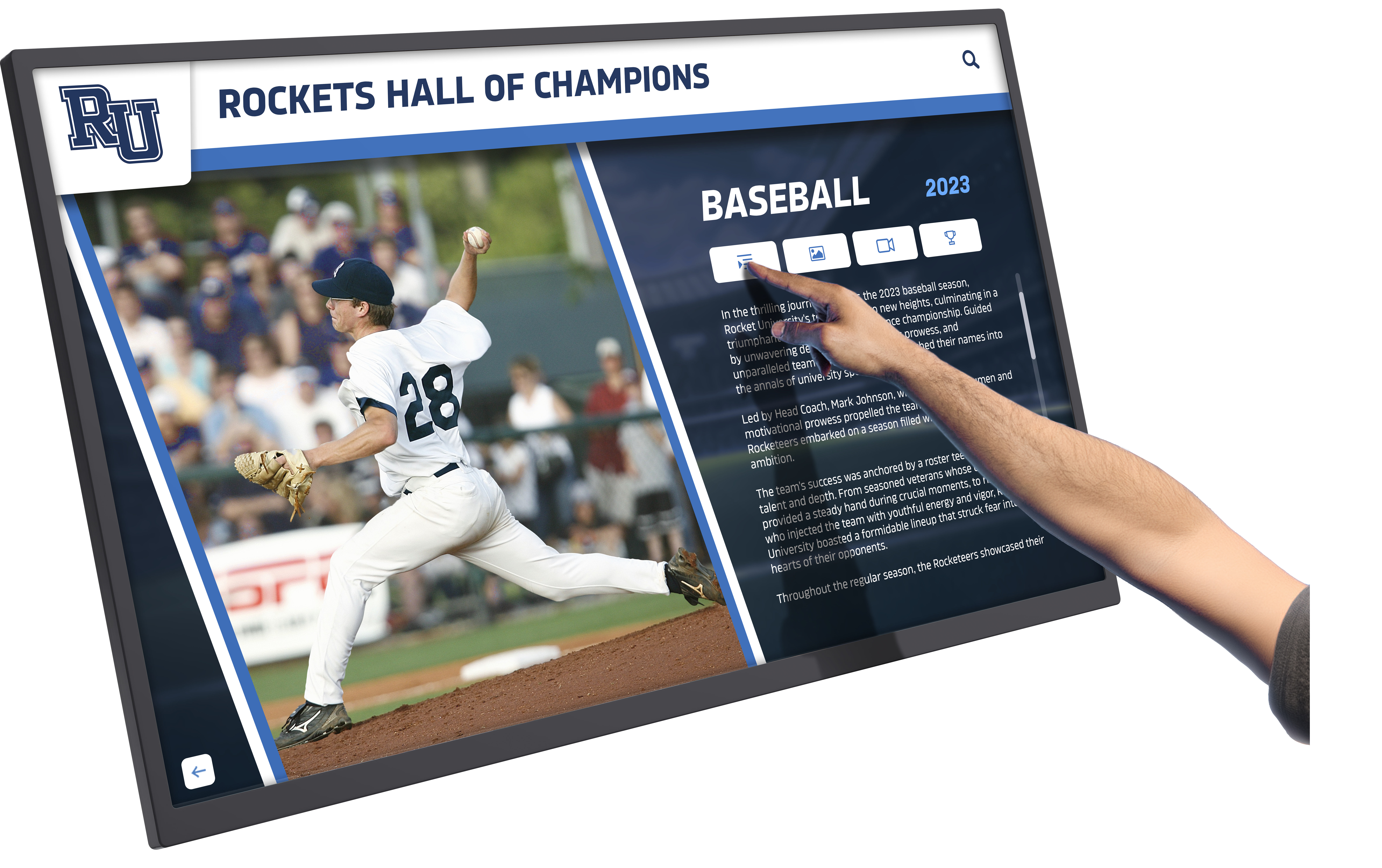
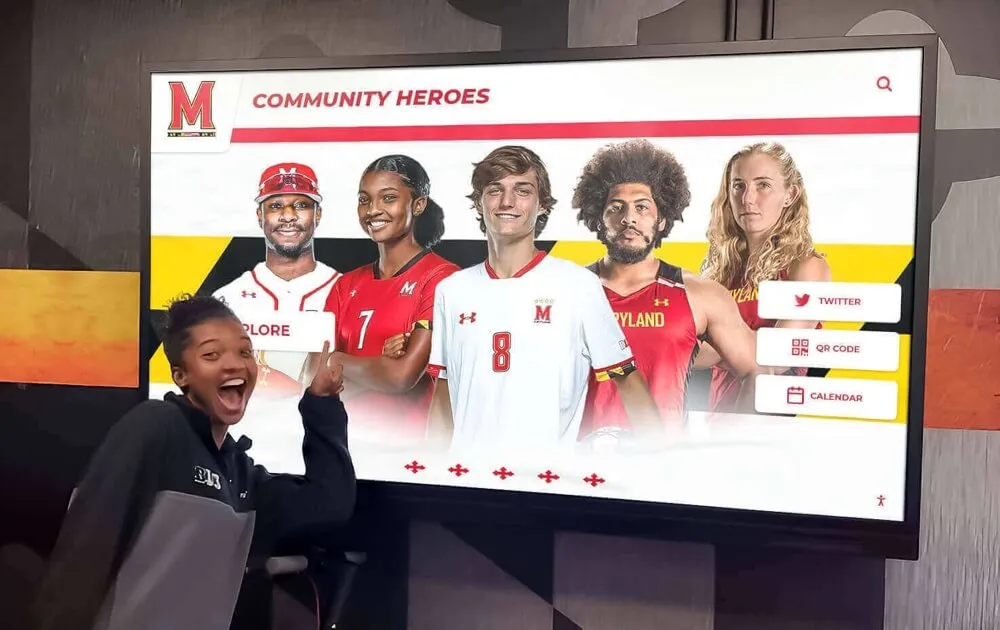
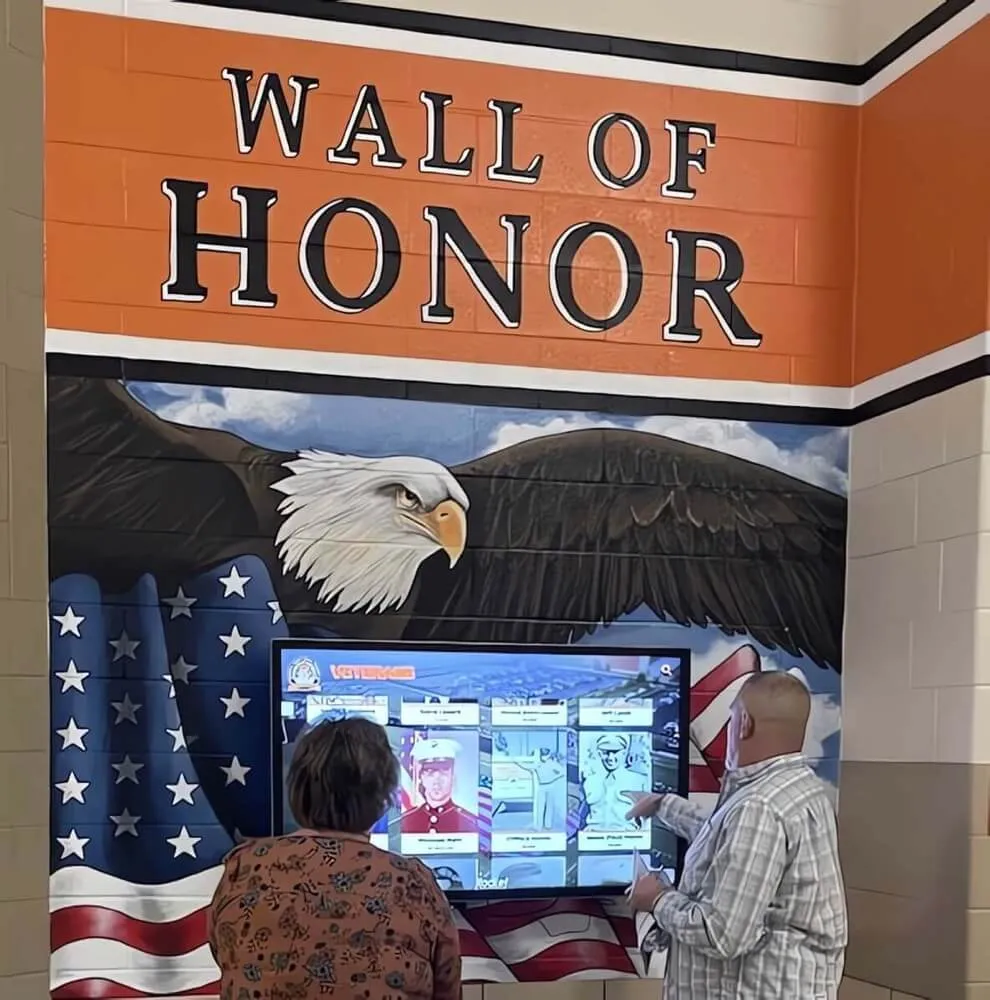
Intuitive touchscreen interactions enable visitors of all ages to explore historical content independently
Measuring Success: Metrics and Assessment
Anniversary installations represent significant investments requiring accountability through appropriate success measurement and ongoing assessment.
Engagement Metrics and Analytics
Modern touchscreen platforms provide detailed analytics revealing how visitors interact with historical content and recognition displays.
Quantitative Usage Data
Basic metrics include total interactions and unique visitors across time periods, average session duration indicating engagement depth, popular content items receiving most views, search queries revealing visitor research interests, navigation patterns showing how visitors explore content, and time-of-day usage patterns informing programming and staffing.
These metrics demonstrate installation value to stakeholders while identifying high-performing content and areas requiring improvement or expansion.
Demographic and Audience Insights
When combined with visitor surveys or event registration data, touchscreen analytics reveal which audience segments engage most extensively with different content types. For example, analytics might show alumni focusing on graduation year content and biographical profiles of former educators, school groups concentrating on curriculum-relevant historical periods and research assignments, older visitors exploring early institutional history and founding-era content, or younger visitors engaging primarily with multimedia presentations and interactive features.
Demographic insights inform content development priorities and marketing messaging for different audience segments.
Donor Stewardship Intelligence
For advancement teams, analytics reveal how donors and prospects engage with recognition content including whether donors view their own recognition entries after making gifts, whether major gift prospects explore campaign progress and leadership donor sections, or whether memorial donors return to view tribute recognitions of loved ones.
This intelligence informs personalized stewardship approaches and demonstrates recognition impact to skeptical board members questioning digital display investments.
Qualitative Feedback and Community Response
Beyond analytics, qualitative assessment captures visitor experience quality and community sentiment about anniversary installations.
Visitor Comments and Testimonials
Touchscreen platforms can include feedback mechanisms capturing visitor comments about content, interface usability, discovered connections, or suggested additions. Many museums display selected visitor comments within physical spaces near installations, demonstrating community engagement while encouraging participation.
Testimonials from educators, students, donors, and community members provide compelling evidence of installation impact for grant applications, board presentations, and donor stewardship communications.
Media Coverage and Public Recognition
Anniversary installations often generate local media coverage demonstrating institutional leadership in heritage preservation and educational innovation. Press coverage, social media mentions, and community discussion establish museums and heritage organizations as central participants in semiquincentennial commemoration while building awareness among potential donors and visitors.
Advancement teams should document media coverage and public recognition as evidence of institutional visibility and community impact resulting from anniversary investments.
Long-Term Usage Beyond 2026
The most important success measure emerges after anniversary programming concludes: do installations continue serving educational and stewardship purposes long-term, or do they become dated artifacts of temporary celebration? Ongoing usage metrics, continued content additions, sustained school partnerships, and multi-year donor engagement demonstrate that anniversary investments created permanent infrastructure rather than temporary event décor.
Organizations planning touchscreen installations specifically for America 250 should evaluate whether platforms support decades of continued service with reasonable maintenance costs and technical sustainability beyond the celebration period itself.
Best Practices: Learning from Previous Anniversary Commemorations
While the 250th anniversary is unprecedented in living memory, lessons from other major institutional milestones inform effective commemoration planning.
Avoiding Common Anniversary Installation Mistakes
Previous anniversary projects reveal pitfalls that advancement teams and museum professionals should avoid when planning semiquincentennial recognition displays.
Prioritizing Substance Over Spectacle
The most common anniversary mistake involves investing heavily in temporary decorative elements while neglecting lasting educational and recognition infrastructure. Banners, temporary exhibits, and event décor disappear after celebrations conclude, providing no ongoing value. Organizations should prioritize permanent installations with enduring utility over flashy temporary displays.
Interactive touchscreen systems represent infrastructure investments serving institutional missions for 10-20+ years rather than disappearing when anniversary programming ends.
Planning for Post-Anniversary Maintenance
Anniversary enthusiasm often generates initial content development energy that dissipates as celebrations conclude. Organizations launching touchscreen installations need sustainable maintenance plans including staff assignments for ongoing content updates and quality control, budget allocations for software licensing and technical support, processes for adding new donors as contributions continue, and procedures for incorporating newly discovered or digitized historical materials.
Without maintenance plans, even excellent anniversary installations become dated and neglected within years of launch.
Balancing Institutional History with Donor Recognition
Some anniversary projects lean too heavily toward donor recognition, creating displays that feel transactional rather than educational, or alternatively neglect donor acknowledgment entirely, missing stewardship opportunities funding the commemoration. The most successful installations integrate historical storytelling and donor recognition naturally, demonstrating how contemporary philanthropy preserves heritage and enables educational access.
This balance satisfies both institutional mission priorities and advancement team fundraising requirements without compromising either objective.
Building on Anniversary Momentum
Strategic organizations use anniversary programming to establish permanent practices and infrastructure serving missions long-term rather than treating commemorations as isolated events.
Establishing Digitization Workflows
Anniversary projects requiring significant historical material digitization create opportunities to establish ongoing workflows for continuing preservation efforts. Rather than treating anniversary digitization as one-time projects, organizations can build processes for systematically digitizing remaining collections over subsequent years, establishing partnerships with academic programs providing student digitization assistance, pursuing grant funding supporting continued preservation work, and building community volunteer programs for metadata development and biographical research.
These workflows ensure historical collections continue growing accessible rather than remaining largely inaccessible after initial anniversary projects conclude.
Developing Heritage Education Programs
Schools partnerships and educational programming developed for anniversary years can evolve into permanent institutional programs including recurring student research competitions using historical archives, established educator workshop series building teaching skills, integrated curriculum guides supporting specific grade levels and subject areas, and student volunteer programs providing teen engagement opportunities while supporting museum operations.
Permanent educational programming demonstrates mission impact to funders while building multi-generational community engagement with heritage content.
Strengthening Donor Stewardship Practices
Recognition systems implemented for anniversary campaigns create infrastructure for improved stewardship practices including regular donor spotlights featuring biographical profiles and giving motivations, campaign progress updates demonstrating community participation and momentum, impact reporting showing how contributions support specific institutional priorities, and personalized recognition enabling donors to discover their entries and share with networks.
These practices, established during anniversary campaigns, continue improving donor retention and loyalty throughout subsequent years.
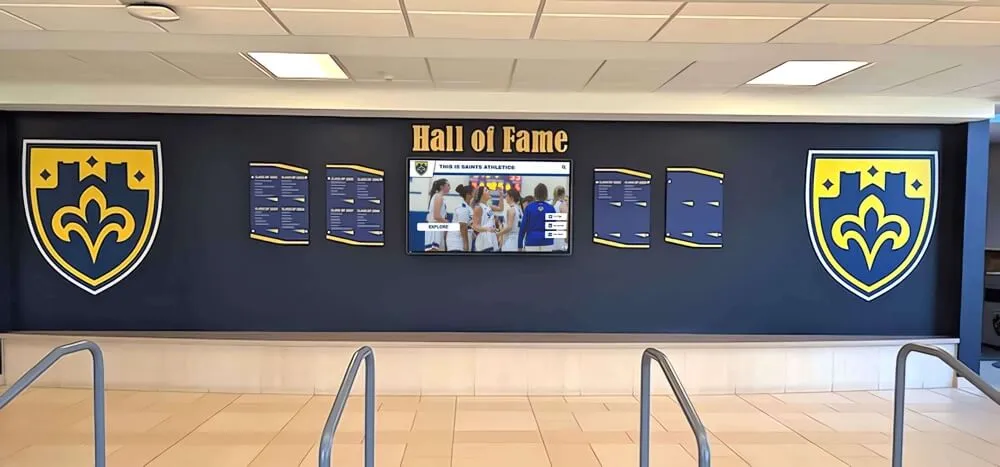
Permanent touchscreen installations serve educational and stewardship missions decades beyond anniversary celebrations
Implementation Timeline: Planning for 2026 Deadlines
Organizations targeting semiquincentennial installations should understand realistic timelines ensuring completion before major anniversary programming in 2026.
Project Phases and Duration
Comprehensive museum history touchscreen implementations typically require 6-12 months from initial planning through installation, depending on content scope, technical complexity, and organizational decision-making processes.
Planning and Content Strategy (6-8 weeks)
Initial project phases include needs assessment defining specific goals and success criteria, content audit inventorying existing historical materials and digitized assets, donor recognition requirement gathering from advancement teams, technical requirements evaluation including network infrastructure and physical installation constraints, budget development and funding source identification, and vendor selection evaluating platforms meeting organizational needs.
Organizations beginning planning in early 2026 allow comfortable timelines for thoughtful decision-making without anniversary deadline pressure.
Content Development and Digitization (12-20 weeks)
Content creation represents the most time-intensive implementation phase including historical material digitization and processing, metadata development enabling searchability and organization, biographical research and narrative writing, donor data compilation and verification, multimedia production including video editing and audio recording, and quality review ensuring accuracy and appropriate presentation.
Content development timelines vary dramatically based on existing digitized collection size. Organizations starting with substantial digital archives complete this phase much faster than those requiring extensive material scanning and processing.
Technical Development and Testing (8-12 weeks)
Platform configuration and technical implementation includes content management system setup and customization, interface design and navigation structure development, display hardware specification and procurement, network integration and connectivity establishment, and comprehensive testing ensuring reliable performance across all features and content types.
Organizations selecting platforms like Rocket Alumni Solutions with proven museum implementations reduce custom development time compared to adapting generic systems for heritage organization needs.
Installation and Training (2-4 weeks)
Final implementation includes physical display installation and network connection, content loading and final quality verification, staff training on content management and routine maintenance, soft launch testing with small visitor groups, and formal launch coordination with anniversary programming.
Buffer time between technical completion and public launch allows addressing unforeseen issues without visible problems during high-profile anniversary events.
Critical Path Considerations for 2026 Deadlines
Organizations must complete installations before major semiquincentennial programming dates requiring careful attention to dependencies and potential delays.
Content Bottlenecks
Content development almost always requires more time than initially estimated. Organizations should begin historical material digitization and biographical research immediately upon project approval rather than waiting for technical vendor selection or platform configuration.
Content work proceeds independently of technical implementation, enabling parallel progress that prevents sequential delays from cascading.
Donor Data Dependencies
Anniversary campaigns often continue through installation periods, creating tension between advancement teams wanting immediate donor recognition for stewardship purposes and implementation teams needing finalized donor lists for efficient data loading. Organizations should establish processes for adding donors incrementally rather than requiring complete campaign conclusion before any recognition appears.
Cloud-based content management enables advancement staff to add new donors independently without technical assistance, eliminating bottlenecks while ensuring timely recognition supporting ongoing campaign momentum.
Hardware Lead Times
Commercial-grade touchscreen displays and custom kiosks require substantial manufacturing and shipping lead times, particularly during periods of high demand or supply chain disruptions. Organizations should specify and order hardware as early as possible, potentially before finalizing all content decisions, to avoid installation delays from equipment availability.
Coordination with Construction or Renovation Projects
Museums using anniversary milestones for broader facility improvements or renovations must carefully coordinate touchscreen installations with construction timelines. Display locations, network infrastructure, and electrical service must be addressed during construction planning phases rather than discovering incompatibilities during final installation periods.
Selecting the Right Museum History Touchscreen Platform
Organizations preparing semiquincentennial installations should evaluate platforms against specific requirements rather than assuming all interactive display solutions provide equivalent capabilities for heritage organization needs.
Essential Platform Capabilities
Museum and heritage organization touchscreen systems require specialized features beyond generic digital signage platforms.
Heritage-Specific Content Organization
Platforms should provide content models specifically designed for historical materials including chronological timeline organization with flexible date granularity, biographical profile templates optimizing storytelling structure, collection and artifact documentation accommodating museum standards, event and milestone documentation connecting related materials, and multimedia asset management supporting diverse file types.
Generic platforms lacking heritage-specific organization force museums into awkward workarounds compromising content presentation quality.
Comprehensive Donor Recognition Features
Anniversary campaign integration requires sophisticated donor recognition capabilities including tiered giving level organization with flexible naming and structure, memorial and tribute designation supporting various recognition styles, geographic and demographic categorization enabling filtered displays, campaign progress visualization demonstrating fundraising momentum, and privacy controls respecting donor preferences regarding public acknowledgment.
Simple name listing features prove inadequate for complex anniversary campaigns with diverse recognition requirements.
Long-Term Content Management Sustainability
Anniversary installations must serve institutions for decades beyond celebration years requiring evaluation of content management system usability for non-technical staff, cloud-based architecture minimizing IT infrastructure requirements, mobile-friendly interfaces enabling content updates from any device, version control and content approval workflows for multi-person teams, and scalability supporting unlimited content growth without performance degradation.
Platforms requiring specialized technical expertise for routine updates become unsustainable as initial implementation teams turn over and institutional priorities shift beyond anniversary focus.
Evaluating Rocket Alumni Solutions for Anniversary Installations
Organizations specifically preparing America 250 commemoration displays should consider platforms built specifically for heritage organization and donor recognition needs rather than adapting generic tools.
Rocket Alumni Solutions provides the museum and heritage organization sector’s most comprehensive interactive recognition platform, combining purpose-built historical content management with donor stewardship features in unified systems designed specifically for institutions commemorating significant milestones while building permanent educational infrastructure.
Anniversary-Specific Advantages
The platform addresses semiquincentennial requirements through unlimited historical content capacity accommodating comprehensive 250-year timelines, flexible donor recognition supporting complex campaign structures and recognition tiers, intuitive content management enabling ongoing updates throughout multi-year anniversary periods, web portal integration extending historical access beyond physical installations, and proven implementation experience supporting heritage organizations nationwide through similar commemoration projects.
Heritage Organization Success Stories
Museums, historical societies, schools, and community organizations have successfully implemented Rocket Alumni Solutions for milestone anniversaries including comprehensive institutional history timelines documenting founding through present day, integrated donor walls recognizing campaign contributors alongside heritage content, veteran and military service recognition honoring community service across generations, and educational archives supporting school curriculum and student research projects.
These implementations demonstrate platform versatility serving diverse heritage organization missions while maintaining consistent quality and reliability across different organizational contexts and content types.
Implementation Support and Partnership
Organizations selecting Rocket Alumni Solutions for anniversary projects receive comprehensive support including content strategy consultation helping plan effective historical narrative and donor recognition integration, digitization guidance and potential service provider recommendations, staff training ensuring competence and confidence with content management, ongoing technical support and troubleshooting throughout implementation and beyond, and long-term partnership approaches recognizing that anniversary installations serve decades of institutional mission.
This support level particularly benefits smaller heritage organizations lacking extensive technical resources or digital project experience, ensuring successful implementations that meet anniversary deadlines while establishing sustainable long-term practices.
Organizations exploring whether Rocket Alumni Solutions meets specific America 250 commemoration requirements should request a consultation discussing institutional goals, content scope, and technical considerations with specialists experienced supporting similar anniversary projects nationwide.
Conclusion: Creating Lasting Legacy Through Anniversary Commemoration
America’s 250th anniversary presents heritage organizations with rare opportunities to honor historical legacy while building permanent infrastructure serving educational and stewardship missions for generations. Museum history touchscreens provide the foundation for commemoration that transcends temporary celebration, creating accessible archives where comprehensive local history becomes discoverable, where donors receive recognition appropriate to their support of heritage preservation, where students and researchers access primary materials supporting learning and scholarship, and where communities strengthen connections to shared heritage across 250 years of development.
Organizations approaching the semiquincentennial as infrastructure investment opportunity rather than temporary event expenditure position themselves for decades of enhanced mission delivery supported by platforms accommodating unlimited content growth, evolving technical standards, and changing institutional priorities long after 2026 programming concludes.
The advancement teams, museum professionals, educators, and community leaders who shape how their institutions commemorate this milestone determine whether anniversary programming creates lasting value or becomes faded memory within years of celebration. By prioritizing thoughtful planning, comprehensive content development, appropriate donor recognition, and sustainable long-term maintenance, heritage organizations transform anniversary opportunity into permanent enhancement of their capacity to preserve, present, and share the stories that define American communities across 250 years of history.
Explore how Rocket Alumni Solutions supports heritage organizations preparing for America’s 250th celebration with museum history touchscreen platforms combining historical storytelling, donor recognition, and educational access in unified systems designed specifically for milestone commemoration projects.