Art class gallery displays represent one of the most powerful ways schools can celebrate student creativity, honor artistic achievement, and build thriving visual arts programs. From stunning paintings and intricate drawings to three-dimensional sculptures and digital illustrations, student artwork embodies months of skill development, creative exploration, and personal expression. Yet most schools struggle to showcase this exceptional work beyond temporary hallway displays that disappear after weeks, leaving remarkable creative achievements undervalued, invisible to broader communities, and lost to institutional memory once students graduate.
Traditional gallery display approaches—limited bulletin board space, rotating exhibits that vanish quickly, or artwork sent home never to be documented—fail to honor the dedication students invest in their creative work. When exceptional artwork remains hidden in storage or disappears entirely, schools miss critical opportunities to inspire current art students through visible examples of artistic excellence, attract prospective students by demonstrating program quality, build program pride that sustains enrollment and participation, demonstrate arts program value to administrators and communities, and preserve institutional creative heritage spanning decades of artistic tradition.
This comprehensive guide explores innovative strategies for creating dynamic art class gallery displays that showcase unlimited student artwork, preserve creative achievements permanently through digital recognition systems, inspire future generations of student artists, and transform how schools experience and value visual arts education.
Modern art gallery display solutions extend far beyond temporary wall exhibits, offering schools comprehensive capabilities to document complete artwork archives, enable interactive exploration of student portfolios, celebrate individual artistic development across multiple years, and position art programs with prominence equal to athletic and academic recognition throughout school environments.

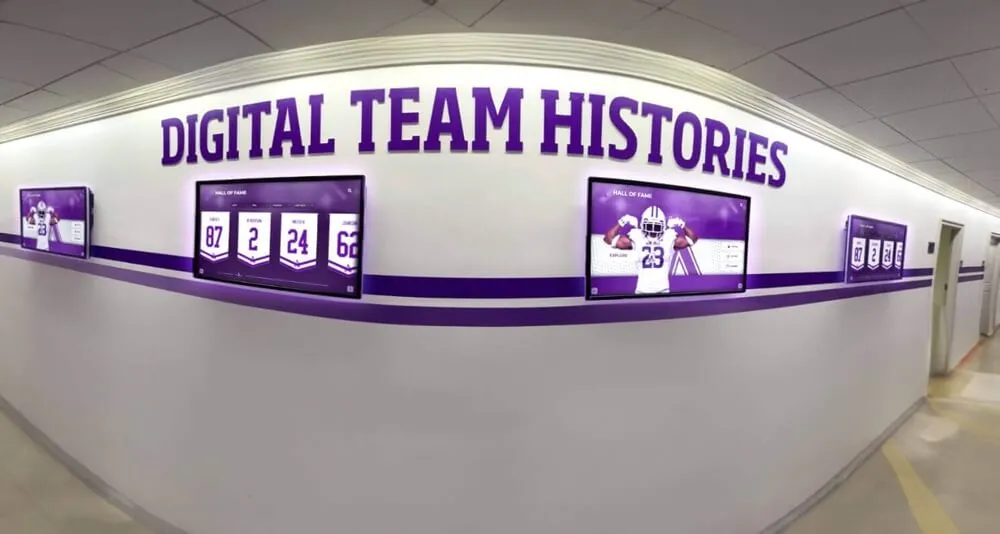
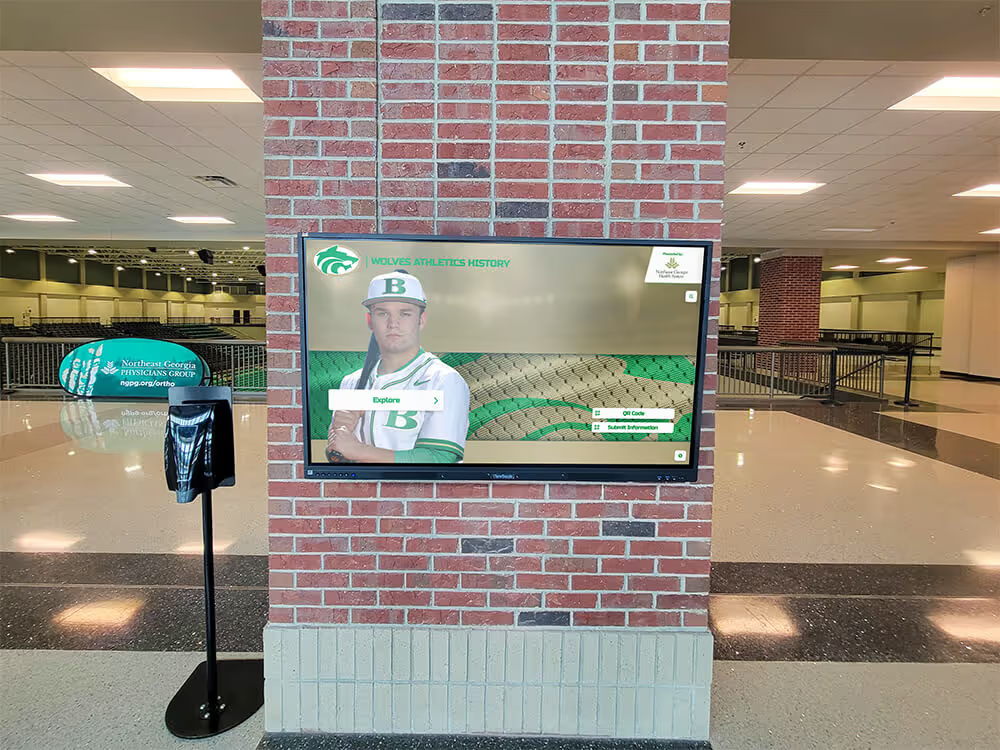
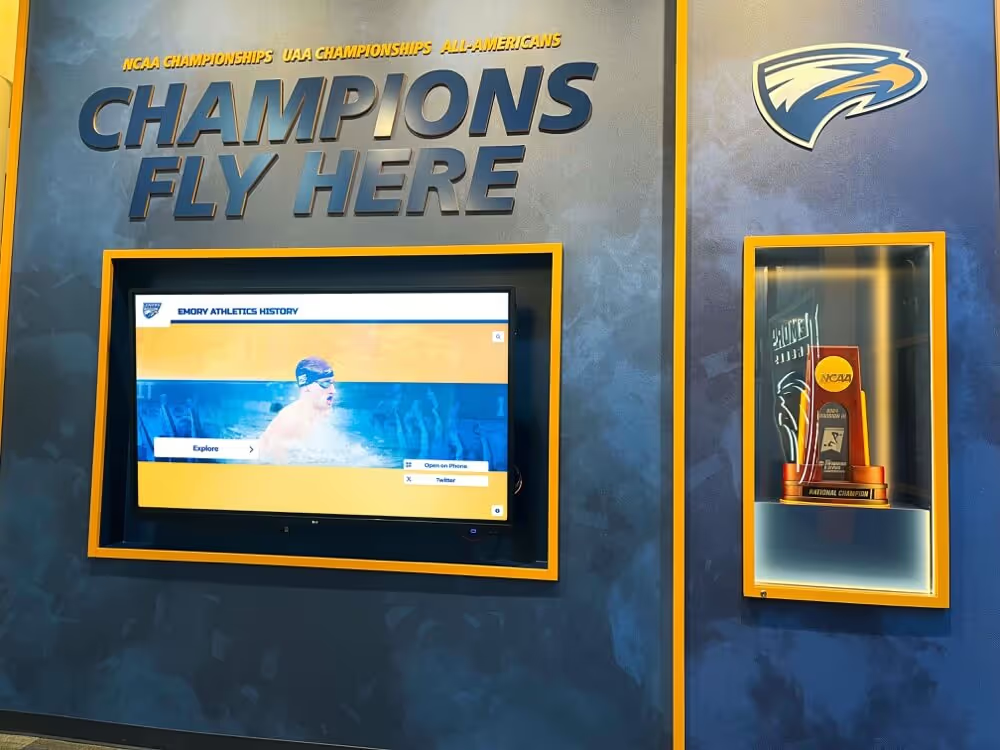
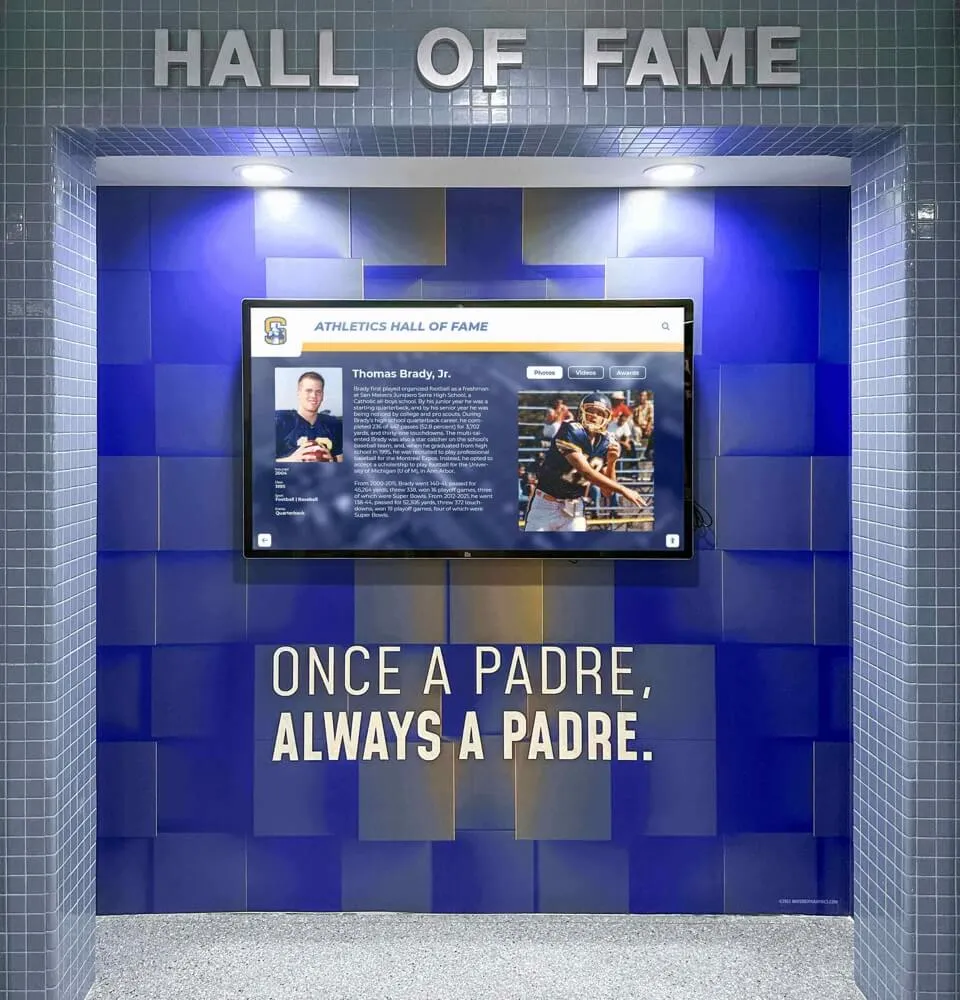
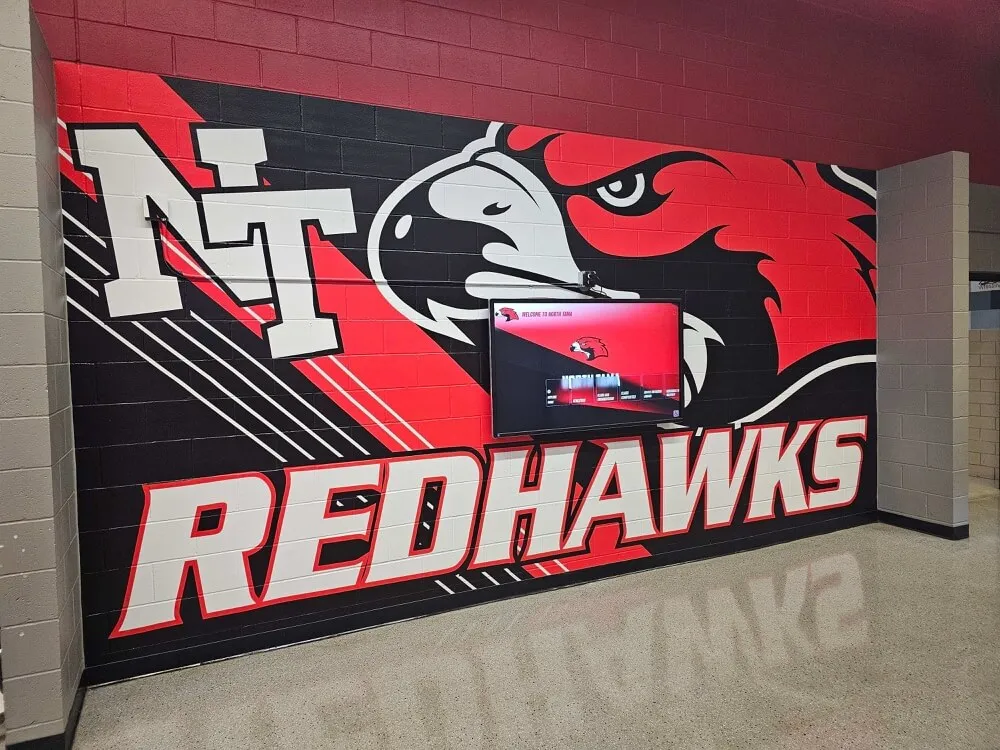
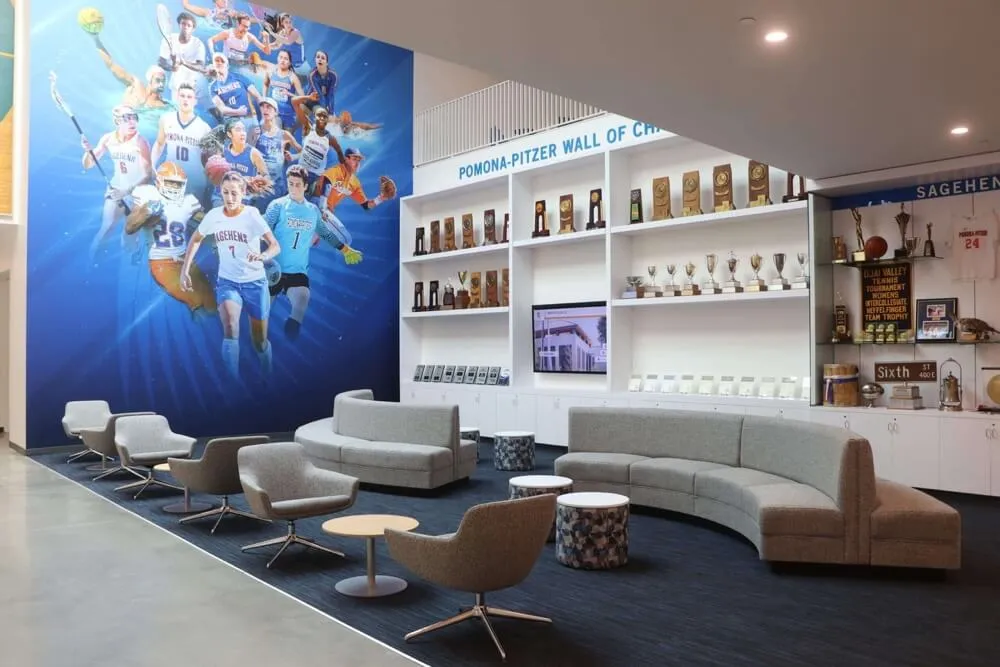
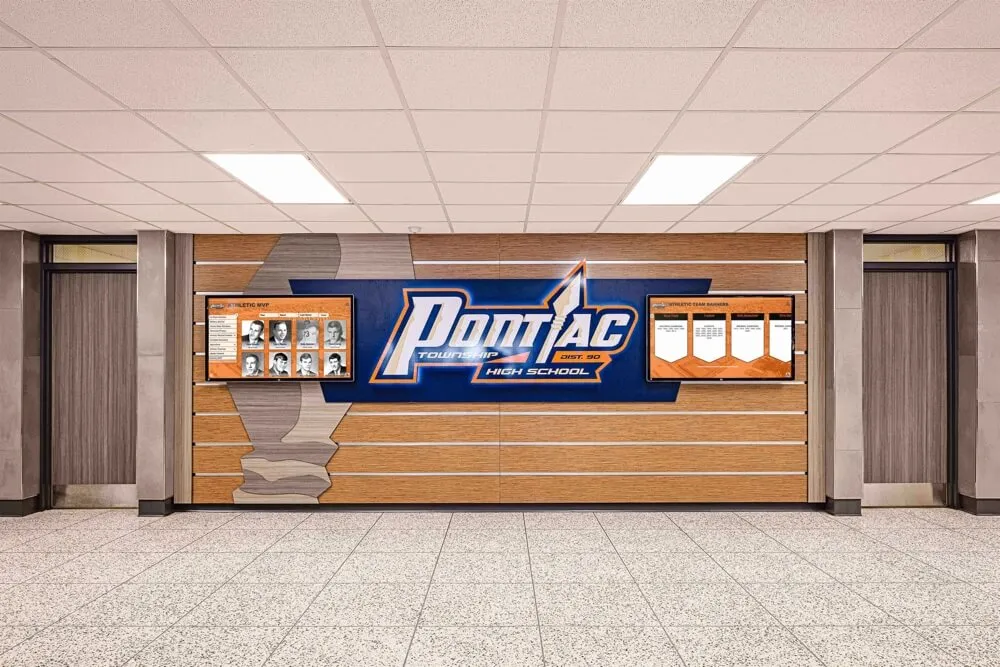
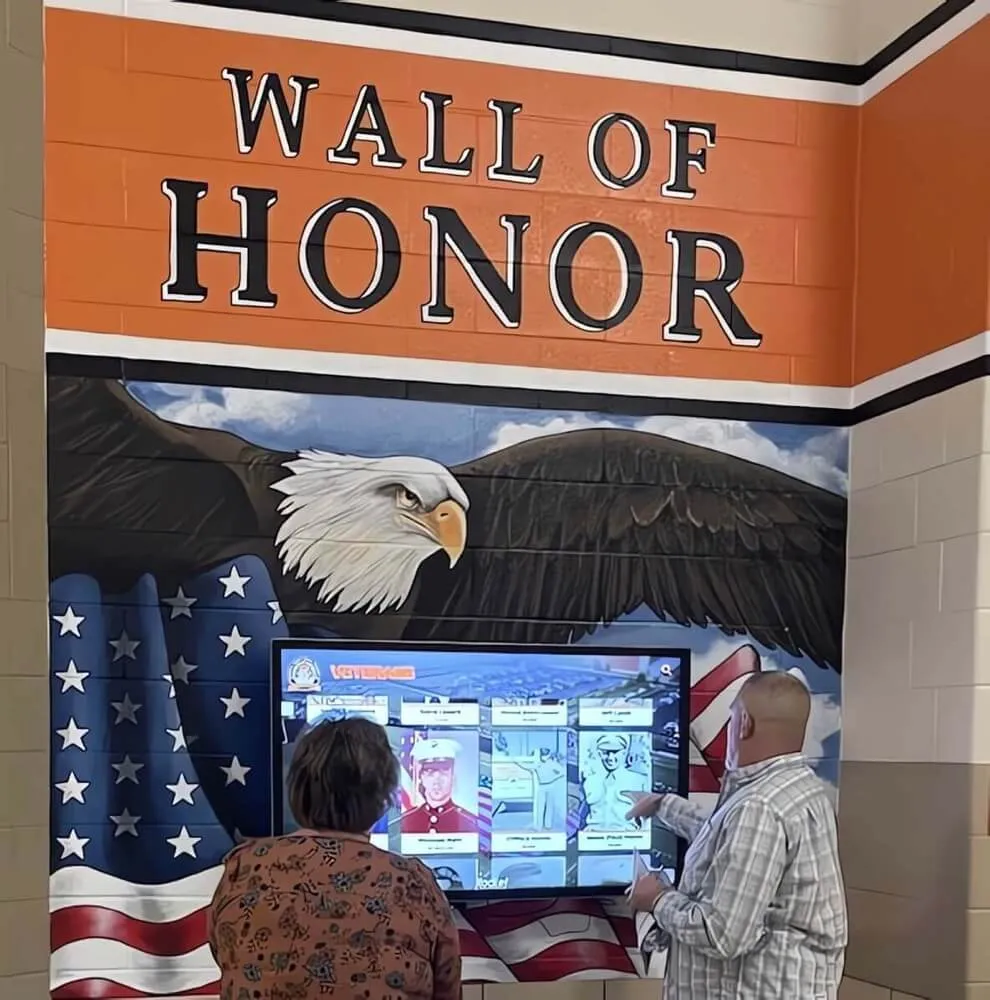
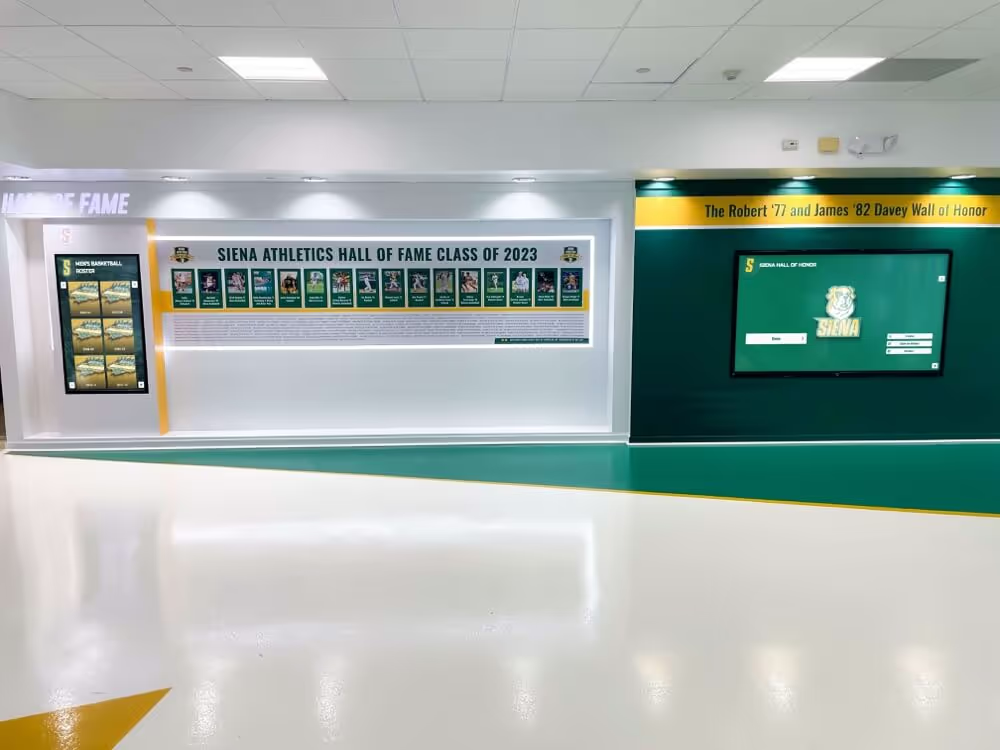
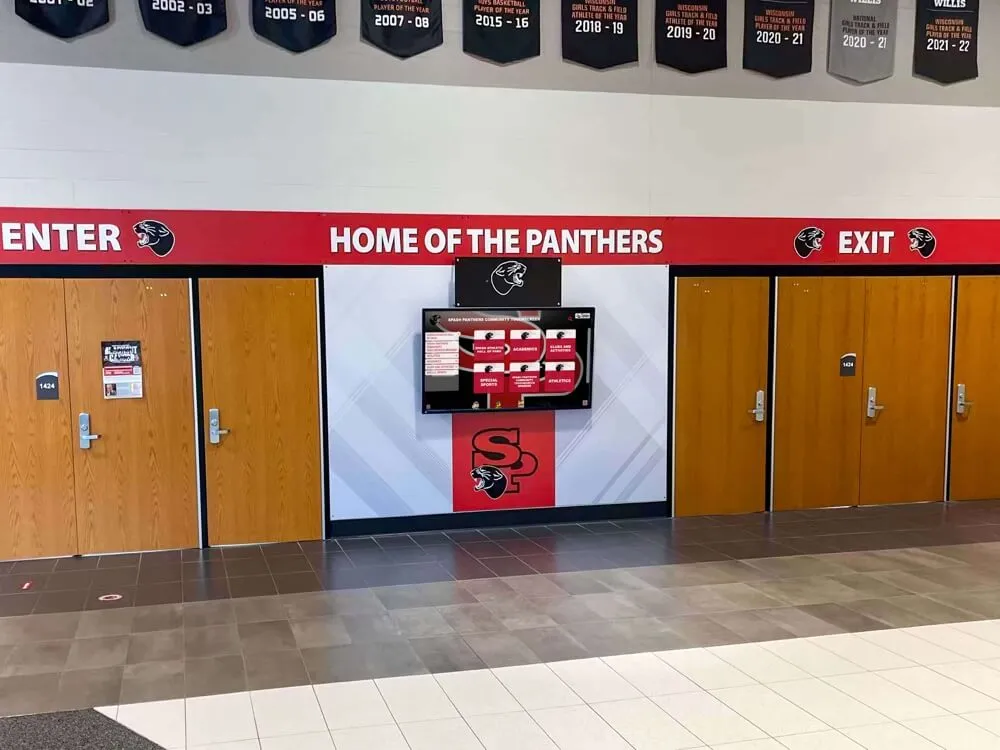
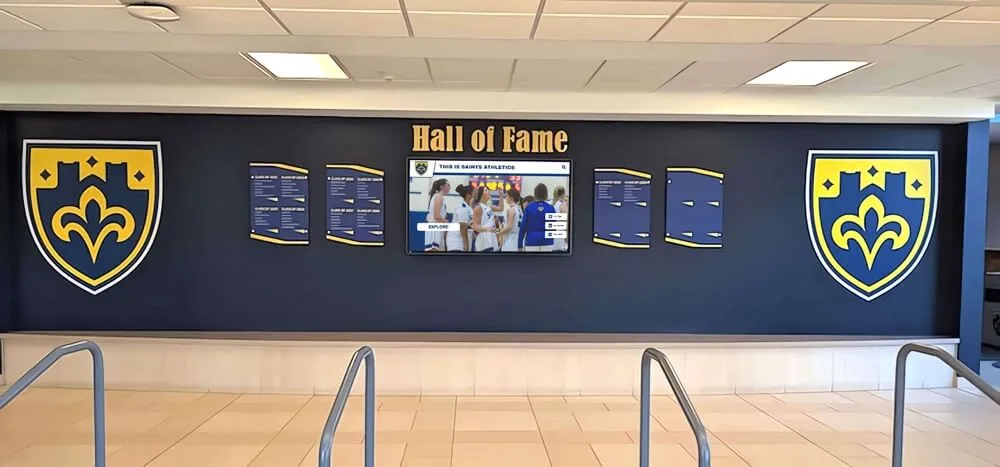
Modern digital gallery systems transform how schools preserve and showcase student artwork permanently
Understanding Art Class Gallery Displays: More Than Temporary Exhibits
Before exploring implementation strategies, understanding what comprehensive art gallery displays encompass and why systematic artwork documentation matters helps schools develop effective recognition approaches that genuinely serve educational goals.
The Essential Role of Gallery Displays in Art Education
Art class gallery displays serve multiple interconnected educational purposes that extend far beyond simple decoration or temporary recognition:
Student Recognition and Validation
Gallery displays provide essential public acknowledgment of student creative achievement. When artwork receives prominent display, students experience validation that their creative work has merit beyond classroom grades. This public recognition proves particularly powerful for students whose strengths lie in visual expression rather than traditional academics—art displays demonstrate that schools value multiple forms of excellence while providing alternative pathways to achievement recognition.
Research in art education consistently demonstrates that visible recognition increases student motivation, creative risk-taking, and continued participation in visual arts programs. Students whose work appears in gallery displays report higher creative confidence, increased willingness to experiment with new techniques, and stronger identification as artists compared to students whose work remains seen only by teachers and immediate classmates.
Building Program Culture and Tradition
Comprehensive gallery displays spanning multiple years or decades create powerful artistic traditions by connecting current students to institutional creative heritage, demonstrating consistent program excellence over time, honoring distinguished student artists and their achievements, showcasing alumni who pursued creative careers, and building shared identity around visual arts excellence.
When students see galleries featuring exceptional artwork from past decades alongside current creations, they understand they’re contributing to something larger than individual assignments. This historical perspective builds program prestige while creating environments where artistic participation becomes valued institutional tradition rather than marginal activity.
Explore comprehensive approaches to digital art galleries for schools that demonstrate effective artistic recognition strategies.
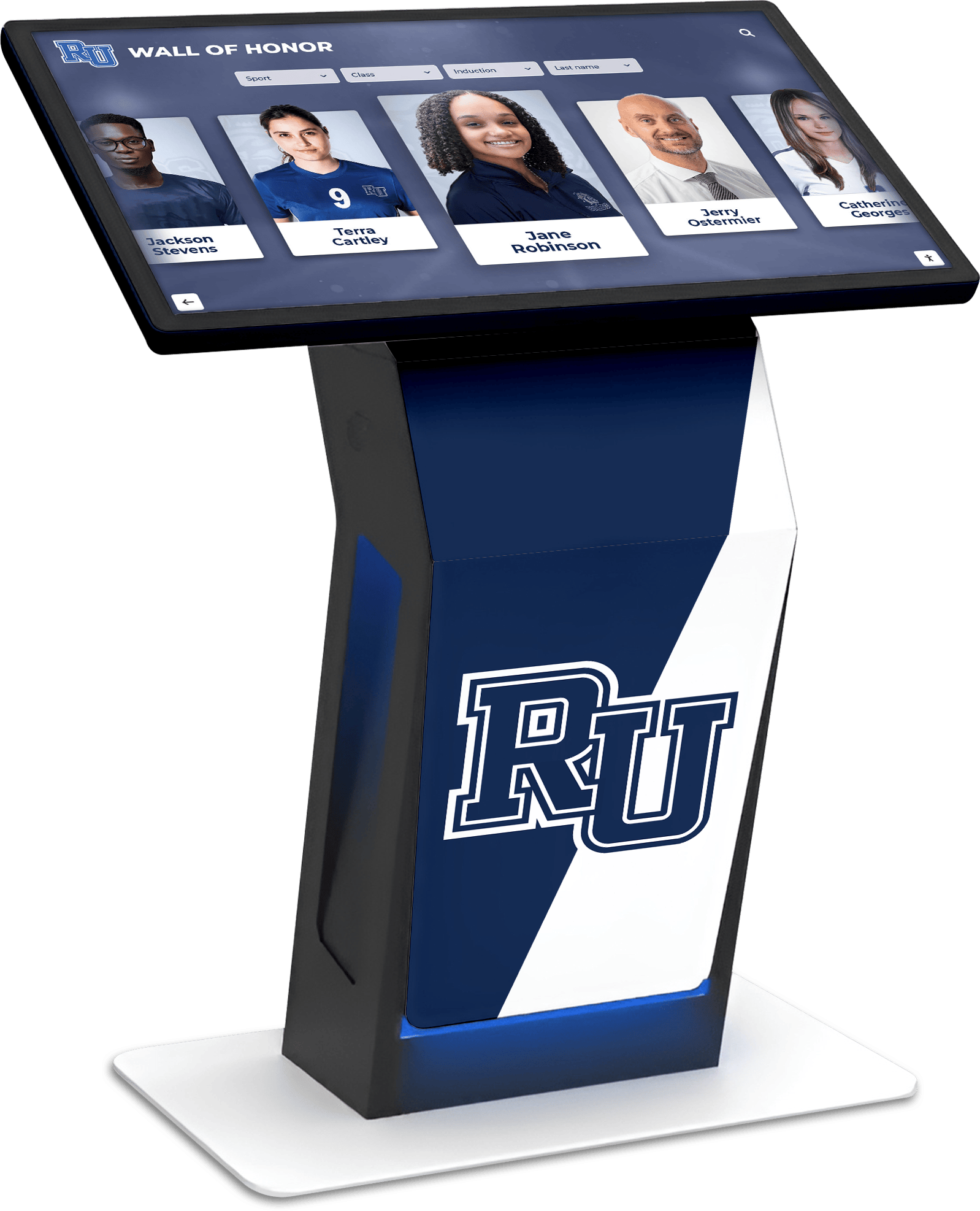
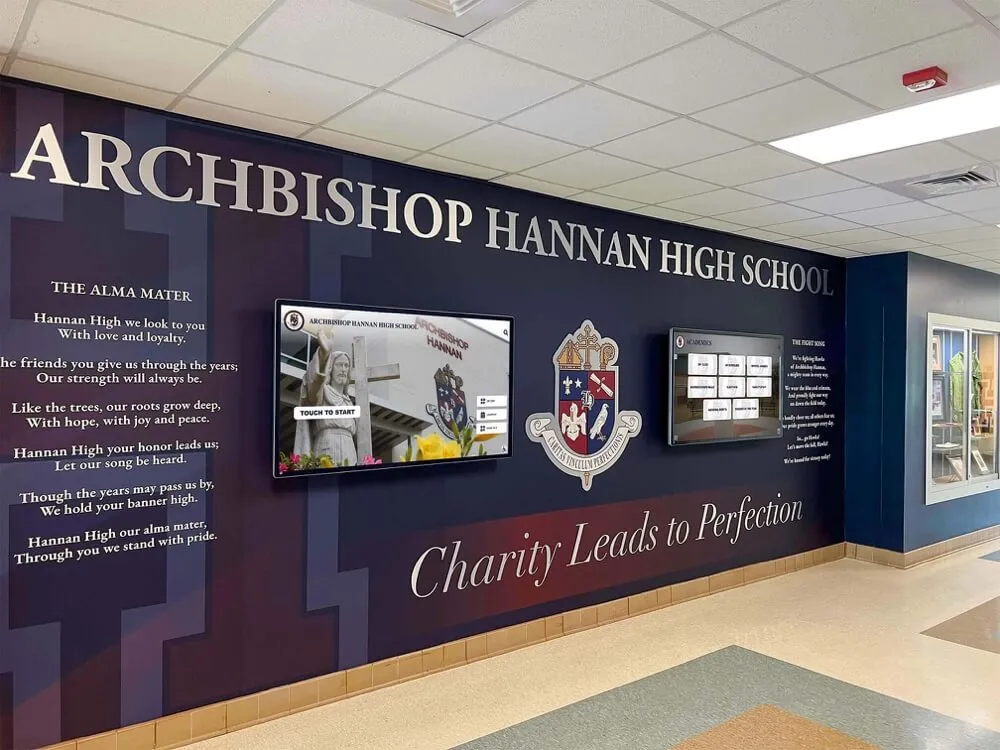
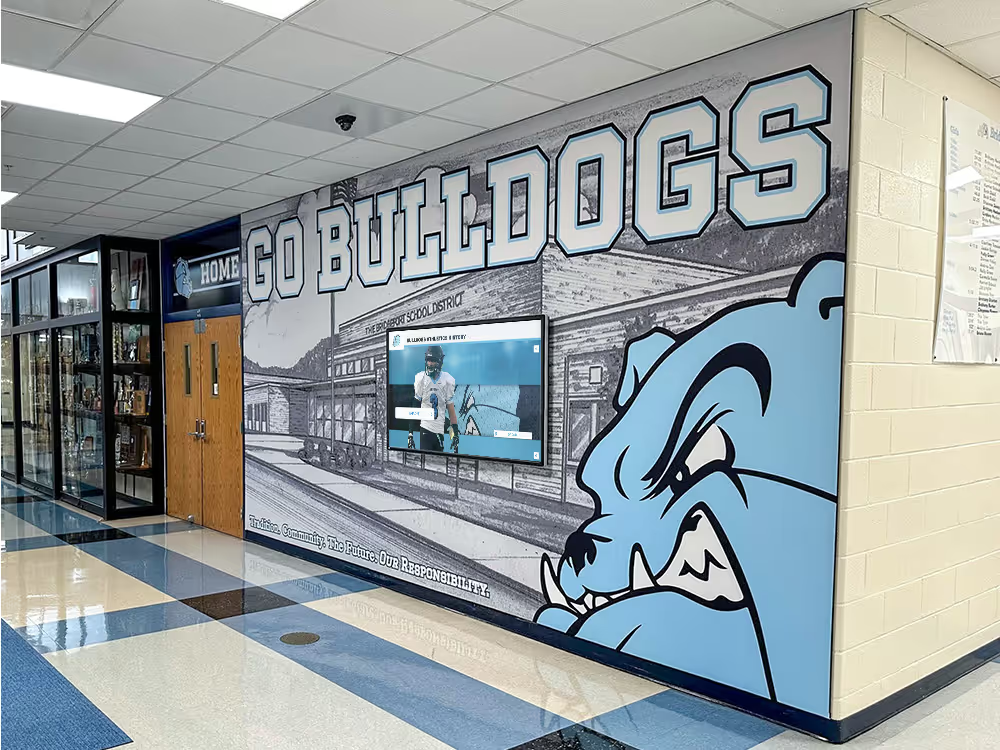
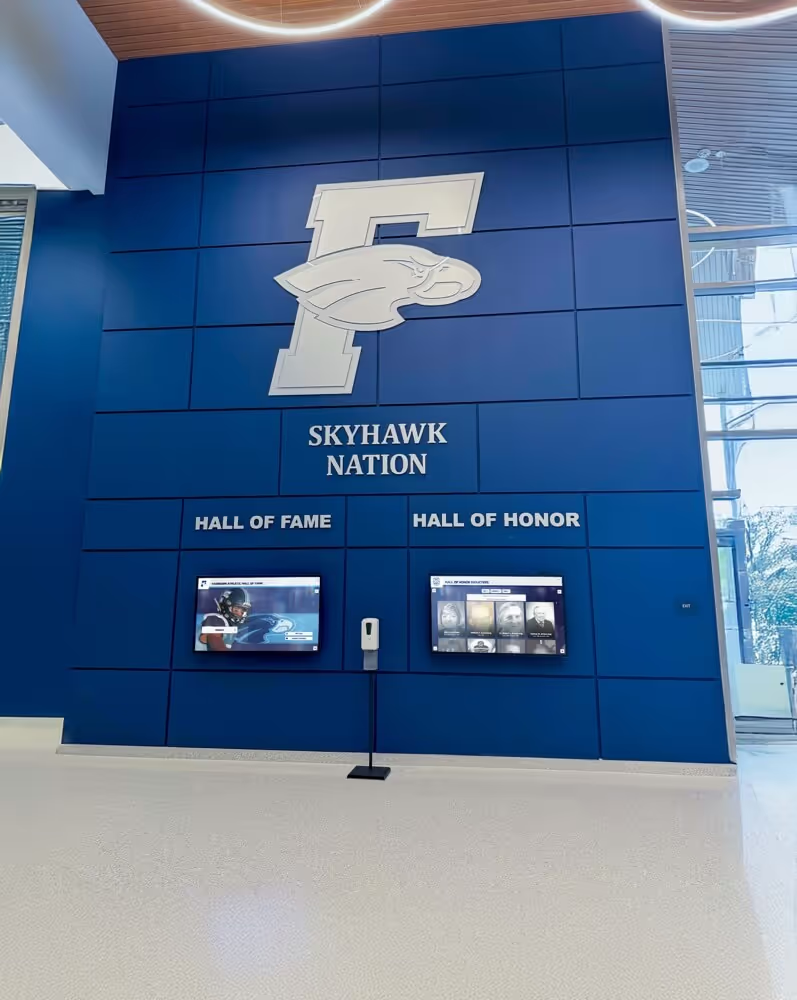
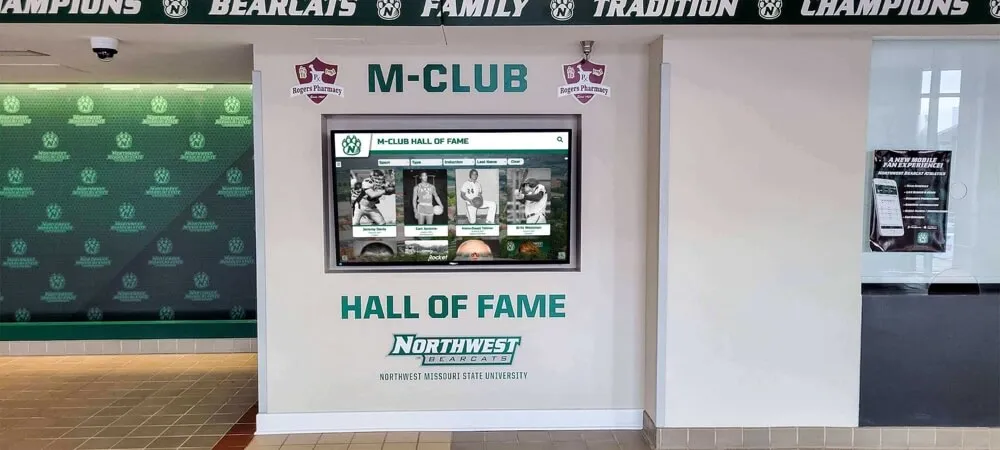
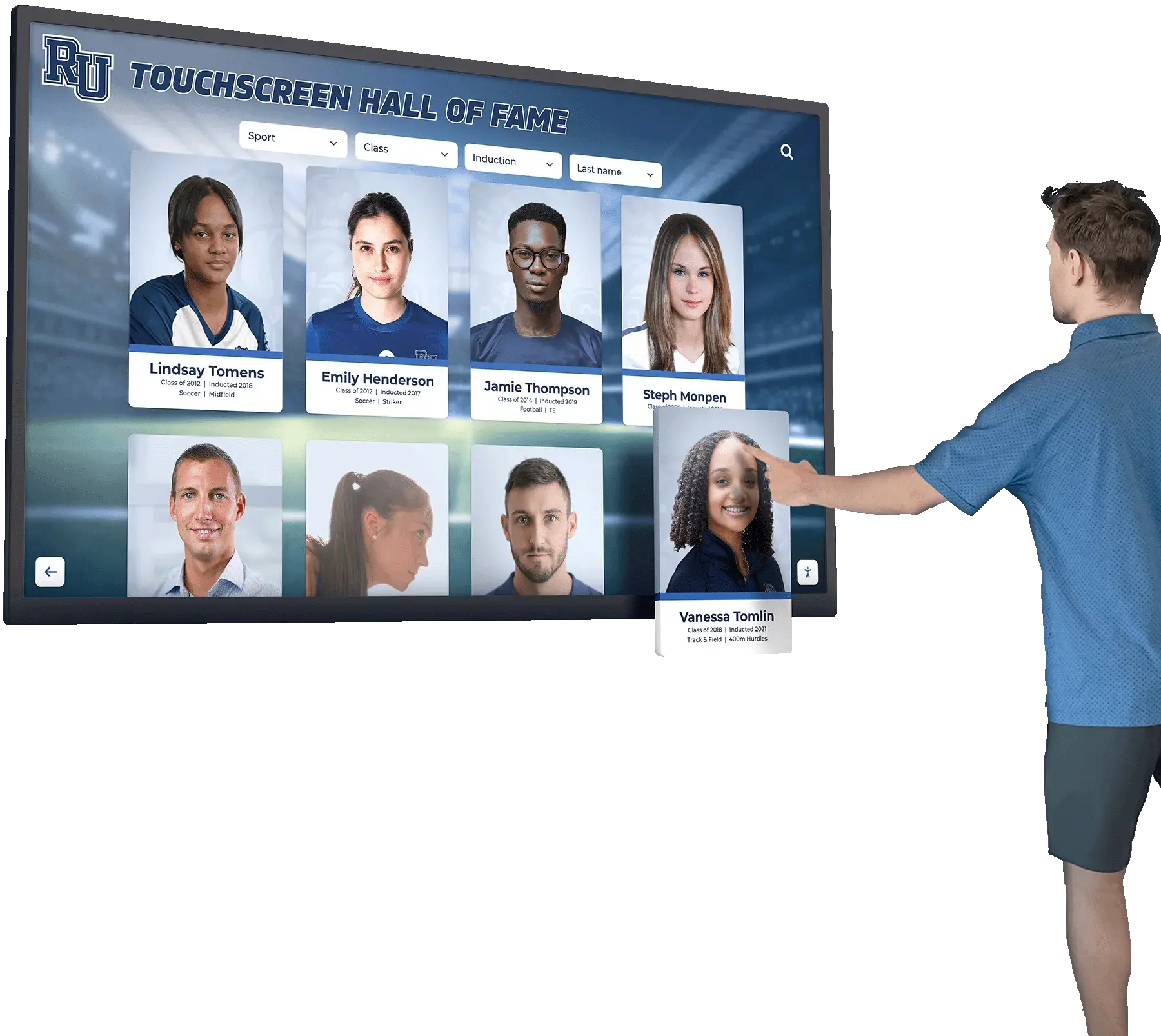
Interactive displays enable deep exploration of artwork with unlimited capacity for student portfolios
Inspiring Future Student Artists
Gallery displays showing exceptional student work inspire others to pursue visual arts courses and develop their own creative abilities. Prospective art students researching program quality need visible evidence of what they might create and achieve. Current beginning students benefit from seeing advanced work demonstrating what’s possible with sustained effort and skill development.
This inspiration cycle proves critical for building and sustaining strong art programs. When gallery displays remain prominent and impressive, art program enrollment typically increases by 20-40% within 2-3 years as more students discover creative opportunities while understanding that artistic achievement receives genuine recognition comparable to athletic championships or academic honors.
The Challenge of Traditional Gallery Display Limitations
Despite their importance, conventional art class gallery displays face significant constraints that limit recognition impact and effectiveness:
Severe Physical Space Limitations
Most schools maintain hallway bulletin boards, display cases, or dedicated art galleries for student work. These physical spaces provide important exhibition opportunities but face inherent limitations including severely restricted display capacity forcing selection of tiny fractions of total student work, inability to accommodate all artistic mediums equally—large sculptures, three-dimensional installations, and certain formats particularly challenging, environmental concerns including sunlight exposure causing fading, humidity affecting mediums, security risks, rotation requirements demanding constant takedown and reinstallation consuming teacher time, and accessibility restrictions limiting viewing to those physically present during brief display periods.
Perhaps most significantly, physical space constraints force impossible choices about whose artwork receives recognition. When gallery space accommodates only 30 pieces but 150 students create exceptional work worthy of celebration, the selection process itself undermines program goals of celebrating all student achievement.
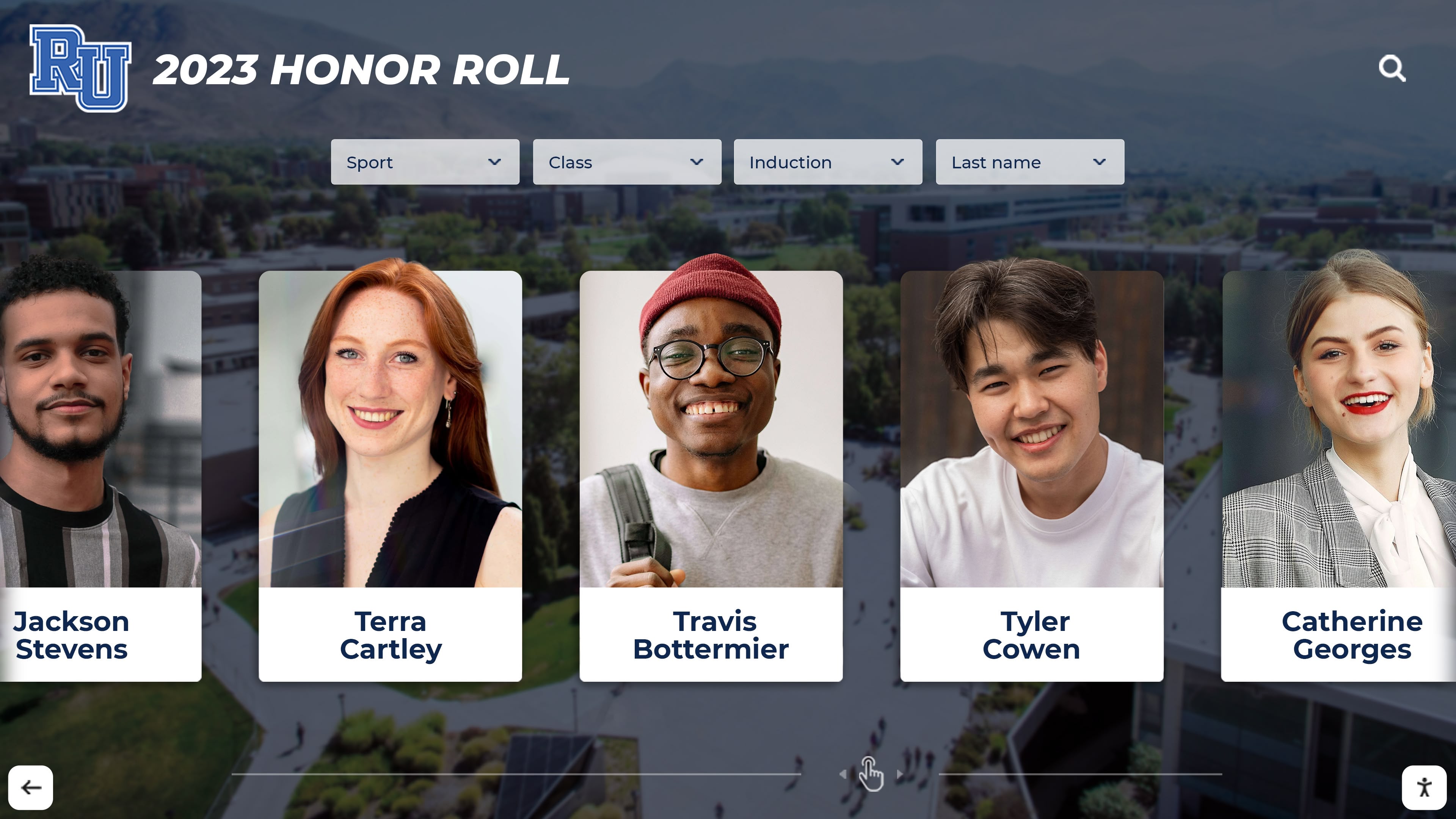
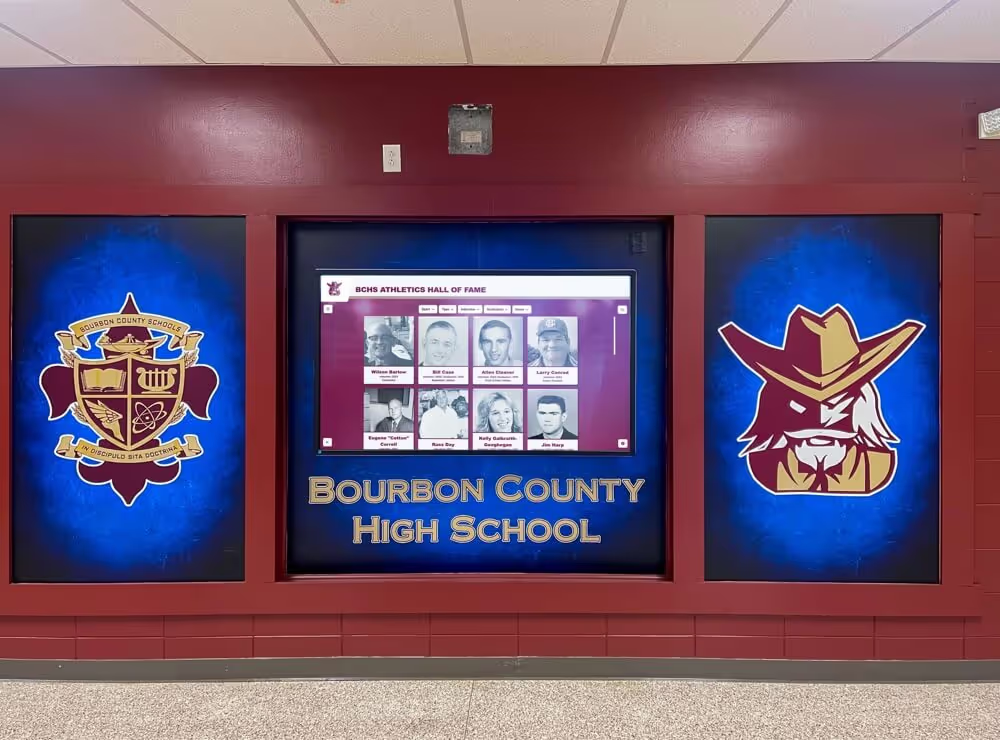
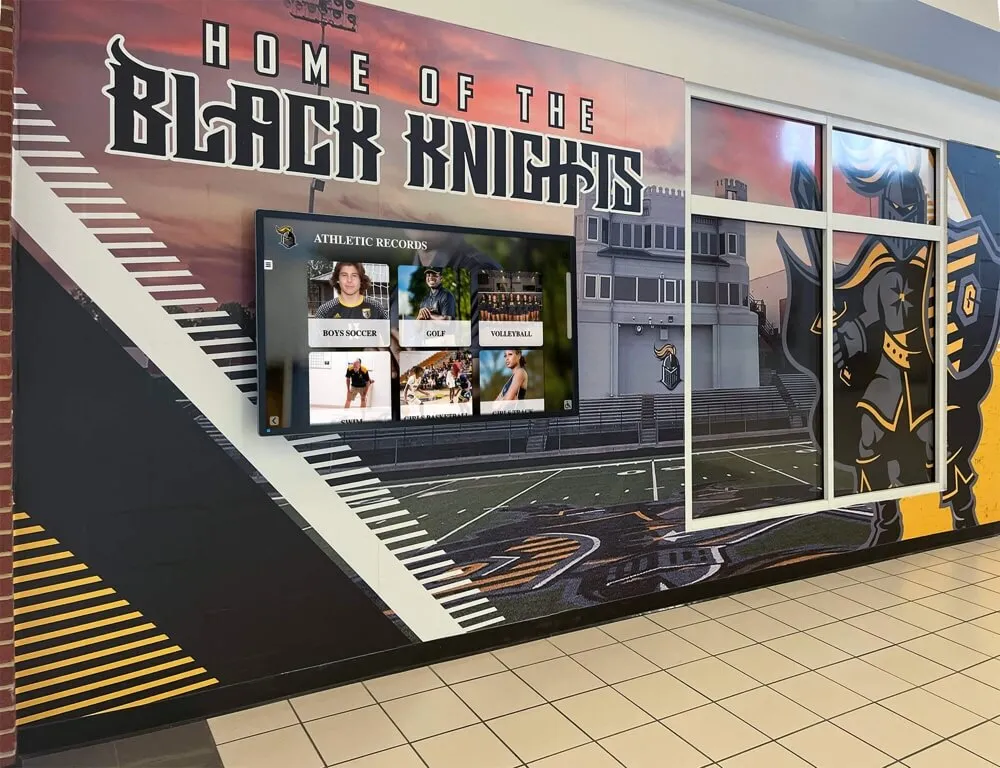
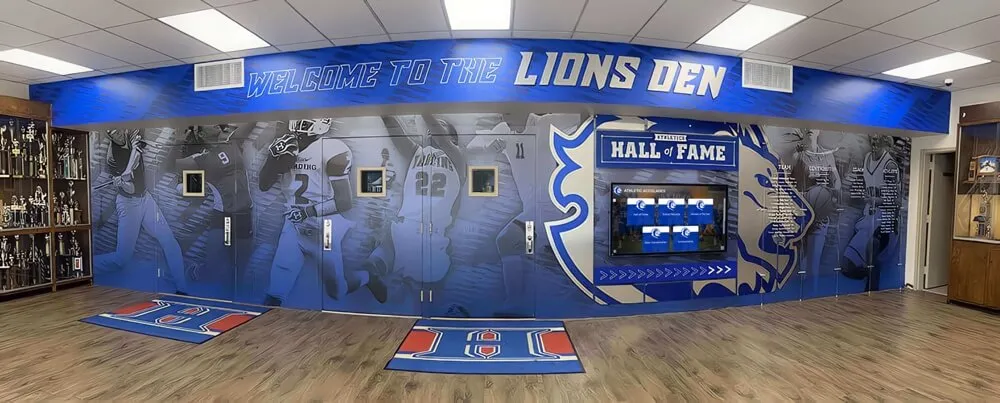
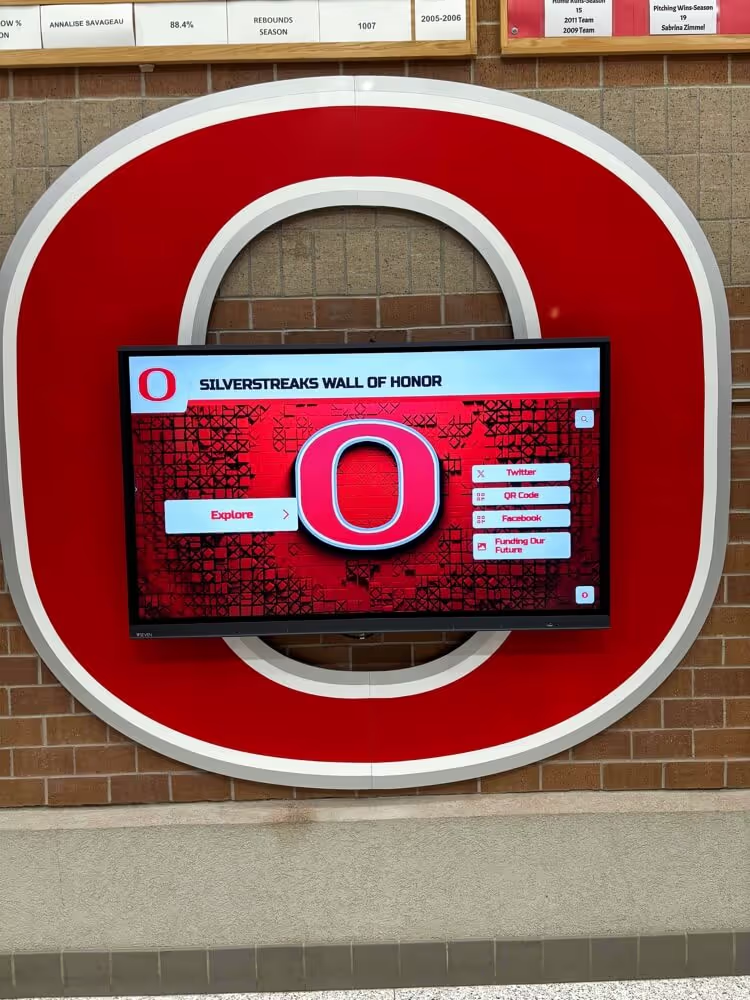
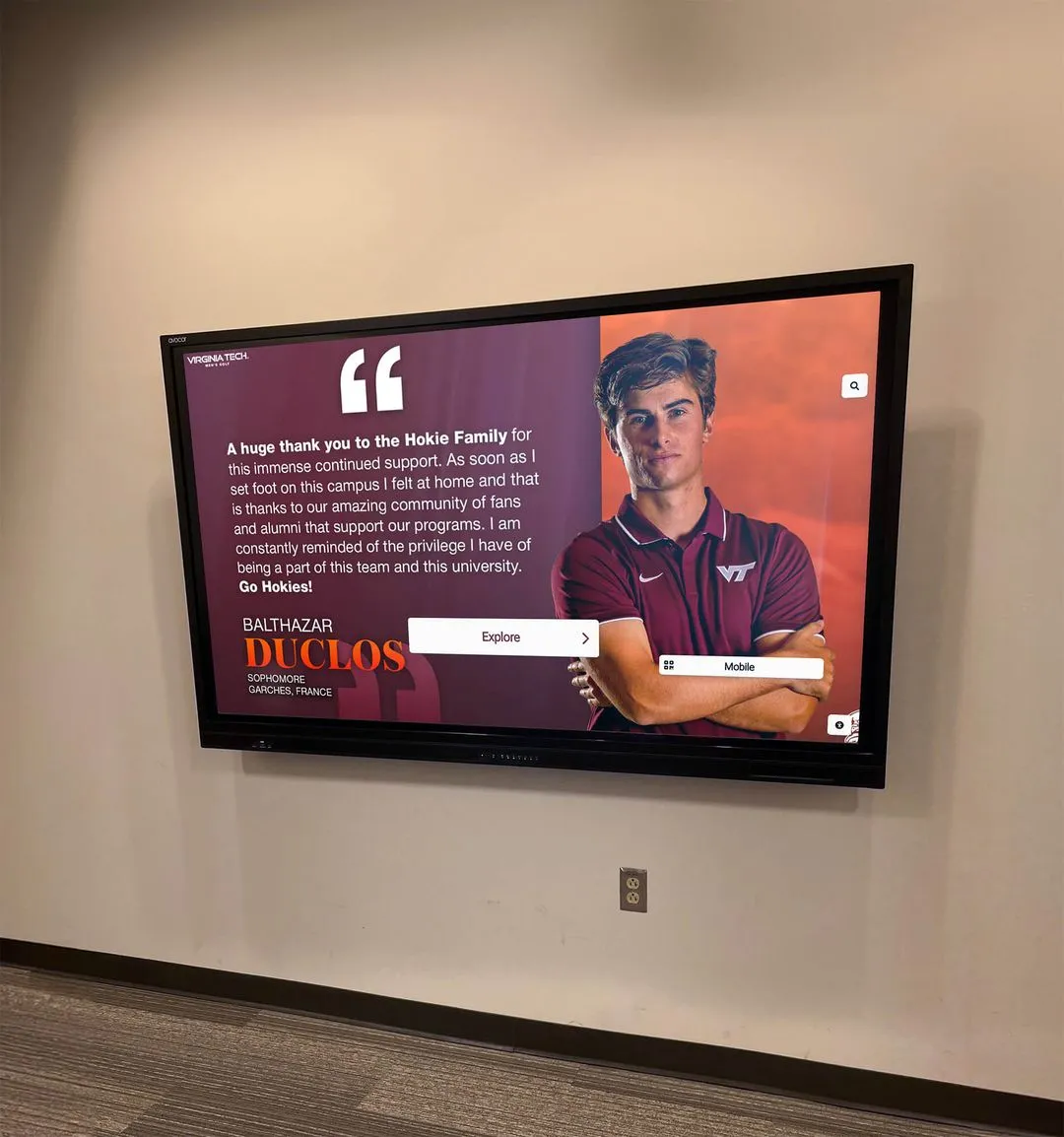
Digital systems enable individual portfolio recognition honoring each student's artistic contributions
Temporary Display Duration Problems
Traditional exhibit rotation means most student artwork receives only brief public visibility before removal and disappearance. Students spend weeks or months creating exceptional paintings, sculptures, or mixed media pieces. Work displays for perhaps 4-6 weeks in school gallery or hallway. Display comes down to accommodate next rotation. Artwork goes home or into storage. All public recognition ceases permanently.
This temporary recognition fundamentally limits impact while failing to build lasting program traditions or inspire students beyond those who happened to attend school during brief display windows. Schools lose opportunities to leverage exceptional artwork for ongoing program marketing, prospective student recruitment, or community engagement.
Artwork Preservation and Archiving Challenges
Schools attempting to preserve student artwork history face daunting storage challenges. Physical artwork requires climate-controlled storage preventing deterioration, three-dimensional pieces demand significant space, and both require organization systems enabling future access. Most schools lack resources for comprehensive physical archiving, meaning institutional creative heritage disappears as students take work home and graduates move forward.
Some schools photograph artwork for documentation, but these digital files typically live on individual teacher computers or scattered drives—unorganized, inaccessible to broader communities, and vulnerable to loss through technical failures or staff transitions.
Learn about strategies for displaying school history through modern recognition approaches that preserve institutional heritage permanently.
Modern Digital Gallery Display Solutions: Unlimited Recognition Capacity
Contemporary technology transforms what’s possible in art class gallery displays, addressing every limitation of traditional physical exhibits while enabling capabilities that conventional galleries simply cannot provide.
Unlimited Artwork Capacity Without Physical Constraints
Digital recognition platforms provide comprehensive solutions specifically designed for educational art documentation rather than generic digital signage requiring extensive customization.
Showcasing Every Student’s Best Work
Digital galleries accommodate complete student artwork collections spanning all students and all years without physical space limitations. Art teachers can showcase every student’s best work rather than selecting only pieces fitting limited gallery space. Schools can preserve comprehensive creative archives including all drawing and painting work across mediums, sculpture and three-dimensional art documentation through multiple angles, digital art and graphic design in native high-resolution formats, photography portfolios and complete series, mixed-media and experimental artwork, ceramic and pottery collections, printmaking and relief work spanning techniques, and interdisciplinary projects combining multiple mediums.
This unlimited capacity proves particularly valuable for established art programs with rich traditions. Schools can honor founding artworks from program origins decades ago, celebrate milestone exhibitions and exceptional student achievements across history, recognize program evolution across different teachers and artistic movements, and ensure no exceptional work disappears simply because physical display space limitations forced impossible choices.
Solutions like Rocket Alumni Solutions provide specialized platforms designed specifically for educational recognition rather than generic content management systems, offering comprehensive capabilities including unlimited artwork documentation without storage restrictions, professional high-resolution image presentation supporting detailed viewing with zoom capabilities, intuitive content management requiring minimal technical expertise from art teachers, permanent web accessibility extending recognition beyond campus to global audiences, and proven educational implementations across thousands of schools nationwide.
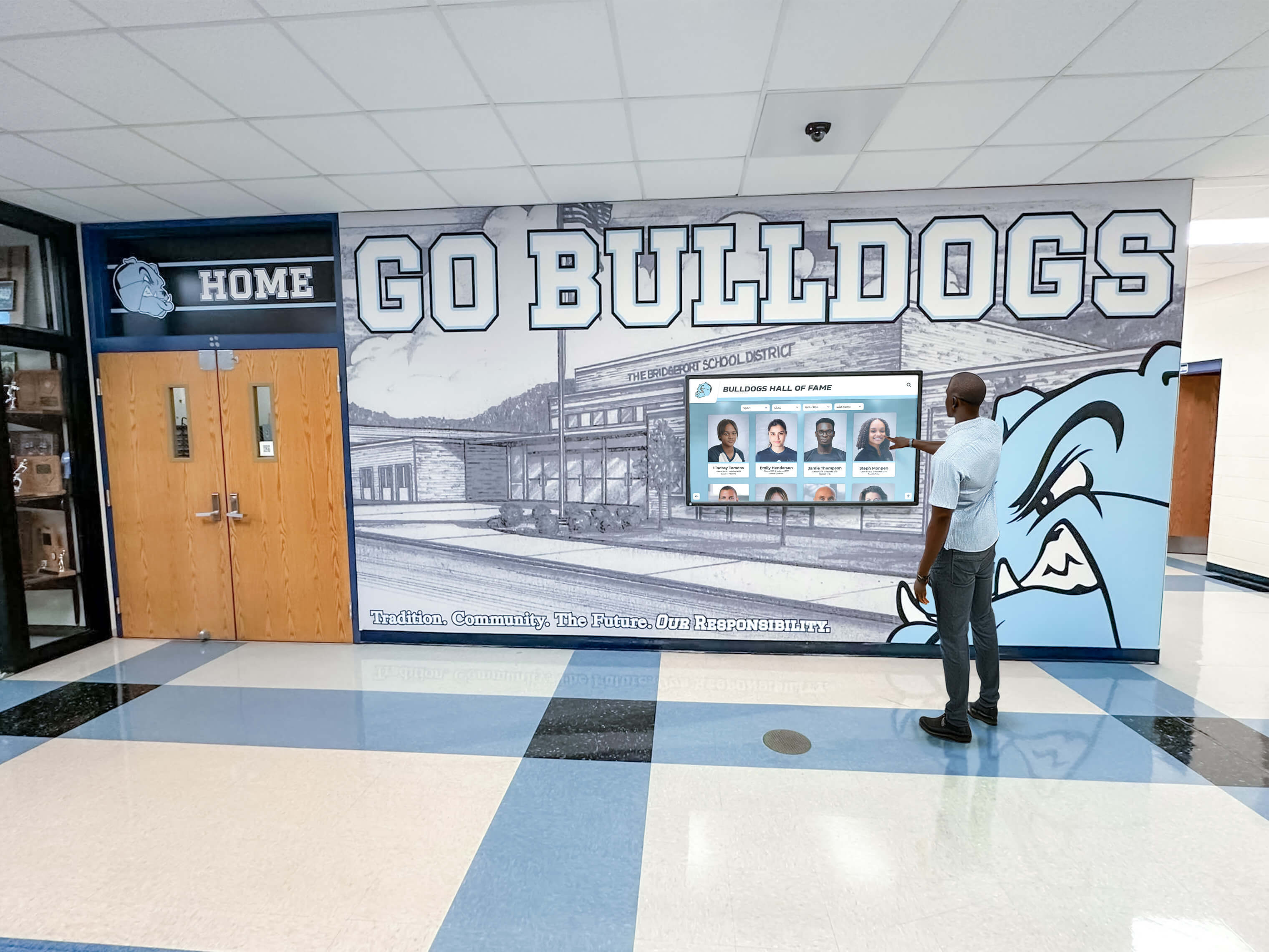
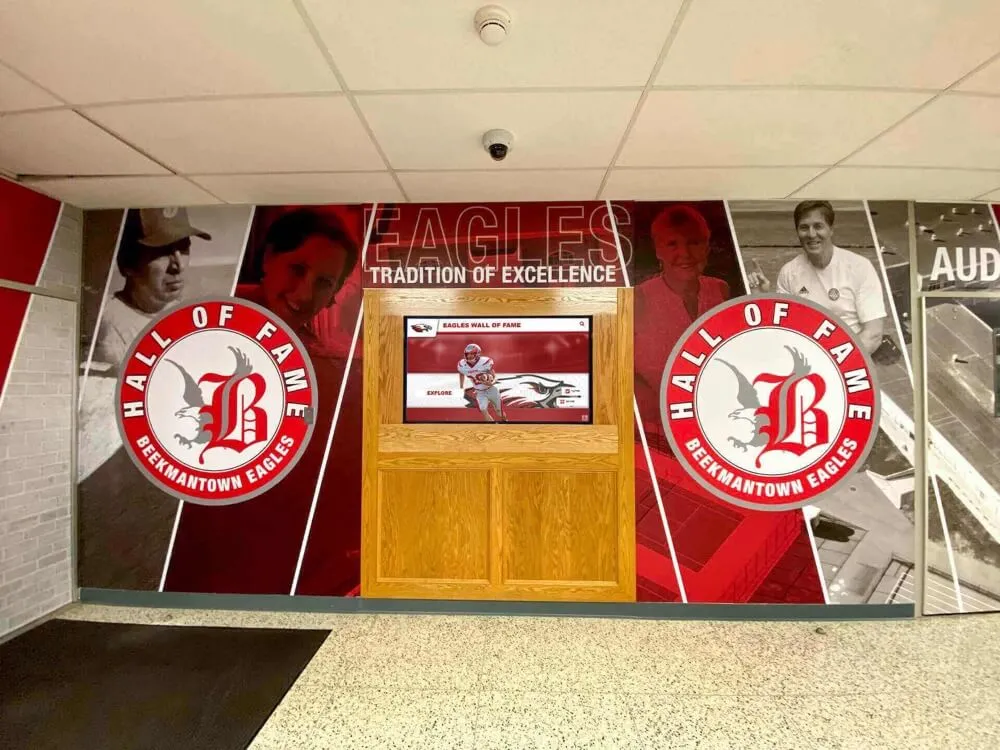
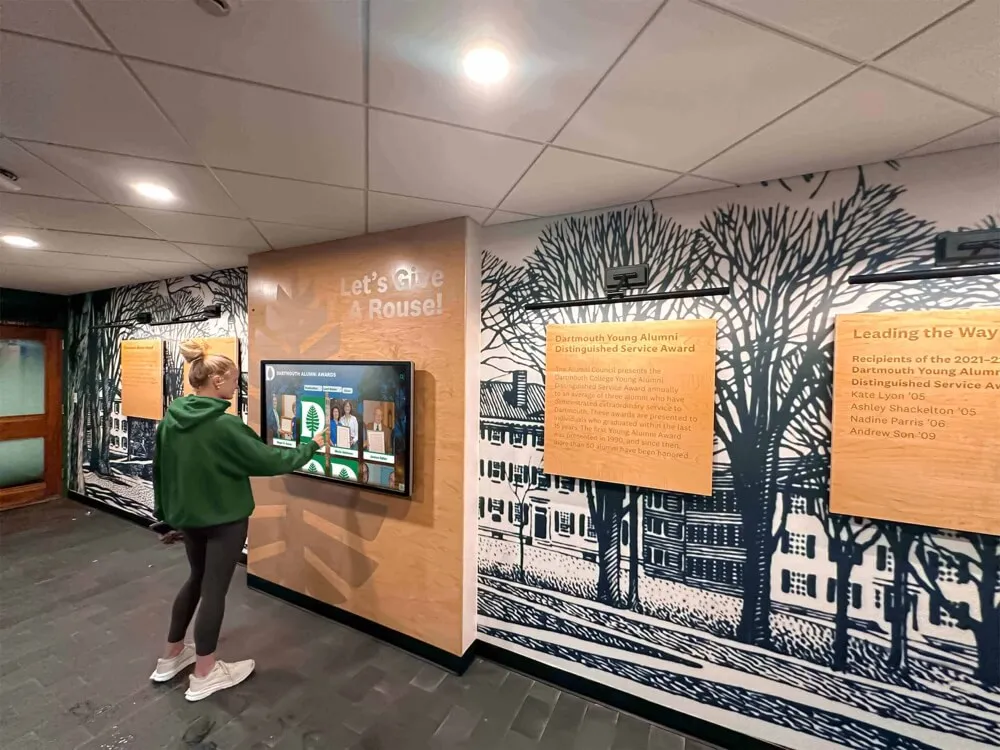
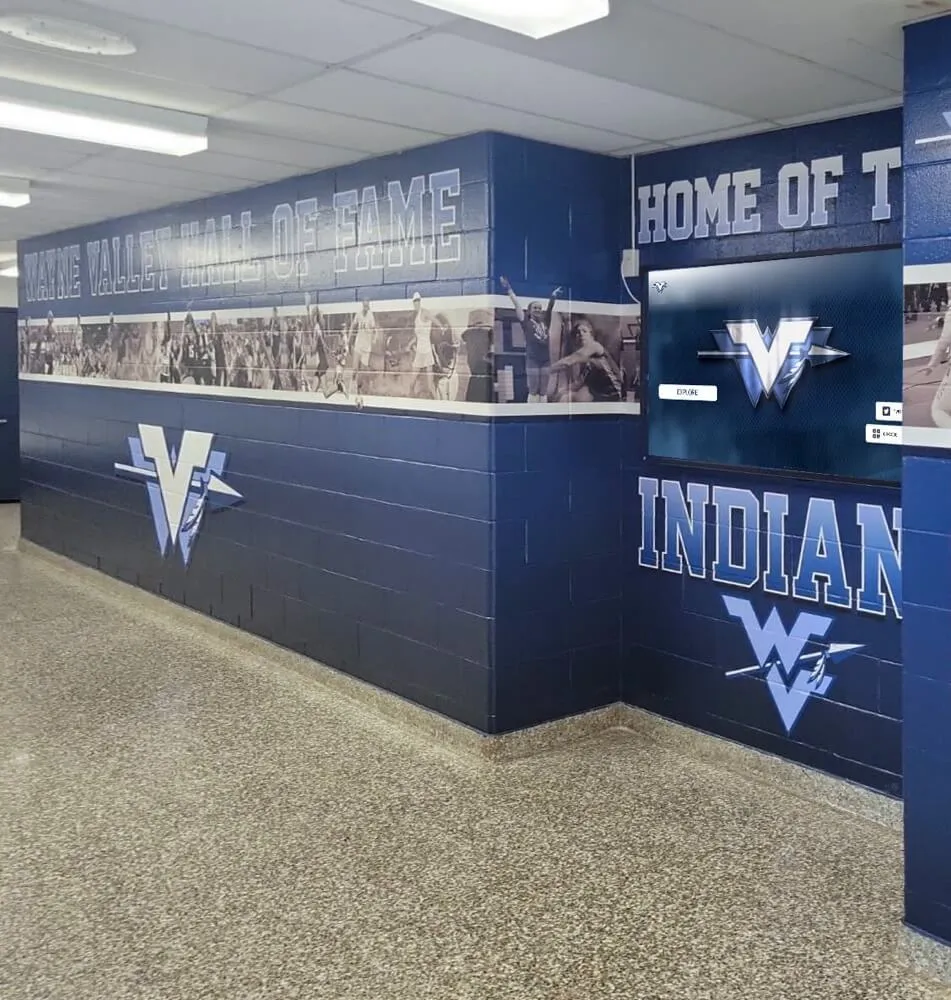
Hallway installations ensure art recognition reaches all students throughout daily school experiences
Rich Multimedia Storytelling Capabilities
Digital platforms enable artwork documentation that brings student creativity to life through capabilities impossible with physical displays alone.
Comprehensive Artistic Documentation
Modern gallery systems support rich multimedia content including professional high-resolution photography showcasing artwork details and textures invisible in casual viewing, video documentation showing three-dimensional work from multiple angles and perspectives, time-lapse videos capturing creative process from blank canvas through completion, student artist statements explaining inspiration, technique, creative vision, and meaning, teacher commentary providing artistic context, skill development notes, and educational value, exhibition documentation including gallery openings, community response, and celebration events, and behind-the-scenes footage revealing artistic process, studio work, and creative problem-solving.
This multimedia richness transforms simple artwork archiving into compelling storytelling that honors student achievement comprehensively while creating engaging experiences maintaining visitor attention far longer than static displays. Research shows visitors typically spend 30-60 seconds glancing at traditional hallway displays but engage 5-15 minutes with interactive digital art galleries featuring rich multimedia content and searchable portfolios.
Professional Presentation Quality
Digital displays present artwork with gallery-quality presentation including optimal image resolution maintaining fine details and color accuracy, professional matting and framing effects, proper lighting simulation eliminating glare or shadows, consistent presentation standards across all artwork, zoom capabilities enabling detail exploration, and side-by-side comparison features showing artistic development or thematic connections.
This professional quality validates student artwork as serious creative achievement deserving museum-grade presentation rather than casual classroom decoration.
Discover comprehensive approaches to showcasing classroom projects that parallel effective artwork documentation strategies across creative disciplines.
Powerful Search and Discovery Features
Digital systems enable visitors to quickly locate specific artwork, artists, or information within comprehensive art archives through intuitive navigation that makes extensive collections accessible rather than overwhelming.
Intuitive Exploration Interfaces
Searchable databases support finding students by name across all their artwork and years, browsing artwork by creation year, artistic medium, or course level, filtering by artistic style, subject matter, or thematic connections, exploring individual student portfolios showing artistic development across multiple years, discovering award-winning or competition pieces, and locating distinguished alumni artists and their creative journeys from school through professional careers.
These search capabilities make comprehensive archives practical and accessible. Students can instantly find their own artwork across multiple years and courses. Parents can locate all pieces their children created throughout school careers. Alumni visiting schools can rediscover artistic experiences from decades past. Prospective students can explore extensive galleries understanding program quality and creative opportunities—all through intuitive interfaces requiring no training or technical knowledge.
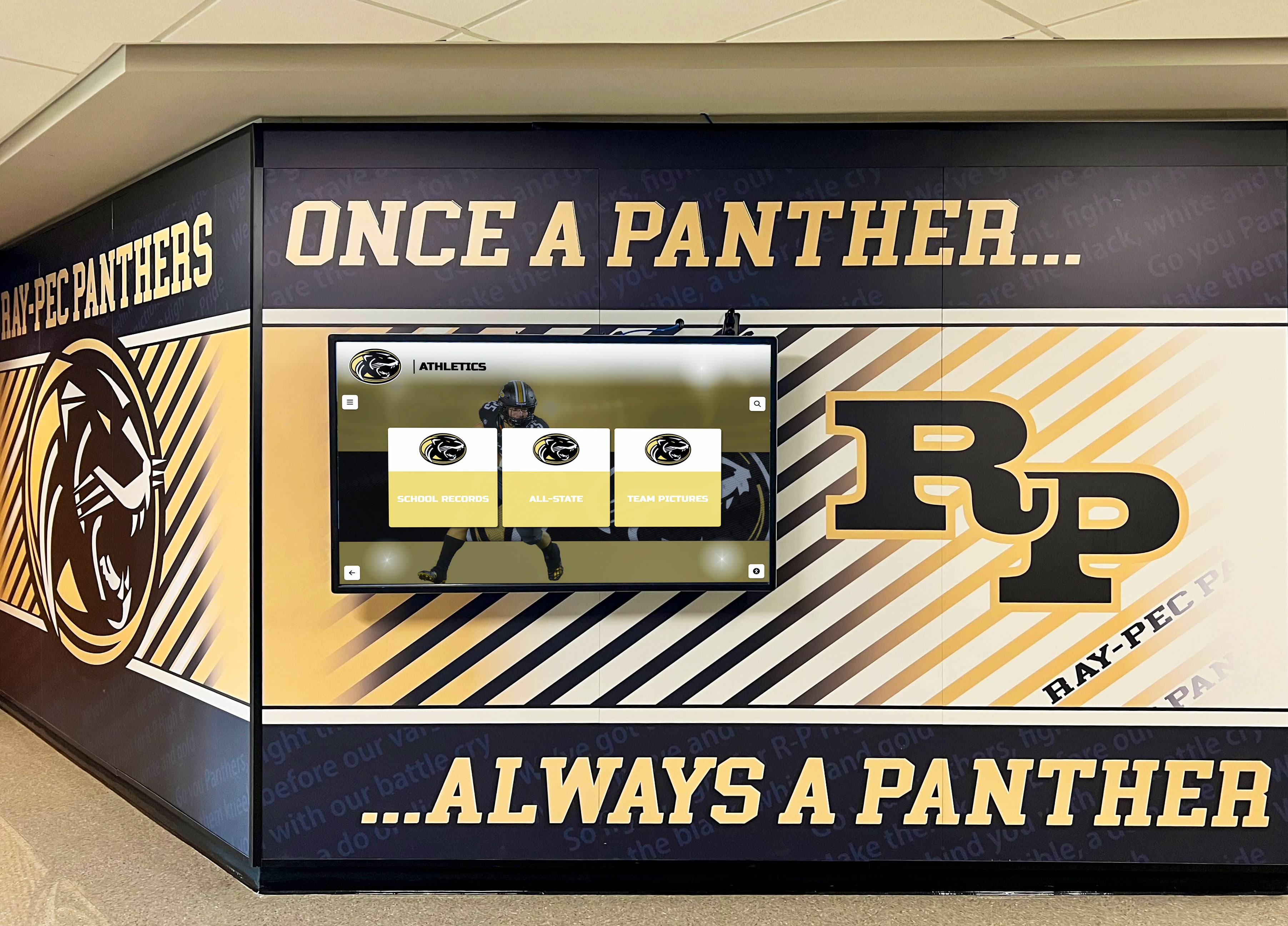
Integrated installations combine artistic elements with functional digital gallery systems
Featured Content and Curated Collections
Digital galleries support dynamic content presentation including rotating featured artist spotlights, seasonal or thematic collections, historical retrospectives celebrating program milestones, technique-focused showcases demonstrating specific skills, award and competition winner highlights, and alumni artist journey features showing career development from student work through professional practice.
This curatorial flexibility keeps gallery displays fresh and engaging while highlighting different aspects of program excellence throughout academic years.
Explore strategies for digital recognition displays that showcase diverse achievements including artistic excellence.
Creating Compelling Gallery Display Content
Technology enables gallery platforms, but thoughtful content development creates meaningful experiences that genuinely honor artistic achievement while inspiring current students and building program culture.
Essential Artwork Documentation Elements
Comprehensive digital gallery displays should include multiple content components for each artwork that together tell complete creative stories beyond just final product images:
Core Artwork Information
- Student artist name and graduation year
- Artwork title and creation date
- Artistic medium and materials used
- Dimensions and scale information
- Course level and instructor name
- Grade level when created
- Exhibition history if applicable
- Awards or recognition received
- Technical approach and methods
- Time invested in creation
Visual Documentation
- Professional high-resolution photography of completed artwork
- Multiple angles for three-dimensional pieces showing all perspectives
- Detail shots highlighting technical excellence, texture, and craftsmanship
- Scale reference providing size context through environmental placement
- In-progress documentation showing creative development stages
- Exhibition installation photos showing work in gallery context
- Student working on piece during creation process
- Related preparatory sketches or studies
Contextual Narratives
- Student artist statements explaining inspiration and creative vision
- Technical approach and materials exploration decisions
- Artistic influences and stylistic references
- Personal meaning and emotional connection to work
- Challenges overcome during creative process
- Skills developed and techniques mastered through project
- Teacher commentary on artistic growth and achievement
- Connection to broader art movements or historical context
Multimedia Enhancements
- Video walkarounds of three-dimensional work and installations
- Time-lapse creation process documentation from start to finish
- Student interviews discussing artistic journey and development
- Demonstration videos showing specific techniques or methods used
- Exhibition opening footage and community response documentation
- Artistic process behind-the-scenes revealing working methods
- Related artwork showing series development or thematic exploration
- Peer critiques and collaborative feedback from class discussions
When schools systematically document these elements for featured artwork, they create rich galleries honoring achievement comprehensively while providing valuable educational resources for current and future art students studying artistic processes, techniques, and creative development.
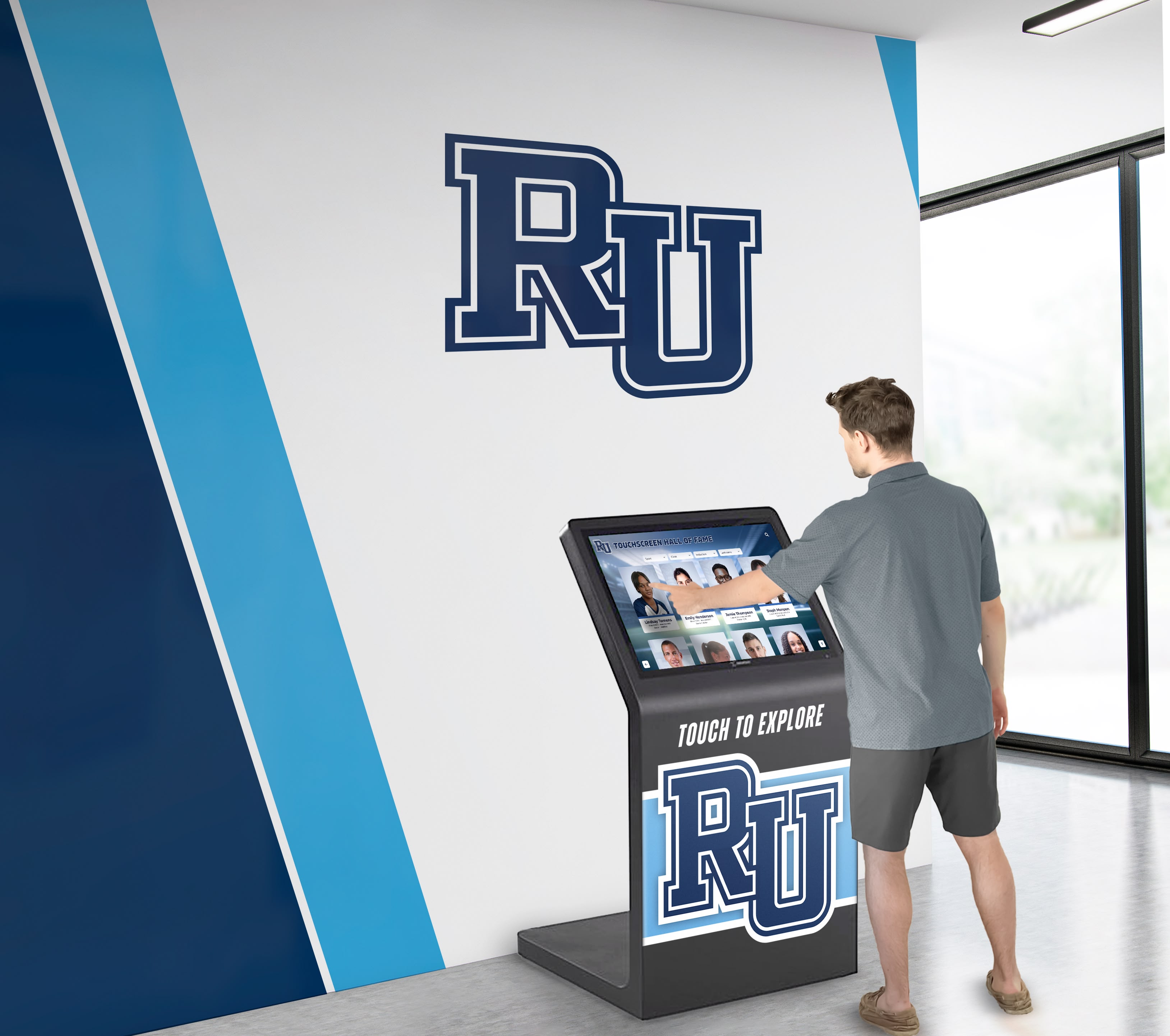
Lobby installations create prominent recognition spaces welcoming visitors with artistic excellence
Recognizing Diverse Artistic Mediums and Styles
Equitable gallery representation celebrates work across all artistic mediums, styles, and approaches, ensuring comprehensive celebration of student creative achievement rather than privileging specific art forms:
Traditional Fine Arts
- Drawing in graphite, charcoal, pen, colored pencil, and pastels
- Painting in oil, acrylic, watercolor, tempera, and gouache
- Sculpture in clay, plaster, wire, wood, and found objects
- Printmaking including relief, intaglio, lithography, and screen printing
- Ceramic and pottery wheel-thrown and hand-built work
- Photography both film and digital processes and techniques
Contemporary and Digital Arts
- Digital illustration and painting using professional software
- Graphic design and visual communication projects
- Digital photography and advanced photo manipulation
- Video art and experimental film projects
- Animation and motion graphics creation
- Mixed media combining traditional and digital elements
- Installation art and site-specific environmental work
Applied and Functional Arts
- Jewelry and wearable art design and fabrication
- Textile arts including weaving, dyeing, and fiber work
- Book arts and handmade publications
- Functional ceramics and utilitarian pottery
- Product design and industrial design concepts
- Architectural models and environmental design
- Fashion design and garment construction
Comprehensive recognition acknowledging diverse mediums equally demonstrates that multiple pathways to artistic excellence exist while validating different forms of creative expression. Students interested in various artistic approaches see that art programs value their specific interests and potential contributions, attracting diverse talents that strengthen overall program quality and creative culture.
Learn about strategies for honoring student achievement across programs that ensure comprehensive celebration of diverse creative contributions.
Strategic Implementation of Gallery Display Systems
Moving from concept to reality requires systematic planning addressing content development, technology selection, strategic placement, and sustainable operations ensuring art recognition programs thrive long-term while managing workload effectively.
Phased Implementation Approach for Gallery Content
Schools with extensive art program histories should develop digital gallery content incrementally rather than attempting comprehensive archiving immediately, which can overwhelm staff and delay implementation:
Phase 1: Current Year Foundation (Months 1-3)
Begin by documenting current academic year artwork thoroughly, establishing baseline content and testing workflows while demonstrating immediate value. Focus on current student work where documentation integrates naturally into course completion processes rather than requiring historical research and reconstruction.
Art teachers incorporate gallery documentation into final project requirements—students must photograph their work professionally using provided guidelines, write artist statements explaining creative vision and process, and submit digital files formatted for gallery inclusion. This integration ensures documentation becomes routine student responsibility rather than additional teacher burden while teaching professional portfolio development skills valuable for college art program applications.
Phase 2: Recent History Documentation (Months 4-9)
Add artwork from previous 3-5 years, providing historical depth while capturing work from currently enrolled students’ earlier courses. Recent history documentation often proves easier because teachers remember artwork and students well, digital photos may already exist from previous documentation efforts, and students remain available for artist statements and interviews rather than requiring alumni outreach.
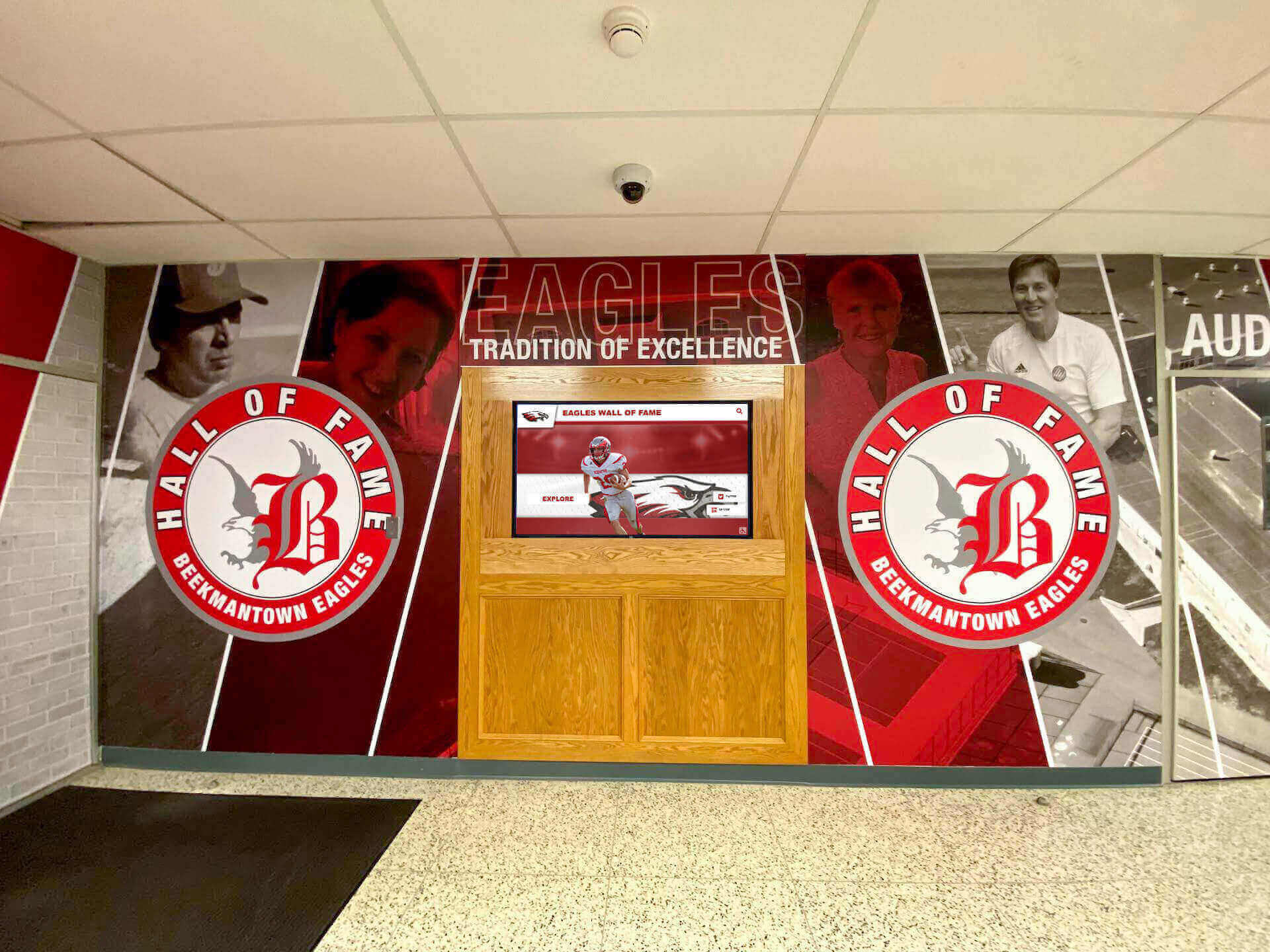
Lobby installations integrate art program recognition with broader school achievement celebration
Phase 3: Program Milestones and Distinguished Work (Months 10-18)
Systematically add significant historical artwork defining program traditions—award-winning pieces from regional or national competitions, distinguished student artists who pursued creative careers and professional practice, program founding works from early decades, milestone anniversary exhibition highlights, or exceptional pieces representing program evolution. Milestone documentation creates historical depth while honoring artistic heritage that current students should understand as part of program tradition they continue.
Historical documentation may require working with alumni to locate photos of their work, scanning exhibition catalogs and yearbook pages featuring artwork, or recreating digital records of analog artwork no longer physically accessible. This archival effort preserves institutional creative history while reconnecting alumni to their school artistic experiences and contributions.
Phase 4: Comprehensive Archives (Ongoing)
Continue historical documentation working backward through program history as time and resources permit. Complete archives develop over months or years, but phased approaches enable earlier launches demonstrating value quickly while distributing substantial workload across manageable increments that don’t overwhelm art faculty with additional responsibilities.
Technology Selection Criteria for Gallery Display Systems
Schools evaluating digital gallery solutions should assess options against specific criteria ensuring systems meet artistic documentation needs while providing accessible management and sustainable operations:
Essential Platform Capabilities
- Comprehensive high-resolution image support with zoom functionality
- Video and multimedia integration for complete documentation
- Unlimited or very generous content capacity without storage fees
- Powerful search, filtering, and portfolio navigation features
- Flexible content templates accommodating different artistic mediums
- Web integration capabilities extending access beyond campus
- Mobile-responsive design ensuring accessibility across all devices
- Social sharing features enabling community engagement
- Professional presentation quality honoring artistic work
Management System Requirements
- Intuitive content management interfaces requiring minimal technical expertise
- Cloud-based remote access enabling updates from any location
- Bulk upload capabilities for efficient content additions
- Scheduled publishing automating routine gallery updates
- Version history enabling restoration if mistakes occur
- Role-based permissions when multiple staff contribute
- Comprehensive training resources and documentation
- Responsive technical support understanding educational contexts
Implementation and Support Factors
- Professional installation services for physical display components
- Commercial-grade hardware quality ensuring reliable long-term operation
- Realistic budget alignment with educational funding realities
- Educational pricing programs recognizing school resource constraints
- Proven educational implementations demonstrating track record
- Long-term upgrade pathways supporting evolving needs
- Ongoing support and maintenance agreements
Specialized educational recognition platforms like Rocket Alumni Solutions typically provide superior value compared to generic digital signage systems requiring extensive customization to support art recognition needs effectively. Purpose-built educational platforms understand school contexts, offer appropriate features designed specifically for academic galleries, and provide support familiar with educational environments and art program requirements.
Examine comprehensive guides for selecting digital recognition displays helping schools evaluate options systematically while avoiding common technology selection mistakes.
Strategic Display Placement for Maximum Impact
Physical display location significantly impacts who experiences art recognition and how gallery displays influence school culture and program participation:
Art Building and Studio Locations
Art room entrances, studio spaces, and dedicated visual arts facilities provide ideal primary locations where displays greet all art students daily while creating inspiring environments celebrating program heritage, occupy visitors during student exhibition openings and school art shows, provide reference examples for current students studying techniques, and reinforce program pride and creative tradition among participants. Art building displays capitalize on already-engaged audiences naturally interested in student creativity who spend significant time in these spaces.
Main Building Common Areas
Beyond specialized art facilities, positioning displays in main school entrances ensuring first impression for all visitors, cafeteria commons areas where students gather daily, library media centers supporting research and study, administrative lobbies receiving prospective families, and main hallways with high foot traffic ensures art recognition reaches all students, staff, and visitors—not just art program participants.
Broad visibility demonstrates institutional commitment to visual arts while attracting participation from students unfamiliar with art programs. This prominence creates parity with athletic recognition typically featured prominently in main school spaces, communicating that creative achievement matters equally to athletic championships or academic honors.
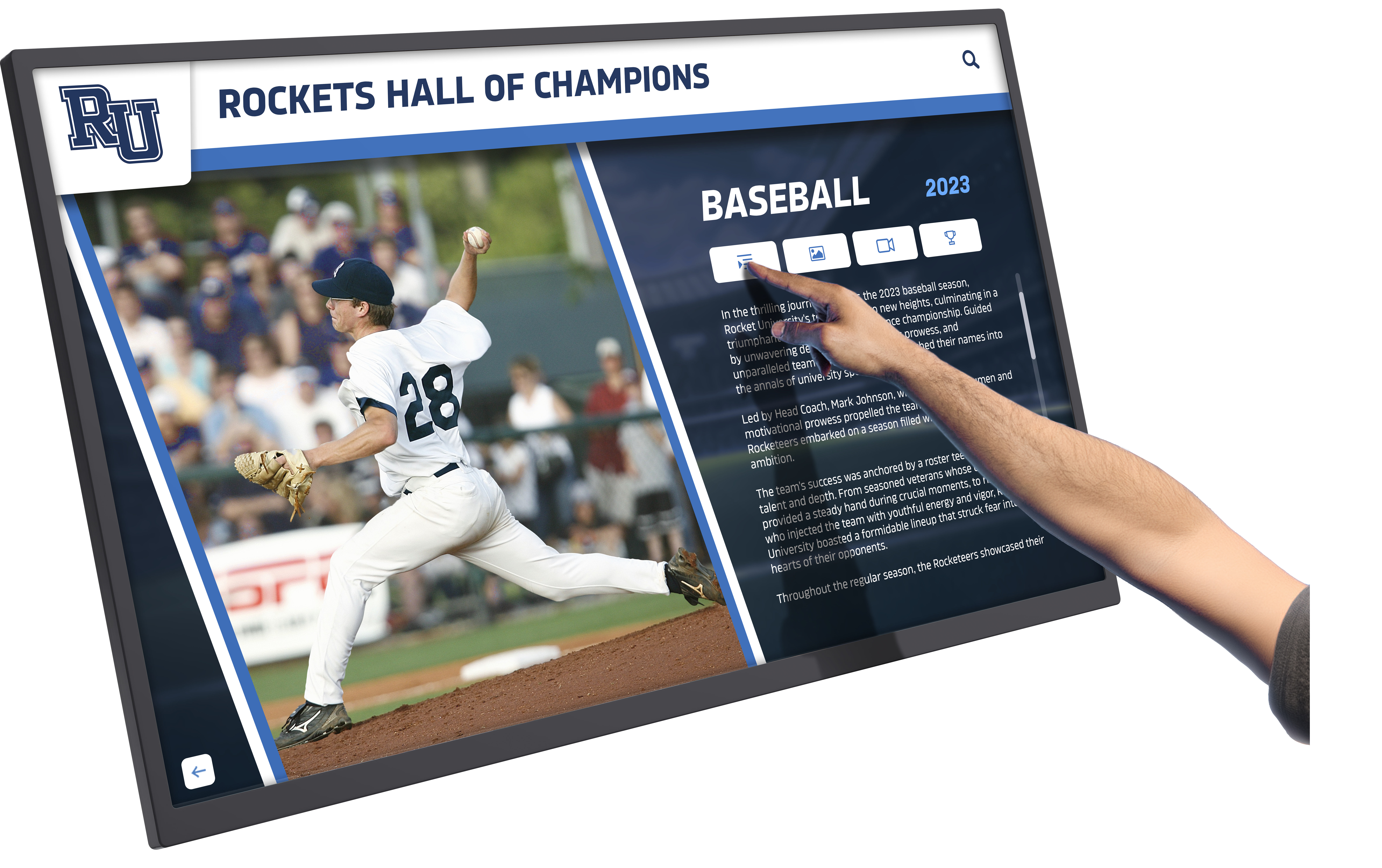
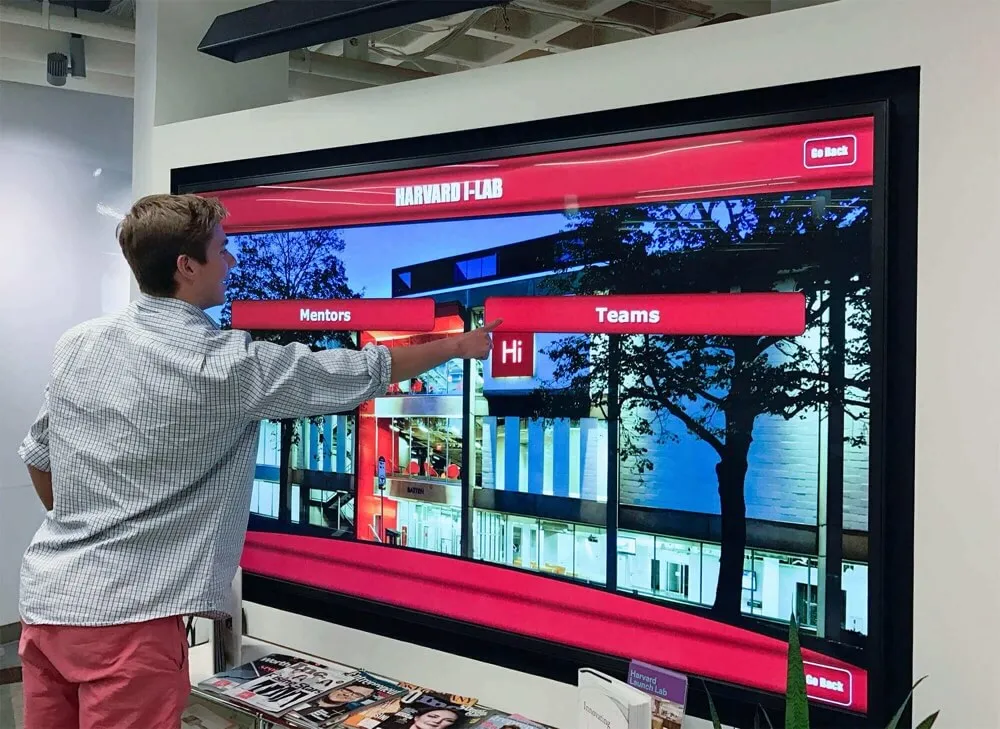
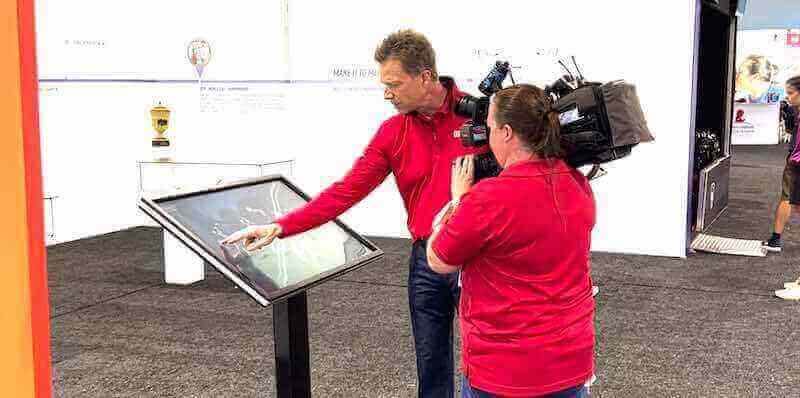
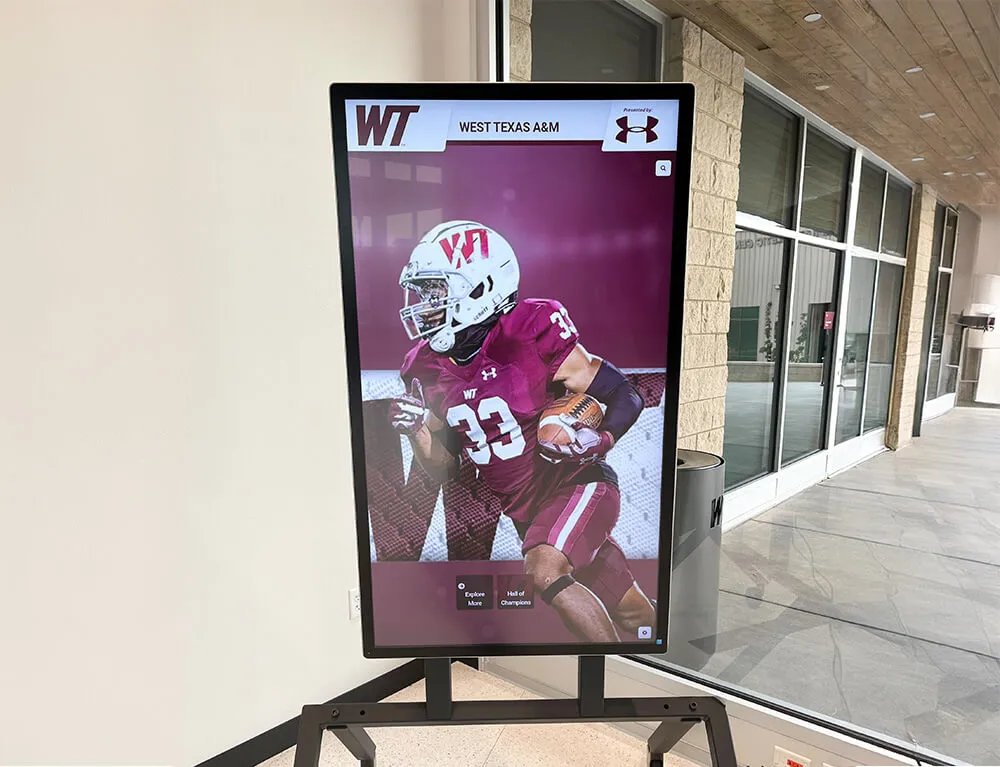
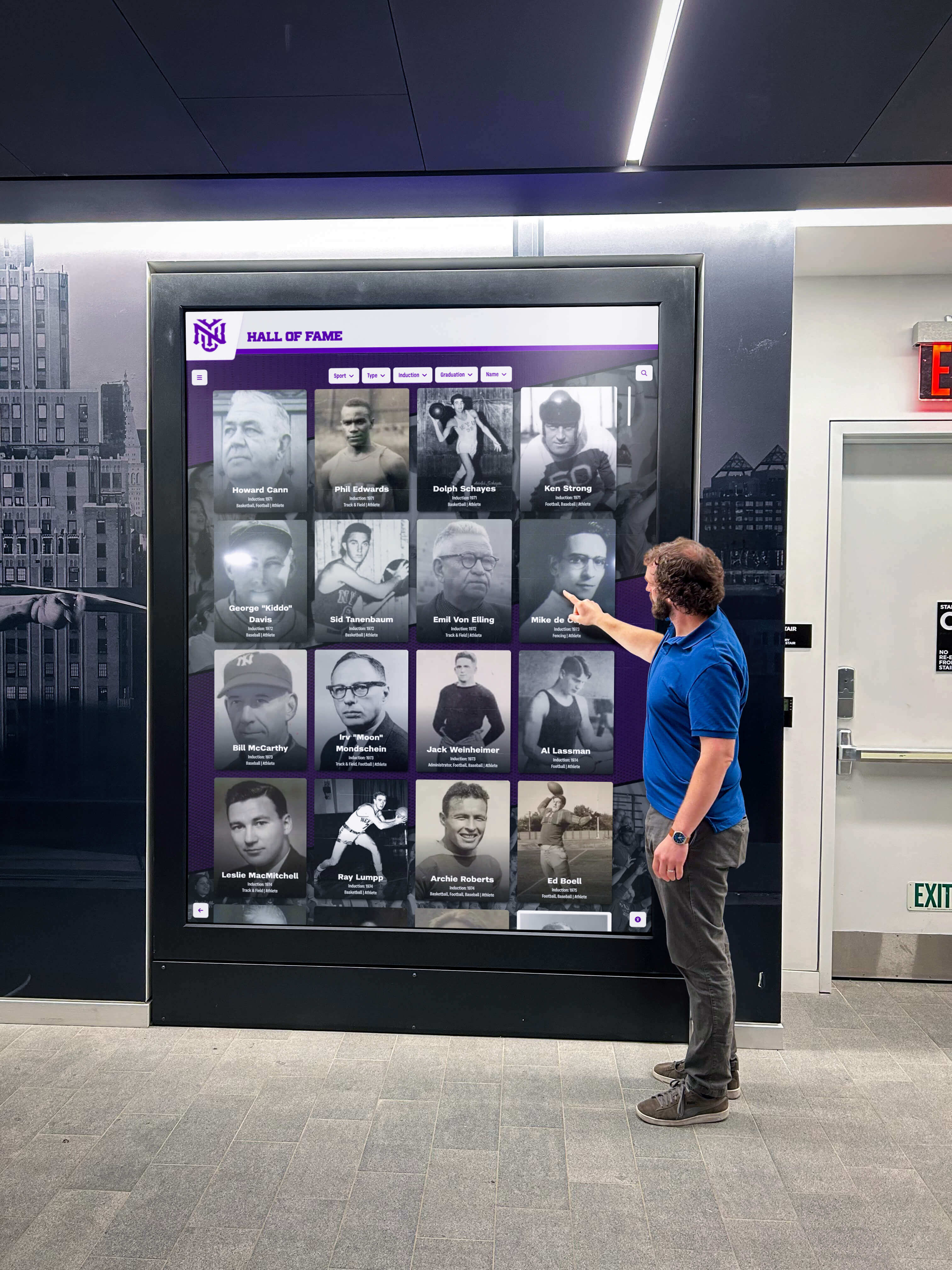
Intuitive touch interaction makes exploring artistic portfolios accessible to all ages and technical abilities
Community Exhibition Spaces Beyond Campus
Consider extending digital art galleries to community locations including public libraries displaying student work to broader audiences, municipal buildings celebrating local educational achievement and community arts culture, local businesses partnering to showcase student creativity while supporting schools, community arts centers connecting school programs to broader arts communities, and college admissions offices where prospective students from your school regularly visit.
These community placements extend art program visibility beyond campus while demonstrating to students that their creative work merits display in public professional contexts, building confidence and validating artistic pursuits as serious achievements deserving community recognition.
Discover strategies for creating effective school displays that elevate visual arts alongside academic and athletic programs.
Building Sustainable Gallery Display Operations
Successful digital gallery programs require ongoing attention ensuring recognition remains current, comprehensive, and impactful across staff transitions, budget cycles, and competing priorities that constantly vie for limited resources and attention.
Establishing Clear Responsibilities and Workflows
Sustainable programs designate specific individuals with formal gallery coordination responsibilities while creating efficient processes that integrate documentation into regular teaching activities:
Defined Program Roles
- Overall gallery program oversight and strategic planning
- Artwork documentation coordination during course completions
- Content development and uploads to digital platforms
- Physical display maintenance and monitoring ensuring proper operation
- Web platform management and content updates
- Promotion and communication to school communities
- Stakeholder engagement gathering feedback and suggestions for improvements
Without clear accountability, gallery programs gradually decline as competing demands consume available time and attention. Art teachers juggling multiple courses, exhibition planning, and administrative duties cannot add comprehensive gallery coordination without explicit time allocation and support resources or risk burnout and program abandonment.
Integration with Course Structure
Incorporate gallery submission into regular course assignments rather than treating documentation as separate additional projects. Photography students submit portfolio selections with artist statements as final project requirements. Painting students photograph completed work and document creative process as part of grading criteria. Sculpture students create video documentation showing work from multiple angles. This integration makes documentation routine rather than extra work while teaching students professional portfolio development skills.
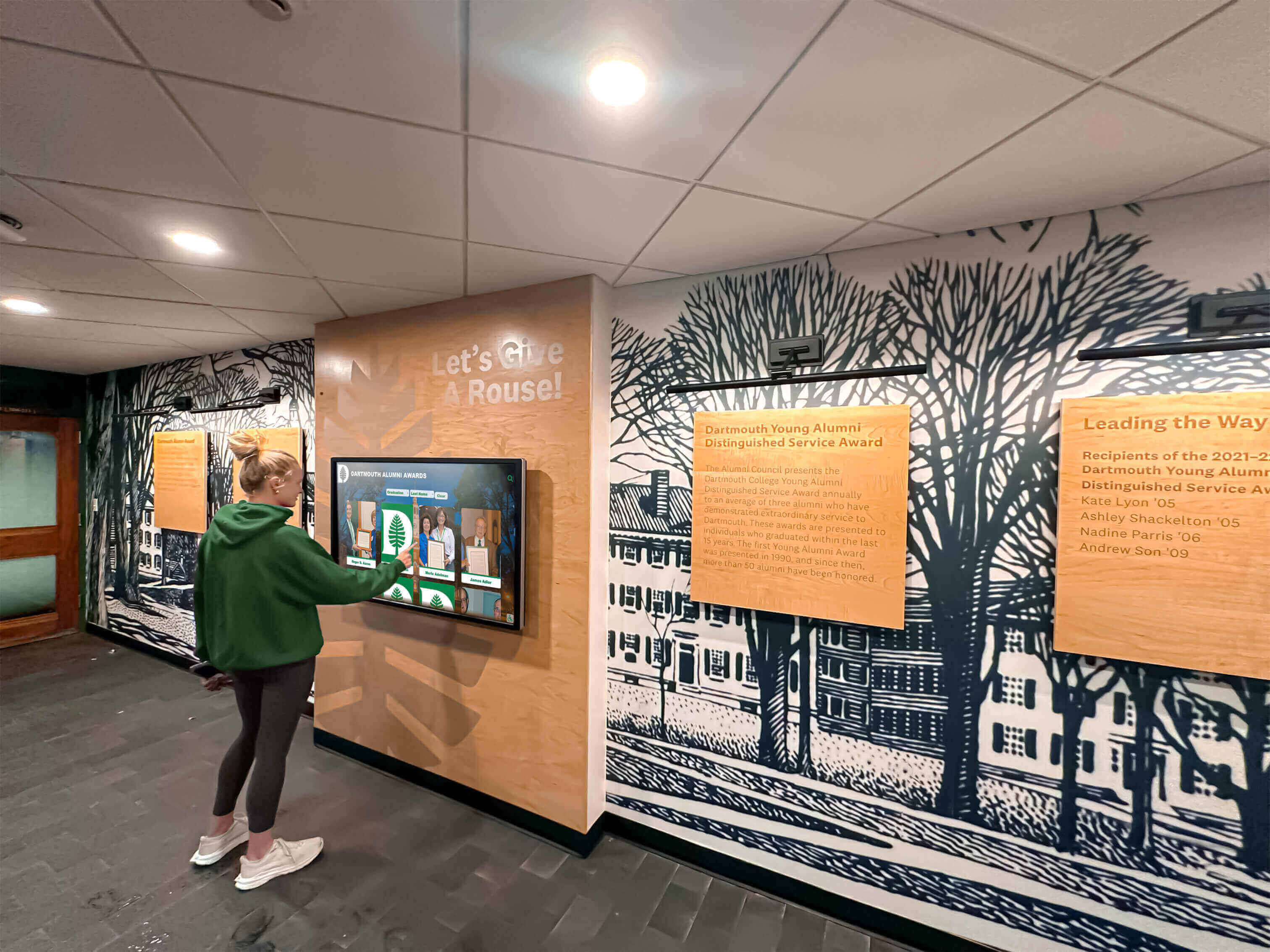
Accessible hallway displays encourage regular student engagement with art program history and tradition
Streamlined Upload and Management Processes
Cloud-based content management enables art teachers to upload documentation easily through intuitive interfaces including batch uploads of multiple student artworks simultaneously, template-driven entry forms requiring only essential information, scheduled publishing for automatic gallery updates at semester ends, collaborative workflows when multiple art teachers contribute content, mobile upload capabilities from smartphones or tablets enabling quick documentation, and comprehensive training resources ensuring all staff understand processes.
Simple management systems ensure galleries remain current rather than growing stale when updating requires complex technical processes that busy teachers lack time to master. Schools report that intuitive upload interfaces reduce gallery maintenance time by 70-80% compared to traditional physical display updating requiring constant rotation and reinstallation.
Engaging Student Leadership and Participation
Many successful programs involve students directly in gallery management through various roles that distribute workload while creating authentic learning opportunities:
Student Gallery Roles
- Student curator positions managing featured artwork selection and descriptions
- Technical documentation teams handling professional artwork photography
- Digital design students creating multimedia enhancements and video content
- Promotion coordinators managing social media and community awareness campaigns
- Tour guides explaining gallery content to visitors and prospective students
- Archive researchers working with historical documentation and alumni outreach
Student involvement distributes workload while creating authentic learning opportunities in museum studies, digital curation, arts administration, and professional communication—valuable experience for students pursuing creative careers, arts management fields, or any profession requiring project management and public presentation skills.
Learn about comprehensive student recognition approaches that leverage recognition systems for educational and career preparation purposes.
Measuring Gallery Display Program Success
Regular assessment demonstrates program value while identifying enhancement opportunities improving effectiveness and justifying continued investment in art recognition initiatives.
Quantitative Success Metrics
Measurable indicators reveal gallery program performance and impact including artwork documentation coverage percentages tracking which student work receives recognition, art program enrollment trends showing participation changes over time, digital display engagement analytics measuring interaction frequency and duration, web platform traffic statistics showing online access patterns and geographic reach, social media sharing metrics tracking content distribution and engagement, prospective student inquiries about art programs during recruitment periods, competition participation rates showing program confidence and external engagement, and alumni engagement levels with gallery content and program connections.
Correlation between enhanced art recognition visibility and increased program enrollment validates investment in comprehensive showcasing while justifying continued resources. Schools implementing prominent digital art galleries typically report 20-40% enrollment increases in art courses within 2-3 years as programs become more visible and celebrated throughout school communities while attracting students who previously never considered visual arts participation.
Display Engagement Analytics
Modern digital platforms provide detailed usage data including total visitor interactions and frequency, average engagement duration per session, most viewed artwork and artists, search terms and content discovery patterns, peak usage times and locations, content sharing frequency and platforms, and comparative engagement across different display locations.
These analytics reveal which content resonates most powerfully, when students and visitors engage with galleries, and how to optimize content and placement for maximum impact and community engagement.
Qualitative Impact Assessment
Non-numerical insights complement quantitative data through systematic feedback collection including student surveys about recognition value and artistic motivation, family feedback regarding program quality perceptions and documentation accessibility, art teacher perspectives on program culture changes and student engagement, alumni reflections on how artwork recognition influenced educational experience and creative development, and community responses to art program visibility and creative excellence demonstrations.
Student feedback proves particularly valuable for understanding whether prominent gallery recognition influences artistic motivation, course selection decisions, creative risk-taking and experimentation, pride in creative work and artistic identity, or aspirations for continued artistic development and potential creative careers.
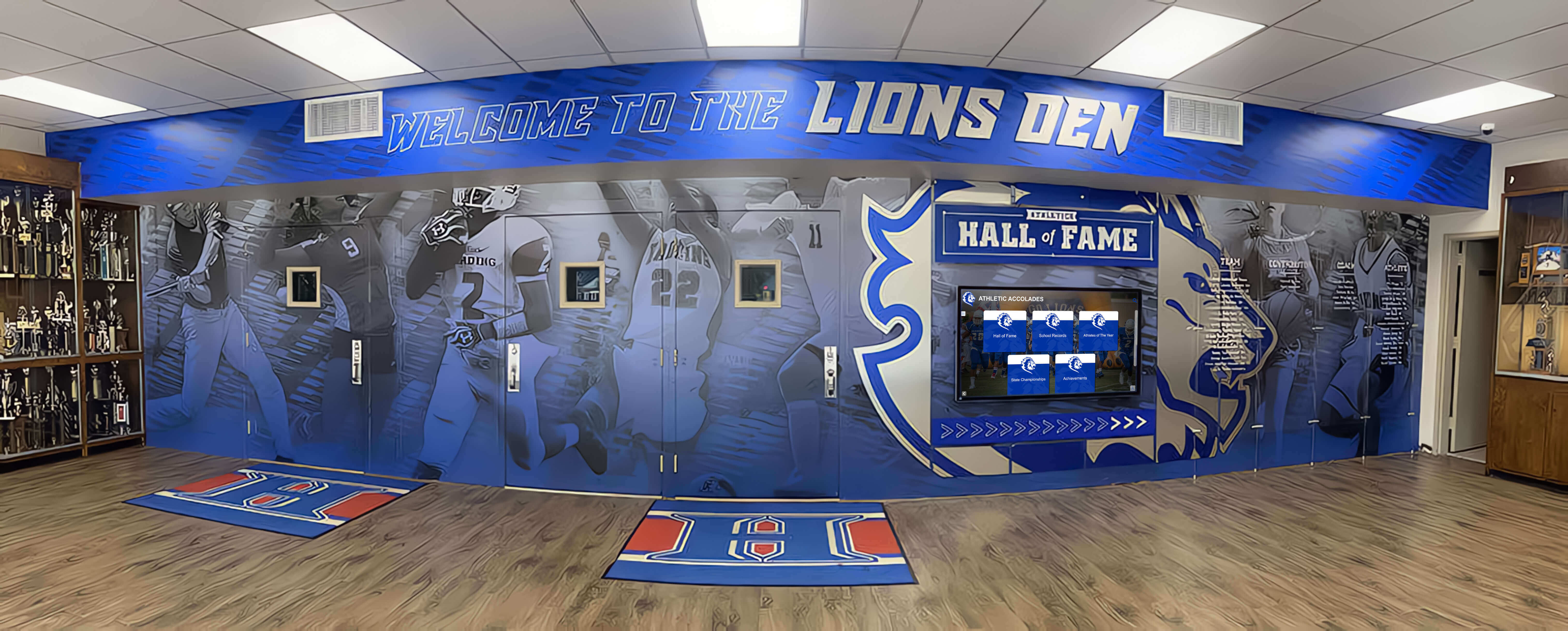
Comprehensive recognition spaces combine gallery content with broader achievement celebration
Focus groups with current art students, graduated alumni artists pursuing creative careers, and families invested in art programs provide rich qualitative data revealing how recognition contributes to comprehensive educational experiences while identifying enhancement opportunities addressing unmet needs or overlooked recognition areas requiring attention.
Long-Term Cultural Transformation Indicators
Sustained gallery program success manifests through observable cultural changes including sustained art program enrollment growth across grade levels and course offerings, elevated program prestige and reputation within school communities and beyond, increased success at regional and state art competitions and exhibitions, growing alumni involvement and support for current programs, strengthened institutional identity around comprehensive education including robust visual arts programs, enhanced community appreciation for arts education value and importance, and increased administrative and financial support for program expansion and enhancement.
These cultural shifts justify recognition investment while creating self-reinforcing excellence cycles where recognition attracts participation, participation builds program strength, strength enables ambitious programming and facilities, and ambitious programming generates impressive artistic achievements deserving comprehensive recognition and celebration that continues the cycle.
Explore strategies for building school pride through creative recognition that elevates visual arts alongside athletic and academic programs.
Special Considerations for Different Gallery Display Contexts
Gallery systems should accommodate diverse creative formats and contexts that comprehensive art programs present throughout academic years while maintaining consistent quality and accessibility.
Annual Art Shows and Special Exhibitions
Many art programs host annual art shows, exhibitions, or competitive displays requiring special documentation approaches:
Exhibition Documentation Strategy
- Complete exhibition catalogs with all participating artwork
- Gallery installation photography showing display context and presentation
- Opening reception documentation capturing community celebration
- Juror commentary and award announcements for competitive shows
- Student artist talks or gallery walk documentation
- Visitor response and community feedback collection
- Behind-the-scenes preparation and installation process
- Exhibition posters, promotional materials, and marketing documentation
This comprehensive exhibition documentation extends short-term physical shows into permanent digital records accessible long after exhibitions close, enabling alumni to revisit past shows, prospective students to understand program caliber, and current students to appreciate program tradition and evolution over time.
Competition and Award Recognition
Student artwork earning recognition in external competitions deserves special gallery treatment including competition context and selection criteria explanation, award levels and recognition details, juror commentary or artist statements, comparative context showing competition scale and participation, post-competition opportunities or recognition earned, and connections to previous award winners from your program showing tradition of excellence.
This enhanced documentation validates competition success while inspiring current students to pursue similar opportunities and external recognition that builds program reputation and student confidence.
Learn about comprehensive approaches to recognizing academic excellence that celebrate diverse achievement types including artistic accomplishment and creative excellence.
Advanced Placement and College Portfolio Development
AP Art and Design students and those preparing college application portfolios require special gallery support:
Portfolio Development Features
- Complete portfolio presentations following AP structures and requirements
- Sustained investigation documentation showing thematic development
- Selected works presentations with detailed artist statements
- Process documentation required for portfolio submissions
- Score reports and college board recognition for exceptional portfolios
- College acceptance outcomes showing portfolio effectiveness
- Scholarship awards based on artistic merit and portfolio quality
Gallery systems supporting portfolio development serve dual purposes—honoring student achievement while creating valuable application materials for college art program applications, scholarship opportunities, and creative career preparation demonstrating professional presentation skills.
Alumni Career Journey Documentation
Gallery displays gain additional inspirational value by featuring alumni artists who pursued creative careers, showing student work alongside current professional practice, documenting educational and career pathways from high school through professional success, highlighting exhibitions, publications, or professional recognition earned, and demonstrating real-world applications of skills developed in school art programs.
These alumni connections validate art education value while providing tangible examples of creative career possibilities for current students considering artistic futures and professional creative pursuits.
Discover strategies for highlighting alumni achievements that inspire current students and demonstrate program long-term impact.
Promoting Gallery Displays for Maximum Community Engagement
Technology and content create gallery capabilities, but strategic promotion ensures communities discover, engage with, and value art recognition programs while maximizing impact on culture and enrollment.
Launch and Ongoing Promotion Strategies
Gallery Launch Celebrations
When implementing new digital gallery systems, create launch events that generate excitement and awareness including gallery opening receptions celebrating featured artists and program, media coverage through press releases and local news engagement, social media campaigns with featured artwork and artist spotlights, school community communications announcing new recognition capabilities, prospective family tours highlighting gallery as program attraction, and demonstrations showing search features and interactive capabilities.
Launch celebrations generate initial awareness while establishing gallery displays as valued institutional assets deserving ongoing attention and community engagement.
Year-Round Visibility Initiatives
Beyond initial launches, maintain gallery engagement through regular promotion including rotating featured artist spotlights highlighting different students monthly, seasonal or thematic collections connecting to current curriculum or artistic movements, new artwork announcement campaigns when exceptional pieces receive documentation, prospective student recruitment materials showcasing gallery as program strength, alumni engagement campaigns connecting graduates to current artistic excellence, and social media content series featuring artwork with artist statements and process documentation.
Consistent visibility keeps gallery displays relevant and engaging rather than becoming invisible background elements that communities eventually ignore or take for granted.
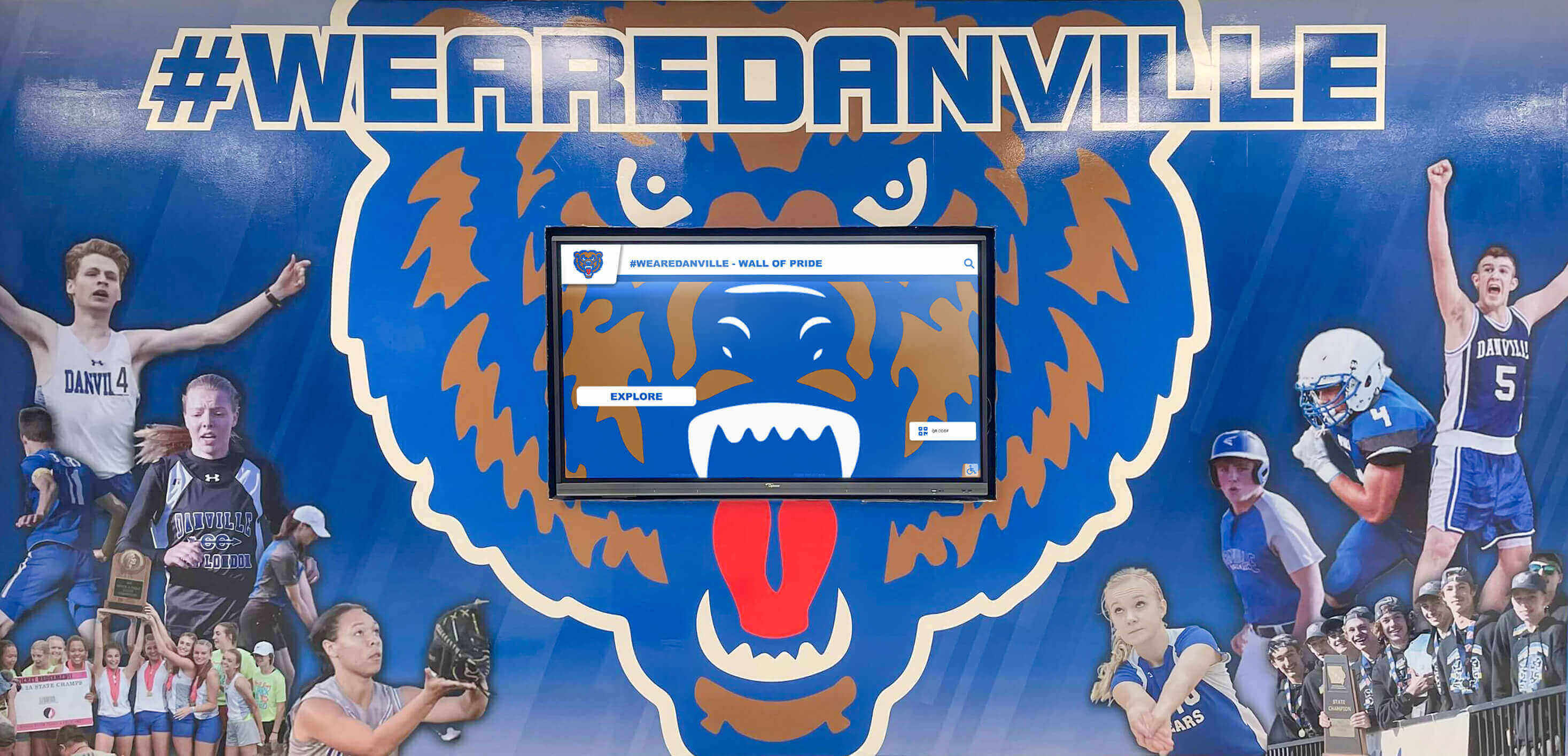
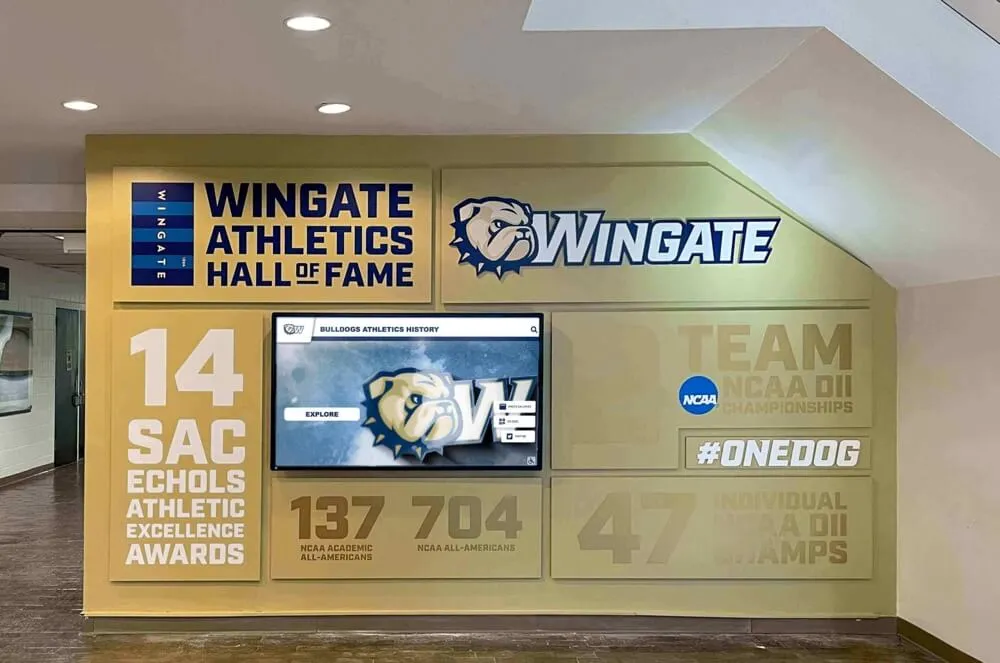
Integrated installations position art recognition alongside other achievement categories in prominent locations
Integration with Broader School Communications
Strategic Communication Integration
- Homepage features on school websites showcasing recent gallery additions
- Newsletter content highlighting featured artists and exceptional artwork
- Parent communication tools sharing student gallery achievements
- Morning announcements directing students to explore new gallery content
- Open house and tour components demonstrating gallery to prospective families
- Alumni communications reconnecting graduates through digital galleries
- Community partnership materials showing educational excellence through galleries
This integrated communication approach ensures gallery displays become known resources rather than hidden capabilities only art program insiders discover and appreciate.
Explore comprehensive strategies for digital signage for schools that demonstrate effective communication approaches for recognition displays.
Conclusion: Transforming Art Class Gallery Displays Through Digital Recognition
Art class gallery displays represent far more than temporary hallway decorations—they embody institutional values around creative achievement, preserve artistic heritage spanning years or decades of student work, inspire current and future student artists pursuing creative excellence, and demonstrate community commitment to comprehensive education that values visual arts equally with traditional academics and athletics.
Traditional gallery approaches—limited bulletin board space accommodating tiny fractions of exceptional work, temporary rotating displays that disappear after weeks, or forgotten hard drives with disorganized photos—fail to honor the extraordinary dedication that artistic creation represents or leverage recognition’s power to strengthen program culture, inspire participation, and build thriving visual arts traditions.
Modern digital gallery display solutions transform what’s possible by providing unlimited capacity for comprehensive artwork archives spanning entire program histories without physical space constraints, professional high-resolution presentation bringing artwork to life through detailed viewing and multimedia storytelling, powerful search and discovery features making extensive archives accessible and engaging, web accessibility extending recognition beyond campus to alumni and families worldwide, and sustainable management systems enabling efficient updates without overwhelming already-busy art teachers.
Transform Your Art Class Gallery Display
Discover how Rocket Alumni Solutions provides comprehensive platforms for creating dynamic art gallery displays that showcase unlimited student artwork, preserve creative achievements permanently, and inspire future generations of student artists through professional digital recognition systems.
Explore Gallery Display SolutionsSuccessful implementation requires establishing clear documentation standards and systematic workflows integrating into course completion activities, developing content through phased approaches managing workload effectively while demonstrating quick value, selecting appropriate technology matching program needs and available resources, strategically positioning displays for maximum visibility and community engagement, promoting galleries ensuring awareness and regular interaction, and measuring impact demonstrating value while identifying continuous improvement opportunities.
Your art students invest countless hours developing creative skills, exploring artistic techniques, and creating meaningful work expressing personal vision and technical excellence. They deserve recognition that preserves their accomplishments permanently in accessible formats, celebrates diverse artistic approaches and mediums equitably without privileging specific styles, inspires continued creative excellence through visible program traditions and outstanding examples, and demonstrates that visual arts matter as much as any other achievement domain within comprehensive educational programs preparing students for diverse futures.
Solutions like Rocket Alumni Solutions provide purpose-built platforms designed specifically for educational art gallery displays, offering comprehensive capabilities including unlimited artwork documentation with professional image quality and zoom features, multimedia presentation supporting videos, artist statements, and interactive content, intuitive content management accessible to art teachers without technical expertise, permanent web accessibility enabling global reach to alumni and extended families, and proven educational implementations across thousands of schools nationwide building thriving arts programs.
Ready to transform how your school showcases student artwork and builds thriving art programs? Explore modern digital gallery display solutions honoring your program’s rich creative tradition while building excitement for future student participation and artistic achievement. Whether implementing first comprehensive art recognition or enhancing existing approaches, digital platforms provide tools needed to celebrate visual arts with the visibility, engagement, professional quality, and permanence that student creative achievement genuinely deserves.
Your school’s artistic tradition—spanning years or decades of remarkable student artwork, talented student artists discovering creative identities, dedicated art teachers nurturing creative development, and transformative artistic experiences shaping student lives—deserves celebration equal to any athletic championship or academic honor. Digital gallery display solutions finally make comprehensive art recognition practical, sustainable, and impactful, ensuring visual arts programs receive the institutional recognition reflecting their profound importance in comprehensive student development and vibrant school community culture that celebrates excellence across all achievement domains.