Assisted living visitor digital displays have emerged as essential technology transforming how senior care facilities communicate with families, guide visitors through complex layouts, engage residents, and create welcoming environments that bridge the gap between institutional care and community connection. Modern digital display systems address unique challenges facing assisted living facilities—from helping families navigate multi-building campuses during emotional visits to keeping residents informed about activities while reducing staff communication burden.
Traditional assisted living facilities rely heavily on printed materials, static directional signage, bulletin boards requiring constant updating, and staff members providing repeated verbal directions and information. This conventional approach creates multiple limitations including outdated information displayed on aging bulletin boards, families struggling to find resident rooms in unfamiliar layouts, inconsistent communication about activities and events, staff time consumed answering repetitive wayfinding questions, and difficulty engaging residents with cognitive challenges through static text-based notices.
This comprehensive guide explores how assisted living and senior care facilities can leverage visitor digital display technology to enhance family experiences, improve communication effectiveness, provide intuitive wayfinding, engage residents more meaningfully, and create sophisticated environments that demonstrate commitment to modern care while maintaining the warmth and personal touch that defines exceptional senior living.
Digital displays in assisted living environments extend far beyond simple digital signage—they represent comprehensive communication platforms integrating visitor wayfinding systems, family engagement tools, resident activity programming, emergency notification capabilities, and memory care support features that together transform how facilities serve residents, families, and staff throughout the care journey.

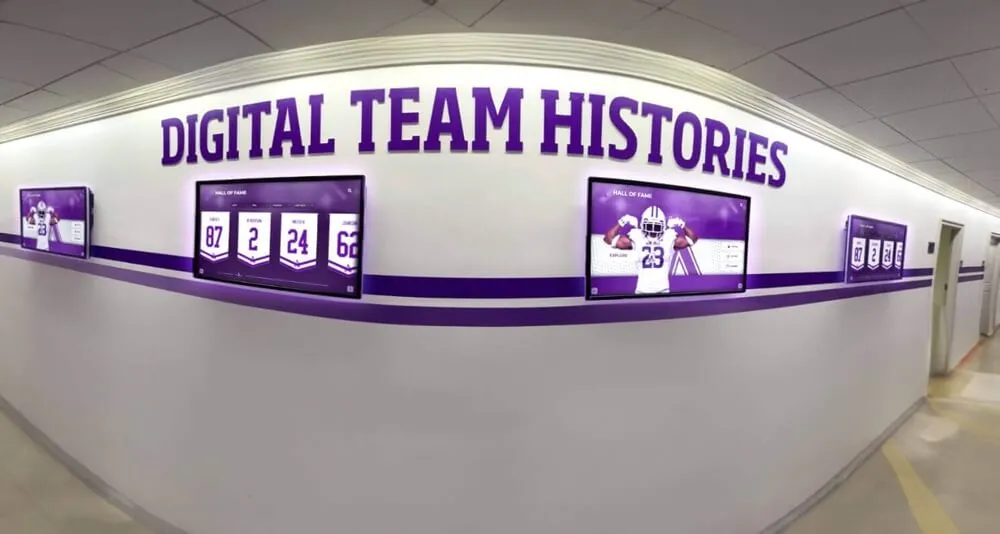
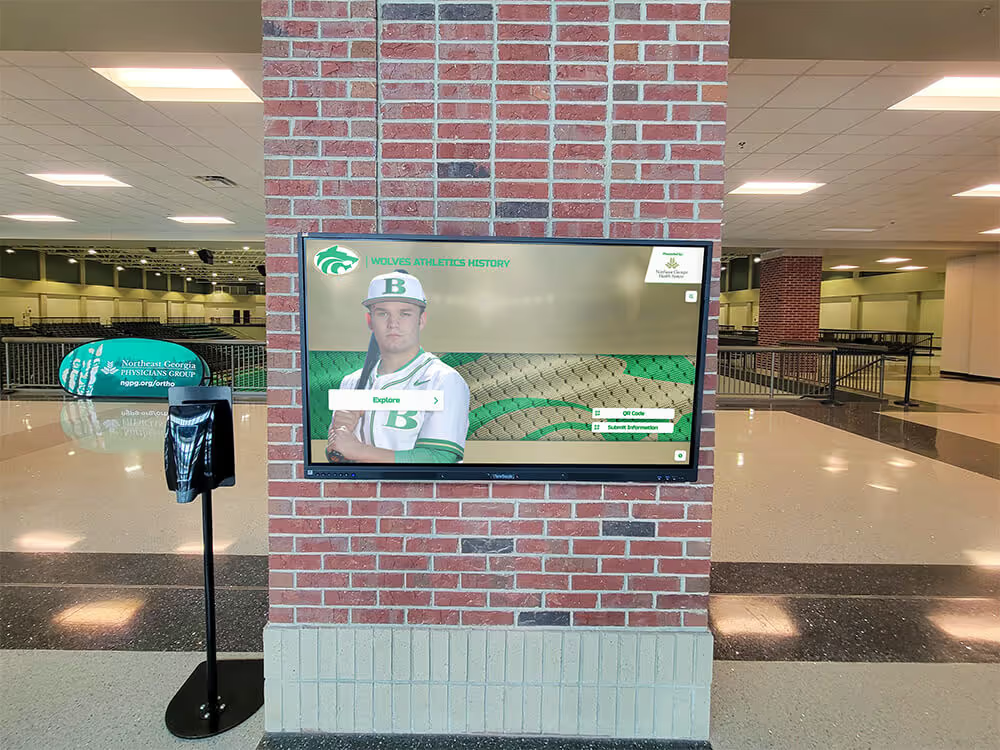
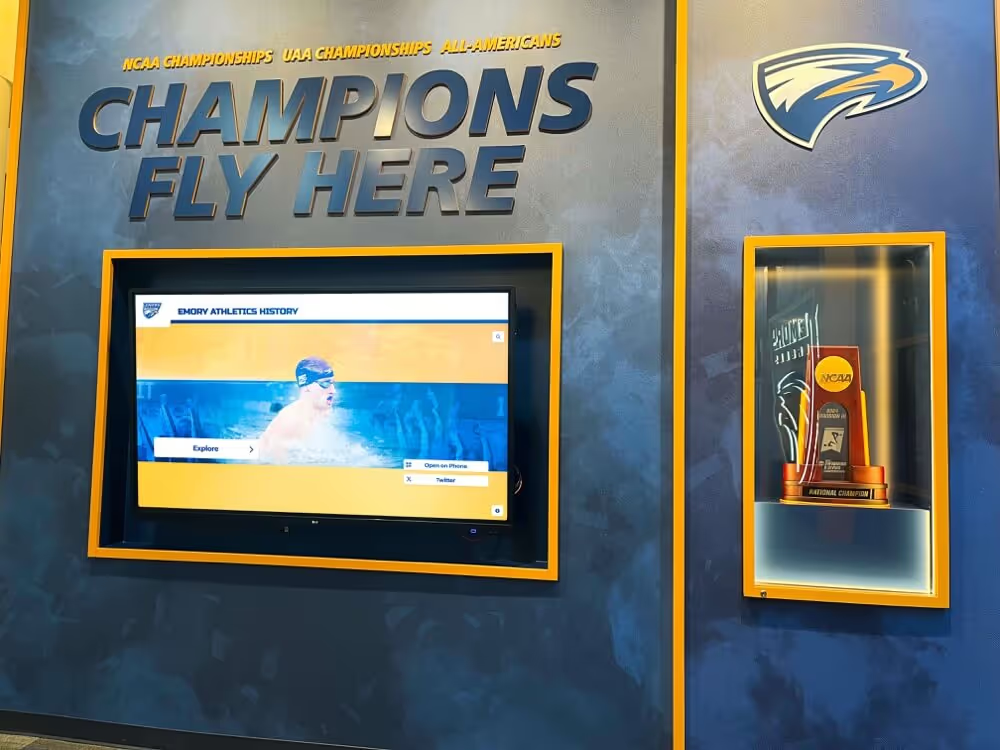
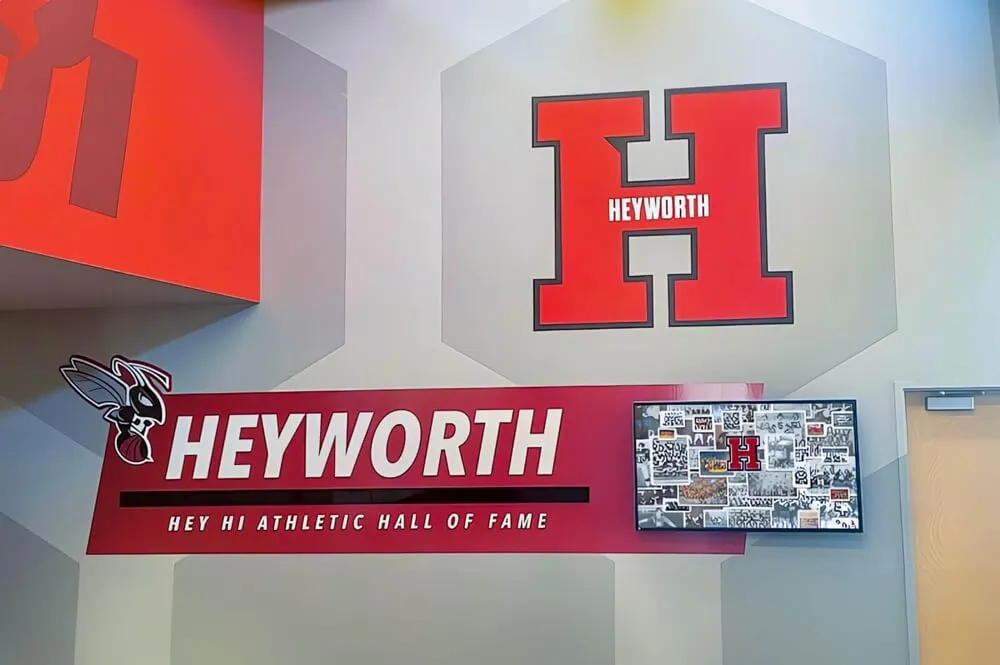
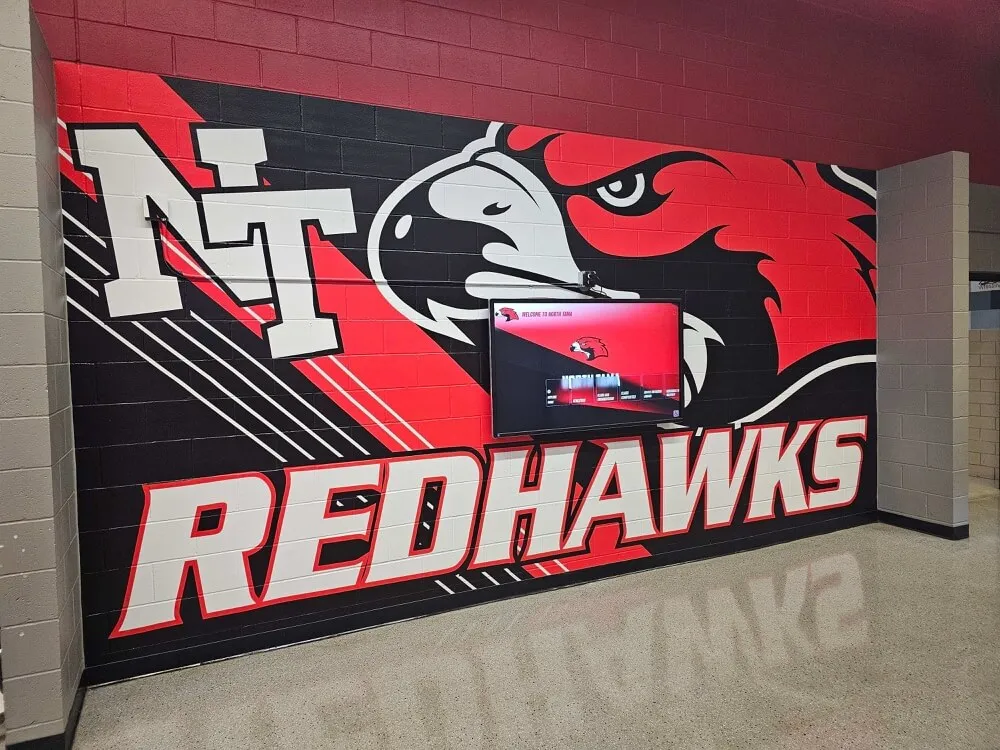
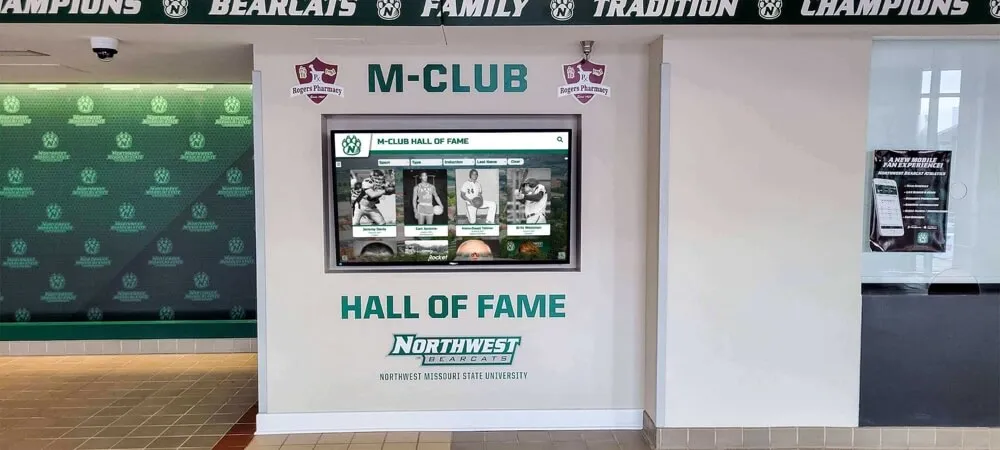
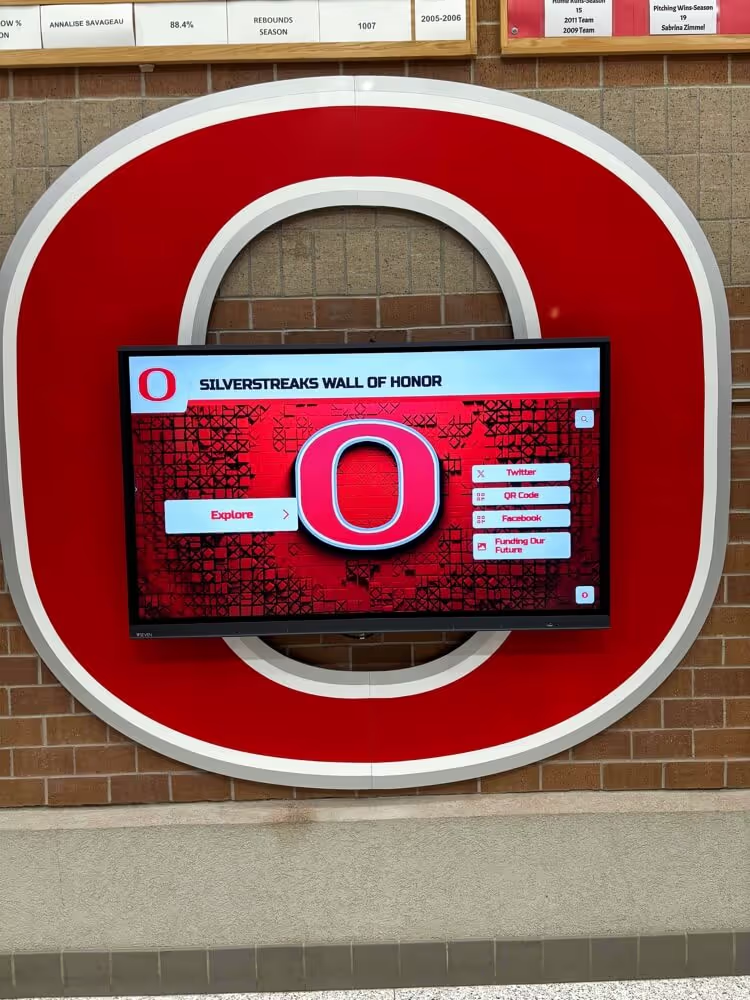
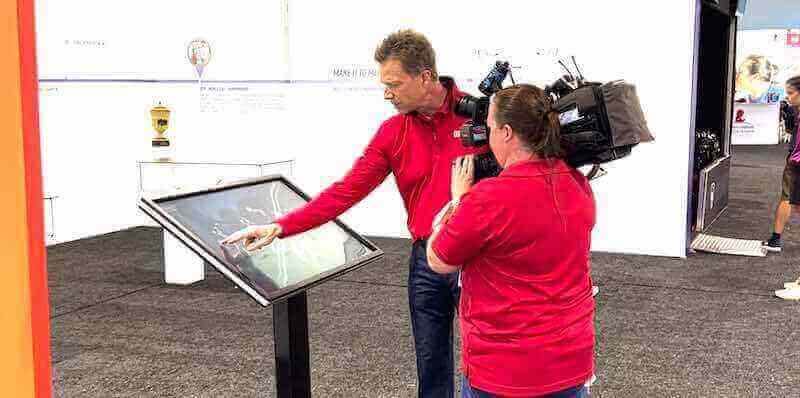
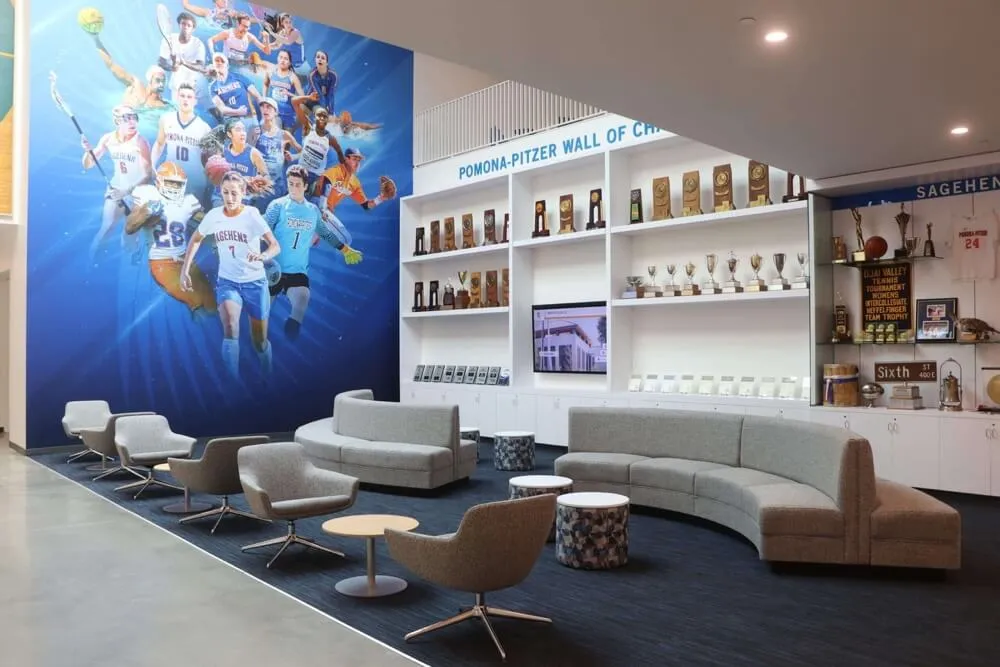
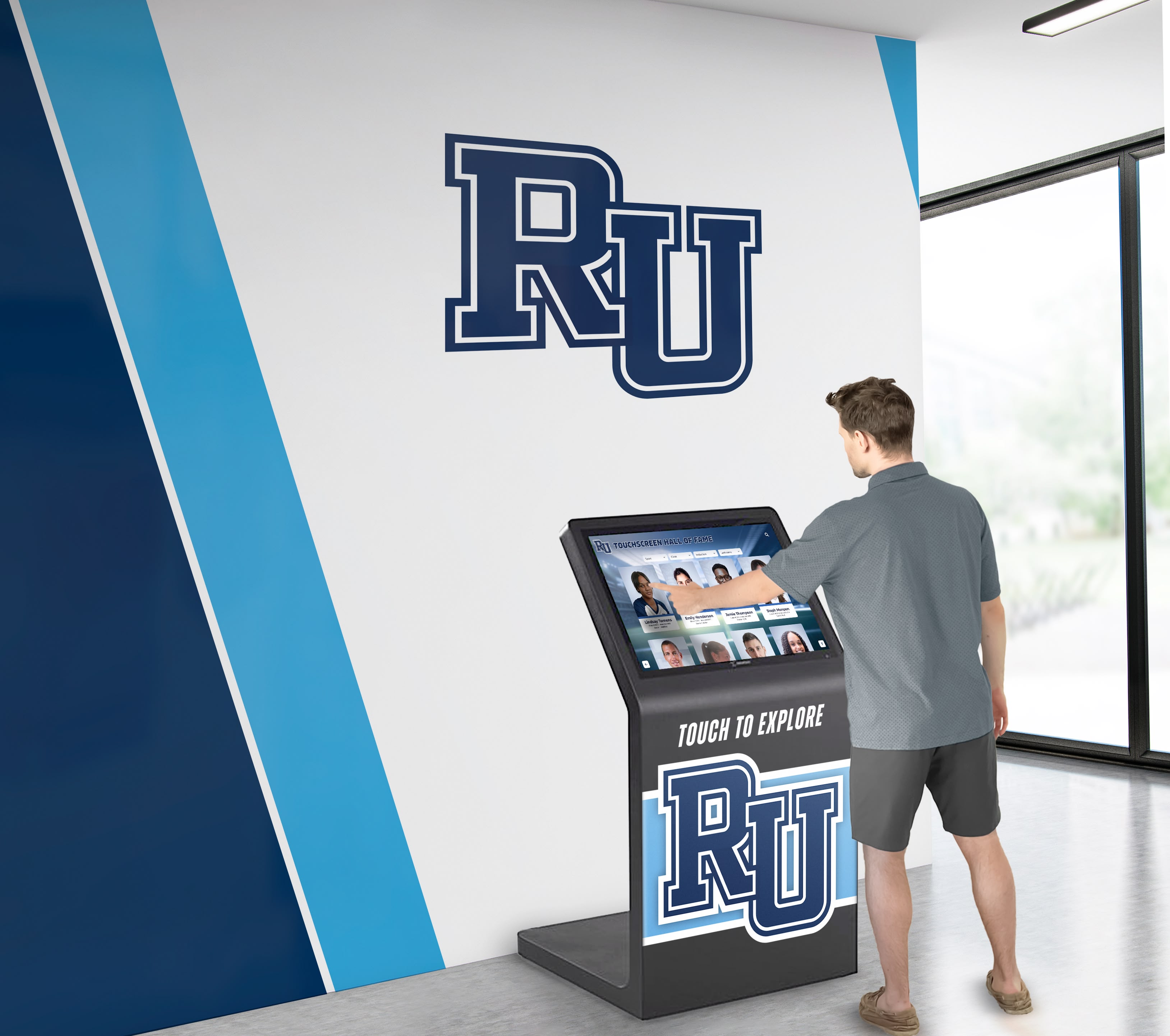
Modern visitor digital displays provide intuitive self-service experiences for wayfinding, information access, and facility navigation
Understanding Assisted Living Digital Display Technology: Meeting Unique Senior Care Needs
Before exploring implementation strategies, understanding what makes digital displays particularly valuable in assisted living environments helps facilities develop effective deployment approaches tailored to their unique populations and operational requirements.
The Unique Communication Challenges in Assisted Living Facilities
Assisted living facilities face communication and wayfinding challenges distinct from other institutional environments, requiring thoughtful technology solutions addressing multiple audiences simultaneously.
Diverse Audience Communication Requirements
Unlike hotels serving business travelers or hospitals treating short-term patients, assisted living facilities must simultaneously serve residents who live in the community long-term requiring daily engagement and routine, families visiting periodically needing wayfinding assistance and status updates, prospective residents and families touring facilities making critical care decisions, staff members requiring operational information and scheduling updates, and community partners including healthcare providers and activity coordinators.
Each audience has different information needs, technical comfort levels, and engagement patterns—requiring flexible display systems that adapt content and interaction modes to serve these varied populations effectively.
Complex Wayfinding in Residential Environments
Many assisted living facilities occupy multi-building campuses with residential wings, common areas, dining facilities, activity spaces, and administrative offices spread across property layouts that confuse first-time visitors. Unlike office buildings with simple floor directories or hotels with numbered hallways, assisted living facilities often use residential naming conventions, multiple entrance points, and campus-style layouts where intuitive navigation proves challenging.
According to facilities management research, up to 40% of first-time visitors to large buildings experience difficulty finding destinations—a particularly significant problem in senior care where families often arrive during emotional circumstances or emergencies requiring quick navigation to specific resident locations.
Cognitive Accessibility for Memory Care Populations
Facilities serving residents with dementia and cognitive decline require communication approaches fundamentally different from general population signage. Static text-heavy notices prove ineffective for memory care residents, while visual and interactive content with familiar imagery, simple navigation, and routine-reinforcing information helps residents maintain orientation and engagement with community life.
Digital displays enable facilities to present different content modes optimized for cognitive accessibility while maintaining sophisticated information delivery for families and staff using the same display infrastructure.
How Digital Displays Transform Assisted Living Environments
Modern visitor digital display systems address these unique challenges while expanding communication capabilities beyond traditional approaches.
Comprehensive Visitor Wayfinding Systems
Interactive wayfinding kiosks provide self-service navigation enabling families to search for resident names receiving room numbers and navigation directions, view detailed facility maps with current location indicators and route guidance, identify amenities including dining areas, activity spaces, and visiting lounges, receive turn-by-turn directions with visual route guidance through complex layouts, and download directions to mobile devices via QR codes for portable reference during visits.
Research from digital wayfinding providers indicates that implementing interactive wayfinding reduces staff interruptions for directions by 30-40%, allowing care staff to focus attention on resident needs rather than repeatedly answering navigation questions from visitors throughout the day.
Multi-Layered Communication Platforms
Comprehensive digital display systems serve multiple communication functions simultaneously through content scheduling and audience targeting including family-facing information about visiting hours, policies, and upcoming events, resident engagement content featuring activity schedules, menu previews, and community news, staff operational information including shift schedules, training reminders, and policy updates, emergency notifications with instant facility-wide alerts and safety information, and community storytelling celebrating resident achievements, birthdays, and facility milestones.
This multi-layered approach ensures technology investment serves multiple organizational needs rather than addressing only narrow communication challenges.
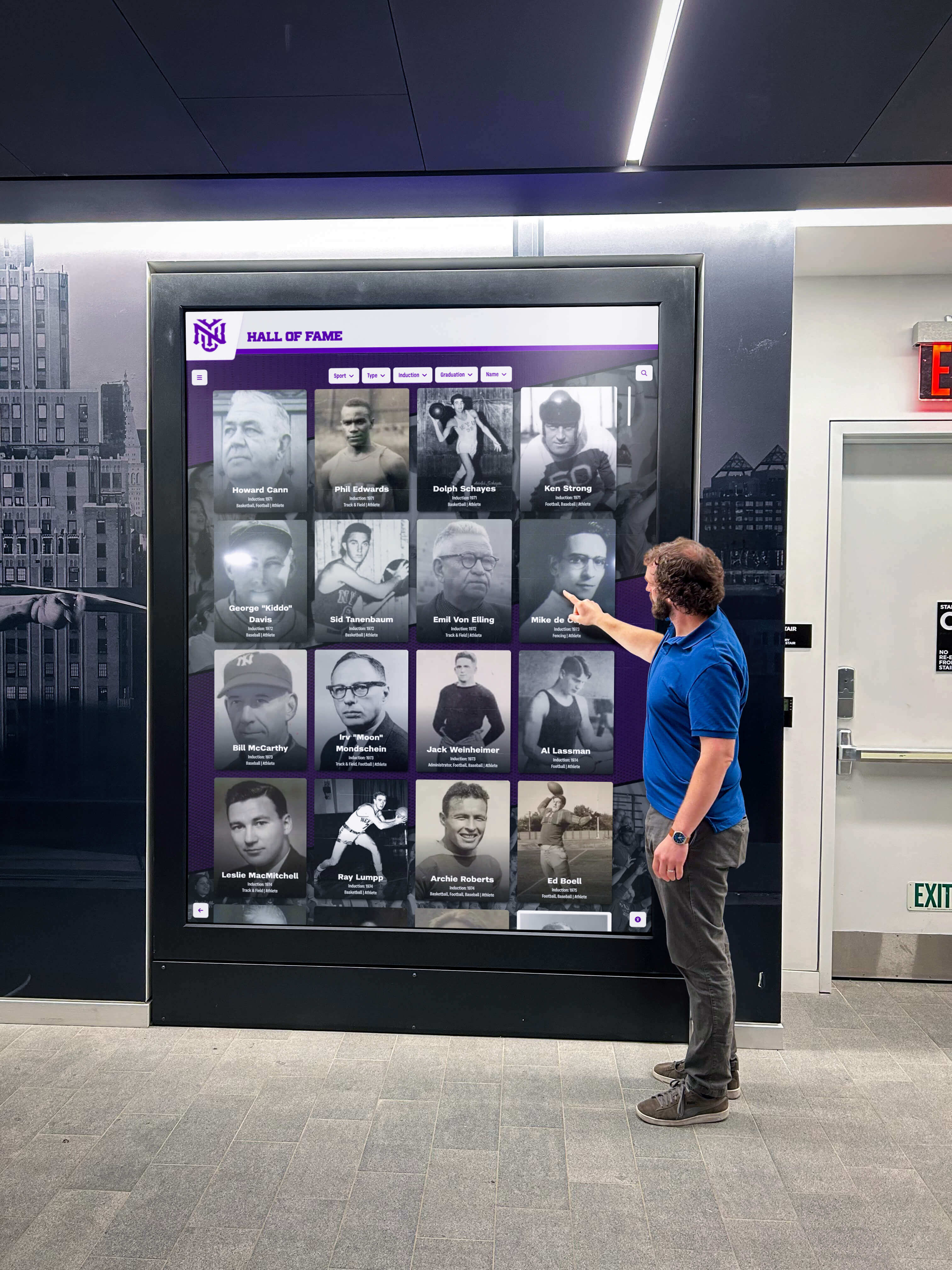
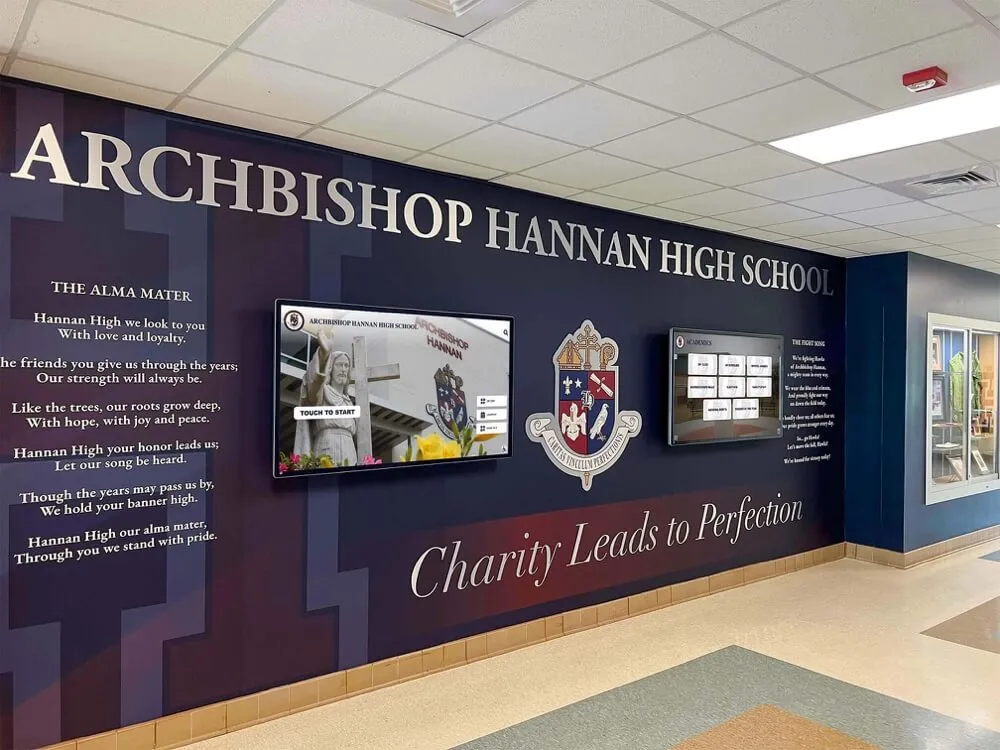
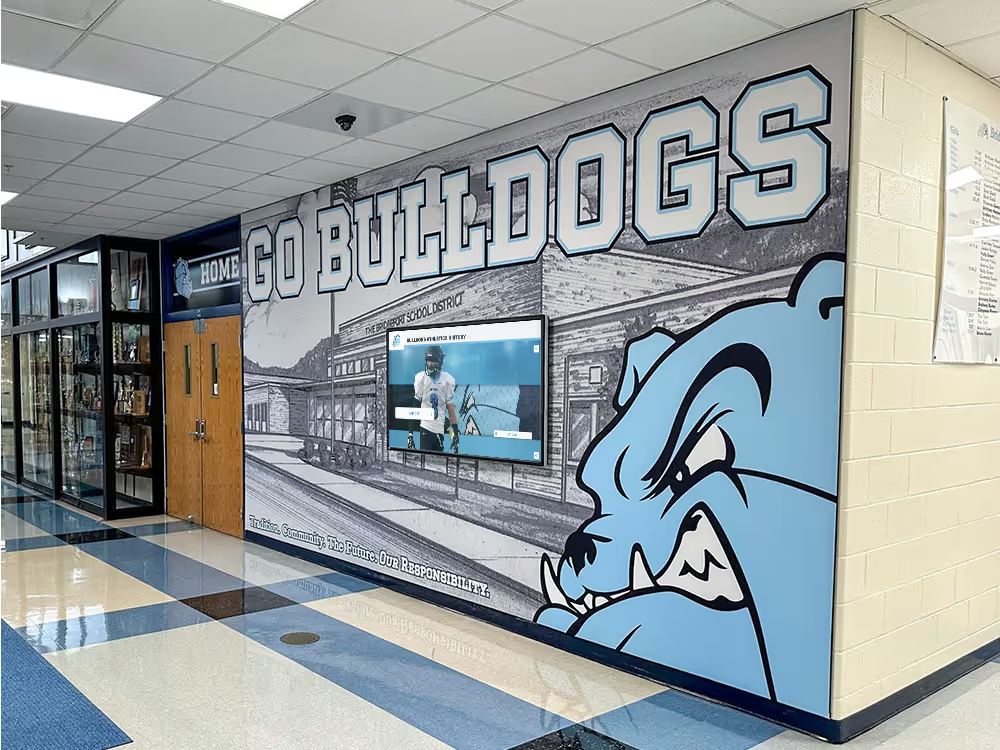
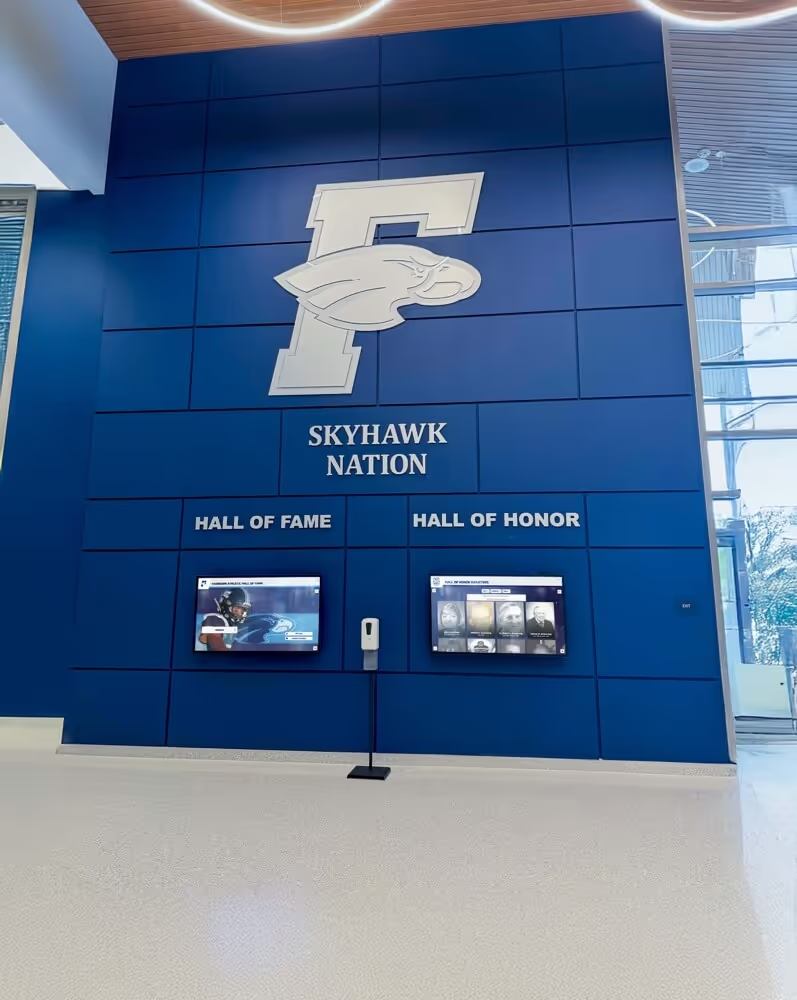
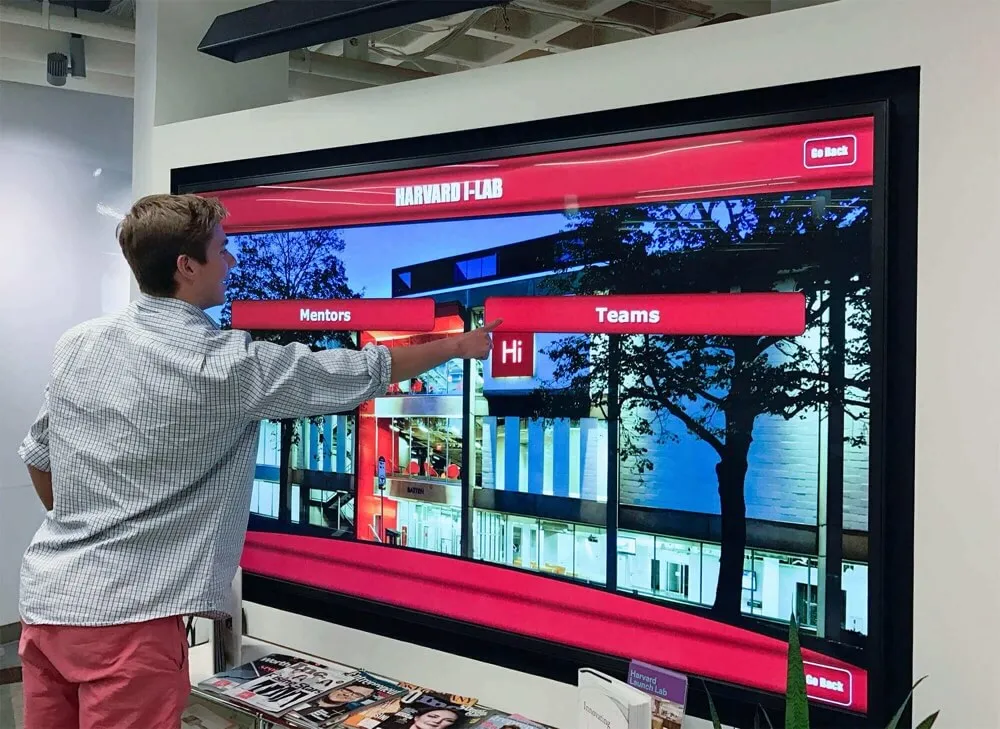
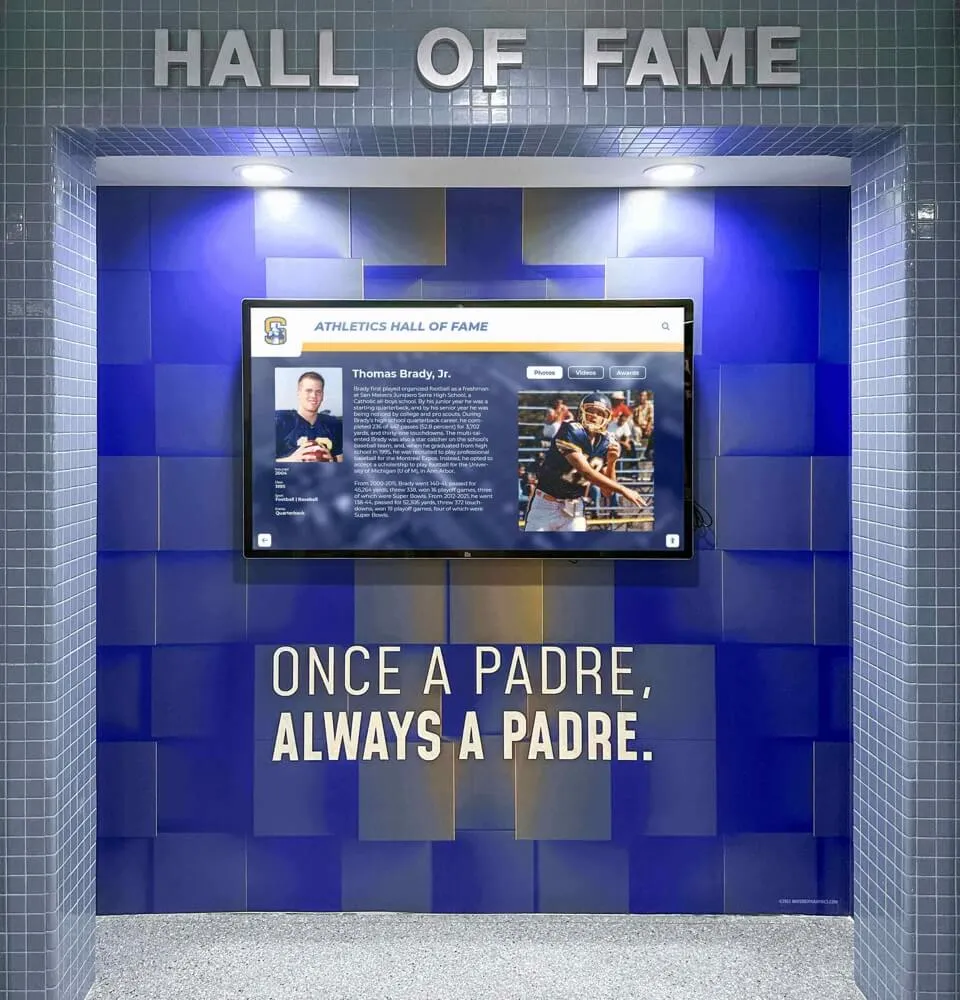
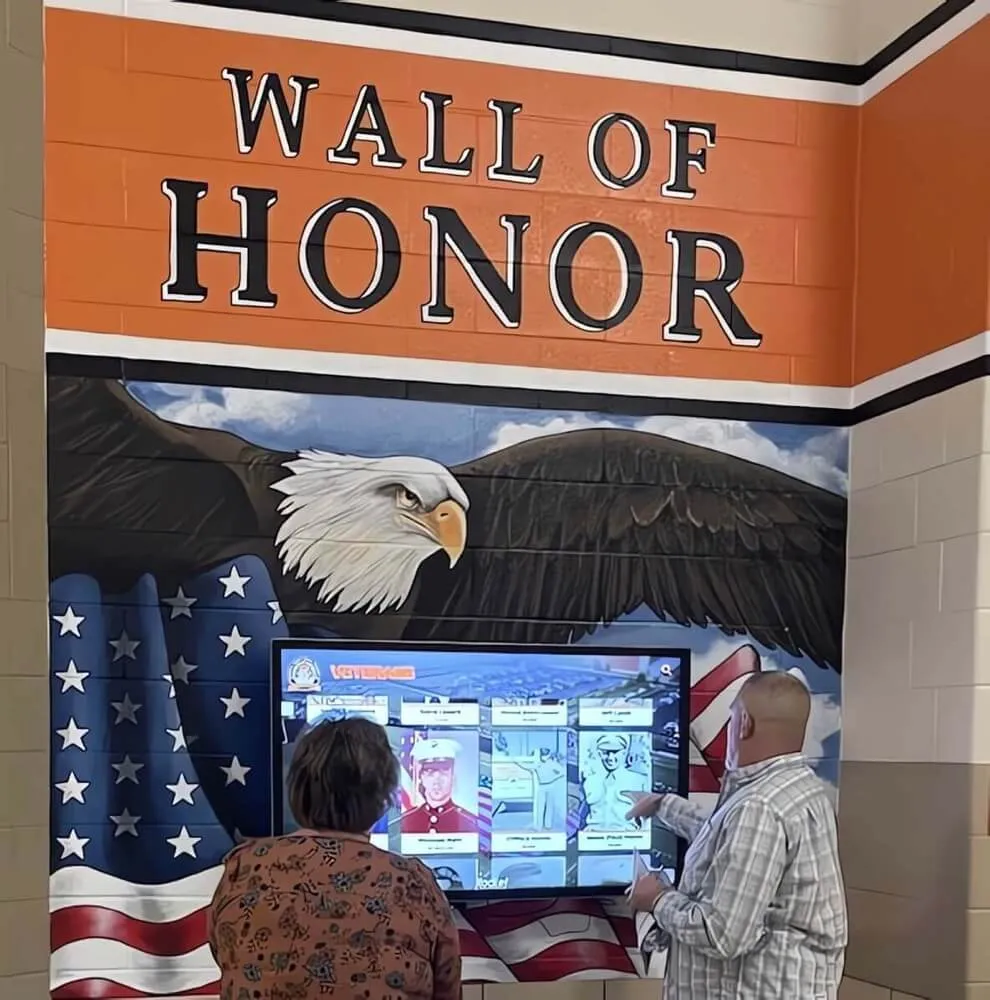
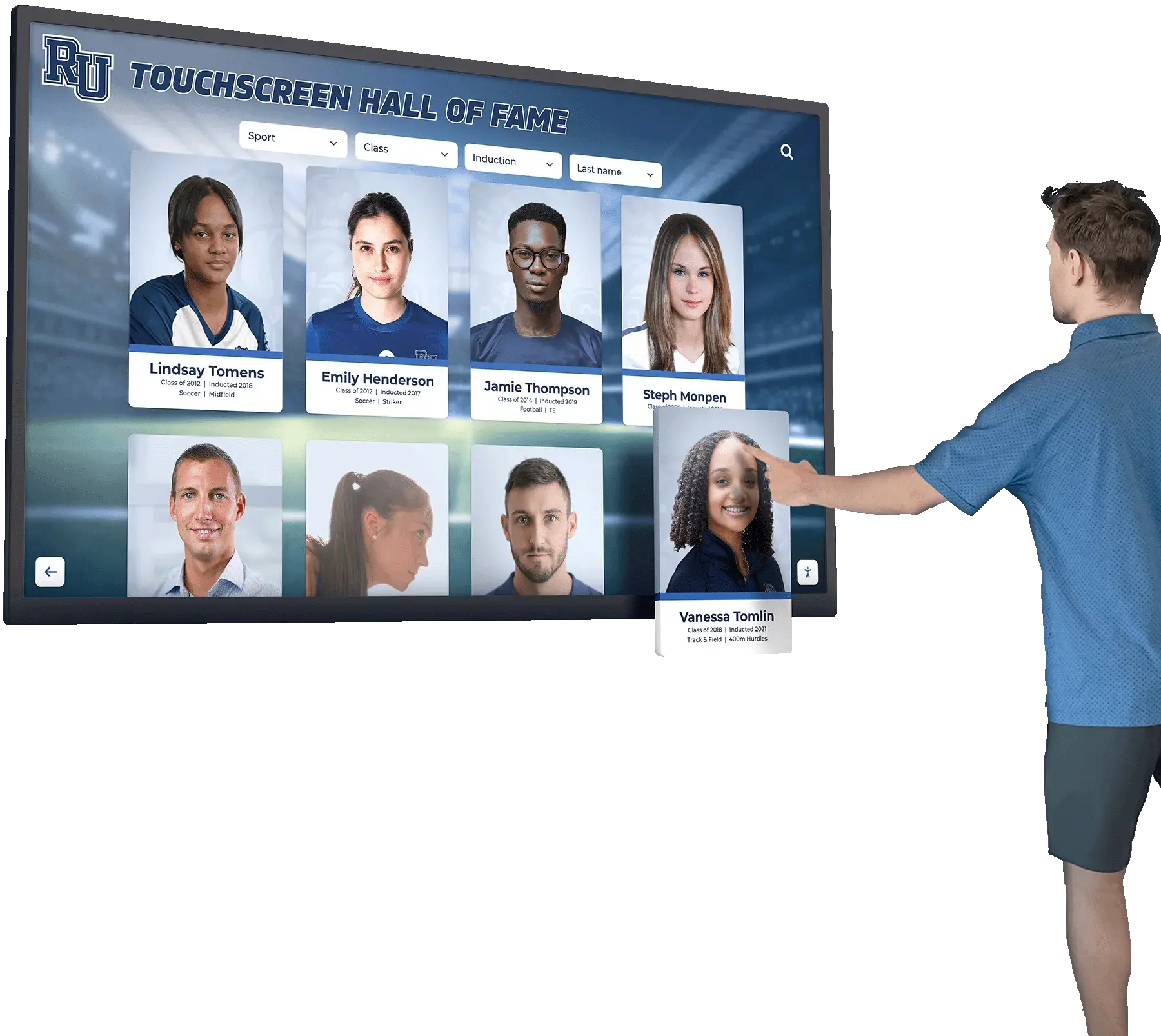
Touchscreen interfaces make navigation and information access intuitive for visitors of all ages and technical abilities
Enhanced Family Engagement and Transparency
Digital displays create family engagement opportunities impossible with traditional communication methods by displaying resident activity photos and community life documentation, showcasing scheduled events enabling families to coordinate visits with activities, providing meal menus helping families understand dining quality and options, offering care team introductions with photos and roles of staff serving residents, and sharing community news creating conversation topics for family visits.
According to research from senior living technology providers, facilities implementing family-facing digital communication report up to 50% improvement in family satisfaction survey results, attributing gains to increased transparency and engagement enabled by systematic visual communication.
Similar visitor engagement approaches appear across various facility types, including educational institutions implementing digital building wayfinding systems for campus navigation.
Core Applications of Digital Displays in Assisted Living Facilities
Comprehensive digital display systems serve multiple essential functions transforming how facilities communicate, guide visitors, and engage communities.
Interactive Wayfinding and Visitor Navigation
The most immediate visitor-facing function addresses the persistent challenge of helping families navigate unfamiliar facility layouts during visits.
Lobby Directory and Wayfinding Kiosks
Entrance area interactive displays guide arriving visitors through intuitive navigation workflows including name search functionality finding resident rooms by entering partial names, unit or wing-based browsing for visitors unsure of specific names, amenity directories locating dining areas, activity spaces, and common areas, point-to-point directions with visual maps showing routes from current location, and emergency contact information including after-hours numbers and staff paging.
These self-service kiosks eliminate the frustration of families arriving outside business hours when reception desks may not be staffed, or during busy periods when administrative staff are occupied with other duties. Visitors can independently locate destinations without staff assistance while feeling empowered and welcomed through intuitive technology interaction.
Multi-Language Support for Diverse Families
Modern senior care serves increasingly diverse populations whose families may prefer communication in languages other than English. Digital displays accommodate this diversity through multilingual interfaces supporting Spanish, Chinese, Vietnamese, and other languages common in local communities, automatic language detection based on initial user selections, consistent terminology across languages ensuring accurate translation, and visual wayfinding reducing language dependence through icon-based navigation.
Research indicates that multilingual support significantly improves family satisfaction scores among non-English-speaking populations while demonstrating facility commitment to inclusive, culturally sensitive care.
Accessibility Features for All Visitors
Inclusive design ensures wayfinding serves visitors across all abilities through adjustable font sizes and high-contrast viewing modes, audio instructions for visually impaired visitors, touch-free interaction options for visitors with mobility limitations, clear visual hierarchies supporting cognitive accessibility, and ADA-compliant mounting heights and reach ranges.
These accessibility features ensure all families can navigate facilities independently regardless of age or ability, creating welcoming experiences for every visitor.
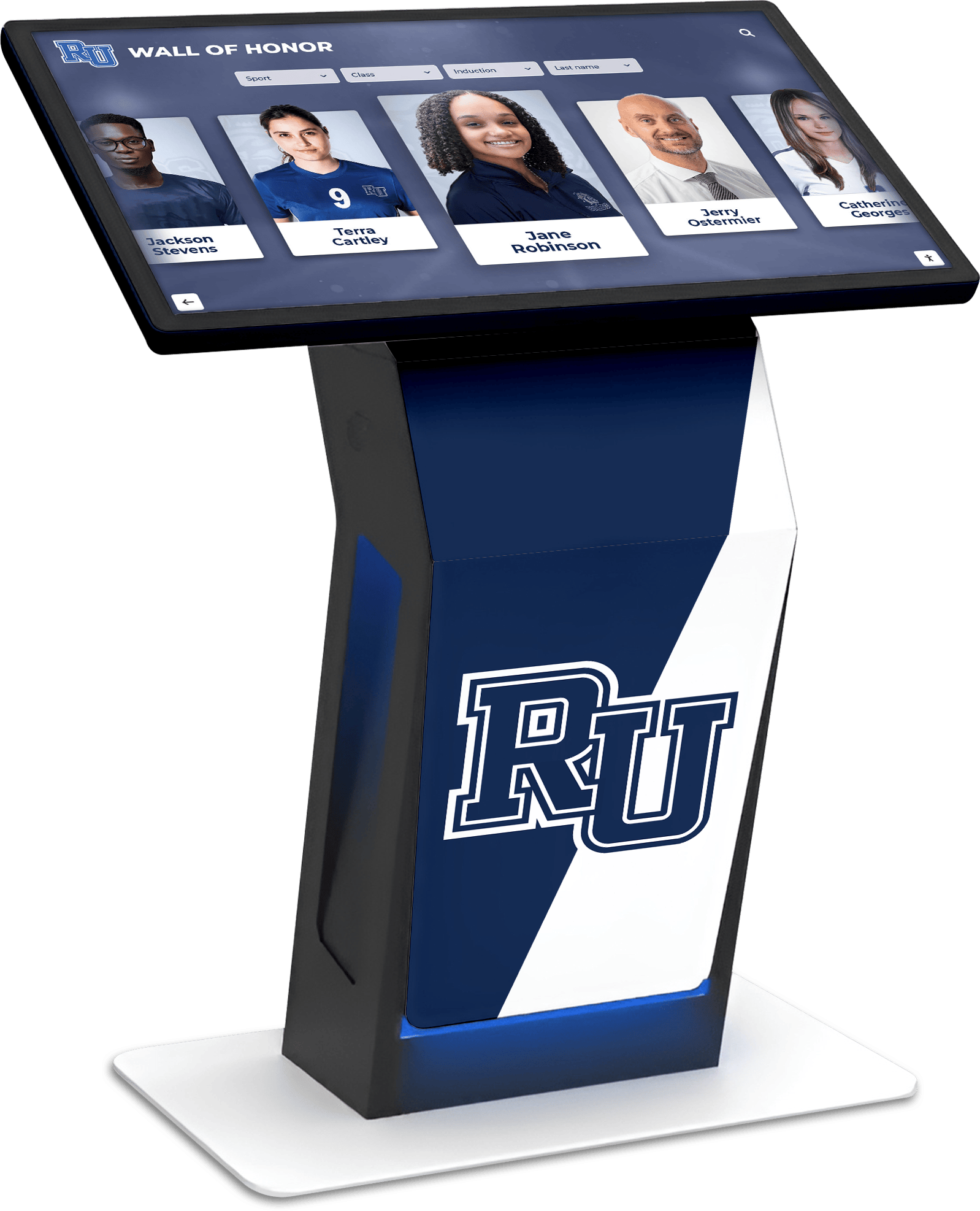
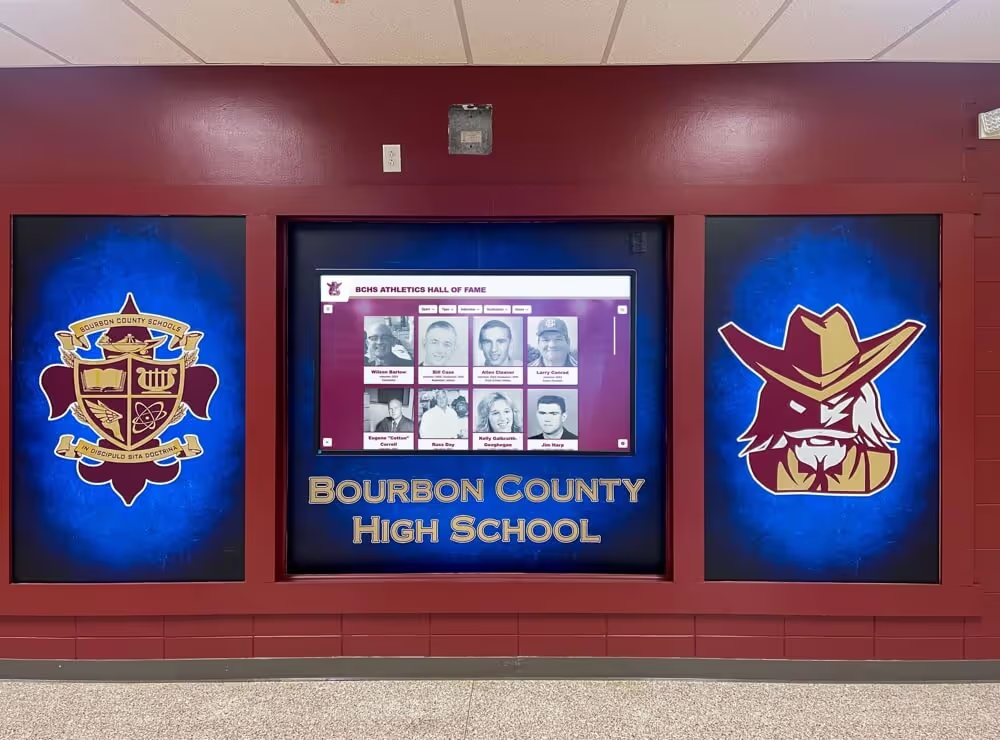
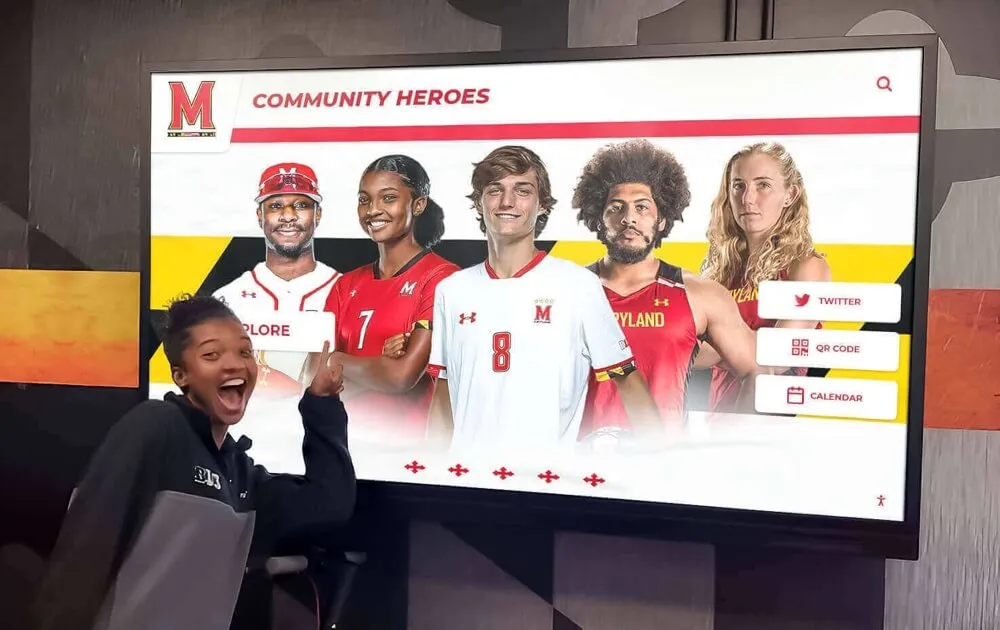
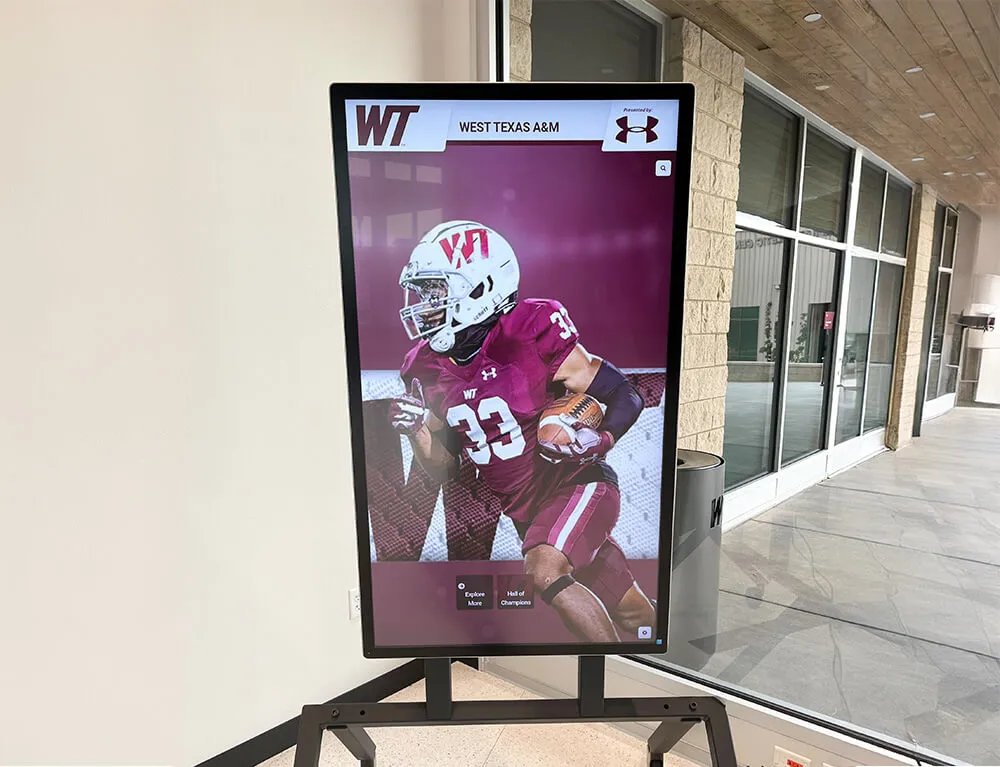
Commercial-grade touchscreen systems deliver reliable performance in high-traffic senior care environments
The same principles enabling effective wayfinding in senior care settings apply to other environments where visitors need intuitive navigation, such as corporate lobby visitor kiosk implementations serving diverse populations.
Resident Engagement and Activity Programming
Digital displays serve as daily touchpoints helping residents stay connected with community life, upcoming activities, and important information.
Activity Calendar and Event Promotion
Large-format displays in common areas showcase today’s activity schedule with times, locations, and descriptions, upcoming special events and entertainment programming, activity photos from previous events encouraging participation, transportation schedules for shopping trips and medical appointments, and dining menus featuring daily meal options and special culinary events.
According to research from the University of California, implementing digital signage in senior living communities significantly enhances communication and engagement, leading to a 30% increase in resident participation in activities and community programming.
Visual Storytelling and Community Building
Digital displays create opportunities for visual storytelling that builds community identity and resident connection through resident birthday and anniversary celebrations, photo galleries from recent activities and events, welcome messages for new residents and their families, recognition of resident achievements and contributions, and historical photos connecting community present to its past.
This storytelling approach helps residents feel valued and connected to community life while providing conversation starters during family visits and creating welcoming atmosphere for prospective residents touring facilities.
Memory Care Engagement Content
Specialized content for memory care units serves residents with cognitive challenges through familiar imagery and visual prompts supporting orientation, simple daily schedules with large text and icons, weather information helping residents understand seasonal context, familiar songs and music promoting emotional engagement, and reminiscence content featuring historical photos and cultural touchstones.
Research demonstrates that visual environmental cues help memory care residents maintain better orientation and experience reduced anxiety compared to text-heavy communication approaches that prove difficult for residents with cognitive decline to process effectively.
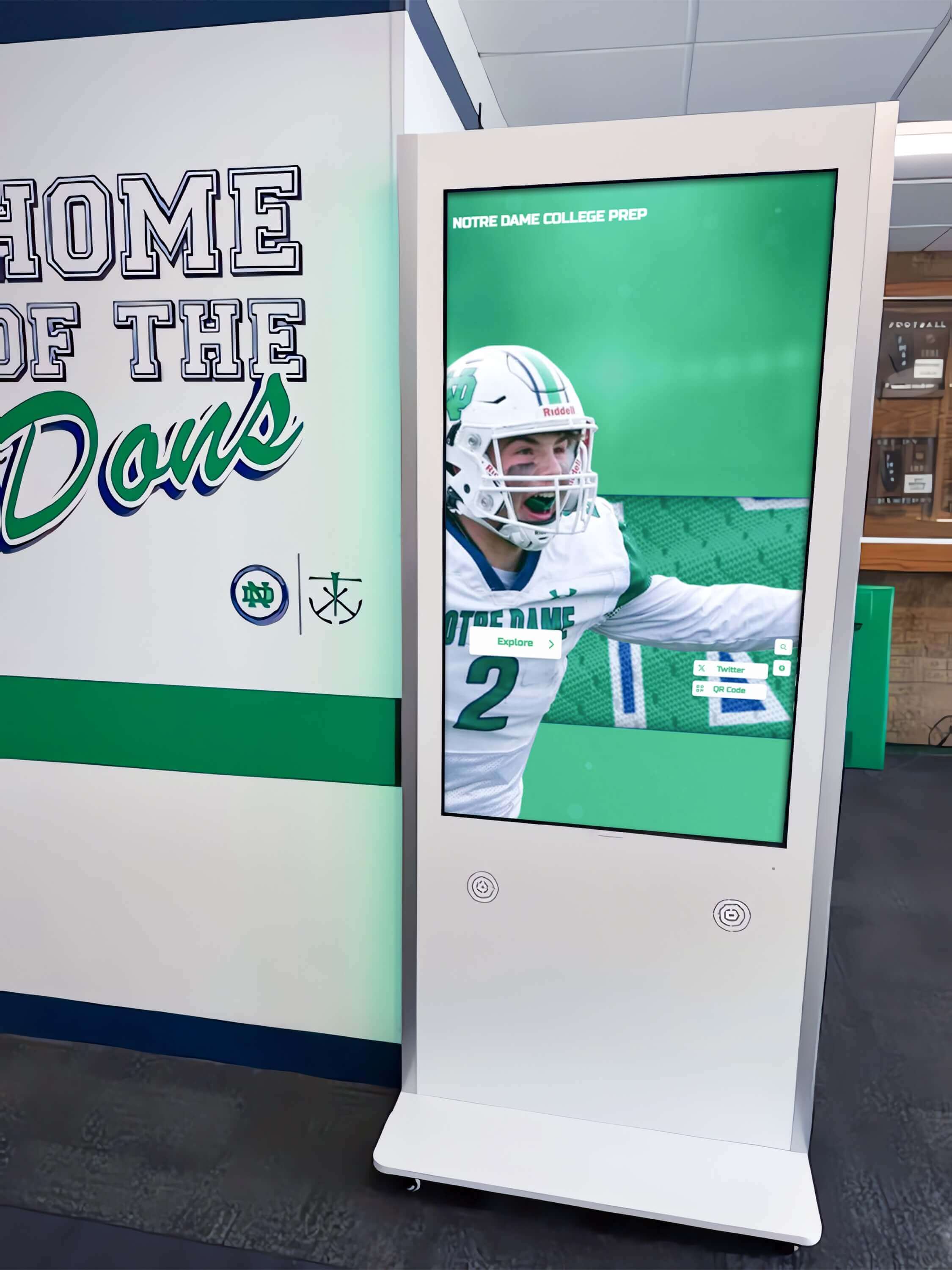
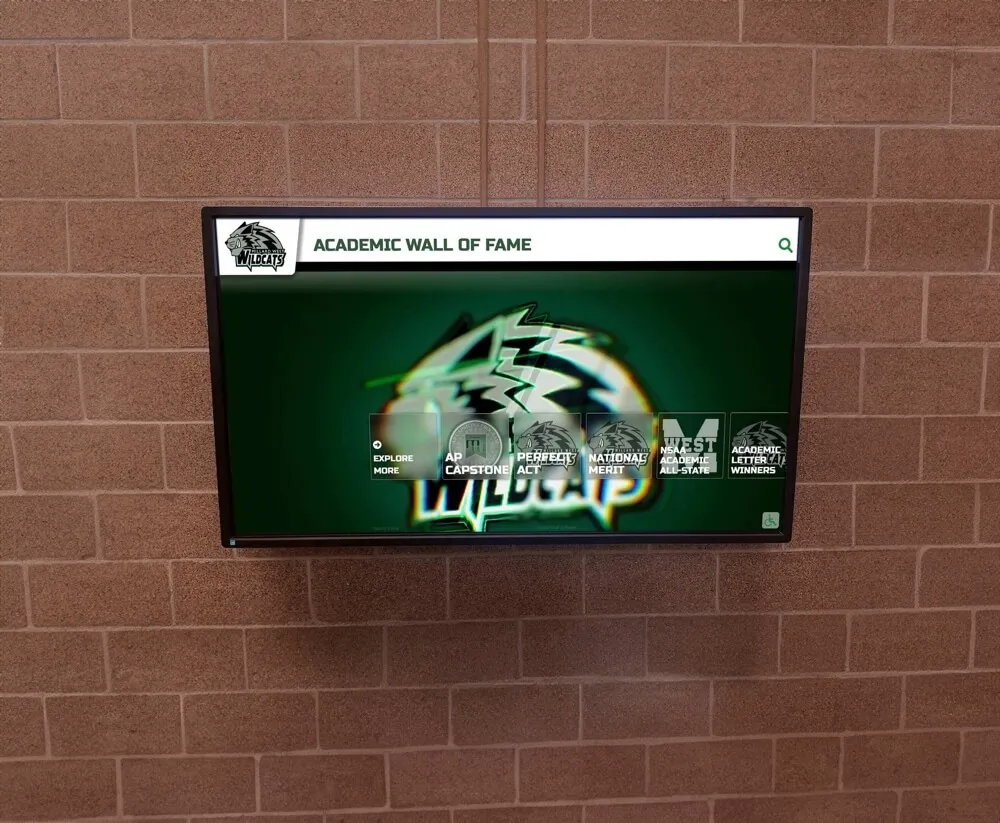
Strategic placement throughout facilities ensures resident access to information at multiple convenient touchpoints
Family Communication and Transparency
Digital displays create systematic family communication channels that build trust through transparency and consistent information sharing.
Visiting Information and Policies
Displays in reception areas and visiting lounges provide families with current visiting hours and any temporary restrictions, health screening requirements and safety protocols, directions to specific units and resident locations, available visiting spaces and amenities, and contact information for care teams and administration.
This proactive information sharing reduces family anxiety and confusion while ensuring consistent policy communication that might otherwise vary depending on which staff member families encounter.
Care Team Introductions and Transparency
Facilities demonstrate care quality and build family confidence through staff introduction displays featuring photos and names of care team members serving specific units, credentials and specializations of nursing and therapy staff, administrator and leadership team introductions, staff recognition celebrating tenure and achievements, and care philosophy messaging reinforcing facility values and approach.
Research from senior living consultants indicates that families who can identify care team members by name and face report significantly higher confidence in care quality—even when actual care delivery remains consistent. Visual familiarity builds trust and comfort for families entrusting loved ones to facility care.
Activity Documentation and Life Enrichment
Sharing visual documentation of resident activities addresses a primary family concern—whether loved ones are engaged, happy, and participating in meaningful activities. Digital displays showcase photo galleries from recent activities and events, video highlights from entertainment and celebrations, resident artwork and creative contributions, community outing documentation, and activity participation rates demonstrating engagement levels.
According to senior living operators, this visual transparency directly addresses the most common family question: “What does my loved one do all day?” By proactively answering this question through visual documentation, facilities reduce family anxiety while celebrating the rich programming they provide.
Similar approaches to using digital displays for community engagement and transparency appear in other contexts, such as church interactive information displays serving congregation communication needs.
Emergency Communication and Safety Notifications
Digital displays provide critical infrastructure for emergency communication and safety alerts throughout facilities.
Instant Facility-Wide Notifications
Network-connected displays enable simultaneous messaging across all screens including severe weather alerts and shelter-in-place instructions, health emergencies requiring immediate staff response, missing resident alerts with descriptions and last known locations, facility lockdown notifications during security incidents, and evacuation instructions during fire or other emergencies.
This instant facility-wide communication capability ensures all staff, residents, and visitors receive consistent, simultaneous emergency information—dramatically faster than manual communication methods requiring staff to physically travel through facilities sharing alerts.
Routine Safety Reminders
Beyond emergencies, displays reinforce daily safety awareness through health screening reminders at entrances, infection control protocols and hand hygiene prompts, fall prevention tips in hallways and resident areas, medication safety reminders, and emergency contact information readily visible throughout facilities.
These systematic safety reminders support facility risk management objectives while demonstrating proactive safety culture to residents, families, and regulators.
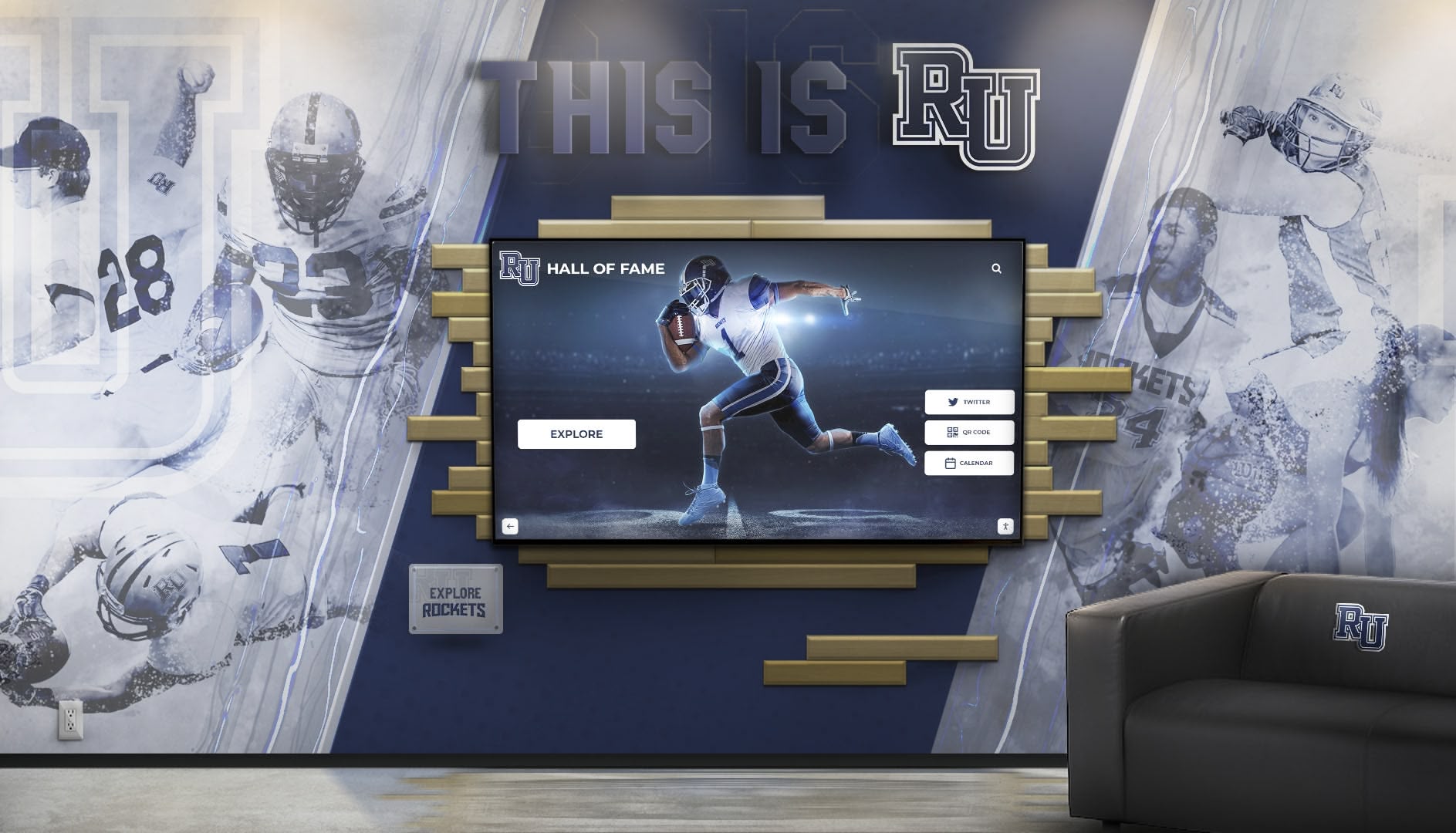
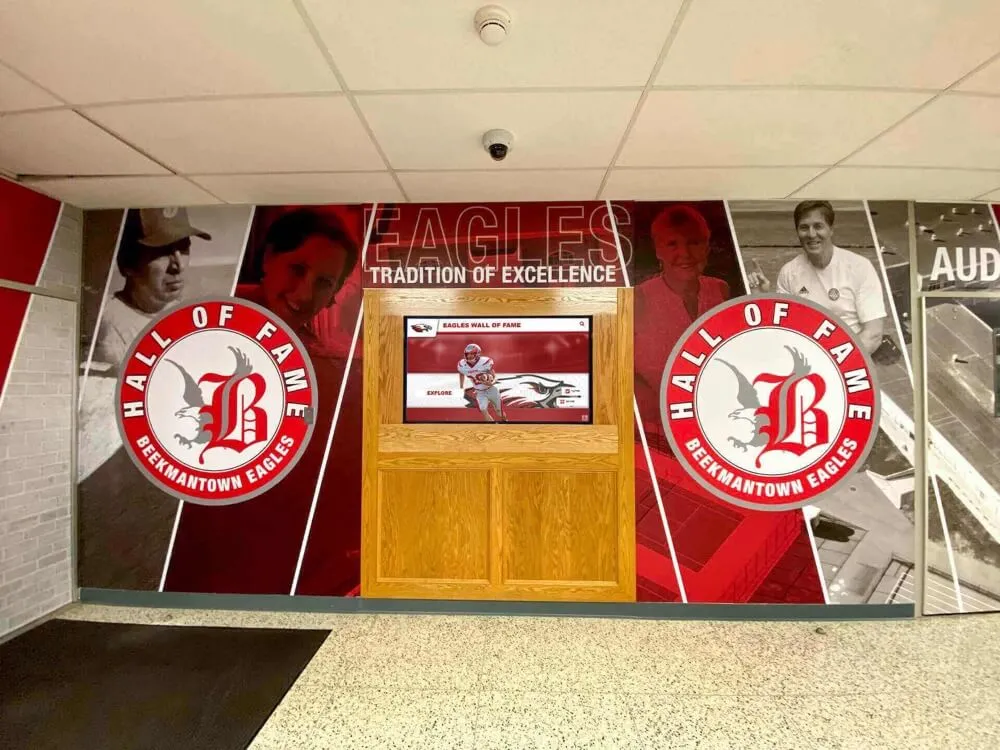
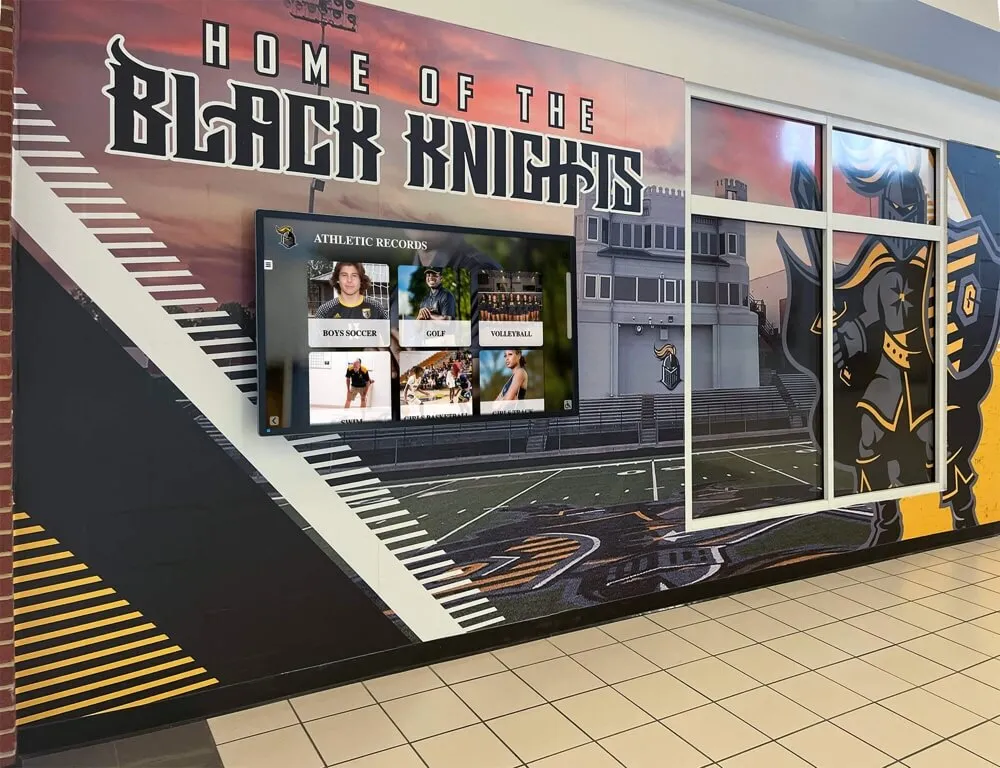
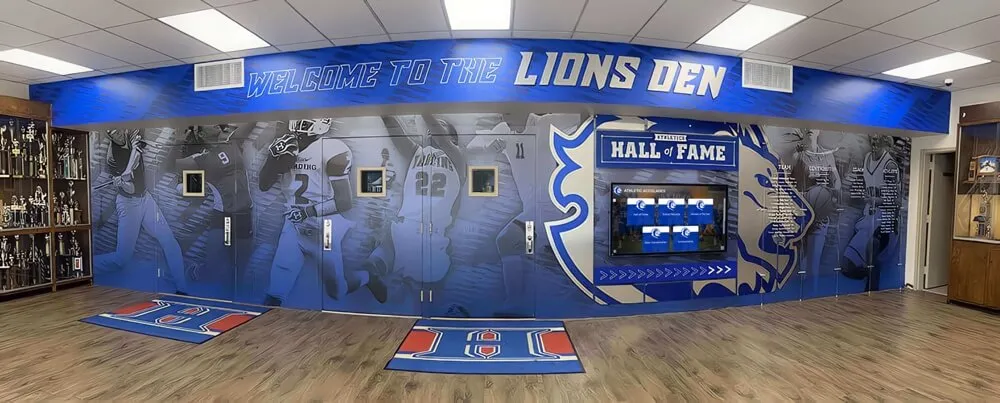
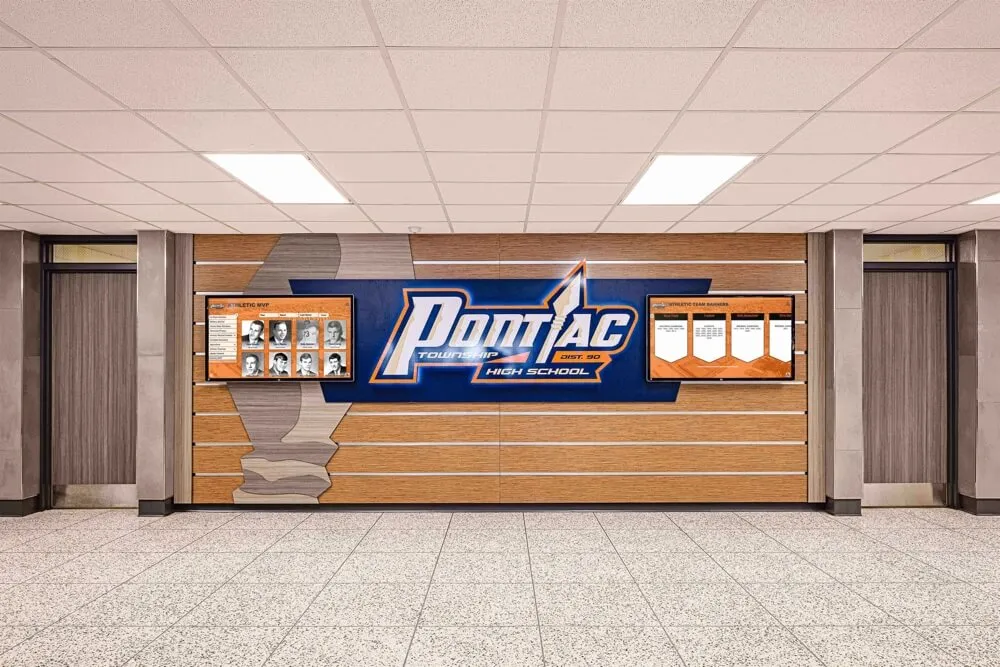
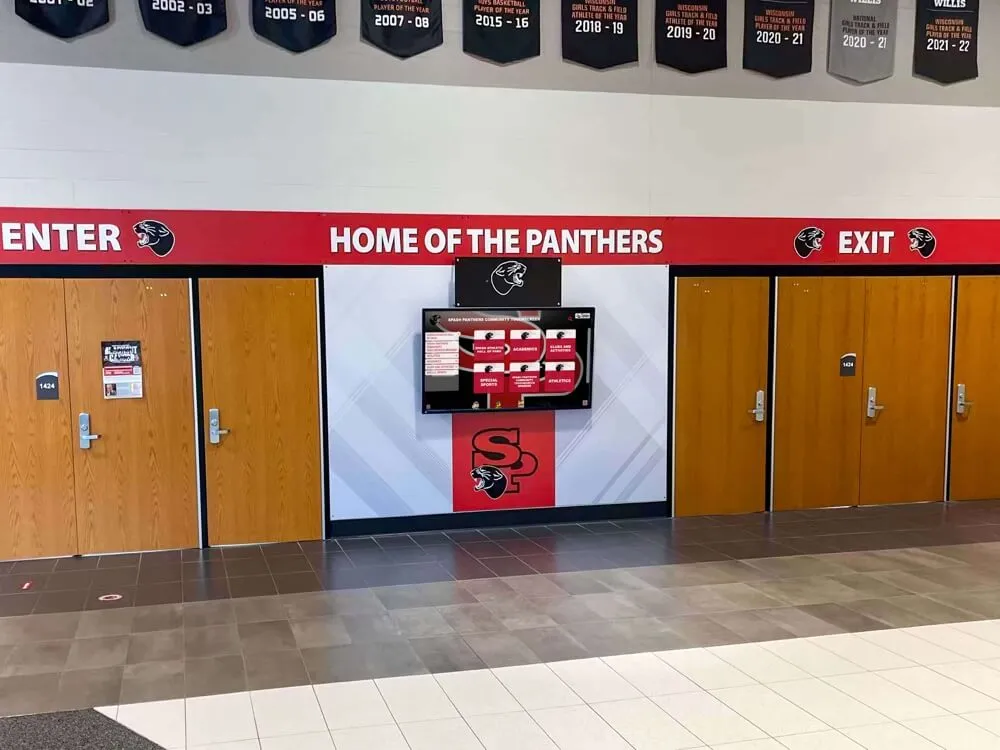
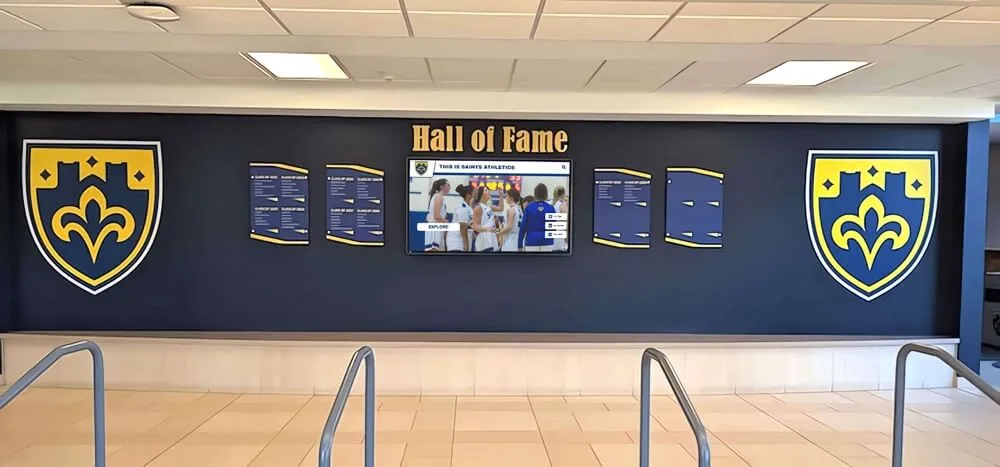
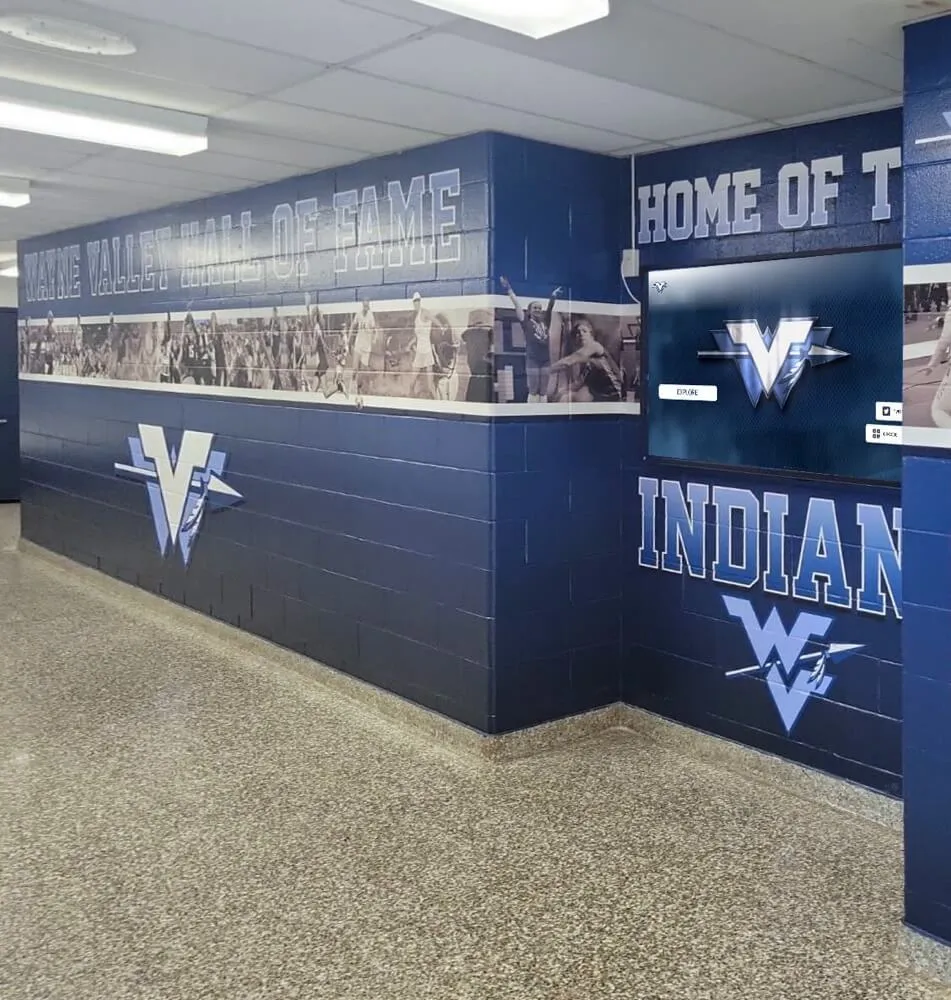
Custom installations integrate facility branding and design elements with functional communication technology
Benefits of Visitor Digital Displays for Assisted Living Facilities
Understanding specific advantages helps facilities justify technology investments and measure success after implementation across operational, experiential, and financial dimensions.
Enhanced Family Experience and Satisfaction
Modern families expect transparent communication and convenient access to information about loved ones’ care and community life.
Improved First Impressions and Facility Perceptions
Lobby digital displays create immediate positive impressions demonstrating technology adoption and modern care approaches, professional communication suggesting operational excellence, visual documentation of active community life, facility pride through design quality and content curation, and family-centered approach through visitor-focused functionality.
These first impressions significantly influence prospective resident decisions during facility tours—with modern communication technology increasingly expected by families accustomed to digital experiences in retail, hospitality, and other service environments.
Reduced Family Anxiety Through Transparency
Comprehensive digital communication addresses common family concerns including visibility into daily activities and resident engagement, care team identification and accessibility, understanding of facility policies and procedures, awareness of upcoming events for visit coordination, and confidence in emergency preparedness and communication.
Platforms that allow facilities to connect with families automatically and proactively can lead to as much as a 50% improvement in family satisfaction survey results—with systematic visual communication playing a significant role in this improvement by addressing information gaps that otherwise fuel family anxiety and dissatisfaction.
Convenient Information Access Without Staff Dependency
Self-service information access benefits both families and staff by enabling families to find basic information independently, reducing staff interruptions for routine questions and wayfinding, allowing information access during evening and weekend visits when administrative staff may not be available, providing consistent information delivery regardless of which staff member families encounter, and freeing staff capacity for relationship building and complex family support rather than repetitive information provision.
Facilities report 30-40% reduction in reception desk inquiries after implementing visitor digital displays, allowing administrative staff to focus on meaningful family support rather than answering the same directional and informational questions repeatedly throughout each day.
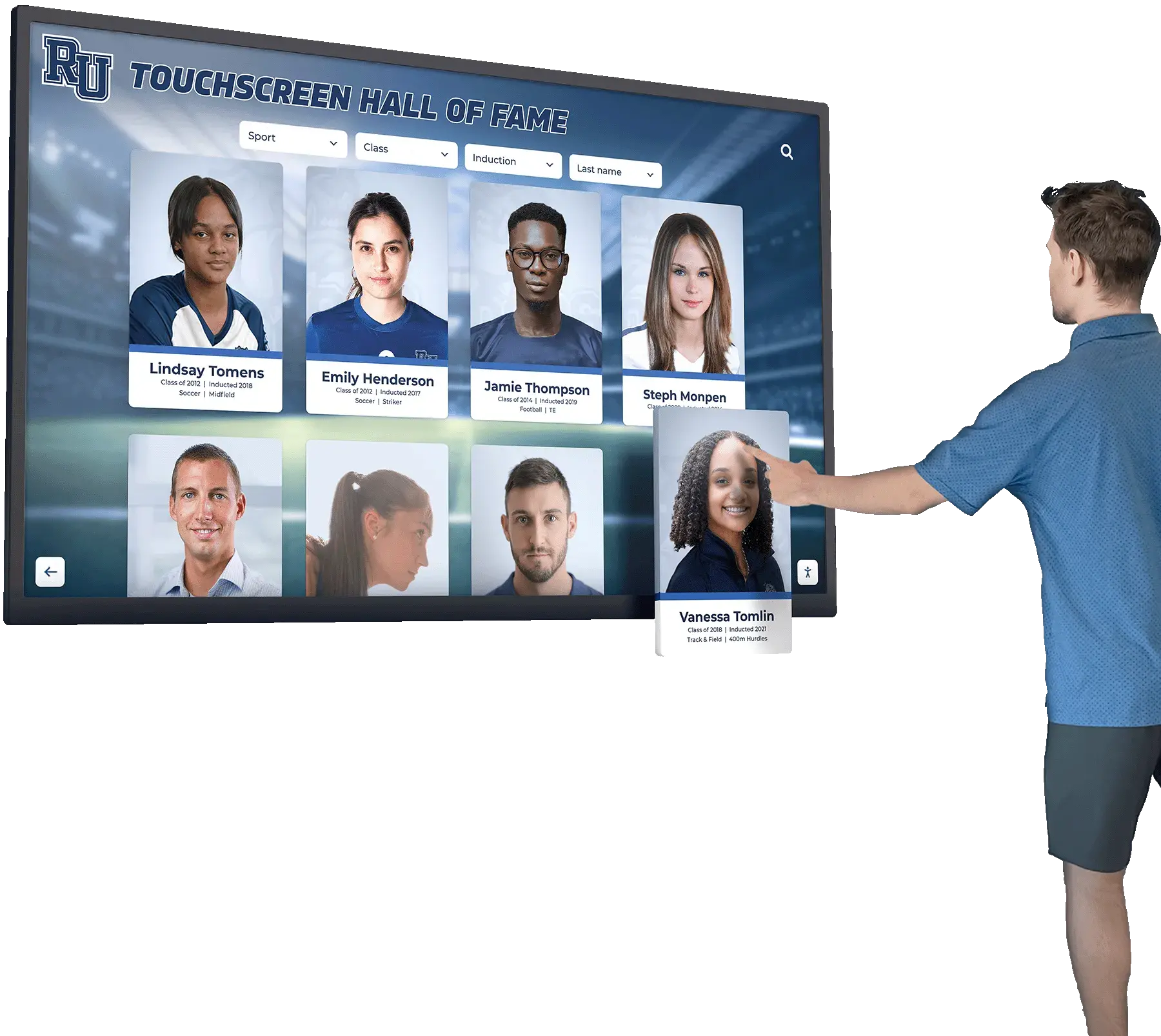
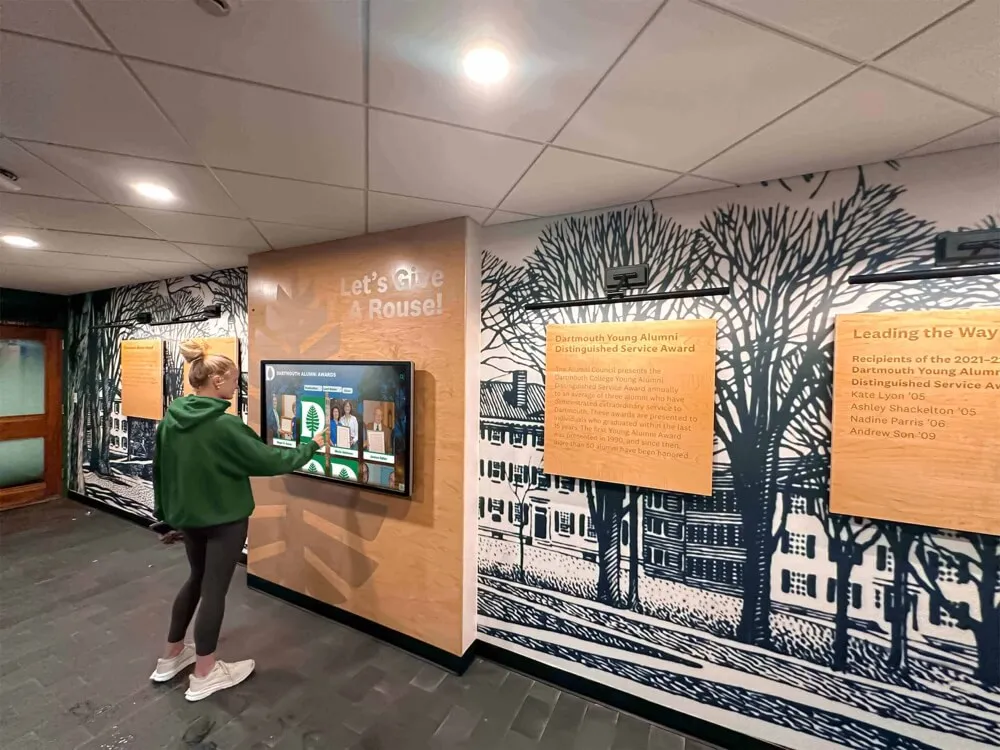
Intuitive interfaces ensure successful visitor interactions regardless of age or technical familiarity
Improved Resident Engagement and Quality of Life
Digital displays directly impact resident experience through better activity awareness, community connection, and cognitive support.
Increased Activity Participation
Systematic activity promotion through digital displays results in higher resident awareness of available programming, visual previews helping residents understand activity appeal, reminder prompts reducing missed participation due to memory challenges, social proof through photos showing peers enjoying activities, and reduced communication burden on staff who otherwise manually remind residents about upcoming events.
Research demonstrates that implementing digital signage in senior living communities leads to a 30% increase in resident participation in activities—representing meaningful quality of life improvements as residents engage more fully with available programming rather than remaining isolated in private apartments.
Enhanced Orientation and Cognitive Support
Environmental cues provided through strategic displays help residents maintain orientation through date, time, and weather information supporting temporal awareness, location identification helping residents recognize where they are within facilities, daily routine reminders supporting independence, familiar visual content providing cognitive anchors, and navigation support for residents moving between different facility areas.
For memory care populations, these visual environmental supports prove particularly valuable in reducing confusion and anxiety that can accompany disorientation in institutional environments.
Community Connection and Belonging
Digital displays foster community identity and resident connection through celebration of birthdays, anniversaries, and milestones, resident spotlight features recognizing individuals, welcome messages for new residents, historical content connecting past to present, and shared visual experiences creating common reference points for social interaction.
Unique resident engagement capabilities are shown to improve the aging experience resulting in as much as a 20% increase in satisfaction scores—with visual community building through digital displays contributing to this outcome by helping residents feel known, valued, and connected rather than anonymous within institutional care.
Operational Efficiency and Staff Productivity
Beyond resident and family-facing benefits, digital displays deliver significant operational advantages reducing staff burden and improving communication effectiveness.
Streamlined Staff Communication
Digital displays eliminate or reduce time-consuming manual communication tasks including printing, posting, and removing paper notices, walking through facilities announcing activities and events, repeatedly answering the same wayfinding questions, maintaining outdated bulletin boards, and distributing policy updates and operational changes.
For staff, digital signage streamlines communication, reducing the need for repetitive announcements and printed materials, and aids in efficiently disseminating information, scheduling updates, and emergency alerts—freeing staff capacity for direct resident care and support rather than administrative communication tasks.
Reduced Visitor Wayfinding Interruptions
Self-service wayfinding dramatically reduces staff interruptions for directions including reception desk inquiries about resident locations, nursing station questions about facility layout, activity staff providing directions to common areas, and administrative staff guiding lost families through buildings.
Facilities implementing interactive wayfinding kiosks report that reduction in these routine interruptions allows care staff to maintain focus on resident needs rather than being pulled away repeatedly to provide directions—particularly valuable during medication administration, meal service, and other time-sensitive care activities.
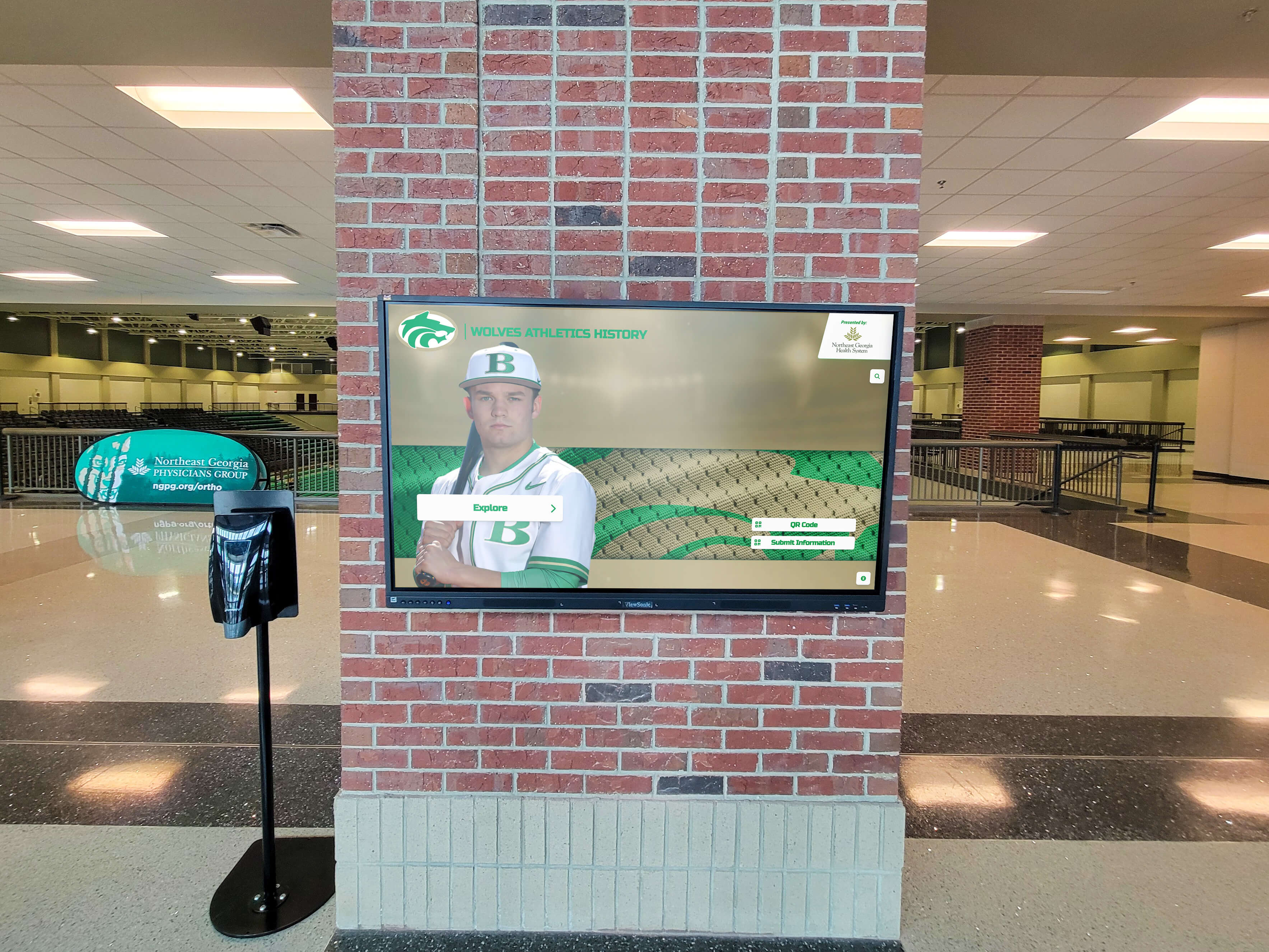
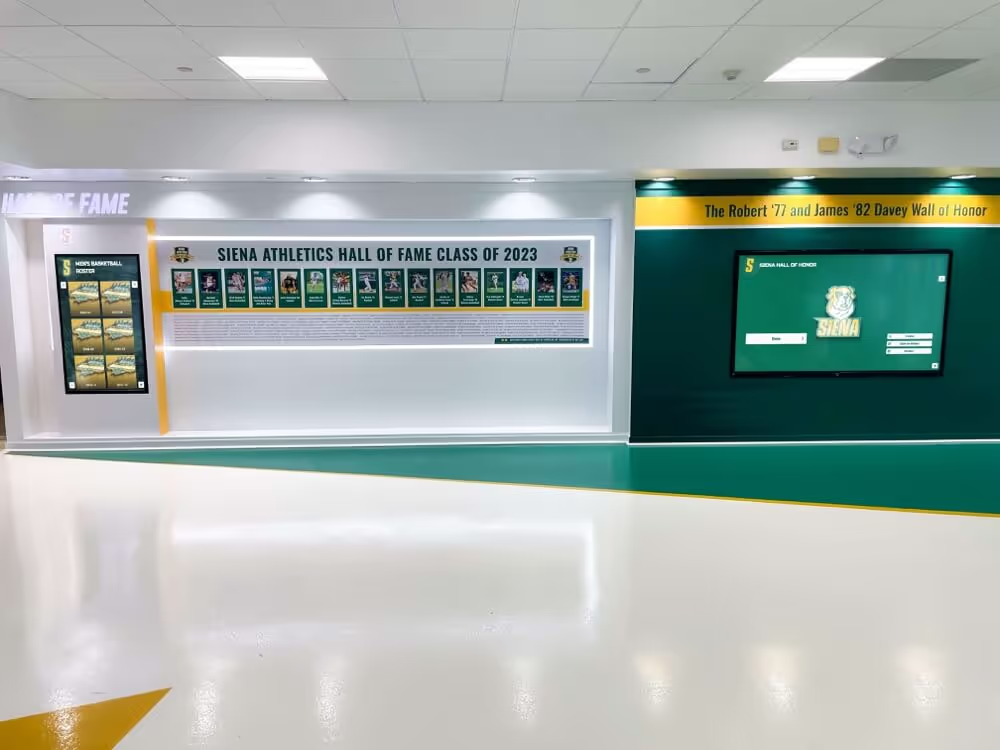
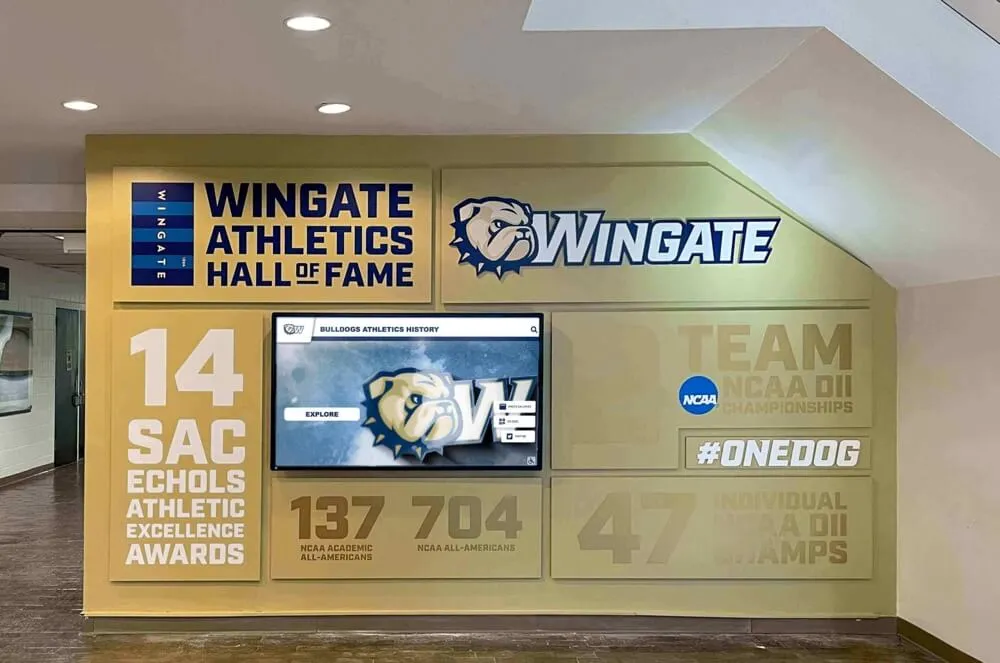
Strategic installations create visual impact while providing functional visitor services and communication
Content Reuse and Efficiency
Cloud-based content management systems enable facilities to create content once and display across multiple locations, schedule content updates automatically rather than requiring manual changes, share content across multiple facilities for multi-site operators, template common content types for consistent creation, and track content performance identifying most effective messaging.
This systematic content approach dramatically improves communication efficiency compared to manual creation of unique printed materials for every location, event, and message—reducing both staff time and printing costs while improving message consistency and quality.
The same efficiency principles apply in other institutional contexts, as demonstrated by corporate employee recognition display implementations streamlining workplace communication.
Marketing and Competitive Differentiation
Digital displays support facility marketing objectives and competitive positioning within increasingly crowded senior care markets.
Enhanced Facility Tour Experience
Prospective residents and families touring facilities experience modern technology integration suggesting innovation and quality, visual documentation of active programming and resident engagement, professional communication demonstrating operational excellence, transparency building trust through visible community life, and differentiation from competitors using traditional communication approaches.
Tour conversion rates improve when prospective families see evidence of active, engaged community life through visual documentation on digital displays—addressing a primary concern about whether facilities simply warehouse residents or genuinely foster community and quality of life.
Positive Online Reviews and Word-of-Mouth
Families who experience excellent communication and convenient wayfinding through digital displays provide more positive reviews including specific mentions of modern amenities and family-friendly features, higher overall satisfaction ratings reflected in online reviews, positive word-of-mouth recommendations to peers, strong survey responses supporting facility accreditation, and reduced complaints about communication gaps and wayfinding challenges.
In competitive senior care markets where online reviews significantly influence family decisions, these reputation benefits provide meaningful marketing value beyond direct operational improvements from digital display technology.
Implementation Strategies for Assisted Living Digital Display Systems
Moving from conceptual benefits to successful deployment requires systematic planning addressing technology selection, content strategy, placement decisions, and staff preparation.
Technology Selection and System Requirements
Evaluating available digital display solutions requires understanding essential capabilities and features distinguishing effective senior care systems from generic alternatives.
Core Platform Capabilities
Effective assisted living digital display systems must provide intuitive touchscreen interfaces requiring minimal instruction for successful visitor interactions, cloud-based content management enabling remote updates without technical expertise, multi-screen management controlling displays throughout facilities from central systems, content scheduling automating different messages for different times and audiences, emergency alert override capabilities for instant facility-wide notifications, and robust hardware reliability ensuring consistent operation in demanding environments.
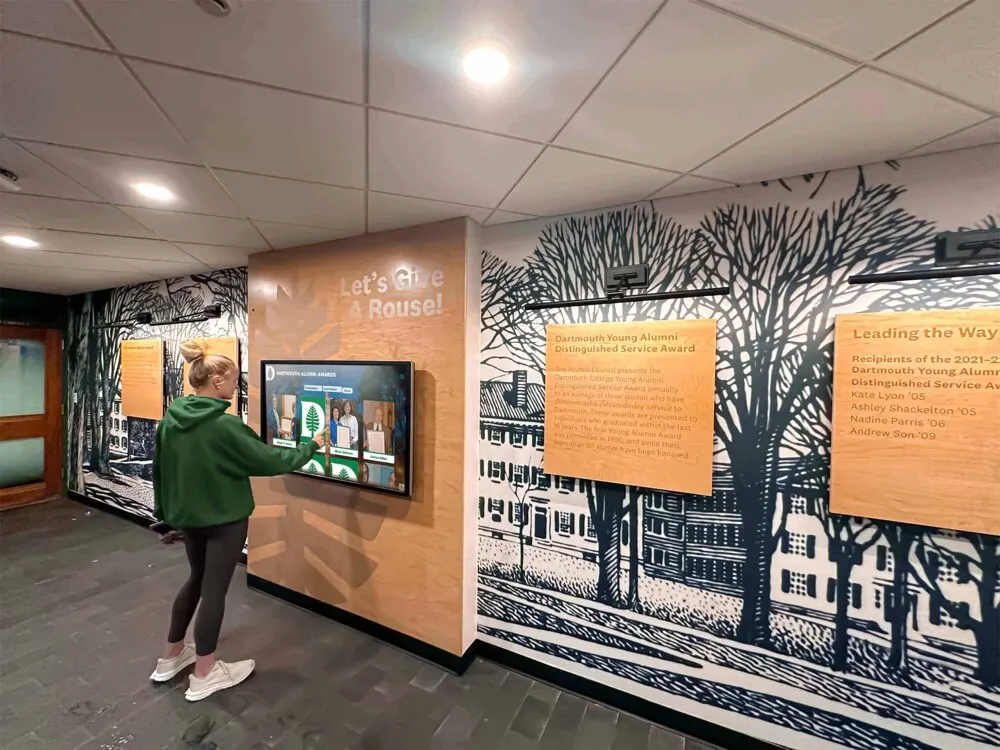
Professional installations integrate seamlessly with existing architecture and design aesthetics
Additional valuable features include mobile integration enabling content continuation on personal devices, analytics platforms providing engagement insights and performance metrics, accessibility compliance supporting visitors with varied abilities, multilingual interfaces serving diverse family populations, and vendor support ensuring responsive technical assistance when issues arise.
Hardware Considerations for Senior Care Environments
Physical display hardware must meet unique senior care environment demands including commercial-grade displays rated for continuous operation, anti-glare screens ensuring visibility in varied lighting conditions, touchscreen responsiveness calibrated for older adult interaction patterns, durable enclosures withstanding cleaning protocols and public area use, and secure mounting systems preventing theft or tampering.
Display sizes vary based on placement and purpose with compact 32-43-inch displays suitable for unit hallways and smaller spaces, mid-range 49-55-inch displays effective in reception areas and visiting lounges, and large-format 65-75-inch displays commanding attention in grand lobbies and main common areas.
Strategic Placement Throughout Facilities
Display effectiveness depends significantly on thoughtful placement addressing different user populations and information needs throughout senior care environments.
Primary Visitor-Facing Locations
High-priority placement locations for family-facing functionality include main entrance lobbies with interactive wayfinding kiosks, reception areas displaying visiting information and facility news, hallway intersections helping visitors navigate between wings and units, visiting lounges featuring activity documentation and schedules, and elevator banks serving multiple floors with orientation information.
These strategic locations intercept visitors at key decision and navigation points, proactively providing information before confusion or frustration develops while demonstrating facility investment in family experience.
Resident Engagement Locations
Displays serving resident populations benefit from placement in dining areas featuring menus, activity schedules, and community news, activity rooms showcasing programming and encouraging participation, memory care common areas with orientation information and familiar imagery, rehabilitation areas displaying therapy schedules and progress motivation, and unit hallways providing location-specific information for resident wings.
Multiple displays throughout facilities ensure residents encounter information repeatedly through daily routines—reinforcing messages and maximizing awareness compared to single-location displays that residents may rarely encounter.
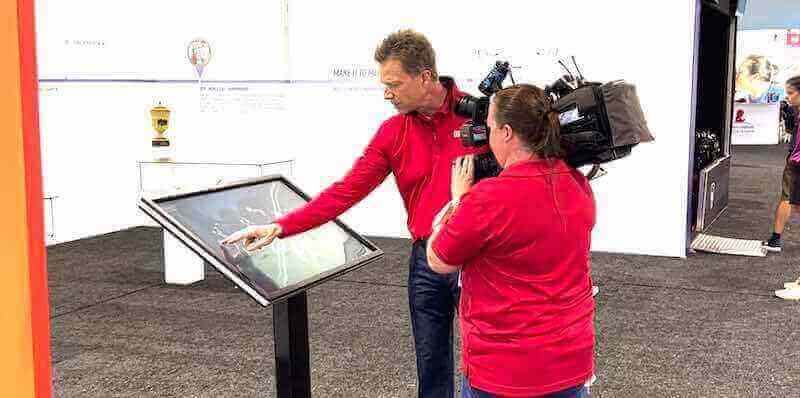
Professional-grade systems support various interaction modes and accessibility requirements
Staff-Focused Communication Points
Displays addressing staff communication needs should be positioned in nursing stations displaying shift assignments and clinical alerts, break rooms featuring staff schedules and facility announcements, time clock areas with training reminders and policy updates, care conference rooms supporting meeting presentations and documentation, and administrative offices displaying operational metrics and performance data.
This multi-location approach ensures technology investment serves all facility stakeholders rather than focusing narrowly on visitor-facing applications while missing opportunities to improve internal communication efficiency.
Content Strategy and Management
Technology alone proves insufficient—successful implementations require thoughtful content planning, creation processes, and ongoing management responsibilities.
Content Planning by Audience and Purpose
Effective content strategies segment messaging by audience including visitor wayfinding and facility orientation information, family engagement content featuring transparency and activity documentation, resident programming focused on activities and community building, staff operations supporting scheduling and policy communication, and emergency protocols enabling rapid safety notifications.
Each content category requires different update frequencies, tone, visual design, and information architecture—necessitating systematic planning rather than ad-hoc content creation based on immediate needs alone.
Content Creation and Curation Workflows
Sustainable content management requires establishing clear processes including designated staff responsible for content updates by category, photography protocols capturing quality activity and community documentation, resident and family consent procedures for image sharing, content review and approval workflows ensuring quality and accuracy, and scheduled content refreshment preventing stale displays that suggest neglect.
Facilities should budget approximately 3-5 hours weekly for content management in typical assisted living environments—with initial setup requiring 15-25 hours for historical content migration, template creation, and system configuration.
Design Guidelines for Senior-Appropriate Content
Content design for older adult audiences requires specific considerations including larger text sizes ensuring readability for age-related vision changes, high contrast between text and backgrounds, simple language avoiding jargon and complexity, generous white space preventing visual overwhelm, familiar icons and imagery supporting recognition, and consistent layouts reducing cognitive load for repeat viewing.
These senior-friendly design principles ensure content effectively serves primary audiences rather than creating confusion or inaccessibility through design choices optimized for younger populations with different perceptual capabilities.
Similar content management approaches appear in other display applications, as seen in religious institution touchscreen implementations serving diverse congregation populations.
Staff Training and Change Management
Technology adoption requires staff preparation, clear communication about purposes and benefits, and ongoing support during transition periods.
Staff Education and Capability Building
Comprehensive training should address display functionality and capabilities enabling effective visitor assistance, content management procedures for designated update responsibilities, troubleshooting common technical issues, understanding information architecture and navigation, and maintaining positive attitudes about technology complementing staff roles.
Facilities should conduct initial training sessions lasting 60-90 minutes followed by refresher training quarterly and job aids providing quick reference for common tasks. Multiple staff members should receive content management training ensuring continuity when primary administrators are unavailable.
Change Management and Staff Buy-In
Successful implementations frame digital displays as staff enhancement rather than replacement, emphasizing how technology handles routine communication freeing staff for meaningful resident interaction, reduces interruptions enabling focus on care activities, improves information consistency supporting care quality, demonstrates facility innovation attracting quality staff, and addresses family communication needs that staff alone cannot meet systematically.
Facilities should involve staff in content planning and display placement decisions, incorporating feedback that builds ownership and addresses practical concerns about technology integration into existing workflows.
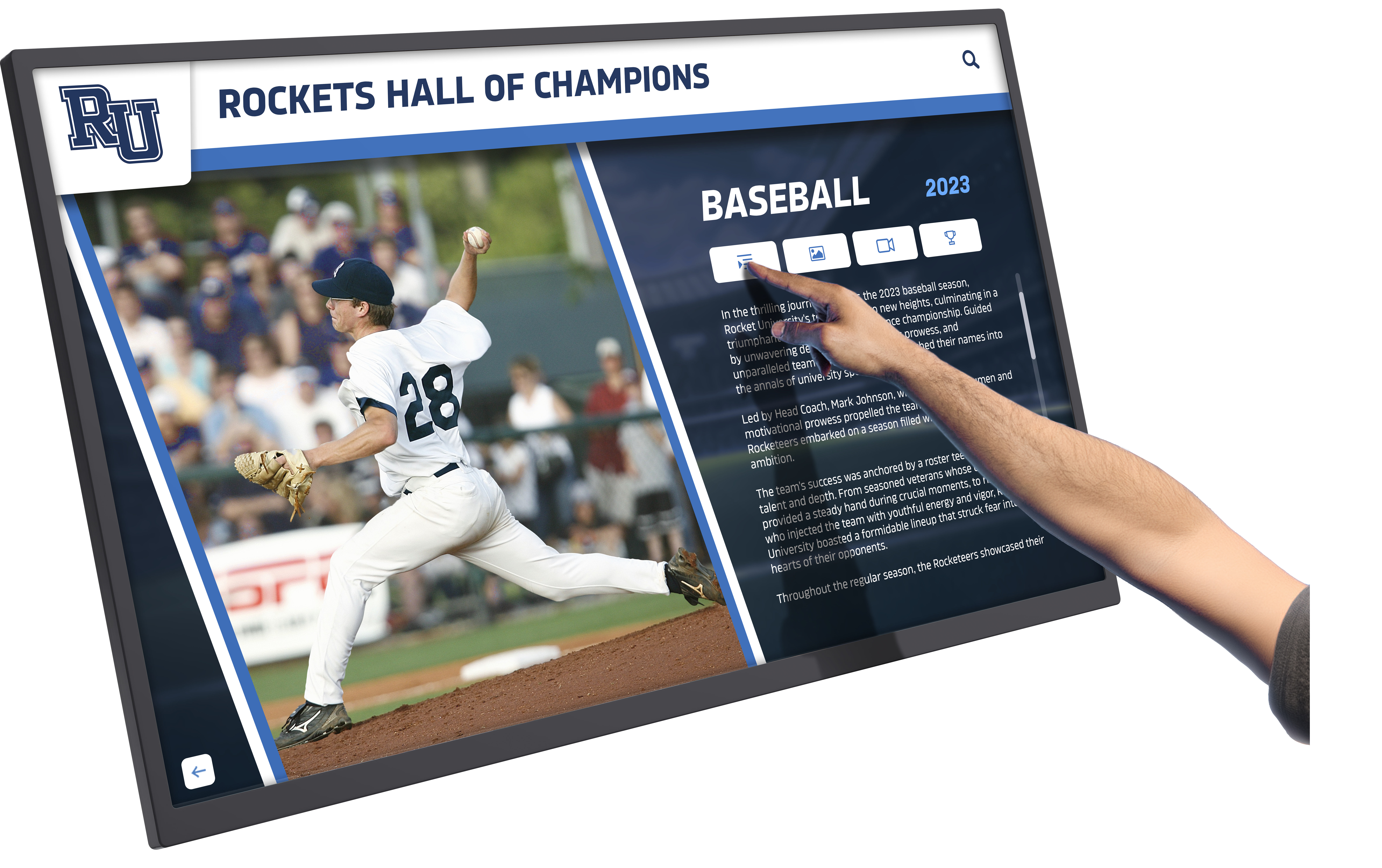
Intuitive touch interfaces enable successful interactions across all user populations and technical abilities
Measuring Success and Optimizing Digital Display Performance
Continuous assessment and refinement ensure display implementations deliver expected benefits while identifying enhancement opportunities that maximize return on investment.
Key Performance Indicators for Assisted Living Displays
Quantifiable metrics reveal system performance and business impact across multiple dimensions relevant to senior care operations.
Utilization and Engagement Metrics
Core usage statistics include wayfinding kiosk interaction rates and session durations, content viewing patterns showing which messages receive attention, search queries revealing common visitor information needs, feature utilization indicating which functions families and residents value most, and time-based usage trends showing peak interaction periods.
These metrics reveal whether systems achieve expected utilization levels while highlighting opportunities to improve interfaces, streamline navigation, or enhance content that fails to engage audiences effectively.
Family Satisfaction Measurements
Impact indicators demonstrate family experience improvements including satisfaction survey scores related to communication and wayfinding, family compliment data mentioning specific digital display benefits, complaint reduction in categories addressed by displays, tour conversion rate changes for prospective residents, and family visit frequency trends potentially influenced by enhanced transparency.
Facilities should establish baseline measurements before implementation enabling clear before-and-after comparisons demonstrating technology impact on family experience and satisfaction outcomes.
Resident Engagement Tracking
Resident-focused outcomes quantify community life improvements including activity participation rate changes, resident satisfaction scores related to communication and engagement, social interaction observations in display viewing areas, resident independence metrics potentially supported by wayfinding, and specific memory care behavioral indicators for specialized content.
According to available research, facilities implementing effective digital engagement report 30% increases in resident activity participation and 20% improvements in satisfaction scores—providing benchmarks for evaluating implementation success against expected outcomes.
Operational Efficiency Indicators
Business outcome measurements demonstrate tangible operational results including staff time savings from reduced wayfinding interruptions, communication efficiency improvements reducing manual notice distribution, printing cost reductions from digital information delivery, training efficiency for new staff understanding facility layout, and emergency response improvement through rapid notification capability.
Facilities should track staff perceptions through surveys and focus groups, measuring whether digital displays deliver expected efficiency benefits in daily operations rather than creating new technical burden that offsets intended advantages.
Continuous Optimization Strategies
Regular refinement improves system performance over time as facilities learn from usage patterns, user feedback, and operational experience with technology integration.
Interface and Content Refinement
Analytics-driven improvements include streamlining navigation paths that show high abandonment indicating user confusion, enhancing content categories receiving low engagement, adjusting display placement based on utilization patterns, adding features addressing frequent visitor questions not currently addressed, and testing alternative designs measuring impact on interaction and satisfaction.
Facilities should establish quarterly review processes examining performance data and implementing incremental improvements rather than assuming initial configurations remain optimal indefinitely as user populations, care models, and facility operations evolve.
Seasonal and Timely Content Updates
Regular content refreshment maintains visitor and resident engagement through holiday-themed messaging and seasonal activities, special event promotion for facility celebrations, policy updates as regulations or procedures change, community news maintaining resident connection to current events, and emergency notifications when situations require immediate communication.
Dynamic, timely content demonstrates that systems receive active management and attention, encouraging user trust and engagement compared to static interfaces that appear neglected or outdated—undermining technology’s credibility and value.
This approach to ongoing optimization parallels best practices in other interactive display contexts, such as healthcare facility wayfinding implementations requiring regular updates.
Special Considerations for Memory Care and Specialized Units
Digital display implementation in memory care units requires specific adaptations addressing cognitive accessibility and therapeutic objectives distinct from general assisted living populations.
Memory Care Content Design Principles
Specialized content serves residents with dementia and cognitive decline through simplified navigation requiring single-step interactions rather than multi-level menus, familiar imagery using recognizable scenes, people, and objects from residents’ life experiences, high visual-to-text ratios minimizing written language that becomes challenging to process, reminiscence content featuring historical photos and cultural touchstones, and routine reinforcement displaying daily schedules with visual prompts supporting temporal orientation.
Research demonstrates that visual environmental cues help memory care residents maintain better orientation and experience reduced anxiety—making thoughtful digital display content a valuable therapeutic tool beyond simple information delivery.
Reducing Agitation and Supporting Calm
Content selection for memory care emphasizes calming imagery featuring nature scenes and peaceful settings, familiar music triggering positive emotional responses, success-oriented content avoiding frustration or confusion, positive facial expressions in human imagery, and consistent layout reducing cognitive processing demands through predictable information architecture.
Facilities should work with memory care specialists and families to identify content themes and imagery that resonate with their specific resident populations’ backgrounds, interests, and life histories—creating personalized therapeutic content rather than generic institutional messaging.
Family Connection in Secured Environments
Memory care units often restrict resident movement while encouraging family visitation—creating opportunities for displays to support family connection through resident photo galleries helping families remember names and faces, family communication boards with messages for residents, activity documentation showing families what residents experience, care team introductions building family confidence in specialized care, and orientation information helping families understand memory care philosophy and approach.
These family-facing features address the unique anxiety families experience placing loved ones in secured memory care environments—providing transparency and connection that build trust in care quality and staff commitment.
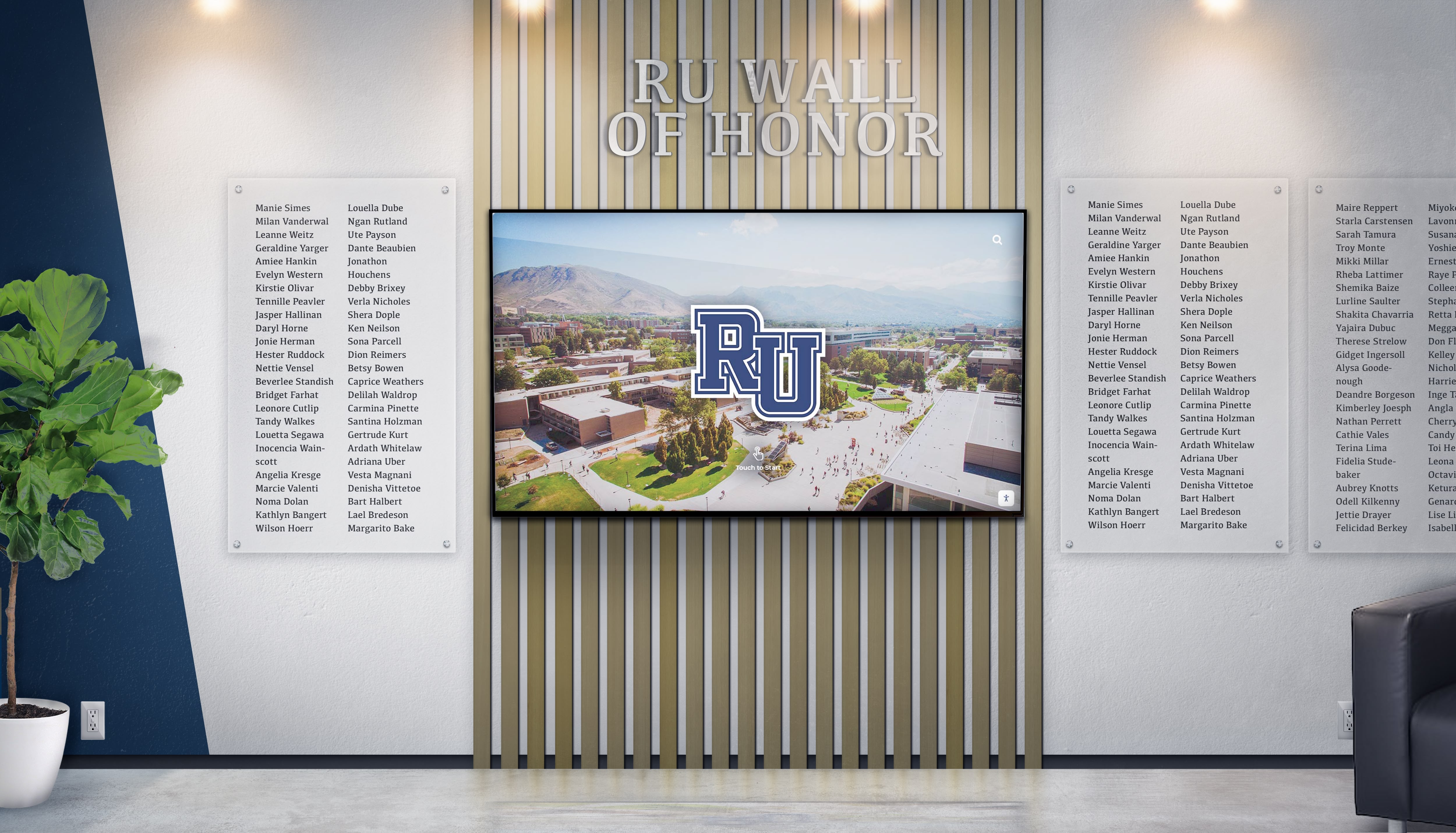
Integrated systems combine digital displays with traditional elements creating comprehensive communication spaces
Implementation Costs and Return on Investment Considerations
Understanding financial requirements and expected returns helps facilities make informed technology investment decisions aligned with operational budgets and strategic priorities.
Total Cost of Ownership Components
Comprehensive implementation budgeting should account for multiple cost categories beyond initial hardware purchase reflecting true long-term investment requirements.
Hardware and Software Investment
Initial technology costs include commercial-grade display screens ranging from $1,500-5,000 per display depending on size and features, touchscreen kiosk systems including enclosures costing $8,000-15,000 per unit, content management software with perpetual or subscription licensing models, network infrastructure supporting display connectivity and bandwidth requirements, and installation services including mounting, electrical work, and network connection.
For reference, small assisted living facilities might invest $15,000-30,000 for basic digital signage with 3-4 displays, while larger facilities could spend $50,000-100,000 for comprehensive multi-location installations including interactive wayfinding, specialized memory care content, and web integration.
Implementation and Integration Services
Beyond hardware, facilities should budget for content management system configuration and customization, initial content development creating facility maps and information architecture, staff training preparing teams for content management and system support, photography and media production for activity documentation, and project management coordinating implementation across multiple vendors and stakeholders.
Implementation services typically represent 20-30% of total initial investment for sophisticated deployments requiring custom content, extensive training, and integration with existing facility systems.
Ongoing Operational Costs
Sustained operation requires budgeting for software subscription fees for cloud-based content management platforms, technical support contracts ensuring responsive vendor assistance, content management labor updating displays with current information, internet connectivity supporting cloud-based systems, and periodic hardware refresh as display technology ages and capabilities evolve.
Facilities should plan for 5-7 year useful display life with ongoing software and support costs typically $200-400 per display annually—representing modest operating expenses compared to initial investment while ensuring systems remain functional and current.
Return on Investment Calculation
Justifying technology investment requires quantifying both operational savings and experiential value delivered through improved communication and wayfinding.
Operational Efficiency Savings
Measurable savings come from reduced staff time answering repetitive wayfinding questions, eliminated printing costs for replaced paper communications, reduced bulletin board maintenance labor, decreased family complaint management time, and improved staff retention through reduced frustration with communication inefficiencies.
While difficult to quantify precisely, facilities commonly calculate 5-10 hours weekly staff time savings from reduced wayfinding interruptions and communication tasks—representing $15,000-30,000 annual value at typical staff wage rates.
Experience and Satisfaction Value
Less directly quantifiable but equally valuable benefits include improved family satisfaction scores driving positive reviews, enhanced tour experiences supporting sales conversion, reduced family anxiety decreasing complaint and conflict management, improved resident engagement supporting quality of life outcomes, and competitive differentiation in crowded senior care markets.
For facilities competing for private-pay residents where reputation and family satisfaction directly impact census and revenue, these experiential improvements provide meaningful strategic value even without precise dollar quantification.
Typical ROI Timelines
According to senior living technology consultants, assisted living facilities typically achieve effective return on investment within 2-4 years through combined operational efficiency, reduced printing costs, and occupancy support from improved family satisfaction and facility reputation.
Facilities with higher labor costs, stronger market competition, or larger scale realize returns more quickly, while smaller facilities or those with limited staff interruption problems may require longer payback periods—though experiential and competitive benefits provide value beyond direct financial calculations.
Conclusion: Transforming Assisted Living Communication Through Visitor Digital Displays
Assisted living visitor digital displays represent strategic investments in family experience, resident engagement, operational efficiency, and facility competitiveness within increasingly sophisticated senior care markets. When facilities systematically deploy digital communication technology—from interactive wayfinding kiosks helping families navigate unfamiliar layouts to engaging activity displays keeping residents informed and connected—they create environments demonstrating innovation and transparency while maintaining the warmth and personal touch that defines exceptional senior living.
The strategies explored in this guide provide comprehensive frameworks for implementing digital display systems that serve multiple facility stakeholders simultaneously through visitor wayfinding reducing family stress and staff interruptions, resident engagement content supporting community connection and activity participation, family communication building trust through transparent documentation, staff operations streamlining internal communication efficiency, and emergency capabilities enabling rapid facility-wide notifications.
Transform Your Facility Communication with Digital Display Solutions
Whether you operate assisted living communities, memory care facilities, independent living campuses, or continuing care retirement communities, modern visitor digital display technology can enhance family experiences, improve operational efficiency, and create sophisticated communication environments meeting contemporary expectations. Solutions like Rocket Alumni Solutions provide proven platforms supporting diverse senior care applications with intuitive interfaces, comprehensive content management, and reliable performance in demanding environments.
Explore Digital Display SolutionsSuccessful implementation requires systematic planning addressing technology selection matching functional requirements and budgets, strategic placement ensuring appropriate audience access throughout facilities, thoughtful content development serving residents, families, and staff effectively, comprehensive staff training supporting adoption and ongoing management, and measurement frameworks demonstrating business value and experiential improvements.
The senior care technology landscape continues evolving rapidly with artificial intelligence enabling personalized content delivery, mobile integration creating seamless cross-channel experiences, advanced accessibility features supporting diverse populations, and cloud-based management simplifying multi-facility coordination for growing operators. Facilities implementing digital displays today should select flexible platforms supporting these emerging capabilities rather than static systems requiring complete replacement as technology and expectations evolve.
Beyond immediate operational benefits, visitor digital displays signal to families that facilities embrace modern communication approaches while investing in transparency and family engagement. First impressions matter profoundly in senior care—and contemporary families increasingly evaluate facilities by communication sophistication alongside traditional care quality indicators. Communities offering convenient, intuitive digital information access position themselves as forward-thinking organizations understanding modern expectations while demonstrating commitment to resident and family experience.
For facilities considering digital display implementations, the business case grows stronger annually as technology costs decline, capabilities expand, family expectations for transparent communication increase, and competitive pressure mounts as technology adoption becomes standard rather than exceptional. The question evolves from whether to implement these systems to how to deploy them most effectively within unique facility environments, resident populations, and operational models.
Your families arrive at your facility with expectations shaped by experiences across healthcare, hospitality, retail, and everyday life where digital communication delivers convenience, transparency, and control. Meeting these expectations requires thoughtful technology deployment enhancing rather than replacing human warmth—the combination of sophisticated systems handling routine communication and wayfinding alongside caring staff providing personal connection creates superior care experiences impossible through either approach alone.
Whether you operate a small residential assisted living home seeking modest communication improvements, a large campus community requiring comprehensive wayfinding infrastructure, a specialized memory care facility serving residents with unique cognitive needs, or a continuing care retirement community managing multiple care levels and building complexes, visitor digital display technology offers proven solutions delivering measurable operational benefits while elevating family and resident experiences. The future of senior care combines human compassion with technological sophistication—digital displays represent essential infrastructure making this combination achievable at scale.
Ready to transform your facility communication? Explore modern digital display solutions combining intuitive visitor interfaces, engaging resident content, comprehensive management platforms, and ongoing innovation ensuring your investment remains valuable as technology and senior care practices continue evolving. The conversation about communication technology in senior care has shifted from “Why invest in digital displays?” to “How quickly can we implement systems delivering benefits our residents, families, and staff deserve?”