Every spring, athletic directors face a familiar tension: the gym needs revenue, local businesses want visibility, and somewhere between the first vinyl banner order and the fifth season in a row of patchwork signage, the space starts looking less like an athletic facility and more like a highway billboard exit. Athletic sponsorship programs that rely entirely on physical signage produce diminishing returns—sponsors who paid for prominence end up lost in a wall of competing logos, and schools find themselves navigating awkward conversations about renewal.
Athletic sponsorship doesn’t have to mean cluttered walls, fading banners, or hand-shaking deals that last exactly one season. The schools building sustainable programs are rethinking what sponsor recognition actually looks like—moving toward tiered packages, durable digital displays, and recognition frameworks that serve sponsors year-round without sacrificing the aesthetic or function of athletic spaces.
This guide gives your advancement team a practical framework: how to structure sponsorship tiers, where to place recognition for maximum impact, and how digital recognition systems solve the visibility problem that vinyl banners never could.
The challenge isn’t finding sponsors—most schools have willing community partners. The challenge is delivering recognition that sponsors find genuinely valuable, that keeps facilities looking professional, and that your team can sustain across budget cycles without hiring a full-time coordinator.

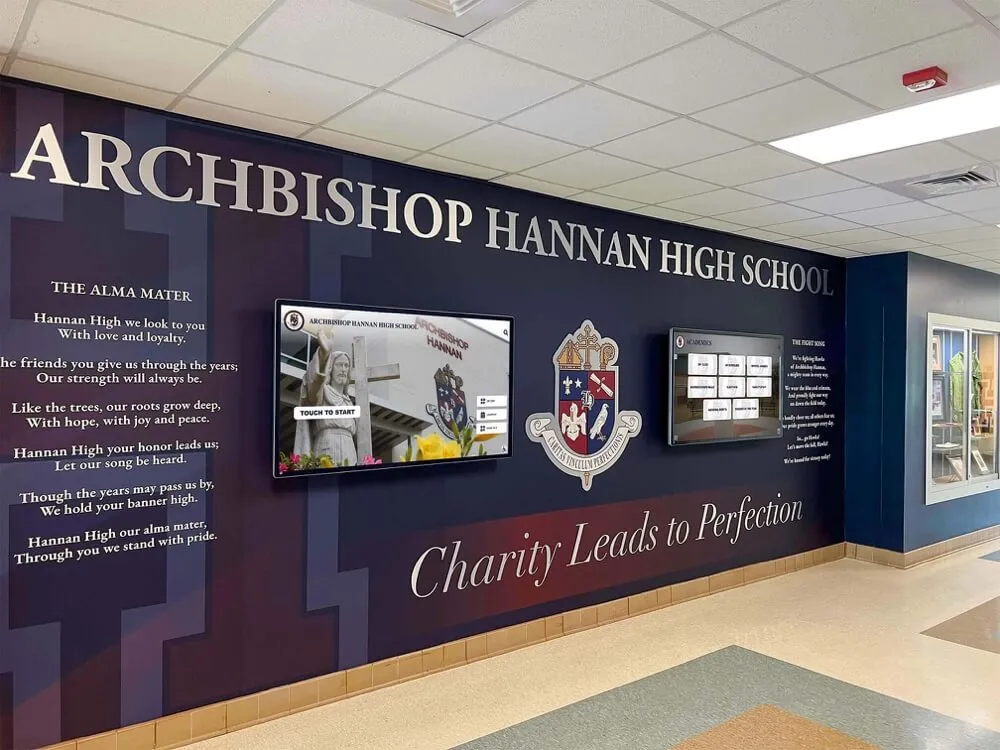
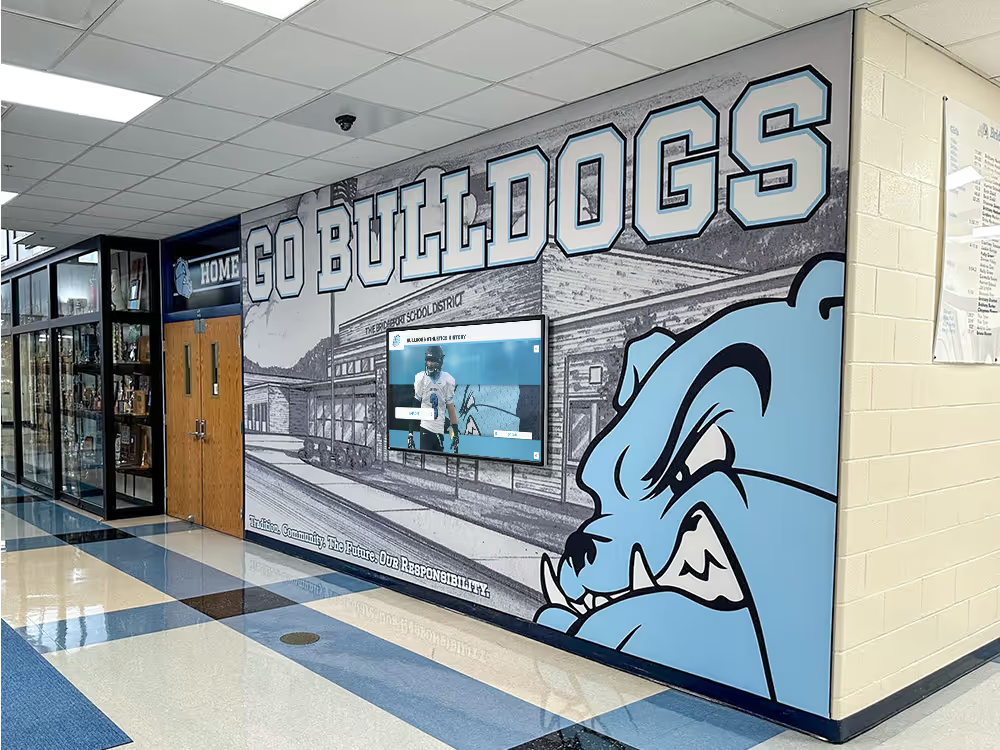
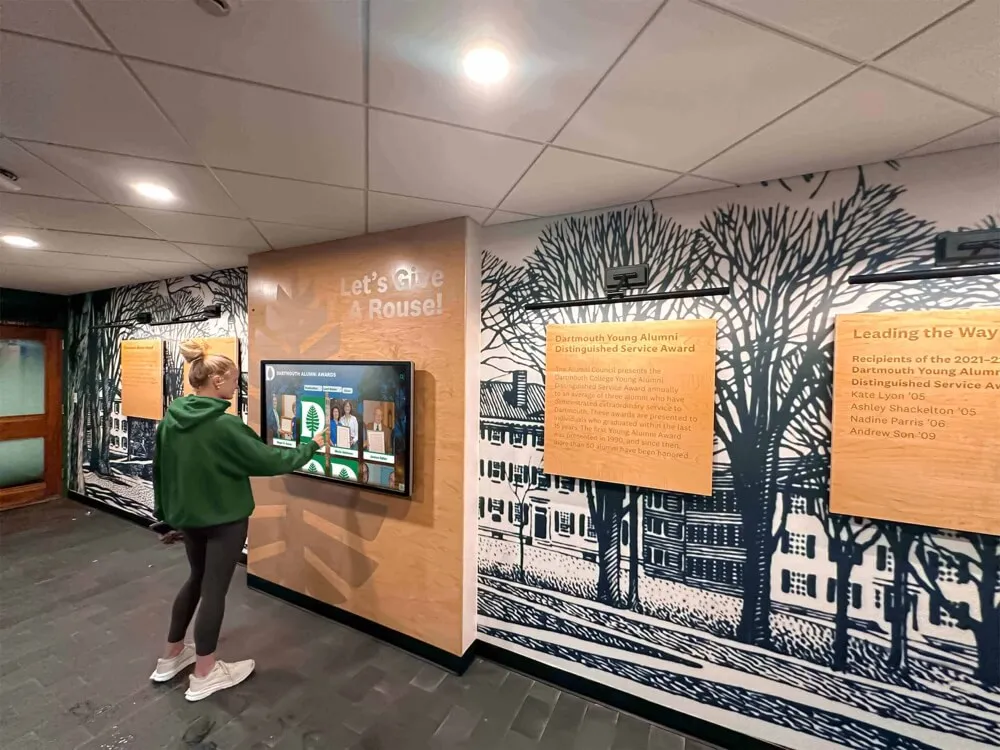
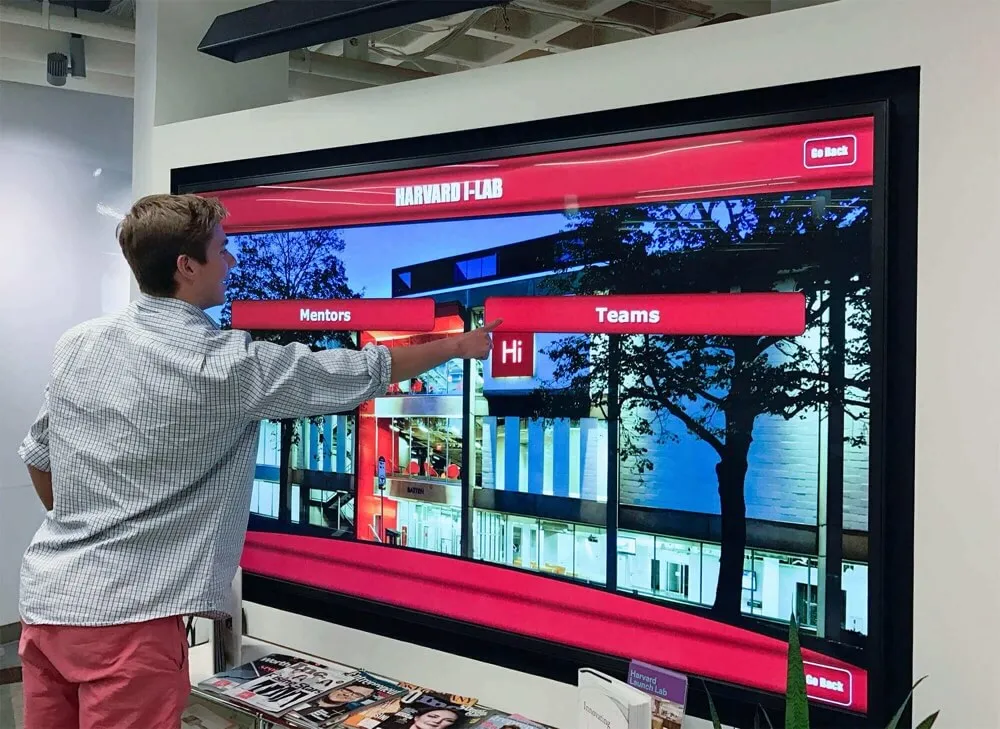
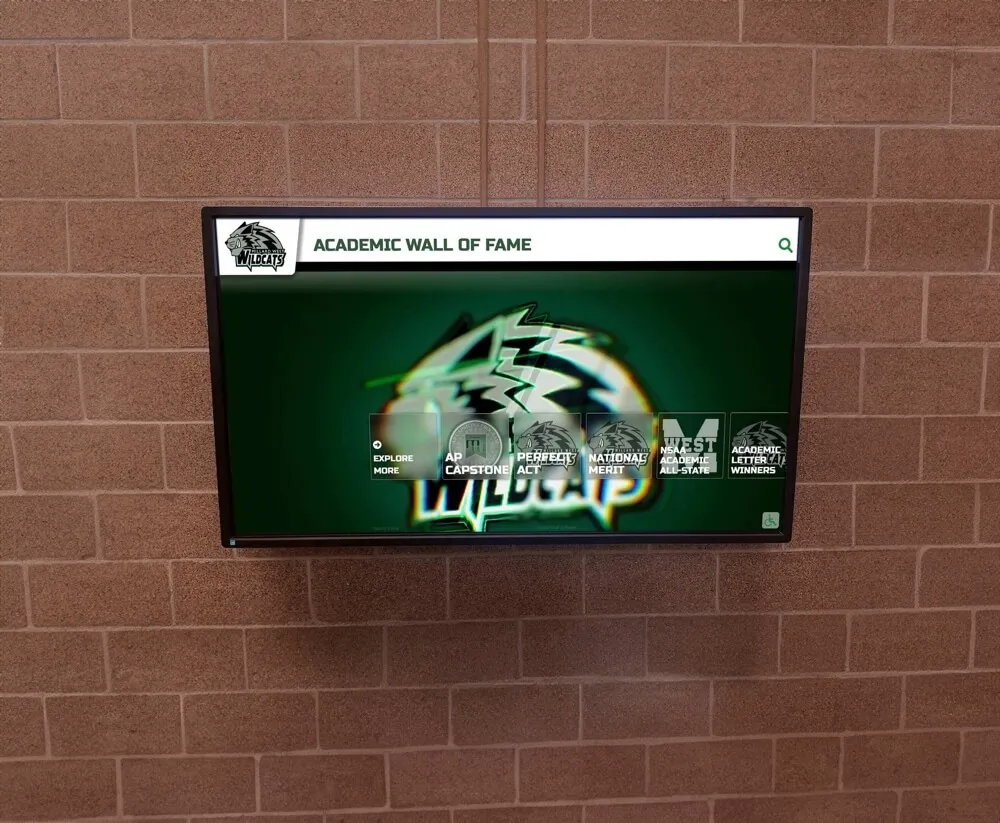
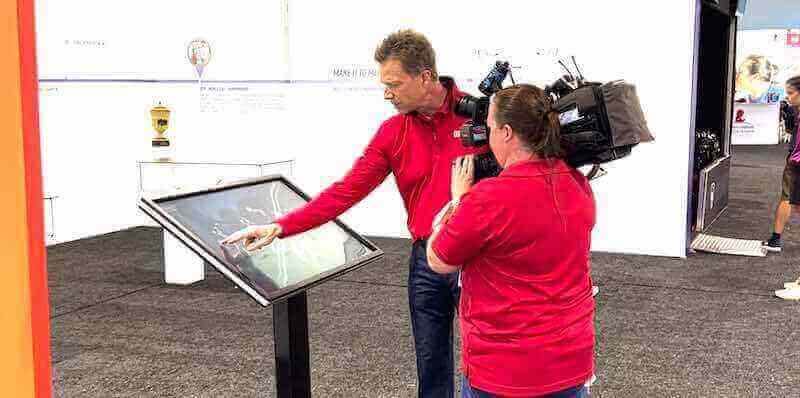
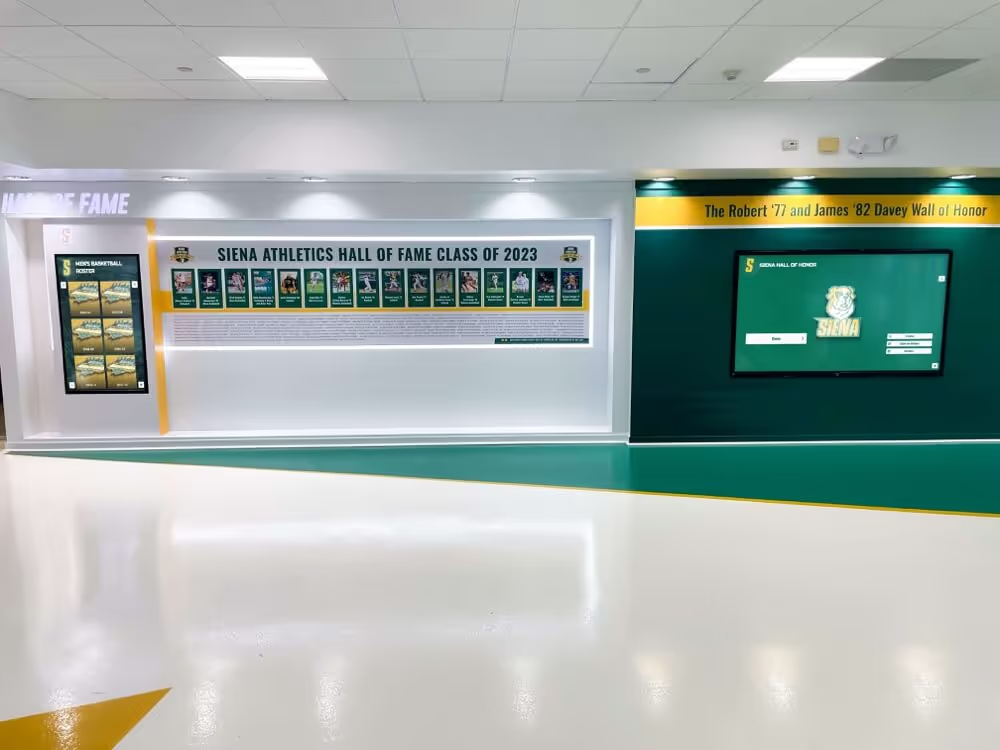
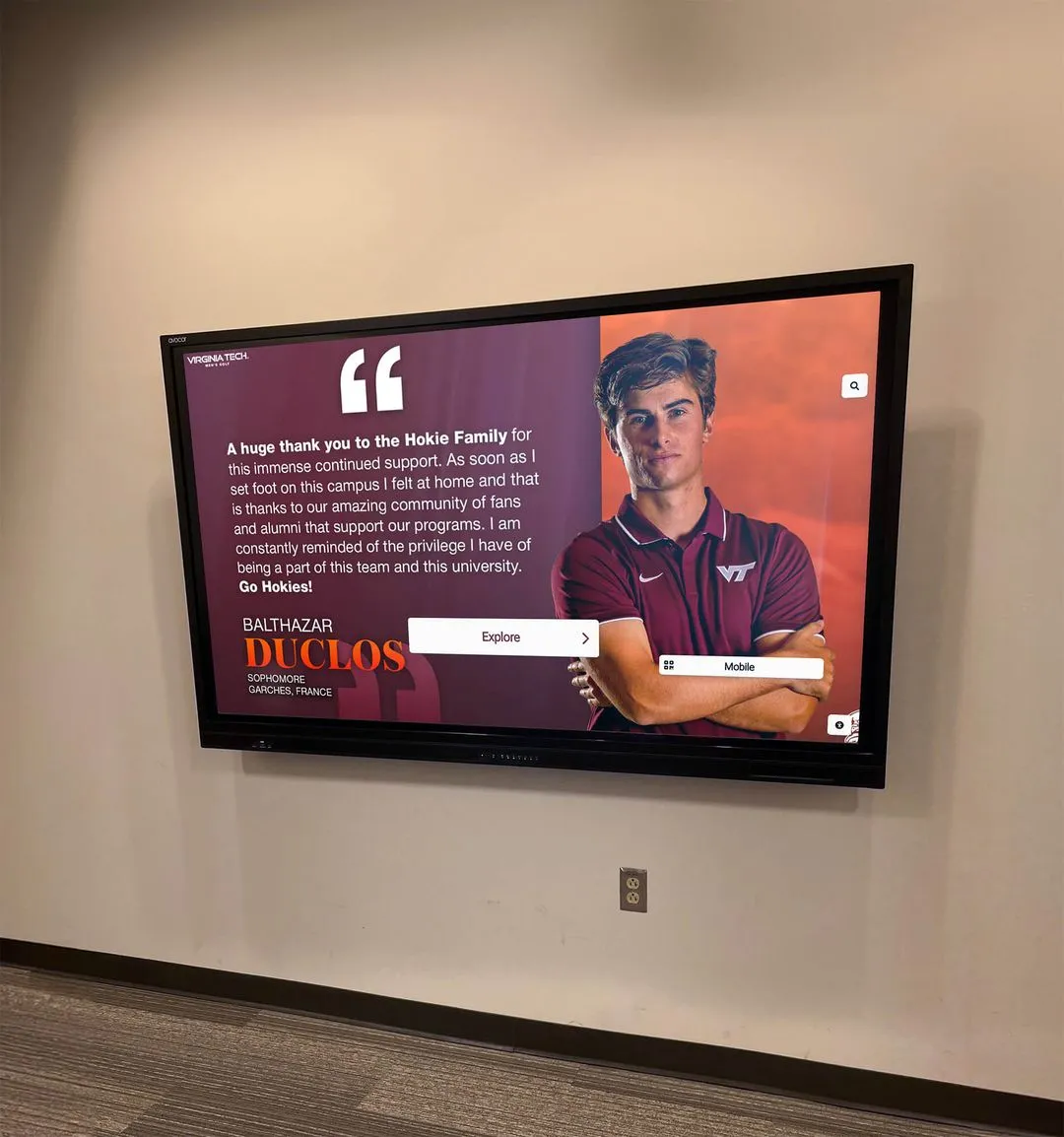
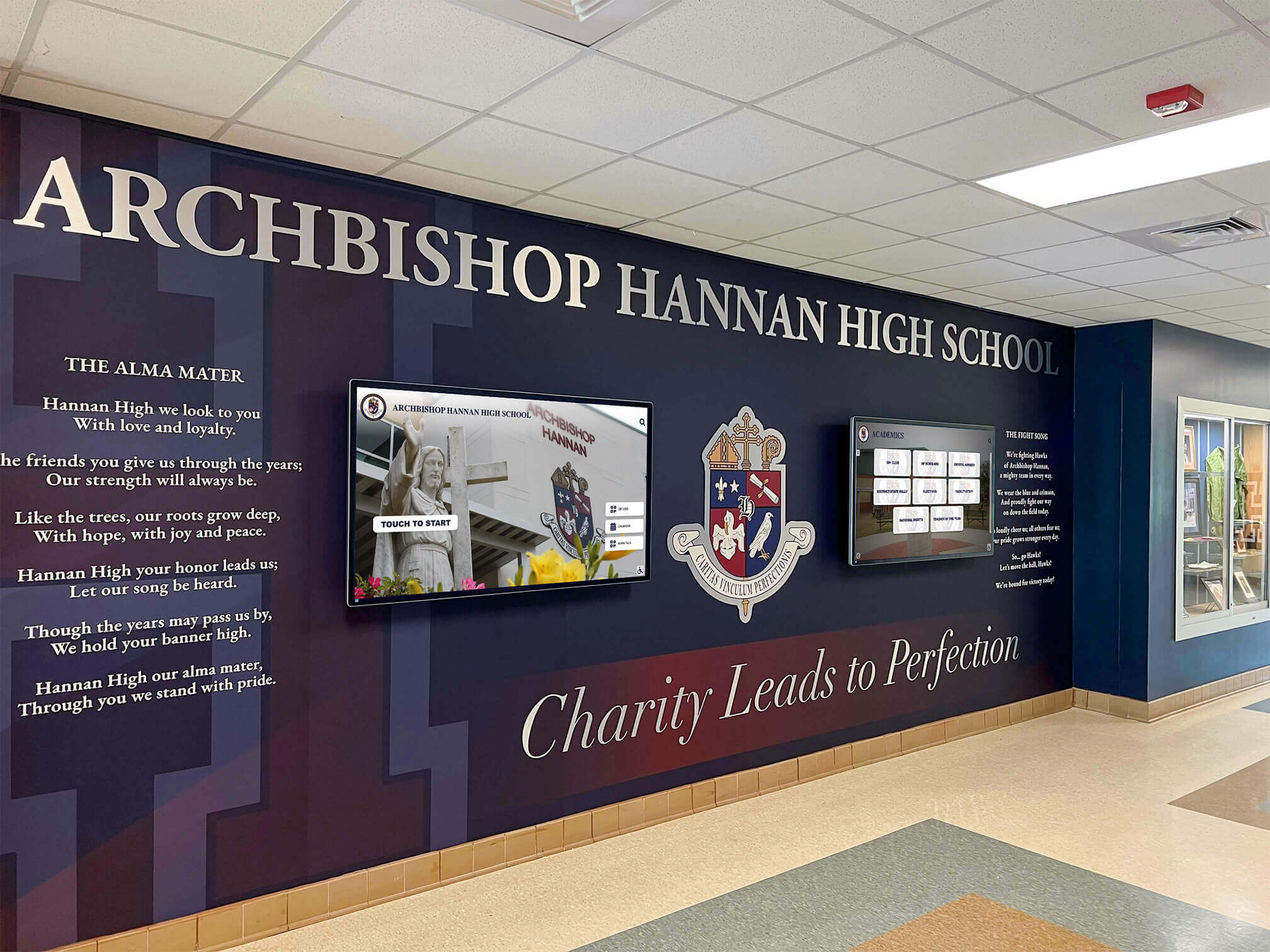
Integrating sponsor recognition into a school's visual identity keeps facilities looking intentional rather than cluttered
Why Traditional Athletic Sponsorship Signage Falls Short
Physical sponsorship signage has served athletic programs for decades, and it still has a place. The problem is when it becomes the only strategy—when recognition depends entirely on how many banners a gym can hold before it starts feeling like a stock car.
The Visibility Paradox of Banner-Heavy Programs
Counterintuitively, adding more sponsor banners often reduces each individual sponsor’s visibility. When every sponsor receives a vinyl banner in the gymnasium, viewers experience banner blindness—the same phenomenon that reduces digital ad performance when ads become indistinguishable from each other.
Sponsors who paid for prominence aren’t getting it. Their logo sits six banners down from the scoreboard, sandwiched between a pizza franchise and a local HVAC company. When renewal conversations happen, they remember what they paid but struggle to articulate what they received.
Schools that recognize this dynamic are building programs where quality of placement outweighs quantity of signage, and where digital recognition tools give sponsors the durable visibility that a banner cannot provide year-round.
The Maintenance and Flexibility Problem
Vinyl banners fade. Wind events damage outdoor signage. Sponsor logos get updated mid-season and the reprinting cost falls on the school. A sponsor who upgrades their business—new name, new brand standards—has to negotiate a replacement banner or accept outdated recognition.
Digital recognition systems solve this entirely. Sponsors’ logos, profiles, and recognition content can be updated remotely without reprinting costs, without installation crews, and without pulling staff away from athletic administration during the season.
Building an Athletic Sponsorship Tier Framework
The most sustainable athletic sponsorship programs operate on tiered packages that give sponsors clear choices, predictable value, and recognition that scales with their investment. A well-designed tier framework also makes your outreach easier—your team presents a menu rather than negotiating one-off deals.
Designing Tiers That Deliver Real Value
Effective tiers stack recognition across multiple channels rather than simply offering larger or more numerous banners. Consider organizing recognition into three primary dimensions: visibility (where and how often the sponsor appears), prominence (how featured they are relative to other sponsors), and engagement (whether they appear in interactive, searchable, or video-enabled contexts).
Here is a sample recognition tier matrix your advancement team can adapt:
ATHLETIC SPONSORSHIP RECOGNITION TIER MATRIX

TIER 1 — Community Supporter
Investment: Entry-level annual gift
Recognition includes:
  - Name listing in printed athletic programs
  - Logo in rotating digital lobby display (shared rotation)
  - Acknowledgment in athletics department e-newsletter
  - Social media thank-you post at season open

TIER 2 — Program Partner
Investment: Mid-level annual gift
Recognition includes:
  All Tier 1 benefits, plus:
  - Dedicated logo panel in digital sponsorship display (persistent, not rotating)
  - Logo and brief sponsor profile in digital hall of fame system
  - Recognition at one home season-opening event
  - Name on athletics department website sponsor page

TIER 3 — Founding Sponsor / Presenting Partner
Investment: Top-level annual or multi-year gift
Recognition includes:
  All Tier 2 benefits, plus:
  - Named presenting sponsorship for one team, season, or facility area
  - Dedicated sponsor spotlight page in digital touchscreen system
    (logo, business description, contact link, up to 3 sponsor-submitted images)
  - Priority logo placement in lobby digital display
  - Annual recognition in end-of-year athletic awards program
  - Multi-year option with rate lock and first-right-of-renewal

MULTI-YEAR RECOGNITION COMMITMENT (any tier):
  - Logo in permanent sponsor section of digital record board or hall of fame kiosk
  - Enduring digital recognition independent of annual renewal cycle
  - Framed thank-you certificate for sponsor's office
This matrix makes renewal conversations straightforward: sponsors see what they received, what they’d receive at the next tier, and why upgrading produces better visibility without requiring the school to add more physical signage.
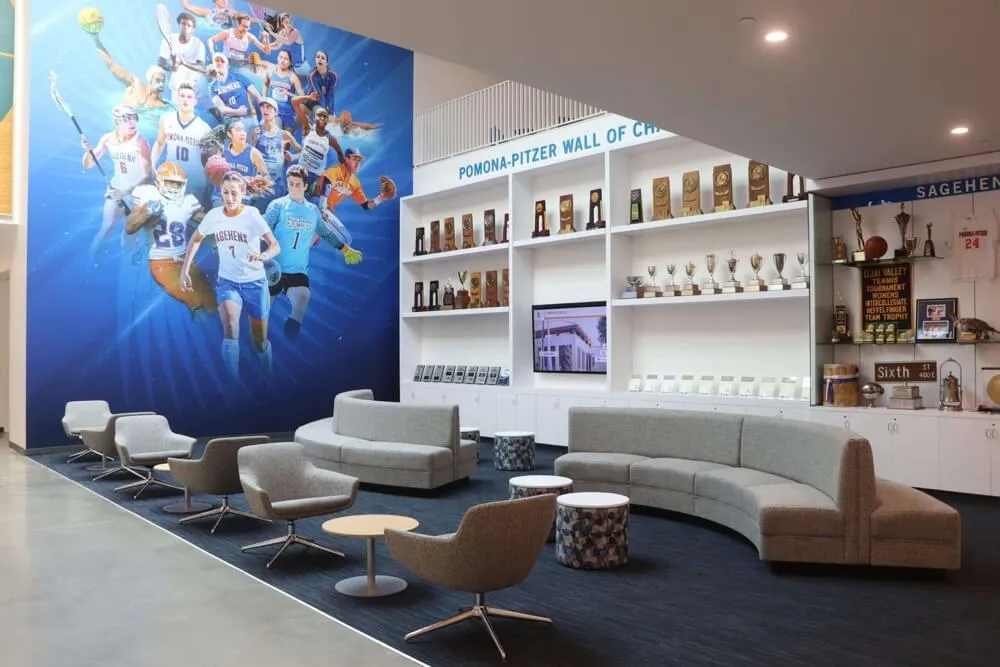
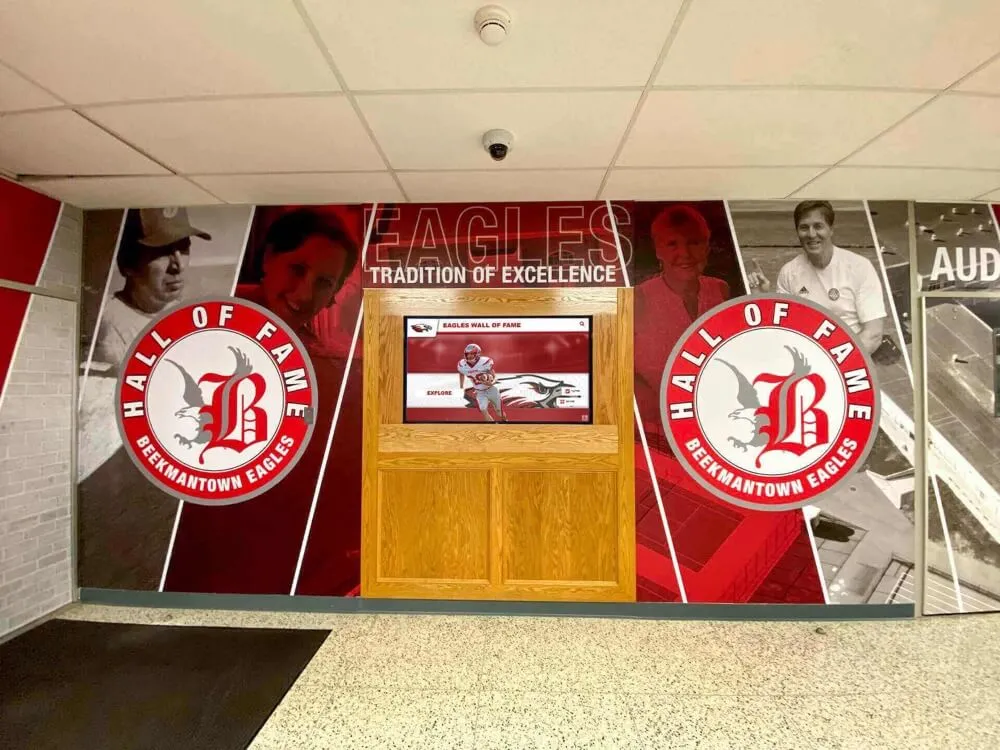
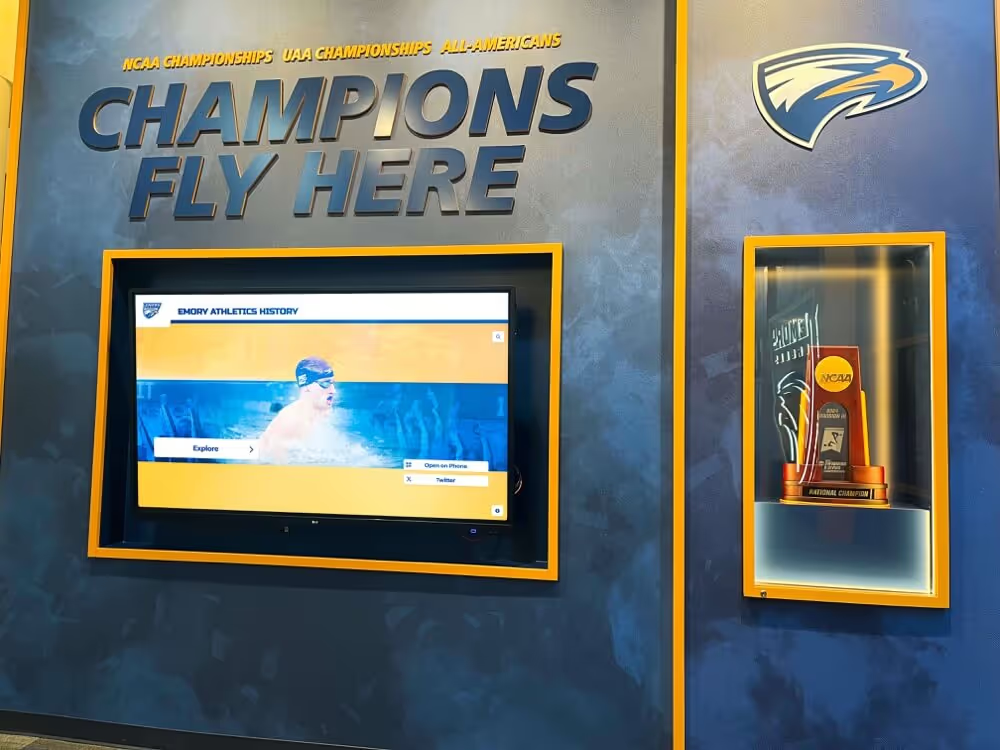
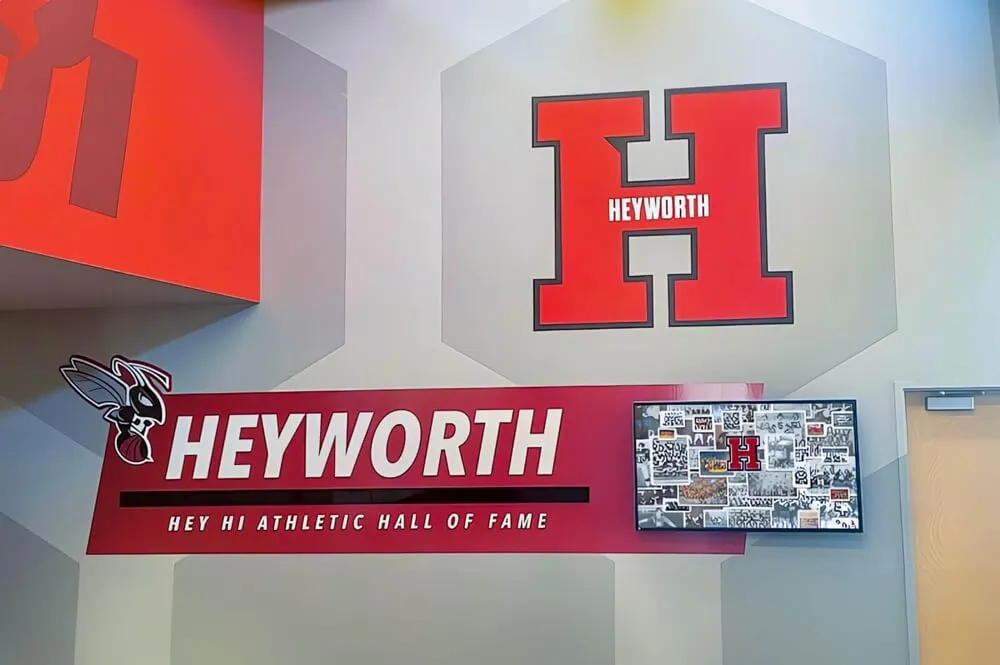
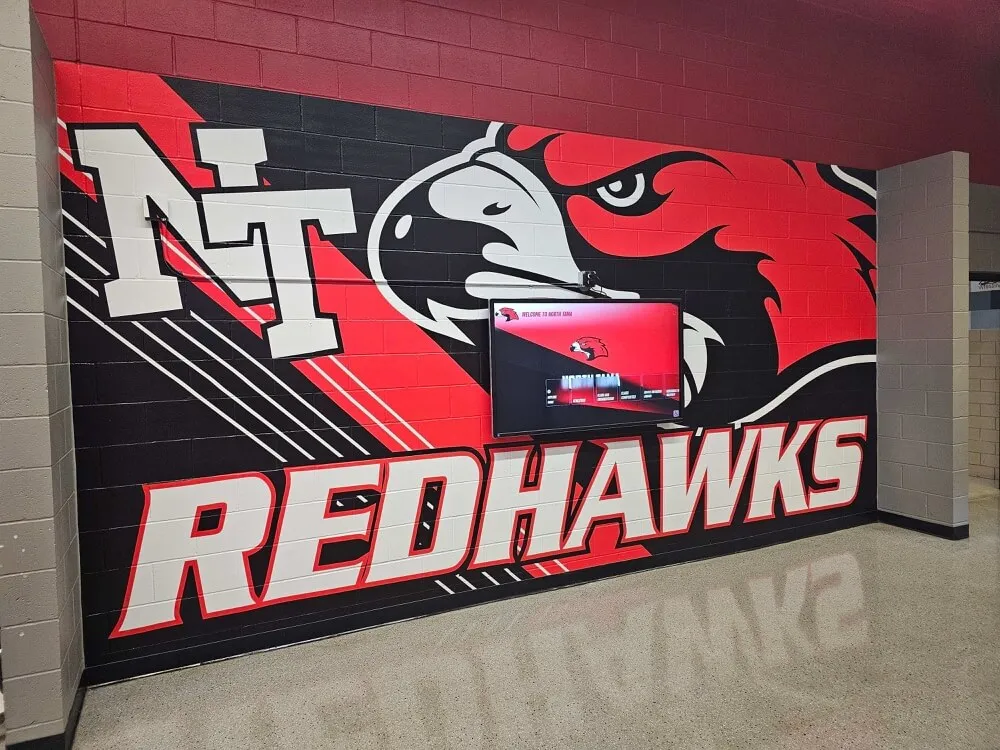
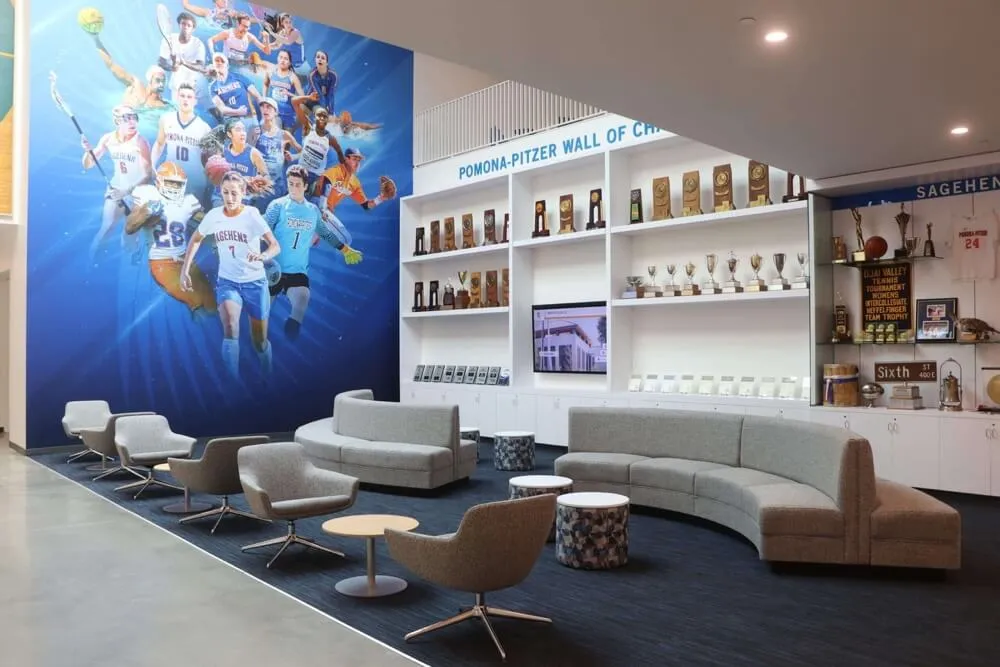
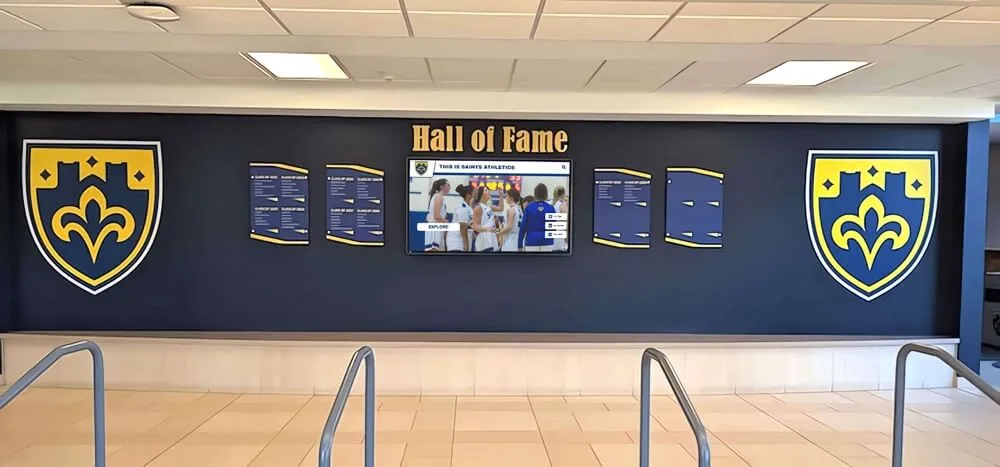
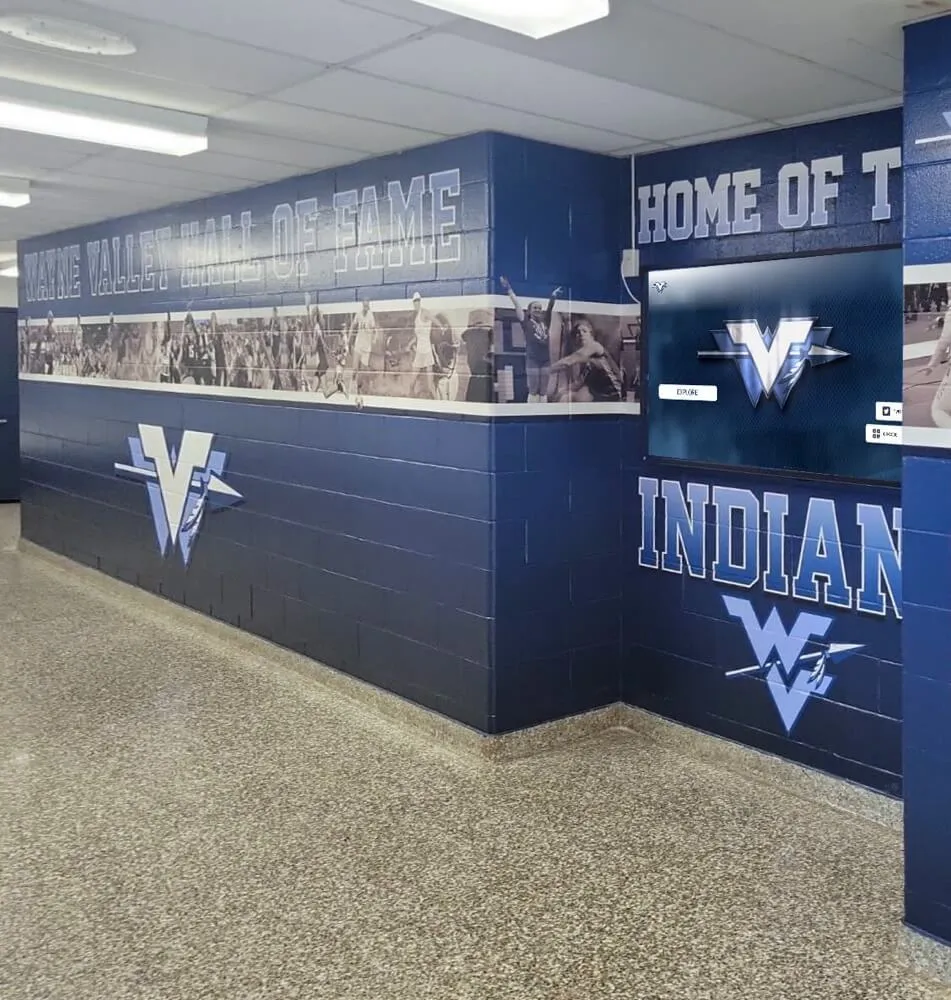
Recognition spaces that blend sponsor acknowledgment with athletic achievement create environments where sponsors want visibility
Where to Place Sponsor Recognition for Maximum Impact
Location determines whether athletic sponsorship delivers on its visibility promise. Gym interiors are high-traffic during events but empty for most of the school year. The schools getting the best sponsor retention rates are placing recognition where it generates impressions year-round—not just on game nights.
High-Impact Placement Zones
Athletic Facility Lobbies and Entry Points
The lobby of your gymnasium, field house, or athletic complex is the single highest-traffic location for sponsor recognition. Parents, students, opposing teams, referees, community members, and prospective families all pass through this space. Recognition in lobby environments generates impressions during practices, tournaments, open gyms, facility rentals, and community events—not only during your own home schedule.
Lobby digital displays that rotate sponsor recognition alongside athletic achievements, hall of fame inductees, and team highlights give sponsors valuable company. Their brand appears alongside your school’s championship history and student-athlete recognition rather than in isolation on a vinyl panel.
Concourse and Hallway Display Systems
Hallways leading to athletic facilities carry consistent foot traffic during the school day. Digital displays in these corridors reach student audiences daily, creating brand familiarity that extends beyond the sponsor’s specific recognition moment. When sponsors understand that a hallway digital display generates student-facing impressions 180+ school days per year rather than 20 home game nights, the value proposition changes significantly.
For ideas on athletic hall of fame display tools that integrate sponsor recognition with achievement content, review platforms designed specifically for school athletic facilities.
Digital Record Boards and Achievement Displays
Schools that pair sponsor recognition with athletic achievement content create a context sponsors actively want to appear in. When your digital record board lists state champions, program milestones, and historic performances—and sponsors appear alongside that content—the association elevates the sponsor’s community standing rather than simply placing a logo in a utility context.
Explore how digital record board platforms handle combined achievement and sponsor recognition content for school athletic programs.
Seasonal vs. Permanent Recognition
One of the most effective conversations athletic directors can have with potential sponsors is distinguishing between seasonal recognition (appearing during a specific sport’s season) and permanent recognition (appearing in the school’s athletic identity year-round).
Seasonal recognition includes game programs, scoreboard mentions, and sport-specific banners. These are appropriate for sponsors whose business has seasonal relevance—a summer camp, a spring landscaping service, or a business opening during a specific period.
Permanent recognition—in digital hall of fame systems, touchscreen kiosks, and lobby display programs—creates the durable visibility that sponsors with year-round businesses value most. A local bank, healthcare provider, or insurance agency benefits more from consistent year-round recognition than a seasonal banner presence.
Building a program that offers both gives your advancement team flexibility to match sponsor interests to appropriate recognition types.
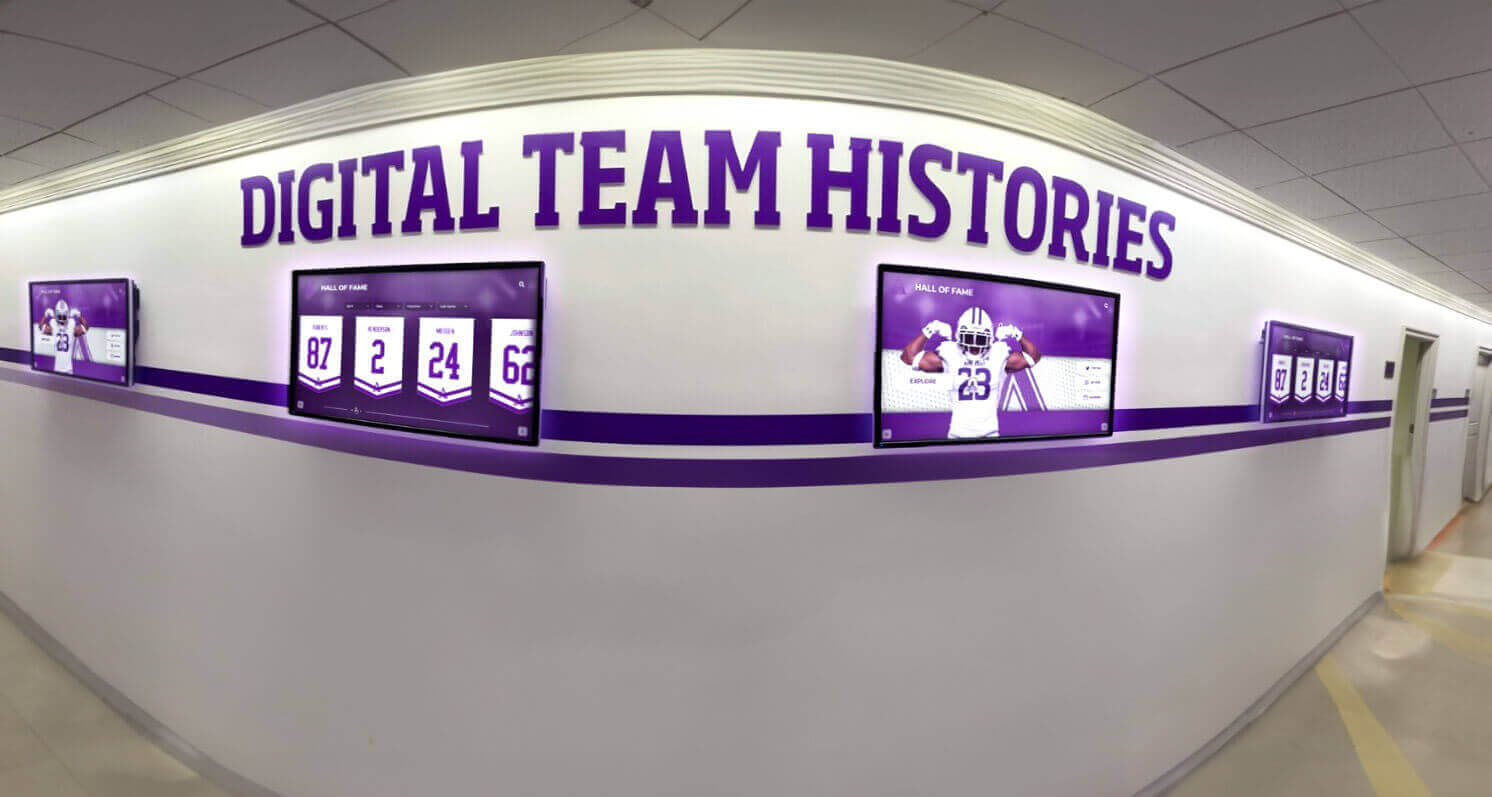
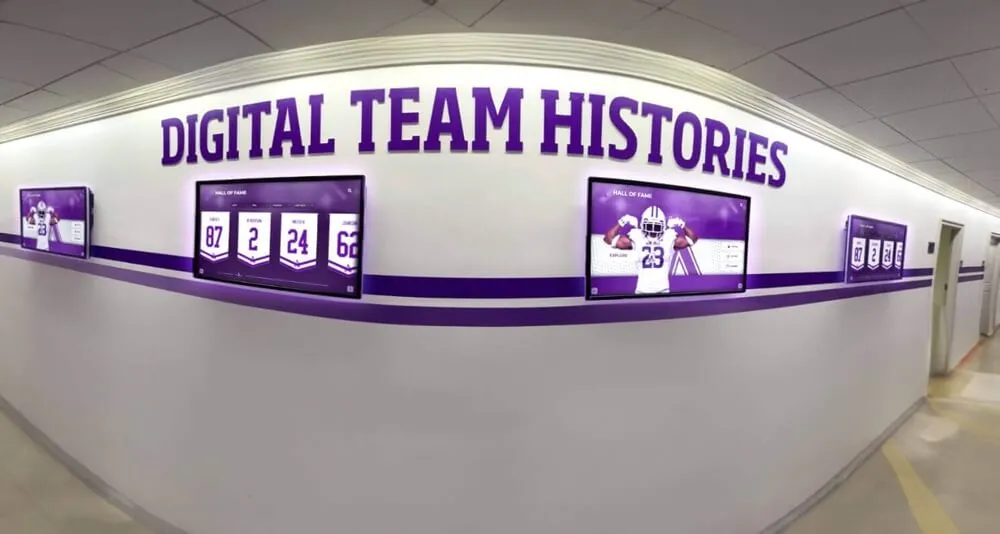
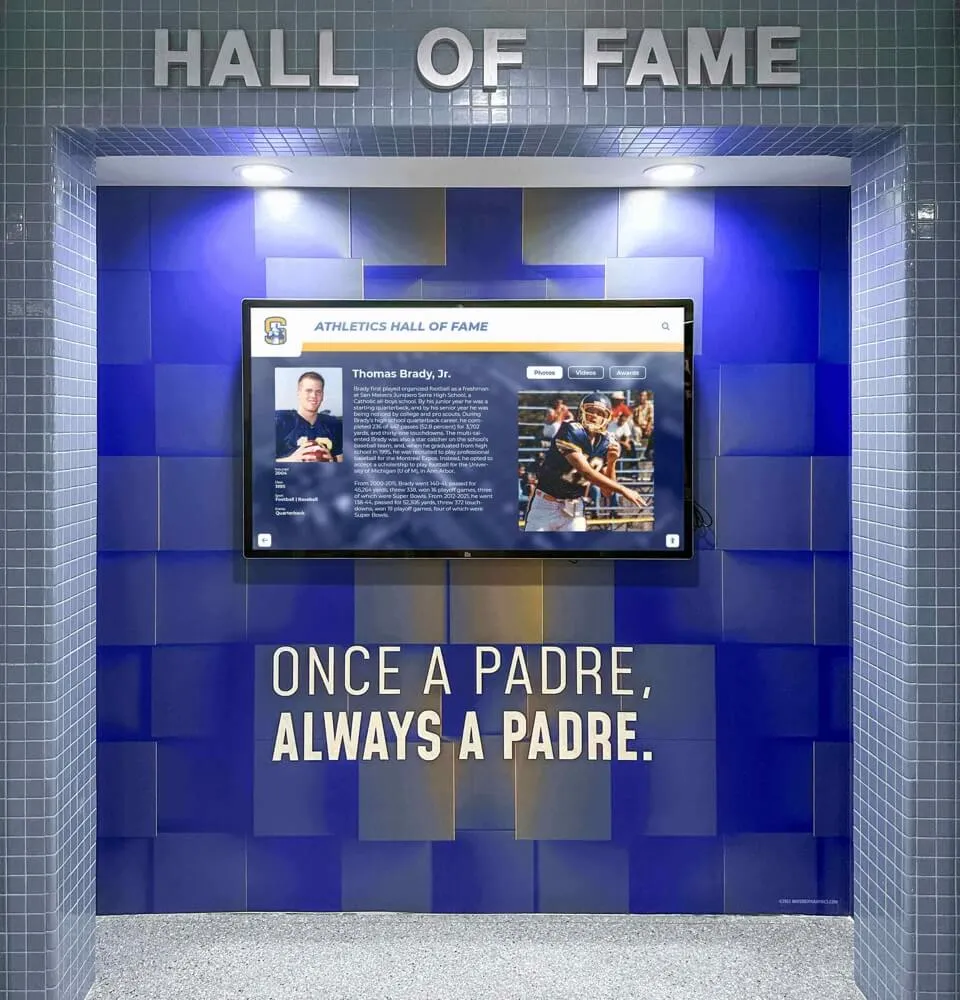
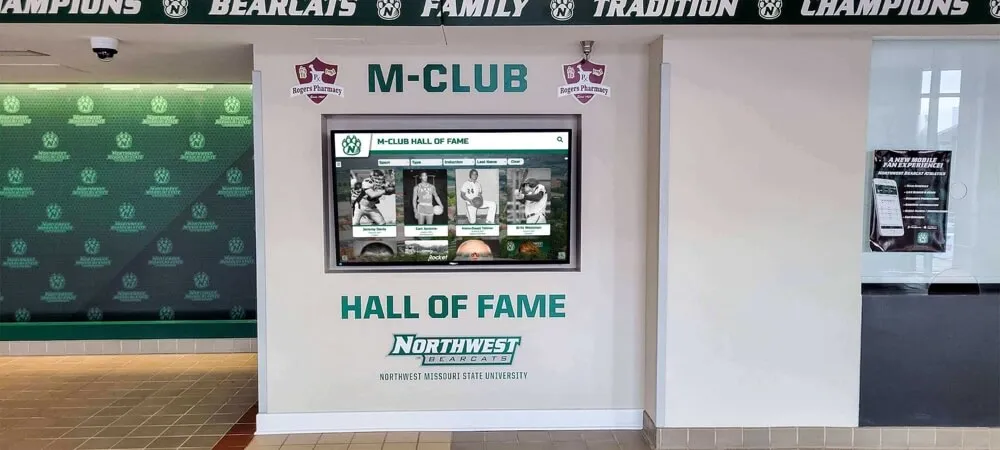
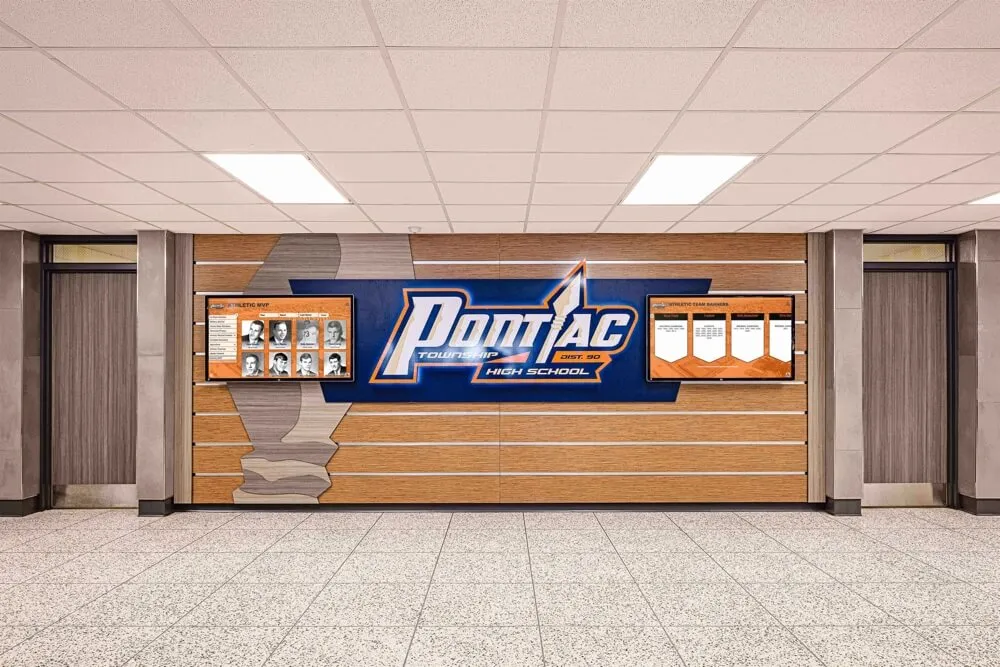
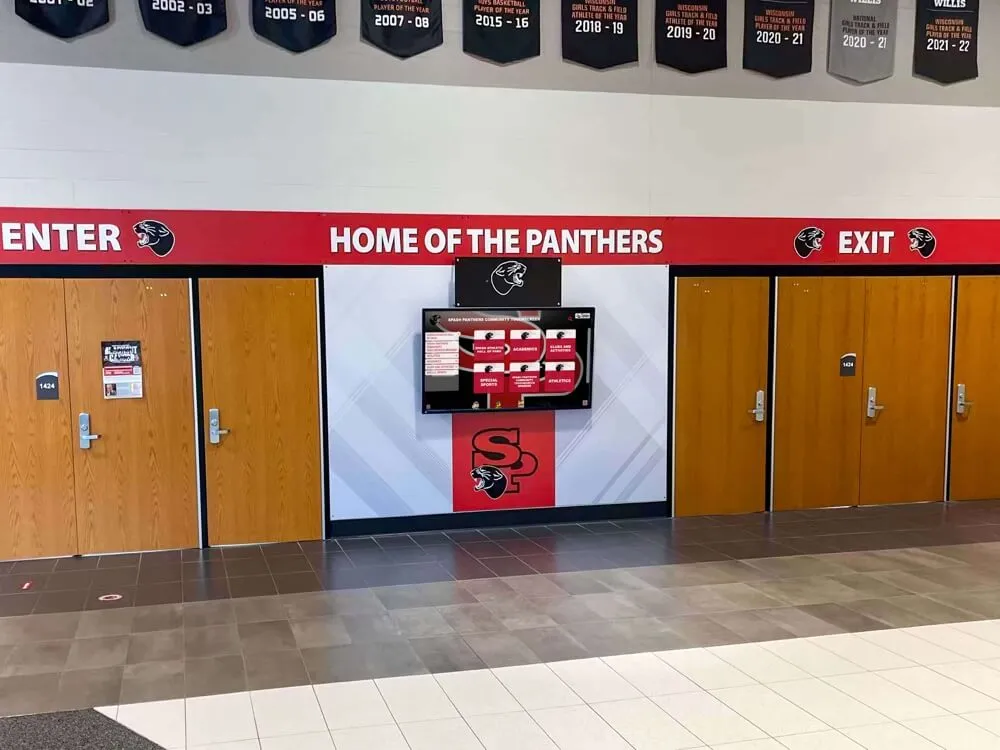
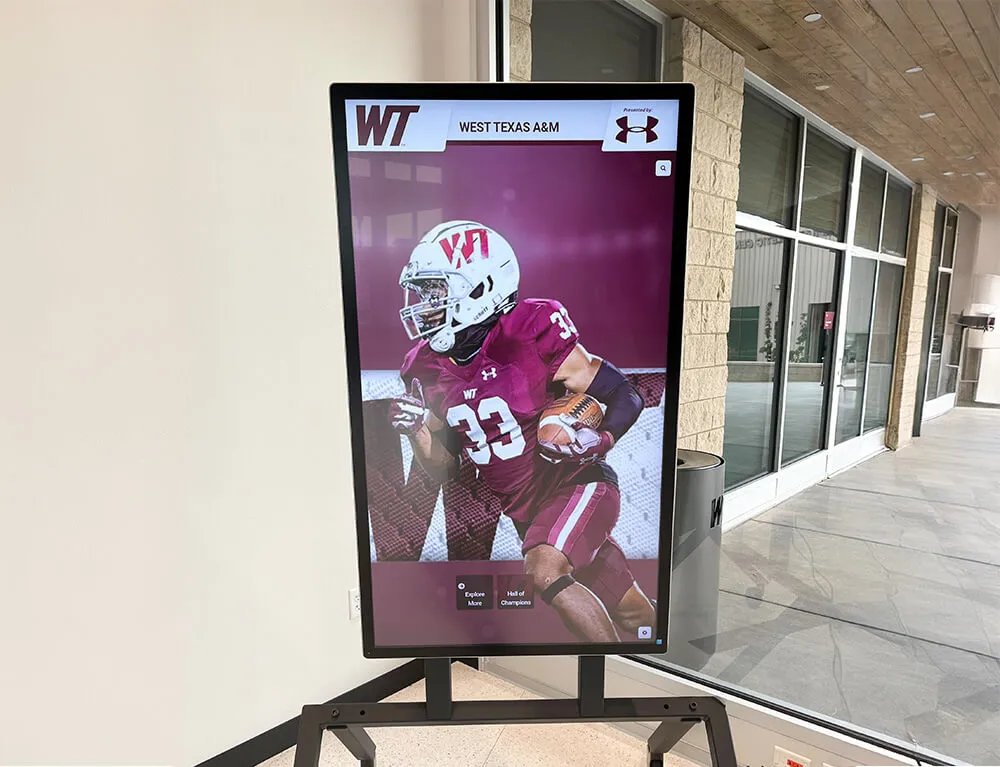
Digital hallway displays generate sponsor impressions throughout the school year, not just during scheduled games
Digital Displays: The Uncluttered Sponsorship Solution
The most significant shift in athletic sponsorship recognition over the past several years is the move toward digital display systems that handle sponsor visibility, achievement recognition, donor acknowledgment, and facility branding on a single platform.
Why Digital Solves the Clutter Problem
A digital display in an athletic lobby can rotate through dozens of sponsor recognitions, team championship histories, student-athlete profiles, and facility information—all without adding a single piece of hardware, and without any single sponsor’s logo competing for space in the way physical banners compete.
From the sponsor’s perspective, their recognition is featured prominently during their slot in the rotation rather than hanging in permanent visual competition with 15 other banners. From the school’s perspective, the facility looks intentional, branded, and professional rather than plastered.
This isn’t a minor aesthetic difference. Prospective families touring athletic facilities, college recruiters visiting campuses, and visiting teams competing at your school all form impressions based on how your facilities look. A gym that looks sharp signals a program that operates with intention—and sponsors want to associate with that.
Reviewing hall of fame display solutions designed for athletic contexts helps administrators evaluate which platforms best support combined achievement and sponsorship recognition.
Touchscreen Kiosks: Interactive Sponsor Profiles
At the Founding Sponsor tier, touchscreen kiosks offer something vinyl signage never can: interactive sponsor profiles that let visitors explore a sponsor’s business, contact information, and community involvement.
A touchscreen kiosk in your athletic lobby that features sponsor profiles creates a fundamentally different visitor experience. A parent waiting for practice to end doesn’t just see a logo—they can read about the local business, see what it offers, and access contact information. That engagement is more valuable to a sponsor than passive logo exposure, and it’s a genuinely differentiated benefit that justifies premium tier pricing.
For touchscreen platforms specifically designed for this use case, compare interactive hall of fame and recognition kiosks and evaluate which systems include sponsor profile functionality alongside athletic recognition content.
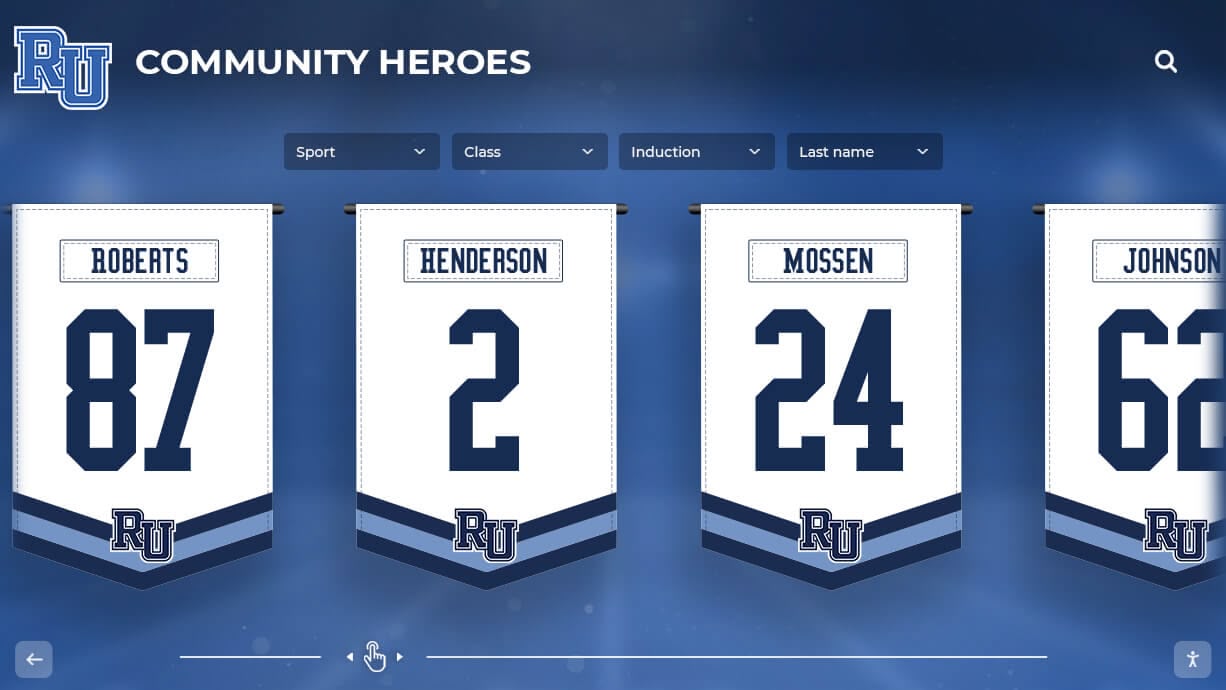
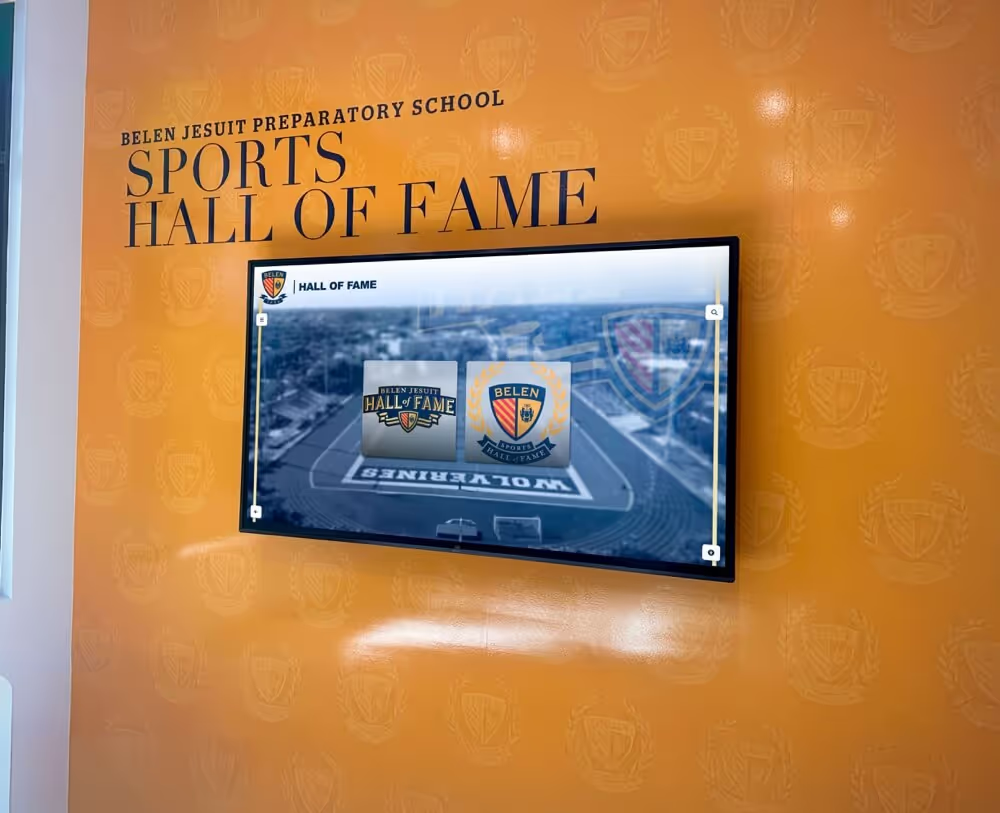
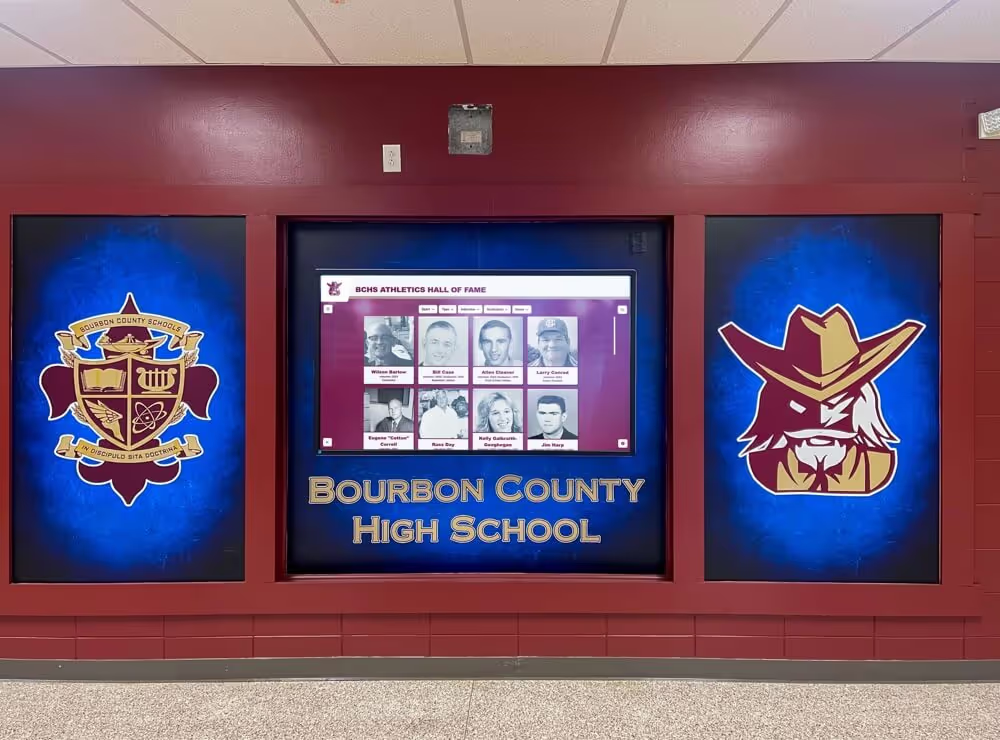
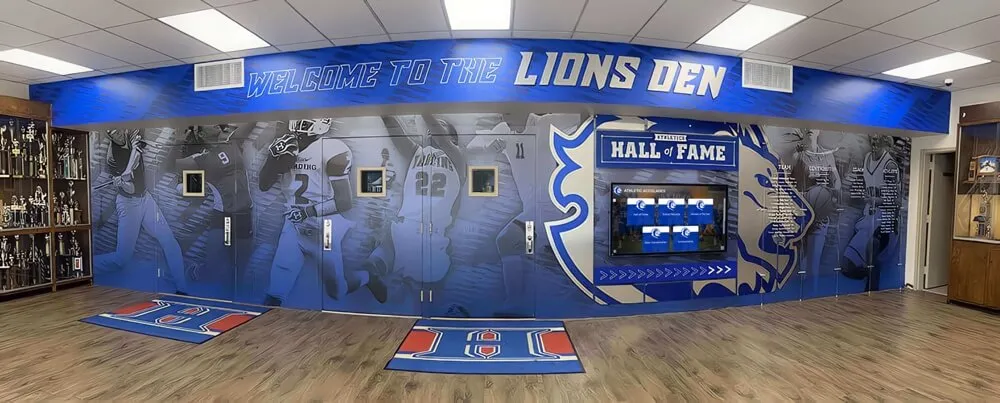
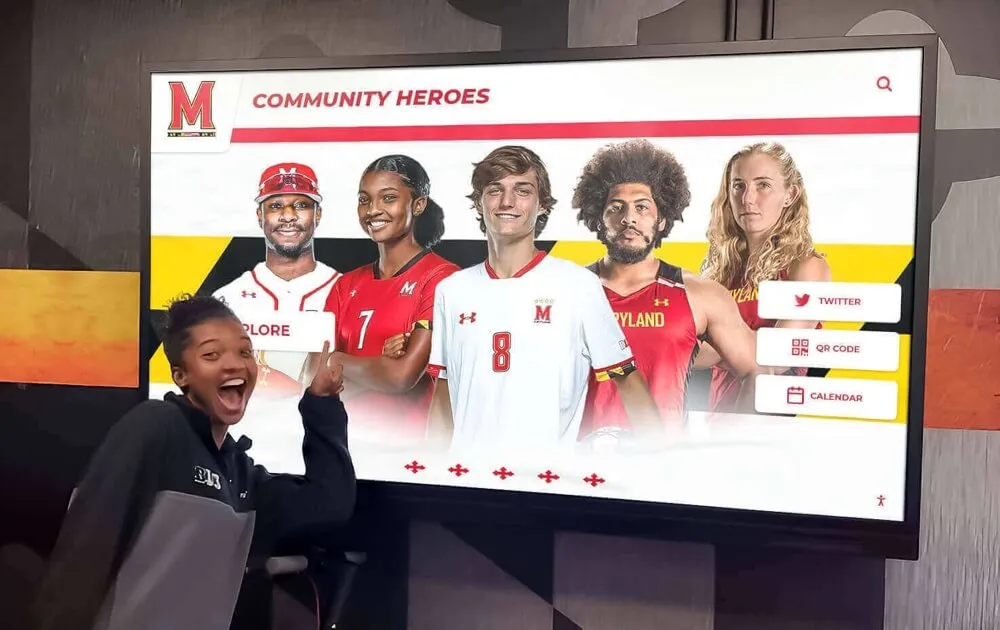
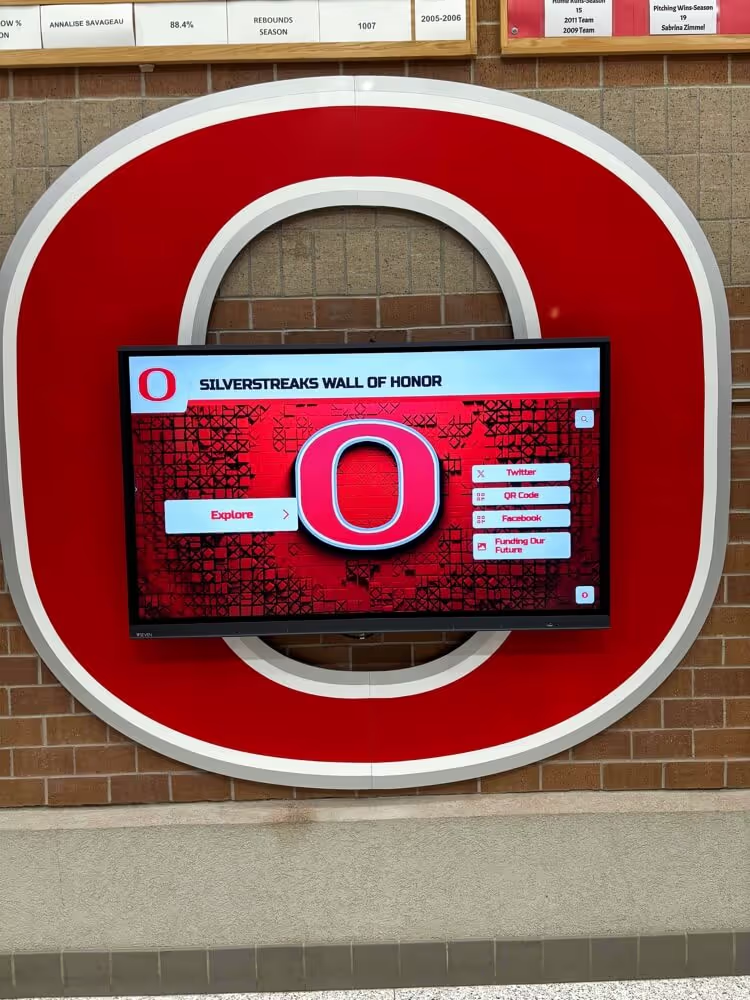
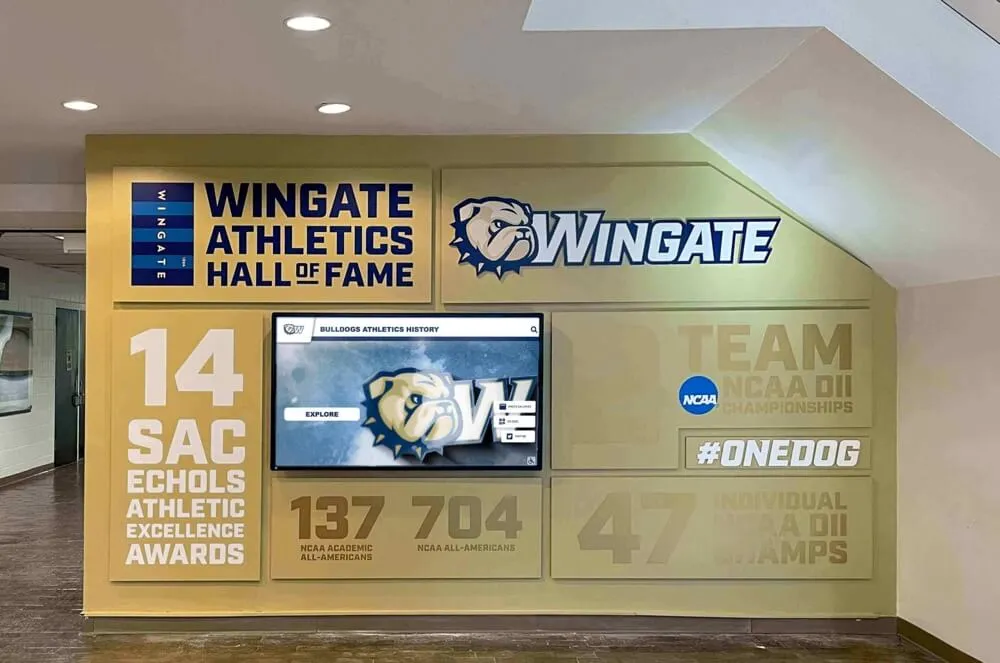
Branded recognition systems elevate both sponsor and athlete visibility in a cohesive environment
Crafting the Athletic Sponsorship Letter
A strong athletic sponsorship letter converts community interest into committed partners. The most effective letters speak directly to what sponsors actually want—community visibility, youth investment, and business development—while articulating exactly what your program offers in return.
Here is a template your advancement team can adapt:
[SCHOOL LETTERHEAD]

[Date]

Dear [Sponsor Name / Business Owner],

[School Name]'s athletic program serves [number] student-athletes across [number] sports each year.
We compete at [conference / regional / state] level, and our facilities host [estimated number]
visitors annually between competitions, practices, tournaments, and community events.

We are inviting local businesses to become official athletic sponsors of [School Name] for the
[Year]–[Year] academic year. Sponsorship provides:

  — Year-round digital recognition in our [lobby / hallway / facility] display system,
    visible to students, families, visiting teams, and community members 180+ days per year

  — Tiered recognition packages from [Tier 1 Investment] to [Tier 3 Investment],
    with options including digital sponsor profiles, touchscreen kiosk listings,
    and named presenting sponsorships for specific teams or events

  — Association with [School Name]'s championship program and the student-athletes
    your community investment supports

  — Optional multi-year commitment with rate lock and first-right-of-renewal

Our [Tier 1 / Community Supporter] packages begin at [amount]. Founding Sponsor recognition,
which includes a dedicated interactive profile in our digital hall of fame system and
permanent recognition in our athletic lobby, is available for [amount] annually or
[amount] with a three-year commitment.

I would welcome the opportunity to walk you through our recognition program and discuss
which tier best matches your business goals. Please reply to this letter, call [phone],
or email [email] to schedule a brief conversation.

On behalf of our student-athletes and the entire [School Name] athletic family, thank you
for considering this partnership. Your investment stays in our community—and your name
stays in our building.

Sincerely,

[Name]
[Title]
[School Name] Athletics / Advancement
Customize the investment amounts to match your program’s actual tier structure. If your tiers are still in development, the Rocket Alumni Solutions team can help you design a recognition framework before your first outreach letter goes out.
Integrating Sponsors Into Your Athletic Hall of Fame System
One of the highest-value recognition options for top-tier sponsors is integration into your school’s hall of fame or athletic legacy recognition system. This isn’t simply a logo appearance—it’s the sponsor’s name appearing alongside your most celebrated athletes, championship teams, and program milestones.
When a local business’s name appears in your hall of fame as a “Founding Sponsor” or “Presenting Partner,” that recognition carries the weight of your program’s history. It’s a fundamentally different kind of community standing than a banner in the gymnasium.
Naming Sponsorships and Presenting Partnerships
Consider creating opportunities for sponsors to present specific recognition content within your hall of fame or digital display system:
- Presenting Sponsor of the Year Award — sponsor’s name attached to your annual senior athlete recognition
- Sponsor of the Record Board — digital record board prominently features sponsor as the presenting partner for school record listings
- Presenting Sponsor of Hall of Fame Induction Night — sponsor recognized at your annual induction ceremony and in related digital content
- Facility Wing Recognition — sponsor named in connection with a specific hallway or recognition zone
These presenting relationships give sponsors visibility that feels genuinely significant rather than transactional. For ideas on how to structure awards and recognition programs that support sponsor integration, review youth sports award ideas and athletic award programs that create natural sponsor recognition touchpoints.
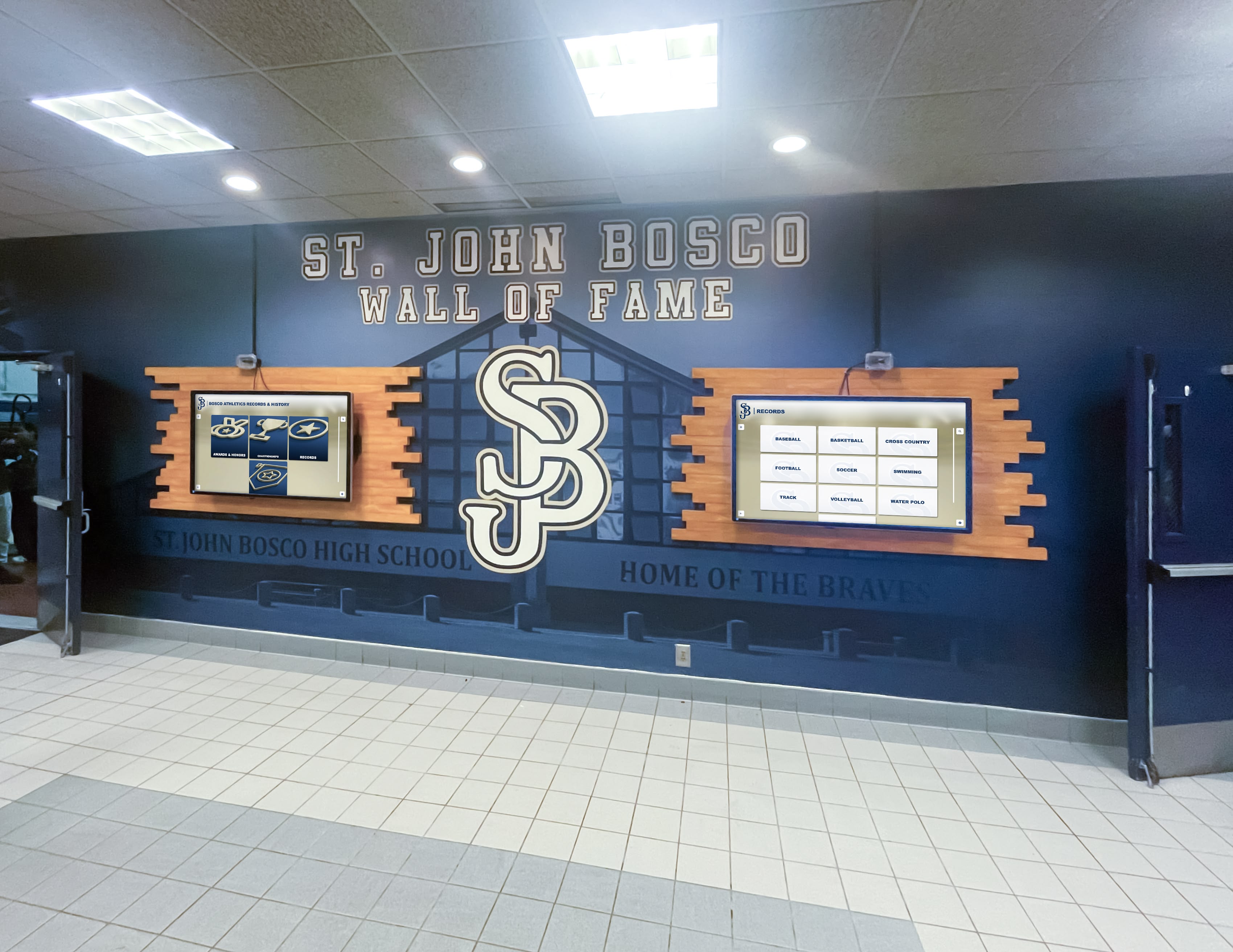
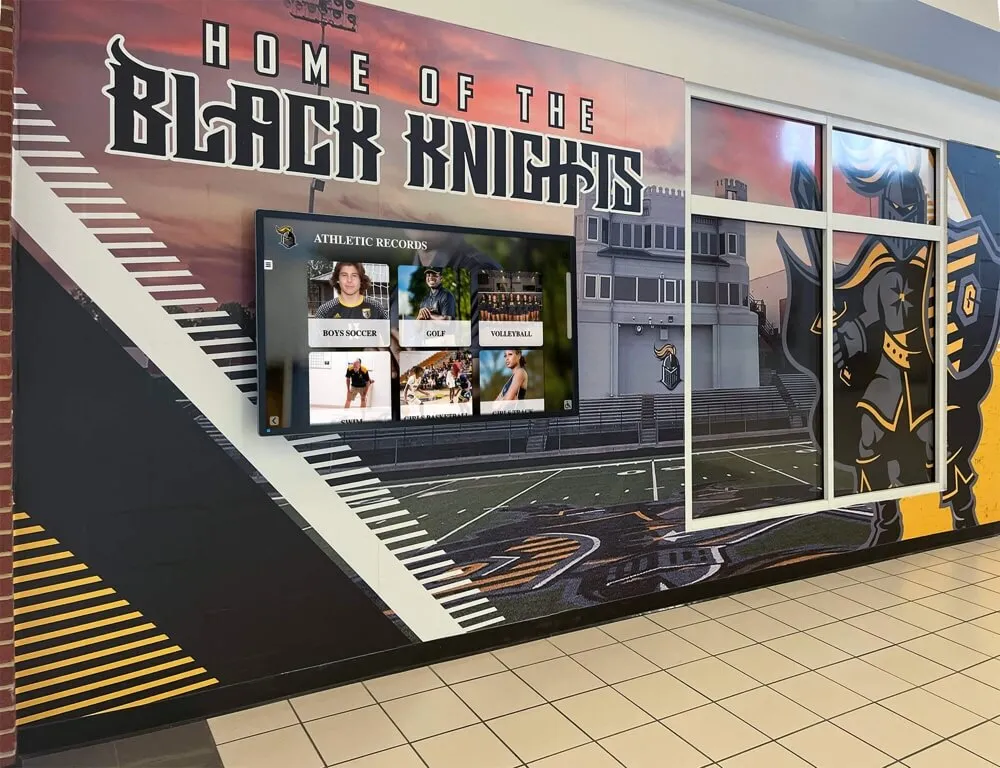
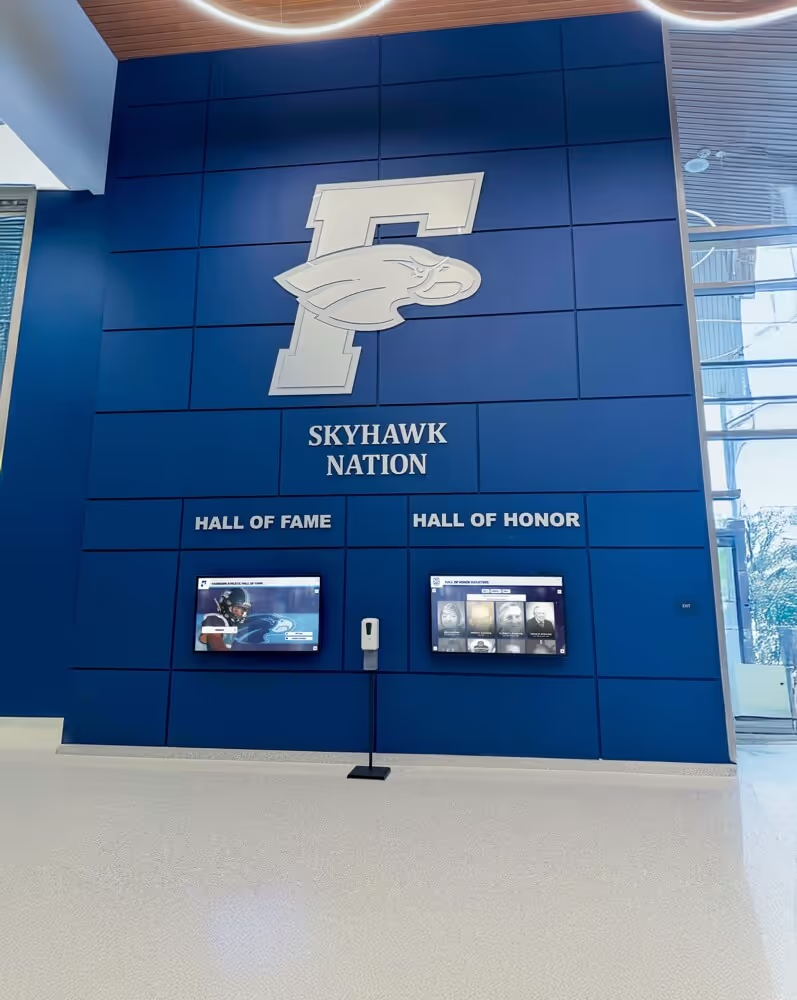
Dual digital displays in hallway environments maximize sponsor recognition alongside student-athlete achievement content
Connecting Sponsors to the Athletic Legacy Narrative
The most effective athletic sponsorship programs frame sponsors as part of the school’s athletic story—not just as businesses who purchased billboard space. When your advancement team helps sponsors see themselves as investors in a program’s legacy, renewal rates improve and initial gifts tend to be larger.
This reframing works in communications, at events, and in your physical recognition spaces. In a digital hall of fame touchscreen, a sponsor’s profile page that reads “Supporting [School Name] Athletics Since [Year]” tells a different story than a banner that reads only “Thank You to Our Sponsors.”
For alumni events where sponsorship recognition can be strategically highlighted, explore alumni engagement event ideas that create natural moments for sponsor introduction and recognition.
Athletic Sponsorship Proposals: What to Include
When a community business asks for a formal proposal, your response should go beyond a price sheet. The most effective proposals tell a clear story: who you serve, what sponsors receive, and why this particular program is worth their investment.
Proposal Structure for Athletic Directors
Section 1: Program Overview
- Number of student-athletes, sports, and competitive levels
- Estimated annual attendance (practices, home events, community events)
- Facility foot traffic data if available
- Recent program achievements (conference titles, state appearances)
Section 2: Sponsorship Tiers
- Your completed tier matrix (adapted from the template above)
- Specific description of digital recognition options at each level
- Multi-year commitment terms and benefits
Section 3: Digital Recognition Platform
- Brief description of how your digital display system works
- Where sponsor content appears, how often, and in what context
- Screenshot or image of existing display system if available
Section 4: Community Impact Statement
- How sponsorship funds support student-athletes directly
- Scholarship programs, equipment needs, travel support, or facility improvements
- Statement connecting the sponsor’s investment to student benefit
Section 5: Process and Contact
- Clear next steps (meeting, agreement, logo submission)
- Timeline for recognition to begin
- Primary contact with direct phone and email
Reviewing how comprehensive hall of fame recognition platforms integrate sponsor and donor recognition can inform how you describe your digital recognition capabilities in proposals.
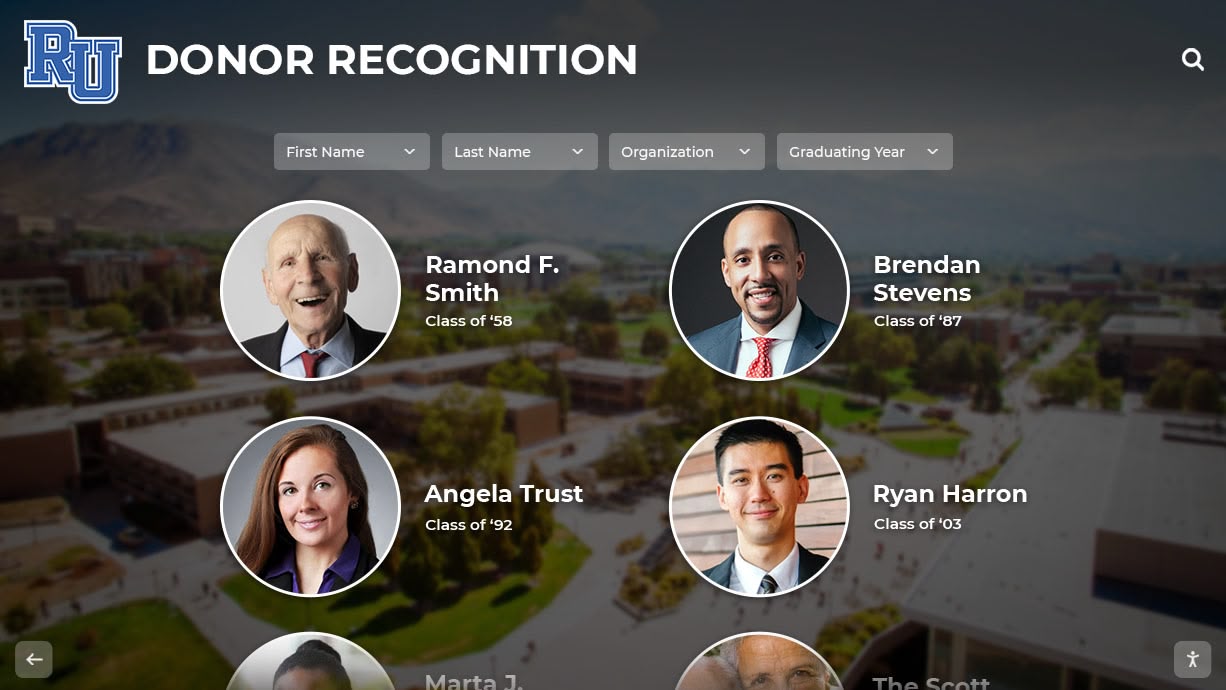
Donor and sponsor recognition systems that tell a community story strengthen the case for renewal and upgraded investment
Managing Renewals and Tracking Sponsorship ROI
Athletic sponsorship programs fail at renewal when sponsors cannot clearly articulate what they received. Your renewal process should be built to prevent that outcome—proactively documenting what each sponsor’s recognition delivered and presenting that information before renewal conversations happen.
Building a Recognition Report for Sponsors
Consider creating a simple annual recognition report for each sponsor documenting:
- Total impressions estimate for digital display appearances (if your system provides analytics)
- Events at which their recognition was displayed
- Digital content updates made on their behalf during the year
- Any named recognition moments (awards programs, presenting sponsorships)
- Media or social content featuring their sponsorship
This report doesn’t need to be elaborate. A one-page summary delivered with a renewal letter transforms the renewal conversation from “we’d like you to continue” to “here is what your partnership produced, and here is what we’d like to build on.”
Tracking Sponsor Engagement in Digital Systems
Digital recognition platforms often include analytics that physical signage simply cannot provide. Touchscreen kiosks can log interaction counts with specific sponsor profile pages. Display systems may provide rotation metrics showing how many times a sponsor’s content was featured. These data points are genuinely useful in renewal conversations.
When evaluating platforms, ask specifically about sponsor-side reporting features. Schools building long-term programs benefit from platforms that give them credible data to share with sponsors at renewal time.
For additional context on how digital platforms serve both athletic recognition and institutional development, explore digital hall of fame platform comparisons and digital recognition board evaluations for contexts where alumni recognition and sponsorship programming intersect.
Avoiding Common Athletic Sponsorship Mistakes
Even well-intentioned programs make errors that limit sponsor satisfaction and complicate renewals. These are the most common mistakes athletic directors can avoid.
Offering only banner-based recognition When your only product is a vinyl banner, your market is limited to sponsors who specifically want vinyl banners. Expanding to digital recognition, award presenting sponsorships, and interactive profiles opens your program to partners who want something more substantial.
Failing to document what sponsors received Without documentation, sponsors remember what they paid and forget what they got. Proactive recognition reports prevent this.
Setting tiers that are difficult to explain If your tier structure takes more than two minutes to explain in a conversation, it’s too complex. The tier matrix template above is designed for simplicity—adapt it, but resist the urge to over-engineer.
Treating all sponsors identically Top-tier sponsors who invested significantly should receive recognition that looks and feels different from entry-level community supporters. When every sponsor gets the same banner in the same section of the gym, you’ve removed the incentive to invest at higher levels.
Neglecting multi-year structures One-year-at-a-time sponsorship is exhausting for both sides. Build multi-year options into every proposal conversation. A sponsor who commits to three years is a partner; a sponsor who renews year-to-year is a customer who might not renew.
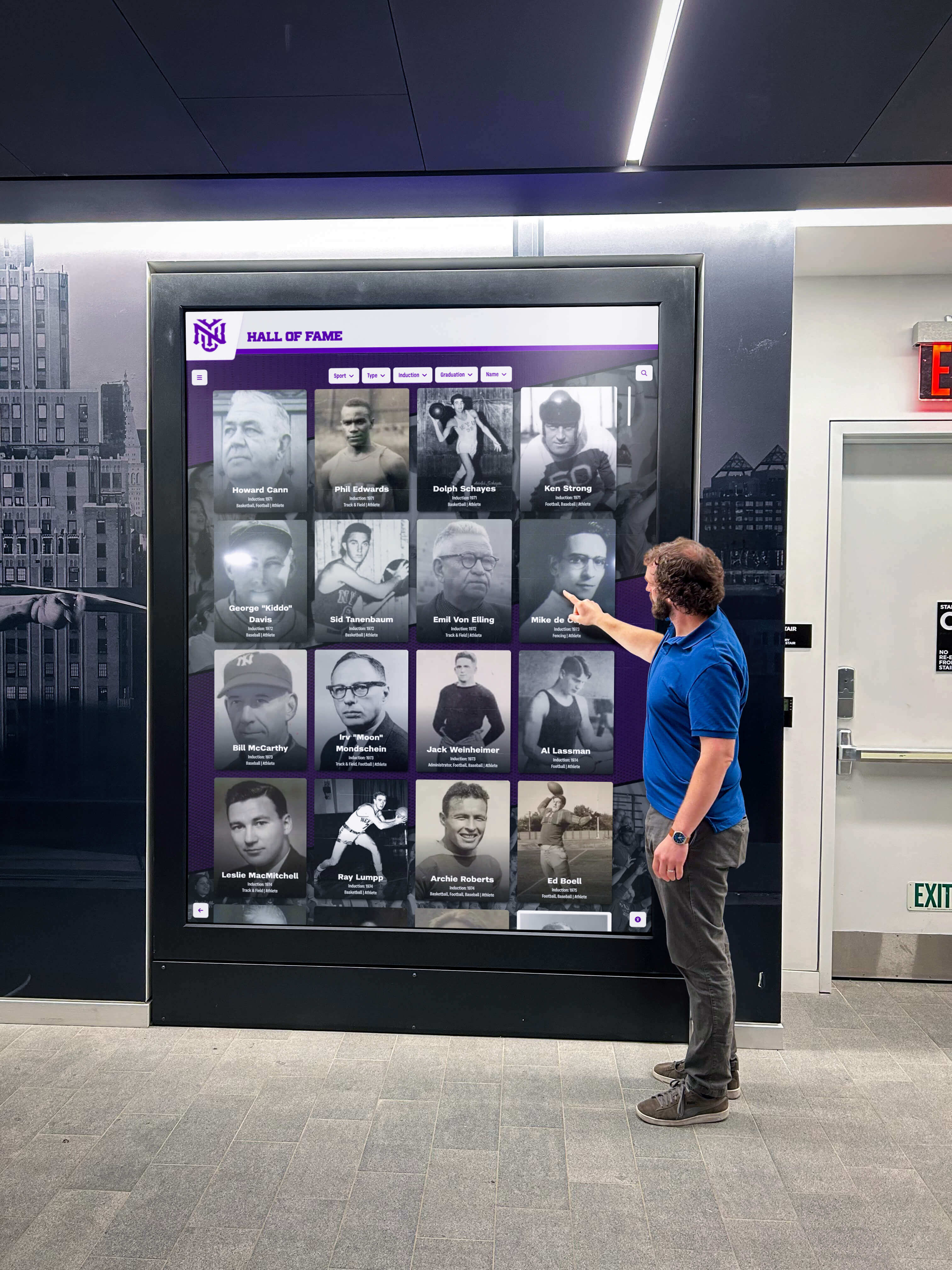
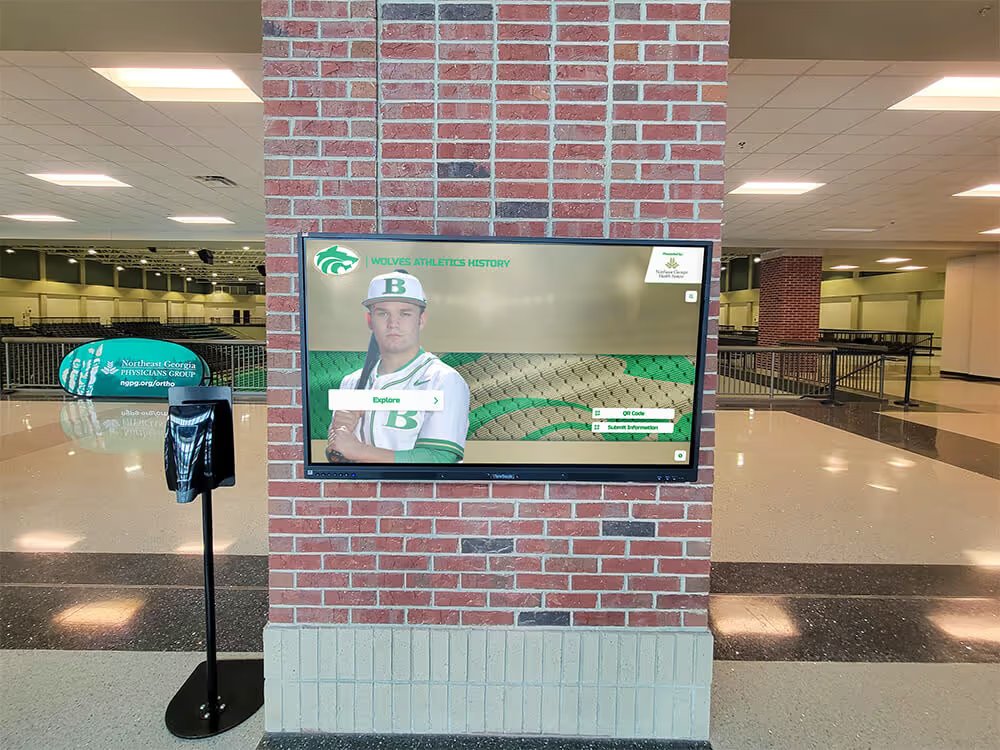
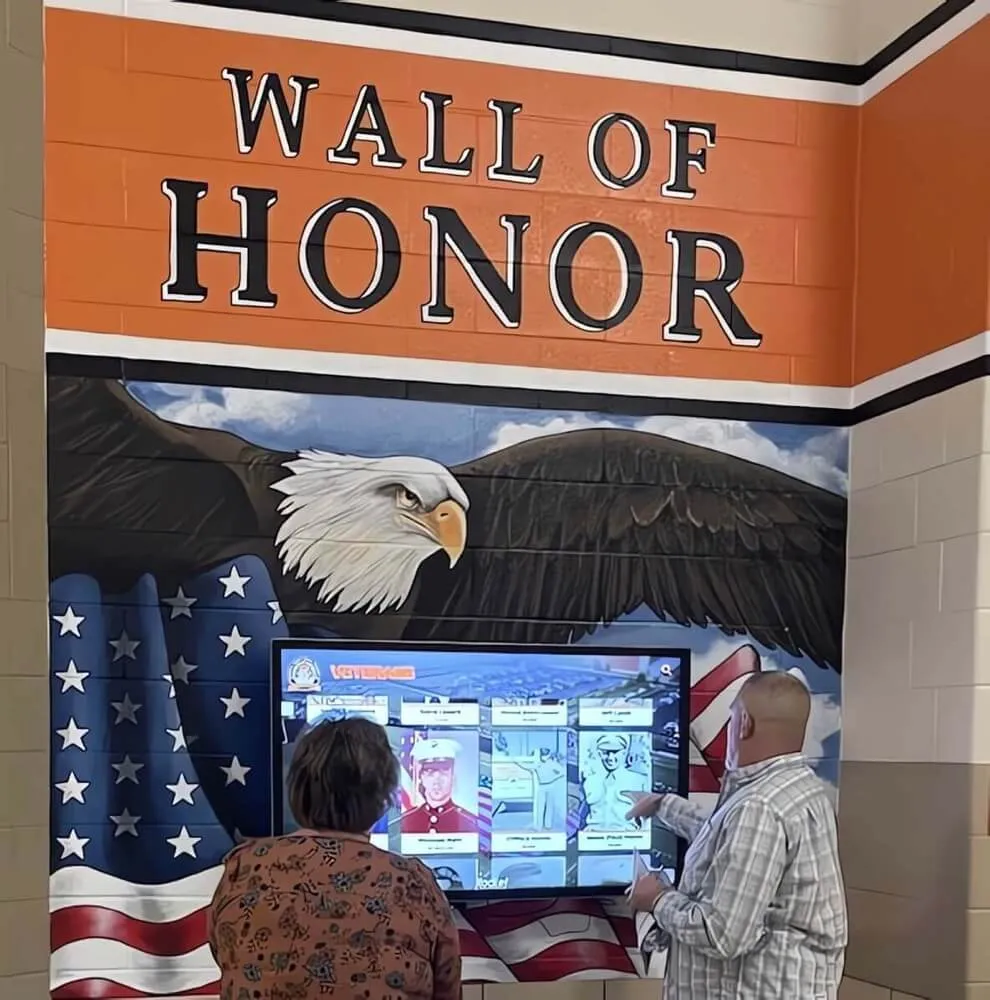
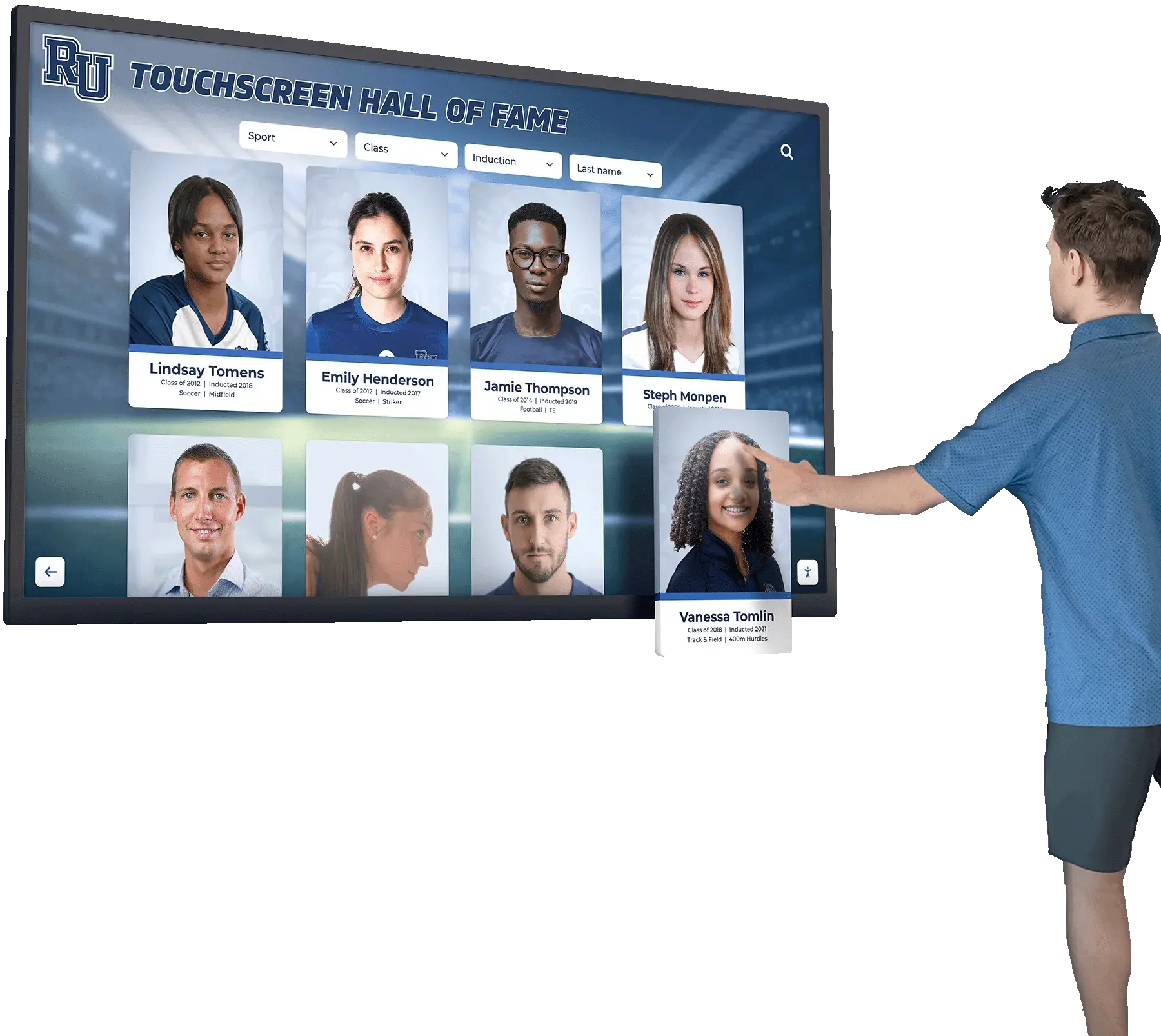
Interactive touchscreen systems give sponsors an engagement layer that static signage cannot match
Athletic Sponsorship as Part of a Broader Advancement Strategy
Athletic sponsorship doesn’t exist in isolation. The most successful school programs connect sponsorship outreach to alumni engagement, capital campaigns, annual fund appeals, and facility recognition systems that serve multiple constituencies simultaneously.
A digital lobby display that rotates sponsor content during athletic events can also surface donor recognition, hall of fame inductees, and program history between sponsor rotations. A touchscreen kiosk that features sponsor profiles can also enable alumni to search player records, view championship history, and explore program milestones. These systems serve athletes, families, alumni, and sponsors in a single infrastructure investment.
This convergence is where advancement teams find the most compelling value proposition for administrative decision-makers: rather than arguing for a sponsorship recognition system and a donor recognition system and a hall of fame system separately, the conversation becomes about a single platform that serves all three.
Conclusion: Sponsorship Recognition That Outlasts the Season
Athletic sponsorship programs that rely on temporary signage tend to produce temporary relationships. Sponsors who receive durable, professional, digitally-enabled recognition—integrated into a school’s athletic identity rather than competing for visual space in a gymnasium—renew at higher rates, upgrade to higher tiers, and develop genuine investment in the program’s success.
The framework in this guide gives your advancement team a starting point: tiered packages with clear value at each level, placement strategies that prioritize year-round visibility over event-only signage, and digital recognition tools that solve the clutter problem while giving sponsors something genuinely distinctive.
Your gymnasium walls don’t need to look like a trade show floor for your sponsors to feel well-recognized. They need a program that treats their investment with professionalism, documents what it delivered, and gives them recognition that makes them proud to be associated with your school.
Build an Athletic Sponsorship Program That Lasts
Rocket Alumni Solutions helps schools design integrated recognition systems that serve athletic sponsors, donors, hall of fame inductees, and student-athletes through a single digital platform—without cluttering facilities or requiring constant manual updates.
Explore Athletic Sponsorship Recognition SolutionsBuilding a sustainable athletic sponsorship program is an ongoing process—your first year of implementing a formal tier structure, digital recognition platform, and renewal documentation will teach you more than any planning document. Start with the framework, adapt it to your school’s culture and sponsor relationships, and build from there. The schools with the strongest programs didn’t design them perfectly on day one; they built them systematically and kept improving.