Award ceremonies represent powerful moments when communities pause to celebrate achievement, honor excellence, and inspire future success. Whether recognizing academic accomplishments, athletic prowess, artistic achievement, or community service, well-executed award ceremonies create lasting memories for honorees while reinforcing the values and culture that define organizations. These carefully orchestrated events transform individual recognition into shared celebration, bringing families, peers, and leaders together to acknowledge meaningful contributions and exceptional performance.
Yet too often, award ceremonies fall flat—lengthy programs that test audience patience, impersonal recognition that feels generic, fleeting moments that disappear after applause fades, or events that reach only those physically present while excluding broader communities from celebration. After ceremonies conclude, honoree information typically disappears into storage, limiting long-term impact and preventing ongoing visibility for achievements that deserve sustained recognition.
According to event planning research, effective recognition events significantly impact motivation, with studies showing that meaningful public acknowledgment increases engagement, strengthens community bonds, and encourages continued excellence among both honorees and observers who aspire to similar recognition.
This comprehensive guide explores creative award ceremony ideas that transform recognition events from perfunctory obligations into memorable celebrations while extending impact beyond single evenings through permanent digital recognition systems. Whether planning academic honors ceremonies, athletic awards banquets, employee recognition events, or community celebration gatherings, these strategies provide frameworks for honoring achievement appropriately while creating engagement experiences that resonate long after events conclude.

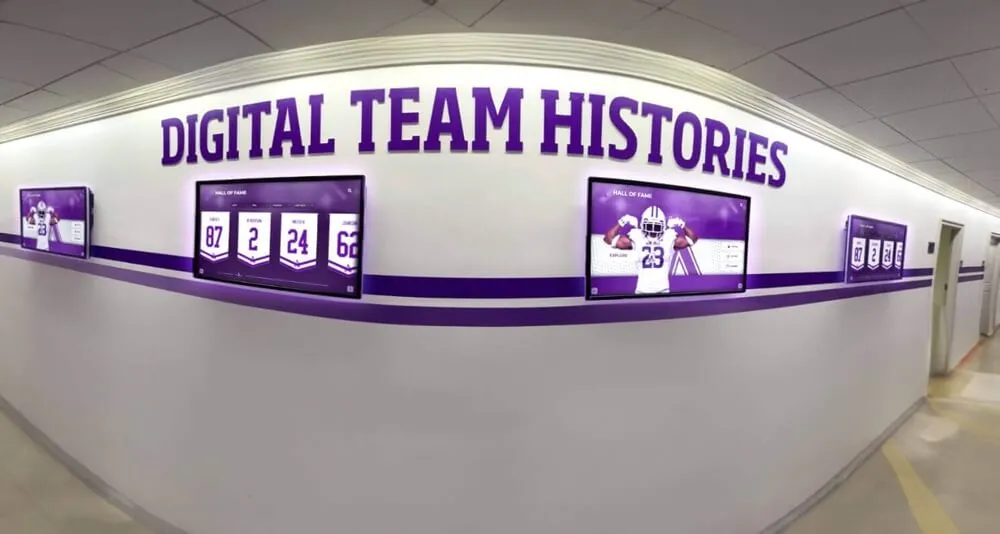
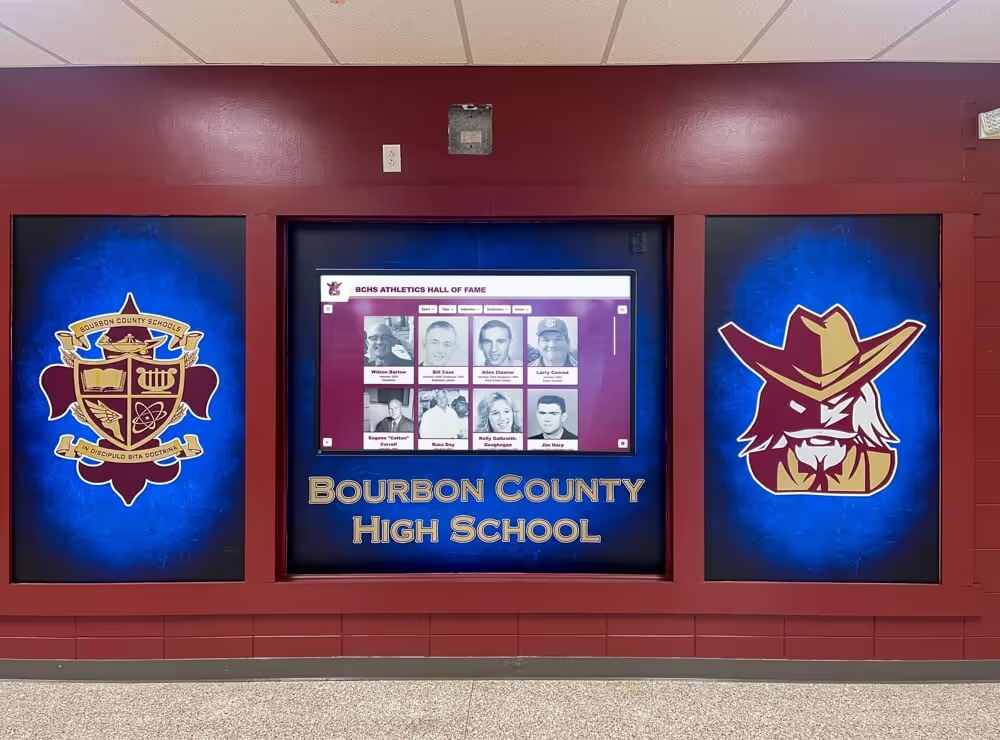
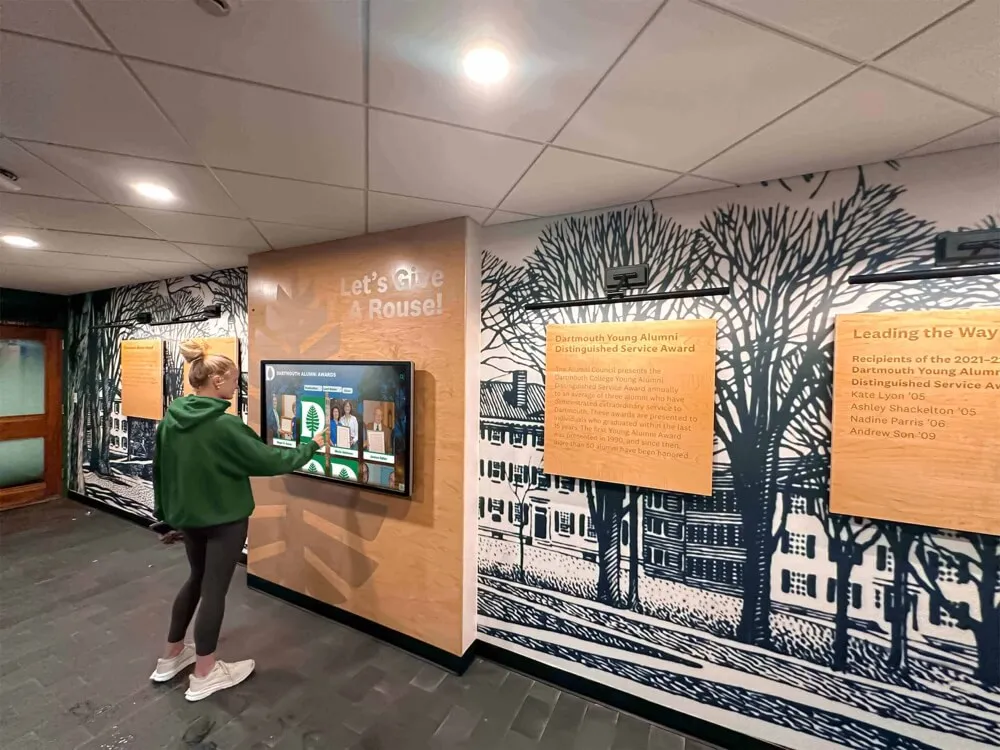
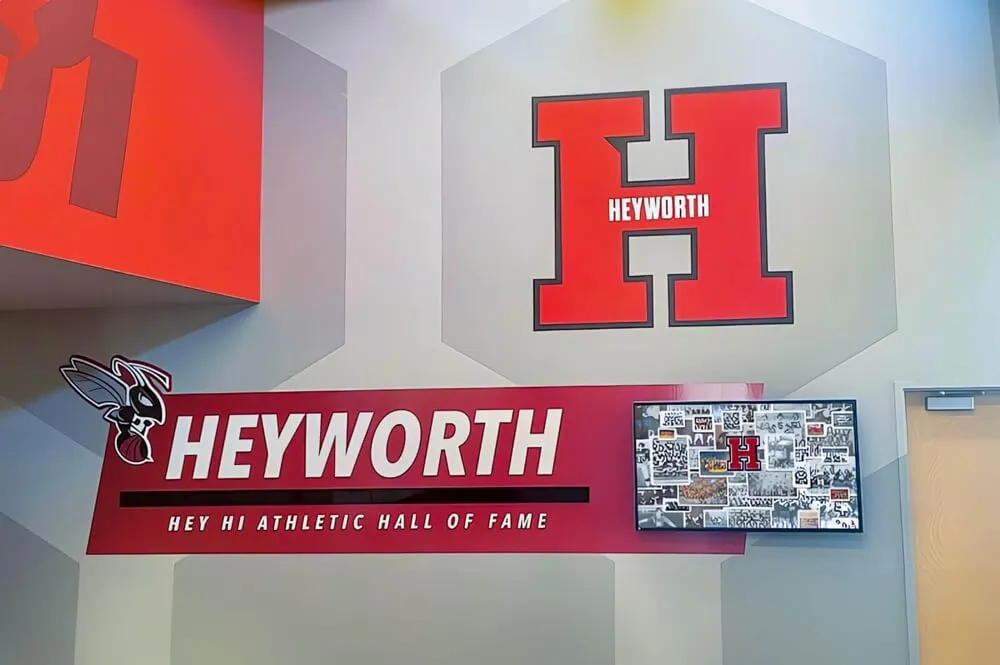
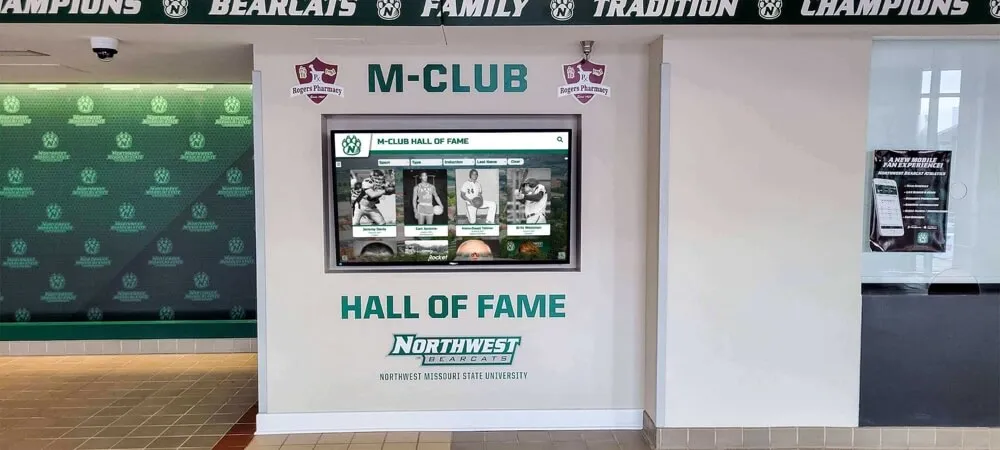
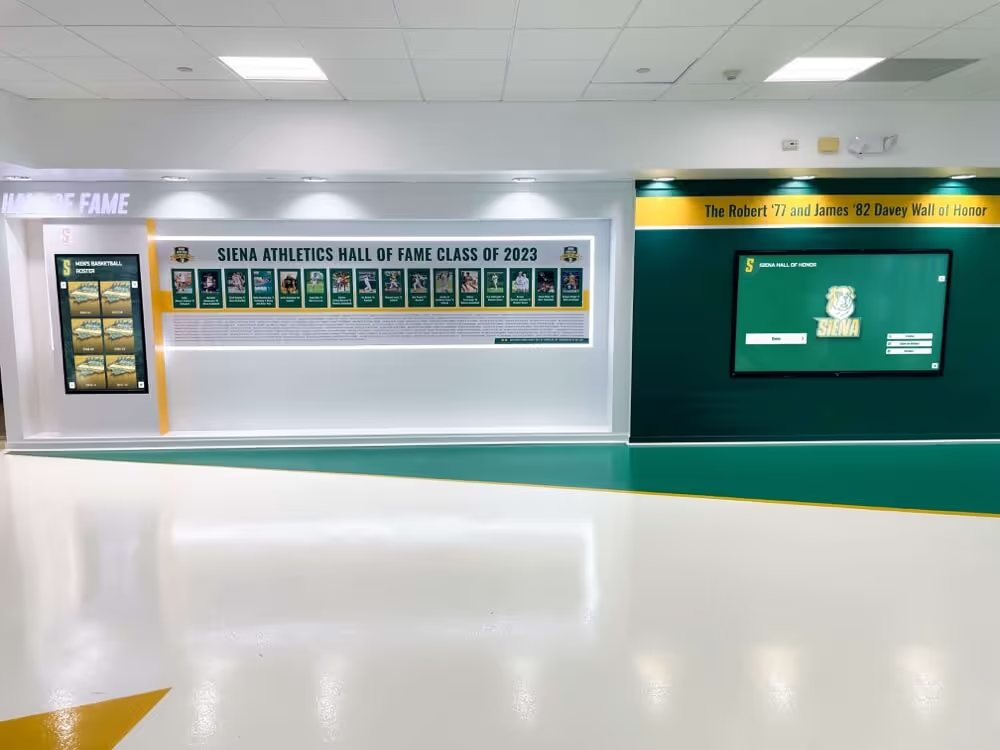
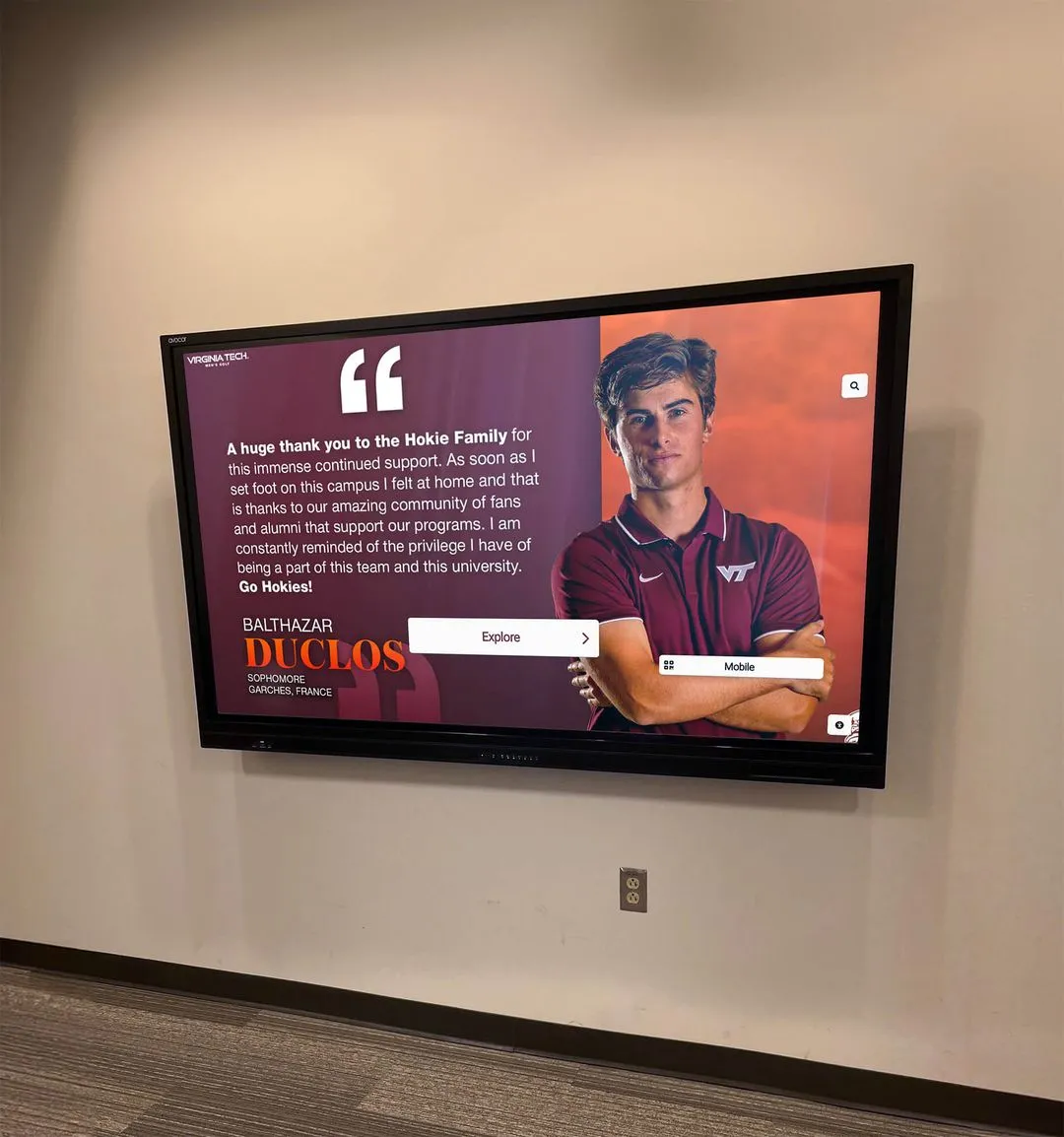
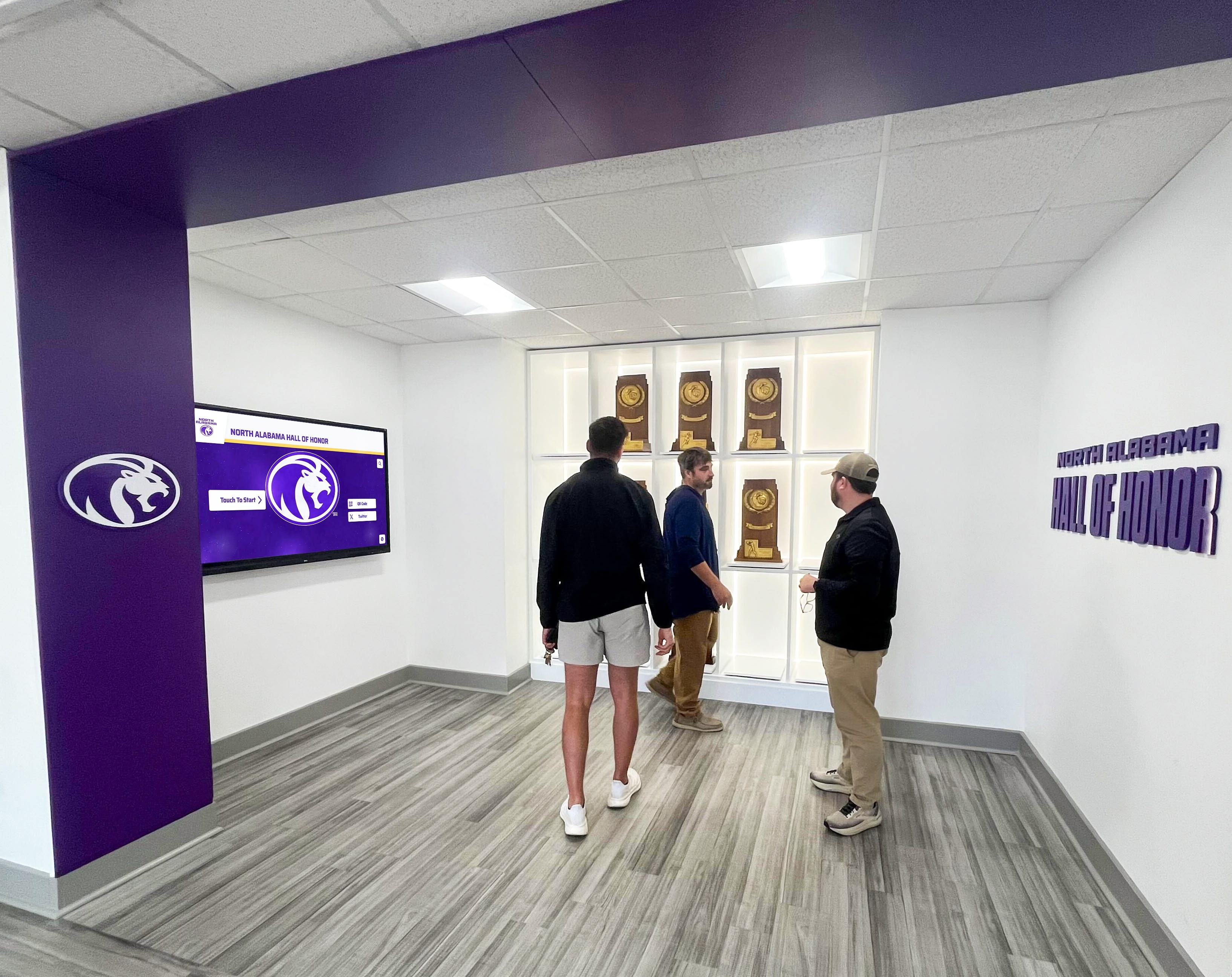
Modern recognition displays preserve award ceremony content year-round, extending event impact indefinitely
Understanding Award Ceremony Objectives: Beyond Perfunctory Recognition
Before exploring specific ceremony ideas, understanding what effective award recognition should accomplish helps organizations design events that serve multiple stakeholders while creating meaningful experiences rather than checking boxes.
The Multi-Dimensional Purpose of Award Ceremonies
Thoughtfully designed award ceremonies serve interconnected objectives that distinguish memorable celebrations from forgettable programs:
Honoring Individual Achievement
The primary purpose of any award ceremony remains appropriately celebrating individual accomplishment. Recipients deserve genuine recognition that acknowledges specific achievements, highlights the effort and excellence that merited awards, and creates memorable moments they’ll treasure throughout lives. This individual honor requires personalization showing organizations understand what each recipient accomplished rather than generic acknowledgment that could apply to anyone.
Inspiring Future Excellence
Beyond honoring current recipients, award ceremonies inspire others by demonstrating what excellence looks like, showcasing paths to achievement, and creating aspirational models peers can emulate. When students see classmates recognized for academic performance, teammates honored for athletic achievement, or colleagues celebrated for exceptional contributions, they internalize standards of excellence while understanding that meaningful accomplishment receives genuine acknowledgment.
Research on recognition psychology consistently demonstrates that public celebration of achievement motivates observers nearly as powerfully as it validates recipients, creating cultures where excellence becomes normalized and expected rather than exceptional.
Building Community and Shared Pride
Award ceremonies unite communities around shared values and collective celebration. Parents, family members, peers, leaders, and supporters gather to witness recognition, creating shared experiences that strengthen social bonds while building organizational culture. These communal celebrations reinforce what communities value—whether academic rigor, athletic dedication, artistic excellence, service contributions, or professional achievement—through ceremonial acknowledgment that makes values tangible and visible.
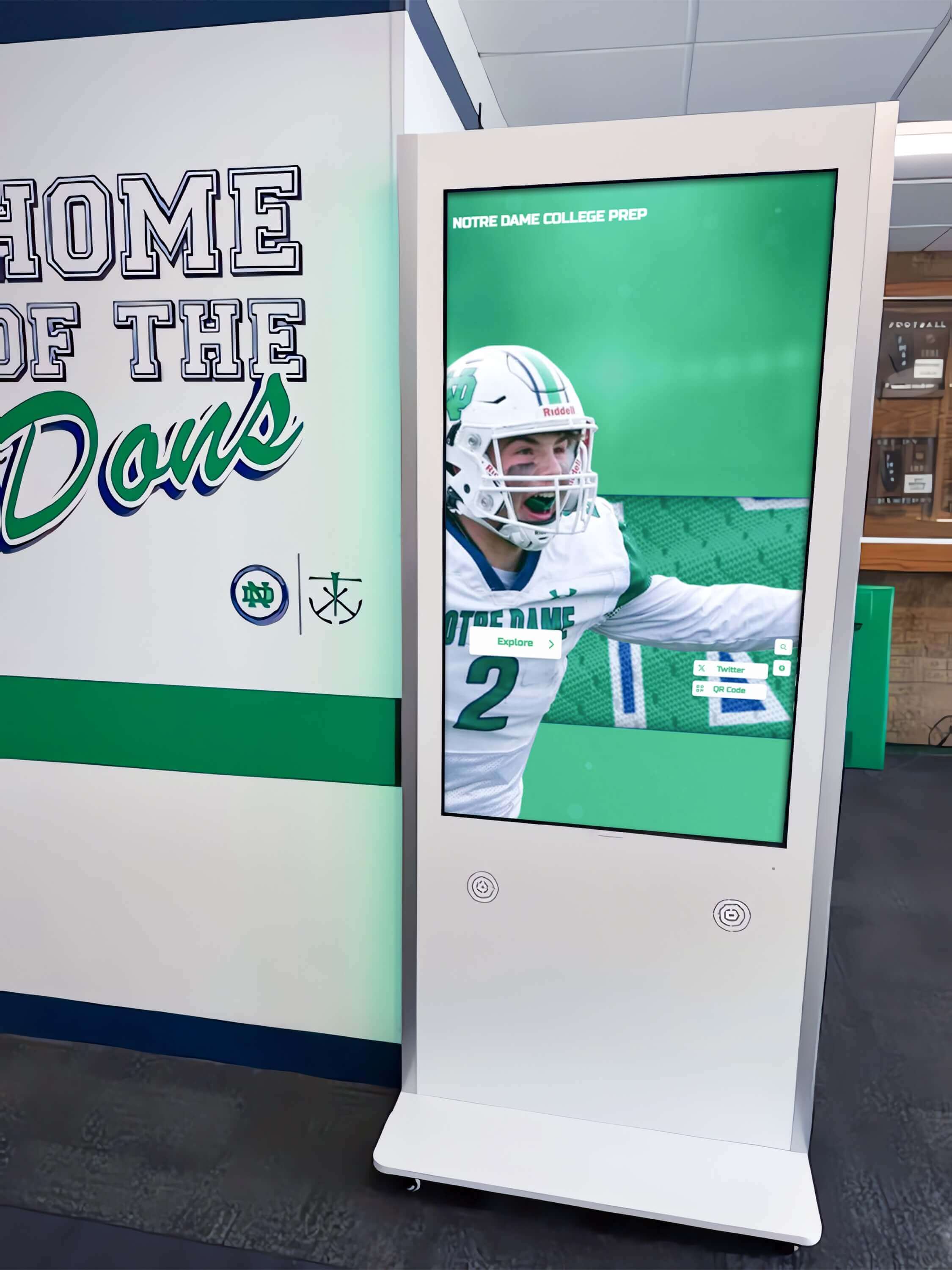
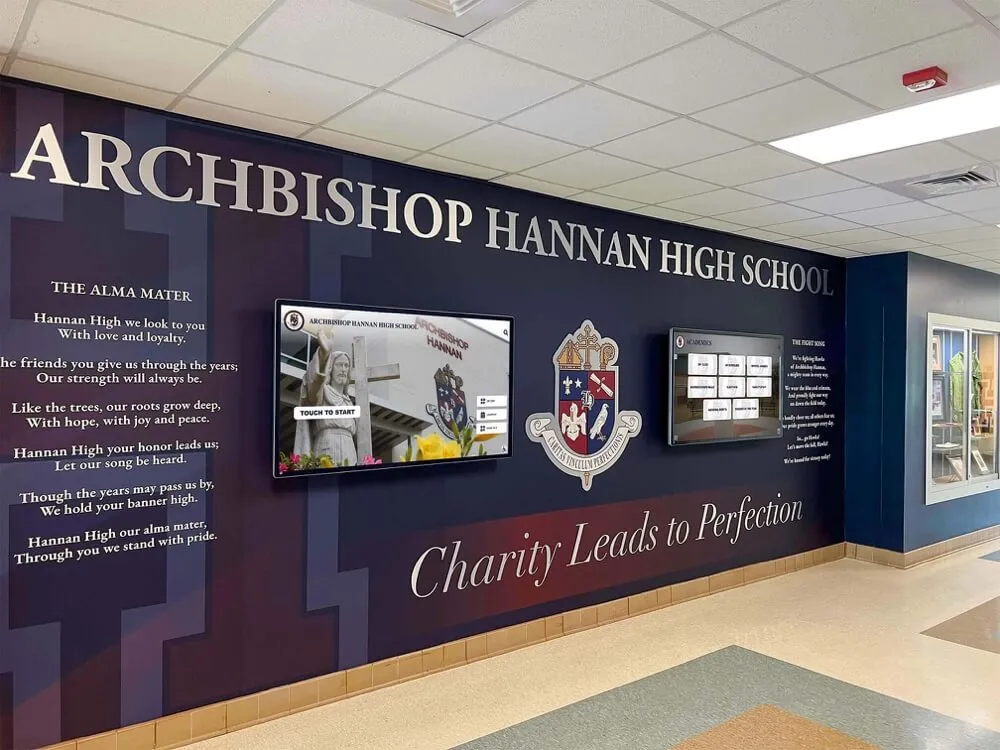
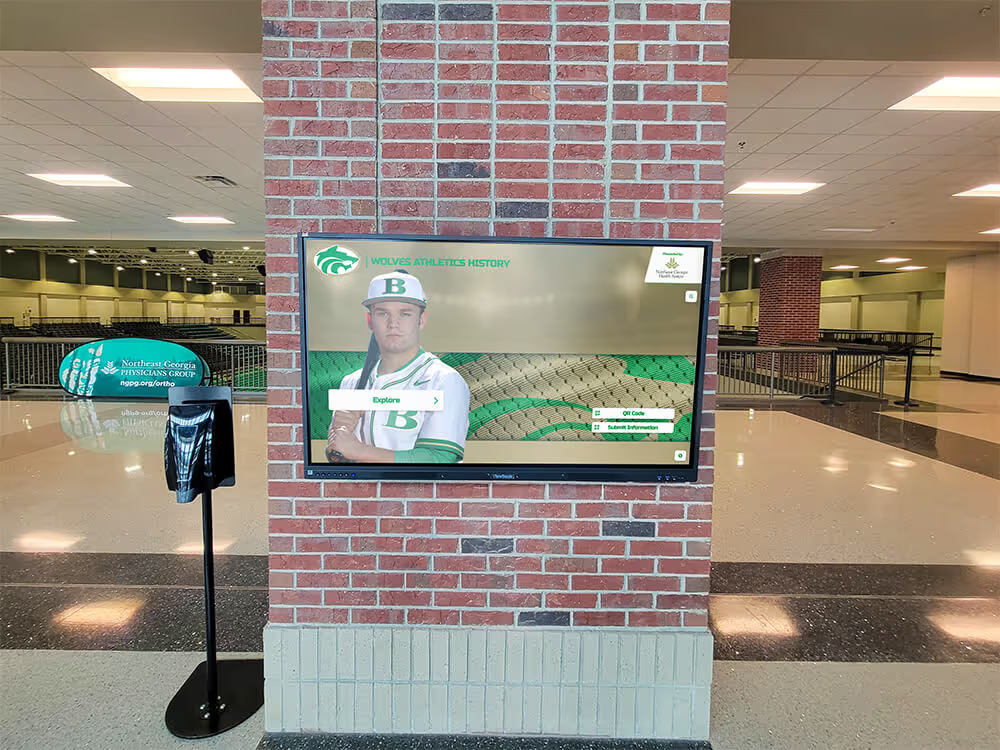
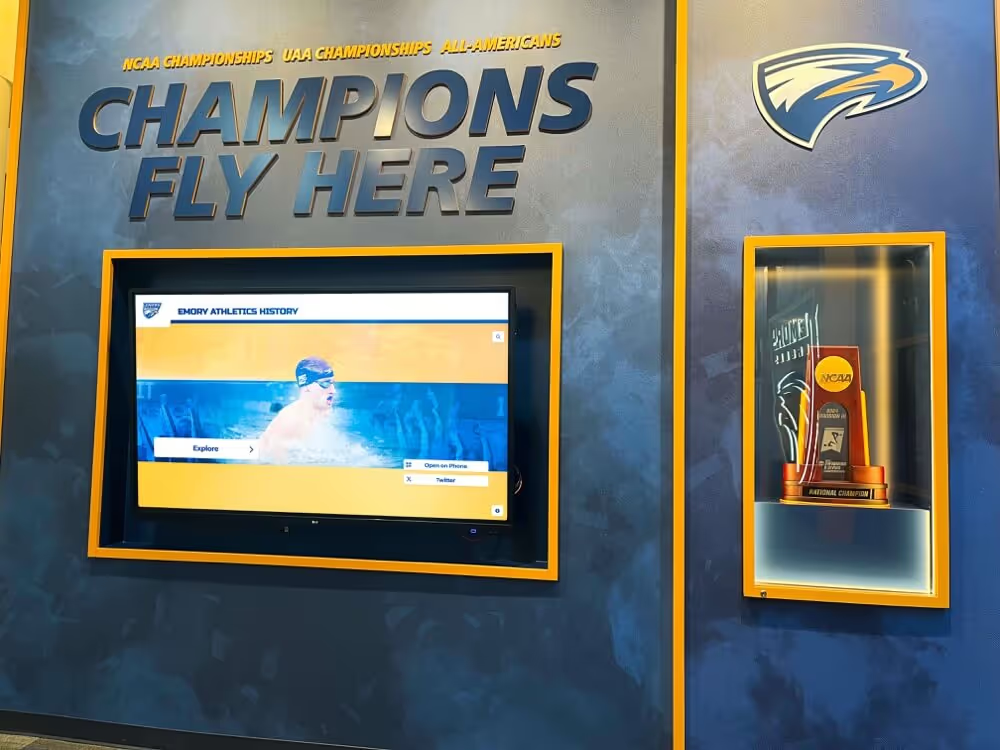
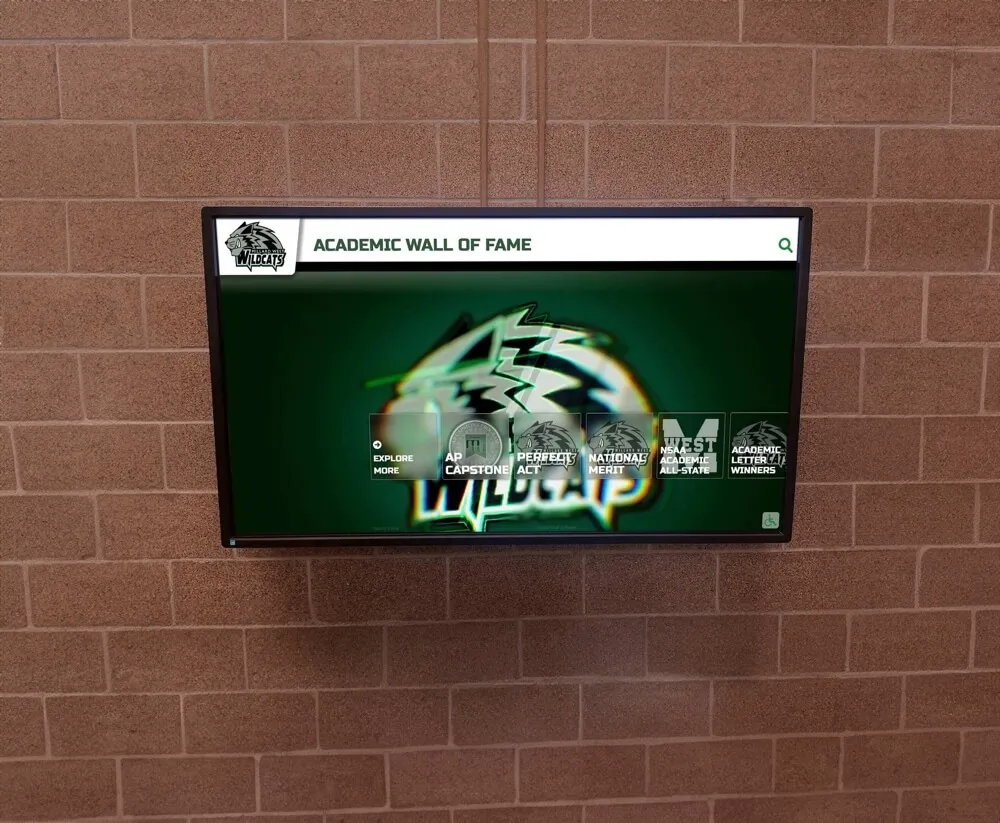
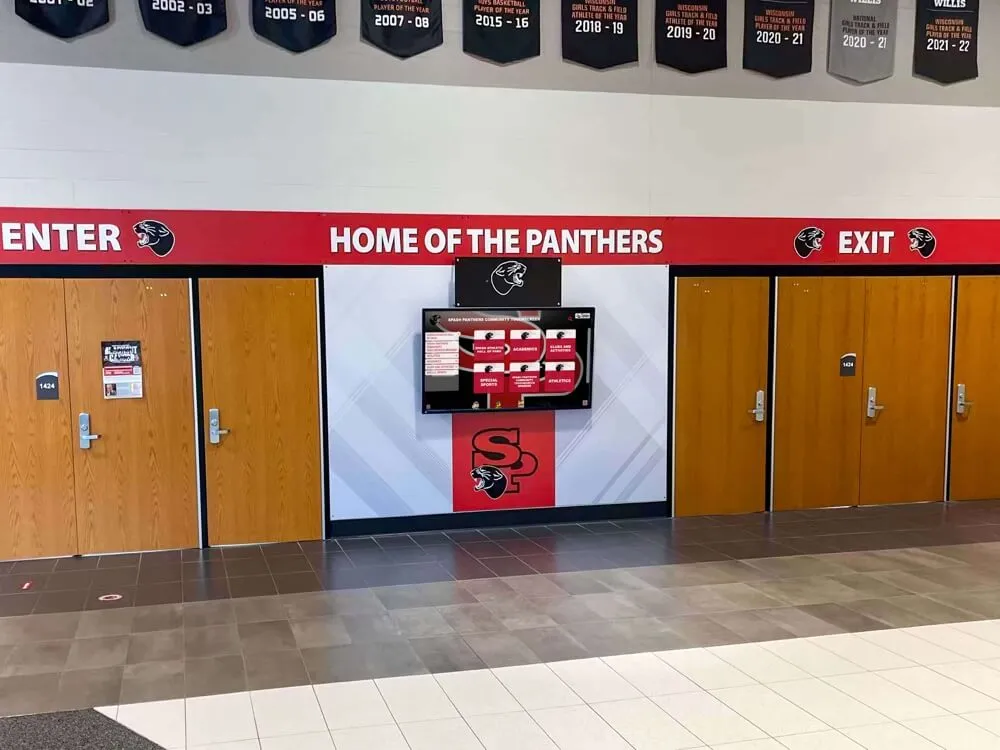
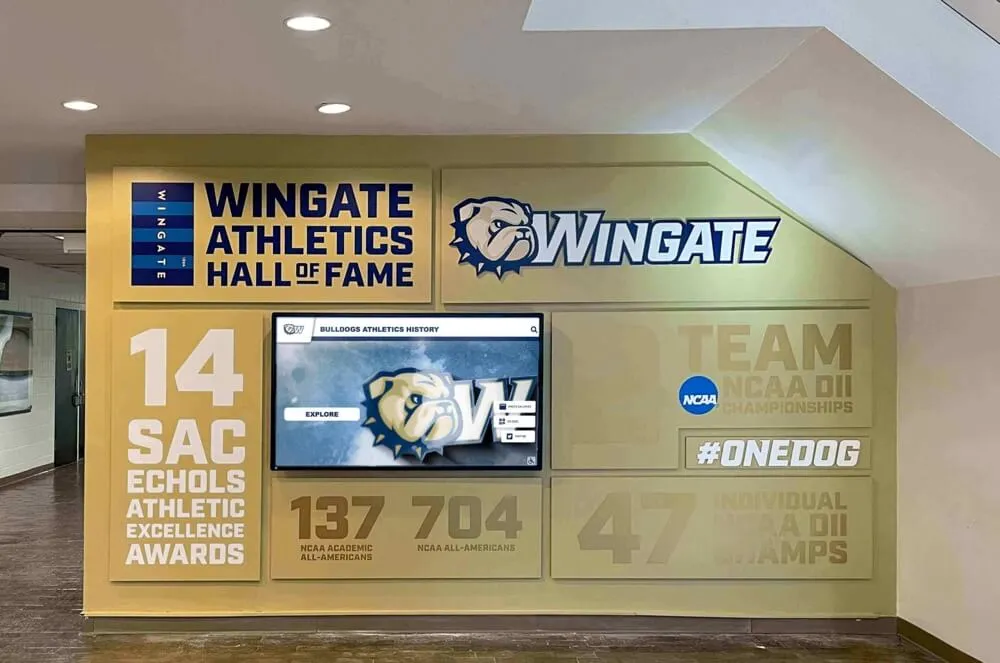
Strategic display placement ensures recognition remains visible daily, not just during annual ceremonies
Preserving Institutional History and Legacy
Award ceremonies create historical records documenting who achieved excellence, when recognition occurred, and what accomplishments warranted honor. This institutional memory preserves organizational heritage while creating longitudinal perspective showing achievement patterns across years or decades. When schools can showcase honor roll recipients from 1950 through present day or organizations display employee excellence award winners spanning company history, they demonstrate sustained commitment to recognizing achievement while building legacy that transcends any single ceremony.
The Challenge of Ephemeral Recognition
Despite their importance, traditional award ceremonies suffer from significant limitations:
Limited Event Attendance
Even highly attended ceremonies reach only fraction of communities. Family scheduling conflicts, geographic distance, physical accessibility barriers, or simple inability to attend evening events mean most stakeholders never experience recognition moments firsthand. Students, employees, or community members who couldn’t attend miss celebrating peers’ achievements. This limited attendance constrains impact to those present while excluding broader audiences from engagement and inspiration.
Fleeting Recognition Moments
Individual award presentations typically last just minutes. Recipients receive brief acknowledgment—perhaps name reading, handshake, and photograph—then ceremonies move forward. Printed programs list names but provide minimal context about specific achievements, unique stories, or paths to recognition. Attendees experience recognition in passing, rarely retaining detailed information about what each honoree accomplished or why achievements warranted celebration.
Lost Event Content and Institutional Memory
After ceremonies conclude, most recognition content disappears:
- Printed programs get recycled or filed away where no one accesses them
- Award recipient biographies and accomplishment details fade from memory
- Event photography sits unused in digital storage or physical albums
- Honoree information remains locked in point-in-time documents
- Details about awards criteria, selection processes, and recognition categories become inaccessible
This lost content represents missed opportunities for ongoing recognition, marketing communications, community engagement, and institutional history preservation that could multiply ceremony value exponentially.
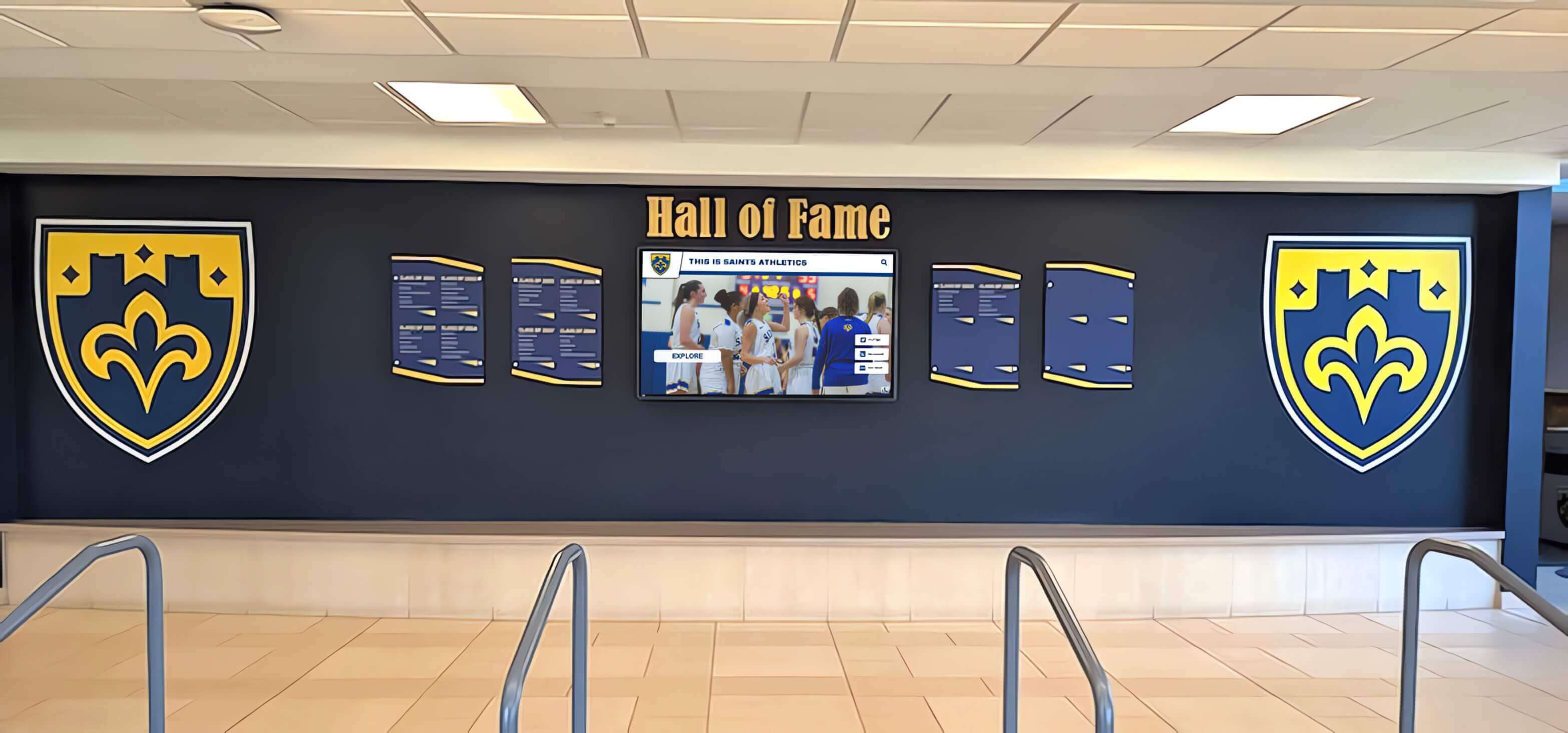
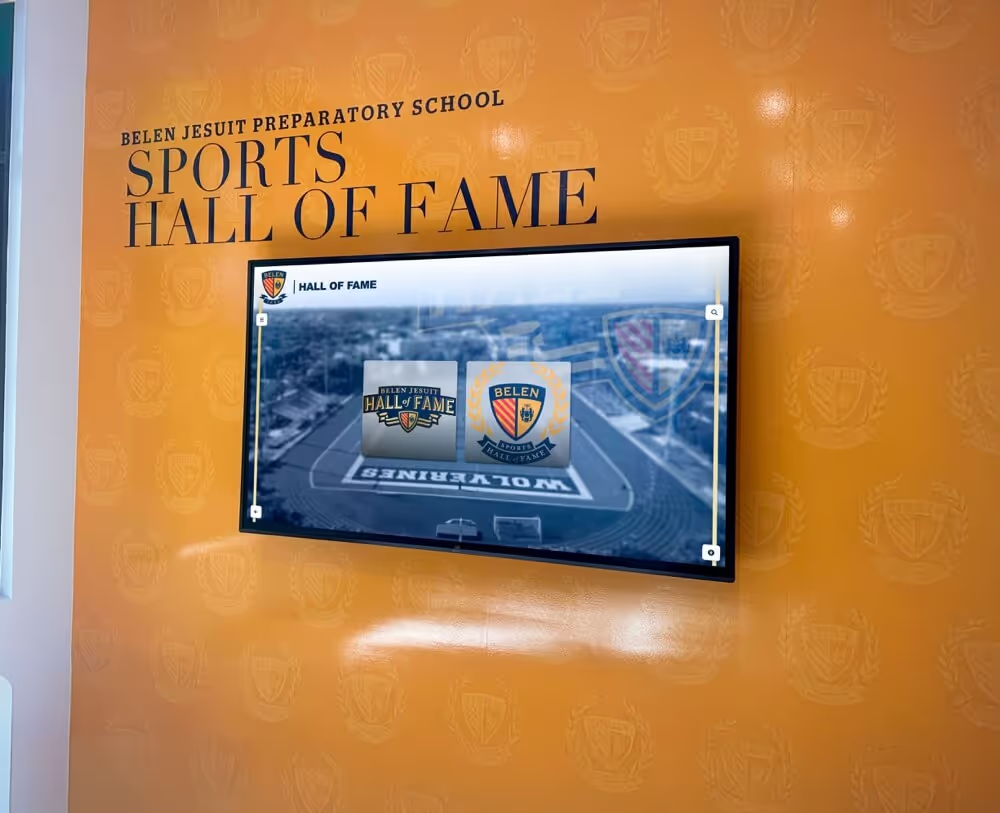
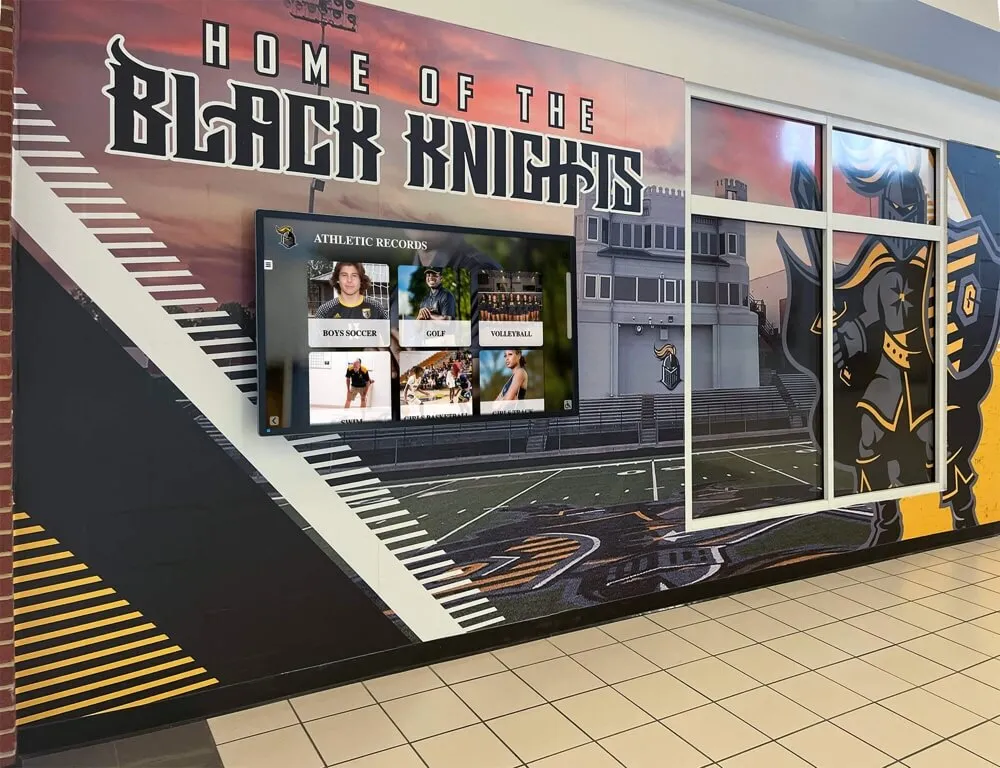
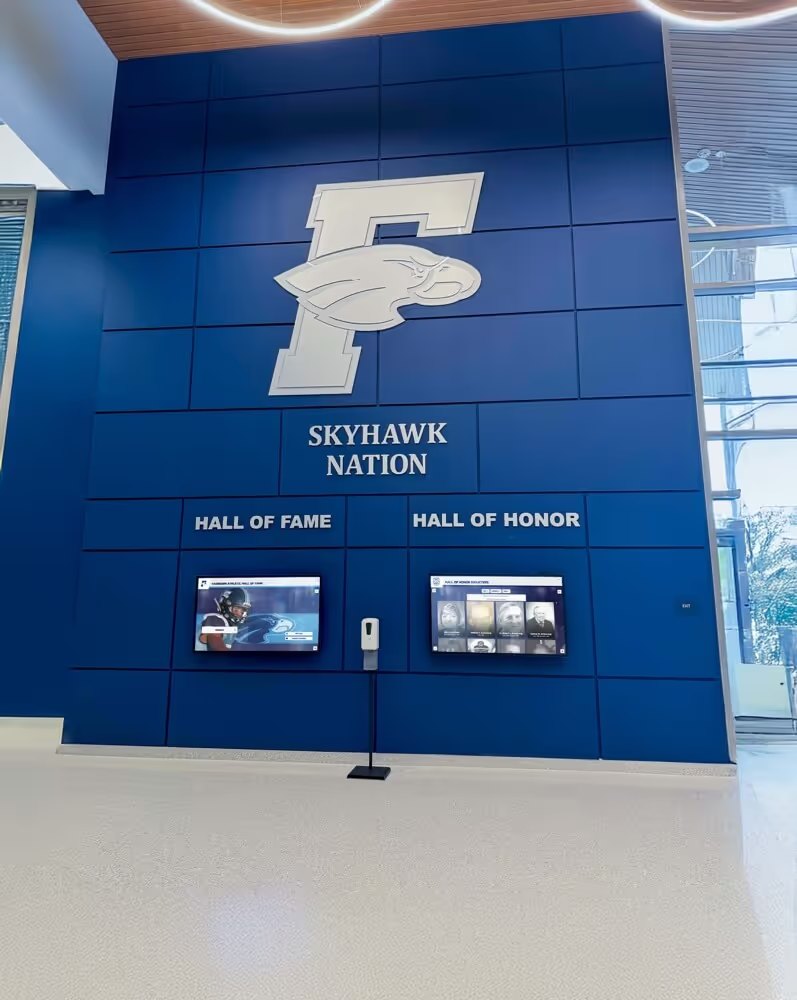
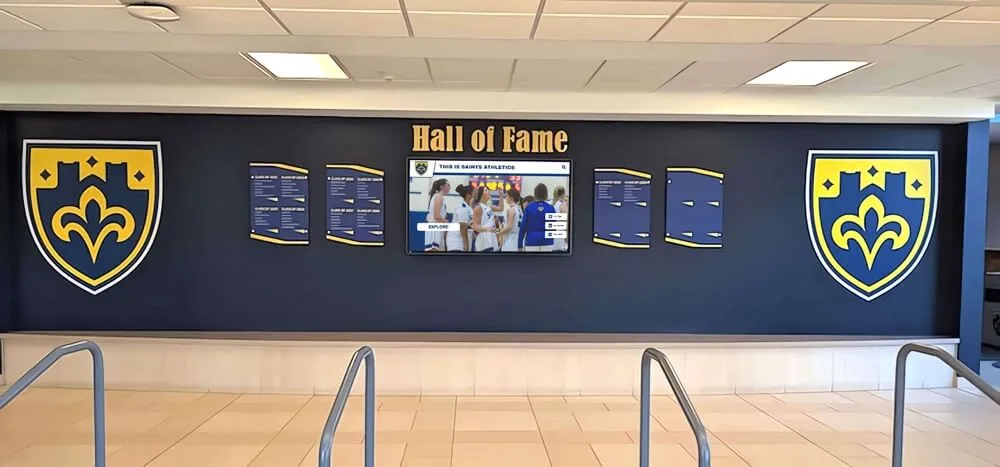
Integrated recognition systems honor current ceremony recipients alongside historical honorees
Creative Award Ceremony Format Ideas: Engaging Program Design
The ceremony format fundamentally shapes attendee experience and honoree satisfaction. Moving beyond traditional formats creates more engaging recognition events.
Alternative Ceremony Structures
Gallery Walk Recognition Events
Rather than seated ceremonies where audiences watch sequential presentations, consider gallery-style events where attendees move through spaces featuring different award categories. Display honoree profiles, achievement documentation, photographs, and artifacts at stations where families and supporters can explore recognition at their own pace while interacting directly with recipients. This format enables deeper engagement with accomplishment details while accommodating attendees with varying time constraints or attention spans.
Reception-Style Celebrations
Combine recognition with social gathering through reception formats where formal award presentation occupies focused 20-30 minute segment within broader 90-minute celebration. Attendees socialize, honorees mingle with supporters, and formal recognition provides ceremonial anchor without requiring sustained attention across lengthy programs. This approach particularly suits adult recognition events or celebrations honoring diverse achievement categories requiring extensive individual acknowledgment.
Video Presentation Ceremonies
Produce high-quality video profiles for each recipient or award category, featuring interviews with honorees, footage demonstrating accomplishments, testimonials from mentors or peers, and narrative storytelling bringing achievements to life. Screen these videos during ceremonies, creating professional, engaging presentations far exceeding brief verbal acknowledgment while providing lasting content usable beyond ceremonies themselves. These videos become valuable for showcasing student achievement in various contexts throughout years.
Interactive Recognition Elements
Honoree Display Boards
Create professional poster boards or digital displays for each recipient featuring photographs, achievement summaries, biographical information, and personal statements about what recognition means to them. Display these throughout ceremony venues, allowing attendees to explore honoree stories before, during, and after formal programs. Families appreciate opportunities to read about their students’ or colleagues’ accomplishments in detail rather than hearing only brief verbal summaries.
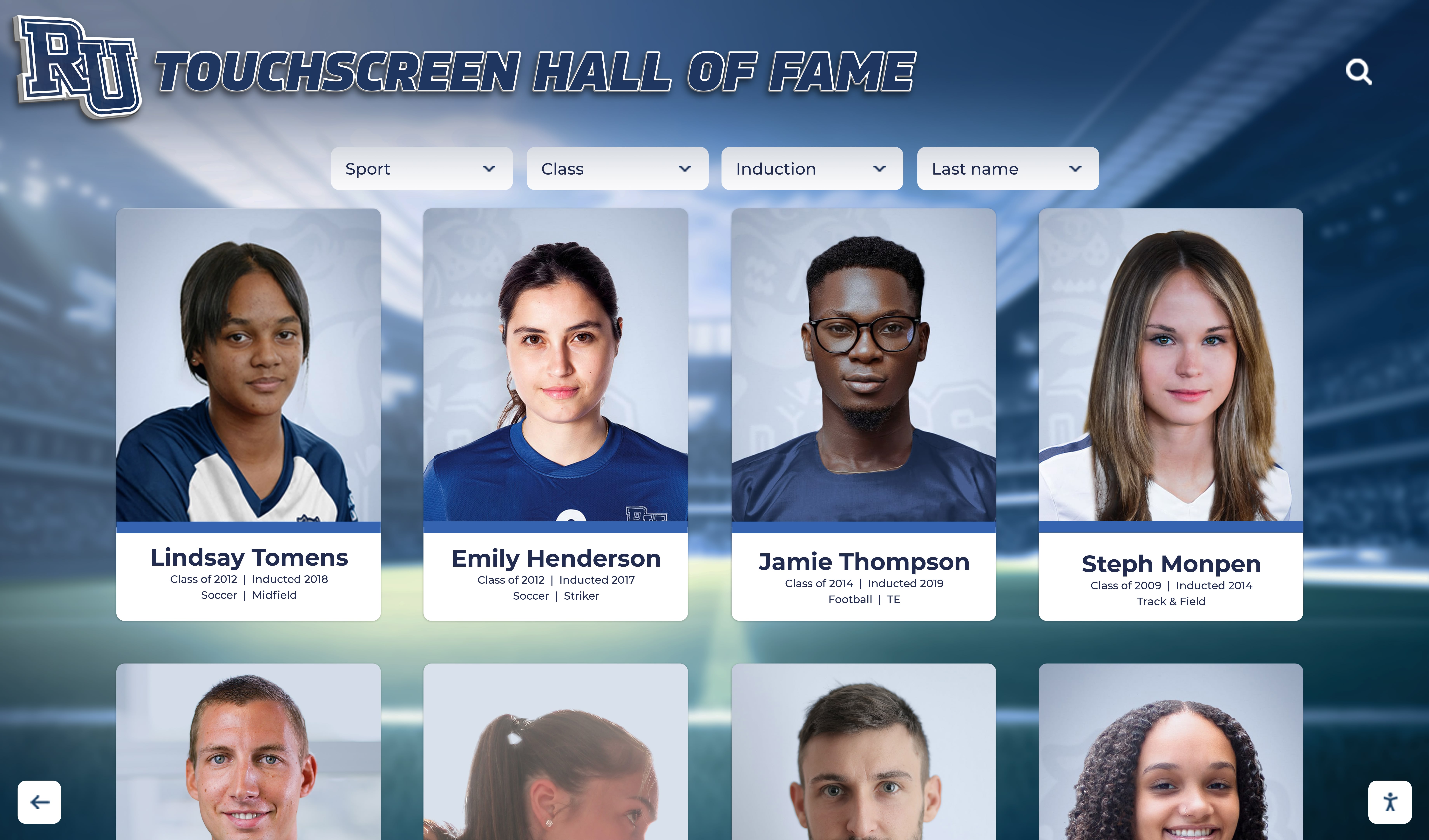
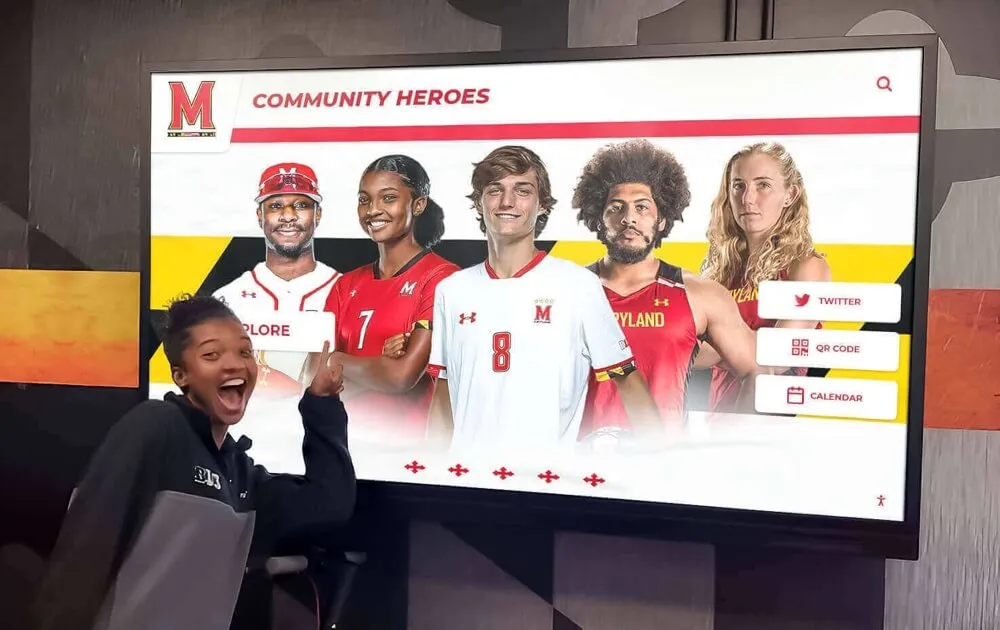
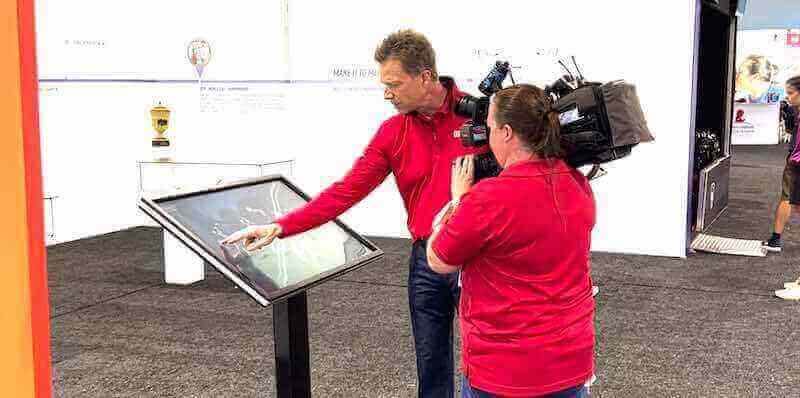
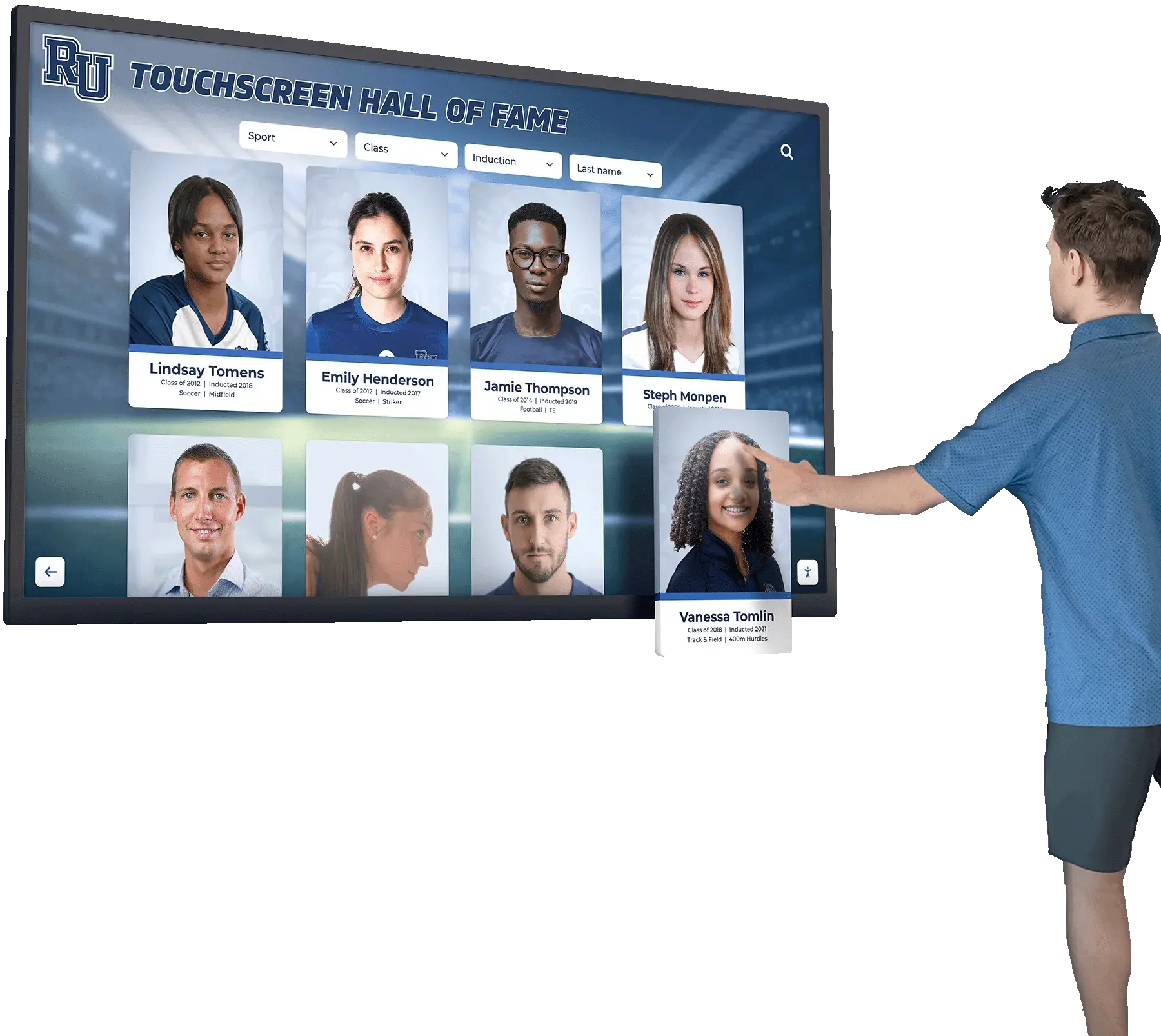
Touchscreen interfaces enable deep exploration of honoree achievements during and after ceremonies
Peer Recognition Opportunities
Include segments where peers, teammates, classmates, or colleagues share testimonials about honorees. These personal perspectives often resonate more powerfully than institutional acknowledgment, revealing character dimensions, work ethic examples, or impact stories that formal citations miss. Peer recognition adds emotional depth while demonstrating how individual excellence influences broader communities.
Family Involvement Moments
Create opportunities for family members to participate in recognition—reading accomplishment citations, presenting awards, or sharing personal reflections about recipients. This involvement transforms families from passive observers to active celebration participants while honoring support systems that enabled achievement. Schools might invite parents to present academic awards or organizations could have supervisors recognize employee excellence.
Enhancing Ceremony Experience: Atmosphere and Engagement
The ceremony environment and attendee experience significantly impact whether events feel meaningful or perfunctory.
Setting Appropriate Tone and Atmosphere
Venue Selection and Setup
Choose venues and seating arrangements appropriate for ceremony scale and formality. Auditorium settings with stage presentations suit large-scale formal ceremonies while smaller intimate spaces work better for modest recognition events. Consider sightlines ensuring all attendees can view presentations, acoustics supporting clear audio, and accessibility accommodating attendees with diverse physical needs. Learn more about creating athletics hall of fame displays that enhance recognition spaces.
Visual and Sensory Elements
Professional lighting, thoughtful decorations, branded backdrops, and attention to aesthetic details communicate that recognition matters. Display organizational colors, achievement imagery, past honoree photographs, or mission-relevant visuals that reinforce values while creating visually appealing environments. Music selections for processional entries, transitions between segments, and honoree acknowledgment enhance emotional impact while managing pacing.
Program Materials
High-quality printed programs provide keepsakes families retain while communicating ceremony professionalism. Include complete honoree lists with achievement descriptions, award category explanations, photography, organizational messaging, and sponsor acknowledgment where appropriate. These programs become lasting documentation of recognition rather than disposable handouts.
Managing Ceremony Pacing and Length
Strategic Time Management
Respect attendees’ time by establishing and maintaining reasonable ceremony durations. Most recognition events should conclude within 60-90 minutes maximum, requiring careful curation of content and disciplined adherence to schedules. Consider how many honorees require recognition, how much time each receives, what supporting content (speeches, videos, entertainment) adds value, and where efficient transitions preserve pacing.
Grouping and Segmentation
For ceremonies recognizing numerous recipients across multiple categories, group similar awards together rather than alternating between categories. This creates narrative flow while allowing attendees particularly interested in specific categories to maintain focus. Announce groups of recipients who then stand together for collective applause rather than individual stage crossings for every honoree when numbers make individual presentation impractical.
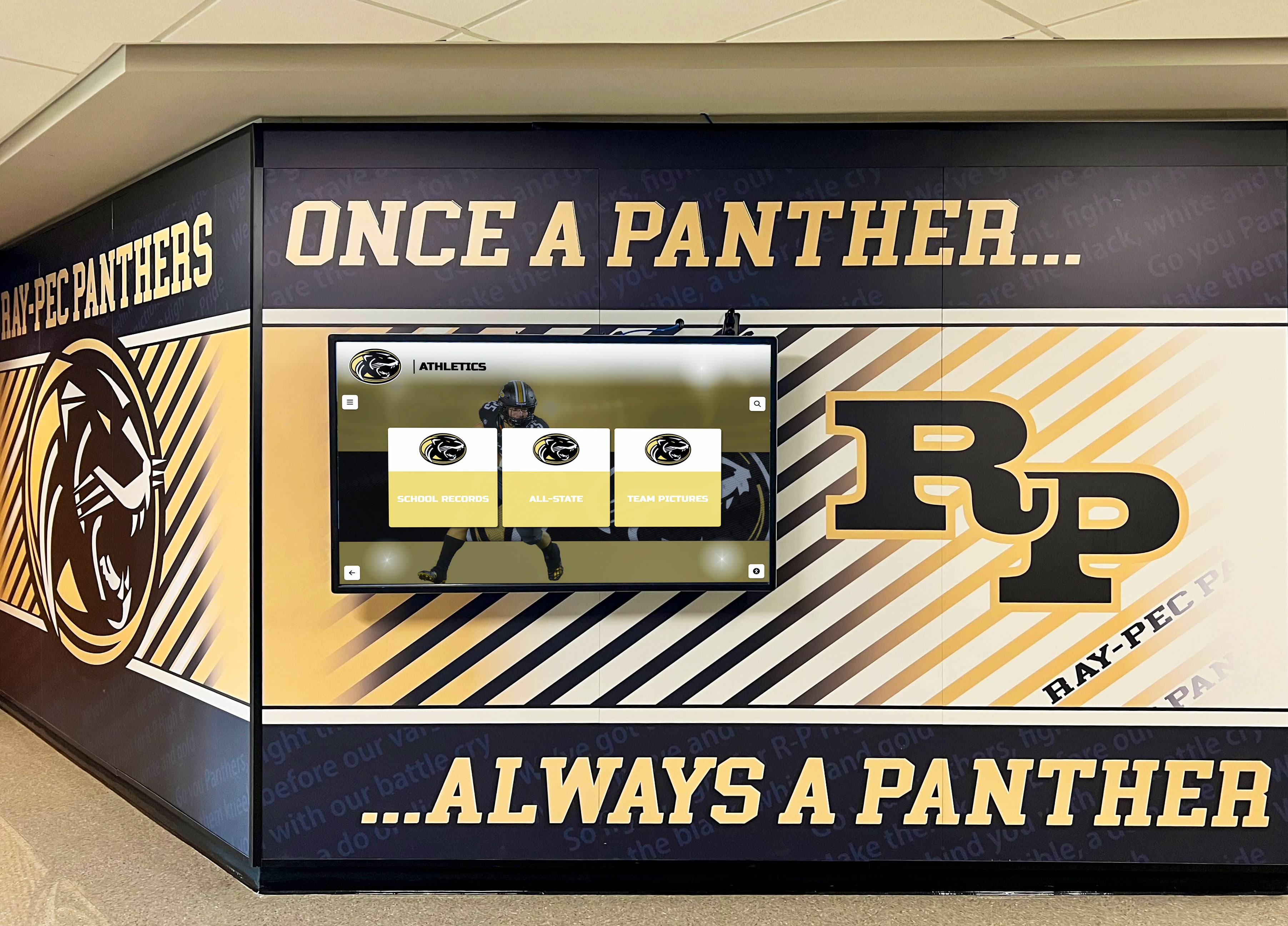
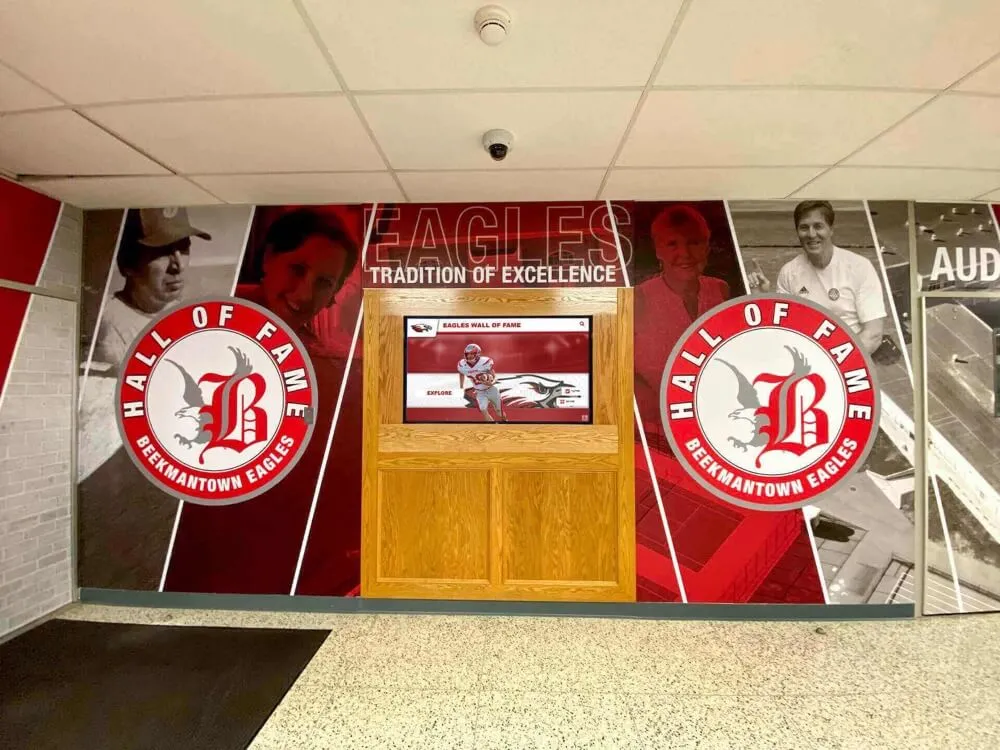
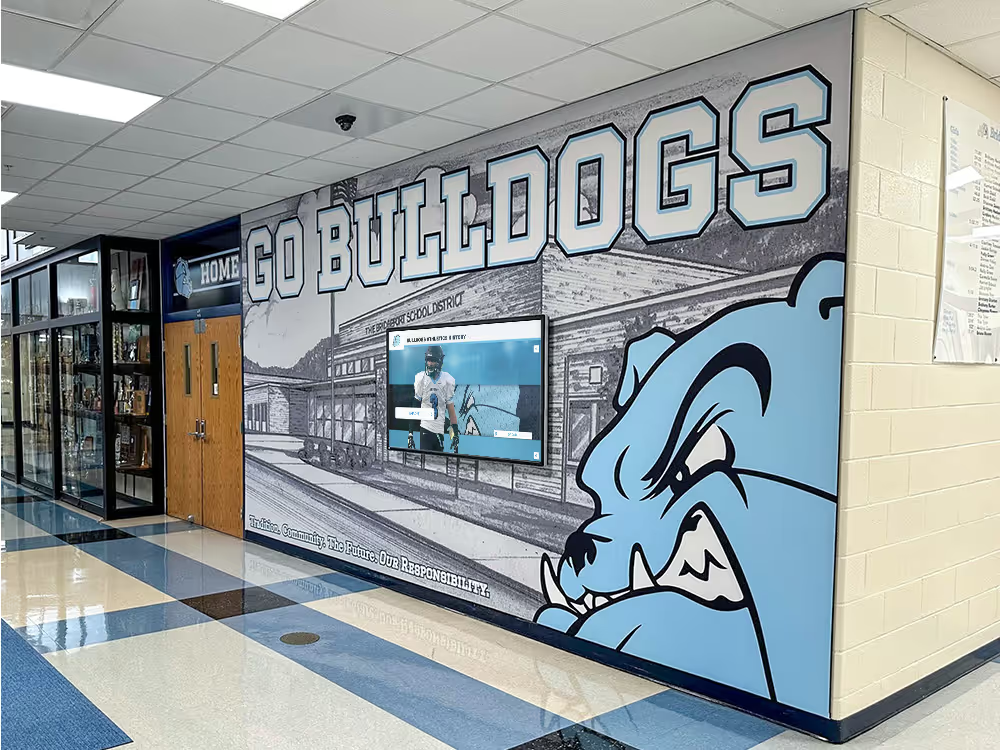
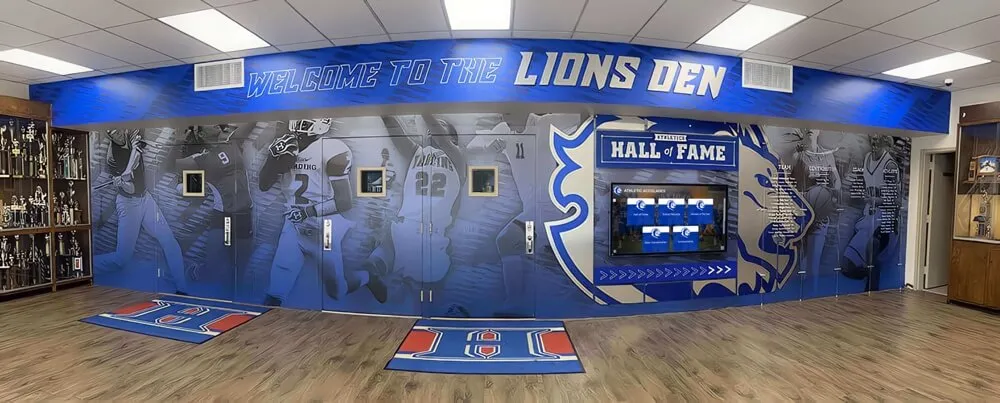
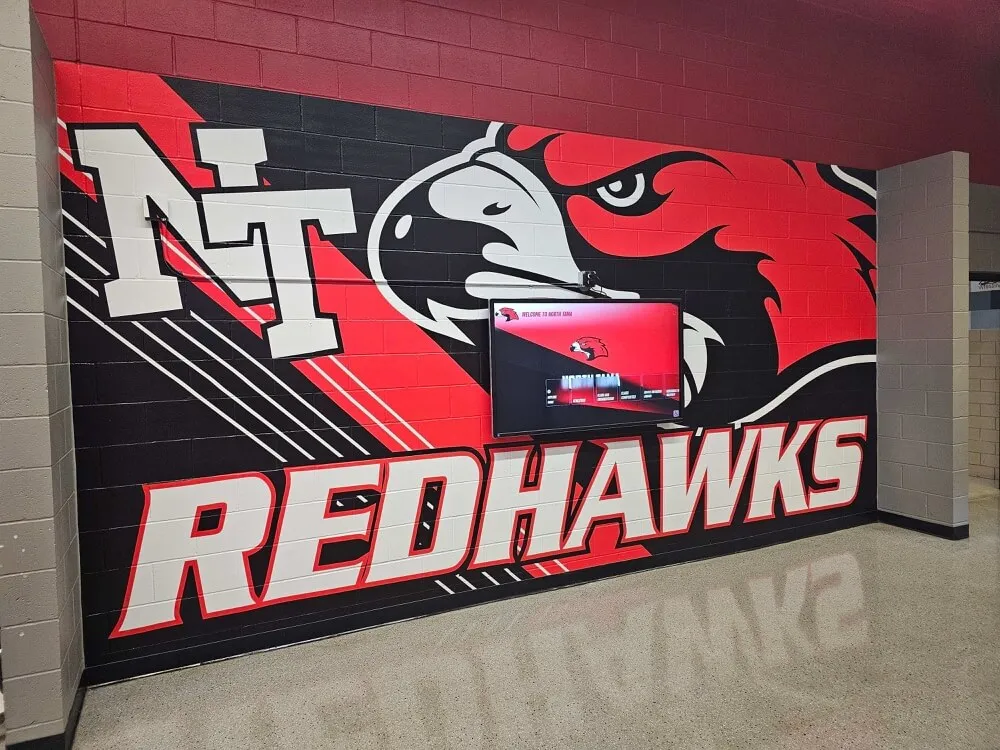
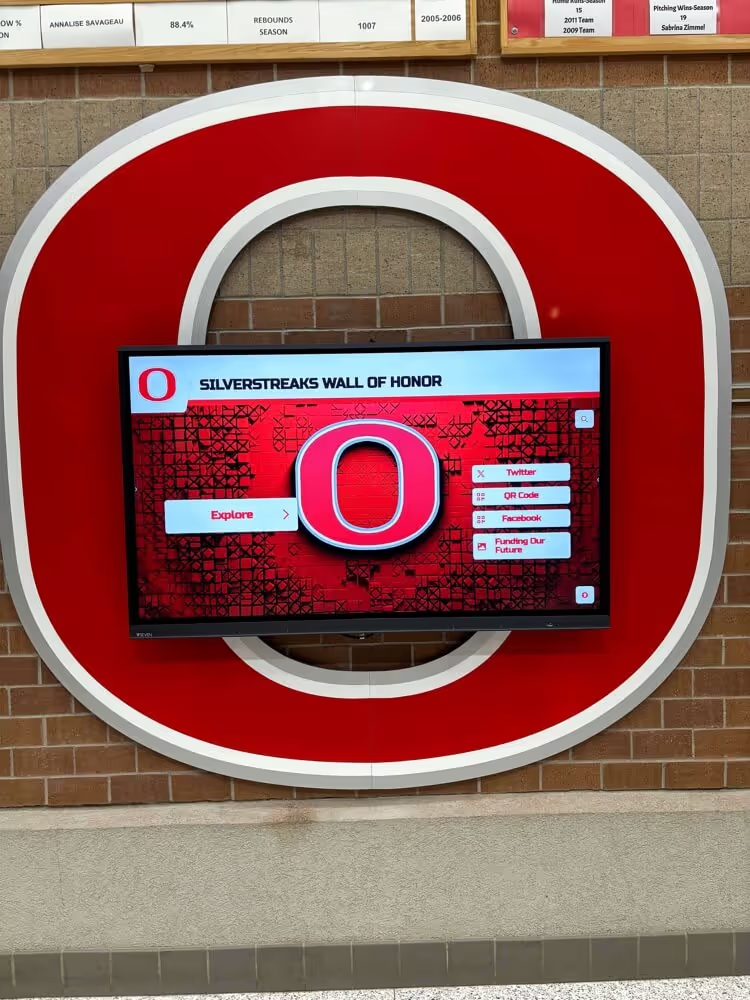
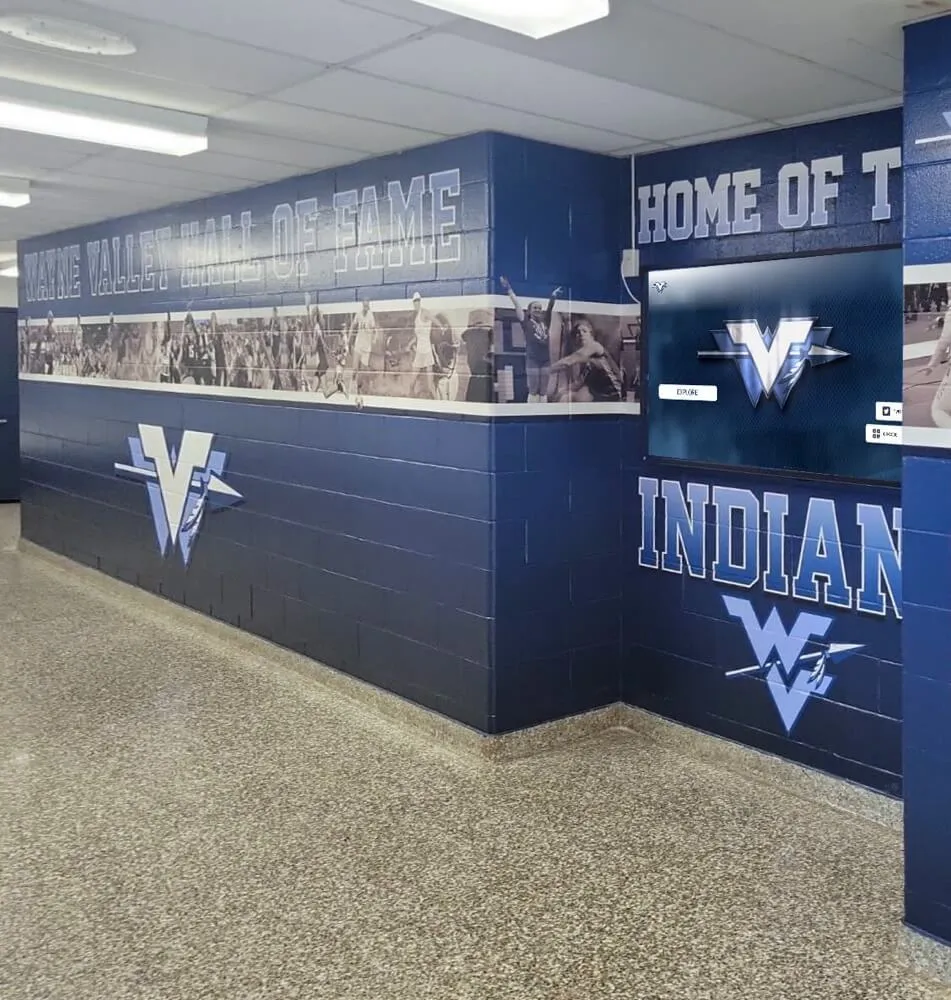
Permanent hallway installations ensure ceremony honorees receive ongoing visibility beyond single events
Entertainment and Program Variety
Break ceremony monotony with varied program elements including musical performances by honorees or peers, video presentations showcasing organizational excellence, brief speeches from distinguished alumni or community members, or entertainment interludes providing mental breaks between recognition segments. This variety maintains audience engagement while preventing tedium from repetitive award presentations.
Personalization Strategies: Making Each Honoree Feel Special
Generic recognition undermines ceremony impact. Personalization demonstrates organizations genuinely understand and value individual accomplishments.
Individual Recognition Approaches
Detailed Achievement Citations
Move beyond simply reading names and award titles by crafting specific citations describing what each honoree accomplished, unique aspects of achievements, obstacles overcome, or distinctive contributions meriting recognition. Rather than “John Smith receives the Academic Excellence Award,” share “John Smith demonstrates extraordinary dedication to learning, maintaining perfect grades while tutoring peers in mathematics and conducting independent research on renewable energy that earned state science fair recognition.”
These detailed citations require advance preparation but create meaningful moments where honorees hear specific accomplishments acknowledged rather than generic praise that could apply to anyone. Consider creating comprehensive academic recognition programs that celebrate diverse achievement dimensions.
Biographical Context
When practical, include brief biographical information providing context for achievements—where honorees came from, challenges they navigated, support systems that enabled success, or future aspirations. This storytelling transforms award recipients from names into real people audiences connect with emotionally while making recognition memorable rather than forgettable.
Visual Representation
Display professional photographs of each honoree during recognition, whether projected on screens during presentations or featured in programs and display materials. Visual representation makes recognition concrete while enabling audiences unfamiliar with recipients to connect faces with names and achievements.

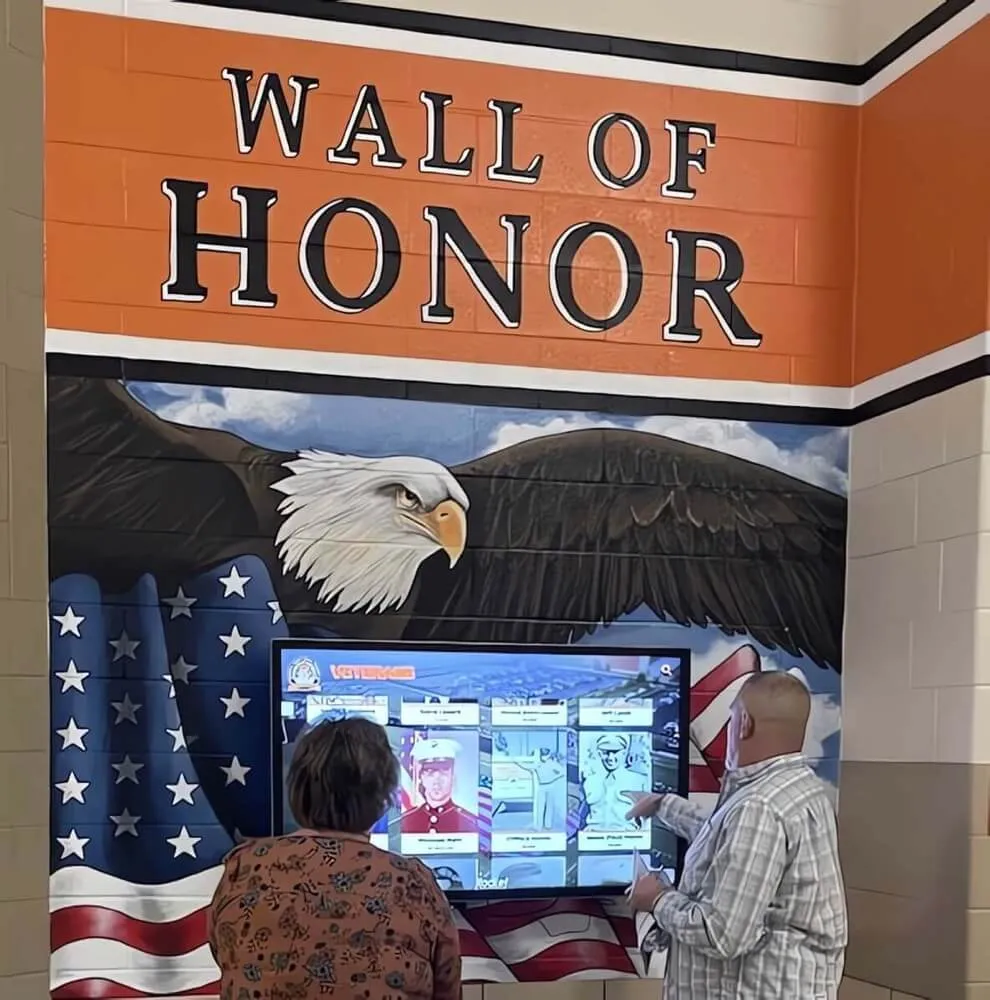
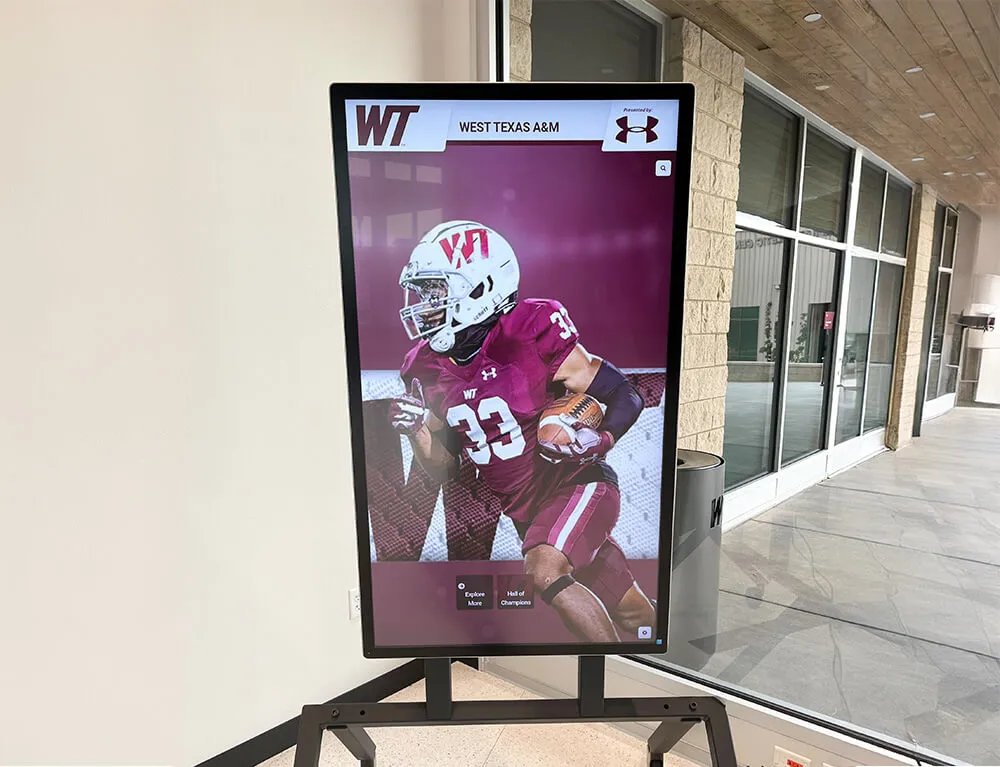
Interactive displays enable detailed exploration of individual honoree stories and accomplishments
Honoree Involvement and Voice
Personal Statements
Invite honorees to submit brief statements about what achievements mean to them, who supported success, or advice for others aspiring to similar recognition. Share these statements during ceremonies, in programs, or through display materials, allowing recipients to contribute their voices to recognition rather than receiving only institutional acknowledgment.
Acceptance Remarks
For major awards or smaller ceremonies, enable recipients to deliver brief acceptance remarks sharing thoughts about recognition, expressing gratitude, or reflecting on achievement journeys. These personal moments create emotional connection while enabling honorees to fully experience recognition rather than passively receiving acknowledgment.
Family Recognition
Acknowledge family members, teachers, coaches, mentors, or others whose support enabled honoree success. This recognition expands celebration beyond individual accomplishment to honor communities and support systems, creating more inclusive recognition experiences.
Building Permanent Recognition Systems: Beyond Single Ceremonies
While memorable ceremonies create immediate impact, permanent recognition systems extend value indefinitely by preserving honoree information and enabling ongoing accessibility.
The Case for Digital Recognition Archives
Creating permanent digital records of award recipients, achievement details, and ceremony content generates multiple benefits justifying modest investment:
Perpetual Honoree Visibility
Rather than limiting recognition to single ceremony moments, digital systems provide year-round acknowledgment through displays installed in high-traffic locations. Award recipients receive ongoing visibility when community members, prospective families, or visitors encounter recognition displays. This perpetual acknowledgment creates sustained value far exceeding ceremony-night recognition alone. Explore comprehensive approaches to digital recognition walls for permanent achievement celebration.
Historical Achievement Archives
Digital platforms enable maintaining searchable databases of all award recipients extending back decades. Community members can discover who received recognition historically, view achievement progression over time, and see patterns of excellence that define organizational character. This historical perspective strengthens institutional identity while preserving legacy that traditional static displays cannot accommodate.
Enhanced Content and Storytelling
Digital recognition overcomes space limitations of traditional plaques or printed programs, enabling rich multimedia content including detailed biographies, achievement descriptions, photographs, videos, and impact stories that bring accomplishments to life. Recipients receive comprehensive recognition showcasing full scope of achievements rather than abbreviated listings constrained by physical space.
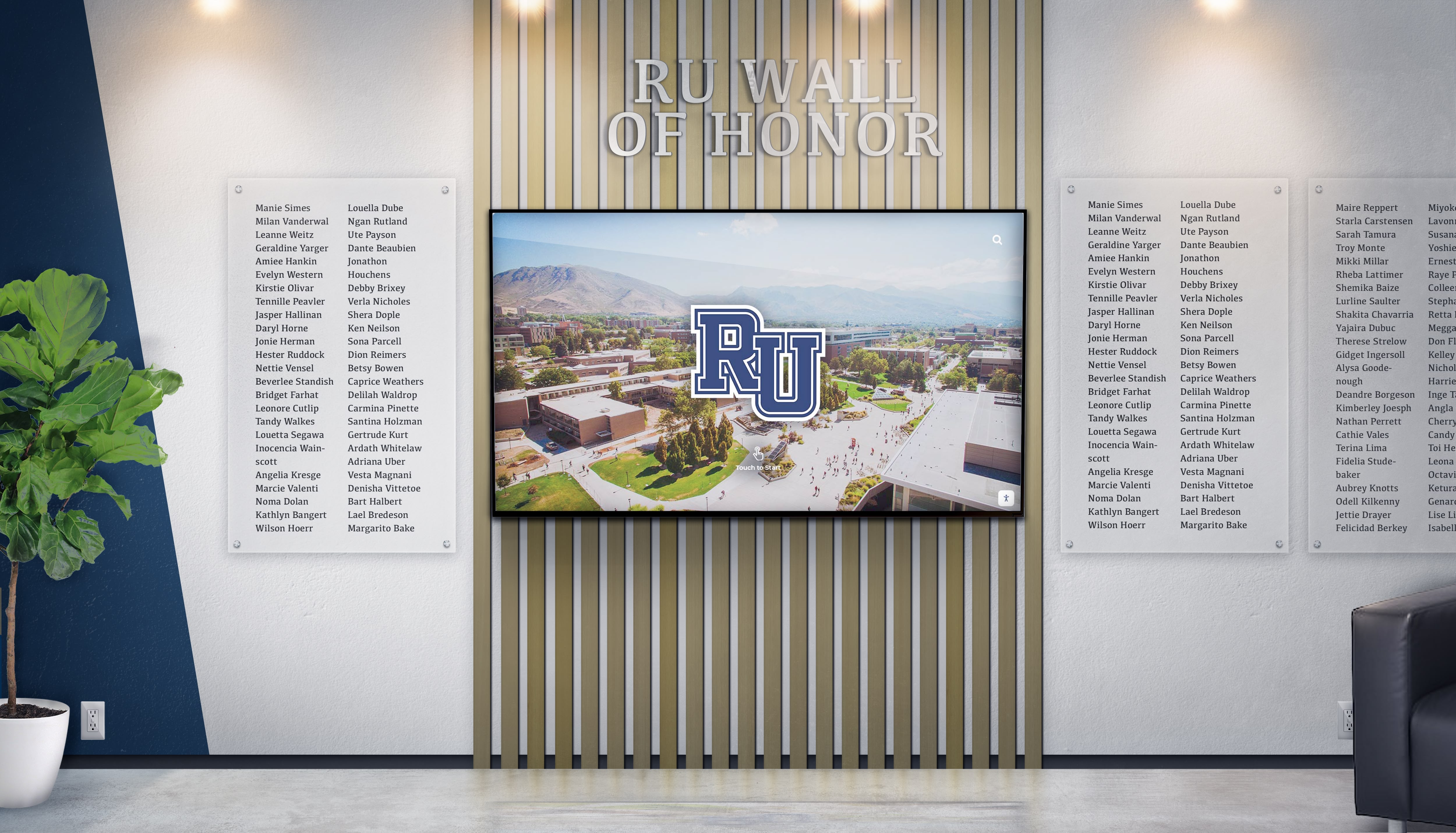
Digital walls provide unlimited capacity for honoring ceremony recipients across all years without space constraints
Technical Implementation of Recognition Systems
Understanding how digital recognition platforms work helps organizations design solutions meeting specific needs:
Display Hardware Options
Modern recognition systems typically utilize commercial-grade touchscreen displays installed strategically throughout facilities. Common installation locations include main lobbies where visitors first enter buildings, hallways with high student or employee traffic, gathering spaces where communities congregate, or specialized areas like athletic facilities, performing arts centers, or academic wings showcasing relevant achievements. Learn about selecting appropriate touchscreen display hardware for educational and organizational environments.
Display sizes range from 43-inch screens suitable for individual interaction to 65-inch or larger installations creating impressive visual impact. Touchscreen capabilities enable intuitive content exploration allowing users to browse honoree information, search specific recipients, filter by award category or year, and discover detailed achievement content at their own pace.
Cloud-Based Content Management
Back-end administrative systems provide authorized staff with simple interfaces for maintaining recognition content without requiring technical expertise. Organizations can add new award recipients immediately after ceremonies, update recipient information as honorees achieve subsequent accomplishments, upload ceremony programs and supporting materials, schedule content updates for specific dates, and manage multiple displays from centralized dashboards.
These cloud-based platforms eliminate dependence on IT departments for routine updates, allowing event coordinators or administrators to maintain current recognition efficiently. Solutions like Rocket Alumni Solutions provide comprehensive digital recognition systems combining professional hardware with intuitive content management.
Search and Browse Functionality
User-facing interfaces should provide multiple ways to explore recognition content including search by recipient name, filtering by award category or year, browsing chronologically through ceremony years, viewing featured honorees or recent recipients, and accessing related content like achievement criteria or award program descriptions. This flexible navigation ensures all users can find specific information or discover content through exploration.
Integration with Broader Recognition Initiatives
Award ceremony recognition should connect with comprehensive organizational recognition programs rather than existing in isolation:
Multi-Category Achievement Celebration
Digital platforms can showcase diverse recognition including academic honors, athletic achievements, artistic excellence, service awards, leadership recognition, and alumni accomplishments. This comprehensive approach demonstrates that organizations value and celebrate excellence across all dimensions rather than privileging specific achievement types. Explore strategies for creating comprehensive school recognition that celebrates diverse accomplishments.
Historical Context and Tradition
Connect current ceremony honorees with institutional history by showcasing how award programs evolved, featuring distinguished past recipients whose subsequent success validates recognition significance, preserving ceremony photographs and memorabilia, and creating timelines showing major achievement milestones. This historical perspective reinforces tradition while honoring those whose past accomplishments established excellence foundations.
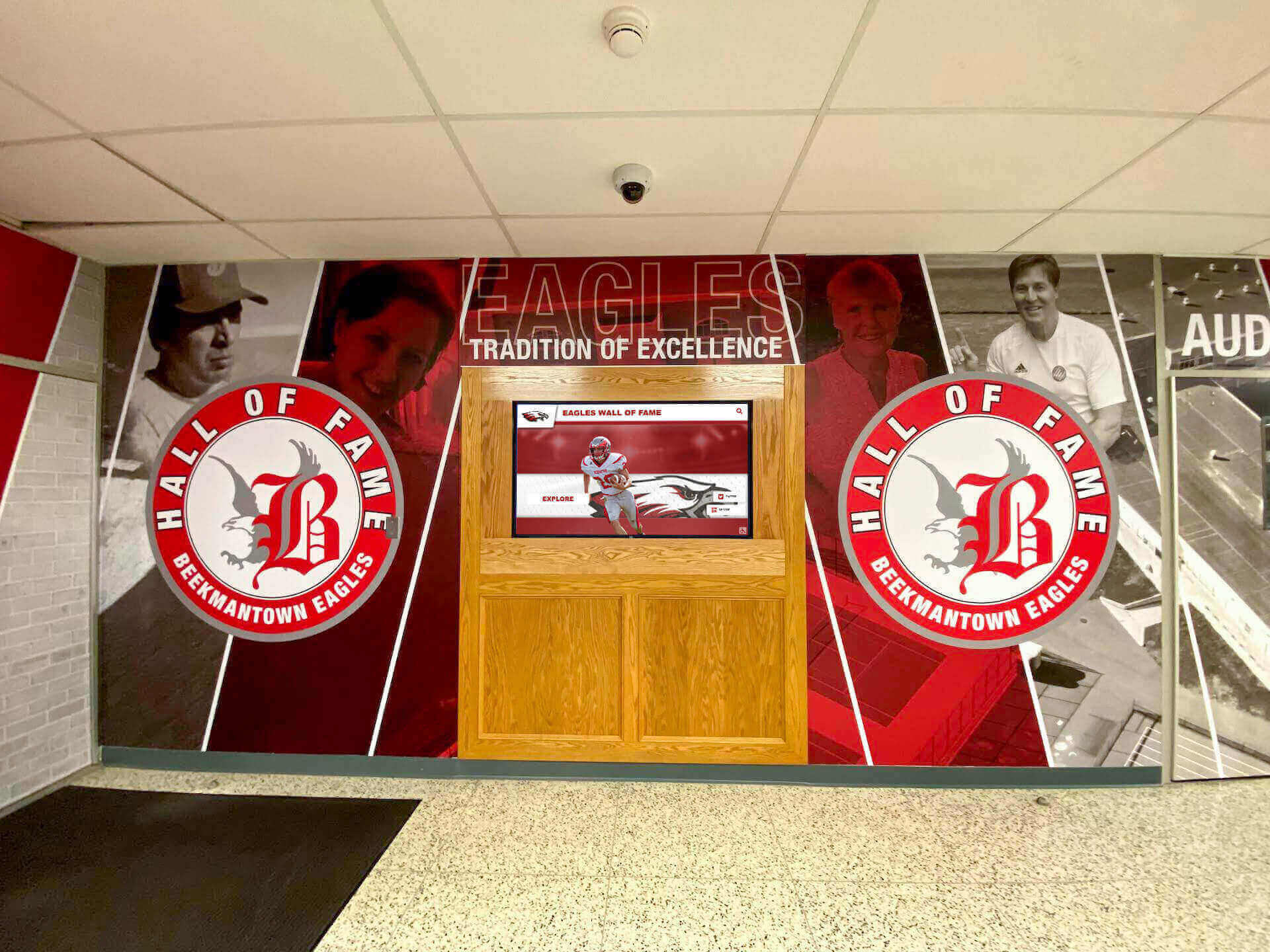
Recognition systems connect current ceremony honorees with broader institutional history and tradition
Ceremony Content and Program Elements: What to Include
Thoughtful content curation ensures ceremonies honor recipients appropriately while maintaining attendee engagement.
Essential Program Components
Opening and Context Setting
Begin ceremonies by establishing purpose, welcoming attendees, acknowledging ceremony significance, and providing context about award programs being celebrated. Leadership remarks should be concise—5-7 minutes maximum—focusing on what recognition represents and why honoring achievement matters to organizational mission and culture.
Award Category Explanations
Before recognizing recipients within specific categories, briefly explain award criteria, selection processes, and what achievements warrant recognition. This context helps audiences appreciate accomplishment significance while understanding why specific individuals received honors. For example, explain that valedictorian recognition requires highest cumulative GPA across four years while also considering course rigor, or clarify that employee excellence awards involve peer nomination and leadership committee evaluation.
Individual or Group Recognition
Structure recognition presentation appropriately for ceremony scale. For ceremonies honoring 5-15 recipients, individual stage presentations with detailed citations work well. Events recognizing 20-50 honorees might require grouped acknowledgment where recipients stand together for collective applause after category-wide recognition. Very large ceremonies exceeding 50 honorees necessitate efficient formats balancing acknowledgment with reasonable duration.
Supporting Content
Integrate varied program elements maintaining engagement including video presentations showcasing organizational excellence or honoree achievements, musical performances, inspirational speeches from distinguished alumni or community leaders, or recognition of supporters whose contributions enable award programs. This variety prevents monotony while adding emotional depth.
Optional Enhancements
Surprise Elements
Consider incorporating unexpected moments creating memorable experiences—special guest presenters, scholarships or prizes announced during ceremonies, performance surprises, or recognition of unsung contributors whose behind-scenes work enabled success. These surprises generate excitement while making ceremonies distinctive and memorable.
Interactive Technology
Leverage technology to enhance engagement through live polling asking audiences to guess achievement statistics, social media integration encouraging real-time sharing with event hashtags, digital programs accessible via QR codes providing enhanced content, or augmented reality experiences connecting physical awards to digital content. These technology elements particularly resonate with younger audiences while creating shareable content extending ceremony reach beyond physical attendees.
Ceremonial Traditions
Establish or maintain traditions that create continuity across ceremony years including specific music selections, processional rituals, special lighting or stage effects for particular awards, ceremonial objects like honor stoles or medals, or participation rituals where previous recipients present awards to current honorees. These traditions build anticipation while connecting current recipients to historical honoree community.

Interactive displays create engaging exploration experiences for ceremony attendees and ongoing visitors
Extending Ceremony Impact: Post-Event Recognition and Communication
Ceremony impact shouldn’t end when events conclude. Strategic post-event activities multiply recognition value.
Immediate Post-Ceremony Actions
Photography and Documentation
Ensure professional photography captures ceremony moments including individual honoree photographs, family photos, group shots by award category, candid ceremony moments, and overall event documentation. Make these photographs available to recipients, families, and broader communities promptly after ceremonies through online galleries, shared drives, or digital platforms where honorees can download images. Consider professional approaches to displaying school history including ceremony documentation.
Media and Communications
Develop post-ceremony communications celebrating honorees through organizational newsletters, social media posts featuring individual recipients with achievement summaries, press releases to local media, website news stories, and community announcements. This extended recognition multiplies ceremony visibility while ensuring community members who couldn’t attend still learn about honorees.
Thank You and Follow-Up
Send personalized messages to ceremony attendees thanking them for celebrating honorees, provide digital copies of ceremony programs, share links to event photography and video recordings, and include information about where ongoing recognition can be viewed. This follow-up extends ceremony experience while demonstrating organizational appreciation for attendance.
Long-Term Recognition Stewardship
Anniversary Recognition
Acknowledge recognition anniversaries by reaching out to past recipients on 5, 10, or 25-year milestones, inviting them to share updates about post-recognition accomplishments, featuring them in communications showcasing long-term impact of organizational programs, or hosting reunion events gathering past honorees. This sustained engagement demonstrates that recognition represents beginning of lasting relationships rather than terminal acknowledgment.
Update Recipient Profiles
As award recipients achieve subsequent accomplishments, update digital recognition profiles reflecting continued success. Student honorees might graduate from prestigious universities, launch successful careers, or make their own community contributions. Employee award recipients might advance to leadership positions or achieve professional recognition. Documenting these ongoing accomplishments validates that ceremony recognition identified individuals whose excellence continues manifesting throughout careers and lives.
Showcase Impact Stories
Periodically feature award recipients in deeper storytelling examining how recognition influenced their journeys, what achievements meant to them retrospectively, or advice they have for current community members aspiring to similar excellence. These impact stories demonstrate lasting value of recognition programs while inspiring current participants.
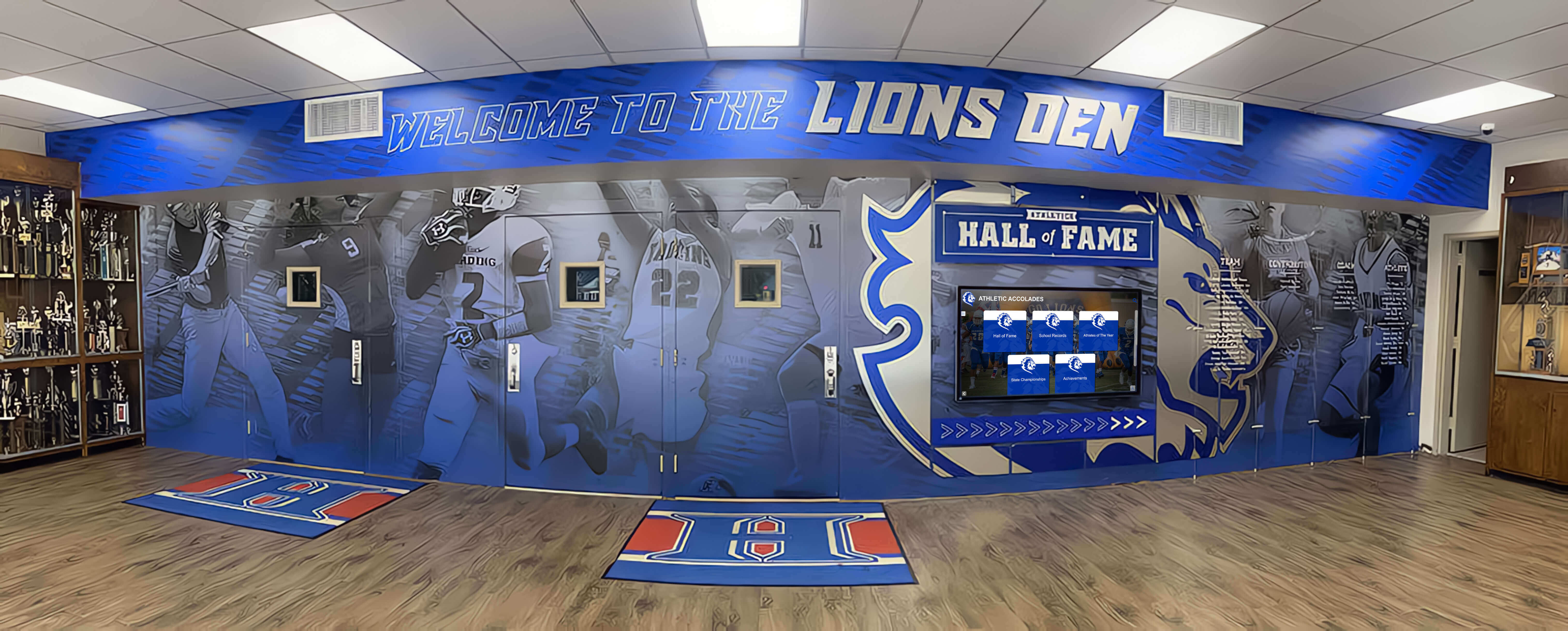
Comprehensive recognition spaces combine ceremony content with broader achievement celebration
Special Considerations for Different Award Types
Different achievement categories require tailored recognition approaches respecting unique characteristics.
Academic Award Ceremonies
Honoring Diverse Excellence
Academic recognition should celebrate varied intellectual accomplishment beyond traditional GPA metrics including subject-specific achievement, research accomplishments, intellectual growth trajectories, creative scholarship, and academic service contributions like tutoring or mentorship. This breadth prevents perception that only one achievement type merits recognition while encouraging excellence across academic spectrum. Learn about comprehensive academic honor roll recognition programs.
Balancing Competition and Celebration
Academic ceremonies risk creating competitive environments undermining collaborative learning cultures if not carefully managed. Emphasize personal growth, effort, and achievement relative to individual starting points alongside absolute performance metrics. Recognize students who demonstrated dramatic improvement, overcame learning challenges, or exemplified academic character through collaboration and supporting peers.
Athletic Award Ceremonies
Team and Individual Recognition
Athletic recognition should honor both individual excellence and team contributions that enabled collective success. Acknowledge individual statistical leaders, records, and exceptional performances while celebrating team championships, collective effort, and leadership that elevated entire programs. This dual focus prevents privileging individual accomplishment over team success. Explore strategies for recognizing high school athletic achievements comprehensively.
Character and Sportsmanship
Include awards recognizing character dimensions beyond athletic performance including sportsmanship, leadership, dedication, teamwork, and embodiment of athletic program values. These character awards communicate that athletic programs value how athletes compete and represent organizations alongside victories achieved.
Employee Recognition Events
Inclusive Excellence Criteria
Workplace recognition should acknowledge diverse contribution types including performance metrics, innovative problem-solving, collaborative leadership, mentorship, customer service excellence, and living organizational values. This breadth ensures employees across functions and roles see paths to recognition rather than single achievement type dominating acknowledgment.
Peer Recognition Components
Incorporate peer nominations or recognition allowing employees to acknowledge colleagues whose contributions they directly experienced. Peer recognition often identifies excellence that formal leadership evaluation processes miss while building collaborative culture where teammates celebrate each other’s contributions.
Planning Timeline and Implementation Steps
Successful award ceremonies require advance planning and systematic execution.
3-4 Months Before Ceremony
Establish Objectives and Scope
Define ceremony purpose, recipient categories, anticipated honoree numbers, target attendance, venue requirements, and budget parameters. Clear objectives guide all subsequent planning decisions while ensuring alignment between ceremony ambitions and available resources.
Form Planning Committee
Assemble cross-functional team including event coordination, communications, honoree selection oversight, technology management, and stakeholder representation. Distributed planning responsibility prevents overwhelming individuals while ensuring diverse perspective incorporation.
Select Venue and Date
Reserve appropriate venue considering capacity, accessibility, availability of needed technology, and aesthetic alignment with ceremony formality. Choose dates avoiding conflicts with major holidays, competitive events, or organizational activities that would limit attendance.
2-3 Months Before Ceremony
Finalize Honoree Selection
Complete recipient evaluation and selection processes ensuring sufficient lead time for notification, content development, and family scheduling. Delayed selection creates cascading timeline problems undermining preparation quality.
Develop Recognition Content
Create honoree biographies, achievement citations, visual materials, video content, and program materials requiring research, writing, design, and review cycles. Rushed content development produces generic recognition undermining ceremony impact.
Communication and Invitations
Notify honorees officially with personalized communications explaining what recognition entails, distribute invitations to ceremony stakeholders, implement registration systems tracking attendance, and manage communications responding to questions or special needs.
4-6 Weeks Before Ceremony
Program Development
Finalize ceremony scripts, confirm speakers and presenters, rehearse program timing, prepare presenter materials, and coordinate technical elements including audiovisual needs, lighting, and digital content. Detailed programs prevent ceremony day surprises or pacing problems.
Production Elements
Complete printed program materials, produce video content, prepare presentation slides, arrange decorations, coordinate catering if applicable, and confirm all vendor coordination for ceremony production elements.
Week of Ceremony
Final Confirmations
Verify all honoree attendance, confirm presenter preparation, conduct technical rehearsals, review contingency plans for potential problems, and finalize day-of coordination including setup schedules and staff assignments.
Setup and Testing
Execute venue setup, test all technology and audiovisual systems, arrange seating and staging, position display materials, and conduct final walk-throughs ensuring everything functions as planned.
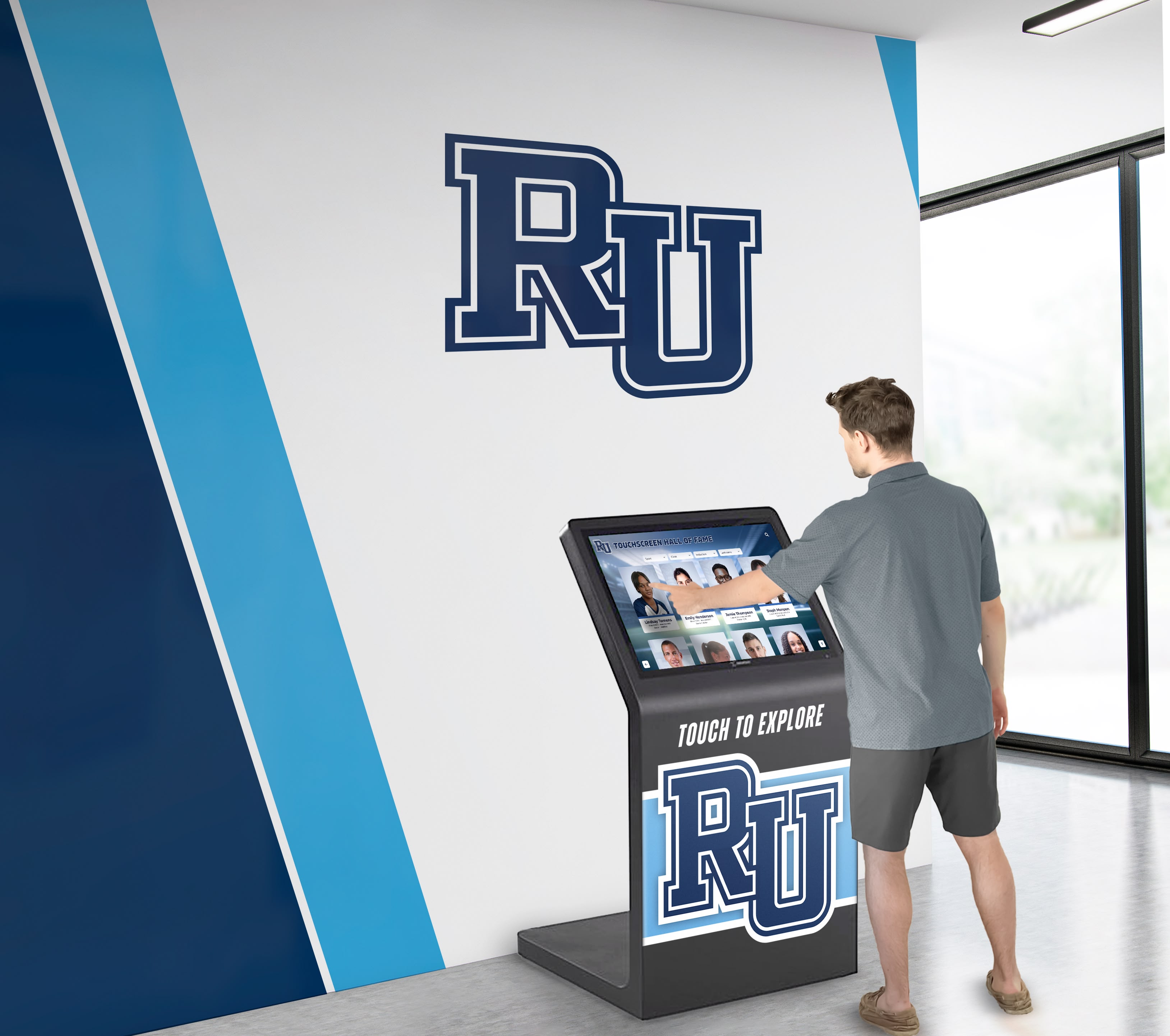
Well-implemented recognition systems become valued community resources extending ceremony impact year-round
Common Award Ceremony Mistakes to Avoid
Learning from typical missteps helps organizations design more successful recognition events.
Planning and Execution Pitfalls
Excessive Length
Ceremonies extending beyond 90 minutes test even enthusiastic attendees’ patience. Respect audience time through disciplined curation, efficient transitions, and strategic grouping of recognition. Avoid lengthy speeches, unnecessary program elements, or individual stage presentations when honoree numbers make individual recognition impractical within reasonable durations.
Generic Recognition
Reading lists of names with minimal context creates forgettable recognition feeling perfunctory rather than meaningful. Invest effort in personalized citations, specific achievement descriptions, and honoree storytelling that communicates organizations genuinely understand what each recipient accomplished.
Poor Audio/Visual Quality
Technical problems undermine ceremony professionalism and impact. Test all equipment thoroughly, provide backup systems for critical technology, ensure adequate audio coverage for entire venues, and verify presentation materials display properly. Technical failures distract from recognition while suggesting organizational incompetence.
Neglecting Non-Honoree Attendees
Remember that ceremonies serve audiences beyond recipients themselves. Provide program context for attendees unfamiliar with award categories, manage pacing maintaining engagement, include content relevant to broader audiences, and create participation opportunities preventing families from feeling like passive observers waiting for specific moments.
Recognition Content Issues
Inaccurate Information
Errors in names, achievement descriptions, biographical details, or recognition categories embarrass organizations while disrespecting recipients. Implement rigorous verification processes ensuring all ceremony content accuracy before distribution or presentation.
Inequitable Recognition
Perception that certain recipients receive preferential treatment—more detailed citations, enhanced visibility, superior presentation quality—creates dissatisfaction and perceived favoritism. Establish consistent recognition standards ensuring all honorees within categories receive equivalent acknowledgment quality.
Forgetting Accessibility
Failing to accommodate attendees with disabilities—whether inadequate seating for mobility devices, lack of assistive listening technology, or visual content without verbal description—excludes community members from participation. Proactively address accessibility ensuring inclusive events welcoming all attendees.
Taking Action: Next Steps for Your Award Ceremony
Organizations ready to enhance award recognition can begin with concrete planning steps.
Immediate Planning Actions
Audit Current Recognition Approaches
Document how your organization currently conducts ceremonies, identifying strengths worth preserving, limitations creating problems, opportunities for enhancement, and stakeholder feedback about recognition effectiveness. This assessment establishes baseline understanding guiding improvements.
Define Recognition Objectives
Clarify specific goals for ceremonies including honoree satisfaction, attendee engagement, community building, tradition establishment, and permanent recognition. Clear objectives focus planning efforts while providing evaluation criteria for assessing success.
Research Recognition Solutions
Explore digital recognition platforms designed for preserving ceremony content and enabling permanent accessibility. Compare capabilities, implementation requirements, pricing structures, and customer satisfaction among providers serving similar organizations.
Exploring Permanent Recognition Systems
When evaluating recognition technology, consider:
Essential Questions
- What content types does the platform support? (honorees, achievements, multimedia, historical archives)
- How intuitive is content management for non-technical staff?
- What implementation support is provided? (installation, content development, training)
- Can the system accommodate growth as recognition programs expand?
- How does pricing work? (upfront costs, subscriptions, maintenance)
- What accessibility features ensure inclusive user experiences?
Organizations seeking comprehensive recognition solutions should consider Rocket Alumni Solutions, which specializes in digital recognition displays helping schools and organizations celebrate achievement through engaging touchscreen experiences. Their full-service approach handles hardware installation, content development, staff training, and ongoing support, allowing organizations to focus on recognizing excellence rather than managing technology.
Building Recognition Culture
Start Small and Expand
Rather than attempting comprehensive transformation, implement focused enhancements to current ceremonies while planning long-term recognition system development. Quick wins might include improving recipient citations, adding video elements, or enhancing printed programs while exploring permanent digital recognition for future phases.
Engage Stakeholders
Involve ceremony recipients, attendees, planning committee members, and organizational leadership in recognition enhancement discussions. Their perspectives reveal what works well currently, what improvements would add value, and what traditions merit preservation versus elements ready for change.
Measure and Refine
Establish feedback mechanisms capturing honoree satisfaction, attendee experience assessment, and objective metrics like attendance rates, participation trends, or recognition visibility. Use this data to continuously improve ceremonies and recognition systems rather than assuming current approaches remain optimal indefinitely.
Conclusion: Creating Recognition That Matters
Award ceremonies represent powerful opportunities—moments when communities pause busy schedules to celebrate achievement, honor excellence, and inspire continued success. Yet too often, these carefully orchestrated events create only fleeting impact, with recognition moments fading after applause quiets and honoree information disappearing into storage rather than remaining accessible to inspire future excellence.
By implementing creative ceremony ideas that engage attendees, personalize recognition for each honoree, and extend impact beyond single events through permanent digital systems, organizations transform award programs from perfunctory obligations into meaningful celebrations that build culture, strengthen community, and create lasting value far exceeding ceremony-night experiences.
The strategies explored in this guide provide frameworks for honoring achievement appropriately—from thoughtful ceremony design that respects attendee time while celebrating recipients meaningfully, to permanent recognition systems ensuring today’s honorees receive visibility for years to come. Whether recognizing academic excellence, athletic achievement, professional contributions, or community service, these approaches demonstrate that genuine appreciation requires both memorable celebration and sustained acknowledgment.
As you plan your organization’s next award ceremony, consider how both immediate event experience and permanent recognition systems can work together to honor excellence comprehensively while building recognition culture that values and celebrates achievement across all dimensions.
Transform Your Award Recognition Program
Discover how modern digital recognition solutions can help you celebrate every honoree and preserve achievement information permanently while creating engaging experiences for your entire community.
Explore Recognition SolutionsRemember that recognition effectiveness matters more than recognition extravagance. Recipients and attendees consistently report that genuine acknowledgment acknowledging specific achievements resonates far more powerfully than elaborate productions lacking personalization. A detailed citation explaining exactly what someone accomplished and why it matters creates greater impact than generic praise within expensive productions.
Start where you are with enhancements you can implement for upcoming ceremonies—improving honoree citations, adding multimedia elements, enhancing program materials—then systematically build toward comprehensive recognition systems that serve your community for generations. Every achievement that receives thoughtful, sustained recognition reinforces that excellence matters while inspiring others to pursue similar accomplishment.
Your award recipients’ achievements represent countless hours of dedication, sacrifice, and excellence. They deserve recognition that honors those commitments meaningfully while extending celebration beyond single ceremony moments to create lasting visibility inspiring future generations. With thoughtful planning, creative ceremony design, and strategic recognition technology, you can create award programs that transform perfunctory acknowledgment into genuine celebration that matters to recipients, inspires observers, and strengthens organizational culture.