Baseball season ends quickly. The final out of the last game often arrives before the booster club has finished processing season expenses, and the window for meaningful sponsor follow-up narrows just as fast. Programs that treat sponsor recognition as a closing task—rather than a relationship-building system—consistently struggle to retain business partners from one season to the next.
The most effective baseball booster clubs understand that the fundraising work that happens after the season ends is just as important as the campaigns that run during it. Sponsor recognition displays, structured donor follow-up workflows, and permanent season displays are not administrative extras—they are the tools that convert one-time contributors into multi-year program partners.
This guide covers baseball booster club fundraising ideas with a deliberate focus on what sets baseball programs apart: the sponsor visibility opportunities tied to a long regular season, the natural display environments in dugouts, lobbies, and field entrances, and the follow-up workflows that turn end-of-season goodwill into renewal commitments. Whether your program is building its first formal fundraising structure or refining an existing sponsorship system, these frameworks give you practical, sport-specific tools that connect donor support to lasting institutional recognition.

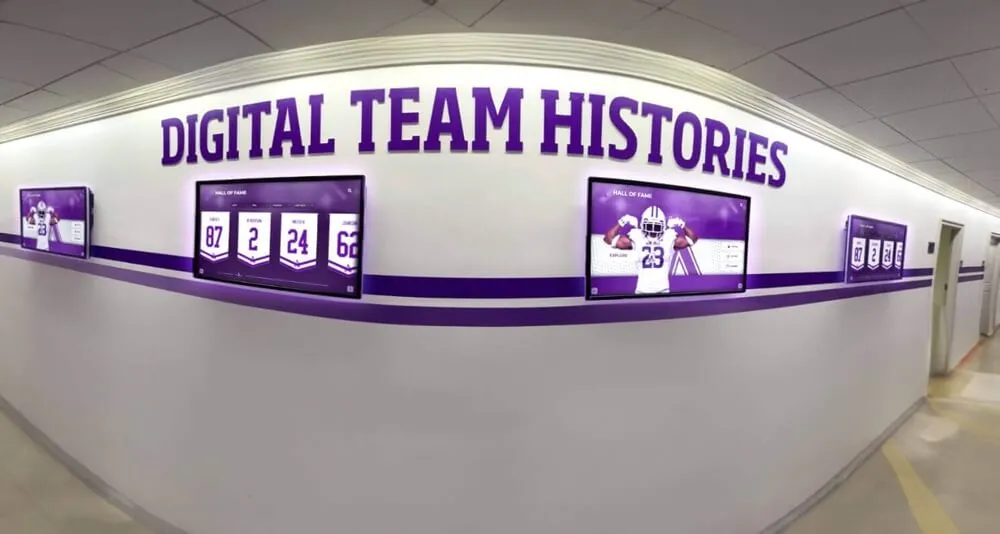
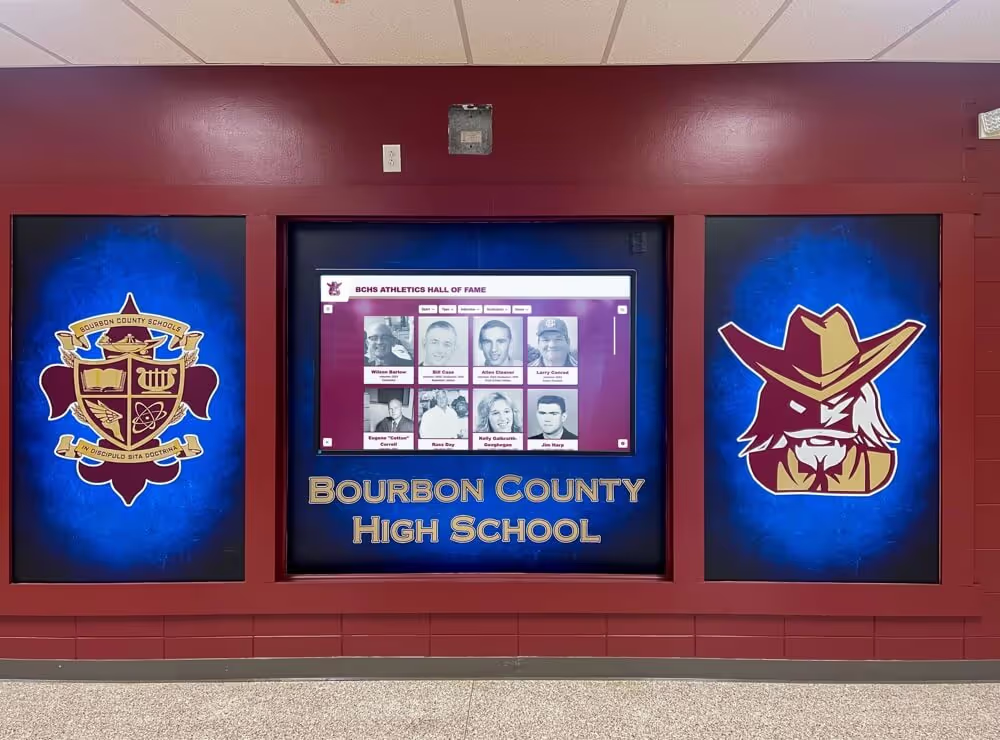
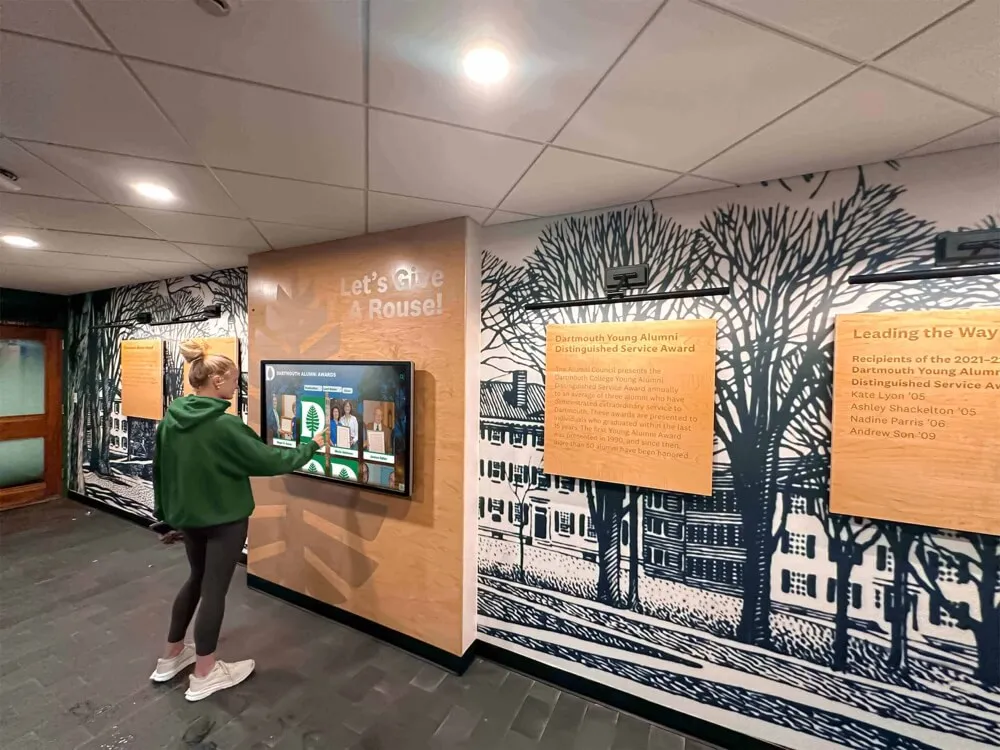
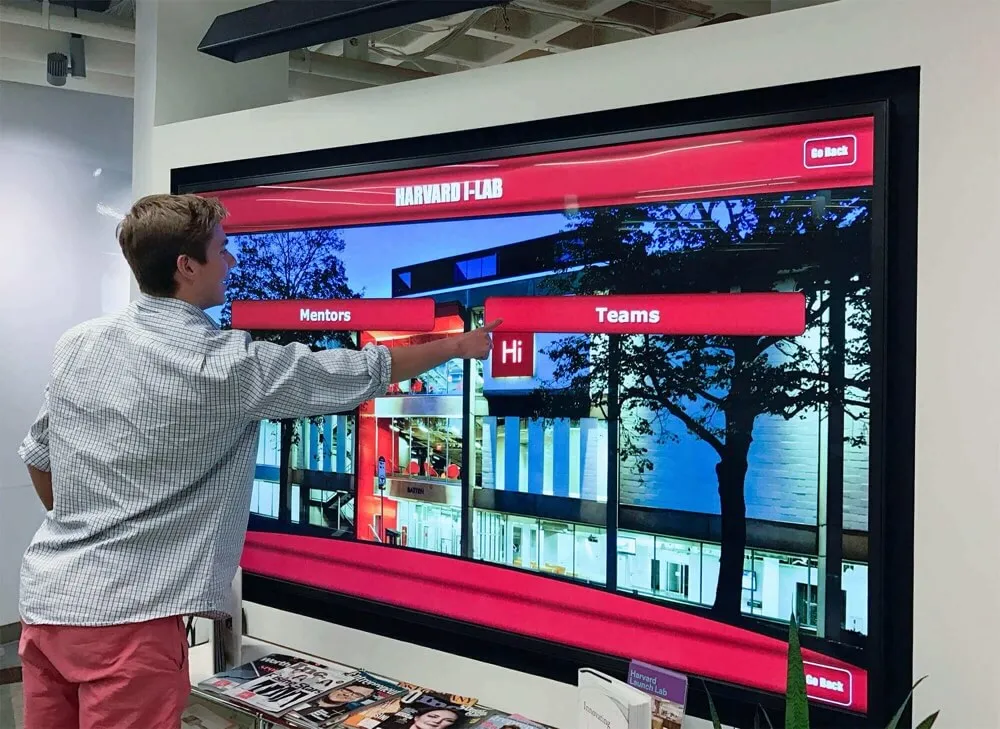
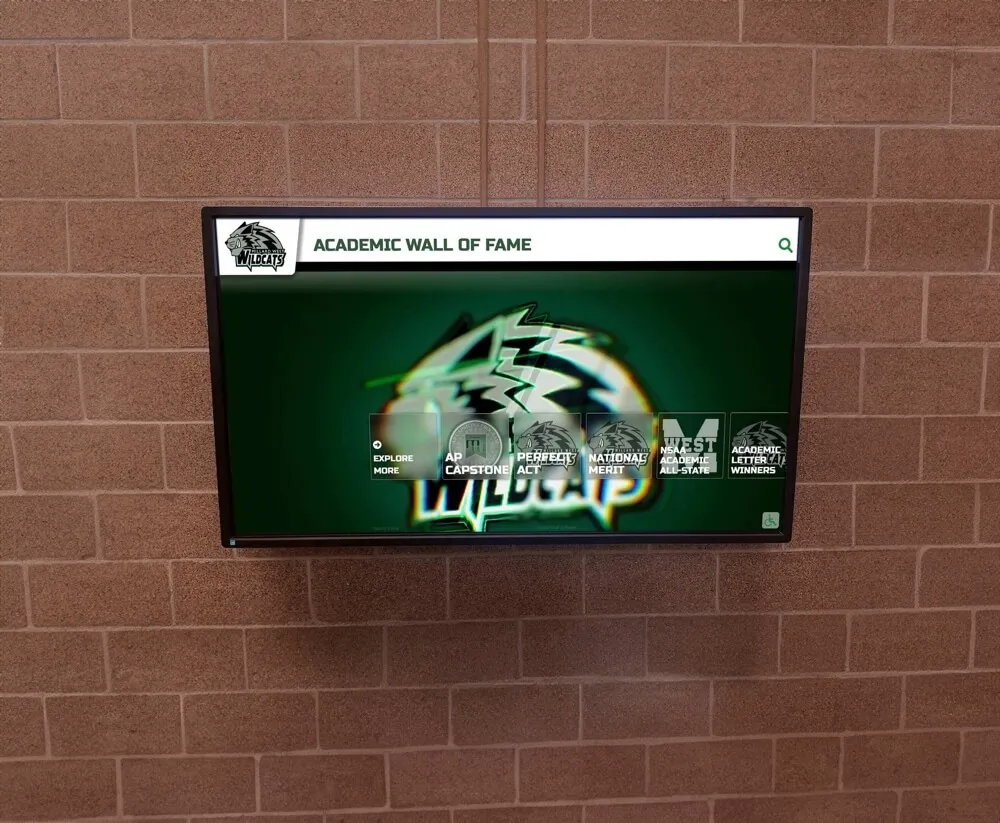
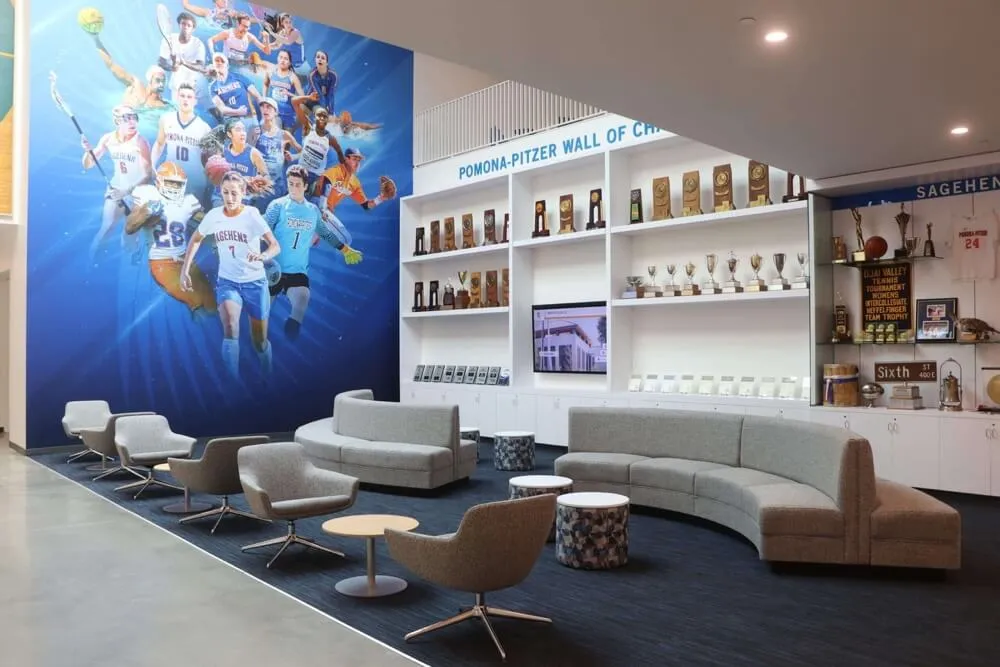
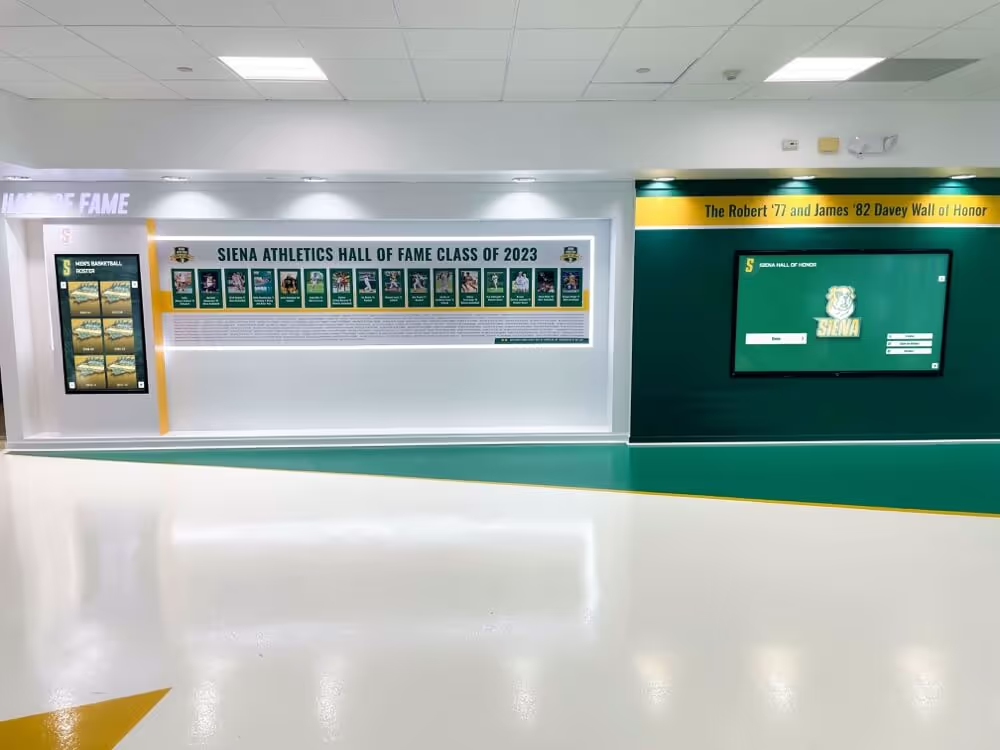
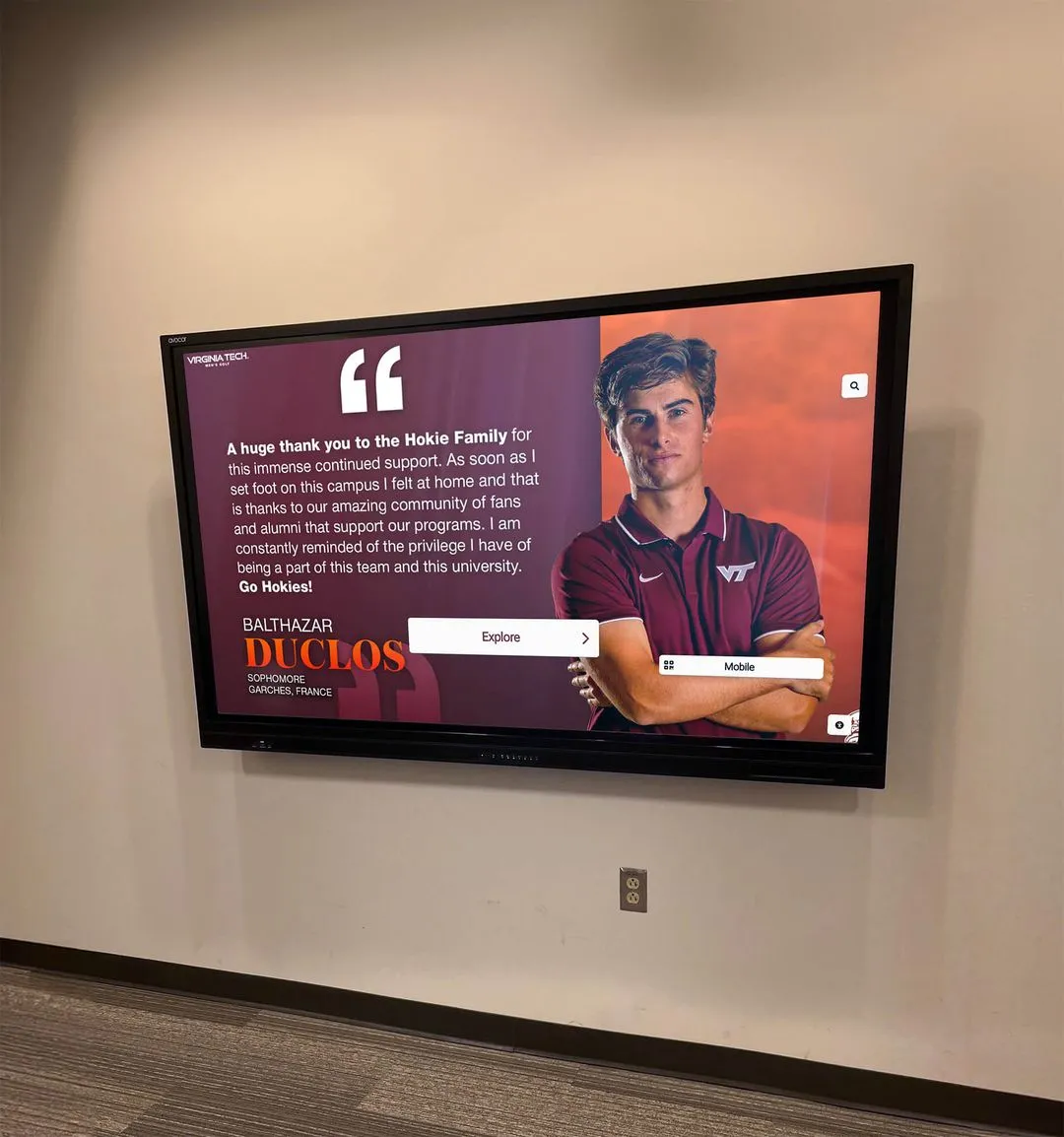
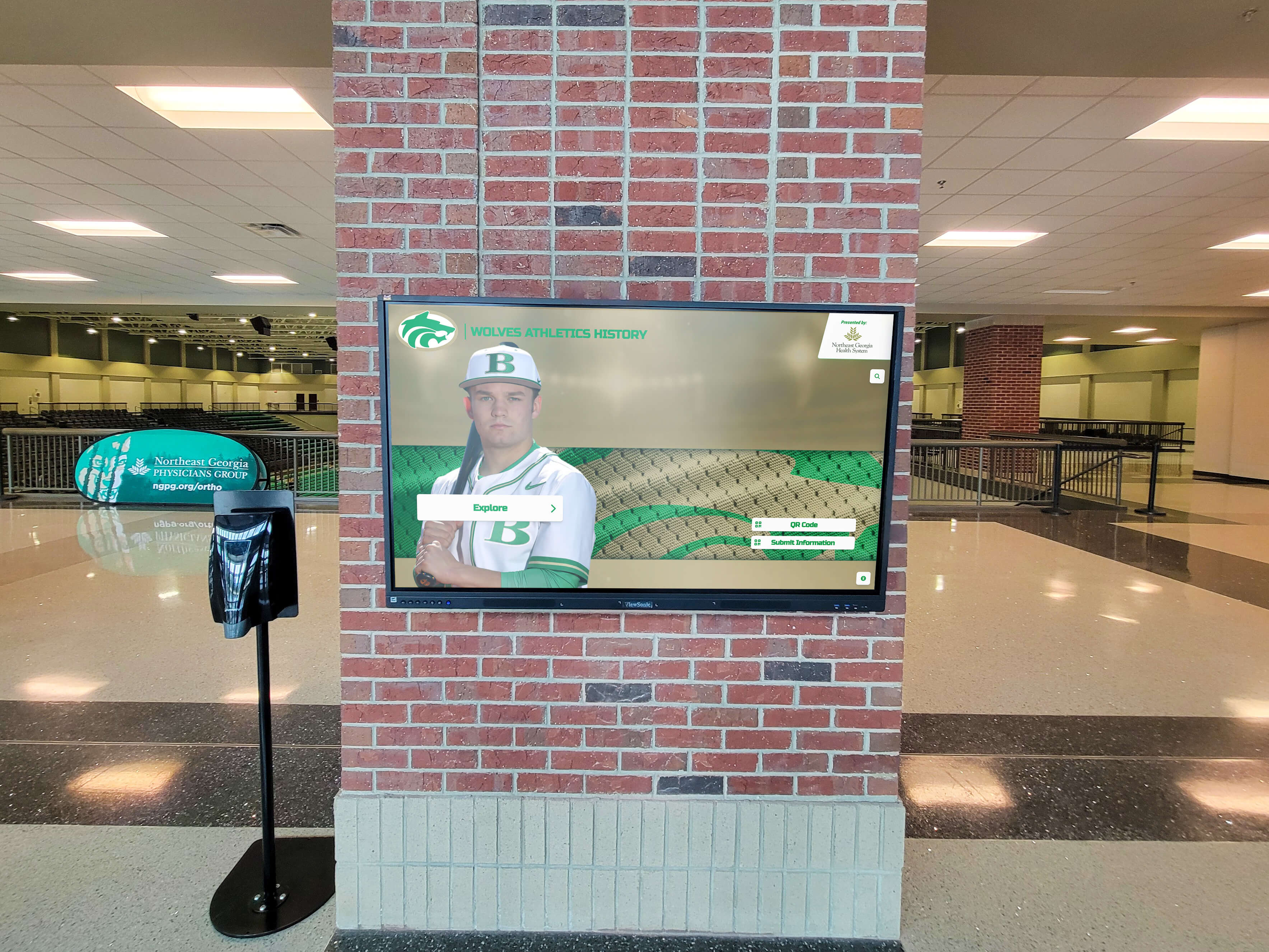
Sport-specific recognition displays in lobbies and athletic spaces give baseball sponsors visible, permanent placement that extends far beyond the final game
Why Baseball Booster Clubs Need Sport-Specific Fundraising Approaches
Generic booster club fundraising advice treats every sport identically—but baseball programs operate in an environment with distinct advantages and distinct challenges that generic playbooks ignore.
Baseball runs a long season with many home games. Most high school baseball programs play 25–35 home games between March and June. That volume of home dates creates more sponsor impression opportunities than almost any other spring sport. A business banner displayed at a baseball facility earns impressions across every home game, practice, and weekend tournament hosted on that field—a meaningful return on sponsor investment that programs should quantify and communicate.
Baseball facilities have natural display surfaces. Outfield fencing, dugout rooftops, concession stand facades, press box exteriors, and scoreboard surrounds are all high-visibility display locations specific to baseball. Programs that inventory these surfaces and include them in tiered sponsorship packages create tangible, visible benefits that business sponsors can see immediately—rather than abstract marketing promises.
Baseball alumni networks are loyal and nostalgic. Former players who pitched, caught, and competed on the same field often maintain deep emotional connections to their programs. That alumni affinity—particularly for players who went on to college or professional careers—makes baseball programs well-suited for hall of fame displays, retired number recognition, and legacy giving campaigns that connect current fundraising to long program histories.
Understanding these sport-specific advantages shapes every element of an effective baseball booster club fundraising program: how you structure sponsorships, what displays you install, and how you follow up after the season ends.
8 Baseball Booster Club Fundraising Ideas That Prioritize Sponsor Visibility
The following ideas are ranked roughly by their connection to sustained sponsor recognition—the dimension most directly tied to multi-year fundraising success.
1. Tiered Field Sponsorship Packages with Display Inventory
The most effective baseball fundraising structure starts with a formal inventory of every display surface at your facility. Walk your field before season and document every location where a sponsor could earn visibility: outfield fence sections (by panel or by full fence), dugout facades, backstop areas, concession stand signage, press box exteriors, scoreboard sponsorship sections, and scoreboard advertising slots.
Assign each location a tier value based on audience exposure:
| Tier | Location | Estimated Annual Impressions |
|---|---|---|
| Presenting | Scoreboard sponsor section + scoreboard ad | All home attendees; visible from parking |
| Gold | Full outfield fence panel + concession facade | All home attendees per game |
| Silver | Half outfield fence panel or dugout facade | Most home attendees per game |
| Bronze | Single fence panel | Visible from home plate area |
| Community | Program book + website listing | Distribution audience |
When sponsors can see exactly where their name will appear and understand the impression volume at that location, they are evaluating a tangible marketing investment—not making a charitable donation. That reframe significantly increases sponsor acquisition and retention rates.
Reviewing academic recognition program frameworks illustrates how tiered recognition structures can apply across both academic and athletic contexts—the same logic that governs scholarship recognition tiers applies directly to baseball sponsorship packaging.
2. Named Facility Areas with Permanent Plaques or Digital Integration
Named facility opportunities create the most durable sponsorship relationships in baseball programs. A business whose name is attached to the batting cage, the bullpen area, the press box, or the main field entrance has made a different kind of commitment than a fence panel sponsor—and will make a different kind of renewal decision at the end of the season.
Programs offering named areas should develop formal naming rights agreements that specify:
- The sponsor’s name or business name as it will appear in display materials
- The display format (engraved sign, digital screen integration, or dimensional lettering)
- The duration of the naming recognition (one season, three years, or longer)
- The renewal terms and first-refusal rights for the following season
- How the recognition will be maintained if the sponsor does not renew
Physical naming plaques belong at the location itself—a mounted sign at the entrance to the bullpen reading “The [Business Name] Bullpen” earns impressions every time a player or parent walks past. Digital integration extends that recognition into the school’s broader display ecosystem: the business name and logo can also appear in lobby screens, touchscreen kiosks, and athletic hall of fame displays, giving the sponsor presence across multiple institutional environments simultaneously.
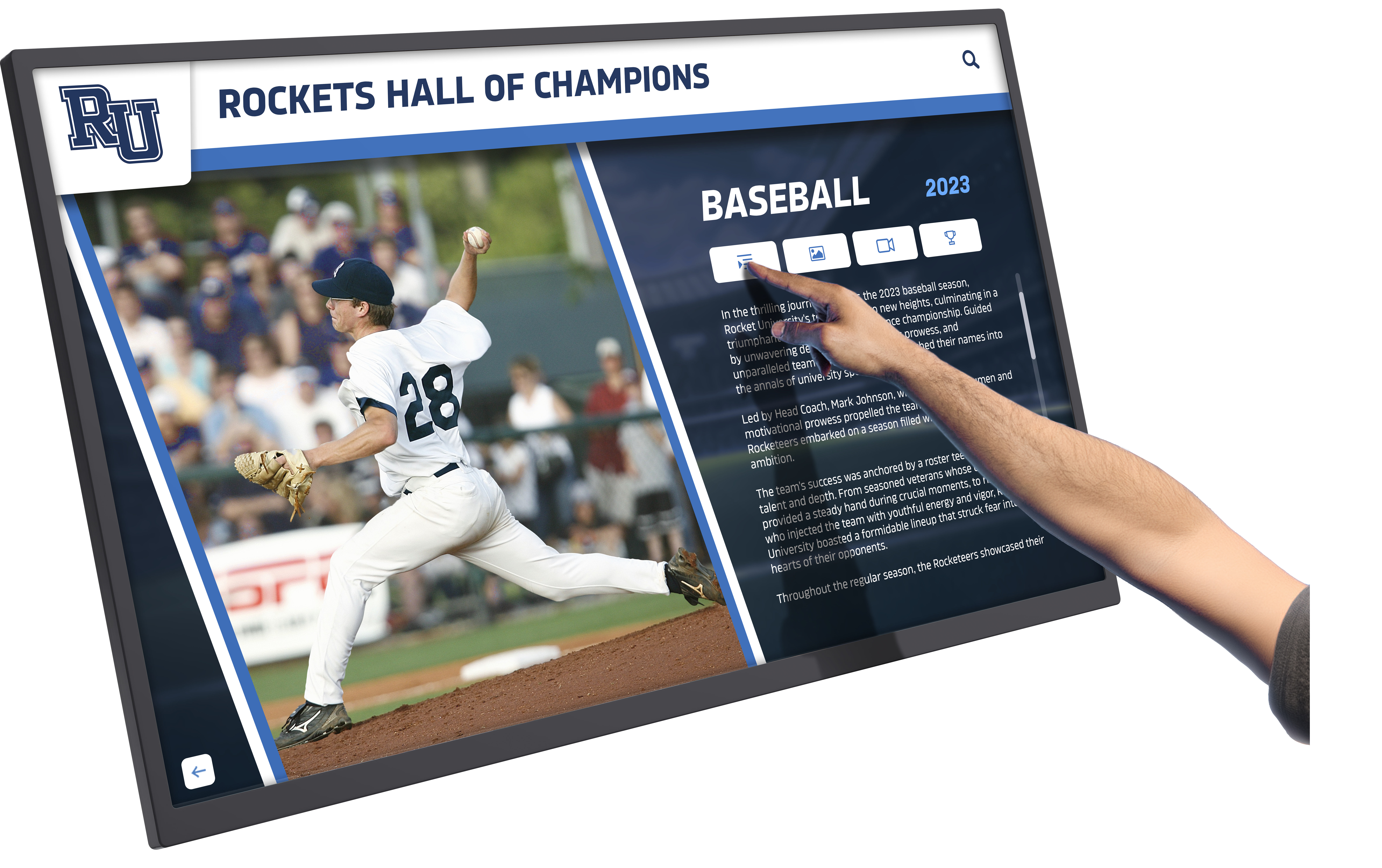
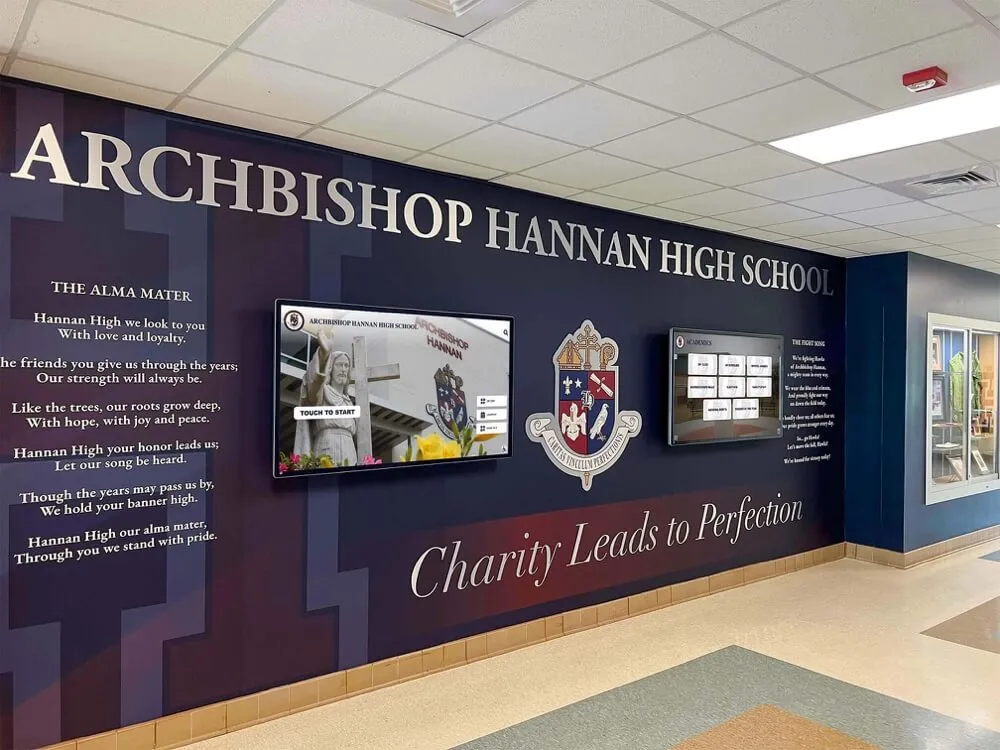
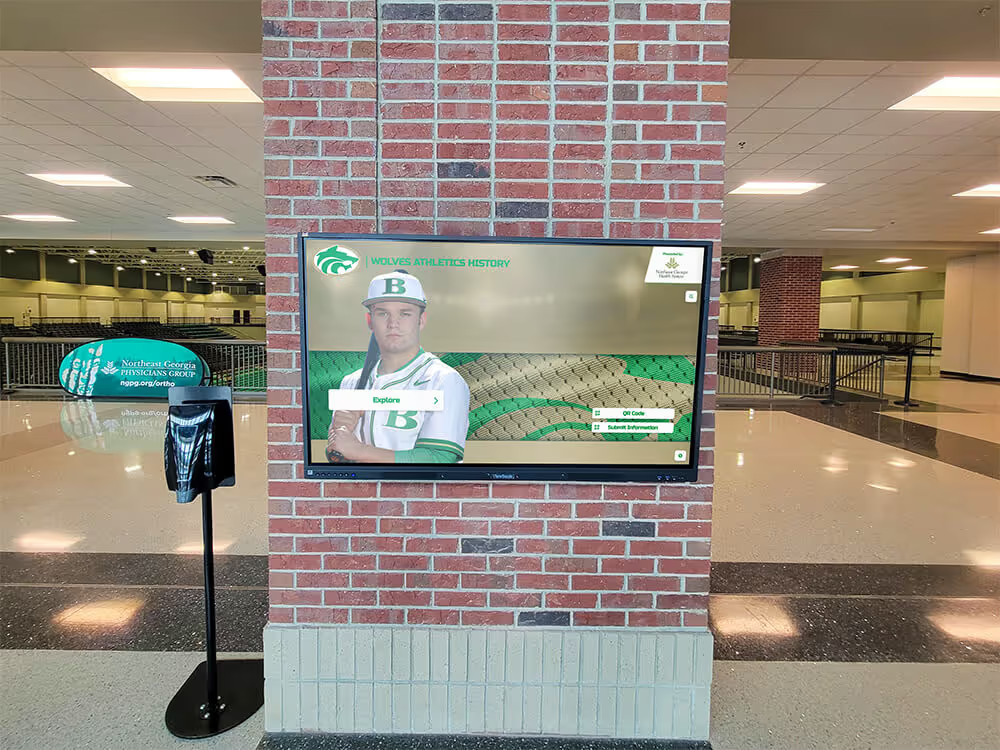
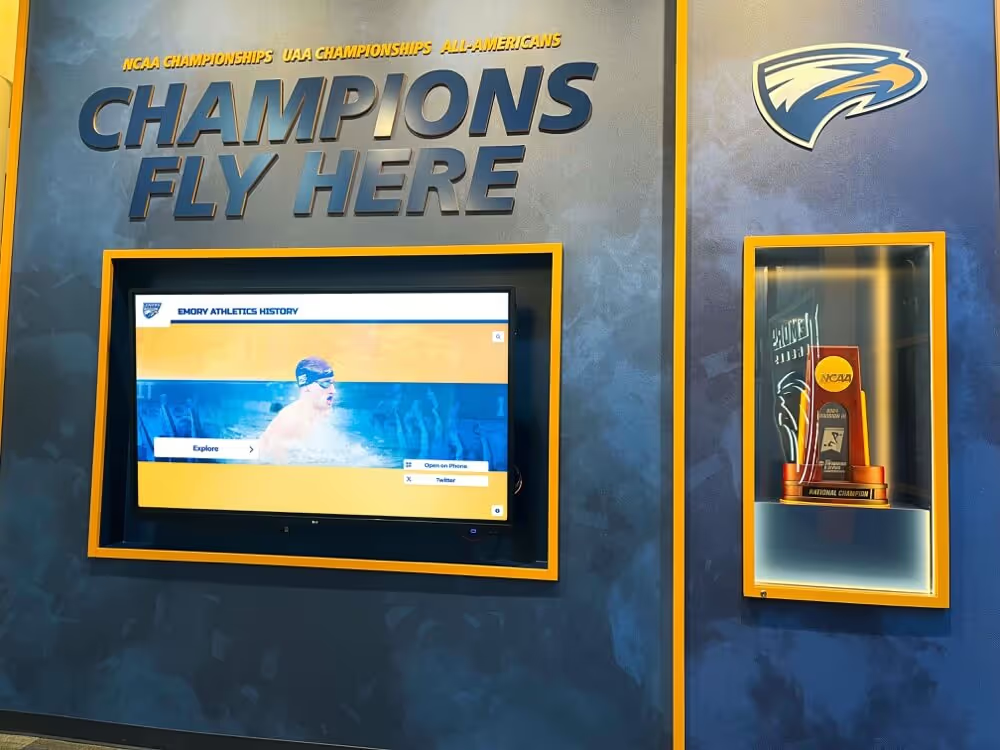
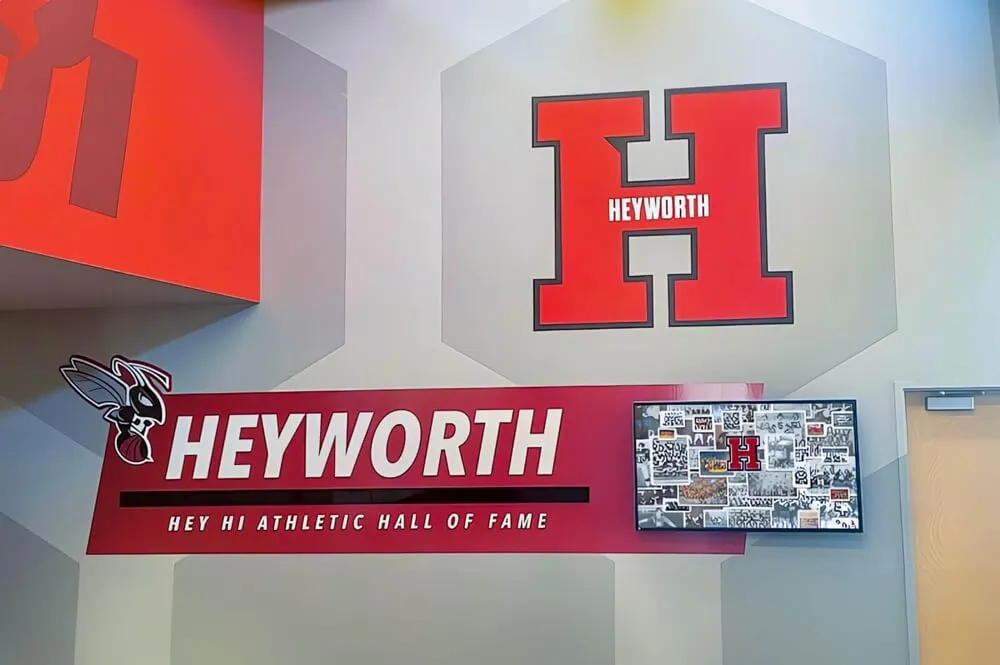
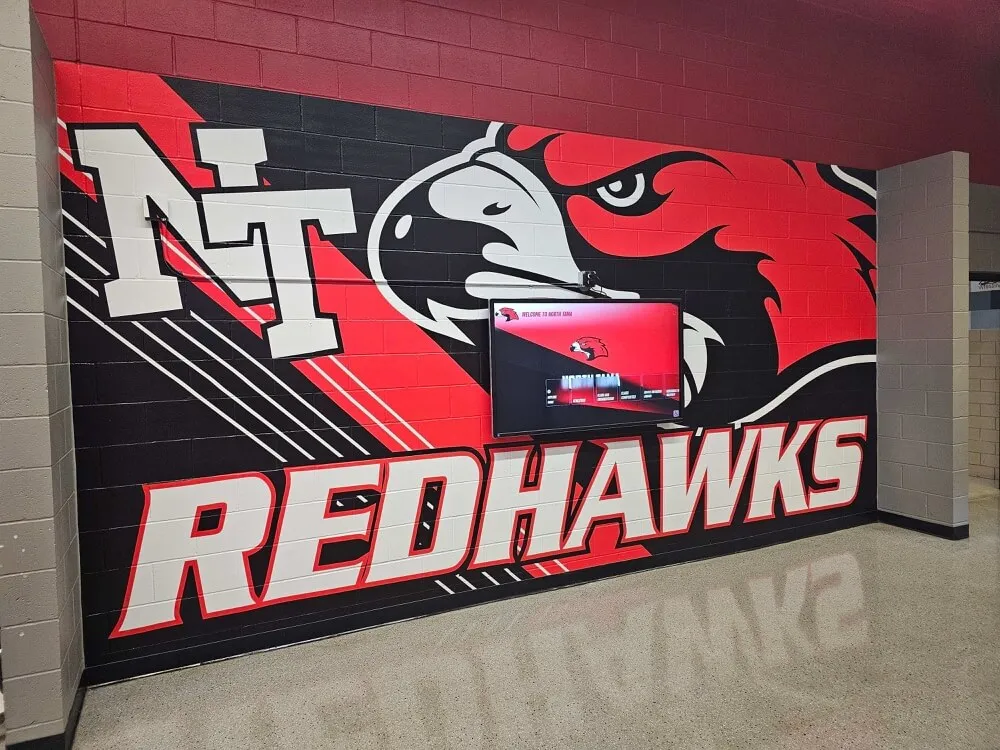
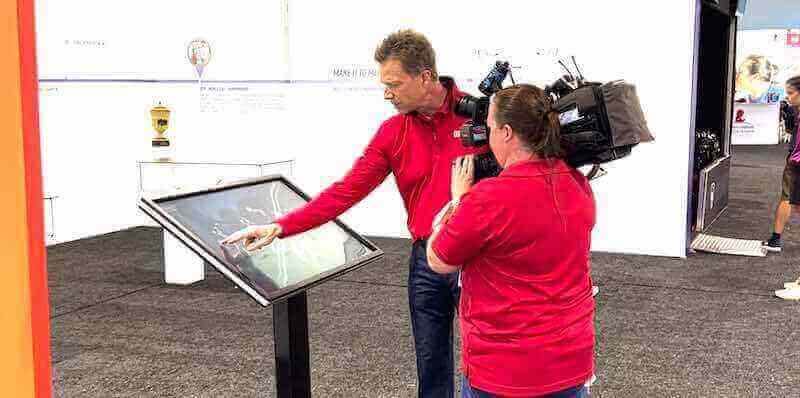
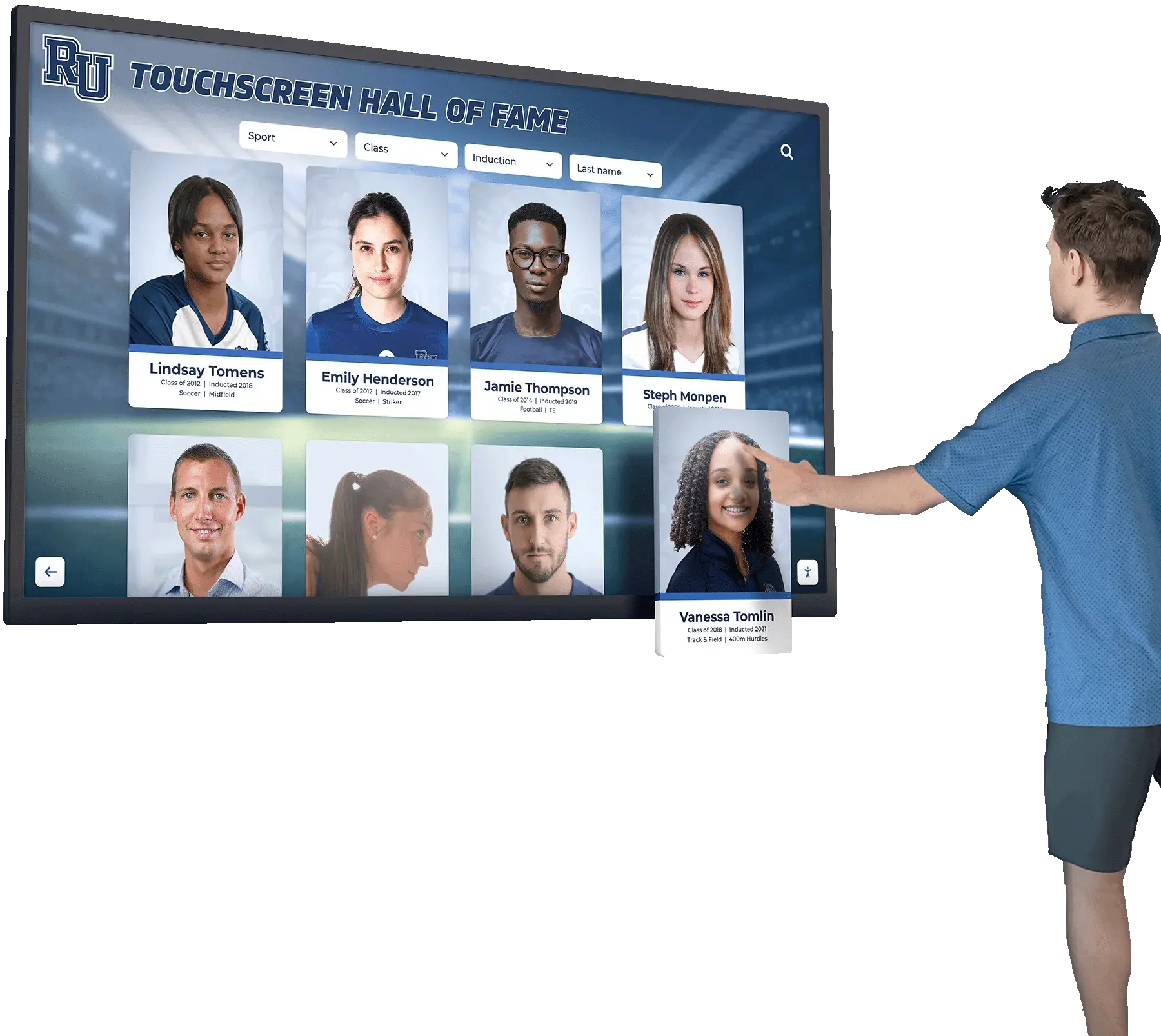
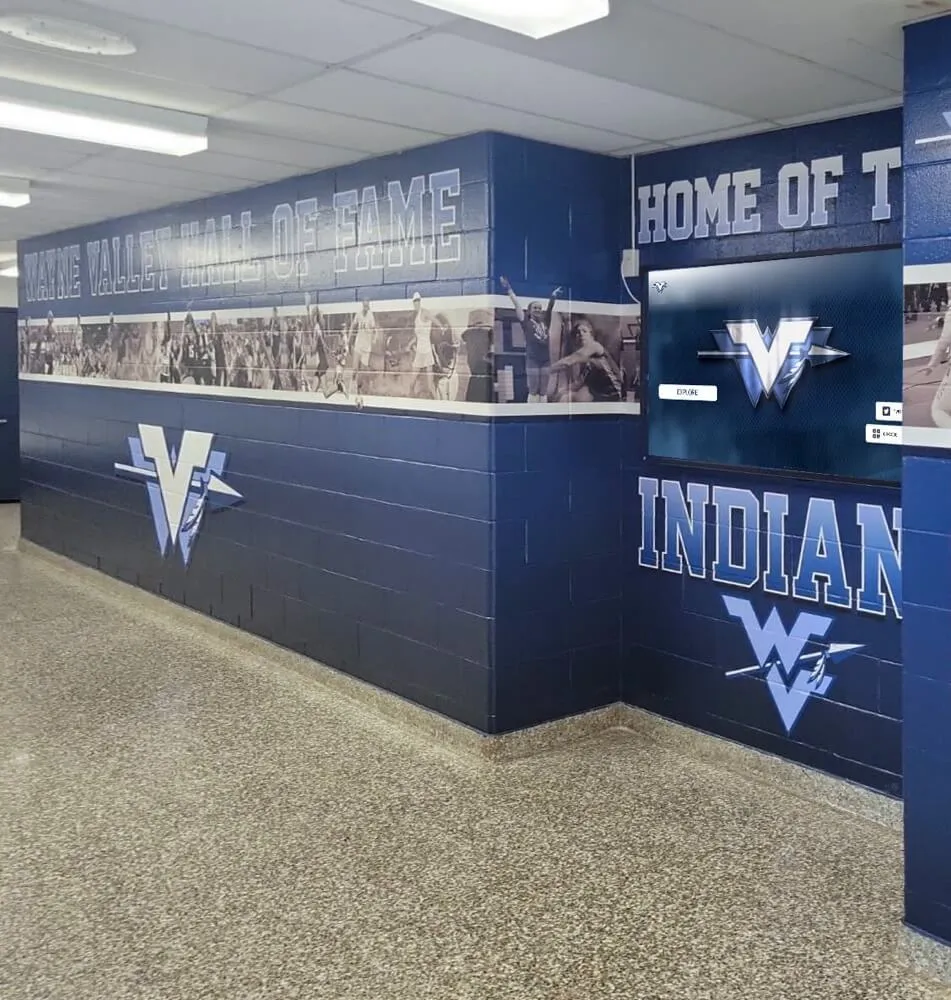
Interactive touchscreen recognition systems display baseball athlete profiles and sponsor acknowledgment in a single unified environment
3. End-of-Season Banquet with Tiered Sponsor Recognition
Baseball banquets serve a dual purpose: they celebrate players and coaches at season’s end while providing a structured moment for visible sponsor appreciation in front of an engaged audience. Sponsors seated at recognition tables, listed prominently in the printed program, and acknowledged from the podium by the head coach receive a form of public appreciation that printed materials cannot replicate.
Structured banquet recognition by tier creates a ceremony within the ceremony:
- Presenting and gold sponsors receive verbal acknowledgment by name from the head coach and athletic director, table signage identifying their sponsorship tier, reserved seating near the front, and framed sponsor appreciation certificates to take home
- Silver sponsors receive program listing with tier designation and group acknowledgment from the podium
- Bronze and community sponsors receive program listing and inclusion in a group appreciation slide or display board at the event
The banquet is also the ideal moment to preview next season’s sponsorship opportunities. Sponsors who attended, saw their recognition acknowledged publicly, and leave with a tangible certificate are primed for renewal conversations—far more so than a sponsor who receives a renewal invoice by email without context.
Exploring youth sports awards ideas provides additional frameworks for structuring awards ceremonies that integrate sponsor acknowledgment alongside athlete recognition—a model that translates directly to baseball banquets.
4. Digital Season Display with Sponsor Profiles
A digital season display—whether a lobby touchscreen, a hallway screen near the athletic facility entrance, or an integrated wall of fame—extends sponsor recognition beyond event-time visibility into year-round presence. For baseball programs, this is particularly valuable because the off-season runs from June through March: nearly nine months during which fans, students, faculty, and community members pass through athletic spaces without a game on the schedule.
Effective digital season displays for baseball programs include:
- Season recap content: Final record, championship or playoff results, senior highlights, and notable team milestones
- Sponsor profile rotation: Each sponsor’s name, logo, and tier designation appearing in scheduled rotation alongside athletic content
- Retiring number recognition: If the program retires numbers, those retired numbers and the player profiles associated with them
- Historical records: Team records for ERA, batting average, wins in a season, and other program milestones that connect current sponsors to institutional history
Digital displays that integrate sponsor recognition into the same environment as athletic achievement content communicate that sponsors are part of the program’s story—not a separate commercial category appended to the margins. That integration is what makes sponsors feel genuinely valued rather than merely listed.
Understanding how schools use digital displays throughout the school day shows how recognition content reaches audiences at multiple touchpoints—a model that applies equally to baseball facility displays reaching students, staff, and visiting families.
5. Alumni Baseball Campaign with Hall of Fame Integration
Baseball alumni campaigns pair well with hall of fame recognition because baseball programs often have notable alumni who played college or professional baseball—names that carry real meaning in the community. A structured alumni fundraising campaign that acknowledges former players in a digital hall of fame display creates a tangible giving incentive: contribute and see your name permanently added to the program’s recognition environment.
Effective alumni campaigns for baseball programs use:
- Season anniversary appeals: “We’re celebrating the 20th anniversary of the 2006 championship team—help us honor that season with a digital recognition display”
- Record board campaigns: Fundraising tied to a specific upgrade—digitizing the program’s all-time statistical records
- Legacy giving recognition: Former players who make cumulative gifts above a threshold are inducted into the hall of fame display
The connection between alumni giving and visible recognition is direct: donors see exactly what their contribution produces, and their names persist in the facility long after their playing career ended. That permanence is compelling in ways that annual fund appeals rarely achieve.
6. Local Business Sponsorship Prospecting with Community Tie-Ins
Baseball’s community character makes it particularly effective for prospecting local businesses that may not respond to generic athletic department solicitations. Programs that tailor their outreach to businesses with authentic connections to the sport—sporting goods retailers, orthopedic clinics, physical therapy practices, auto dealerships that sponsor community events, restaurants frequented by team families—find that sponsor acquisition requires fewer cold contacts.
Effective prospecting strategies include:
- Alumni business outreach: Former players who now own or operate businesses in the area are natural first calls. They have personal connection to the program and understand what their support means to current players.
- Adjacent business targeting: Businesses within walking distance of the baseball field that benefit economically from game-day traffic—local restaurants, gas stations, convenience stores—have legitimate marketing interest in game-day banner placement.
- Medical and fitness community partnerships: Physical therapy practices, orthopedic groups, and sports medicine providers often sponsor athletic programs as community engagement and professional visibility. Baseball’s injury profile makes these partnerships particularly relevant.
When prospecting, bring a sponsorship menu rather than a single-tier proposal. Businesses should be able to choose their investment level rather than accept or reject a specific package—the tiered structure converts refusals of larger packages into smaller commitments that can grow over time.
7. Peer-to-Peer Fundraising with Player Stat Cards
Baseball’s natural affinity for statistics creates a fundraising angle most other sports lack. Player stat card campaigns pair personal outreach with a tangible deliverable: donors who contribute receive a commemorative digital or printed stat card featuring the player who solicited them—career statistics, position, class year, and a team photo.
Programs running stat card campaigns report that players with strong family networks typically raise $300–$800 each in peer-to-peer contributions. With 18–22 players on a varsity roster, a well-run stat card campaign can generate $6,000–$16,000 with minimal organizational overhead beyond card production.
Platforms like Snap! Raise, Booster, or 99Pledges handle the online pledge infrastructure. The program supplies the stat card design; families and players handle the outreach through their personal networks. The result is a fundraiser that runs largely without central volunteer management after launch.
8. Record Board and Display Upgrade Campaign
Fundraising campaigns tied to a specific, visible facility improvement often outperform general appeals because donors can see exactly what their contribution produces. A baseball program raising funds to install a new digital record board, a digital sponsor recognition display, or an integrated hall of fame touchscreen has a tangible project to present to prospective donors.
Effective display upgrade campaigns include:
- A lead donor opportunity: one major gift ($5,000–$15,000) covers a significant portion of the project and earns naming recognition on the display itself
- Mid-level recognition: contributors at $500–$2,500 are listed on the display as founding supporters
- Broad base appeals: smaller gifts from families, alumni, and community members aggregate toward the project goal
When the display is installed, the recognition it provides becomes self-sustaining: every future visitor sees not only the athletic content but the names of the donors who made the display possible. That ongoing visibility makes display upgrade campaigns among the highest-return fundraising projects available to baseball booster clubs.
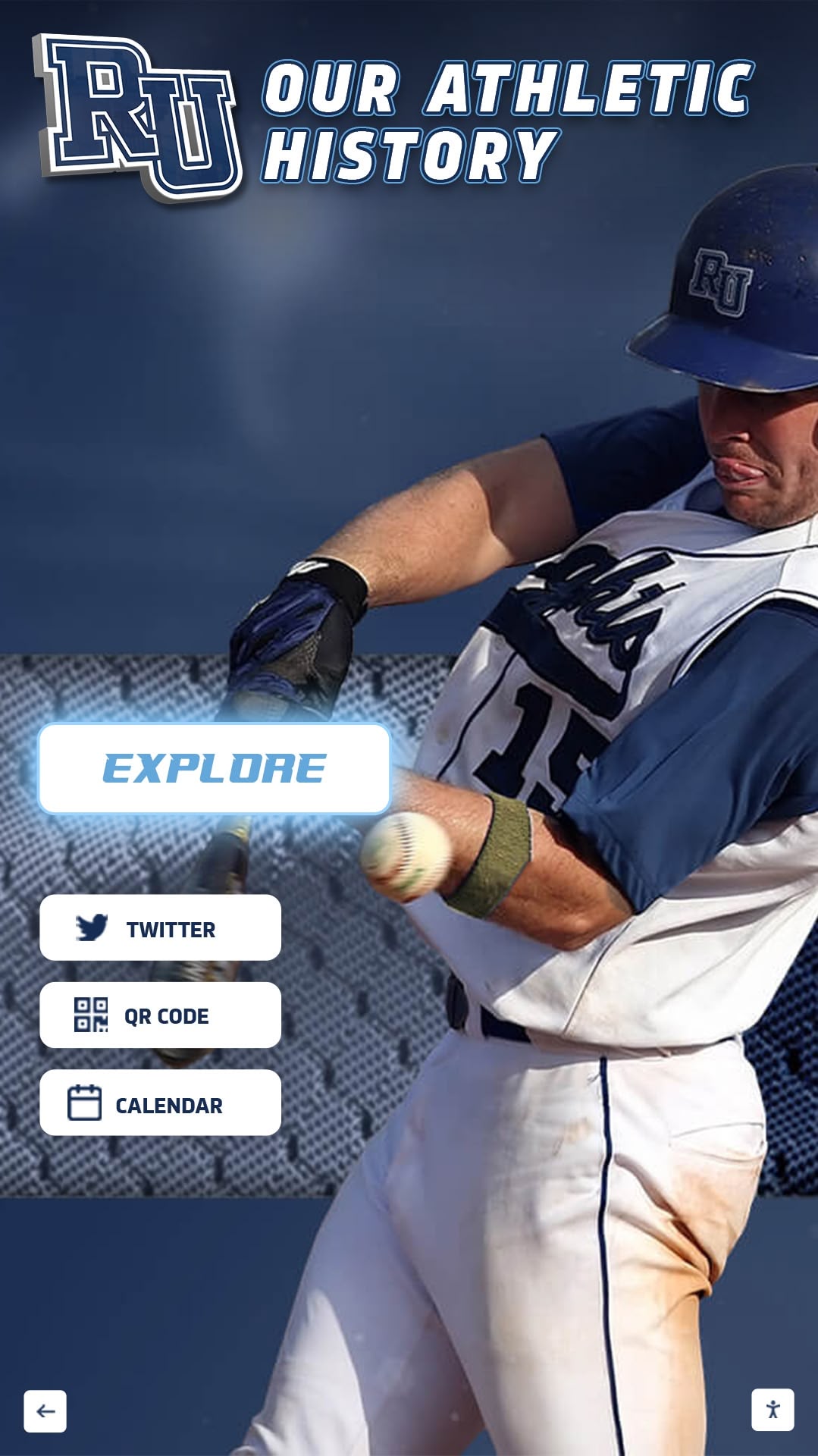
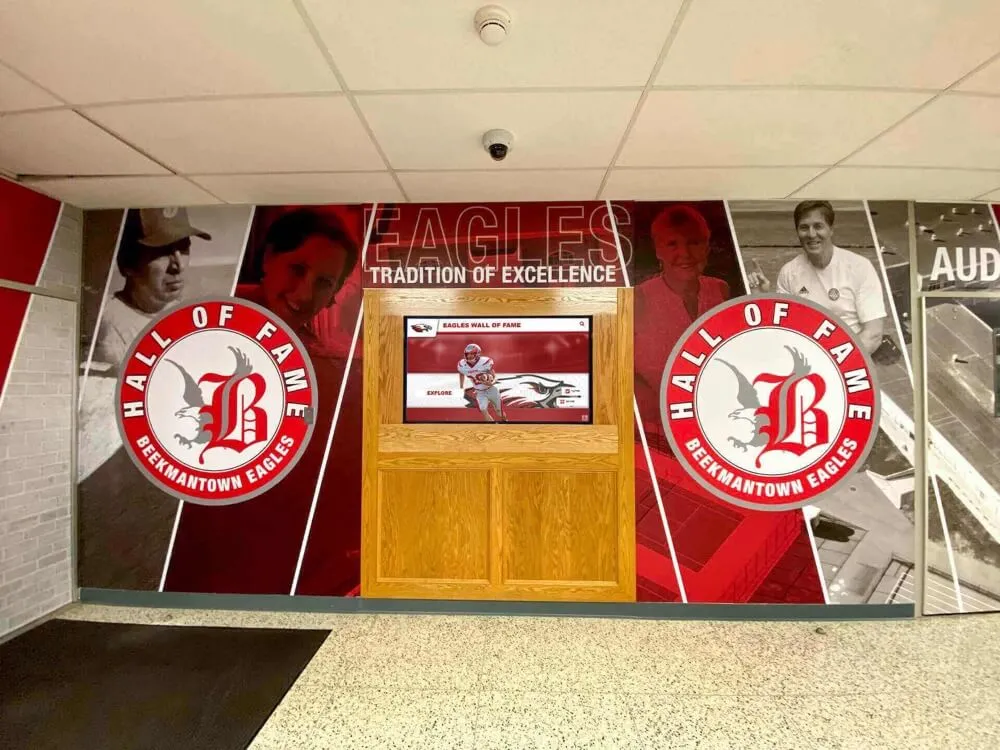
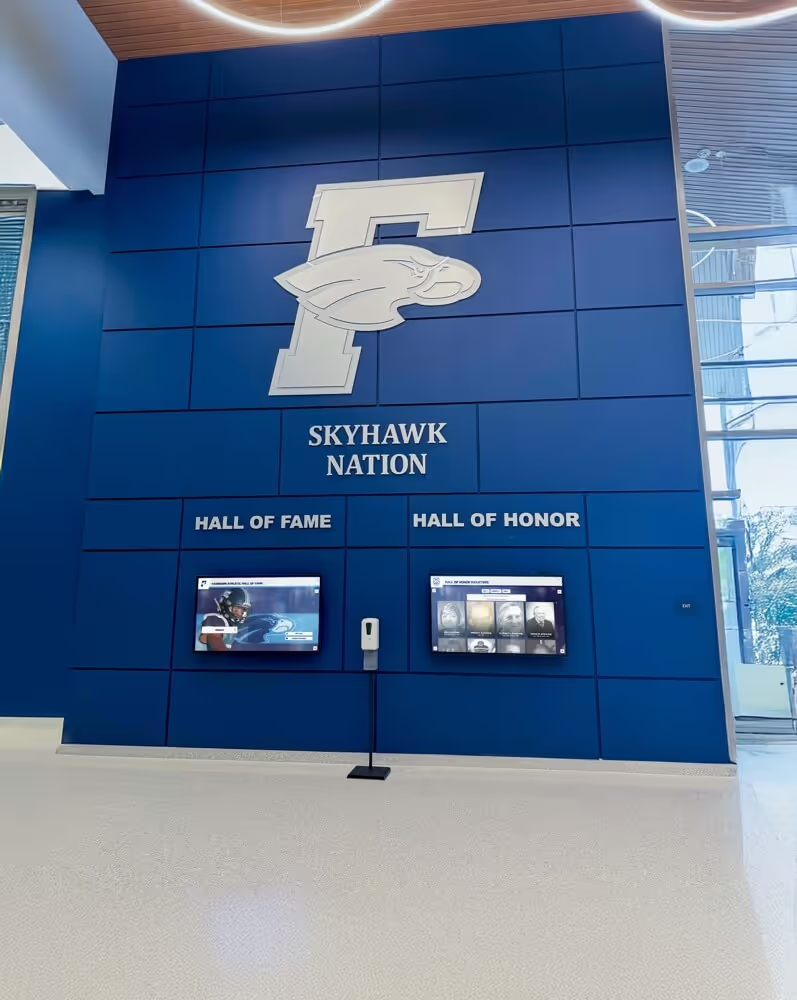
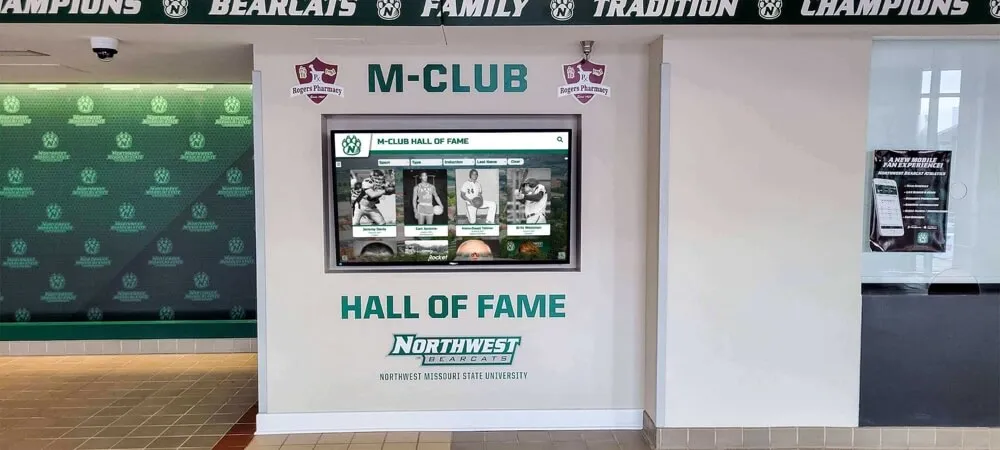
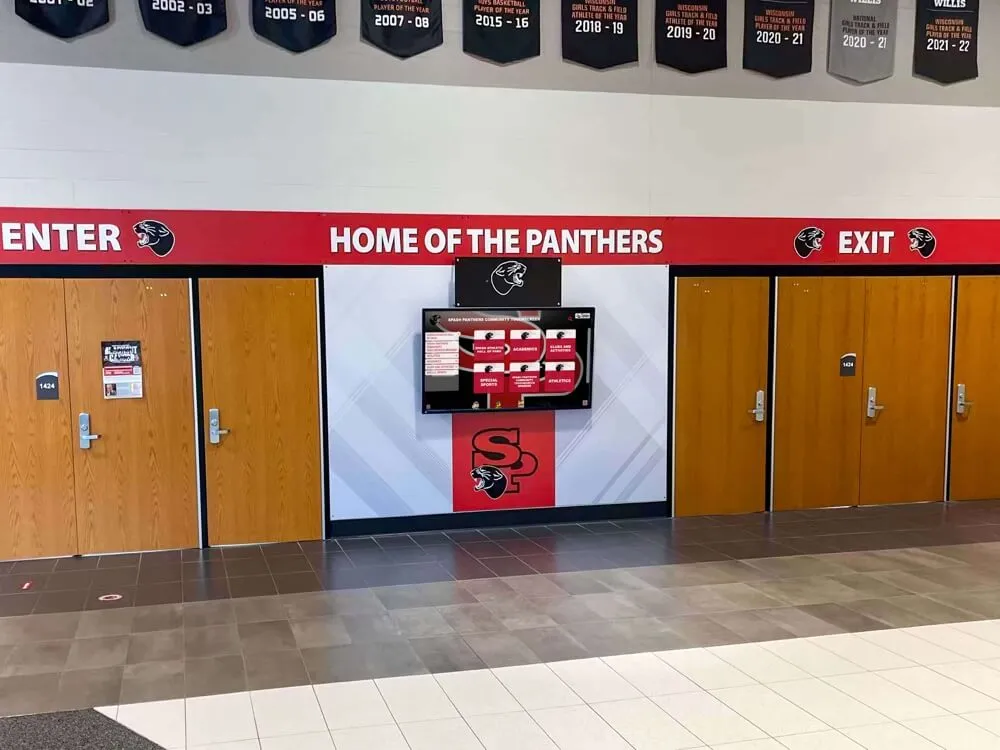
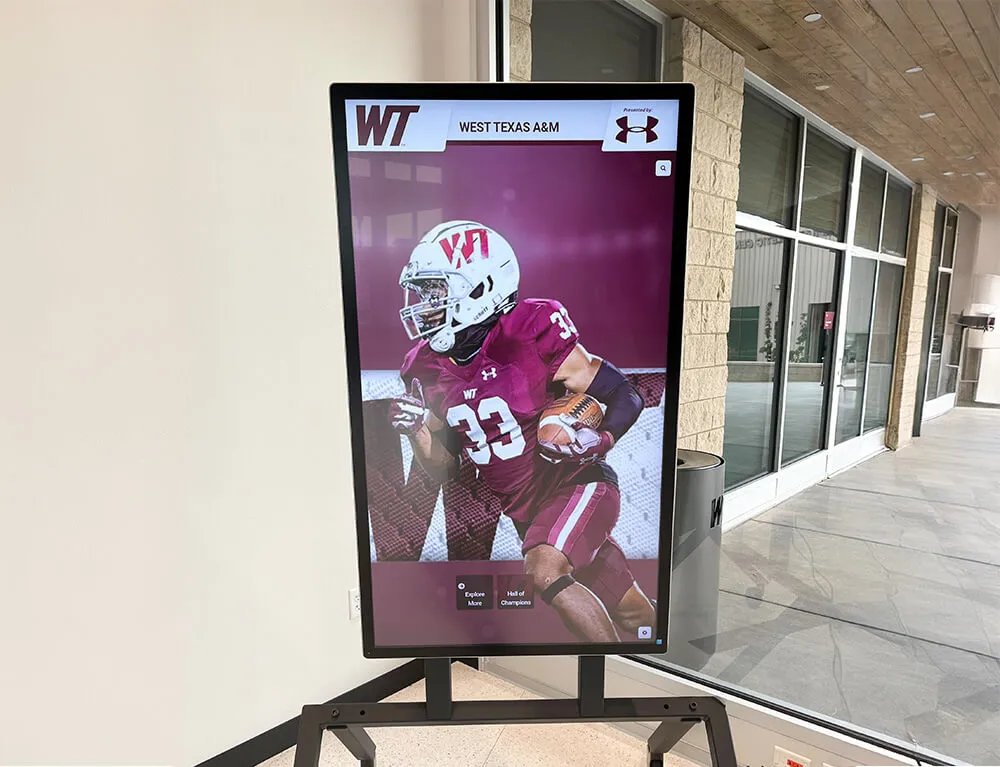
Display upgrade campaigns give donors visible, permanent recognition in the athletic spaces that matter most to players and families
The 5-Step Donor Follow-Up Workflow for Baseball Booster Clubs
The period immediately after the season ends is the most important window for sponsor stewardship—and the one most booster clubs handle inconsistently. The following workflow gives programs a repeatable, 30-day post-season process.
Step 1: Complete the Full Sponsor Audit (Week 1 After Final Game)
Before any outreach begins, compile a complete record of every supporter from the season: financial sponsors, in-kind contributors, booster club business members, and any community partners who provided goods, services, or facility access. For each entry, document:
- Business name (confirm the legal name they prefer for recognition)
- Primary contact name and contact information
- Contribution amount or in-kind value estimate
- The recognition benefits they were promised
- What was actually delivered versus what remains outstanding
This audit closes recognition gaps and ensures no sponsor is overlooked in follow-up communications. Programs that skip this step often discover they have sent renewal packages to sponsors who never received the recognition they were promised during the season—a relationship-damaging oversight that is difficult to recover from.
Step 2: Prepare Display Documentation (Days 5–10)
Before contacting sponsors, update your display materials and document them with photographs. This means:
- Photographing all field signage with sponsor names visible
- Taking screenshots of digital display sponsor profiles
- Updating any tenure language (“Partner Since [Year]”) for returning sponsors
- Adding new sponsors who joined during the season to all relevant displays
The documentation from this step becomes the evidence you send each sponsor in Step 4. Sponsors who receive a photograph showing their name on your outfield fence or their logo rotating on your lobby screen have concrete proof that their investment produced visible results—far more persuasive than a written description of the recognition they received.
Understanding how athletic directors approach program transitions and documentation provides useful context for building institutional processes that persist beyond individual booster club leadership changes.
Step 3: Update Digital Recognition Platforms (Days 7–14)
Digital recognition displays—lobby screens, touchscreen kiosks, integrated hall of fame systems—can be updated the same week the season ends without fabrication lead times. Post-season is the ideal time for these updates because your sponsor records are accurate and current. Update digital platforms to:
- Add any sponsors who joined mid-season or for the first time this year
- Refresh tenure data for returning sponsors
- Remove or archive sponsors who explicitly did not participate this season
- Upload current logos for any sponsors who rebranded during the season
- Add season-specific context where the platform supports it
Programs using interactive touchscreen recognition systems can offer sponsors access to their own digital profile as part of the sponsorship benefit—an increasingly popular feature that allows business sponsors to see exactly how their profile appears to visitors. That transparency reinforces the value of digital recognition over static physical-only formats.
Exploring hall of fame tools designed for athletics donors identifies the technical features that distinguish digital recognition platforms built for athletic stewardship from generic digital signage solutions.
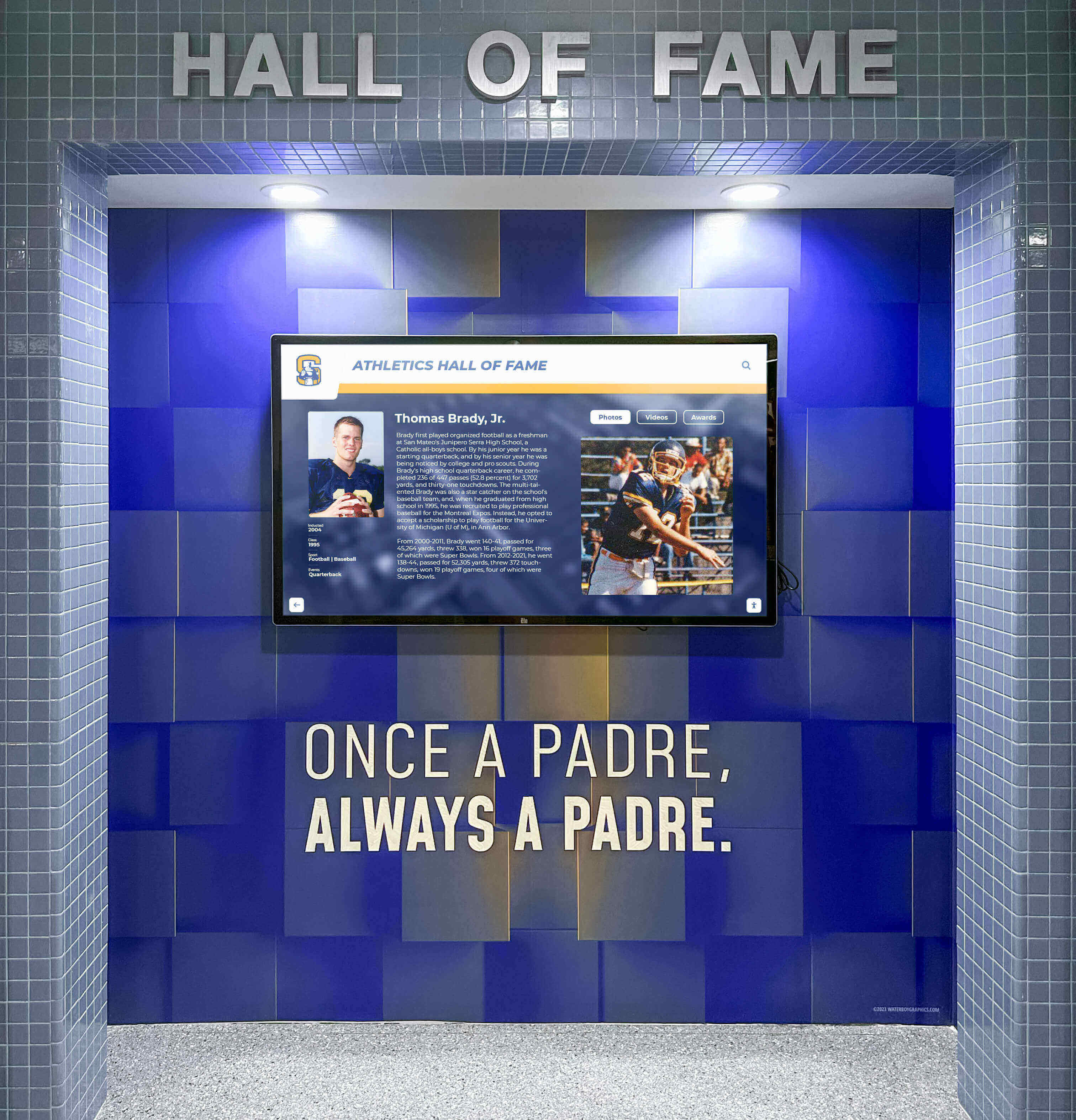
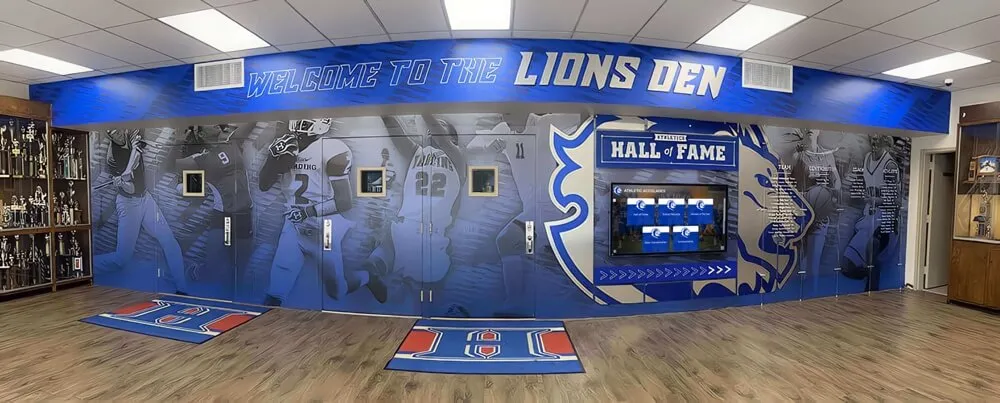
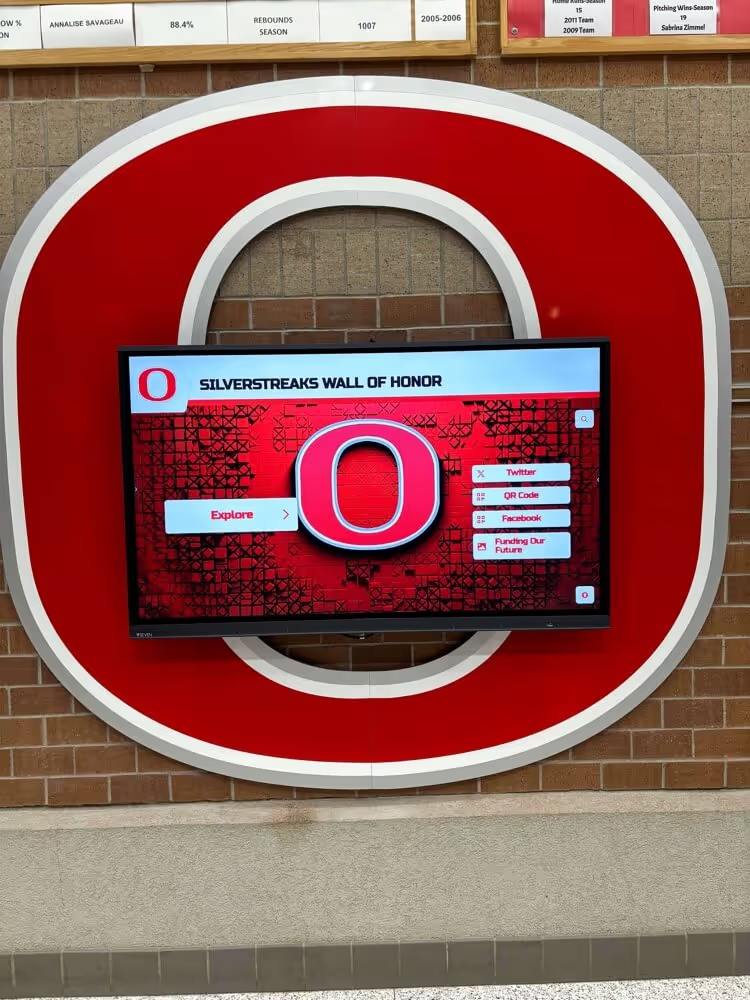
Digital recognition displays update immediately post-season with accurate records, giving sponsors proof of recognition before renewal conversations begin
Step 4: Send Personalized Post-Season Communications (Days 14–21)
Each sponsor deserves a personalized post-season communication—not a mass email, and not a generic thank-you template. The communication should:
- Thank the sponsor specifically for their stated contribution
- Include a photograph or screenshot of their recognition display
- Reference at least one concrete season outcome (“Your outfield panel was visible at all 18 home games, including our regional championship game attended by [approximate attendance]”)
- Confirm that their recognition remains active on the display through the off-season
- Note when renewal conversations will begin—without making the renewal ask in this communication
The fifth point is critical. Post-season follow-up that makes an immediate renewal ask converts a stewardship communication into a solicitation, removing the relational buffer that makes this outreach valuable. The renewal ask belongs in a separate conversation, typically 30–60 days after the season ends once the sponsor has absorbed the appreciation messaging.
Reviewing academic achievement recognition best practices highlights how timing and framing in recognition communications affect the recipient’s experience—principles that apply equally to sponsor stewardship in athletic contexts.
Step 5: Initiate Renewal Conversations (Days 25–35)
After sponsors have received and processed their post-season recognition communication, begin renewal conversations with a framing that builds on the relationship rather than restarting it from zero. Effective renewal conversations reference:
- Specific moments from the concluded season that the sponsor’s contribution made possible
- Updates to the sponsorship package for the coming season (new display surfaces, additional digital benefits, or new event opportunities)
- Multi-year commitment options that lock in current rates while securing future program budgets
Sponsors who progressed through Steps 1–4 of this workflow arrive at renewal conversations with documented proof of their value, visible recognition in the school environment, and a relationship that extends beyond transactional check-writing. That foundation makes renewal conversations substantively different from cold-call sponsorship sales.
Building a Baseball Season Display That Works Year-Round
The seasonal nature of baseball creates a recognition challenge: how do you maintain sponsor visibility during the nine months between the end of one season and the start of the next? The answer lies in display placement and digital rotation.
Lobby and Hallway Displays vs. Field-Only Displays
Field signage—outfield banners, dugout panels, scoreboard ads—earns high impressions during game weeks but zero impressions during the off-season. A sponsor whose recognition exists only on the field has effectively invisible recognition from June through March. Programs that house sponsor recognition in interior lobby displays, hallway digital screens, and athletic hall of fame environments provide year-round visibility that dramatically increases the total impression value delivered per sponsorship dollar.
The ideal baseball sponsor recognition environment layers both:
- Field-level displays for in-season impression volume and event-time visibility
- Interior lobby or hallway displays for year-round presence in daily school traffic
Interior placement is particularly valuable because school traffic continues 180+ days per year regardless of season. Students, staff, parents attending other events, and community members visiting the school all encounter interior recognition displays—audiences that field signage never reaches during the off-season.
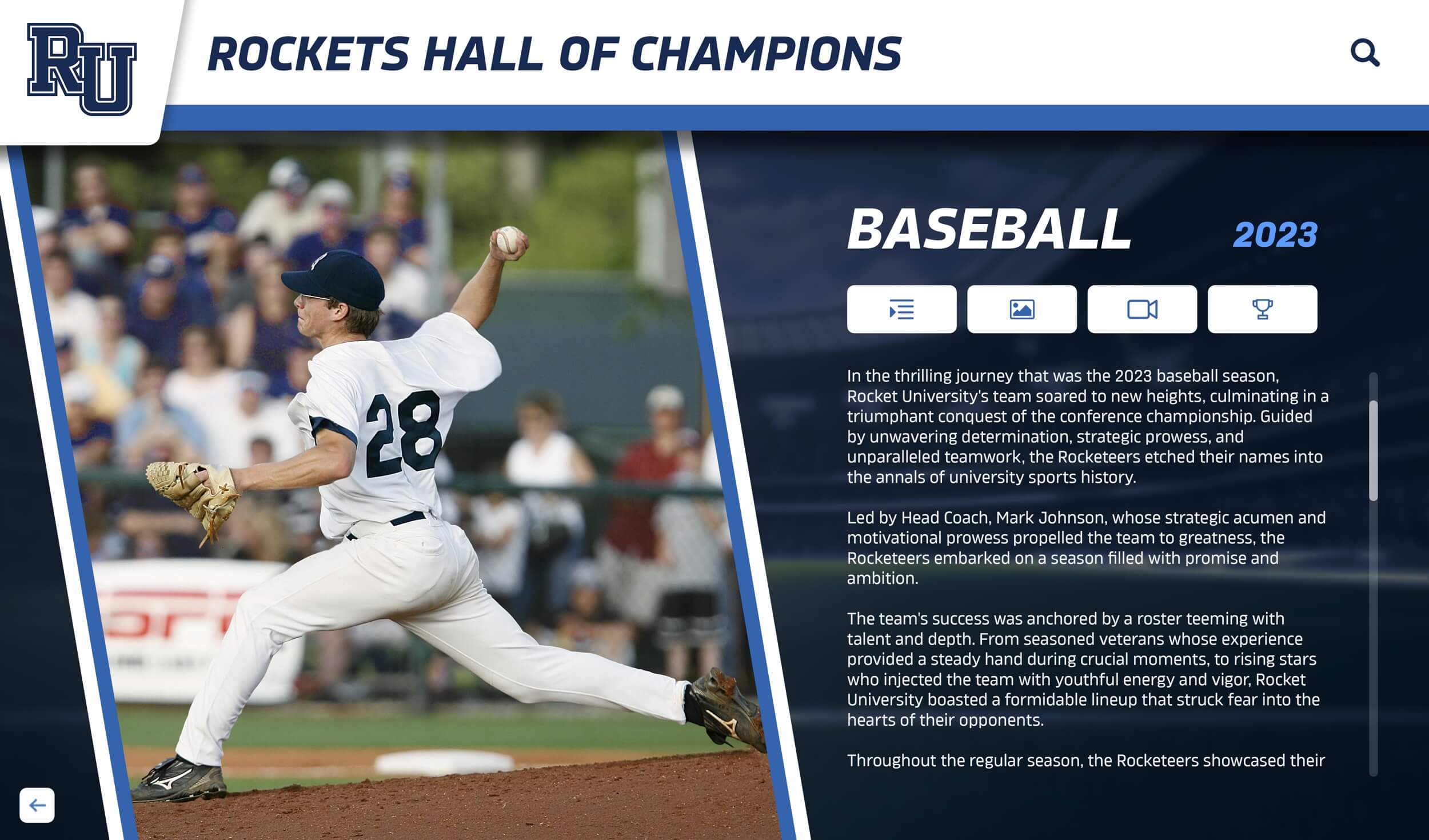
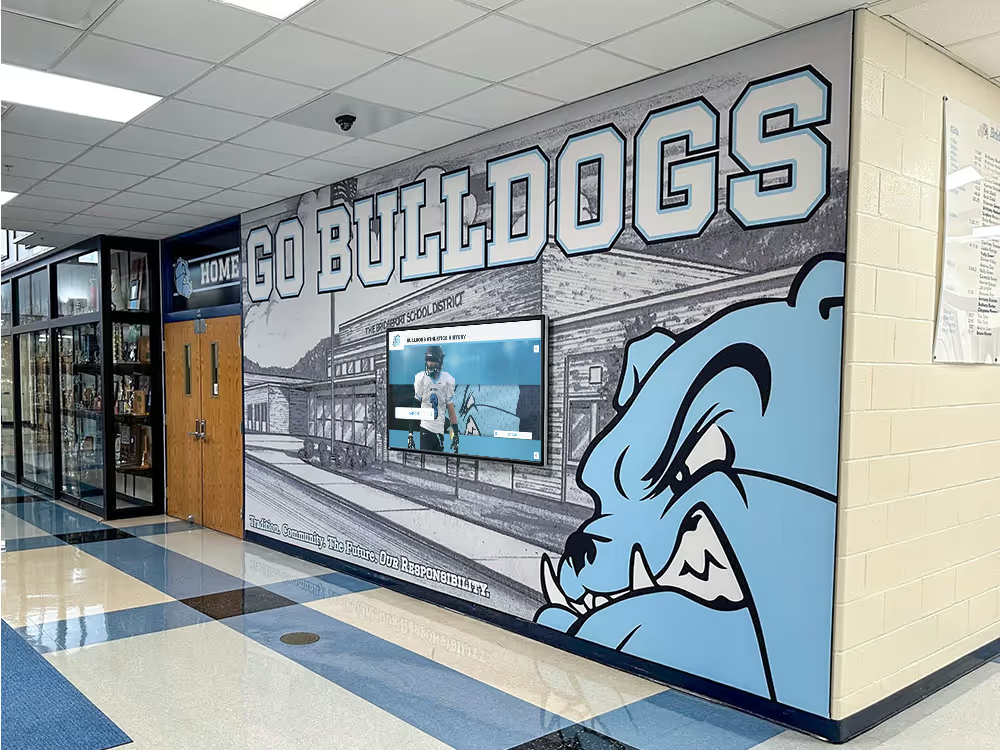
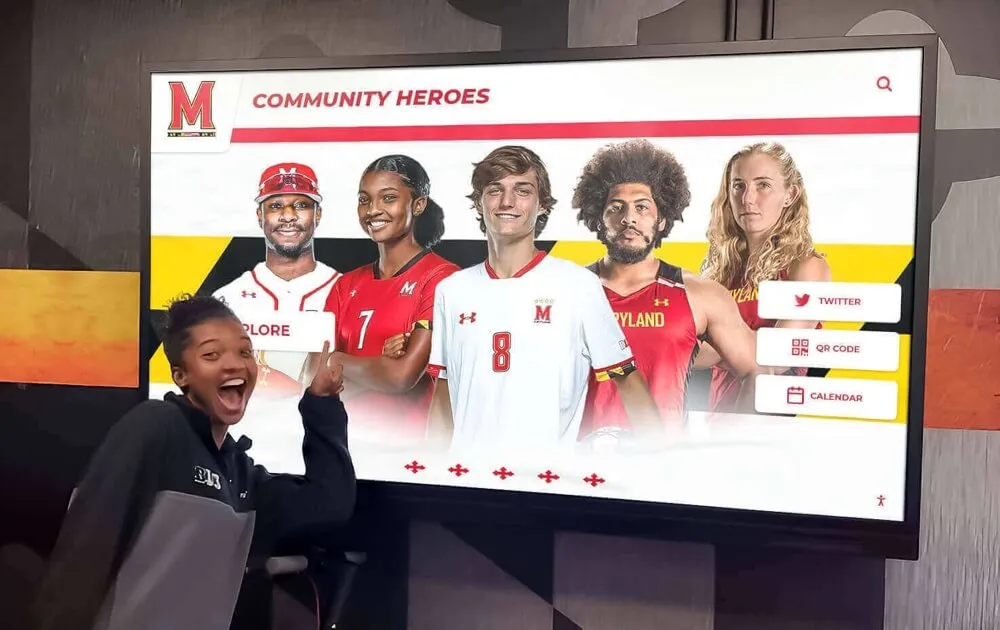
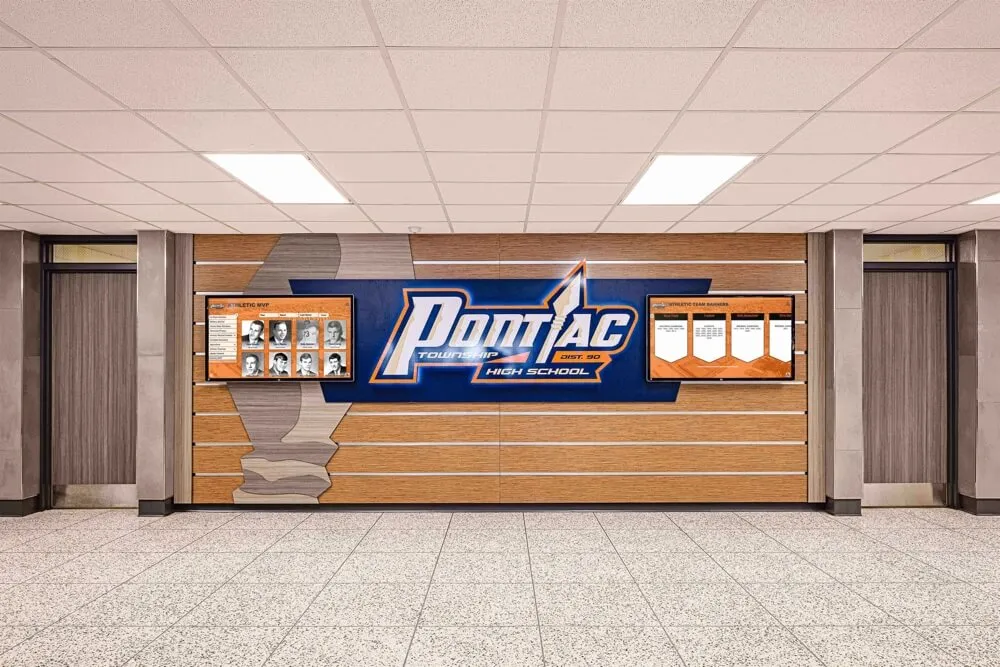
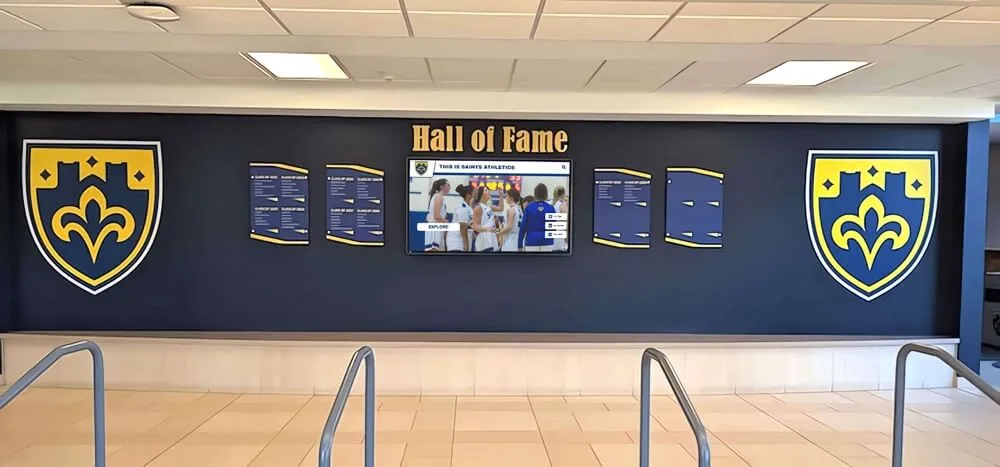
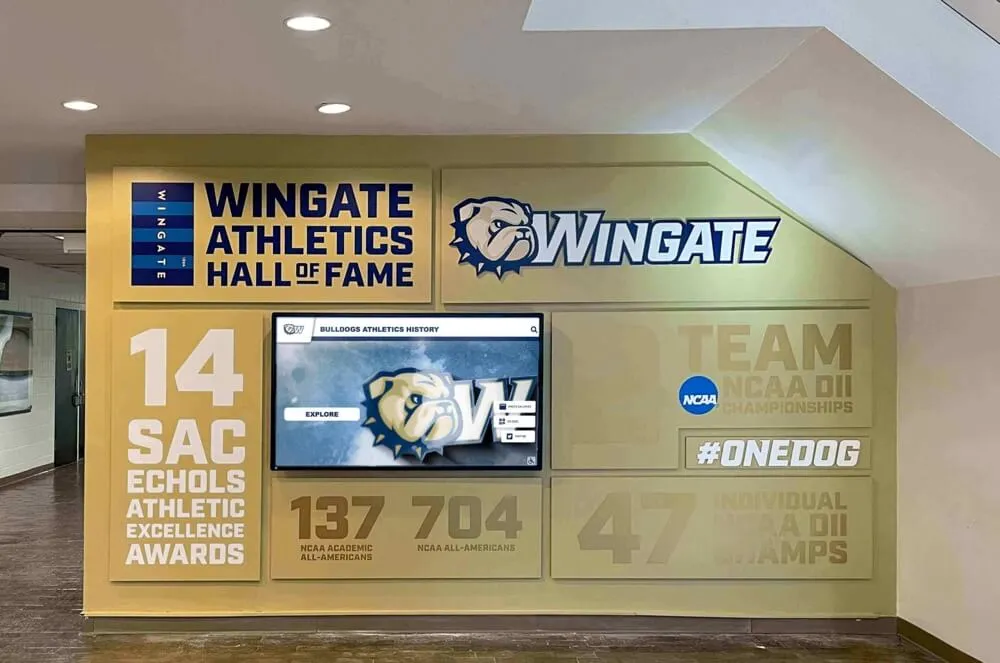
Integrating baseball achievement recognition with sponsor acknowledgment in institutional display environments gives both elements year-round visibility
Integrating Sponsor Recognition into the Athletic Hall of Fame
The most powerful context for baseball sponsor recognition is the athletic hall of fame environment. When a sponsor’s profile appears in the same digital space that honors the school’s all-time ERA leaders, batting champions, and championship teams, the sponsor becomes part of the program’s permanent historical narrative.
Hall of fame tools built for athletic programs increasingly support integrated sponsor recognition alongside athlete profiles, retired numbers, and team records—creating unified recognition environments where donors and program legends coexist in the same institutional display. For baseball programs with deep histories, that integration connects sponsor acknowledgment to a legacy that extends decades into the past.
Digital wall of fame systems designed for academic programs illustrate how recognition environments scale to accommodate multiple categories of honorees simultaneously—a model that translates directly to baseball hall of fame displays that include sponsors, athletes, coaches, and program milestones in a single cohesive environment.
Rotating Digital Content for Multi-Sport Facilities
Baseball programs that share athletic facilities with football, basketball, or other sports can participate in shared digital recognition infrastructure that serves multiple programs simultaneously. A lobby touchscreen kiosk serving the entire athletic department can house baseball sponsor profiles, football sponsor profiles, and cross-sport recognition content in a single managed system—reducing per-program infrastructure costs while expanding total sponsor impression volume.
For facilities exploring digital recognition across multiple athletic programs, academic awards recognition systems demonstrate how institutional recognition environments scale to accommodate diverse content categories without visual clutter—a design principle equally applicable to multi-sport athletic recognition displays.
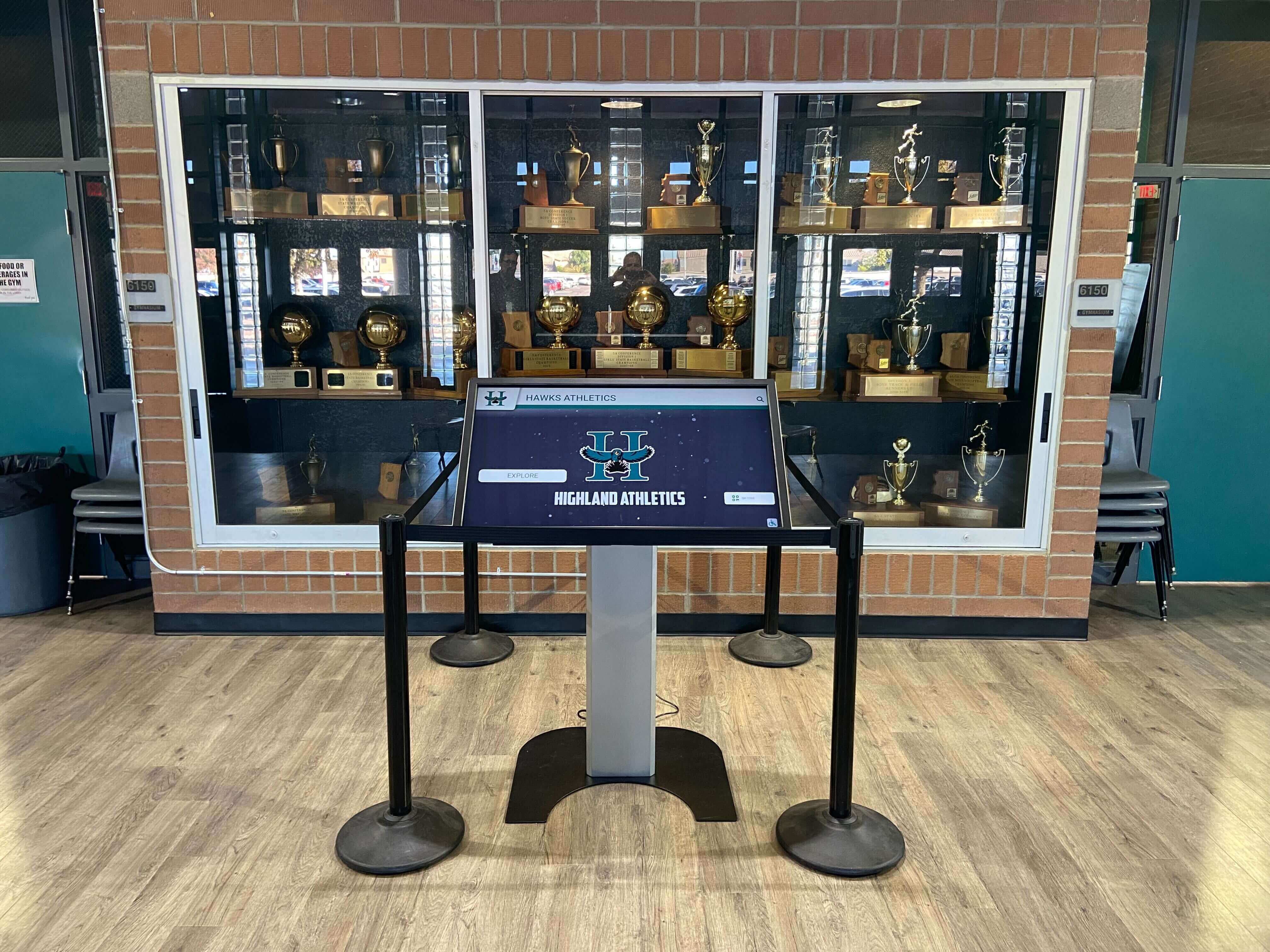
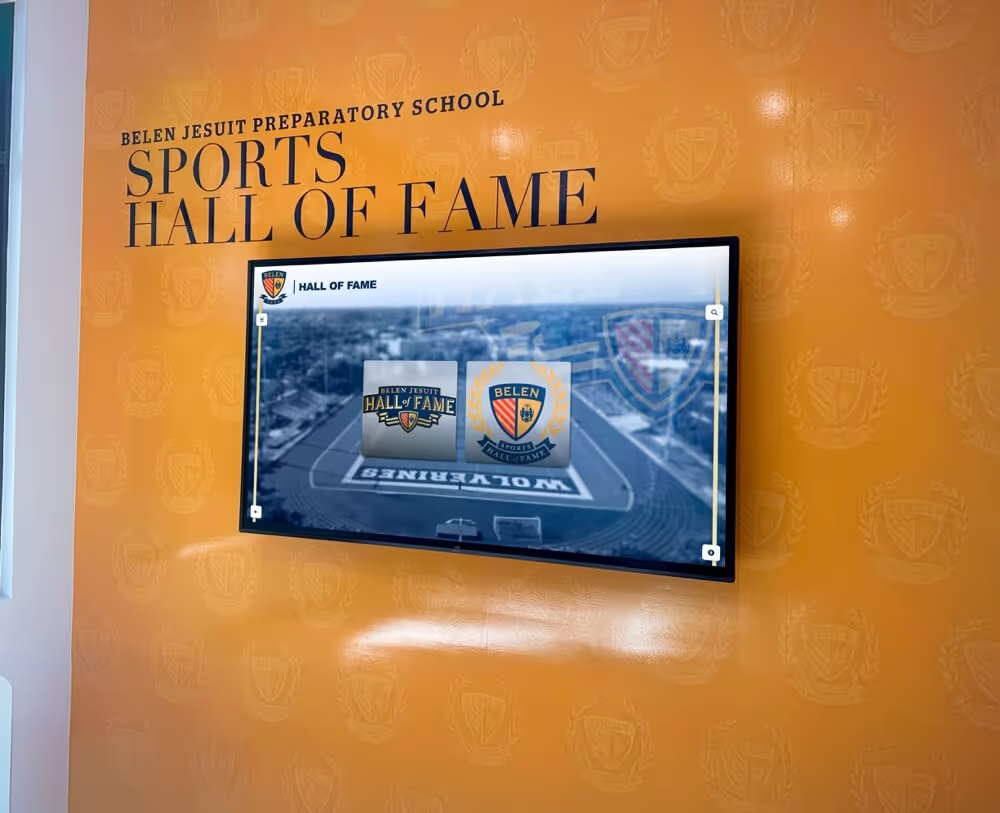
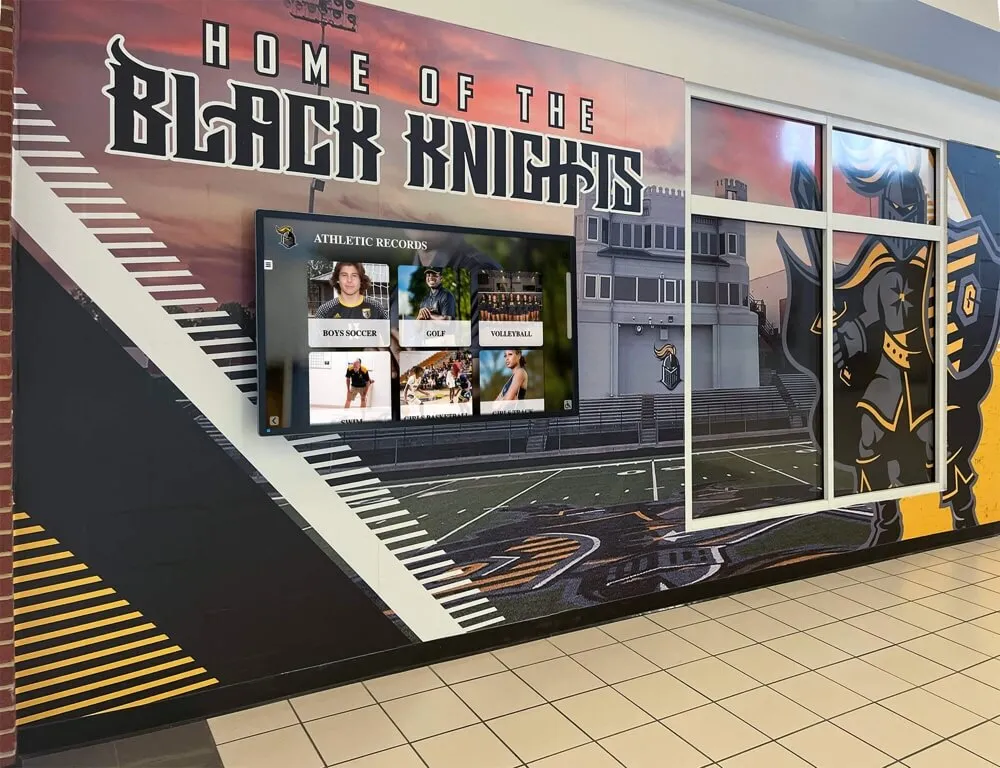
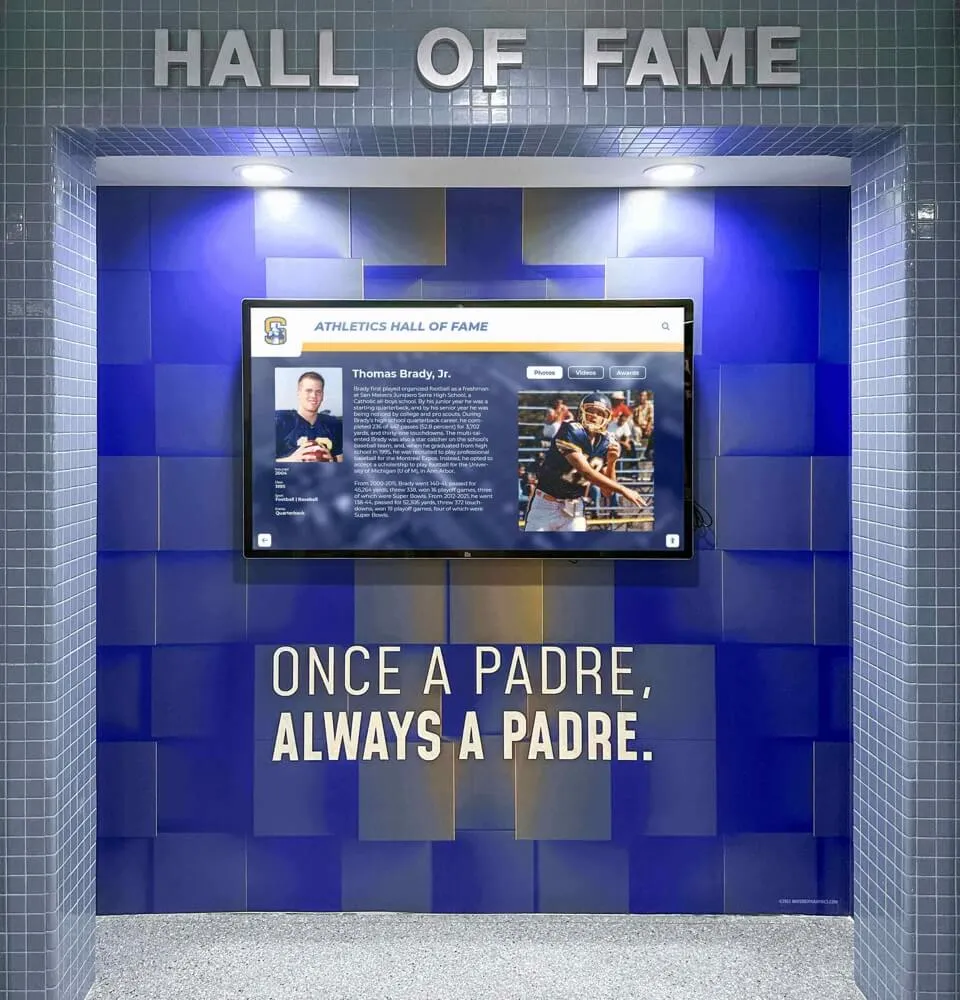
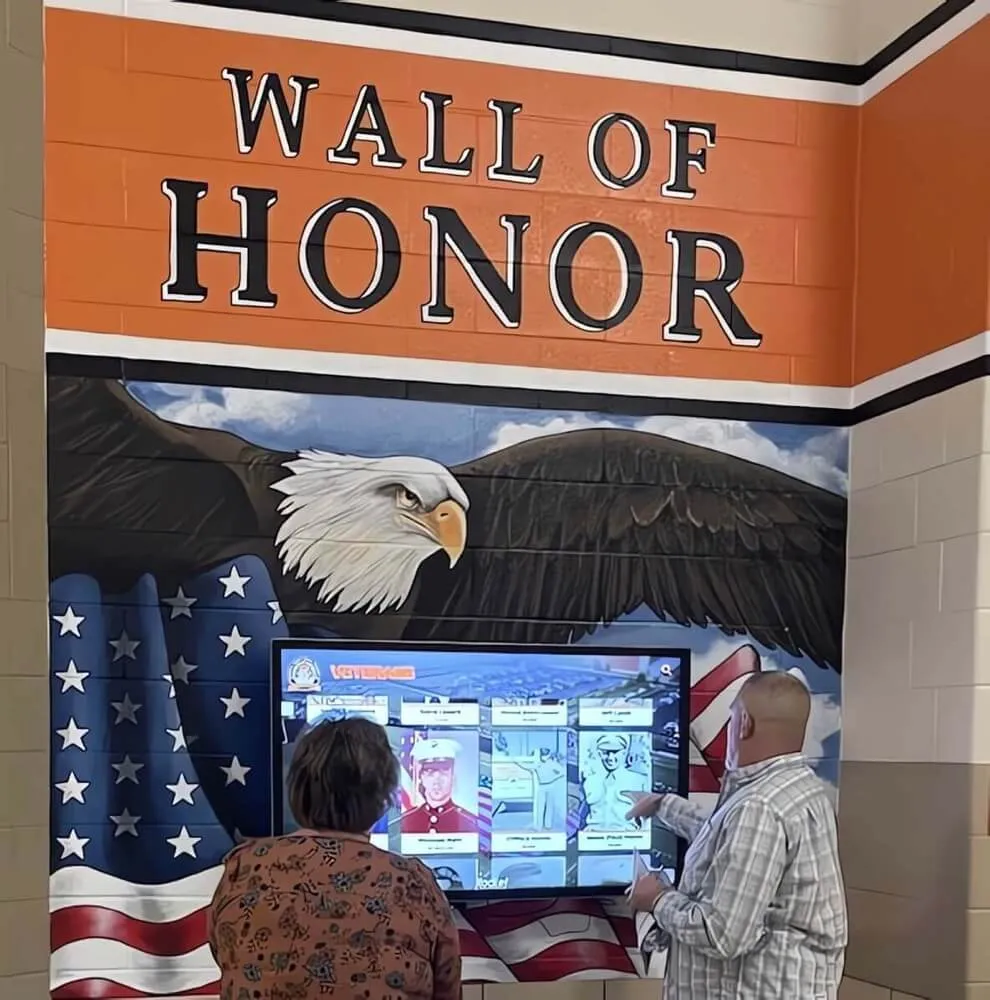
Touchscreen kiosks integrated into trophy case environments serve both athletic achievement recognition and sponsor acknowledgment in a single institutional display
Template: Baseball Booster Club Sponsor Thank-You Communication
The following template provides a starting framework for post-season sponsor communications. Customize every bracketed field before sending—generic language undermines the relational intent of this communication.
Subject: Thank You from [School Name] Baseball — Your [Season Year] Impact

Dear [Contact Name],

On behalf of the [School Name] baseball program, I want to thank you personally for [Business Name]'s support during our [Season Year] season.

Your [sponsorship level] partnership—[brief description of their specific contribution]—helped our program provide [specific outcome: e.g., "full equipment for 22 varsity players," "travel funding for three tournament appearances," "the new batting cage nets installed in March"].

I've attached a photograph of your recognition display [at location: outfield fence, lobby screen, etc.] from this season. Your name appeared at every home game this season and continues to be visible [on/in] our [display location] through the off-season.

We're grateful to have [Business Name] as a community partner in baseball. I'll be in touch early [Month] to discuss the coming season—until then, enjoy the summer.

Sincerely,
[Name]
[Title], [School Name] Baseball Booster Club
This communication template deliberately omits the renewal ask. It functions as a relationship touchpoint—one that plants the renewal seed without making the ask before the relationship has been properly appreciated.
Donor Recognition Displays: Matching Format to Program Scale
Not every baseball program has the same display infrastructure budget, and recognition approaches should scale appropriately to program size and resources.
Small programs (fewer than 10 sponsors): A well-maintained printed recognition board near the field entrance or in the lobby, updated annually, satisfies basic recognition requirements. The key is accuracy—a small program with a perfectly maintained five-sponsor board communicates more professionalism than a large program with an outdated 20-sponsor display showing businesses that closed years ago.
Mid-size programs (10–25 sponsors): Combine field signage with a lobby or hallway display that includes sponsor listings. A framed sponsor recognition board near the trophy case, updated each season, provides year-round visibility. Consider a digital screen if the school already has display infrastructure, as content management costs are minimal once hardware exists.
Large programs (25+ sponsors): Digital display platforms become practical necessities at this scale. Physical displays cannot accommodate large sponsor rosters without becoming visually cluttered and difficult to navigate. Digital touchscreen systems allow unlimited sponsor capacity, searchable profiles, and equity-based rotation that prevents any single sponsor from dominating the display at others’ expense.
Exploring digital hall of fame and recognition tools illustrates how programs scale digital recognition infrastructure from entry-level to comprehensive—a useful framework for baseball programs evaluating where to invest display improvement budgets.
Build a Baseball Recognition Display That Retains Sponsors Year After Year
Rocket Alumni Solutions designs interactive touchscreen walls, digital lobby displays, and integrated hall of fame systems where baseball sponsor profiles appear alongside athlete records, retired numbers, and championship history—updated remotely, no fabrication required.
Request a DemoFrequently Asked Questions About Baseball Booster Club Fundraising
What makes baseball booster club fundraising different from other sports?
Baseball’s long home schedule (often 20–30 home games), unique facility display surfaces (outfield fencing, dugouts, press boxes), and strong alumni nostalgia for the sport create distinct sponsorship and fundraising opportunities. Baseball programs can offer sponsors more impression events per season than most spring sports, and their alumni networks often include former players with deep personal connection to the game—a base that responds to hall of fame recognition and legacy giving campaigns in ways that generic alumni appeals rarely achieve.
How do we keep sponsors coming back year after year?
Retention comes from recognition that is visible, accurate, and continuous—not just during the season. Sponsors who see their name on a lobby display in October, receive a post-season thank-you with photo documentation in June, and arrive at a renewal conversation with evidence of the impressions they received are dramatically more likely to renew than sponsors who only hear from the program during solicitation season. The post-season follow-up workflow described above is the single highest-leverage activity for improving baseball booster club sponsor retention.
What should a baseball sponsor recognition display include?
A complete sponsor recognition display for a baseball program includes the sponsor’s business name (confirmed in their preferred format), their sponsorship tier or designation, their logo for digital displays, tenure language for returning sponsors (“Partner Since [Year]”), and a placement within the display environment that reflects their tier level. The most effective displays also integrate context—placing sponsor recognition alongside season records, team achievements, and hall of fame content—so sponsors feel genuinely embedded in the program’s institutional story rather than occupying a separate commercial section.
How much should a baseball booster club expect to raise from corporate sponsorships?
This varies widely by market, program history, and community size. Programs in suburban areas with active business communities and established track records often generate $15,000–$50,000 or more in annual corporate sponsorships across all tiers. Smaller rural programs with newer sponsorship structures may start at $5,000–$12,000. The most reliable predictor of sponsorship revenue is sponsor retention rate—programs that retain 70–80% of sponsors annually grow their total sponsorship revenue significantly faster than those cycling through new sponsors each year.
Can a baseball booster club recognize in-kind donors on the same display as financial sponsors?
Yes—and they should. In-kind contributors who donated equipment, facility supplies, meals, or services are legitimate program supporters and belong on recognition displays. Programs can distinguish contribution type with a brief designation (“Official Equipment Partner” or “Season Hospitality Partner”) without diminishing the acknowledgment. Treating in-kind supporters identically to financial donors at their equivalent value level builds goodwill that often converts in-kind supporters into financial sponsors in future seasons.
When is the right time to ask sponsors to upgrade their commitment level?
The renewal conversation—typically 30–60 days after the season ends—is the natural moment to present upgrade opportunities. Sponsors who have experienced a full season of recognition, received post-season documentation of their display placement, and built a relationship with program leadership are more receptive to upgrade discussions than prospects who have not yet seen what their sponsorship produces. Present upgrades as opportunities to capture specific additional visibility (a newly available outfield panel, a digital profile upgrade, or a named facility area that became available) rather than as requests for more money.
Building a Baseball Booster Club Fundraising Program That Compounds Over Time
The most effective baseball booster club fundraising programs share one characteristic: they treat each season as a building block rather than a standalone campaign. Sponsors retained from the prior year enter the current season at a higher relationship level than new sponsors. Donors who received excellent recognition last year are more receptive to contribution increases. Display environments that accumulated multiple seasons of content become richer and more compelling with each passing year.
That compounding effect is what separates programs generating $50,000 in annual sponsor revenue from those that reset to zero every spring. The fundraising ideas, follow-up workflows, and display strategies in this guide all contribute to the same outcome: building a baseball booster club fundraising program where relationships deepen, recognition environments grow richer, and sponsor renewal conversations shift from solicitation to partnership continuation.
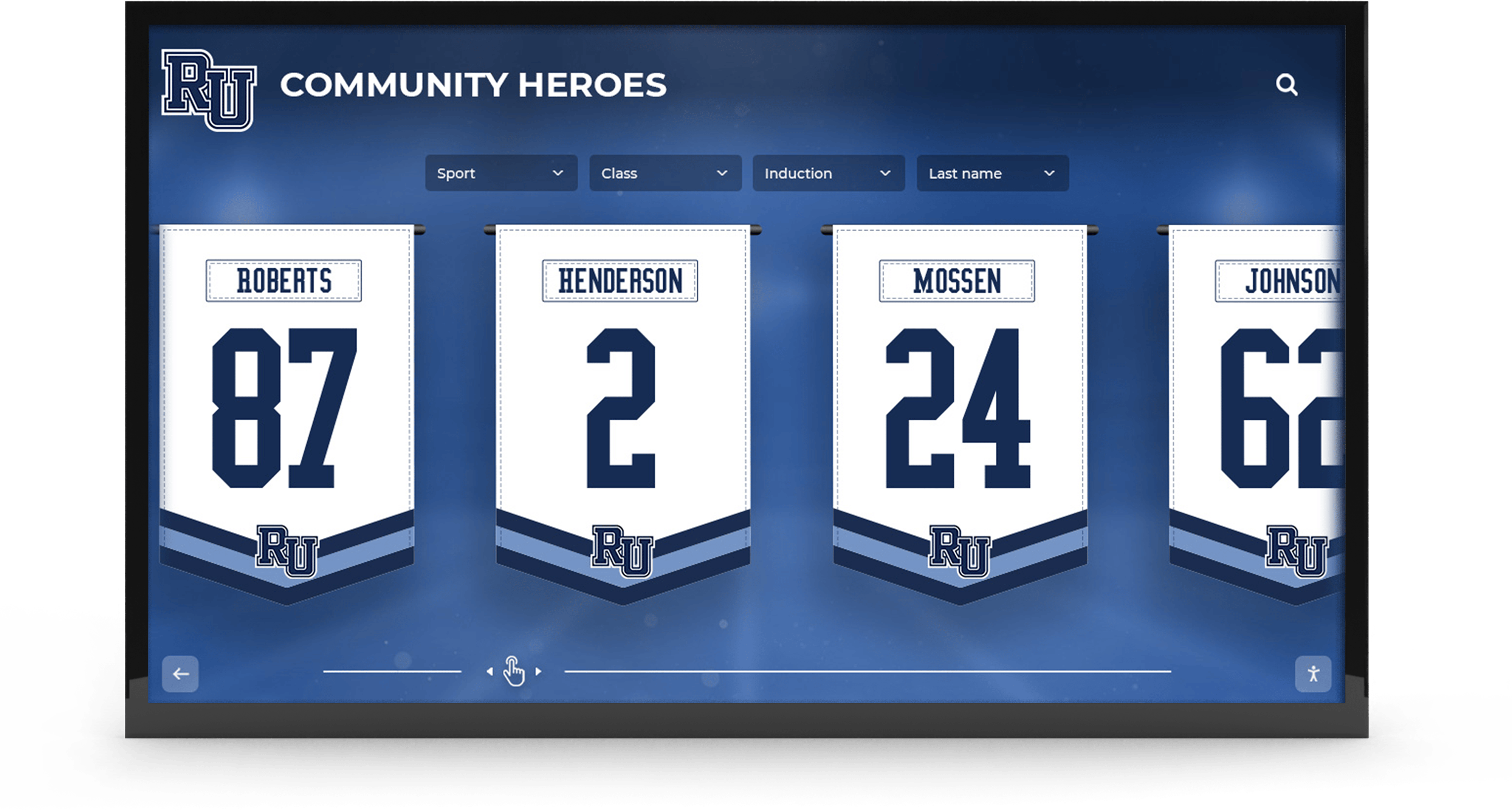
Recognition environments that honor athletes and sponsors together build institutional pride that attracts and retains community support across multiple seasons
Programs ready to build or upgrade their recognition infrastructure can explore how digital platforms integrate baseball athlete records, hall of fame content, sponsor profiles, and season histories in a single managed display—eliminating the fragmentation that comes from maintaining separate physical signage, program books, and lobby displays as disconnected recognition systems.
See How Baseball Programs Build Sponsor Recognition Displays That Last
Rocket Alumni Solutions helps school baseball programs install interactive touchscreen recognition systems where sponsor profiles, athletic records, retired numbers, and hall of fame content share a single unified display—updated remotely every season without fabrication costs.
Request a Demo