



High school basketball programs face a fundamental challenge: how do you adequately celebrate decades of athletic achievement, current season success stories, and individual player milestones when physical trophy cases fill up, engraving costs accumulate, and traditional plaques become outdated before they’re even mounted? Friday night games bring packed gymnasiums filled with students, families, and community members—yet most schools miss critical opportunities to showcase their basketball legacy in ways that engage modern audiences and inspire current athletes.
Intent: Demonstrate and Inspire—This comprehensive guide explores how interactive touchscreen displays from solutions like Rocket Alumni Solutions transform high school basketball recognition from static trophy cases into dynamic, engaging experiences. When positioned strategically near gymnasiums, in main lobbies, or athletic hallways, these digital recognition systems celebrate current players, preserve historical achievements, enhance game-day atmosphere, and create year-round connection to basketball tradition.
Basketball represents more than Friday night entertainment—it embodies school spirit, community identity, and athletic excellence spanning generations. Modern recognition technology ensures every player, every achievement, and every memorable moment receives appropriate celebration without space constraints, update delays, or maintenance challenges limiting traditional approaches.
High school athletic directors consistently report that basketball programs generate exceptional community engagement, yet struggle to document and celebrate achievements comprehensively. Traditional recognition approaches—engraved plaques, physical trophy cases, printed banners—work for highlighting state championships or individual superstars, but fail to capture the rich stories, seasonal progressions, and diverse contributions that make basketball programs memorable.

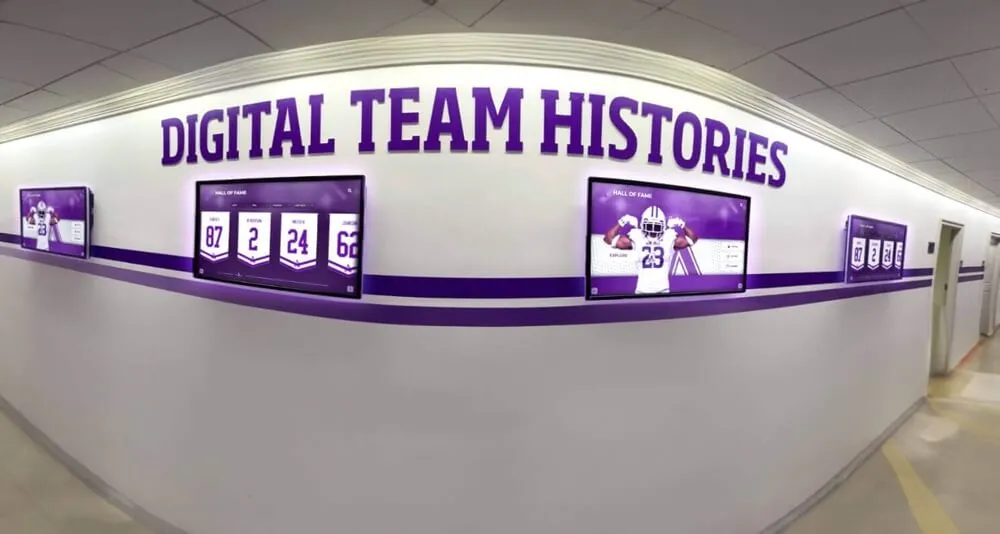
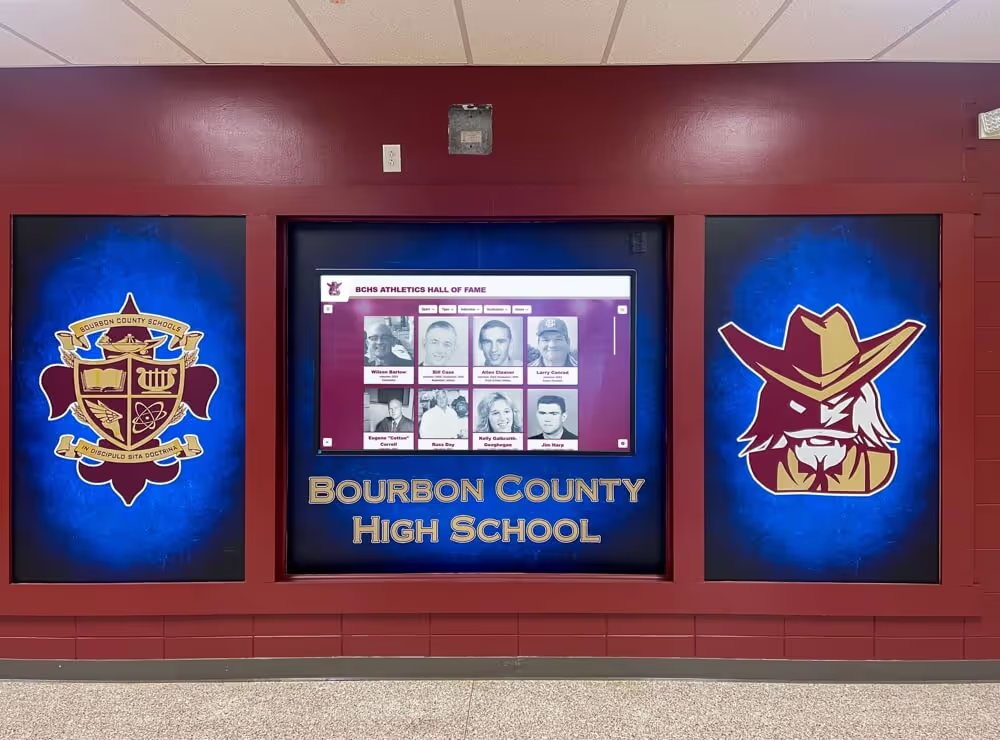
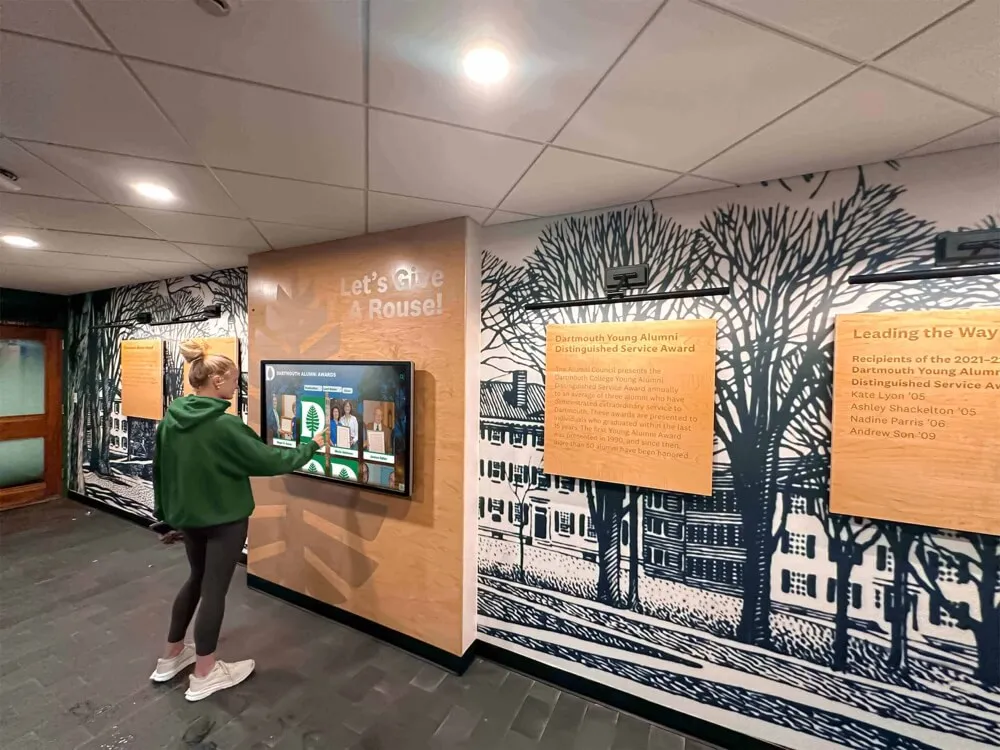
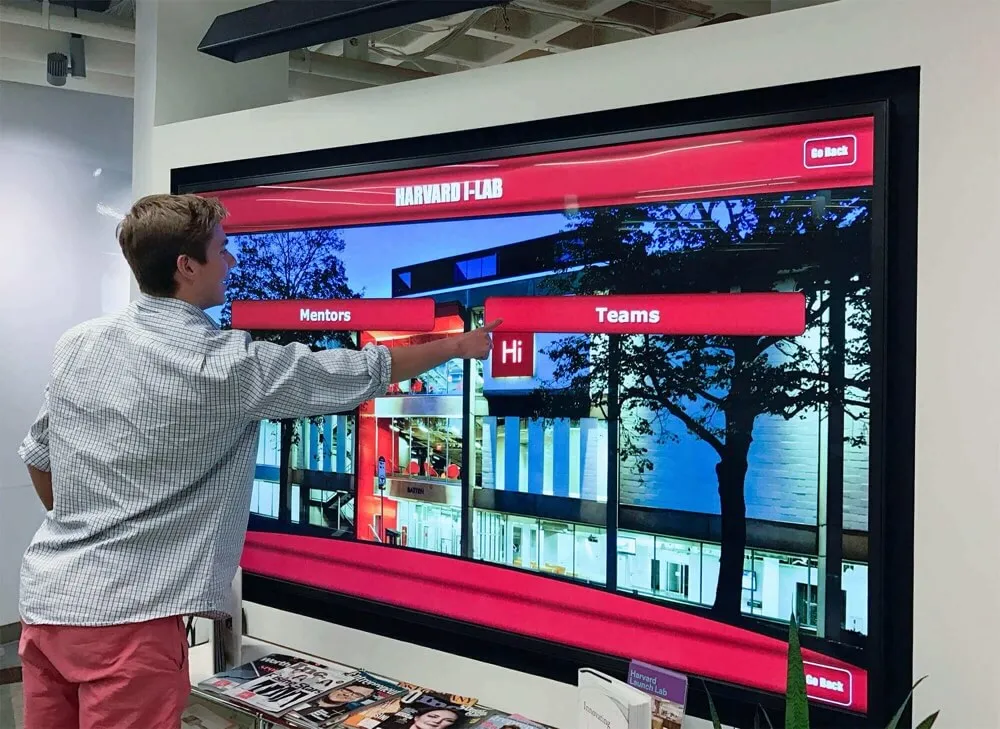
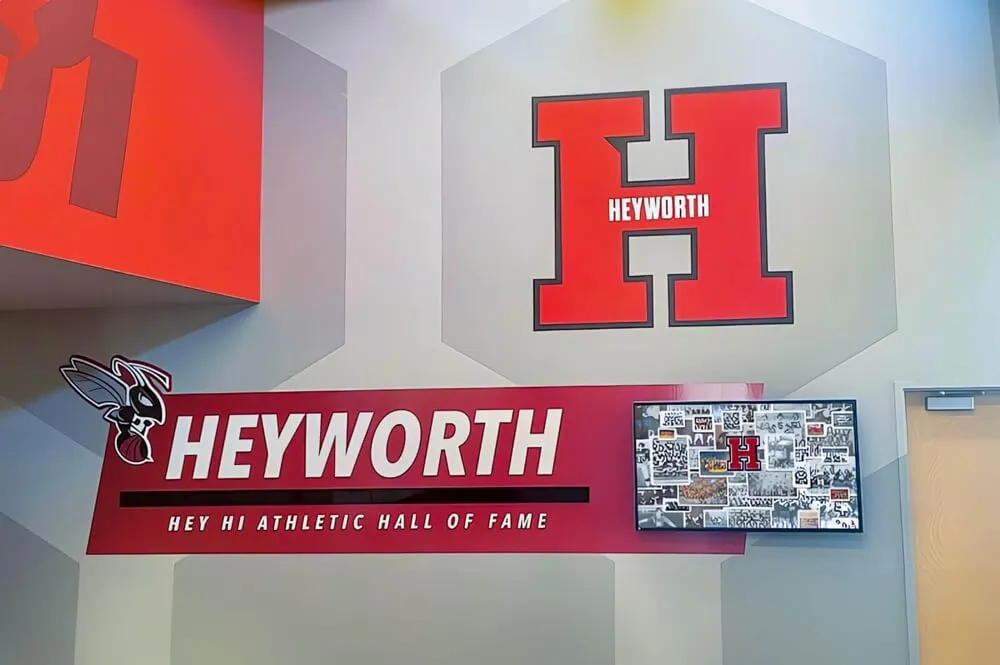
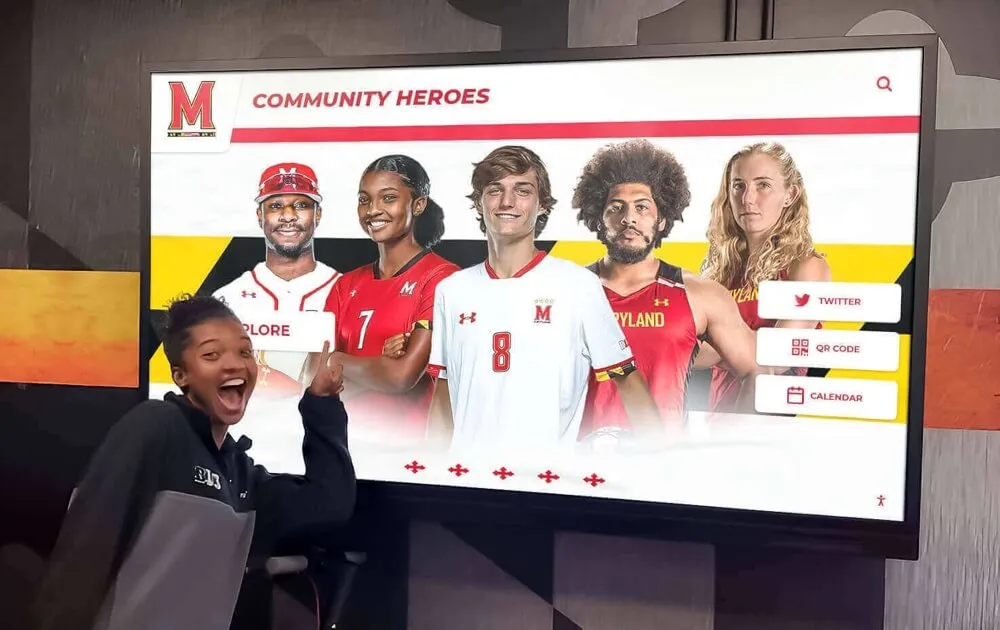
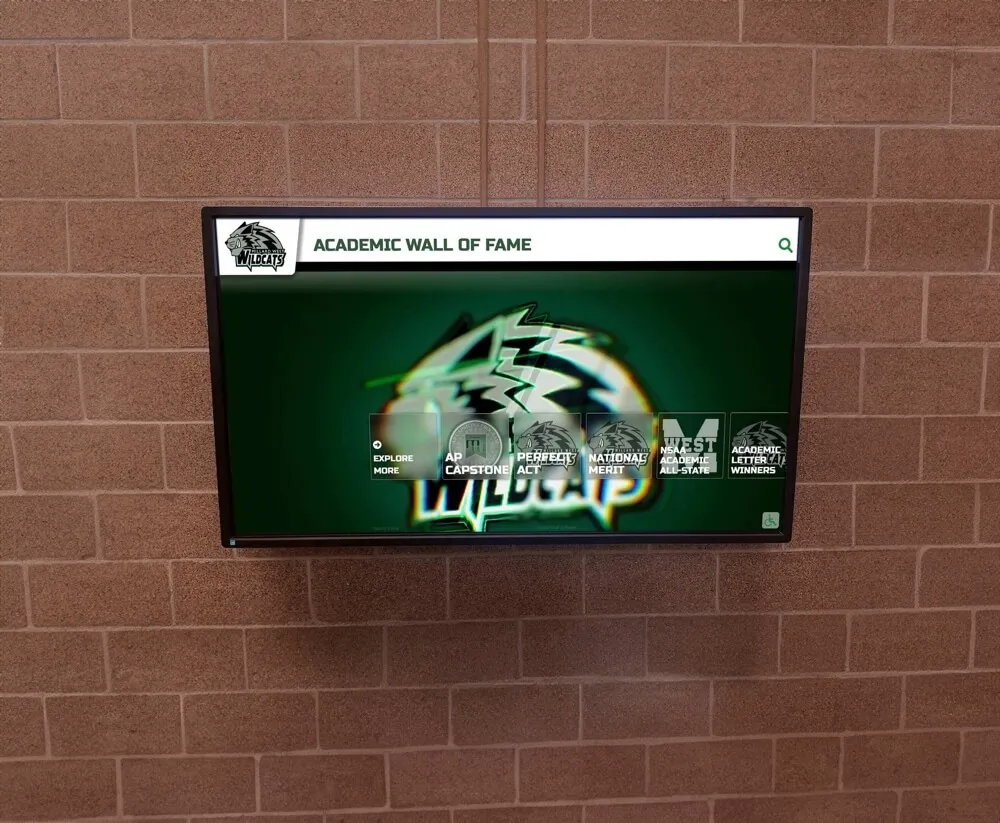
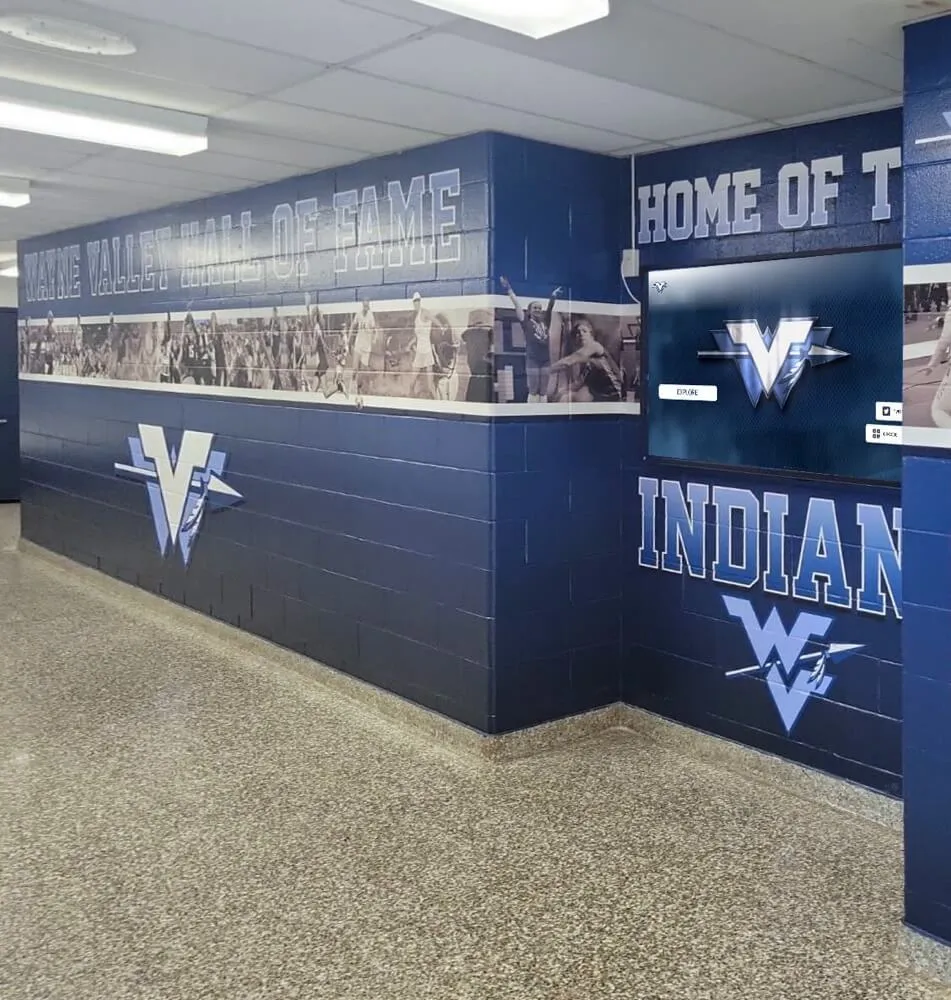
Interactive touchscreen displays transform how high school basketball programs celebrate achievements and engage athletes with their legacy
Why High School Basketball Programs Need Interactive Recognition Technology
Before exploring implementation strategies, understanding the unique challenges basketball programs face helps clarify why digital recognition solutions deliver transformative value.
The Basketball Recognition Challenge
Basketball generates more recognition opportunities than almost any high school sport through individual scoring milestones, season and career records, team championships, tournament achievements, all-conference selections, academic honors, and coaching milestones—yet traditional recognition systems can’t keep pace.
Physical Space Limitations Create Impossible Choices
Trophy cases fill quickly when basketball programs accumulate decades of achievement. Athletic directors face constant decisions about which accomplishments warrant physical recognition and which get relegated to storage or forgotten entirely. When only state championships receive trophy case placement while conference titles, individual records, and team achievements go unrecognized, programs send unintended messages about whose contributions matter.
Update Delays Diminish Recognition Impact
Traditional engraving typically requires 6-12 weeks from achievement to permanent recognition. By the time a 1,000-point scorer receives their plaque or a state qualifier gets added to the recognition wall, seasons have ended, athletes have graduated, and the moment’s emotional impact has passed. Recognition delayed becomes recognition diminished—especially for high school athletes whose competitive careers span just four years.
Static Displays Miss Engagement Opportunities
Physical plaques communicate basic information—names, years, achievements—but offer no storytelling capability, no multimedia richness, and no interactive exploration. Visitors walk past static displays without engagement, missing opportunities to discover program history, understand achievement context, or develop deeper connections to basketball tradition.
Research from sports psychology indicates that visible recognition significantly impacts athlete motivation, program culture, and community engagement. Yet traditional approaches create systematic barriers preventing comprehensive celebration that could strengthen basketball program identity and inspire continued excellence.
Game Day Atmosphere and Recognition Integration
Friday night basketball games represent prime opportunities for recognition that most schools underutilize.
Pre-Game and Halftime Recognition Challenges
Schools typically recognize senior athletes during halftime ceremonies, yet lack effective systems for showcasing season statistics, career milestones reached during games, or historical context connecting current teams to program legacy. Public address announcements provide momentary acknowledgment, but create no lasting recognition or visual celebration that families can photograph and share.
Engaging Spectators Beyond Competition
Early arriving fans and students waiting for games to begin often have 15-30 minutes with limited engagement opportunities. Interactive displays positioned near gymnasiums transform this downtime into meaningful connection with basketball history through exploring past championship teams, discovering all-time leading scorers, viewing highlight footage from memorable games, and understanding program evolution over decades.
This pre-game engagement creates atmosphere and builds anticipation while educating younger fans about program tradition they may not otherwise discover.
Post-Game Celebration and Documentation
After games end, especially significant victories or tournament wins, schools need immediate ways to celebrate and document achievements. Digital recognition systems enable real-time updates adding game results, milestone achievements, and season progression—creating living records of basketball success rather than delayed acknowledgment requiring physical installation.
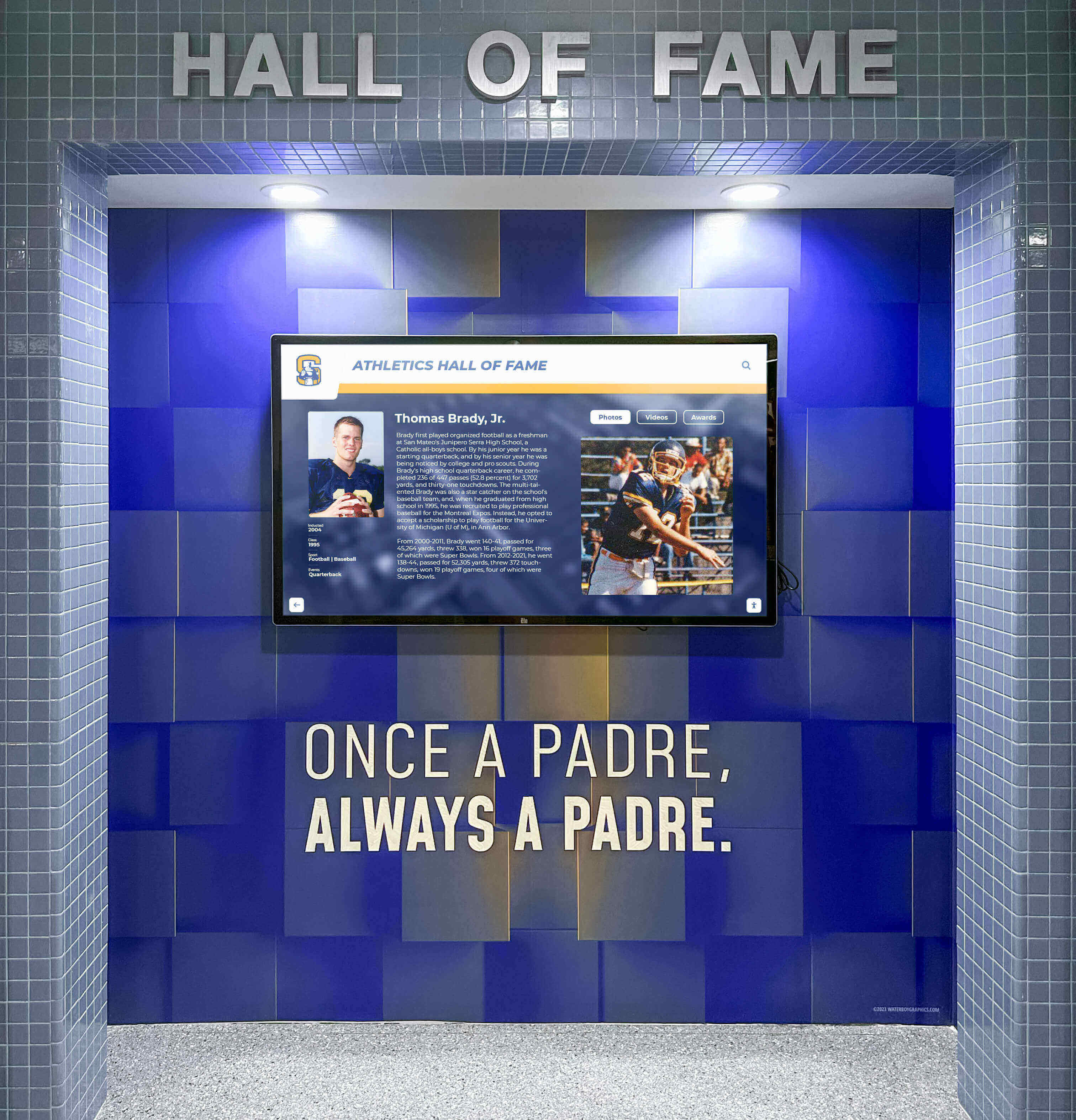
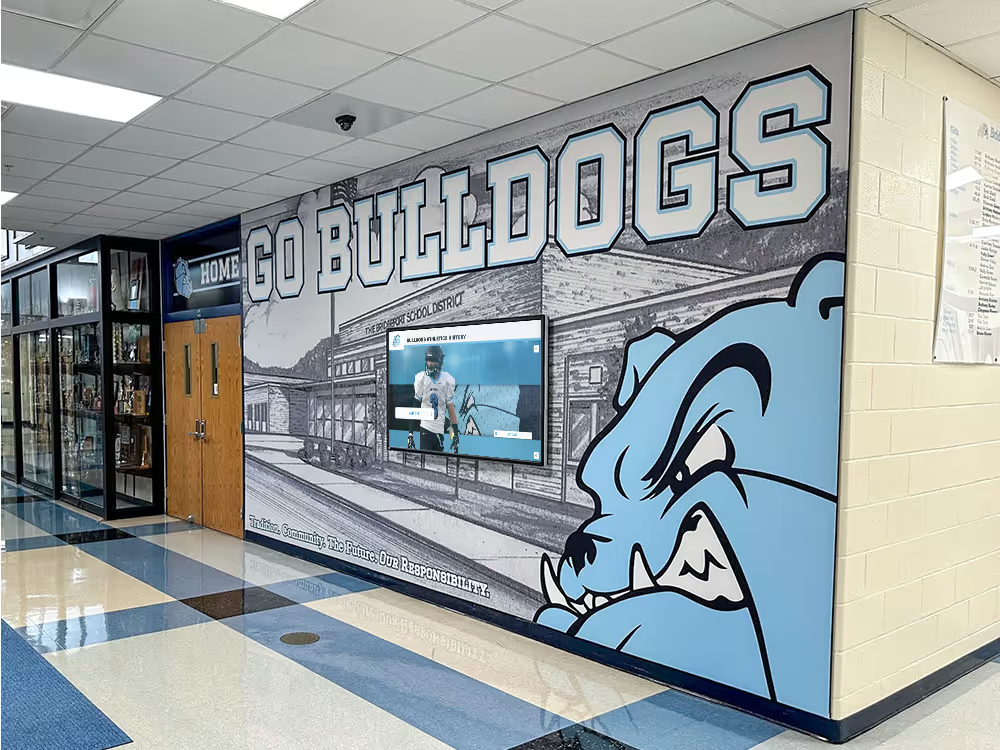
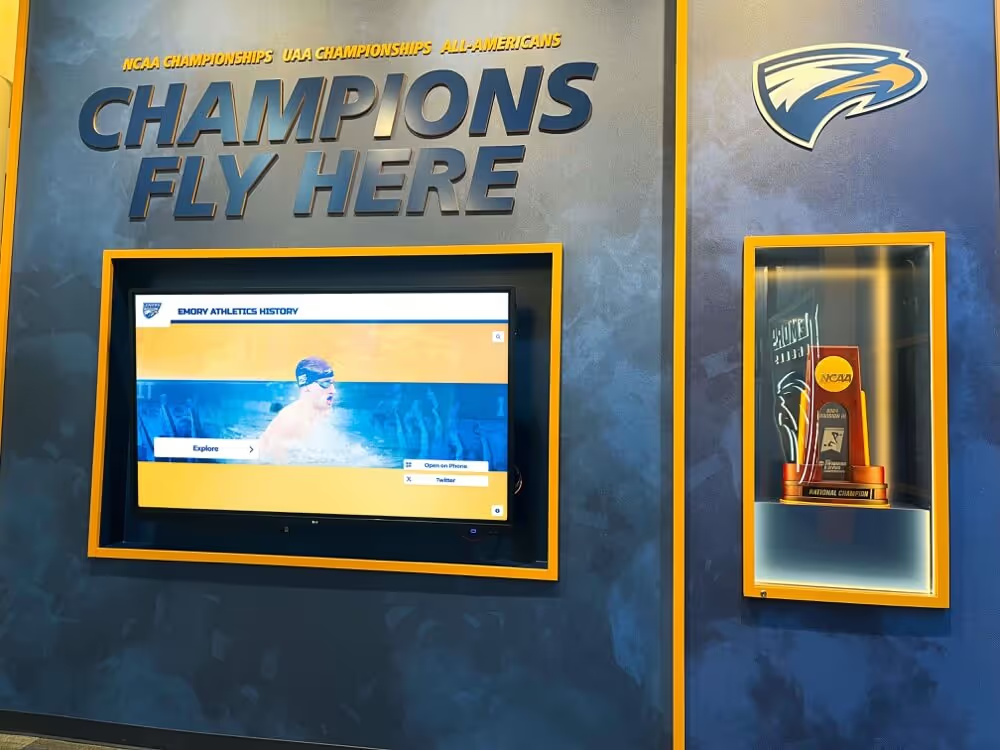
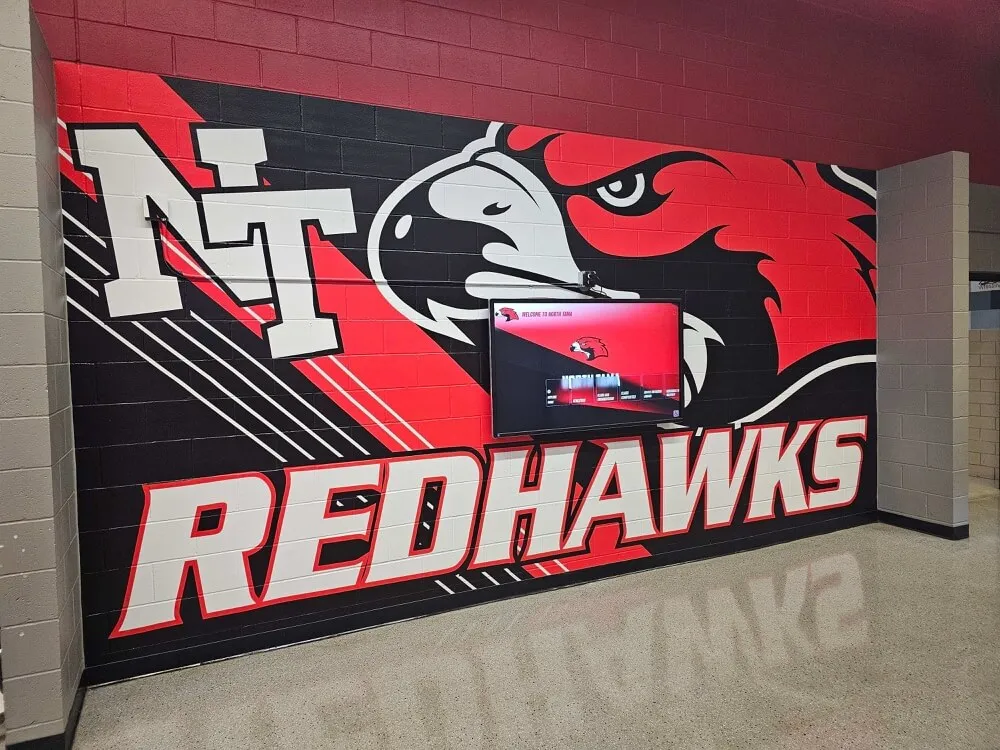
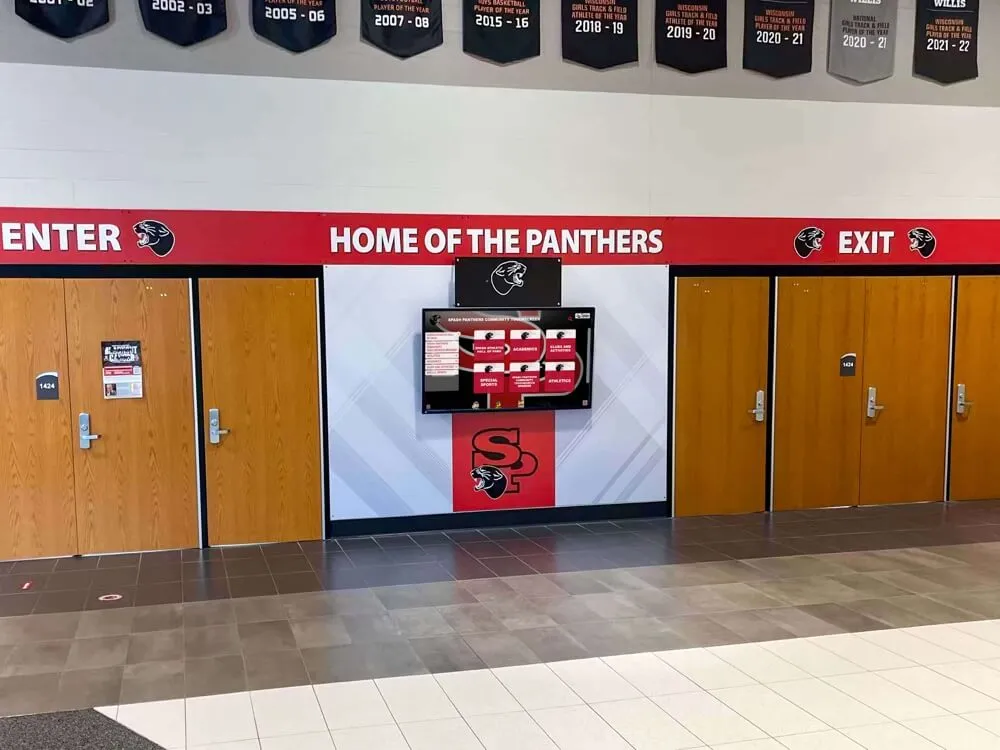
Strategic display placement near athletic facilities ensures basketball recognition remains visible and accessible to players, families, and community members
Addressing Basketball-Specific Recognition Needs
Basketball programs have unique characteristics requiring specialized recognition approaches.
Statistical Richness and Record-Keeping Complexity
Basketball generates extensive statistics—points, rebounds, assists, steals, blocks, field goal percentages, free throw accuracy—creating opportunities for diverse recognition categories. Traditional plaques accommodate only the most basic information, while digital systems showcase comprehensive statistics, seasonal progressions, career trajectories, and comparative historical context.
Seasonal Progression and Tournament Structures
Basketball seasons progress through regular conferences, conference tournaments, sectional playoffs, regional competitions, and state finals. This multi-stage structure creates recognition needs at each level—conference champions, sectional qualifiers, regional finalists, state participants—that quickly overwhelm physical display capacity. Digital recognition accommodates unlimited achievement categories without space constraints.
Individual and Team Recognition Balance
Basketball celebrates both individual excellence and team success. Programs need to honor 1,000-point scorers and all-state selections while simultaneously recognizing team championships, perfect seasons, and tournament runs. Digital platforms organize diverse recognition types coherently without the space limitations forcing impossible prioritization decisions between individual and team acknowledgment.
Girls and Boys Program Equity
Most high schools operate separate girls and boys basketball programs, each generating equivalent achievement deserving equal recognition. Traditional trophy case space limitations often result in inequitable representation, while digital recognition systems ensure both programs receive proportional celebration without physical constraints creating artificial competition for visibility.
Strategic Implementation: Positioning Touchscreen Displays for Maximum Impact
Effective recognition requires thoughtful placement ensuring visibility, accessibility, and contextual relevance.
Primary Placement Locations and Considerations
Different locations serve distinct purposes and audience needs.
Near Gymnasium Entrances
Positioning touchscreen displays immediately outside gymnasium doors captures engaged audiences attending basketball games. These high-traffic moments represent opportunities to showcase current season achievements, upcoming game schedules, roster information, and program history—connecting recognition to active basketball experience while spectators are most emotionally invested.
Practical Implementation Considerations
Placement near gymnasiums requires attention to traffic flow preventing crowding at entry points, adequate space enabling multiple viewers without blocking doorways, appropriate lighting ensuring visibility despite arena brightness, secure mounting preventing damage from equipment transport or crowd movement, and network connectivity supporting reliable operation.
Schools report that gym-adjacent displays typically receive highest engagement during 30 minutes before games and 15 minutes following competition when spectator attention focuses on basketball and emotional connection to program peaks.
Main School Lobbies and Entrances
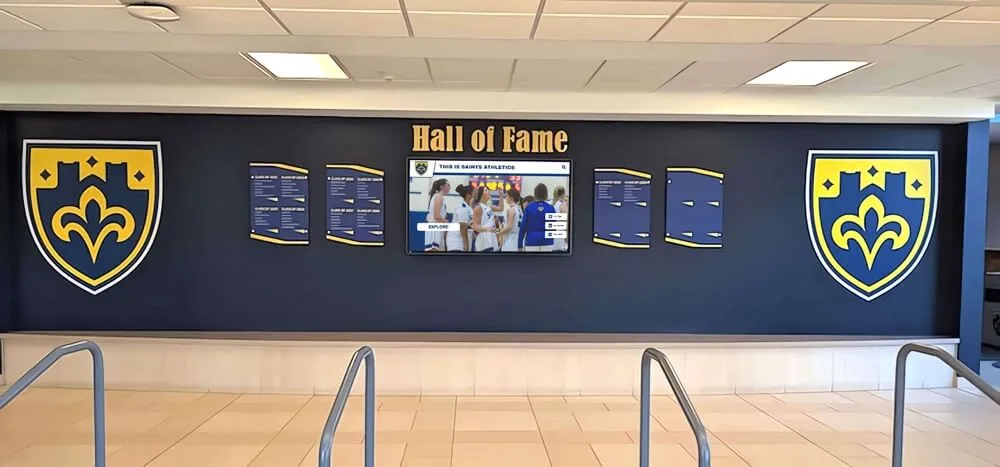
Central lobby placement ensures maximum visibility across school community including students passing between classes, families visiting for various activities, prospective families touring facilities, and community members attending events beyond athletics.
This placement positions basketball recognition as central element of school identity rather than isolated athletic achievement, strengthening program profile and communicating institutional pride in basketball tradition.
Lobby Placement Benefits
Main entrances typically offer controlled environments protecting displays from weather and temperature extremes, adequate electrical infrastructure supporting installation, strong network connectivity for reliable operation, professional aesthetic context appropriate for recognition displays, and natural gathering spaces where people pause and engage.
However, lobby displays compete with broader school programming for attention, requiring compelling content ensuring basketball recognition captures interest among diverse audiences not specifically seeking athletic information.
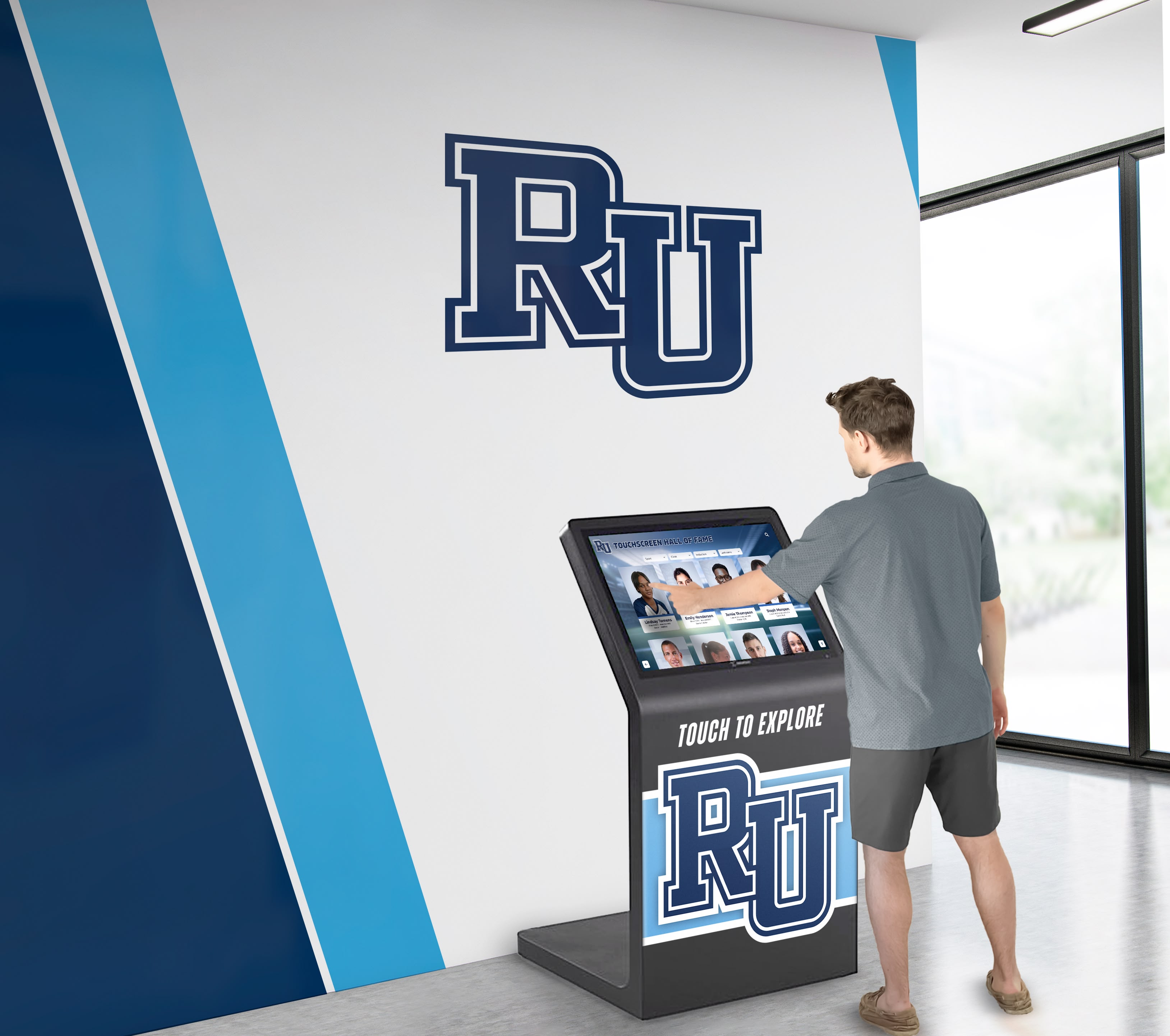
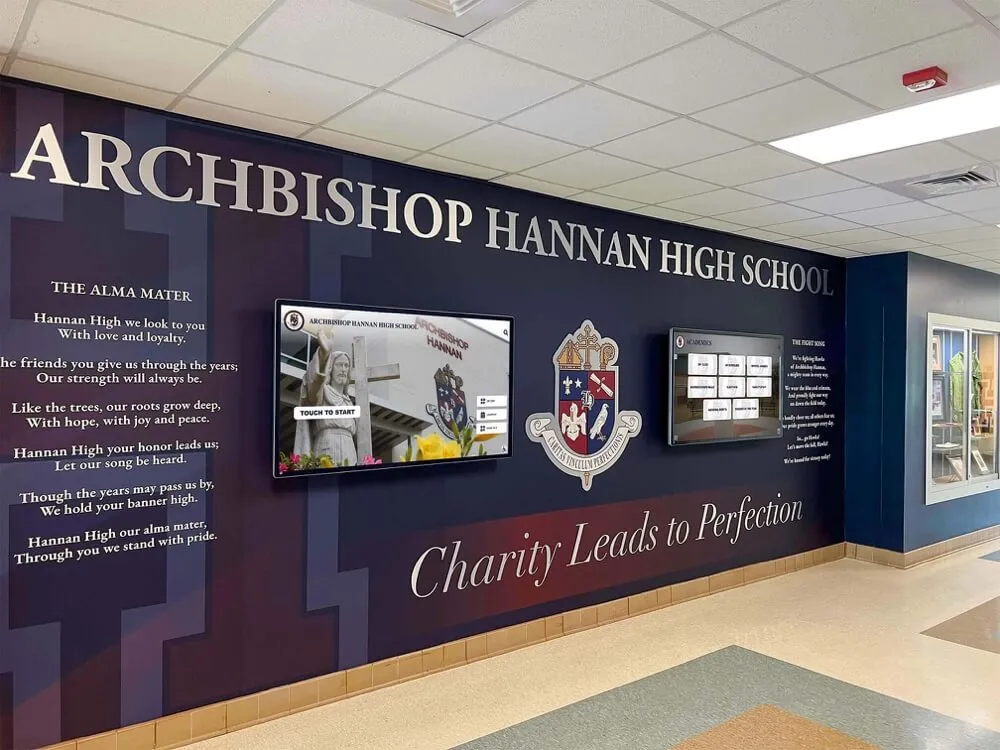
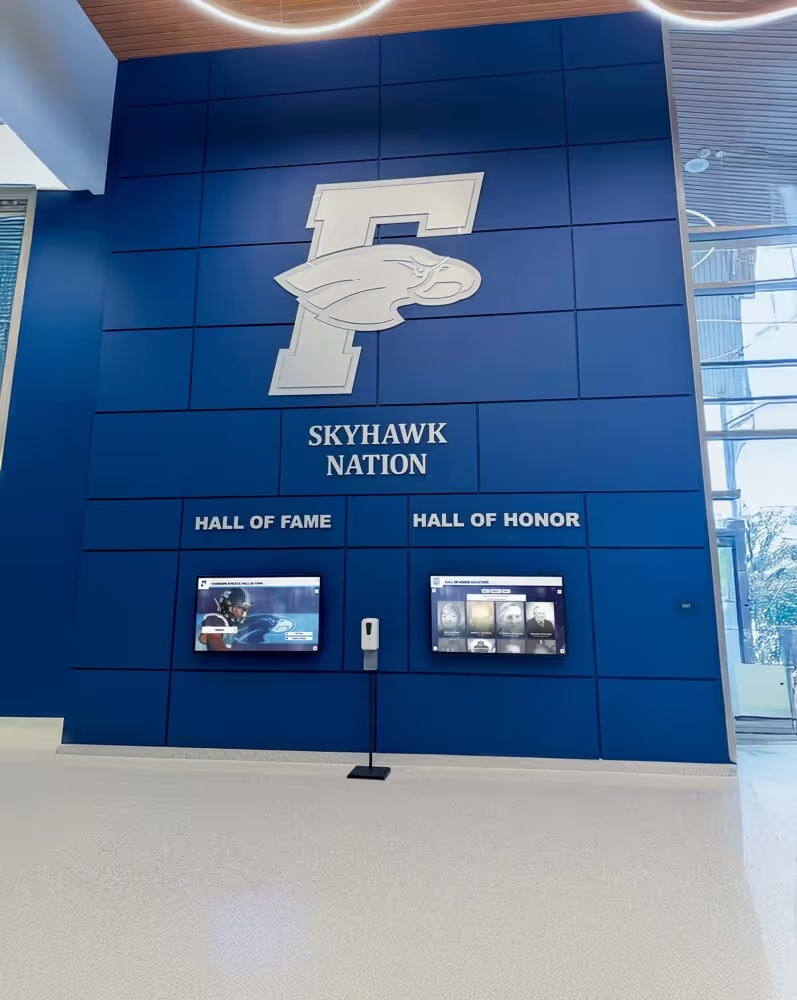
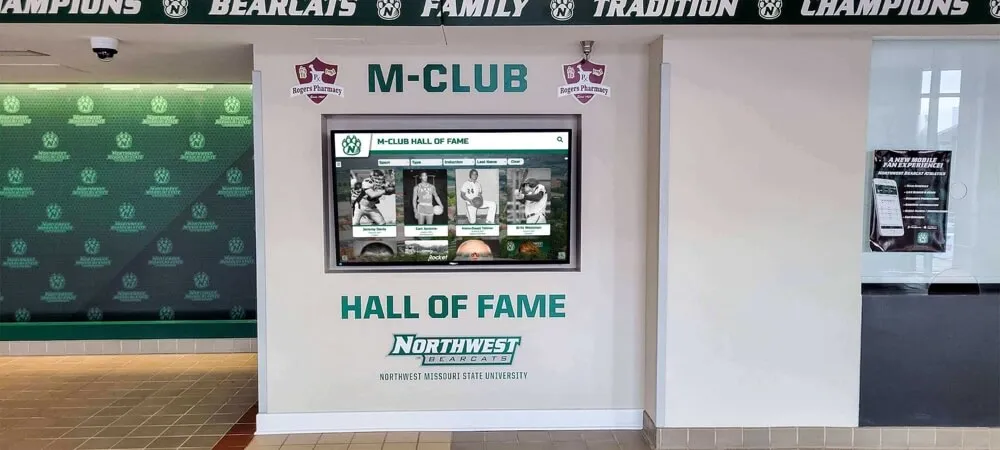
Lobby-positioned touchscreens integrate basketball recognition into daily school experience, strengthening program visibility across entire community
Athletic Hallways and Locker Room Areas
Some schools designate specific hallways or corridors as athletic recognition zones, concentrating sports achievement celebration in dedicated spaces that create immersive environments. These locations serve primarily athlete and coach audiences rather than casual visitors, enabling more technically detailed recognition appealing to basketball-knowledgeable viewers.
Athletic-Specific Display Advantages
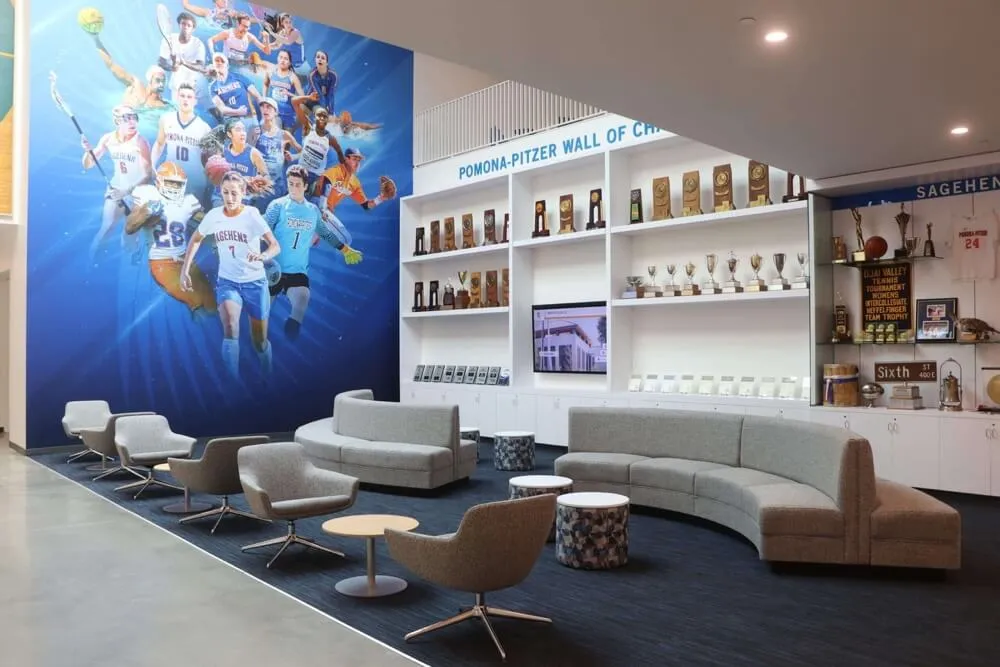
Dedicated athletic spaces enable comprehensive basketball focus without competing for general audience attention, create inspirational environments where current players regularly view predecessor achievements, accommodate multiple displays covering different basketball recognition aspects, and integrate with physical trophies, banners, and traditional recognition elements.
These spaces work particularly well in schools with separate athletic facilities, fieldhouses, or designated sports wings where concentrated recognition creates destination experiences rather than distributed visibility across campus.
Multi-Display Strategies
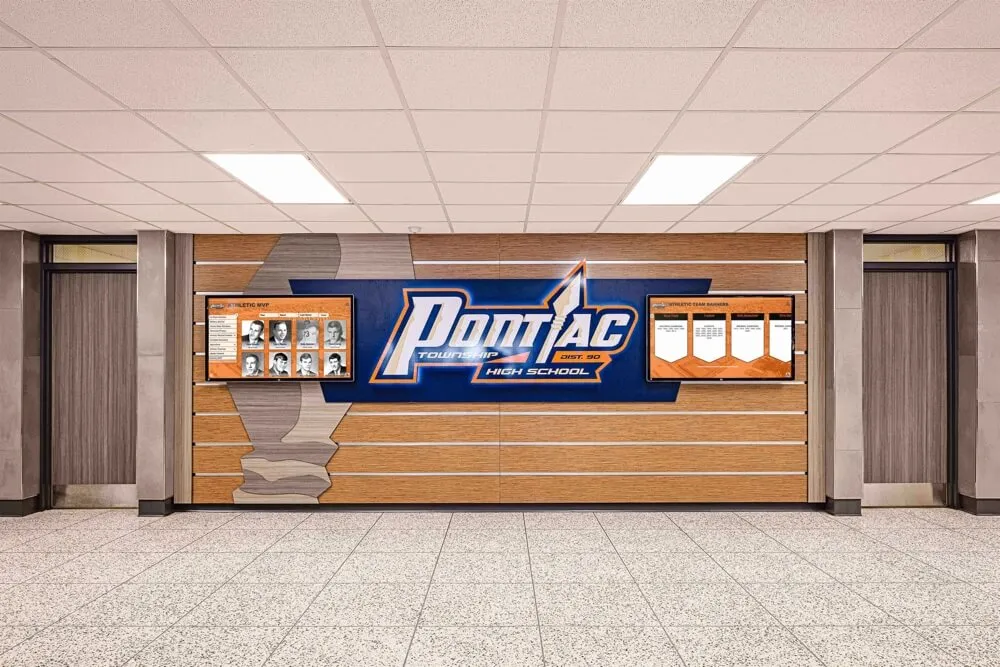
Larger schools or programs with extensive basketball tradition often implement multiple displays serving different purposes—lobby displays highlighting current season and recent champions, gym-adjacent displays focusing on game-day information and immediate recognition, and athletic hallway displays providing comprehensive historical archives and detailed statistical records.
This distributed approach ensures appropriate recognition reaches relevant audiences in contextually appropriate locations while preventing single displays from becoming overwhelming with excessive content.
Installation and Technical Requirements
Professional installation ensures reliable operation and appropriate presentation.
Display Specifications and Hardware Selection
Basketball recognition typically utilizes 55-65 inch commercial-grade touchscreen displays providing appropriate size for detailed content visibility, responsive touch technology supporting intuitive interaction, commercial durability enabling continuous operation, and integrated media players or computer systems managing content.
Larger displays cost more but improve visibility in high-ceilinged athletic spaces and accommodate multiple simultaneous viewers comfortably. Schools should balance display size with available wall space, viewing distances, and budget constraints.
Network Infrastructure and Connectivity
Digital recognition systems require reliable internet connectivity for cloud-based content management, remote updates, and synchronized multi-display operation. Schools should ensure adequate network infrastructure through hardwired ethernet connections providing most reliable performance, robust Wi-Fi coverage if hardwired installation impractical, sufficient bandwidth supporting video content and real-time updates, and network security appropriate for public-facing systems.
IT departments should be involved early in planning to address network requirements, security policies, and technical support protocols.
Power Requirements and Cable Management
Professional installations include appropriate electrical infrastructure supporting continuous display operation, surge protection preventing equipment damage, concealed cable routing maintaining professional appearance, and compliance with building codes and safety requirements.
Athletic facilities often require creative cable management solutions accommodating existing finishes, avoiding areas where equipment transport might damage installations, and maintaining aesthetic consistency with surrounding spaces.
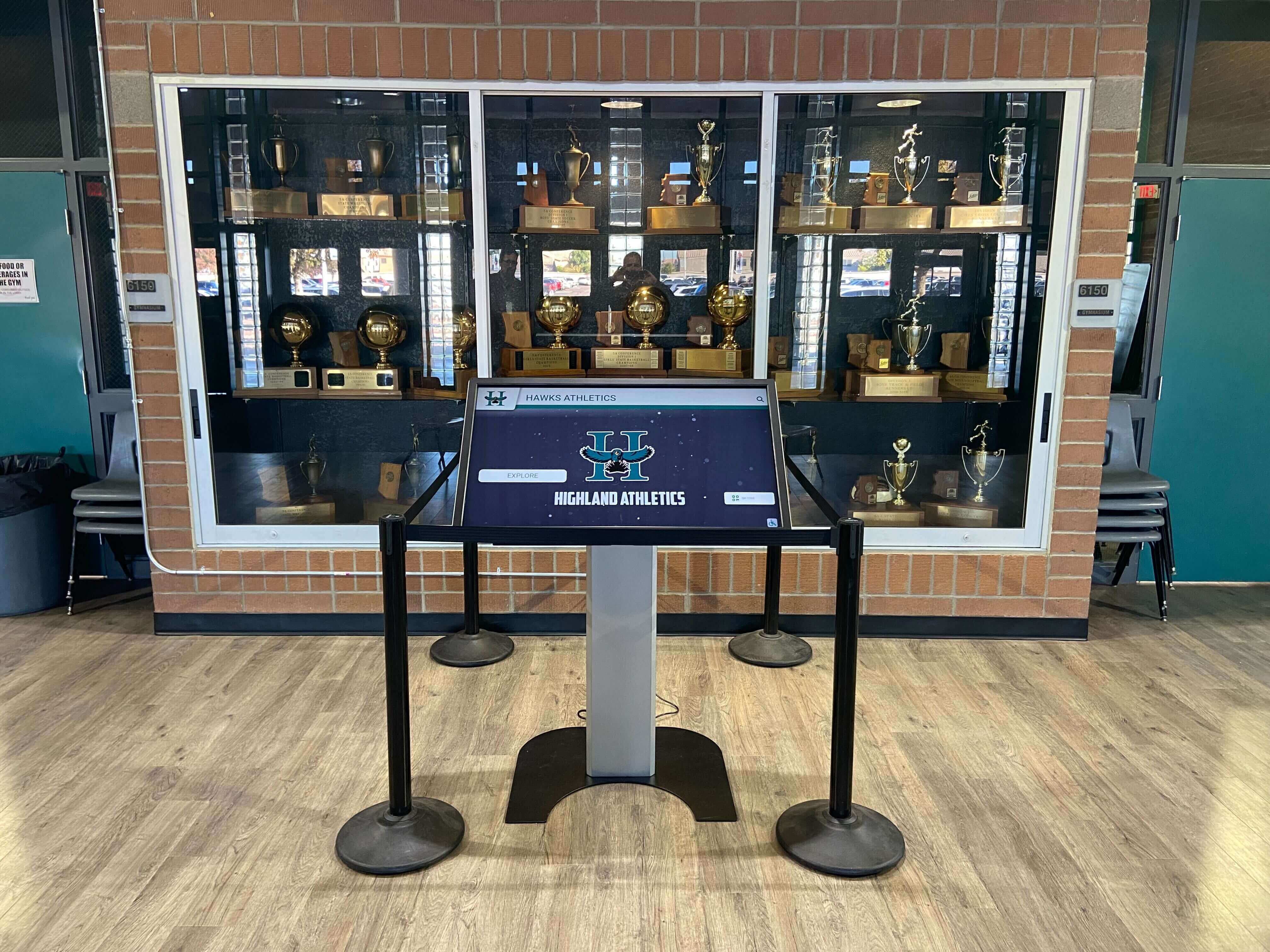
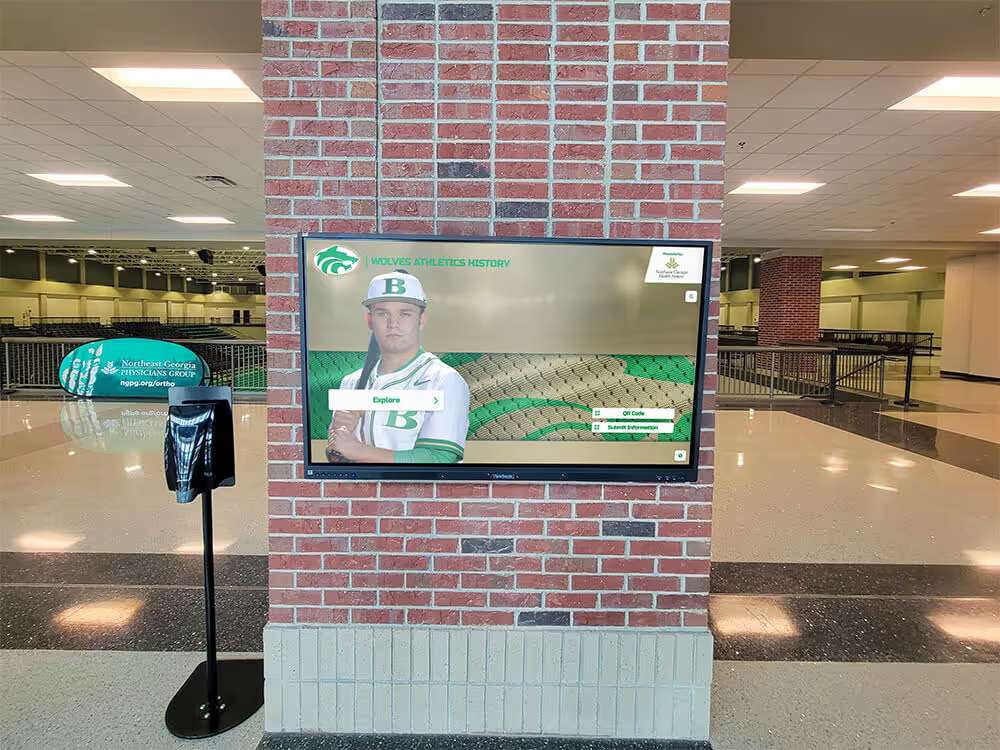
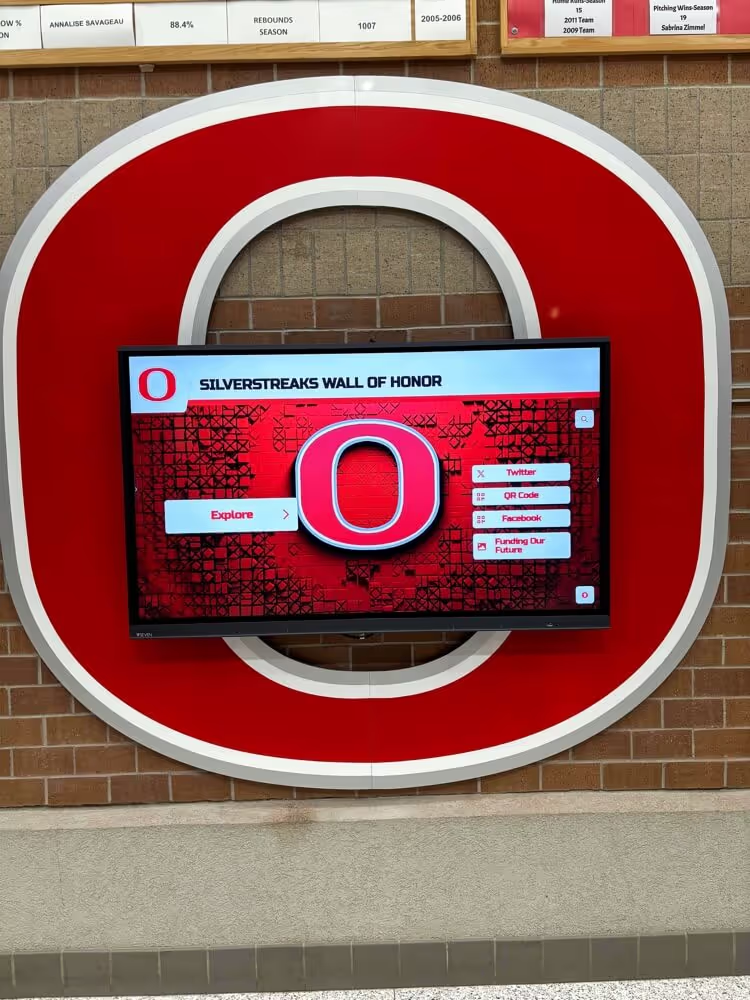
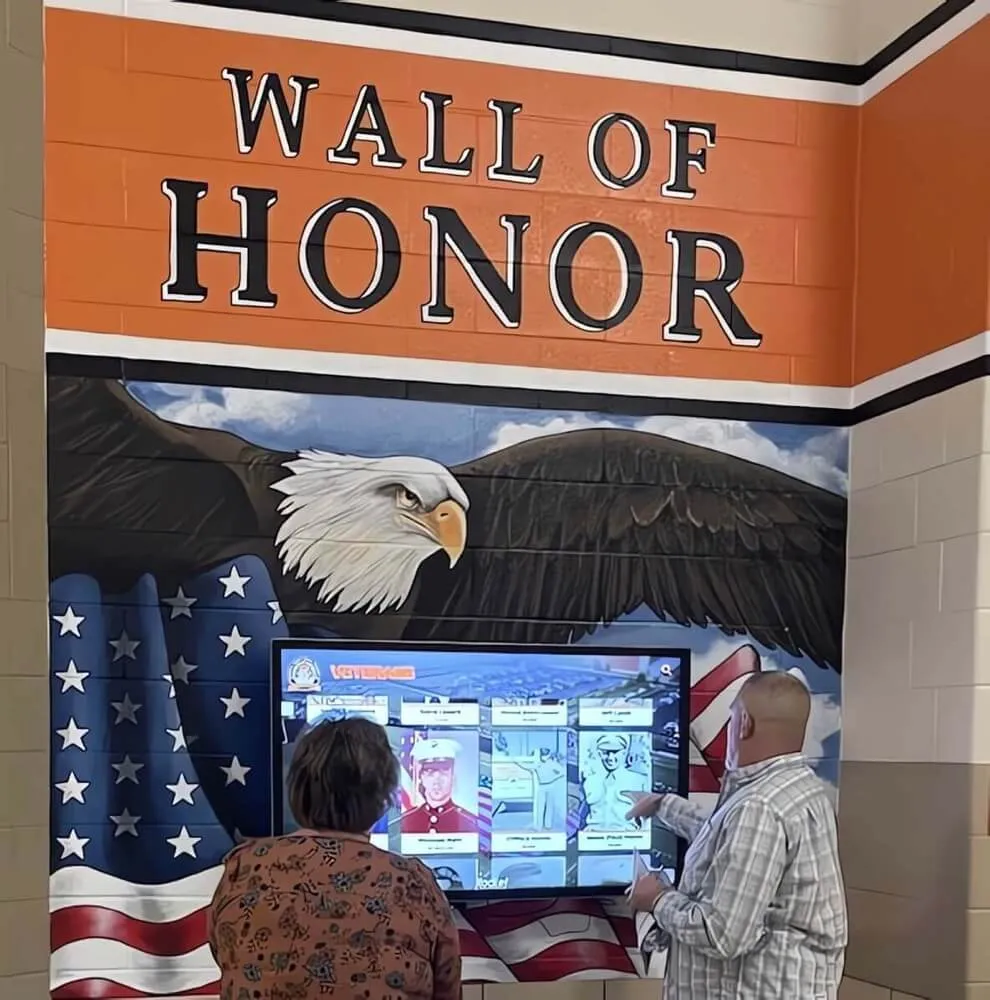
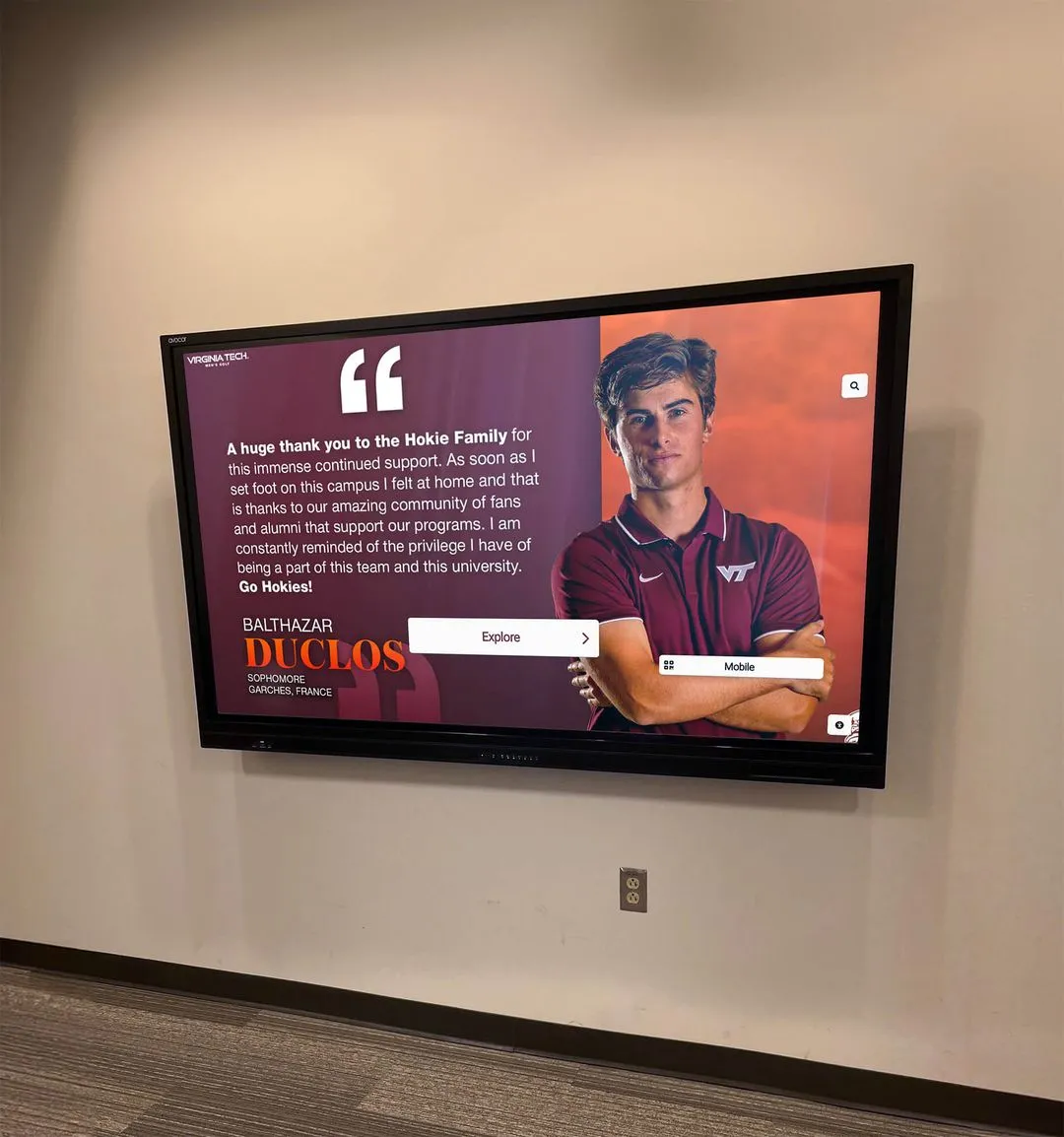
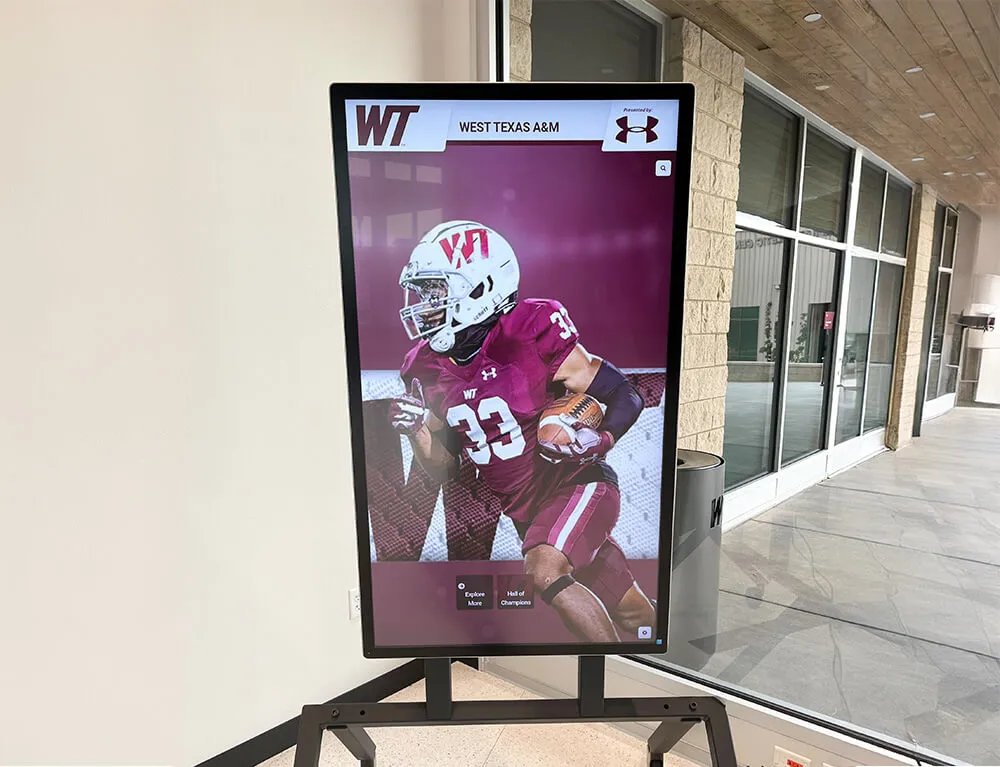
Freestanding kiosk configurations offer installation flexibility in spaces where wall mounting proves impractical or where repositioning capability provides value
Mounting Options and Physical Installation
Displays can be wall-mounted for permanent installation minimizing floor space requirements, installed in freestanding kiosks offering repositioning flexibility, integrated with existing trophy cases or recognition walls, or mounted on movable stands enabling relocation for events.
Mounting decisions should consider long-term placement intentions, facility constraints, ADA accessibility requirements, and maintenance access needs. Professional installation ensures appropriate support structures, secure mounting preventing theft or damage, and proper alignment and leveling.
Content Strategy: What to Showcase on Basketball Recognition Displays
Compelling content transforms hardware into meaningful recognition experiences.
Current Season Recognition and Real-Time Updates
Timely content maintains relevance and engagement throughout basketball seasons.
Roster Information and Player Profiles
Current team rosters with player photographs, jersey numbers, positions, grade levels, and brief biographical information help spectators identify athletes and understand team composition. Enhanced profiles can include statistics, previous season achievements, academic information, and personal interests—creating comprehensive celebration extending beyond court performance.
Regular roster updates accommodate mid-season changes, injury status updates, and returning player recognition maintaining accuracy throughout seasons.
Season Statistics and Performance Tracking
Real-time or regularly updated statistics showcase individual performance including points per game, rebounds, assists, field goal percentages, free throw accuracy, steals, blocks, and other basketball metrics. Team statistics highlight collective performance through win-loss records, scoring averages, defensive statistics, and comparative conference standings.
Statistical displays answer common spectator questions—“Who’s our leading scorer?” “How many wins do we have?” “Where do we rank in conference?"—while providing recognition for consistent performance rather than only celebrating record-breaking achievements.
Schedule and Results Tracking
Interactive calendars showing upcoming games, past results, tournament brackets, and playoff progressions keep spectators informed while documenting season progression. Enhanced schedule displays can include opponent information, game locations, start times, and relevant context about rivalry matchups or playoff implications.
Post-season, complete schedule documentation with final results becomes historical record preserving seasonal narratives beyond simple championship acknowledgment.
Milestone Celebration and Achievement Alerts
When players reach significant milestones—1,000 career points, 500 rebounds, school records, personal bests—digital displays can feature these achievements prominently through dedicated celebration screens, athlete spotlights, statistical context, and historical comparisons.
Immediate recognition ensures athletes receive acknowledgment while achievements remain fresh and emotionally significant rather than waiting months for physical plaques.
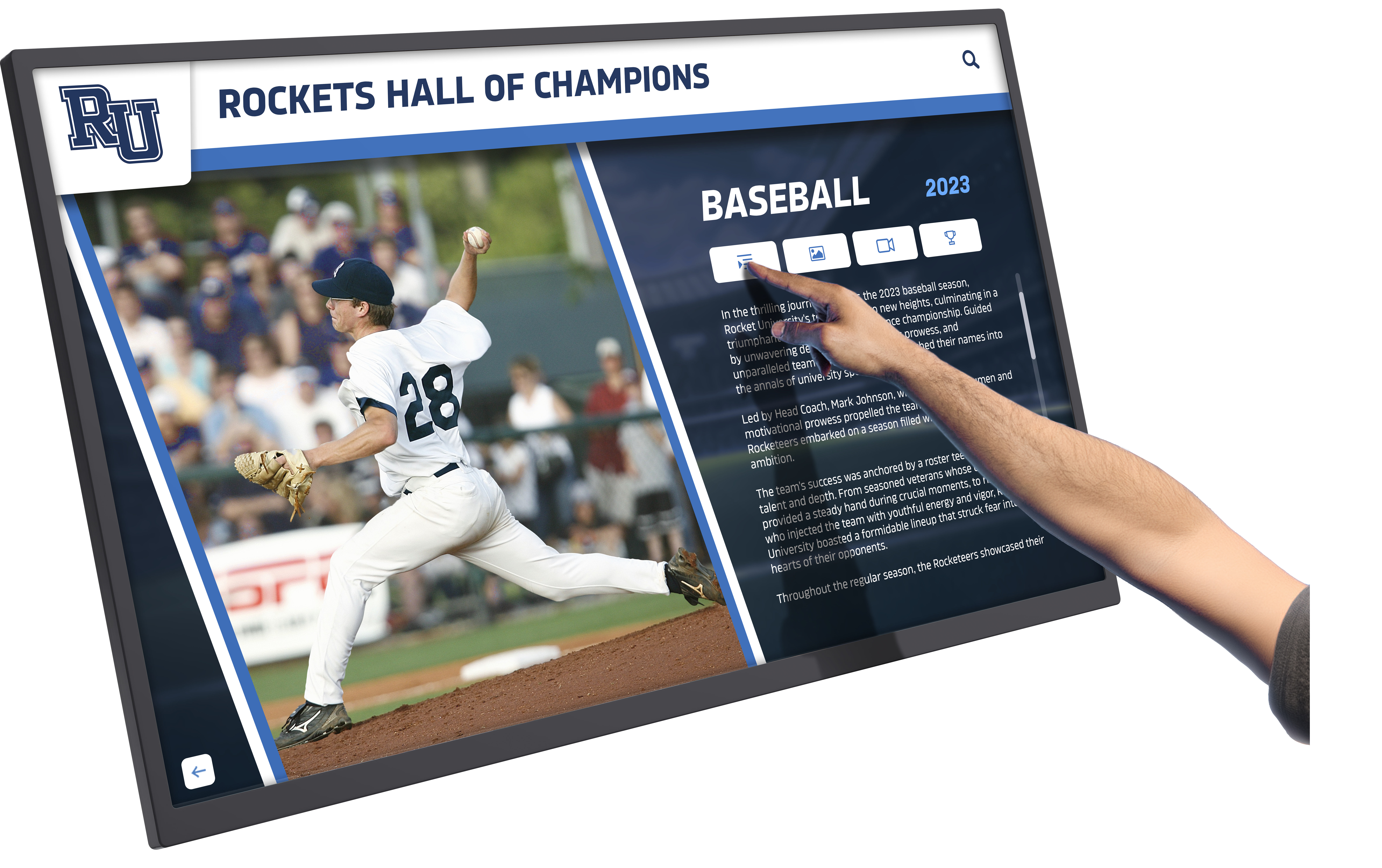
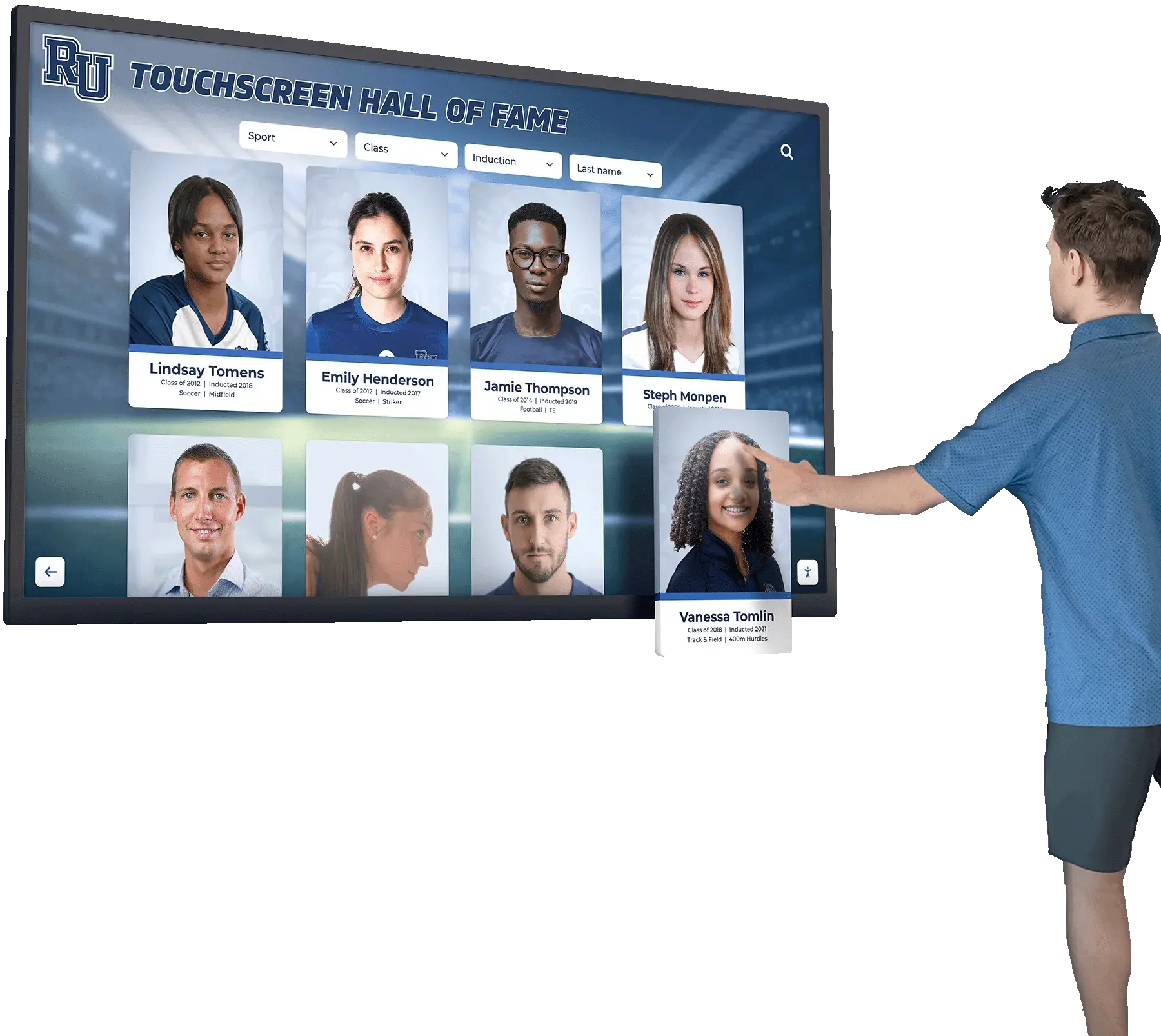
Interactive profiles enable detailed athlete celebration impossible with traditional plaques, including statistics, achievements, photographs, and personal stories
Historical Recognition and Program Legacy
Comprehensive historical content connects current teams to basketball tradition.
All-Time Records and Statistical Leaders
Career and single-season records across various statistical categories preserve basketball program history through all-time leading scorers, career rebounding leaders, single-game performance records, season and career assists leaders, defensive achievement records, and coaching milestone recognition.
Searchable databases enable visitors to explore records by decade, gender, statistical category, or achievement type—discovering forgotten legends and understanding program evolution over time. This historical depth creates context for current achievements while honoring athletes whose contributions might otherwise be forgotten as decades pass.
Championship Teams and Tournament Success
State championships, conference titles, sectional victories, and tournament appearances deserve permanent recognition through team photographs, roster listings, season records, tournament bracket progressions, and coaching acknowledgment.
Enhanced championship recognition can include game footage from title contests, newspaper coverage from era, player reflections, and historical context explaining significance within program timeline. This storytelling transforms simple championship acknowledgment into meaningful historical preservation.
Hall of Fame and Distinguished Alumni
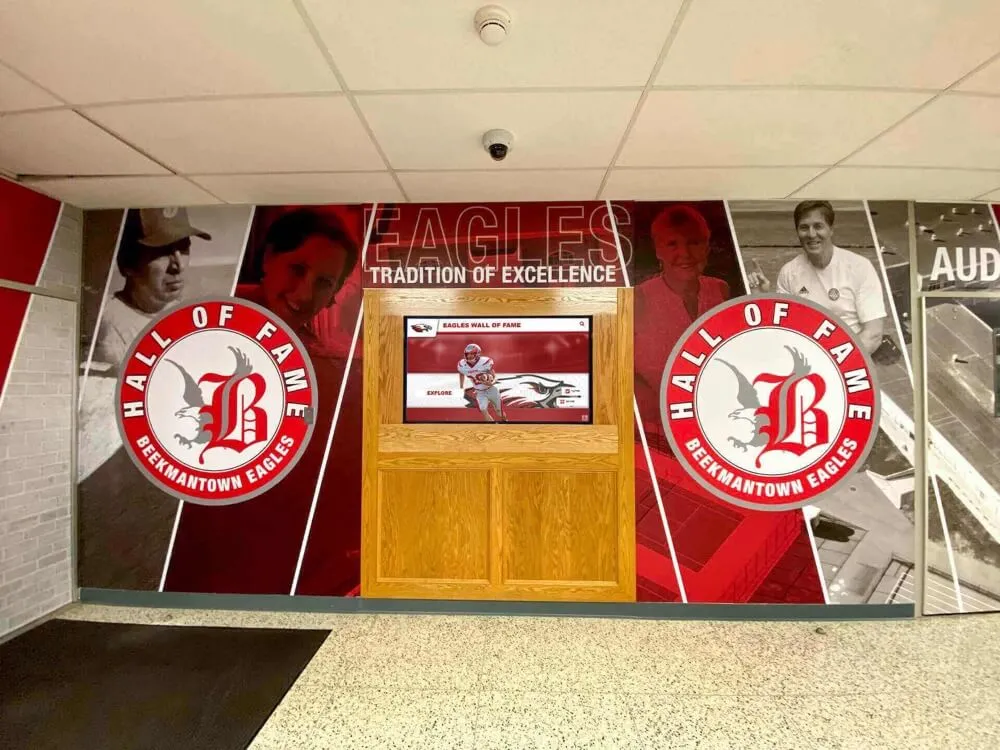
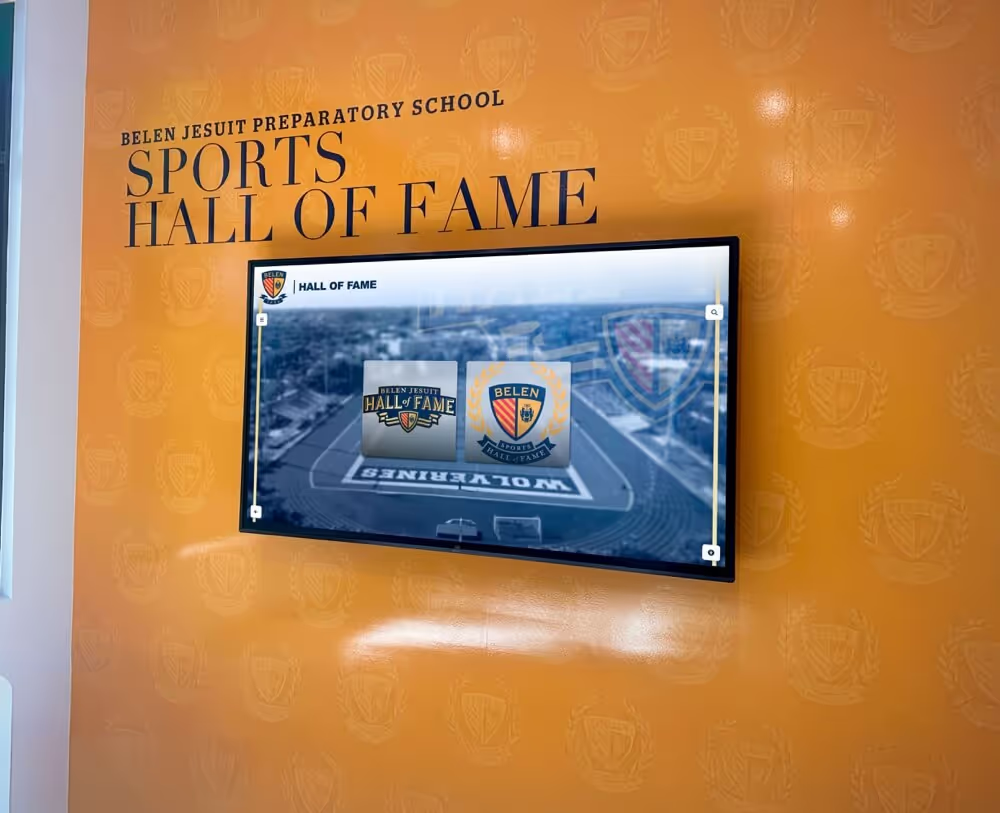
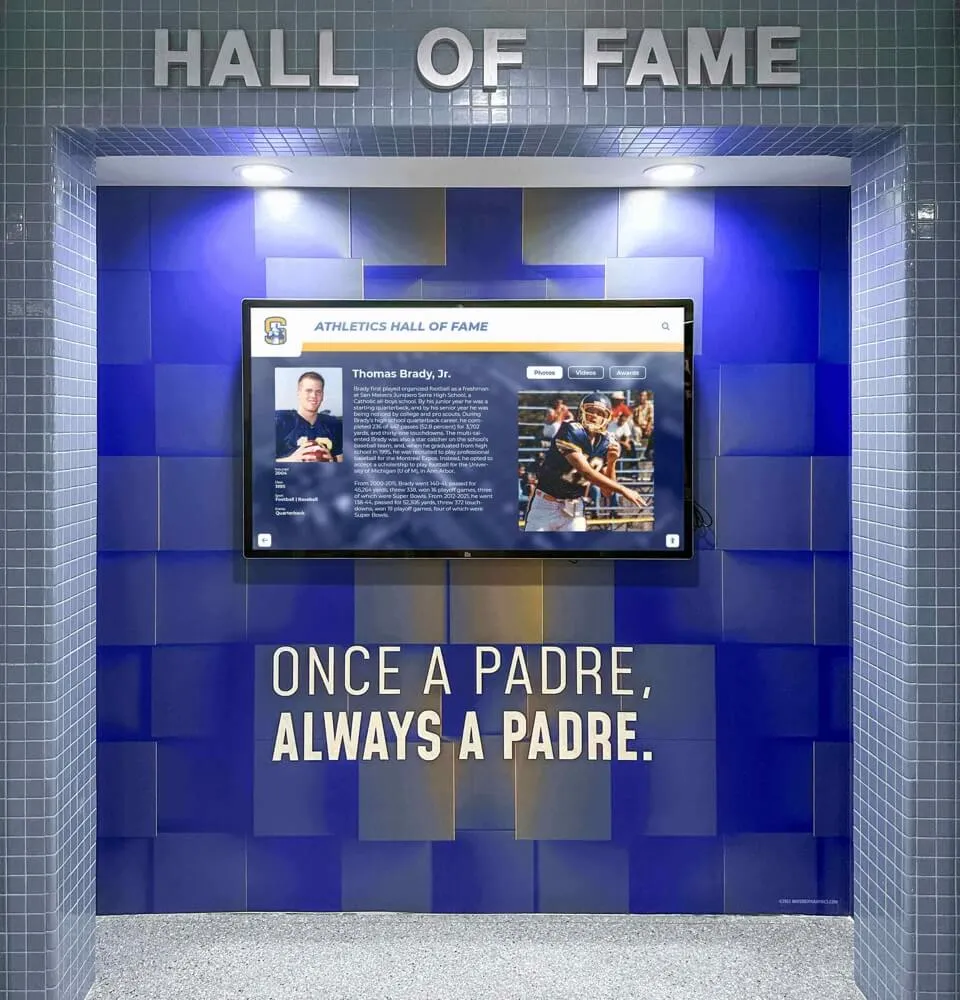
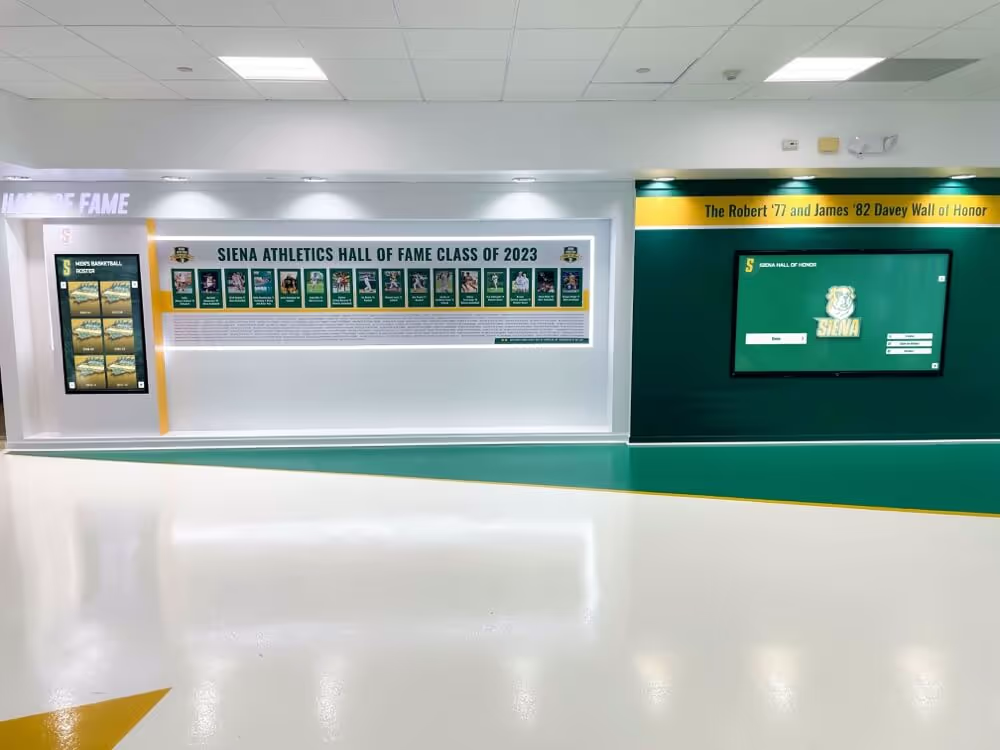
Digital hall of fame displays enable comprehensive celebration of basketball legends through detailed athlete biographies, career statistics and achievements, post-high school athletic careers, professional or collegiate success, and personal reflections on basketball experience.
Induction class organization, searchable athlete databases, and featured legend rotations ensure comprehensive recognition without space constraints limiting who receives acknowledgment.
Decade-by-Decade Program Evolution
Historical timelines documenting basketball program development through facility improvements, coaching transitions, significant rule changes, memorable games and rivalries, and program milestone achievements help current students understand basketball tradition within broader school history.
This historical context strengthens program identity while preserving institutional memory that might otherwise be lost as generations change and direct witnesses to historical events are no longer available.
Multimedia Content and Engagement Features
Rich media transforms recognition from information displays into compelling experiences.
Video Highlights and Game Footage
Integrating video content showcases basketball in action through championship game highlights, significant individual performances, buzzer-beaters and memorable moments, season recap compilations, and senior athlete tributes.
Video content creates emotional connections impossible with text and photographs alone while demonstrating the excitement and athleticism that statistics only partially capture.
Photo Galleries and Visual Storytelling
Curated photograph collections document basketball experience beyond competition including action photography from games, team bonding and practice moments, community engagement activities, academic achievement celebrations, and facility evolution photography.
Rotating galleries maintain fresh content while comprehensive archives preserve visual history accessible through search and filtering functionality.
Interactive Statistical Comparisons
Engagement features enable visitors to compare athletes across eras, explore “what if” statistical scenarios, understand achievement context through era-adjusted comparisons, and discover relationships between athletes through shared coaches, overlapping years, or family connections.
These interactive elements transform passive viewing into active exploration, increasing engagement duration and creating memorable experiences that strengthen connections to basketball program.
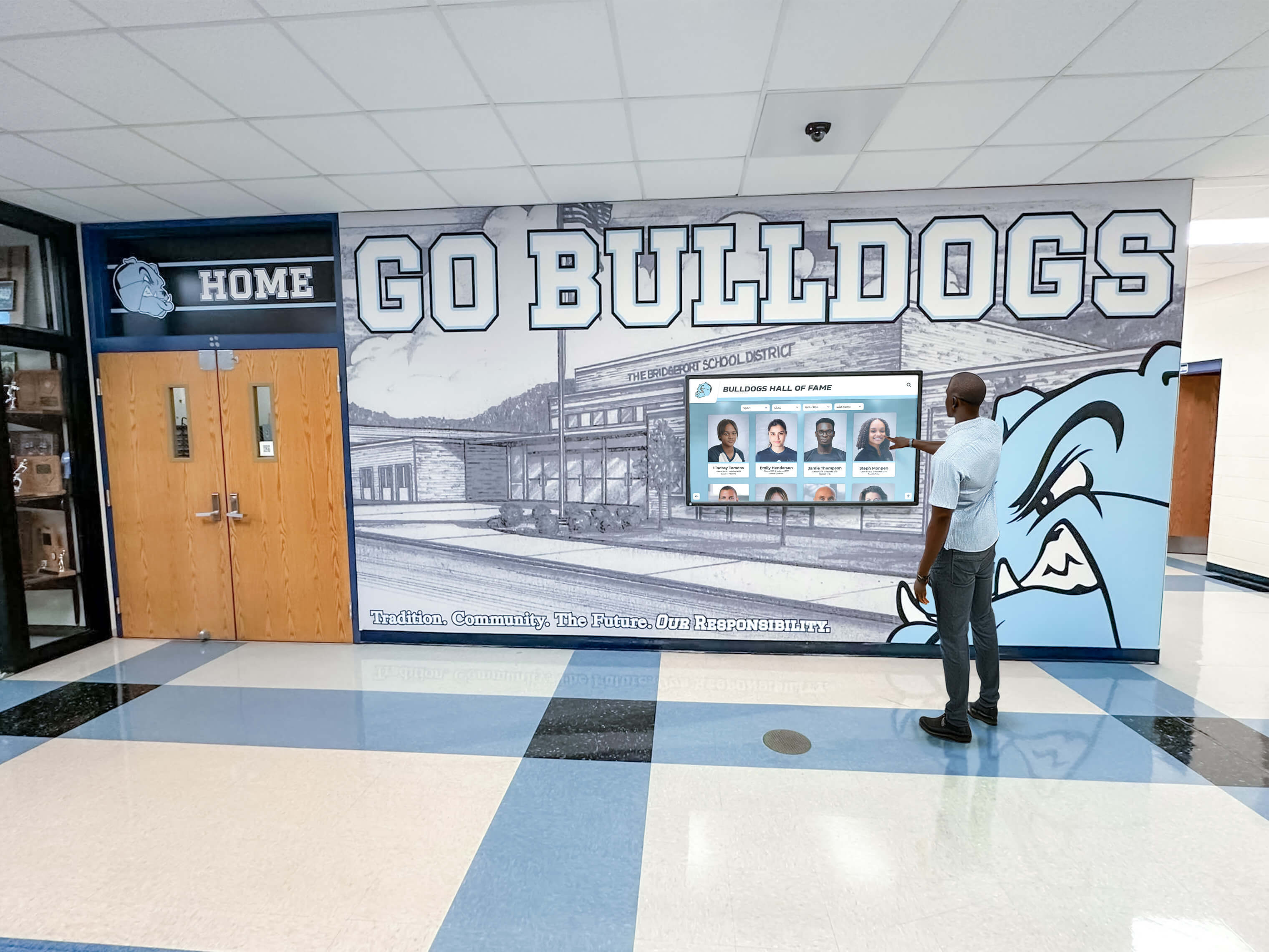
Touch interaction enables visitors to explore basketball history at their own pace, discovering connections and achievements matching their interests
Operational Management: Maintaining Current and Compelling Recognition
Sustainable recognition requires systematic content management and ongoing attention.
Content Update Workflows and Responsibilities
Clear processes ensure recognition remains current without overwhelming staff.
Role Definition and Access Control
Effective management assigns specific responsibilities through athletic directors overseeing overall content strategy and approval, head coaches managing current season updates and roster information, assistant coaches or team managers handling statistical updates and game results, athletic department staff coordinating historical content and record verification, and technical support addressing hardware issues and software troubleshooting.
Cloud-based management platforms enable role-based access ensuring appropriate personnel can update relevant content without compromising security or creating inappropriate access to sensitive systems.
Update Schedules and Protocols
Regular update cadences maintain current recognition through weekly updates during basketball season for statistics and results, immediate milestone recognition when achievements occur, monthly historical content additions preserving program history, seasonal roster and schedule updates before seasons begin, and comprehensive annual reviews ensuring accuracy and removing outdated content.
Documented workflows prevent updates from depending on individual initiative, ensuring recognition receives systematic attention regardless of staff transitions or busy periods.
Quality Assurance and Accuracy Verification
Content review processes prevent errors including statistical verification against official scorebooks, roster information confirmation with accurate spellings and details, historical fact-checking using reliable documentation, photograph quality and appropriate selection review, and proofreading preventing typographical or grammatical errors.
Public recognition errors create embarrassment and undermine credibility—systematic quality assurance prevents problems before content publishes.
Balancing Current and Historical Content
Effective displays serve multiple audiences with different interests.
Featured Content Rotation
Automated rotation strategies ensure variety through current season emphasis during active basketball periods, historical features during off-seasons maintaining engagement, milestone athlete spotlights celebrating recent achievements, anniversary recognition marking program historical moments, and random historical displays introducing forgotten legends.
Rotation prevents displays from becoming stale while ensuring diverse content reaches audiences over time rather than requiring visitors to manually search all available information.
Search and Navigation Design
Intuitive organization enables visitor discovery through prominent search functionality allowing name or year searches, category browsing by achievement type or era, timeline navigation exploring program chronologically, statistical leaderboards highlighting records, and “featured” content drawing attention to priority recognition.
Well-designed navigation ensures both casual browsers and visitors seeking specific information can successfully access desired content without frustration.
Engaging Different Audience Segments
Content strategy should consider diverse viewer interests including current students most interested in recent seasons and peer athletes, parents and families focused on their children’s recognition and current teams, alumni seeking their own era or tracking program evolution, community members interested in program tradition and recent success, and prospective families evaluating program quality and school culture.
Balanced content addressing multiple audience needs ensures displays provide value across school community rather than serving narrow constituencies.
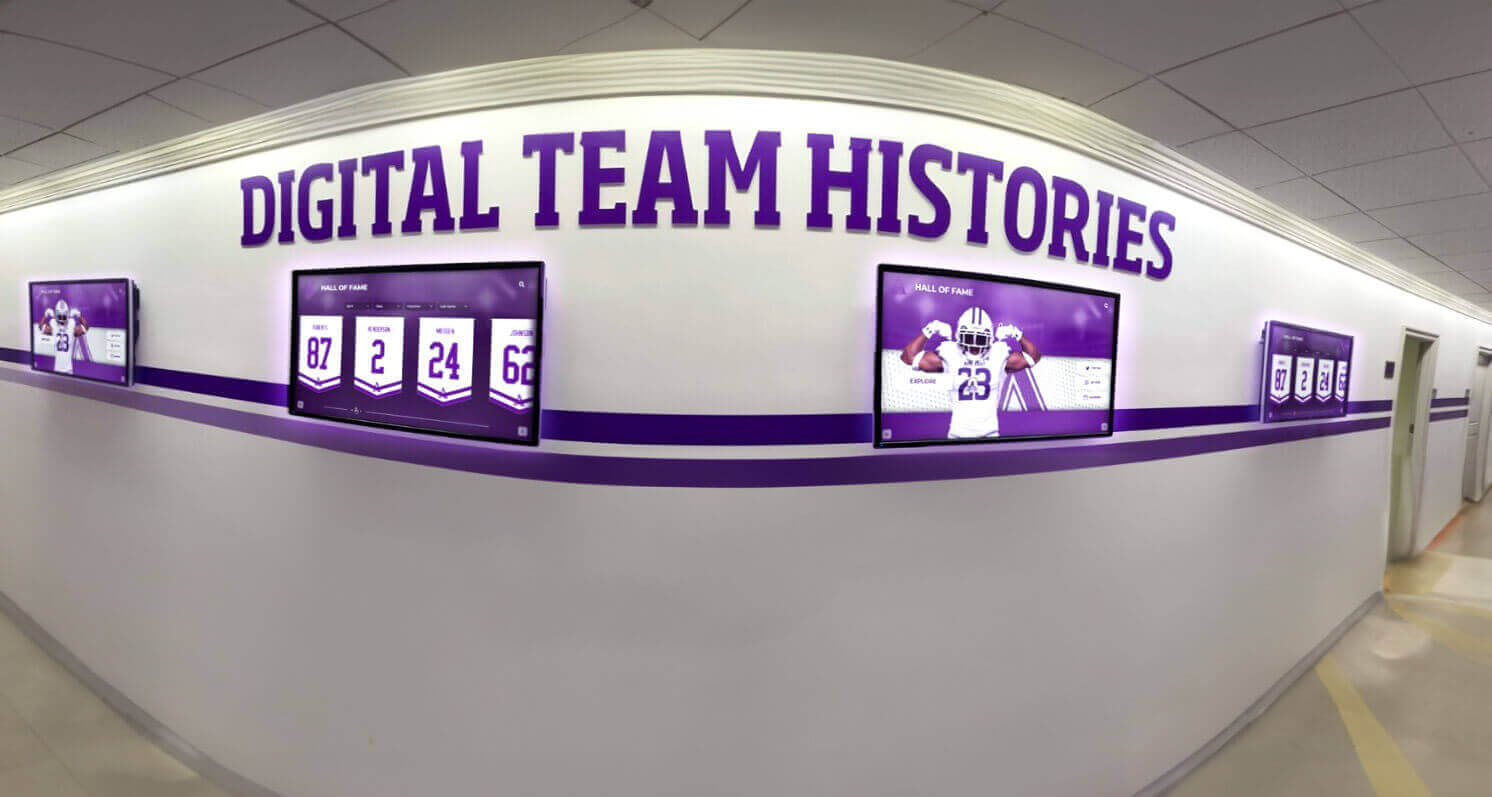
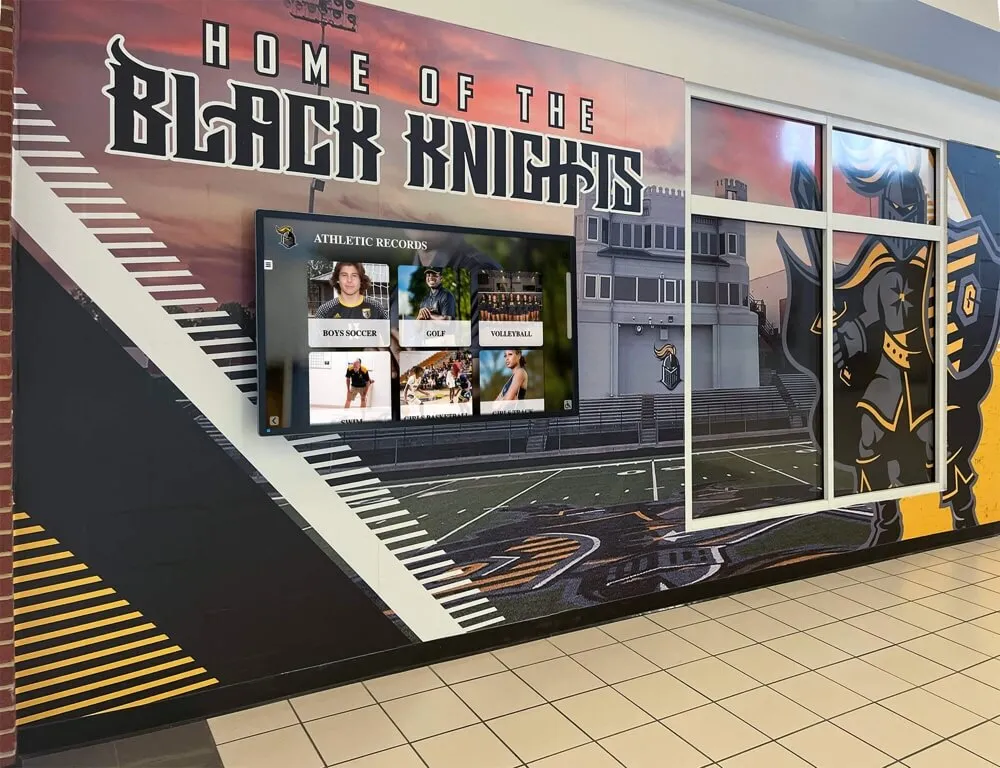
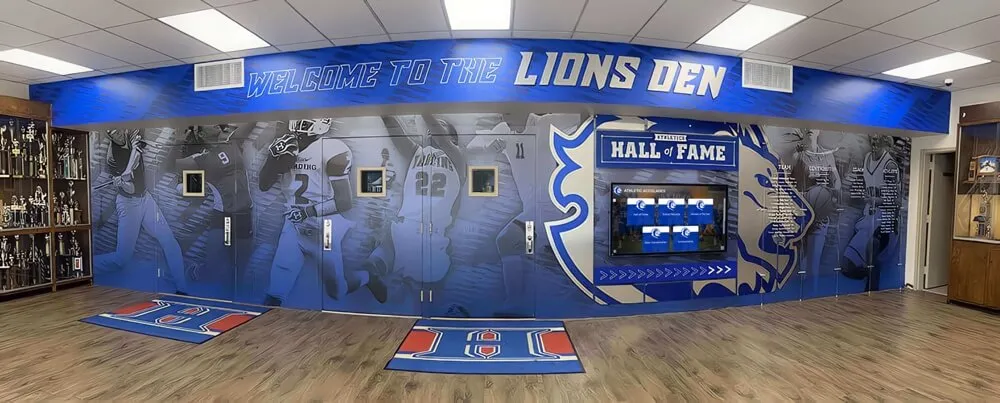
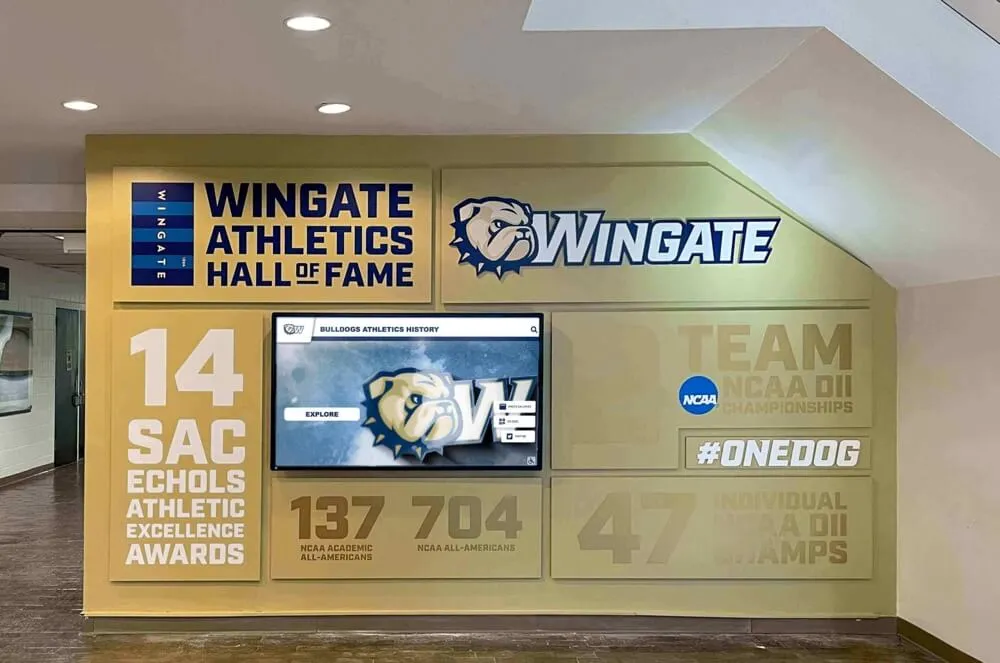
Multi-display installations enable comprehensive recognition accommodating diverse content types without overwhelming individual screens
Enhancing Basketball Culture and Community Connection
Strategic recognition strengthens program identity beyond simple acknowledgment.
Building Team Identity and Motivation
Visible recognition impacts athlete psychology and program culture.
Creating Aspirational Goals
When current athletes regularly view predecessor achievements through all-time scoring lists, championship teams, and individual honors, recognition creates tangible goals worth pursuing. Seeing what’s possible—and that accomplishments receive lasting celebration—motivates excellence while connecting athletes to program tradition larger than individual seasons.
Coaches report that visible historical recognition strengthens team culture by establishing performance expectations, creating shared identity across team generations, inspiring commitment to excellence, and fostering pride in program representation.
Celebrating Diverse Contributions
Comprehensive digital recognition enables acknowledgment beyond superstar athletes including consistent effort and improvement recognition, academic achievement celebration, sportsmanship and leadership honors, community service acknowledgment, and team role contributions beyond statistics.
This inclusive recognition communicates that programs value multiple forms of excellence, strengthening culture where all team members feel appreciated and understand their contributions matter regardless of playing time or statistical production.
Senior Legacy and Transition
Digital recognition provides meaningful senior celebration through comprehensive career retrospectives, senior night enhanced recognition, post-graduation continued presence in historical records, and visible connection to program legacy.
Unlike physical senior banners that eventually come down due to space constraints, digital recognition ensures graduates remain permanently part of program history—creating lasting connection between alumni and current teams.
Strengthening Community Engagement
Recognition extends beyond athletes to broader community constituencies.
Family Connection and Sharing
Interactive displays enable family engagement through athlete discovery and profile exploration, photographing and sharing recognition digitally, comparing current athletes to previous generations, and creating physical connection points during school visits.
When recognition lives digitally with web integration, families can access and share athlete profiles remotely—extending recognition visibility far beyond physical display locations and creating pride that strengthens family connection to basketball program and school.
Alumni Relations and Giving
Basketball alumni often maintain lifelong connections to programs, making them valuable constituencies for school support. Digital recognition strengthens alumni relationships through continued historical presence honoring past contributions, easy discovery of teammates and era-specific memories, documentation of achievements they may not have realized were significant, and demonstrated institutional commitment to preserving basketball legacy.
Schools implementing comprehensive digital basketball recognition report increased alumni engagement, improved reunion attendance, and enhanced giving—particularly when recognition systems integrate with advancement efforts showcasing how current needs connect to honoring tradition alumni cherish.
Youth Program Pipeline and Recruitment
Community youth basketball programs feed high school teams, making these relationships strategically important. Touchscreen displays positioned where youth teams practice or compete can showcase high school program tradition, introduce youth players to athletes they might emulate, demonstrate pathways from youth basketball to high school success, and create aspirational connection building excitement about future high school participation.
Recognition becomes recruitment tool illustrating program quality and institutional commitment to celebrating athletic achievement.
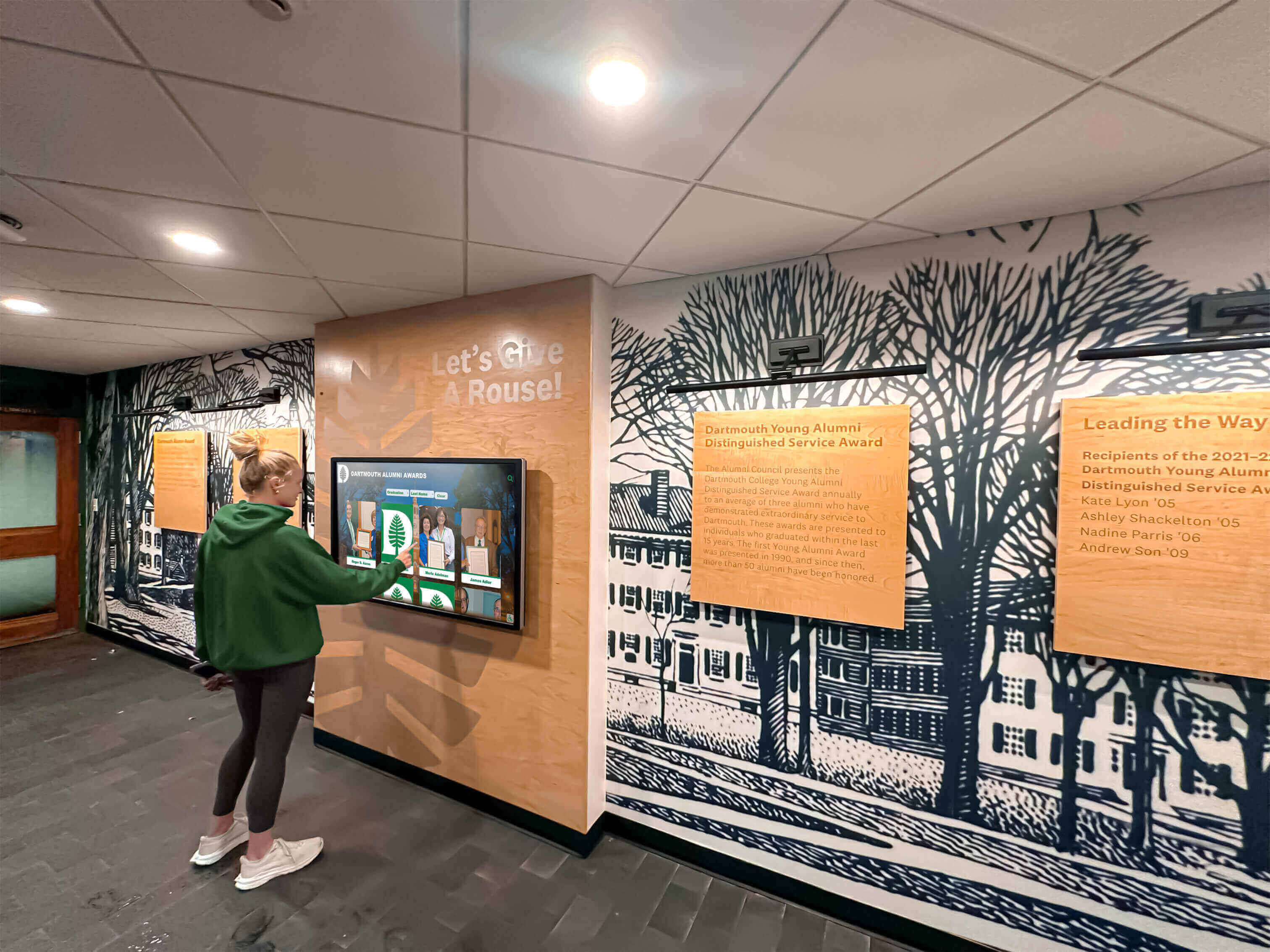
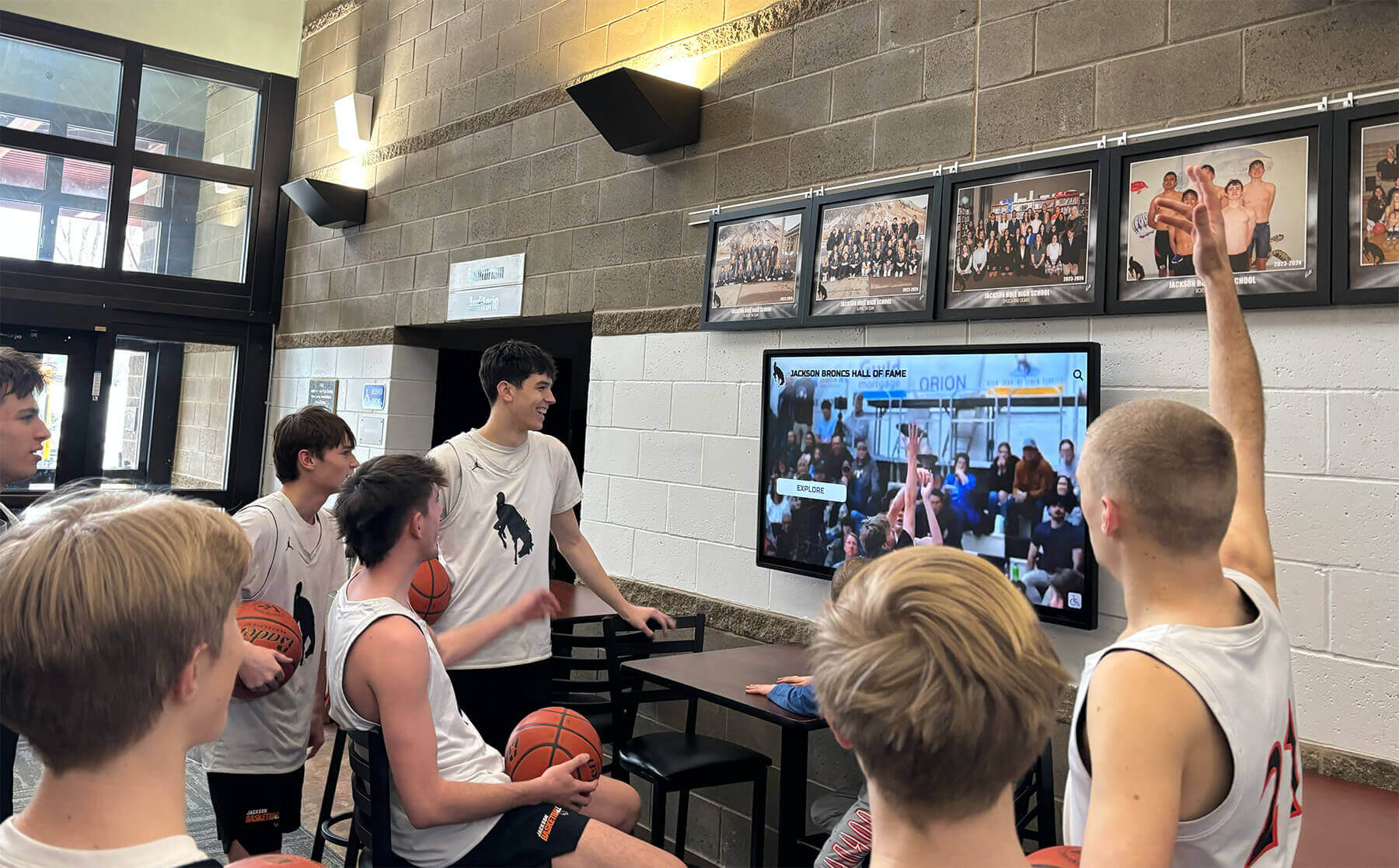
Student engagement with recognition displays strengthens school culture while building pride in athletic program tradition and achievement
Integration with Broader Athletic Recognition
Basketball represents one component of comprehensive athletic programs requiring coordinated recognition approaches.
Multi-Sport Recognition Strategies
Effective systems accommodate diverse athletic offerings without creating isolated sport-specific silos.
Unified Display Systems Across Sports
Rather than implementing separate recognition technology for basketball, football, volleyball, and other sports, unified platforms enable comprehensive athletic recognition through shared hardware displaying multiple sports, consistent design language across all programs, coordinated content management reducing administrative burden, equitable representation ensuring all sports receive appropriate visibility, and cost efficiency through shared technology investment.
Unified approaches strengthen overall athletic department identity while simplifying technical management and reducing total system costs compared to sport-specific solutions.
Basketball-Specific Content Within Multi-Sport Displays
Even within unified systems, basketball requires dedicated sections through sport-specific navigation enabling focused exploration, seasonal prominence during basketball periods, comprehensive historical documentation maintaining depth, and statistical categories appropriate for basketball metrics.
Multi-sport displays should accommodate basketball’s unique recognition needs without diminishing program identity or forcing generic approaches that lose sport-specific relevance.
Coordinating Physical and Digital Recognition
Most schools maintain physical basketball recognition—banners hanging in gymnasiums, traditional trophy cases, retired jersey displays—alongside digital systems. Effective coordination ensures complementary rather than redundant approaches through physical recognition highlighting major achievements and recent champions, digital recognition providing comprehensive historical depth and current season detail, unified design language connecting physical and digital elements visually, and strategic positioning where displays reinforce rather than compete with each other.
This blended approach honors tradition represented by physical elements while leveraging digital capabilities for recognition impossible through traditional means.
Addressing Common Implementation Challenges
Understanding typical obstacles helps schools plan effectively and avoid problems.
Budget Constraints and Funding Strategies
Cost represents primary implementation barrier for many schools.
Typical Investment Requirements
Complete touchscreen recognition systems typically require $8,000-$25,000 investment covering commercial display hardware, mounting or kiosk infrastructure, content management software subscriptions, professional installation services, and initial content development.
While significant, this investment typically equals or moderately exceeds what schools spend on traditional trophy cases, engraving, and banner programs over 3-5 year periods—while providing dramatically enhanced capabilities and unlimited future capacity.
Creative Funding Approaches
Schools successfully fund digital recognition through basketball booster organization fundraising, alumni donor campaigns, corporate sponsorship programs, memorial gift designations, capital campaign inclusion, and phased implementation starting with single displays then expanding as funding allows.
Positioning recognition as investment in program culture, athlete motivation, and community engagement—rather than optional enhancement—helps generate funding support from constituencies valuing basketball program excellence.
Total Cost of Ownership Considerations
Long-term costs favor digital approaches through elimination of recurring engraving expenses, no physical trophy case expansion costs, reduced labor for recognition maintenance, content management subscription fees typically $500-$2,000 annually, and basic technical support and warranty coverage.
Five-year cost analysis often shows digital recognition achieving cost parity or advantage compared to traditional approaches while delivering substantially greater capabilities and engagement.
Technical Support and Staff Capacity
Schools sometimes worry about technical complexity and ongoing management requirements.
User-Friendly Management Systems
Modern recognition platforms prioritize accessibility for non-technical users through intuitive administrative dashboards, simple content upload and editing workflows, pre-designed templates requiring minimal customization, bulk import tools for historical data, and preview functionality showing changes before publishing.
Athletic directors and coaches can typically manage routine updates without IT department involvement, though technical support remains available for complex issues or troubleshooting.
Training and Change Management
Successful implementations include comprehensive initial training, documented procedures for common tasks, ongoing support resources and help documentation, clear escalation paths for technical problems, and cross-training ensuring multiple personnel can manage systems.
Vendor selection should prioritize responsive support, implementation assistance, and long-term partnership rather than simply comparing hardware specifications and initial costs.
Integration with Existing Systems
Schools may need to coordinate recognition with athletic scheduling software, statistical platforms, student information systems, website content management, and other existing technology.
API integrations, data export capabilities, and professional implementation services help connect recognition displays with broader technology ecosystems, reducing manual work and ensuring information consistency across platforms.
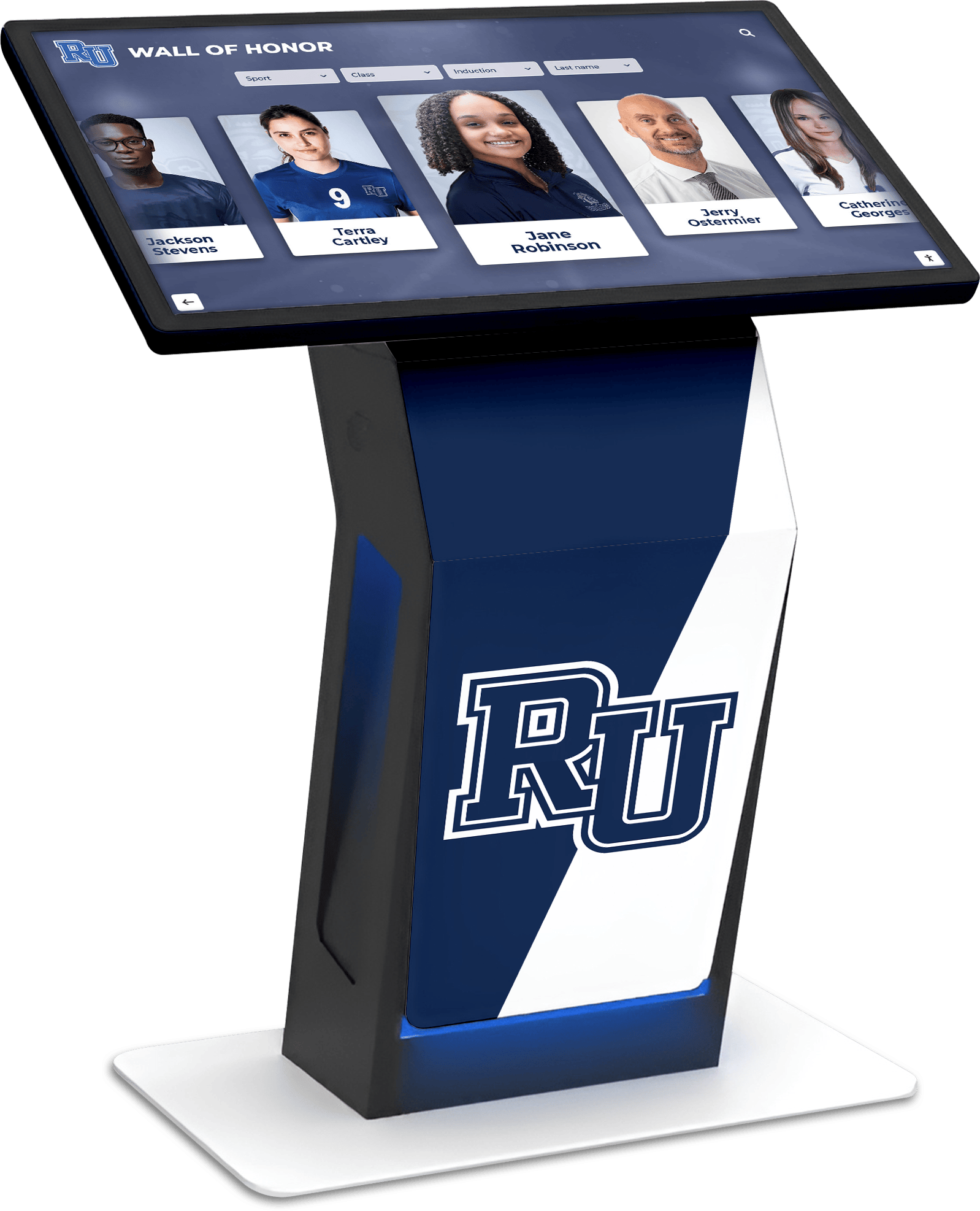
Professional content management systems enable athletic staff to maintain current recognition without requiring technical expertise or IT department involvement
Measuring Success and Demonstrating Value
Documentation demonstrates recognition impact and justifies continued investment.
Quantitative Impact Metrics
Objective measurements show recognition effectiveness.
Engagement and Usage Tracking
Analytics reveal how visitors interact with displays through daily and weekly usage statistics, peak engagement times and patterns, most accessed content and popular athletes, average session duration, search queries revealing visitor interests, and navigation patterns showing effective design.
These metrics demonstrate community interest while informing content strategy and highlighting opportunities for recognition improvements.
Attendance and Community Participation
Schools can correlate recognition implementation with changes in basketball game attendance, booster organization membership and activity, alumni engagement and event participation, social media following and interaction, and youth basketball program enrollment.
While recognition alone doesn’t drive these outcomes, visible changes following implementation support value arguments for continued investment and expansion.
Administrative Efficiency Gains
Operational metrics document recognition management improvements including time reduction in updating recognition versus traditional engraving, elimination of physical trophy case maintenance, decreased recognition-related inquiries due to self-service access, and reduced costs from eliminating physical recognition expenses.
These efficiency gains free athletic staff time for higher-value activities directly supporting athletes and program development rather than managing recognition administration.
Qualitative Feedback and Satisfaction
Stakeholder perspectives reveal recognition impact beyond quantitative metrics.
Athlete and Coach Perspectives
Direct feedback from basketball program participants provides crucial insights through athlete surveys about recognition awareness and impact, coach observations regarding team culture changes, senior exit interviews including recognition discussion, and team meeting conversations about tradition and legacy.
When athletes report feeling valued, motivated by visible achievement acknowledgment, and connected to program history, recognition achieves intended culture-building objectives regardless of usage statistics.
Family and Community Response
Broader stakeholder reactions demonstrate recognition reach through parent feedback about athlete pride and family engagement, alumni responses to historical preservation and accessibility, community member comments about program quality and school investment, and social media engagement when recognition is shared digitally.
Positive responses validate recognition value while identifying opportunities for improvements addressing areas where experience falls short of expectations.
Administrative and Board-Level Support
Institutional leadership perspectives shape continued recognition investment through athletic director assessment of program impact, principal evaluation of school culture contribution, board member recognition of community engagement value, and advancement staff feedback about alumni relations and fundraising impact.
Securing and maintaining leadership support ensures recognition receives ongoing resources, strategic attention, and institutional prioritization necessary for long-term success.
Future Trends and Emerging Recognition Technologies
Understanding development trajectories helps schools plan strategically for long-term effectiveness.
Mobile Integration and Extended Access
Recognition increasingly extends beyond physical displays into digital environments.
Complementary Mobile Applications
Interactive recognition systems increasingly offer mobile companions enabling athlete profile access from smartphones, personal QR codes linking to individual recognition pages, notification of recognition updates relevant to specific athletes, social sharing functionality amplifying recognition reach, and augmented reality features overlaying historical content onto physical spaces.
Mobile integration extends recognition from location-specific experiences to always-available resources accessible whenever and wherever stakeholders want to engage with basketball program history.
Web-Based Recognition Extensions
Online platforms mirroring or complementing physical displays enable remote access for families unable to attend games, alumni engagement from anywhere globally, college coach access for recruiting research, comprehensive search beyond physical display limitations, and permanent archival ensuring recognition survives beyond display hardware lifecycles.
Schools implementing web-integrated recognition report significantly higher engagement compared to physical-only displays with limited accessibility.
Enhanced Multimedia and Immersive Experiences
Technology advancement enables richer recognition experiences.
360-Degree Video and Virtual Reality
Emerging implementations explore immersive content including 360-degree game footage enabling experiential viewing, virtual gymnasium tours showcasing historical settings, VR experiences recreating memorable games, and immersive athlete interviews providing personal perspectives.
While currently specialized applications, immersive media costs decline and accessibility improves—suggesting broader adoption for enhancing basketball recognition storytelling.
AI-Powered Content and Personalization
Artificial intelligence enables sophisticated recognition capabilities through automated video highlight generation from game footage, natural language athlete biography creation from statistical data, personalized content recommendations based on viewer interests, predictive analytics suggesting recognition opportunities, and voice-controlled navigation improving accessibility.
Ethical implementation requires transparency about AI usage and maintaining human oversight ensuring appropriate content and avoiding unintended bias, but technology offers substantial potential for enhancing recognition depth and accessibility.
Advanced Analytics and Statistical Visualization
Data visualization evolution enables sophisticated basketball analytics presentation through interactive shot charts and performance geography, comparative statistical analysis across eras, performance tracking and progression visualization, contextual achievement explanation through era-adjusted statistics, and predictive modeling exploring “what if” scenarios.
These advanced features particularly engage analytically-minded viewers while providing coaches with tools for demonstrating performance concepts to athletes.
Conclusion: Transforming Basketball Recognition for Lasting Impact
High school basketball programs embody school spirit, community identity, and athletic excellence deserving celebration extending far beyond Friday night games and seasonal championships. Yet traditional recognition approaches—limited trophy cases, expensive engraving, static plaques—fail to adequately honor the rich achievements, compelling stories, and diverse contributions that make basketball programs memorable across generations.
Interactive touchscreen displays from solutions like Rocket Alumni Solutions fundamentally transform basketball recognition from space-constrained, update-delayed, engagement-limited traditional approaches into dynamic, comprehensive, accessible systems that celebrate every athlete, preserve complete program history, strengthen team culture, and create year-round connection to basketball tradition. When schools implement digital recognition strategically, they create recognition experiences that inspire current athletes, engage broader communities, preserve institutional memory, and demonstrate commitment to honoring excellence comprehensively rather than selectively based on physical space availability.
Transform Your Basketball Program Recognition
Discover how interactive touchscreen displays can help you celebrate every athlete, preserve program history, and create engaging experiences that strengthen basketball culture and community connection.
Request Basketball Recognition ConsultationStrategic Implementation Pathway
Schools considering touchscreen basketball recognition should begin with comprehensive needs assessment establishing recognition goals and priorities, engage stakeholders gathering input from athletes, coaches, families, and administrators, evaluate placement options identifying optimal display locations, develop realistic budgets accounting for initial and ongoing costs, plan content strategy balancing current and historical recognition, establish management protocols ensuring sustainable updates, and commit to continuous improvement refining recognition based on engagement and feedback.
This systematic approach prevents common implementation problems while ensuring recognition achieves intended goals of enhanced athlete celebration, strengthened program culture, and increased community engagement.
Recognition as Strategic Investment
Basketball recognition represents more than aesthetic enhancement or athlete appreciation—it embodies strategic investment in program culture that directly impacts athlete motivation, team identity, community support, alumni engagement, and recruiting success. Comprehensive research across educational athletics demonstrates that visible, meaningful recognition strengthens program culture, improves athlete retention, enhances community connection, and creates competitive advantages in recruiting and development.
When every player sees their contributions celebrated appropriately, when families can easily access and share athlete achievements, when alumni discover their continued presence in program history, and when community members understand basketball tradition depth—recognition achieves strategic value far exceeding implementation costs.
Technology Enabling Tradition
The most effective basketball recognition implementations position technology as tool enabling tradition rather than replacement threatening valued approaches. Physical banners hanging in gymnasiums, traditional trophy cases showcasing major championships, and retired jersey displays honoring program legends all maintain important symbolic and emotional roles—yet digital recognition extends celebration beyond what physical elements alone can accomplish.
Solutions like Rocket Alumni Solutions provide comprehensive platforms combining powerful recognition capabilities with user-friendly administration, enabling athletic departments to focus on content and relationships rather than technical management. When technology serves basketball tradition rather than competing with it, schools create recognition systems honoring past achievements while inspiring future excellence.
Your basketball program’s legacy includes thousands of athletes, hundreds of memorable games, decades of dedication, and countless contributions deserving lasting celebration. Every player who committed to your team—from state championship starters to role players who never scored but practiced daily—deserves recognition honoring their contribution to program tradition. With thoughtful planning, appropriate technology investment, and sustained commitment to comprehensive celebration, you can create basketball recognition that transforms how your community understands, values, and connects with athletic excellence.
Ready to begin exploring interactive touchscreen recognition for your basketball program? Learn more about basketball record tracking systems, discover comprehensive athletic recognition approaches, explore multi-sport digital display strategies, or schedule a consultation to discuss how modern recognition technology can celebrate your basketball tradition comprehensively and create lasting connection across generations of athletes, families, and community members.