A booster club 1099 vendor reporting checklist is a dated, step-by-step control that guides the treasurer and board through every task required to identify reportable contractors, collect signed W-9s before payment is issued, track cumulative spending through the calendar year, and submit 1099-NEC and 1099-MISC forms to recipients and the IRS before January 31. Booster clubs that skip the checklist often discover in January that they paid an individual graphic designer, a freelance photographer, or a cash-paid event contractor more than $600 during the year without a W-9 on file—leaving the organization unable to complete the required filing accurately and on time. A written vendor reporting checklist converts that annual scramble into a predictable workflow that begins at the first vendor payment of the year, not the last week of January.
This guide is for informational and educational purposes only and does not constitute legal, tax, or accounting advice. Tax filing requirements for nonprofit organizations vary by state, filing status, and organizational structure. Consult your organization’s licensed CPA, tax attorney, or enrolled agent before making any compliance decisions.

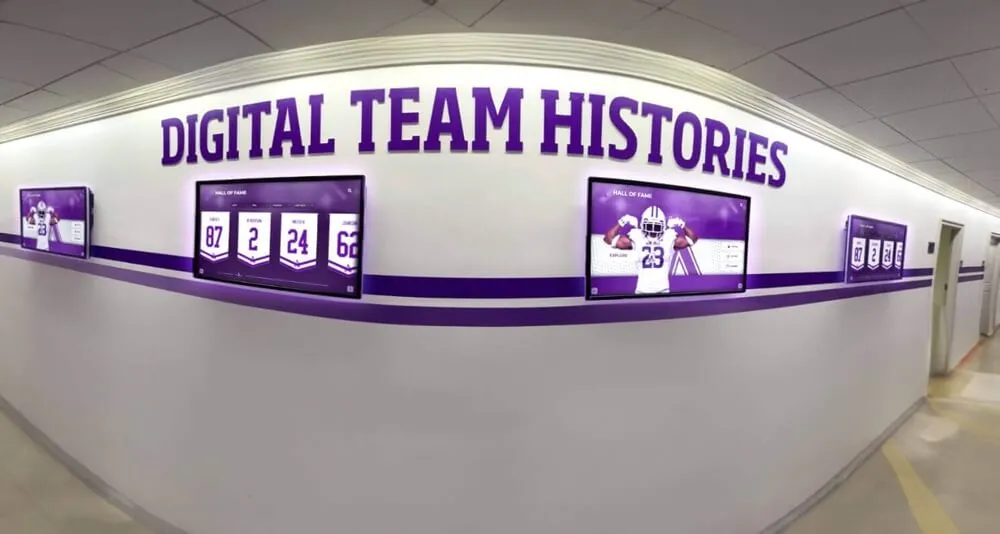
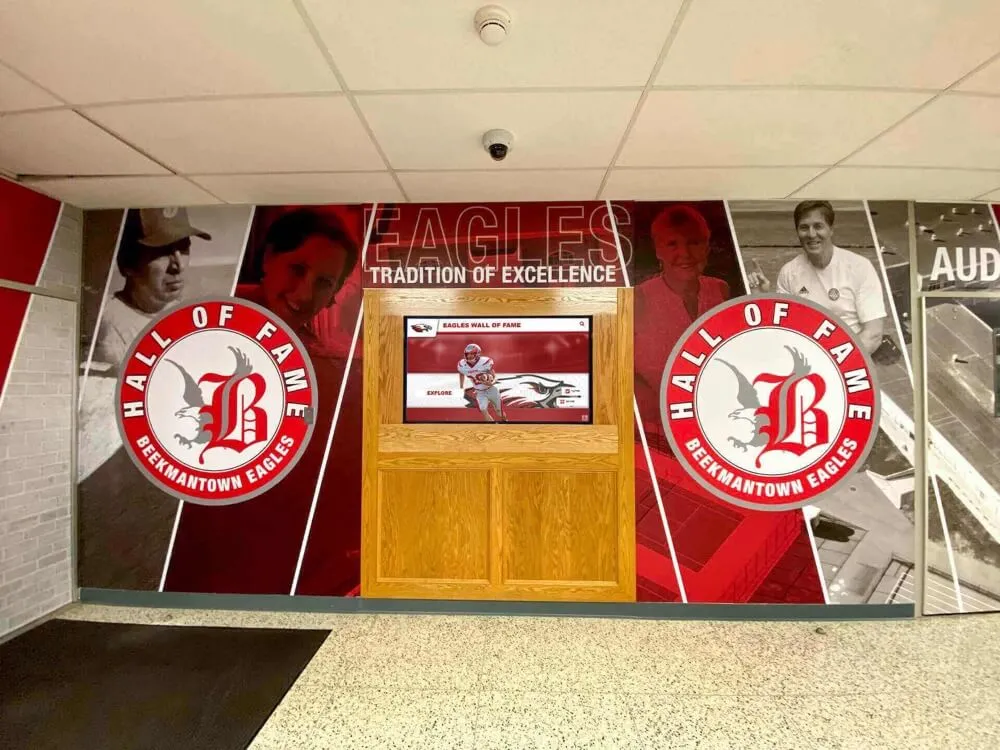
Recognition infrastructure in school lobbies is funded through vendor relationships—award fabricators, display installers, photographers, and event contractors—that a year-round 1099 checklist ensures are documented properly before year-end deadlines arrive
Who Receives a 1099: The Direct Answer
The IRS generally requires organizations—including tax-exempt booster clubs—to issue a 1099-NEC to any individual or unincorporated business entity paid $600 or more during the calendar year for services performed in the course of the organization’s activities. The most common payee types in a booster club context include:
- Independent contractors hired for services: event photographers, videographers, graphic designers, web developers, and advertising producers
- Individual sports officials or referees paid directly by the booster club rather than through an assigning association
- Musicians, DJs, or entertainers contracted for banquets, galas, and award ceremonies
- Coaches, instructors, or clinicians paid as independent contractors rather than as employees
- Sole proprietors providing labor for events: maintenance workers, setup crews, or cleaning contractors
- Attorneys: regardless of their business structure, attorney payments of $600 or more are generally reported on a 1099-MISC
Organizations are generally not required to file a 1099 for payments made to C-corporations or S-corporations (except attorneys), for payments made solely for tangible merchandise or physical products, or for payments made via credit card, debit card, or qualifying third-party payment networks—though the rules governing electronic payment exceptions are subject to regulatory changes that a CPA should confirm annually.
The Booster Club 1099 Vendor Reporting Checklist
The checklist below is organized by calendar quarter to spread the workload across the year and prevent a January deadline rush. Adapt deadlines to match your organization’s fiscal year, board meeting schedule, and CPA’s guidance.
Q1 Tasks (January–March): Set Up the Framework
| Task | Responsible | Deadline | Done |
|---|---|---|---|
| Review prior-year vendor list; identify any missed W-9s or unfiled 1099s | Treasurer | January 15 | ☐ |
| File prior-year 1099-NEC and 1099-MISC forms to IRS and recipients | Treasurer + CPA | January 31 | ☐ |
| Open a new vendor tracking spreadsheet or ledger for the current calendar year | Treasurer | January 31 | ☐ |
| Confirm current-year IRS threshold ($600 for NEC; verify MISC categories with CPA) | Treasurer + CPA | February 15 | ☐ |
| Establish a W-9 collection policy: require a signed W-9 before any service payment is approved | Board vote | February board meeting | ☐ |
| Confirm board approval of the vendor reporting policy in meeting minutes | Board Secretary | February board meeting | ☐ |
| Identify carryover vendors from prior year who still owe a W-9 on file | Treasurer | March 1 | ☐ |
| Send W-9 requests to any carryover vendors still missing forms | Treasurer | March 15 | ☐ |
Q2 Tasks (April–June): Collect W-9s at First Payment
| Task | Responsible | Deadline | Done |
|---|---|---|---|
| Require W-9 from every new service vendor before issuing first payment | Treasurer | At contract or first invoice | ☐ |
| Log each new vendor in the tracking spreadsheet with tax classification, TIN type, and payment date | Treasurer | Within 5 days of payment | ☐ |
| Flag any vendor who refuses or delays W-9 submission and report to board | Treasurer | Monthly reconciliation | ☐ |
| Review tracking spreadsheet at each board meeting; confirm W-9 status for all vendors paid to date | Treasurer | Monthly board meeting | ☐ |
| Confirm award vendors, engravers, and recognition suppliers are classified correctly (products vs. services) | Treasurer + CPA | June 30 | ☐ |
Q3 Tasks (July–September): Monitor Cumulative Payments
| Task | Responsible | Deadline | Done |
|---|---|---|---|
| Pull cumulative year-to-date totals for each vendor from the tracking spreadsheet | Treasurer | July 31 | ☐ |
| Flag any vendor approaching $500 cumulative for priority W-9 follow-up before year-end | Treasurer | August 15 | ☐ |
| Confirm all summer camp coaches, clinicians, and event contractors have W-9s on file | Treasurer | August 31 | ☐ |
| Review electronic payment records: confirm which payments were made by credit card or qualifying network (confirm exclusion treatment with CPA) | Treasurer + CPA | September 30 | ☐ |
| Present vendor tracking report to board; note any outstanding W-9 issues | Treasurer | September board meeting | ☐ |
Q4 Tasks (October–December): Prepare for Year-End Filing
| Task | Responsible | Deadline | Done |
|---|---|---|---|
| Pull final year-to-date totals for all vendors paid $400 or more (buffer below the $600 threshold to capture edge cases) | Treasurer | October 31 | ☐ |
| Send final W-9 outreach to any vendor still missing a form before year-end payments close | Treasurer | November 1 | ☐ |
| Confirm mailing addresses for all vendors expected to receive a 1099 | Treasurer | November 30 | ☐ |
| Close new service vendor payments or contracts after November where possible to simplify December reconciliation | Treasurer | Ongoing | ☐ |
| Reconcile all vendor payments against bank statements and check register; confirm totals match | Treasurer | December 31 | ☐ |
| Prepare year-end vendor summary for CPA handoff | Treasurer | December 31 | ☐ |
January Tasks: File by the Deadline
| Task | Responsible | Deadline | Done |
|---|---|---|---|
| Deliver year-end vendor summary and all W-9s to CPA | Treasurer | January 5 | ☐ |
| Confirm with CPA whether e-filing is required (required if filing 10 or more information returns) | Treasurer + CPA | January 10 | ☐ |
| Review draft 1099-NEC and 1099-MISC forms with CPA before submission | Treasurer | January 20 | ☐ |
| Mail or e-file recipient copies of 1099 forms | Treasurer + CPA | January 31 | ☐ |
| File IRS copies of 1099-NEC (paper or electronic) | Treasurer + CPA | January 31 | ☐ |
| File IRS copies of 1099-MISC if applicable (confirm deadline with CPA—may differ by filing method) | Treasurer + CPA | January 31 or per CPA guidance | ☐ |
| Retain copies of all filed 1099s and W-9s in permanent financial records | Treasurer | Upon filing | ☐ |
| Report filing completion to board in meeting minutes | Treasurer | February board meeting | ☐ |
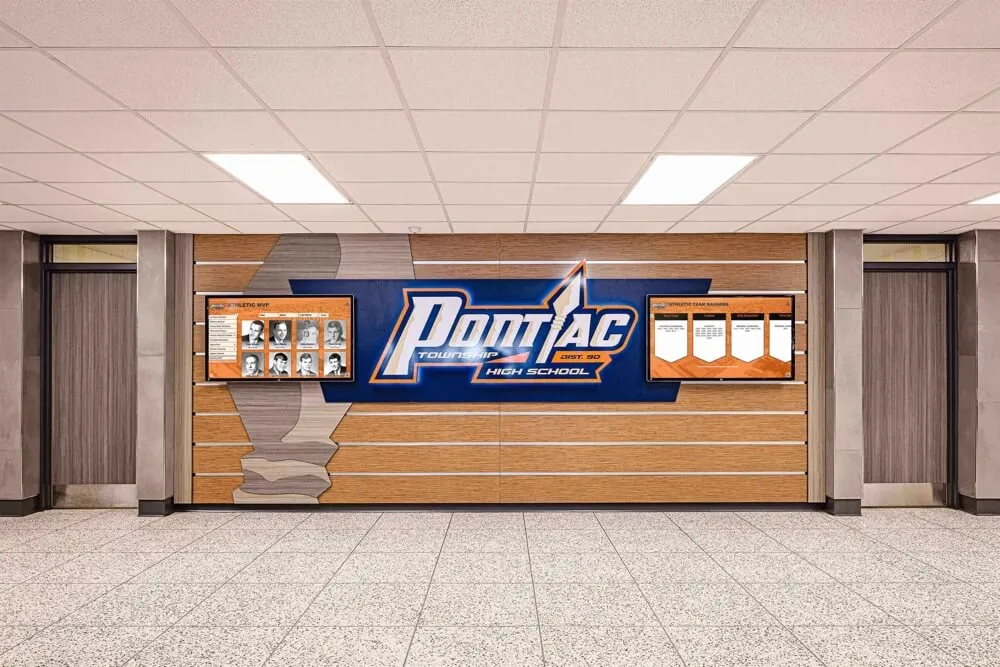
Athletic honor walls require vendor relationships with fabricators, installers, and display specialists—contractors whose payments the 1099 checklist tracks from first invoice through year-end filing
Collecting W-9s: The Core Control
The W-9 form is the foundation of the entire 1099 reporting process. Without a signed W-9 from each reportable vendor, the organization cannot accurately complete the required fields on the 1099: the payee’s legal name, business name, tax identification number (TIN), address, and federal tax classification. Attempting to file without verified W-9 information leads to IRS B-notices for missing or incorrect TINs—an administrative burden that a timely W-9 collection policy prevents entirely.
What a Completed W-9 Contains
- Name (Line 1): The individual’s legal name as it appears on their tax return
- Business name (Line 2): The DBA or entity name if different from the individual’s name
- Federal tax classification: Individual/sole proprietor, single-member LLC, C-corporation, S-corporation, partnership, trust/estate, or other
- Exemptions: Exempt payee code and FATCA exemption code, if applicable
- Address: Street, city, state, and ZIP code for the 1099 mailing address
- Taxpayer identification number: Either SSN (for individuals) or EIN (for businesses)
- Signature and date: Required for the W-9 to be valid; unsigned forms are not sufficient
When to Collect the W-9
The correct time to collect a W-9 is before the first payment is issued, ideally at the point of contracting or invoice approval. Collecting after payment creates a leverage problem: a vendor who has already been paid has less incentive to return a completed form promptly, and a January outreach to a vendor last paid in May may result in delays that push the organization past the filing deadline. Establish a board policy that no payment to an individual or sole-proprietor service vendor may be approved without a signed W-9 on file or submitted simultaneously with the payment request.
Secure Storage of W-9 Information
W-9 forms contain sensitive tax identification numbers. Store completed W-9s in a locked file (physical) or a password-protected, access-controlled folder (digital). Limit access to the treasurer, assistant treasurer, and any CPA firm engaged by the organization. Do not include W-9 details in shared spreadsheets accessible to all board members or in email threads accessible to a broad distribution list. The organization’s document retention policy should specify a minimum retention period for W-9s; most nonprofit frameworks recommend retaining tax records for at least seven years.
The W-9 Request Outreach Template
Use the following written outreach as a starting point when requesting a W-9 from a new vendor before issuing payment. Adapt the language to match your organization’s name, officer titles, and contact information. Have the final version reviewed by the CPA who advises the organization.
TO: [Vendor Name]
FROM: [Organization Name] Treasurer, [Treasurer Name]
RE: W-9 Required Before Payment Processing
DATE: [Date]

Dear [Vendor Name / Contact Name],

Thank you for providing services to [Organization Name / School Program].

Our organization is required by the IRS to collect a completed Form W-9 from
independent contractors and service providers before issuing payment. We need
this form on file to accurately report payments of $600 or more to the IRS at
year-end.

Please complete and return a signed Form W-9 at your earliest convenience—
and in any event before we can issue your first payment. The form is available
directly from the IRS website by searching "Form W-9" at irs.gov.

You may return the completed form by:
  - Email attachment to [treasurer email address]
  - Mail to [organization mailing address]
  - In person at [drop-off location or event name]

If your business is organized as a C-corporation or S-corporation, please note
that you are generally exempt from 1099 reporting; however, we still ask that
you complete a W-9 for our records so our CPA can confirm the correct treatment.

If you have questions, please contact me at [phone or email]. We appreciate
your prompt attention to this request.

[Treasurer Name]
[Organization Name]
[Contact Information]
Which Vendor Categories Matter Most for Booster Clubs
Not all vendor relationships create the same 1099 exposure. The following categories appear most often in booster club payment histories and warrant priority attention in the W-9 collection workflow.
Award Suppliers and Recognition Vendors
Award vendors who supply trophies, plaques, banners, engraved items, and certificates typically provide products rather than services, and product payments generally do not generate a 1099 requirement—even if the same vendor also charges for engraving labor. The classification depends on whether the primary transaction is for goods or services and whether the vendor is incorporated. Your CPA should confirm the correct treatment for any mixed goods-and-services vendor. Recognition programs that use digital hall of fame display platforms and interactive kiosk tools may also work with software vendors and installation contractors whose service payments do require W-9 documentation and potential 1099 reporting.
Event Vendors: Banquets and Award Galas
Booster clubs frequently hire individual vendors for year-end award events, including photographers, DJs, catering staff paid directly (not through a corporation), and decorating contractors. Athletic award banquets and recognition galas can involve multiple individual service providers whose cumulative payments across a planning season may exceed $600. Track each vendor separately from the first deposit payment—do not aggregate vendors or assume a single-event payment is too small to flag. A deposit paid in September for an October banquet and a balance payment issued in October are both payments to the same vendor in the same calendar year and must be added together.
Coaches and Instructors Paid as Contractors
Some booster clubs supplement school-employed coaches with assistant coaches or clinic instructors paid as independent contractors. These relationships carry both 1099 reporting risk and potential employment classification risk that differs by jurisdiction. If an organization pays an individual $600 or more for coaching or instruction services, a W-9 must be collected and a 1099-NEC filed unless the payee’s incorporated business entity eliminates the requirement. Employment classification questions—whether a worker is properly classified as an independent contractor rather than an employee—should be reviewed with a CPA or employment attorney, as misclassification carries penalties separate from 1099 reporting obligations.
Individual Sports Officials and Referees
Booster clubs that directly compensate referees, umpires, or officials as independent contractors rather than through an assigning association face straightforward 1099 reporting obligations when cumulative payments reach the threshold. Track each official’s annual payments separately, collect W-9s before the season begins, and include these payees in the year-end filing process. Officials paid through an assigning association rather than directly by the booster club are typically not the booster club’s reporting obligation—confirm with your CPA based on your specific payment structure.
Scholarship and Award Payments to Student-Athletes
Cash awards and non-scholarship prize payments to student-athletes who are not employees of the organization may be reportable on a 1099-MISC in the prize and award income category. The tax treatment of scholarship-related payments, athletic awards, and incentive payments varies considerably based on the nature of the payment, the recipient’s student status, and applicable IRS rules. Booster clubs that recognize youth athletes through both physical awards and cash prizes should seek direct CPA guidance before any cash payments are made to individual recipients—do not assume that because a payment goes to a student, it is exempt from reporting.
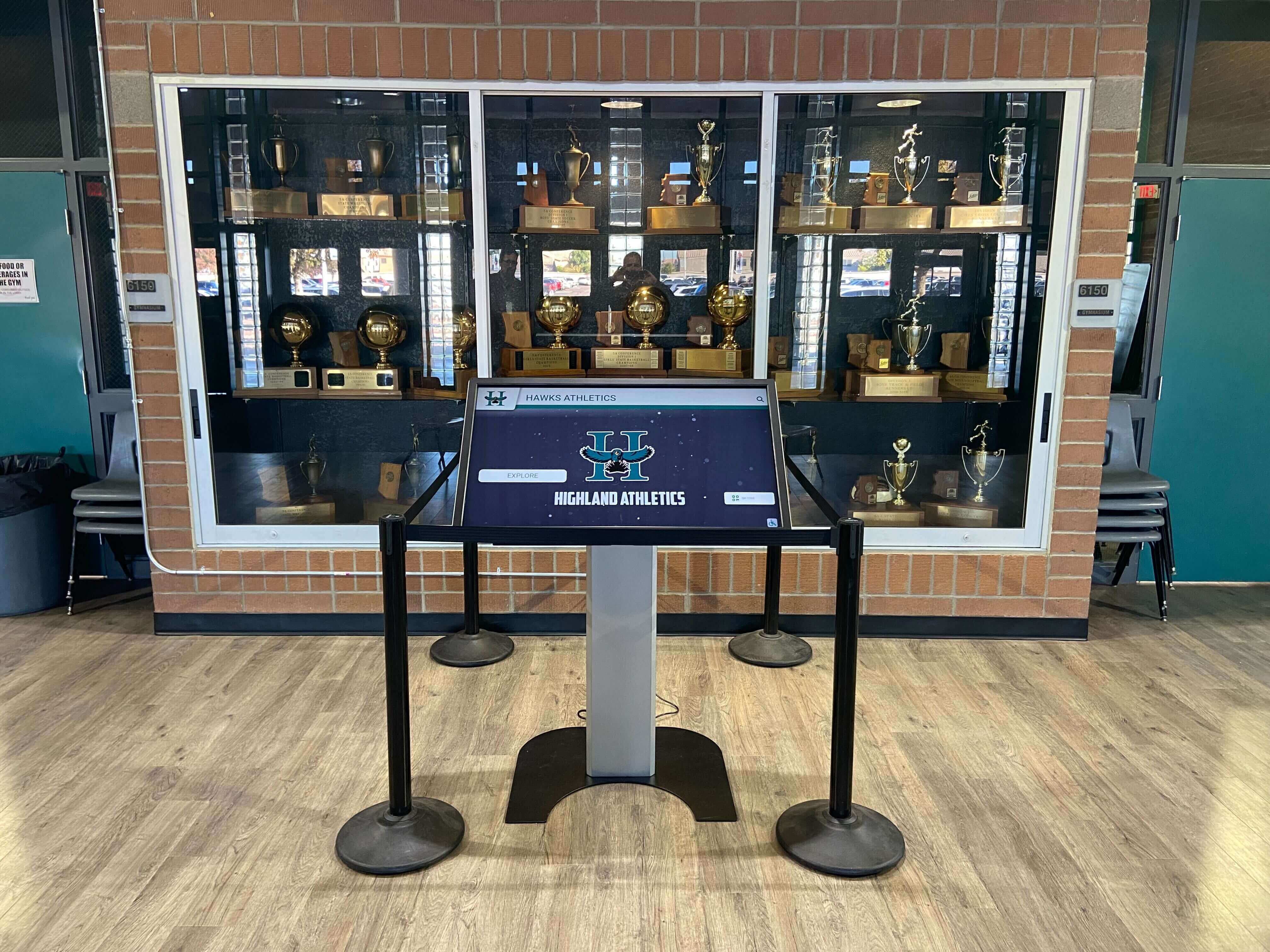
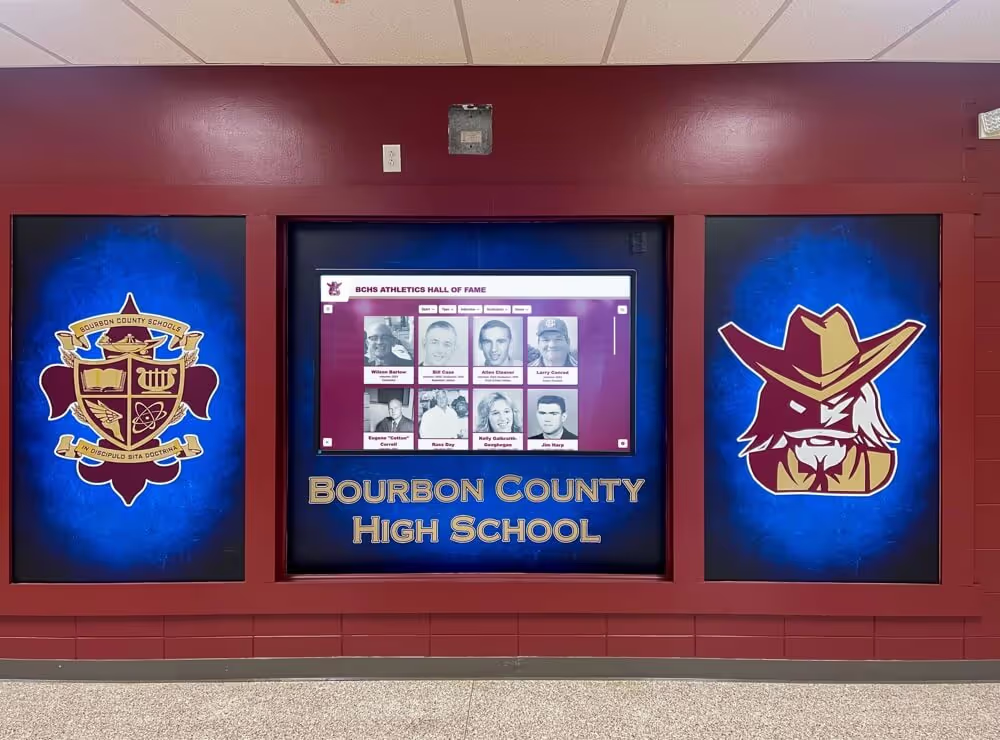
Interactive recognition displays installed in school trophy areas involve technology vendors whose installation and service contracts may generate 1099 reporting obligations when the contractor is an individual or unincorporated entity
Common Errors in Booster Club 1099 Reporting
Understanding where errors most often occur helps treasurers design a checklist that addresses the highest-risk points first.
Error 1: Not Collecting W-9s Before Payment
The most common error is issuing payment first and requesting the W-9 afterward. Once payment has cleared, the organization’s leverage to obtain a W-9 disappears. A vendor who is slow to return paperwork before being paid has little incentive to cooperate in January when the treasurer calls to request the same form. Establish a board resolution: no payment to an individual service vendor without a signed W-9 on file.
Error 2: Assuming a Vendor Is Incorporated Without Confirmation
Many booster club vendors operate as sole proprietors, single-member LLCs, or informal partnerships that are not exempt from 1099 reporting. Do not assume from a business name alone that a vendor is incorporated. “Smith Photography” may be a sole proprietor doing business under a trade name. “Premium Sound LLC” may be a single-member LLC treated as a disregarded entity for tax purposes. The W-9’s tax classification box eliminates this guesswork—the vendor’s self-reported classification, combined with CPA review, determines reporting treatment.
Error 3: Omitting Electronic Payments From Review
Many booster clubs have moved routine payments to credit cards, PayPal, Venmo, or other electronic payment platforms for convenience. Some of these payments may be excluded from the organization’s 1099 obligation because the payment network files its own form with the IRS. However, the rules governing which payments qualify for this exclusion have been subject to regulatory changes. Do not assume any electronic payment is automatically excluded—confirm with the CPA each year which payment methods qualify and which do not.
Error 4: Failing to Aggregate Payments to the Same Vendor
When the same individual performs multiple types of services for the booster club during the year—photographing an event in March, providing design services in June, and doing setup work in August—all payments to that individual must be aggregated to determine whether the $600 threshold is met. A tracking spreadsheet that logs each payment by vendor name and TIN at the time of payment prevents the year-end error of treating each service engagement as a separate, below-threshold transaction.
Error 5: Missing the January 31 Deadline
The 1099-NEC deadline is January 31 for both recipient copies and IRS copies. Missing this deadline triggers potential penalties that increase the longer the filing is delayed. A January 5 CPA handoff deadline—built into the checklist above—provides adequate runway for the CPA to prepare, review, and file before the month ends. Organizations that wait until the third week of January to contact their CPA frequently miss the deadline.
Connecting Vendor Documentation to Donor and Sponsor Trust
Financial controls that appear purely administrative carry direct implications for a booster club’s reputation with the donors and sponsors whose contributions fund the program’s activities. A booster club that manages vendor relationships with documented W-9s, clean payment ledgers, and timely 1099 filings demonstrates to donors and grant makers that contributions are being administered with the same rigor that earned the donation in the first place.
Programs that recognize donors through named plaques, digital display panels, and lobby recognition walls depend on long-term vendor relationships with display fabricators, installation contractors, and content management providers. Athletic directors and advancement teams who oversee recognition programs understand that the vendor relationships behind a recognition wall—the contractors who fabricated it, installed it, and maintain the content—are only as reliable as the financial practices that support them. An award vendor who has not been paid correctly, or whose W-9 is missing from the file, becomes a risk to the program’s ability to deliver on the recognition commitments it has made to donors.
Alumni spotlight and recognition programs that archive individual achievement and stewardship history similarly depend on clean vendor records: the photographers, archivists, and display contractors who contribute to those records are the same individuals whose payments flow through the booster club’s accounts and generate the 1099 obligations this checklist addresses.
Sponsors who review an organization’s financial governance before committing to a multi-year arrangement look for evidence that the program tracks payments systematically, documents vendor relationships, and complies with basic IRS reporting requirements. A booster club 1099 vendor reporting checklist—maintained alongside bank reconciliation procedures and a stale check policy as part of the year-round financial control framework—is part of the evidence that the program is run professionally.
Comprehensive booster club management practices that integrate financial controls with fundraising, budgeting, and event management create the organizational foundation from which recognition commitments can be made and kept reliably.

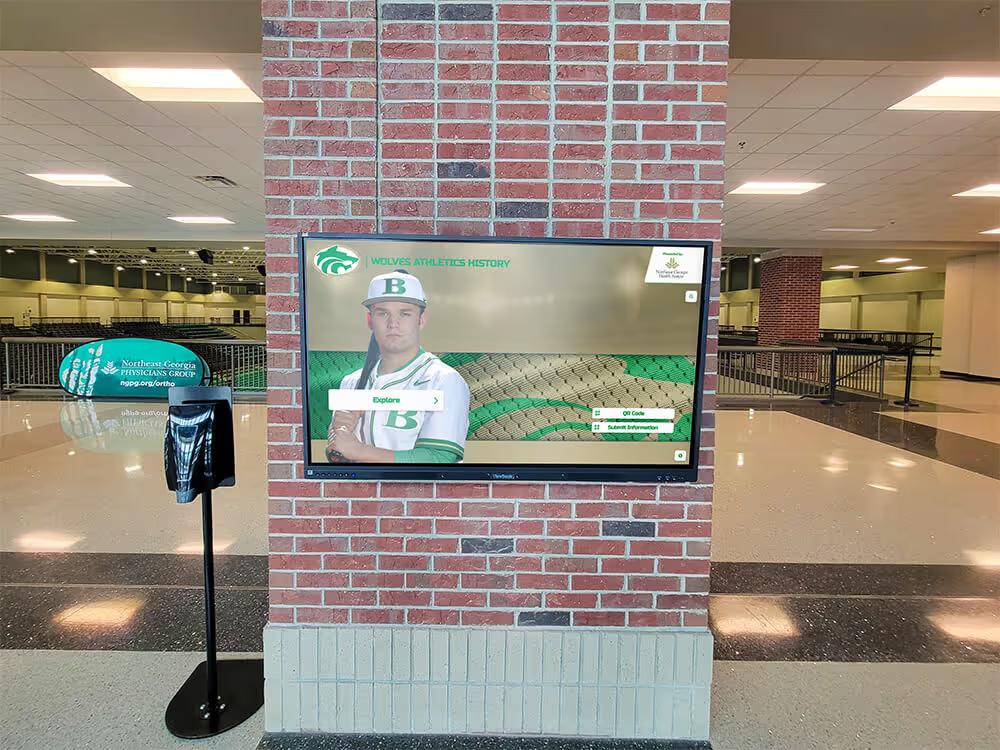
Donor recognition walls represent the visible output of vendor relationships—fabricators, designers, photographers, and installers—whose payments require the same W-9 collection and 1099 filing discipline this checklist provides
Sample Vendor Tracking Spreadsheet Fields
Maintain a year-round vendor tracking spreadsheet as the operational companion to this checklist. Include the following columns and update the record at each payment event throughout the year.
| Field | Purpose |
|---|---|
| Vendor legal name | As stated on W-9 Line 1 |
| Business name (DBA) | As stated on W-9 Line 2, if different |
| Tax classification | Per W-9 box 3 (sole proprietor, LLC, corporation, etc.) |
| TIN type | SSN or EIN |
| TIN (last 4 digits only in shared ledger) | For identification; store full TIN in secure W-9 file |
| W-9 received | Yes / No / Pending |
| W-9 date received | Date of signed form |
| Payment dates | All dates payment was issued during calendar year |
| Payment amounts | Each payment amount |
| Payment method | Check, ACH, credit card, cash, etc. |
| Service description | Brief description of service provided |
| YTD cumulative total | Running total of all payments to this vendor |
| 1099 required | Yes / No / Confirm with CPA |
| 1099 form type | NEC or MISC |
| 1099 filed | Date filed |
| Notes | Any flags, issues, or CPA guidance |
Do not include the vendor’s full social security number or EIN in any shared or cloud-based spreadsheet. Store W-9 forms in a secure location with access limited to authorized financial officers.
Recognition Vendor Payments: All-Conference and Hall of Fame Projects
Programs that recognize all-conference, all-district, and all-state athletes typically purchase awards from product-based vendors—trophies, plaques, certificate frames—whose payments are generally not reportable because they are for goods rather than services. However, the same program may also engage individual photographers to document recognition ceremonies, graphic designers to produce programs and banners, or local engravers whose primary business is service-based. Each of those contractor relationships requires the same W-9 and 1099 analysis as any other service vendor.
Programs undertaking recognition infrastructure projects—such as academic wall of excellence renovations or new athletic hall of fame installations—often contract with individual designers, project managers, or installation specialists who operate as sole proprietors. A capital project that involves multiple individual contractors can generate a cluster of 1099 obligations that the standard year-round checklist will capture only if the W-9 collection requirement is applied at the project contracting stage, not at year-end.
Academic recognition walls and digital display installations are funded through vendor contracts that the 1099 checklist ensures are documented from first payment through year-end filing
Frequently Asked Questions
Does a tax-exempt booster club have to file 1099s?
Tax-exempt status under IRC Section 501(c)(3) or 501(c)(7) does not eliminate the organization’s information reporting obligations. Organizations that are required to file Form 990 or 990-EZ are generally also required to file 1099s when they make payments that meet the reporting thresholds. The exemption from income tax is separate from the obligation to report payments made to vendors and contractors. Confirm your specific filing obligations with the CPA who prepares or reviews the organization’s annual information return, as reporting requirements can differ based on the organization’s exact tax-exempt classification and jurisdiction.
What if a vendor refuses to provide a W-9?
If a vendor refuses to provide a completed W-9, the IRS generally requires the organization to apply backup withholding at the applicable rate on payments made to that vendor. This means withholding a percentage of each payment, depositing it with the IRS through the federal tax deposit system, and filing the required withholding forms—a significant administrative burden. Most organizations find it simpler to decline to engage vendors who refuse W-9 requests. A board policy requiring W-9 submission before payment is approved prevents this situation from arising in most cases.
Are payments made through Venmo or PayPal excluded from 1099 reporting?
Not automatically. The rules governing third-party payment network reporting have changed in recent years and continue to evolve. Some payments through qualifying third-party settlement organizations may be reported by the payment network on Form 1099-K rather than by the paying organization on Form 1099-NEC. However, the applicability of this exclusion depends on the payment network’s classification, the nature of the transaction, and current IRS guidance. Do not assume any electronic payment is excluded from the organization’s reporting obligation without CPA confirmation for the current tax year.
How many years should W-9s be retained?
Retain completed W-9 forms and all supporting 1099 documentation for a minimum of seven years from the filing date of the related return. Some advisors recommend longer retention if the organization’s state nonprofit law or district policy requires it. Store W-9s securely—they contain sensitive tax identification numbers—in a locked physical file or an access-controlled digital storage system with access limited to authorized financial officers only.
What is the penalty for filing a 1099 late?
IRS penalty amounts for late or incorrect 1099 filing depend on how late the filing is and the size of the organization. Penalties are assessed per return and increase the longer the filing is delayed. The most reliable way to avoid penalties is to meet the January 31 deadline for 1099-NEC filings. If a deadline is at risk of being missed, contact the CPA immediately—filing as soon as possible after the deadline results in a lower penalty than not filing at all.
Do booster clubs file 1099s for award purchases from trophy companies?
Generally no, if the payment is for tangible goods (trophies, plaques, medals, certificates) purchased from an incorporated company. Product purchases from incorporated vendors typically do not generate a 1099 obligation. However, if the same vendor also charges separately for engraving services and the vendor is an unincorporated sole proprietor or partnership, the service component may be reportable. The W-9 the vendor provides will identify their tax classification, and the CPA advising the organization should confirm the correct treatment for any mixed goods-and-services vendor relationship.
Should the 1099 checklist be approved by the board?
Yes. A board-approved vendor reporting policy—adopted in formal meeting minutes—establishes that the W-9 collection requirement is an organizational governance control, not an informal treasurer practice. When the treasurer requests a W-9 from a new vendor, citing a board-adopted policy strengthens the request and reduces friction with vendors who are unfamiliar with nonprofit reporting requirements. Present the checklist to the board as an operational supplement to the written policy, review it annually, and update it whenever IRS guidance or CPA recommendations change.
What if a vendor provides services across two calendar years and the threshold is met only in the second year?
1099 reporting is based on cash payments made during the calendar year, not on the period of service. If a vendor began providing services in November of one year and continued into the next, track payments in each calendar year separately. Payments made in calendar year one count only toward that year’s threshold; payments in calendar year two count toward the next year’s threshold. A multi-year service contract does not aggregate payments across calendar years for threshold purposes.
How does 1099 reporting connect to the end-of-year financial closeout?
Year-end financial closeout is one of the most important times to run a full vendor payment reconciliation and confirm that all W-9s are on file. The CPA reviewing or auditing the organization’s year-end records will expect the vendor payment list to be current, documented, and reconciled against the bank statement and check register. A vendor tracking spreadsheet maintained throughout the year—updated at each payment event—makes the year-end CPA handoff significantly faster and reduces the risk of a missed filing.
When your program is ready to build the recognition infrastructure that donors, sponsors, and student-athletes expect—and to document every vendor relationship behind it with the rigor that earns their continued trust—explore how Rocket Alumni Solutions supports booster clubs with recognition systems designed to honor every contribution reliably.