A booster club budget amendment policy defines the conditions under which the approved annual budget may be modified mid-year, the board approval thresholds required for each amendment tier, and the documentation the treasurer must produce before and after any change is recorded. Without a written policy, mid-year spending adjustments often occur informally—a verbal approval at a board meeting that is never captured in minutes, a line-item shift that the full board never sees, or an emergency expenditure that outpaces available funds without any amendment record. A formal policy prevents all three by making the amendment process predictable, transparent, and auditable for every stakeholder including sponsors, donors, and district oversight teams.
This guide covers the complete policy framework: the tiered approval structure by amendment size, the documentation requirements at each tier, the motion and vote language boards use, the template amendment request form, and the connection between a well-maintained amendment record and your program’s credibility with the donors and sponsors whose recognition commitments depend on stable budget lines.
This guide is for informational and educational purposes only and does not constitute legal, accounting, or financial advice. Consult a licensed CPA, attorney, or financial advisor for guidance specific to your organization’s structure, tax-exempt status, and jurisdiction.

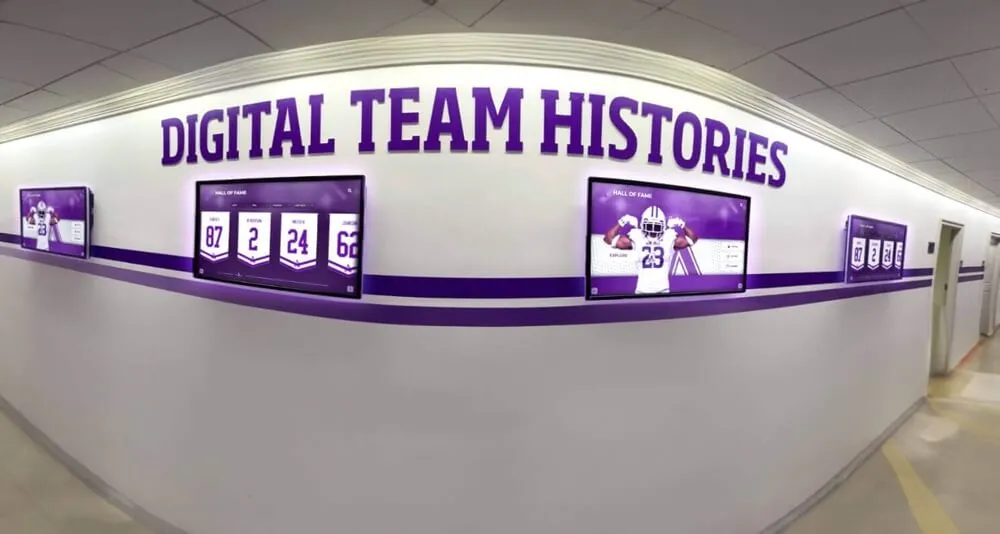
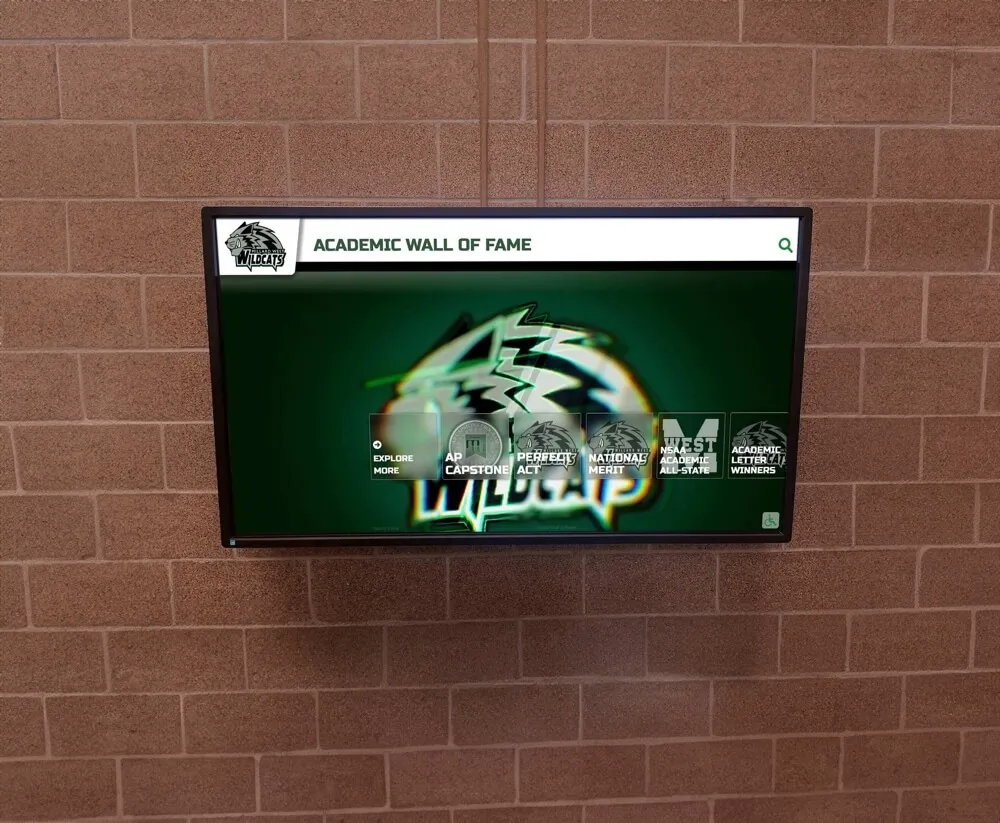
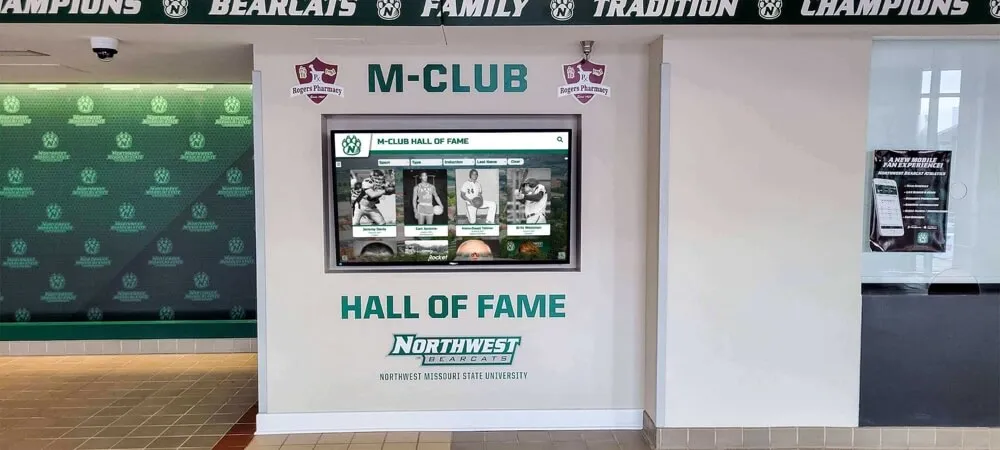
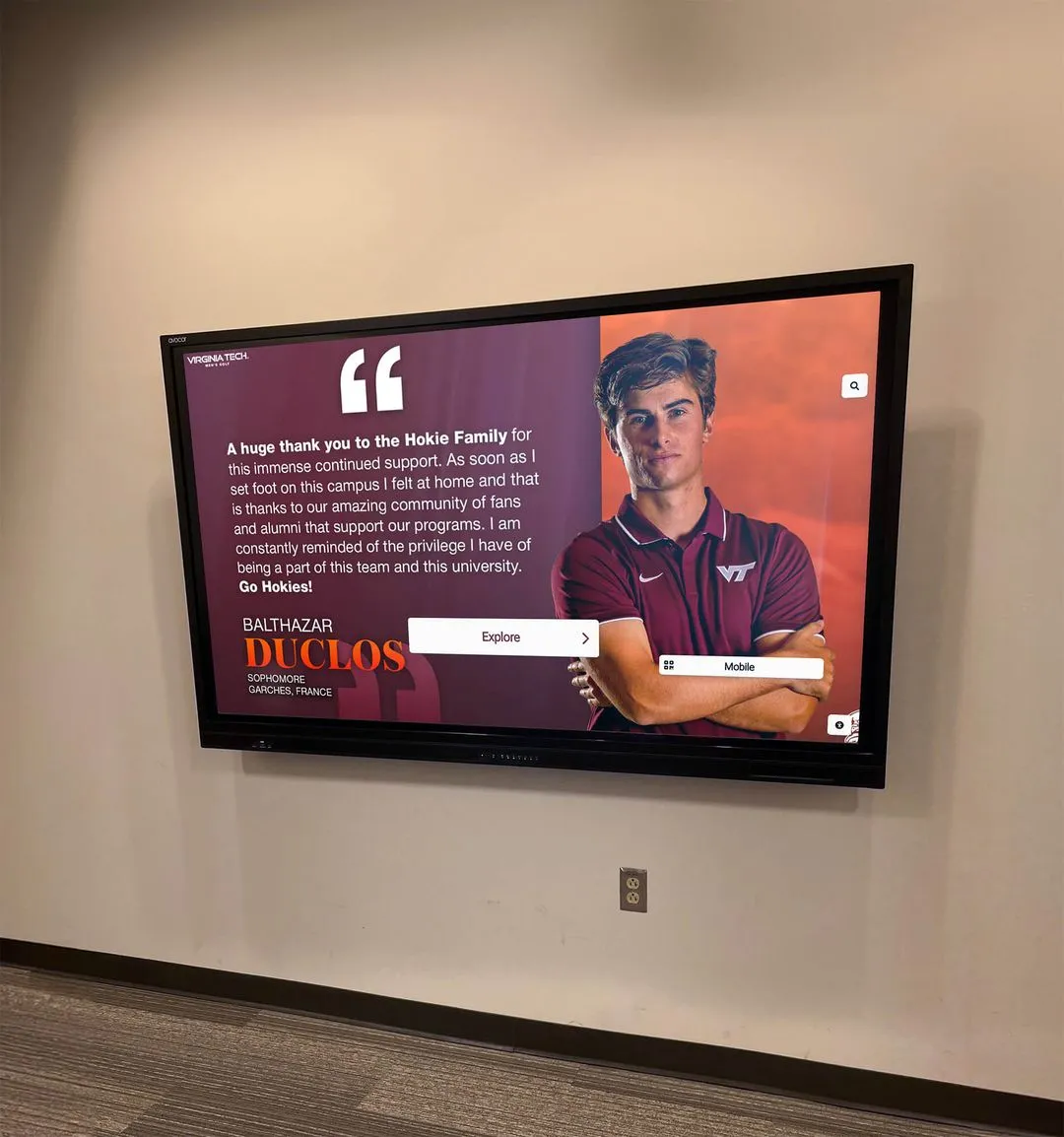
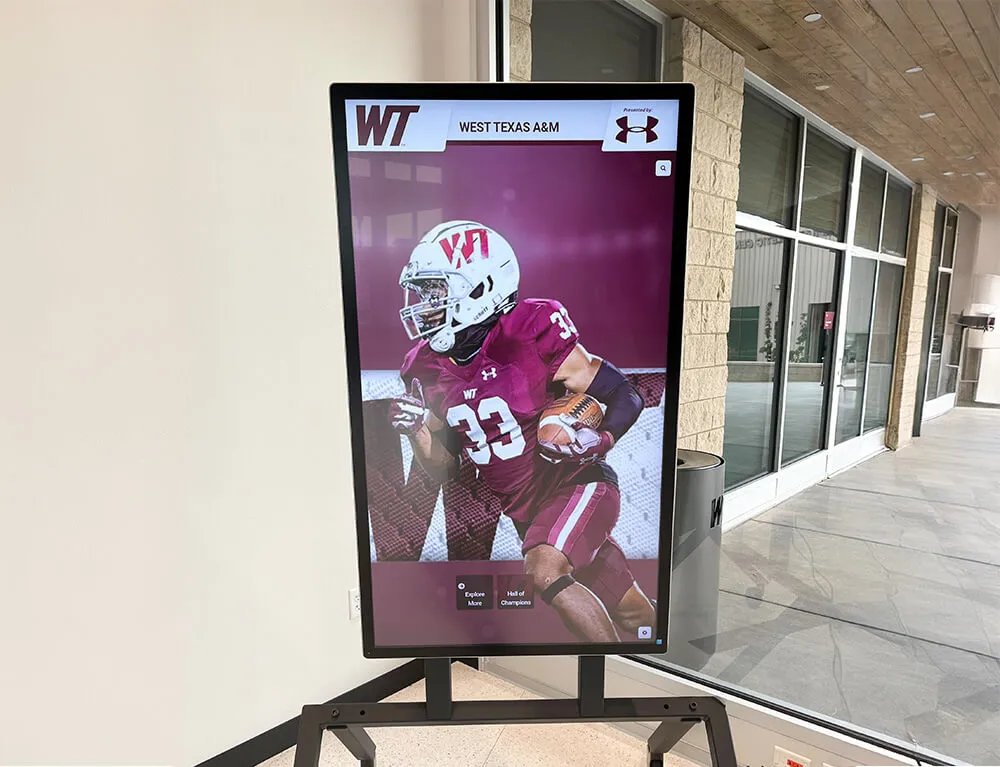
Digital recognition displays like hall of fame screens and donor walls depend on predictable operating budgets—a formal amendment policy ensures those lines are protected, documented, and only reduced through a deliberate board decision with a full audit trail
What a Booster Club Budget Amendment Policy Covers
A budget amendment policy applies any time the booster club needs to:
- Reallocate funds between existing line items above a minimum threshold amount
- Add a new budget line item that was not in the original approved budget
- Increase total authorized spending beyond the original budget total
- Reduce funding in a recognition, stewardship, or sponsor display line to cover an athletic or operational shortfall
- Modify a restricted fund’s designated use in response to changed program circumstances
The policy establishes who has authority to approve each type of change, what documentation must exist before the change takes effect, and when the amended budget must be ratified by the full board. A policy without all three elements—authority, documentation, ratification—creates gaps that auditors and district administrators will flag.
Tiered Approval Thresholds
The single most important structural decision in a budget amendment policy is setting clear dollar thresholds that determine who must approve each change. The tiered structure below reflects common practice for school booster clubs; adapt thresholds to match your organization’s bylaws, total budget size, and district governance requirements.
| Amendment Size | Authorization Required | Timing |
|---|---|---|
| Under $250 | Treasurer approval only | Before the expenditure occurs |
| $250–$1,000 | Treasurer + President written approval | Before the expenditure; board notification at next meeting |
| $1,001–$2,500 | Executive Committee vote | Before the expenditure; recorded in E-vote or special meeting |
| Over $2,500 | Full board vote at a scheduled meeting | Proposal submitted at least 48 hours before the vote |
| Any restricted fund change | Full board vote + donor or grantor written notice | Notice issued before vote; change takes effect only after response period |
Programs with a total annual budget under $50,000 often collapse the executive committee tier and run all amendments directly to full board above the $500 threshold. Programs with budgets over $150,000 may add an intermediate tier. The specific thresholds matter less than their consistent application—an amendment policy that allows exceptions erodes the control structure entirely.
The 5-Step Approval Process
Step 1: Identify the Need and Classify the Amendment
Before drafting any amendment, the requesting officer—usually the treasurer or a committee chair—classifies the change by type and size:
- Reallocation: moving funds from one existing line to another, with no change to total budget
- New line item: adding a budget category that was not in the approved plan
- Budget expansion: increasing total authorized spending above the approved total
- Restricted fund modification: changing the designated use of funds received for a specific purpose
Classification determines which approval tier applies and whether donor or grantor notification is required before the vote. A reallocation that stays within a single budget category and under $250 may require no board action at all; a restricted fund modification of any size requires the full process regardless of dollar amount.
Step 2: Prepare the Written Amendment Request
The amendment request is a one-page document that gives decision-makers the information they need to evaluate the change without requesting additional materials. It should include:
- The original budget line(s) affected and their current approved amounts
- The proposed amended amount and the net dollar change
- The reason the amendment is needed, stated specifically enough to be meaningful in hindsight
- The source of funds if total spending is increasing
- A one-paragraph summary of consequences if the amendment is not approved—including any impact on sponsor or donor recognition commitments
The consequences summary is the element most amendment requests omit. Including it ensures the board is approving a change with full knowledge of what it is trading away, not simply approving a number in isolation.
Step 3: Obtain Approval at the Required Tier
Submit the amendment request through the appropriate approval channel at least 48 to 72 hours before a board or executive committee vote, and before any expenditure occurs for treasurer-level approvals. Approvals obtained after the fact—ratifying spending that has already happened without authorization—are a governance problem, not an amendment, and should be documented separately as an exception with an explanation of why normal process was not followed.
For executive committee E-votes, record each member’s individual response in writing. A group email thread with named replies is sufficient; a verbal approval on a phone call with no written record is not.
Step 4: Record the Vote and Amendment in the Meeting Minutes
Every amendment that requires more than treasurer-only approval must appear in the meeting minutes with:
- The motion text, stated precisely enough to identify the line items, amounts, and effective date
- The vote count (for and against, with abstentions noted)
- The effective date of the amended budget
Minutes are the primary audit trail. An amendment that is not in the minutes is not a formal amendment for governance or IRS purposes, regardless of what the treasurer’s spreadsheet shows. For programs using digital recognition platforms, alumni management systems designed for K-12 schools can maintain the parallel record of what recognition commitments were active during each budget period—useful when auditors want to verify that funded recognition was actually delivered.
Step 5: Update the Master Budget and Notify Stakeholders
Once approved, the treasurer updates the master budget document to reflect the change—clearly marking it as an amendment with the date, approval source, and amendment number. The original approved figures should remain visible in the document, either as struck-through text or in a comparison column, so that year-over-year analysis remains coherent.
Committee chairs and the athletic director receive updated budget lines that affect their area of responsibility. Sponsors or donors whose recognition lines were affected by the amendment receive communication appropriate to the relationship—ranging from a brief note to a formal letter depending on the giving level and the nature of the change.
Required Documentation by Approval Tier
| Approval Tier | Required Documents | Retention Period |
|---|---|---|
| Treasurer only | Email or signed memo: original amount, amended amount, reason, effective date | 7 years with financial records |
| Treasurer + President | Signed amendment memo; minutes reference at next board meeting | 7 years |
| Executive Committee | Written request form; E-vote record with each member’s response; updated budget version | 7 years |
| Full board | Written request form; motion text; vote count in minutes; signed updated budget distributed to all members | 7 years |
| Restricted fund | All full-board documents plus written notice to donor or grantor; response or acknowledgment on file | Life of agreement + 3 years |
Amendment Request Form Template
The form below can be adapted for any amendment tier. Smaller amendments may use only the top section; full-board amendments should use the complete form.
BOOSTER CLUB BUDGET AMENDMENT REQUEST

Organization: ___________________________________
Date submitted: _________________________________
Submitted by: _________________________ Position: _______________
Amendment number (sequential for year): _________________________

AMENDMENT DETAILS
Original line item(s): ___________________________________________
Current approved amount: $________________
Requested amended amount: $________________
Net change: $________________ (increase / decrease — circle one)

Amendment type (circle one):
  Reallocation | New Line Item | Budget Expansion | Restricted Fund Change

JUSTIFICATION
Reason for amendment:
________________________________________________________________
________________________________________________________________

Source of additional funds (if budget is expanding):
________________________________________________________________

Impact on recognition, sponsor, or donor commitments if NOT approved:
________________________________________________________________
________________________________________________________________

APPROVAL TIER REQUIRED (check one):
☐ Treasurer only (under $250)
☐ Treasurer + President ($250–$1,000)
☐ Executive Committee vote ($1,001–$2,500)
☐ Full board vote (over $2,500)
☐ Full board + donor/grantor notice (any restricted fund change)

APPROVAL RECORD
Treasurer: _________________________ Date: _____________________
President: _________________________ Date: _____________________
E-vote or meeting date: _____________ Vote count: ________________

Minutes reference (meeting date): ________________________________
Updated budget version number: __________________________________
Stakeholders notified: __________________________________________
Why Recognition and Sponsor Lines Require Explicit Policy Protection
Among the various budget lines a booster club manages, recognition and sponsor display commitments deserve specific protection in the amendment policy. When programs face mid-year budget pressure—unexpected equipment costs, unplanned travel, or reduced fundraising revenue—recognition lines are disproportionately vulnerable. They are often among the largest non-athlete-facing line items, and board members focused on program operations may reduce them without fully considering the contractual and relational consequences.
A policy clause that requires explicit documentation of recognition-commitment impact before any recognition-line amendment is approved gives the board the information needed to make an informed decision:
Broken sponsor commitments: A sponsor who paid for a named lobby display or digital recognition profile expects to see that recognition in place for the contracted term. If the installation or platform budget is reduced mid-year, the program may be unable to deliver what it promised—with no documentation that the board weighed the contractual consequence before approving the cut.
Donor acknowledgment gaps: Recognition commitments to major donors are long-term stewardship obligations. Reducing donor wall engraving budgets, annual recognition event funding, or digital display platform licenses mid-year creates gaps in acknowledgment that damage donor confidence and suppress future giving. Understanding how academic honors recognition programs maintain consistent display commitments across budget cycles illustrates the operational discipline required to sustain multi-year recognition relationships.

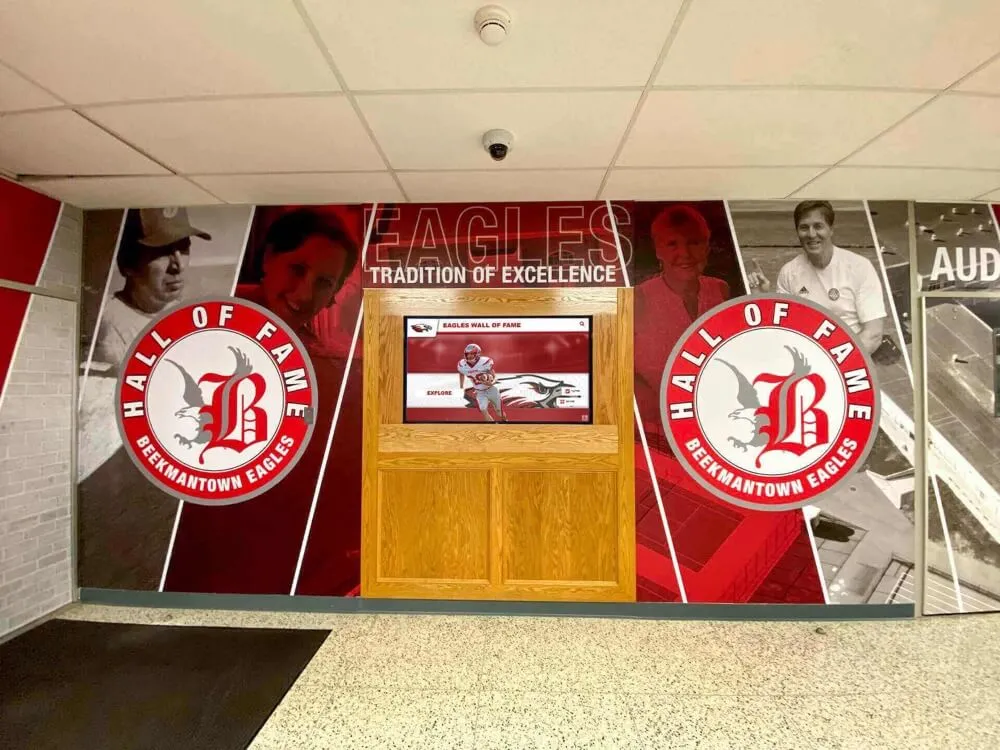
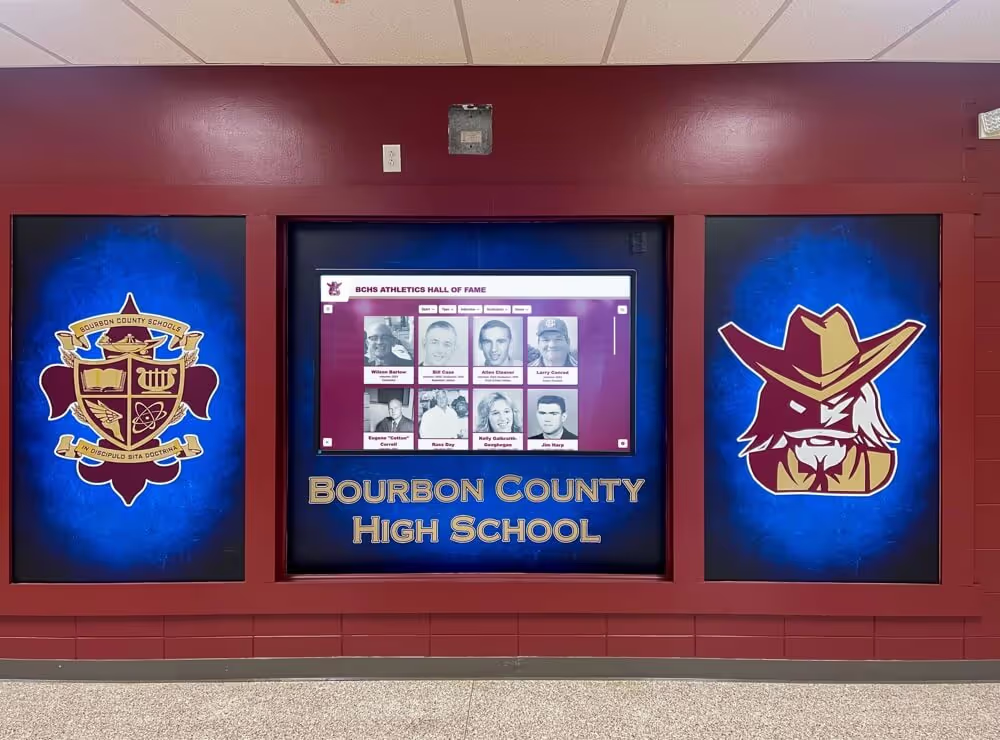
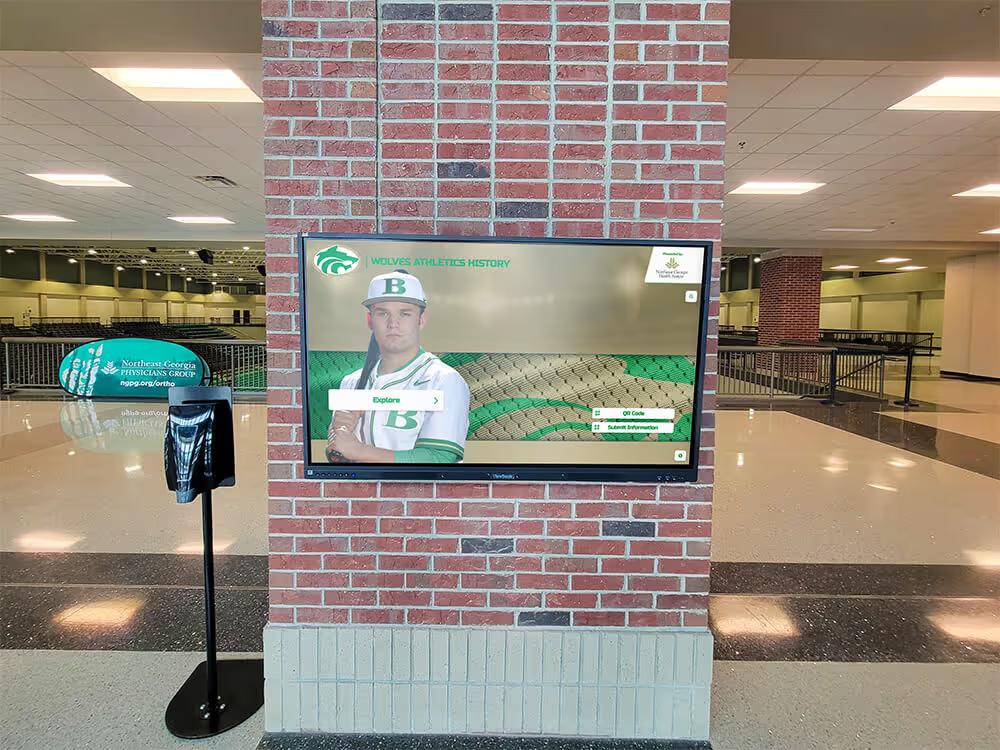
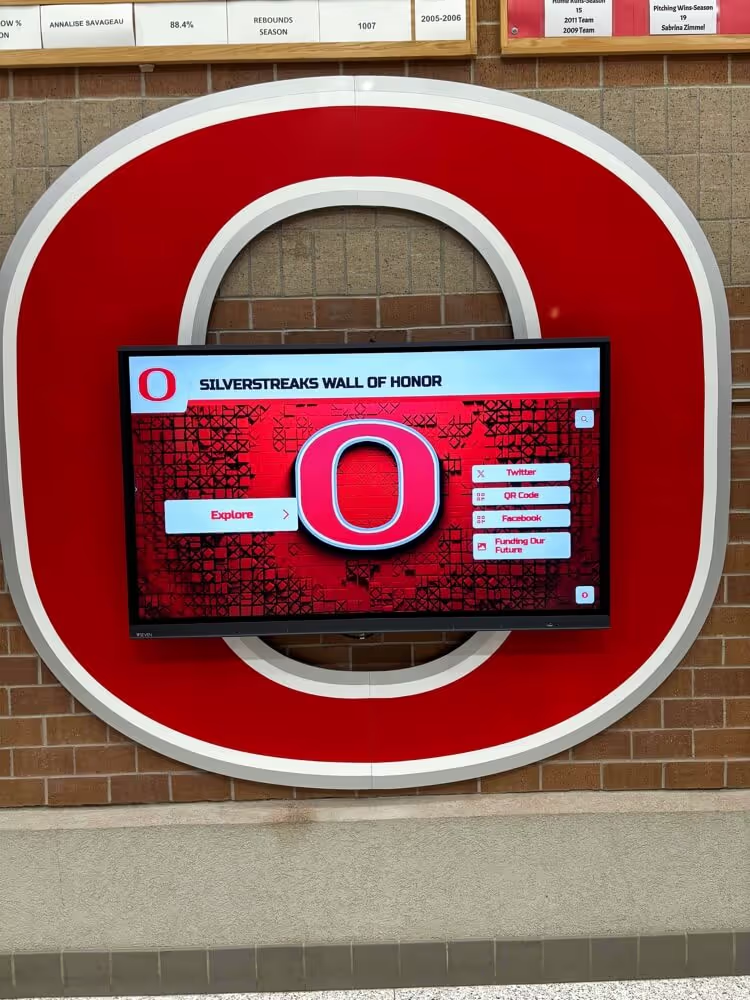
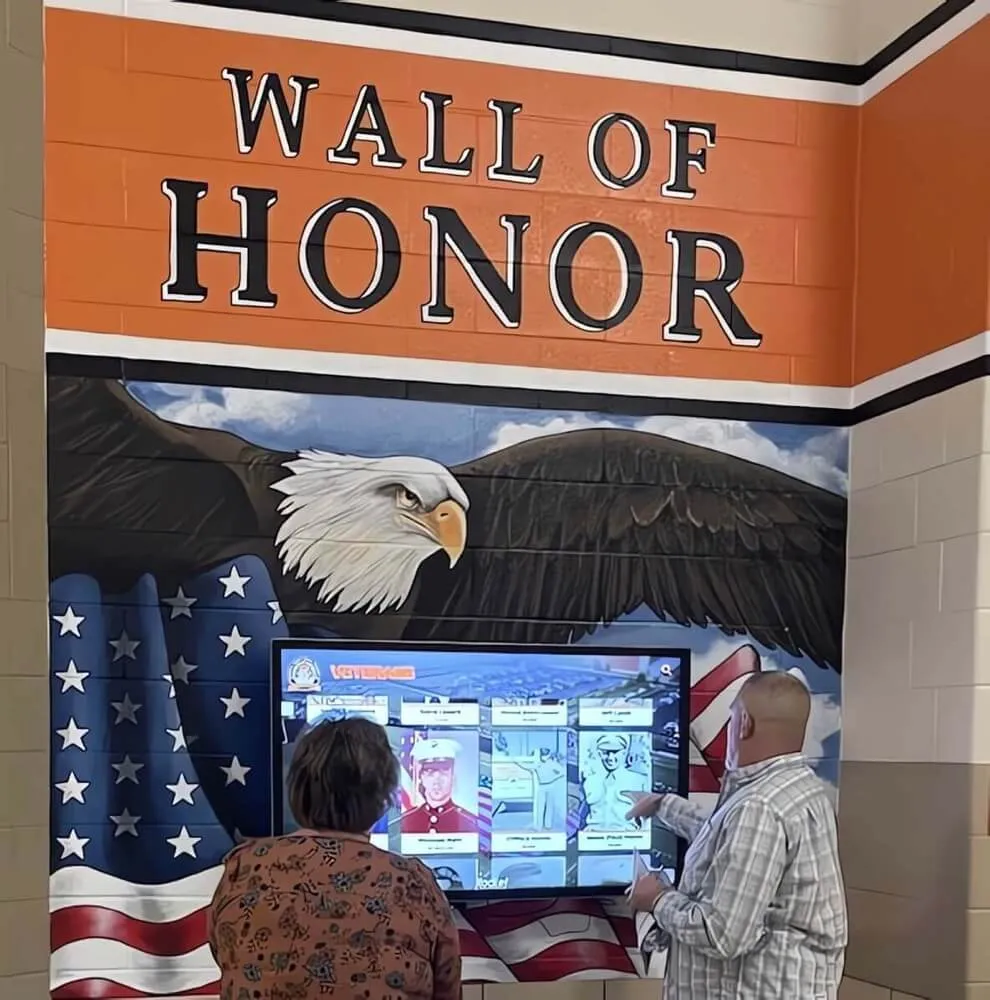
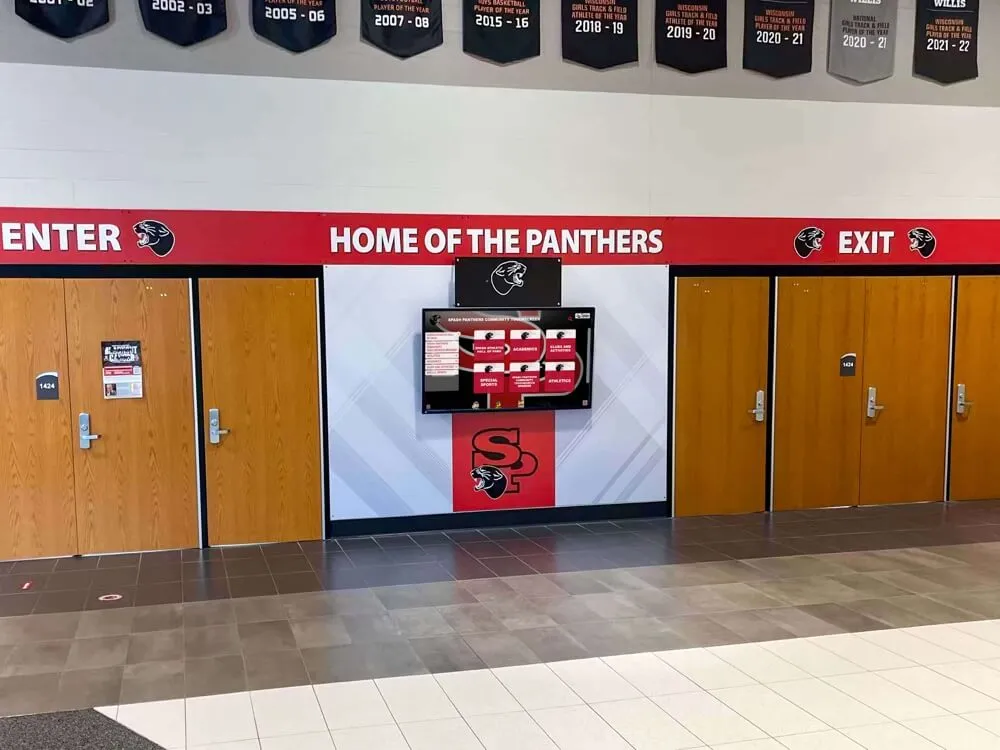
Interactive recognition kiosks in school hallways depend on annual platform licensing and content management budgets—lines that a formal amendment policy protects from informal mid-year reduction without board review of sponsor and donor commitment implications
When Sponsor and Donor Agreements Constrain Amendment Flexibility
Some budget lines cannot be freely amended regardless of board approval. Recognition funding tied to active sponsorship agreements or named gift pledges carries contractual obligations that no internal amendment process can override without risking breach of the agreement.
Before approving any amendment that reduces recognition-line funding, the treasurer should confirm:
- Whether an active sponsorship agreement specifies recognition deliverables that require the line item being reduced
- Whether a named gift agreement commits the program to maintaining specific recognition infrastructure for a defined period
- Whether a grant’s restricted-use terms limit reallocation away from the funded purpose
- Whether the amendment falls within a period when the donor or sponsor has a right to receive an annual recognition report
Hall of fame recognition tools for athletic programs increasingly build commitment documentation into the platform itself—making it straightforward to verify, at amendment time, whether a proposed budget change would conflict with any active recognition obligation before the board votes.
Formal Policy vs. Informal Adjustment: A Practical Comparison
Many booster clubs operate without a formal amendment policy and rely on informal adjustments: the treasurer reallocates funds as needed, updates the spreadsheet, and occasionally mentions the change at the next board meeting. This approach is common and a persistent source of audit findings and sponsor relationship problems.
| Dimension | Formal Amendment Policy | Informal Adjustment |
|---|---|---|
| Audit trail | Complete: every change documented with authorization | Incomplete: changes visible only in treasurer’s records |
| Board transparency | High: all above-threshold changes require documented vote | Variable: full board may not know what changed |
| Recognition/sponsor protection | Built in: impact review required before recognition cuts | Absent: cuts can occur without consequences analysis |
| New treasurer onboarding | Clear: amendment history explains budget evolution | Opaque: predecessor decisions undocumented |
| District or IRS scrutiny | Low risk: policy and documentation are internally consistent | Higher risk: unexplained variances invite follow-up |
| Donor stewardship credibility | Strong: budget changes traceable to board decisions | Weak: spending changes appear arbitrary to outside observers |
Rocket Alumni Solutions, which provides digital donor walls, athletic hall of fame systems, and lobby touchscreen recognition displays to school booster programs, builds recognition commitment documentation into its platform—giving treasurers a reliable reference point when evaluating whether a proposed budget amendment would affect active recognition obligations before the board votes. That connection between budget decisions and display commitments ensures programs can fulfill what they’ve promised even when financial plans change.
Connecting Amendment Policy to the Athletic Calendar
Budget amendments do not arise in isolation. For athletic booster clubs, they typically follow the pressure points in the athletic year: end-of-season recognition events, mid-year fundraising shortfalls, unanticipated equipment needs ahead of tournaments, or late-breaking scheduling changes that shift transportation costs.
Building a standing mid-season budget review into the board calendar—typically scheduled 60 days before the fiscal year ends—gives the treasurer a predictable moment to identify variances and propose amendments before deadlines compress the approval process. Connecting the budget review to the athletic department’s planning and communications calendar ensures the treasurer has the athletic schedule context needed to anticipate recognition-event costs before they become emergency amendments.
Programs that wait until the final weeks of the season to address budget variances routinely find that the board meeting schedule does not allow for a proper vote—resulting in informal approvals that are not documented in minutes and that create the same audit exposure as no policy at all.
Recognition Preservation and Amendment Documentation
One underappreciated function of a rigorous budget amendment policy is its contribution to institutional memory. When every recognition-line budget change is documented—with the reason for the change, the authorization source, and the effective date—the program builds a year-over-year record that explains why recognition investments grew or contracted. This record is essential when a new board officer or incoming athletic director needs to understand why a specific donor display exists at a particular funding level, or why a recognition event was restructured in a prior year.
Community recognition showcase projects that have grown over many years often lack this documentation—making it nearly impossible to reconstruct why certain recognition decisions were made or to honor the implied commitments those decisions represent. A budget amendment policy that requires written justification and board authorization for every meaningful change creates the documentation trail that recognition preservation depends on.
Senior Night and Year-End Recognition: Amendment Timing Considerations
End-of-season recognition events—athletic banquets, senior nights, and year-end award ceremonies—are among the most frequent drivers of late-season budget amendments. Programs that did not budget adequately for senior night recognition and ceremony costs often find themselves amending the recognition budget in the final six to eight weeks of the season, when board meeting schedules are compressed and the amendment process gets shortened or bypassed.
A mid-season budget review checkpoint, built into the amendment policy as a standing board agenda item, gives programs an early warning mechanism. Identifying a potential year-end recognition shortfall at mid-season—while there is still time for a proper board vote and budget rebalancing—is substantially less disruptive than an emergency amendment the week before the banquet. The policy should specify that late-season emergency amendments require presidential pre-approval with board ratification, not informal verbal authorization.
Frequently Asked Questions
Does a budget amendment require the same vote threshold as the original budget approval?
Not necessarily. Most booster club bylaws require a simple majority for the annual budget but specify a different threshold for amendments. Common practice delegates small amendments to the treasurer or executive committee and reserves full-board votes for changes above a specified dollar amount. Your amendment policy should state these thresholds explicitly so there is no ambiguity about what level of authorization a given change requires.
What if an urgent expense requires an amendment before the next scheduled board meeting?
Most amendment policies include an emergency provision: the president and treasurer are jointly authorized to approve urgent expenditures above the treasurer-only threshold, subject to full-board ratification at the next meeting. Emergency approvals should still be documented in writing at the time they occur—an email exchange confirming both officers’ approval is sufficient—and must appear as a ratification action item in the next meeting’s minutes. Programs that use emergency provisions more than twice in a year should review whether their budget planning process is generating avoidable emergencies.
Can the board permanently delegate broader amendment authority to the treasurer?
Boards can expand the treasurer’s unilateral authority, but that authority should be bounded by an explicit dollar cap and type restriction stated in the policy. Open-ended treasurer authority creates the same transparency problems as having no policy: board members cannot evaluate the program’s financial health if they do not know what spending has been authorized outside the approved budget.
How should amendments affecting sponsor or donor recognition lines be handled?
Any amendment that reduces a line tied to an active sponsorship agreement or donor recognition commitment should include a one-paragraph summary, prepared by the treasurer, of the recognition obligations affected, the contractual implication of reducing the line, and alternative approaches to closing the budget gap that do not require cutting recognition. This summary becomes part of the amendment record and demonstrates that the board’s decision was informed, not inadvertent.
Where should the amendment policy document be stored and distributed?
The policy should live in the organization’s written financial policies document, distributed separately from the bylaws. A copy should go to all board members at the start of each fiscal year. The treasurer should reference the policy explicitly in any board report where an amendment is being considered, citing the applicable threshold and documentation requirement for the proposed change.
How long should amendment records be retained?
Retain amendment records for the same period as the underlying financial records—typically seven years for tax purposes. Records tied to donor naming agreements or multi-year sponsorship contracts should be retained for the life of the agreement plus three years. Any amendment that modified a restricted fund should be retained indefinitely alongside the original gift or grant documentation.
If your program is building the recognition infrastructure that a budget amendment policy is designed to protect—donor walls, lobby displays, athletic hall of fame touchscreens, and sponsor recognition panels—explore how Rocket Alumni Solutions helps school booster programs plan, fund, and maintain permanent recognition environments.