Most booster club budget templates cover the obvious expenses: uniforms, equipment, transportation, officials’ fees, and tournament entry. What they rarely include are the recognition and sponsor display line items that determine whether your program can actually retain the donors and sponsors funding everything else.
When a booster club fails to budget for sponsor signage installation, digital display licensing, or end-of-season stewardship materials, those costs either get quietly absorbed into other lines or quietly skipped. Both outcomes damage the program. Absorbed costs come out of athlete-facing resources. Skipped recognition erodes sponsor confidence and suppresses renewals.
This guide provides a complete booster club budget template with a dedicated recognition section, explains which line items most programs miss, and shows how planning for display infrastructure upfront prevents the funding scramble that derails sponsor retention every season.
This template is designed for school athletic programs and booster clubs managing multi-sport seasons with tiered sponsor relationships, annual donor acknowledgment, and end-of-season recognition events. Adapt the dollar ranges to your program’s size, and treat the recognition section as a starting checklist even if specific amounts differ.

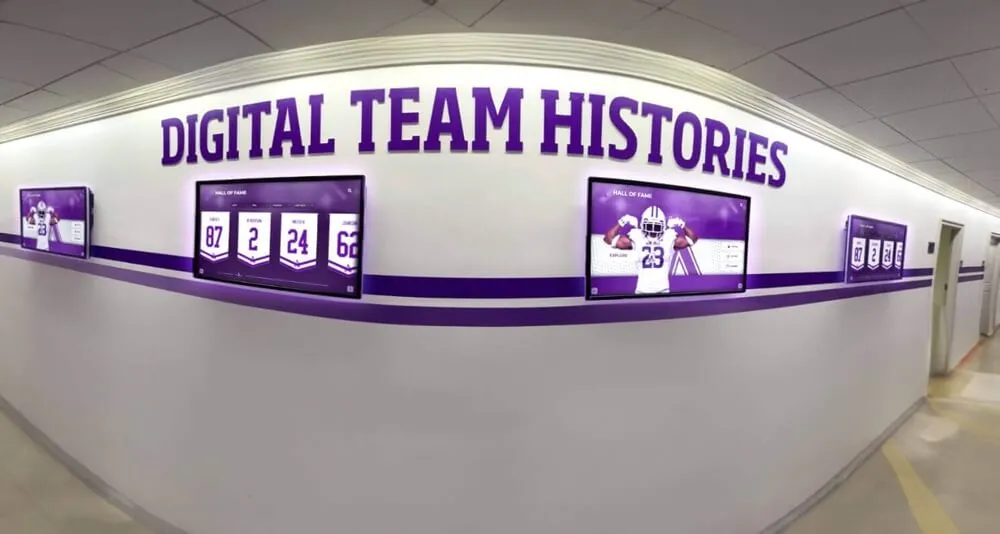
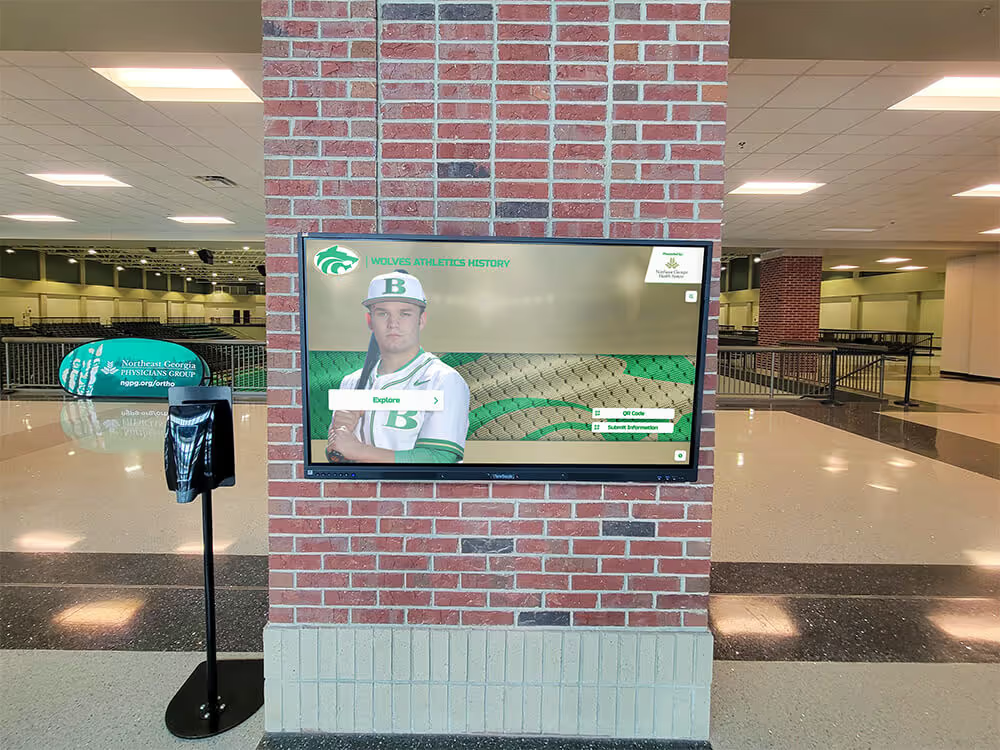
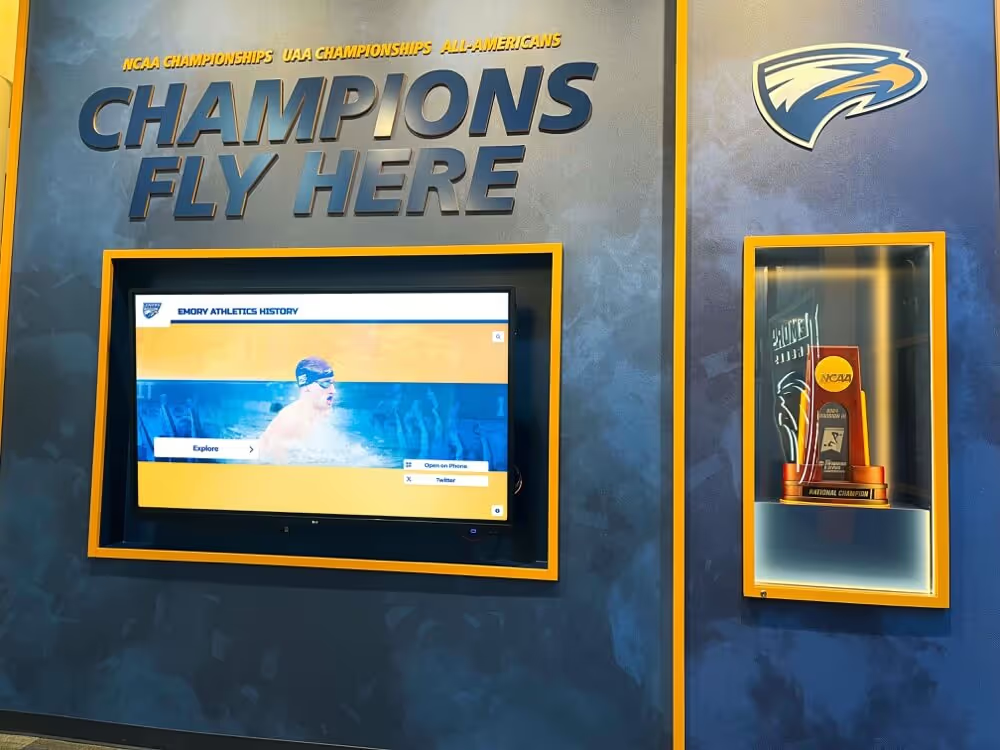
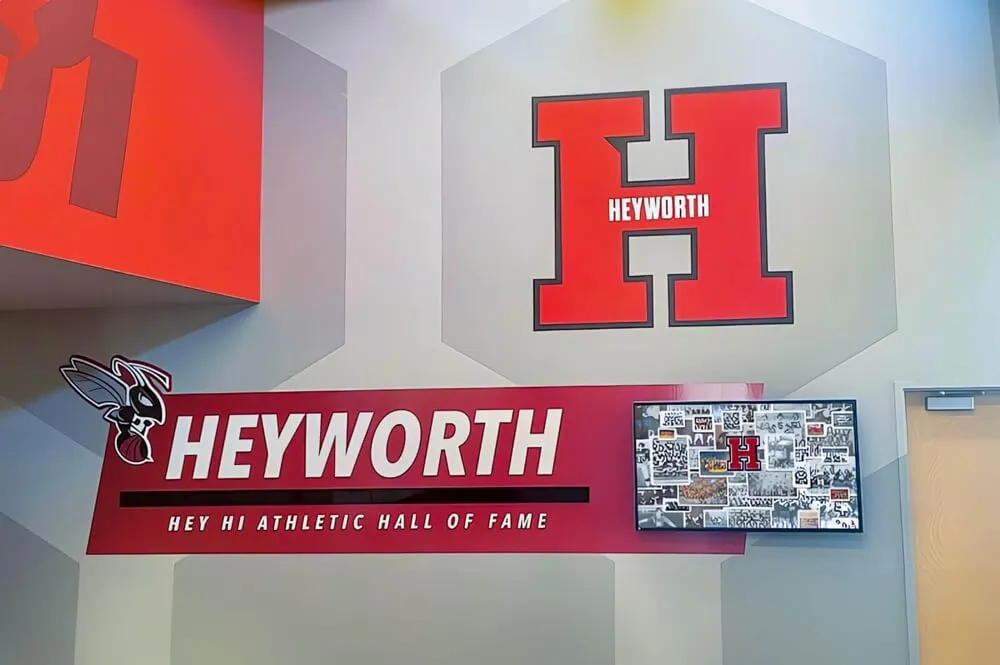
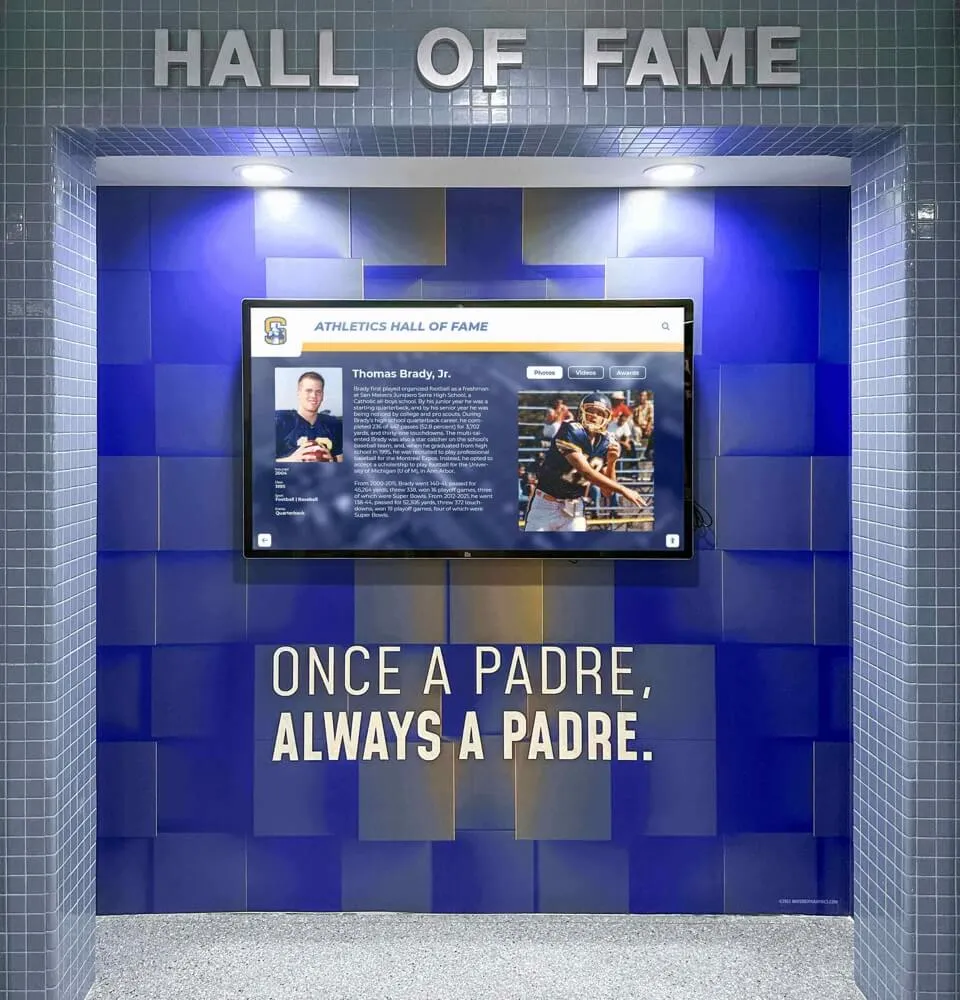
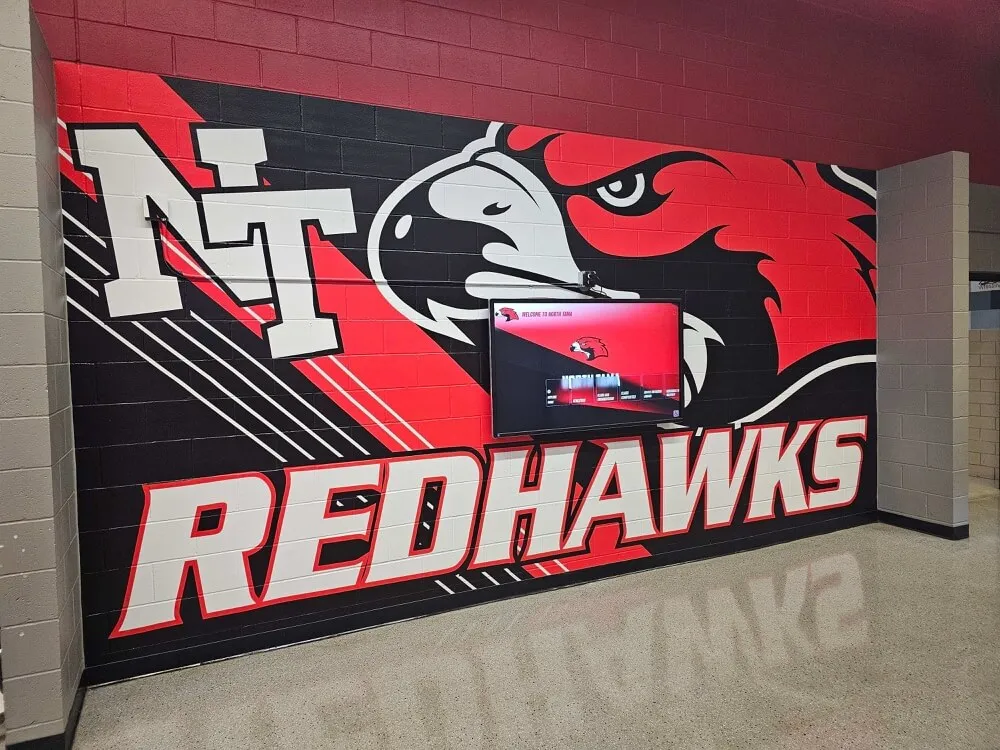
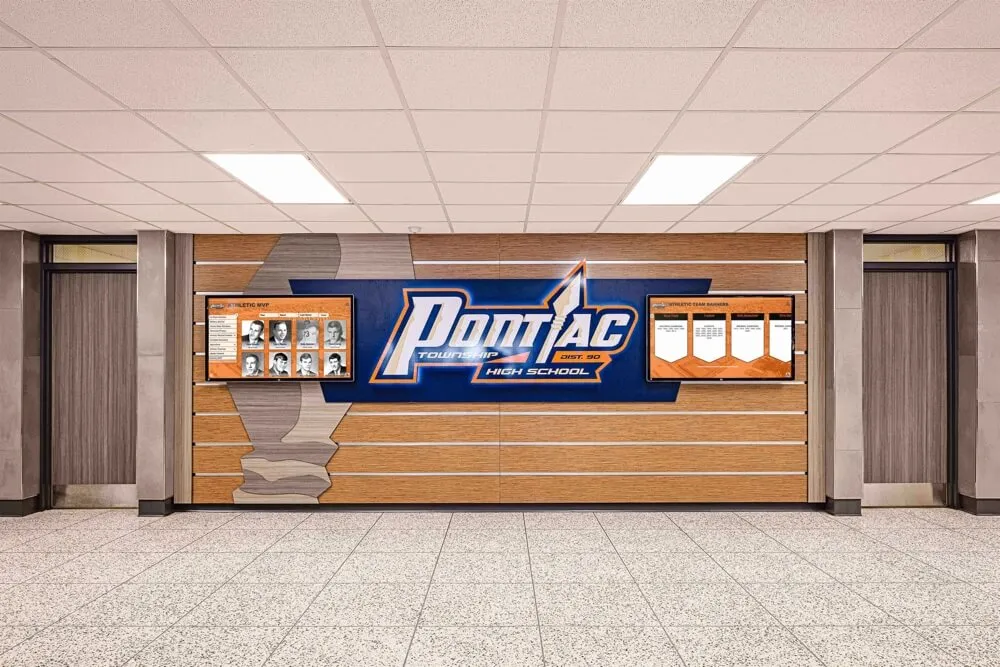
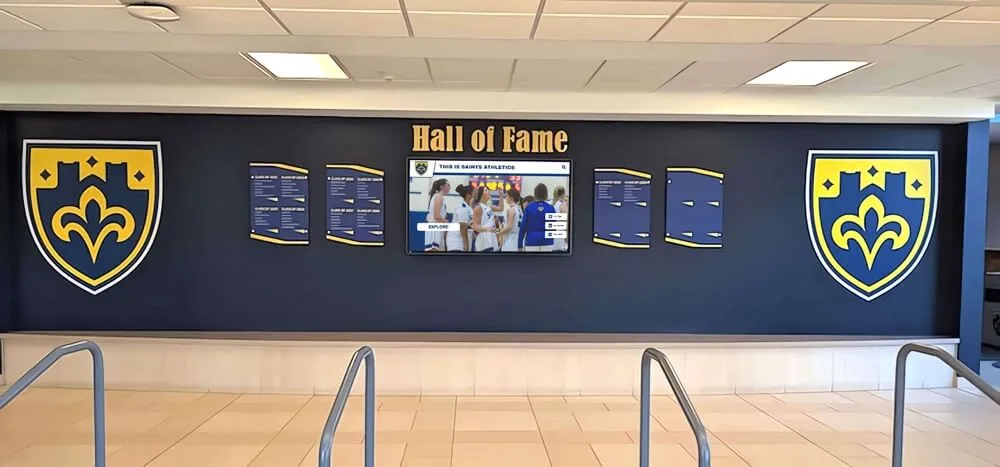
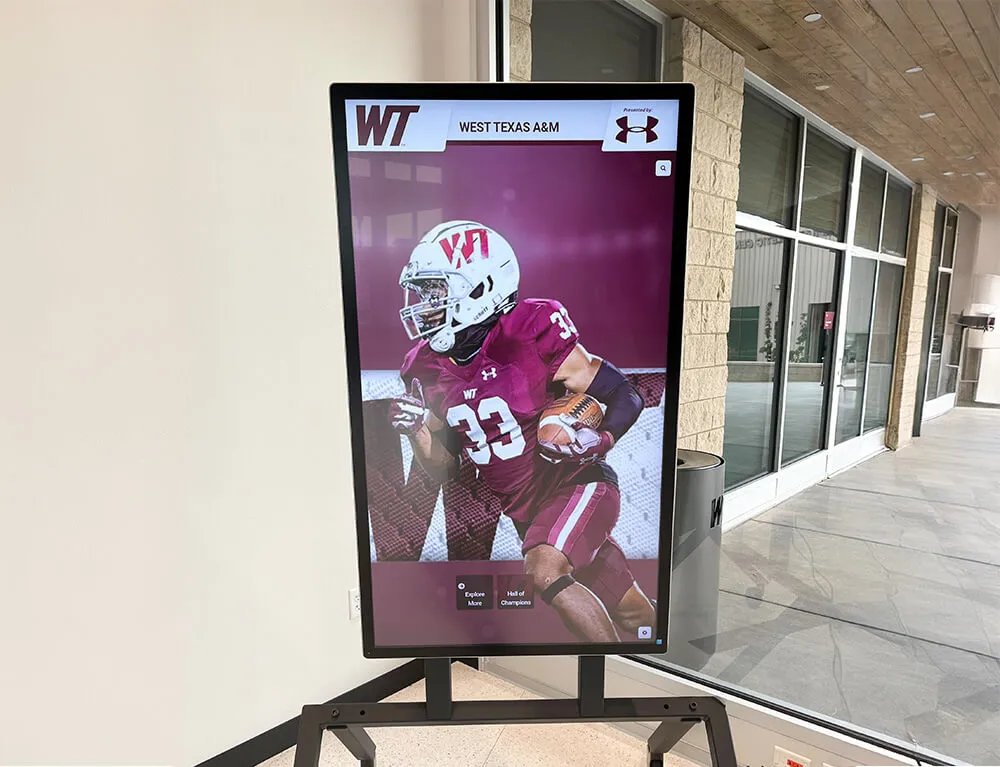
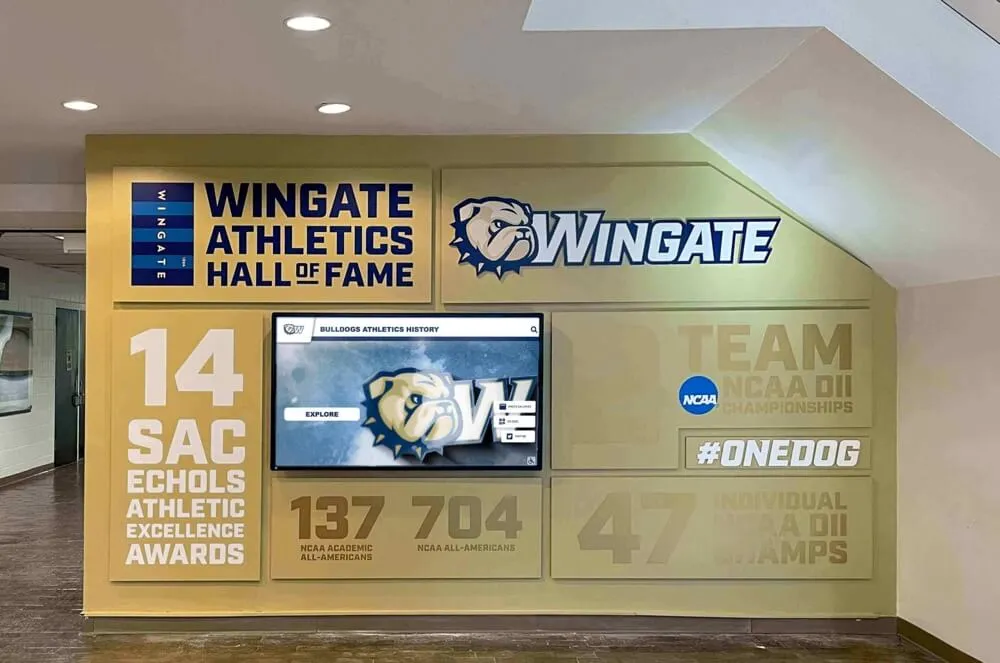
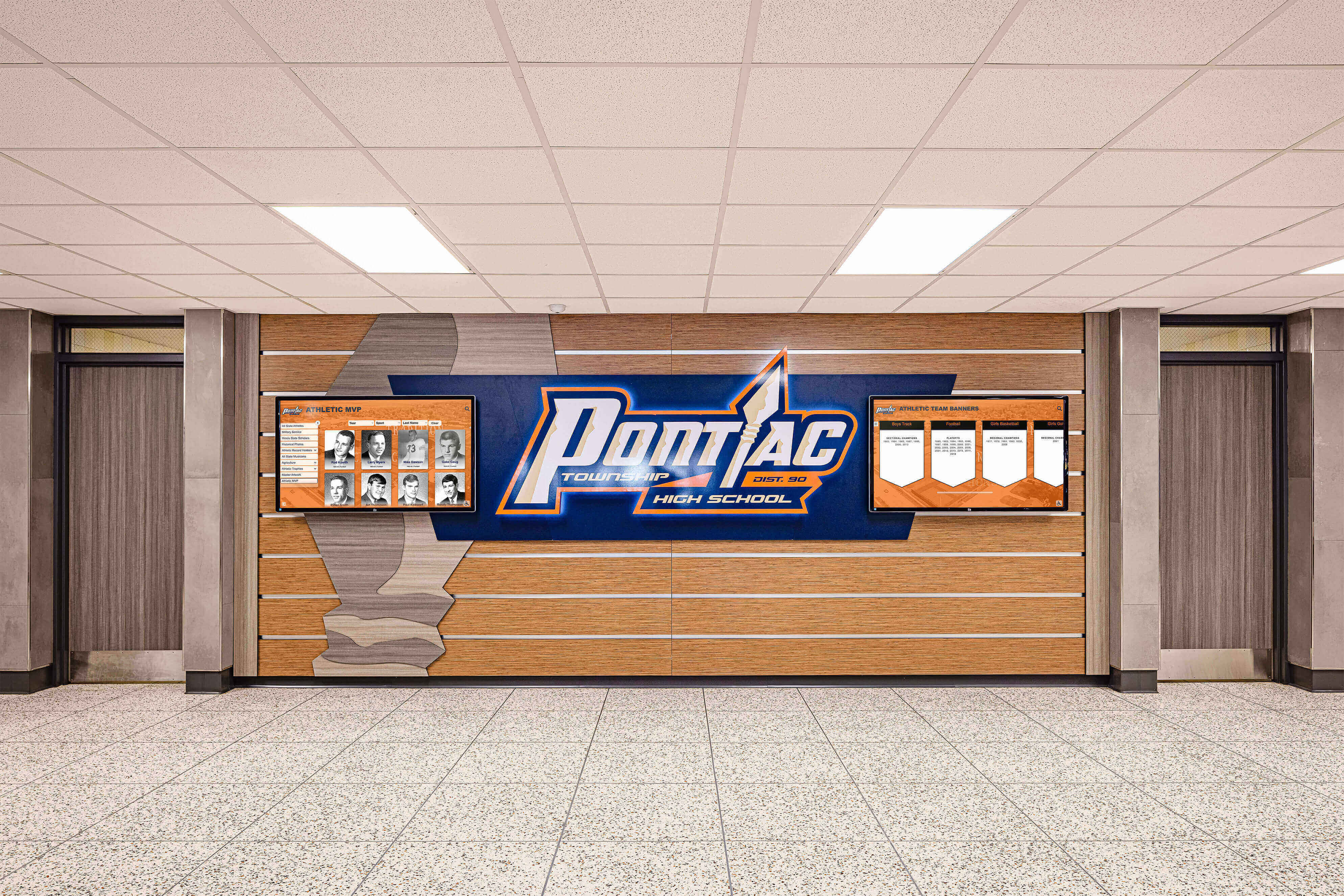
Athletic honor boards and display systems require dedicated budget lines for installation, content updates, and maintenance—costs that disappear from most booster club templates until they create a crisis
The Complete Booster Club Budget Template
The table below covers all major expense categories for a medium-sized school booster club program. The Recognition & Sponsor Display section is where most programs have gaps—those line items are expanded in detail after the table.
| Category | Line Item | Estimated Annual Cost | Notes |
|---|---|---|---|
| Operations | Insurance and liability coverage | $400–$800 | Required for most events |
| Operations | Accounting and bookkeeping | $300–$600 | Tax filing if incorporated |
| Operations | Printing and stationery | $200–$500 | Letterhead, forms, envelopes |
| Operations | Software and membership platform | $200–$600 | Registration, dues collection |
| Operations | PO Box or mailing address | $80–$150 | |
| Athletics | Uniform and apparel purchases | $2,000–$8,000 | Per-sport or shared pool |
| Athletics | Equipment and supplies | $1,500–$5,000 | Varies by sport |
| Athletics | Travel and transportation | $2,000–$10,000 | Distance and tournament count |
| Athletics | Entry fees and registration | $500–$3,000 | Tournament and league fees |
| Athletics | Officials and referees | $1,000–$4,000 | Home event coverage |
| Fundraising | Event expenses | $500–$2,000 | Venue, supplies, permits |
| Fundraising | Online platform fees | $100–$400 | Credit card processing |
| Fundraising | Marketing and promotion | $200–$800 | Ads, flyers, social media |
| Recognition & Sponsor Display | Sponsor signage fabrication | $800–$3,000 | See detail below |
| Recognition & Sponsor Display | Signage installation | $400–$1,200 | Labor for banners, panels |
| Recognition & Sponsor Display | Digital display platform license | $600–$2,400 | Annual SaaS subscription |
| Recognition & Sponsor Display | Display content management | $300–$900 | Updates, photography, design |
| Recognition & Sponsor Display | Donor wall materials or engraving | $500–$2,500 | Plaques, plates, panels |
| Recognition & Sponsor Display | End-of-season stewardship gifts | $400–$1,500 | Framed certificates, plaques |
| Recognition & Sponsor Display | Banquet and ceremony recognition | $800–$3,000 | Venue, catering, A/V |
| Recognition & Sponsor Display | Sponsor impact documentation | $200–$600 | Photography, recap mailers |
| Recognition & Sponsor Display | Touchscreen kiosk maintenance | $200–$800 | Hardware upkeep, updates |
| Recognition & Sponsor Display | Award trophies and medals | $400–$1,200 | End-of-season athlete awards |
| Reserve | Contingency fund | 5–10% of total | Emergency and overrun buffer |
Why Most Booster Club Budgets Skip Recognition Lines
The short explanation is structural: most booster club budget templates are built by repurposing previous-year spreadsheets, and recognition costs rarely appear as clean line items on prior-year actuals. Sponsor signage was handled by the parent who knows the print shop. The banquet awards came out of the general event budget. The thank-you plaques were split-coded under supplies. When no one is accountable for a recognition budget, recognition spending becomes invisible—and invisible costs either disappear or resurface as emergencies.
The longer explanation involves what recognition line items are actually purchasing. A sponsor signage budget is not just buying vinyl. It is purchasing the physical proof of delivery that justifies a renewal conversation. An end-of-season stewardship gift is not just a plaque. It is the documentation that a year-long relationship was honored consistently. When those line items have no home in the budget, the work they represent gets underestimated, underfunded, and underdone—with predictable effects on sponsor retention.
Programs that treat recognition as a budget category rather than a miscellaneous cost also benefit from the discipline that category management creates. When the recognition budget is visible, the recognition committee has a number to work within. Decisions about what to promise at each sponsor tier become budget decisions rather than aspirational commitments. Understanding how academic recognition programs build institutional accountability illustrates how visible budget lines force the planning rigor that aspirational promises never create.
Recognition and Sponsor Display Line Items Explained
Sponsor Signage Fabrication
This line covers the physical cost of producing sponsor recognition materials: banners, fence panels, wall-mounted signs, entrance plaques, and any printed materials carrying sponsor names or logos. Most booster clubs underestimate this line by treating it as a pass-through cost—the sponsor pays, so it does not belong in the budget. But sponsor-funded signage requires your team to project-manage production, approve proofs, and coordinate delivery. More importantly, signage that the club controls—lobby panels, corridor banners, facility entrance signage—must be funded by the club itself.
A realistic fabrication budget for a four-tier sponsor program with five to eight active sponsors at Gold and Silver levels runs $800 to $3,000 annually, depending on materials and unit count. Digital printing has reduced costs significantly; vinyl banners for interior use are often $50–$150 each. High-permanence recognition for Presenting or Gold sponsors—dimensional lettering, mounted plaques, engraved panels—costs proportionally more and lasts proportionally longer.
Signage Installation
Separate from fabrication, installation is a labor cost that most budget templates ignore because volunteers handle it. That works until it does not: when a volunteer falls through, when a banner requires mechanical fastening that needs a licensed contractor, or when digital display hardware requires professional installation. Budgeting $400 to $1,200 for installation acknowledges this cost even if it is ultimately not spent, and prevents recognition displays from being deferred when volunteer capacity does not materialize.
Digital Display Platform License
If your program uses a digital recognition system—a lobby touchscreen kiosk, a donor wall with dynamic content, or an athletic records board with software-managed data—the annual license fee for that platform belongs as a named line item, not buried under technology or miscellaneous. Programs that cannot locate this cost in their budget tend to let subscriptions lapse and then scramble to explain to sponsors why their recognition disappeared.
Annual license fees for school-scale digital recognition platforms typically run $600 to $2,400 depending on feature set and number of displays. Understanding how school digital display systems work day-to-day helps programs choose systems at the right cost tier before committing to a contract the budget cannot support.
Display Content Management
Digital recognition systems require ongoing content work: loading new sponsor profiles, updating athletic records, refreshing team photos, adding new season data, and exporting documentation for stewardship communications. This work is not free even when done internally. A dedicated content management budget of $300 to $900 covers either the staff time to do this work or external design support to keep content current.
Programs that budget nothing for content management get recognition systems that go stale. A sponsor whose profile has not been updated in two years—or whose logo still reflects a brand they retired—notices. The content management budget is small relative to the cost of losing a sponsor who concludes their recognition was not being maintained.
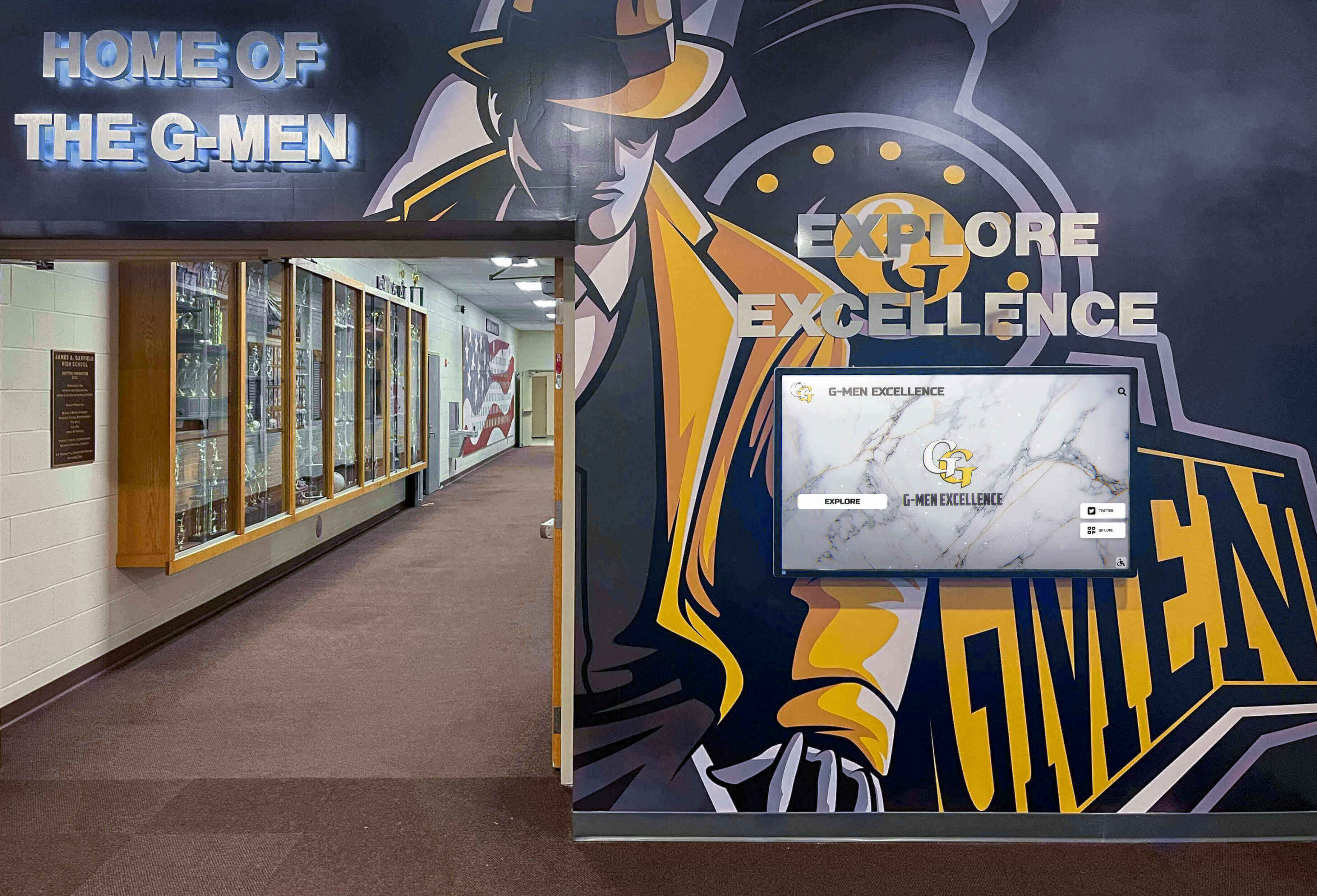
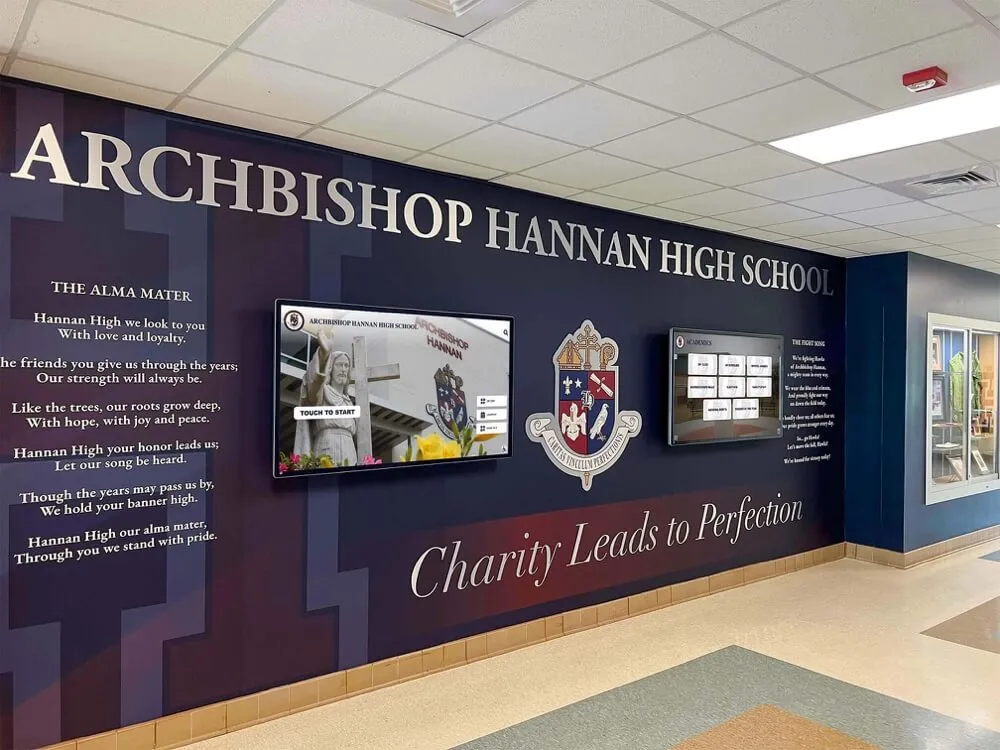
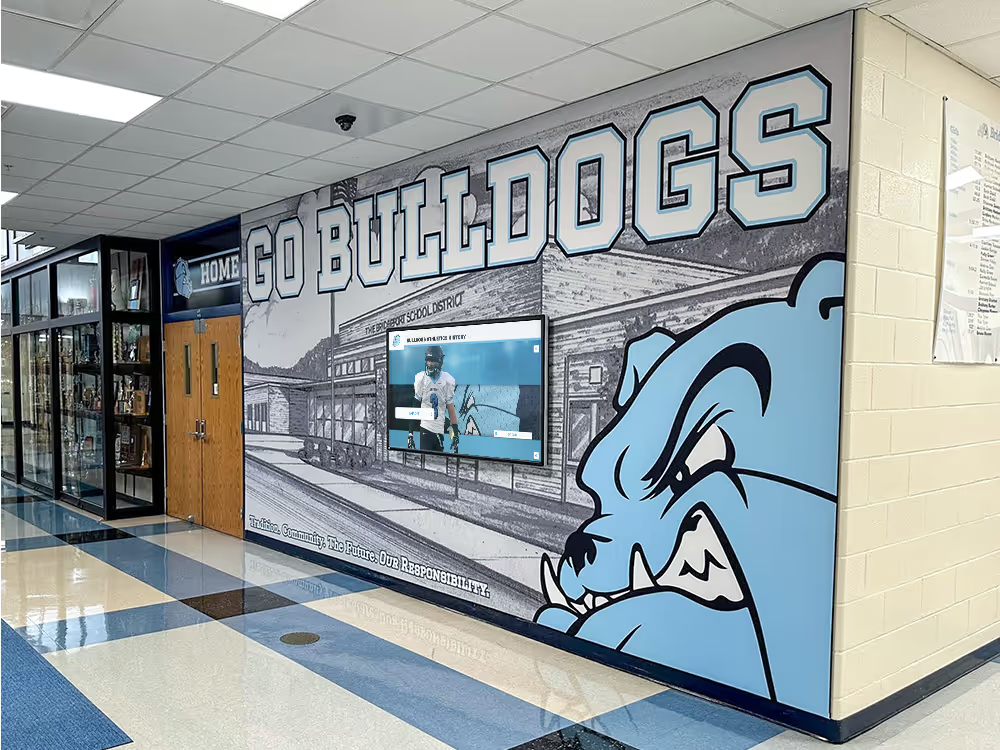
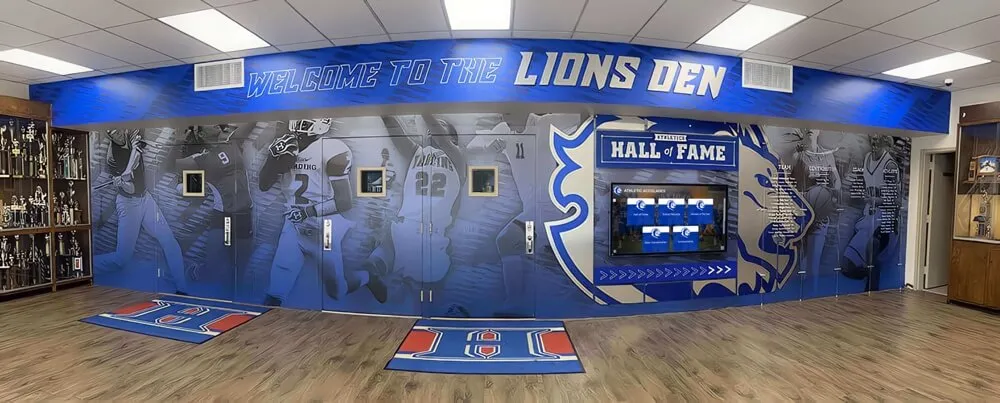
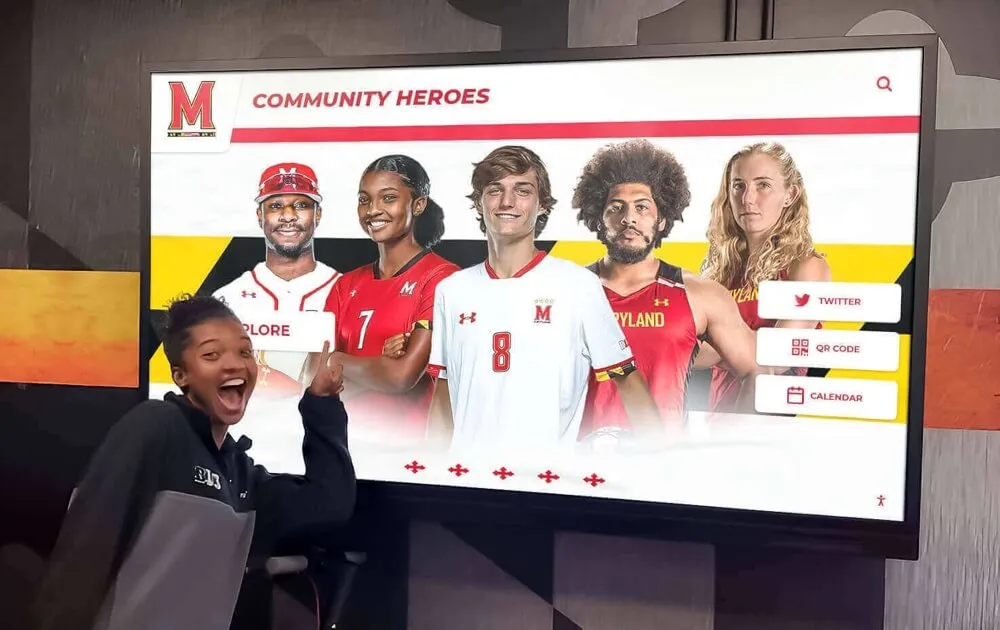
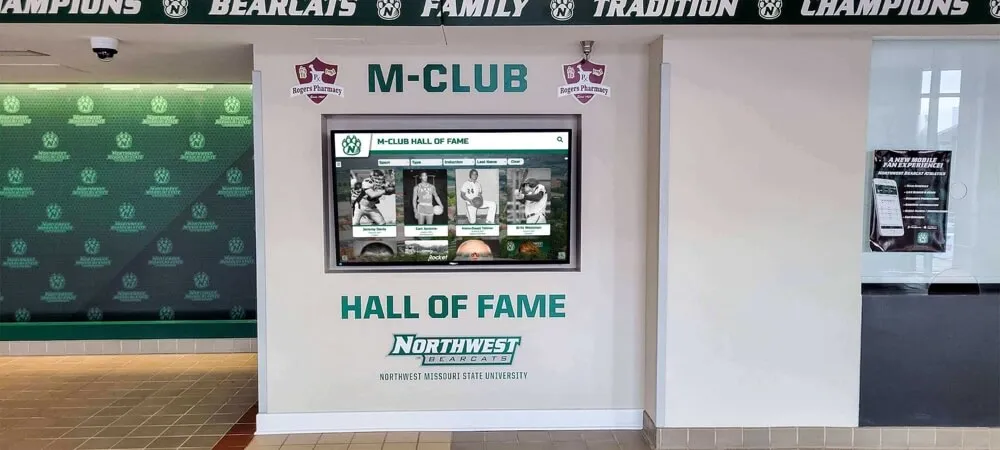
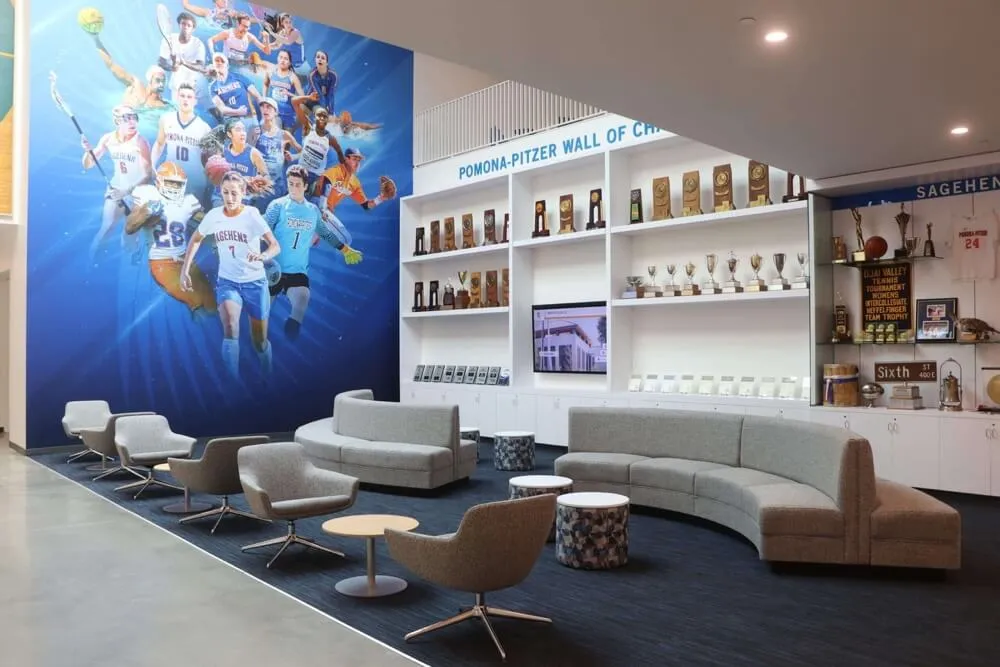
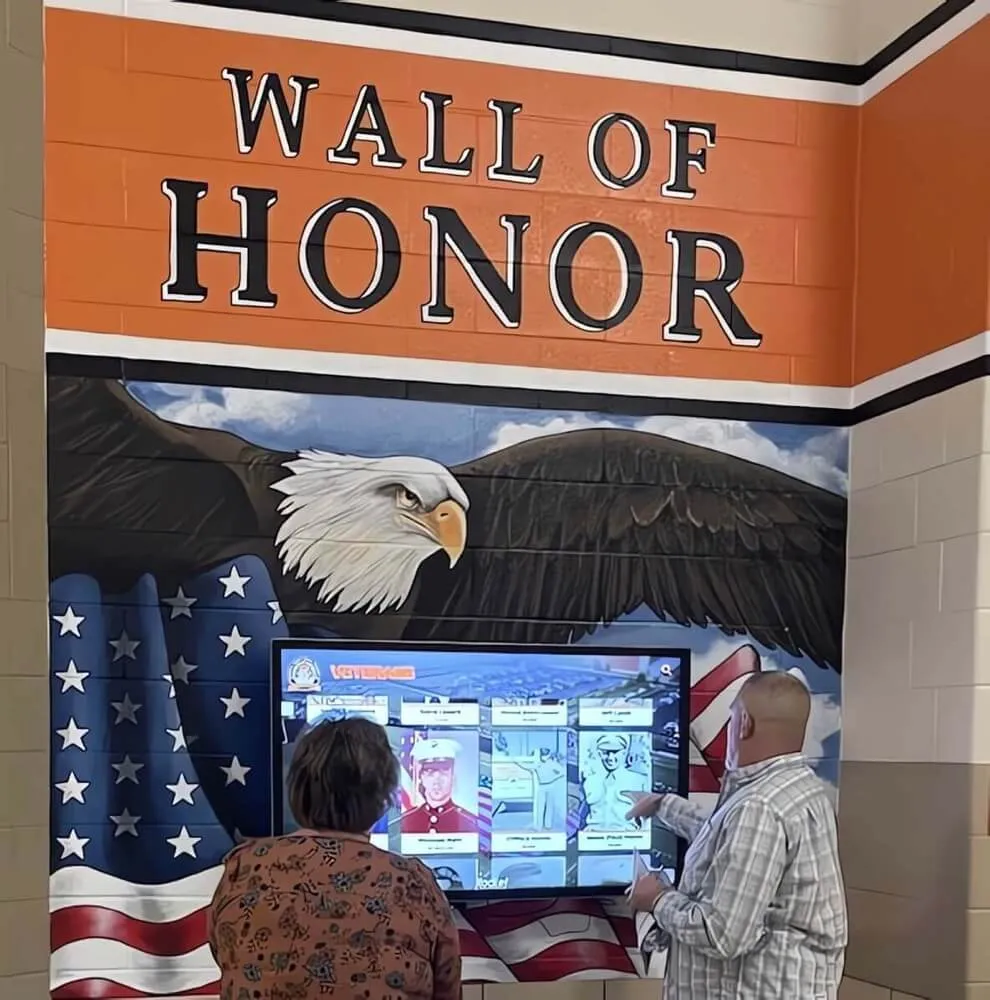
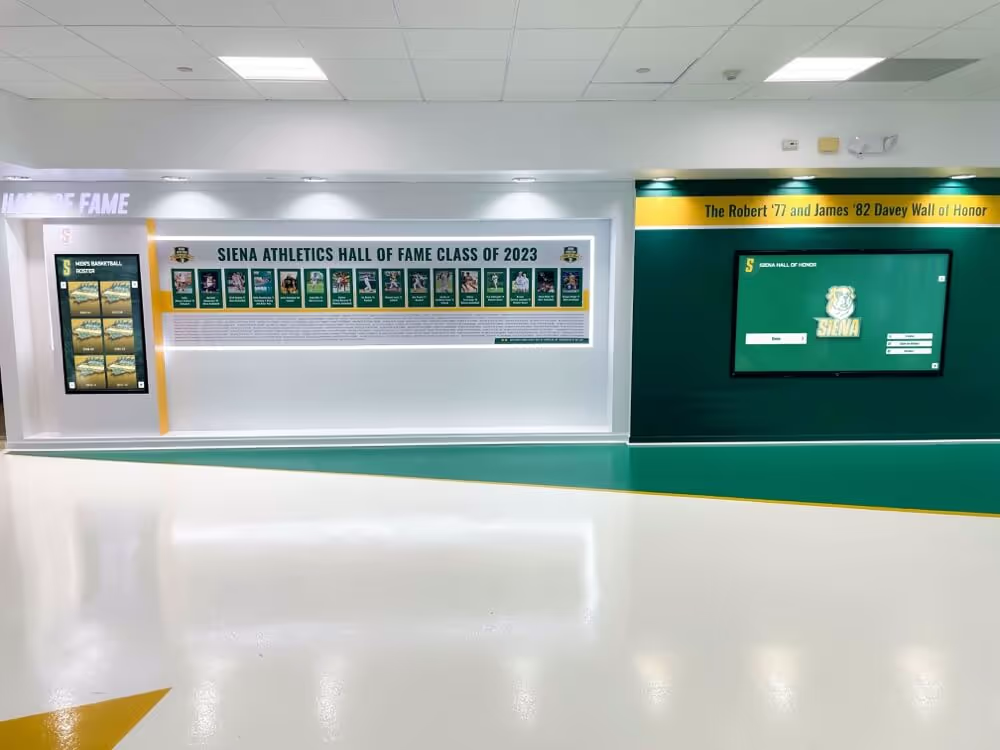
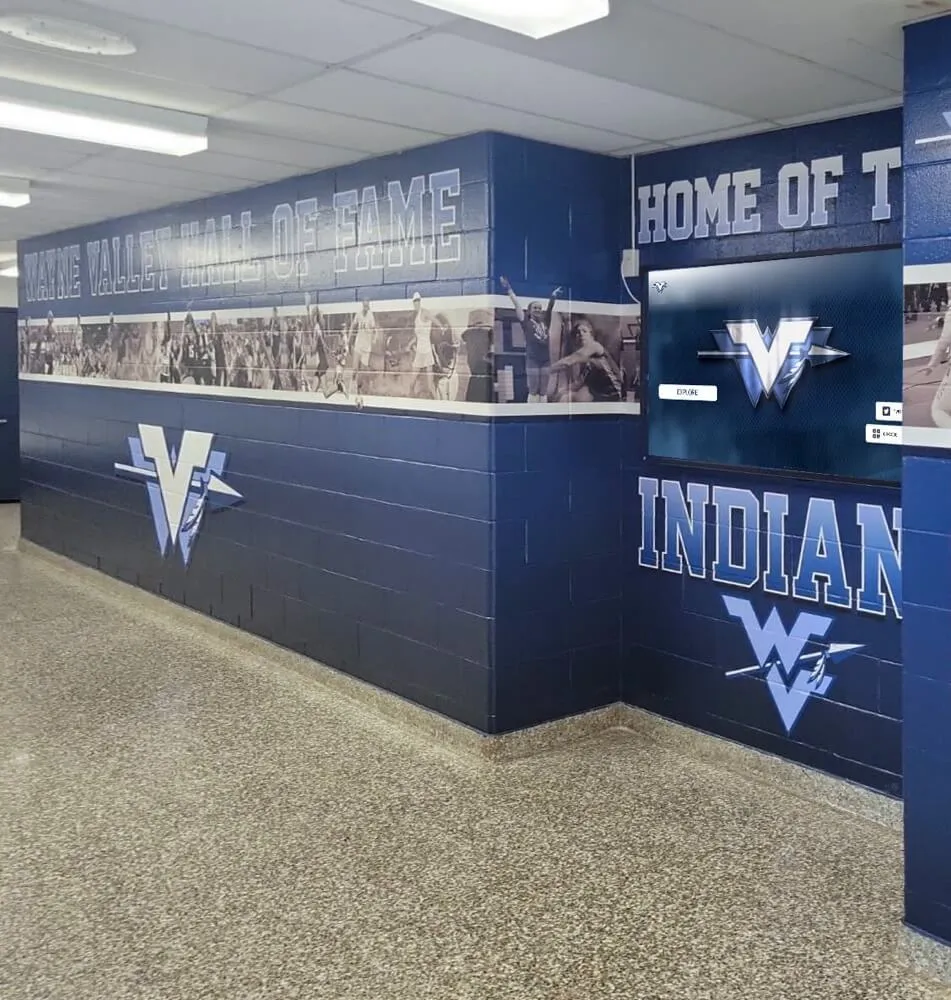
Recognition environments combining physical and digital elements require ongoing content management budgets to stay current—a line item that most booster club templates omit entirely
Donor Wall Materials or Engraving
If your program has a physical donor wall—laser-engraved plaques, etched name panels, printed name boards—annual engraving or updates belong in the recognition budget. New donors need to be added. Tier upgrades may require reprinting sections. Materials age and occasionally need replacement.
This line typically runs $500 to $2,500 depending on the complexity of the donor wall and volume of additions. Programs with high donor wall activity should budget toward the upper range. Programs with stable donor lists and infrequent additions can budget lower and roll unused funds into the reserve.
End-of-Season Stewardship Gifts
Framed recognition certificates, custom plaques, and sponsor appreciation packages are costs most booster clubs handle ad hoc. A dedicated budget line of $400 to $1,500 sets a per-sponsor stewardship expectation and prevents the common situation where recognition certificates are ordered late, printed cheaply because no budget was allocated, or simply not produced because no one owned the expense.
Stewardship gifts matter most at the Presenting and Gold sponsor tiers. A framed, personalized acknowledgment of a $2,500 or $5,000 sponsorship investment demonstrates that the program takes the relationship seriously. Approaches to academic achievement award presentation show how deliberate presentation—not just the recognition itself—drives the perceived value of an acknowledgment. That principle applies directly to sponsor stewardship: a thoughtfully presented certificate is worth more than a generic gift, and a generic gift is worth more than nothing.
Banquet and Ceremony Recognition Costs
Most booster clubs budget for the end-of-season banquet under events. What often goes untracked is the recognition-specific component: trophies, plaques, award presentations, and A/V setup for sponsor acknowledgment. A line item of $800 to $3,000 that explicitly covers recognition elements—rather than folding them into general event costs—makes the program’s commitment to celebration visible in the budget and prevents recognition components from being cut when event costs run over.
Sponsor Impact Documentation
Sponsors who receive documentation of their recognition—photographs of their banner installed, screen captures of their digital profile, a written summary of where their name appeared—renew at higher rates than sponsors who receive none. Producing that documentation requires either internal staff time or a modest photography and design budget.
$200 to $600 annually is sufficient for a program with five to ten sponsors and a simple documentation protocol: one photo from installation, one from a high-attendance event, and one end-of-season impact summary. Athletic director planning frameworks consistently highlight sponsor documentation as one of the most commonly overlooked institutional practices—programs that document recognition delivery outperform those that rely on verbal assurances when renewal conversations arrive.
For programs evaluating recognition platforms, reviewing the leading hall of fame tools for athletics and donor recognition helps identify systems that generate documentation as a byproduct of normal display operation—substantially reducing the cost of the documentation line item.
Touchscreen Kiosk Maintenance
Programs that operate digital recognition kiosks need a hardware maintenance budget. Touchscreens accumulate physical wear, software updates occasionally require intervention, and displays in high-traffic school hallways take occasional damage. $200 to $800 annually covers routine cleaning, screen protector replacement, and one minor service call. Major hardware replacement is a capital expense, not an operating line item; programs with aging hardware should plan this in a separate capital reserve rather than burying it in the maintenance budget.
Award Trophies and Medals
End-of-season athlete recognition—trophies for most valuable player awards, medals for all-conference selections, academic achievement plaques—belongs as a named recognition line item rather than an athletic equipment cost. These are acknowledgment materials, not gear. Budgeting them separately clarifies the program’s commitment to recognition and prevents athlete awards from being cut when athletic supply costs overrun.
$400 to $1,200 covers a modest awards program for a single-sport season. Multi-sport programs should multiply accordingly and consider whether a centralized all-sports recognition ceremony reduces per-unit cost while improving visibility. Youth sports awards and recognition ideas offer a wide range of approaches for programs structuring athlete acknowledgment more systematically.
The Often-Overlooked Line: Digital Recognition Infrastructure Investment
One budget category that rarely appears in operating plans—but regularly surfaces as an emergency capital expense—is the initial investment in digital recognition infrastructure. Lobby touchscreen kiosks, digital donor walls, and athletic records display systems are capital costs. They require upfront investment that annual operating budgets cannot typically absorb.
Programs that plan for this investment are in a fundamentally better position than those that do not. A digital recognition system budgeted as a three-year capital initiative—$8,000 to $15,000 for hardware and setup, amortized over the system’s useful life—becomes a predictable cost. The same investment made as an emergency response to a sponsor’s request or a principal’s directive lands in the budget without preparation and creates genuine financial strain.
Building a recognition capital fund—a dedicated reserve contribution each year specifically for recognition infrastructure upgrades—is the most practical approach for programs that cannot fund a full digital system in one budget cycle. Contributing $1,500 to $2,500 annually accumulates to $7,500 to $12,500 within five years, enough for a meaningful digital installation at most school programs.
How schools define, display, and preserve student honors over time demonstrates that programs planning digital recognition infrastructure in advance implement more comprehensive systems at lower per-unit cost than those that respond to recognition gaps reactively. The same planning discipline applies to athletic programs building toward permanent display environments.
Budgeting Sponsor Recognition Costs Across Tier Levels
Sponsor recognition costs are not flat across tiers—they scale with the level of commitment made in each tier’s benefit package. A budget that does not differentiate recognition costs by tier will either over-fund Bronze recognition or under-fund Presenting sponsor delivery.
A tier-scaled recognition budget looks roughly like this:
| Sponsor Tier | Signage Budget | Digital Profile | Stewardship Gift | Documentation |
|---|---|---|---|---|
| Presenting | $600–$1,200 | Dedicated, permanent profile | $150–$300 | Full-season recap package |
| Gold | $300–$600 | Named profile with logo | $75–$150 | Mid- and end-season summary |
| Silver | $150–$300 | Rotation slot with name | $40–$75 | End-season summary |
| Bronze | $0–$75 | Name in rotation | None required | Annual listing |
The Presenting tier requires the highest-quality physical materials—dimensional signage, permanent installation, priority placement—and the most comprehensive stewardship documentation. Bronze recognition can often be delivered entirely through digital systems with minimal per-sponsor cost, which is one reason digital recognition platforms are particularly valuable for programs with large numbers of entry-level sponsors: adding one more name to the rotation costs effectively nothing.
Understanding criteria-based tiered recognition structures in academic contexts shows how defining tier thresholds before budgeting ensures each tier’s recognition cost is grounded in the benefit promise actually made—not the benefit promise that sounded good at sign-up.
Common Budget Mistakes in Booster Club Recognition Planning
Budgeting recognition costs at last year’s actuals. When recognition was underfunded last year, last year’s actual is the wrong baseline. Start from what was promised to sponsors this year, price the fulfillment of those promises, and budget from that number.
Conflating athlete recognition and sponsor recognition. These serve different relationships and should not compete for the same budget pool. Athlete recognition honors student performance; sponsor recognition honors business investment. When they share a budget line, one typically gets cut when costs run over—usually sponsor recognition, which has more visible consequences for program revenue.
Ignoring multi-year recognition commitments. If a Presenting sponsor committed to a three-year naming arrangement, the recognition costs for years two and three should appear in out-year budget projections even if the current budget only covers year one. Multi-year recognition commitments that are not budgeted forward create genuine financial surprises when the time to fulfill them arrives.
No contingency for recognition emergencies. Banners tear, touchscreens malfunction, plaques arrive misspelled. A small recognition contingency—$200 to $400 within the recognition category—covers these situations without requiring a mid-year budget amendment that delays the program’s response.
Building the Budget Before the Sponsor Conversation
One of the more common sequencing mistakes in booster club planning is finalizing sponsorship tier benefits before building the recognition budget. The sales logic is understandable: you want to know what sponsors will pay for before deciding what to offer. But when tier benefits are designed without a cost estimate for fulfilling them, the fulfillment budget gets built backward—and programs discover they have committed to benefits they cannot afford to deliver.
The correct sequence is:
- Decide what recognition you can reliably deliver — based on available display infrastructure, volunteer capacity, and prior-year fulfillment track record
- Price the delivery of that recognition — using actual quotes for signage, actual platform costs, actual labor estimates
- Build tier benefit packages around what that budget will fund — not the other way around
- Use the costed recognition budget as your sponsor pricing floor — each tier’s minimum price point should cover the cost of delivering its recognition benefits
This sequence means the budget drives the offer rather than the offer driving the budget. Programs that work this way rarely find themselves having promised Gold-level recognition they cannot afford to produce.
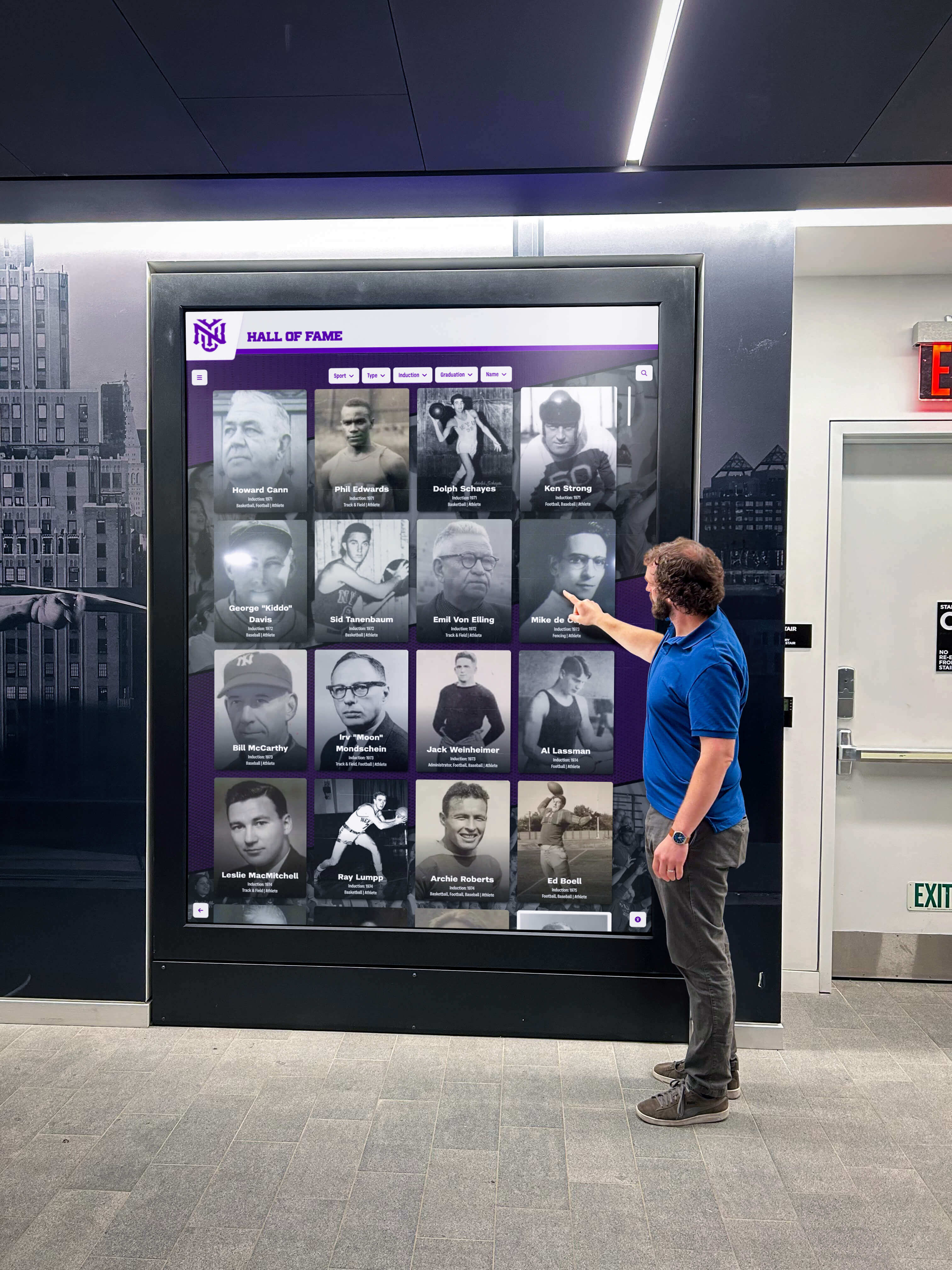
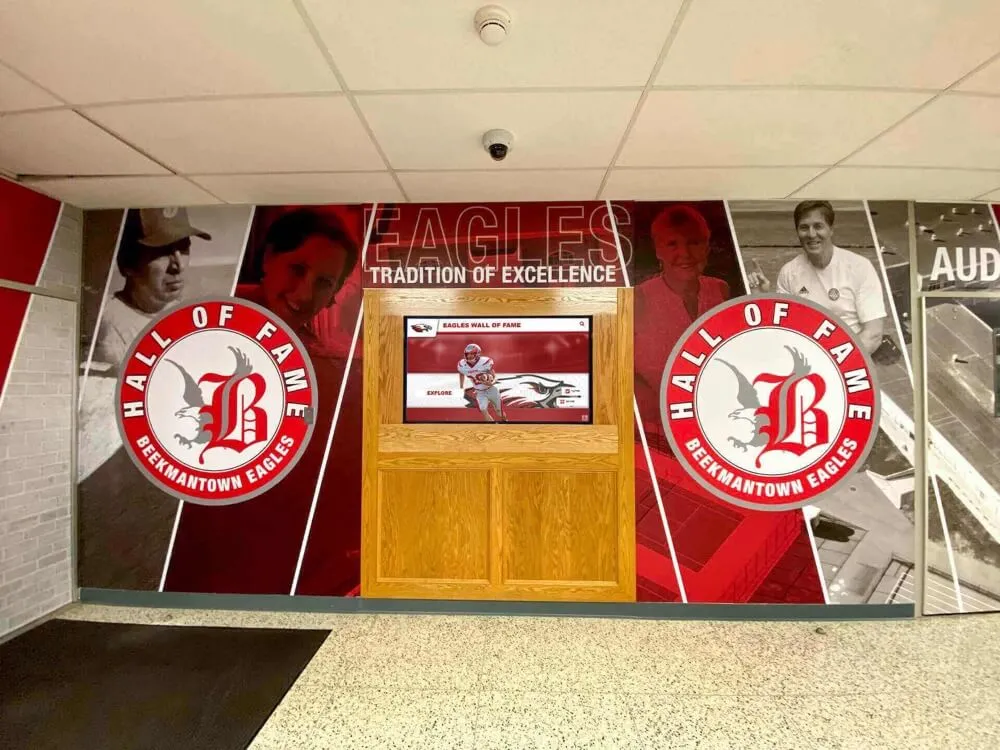
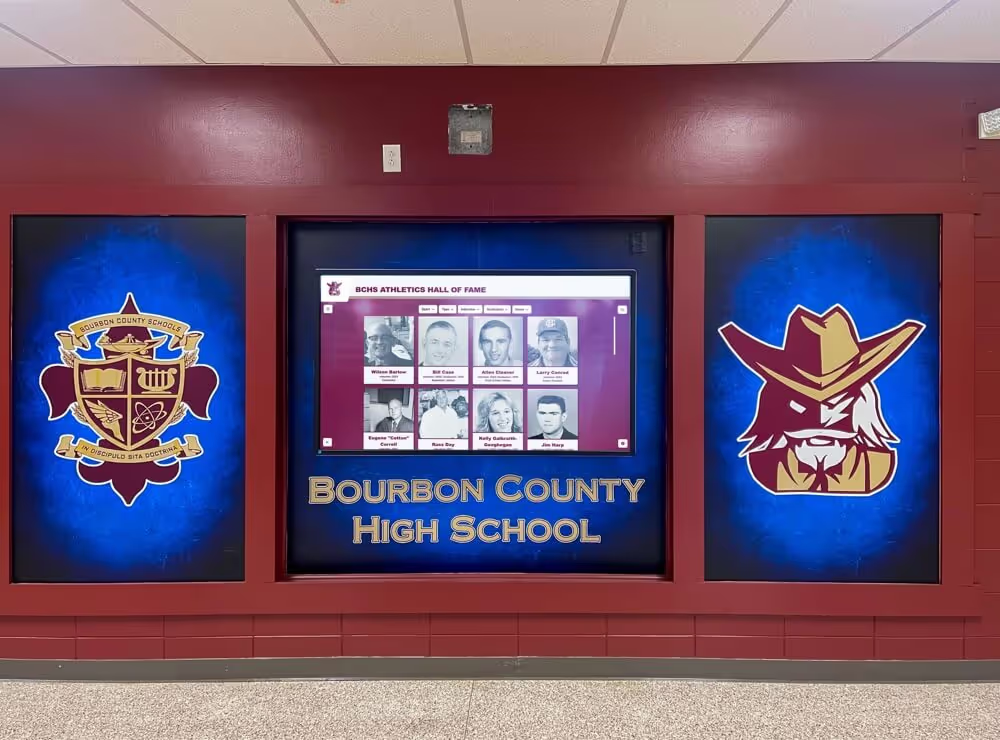
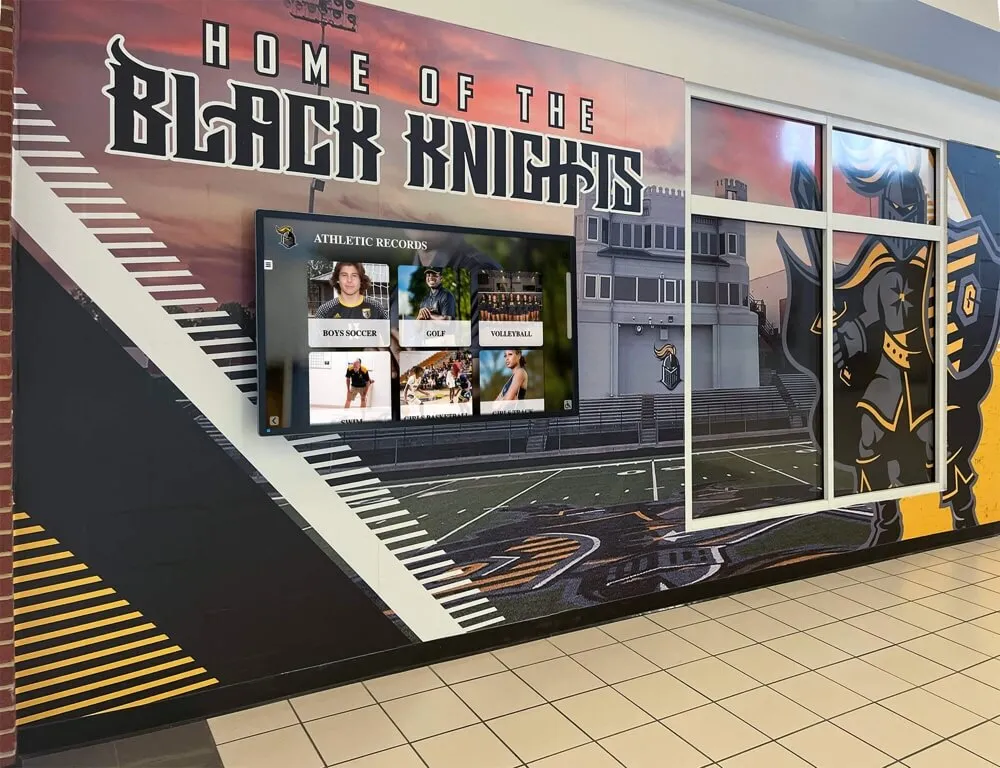
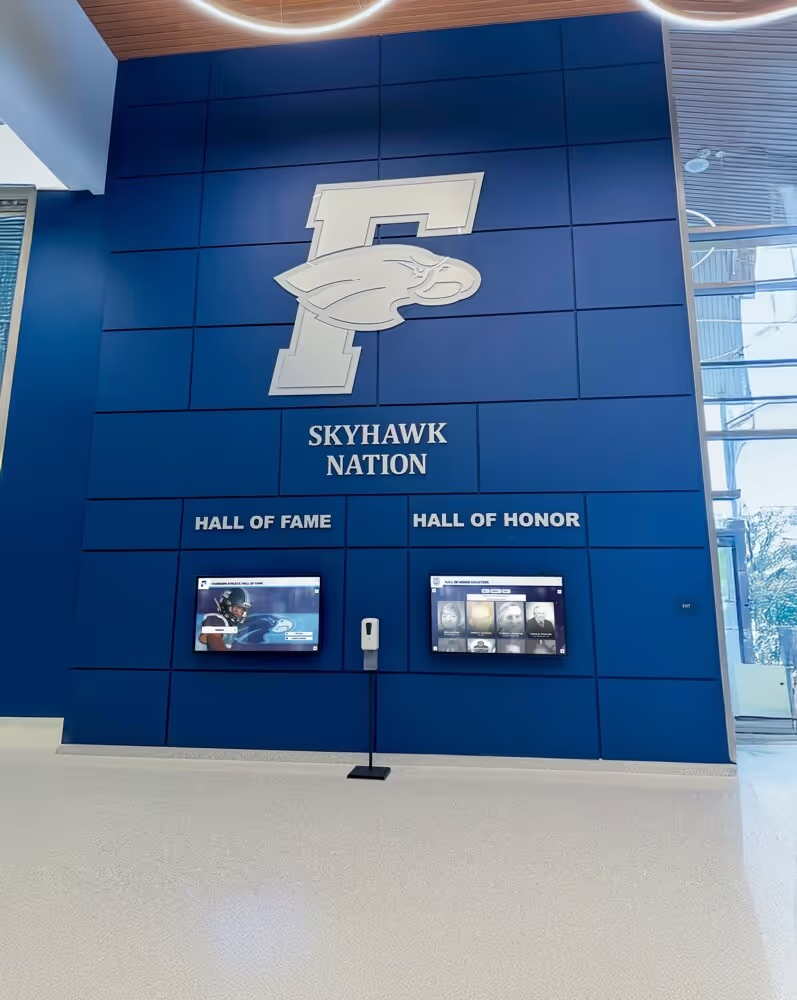
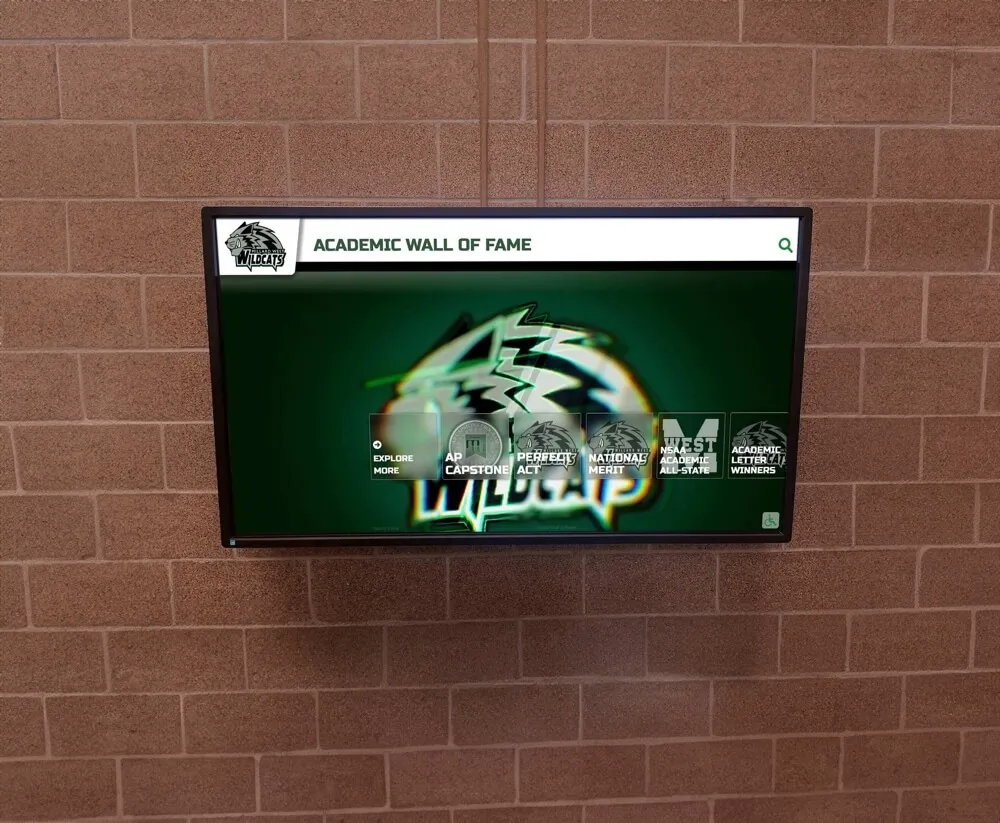
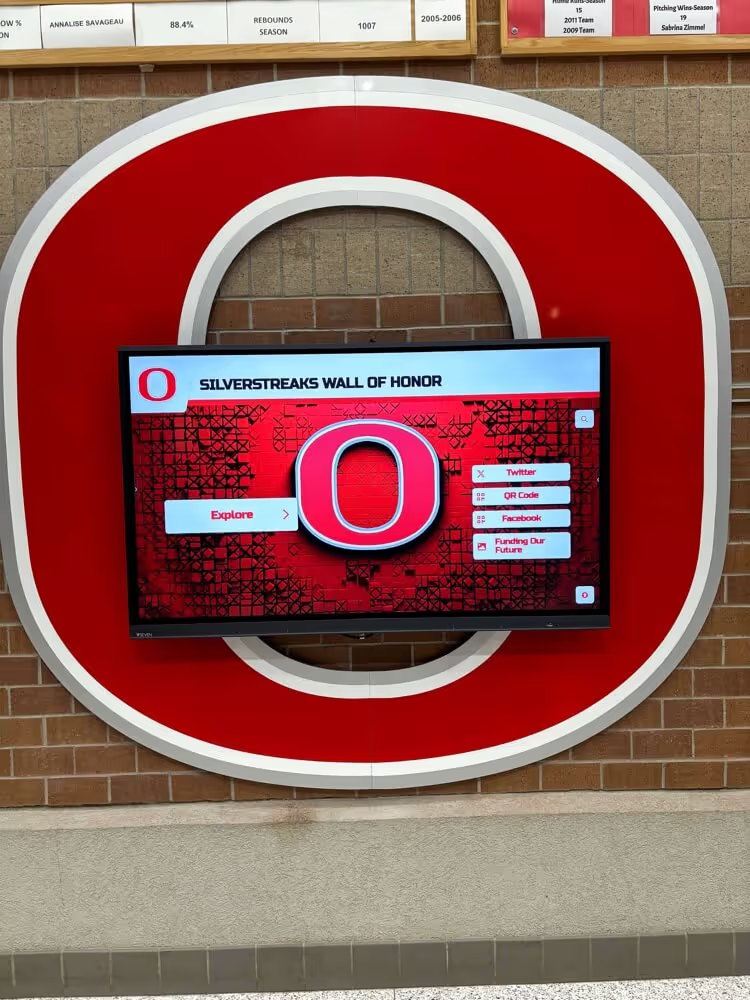
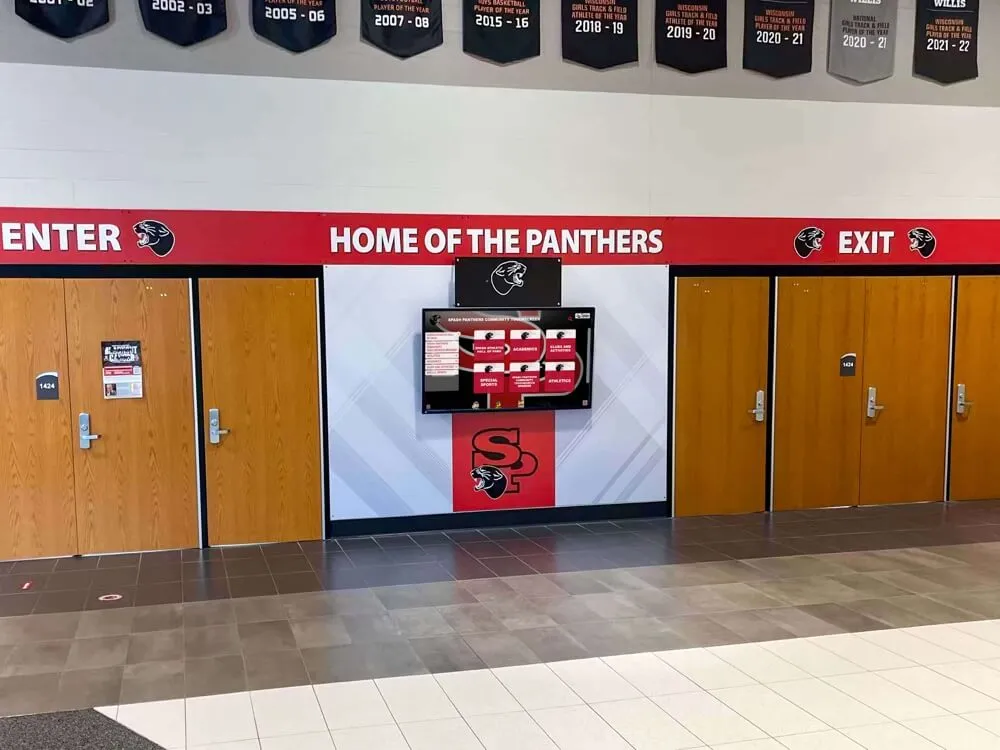
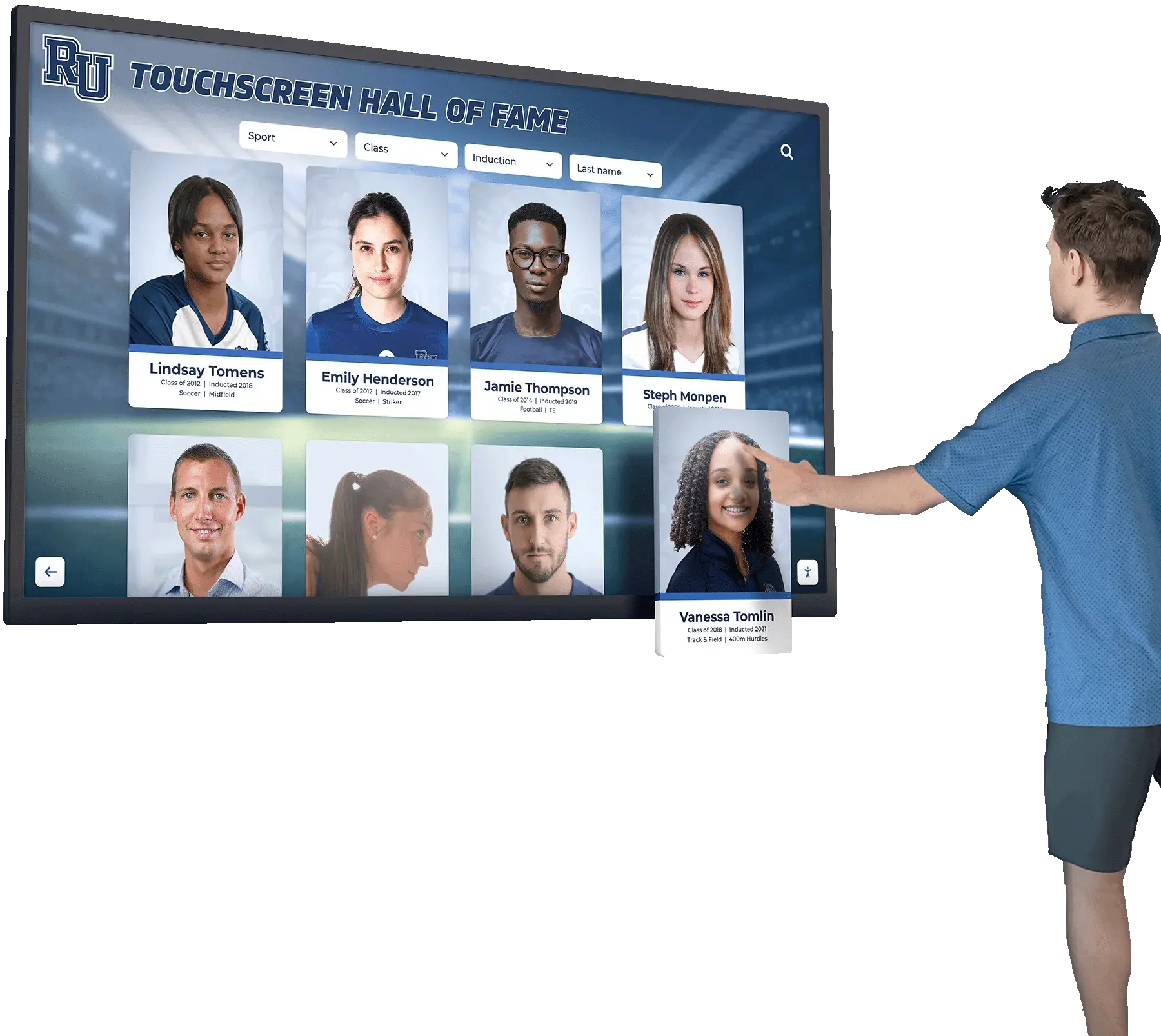
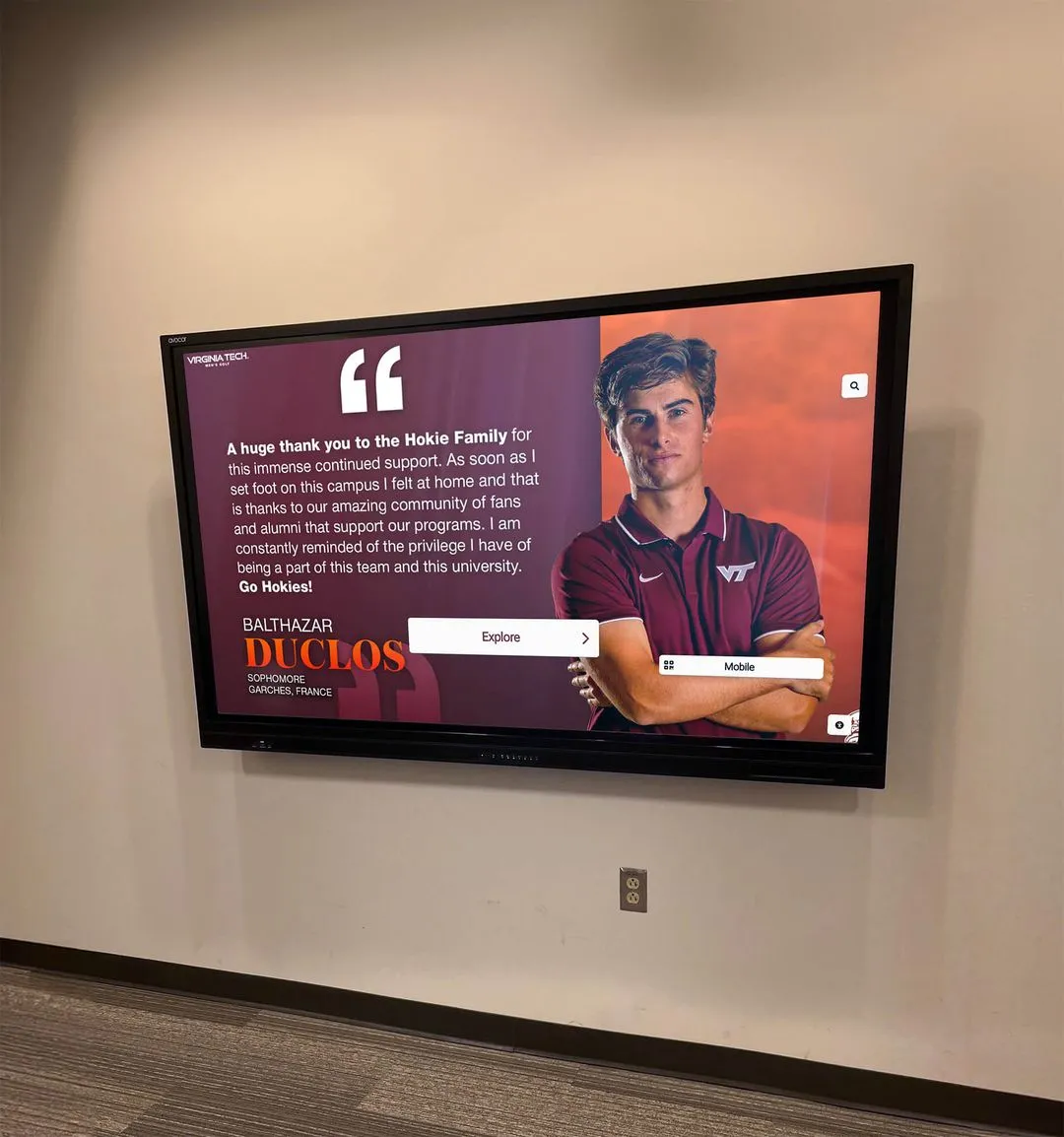
Digital recognition systems create year-round sponsor and donor visibility but require ongoing operating budget support for licensing, content updates, and hardware maintenance that programs must plan for explicitly
Frequently Asked Questions
What should a booster club budget for sponsor recognition annually?
For a program with five to fifteen active sponsors across three or four tiers, a total recognition budget of $3,500 to $8,000 is a reasonable range. This covers signage fabrication, digital display licensing, stewardship gifts, banquet recognition costs, and sponsor impact documentation. Programs with a Presenting sponsor or a named facility area should budget toward the upper end; programs with primarily Bronze and Silver sponsors can budget lower.
Do digital recognition systems belong in the operating or capital budget?
The initial hardware purchase—touchscreen kiosk, display mounting hardware, installation labor—is a capital expense and should be budgeted as such, either from a capital reserve, a major donor gift, or a capital fundraising campaign. The ongoing software license, content management, and maintenance costs are operating expenses and belong in the annual operating budget under Recognition & Sponsor Display.
How do we budget for a donor wall we don’t have yet?
Build a recognition capital fund with a dedicated annual contribution. $1,500 to $2,500 per year into a segregated reserve accumulates to $7,500 to $12,500 over five years—enough to fund a meaningful digital donor wall or named panel installation for most school programs. If a major gift or corporate sponsorship accelerates the timeline, the reserve fund becomes the local match.
What line item covers the cost of updating sponsor names year to year?
Digital system content updates belong under Display Content Management in the recognition budget. Physical signage changes—reprinting banners, adding new plaques, modifying facility signage—belong under Sponsor Signage Fabrication. Treating these as a single line item obscures the cost structure; separating them makes the ongoing cost of recognition maintenance visible to the committee and leadership.
Should end-of-season athlete awards come from the recognition budget or the athletics budget?
This is a categorization decision, not a financial one. The important thing is that the cost lives somewhere definite in the budget and is not squeezed out by athletic supply costs. Many programs fund athlete awards from the recognition budget and athletic equipment from the athletics budget, which cleanly separates program support costs from acknowledgment costs. Either approach works as long as the line item exists and is protected from athletic cost overruns.
How does recognition budget planning change when programs add digital displays?
Digital displays shift recognition costs from variable (fabrication and printing per season) to fixed (annual platform license). That shift is typically favorable: a $1,200 annual license covering unlimited digital sponsor profiles, name updates, and content changes costs less than producing equivalent physical signage for the same sponsor count. The budget planning implication is that digital display adoption reduces per-sponsor variable costs while adding a fixed operating cost—a trade that benefits programs with growing sponsor programs and consistent renewal rates.
If your program is ready to build the recognition and display infrastructure that makes sponsor conversations credible year-round—and renewal conversations straightforward when the time comes—explore how Rocket Alumni Solutions supports booster clubs with digital donor walls, lobby touchscreen systems, and year-round sponsor recognition displays.