Booster Club Business Continuity Plan: Keep Finances, Events, and Sponsor Records Moving

A booster club business continuity plan is a written policy that describes how the organization keeps financial records, event commitments, sponsor obligations, and recognition assets accessible and operational when a key volunteer becomes unavailable, a primary system fails, a venue closes without notice, or a sudden officer departure leaves critical records with no designated holder. For most booster clubs, continuity planning is the document that transforms institutional knowledge from something that lives in one person’s head into something the organization actually owns.
Most disruptions to booster club operations are not dramatic. They are a treasurer who moves mid-year, a cloud storage account that no officer knows how to access, a venue that cancels a multi-year contract with sixty days’ notice, or a sponsor contact file that existed only in the outgoing president’s email. A continuity plan does not prevent these events—it determines whether the organization can function through them without losing donor trust, sponsor relationships, or recognition commitments that took years to build.
This guide provides a continuity priorities table, a numbered disruption response sequence, operational checklists for each area, and a policy template teams can adapt and adopt.
This guide is for informational purposes only and does not constitute legal, accounting, financial, or compliance advice. Consult your organization’s licensed attorney, CPA, or district policy owners for guidance specific to your structure, tax-exempt status, and jurisdiction.

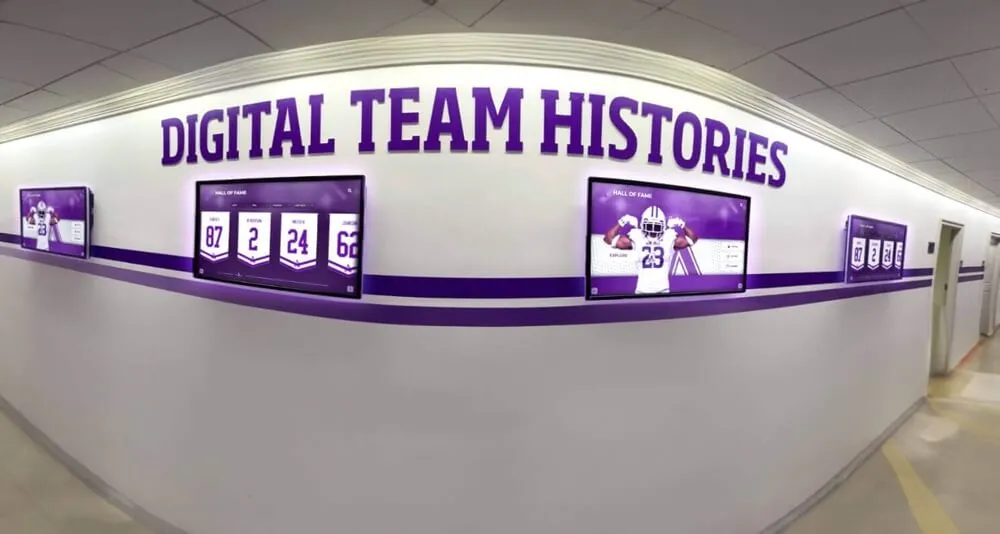
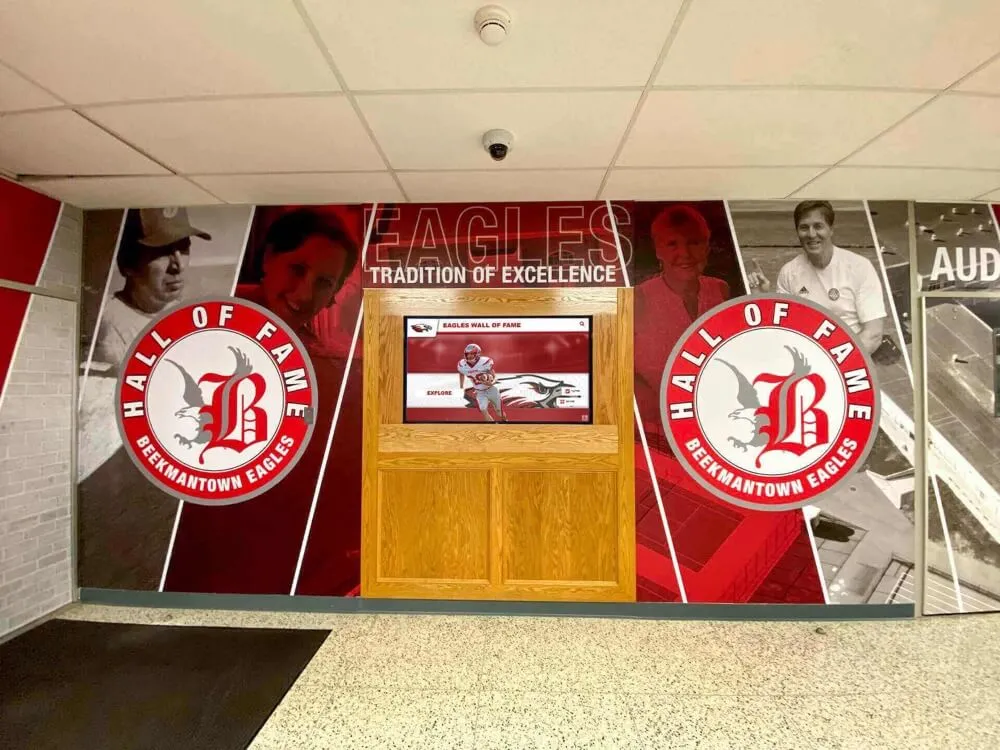
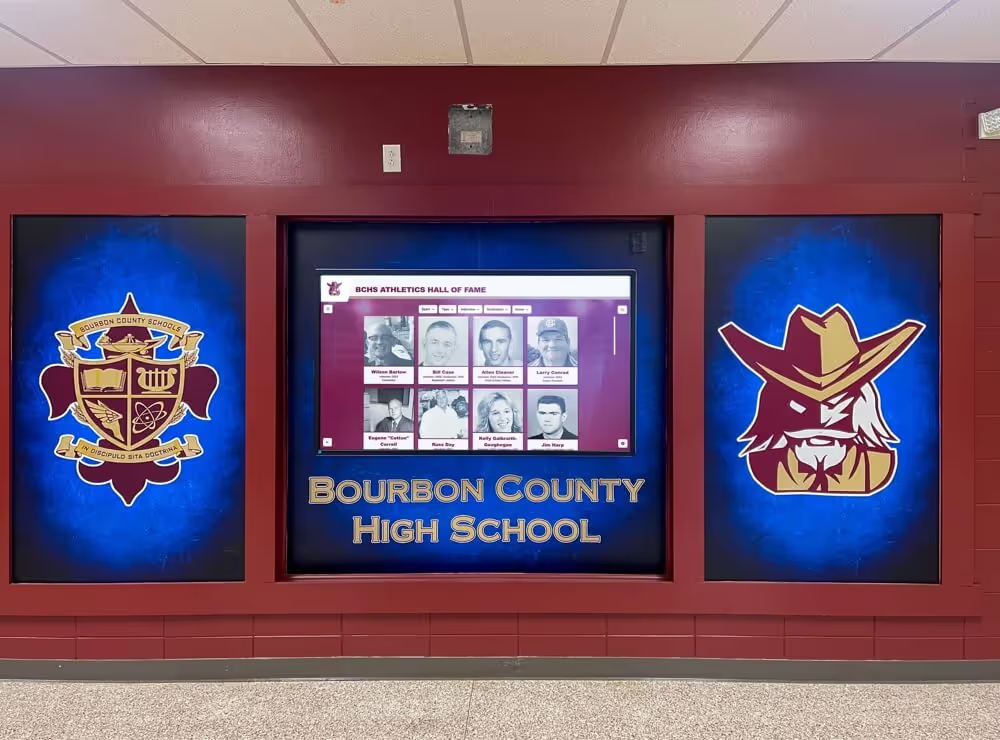
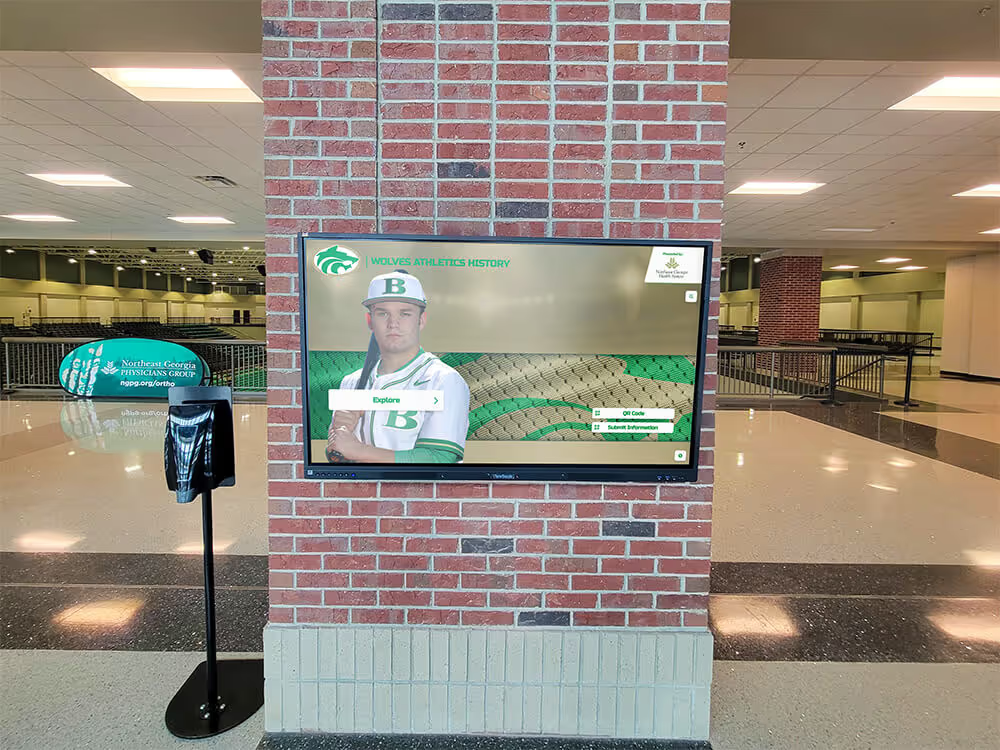
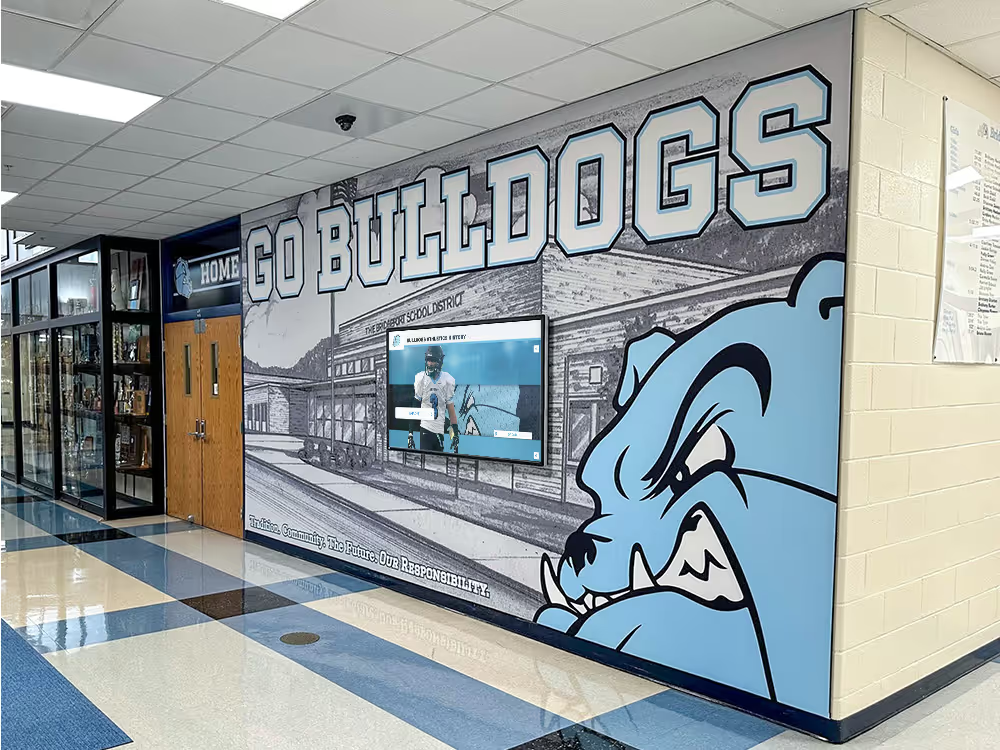
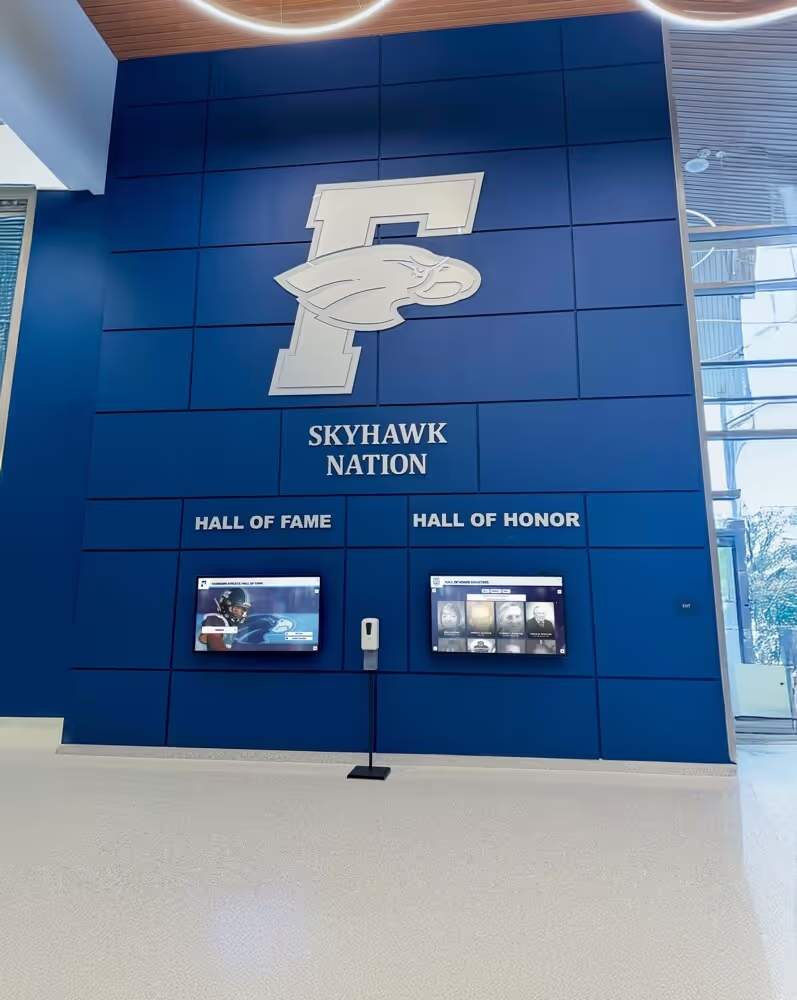
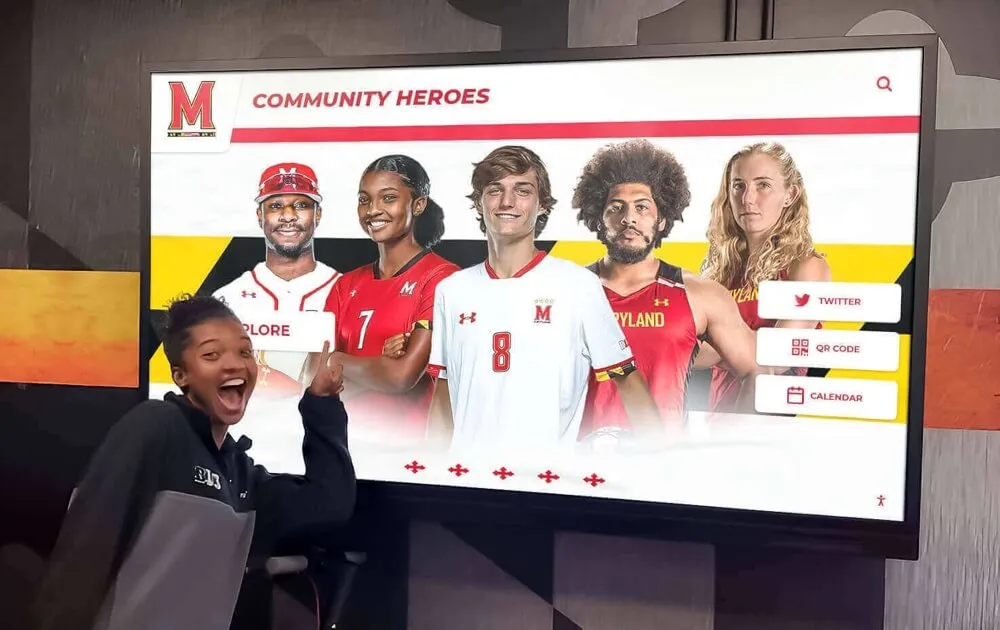
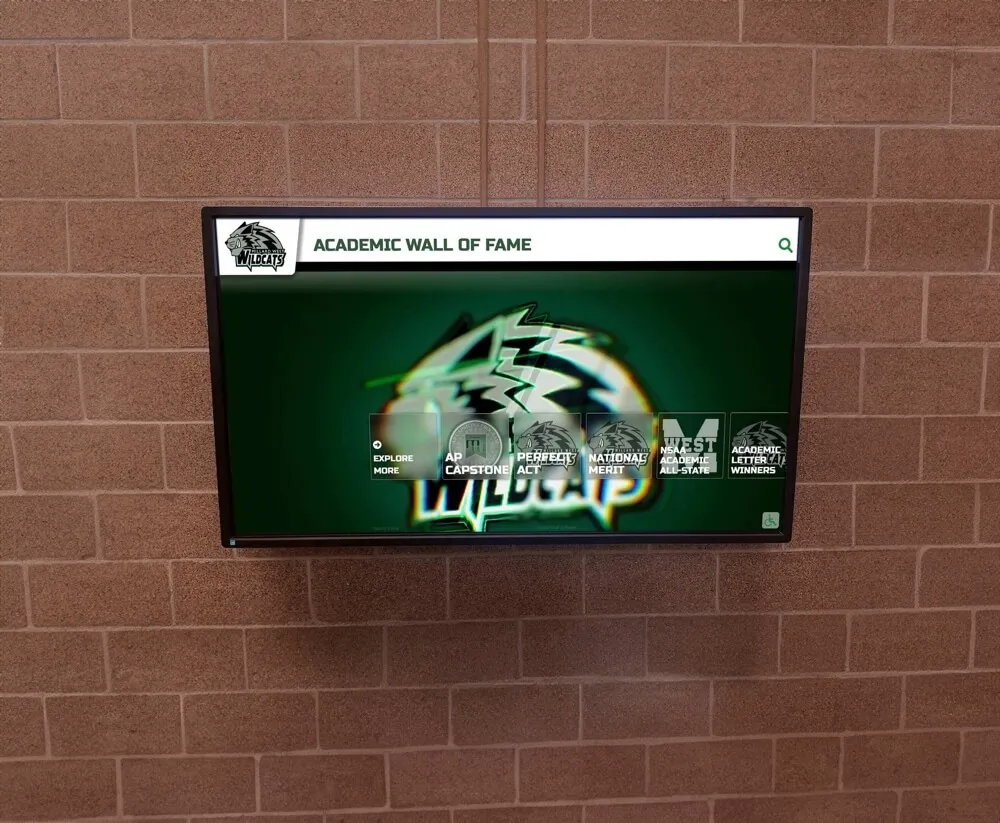
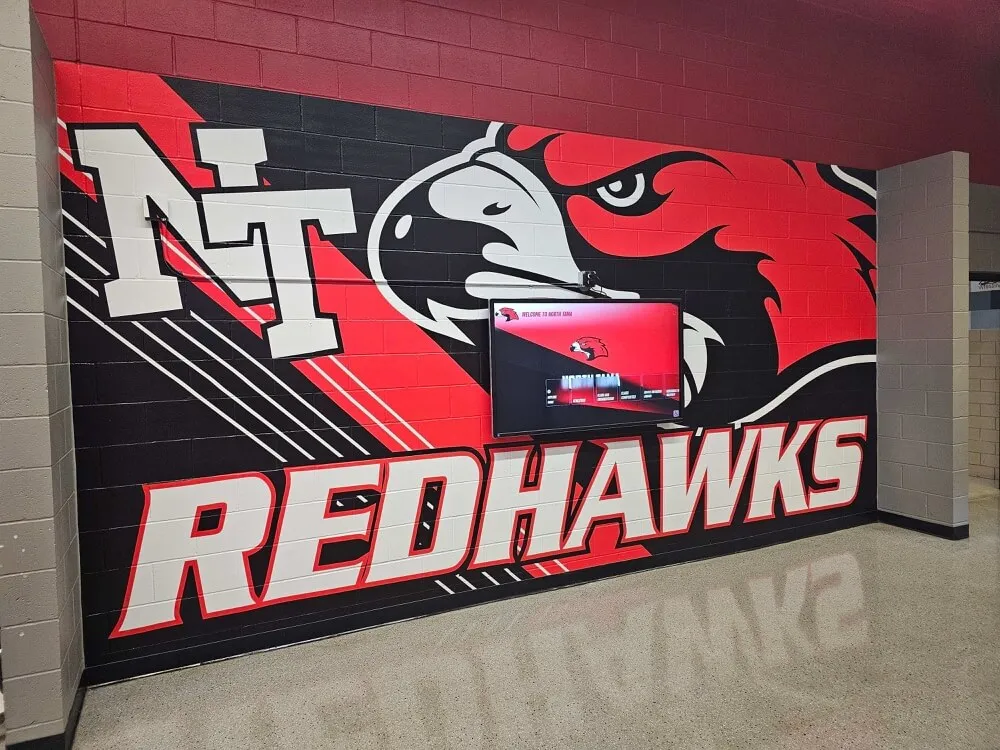
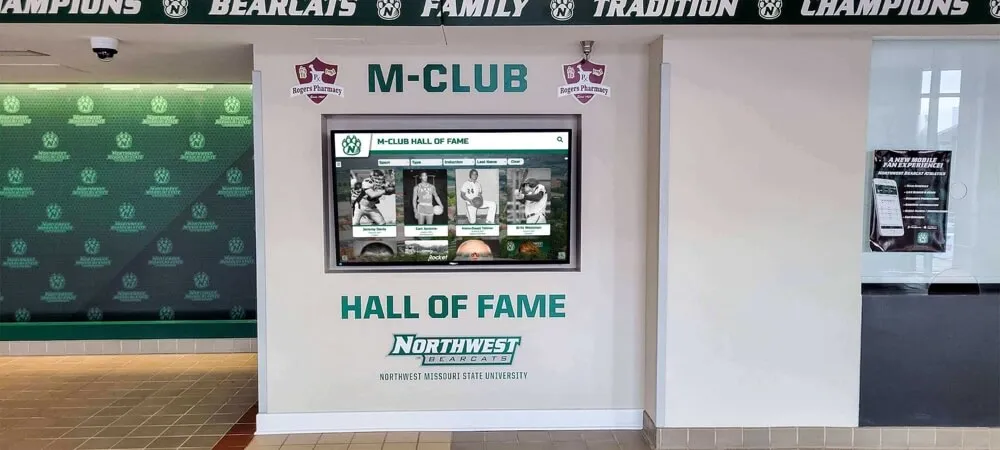
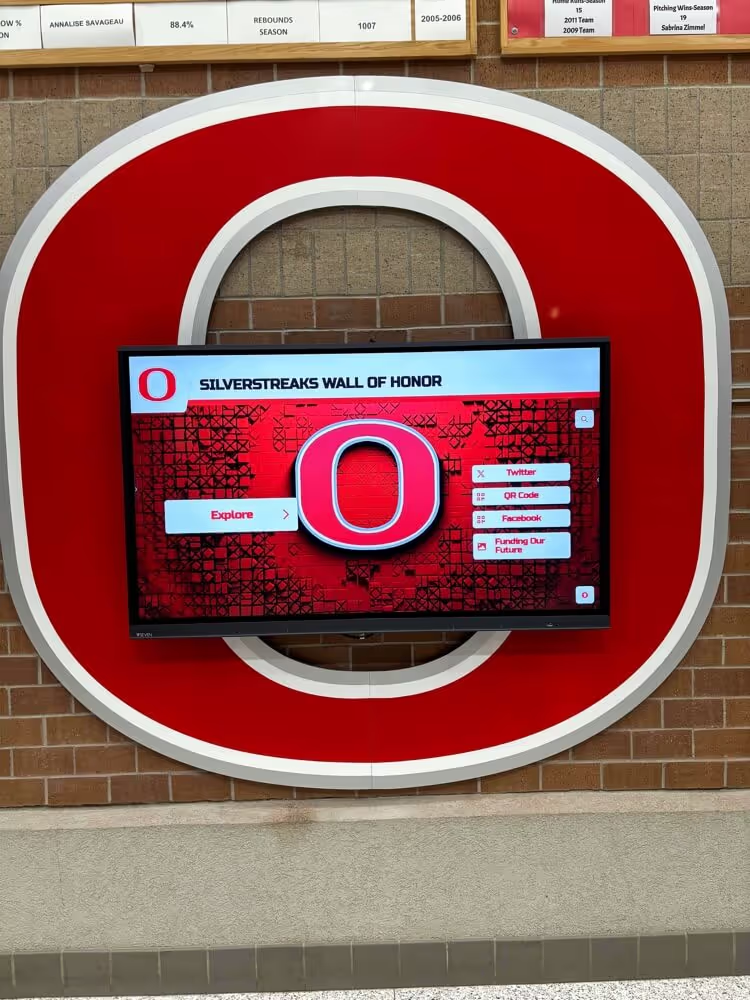
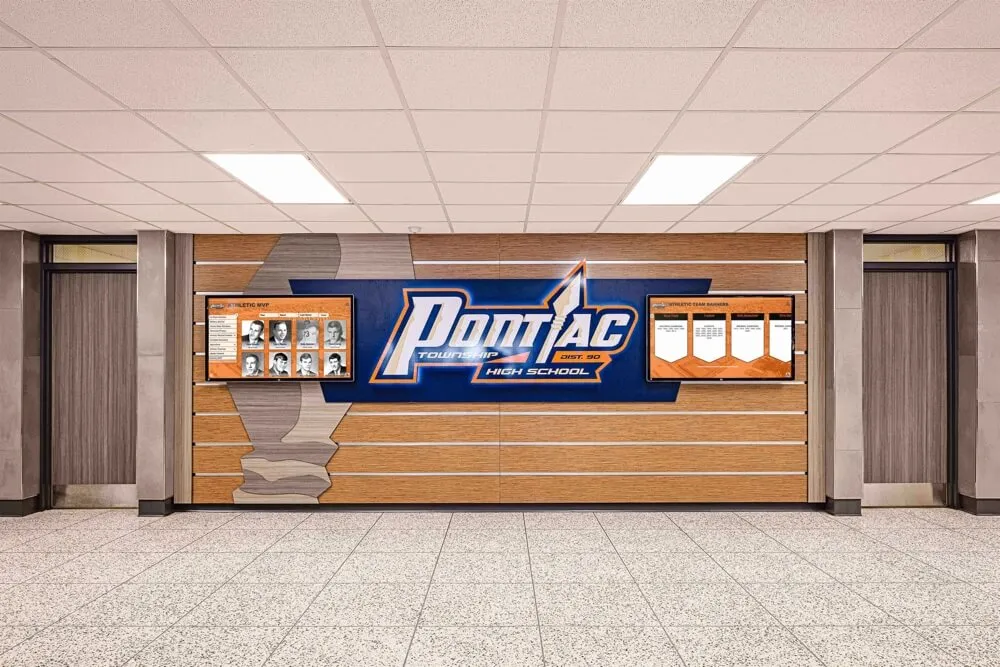
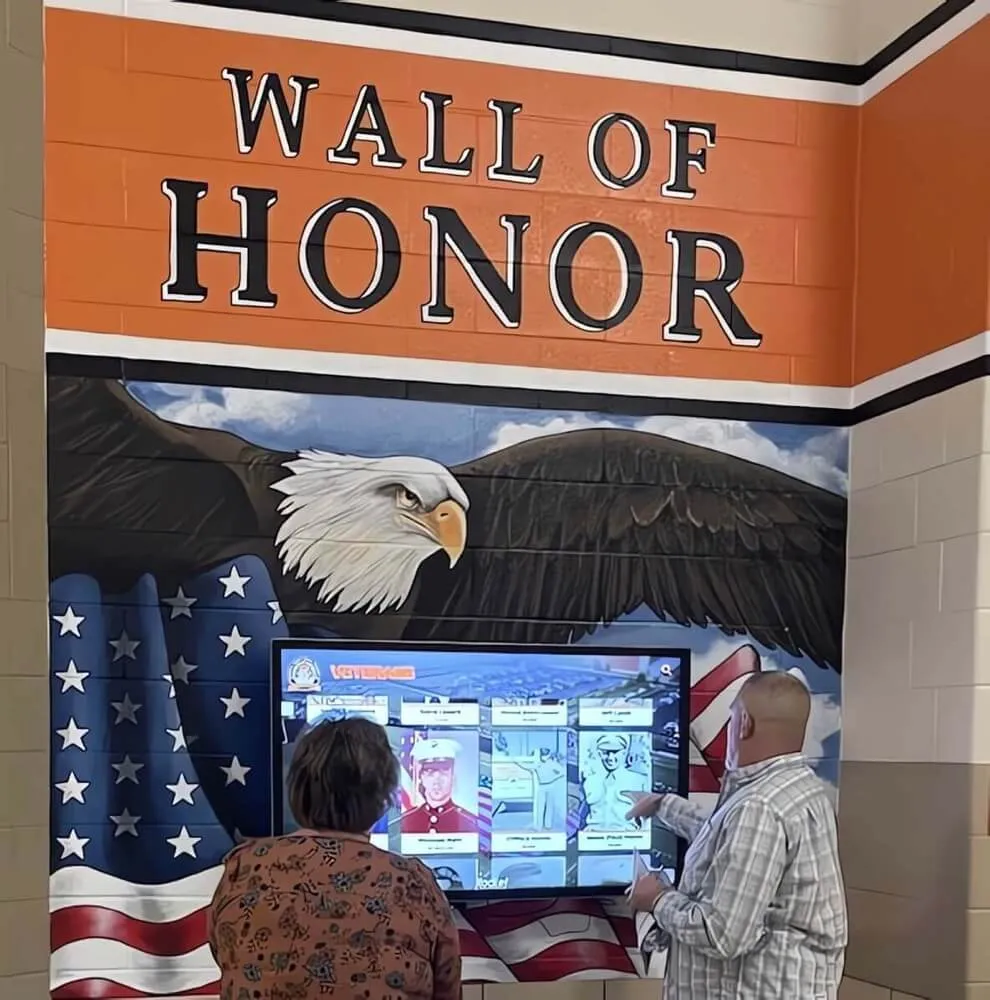
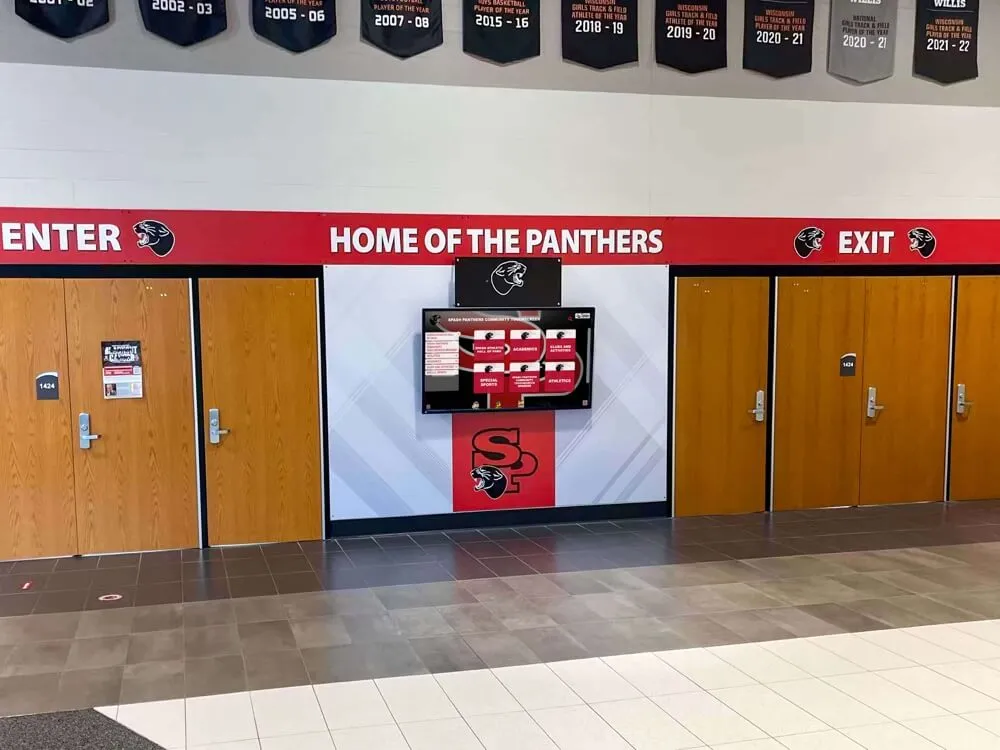
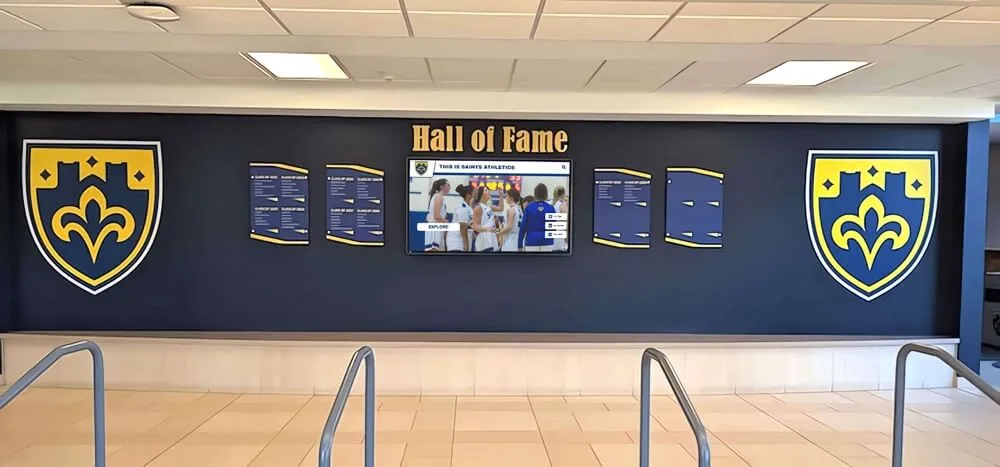
A booster club business continuity plan protects the institutional records, sponsor commitments, and recognition assets represented by environments like this one—ensuring they remain accessible and accurate regardless of who holds a leadership role at any given moment
What a Booster Club Business Continuity Plan Covers
A continuity plan addresses five operational areas that booster clubs most commonly lose access to during a disruption. Each represents a different vulnerability: financial records are lost because account credentials were not shared; event commitments are missed because the responsible officer left without transferring the calendar; sponsor records become inaccessible because the contracts lived in one person’s folder; recognition displays fall out of date because the content management login was never documented; and archive materials disappear because no one designated a second keeper.
| Continuity Area | What Is at Risk Without a Plan | Priority Level |
|---|---|---|
| Financial records and account access | Bank accounts, tax filings, reconciliation history, check-writing authority | Critical |
| Event calendar and vendor commitments | Venue contracts, permit dates, vendor deposits, scheduling dependencies | High |
| Sponsor agreements and contact records | Multi-year contracts, benefit delivery documentation, renewal timelines | High |
| Recognition display and content access | Display system credentials, content update procedures, recognition schedules | Medium |
| Institutional archives and award history | Historical records, Hall of Fame nominations, award-winner documentation | Medium |
The plan is not a single document—it is a set of procedures that each officer can execute without relying on the person who originally set the system up.
When to Activate Your Continuity Plan
A booster club business continuity plan should activate automatically when any of the following conditions occur:
- An officer resigns, is removed, or becomes incapacitated before completing a formal handoff
- A primary financial system or platform becomes inaccessible for more than 48 hours
- A venue or facility confirms it cannot fulfill a contracted event obligation
- A key vendor, technology provider, or recognition display service becomes unexpectedly unavailable
- A natural disaster, school closure, or district emergency suspends normal operations
- A single officer holds exclusive access to financial accounts, sponsor contracts, or system credentials with no documented backup holder
The plan does not require a formal vote or emergency meeting to activate. The president—or, if the president is the affected party, the next available officer in the succession order—initiates the applicable procedures and documents that activation occurred.
Numbered Response Steps: Disruption Sequence
When a continuity event is identified, follow this response sequence. Steps 1 through 4 apply to every disruption category; steps 5 through 8 are tailored to the specific area affected.
- Identify the scope — Determine which operational area is affected: financial, event, sponsor records, display access, or institutional archives. A single disruption may affect more than one area simultaneously.
- Confirm who holds backup access — Cross-reference the continuity plan’s backup access register to identify who has secondary credentials, co-signature authority, or file access for the affected area.
- Notify the officers directly impacted — Inform the board positions whose roles are affected. Do not communicate the disruption to sponsors, donors, or the public until the scope is understood and a prepared response is ready.
- Activate the backup procedure — Implement the specific procedure documented for the disruption type. Document the date, time, and name of the person initiating the procedure.
- Transfer or restore access — Follow the credential-transfer or account-recovery procedure for the affected system. Involve the district IT coordinator if access cannot be restored within the documented recovery window.
- Confirm continuity of active commitments — Verify that open event dates, sponsor benefit deliverables, and recognition obligations can be honored on their original schedules. Flag any commitment at risk of being missed.
- Communicate to affected external parties — If a sponsor, vendor, or donor must be informed of a schedule change or service delay, send written communication within the timeline defined in the plan. Use the organization’s letterhead and have the president or acting officer sign.
- Document the incident and resolution — Record what happened, which procedures were activated, how long the disruption lasted, and what was learned. Update the continuity plan before the next term begins.
Financial Records Continuity Checklist
Financial continuity is the highest-priority area because account access issues affect the organization’s legal obligations, not just operational convenience. An officer transition that leaves the organization without an authorized signatory on the bank account can delay vendor payments, coach stipends, and donation processing for weeks.
| Financial Record or Access Point | Backup Holder Designated | Recovery Procedure Documented |
|---|---|---|
| Bank account signature authority | ☐ | ☐ |
| Online banking login and two-factor authentication recovery | ☐ | ☐ |
| Tax identification number and IRS correspondence files | ☐ | ☐ |
| Prior-year 990 or 990-EZ filings (verify applicable thresholds with your CPA) | ☐ | ☐ |
| Fundraising platform credentials | ☐ | ☐ |
| Payment processor account access | ☐ | ☐ |
| Outstanding invoices and payables schedule | ☐ | ☐ |
| Cash handling procedures and deposit logs | ☐ | ☐ |
| Donor pledge and gift records | ☐ | ☐ |
| Current-year reconciliation files | ☐ | ☐ |
Every financial account should have at least two authorized signatories from the current board. Online platforms should use organization-owned credentials—not personal email addresses—so account recovery does not depend on any individual’s cooperation. Consult your CPA and district finance office regarding signature authority requirements specific to your account structure.
The athletic department policies for documenting awards and financial records that govern formal school programs provide a useful reference framework for booster clubs developing equivalent documentation standards.
Event and Calendar Continuity
Event continuity involves two categories of risk: schedule-based commitments (venues, permits, vendor contracts, volunteer assignments) and program-based commitments (recognition ceremonies, award presentations, tournament brackets, and donor appreciation events).
Venue and Vendor Continuity
- Maintain a central event calendar accessible to at least three officers, hosted on an organization-owned platform rather than a personal calendar account.
- File signed copies of all venue contracts in a shared location separate from the officer who negotiated them.
- Document vendor deposits and payment schedules with the vendor contact, contract term, and cancellation terms noted for each.
- Identify backup venues for your two highest-revenue events before the season begins. Note capacity, availability windows, and rental rates.
- Review force majeure clauses in every venue contract with the board at the beginning of each year. Flag contracts that do not include weather or emergency provisions.
Recognition Event Continuity
Recognition events—including jersey retirement ceremonies, Hall of Fame inductions, scholar-athlete banquets, and sponsor appreciation nights—carry a separate continuity obligation because their dates are tied to athletes, donors, and sponsors who have made arrangements around them.
When a recognition event is at risk, the organization’s first communication to affected honorees, nominees, or presenting sponsors should come from the president and should identify a new date or acknowledge that a date is being confirmed. Planning jersey retirement and recognition ceremonies with documented contingency dates built into the original program calendar significantly reduces the disruption when a venue or date must change.
For multi-year recognition programs—rolling Hall of Fame nominations, multi-cycle scholar-athlete recognition, or longitudinal athletic records displays—the continuity plan should specify how nomination files, eligibility records, and display content are stored and who holds backup access to each.
Sponsor and Donor Records Continuity
Sponsor records are among the most vulnerable category in a leadership transition or officer disruption. Multi-year agreements with renewal options, benefit delivery schedules tied to specific event dates, and logo specifications submitted for display applications can all disappear when the officer who managed the relationship leaves without a complete handoff.
Sponsor Record Continuity Checklist
| Record Type | File Location Documented | Backup Holder Designated |
|---|---|---|
| Signed current-year sponsor agreements | ☐ | ☐ |
| Multi-year agreements with expiration and renewal dates flagged | ☐ | ☐ |
| Sponsor contact directory (direct line, not general number) | ☐ | ☐ |
| Benefit delivery log with completion dates | ☐ | ☐ |
| Logo files and brand guidelines for display applications | ☐ | ☐ |
| Renewal history and prior-year payment records | ☐ | ☐ |
| Correspondence archive (key emails, agreements, modifications) | ☐ | ☐ |
| Outstanding sponsor commitments with due dates | ☐ | ☐ |
Sponsor logo files and brand assets submitted for display placement require particular attention. A sponsor whose logo was reformatted or incorrectly resized during an officer transition may not notice until they see the display—and by that point the relationship cost exceeds the update cost. Structured sponsor logo submission and asset management eliminates the file-format ambiguity that leads to this problem by collecting assets in a documented, version-controlled process from the start.
Donor pledge records and multi-year giving commitments require the same treatment as sponsor agreements: a filed written record, a designated backup holder, and a documented follow-up schedule so an incoming or acting officer can honor the relationship even without knowing its full history.
Recognition Display and Archive Continuity
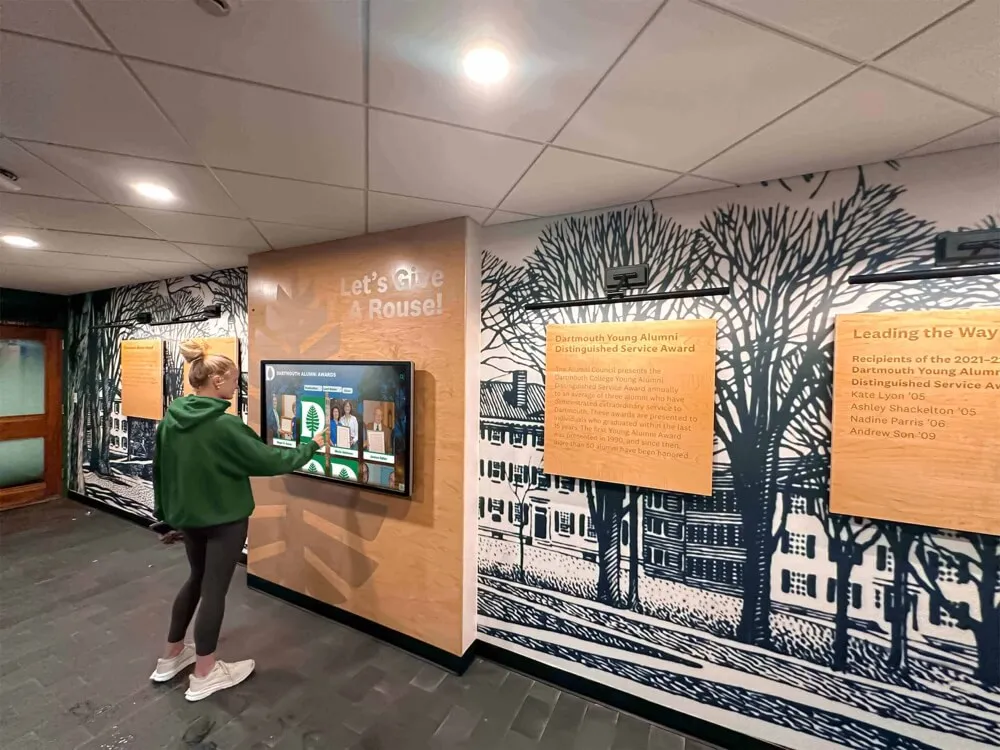
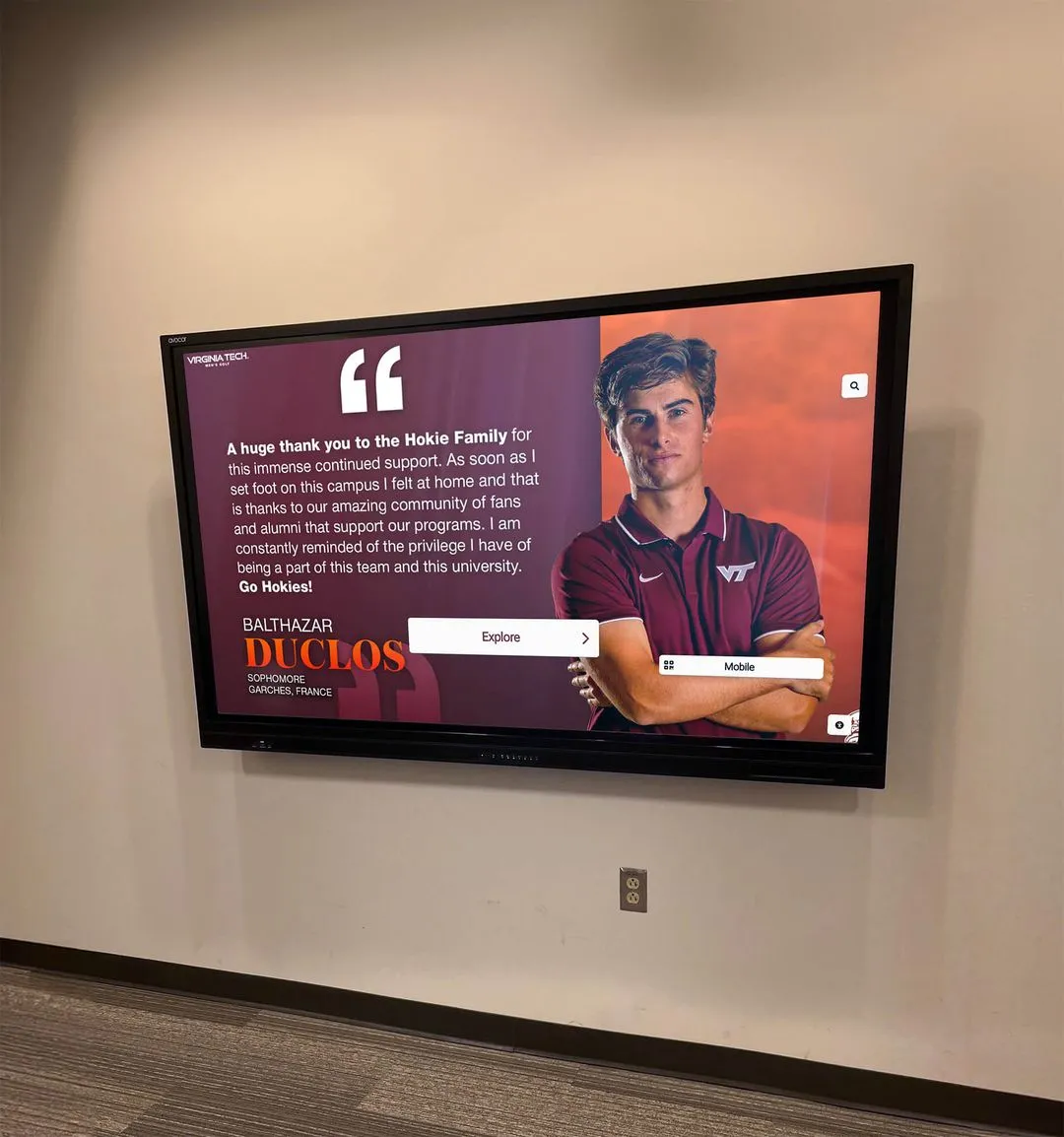
Recognition displays—physical donor walls, digital Hall of Fame screens, lobby display boards, athletic records walls, and sponsor recognition panels—represent cumulative institutional investment. A continuity event that leaves the display system’s content management credentials with a departed officer, or that leaves a display showing outdated information for a full season, damages the institutional credibility that sponsors and donors evaluate when deciding whether to renew.
Display Access Continuity
- Document content management credentials in the organization’s secure credential file. Use organization-owned login credentials, not the personal account of the officer who originally configured the system.
- Train at least two officers each year on updating display content: adding new award recipients, updating sponsor panels, correcting names, and scheduling content rotations.
- Maintain an accurate records inventory listing every honoree or recognition entry currently displayed, the source document confirming their eligibility, and the date the entry was added or last verified.
- Schedule a display accuracy review at the beginning and end of each school year, independent of officer transitions.
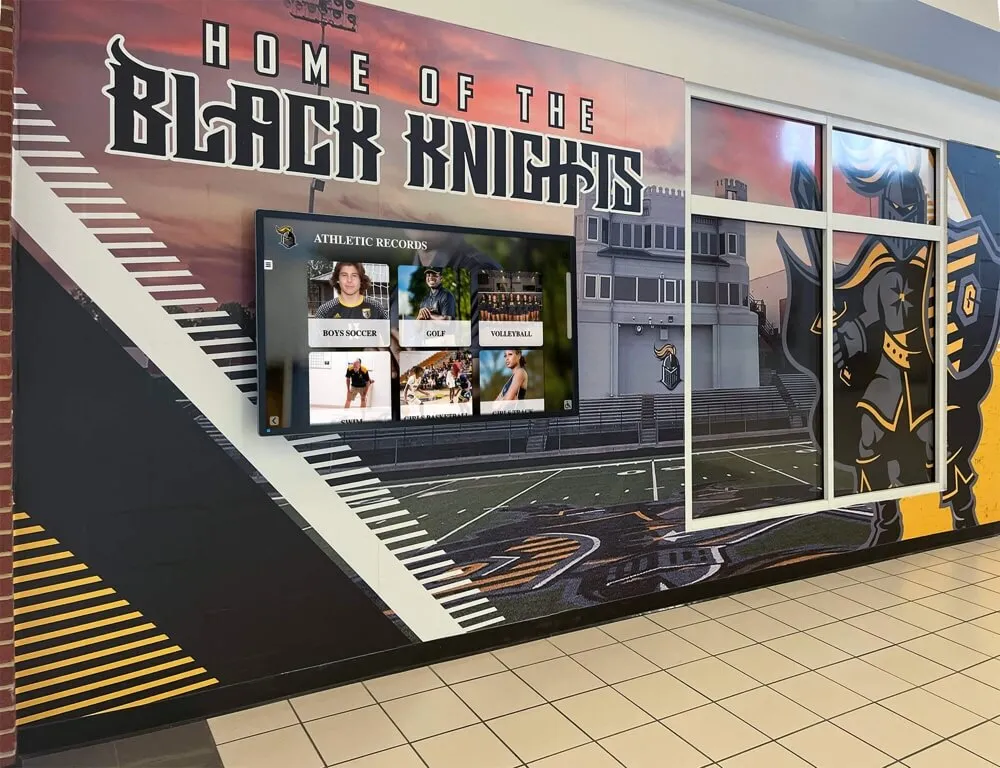
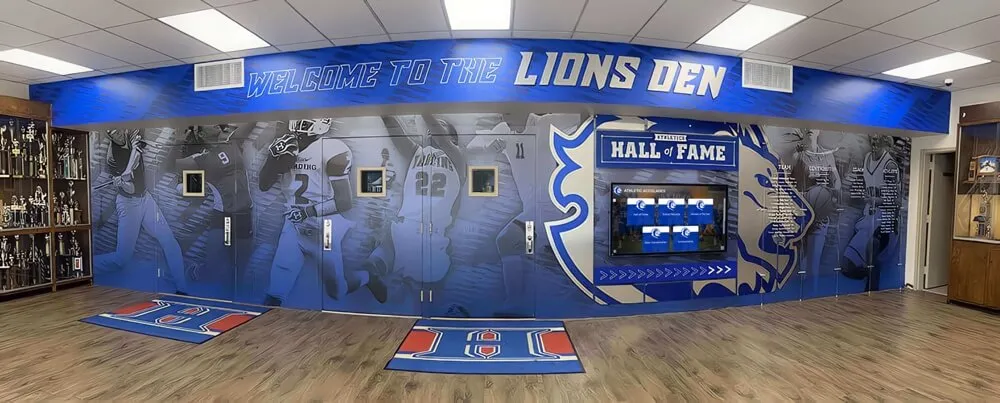
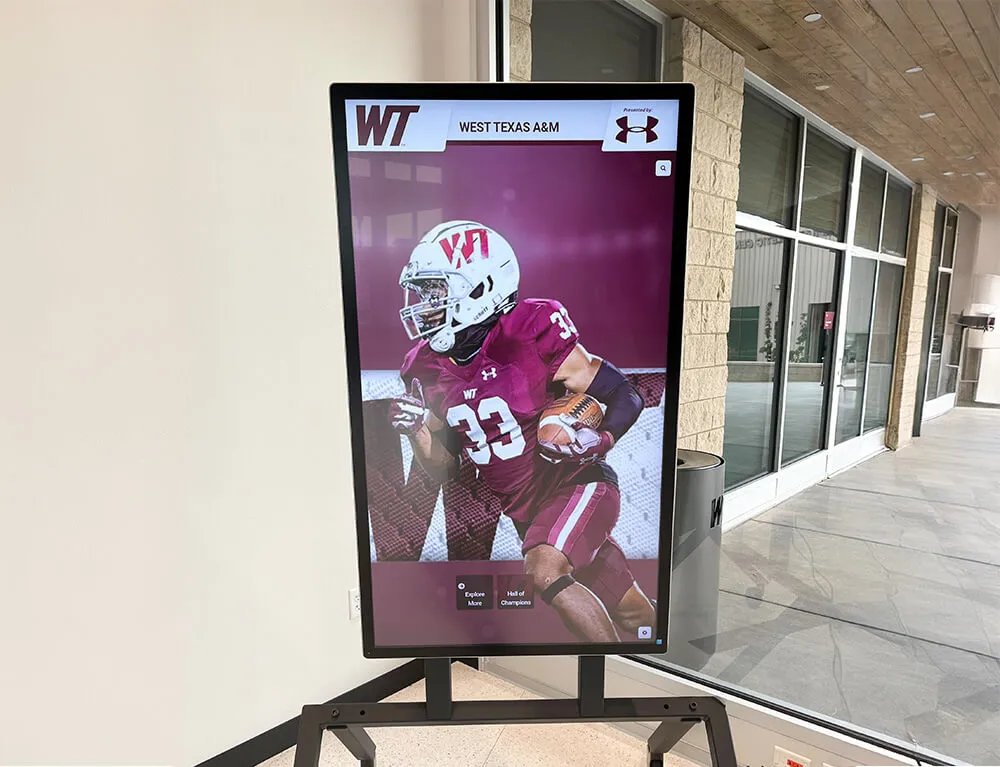
Gym lobby and hallway recognition displays that show athletic records, award histories, and sponsor recognition panels are the public face of a booster club’s institutional commitments. When those displays are current and accurate, they serve as ongoing proof of delivery to sponsors and recognition to donors. When they fall out of date during a continuity disruption, the reputational cost can exceed the value of several sponsorship renewals.
Institutional Archive Continuity
School athletic archives—Hall of Fame nomination files, annual award-winner lists, team records documentation, and historical program materials—frequently exist in only one physical or digital location. When that location is an officer’s personal hard drive, a box in a closet, or a folder in a personal cloud account, a single transition can erase years of institutional history.
The data integrity considerations for digital Hall of Fame and recognition programs that apply to automated recognition systems apply equally to manually curated archives: a record that cannot be verified, accessed, or recovered is not a record—it is a liability.
An archive continuity plan should address three requirements:
- A central filing location that is institution-owned (not officer-owned) and accessible to at least two current officers
- A document naming policy—dates, event names, and record types in the filename—so files can be found without the person who created them
- An annual review confirming the archive is complete, accessible, and backed up to at least one additional location
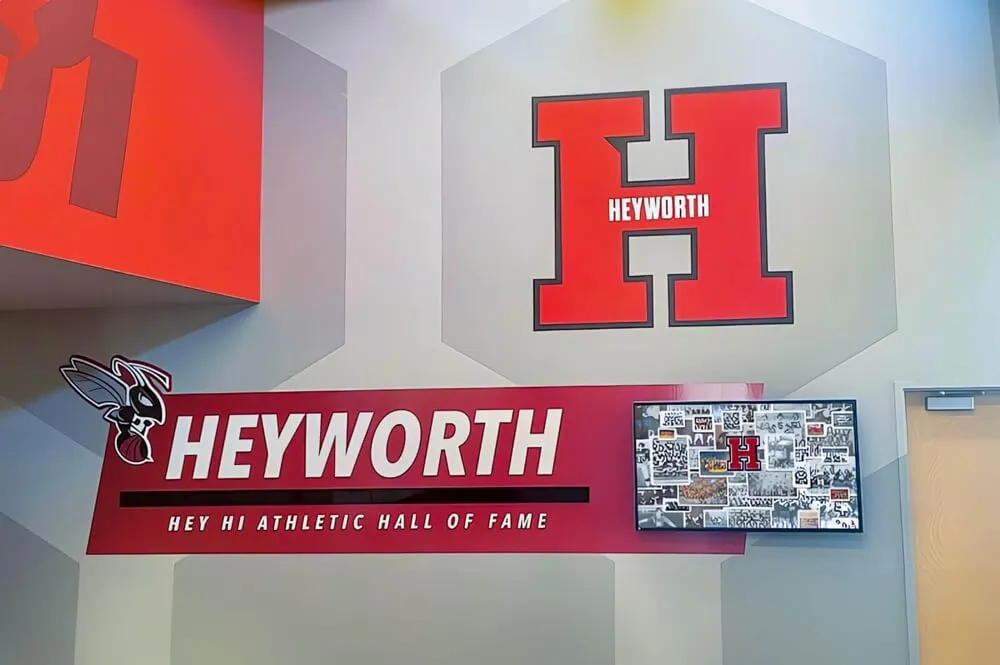
Athletic records displays and the policies that govern them are among the most durable artifacts in a school’s recognition program. Protecting their accuracy through officer transitions and system changes is a governance obligation, not an optional enhancement.
Technology and System Access Continuity
Platform and technology continuity is the category that causes the longest-duration disruptions in booster club operations, because it combines human factors (no one knows the password) with technical factors (two-factor authentication on a personal phone) in ways that can take days or weeks to resolve through account recovery processes.
Technology Access Register
Every platform the booster club uses should be documented in a secure access register. The register should include:
| Platform | Organization-Owned Login | Two-Factor Recovery Documented | Backup Administrator |
|---|---|---|---|
| Banking portal | ☐ | ☐ | ☐ |
| Fundraising platform | ☐ | ☐ | ☐ |
| Display content management system | ☐ | ☐ | ☐ |
| Social media accounts | ☐ | ☐ | ☐ |
| Email account | ☐ | ☐ | ☐ |
| Cloud file storage | ☐ | ☐ | ☐ |
| Event registration platform | ☐ | ☐ | ☐ |
| Donor management or CRM system | ☐ | ☐ | ☐ |
Every platform should use an organization-owned email address as the account login. Two-factor authentication codes should route to a device or number the organization controls—a dedicated phone number for the booster club, an authenticator app on an organization-owned device, or a shared email inbox. Consult your district’s IT coordinator for guidance on security requirements specific to platforms that handle donor payment information.
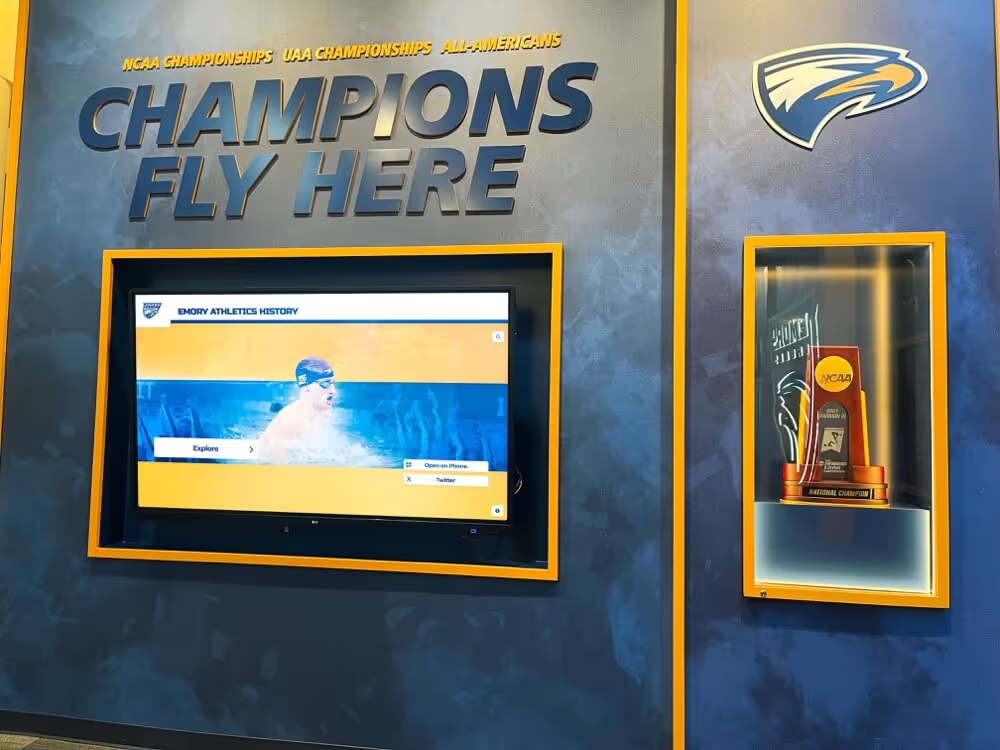
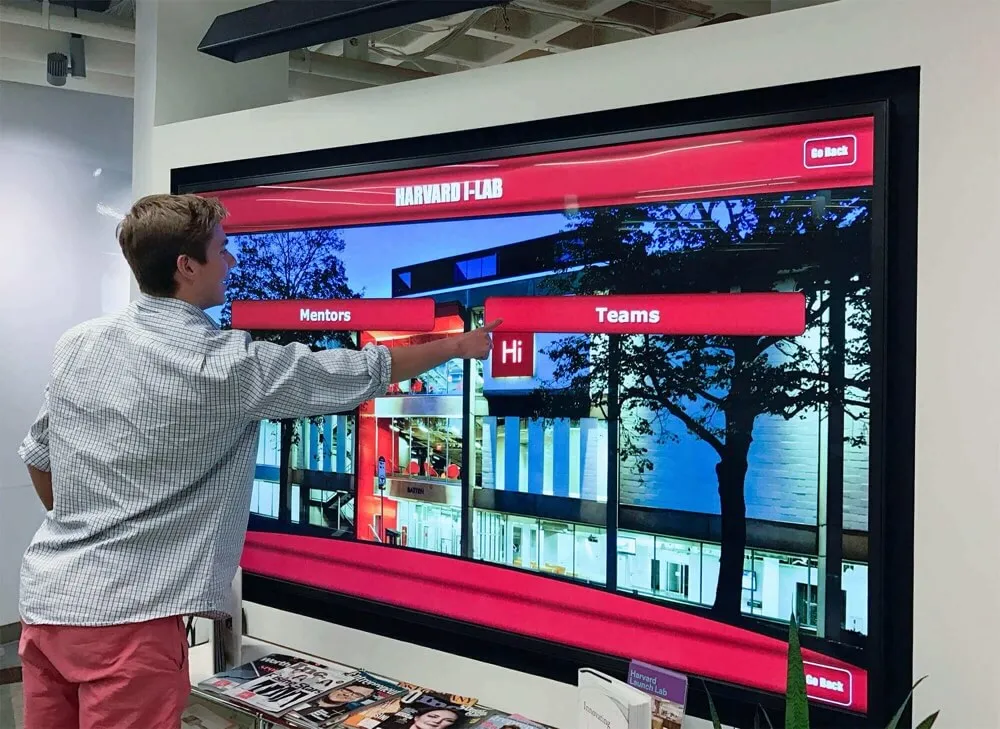
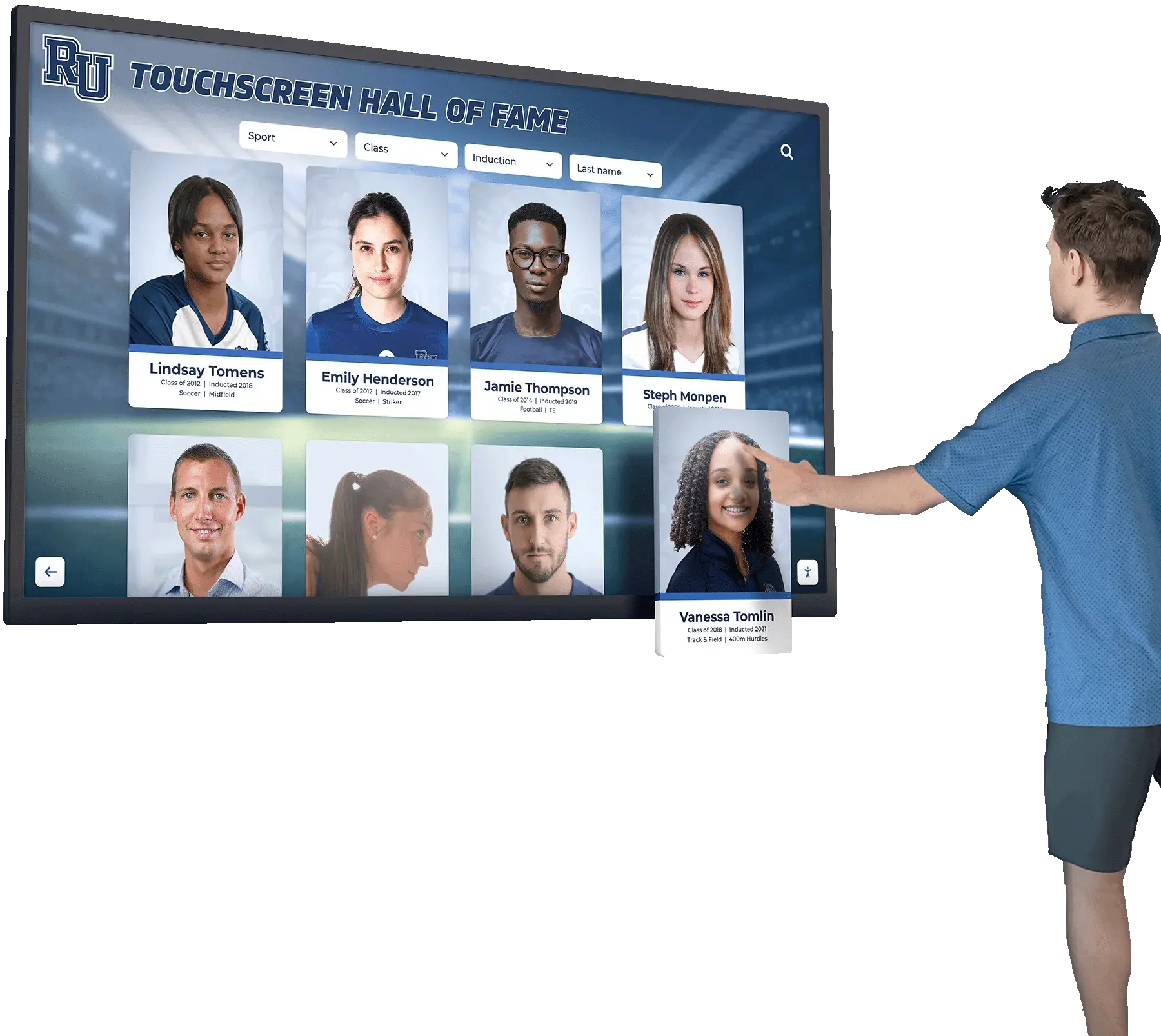
Digital Hall of Fame and recognition display systems built on institution-managed platforms provide natural continuity advantages over officer-managed setups: access transfers with the role rather than the individual, and content history is preserved in the platform’s edit log rather than in a departed officer’s memory.
Athletic stats and records display systems that are centrally managed and independently accessible are significantly more resilient to officer transitions than systems that depend on a single person’s credentials or institutional knowledge to keep them current.
Booster Club Business Continuity Plan Template
Use this template as the foundation for a written continuity plan. Customize all bracketed fields before adopting as organizational policy. Have the current board vote to formally adopt the plan and record the adoption in the meeting minutes.
BOOSTER CLUB BUSINESS CONTINUITY PLAN
[Organization Name] | [School / Program]
Adopted: [Date] | Annual Review Date: [Month]

SECTION 1 — ACTIVATION TRIGGERS
This plan activates when any of the following conditions occur:
  a. An officer resigns, becomes incapacitated, or is removed from
     their position before completing a documented handoff
  b. A primary financial account or platform becomes inaccessible
     for more than [48] hours
  c. A venue or vendor cancels an active contract within [60] days
     of the contracted event date
  d. A single officer holds exclusive access to financial accounts,
     sponsor contracts, or critical system credentials with no
     documented backup holder
  e. A school closure, district emergency, or natural disaster
     suspends normal booster club operations

SECTION 2 — CONTINUITY OFFICER SUCCESSION ORDER
  Position 1: President
  Position 2: Vice President
  Position 3: [Designated officer, e.g., Secretary or past President]
  Position 4: School Athletic Director (notification only;
              does not assume organizational authority)

SECTION 3 — FINANCIAL CONTINUITY PROCEDURES
  3.1 Bank Account Access
    - Primary signatory: [Name and position]
    - Backup signatory: [Name and position]
    - Account recovery contact at bank: [Name, phone]
    - Two-factor authentication recovery method: [Document here]
  3.2 Annual Filing Obligations
    - CPA contact: [Name and firm]
    - Prior-year filings location: [Platform or folder path]
    - IRS determination letter location: [Platform or folder path]
  3.3 Fundraising Platform
    - Platform name: [Platform]
    - Login email: [Organization-owned email address]
    - Backup administrator: [Name and position]

SECTION 4 — EVENT CONTINUITY PROCEDURES
  4.1 Central Event Calendar
    - Platform: [Calendar platform or shared tool]
    - Officers with access: [Three current positions]
  4.2 Venue Contract Files
    - Storage location: [Shared drive or folder path]
    - Backup holder: [Name and position]
  4.3 Backup Venues
    - Event 1 ([Event name]): Primary — [Name], Backup — [Name]
    - Event 2 ([Event name]): Primary — [Name], Backup — [Name]

SECTION 5 — SPONSOR AND DONOR RECORD PROCEDURES
  5.1 Current-Year Sponsor Agreements
    - Storage location: [Shared drive folder path]
    - Backup holder: [Name and position]
    - Multi-year agreements flagged separately: [Yes/No; location]
  5.2 Sponsor Contact Directory
    - Location: [Platform or document name]
    - Last updated: [Date]
  5.3 Donor Pledge Records
    - Location: [Platform or document name]
    - Follow-up schedule owner: [Name and position]

SECTION 6 — DISPLAY AND ARCHIVE PROCEDURES
  6.1 Display Content Management
    - System: [Platform name]
    - Login email: [Organization-owned email address]
    - Officers trained and authorized to update: [Names]
    - Last content accuracy review: [Date]
  6.2 Institutional Archive
    - Primary location: [Institution-owned platform]
    - Secondary backup location: [Folder path or physical location]
    - Annual review month: [Month]

SECTION 7 — TECHNOLOGY ACCESS REGISTER
  [Complete the technology access register table for every
  platform the organization uses. Store the completed register
  separately in a secure location accessible to the president
  and one designated backup officer.]

SECTION 8 — INCIDENT DOCUMENTATION
  When this plan activates, the initiating officer must record:
    - Date and time of activation
    - Description of the triggering event
    - Name and position of officer initiating the procedure
    - Which sections of this plan were activated and by whom
    - Resolution date and outcome summary
    - Updates made to this plan following the incident
Frequently Asked Questions
What is the difference between a booster club business continuity plan and a succession plan?
A succession plan covers officer transitions at the end of a defined term—the structured handoff from outgoing to incoming leadership. A business continuity plan covers unplanned disruptions that occur at any point during a term: a mid-year resignation, a platform failure, a venue cancellation, or an emergency that makes a key officer temporarily unavailable. The two documents are complementary, and programs benefit from having both. A succession plan without a continuity plan leaves the organization exposed to disruptions that occur between scheduled transitions.
How often should a booster club review its continuity plan?
At minimum once per year—ideally at the beginning of each new term, before the first event. The review should confirm that all backup holders are current, all platform credentials reflect organization-owned logins, and all venue and sponsor records are stored in accessible, centrally-held locations. Any continuity incident during the year should trigger an immediate plan update, not a deferred one.
Who should have access to the continuity plan document itself?
The president, vice president, and at least one additional designated officer. The school athletic director or district liaison should receive a copy—or know where to find it—in case the entire booster club board becomes unavailable simultaneously. The plan should not be stored exclusively on any individual officer’s personal device or personal cloud account.
What happens to sponsor recognition commitments if the organization cannot fulfill an event-based deliverable during a disruption?
The sponsor agreement governs the obligation. If the agreement includes force majeure language, it likely defines what alternative delivery or credit the sponsor is entitled to when the disruption is outside the organization’s control. If the agreement is silent on this, consult your organization’s legal counsel before communicating with the sponsor. Document all communications about any disrupted deliverable in writing and retain them in the sponsor’s permanent file.
Does a booster club need a standalone continuity plan, or can it be part of the bylaws?
A continuity plan works best as a standalone operational document reviewed and updated annually, independent of the bylaws amendment process. Bylaws govern the organization’s structure and authority; a continuity plan governs day-to-day operational procedures that change whenever platforms, vendors, or personnel change. Embedding operational procedures in bylaws makes both documents harder to maintain accurately over time.
When should a booster club involve the school district in a continuity event?
Notify the district when a continuity event affects financial accounts, creates legal exposure, or cannot be resolved within the organization’s own authority. Specifically: when the organization loses access to funds, when a vendor dispute involves a contracted obligation, or when a personnel issue raises governance concerns. The district athletic director and district legal counsel should be in the notification sequence for any financial continuity event that cannot be resolved within 72 hours. Consult your district’s policies regarding when formal district involvement is required.
How should an organization store sensitive continuity plan information like credentials and account recovery codes?
Organization-owned password management tools or secure shared document platforms are preferable to printed documents or personal email. Consult your district IT coordinator for guidance on approved tools for storing sensitive organizational credentials. Whatever system you use, ensure that at least two current officers can access it and that the access method itself is documented somewhere a third officer could find it in an emergency.
A booster club business continuity plan is one of the least visible governance documents an organization can maintain—and one of the most consequential when it is needed. The programs that function smoothly through an unexpected officer departure, a platform failure, or a venue cancellation are not the ones that improvised well under pressure. They are the ones that documented their procedures before anything went wrong.
Recognition displays, sponsor relationships, and donor records built over years deserve the same institutional protection as the funds that sustain them. A continuity plan is how a booster club makes that protection real—and keeps it real across every leadership cycle.
If your program is building or upgrading its recognition infrastructure—from donor walls to digital Hall of Fame displays to sponsor recognition panels—request a demo from Rocket Alumni Solutions to see how centrally managed, institution-owned systems reduce continuity risk at every officer transition.