A booster club dissolution plan checklist gives volunteer boards a structured, legally sound pathway for closing the organization without exposing individual officers to liability, stranding restricted funds, or losing the recognition assets—trophies, donor records, hall of fame materials, and dedication plaques—that represent years of community investment. Organizations that dissolve without a plan often discover afterward that bank accounts were left open, final IRS returns were never filed, or award records that should have transferred to the school were discarded instead. A written plan prevents all three.
This checklist covers the complete dissolution sequence: the board resolution that starts the process, account closure procedures, restricted and unrestricted asset transfers, records preservation timelines, and the specific steps required to hand off recognition infrastructure—donor walls, athletic award archives, and hall of fame records—to the school or a successor organization.
This guide is for informational purposes only and does not constitute legal, accounting, tax, or compliance advice. Dissolution requirements for nonprofit corporations vary by state and depend on the organization’s tax-exempt classification, corporate status, and jurisdiction. Consult a licensed CPA and attorney before beginning the dissolution process.

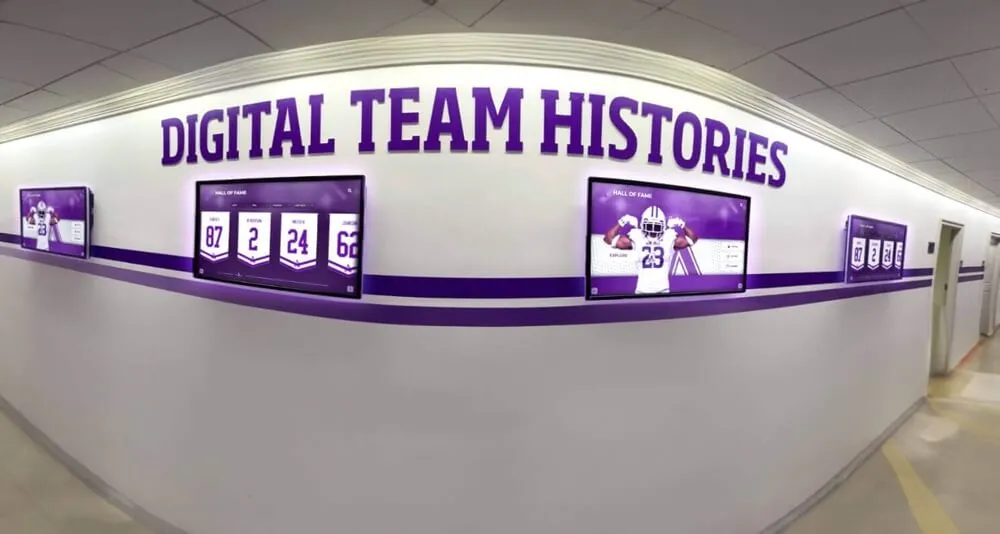
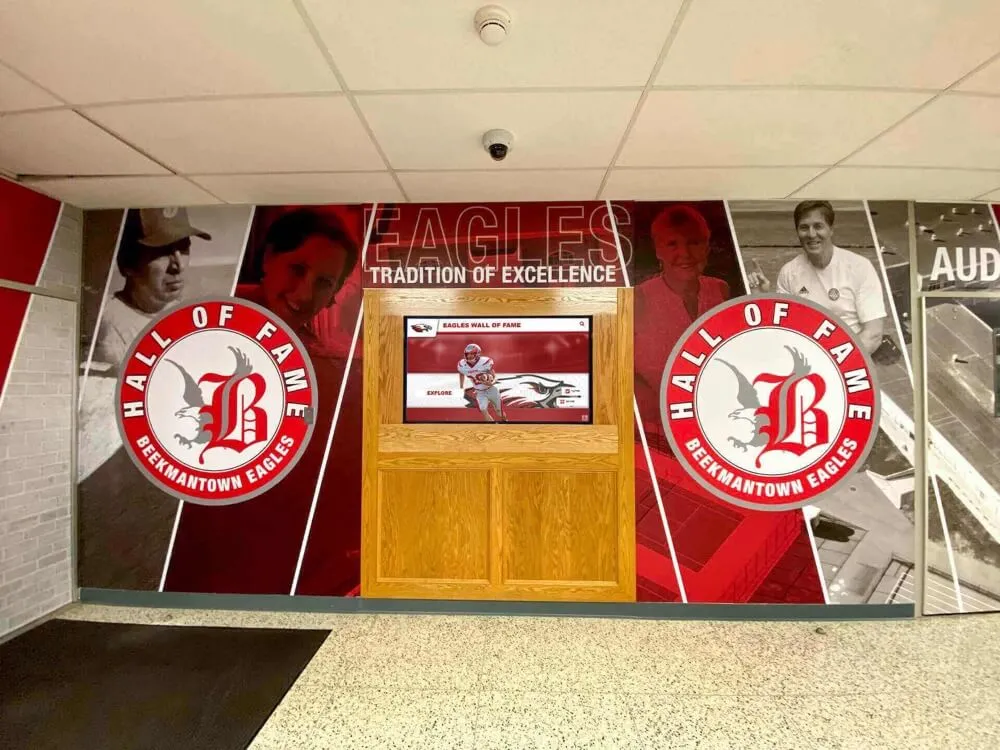
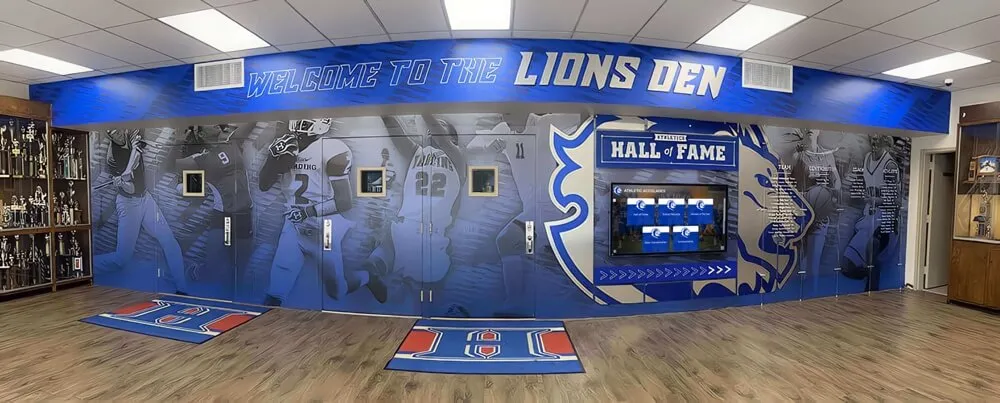
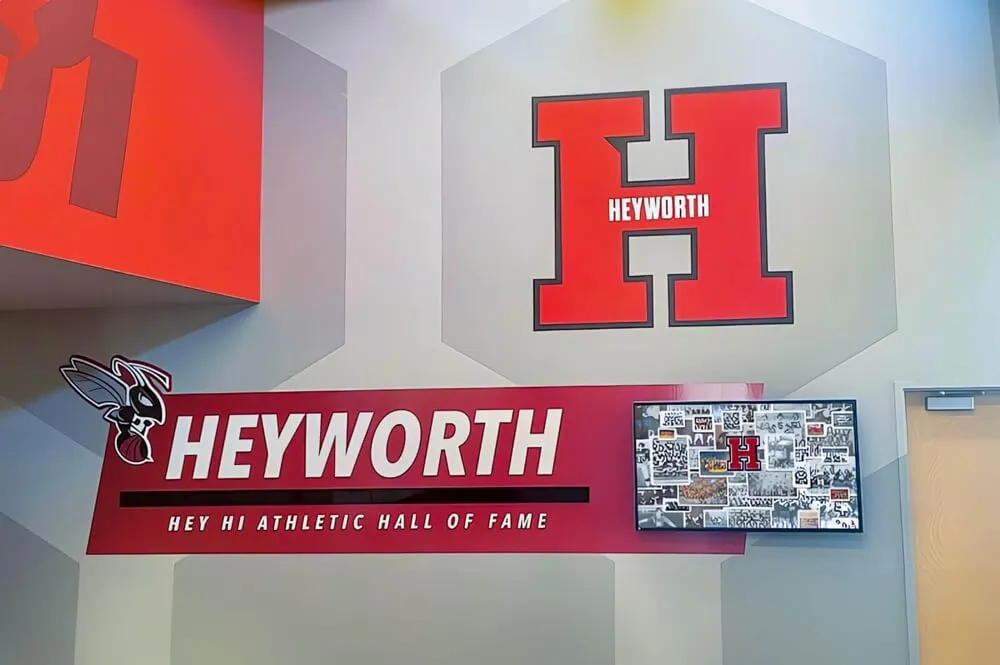
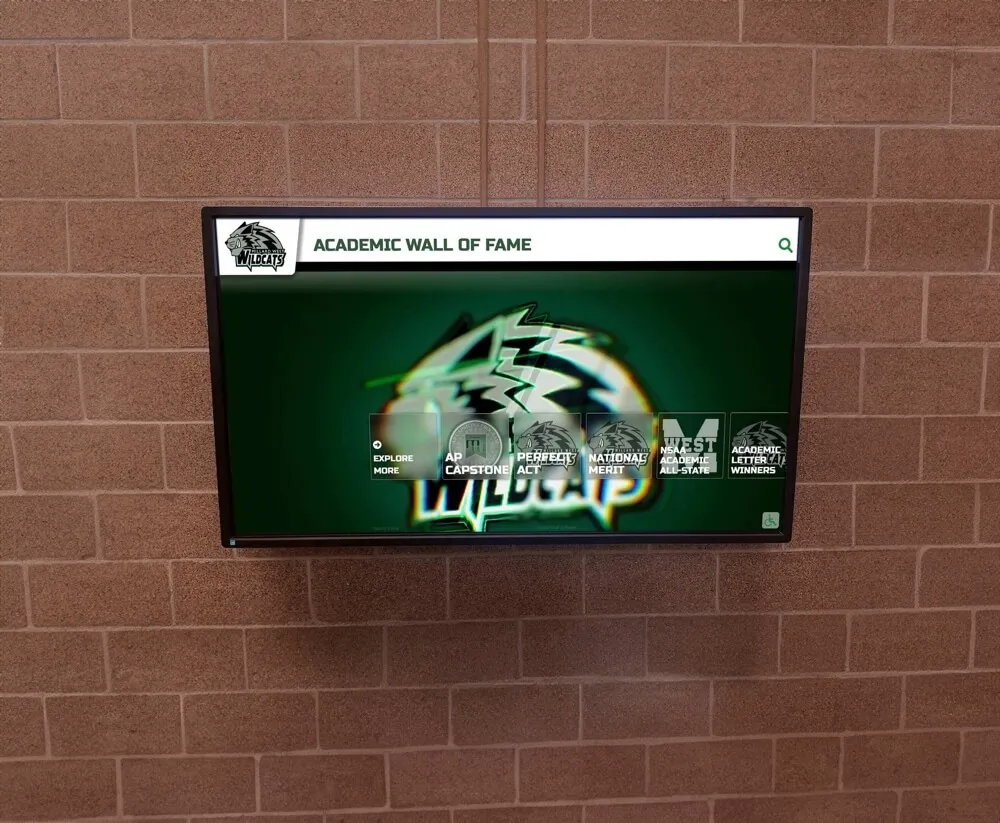
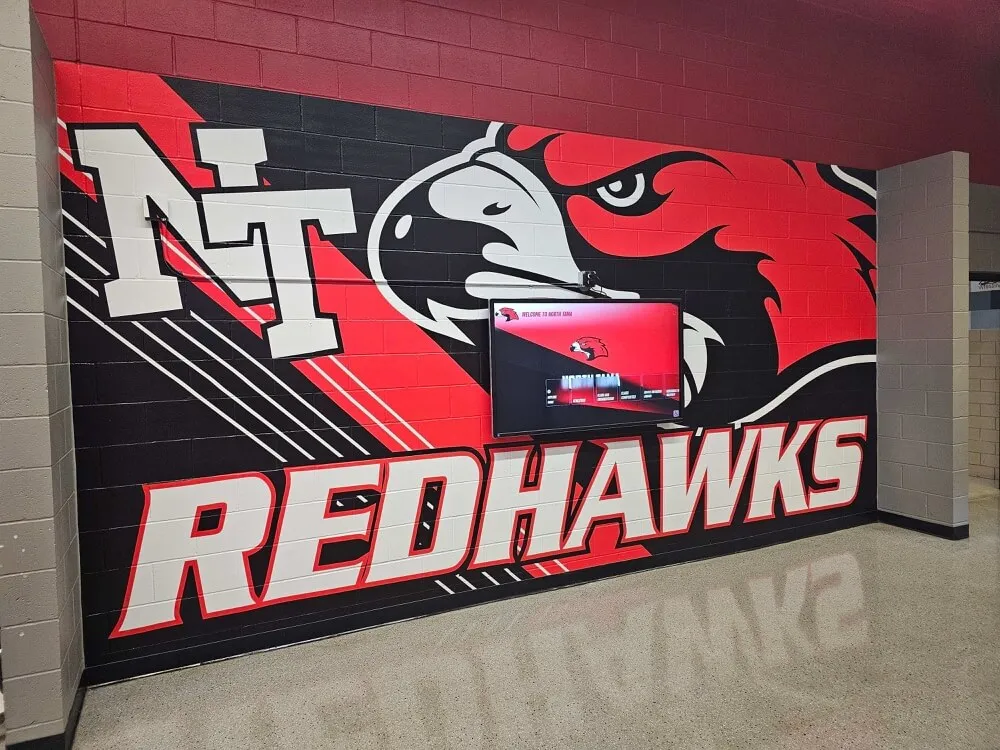
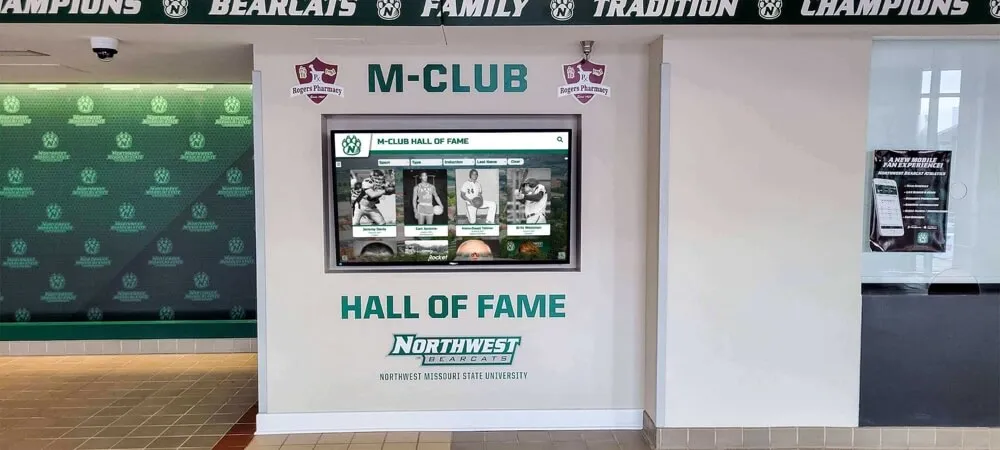
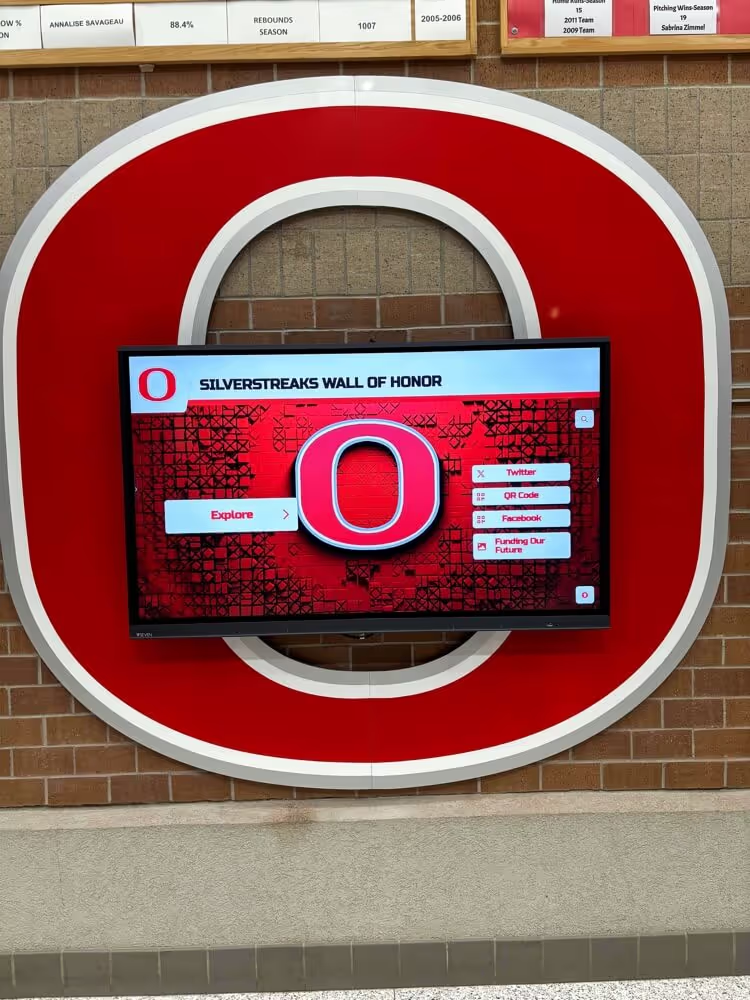
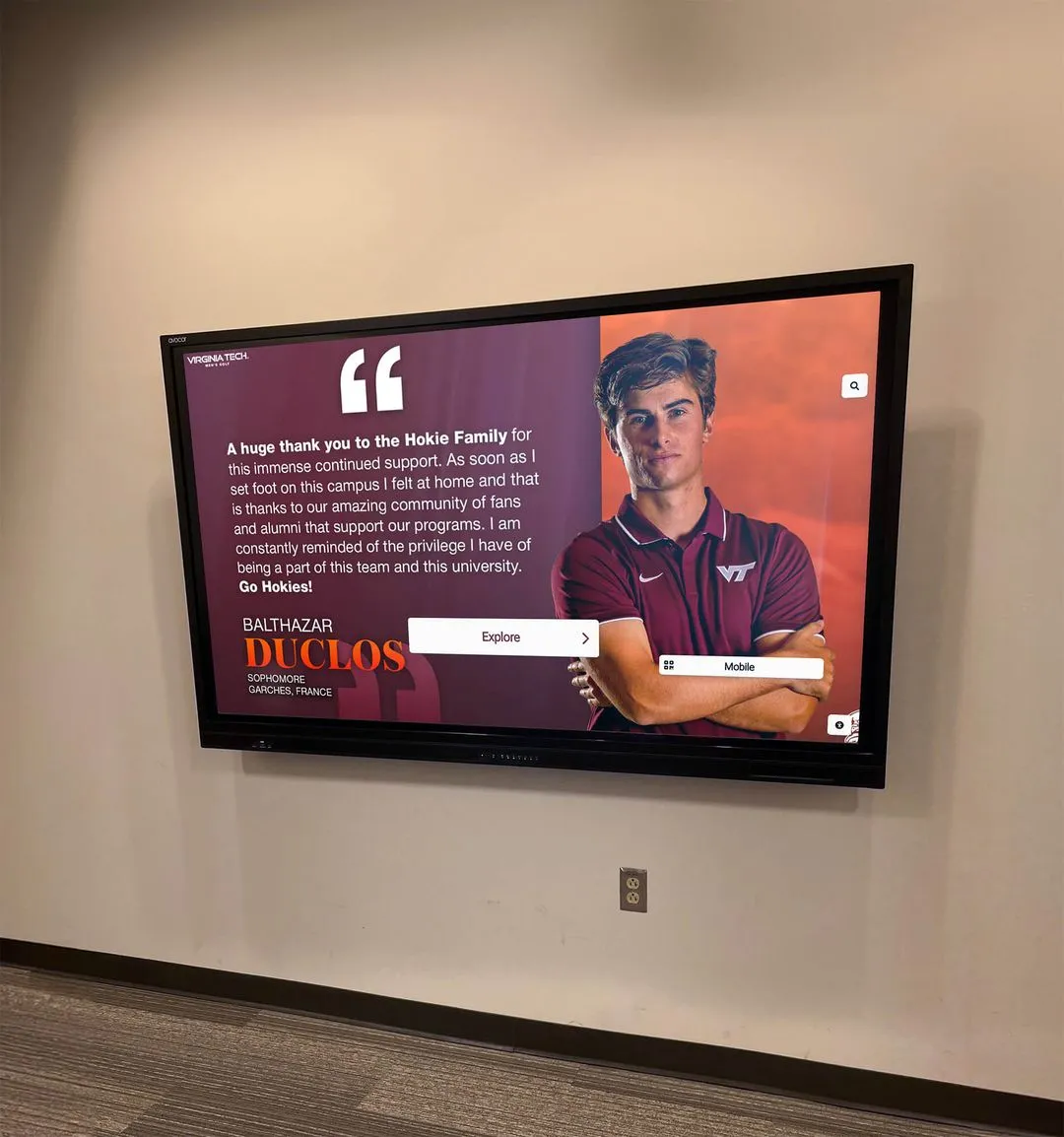
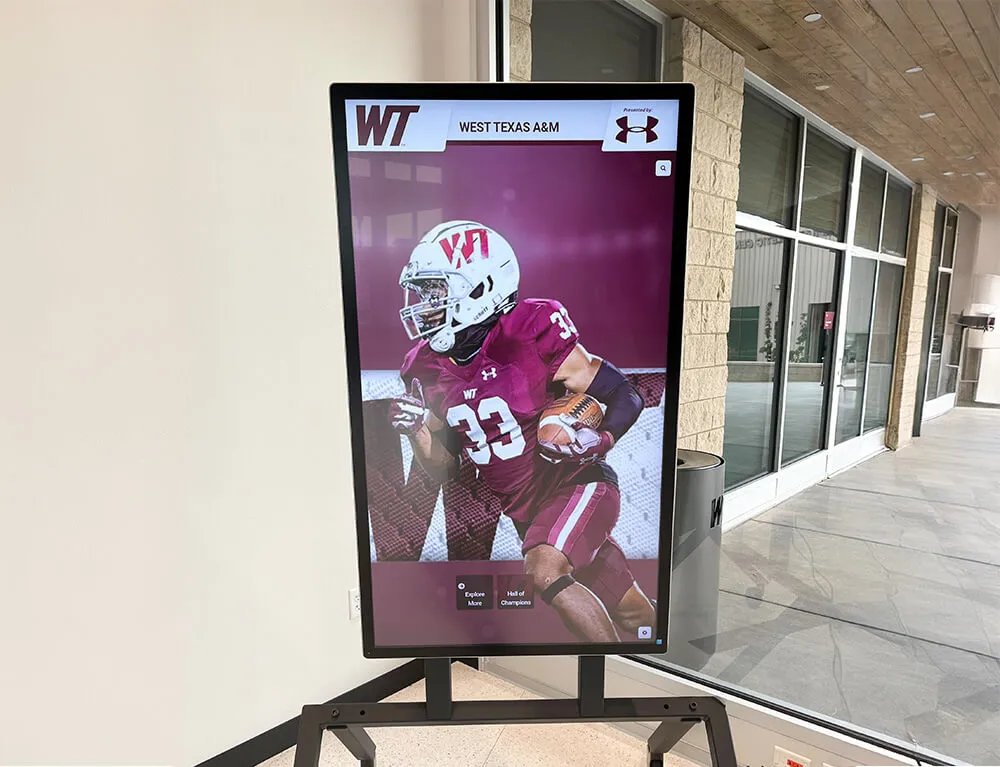
Recognition infrastructure built by a booster club—lobby displays, name panels, and digital hall of fame systems—requires a formal asset transfer plan to ensure it remains maintained and accessible after dissolution
What a Booster Club Dissolution Plan Covers
Dissolving a booster club is a legal process, not simply a decision to stop meeting. For organizations incorporated as nonprofit corporations under state law, dissolution requires a formal board vote, specific notifications to state and federal authorities, a documented distribution of remaining assets, and filed articles of dissolution. For unincorporated associations, the process is simpler but the financial and record obligations remain.
A dissolution plan addresses four categories of obligation:
- Governance closure — board resolutions, stakeholder notifications, and the formal legal steps required to terminate the organization’s existence
- Financial closure — account closure, outstanding obligation settlement, restricted fund transfer, and final tax filings
- Asset transfer — distribution of cash, equipment, recognition assets, and intellectual property to the school or qualified successor organizations
- Records preservation — retention and transfer of financial records, donor records, meeting minutes, and award archives according to applicable retention schedules
Organizations that plan all four categories in sequence—rather than addressing them ad hoc—complete dissolution cleanly and protect the community’s investment in the programs and recognition infrastructure the booster club built.
When a Dissolution Plan Is Appropriate
A booster club dissolution plan becomes necessary when the board formally decides to wind down operations. Common triggers include:
- The athletic program the club supported has been discontinued by the school or district
- Membership has declined to a level that makes ongoing governance or fundraising untenable
- The club is merging with or transferring its programs to another organization
- Extended inactivity has created compliance gaps—unfiled returns, expired registrations—that require formal resolution
- District policy changes have restructured how booster organizations may operate
A plan is also appropriate for clubs that are technically inactive but have not formally dissolved: organizations with open bank accounts, an unfiled final Form 990, or a state corporate registration that has lapsed but not been terminated. These clubs carry ongoing compliance exposure even though they are no longer operating.
The Dissolution Sequence: 10 Required Steps
The steps below represent the standard dissolution sequence for a booster club incorporated as a nonprofit corporation. The sequence assumes a state-law dissolution process; unincorporated associations should follow steps 2 through 10 as applicable and confirm state-specific requirements with legal counsel.
Step 1: Board Resolution to Dissolve
The board votes formally to dissolve the organization. The resolution should state the effective date of dissolution, authorize officers to take the steps required to wind down, and direct the distribution of remaining assets. Document this vote in the meeting minutes with the vote count and any dissenting votes.
Step 2: Notify Key Stakeholders
Notify the school principal, athletic director, and district business office within 30 days of the board resolution. Notify active donors, sponsors with unexpired agreements, and any vendors with open contracts. Clubs with a membership that paid annual dues should review the booster club membership refund policy applicable to their bylaws and state law before issuing any refunds or making representations about unused dues.
Step 3: Cease New Financial Obligations
Stop accepting new donations, signing new contracts, or committing to future expenditures from the date of the board resolution forward. Notify any recurring payment platforms—crowdfunding tools, automatic dues collection, donation processing services—to suspend new transactions immediately.
Step 4: Complete Outstanding Financial Obligations
Pay all outstanding invoices, vendor contracts, and staff or contractor payments before beginning the account closure process. Issue final payments to anyone owed money from the organization. Document each payment with the payee, amount, date, and purpose.
Step 5: Resolve Active Fundraising Campaigns
Any fundraising campaign still in progress must be closed before dissolution proceeds. For campaigns with a specific restricted purpose—a scoreboard fund, a scholarship endowment, a specific equipment purchase—the restricted funds must be transferred to the school or a qualified 501(c)(3) for the same purpose. They cannot be used for general wind-down expenses or distributed as refunds without donor consent. Consult a CPA or attorney for campaigns where restricted funds cannot be applied as originally intended.
Step 6: Determine Asset Distribution
Identify all remaining assets: bank account balances, physical equipment, recognition materials, intellectual property, and digital accounts. Confirm which assets are unrestricted (distributable per the board’s direction) and which are restricted by donor intent or grant conditions (must transfer to a qualified organization for the specified purpose). Most booster club dissolution documents direct remaining unrestricted assets to the school or a designated 501(c)(3). Confirm this language against the organization’s bylaws and articles of incorporation.
Step 7: Transfer Assets
Execute the transfers: wire or check to the school or successor organization, physical handoff of equipment and recognition materials, transfer of digital accounts, and delivery of records to the designated custodian. Document each transfer with a receipt, written confirmation, or signed transfer agreement.
Step 8: Close Financial Accounts
Close bank accounts, investment accounts, credit cards, and any payment processing accounts after all transfers are complete and all final payments have cleared. Obtain written account closure confirmation from each institution and retain it with the dissolution records.
Step 9: File Final Tax Returns and State Reports
File the final Form 990 (or 990-EZ or 990-N) with the IRS, marking it as the organization’s final return. File any required state income tax return, which varies by state. File the final state annual report or charitable solicitation registration, and issue final Form 1099-NEC or 1099-MISC for any contractor payments made during the dissolution year. A CPA familiar with nonprofit dissolution filings should prepare or review all of these returns.
Step 10: File Articles of Dissolution
File articles of dissolution—or a certificate of dissolution—with the state in which the organization is incorporated. The specific form, filing fee, and process vary by state. Most states require that all taxes be paid and all assets distributed before the articles will be accepted. Retain a certified copy of the filed articles with the permanent dissolution records.
Dissolution Phase Responsibility Table
Assign each dissolution phase to a specific officer or role before the process begins. Unassigned tasks in a volunteer-led organization are the most common cause of dissolution delays and compliance gaps.
| Phase | Primary Owner | Secondary Review | Deadline Trigger |
|---|---|---|---|
| Board Resolution | Board Chair | Full Board | Organization decision date |
| Stakeholder Notifications | President / Secretary | Board Chair | Within 30 days of resolution |
| Cease New Obligations | Treasurer | President | Effective on resolution date |
| Outstanding Obligation Settlement | Treasurer | Board Chair | Before account closure |
| Active Campaign Resolution | Fundraising Chair | Treasurer / Legal Counsel | Before asset distribution |
| Asset Inventory and Valuation | Secretary / Treasurer | Board Chair | Before distribution |
| Asset Transfer — Financial | Treasurer | Board Chair | After obligations settled |
| Asset Transfer — Recognition and Equipment | Athletics Liaison / Secretary | Principal or Athletic Director | Coordinated with school |
| Account Closure | Treasurer | President | After all transfers complete |
| Final Tax Filings | Treasurer / CPA | Board Chair | Per IRS and state deadlines |
| State Dissolution Filing | Secretary / Legal Counsel | Board Chair | After final returns filed |
| Records Archive | Secretary | Board Chair | Before final dissolution date |
Account Closure Checklist
Close accounts in this order: resolve all obligations, complete all transfers, then close accounts. Closing accounts before obligations are settled can leave the organization unable to make required payments.
| Account Type | Closure Action | Verify Before Closing | Status |
|---|---|---|---|
| Primary checking account | Confirm zero balance after all payments and transfers; request written closure confirmation | All outstanding checks cleared; no pending deposits | ☐ |
| Secondary or event accounts | Consolidate into primary account or transfer to successor; close each separately | No outstanding transactions | ☐ |
| Savings or money market | Transfer balance to designated recipient; close with written confirmation | Transfer documented with receipt | ☐ |
| Investment or brokerage account | Liquidate or transfer in-kind per IRS guidance; consult CPA for tax treatment | Asset distribution documented; CPA reviewed | ☐ |
| Credit card accounts | Pay off balance in full; cancel card; obtain written account closure confirmation | Zero balance confirmed; no pending charges | ☐ |
| Online donation platforms | Disable new donations; withdraw available balance; close merchant account | No pending disbursements | ☐ |
| Crowdfunding or campaign accounts | Close active campaigns per platform policy; transfer or refund proceeds | Restricted fund status confirmed | ☐ |
| Automatic dues collection | Cancel all recurring billing cycles before next billing date | All active members notified | ☐ |
| PayPal or payment apps | Withdraw balance; close account; obtain email confirmation | Balance transferred to primary account | ☐ |
| Peer-transfer accounts (Venmo, Zelle) | Withdraw balance; remove organization profile | No incoming transfers expected | ☐ |
Asset Transfer Checklist
Document every asset transfer with a written receipt, confirmation email, or signed agreement retained in the dissolution file.
Financial Assets
| Asset | Transfer Method | Destination | Documentation Required | Status |
|---|---|---|---|---|
| Unrestricted cash balance | Check or wire transfer | School district or designated 501(c)(3) | Written receipt and acknowledgment | ☐ |
| Restricted fund balances | Transfer to same-purpose 501(c)(3) only | Organization designated in original gift or grant | CPA review; written transfer agreement | ☐ |
| Scholarship fund | Transfer to school foundation or endowment manager | School or community foundation | Legal counsel review; executed transfer agreement | ☐ |
| Security deposits | Recover from vendor; add to general wind-down funds | Unrestricted distribution | Deposit return documentation | ☐ |
Physical Equipment and Recognition Assets
| Asset | Transfer Action | Designated Recipient | Documentation Required | Status |
|---|---|---|---|---|
| Athletic equipment (uniforms, gear, training equipment) | Physical delivery to athletic director | School athletic department | Signed delivery receipt | ☐ |
| Office equipment (computers, printers, AV gear) | Physical delivery or coordinated with IT | School technology department | Signed delivery receipt | ☐ |
| Trophy cases and display furniture | Coordinate with facilities; physical delivery or storage | School athletic or main office | Facilities agreement; delivery receipt | ☐ |
| Trophies, plaques, and awards | Inventory and transfer to school; photograph before transfer | Athletic department or trophy hall | Inventory log; photo documentation | ☐ |
| Hall of fame panels, shields, and portraits | Coordinate removal and reinstallation with facilities | School athletic or trophy hall | Transfer agreement with school; installation plan | ☐ |
| Donor dedication plaques and naming recognition | Review underlying gift agreements before removal or transfer | School (with donor notification) | Gift agreement review; donor correspondence | ☐ |
| Banners, signage, and branded materials | Inventory; transfer or dispose per school direction | School athletic department | Inventory and disposition log | ☐ |
| Fundraising supplies and merchandise inventory | Transfer to school or liquidate; apply proceeds to wind-down | School or general fund | Disposition documentation | ☐ |
Digital Assets
| Asset | Transition Action | Designated Recipient | Status |
|---|---|---|---|
| Website domain | Transfer registrar access to school or successor; or allow to expire | School technology department | ☐ |
| Website hosting and content | Export and archive content; transfer or shut down hosting | School archives or IT | ☐ |
| Social media accounts | Notify followers of dissolution; archive content; deactivate or transfer | School communications | ☐ |
| Email accounts (club domain) | Export correspondence archive; deactivate accounts | Secretary’s dissolution file | ☐ |
| Cloud storage (Google Drive, Dropbox) | Download and archive all files; transfer ownership to school | School IT or records custodian | ☐ |
| Digital hall of fame or recognition platform | Coordinate data export with vendor; transfer or archive before subscription ends | School athletic department or recognition platform provider | ☐ |
| Donor management software | Export complete donor database; confirm data transfer with platform | School development office or successor | ☐ |
Records Preservation Checklist
Records transfer is the step most often skipped in informal booster club dissolutions. Many donor acknowledgment disputes, tax questions, and award verification requests arise years after a club dissolves—and without preserved records, there is no way to answer them.
The retention periods below reflect general nonprofit best practice. Consult your organization’s legal counsel or CPA for jurisdiction-specific retention requirements.
| Record Type | Retention Period | Custodian After Dissolution | Format |
|---|---|---|---|
| IRS filings (Form 990 series) | Permanent | School foundation or successor | Digital and paper |
| Articles of incorporation and bylaws | Permanent | School district records | Digital and paper |
| Articles of dissolution | Permanent | Secretary’s permanent file | Digital and paper |
| Board meeting minutes | Permanent | School district records | Digital and paper |
| Financial statements (annual) | Permanent | School foundation or successor | Digital and paper |
| Bank statements and reconciliations | 7 years | Records custodian | Digital |
| Signed donation and sponsorship agreements | 7 years after expiration | Records custodian | Digital and paper |
| Gift acknowledgment letters | 7 years | Records custodian | Digital |
| Vendor contracts and agreements | 7 years after expiration | Records custodian | Digital |
| Grant records and foundation agreements | Permanent | Records custodian | Digital and paper |
| Award and hall of fame records | Permanent | School athletic department | Digital |
| Donor database export | Permanent | School development office or foundation | Digital (encrypted) |
| Form 1099 records | 7 years | Records custodian | Digital |
| Volunteer and membership records | 3 years | Records custodian | Digital |
Digitizing historical records and student achievement archives before dissolution ensures that award records, honor roll data, and athletic achievement histories are legible and accessible for future administrators and alumni long after paper copies would have degraded.
A sample records transfer log entry for each category:
DISSOLUTION RECORDS TRANSFER LOG
Organization: ___________________________________
Record Category: ________________________________
Date Range Covered: _____________________________
Number of Files / Boxes: ________________________
Format: ☐ Paper  ☐ Digital  ☐ Both
Transfer Date: __________________________________
Transferred By (name + title): __________________
Received By (name + title + organization): _______
Storage Location After Transfer: _________________
Signature (transferring): ___________________ Date: ________
Signature (receiving): ______________________ Date: ________
Retain a completed log entry for every record category in the permanent dissolution file.

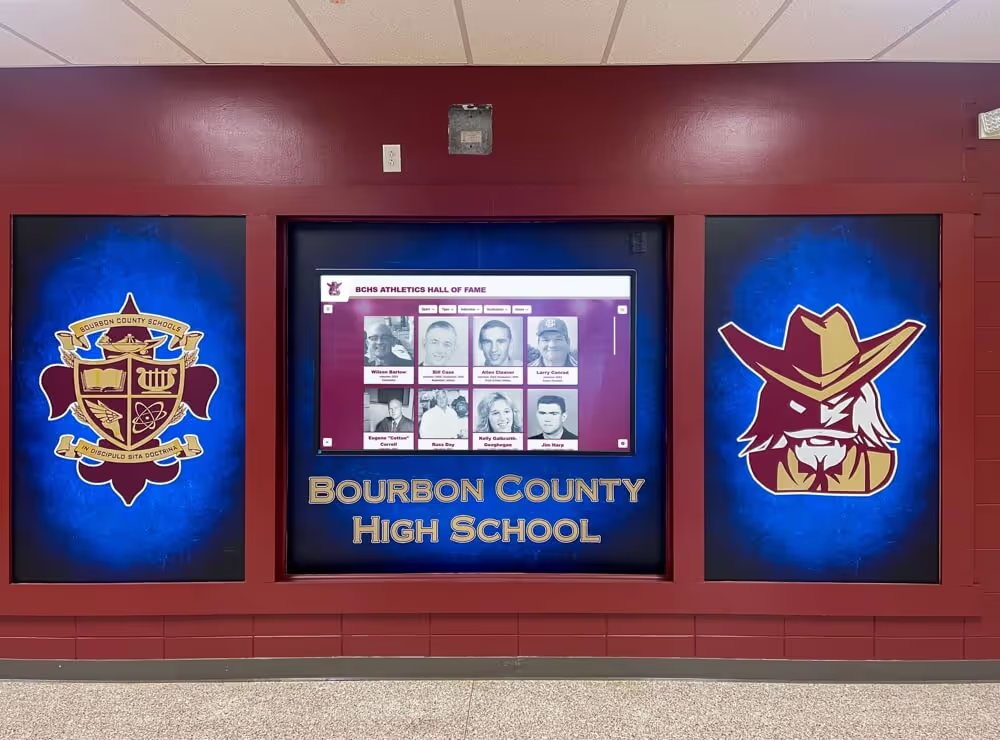
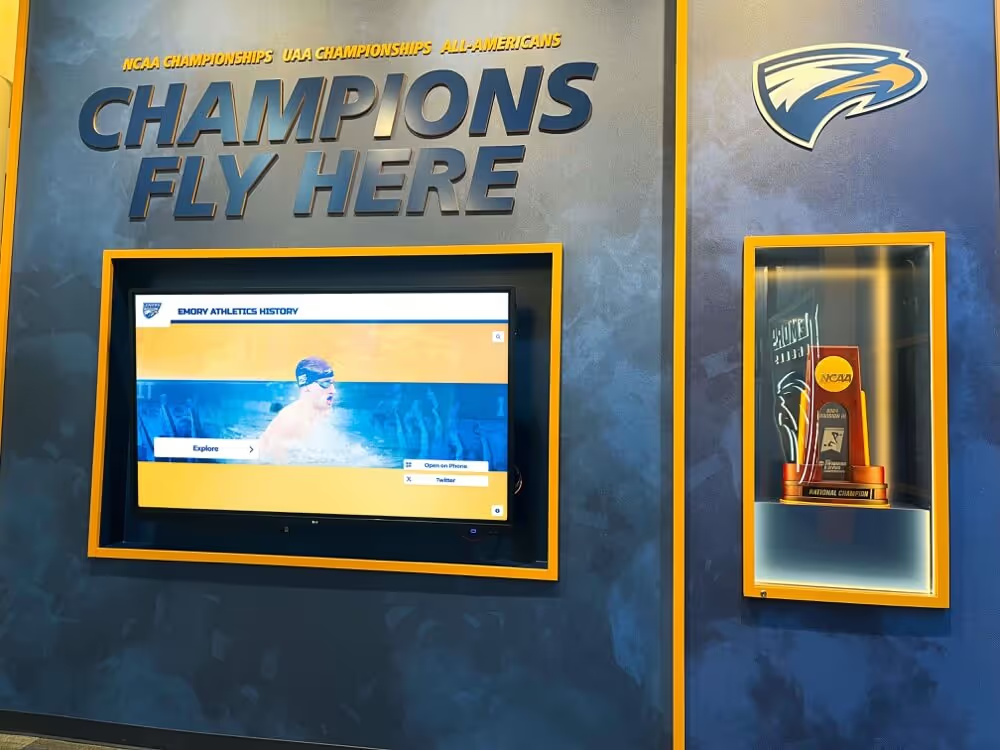
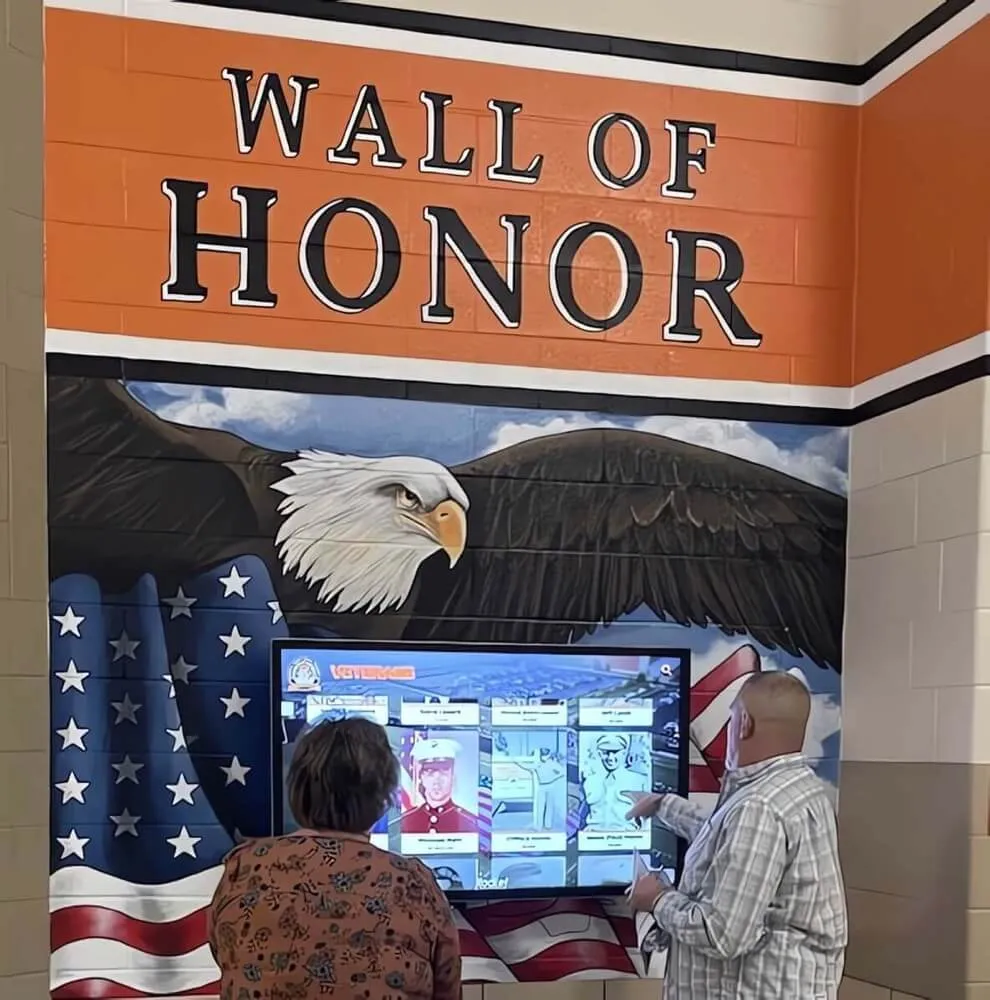
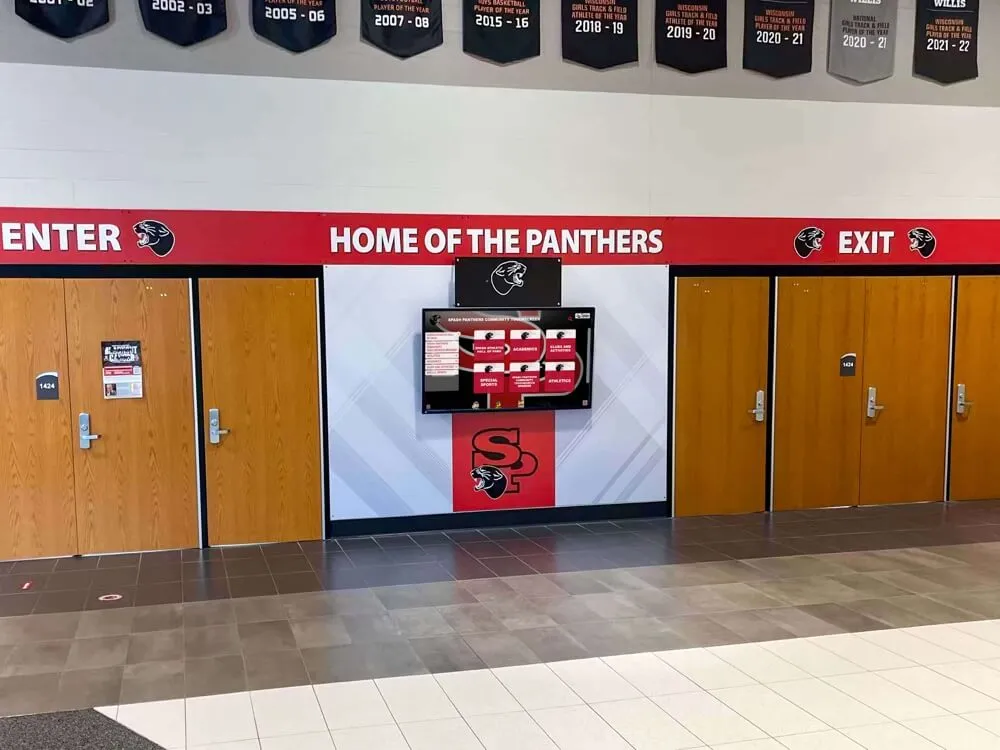
Physical recognition boards and hallway award displays built by booster clubs require a documented transfer plan that addresses both the physical assets and the underlying records they represent
Recognition Assets: What Dissolving Booster Clubs Get Wrong
Recognition assets are the category most likely to be mishandled in a booster club dissolution. Unlike bank accounts, which require explicit closure, physical and digital recognition materials do not disappear on their own—they become someone else’s problem unless the dissolving organization creates an explicit transfer plan.
Restricted Naming and Dedication Commitments
Many donor plaques and dedication panels on school property exist because of a gift agreement that includes a recognition commitment. Removing or failing to transfer those plaques is not simply a logistical issue—it may breach a contractual obligation to the donor. Before the organization transfers, moves, or disposes of any recognition panel, review the underlying gift agreement. Dedication plaques and tributes built around donor and community leader commitments carry long-term obligations that survive the organization that installed them.
If a naming commitment has a defined duration, document the end date in the transfer records. If the naming commitment is in perpetuity, notify the school that it assumes responsibility for maintaining the recognition as a condition of receiving the asset. Get that acknowledgment in writing from the school or district before the dissolution is finalized.
Athletic Award Archives and Hall of Fame Records
Trophies, championship banners, and hall of fame records are not simply memorabilia—they are institutional documentation of athletic achievement that alumni, parents, and coaches rely on for verification, scholarship references, and historical research. Before dissolution, complete the following for every physical and digital recognition archive:
- Photograph or scan every trophy, plaque, and award panel before transfer
- Export complete hall of fame records from any digital platform in a format the school can read without the platform subscription
- Confirm with the athletic director that all records are transferable under the school’s existing technology systems
- Document the chain of custody from the booster club to the school with signed delivery receipts
Comparing award display case versus digital awards display options during the transfer process can help the school plan for how to house physical trophies and whether a digital recognition system is the right long-term solution for the athletic archive the booster club is handing over. Schools that have already built digital hall of fame systems with defined profile standards are better positioned to receive and maintain transferred booster club athletic records than schools relying entirely on physical display cases with no built-in documentation or search capability.
Memorial and Named Recognition Panels
If the booster club has installed memorial tributes—panels, benches, named spaces, or recognition displays honoring deceased coaches, faculty, or former athletes—the transfer plan must include a commitment from the receiving institution to maintain those tributes. Honoring deceased faculty and community members through lasting memorial tribute systems requires institutional continuity; a booster club dissolution cannot simply transfer the physical item without transferring the obligation to preserve its integrity.
Notify the families of honored individuals that the booster club is dissolving and that the school or successor organization is assuming responsibility for the memorial. Document that notification in the dissolution file.
Digital Recognition Platform Transition
If the booster club operates a digital hall of fame, interactive recognition display, or managed donor wall, the dissolution plan must address the platform subscription, data ownership rights, and data export process.
Before the subscription is terminated:
- Export a complete data backup in a portable format (CSV, JSON, or PDF)
- Confirm with the vendor that all data—athlete profiles, award records, donor entries, and historical content—is included in the export
- Transfer the data file and any associated media (photos, videos) to the school’s designated records custodian
- If the school wishes to continue operating the platform, coordinate the subscription transfer with the vendor before the booster club’s payment method is closed
If the school wants to maintain continuity on the recognition platform even after the booster club dissolves—preserving athlete profiles, donor records, and award histories without interruption—Rocket Alumni Solutions can coordinate the account transition directly with the school so recognition access continues seamlessly.
Asset Transfer Q&A
What happens to restricted funds if the booster club dissolves?
Restricted funds—donations given for a specific purpose such as a scoreboard, a scholarship, or a named award—cannot be distributed as general assets or returned to the organization’s members. They must be transferred to a qualified 501(c)(3) organization designated to fulfill the same purpose, or, with appropriate legal guidance, returned to donors with the donor’s written consent. In most cases, transfer to the school district or a school-affiliated foundation is the correct route. A CPA and attorney should review any restricted fund transfer before it is executed.
Can booster club assets be distributed to members when the club dissolves?
No. Booster clubs organized as tax-exempt nonprofits are prohibited by IRS regulations and state nonprofit law from distributing assets to members upon dissolution. All remaining assets must go to a qualified organization—typically the school, a school foundation, or another 501(c)(3) with an exempt purpose consistent with the booster club’s purpose. Distributing assets to members would jeopardize the organization’s tax-exempt status and may create personal tax liability for individual recipients.
Does the school have to accept the booster club’s assets?
Schools are not automatically obligated to accept booster club assets. Most schools will accept athletic equipment, recognition materials, and donor records that are free of liability. However, the school may decline assets with attached obligations—a named space commitment that requires ongoing maintenance—or assets with unclear ownership. Engage the school principal and district business office early in the process, before the asset inventory is finalized, so that any items the school declines can be redirected to an alternative qualified recipient.
How long must the booster club keep records after dissolution?
For permanently retained records—IRS filings, articles of dissolution, board minutes, grant records, and award archives—a designated custodian should maintain these indefinitely, typically the school, the school district, or a school foundation. For time-limited records such as bank statements, vendor contracts, and Form 1099 records, the general nonprofit standard is seven years. Individual states may impose different retention periods; confirm with legal counsel before disposing of any records. Designate a named custodian for each category in the dissolution plan so that no record set is left without a responsible party.
What happens to donor recognition panels when the booster club dissolves?
Donor recognition panels transfer with the physical asset they are mounted on or beside. If the panel is on school property, the school assumes responsibility for it as a condition of receiving the asset. If the naming commitment underlying the panel carries a duration term, document that term in the transfer agreement. If the commitment is in perpetuity, the transfer agreement should explicitly state that the school accepts responsibility for maintaining the recognition for the life of the building or space. If the school declines to maintain a specific panel, consult legal counsel and notify the donor in writing before making any changes to the display.
What notice should donors and sponsors receive when the booster club dissolves?
Donors who gave restricted gifts, donors at major gift levels, and sponsors with unexpired agreements should receive written individual notice—by mail or email with delivery confirmation—at least 60 days before the organization’s dissolution is complete. The notice should explain what will happen to their gift, how their recognition commitment will be maintained, and who to contact with questions. Sponsors with contractual benefit delivery obligations should receive a written status report confirming that all promised benefits were delivered before the agreement expired. For donors whose names appear on physical or digital displays, include a specific statement about where their recognition will be maintained going forward.
What is the filing deadline for the final Form 990?
The final Form 990 is due 4.5 months after the end of the organization’s last fiscal year—the same deadline as a regular-year return. If the organization’s fiscal year ends on June 30, the final return is due November 15. For December 31 fiscal years, the deadline is May 15. A six-month extension is available by filing Form 8868 before the original deadline. The final return must be marked “Final Return” on the form. Missing the filing deadline on a final return can trigger the same late-filing penalties as any other 990 filing; consult a CPA familiar with nonprofit termination filings to ensure it is submitted correctly.
The recognition infrastructure a booster club builds over years—hall of fame displays, donor walls, championship trophy cases, named athletic spaces—represents the community’s collective investment in its athletic program. A formal dissolution plan ensures that investment survives the organizational change without gaps in documentation, recognition, or institutional memory. Programs that have built their recognition infrastructure on managed digital platforms are better positioned at dissolution than programs relying on physical signage alone: data can be exported, accounts can be transferred, and athlete profiles remain accessible to alumni regardless of what happens to the volunteer organization that originally funded the display.
Ready to build or preserve a recognition platform that outlasts any single organization’s tenure? Explore how Rocket Alumni Solutions supports athletic programs with recognition systems designed for long-term institutional continuity.