Booster Club Document Destruction Policy: Retention Holds, Secure Disposal, and Proof
A booster club document destruction policy defines which records must be kept, for how long, when destruction must be suspended in response to a legal or audit hold, and how documents are disposed of securely when their retention period ends. Without a written policy, retiring officers face a recurring dilemma every time a leadership transition happens: which files to keep, which to shred, and whether the financial records from three seasons ago might still be needed for a district audit or donor dispute.
For athletic boosters managing financial records, membership rosters, sponsorship agreements, donor acknowledgments, and recognition program files, the stakes are concrete. Destroying records too early can leave the organization unable to respond to an IRS inquiry, a district review, or a sponsor questioning whether their recognition commitment was delivered. Retaining records indefinitely without a policy creates its own risk—particularly for membership and donor data subject to privacy expectations. A written destruction policy closes the loop on the records lifecycle that begins with financial controls and ends with documented, verifiable disposal.
This guide is for informational purposes only and does not constitute legal, accounting, or compliance advice. Document retention requirements vary by state, by corporate structure, and by tax-exempt status. The IRS, state attorneys general, and school district policies may impose retention obligations not reflected in any generic schedule. Consult a licensed attorney or CPA before adopting any document retention or destruction policy for your organization.

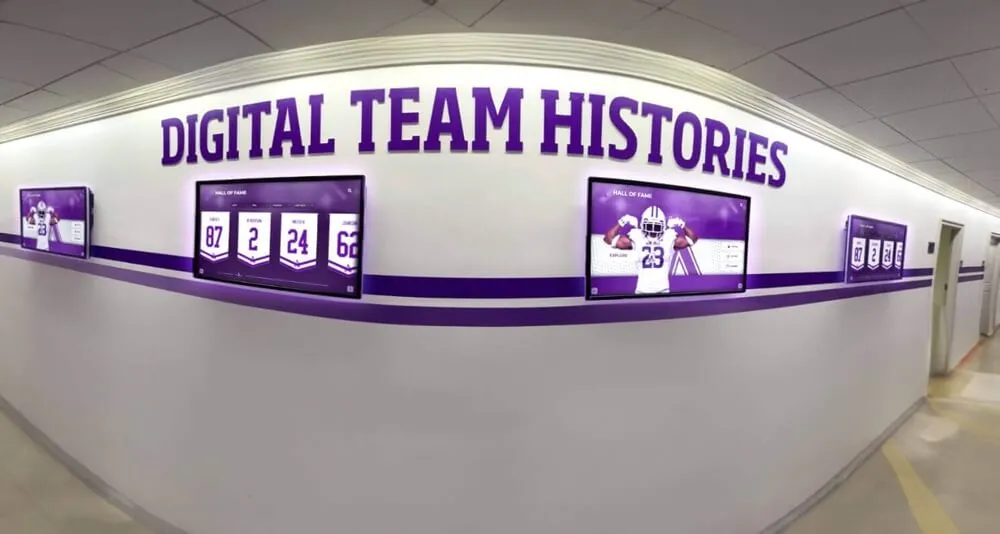
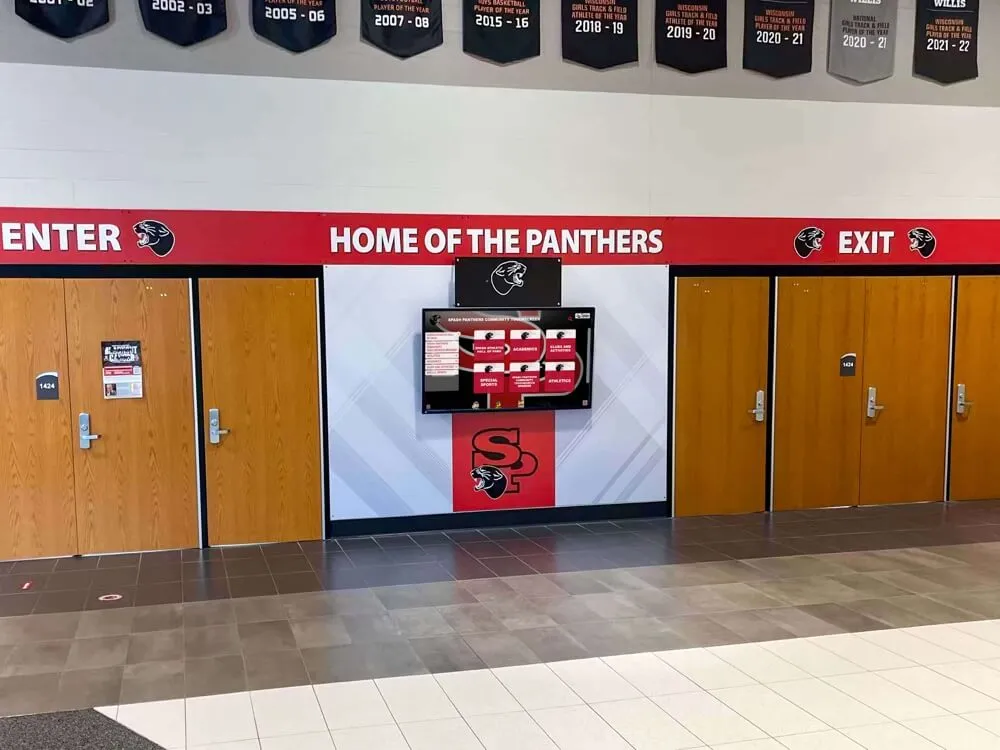
Athletic records and team histories preserved in digital displays represent the institutional memory that survives officer transitions—while administrative financial and membership records follow a different lifecycle governed by a written document destruction policy
Why Booster Clubs Need a Written Document Destruction Policy
Most booster club governance conversations focus on the front end of the records lifecycle: how to collect dues, process donations, document expense approvals, and file required forms. The destruction policy governs the back end—what happens to those records once their useful life ends.
Three specific risks drive the need for a written policy:
Premature destruction exposes the organization to audit and legal risk. Booster clubs that destroy financial records before their required retention period may be unable to respond to IRS inquiries, district audits, or donor disputes. If a sponsor disputes whether a recognition tier was delivered, records that were destroyed before the dispute arose cannot be produced.
Indefinite retention creates privacy risk and organizational burden. Membership rosters, donor contact information, and volunteer sign-up records that are retained without limit expose personal data to breach risk long after the individuals’ relationships with the organization have ended. An officer departing after two seasons should not be handing over a decade’s worth of personal contact data with no plan for its eventual destruction.
Undocumented destruction leaves no proof. Destroying records without a log creates a credibility problem if questions arise later. A signed destruction log showing who destroyed what, when, and by what method is the organization’s evidence that disposal was authorized, complete, and handled securely.
Booster Club Record Categories and Retention Schedule
The following schedule reflects widely cited nonprofit governance guidance and IRS publication recommendations. Applicable state law, district policy, and your organization’s own corporate structure may require different periods. Verify this schedule with qualified legal counsel before adopting it.
| Record Category | Examples | Minimum Retention | Notes |
|---|---|---|---|
| Permanent records | Articles of incorporation, bylaws, IRS determination letter, EIN documentation | Permanent | Never destroy; transfer to successor officers |
| Annual governance | Meeting minutes, board resolutions, officer election records | 7 years minimum; many advisors recommend permanent | Minutes record formal decisions that may be referenced years later |
| Financial statements | Annual financial reports, audit results, reconciliation summaries | 7 years | Applies to any fiscal year in which IRS filings were made |
| IRS filings | Form 990, 990-EZ, or 990-N; Form 1099 and related | 7 years | IRS has up to 6 years to assess tax in cases of underreported income |
| Bank records | Bank statements, canceled checks, deposit records, reconciliation workpapers | 7 years | Required for audit response; retain with related expense documentation |
| Expense records | Receipts, reimbursement requests, purchase orders, dual-signature approval forms | 7 years | Connect each expense record to the corresponding bank statement period |
| Sponsor agreements | Signed sponsorship contracts, benefit delivery documentation, renewal records | 7 years after contract end | Retain longer if any performance dispute is open or foreseeable |
| Donor acknowledgment letters | Written gift acknowledgments for contributions over $250 | 7 years | Required for donor’s tax substantiation; retain IRS Form 8283 records |
| Grant records | Grant applications, award letters, reporting records, compliance documentation | 7 years after grant close | Some grantors require longer retention; check individual grant agreements |
| Membership records | Dues payment records, membership applications, benefit delivery records | 3 years after membership ends | Review state association requirements for member data handling |
| Event records | Event contracts, vendor agreements, ticket revenue reconciliations | 3–5 years | Retain longer if any pending dispute or insurance claim exists |
| Employment and contractor records | IRS Form W-9, independent contractor agreements, payment records | 7 years | Apply to any compensated individual or contractor |
| Insurance policies | Active and expired general liability, directors and officers, and event policies | Permanent for policy certificates; 7 years for claims records | Expired policies may be referenced for claims that surface years later |
| Correspondence | Significant donor, sponsor, or district correspondence | 3–7 years depending on subject | Retain longer if correspondence relates to a disputed transaction |
| Routine administrative records | Event flyers, general announcements, duplicate copies | 1–2 years | These are the records most safely destroyed after their administrative use ends |
Recognition Records: A Special Category
Recognition records—documents related to hall-of-fame nominations, donor wall placements, sponsor recognition tiers, and athlete honor boards—occupy a category that does not fit neatly into standard retention schedules.
Administrative records connected to a specific recognition decision (nomination forms, selection committee notes, sponsor benefit delivery confirmations) follow the general schedule above. But the underlying recognition data—who was honored, in what year, under what criteria—is institutional history that many programs treat as permanent.
Athletic department website pages for records and recognition history describe how schools preserve this type of data in formats that outlast any single officer generation or paper filing system. Programs that migrate recognition records to a digital archive before destroying paper files can satisfy both the destruction policy’s timeline and the institutional need for permanent access to the historical record.
A destruction policy for recognition records should distinguish explicitly between:
- Administrative process records (nomination paperwork, selection criteria documents, committee sign-off forms) — destroy after retention period
- Recognition decision records (the actual record of who was recognized, when, and under what program) — treat as permanent institutional history
That distinction prevents the inadvertent destruction of program history while still allowing administrative files to follow the standard schedule.
The Litigation and Audit Hold: When Destruction Must Stop
A destruction policy must include a litigation hold provision—a procedure for suspending all document destruction when litigation is filed, threatened, or reasonably anticipated, or when an audit request or government inquiry is received. Destroying documents after a hold obligation attaches may constitute spoliation, with consequences ranging from adverse inference instructions in litigation to civil or criminal liability.
The litigation hold workflow for a booster club should follow these steps:
Step 1 — Trigger identification The hold obligation attaches when the organization receives a legal complaint, a subpoena, an IRS notice, a written demand letter, a district audit request, or when a board officer becomes aware that legal action or an official inquiry is reasonably anticipated. The board president, treasurer, or designated records officer is responsible for identifying when a trigger has occurred.
Step 2 — Immediate suspension of destruction Upon identifying a trigger, the records officer issues a written hold notice to all officers and volunteers with custody of any relevant records. The notice instructs them to stop all destruction of potentially relevant documents and to preserve any records in their possession, including digital files, email, and cloud storage.
Step 3 — Scope identification The records officer, in consultation with legal counsel, identifies the categories of records likely relevant to the matter. The hold applies to all records in those categories, regardless of whether their scheduled retention period has passed.
Step 4 — Documentation of the hold The hold notice, the date issued, the names of individuals notified, and the categories of records covered are documented and retained in the organization’s governance file.
Step 5 — Periodic review The hold remains in effect until the litigation or inquiry is formally resolved. The records officer reviews the hold at regular intervals to determine whether it can be lifted. Lifting the hold requires written confirmation from legal counsel when litigation is involved.
Step 6 — Return to normal schedule When the hold is lifted, records that were suspended from their normal destruction schedule are evaluated against the current schedule and destroyed according to the standard process if their retention period has passed.
Secure Destruction Methods by Record Type
The method of destruction matters. Throwing donor contact lists into a recycling bin is not secure disposal. A destruction policy should specify the required method for each category of record based on its sensitivity.
| Record Type | Sensitivity Level | Required Disposal Method |
|---|---|---|
| Financial records (bank statements, canceled checks, expense reports) | High | Cross-cut shredding or third-party certified destruction service |
| Donor contact information (addresses, emails, giving history) | High | Cross-cut shredding for paper; verified deletion or overwrite for digital |
| Membership rosters with personal contact data | High | Cross-cut shredding for paper; verified deletion for digital |
| Sponsor agreement originals | High | Cross-cut shredding or return to sponsor per contract terms |
| IRS filings and determination letters (duplicates) | High | Cross-cut shredding; originals are permanent and never destroyed |
| Event contracts and vendor agreements | Moderate | Cross-cut shredding |
| General correspondence | Moderate | Cross-cut shredding or secure recycle bin service |
| Routine administrative records, flyers, announcements | Low | Standard recycle bin acceptable if no personal data present |
| Digital files on retired devices | High | Device wipe using NIST-compliant method, or physical destruction of storage media |
| Email archives with donor or financial data | High | Verified deletion by IT administrator or cloud service provider; confirm deletion with documentation |
For organizations that use a third-party shredding service, the certificate of destruction provided by the vendor serves as the destruction log entry for that batch of records.
Award recognition program governance for athletic departments notes the ongoing administrative overhead that recognition programs require—and the importance of systems that reduce that burden rather than add to it. A contracted shredding service with a fixed schedule eliminates the inconsistency of ad-hoc destruction and ensures that destruction events are documented automatically.
Destruction Log Template
Every destruction event—whether in-house shredding or a contracted service—should be logged. The destruction log is the organization’s proof that disposal was authorized, complete, and handled securely. It should be retained permanently as a governance record.
BOOSTER CLUB DOCUMENT DESTRUCTION LOG

Organization Name: _________________________________
Fiscal Year(s) Covered: ____________________________

Entry No.: _______
Date of Destruction: ________________________________
Records Destroyed (Category): ______________________
Date Range of Records Destroyed: ___________________
Volume (approximate pages or boxes): ________________
Method of Destruction: [ ] In-house shredding
                        [ ] Third-party shredding service
                        [ ] Digital deletion (describe method):
                            ______________________________
                        [ ] Other: ______________________
Vendor Name (if third-party): _______________________
Certificate of Destruction Attached: [ ] Yes  [ ] N/A
Authorization: Destruction authorized by: ___________
               Title: ______________________________
Retention Hold Review: Confirmed no active litigation,
  audit, or hold affecting these records: [ ] Yes
Destroyed By (print name): _________________________
Signature: ______________________ Date: ____________
Witnessed By (print name): _________________________
Signature: ______________________ Date: ____________

Notes: ____________________________________________
__________________________________________________
The destruction log entry should be completed at the time of destruction, not reconstructed later. Retain the log in the organization’s permanent governance file alongside the retention schedule, the policy document, and any certificates of destruction received from vendors.
Sample Policy Language
The following language is a starting framework. Review it with legal counsel before adoption. Adjust retention periods to reflect applicable state law, district requirements, and your organization’s specific structure and filing history.
DOCUMENT RETENTION AND DESTRUCTION POLICY
[Organization Name] Booster Club
Adopted: ___________  Last Reviewed: ___________

PURPOSE
This policy establishes minimum retention periods for the
organization's records, procedures for secure destruction
of records that have reached the end of their retention
period, and a litigation and audit hold procedure that
suspends destruction when legal or regulatory proceedings
are pending or reasonably anticipated.

SCOPE
This policy applies to all records created or received by
the organization in any format, including paper, electronic
files, email, and records stored in cloud-based systems.

RETENTION SCHEDULE
Records shall be retained for the minimum periods set forth
in the schedule attached to this policy as Exhibit A.
Permanent records shall never be destroyed. Records subject
to an active litigation or audit hold shall not be destroyed
regardless of their scheduled retention period.

LITIGATION AND AUDIT HOLD
Upon receipt of a legal complaint, subpoena, government
inquiry, audit notice, or written demand, or upon reasonable
anticipation of any of the foregoing, the board president
or designated records officer shall immediately issue a
written hold notice suspending destruction of all
potentially relevant records. The hold remains in effect
until lifted in writing following resolution of the matter.
Destruction of records subject to a hold is prohibited.

SECURE DESTRUCTION
Records shall be destroyed by the method specified in the
destruction methods schedule attached as Exhibit B. No
record containing personal data, financial information, or
donor or sponsor information shall be disposed of by
ordinary recycling or waste disposal.

DESTRUCTION LOG
A destruction log entry shall be completed for every
destruction event using the form attached as Exhibit C.
Destruction log entries are permanent records and shall
never be destroyed.

ANNUAL REVIEW
The board shall review this policy annually and confirm
that officers with records custody have reviewed the
retention schedule and destruction procedures.

RESPONSIBILITY
The treasurer is responsible for financial records retention
and destruction. The board president is responsible for
governance records. The records officer designated by the
board is responsible for maintaining the destruction log
and issuing litigation hold notices.

VIOLATIONS
Unauthorized destruction of records—including destruction
that violates this policy, destroys records subject to a
hold, or fails to follow required disposal methods—is a
governance violation subject to board review and may result
in removal from office. Officers who become aware of a
potential hold obligation and fail to issue a hold notice
may bear personal responsibility for consequences arising
from the resulting destruction.
Digital Records and Cloud Storage
Booster clubs increasingly rely on cloud-based accounting software, email, document storage, and recognition management platforms. A document destruction policy must address these systems explicitly, because “deleting” a digital file does not always mean the data is gone.
Key questions to address in the policy for digital records:
- Cloud accounting software — What does “deletion” mean in the platform? Are deleted records still accessible to the vendor? What export format is available before account closure?
- Email — Does the organization’s email system auto-archive? Who controls the archive? When a volunteer’s personal email account holds organizational records, how are those records retrieved and destroyed?
- Shared drives — Are organizational records stored in a personal account (Google Drive, Dropbox) held by an officer? What is the transition procedure when that officer departs?
- Recognition and CRM platforms — Does the platform retain donor and membership data after account termination? What data deletion confirmation does the vendor provide?
For each platform, the policy should identify the deletion procedure, confirm what the platform’s own retention and deletion practices are, and specify how the organization documents that deletion has occurred.
Best interactive kiosk and display software for schools covers the operational capabilities that recognition platforms should offer—including data management, access controls, and content administration. For programs building long-term digital recognition archives, those platforms are not subject to destruction schedules in the same way administrative records are. The distinction is that the recognition data itself is permanent institutional history, while the administrative records that document how that recognition was governed follow the standard retention timeline.
Sports marketing and recognition program examples for schools illustrate how athletic programs build the type of institutional presence—across displays, digital platforms, and physical archives—that depends on a clear separation between records that are kept forever and records that are disposed of once their administrative purpose is served.
Transition Procedures: What Officers Hand Over and What Gets Destroyed
Officer transitions are the moment when document retention and destruction policy failures are most likely to surface. An outgoing treasurer with five years of financial files and no written policy must make individual judgments about what to keep and what to discard—judgments made without the benefit of legal guidance and under the time pressure of a leadership handoff.
A written policy changes that dynamic by specifying exactly what must transfer and what may be destroyed at year-end.
Records that must transfer to the incoming officer:
- All financial records for the current and prior six fiscal years
- All open sponsor agreements and recognition commitments
- The destruction log (permanent)
- Permanent governance records (articles, bylaws, IRS determination letter)
- Any records subject to an active litigation or audit hold
Records that may be destroyed at transition (if retention period has passed and no hold is active):
- Financial records older than the required retention period
- Membership and volunteer records for members who departed more than the required period ago
- Event records older than the required retention period
- Routine administrative records with no ongoing relevance
Records that require special handling at transition:
- Digital records stored in accounts held in the officer’s personal name
- Email held in a personal account containing organizational records
- Platform credentials for accounting, recognition, or communication tools
Digital showcase guides for class recognition and school athletic programs describe how schools manage the transition from one year’s recognition cohort to the next—a process that mirrors the records transition challenge at officer handoff. In both contexts, the question is the same: what carries forward permanently, and what completes its lifecycle and is documented as closed.
Connecting Document Destruction to Recognition Archives
The records lifecycle for a booster club ends not just with disposal but with the decision about what becomes part of the permanent institutional record. Financial records, membership rosters, and administrative files have a retention period and a destruction date. Recognition records—the names of honored athletes, the history of scholarship recipients, the record of donor-named spaces—have no destruction date at all.
Athletic awards and recognition program structures for schools describe the range of programs that rely on accurate, durable record-keeping to deliver recognition commitments over time. The document destruction policy is the policy that protects those records from accidental disposal while ensuring that the administrative layer around them follows a disciplined retention and destruction schedule.
Programs that separate permanent institutional history from time-limited administrative records—and that document both categories explicitly in their retention and destruction policy—are in the best position to answer the question that eventually comes from every direction: do you have the records to show what you said you would do, and do you have a process for what happens to them when their purpose is served?

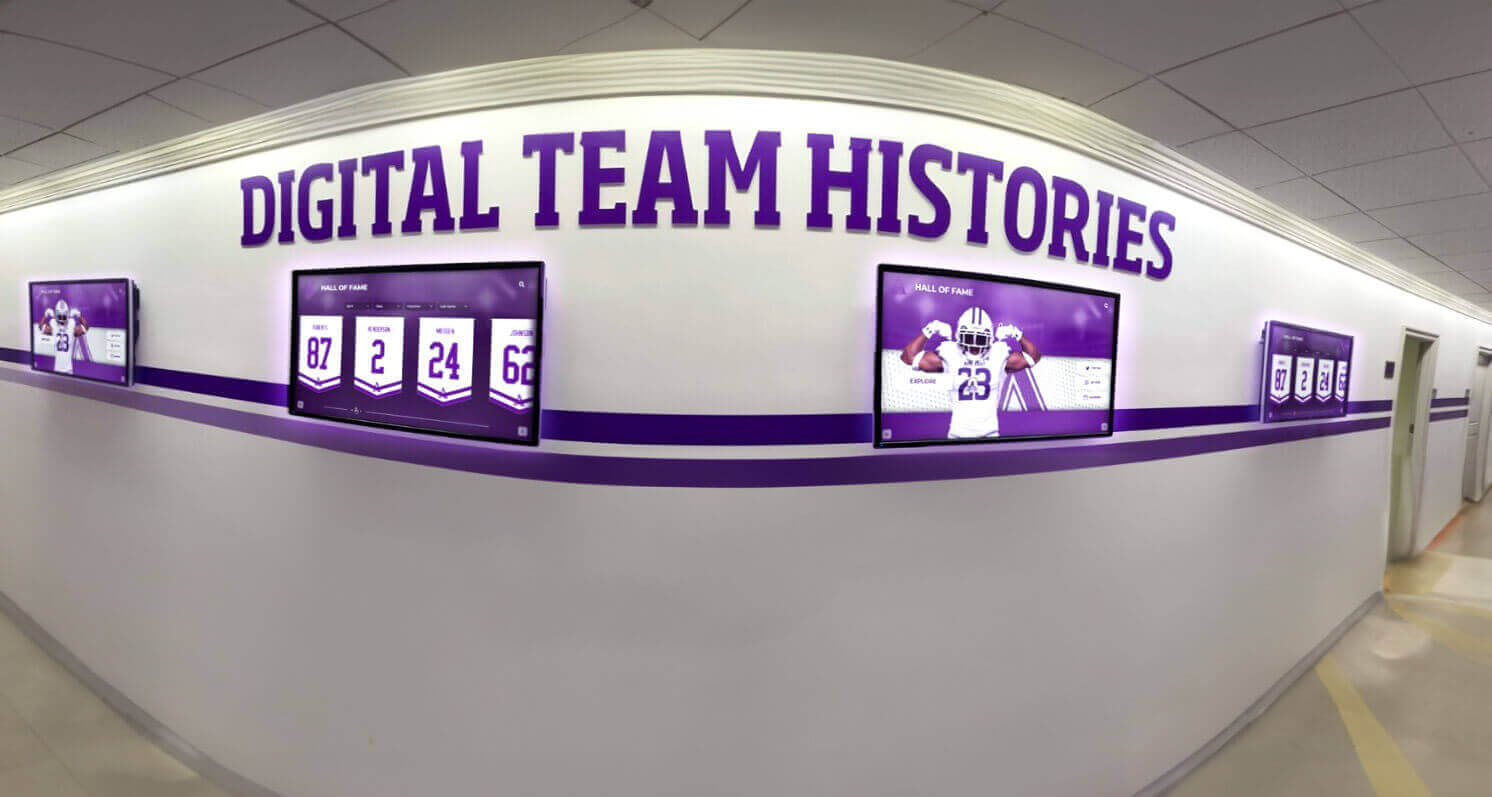
Athletic honor boards represent the permanent institutional record that a document destruction policy preserves in perpetuity—while the administrative records that document how honorees were selected, funds were managed, and recognition was delivered follow a structured retention and disposal schedule
Wrestling and athletic awards display programs demonstrate how physical and digital recognition infrastructure becomes the durable artifact that outlasts the administrative records around it. A document destruction policy is partly what makes that durability possible: by clearing the administrative layer on a documented schedule, the policy ensures that the permanent record is preserved intentionally, not by default.
Frequently Asked Questions
Q: Does a booster club below the Form 990 filing threshold still need a document destruction policy? Yes. The litigation hold obligation, the privacy exposure from indefinite retention of member and donor data, and the risk of premature destruction that leaves the organization unable to respond to a district audit all apply regardless of filing threshold. The policy may be simpler for smaller organizations, but the need for one is not conditional on annual revenue.
Q: What if officers have kept records in their personal email or personal cloud storage? This is a common and significant governance gap. The transition procedure in your policy should address it directly: require officers to identify any organizational records held in personal accounts, transfer those records to an organizational account before departure, and document that the transfer occurred. Records in personal accounts that are not transferred are at risk of accidental deletion and are not subject to the organization’s hold procedures.
Q: Can the destruction log itself ever be destroyed? No. The destruction log is a permanent record. It documents that specific records were destroyed at a specific time by an authorized person using a secure method. Destroying the log would undermine the evidentiary value of the entire destruction policy.
Q: How does the organization handle records that belong to a joint program with the school district? Joint programs—athletic booster clubs with a shared relationship to district administration—should align their retention policy with district requirements. The district’s policy may impose longer retention periods or require that certain records be transferred to district custody rather than held by the booster club. Confirm alignment with the district’s records and information management office before adopting an independent schedule.
Q: What if the organization has no designated records officer? If the policy assigns records responsibility to a “designated records officer” and no one has been designated, the policy should specify a default—typically the board president or treasurer. Smaller booster clubs often assign records responsibility to the treasurer as a default, with the board president handling governance records. The key is that a specific person is accountable, not the board collectively.
Q: Should vendor contracts for recognition displays and donor wall installations be retained with the general contract file? Yes, and they warrant special attention. Vendor contracts for recognition infrastructure should be retained for the life of the installation, not just for the standard contract retention period. If a display installed in year one of a five-year contract has ongoing maintenance obligations, the original contract is a live document for the duration of the relationship. Flag long-term recognition contracts for a longer retention period in your schedule.
Q: Is a handshake or verbal agreement with a sponsor subject to the policy? The policy covers all organizational records, which includes any documentation of verbal agreements. If a commitment to a sponsor was followed by an email confirming the terms, that email is a record subject to the policy. Programs with verbal-only sponsor arrangements should create a written summary of the key terms and retain it as if it were a signed agreement.
Q: How does the policy interact with state privacy laws governing personal data? Several states have enacted privacy laws that impose specific obligations on organizations collecting and retaining personal data—including requirements to delete data upon request or within specific periods after a relationship ends. A booster club’s retention schedule for membership, donor, and volunteer data should be reviewed in light of applicable state law. This is an area where legal counsel familiar with your state’s requirements is particularly important.
When your program is ready to connect its governance framework to a recognition platform built for permanent institutional accuracy, long-term stewardship, and documented delivery of every sponsor and donor commitment—explore how Rocket Alumni Solutions supports school athletic programs and booster clubs with managed recognition systems designed to honor the records lifecycle from first entry to permanent archive.