Booster clubs serve as the financial backbone of school athletic programs, funding equipment, uniforms, facility improvements, travel, and countless other expenses that enable student-athletes to compete at their best. These volunteer-led organizations depend entirely on parent contributions, business sponsorships, fundraising events, and community support to generate the resources athletic departments need but institutional budgets cannot provide.
Yet many booster clubs struggle to maintain consistent financial support. Donors who contribute generously one season disappear the next. Business sponsors fail to renew commitments. Fundraising participation drops as volunteer leadership changes. Meanwhile, athletic programs face escalating costs for competition fees, equipment upgrades, facility maintenance, and travel—creating widening gaps between available resources and program needs.
According to education funding research, many school athletic programs rely on booster club contributions for 30-50% of their operational budgets. When donor recognition approaches fail to inspire sustained giving, athletic programs suffer directly through reduced opportunities, aging equipment, limited travel, and diminished competitive capacity that affects hundreds of student-athletes across multiple sport seasons.
This comprehensive guide explores evidence-based strategies for booster club donor recognition displays that celebrate supporters appropriately, inspire continued giving, build community pride in athletic programs, and create sustainable funding systems ensuring long-term program success. Whether your booster club manages established recognition programs or seeks to launch new initiatives, these frameworks provide practical approaches for honoring donors while strengthening the financial foundation athletic programs require.
Effective booster club recognition requires balancing multiple objectives simultaneously: acknowledging diverse contribution types from financial gifts to volunteer hours to in-kind donations, maintaining year-round visibility for supporters rather than limiting acknowledgment to single events, creating flexible systems that accommodate changing donor participation, and inspiring sustained multi-year support rather than one-time contributions that leave programs perpetually fundraising.

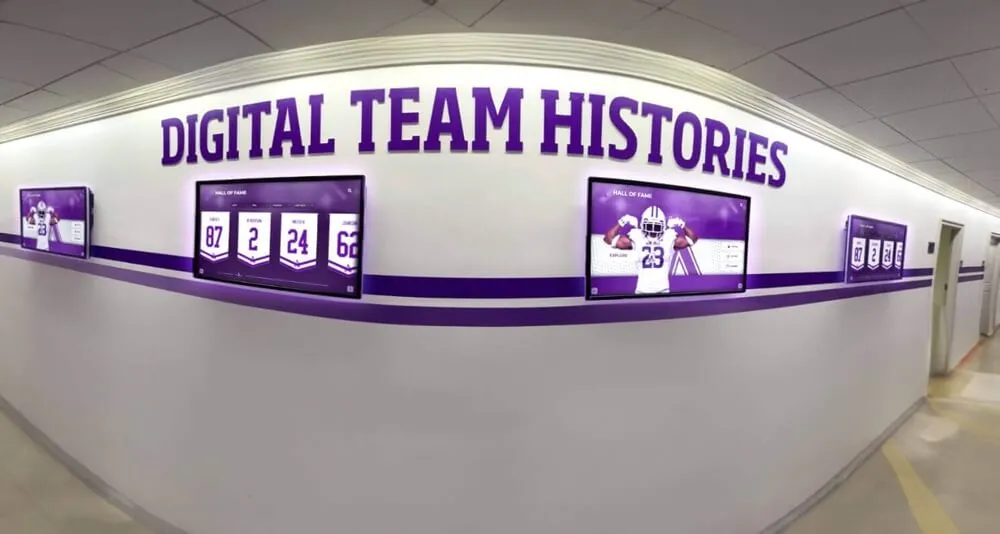
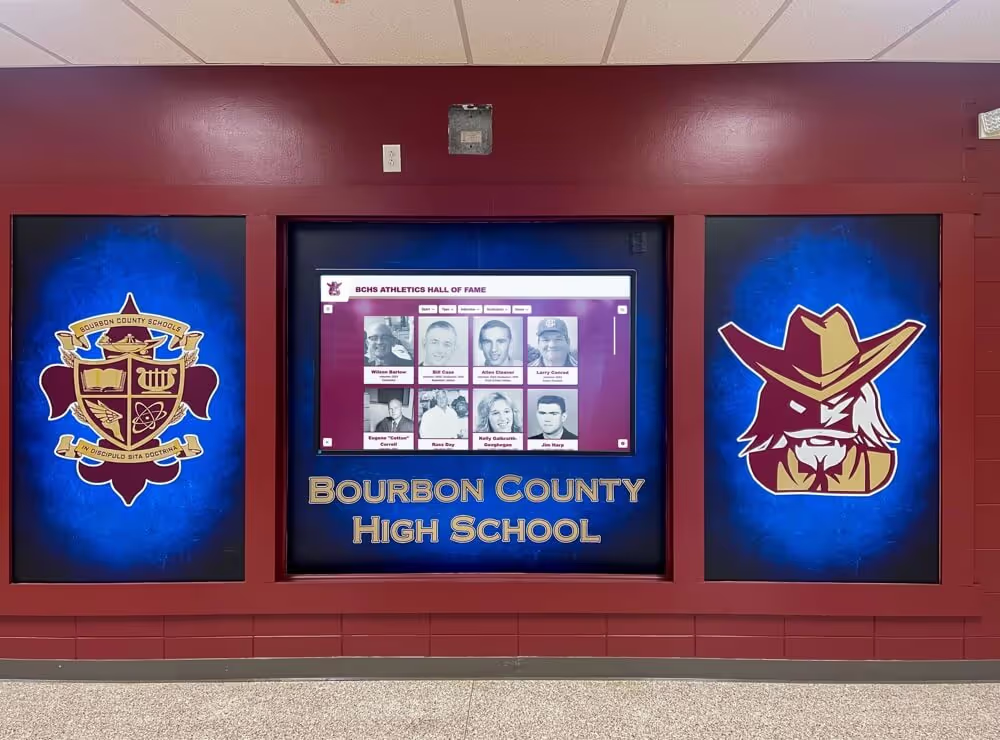
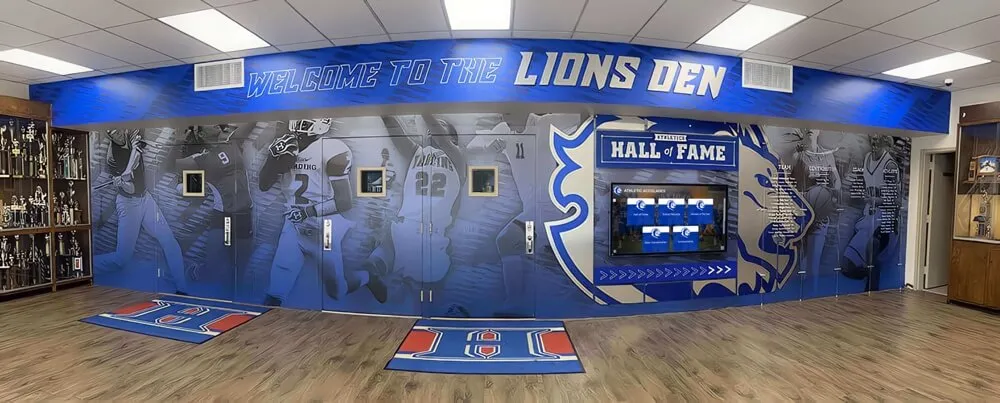
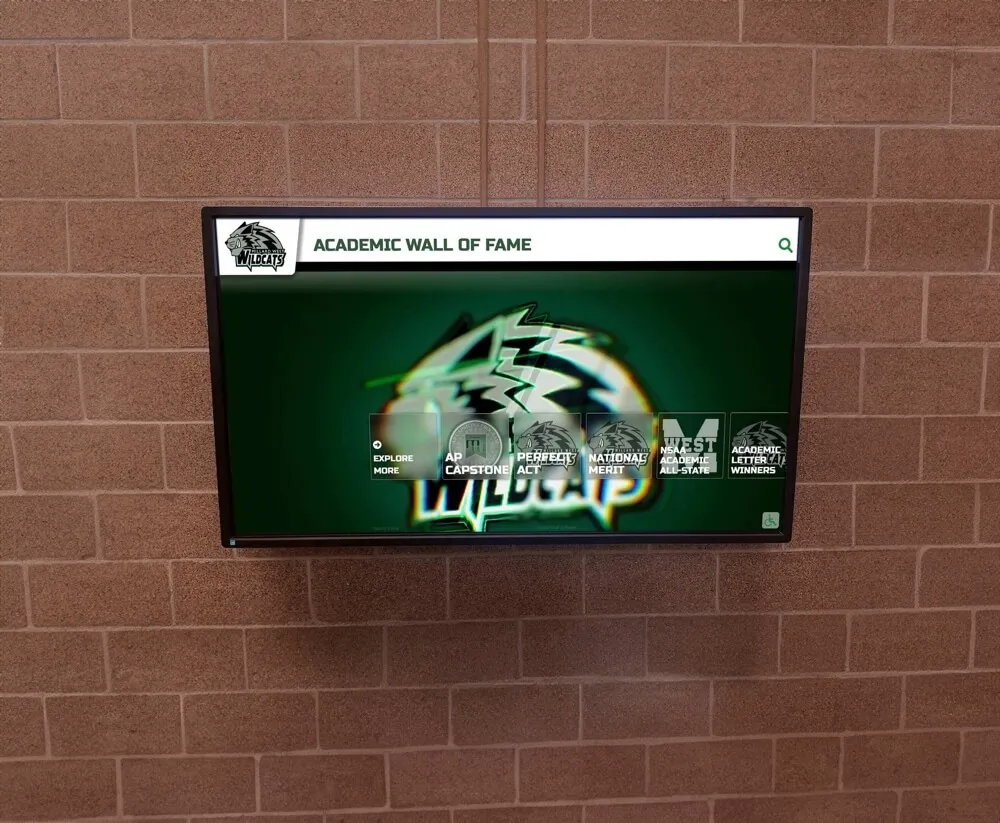
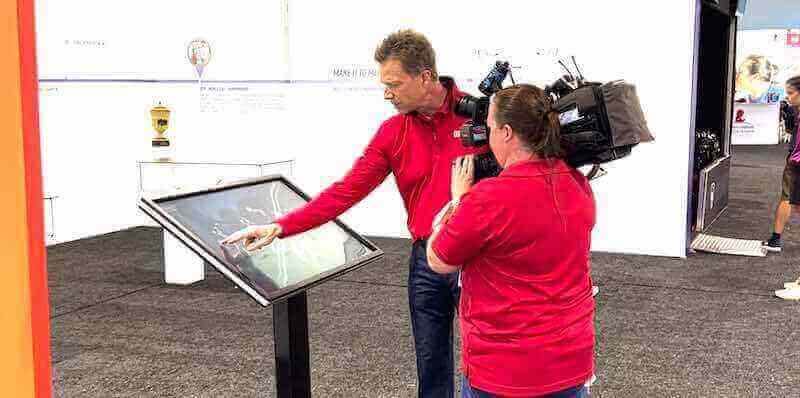
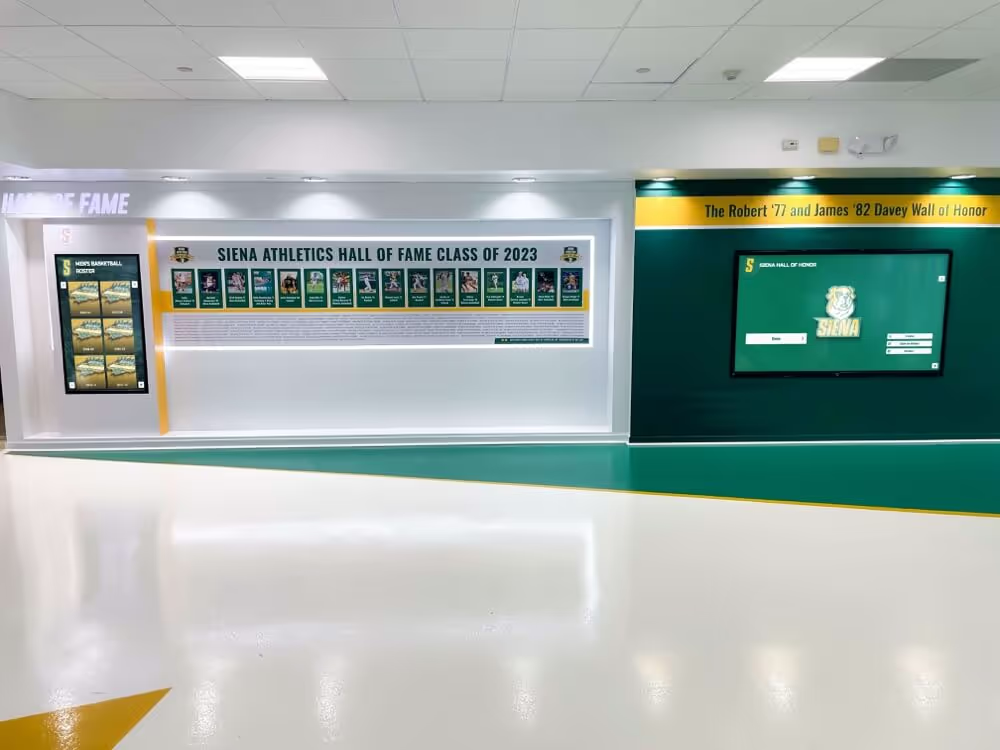
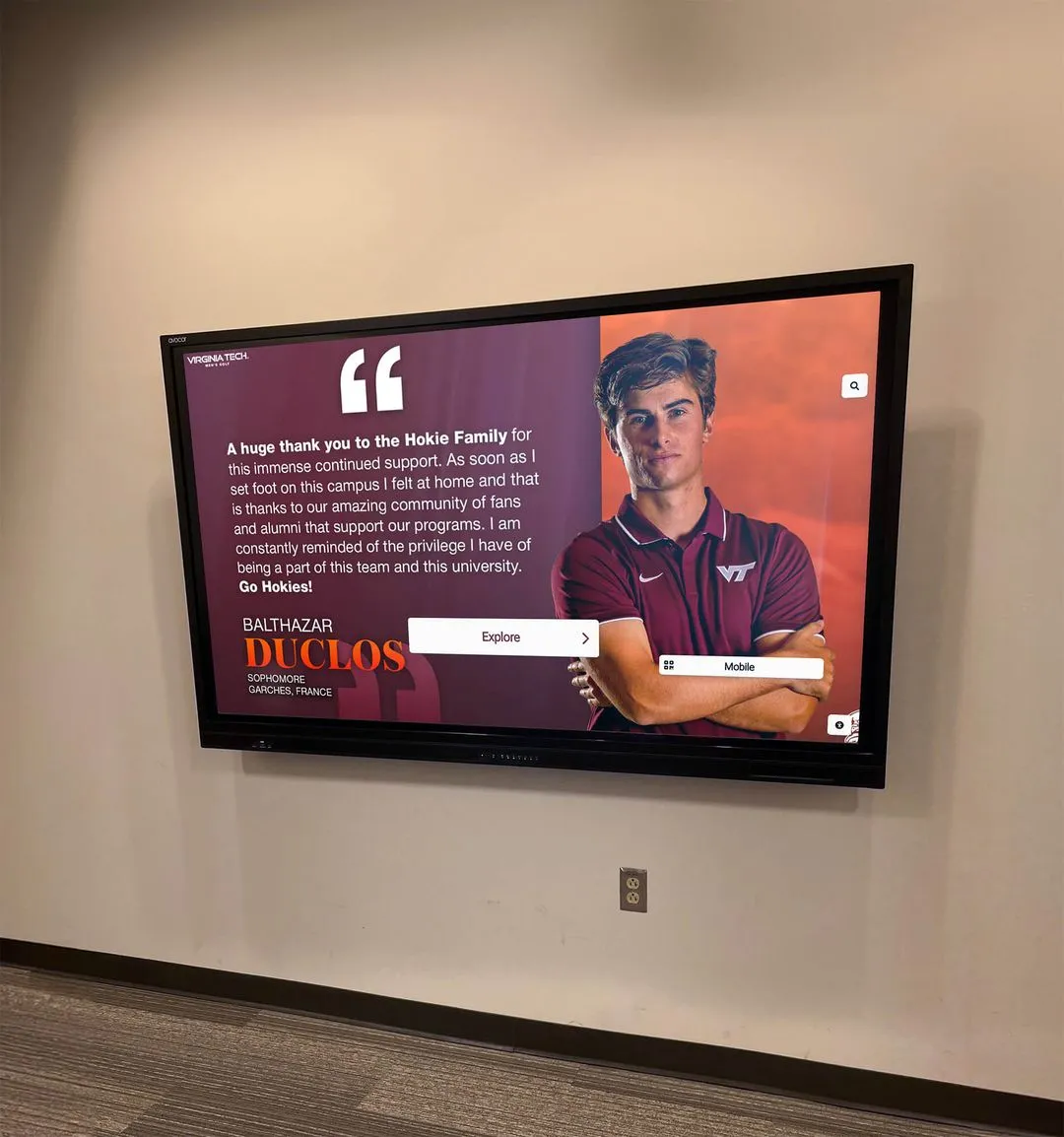
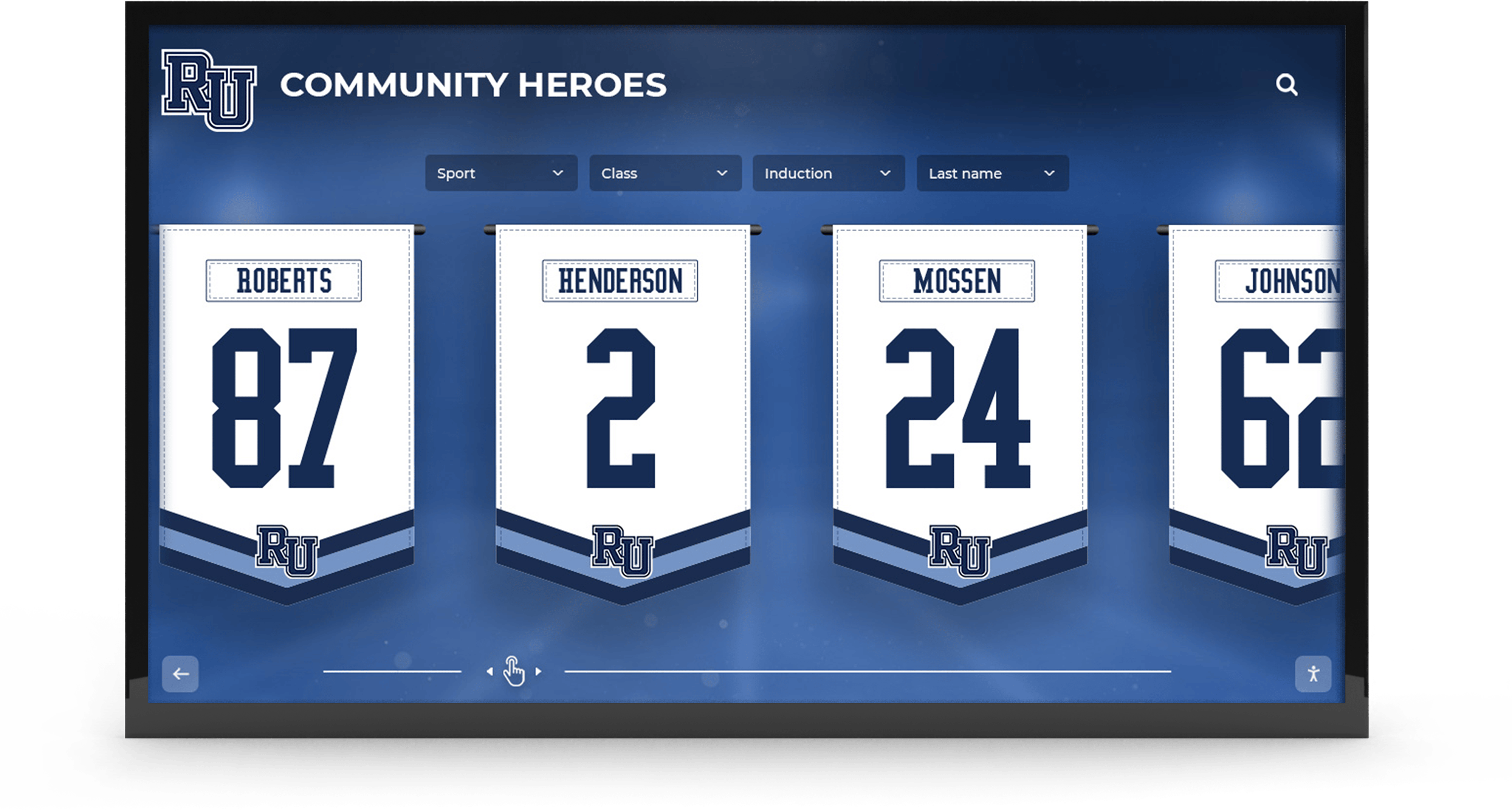
Modern booster club recognition displays celebrate supporters year-round while inspiring continued community engagement
Understanding Booster Club Donor Recognition: Unique Challenges and Opportunities
Before exploring specific recognition strategies, understanding what makes booster club acknowledgment different from traditional institutional fundraising helps organizations design approaches aligned with volunteer-led dynamics and community-based support models.
The Distinctive Nature of Booster Club Giving
Booster club support differs fundamentally from typical school or nonprofit fundraising in ways that demand tailored recognition approaches:
Diverse Contribution Types
Booster club supporters contribute through multiple channels requiring different acknowledgment approaches. Financial contributions range from annual membership dues to major facility project gifts. In-kind donations include equipment, meals for teams, transportation services, or professional expertise. Volunteer time encompasses everything from concession stand operations to event coordination to administrative leadership. Successful recognition systems acknowledge all contribution forms rather than focusing solely on monetary gifts.
Rotating Participation Patterns
Unlike alumni or institutional donors who may support organizations for decades, booster club participation typically follows student enrollment patterns. Parents contribute intensively during the years their children participate in athletics, then often reduce or cease involvement after graduation. This natural turnover creates perpetual challenges for maintaining donor bases and institutional memory about past supporters. Recognition systems must accommodate both current active donors and historical supporters whose contributions built program foundations.
Community-Based Funding Models
Booster clubs depend on local community support including businesses that sponsor teams or events, community members without direct student connections, and alumni who remain engaged with programs they participated in years earlier. This geographically concentrated donor base creates opportunities for visible public recognition that inspires peer giving while requiring sensitivity about privacy preferences in close-knit communities where supporters interact regularly beyond booster club contexts.
Program-Specific Support
Many booster clubs organize around individual sports or athletic programs rather than comprehensive athletic departments, creating potential for recognition approaches that compete rather than complement each other. A school might have separate football, basketball, soccer, and swimming booster organizations each pursuing independent fundraising and recognition strategies. Coordinated recognition frameworks ensure equity across programs while maintaining program-specific identity and community.
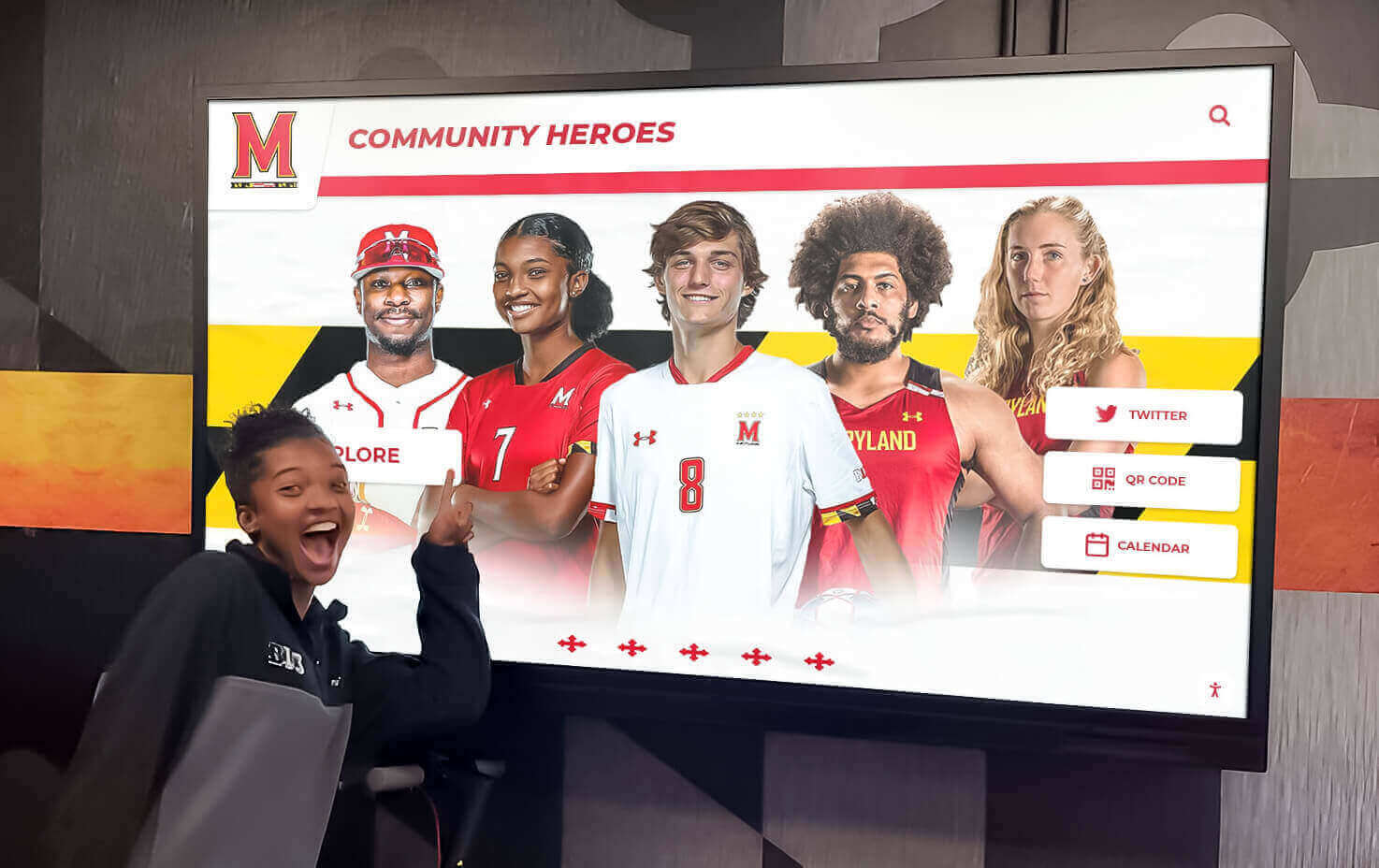
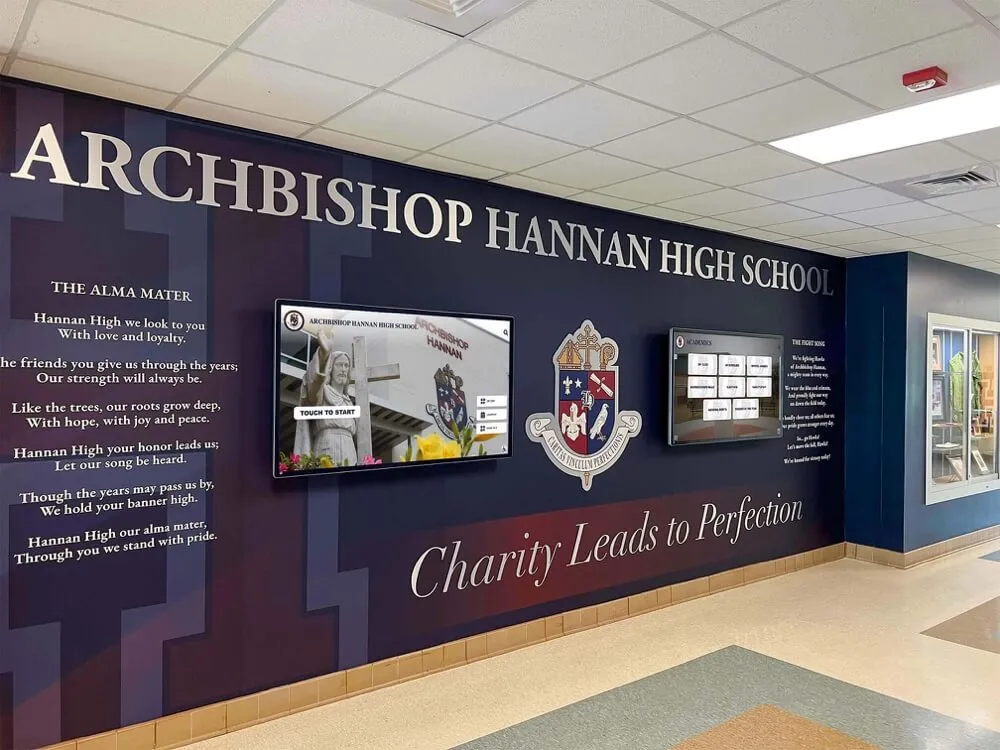
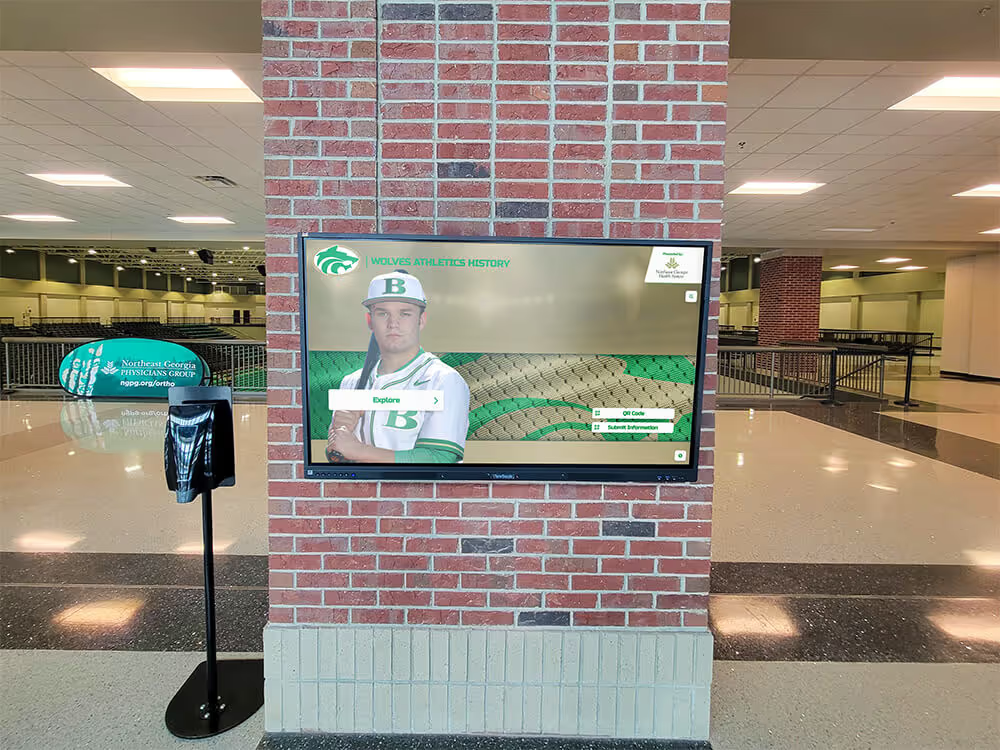
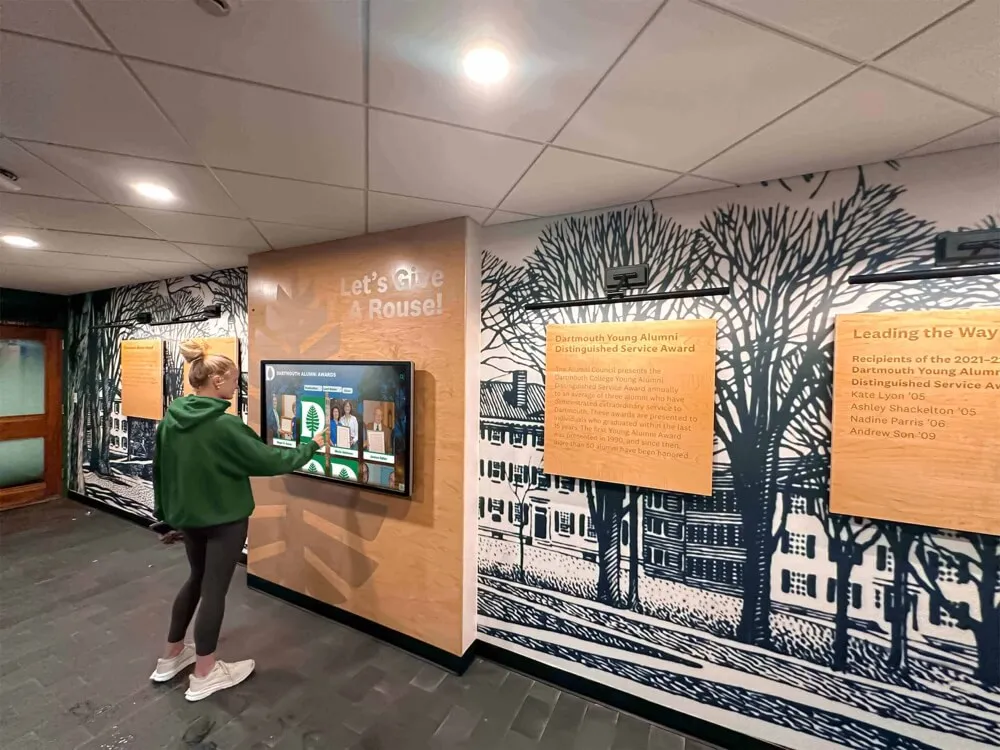
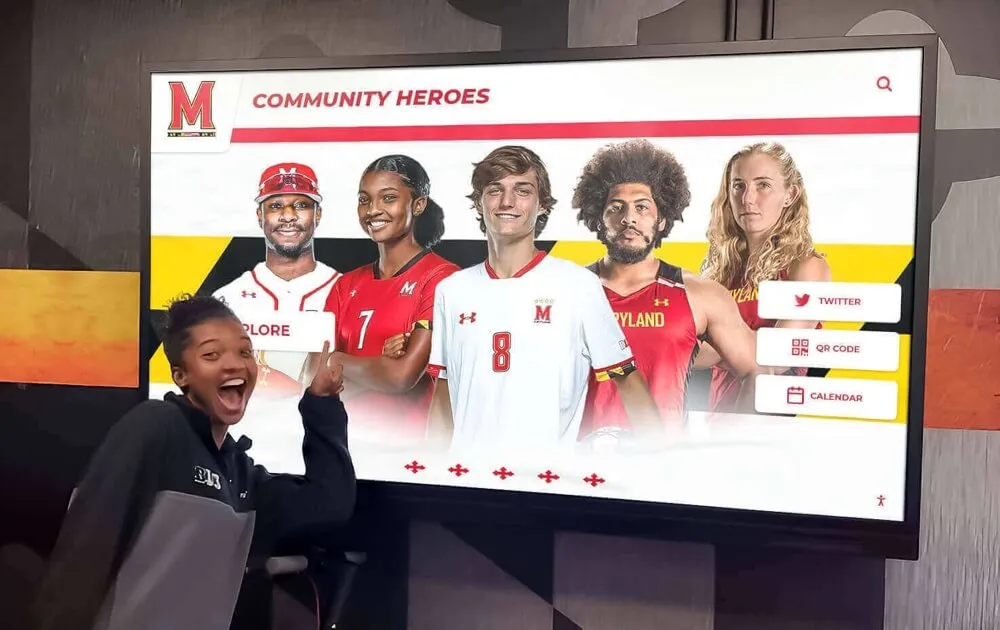
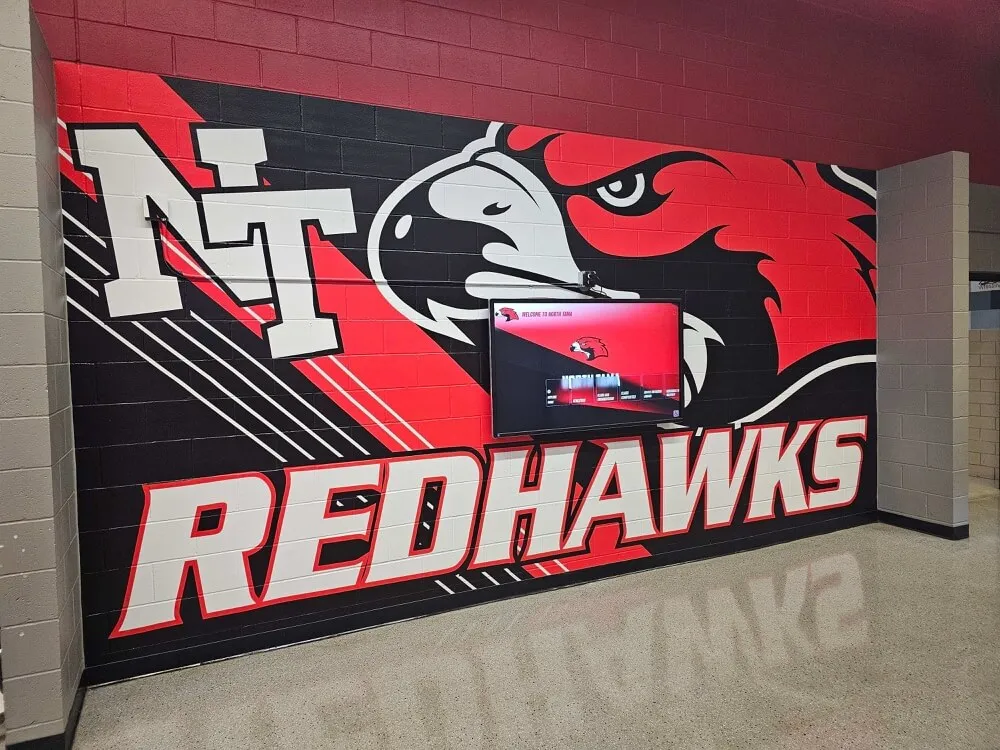
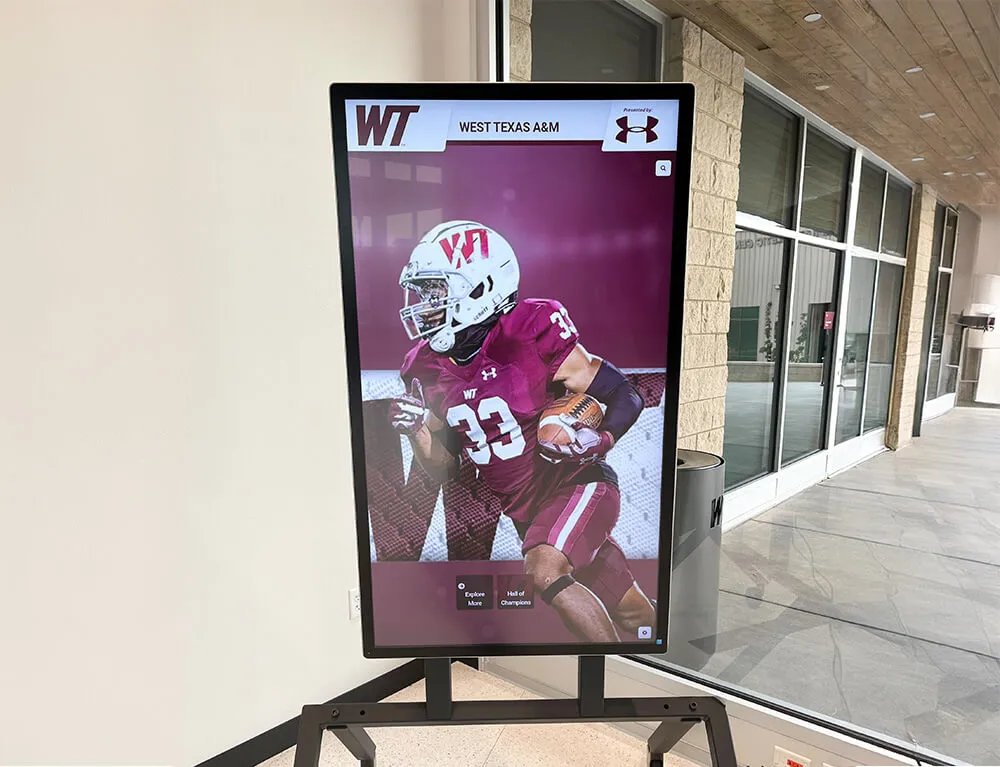
Recognition displays should engage both current athletes and community supporters in celebrating program excellence
Recognition Objectives for Booster Clubs
Effective booster club recognition serves multiple strategic purposes beyond simple acknowledgment:
Sustained Multi-Year Giving
The primary recognition objective involves transforming one-time or single-season contributors into sustained supporters who give year after year regardless of current student enrollment. Recognition that connects donors emotionally to program success rather than just individual student participation encourages continued support even after personal family involvement concludes. According to fundraising retention research, recognized donors demonstrate significantly higher likelihood of making subsequent gifts, making systematic acknowledgment essential for financial sustainability.
Peer Inspiration and Social Proof
Public recognition creates social dynamics that inspire additional giving within communities. When community members see neighbors and local businesses acknowledged for supporting athletic programs, they experience motivation to participate themselves. Visible recognition also validates giving decisions for prospective donors who appreciate confirmation that others value programs sufficiently to contribute financially. This peer influence effect particularly impacts community-based fundraising where donors interact regularly and observe each other’s philanthropic patterns.
Volunteer Recruitment and Retention
Booster clubs require substantial volunteer labor for fundraising events, concession operations, administrative functions, and countless other activities enabling program success. Recognition that honors volunteer contributions alongside financial gifts acknowledges the full scope of support programs require while motivating continued service from time-strapped parents balancing work, family, and community commitments.
Program Pride and Community Building
Recognition displays that celebrate booster club supporters simultaneously showcase athletic program excellence, competitive achievements, and community commitment to student-athlete success. This broader storytelling strengthens community identity around athletic programs while demonstrating to prospective families that programs enjoy robust financial and community support signaling quality and stability.
Explore comprehensive approaches to athletic program recognition that integrate donor celebration with achievement showcasing.
Strategic Recognition Planning for Booster Clubs
Successful booster club recognition begins with thoughtful planning establishing frameworks guiding decisions across multiple sport seasons and volunteer leadership transitions.
Establishing Recognition Principles and Policies
Before implementing specific recognition approaches, booster clubs should articulate core principles governing acknowledgment:
Contribution Valuation Framework
Define how your organization values different contribution types for recognition purposes. Should volunteer hours receive equivalent recognition to financial contributions? How are in-kind donations valued relative to cash gifts? What acknowledgment do business sponsors receive compared to individual family donors? Clear frameworks prevent inconsistencies and perceived favoritism that damage volunteer relationships and donor trust.
Many booster clubs establish equivalency formulas such as valuing volunteer hours at $25 per hour for recognition purposes, or categorizing in-kind donations at fair market value. These transparent approaches ensure all contribution types receive appropriate acknowledgment while maintaining recognition hierarchy that honors major financial commitments appropriately.
Privacy and Preference Policies
Establish clear policies regarding donor recognition preferences including options for public acknowledgment with full details, recognition with names but not amounts, anonymous giving without attribution, or private appreciation without public visibility. Community-based fundraising requires particular sensitivity around privacy given that donors often interact regularly in school, business, and community contexts beyond booster club activities.
Equity Across Programs
If your school operates multiple sport-specific booster organizations, coordinate recognition approaches ensuring no single program dominates acknowledgment while others struggle for visibility. Shared recognition frameworks and potentially combined displays create institutional cohesion while allowing program-specific identity within coordinated systems.
Recognition Duration Standards
Determine how long recognition remains active. Should donor walls display all historical contributors, or focus on recent seasons? When do donors cycle off active recognition lists after their final contributions? Clear standards prevent difficult decisions about removing long-inactive donors or displays that grow unmanageable as historical supporters accumulate.
Digital recognition systems address duration challenges by enabling unlimited historical archives while spotlighting current supporters, providing flexibility traditional static displays cannot match.
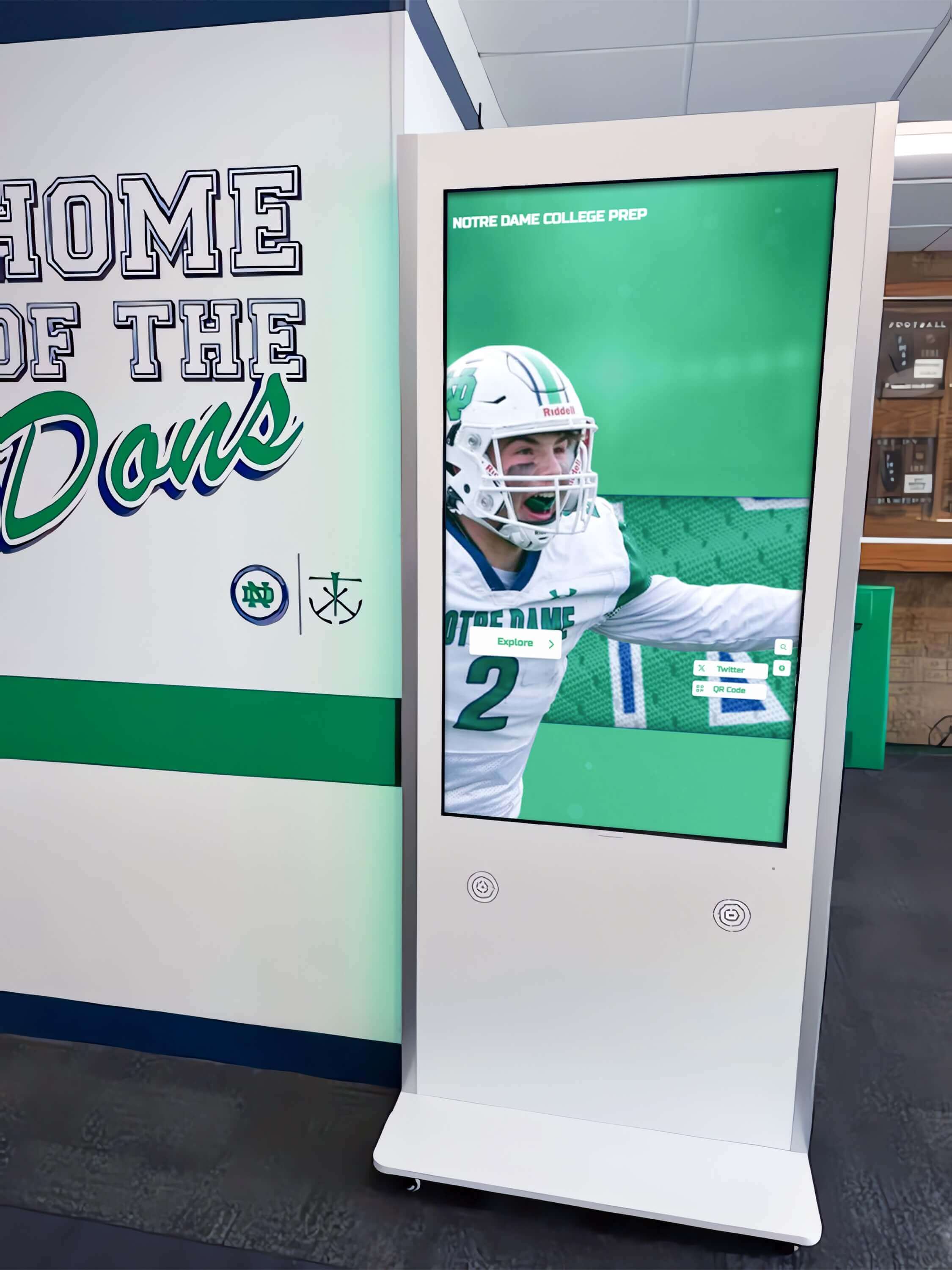
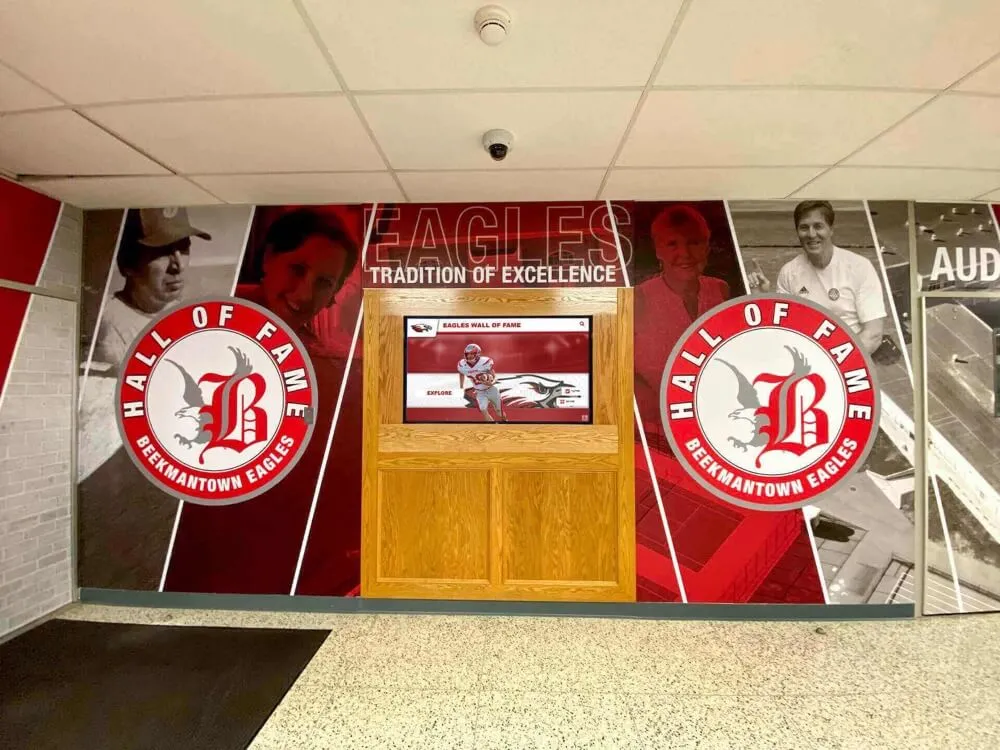
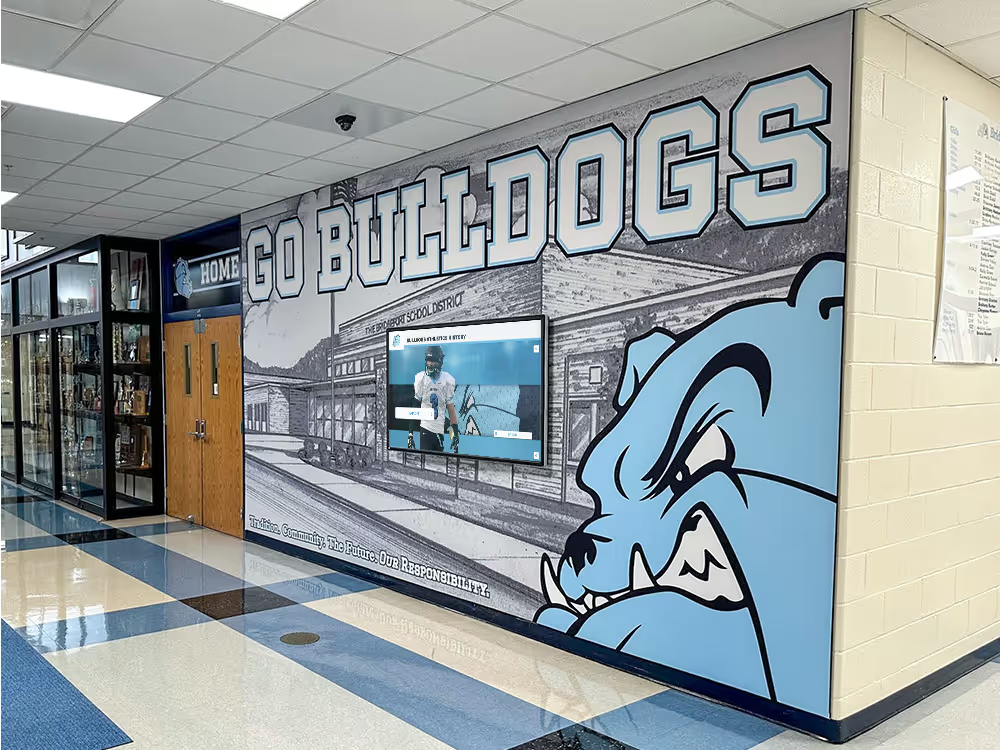
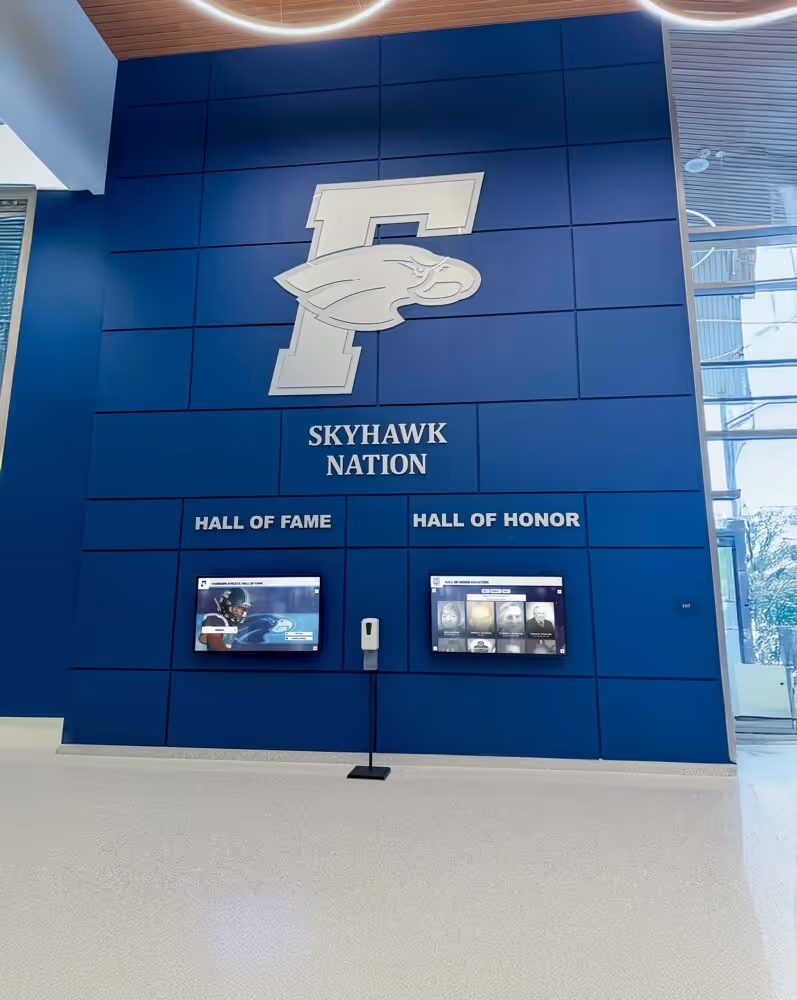
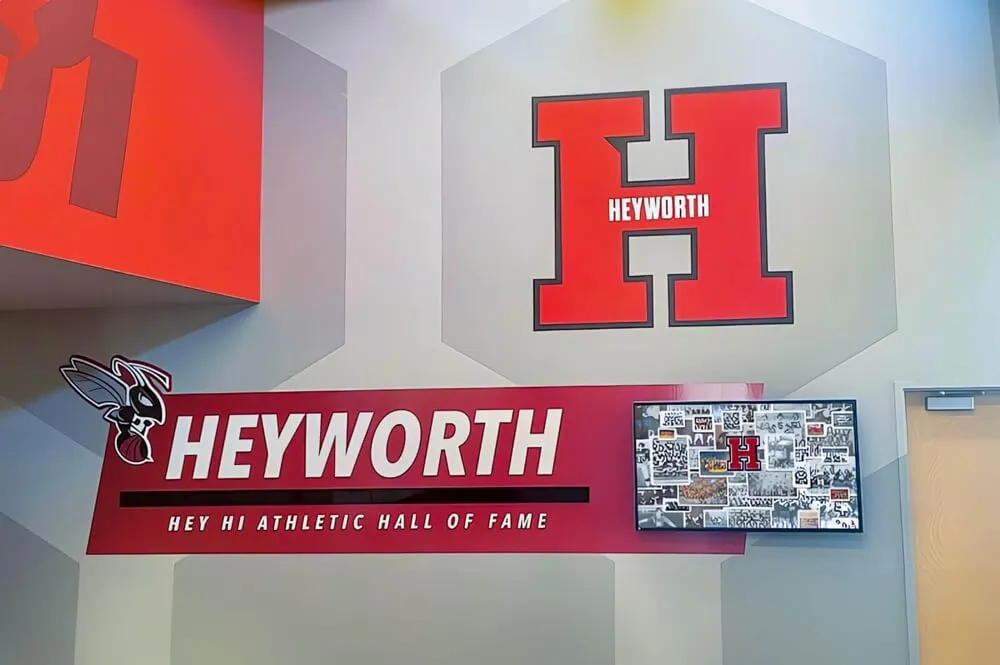
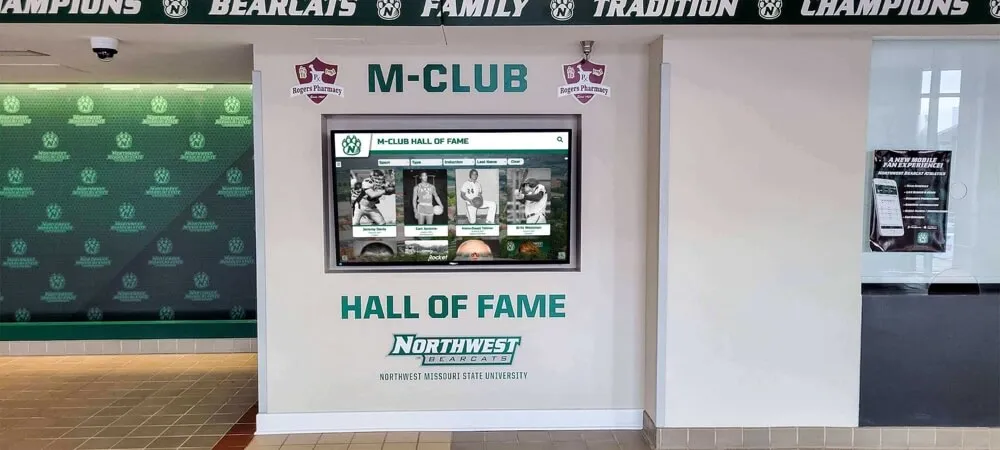
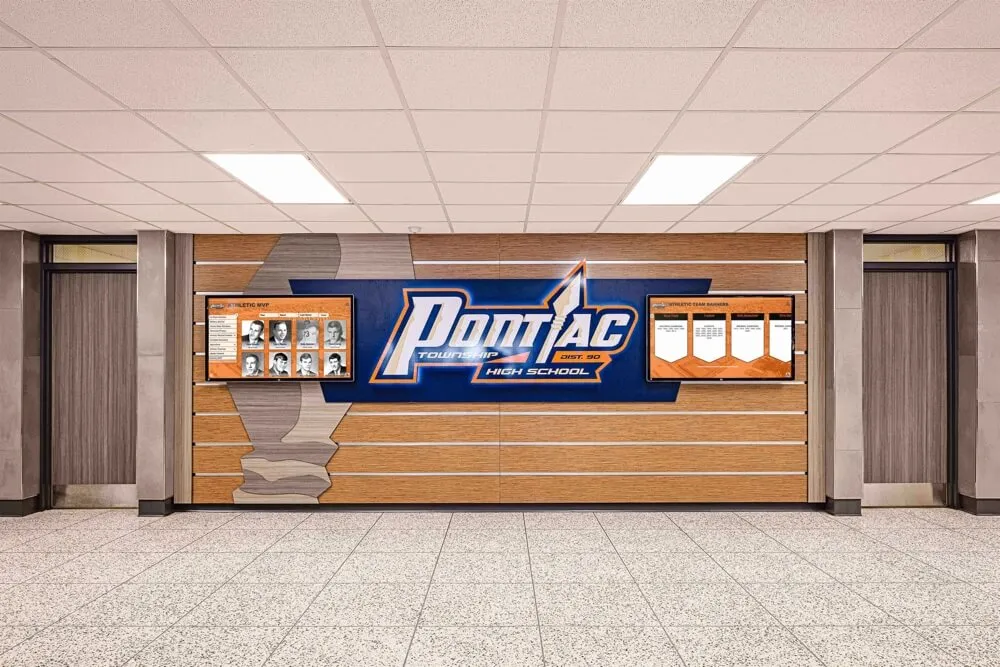
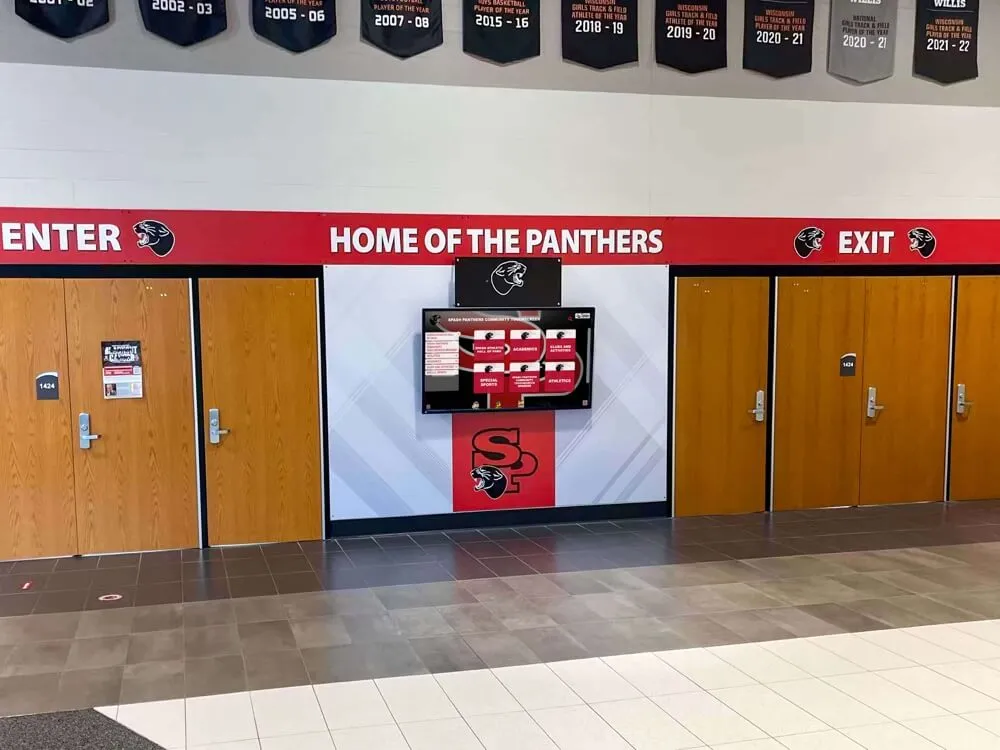
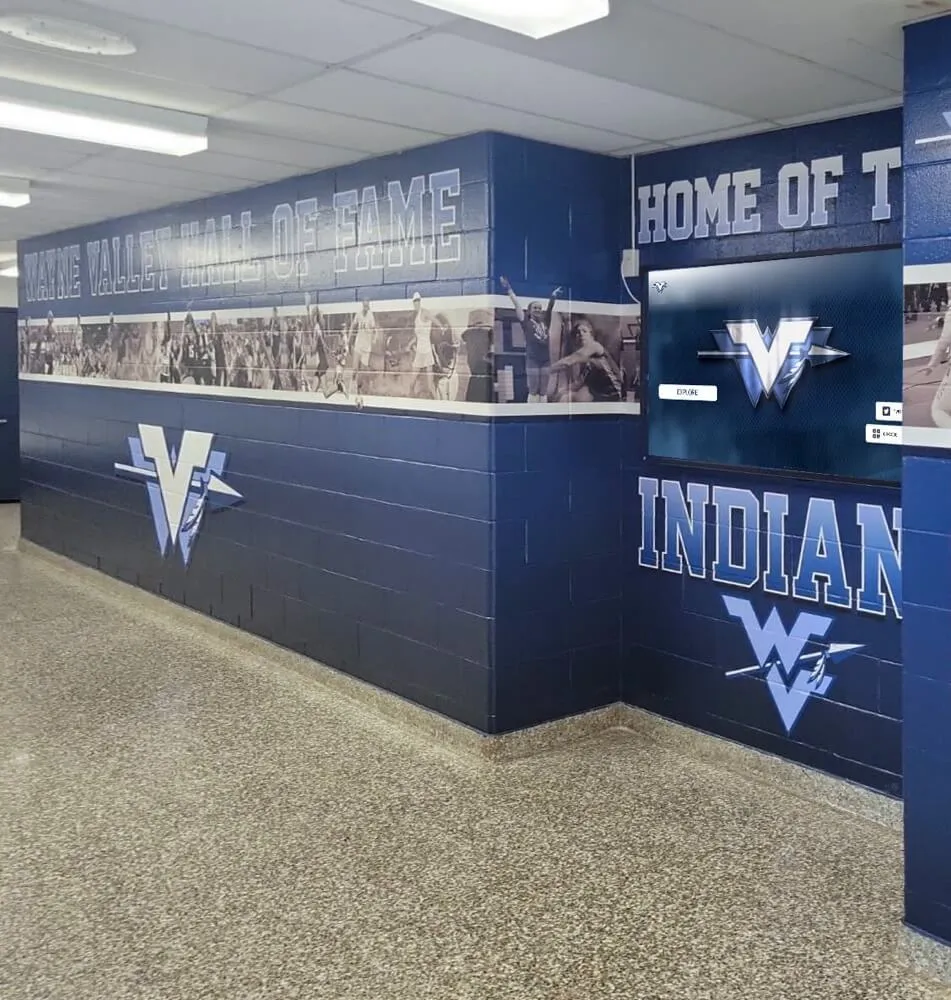
Strategic placement in high-traffic athletic facility areas maximizes recognition visibility and community engagement
Creating Tiered Recognition Structures
Most successful booster clubs establish recognition levels corresponding to contribution ranges, ensuring appropriate acknowledgment across all support scales:
Naming Opportunity Level ($25,000+ typical range)
Major contributions warranting premium recognition including facility naming rights for fields, gymnasiums, weight rooms, or specialized spaces, permanent architectural signage or installations, dedicated recognition spaces or displays, formal dedication ceremonies with community and leadership presence, and customized stewardship ensuring sustained relationship cultivation.
These transformational gifts often come from long-term community members, successful alumni, or local businesses with deep program connections. Recognition should match the extraordinary commitment these contributions represent while inspiring similar gifts from other capable donors.
Platinum Level ($10,000-$24,999 typical range)
Substantial contributions meriting significant recognition including prominent placement on primary donor walls or displays, special recognition at annual events and athletic competitions, enhanced communication providing program updates and insider access, exclusive appreciation events with coaching staff and athletic administrators, and memorial or tribute options honoring family members or loved ones.
Platinum recognition clearly distinguishes major supporters while remaining distinct from naming opportunity recognition reserved for transformational contributions.
Gold Level ($5,000-$9,999 typical range)
Important contributions bridging major gifts and annual support including recognition society membership with distinctive designation, inclusion on primary donor displays with category identification, invitations to special events and program celebrations, periodic impact updates demonstrating how contributions support programs, and acknowledgment through booster club communications and publications.
Gold level creates aspirational giving tier encouraging families to stretch beyond comfortable annual contributions while acknowledging meaningful financial commitment to program success.
Silver Level ($1,000-$4,999 typical range)
Meaningful contributions from committed supporters including donor display listing with level designation, recognition in program materials and communications, invitation to annual appreciation events, periodic impact updates connecting gifts to outcomes, and systematic acknowledgment demonstrating organizational appreciation.
Silver recognition ensures substantial contributors receive appropriate acknowledgment while maintaining distinctions for larger giving levels.
Bronze Level ($500-$999 typical range)
Solid annual support contributions including comprehensive donor listing through digital or print recognition, acknowledgment in season programs or communications, invitation to general booster club events and competitions, periodic appreciation messages, and foundation-building cultivation for potential giving growth.
Bronze level acknowledges meaningful participation while creating entry point for families beginning booster club engagement.
Supporter Level (under $500)
All additional contributions warranting appreciation including inclusive listing through digital recognition platforms, periodic thank-you communications, general event invitations, and systematic acknowledgment avoiding impression that only major donors matter to program success.
Digital recognition systems enable comprehensive supporter inclusion impossible with space-constrained physical displays, ensuring every contributor receives acknowledgment regardless of gift size while maintaining appropriate visual hierarchy honoring larger investments.
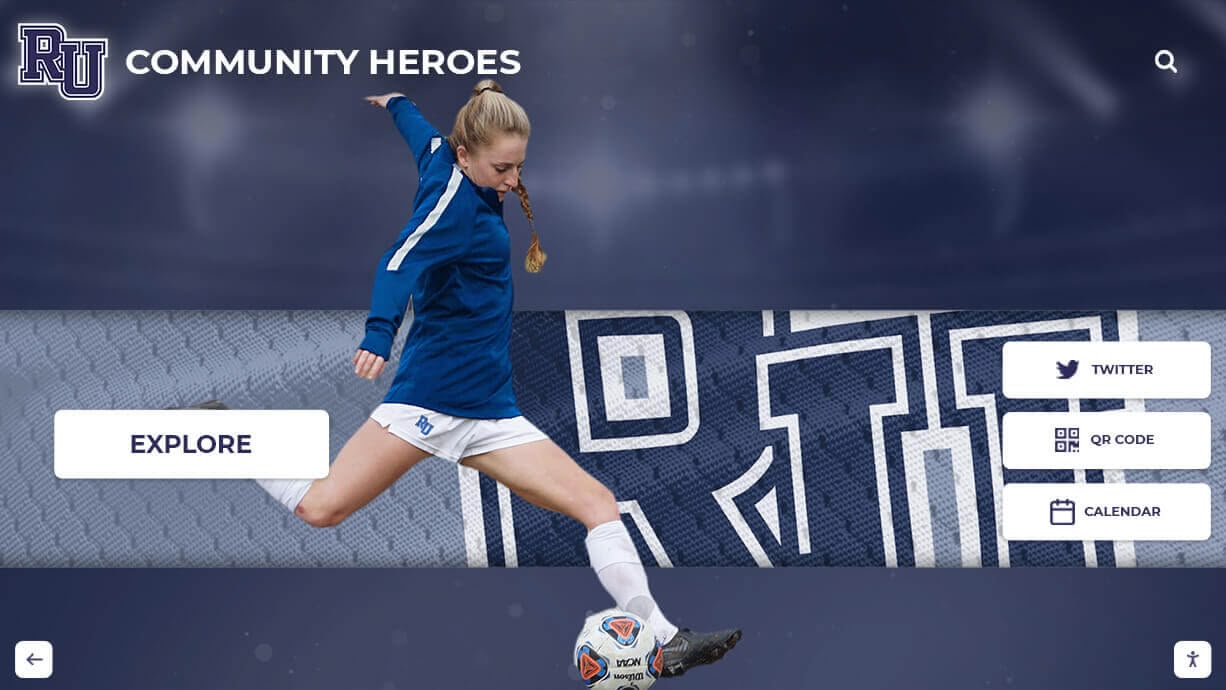
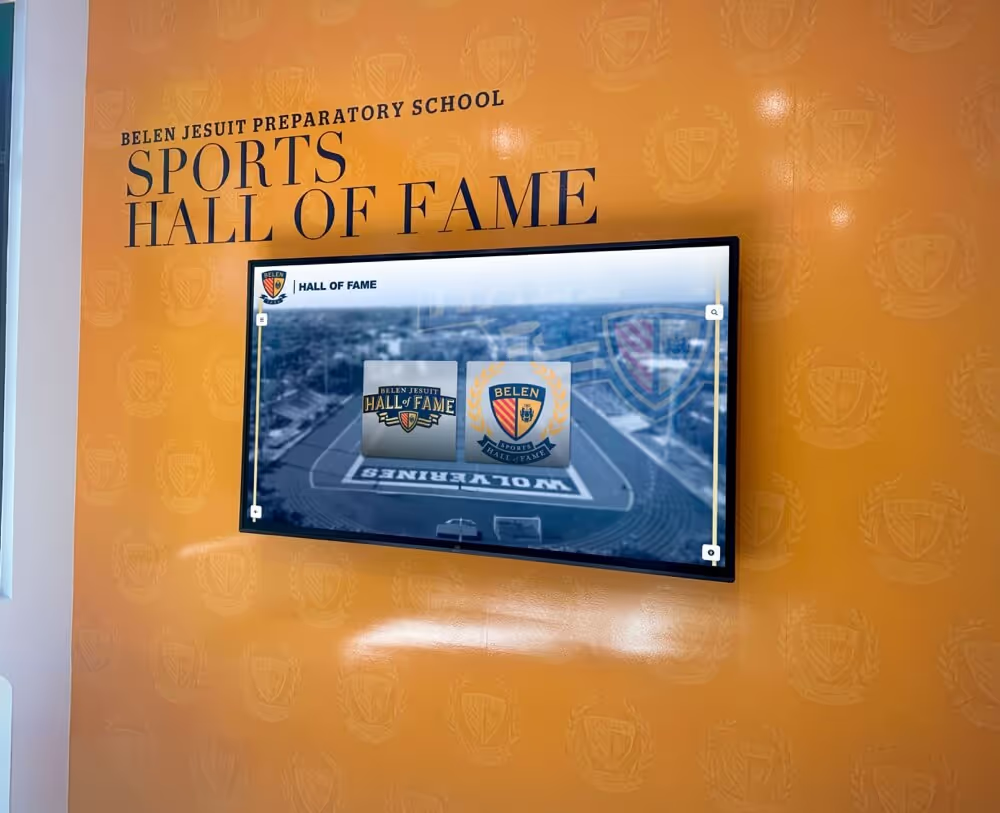
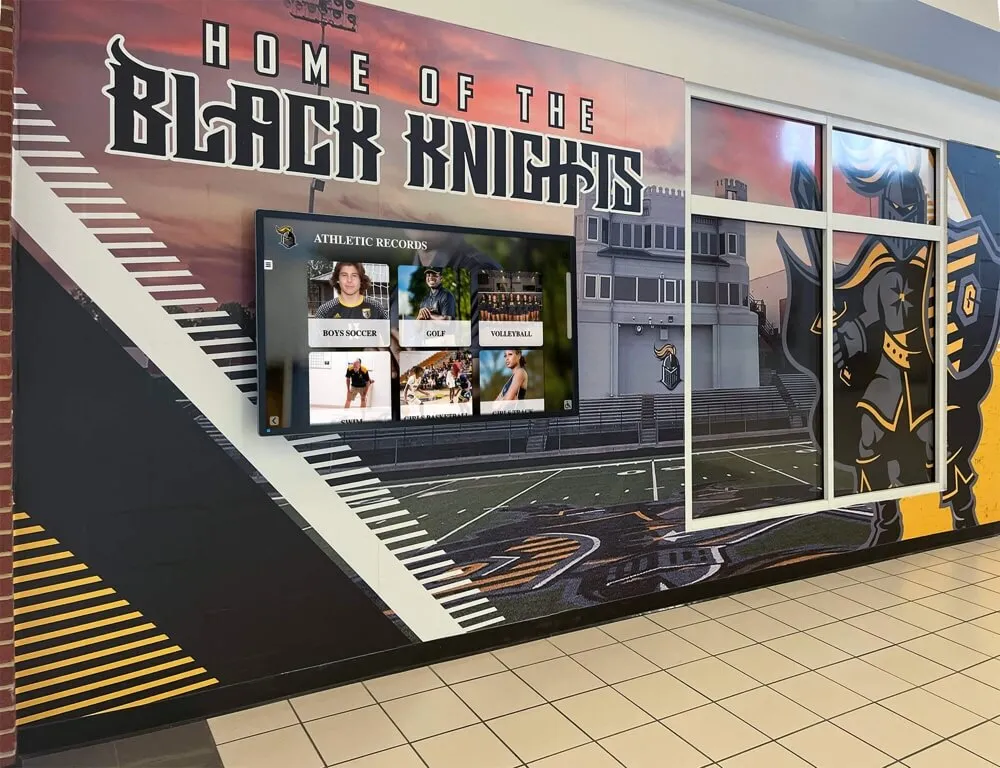
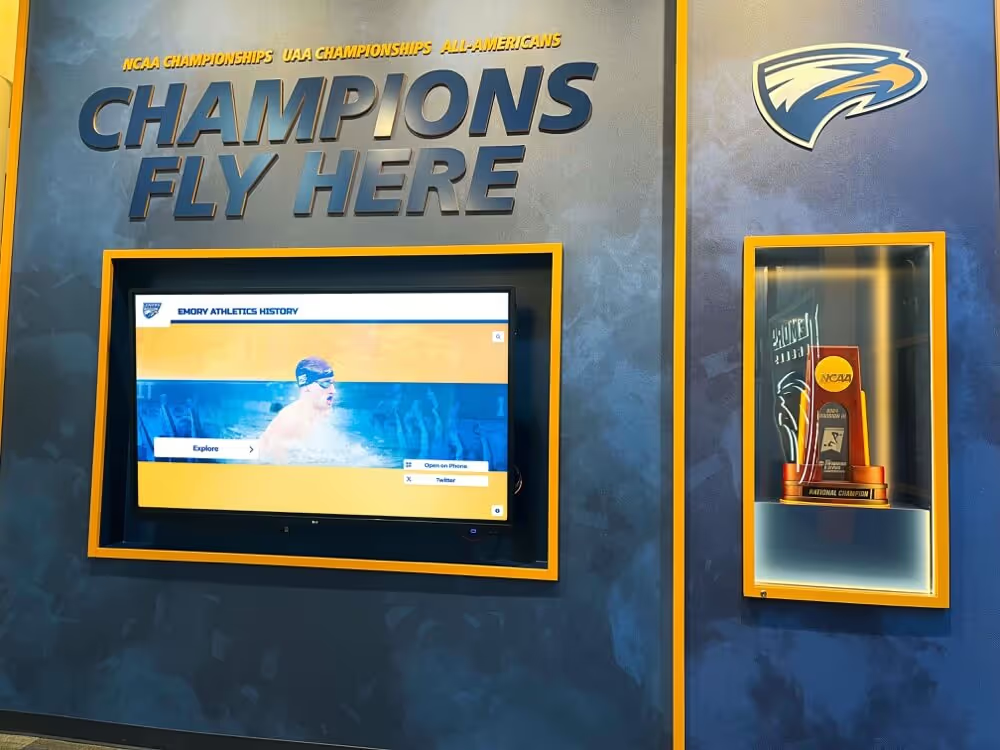
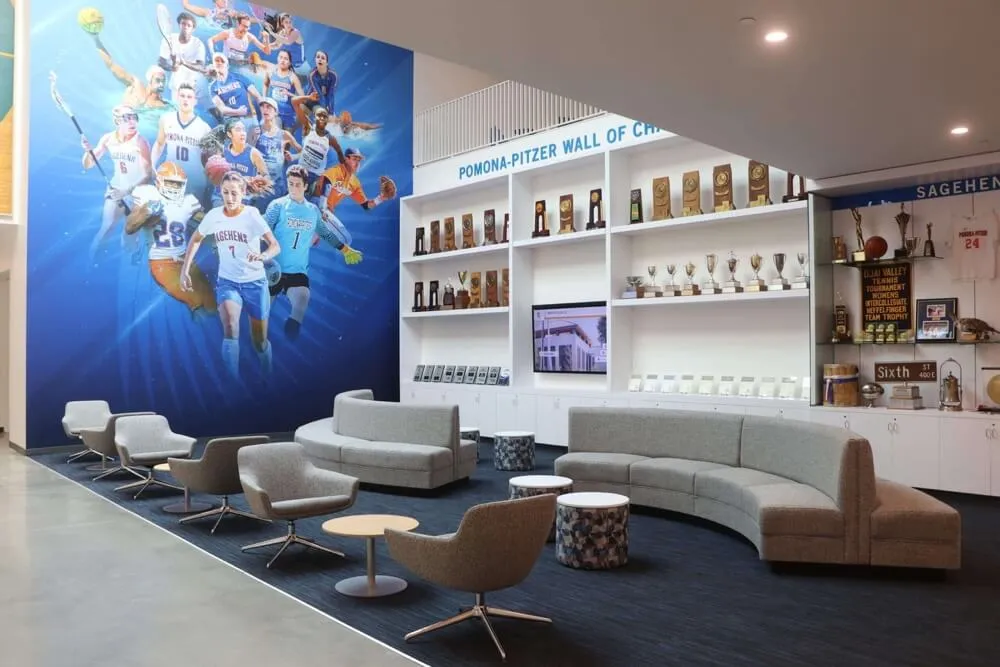
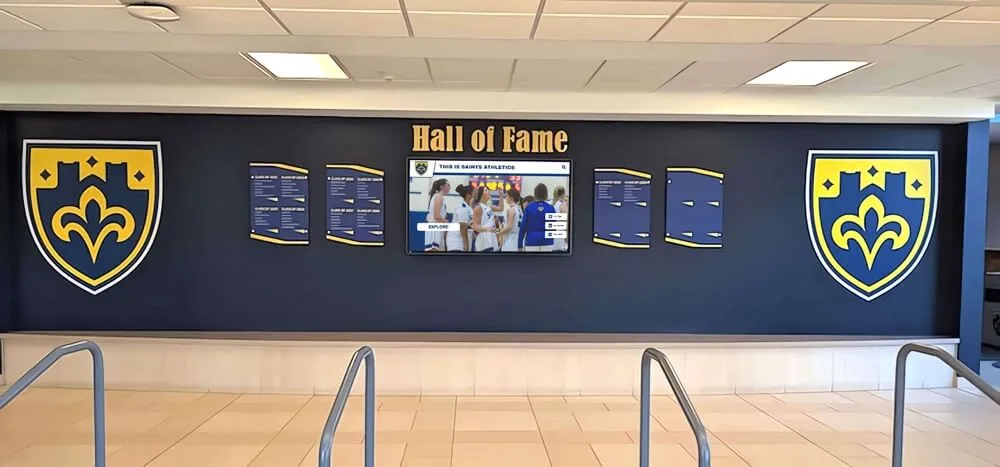
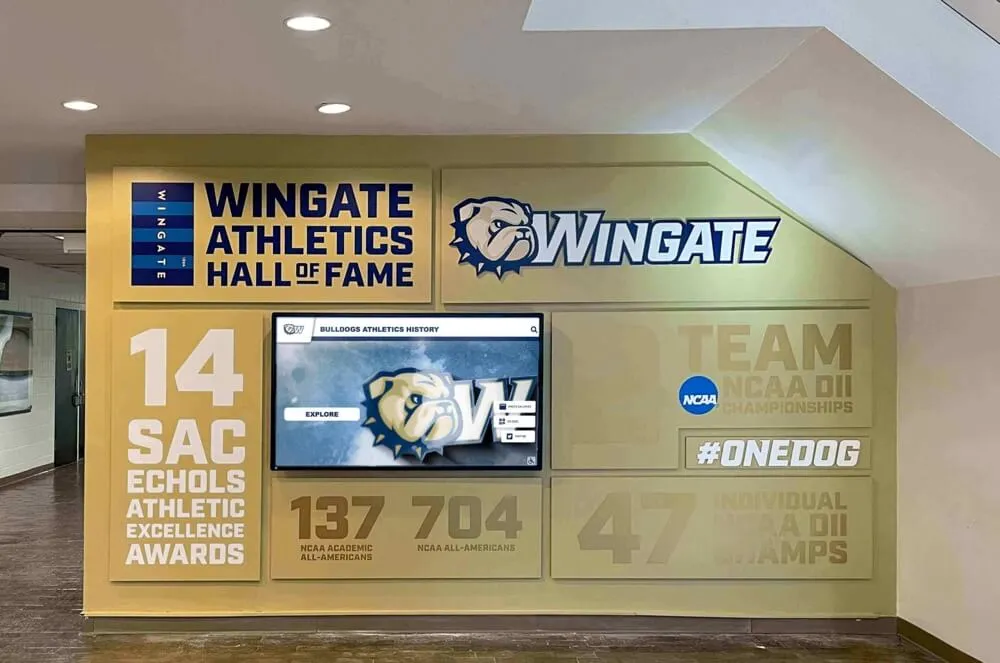
Recognition displays can combine donor acknowledgment with athlete celebration and program promotion
Donor Recognition Display Options for Booster Clubs
Booster clubs can implement diverse recognition approaches depending on budgets, facility availability, and organizational preferences.
Traditional Physical Recognition Displays
Physical donor walls and recognition installations provide permanent visibility in athletic facilities:
Engraved Plaque Systems
Traditional recognition walls feature individual engraved plaques mounted in athletic facility lobbies, gymnasiums, or stadium entrances. This classic approach offers familiar formats supporters immediately understand, straightforward hierarchy visualization, relatively simple installation processes, and timeless aesthetic appeal that communicates permanence and respect.
However, plaque systems present limitations including fixed capacity restricting future additions, expensive and time-consuming updates requiring new plaques for every modification, physical space constraints limiting comprehensive recognition, and aesthetic deterioration as empty spaces or mismatched additions accumulate over seasons. Booster clubs implementing plaque systems should over-allocate space by 50-100% beyond projected needs to accommodate future growth.
Banner and Sign Recognition
Many booster clubs utilize banners displaying sponsor logos, donor names, or recognition messaging hung in gymnasiums, along fences at outdoor facilities, or in stadium concourses. Banners offer flexibility for seasonal updates, relatively low costs compared to permanent installations, high visibility during athletic events when communities gather, and straightforward production and installation processes.
Yet banners suffer from weather exposure requiring periodic replacement, potential aesthetic limitations compared to architectural installations, limited capacity for comprehensive donor information, and storage requirements during off-seasons or when not displayed.
Brick Paver Programs
Outdoor walkways, plazas, or stadium entryways featuring engraved memorial bricks provide unique recognition opportunities. Brick programs enable accessible giving levels typically ranging from $100-500 per brick, memorial or tribute options families value, permanent physical presence creating legacy recognition, and incremental expansion as programs grow without predetermined capacity constraints.
Brick programs work best when coordinated with facility improvement projects creating new walkways or gathering spaces rather than forcing awkward additions to existing hardscaping.
Digital Donor Recognition Systems
Modern digital displays overcome traditional recognition limitations while offering capabilities impossible with static installations:
Interactive Touchscreen Displays
Digital donor walls utilizing commercial-grade touchscreen displays installed in athletic facility lobbies provide comprehensive recognition solutions addressing most traditional limitations. Solutions like Rocket Alumni Solutions transform booster club donor acknowledgment through interactive systems offering multiple advantages:
Unlimited Recognition Capacity
Digital platforms accommodate unlimited donors across all giving levels without physical space constraints. Single displays showcase thousands of supporters through searchable interfaces enabling visitors to find specific donors instantly. This comprehensive inclusion ensures every contributor receives acknowledgment regardless of space limitations forcing difficult decisions about whose names appear.
Rich Multimedia Content
Digital systems enable recognition extending far beyond name listings including donor photographs and family information, video testimonials explaining why supporters contribute, business sponsor logos and promotional content, impact visualization showing what gifts accomplish, historical documentation connecting past contributions to current program success, and interactive exploration creating engaging visitor experiences that traditional plaques cannot match.
Explore how digital athletic displays integrate recognition with program storytelling and achievement celebration.
Effortless Updates and Maintenance
Cloud-based management platforms enable instant recognition updates from any internet-connected device without physical installation requirements. Volunteer administrators can add new donors, correct information, update giving levels, or refresh content in minutes rather than weeks. This ease of management proves particularly valuable for volunteer-led booster clubs where administrative capacity is limited and leadership transitions frequently.
Organizations implementing digital recognition report 90% reduction in maintenance time compared to traditional donor walls requiring physical modifications for every change.
Real-Time Campaign Progress
Digital displays can showcase fundraising campaign progress through dynamic thermometers, goal tracking, and milestone celebrations that traditional static displays cannot provide. This real-time visibility creates urgency during campaigns while demonstrating community support momentum that inspires additional participation.
Cost-Effectiveness Over Time
While initial digital system investment may exceed simple plaque installations, long-term costs favor digital approaches. Organizations avoid recurring engraving expenses for new donors, reinstallation costs as recognition grows, physical space expansion requirements, and labor for maintenance and updates. Enhanced fundraising results from improved recognition often offset initial investment within 2-3 years.
Learn about comprehensive digital recognition solutions designed specifically for schools and athletic programs.
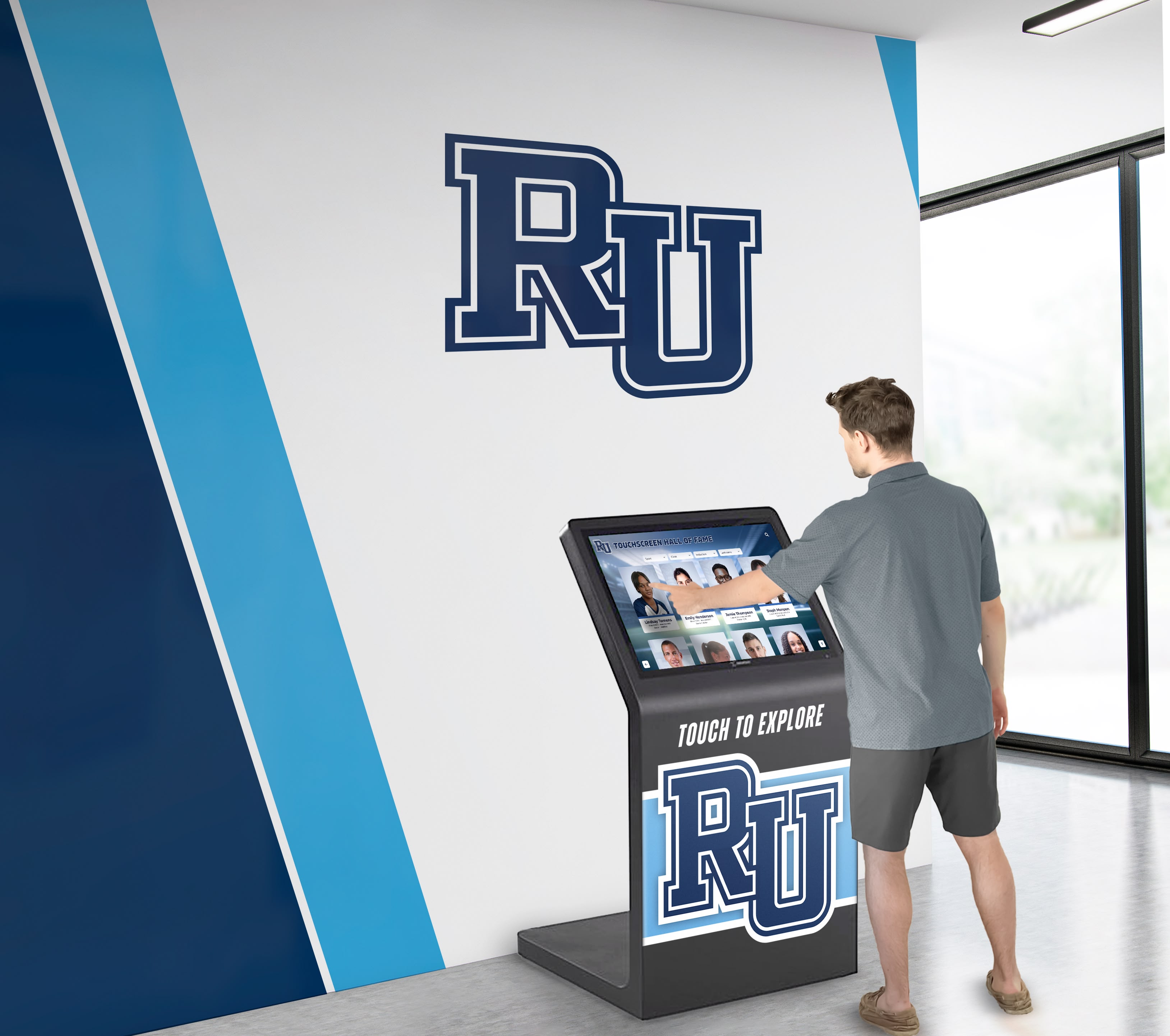
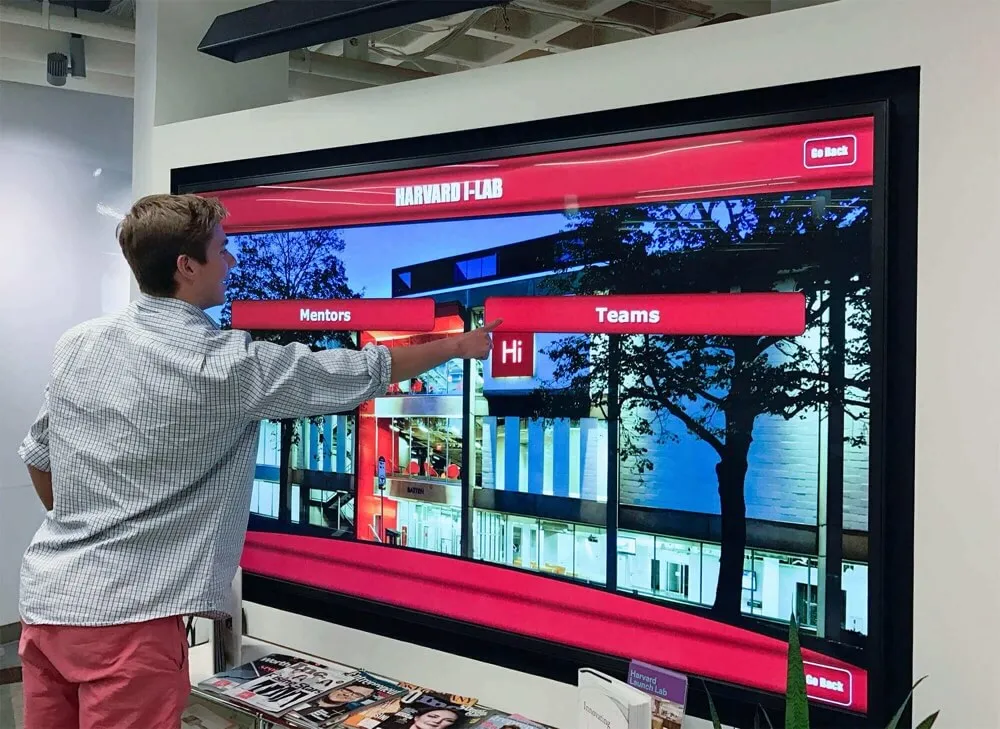
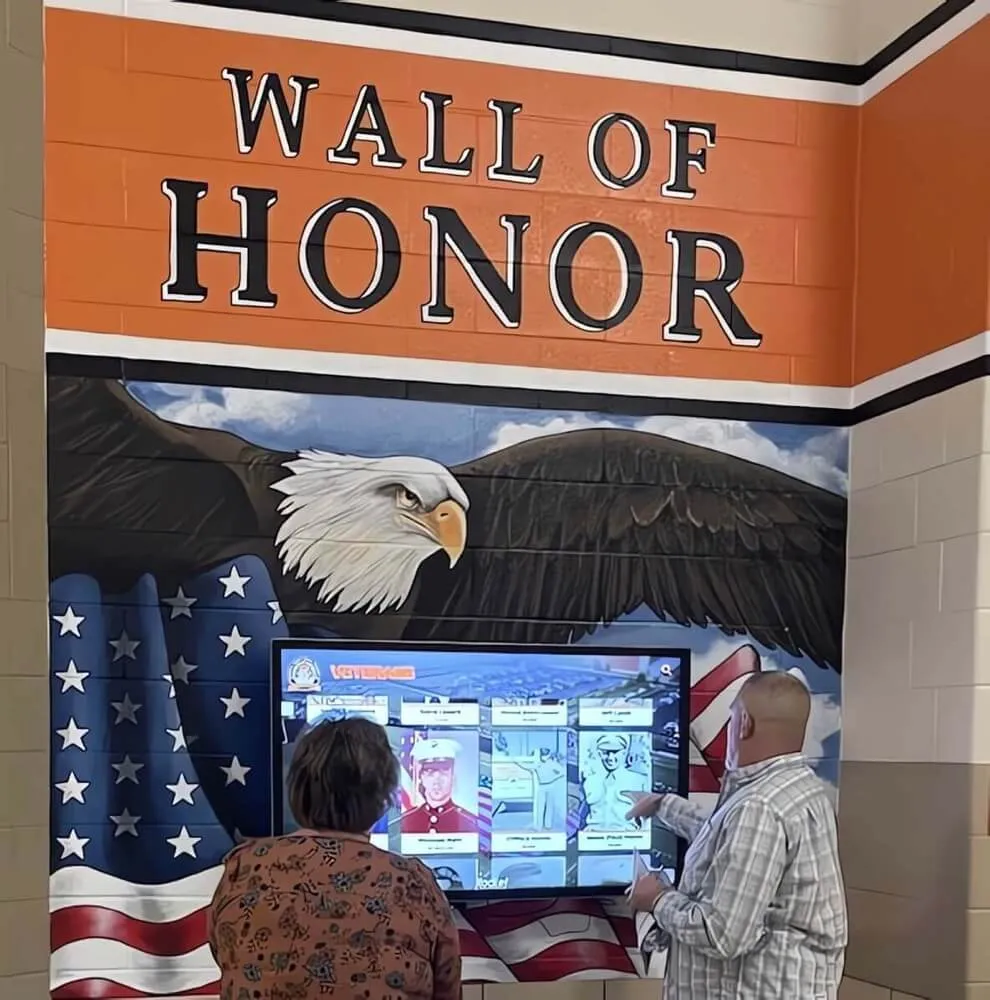
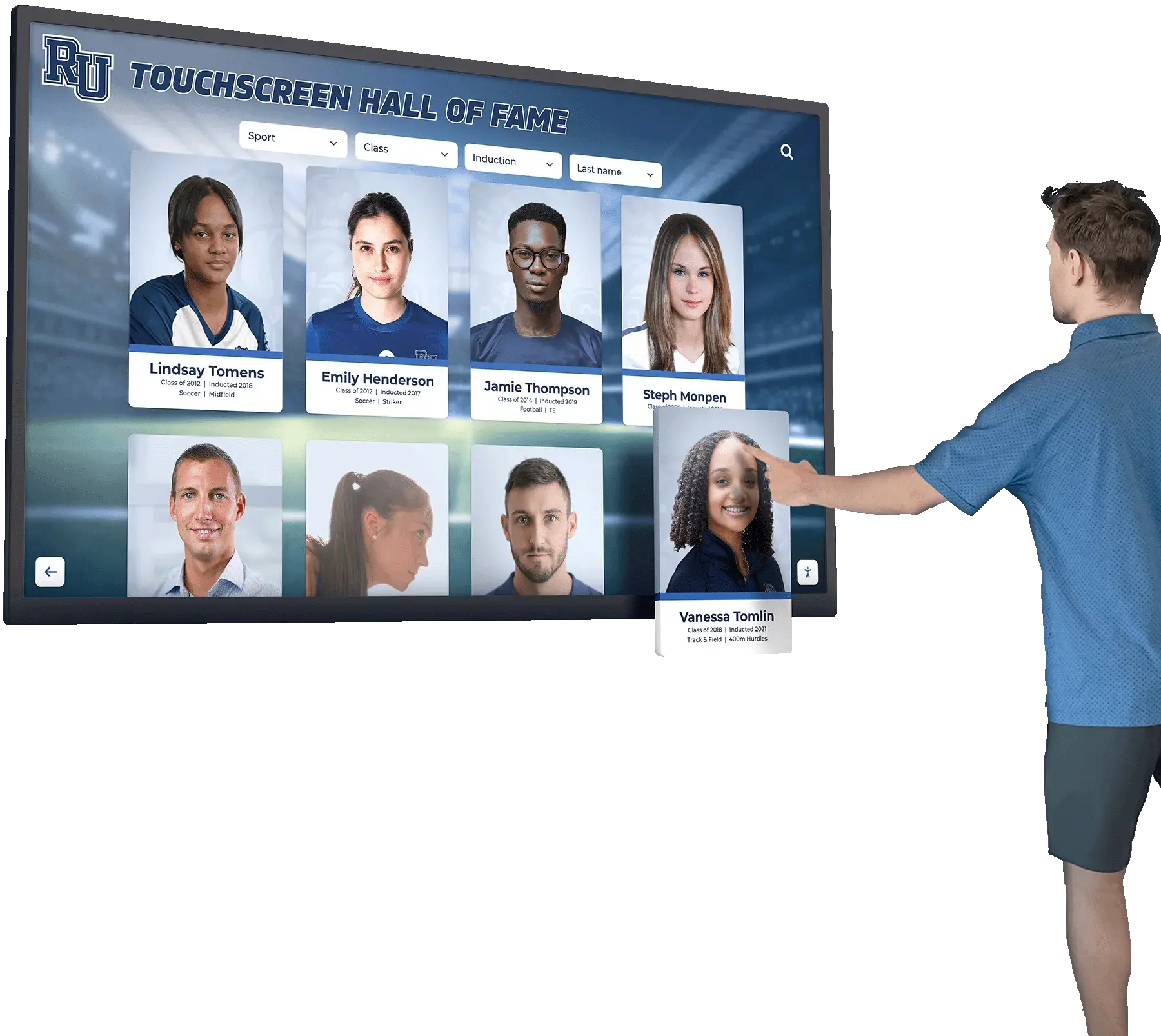
Interactive recognition displays create engaging experiences that visitors explore independently
Hybrid Recognition Approaches
Many booster clubs implement combined systems leveraging advantages of both traditional and digital recognition:
Premium Physical Recognition for Major Donors
Reserve permanent architectural recognition—engraved plaques, naming signage, or brick pavers—for major contributions at naming opportunity or platinum levels. This tangible acknowledgment provides prestige and permanence major donors expect while honoring extraordinary commitment their gifts represent.
Digital Systems for Comprehensive Inclusion
Complement physical installations with digital donor walls accommodating all additional supporters without space limitations. This combination honors major donors appropriately through premium physical recognition while ensuring comprehensive acknowledgment of every contributor through unlimited digital capacity.
Hybrid approaches satisfy diverse recognition preferences while creating sustainable systems that scale as programs grow and donor bases expand across multiple sport seasons.
Maximizing Recognition Impact Through Strategic Implementation
Recognition effectiveness depends on thoughtful implementation addressing location, timing, content, and ongoing management.
Strategic Placement and Installation
Recognition display location significantly impacts visibility and community engagement:
High-Traffic Athletic Facility Locations
Install recognition displays where they receive maximum exposure including main gymnasium or arena entrances where all visitors pass, stadium concourses or entryways serving outdoor sports, athletic department offices where parents and athletes interact, weight room or training facility lobbies accessed daily, and school main lobbies when athletic facilities lack suitable spaces.
Poorly located recognition hidden in back corridors or low-visibility spaces suggests organizations don’t genuinely value support, undermining recognition’s motivational purposes. Prime placement communicates that booster clubs consider donor acknowledgment important institutional priority deserving prominent visibility.
Event-Based Visibility
Consider recognition visibility during athletic competitions when communities gather. Displays positioned where spectators wait, enter facilities, or congregate during games receive substantially more engagement than those in administrative areas rarely accessed by general public. Strategic placement creates social dynamics where community members observe peer support, inspiring their own participation through visible social proof.
Accessibility and Interaction Design
Ensure recognition displays accommodate all visitors through appropriate mounting heights and sight lines for wheelchair users, readable font sizes and contrast supporting visual accessibility, intuitive interfaces requiring minimal instruction, and physical positioning enabling comfortable interaction without crowding or congestion during busy events.
Content Strategy for Donor Recognition
Effective recognition extends beyond simple name listings to create meaningful connections between supporters and program impact:
Comprehensive Donor Information
Include appropriate details for acknowledged supporters depending on giving level and preferences:
- Full donor names as they prefer recognition
- Giving level designations or recognition society membership
- Years of contribution showing sustained support patterns
- Memorial or tribute information for dedicated gifts
- Business sponsor logos and acknowledgment when applicable
- Family connections to programs explaining motivation
Impact Storytelling and Program Connection
Connect donor recognition to tangible outcomes their contributions enable including equipment purchases or facility improvements funded, student-athlete success stories and competitive achievements, scholarship support enabling participation, travel opportunities created through donor generosity, and coaching or program enhancements supporters made possible.
Research consistently demonstrates that connecting giving to specific impact strengthens donor relationships and motivates continued support. Recognition that shows what contributions accomplish proves more effective than simple acknowledgment alone.
Historical Context and Program Legacy
Document booster club history and program evolution including founding supporters whose early contributions built program foundations, major milestones like facility improvements or championship seasons, program growth across years or decades, and connections between current success and historical donor generosity.
This historical perspective reinforces institutional stability while honoring those whose past support created current excellence. Learn more about preserving program history through digital recognition systems.
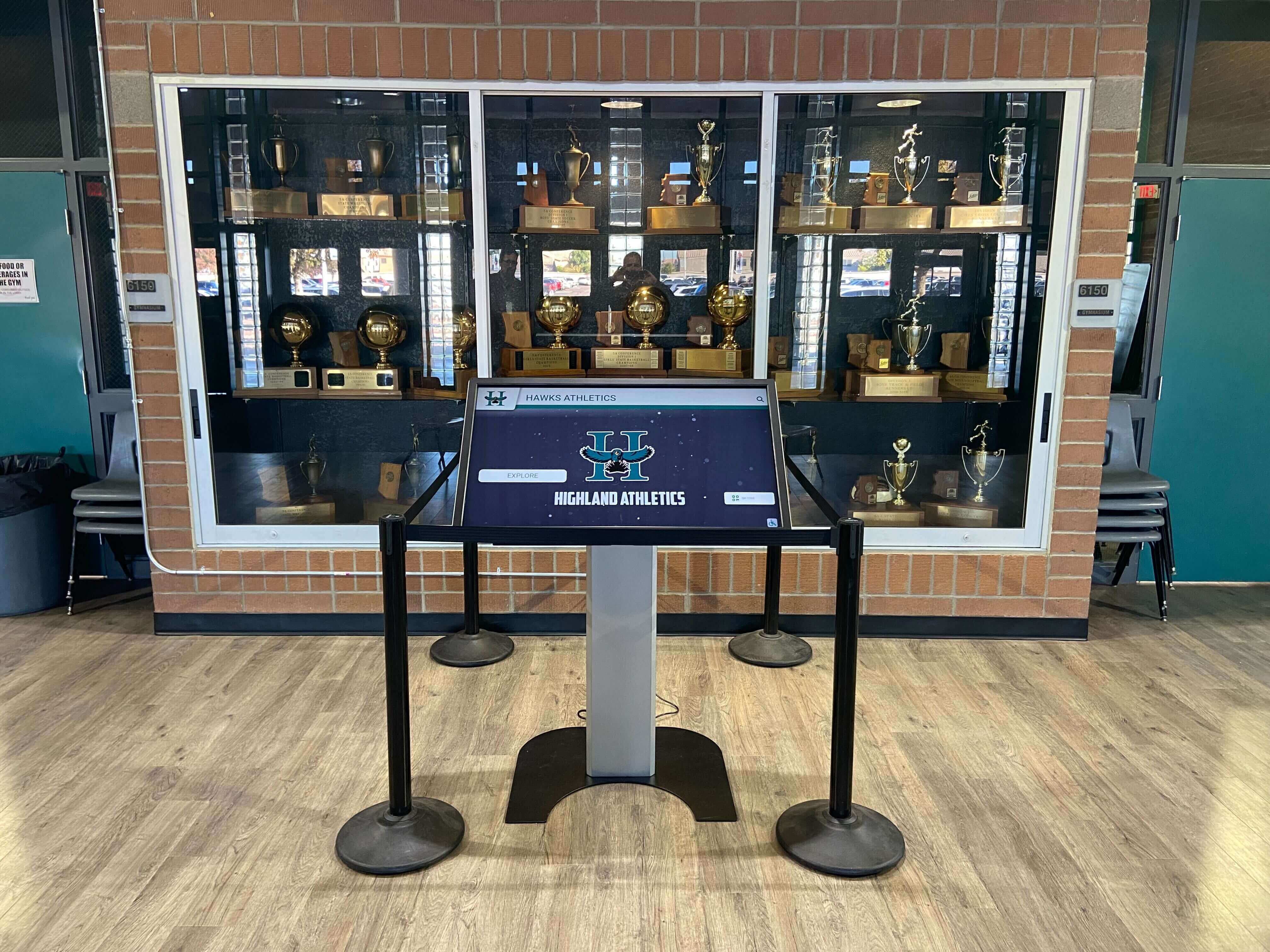
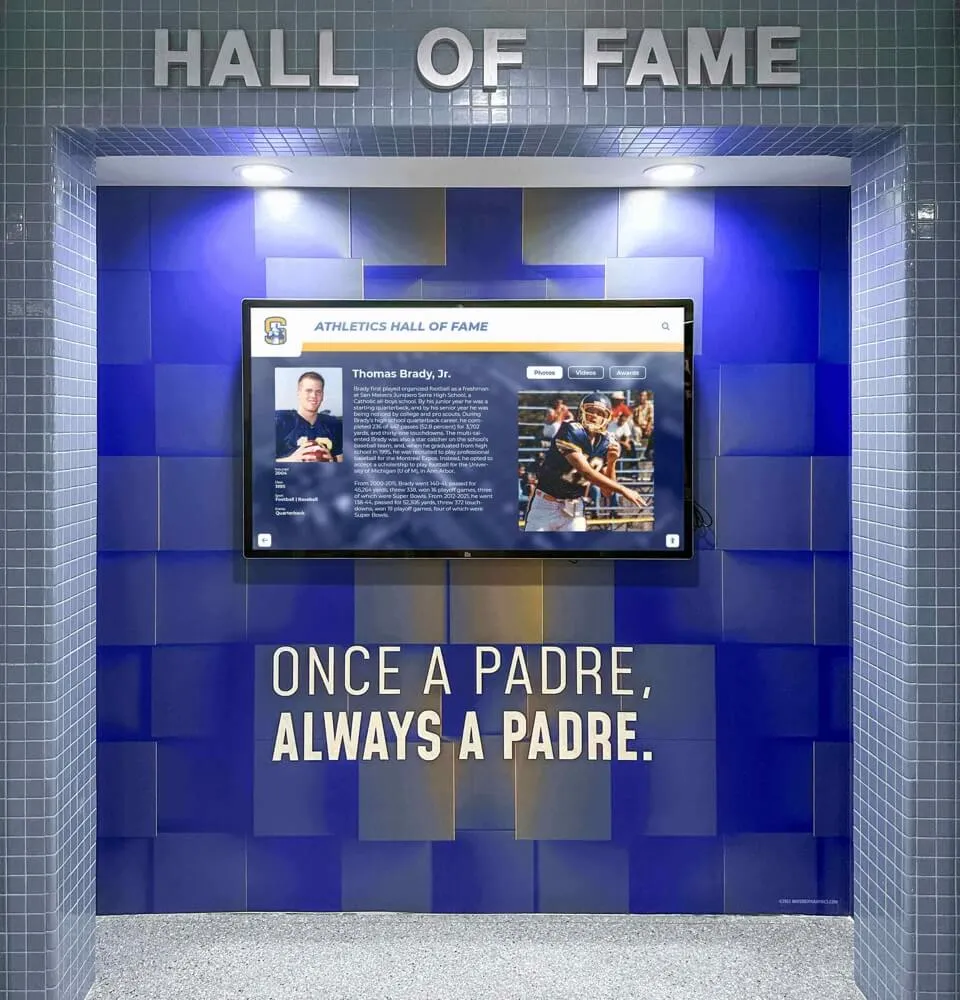
Integrated displays combine donor recognition with athletic achievement celebration
Recognition Timing and Communication
When and how recognition occurs significantly impacts donor satisfaction:
Immediate Acknowledgment
Provide prompt recognition following contributions including automated email confirmation within 24 hours, personalized thank-you communication within one week, addition to donor displays within 2-4 weeks maximum, and invitation to next recognition event or appreciation opportunity.
Fundraising best practices recommend acknowledging donors within 48-72 hours of receiving gifts. Delayed recognition diminishes perceived appreciation while reducing motivation for subsequent contributions.
Layered Recognition Touchpoints
Implement multiple acknowledgment approaches creating comprehensive appreciation including immediate digital recognition, periodic booster club communications highlighting supporters, annual appreciation events celebrating all contributors, special recognition at athletic competitions or season events, and year-end impact reports demonstrating what donor support accomplished.
These layered touchpoints create sustained engagement rather than single acknowledgment moments that quickly fade from donor consciousness.
Campaign Milestone Celebrations
Recognize collective achievement as fundraising campaigns reach major milestones. Public celebration of reaching 50%, 75%, or 100% of campaign goals creates momentum while acknowledging donor community rather than only individual contributors. These milestone moments inspire additional participation through visible progress demonstration and community celebration.
Special Considerations for Booster Club Recognition
Booster club contexts create unique recognition situations requiring thoughtful approaches:
Volunteer Contribution Acknowledgment
Booster clubs depend heavily on volunteer labor requiring recognition systems that honor time contributions alongside financial gifts:
Volunteer Hour Tracking and Valuation
Implement systems documenting volunteer contributions including concession stand operations, fundraising event coordination, administrative support and communication, game day operations and logistics, and committee service and leadership roles.
Many organizations value volunteer hours at $25-30 per hour for recognition purposes, enabling volunteers to “earn” recognition levels through service that supports programs equally to financial contributions. This equitable approach acknowledges diverse contribution types while ensuring recognition includes supporters who donate time rather than only money.
Combined Contribution Recognition
Allow supporters to combine financial gifts and volunteer hours toward recognition levels. A family contributing $500 financially plus 20 volunteer hours valued at $25/hour would qualify for $1,000 recognition level. This flexibility honors total program support rather than artificial distinctions between contribution types.
Business Sponsor Recognition
Local business sponsorships often represent substantial booster club revenue requiring special acknowledgment approaches:
Sponsor Benefit Structures
Create clear sponsorship levels offering defined recognition benefits including logo placement on banners, programs, or digital displays at specified sizes, acknowledgment in social media and communications with agreed frequency, complimentary admission to athletic events for specified number of people, exclusive sponsor events or networking opportunities, and first refusal rights for sponsorship renewal before offerings go to other businesses.
Documented benefit structures ensure consistent sponsor treatment while preventing misunderstandings about recognition sponsors will receive for their investment.
Business-Appropriate Recognition Formats
Acknowledge business sponsors through professional recognition including high-quality logo reproduction at appropriate sizes, business description or promotional messaging when applicable, duration specifications for sponsorship recognition, and renewal solicitation processes ensuring businesses receive first opportunity to continue partnerships.
Business sponsors often value visibility and promotional opportunity differently than individual donors focused on program support and community contribution. Recognition approaches should accommodate these different motivations appropriately.
Explore approaches to corporate sponsorship recognition that balance institutional and business objectives.
Alumni Athlete Recognition Integration
Many booster clubs benefit from support from program alumni whose continued engagement strengthens programs and provides fundraising capacity:
Alumni Donor Cultivation
Connect current booster club fundraising with alumni relationships including alumni athlete databases enabling systematic outreach, special alumni recognition categories or societies, program reunions creating alumni engagement opportunities, historical program documentation alumni value, and legacy messaging connecting past and current program excellence.
Alumni often appreciate recognition acknowledging both their athletic participation and current financial support, creating dual connections to programs through personal history and philanthropic contribution.
Learn about alumni engagement strategies that build lasting program relationships extending beyond graduation.
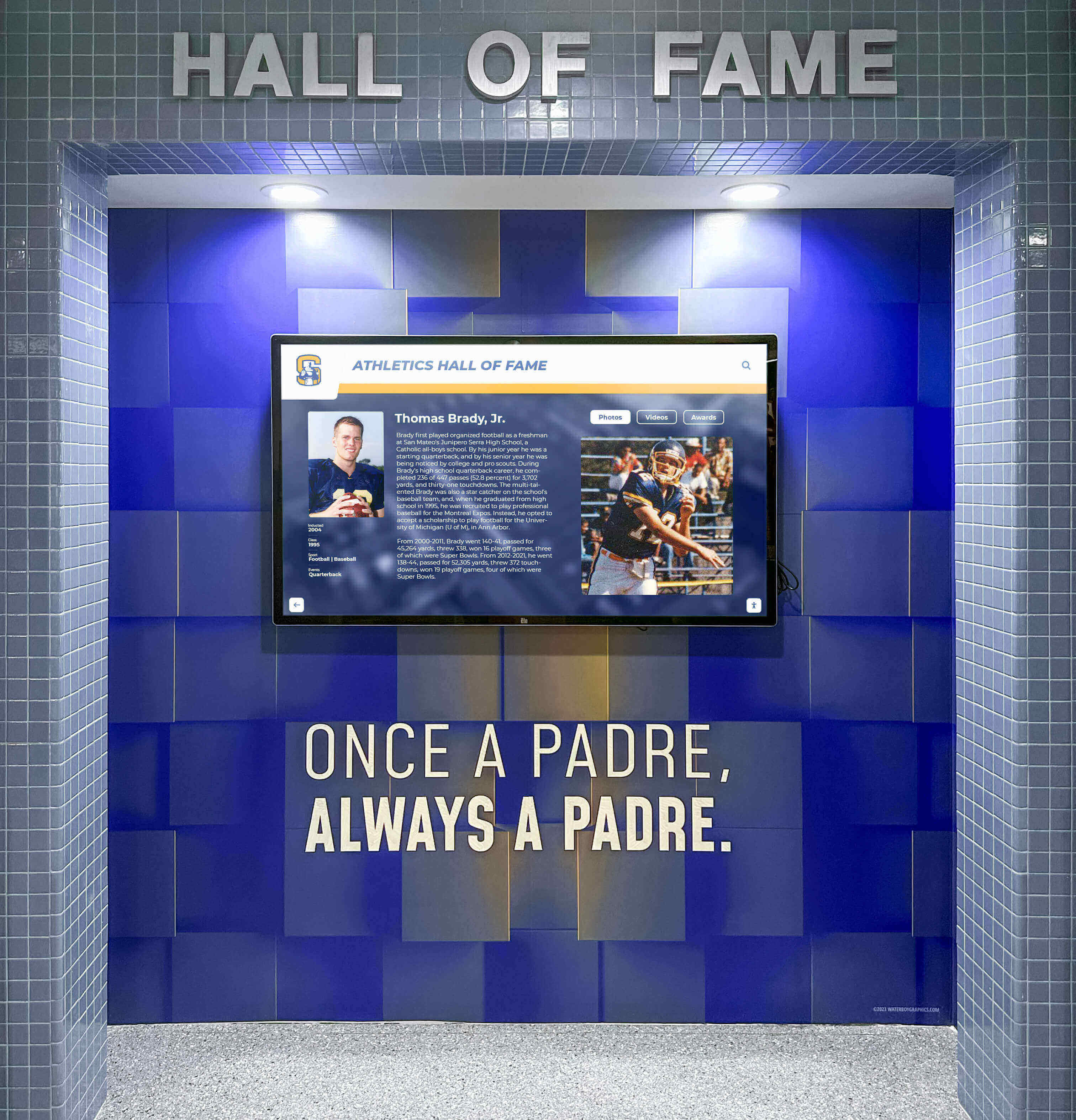
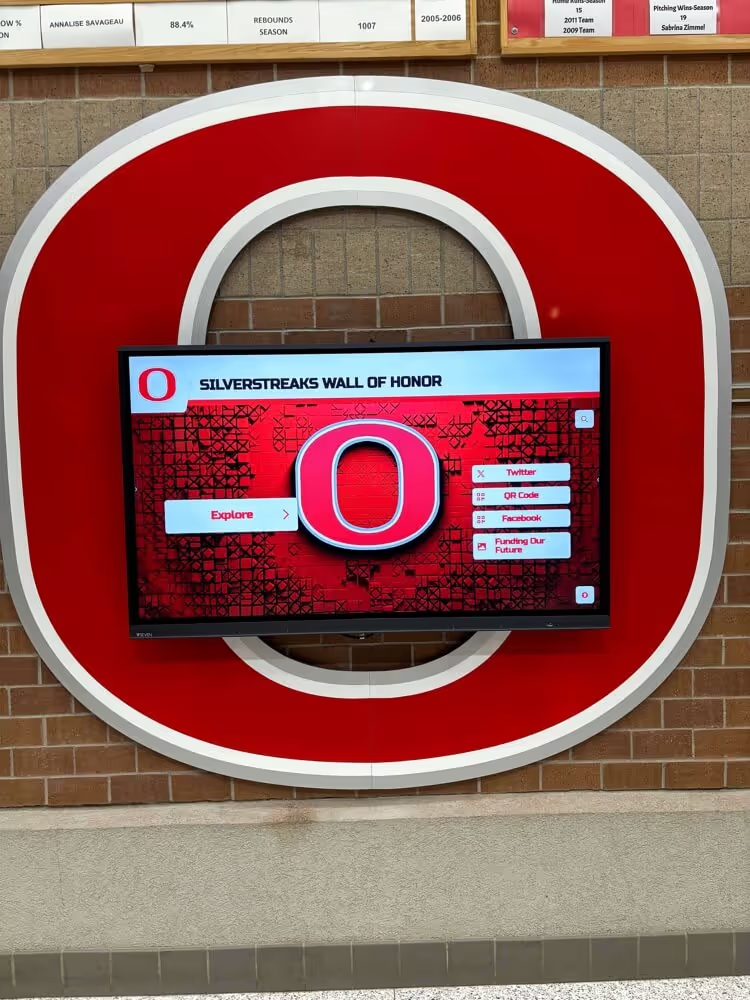
Recognition displays in athletic facilities create daily visibility for program supporters
Building Sustainable Booster Club Fundraising Through Recognition
Strategic recognition serves broader objectives beyond acknowledgment, creating sustainable funding systems supporting athletic programs long-term:
Recognition as Fundraising Motivation
Thoughtful recognition programs directly improve fundraising outcomes through multiple mechanisms:
Donor Retention Enhancement
Recognized donors demonstrate significantly higher retention rates than unacknowledged supporters. According to fundraising research, lack of recognition ranks among top five reasons donors stop giving. Systematic acknowledgment through visible displays, regular communications, and appreciation events creates emotional connections motivating continued support even after direct family involvement in programs concludes.
Improving donor retention from 40% to 60%—achievable through enhanced recognition—doubles sustainable fundraising capacity within 3-4 years without requiring any increase in new donor acquisition efforts.
Giving Level Upgrades
Visible recognition structures showcasing tiered giving levels inspire current donors to increase contributions qualifying for higher acknowledgment. When supporters see peers recognized at platinum or gold levels, many stretch financially to achieve similar recognition for themselves. This aspirational dynamic proves particularly effective in community-based fundraising where donors observe each other’s participation patterns regularly.
Peer Inspiration and Social Proof
Public recognition creates powerful social dynamics within communities. Visible donor acknowledgment demonstrates that athletic program support represents valued community norm, validates giving decisions for prospective donors uncertain about participation, creates friendly competition as community members seek comparable recognition to peers, and generates conversations about programs that extend fundraising reach beyond booster club communications.
These social dynamics prove particularly powerful in close-knit school communities where families interact across multiple contexts and observe each other’s involvement patterns.
Recognition Event Integration
Coordinate recognition with booster club events maximizing acknowledgment opportunities:
Athletic Competition Recognition
Integrate donor acknowledgment into athletic events including pre-game or halftime recognition of major donors, acknowledgment in public address announcements during competitions, special seating areas or hospitality for recognized supporters, digital display recognition visible during games and events, and program inserts thanking current season donors.
Recognition during well-attended athletic competitions amplifies visibility while creating positive associations between donor support and athletic success celebration.
Annual Appreciation Events
Host dedicated recognition events celebrating all supporters including formal awards or recognition presentations for major contributors, comprehensive donor acknowledgment across all levels, program updates and impact reporting demonstrating contribution outcomes, opportunities for donors to interact with coaches, athletes, and athletic administrators, and advance announcements of upcoming fundraising initiatives or needs.
These events create community around booster club support while providing concentrated recognition moments that supplement ongoing acknowledgment through displays and communications.
Facility Dedication Ceremonies
When major gifts fund facility improvements or new construction, formal dedication ceremonies provide premium recognition opportunities including permanent naming signage unveiling, speeches acknowledging transformational contributions, media coverage amplifying recognition beyond booster club community, lasting documentation through video and photography, and symbolic participation like ribbon cutting or cornerstone placement.
Dedication ceremonies celebrate both donor generosity and program advancement, creating memorable moments that strengthen relationships while demonstrating tangible impact of community support.
Technology Solutions for Booster Club Donor Recognition
Modern platforms simplify recognition management while enhancing effectiveness:
Comprehensive Digital Recognition Systems
Solutions like Rocket Alumni Solutions provide integrated platforms specifically designed for school athletic programs and booster clubs including cloud-based content management requiring no technical expertise, unlimited donor capacity without physical space constraints, intuitive interfaces enabling volunteer administrators to manage recognition easily, multimedia support for photos, videos, and rich content, searchable displays enabling easy donor discovery, campaign progress tracking and goal visualization, mobile responsiveness ensuring accessibility across devices, and professional templates creating attractive presentation without design expertise.
These comprehensive platforms transform recognition from labor-intensive manual processes to streamlined systems that volunteer-led organizations can manage efficiently despite limited administrative resources.
Integration Capabilities
Modern recognition platforms connect with broader booster club technology including donor database synchronization ensuring accuracy, online giving platform integration enabling immediate recognition, email marketing system connections for acknowledgment automation, social media publishing for extended recognition reach, and financial system coordination simplifying gift processing and acknowledgment workflows.
Integration reduces duplicate data entry while ensuring consistent donor information across all systems and communications, improving both efficiency and accuracy despite volunteer leadership transitions that often create organizational knowledge gaps.
Mobile Access and Remote Management
Cloud-based recognition systems enable management from anywhere including volunteer administrator access from home without facility visits, immediate updates following fundraising events or contribution receipt, content previews before publishing ensuring accuracy, remote troubleshooting and support reducing technical burden, and leadership transition support as volunteer roles change without institutional knowledge loss.
This flexibility proves essential for volunteer-led organizations where administrators balance booster club responsibilities with work, family, and community commitments limiting time available for complex technical management.
Measuring Recognition Program Success
Assessment ensures recognition efforts achieve intended objectives and justify resource investment:
Fundraising Performance Metrics
Track recognition program impact on core fundraising outcomes including donor retention rates comparing recognized versus unacknowledged supporters, average gift size trends among donors receiving enhanced recognition, new donor acquisition influenced by visible recognition programs, giving level upgrade rates as donors increase contributions, and multi-year giving patterns demonstrating sustained support.
These metrics directly demonstrate recognition program return on investment through improved fundraising results that exceed program costs.
Engagement Indicators
Monitor community engagement with recognition programs including digital display interaction counts and session durations, most viewed donor profiles or content indicating interest, recognition event attendance and participation levels, volunteer recruitment success and sustained service, and qualitative feedback from donors about acknowledgment experiences.
Engagement metrics reveal whether recognition creates meaningful connections or functions merely as administrative acknowledgment without impact.
Program Sustainability Measures
Assess whether recognition contributes to long-term booster club sustainability including leadership transition success as volunteer roles change, institutional knowledge preservation across years, fundraising consistency despite enrollment fluctuations or program changes, community perception of athletic program quality and support, and program growth trajectories across multiple sport seasons.
Recognition programs that strengthen sustainable funding systems prove far more valuable than those creating short-term fundraising spikes without lasting impact.
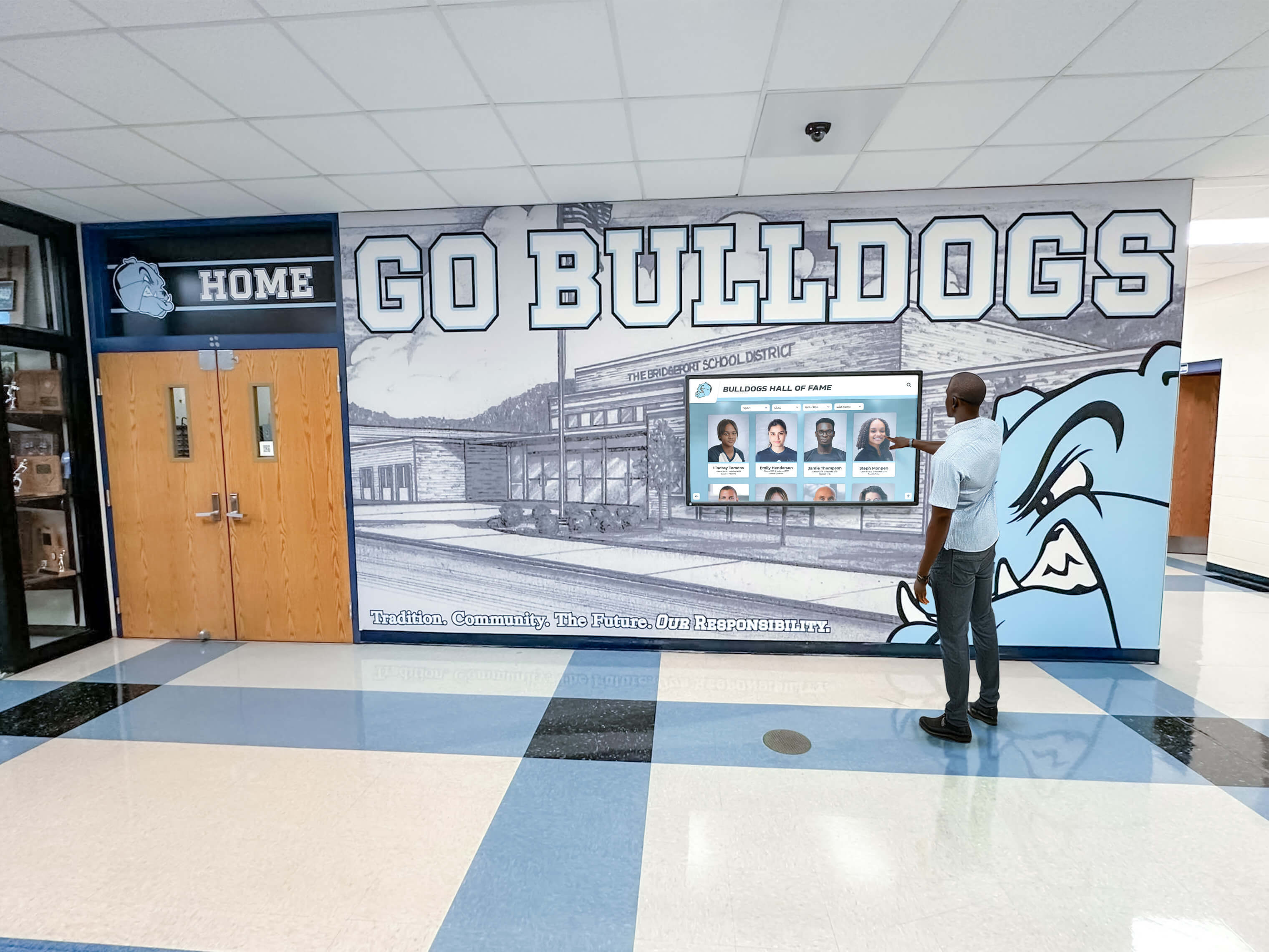
User-friendly recognition displays encourage exploration and engagement from all community members
Implementation Planning: Launching Your Booster Club Recognition Program
Organizations ready to enhance donor recognition can follow systematic implementation processes:
Needs Assessment and Goal Definition
Begin by clarifying specific objectives including primary recognition use cases and priority content, target audiences including current donors, prospective supporters, athletes, and broader community, available budget and resource constraints, existing recognition approaches and identified limitations, success metrics defining program effectiveness, and leadership capacity for ongoing management and maintenance.
Clear objectives guide technology selection, content development, and implementation planning ensuring recognition programs address actual organizational needs rather than pursuing generic best practices that may not fit specific contexts.
Technology Evaluation and Selection
Compare recognition solutions based on key criteria including alignment with identified use cases and objectives, total cost including implementation and ongoing fees, ease of use for volunteer administrators without technical expertise, content management flexibility and update simplicity, customer support quality and responsiveness, integration capabilities with existing systems, scalability supporting growth across multiple seasons, and references from similar booster clubs or athletic programs.
Organizations seeking comprehensive recognition solutions should explore platforms like Rocket Alumni Solutions specializing in school athletic applications with full implementation support.
Content Development and Launch
Successful recognition programs require systematic content preparation including historical donor data compilation and organization, current season contributor information collection, business sponsor logo and information gathering, volunteer contribution documentation and valuation, impact stories and program outcome documentation, photo and multimedia asset collection, and recognition policy documentation and communication.
Many full-service providers handle content development as part of implementation, significantly reducing internal workload while ensuring professional presentation quality.
Ongoing Management and Sustainability
Long-term recognition program success requires establishing sustainable management processes including clear role assignment for recognition updates and maintenance, regular update schedules following fundraising cycles and events, quality assurance processes ensuring accuracy, donor feedback collection and response mechanisms, periodic program assessment and refinement, and leadership transition planning preserving institutional knowledge as volunteers change.
Well-designed systems with intuitive interfaces and proper training enable smooth volunteer leadership transitions that often challenge booster club continuity and institutional memory.
Conclusion: Building Lasting Support Through Strategic Recognition
Booster club donor recognition represents far more than obligatory acknowledgment—it creates the foundation for sustainable athletic program funding, builds community pride around student-athlete success, inspires continued generosity from committed supporters, and demonstrates that contributions make meaningful differences in program quality and competitive excellence. When booster clubs invest thoughtful planning, appropriate resources, and sustained commitment in recognition programs, they create systems honoring all contribution types while building the philanthropic culture athletic programs require to thrive.
The strategies explored throughout this guide provide comprehensive frameworks for recognition that balances multiple objectives including celebrating diverse contributions from financial gifts to volunteer service to business sponsorships, maintaining year-round visibility rather than limiting acknowledgment to single events, creating sustainable systems that survive volunteer leadership transitions, inspiring multi-year sustained support rather than one-time participation, and demonstrating tangible connections between donor generosity and program success.
Recognition as Strategic Priority
Successful booster clubs view donor recognition not as administrative burden but as strategic investment in fundraising sustainability and community relationship building. Supporters who feel genuinely appreciated give again, increase contributions over time, volunteer additional hours, and inspire peers through visible philanthropic leadership. This multiplier effect from effective recognition exceeds initial investment many times over through improved retention, larger gifts, and expanded donor bases.
Technology Transformation
Digital recognition systems fundamentally change what booster clubs can accomplish in donor acknowledgment by eliminating physical space constraints that limit comprehensive inclusion, enabling multimedia storytelling impossible with traditional plaques, facilitating effortless updates maintaining accuracy despite volunteer transitions, providing cost-effective solutions sustainable across multiple sport seasons, and creating engaging interactive experiences that amplify recognition impact.
Modern platforms designed specifically for school athletic applications address booster club needs while remaining manageable for volunteer administrators without technical expertise or substantial time availability.
Building Program Legacy
Donor recognition that connects current contributions to historical program foundations, demonstrates sustained community support across generations, celebrates both athletic achievement and philanthropic generosity, and inspires continued investment in student-athlete success creates lasting positive impact extending far beyond individual fundraising campaigns or sport seasons.
Your booster club supporters’ generosity enables athletic programs to provide transformational experiences for hundreds of student-athletes across multiple sports and seasons. They deserve recognition matching their contributions’ significance—thoughtfully planned, professionally executed, consistently maintained, and perpetually honored. With strategic planning and appropriate technology, you can create recognition systems that celebrate every supporter while building the sustainable funding athletic excellence requires.
Ready to transform your booster club donor recognition program? Discover how digital recognition platforms can help you honor every supporter while building sustainable fundraising systems that ensure long-term athletic program success. Talk to our team to explore recognition solutions designed specifically for school athletic booster clubs and community-based fundraising programs.