Booster Club Dual Signature Policy: Approval Rules for Checks and Electronic Payments

A booster club dual signature policy requires two authorized officers to approve any expenditure above a defined dollar threshold—on paper checks and on electronic payment authorizations alike. The practical effect is that no single officer can move money unilaterally: every payment above the threshold requires a second review before it clears. That two-step approval is the most commonly recommended financial control for volunteer-led organizations and the one most frequently cited in district governance reviews as either in place or conspicuously absent.
The policy does not prevent spending. It creates a documented approval chain so that every check written in the organization’s name and every online transfer above a defined amount carries the authorization of more than one person who reviewed the transaction before it was issued. For booster clubs that receive sponsor contributions, restricted gifts, and fundraising proceeds that ultimately fund recognition displays, awards, banners, and hall of fame programs, that approval chain also protects the integrity of the fund-to-recognition connection that donors and sponsors depend on.
This guide covers how to structure a dual signature policy, where to set approval thresholds, how to extend the requirement to electronic payments, and how the policy connects to the recognition commitments a booster club makes when it accepts sponsor and donor contributions.
This guide is for informational purposes only and does not constitute legal, accounting, or compliance advice. Consult a licensed CPA or attorney for guidance specific to your organization’s structure, tax-exempt status, and jurisdiction.

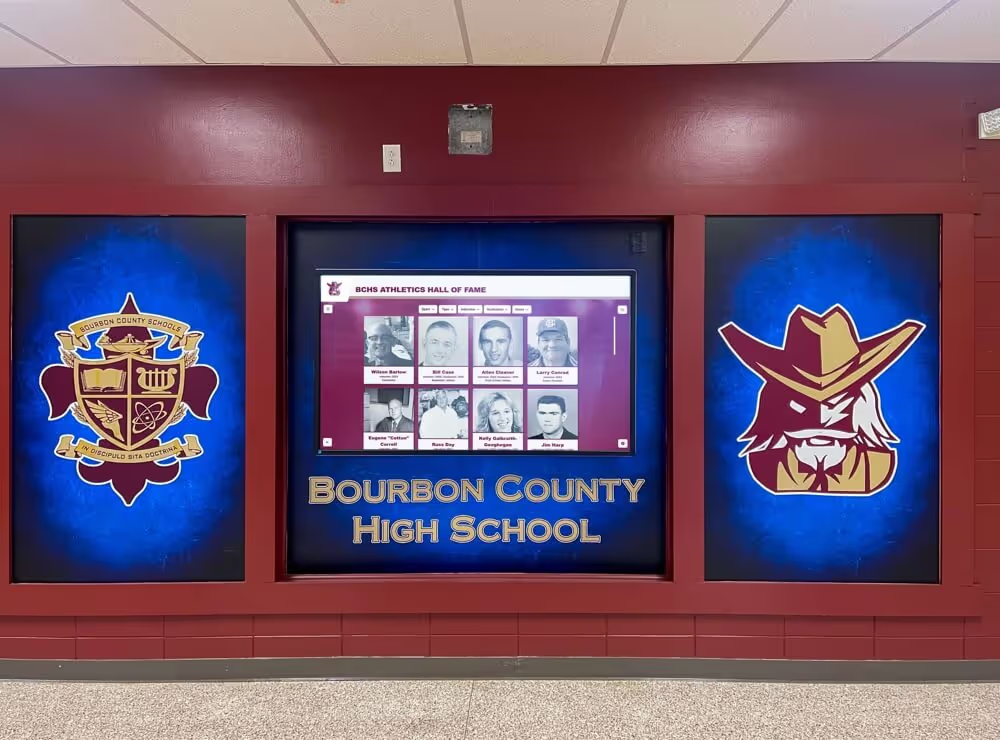
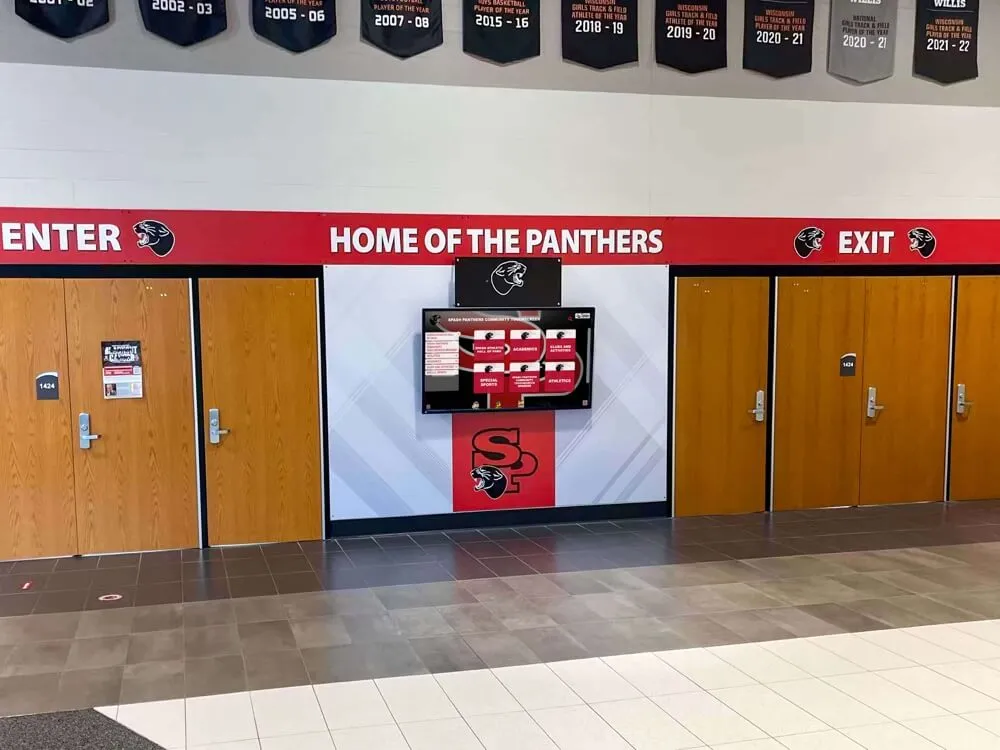
Hall of fame walls, award displays, and recognition panels are funded by the same booster club accounts that a dual signature policy governs—the approval chain behind each payment is part of the governance record that sponsors and district administrators rely on
What a Booster Club Dual Signature Policy Is
A booster club dual signature policy is a written governance rule that requires two authorized officers to sign—or electronically authorize—any payment above a defined dollar amount. Below that threshold, one officer’s authorization is sufficient for routine small-dollar expenses; at or above it, a second signature is required before the payment is issued.
The policy answers four operational questions before it can be enforced:
- Which payment types does it cover? The policy must explicitly address paper checks, ACH and EFT transfers, electronic bill pay, debit card purchases above the threshold, and online payment platform disbursements. A policy that names only checks while the organization pays most vendors electronically leaves the majority of transactions outside the control.
- What dollar threshold triggers the two-signature requirement? The threshold must be a specific dollar amount, not a description like “large expenditures” or “significant payments.”
- Which officer roles are authorized signatories? Signatories should be identified by role—Treasurer, President, Vice President—not by individual name, so the policy remains valid through officer transitions.
- How are authorizations documented when payment is electronic? A paper check can carry two physical signatures; an ACH transfer cannot. The policy must specify the documentation that substitutes for a second physical signature when electronic payments are used.
Why Dual Signatures Protect Booster Clubs
The dual signature requirement provides two distinct protections simultaneously. It deters unauthorized spending by eliminating the single point of control that allows one person to move funds without review. And it creates a documented approval trail that confirms every major expenditure was examined by more than one officer before it cleared.
For organizations that receive sponsor and donor funds in exchange for recognition commitments—lobby displays, digital recognition profiles, named award tiers, hall of fame placements—the second protection is as important as the first. When a sponsor renews a partnership or a donor makes a second gift, part of what they are trusting is that the funds from the first contribution were deployed with organizational oversight. A dual signature policy is part of the governance infrastructure that makes that trust defensible to the sponsors, donors, and district administrators who ask about it.
The control also protects individual officers. A treasurer who signs checks alone is the sole accountable party if a payment is later questioned. A treasurer who signs alongside a second officer shares that accountability and has a documented second reviewer to corroborate that the payment was reviewed and approved at the time it was issued.
Setting the Approval Threshold
The most common dual signature threshold for booster clubs falls between $250 and $500, though the right number for your organization depends on your typical transaction sizes, district requirements, and any guidance from the CPA who reviews or audits your accounts. Whatever the threshold, it must appear as a specific dollar figure in the written policy.
A tiered approval structure provides more granular oversight as transaction amounts increase:
| Tier | Amount Range | Approval Required |
|---|---|---|
| Routine | Under $250 | One authorized officer |
| Standard | $250–$2,500 | Two authorized officers |
| Major | $2,501–$10,000 | Two officers + board notification at next meeting |
| Extraordinary | Above $10,000 | Full board vote with documented minutes |
The tier boundaries above are illustrative. Your organization may use simpler two-tier structure—single officer below threshold, dual authorization above—or a more granular structure if your program manages a budget with a wide range of transaction sizes. The structure that matters is the one actually documented in your policy and consistently applied in your payment process.
Which Transactions Require Dual Authorization
The dual signature requirement should cover every method by which the organization moves money, not just the check format. Programs that limit the policy to paper checks while processing most payments electronically create a gap that renders the control largely symbolic.
| Transaction Type | Below Threshold | At or Above Threshold |
|---|---|---|
| Paper checks | One signature | Two signatures on check face |
| ACH / EFT transfers | Single authorization | Dual written authorization before initiation |
| Online bill pay | Single authorization | Second officer review and documented approval |
| Debit card purchases | Single officer | Pre-approval by second officer in writing |
| Wire transfers | Single authorization | Dual authorization + board notification |
| Credit card charges | Single cardholder | Second officer pre-approval for charges above threshold |
| Petty cash replenishment | N/A | Check or transfer above threshold requires dual authorization |
Petty cash disbursements within a properly funded petty cash account are typically governed by a separate petty cash policy and do not require dual signature for each small transaction—but the check or transfer used to replenish the fund does require dual authorization when it exceeds the threshold.
Who the Authorized Signatories Are
Authorized signatories should be defined by officer role, not individual name. A policy that designates “Jane Torres, Treasurer” as a required signatory becomes technically void the moment a new treasurer takes office. A policy that designates “the Treasurer” and “the President” remains valid indefinitely.
Standard signatory configuration for most booster clubs:
| Role | Function |
|---|---|
| Treasurer | Primary signatory on all financial transactions |
| President | Secondary signatory for dual-signature requirement |
| Vice President or Secretary | Alternate secondary signatory when primary secondary is unavailable |
The policy should include explicit conflict of interest language: an officer with a direct or indirect financial interest in a transaction—a vendor relationship, a family member’s business—may not serve as a signatory for that transaction. A conflict disclosure and a substitute signatory procedure should be documented so the process is clear when a conflict arises rather than improvised under time pressure.
The policy should also address unavailability: what happens when the primary secondary signatory is traveling, ill, or otherwise unreachable. Naming an alternate secondary signatory role prevents the situation where a time-sensitive payment is delayed indefinitely because one officer cannot be reached.

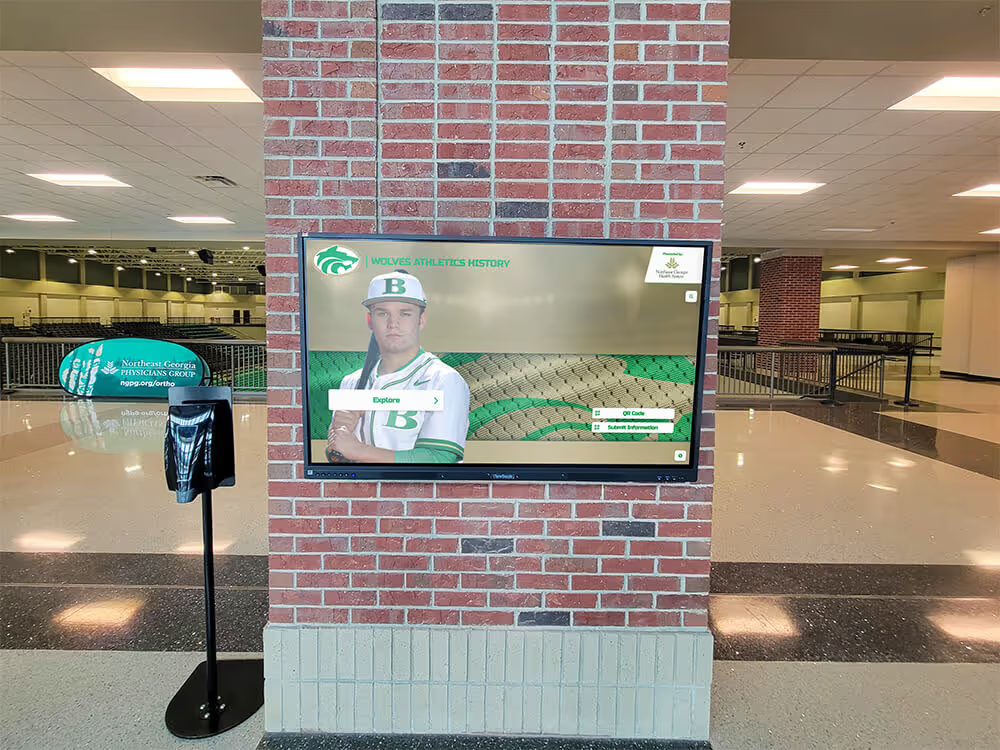
Lobby murals, honor walls, and recognition installations involve vendor contracts and payments that belong in the dual signature review—the approval record confirms the organization authorized each expenditure before funds were transferred
Extending Dual Authorization to Electronic Payments
The original dual signature requirement was designed for paper checks, where a literal second signature on the check face is easy to verify and audit. Electronic payments—ACH transfers, online bill pay, digital payment platforms, and wire transfers—require a different documentation approach because there is no physical instrument with space for a second signature.
For electronic payments, dual authorization documentation should include:
- A written payment authorization form—email or paper—that identifies the payee, amount, purpose, and budget line before the payment is initiated.
- Confirmation by a second officer—by email reply, signed form, or platform-level authorization—that they reviewed and approved the transaction before initiation.
- A payment log entry recording both the initiating officer’s name and the approving officer’s name alongside the transaction details.
- Storage of the authorization documentation with the payment record in the organization’s files, cross-referenced to the check or transaction number.
Programs that use payment platforms with built-in two-person approval workflows—where a second officer must take an explicit approval action before the payment processes—satisfy the dual authorization requirement electronically. Programs that do not have platform-level approval controls must build a manual documentation step into their payment procedure so the approval record exists independent of the platform.
Steps for issuing a dual-authorized check:
- The requesting officer prepares a check request form identifying the payee, amount, purpose, and the budget line the expense satisfies.
- The treasurer reviews the request against available funds and the approved budget.
- The treasurer prepares the check and signs as primary signatory.
- The check and supporting documentation are presented to the secondary signatory for review.
- The secondary signatory reviews the check request and documentation before signing the check face.
- Both the check number and both signatory names are recorded in the check register at the time of signing.
- The check is issued; a copy of the check and the supporting documentation is filed with the payment record.
Steps for documenting a dual-authorized electronic payment:
- The initiating officer prepares a payment request identifying the payee, amount, purpose, and budget line.
- The request is sent to the approving officer by email or submitted through the organization’s approval process.
- The approving officer reviews the request, confirms the budget line is available, and sends written approval before the payment is initiated.
- The initiating officer enters the payment into the platform and records the approving officer’s name and approval date in the payment log.
- The written approval confirmation is filed alongside the payment confirmation from the platform.
Sample Dual Signature Policy Language
Use this template as a starting point; adapt the threshold amounts, officer roles, and exception procedures to match your organization’s structure and any requirements from your district or supervising CPA.
BOOSTER CLUB DUAL SIGNATURE POLICY — SAMPLE LANGUAGE

Section 1. Purpose
This policy establishes the authorization requirements for all
disbursements made on behalf of [Organization Name] to protect
organizational funds and ensure that expenditures above the defined
threshold are reviewed by more than one officer before payment is
issued.

Section 2. Scope
This policy applies to all payments made by the organization,
including: paper checks, ACH and EFT transfers, electronic bill
payments, wire transfers, debit card purchases at or above the
threshold defined in Section 3, and online payment platform
disbursements.

Section 3. Signature Threshold
Expenditures of $500.00 or more require authorization by two officers
designated as approved signatories under Section 4. Expenditures
below $500.00 may be authorized by one approved signatory. The
threshold may be adjusted by majority vote of the board of directors
and must be updated in writing in this policy document.

Section 4. Authorized Signatories
The following officer roles are designated as authorized signatories:
  Primary Signatory: Treasurer
  Secondary Signatory: President
  Alternate Secondary Signatory: Vice President / Secretary
  [as designated by board resolution]

No officer may serve as both the requesting party and the approving
signatory for the same transaction.

Section 5. Electronic Payment Authorization
For electronic payments that do not allow a second signature on a
payment instrument, dual authorization shall be documented as
follows: (a) the initiating officer submits a written payment request
identifying the payee, amount, purpose, and budget line before
payment initiation; (b) the approving officer provides written
confirmation of review and approval by email or signed form prior to
payment initiation; (c) both the initiating and approving officer
names are recorded in the payment log alongside the transaction.

Section 6. Conflict of Interest
An officer with a direct or indirect financial interest in a
transaction shall disclose the conflict in writing to the board and
shall not serve as a signatory for that transaction. A substitute
signatory shall be designated by the board for that transaction.

Section 7. Documentation and Retention
All payment requests, check copies, electronic authorization
confirmations, and payment log entries shall be retained for a
minimum of seven years or as otherwise required by applicable law
or district policy.

Section 8. Emergency Exception
Disbursements that cannot be delayed for dual authorization due to
a documented emergency shall be made with single-officer
authorization only when a written explanation of the emergency is
prepared at the time of payment. Such transactions shall be ratified
by the board at its next scheduled meeting and recorded in the
meeting minutes.

Section 9. Annual Review
This policy shall be reviewed by the board of directors at least
once per fiscal year. Any revisions shall be documented with an
effective date and a record of the authorizing board vote.

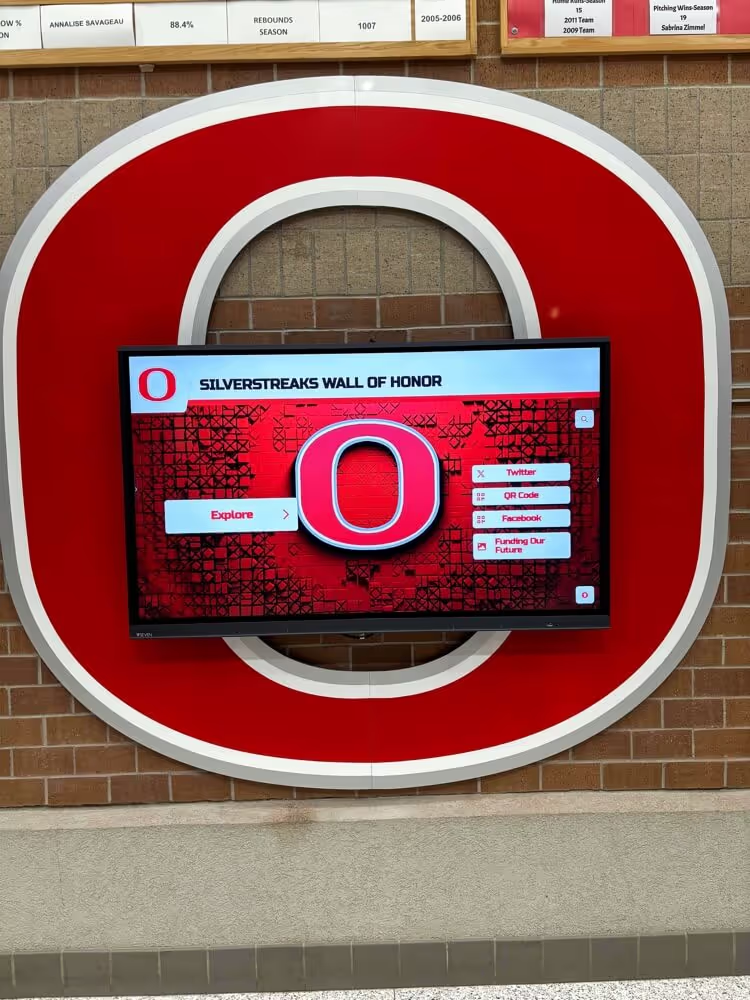
Every name on a recognition wall was funded by a booster club payment; dual signature documentation connects each expenditure to an authorization record that can be reviewed by the district, a sponsor, or an incoming officer years later
How Dual Signatures Connect to Recognition Programs
The connection between financial controls and recognition programs is direct: every sponsor contribution and donor gift that funds a recognition display, awards program, or hall of fame project produces outgoing payments—to vendors, installers, designers, and platform providers—that should each carry dual authorization before funds leave the account.
When a booster club accepts a gold-level sponsorship in exchange for a lobby banner, a digital display profile, and a recognition program listing, the payments to the vendors producing those deliverables represent the organization’s fulfillment of a financial commitment made to a sponsor. The dual signature review on each of those vendor payments creates a governance record confirming that the recognition expenditure was reviewed by the organization, not simply approved by whoever happened to be treasurer that week.
Sending a sponsorship thank-you letter after a sponsor’s payment clears is the relationship step. The dual signature process that governs how those funds are subsequently spent is the financial governance step that gives the acknowledgment its organizational credibility—the sponsor can be confident that their contribution was deployed through a supervised process, not managed informally.
Digital signage content and kiosk programming for recognition displays involve vendor contracts, content management subscriptions, hardware maintenance agreements, and installation invoices—all recurring expenditures that should flow through the dual signature process on a consistent schedule, not just for initial installation.
Programs that build or refresh their recognition infrastructure need vendor relationships that span multiple seasons. The dual signature documentation for those vendor payments becomes part of the program’s institutional record: evidence that recognition expenditures were reviewed and authorized over time, not just in the year a new display was installed.
Connecting the Policy to Athletic Program Records
The dual signature policy is a governance document that belongs in the organization’s permanent record alongside the bylaws, officer election records, meeting minutes, and annual financial reports. Its value is not only operational—it is historical. When a district review or governance inquiry asks whether financial controls were in place during a specific term, the document record answers that question. A policy that lives only in one former treasurer’s email is not an institutional record; a policy filed with the organizational documents and accessible to the current board is.
Maintaining structured data standards for athletic program records follows the same principle that applies to financial governance documents: records that are consistently structured, clearly labeled, and retained in accessible locations answer questions that informally maintained records cannot. The booster clubs with the strongest governance histories are typically the ones that treated policy documents—including financial controls—as permanent institutional assets rather than officer-term artifacts.
Preserving institutional knowledge across leadership transitions is a challenge every volunteer-led organization faces. Officers change every year or two; the policies and records they leave behind are what incoming leaders rely on. A dual signature policy that is updated annually, filed accessibly, and reviewed with each new officer cohort functions as institutional memory—the incoming treasurer knows the controls that were in place because the document says so, not because they were briefed by a predecessor who may or may not remember the details.
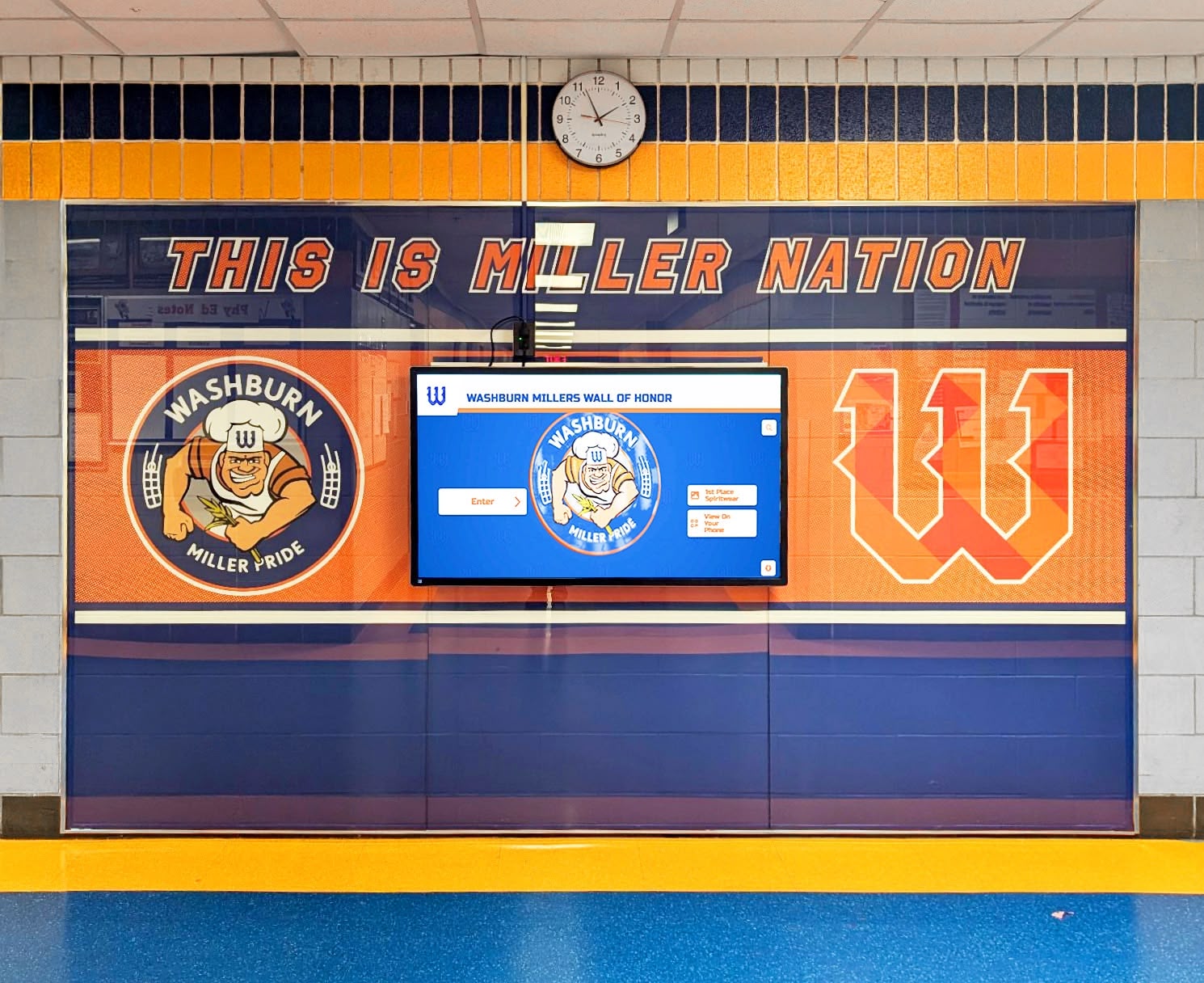
Recognition programs that outlast individual officer terms depend on governance documents—including the dual signature policy—that are filed, updated, and accessible to each incoming leadership cohort
Common Compliance Gaps
These are the gaps most frequently identified when booster club dual signature policies are reviewed by external auditors or district oversight teams:
| Compliance Gap | What It Means | How to Address It |
|---|---|---|
| No specific threshold amount | “Large expenditures require two signatures” is unenforceable | State the exact dollar threshold in the policy document |
| Checks only; electronic payments not covered | Most vendor payments bypass the control entirely | Add explicit electronic payment and ACH authorization language |
| Named individuals rather than officer roles | Policy lapses when officers change | Replace individual names with role titles |
| No conflict of interest provision | A self-dealing transaction can pass dual review if both signatories are conflicted | Add disqualification and substitute signatory language |
| No emergency exception process | Genuine emergencies are handled ad hoc without documentation | Add a documented exception process with required board ratification |
| No alternate secondary signatory | A single unavailable officer can block time-sensitive payments | Designate an alternate secondary signatory role |
| Policy not reviewed annually | Thresholds become outdated; signatory lists become stale | Add annual review as a standing board meeting agenda item |
| Policy not distributed to new officers | Incoming officers are unaware of required controls | Include policy review in officer onboarding checklist |
Frequently Asked Questions
What is a booster club dual signature policy?
A booster club dual signature policy is a written governance rule requiring two authorized officers to sign or electronically authorize any payment above a specified dollar threshold. It applies to paper checks, ACH transfers, electronic bill payments, wire transfers, and other disbursement methods. The policy prevents any single officer from moving funds unilaterally and creates a documented approval chain for all expenditures at or above the threshold.
What is the standard threshold for requiring two signatures on booster club checks?
Most booster club governance frameworks recommend a threshold between $250 and $500, but the appropriate threshold depends on your program’s typical transaction sizes, district requirements, and guidance from the CPA who reviews your accounts. The most important requirement is that the threshold be a specific dollar amount stated in the written policy—a general reference to “larger amounts” or “significant payments” is not an enforceable standard.
Does the dual signature requirement apply to electronic payments and ACH transfers?
Yes—a dual signature policy that covers only paper checks while the organization pays most vendors electronically leaves the majority of transactions outside the control. Electronic payments require a documentation-based dual authorization approach: the initiating officer prepares a payment request, the approving officer provides written confirmation before the payment is initiated, and both names are recorded in the payment log. Platforms with built-in two-person approval workflows satisfy this requirement electronically.
What happens if the two required signatories are unavailable at the same time?
This is why the policy should designate an alternate secondary signatory role—typically the Vice President or Secretary. When both primary signatories are unavailable for a time-sensitive payment, the alternate steps in. For genuine emergencies where no authorized signatory is available, the policy’s emergency exception process allows single-officer authorization with a written emergency explanation, followed by board ratification at the next scheduled meeting.
Can an officer serve as both the requesting party and one of the approving signatories?
No. The conflict of interest provision should prohibit an officer from serving as a signatory for a transaction they are requesting. The purpose of the dual signature requirement is an independent second review; a signatory reviewing their own payment request provides neither independence nor meaningful second review. The policy should require that the second signatory be an officer who has no financial interest in the transaction.
Should the policy cover debit card purchases?
Yes. Debit card purchases above the threshold should require pre-approval by a second officer in writing before the purchase is made. Because a debit card transaction cannot be unsigned after the fact, the pre-approval documentation is the dual authorization record for debit purchases. Some programs simplify this by prohibiting debit card purchases above the threshold entirely—all transactions above the threshold must be made by check or pre-authorized electronic transfer where the approval documentation can precede the payment.
How does the dual signature policy protect recognition commitments made to sponsors and donors?
When a booster club accepts sponsor funds in exchange for recognition deliverables—display profiles, lobby banners, named award tiers, program placements—the vendor payments that fulfill those commitments should each carry dual authorization. That review creates a governance record confirming that recognition expenditures were authorized by the organization, not simply made by the individual officer who happened to be available. For programs building or refreshing sports memory boards, digital archives, and multi-year recognition programs, the dual signature record is the financial backbone of a recognition program that sponsors and donors can audit over time.
How long should dual signature documentation be retained?
General nonprofit governance practice suggests retaining financial records—including payment authorization documentation, check copies, and electronic approval confirmations—for seven years. Records associated with major recognition infrastructure expenditures, restricted gift disbursements, or named sponsorship payments may warrant retention beyond seven years, since the recognition commitments they funded may generate questions long after the original transaction. Consult a licensed CPA or attorney for retention requirements specific to your jurisdiction and organizational structure.

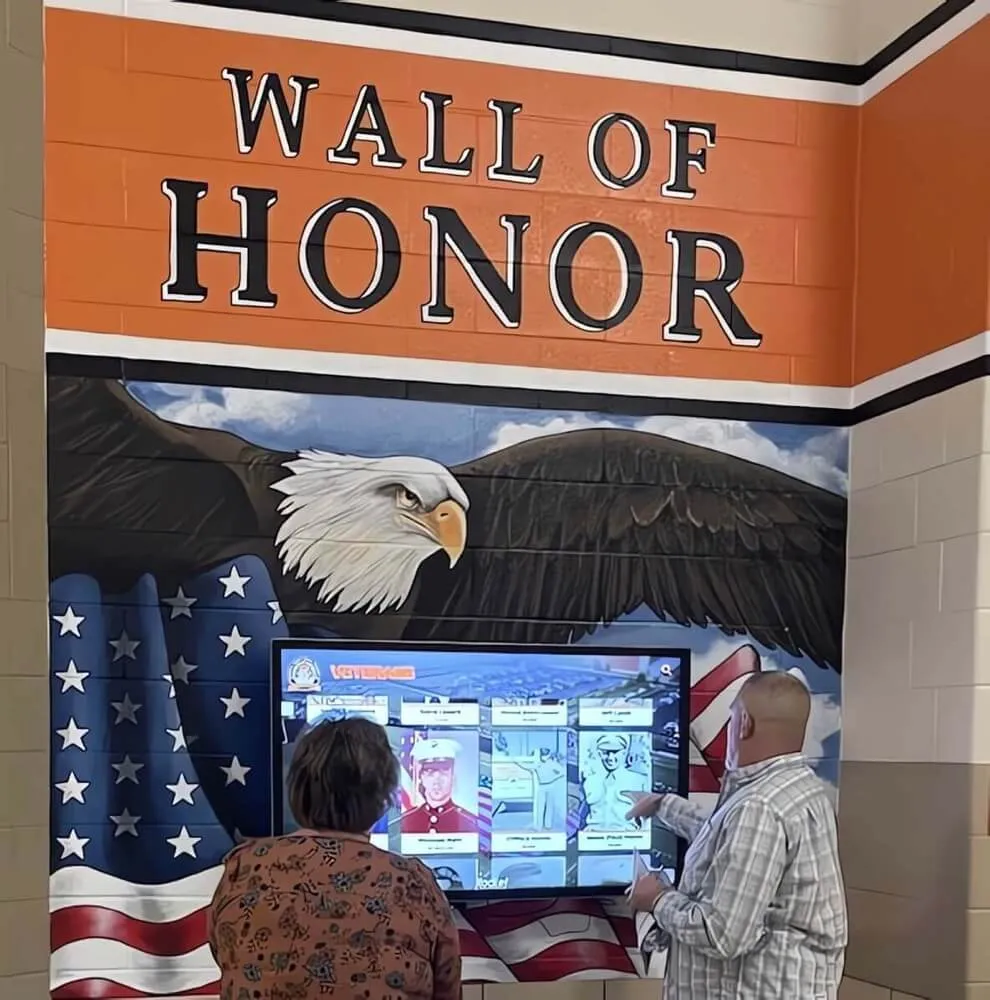
Athletic murals, lobby displays, and digital recognition screens are funded by booster club vendor payments—dual signature documentation from those payments creates the governance record that confirms recognition expenditures were authorized and reviewed before funds left the account
When your program is ready to build the recognition infrastructure that dual signature governance protects—managed digital donor walls, sponsor display profiles, and hall of fame systems designed for long-term institutional stewardship—explore how Rocket Alumni Solutions supports booster clubs with recognition programs built for governance accountability and multi-year sponsor relationships.