Booster club fidelity bond requirements specify the minimum insurance coverage a school athletic support organization should carry to protect its treasury against dishonest acts by officers, volunteers, or employees who handle funds. Most governance frameworks recommend bonding any individual with access to the organization’s bank accounts, with coverage equal to the highest single-event cash receipt or the maximum balance held at any point during the fiscal year—whichever is greater. This guide explains what a fidelity bond covers, how to determine coverage amounts, how to obtain one, and why bonding is a foundational governance step for programs that manage donor and sponsor recognition commitments.
This guide is for informational purposes only and does not constitute legal, accounting, or insurance advice. Consult a licensed insurance professional, CPA, or attorney for guidance specific to your organization’s structure, tax-exempt status, and jurisdiction.

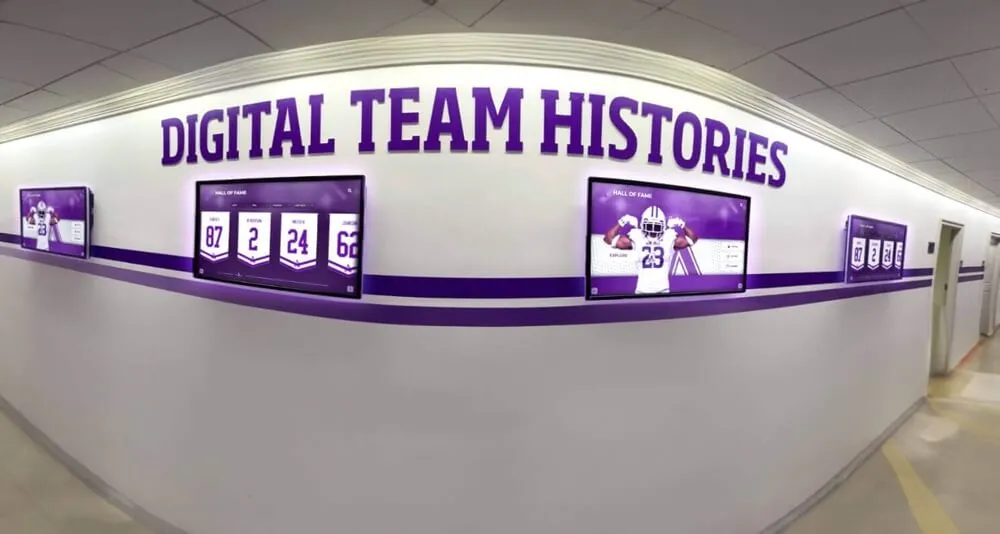
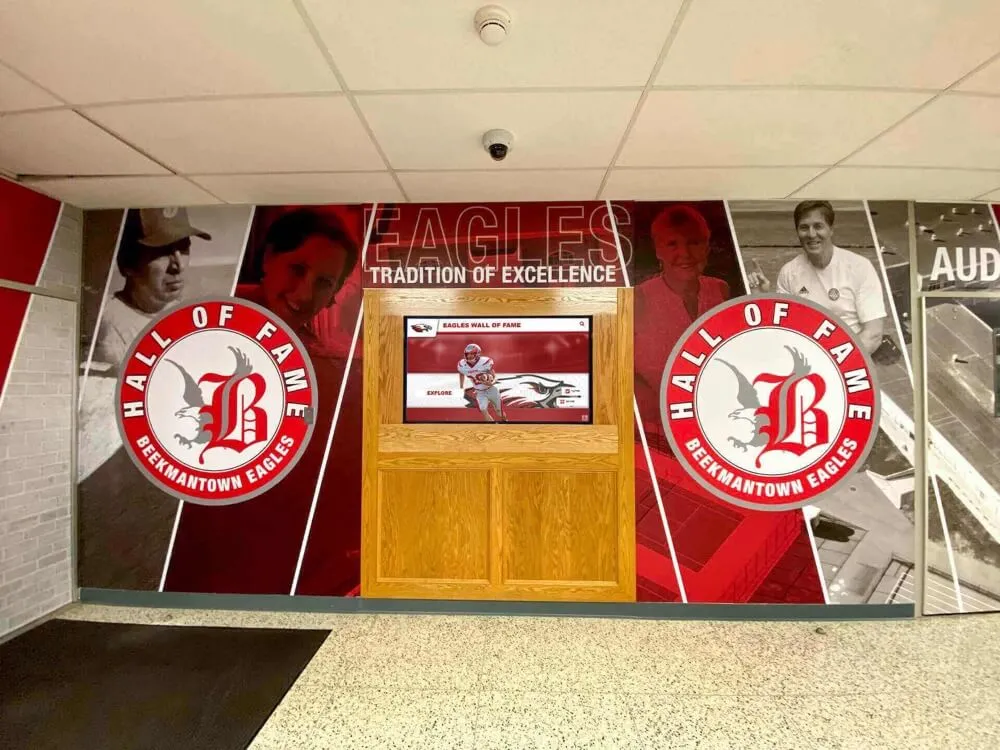
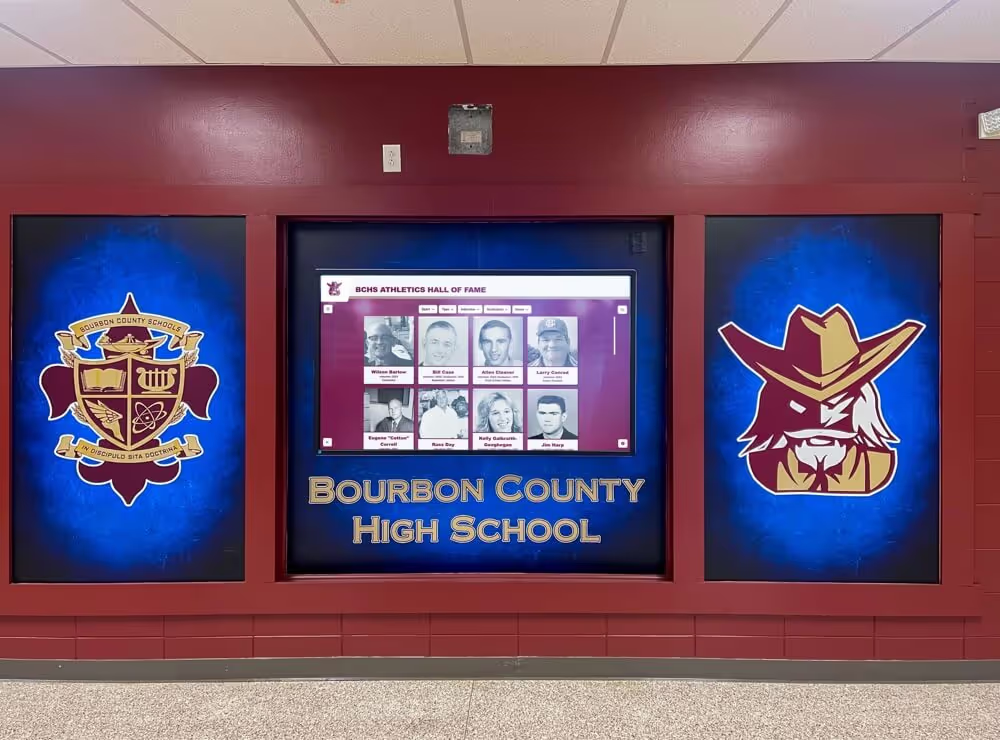
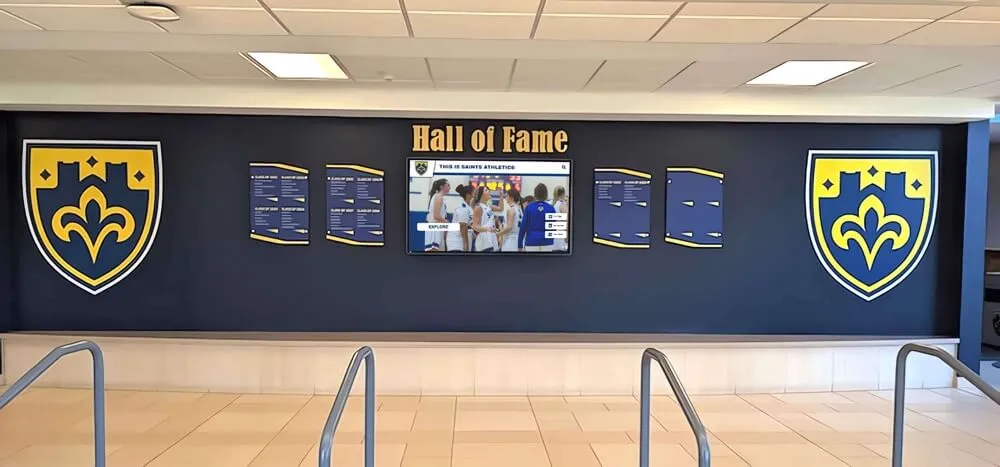
Donor-funded recognition programs—including athletic hall of fame walls, shield displays, and sponsored lobby installations—represent exactly the kind of financial commitment a fidelity bond is designed to protect from loss through dishonest handling of funds
What a Fidelity Bond Is and Why Booster Clubs Need One
A fidelity bond is a type of insurance policy that compensates an organization when a covered individual—typically an officer, employee, or volunteer in a position of financial trust—commits a dishonest act that results in a financial loss. In the booster club context, covered acts typically include embezzlement, theft, forgery, and fraudulent transfer of funds.
Booster clubs are particularly exposed to fidelity risk for three structural reasons:
- High volunteer turnover. Officer terms are often one or two years. Financial procedures and institutional knowledge transfer imperfectly, creating gaps during transitions when controls may not be consistently followed.
- Cash-intensive operations. Gate receipts, concession stand proceeds, spirit-wear sales, and event entry fees involve significant cash volumes passing through volunteer hands in high-activity environments where oversight is difficult.
- Informal oversight culture. Many booster clubs operate with a level of interpersonal trust among parent volunteers that discourages the formal documentation and verification practices that would otherwise deter or detect dishonest behavior.
None of these conditions make a booster club’s volunteers untrustworthy. They do mean that the organization is statistically more vulnerable to loss than a similarly-sized business with professional staff and formal compliance requirements. A fidelity bond addresses that vulnerability by providing financial recovery when a loss occurs and, in doing so, creates an accountability signal that discourages dishonest behavior before it starts.
For programs managing donor recognition displays, sponsor naming walls, and athletic hall of fame installations, bonding also signals to donors and sponsors that the organization takes stewardship of contributed funds seriously—a trust signal that directly supports the long-term health of the recognition program.
Booster Club Fidelity Bond Requirements at a Glance
The table below summarizes standard fidelity bond requirements and recommendations. No single universal mandate governs all booster clubs; requirements vary by state nonprofit law, school district policy, and individual organization bylaws. Treat the guidance below as a baseline and verify applicable requirements with your district and legal counsel.
| Requirement Area | Common Standard | Notes |
|---|---|---|
| Who must be bonded | Any individual with signatory authority or unrestricted access to accounts | At minimum: treasurer and any co-signers; ideally all board officers |
| Coverage amount | Greater of: peak account balance OR highest single-event cash receipt | Some frameworks specify a minimum floor (often $10,000–$25,000) regardless of activity level |
| Bond type | Commercial crime policy or fidelity bond rider on a broader nonprofit policy | Standalone bonds and riders are both acceptable; verify with your insurer |
| Trigger for purchase | Before the individual assumes financial duties, not after | Retroactive bonding does not cover prior-period losses |
| Renewal timing | Annually, timed to align with officer transitions | Lapsing coverage during an officer transition is one of the most common compliance gaps |
| Documentation | Bond certificate retained in the organization’s governance files | Provide a copy to the school athletic director and district finance office if required |
| Policy exclusions | Review carefully for exclusions related to prior acts, discovery periods, and volunteer vs. employee status | Some riders cover only employees; confirm that volunteers are included |
Who Sets Booster Club Fidelity Bond Requirements?
Fidelity bond requirements for booster clubs come from four potential sources, and a given organization may be subject to requirements from more than one:
- State nonprofit law. Some states include bonding provisions in their nonprofit corporation statutes; requirements vary significantly.
- School district policy. Many districts that provide oversight or facility access to affiliated booster clubs specify bonding as a condition of that relationship.
- Organization bylaws. Well-drafted bylaws often include a bonding requirement as part of the treasurer’s job description.
- Lender or grantor requirements. Programs applying for grants or carrying organizational credit lines may find that funders require evidence of fidelity coverage.
When requirements from multiple sources apply, satisfy the most stringent one.
How to Determine the Right Coverage Amount
Coverage amount is the area where booster club officers most frequently make underinsurance mistakes. The instinct is to purchase a round-number policy based on the organization’s typical checking balance. The correct approach is to calculate coverage based on maximum exposure at any point during the fiscal year—which may be substantially higher than the average balance.
Use the following calculation to determine a minimum coverage floor:
Identify peak account balance. Review bank statements from the prior fiscal year and note the highest single-day balance across all accounts. This represents the maximum loss exposure from account-level access.
Identify highest single-event cash receipt. Review event logs for the highest single cash receipt—often a major tournament, gala, or large fundraiser. This represents the maximum loss exposure during cash handling before deposit.
Identify highest outstanding commitment. If the organization holds restricted funds for a specific purpose (a named scholarship fund, a display renovation project, a pledged gift that has not yet been expended), the full restricted balance represents a discrete exposure.
Take the highest figure. Your coverage floor is the maximum of steps 1, 2, and 3. Round up to the nearest coverage tier available from your insurer.
Apply a growth buffer. If the organization expects significantly higher activity in the coming year—a capital campaign, a new naming rights program, a major facility project—purchase coverage that reflects projected exposure, not prior-year actuals.
Programs that manage dedicated donor recognition funds or sponsor prepayments for multi-year display agreements should treat those balances as a separate exposure category and confirm that restricted funds are covered by the policy’s terms.
Types of Fidelity Coverage Available to Booster Clubs
| Coverage Type | What It Covers | Best For |
|---|---|---|
| Standalone fidelity bond | Dishonest acts by named or position-based covered individuals | Small-to-mid programs wanting simple, dedicated coverage |
| Commercial crime policy | Broader than a fidelity bond; typically includes employee theft, forgery, computer fraud, and funds transfer fraud | Larger programs with significant cash flow or electronic payment systems |
| Nonprofit package policy rider | Fidelity coverage bundled into a broader nonprofit directors & officers or general liability package | Programs already carrying nonprofit package coverage; confirm fidelity is actually included |
| Position schedule bond | Each officer position is listed; new occupants are automatically covered without policy changes | Programs with frequent officer transitions where named-individual bonds would require constant updates |
For most booster clubs, a commercial crime policy or position schedule bond offers the best combination of coverage breadth and administrative simplicity. A position schedule bond in particular eliminates the coverage gap that can occur when the named individual on a bond leaves mid-year and the replacement officer is not yet added to the policy.
How to Obtain a Fidelity Bond
Obtaining fidelity coverage follows a straightforward process:
Contact your current nonprofit or organization insurer first. If the booster club already carries general liability, directors and officers, or event insurance, the current carrier may offer a fidelity rider or commercial crime endorsement at a discounted rate.
Request quotes from nonprofit-specialist insurers. Insurance carriers that specialize in nonprofit and school organizations typically offer competitive pricing and policy terms better suited to booster club structures than standard commercial lines.
Confirm volunteer coverage. Some fidelity policies cover only “employees.” Confirm in writing that the policy language extends to volunteers, unpaid officers, and contracted event staff who handle funds on the organization’s behalf.
Review the discovery period. Fidelity losses are often discovered months or years after the dishonest act occurred. Confirm that the policy’s discovery period—the window during which a loss can be reported—is long enough to cover realistic detection timelines, typically at least one year after policy expiration.
File the certificate in governance records. Store the bond certificate alongside the organization’s articles of incorporation, bylaws, IRS determination letter, and insurance documents. Provide a copy to the school athletic director and district finance office if district policy requires documentation.
Set a renewal reminder. Add a calendar reminder 60 days before the bond’s expiration, timed to align with officer transitions. Coverage that lapses during a transition leaves the incoming treasurer unprotected from their first day.

Athletic honor walls and hallway recognition boards represent multi-year commitments to donors and sponsors—programs that protect contributed funds through bonding and internal controls are better positioned to sustain those recognition commitments over time
Fidelity Bonds and the Broader Governance Framework
A fidelity bond is one component of a complete financial governance framework, not a substitute for the internal controls that prevent loss in the first place. The bond provides financial recovery after a verified loss; internal controls make losses less likely to occur and easier to detect when they do.
The most effective booster club governance frameworks combine fidelity coverage with:
- Dual-signature requirements for checks above a defined threshold, preventing any single officer from disbursing funds without independent authorization
- Monthly bank reconciliation reviewed by an officer other than the treasurer, creating an independent verification step
- Two-person cash counting at all events, protecting both the organization and individual counters from unverified discrepancies
- Annual internal review of financial records, sponsor commitments, and recognition display inventory
Athletic record book policies and standards documentation applies similar governance thinking to records management—establishing written standards that survive officer transitions and protect institutional history. The same principles that make record policies effective (clear documentation, consistent application, independent verification) also make financial controls effective.
For programs running youth sports award recognition events and end-of-season ceremonies funded through donor and sponsor contributions, the connection between financial governance and program sustainability is direct: the recognition programs that persist across decades are built on organizations that protected their funds reliably enough to retain the community trust that keeps contributions coming.
Fidelity Bonds and Donor Stewardship
Donors and sponsors who contribute to a booster club’s recognition programs—funding name plaques, trophy case installations, digital displays, scholarship endowments, or facility naming rights—have a reasonable expectation that their contributions will be applied as designated and protected from loss. A fidelity bond is part of the infrastructure that supports that expectation.
When a donor contributes to a named display installation or a sponsor prepays for multi-year recognition, those funds often sit in the organization’s accounts for weeks or months before the commitment is fulfilled. During that window, the funds are exposed to the same fidelity risks as all other organizational assets. A program that carries adequate fidelity coverage can confirm to donors and sponsors that restricted funds are protected—a stewardship conversation that strengthens trust and supports renewal.
Academic history archiving and digital preservation practices demonstrate the institutional discipline that donors and sponsors associate with long-term stewardship: the organization maintains records, protects its assets, and honors commitments over time. Fidelity bonding belongs in the same category—a governance practice that signals organizational maturity to the stakeholders whose support the program depends on.
Programs that build alumni welcome areas and maintain alumni recognition spotlights are investing in the long-term relationship infrastructure that keeps a school’s community engaged. Financial governance practices—including fidelity bonding—are what make those long-term relationships credible.
Connecting Fidelity Coverage to Recognition Program Health
The relationship between financial governance and recognition program sustainability is not abstract. Programs that lose funds to dishonest acts typically face one or more of the following consequences:
- Suspended or canceled recognition commitments. Donor names promised on a display installation may not be installed if the funds designated for the project were diverted. Sponsors who paid for multi-year naming rights may discover their commitments were not honored.
- Damaged community trust. Publicized financial losses—even when eventually recovered through insurance—damage the program’s reputation with the donor and sponsor community that funds its recognition activities.
- Disrupted record continuity. Financial losses often coincide with governance crises that disrupt the record-keeping practices underlying athletic website content, team records, and sponsor histories.
Fidelity bonding does not prevent all of these outcomes—it provides financial recovery, not reputational recovery. But organizations that carry appropriate coverage, communicate their governance practices to donors and sponsors, and maintain the documentation to file and recover a claim quickly are positioned to manage the impact of a loss more effectively than those without coverage.
For programs that use digital record boards and all-state athlete recognition displays to honor their student-athletes’ achievements, the financial controls protecting the program’s treasury are what keep those recognition systems funded, maintained, and accurate over time. Recognition infrastructure and financial governance are not separate concerns—one depends on the other.
Maintaining comprehensive record board imagery and documentation as part of the program’s institutional archive is also a governance practice: it creates a record of what recognition was in place at what time, supporting both audit verification and donor stewardship conversations.
Honor roll recognition programs and academic achievement displays build the same kind of institutional trust that athletic recognition programs depend on—and they depend on the same financial governance infrastructure to remain credible over time.
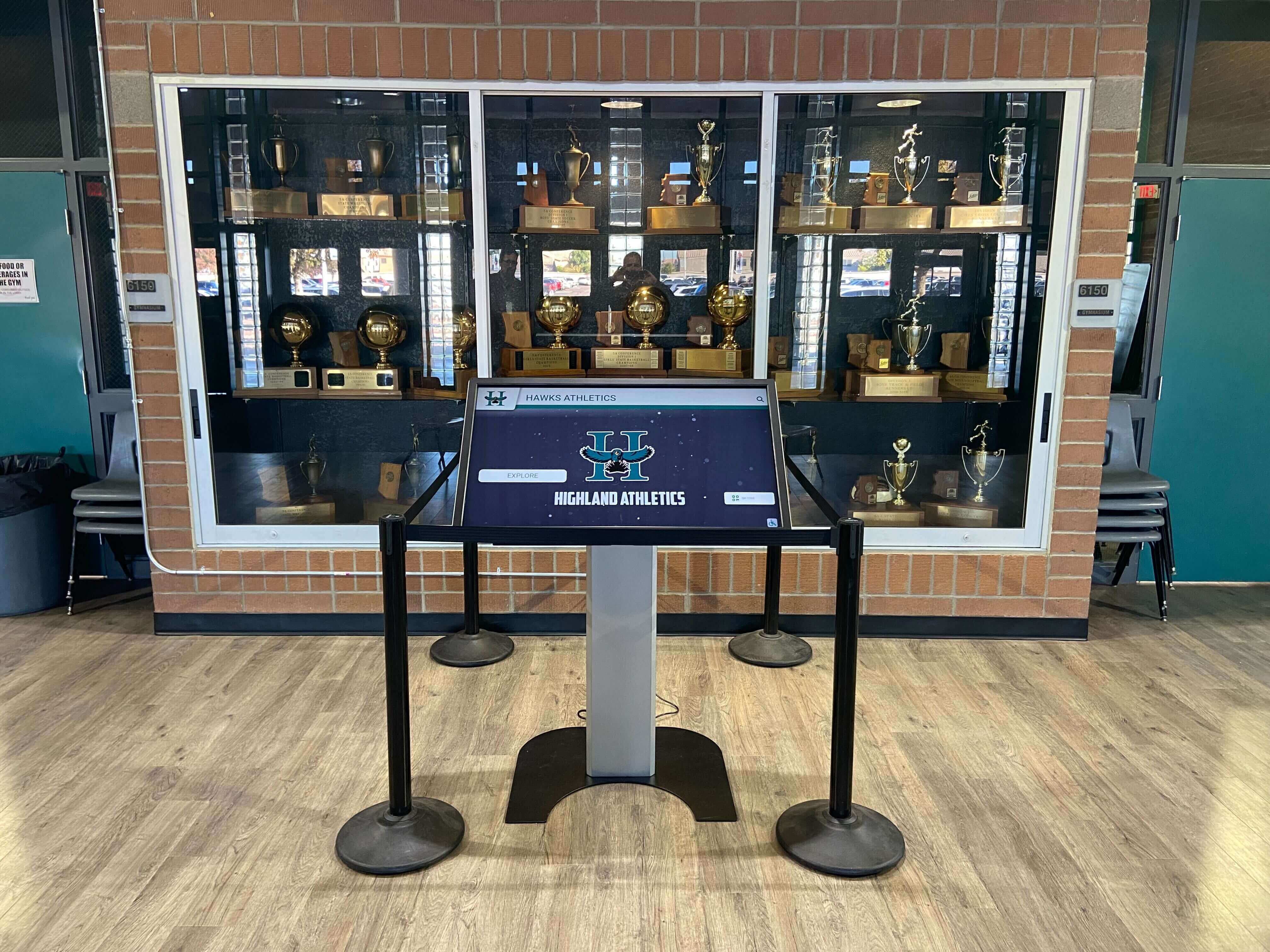
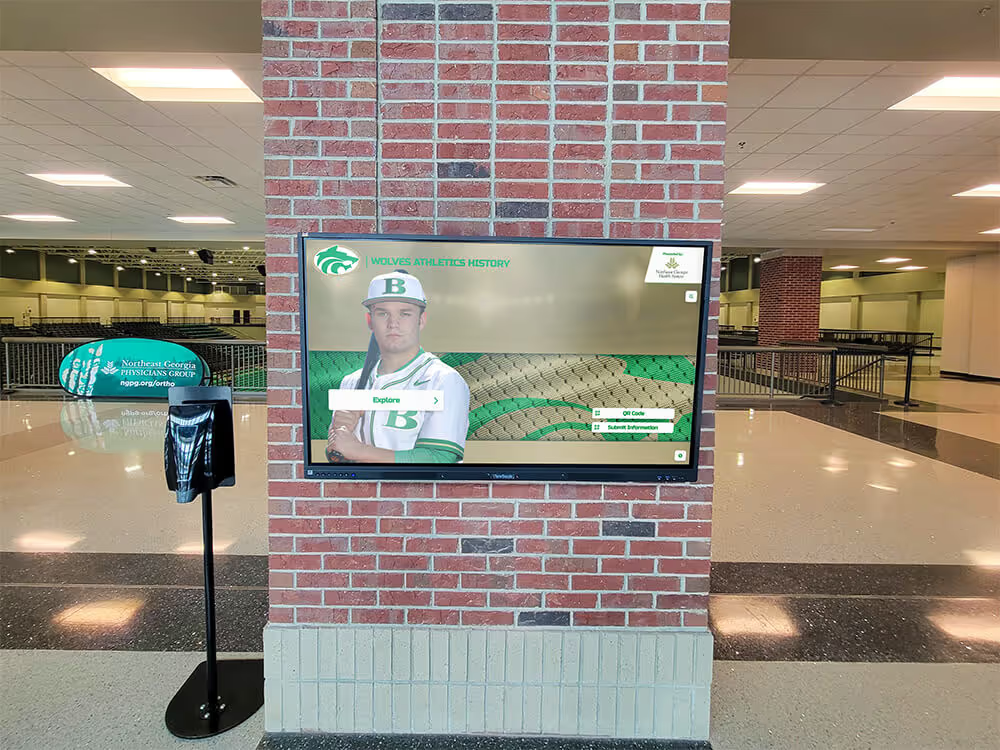
Digital recognition kiosks and trophy case installations represent multi-year financial commitments by donors and sponsors—fidelity bonding is the governance layer that protects those funds from loss between the time a contribution is received and the recognition commitment is fulfilled
Frequently Asked Questions
Are booster clubs legally required to have a fidelity bond?
There is no single federal law requiring fidelity bonds for booster clubs. Requirements depend on state nonprofit law, school district policy, and the organization’s own bylaws. Some states include bonding provisions in their nonprofit statutes; many school districts require affiliated booster organizations to carry fidelity coverage as a condition of access to school facilities or financial recognition as a district-affiliated group. Verify applicable requirements with your district’s finance office and a licensed attorney or insurance professional familiar with your state’s laws.
How much does a fidelity bond cost for a booster club?
Premiums vary by coverage amount, organization structure, and insurer. Programs with modest activity levels and well-documented financial controls typically qualify for lower premiums than those with large cash volumes or prior loss history. Many nonprofit insurers offer fidelity riders as part of broader package policies at rates that represent a small fraction of the coverage amount. Obtain quotes from at least two insurers before purchasing.
What is the difference between a fidelity bond and directors and officers insurance?
A fidelity bond covers financial losses resulting from dishonest acts by covered individuals—primarily theft, embezzlement, and fraud. Directors and officers (D&O) insurance covers claims arising from alleged wrongful acts in governance decisions—mismanagement, breach of duty, and related claims. They protect against different risks and are typically not substitutes for each other. Programs with significant governance complexity may need both.
Does a fidelity bond cover losses from mistakes, not just dishonest acts?
No. Standard fidelity bonds cover losses resulting from intentionally dishonest acts, not from honest mistakes, negligence, or poor judgment. An officer who accidentally miscodes an expense, makes an error in bank reconciliation, or signs a contract on unfavorable terms is not covered by a fidelity bond. Internal controls and errors-and-omissions coverage address those risks separately.
Should the treasurer be named individually on the bond, or should coverage be position-based?
Position-based coverage (sometimes called a position schedule bond) is generally more administratively practical for booster clubs because it automatically covers the new occupant of a position when an officer transitions out, without requiring a policy change. Named-individual bonds require explicit updates when covered individuals change, creating a gap risk during transitions. If your organization uses a named-individual bond, build an officer transition checklist item that explicitly confirms the incoming officer is added to the policy before the outgoing officer is removed.
Does fidelity coverage extend to credit card transactions and electronic payments?
This depends on the policy terms. Standard fidelity bonds often cover cash and check-based losses; coverage for electronic funds transfer fraud, computer crime, and fraudulent wire transfers may require a commercial crime policy or specific endorsements. With booster clubs increasingly accepting electronic payments and managing accounts through online banking platforms, confirm that electronic transaction coverage is explicitly included in your policy.
How does a fidelity bond interact with the booster club’s internal controls?
The two work together. Internal controls—dual signatures, cash counting procedures, monthly reconciliation, separation of duties—reduce the likelihood that a loss occurs and increase the speed at which a loss is detected. A fidelity bond provides financial recovery after a verified loss. Programs with documented internal controls may qualify for lower bond premiums because they present a lower risk profile to insurers. A bond does not substitute for controls; controls reduce the frequency with which the bond needs to be used.
What records does the organization need to file a fidelity bond claim?
Required documentation typically includes the bond certificate and policy number, a written description of the loss (what happened, when it was discovered, who was involved), financial records documenting the pre-loss balance and the post-loss balance, evidence of the dishonest act (bank statements, reconciliation records, transaction histories, any relevant documentation of the covered individual’s access and actions), and a police report if applicable. Organizations with well-maintained financial records—including monthly reconciliations, dual-signature logs, and documented authorization approvals—are positioned to file claims more quickly and completely than those reconstructing records after the fact.
When your program is ready to build the recognition infrastructure that keeps donor names accurate, sponsor commitments documented, and athletic history preserved year after year—lobby displays with content logging, digital donor walls with complete giving histories, and recognition platforms built for long-term stewardship—explore how Rocket Alumni Solutions supports booster clubs with recognition systems designed to honor every contribution reliably.