A booster club fixed asset register template is a structured record that documents every long-lived tangible item the organization owns or holds—purchased equipment, recognition displays, technology systems, and property donated by parents or alumni—together with each asset’s acquisition date, cost or fair market value, physical location, condition, and current book value. Booster clubs that rely only on bank reconciliation and expense records have no reliable way to answer an auditor’s inventory question, complete Schedule D of Form 990, or hand off accurate organizational records to a new treasurer. A fixed asset register closes that gap by maintaining a permanent, updatable inventory that survives officer turnover, storage changes, and program growth.
This guide is for informational and educational purposes only and does not constitute legal, accounting, or tax advice. Asset capitalization thresholds, depreciation methods, and nonprofit reporting requirements vary by state, organizational structure, and district policy. Consult a licensed CPA or accountant before making any financial reporting decisions.

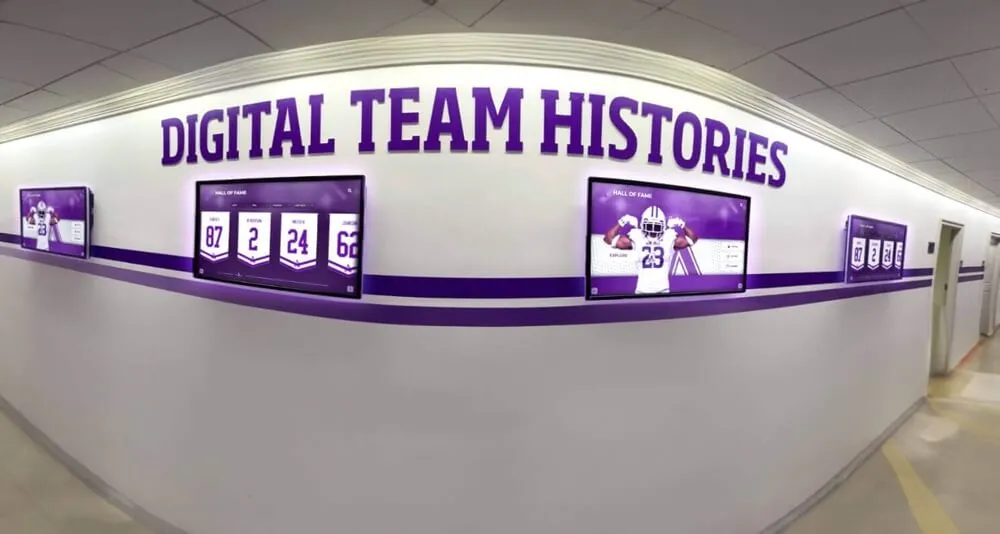
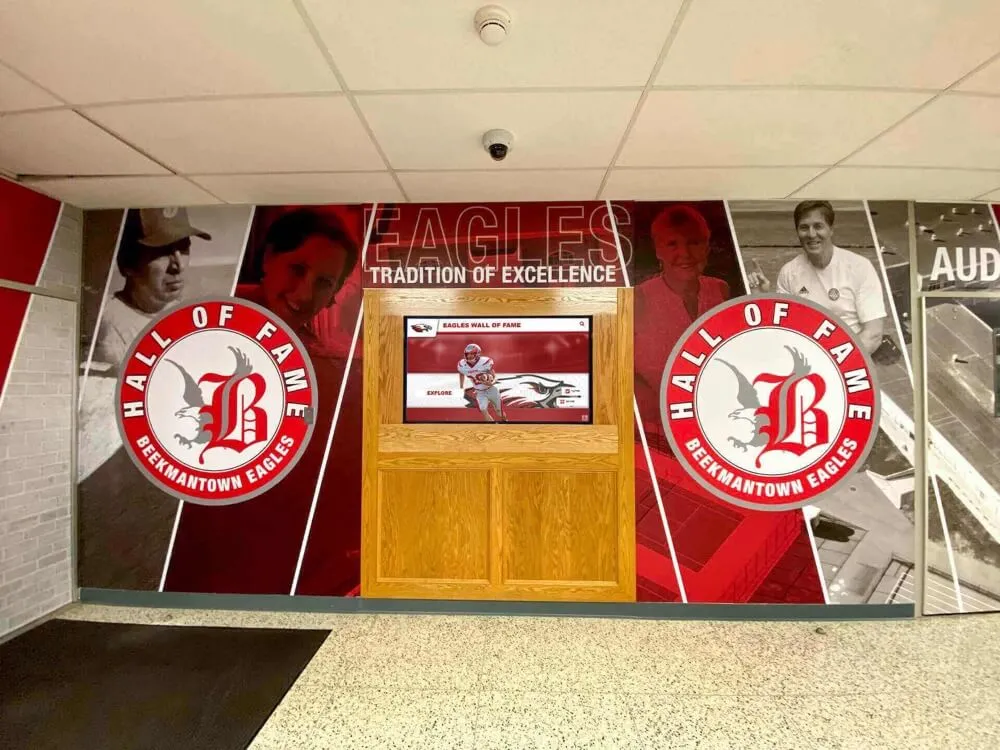
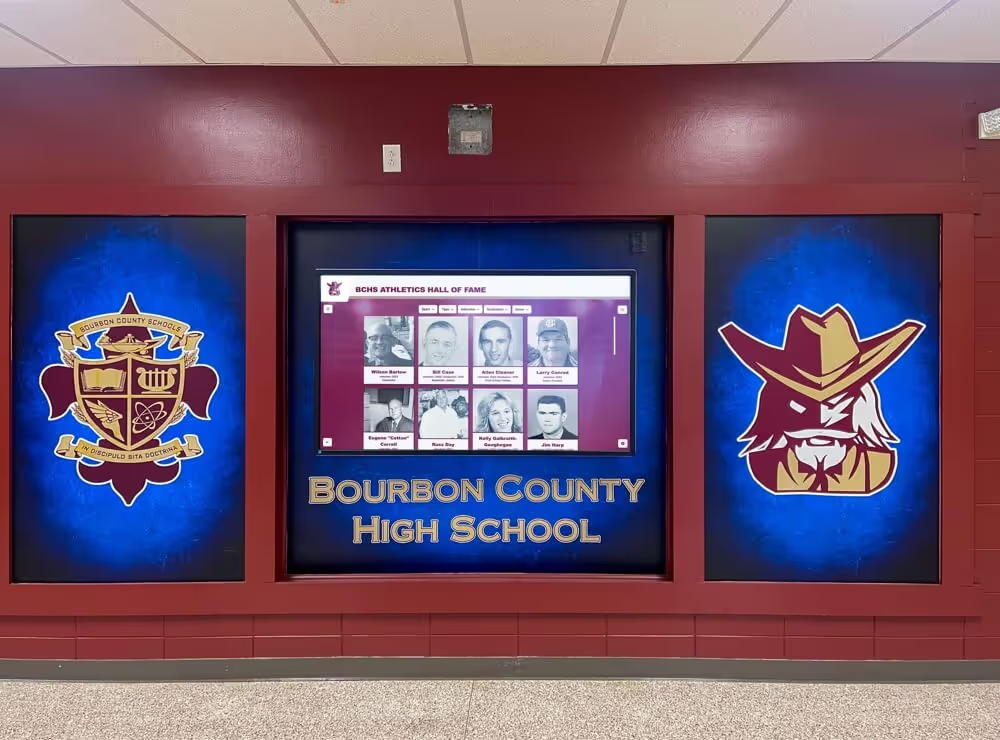
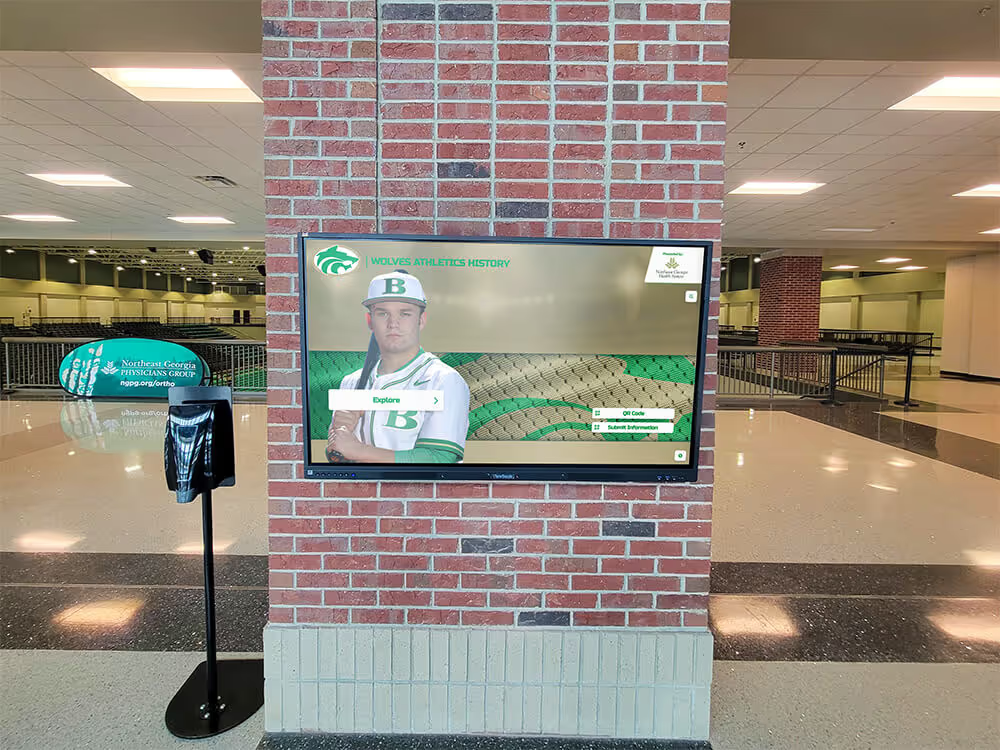
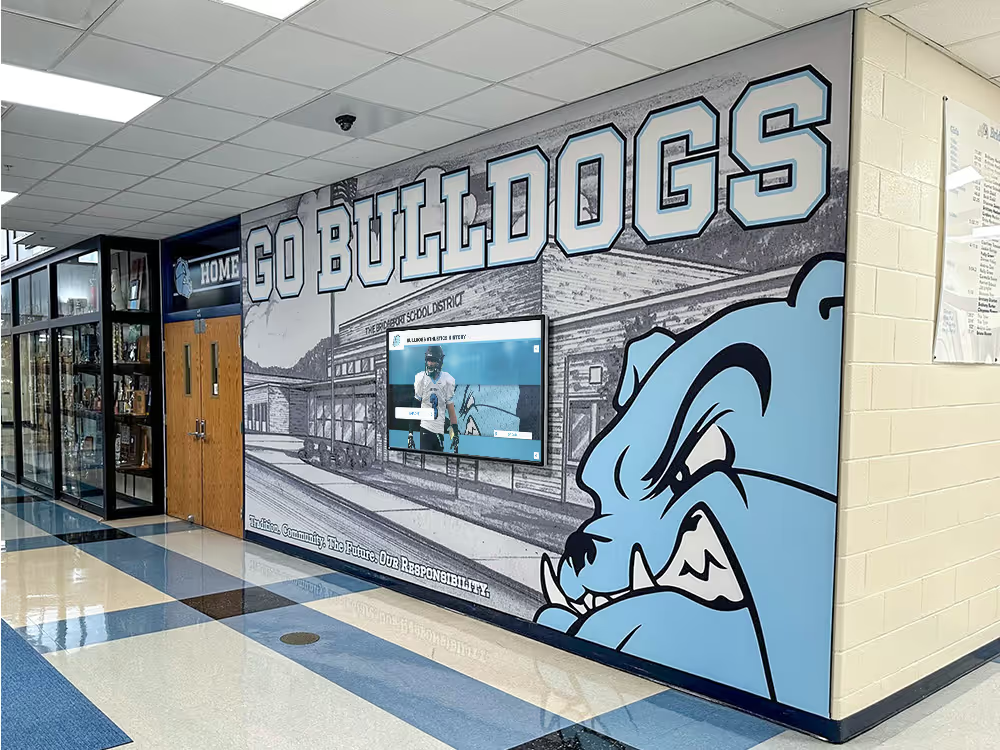
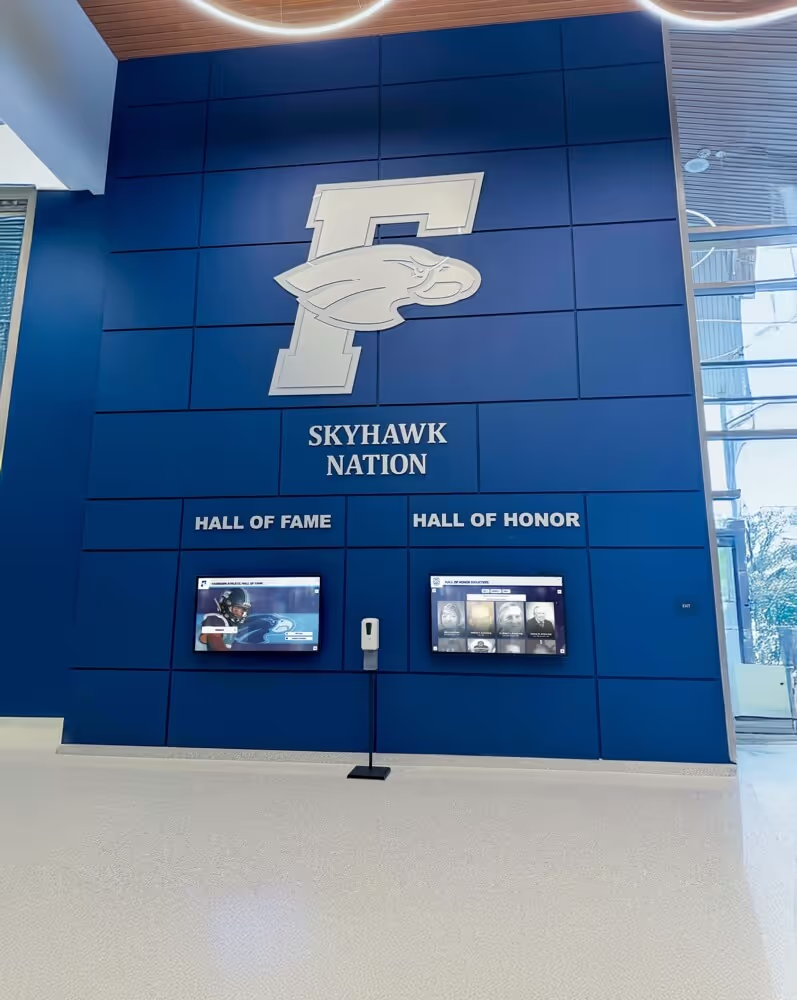
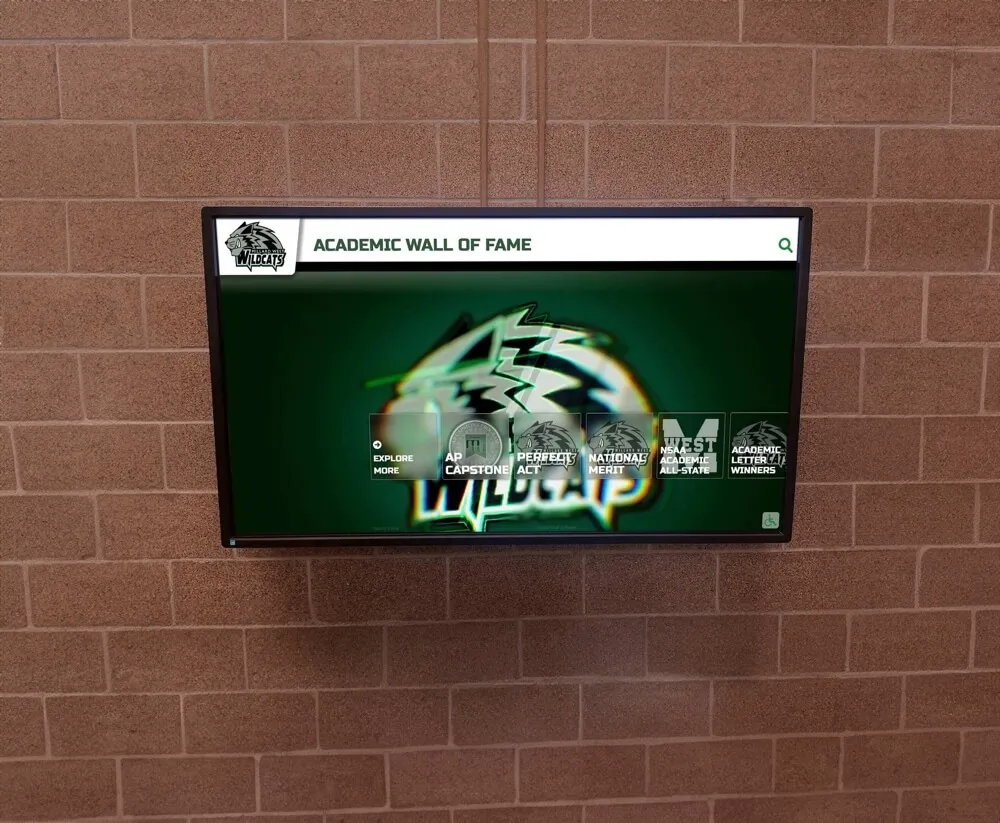
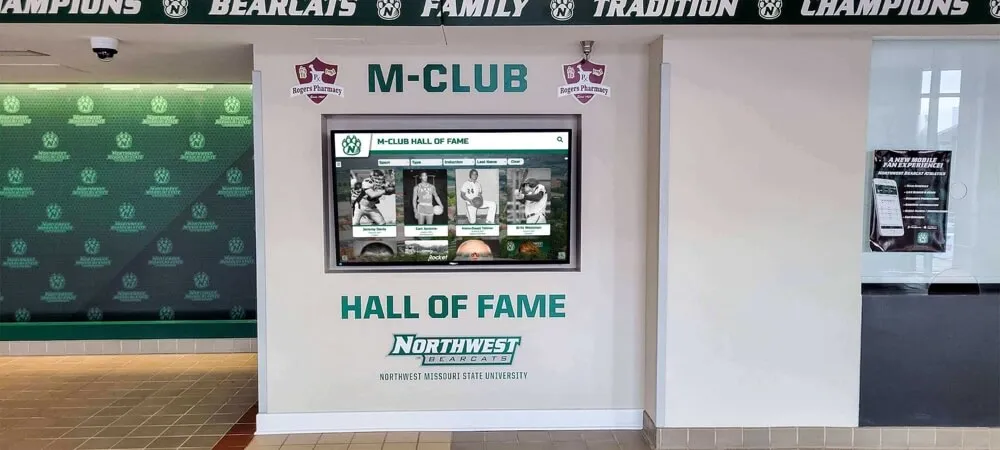
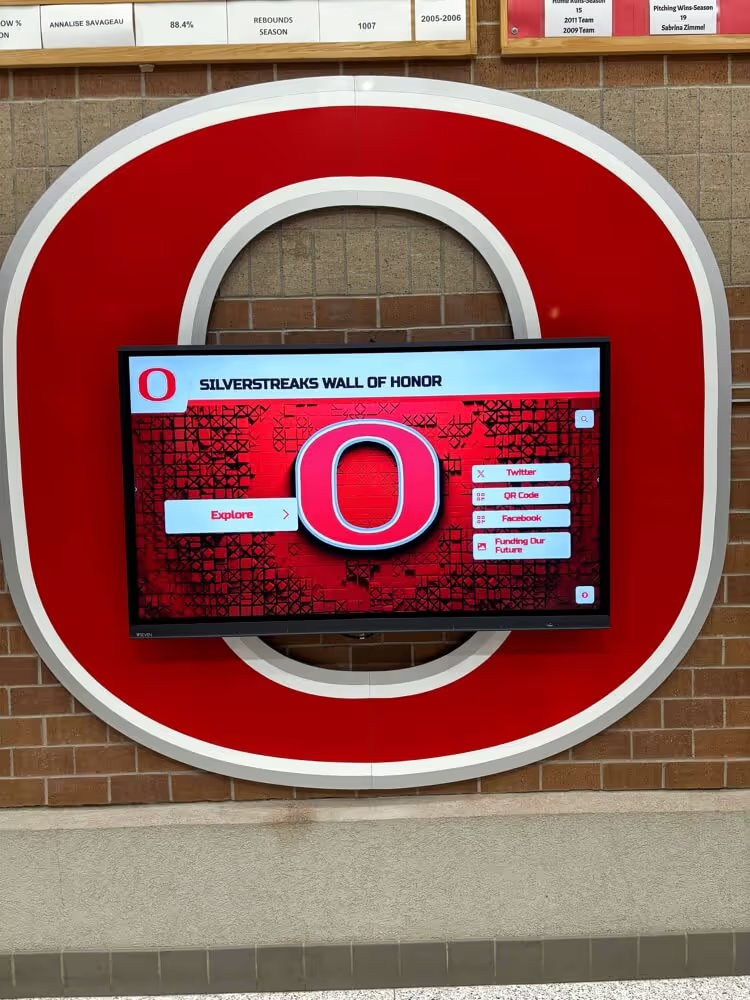
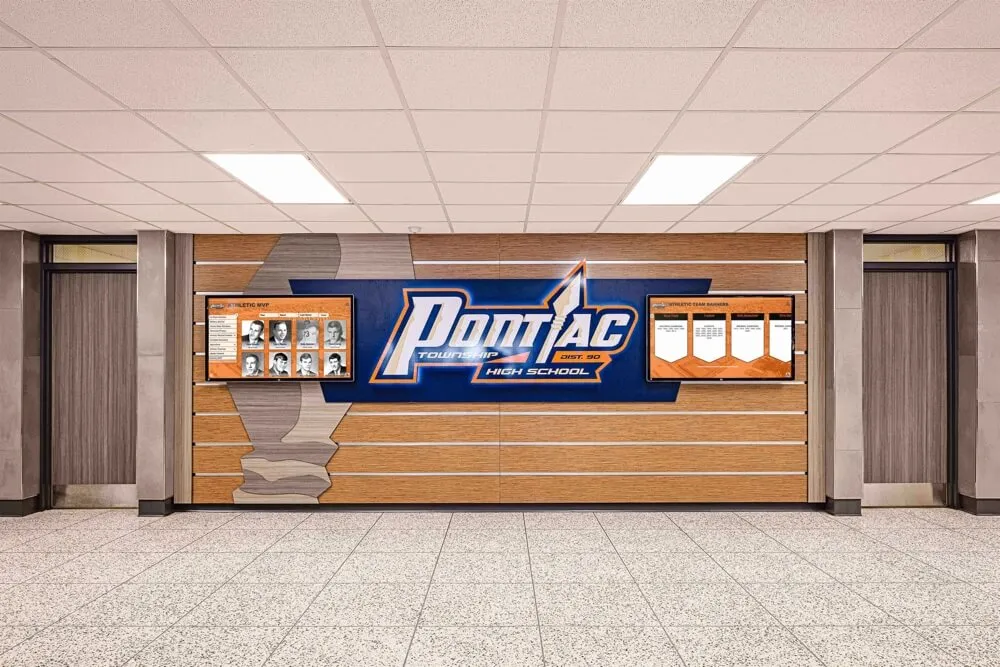
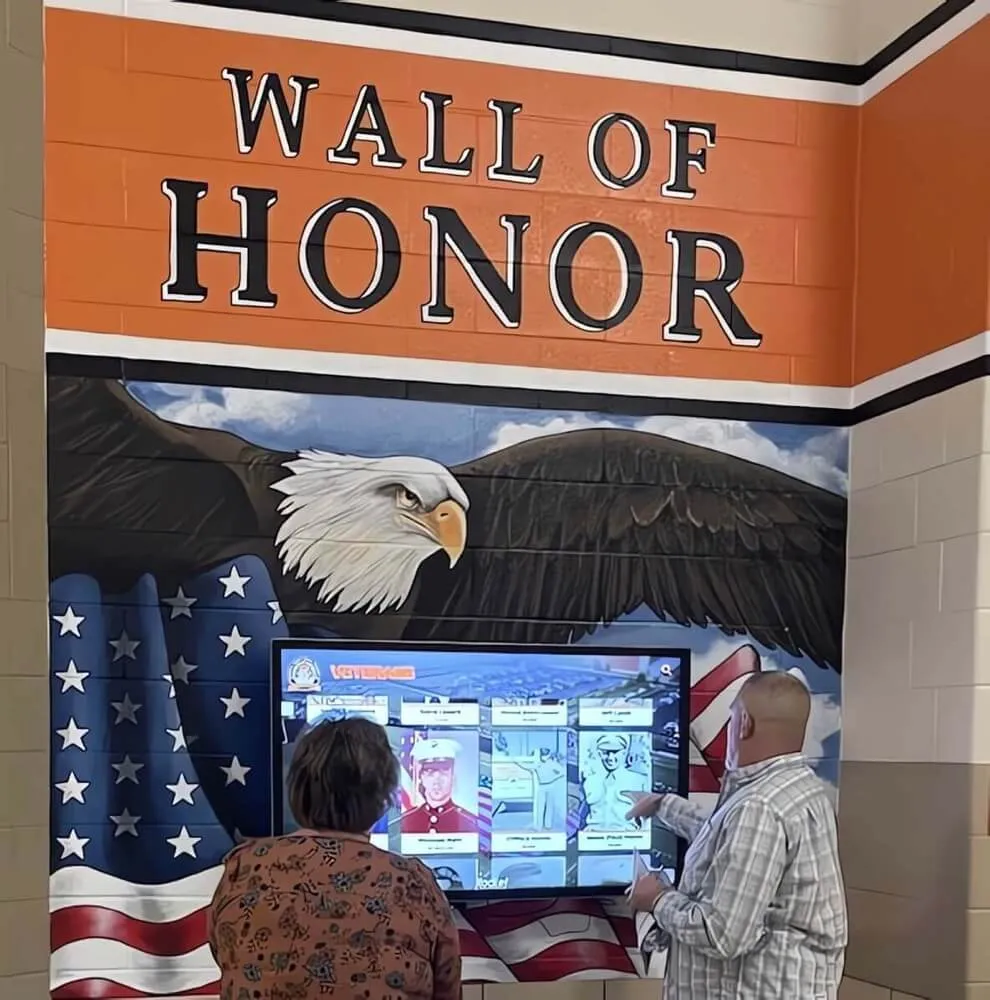
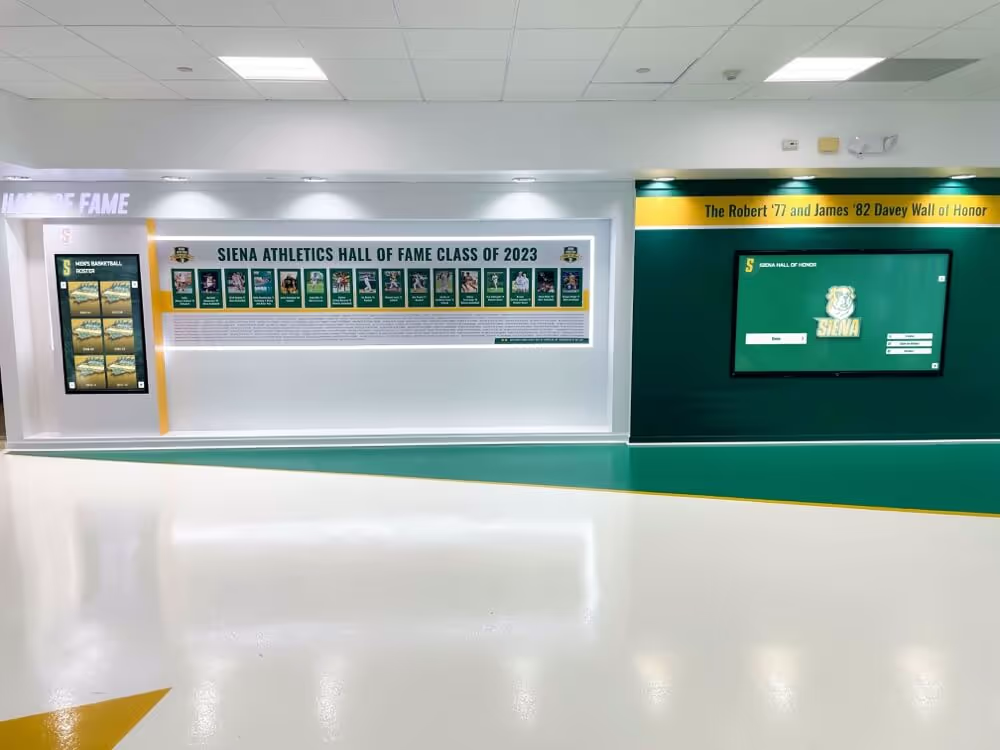
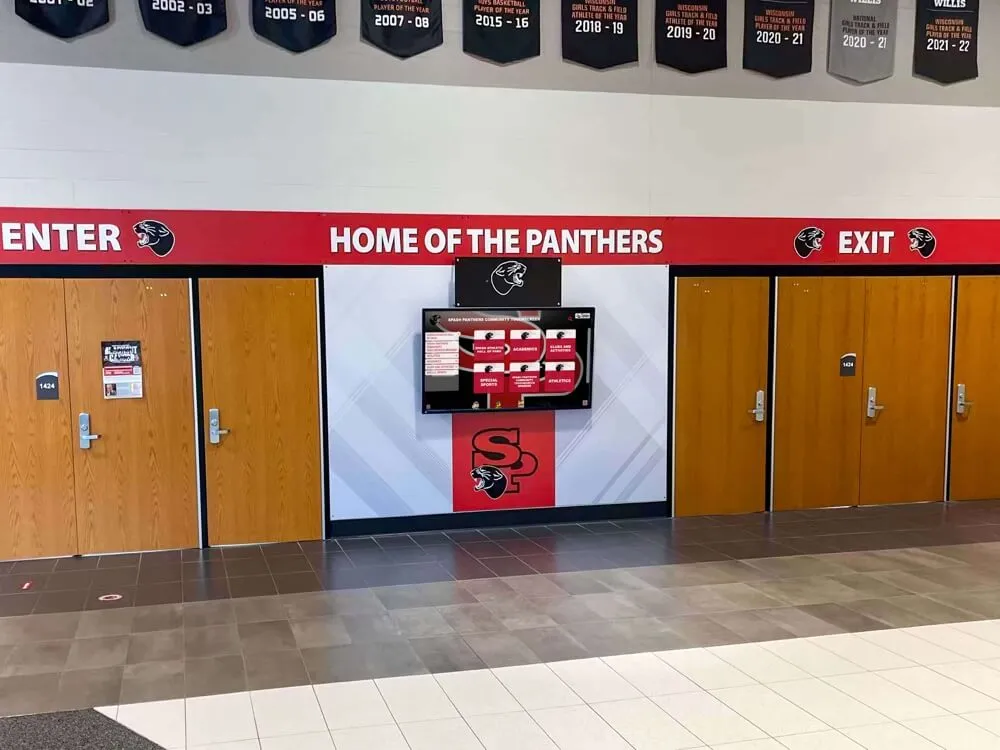
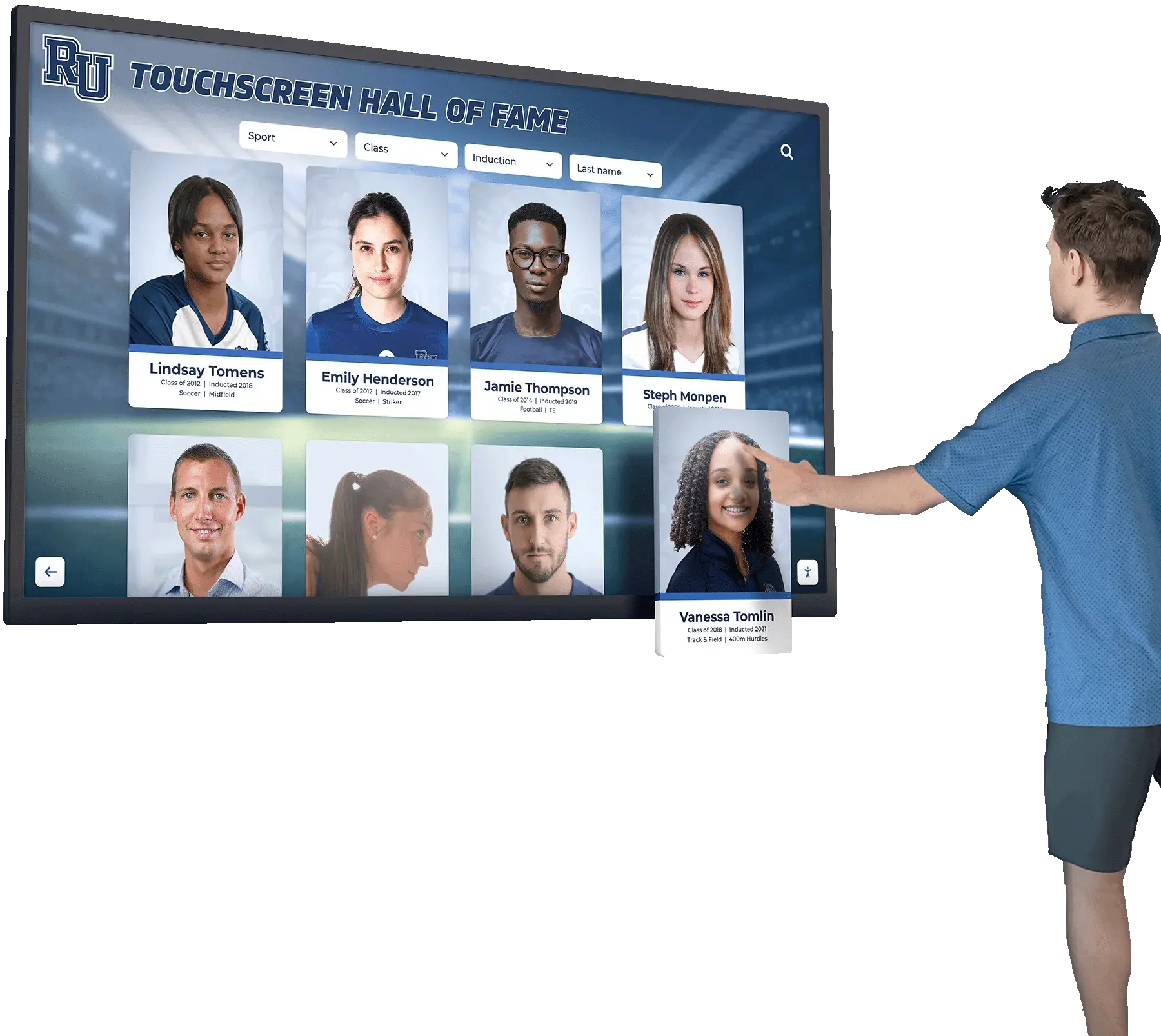
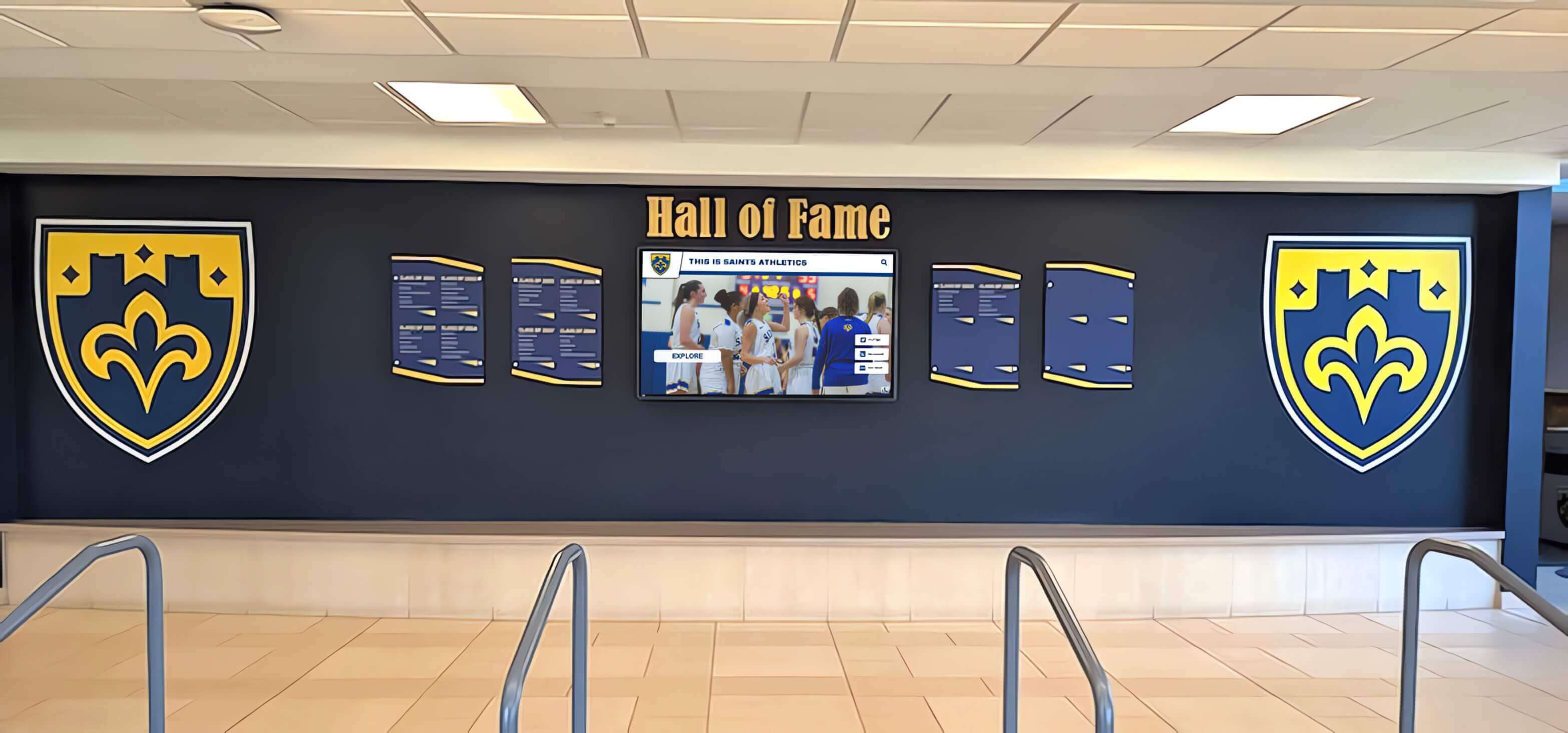
Recognition walls, digital displays, and lobby installations represent capital assets that require documentation in the booster club's fixed asset register—recording acquisition date, cost, location, and condition so the record survives leadership transitions and audit requests
What Is a Fixed Asset Register: The Direct Answer
A fixed asset register is a list of physical items—assets—that the organization uses over multiple years and that meet or exceed a minimum dollar threshold the board establishes for capitalization. Items below that threshold (often $250–$1,000, depending on the organization’s size and CPA guidance) are typically expensed in the period purchased rather than capitalized and depreciated. Items above the threshold are added to the register with their cost, useful life estimate, and annual depreciation amount.
For booster clubs, the register captures four main categories:
- Athletic and program equipment — timing systems, PA equipment, concession appliances, scoreboard controllers, and training gear purchased or leased by the organization
- Recognition infrastructure — trophy cases, display cases, athletic honor boards, plaques, and hall of fame installations inside school facilities that are owned and maintained by the booster organization
- Technology assets — digital signage systems, interactive kiosks, computers, tablets, cameras, and audio-visual equipment
- Donated property — equipment, display systems, and other tangible items received as in-kind gifts from donors, alumni, or parent organizations, recorded at fair market value on the date of receipt
The register does not replace the general ledger or bank reconciliation. It supplements financial records by tracking what the organization owns and where those assets are, which the ledger alone cannot show.
The Booster Club Fixed Asset Register Template
The table below is the core register. Maintain one row per asset and update the record when the asset’s location, condition, or status changes. Add or remove columns to match your organization’s CPA guidance and reporting requirements.
| Asset ID | Description | Category | Acquisition Date | Source | Cost / FMV at Acquisition | Useful Life (yrs) | Annual Depreciation | Accumulated Depreciation | Net Book Value | Location | Condition | Serial / Model # | Warranty Exp. | Insured | Disposal Date | Notes |
|---|---|---|---|---|---|---|---|---|---|---|---|---|---|---|---|---|
| FA-001 | Concession stand refrigerator (commercial) | Equipment | — | Purchase | $— | 10 | $— | $— | $— | Concession building | — | — | — | ☐ | — | — |
| FA-002 | PA system (amplifier, speakers, cables) | Equipment | — | Purchase | $— | 7 | $— | $— | $— | Press box / storage | — | — | — | ☐ | — | — |
| FA-003 | Athletic scoreboard controller | Equipment | — | Purchase | $— | 10 | $— | $— | $— | Field house | — | — | — | ☐ | — | — |
| FA-004 | Digital hall of fame display screen (55") | Technology | — | Purchase | $— | 5 | $— | $— | $— | Main lobby | — | — | — | ☐ | — | — |
| FA-005 | Interactive touchscreen kiosk | Technology | — | Purchase | $— | 5 | $— | $— | $— | Athletic hallway | — | — | — | ☐ | — | — |
| FA-006 | Trophy display case (lighted, glass-front) | Recognition | — | Purchase | $— | 15 | $— | $— | $— | Lobby entrance | — | — | — | ☐ | — | — |
| FA-007 | Athlete honor board (custom fabrication) | Recognition | — | Purchase | $— | 20 | $— | $— | $— | Gym hallway | — | — | — | ☐ | — | — |
| FA-008 | Laptop computer (treasurer / operations) | Technology | — | Purchase | $— | 4 | $— | $— | $— | Treasurer custody | — | — | — | ☐ | — | — |
| FA-009 | Commercial popcorn machine | Equipment | — | Donation | $— (FMV) | 8 | $— | $— | $— | Concession stand | — | — | — | ☐ | — | — |
| FA-010 | Donated jersey banner display rack | Recognition | — | Donation | $— (FMV) | 10 | $— | $— | $— | Gym lobby | — | — | — | ☐ | — | — |
Instructions for completing the register:
- Asset ID: Assign a sequential identifier (FA-001, FA-002, etc.) and affix a corresponding label or tag to the physical asset where possible.
- Cost / FMV at Acquisition: For purchased items, record the invoice price including installation. For donated items, record the fair market value at the date of donation, documented with an appraisal, comparable sales reference, or vendor quote.
- Useful Life: Use the asset’s expected service life in years. Your CPA or the IRS Publication 946 asset class tables provide useful life guidance for common equipment categories.
- Annual Depreciation: Divide cost by useful life for straight-line depreciation. Other methods may apply; confirm with the CPA.
- Net Book Value: Cost minus accumulated depreciation. Update annually after each depreciation entry.
- Condition: Rate as Excellent, Good, Fair, or Poor based on the most recent physical inventory inspection.
How to Build Your Register in 7 Steps
Setting up a fixed asset register for the first time requires a one-time discovery effort followed by an ongoing maintenance routine that takes minutes per transaction rather than hours per year.
Establish a capitalization threshold with your CPA. The threshold determines which items enter the register and which are expensed immediately. Common starting points for small nonprofit booster clubs range from $250 to $1,000. Any item at or above the threshold gets a register entry; anything below is a supply or operating expense. Document the threshold in the board minutes.
Conduct a physical inventory of all locations. Walk through every space the organization uses—concession buildings, press boxes, storage rooms, school lobbies, gym hallways, and any off-site storage—and list every item that appears to meet or exceed the threshold. Photograph each item. Note serial numbers, model numbers, and any visible wear.
Gather historical acquisition records. Pull invoices, check register entries, and donation acknowledgment letters for each item identified. If records for older items are incomplete, estimate acquisition cost or fair market value at the time of acquisition and note the estimate in the register. Work with the CPA to determine whether prior depreciation should be reconstructed or the asset entered at current fair value.
Record donated property at fair market value. Any equipment or display received as an in-kind gift must be recorded at its fair market value on the date of donation—not its original retail price or book value in the donor’s hands. Obtain a written appraisal, a comparable vendor quote, or a documented market reference and retain it alongside the donation acknowledgment letter.
Assign asset IDs and label assets. Create a sequential numbering system, enter each item into the register, and attach a corresponding label (adhesive tag, engraved plate, or paint marker) to the asset. Assets that cannot be labeled physically—such as software licenses or intangible items—should be noted as “no physical tag” in the register.
Calculate opening depreciation for existing assets. For assets the organization has owned for multiple years, calculate the accumulated depreciation from acquisition date to the register setup date and record it. This establishes a correct opening net book value.
Integrate the register into the annual financial closeout. At each year-end, post one year’s depreciation to every active asset, update net book values, record any new acquisitions, remove disposed assets, and present the updated register to the board alongside the financial statements. File a copy with the permanent organizational records.
Asset Categories Specific to Booster Clubs
Athletic and Program Equipment
Timing equipment, PA systems, scoreboards, concession appliances, portable bleachers, field maintenance equipment, and training aids purchased by the booster club are typically the most straightforward assets to document—invoices are usually available and useful life estimates are well-established for common categories. Each item should have a location code in the register so the annual physical inventory can confirm it is still present and in the noted condition.
Programs that support multiple sports often find that equipment migrates between storage locations or is loaned to other school departments. The register creates a recovery mechanism: when a borrowed PA amplifier is not returned at season’s end, a register entry listing its last recorded location gives the incoming treasurer a documented starting point for the search.
Recognition Displays and Hall of Fame Infrastructure
Recognition displays—trophy cases, athletic honor boards, hall of fame installations, jersey display racks, and championship banner hardware—are among the most visible assets a booster club maintains, and they are frequently among the least well-documented. Because they are often installed in school facilities rather than in storage, officers sometimes assume the school tracks them. Many schools do not; the booster organization that funded the installation may be the only entity with records of cost, ownership, and maintenance responsibility.
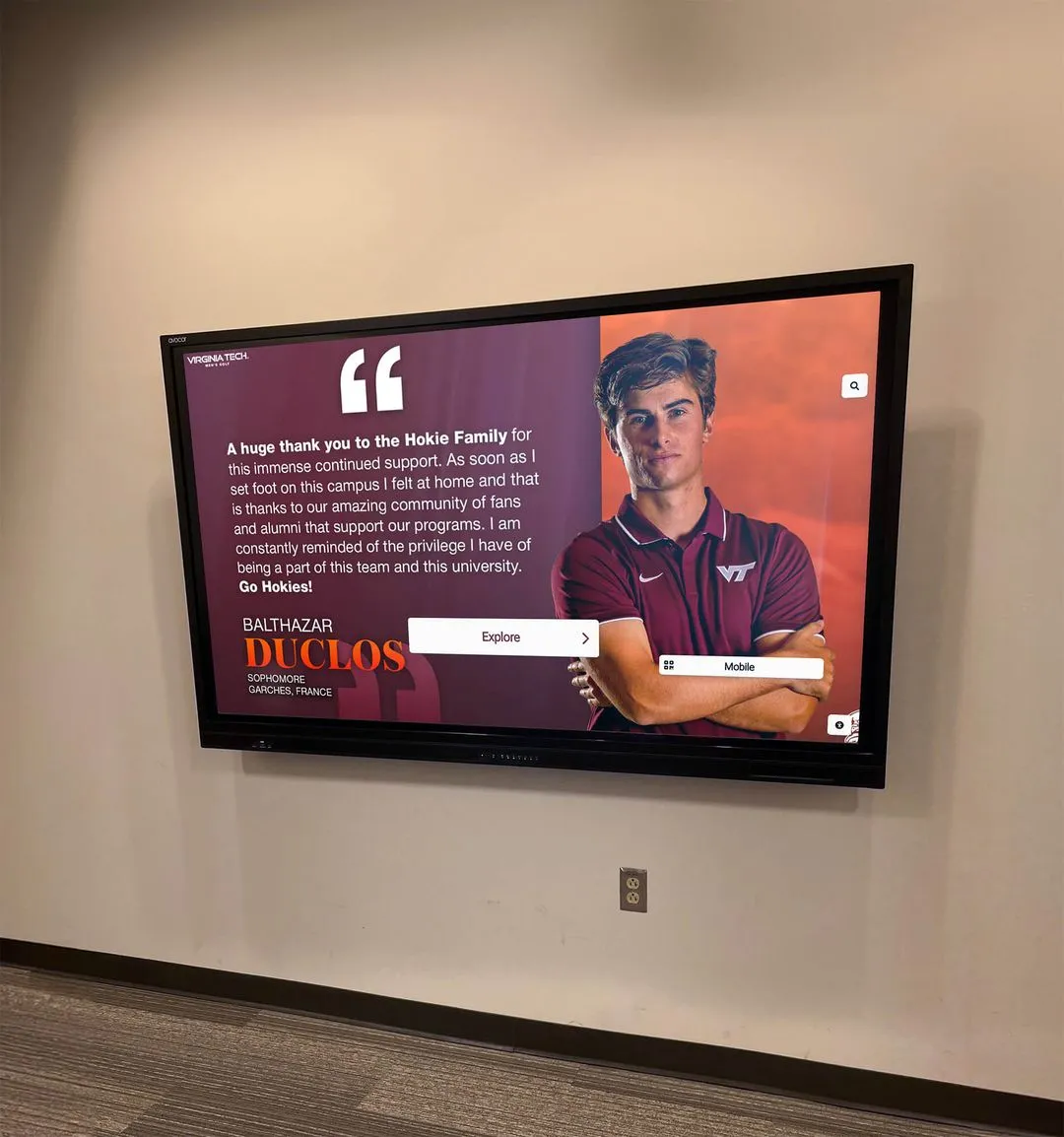
Digital hall of fame platforms and interactive recognition kiosks represent a growing category of significant capital assets for programs that have moved recognition content beyond static plaques and printed rosters. A 55-inch display screen, an interactive touchscreen kiosk, or a networked content management system can represent thousands of dollars of organizational capital that belongs on the fixed asset register with its own depreciation schedule and insurance note.
Preserving academic history and athletic archives in digital format often involves purchasing or licensing display hardware and software whose capitalization treatment should be discussed with the CPA—hardware is typically capitalized, while software licenses may be expensed depending on term length and cost.
Whenever a recognition display is installed, the register entry should capture: the vendor name, installation date, total cost (fabrication plus installation), location in the facility, and whether the asset is covered under the school’s building insurance or the booster organization’s separate policy. Programs that host alumni recognition events often use display assets purchased by the booster club—temporary banner frames, portable display systems, or A/V equipment—that also need register entries even if they are moved between events.
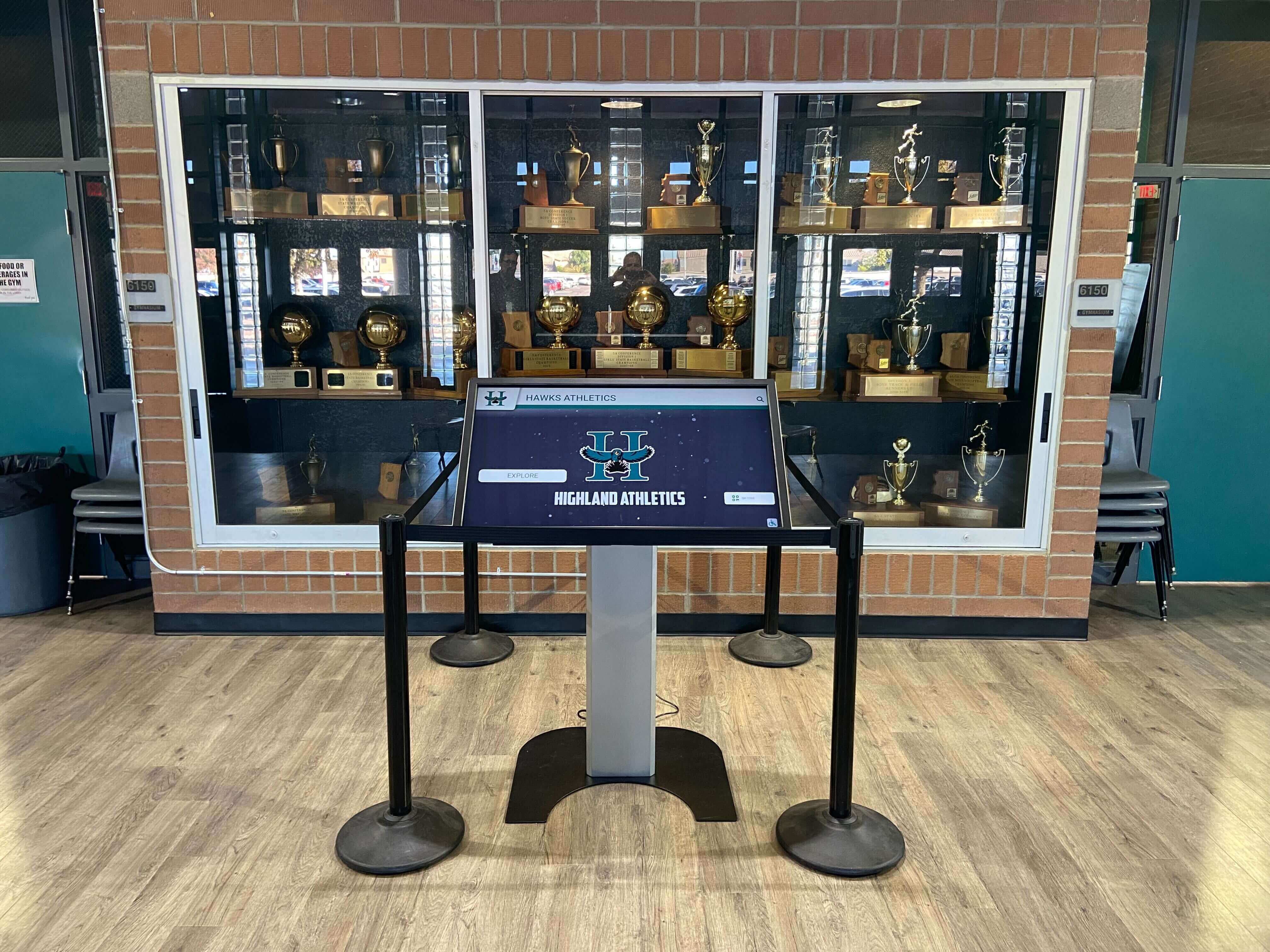
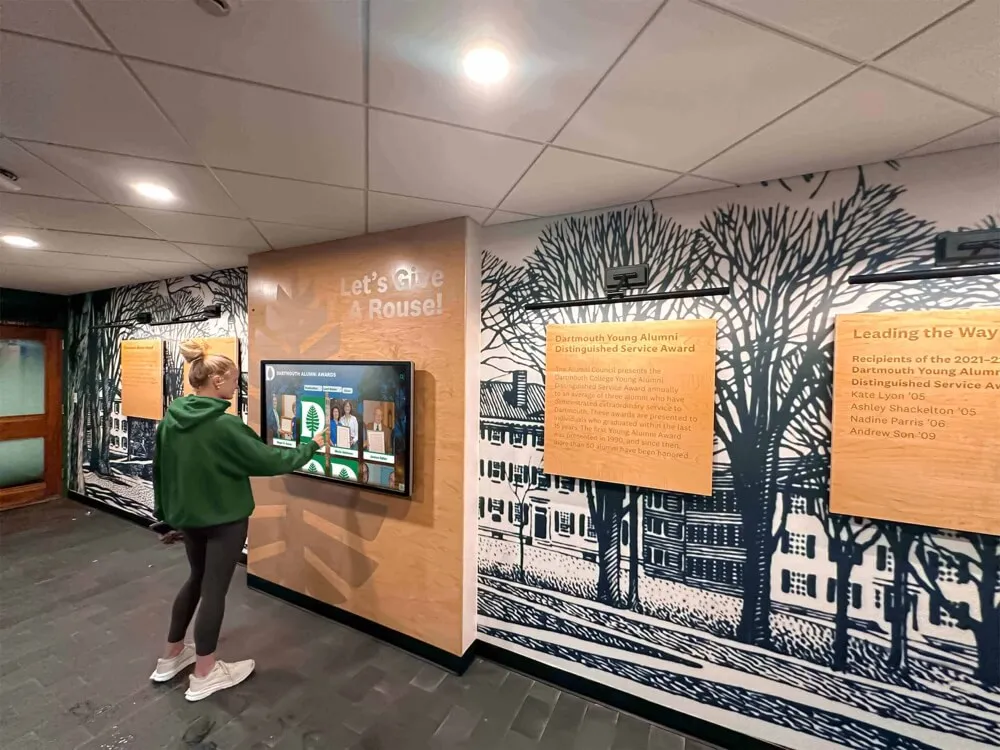
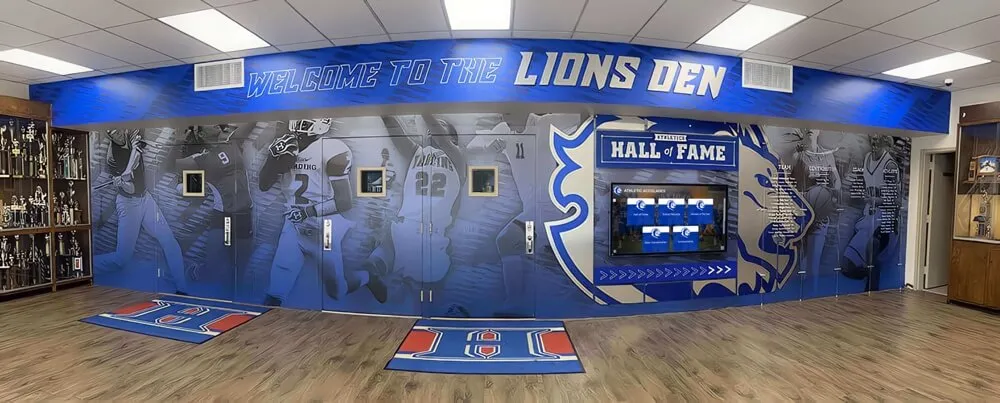
Technology assets installed alongside trophy cases—interactive kiosks, digital display screens, and networked content systems—belong on the fixed asset register with their own depreciation schedules and insurance notations
Technology Assets
Computers, tablets, cameras, projectors, digital signage hardware, and audio-visual equipment depreciate faster than most physical infrastructure—useful lives in the three-to-five-year range are common for consumer and prosumer technology, though specific guidance should come from the CPA. Technology assets also carry a higher theft and loss risk than structural recognition displays, which makes them particularly important to document with serial numbers and assigned-custody notations.
Digital signage systems installed in school hallways and lobbies typically involve both hardware (screens, media players, mounting hardware) and software subscriptions. The hardware portion is capitalized if it meets the threshold; the annual software subscription is generally expensed. Record the hardware and software components separately so the register accurately reflects the capitalized asset and the recurring operating cost appears in the expense ledger rather than inflating the asset base.
Interactive display technology used for gallery-style recognition of athletic history, academic achievement, or artistic accomplishment in school corridors often involves wall-mounted screens, touch overlays, and back-end content management tools. Each hardware component that meets the capitalization threshold should receive its own register entry, even if the system as a whole is purchased and installed by a single vendor under one invoice.
Donated Property and In-Kind Gifts
Donated assets require more documentation than purchased items because the acquisition cost is not established by an invoice—it must be determined by reference to fair market value at the date of gift. This distinction matters for two reasons: the register value affects the reported asset base on Form 990 Schedule D, and the donor’s corresponding charitable deduction is tied to the same fair market value determination.
When a parent organization donates a commercial refrigerator, a local business donates a flat-screen display, or an alumnus donates athletic training equipment, the treasurer should:
- Obtain a written description of the donated item from the donor, including make, model, age, and condition
- Document the fair market value with a vendor quote for a comparable item, an online market reference, or (for higher-value items) a qualified written appraisal
- Issue a written donation acknowledgment that describes the item, states the date of donation, and notes that no goods or services were exchanged if that is the case
- Enter the item in the fixed asset register at fair market value with the source noted as “Donation” and the donor’s name recorded in the notes field
Do not record donated assets at the donor’s original purchase price or depreciated book value. The relevant value for the receiving organization’s register is what the item would cost to acquire in its current condition on the date it was received.
Youth athletic programs that recognize contributors through awards and displays sometimes receive donated display fixtures, portable kiosks, or recognition hardware from community sponsors. Each donation should flow through the gift acceptance policy, receive a written acknowledgment, and enter the fixed asset register with a documented FMV before the item is put into service.
Depreciation Basics for Booster Club Treasurers
Depreciation is the systematic allocation of an asset’s cost over its useful life. It is not a cash transaction—it does not move money in or out of the bank account—but it reduces the net book value of each asset on the register and may appear as a non-cash expense on financial reports prepared under accrual accounting. Cash-basis booster clubs that report expenses only when cash changes hands may not record depreciation at all; confirm your organization’s accounting method with the CPA before adding depreciation entries.
For organizations that do record depreciation, the straight-line method is the most common for nonprofit and small-organization reporting:
Annual depreciation = (Cost − Salvage value) ÷ Useful life in years
Most booster clubs use a zero salvage value for simplicity. A $3,000 digital display screen with a five-year useful life generates $600 of annual depreciation, reducing the net book value from $3,000 in year one to $0 at the end of year five. At that point, the asset is fully depreciated—the net book value is zero—but it remains on the register until it is actually disposed of, sold, or removed from service.
Track accumulated depreciation separately from the gross cost so the register shows both the original investment and the remaining book value. This distinction matters when the organization applies for grants, secures insurance coverage, or prepares year-end financial statements for board review.
Leadership Handoffs and Audits: Why the Register Matters
A fixed asset register is most valuable at the moments when organizational knowledge is most at risk of being lost: leadership transitions and external reviews.
At leadership handoffs, a complete register gives the incoming treasurer a verified inventory of everything the organization owns, where it is located, and what it is worth in book value terms. Without the register, the incoming officer has no way to know whether the concession stand refrigerator listed in a prior year’s budget was ever purchased, whether the trophy case in the gym lobby is owned by the booster club or the school, or whether the laptop used for event management was paid for from club funds or a personal account. A one-page summary derived from the register eliminates weeks of reconstructive investigation.
Cross-country and track programs that hand off coaching and administrative responsibilities annually face the same knowledge continuity challenge in athletic asset documentation that booster clubs face in financial records—specialized equipment lists that live only in the outgoing officer’s memory become liabilities the moment they leave.
At audits, whether internal committee reviews, district oversight examinations, or CPA-facilitated compilations, a complete fixed asset register provides immediate, documented answers to inventory questions that would otherwise require reconstructive work. The CPA reviewing the organization’s Form 990 will ask about assets listed on Schedule D; the district finance officer reviewing compliance will ask whether all equipment purchases were properly authorized; the insurance underwriter will ask what tangible property the policy should cover. A register answers all three questions from a single document.
Comparing the durability and longevity of physical and digital assets is a useful frame for thinking about the register’s asset mix: physical trophy cases and fabricated honor boards may have useful lives of fifteen to twenty years, while digital screens and interactive kiosks typically depreciate over three to five. A register that reflects those different useful lives gives the board an accurate picture of which assets will require replacement in the near term and which represent long-term capital.
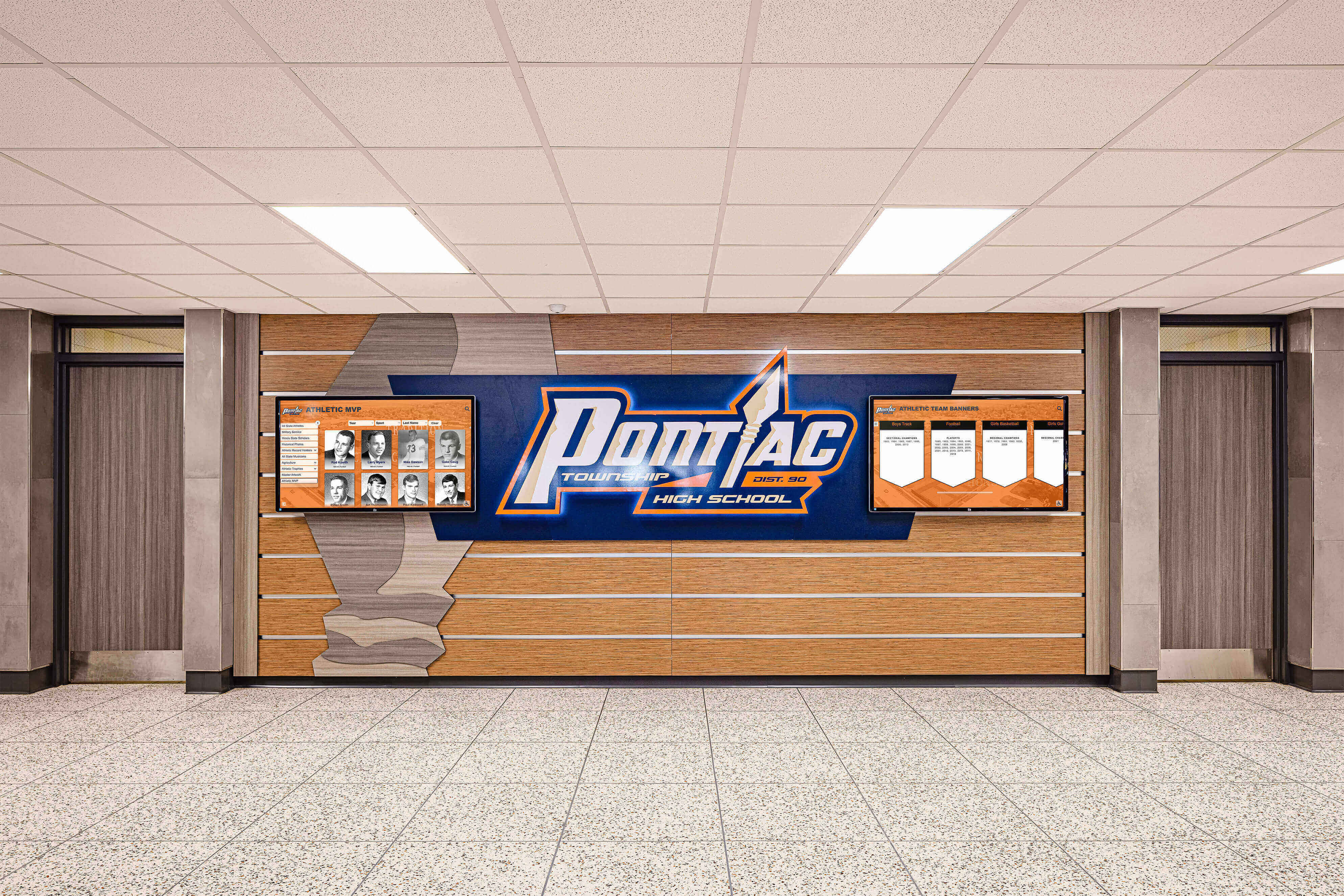
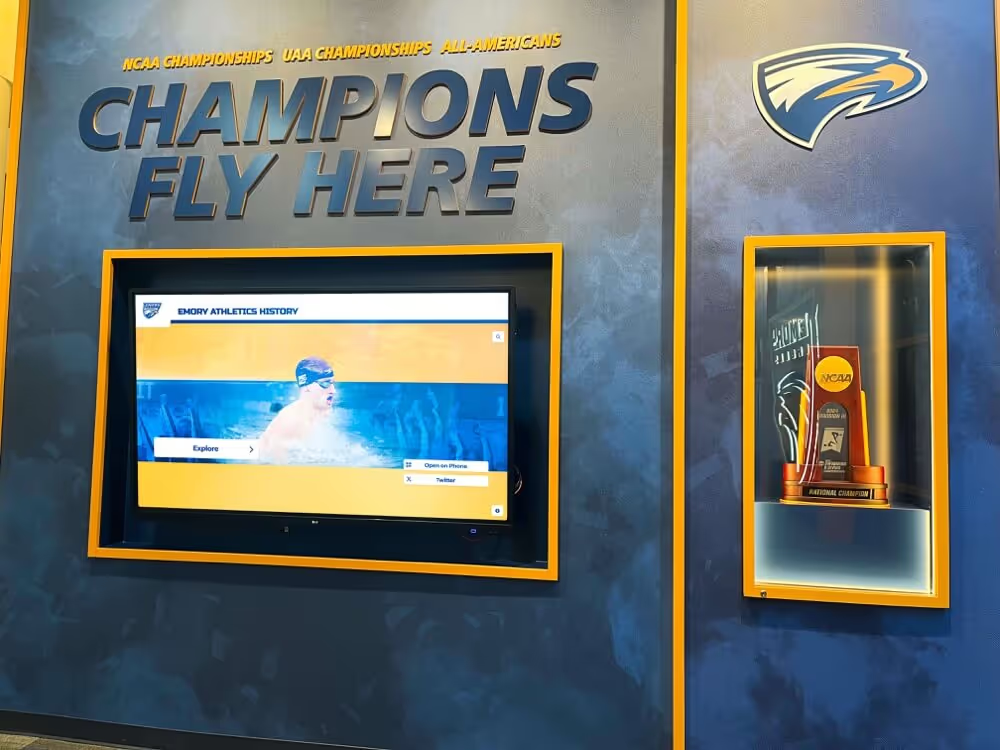
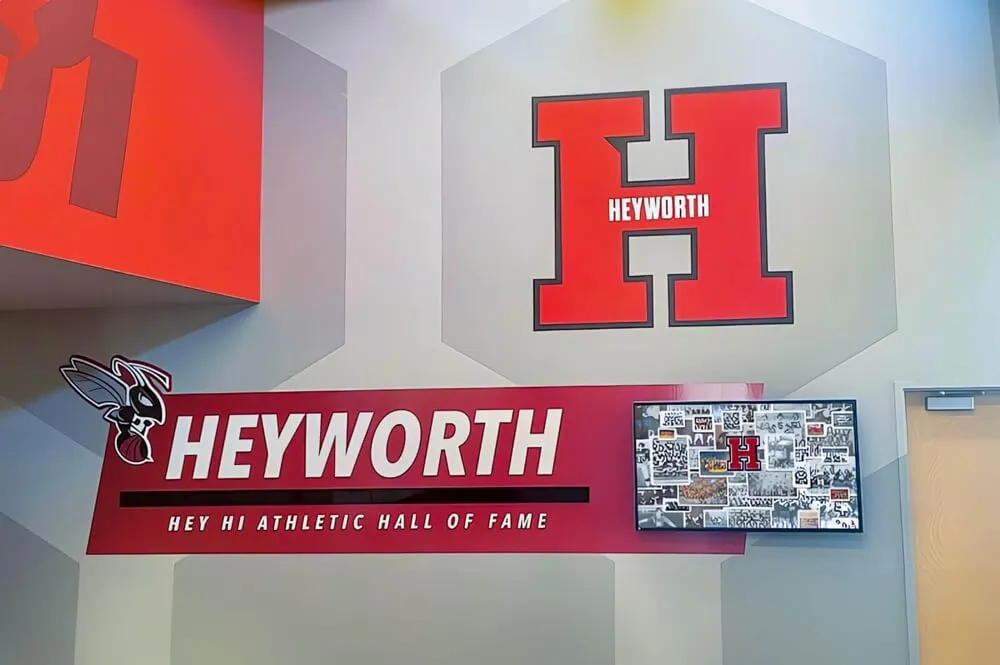
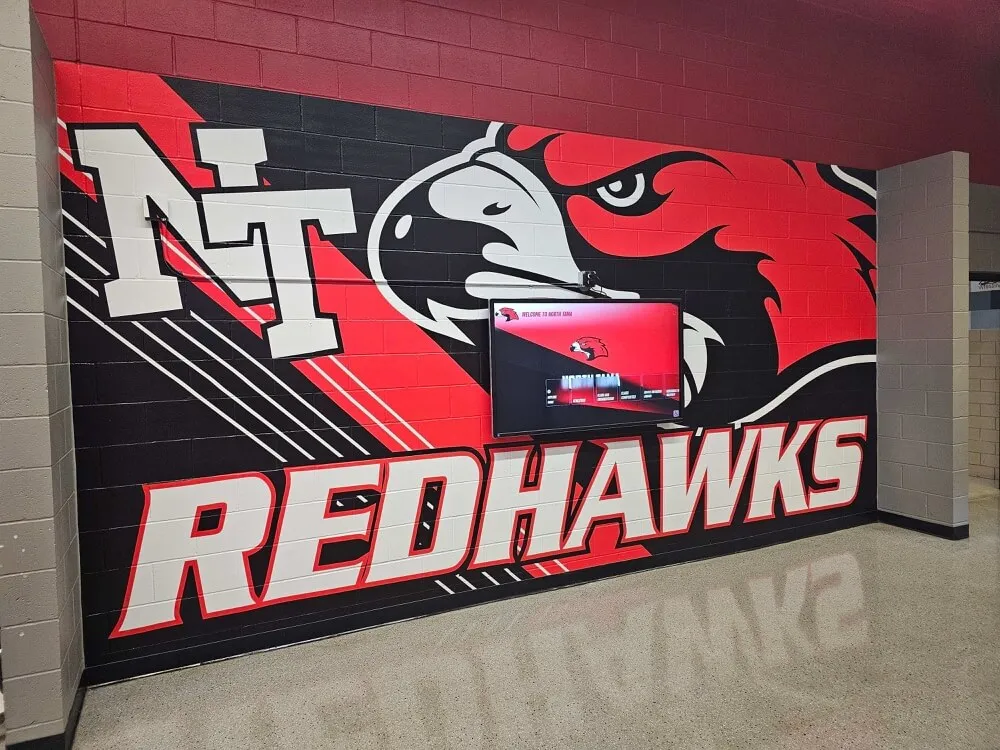
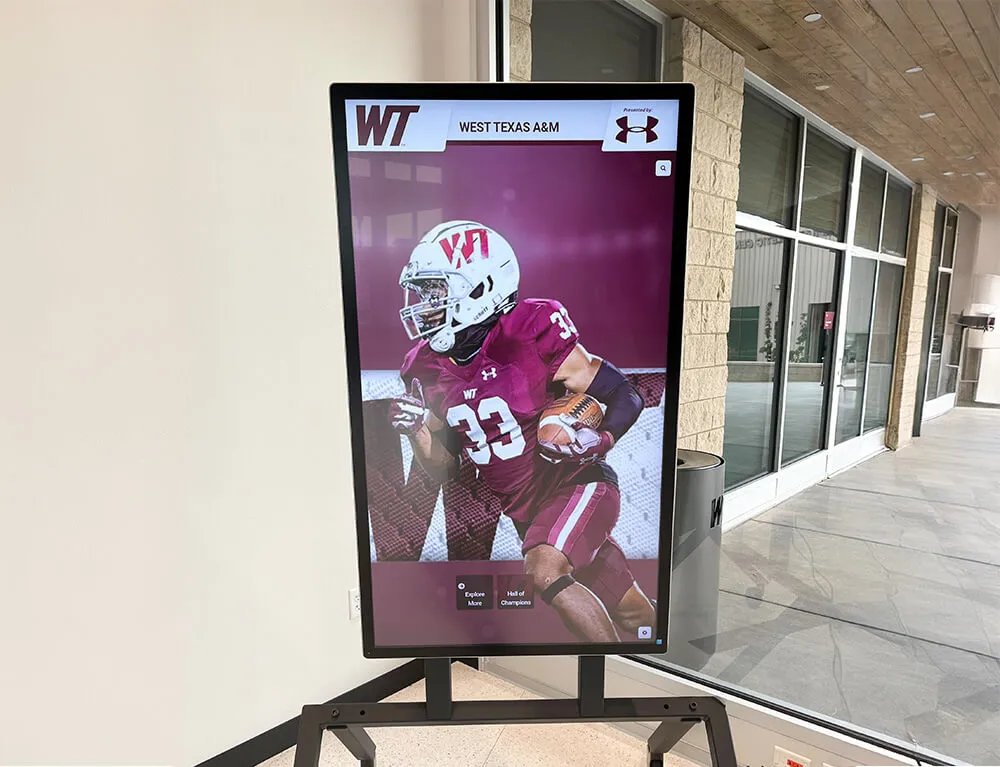
Athletic honor walls and record boards installed in school hallways represent capital assets the booster organization funded—the fixed asset register documents who owns them, what they cost, and when they should be refreshed or replaced
Sample Asset Detail Record
Maintain a supporting detail record for each significant asset alongside the summary register. The detail record provides the documentation needed for insurance claims, disposal decisions, and audit requests without requiring a search through multiple file folders.
BOOSTER CLUB FIXED ASSET DETAIL RECORD

Organization: ___________________________________
Asset ID (matches register row): ________________
Asset Description: ______________________________
Manufacturer / Model: ___________________________
Serial Number: __________________________________

--- ACQUISITION ---
Acquisition Date: _______________________________
Source: ☐ Purchase  ☐ Donation  ☐ Transfer  ☐ Grant
Vendor / Donor Name: ____________________________
Invoice or Donation Acknowledgment on File: ☐ Yes  ☐ No
Acquisition Cost / Fair Market Value at Acquisition: $__________

--- LOCATION & CUSTODIAN ---
Primary Location: _______________________________
Secondary / Seasonal Location: __________________
Assigned Custodian (name + title): ______________

--- DEPRECIATION ---
Useful Life (years): ____________________________
Depreciation Method: ☐ Straight-Line  ☐ Per CPA guidance
Annual Depreciation Amount: $___________________
Accumulated Depreciation as of [Date]: $_________
Net Book Value as of [Date]: $__________________

--- INSURANCE & WARRANTY ---
Covered Under Insurance Policy: ☐ Yes  ☐ No
Policy Name / Number: ___________________________
Insured Value: $_________________________________
Warranty Expiration: ____________________________
Maintenance Contract: ☐ Yes  ☐ No  Expires: ______

--- CONDITION LOG ---
| Inspection Date | Condition | Inspected By | Notes |
|---|---|---|---|
| | | | |
| | | | |

--- DISPOSAL ---
Disposal Date (if applicable): ___________________
Disposal Method: ☐ Sale  ☐ Donation  ☐ Scrapped  ☐ Lost/Stolen
Proceeds from Disposal (if sold): $_____________
Disposal Authorized By: _________________________ Date: ___________
Removed from Register: ☐ Yes  Date: ___________

Additional Notes: ________________________________
Connecting the Register to Recognition Infrastructure
Recognition displays are among the highest-visibility assets a booster club funds, and they are often among the most challenging to document because they sit at the boundary between the booster organization’s property and the school facility’s space. A trophy case bolted to a school lobby wall, a digital kiosk installed by a display vendor under contract with the booster club, or a framed championship banner hung in the gymnasium all raise the same question at audit time: who owns this, what did it cost, and whose responsibility is it to maintain?
The fixed asset register resolves that ambiguity by creating a written ownership record tied to the acquisition invoice and board resolution authorizing the purchase. When the asset is installed in school space, a note in the register—and ideally a written agreement with the school or district facility office—documents that the booster organization retains ownership and maintenance responsibility. When the asset is eventually replaced or removed, the register’s disposal field records what happened to it and whether any proceeds were returned to the organization.
Programs that invest in digital recognition displays that document athletic history and donor contributions benefit most from register documentation because those systems involve multiple components—screens, media players, content management licenses, mounting hardware—that are purchased together but should be tracked individually for depreciation purposes. The content management platform may be expensed as a subscription; the hardware is capitalized; the installation labor may or may not be capitalized depending on whether it extends the useful life of the asset or is better treated as a setup cost. These distinctions require CPA input at the time of purchase, not at year-end.
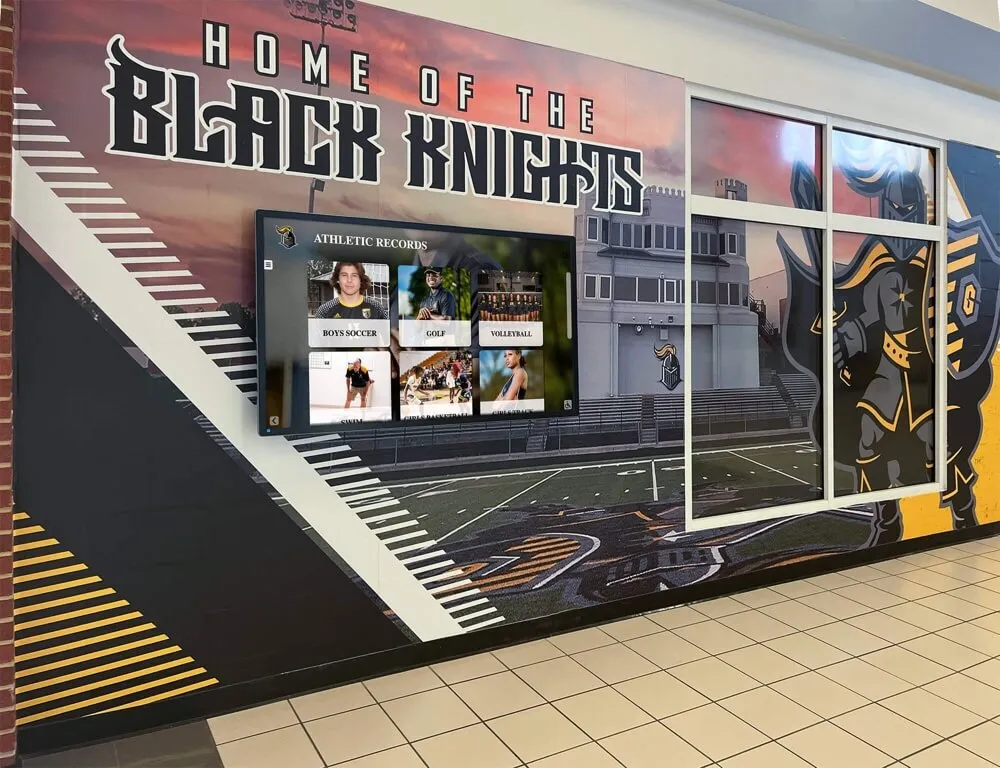
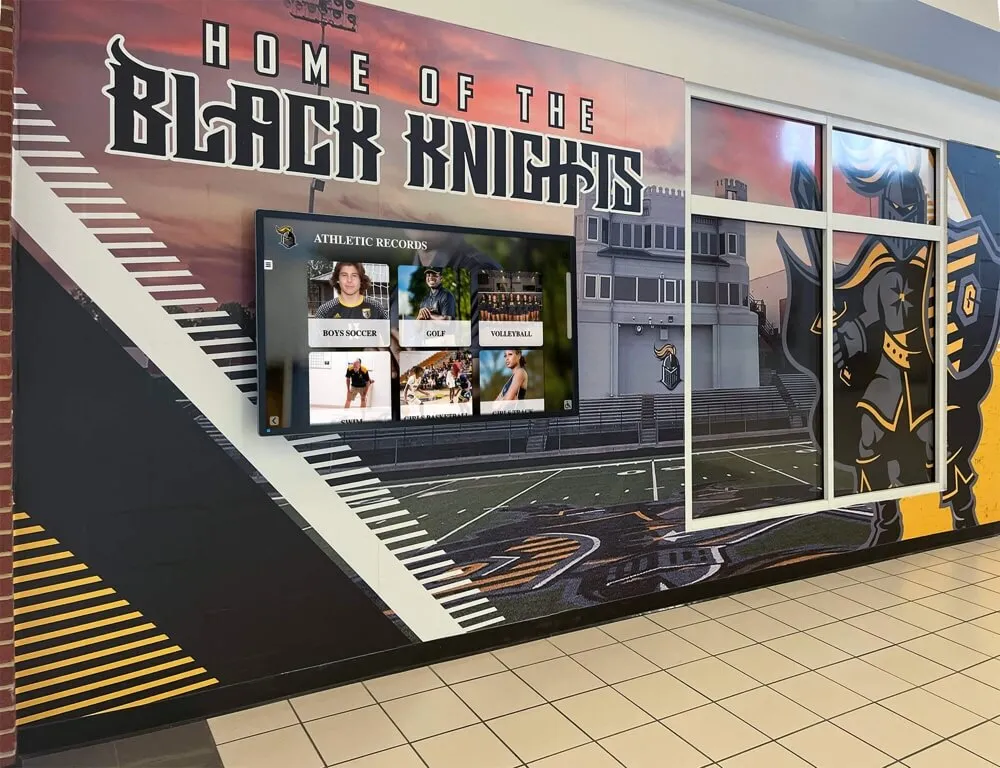
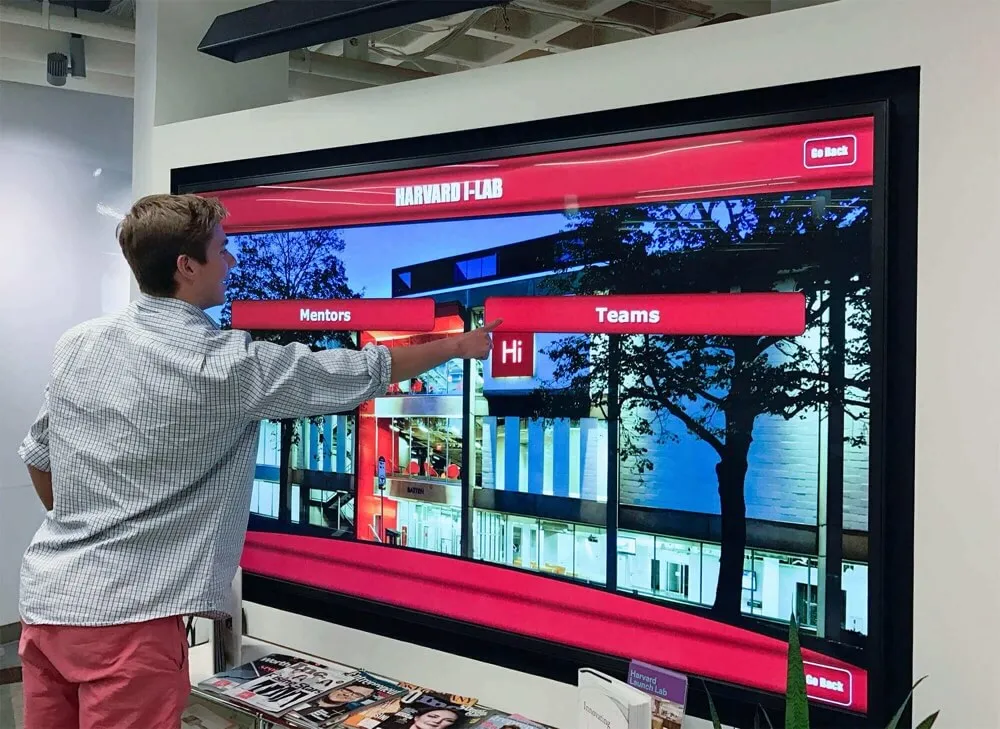
Digital athletic record boards and hallway recognition displays funded by booster organizations should be documented in the fixed asset register so ownership, cost, and maintenance responsibility are clear to every incoming officer and auditor
Frequently Asked Questions
What is a fixed asset for a booster club?
A fixed asset is any tangible item the booster club owns that will be used for more than one year and that costs at or above the capitalization threshold the board establishes in consultation with its CPA. Common examples include concession appliances, PA systems, digital display screens, trophy cases, computers, and athletic training equipment. Items below the threshold—such as a $40 folding table or $90 first aid kit—are typically treated as operating expenses in the period purchased rather than capitalized on the asset register.
Do booster clubs have to track fixed assets?
There is no universal legal requirement for all booster clubs to maintain a fixed asset register, but several downstream obligations create a strong practical need for one. Organizations that file Form 990 or 990-EZ must complete Schedule D, which asks about capital assets and their book values. Organizations subject to district financial oversight or annual CPA review will typically be asked to document what tangible property the organization holds. Organizations that carry insurance need an asset inventory to support coverage decisions and claims. A fixed asset register satisfies all three needs from a single source of record.
How do I record equipment donated to the booster club?
Record donated equipment at its fair market value on the date of receipt—not the donor’s original purchase price or their estimated value. Document the FMV with a vendor quote for a comparable item in similar condition, an online market reference, or a written appraisal for higher-value items. Issue a written donation acknowledgment to the donor that describes the item and states that no goods or services were provided in exchange for the donation, if that is the case. Enter the item in the register under “Source: Donation” with the donor’s name noted and the FMV as the acquisition value.
What capitalization threshold should our booster club use?
The right threshold depends on the organization’s size, asset mix, and the CPA’s guidance. Many small nonprofit organizations use a threshold between $250 and $1,000. A threshold that is too low creates administrative burden by requiring register entries for items like individual folding chairs that are better treated as supplies; a threshold that is too high risks leaving significant assets off the books. The threshold should be adopted by board resolution and documented in the organization’s financial policies so it is applied consistently by every treasurer.
How does the fixed asset register connect to the annual audit?
In an internal audit or CPA-facilitated financial review, the auditor will typically ask to reconcile the register against the general ledger’s asset accounts, verify that depreciation has been calculated correctly, confirm that disposed assets have been removed, and request documentation (invoices, FMV appraisals) for selected entries. A complete, up-to-date register makes all four steps straightforward. A register that has not been maintained requires reconstructive work that slows the audit process and may result in the auditor qualifying findings or recommending additional procedures.
What happens to fixed assets when our booster club dissolves?
When a booster club dissolves, the disposition of remaining assets is typically governed by the organization’s bylaws, state nonprofit law, and any restrictions attached to grants or donated property. Most nonprofit dissolution frameworks require remaining assets to be transferred to another qualified nonprofit or to the school district rather than distributed to members. A complete fixed asset register is essential at dissolution because it documents exactly what assets exist, their current book values, and any restrictions on their use—information that the dissolving board and its CPA need to complete the process correctly and file the required final returns.
Should recognition displays installed in school facilities appear on the booster club’s register?
Generally yes, if the booster club purchased and owns the display. The fact that a trophy case or digital kiosk is installed inside a school building does not automatically transfer ownership to the school. If the booster organization paid for the fabrication and installation, it typically retains ownership until it formally transfers or abandons the asset. Document ownership in both the fixed asset register and a written agreement with the school or district facility office. When the display is eventually replaced or upgraded, the register’s disposal field should record what happened to the original asset and whether the school took ownership at that point.
How often should we update the fixed asset register?
Add new entries at the time of acquisition, not at year-end. When an asset is purchased or received as a donation, the treasurer should create the register entry within two weeks of the transaction—before installation details, serial numbers, and vendor contacts become difficult to reconstruct. Update the condition rating and location fields whenever a physical inventory is conducted (at least annually) or whenever an asset is moved, repaired, or returned from a loan. Post annual depreciation and update net book values as part of the year-end financial closeout. Remove disposed assets from the active register when disposal is confirmed and documented.
What if prior boards never maintained a fixed asset register?
Start with the current inventory. Conduct a physical walk-through of all locations the organization uses, photograph everything that appears to meet the capitalization threshold, and document what can be verified from existing records—invoices, bank statements, donation letters, meeting minutes referencing purchases. For items with no acquisition documentation, estimate cost or FMV and note the estimate in the register. Establish the opening register values with CPA guidance and treat the setup date as the starting point for depreciation going forward. An imperfect register built today is far more useful than a perfect register that never exists.
When your program is ready to document, display, and protect the recognition infrastructure that represents years of donor generosity and athletic achievement—and to ensure every new officer inherits a complete record of what the organization owns—explore how Rocket Alumni Solutions helps booster clubs build recognition systems designed to be documented, maintained, and handed off reliably.