Booster Club Fraud Response Plan: Investigate Losses and Protect Community Trust

A booster club fraud response plan is a written, step-by-step procedure that guides officers, athletic directors, and school administrators through the period between discovering a potential financial loss and reaching a documented resolution. When a treasurer resigns unexpectedly, a cash count comes up short, an account statement shows transactions no one authorized, or a community member raises a concern about missing funds, the organization’s first hours and days matter more than anything that follows. Evidence gets lost. Records get accessed by the wrong people. Key witnesses become unavailable. The decisions made—or not made—in that early window determine whether an investigation is recoverable.
A response plan applies equally to confirmed fraud, suspected fraud, clerical errors that cannot be reconciled, and the ambiguous situations most booster clubs actually encounter: a cash total that does not match the expected count, an expense no one remembers approving, or a bank balance that does not align with the treasurer’s report. Having a documented procedure prevents the most common early mistakes—discussing the concern openly before records are secured, confronting a potentially involved officer without a second witness present, or waiting days before notifying school officials.
This guide is for informational purposes only and does not constitute legal, accounting, financial, or law enforcement advice. How your organization should respond to a specific suspected loss depends on its legal structure, jurisdiction, the nature and size of the discrepancy, and the advice of qualified legal counsel. Consult a licensed attorney before initiating any formal investigation or communicating with law enforcement.

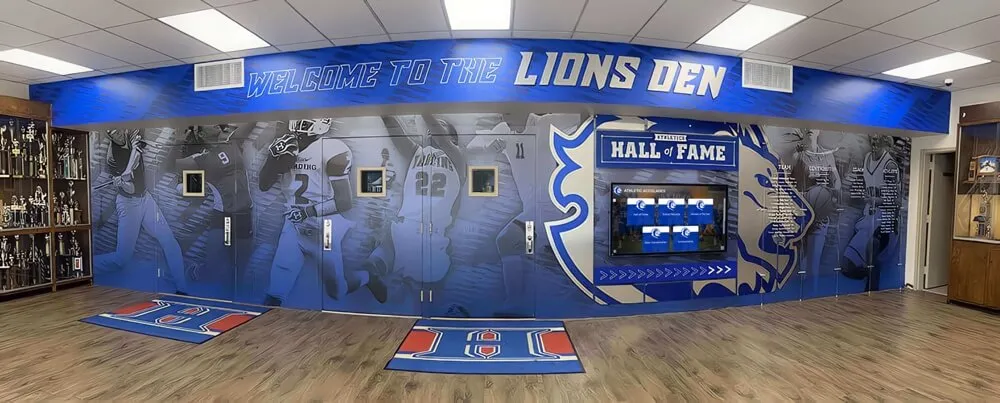
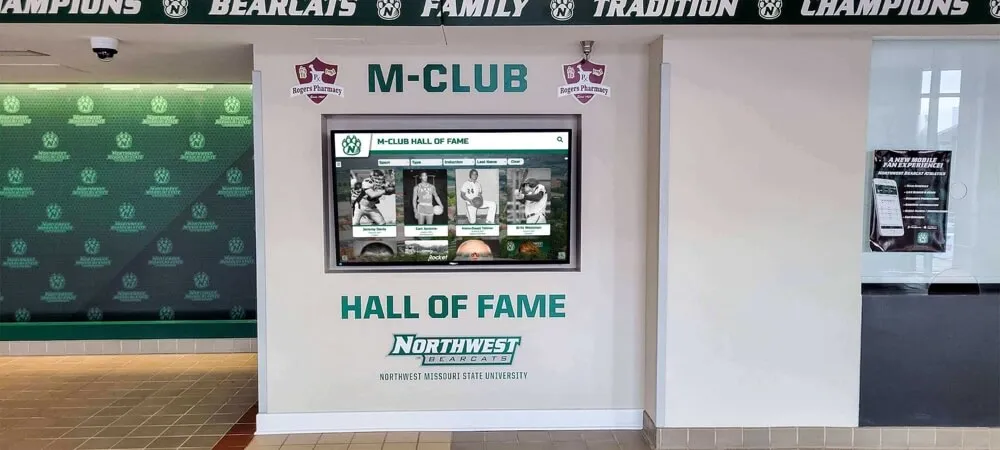
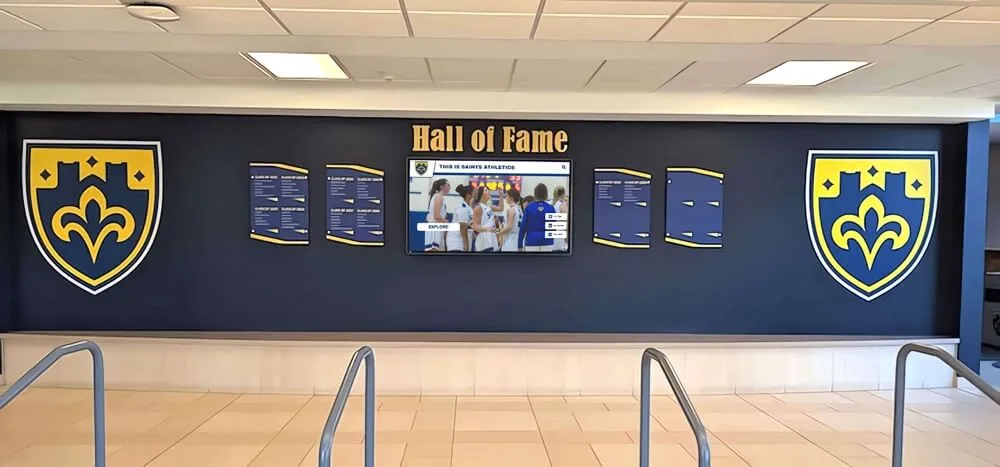
A booster club fraud response plan protects the institutional integrity behind recognition environments like this one—ensuring that financial concerns are investigated in a way that preserves trust with the community whose donations and sponsorships fund these programs
What a Booster Club Fraud Response Plan Covers
A complete fraud response plan addresses six areas that volunteer-led organizations most commonly handle poorly when a suspected loss surfaces:
- Evidence preservation — securing records before they can be accessed, altered, or removed
- Escalation procedures — who within the organization and the school district must be notified, and in what sequence
- Investigation steps — how to document the scope of a potential loss without contaminating evidence
- Legal and law enforcement coordination — when and how to involve outside parties
- Communication protocols — what to say to the community, donors, and sponsors without compromising the investigation
- Recovery and restoration — steps to restore financial controls and recognition integrity after the investigation closes
Booster club fraud prevention policies that establish internal controls before a problem surfaces are the companion document to a response plan—together they cover before and after. This guide focuses on the response: what to do once a concern exists.
Immediate Steps: The First 48 Hours
The period immediately after discovering a suspected loss is the highest-risk window for evidence loss and decision errors. The following steps apply regardless of whether the concern ultimately turns out to be fraud, error, or a reconciliation gap.
BOOSTER CLUB FRAUD RESPONSE — IMMEDIATE STEPS

Step 1 — Limit Who Knows
  Restrict awareness of the suspected concern to the minimum number
  of officers necessary to take preservation steps. Open discussion
  before records are secured gives a potentially involved party time
  to alter or remove documentation. Designate one officer to
  communicate on behalf of the organization during the initial
  response period.

Step 2 — Secure Financial Records
  Immediately restrict access to all financial records related to
  the period under review:
    - Bank statements and online account access
    - Expense receipts and reimbursement requests
    - Treasurer reports and board meeting minutes
    - Cash count sheets from recent events
    - Check registers, deposit logs, and electronic payment records

  If records are maintained digitally, change account passwords and
  revoke access for any officer who may be involved before conducting
  any further review.

Step 3 — Do Not Confront the Potentially Involved Party Alone
  If a specific officer is suspected, do not confront them without a
  second witness present—and consider whether any confrontation is
  appropriate before consulting legal counsel. Premature confrontation
  can prompt evidence destruction, resignation, or escalation that
  complicates the investigation.

Step 4 — Document What You Know
  Write down, in specific detail, what you observed, when you
  observed it, and who else was present. Date and sign this account.
  A contemporaneous written record is significantly more reliable
  than recollection prepared weeks later and carries more weight
  during a formal review.

Step 5 — Notify the School Athletic Director
  The athletic director is typically the appropriate first escalation
  point for a booster club concern. The athletic director can connect
  the organization with district-level resources—legal counsel,
  financial staff, or district administration—that a volunteer board
  cannot independently access.

Step 6 — Consult Legal Counsel Before Taking Further Action
  Before interviewing anyone, removing an officer from their position,
  or contacting law enforcement, consult a licensed attorney. Actions
  taken without legal guidance in the first 48 hours have a documented
  history of creating liability for the organization and complicating
  subsequent investigations.
The Six-Step Investigation Workflow
Once immediate preservation steps are complete and legal counsel has been engaged, the investigation follows a structured workflow. The specific persons, timelines, and authorities named below should be adapted to match your organization’s governance structure.
| Phase | Action | Responsible Party | Target Timeline |
|---|---|---|---|
| 1. Scope definition | Identify the time period and transaction types under review | Legal counsel + board chair | Within 5 business days |
| 2. Record gathering | Collect all relevant financial records for the review period | Uninvolved treasurer or designated officer | Within 5 business days |
| 3. Reconciliation review | Compare bank records against reported balances and known expenses | CPA or designated financial reviewer | Within 15 business days |
| 4. Findings documentation | Prepare a written summary of discrepancies, estimated scope, and likely causes | CPA + legal counsel | Within 25 business days |
| 5. Determination | Determine whether findings support suspected fraud, unintentional error, or an unresolvable gap | Board + legal counsel | Within 30 business days |
| 6. Resolution action | Take corrective action: notification, recovery, control improvements, or referral as appropriate | Board + legal counsel | As directed by counsel |
Complex cases—particularly those involving multiple years, multiple officers, or amounts that may trigger mandatory reporting obligations—require legal guidance that this framework cannot provide. Use this table as a planning tool, not a self-contained procedure.
Escalation Matrix: Who Needs to Know
Deciding who to notify, and in what order, is one of the most consequential decisions in the early response period. Notify too few people and the organization risks liability for concealment. Notify too many too early and evidence integrity suffers.
| Party | When to Notify | What to Share Initially |
|---|---|---|
| School Athletic Director | Immediately upon confirming the concern warrants escalation | Nature of concern, time period involved, estimated scope |
| School Principal or District Administrator | Within 24–48 hours if athletic director escalates | What the athletic director has already been told |
| Board of Directors | Within 48 hours—enough members to constitute a quorum | Nature of concern; withhold names of suspected parties until legal counsel advises |
| Legal Counsel | Before any interviews or formal investigation steps | Everything known; attorney-client privilege protects this disclosure |
| Insurance Carrier (if applicable) | Within the timeframe specified in the policy | Policy-specific; consult legal counsel first |
| Law Enforcement | As directed by legal counsel | As directed by legal counsel |
| General Membership | After the investigation reaches a conclusion | A summary that does not compromise the investigation or identify individuals prematurely |
| Donors and Sponsors | After the investigation reaches a conclusion | A statement focused on corrective actions; see communication guidance below |
Programs that build governance structures from the outset include escalation chains in their founding governance documents rather than creating them under pressure. If your organization has not yet defined an escalation sequence, this table provides a starting template.
Records to Preserve
The records most likely to be needed during a booster club fraud investigation fall into three categories: financial records, governance records, and recognition and commitment records.
| Category | Record Type | Why It Matters |
|---|---|---|
| Financial | Bank statements, all accounts | Baseline for reconciliation |
| Financial | Check register and canceled checks | Documents authorized vs. actual payments |
| Financial | Deposit logs and cash count sheets | Tracks revenue received at events |
| Financial | Expense receipts and reimbursement requests | Supports or contradicts authorized expenditure claims |
| Financial | Electronic payment records (Venmo, PayPal, Zelle) | Often missing from informal accounting |
| Financial | Treasurer reports presented to the board | Creates comparison point against bank records |
| Governance | Board meeting minutes | Documents approvals and authorizations |
| Governance | Signed financial policies (dual signature, cash handling) | Establishes expected controls |
| Governance | Officer transition records | Tracks who had account access and when |
| Governance | Volunteer and signer authorization records | Documents who was authorized to move funds |
| Recognition | Sponsor agreements and gift acknowledgment letters | Documents what was received and what was promised |
| Recognition | Display records and delivery documentation | Confirms recognition commitments for active sponsors |
Recognition and display records belong on this list for a specific reason: when restricted gifts—donations designated for a specific purpose such as a display upgrade, a scholarship, or a capital project—were redirected to general operations, the gift acknowledgment and commitment documentation is the primary evidence of what the donor was promised and what the organization received.
Communicating Without Undermining the Investigation
Communication failures during a fraud response are as damaging as investigation failures. The two most common mistakes are communicating too early—sharing information before the investigation has produced reliable findings—and communicating too vaguely, leaving donors and community members to fill the silence with speculation.
What to avoid before the investigation concludes:
- Do not use the word “fraud” in communications with the general membership, donors, or sponsors until the investigation has reached a conclusion supported by evidence. Use “financial concern,” “discrepancy under review,” or “matter under investigation” if acknowledgment becomes necessary.
- Do not name suspected individuals in any communication—internal or external—until legal counsel has reviewed the communication.
- Do not characterize the scope of a loss in dollar amounts until reconciliation is complete. Early estimates almost always differ from final investigation findings and create additional credibility problems when they must be corrected.
A holding statement for situations where acknowledgment is required:
If the concern becomes publicly known before the investigation concludes—through a resigning officer, a community disclosure, or a media inquiry—a minimal acknowledgment may be necessary:
SAMPLE HOLDING STATEMENT (ADAPT WITH LEGAL COUNSEL BEFORE USE)

[Organization Name] is aware of a financial concern that has been
referred to [appropriate party—legal counsel, school district, or
law enforcement] for review. We are cooperating fully with that
review process. Out of respect for the integrity of the
investigation, we are unable to share additional details at this
time. We will communicate with our members and supporters when
the review is complete.
After the investigation concludes:
Post-investigation communication should cover four elements: what was found, what corrective action the organization has taken or will take, what governance changes are being implemented, and an affirmation of the organization’s continued commitment to its program, sponsors, and donors. It should not include detailed narratives of the investigation, descriptions of specific transactions, or characterizations of individual conduct beyond what has been legally established.
Protecting Donor and Sponsor Trust
Donors and sponsors who contributed to a booster club that experienced a financial concern face a specific question: whether their contribution went to the purpose they intended. A community fundraising and recognition program whose financial integrity is in question loses its ability to make future asks until that question is answered directly.
The post-investigation communication to donors and sponsors should address that concern explicitly:
- Restricted gifts: If the investigation determined that restricted gifts were applied to their intended purpose, say so. If restricted funds were among the affected amounts, acknowledge this and describe remediation—whether through recovery, insurance, or alternative funding sources.
- Recognition commitments: Confirm that all recognized donors and sponsors remain recognized at their committed tiers. If display content required reconstruction during the investigation, confirm that displays have been audited and are accurate.
- Future stewardship: Describe the governance improvements the organization has implemented. Donors and sponsors who gave to a program that experienced a financial concern and then implemented concrete, documented controls often express greater confidence in the program’s future stewardship than those who gave before any formal controls existed.
Sponsor and donor recognition programs that maintain transparent stewardship documentation are better positioned to recover from financial concerns because the stewardship record itself—showing what was promised and what was delivered—provides the evidentiary foundation for post-investigation reassurance.

Post-investigation recognition audits confirm that donor wall entries, display commitments, and sponsor placements remain accurate and complete—a stewardship step as important as the financial reconciliation itself
Coordinating with School Officials
Booster clubs operate in close relationship with a school athletic program. School officials—athletic directors, principals, and district-level administrators—are not just notification targets; they are governance resources. District-level legal counsel is often available to booster clubs that operate under a district umbrella, and that access can significantly reduce the cost and complexity of responding to a suspected loss.
Athletic director involvement: The athletic director typically serves as the liaison between the booster club and the school district. In most governance structures, the athletic director does not have direct authority over an independently incorporated booster club but has a direct interest in the organization’s continued ability to support the athletic program. Keeping the athletic director informed ensures that the school’s institutional response is coordinated with the booster club’s response.
District legal resources: Before engaging outside legal counsel at the organization’s expense, determine whether district-level legal resources are available to the booster club. Not all districts extend these resources to independently incorporated organizations, but many do for programs that operate closely with school athletics.
Facilities and display implications: If the suspected loss involved restricted funds designated for a display project, hallway recognition installation, or lobby improvement, facilities staff and the athletic director need to know whether those projects are on hold pending the investigation’s conclusion. Leaving display projects in an ambiguous state without communicating to facilities staff creates operational confusion that compounds the governance problem.
Athletic booster program governance resources that outline clear school-club coordination protocols allow athletic directors to respond to financial concerns as governance partners rather than as administrators learning about problems after they have already escalated.
When to Involve Law Enforcement
This decision requires legal counsel. The following is educational context only:
Law enforcement involvement is typically considered when:
- The amount involved exceeds a threshold that triggers mandatory reporting in the applicable jurisdiction
- The investigation has produced evidence sufficient to support a referral rather than suspicion alone
- Civil recovery options have been evaluated and do not provide adequate remediation
- Legal counsel advises that voluntary reporting is in the organization’s interest
It is not appropriate to involve law enforcement based on suspicion alone, before records have been secured, or without first consulting legal counsel. Premature contact can complicate civil recovery options and expose the organization to liability if the reported concern is later determined to be an error rather than intentional misconduct.
Restoring Recognition Integrity After Resolution
Financial concerns that involved restricted gifts, display projects, or sponsorship funds carry a secondary obligation: confirming that all recognition commitments were fulfilled despite the disruption. After the investigation closes, a recognition audit should verify:
- Every active sponsor’s display placement exists and matches their current agreement
- Every recognized donor appears at the correct tier in all physical and digital systems
- Every restricted fund designation—a named display, a specific campaign, a scholarship—is documented and its fulfillment status confirmed
- Display records that may have been affected by missing documentation during the investigation have been reconstructed from available sources
Athletic booster programs that invest in managed recognition infrastructure make this post-investigation audit more straightforward because digital display systems maintain timestamped content histories. A content log that shows every entry added, modified, or removed from a display—with dates and user records—provides the documentary foundation that makes recognition audits verifiable rather than reconstructive.
Completing the recognition audit and communicating its findings to affected donors and sponsors is the action that separates a program that managed a difficult situation well from one that is still managing the fallout months later. Donors and sponsors who receive a written confirmation that their recognition is accurate and their contributions were applied as intended are far more likely to remain engaged than those who receive no communication at all.
Frequently Asked Questions
What is the single most important action to take in the first hour after discovering a suspected loss?
Secure access to financial records before discussing the concern with anyone else. Change digital account passwords and lock physical files. This step is more consequential than any other single action because evidence that is lost or altered in the first hours may not be recoverable.
Should the booster club president investigate internally before contacting the school athletic director?
No. Internal investigation before external escalation creates risk: the organization may take actions—confronting a suspect, removing an officer, accessing accounts—that complicate later formal investigation or create liability. The athletic director is the appropriate first external escalation point for most booster clubs, and that notification should happen early, not after internal investigation is complete.
How should the organization handle a situation where the suspected party is a long-serving or well-regarded volunteer?
The same way as any other situation. The most common governance failure in volunteer organizations is delayed or incomplete response out of reluctance to act against someone who has contributed significantly to the program. The fraud response plan exists precisely because organizations cannot rely on reputation as a substitute for documented evidence and independent review.
What governance improvements should the organization implement after resolving a financial concern?
At minimum: implement dual-signature requirements for expenditures above a defined threshold, establish a written cash-handling policy with a two-person counting rule for all events, conduct quarterly records reviews independent of the treasurer, and adopt a written conflict-of-interest policy. Organizations that build these controls into their governance structure from formation make future fraud response simpler because documented baseline controls already exist before a concern arises.
How long should investigation records be retained after the case is closed?
Consult legal counsel for jurisdiction-specific guidance. As a general starting point, retain all investigation-related records—correspondence, findings documents, communications with law enforcement or insurers—for a minimum of seven years. Records related to donor restricted funds and recognition commitments should be retained for the longer of seven years or the duration of the underlying recognition commitment.
Does the organization need to disclose the investigation to donors and sponsors before it concludes?
Only if required by applicable law, donor agreement terms, or specific obligations in a sponsorship contract. Otherwise, legal counsel typically advises that post-investigation disclosure—once findings are documented and corrective actions are in place—is more useful and less risky than interim disclosure. The exception is when the investigation becomes public knowledge before it concludes, at which point a holding statement may be necessary to prevent damaging speculation from filling the silence.
When your program is ready to build the recognition infrastructure that supports post-investigation audits, documented sponsor delivery verification, and donor wall governance that makes recovery from difficult situations more straightforward—explore how Rocket Alumni Solutions supports booster clubs with managed recognition platforms built for institutional stewardship and long-term accountability.