Running a successful booster club requires constant creativity and energy to fund equipment, uniforms, travel, facility improvements, and countless other needs that help student-athletes compete at their best. Yet many booster clubs find themselves stuck in a rut, cycling through the same tired fundraising approaches year after year while parent participation declines and revenue plateaus.
The challenge isn’t just raising money—it’s building sustainable fundraising systems that engage your community, honor supporters appropriately, minimize volunteer burnout, and create lasting enthusiasm for your athletic programs. When booster clubs rely solely on concession stands and car washes, they miss opportunities for more lucrative, less labor-intensive approaches that can transform program funding.
This comprehensive guide explores proven booster club fundraising ideas across multiple categories including high-revenue events, corporate sponsorship programs, product sales campaigns, digital fundraising strategies, and recognition systems that inspire sustained giving. Whether your booster club supports a single sport or manages comprehensive athletic department funding, these tested approaches provide practical frameworks for increasing revenue while building stronger community connections to your programs.
Successful fundraising requires balancing immediate revenue needs with long-term relationship building. The most effective booster clubs don’t just ask for money—they create compelling giving opportunities, celebrate supporters appropriately, demonstrate tangible impact, and build communities around athletic excellence that make supporting programs feel rewarding rather than obligatory.

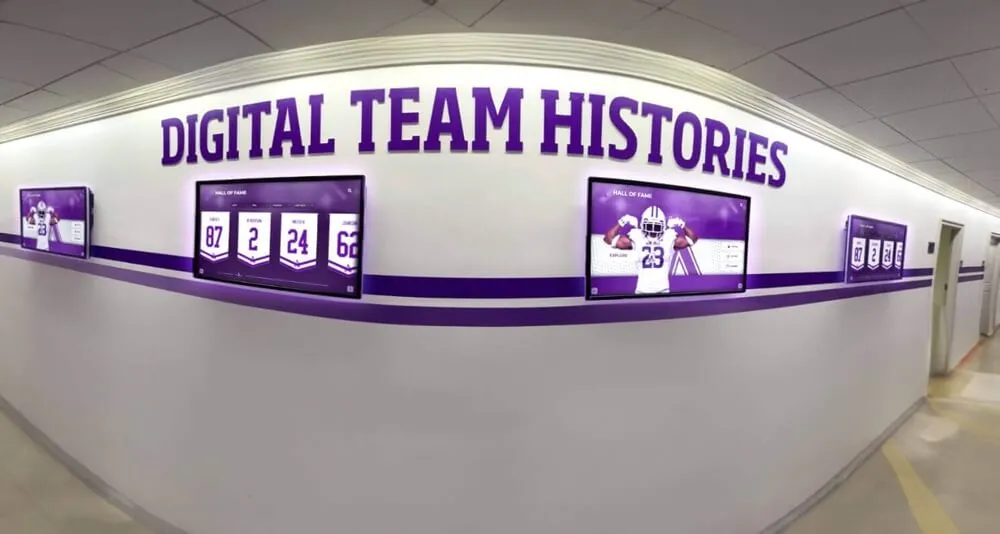
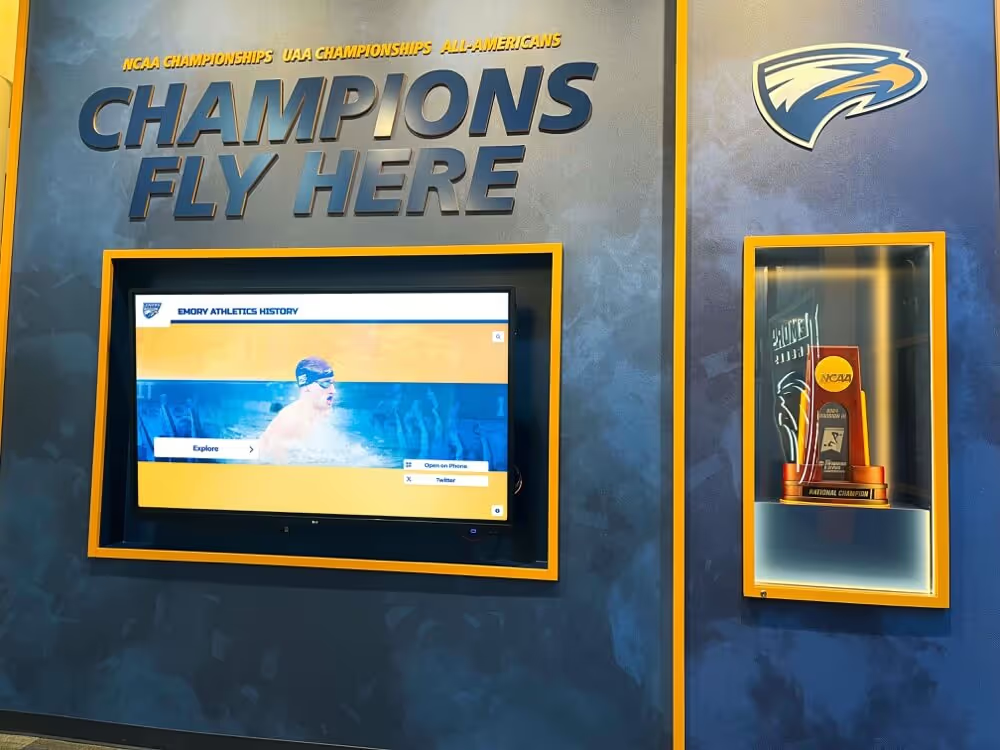
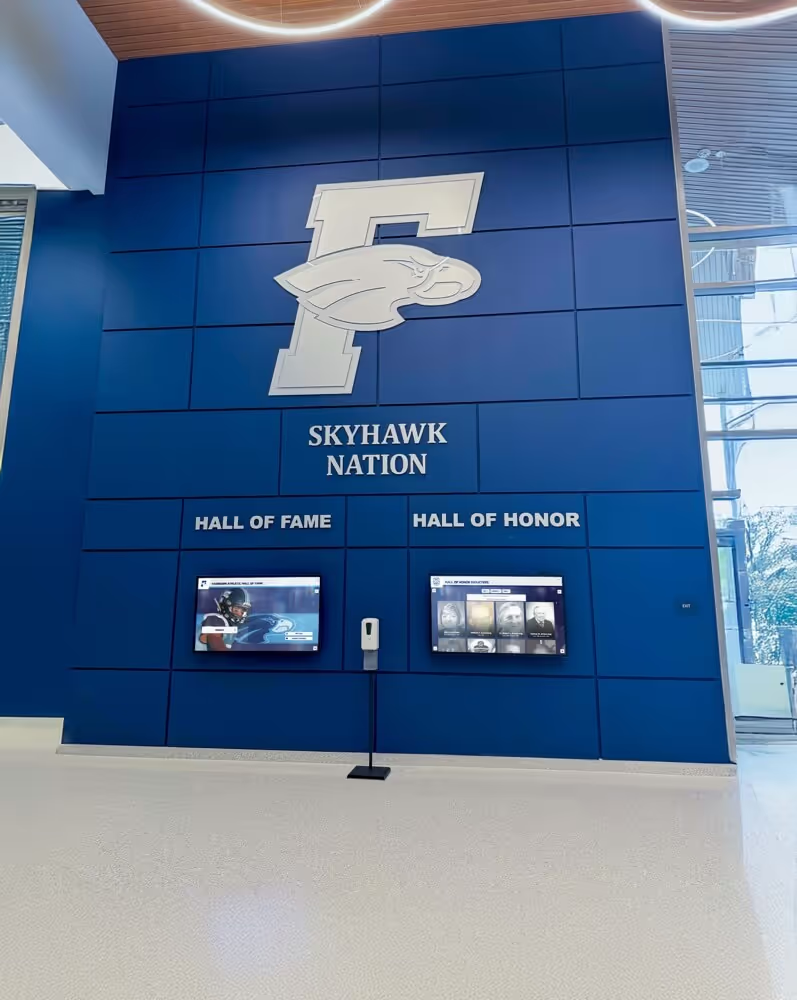
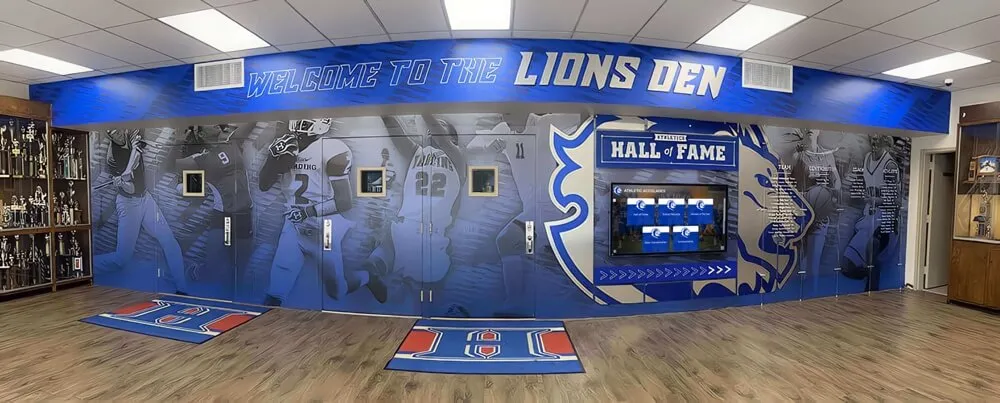
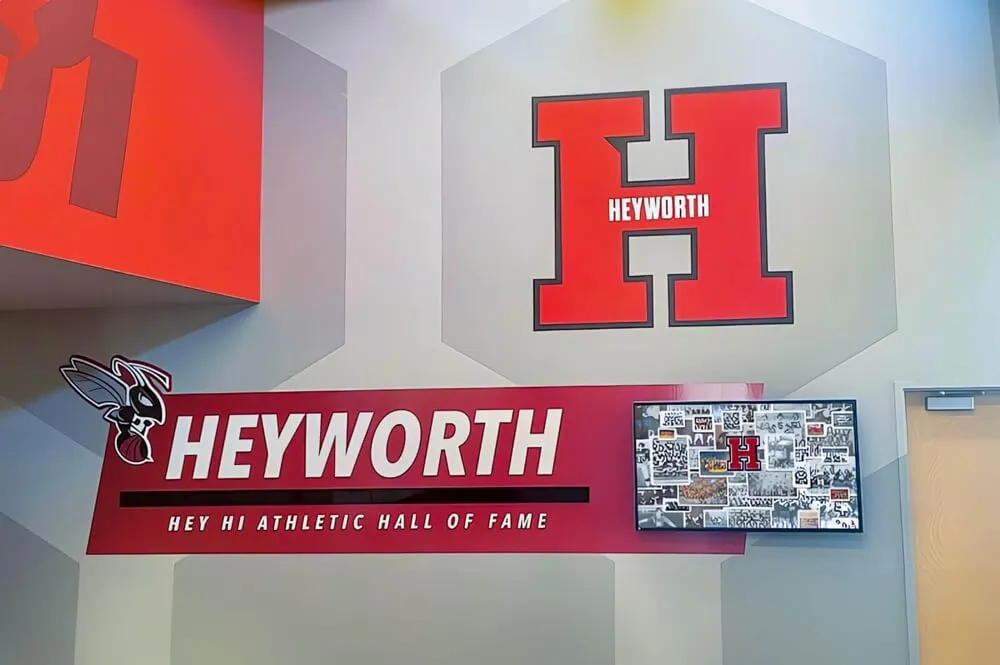
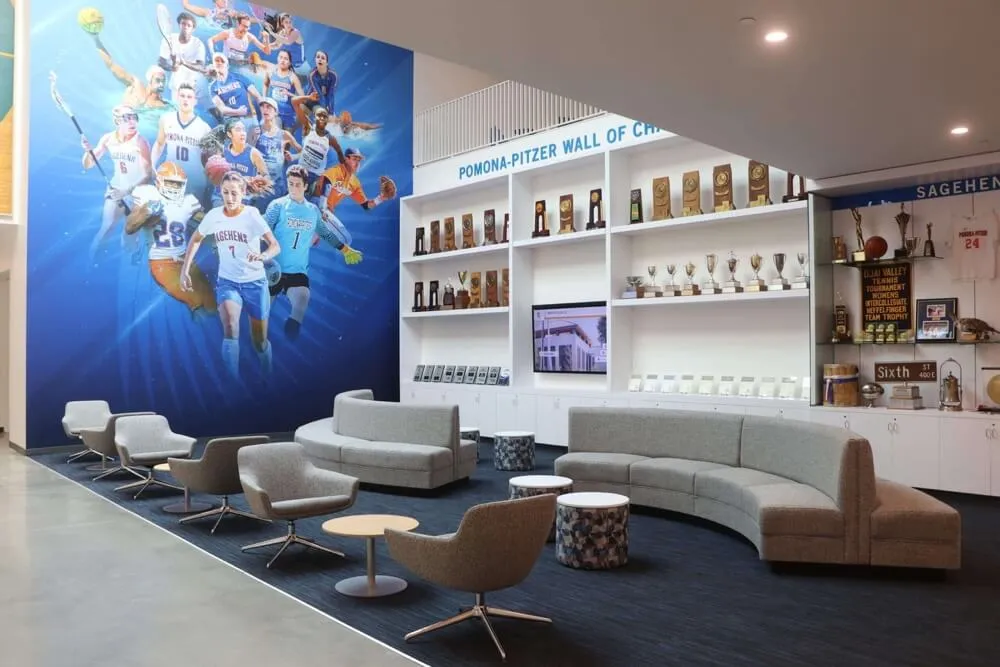
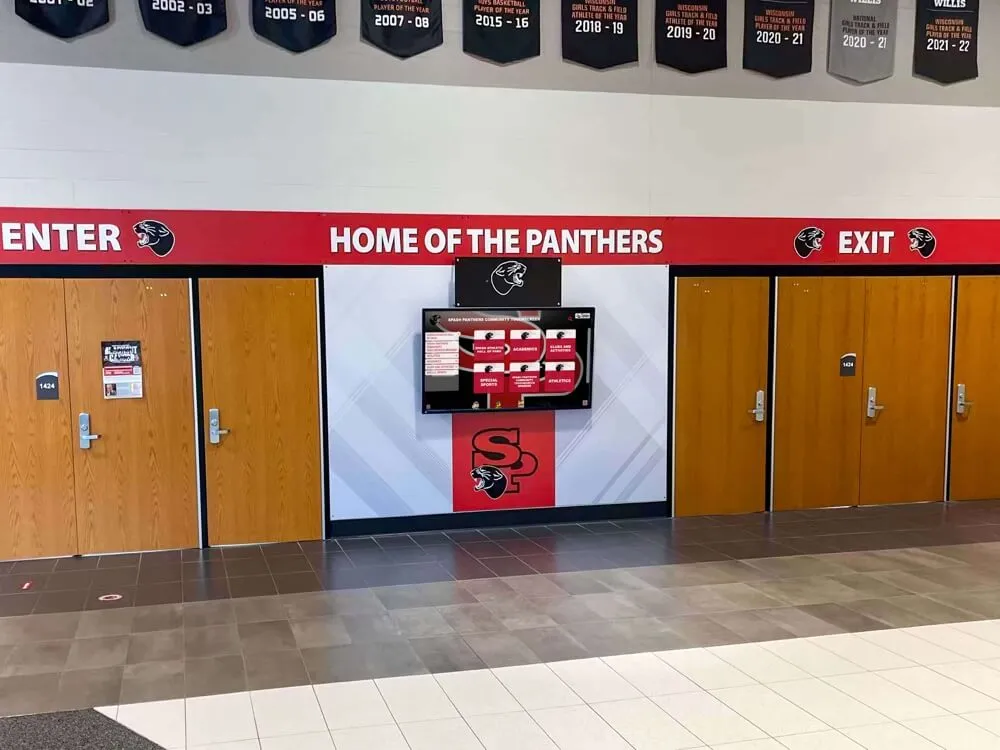
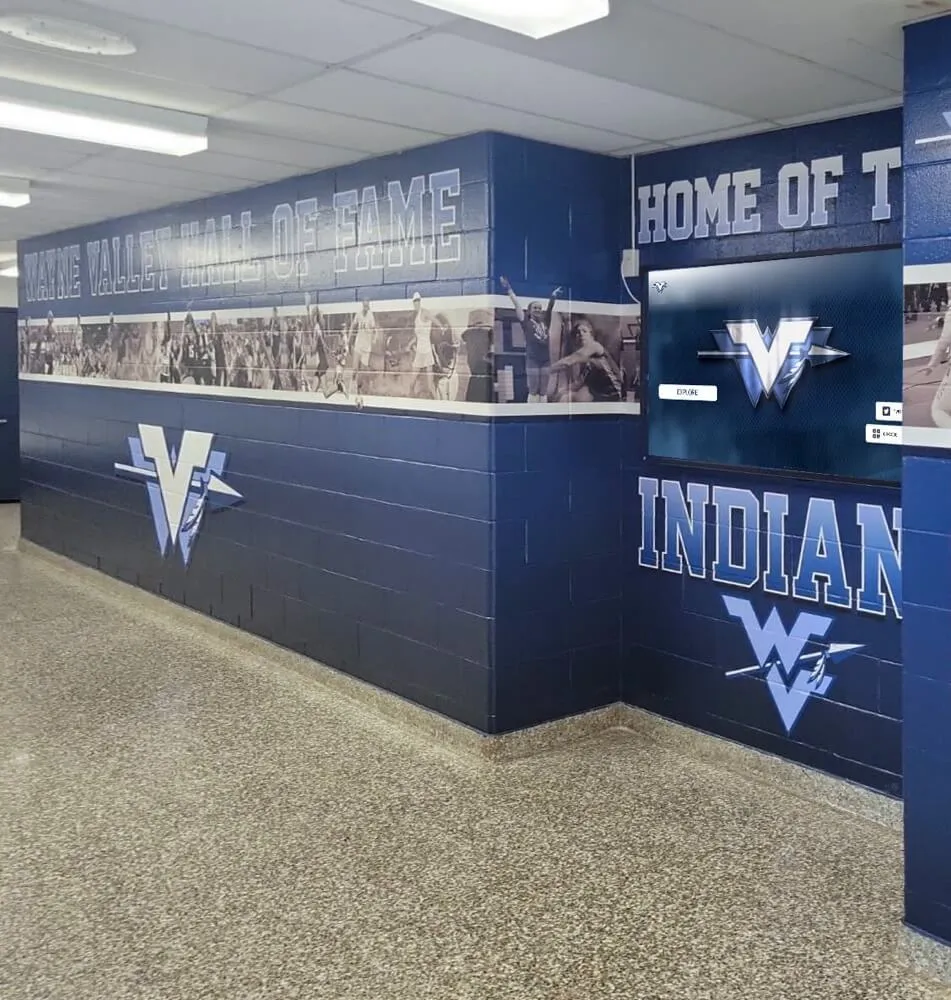
Effective fundraising builds visible community support that celebrates both athletes and the donors who make programs possible
Event-Based Fundraising: Creating Memorable Community Experiences
Well-executed events generate substantial revenue while strengthening community connections to your athletic programs.
Annual Sports Banquets and Award Celebrations
Sports banquets serve dual purposes as both recognition events and fundraising opportunities when structured strategically:
Ticketed Dinner Events with Silent Auctions
Host formal recognition dinners where ticket sales ($30-75 per person) cover meal costs while silent auctions generate net revenue. Successful auctions feature 30-50 items including sports memorabilia from professional teams, vacation packages and weekend getaways, restaurant and entertainment gift certificates, themed baskets and experience packages, and high-value items donated by local businesses.
Organizations report that well-planned banquet auctions can generate $10,000-$30,000 in net revenue while providing meaningful recognition for student-athletes, coaches, and supporters.
Program Advertising and Sponsorship
Banquet programs create sponsorship inventory through full-page sponsor recognition ($500-$1,500), half-page business advertisements ($250-$750), quarter-page family recognition ads ($100-$250), congratulatory messages from community members ($50-$100), and commemorative keepsakes families value.
Programs with 50-100 pages of sponsored content can generate $15,000-$40,000 in revenue while creating lasting documentation of season achievements.
Learn how sports banquet planning creates recognition events that celebrate athletes while supporting fundraising goals.

Recognition events celebrate athletic achievement while creating fundraising opportunities through auctions and sponsorships
Golf Tournaments and Athletic Competitions
Golf tournaments consistently rank among the most profitable booster club fundraising events:
Tournament Structure and Revenue Streams
Classic four-person scramble formats accommodate all skill levels while generating revenue through entry fees ($400-$800 per foursome), hole sponsorships ($250-$1,000 per hole), beverage cart sponsorships ($500-$2,000), putting contest entry fees and prizes ($10-$25 per participant), and silent auctions during post-round dinners.
Well-organized 18-hole tournaments with 36 teams (144 golfers) can generate $25,000-$60,000 in net revenue with proper sponsorship cultivation and auction planning.
Minimizing Work Through Strategic Partnerships
Partner with golf courses offering fundraising packages including discounted green fees, included meals or beverages, tournament coordination assistance, and promotional support. These partnerships dramatically reduce volunteer workload while maintaining profitability.
Alternative Athletic Fundraising Events
If golf doesn’t suit your community, consider bowling tournaments with similar sponsorship structures, 5K runs combining entry fees with pledges, pickleball or tennis tournaments, cornhole tournaments requiring minimal setup, or esports competitions appealing to younger demographics.
Seasonal Community Events
Capitalize on community gathering traditions throughout the year:
Fall Festival and Tailgate Parties
Pre-game tailgate events create festive atmospheres while generating revenue through food and beverage sales ($5-15 per person), team merchandise and spirit wear, 50/50 raffles and prize drawings, and family-friendly activities with participation fees.
Holiday Fundraising Events
Seasonal celebrations aligned with community traditions including pancake breakfasts with Santa, holiday craft fairs featuring vendor booth rentals, holiday tree or wreath sales, and themed photo opportunities with professional photographers.
Spring and Summer Activities
Warm weather enables outdoor fundraising through movie nights in stadium parking lots ($5-10 admission), pool parties or swim meets at local facilities, car shows combining entry fees with spectator donations, and food truck festivals collecting vendor fees.
Explore how gala event planning creates sophisticated fundraising celebrations that engage community supporters.
Corporate Sponsorship Programs: Building Business Partnerships
Strategic sponsorship programs create reliable annual revenue while providing business partners valuable community visibility.
Developing Tiered Sponsorship Structures
Professional sponsorship packages establish clear value propositions for business supporters:
Title Sponsor Level ($10,000-$25,000)
Premium partnership offerings including exclusive title sponsor designation, prominent logo placement across all materials, recognition at all athletic events throughout season, dedicated social media campaigns, VIP hospitality for business leadership, and permanent recognition on facility signage or donor walls.
Title sponsorships work best for established businesses seeking maximum community visibility and associating their brands with athletic excellence.
Gold Level Sponsorships ($5,000-$9,999)
Substantial partnership benefits including major logo placement on promotional materials, recognition signage at home competitions, program book advertisements, social media acknowledgment, complimentary event tickets, and business profile features in booster communications.
Silver and Bronze Levels ($1,000-$4,999)
Accessible partnership opportunities including program book recognition, website sponsor listings, banner displays at facilities, periodic social media mentions, and general admission tickets to select events.
Multi-tier structures ensure sponsorship opportunities exist at various investment levels, enabling broad business participation while reserving premium benefits for major commitments.
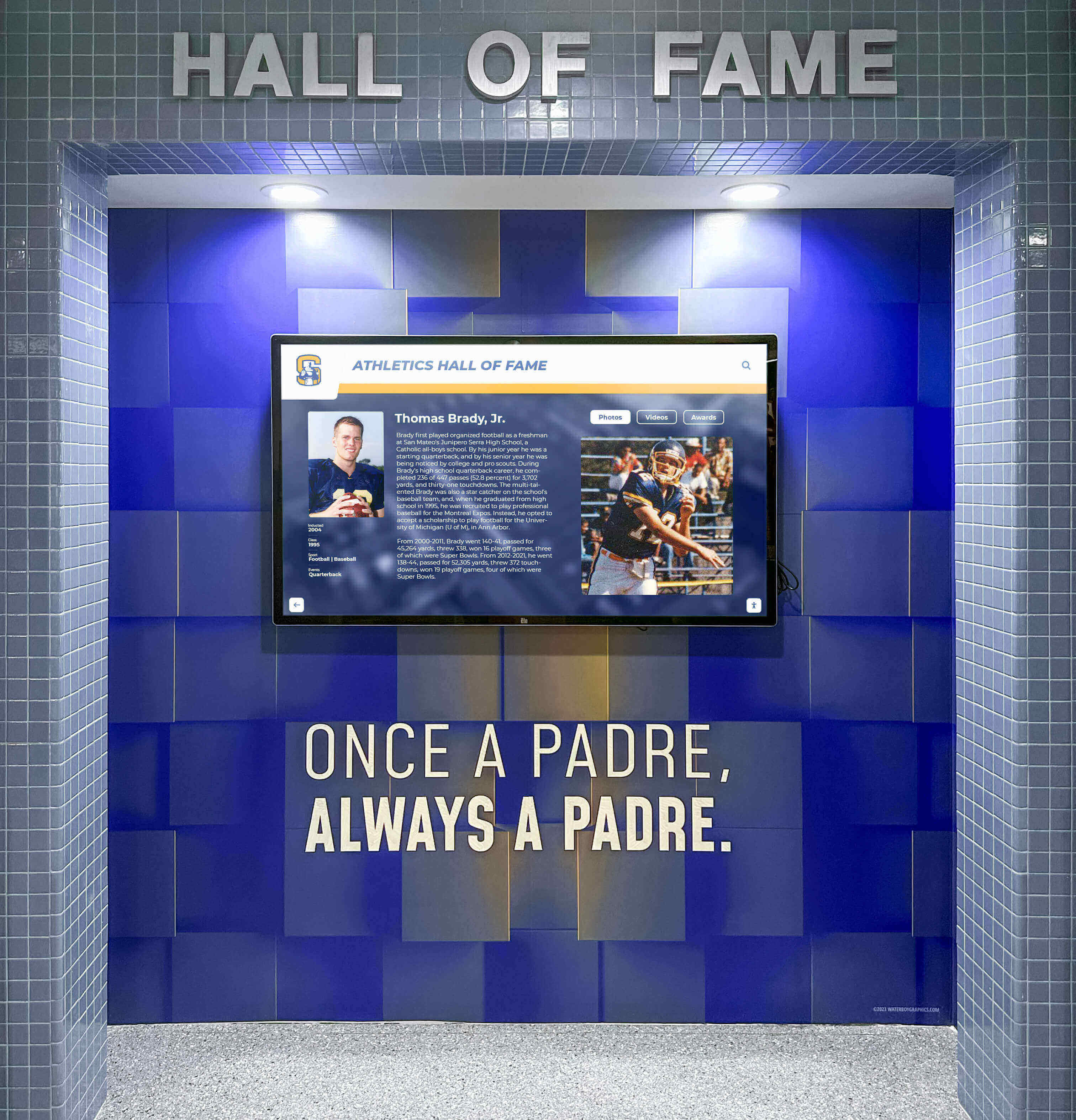
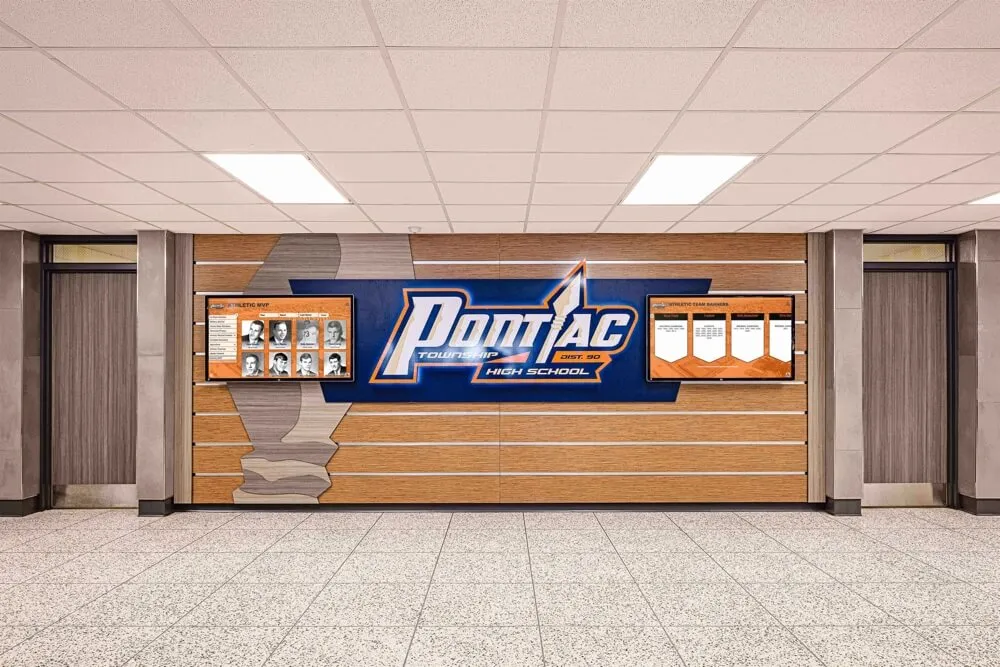
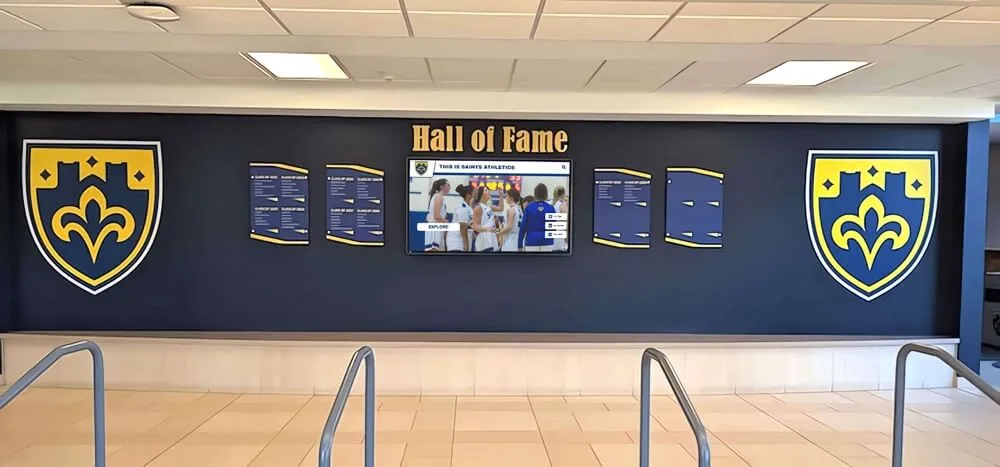
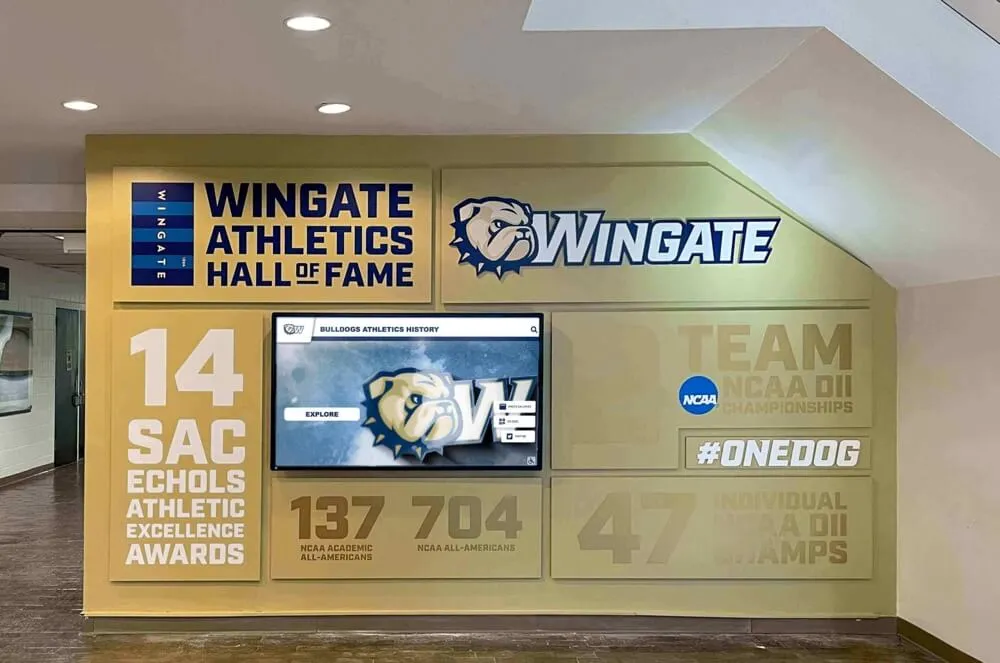
Permanent recognition displays in athletic facilities create lasting visibility for business sponsors
Creating Valuable Sponsor Benefits
Effective sponsorships provide businesses genuine marketing value beyond charitable goodwill:
Demographic Targeting and Market Access
Help sponsors reach their target audiences through family demographics attending athletic events, community visibility across multiple touchpoints, positive brand association with youth athletics, differentiation from competitors, and long-term community relationship building.
Activation Opportunities
Enable sponsors to engage directly with audiences through promotional booth space at events, sampling opportunities for products and services, sponsored activities or contests, hospitality areas for client entertainment, and exclusive sponsor events recognizing partnership.
Digital and Social Media Benefits
Extend sponsor visibility beyond physical events including website logo placement and links, social media sponsor features and tags, email newsletter recognition, mobile app advertisements when applicable, and digital content sponsorships.
Sponsors increasingly value digital exposure that extends reach beyond in-person event attendance, particularly for businesses serving broader geographic markets.
Sponsorship Sales and Relationship Management
Successful sponsorship programs require systematic cultivation and stewardship:
Prospecting and Proposal Development
Identify potential sponsors through businesses frequented by booster families, companies with community involvement histories, competitors of current sponsors, businesses seeking youth market exposure, and alumni-owned or operated enterprises.
Develop professional proposals including clear benefit descriptions, audience demographic data, previous event attendance numbers, competitor sponsor lists demonstrating credibility, and customization options for unique business needs.
Multi-Year Commitments and Renewal Management
Encourage sustained partnerships through multi-year sponsorship agreements ($5,000 annual commitment for three years), automatic renewal with rate protection, first refusal rights for sponsorship level upgrades, and relationship development beyond transactional engagement.
Long-term partnerships provide budget predictability for booster clubs while reducing annual sales workload. Sponsors appreciate stability and relationship depth developed across multiple seasons.
Learn about corporate sponsorship recognition that honors business partnerships while maintaining institutional standards.
Product Sales and Fundraising Campaigns
Strategic product fundraisers generate revenue while minimizing volunteer burden when structured properly.
Spirit Wear and Merchandise Sales
Team merchandise creates revenue while building program visibility and pride:
Online Spirit Wear Stores
Partner with apparel companies offering online stores where families order directly, company handles production and fulfillment, booster club receives profit percentage (typically 15-30%), no inventory investment required, and extended sales windows capturing year-round purchases.
Online stores eliminate inventory management, upfront capital requirements, and volunteer labor for order processing while enabling personalized items and extended size availability.
Event-Based Merchandise Sales
Create urgency through limited-availability items at select events including senior night commemorative apparel, championship celebration merchandise, special rivalry game items, and holiday-themed products.
Custom and Personalized Items
Higher margin products including personalized fan gear with player names/numbers, custom lawn signs celebrating athletes, car window decals and bumper stickers, commemorative bricks or pavers, and framed team photos or memorabilia.
Personalization increases perceived value enabling premium pricing that improves profit margins significantly.
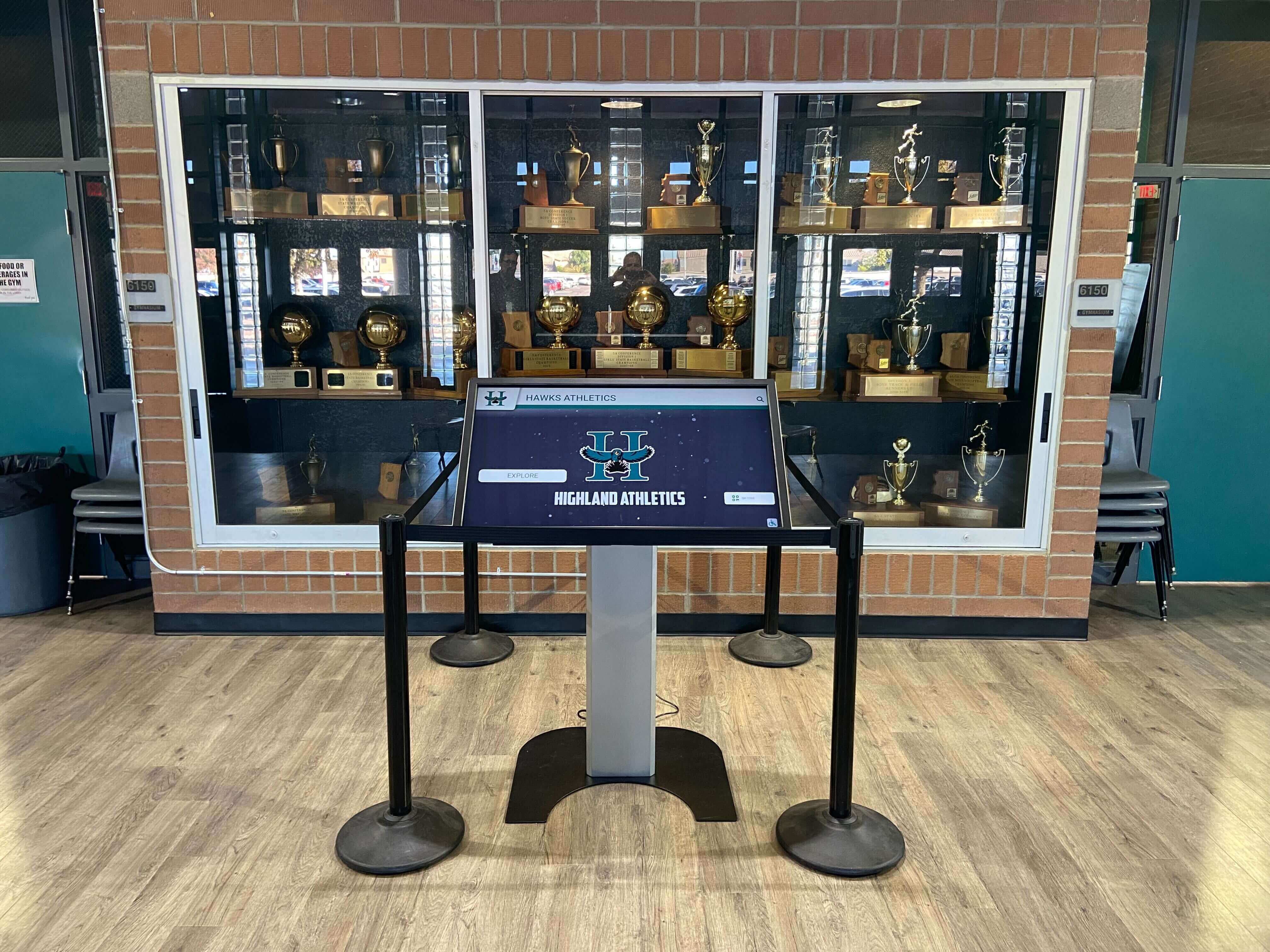
Merchandise sales complement recognition programs creating comprehensive support for athletic programs
Seasonal Product Fundraisers
Time-tested product sales remain effective when executed strategically:
High-Profit Food Sales
Popular food fundraisers including cookie dough ($6-12 profit per unit), frozen food and meal items ($8-15 profit per unit), gourmet popcorn or snacks ($5-10 profit per unit), and coffee or specialty beverages ($5-12 profit per unit).
Partner with established fundraising companies handling order processing, production, and delivery logistics while booster clubs focus on promotion and distribution.
Seasonal Merchandise
Holiday-aligned products including spring flower and plant sales, fall pumpkin patches or mums, holiday wreath and decoration sales, and seasonal gift items.
Discount Card Programs
Community business discount cards ($10-20 purchase price) featuring 10-30 local business offers, 12-month validity period, 50-80% profit margins, and minimal ongoing administration after initial business recruitment.
Discount cards work best in communities with strong local business concentration and family willingness to modify shopping patterns to support programs.
Direct Ask and Pledge Campaigns
Sometimes straightforward contribution requests generate more revenue than product sales:
Annual Direct Appeal Letters
Professional fundraising communications including compelling program need descriptions, specific funding goal articulations, multiple giving level suggestions, easy online donation options, and business reply envelope inclusion for check contributions.
Clear case statements explaining what contributions fund—new equipment, facility improvements, travel expenses—increase giving likelihood compared to generic fundraising requests.
Peer-to-Peer Fundraising Campaigns
Leverage family networks through athlete-led fundraising where each player/family seeks support from personal networks, social media fundraising campaigns, friendly competition between teams or grade levels, and recognition for top fundraising participants.
Digital fundraising platforms like GoFundMe, Snap! Raise, or 99Pledges simplify peer-to-peer campaigns while providing real-time progress tracking that creates momentum and urgency.
Discover how recognition programs transform one-time givers into sustained supporters.
Digital Fundraising and Online Engagement
Modern technology enables fundraising approaches that dramatically reduce volunteer workload while expanding donor reach.
Crowdfunding and Online Giving Platforms
Digital platforms simplify contribution processes while reaching broader audiences:
Integrated Online Donation Systems
Professional giving platforms including mobile-optimized donation pages, recurring giving options for sustained support, tribute and memorial gift designations, employer matching gift integration, instant tax receipt automation, and campaign progress visualization.
Organizations implementing robust online giving report 30-50% increases in average gift sizes compared to cash-only approaches, as donors give more generously when using credit cards rather than writing checks.
Social Media Fundraising
Leverage social platforms through Facebook fundraiser creation, Instagram story donation links, peer-to-peer sharing campaigns, athlete and family social network activation, and viral challenge campaigns when appropriate.
Social fundraising works particularly well for younger donor demographics who engage more naturally with digital giving than traditional approaches.
Text-to-Give Campaigns
Mobile donation options including simple keyword text messaging, instant secure donation processing, integration with event announcements, recurring gift setup via text, and real-time acknowledgment.
Text-giving enables impulse donations during emotional moments like championship victories or senior recognition ceremonies when donors feel most connected to programs.
Email Marketing and Digital Communication
Systematic digital outreach cultivates donor relationships while promoting fundraising:
Strategic Email Campaign Calendar
Year-round communication including season kickoff fundraising appeals, mid-season progress updates, championship or playoff donation drives, end-of-season impact reports, and off-season cultivation messages.
Segmented Messaging
Targeted communications for different audiences including current parent communications, alumni athlete outreach, business sponsor stewardship, major donor personalization, and lapsed donor reengagement.
Segmentation enables relevant messaging that resonates with specific audiences rather than generic appeals attempting to speak to everyone.
Compelling Impact Storytelling
Effective fundraising emails featuring athlete achievement stories, specific need articulations (new uniforms cost $18,000), concrete impact descriptions showing what past gifts accomplished, visual content including photos and videos, and clear single calls-to-action.
Storytelling that connects donations to tangible outcomes significantly outperforms generic fundraising requests focusing solely on financial needs.
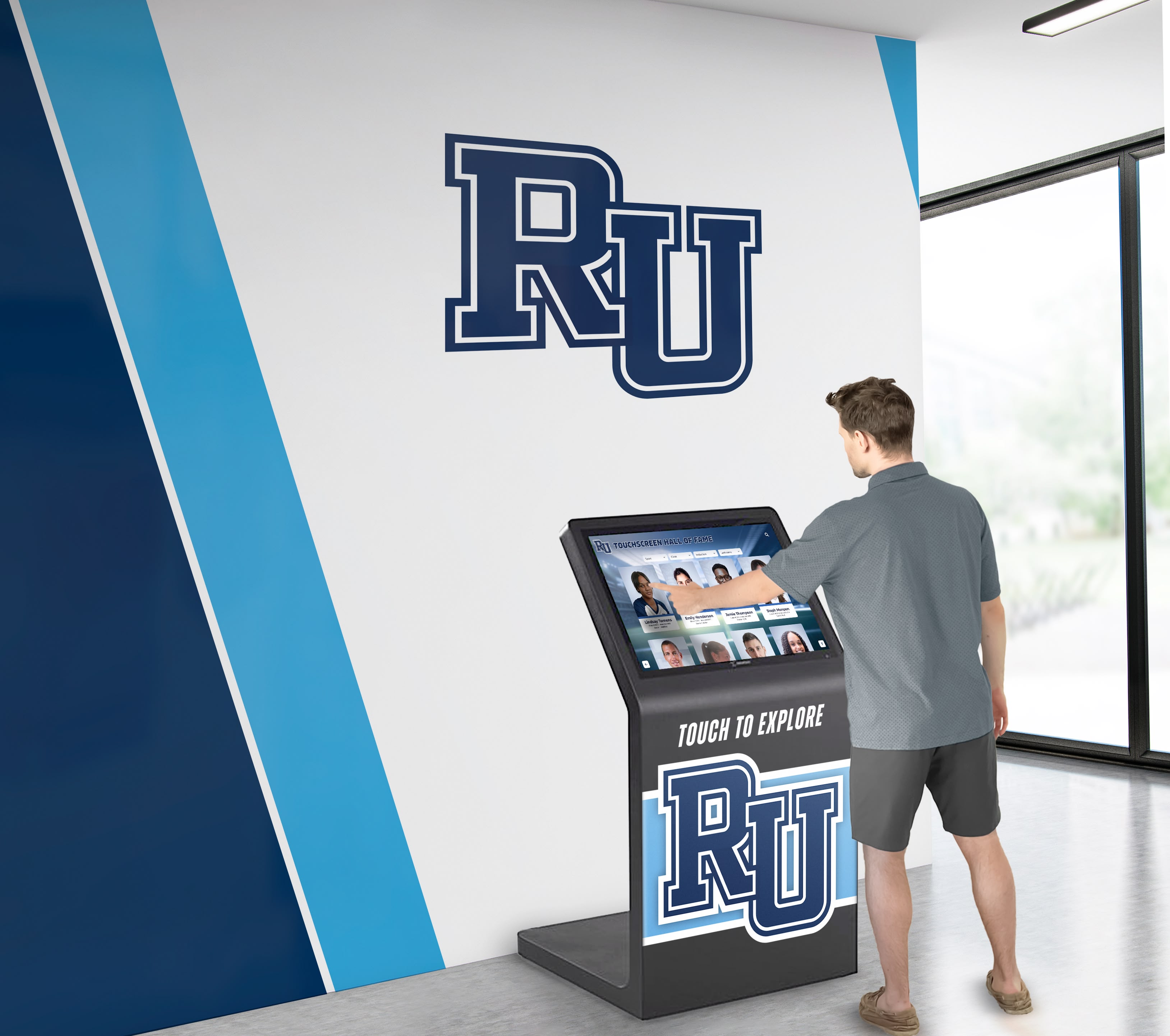
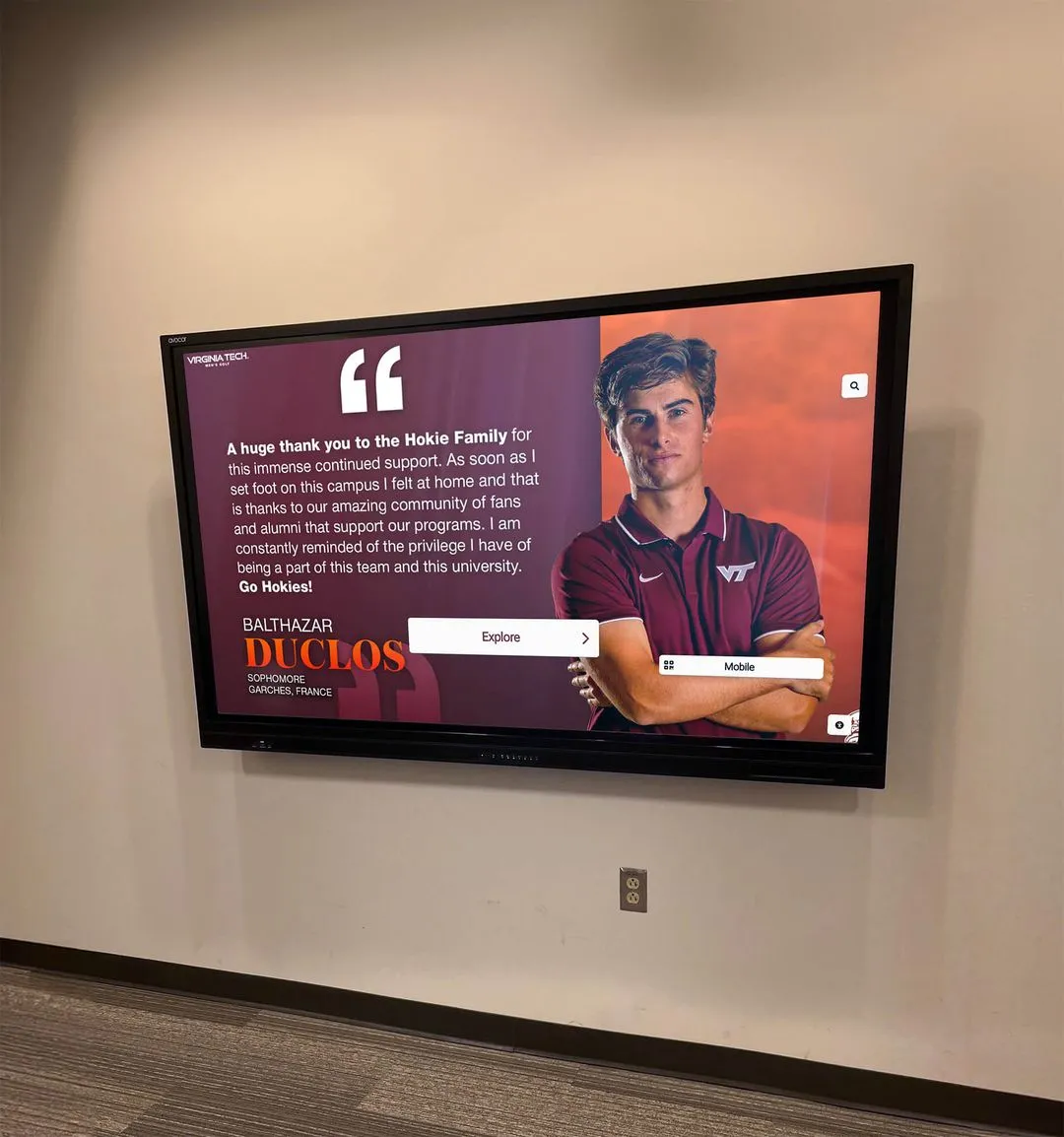
Digital systems enable year-round engagement connecting supporters to programs they fund
Virtual Events and Remote Participation
Pandemic-era innovations remain valuable fundraising approaches:
Virtual Auctions and Raffles
Online fundraising including virtual silent auction platforms, online raffle ticket sales, live-stream auction events, virtual wine tastings or cooking classes, and remote fitness challenges with pledges.
Virtual formats enable participation from distant alumni and supporters unable to attend in-person events while reducing venue and catering costs that consume event revenue.
Digital Sponsorship Opportunities
New recognition formats including virtual program book advertisements, social media sponsor feature packages, website banner placements, podcast or video content sponsorships, and email newsletter sponsor recognition.
Digital sponsorships appeal to businesses serving broader geographic markets beyond local communities, expanding potential sponsor pools significantly.
Concession Operations and Game Day Revenue
Optimize traditional revenue sources through strategic management:
Efficient Concession Stand Operations
Well-managed concessions generate reliable revenue with proper planning:
High-Margin Product Selection
Focus inventory on items with 60-80% profit margins including fountain beverages and bottled water, popcorn and bulk snacks, candy and packaged sweets, nachos and simple hot foods, and coffee and hot chocolate in cold weather.
Avoid complex food items requiring extensive preparation, perishable inventory, or sophisticated equipment that increases costs and volunteer training requirements.
Volunteer Scheduling and Training
Sustainable operations through defined shift structures (2-3 hours maximum), multiple volunteer roles preventing bottlenecks, simple procedures requiring minimal training, backup volunteers for busy events, and recognition programs honoring concession workers.
Volunteer burnout remains the primary threat to concession sustainability. Protecting volunteers through reasonable expectations and proper appreciation ensures reliable operations.
Technology Integration
Modern systems including point-of-sale systems tracking inventory and sales, mobile payment acceptance, inventory management alerting when supplies run low, and sales reporting informing strategic decisions.
Technology investments ($1,000-$5,000) typically pay for themselves within one season through improved efficiency, reduced theft, and strategic inventory optimization.
Parking and Facility Revenue
Additional game day income streams including parking fees at high-demand events ($5-10 per vehicle), program sales combining team information with advertisements ($5 each), 50/50 raffle operations, promotional item sales (foam fingers, pompoms), and facility rentals to community organizations.
Learn about end-of-season celebrations that recognize achievements while creating fundraising opportunities.
Donor Recognition and Stewardship: Building Sustained Support
Strategic recognition transforms one-time contributors into long-term supporters while inspiring additional giving.
Creating Tiered Recognition Programs
Systematic acknowledgment structures honor diverse giving levels:
Recognition Giving Levels
Establish clear tiers including supporter level ($100-$499), bronze level ($500-$999), silver level ($1,000-$2,499), gold level ($2,500-$4,999), platinum level ($5,000-$9,999), and legacy level ($10,000+).
Visible level distinctions create aspirational giving where current supporters increase contributions to reach higher recognition categories, particularly in close-knit communities where donors observe peer giving patterns.
Recognition Benefits by Level
Differentiated acknowledgment including donor wall listing with level designation, recognition in programs and publications, social media acknowledgment, special event invitations, commemorative items or certificates, and naming opportunities for major contributors.
Volunteer and In-Kind Contribution Recognition
Acknowledge non-financial support through volunteer hour tracking and valuation ($25-30/hour for recognition purposes), in-kind donation recognition, combined giving credit (financial gifts plus volunteer service), and special volunteer appreciation events.
Comprehensive recognition acknowledging all contribution types—not just financial gifts—builds inclusive cultures where diverse support forms receive appropriate celebration.
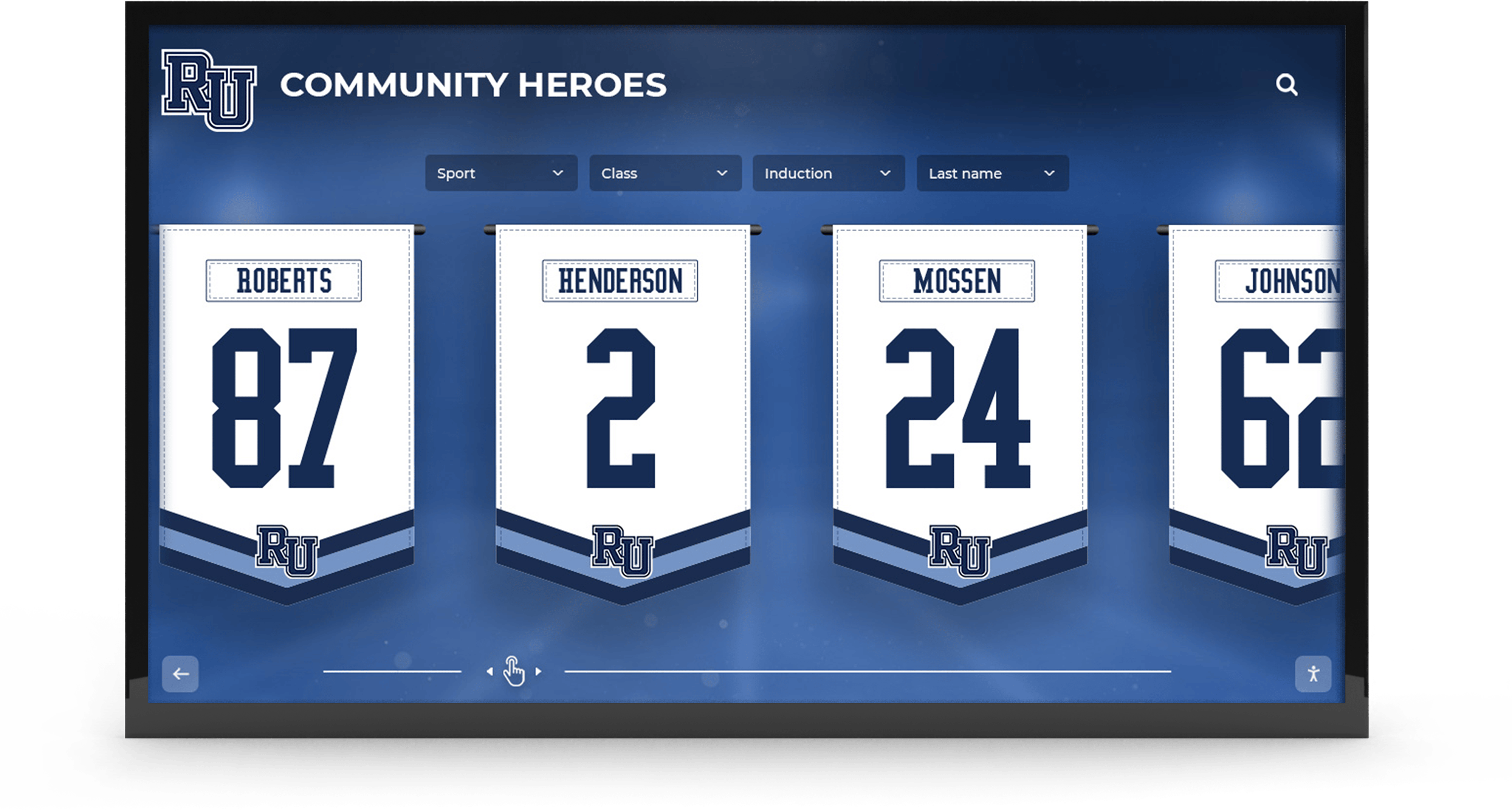
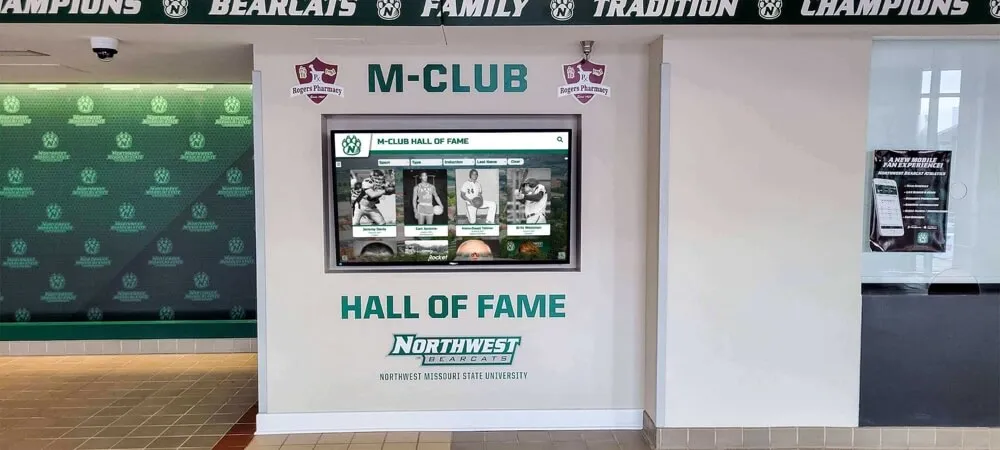
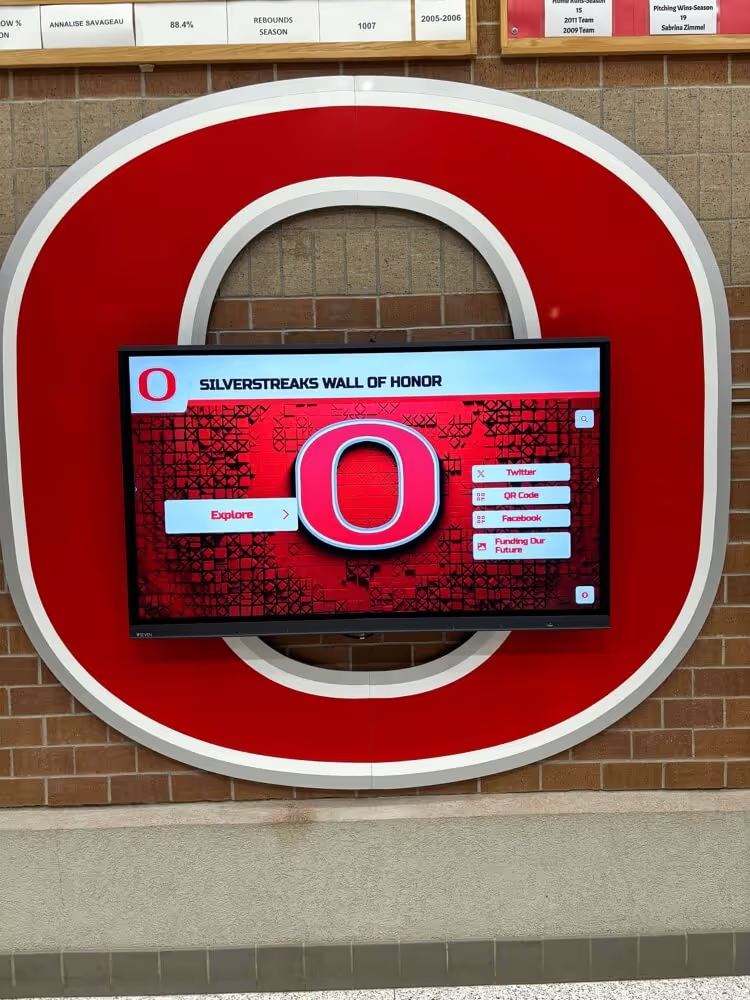
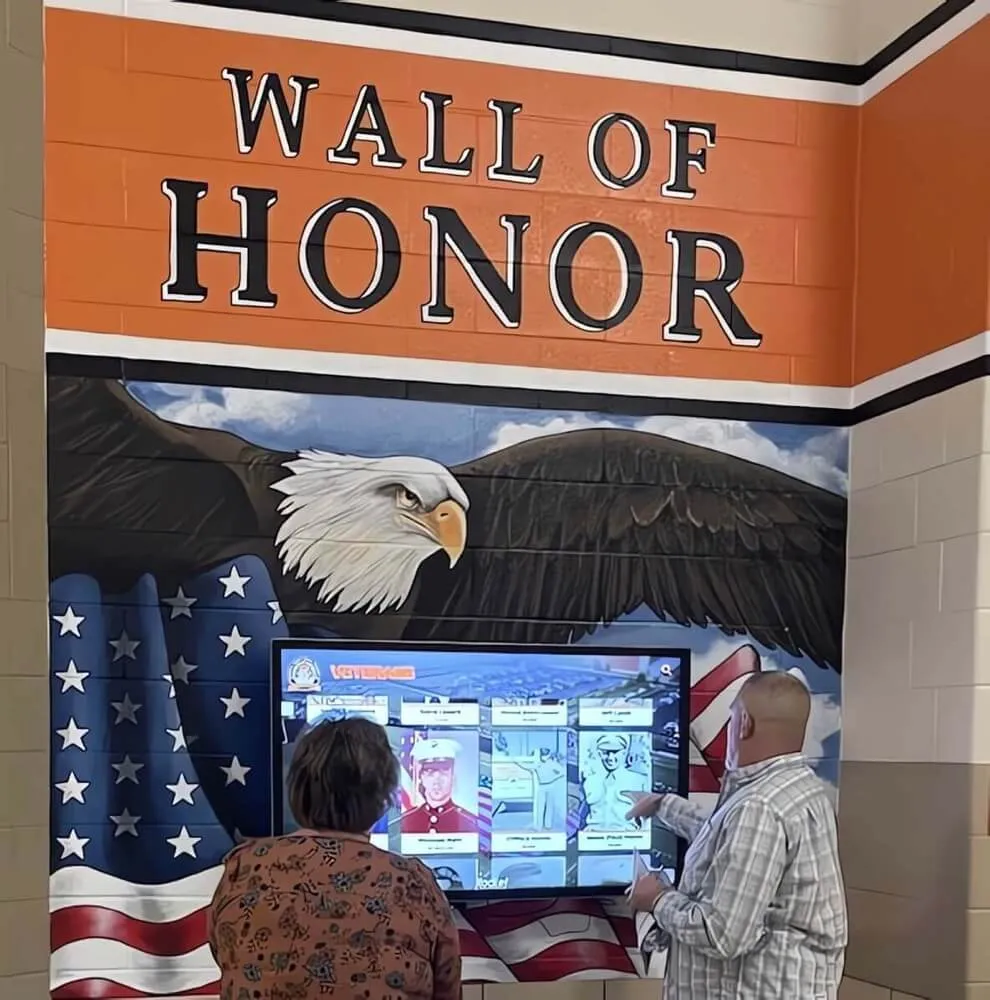
Visible donor recognition inspires continued support while celebrating community commitment to athletic programs
Digital Recognition Displays and Donor Walls
Modern recognition systems overcome traditional limitations:
Interactive Digital Donor Walls
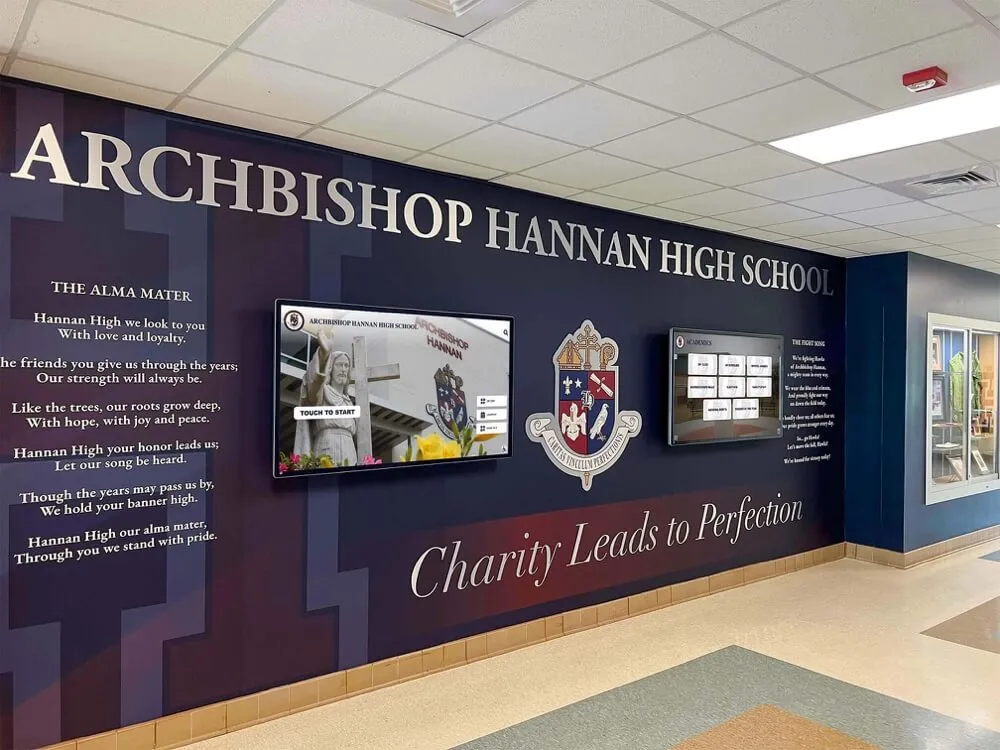
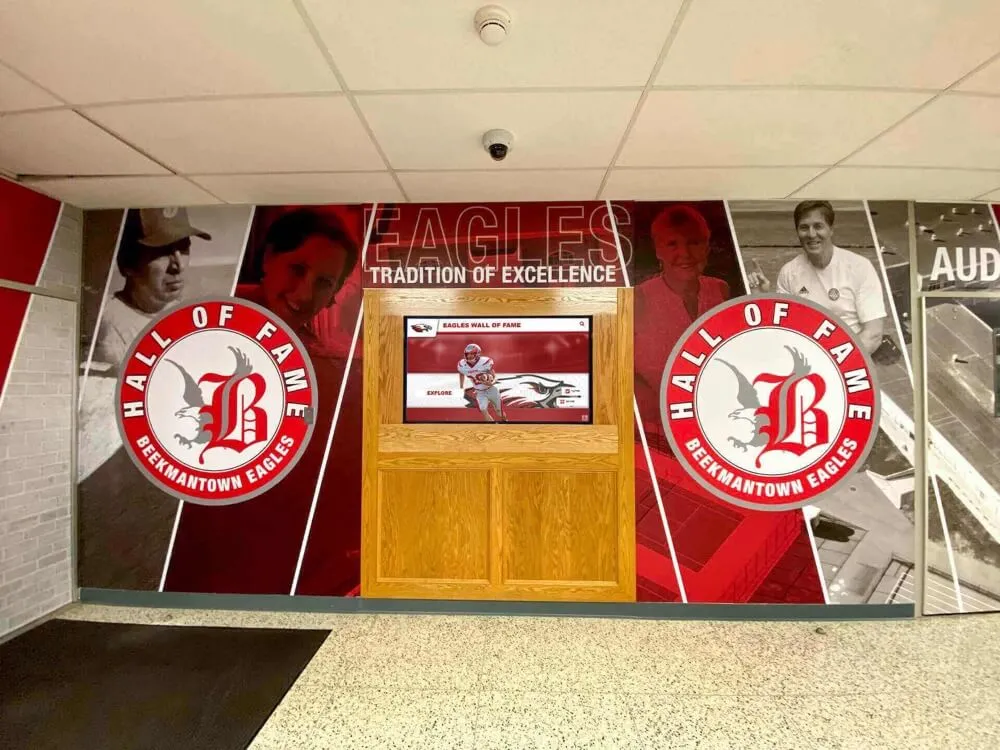
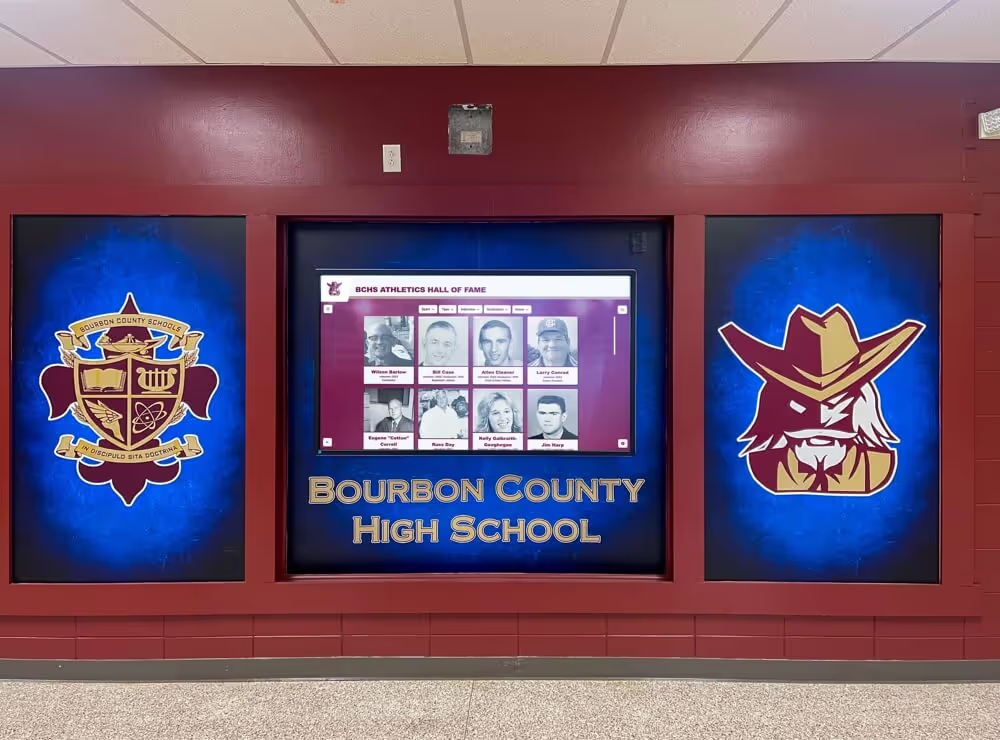
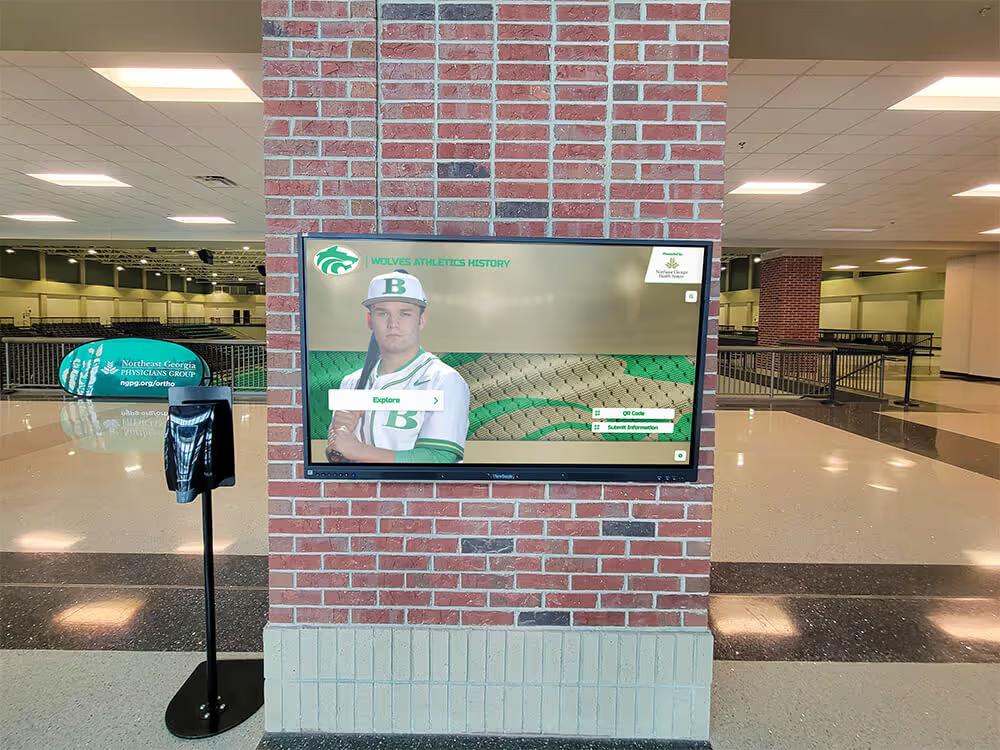
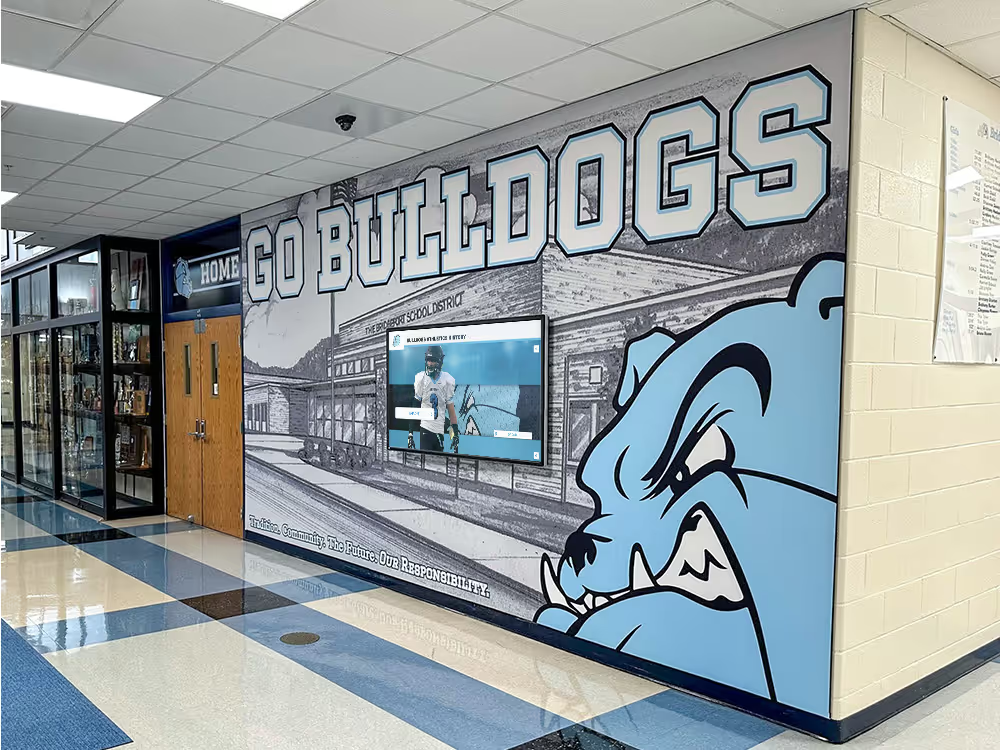
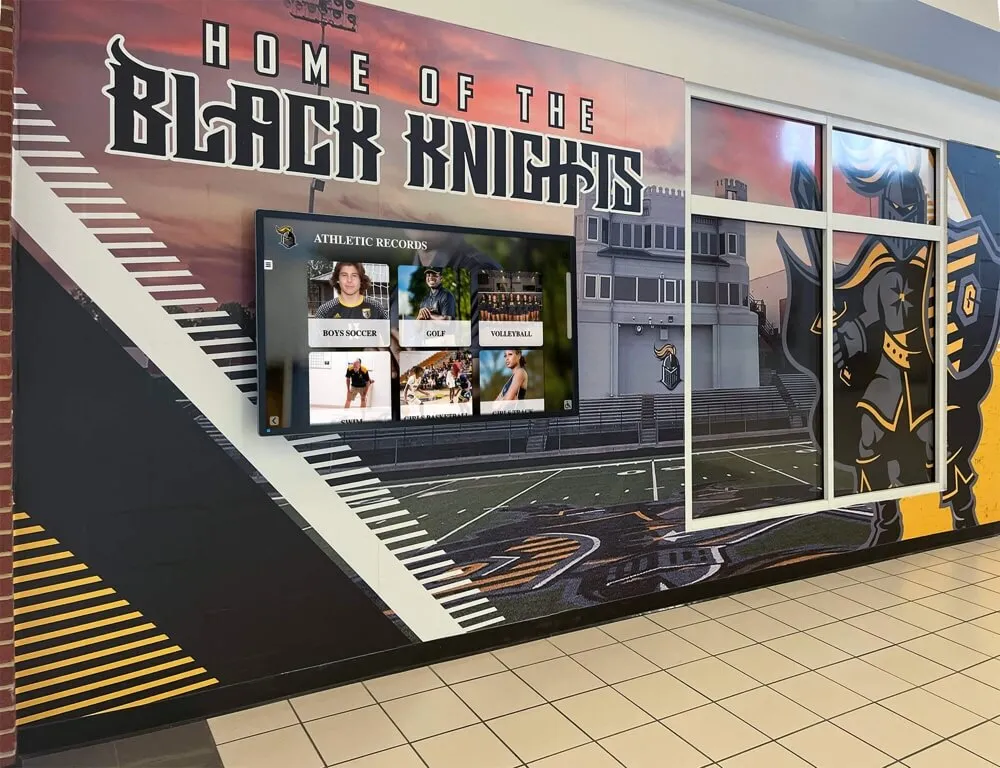
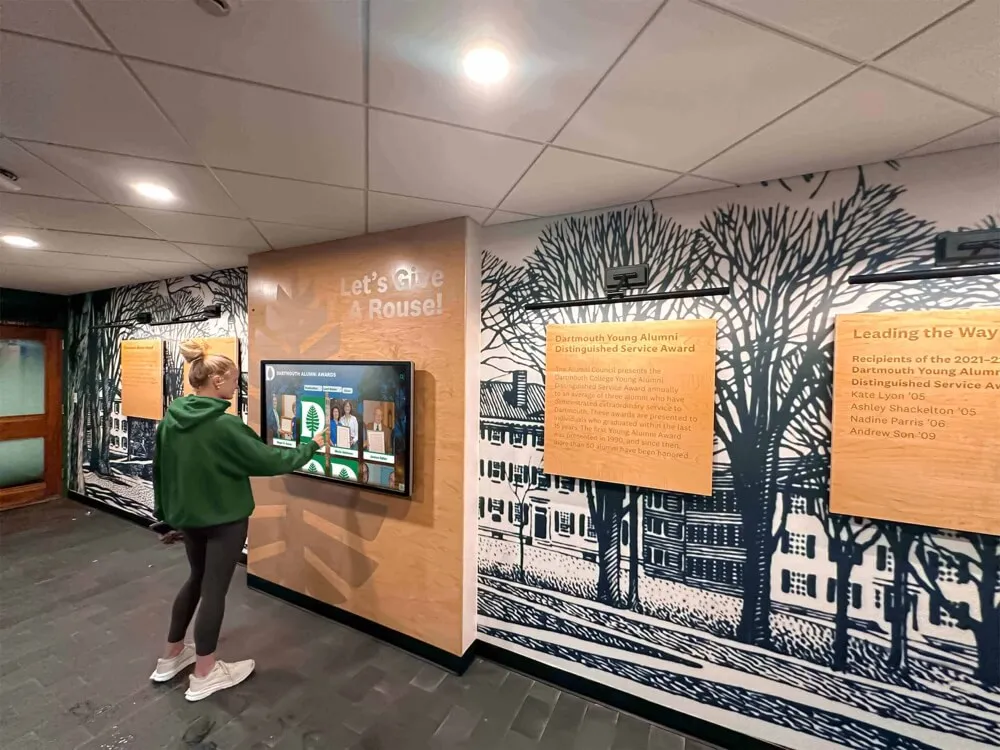
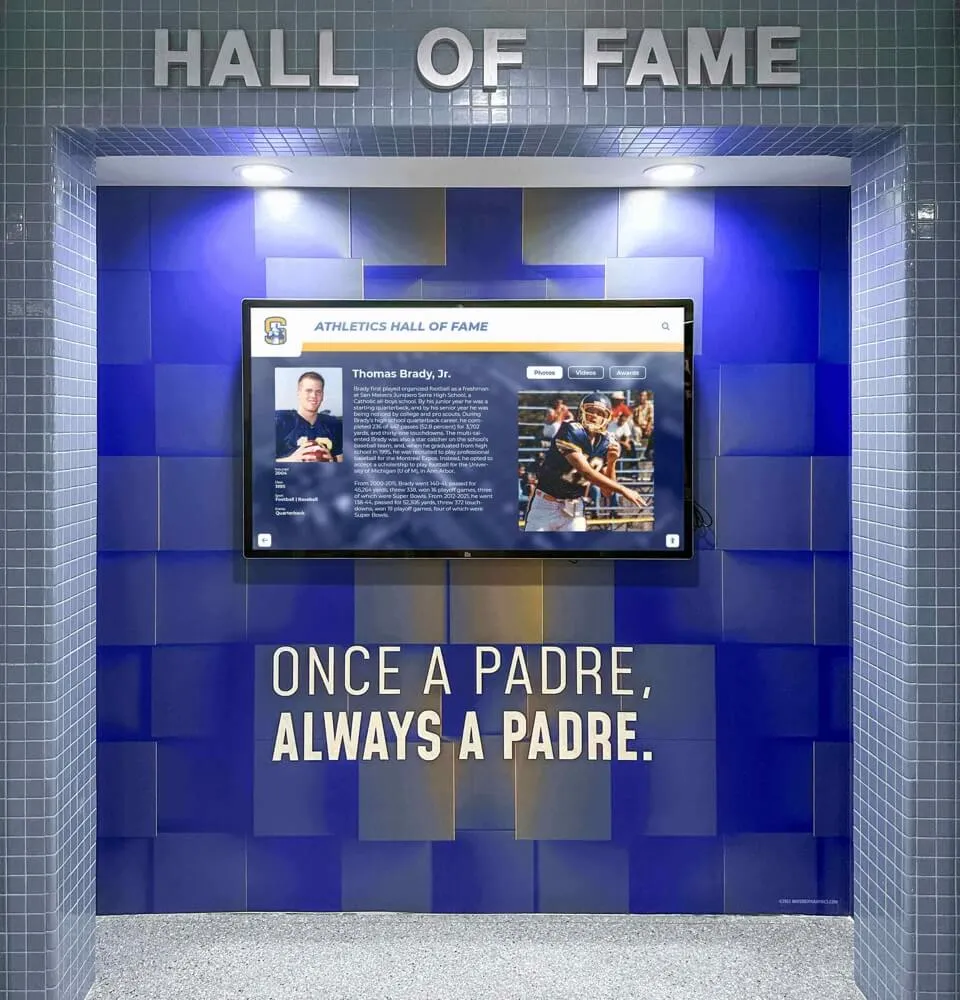
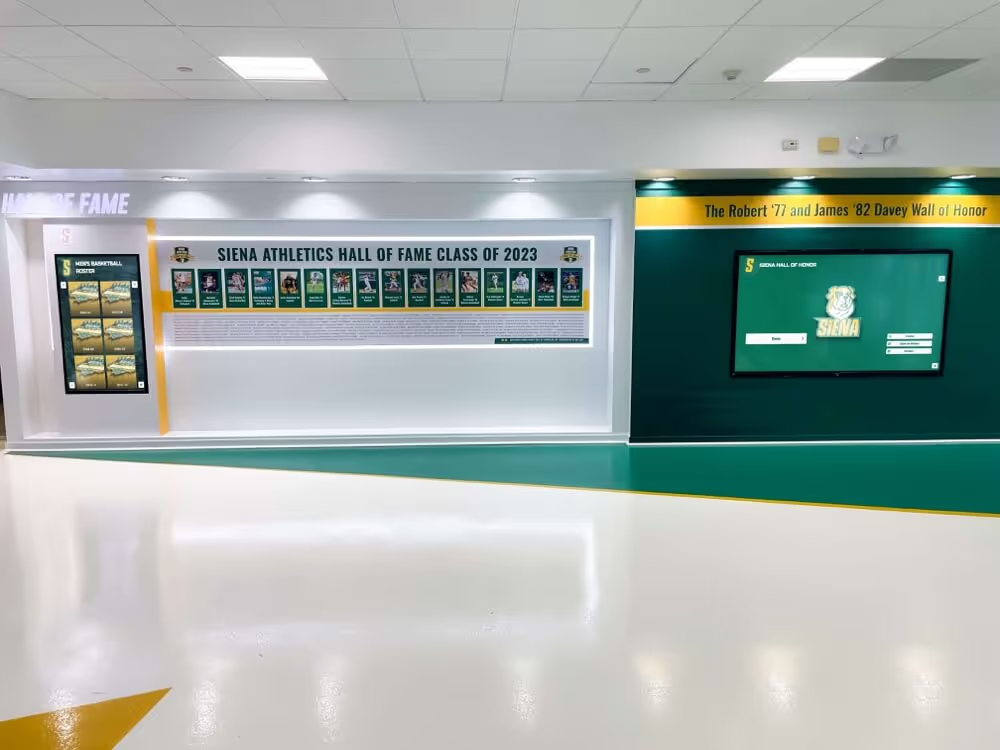
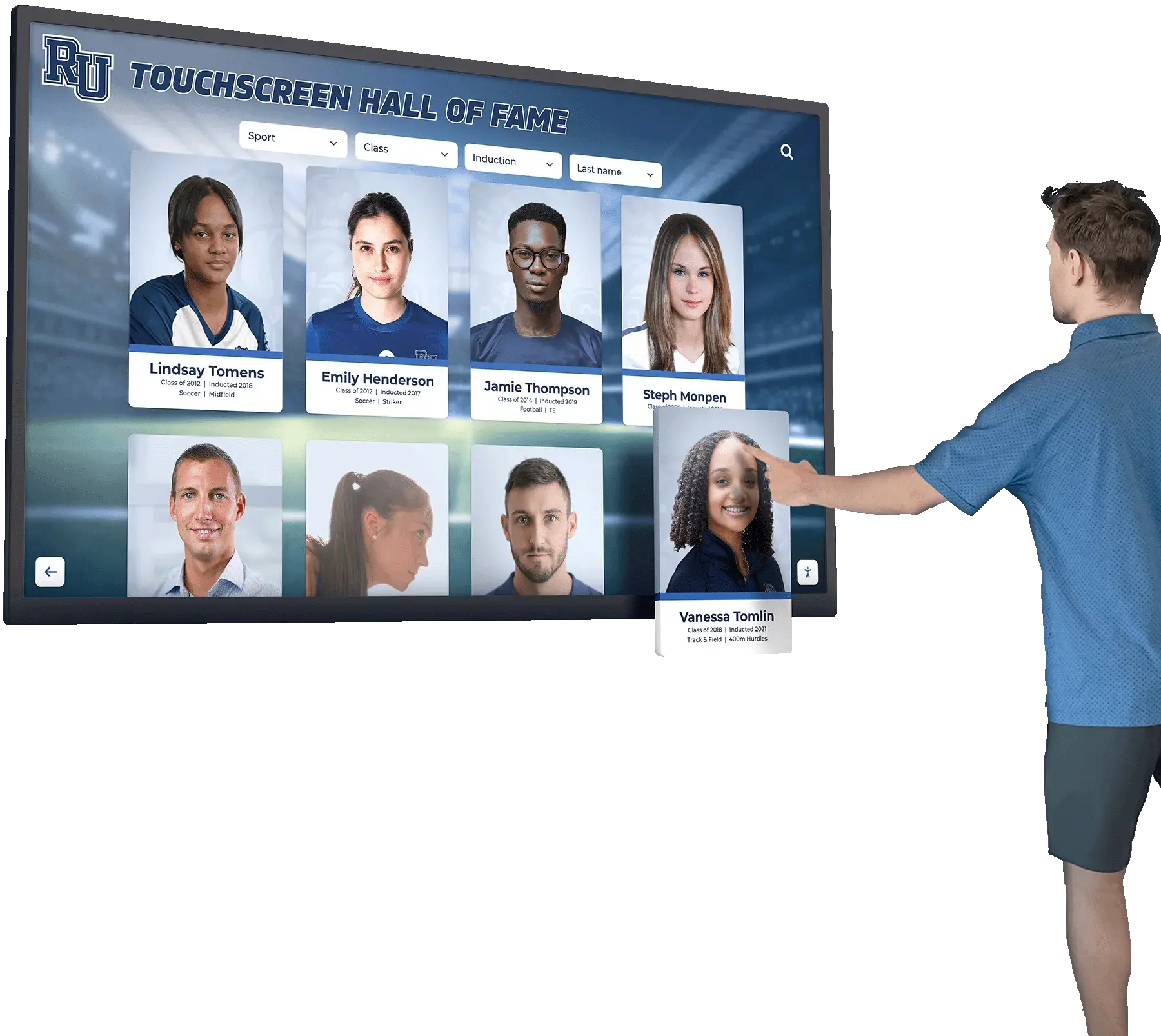
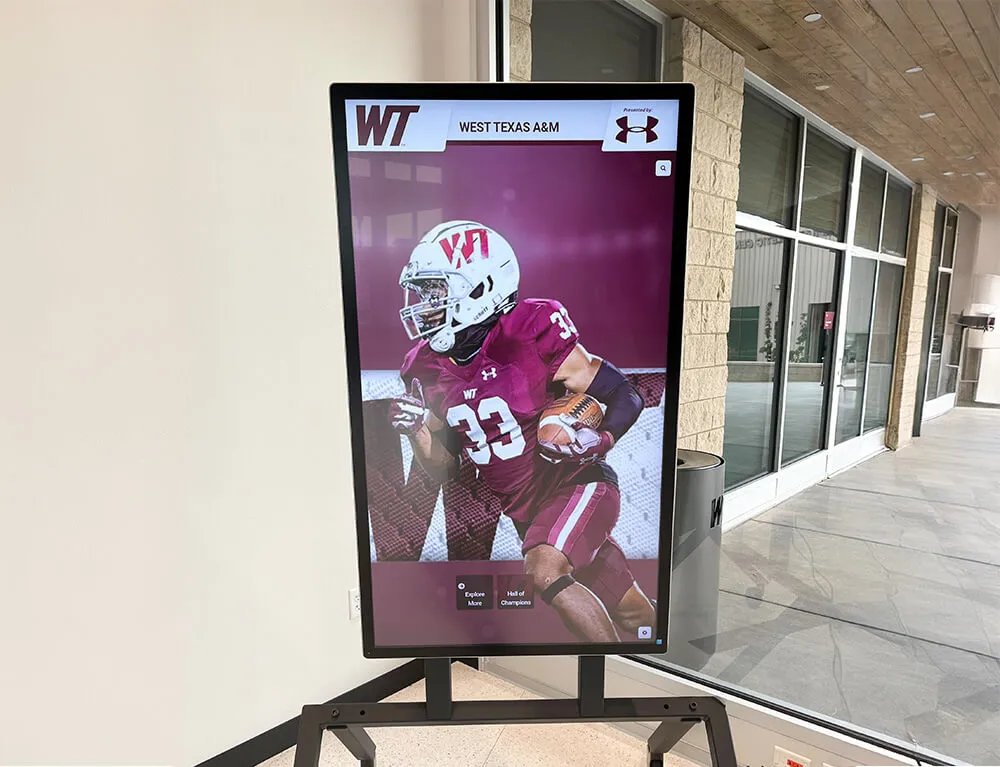
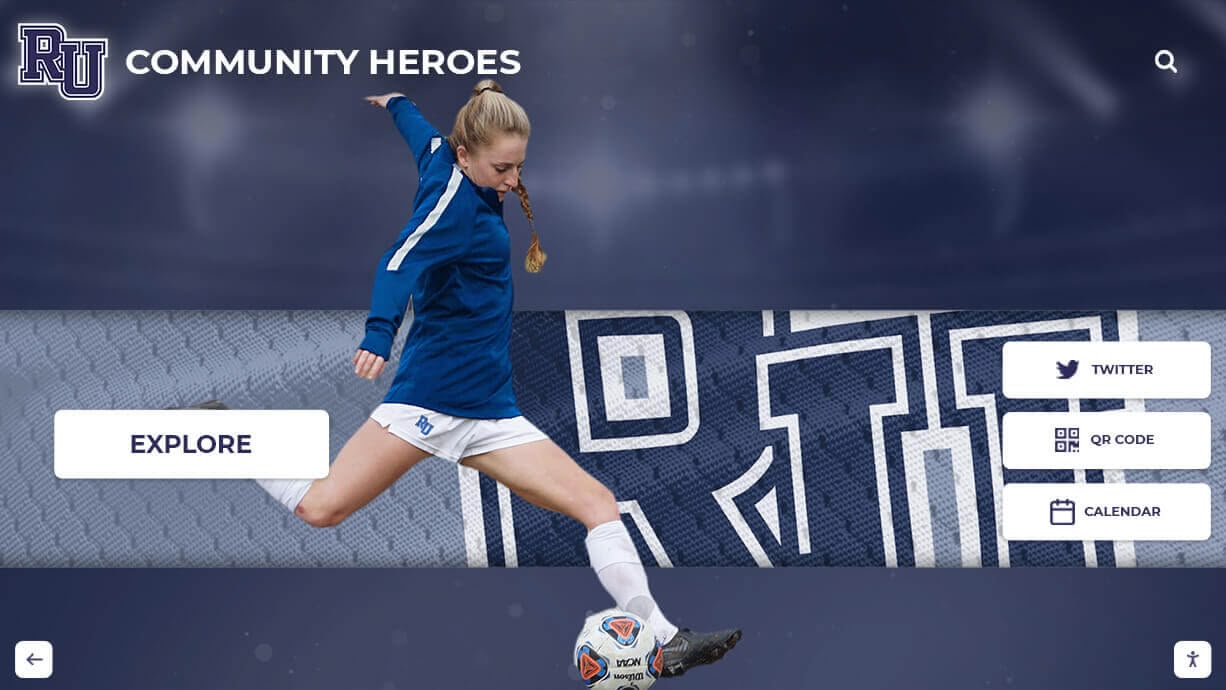
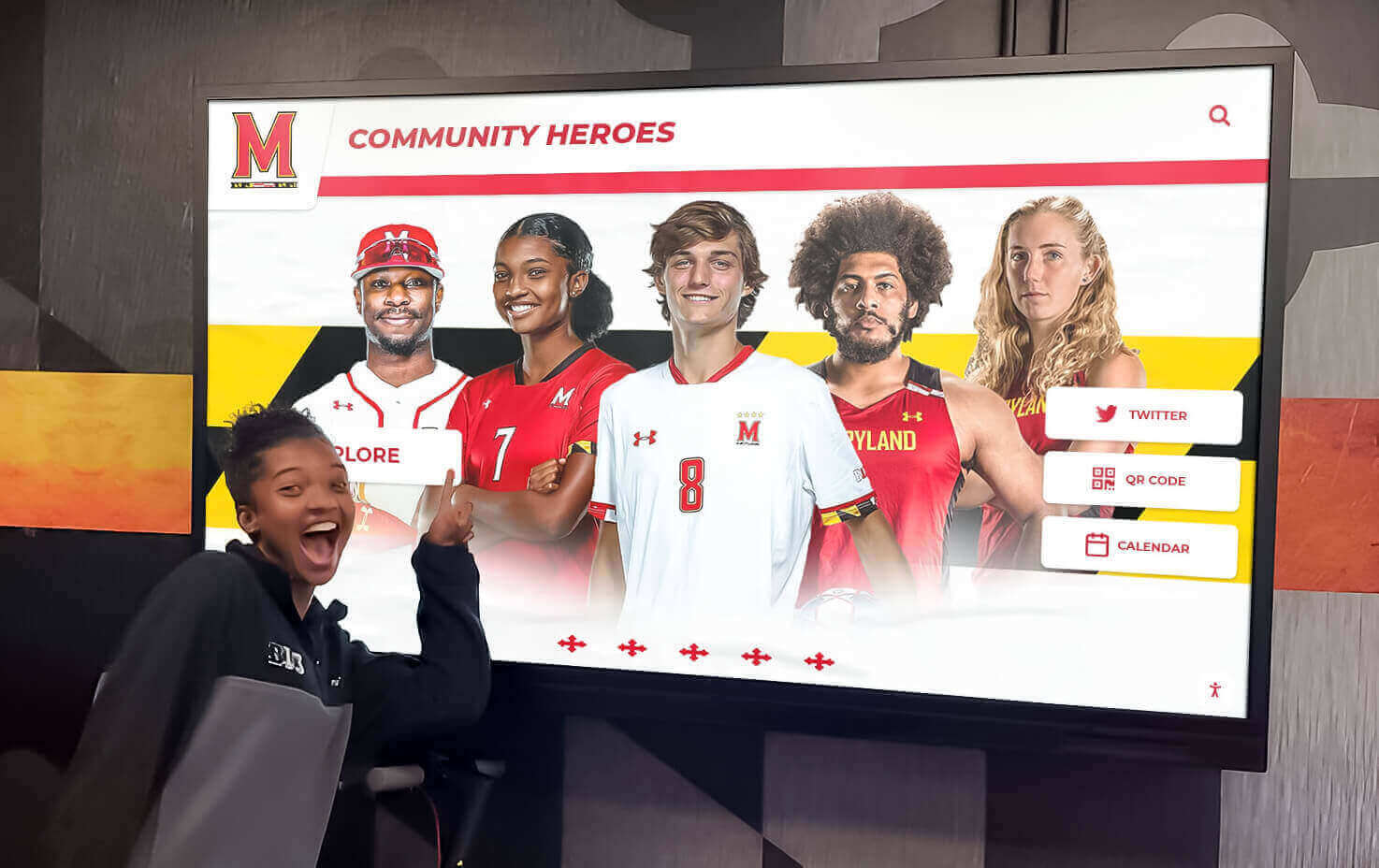
Comprehensive recognition solutions including unlimited donor capacity without space constraints, real-time updates adding new supporters immediately, multimedia content featuring donor stories, searchable displays enabling easy donor discovery, campaign progress visualization, and professional appearance matching facility quality.
Solutions like Rocket Alumni Solutions provide digital recognition platforms specifically designed for athletic programs and booster clubs, enabling comprehensive donor acknowledgment impossible with traditional plaques limited by physical space.
Digital systems typically achieve cost parity with traditional donor walls within 3-5 years while providing unlimited capacity, effortless updates, and enhanced functionality that strengthens donor relationships.
Hybrid Recognition Approaches
Combine traditional and digital elements through permanent plaques for major donors ($5,000+ gifts), digital displays accommodating all additional supporters, naming opportunities for facilities or spaces, and commemorative bricks or pavers.
Hybrid approaches honor major donors with premium physical recognition their transformational gifts deserve while ensuring comprehensive acknowledgment of every contributor through unlimited digital capacity.
Learn about comprehensive digital recognition solutions designed specifically for school athletic programs.
Ongoing Donor Stewardship and Communication
Recognition extends beyond initial acknowledgment to sustained engagement:
Regular Impact Communication
Keep donors connected through quarterly impact updates demonstrating what contributions accomplished, season highlight communications celebrating achievements, annual reports showcasing financial stewardship, success stories about individual athletes, and facility improvement documentation.
Donors who see tangible evidence of their contributions’ impact give again at higher rates and larger amounts than those receiving only generic thank-you messages.
Personalized Major Donor Stewardship
Enhanced engagement for significant supporters including personal thank-you calls from coaches or athletic directors, facility tours showing donor-funded improvements, special recognition at competitions, involvement in program planning or advisory roles, and regular personal updates beyond mass communications.
Major donors investing $5,000+ annually or cumulatively deserve personalized attention proportionate to their extraordinary commitment to program success.
Donor Retention Strategies
Build sustained relationships through recurring giving program establishment ($25-100 monthly), multi-year pledge options, legacy giving and estate planning conversations, donor renewal campaigns before support lapses, and reactivation outreach for lapsed contributors.
According to fundraising research, retaining existing donors costs 5-7 times less than acquiring new supporters. Recognition programs that improve donor retention by even 10-20% create substantial long-term revenue advantages.
Explore athletic program recognition that integrates donor celebration with achievement showcasing.
Maximizing Fundraising Effectiveness: Strategic Best Practices
Successful booster clubs implement systematic approaches across all fundraising activities.
Diversifying Revenue Streams
Reduce financial vulnerability through varied income sources:
Balanced Fundraising Portfolio
Effective booster clubs typically generate revenue through multiple channels including annual individual giving (30-40% of total), corporate sponsorships (25-35%), special events (20-30%), concessions and game day revenue (10-20%), and product sales and other sources (5-10%).
Diversification prevents overreliance on single revenue sources that might fail or decline. When multiple fundraising approaches collectively support budgets, individual program variations create less overall volatility.
Multi-Year Strategic Planning
Develop 3-5 year fundraising roadmaps including revenue growth targets and milestones, capital campaign planning for major facility needs, sponsor acquisition and renewal schedules, event calendar development preventing overlap, and recognition program enhancement.
Strategic planning prevents reactive fundraising where booster clubs perpetually scramble to meet immediate needs without building sustainable long-term systems.
Reducing Volunteer Burnout
Sustainable operations require protecting volunteer capacity:
Work-Efficient Fundraising Selection
Prioritize approaches offering favorable return on volunteer hours including digital giving requiring minimal ongoing work, multi-year sponsorships reducing annual sales effort, outsourced product fundraisers handling logistics, and streamlined event formats minimizing complexity.
Calculate fundraising efficiency through dollars raised per volunteer hour invested, not just total revenue. A golf tournament generating $40,000 but requiring 500 volunteer hours ($80/hour) may be less efficient than sponsorship programs generating $30,000 with 100 volunteer hours ($300/hour).
Clear Role Definition and Training
Prevent frustration through specific position descriptions, reasonable time commitment expectations, comprehensive training for all roles, backup volunteers preventing single points of failure, and regular volunteer appreciation.
Technology and Automation
Leverage tools reducing manual work including online donation platforms, email marketing automation, social media scheduling tools, inventory and sales tracking, and cloud-based content management.
Technology investments that save dozens of volunteer hours per month justify costs through volunteer retention and burnout prevention that ensures operational sustainability.
Sustainable fundraising protects volunteer capacity while building community engagement
Measuring and Optimizing Results
Data-driven decisions improve fundraising performance:
Key Performance Metrics
Track critical indicators including total revenue by source category, average gift size trends, donor retention rates year-over-year, cost per dollar raised by activity, volunteer hours invested by program, new donor acquisition numbers, and sponsorship renewal rates.
Regular metric review enables identifying underperforming programs requiring adjustment or elimination while doubling down on most effective approaches.
Donor Feedback Collection
Systematic input gathering through post-event surveys, donor exit interviews when support lapses, periodic focus groups with major supporters, informal conversations at athletic events, and suggestion systems welcoming ideas.
Donors often provide valuable insights about recognition preferences, communication frequency, and new fundraising opportunities that internal perspectives miss.
Continuous Improvement Culture
Foster learning and adaptation through post-event debriefings identifying lessons, experimentation with new approaches on small scale, benchmarking against peer programs, professional development for booster leadership, and documentation of best practices and procedures.
Successful booster clubs treat fundraising as evolving discipline requiring constant learning rather than static formula repeated indefinitely.
Conclusion: Building Sustainable Booster Club Fundraising
Effective booster club fundraising extends far beyond executing individual campaigns or events—it requires building comprehensive systems that generate reliable revenue, honor supporters appropriately, minimize volunteer burnout, and create lasting community engagement with athletic programs. When booster clubs invest thoughtful planning, strategic diversification, proper recognition, and continuous improvement in fundraising approaches, they create sustainable funding ensuring programs provide excellent experiences for student-athletes year after year.
The proven strategies explored throughout this guide provide frameworks for fundraising that balances multiple objectives including generating sufficient revenue meeting program needs, building diverse income streams reducing vulnerability, protecting volunteer capacity ensuring sustainability, engaging broader communities beyond current parents, recognizing supporters inspiring continued giving, and demonstrating tangible impact connecting contributions to outcomes.
Strategic Implementation Priorities
Organizations seeking fundraising improvements should begin with current state assessment identifying strengths and gaps, diversification planning reducing overreliance on single sources, recognition program enhancement strengthening donor relationships, volunteer workload analysis preventing burnout, technology integration reducing manual effort, and measurement systems enabling data-driven decisions.
The Recognition-Fundraising Connection
Strategic donor recognition directly improves fundraising outcomes through higher retention rates among recognized supporters, increased giving levels from acknowledged contributors, peer inspiration as community members see visible recognition, volunteer recruitment as appreciation demonstrates value placed on service, and enhanced reputation attracting new supporters.
Booster clubs investing in comprehensive recognition—whether through digital donor walls like those provided by Rocket Alumni Solutions or hybrid approaches combining physical and digital elements—consistently report improved fundraising results exceeding recognition program costs within 2-3 years.
Building Long-Term Success
The most successful booster clubs view fundraising as relationship building rather than transactional requests. They create compelling giving opportunities, celebrate supporters visibly and meaningfully, demonstrate concrete impact, communicate regularly about programs they fund, and build communities where supporting student-athletes feels rewarding and personally fulfilling rather than obligatory.
Your student-athletes deserve programs providing excellent competitive experiences, proper equipment, skilled coaching, necessary travel, and quality facilities. Sustainable fundraising makes those experiences possible while building community pride in athletic excellence that extends far beyond individual seasons or student enrollments. With strategic planning, diversified approaches, appropriate technology, and genuine commitment to supporter relationships, your booster club can create fundraising systems ensuring long-term program success.
Ready to enhance your booster club fundraising through strategic recognition that inspires sustained community support? Discover how digital recognition solutions transform donor appreciation from simple acknowledgment to powerful relationship-building tools that strengthen fundraising outcomes while celebrating the community commitment making athletic programs possible.