A booster club gift acceptance policy defines which contributions the organization will accept, what conditions govern each gift category, and how accepted gifts are documented, stored, and recognized. Athletic directors, hall-of-fame committees, and archives staff encounter the same pattern repeatedly: the most complicated donor situations arise not when someone offers money but when someone offers a trophy case full of artifacts, a piece of historic equipment, a vintage record board, or a recognition commitment attached to an agreement that predates current leadership by a decade.
Accepting a gift is not simply saying yes. It is accepting a stewardship obligation—storage, maintenance, display, and recognition requirements that follow the gift indefinitely into the organization’s care. Programs without a written gift acceptance policy make ad-hoc decisions that create inconsistent recognition commitments, undocumented archive obligations, and display arrangements that survive officer transitions only through institutional memory. This guide covers the four main gift categories booster clubs encounter, the acceptance checklist that protects the organization at the moment of decision, and the documentation practices that fulfill whatever commitments acceptance creates.
This guide is for informational purposes only and does not constitute legal, accounting, compliance, tax, or conservation advice. Consult a licensed CPA, attorney, or qualified conservation professional for guidance specific to your organization’s structure, tax-exempt status, jurisdiction, and the specific artifacts or materials under consideration.

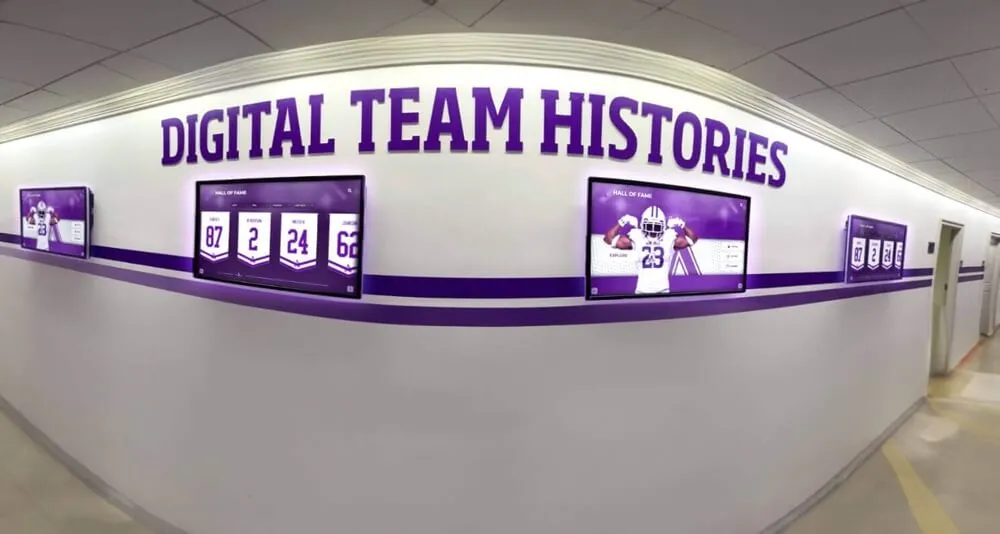
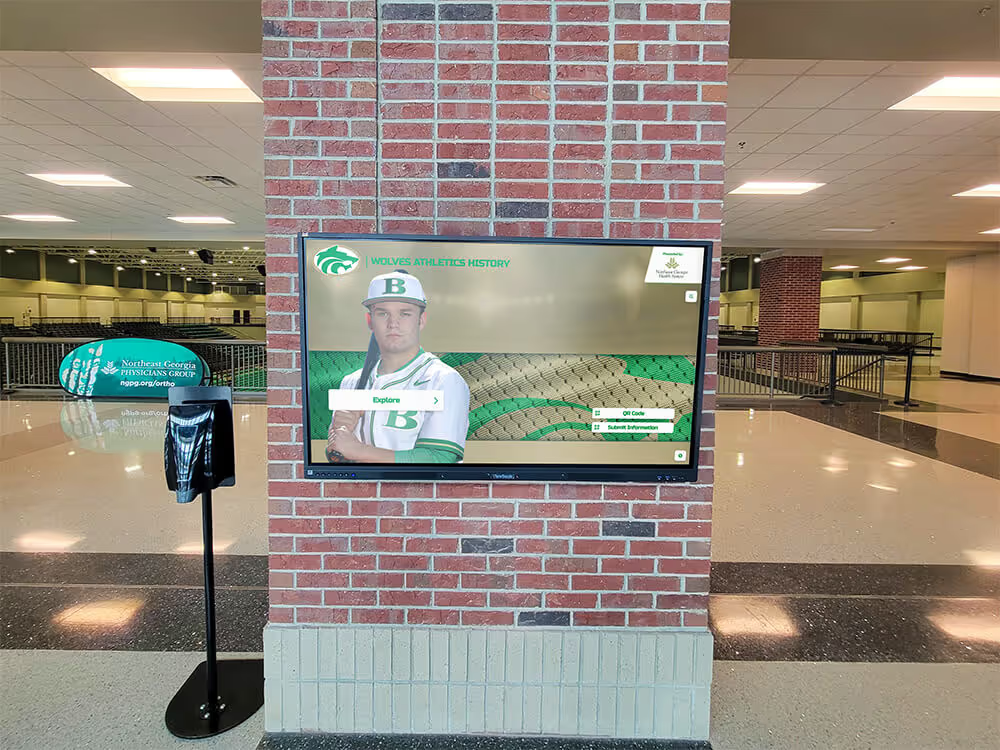
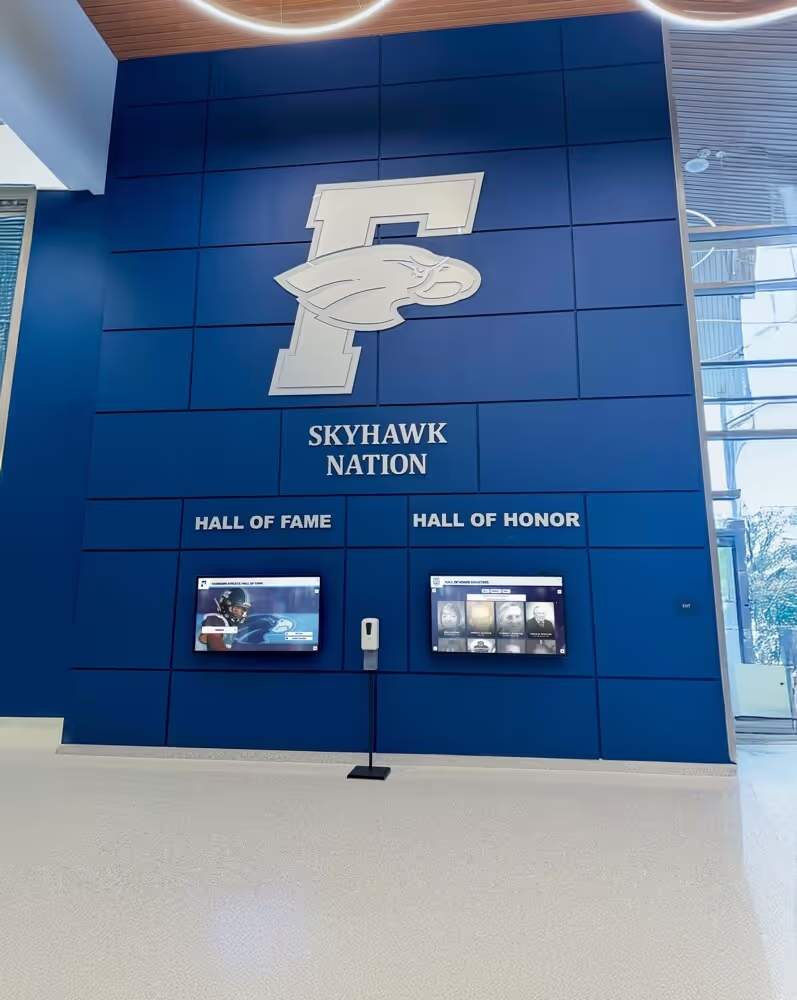
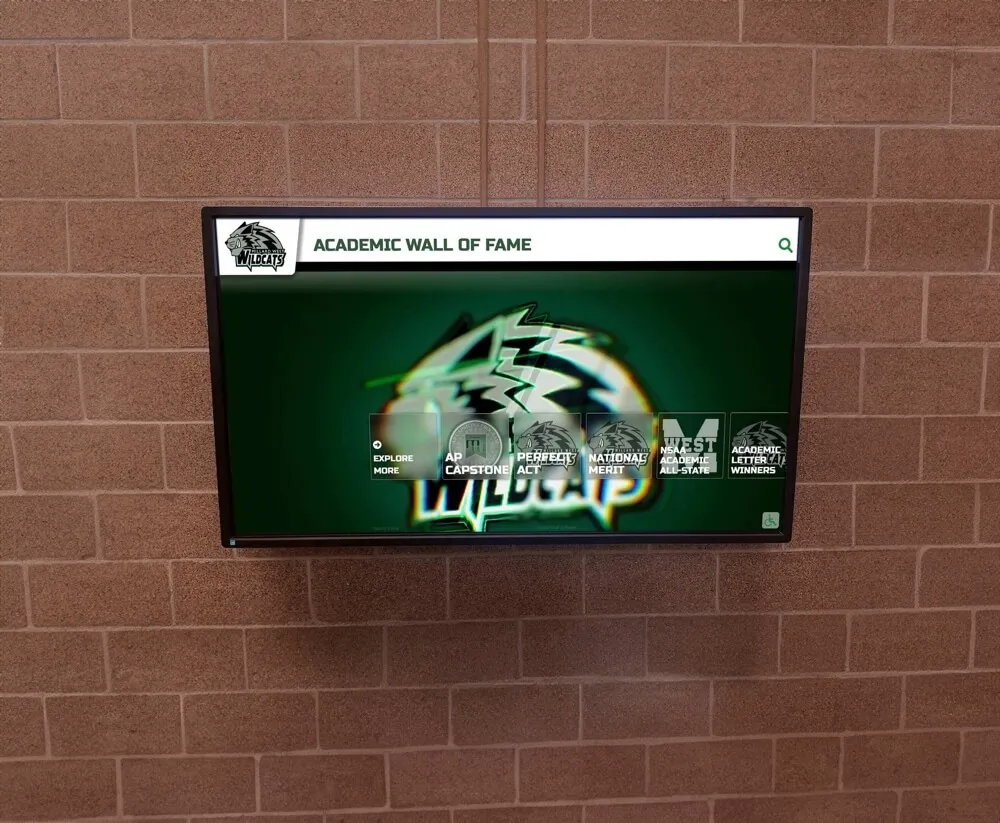
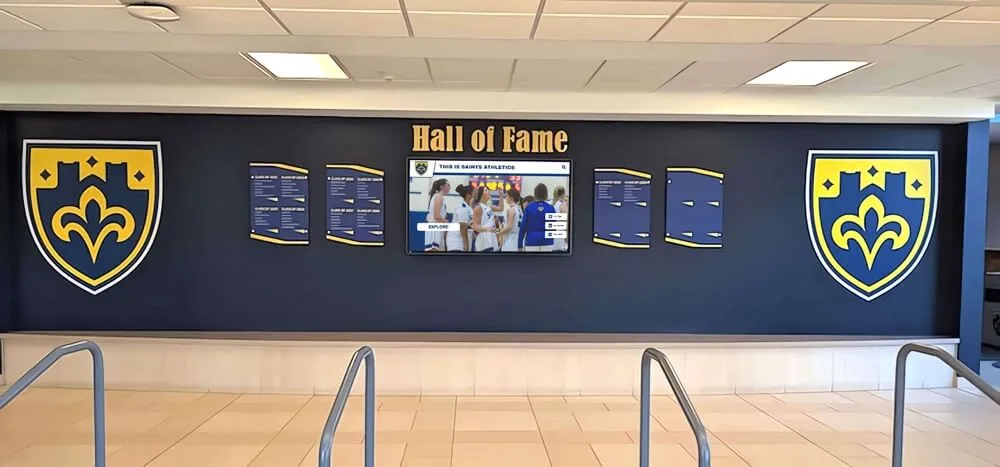
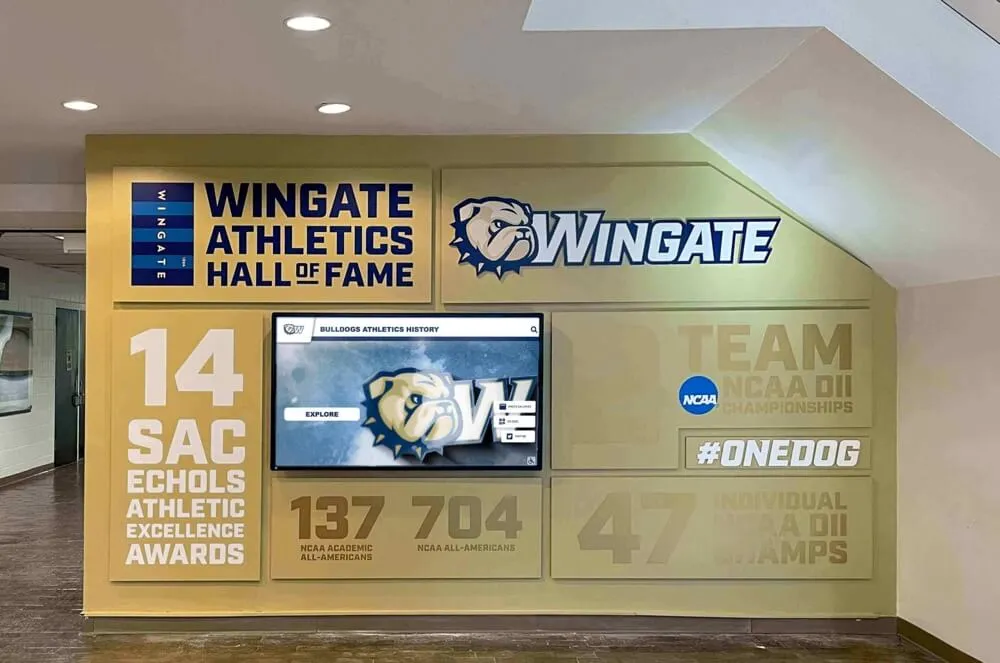
Lobby recognition spaces reflect years of gift acceptance decisions—about which artifacts to display, which names to recognize, and which commitments to fulfill. A written policy governs how those decisions get made consistently across officer generations
What a Booster Club Gift Acceptance Policy Is
A booster club gift acceptance policy is a written document specifying which types of contributions the organization will accept, what conditions apply to each category, what review steps must be completed before acceptance is confirmed, and how accepted gifts are documented, displayed, and fulfilled.
The policy is not a gift registry—it does not solicit specific donations. It is a decision framework that allows officers, athletic directors, and hall-of-fame committees to evaluate a proposed gift consistently, regardless of who is offering it or when it arrives. Without a written policy, gift acceptance decisions default to whoever is in the room at the time of the offer. That default creates three recurring problems:
- Inconsistent decisions — a prior officer accepted gifts that a current officer would decline, leaving no record of why the decision went the way it did or what obligations were conveyed in the exchange
- Undisclosed obligations — a gift accepted informally carries storage, display, or recognition expectations the accepting officer conveyed in conversation but never documented
- Successor blindness — incoming officers inherit equipment in storage, artifacts in closets, and recognition commitments in verbal agreements without knowing the terms under which any of it arrived
A written gift acceptance policy eliminates all three problems by moving the decision from individual judgment to documented organizational criteria. School administrators, athletic directors, hall-of-fame committees, archives staff, and facilities teams all benefit when the policy is clear: they know which gifts require their involvement in the review, what information must be captured at acceptance, and where documentation is filed so the next generation of leadership can find it.
The Four Gift Categories Booster Clubs Encounter
1. Cash and Monetary Gifts
Cash gifts—direct contributions, memorial donations, estate gifts, and contributions from individuals not affiliated with a formal sponsorship agreement—are the simplest category to accept but still require documentation to protect both the organization and the donor. The policy questions governing cash gifts center primarily on two issues: what restrictions does the donor attach to the gift, and what recognition does the donor expect in return?
Unrestricted cash gifts below a defined threshold can typically be accepted and acknowledged by an officer. Gifts above a threshold the policy defines as major—commonly $1,000 or $2,500 for organizations of modest size—warrant board notation before acceptance is communicated and funds are deposited. Restricted gifts, where the donor specifies that funds be used for a particular purpose, require board review before acceptance regardless of amount: the board must confirm that the restricted purpose aligns with the organization’s current program capacity before the restriction is accepted.
2. Equipment and In-Kind Donations
Equipment donations—used athletic equipment, technology, display hardware, furniture, or program supplies—arrive at program transitions, facility upgrades, and school consolidations. The appeal is straightforward: the donor feels generous, and the program receives something it might otherwise need to purchase. The risks are equally direct: accepted equipment may be unusable, unsafe, incompatible with current systems, or expensive to store and eventually dispose of.
The most important rule for equipment acceptance is confirming usability before accepting, not after. Athletic equipment especially must be evaluated by a qualified reviewer before the organization assumes responsibility for its use. The policy should designate who has authority to inspect and approve equipment gifts and state explicitly that no equipment gift is accepted until that review is complete.
3. Memorabilia, Trophies, and Historical Artifacts
This category creates the most complex stewardship obligations of any gift type. Donated memorabilia—championship trophies, vintage game programs, historic uniforms, signed equipment, photographs, and archival program materials—arrives with an implicit expectation of care, display, and preservation that extends indefinitely.
Athletic directors, hall-of-fame committees, and school archives staff are often the first point of contact for these gifts: the family of a retiring coach donating decades of collected program materials, an alumnus offering a signed jersey from a state championship season, a community member presenting a trophy collection with historical significance to the school. Each arrives in good faith, and most are genuinely valuable to the program’s institutional history. But each also creates an obligation the policy must address.
4. Recognition Commitments
A recognition commitment is a gift where the donor’s expectation of recognition—a named facility, a plaque on a display wall, a digital donor record entry, a jersey retirement banner, a tribute in the annual hall-of-fame program—is itself part of the gift arrangement. Recognition commitments may arise from naming-rights agreements, major gift tiers tied to a donor wall placement, memorial donations where the family expects a permanent tribute, legacy gifts with recognition terms specified by the estate, or sponsorship agreements where display recognition is a delivered benefit.
Recognition commitments deserve a category of their own in a gift acceptance policy because the obligation does not end when the check clears. The organization commits to a display, the maintenance of that display, and typically some form of ongoing stewardship communication, for the duration specified in writing. Accepting a recognition commitment without documenting its terms precisely—the location, the form, the duration, the conditions under which it may be modified—creates disputes that surface years after the original officer who made the commitment has moved on.
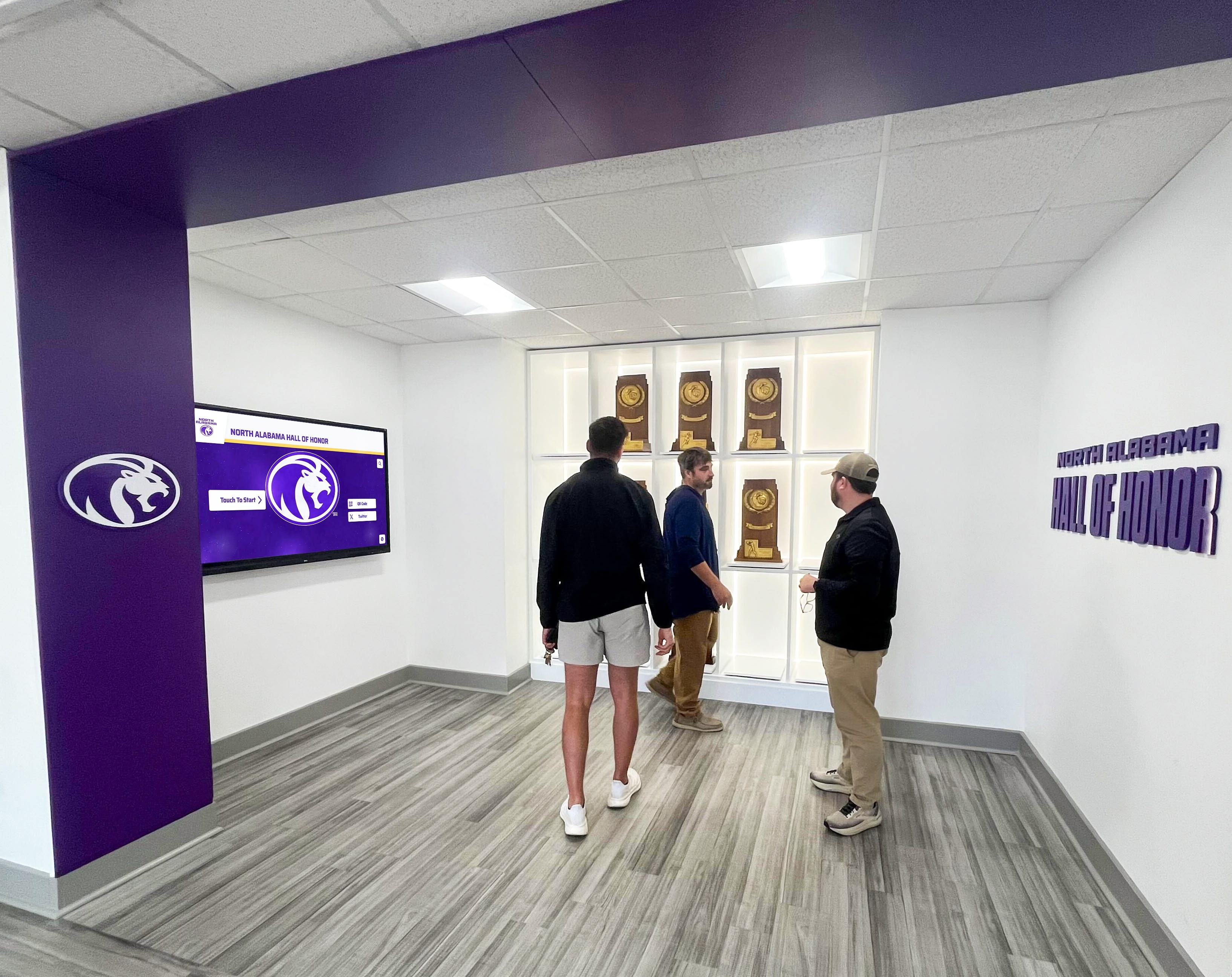
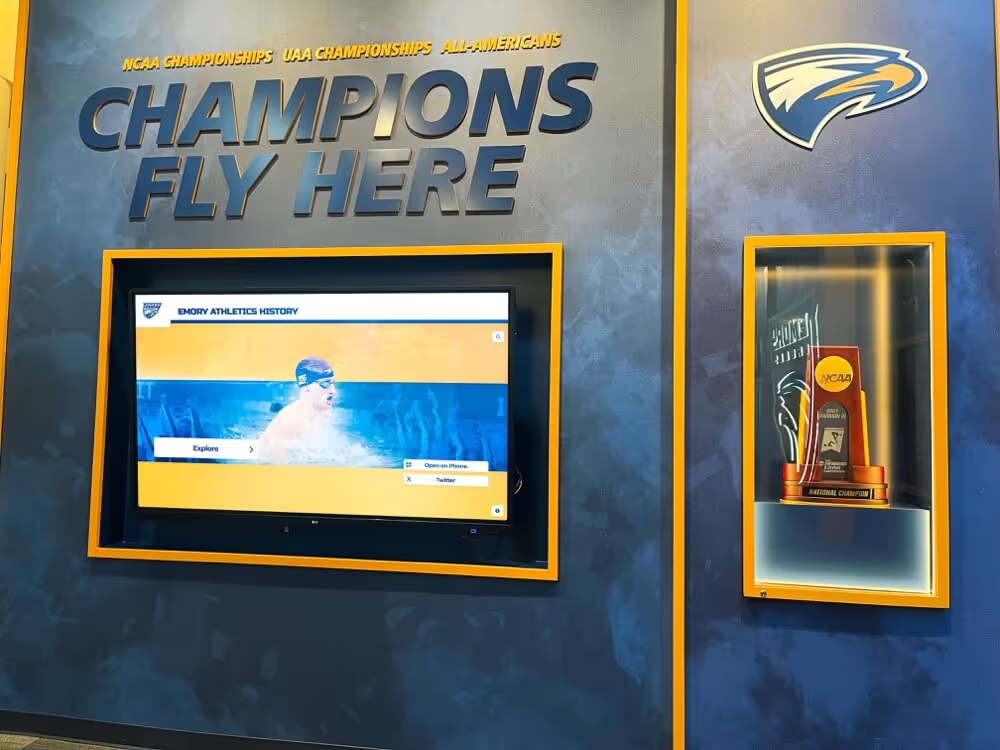
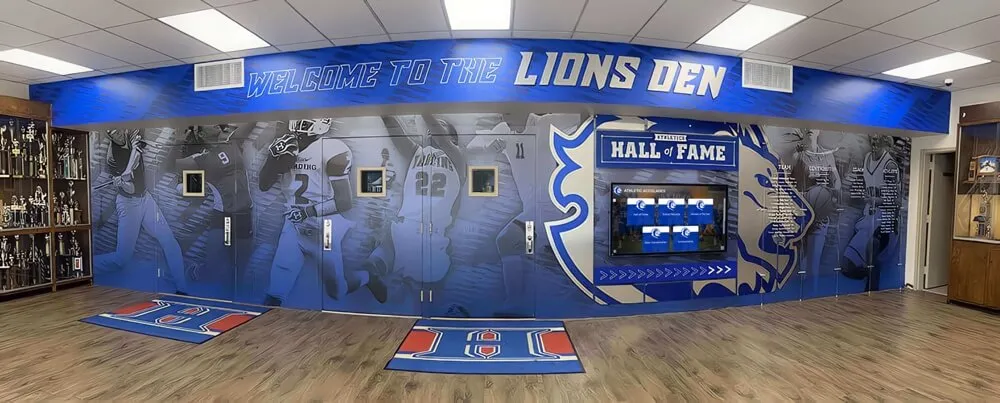
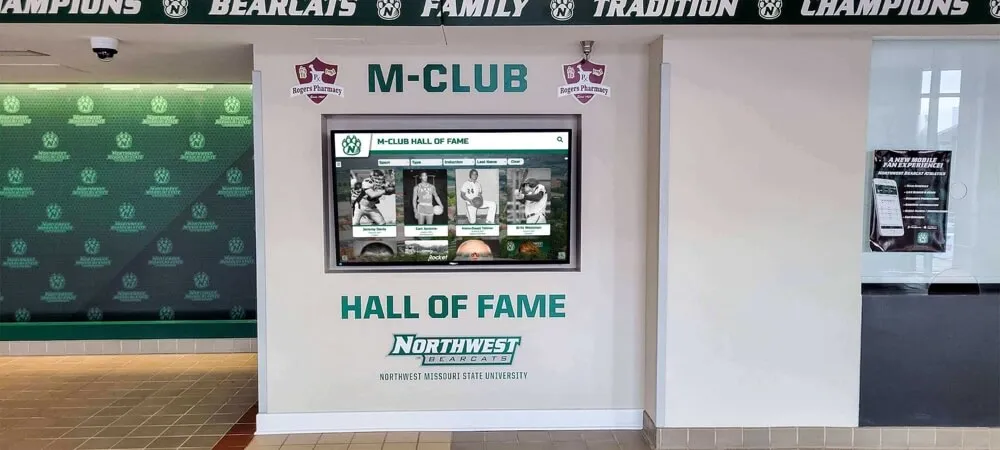
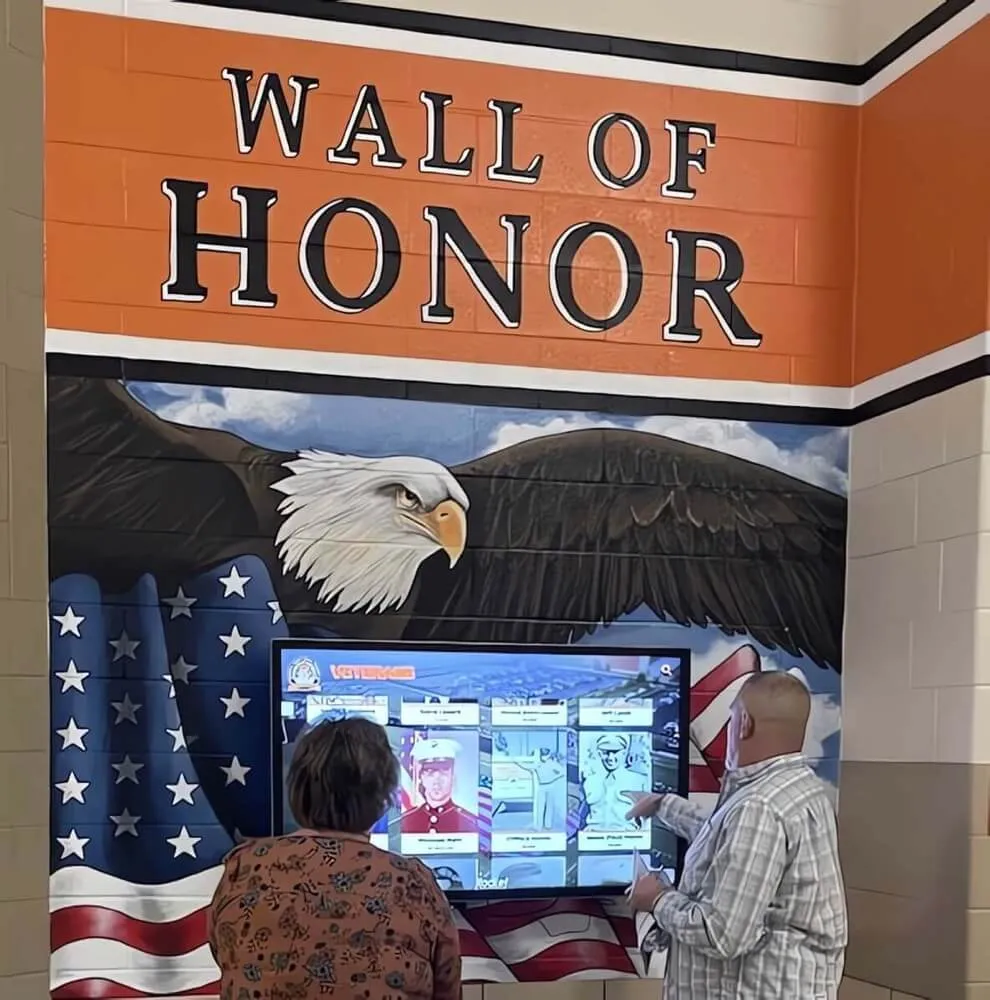
A hall of honor's trophy display reflects gift acceptance decisions made across many officer generations—a written policy ensures those decisions create a coherent, documented institutional record that any incoming leader can pick up and follow
Gift Acceptance Checklist
The following checklist applies at the point of gift evaluation—before any acceptance is communicated to the donor. Completing it for every gift above the smallest cash threshold ensures the organization captures the information it needs before it is committed.
BOOSTER CLUB GIFT ACCEPTANCE REVIEW CHECKLIST

Organization: _________________________________
Date of Offer: ________________________________
Gift Description: _____________________________
Donor Name: __________________________________
Donor Relationship to Program: ________________

GIFT CATEGORY
☐ Cash / monetary (unrestricted)
☐ Cash / monetary (donor-restricted purpose: __________________)
☐ In-kind equipment or supplies
☐ Memorabilia, trophy, or historical artifact
☐ Recognition commitment / naming arrangement
☐ Other: ____________________________________

CONDITION REVIEW
☐ Physical condition inspected by: ________________ on __________
☐ Condition acceptable for intended use / display / storage
☐ Fair market value estimated (for in-kind acknowledgment): $______
☐ Provenance documented (for memorabilia / artifacts)

OBLIGATION REVIEW
☐ Restrictions or conditions stated by donor: ________________
☐ Storage space confirmed available: ☐ Yes  ☐ No  ☐ Needs review
☐ Display space confirmed available: ☐ Yes  ☐ No  ☐ Needs review
☐ Recognition expected by donor: _______________ (describe)
☐ Duration of any recognition commitment: _______________
☐ Named facility / display location specified: _______________

APPROVAL
☐ Officer review completed (under threshold)
☐ Board vote required (over threshold or recognition commitment)
☐ Hall-of-fame / archive committee review: ________________
☐ Legal or CPA review recommended: ☐ Yes  ☐ No

DECISION
☐ Accept as offered
☐ Accept with conditions: _________________________________
☐ Decline (reason documented on file)

Decided by: _____________________________ Date: ___________
Gift acknowledgment letter issued: ☐ Yes, date: _____________
Documentation filed in: __________________________________
Gift Decision Table
The following table provides a starting-point framework for common gift situations. Programs should adapt these conditions in their written policy to reflect local circumstances, storage capacity, and governance structures.
| Gift Type | Typical Acceptance Conditions | When to Apply Additional Review | When to Decline |
|---|---|---|---|
| Cash gift, unrestricted | Acknowledgment letter; deposit confirmation on file | Gift over the policy’s major-gift threshold (board vote) | Donor has undisclosed conditions not in writing |
| Cash gift, restricted | Verify purpose aligns with current program capacity; document restriction | Donor requests recognition tied to restricted gift | Restricted purpose conflicts with organization’s programs or tax status |
| Used equipment in good condition | Inspection confirmed; storage plan in place | Equipment requires adaptation or repair before use | Unsafe condition; no storage available; program has no use for the item |
| Technology or display hardware | Technical compatibility confirmed; warranty status documented | Multi-year maintenance obligation implied | Incompatible with current systems; maintenance cost exceeds value |
| Trophy or award in good condition | Provenance documented; display space confirmed | Donor specifies permanent display location | No storage or display space; item condition requires professional conservation |
| Historic uniform or signed artifact | Provenance documented; storage environment suitable | Item requires archiving or conservation services | Conservation cost is unbudgeted; display space unavailable |
| Photograph or program collection | Storage plan and reproduction rights documented | Collection requires catalogue management | Rights unclear; no archive capacity |
| Named facility commitment | Full written agreement before acceptance; duration specified | Legal review recommended for any multi-year naming right | Organization cannot commit to the facility’s continued existence in named form |
| Donor wall recognition tier | Written agreement confirming tier, placement, and duration | Any departure from standard recognition matrix | Donor’s conditions cannot be fulfilled within the existing recognition system |
| Memorial tribute commitment | Written tribute terms confirmed; display location agreed | Family involvement in proof approval | Organization cannot commit to permanent display in the specified location |
Accepting Cash and Monetary Gifts
Cash and monetary gifts are the booster club’s financial foundation. A gift acceptance policy governing cash gifts primarily addresses two questions: when does a gift’s restrictions require board review before acceptance, and when does a gift’s recognition expectations create documentation obligations beyond a simple acknowledgment letter?
Threshold for board-level review. Set a dollar amount—commonly $1,000 or $2,500 for programs of modest size—above which any monetary gift requires formal board notation before the acceptance is communicated and the funds are deposited. This threshold ensures that large gifts, which may carry naming expectations or restricted purposes affecting the organization’s long-term commitments, receive appropriate governance attention.
Restricted gifts. When a donor specifies that a cash gift must be used for a particular purpose—a scholarship fund, a specific facility improvement, the purchase of new display equipment—document that restriction in the acknowledgment letter, in the board minutes, and in the fund designation. Restricted funds held for a purpose the organization later cannot fulfill require legal guidance; build an explicit “unrestricted fallback” clause into any restricted gift agreement, so that if the specific purpose becomes impossible, the funds convert to unrestricted use rather than requiring return or dispute.
Memorial and legacy gifts. When a family makes a gift in memory of a deceased coach, athlete, or community member, the recognition expectation is frequently tied closely to the gift even when not explicitly stated. Ask before acceptance: is a lasting tribute expected, what form should it take, and where should it be displayed? Document the answer as part of the gift record, not as a separate conversation that relies on one officer’s memory.
Accepting Equipment and In-Kind Donations
Equipment acceptance moves the policy into practical logistics that extend well beyond financial documentation. Athletic equipment that arrives at the storage-room door—used pads, helmets, weight-room equipment, timing systems, scoreboards—must be evaluated by a qualified person before the organization takes on responsibility for its use or distribution.
In-kind valuation. The organization typically should not provide a specific fair market value for in-kind donation purposes in its acknowledgment letter—that valuation is the donor’s responsibility, supported by a qualified appraisal for significant deductions. The acknowledgment letter can confirm the item received and its general description without assigning a dollar value. Donors with significant in-kind gifts should be directed to seek their own tax guidance.
Display fixtures and hardware. When a donor offers display-related equipment—a trophy case, a digital screen, a mounted recognition panel—the organization faces additional questions: Does the hardware integrate with existing display systems? Who maintains it? If the hardware reaches end of life, can it be replaced, and who bears that cost? Evaluating the range of recognition display tools available to school athletics programs helps administrators understand what capabilities different display technologies offer before committing to integrate donated hardware into the program’s recognition infrastructure—context that is equally relevant when the hardware arrives as a donation and when it is being purchased.
Disposal contingency. Every equipment acceptance should include a written note on what will happen to the item if it proves unusable: return to the donor, donation to another organization, or responsible disposal. Setting this expectation in the gift record prevents uncomfortable conversations later when equipment that seemed useful at receipt turns out to be incompatible or beyond serviceable condition.
Accepting Memorabilia, Trophies, and Historical Artifacts
Memorabilia acceptance is where gift acceptance policy intersects most directly with archives and institutional history work. The decision to accept an artifact is a commitment to preserve it—or to eventually deaccession it responsibly—and that obligation follows the object for as long as the organization holds it.
Deaccession authority. The policy should specify, clearly, that the organization retains the right to deaccession donated items—transfer them to another institution, loan them to a museum or archive, or responsibly dispose of them—if storage or display capacity changes. Donors who expect a permanent display commitment should be advised of this policy before acceptance is confirmed, not after.
Condition documentation. Photograph every donated artifact at the moment of receipt, before handling or installation. Date-stamp the image and note any existing damage, condition issues, or conservation concerns in the acceptance record. This documentation protects both the organization and the donor from disputes about condition that arise later.
Digital archiving alongside physical acceptance. Physical artifacts can be documented digitally, creating searchable records of the program’s history independent of whether the physical object remains in the program’s possession. Digital preservation practices for school recognition history and archives address how programs can create durable digital records of physical collections—including photograph documentation, metadata tagging, and archive-quality imaging standards—practices that apply equally to athletic trophies, historic uniforms, signed equipment, and program photography.
Provenance at acceptance. Record who donated the artifact, when, and what they knew about its history. A championship trophy donated by a coach’s family carries more institutional value when accompanied by a documented chain of custody—who won it, what season, under whose leadership—than when it arrives as an unidentified artifact with presumed significance. Ask for provenance documentation at the time of acceptance, not after the donor has moved on.
Many programs benefit from establishing a memorabilia review committee—a small group including a hall-of-fame committee representative, an athletic director or administrator, and an archives designee—with authority to evaluate memorabilia gifts before acceptance is confirmed. This separates the acceptance decision from any single officer’s individual enthusiasm for a particular donation and ensures the organization’s storage and display capacity is genuinely considered before a commitment is made.
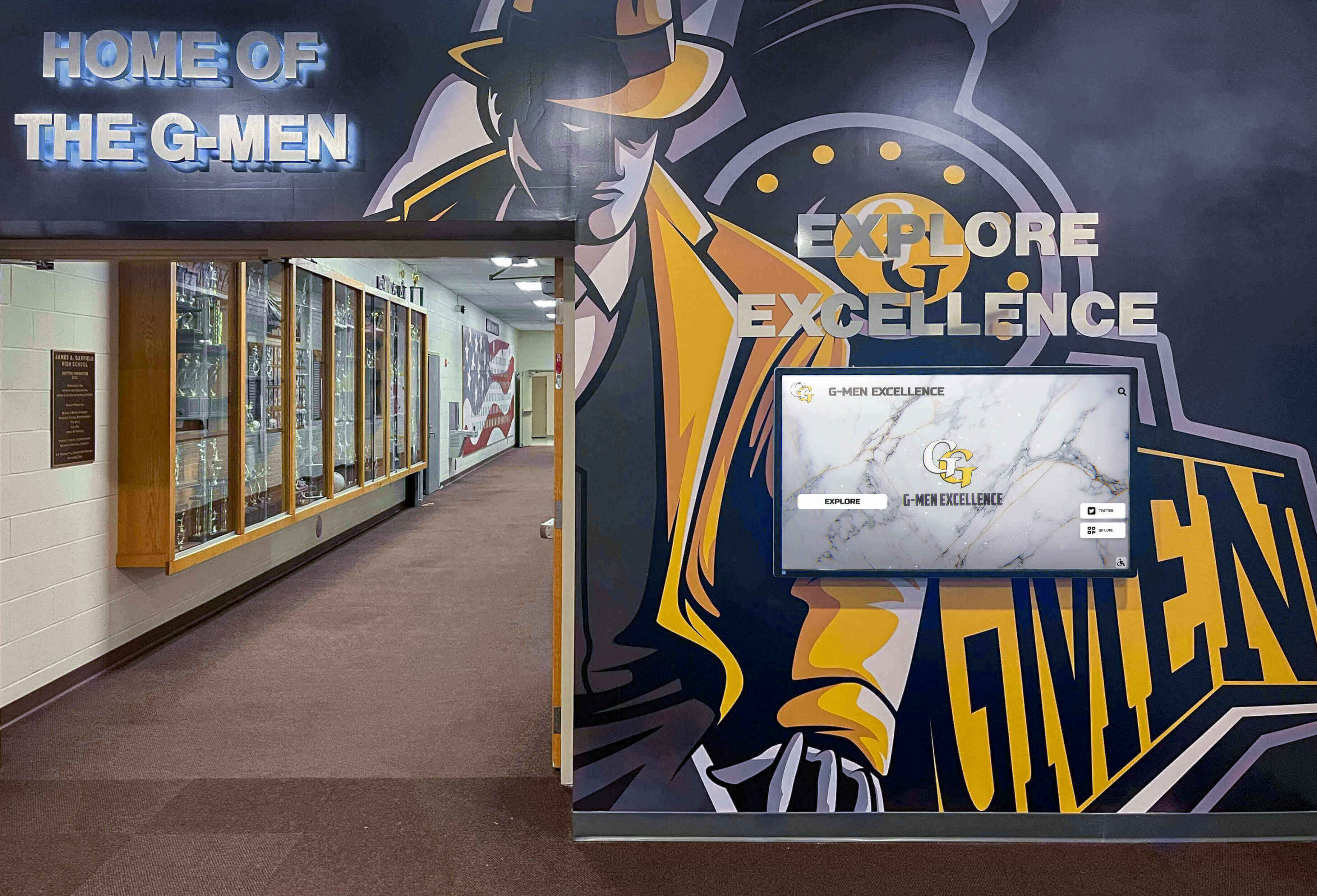
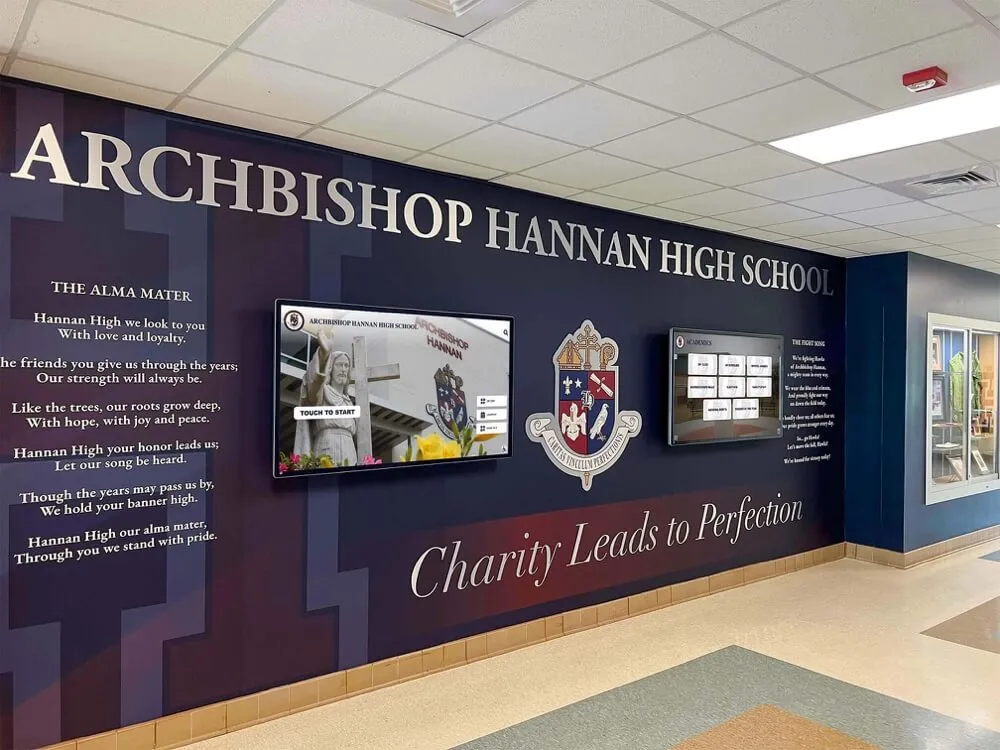
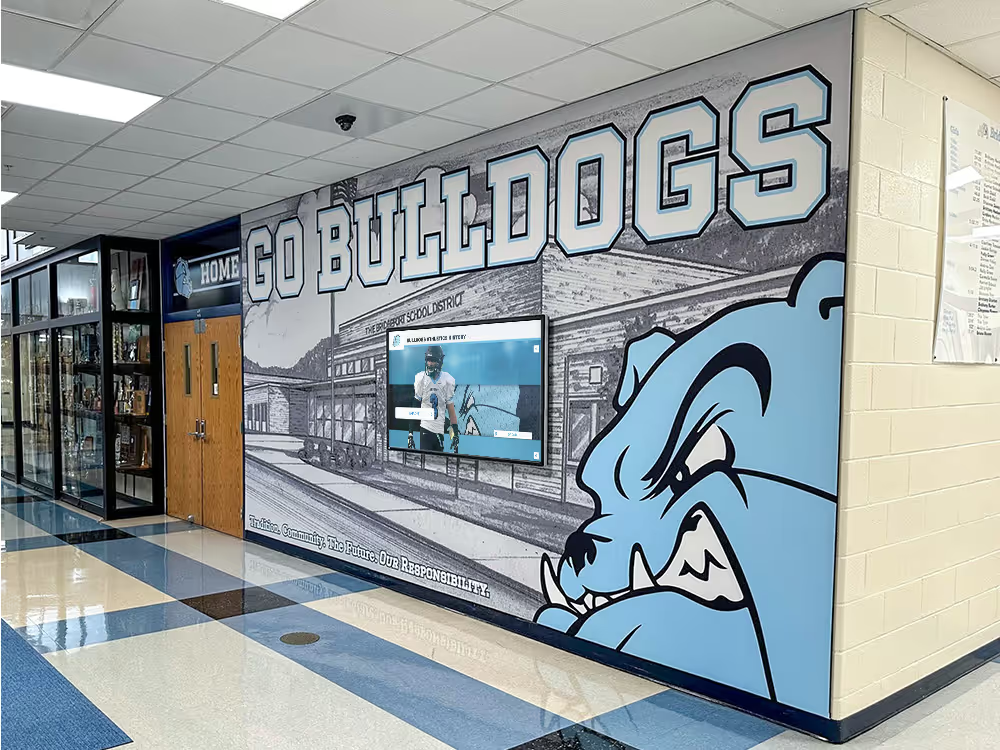
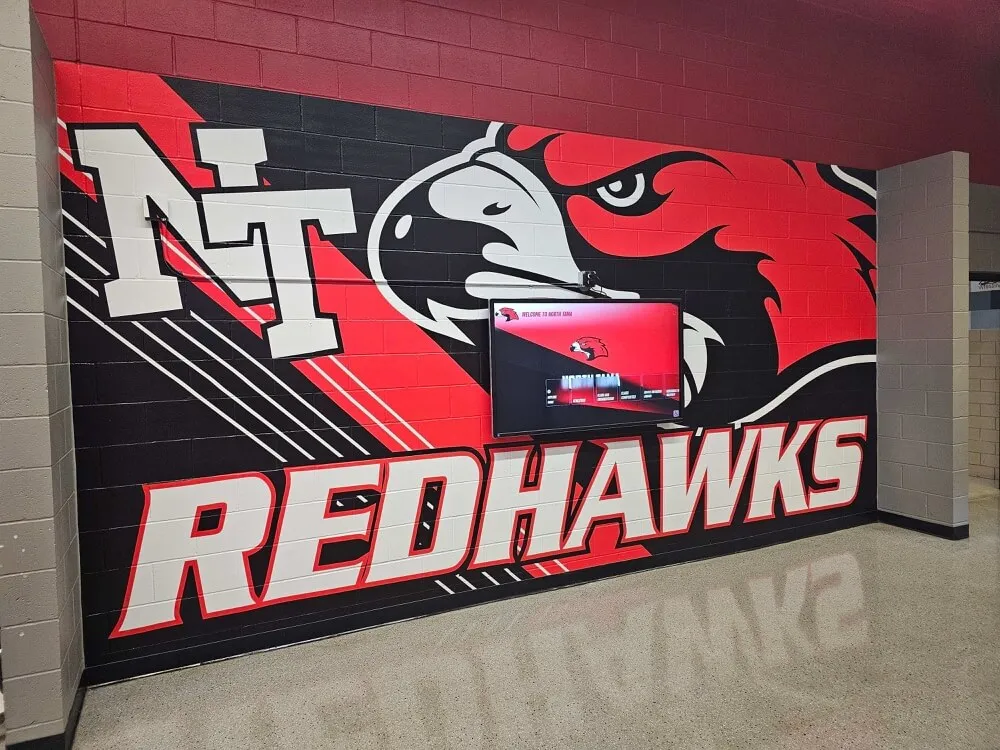
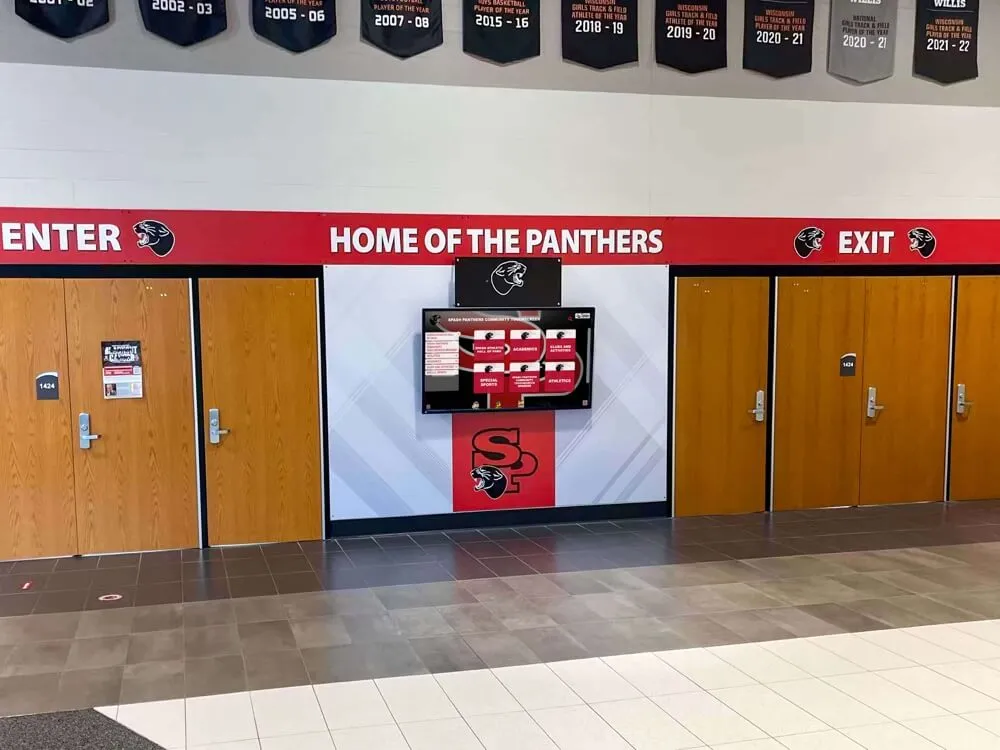
Trophy cases and hallway displays are the downstream result of memorabilia gift acceptance decisions—the policy determines what enters this space, under what conditions, and with what ongoing obligations attached
When Gift Acceptance Creates a Recognition Commitment
Recognition commitments deserve separate governance treatment because the obligation persists after the gift is fully received. A naming-rights arrangement for a practice facility, a permanently installed tribute plaque, a donor wall tier that promises specific placement and display—each of these creates an ongoing relationship between the organization and the donor that extends indefinitely if no term is specified.
Name a duration for every recognition commitment. Any recognition commitment the organization accepts should specify in writing:
- The recognition form (plaque, named space, digital display entry, banner, program listing)
- The precise location (specific facility, display wall section, or digital platform)
- The duration (number of years, or the operational lifetime of the named space or facility)
- Conditions under which the recognition may be modified (facility renovation, system upgrade, capacity change)
- Process for donor notification if a modification becomes necessary
A recognition commitment without a specified duration is effectively permanent—and permanent commitments create governance problems for future leadership that the current officer team will never need to resolve. Build a term into every commitment, including commitments described informally as “permanent.” A written term of twenty-five years is a durable commitment that still leaves the organization a clear endpoint; an undocumented promise of permanence leaves every future officer exposed.
Naming rights and facility commitments. When a gift is tied to naming a physical space—a weight room, a locker room, a corridor, a court—the recognition commitment runs with the facility. If the facility is renovated, demolished, or repurposed, the naming commitment requires transition planning. The gift acceptance policy should address how naming commitments are managed through facility changes and direct the organization to seek appropriate guidance before entering any facility naming agreement. Design and layout considerations for alumni welcome areas and recognition spaces illustrate how naming and recognition elements are typically integrated into school facilities—context that helps officers and administrators set realistic expectations about where and how a recognition commitment can be fulfilled before acceptance is confirmed.
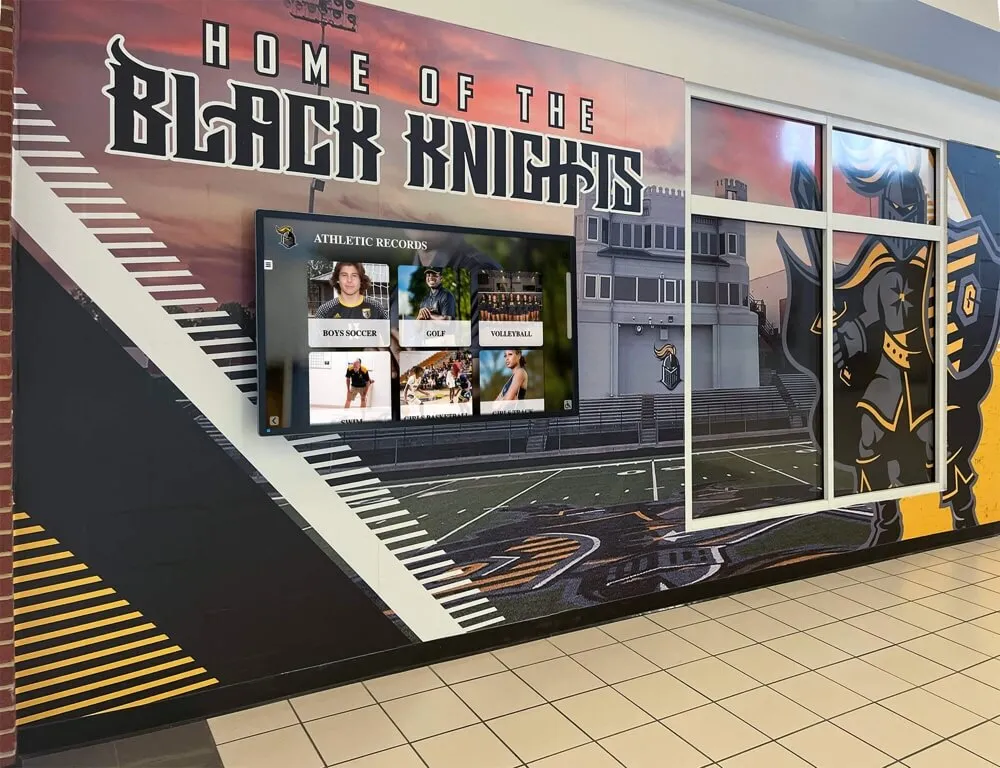
Donor wall and tiered recognition commitments. When a donor contributes at a level tied to a specific recognition tier—a named panel, a digital profile, a plaque in a corridor display—the organization commits to maintaining that recognition for the agreed term. Visual standards and formats for athletic recognition and record board displays provide practical reference for what different display formats look like across programs of varying size and budget, which helps booster club officers and development staff set informed expectations with donors before recognition commitments are formally accepted.
Athletic record and award recognition. Some recognition commitments are tied to athletic achievement rather than naming rights: a donor who funds a perpetual trophy, a family that establishes an award for a specific sport category, a legacy gift tied to maintaining a specific athletic record display. Sport-by-sport policies and standards for athletic record books address how athletic record documentation is typically structured across different sports—information that helps the organization understand what maintaining a record-based recognition commitment means operationally before it is accepted.
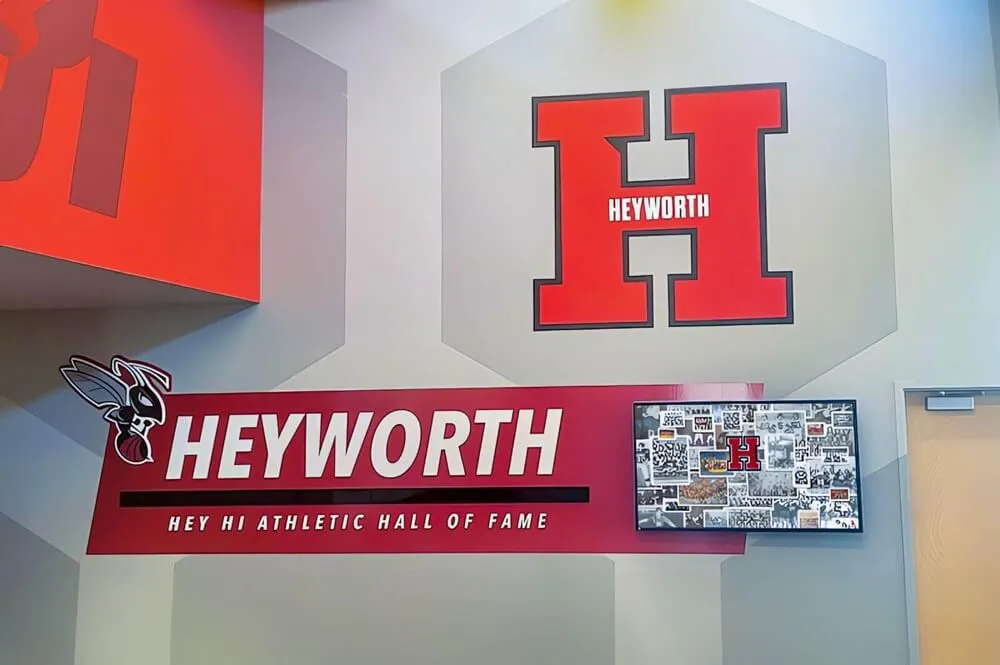
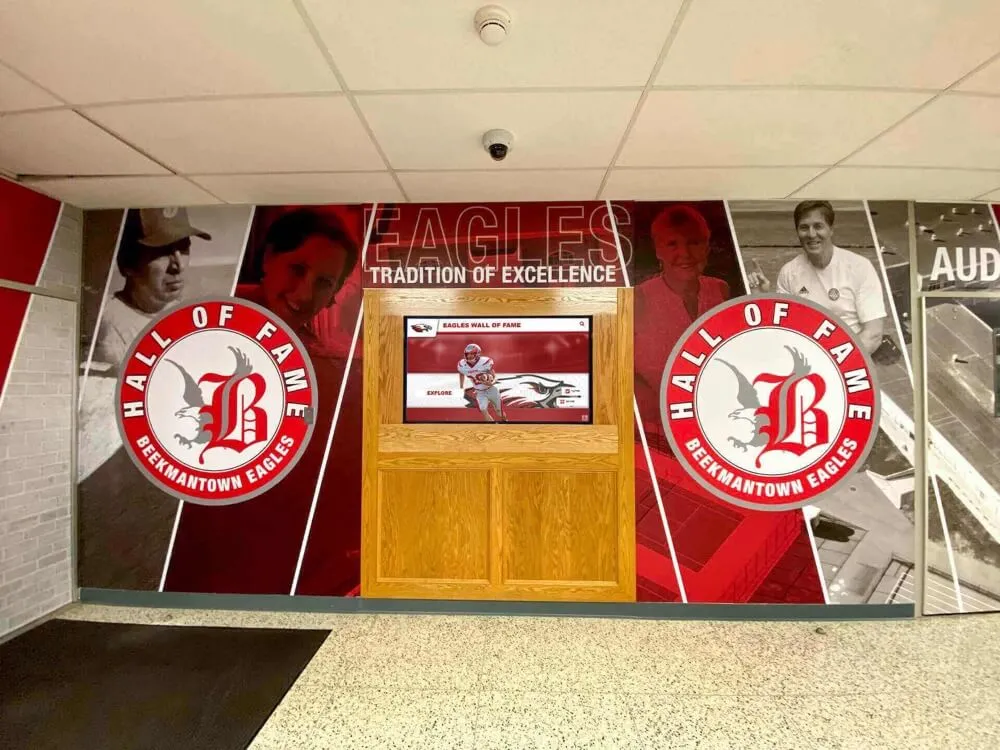
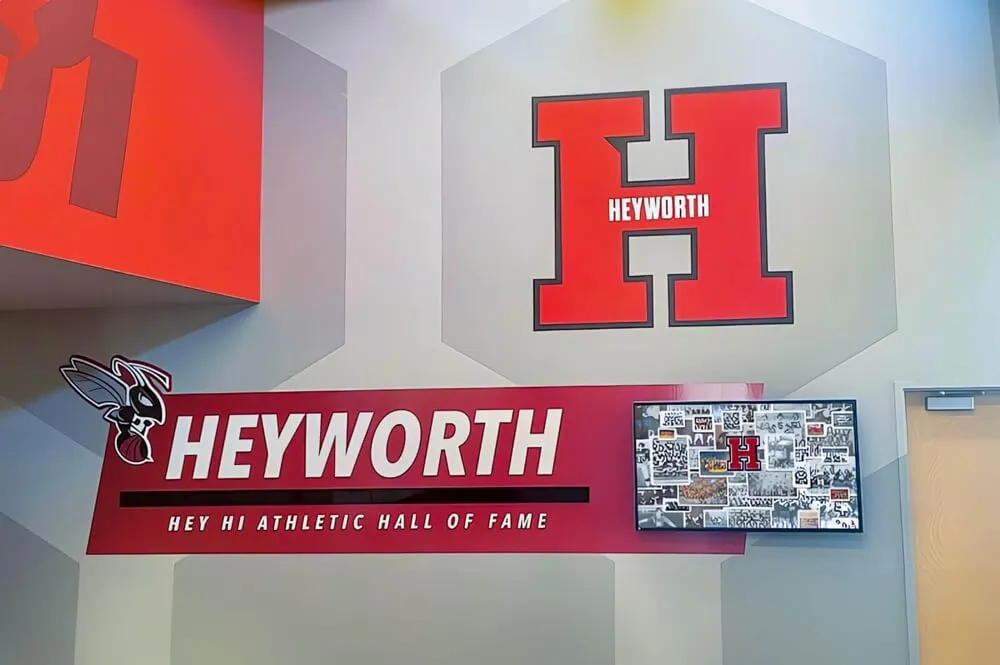
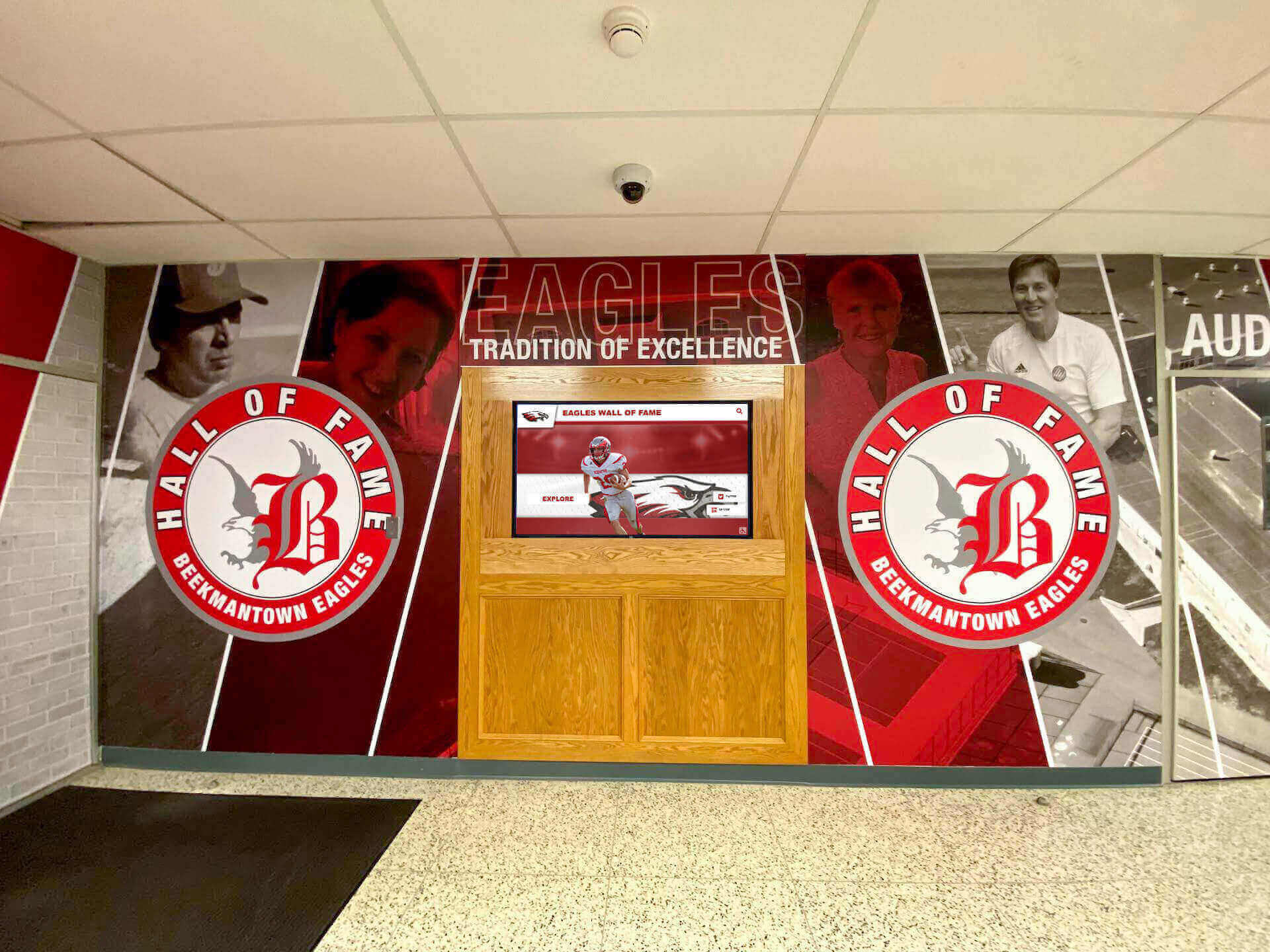
A hall of fame designation carries its own recognition commitment—one that must be supported by documented policies governing who earns placement, how displays are maintained, and how the space evolves as the program grows
Documenting Accepted Gifts and Their Display Obligations
Every accepted gift should produce a documentation package that a new officer—with no prior knowledge of the gift or the donor—can pick up and understand completely. That package should include:
| Document | What It Contains | Who Receives a Copy |
|---|---|---|
| Gift acknowledgment letter | Description, date, any restrictions, standard valuation disclaimer | Donor |
| Internal gift record | Donor contact, gift description, conditions, recognition expectations, board action if applicable | Treasurer’s file; board records |
| Display or archive record | Physical location of artifact or installation; maintenance notes; display duration if applicable | Athletic director; hall-of-fame committee |
| Recognition commitment agreement | Terms, location, form, duration, modification conditions | Donor; club records; facilities file |
| Condition documentation | Dated photographs; condition notes at time of receipt | Club file; archive |
This documentation package transforms a gift acceptance event into a durable institutional record. Recognition commitments made by one officer generation can be fulfilled by the next because the terms are in writing, not in memory. Archives staff and hall-of-fame committees can maintain consistent recognition standards across officer transitions when each gift’s conditions are filed in a retrievable format rather than reconstructed from informal sources.
Connecting Gift Acceptance to Digital Recognition Systems
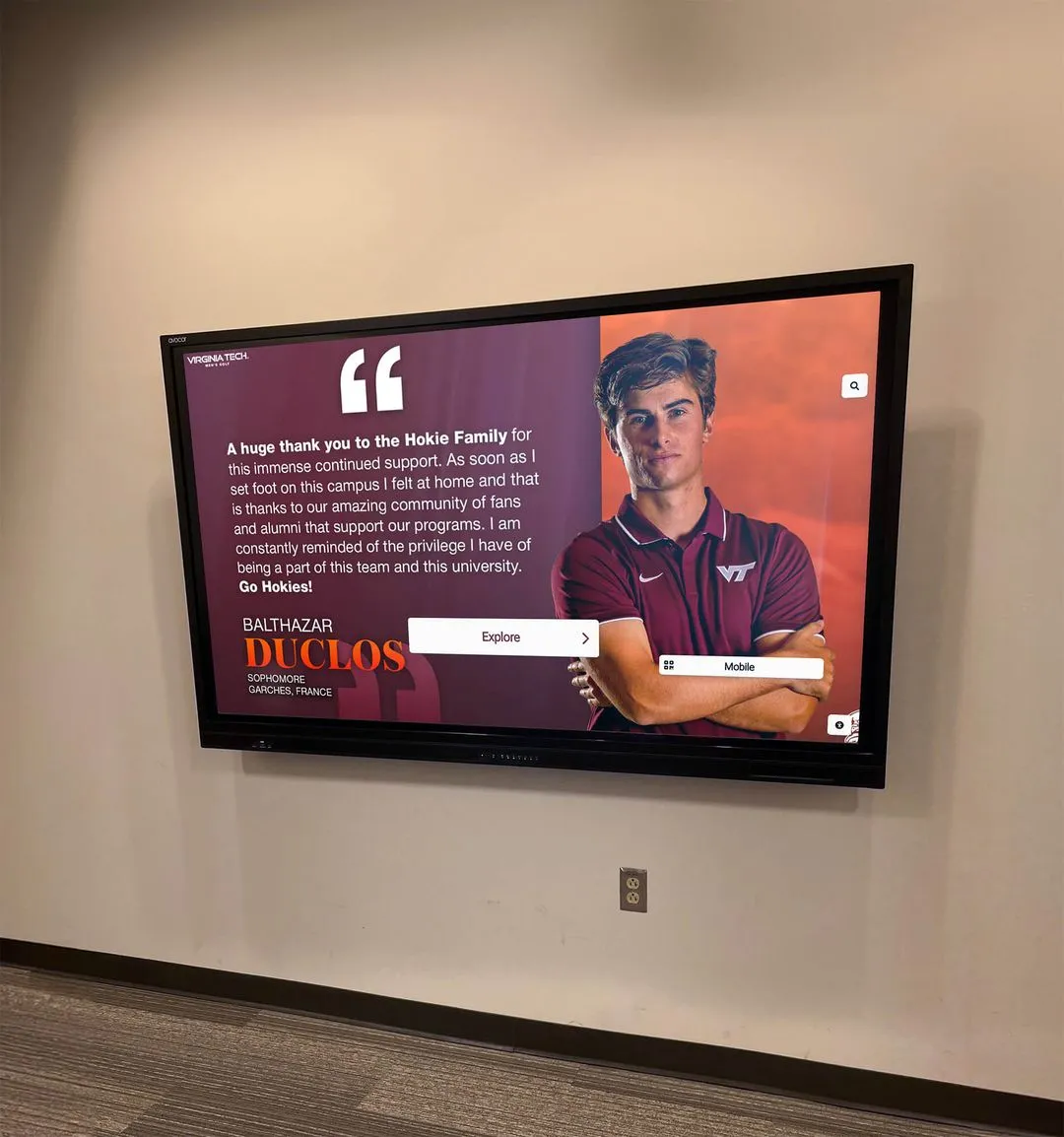
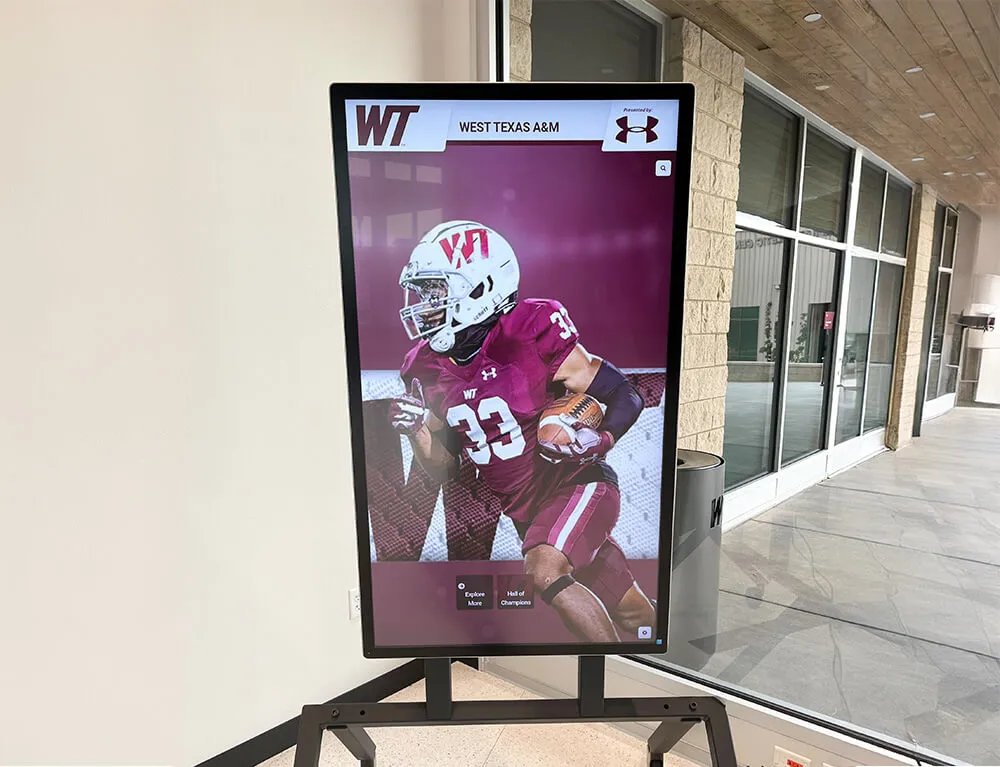
A digital recognition platform—a lobby touchscreen, a managed donor wall display, a hall-of-fame system—is where gift acceptance decisions become visible to the broader school community, alumni, and visitors. When a donor contributes at a recognition tier, their name appears in the digital system. When a family donates a championship trophy, its entry may eventually appear in an archival digital display alongside historic photographs and achievement records. The connection between gift acceptance and digital recognition is most direct for monetary gifts tied to recognition tier commitments.
The organization must ensure the digital platform can deliver exactly what the gift agreement promised: the correct name spelling, the correct tier designation, the correct placement within the display hierarchy, and the correct duration of display. A recognition error in a digital system—a misspelled name, a missing entry, a wrong tier assignment—is visible to everyone who passes through the lobby and requires active correction rather than passive resolution. A complete gift acceptance record, filed at the moment of acceptance, gives the display management team the precise information it needs to configure the recognition correctly and verify it against the commitment.
For memorabilia and artifacts, digital platforms serve a parallel preservation function: a trophy donated to the physical archive can be documented in the digital system with a photograph, a description, and a provenance record, making it discoverable and accessible even if the physical object eventually requires transfer to another institution. Programs that maintain digital records alongside physical collections preserve institutional memory through facility changes, leadership transitions, and the passage of time that makes physical objects harder to locate and identify without documentation. Digital recognition showcases for school fundraising programs and community events illustrate how digital display systems extend recognition visibility beyond the physical school building, making gift acknowledgment accessible to a community that extends well beyond the immediate athletics family.

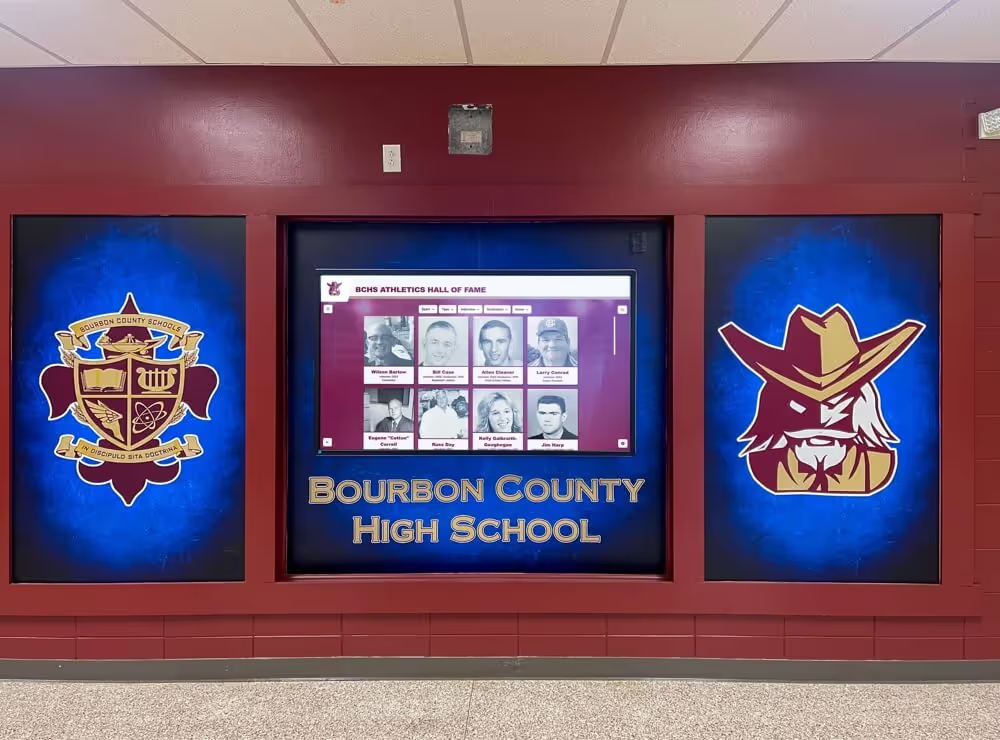
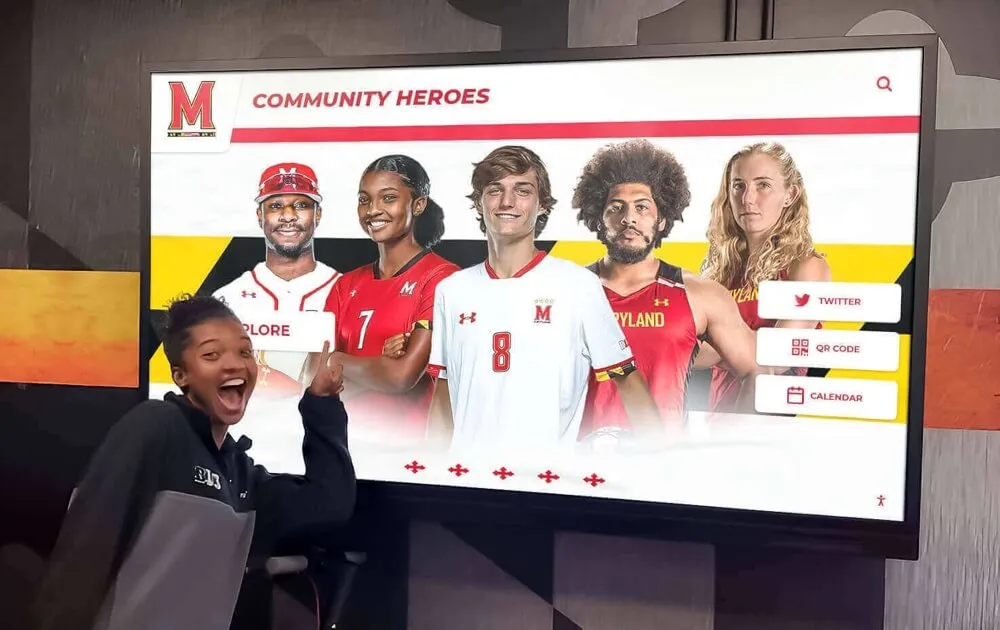
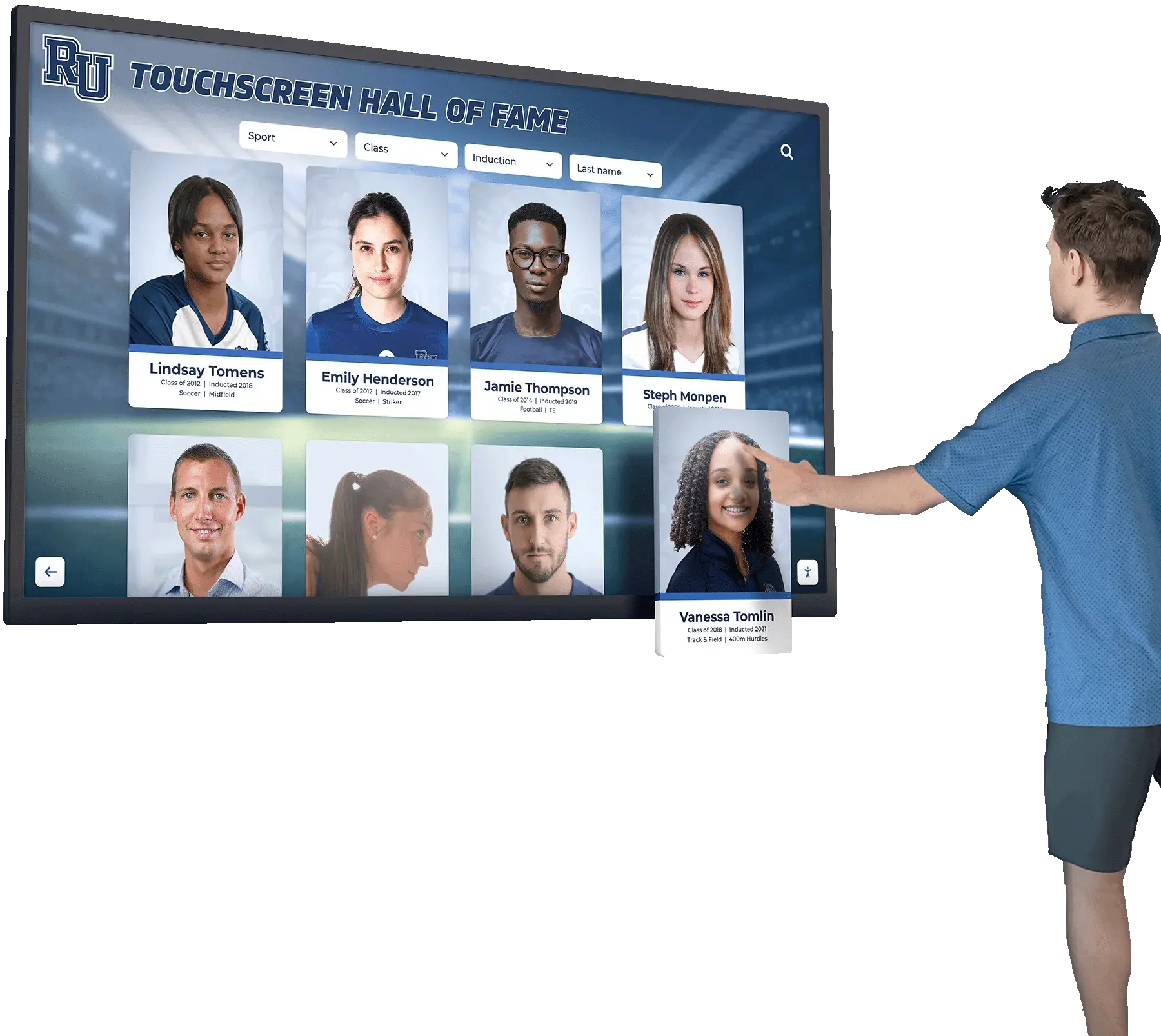
A digital donor recognition system depends entirely on accurate gift acceptance records—the name displayed, the tier assigned, and the recognition duration all flow directly from the written documentation created at the moment of acceptance
Record-Keeping for Accepted Gifts
A gift acceptance policy without a retention framework creates documentation gaps that surface at audit time, during district reviews, and when donors inquire about their recognition. The following categories should be addressed explicitly in the policy or in a companion records-retention document:
| Document Type | Suggested Retention | Why |
|---|---|---|
| Gift acknowledgment letters | 7 years | IRS audit standard for charitable organizations |
| Internal gift records (cash / in-kind) | 7 years | Transaction basis; financial audit evidence |
| Recognition commitment agreements | Duration of commitment plus 5 years | Governs what is owed; dispute evidence |
| Condition documentation (artifacts) | Duration of possession plus 5 years | Protects organization in deaccession or transfer |
| Board minutes referencing gifts | Permanent | Governance record |
| Deaccession records | Permanent | Confirms responsible transfer or disposal |
Digital document management—scanned acknowledgment letters, dated photographs of received artifacts, exported platform logs confirming recognition display—reduces physical storage requirements and makes retrieval faster when records are needed under deadline. Programs that maintain gift records in a shared digital folder accessible to any current officer resolve donor inquiries faster and sustain institutional knowledge through officer transitions more reliably than those relying on paper files in a single officer’s possession.

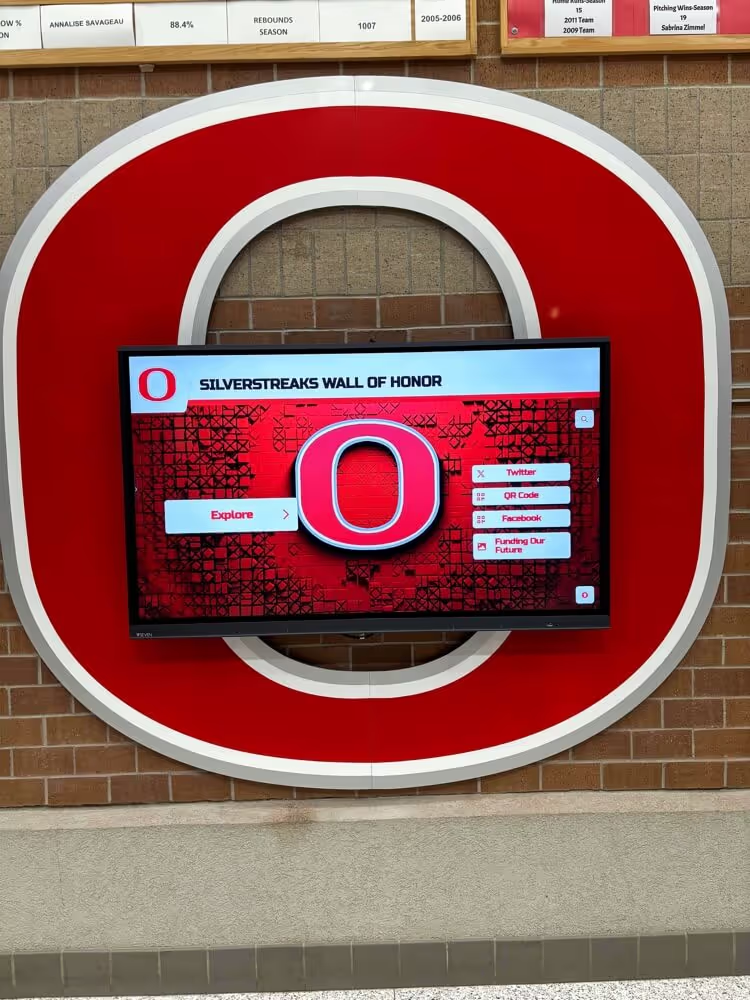
Digital records displays in school athletics corridors represent the accumulated result of gift acceptance and recognition decisions made over many years—documentation practices determine whether future leadership can read and maintain what earlier generations built
Sample Booster Club Gift Acceptance Policy
The following template is a starting point for a medium-sized school booster club. It should be reviewed by the organization’s CPA or legal counsel before adoption.
BOOSTER CLUB GIFT ACCEPTANCE POLICY
[Organization Name]
Adopted: [Date] | Last Reviewed: [Date]

SECTION 1 — PURPOSE
This policy establishes criteria and procedures for accepting gifts of any
type, including cash, in-kind donations, memorabilia, and recognition
commitments, to ensure the organization can fulfill the stewardship
obligations that each accepted gift creates.

SECTION 2 — SCOPE
Applies to all officers, committee members, volunteers, and representatives
accepting gifts on behalf of the organization.

SECTION 3 — GIFT CATEGORIES AND ACCEPTANCE CONDITIONS

Cash gifts (unrestricted):
  Under $500:         Officer acknowledgment; deposit confirmation on file
  $500–$2,499:        Treasurer acknowledgment; board notation at next meeting
  $2,500 and above:   Board vote before acceptance communicated to donor

Cash gifts (donor-restricted):
  Any amount:         Board vote required; restriction must align with current
                      program capacity; written restriction document filed

In-kind equipment:
  Any item:           Physical inspection by designated reviewer before acceptance
                      confirmed; storage plan on file; fair market value not
                      stated by organization in acknowledgment letter

Memorabilia and artifacts:
  Any item:           Condition photographed and documented at receipt;
                      provenance recorded; display or storage space confirmed;
                      donor informed of deaccession policy before acceptance

Recognition commitments:
  Any commitment:     Written agreement required before acceptance; must specify
                      form, location, duration, and modification conditions;
                      board vote required; legal review recommended for facility
                      naming arrangements

SECTION 4 — DOCUMENTATION REQUIREMENTS
Every accepted gift must produce:
  - Written acknowledgment letter to donor
  - Internal gift record (donor, gift, date, conditions)
  - Display or archive record if artifact or recognition commitment accepted
  - Recognition commitment agreement if applicable

SECTION 5 — DEACCESSION AUTHORITY
The organization retains authority to deaccession donated artifacts, transfer
donated equipment, or modify recognition display formats through written board
approval. Donors are informed of this authority before memorabilia gifts or
recognition commitments are accepted.

SECTION 6 — RECOGNITION COMMITMENT DURATION
No recognition commitment is accepted without a specified term. Commitments
described informally as "permanent" require explicit board approval and legal
review before acceptance.

SECTION 7 — CONFLICT OF INTEREST
An officer with a personal relationship to a prospective donor must disclose
that relationship before the gift is reviewed and recuse from the acceptance
decision and vote. Disclosure and recusal are documented in board minutes.

SECTION 8 — RECORD RETENTION
Gift acknowledgment letters:            7 years
Internal gift records (cash/in-kind):   7 years
Recognition commitment agreements:      Duration of commitment plus 5 years
Condition documentation (artifacts):    Duration of possession plus 5 years
Board minutes referencing gifts:        Permanent
Deaccession records:                    Permanent

Approved by: __________________________________ Date: ___________
[Board Chair or President signature block]
Adapt section 3 thresholds to your program’s gift volume and governance capacity. Programs with annual budgets under $75,000 may set the board-vote threshold for cash gifts at $1,000; programs managing larger annual revenue may set it at $5,000 or above. The specific thresholds matter less than their consistent application and the board’s awareness of which gifts have been accepted, under what conditions, and with what ongoing obligations.
Frequently Asked Questions
What is a booster club gift acceptance policy?
A booster club gift acceptance policy is a written document establishing which types of contributions the organization will accept, under what conditions, and with what documentation requirements. It covers the four main gift categories a booster club encounters—cash gifts, in-kind equipment, memorabilia and artifacts, and recognition commitments—and specifies the review steps, approval authority, and documentation standards that must be met before any acceptance is communicated to the donor. The policy protects the organization by ensuring it accepts only gifts it can responsibly steward, and it protects donors by ensuring that recognition and storage commitments conveyed at acceptance are documented, not simply remembered by whoever was in the room.
Should a booster club accept used equipment donations?
Used equipment can be accepted when a qualified reviewer has inspected it, confirmed it is in safe working condition, and matched it to an actual program need with storage space available. The policy should require physical inspection before acceptance is communicated—not after the equipment arrives at the door. Athletic equipment must meet current safety standards before the program assumes responsibility for its use or distribution. The acknowledgment letter for in-kind donations should not include a specific dollar valuation; donors seeking a deduction for significant in-kind gifts should obtain their own qualified appraisal.
What happens when a donor expects naming recognition for a gift?
A recognition commitment of any kind—a named space, a donor wall tier, a plaque, a digital profile—must be documented in writing before acceptance is confirmed. The written agreement should specify the form of recognition, its location, the duration of the commitment, and the conditions under which it may be modified. No recognition commitment should be confirmed in conversation alone. The offer is welcome; the acceptance is conditional on a written agreement that any future officer can find, read, and fulfill without relying on the memory of a predecessor.
How should a booster club handle donated memorabilia and trophies?
Memorabilia and artifact donations require a documented review before acceptance: condition photographed at receipt, provenance recorded, display or storage space confirmed, and the donor informed of the organization’s deaccession policy. The deaccession policy—specifying that the organization may transfer, loan, or responsibly dispose of accepted artifacts when storage or display capacity changes—should be communicated before acceptance, not surfaced later when the organization needs to act on it. Significant collections may warrant review by a memorabilia committee including a hall-of-fame representative, the athletic director, and an archives designee.
Does a booster club need board approval to accept a gift?
Board approval thresholds should be specified in the written policy. Cash gifts above the organization’s defined major-gift threshold, all recognition commitments, and memorabilia items requiring display or archive space typically warrant board-level notation or vote before acceptance is communicated. Smaller cash gifts and minor in-kind donations may be handled at the officer level with board notification at the next meeting. The specific thresholds depend on governance structure and gift volume; the policy should define them explicitly rather than leaving the determination to officer discretion in the moment.
How does a gift acceptance policy connect to donor recognition displays?
Every accepted gift that creates a recognition obligation flows downstream into the organization’s physical and digital recognition systems. A donor acknowledged at a specific tier must appear in the display at that tier, correctly spelled, for the agreed duration. A memorabilia donation accepted with a display commitment must be installed in the agreed location and remain there for the agreed term. A gift acceptance policy that captures recognition terms precisely—at the moment of acceptance—gives the display management team the documentation it needs to fulfill those terms accurately, without relying on one officer’s recollection of a conversation that happened years earlier.
What should a booster club do if it cannot fulfill a recognition commitment it accepted?
Contact the donor promptly, explain the change in circumstances in writing, and discuss alternatives before making any modification to the recognition. Document the conversation and the agreed resolution in the organization’s gift records. If the original commitment was made under a prior officer and the current team has no written record of its terms, reconstruct what documentation exists—board minutes, acknowledgment letters, correspondence—before approaching the donor. Future commitments should be made only with written agreements that survive officer transitions precisely to avoid this situation.
When your program is ready to connect its gift acceptance documentation to the digital recognition infrastructure that displays donor names, tribute plaques, and recognition tiers in your lobby, corridor, or hallway—explore how Rocket Alumni Solutions supports booster clubs with managed recognition display systems built for long-term stewardship and donor accuracy.