A booster club gift card policy is a written governance document that defines when gift cards may be purchased with organizational funds, who must approve each purchase, what tracking records are required for every card issued, and how distributions are documented to satisfy IRS requirements. Because gift cards are cash equivalents—redeemable for value with no inherent restriction on use—they carry the same documentation burden as petty cash disbursements and cannot be governed by the same informal approvals that cover ordinary supply purchases.
This guide covers the specific approval workflow, a recipient tracking log template, IRS documentation standards for nonprofit gift card distributions, a ready-to-use policy template, and the direct connection between gift card controls and the sponsor stewardship programs that depend on documented, auditable financial practices to retain community trust.
This guide is for informational purposes only and does not constitute legal, accounting, or compliance advice. Tax treatment of gift cards and documentation requirements for nonprofit organizations vary by jurisdiction, tax-exempt status, and individual circumstances. Consult a licensed CPA or attorney before adopting any gift card policy.

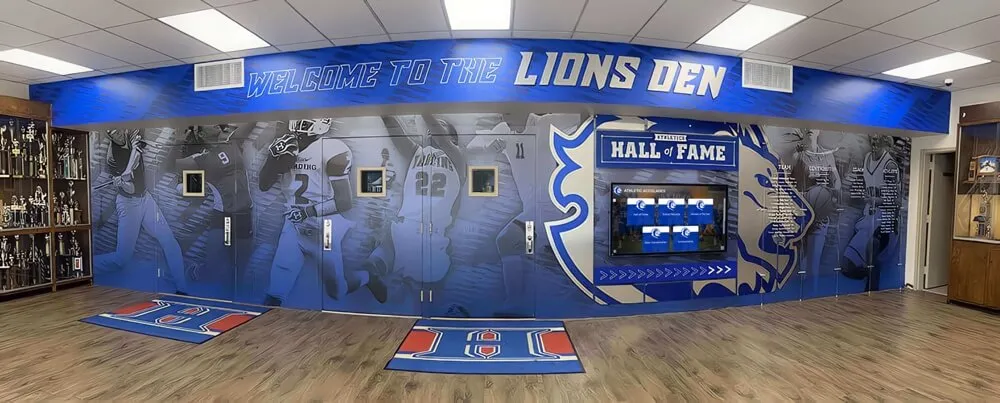
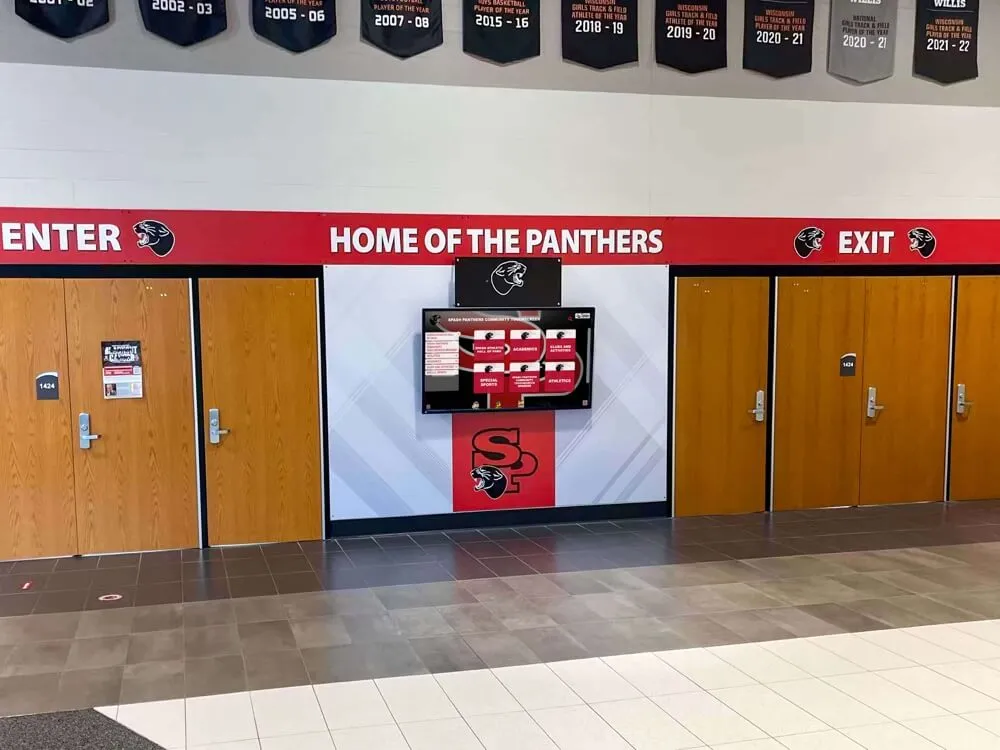
Recognition investments that celebrate athletic history depend on financial governance that protects the organizational credibility behind every purchase—gift card controls are a frequently overlooked piece of that infrastructure
What Is a Booster Club Gift Card Policy?
A booster club gift card policy is the governance document that closes the oversight gap between an organization’s general purchasing controls and the specific risks that gift cards introduce. Gift cards differ from other common booster club purchases in three ways that require policy-specific treatment:
They are cash equivalents. A gift card issued from organizational funds represents a transfer of value with no inherent restriction. The recipient can use it for any purpose—organizational or personal—without the purchase leaving a traceable audit trail. This distinguishes gift cards from reimbursable expense receipts, which document what was actually purchased.
They may trigger IRS reporting obligations. Gift cards issued to volunteers, employees, or participants in connection with their service may constitute taxable compensation requiring W-2 or 1099 reporting, depending on amount, recipient status, and use. The IRS does not provide a blanket de minimis exclusion for gift cards issued to employees; amounts as low as $25 may be reportable depending on the circumstances.
They create audit risk when undocumented. Auditors reviewing nonprofit financial records frequently flag gift card purchases that lack recipient documentation. An undocumented gift card purchase—where there is no record of who received the card or for what purpose—creates a presumption of unauthorized distribution that the organization must disprove through reconstruction.
The policy answers five questions that must be settled in writing before any gift card is purchased with organizational funds:
- What purposes justify a gift card purchase? Permitted uses should be limited to specific, pre-approved categories: participant recognition prizes, volunteer appreciation awards, sponsor-directed incentives, or board-approved promotional activities.
- Who must approve each purchase? Every gift card purchase should require approval from a second officer before any funds are expended, regardless of amount.
- What documentation is required at the time of purchase? The receipt, the purpose, and the intended recipient category must be documented before the card is purchased, not after.
- How must distributions be recorded? Each card issued must be recorded in the gift card log with the recipient’s name, the date of distribution, the card value, and the stated purpose.
- What happens to unused or unredeemed cards? Lost, unused, or returned gift cards must be reported immediately and handled as the organizational property they are.
Why Gift Cards Create Unique Control Challenges
Booster clubs face a specific set of pressures that make gift card policy gaps particularly consequential.
Informal culture. Many booster clubs operate with a high degree of informality—decisions made by text, purchases made at the treasurer’s discretion, distributions handled at events without documentation. Gift cards fit naturally into that informal culture in ways that create audit exposure: a treasurer buys ten $25 restaurant gift cards for volunteers at the fall concession stand, distributes them at the end of the night, and files no record of who received what. Each card is a legitimate organizational expenditure; the documentation gap is what creates the governance problem.
High turnover at officer level. When a treasurer who managed gift card distributions informally is succeeded by a new officer who discovers undocumented purchases, the organization cannot produce the recipient records needed to close a prior-year audit. Athletic alumni recognition programs face the same institutional continuity challenge: recognition commitments made in prior years must be documentable in current governance reviews. Financial records—including gift card logs—are part of that institutional continuity.
Sponsor and donor exposure. When a sponsor contributes funds specifically for volunteer appreciation, participant awards, or event prizes, and those funds are disbursed as gift cards without documentation, the sponsor has no way to verify that their contribution was used as directed. Data integrity across recognition program operations applies the same principle: the systems behind a program are only as trustworthy as the controls that protect them. A gift card policy with complete recipient tracking is the financial record that answers a sponsor’s stewardship question before they ask it.
Misuse risk. Gift cards purchased with organizational funds but never distributed—or distributed to officers rather than to the approved recipient categories—represent a misuse risk that only a recipient log can detect. Without a log, a missing card creates ambiguity; with a log, a missing entry is an immediate escalation item.
Gift Card Purchase Approval Thresholds
The tier structure below applies a uniform approval requirement to all gift card purchases because of their cash-equivalent nature. Unlike routine supply purchases, gift cards should never be approved at a single-officer level regardless of amount.
| Tier | Single Card Value or Batch Total | Approval Required | Additional Documentation |
|---|---|---|---|
| Standard | Under $100 per card; batch under $500 | Two authorized officers | Purpose statement + recipient list at time of purchase |
| Major | $101–$500 per card; batch $501–$2,500 | Two officers + written board notification within 7 days | Purpose statement + recipient list + board notification record |
| Extraordinary | Above $500 per card or batch above $2,500 | Full board vote before purchase | Board resolution + purpose statement + recipient list |
| Restricted | Any amount directed by sponsor or donor for specific use | Approval per donor agreement terms | Donor agreement reference + all standard documentation |
The thresholds above are illustrative starting points. Your organization should set specific dollar figures that reflect your program’s typical expenditure patterns, your district’s requirements, and any guidance from your CPA. What matters is that the thresholds are explicit dollar amounts in the written policy—not references to “small” or “significant” purchases.
Eight-Step Gift Card Approval and Issuance Workflow
Each step below must be completed before gift cards are distributed to any recipient. Documentation from each step is filed together in the gift card record.
Step 1: Identify and Document the Purpose
The requesting officer documents in writing the purpose of the proposed gift card purchase: the occasion, the intended recipient category (volunteer appreciation, participant prize, board-approved promotional award), the number of cards, the denomination, and the proposed distribution date. This documentation goes to the approving officer before any purchase is authorized.
Step 2: Confirm Budget Availability
The treasurer confirms that a specific budget line covers the purchase and that sufficient funds are available. Gift card purchases that would draw the account below the organization’s minimum reserve require board approval regardless of the transaction amount.
Step 3: Obtain Second-Officer Approval in Writing
A second officer—typically the president or a designated board member—reviews the purpose documentation and provides written approval before any purchase is made. Email confirmation is acceptable; text messages are not. The approval record identifies the approving officer, the date and time of approval, and the specific purchase it covers.
Step 4: Purchase Cards and Retain Complete Documentation
The purchasing officer retains the original itemized receipt showing the card denominations, quantities, and total purchase amount. Where possible, purchase gift cards using a traceable payment method—organizational check, debit card, or purchase order—rather than cash. Document the purchase method on the receipt.
Step 5: Record Each Card in the Gift Card Log Before Distribution
Before any card leaves the organization’s possession, record each card in the gift card log (see template below): card number or identifier, denomination, purchase date, purchase method, approval reference, and the planned recipient if known. Cards should not be distributed from a batch without a corresponding log entry.
Step 6: Distribute Cards and Capture Recipient Acknowledgment
Distribute each card individually and obtain a signed or initialed acknowledgment from the recipient: their name, the card value, the date of distribution, and the purpose of the award. For group distributions at events where individual signatures are impractical, record the distribution list with the best available identifying information (first name, team, volunteer role) and note the distributing officer and the event on the log.
Step 7: Reconcile Purchased Cards Against Distributed Cards
After every distribution event, the treasurer reconciles the cards purchased against the cards distributed. Cards remaining in organizational possession must be secured in a locked location and documented as outstanding in the log. Cards that were purchased but not distributed at the expected event are flagged for follow-up—not carried informally until the next event.
Step 8: Report Outcomes at the Next Board Meeting
The treasurer presents a summary of all gift card activity at the next monthly board meeting: cards purchased, cards distributed, recipient categories, and any outstanding cards. The board’s review is recorded in meeting minutes. This creates the governance record that auditors and district reviewers require.
Gift Card Tracking Log Template
Maintain a running log of every gift card purchased and distributed. The log is the single document that connects each card to its purchase authorization, its distribution, and its recipient.
BOOSTER CLUB GIFT CARD TRACKING LOG
[Club Name] — [School Name]
Fiscal Year: _______

| Log # | Purchase Date | Card Identifier | Denomination | Purpose/Occasion      | Approved By       | Recipient Name    | Distribution Date | Recipient Signature/Initials | Outstanding? |
|-------|--------------|-----------------|--------------|----------------------|-------------------|-------------------|-------------------|------------------------------|--------------|
| GC-001| MM/DD/YYYY   | [Last 4 digits] | $XX.00       | Volunteer Appreciation| [Officer Name]    | [Recipient Name]  | MM/DD/YYYY        | [Initials]                   | No           |
| GC-002| MM/DD/YYYY   | [Last 4 digits] | $XX.00       | Participant Prize     | [Officer Name]    | [Recipient Name]  | MM/DD/YYYY        | [Initials]                   | No           |
| GC-003| MM/DD/YYYY   | [Last 4 digits] | $XX.00       | [Purpose]             | [Officer Name]    | UNDISTRIBUTED     | —                 | —                            | YES          |

PERIOD SUMMARY
Cards Purchased This Period:        _______
Cards Distributed This Period:      _______
Cards Outstanding (not distributed):_______
Total Value Purchased:              $________
Total Value Distributed:            $________
Total Value Outstanding:            $________

Reconciled By: ___________________________  Date: ___________
Reviewed By (Second Officer): ___________  Date: ___________
Presented to Board: ___________  Board Meeting Date: ___________
Use sequential numbering restarting each fiscal year. The log should be reviewed and presented at every board meeting alongside the monthly financial reconciliation. A log entry showing an undistributed card for more than 30 days is an immediate follow-up item.
Gift Card Policy Compliance Checklist
Complete this checklist at each distribution event and at the annual governance review.
BOOSTER CLUB GIFT CARD COMPLIANCE CHECKLIST
[Club Name] — [School Name]
Period/Event: ___________________________   Date: ___________

PURCHASE CONTROLS
[ ] Purpose documented in writing before any purchase was authorized
[ ] Budget line confirmed available before purchase
[ ] Second-officer written approval obtained before purchase
[ ] Original itemized receipt retained showing denominations and quantities
[ ] Cards purchased using traceable payment method (check/debit/PO)
[ ] Each card recorded in gift card log before distribution

DISTRIBUTION CONTROLS
[ ] Each card distributed individually, not as a bulk handoff
[ ] Recipient name recorded in gift card log at time of distribution
[ ] Recipient acknowledgment obtained (signature or initials) at time of distribution
[ ] Distributing officer name and distribution date recorded in log
[ ] Cards not distributed at expected event secured in locked location
[ ] Outstanding cards documented in log as pending distribution

RECONCILIATION AND REPORTING
[ ] Cards purchased reconciled against cards distributed after each event
[ ] Undistributed cards accounted for by location and expected distribution date
[ ] Period summary prepared for board presentation
[ ] Log reviewed by second officer before board meeting
[ ] Summary presented at monthly board meeting and recorded in minutes

ANNUAL GOVERNANCE REVIEW
[ ] Gift card policy reviewed and updated if thresholds or procedures changed
[ ] All fiscal-year gift card logs completed and filed
[ ] Outstanding cards from prior periods resolved or written off with board approval
[ ] Recipient acknowledgment records filed with corresponding log entries
[ ] CPA or financial advisor reviewed gift card log for reportable amounts

Checklist completed by: ___________________________  Date: ___________

Trophy cases and recognition hallways represent the visible outcome of years of booster club fundraising—the financial controls behind each funded purchase, including gift card issuances, are the governance record that sustains that investment program
Gift Card Use Cases That Require Policy Coverage
Not all gift card use cases carry equal documentation requirements. The table below maps the most common booster club gift card use cases to the specific controls each requires.
| Use Case | Policy Requirement | IRS Consideration | Notes |
|---|---|---|---|
| Volunteer appreciation awards | Approval + recipient log + acknowledgment | May be taxable compensation to employees; consult CPA | Even small amounts require documentation |
| Participant incentive prizes | Approval + recipient log + acknowledgment | Generally not taxable for student recipients; confirm with CPA | Prize amounts above $600 may require 1099 |
| Raffle or event prizes | Board-approved raffle policy + prize log | Consult CPA regarding reporting for prizes above $600 | Raffle compliance varies by state |
| Sponsor-directed distribution | Donor agreement reference + all standard controls | Follow the agreement’s stated purpose and recipient restrictions | Document connection to sponsor commitment |
| Coach or staff gifts | Full board approval + recipient log + acknowledgment | Likely taxable to recipient; W-2 or 1099 may apply | Treat as compensation, not gift |
| End-of-season team awards | Approval + distribution list with each recipient named | Generally not taxable for student recipients | Document each recipient individually |
| In-kind sponsor contribution | Acceptance policy + in-kind gift log | Record at fair market value as in-kind revenue | Separate from outgoing gift card log |
For any use case involving employee or contractor recipients, consult your CPA before distribution. The IRS position on employer gift cards has been consistently strict: gift cards are not excludable as de minimis fringe benefits for employees, regardless of the amount.
Gift Card Policy Template
The template below provides the core policy elements for a medium-sized school booster club. Adapt dollar thresholds to your program’s annual expenditure volume and have this document reviewed by your organization’s CPA or legal counsel before adoption.
BOOSTER CLUB GIFT CARD POLICY
[Organization Name]
Adopted: [Date]  |  Last Reviewed: [Date]

SECTION 1 — PURPOSE
This policy establishes controls governing the purchase, distribution,
documentation, and reconciliation of gift cards using organizational
funds to protect the organization's financial integrity, tax-exempt
status, and donor and sponsor trust.

SECTION 2 — AUTHORIZED USES
Gift cards may be purchased with organizational funds only for the
following pre-approved purposes:
  - Volunteer appreciation awards (annual or event-based)
  - Participant incentive prizes (board-approved programs only)
  - Raffle or promotional prizes (per adopted raffle policy)
  - Sponsor-directed distributions (per donor agreement terms)
  - Board-approved special programs with documented purpose

Gift cards may NOT be purchased for:
  - Personal gifts to officers or committee members
  - General entertainment or hospitality
  - Any purpose not listed above or not approved in advance by the board

SECTION 3 — APPROVAL REQUIREMENTS
All gift card purchases require second-officer written approval before
purchase, regardless of amount. Batch purchases above $500 require
board notification within 7 days. Purchases above $2,500 or individual
cards above $500 require advance board vote.

No officer may approve gift card purchases for which they are also the
designated recipient or in which they have a personal interest.

SECTION 4 — DOCUMENTATION REQUIREMENTS
Every gift card purchase requires, filed before distribution:
  - Written purpose statement approved by second officer
  - Original itemized receipt
  - Budget line reference
  - Entry in gift card tracking log for each card

Every gift card distribution requires, filed at time of distribution:
  - Recipient name recorded in tracking log
  - Recipient acknowledgment (signature or initials)
  - Distributing officer name and date recorded in log

SECTION 5 — TRACKING LOG
The treasurer maintains a gift card tracking log recording every card
purchased, every card distributed, and every card outstanding. The log
is reconciled after each distribution event and presented at each
monthly board meeting.

SECTION 6 — OUTSTANDING AND UNUSED CARDS
Undistributed gift cards are organizational property secured in a
locked location. Cards outstanding for more than 30 days require a
status report to the board. Cards that become unrecoverable are
written off by board vote with a record in the log.

SECTION 7 — TAX REPORTING
Gift cards issued to employees, contractors, or individuals receiving
compensation-related awards may constitute taxable income. The
treasurer will consult the organization's CPA annually to determine
whether any gift card distributions require W-2 or 1099 reporting.

SECTION 8 — RECORD RETENTION
  Gift card purchase receipts:        7 years
  Gift card tracking logs:            7 years
  Recipient acknowledgment records:   7 years
  Board approval minutes:             Permanent

Approved by: ________________________________  Date: ___________
[Board Chair or President]
Connecting Gift Card Controls to Sponsor Stewardship
The connection between gift card policy and sponsor stewardship is direct. Many booster clubs use gift cards as part of sponsor benefit fulfillment: a sponsor at a particular recognition tier may fund a volunteer appreciation award program, a participant prize drawing at a sponsored event, or an end-of-season team award. When those gift cards are distributed without documentation, the sponsor has no record that the funded program was executed as promised.
A gift card policy that requires recipient logging and distribution acknowledgment creates, as a byproduct, the benefit delivery record that answers a sponsor’s stewardship question at renewal time. That record is especially important for sponsors whose contributions are tied to visible recognition programs.
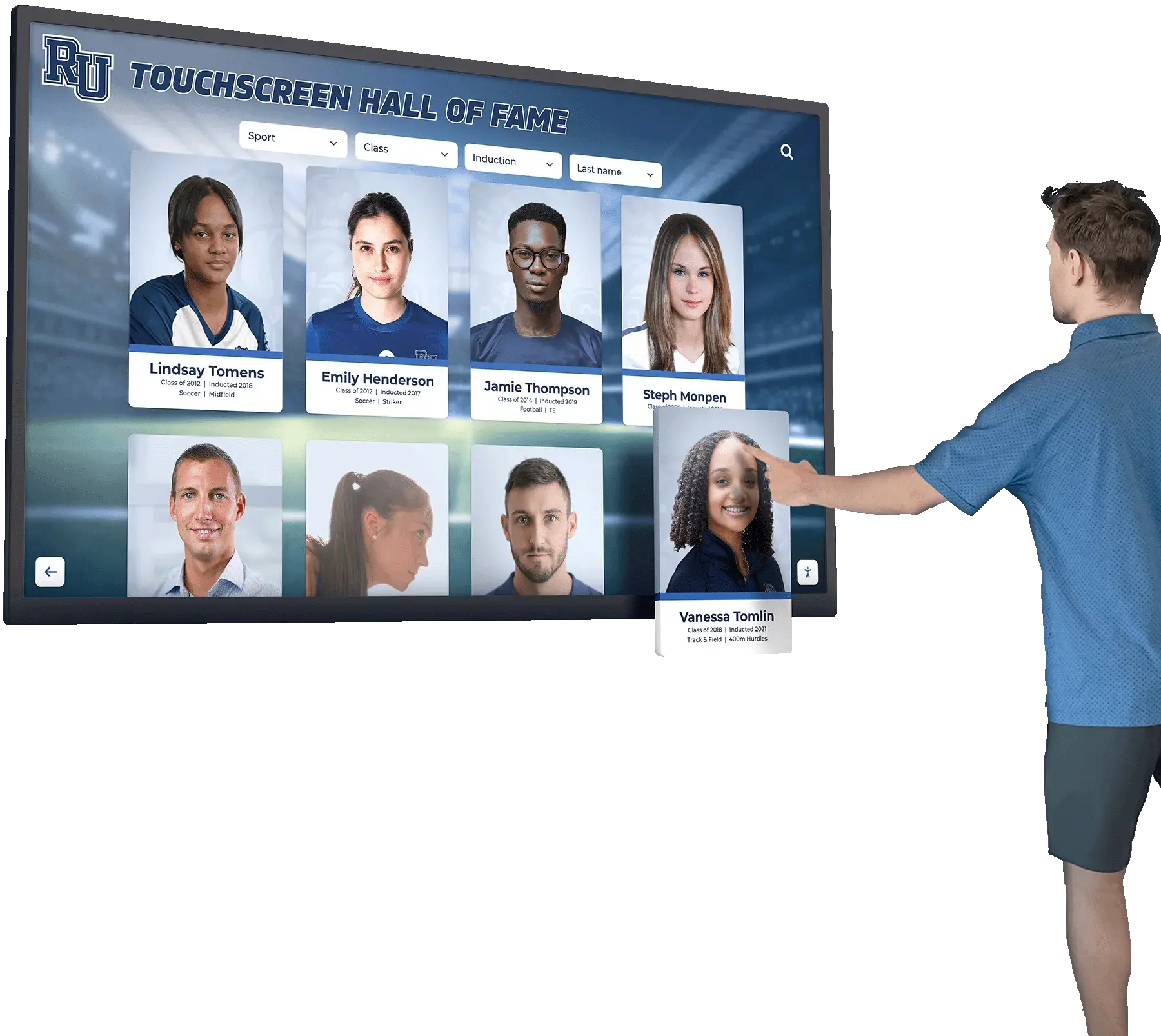
Athletic recognition walls and alumni display programs represent long-term sponsor commitments where every funded component—including event awards and volunteer recognition—must trace to documented organizational spending. Hall of fame governance frameworks apply the same documentation discipline to recognition assets that gift card policy applies to financial assets: what was committed, what was delivered, and what record supports that connection.
For booster clubs that manage multi-year sponsor relationships, the gift card log becomes part of the broader stewardship file. When a sponsor asks what their contribution funded in year two of a three-year agreement, the treasurer who can produce a complete gift card distribution record—showing which volunteers were recognized, which participants received awards, and which events were supported—enters the renewal conversation with documented evidence rather than informal assurance. Recognition programs built on institutional continuity demonstrate to sponsors and donors that the organization honors commitments with the same rigor it uses to govern its finances.
Request a DonorsWall WalkthroughIRS Documentation Standards for Nonprofit Gift Card Distributions
The IRS has established clear expectations for how tax-exempt organizations must treat gift cards distributed to various recipient categories. These standards should inform both the policy document and the tracking log design.
Employees and officers. Gift cards provided to individuals who receive W-2 compensation from the organization—including paid coaches, administrative staff, or part-time event workers—do not qualify as excludable de minimis fringe benefits. The IRS has stated that cash and cash equivalents, including gift cards, are never excludable as de minimis fringe benefits regardless of the amount. These distributions must be included in the recipient’s wages and reported on their W-2. Your CPA should review any gift card distributions to employees before the close of each fiscal year.
Student participants. Gift cards awarded to student athletes as participation prizes or incentive awards are generally not treated as taxable compensation because the students are not employees of the organization. However, prizes above $600 from a nonprofit to an individual may require 1099-MISC reporting. Confirm the specific threshold and reporting requirements with your CPA.
Volunteers. Volunteer recognition gifts have historically been treated with some flexibility under IRS guidance regarding nominal recognition. However, “nominal” has not been defined to include gift cards, which the IRS treats as cash equivalents. Document volunteer gift card distributions and consult your CPA about reporting obligations.
Independent contractors. Gift cards paid to vendors or contractors in connection with their services may constitute additional compensation reportable on 1099-NEC. Include contractor gift card distributions in your annual 1099 review.
Athletic awards programs and local recognition frameworks that include gift card or cash prize components face the same documentation discipline: recipient records that satisfy organizational governance also provide the source data for year-end tax reporting reviews.
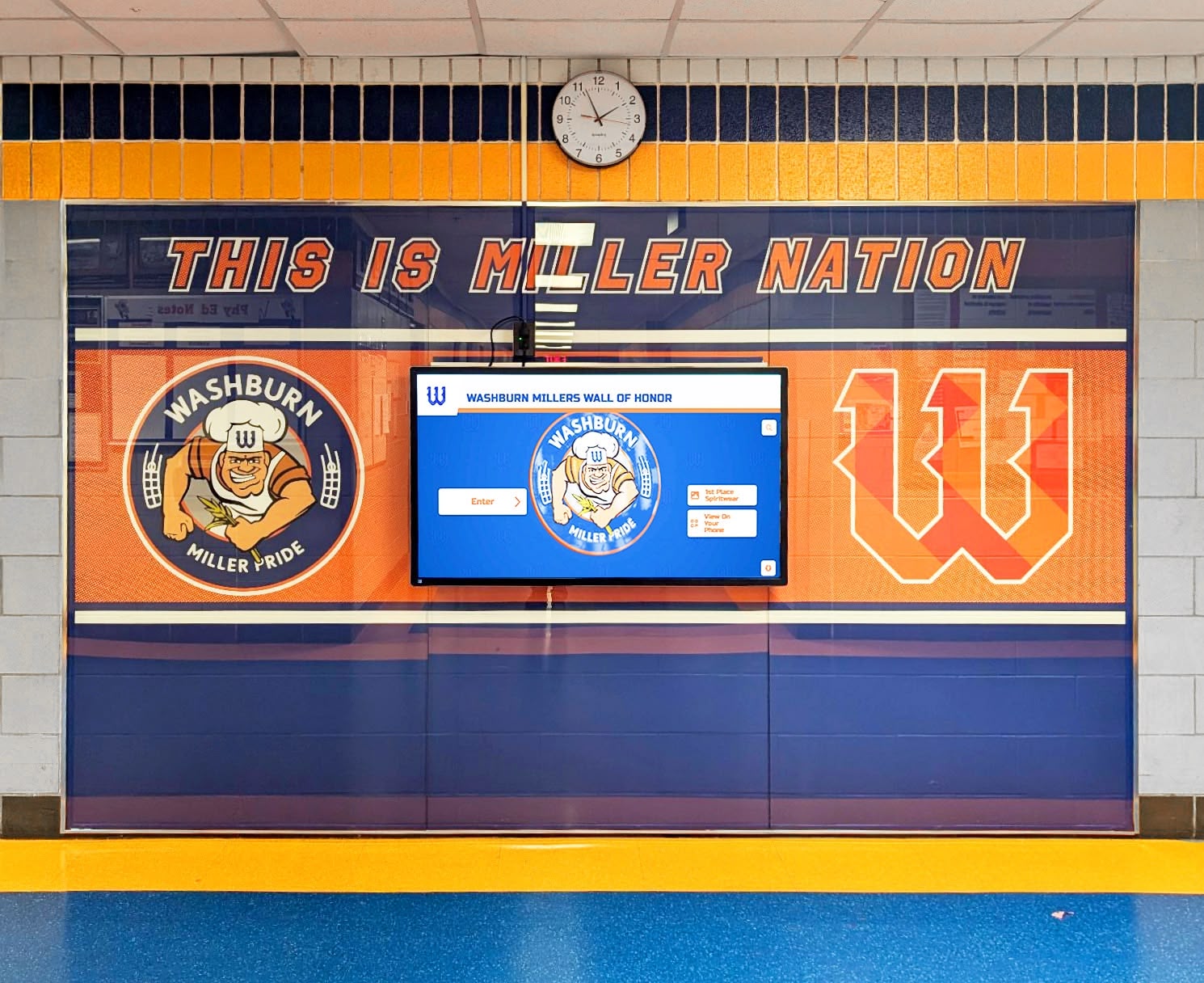
Permanent recognition installations and digital displays represent the visible outcome of years of documented financial stewardship—the gift card controls that govern volunteer appreciation purchases are part of the same governance infrastructure
Gift Card Controls and the Broader Financial Governance Framework
A booster club gift card policy does not operate in isolation. It connects to several other governance documents that together form the organization’s financial control environment.
Credit card policy. The booster club credit card policy typically prohibits gift card purchases on organizational credit cards for precisely the reasons this policy addresses: gift cards are cash equivalents that bypass receipt-level documentation requirements. If your credit card policy prohibits gift cards, the gift card policy should specify the permitted alternative purchase methods—organizational check, debit card drawn on the organizational account, or purchase order—and require that each method produce a traceable receipt.
Dual signature policy. Every gift card purchase should be subject to the dual-approval requirement that governs all significant organizational expenditures. The gift card policy’s second-officer approval requirement should reference and be consistent with the general dual-approval framework.
Purchasing policy. Gift card purchases that exceed ordinary spending thresholds should flow through the same escalation path as other extraordinary purchases. The gift card policy should cross-reference the general purchasing policy’s board approval requirements for large expenditures.
Fraud response plan. If a gift card is purchased but cannot be accounted for in the distribution log, that discrepancy should be treated as a potential unauthorized disbursement and escalated through the same process the organization uses for other financial irregularities.
Recognition program data integrity frameworks apply the same governance logic: controls work when they are connected—when the gift card policy, the purchasing policy, and the board approval process form a coherent system rather than isolated procedures. Athletic banquet programs and award ceremonies where gift cards are commonly used as prizes or volunteer recognition tools are exactly the settings where connected governance—from the budget approval to the distribution log to the board report—demonstrates organizational discipline to sponsors and district administrators.
Common Gift Card Policy Gaps
These are the gaps most frequently identified when booster club gift card practices are reviewed during audits or district governance evaluations.
| Gap | What It Means | How to Address It |
|---|---|---|
| No gift card policy at all | Purchases governed only by general purchasing policy, which may not address cash equivalents | Adopt a standalone gift card policy with approval and tracking requirements |
| No recipient tracking log | Cards purchased but distributed without individual recipient records | Implement the tracking log template before the next purchase |
| Approval obtained after purchase | Cards bought first, approval documented retroactively | Policy must require written approval before any purchase is made |
| Bulk distribution without acknowledgment | Cards handed out at events without recipient names recorded | Require individual distribution records; post-event reconstruction is not acceptable |
| Outstanding cards carried informally | Undistributed cards kept by a volunteer or officer between events | Require cards in organizational possession to be secured and logged as outstanding |
| No IRS reporting review | Distributions to employees or contractors not reviewed for tax reporting obligations | Add annual CPA review of gift card log to governance calendar |
| Gift cards on organizational credit card | Purchases violate credit card policy prohibition on cash equivalents | Require alternative purchase methods specified in the gift card policy |
| No board-level oversight | Purchases and distributions made at officer discretion without board reporting | Require monthly board presentation of gift card activity summary |
| Policy not updated at officer transitions | Incoming treasurer unaware of outstanding cards or log requirements | Add gift card policy and log handoff to officer transition checklist |
Frequently Asked Questions
What is a booster club gift card policy?
A booster club gift card policy is a written governance document that defines when gift cards may be purchased with organizational funds, who must approve each purchase before it is made, what tracking records must be maintained for every card purchased and distributed, and how recipient acknowledgments are documented. Because gift cards function as cash equivalents, they require the same documentation controls that govern cash disbursements and carry potential IRS reporting obligations that standard supply purchases do not.
Why can’t the general dual signature policy cover gift card purchases?
A general dual signature policy establishes who must approve expenditures above a certain threshold. It does not address the specific documentation needs of cash equivalents: the tracking log that connects each card to its recipient, the acknowledgment record that confirms distribution, the reconciliation process that accounts for unredeemed cards, and the annual IRS reporting review. Gift cards also tend to be purchased in batches—a single purchase authorization covers ten or twenty individual distributions—which requires a separate tracking mechanism to connect each card to its recipient.
Are gift cards issued to volunteers taxable?
The tax treatment of volunteer gift cards depends on whether the volunteer is also an employee or contractor of the organization, the amount involved, and the applicable IRS guidance in effect at the time of distribution. The IRS does not exclude gift cards from wage reporting requirements for employees, regardless of the amount. For non-employee volunteers, the treatment is less clear-cut but still requires documentation. Consult your organization’s CPA annually to determine whether any gift card distributions require W-2 or 1099 reporting.
What happens if a gift card is lost before distribution?
A gift card lost before distribution is organizational property that must be reported immediately to the treasurer and documented in the tracking log as lost. The organization should attempt to cancel or replace the card through the issuing retailer if the card’s serial number or PIN was recorded at purchase. A lost card that cannot be recovered should be written off by board vote, with a board resolution filed alongside the tracking log entry. Under no circumstances should a lost card be written off informally at officer discretion.
How does the gift card policy connect to sponsor stewardship?
Many sponsors fund booster club programs that use gift cards as incentive prizes, volunteer recognition awards, or event giveaways. When those distributions are documented—recipient name, date, purpose—the organization can demonstrate to the sponsor that their contribution was used as directed. That documentation supports renewal conversations and builds the institutional credibility that sustains multi-year sponsor relationships. Recognition kiosk and display programs that connect sponsor names to specific program outcomes depend on the same documentation discipline that a gift card tracking log provides: evidence that the committed program was actually delivered.
What records must be retained for gift card purchases and distributions?
Retain the purchase receipt, the approval record, the tracking log entry for each card, and the recipient acknowledgment for a minimum of seven years, consistent with general nonprofit financial record retention guidance. For gift cards distributed in connection with major sponsor programs or named recognition events, consider tying retention to the life of the associated sponsor agreement, since those records may be referenced in future stewardship reviews.
Should gift cards appear in the organization’s annual financial report?
Yes. Gift card purchases are organizational expenditures that should appear in the appropriate budget category in the annual financial report. The cumulative distributions should reconcile against the tracking log totals. Undistributed card balances at year-end should be disclosed as outstanding organizational property. Any amounts requiring IRS reporting should be flagged for inclusion in the year-end tax review.
How should the club handle gift cards received as sponsor in-kind donations?
Gift cards received from sponsors as in-kind contributions should be logged separately in the organization’s in-kind gift register, recorded at fair market value as in-kind revenue, and governed by the same distribution tracking requirements as purchased cards. The donor agreement or in-kind acknowledgment letter should specify the intended use, and the distribution log should reference that agreement when the cards are distributed to the specified recipient category.
Build the Recognition Programs That Reflect Your Financial Governance
Booster clubs that document every gift card distribution with the same rigor they apply to wire transfers and check disbursements are building the institutional discipline that sustains long-term donor and sponsor relationships. When your organization is ready to connect that governance discipline to a recognition platform that displays your community's investment in school athletics with the transparency and permanence those contributors deserve, Rocket Alumni Solutions can show you what a purpose-built recognition environment looks like.
Schedule a Demo with Rocket Alumni Solutions