A booster club internal control self-assessment checklist covers five control areas: cash receipts and deposits, cash disbursements and approvals, fundraising proceeds, sponsor fund management, and recognition program records. When a volunteer-led athletics organization completes the self-assessment before its annual year-end handoff, incoming officers inherit accurate balances, documented procedures, and verified recognition obligations rather than reconstructed records and unresolved questions.
Most booster club governance guides focus exclusively on financial controls. This checklist extends that scope to include the sponsor fund tracking, award records, and hall-of-fame display verification that new officers need to fulfill the recognition commitments made by their predecessors—and to protect the program’s relationship with the sponsors and donors who funded those recognitions.
This guide is for informational and educational purposes only and does not constitute legal, accounting, or compliance advice. Consult a licensed CPA or attorney for guidance specific to your organization’s structure, tax-exempt status, and jurisdiction.

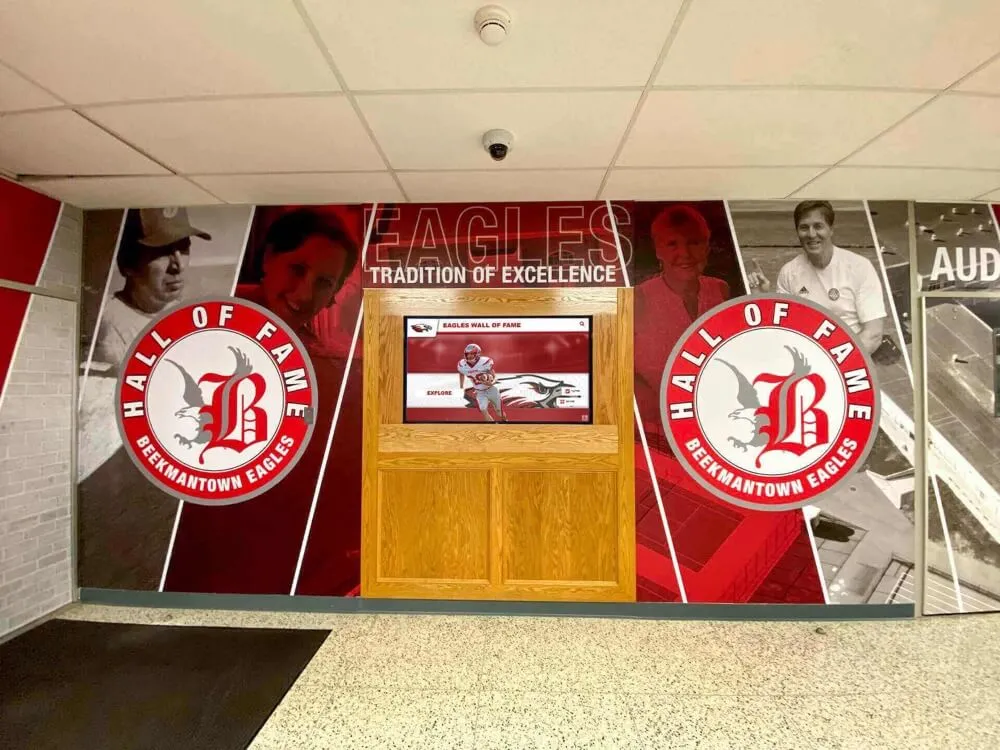
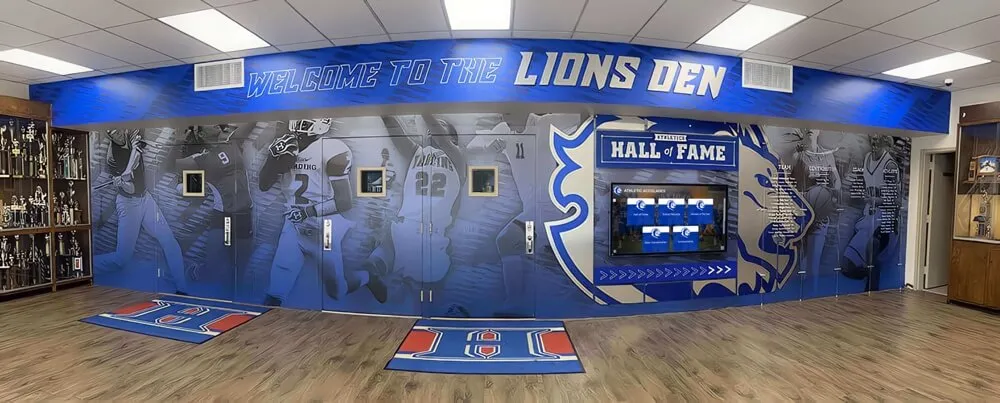
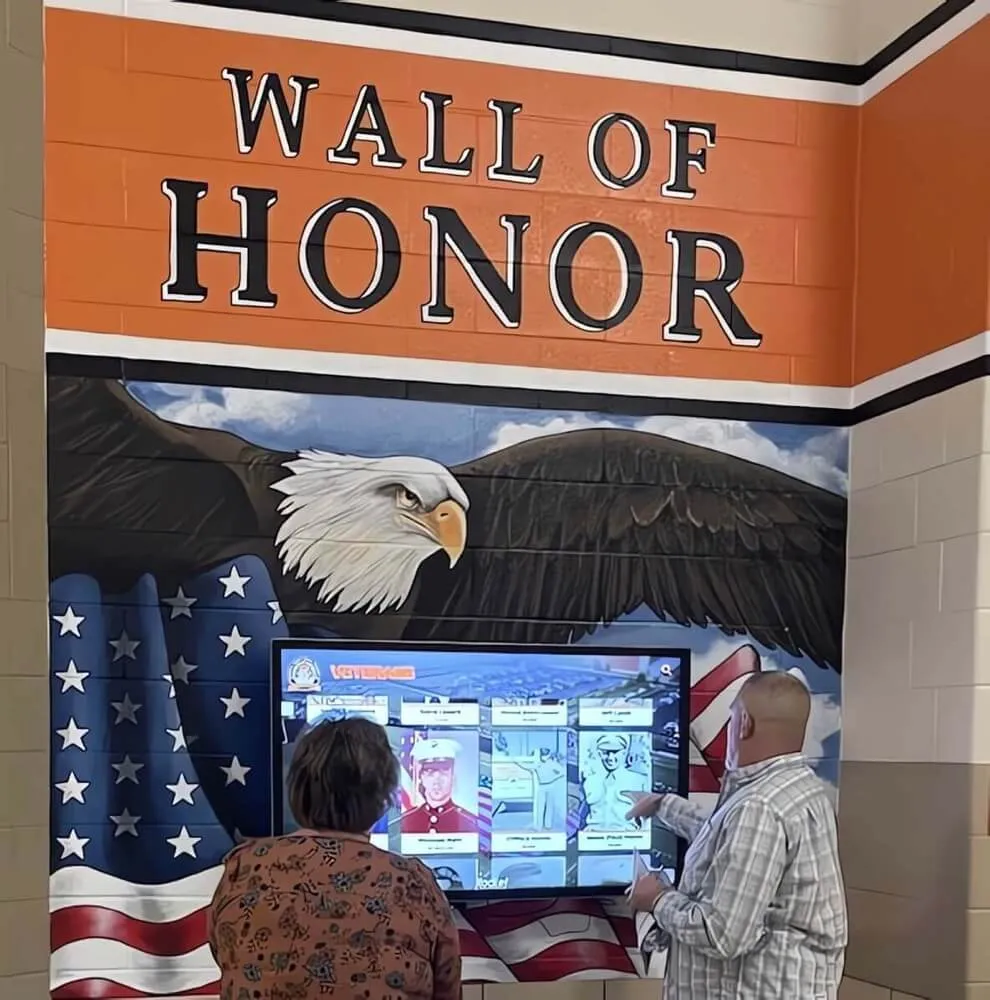
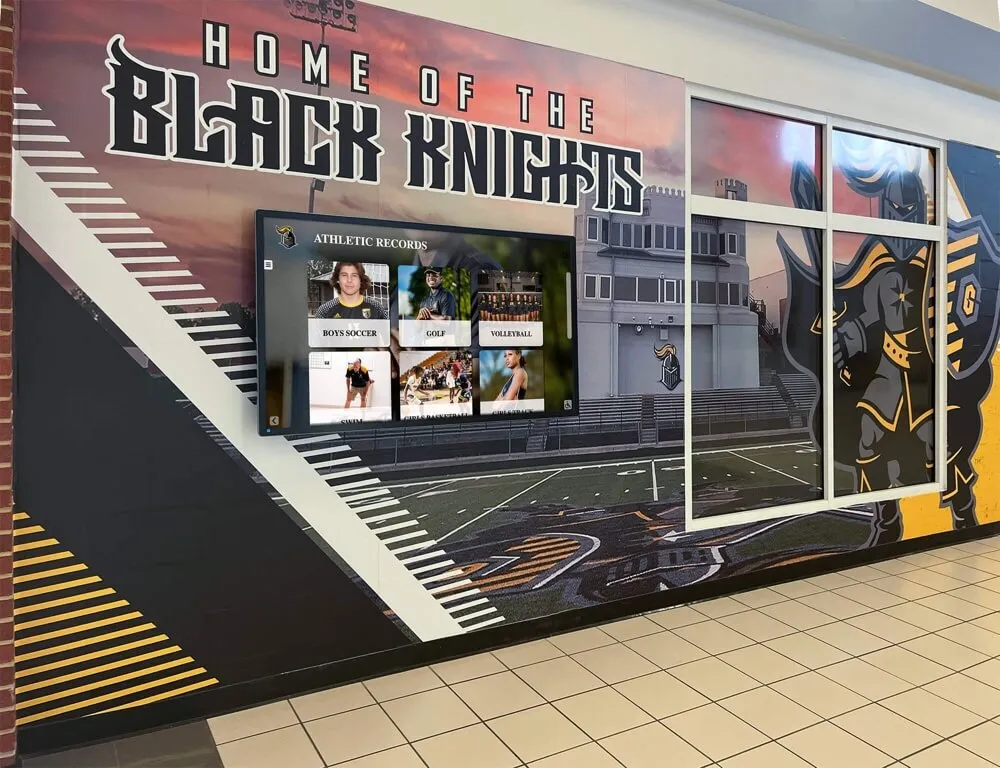
Athletic hallway records boards and recognition displays represent commitments made to donors, sponsors, and honorees—internal controls are what ensure those commitments remain accurate and documented year after year
What Is an Internal Control Self-Assessment for a Booster Club?
An internal control self-assessment is a structured review that the organization’s own officers conduct—rather than an outside auditor—to verify that financial procedures, approval workflows, and record-keeping practices are working as intended. The “self” in self-assessment matters: this is not a formal audit by an external CPA. It is a discipline-building exercise that prevents control gaps from silently accumulating between external reviews.
For school athletics booster clubs, the self-assessment has a practical urgency that purely financial organizations do not always share: officer turnover happens every year. A treasurer who has managed the organization for three years carries procedural knowledge that does not automatically transfer to the parent who volunteers for the role in September. A written self-assessment checklist converts that tacit knowledge into documented controls that any successor can verify from day one.
The assessment covers five areas:
- Cash receipts and deposits — how money enters the organization and is recorded
- Cash disbursements and approvals — how money leaves the organization and who authorizes it
- Fundraising proceeds management — how funds from campaigns, concessions, and events are tracked
- Sponsor fund controls — how sponsor payments are received, acknowledged, and applied to promised benefits
- Recognition program records — how award histories, hall-of-fame entries, and display commitments are documented and maintained
Each area has its own section in the checklist below. A clean self-assessment does not guarantee perfect financial health, but it does identify control gaps before they become governance problems—or before a new officer inherits a program they cannot fully understand.
Control Area 1: Cash Receipts and Deposits
Cash receipts are the highest-risk area for most booster clubs because cash is liquid, portable, and difficult to reconstruct if documentation lapses. Strong receipt controls begin before the money is counted.
| Control Item | Responsible Officer | Status |
|---|---|---|
| Written cash-handling policy in place and signed by current officers | President | ☐ |
| Two-person counting rule enforced for all cash received at events | Treasurer + designee | ☐ |
| Pre-numbered receipt books used for all cash transactions | Treasurer | ☐ |
| Deposits made within 24–48 hours of cash receipt (verify your policy) | Treasurer | ☐ |
| Deposit slips retained and matched to bank statement entries | Treasurer | ☐ |
| No individual other than authorized signatories handles undeposited cash | President | ☐ |
| Cash box secured between events; access limited to designated officers | President | ☐ |
| Annual reconciliation of receipt book sequences confirms no missing receipts | Treasurer | ☐ |
A gap in any of these items is an open control weakness. Programs that run concession stands, ticket sales, booster merchandise tables, or silent auctions should evaluate each revenue stream against these controls separately—the risks differ by event type, and a weakness in concession controls is distinct from a weakness in auction deposit procedures.
Pairing strong receipt controls with a structured fundraising calendar also helps. Booster clubs that plan annual campaigns in advance can build receipt and deposit procedures into event planning rather than improvising them on event day. Resources like booster club fundraising idea guides can help programs structure campaigns that are administratively manageable as well as financially productive.
Control Area 2: Cash Disbursements and Approvals
Disbursement controls prevent unauthorized spending and create the documentation trail needed for district review, tax filings, and year-end transitions. The core principle is separation: the person who approves a payment should not be the same person who issues it.
| Control Item | Responsible Officer | Status |
|---|---|---|
| Board-approved budget in place; expenditures tracked against line items | Treasurer | ☐ |
| Written approval required for all expenditures above the defined threshold | President | ☐ |
| Dual-signature requirement on checks above the dollar limit set by policy | President + Treasurer | ☐ |
| No checks written to cash; no signed blank checks issued | Treasurer | ☐ |
| Original receipts required for all expense reimbursements | Treasurer | ☐ |
| Expenses reviewed against approved budget at each board meeting | Board | ☐ |
| Debit card use governed by written policy; statements reconciled monthly | Treasurer | ☐ |
| No personal purchases commingled with organizational spending | All officers | ☐ |
| Payment approvals for officer reimbursements made by a non-reimbursed officer | President | ☐ |
The dual-signature requirement is the single most important disbursement control for most booster clubs—it prevents any one individual from unilaterally committing organizational funds without a second officer’s concurrence. Many district oversight frameworks require it by policy; even programs without a district mandate should adopt it as standard practice.
Control Area 3: Fundraising Proceeds Management
Fundraising proceeds introduce complexity that general disbursement controls do not fully address. Individual campaigns have distinct purposes, timelines, and reporting requirements. A program that runs five fundraisers per year—a fall tournament, a spring gala, a spirit wear sale, a car wash, and a golf outing—needs campaign-level tracking in addition to aggregate financial controls.
| Control Item | Responsible Officer | Status |
|---|---|---|
| Each fundraising campaign assigned a separate tracking code or ledger account | Treasurer | ☐ |
| Net proceeds calculated for each campaign and reported to the board | Treasurer | ☐ |
| Restricted fundraising proceeds held separately from general operating funds | Treasurer | ☐ |
| Campaign expenses matched to campaign revenue before net is calculated | Treasurer | ☐ |
| Volunteer counting sheets retained for events with significant cash volume | Event chair | ☐ |
| Online fundraising platform connected to a club-controlled account, not an individual’s | Treasurer | ☐ |
| Year-end summary of all campaign proceeds prepared and filed | Treasurer | ☐ |
Campaign-level segregation matters most when fundraising has a designated purpose—equipment purchases, travel funds, scholarship contributions, or recognition display upgrades. When restricted proceeds are commingled with general operating funds, the program loses the ability to demonstrate that restricted gifts were used as intended. That documentation gap can affect IRS compliance, district relationships, and donor confidence simultaneously.

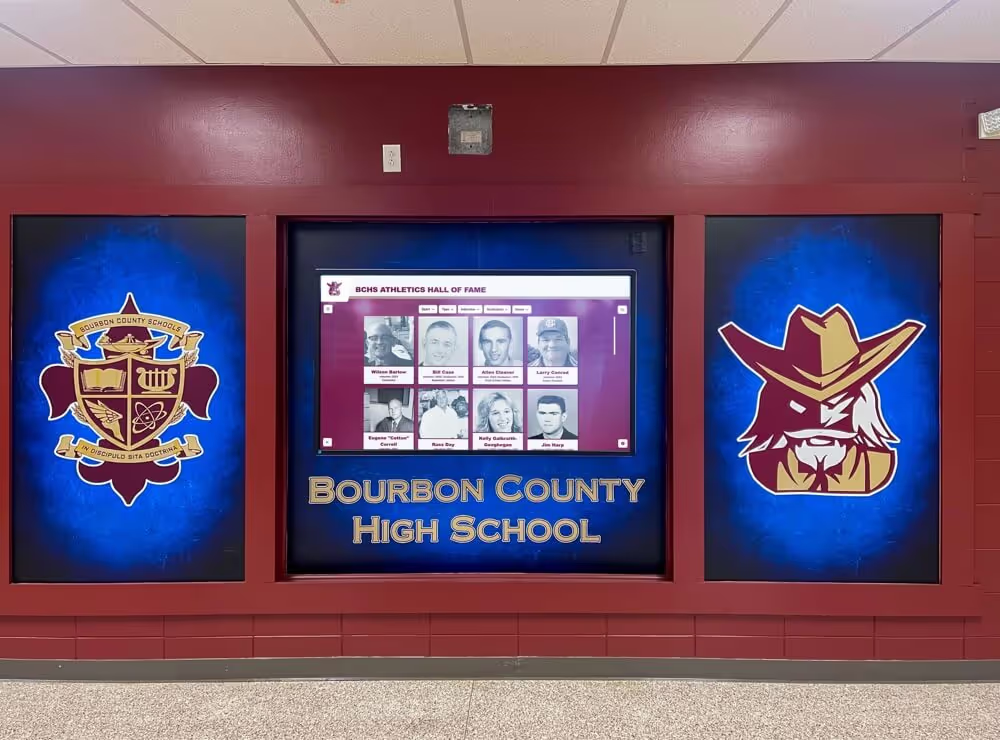
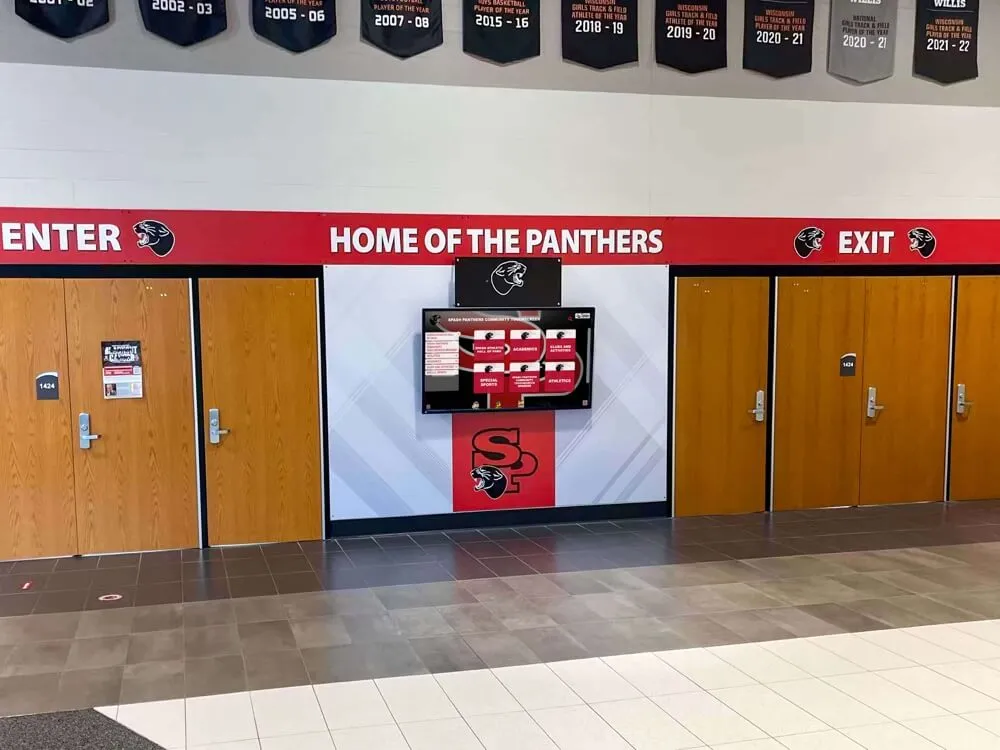
Digital team history displays in school hallways are funded through the same campaigns and sponsor relationships that internal controls protect—clean financial records are the foundation of accurate, sustainable recognition programs
Control Area 4: Sponsor Fund Controls
Sponsor relationships occupy a different governance tier than general fundraising. Sponsors sign agreements. Those agreements promise specific benefits in exchange for specific payments. Tracking sponsor fund controls means verifying not just that the payment arrived and was recorded, but that the program fulfilled what was promised in return.
| Control Item | Responsible Officer | Status |
|---|---|---|
| Signed sponsorship agreement on file for every active sponsor | President | ☐ |
| Sponsor payment amounts reconciled against signed agreement terms | Treasurer | ☐ |
| Promised benefits listed in each agreement and marked as delivered or pending | President | ☐ |
| Sponsor recognition obligations—signage, display, print, digital—documented and verified | Athletic Director | ☐ |
| Multi-year agreements identified; advance payments tracked appropriately | Treasurer | ☐ |
| Non-renewing sponsors identified; recognition removed per contract terms | President | ☐ |
| Sponsor correspondence archived; contact information current | Secretary | ☐ |
| Sponsor acknowledgment letters issued confirming payment and benefit tier | Secretary | ☐ |
The distinction between a financial control and a benefit delivery control matters here. A financial control confirms that the money arrived. A benefit delivery control confirms that the program honored what it promised. Schools and athletics programs that implement dedicated recognition display systems for sponsor acknowledgment find that the platform’s content management log provides built-in benefit delivery documentation—every time a sponsor name is added or updated in the display, a timestamp is created.
For programs evaluating how to structure sponsor recognition alongside athletic achievement records, athletic record book standards guides address how recognition content should be organized, verified, and maintained across sport-by-sport categories—documentation practices that apply equally to sponsor commitments and athletic achievements.
Control Area 5: Recognition Program Records
Recognition program records are the control area most frequently omitted from booster club governance frameworks—and the one most likely to create relationship problems when it lapses. Donor walls, hall-of-fame displays, athletic records boards, and sponsor acknowledgment panels are not passive decorations. They are documented commitments: to honorees whose achievements are displayed, to donors whose giving levels determine placement tiers, and to sponsors whose contracts specify recognition terms.
| Control Item | Responsible Officer | Status |
|---|---|---|
| Inventory of all active recognition displays—physical and digital—maintained | Athletic Director | ☐ |
| Each display entry traceable to a source record (donation record, achievement file, or sponsor agreement) | Athletic Director + Treasurer | ☐ |
| Recent additions (past 90 days) confirmed as installed or scheduled | Athletic Director | ☐ |
| Hall-of-fame and athletic records entries verified against official sport records | Athletic Director | ☐ |
| Donor wall tier placements verified against current giving records | Treasurer | ☐ |
| Donor names verified for correct spelling and preferred recognition format | Secretary | ☐ |
| Display entries for expired sponsors removed or updated per contract terms | President | ☐ |
| Records for recent inductees into hall-of-fame or award programs filed and accessible | Athletic Director | ☐ |
| Year-end summary of all new recognition entries prepared for incoming officers | Athletic Director | ☐ |
The year-end summary for incoming officers deserves particular emphasis. Recognition programs accumulate years of historical content, and incoming officers frequently do not know what commitments their predecessors made. A document listing every active recognition entry, its source record, and its maintenance schedule is the recognition-program equivalent of a balanced bank reconciliation: it tells incoming officers exactly where things stand rather than leaving them to discover gaps through donor or sponsor complaints.
Hall-of-fame display systems built for school athletics programs address this documentation need directly: platforms with content management logging produce an exportable record of every entry, modification, and removal. For programs considering how physical recognition spaces and digital displays can work together, alumni welcome area design guides cover how well-designed recognition spaces support the kind of long-term institutional memory that internal controls are designed to protect.

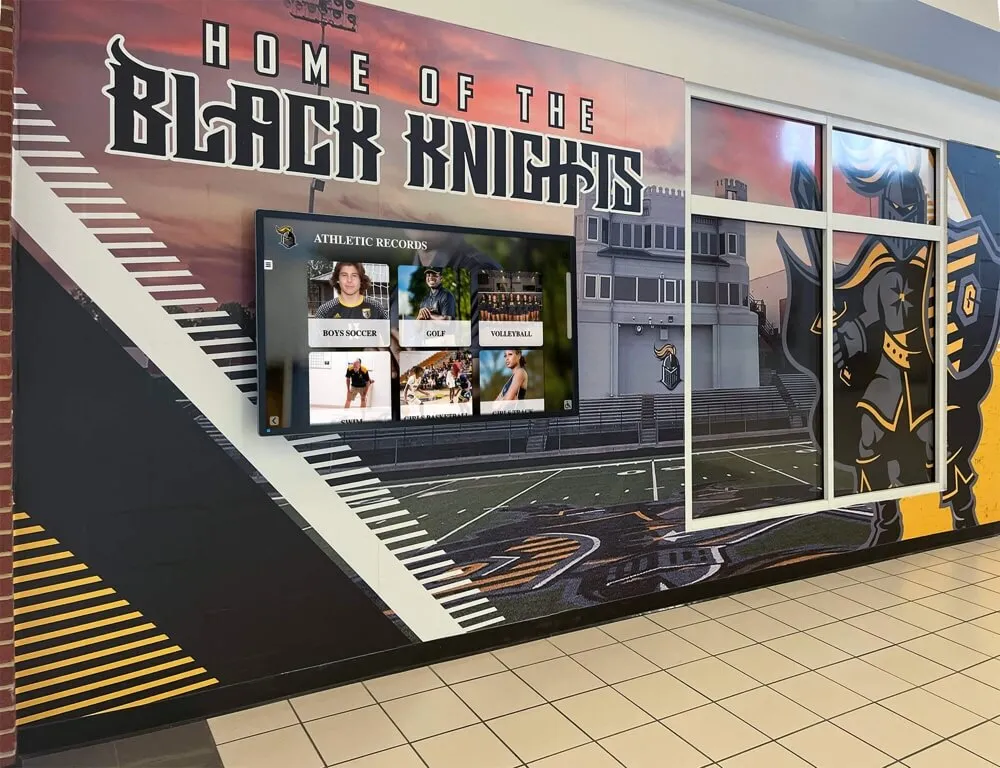
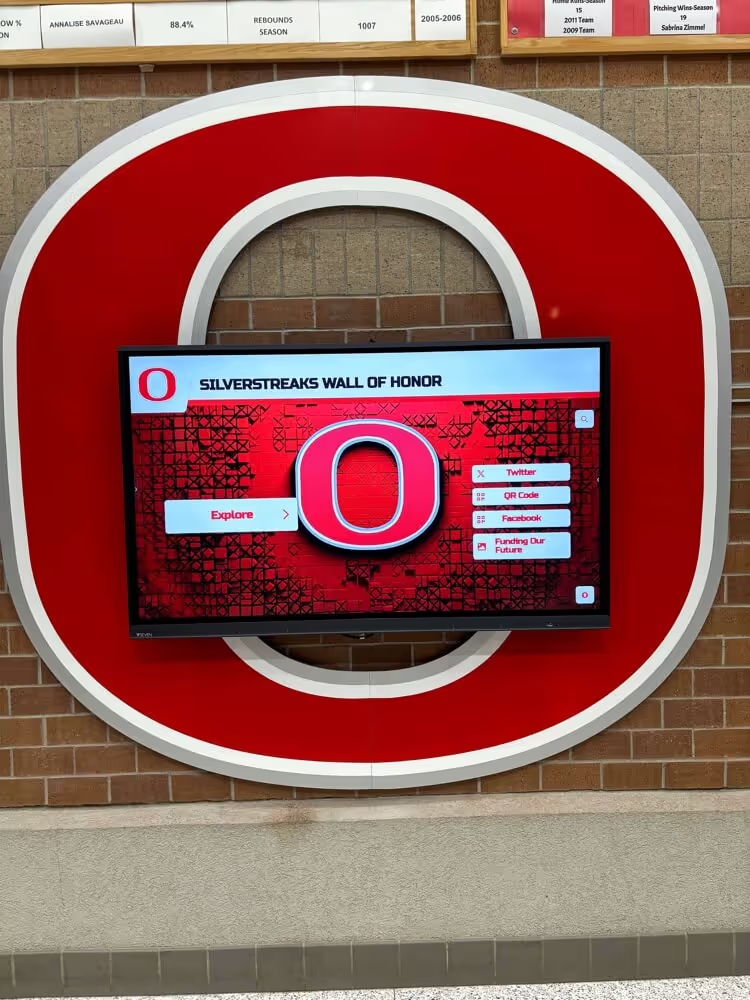
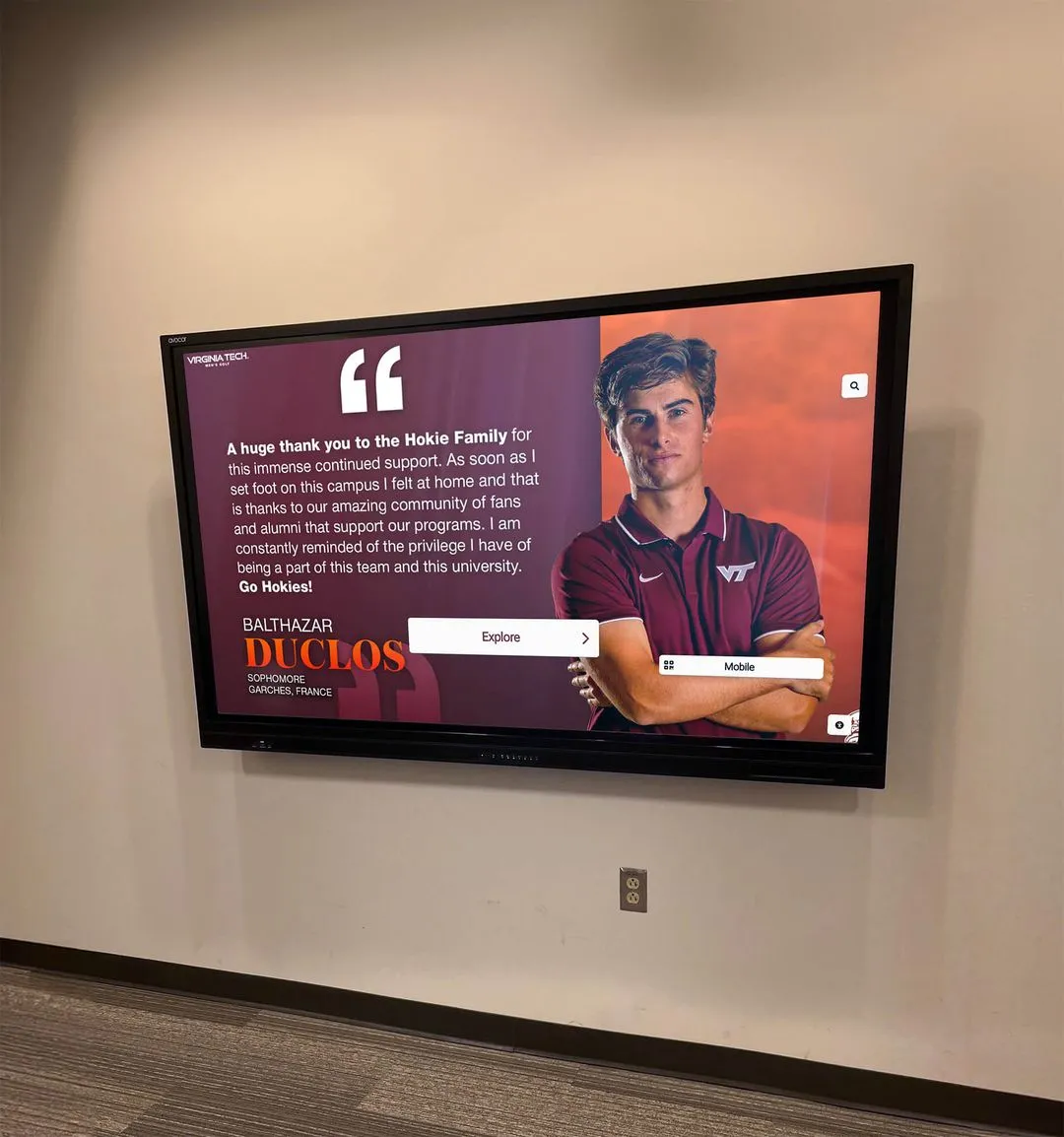
School lobby recognition displays represent ongoing commitments to donors, honorees, and sponsors that the recognition records control area of an internal control self-assessment is designed to verify
How to Conduct the Self-Assessment: A Six-Step Process
Completing the self-assessment checklist is more useful than possessing it. The following process converts the checklist from a reference document into a functional governance exercise.
Step 1: Schedule the Assessment Before Year-End Transition
Time the self-assessment to occur four to six weeks before the expected officer transition. Completing it earlier allows identified gaps to be remediated before the handoff rather than inherited by incoming officers.
Step 2: Assign Each Control Area to the Responsible Officer
Each section of the checklist identifies a responsible officer. The treasurer handles financial controls. The athletic director handles recognition records. The president handles approval procedures and sponsor compliance. Assigning ownership prevents each officer from assuming another officer reviewed their area.
Step 3: Gather Source Documents Before Reviewing Controls
Before evaluating whether a control is working, collect the documents that would prove it: bank statements, board meeting minutes, expense receipts, sponsorship agreements, and recognition display inventories. Reviewing controls without source documents produces assessments of what officers believe is happening rather than what documentation confirms.
Step 4: Record Findings by Control Area
For each checklist item, mark one of three outcomes: Pass (control is operating and documented), Gap (control exists in policy but documentation is missing or incomplete), or Absent (no control or policy exists for this item). Gaps and absences both require remediation, but they call for different responses—a gap is a documentation task, while an absence requires a policy or procedural decision by the board.
Step 5: Present Findings to the Full Board
Present the self-assessment results at a board meeting before the transition. Officers who will not be continuing have the institutional knowledge to explain why certain controls have gaps—that context is valuable to incoming officers. A board meeting creates a formal record that the assessment was completed and that findings were disclosed to the organization’s leadership.
Step 6: Prepare a Handoff Packet for Incoming Officers
The handoff packet should include the completed self-assessment checklist, the prior-year financial summary, copies of all active sponsorship agreements, the recognition display inventory with source records, and contact information for key vendors, the CPA, and district contacts. Best practices for digital hall-of-fame systems include exporting content records as part of this packet—incoming officers who receive a complete content history can verify recognition obligations without reconstructing them from memory.
Quick-Reference Summary Table
Use this condensed table for board presentation or district reporting. All five control areas should be reviewed before closing a self-assessment cycle.
| Control Area | Key Verification Points | Pass / Gap / Absent |
|---|---|---|
| Cash Receipts | Written policy in place; two-person counting; deposits documented and timely | |
| Cash Disbursements | Board-approved budget; dual-signature on large checks; receipts on file | |
| Fundraising Proceeds | Campaign-level tracking; restricted funds segregated; net proceeds reported | |
| Sponsor Funds | Signed agreements on file; benefit delivery verified; correspondence archived | |
| Recognition Records | Display inventory current; entries traceable to source records; year-end summary prepared |
A pass across all five areas indicates a program ready to support a leadership transition without material gaps. A gap or absence in any area identifies a specific remediation task rather than a general finding of “poor recordkeeping.”
Year-End Transition and Incoming Officer Orientation
The internal control self-assessment serves a dual function at year-end: it is simultaneously a governance review and an onboarding document. Incoming officers who receive a completed self-assessment know immediately which controls are strong, which have gaps requiring attention, and which policies need board action. That clarity compresses the orientation timeline from months to days.
For programs with complex recognition commitments—multi-year donor naming arrangements, multi-sponsor display panels, or athletic hall-of-fame programs with decades of inductee history—the recognition records section of the self-assessment is particularly valuable. Digital class composite and interactive yearbook systems demonstrate how digital archiving converts recognition records from institutional memory into searchable, verifiable documentation—a model that booster clubs managing hall-of-fame content can apply directly.
Programs whose recognition infrastructure includes digital display platforms have a structural advantage during transitions: content management systems that log every change provide a built-in audit trail for recognition commitments. Incoming officers do not need to rely on predecessors’ recollections to verify what is displayed and why; the platform history answers both questions automatically.
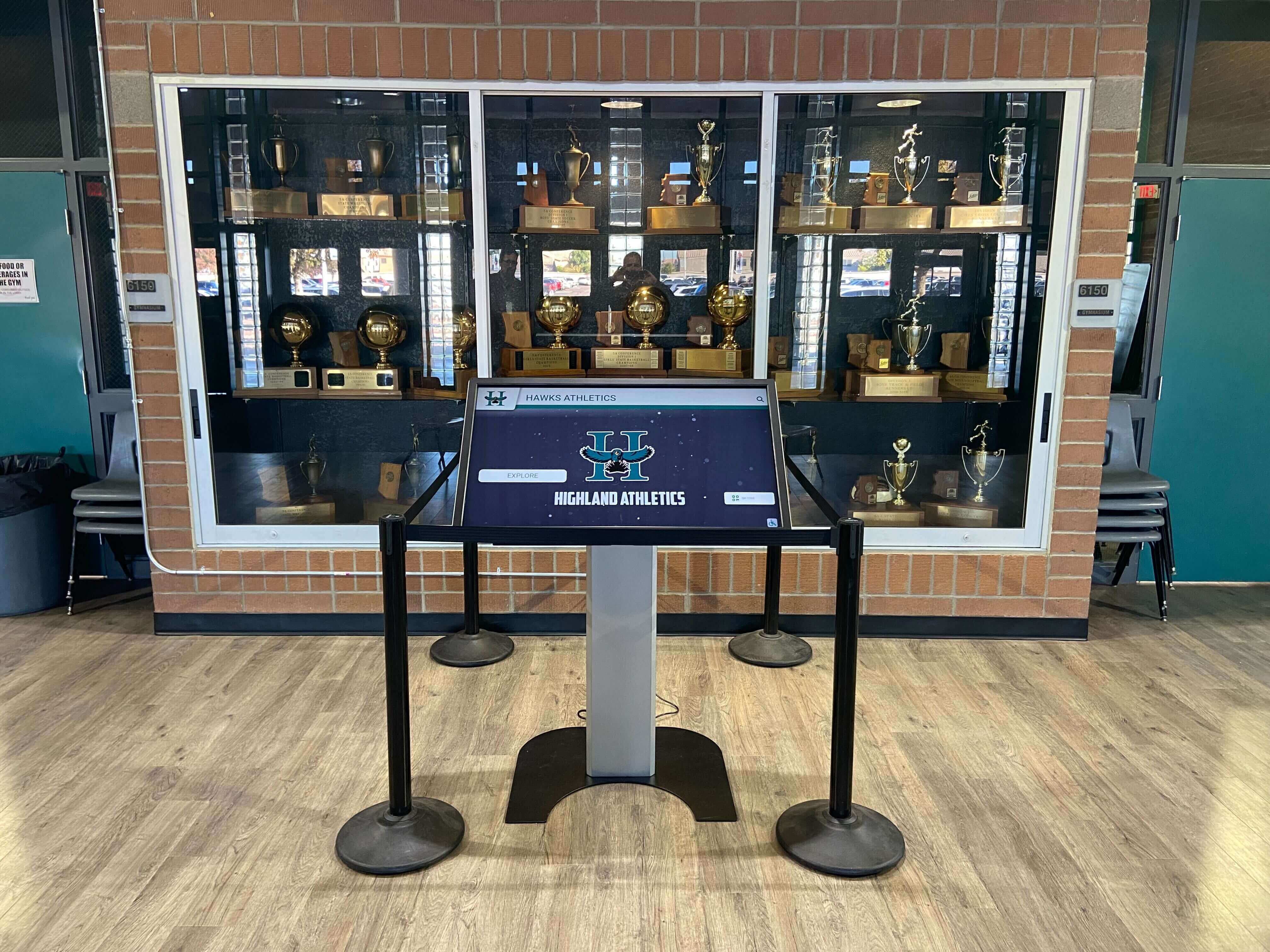
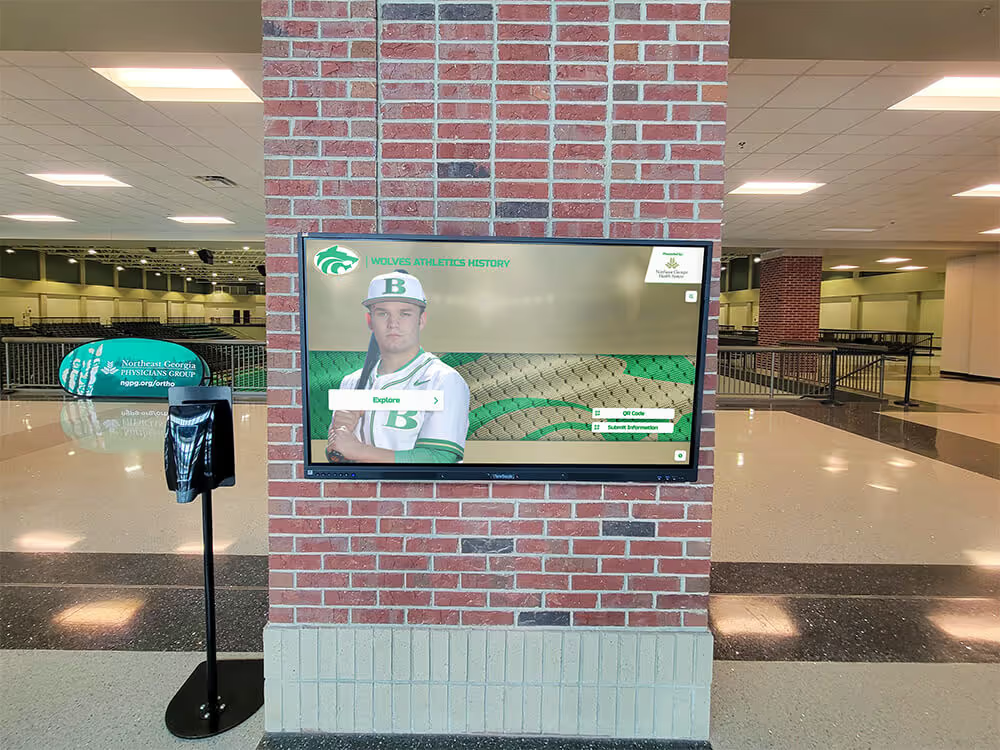
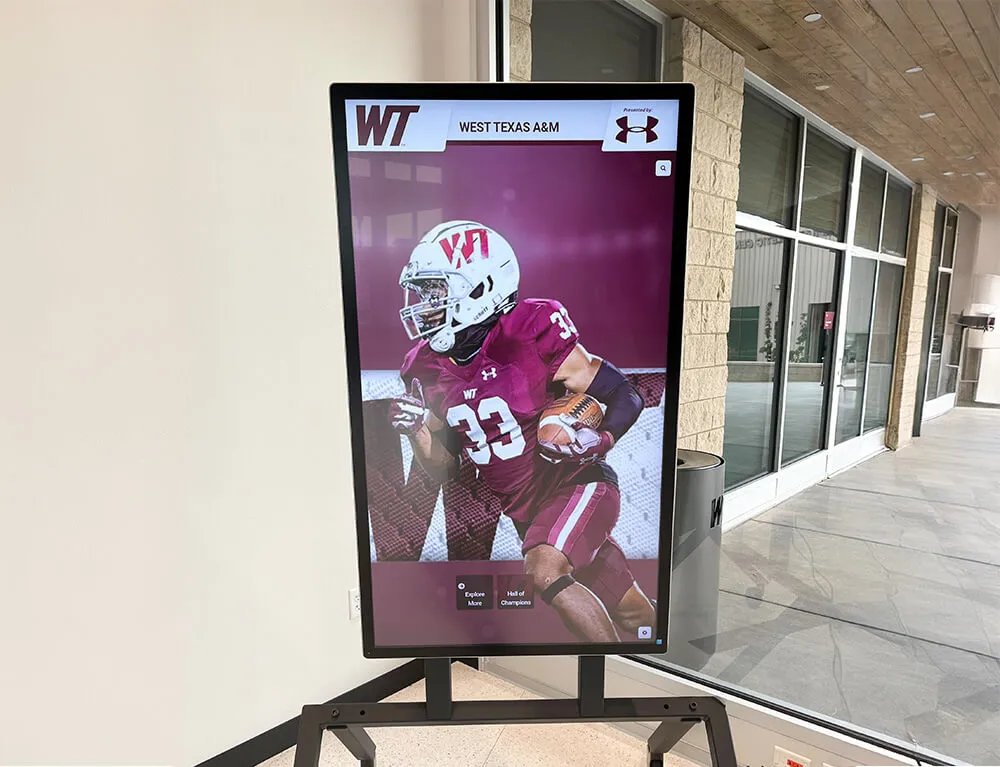
Digital recognition systems integrated into trophy cases and lobby environments generate the content logs and version histories that make recognition records self-assessments straightforward rather than reconstructive
Frequently Asked Questions
How is an internal control self-assessment different from a formal audit?
A formal audit is conducted by an independent party—typically a CPA—who examines financial records, applies professional standards, and issues a formal opinion or report. An internal control self-assessment is conducted by the organization’s own officers using a structured checklist. The self-assessment does not replace a formal audit for incorporated nonprofits that require one; it complements external review by maintaining control awareness between audit cycles. For most booster clubs that do not require a formal annual audit, the self-assessment serves as the primary internal governance mechanism.
How often should a booster club complete an internal control self-assessment?
At minimum, once per year before the officer transition. Programs with significant sponsor portfolios—five or more active multi-year agreements—benefit from a mid-year review of recognition records and benefit delivery status to catch gaps before they become contractual disputes. Financial controls should be reviewed in aggregate at each monthly board meeting; the comprehensive self-assessment is an annual exercise.
What should incoming officers do if they discover a control gap after the transition?
Document the gap, notify the full board, and determine whether it requires remediation by the outgoing officer, a policy change by the board, or a corrective action by the incoming officer. If the gap involves donor or sponsor records—missing agreements, undocumented recognition commitments, or unverified display entries—reach out to affected parties proactively rather than waiting for them to notice the problem independently.
Do booster clubs need internal controls if they are not incorporated as nonprofits?
Yes. Internal controls are not a legal requirement triggered by incorporation status—they are a governance discipline that protects officers, donors, sponsors, and the program regardless of organizational form. An unincorporated booster club whose treasurer is personally named in a financial dispute is just as exposed as an incorporated nonprofit. Controls protect everyone involved in handling organizational funds.
How do recognition program controls connect to donor stewardship?
Every donor name on a wall, every sponsor panel in a lobby, and every athletic record on a display is a commitment the organization made in exchange for a contribution. Internal controls that verify those commitments are current, accurate, and documented are a form of stewardship—they confirm to donors and sponsors that the program values their contribution enough to maintain its records precisely. Programs with strong recognition controls consistently perform better on sponsor renewal because they can demonstrate benefit delivery rather than simply requesting continued support.
What is the most commonly missed control area for booster clubs?
Recognition program records. Most booster clubs invest significant effort in financial controls and give little systematic attention to whether displayed names are correct, whether honor roll placements match giving records, or whether sponsor display commitments reflect current agreements. The gap typically surfaces when a donor or sponsor notices a discrepancy—at which point the program must reconstruct documentation it should have maintained continuously.
When your program is ready to build the recognition infrastructure that makes internal control self-assessments straightforward—digital donor walls with complete entry histories, athletic hall-of-fame displays with content management logs, and sponsor acknowledgment panels tied to verified agreement records—explore how Rocket Alumni Solutions supports school athletics programs with recognition systems designed for year-round governance.