Booster Club Monthly Financial Report Template: A Board-Ready Reporting Workflow

A booster club monthly financial report template gives the board a single, consistent document that shows income collected, expenses paid, restricted fund balances, and outstanding sponsor commitments—every month, in the same format, so every incoming officer can read it without retraining. Athletic directors, booster presidents, and school administrators who rely on verbal treasurer updates or ad-hoc spreadsheets discover the gap the same way: a board member asks how much is left in the scholarship fund, the sponsor who paid for a recognition display tier asks about the installation timeline, and nobody can produce the same answer twice.
This guide provides a reusable booster club monthly financial report template, a monthly close checklist, and a board-report table structure that covers the categories most programs miss—restricted funds, in-kind sponsor commitments, and recognition program obligations. Use it as a starting point and adapt it to your program’s size, number of sports, and sponsor tier structure.
This guide is for informational purposes only and does not constitute legal, accounting, or tax advice. Financial reporting requirements vary by jurisdiction, organizational structure, and tax-exempt filing status. Consult a licensed CPA or attorney before adopting any financial reporting framework for your organization.

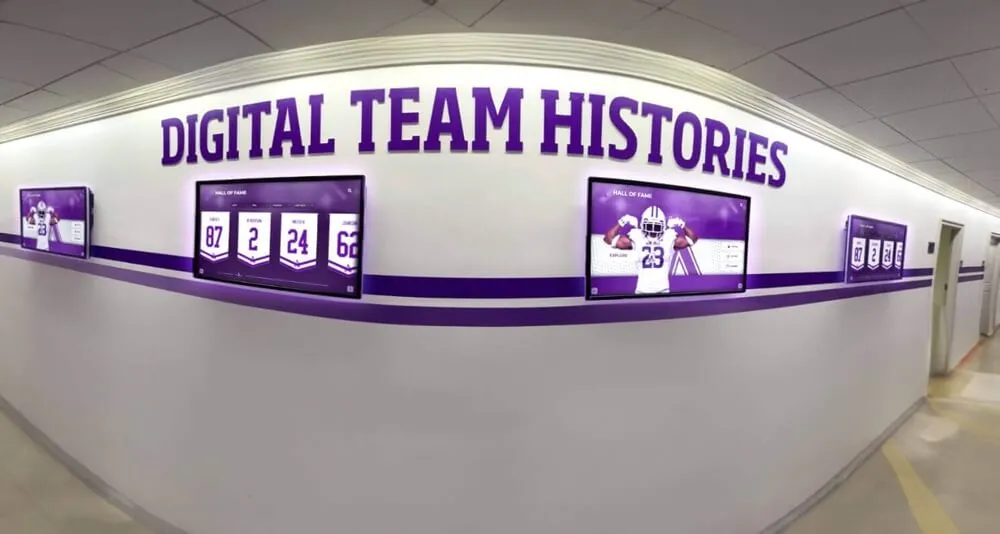
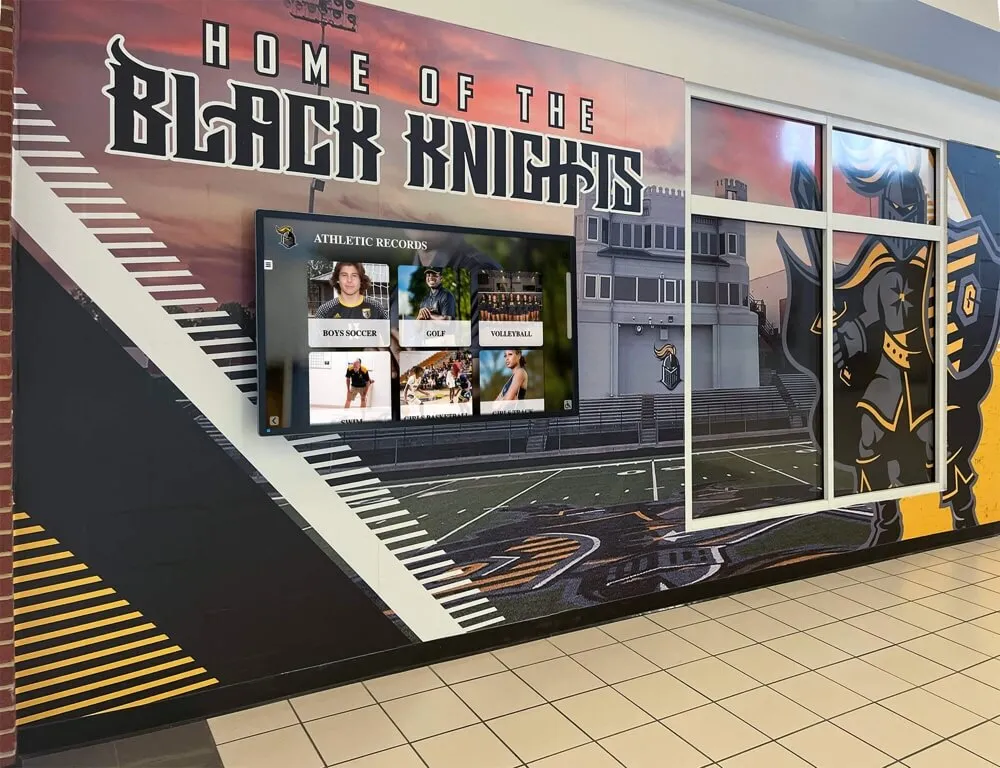
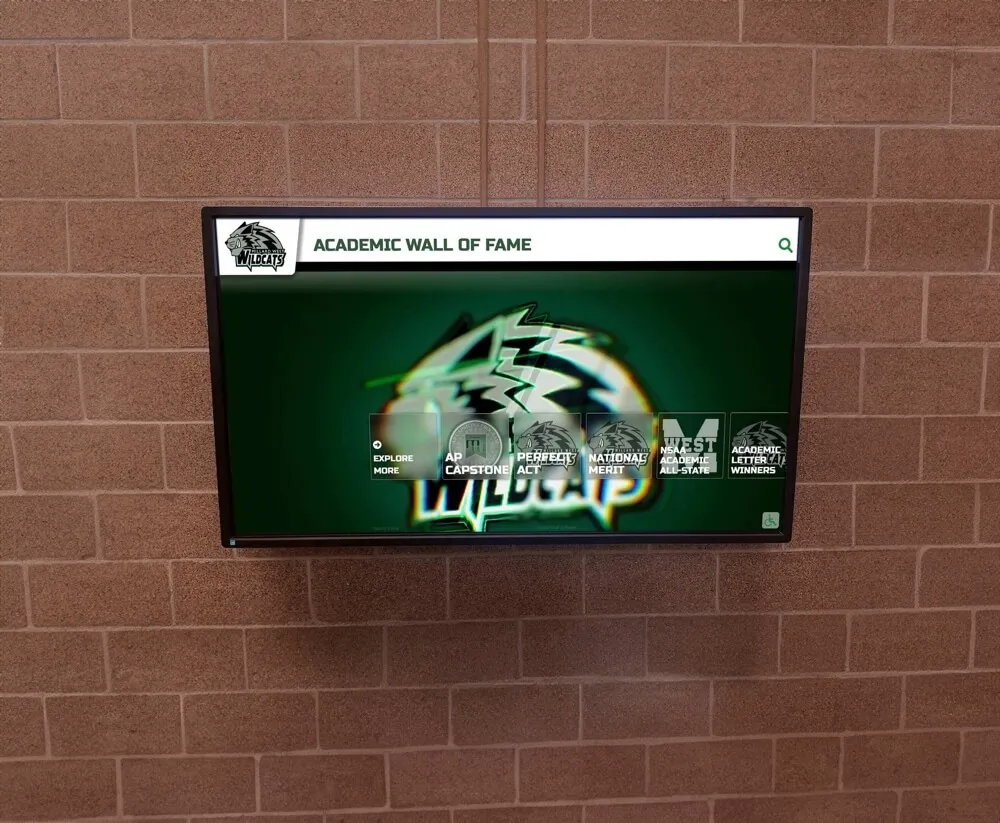
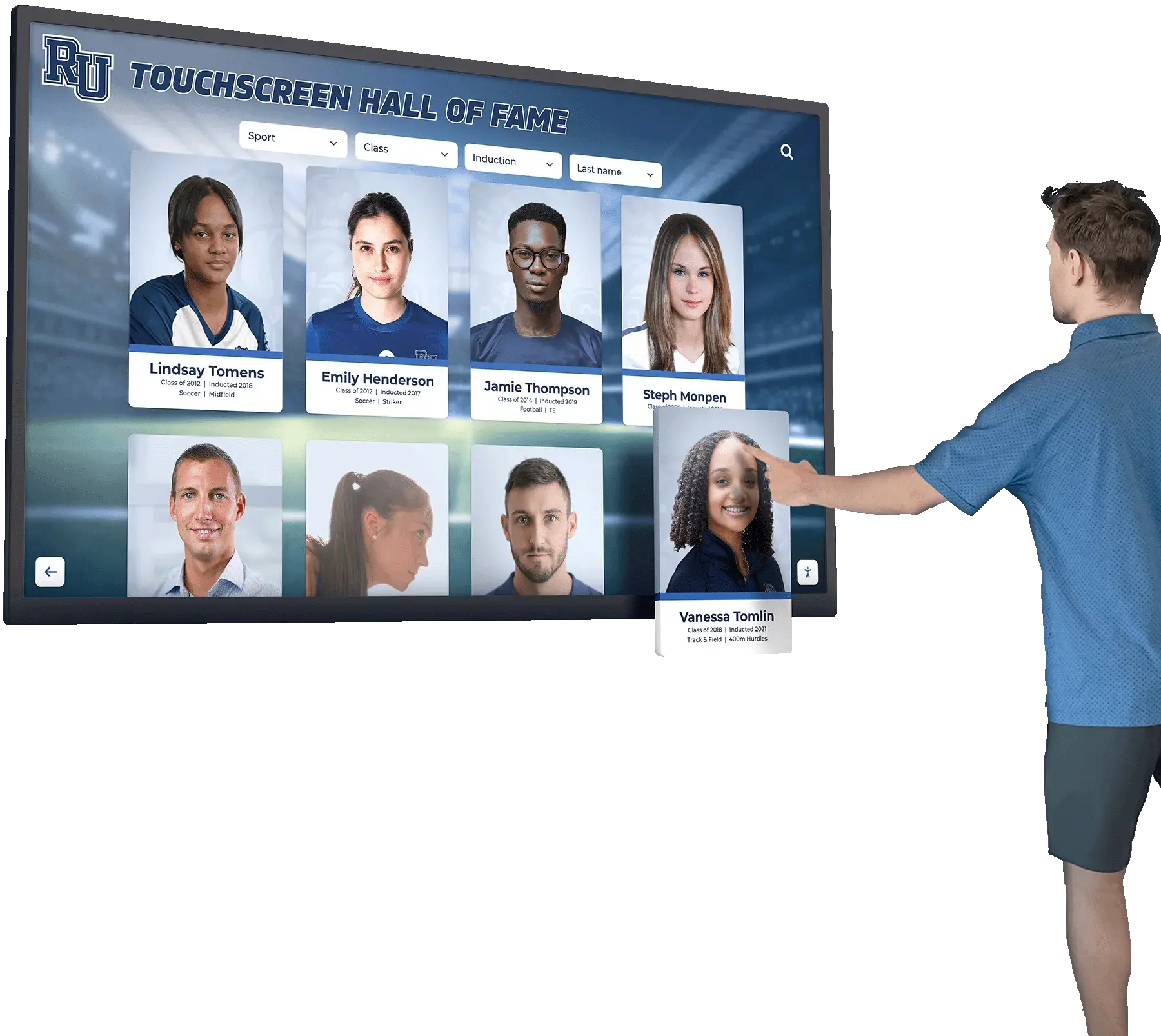
Recognition displays like lobby walls and hall-of-fame panels represent the long-term outcome of booster club fundraising—a monthly financial report template ensures the revenue behind them is tracked, reconciled, and reported consistently to every board member
What a Booster Club Monthly Financial Report Accomplishes
A monthly financial report is not an audit and it is not a year-end summary. It is the document the board uses at every meeting to answer four questions: How much came in this month? How much went out? What is restricted and unavailable for general expenses? What commitments are outstanding that will create future obligations?
Those four questions are harder to answer than they appear when a program manages fundraiser revenue from multiple events, tiered sponsor agreements with multi-year display commitments, donor gift acknowledgments tied to specific recognition programs, and operating expenses that vary week to week across athletic seasons. Without a consistent monthly report template, answering them requires reconstructing data from multiple sources—and the answer changes depending on who pulls it.
For programs that maintain donor recognition walls, sponsor display panels, or athletic hall-of-fame installations, the monthly report serves an additional function: it creates a documented record that a sponsor’s payment has been received and that the corresponding recognition obligation is live. When a sponsor asks whether their bronze-tier panel is scheduled for installation, the treasurer should be able to point to the month their payment was logged and the outstanding commitment line in the current report—not piece together an answer from memory.
A consistent booster club bank reconciliation checklist is the upstream process that makes monthly reports reliable. Reconciliation confirms that internal records match the bank statement; the monthly report packages that reconciled data into a board-ready summary. The two processes reinforce each other: reconciliation catches discrepancies before they appear in reports, and reports create the accountability structure that motivates consistent reconciliation.
The Monthly Close Checklist
Complete these steps each month before preparing the board report. Running the checklist in the same order every month ensures nothing is omitted and that the report reflects a fully closed period.
Step 1 — Confirm bank reconciliation is complete The monthly financial report should never be prepared before the bank reconciliation for the same period is signed off. Confirm that the treasurer has completed reconciliation, that a second officer has reviewed it, and that both signatures are dated. The reconciled ending balance is the figure that appears in the report.
Step 2 — Categorize all income by source Separate income into its correct categories before totaling:
- Fundraiser revenue (identify by event: concession sales, golf tournament, gala, etc.)
- Dues and membership fees
- Sponsor payments (identify by tier: gold, silver, bronze, or program-specific naming)
- Donor gifts (identify by fund: general, scholarship, display, endowment)
- In-kind contributions (note fair market value and contributing party)
- Interest income or other miscellaneous receipts
Lump-sum deposits from events that combine multiple revenue sources must be broken out. A deposit that includes concession cash, silent auction proceeds, and a sponsor check should appear as three separate income line items, not one.
Step 3 — Categorize all expenses by type Match each expense to the correct category in the budget:
- Athletics (uniforms, equipment, transportation, entry fees, officials)
- Operations (insurance, accounting, software, supplies)
- Fundraising costs (event expenses, printing, platform fees)
- Recognition and display (signage, installation, content management, display license)
- Stewardship (acknowledgment letters, plaques, end-of-season gifts)
- Reimbursements (note the officer reimbursed, the purpose, and the approving signature)
Step 4 — Update restricted fund balances Restricted funds are the category most likely to cause governance problems if not tracked separately. Update the balance for each restricted fund after applying any income designated to it and any approved disbursements from it during the period:
- Scholarship fund
- Capital improvement fund
- Specific sport or team funds (if separately tracked)
- Donor-directed gifts with written restrictions
Step 5 — Log open sponsor commitments Review the active sponsor agreement log and confirm that every sponsor payment received this month has been logged against the correct agreement, and that any outstanding commitments—installation schedules, program recognition, display placement dates—are noted as open.
Step 6 — Calculate the unrestricted operating balance Subtract the total of all restricted fund balances from the total account balance. The result is the unrestricted operating balance—the amount the board may authorize for operating expenses without restriction. This figure belongs prominently at the top of every board report.
Step 7 — Draft the board report and route for review Prepare the board report using the template in the next section. Route it to the president for review at least 48 hours before the board meeting so questions can be addressed in advance rather than during the meeting itself.
The Board-Ready Monthly Financial Report Table
The following table structure forms the core of the monthly board report. Present it as a single document that covers the full period, with restricted and unrestricted balances clearly separated. Add or remove line items to match your program’s specific income sources and expense categories.
| Section | Line Item | Month | Year-to-Date |
|---|---|---|---|
| Opening Balance | Unrestricted operating balance, start of period | ||
| Opening Balance | Restricted fund balances, start of period | ||
| Income | Fundraiser revenue — [Event Name] | ||
| Income | Dues and membership fees | ||
| Income | Sponsor payments — Gold tier | ||
| Income | Sponsor payments — Silver tier | ||
| Income | Sponsor payments — Bronze tier | ||
| Income | Donor gifts — General fund | ||
| Income | Donor gifts — Scholarship fund | ||
| Income | Donor gifts — Display/recognition fund | ||
| Income | In-kind contributions (fair market value) | ||
| Income | Interest and miscellaneous | ||
| Total Income | |||
| Expenses | Athletics — uniforms and equipment | ||
| Expenses | Athletics — transportation and entry fees | ||
| Expenses | Operations — insurance and accounting | ||
| Expenses | Operations — software and platform fees | ||
| Expenses | Fundraising costs | ||
| Expenses | Recognition and display | ||
| Expenses | Stewardship and acknowledgments | ||
| Expenses | Reimbursements | ||
| Total Expenses | |||
| Net Activity | Total income minus total expenses | ||
| Restricted Fund Balances | Scholarship fund | ||
| Restricted Fund Balances | Capital improvement fund | ||
| Restricted Fund Balances | Other restricted funds | ||
| Closing Balance | Unrestricted operating balance, end of period | ||
| Closing Balance | Total restricted balances, end of period | ||
| Closing Balance | Total account balance (unrestricted + restricted) |
Include a second table showing open sponsor commitments and recognition obligations:
| Sponsor | Tier | Payment Status | Recognition Obligation | Status |
|---|---|---|---|---|
| [Sponsor Name] | Gold | Paid — [Date] | Display panel installation | Scheduled [Date] |
| [Sponsor Name] | Silver | Paid — [Date] | Program listing, banner | Complete |
| [Sponsor Name] | Bronze | Invoiced — [Date] | Display panel installation | Pending payment |
| [Sponsor Name] | In-Kind | FMV logged | Acknowledgment letter sent | Complete |
This sponsor commitment table does two things: it tells the board which obligations are fulfilled and which are pending, and it gives the treasurer a reference point for sponsor follow-up before the next cycle. Academic recognition program governance often depends on this kind of documented tracking to ensure that sponsored displays and named recognition elements are delivered consistently across officer generations.
Restricted Funds and Why They Need Their Own Lines
Restricted funds are the financial governance category most often collapsed incorrectly into the general operating balance, and the mistake is rarely discovered until a withdrawal is questioned. When a donor gives $5,000 specifically to the scholarship fund, that $5,000 is not available for uniforms or transportation—and a monthly report that shows only a single account balance cannot demonstrate that distinction to anyone reviewing the records.
A booster club budget template that builds in separate columns for restricted versus unrestricted funds prevents this category from being obscured. The monthly report reinforces that separation by tracking restricted balances as a distinct line that reconciles month over month.
The most common restricted fund categories for school booster clubs are:
- Scholarship funds — gifts designated for athlete academic support
- Capital improvement funds — contributions earmarked for facility or display upgrades
- Sport-specific funds — donor or sponsor gifts designated for a single team
- Named recognition funds — gifts tied to a specific hall-of-fame panel, donor wall entry, or named display installation
Each of these requires a separate running balance in the report, a record of what income was designated to the fund each month, and a record of what disbursements were approved and by whom. The board cannot authorize restricted disbursements with a voice vote—they require documentation of the restriction, the board’s determination that the disbursement falls within the restriction, and a record of the approval.
For programs with active recognition display commitments, the display fund is particularly important. When a donor contributes toward a named display element—a hall-of-fame panel, a scholarship board, or a donor recognition wall installation—that contribution creates both a financial obligation and a recognition obligation. The monthly report should track both: the fund balance and the display commitment status. Digital athletic displays and their recognition obligations are long-term commitments—a display funded in year one may require content updates, maintenance, and renewal for years beyond the initial installation.
Connecting the Monthly Report to Sponsor Recognition Integrity
The sponsor commitment table in the monthly report is not a courtesy feature—it is the governance mechanism that prevents a program from inadvertently failing to deliver recognition benefits it has already charged for. When a sponsor pays a gold-tier fee that includes a display panel installation, a program listing in game-day materials, and a banner in the facility, every one of those deliverables should be trackable in the monthly report until the obligation is marked complete.
Programs that do not track open commitments learn about the gap when a sponsor who paid two months ago asks about their panel and the current officers have no documentation of what was promised or whether the prior officers began coordinating installation. That situation—common after officer transitions—erodes sponsor confidence in ways that affect renewal rates for seasons afterward.
Basketball award recognition and athletic ceremony governance illustrates how recognition deliverables need to be tracked from commitment through fulfillment—the same principle applies to sponsor display agreements that run across a season or multi-year term. When the monthly report shows that a sponsor’s payment was received, the recognition obligation was logged, and the installation is scheduled, the board can answer sponsor questions without reconstructing history.
Hall-of-fame wall traditions and long-term athletic recognition programs depend on this kind of documented continuity. The monthly report template is one of the mechanisms that makes recognition commitments durable across the turnover that affects every volunteer-led booster organization.

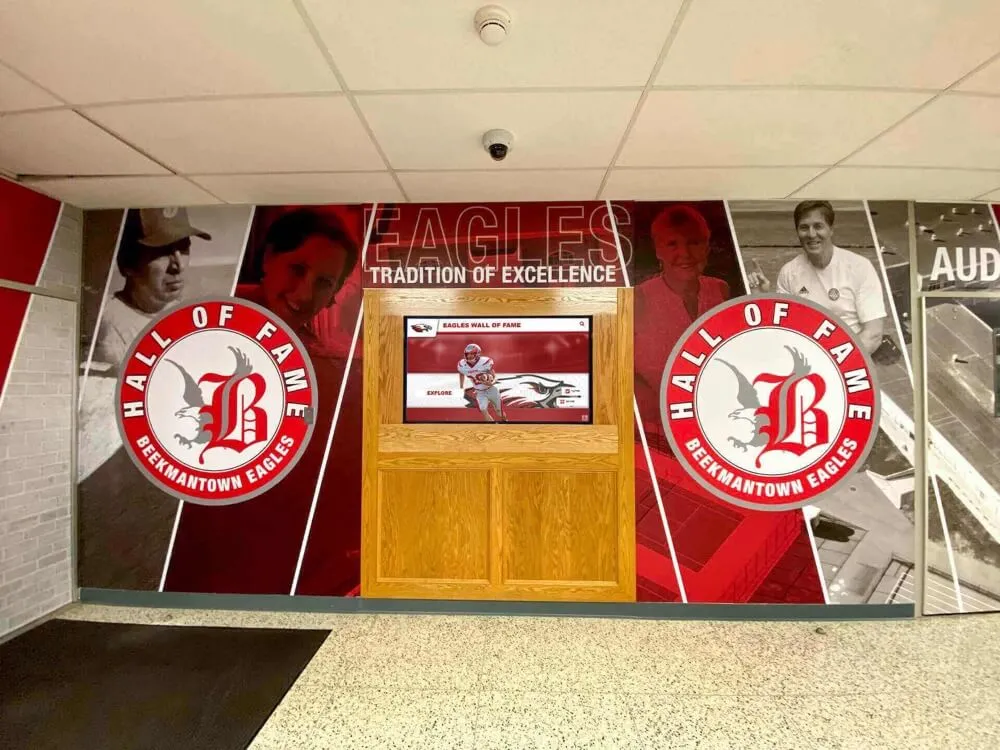
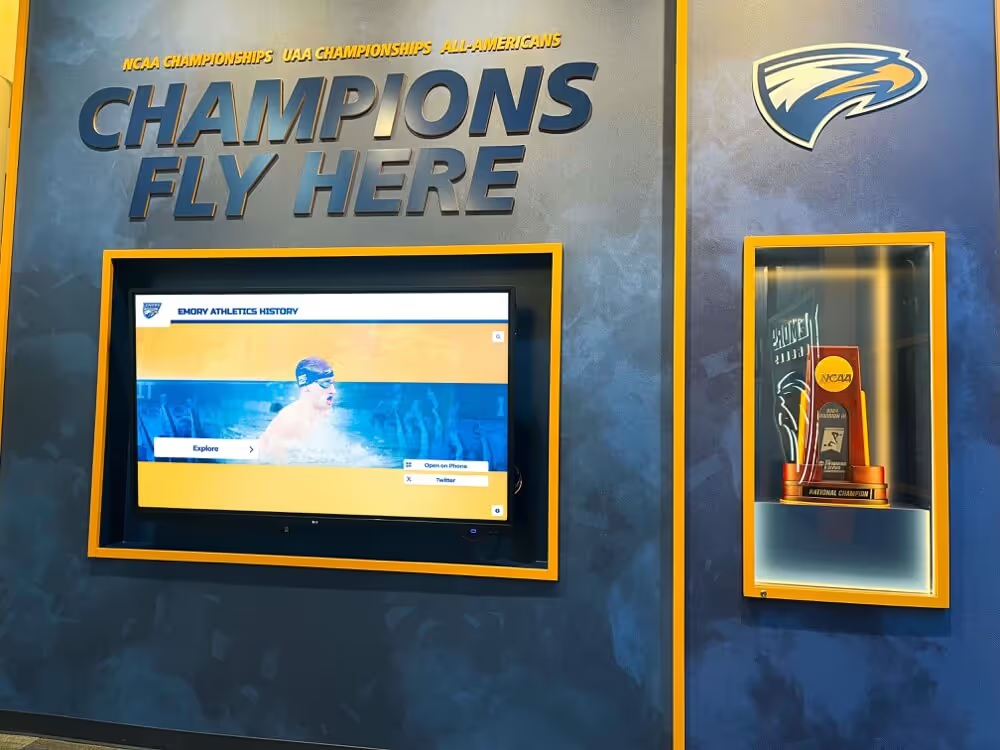
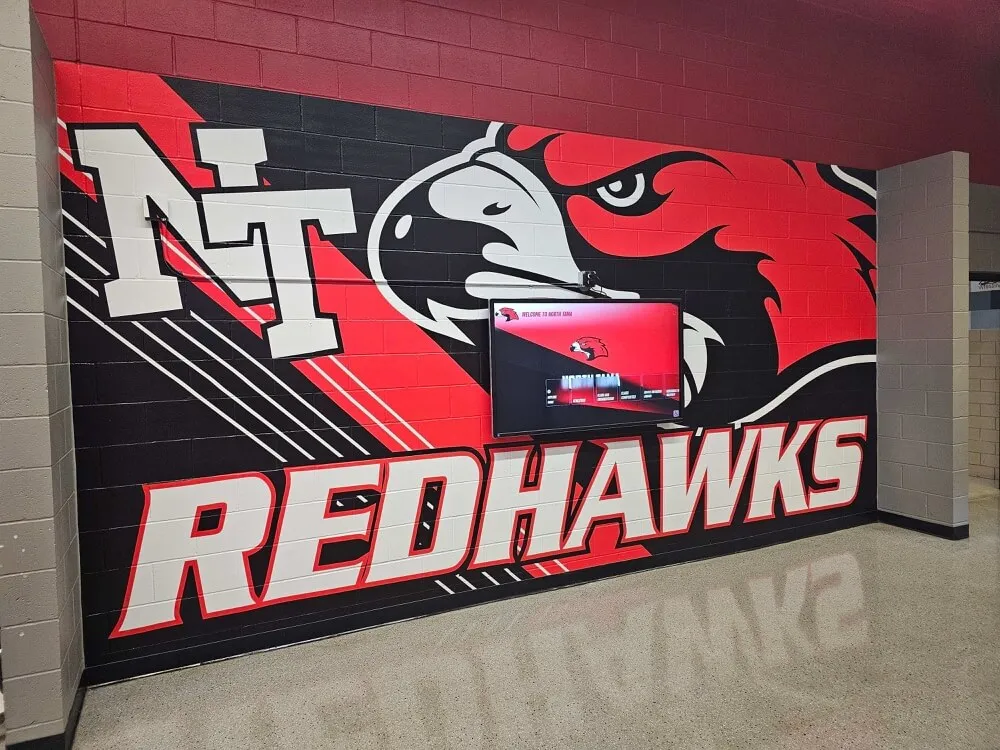
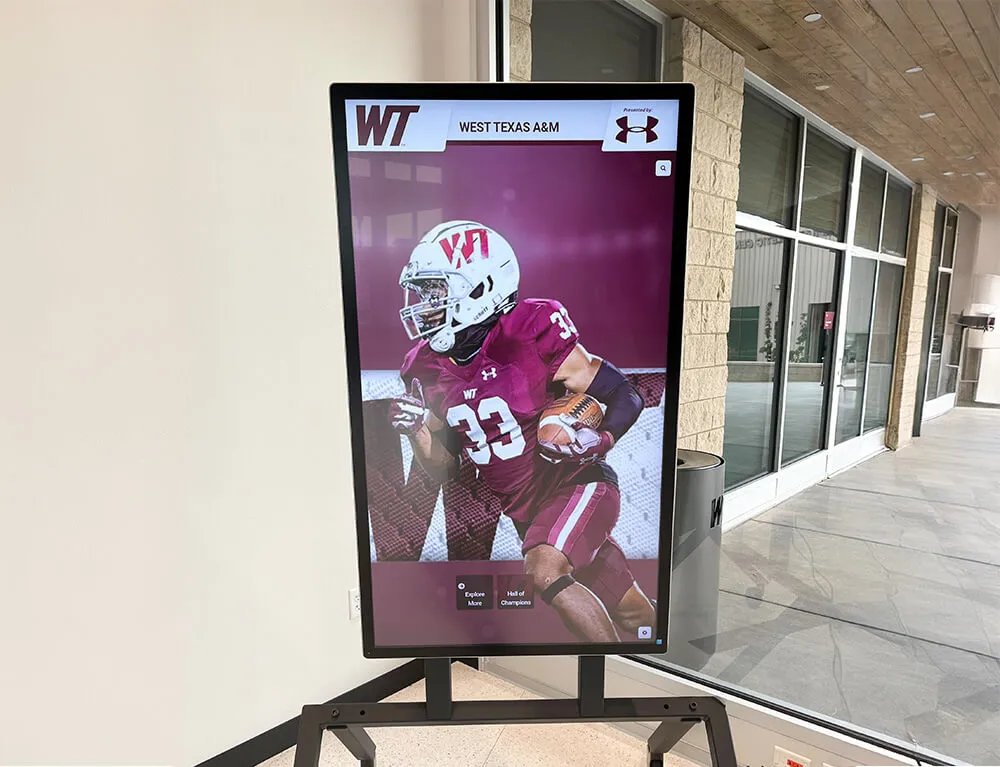
Champions walls and trophy displays represent multi-year recognition commitments that begin as line items in a booster club's financial records—monthly reports that track both the revenue and the corresponding display obligations keep those commitments visible to every board that inherits them
Board Presentation Format and Meeting Integration
A monthly financial report serves a different function from the detailed internal records that the treasurer maintains. The board report should be readable in three to five minutes by an officer who has not been tracking day-to-day transactions. That means:
- Lead with the unrestricted operating balance — the first number on the page should be the amount available for board-authorized spending
- Show net activity clearly — income minus expenses for the month, not just totals
- Flag restricted fund changes — if any restricted fund received a significant deposit or disbursement, note it explicitly rather than burying it in a line total
- Show outstanding sponsor obligations — the commitment table tells the board what recognition deliverables are pending and prevents assumptions that everything is fulfilled
- Note variances from budget — if any category is significantly over or under the budgeted amount, a brief note prevents the board from missing a trend
The report should be distributed before the meeting, not handed out at the table. Officers who read the report before the meeting can ask specific questions rather than using meeting time to interpret numbers. For programs following a booster club audit checklist approach to annual review, the monthly reports form the source record that makes an audit efficient—auditors and district reviewers read twelve monthly reports, not a collection of unsorted receipts.
Athletic hall-of-fame website governance and alumni record platforms describe the institutional infrastructure that makes long-term recognition sustainable—monthly financial reports are the parallel infrastructure on the financial side. Both types of records create the documented continuity that allows programs to function well regardless of which specific officers are serving at any given time.
Sample Monthly Financial Report Template
The following reusable template covers the complete monthly report structure. Adapt the categories to your program’s specific income sources, fund designations, and sport coverage.
BOOSTER CLUB MONTHLY FINANCIAL REPORT
[Organization Name] — [Month, Year]
Prepared by: [Treasurer Name] | Reviewed by: [President Name]
Report Date: [Date]

━━━━━━━━━━━━━━━━━━━━━━━━━━━━━━━━━━━━━━━━━━━━━━━━━
SECTION 1 — ACCOUNT BALANCES (as of [Closing Date])
━━━━━━━━━━━━━━━━━━━━━━━━━━━━━━━━━━━━━━━━━━━━━━━━━

  Total bank account balance:          $________
  Less: restricted fund balances       $________
  ─────────────────────────────────────────────
  Unrestricted operating balance:      $________

SECTION 2 — INCOME (this period)
━━━━━━━━━━━━━━━━━━━━━━━━━━━━━━━━━━━━━━━━━━━━━━━━━

  Fundraiser: [Event Name]             $________
  Fundraiser: [Event Name]             $________
  Dues and membership fees             $________
  Sponsor payments — Gold              $________
  Sponsor payments — Silver            $________
  Sponsor payments — Bronze            $________
  Donor gifts — General fund           $________
  Donor gifts — Scholarship fund       $________
  Donor gifts — Display/recognition    $________
  In-kind contributions (FMV)          $________
  Interest and miscellaneous           $________
  ─────────────────────────────────────────────
  TOTAL INCOME:                        $________

SECTION 3 — EXPENSES (this period)
━━━━━━━━━━━━━━━━━━━━━━━━━━━━━━━━━━━━━━━━━━━━━━━━━

  Athletics — uniforms and equipment   $________
  Athletics — transportation           $________
  Athletics — entry fees               $________
  Operations — insurance               $________
  Operations — accounting/software     $________
  Fundraising costs                    $________
  Recognition and display              $________
  Stewardship and acknowledgments      $________
  Reimbursements (attach receipts)     $________
  ─────────────────────────────────────────────
  TOTAL EXPENSES:                      $________

SECTION 4 — NET ACTIVITY
━━━━━━━━━━━━━━━━━━━━━━━━━━━━━━━━━━━━━━━━━━━━━━━━━

  Total income:                        $________
  Total expenses:                      $________
  ─────────────────────────────────────────────
  NET (income minus expenses):         $________

SECTION 5 — RESTRICTED FUND BALANCES
━━━━━━━━━━━━━━━━━━━━━━━━━━━━━━━━━━━━━━━━━━━━━━━━━

  Scholarship fund
    Opening balance:                   $________
    Deposits this period:              $________
    Approved disbursements:            $________
    Closing balance:                   $________

  Capital improvement fund
    Opening balance:                   $________
    Deposits this period:              $________
    Approved disbursements:            $________
    Closing balance:                   $________

  [Other restricted fund]
    Opening balance:                   $________
    Deposits this period:              $________
    Approved disbursements:            $________
    Closing balance:                   $________

  TOTAL RESTRICTED BALANCES:           $________

SECTION 6 — OPEN SPONSOR COMMITMENTS
━━━━━━━━━━━━━━━━━━━━━━━━━━━━━━━━━━━━━━━━━━━━━━━━━

  Sponsor           Tier     Payment     Obligation          Status
  ──────────────────────────────────────────────────────────────────
  [Name]            Gold     [Date]      Display install     Scheduled
  [Name]            Silver   [Date]      Program listing     Complete
  [Name]            Bronze   Pending     Display install     Awaiting payment
  [Name]            In-Kind  [FMV logged] Acknowledgment     Sent [Date]

SECTION 7 — NOTES AND VARIANCES
━━━━━━━━━━━━━━━━━━━━━━━━━━━━━━━━━━━━━━━━━━━━━━━━━

  [Note any significant variances from budget, restricted fund
  activity, or open items requiring board action]

ATTESTATION
━━━━━━━━━━━━━━━━━━━━━━━━━━━━━━━━━━━━━━━━━━━━━━━━━

  Treasurer signature: ________________  Date: ________
  President review:    ________________  Date: ________
  Bank reconciliation attached: [ ] Yes  [ ] No
How the Monthly Report Supports Long-Term Recognition Programs
The monthly financial report is the first document in a chain of institutional memory. Each signed report becomes part of the governance record that a new treasurer can use to understand how the organization has managed its funds—what recognition commitments were made, which sponsors have open obligations, which funds are restricted and why.
Programs with active recognition programs—donor walls, hall-of-fame displays, and athletic record boards—create recognition commitments that outlast individual officers. A donor whose name appears on a wall was recognized because someone logged that gift, placed it in the correct fund, and ensured the display vendor was paid. A sponsor whose panel appears in the facility is there because someone tracked the payment, confirmed the obligation, and coordinated installation. When monthly reports are complete and filed, the institutional record of those commitments is accessible to every future board without relying on any individual’s memory.
Digitizing and preserving school athletic records often involves recovering institutional history that was never systematically documented—a process that could be avoided for financial records if consistent monthly reports were maintained from the beginning. The monthly report template is the document that prevents a program from needing to reconstruct its own financial history during an audit, a district review, or a leadership transition.

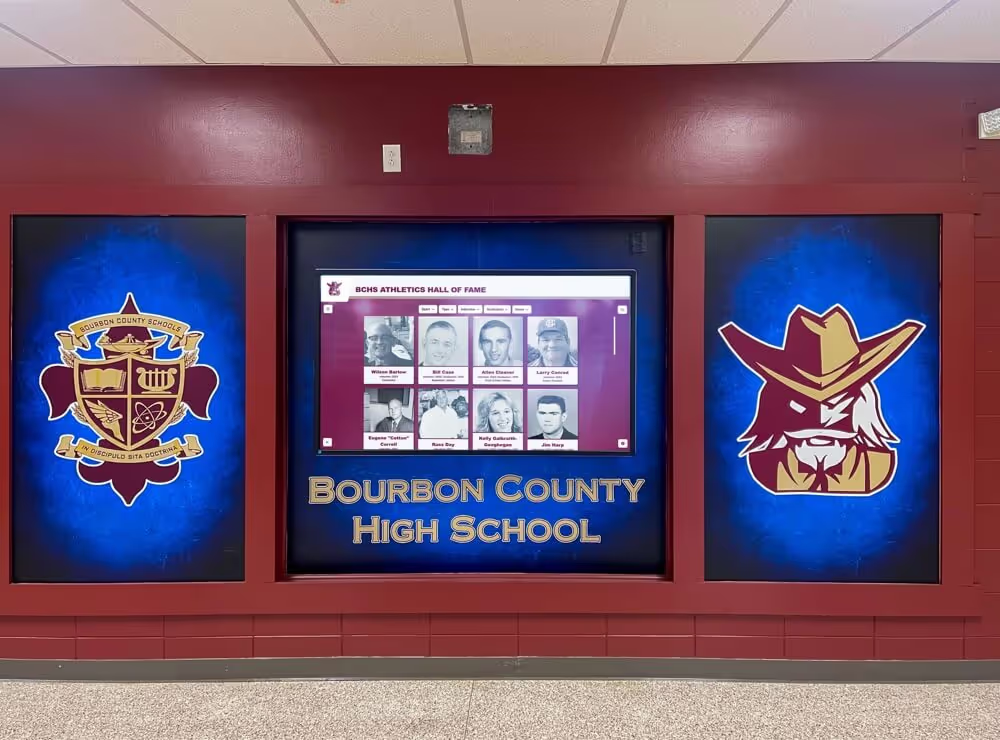
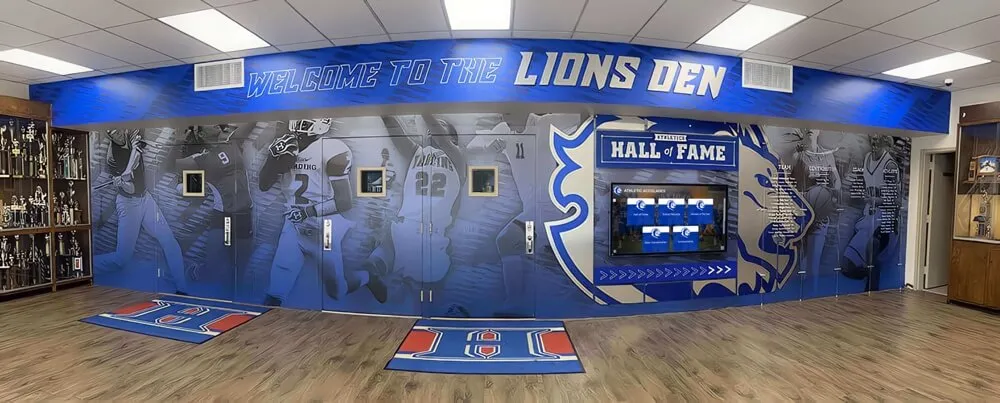
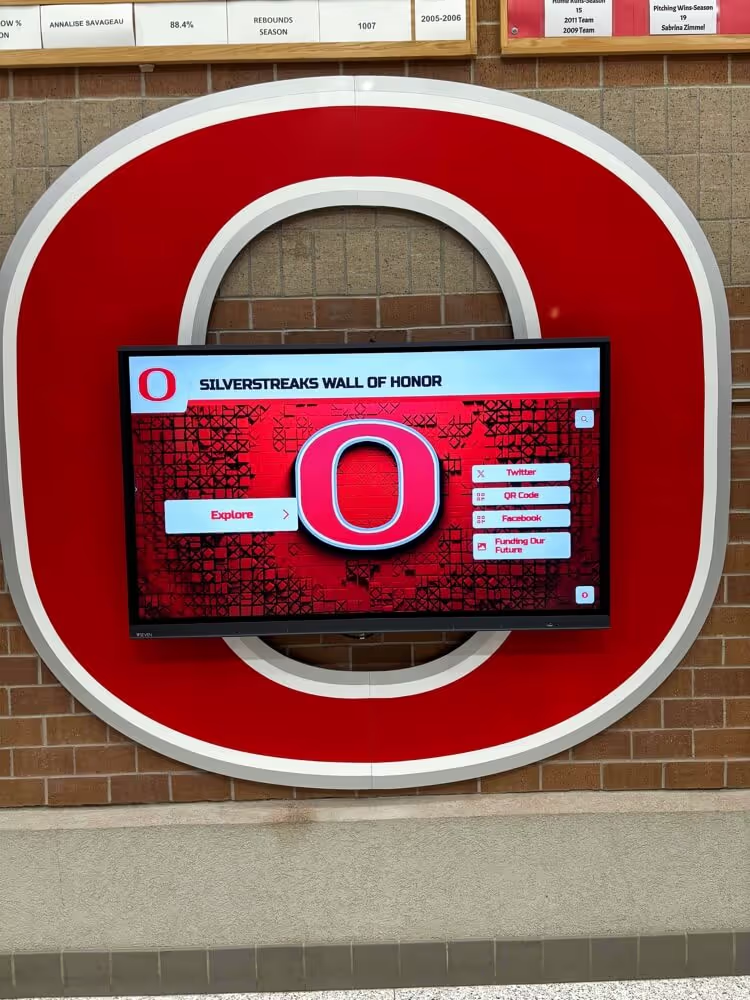
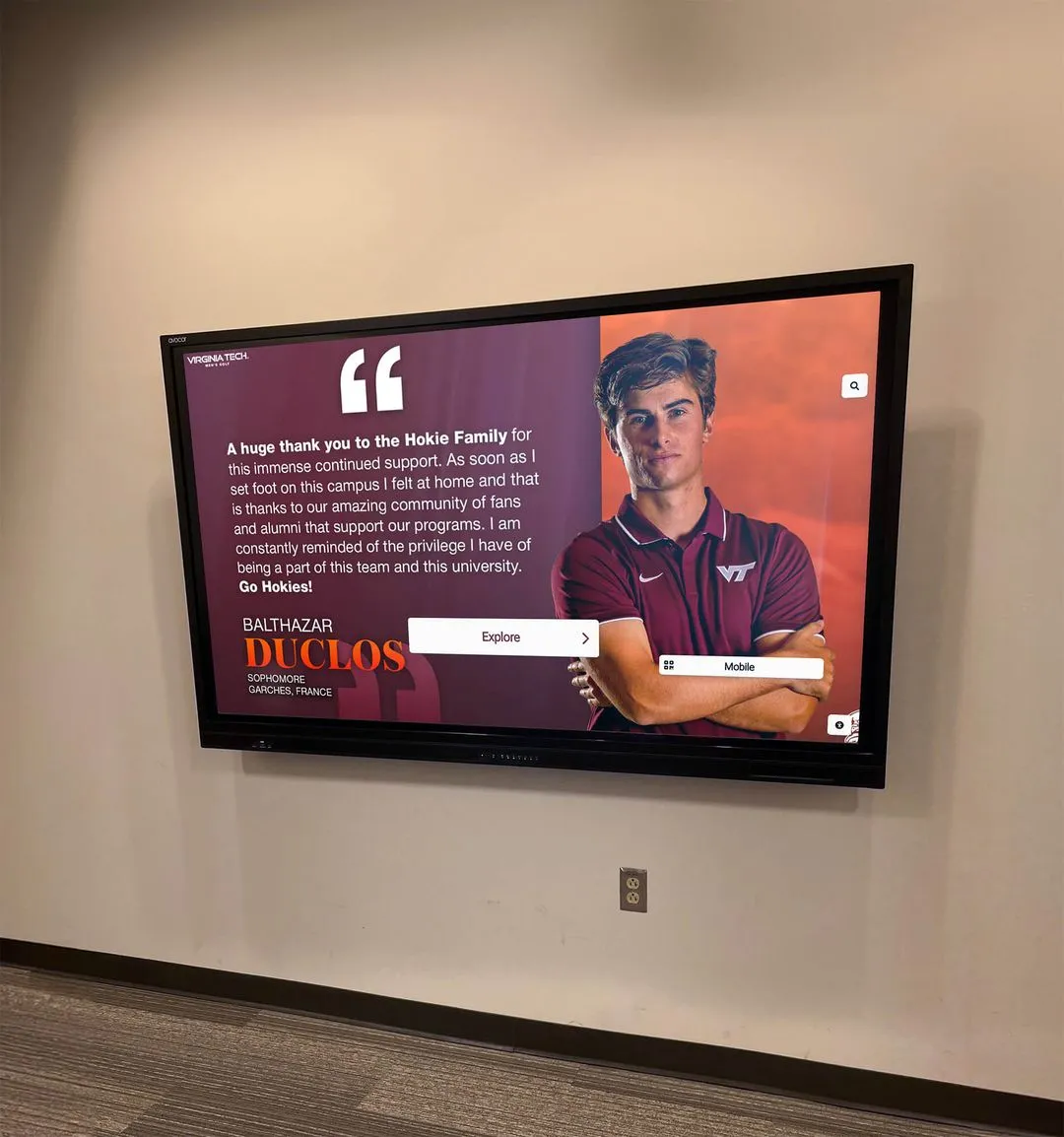
Display installations that combine physical recognition panels with digital screens represent both a one-time expenditure and an ongoing maintenance commitment—monthly financial reporting that tracks both the initial payment and the recurring costs keeps the full obligation visible to every board
Alumni networks and long-term institutional recognition programs depend on the kind of documented continuity that monthly financial reports create on the financial side. When alumni who were honored in earlier years return for events, the program’s ability to speak to its recognition history—and to its financial stewardship—reflects on the institution’s integrity and the booster club’s governance culture.
Frequently Asked Questions
Q: How detailed does the monthly report need to be for a small booster club? The level of detail should match the complexity of the program’s finances. A single-sport booster club with straightforward fundraiser income and no restricted funds may need only the basic income/expense/balance summary. A multi-sport club with tiered sponsor agreements, a scholarship fund, and active display commitments needs the full template. When in doubt, more detail in the report is easier to defend than less—especially if the district reviews booster club financials.
Q: What is the difference between the monthly report and the bank reconciliation? Bank reconciliation confirms that the organization’s internal records match the bank statement. The monthly financial report packages the reconciled data into a summary designed for board review. Reconciliation is an internal process; the report is the communication tool. Both are necessary, and the report should never be prepared until reconciliation for the same period is complete.
Q: How should in-kind contributions be handled in the report? In-kind contributions—goods or services donated rather than paid in cash—should be recorded at fair market value in the income section and logged in the sponsor commitment table. The fair market value should be independently verified, not set by the contributing party. A vendor who donates installation services for a display panel should have the value of those services documented by an independent price comparison, and the in-kind acknowledgment should be sent promptly. Consult a qualified CPA regarding how in-kind contributions affect the organization’s financial statements and tax-exempt reporting.
Q: What if the board questions a restricted fund disbursement that was already made? The monthly report should show the disbursement as a separate line in the restricted fund section, with a brief note explaining the nature of the disbursement and the authorization. If the disbursement was not properly authorized before it was made, that is a governance issue that should be addressed through the booster club internal controls checklist and potentially flagged to district administration. The report should reflect what happened accurately, not conceal a disbursement that was made without proper authorization.
Q: How long should monthly financial reports be retained? Retention requirements vary by state law, organizational structure, and tax-exempt filing status. A common baseline for nonprofit organizations is seven years for financial records, though some categories may require longer retention. Consult a licensed attorney or CPA for guidance specific to your organization. Regardless of the minimum requirement, retaining every signed monthly report for the full retention period is advisable—these documents are the primary evidence of how funds were managed if a question arises during an audit or district review.
Q: Should the monthly report be shared outside the board? Board members should receive the report before each meeting. Whether it is shared more broadly—with district administration, with members, or publicly—depends on the organization’s bylaws, the district’s transparency expectations, and applicable state law for nonprofit organizations. Programs that make summary financial information available to members generally build greater donor and sponsor confidence. Consult the organization’s bylaws and, where applicable, the school district’s policies on booster club financial disclosure.
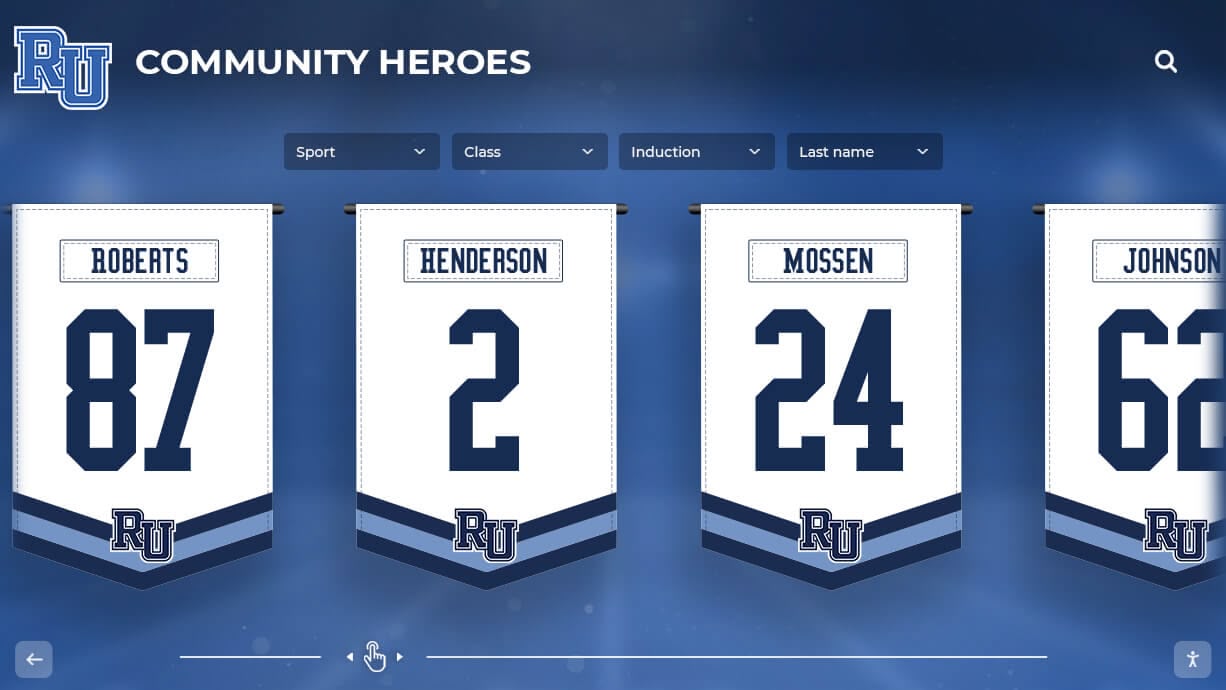
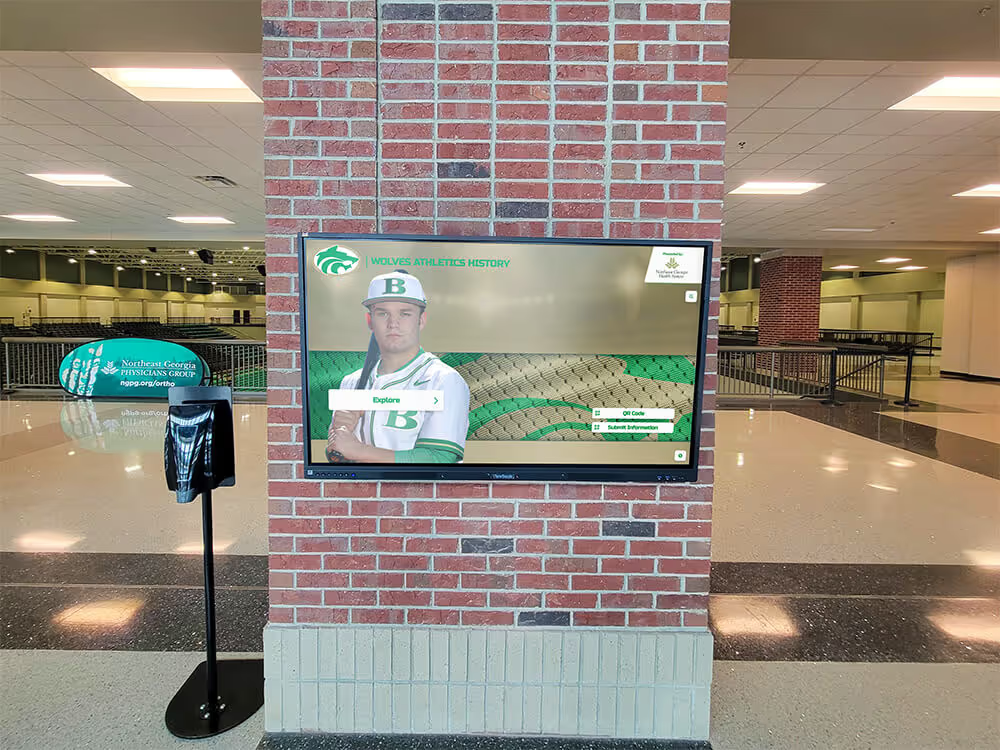
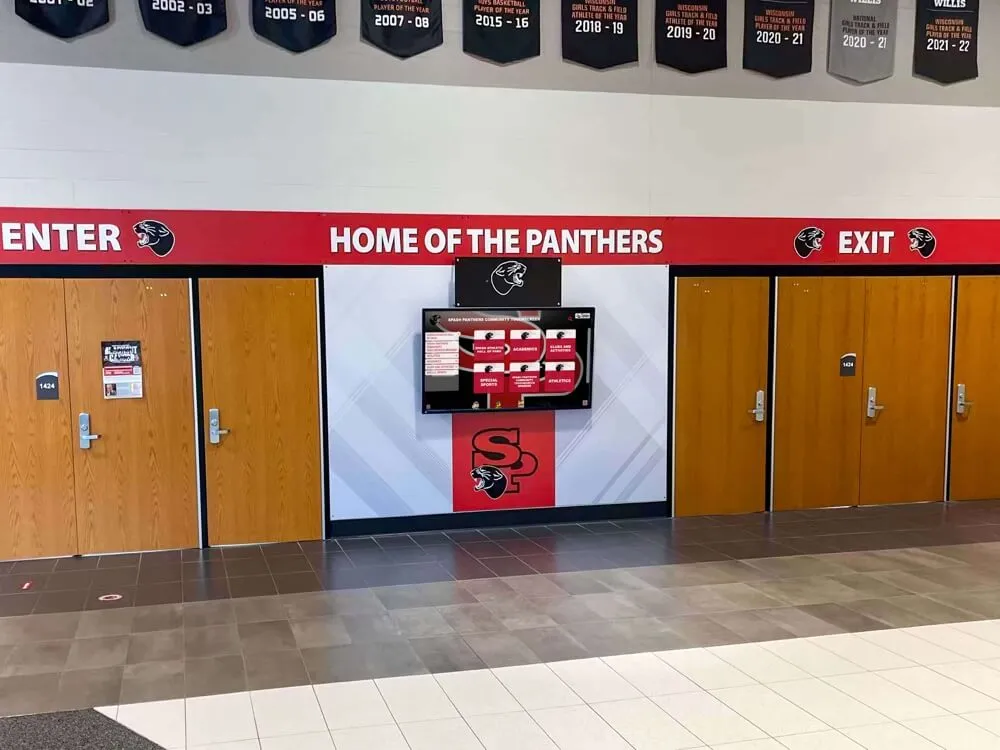
Hanging banner and jersey recognition programs represent the visible outcome of sponsor and donor funding—monthly financial reports that track the payments behind these installations ensure the recognition remains connected to a documented financial record
Building a Reporting Culture That Outlasts Any One Treasurer
A monthly financial report template is most valuable as an institutional practice—not a document produced by one treasurer for one board meeting, but a consistent format that every incoming officer can produce and every board can read without explanation. The template does for financial reporting what a booster club deposit log template does for incoming funds: it creates a standard that any officer can follow, and that any reviewer can audit against.
Programs that establish this reporting culture find that officer transitions are smoother, donor conversations are better informed, sponsor renewals are easier to initiate, and district reviews are less disruptive. The monthly report is not a burden—it is the governance infrastructure that allows a booster club to focus its energy on supporting athletes rather than reconstructing its own financial history.
When your program is ready to connect its financial reporting framework to a recognition display system that makes sponsorship and donor commitments visible, accurate, and durable across officer generations—explore how Rocket Alumni Solutions supports school athletic programs and booster clubs with managed recognition platforms built for institutional continuity.