A booster club payment approval matrix is a written authorization table that maps every spending tier to a specific officer role, a minimum approval count, and a defined set of required documents before any payment is released. It answers three questions simultaneously: who can approve this amount, what evidence must exist before the approval is valid, and when does a second signature or a full board vote become mandatory. Programs that operate without a written matrix depend on informal precedent—which produces inconsistent approvals, gaps that auditors flag, and sponsor relationships that erode when commitment fulfillment cannot be documented.
This guide provides a complete booster club payment approval matrix with a role-based authorization table, evidence requirements organized by transaction category, implementation steps, a policy template ready for board adoption, and a direct explanation of how the approval matrix supports the donor and sponsor recognition programs funded by your athletic program’s treasury.
This guide is for informational purposes only and does not constitute legal, accounting, or compliance advice. Approval thresholds, officer authority, and nonprofit financial controls vary by jurisdiction, district policy, tax-exempt status, and organizational bylaws. Consult a licensed CPA or attorney for guidance specific to your organization.

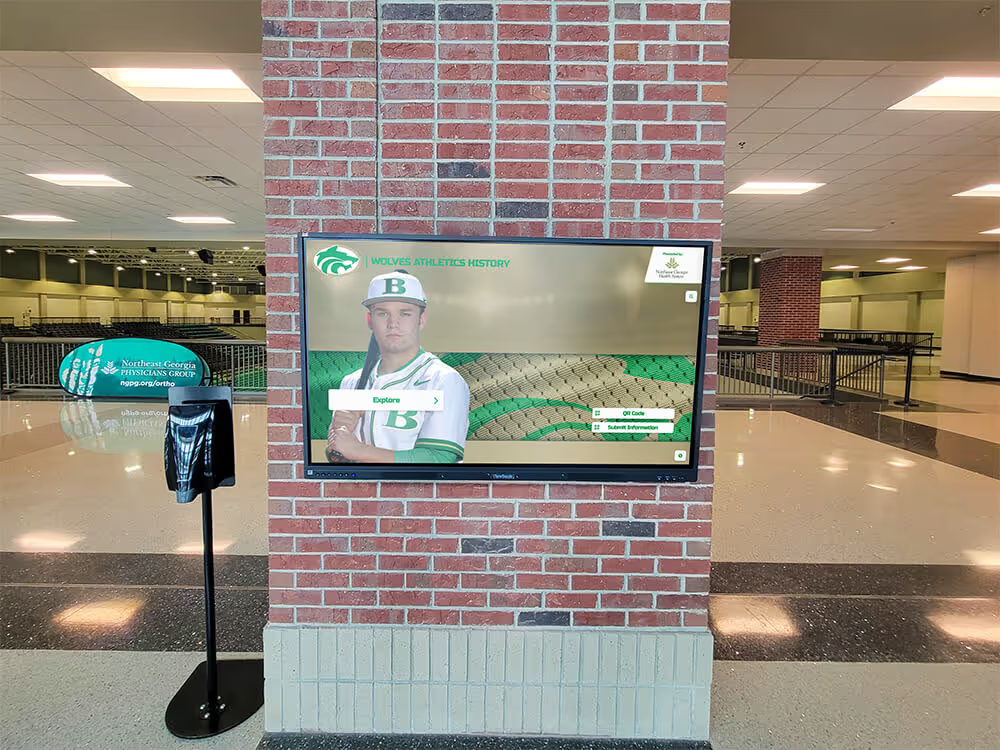
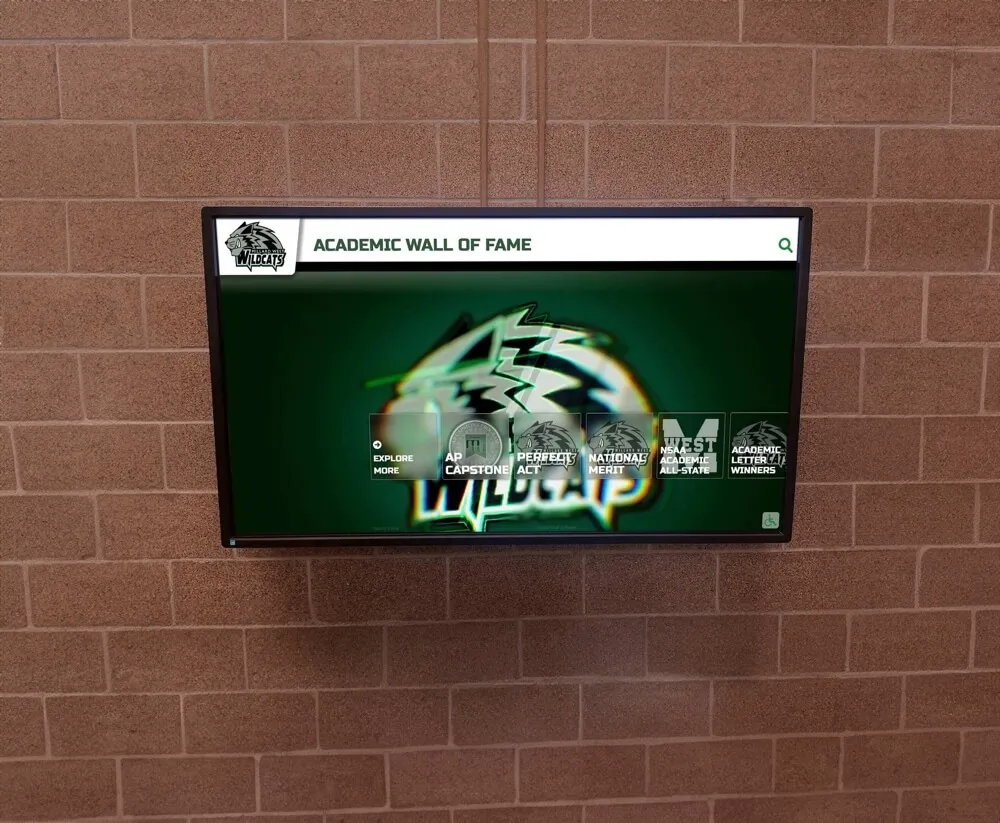
Recognition panels and athletic display installations represent purchase commitments that must flow through a documented payment approval matrix before any vendor contract is signed or payment issued.
What Is a Booster Club Payment Approval Matrix?
A payment approval matrix is the single-document answer to the question every booster club treasurer faces before writing a check: does this require one signature, two, or a full board vote—and what paperwork must be on file before any of those approvals are valid?
The matrix differs from a general spending policy in one important way: it is a reference table, not a narrative. An officer can look at a dollar amount, find the corresponding row, and immediately know the required approver role, the secondary sign-off requirement, the board notification threshold, and the minimum documentation package. That speed of reference is why a matrix format protects programs more effectively than a policy written in paragraph form—the correct answer is visible in seconds, not buried in clauses.
An effective matrix serves three constituencies simultaneously:
- The treasurer, who needs to know whether they can approve a vendor payment independently or must route it for additional review
- The full board, which needs assurance that financial commitments are not made at officer discretion beyond stated thresholds
- External reviewers—district auditors, IRS examiners, and grant administrators—who need documented evidence that expenditures followed a consistent, role-based authorization process
Programs that fund donor recognition displays, sponsor signage, and athletic awards through booster treasury dollars are making multi-year institutional commitments. A payment approval matrix ensures those commitments are authorized at the right level before the organization is legally and financially bound.
The Booster Club Payment Approval Matrix
The following matrix defines authorization levels by transaction type and dollar amount. Customize all thresholds and role titles to match your organization’s officer structure and bylaws before adopting. Record the adoption date and reviewing officers in the meeting minutes.
Core Authorization Matrix
| Spending Tier | Transaction Amount | Primary Approver | Second Sign-Off | Board Notification | Board Vote Required |
|---|---|---|---|---|---|
| Tier 1 — Routine | Under $100 | Treasurer | Not required | Monthly summary | No |
| Tier 2 — Standard | $100–$499 | Treasurer | Not required | Monthly summary | No |
| Tier 3 — Elevated | $500–$999 | Treasurer reviews; President approves | Not required | Next meeting minutes | No |
| Tier 4 — Dual-Officer | $1,000–$2,499 | Treasurer + President both review | President countersigns Treasurer approval | Notification at next meeting | No |
| Tier 5 — Committee | $2,500–$4,999 | Treasurer + President + one board member | Treasurer countersigns President approval | Board vote recorded in minutes | Yes — simple majority |
| Tier 6 — Full Board | $5,000 and above | Full board review required | President and Treasurer both sign | Recorded board resolution | Yes — documented vote |
| Reimbursements (any amount) | Any | Any officer except the requestor | Treasurer countersigns | As applicable to amount | No, unless above Tier 5 |
| Recurring / subscription | Any | Treasurer reviews against contract | President countersigns annually | Annual renewal summary | No, unless above Tier 5 |
| First payment to new vendor | Any | Treasurer + President | Vendor verification checklist completed before any approval | Notification at next meeting | No, unless above Tier 5 |
| Emergency / unbudgeted | Any | President + Treasurer jointly | Both must sign; written justification required | Mandatory report at next meeting | Retroactive ratification at next meeting |
Supplemental Rules
Self-approval is never permitted. An officer who submits an expense reimbursement, authorizes a vendor relationship, or benefits directly from a payment cannot serve as an approver for that same transaction at any dollar tier. This rule applies regardless of the amount and regardless of how many other officers are involved.
Verbal approvals do not satisfy the matrix. A phone conversation between officers authorizing a payment does not meet the documentation requirement at any tier. Written approval—email, signed form, or recorded meeting vote—is required for the approval to be valid.
Threshold resets at the transaction level, not the vendor level. Splitting a single purchase into multiple smaller payments to remain within a lower authorization tier is a prohibited practice. If the economic substance of the transaction exceeds a tier’s threshold, the full amount governs the required approval level.
Officer conflict of interest requires recusal. When an officer has a direct or indirect financial relationship with a vendor, they must disclose the relationship before any vote or approval and recuse from both the approval and the board vote. The disclosure and recusal must be documented in the meeting minutes.
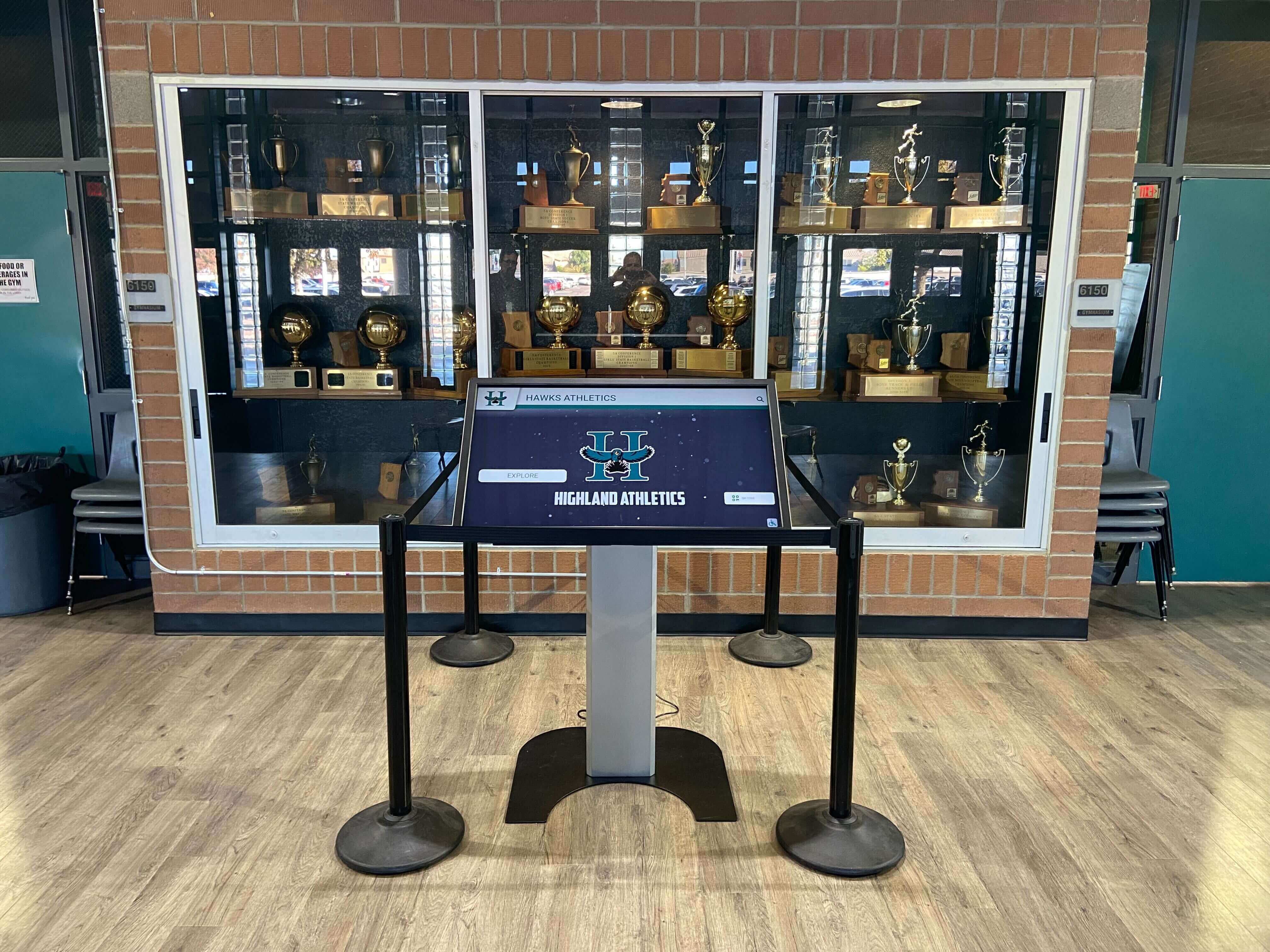
Trophy case displays and digital recognition kiosks represent multi-vendor, multi-year financial commitments. The payment approval matrix ensures every dollar in that investment chain is authorized at the right level and documented before payment is released.
Role Definitions and Authorization Scope
A payment approval matrix is only as useful as the role definitions behind it. When officer titles shift between administrations or bylaws use non-standard terminology, the matrix can produce ambiguity about who holds authorization authority for a given tier. The following definitions establish a standard baseline; adapt terminology to match your specific officer structure.
Treasurer. The officer designated by the board as responsible for financial record-keeping, bank account management, monthly reporting, and day-to-day payment processing. The treasurer is the primary reviewing officer for all tiers and the signing officer for checks and electronic payments within authorized thresholds. The treasurer cannot approve their own reimbursements.
President. The chief executive officer of the organization, responsible for overall governance and board leadership. The president serves as the secondary approver at Tiers 3 and above and as a required co-signer at Tiers 4 and above. The president does not hold independent payment authority; their approval functions as a check on treasurer-initiated payments above the elevated threshold.
Secretary. The officer responsible for meeting minutes, records management, and formal correspondence. The secretary does not hold payment approval authority under the standard matrix but plays a critical governance role: documenting every board vote on financial matters, every recorded conflict-of-interest disclosure, and every retroactive ratification. Archiving these records consistently across officer generations ensures that the approval chain is auditable regardless of which individuals held office when specific payments were made.
Board Member (non-officer). Any board member who is not serving in a designated officer role. At Tier 5, one additional board member joins the review panel. This member should be rotated across large expenditures rather than assigned to a permanent finance sub-role, to distribute oversight responsibility and prevent concentration of financial authority outside the officer structure.
Athletic Director (advisory). Where the booster organization coordinates directly with the school’s athletic director, the AD may be designated as a confirming reviewer for expenditures tied to specific program categories—team equipment, facility improvements, or recognition display installations—without holding payment authorization authority. Advisory review requires written confirmation from the AD that the expenditure aligns with program priorities before the treasurer routes the payment for officer approval.
Evidence Requirements by Transaction Category
The payment approval matrix defines who can approve and at what amount. The evidence requirements define what documentation must exist before any approval is valid. Both are mandatory; an approval without the required evidence is not a complete internal control.
| Transaction Category | Required Evidence | Additional for Sponsor Commitments | Additional for New Vendors |
|---|---|---|---|
| Team equipment and supplies | Purchase order or written quote; delivery confirmation with officer name and date | Sponsor agreement section if equipment carries sponsor branding | Vendor registration or business verification |
| Recognition displays and signage | Board-approved specification; vendor quote; proof or rendering approval | Sponsor agreement benefit line; proof approval signed before production | Vendor verification checklist; references for fabrication vendors |
| Award and trophy orders | Authorized award list with engraving specifications; proof approval for engravings | Sponsor agreement if award carries sponsor acknowledgment | Vendor verification checklist |
| Event venue and catering | Signed vendor contract; deposit receipt; final invoice matching contract terms | Sponsor benefit schedule for named events | Vendor verification checklist |
| Digital display platform subscriptions | Original contract; renewal authorization; price comparison if terms changed | Sponsor agreement if platform carries sponsor recognition content | Vendor verification; platform security and privacy review |
| Insurance and bonding premiums | Current policy documentation; renewal notice; coverage comparison | None | Carrier verification and board-approved coverage types |
| Professional services (CPA, legal, printing) | Engagement letter or written scope; fee schedule; invoice matching scope | None | Vendor verification checklist; qualification documentation |
| Grants and restricted fund disbursements | Grant agreement; written request confirming allowable use; grantor approval if required | None | N/A — grant funds require grantor authorization, not new-vendor process |
| Expense reimbursements | Original receipts or lost-receipt affidavit; reimbursement request form; non-self-approval confirmation | None | N/A — reimbursements are to members, not external vendors |
| Emergency / unbudgeted payments | Written justification signed by both President and Treasurer; post-hoc board ratification | As applicable | As applicable |
Why Evidence Requirements Must Be Defined Before the Transaction
The most common governance failure in booster payment controls is not the absence of a matrix—it is the absence of evidence requirements defined before spending decisions are made. An officer who commits the organization to a vendor agreement, then collects documentation afterward, is not operating a payment control. They are producing a paper trail to match a decision already made.
Evidence requirements are only meaningful when they are prerequisites: no approval is valid until the required documentation exists. The matrix should be explicit that approval is contingent on prior documentation, not concurrent with it.
Athletic photo documentation standards and consent frameworks reflect the same principle in a different governance context: documentation requirements that exist only on paper, applied retroactively after decisions have been made, do not function as controls. Booster payment controls face the same structural requirement—evidence must precede authorization, not follow it.

Athletic honor boards and recognition hallways are the visible result of approved expenditures. The evidence requirements in the payment approval matrix ensure that every purchase behind these displays is documented before the authorization is recorded as valid.
Step-by-Step Implementation Guide
Adopting a payment approval matrix is a board governance action, not an administrative update. The following steps establish the matrix as an organizational control rather than a reference document that officers may or may not follow.
Step 1: Draft and Customize the Matrix
Using the template in this guide as a baseline, the treasurer and president should jointly review the authorization thresholds against the organization’s annual budget, typical transaction profile, and officer capacity. A program that routinely processes $3,000 equipment orders should not set a committee review threshold at $5,000—the threshold should reflect where independent officer discretion ends and collective oversight begins.
Adapt role titles to match actual officer positions in your bylaws. If your organization does not have a president and treasurer as separate positions, redefine the primary and secondary approver roles before adopting the matrix.
Step 2: Present to the Full Board for Adoption
The draft matrix should be circulated to all board members at least five days before the meeting at which adoption is requested. The presentation should explain each tier, the rationale for threshold amounts, and the evidence requirements associated with each transaction category. Board questions about thresholds, role definitions, and the new-vendor process should be answered and documented before the vote.
Record the adoption vote, the date, and the name of each board member present in the meeting minutes. The adopted matrix becomes an organizational policy document, not a working draft.
Step 3: Train All Officers on the Matrix
Every officer—including secretary, vice president, and any committee chair with spending authority—should receive a copy of the adopted matrix and a brief explanation of how it applies to their role. The training does not need to be formal; a fifteen-minute walkthrough at the first meeting after adoption is sufficient. Confirm that every officer understands: what tier governs their routine spending, what documentation they must produce before routing a payment for approval, and who they contact when a transaction falls into an emergency category.
Athletic program recognition and documentation systems work best when the people responsible for executing them understand the standards before they are in the middle of a transaction. Payment authorization is no different—officers who encounter the matrix for the first time when facing a payment deadline will not apply it consistently.
Step 4: Integrate Into the Payment Processing Workflow
The matrix should be referenced at the point of payment initiation, not at the point of receipt. Before any check is written, any electronic transfer is initiated, or any credit card purchase is made, the processing officer should confirm: what tier governs this amount, what evidence is on file, and whether the appropriate approver has signed off.
Build the matrix reference into whatever form or checklist the organization uses to initiate payments. If the organization uses a payment request form, add a field for the applicable tier and required approver role. If payments are initiated by email, establish a standard subject line format that includes the tier and approval status.
Step 5: Report Matrix Compliance in Monthly Treasurer Reports
The monthly financial report to the board should include a payment authorization summary: the number of payments processed in each tier, whether any payments required emergency authorization, and whether any exceptions or deviations from the matrix were documented. Board-level visibility into compliance—not just into the financial totals—is what makes the matrix a governance control rather than a paper policy.
Step 6: Review and Update Annually
The matrix should be reviewed and reaffirmed or updated by the incoming board at the start of each new term. Threshold amounts may need adjustment as the program’s budget grows. Role definitions may shift as officer positions are added or restructured. Any change to the matrix requires a board vote and a dated update to the policy document. The previous version should be retained in the organization’s archives with its adoption and retirement dates noted.

Donor recognition programs that honor years of alumni investment depend on financial governance that is consistent and documented at every level, from major gift acknowledgments to the operational expenditures that keep recognition displays current and credible.
Connecting the Approval Matrix to Sponsor and Donor Recognition Programs
The payment approval matrix has a direct operational connection to the programs that donors and sponsors are funding. When a sponsor purchases naming rights on a scoreboard panel or a recognition display screen, they are extending institutional trust to the organization that will manage the purchase, production, installation, and documentation of their commitment. The approval matrix is the documented process that keeps every dollar in that chain authorized, evidenced, and auditable.
Recognition Display Purchases
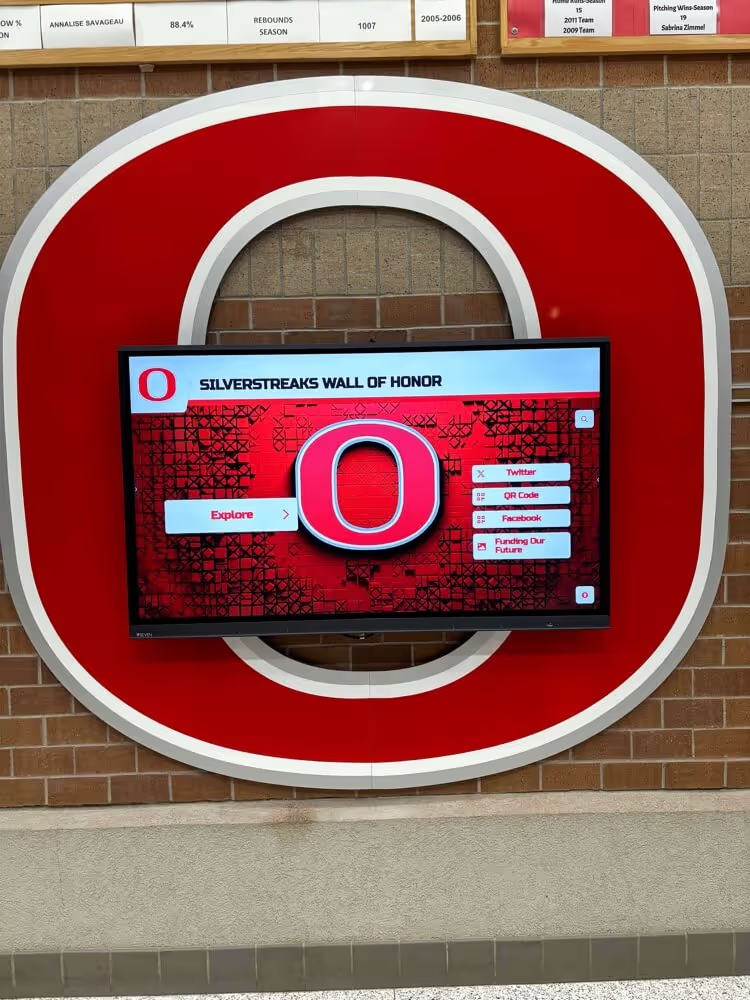
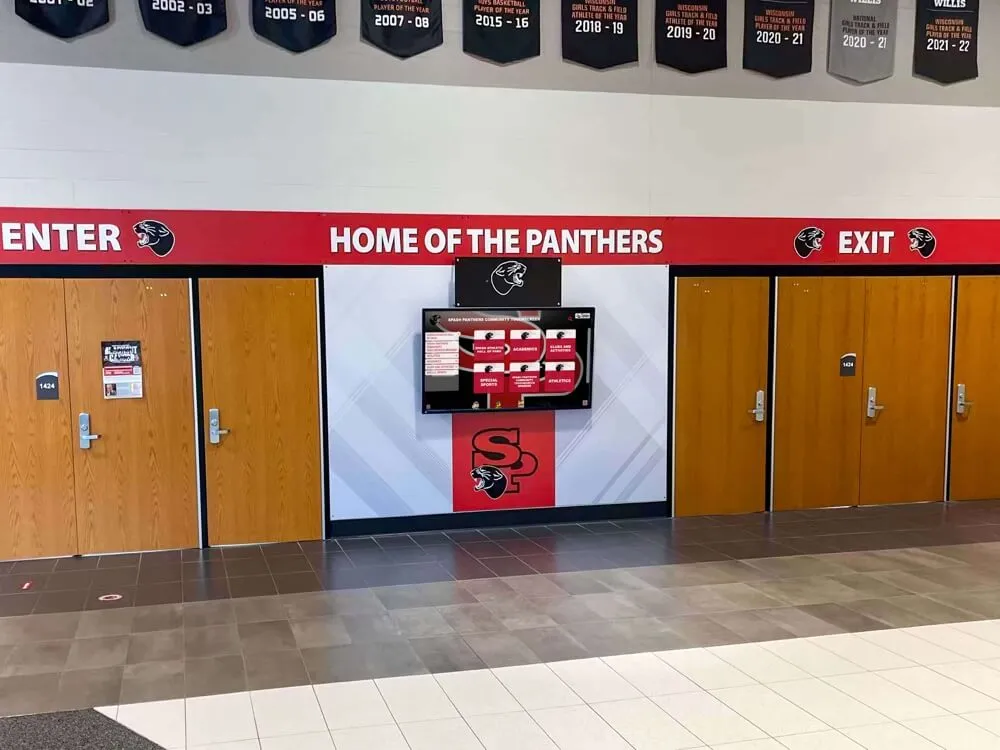
Recognition display installations—donor walls, Hall of Fame panels, digital touchscreen kiosks, hallway shield arrays—involve multiple vendor invoices at different project phases: design fees, fabrication, shipping, installation, and annual content management subscriptions. Each invoice represents a separate authorization decision under the matrix.
A program that processes the design fee at Tier 1 (under $100), the fabrication invoice at Tier 3, and the installation payment at Tier 5 without consistent documentation across all three has not completed a matrix-compliant authorization chain. The evidence requirements for each tier must be satisfied independently; a sponsor who later questions the display specification needs a complete file from design approval through final installation confirmation.
Evaluating and selecting hall of fame tools and platforms is a decision that the payment approval matrix will govern operationally: the platform selection may occur at board level, but every subsequent invoice—subscription renewal, content update fee, hardware replacement—routes through the matrix as a standard transaction. Officers who understand the matrix before the vendor relationship begins will manage the ongoing invoice chain more consistently.
Award and Trophy Purchases
Athletic award and trophy orders tie the approval matrix to the recognition commitments made to individual athletes, letter-winners, and multi-year honorees. An engraved trophy delivered with a misspelled name or an incorrect year is a recognition failure—but it is also a payment control failure, because a proper evidence package for an award invoice would have included a proof approval signed by a reviewing officer before production began.
Award recognition programs for youth and high school athletics depend on the same documentation discipline as major recognition display installations: the specification is confirmed in writing before payment is released, and the delivery is confirmed before the invoice is archived. The approval matrix makes that sequence mandatory rather than aspirational.
Sponsor Benefit Fulfillment
When sponsors fund booster programs through multi-tier agreements that include specific benefit deliverables—signage dimensions, display placement, event naming rights, program recognition—the payment approval matrix intersects with sponsor stewardship in a consequential way. Every payment that fulfills a sponsor benefit is also evidence of delivery. The invoice file that flows through the approval matrix is the documentation that answers a sponsor’s renewal-time question: was my commitment honored?
Programs that maintain complete matrix-compliant approval files for every sponsor-connected expenditure have the documentation leverage to answer that question affirmatively. Programs that approved payments informally, without consistent evidence requirements, cannot produce the delivery evidence at renewal—and often learn this for the first time when a sponsor asks.
Alumni recognition events that involve sponsor naming rights, catered programs, and venue agreements are among the highest-value contexts for consistent matrix application. The payments are often the largest the organization processes in a given year, the commitments are visible to the community, and the documentation is the permanent record of what the sponsor received. A matrix-compliant event payment file is both a financial control record and a sponsor stewardship document.
Policy Template
Use this template as the foundation for a written payment approval policy. Customize all bracketed fields before adopting. Have the current board vote to formally adopt the policy and record the adoption in the meeting minutes.
BOOSTER CLUB PAYMENT APPROVAL MATRIX POLICY
[Organization Name] | [School / Program]
Adopted: [Date] | Annual Review Date: [Month]
Adopted by Board Vote: [Yes / No — vote recorded in [Date] meeting minutes]

SECTION 1 — PURPOSE
This policy establishes a payment authorization matrix governing
all expenditures made by [Organization Name]. No payment may be
released until the transaction has been authorized by the
appropriate officer role for the applicable spending tier, with
all required evidence on file prior to authorization.

SECTION 2 — SPENDING TIERS AND AUTHORIZATION
Tier 1 (Under $100): Treasurer approves; no second sign-off required.
Tier 2 ($100–$499): Treasurer approves; no second sign-off required.
Tier 3 ($500–$999): Treasurer reviews; President approves.
Tier 4 ($1,000–$2,499): Treasurer and President both review;
  President countersigns Treasurer approval.
Tier 5 ($2,500–$4,999): Treasurer, President, and one board member
  review; board vote required; Treasurer countersigns President
  approval.
Tier 6 ($5,000 and above): Full board review and vote required;
  President and Treasurer both sign; board resolution recorded.

SECTION 3 — SPECIAL TRANSACTION RULES
3a. Reimbursements: Any officer except the requestor approves;
    Treasurer countersigns; self-approval is prohibited at any tier.
3b. New-vendor payments: Vendor verification checklist must be
    completed before any approval regardless of dollar amount.
3c. Recurring / subscription payments: Annual review against
    original contract terms required; President countersigns
    Treasurer authorization.
3d. Emergency / unbudgeted payments: President and Treasurer must
    jointly authorize in writing; board ratification required at
    the next regular meeting.
3e. Split transactions: Splitting a single purchase into multiple
    payments to remain within a lower tier is prohibited. The
    combined economic value of the transaction governs the
    applicable tier.

SECTION 4 — REQUIRED EVIDENCE BEFORE AUTHORIZATION
All payments require the following documentation on file before
any authorization is valid:
  a. Purchase order, written quote, or board vote authorizing
     the expenditure
  b. Delivery or completion confirmation with officer name
     and date
  c. Invoice matching the authorized amount and description
  d. Approver signature(s) with date(s)
  e. Second sign-off (for tiers requiring dual authorization)

Recognition display, award, and sponsor commitment payments
additionally require:
  f. Specification approval (proof, rendering, or award list)
     signed before production or ordering
  g. Relevant sponsor agreement section attached to invoice file

New-vendor payments additionally require:
  h. Completed vendor verification checklist
  i. Business registration or tax ID confirmation

SECTION 5 — CONFLICT OF INTEREST
An officer with a direct or indirect financial relationship with
a vendor must:
  a. Disclose the relationship to the full board before any vote
     or approval
  b. Recuse from the approval and the board vote
  c. Have the disclosure and recusal documented in meeting minutes
Self-approval is prohibited regardless of the conflict-of-interest
disclosure status.

SECTION 6 — COMPLIANCE REPORTING
The Treasurer must include a payment authorization compliance
summary in each monthly financial report to the board, noting:
  a. Number of payments processed per tier
  b. Any emergency or out-of-process payments with written
     justification
  c. Any unresolved documentation gaps

SECTION 7 — RECORDS RETENTION
All payment authorization packages—including purchase
authorization, evidence documentation, invoice, approval
signatures, and any associated correspondence—must be retained
for a minimum of [7] years or as required by applicable law
and district records policy. Consult your CPA for retention
guidance specific to your organization.

SECTION 8 — ANNUAL REVIEW
This policy and the authorization thresholds must be reviewed
and reaffirmed or updated by the incoming board at the start
of each new term. Any threshold adjustment requires a board
vote recorded in the meeting minutes and a dated policy update.
The prior policy version must be archived with adoption and
retirement dates noted.

Athletic records and recognition displays reflect years of community investment. The payment approval matrix ensures that every expenditure behind those records is authorized, documented, and auditable by any future officer or reviewer.
Connecting the Matrix to Digital Recognition Infrastructure
A booster club payment approval matrix is not just a financial control document—it is the governance layer that makes recognition infrastructure credible over time. When a recognition display is funded, installed, and operated through a series of matrix-compliant payment authorizations, the organization owns a complete evidence chain that spans from the initial purchase decision to the current display state.
That evidence chain matters in several practical contexts. Digital yearbook and recognition display investments that involve multi-year platform subscriptions require consistent year-over-year renewal authorizations—each of which should route through the matrix as a recurring subscription transaction with an annual evidence review. An organization that manages renewal authorizations consistently will have a complete file for the platform relationship from first purchase through any eventual transition.
Academic history archiving and digital preservation programs face the same dependency: the records that preserve institutional history are only as credible as the governance processes that produced and maintained them. A payment approval matrix that is applied consistently across officer transitions creates a financial record that stands independent of any individual officer’s institutional memory.
Recognition programs that grow from a single display installation into a multi-room, multi-vendor infrastructure over several years depend on the matrix to maintain authorization discipline as complexity increases. The tier structure scales with program growth: what begins as a Tier 3 vendor relationship (a single display installation) may evolve into Tier 5 and Tier 6 territory as additional displays, content platforms, and annual maintenance agreements are added. The matrix accommodates that growth without requiring a governance redesign—because the thresholds and roles apply to every transaction, regardless of how many similar transactions the organization has processed before.

Lobby recognition installations that honor athletic history represent sustained community trust. A payment approval matrix ensures every financial commitment behind that trust is authorized, evidenced, and archived for the life of the program.
Frequently Asked Questions
What is a booster club payment approval matrix?
A booster club payment approval matrix is a written authorization table that defines which officer role can approve a payment at each spending tier, whether a second signature is required, and what evidence must be on file before any approval is valid. It is the reference document that answers the governance question “who can approve this?” for every transaction the organization processes. Unlike a narrative spending policy, the matrix format allows officers to identify the correct approval requirement in seconds by matching a dollar amount to the corresponding row.
How should a booster club set its payment approval thresholds?
Thresholds should reflect the realistic spending profile of the organization—the typical transaction amounts for equipment orders, vendor contracts, event expenses, and recognition display purchases—and the governance capacity of the officer team. A program whose routine purchases cluster around $500–$1,000 should set its elevated review threshold at a level that requires meaningful oversight, not one that is routinely exceeded and therefore ignored. As a starting baseline, many programs use: under $500 for treasurer-only approval, $500–$2,500 for dual-officer approval, and above $2,500 for committee or full-board review. Adjust based on your organization’s budget scale and your board’s capacity to review payments at meetings.
Can an officer approve a payment that benefits themselves?
No. Self-approval is prohibited at every tier regardless of dollar amount. An officer who submits a reimbursement request, has a financial relationship with a vendor, or benefits directly from a purchase cannot serve as an approver for that transaction. A second officer who has no conflict of interest must review and approve reimbursements; conflict-of-interest disclosures and recusals must be documented in the meeting minutes.
What evidence must exist before a payment can be approved?
The minimum evidence package for any payment includes: a purchase authorization (purchase order, board vote, or written officer approval) predating the transaction; a delivery or completion confirmation with an officer’s name and date; an invoice matching the authorized amount; and the approver’s signature with date. For recognition display and award purchases, the package must also include a specification approval (proof, rendering, or award list) signed before production began. For sponsor-connected payments, attach the relevant section of the sponsor agreement. For new vendors, include a completed vendor verification checklist.
What happens when a payment is made outside the approval matrix?
A payment that bypassed the required authorization steps should be reported to the full board at the next meeting and documented in the minutes. The officer responsible should provide a written explanation of the circumstances. The board should determine whether retroactive ratification is appropriate or whether the payment represents a governance failure requiring further investigation. Consult your CPA and legal counsel if the amount is significant or if the circumstances suggest more than a procedural oversight. The matrix should also be reviewed to determine whether the exception reveals a gap in the threshold structure.
How does a payment approval matrix support sponsor renewal conversations?
A sponsor who questions whether their commitment was delivered—their name on a display, their logo on a banner, their recognition in a program—is answered by the payment file. A matrix-compliant approval package for a sponsor-connected expenditure includes the invoice, the delivery confirmation, the sponsor agreement section, and the approver signatures. That package is the evidence of delivery. Programs that consistently apply the matrix to sponsor-connected payments have documentation leverage at every renewal conversation; programs that approved those payments informally cannot produce the same evidence.
Should the payment approval matrix cover digital display subscription renewals?
Yes. Annual subscription renewals are not exempt from authorization requirements simply because they are recurring. Each renewal should be reviewed against the original contract terms, routed through the appropriate dollar-tier approval, and filed with the subscription agreement and a renewal authorization confirmation. The board should review multi-year platform commitments before each renewal to confirm the organization intends to continue the relationship and that the platform still serves the program’s recognition needs.
How often should the payment approval matrix be updated?
The matrix should be reviewed and reaffirmed or updated by the incoming board at the start of each new term—typically annually. Threshold amounts may need adjustment as the program’s budget grows. Role definitions may shift as officer positions are restructured. Any change requires a board vote, a dated policy update, and retention of the prior version in the organization’s archives. Programs that review the matrix annually and update thresholds to reflect actual spending patterns maintain a document that functions as a real control rather than an outdated policy that officers work around.
Connect Payment Governance to Recognition Programs That Last
A booster club payment approval matrix is the governance foundation behind every recognition display, sponsor panel, and award program your organization funds. When every payment is authorized at the right level, documented with the required evidence, and archived through an officer transition, the community investments reflected in your recognition infrastructure are sustainable and auditable for years ahead. When your program is ready to connect that governance discipline to a recognition platform designed specifically for school athletic programs—one that manages donor walls, Hall of Fame displays, and sponsor recognition panels with the transparency your contributors deserve—Rocket Alumni Solutions can show you what institution-managed recognition infrastructure looks like.
Schedule a Demo with Rocket Alumni Solutions