Booster Club Related-Party Transaction Policy: Disclosure, Review, and Recognition-Safe Governance

A booster club related-party transaction policy governs what happens when the organization spends money with or directs contracts toward a vendor, service provider, or individual who has a personal or financial relationship with a board officer, committee chair, or immediate family member of either. Athletic directors, booster presidents, and school administrators who manage programs without a written policy discover the gap the same way every time: a parent volunteer raises a question about why a service contract went to a board member’s spouse, or a sponsor asks why their recognition display was installed by a company an officer has an ownership stake in—and no documented answer exists.
A written related-party transaction (RPT) policy defines what counts as a covered relationship, who must disclose before a transaction proceeds, how the board reviews and approves or declines the transaction, and what documentation goes into the permanent record. For booster clubs that manage fundraising revenue, sponsorship agreements, and recognition display commitments, the policy is not a technicality—it is the governance mechanism that allows donors and sponsors to trust that their contributions are managed in the program’s interest, not in the personal interest of the people managing it.
This guide is for informational purposes only and does not constitute legal, accounting, or tax advice. Related-party transaction requirements vary by jurisdiction, corporate structure, and tax-exempt status. Consult a licensed attorney or CPA before adopting any related-party transaction policy for your organization. Align any policy with your school’s or district’s own governance requirements.

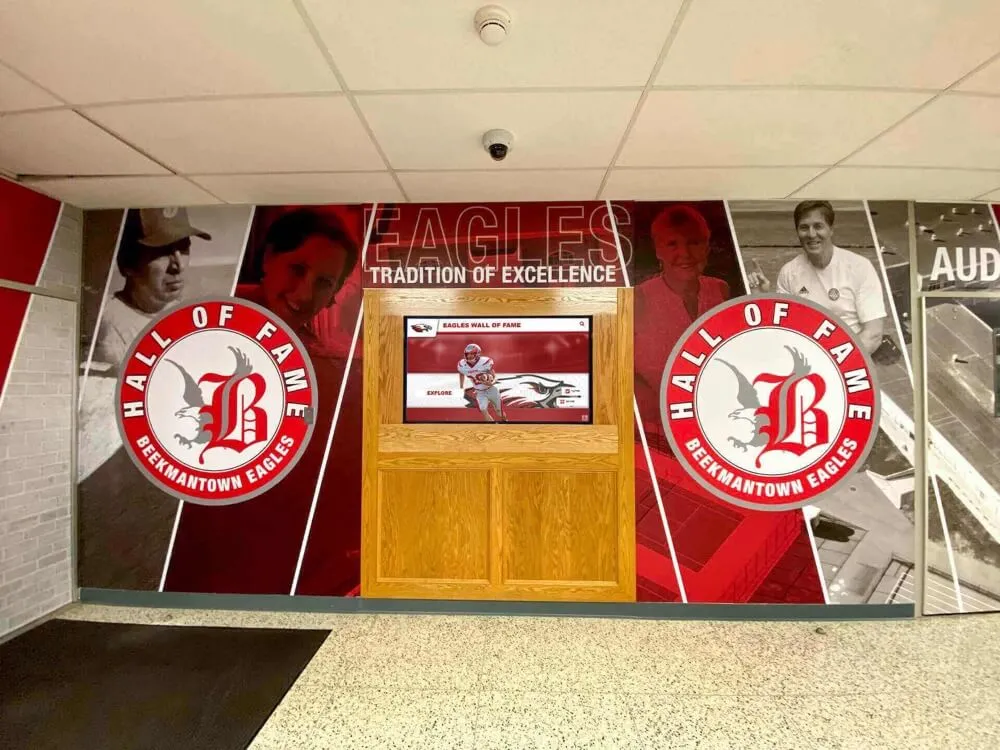
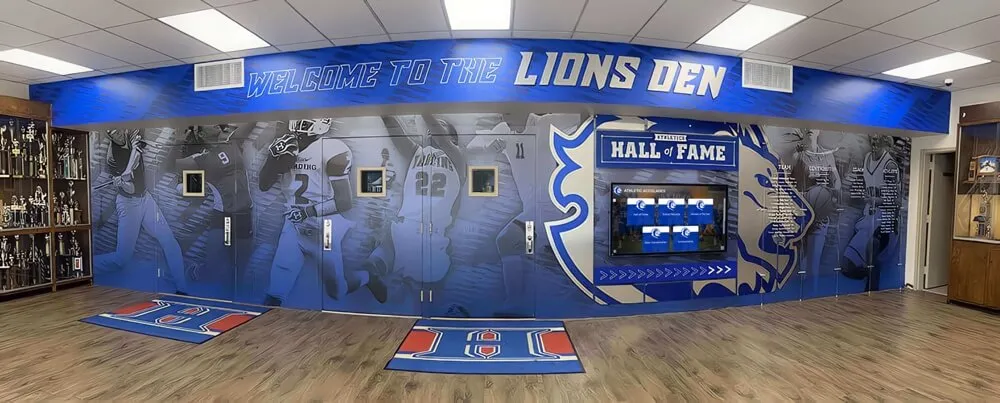
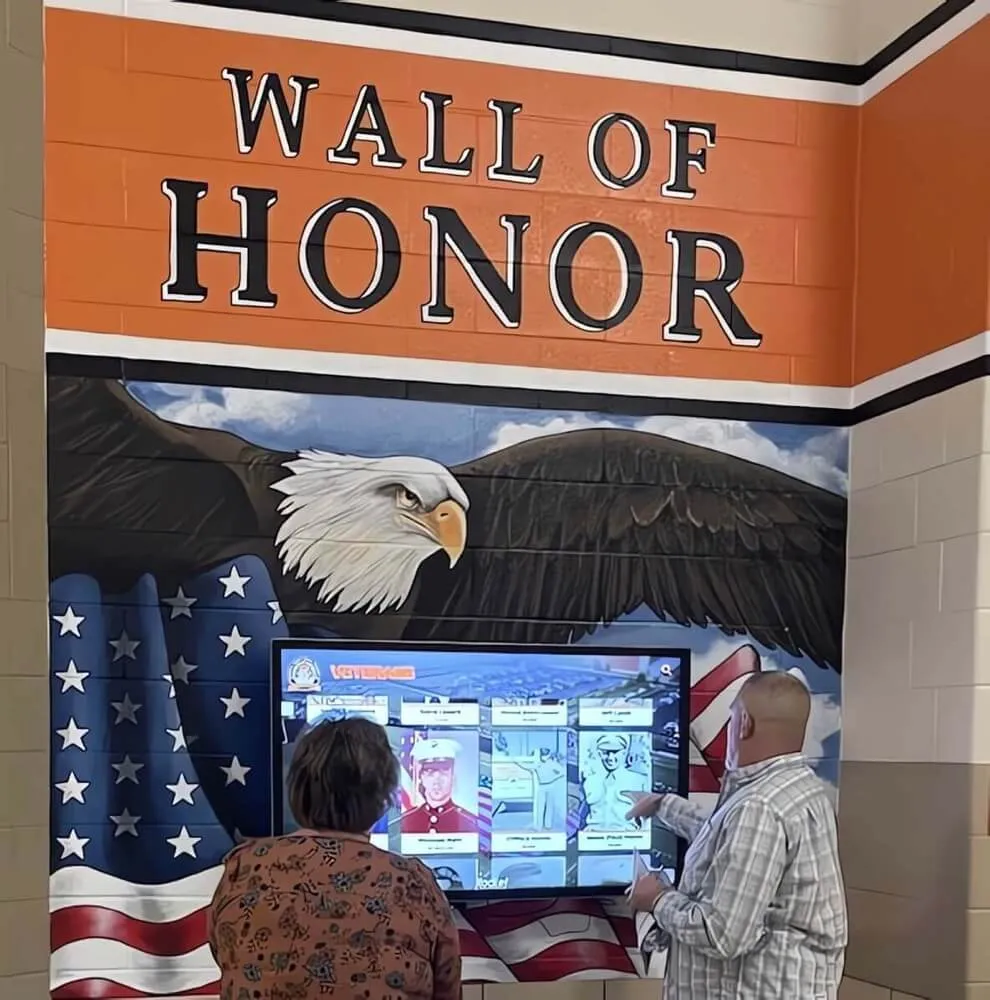
Athletic hallway records and recognition displays represent the long-term stewardship outcomes of booster club fundraising—outcomes that depend on governance policies preventing insider transactions from redirecting the funds that support them
What a Booster Club Related-Party Transaction Policy Is
A booster club related-party transaction policy is a written governance document that:
- Defines covered relationships — who qualifies as a “related party” for purposes of the policy
- Requires advance disclosure — specifies when and how an officer or volunteer must disclose a potential conflict before the organization acts
- Establishes a review process — sets out the steps the board takes to evaluate whether a proposed transaction is in the organization’s interest
- Mandates recusal — requires the interested party to step back from any vote or deliberation on the transaction
- Documents the decision — specifies what records must be created and retained after a transaction is approved or declined
For booster clubs organized as nonprofits—whether independently incorporated or operating under a school district’s umbrella—this type of policy addresses what the IRS identifies as “excess benefit transactions” in nonprofit governance. The IRS Form 990, required of nonprofits with gross receipts exceeding $50,000, includes questions about conflicts of interest and related-party transactions. Organizations with no written policy face scrutiny on those questions during district audits or donor due-diligence reviews.
Booster clubs below the Form 990 filing threshold should still consider adopting a written policy. The donor trust that makes fundraising possible is easiest to protect before a problem surfaces—not after.
What Qualifies as a Related-Party Transaction
A related-party transaction occurs when the booster club proposes to:
- Purchase goods or services from a business owned or operated by an officer, committee member, or an immediate family member of either
- Award a contract for event services, printing, catering, equipment maintenance, or facility work to a vendor with a personal relationship to a decision-maker
- Make a payment to an individual who is also an officer, committee chair, or compensated volunteer
- Enter a lease or rental agreement with a property owner who is connected to the organization’s leadership
- Accept an in-kind contribution whose appraised value is determined by someone with a financial relationship to the donor
The policy should define “immediate family member” explicitly. Common definitions include spouse, domestic partner, parent, sibling, child, and in some policies, grandparent or grandchild. A clear definition prevents circumventing the policy through transactions with relatives of covered parties.
| Scenario | Related-Party Transaction? | Disclosure Required? |
|---|---|---|
| Officer’s spouse provides catering at a fundraising event | Yes | Yes—before the contract is discussed |
| Board member recommends a vendor they have no relationship to | No | No |
| Treasurer’s parent owns the printing company used for programs | Yes | Yes—before any agreement is executed |
| Coach submits a receipt for program supply purchase | No | No—standard reimbursement, not an RPT |
| Committee chair’s sibling installs recognition display panels | Yes | Yes—and recusal from the approval vote |
| Officer purchases supplies at retail with their own card | No | No—standard reimbursement procedure |
| A vendor donates in-kind services valued by that vendor’s employee | Yes | Yes—independent valuation required |
Why a Written Policy Matters for Fundraising Trust and Recognition Programs
Fundraising trust is the foundation of every booster club’s operating model. Donors who give to athletic scholarship funds, sponsors who pay for display recognition tiers, and community members who buy event tickets are all transferring money to an organization on the assumption that the people managing it are acting in the program’s interest.
Booster club cash handling policies address one dimension of financial accountability—ensuring that revenue collected at events is counted, recorded, and deposited without diversion. A related-party transaction policy addresses a different and equally important dimension: ensuring that money, once collected, is spent through a process free from undisclosed personal interests.
The two policies together form the core of a booster club’s financial governance framework. A gap in either area—how money comes in or how it goes out—creates conditions for the kind of donor concern that is harder to recover from than the incident that caused it.
For programs with active sponsor recognition portfolios, the risk is more specific. When a sponsor pays for a recognition tier that includes display placement, the organization commits to delivering that placement without diverting resources to undisclosed related parties. Parent booster club guidelines covering recognition rules and sponsor display approvals illustrate how programs structure the governance layer between sponsor agreements and the delivery of recognition benefits—a layer that a related-party transaction policy reinforces by ensuring that the vendor relationships behind display installation and content management are transparent and documented.
Numbered Steps: The Disclosure and Review Workflow
The following seven-step workflow applies any time an officer, committee member, or volunteer becomes aware of a potential related-party transaction before the organization commits to it.
Step 1 — Identify the relationship The officer or committee member determines whether a proposed transaction involves a vendor, service provider, or individual who has a personal or financial relationship that falls within the policy’s definition of a covered party. When in doubt, disclosure is the correct default.
Step 2 — Disclose in writing before discussion The interested party submits a written disclosure to the board president—or to the school’s athletic director if the president is the interested party—before the transaction is discussed or negotiated. The disclosure names the vendor, describes the relationship, and identifies the nature of the proposed transaction.
Step 3 — Recuse from deliberation and voting The disclosing party leaves the room or removes themselves from the communication thread for the portion of any board meeting or written deliberation that addresses the proposed transaction. Their absence is noted in the meeting minutes.
Step 4 — Obtain independent price comparison The remaining board members obtain at least one independent price comparison—a quote from an unrelated vendor for the same or equivalent goods or services. For transactions below a defined threshold (a common choice is $500 or $1,000), written documentation of market-rate pricing from a published or publicly available source may substitute for a formal competitive quote.
Step 5 — Evaluate in the organization’s interest Disinterested board members evaluate whether the proposed transaction serves the organization’s interest on its own terms—quality, price, timing, and fit—without giving weight to the personal relationship that triggered the disclosure.
Step 6 — Vote and document the decision Disinterested board members vote. The meeting minutes record: the nature of the transaction, the disclosed relationship, the names of members who voted, the recused member’s name, any price comparisons obtained, and the outcome of the vote.
Step 7 — Retain documentation The written disclosure form, any price comparison documentation, and the meeting minutes are retained in the organization’s permanent governance file for the minimum retention period specified in the policy (commonly seven years, subject to applicable law). These records form the audit trail that supports the organization’s position if the transaction is later questioned by district administration, a donor, or a tax authority.

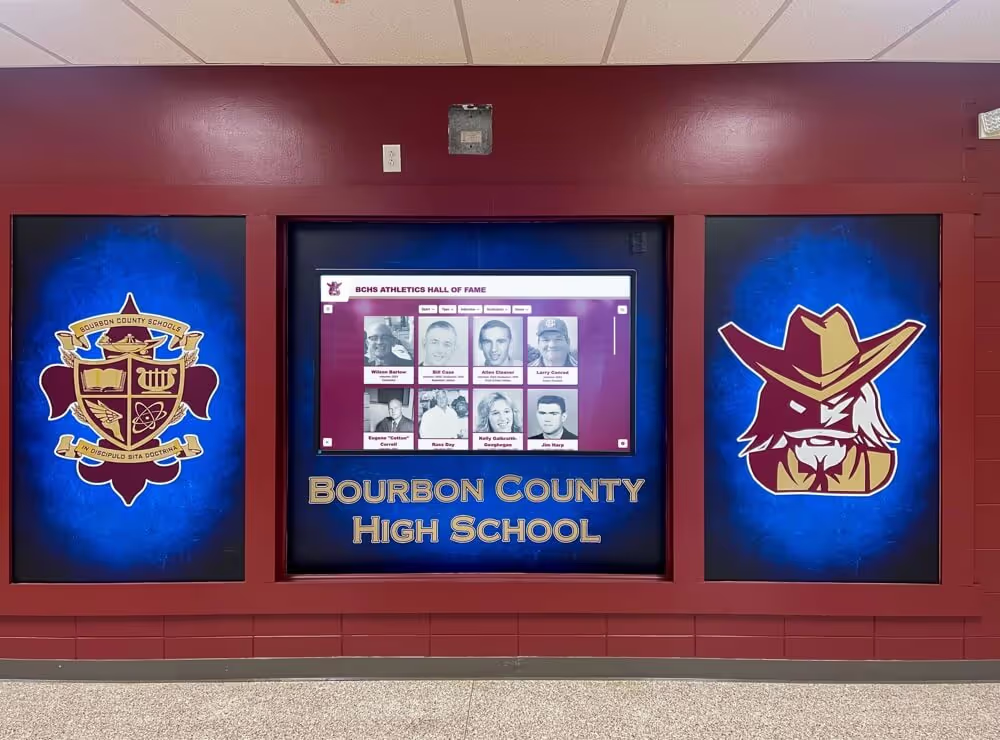
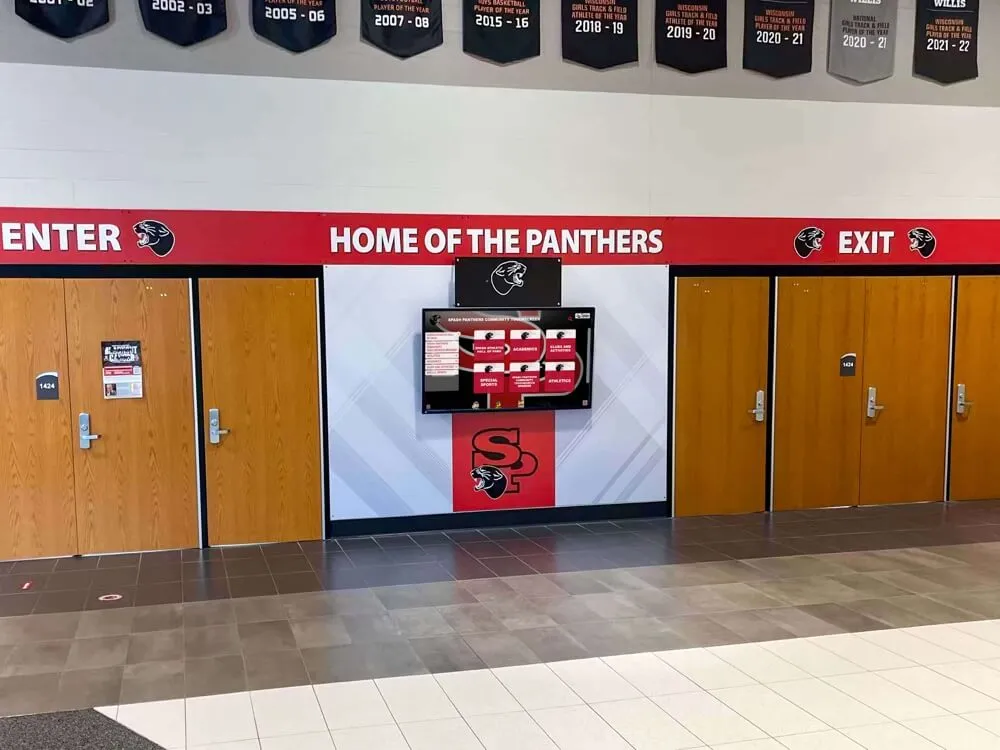
Recognition display installations represent significant procurement decisions—when any vendor relationship involves a board officer or family member, the related-party transaction policy determines whether and how that procurement may proceed
Connecting the Policy to Recognition and Display Governance
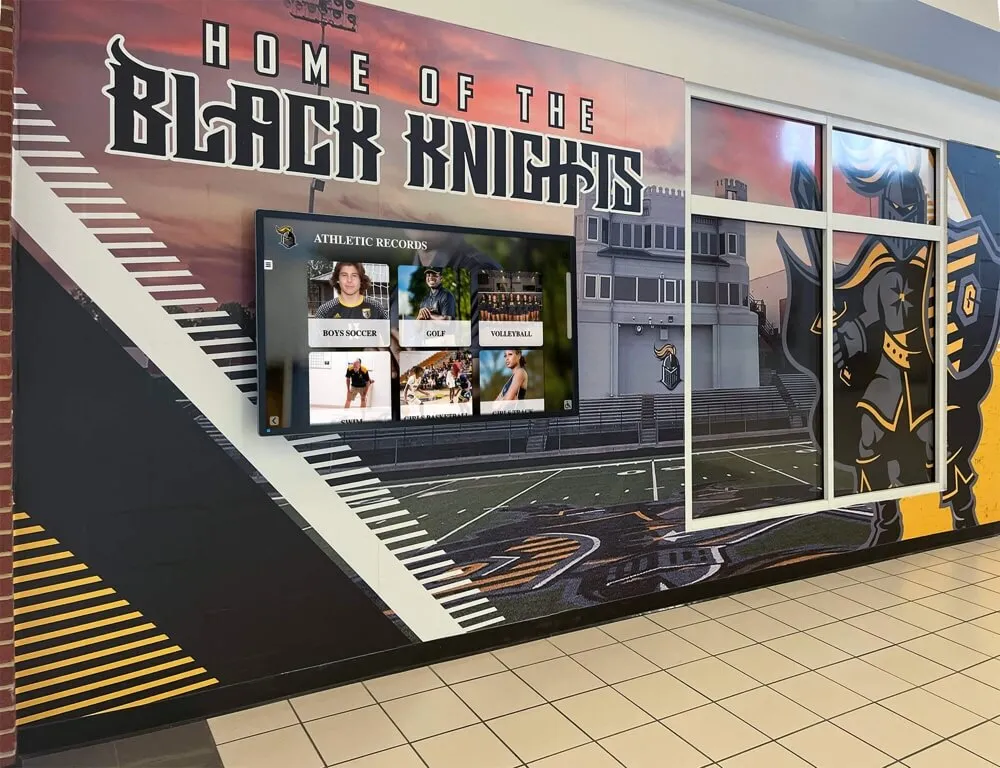
Recognition programs—donor walls, hall-of-fame displays, sponsor panels, and athletic record boards—often involve procurement decisions that are more visible than general operating expenses. When a booster club contracts for display installation, content management software, printing, or custom fabrication, the vendor selection is connected to a physical or digital artifact that community members, donors, and sponsors can see and evaluate over years.
That visibility makes recognition-related procurement a high-stakes category for related-party transaction governance. A donor whose name appears on a wall installed by a company owned by a board officer’s family member has every reason to wonder whether the contract was awarded because it was the best value for the program. A sponsor who pays for a recognition tier and later learns that the display vendor had an undisclosed personal relationship to the treasurer is right to question whether that arrangement was properly reviewed.
Booster club fundraising ideas and recognition program structures describe the range of programs that booster clubs build on fundraising revenue—programs whose integrity depends on the governance policies that govern how that revenue is spent. Recognition is the most public output of booster club fundraising. The governance policies that protect procurement in that space directly protect the donor and sponsor relationships that make recognition programs sustainable across officer generations.
Programs that maintain digital recognition infrastructure—lobby displays, donor walls, hall-of-fame platforms—have an additional governance advantage: those systems create a documentation record that can support related-party transaction compliance review. When a platform logs content changes, installation dates, and approval workflows, the record is available if a question arises about how a display contract was awarded or whether a vendor had an undisclosed relationship to a board officer.
Data privacy practices for booster club digital platforms and cybersecurity policy frameworks for booster organizations both address the documentation and data-handling dimensions of governance that extend naturally to the records a related-party transaction policy requires organizations to create and retain. Together, these policies describe a governance infrastructure in which each type of document—disclosure forms, price comparisons, privacy notices, security logs—supports the others in an integrated accountability framework.
Award banquet programs and recognition event governance illustrate the recognition contexts in which procurement decisions are most visible—events where sponsors, donors, and honorees are present and where the quality of the program’s display and recognition delivery reflects directly on the governance that produced it. A related-party transaction policy is part of what makes those events a demonstration of institutional integrity rather than a source of community concern.
Common Related-Party Scenarios and Policy Response
| Situation | Policy Response |
|---|---|
| A board officer learns their sibling’s printing company offers competitive prices for event programs | Officer discloses relationship in writing; recuses from discussion and vote; board obtains one independent price comparison before deciding |
| A committee member’s parent volunteers to install display panels at cost | RPT policy applies; disclosure and recusal required even when work is offered below market rate |
| A treasurer recommends a catering vendor they personally use but have no financial interest in | Not a related-party transaction under most policy definitions; no disclosure required |
| An officer’s spouse donates in-kind design services for event materials | RPT policy may apply to in-kind contributions; policy should specify whether donated services from related parties require the same disclosure and review as paid transactions |
| A display vendor the program has used for three years is acquired by a board member’s family | Policy covers newly created relationships; disclosure required at the next contract renewal or modification |
| A former officer who resigned two years ago owns a vendor the organization now wants to use | Policy should define any post-resignation cooling period; consult qualified legal counsel on how to address pre-existing vendor relationships after a covered party’s departure |
Sample Booster Club Related-Party Transaction Policy Sections
The following template provides a starting framework for a mid-sized booster club. It should be reviewed by a licensed attorney or CPA and adapted to reflect the organization’s governance structure, applicable state law, and tax-exempt filing status before adoption. Align it with any conflict-of-interest or financial management policies already in place at the school or district level.
BOOSTER CLUB RELATED-PARTY TRANSACTION POLICY
[Organization Name]
Adopted: [Date] | Last Reviewed: [Date]

SECTION 1 — PURPOSE
This policy establishes disclosure, review, and documentation requirements
for transactions between the organization and any party with a personal or
financial relationship to an officer, committee chair, or immediate family
member of either, to ensure that organizational resources are committed
in the program's interest through a transparent and documented process.

SECTION 2 — DEFINITIONS
  Related Party: Any officer, committee chair, paid contractor, or
    immediate family member of any of the foregoing.

  Immediate Family Member: Spouse, domestic partner, parent, sibling,
    child, or any individual sharing a household with a covered officer.

  Related-Party Transaction (RPT): Any contract, purchase, payment,
    or agreement in which a related party has a financial or personal
    interest, including transactions in which the related party's
    family member, employer, or business partner has such an interest.

SECTION 3 — DISCLOSURE REQUIREMENT
Any officer or committee member who becomes aware of a proposed
transaction involving a related party must:
  (a) Disclose the relationship in writing to the board president
      before the transaction is discussed or negotiated (or, if the
      president is the interested party, to the school athletic
      director or district-designated compliance contact)
  (b) Provide a written description of the relationship, the vendor
      or individual involved, and the nature of the proposed transaction

Disclosure should occur at the earliest point at which the officer
becomes aware of the potential related-party relationship, not after
deliberation has begun.

SECTION 4 — REVIEW PROCESS
Upon receipt of a disclosure:
  Step 1 — The disclosing party recuses from all deliberation
             and voting on the proposed transaction
  Step 2 — Remaining board members obtain at least one independent
             price comparison or documented market-rate reference
  Step 3 — Disinterested board members evaluate the transaction
             on its merits: quality, price, timing, and fit
  Step 4 — A majority vote of disinterested board members is
             required to approve a related-party transaction
  Step 5 — The vote outcome, recused member's name, and supporting
             documentation are recorded in the meeting minutes

  Fallback reviewer: When fewer than a quorum of disinterested
  board members is available, the school athletic director or
  principal serves as the independent reviewing authority.

SECTION 5 — DOCUMENTATION REQUIREMENTS
The organization retains the following for each reviewed RPT:
  - Written disclosure form from the interested party
  - Price comparison documentation or market-rate reference
  - Meeting minutes recording the vote, recused member, and outcome
  - Signed contract or agreement if the transaction is approved
  - Delivery or performance documentation upon completion

Retention period: Minimum seven (7) years from the date of the
transaction, or as otherwise required by applicable law or district
policy.

SECTION 6 — ANNUAL DISCLOSURE
Officers and committee chairs complete and sign an annual conflict-of-
interest disclosure form at the start of each fiscal year, identifying
any existing or anticipated relationships that may create a covered
transaction during the year. New officers complete the form upon
assuming their role.

SECTION 7 — IN-KIND CONTRIBUTIONS
In-kind contributions of goods or services from related parties are
subject to the same disclosure and review process as paid transactions.
The fair market value of in-kind contributions must be independently
verified rather than determined by the contributing party or any
individual with a relationship to that party.

SECTION 8 — VIOLATIONS
Failure to disclose a related-party relationship before a transaction
proceeds is a governance violation subject to board review and may
result in removal from office in accordance with the organization's
bylaws. Transactions approved without required disclosure may be
subject to rescission, additional board review, or referral to
district administration.
Frequently Asked Questions
Q: Do all related-party transactions have to be rejected? No. The policy requires disclosure and review, not automatic rejection. A transaction that is properly disclosed, reviewed by disinterested board members, supported by a price comparison, and documented in the minutes may proceed if the board determines it is in the organization’s interest. The policy creates a transparent process, not a categorical prohibition.
Q: Does the policy apply when an officer’s family member volunteers rather than being paid? Many programs extend the policy to significant in-kind contributions from related parties, particularly when the value of the contributed services is material or when the in-kind work is connected to a display or recognition project with ongoing obligations. The policy should specify whether and how in-kind transactions are covered, and what documentation is required to establish fair market value for contributed services.
Q: What if the board is small and a majority of members have potential conflicts on a given transaction? This situation—common in smaller booster clubs—is exactly why the policy should designate a fallback reviewer, typically the school’s athletic director or principal, for situations where a disinterested quorum is insufficient to conduct a valid vote. District administration involvement in these cases is both a governance safeguard and a demonstration of transparency to donors and sponsors.
Q: How does a related-party transaction policy interact with the organization’s conflict-of-interest policy? In many organizations, the related-party transaction policy is a specific application of the broader conflict-of-interest policy. If both exist, the related-party policy should cross-reference the conflict-of-interest policy and clarify which governs when both apply. Where only one policy exists, it typically addresses both functions under a unified disclosure and review framework.
Q: Does the policy apply to vendor relationships the booster club has conducted for years without disclosure? A newly adopted policy does not retroactively invalidate prior transactions. It does require that any ongoing relationship—a multi-year contract, a recurring vendor arrangement, an annual service agreement—be disclosed and documented at the next renewal or contract modification, even if the relationship predates the policy’s adoption.
Q: Should the school district be involved in reviewing booster club related-party transactions? This depends on whether the booster club operates independently or under the district’s umbrella, and on the district’s own policies governing booster organization financial management. Many districts require that booster clubs align with district governance standards. Consult your school’s athletic director and district administration for guidance on how related-party transaction governance fits within their expectations. Alignment with qualified legal and accounting counsel is advisable before finalizing any policy.
Q: How often should the policy be reviewed and updated? At a minimum, the policy should be reviewed annually by the board at the start of each fiscal year, at the same time officers complete their annual disclosure forms. The policy should also be reviewed whenever the organization’s governance structure, corporate form, or tax-exempt filing status changes, or when the school or district updates its own financial management policies.
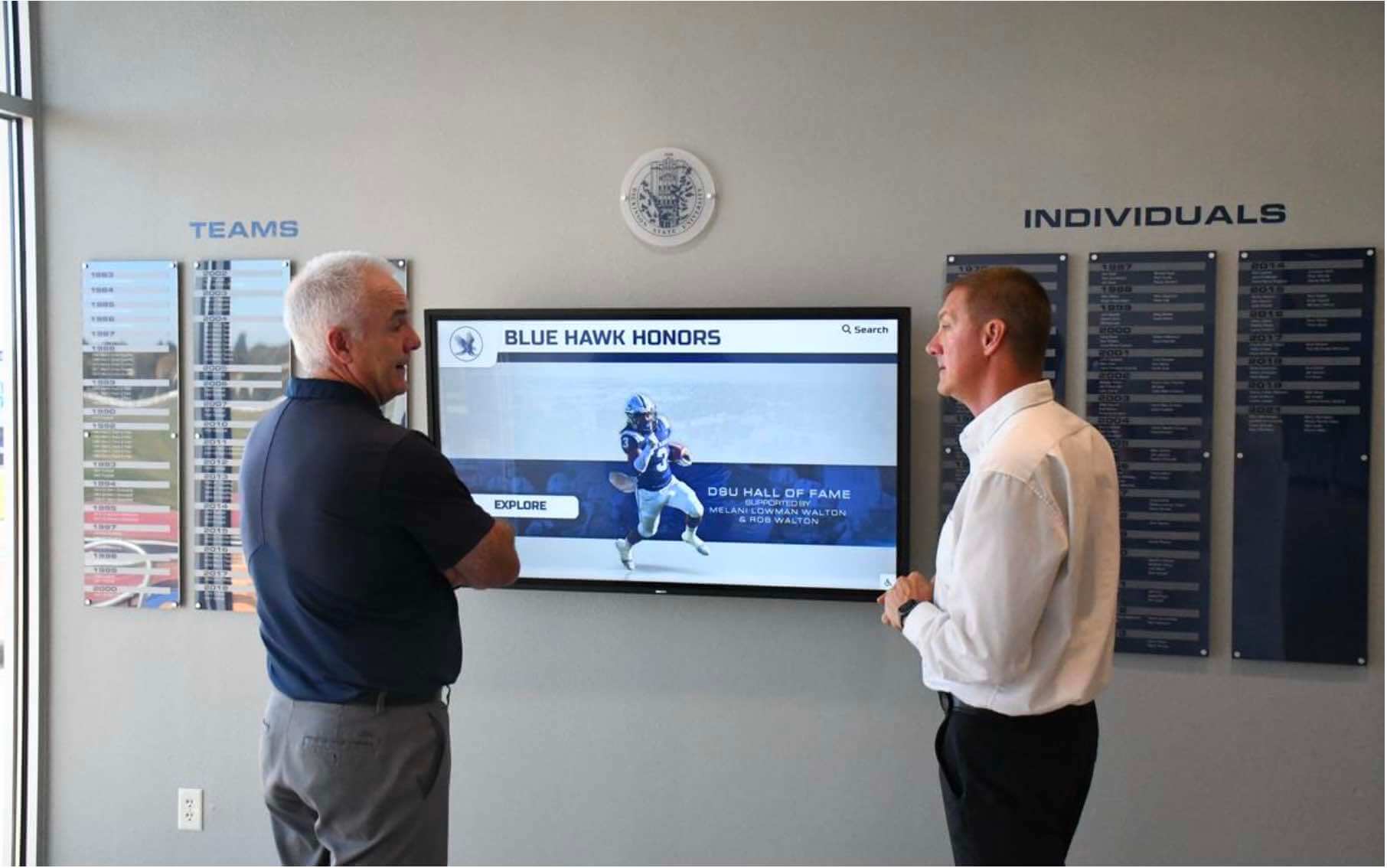
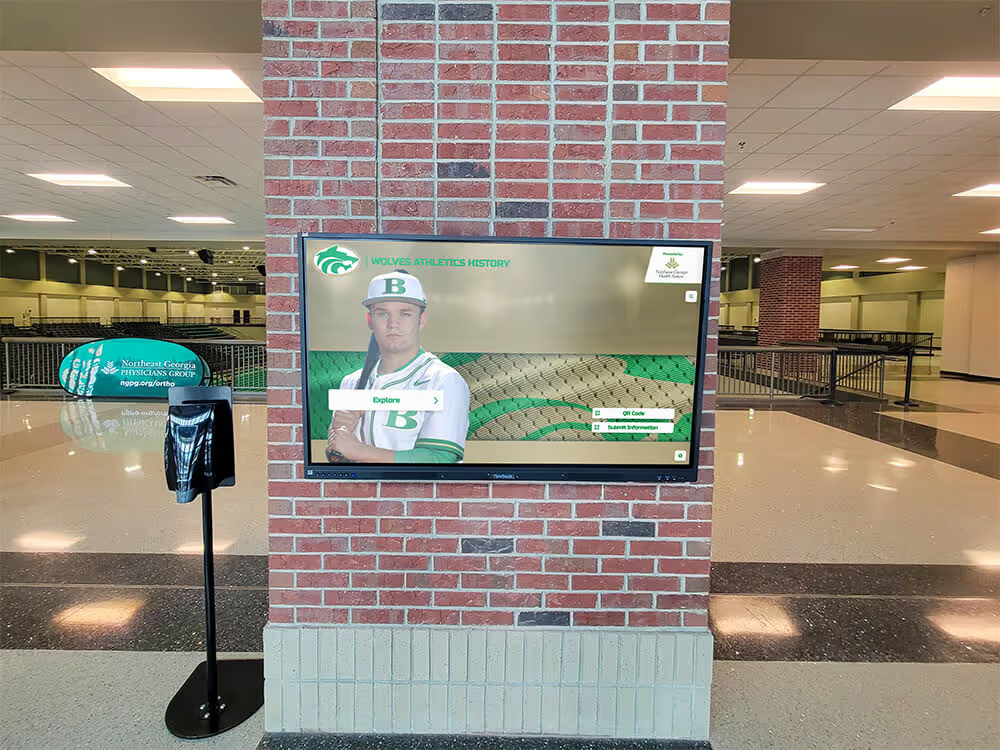
Administrators who review recognition displays regularly benefit from governance policies that ensure the vendor relationships behind those displays were disclosed, reviewed, and documented—protecting both display integrity and the trust of the donors and sponsors whose names appear on them
Connecting Policy to Long-Term Athletic History and Donor Trust
Athletic recognition programs—donor walls, hall-of-fame displays, record boards, sponsor panels—represent years of institutional history that the booster club helps fund and maintain. The governance policies that govern how fundraising revenue is spent are not separate from those recognition systems. They are the policies that determine whether the revenue reaching those systems was managed with the integrity that donors and sponsors trust.
A related-party transaction policy is part of the documentation framework that supports that trust over time. When an athletic director or booster president can point to a written policy, annual disclosure forms, and meeting minutes showing that vendor relationships were reviewed and approved through a transparent process, the program’s recognition commitments carry the weight of a documented governance record behind them. That record is what makes it possible to tell donors and sponsors—not just that their contributions were appreciated, but that they were managed responsibly.
When your program is ready to connect its financial governance framework to a recognition display system built for institutional accuracy, long-term stewardship, and sponsor delivery transparency—explore how Rocket Alumni Solutions supports school athletic programs and booster clubs with managed donor and recognition platforms designed to honor the trust behind every contribution.