When a local business writes a check to support your athletic program, they are making a bet—that their name will be seen, that their support will be remembered, and that the relationship will be worth renewing next year. Booster clubs that fulfill that bet consistently build multi-year sponsor pipelines. Those that treat sponsor recognition as an afterthought start the fundraising cycle from zero every season.
Structuring clear booster club sponsor recognition levels is the foundational step that separates programs that retain sponsors from programs that recruit them. A well-designed tier system tells sponsors exactly what they will receive before they commit, gives your team a consistent framework for delivering on those promises, and creates a display strategy that keeps sponsor names visible long after the season ends.
This guide covers how to define recognition levels that sponsors understand immediately, what to promise at each tier without overcommitting, and how to translate those promises into physical and digital displays that earn their keep year-round. The goal is a sponsor stewardship system—not a one-time transactional structure—that justifies renewal conversations before sponsors ask whether it was worth it.

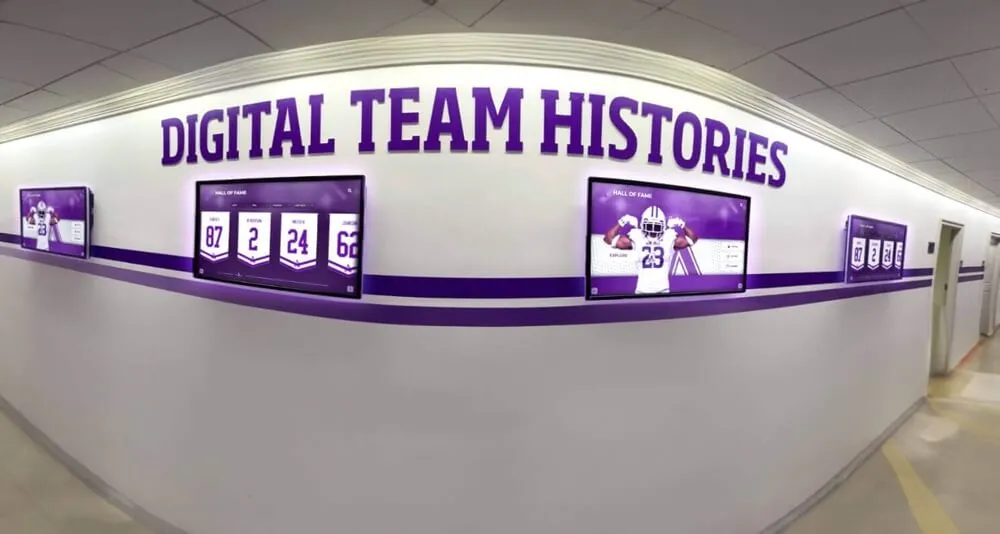
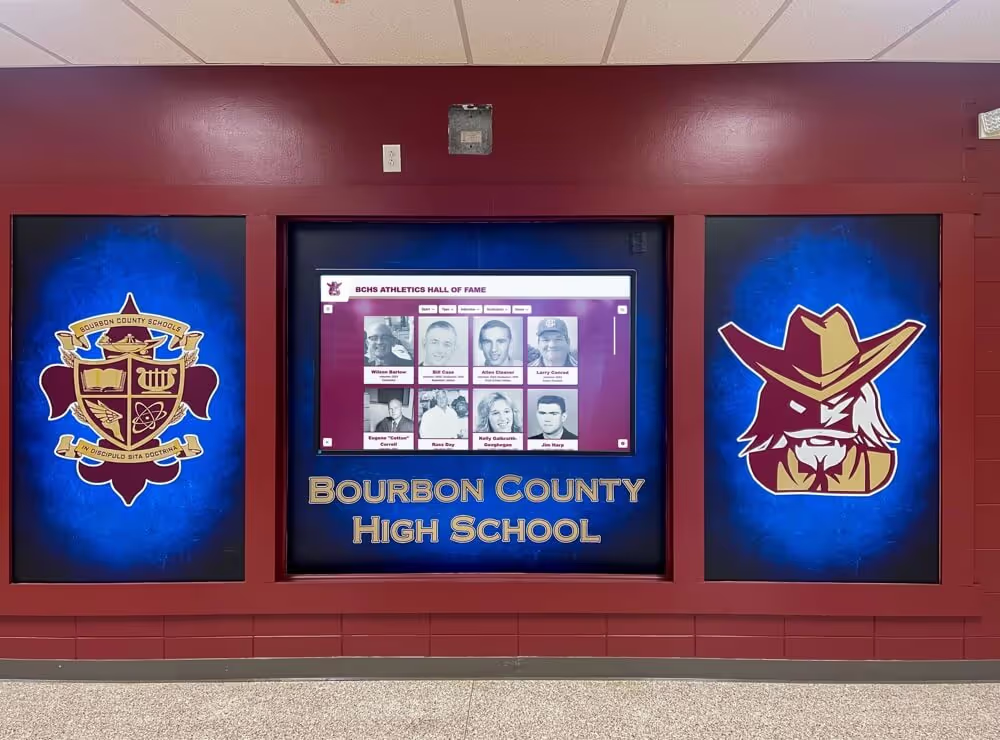
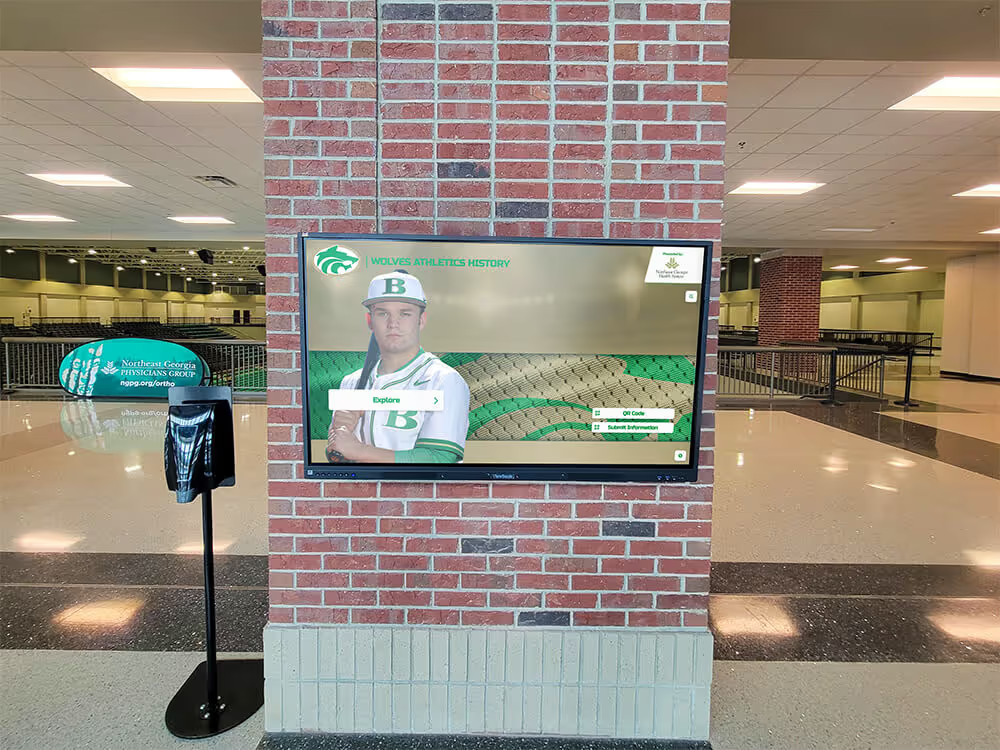
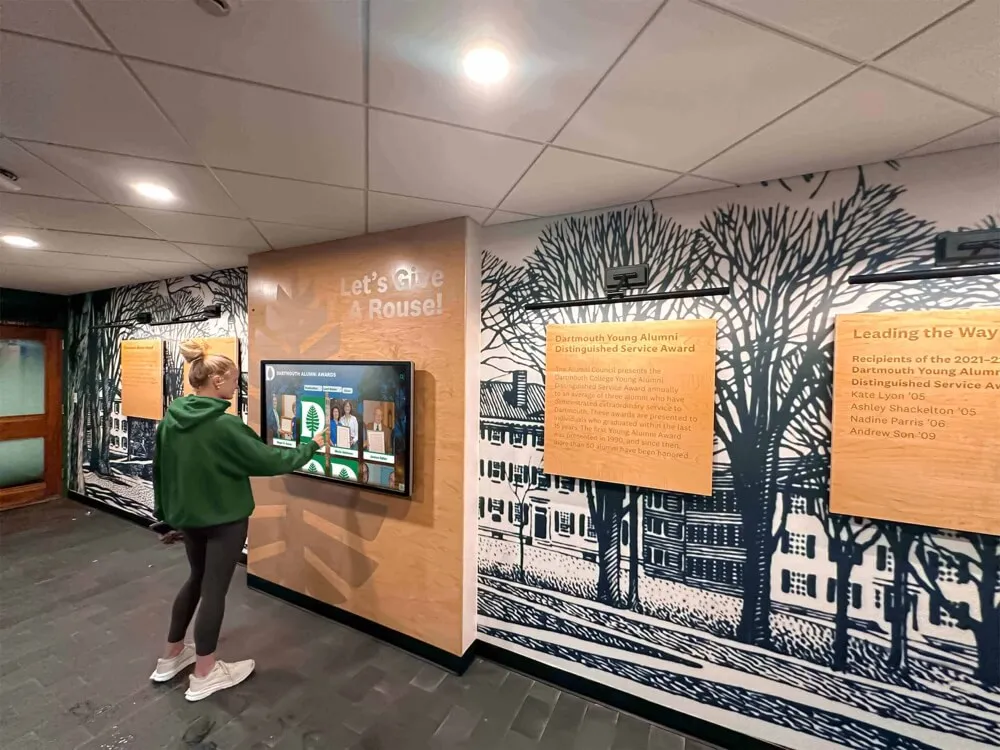
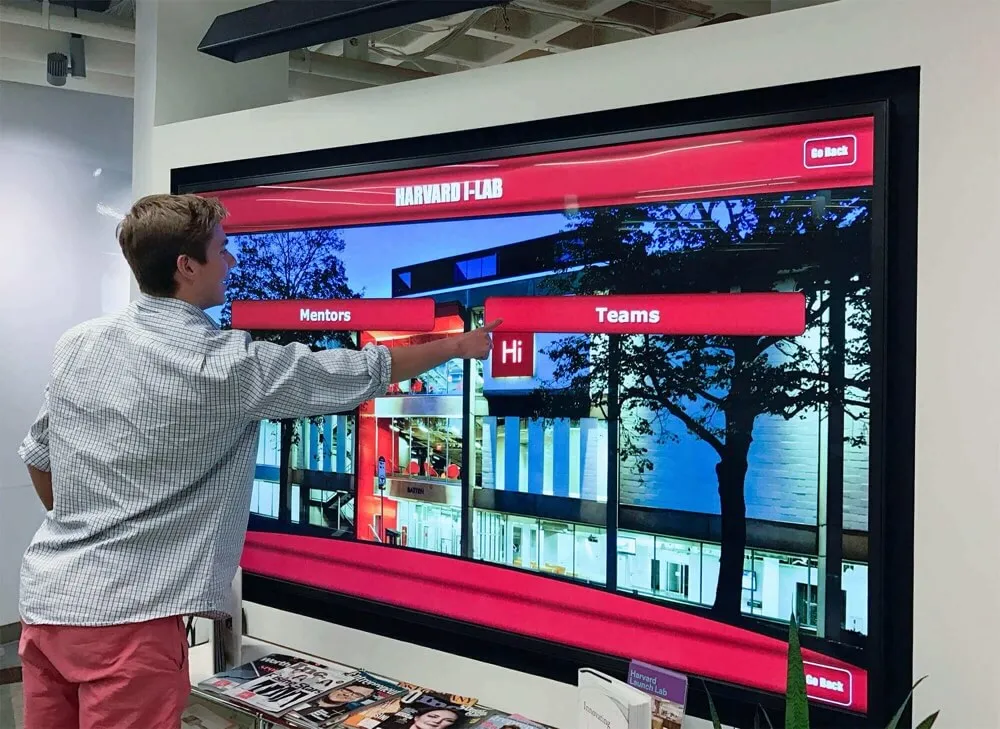
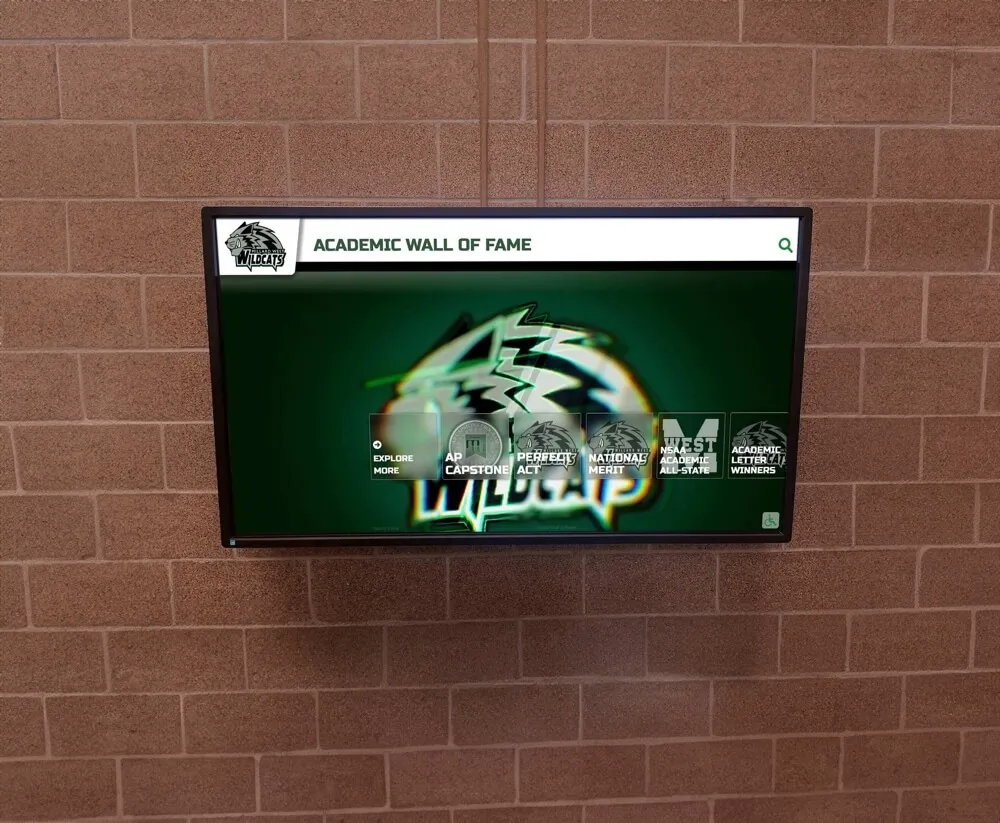
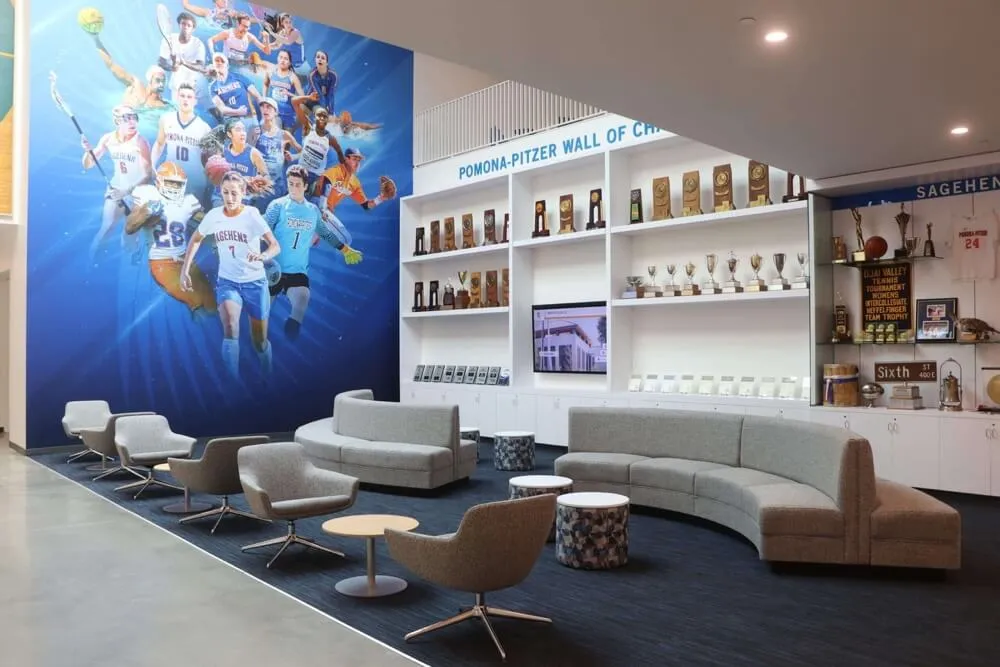
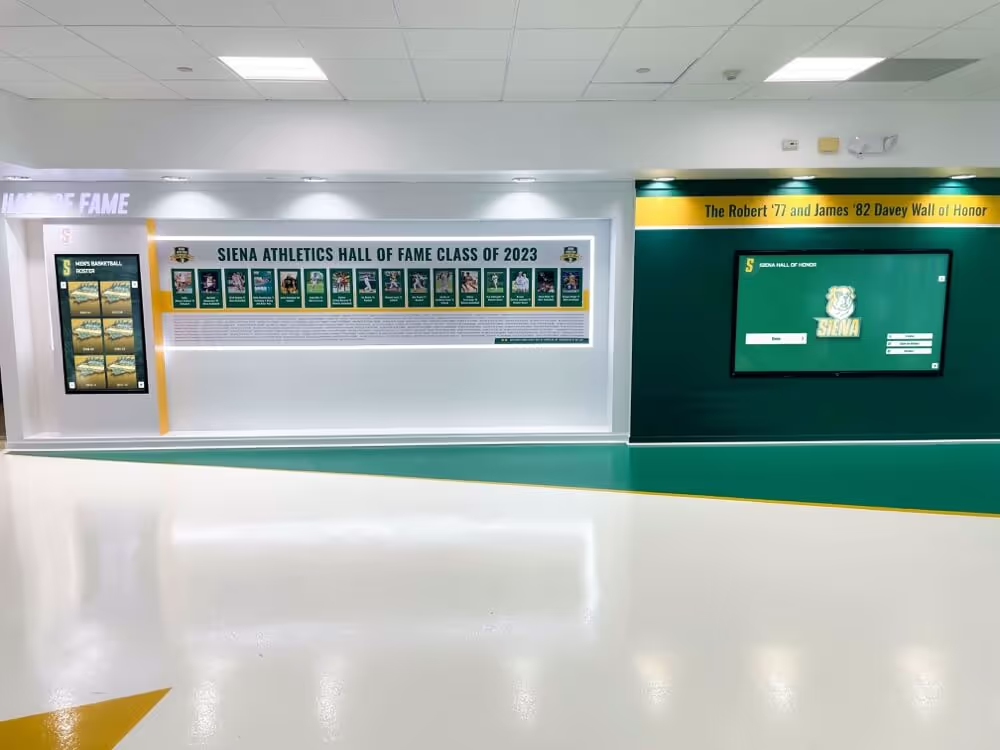
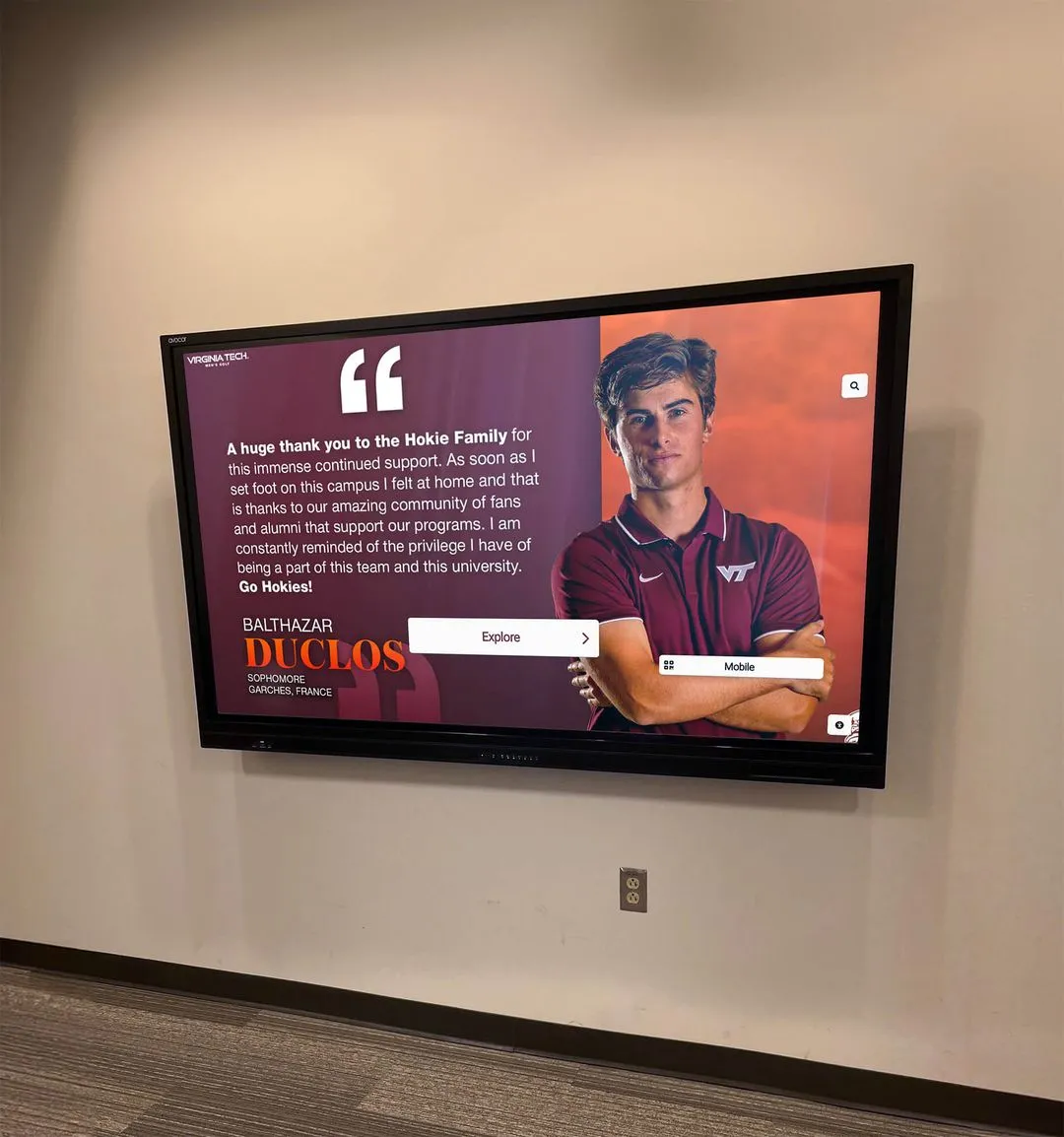
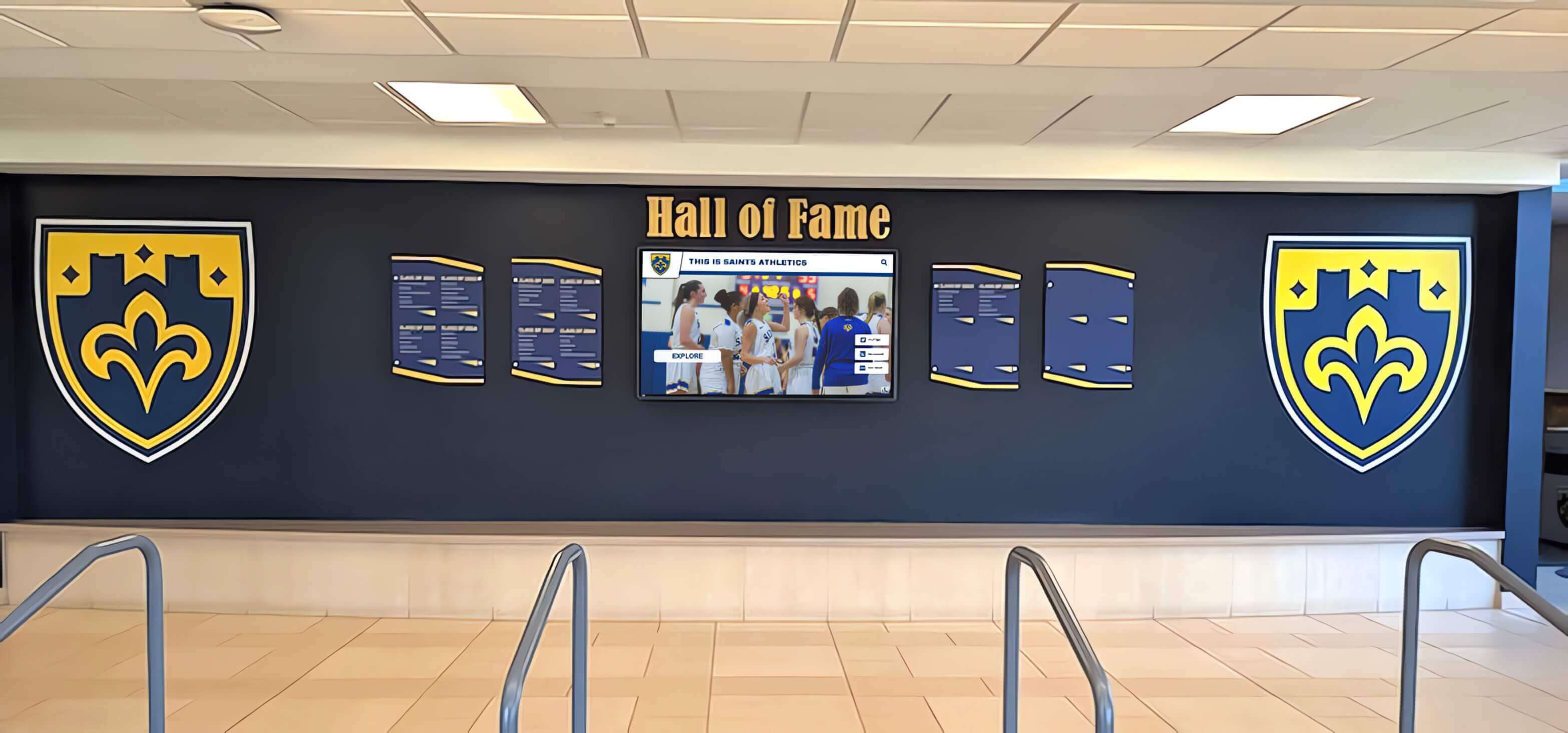
Permanent lobby displays create year-round sponsor visibility that extends far beyond game-night signage—a critical element of any structured recognition level system
Why Sponsor Recognition Levels Matter More Than Sponsorship Amounts
Many booster clubs approach sponsorship as a simple dollar transaction: a business pays a set amount, gets a banner or a program listing, and the relationship resets at the end of the season. That model works for collecting checks. It does not work for retaining sponsors.
Recognition levels reframe the relationship. Rather than selling advertising space, you are offering structured inclusion in the institutional story of your program. A sponsor at the Gold level does not just get a logo on a fence—they get a defined position in a hierarchy that signals community standing, institutional trust, and ongoing visibility. That framing matters to local businesses that sponsor school programs not purely for marketing ROI but for community identity and relationship with the institution.
Levels also give your team operational clarity. When every committee member knows what the Gold tier includes, you eliminate the ad hoc promises that lead to inconsistent delivery and sponsor disappointment. And when sponsors can see what the next tier offers, the upsell conversation becomes natural rather than transactional.
Well-structured creative recognition programs demonstrate that the recognition architecture—more than the benefit itself—drives the perceived value of the relationship. The same principle applies directly to booster club sponsorship: a $500 sponsor who occupies a clearly named Gold tier slot feels differently about their contribution than a $500 sponsor listed generically on a program page.
The Four-Tier Model: A Framework for Most Booster Club Programs
Most booster club programs can operate effectively with four tiers. The names are less important than the internal logic—each tier should offer a meaningfully different combination of visibility, permanence, and personal acknowledgment.
Presenting Sponsor (Top Tier)
The Presenting tier carries your program’s name in the sponsorship itself: “The [Business Name] Booster Club Season” or “[Business Name] Presents: [School] Athletics.” This naming association is the most valuable recognition asset a booster club can offer, and it should be priced accordingly.
What to promise at this level:
- Program-name association in all season communications, event announcements, and print materials
- Primary placement on all physical signage at the athletic facility
- First position in digital sponsor rotation on lobby screens and touchscreen kiosks
- Named facility area (entrance, scoreboard, or primary gathering space)
- Personal acknowledgment at all home games and season-end banquet
- Framed recognition certificate and sponsor appreciation package
- Annual renewal conversation with athletic director or booster club president
How to display it:
The Presenting sponsor requires dedicated, fixed placement—not a rotation slot. Their name should appear on a permanent mounted sign at the facility entrance, integrated into the facility name itself where possible, and displayed prominently on any digital recognition system. Digital walls and touchscreen kiosks should show the Presenting sponsor’s logo at every session launch, not only in rotation.
Gold Sponsor
Gold represents the highest tier at which most local businesses will reasonably invest. The benefits package should be substantial enough to justify a meaningful step up from Silver, with primary emphasis on visibility and permanence.
What to promise at this level:
- Full-sized banner or signage panel at a primary facility location (outfield fence, gymnasium wall, or main entrance)
- Named placement on digital sponsor display with logo and business description
- Program booklet listing with tier designation and full-page or half-page ad
- Verbal acknowledgment at home events and season-end banquet
- Inclusion in all season recap communications
- Digital recognition display presence year-round, not only during season
How to display it:
Gold sponsors deserve physical placement at high-impression locations. In athletic facilities, that means primary-view fence sections, gymnasium walls visible from seating, or entrance display areas. Digital integration should give Gold sponsors named profile pages in any touchscreen kiosk system—a business profile that fans can interact with, not merely a logo in rotation.
Understanding how alumni reunion displays and interactive storytelling connect community members to institutional history helps frame why Gold-level placement in permanent recognition systems carries long-term value that seasonal signage cannot replicate.
Silver Sponsor
Silver sponsors represent the accessible middle tier—businesses that want meaningful visibility without a major annual commitment. The benefits package should include genuine display presence without requiring the investment that Gold commands.
What to promise at this level:
- Banner or signage panel at a secondary facility location
- Program booklet listing with tier designation and quarter-page or standard ad
- Digital sponsor recognition with name and logo in rotation
- Group acknowledgment at season-end banquet
- Inclusion in sponsor thank-you communications
How to display it:
Silver sponsors appear on secondary-visibility signage at the facility, included in digital rotation displays, and listed clearly in print materials. Their placement should be distinct from Bronze—either by physical location quality, by the size of their digital display card, or by their position in the rotation sequence.
Bronze / Community Sponsor
The entry-level tier should be accessible enough for smaller local businesses—a restaurant, a real estate agent, a pediatric practice—while still delivering visible acknowledgment that makes the investment feel meaningful.
What to promise at this level:
- Program booklet listing with tier designation
- Name and logo included in digital sponsor recognition rotation
- Written acknowledgment in season recap communications
- Inclusion in annual sponsor thank-you letter
How to display it:
Bronze sponsors should appear in digital rotation rather than on physical signage, unless facility inventory allows for low-cost physical additions. The key promise here is that their name is visible on the school’s recognition system and in official program materials—not only that they gave. That distinction is what makes Bronze worth renewing.
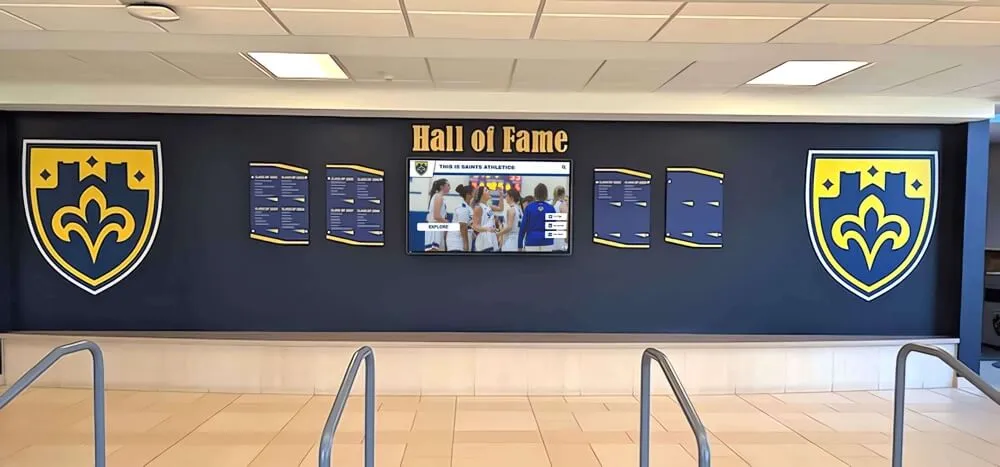
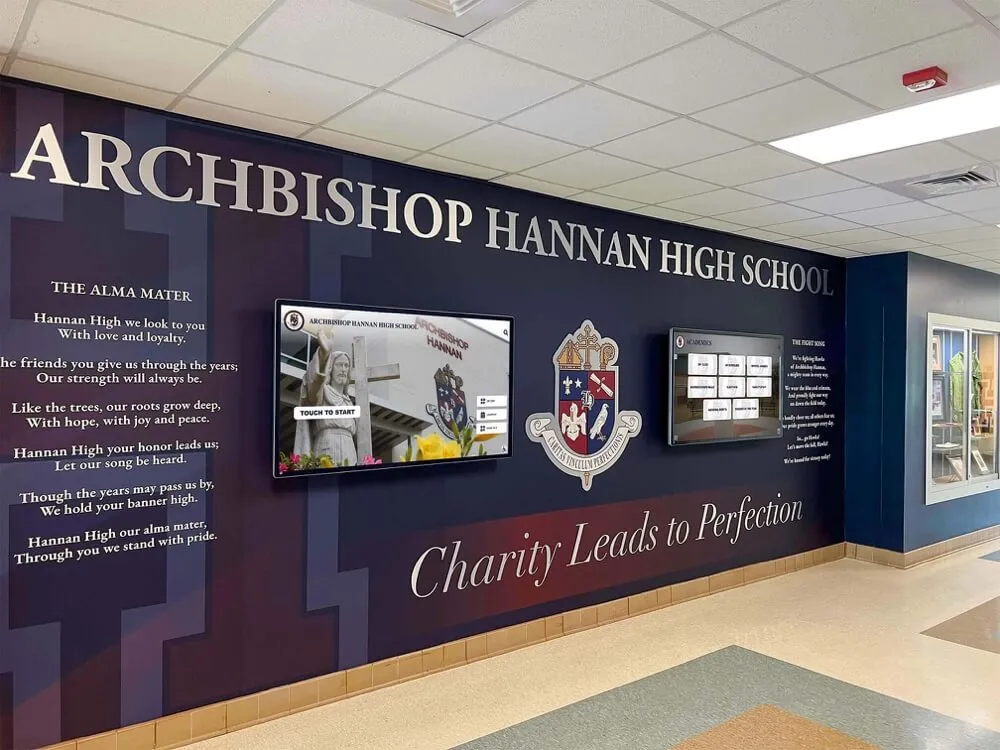
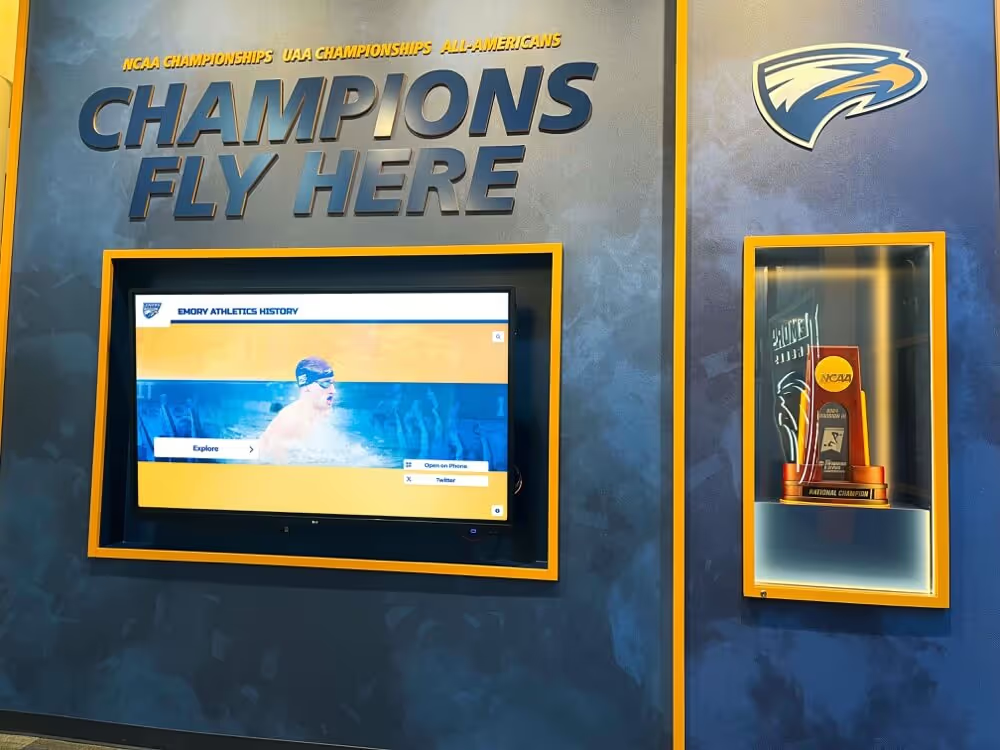
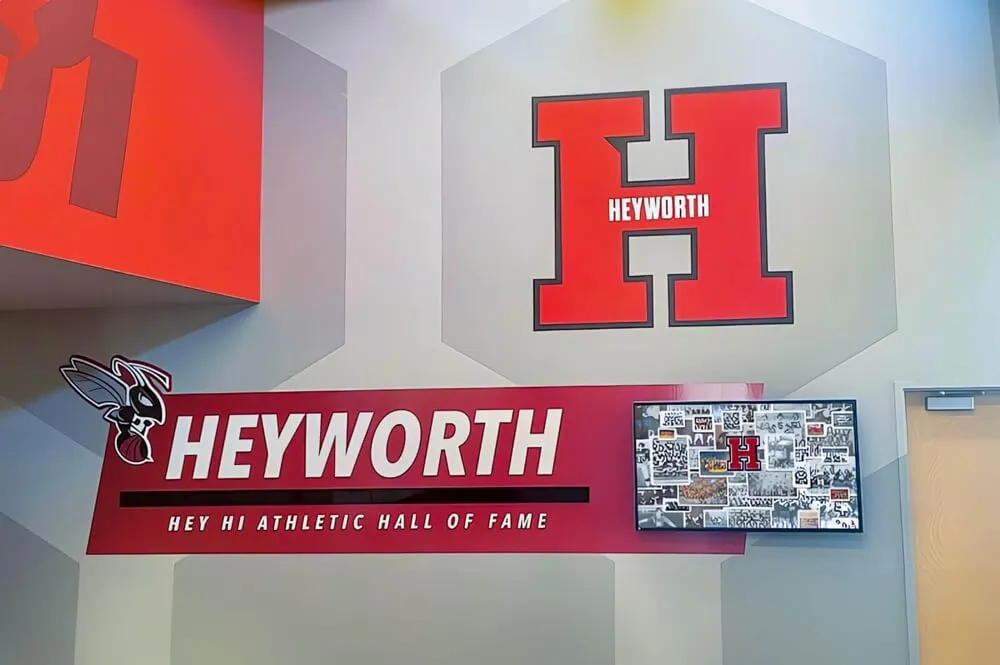
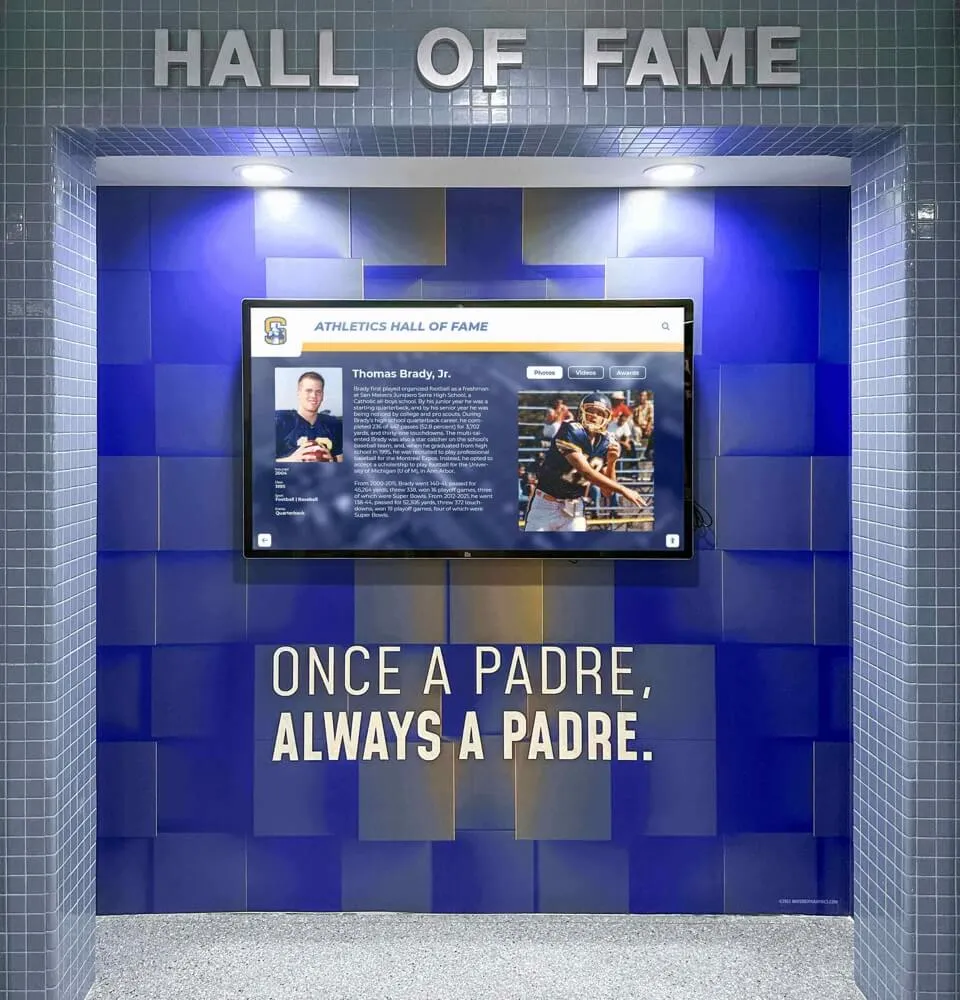
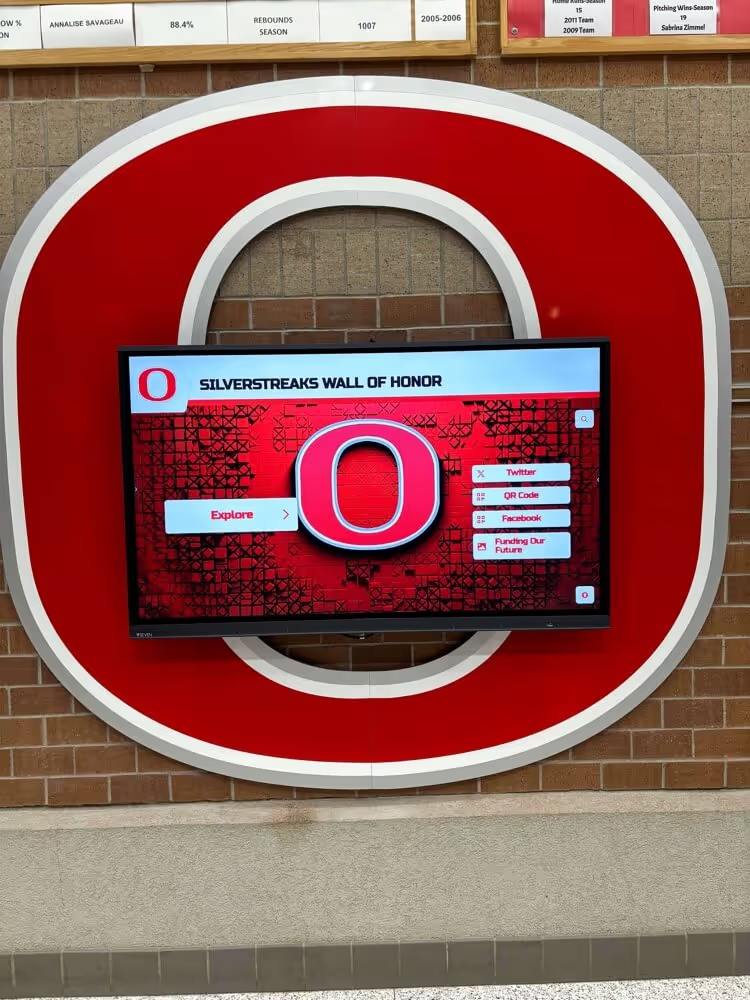
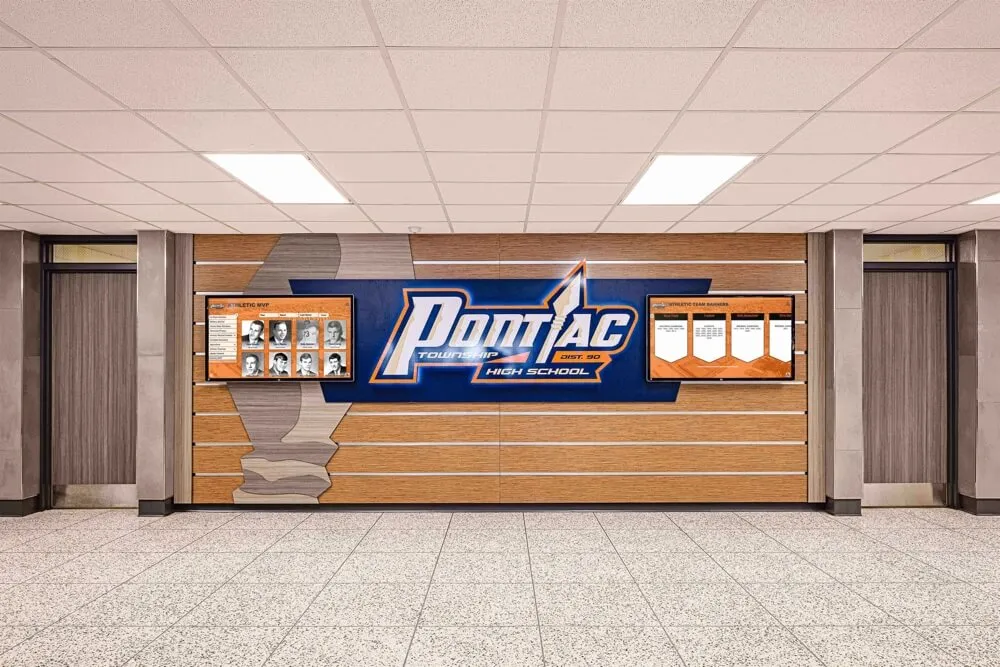
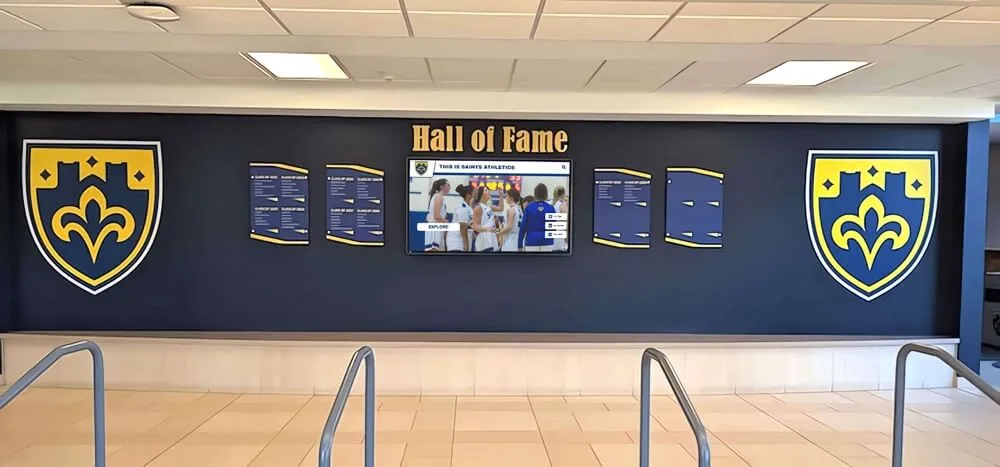
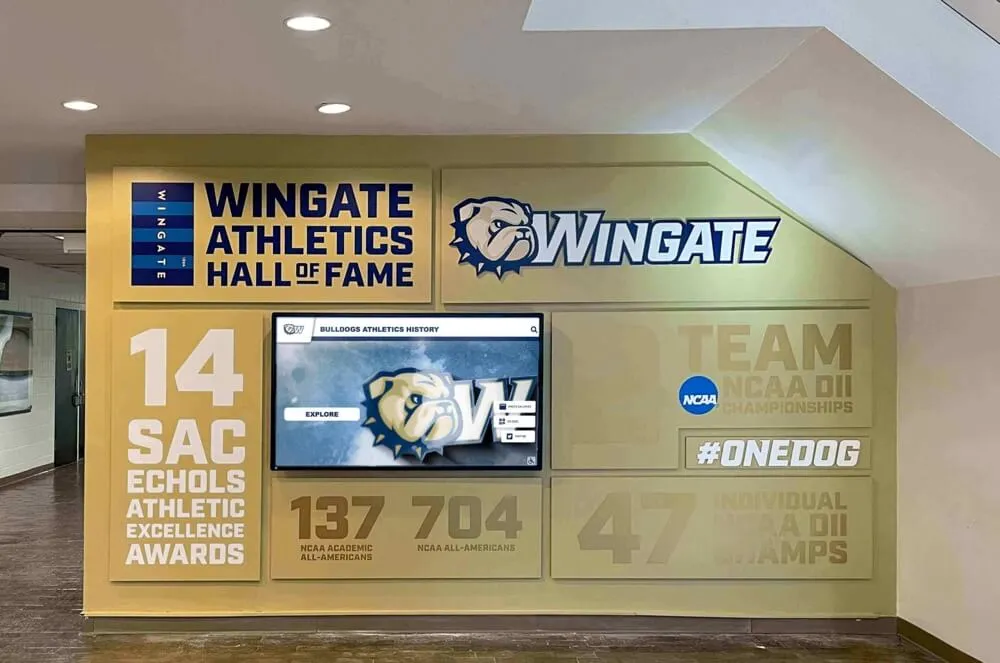
Combining physical display elements with digital screens gives booster club sponsors multiple recognition touchpoints in the same institutional environment
Naming Your Tiers: What Works and What Backfires
The default naming convention—Gold, Silver, Bronze—is familiar enough that sponsors understand the hierarchy immediately. That familiarity is a genuine advantage: sponsors do not need an explanation of where they stand.
School-specific naming conventions can add character, particularly for programs with strong mascot identity. A booster club might use Eagle, Varsity, JV, and Community, or Champions, All-State, Varsity, and Team. The risk with custom naming is that the hierarchy becomes less obvious at a glance. If a local business owner receives a sponsorship packet and cannot immediately identify which tier is most prestigious, you have added friction to the conversion process.
A practical rule: custom naming works well when the tiers are explained visually (with a clear hierarchy chart in the sponsorship packet) and when the names carry intuitive prestige signal. Avoid naming conventions that require explanation before the hierarchy becomes clear.
Naming tiers also carries implications for renewal. If a sponsor at the “Gold” level sees that their tier name appears prominently on your display materials, that name becomes part of how they describe their community relationship. “We’re a Gold Sponsor of [School] Athletics” is a sentence a local business owner says with pride. That identity attachment drives renewal far more reliably than the display benefit itself.
What to Promise in Writing: The Sponsorship Agreement
Recognition levels only work if the promises are documented. A one-page sponsorship agreement that specifies exactly what each tier includes—and by when each deliverable will be fulfilled—protects both the sponsor and your program.
Each agreement should specify:
Display obligations: Where the sponsor’s name or logo will appear, in what format, and at what size. If a Gold sponsor is promised a banner at the gymnasium entrance, the agreement should note the banner dimensions and placement location.
Timeline: When displays will be installed or activated. Sponsors who pay in September and do not see their name until February have reason for dissatisfaction. A clear installation timeline—“banner installed within 30 days of signed agreement” or “digital display activated prior to first home game”—sets expectations and gives your team accountability.
Duration: How long the recognition remains in place. Physical banners often remain year-round by default; digital rotation display should be continuous, not seasonal. Specifying that recognition continues through the following season or until a new agreement is signed is worth clarifying in writing.
Renewal terms: First-refusal rights on the same tier for the following season, and the deadline for the renewal decision. Sponsors who know they have first right of refusal on their tier position are more likely to renew promptly rather than assuming their spot will be held indefinitely.
What happens if the sponsor does not renew: Whether physical displays will be removed, covered, or maintained through the season end. This conversation is uncomfortable to have after the fact; resolving it in the agreement prevents confusion.
Structured stewardship approaches demonstrate that the documentation phase of recognition—the written record of what was delivered and when—is as important as the display itself. Sponsors who receive documented proof of their recognition are significantly more likely to renew than those who receive verbal assurances.
Building a Sponsor Display Strategy That Justifies Year-Round Renewal
The most common failure in booster club sponsor recognition is that displays are treated as seasonal rather than permanent. A banner goes up for the fall sports season and comes down in spring. A program booklet listing lives for the duration of one printed run. Without year-round visibility, sponsors feel like their investment ended with the season—and renewal motivation fades accordingly.
Effective sponsor display strategy treats recognition as institutional rather than seasonal, and uses multiple simultaneous display formats to create overlapping visibility.
Physical Signage: Make It Permanent Where Possible
Banners are the most common form of athletic sponsor recognition, and their seasonality is a genuine limitation. Where facility conditions allow, transitioning Gold and Presenting sponsors from seasonal banners to mounted plaques, dimensional letter installations, or engraved donor walls creates permanent recognition that outlasts any individual season.
Named facility areas—bullpens, dugouts, practice gyms, weight rooms, press boxes—create the most durable recognition. A business whose name is permanently affixed to a facility area has a stake in the program that a seasonal banner cannot replicate.
For programs that rely on banners due to budget or facility constraints, consider a formal policy of keeping sponsor banners displayed year-round rather than removing them at season’s end. The marginal cost of leaving a banner in place is zero. The renewal motivation created by a sponsor seeing their name displayed in June—months after the season ended—is substantial.
Digital Recognition Displays: The Multiplier
Physical signage reaches attendees at the facility during events. Digital recognition displays reach everyone who enters the building—students, faculty, visitors, prospective families, and community members—every day of the school year.
Lobby touchscreen kiosks and digital walls that include sponsor profiles alongside athletic recognition content create a fundamentally different visibility environment than game-day signage. A sponsor whose name, logo, and business description appear in a permanent institutional display is present in the school’s story in a way that a fence banner never achieves.
The most effective digital sponsor recognition systems allow viewers to interact with sponsor profiles—tapping to see the business name, logo, a short description, and potentially contact information. That interactivity transforms passive visibility into an active engagement opportunity.
Interactive campus storytelling illustrates how touchscreen and digital display environments shift from information delivery to relationship building. The same architecture that connects prospective students to institutional history connects community sponsors to institutional identity—a positioning that meaningfully exceeds what banner advertising provides.
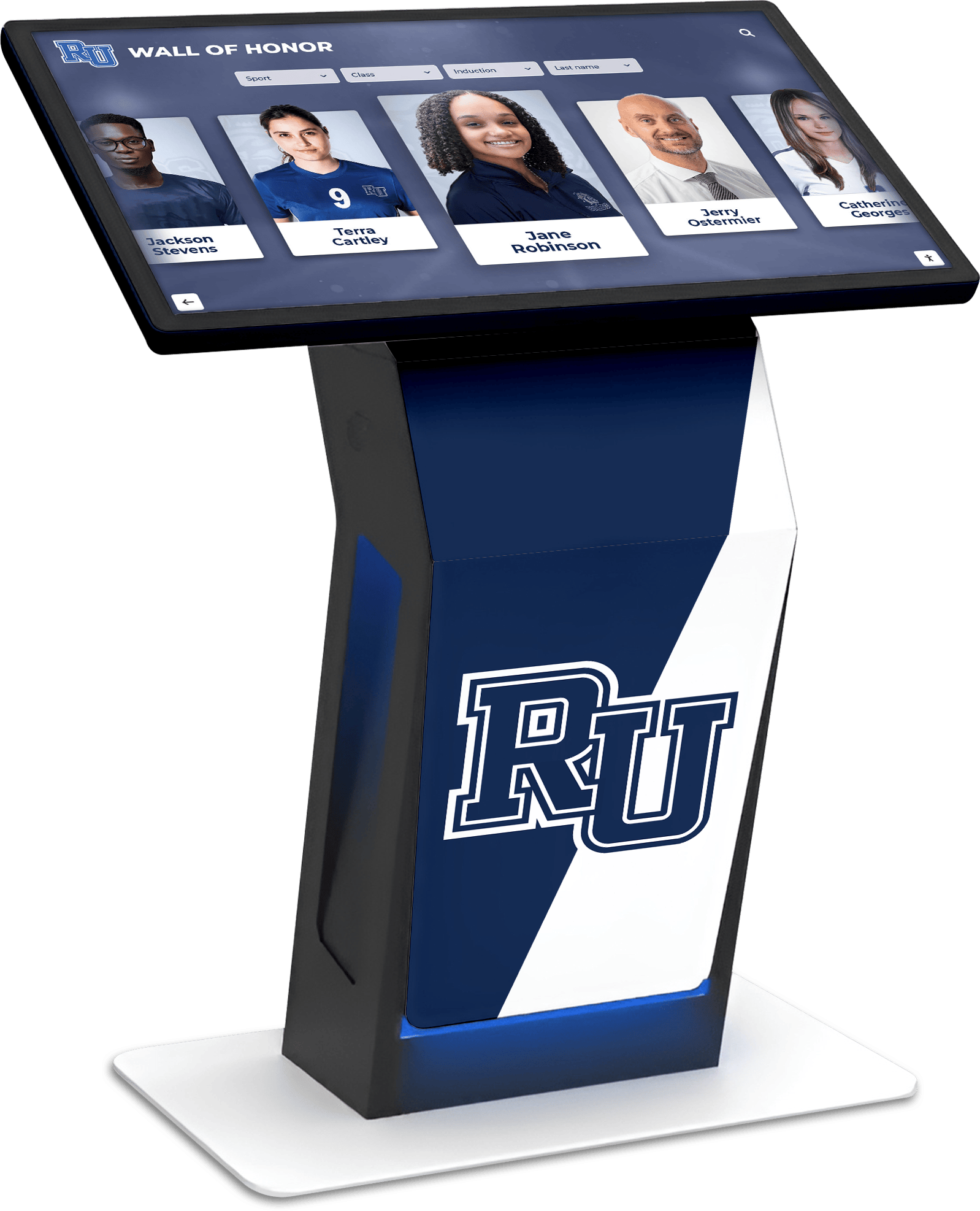
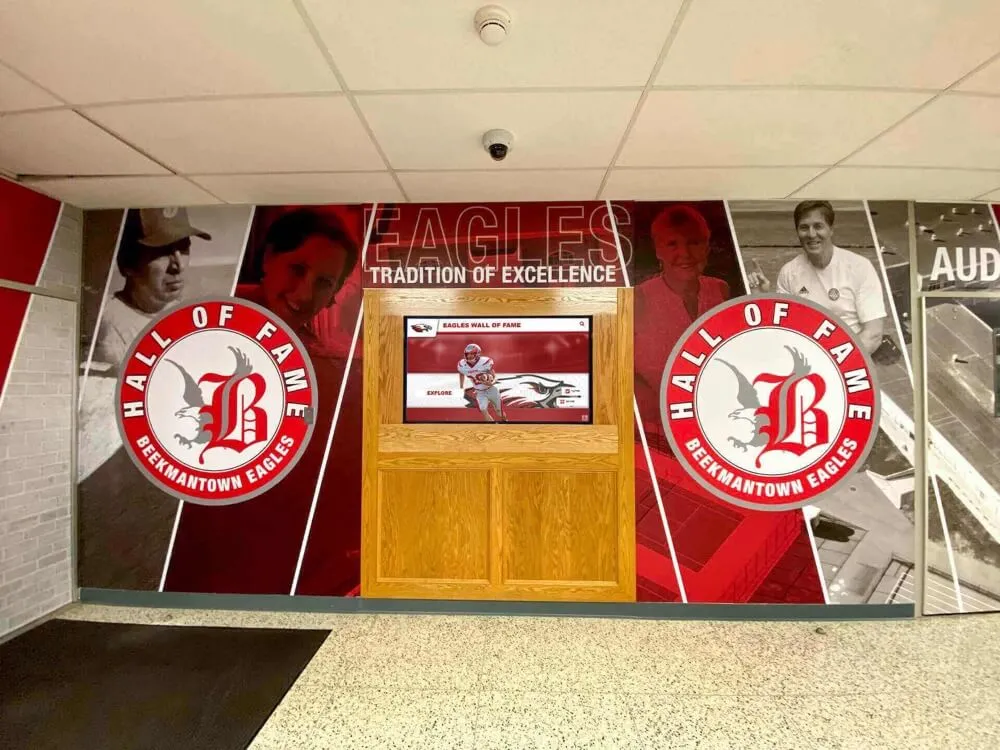
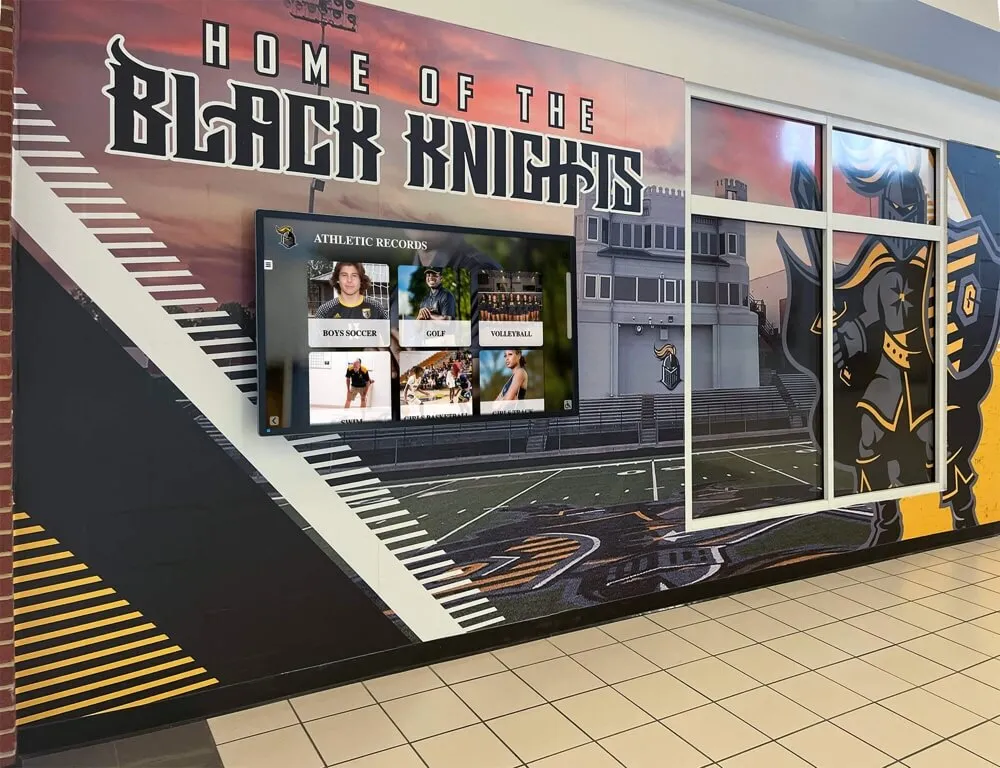
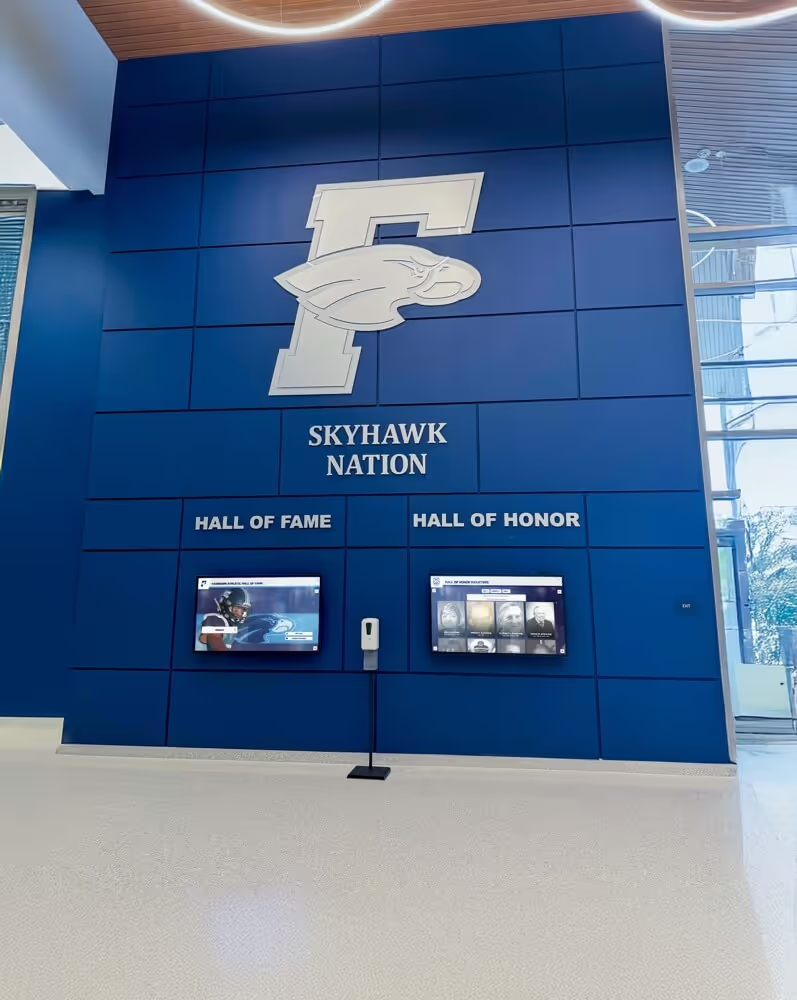
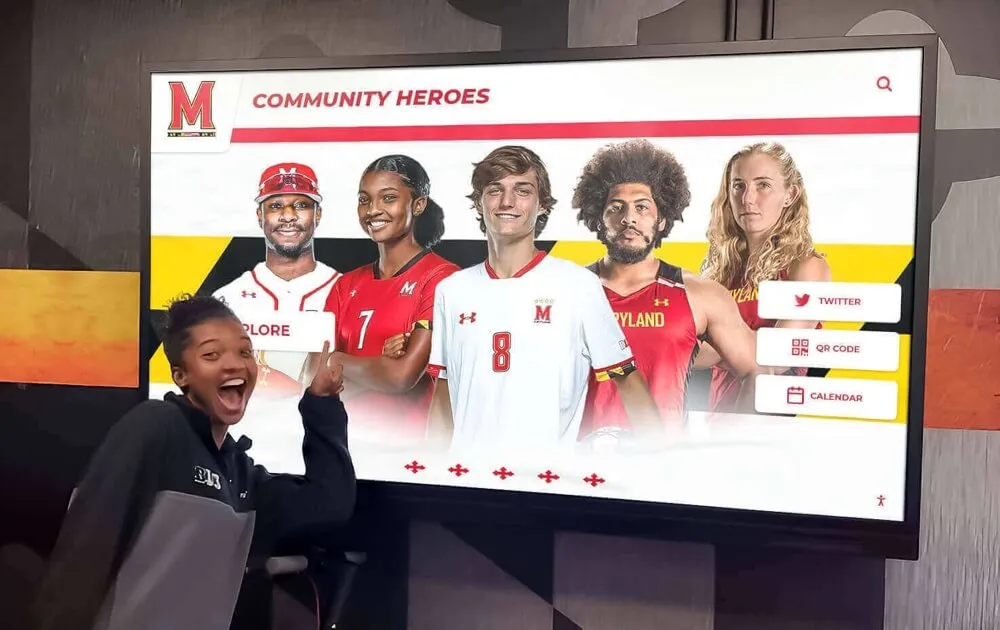
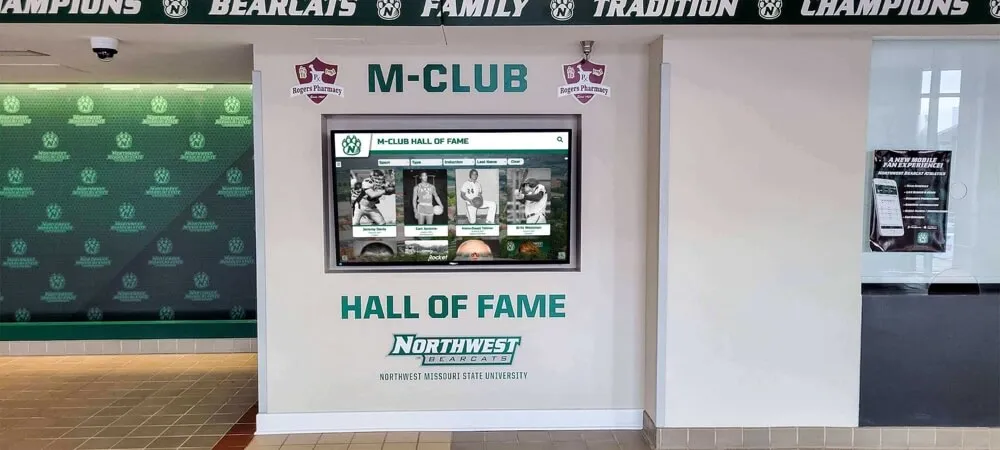
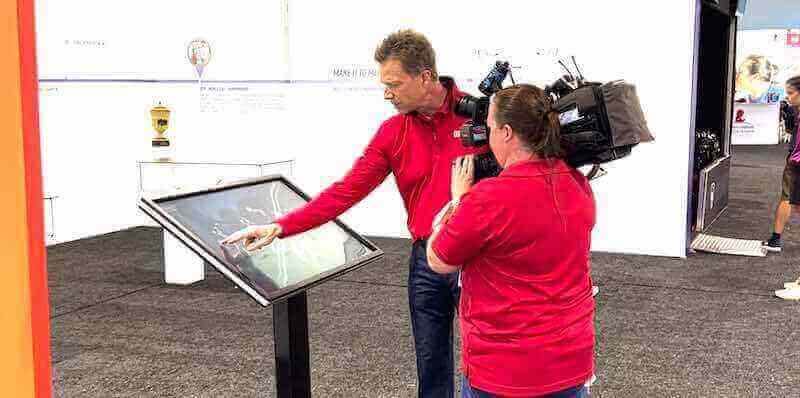
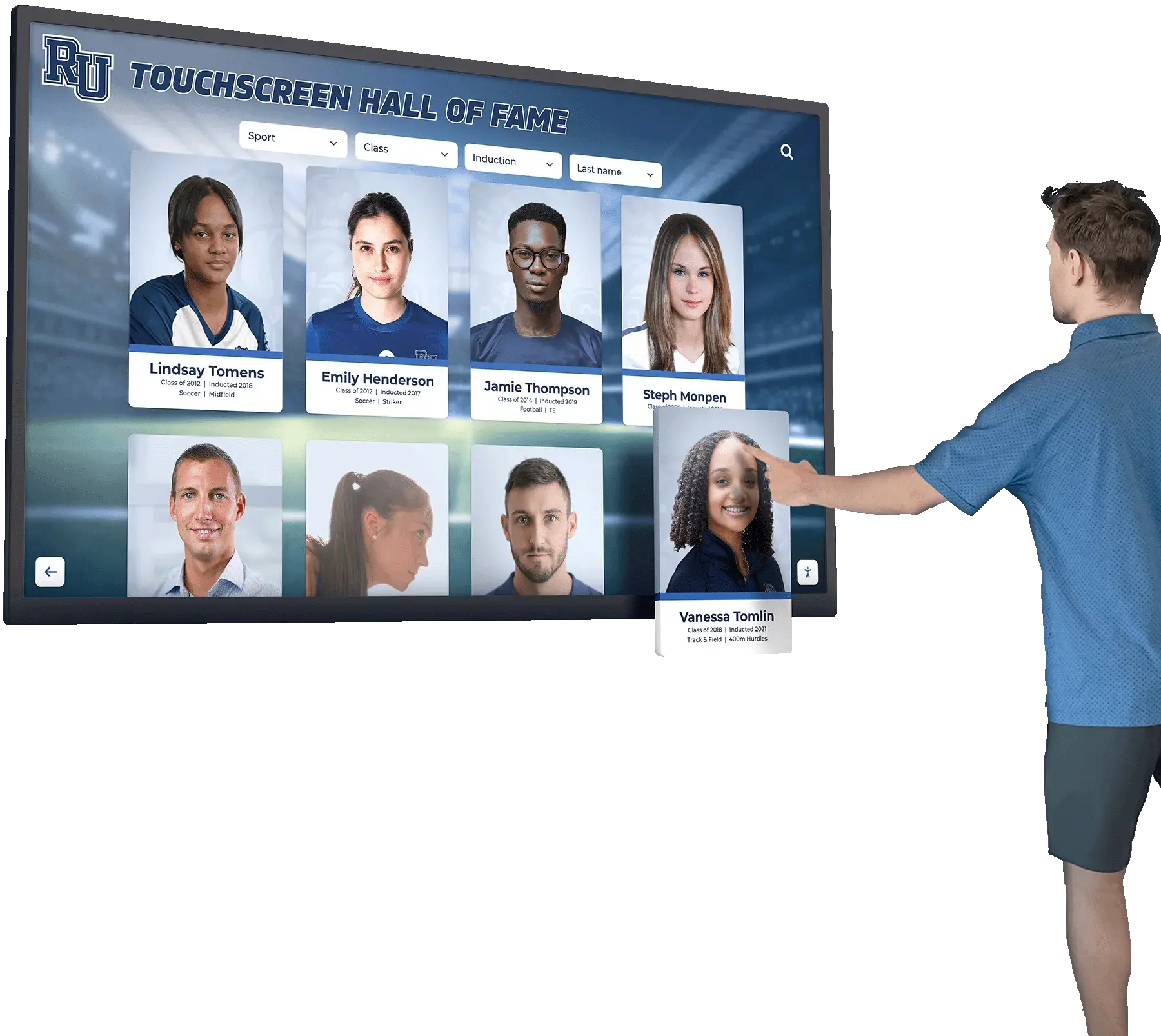
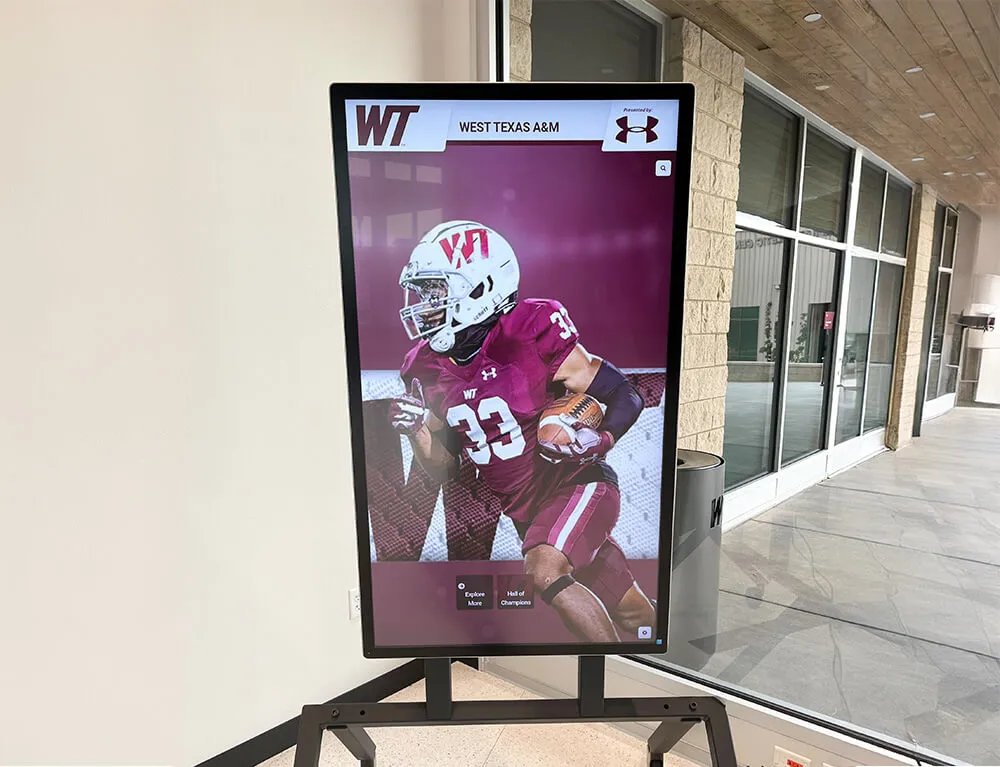
Interactive touchscreen kiosks create year-round sponsor visibility that operates independently of the sports calendar—a key advantage for programs that need to justify annual renewals
Digital Season Recap Archives: The Long Tail of Recognition
Season recap displays extend sponsor visibility beyond the current year by creating a searchable, permanent archive of program history that includes sponsor acknowledgment as part of the record.
A Presenting or Gold sponsor who appears in the 2024-25 season recap—a permanently accessible digital record of that season’s results, milestones, and contributors—has recognition that grows in value over time rather than expiring with the banner. As the program builds a historical record, early sponsors become part of the institutional story in ways that newer sponsors are not. That narrative positioning is worth communicating to long-tenured sponsors as a genuine benefit of their sustained investment.
Digital archival approaches demonstrate that accessible, searchable digital records of institutional history carry value for community members long after the events they document. Season-by-season sponsor acknowledgment archives create a similar long-tail recognition asset for athletic programs.
Communicating Recognition Levels to Prospective Sponsors
The sponsorship packet—whether physical or digital—is where recognition levels either earn trust or lose it. Sponsors are evaluating a commitment based on what they can read before signing. A packet that is unclear, inconsistent, or aspirational rather than concrete will lose sponsors at the decision point.
Effective sponsorship packets for tiered programs include:
A visual tier summary. A simple one-page chart showing all four tiers, their annual investment levels, and the bullet-point benefits at each level. Sponsors should be able to identify their tier and its benefits in under 30 seconds.
Photographs of your actual display environment. If you have a lobby touchscreen, photograph it with sponsor content displayed. If your athletic hallway has a recognition wall, include it. Concrete visual evidence of where their name will appear is worth more than descriptive text.
Prior season sponsor examples. If past sponsors have renewed, note that. “Fifteen of our eighteen 2024 sponsors renewed for 2025” is a powerful credibility signal that tells prospective sponsors the program delivers what it promises.
A clear investment range. Many booster club programs avoid publishing tier investment levels, preferring to negotiate individually. That approach disadvantages your program in two ways: it makes comparison between tiers difficult, and it signals that prices are negotiable—which erodes the perceived value of the tier structure. Publishing defined investment ranges, while allowing conversation about specific circumstances, communicates institutional professionalism.
Military and JROTC recognition display programs demonstrate that formal, documented recognition systems—with defined levels, clear criteria, and permanent display protocols—create trust and buy-in that informal recognition never achieves. The same rigor applied to booster club sponsor documentation builds sponsor confidence before the first check is written.
After the Season: Using Recognition Displays to Drive Renewals
The renewal conversation is easier when sponsors have seen evidence of recognition delivery throughout the season rather than receiving a renewal invoice as their first contact after the season ends.
A structured renewal sequence for tiered sponsors looks like this:
During season (ongoing): Send sponsors photo documentation of their display placement at installation, at first home game, and at season midpoint. A simple email with two or three photographs showing the sponsor’s name in context—on the facility, on a screen, in a program—establishes an evidence trail that the investment was honored.
At season end: Send a formal season recap that includes the sponsor’s tier, what they received, where their name appeared, and any program highlights from the season. This serves as both acknowledgment and implicit renewal preview: sponsors who review their own recognition benefit summary are better positioned to evaluate whether to continue.
Renewal outreach (30-60 days after season end): Contact sponsors personally—by phone or in-person meeting for Presenting and Gold tiers, by letter or email for Silver and Bronze—with the renewal offer, any tier-upgrade options, and the deadline for first-refusal tier reservation.
Recognition display continuity: Keep sponsor displays active through the off-season. A sponsor who receives a renewal call in February and can drive past the school and see their name still displayed is far more likely to renew than one whose banner was removed in November.
Digital wall of fame systems for academic programs illustrate how continuous, permanent digital recognition—rather than event-based or seasonal display—creates a fundamentally different relationship between institutions and the individuals they recognize. The same principle applies to corporate sponsors: year-round visibility changes the renewal psychology from “was this worth it?” to “of course we’re renewing.”
Integrating Sponsor Recognition with Broader Athletic Recognition Systems
The most durable sponsor recognition environments are those that integrate business sponsors into the same institutional display infrastructure as athlete recognition, alumni acknowledgment, and program history—rather than segregating sponsor content into separate display zones that feel like advertising.
When a lobby touchscreen kiosk includes both the program’s Hall of Fame inductees and a dedicated sponsor recognition section, the institutional authority of the athletic recognition transfers to the sponsor display by proximity. Sponsors whose names appear alongside championship records, retired numbers, and alumni portraits are positioned as program partners rather than advertisers—a distinction that matters to local businesses investing in community identity rather than marketing impressions.
Athletic Hall of Fame displays and similar permanent recognition systems create the institutional anchors that sponsor recognition borrows credibility from. Programs that invest in comprehensive recognition infrastructure—rather than treating sponsor displays as independent from athletic recognition—build the kind of institutional identity that makes sustained sponsorship feel meaningful rather than transactional.
The integration also creates practical display efficiencies. A single touchscreen kiosk system that manages athlete profiles, team histories, academic honors, and sponsor recognition requires one installation, one content management workflow, and one institutional framework—rather than separate systems for each recognition category.
Honor roll and academic wall of fame display systems demonstrate how multi-category recognition infrastructure creates comprehensive institutional displays that community members engage with at higher rates than single-purpose displays. Higher engagement means more impressions for sponsors in an integrated system—a concrete benefit worth communicating in sponsorship conversations.
Common Mistakes in Booster Club Sponsor Recognition Tier Design
Promising more than you can deliver. The most destructive thing a booster club can do to its sponsor pipeline is over-promise at a tier level and under-deliver. If Gold sponsors are promised a banner “at the main facility entrance” and the banner ends up on a secondary gate, that sponsor will not renew—and will tell other businesses why. Design tier benefits around what you can reliably execute, not what sounds impressive in a packet.
Creating too many tiers. Five or six tiers create decision fatigue without meaningful differentiation between levels. Four tiers cover the realistic range of local business investment capacity. If you find that all sponsors cluster in one or two tiers, consider consolidating rather than elaborating.
Treating digital recognition as secondary. Physical banners often receive more attention in sponsorship packets because they are tangible and familiar. But digital recognition displays—particularly in schools with high-traffic lobbies—generate more annual impressions than seasonal physical signage. Programs that lead with digital recognition as a primary tier benefit (rather than a supplementary one) can often command higher tier investment.
No documentation trail. Sponsors who receive no evidence that their recognition was delivered cannot evaluate whether to renew. Build a simple documentation protocol into your sponsorship management workflow: photograph installations, confirm digital activations, and send evidence to sponsors within 30 days of delivery.
Resetting recognition at season end. The single most effective change most booster club programs can make to their renewal rate is committing to year-round sponsor display continuity. Sponsors who see their name displayed in the off-season renew. Sponsors who see their name removed after the final game weigh whether the investment was worth it.
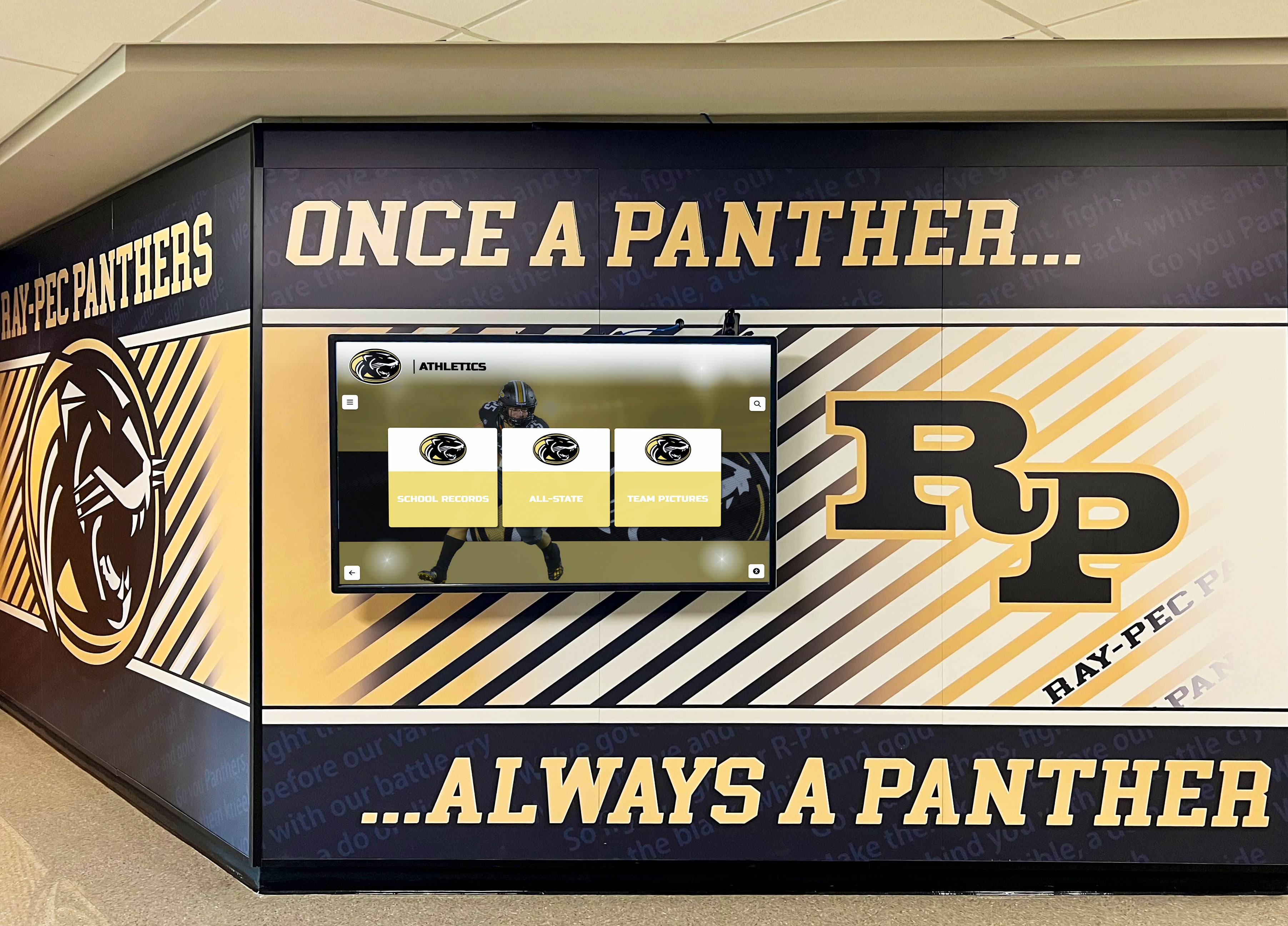
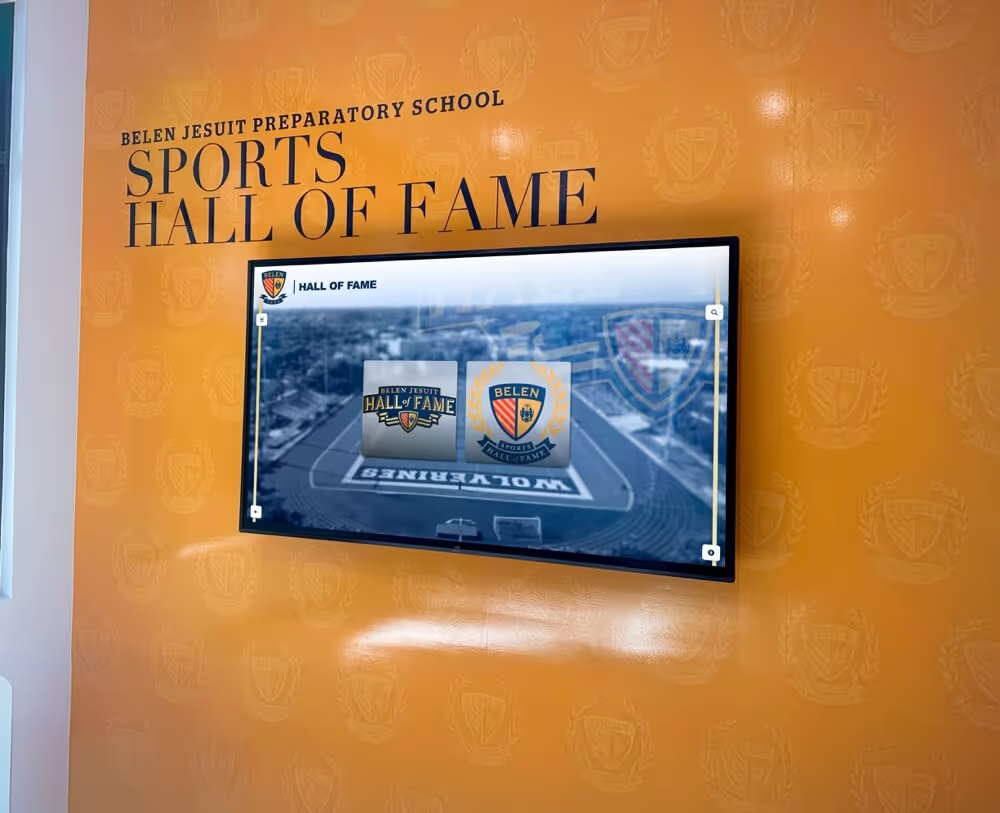
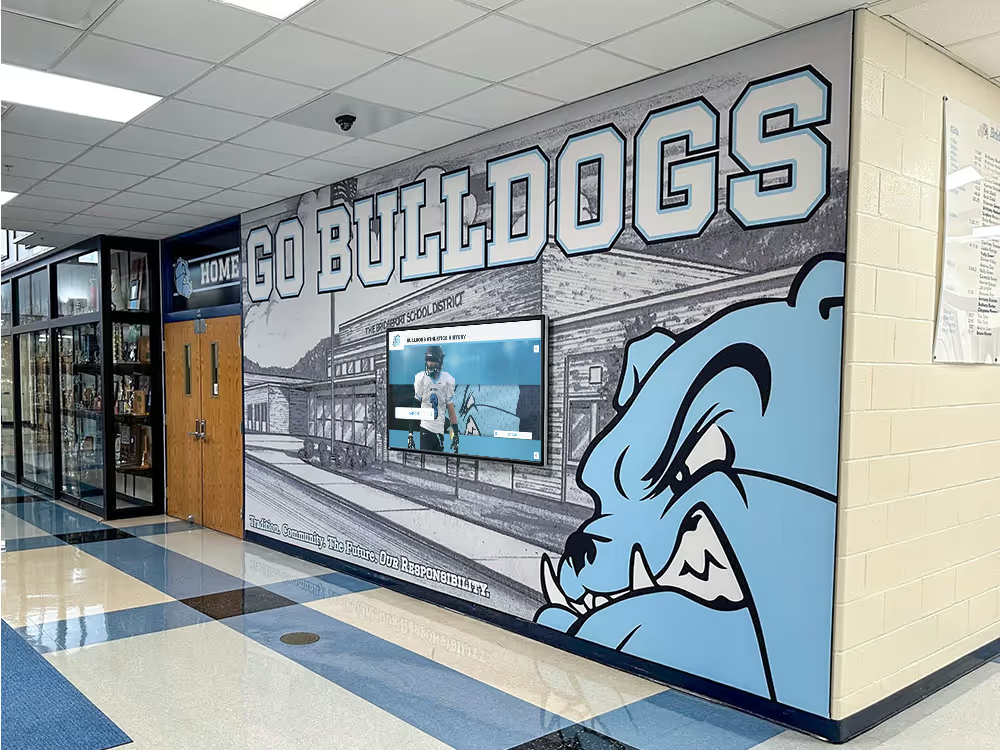
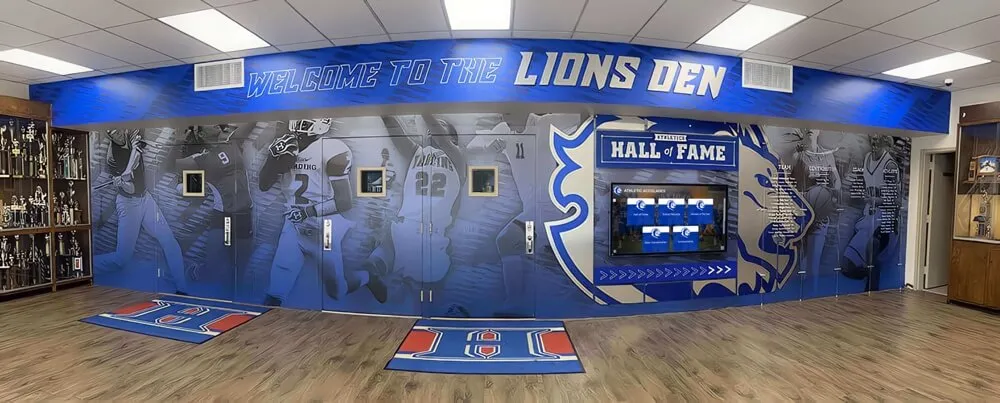
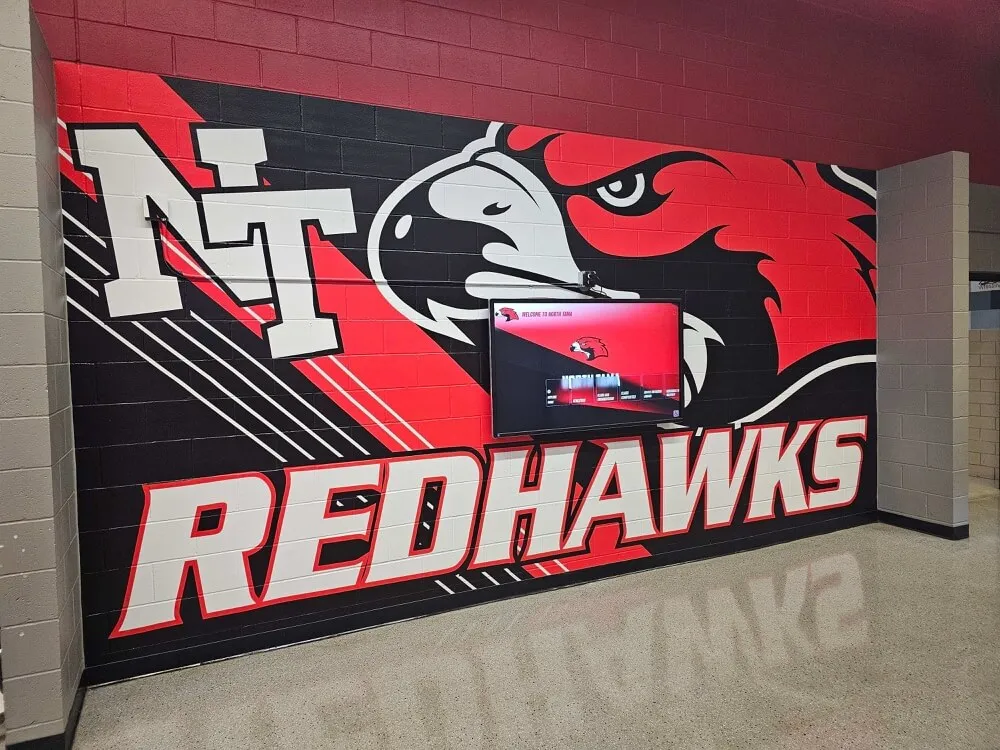
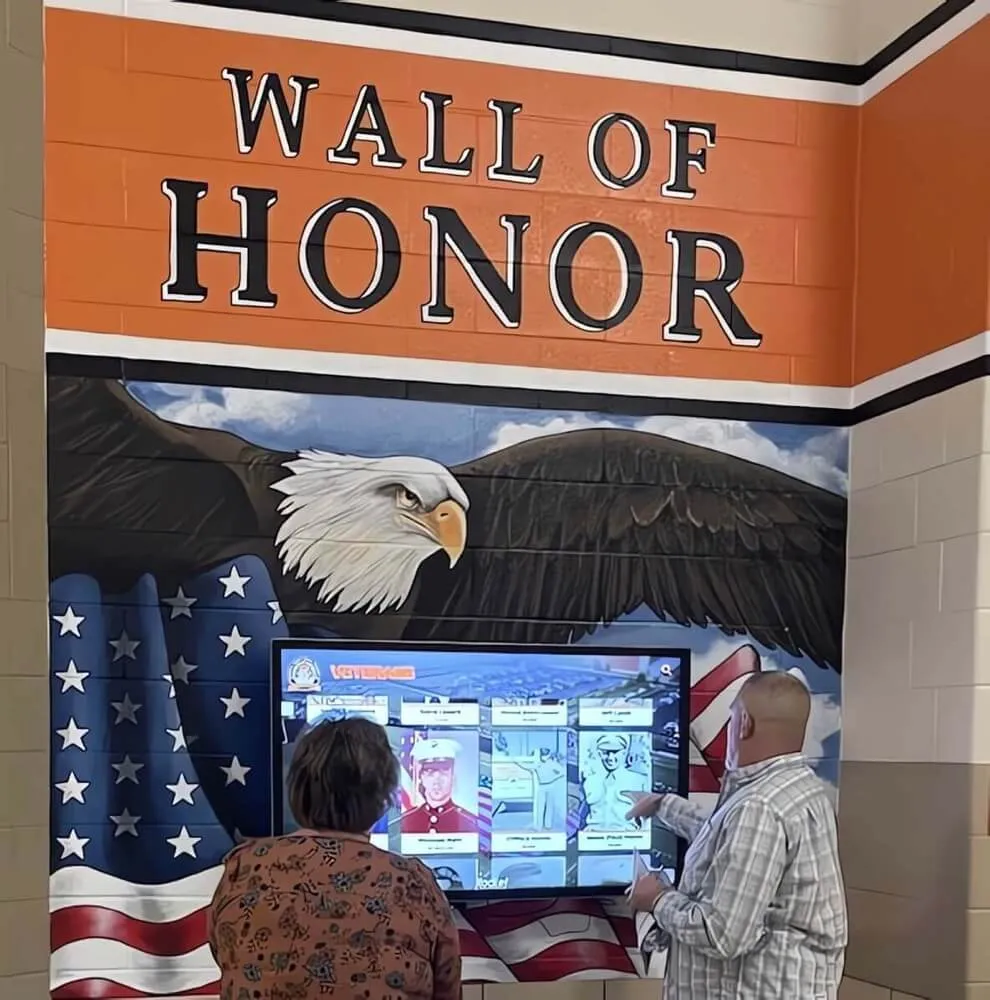
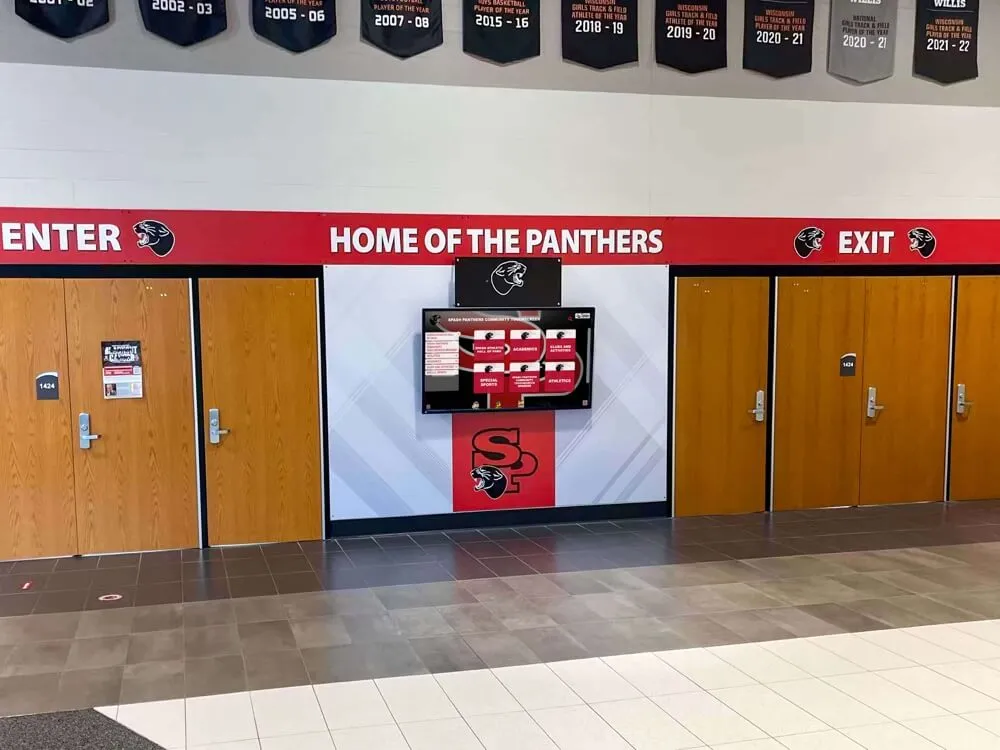
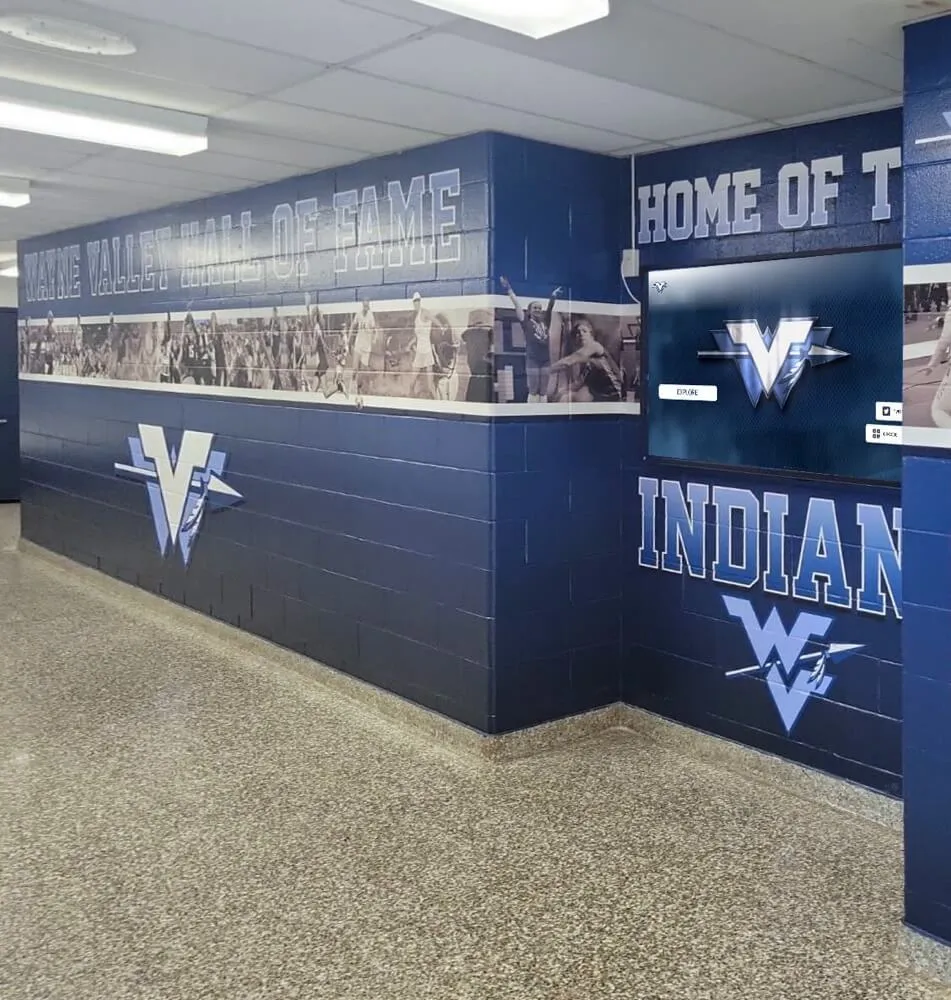
Hallway murals paired with digital screens give programs the infrastructure for year-round sponsor display—the physical presence signals permanence while the digital system enables content updates and sponsor profile management
Building Toward Permanent Sponsor Recognition Infrastructure
Programs in early stages of formalizing their sponsor recognition tiers often work with what is available: printed program listings, seasonal banners, and verbal acknowledgment at events. Those tools are adequate for initial sponsor acquisition but insufficient for long-term retention, because they do not create the permanent institutional presence that makes sponsorship feel like a lasting community relationship.
The progression from transactional to institutional sponsor recognition typically follows this sequence:
- Formal tier structure with documented agreements — The foundation that makes everything else consistent
- Physical display inventory and permanent placements — Moving from seasonal banners to fixed recognition at named locations
- Digital sponsor recognition integration — Incorporating sponsor profiles into school lobby screens, touchscreen kiosks, or digital recognition walls
- Season recap archives — Building a permanent record of each season’s sponsors alongside program history
- Multi-year naming recognition — Offering multi-year agreements that create anchor sponsorships with deeper institutional identity
Each step builds on the previous one. Programs at step three have significantly stronger renewal rates than programs at step one, not because the investment level changed, but because the permanence and visibility of recognition expanded.
Alumni and donor recognition digital wall systems illustrate how layered, permanent recognition infrastructure creates community engagement that event-based recognition cannot sustain. The same infrastructure logic applies to booster club sponsor recognition: depth and permanence, not breadth of one-season promises, is what builds the relationships that fund programs year after year.
Ready to Build Recognition Levels That Actually Retain Sponsors?
Rocket Alumni Solutions builds the digital recognition infrastructure that turns one-season sponsorships into multi-year program partnerships. From lobby touchscreen kiosks that display sponsor profiles alongside athletic recognition, to digital walls that keep sponsor names visible year-round, to searchable season archives that make early sponsors part of your program’s permanent history—Rocket gives your booster club the display foundation that makes tier promises worth keeping.