Booster Club Volunteer Waiver Form: Fields, Review Steps, and Recordkeeping

A booster club volunteer waiver form does three things at once: it collects the contact and emergency information that event coordinators need on the day of a fundraiser, documents the volunteer’s acknowledgment of activity-related risks, and creates a signed record that the school district and booster club board can retain for liability and insurance purposes. Programs that collect this documentation consistently before every volunteer event reduce administrative uncertainty and protect the organization, the school, and the volunteers themselves.
This guide walks through the standard fields on a booster club volunteer waiver form in the order they typically appear, explains what each field accomplishes, describes the review and approval workflow most districts expect, and outlines how to store and retain completed forms. It also covers the connection between volunteer records and the recognition infrastructure that honors the people who make booster club programs possible.
This guide is for informational purposes only and does not constitute legal, accounting, or compliance advice. Requirements for volunteer waivers vary by state, school district, and organizational structure. Your booster club and school district should consult qualified legal counsel and follow your district’s specific policies, your state’s nonprofit law, and any applicable insurance carrier requirements before finalizing or using any volunteer form.

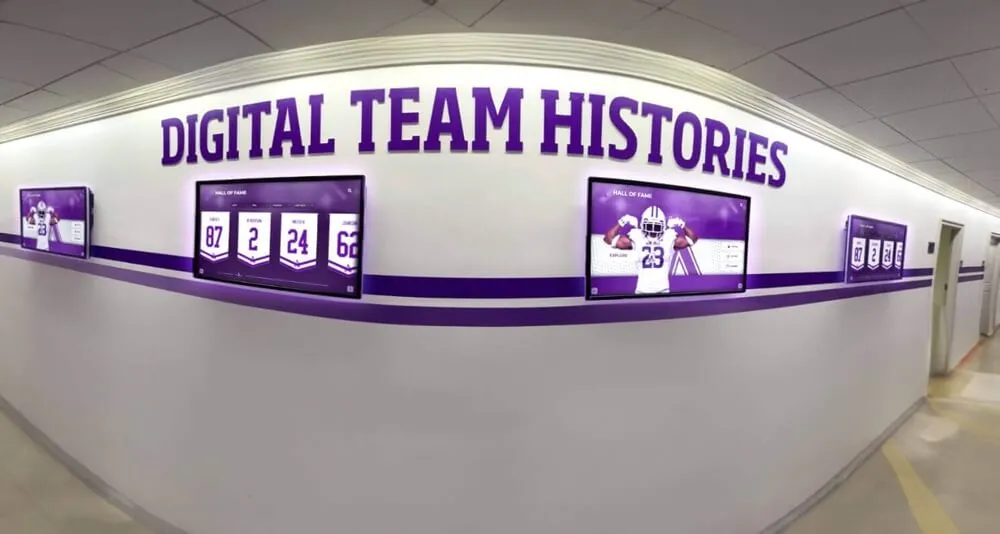
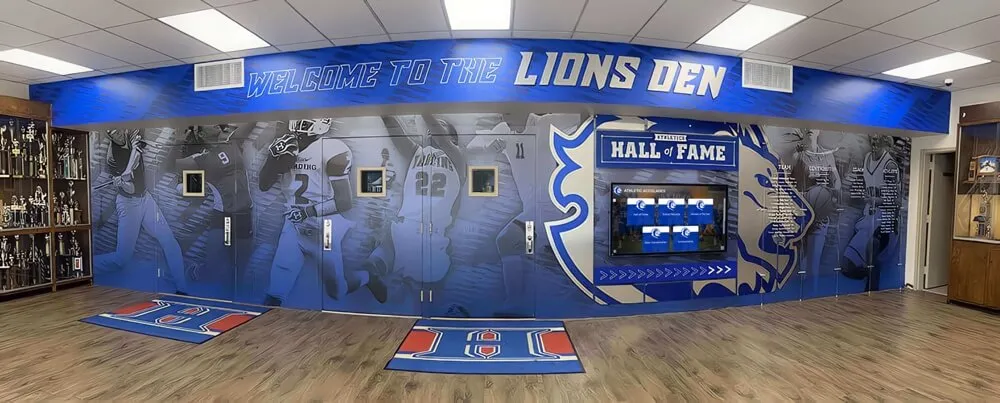
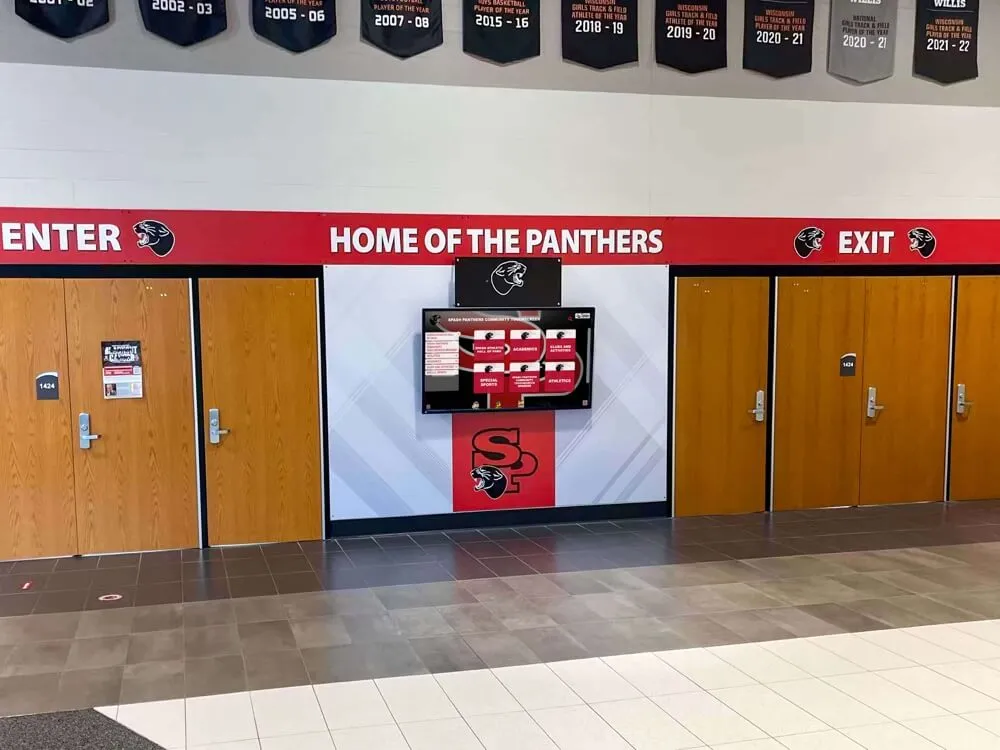
Lobby recognition displays and the volunteer programs that support them both depend on consistent documentation—completed waiver forms before each event and archived records afterward
Why Every Booster Club Needs a Volunteer Waiver Form
Booster clubs rely on volunteers for nearly every aspect of their operation: concessions, ticket sales, gate management, scoreboard operation, equipment transport, and recognition event setup. Most of these activities carry some degree of physical risk, data-handling responsibility, or supervisory interaction with students. A signed waiver form before a volunteer works an event creates a documented record of consent, acknowledgment, and contact information that protects everyone involved.
Beyond liability, there are practical reasons to collect this documentation consistently:
- Emergency contact availability — event coordinators need a direct phone number for each volunteer; embedding this in the waiver form means it is always collected
- Insurance compliance — many school district general liability or booster club insurance policies require documented volunteer consent before coverage applies to non-employee participants
- Background check tracking — districts that require background checks for volunteers working around students need a record of check completion that can be cross-referenced against the active volunteer roster
- Recognition eligibility — booster clubs that recognize long-service volunteers benefit from a complete documented history of participation tied to individual records
Programs that collect waiver forms sporadically—only for large events, or only when a specific officer remembers to print them—create gaps in their volunteer documentation that become problems during district reviews or insurance audits. Establishing consistent volunteer documentation from the beginning of a booster club’s operations is significantly easier than reconstructing records after the fact.
Part One: Core Fields on a Volunteer Waiver Form
The following fields appear on most booster club volunteer waiver forms. They are presented in the order that matches a natural completion sequence—personal identification first, then contact information, then participation details, then acknowledgments and signatures.
Section 1 — Volunteer Identification
| Field | Purpose | Notes |
|---|---|---|
| Full legal name | Identifies the volunteer in all records and cross-references | Use the name as it appears on government-issued ID; include a preferred name field separately |
| Date of birth | Verifies that the volunteer is an adult; required for background check processing | Required in most districts that run background checks |
| Home address | Mailing address for correspondence and check delivery if volunteers are reimbursed | Street, city, state, ZIP |
| Email address | Primary contact for confirmation messages and future event invitations | Collect both personal and work email if applicable |
| Primary phone | Reached during events if needed | Specify whether this is a cell or landline |
| Alternate phone | Secondary contact if primary is unavailable | Optional but recommended |
Section 2 — Emergency Contact Information
| Field | Purpose | Notes |
|---|---|---|
| Emergency contact name | Person to contact if the volunteer is injured or incapacitated during the event | Should not be the volunteer themselves |
| Relationship to volunteer | Helps the event coordinator assess urgency and authority | Spouse, parent, sibling, friend |
| Emergency contact phone | Primary number for the emergency contact | Verify this is reachable during event hours |
| Emergency contact alternate phone | Secondary number if primary is unavailable | Optional |
Emergency contact information is frequently omitted from informal volunteer sign-up sheets and is consistently the first thing a coordinator needs if something goes wrong during an event. Embedding it directly in the waiver form ensures it is always collected.
Section 3 — Volunteer Role and Event Information
| Field | Purpose | Notes |
|---|---|---|
| Organization name | Confirms which booster club the form applies to | Relevant when a school has multiple active booster clubs |
| Event or activity name | Identifies the specific event the volunteer is participating in | “Fall Concessions,” “Homecoming Fundraiser,” etc. |
| Event date(s) | Ties the form to a specific date or range | For recurring volunteers, indicate whether the form covers a single event or the full season |
| Volunteer role | Documents the specific duties the volunteer will perform | Concessions, parking, ticket booth, event setup, etc. |
| Volunteer coordinator name | Names the club officer responsible for the event | Provides a point of contact reference for the completed form |
Capturing the role is especially important for programs that use volunteer hours in recognition calculations or that have different documentation requirements for different roles—for example, a volunteer driving student athletes in a personal vehicle may need additional insurance documentation beyond the standard waiver.
Section 4 — Background Check and Credential Verification
| Field | Purpose | Notes |
|---|---|---|
| Background check completed | Confirms the volunteer has passed the district’s required background screening | Check box with date of completion; reference the check ID or case number if available |
| Background check date | Ties the completion date to the current event; some districts require rechecks after a defined period | Verify your district’s recertification interval |
| Training completed (if required) | Some districts require volunteer orientation or safety training before participation | List the specific training module and completion date |
| Driver authorization (if applicable) | For volunteers who will transport students or equipment | May require a separate district authorization process |
Districts vary significantly in what they require. Some require background checks only for volunteers who will be alone with students; others require them for all event volunteers. Confirm the district’s specific policy before finalizing this section.
Section 5 — Release and Acknowledgment Language
This is the legal core of the waiver form. The specific language should be drafted or reviewed by qualified legal counsel familiar with your state’s laws and your district’s requirements. At minimum, most booster club volunteer waivers include acknowledgments covering:
- Assumption of risk — the volunteer acknowledges that booster club activities may involve physical risk and that they are participating voluntarily
- Release of liability — the scope of any liability release (for negligence vs. gross negligence, for example) varies significantly by state and should be reviewed by counsel
- Media and photo release — authorization for the organization to use photos or video of the volunteer taken at events in club communications and recognition materials
- Data handling acknowledgment — confirmation that the volunteer understands how their personal information will be stored and used
- Volunteer status confirmation — acknowledgment that the volunteer is not an employee and is not entitled to worker’s compensation or benefits under the relationship
Because this section carries the most legal weight, it should not be drafted based on a generic template alone. State laws governing the enforceability of liability waivers differ substantially, and what is enforceable in one state may not be in another. Your district’s legal counsel or a licensed attorney should review the specific release language before the form is used.
Section 6 — Signature Block
| Field | Purpose | Notes |
|---|---|---|
| Volunteer signature | Indicates the volunteer has read and agreed to the form contents | Wet or electronic signature depending on the district’s accepted format |
| Print name | Confirms legibility of the signature | Should match the name in Section 1 exactly |
| Date signed | Documents when the form was completed | Must precede the volunteer’s participation in the event |
| Parent or guardian signature (if applicable) | Required if the volunteer is a minor | Some booster clubs use junior volunteers under adult supervision; confirm your district’s policy |
| Witness signature | Some districts require a witness to the volunteer’s signature | Optional depending on district requirements |

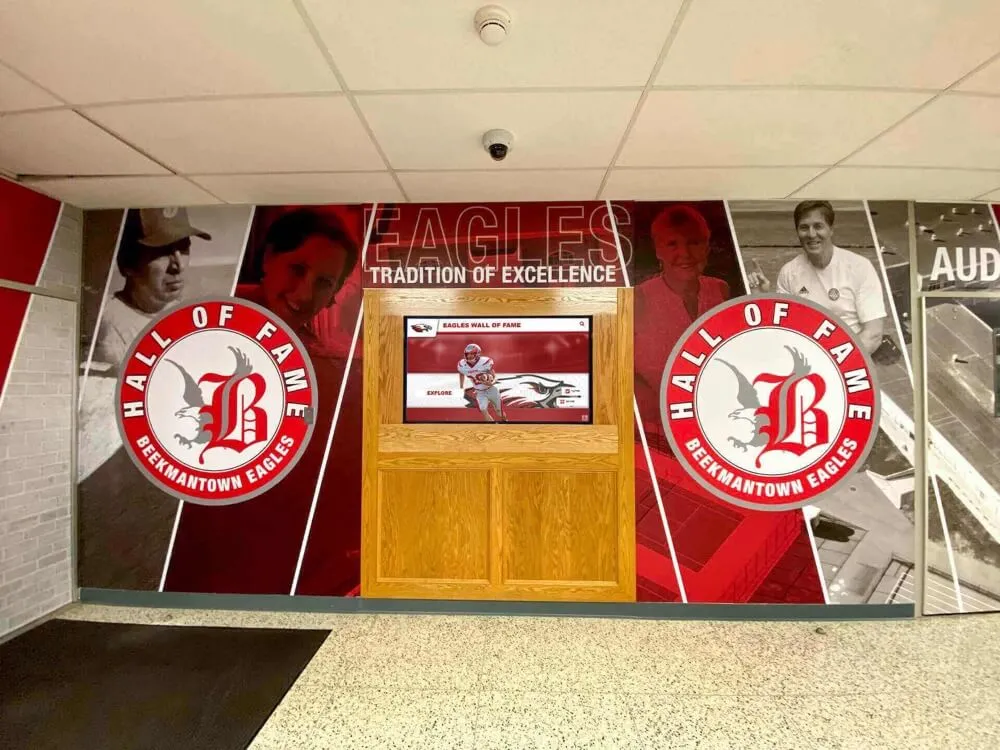
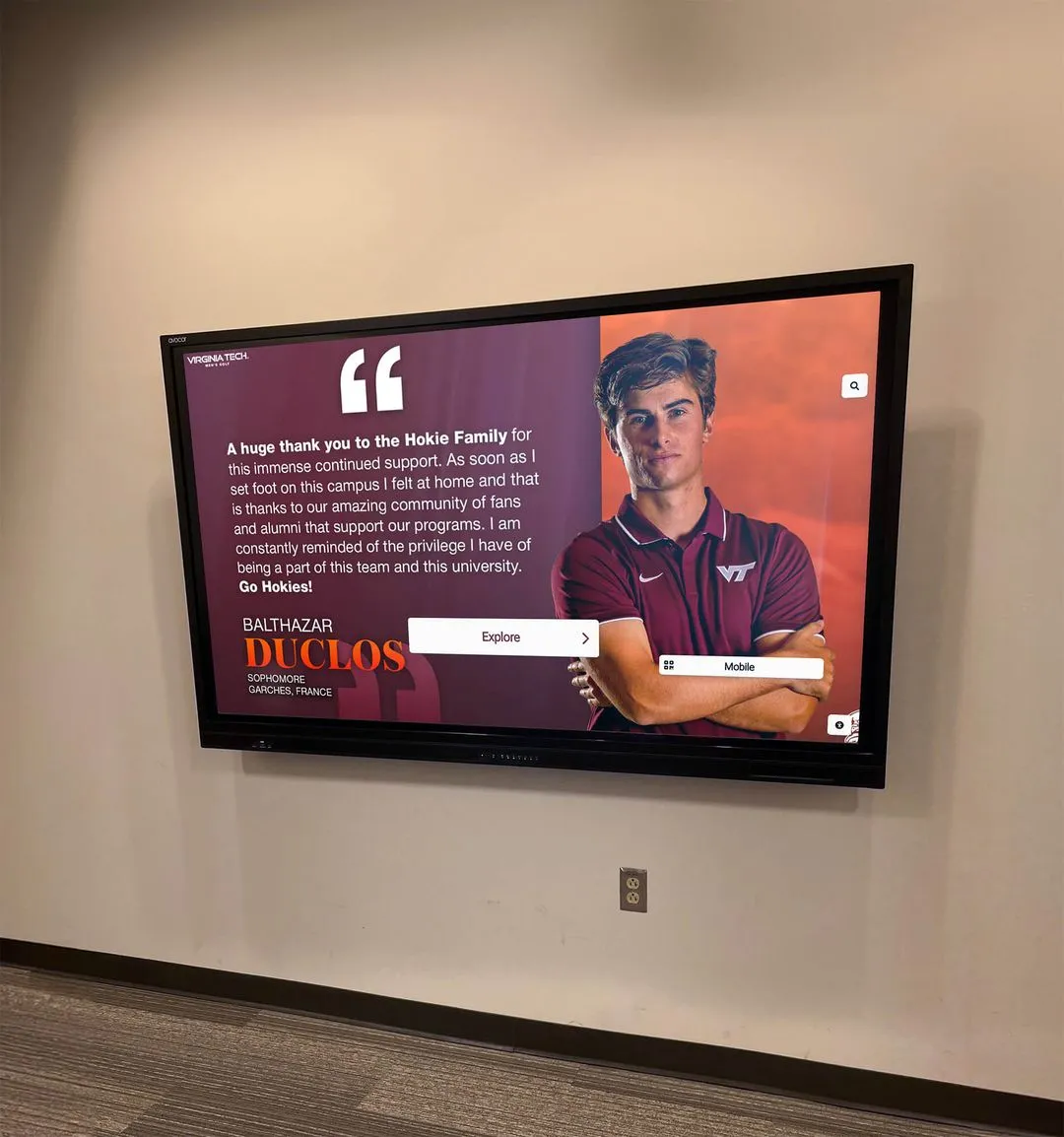
Consistent volunteer waiver documentation supports the recognition programs that honor long-service volunteers on permanent school displays
Part Two: Optional and Supplemental Fields
Depending on the booster club’s size, the types of events it runs, and the district’s requirements, the following fields may be added to the standard form.
Health and Accommodation Information
Some programs ask volunteers to disclose health conditions that event coordinators should be aware of, or to identify whether they need accommodation for a physical limitation. This information must be collected and stored carefully—health information carries heightened privacy obligations under state law in many jurisdictions. If collecting any health information, confirm with legal counsel how to store it separately from the standard waiver and who may access it.
Skills and Certifications
For booster clubs that match volunteers to roles based on skills—first aid certification, food handler permits, audiovisual operation—a brief skills section allows the coordinator to match volunteers to the appropriate duties before event day. This section is purely administrative and does not carry the legal weight of the waiver sections above.
Volunteer Hours Tracking Authorization
If the booster club uses a formal volunteer hours tracking system for recognition purposes, this section authorizes the organization to record and report the volunteer’s participation hours. This is particularly relevant for programs that recognize cumulative service milestones—five years, ten years—on donor walls, recognition displays, or annual banquet programs.
FERPA and Student Interaction Acknowledgment
Volunteers who may interact with student records or hear student information during an event may need to sign a separate FERPA acknowledgment. The Family Educational Rights and Privacy Act imposes specific requirements on who may access or handle student education records. Check with your district’s FERPA compliance officer before any volunteer has access to student data. This is typically a separate district document rather than a section of the booster club waiver.
Part Three: School District Review Steps
Most school districts require booster club volunteer forms to meet district standards before use. The following sequence reflects common practice; the specific steps and approvers vary by district.
Step 1 — Obtain the district’s current volunteer policy
Before drafting or adopting any volunteer waiver form, request the district’s current written volunteer policy from the athletic director or principal. Many districts have a standard volunteer form that all booster clubs are required to use. If the district has a required form, use it—do not substitute a booster club-specific form that omits required district language.
Step 2 — Identify required background check procedures
Confirm whether the district requires background checks for booster club volunteers, which vendor or process the district uses, whether check results must be on file with the district or with the booster club, and how frequently checks must be renewed. Document this confirmation in writing—email from the athletic director or district administrator is sufficient.
Step 3 — Submit draft form language for legal review
If the district permits booster clubs to use a supplemental form or to add club-specific fields to the district’s standard form, submit the draft language to district legal counsel or the district’s risk management officer for review before using it. This step is often skipped and is frequently the source of problems during post-incident reviews.
Step 4 — Obtain athletic director or principal sign-off
Most districts require an administrator signature confirming that the booster club’s volunteer documentation process meets district standards. This sign-off should be documented in the booster club’s governance file and renewed annually.
Step 5 — Train officers on the collection process
Every officer who will be collecting signed forms should understand the required process: when forms must be collected (before the event begins, not after), how to handle a volunteer who arrives without a completed form, where completed forms are stored, and who has access. Inconsistent collection is the most common documentation gap in booster club volunteer programs.
Step 6 — Confirm electronic signature compliance (if applicable)
If the booster club wants to collect waivers digitally—through a Google Form, DocuSign, or similar tool—confirm with the district whether electronic signatures meet the district’s requirements for volunteer documentation. Some districts require wet signatures; others accept electronic formats that meet the E-SIGN Act standards. Do not assume electronic collection is acceptable without confirmation.
Step 7 — Review annually
Volunteer form requirements change when state law changes, when insurance carrier requirements are updated, or when the district revises its volunteer policy. Build an annual review of the form—timed to the fiscal year-end or leadership transition—into the booster club’s governance calendar. The officer responsible for volunteer coordination should be responsible for triggering this review.
Part Four: Recordkeeping and Retention
Completed volunteer waiver forms are governance documents. They should be stored with the same care as financial records and sponsorship agreements.
Storage Requirements
Completed forms should be stored in a location that meets three criteria:
- Access controlled — only officers with a legitimate need (booster club president, volunteer coordinator, treasurer for reimbursement purposes) should be able to access completed forms; health information, if collected separately, should have tighter access restrictions
- Secure against loss — paper forms stored in a physical binder at a volunteer’s home are lost the moment that volunteer transitions out of the role; use a secure shared digital folder (district Google Drive, district SharePoint, or a password-protected shared drive) so records survive officer transitions
- Indexed — forms should be organized by event date and volunteer name so a specific record can be located quickly if needed
Retention Schedule
| Document | Suggested Retention Period |
|---|---|
| Completed volunteer waiver forms | Minimum 3 years from the date of the event; consult your district and legal counsel for jurisdiction-specific requirements |
| Background check records | Per the district’s retention policy; typically 3–7 years |
| Incident reports connected to a volunteer event | 7 years minimum, or longer if litigation is pending; see your district’s policy |
| Volunteer training completion records | Duration of the volunteer relationship plus 3 years |
| Officer sign-off on annual form review | Permanent (governance record) |
These ranges reflect general nonprofit best practice. State law, insurance carrier requirements, and district policy may impose longer retention obligations. Confirm with qualified legal counsel and your district’s records management officer. When in doubt, retain longer rather than shorter.
Year-End Transfer Protocol
When a booster club officer responsible for volunteer documentation transitions out of the role, all records—physical and digital—must transfer to the incoming officer or to the designated organizational storage location before the departing officer’s access is removed. This is the same protocol that applies to financial records during treasurer transitions. Thorough documentation practices during officer transitions prevent the gaps in institutional memory that expose booster clubs during district reviews.
Programs that store volunteer forms in a shared organizational folder rather than on an individual’s personal device or email account make this transfer automatic. The records remain accessible to current officers regardless of who created them.

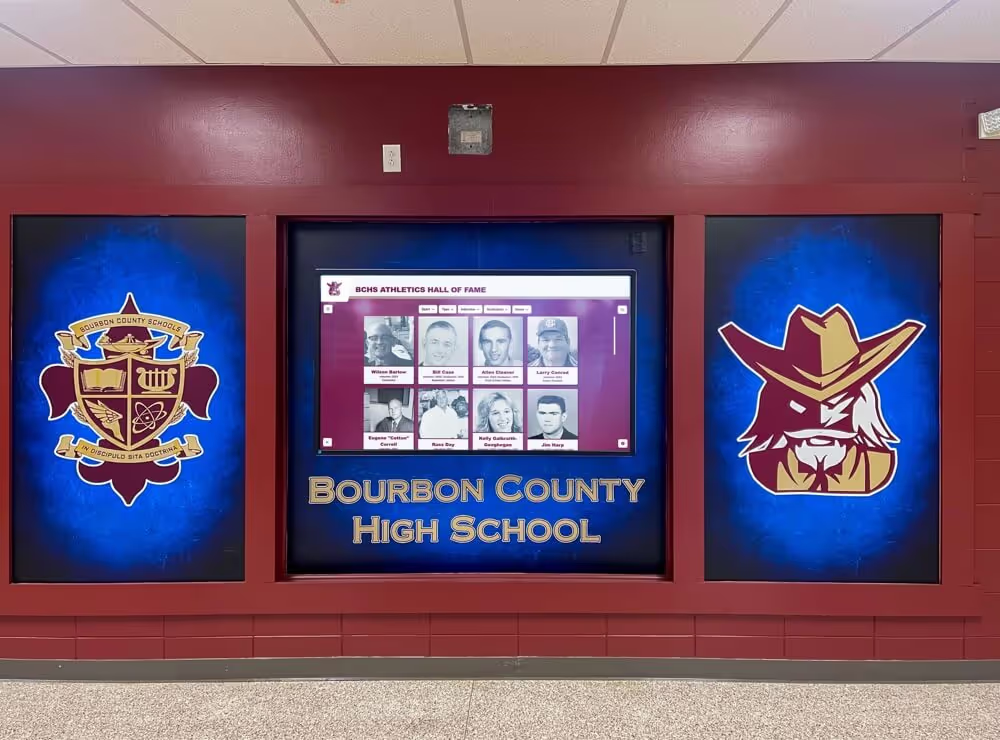
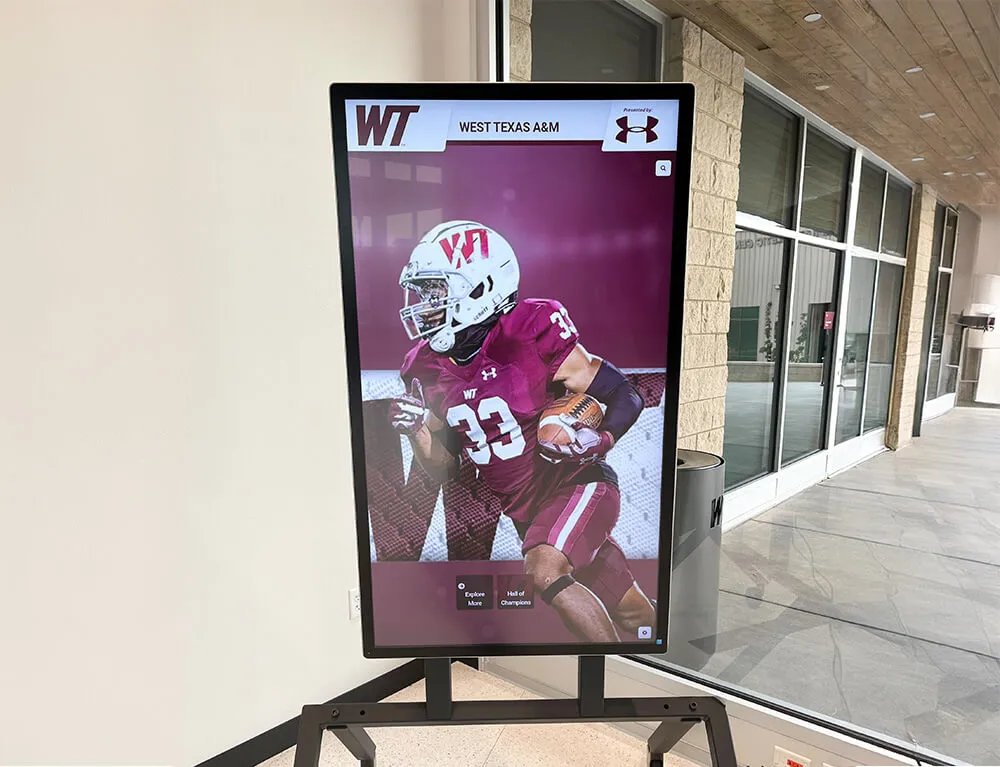
Honor walls and recognition displays represent the public face of programs that depend on thorough volunteer and contributor documentation behind the scenes
A Practical Form Template
The following template provides a structural starting point. It does not include specific release language, as that must be reviewed by qualified legal counsel for your state and district. Fill in or remove sections based on your district’s requirements.
BOOSTER CLUB VOLUNTEER WAIVER AND INFORMATION FORM
Organization: ___________________________________
Event / Activity: _______________________________
Event Date(s): __________________________________

— SECTION 1: VOLUNTEER IDENTIFICATION —
Full Legal Name: _______________________________
Preferred Name: ________________________________
Date of Birth: _________________________________
Home Address: _________________________________
City / State / ZIP: _____________________________
Email Address: _________________________________
Primary Phone: _________________________________
Alternate Phone: _______________________________

— SECTION 2: EMERGENCY CONTACT —
Contact Name: _________________________________
Relationship: __________________________________
Primary Phone: _________________________________
Alternate Phone: _______________________________

— SECTION 3: VOLUNTEER ROLE —
Role / Duties: _________________________________
Coordinating Officer: __________________________

— SECTION 4: DOCUMENTATION STATUS —
Background Check Completed: ☐ Yes  ☐ No
Background Check Date: ________________________
Training Completed: ☐ Yes  ☐ N/A
Training Date: ________________________________
Driver Authorization (if applicable): ☐ On file  ☐ N/A

— SECTION 5: ACKNOWLEDGMENTS —
[This section must be drafted or reviewed by qualified
legal counsel before use. Include all acknowledgments
required by your state, district, and insurance carrier.]

— SECTION 6: SIGNATURE —
Volunteer Signature: ___________________________ Date: ___________
Printed Name: ________________________________
Parent / Guardian (if minor): ___________________ Date: ___________
Witness (if required): _________________________ Date: ___________
Connecting Volunteer Records to Recognition Programs
Volunteer documentation is not only a compliance exercise—it is the foundation of a meaningful volunteer recognition program. Booster clubs that recognize long-service volunteers on lobby displays, in annual banquet programs, or through named awards depend on accurate records of who participated, in what role, and for how long. Without documented volunteer history, recognition programs rely on informal memory that is lost when officers transition.
Programs that track volunteer participation systematically—using waiver forms as the starting point for a cumulative participation log—can build recognition programs that function the way donor recognition programs do: with clear eligibility criteria, documented service records, and accurate names on permanent displays.
Athletic hall of fame nomination processes illustrate the connection between documentation and recognition at the institutional level. The same principle applies to volunteer recognition: accurate records produce accurate recognition, and accurate recognition builds the trust that brings volunteers back year after year.
Booster club membership forms are often the first documentation touchpoint for a new supporter. When a member later becomes an active volunteer, the waiver form adds the event-level participation record that membership forms do not capture. Together, these documents provide a complete picture of each individual’s relationship with the program—which is exactly what recognition programs need to function accurately.
Volunteer recognition is particularly visible in programs that have developed broad fundraising and community-building initiatives. Athletic booster club fundraising programs that run multiple events throughout the year accumulate volunteer participation records across dozens of activities. Recognizing that sustained commitment—on a lobby display, a donor wall, or an annual banquet program—is how programs demonstrate that they see volunteers as contributors to the mission, not just event labor.
Alumni update forms serve a related purpose for programs that want to maintain long-term connections with former volunteers who have moved on. If a booster club volunteer moves away after contributing five seasons of service, having their current contact information allows the program to include them in recognition communications and alumni outreach even after their active participation ends.

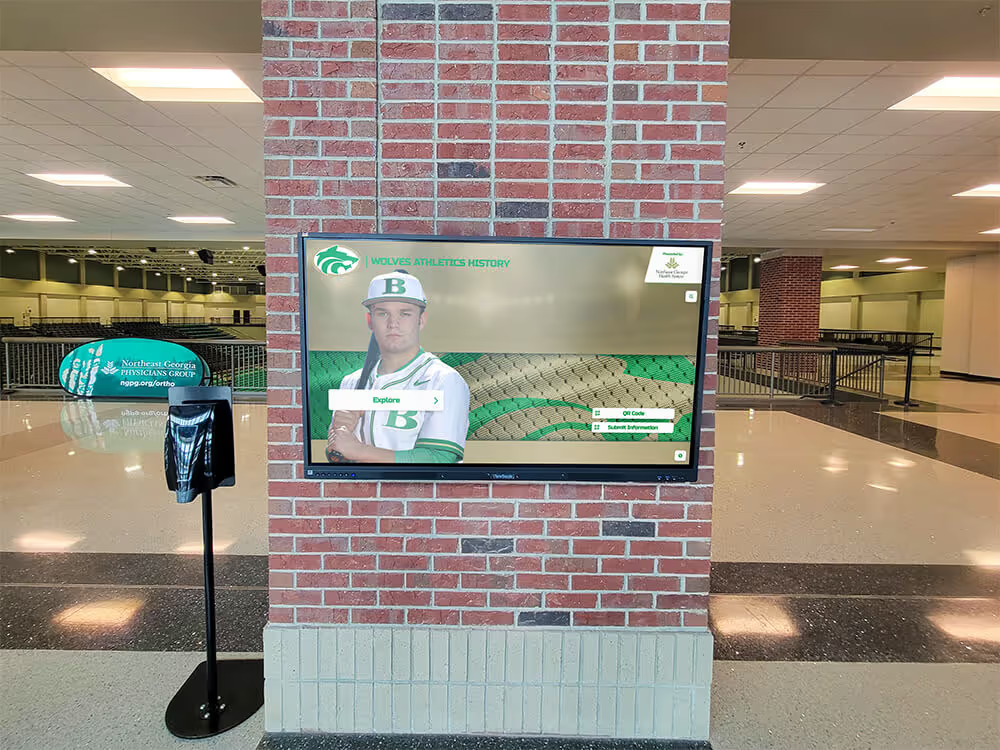
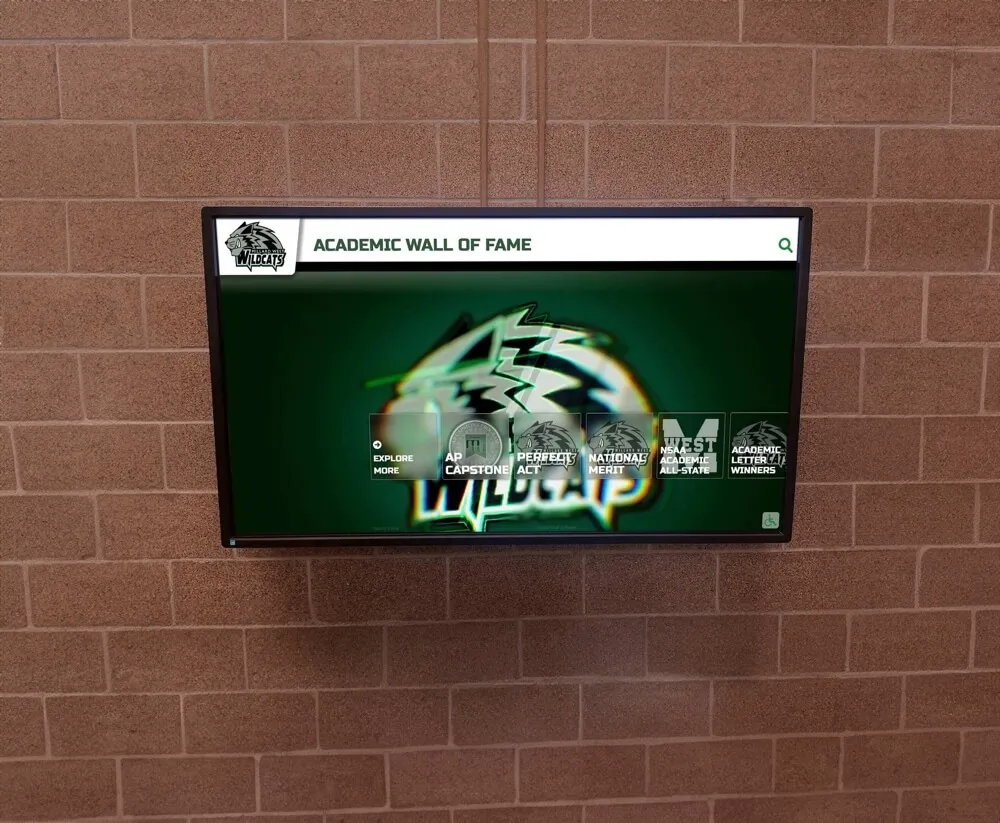
Digital athletic records displays and recognition murals represent years of contribution by athletes, donors, and volunteers—all of whom benefit from accurate documentation that supports long-term recognition
Building a Sustainable Volunteer Documentation System
The most common failure in booster club volunteer documentation is inconsistency: forms collected for some events but not others, forms collected but stored in an individual’s email rather than an organizational folder, forms that use outdated language that does not reflect current district requirements.
Sustainable documentation is built on three habits:
Make collection automatic — every event should have a volunteer sign-in process that cannot begin without a completed waiver form; the volunteer coordinator should have blank forms available at every event and a process for collecting them from returning volunteers whose prior-year forms have expired
Store records organizationally — forms should never be stored on a personal device or in a personal email account; use the booster club’s designated shared folder so records are accessible to current officers regardless of who collected them
Review annually — assign the annual form review to a specific officer role and put it on the governance calendar; a form that passed district review three years ago may need updating if state law, district policy, or insurance requirements have changed
Booster club governance resources emphasize that consistency in documentation—financial records, sponsor agreements, volunteer forms—is what separates programs that run smoothly during officer transitions from programs that lose institutional knowledge every time leadership changes.
Booster club fundraising programs that grow beyond a handful of annual events quickly discover that informal documentation practices cannot scale. Programs running twenty or thirty events per season need a systematic process for volunteer documentation that does not depend on any individual officer’s memory or initiative.
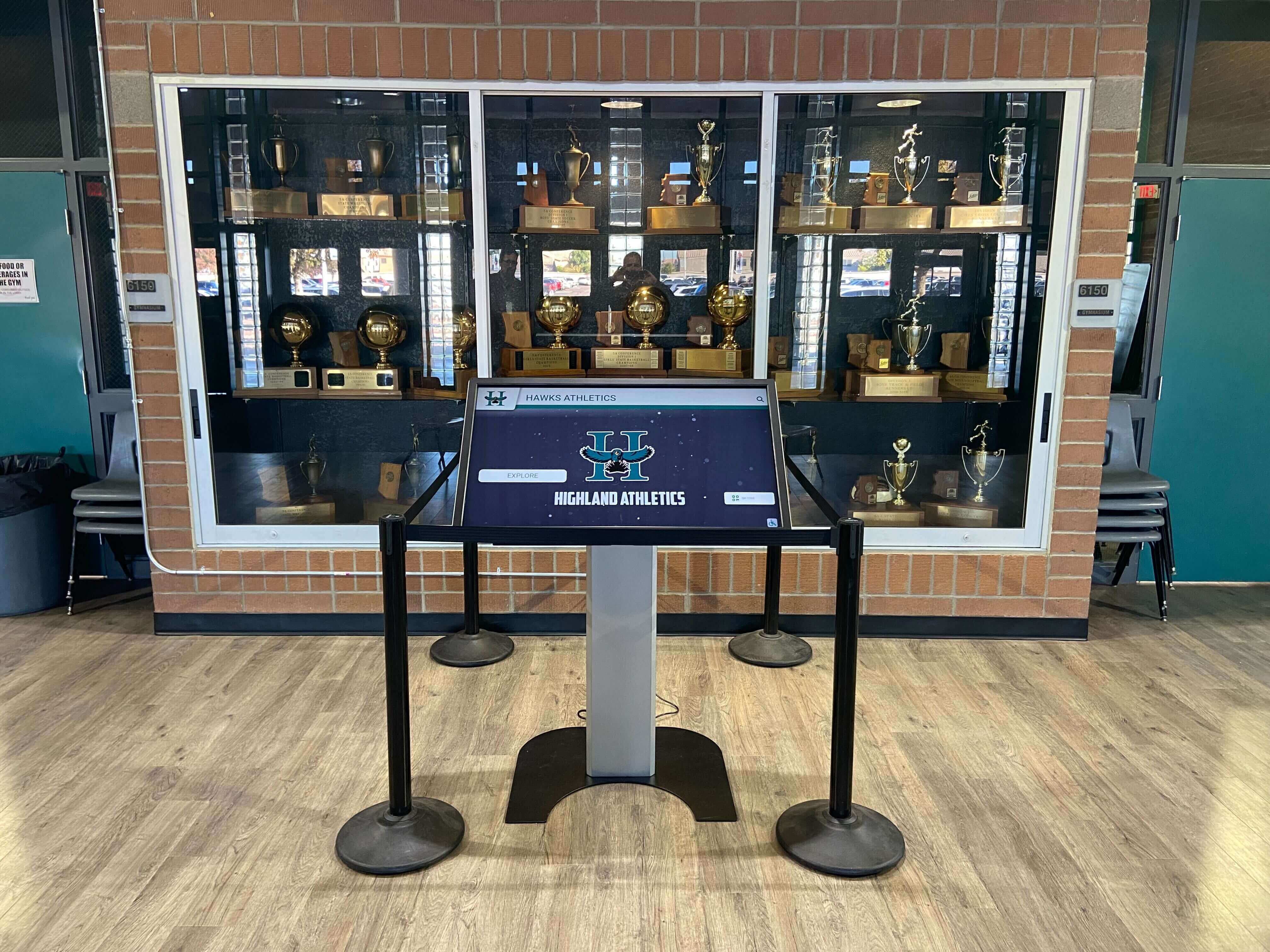
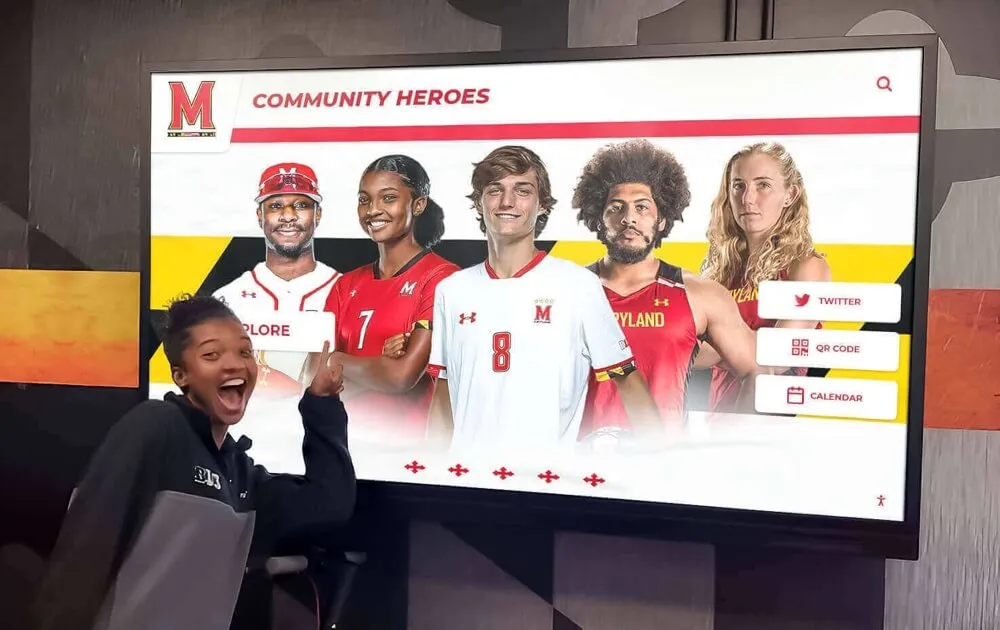
Digital recognition systems can incorporate volunteer service records alongside athletic achievements and donor contributions, creating a comprehensive institutional history tied to accurate underlying documentation
Frequently Asked Questions
Does a booster club volunteer waiver form replace a school district volunteer application?
No. Most districts have their own volunteer application or approval process that is separate from—and in addition to—any booster club waiver form. The district process typically includes background check authorization, a district-level review, and issuance of a district volunteer credential or badge. The booster club waiver form captures event-specific acknowledgment and contact information; it does not substitute for district approval. Confirm with your athletic director which district steps must be completed before a volunteer can work a booster club event.
Can a booster club use the same waiver form for every volunteer, regardless of role?
A single form works for most volunteers, but some roles may require additional documentation. Volunteers who will be driving students in personal vehicles typically need separate district driver authorization. Volunteers who will be handling cash may need to acknowledge the booster club’s cash-handling procedures separately. Volunteers working directly with students in a supervisory capacity may have different background check requirements than volunteers in a general event support role. Review role-specific requirements with your athletic director and district legal counsel.
What if a volunteer refuses to sign the waiver form?
A volunteer who declines to sign the required documentation should not be permitted to participate in the event. The form exists to protect the organization, the school, and the volunteer. Permitting an unsigned volunteer to work an event creates a gap in the documentation record and may affect insurance coverage. Document the refusal—note the volunteer’s name, the event, the date, and the fact that the volunteer declined—and retain that note in the event file.
How long should completed volunteer waiver forms be retained?
Retention requirements depend on state law, district policy, and insurance carrier requirements—all of which vary. A general practice of retaining completed forms for at least three years from the event date is common, but some jurisdictions require longer retention, particularly if any incident occurred during the event. Consult your district’s records officer and a licensed attorney for guidance specific to your jurisdiction. When in doubt, retain longer.
Do digital waivers collected through a web form meet district requirements?
It depends on the district. Some districts accept electronic signatures that meet the standards of the federal E-SIGN Act; others require wet ink signatures. Before implementing any digital collection process—online forms, email signatures, DocuSign—confirm with your athletic director and district administrator that the method is acceptable for volunteer documentation purposes.
How does volunteer documentation support recognition programs?
Every volunteer who works a booster club event and signs a waiver form creates a documented participation record. Programs that build a cumulative log from these records—tracking volunteer name, event, date, and role—can calculate total hours and service tenure for each volunteer. Those records then support recognition programs: volunteer-of-the-year awards, service milestone recognition at annual banquets, and name additions to lobby recognition displays that honor long-service contributors alongside donors and alumni. Without documented records, these recognition programs rely on informal memory that does not survive officer transitions.
What should we do if we discover our volunteer forms are missing or incomplete for past events?
Document what is missing, note the gap in the event file, and do not attempt to reconstruct or back-fill signed forms. For future events, implement the consistent collection process described above. If the gap relates to an event where an incident occurred, consult legal counsel before taking any action. Going forward, a prospective system—collecting forms before every event, storing them in an organizational folder immediately—is the appropriate response to a historical gap.
When your program is ready to build the recognition infrastructure that honors the volunteers, donors, and athletes behind your booster club’s success—permanent lobby displays, digital donor walls, and managed recognition systems that connect documentation to long-term stewardship—explore how Rocket Alumni Solutions supports booster clubs with recognition platforms designed for the full community of contributors.