Brick Paver Donor Walls: How Schools Recognize Supporters With Engraved Walkways and Digital Displays
A brick paver donor wall is a fundraising and recognition strategy in which donors purchase engraved bricks that are permanently installed in a school walkway, courtyard, or entrance plaza. Each brick carries a name, message, or tribute—creating a living record of generosity that every student, family member, and visitor walks past daily. When paired with a searchable digital donor display, paver campaigns become a complete recognition system: the physical path tells the story of the community’s commitment, while the digital archive makes every donor discoverable for decades to come.
Brick paver campaigns have become a staple of K-12 and higher education fundraising because they solve two problems at once: they generate meaningful revenue for facility improvements while producing a permanent, visible acknowledgment that motivates donors to give and give again. Yet the success of an engraved brick fundraiser depends entirely on how well the campaign is planned, how clearly engraving rules are communicated, how donor tiers are structured, and how the physical installation is maintained over years of foot traffic and weather exposure.
This guide covers everything school administrators, booster clubs, and development teams need to know to run a successful brick paver donor wall campaign—from site selection and engraving standards to digital recognition backup and long-term stewardship.
A well-executed brick paver donor wall answers a question every major donor asks silently: Will my gift still be visible in ten years? The answer from a properly installed, maintained engraved walkway—and its companion digital display—is an unambiguous yes.

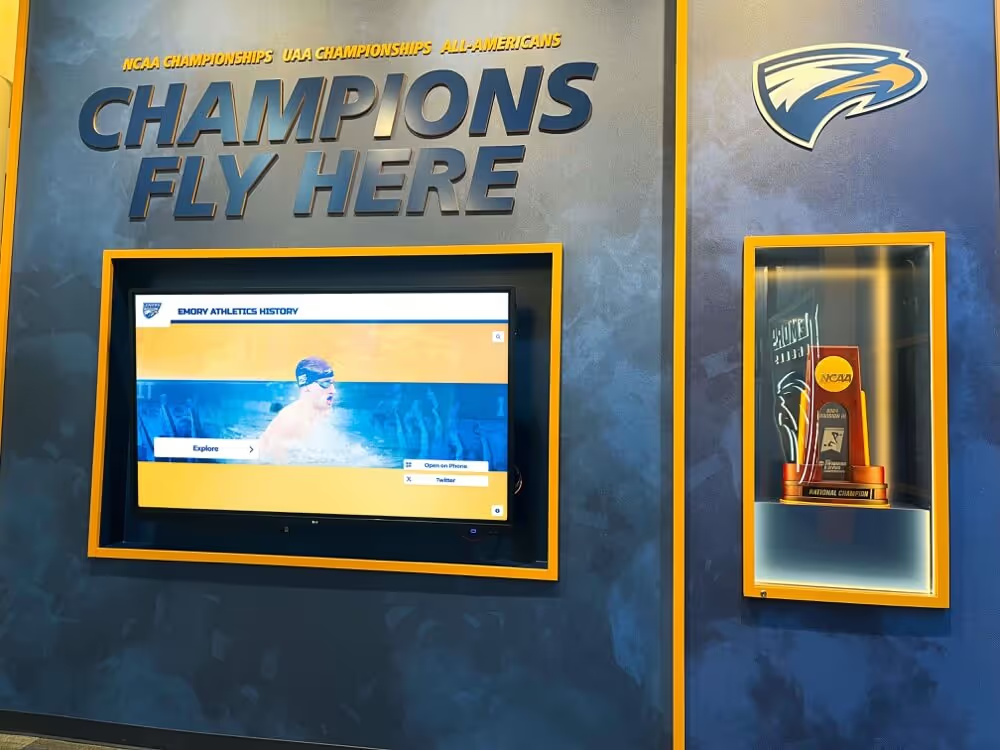
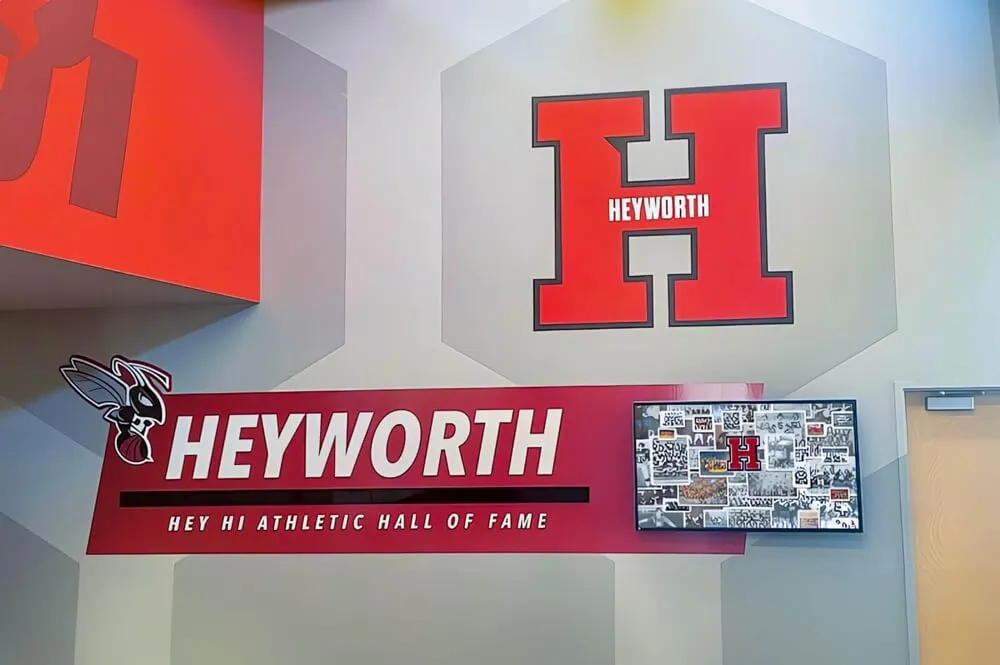
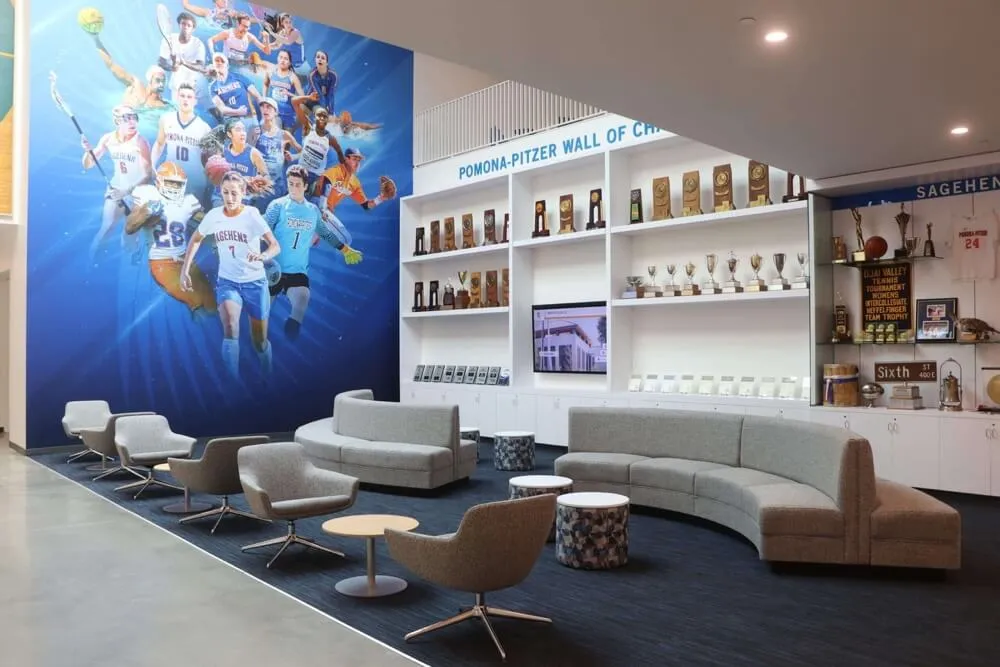
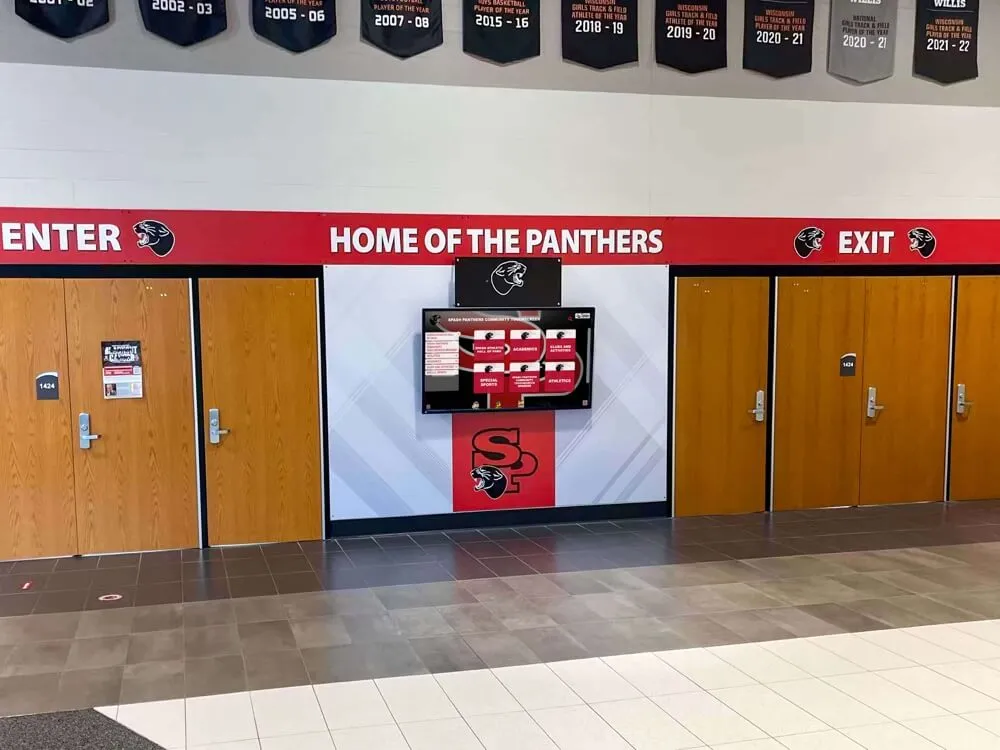
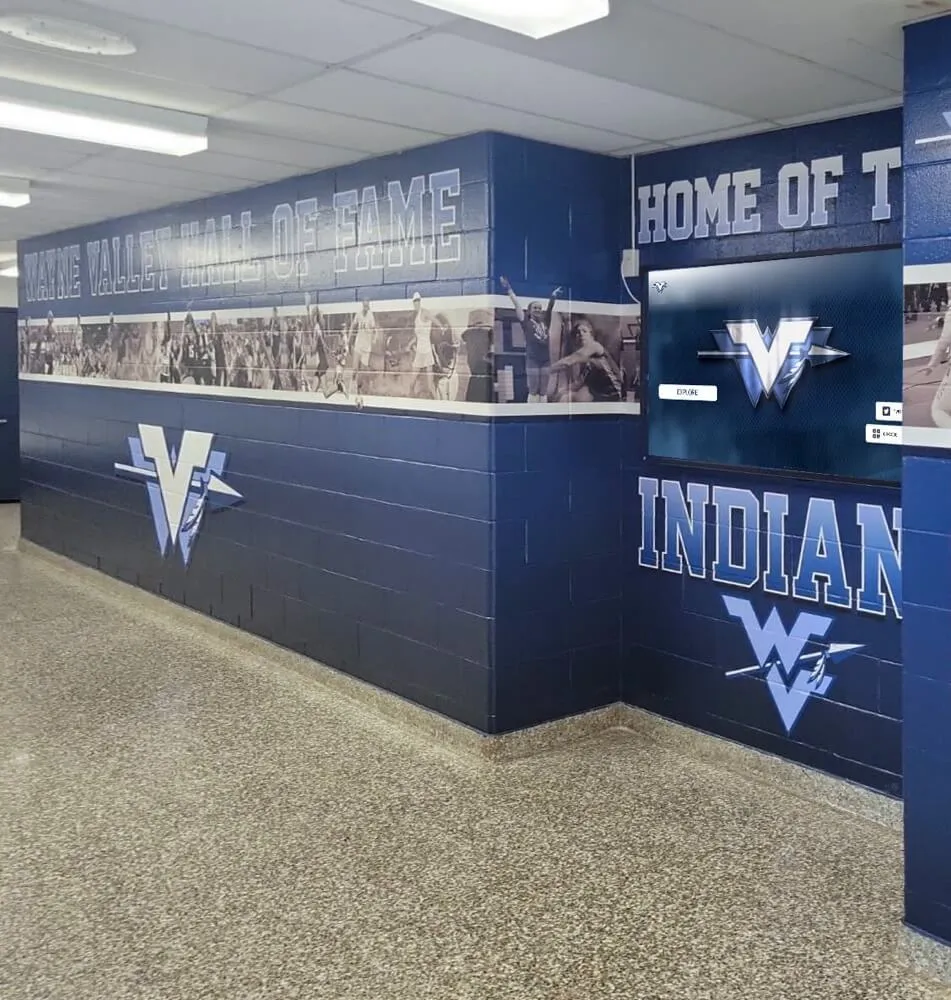
Schools that combine physical donor walkways with digital recognition create recognition ecosystems that serve donors for generations
What Is a Brick Paver Donor Wall?
A brick paver donor wall is more than a fundraiser—it is a permanent piece of campus infrastructure that doubles as a recognition archive. Unlike a single plaque mounted in a hallway, a donor walkway is interactive by its very nature: people walk across it, point out their name to grandchildren, photograph it at reunion weekends, and return to it year after year.
The term “brick paver donor wall” refers to a family of approaches that all share the same core mechanic:
- Engraved bricks (standard clay, tumbled, or granite pavers) are purchased by donors in exchange for permanent on-campus placement
- Laser or sandblast engraving imprints names, class years, dedications, or short messages directly into the paver surface
- Strategic site placement—entrances, courtyards, memorial gardens, stadium gates, or paths connecting major campus buildings—maximizes daily visibility
- Tiered giving levels often determine paver size, location prominence, or the number of lines available for engraving
Brick paver fundraising intersects naturally with academic recognition programs more broadly: the walkway becomes part of the institutional record alongside honor rolls, hall of fame inductees, and scholarship plaques.
Why Schools Choose Engraved Brick Fundraisers
Engraved brick fundraisers persist because they accomplish goals that other recognition formats cannot match. Understanding why helps administrators make the case internally and to prospective donors.
Tangible, Permanent Visibility
A donor’s name on a digital screen can be updated, archived, or moved. A brick in the entrance plaza of a school building will outlast the donors themselves, the administrators who approved the campaign, and in many cases the buildings nearby. That permanence has genuine emotional value that translates directly into larger gifts.
Built-In Alumni Engagement
Alumni who graduated decades ago respond to paver campaigns with distinctive enthusiasm—the opportunity to place their name on a campus they love at a moment when they have the means to give meaningfully. Schools that align brick paver campaigns with milestone reunions (25th, 50th anniversaries) routinely report their highest per-donor gift averages.
Community-Wide Participation
Because paver campaigns typically offer entry-level bricks at $100–$250, they open the door to donors who would never make a major gift but still want to be part of something lasting. This democratization of recognition is one of the format’s most powerful features—every donor, regardless of gift size, becomes a permanent part of the campus story.
Visible Fundraising Progress
Unlike quiet annual fund campaigns, a donor walkway fills in visibly as the campaign progresses. Aerial renderings of the planned installation, progress maps showing how many bricks remain, and ceremonial “first brick” events create momentum and urgency that sustain giving across multi-year campaigns.
Planning a Brick Paver Campaign: Campaign Setup Checklist
Before ordering a single brick, schools need a clear plan covering site, scale, timeline, and stewardship. Use this checklist as a starting framework.
Site Selection
- Identify two to three candidate locations with high daily foot traffic
- Verify ADA compliance requirements for paver surfaces and transitions
- Confirm facilities and grounds approval for permanent installation
- Check for underground utilities, drainage considerations, and frost-heave risk in your climate
- Assess available square footage and calculate maximum brick capacity
- Photograph and document the site before campaign launch for marketing materials
Campaign Scale and Goal Setting
- Define the total number of pavers available (scarcity drives urgency)
- Set a minimum campaign revenue threshold before installation proceeds
- Calculate cost per brick including engraving, installation, and contingency
- Establish a donor giving minimum that covers all costs with margin
- Plan for phased expansion if initial demand exceeds available space
Timeline Planning
- Allow 8–16 weeks from campaign close to installation for order fulfillment
- Schedule installation outside peak school-use periods
- Plan a dedication ceremony for maximum alumni and donor engagement
- Build in time for quality review of proofed engravings before production
Engraving Rules
Clear engraving guidelines prevent costly errors and protect the dignity of the installation. Every campaign needs written rules communicated to donors at the point of purchase.
| Rule | Standard Practice |
|---|---|
| Maximum lines per brick | 3 lines (standard 4×8); 4–5 lines (8×8 or 12×12) |
| Characters per line | 18–22 characters including spaces |
| Permitted content | Names, class years, dedications, short tributes |
| Prohibited content | Logos, trademarked terms, profanity, URLs |
| Proofing requirement | Donor approves digital proof before production |
| Font and case | Typically uppercase, single font for consistency |
| Special characters | Limited to hyphens, apostrophes, and periods |
Enforcing these rules consistently prevents installation day surprises and ensures the walkway presents a unified visual identity across hundreds of individual bricks.
Donor Tier Structures for Paver Campaigns
Tier structures serve two purposes: they create aspirational giving levels that increase average gift size, and they assign physical significance to larger contributions through premium paver placement or size.
Common Tier Frameworks
Single-Tier Flat-Fee Model
All bricks are the same size and located in the same zone. Simplest to administer, but misses the opportunity to capture larger gifts from donors who would pay more for prominence. Best for small campaigns or first-time implementations where simplicity matters most.
Size-Based Tiering
| Tier | Paver Size | Typical Price Range | Lines Available |
|---|---|---|---|
| Community | 4×8 in | $100–$250 | 3 lines |
| Supporter | 8×8 in | $350–$600 | 4 lines |
| Patron | 12×12 in | $750–$1,500 | 5 lines + graphic |
| Legacy | Custom stone | $2,500+ | Custom layout |
Location-Based Tiering
Rather than varying size, location tiers give premium donors placement at the entrance gate, near the building threshold, or in a dedicated circle of honor—while standard donors fill surrounding areas. This approach works well when a single paver size simplifies procurement and installation.
Hybrid Tier Model
Many successful campaigns combine size and location differentiation. A Legacy-tier donor receives a 12×12 granite paver installed at the primary entrance with five lines of engraving and a photo proof ceremony; a Community-tier donor receives a standard 4×8 clay brick in the main walkway field. Both donors have permanent campus recognition; the difference in prominence reflects the difference in commitment.
Explore how schools structure academic recognition programs to balance inclusivity with meaningful differentiation across giving levels.
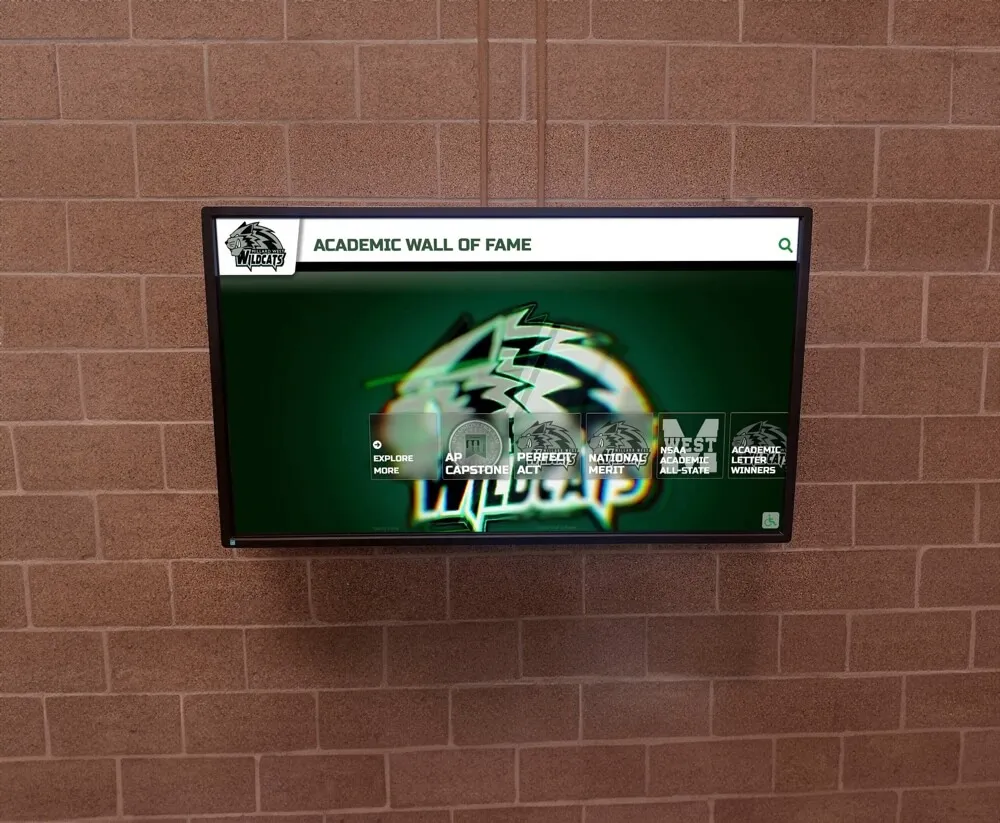
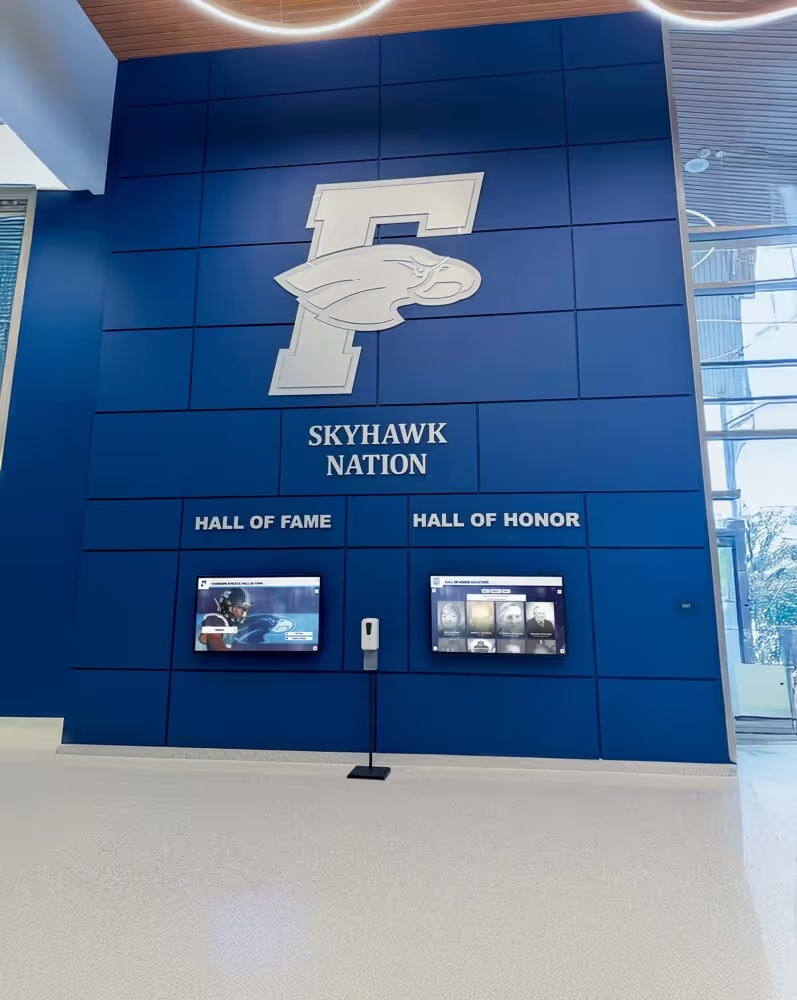
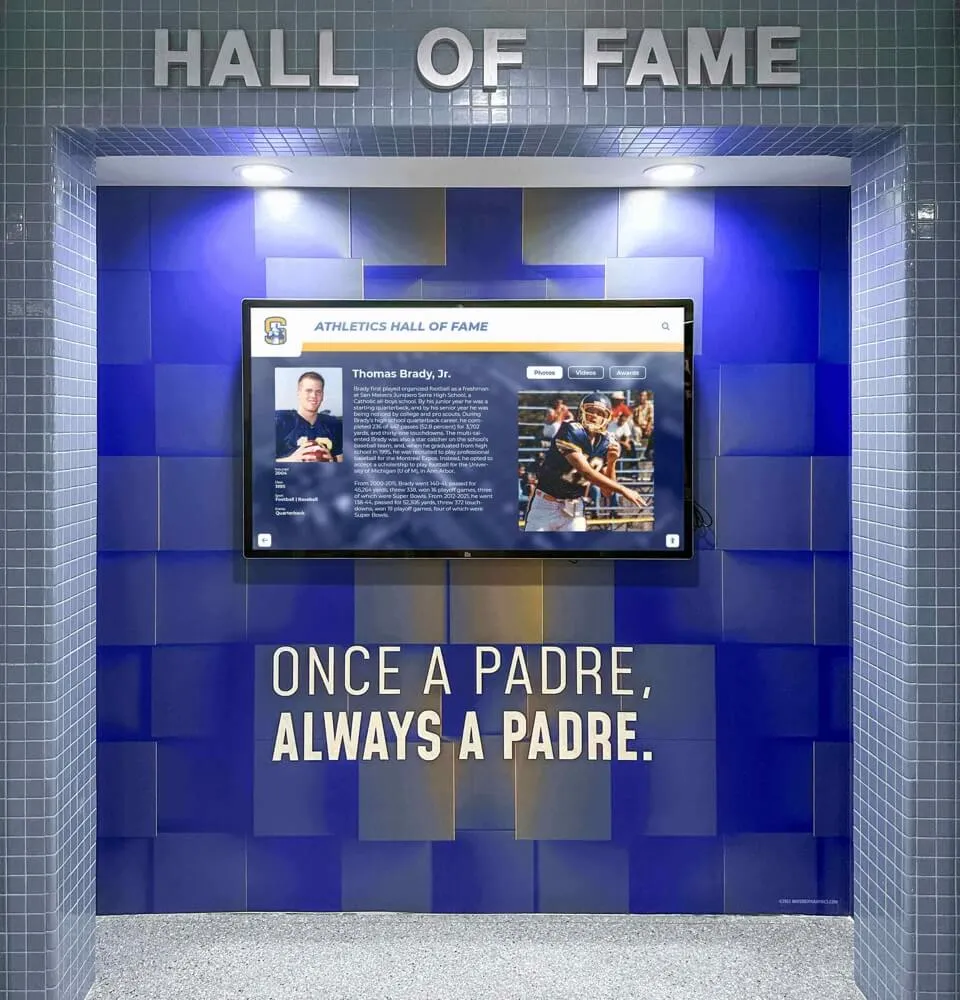
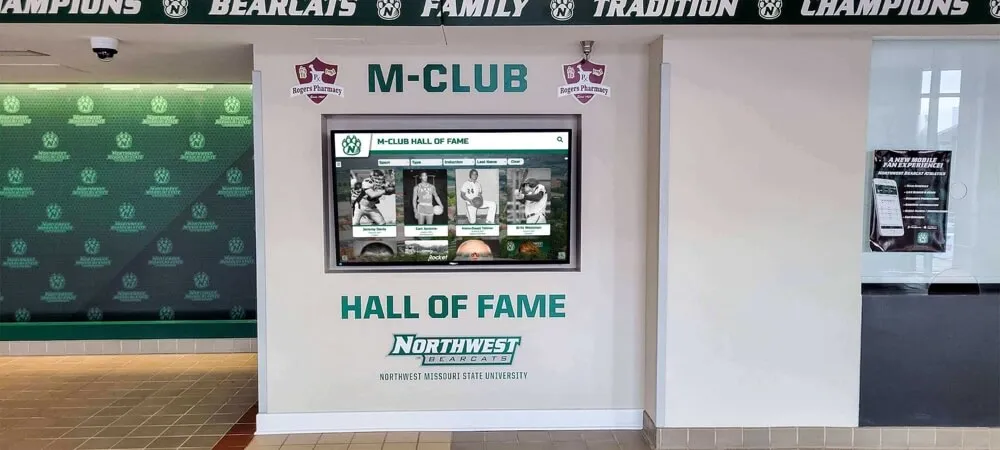
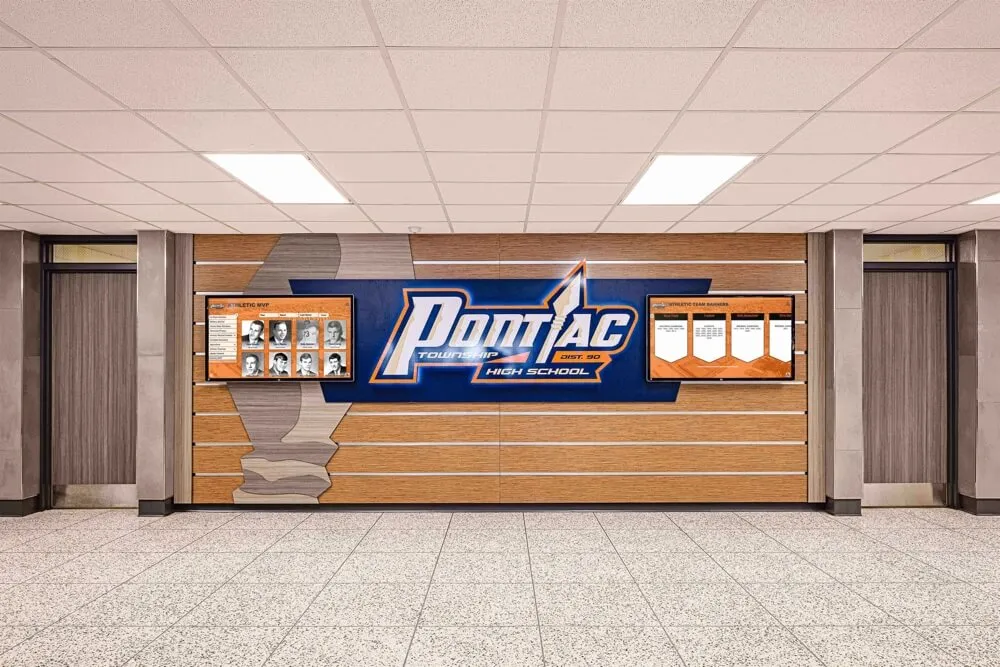
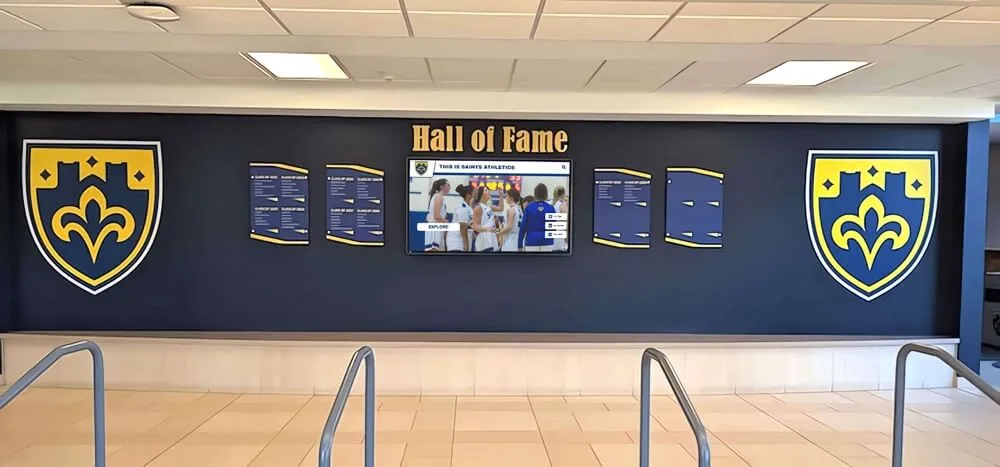
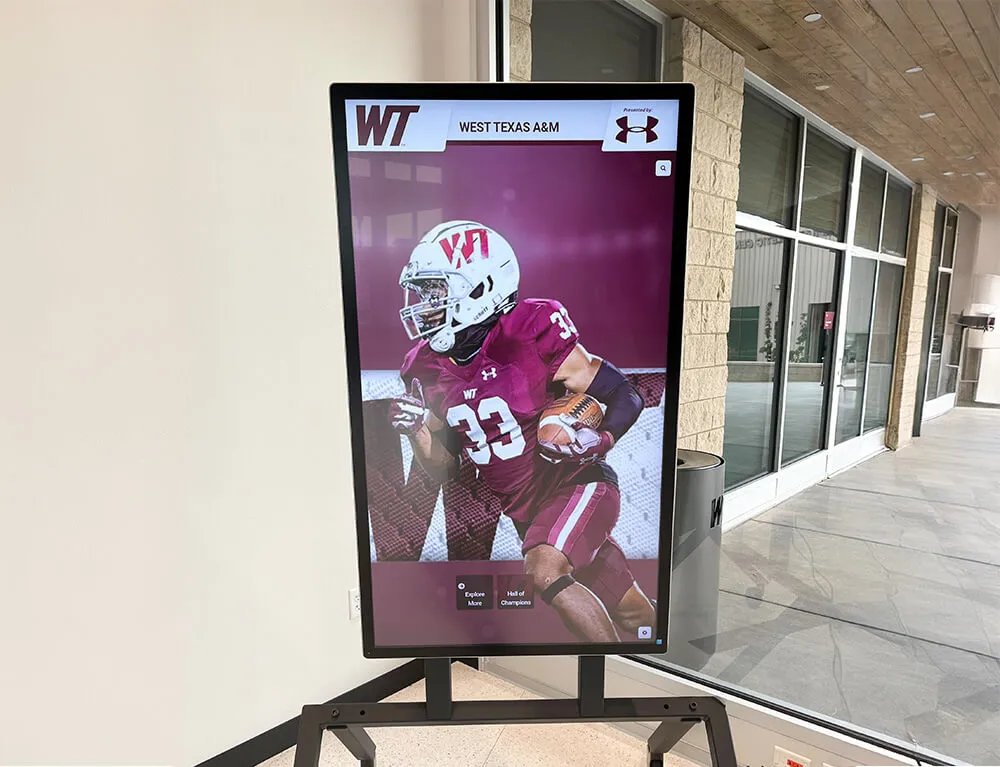
Brick and digital recognition work naturally together—the physical material grounds recognition in place, while the screen makes it searchable and updatable
Engraved Walkway Placement: Strategic Positioning on Campus
Where you place a donor walkway shapes how much daily recognition power it generates. High-traffic placement is the single most important variable in the long-term impact of the installation.
High-Impact Placement Options
Main Entrance Plazas
The path from the parking lot or public sidewalk to the school’s primary entrance is the most-trafficked zone on any campus. Every visitor, parent, and student passes through it. A donor walkway here guarantees daily visibility and creates a powerful first impression of institutional pride and donor generosity.
Athletic Facility Entrances
Stadium gates, gymnasium lobbies, and fieldhouse entryways draw concentrated traffic during high-emotion events—games, tournaments, graduation ceremonies. Donors motivated by athletic program support respond strongly to walkways at these locations because the connection between their gift and program excellence is visually immediate.
Courtyard Memorial Gardens
Schools building memorial gardens for beloved faculty, coaches, or alumni find that brick paver installations transform passive spaces into interactive archives. Visitors slow down in garden settings, read individual bricks, and discover names they know—creating exactly the reflective engagement donors hope their recognition will inspire.
Connecting Pathways
Long walkways connecting academic buildings to athletic facilities, fine arts centers, or libraries cover high daily foot traffic while offering more physical space than entrances alone. These installations can accommodate thousands of bricks across multi-year campaigns.
Building a culture of recognition that extends across campus—from walkways to display cases to digital archives—contributes directly to athletic department culture and school pride in ways that attract ongoing donor investment.
Maintaining a Brick Paver Donor Walkway
Physical recognition installations require maintenance planning that most campaigns underestimate at launch. A neglected walkway communicates the opposite of what a school intends—it suggests that donor recognition is a low priority, which damages trust with current supporters and deters prospective givers.
Routine Maintenance Tasks
Seasonal Cleaning
- Pressure wash pavers twice annually (spring and fall) using appropriate PSI for your paver material
- Apply sealant every two to three years to protect engravings from water infiltration and freeze-thaw damage
- Remove moss, algae, and organic buildup promptly in humid climates
Structural Inspection
- Inspect for heaving, settling, and trip hazards after each winter season
- Address drainage issues before they cause systematic movement across installed sections
- Check mortar joints (if applicable) for cracking and repoint as needed
Engraving Preservation
- Fill engraving channels with contrasting paint or color-fill material every five to seven years for readability
- Document all paver locations with GPS coordinates or grid-mapped installation records maintained separately from the physical installation
- Photograph every installed paver at time of installation and store digitally with donor records
Replacement Planning
Pavers break. A vehicle drives across a pedestrian zone. A tree root shifts the substrate. A donor passes away and family requests a different inscription. A plan for handling these situations—including a stockpile of matching replacement pavers—prevents installation gaps that create dead spots in the recognition record.
Maintain a minimum 5% reserve stock of blank pavers in your original material and size, held in storage with installation records noting their source.
When to Pair a Paver Campaign With a Digital Donor Wall
A brick paver walkway solves visibility beautifully but creates several problems that digital recognition resolves. Understanding where physical and digital recognition complement each other helps schools build complete stewardship systems.
Limitations of Physical Pavers Alone
Searchability
A visitor who wants to find a specific donor’s brick in a 2,000-paver installation faces a scavenger hunt. Without a mapped index or grid reference system, individual donors become effectively unfindable—diminishing the personal recognition value the campaign was designed to create.
Capacity
Physical space is finite. A campus can only install so many bricks before it runs out of viable surface area. Schools that have operated paver campaigns for twenty or more years often reach this ceiling, leaving late-arriving donors with no comparable recognition option.
Updateability
A donor who wishes to update their inscription, a family that wants to add a memorial element to an existing brick, or an institution that needs to correct an error discovered post-installation faces expensive and disruptive re-engraving or replacement processes.
Discoverability for Remote Alumni
Alumni who live far from campus—particularly those who contributed to the campaign as a way of maintaining connection—cannot interact with a physical installation remotely. A digital donor wall accessible via a campus website or touchscreen kiosk extends recognition to geographically distributed supporters.
What a Digital Donor Wall Adds
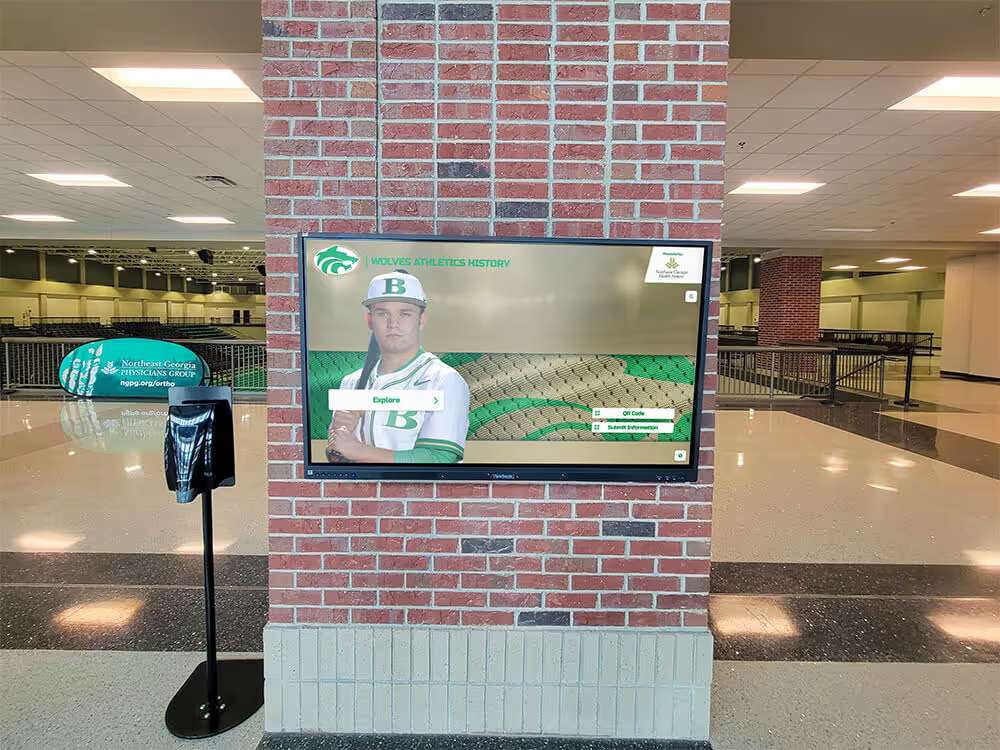
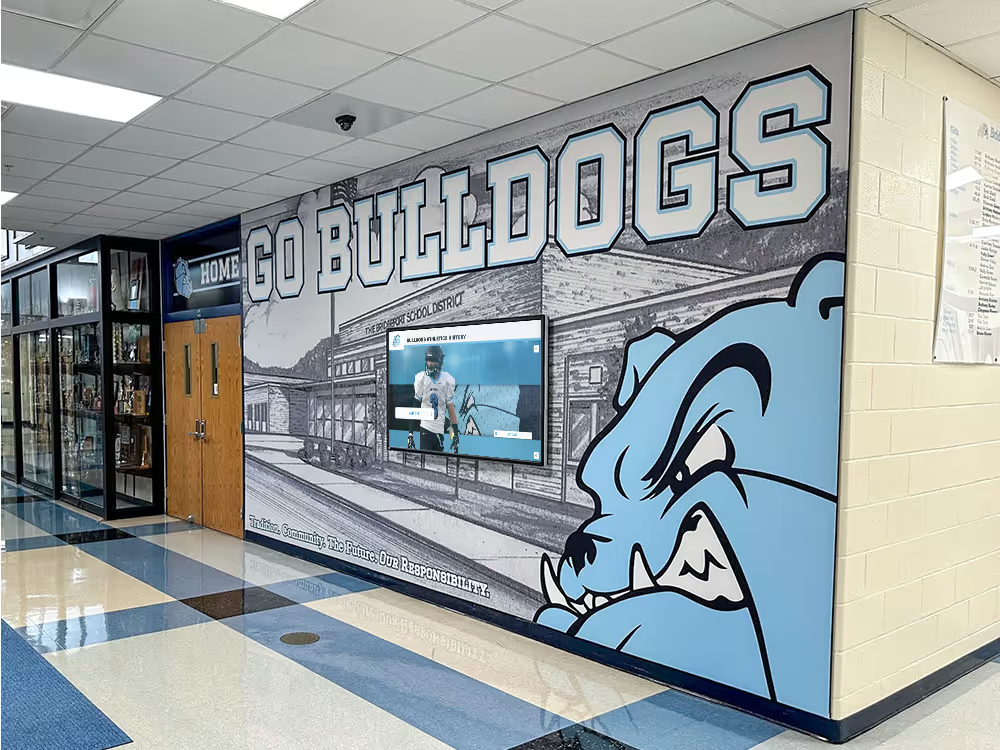
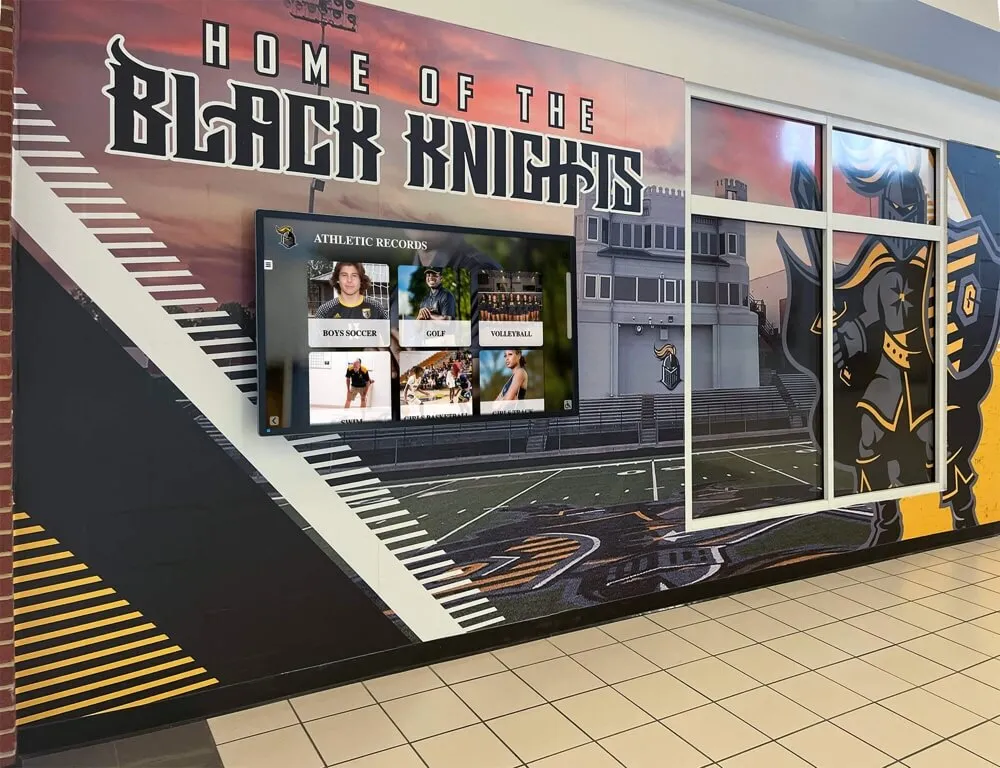
A digital donor display—whether a lobby touchscreen kiosk, a web-accessible donor archive, or a wall-mounted interactive display—complements the physical paver walkway by providing:
- Searchable records indexed by name, class year, gift level, or campaign
- Unlimited capacity that grows with the donor community regardless of available campus pavement
- Rich media profiles including photos, videos, tributes, and impact statements
- Remote accessibility for alumni who cannot visit campus
- Real-time updates that require no construction or engraving turnaround time
- Historical preservation that maintains the record even if physical pavers are removed during campus renovation
Solutions like Rocket Alumni Solutions provide schools with digital donor wall platforms designed specifically for K-12 and higher education contexts—making the transition from physical-only to hybrid recognition straightforward for institutions at any stage of their donor program.
Preserving the full history of a school’s philanthropic community is part of the broader work of academic history archiving that digital platforms now make accessible to any school, regardless of physical archive space.
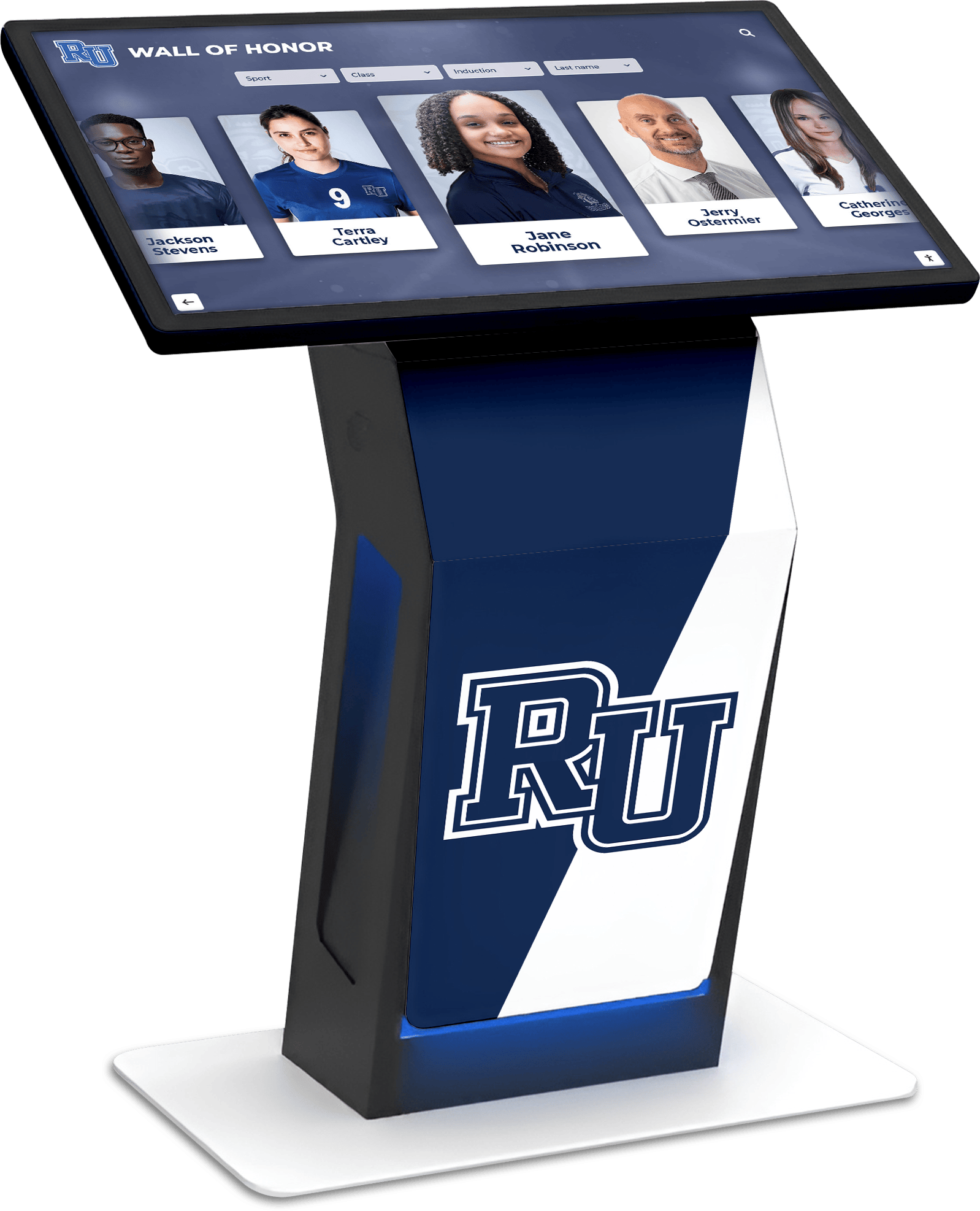
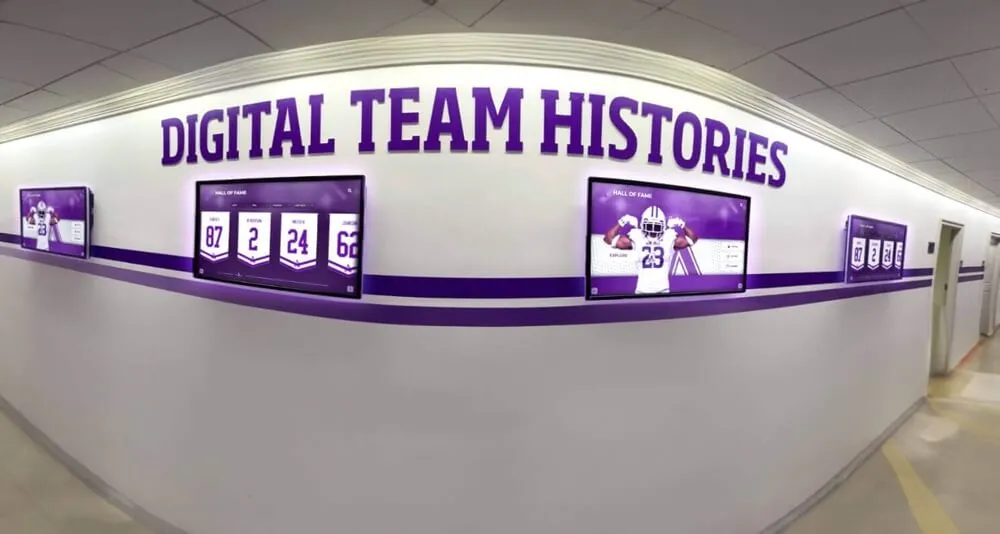
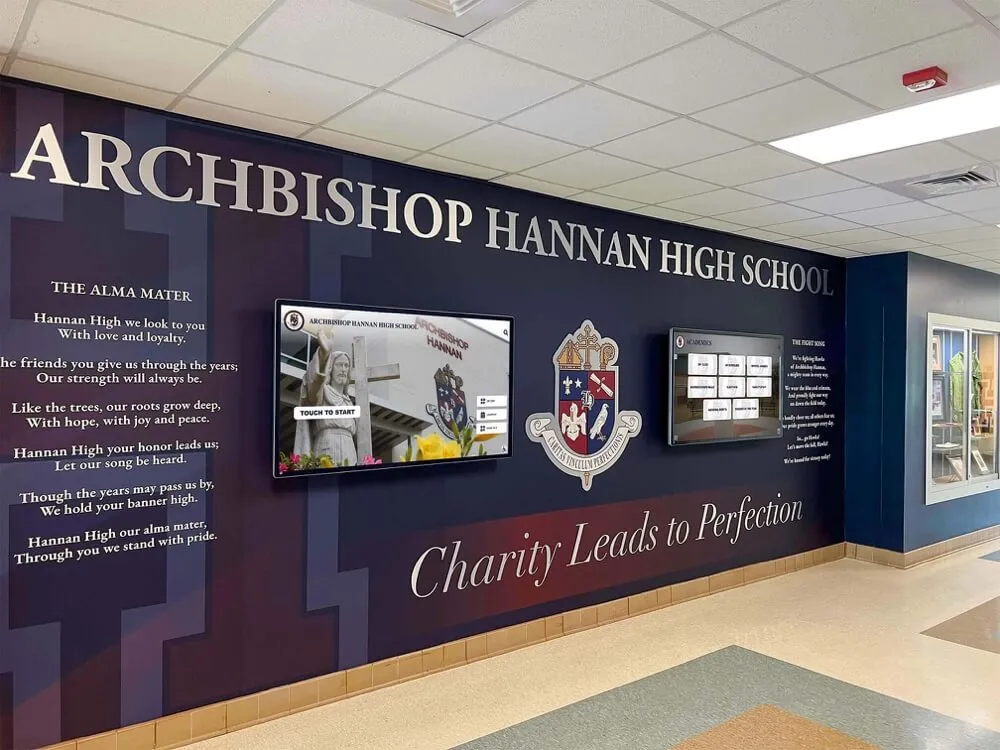
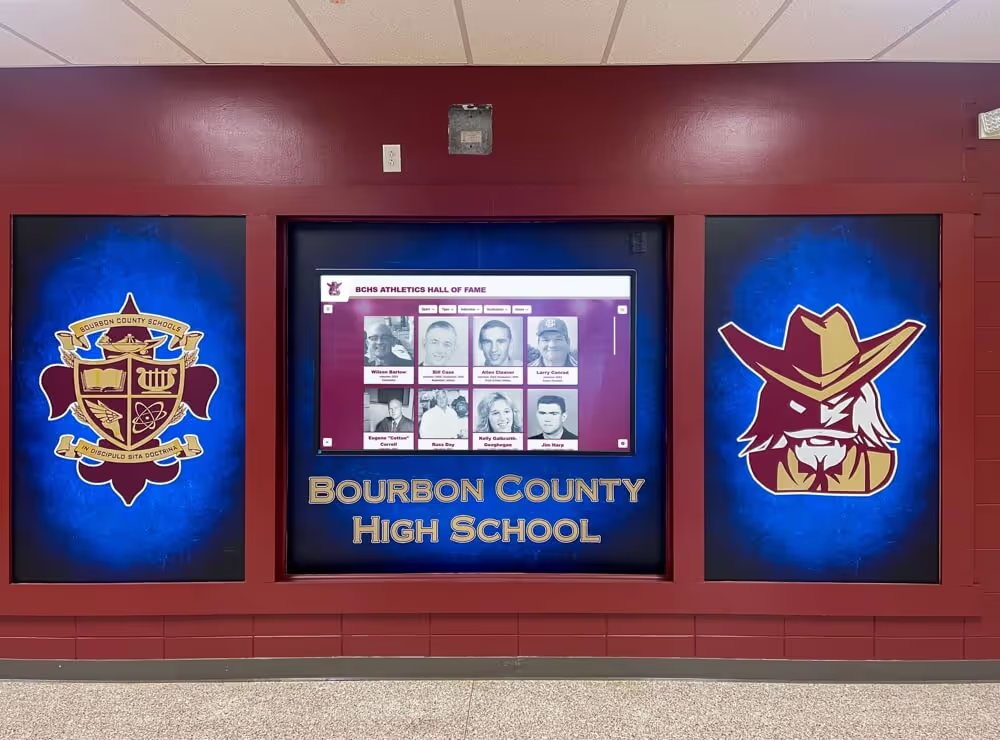
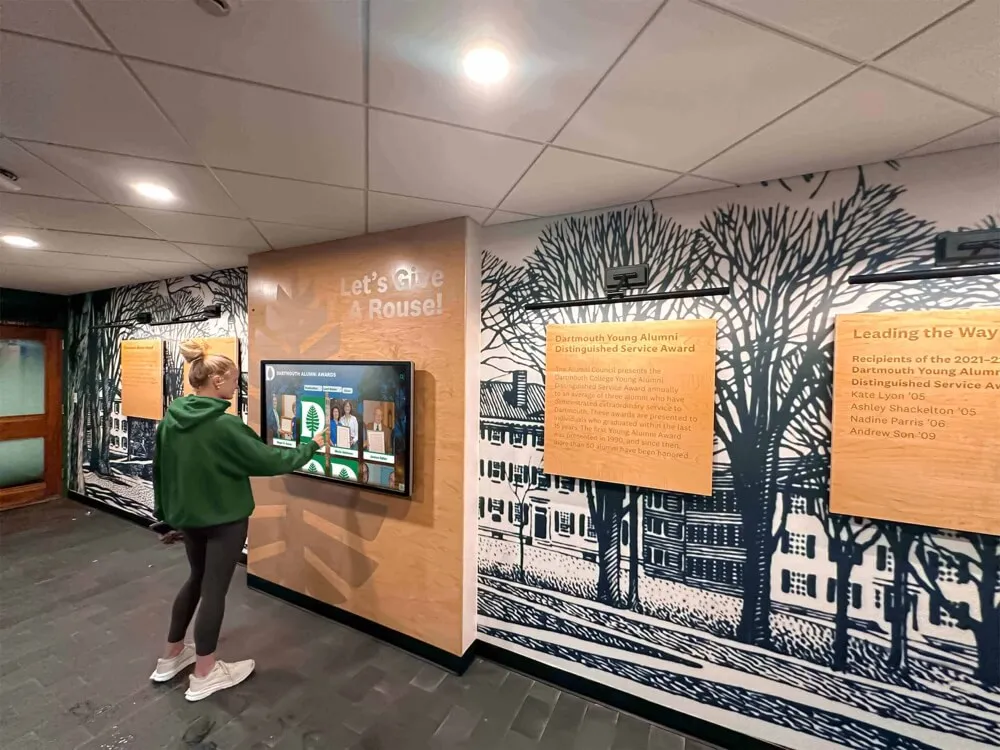
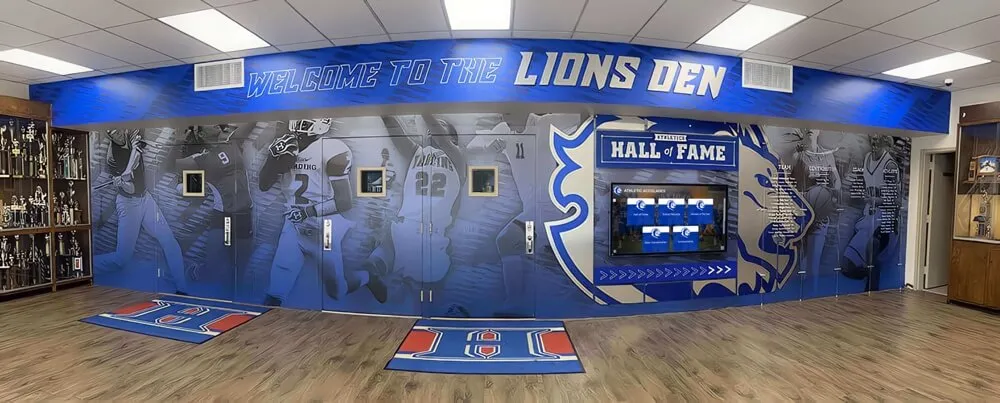
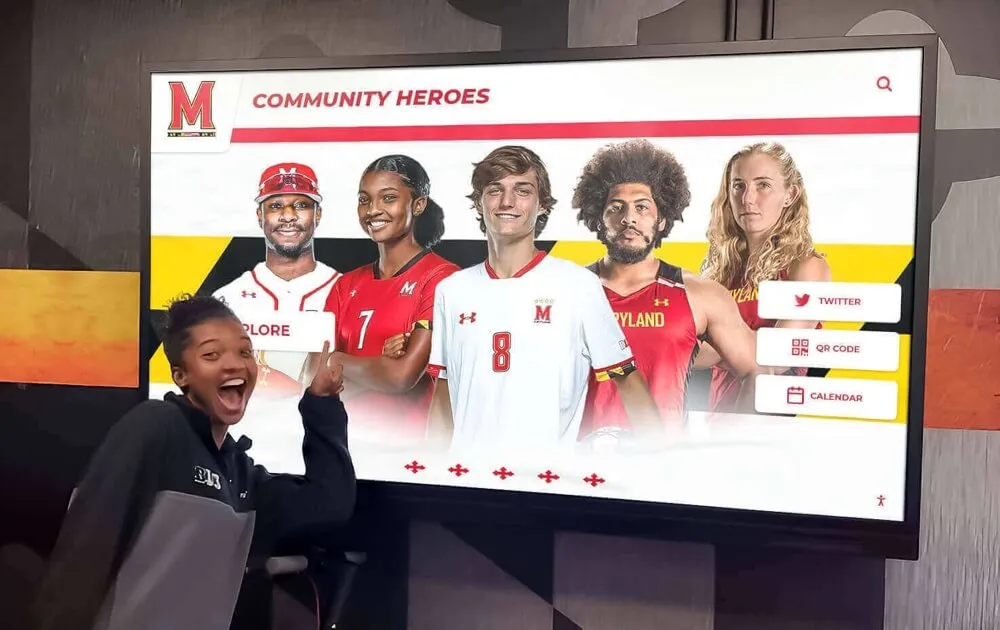
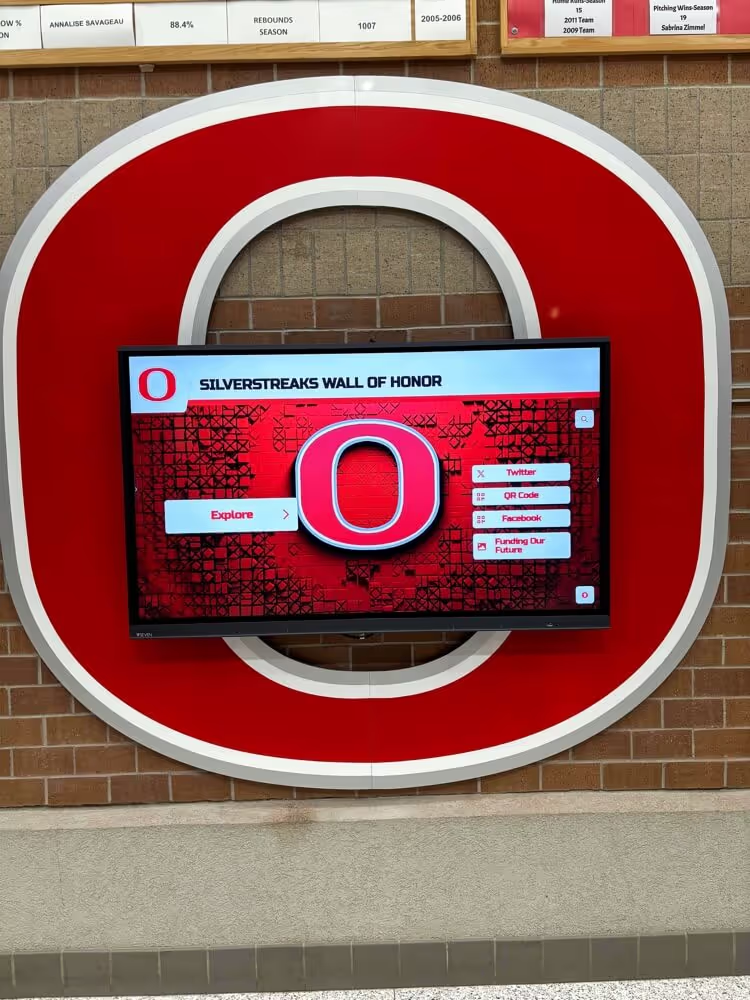
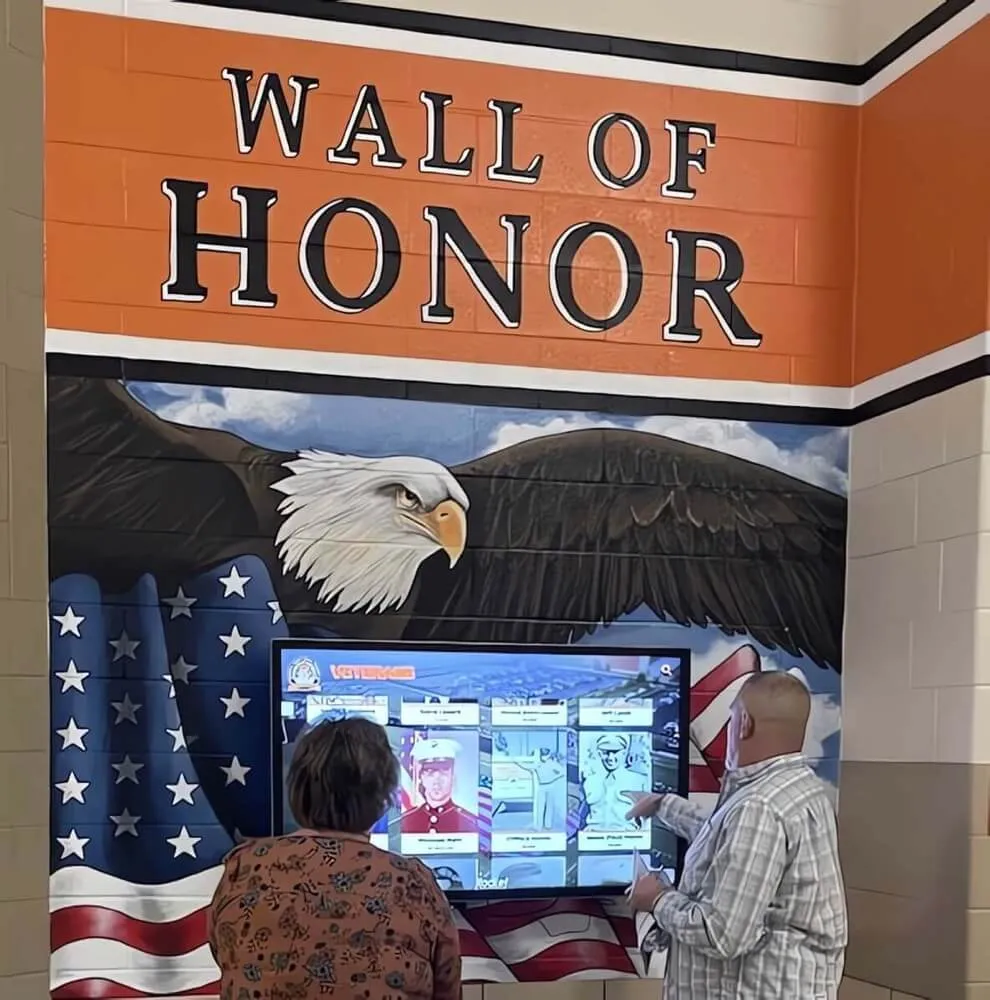
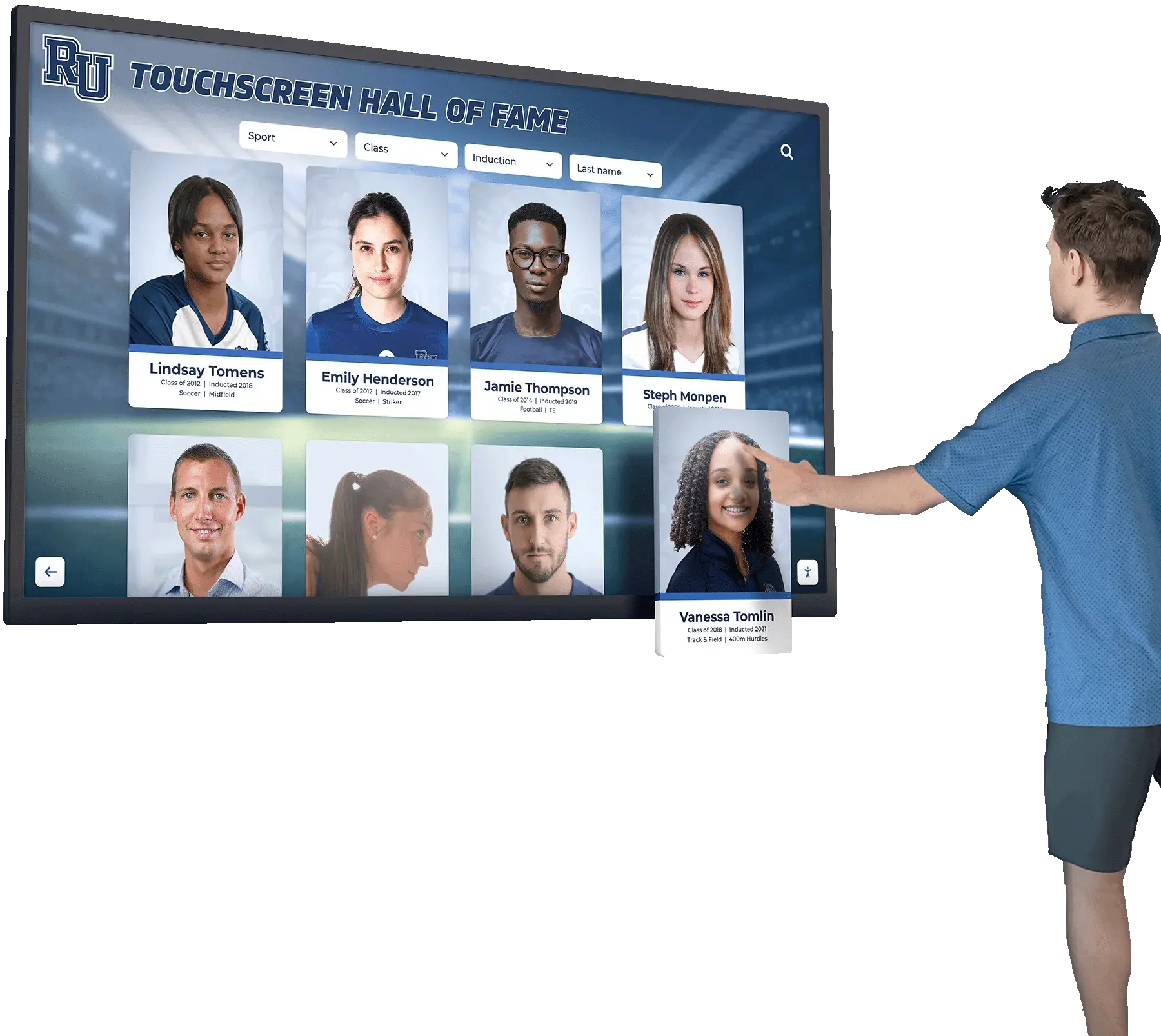
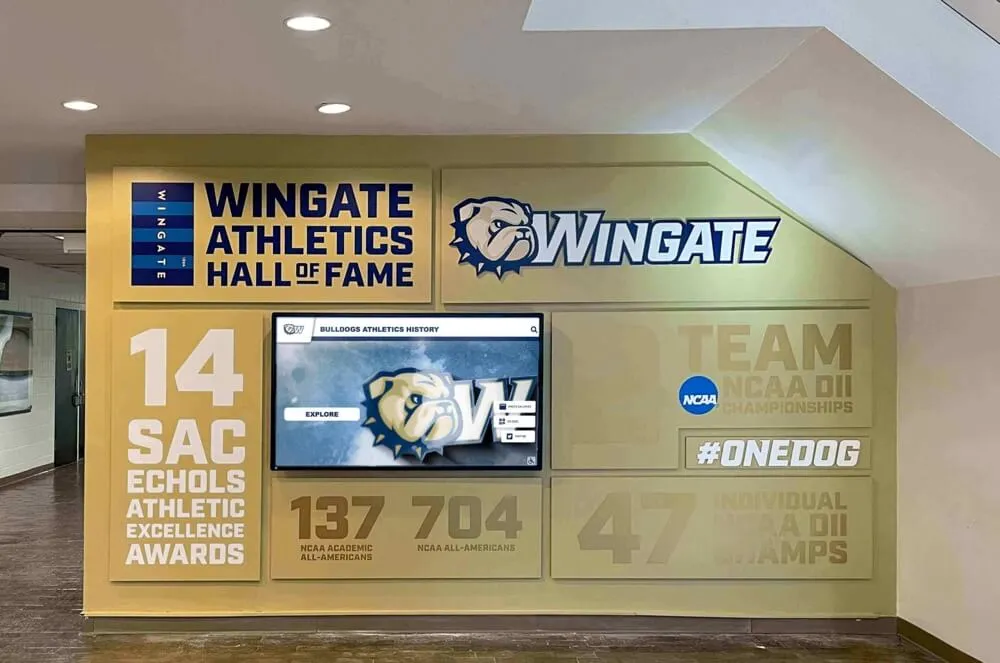
A searchable digital kiosk transforms a donor archive from a scavenger hunt into an engaging discovery experience for students, families, and visitors
Integrating Paver Recognition With Broader School Honor Programs
Brick paver donor walls exist within a wider ecosystem of school recognition—honor rolls, athletic hall of fame displays, scholarship boards, and alumni spotlights. Schools that treat these programs as interconnected rather than siloed create more compelling recognition environments.
Recognition Touchpoints Along the Donor Journey
Annual Recognition
Honor roll boards and academic honor roll recognition displays acknowledge donors and students on an annual cycle, maintaining visibility between campaign milestones and major installation events.
Achievement Recognition
Acrylic awards, plaques, and custom recognition pieces presented at donor events—especially for major gift donors or campaign leadership volunteers—complement the permanent walkway recognition with tangible, personal acknowledgment. Schools developing tiered recognition programs benefit from understanding acrylic awards materials and engraving options as part of a complete stewardship toolkit.
Legacy Recognition
Donors who establish endowed scholarships, naming opportunities, or planned gifts deserve recognition that persists across institutional generations. Alumni where-are-they-now spotlights and digital legacy profiles connect current students with the generations of supporters whose generosity built the institutions they attend.
Building a Multi-Channel Recognition Calendar
Schools that maintain regular recognition touchpoints—not just campaign launches and installation dedications—sustain higher donor retention rates. A practical annual recognition calendar for a school operating a brick paver program might include:
| Month | Recognition Activity |
|---|---|
| September | New academic year donor acknowledgment letter |
| November | Giving Tuesday campaign with paver availability announcement |
| January | Mid-year progress update with brick installation map |
| March | Spring ceremony for new brick installations |
| May | Graduation recognition of donor families |
| June | Annual report featuring paver campaign milestone |
| August | Alumni reunion paver campaign special offer |
Recognition Beyond the Walkway: What to Do When Pavers Aren’t Enough
Some donors—and some giving levels—warrant recognition that extends beyond a square of engraved pavement. Expanding the recognition toolkit ensures no donor feels under-acknowledged relative to their contribution.
Naming Opportunities
Facility naming rights represent the highest tier of school donor recognition. A paver campaign can serve as the foundation that builds the institutional confidence and donor relationships that eventually yield naming gift conversations. Donors who purchase premium-tier pavers often become the same individuals who later fund building renovations or establish endowed positions.
Scholarship Boards
Academic scholarship boards displayed in libraries, scholarship offices, or digital portals recognize donors whose gifts support student financial aid rather than facilities. These boards parallel the paver walkway in function—permanent, cumulative, and searchable—while addressing a completely different donor motivation. The wealth of recognition ideas available for student achievement translates directly into frameworks for recognizing the donors who fund those achievements.
Digital Alumni Spotlights
Not every meaningful donor gives to capital campaigns. Faculty donors, small-business owners who sponsor annual events, and community members who give modestly but consistently over decades all deserve recognition formats sized appropriately for their contributions. Digital alumni spotlight features—available on platforms like Rocket Alumni Solutions—can highlight these donors with photos, stories, and impact statements that bring individual generosity to life in ways a brick inscription cannot. Learn how alumni spotlight programs can extend recognition across diverse donor populations.
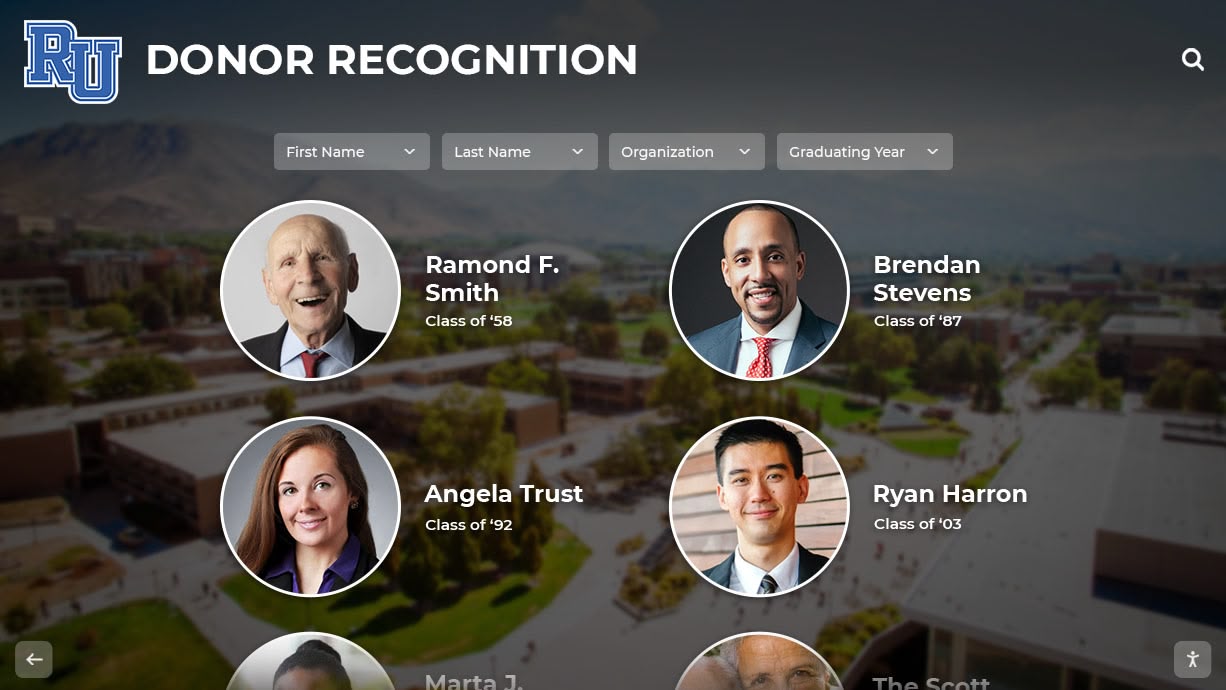
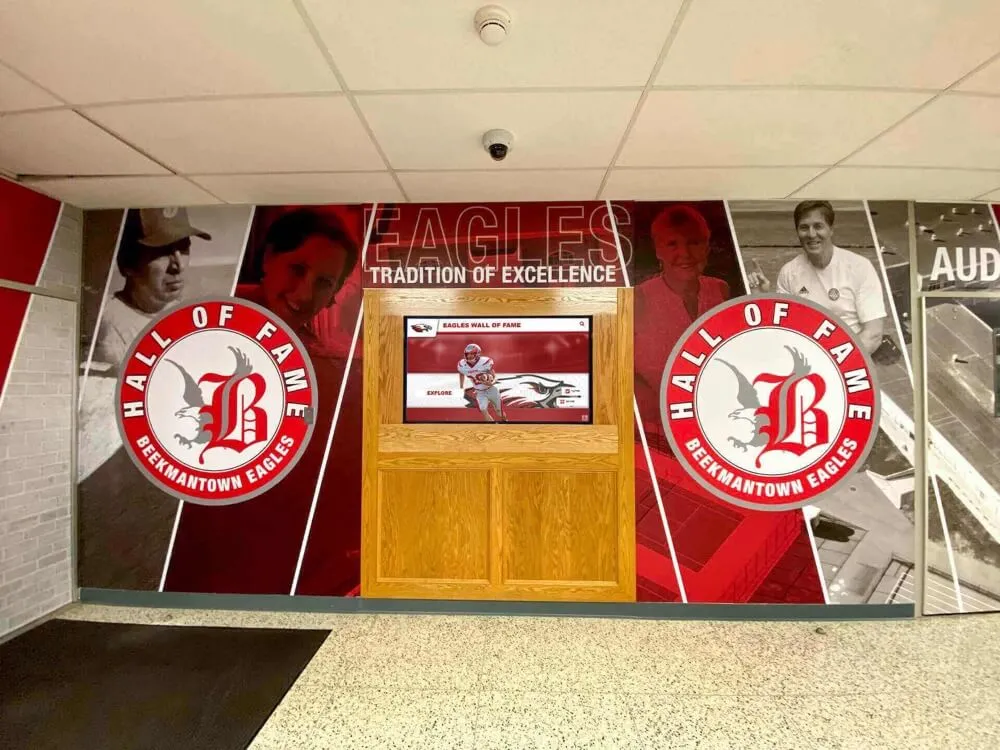
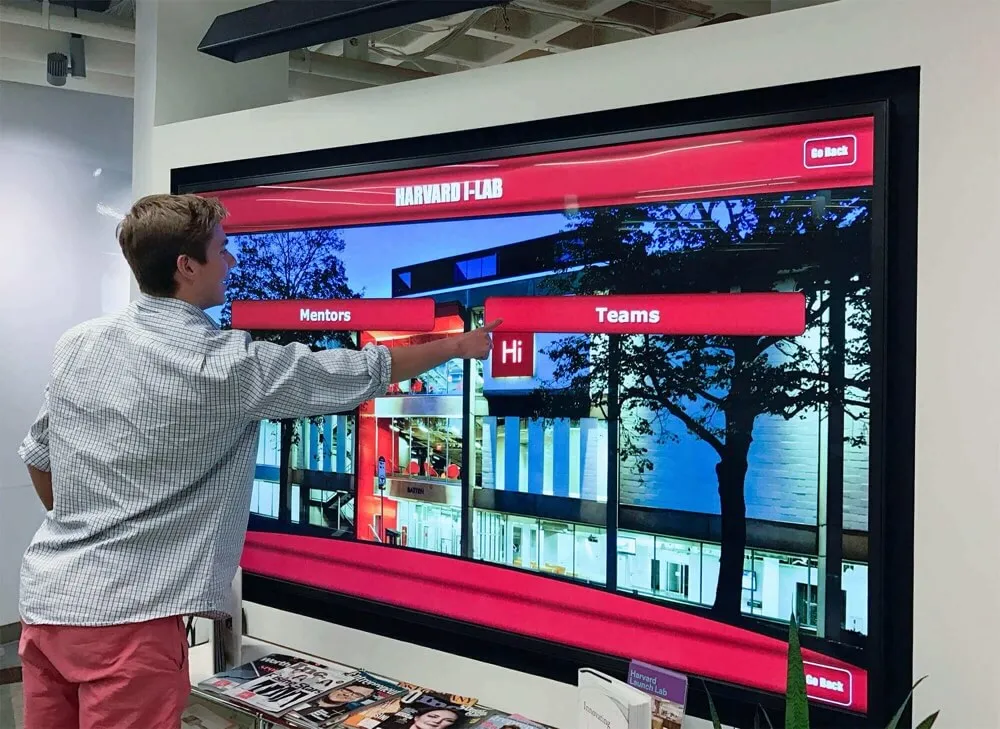
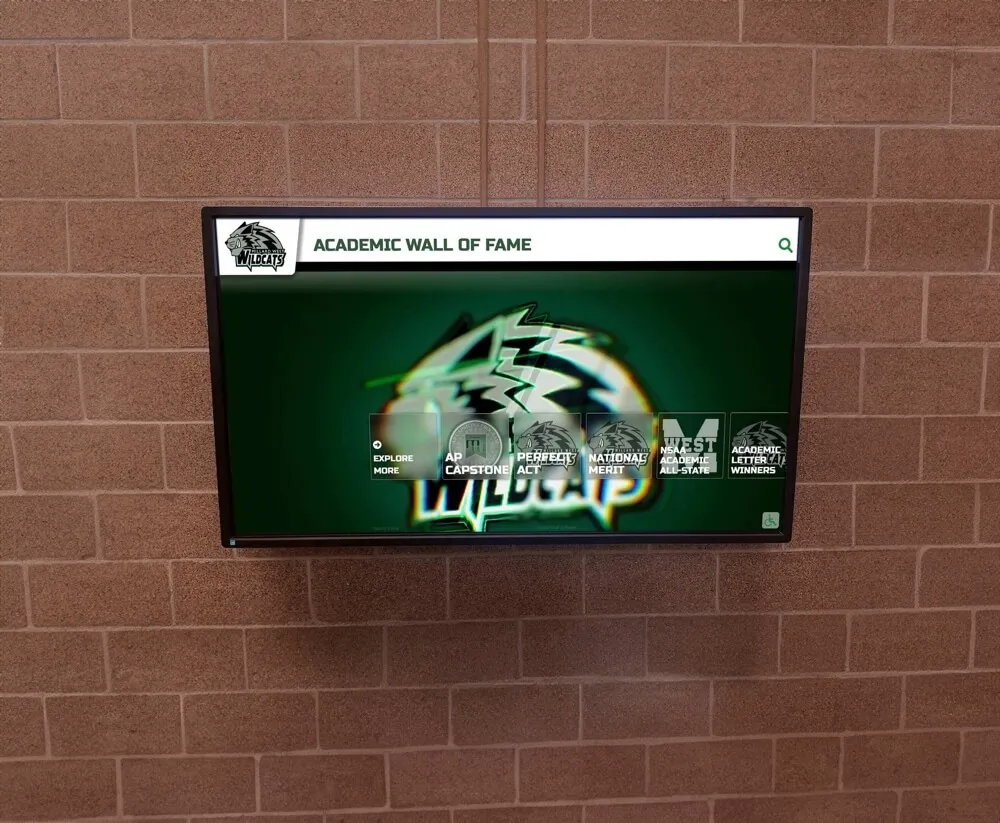
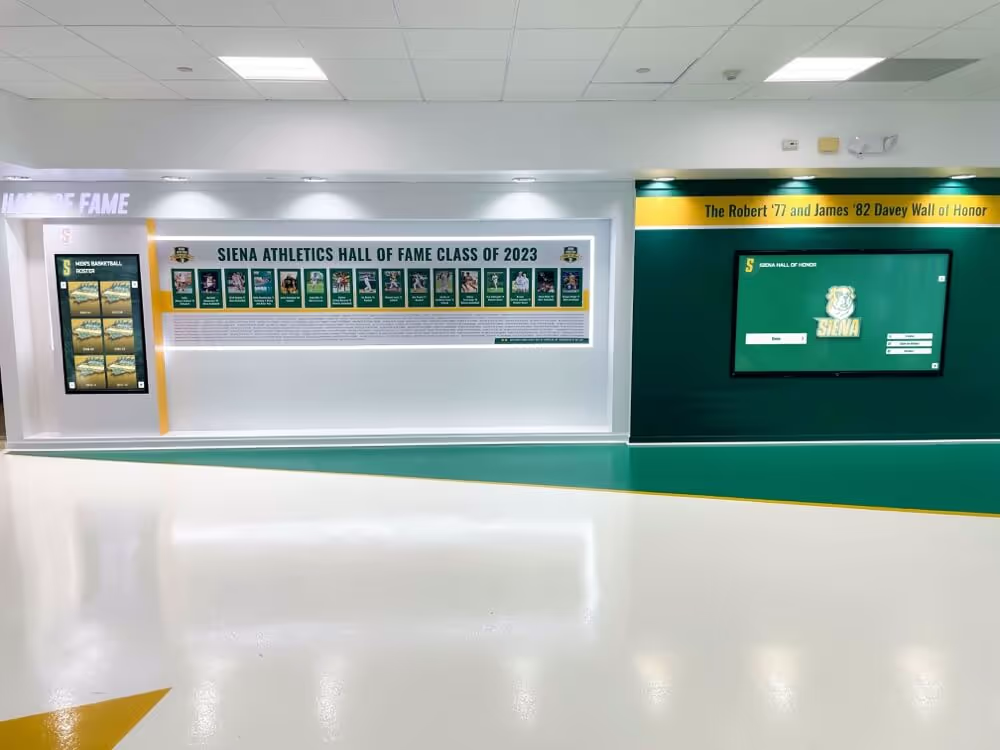
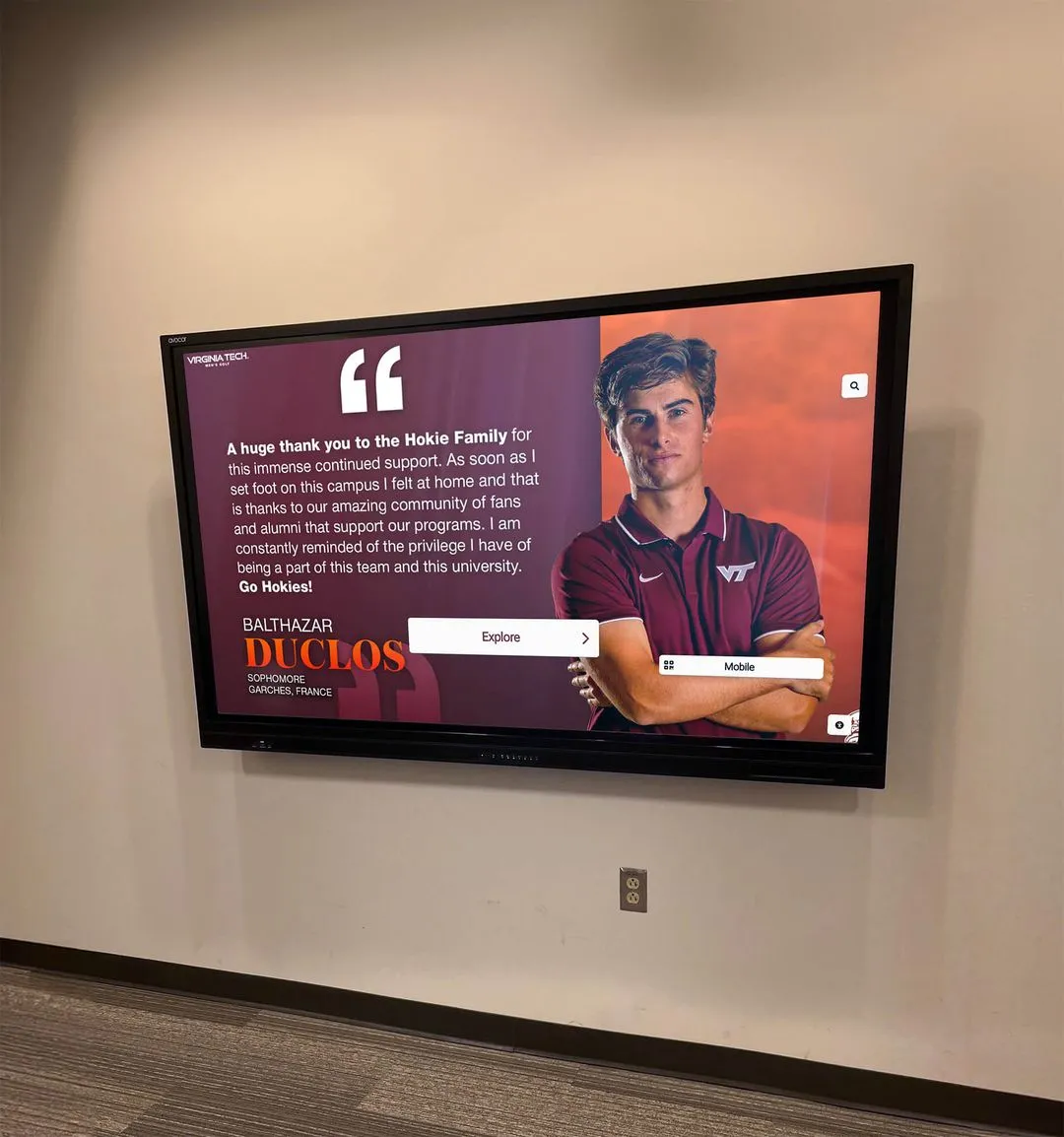
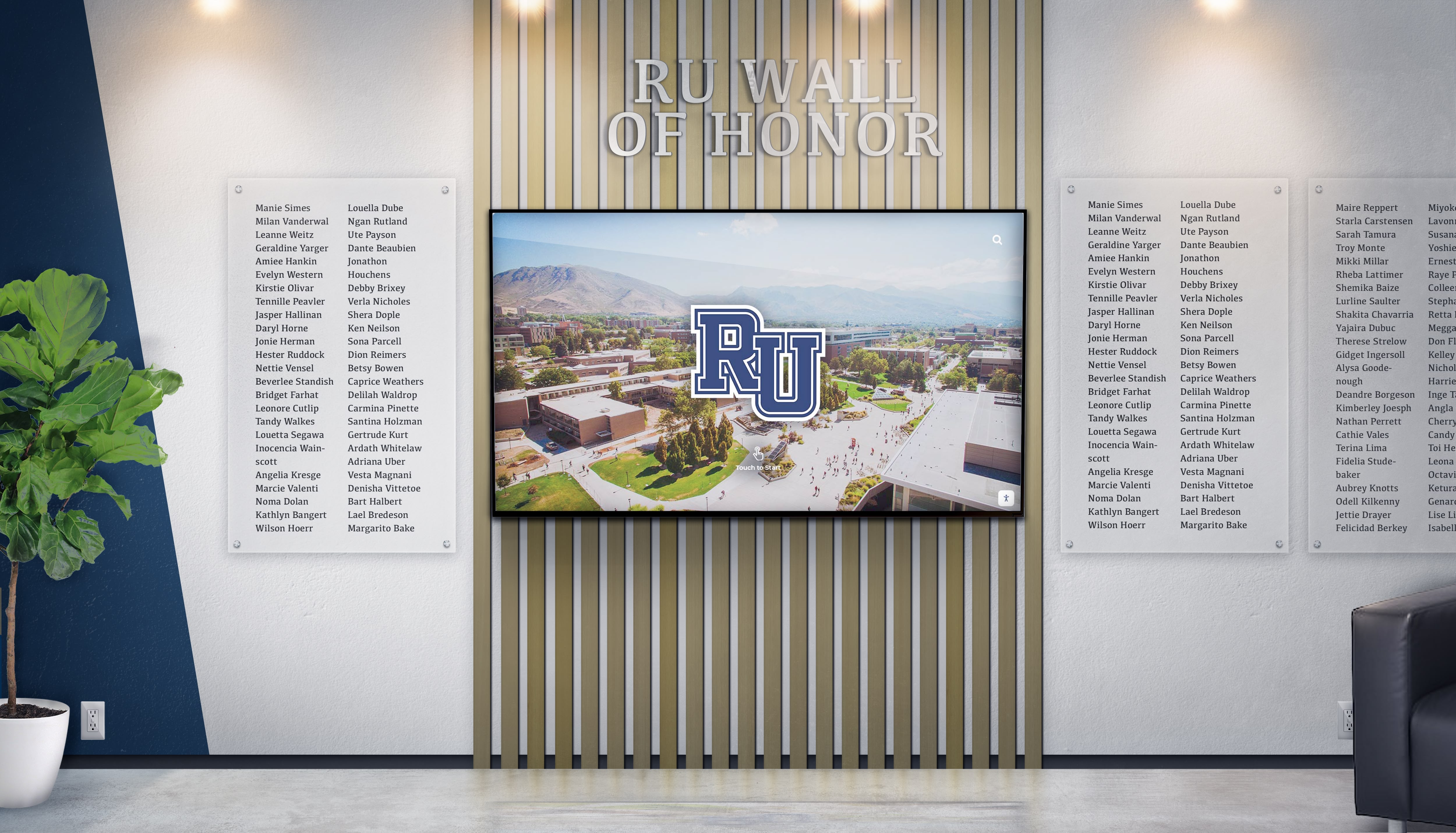
Comprehensive donor recognition programs celebrate supporters across giving levels—from brick pavers to digital profiles to named spaces
Decision Checklist: Is a Brick Paver Donor Wall Right for Your School?
Use this checklist to evaluate whether a paver campaign fits your institution’s current situation and goals.
Go Conditions
- You have a clear capital project or facility improvement to fund that donors can visualize
- Your campus includes high-traffic outdoor areas with appropriate substrate for paver installation
- Your development team has capacity to manage a multi-month campaign and installation process
- Your donor community includes alumni, families, and community members with demonstrated interest in lasting recognition
- You have a facility budget or deferred maintenance plan that pavers would supplement, not replace
- Your administration is committed to a long-term maintenance plan for the installation
Pause and Reconsider Conditions
- Your primary goal is annual fund revenue rather than capital campaign supplementation
- You lack a clear, compelling project narrative for why donors should give now
- Your campus has no suitable outdoor installation site with high daily foot traffic
- Your development capacity is already stretched managing existing recognition commitments
- You haven’t yet built a basic digital donor recognition system that would complement the physical installation
Enhance With Digital When
- Your paver capacity is approaching the physical limits of available campus space
- Donors frequently ask how they can find their brick or a specific person’s brick
- Your campaign attracts out-of-state or international alumni who cannot visit campus
- You want to add photos, impact stories, or video testimonials beyond what engraving allows
- You need to recognize donors annually between major installation cycles
FAQ: Brick Paver Donor Walls for Schools
What is a brick paver donor wall?
A brick paver donor wall is a fundraising and recognition program in which donors purchase engraved bricks that are permanently installed in a school pathway, plaza, or courtyard. The bricks display names, dedications, class years, or short messages, creating a physical archive of donor support that grows with each campaign cycle.
How much does an engraved brick fundraiser typically raise?
Campaign totals vary widely based on paver capacity, tier pricing, donor population size, and campaign execution quality. Small K-12 campaigns with 500 bricks priced at $150–$500 each can raise $75,000–$250,000. Larger university campaigns with premium tiers and thousands of available bricks may raise $500,000 or more. The more clearly the campaign is tied to a visible campus improvement, the higher the average gift tends to be.
How long does it take to install a donor walkway?
From campaign close to completed installation, plan for 12–20 weeks. Engraving production typically takes 4–8 weeks depending on order volume; installation by a professional contractor adds another 1–4 weeks. Schedule installation outside peak-traffic periods and allow time for a quality inspection before the dedication ceremony.
How are engraved bricks maintained over time?
Annual cleaning with pressure washing, periodic sealant application every two to three years, and structural inspection after each winter season keep installations looking their best. Engravings can be refreshed with color-fill paint every five to seven years. Schools should maintain a stockpile of replacement bricks matching the installed material.
What happens when a brick paver walkway runs out of space?
When physical installation space is exhausted, schools have several options: expand to adjacent areas if available, open premium-only phases limited to larger pavers, transition to a digital-only donor wall for new donors, or launch a new paver campaign tied to a different facility project. A digital recognition platform ensures no donor who wants to be recognized is turned away simply because the physical installation is full.
Should paver recognition and digital recognition be managed separately?
Ideally, no. The most effective school recognition programs integrate physical and digital records so that every engraved brick donor also has a searchable profile in the digital system. This creates the redundancy needed to protect the historical record and the accessibility needed to serve donors who cannot visit campus.
What engraving rules should schools establish before launching a paver campaign?
Define maximum character counts per line (typically 18–22 characters), permitted content categories, prohibited content (URLs, trademarks, profanity), a proofing process requiring donor sign-off before production, font standardization, and a clear policy for handling correction requests. Communicate these rules prominently during the purchase process to prevent disputes at fulfillment.
Conclusion: Building a Recognition Legacy That Walks With Your Community
A brick paver donor wall is one of the most enduring recognition investments a school can make. Every student who walks through the entrance plaza, every grandparent who bends down to point out their name, every alumna returning for her 30th reunion—all of them interact with a physical record of the community’s commitment to the institution they share. That interaction is worth more to long-term donor relationships than any email acknowledgment or annual report.
But physical recognition alone is not complete. The schools that get the most from their paver campaigns are the ones that treat the walkway as one layer of a recognition system that also includes searchable digital archives, rich alumni spotlights, tiered achievement recognition, and annual touchpoints that maintain relationship momentum between campaign cycles.
Practical steps to get started:
- Convene your development, facilities, and administration teams to evaluate site options and campaign feasibility
- Define your tier structure, engraving rules, and minimum campaign threshold before launch
- Build or audit your digital recognition platform so it can accommodate paver donor records from day one
- Design a maintenance plan with a budget line before the first brick is ordered
- Plan a dedication ceremony that brings donors, students, and community together to celebrate the installation
Rocket Alumni Solutions works with schools across the country to develop recognition programs that pair physical walkways with digital displays—ensuring every donor’s contribution is visible, searchable, and honored for generations. If your school is ready to build a recognition ecosystem that grows with your community, explore what a complete donor recognition platform can add to your next paver campaign.
Ready to take the next step? Connect with our team to see how digital donor walls and engraved brick campaigns work together to create recognition that lasts a lifetime.