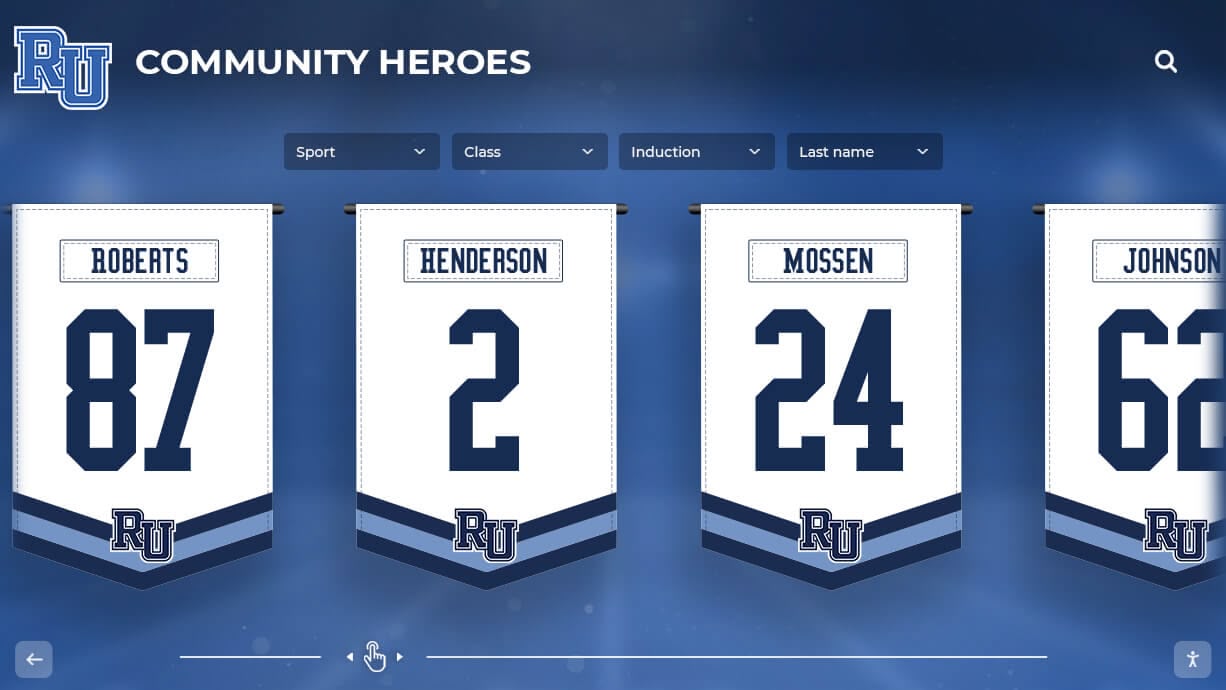
Championship banners represent tangible proof of athletic excellence—visible celebrations hanging from gymnasium rafters that inspire current athletes while honoring past achievements. Whether commemorating state championships, conference titles, or tournament victories, these banners create powerful visual traditions connecting generations of student athletes through shared program excellence. Yet many schools and sports organizations struggle to find quality championship banner template options that balance professional design with budget constraints while addressing long-term space limitations as achievements accumulate over decades.
Traditional fabric banners face multiple challenges beyond initial design decisions. Quality banners from specialty vendors typically cost $200-$800 each, creating significant expenses when recognizing achievements across multiple sports. Physical space constraints eventually force difficult decisions about removing older banners to accommodate new achievements, effectively erasing historical accomplishments from institutional visibility. Fabric materials fade and deteriorate over time, requiring expensive replacements to maintain professional appearances. Most critically, traditional banners provide limited information—typically just sport name, championship level, and year—without the comprehensive recognition today’s student athletes and their families expect.
This comprehensive guide explores championship banner template options ranging from free downloadable designs through custom professional banners, while examining modern digital recognition alternatives that solve traditional limitations permanently while creating more engaging, comprehensive celebration of athletic achievement.
Schools and sports teams deserve recognition solutions matching the dedication athletes invest in pursuing championship excellence. From selecting appropriate banner templates through implementing sustainable recognition systems, every decision shapes how current athletes feel valued and how future generations understand program tradition and identity.

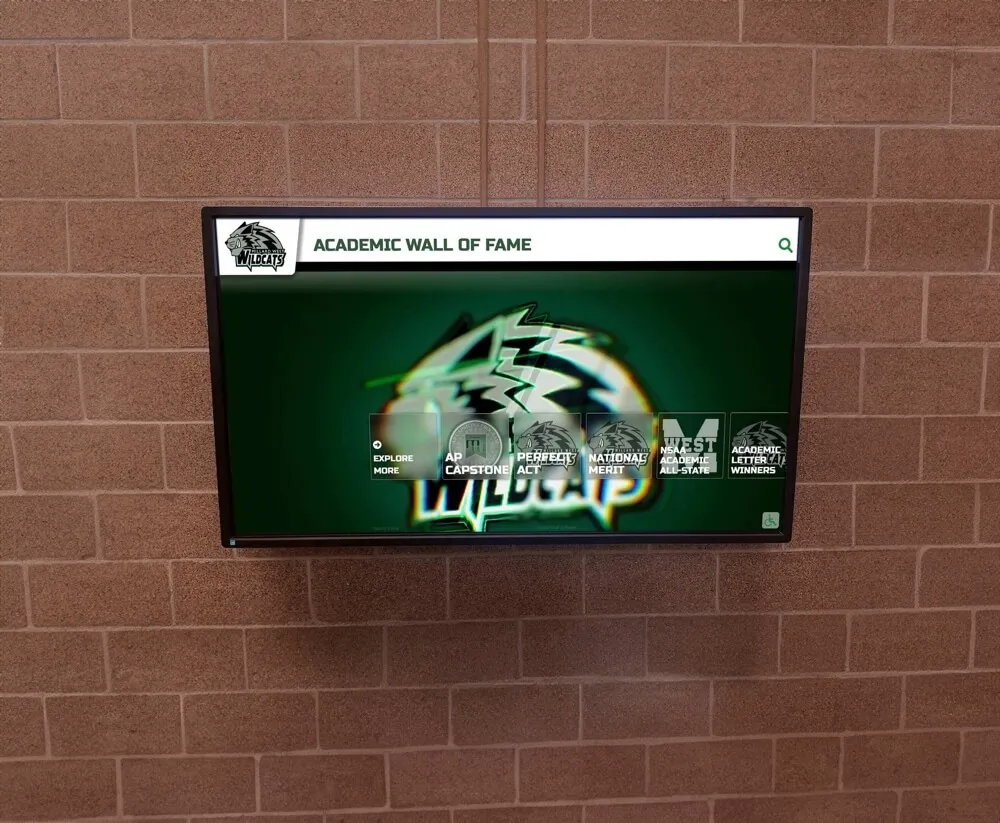
Traditional championship banners create powerful visual impact in gymnasiums while celebrating athletic excellence across multiple sports and decades
Understanding Championship Banner Design Requirements
Before selecting templates or creating custom designs, understanding what makes championship banners effective ensures recognition appropriately honors achievements while serving practical purposes.
Essential Championship Banner Elements
Core Information Requirements
Every championship banner should clearly communicate fundamental achievement details visible from gymnasium seating distances:
- Sport Identification: Clear indication of which sport earned the championship through text and/or recognizable iconography
- Championship Level: Specific designation (State Champions, Conference Champions, Regional Champions, National Champions)
- Year Achieved: Prominent display of the year championship occurred, enabling viewers to locate achievements chronologically
- School/Team Identity: Organization name and colors creating immediate recognition and brand consistency
- Opponent or Final Score: When space permits, championship game opponent or final score adds meaningful context
Schools displaying state championship banners face increasing space challenges as decades of excellence accumulate, making comprehensive recognition planning essential from the start.
Visual Design Considerations
Championship banners must work as part of larger visual environments while remaining individually distinguishable:
- Consistent Brand Elements: School logos, official colors, and typography matching institutional brand standards
- Appropriate Scale: Sized for viewing distances—typically 2-3 feet wide by 6-8 feet tall for gymnasium installations
- Readability: Font selections ensuring text visibility from bleacher seating 50-100 feet away
- Durability: Material and printing specifications withstanding gymnasium environments (temperature fluctuations, humidity, dust)
- Professional Appearance: Design quality reflecting the significance of championship achievement
Common Championship Banner Sizes and Formats
Standard Gymnasium Banner Dimensions
Most schools select championship banner sizes based on ceiling height, viewing distances, and available hanging space:
Vertical Banners (Most Common Format):
- Small: 24" × 60" (suitable for lower ceilings or space-constrained environments)
- Standard: 30" × 72" (most popular size for typical high school gymnasiums)
- Large: 36" × 96" (appropriate for large gymnasiums or very high ceilings)
- Extra Large: 48" × 120" (college facilities or premier high school venues)
Horizontal Banners:
- Standard: 60" × 36" (typically mounted on walls rather than hanging from ceilings)
- Large: 96" × 48" (prominent wall-mounted championship recognition)
Pennant Style:
- Various sizes tapering from 24"-36" wide at top to pointed bottom
- Traditional aesthetic particularly popular for historical recognition or vintage design themes
Selection depends on multiple factors including ceiling height, number of banners to accommodate, architectural features influencing sight lines, and whether banners hang from ceilings or mount on walls.
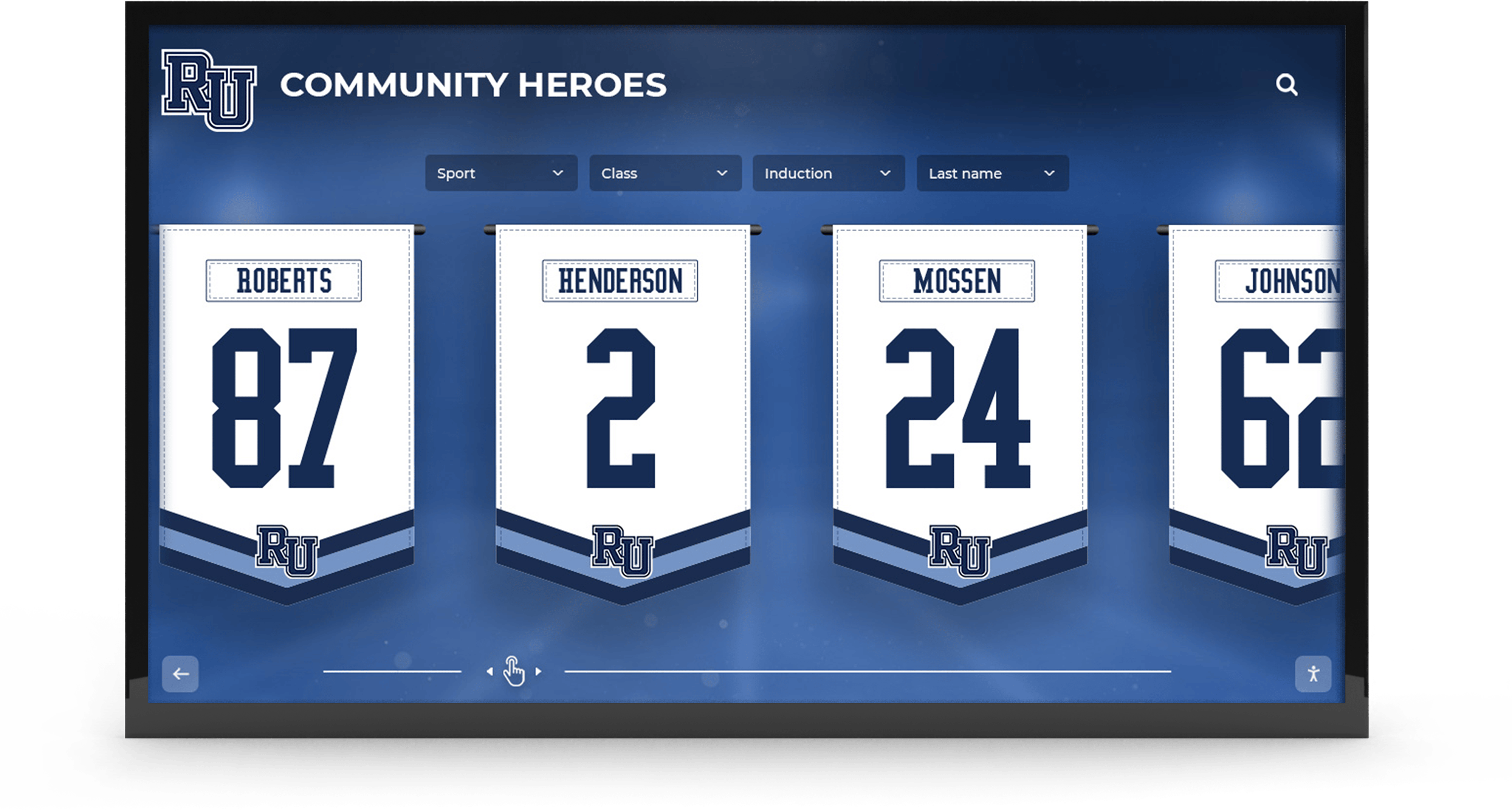
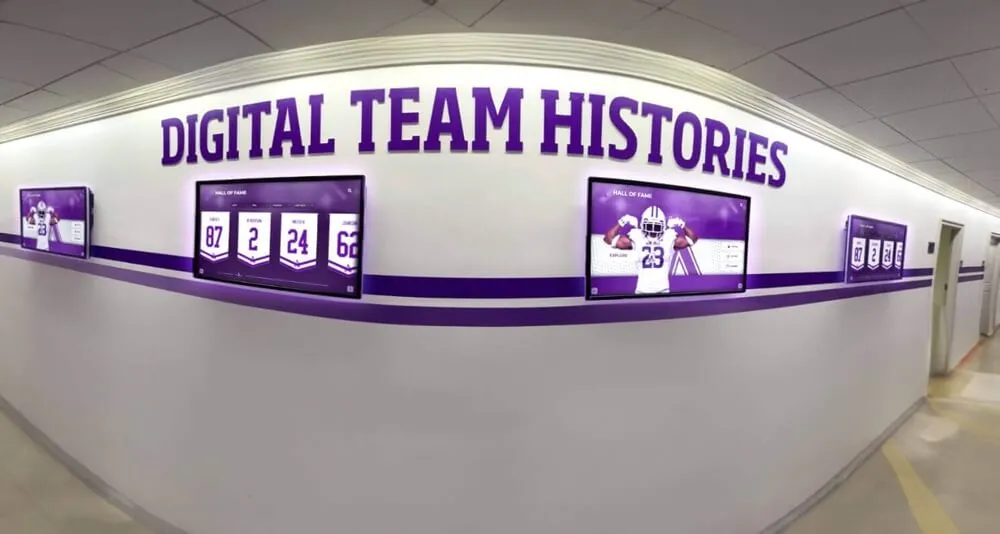
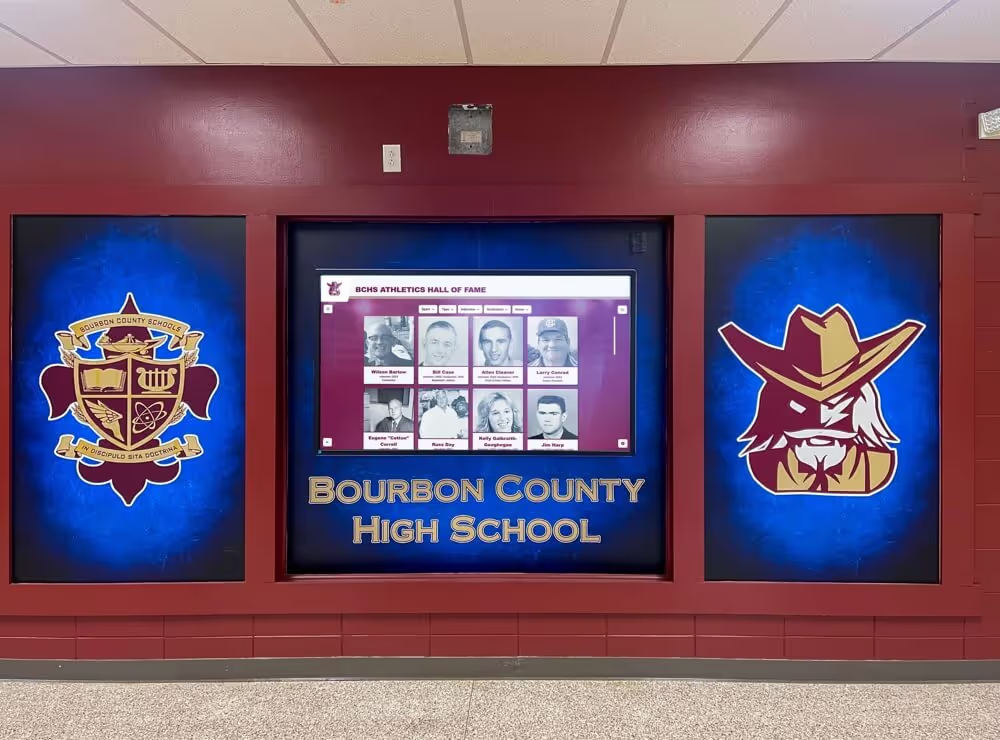
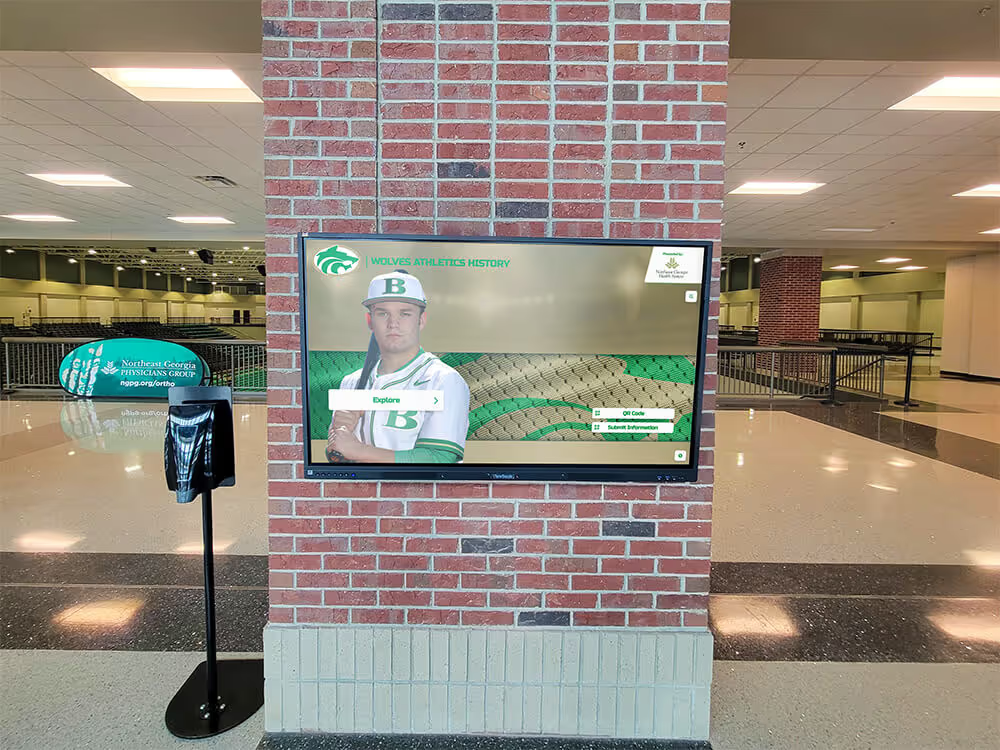
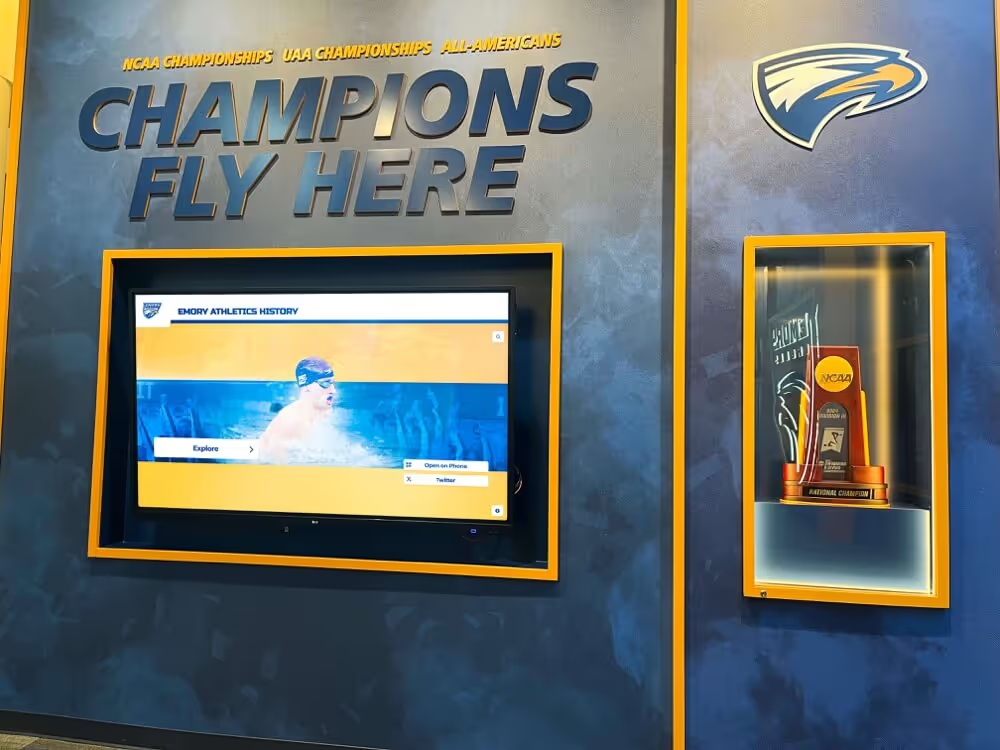
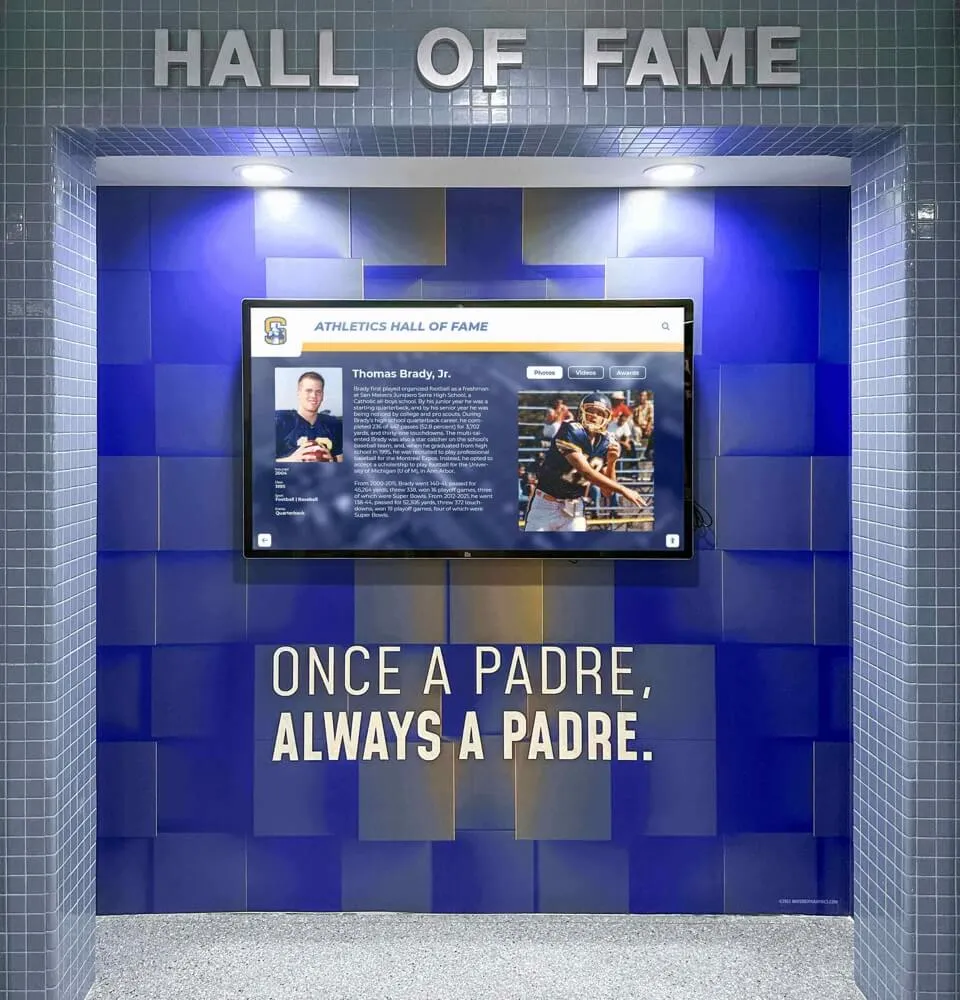
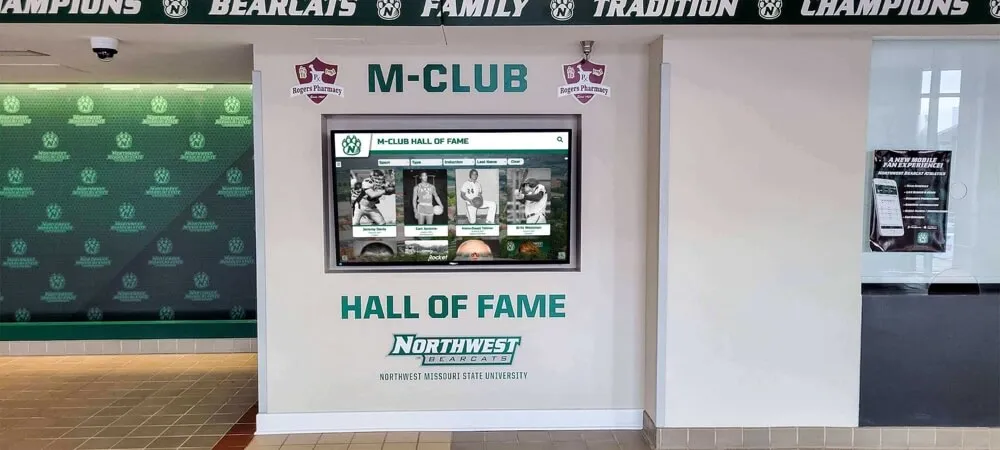
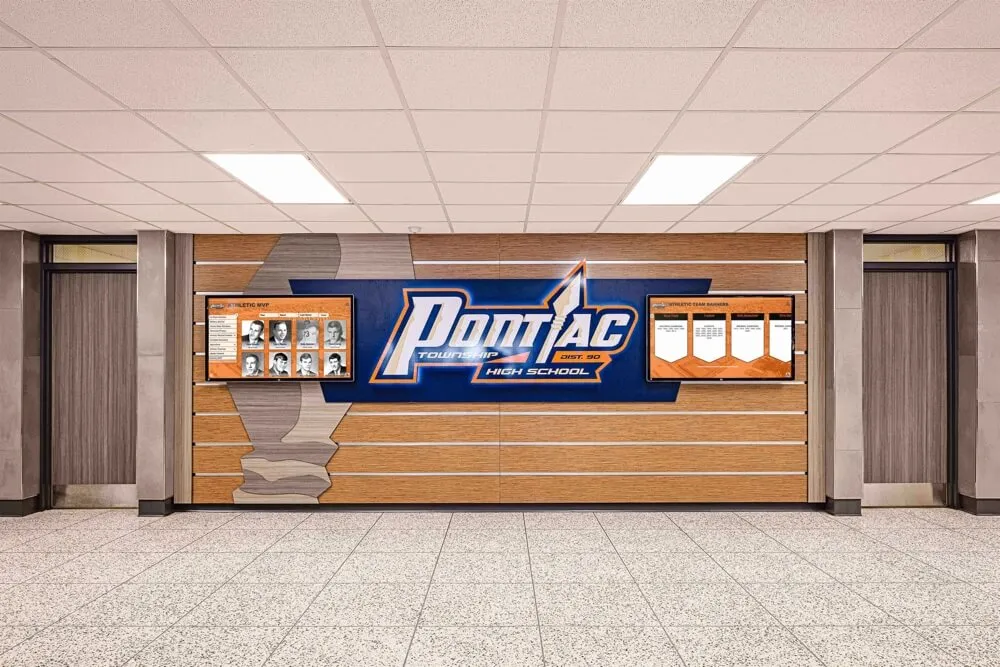
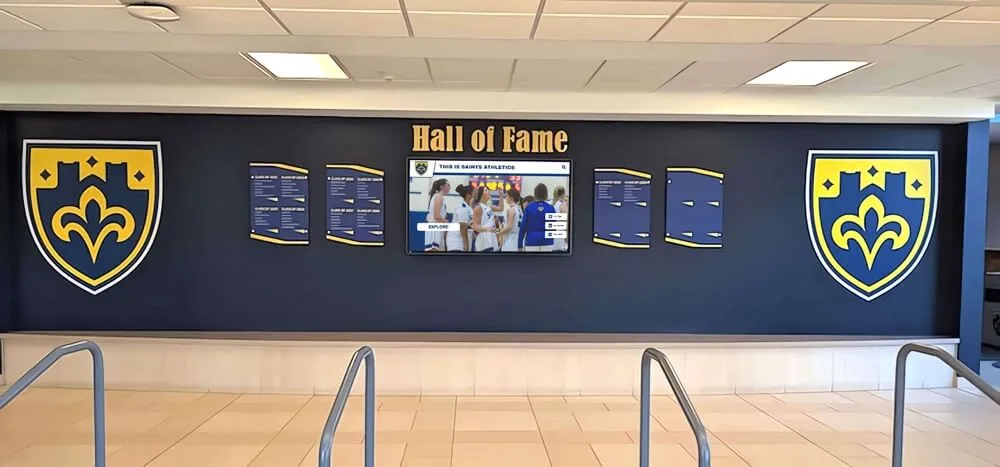
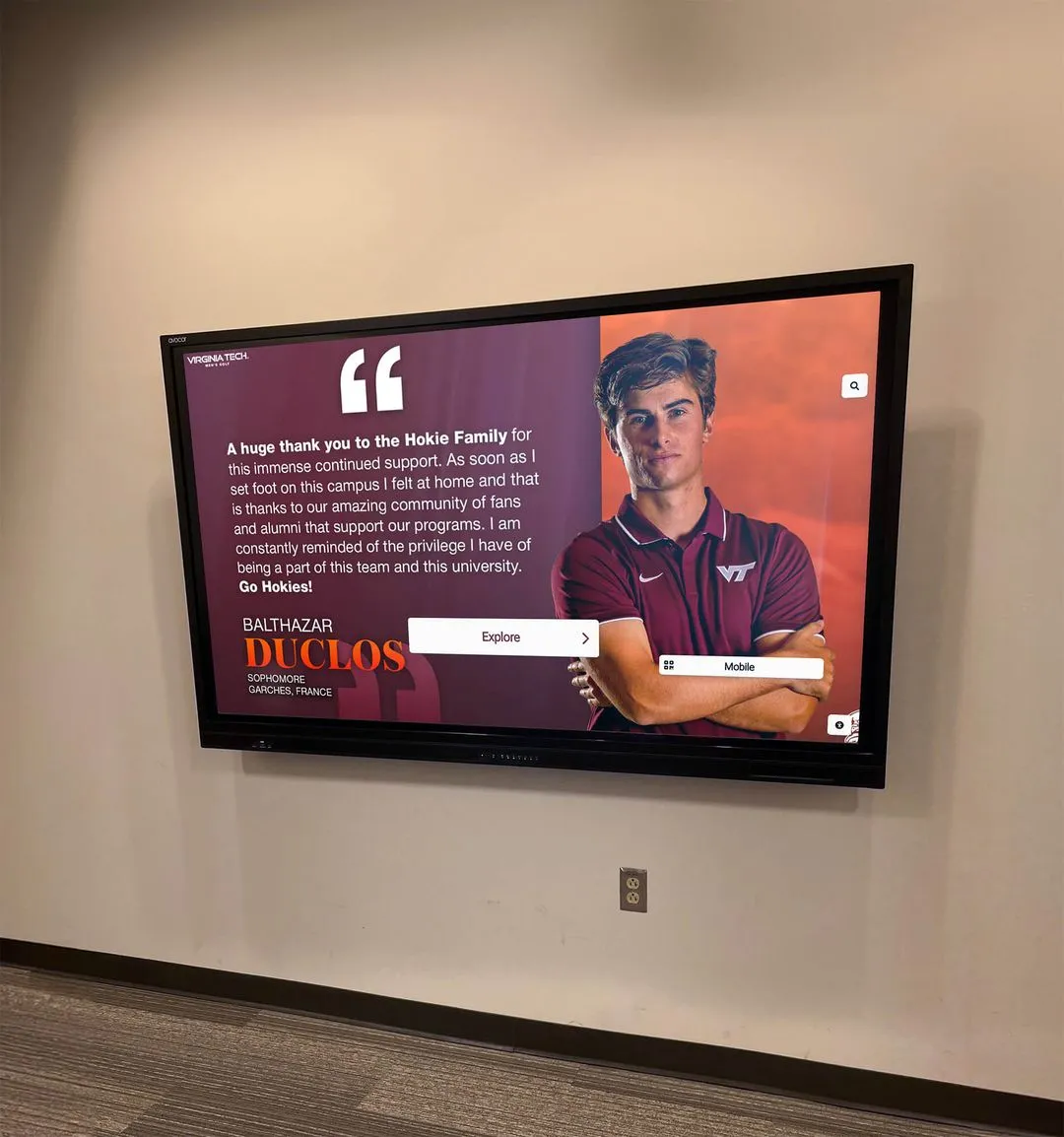
Modern digital displays can showcase unlimited championship achievements without physical space constraints while providing comprehensive athlete recognition
Material Options and Durability Considerations
Traditional Fabric Banners
Vinyl and fabric materials dominate traditional championship banner production:
Vinyl Banners:
- Durable, weather-resistant material suitable for indoor and outdoor use
- Excellent print quality with vibrant colors
- Relatively affordable ($100-$300 depending on size and printing complexity)
- Heavier weight may require stronger hanging systems
- Can develop creases or wrinkles over time
- Typical lifespan: 5-7 years before fading or deterioration becomes noticeable
Sewn Fabric Banners:
- Premium appearance with sewn appliqué letters and graphics
- Extremely durable with proper care (10-15 year lifespan)
- Higher cost ($300-$800 depending on size and complexity)
- Professional aesthetic conveying prestige and permanence
- Heavier weight requiring industrial hanging systems
- Limited design complexity compared to printed options
Mesh Banners:
- Perforated material allowing air circulation (important in some gymnasium environments)
- Reduces wind load for outdoor or open-air facilities
- Slightly reduced visual impact due to mesh texture
- Good durability and fade resistance
- Moderate cost ($150-$400)
Material selection should consider budget constraints, desired longevity, environmental conditions, and whether professional appearance justifies premium costs for championship recognition.
Free Championship Banner Template Resources
Budget-conscious schools and sports organizations can access quality championship banner templates without significant expense through various free resources.
Online Template Libraries and Design Tools
Canva Championship Banner Templates
Canva offers extensive free banner template collections accessible to users with free accounts:
- Sports-Specific Templates: Pre-designed templates for basketball, football, soccer, volleyball, baseball, softball, and other common sports
- Customization Options: Easy editing of colors, text, fonts, logos, and design elements without graphic design expertise
- Championship-Specific Layouts: Templates specifically designed for championship recognition versus general sports graphics
- Multiple Size Options: Templates available in standard banner dimensions or customizable to specific requirements
- Download Formats: Export capabilities for professional printing (PDF, high-resolution PNG)
Canva’s drag-and-drop interface enables athletic directors or booster club volunteers to create professional-looking designs quickly without hiring graphic designers.
Microsoft Office Templates
Microsoft provides banner templates through Office application template libraries:
- PowerPoint Banner Templates: Utilize PowerPoint’s design capabilities for banner creation with text effects, image insertion, and layout control
- Publisher Templates: More specialized design tool with banner-specific templates and professional layout options
- Free Access: Available to schools and organizations with Microsoft Office licenses (common in educational institutions)
- Familiar Interface: Most administrators already comfortable with Office applications, minimizing learning curves
Schools can explore sports recognition approaches that combine traditional banners with modern digital components for comprehensive celebration.
Adobe Express (Formerly Adobe Spark)
Adobe’s free creative platform includes championship banner templates:
- Professional Design Quality: Templates created by professional designers with superior aesthetic polish
- Brand Kit Integration: Ability to save school colors, logos, and fonts for consistent application across multiple banners
- Collaboration Features: Multiple users can contribute to designs, useful for committee-based decision making
- Print-Ready Exports: High-resolution downloads suitable for professional banner printing services
Adobe Express provides more sophisticated design capabilities than simpler tools while maintaining accessibility for non-designers.
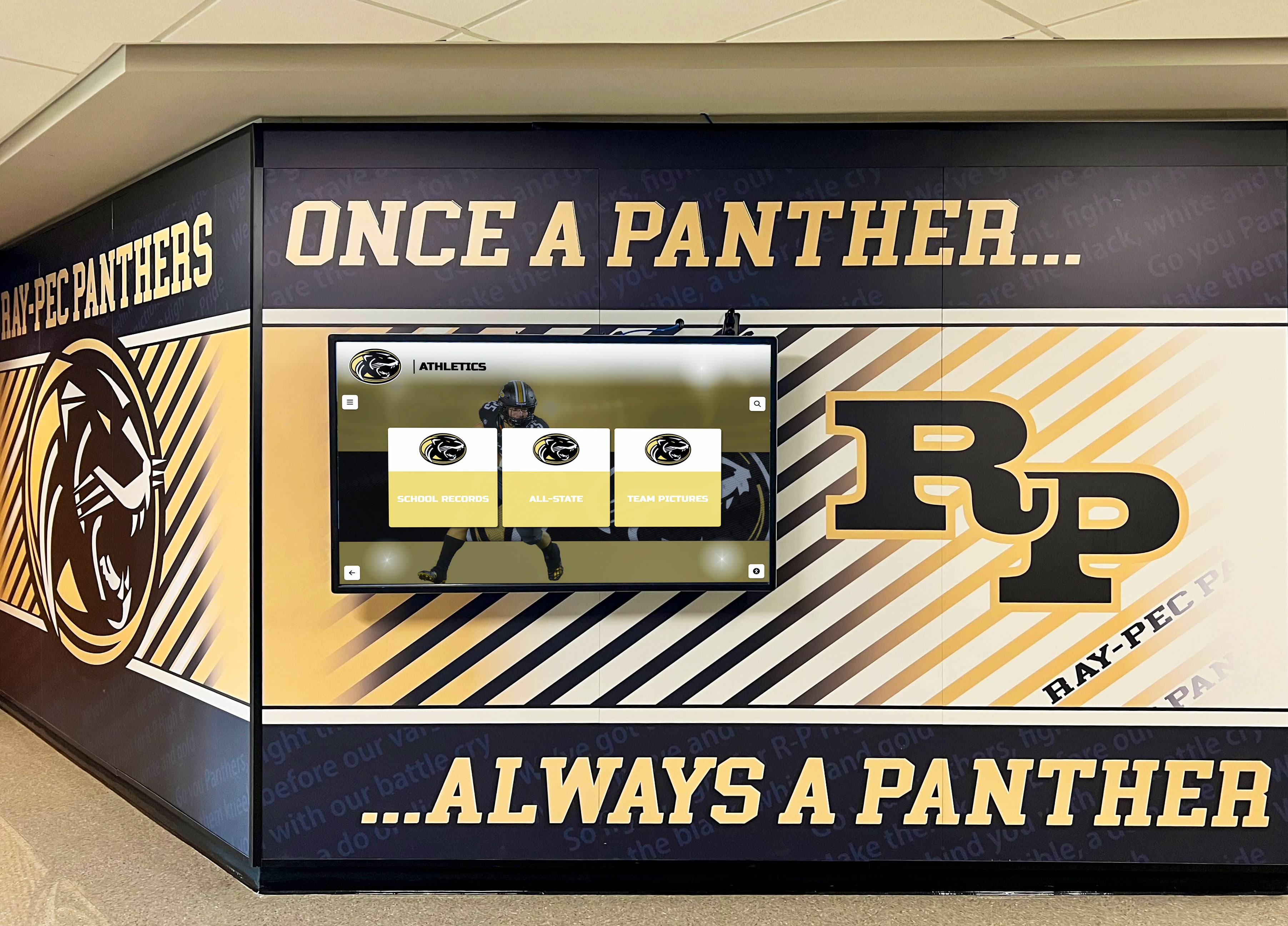
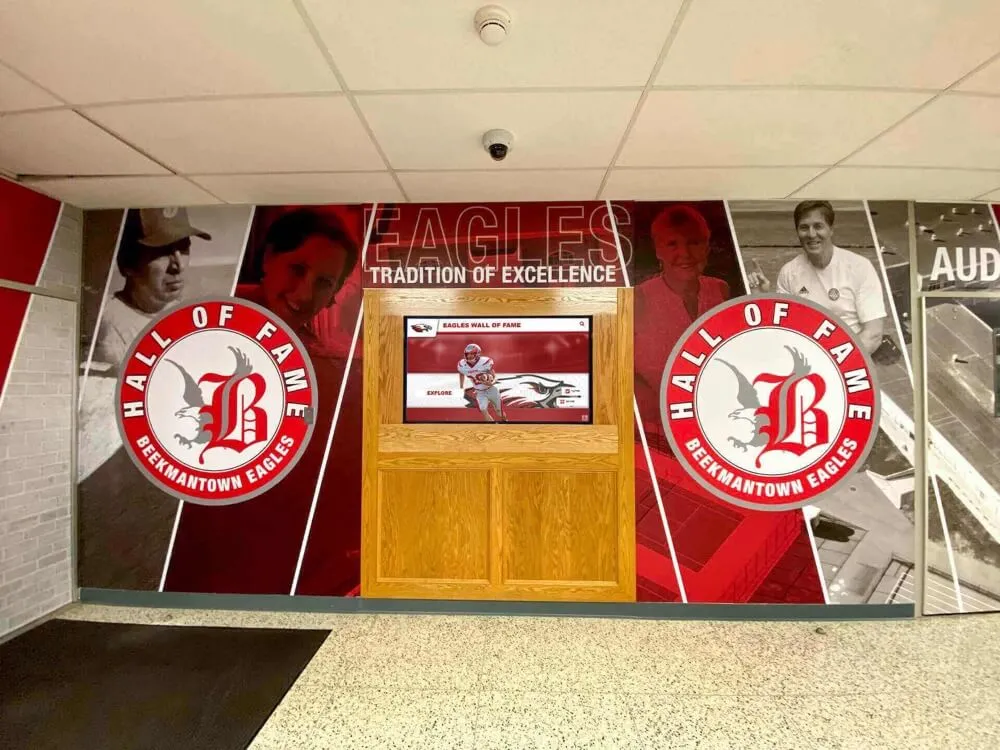
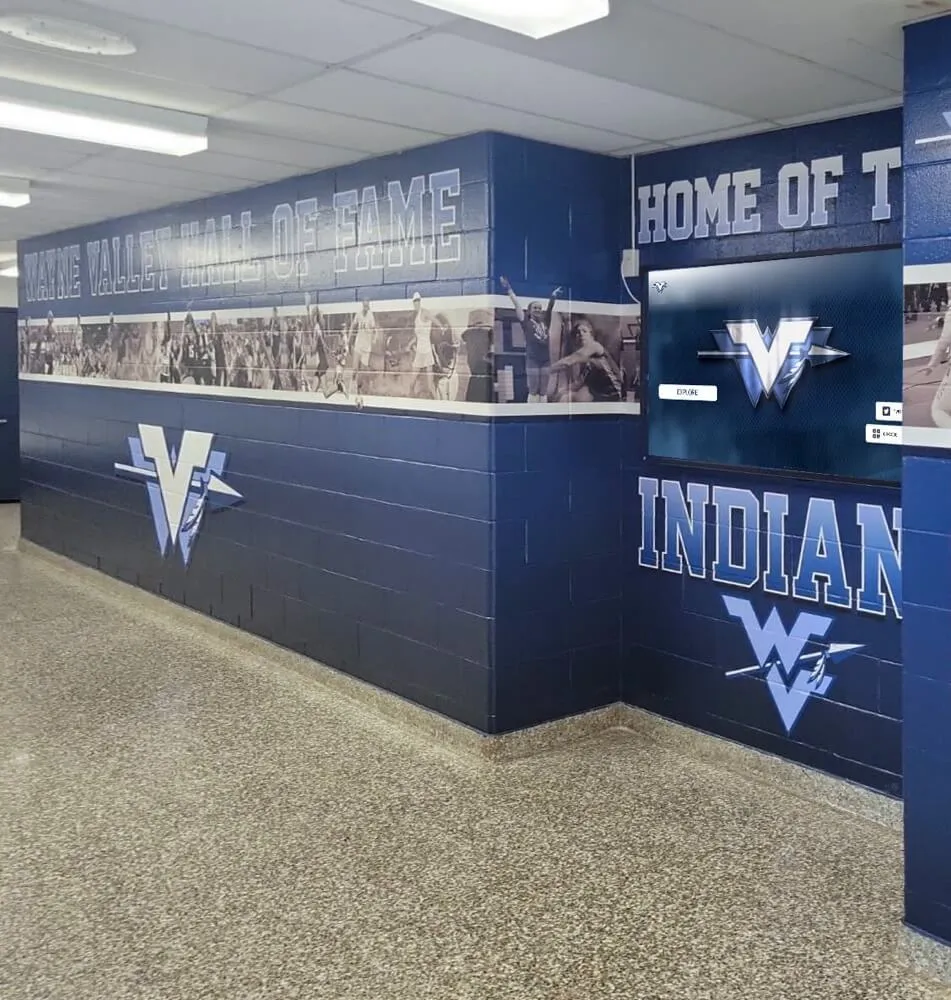
Integrated recognition systems combine traditional murals and graphics with flexible digital displays accommodating growing championship collections
Sport-Specific Template Considerations
Different sports benefit from tailored design approaches reflecting sport-specific traditions and aesthetics.
Basketball Championship Banners
Basketball banners typically feature:
- Basketball iconography (ball graphics, hoop silhouettes, court diagrams)
- Vertical orientation emphasizing height (reflecting tall players and vertical nature of sport)
- Tournament bracket graphics for schools winning multi-game tournaments
- Team photos or individual player silhouettes in action poses
Programs building comprehensive basketball recognition systems combine championship banners with additional player and team documentation.
Football Championship Banners
Football banners often incorporate:
- Helmet graphics featuring team designs
- Field goal post or stadium imagery
- Wider formats reflecting the horizontal nature of football fields
- Trophy or championship game imagery
- Score displays for championship games
- Conference and state symbols indicating achievement level
Soccer, Volleyball, Baseball, and Other Sports
Each sport has recognizable visual elements enhancing banner designs:
- Soccer: Goal nets, soccer balls, field diagrams, trophy imagery
- Volleyball: Net graphics, ball silhouettes, court layouts
- Baseball/Softball: Diamond diagrams, bat and ball imagery, home plate graphics
- Track & Field: Medal graphics, stopwatch imagery, runner silhouettes
- Swimming: Pool lane markers, swimmer silhouettes, stopwatch elements
Sport-specific elements create immediate visual recognition while honoring unique characteristics of different athletic achievements.
Customizing Free Templates for Your School
Personalization Best Practices
Transform generic templates into school-specific championship banners through strategic customization:
School Identity Integration:
- Replace template logos with official school logos (ensure high-resolution versions for quality printing)
- Apply exact school colors using official color codes (Pantone, CMYK, or RGB values)
- Incorporate school mascots or identifying symbols
- Use official school typography when possible for brand consistency
Achievement Documentation:
- Clearly specify championship level (avoid generic “Champions” when “State Champions” more accurately reflects achievement)
- Include opponent names or final scores when significant
- Add location or tournament name when relevant (especially for national or prestigious invitational championships)
- Consider team records or season accomplishments providing context
Visual Enhancement:
- Add team photographs when templates accommodate imagery
- Include championship trophy or medal photos documenting actual hardware earned
- Incorporate action photography from championship games or seasons
- Apply texture or background elements reflecting school aesthetic
Quality Control Checks:
- Verify spelling of all text (names, locations, years)
- Confirm year accuracy (championship season versus school year can differ in some sports)
- Ensure logo reproductions maintain quality without pixelation
- Preview designs at actual size before printing to verify readability from distance
Schools should establish approval processes ensuring athletic directors, administrators, and coaches review final designs before production, preventing costly reprinting when errors discovered after installation.
Custom Championship Banner Design Services
Organizations seeking premium quality or lacking internal design resources benefit from professional custom banner services providing comprehensive design and production.
Professional Banner Design Companies
Specialized Athletic Banner Vendors
Several companies focus specifically on athletic recognition banners for schools and sports organizations:
Anderson’s Championship Banners:
- Specializes exclusively in championship and athletic recognition banners
- Templates based on thousands of previous school installations
- Sewn fabric construction with appliqué letters
- Premium quality with 10-15 year durability
- Higher cost ($400-$800 per banner depending on size and complexity)
School Spirit Vending Company:
- Comprehensive sports recognition products including championship banners
- Both printed vinyl and sewn fabric options at various price points
- Custom design services matching school branding precisely
- Quick production turnaround (typically 2-3 weeks)
- Experience with educational institution requirements and purchasing processes
Varsity Brands (including Herff Jones and Neff):
- Major educational products supplier with extensive banner offerings
- Established relationships with many schools for multiple recognition needs
- Integration with other recognition products (plaques, trophies, displays)
- Volume pricing for schools ordering multiple banners simultaneously
- National installation network for professional mounting
Many schools discover comprehensive approaches to championship recognition integrate multiple formats beyond single banners.
Local Sign and Banner Companies
Local commercial printing companies often provide championship banner services with distinct advantages:
- Personal Service: Direct relationship with local business owners facilitating clear communication
- Quick Turnaround: Local production eliminates shipping delays, enabling faster installation
- Installation Services: Many local companies offer installation included in pricing
- Design Flexibility: Custom design work tailored specifically to unique requirements without template limitations
- Community Connection: Supporting local businesses while potentially securing sponsorship or discounted pricing
Request portfolio samples showing previous sports banner work before committing, ensuring companies have experience with athletic recognition versus general commercial signage.

Championship recognition often combines multiple formats including trophies, banners, and modern digital displays celebrating complete program achievement
Working With Graphic Designers
When to Hire Professional Designers
Some situations justify investment in professional graphic design services beyond template customization:
- Comprehensive Branding Updates: Schools refreshing entire athletic visual identity need cohesive design across all recognition elements
- Complex Multi-Sport Coordination: Establishing consistent design systems across many sports while maintaining sport-specific identity
- Historical Preservation Projects: Recreating vintage banners matching historical aesthetic from earlier program eras
- Premium Installation Projects: High-visibility installations in renovated facilities warranting exceptional design quality
Designer Selection Criteria
When hiring graphic designers for championship banner projects:
- Sports Design Experience: Review portfolios demonstrating previous athletic recognition design work
- Understanding of Print Production: Ensure designers understand banner printing specifications and material limitations
- Brand Guideline Knowledge: Verify familiarity working within established school brand standards and guidelines
- Collaborative Process: Select designers willing to incorporate stakeholder feedback from coaches, athletes, and administrators
Design Project Management
Successful custom design projects follow systematic processes:
- Discovery Phase: Designer learns about school history, program culture, existing recognition, and project goals
- Concept Development: Initial design directions presenting different aesthetic approaches for stakeholder review
- Refinement: Iterative revisions incorporating feedback while maintaining design integrity
- Final Production: Preparation of print-ready files meeting banner manufacturer specifications
- Approval and Production: Final stakeholder sign-off before manufacturing begins
Establish clear timelines with designers, typically allowing 3-4 weeks for design development before production and installation phases.
Cost Considerations for Custom Banners
Budget Planning for Championship Banner Programs
Understanding complete cost structures helps schools budget appropriately:
Design Costs:
- Free templates: $0 (school staff time for customization)
- Professional design services: $200-$800 depending on complexity and designer rates
- Design with purchase: Many banner companies include design in banner pricing
Production Costs:
- Vinyl printed banners: $100-$300 per banner
- Sewn fabric banners: $300-$800 per banner
- Quantity discounts: Ordering multiple banners simultaneously often reduces per-unit costs by 15-25%
Installation Costs:
- Professional installation: $75-$200 per banner depending on hanging method and facility access requirements
- Hardware (grommets, ropes, mounting systems): $25-$75 per banner
- Facility modifications (if required): $200-$1,000+ for complex ceiling mounting systems
Lifecycle Costs:
- Replacement timeframes: Budget for replacing vinyl banners every 5-7 years, fabric every 10-15 years
- Annual per-banner recognition cost: $20-$80 annually when amortized over banner lifespan
Multi-Year Budget Planning
Successful athletic programs accumulating championships regularly should establish sustainable banner recognition budgets:
- Annual Championship Budget: Allocate funds expecting 2-5 championships annually across all sports
- Replacement Reserve: Budget gradually for eventual replacement of deteriorating older banners
- Space Constraint Planning: Consider long-term approach when gymnasium space eventually fills completely
Schools might explore athletic recognition alternatives providing sustainable long-term solutions as physical space reaches capacity.
Digital Championship Recognition: Modern Alternatives to Traditional Banners
While physical championship banners maintain traditional appeal, digital recognition technology offers compelling advantages solving fundamental limitations of fabric banners while creating more engaging, comprehensive athletic celebration.
The Space Limitation Problem
Why Gymnasiums Eventually Fill Completely
Even the most successful athletic programs eventually confront physical reality—gymnasium ceilings and walls provide finite space for championship recognition:
Accumulation Mathematics: Consider a school earning 3 state championships annually across multiple sports. After 20 years, 60 championship banners compete for limited ceiling space. After 40 years, 120 banners create overcrowding where individual championships lose visibility and impact.
The Recognition Dilemma: When space fills completely, schools face impossible choices:
- Remove older banners to accommodate new championships (effectively erasing historical achievements)
- Rotate displays where only some championships appear at any time (most accomplishments hidden most of the year)
- Tolerate overcrowded displays where tightly packed banners create visual clutter diminishing individual recognition
- Cease adding championship banners entirely (failing to recognize current athletes appropriately)
None of these solutions prove satisfactory—all compromise recognition quality while potentially dishonoring athletes whose achievements deserve permanent visibility.
Beyond Championship Counts: Many schools also desire recognition for:
- Conference championships and tournament victories
- Individual athlete achievements (scoring milestones, All-State honors)
- Championship team rosters (individual student athletes who earned achievements)
- Coaching accomplishments and program milestones
- Historical context and championship season narratives
Traditional banners cannot accommodate this comprehensive information even when space exists, limiting recognition to basic championship acknowledgment without deeper celebration or documentation.
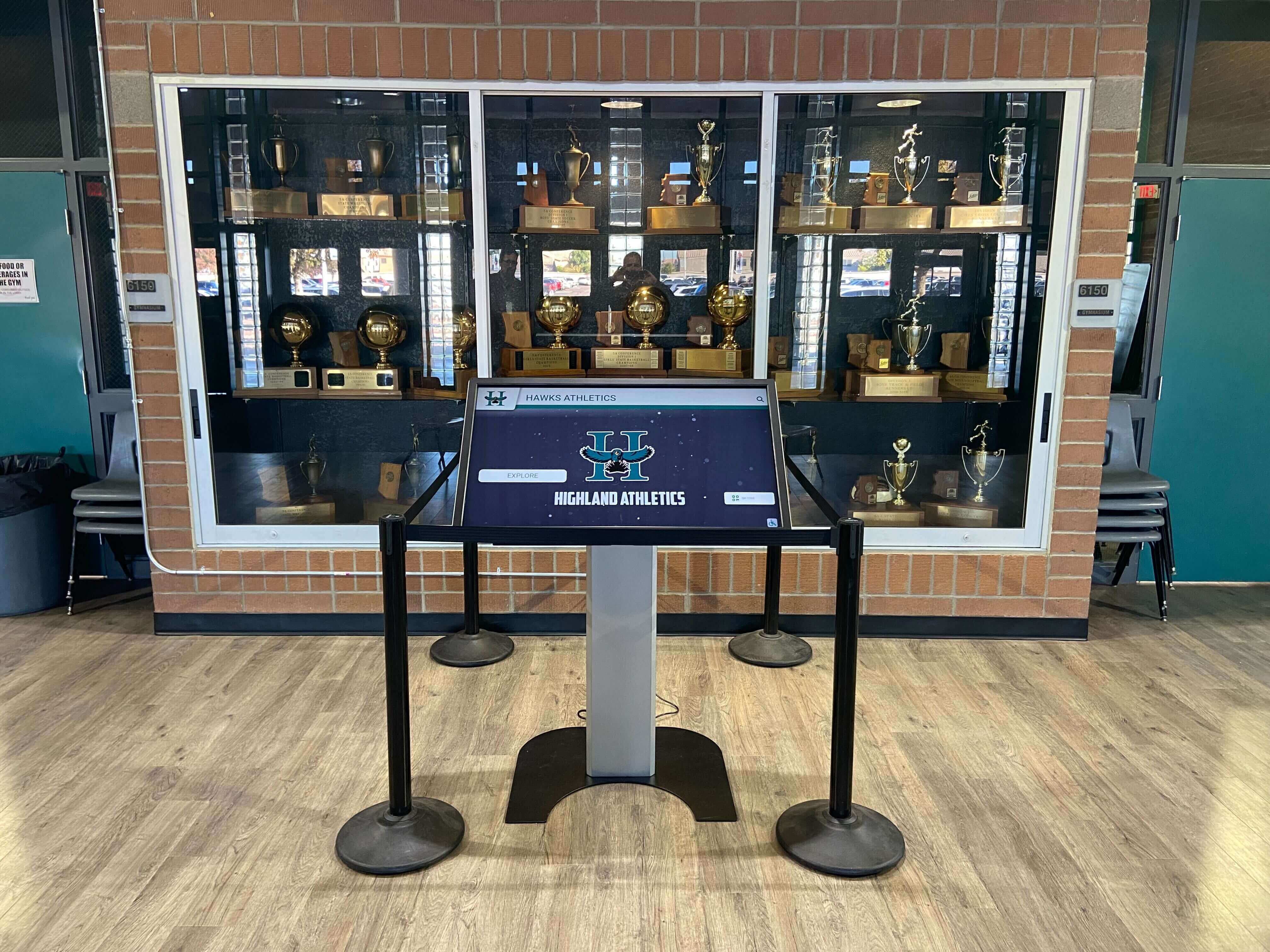
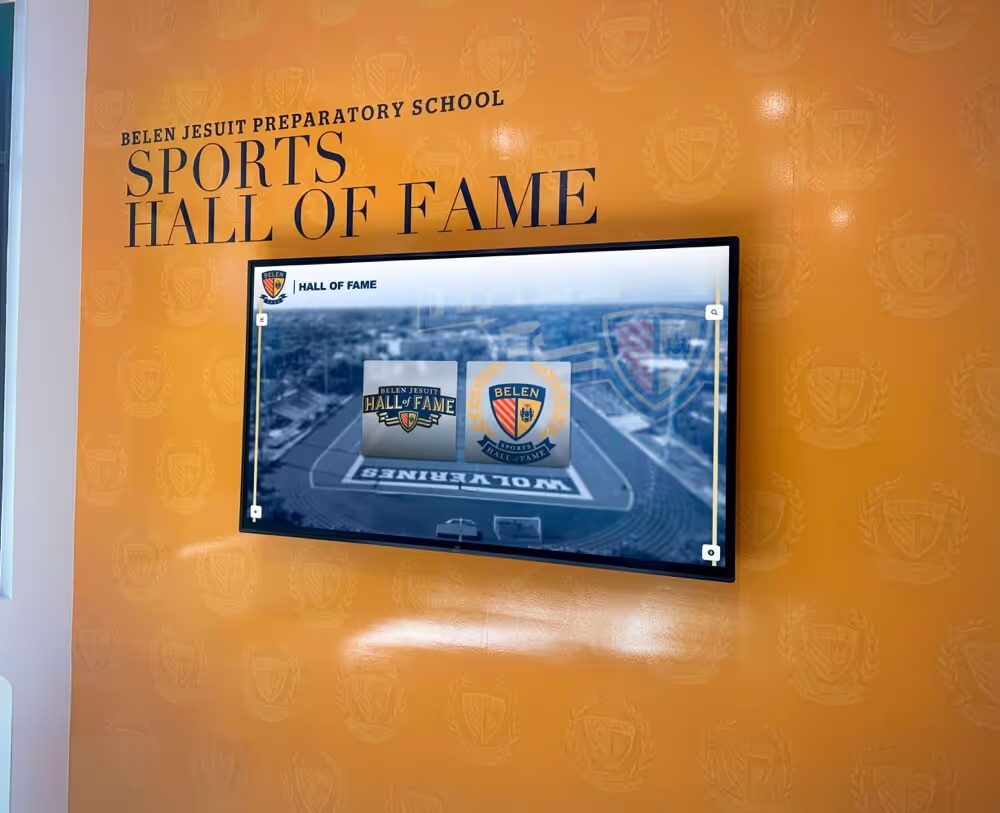
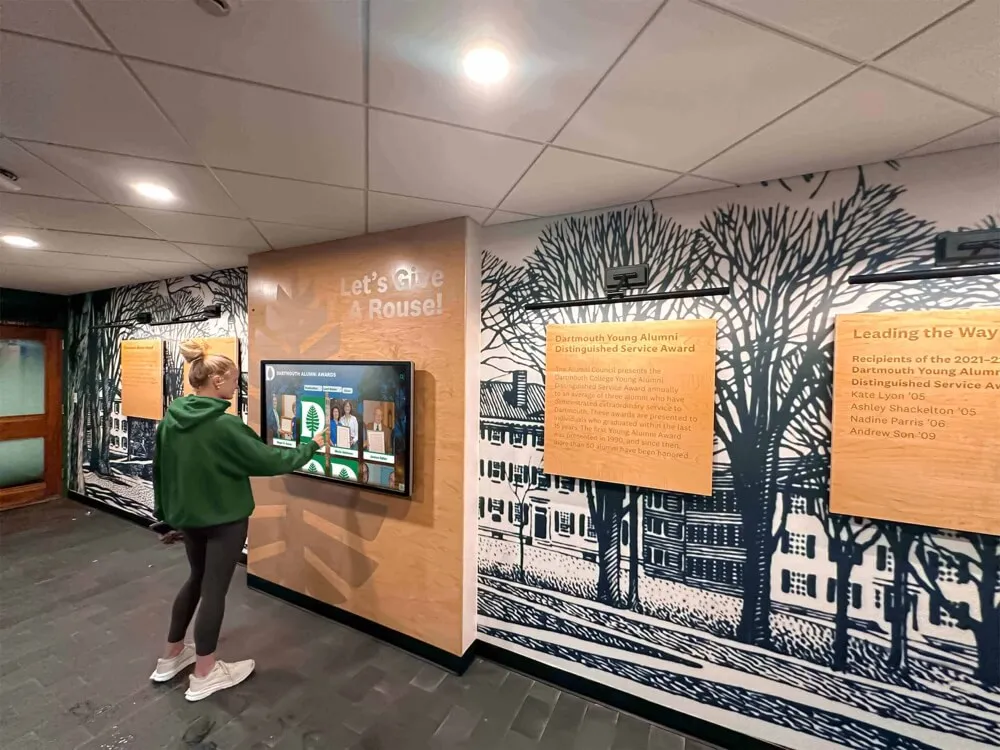
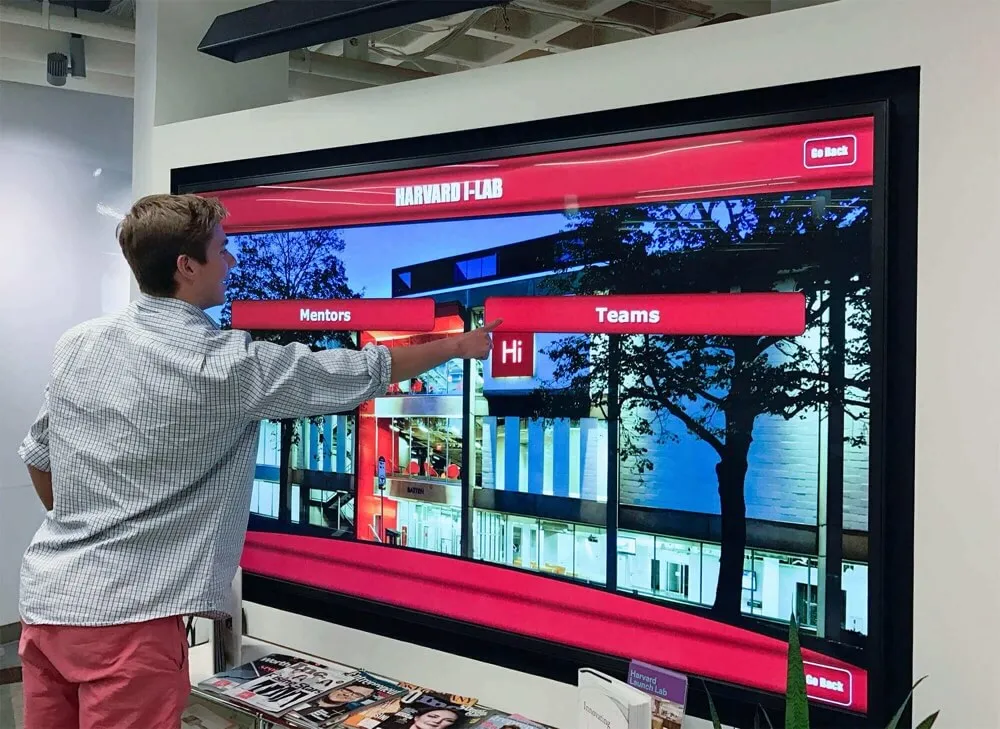
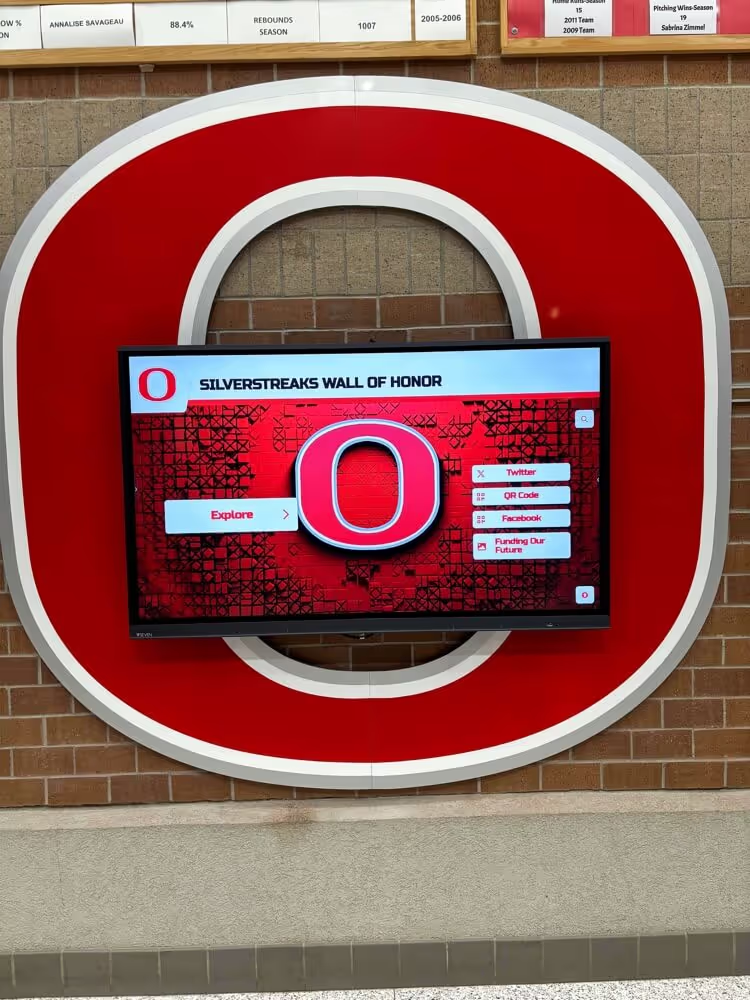
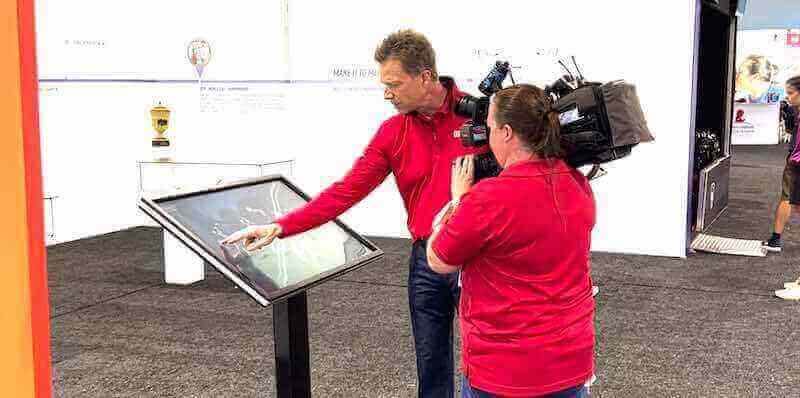
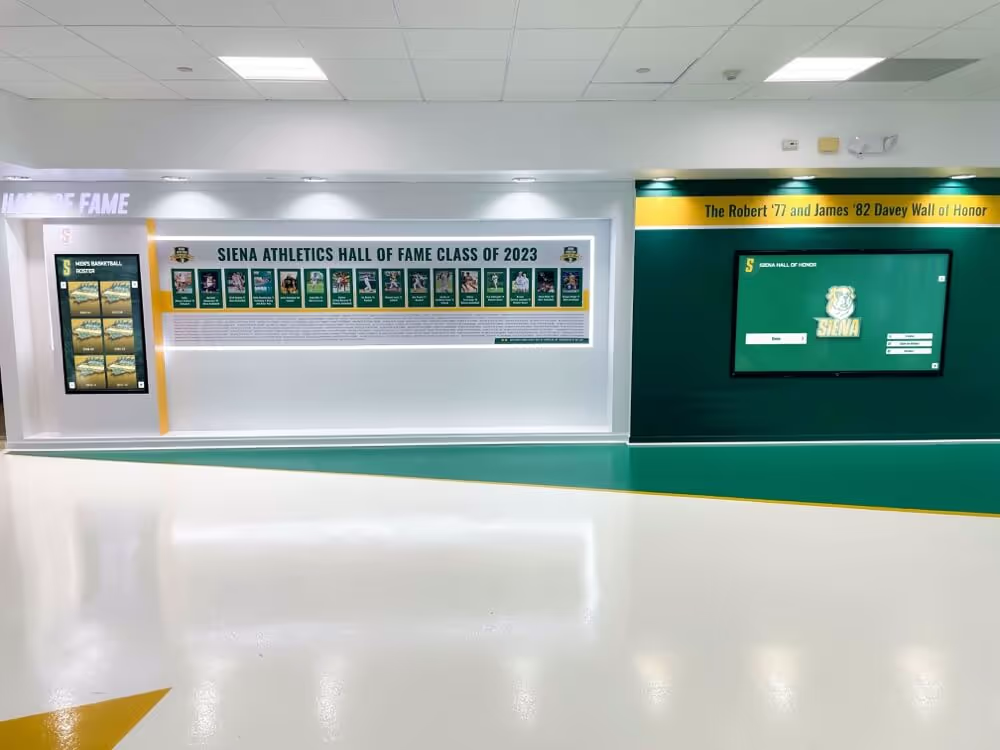
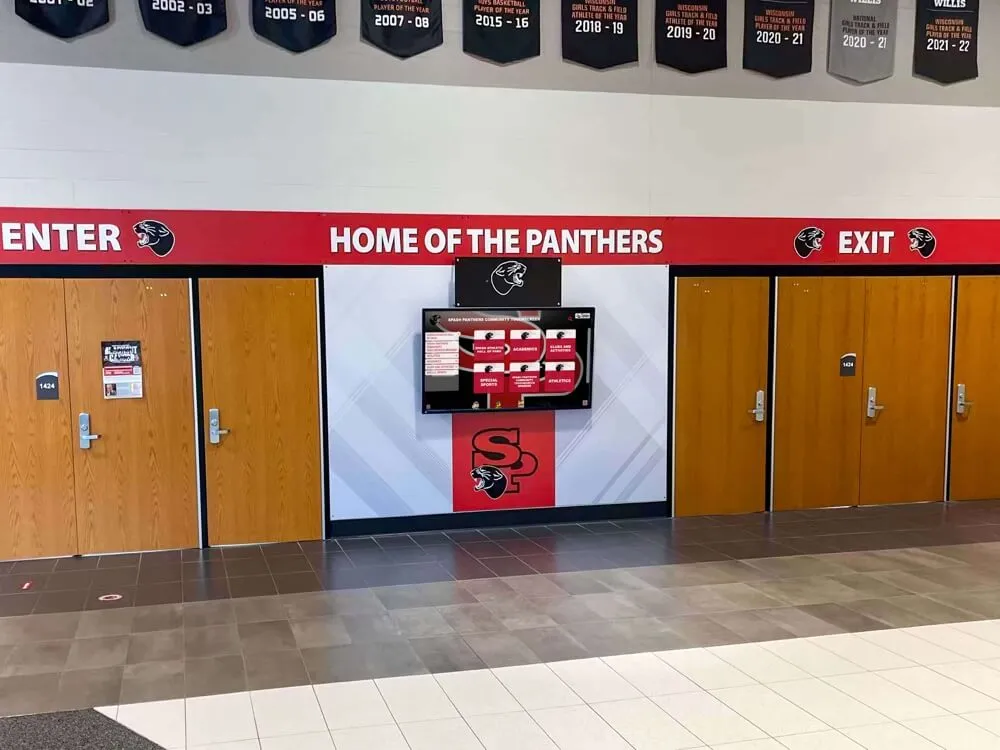
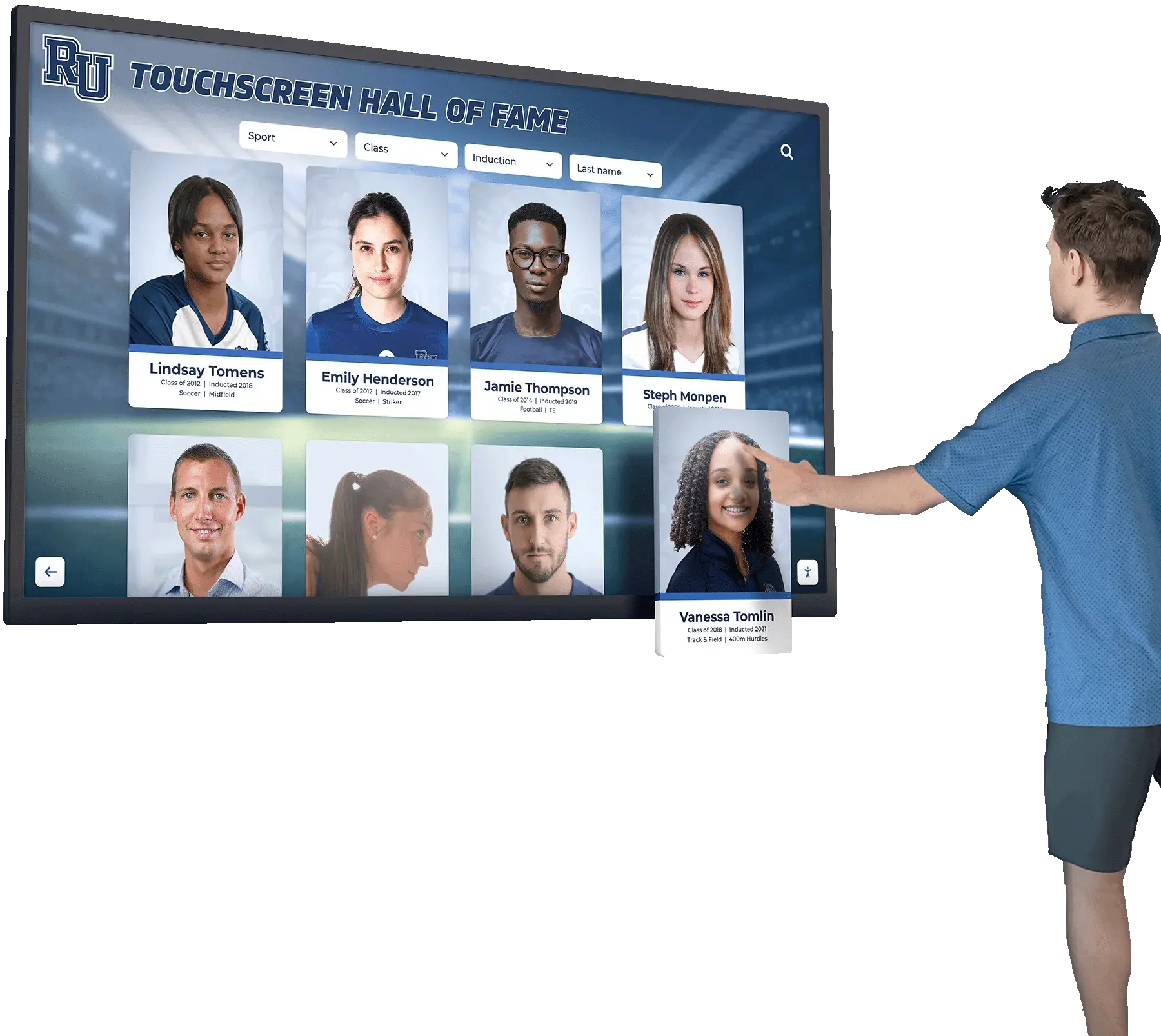
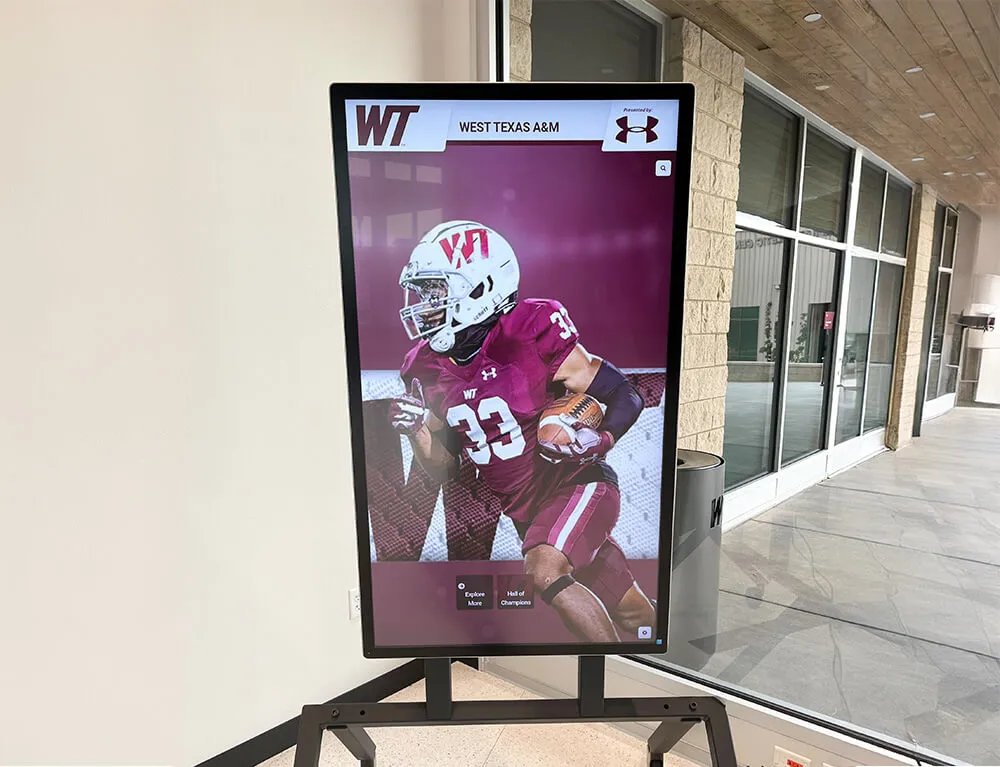
Interactive touchscreen displays positioned near trophy cases provide unlimited recognition capacity while engaging viewers through comprehensive multimedia content
Digital Display Advantages for Championship Recognition
Unlimited Capacity Without Physical Constraints
Digital recognition platforms fundamentally solve space limitations through technology:
Comprehensive Championship Archives: A single touchscreen display can showcase unlimited championships spanning complete program history across all sports without ever “filling up.” Schools can display every state championship, conference title, tournament victory, and significant achievement from founding through present day without physical space constraints.
Individual Athlete Recognition: Beyond team championships, digital platforms enable recognition of every student athlete who contributed to championship success through:
- Complete team rosters with individual photos
- Personal achievement profiles documenting multiple sports and years
- Career statistics and individual accomplishments
- Post-graduation updates showing college and professional success
This comprehensive individual recognition remains impossible through traditional championship banners limited to basic team information.
Rich Multimedia Content: Digital displays transform simple championship listing into engaging storytelling:
- Championship game video highlights and memorable moments
- Action photography from championship seasons
- Season narratives explaining championship paths
- Historical context comparing achievements across different eras
- Interactive statistics and program records
These capabilities create emotional engagement far exceeding what fabric banners can achieve while appropriately celebrating achievement depth and individual student athlete contributions.
Programs implementing digital championship displays discover significantly higher visitor engagement compared to static traditional recognition.
Hybrid Approaches: Combining Traditional and Digital Recognition
Many schools implement optimal recognition by strategically combining traditional championship banners with comprehensive digital systems:
Curated Physical Banner Displays
Maintain selective traditional championship banners for:
- Recent championships (past 5-10 years) providing immediate visibility for current students and families
- Historic “first” championships in each sport marking program milestones
- Championship dynasties (multiple consecutive titles) deserving special prominence
- Particularly significant achievements (undefeated seasons, national recognition)
This curated approach keeps gymnasium aesthetics clean while ensuring most meaningful championships maintain physical banner visibility.
Comprehensive Digital Archives
Implement digital recognition providing:
- Complete championship documentation across all sports and entire program history
- Individual student athlete recognition for every championship team participant
- Conference championships, tournament victories, and other significant achievements beyond state titles alone
- Detailed season narratives, statistics, and multimedia content
- Searchable databases enabling instant access to any championship or athlete
This combination honors tradition through continued physical banner presence while solving space limitations and enabling comprehensive recognition impossible through traditional approaches alone.
Schools implementing hybrid systems report highest satisfaction from athletes, families, and alumni who appreciate both traditional visual impact of physical banners and comprehensive information accessibility through digital platforms.
Implementing Digital Championship Recognition Systems
Technology Platform Selection
Several digital recognition solutions serve championship celebration:
Interactive Touchscreen Displays: Solutions like Rocket Alumni Solutions provide purpose-built platforms specifically designed for athletic recognition including championship celebration, athlete profiles, team rosters, and program history. These systems offer:
- Intuitive interfaces enabling easy browsing and searching
- Cloud-based content management updating from any internet-connected device
- Professional hardware designed for continuous operation in public spaces
- Comprehensive support and training ensuring successful long-term operation
Digital Signage Systems: Commercial digital signage platforms can display championship content through rotating slideshows and graphics. These systems work well for display-only applications but typically lack interactive exploration capabilities enabling visitors to browse complete championship archives at their own pace.
Web-Based Recognition Platforms: Championship recognition published through athletic websites extends access beyond those physically present in facilities, enabling alumni, families, and community members anywhere to explore program achievements. Web platforms complement physical displays rather than replacing them, extending recognition reach globally.
Organizations can learn about comprehensive recognition display systems applicable across athletic and donor recognition contexts.
Content Development for Digital Championship Recognition
Effective digital recognition requires systematic content development:
Championship Documentation:
- Sport and championship level identification
- Year achieved and championship location/tournament
- Complete team rosters with athlete names and positions
- Season records and championship game scores
- Coach recognition and staff documentation
Multimedia Enhancement:
- Team photographs (formal portraits and action imagery)
- Championship game video highlights when available
- Season narrative text explaining championship significance
- Individual athlete photos and brief biographies
- Championship trophy and award imagery
Historical Research: For comprehensive archives, schools must conduct historical research gathering championship information from:
- Athletic department records and archives
- Yearbooks documenting teams and seasons
- Local newspaper coverage from championship eras
- Interviews with championship coaches and athletes
- State athletic association records
This research often reveals forgotten championships and athletes deserving recognition while establishing complete program documentation.
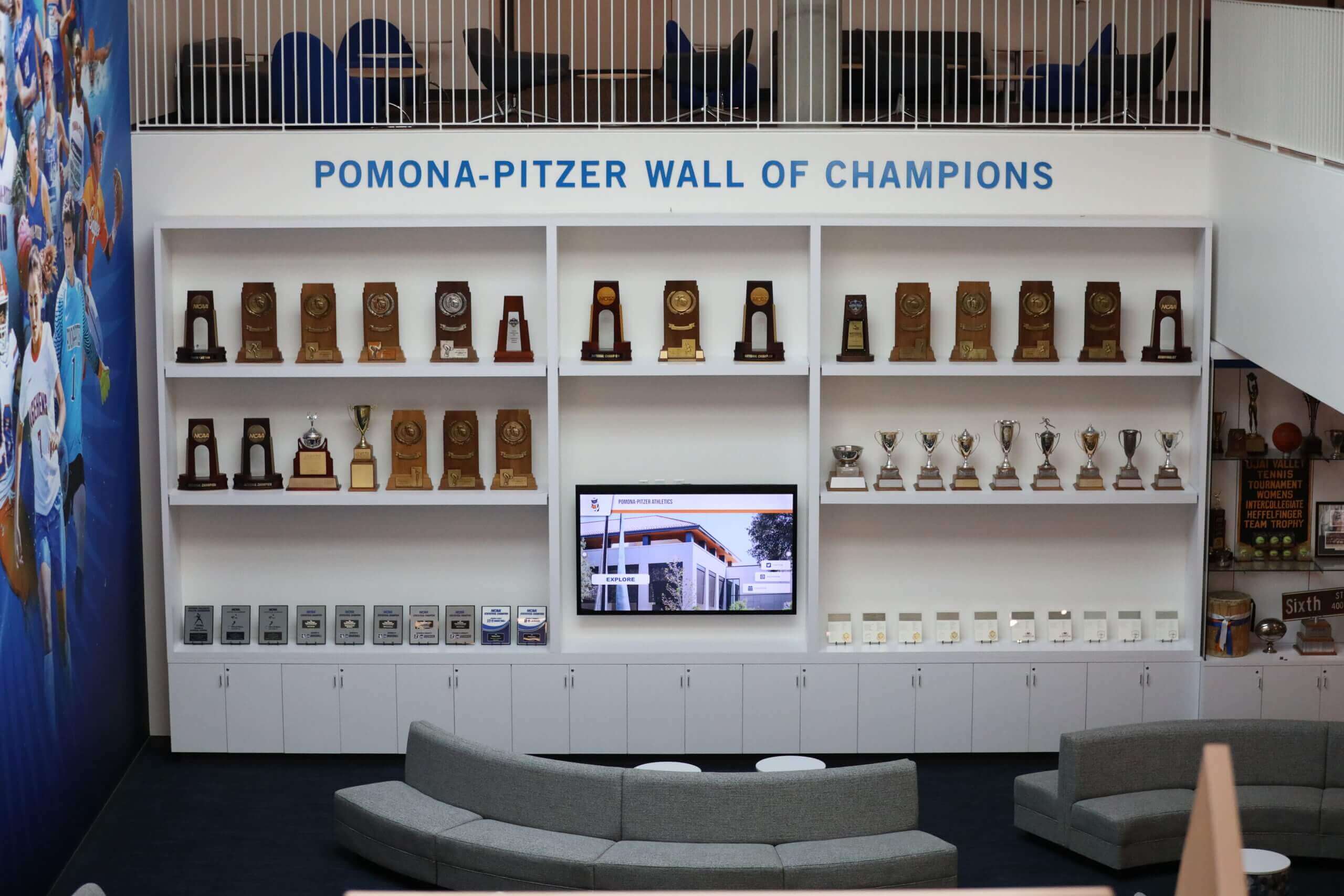
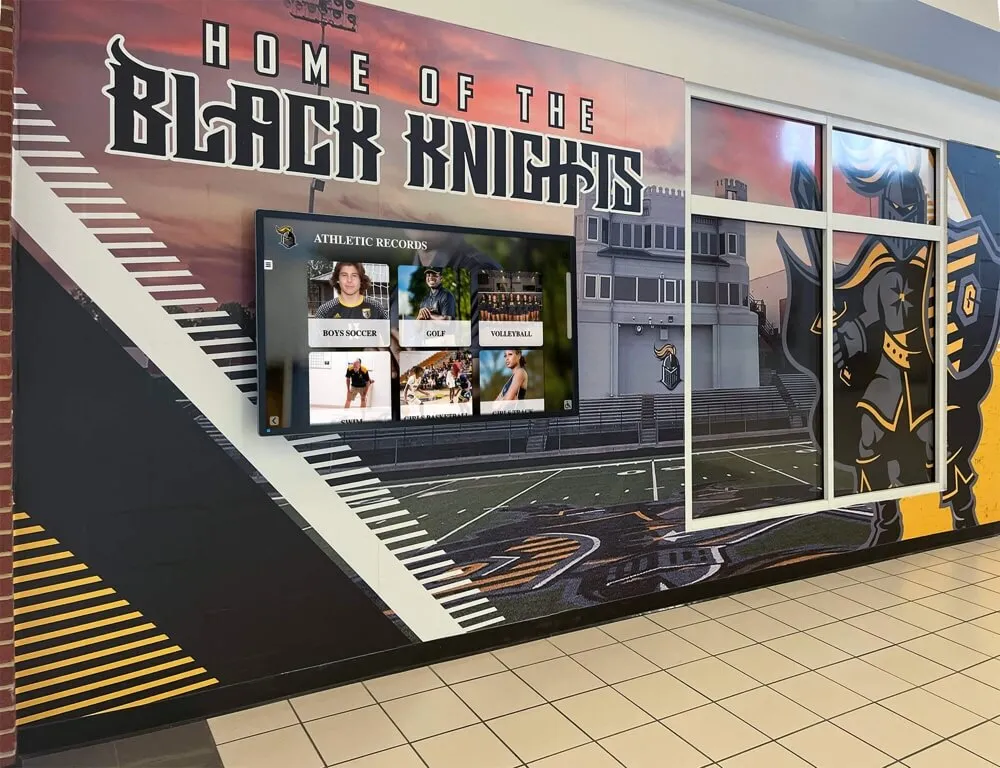
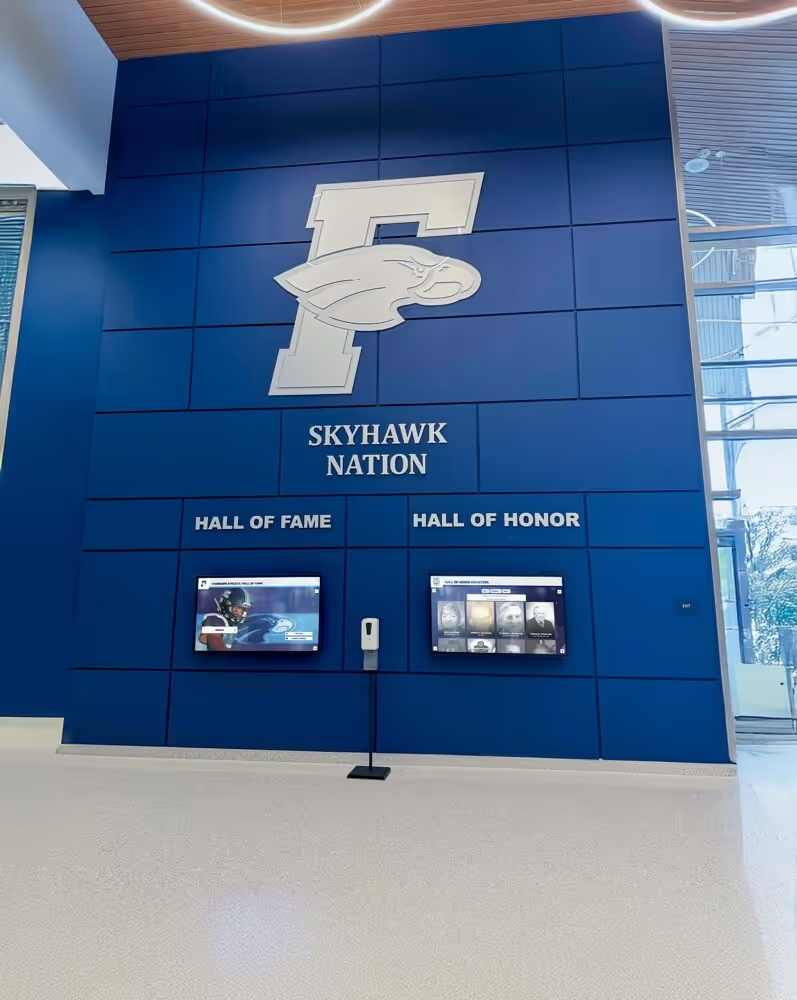
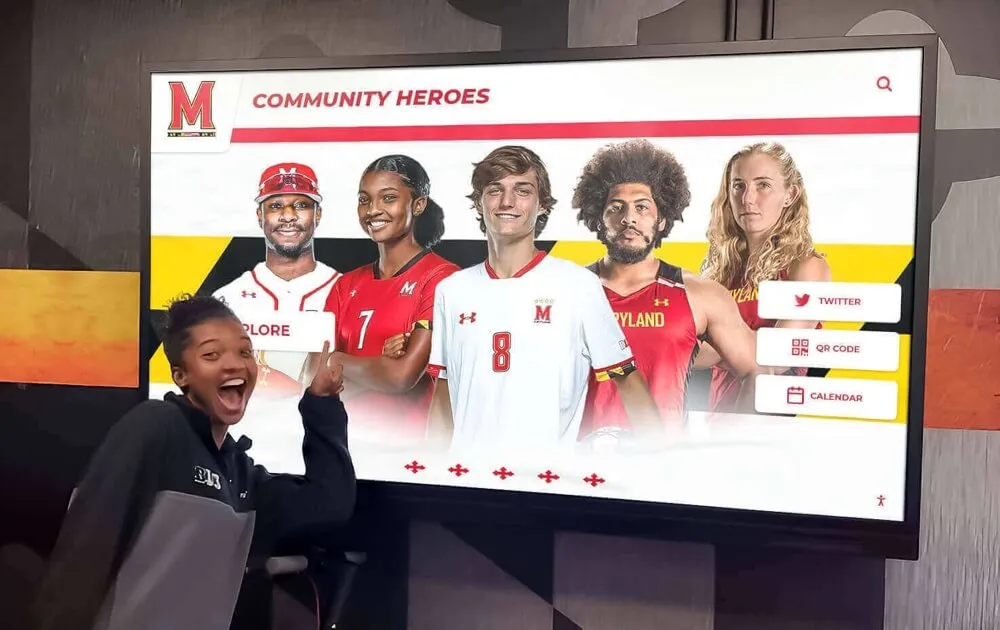
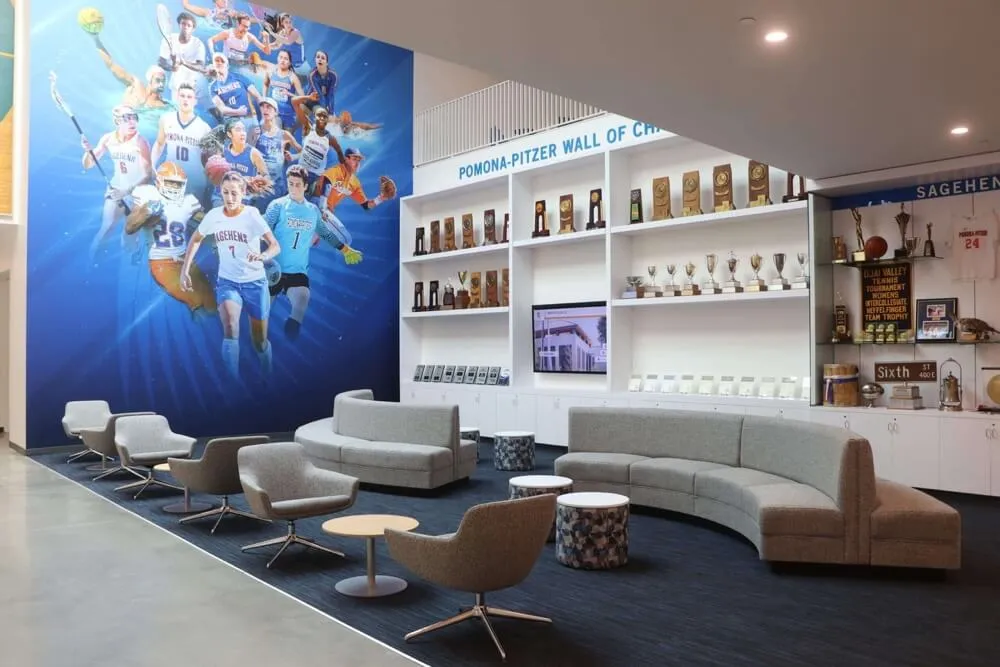
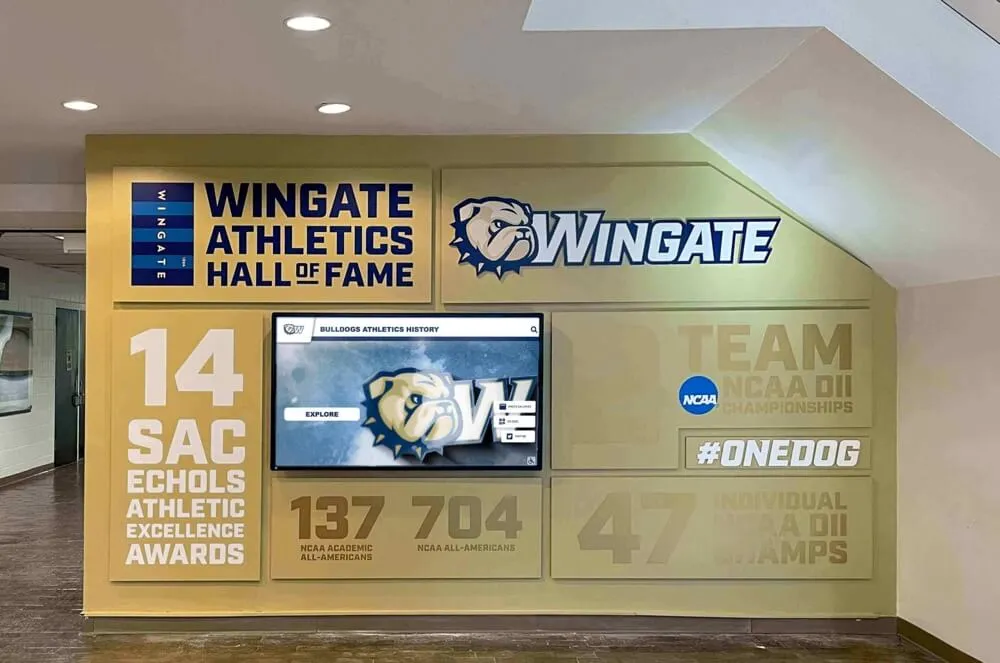
Wall of champions displays combine traditional trophy recognition with modern design creating engaging celebration spaces for athletic achievement
Design Best Practices for Championship Banner Templates
Whether creating traditional physical banners or digital recognition graphics, following design best practices ensures championship recognition achieves maximum impact while maintaining professional quality.
Typography and Readability
Font Selection for Distance Viewing
Championship banners must communicate clearly from significant distances requiring careful typography:
Font Characteristics for Banner Readability:
- Sans-serif fonts: Generally superior for distance reading versus serif fonts where fine details disappear at distance
- Bold weights: Medium and bold font weights maintain visibility better than thin or light weights
- Consistent sizing: Maintain clear hierarchy with championship year or level largest, followed by supporting information
- High contrast: Dark text on light backgrounds or vice versa (avoid low-contrast combinations diminishing readability)
- Letter spacing: Slightly increased spacing between letters and words improves readability at distance
Recommended Banner Fonts:
- Impact: Bold, condensed sans-serif excellent for headlines and championship years
- Arial Black / Helvetica Bold: Clean, highly readable sans-serif suitable for all banner text
- Futura Bold: Geometric sans-serif with modern aesthetic and excellent readability
- Din Pro Bold: Contemporary sans-serif popular in sports design with excellent legibility
- Trade Gothic Bold: Classic sans-serif used extensively in athletic graphics
Avoid decorative fonts, script fonts, or fonts with fine details that disappear at typical gymnasium viewing distances.
Color Theory for Maximum Impact
School Color Application
Effective championship banners balance school colors with readability requirements:
Primary Color Usage: Feature dominant school colors as banner backgrounds or major design elements establishing immediate school identity recognition.
Contrast Optimization: Ensure sufficient contrast between text and background colors. Light text on dark backgrounds or dark text on light backgrounds both work well, but avoid mid-tone combinations where contrast diminishes readability.
Accent Color Strategy: Use secondary school colors or metallic accents (gold, silver) for championship-specific elements distinguishing titles from other recognition.
Color Consistency: Maintain exact color matching across all championship banners using official school color specifications (Pantone numbers, CMYK values, or RGB codes). Color variations across different banners create unprofessional appearance.
Championship Level Differentiation: Some schools use color variations distinguishing achievement levels:
- State championships: Primary school colors with gold or special treatment
- Conference championships: Primary school colors with standard treatment
- Participation recognition: Secondary colors or simplified designs
This hierarchy helps viewers immediately identify achievement significance across mixed banner displays.
Layout and Composition Guidelines
Visual Hierarchy Principles
Effective banner design guides viewer attention through clear information hierarchy:
Primary Focus: Championship level and year should dominate design as most important information. Viewers should immediately identify “State Champions 2026” before processing supporting details.
Secondary Information: Sport name, school identity, and team/individual details occupy secondary visual importance.
Supporting Elements: Graphics, logos, and decorative elements support primary information without competing for attention or creating visual clutter.
Balanced Composition: Distribute design elements throughout banner space avoiding heavy concentration in particular areas that create visual imbalance.
Breathing Room: Allow sufficient empty space around text and graphics. Overcrowded designs with every inch filled create chaotic appearance diminishing professional impact.
Incorporating School Branding
Brand Guideline Compliance
Schools with established brand guidelines should ensure championship banners align with broader institutional visual identity:
Logo Usage: Apply official school logos according to brand guidelines regarding minimum sizes, clear space requirements, acceptable color variations, and prohibited modifications.
Typography Systems: Utilize official school fonts when specified in brand guidelines, or select banner fonts complementing established typography.
Color Specifications: Apply exact school colors per brand documentation rather than approximations that create inconsistent appearance across different recognition elements.
Mascot Integration: Incorporate official mascot artwork using approved representations avoiding unofficial or stylistically inconsistent versions.
Consistent Style: Maintain consistent design approach across all championship banners regardless of sport or year, creating cohesive recognition system rather than disparate collection of unrelated designs.
Schools can explore comprehensive approaches to sports banner design balancing tradition with modern design principles.
Installation and Display Considerations
Creating exceptional championship banners represents only part of successful recognition—proper installation and display placement ensure banners achieve maximum visibility and impact.
Gymnasium Hanging Methods
Ceiling Installation Systems
Most championship banners hang from gymnasium ceilings using various mounting approaches:
Ceiling Grid Mounting:
- Banners attach to exposed ceiling structural elements (beams, trusses)
- Strong, permanent installation supporting heavy sewn fabric banners
- Professional installation recommended due to height and structural considerations
- Ideal for facilities with exposed ceiling structure common in many gymnasiums
Cable and Wire Systems:
- Thin cables or wires span across gymnasium spaces with banners hanging at intervals
- Creates floating appearance with banners suspended in space
- Allows closer viewing than ceiling-mounted banners in very tall facilities
- Requires professional installation ensuring proper tensioning and weight distribution
Retractable Banner Systems:
- Motorized systems raising banners to ceilings when not displayed
- Useful for multi-purpose facilities requiring clear space for non-athletic events
- Higher initial cost but provides flexibility for facility scheduling
- Requires electrical installation and ongoing maintenance
Wall Mounting Alternatives
Wall-Mounted Championship Recognition
Facilities with space constraints or architectural limitations preventing ceiling mounting can implement effective wall-mounted recognition:
Traditional Wall Banners:
- Banners mounted directly to gymnasium walls using hardware
- Easier installation than ceiling mounting
- More accessible for maintenance and replacement
- Works well for renovated facilities or spaces with unsuitable ceiling structures
Banner Rail Systems:
- Horizontal rails mounted high on walls accommodating multiple hanging banners
- Enables banner arrangement and rearrangement without wall modification
- Professional appearance suitable for main gymnasium spaces
- Simpler installation than ceiling systems
Trophy Case Integration:
- Championship banners positioned near or above trophy cases
- Creates comprehensive recognition zones combining physical awards with banner display
- Appropriate for hallway or lobby spaces adjacent to gymnasiums
Athletic programs can examine volleyball recognition approaches applicable across multiple sports contexts.
Placement Strategy for Maximum Visibility
Strategic Location Selection
Championship banner placement significantly influences recognition impact:
High-Traffic Areas: Position banners where athletes, students, families, and visitors naturally congregate—gymnasium entrances, main playing floor perimeters, or hallways connecting to athletic facilities.
Sight Line Consideration: Ensure banners remain visible from bleacher seating during games and events, creating inspirational environment for current athletes while celebrating past achievements.
Balanced Distribution: Distribute banners throughout available space rather than clustering in single locations, creating visual interest across entire facility.
Sport-Specific Zones: Some schools organize banners by sport rather than chronologically, grouping all basketball championships together, all football championships together, etc. This approach helps visitors appreciate complete program excellence within specific sports.
Chronological Arrangement: Alternatively, arrange banners chronologically showing program evolution over time, making it easy to locate specific years while demonstrating sustained excellence across different eras.
Neither organizational approach proves universally superior—selection depends on facility characteristics, number of championships, and institutional preferences.
Long-Term Championship Recognition Strategy
Beyond immediate banner creation and installation, successful programs develop comprehensive long-term strategies ensuring championship recognition remains sustainable, current, and inspiring for decades ahead.
Annual Recognition Planning
Systematic Championship Addition Process
Establish consistent procedures ensuring new championships receive prompt recognition:
End-of-Season Workflows:
- Athletic director confirms championship achievements requiring banner recognition
- Design specifications confirmed (if using consistent template system) or design process initiated (for custom banners)
- Approval from coaches, administrators, and affected teams before production
- Production timeline established ensuring installation before following season begins
- Installation scheduling coordinated with facility calendar avoiding conflicts
Budget Allocation: Include championship banner budget lines in annual athletic department budgets, avoiding scrambling for funds after championships occur.
Ceremony Planning: Consider formal banner unveiling ceremonies during high-attendance events, creating meaningful recognition moments for championship athletes and families while building school culture around excellence celebration.
Maintaining Visual Consistency
Long-Term Design Coherence
Championship recognition accumulated over many years should maintain visual consistency:
Template Systems: Establish banner design templates used consistently for all championships regardless of sport or year, creating professional cohesion across decades of recognition.
Style Guide Documentation: Create written documentation of banner specifications including dimensions, colors, fonts, layout structure, and production specifications enabling future consistency even when responsible personnel change.
Regular Updates: When schools undergo branding updates (new logos, refreshed colors, typography changes), consider phased banner replacement ensuring visual consistency rather than jarring stylistic differences between old and new recognition.
Archive Preservation: Maintain digital archives of all banner designs enabling exact reproduction when older banners require replacement due to deterioration or damage.
Planning for Space Exhaustion
Sustainable Long-Term Approaches
Even the most spacious gymnasiums eventually face capacity constraints requiring forward-thinking solutions:
Phase 1 - Optimize Current Space: Maximize existing space through strategic arrangement, consistent banner sizing, and elimination of excessive spacing between banners.
Phase 2 - Expand to Adjacent Spaces: Consider championship recognition in athletic hallways, lobbies, or auxiliary gymnasium spaces when primary gymnasium reaches capacity.
Phase 3 - Consolidation Approaches: Implement add-a-year banners where single banners list multiple championship years in specific sports, reducing individual banner counts while maintaining recognition.
Phase 4 - Digital Transition: Implement comprehensive digital recognition systems providing unlimited capacity, enabling either complete transition from physical banners or hybrid approach maintaining curated physical displays supplemented with complete digital archives.
Schools addressing space constraints proactively avoid crisis decision-making when ceiling space exhausts completely, ensuring championship recognition remains sustainable indefinitely regardless of future program success.
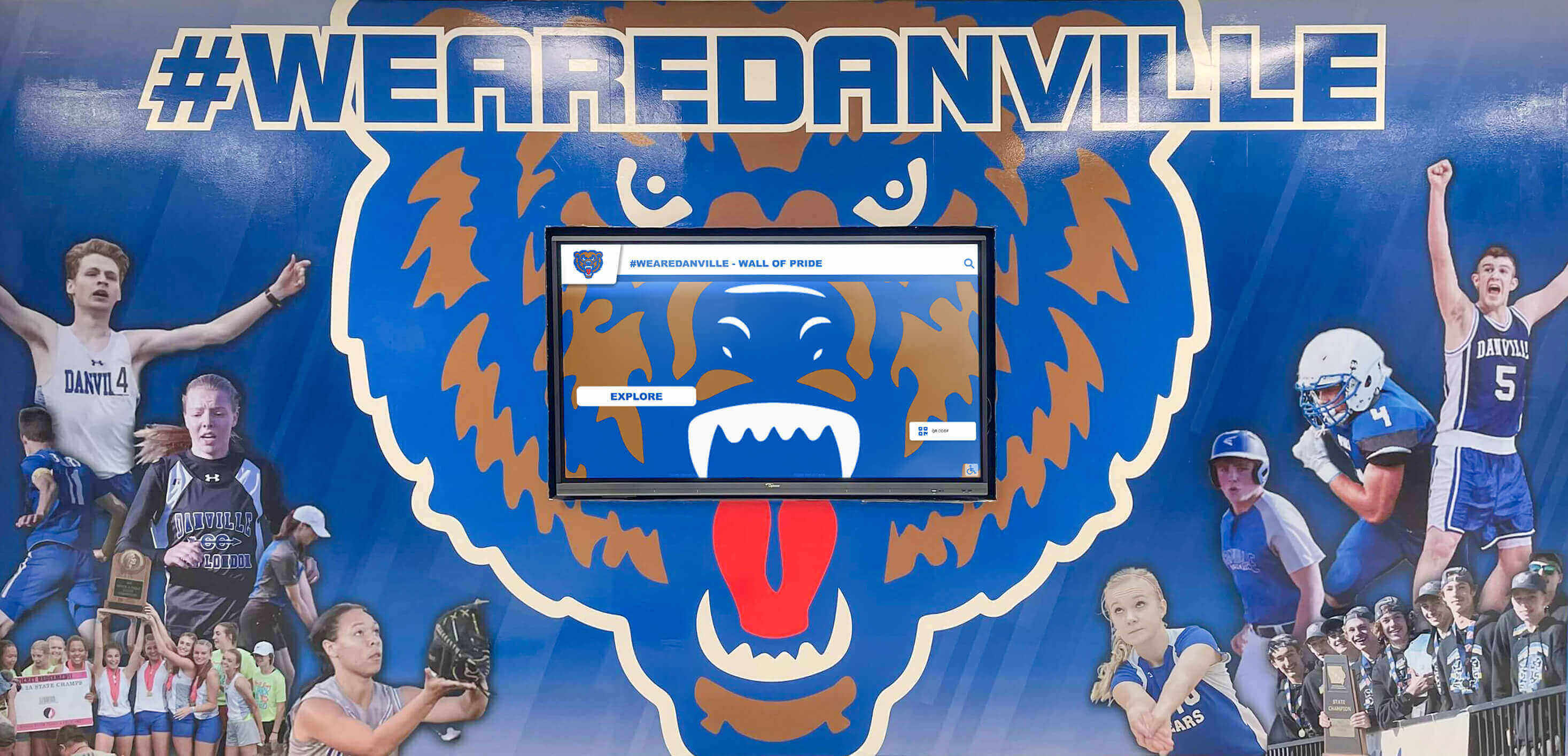
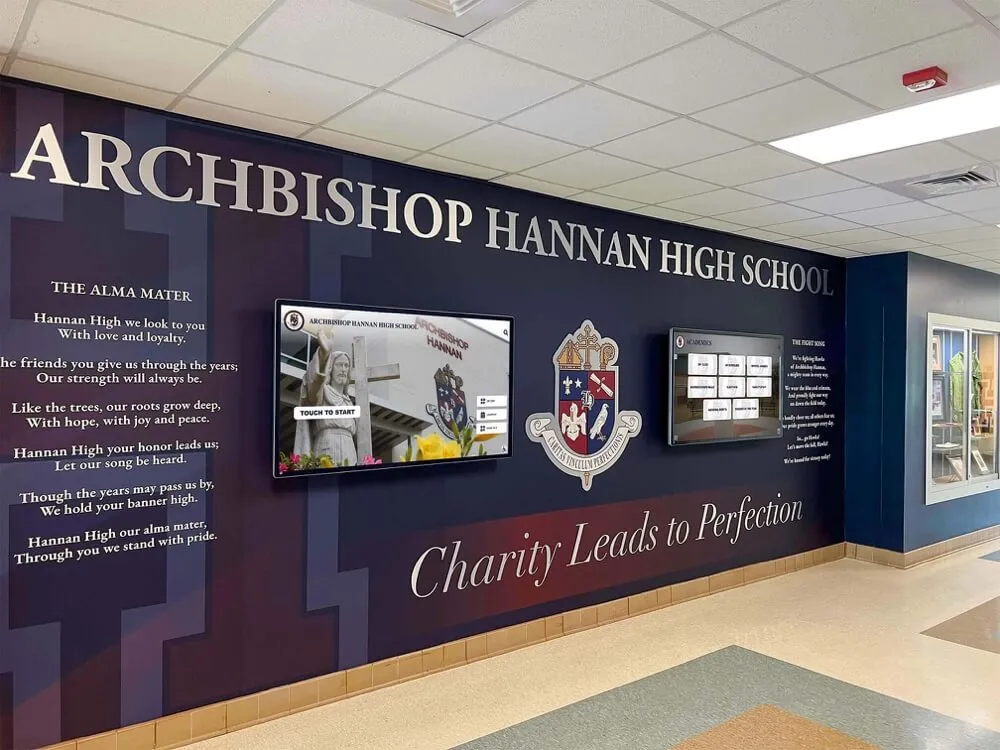
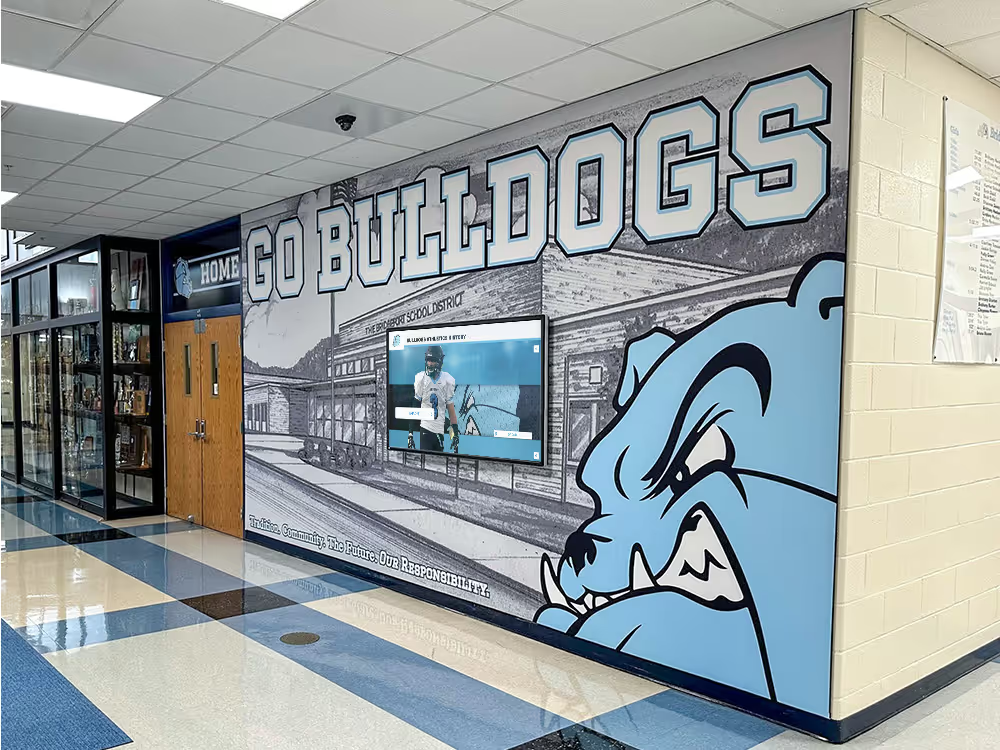
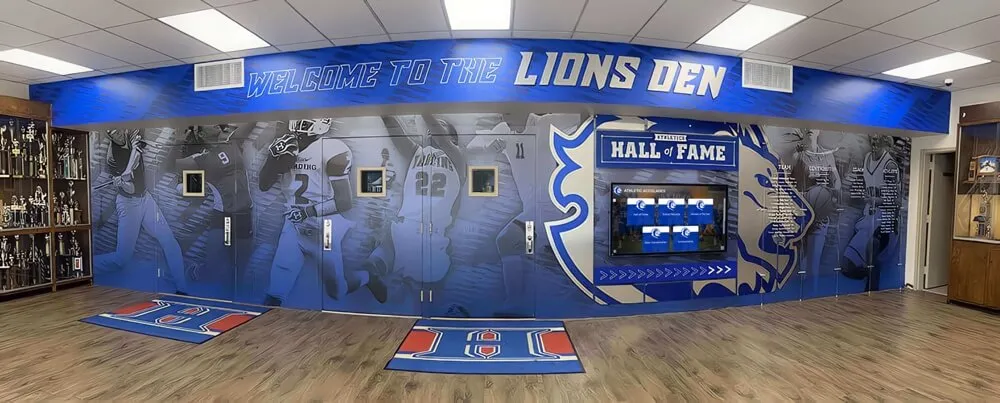
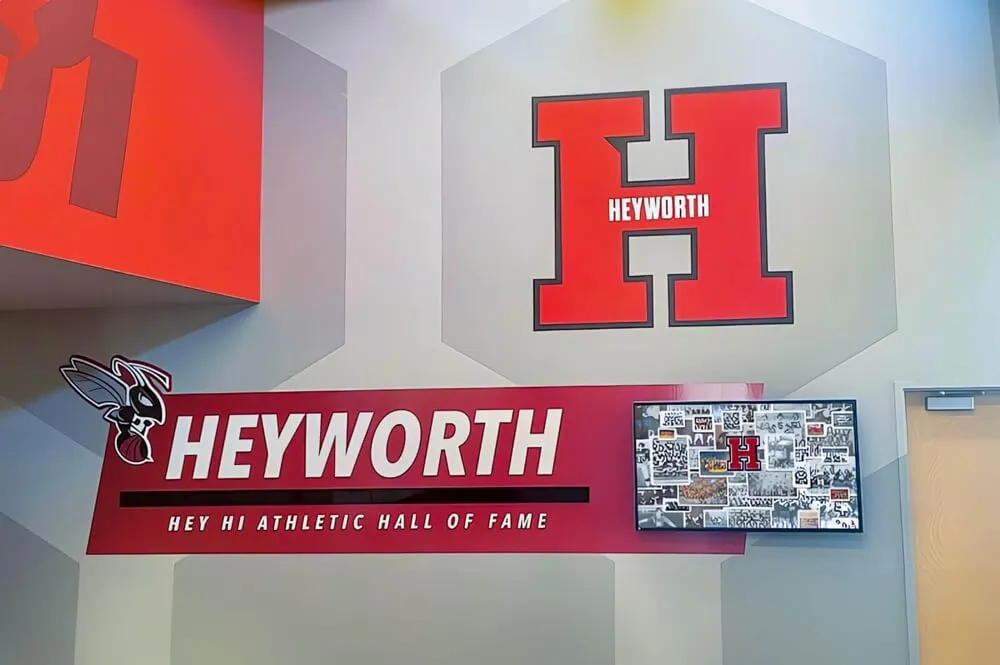
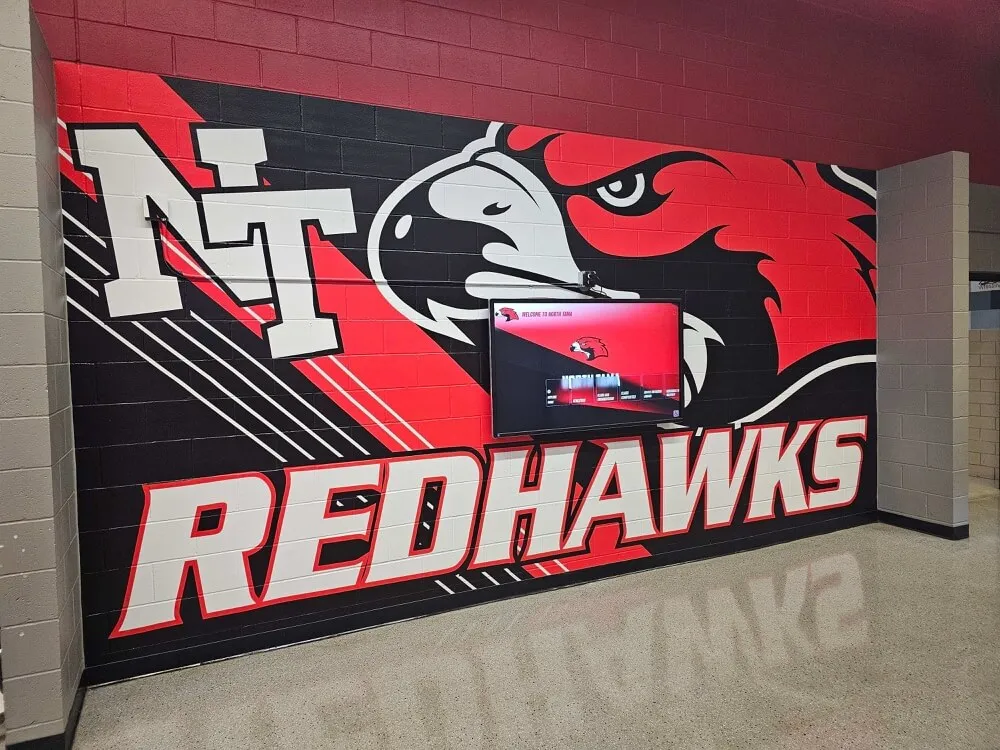
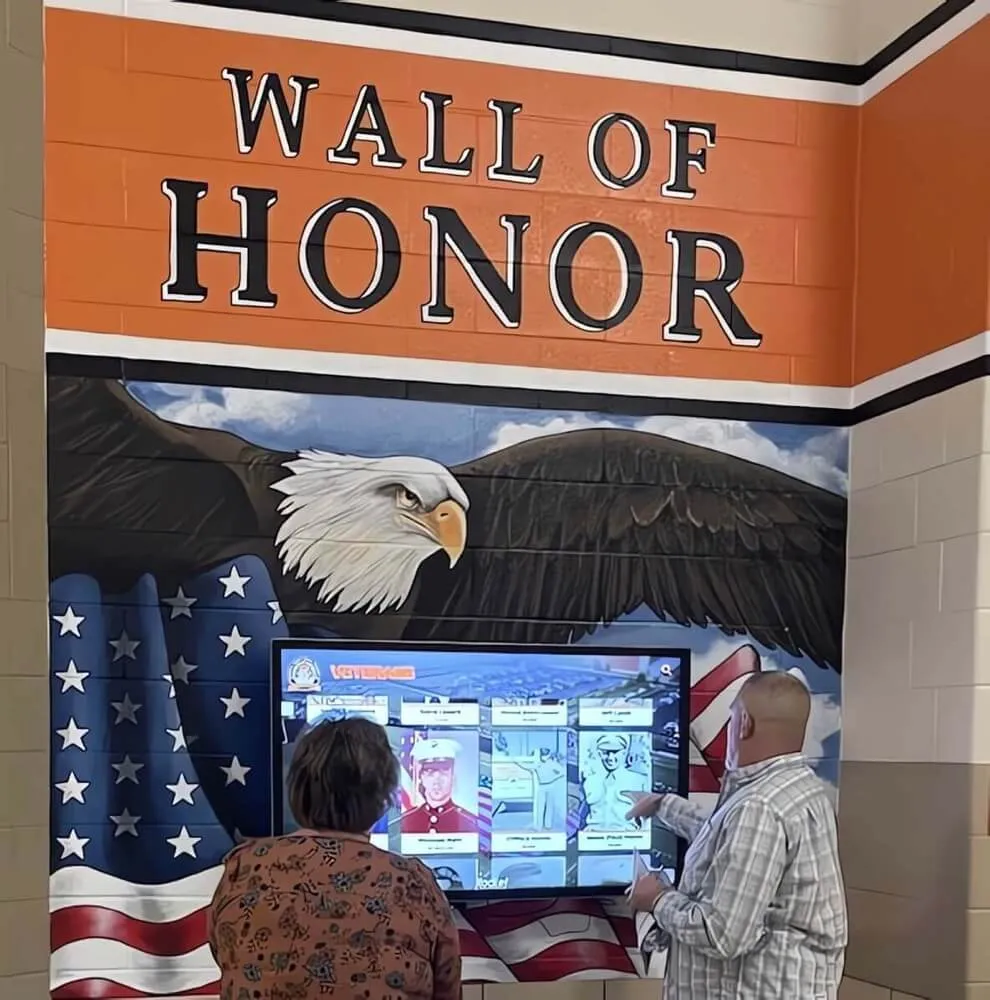
Integrated athletic recognition combining painted murals, school branding, and digital displays creates engaging environments celebrating program tradition
Special Circumstances and Unique Recognition Needs
Standard championship banner approaches serve most situations well, but certain circumstances require adapted recognition strategies.
Multiple Classification Championships
Schools Competing in Different Divisions
Schools winning championships across multiple classifications need clear differentiation:
- Specify classification explicitly (Class 1A State Champions, Division III Champions)
- Use visual distinction (border colors, graphic treatments) differentiating achievement levels
- Maintain equal recognition avoiding hierarchy implying certain classifications matter more than others
- Explain classification context for viewers unfamiliar with athletic association structures
Shared Championships and Co-Champions
Recognizing Tied Championship Outcomes
When organizations share championships with other schools:
- Use accurate language: “Co-Champions” or “Shared Champions” rather than implying sole championship
- Include both schools when appropriate: “State Co-Champions with [School Name]”
- Maintain positive framing celebrating achievement rather than emphasizing shared outcome
- Recognize that some athletes prefer clear solo championships—shared outcomes don’t diminish achievement value
Individual Championships in Team Sports
Recognizing Individual Achievement Within Team Contexts
Some sports feature individual championships within team scoring:
Wrestling Team Championships with Individual Weight Class Champions: Consider separate recognition for team championship versus individual weight class state champions, providing comprehensive celebration of both collective and individual excellence.
Track & Field Events: Schools might recognize team championships separately from individual event state champions, ensuring comprehensive recognition across multiple achievement dimensions.
Golf and Tennis: Team tournament victories deserve recognition alongside individual medalists or tournament champions.
Clear differentiation helps viewers understand achievement context while ensuring both team and individual excellence receive appropriate celebration.
Historical Championship Recreation
Preserving Legacy Through Updated Recognition
Schools sometimes redesign championship recognition for historical achievements:
Consistency Decisions: Should historical championships receive updated designs matching current banner template systems, or should they maintain original aesthetic preserving historical authenticity?
Documentation Challenges: Historical research may reveal incomplete information. Should schools recognize championships despite missing complete details, or only display achievements with comprehensive documentation?
Equity Considerations: Historical research often reveals forgotten championships or underrecognized achievements (particularly for women’s sports, minority athletes, or non-revenue sports). Comprehensive historical projects create opportunities addressing these recognition gaps appropriately.
Measuring Championship Recognition Impact
Effective championship banner programs should deliver measurable value beyond simple decoration, justifying investment through observable impacts on programs and communities.
Athlete Motivation and Performance
How Recognition Influences Current Athletes
Championship recognition creates tangible motivation for current athletes:
Visible Excellence Standards: Championship banners demonstrate achievement possibility, showing current athletes that program tradition includes championship success they can pursue.
Role Model Connection: When current athletes see former players from their positions recognized for championships, identification creates personal motivation: “If they could achieve championships, so can I.”
Competitive Culture: Visible championship recognition reinforces program cultures where excellence expectations exceed simply participating—winning championships becomes normalized rather than exceptional.
Recruiting Advantages: Prospective athletes evaluating programs notice championship recognition during facility tours, using visible achievement as program quality indicators influencing school selection decisions.
Community and Alumni Engagement
Recognition Impact Beyond Current Athletes
Championship celebration strengthens broader community connections:
Alumni Pride: Former athletes maintain emotional connections to programs where they competed. Seeing their championships permanently recognized validates their contributions while maintaining lifelong institutional relationships.
Community Identity: Particularly in regions where high school athletics dominate cultural life, championship recognition becomes community heritage celebrating shared history and pride.
Fundraising Support: Visible championship celebration demonstrates institutional commitment to athletic excellence, potentially increasing booster support and philanthropic giving from alumni and community members who value program success.
Institutional Reputation: Championship recognition creates positive impressions during facility tours for prospective families, alumni events, and community gatherings held in athletic facilities.
Return on Investment Considerations
Justifying Championship Recognition Investment
While difficult to quantify precisely, championship recognition delivers value across multiple dimensions:
Modest Cost for Lasting Impact: Individual championship banners representing $200-$800 investments create permanent recognition lasting 10-15 years, amortizing to $20-$80 annually per championship—modest cost for significant motivational and cultural impact.
Competitive Differentiation: Championship recognition distinguishes programs during athlete recruitment, potentially influencing enrollment decisions benefiting entire schools beyond athletics alone.
Institutional Memory: Championship recognition preserves program history surviving personnel changes, ensuring future generations understand program tradition and excellence regardless of current coaches, administrators, or community members.
Multi-Stakeholder Benefits: Recognition serves diverse audiences simultaneously—current athletes, alumni, prospective families, community members, and school administration—making championship investment efficient from stakeholder value perspective.
Conclusion: Honoring Championship Excellence Appropriately
Championship achievements represent culmination of countless hours of athletic dedication, exceptional coaching, and competitive excellence. These accomplishments deserve recognition matching their significance—visible celebration inspiring future athletes while preserving program history and honoring student athlete contributions creating success.
Whether schools select free championship banner templates enabling budget-conscious recognition, invest in custom professional banners providing premium quality, or implement modern digital recognition systems solving traditional space limitations while enabling comprehensive celebration, multiple approaches exist serving diverse institutional needs and resources.
Transform Your Championship Recognition Program
Discover how modern digital recognition platforms can help your school celebrate unlimited championships while recognizing every student athlete through comprehensive displays, multimedia content, and searchable archives preserving complete program history without physical space constraints.
Explore Digital Recognition SolutionsThe most effective championship recognition combines thoughtful design respecting program tradition with sustainable approaches ensuring recognition remains viable as achievements accumulate across decades. Free templates provide accessible starting points for budget-conscious organizations, professional custom banners deliver premium quality for schools prioritizing prestige, and digital recognition systems offer unlimited capacity solving physical space constraints permanently while creating more engaging, comprehensive athletic celebration than traditional fabric banners alone can achieve.
Your program’s championships deserve recognition reflecting the dedication required to achieve them. Whether implementing first championship banner or modernizing recognition systems serving decades of athletic excellence, comprehensive approaches ensuring every achievement and every athlete receives appropriate celebration strengthen program culture while preserving institutional memory for generations ahead.
Beyond simple decoration, championship recognition creates inspirational environments where current athletes connect to program tradition, alumni maintain lifelong relationships to institutions where they competed, and communities celebrate shared identity through athletic excellence. These outcomes justify championship recognition investment while honoring student athletes whose competitive achievements create program legacies deserving permanent visibility and celebration.
Ready to explore championship recognition solutions for your school or sports organization? Learn about comprehensive approaches to senior night celebrations honoring departing athletes, discover strategies for athletic awards programs celebrating diverse achievements, or explore banquet program planning for end-of-season recognition ceremonies.