Cheerleading demands an exceptional combination of athleticism, precision, teamwork, and showmanship that few other activities require. Your cheerleaders master complex stunts, execute synchronized routines, maintain school spirit throughout long seasons, and represent your institution with energy and enthusiasm at countless events. Yet despite these significant contributions, cheer programs often struggle to create recognition systems that adequately celebrate the diverse skills and dedication cheerleading requires.
Traditional trophy cases focus on competitive teams while overlooking spirit squads, year-end banquets rush through generic awards without capturing individual achievements, and printed programs listing names provide minimal context about what made each cheerleader exceptional. Meanwhile, the multifaceted nature of cheerleading—combining athletic performance, leadership, spirit, and community engagement—requires recognition approaches celebrating excellence across all these dimensions rather than reducing recognition to a single “Most Valuable Cheerleader” award.
This comprehensive guide presents creative cheerleading awards ideas that honor the complete spectrum of cheer contributions while providing practical implementation strategies. Whether you coach competitive all-star teams, manage high school sideline squads, coordinate youth recreation programs, or oversee college cheer programs, these recognition approaches ensure every team member receives meaningful acknowledgment for their unique contributions.

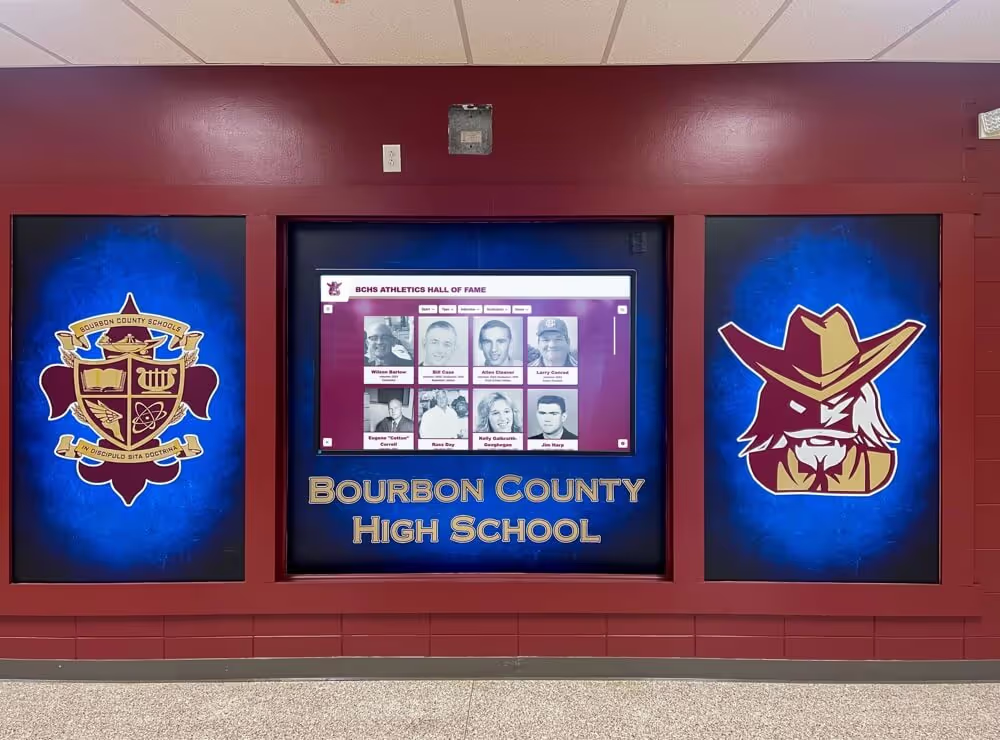
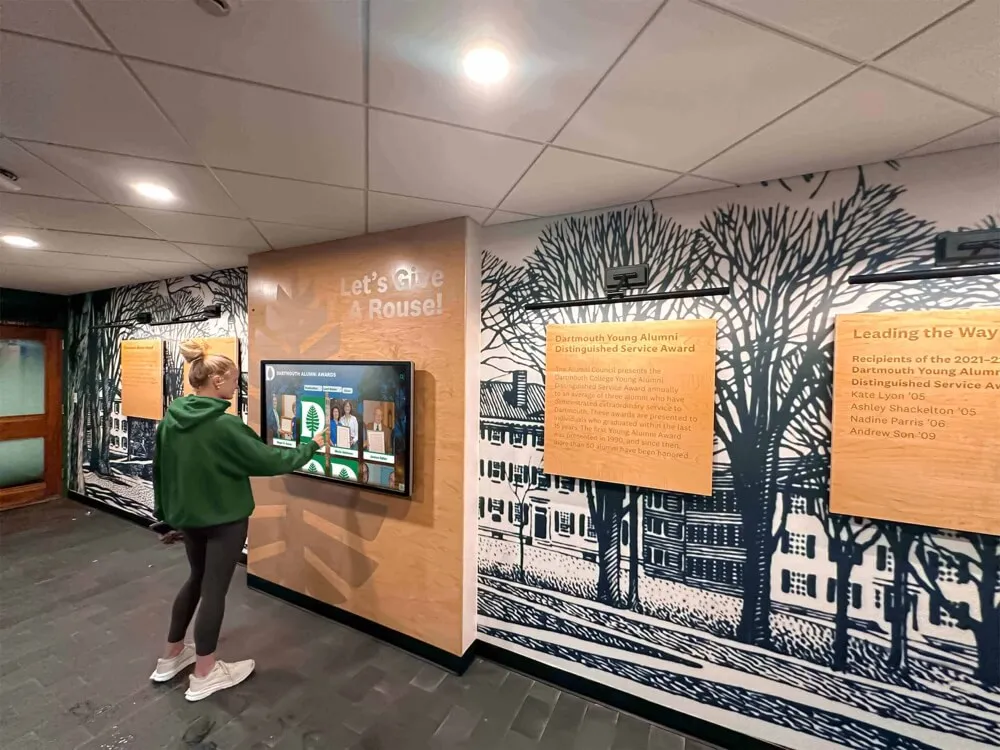
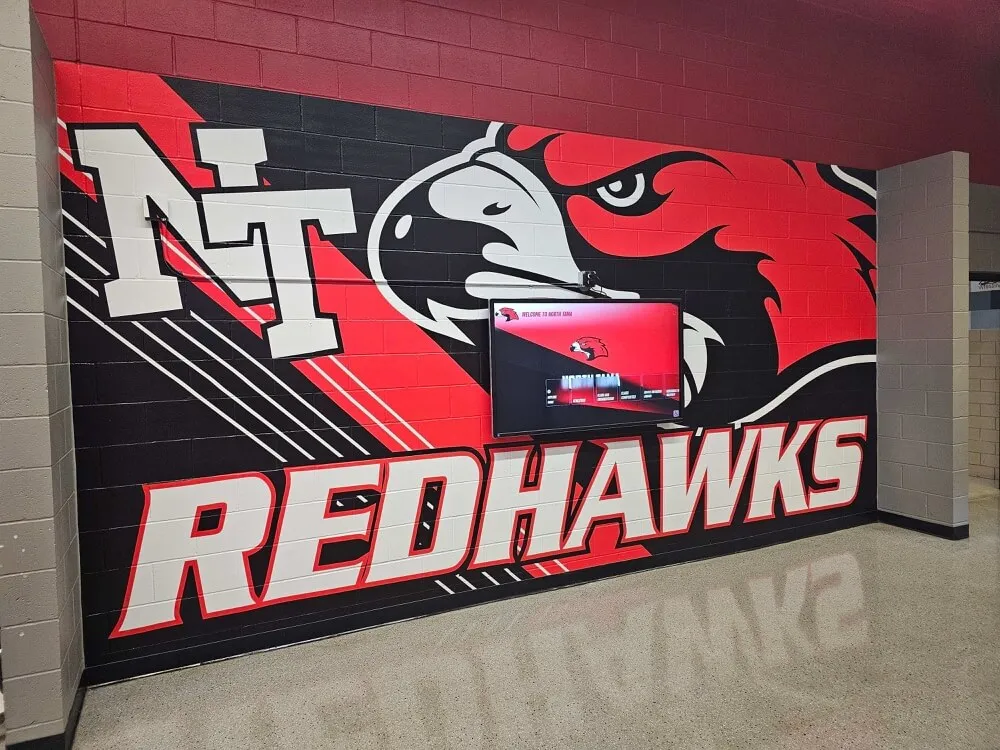
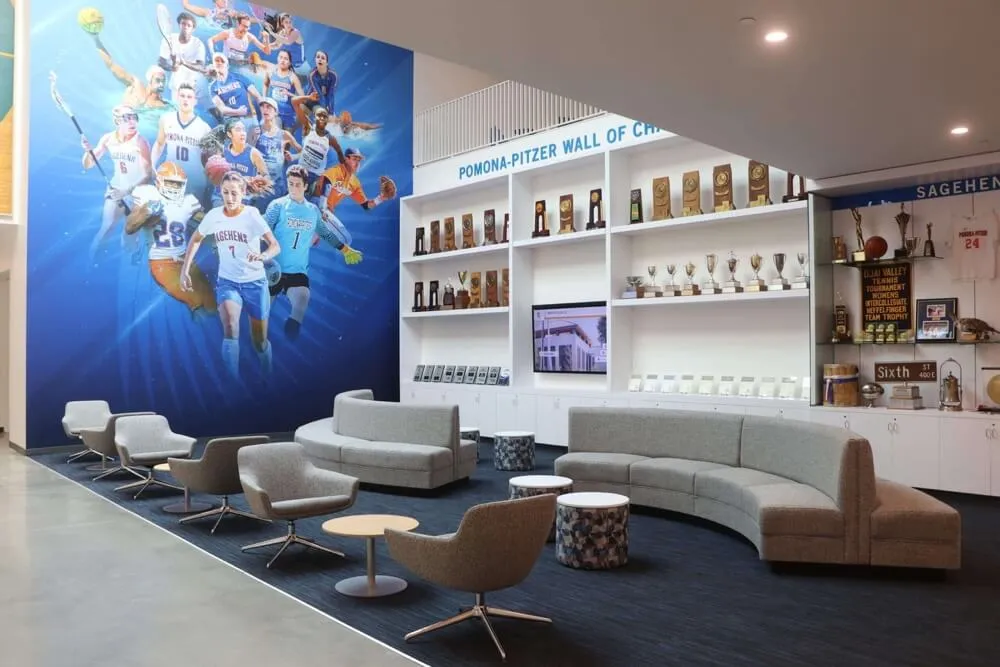
Modern recognition displays celebrate the athletic skill and team spirit that define exceptional cheerleading programs
Understanding the Unique Recognition Needs of Cheerleading
Before exploring specific award categories, understanding what makes cheerleading recognition distinct helps programs design awards systems that resonate with athletes, families, and the broader cheer community.
The Multidimensional Nature of Cheerleading Excellence
Unlike single-skill sports where performance metrics clearly define achievement, cheerleading excellence manifests across interconnected dimensions that all deserve recognition.
Athletic and Technical Skill
Cheerleading requires remarkable physical capabilities including strength for stunting and tumbling, flexibility for jumps and motions, coordination for synchronized routines, endurance for maintaining energy through long games or competitions, and body awareness for executing complex movements safely. Recognizing these athletic dimensions validates cheerleading as the demanding sport it is rather than the peripheral activity some mistakenly consider it.
Team Cohesion and Trust
Perhaps more than any other sport, cheerleading depends absolutely on trust and synchronization. Flyers must trust bases completely, bases must coordinate perfectly with each other, and entire squads must execute as unified entities. Individual talent matters far less than collective trust and teamwork. Recognition systems should honor those who build team unity, demonstrate reliability, and prioritize team success over individual visibility.
Leadership and Spirit
Cheer captains and veteran members provide leadership shaping team culture, teaching younger athletes, and maintaining enthusiasm through challenging seasons. Beyond formal leadership positions, some cheerleaders naturally inspire teammates, elevate moods during difficult practices, and embody the positive spirit that defines exceptional programs. These leadership and spirit contributions warrant specific recognition.
Commitment and Consistency
Successful cheer programs require year-round dedication including summer practices, fundraising efforts, community appearances, and maintaining academic standards alongside athletic demands. Cheerleaders who demonstrate unwavering commitment through perfect attendance, consistent effort, and sustained excellence throughout seasons deserve recognition for this reliability that makes programs function successfully.

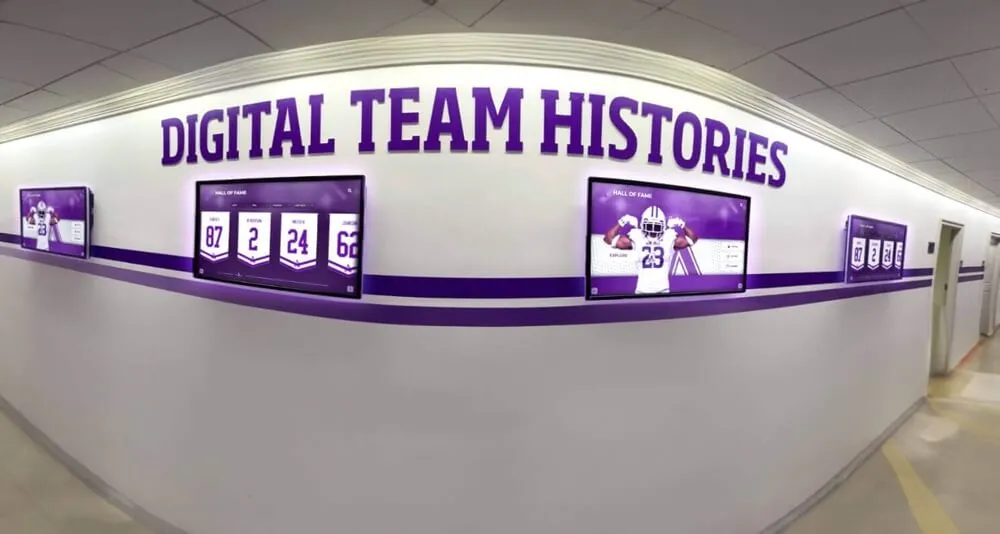
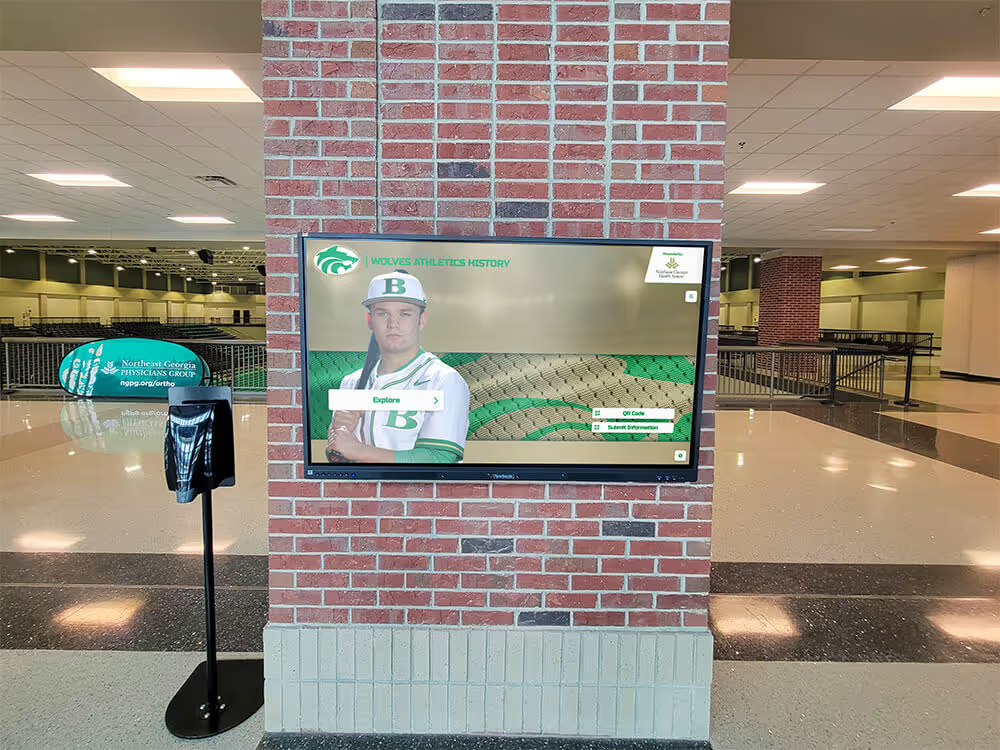
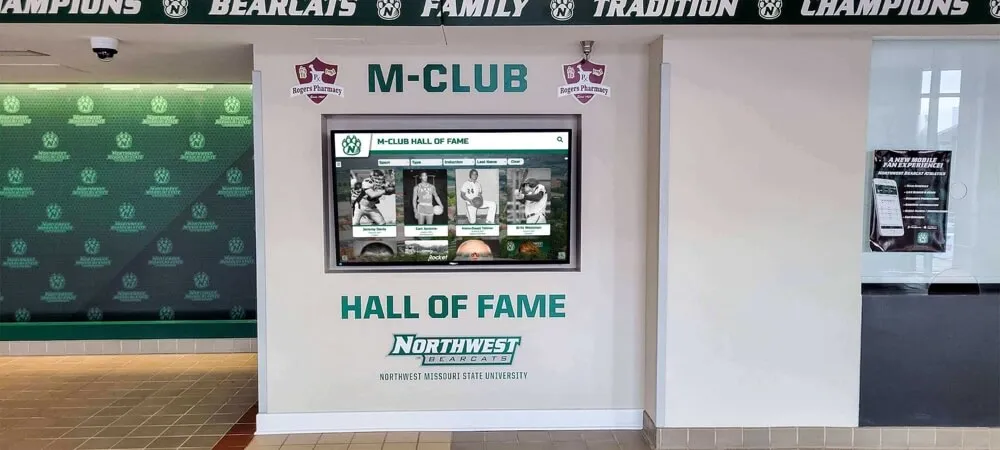
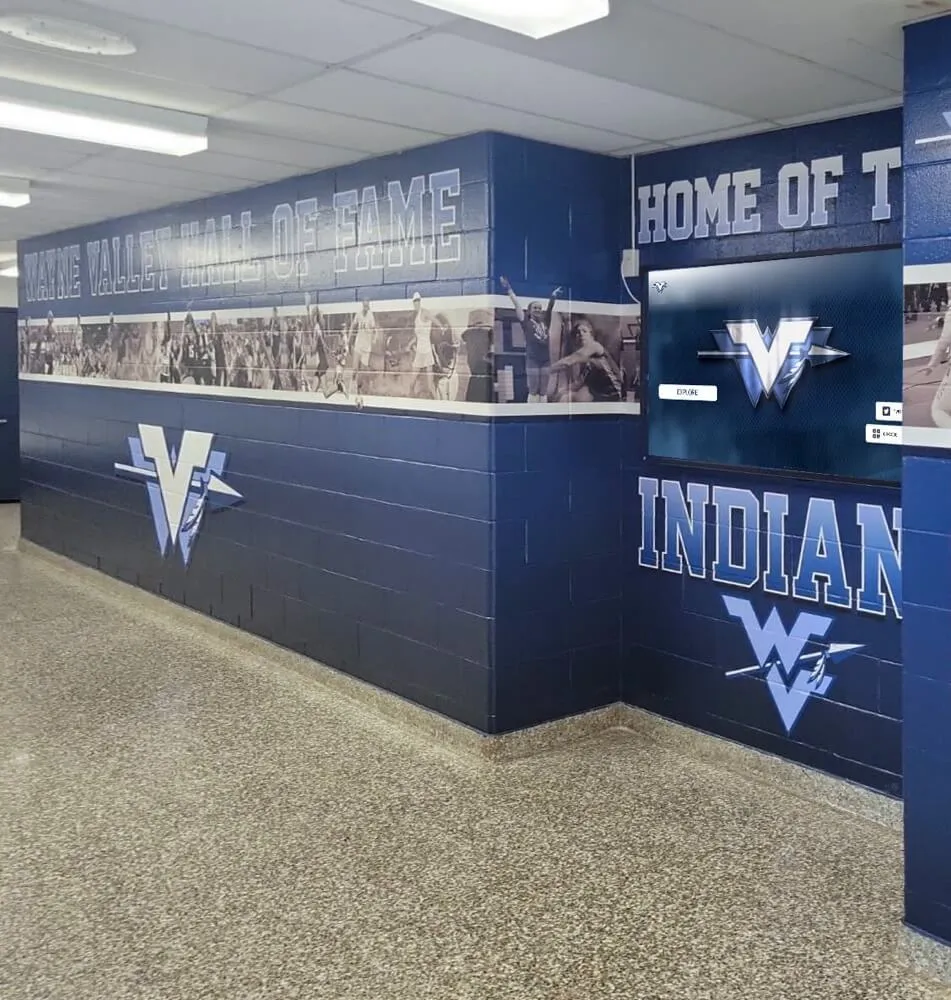
Professional recognition displays preserve cheerleading achievements alongside other athletic accomplishments, validating cheer as the demanding sport it is
Competitive vs. Sideline Recognition Considerations
Cheer programs often include both competitive teams and sideline/game-day squads with somewhat different recognition needs.
Competition Team Recognition
Competitive cheer teams participate in judged competitions where performance directly translates to scores, placements, and championships. These teams benefit from awards recognizing competitive achievements including placement awards for competitions won, technical excellence in specific skills like tumbling or stunting, performance quality and execution consistency, and championship contributions for teams earning titles.
Competition teams often find it easier to establish objective award criteria based on competition results, skill assessments, and performance metrics that provide clear recognition standards.
Sideline and Spirit Squad Recognition
Sideline cheerleaders perform at games and events supporting other athletic teams while building school spirit. Their contributions are less easily quantified but equally valuable, requiring recognition for consistent enthusiasm throughout long seasons, effective crowd engagement and spirit building, reliability across all scheduled appearances, and positive representation of school values.
Sideline recognition may emphasize character, spirit, and leadership more heavily than competitive programs while still acknowledging athletic skill development and performance quality.
Many programs include both competitive and sideline elements, requiring integrated recognition systems celebrating both dimensions appropriately. Solutions like comprehensive sports recognition programs help programs recognize diverse athletic contributions across all team types.
Essential Cheerleading Award Categories
Effective cheer recognition includes core award categories honoring fundamental aspects of cheerleading excellence that every program should acknowledge.
Technical Skill and Performance Awards
Most Improved Cheerleader
This award recognizes the athlete who demonstrated the greatest skill development over the season. Most Improved honors particularly resonate in cheerleading where athletes often join programs with varying experience levels and where visible progress in tumbling, stunting, or jumps provides clear evidence of dedication and coachability.
Implementation approach: Document beginning-of-season and end-of-season skill assessments for each athlete, tracking progress in specific areas like tumbling passes completed, stunt positions mastered, or jump technique improvements. Present specific examples during award recognition showing exactly what improvement the recipient achieved.
Outstanding Tumbler
Tumbling represents one of cheerleading’s most demanding and spectacular skills. This award honors the athlete with the best tumbling ability, most consistent execution, or most impressive tumbling progression achieved during the season.
Implementation approach: Base selection on tumbling skills demonstrated during practices and performances including pass difficulty, execution quality, consistency, and progression achieved. Consider creating multiple tumbling awards recognizing different levels (Emerging Tumbler for those developing foundational skills, Advanced Tumbler for elite skills) ensuring recognition spans experience levels.
Stunt Excellence Award
Stunting requires exceptional strength, trust, body awareness, and coordination. This award recognizes athletes who excel in stunting whether as flyers, bases, or back spots.
Implementation approach: Consider creating position-specific stunt awards (Best Flyer, Best Base, Best Back Spot) since each position requires distinct skills. Selection criteria might include technical execution quality, consistency and reliability, learning speed for new stunts, and contribution to stunt group success and safety.
Best Jumps and Motions
Sharp, synchronized jumps and motions create visual impact while demonstrating technique and body control. This award honors the cheerleader whose jumps and motions most consistently exhibit perfect form, height, sharpness, and precision.
Implementation approach: Coaches can evaluate jumps and motions throughout the season, noting athletes whose technique consistently stands out. Video review of performances provides objective documentation of execution quality for this award.
Performance Excellence Award
Beyond individual skills, some athletes bring complete performances together with exceptional showmanship, facial expressions, energy, and stage presence. This award recognizes cheerleaders who excel at complete performance delivery.
Implementation approach: Evaluate performance quality holistically including energy and enthusiasm, facial expressions and showmanship, connection with audiences, consistency across all performances, and ability to maintain excellence under pressure during competitions or major events.
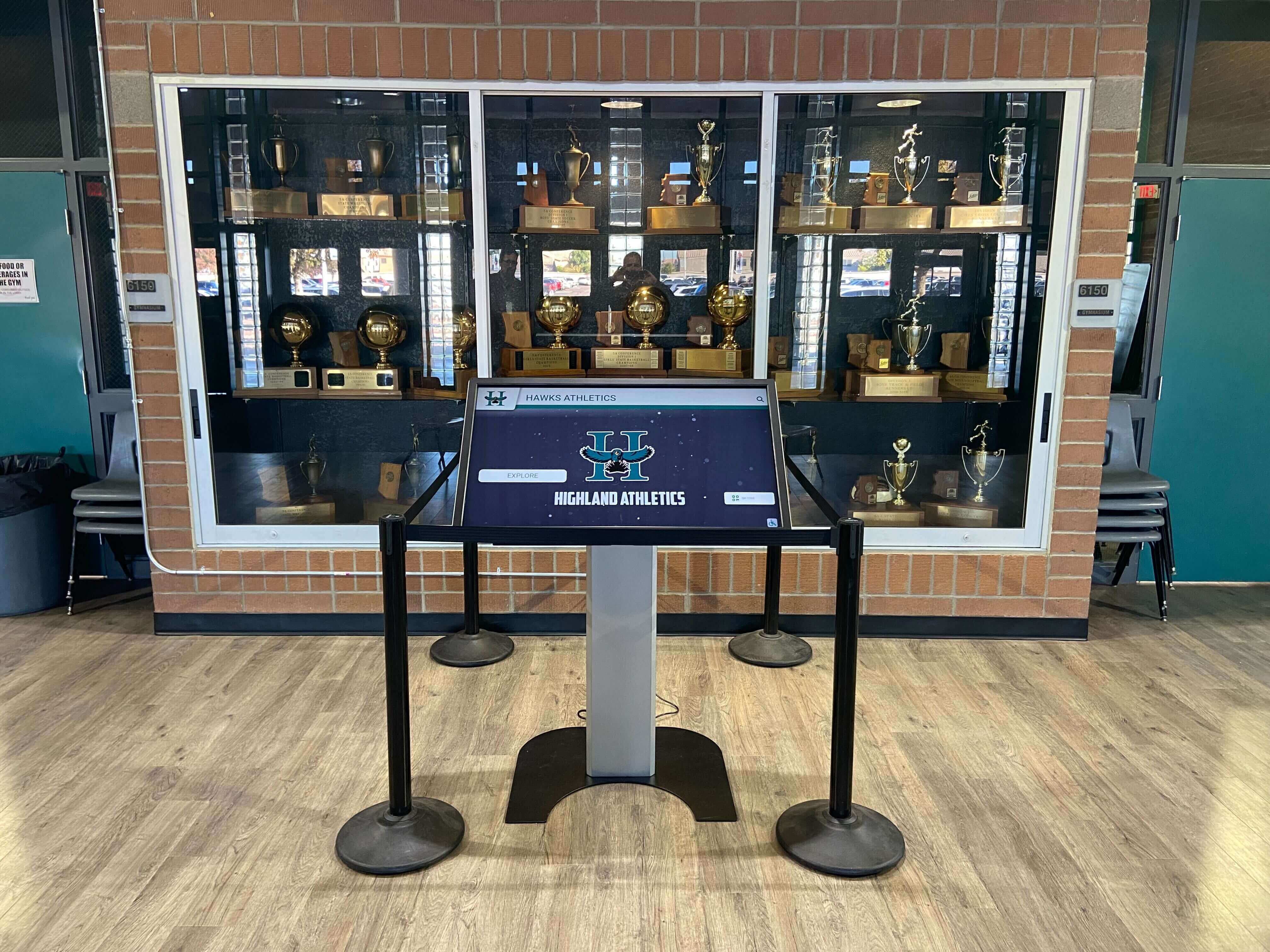
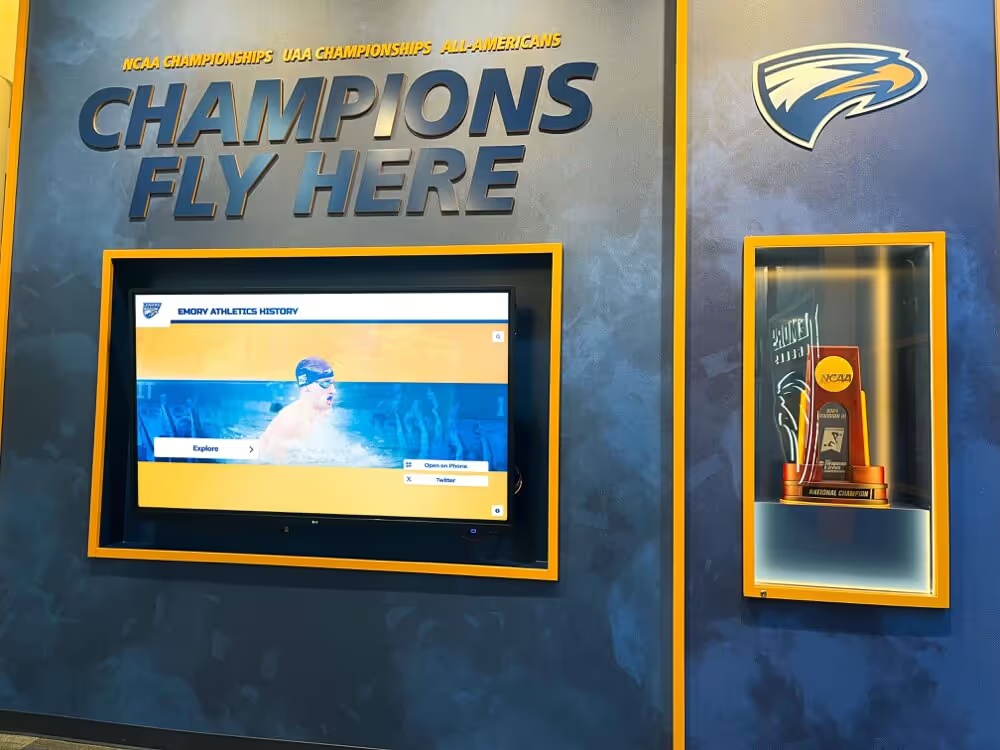
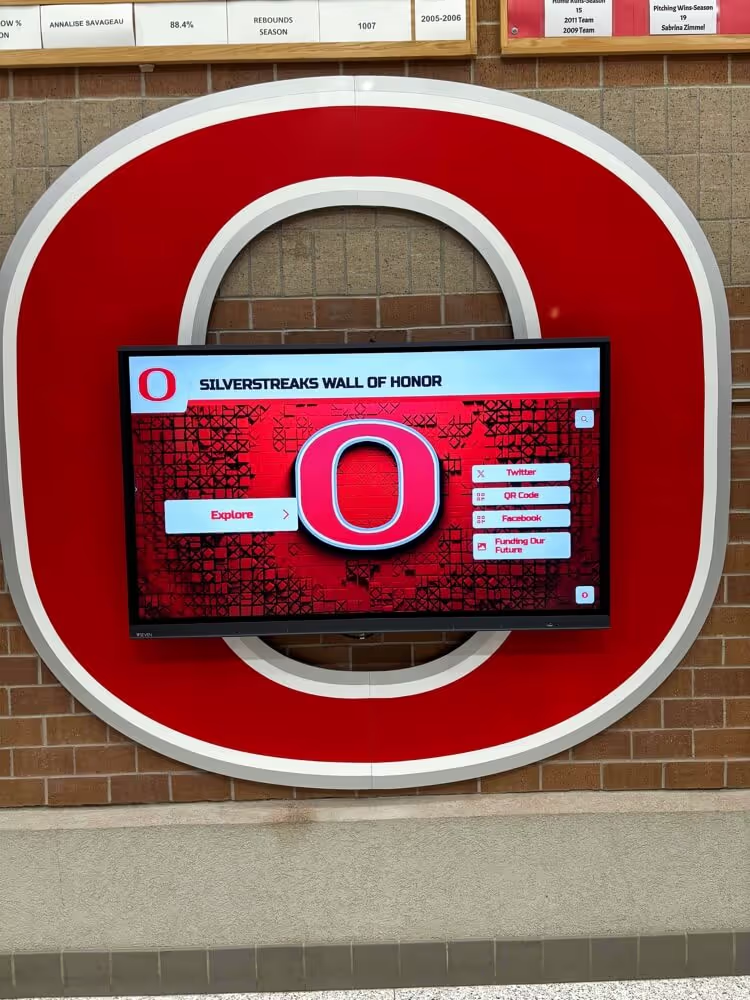
Modern trophy cases integrate digital displays allowing programs to showcase individual cheerleader achievements alongside team awards
Leadership and Character Awards
Team Captain Recognition
Formal captains deserve official recognition for accepting leadership responsibility and effectively guiding teams. Captain recognition should acknowledge specific leadership contributions rather than simply confirming a title.
Implementation approach: Detail what made captains effective leaders including specific ways they mentored younger athletes, examples of when they resolved conflicts or challenges, how they maintained team morale, and their role modeling program values. Consider having team members anonymously submit “leadership moments” they observed from captains throughout the season.
Coaches’ Award
This flexible award allows coaching staff to recognize an athlete who embodies program values, demonstrates exceptional character, or made special impact not captured by other categories.
Implementation approach: Coaches should explain specifically what earned this athlete their recognition, sharing anecdotes illustrating the qualities or contributions being honored. This personal explanation from coaches makes the award meaningful and helps the team understand what qualities coaches most value.
Best Teammate Award
Being an exceptional teammate represents one of cheerleading’s most important attributes. This peer-nominated award recognizes the cheerleader teammates most valued for support, encouragement, positive attitude, and contribution to team culture.
Implementation approach: Conduct anonymous peer voting where each team member selects the teammate who most positively impacted their experience. Tabulate votes and present this award as peer recognition, explaining that teammates themselves selected the recipient as the person who made their season most positive.
Spirit Award
Some cheerleaders bring infectious enthusiasm that elevates entire squads. This award recognizes the athlete whose spirit, energy, and positive attitude most consistently inspire teammates and engage audiences.
Implementation approach: Look for cheerleaders who consistently demonstrate enthusiasm during practices and performances, motivate teammates during challenging moments, maintain positive energy regardless of circumstances, and visibly embody the spirit that cheerleading represents.
Heart and Hustle Award
Effort represents a choice every athlete controls. This award honors the cheerleader who demonstrated maximum effort, work ethic, and determination throughout the season regardless of natural ability or experience level.
Implementation approach: Track effort indicators including practice intensity and focus, willingness to attempt challenging skills, extra work outside regular practice, resilience after setbacks, and overall commitment to constant improvement. This award should recognize effort itself rather than outcomes achieved.
Understanding comprehensive athletic recognition approaches helps cheer programs develop award systems that parallel recognition given to other sports, validating cheerleading’s status as the demanding athletic endeavor it is.
Commitment and Dedication Awards
Perfect Attendance Award
Consistent attendance demonstrates commitment and reliability that teams depend on. This objective award recognizes cheerleaders with perfect or near-perfect attendance at all practices, performances, and team events.
Implementation approach: Establish clear criteria (100% attendance, or 95% with only excused absences) and track attendance throughout the season. This objective standard makes the award fair and transparent while motivating consistent commitment from all athletes.
Iron Cheerleader Award
Beyond attendance, some cheerleaders demonstrate extraordinary toughness, perseverance through challenges, and refusal to give up. This award recognizes mental and physical resilience.
Implementation approach: Consider athletes who practiced through minor injuries (safely and with medical clearance), maintained commitment during personal challenges, overcame significant obstacles or setbacks, and consistently demonstrated mental toughness. Share specific examples of the recipient’s resilience during presentation.
Community Service Recognition
Many cheer programs engage in community service including visiting elementary schools, participating in charity events, or representing schools at community functions. This award honors cheerleaders who exemplified service and community engagement.
Implementation approach: Track community service participation throughout the season. Consider recognizing the athlete who participated in most events, made the greatest impact in service activities, or initiated new service opportunities for the team.
Creative and Fun Cheerleading Award Ideas
Beyond serious recognition, creative and fun awards add personality to award ceremonies while ensuring every cheerleader receives acknowledgment.
Personality and Style Awards
Best Game Face
Some cheerleaders have exceptional facial expressions that enhance performances and engage crowds. This lighthearted award celebrates personality and showmanship.
Biggest Smile
Cheerleading is about spreading spirit, and some athletes have infectious smiles that embody this perfectly. This positive award recognizes joyful enthusiasm.
Best Bow Collection
For programs where bows represent team identity, this fun award recognizes the cheerleader with the most impressive bow collection or best bow styling.
Loudest Voice
Voice projection matters in cheerleading for leading cheers and engaging crowds. This humorous award recognizes the cheerleader who can most effectively project spirit vocally.
Most Spirited
Similar to the Spirit Award but potentially more playful, this recognizes the athlete who brings the most energy, enthusiasm, and visible excitement to everything they do.
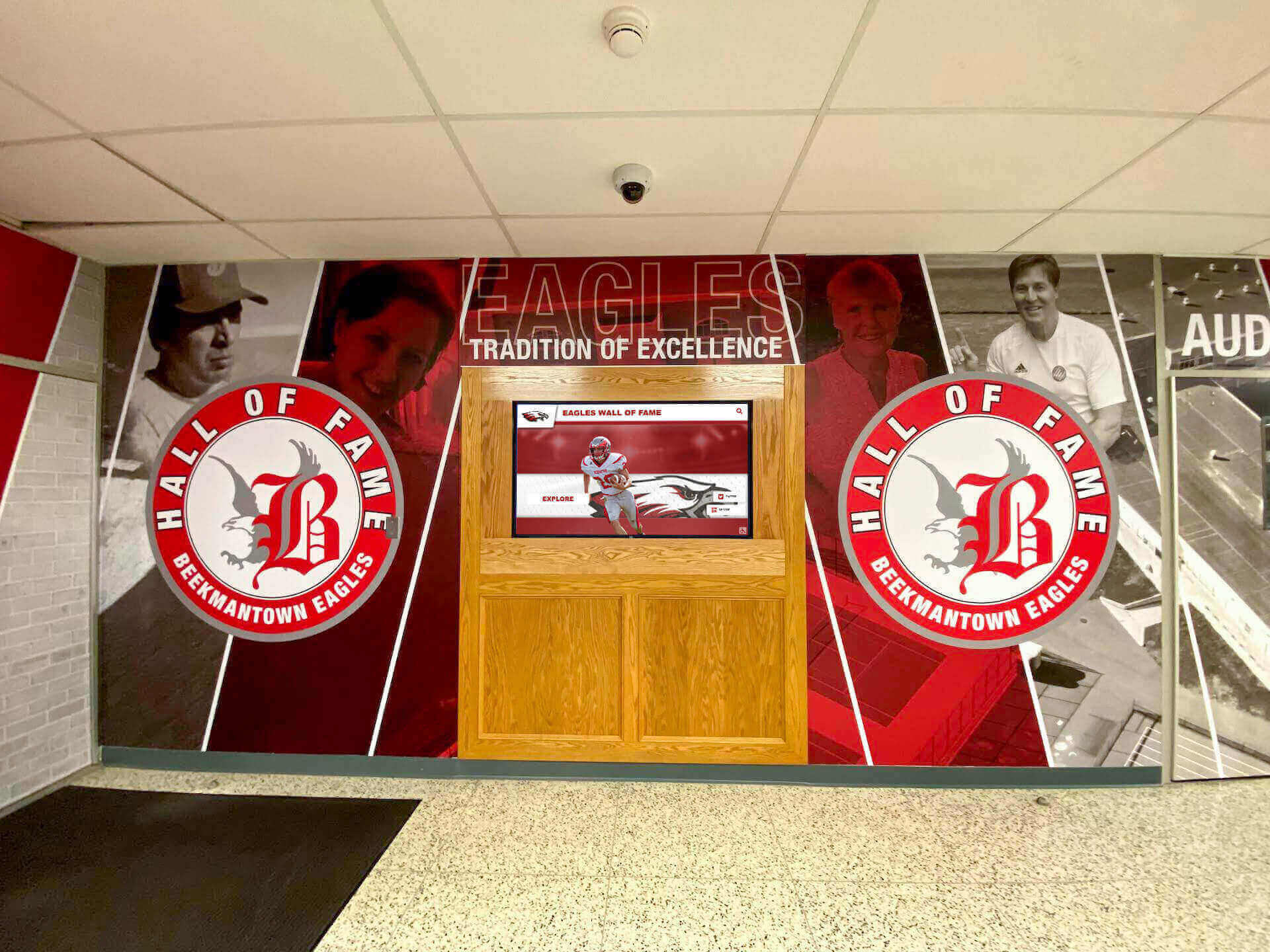
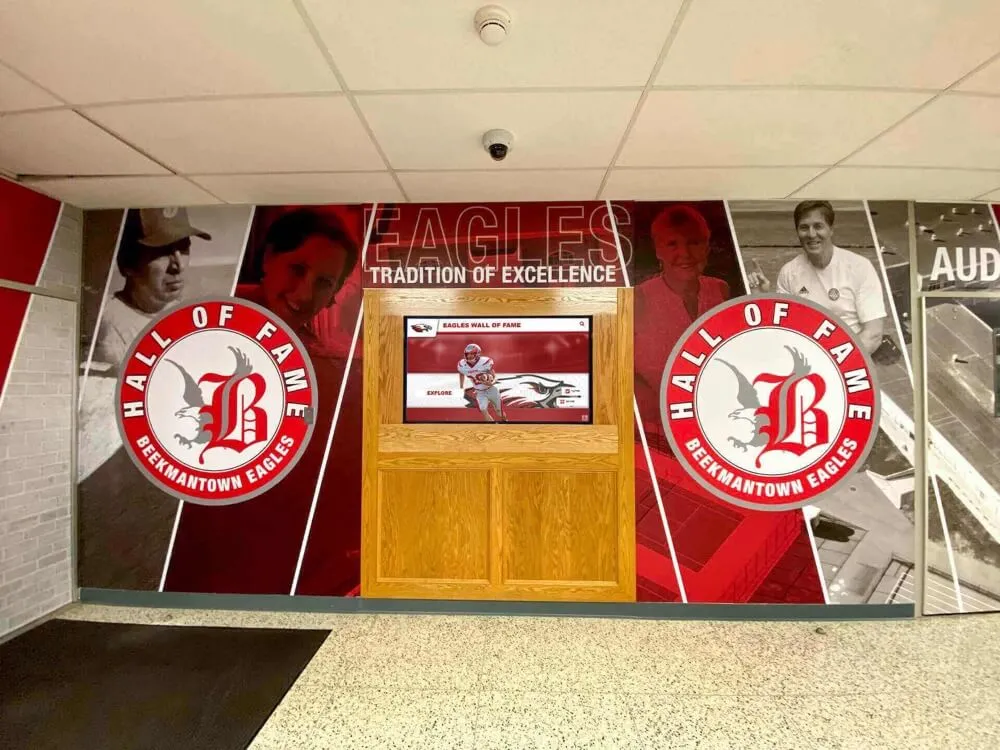
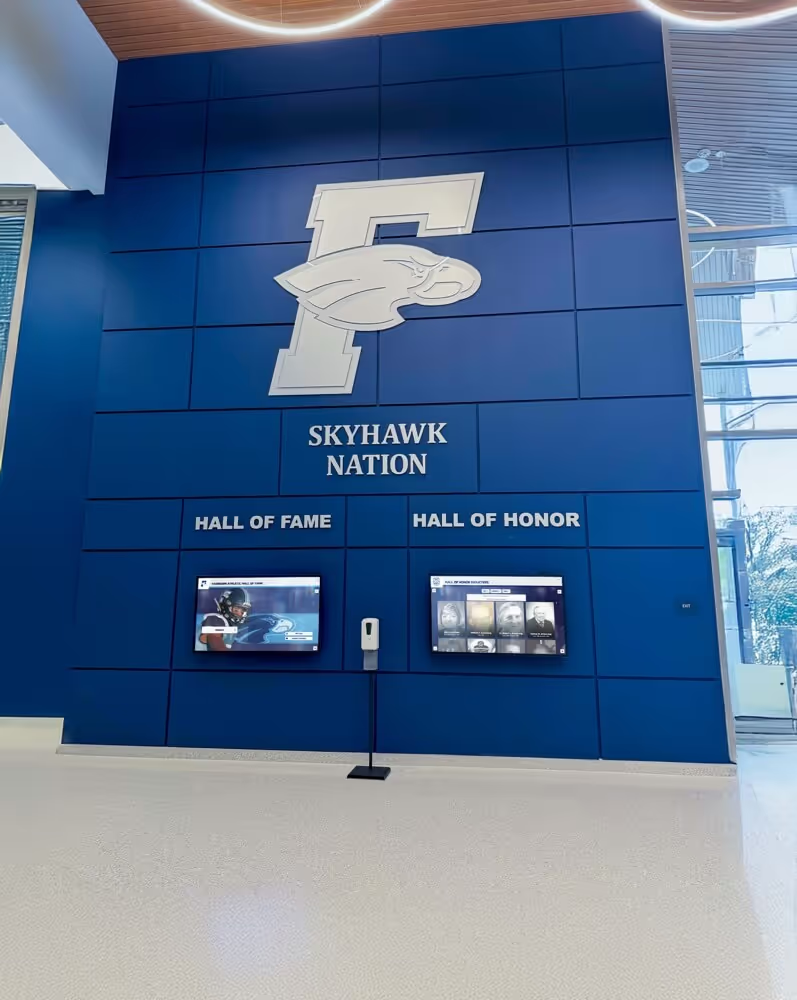
School entrance displays featuring athletic recognition including cheerleading achievements create welcoming environments celebrating all sports equally
Performance-Based Fun Awards
Best Crowd Interaction
Some cheerleaders excel at engaging crowds and generating audience response. This award recognizes natural crowd-working ability.
Most Memorable Performance Moment
Based on a single standout performance moment from the season—perhaps a perfectly executed difficult stunt, an impressive tumbling pass, or a particularly effective crowd engagement moment.
Smoothest Moves
For the athlete whose motions and movements always look effortlessly smooth and aesthetically pleasing.
Best Dance Skills
Many cheer routines include significant dance elements. This award recognizes the strongest dancer on the squad.
Team Culture Awards
Team Photographer
Many teams have someone who documents moments through photos. Recognizing this contribution shows appreciation for memory preservation.
Funniest Team Member
Every squad has someone who keeps teammates laughing. This award celebrates personality and team chemistry.
Motivational Speaker
Some athletes naturally deliver motivational pep talks. Recognizing this informal leadership validates an important contribution.
Best Pre-Performance Ritual
For the cheerleader with the most memorable or effective pre-performance routine that helps focus the team.
Implementing diverse youth sports awards programs ensures all athletes receive recognition for their unique contributions while maintaining fun and engaging award ceremonies.
Position-Specific Recognition
Cheerleading positions require distinct skills deserving specialized recognition.
Flyer-Specific Awards
Best Flyer
This position-specific award recognizes overall flyer excellence considering body control and awareness, trust and confidence, aesthetic form and presentation, flexibility for body positions, and quick learning of new stunts and transitions.
Most Fearless Flyer
Some flyers demonstrate exceptional courage attempting difficult stunts. This award celebrates bravery and willingness to push boundaries.
Base-Specific Awards
Strongest Base
Bases require exceptional strength. This objective recognition might be based on weightlifting achievements, demonstrated lifting capacity, or coaches’ assessment of base strength.
Most Reliable Base
Reliability matters tremendously for bases who must consistently execute to keep flyers safe. This award recognizes dependability and consistency.
Best Base Technique
This award acknowledges the base with the most technically correct stunting form including proper hand placement, body positioning, and timing.
Back Spot Recognition
Best Back Spot
Back spots occupy crucial positions requiring attention to detail, quick reflexes, strength and reliability, and leadership coordinating stunt groups. This specialized recognition validates this essential position.
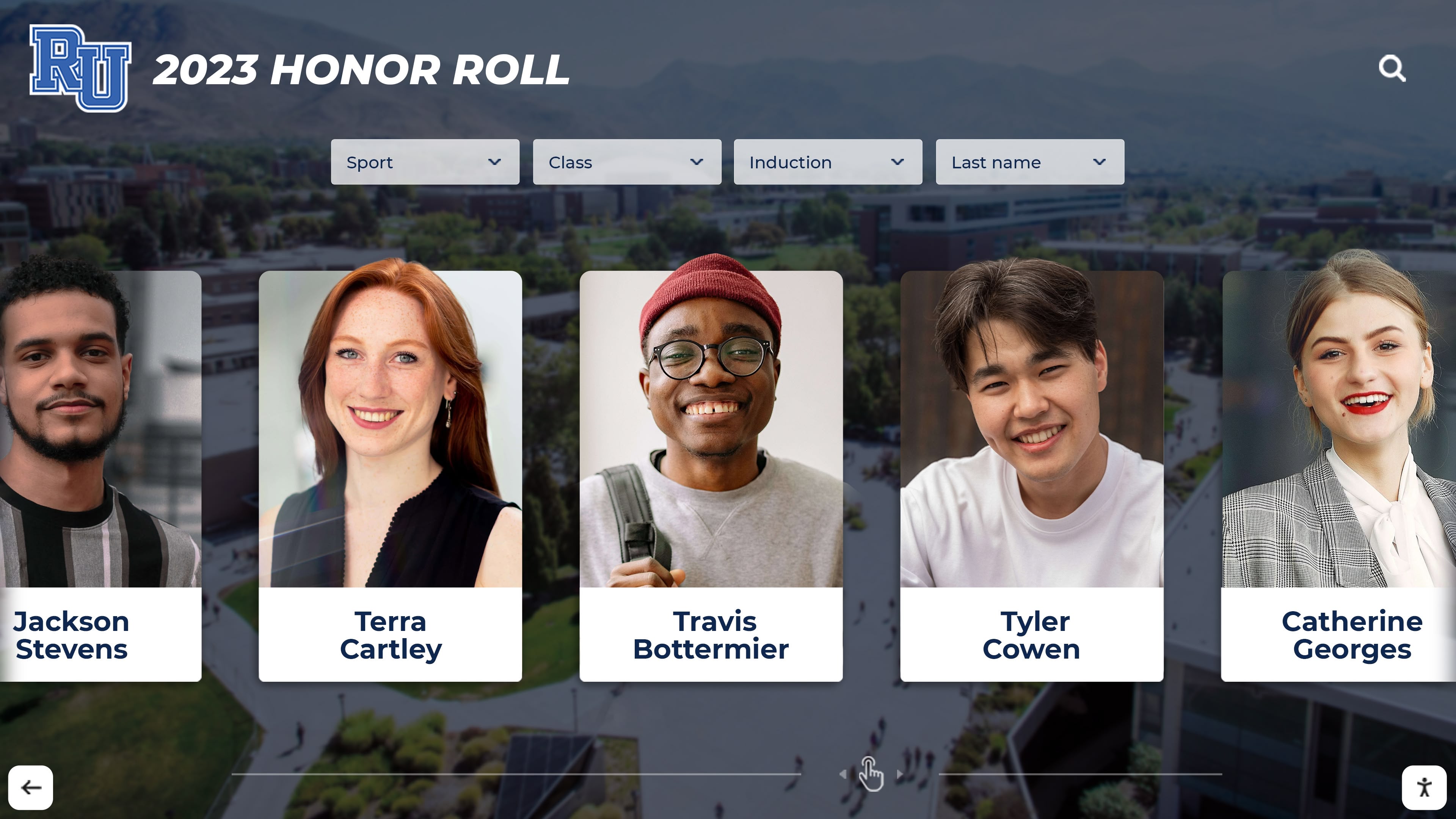
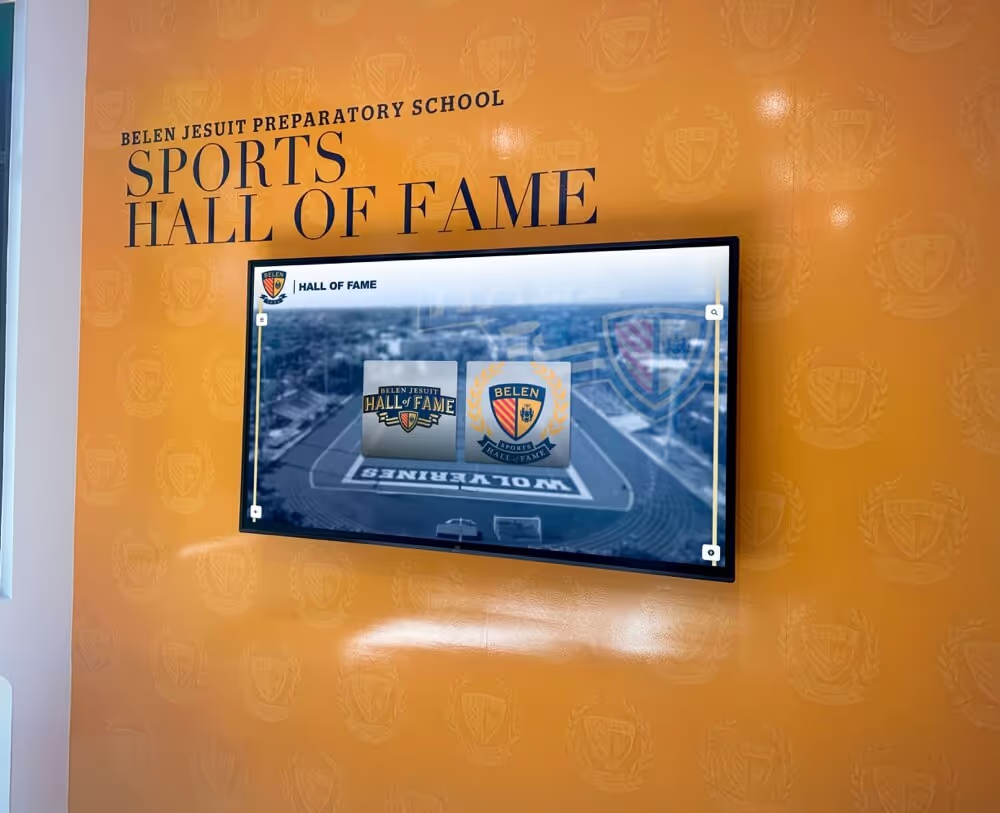
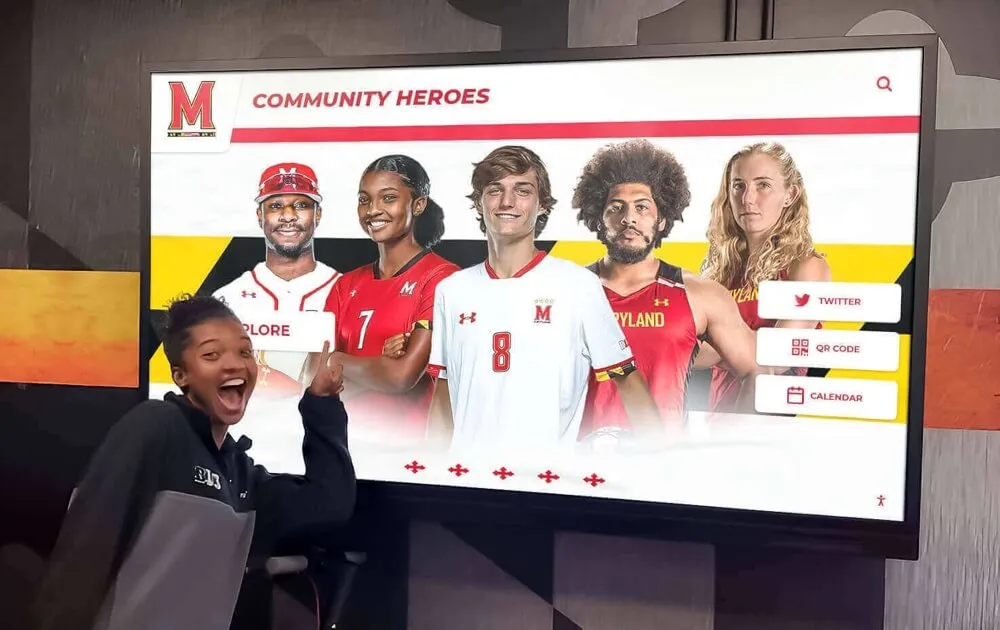
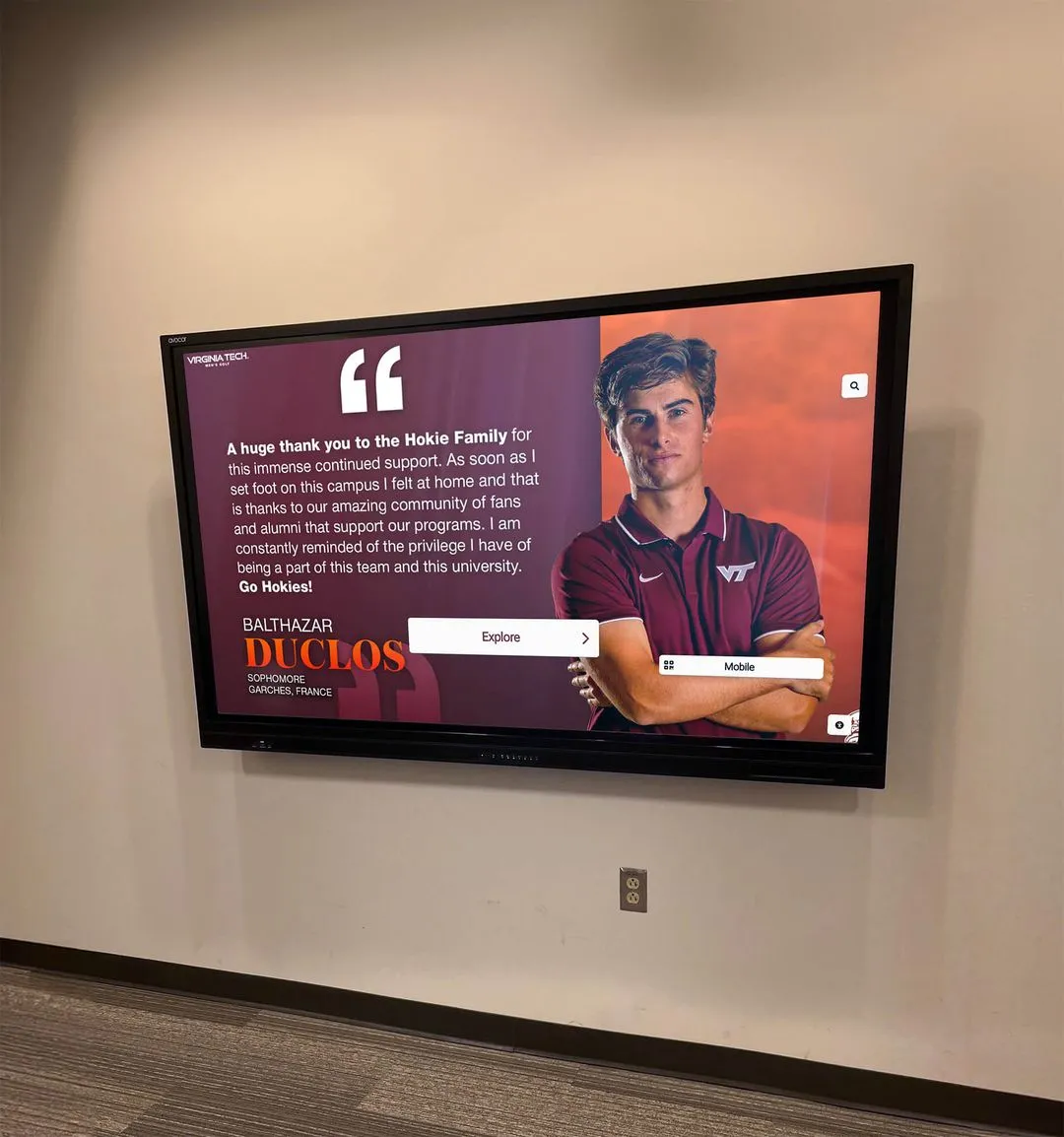
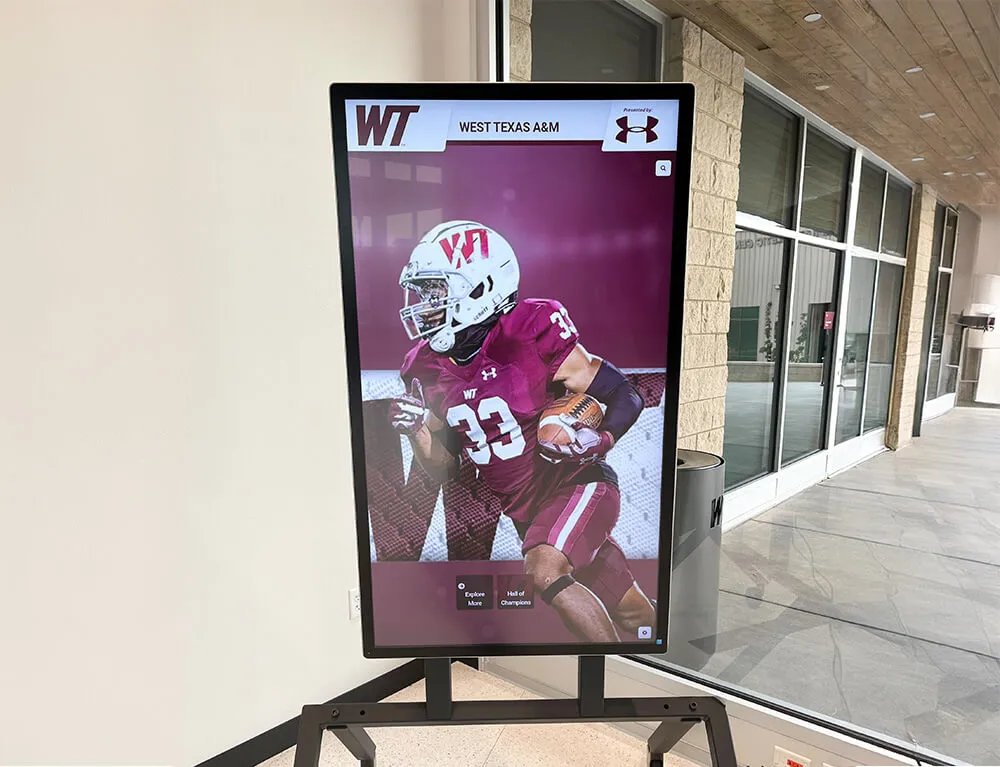
Digital displays enable rich individual profile presentations showcasing cheerleader achievements, photos, and personal accomplishments throughout their careers
Competitive Achievement Recognition
For competitive cheer teams, specific awards honor competition performance and achievements.
Competition Performance Awards
Competition MVP
For multi-competition seasons, this award recognizes the athlete who delivered the most consistent excellence across all competitive performances.
Implementation approach: Evaluate performance quality at each competition, noting standout execution, consistency, leadership under pressure, and recovery from mistakes. Consider input from judges’ feedback when available.
Biggest Score Contributor
Based on judges’ feedback or scoresheets when available, this recognizes the athlete whose skills contributed most significantly to competitive scores—perhaps exceptional tumbling adding difficulty points or perfect stunt execution maximizing technical scores.
Clutch Performer
This award honors the cheerleader who performed best under competition pressure, perhaps executing difficult skills successfully during competition after struggling in practice, or delivering strongest performances at championship events.
Team Achievement Recognition
Championship Ring / Banner Recognition
When teams win championships or achieve major competitive milestones, ensure every squad member receives recognition including athletes who didn’t compete if they contributed during preparation.
All-American Recognition
Many competitive organizations offer All-American programs. Athletes earning All-American status deserve formal program recognition even though the honor comes from external organizations.
Bid Earners
For teams earning bids to national championships or prestigious invitational competitions, recognizing this collective achievement celebrates hard work resulting in invitation to elite events.
Competitive cheer programs exploring end-of-season recognition approaches benefit from understanding how successful programs balance individual recognition with team celebration.
Academic and Community Recognition
Comprehensive cheer recognition extends beyond athletic performance to honor academic achievement and community contributions.
Academic Excellence Awards
Scholar Athlete Award
Cheerleaders maintaining high academic standards while meeting demanding athletic commitments demonstrate exceptional time management and priorities. This award typically recognizes maintaining specific GPA thresholds (often 3.5 or higher) throughout the season.
Most Improved Academically
Similar to athletic improvement recognition, this award honors cheerleaders who significantly improved academic performance while managing cheer commitments.
Academic All-Conference / All-State
When league or state associations offer academic recognition programs, ensure your cheerleaders who qualify receive program acknowledgment even though honors come from external organizations.
Community Impact Recognition
Community Ambassador Award
This recognizes the cheerleader who most effectively represented the program in community settings including schools visits, charity events, youth clinics, or public appearances.
Mentor of the Year
For athletes who actively coached youth cheerleaders, mentored younger program members, or contributed to feeder program development.
Service Hours Leader
Objective recognition based on documented community service hours completed during the season.
Integrating academic and community recognition into athletic awards demonstrates that comprehensive recognition programs value complete athlete development beyond just sport performance.
Senior Recognition and Legacy Awards
Graduating seniors deserve special recognition honoring their complete cheer careers and contributions to program legacy.
Senior Career Honors
Senior Tribute
Each graduating senior should receive individual recognition including career highlights and achievements, personal growth and development, contributions to program culture, and future plans acknowledging their next chapter.
Implementation approach: Gather comprehensive information from seniors including favorite memories, what cheerleading taught them, and gratitude for specific coaches or teammates. Present detailed tributes rather than just reading names and graduation years.
Four-Year Letter Winner
Athletes who committed to programs for complete high school or college careers deserve recognition for sustained dedication across multiple years.
Captain Legacy
Seniors who served as captains warrant special recognition beyond general senior tributes, acknowledging their leadership impact on program culture and teammate development.
Legacy and Impact Recognition
Program MVP
For outstanding seniors, special program MVP recognition honors their exceptional overall contribution considering athletic performance, leadership, character, and lasting impact on program direction.
Tradition Keeper
Some seniors exemplify program values and traditions, helping preserve and transmit culture to newer athletes. This recognition validates cultural leadership and program stewardship.
Future Coach Award
This projection award recognizes seniors demonstrating coaching potential through natural teaching ability, patience with less experienced athletes, technical knowledge, and passion for cheerleading beyond personal performance.
Creating meaningful senior recognition programs ensures graduating cheerleaders receive appropriate celebration for years of dedication while inspiring younger athletes who observe the respect seniors receive.
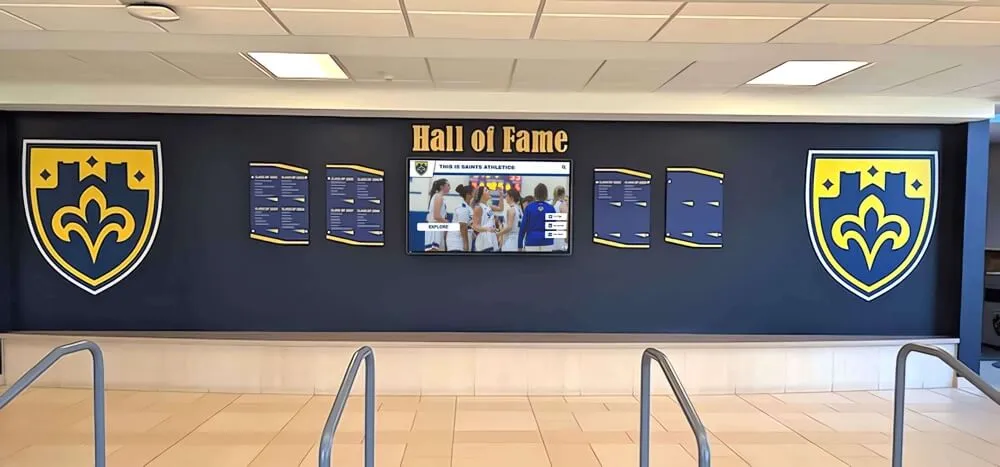
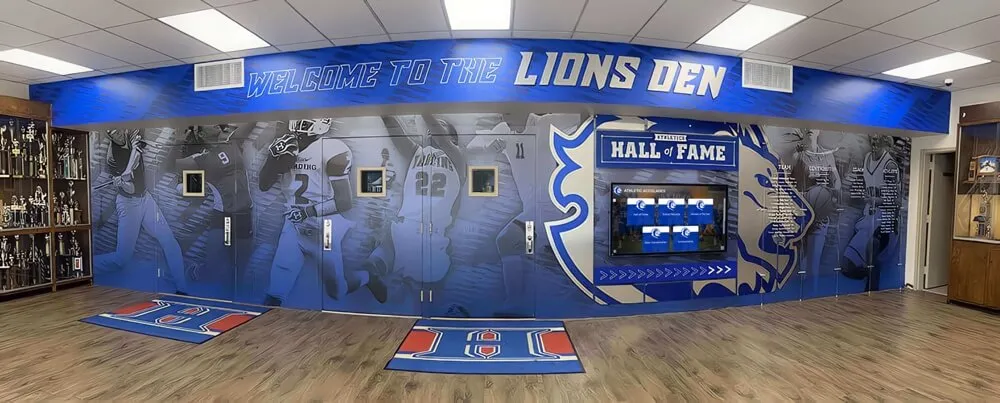
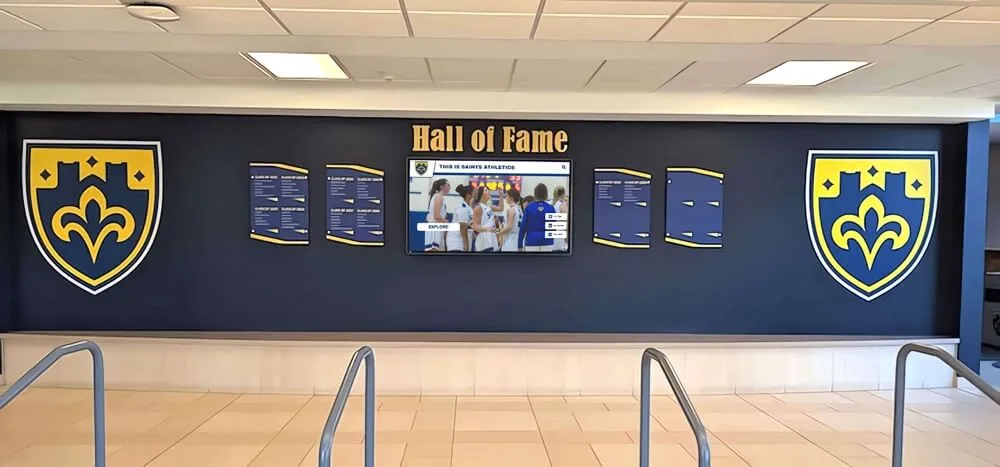
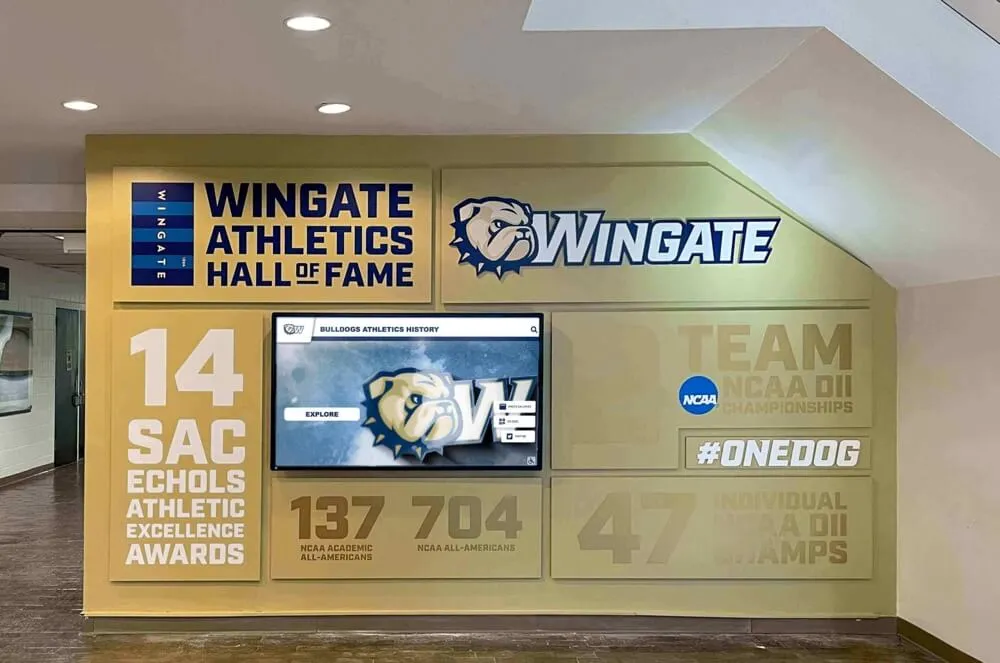
Comprehensive recognition walls integrate traditional shield displays with modern digital screens, honoring cheer program history while providing unlimited capacity for ongoing recognition
Implementing Your Cheerleading Awards Program
Understanding how to effectively implement recognition ensures awards achieve their intended purpose of motivating athletes and building program culture.
Planning Your Awards Ceremony
Timing Considerations
Schedule awards ceremonies at natural season endpoints—after final competitions for competitive teams, or after final performances for sideline squads. Consider hosting ceremonies during end-of-season banquets allowing families to attend and providing appropriate celebratory atmosphere.
For programs with multiple squads, decide whether to hold unified ceremonies recognizing all teams together or separate events for competitive teams and sideline squads based on schedule alignment and team dynamics.
Ceremony Format and Flow
Structure ceremonies to maintain engagement while honoring all deserving athletes including opening remarks from coaches or program directors, team awards and collective recognitions, individual awards starting with fun/creative categories, building toward major honors like MVP or senior recognition, and closing remarks celebrating the season and looking toward the future.
Balance ceremony length appropriately—45 minutes to one hour typically works well, allowing sufficient time for meaningful recognition without testing audience patience.
Making Awards Meaningful
Generic recognition undermines award value. For each award, provide specific explanation of why the recipient earned recognition including concrete examples of what they accomplished, particular moments demonstrating the qualities being honored, and genuine appreciation for specific contributions. This specificity transforms awards from name-reading exercises into meaningful celebrations.
Budget-Friendly Award Ideas
Recognition doesn’t require expensive trophies when thoughtful alternatives create equal or greater meaning.
Under $10 Per Award
Printed certificates with personalized messages and achievement descriptions, custom ribbons or medals designating award categories, printed photos in simple frames with award descriptions, team apparel items (t-shirts, socks) with award designation added, and custom achievement cards with personal messages from coaches.
$10-$30 Per Award
Small trophies or plaques with engraved names and awards, custom medals with athlete names and achievements, gift cards paired with certificates, team gear upgrades (warm-ups, bags) with award recognition, and contribution to team scholarship or training fund in honoree’s name.
Premium Recognition Options
Professional photo collages documenting athlete’s cheer career, custom jersey displays with achievement descriptions, video tributes compiled specifically for recipients, and inclusion in permanent digital recognition displays honoring program history.
Establishing Selection Criteria and Processes
Transparent selection processes prevent perceptions of favoritism while ensuring fair recognition.
Objective Awards
For awards with measurable criteria (Perfect Attendance, Scholar Athlete, Most Community Service Hours), establish clear standards at season beginning and track data systematically. These objective awards should be straightforward and uncontroversial.
Subjective Awards
Awards based on coach evaluation, peer voting, or qualitative assessment require clear communication about selection processes including who makes decisions (coaching staff, anonymous peer voting, combination approaches), what criteria guide selection, and how final determinations occur.
For peer-voted awards, use anonymous ballots and simple voting instructions. For coach-selected awards, consider input from all coaching staff rather than just head coach decisions to incorporate diverse perspectives.
Preventing Award Inflation
Resist pressure to create awards ensuring every athlete receives major recognition. While fun and participation awards can include all team members, major honors should recognize genuine excellence or exceptional contributions. Inflating awards until everyone wins everything ultimately diminishes recognition meaning for athletes who truly excelled.
Understanding comprehensive recognition program development helps programs create systems balancing inclusive participation recognition with maintenance of meaningful standards for major honors.

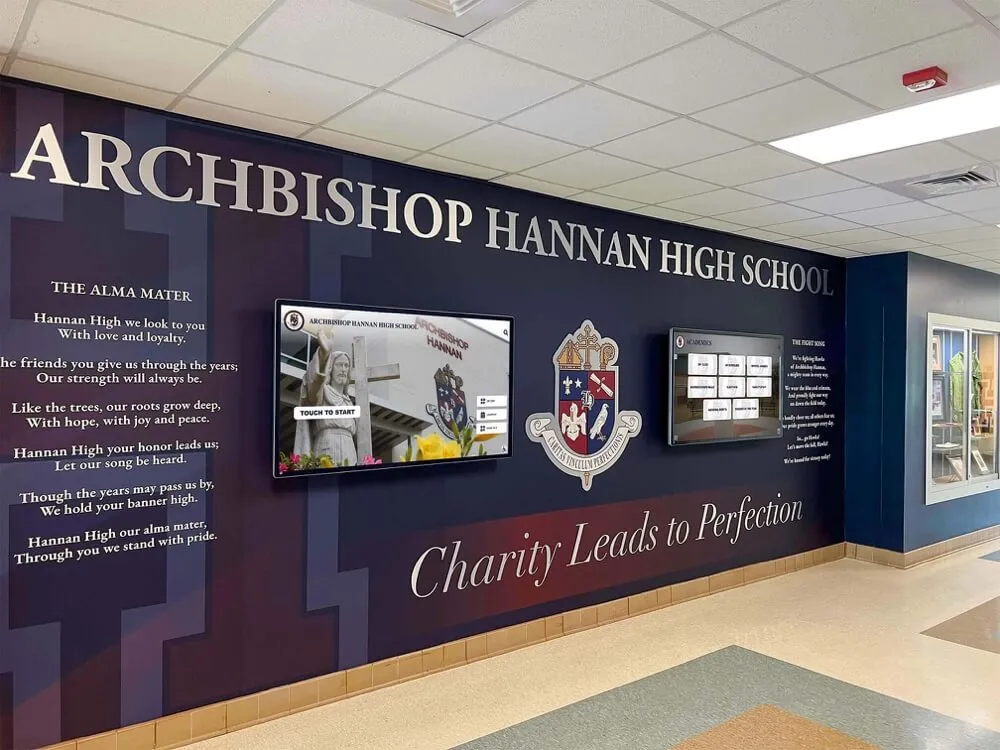
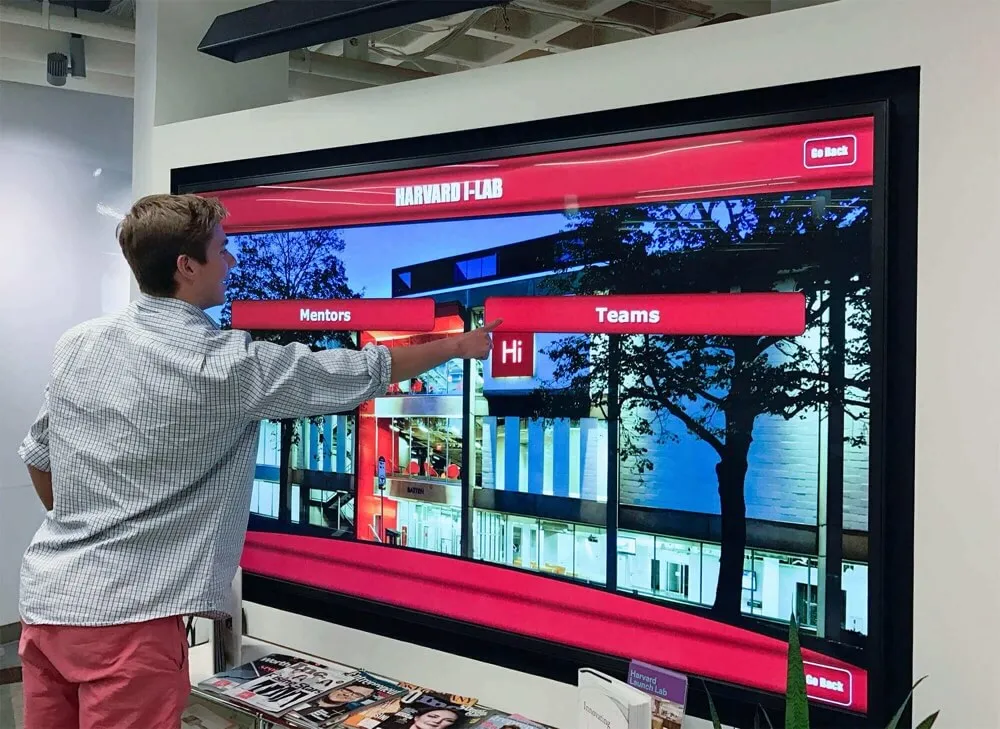
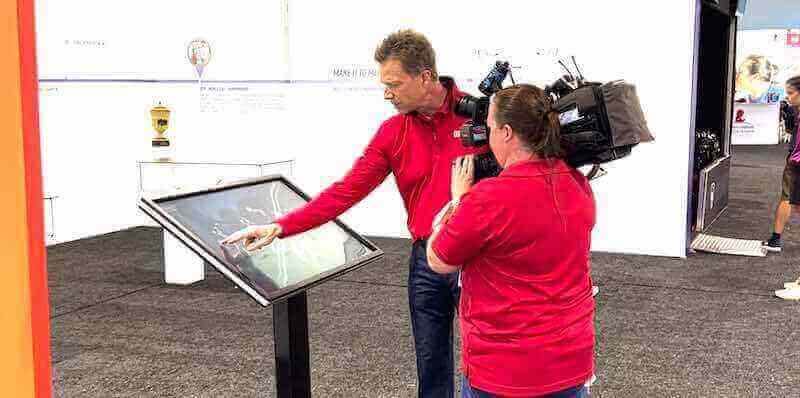
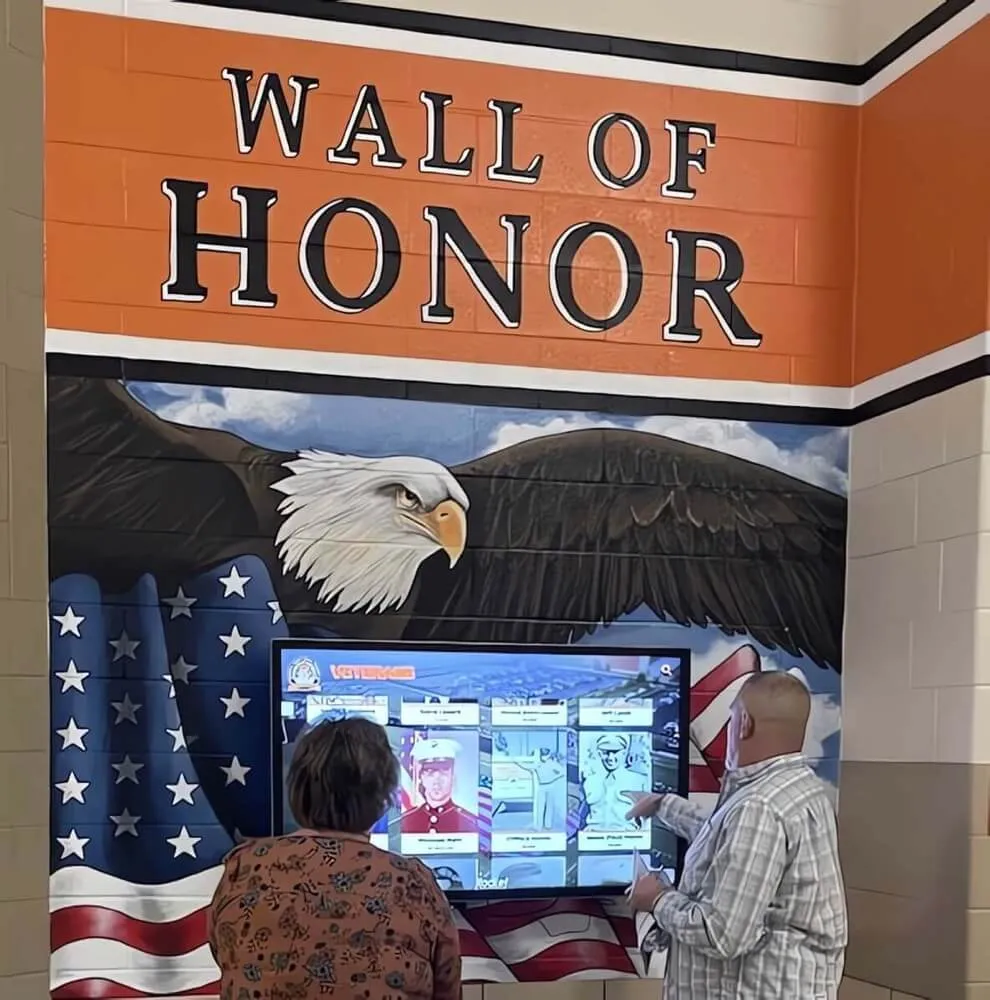
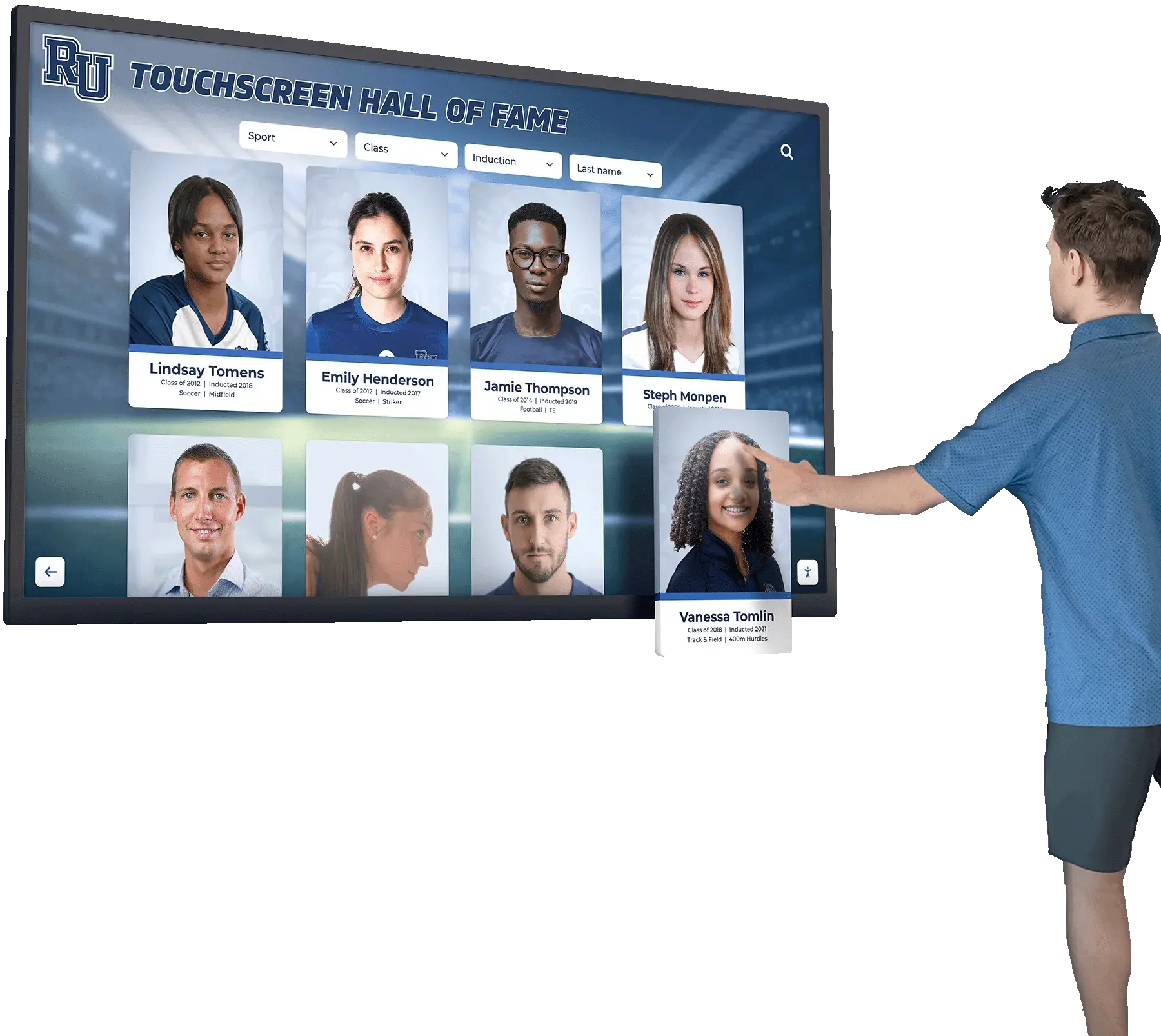
Interactive touchscreen displays enable detailed exploration of individual cheerleader achievements, career statistics, and personal stories
Modern Recognition Solutions: Digital Displays and Permanent Systems
While traditional awards ceremonies and physical trophies remain important, modern digital recognition systems extend impact far beyond single events while solving common cheerleading recognition challenges.
The Case for Digital Cheer Recognition
Traditional recognition approaches face inherent limitations that digital solutions address effectively:
Space Constraints
Physical trophy cases and wall displays have finite capacity, often filling quickly and requiring difficult decisions about what recognition to preserve versus remove. This particularly challenges cheer programs which may not receive equal space allocation compared to other sports despite comparable achievements.
Digital recognition systems provide unlimited capacity, allowing programs to honor every athlete comprehensively without space restrictions that force removal of historical recognition when adding current achievements.
Limited Context and Storytelling
Names on plaques or trophies in cases provide minimal information about what individuals achieved. Viewers see recognition exists but rarely understand specific accomplishments, the athlete’s journey, or what made achievements special.
Digital platforms enable rich multimedia storytelling including detailed achievement descriptions, career statistics and progression, photo galleries documenting the athlete’s experience, video highlights of performances, and personal statements from athletes about what cheerleading meant to them.
Accessibility and Engagement
Traditional recognition reaches only people physically present in facilities during limited visiting hours. Families, alumni, and community members who cannot visit campus miss opportunities to engage with achievement celebration.
Modern systems offer remote accessibility allowing web-based exploration of recognition content, enabling cheerleaders to share their digital profiles with extended family, college recruiters, or future employers, and providing program marketing content demonstrating commitment to athlete recognition.
Maintenance and Updates
Physical displays require ongoing maintenance, eventual replacement, and challenging updates when adding new recognition or correcting errors. This maintenance burden often results in outdated displays that undermine recognition effectiveness.
Digital systems enable instant content updates through cloud-based management platforms, allow corrections immediately when errors are discovered, and support continuous improvement of recognition content over time as more photos or information become available.
Implementing Digital Recognition for Cheer Programs
Organizations like Rocket Alumni Solutions specialize in digital recognition displays designed specifically for schools and athletic programs. These systems provide:
Professional Hardware Installation
Commercial-grade touchscreen displays installed strategically in locations with high visibility including main school lobbies, athletic facility entrances, hallways connecting to gymnasiums, or dedicated athletic recognition areas. Professional installation ensures displays integrate aesthetically with existing facilities while functioning reliably.
Intuitive Content Management
Cloud-based administration platforms allowing coaches or athletic staff to manage recognition content without technical expertise including adding new cheerleader profiles after awards ceremonies, uploading photos and achievement information, updating athlete statistics and accomplishments, and organizing content by season, team, or award category.
Engaging User Experience
Interactive interfaces enabling community members to explore cheer recognition through multiple navigation paths including searching by athlete name, browsing by season or year, filtering by award category or team, and discovering featured athletes or recent additions.
Comprehensive Content Integration
Support for diverse content types bringing cheerleader recognition to life including professional photos and candid team images, achievement descriptions and statistics, video highlights from performances or competitions, personal statements from athletes, coach testimonials and recognition messages, and connections to related content like team histories or program milestones.
Permanent Recognition Archive
Creation of institutional memory preserving complete program history including all award recipients across years and categories, senior class recognition extending indefinitely, championship and competitive achievement documentation, and program evolution and cultural history.
Schools implementing digital recognition report significant benefits including enhanced athlete motivation seeing permanent recognition value, improved recruitment as prospective families observe commitment to recognition, stronger alumni engagement with accessible program history, and elevated program status within schools through professional recognition presentation.
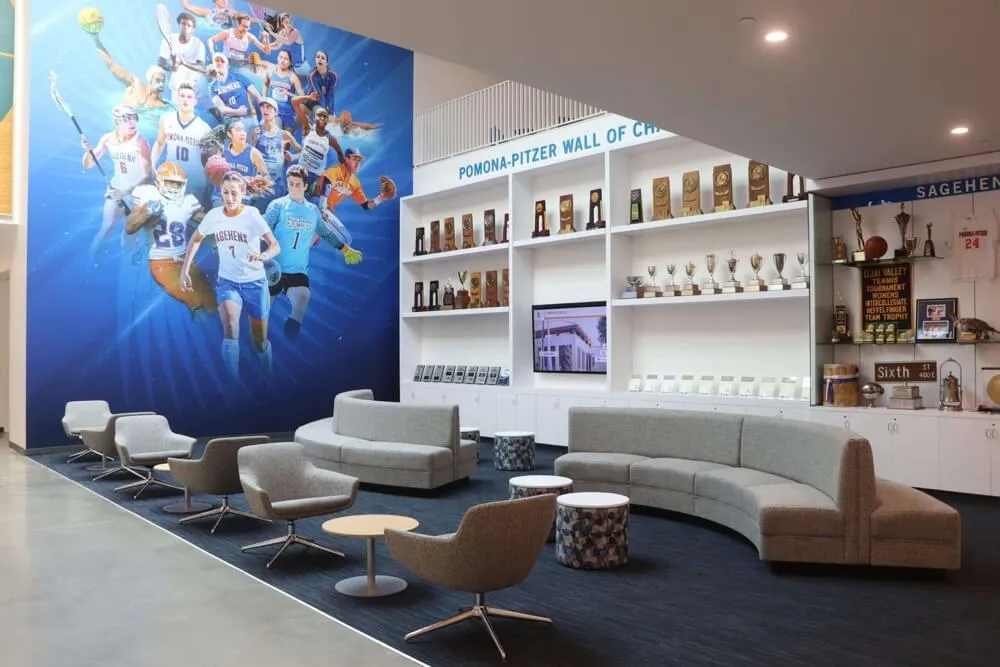
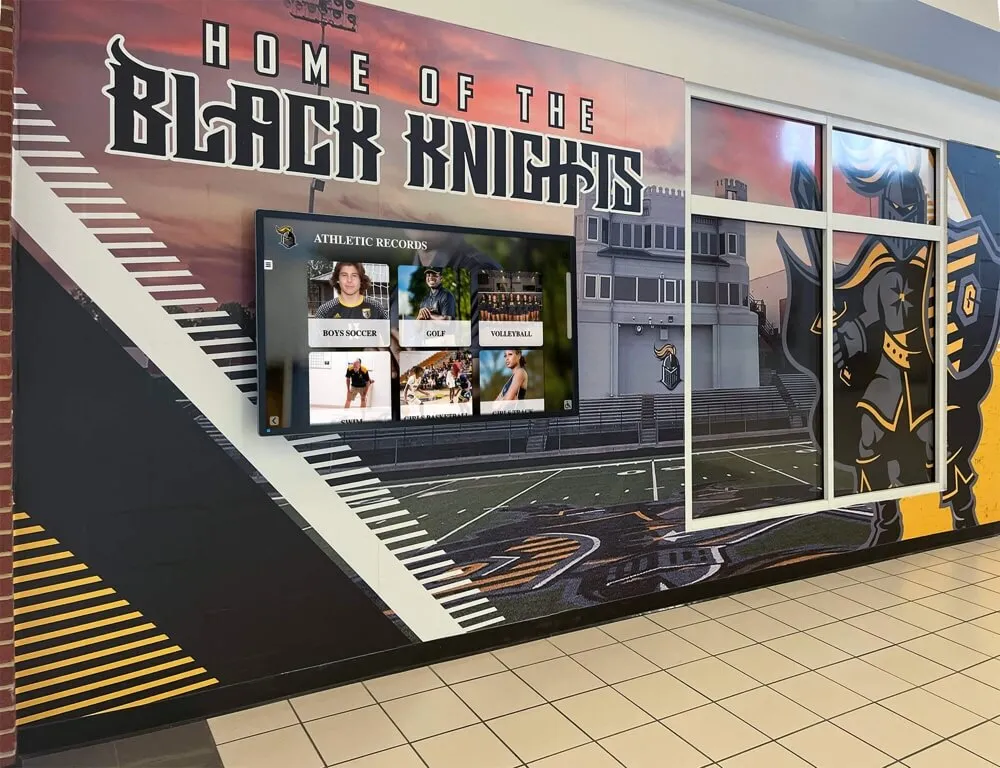
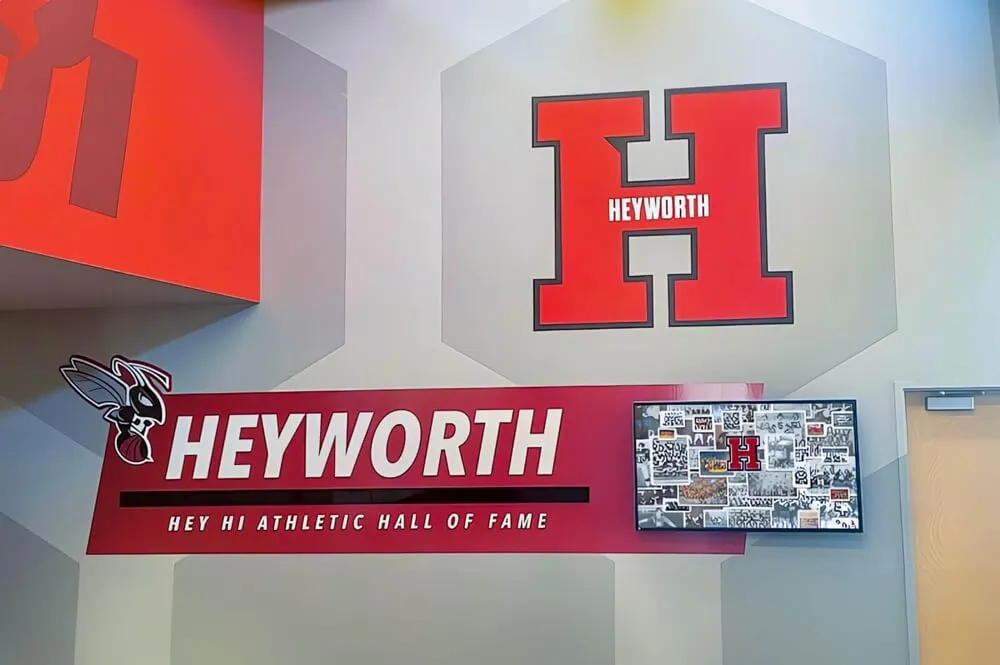
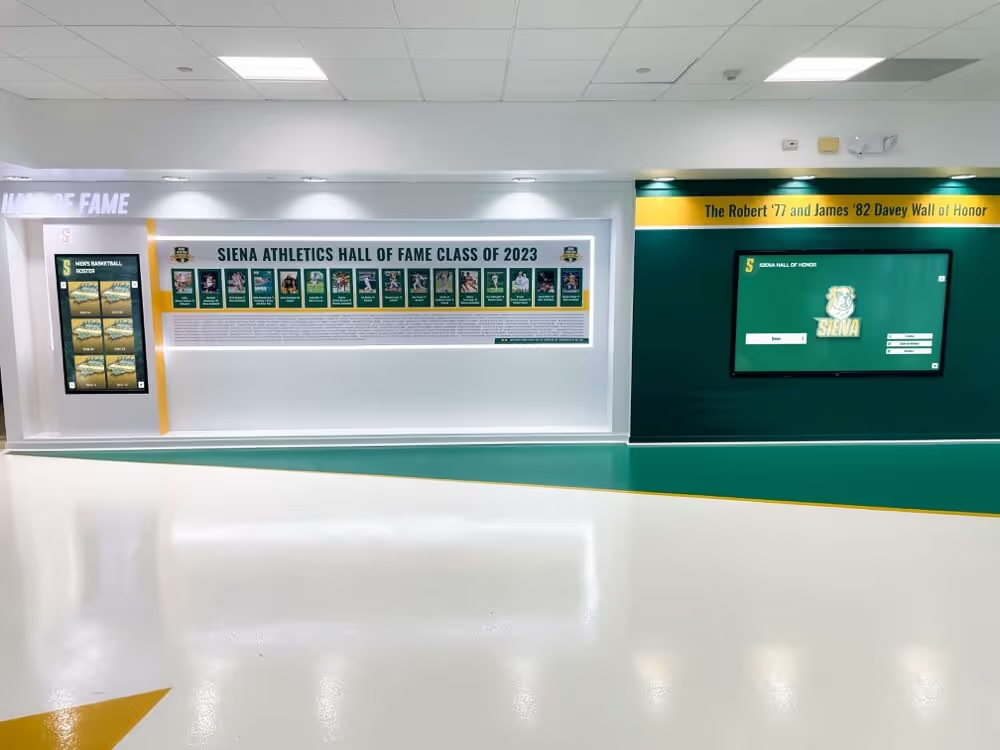
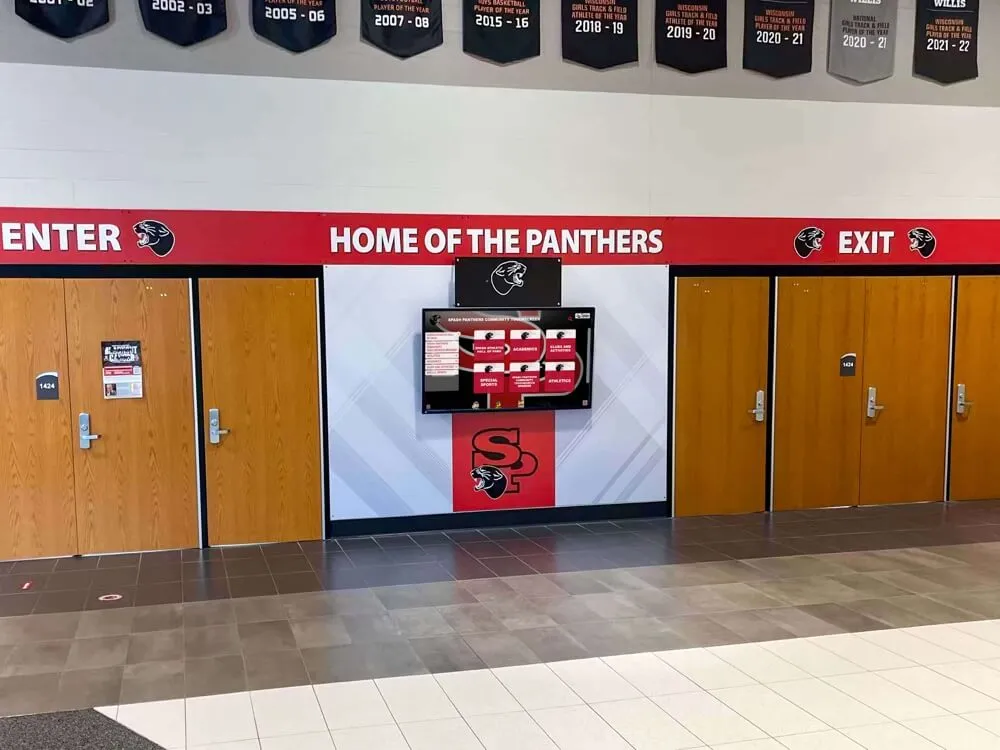
Athletic facilities incorporating both traditional trophy displays and modern digital recognition create comprehensive celebration of all sports including cheerleading
Integrating Awards with Overall Program Culture
Recognition programs work most effectively when integrated into broader program culture rather than existing as isolated annual ceremonies.
Year-Round Recognition Approach
Monthly or Weekly Recognition
Supplement end-of-season awards with ongoing acknowledgment including weekly “spotlight athletes” highlighting different team members, monthly recognition for specific achievements or improvements, social media features celebrating individual cheerleaders, and practice shoutouts acknowledging excellent execution or exceptional effort.
This ongoing recognition maintains motivation throughout seasons while ensuring all athletes receive attention rather than concentrating all recognition at year-end.
Progress Celebration
Create cultures celebrating improvement and progress as much as final achievement. When cheerleaders master new skills, acknowledge these victories publicly. When athletes overcome struggles or breakthrough performance plateaus, recognize these growth moments. This progressive recognition motivates continued effort while validating improvement regardless of absolute achievement level.
Peer Recognition Systems
Empower athletes to recognize teammates through structured peer acknowledgment including teammate shoutout boards where athletes post appreciation notes, peer-nominated weekly awards for various contributions, and team meetings where athletes acknowledge specific teammate contributions.
Peer recognition strengthens team bonds while distributing recognition responsibility beyond just coaching staff.
Connecting Recognition to Program Values
Effective awards reinforce what programs value and prioritize. Ensure award categories align with stated program values:
If your program emphasizes safety, create awards recognizing attention to technique and safety consciousness. If community service matters to your program identity, make service recognition prominent. If academic excellence is a program pillar, give academic awards equal prominence to athletic recognition.
This alignment between awards and values creates coherent program culture where recognition reinforces priorities rather than contradicting them.
Building Recognition Traditions
Established recognition traditions strengthen program identity and create anticipation:
Consider developing unique award names reflecting program history (naming major awards after legendary program figures), creating special award presentations with distinctive rituals or ceremonies, involving alumni in presenting certain awards connecting current athletes to program legacy, and maintaining historical documentation of all recipients creating visible recognition lineage.
These traditions transform individual awards into meaningful program institutions athletes aspire to win.
Comprehensive approaches to high school end-of-year awards demonstrate how recognition programs integrate into overall athletic and school culture, elevating cheer alongside all other programs.
Common Cheerleading Recognition Challenges and Solutions
Implementing effective recognition often surfaces challenges requiring thoughtful solutions.
Challenge: Limited Recognition Compared to Other Sports
Many cheer programs receive less recognition support, smaller trophy case space allocation, or minimal acknowledgment compared to traditional competitive sports.
Solution: Document competitive achievements and participation metrics demonstrating program scale and success comparable to other sports. Present data showing attendance hours, competition results, and athlete dedication matching other programs. Propose integrated recognition systems celebrating all athletics equally. Digital recognition solutions offering unlimited capacity eliminate space allocation debates by accommodating all sports comprehensively without requiring space reallocation.
Challenge: Recognizing Non-Competing Squad Members
Large squads often include athletes who practice fully but compete minimally or not at all due to roster size limits or skill development status.
Solution: Create separate recognition categories for practice contributions, team support, and improvement regardless of competition participation. Emphasize that complete team success requires all members’ contributions whether competing or not. Consider practice squad MVP or most valuable non-competitor awards validating these athletes’ essential roles. Digital recognition systems easily accommodate all squad members equally, avoiding appearance that only competition performers matter.
Challenge: Balancing Individual vs. Team Recognition
Cheerleading’s intensely collaborative nature creates tension between recognizing individual excellence and maintaining team-first culture.
Solution: Structure awards emphasizing how individual excellence contributed to collective success. Frame individual recognition as celebrating each person’s unique team contribution rather than elevating individuals above teams. Ensure award ceremonies include team awards alongside individual recognition, and consider requiring individual award recipients to acknowledge specific teammates who supported their success.
Challenge: Parent Expectations and Award Politics
Parents sometimes have strong expectations about recognition their children should receive, creating uncomfortable situations when expectations aren’t met.
Solution: Communicate award criteria and selection processes clearly at season beginning, establishing transparency about how winners are determined. Make objective awards truly objective based on measurable criteria. For subjective awards, explain that coaching staff or peer voting determines recipients, and that many factors influence selection. Remember that awards should recognize genuine achievement and contribution rather than satisfying parent expectations—maintaining recognition integrity matters more than managing disappointment.
Challenge: Age-Appropriate Recognition for Youth Programs
Recognition approaches appropriate for high school or college programs may not suit youth cheerleaders who need different award structures.
Solution: For young athletes (ages 5-10), emphasize participation, fun awards, and character recognition over competitive achievement. Every young cheerleader should receive meaningful recognition. For middle school athletes (ages 11-14), gradually introduce achievement-based awards alongside continued emphasis on improvement, effort, and character. For high school and college (ages 15+), achievement and performance awards become more prominent while maintaining character and commitment recognition. Age-appropriate recognition ensures positive experiences supporting long-term athletic participation.
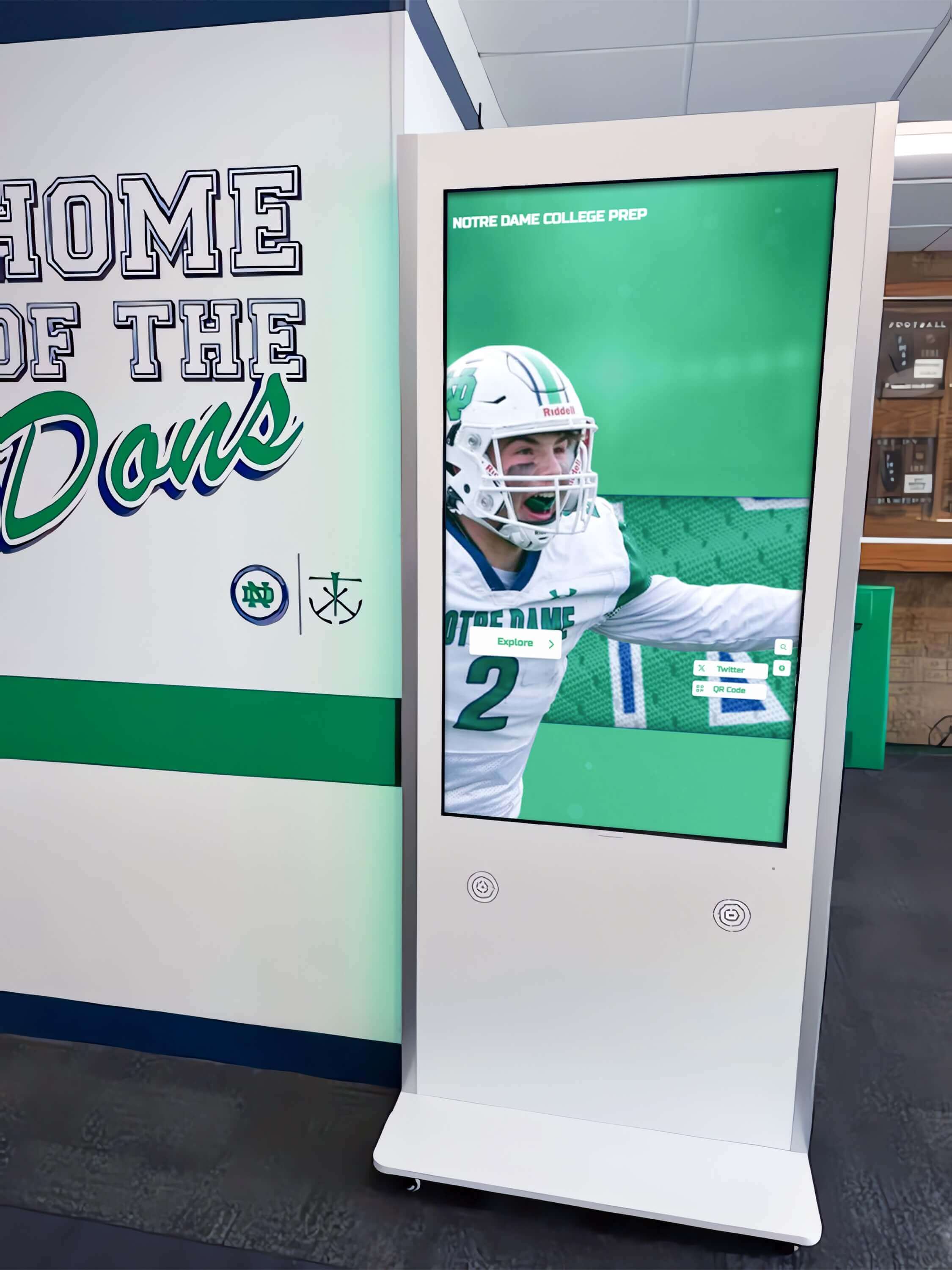
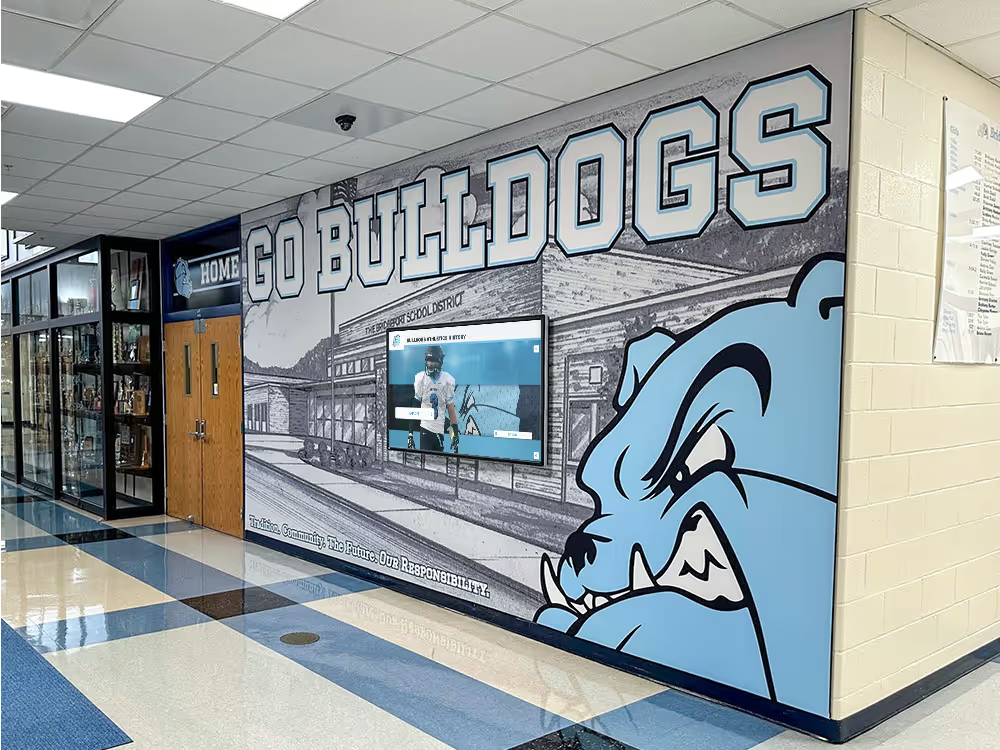
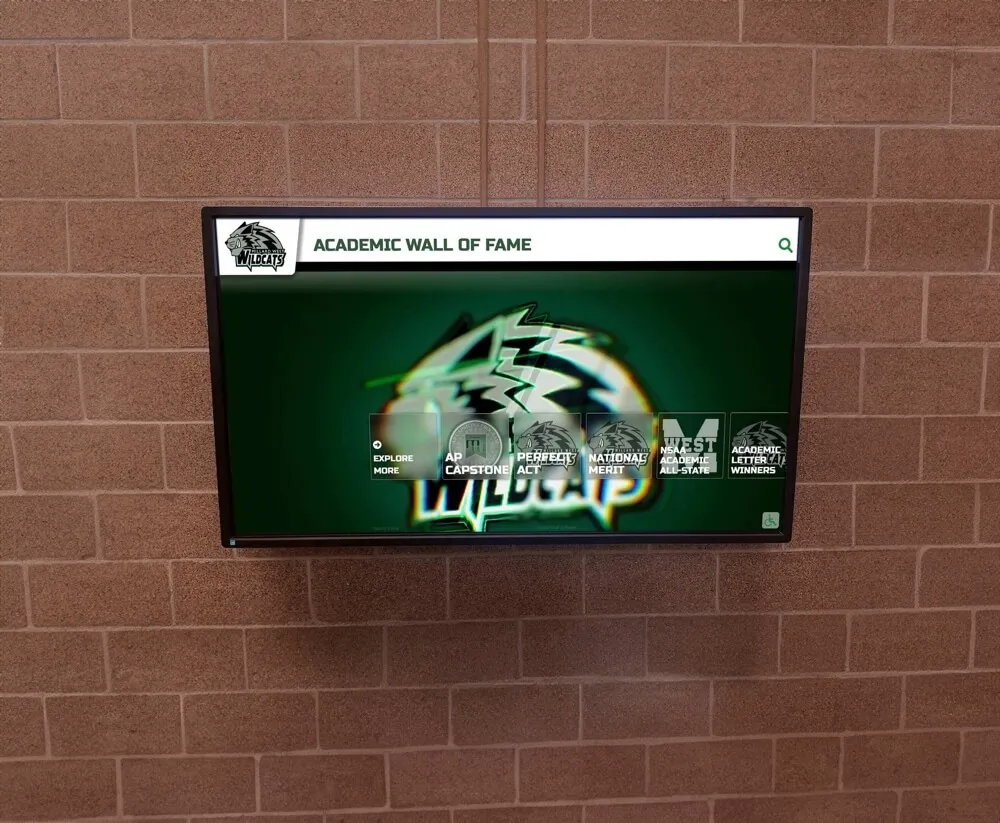
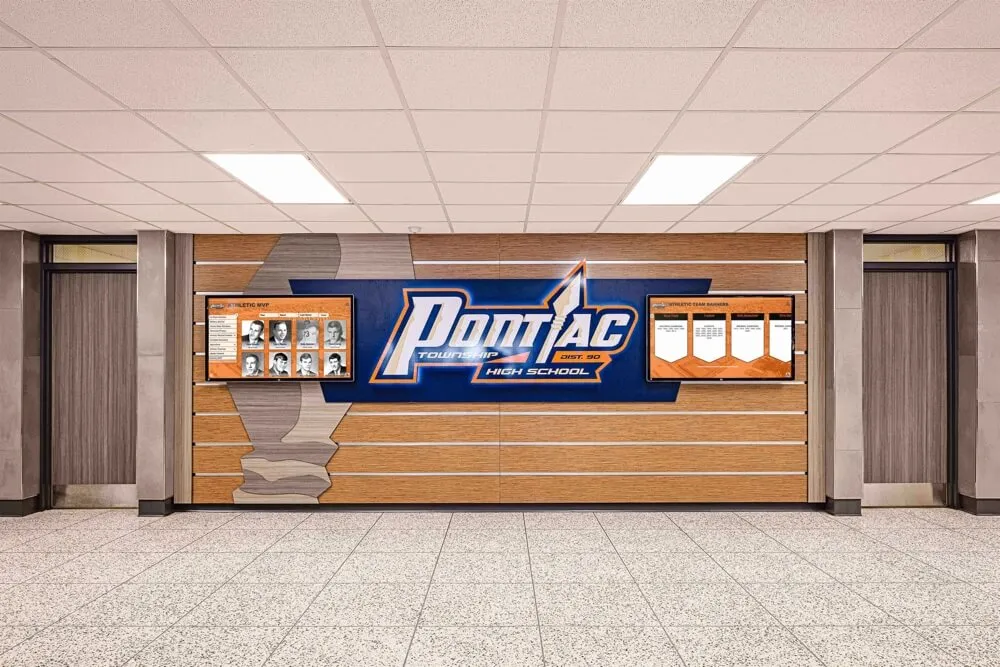
Strategic hallway placement of recognition displays ensures high visibility for cheerleading achievements alongside recognition for other athletic programs
Taking Action: Implementing Enhanced Cheer Recognition
Ready to elevate recognition for your cheerleading program? Follow these implementation steps:
Immediate Actions
Audit Current Recognition
Document your existing awards including what categories you currently offer, how selection processes work, what recognition formats you use (ceremonies, displays, publications), and what recognition gaps exist where athlete contributions aren’t adequately acknowledged.
Solicit feedback from current athletes, recent alumni, and parents about what recognition approaches work well and what improvements would be meaningful.
Define Recognition Philosophy
Clarify what your program values and how recognition should reflect those values. Determine priorities including balance between achievement and character recognition, emphasis on individual vs. team accomplishment, integration of academic and community recognition, and how recognition should support program culture goals.
This philosophical foundation guides specific award selection and implementation decisions.
Expand Award Categories
Based on your audit and philosophical framework, identify new award categories addressing recognition gaps. Consider awards presented in this guide that would work well for your specific program type, team composition, and values.
Start with manageable additions rather than completely overhauling recognition systems. Adding 3-5 new award categories typically provides meaningful enhancement without overwhelming planning capacity.
Near-Term Planning
Enhance Award Presentation
Improve how you present existing awards by developing specific citations explaining why recipients earned recognition, creating visual presentations (slideshows, videos) supporting award announcements, improving ceremony format and flow for better engagement, and documenting awards through photography and video for posterity and promotion.
Establish Selection Processes
For new and existing awards, document clear selection criteria, determine who makes selection decisions for each award category, create transparent processes teams and families understand, and establish timelines ensuring adequate planning time for recognition development.
Improve Permanent Recognition
Evaluate how your program preserves and displays recognition over time. Consider whether trophy cases adequately accommodate cheer recognition, how program history is documented and accessible, whether recognition effectively communicates program excellence to visitors, and whether families and alumni can access recognition information about their athletes.
Long-Term Recognition Strategy
Digital Recognition Implementation
Explore digital recognition platforms designed specifically for athletic programs. Solutions like Rocket Alumni Solutions provide turnkey systems including professional display hardware installation, cloud-based content management platforms, interactive touchscreen experiences for community exploration, multimedia content support for photos, videos, and detailed profiles, and ongoing technical support and content assistance.
These comprehensive systems transform one-time awards into permanent recognition accessible to your entire community while solving space limitations of physical displays.
Build Recognition Traditions
Develop distinctive traditions around major awards creating program identity and building anticipation. These might include special presentation rituals, involvement of alumni or distinguished program figures, unique award names reflecting program history, or connection to ongoing recognition through digital platforms or permanent displays.
Integrate with Alumni Engagement
Use recognition as foundation for lifelong program engagement including alumni networks connecting current and former cheerleaders, mentorship programs pairing alumni with current athletes, reunion events bringing past teams back together, and digital platforms enabling alumni to remain connected to program recognition and community.
Comprehensive school athletic recognition programs demonstrate how integrated systems elevate all sports including cheerleading while creating manageable recognition infrastructure serving entire athletic departments.
Conclusion: Building Recognition Culture That Honors Cheerleading Excellence
Cheerleading demands exceptional athletic ability, unwavering dedication, absolute trust, and genuine spirit that few other activities require. Your cheerleaders master complex physical skills while representing your school with energy and enthusiasm throughout long seasons. They deserve recognition systems that honor the complete spectrum of their contributions rather than superficial acknowledgment that reduces their achievements to generic awards or afterthoughts in athletic recognition dominated by traditional sports.
By implementing comprehensive cheerleading awards programs celebrating athletic skill, leadership, character, commitment, and community contributions, you create recognition culture that validates cheerleading as the demanding sport it is while motivating continued excellence. The award categories and implementation strategies presented in this guide provide frameworks for honoring every dimension of cheerleading achievement while remaining manageable for busy program administrators.
The most successful cheer recognition programs combine meaningful annual award ceremonies with permanent recognition systems extending impact far beyond single events. Modern digital recognition solutions enable programs to preserve complete athlete histories, showcase achievements to entire communities year-round, and create institutional memory documenting program excellence across generations.
Whether you currently offer minimal recognition or maintain established awards programs ready for enhancement, the strategies in this guide help ensure every cheerleader receives acknowledgment they deserve for athletic dedication, leadership contributions, and spirit that define your program culture.
Your cheerleaders’ achievements represent countless hours of practice, significant physical and mental challenges overcome, and genuine commitment to representing your program with excellence. They deserve recognition that honors these commitments meaningfully while inspiring future athletes who aspire to similar achievement.
Ready to create comprehensive recognition for your cheerleading program? Explore how Rocket Alumni Solutions can help you implement professional digital recognition systems that transform traditional awards into permanent celebration accessible to your entire community while providing unlimited capacity for honoring every cheerleader’s unique contributions and achievements.