Class of 2026 digital showcases represent powerful opportunities for high schools to celebrate graduating seniors’ accomplishments, preserve their legacies, and create inspirational models for current underclassmen. As the Class of 2026 approaches their final semester and prepares for college, careers, and life beyond high school, schools face the meaningful challenge of honoring these students in ways that reflect both their individual achievements and collective impact on school community and culture.
Yet many schools struggle with senior recognition that fails to match the significance of graduation milestones. Traditional approaches often default to temporary bulletin boards that disappear after commencement, basic yearbook pages with minimal personalization, or simple social media posts that quickly scroll out of view. These fleeting acknowledgments don’t adequately celebrate four years of academic dedication, extracurricular involvement, personal growth, and community contribution that seniors have invested in their high school experience.
This comprehensive guide explores proven strategies for creating Class of 2026 digital showcases that provide lasting, engaging recognition—from interactive touchscreen displays featuring comprehensive student profiles to searchable web platforms enabling families worldwide to celebrate graduates, positioning senior recognition as permanent institutional celebration rather than temporary seasonal decoration.
Digital showcases transform how schools honor graduating classes by creating permanent archives that preserve senior memories, celebrate diverse achievements across academic and extracurricular domains, provide inspirational models for younger students pursuing excellence, and enable remote access for families and alumni who cannot attend physical graduation ceremonies. Schools implementing comprehensive digital recognition report increased senior engagement, stronger alumni connections, and enhanced school culture where achievement receives sustained visibility beyond single graduation ceremonies.

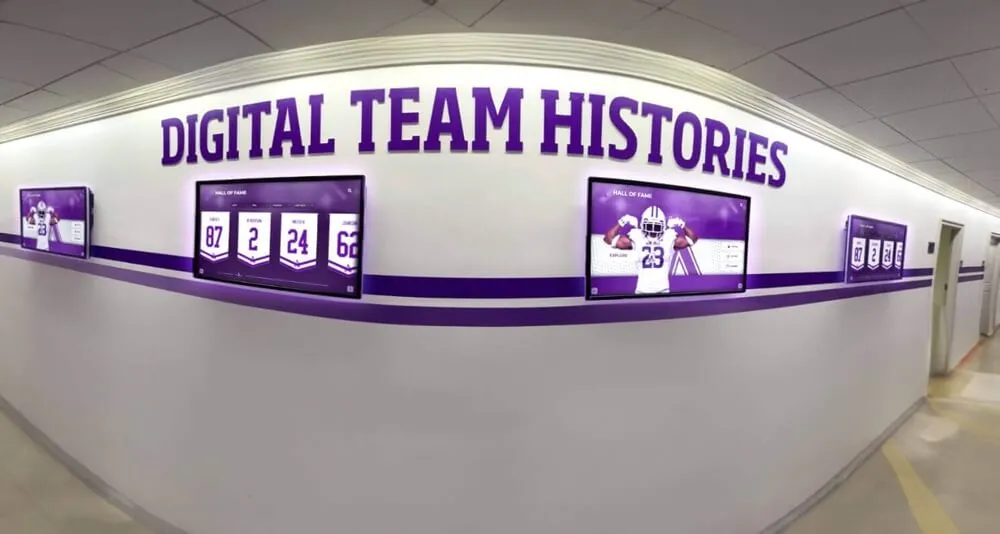
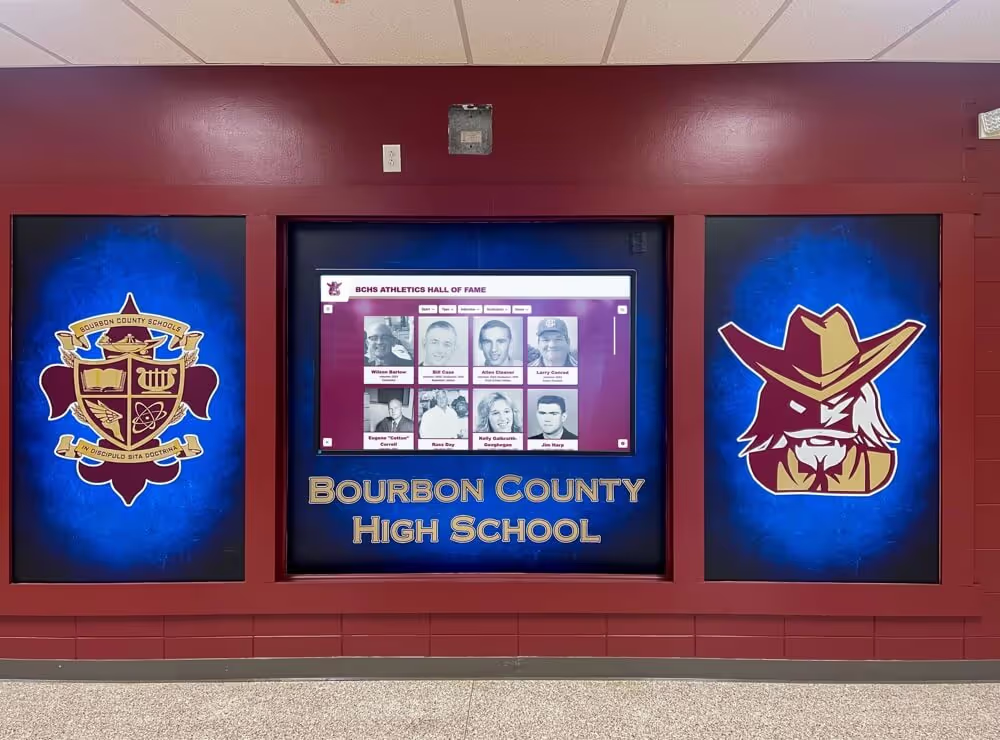
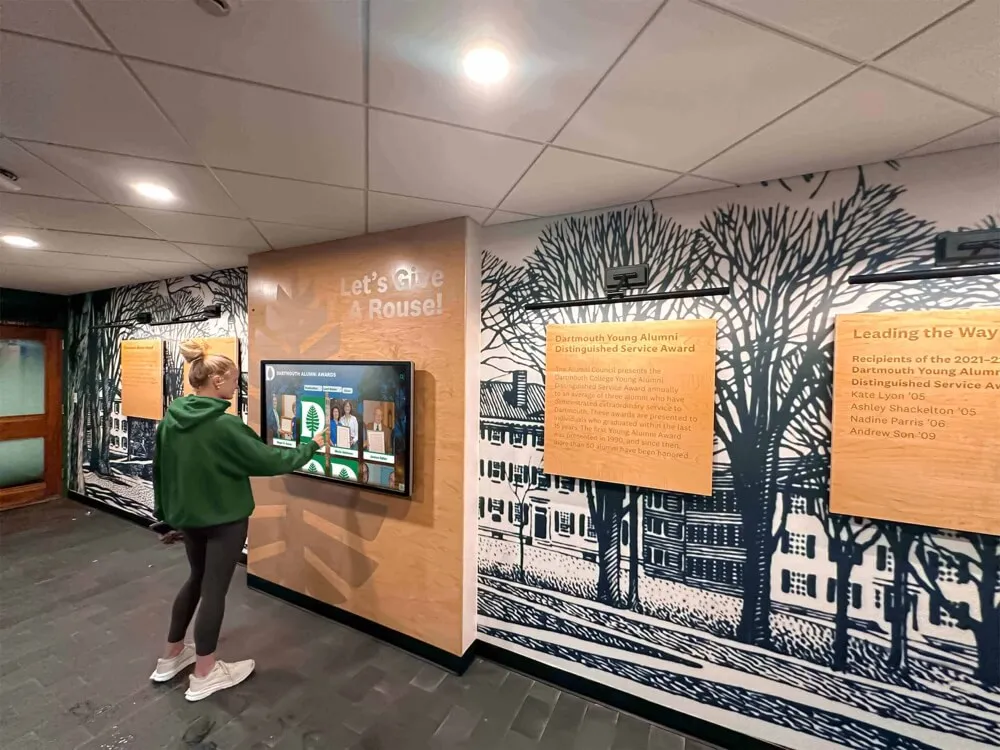
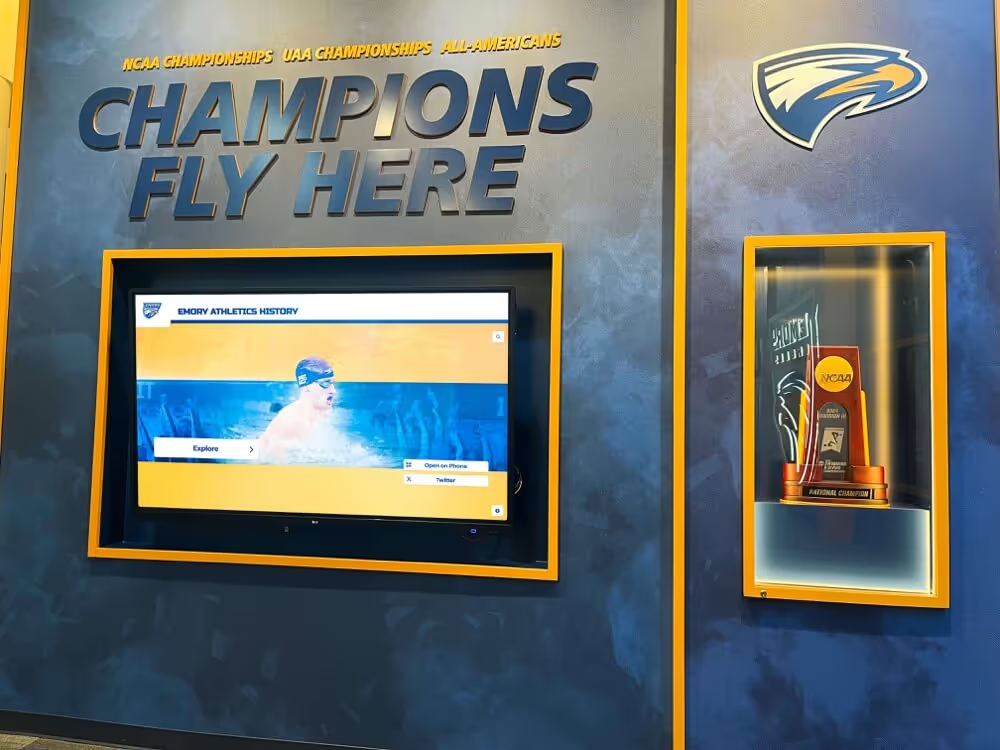
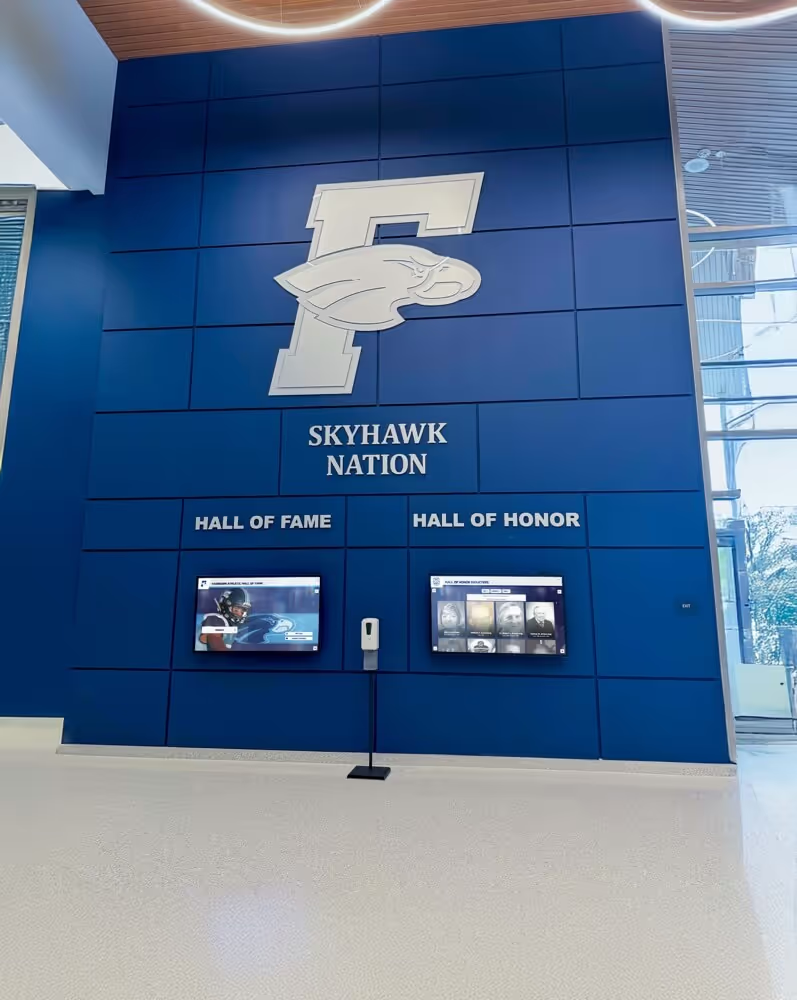
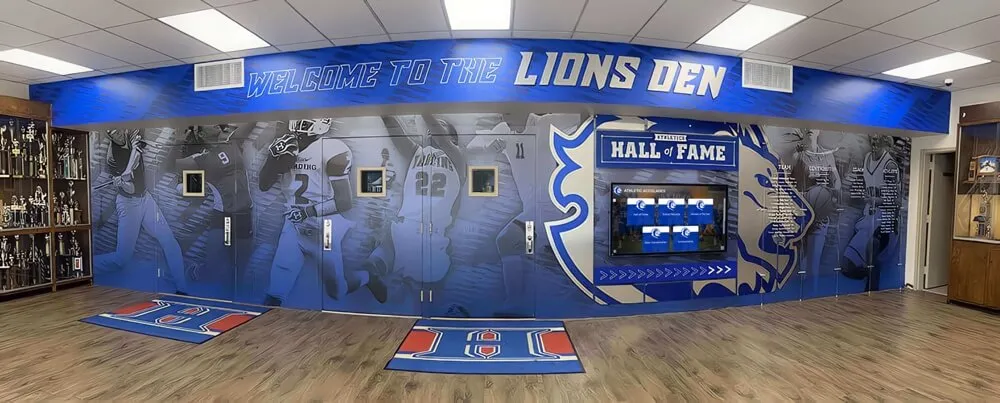
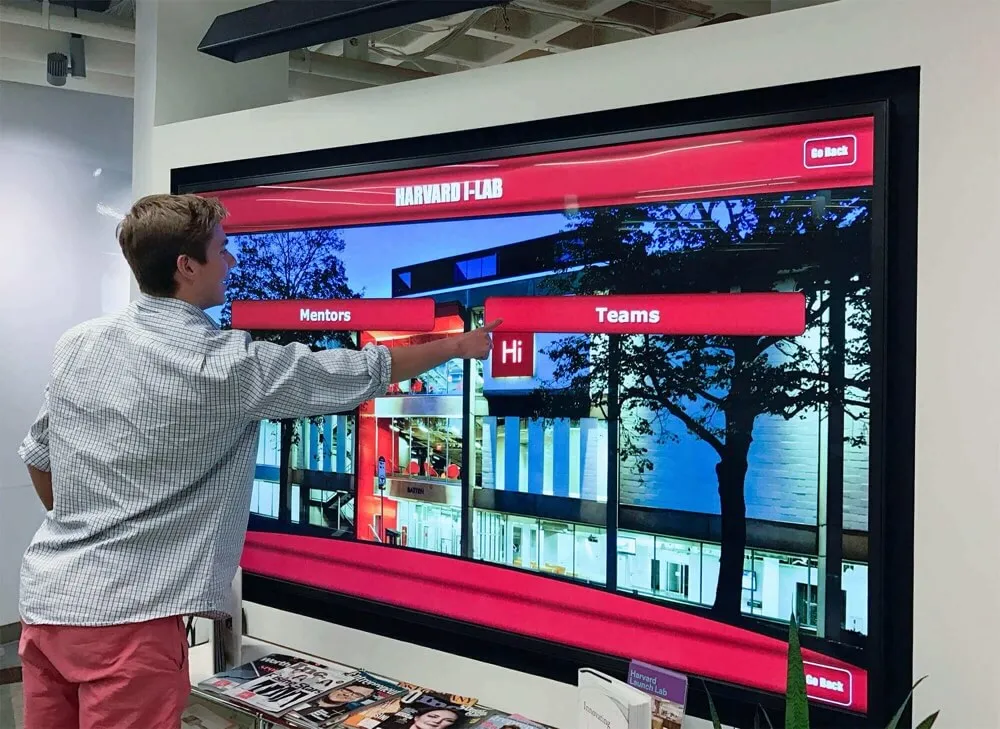
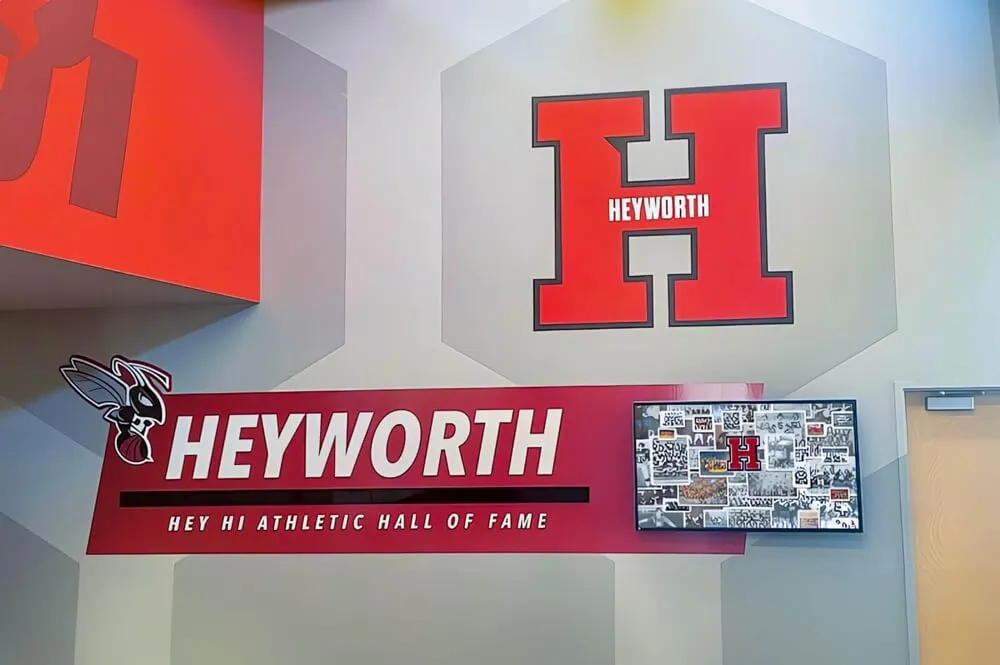
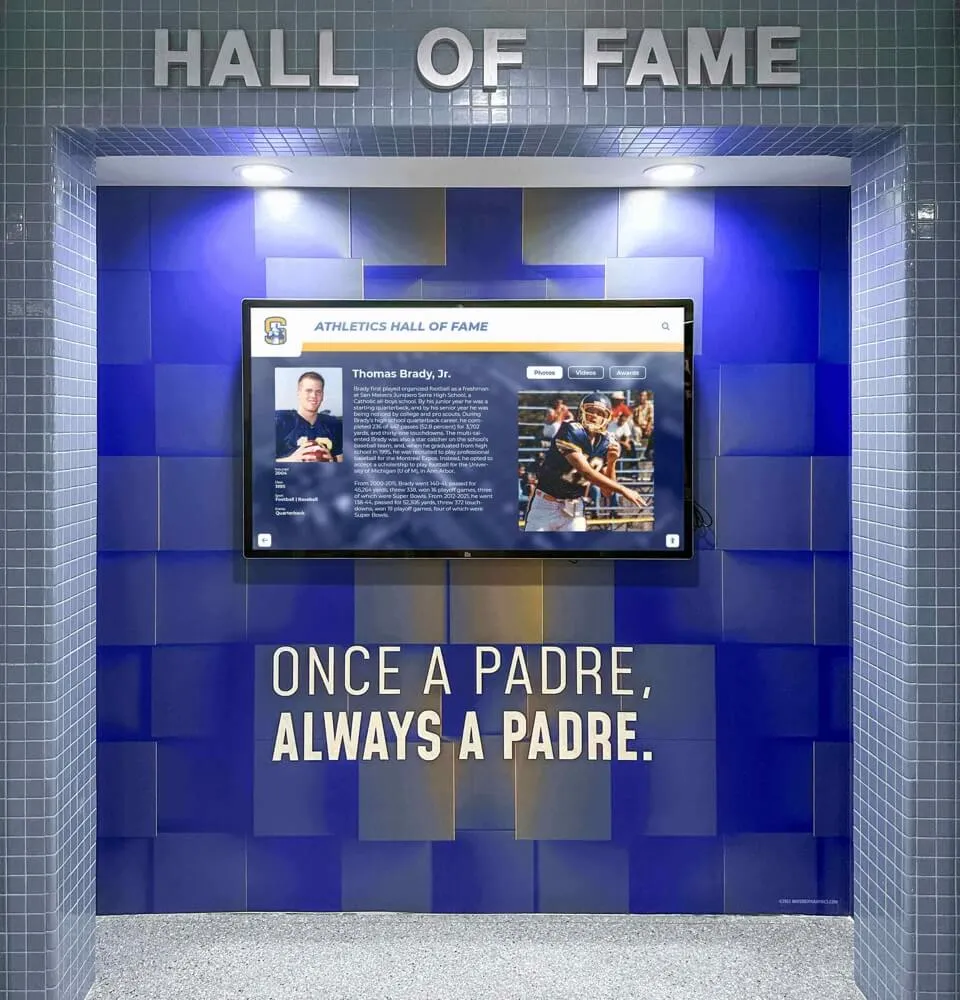
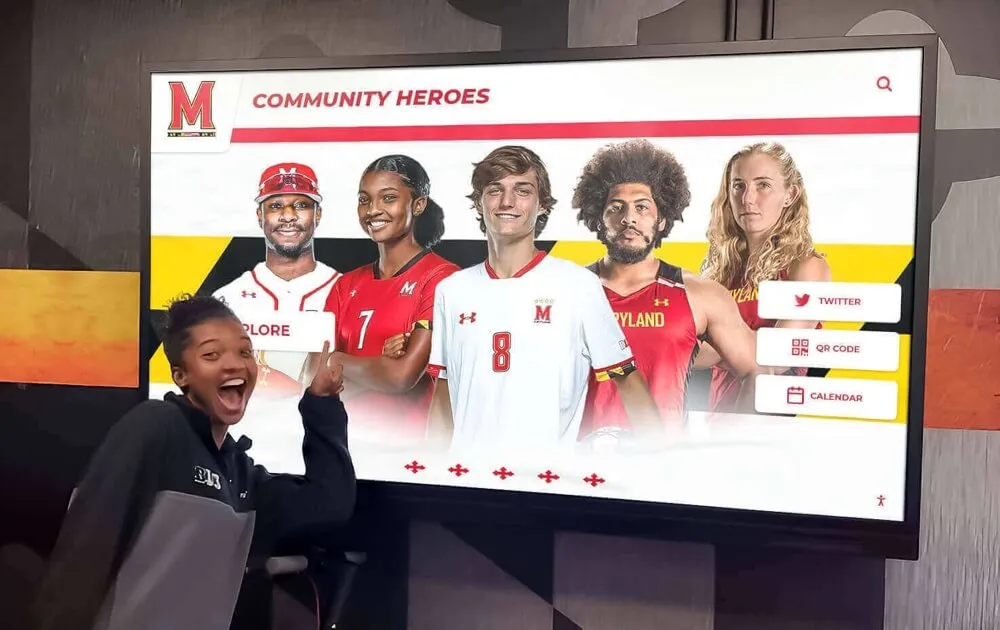
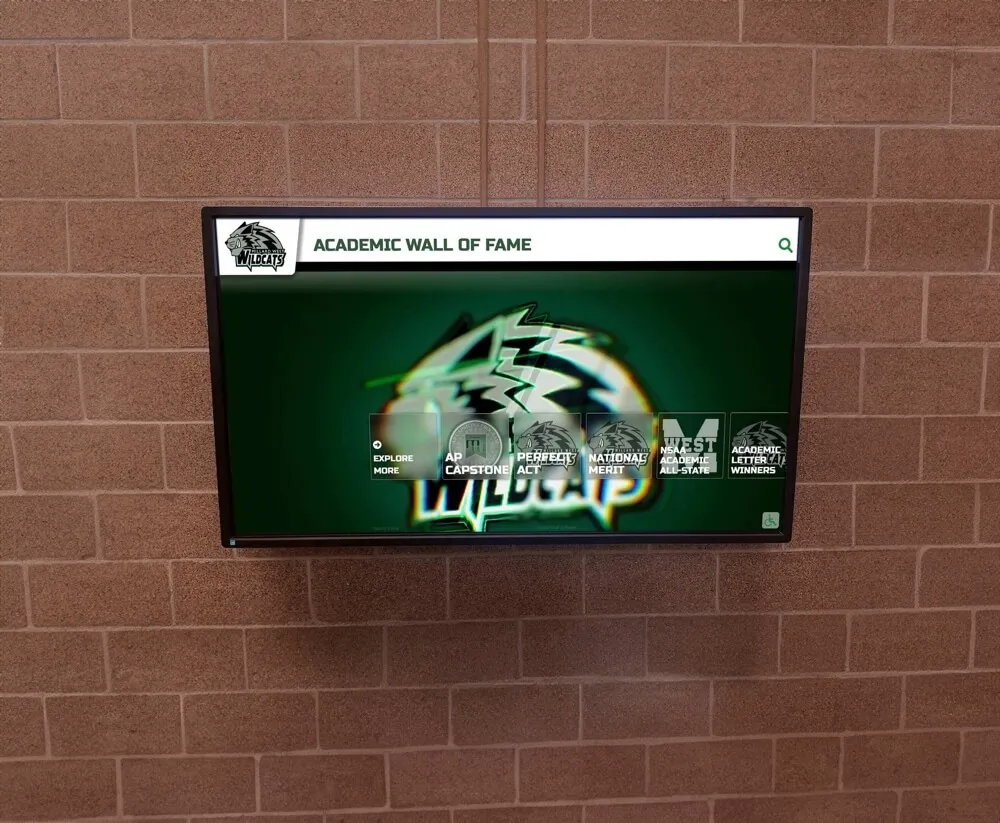
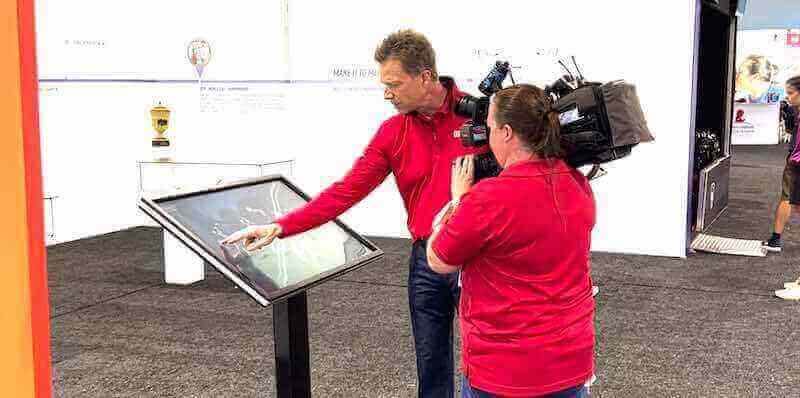
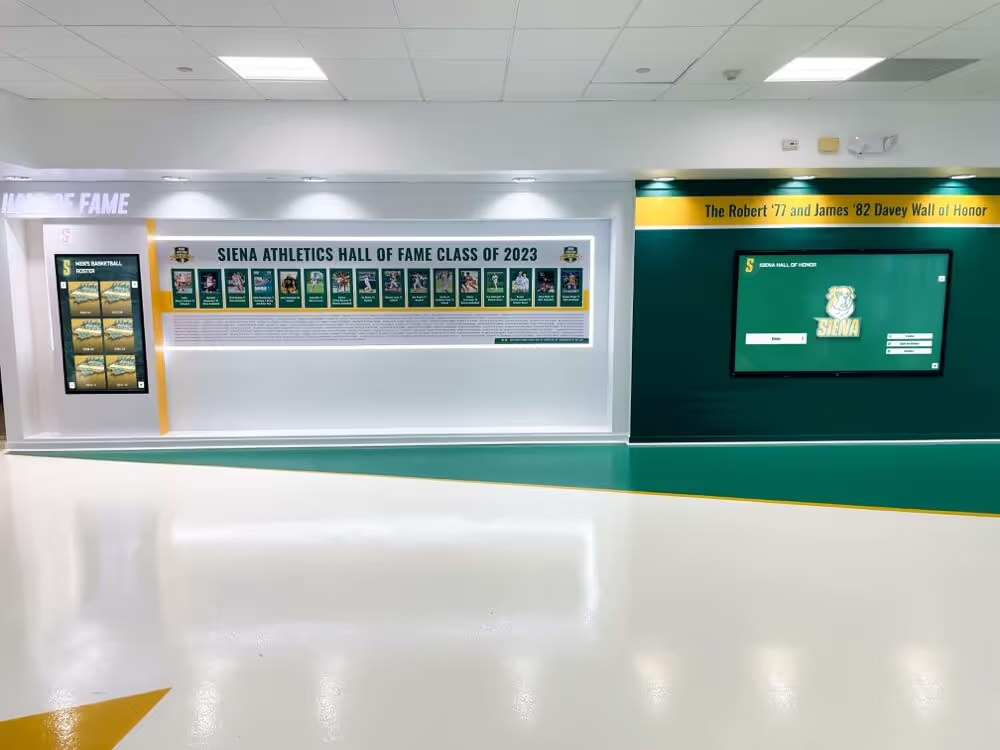
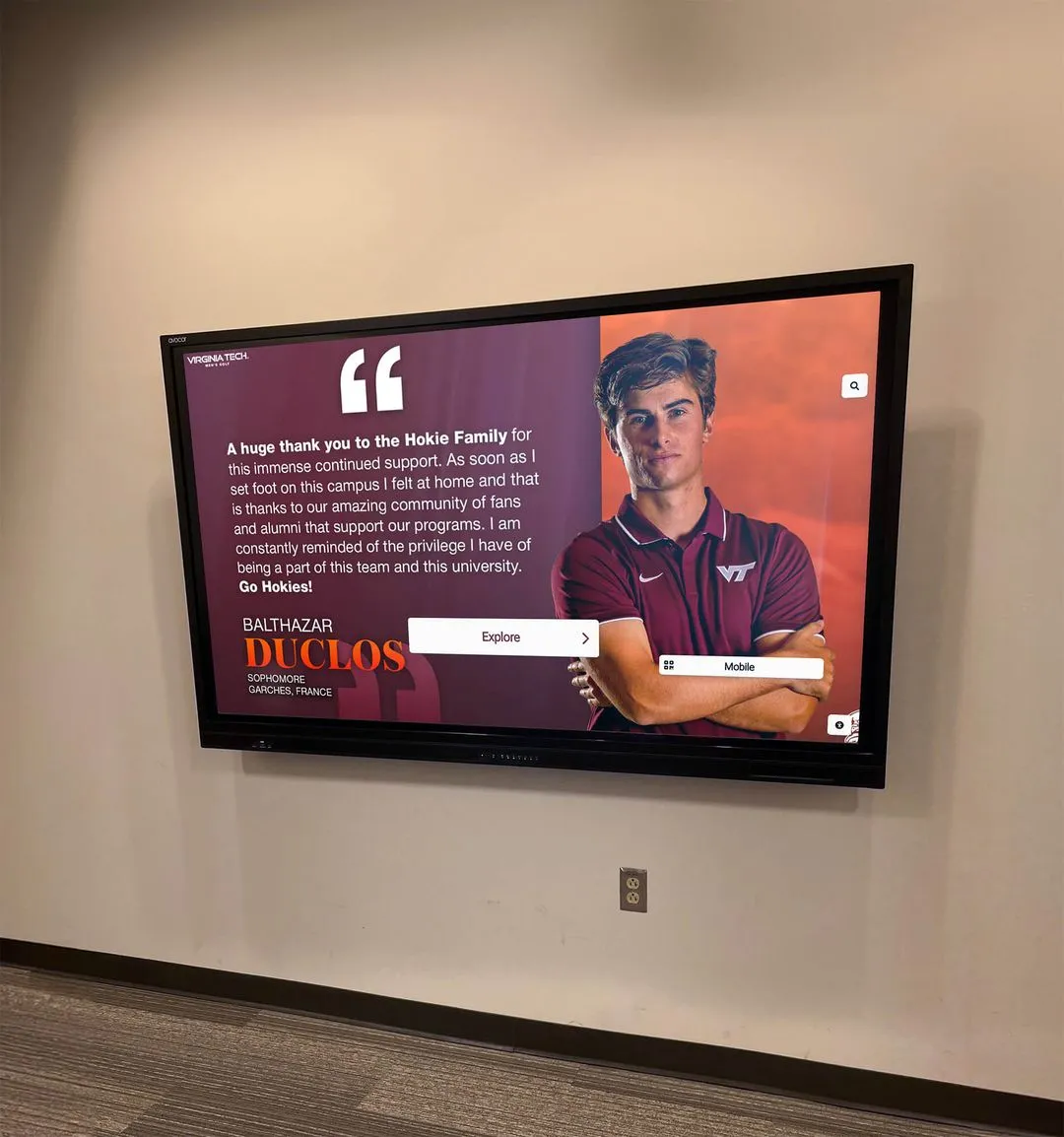
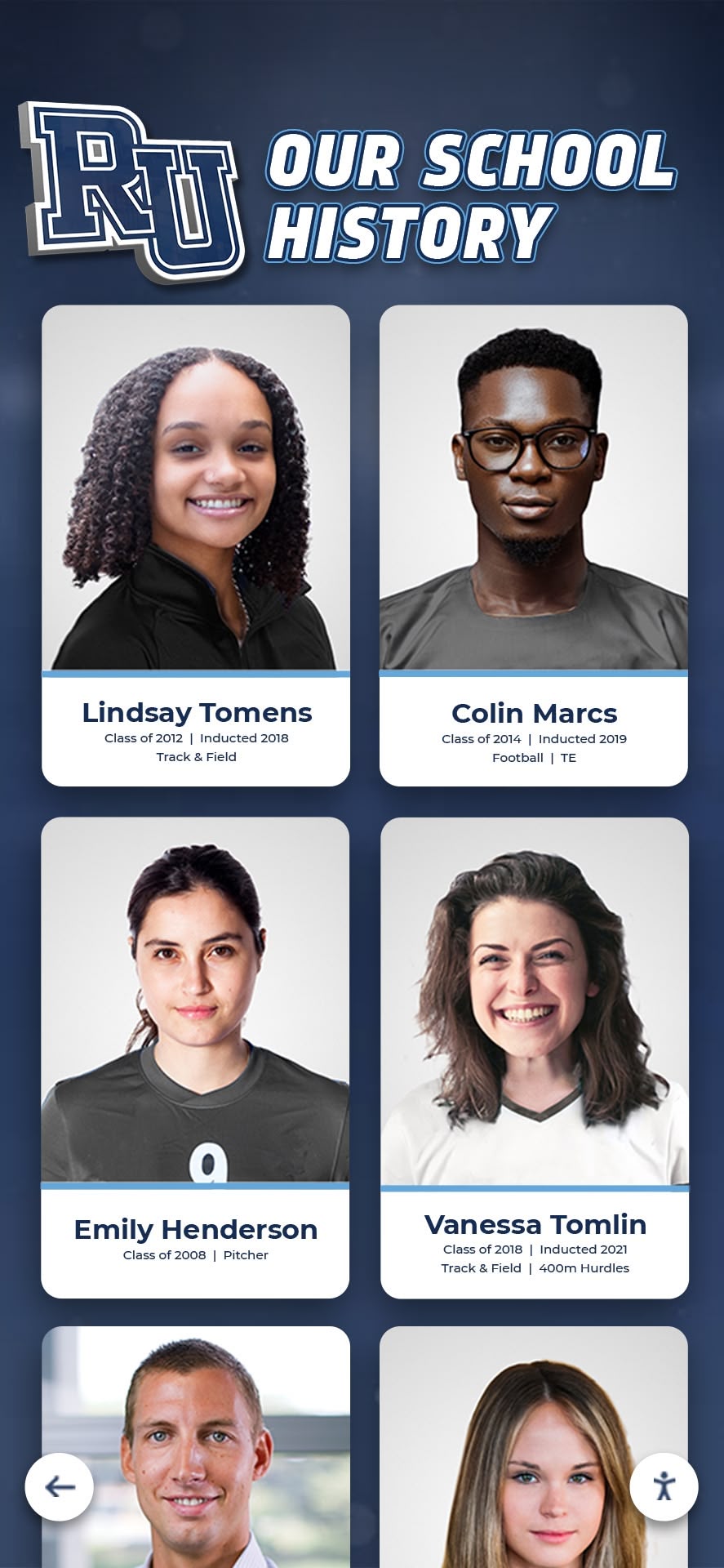
Modern digital showcases feature comprehensive student profiles celebrating academic, athletic, artistic, and community achievements
Understanding the Class of 2026: Context and Characteristics
Before implementing digital showcase programs, understanding the unique characteristics, experiences, and perspectives of the Class of 2026 helps schools create recognition that resonates authentically with this specific cohort.
Defining Characteristics of the Class of 2026
The Class of 2026 represents students who began high school in fall 2026, navigating distinct educational landscapes shaped by recent historical events and evolving technologies.
Post-Pandemic Educational Experience
Unlike classes before them who experienced COVID-19 disruptions during high school, the Class of 2026 largely completed their high school careers during return-to-normal operations. However, their middle school years were significantly impacted by remote learning, social distancing, and educational disruption that shaped their transition to high school and influenced academic preparation, social development, and learning habits they brought to ninth grade.
Digital Native Generation
As members of Generation Z born primarily in 2007-2008, the Class of 2026 has never known life without smartphones, social media, and constant digital connectivity. They expect seamless digital experiences, visual communication through images and video, instant access to information and social connections, and personalized content reflecting individual interests and identities. School recognition programs that fail to meet these digital expectations risk feeling outdated or irrelevant to students whose entire social lives occur through digital platforms.
Heightened Awareness of Social Issues
This cohort came of age during periods of intense social awareness including racial justice movements, climate activism, mental health advocacy, and LGBTQ+ rights advancement. Many Class of 2026 students demonstrate strong commitment to social causes, expectation that institutions reflect diverse perspectives and identities, and preference for authenticity and transparency over traditional institutional formality.
Recognition programs should reflect these values through inclusive celebration of diverse student identities, acknowledgment of community service and social impact, and authentic storytelling that honors students’ complete selves rather than narrow academic or athletic accomplishments alone.
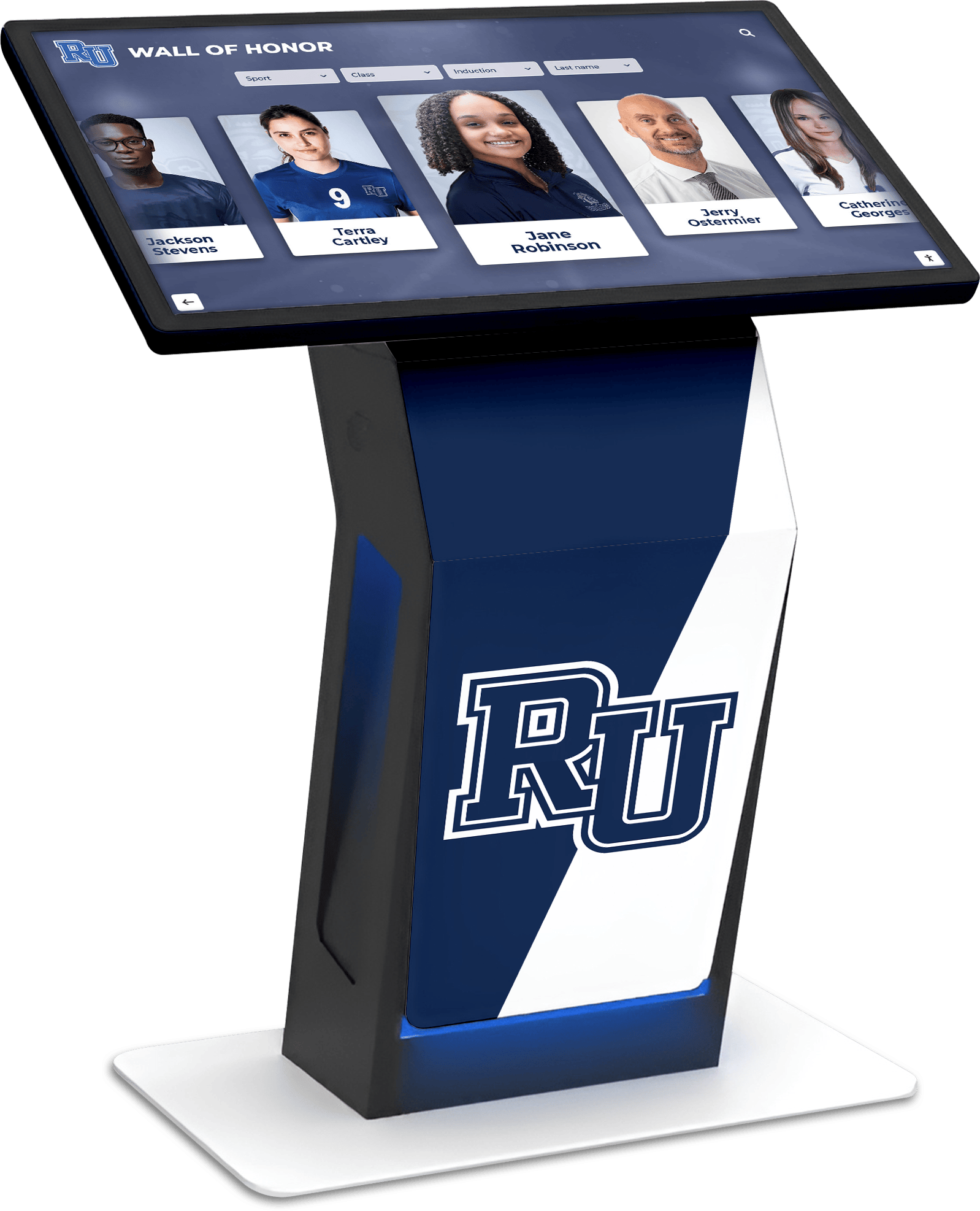
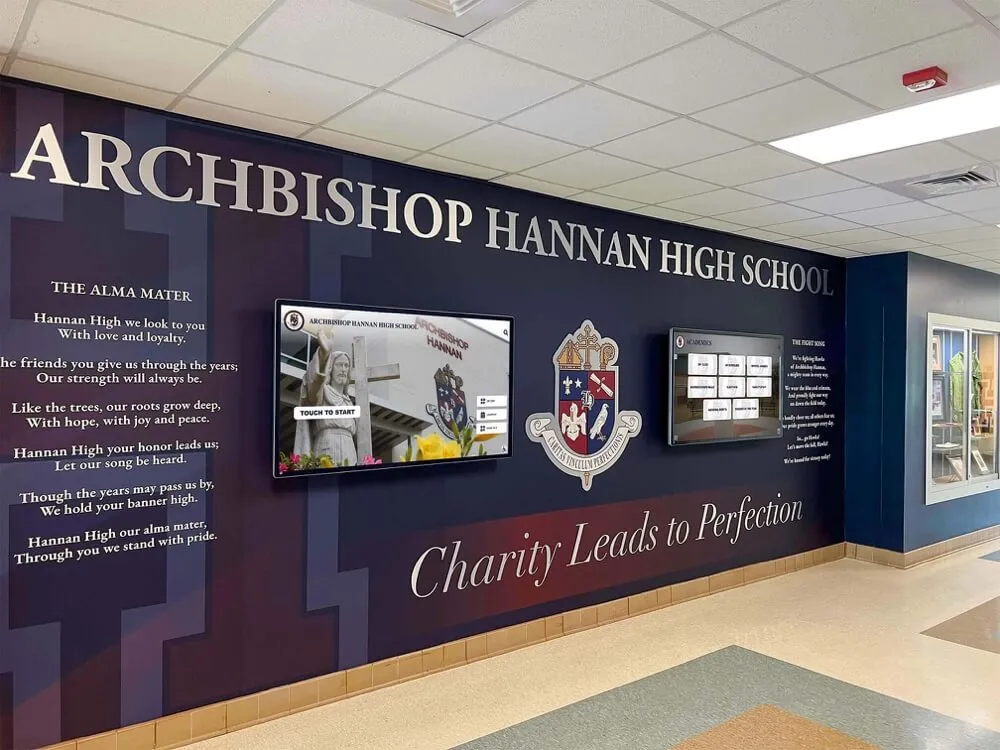
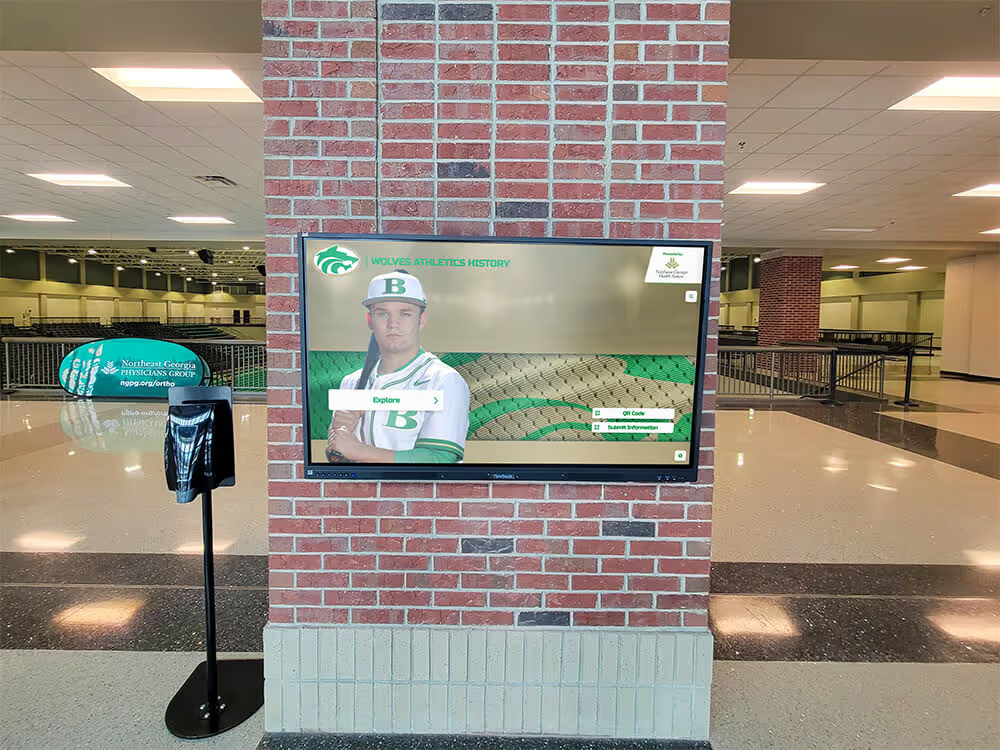
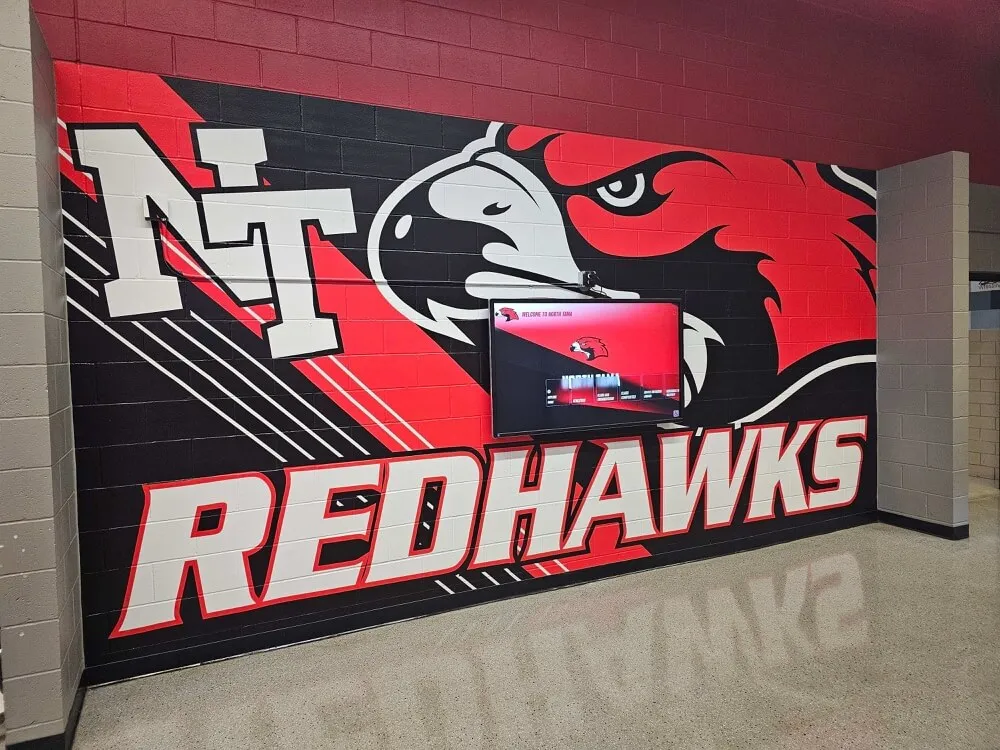
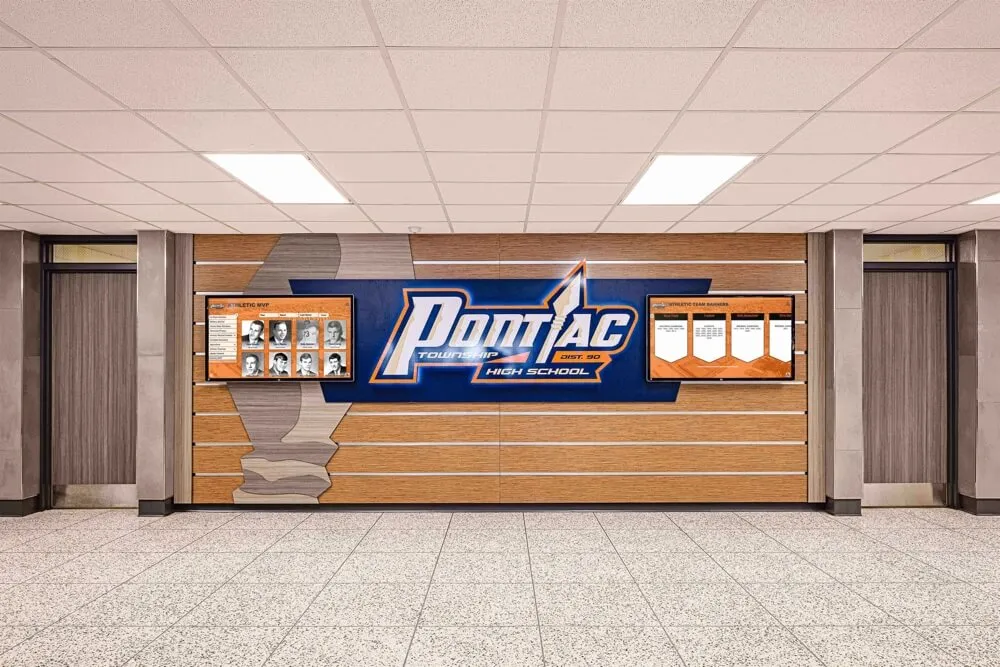
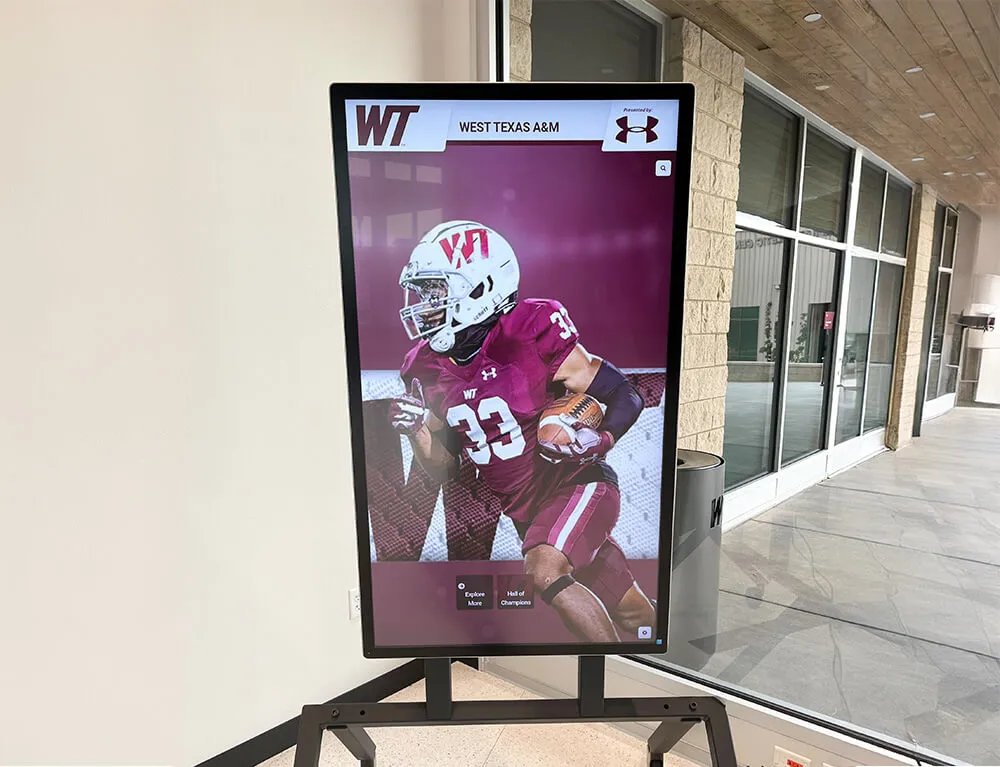
Purpose-built interactive displays provide intuitive interfaces aligned with students' digital expectations and user experience preferences
Academic and Achievement Landscape
The Class of 2026 navigates distinct academic environments influencing what recognition should celebrate and how achievements should be contextualized.
Evolving College Admissions Standards
Many colleges and universities continue test-optional admissions policies implemented during COVID-19, emphasizing holistic application review over standardized test scores. This shift means Class of 2026 students may focus more heavily on maintaining strong GPAs across challenging coursework, developing distinctive extracurricular profiles demonstrating leadership and impact, crafting compelling personal narratives through application essays, and building relationships with teachers for strong recommendation letters.
Digital showcases recognizing these dimensions—not just GPA and test scores—provide more comprehensive celebration aligned with what actually matters for college admission success.
Increased Focus on Mental Health
This generation demonstrates greater openness about mental health challenges and prioritization of wellbeing alongside achievement. Schools implementing recognition programs should balance celebration of accomplishment with acknowledgment of personal growth, resilience through challenges, and wellbeing as valuable outcomes alongside traditional achievement metrics.
Diverse Post-Secondary Pathways
The Class of 2026 pursues varied pathways beyond traditional four-year college including community college enrollment with transfer plans, career and technical education programs, military service, gap years with purposeful planning, and direct workforce entry through apprenticeships or employment. Effective digital showcases celebrate this diversity rather than implying a hierarchy where four-year university attendance represents the only recognized or valued outcome.
Learn about comprehensive approaches to senior recognition programs that honor diverse student pathways and achievements.
Benefits of Digital Showcases for Class of 2026 Recognition
Digital showcase platforms provide distinct advantages over traditional senior recognition approaches, creating more meaningful, accessible, and sustainable celebration of graduating classes.
Permanent Institutional Memory
Traditional senior recognition—bulletin boards, graduation programs, physical displays—typically exists only temporarily during graduation season before being dismantled, discarded, or relegated to storage where few people encounter them.
Long-Term Preservation
Digital showcases create permanent archives preserving Class of 2026 recognition indefinitely including comprehensive student profiles accessible decades after graduation, high-quality photographs that don’t deteriorate or fade over time, achievement documentation providing rich historical records, and searchable databases enabling easy discovery by future students, families, and community members.
This permanence means the Class of 2026 doesn’t simply disappear from school memory after commencement but remains part of ongoing institutional narrative alongside previous and future graduating classes.
Historical Comparison and Context
Digital platforms enable meaningful comparison across graduating classes over time including tracking college destination patterns across decades, comparing academic achievement trends and scholarship totals, observing changes in student interests and career aspirations, documenting evolution of extracurricular programs and opportunities, and preserving school culture and traditions for institutional memory.
This historical perspective strengthens school identity and community continuity while providing valuable data for program evaluation and strategic planning.
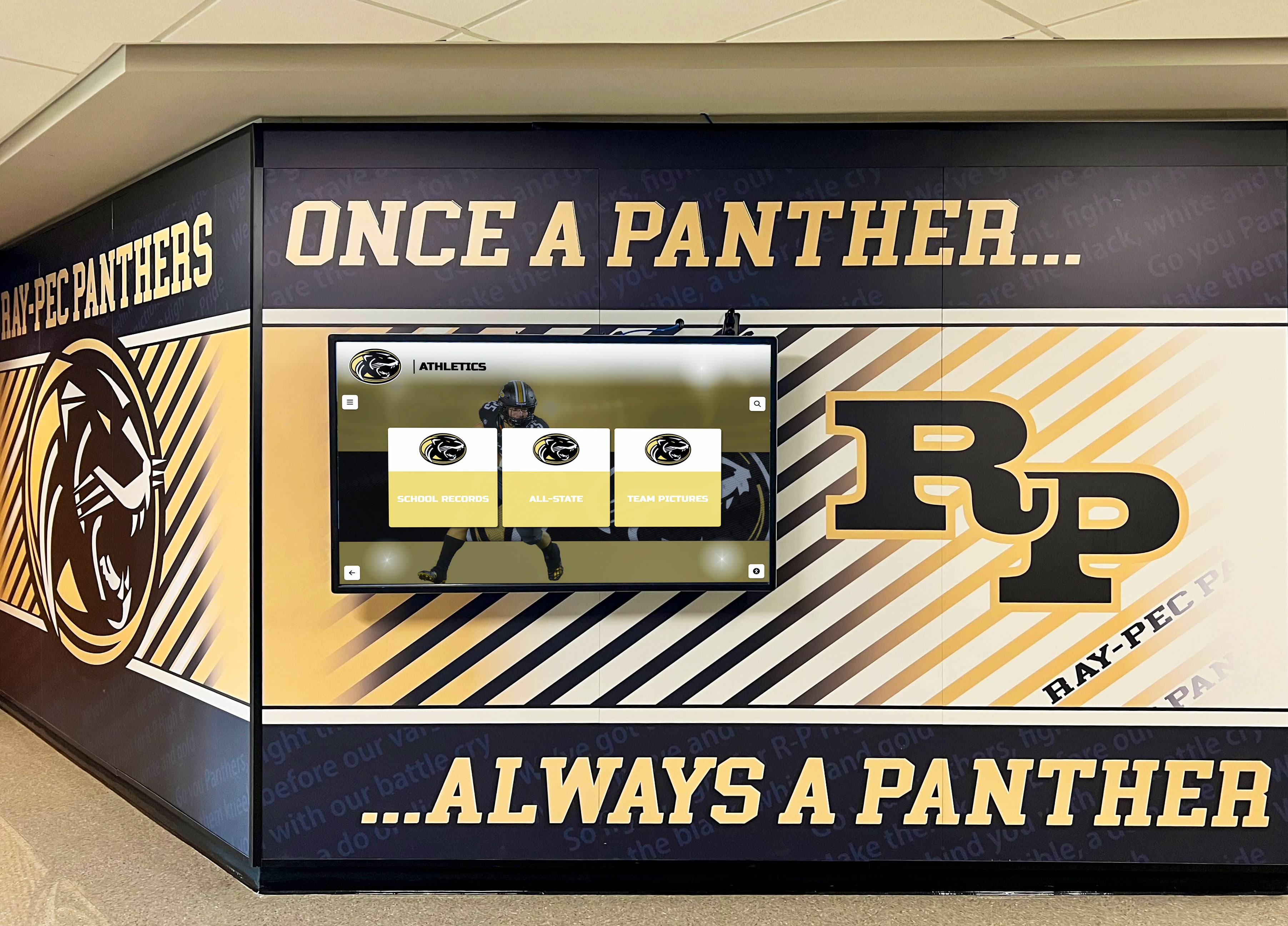
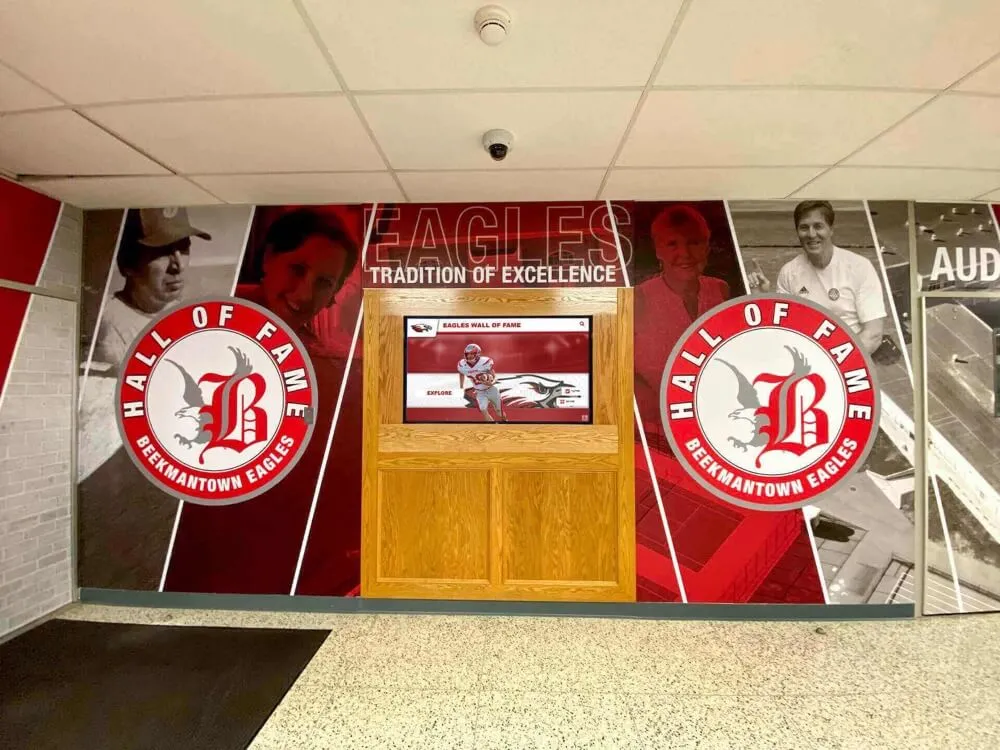
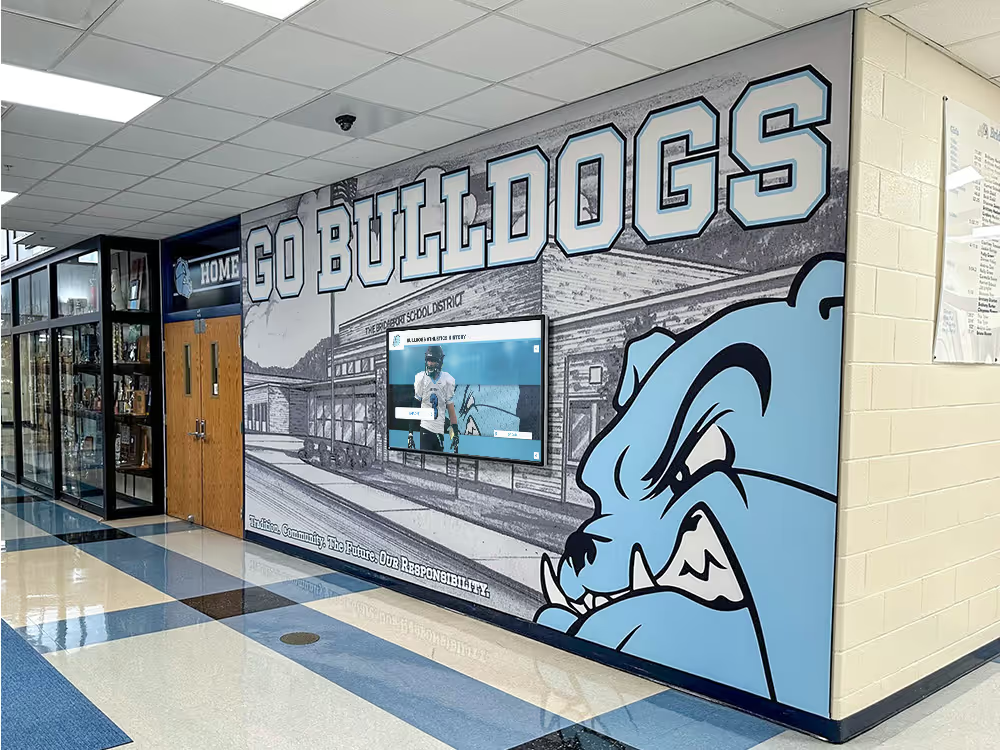
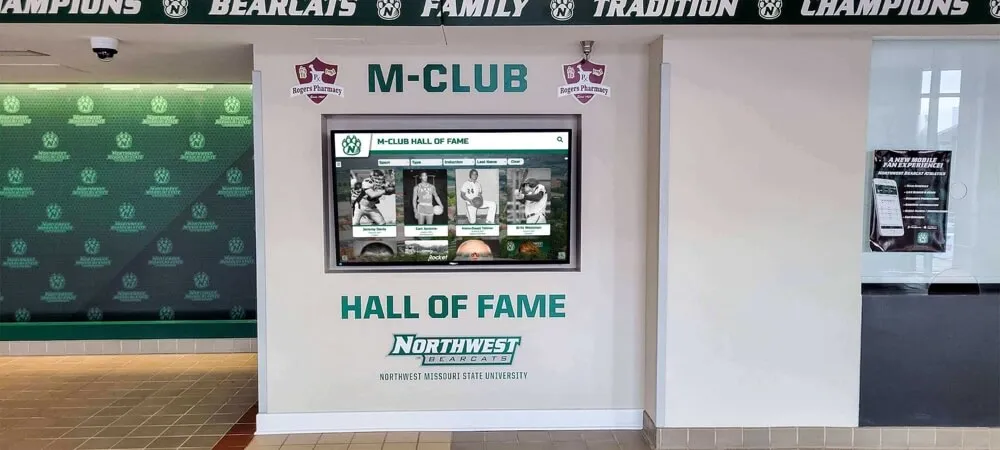
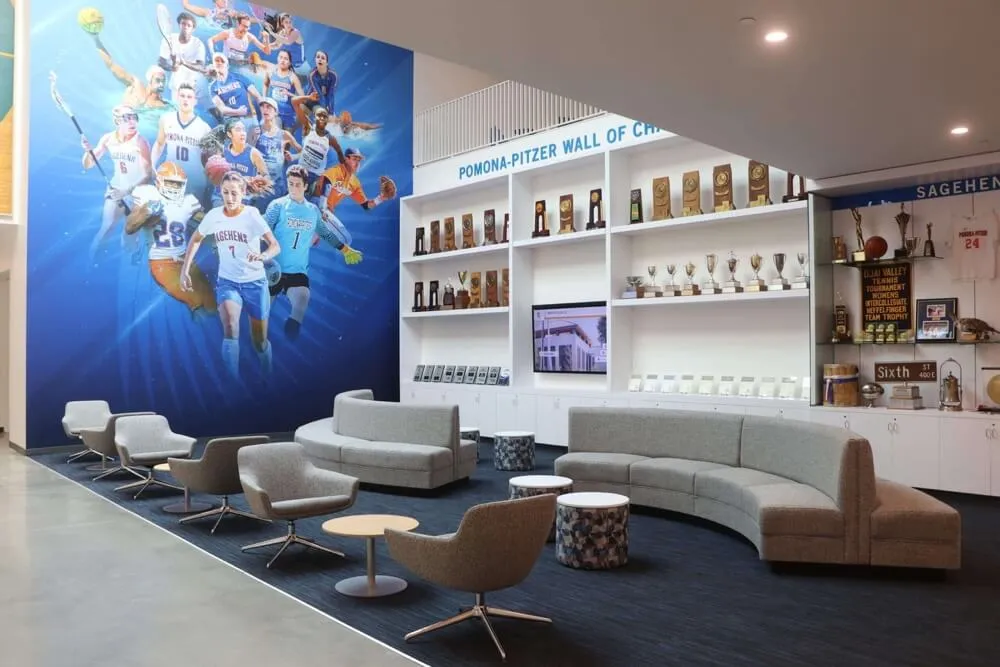
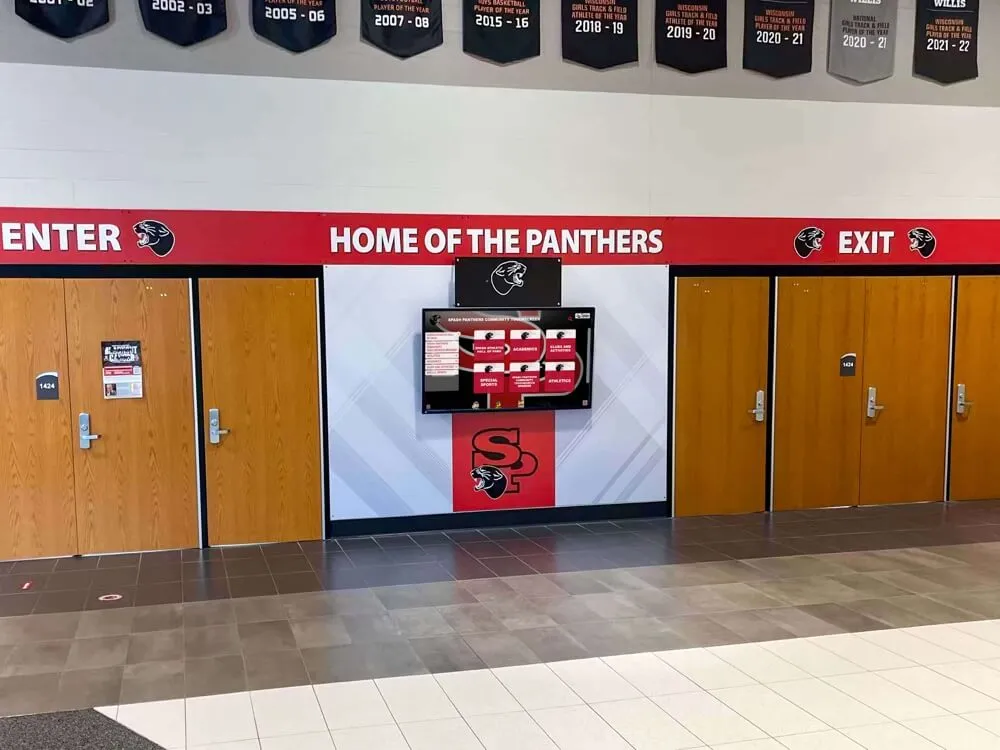
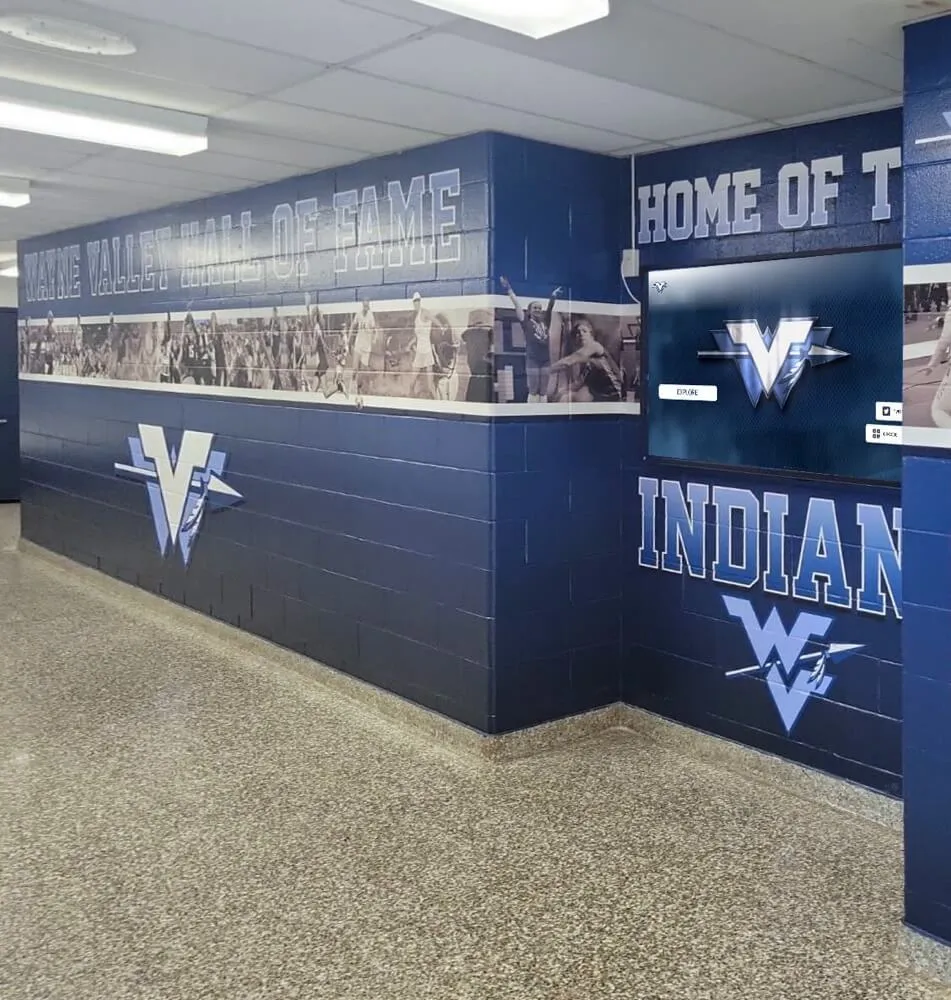
Permanent installations in high-traffic areas ensure graduating class recognition remains visible for years beyond graduation ceremonies
Enhanced Accessibility and Reach
Physical recognition displays remain accessible only to those who can visit school campuses during building hours—a significant limitation excluding many families, alumni, and community members.
Remote Family Access
Web-based digital showcases enable access from anywhere including families who moved away from the area before graduation, extended relatives living across the country or internationally, deployed military parents unable to attend graduation physically, grandparents with mobility challenges making campus visits difficult, and alumni returning to explore their own graduation memories or those of younger family members.
This extended reach ensures recognition benefits extend far beyond those physically present during graduation ceremonies.
24/7 Availability
Digital platforms provide continuous access regardless of school schedules, building hours, summer closures, or campus access restrictions. Families can explore senior recognition at their convenience rather than coordinating visits during specific times, creating more meaningful engagement opportunities.
Mobile Optimization
Modern digital showcases provide seamless experiences across devices from desktop computers to smartphones and tablets, ensuring excellent functionality regardless of how users choose to access recognition. This mobile-first design acknowledges reality that many people—particularly students themselves—primarily engage digital content through smartphones.
Explore digital recognition display strategies that maximize accessibility and engagement across diverse audiences.
Rich Multimedia Storytelling
Traditional senior recognition typically includes basic information: portrait photos, names, perhaps college destinations. Digital showcases enable far richer storytelling that celebrates students more comprehensively.
Comprehensive Profile Content
Digital platforms accommodate diverse content types including high-quality senior portrait photography, candid photos from school activities and events, academic achievements and scholarship information, athletic accomplishments and records, artistic performances and creative portfolios, community service contributions and leadership roles, personal statements reflecting on high school experiences, video messages sharing advice for underclassmen, college or career plans and aspirations, and acknowledgments of family, teachers, and mentors.
This comprehensive approach honors complete student identities rather than reducing recognition to simple data points, creating meaningful celebration that students and families genuinely value.
Interactive Exploration
Touchscreen interfaces and web platforms enable active engagement impossible with static displays through searchable databases finding specific students instantly, filtering by activities, interests, or achievements, related content connecting students with shared experiences, social sharing enabling families to distribute recognition digitally, and analytics showing which profiles receive most engagement.
Students report spending significantly more time exploring interactive digital showcases compared to brief glances at traditional bulletin boards, creating deeper engagement with senior recognition and school community.

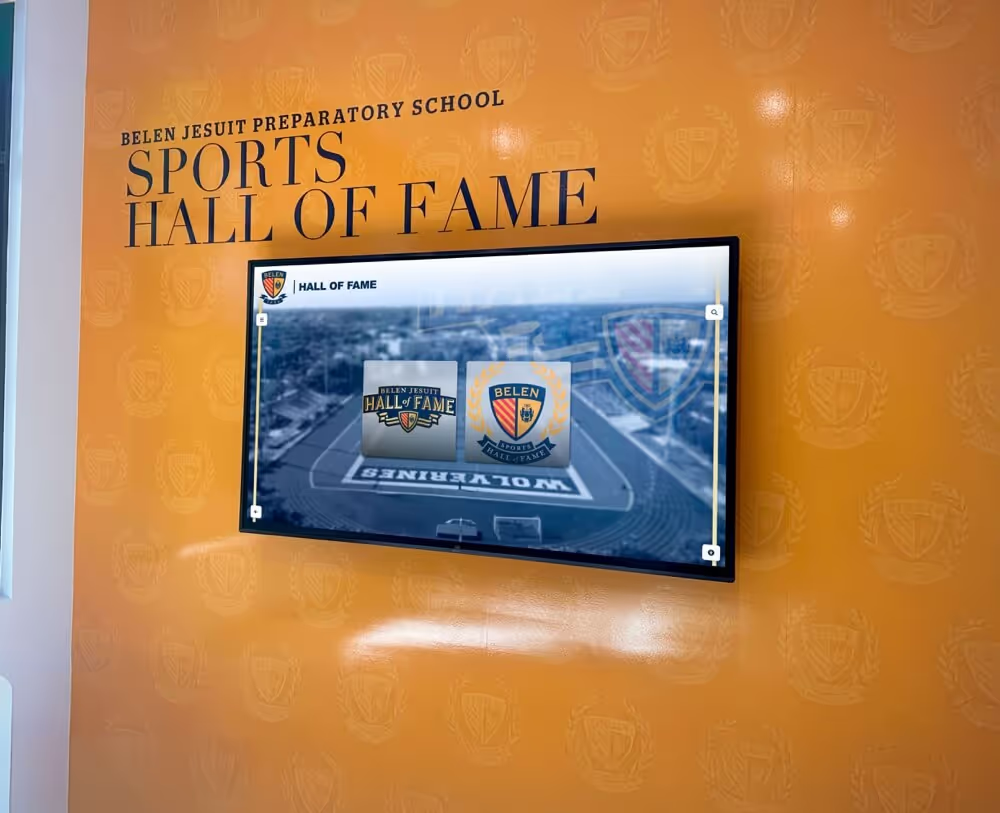
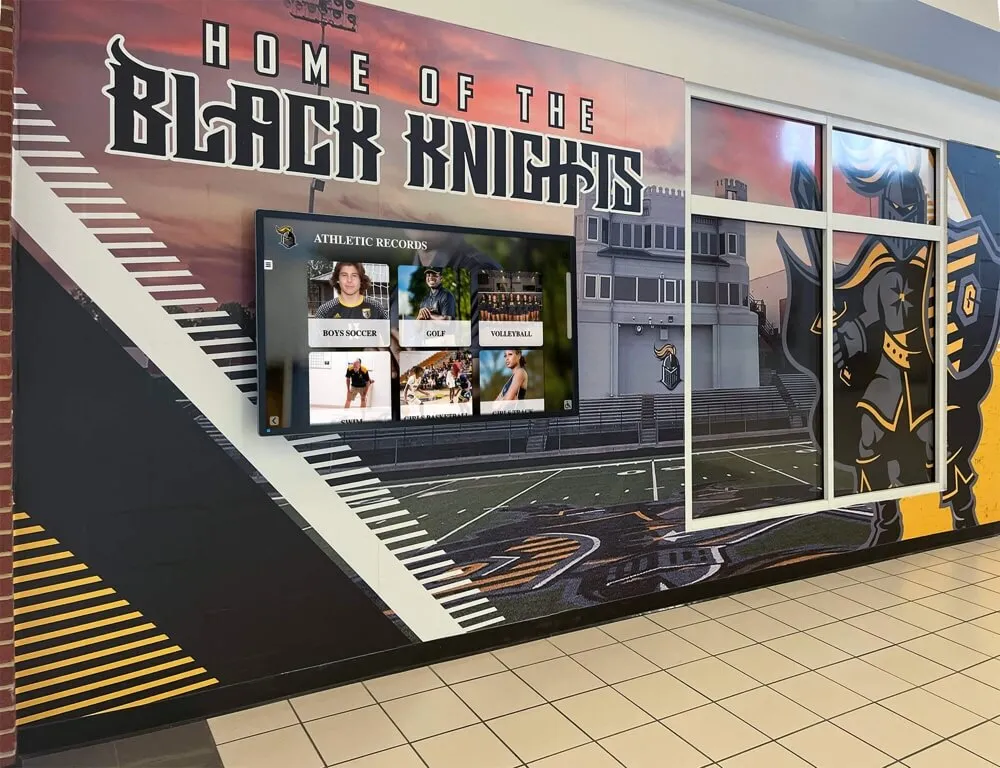
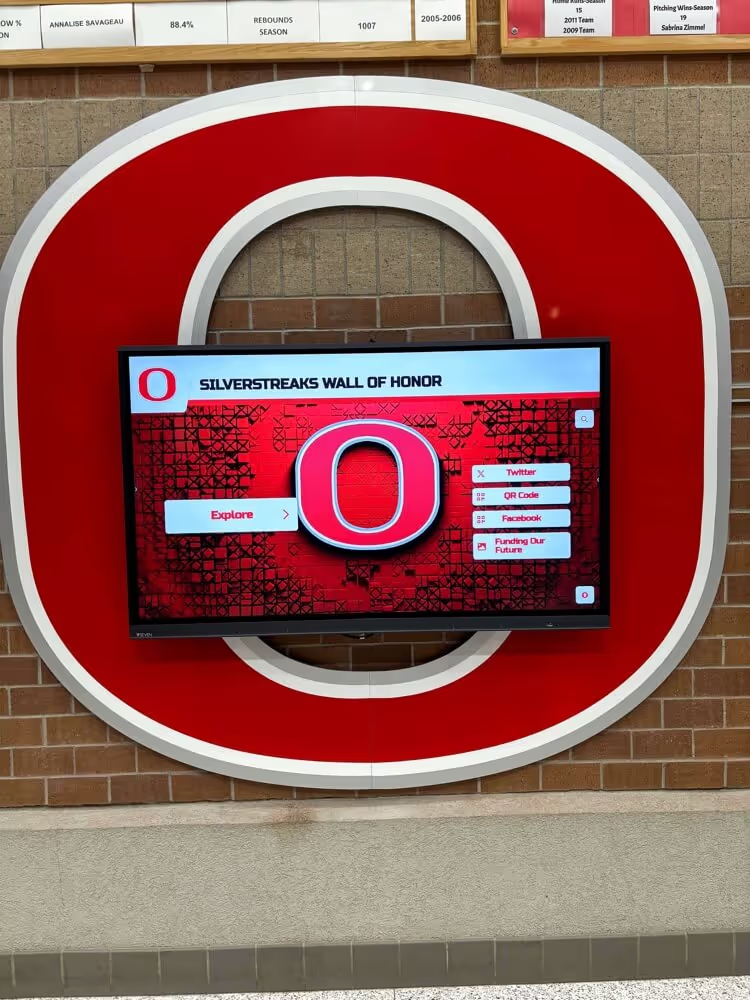
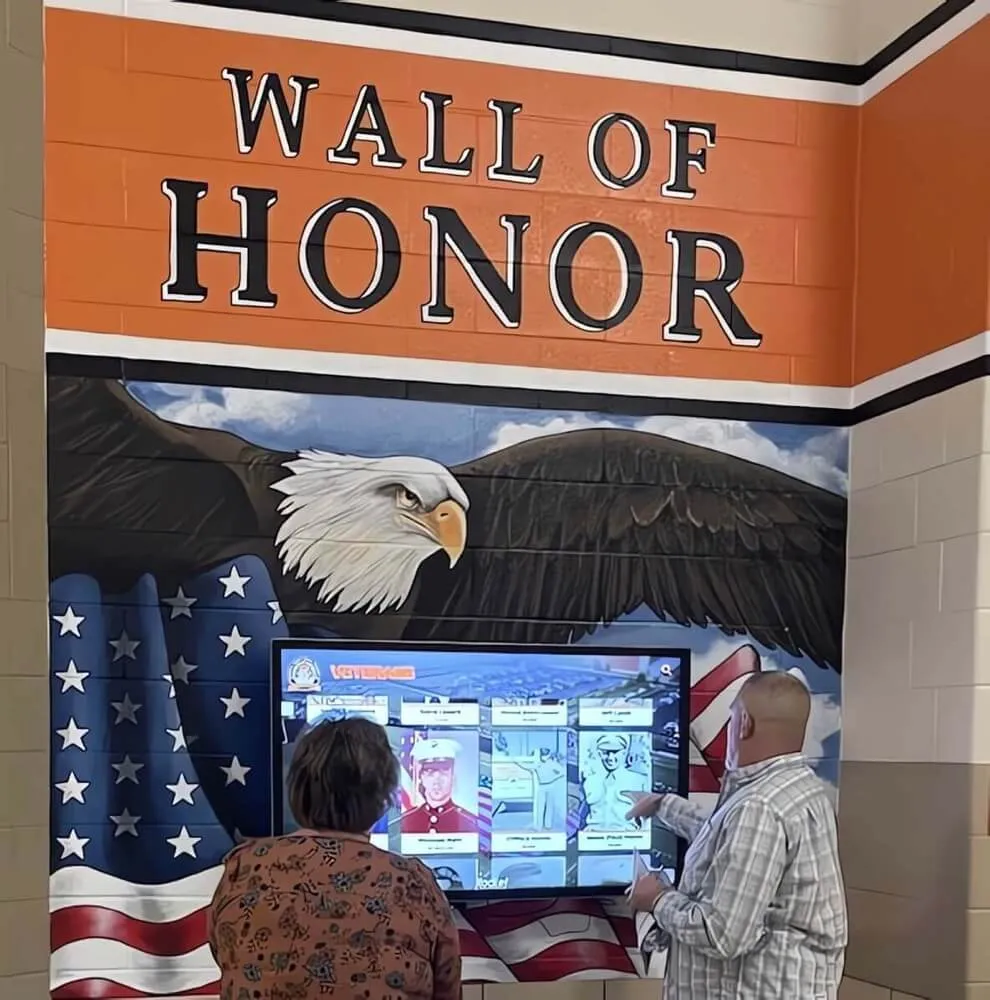
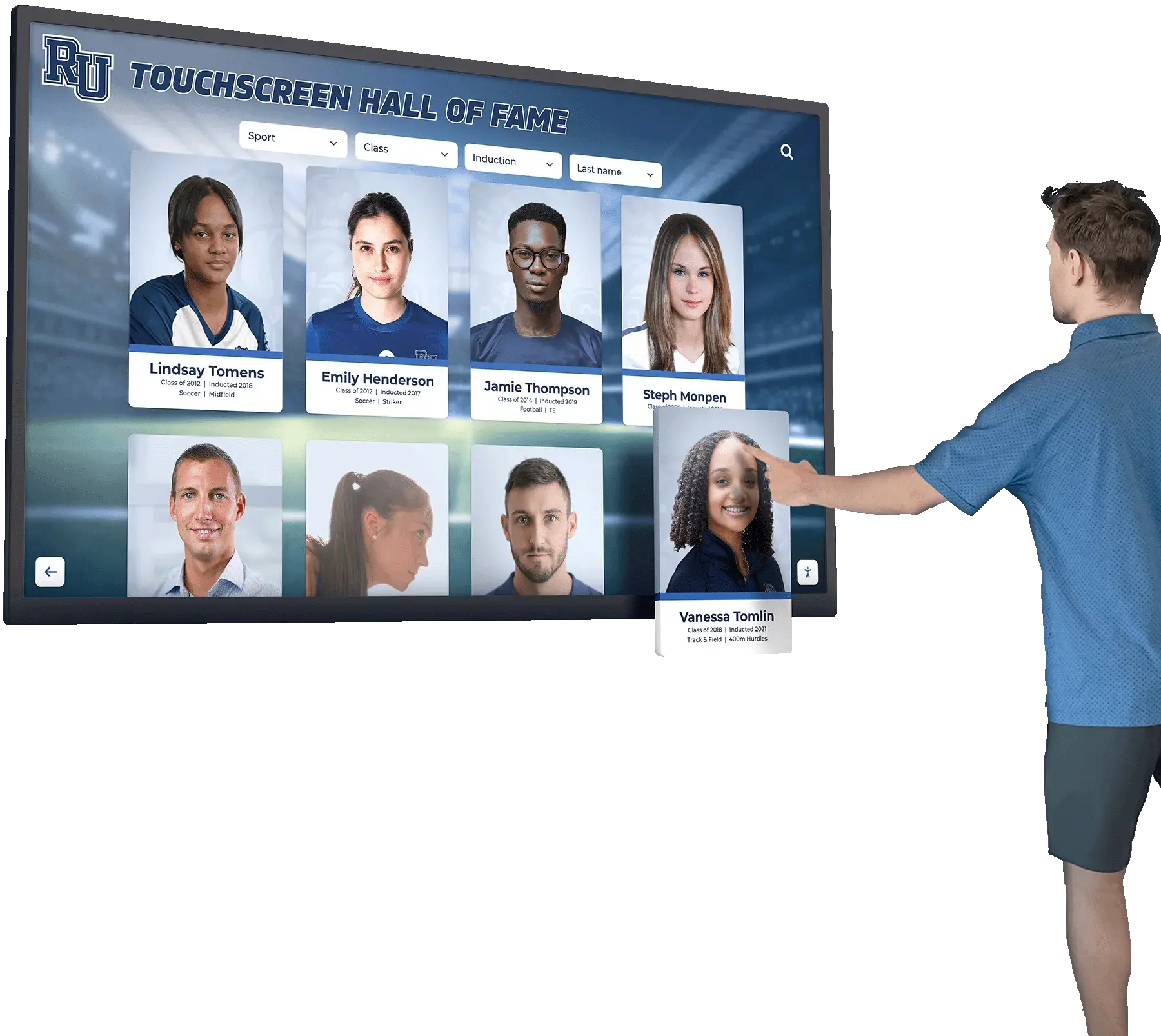
Intuitive touchscreen interfaces invite exploration and discovery, transforming passive viewing into active engagement
Inspiration for Younger Students
Visible senior recognition creates powerful modeling effects for current underclassmen observing what achievements schools celebrate and how accomplishments are acknowledged.
Concrete Examples of Success
Underclassmen exploring Class of 2026 showcases develop understanding of specific colleges students from their school attend, pathways previous students followed to achieve recognition, types of activities and involvement that lead to comprehensive achievement, realistic timeframes for building accomplishment portfolios, and role models who share their backgrounds, interests, or aspirations.
This informal mentorship through recognition helps younger students develop concrete visions of their own potential trajectories and achievement possibilities.
Normalized Excellence
When comprehensive senior recognition becomes standard rather than exceptional, it normalizes expectations that all students will develop achievement portfolios worth celebrating, pursue excellence across academic and extracurricular domains, plan thoughtfully for post-secondary transitions, and contribute meaningfully to school community during high school years.
Schools with robust recognition traditions report that younger students actively plan how they want to be recognized as seniors, working backward from desired recognition to identify activities, achievements, and experiences they should pursue during high school years.
Learn about student mentorship programs that connect current students with alumni role models.
Designing Comprehensive Class of 2026 Digital Showcase Content
Effective showcase design requires strategic content planning ensuring recognition celebrates students comprehensively while remaining feasible to implement given real-world resource and time constraints.
Essential Profile Components
Start with foundational content every senior profile should include, then expand with enhanced elements as resources permit.
Core Information Requirements
- Full name as student prefers to be recognized
- High-quality senior portrait photograph
- Graduation year (Class of 2026)
- Brief personal statement or memorable quote
- Post-graduation plans (college, career, military, gap year)
- Academic program or intended major
- Primary extracurricular involvement
This essential information provides meaningful recognition while remaining relatively simple to collect through standardized forms all seniors complete.
Enhanced Achievement Documentation
Expand profiles with additional content celebrating accomplishment:
Academic Recognition
- GPA or class ranking when students choose to share
- Advanced Placement or International Baccalaureate courses completed
- Academic honors and awards (National Honor Society, AP Scholar, departmental awards)
- Notable academic projects or research experiences
- Scholarship amounts and competitive awards received
Extracurricular Achievements
- Athletic participation, team leadership, and accomplishments
- Performing arts involvement and major productions
- Club leadership positions and contributions
- Student government service
- Community service hours and significant projects
Personal Reflections
- Favorite high school memories
- Most influential teachers or mentors
- Advice for underclassmen
- Personal growth insights
- Acknowledgments of supporters
Visual Content Standards
Photography quality significantly impacts overall showcase professionalism and student satisfaction with recognition.
Professional Portrait Photography
Invest in consistent senior portrait sessions including controlled lighting ensuring flattering, professional-quality images, neutral or branded backgrounds maintaining visual cohesion across all profiles, consistent framing and composition standards, and multiple pose options enabling student choice within professional guidelines.
Many schools partner with professional photography services providing affordable session packages for all seniors, ensuring comprehensive participation regardless of family economic circumstances.
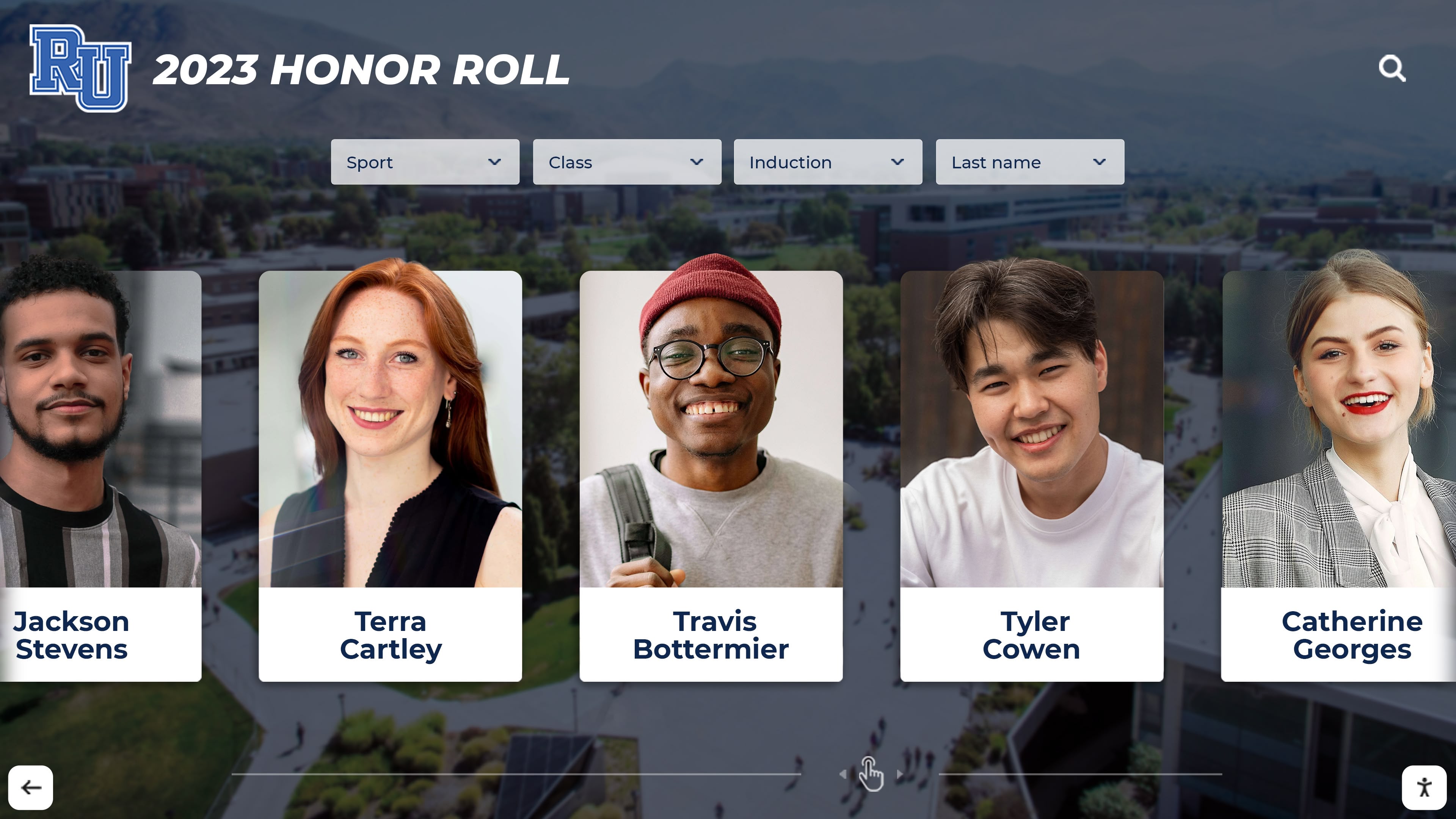
Professional photography standards ensure visual consistency and quality across all senior profiles
Supplementary Imagery
Beyond formal portraits, incorporate additional visuals including candid photos from school activities and events, athletic action shots during competitions, performing arts images from concerts and productions, community service project documentation, and club activity photos showing involvement and leadership.
These supplementary images create richer storytelling that honors students’ complete high school experiences rather than limiting recognition to formal portraits alone.
Inclusive Recognition Approaches
Comprehensive showcases ensure recognition opportunities exist for all students regardless of traditional achievement measures or institutional prominence.
Multiple Recognition Categories
Avoid narrow definitions of achievement by celebrating diverse accomplishments:
- Academic Excellence: Honor roll, AP scholars, academic competition winners
- Athletic Achievement: Varsity letters, team captains, athletic honors
- Artistic Accomplishment: Performance leads, art show participants, music honors
- Leadership Impact: Student government, club presidents, peer mentors
- Community Service: Volunteer hours, service project leadership, civic engagement
- Personal Growth: Overcoming challenges, resilience, improvement trajectories
- Unique Talents: Special skills, hobbies, distinctive interests
This multi-dimensional approach ensures every senior has meaningful achievements worth celebrating rather than limiting recognition to traditional academic or athletic accomplishment.
Participation Equity
Implement strategies ensuring comprehensive participation including multiple submission opportunities for students who miss initial deadlines, outreach to families for students who don’t self-advocate for inclusion, translated materials for families with language barriers, technical assistance for families lacking digital access or skills, and opt-out options respecting students who prefer not to participate.
Aim for participation rates exceeding 90% rather than accepting incomplete representation that creates exclusionary recognition where only some seniors receive acknowledgment.
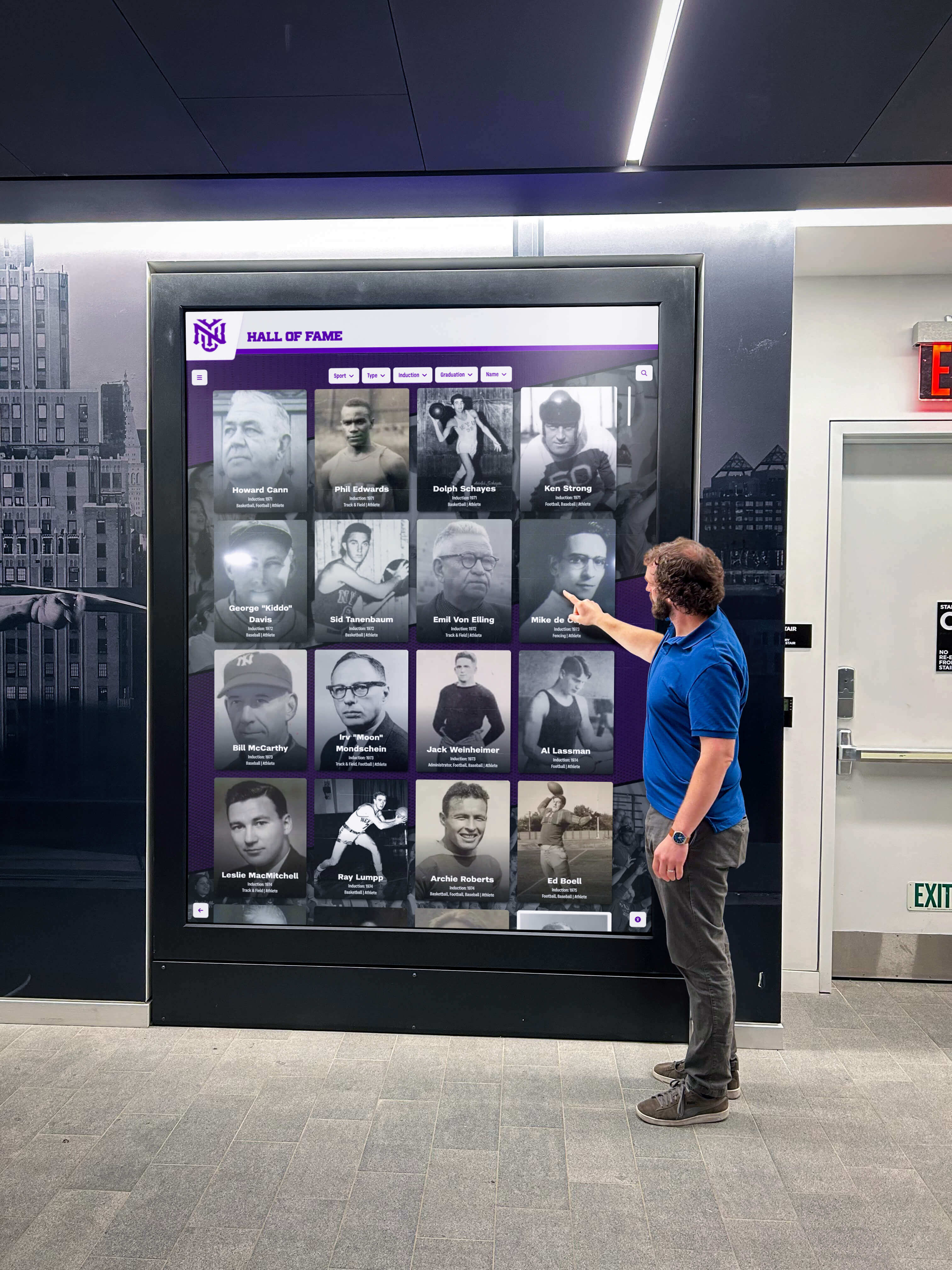
Inclusive recognition programs celebrate diverse student achievements and ensure comprehensive senior participation
Implementation Strategies for Class of 2026 Digital Showcases
Successful implementation requires systematic planning addressing technology selection, content development, stakeholder engagement, and sustainable operations extending beyond single graduation years.
Technology Platform Selection
Choose platforms providing necessary functionality while matching school technical capabilities and budget constraints.
Purpose-Built Recognition Systems
Solutions like Rocket Alumni Solutions offer platforms specifically designed for educational recognition including intuitive content management requiring no technical expertise, unlimited student profile capacity accommodating entire graduating classes, powerful search and filtering enabling easy discovery, responsive design ensuring excellent experience across all devices, customizable branding reflecting school identity and colors, and comprehensive support assisting schools throughout implementation and ongoing operations.
Purpose-built platforms typically provide more appropriate features and easier management compared to generic digital signage or website systems not optimized for student recognition use cases.
Hardware Considerations
For physical installations in school facilities, select appropriate hardware:
- Commercial-grade touchscreens built for continuous operation and heavy use
- Appropriate sizes ranging from 43 inches for smaller spaces to 75+ inches for large lobbies
- Portrait or landscape orientation depending on content format and space characteristics
- Floor-standing kiosks versus wall-mounted displays based on facility constraints
- Durable enclosures protecting displays in high-traffic school environments
Web Integration Requirements
Ensure platforms provide robust web accessibility including mobile-responsive design working seamlessly on smartphones, tablets, and computers, secure access with appropriate privacy protections for student information, social sharing capabilities enabling families to distribute recognition digitally, integration with school websites and communication platforms, and analytics tracking engagement and popular content.
Explore touchscreen software solutions designed specifically for educational recognition programs.
Strategic Display Placement
Location significantly affects recognition visibility and cultural impact throughout school communities.
High-Visibility School Locations
Position Class of 2026 recognition displays where they receive maximum exposure:
- Main Entrances: Ensure all visitors encounter senior recognition immediately upon entering
- Administrative Offices: Provide visibility to families during routine visits
- Counseling Centers: Connect recognition to college and career planning conversations
- Cafeterias and Commons: Reach entire student population during daily lunch periods
- Senior Hallways: Create dedicated spaces celebrating graduating class
- Libraries and Media Centers: Integrate recognition into academic research spaces
Multiple installation locations increase visibility while serving diverse audiences in context-appropriate environments.
Event-Specific Installations
Leverage recognition during key school events including graduation ceremonies where families gather to celebrate, senior nights for athletic teams and performing arts, college decision day celebrations in spring, homecoming festivities welcoming alumni back to campus, and admissions tours showcasing school culture to prospective families.
Portable or movable displays enable strategic repositioning based on seasonal events and celebration opportunities.
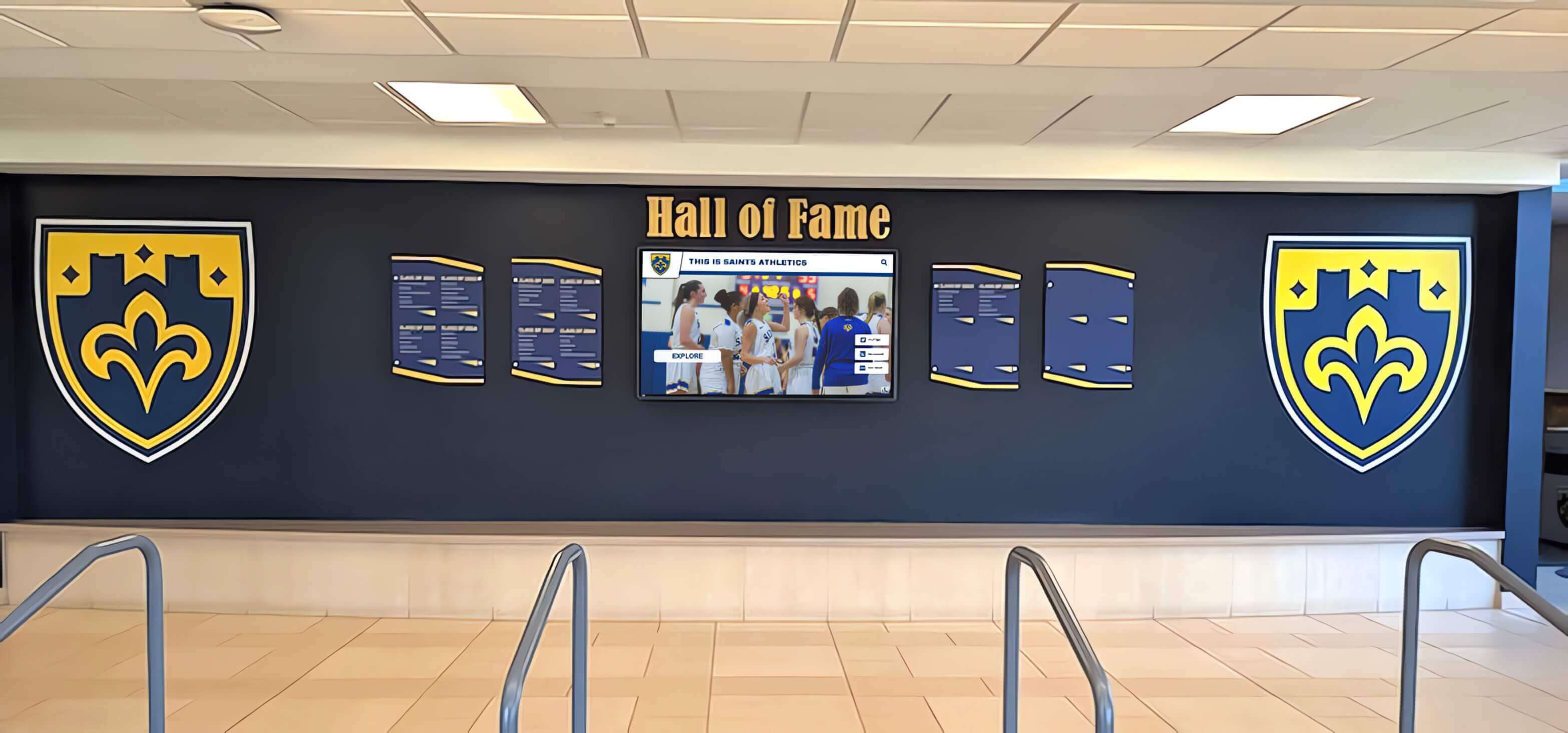
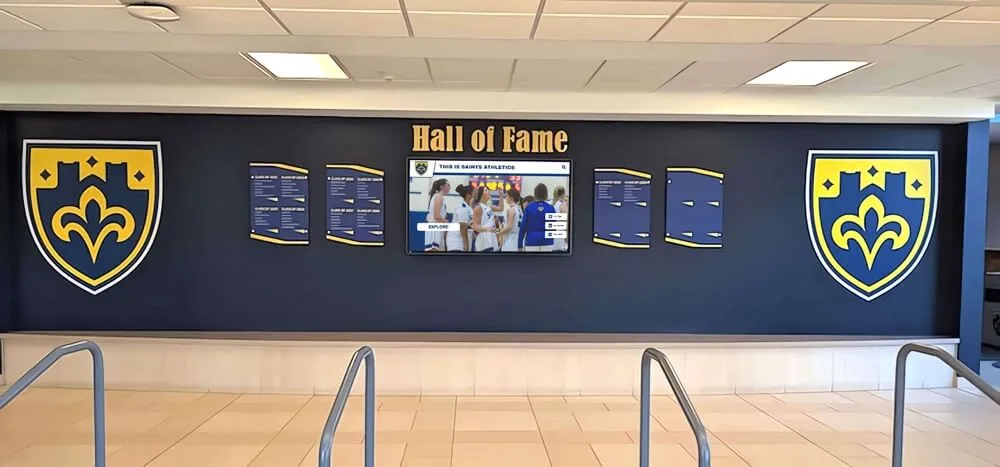
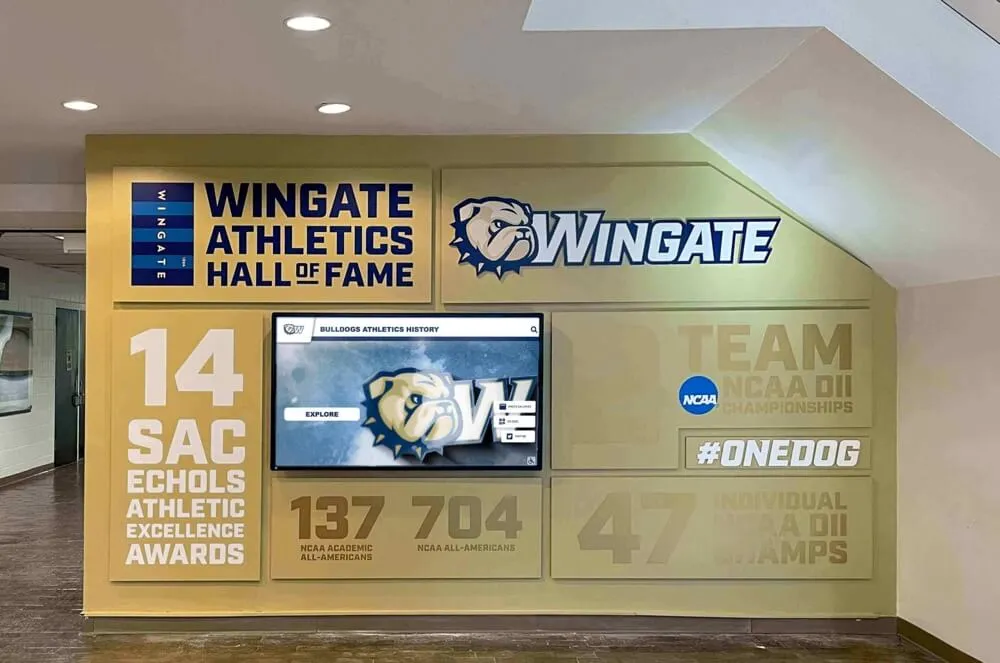
Strategic placement in main lobbies ensures senior recognition receives prominent visibility from all visitors
Content Collection and Development Processes
Systematic content gathering ensures comprehensive participation while maintaining quality standards.
Senior Information Forms
Create standardized collection instruments including digital forms accessible from any device, clear instructions about required versus optional information, examples showing completed profiles helping students understand expectations, submission deadlines with multiple opportunities for participation, photo upload capabilities for supplementary images, and privacy acknowledgments ensuring appropriate information use.
Distribute forms through multiple channels—email to seniors and families, announcements in senior classes, counseling office distribution, and reminders through school communication platforms—ensuring all students receive clear information about participation processes.
Phased Implementation Timeline
Develop realistic schedules accounting for school calendars and competing demands:
- Fall Semester: Begin planning and platform selection
- Winter (January-February): Launch senior information collection
- Early Spring (March-April): Compile content and create initial profiles
- Late Spring (April-May): Finalize showcase and host unveiling celebration
- Post-Graduation: Continue refining content and adding updates
This extended timeline prevents last-minute rushes while ensuring recognition launches during graduation season when excitement peaks.
Quality Review Processes
Implement systematic review ensuring accuracy and appropriateness:
- Staff review of all submitted content before publication
- Verification of college names, scholarship amounts, and factual information
- Photo quality assessment ensuring professional standards
- Spelling and grammar review of personal statements
- Student and family final approval before public display
- Post-launch corrections addressing any identified errors
Quality control prevents embarrassing mistakes while ensuring recognition meets professional standards families expect.
Training and Support for Staff
Successful implementation requires appropriate staff preparation and ongoing support.
Content Management Training
Provide comprehensive instruction for counselors and staff including platform navigation and profile creation workflows, photo editing and formatting best practices, content approval processes and quality standards, troubleshooting common technical issues, and security and privacy protocols.
Multiple trained staff members ensure program sustainability through personnel transitions and competing demands on individual staff time.
Student Leadership Opportunities
Engage student volunteers assisting with implementation including photography teams capturing candid images throughout senior year, interview teams gathering personal statements and reflections, technical support helping classmates submit information, promotion committees building participation excitement, and launch event planning coordinating unveiling celebrations.
Student involvement builds ownership while developing leadership skills and reducing staff workload.
Celebrating Beyond Graduation: Ongoing Engagement
Effective Class of 2026 digital showcases continue creating value long after commencement ceremonies conclude.
Alumni Connection and Updates
Digital platforms enable ongoing engagement maintaining connections with graduates.
Post-Graduation Updates
Encourage returning graduates to update profiles including college enrollment confirmation and experiences, career placement and professional development, graduate school admission and advanced degrees, professional accomplishments and recognition, and life milestones like marriages or significant achievements.
These updates transform static graduation recognition into living, evolving documentation of alumni success, demonstrating long-term outcomes of school education and community impact.
Alumni Mentorship Integration
Connect current students with Class of 2026 graduates through profile-based matching including college-specific connections pairing students interested in particular colleges with alumni attending those institutions, career pathway mentorship connecting students with alumni in fields they’re considering, activity-based matching linking students and alumni who shared similar high school involvement, and hometown connections supporting students from specific communities or backgrounds.
This integration extends showcase value beyond recognition to practical support advancing current student success.
Explore alumni engagement through interactive displays that maintain graduate connections.
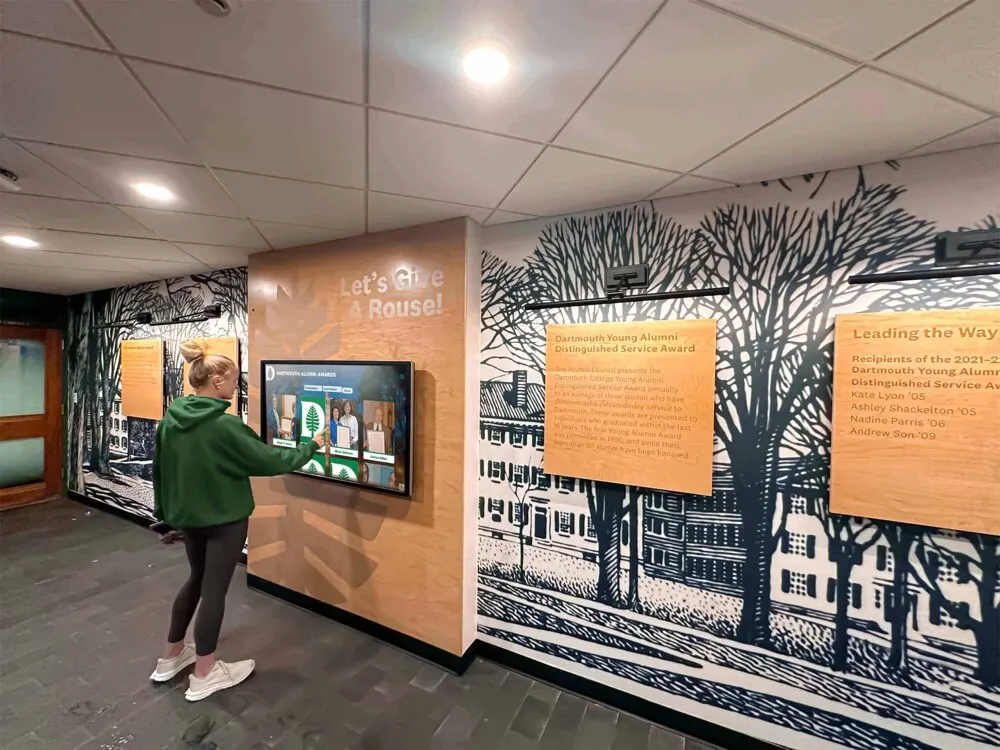
Digital showcases enable ongoing alumni engagement and connection extending far beyond graduation ceremonies
Comparative Class Analysis
Digital platforms enable meaningful comparison across graduating classes providing valuable insights.
Historical Trend Tracking
Compare Class of 2026 achievements with previous graduating classes:
- College destination patterns and acceptance rates to selective institutions
- Scholarship totals and average awards per student
- Military enlistment and service academy admission trends
- Community service hours and civic engagement
- Academic achievement distributions and honors
- Career pathway diversity and workforce entry
This analysis informs program evaluation and strategic planning while celebrating unique accomplishments of each graduating class within historical context.
Program Effectiveness Assessment
Evaluate recognition program impact through engagement metrics including profile view counts and time spent exploring showcases, search patterns revealing popular content and student interests, social media shares indicating family and community engagement, alumni feedback about recognition meaningfulness, underclassman surveys about inspiration and motivation, and participation rates tracking comprehensive senior inclusion.
Regular assessment enables continuous improvement ensuring showcases remain effective, engaging, and aligned with educational goals.
Integration with School Culture and Traditions
Position Class of 2026 recognition within broader school traditions and cultural practices.
Annual Recognition Traditions
Establish consistent senior celebration practices including unveiling ceremonies each spring introducing new graduate recognition, senior spotlight series throughout final semester featuring individual students, countdown celebrations marking milestones in final weeks, legacy projects where graduating classes contribute lasting gifts, and alumni return events connecting recent graduates with current seniors.
Predictable traditions build anticipation while ensuring sustainable implementation that doesn’t depend on extraordinary efforts by individual staff members.
Connection to School History
Integrate Class of 2026 within institutional narrative including timeline displays showing graduating classes across decades, notable alumni features highlighting distinguished graduates, evolution documentation showing how school and community changed over time, and tradition preservation documenting customs and practices spanning generations.
This contextualization strengthens school identity and community continuity while helping current students understand their place within ongoing institutional stories.
Discover approaches for developing institutional history timelines that celebrate graduating classes.
Creative Showcase Features and Enhancements
Beyond basic student profiles, creative features enhance engagement and celebration quality.
Interactive Timeline Experiences
Present Class of 2026 journey chronologically through high school years.
Milestone Documentation
Create visual timelines featuring freshman orientation memories and first-day excitement, homecoming celebrations across all four years, athletic championships and performance highlights, academic competitions and honors received, prom and formal events throughout high school, service projects and community impact, and senior-specific traditions like signing day and baccalaureate.
Chronological presentation helps students and families reflect on growth trajectories and memorable experiences spanning high school careers.
Before and After Showcases
Document transformation across high school years including freshman versus senior portrait comparisons showing physical maturation, grade-by-grade achievement progression, leadership development across involvement years, and personal growth narratives reflecting on change.
This developmental perspective celebrates not just final achievements but entire growth journeys students completed during high school years.
Peer Recognition and Testimonials
Include student voice celebrating classmates’ impacts.
Superlatives and Peer Awards
Feature peer-voted recognition categories including friendliest senior, most likely to succeed, class comedian bringing joy to others, best dressed and style icon, most changed since freshman year, most school spirit demonstrating pride, and teacher of the future inspiring younger students.
These lighthearted categories add personality while celebrating students who might not receive traditional academic or athletic recognition.
Classmate Messages
Enable students to leave messages for each other including appreciation notes thanking friends for support, admiration statements celebrating classmates’ qualities, shared memories highlighting meaningful experiences together, and advice or encouragement for college and beyond.
This peer-to-peer celebration creates rich community documentation that students genuinely value and revisit years after graduation.
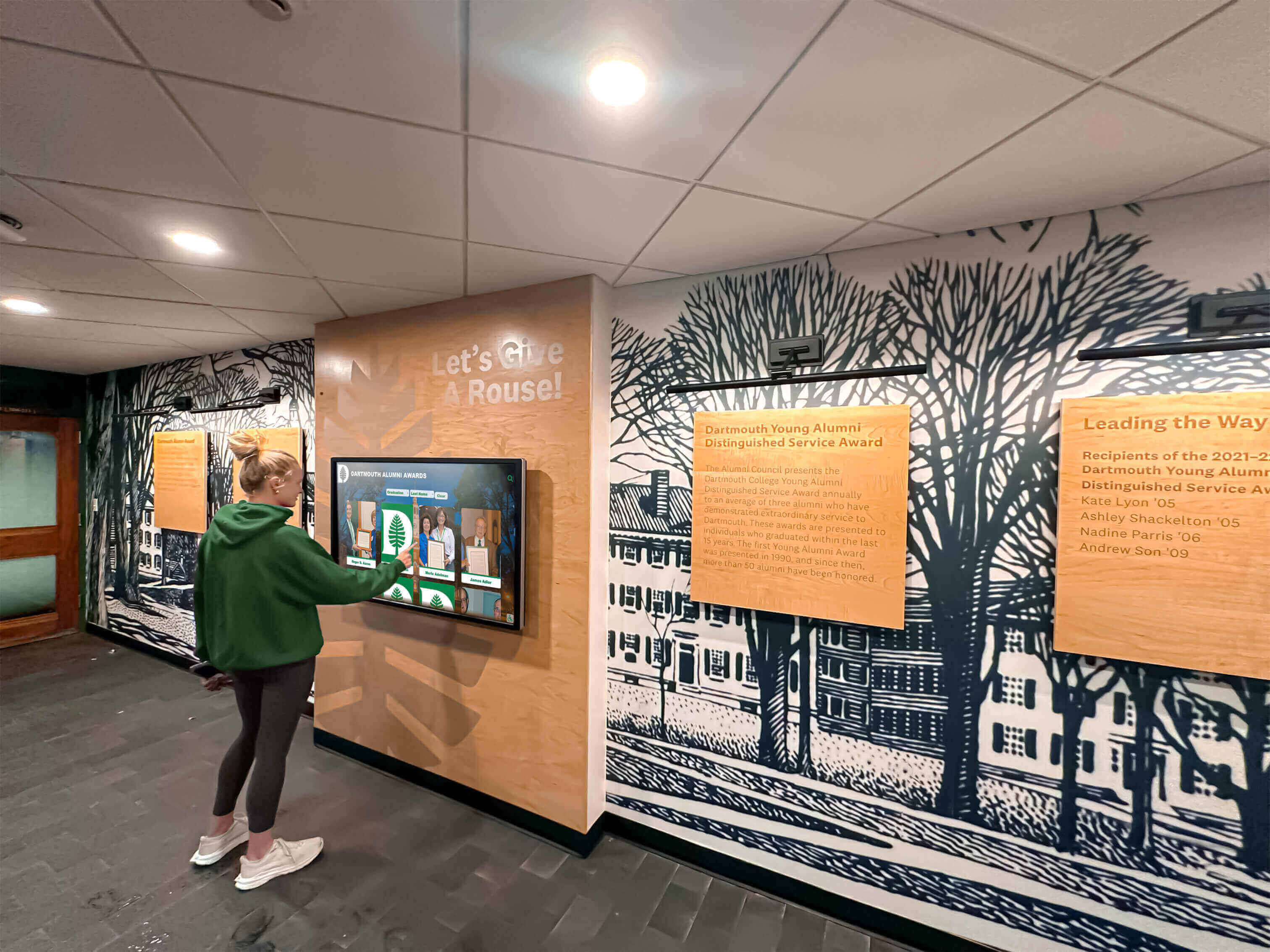
Interactive features enabling peer recognition and shared memories create engaging experiences students actively explore
Multimedia Integration
Enhance text-based profiles with rich media content.
Video Components
Incorporate video elements including senior message videos where students share reflections or advice, activity highlight reels showing sports, performances, or clubs, teacher tribute compilations where educators congratulate graduating seniors, parent messages expressing pride and encouragement, and time capsule videos students can revisit in future years.
Video content creates emotional resonance and authentic connection impossible through text and photos alone, significantly increasing engagement and family sharing.
Audio Elements
Consider audio enhancements including senior playlist featuring songs meaningful to Class of 2026, audio statements from students who prefer speaking to writing, celebration music creating festive atmosphere, and reminiscence recordings from alumni reflecting on their high school experiences.
Multi-sensory experiences create more memorable, engaging recognition compared to visual-only displays.
Gamification and Engagement Features
Build interactive elements encouraging exploration and discovery.
Virtual Scavenger Hunts
Create interactive challenges including “find classmates who…” searches (attended same elementary school, participating in specific activities, planning to attend certain colleges), achievement discovery challenges finding students with particular accomplishments, random profile features highlighting different students daily, and connection identification discovering shared interests among classmates.
Gamification elements increase time spent engaging with recognition while helping students discover classmates they may not know well, strengthening community connections.
Prediction and Reflection Prompts
Include forward-looking elements like “Where will they be in 10 years?” predictions from classmates, future achievement aspirations students set for themselves, time capsule elements students can revisit at reunions, and advice for future graduating classes.
These elements create opportunities for meaningful reflection while generating content useful for future reunion planning and alumni engagement.
Addressing Privacy and Ethical Considerations
Comprehensive showcases require thoughtful attention to privacy, consent, and appropriate information sharing.
Student and Family Consent
Ensure appropriate permissions before public recognition.
Opt-In Versus Opt-Out Approaches
Schools typically use one of two consent models:
Opt-Out: All seniors automatically included unless students or families actively decline participation. This approach maximizes participation ensuring comprehensive class representation, reduces administrative burden of tracking individual consent forms, and creates cultural expectation that recognition is normal rather than exceptional.
However, opt-out requires clear communication ensuring all families understand they can decline, providing easily accessible withdrawal processes, and respecting decisions without pressure or consequence.
Opt-In: Students must actively consent to participate in recognition. This approach respects family preferences more explicitly, ensures only genuinely interested students participate, and may provide stronger legal protection regarding information use.
However, opt-in typically produces lower participation rates, creates additional administrative burden tracking consent, and may result in incomplete class representation excluding students who simply didn’t return forms rather than preferring exclusion.
Most schools favor opt-out approaches with robust communication and easy withdrawal options, producing more comprehensive recognition while respecting genuine privacy preferences.
Information Sensitivity and Appropriateness
Carefully consider what information belongs in public recognition.
Appropriate Content Categories
Generally acceptable for public sharing includes names as students prefer to be recognized, professional photographs, graduation year and basic demographic information, college or post-secondary plans students choose to share, extracurricular involvement and achievement, academic honors when students consent to disclosure, and personal statements students compose specifically for showcase.
Sensitive Information Requiring Extra Care
Exercise caution with scholarship amounts when some students prefer financial privacy, detailed information about learning accommodations or disabilities, mental health challenges even when students have been open about them, disciplinary history or behavior challenges, family circumstances like divorce or economic hardship, and information about sexuality or gender identity unless students explicitly wish to share.
When uncertain about appropriateness, default to asking students and families directly rather than making unilateral decisions about what information to include.
Digital Safety and Security
Protect student information appropriately in digital environments.
Platform Security Standards
Select platforms providing secure hosting preventing unauthorized access, role-based permissions limiting who can edit content, regular security updates addressing emerging threats, data backup ensuring information preservation, and compliance with educational privacy regulations including FERPA and COPPA when applicable.
Image and Information Control
Implement policies preventing misuse including watermarking photos discouraging unauthorized downloads, right-click protection making image copying more difficult, clear terms of use prohibiting commercial exploitation, regular monitoring for inappropriate sharing or use, and processes for removing content if circumstances change.
Balance accessibility with appropriate protections ensuring showcases remain public enough to achieve recognition purposes while preventing exploitation or inappropriate use of student information and images.
Measuring Success and Impact
Regular assessment ensures Class of 2026 digital showcases achieve intended goals while identifying improvement opportunities for future graduating classes.
Quantitative Metrics
Track measurable indicators demonstrating program reach and engagement.
Participation Data
Monitor inclusion rates including percentage of graduating seniors participating in showcase, time required from initial launch to achieving comprehensive participation, demographic distribution ensuring equitable representation, and opt-out rates indicating students preferring exclusion.
Aim for participation rates exceeding 90% as evidence of comprehensive, inclusive recognition reaching nearly all graduating seniors.
Engagement Analytics
For digital platforms, track usage including total profile views and unique visitors, average time spent exploring showcase, most frequently viewed profiles and popular content, search patterns revealing student interests, social media shares indicating family engagement, and geographic distribution showing where remote viewers access recognition.
Strong engagement metrics validate investment in digital showcase while demonstrating reach extending far beyond physical campus visitors.
Cultural Impact Indicators
Monitor broader effects on school environment including underclassman awareness of and interest in senior recognition, increased participation in activities students see recognized in showcases, family satisfaction with recognition programs based on surveys or feedback, alumni connection maintained through showcase updates and engagement, and community pride in student achievement demonstrated through showcase use.
Qualitative Assessment
Gather stakeholder perspectives through structured feedback.
Senior Satisfaction
Survey graduating students about recognition experience including whether they felt appropriately and comprehensively celebrated, satisfaction with profile content and presentation quality, value they place on permanent versus temporary recognition, likelihood they’ll share recognition with family and friends, and suggestions for improvement benefiting future classes.
Family Feedback
Gather parent and guardian perspectives about how recognition made them feel, whether they found showcases accessible and easy to use, how recognition compared to expectations, whether they shared recognition with extended family or friends, and overall satisfaction with school’s celebration of graduates.
Underclassman Impact
Survey younger students about whether they explored Class of 2026 showcases, what they learned from viewing senior recognition, whether recognition inspired or motivated them, specific students who served as role models, and their anticipation of their own future recognition as seniors.
This qualitative feedback provides context numbers alone cannot capture while identifying specific improvements that strengthen recognition programs.
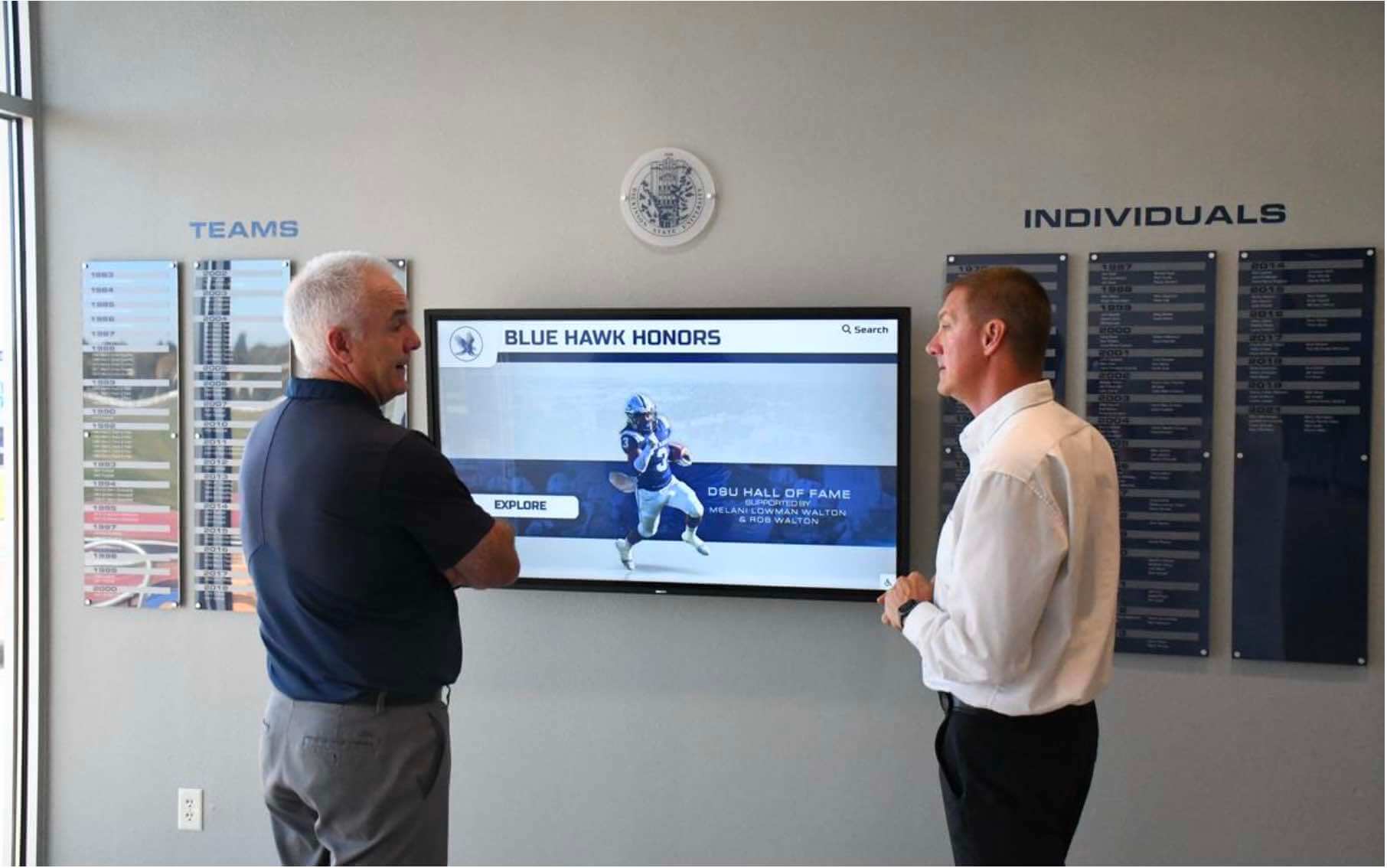
Success includes visible community engagement with recognition displays and meaningful conversations about student achievement
Conclusion: Honoring Class of 2026 Legacy Through Digital Innovation
Comprehensive Class of 2026 digital showcases represent strategic investments in student recognition, institutional memory, and school culture that extend far beyond single graduation ceremonies. When schools systematically celebrate graduating seniors through permanent, engaging, accessible recognition platforms—honoring diverse achievements, preserving rich multimedia storytelling, and enabling exploration by current students, families, alumni, and broader communities—they create environments where achievement receives sustained visibility and every graduate understands their contributions matter to institutional legacy.
The strategies explored throughout this guide provide practical frameworks for building Class of 2026 recognition that moves beyond temporary bulletin boards and basic yearbook pages to create lasting, meaningful celebration. From selecting appropriate digital platforms and designing comprehensive student profiles to implementing sustainable content development processes and measuring program impact, schools can transform senior recognition from fleeting seasonal decoration to permanent institutional celebration woven throughout school culture and accessible across multiple channels and audiences.
Create Your Class of 2026 Digital Showcase
Discover how modern digital recognition solutions can help you celebrate every graduating senior with the comprehensive, engaging, permanent recognition they deserve through interactive displays and accessible web platforms.
Explore Recognition SolutionsThe Class of 2026 invested four years building achievement portfolios, developing leadership capabilities, contributing to school communities, and preparing for successful post-secondary transitions. They navigated unique challenges including recovering from pandemic disruption, adapting to evolving educational standards, and preparing for uncertain future circumstances with resilience and determination. These students deserve recognition that validates their dedication, celebrates their accomplishments comprehensively, inspires younger students pursuing similar excellence, and demonstrates unequivocally that their school community values and remembers their contributions long after commencement ceremonies conclude.
Digital showcase technology makes comprehensive, meaningful recognition achievable for entire graduating classes rather than limiting celebration to highest-achieving or most visible students. Solutions like Rocket Alumni Solutions provide purpose-built platforms designed specifically for educational recognition, enabling schools to create engaging showcases without requiring technical expertise, significant ongoing resources, or extraordinary staff efforts. These systems transform recognition from resource-intensive annual challenges into sustainable programs that strengthen school culture while honoring every graduate appropriately.
Start where you are with recognition approaches you can implement sustainably—perhaps beginning with comprehensive senior profiles on school websites or basic digital displays featuring portrait photography and post-graduation plans—then systematically expand toward full-featured interactive showcases as budgets permit and demonstrated results justify additional investment. Every step toward more comprehensive, accessible, engaging recognition delivers meaningful value for students, families, and broader school communities while building positive cultures where achievement receives the sustained celebration and institutional acknowledgment it genuinely deserves.
Your Class of 2026 seniors have earned recognition equal to the years of dedication they invested in their education and school community. With thoughtful planning, appropriate technology investment, attention to inclusion and equity, and systematic implementation, you can create digital showcase systems that honor every graduate while preserving institutional memory, inspiring future students, and strengthening connections with alumni who will carry school values and lessons throughout their lives.
Ready to begin? Explore additional approaches for senior recognition programs, learn about class composite presentation strategies, or discover how interactive digital displays celebrate student leadership and achievement in ways that create lasting impact and meaningful celebration your graduating seniors truly deserve.