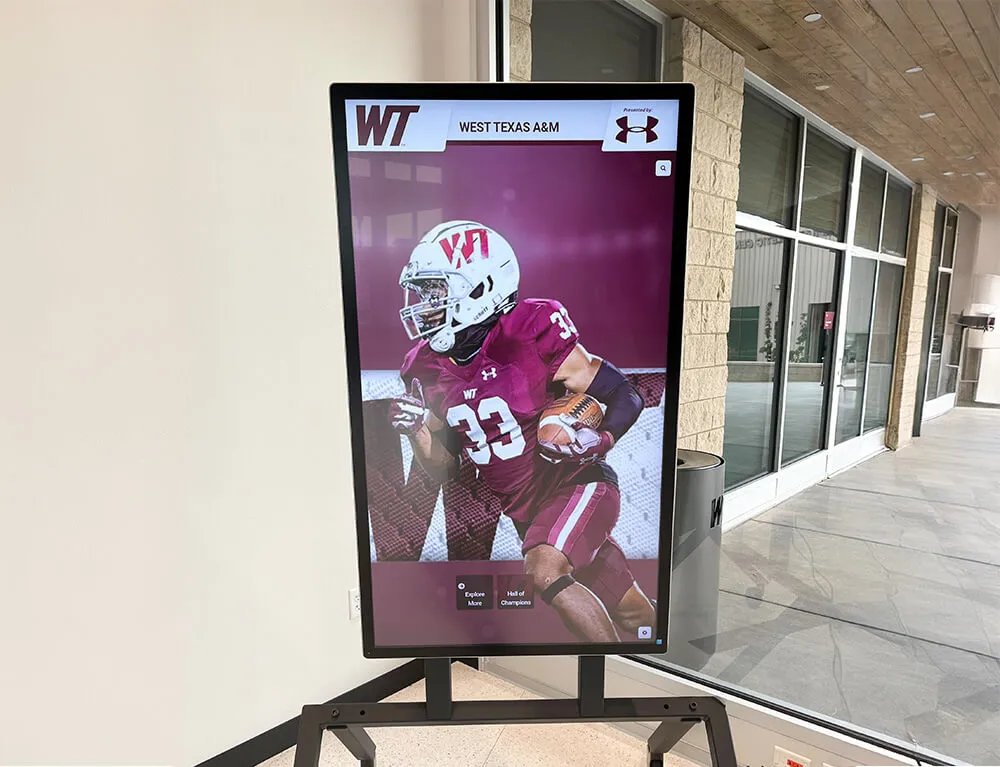
A coach’s influence reaches far beyond win-loss records. The mentor who pushed athletes past comfortable limits, the tactician who built a dynasty from an underdog program, the leader whose locker room lessons carried students through careers, relationships, and life challenges for decades—these are legacies that deserve more than a banquet plaque gathering dust in a storage room.
Coach hall of fame displays give athletic departments a permanent, visible way to honor the coaches who defined their programs. Whether you’re launching a first-ever coaches hall of fame, upgrading aging static plaques, or weaving coaching recognition into a broader athletic facility renovation, the right display approach transforms a hallway into a living tribute.
This guide covers everything from low-cost physical display frameworks to modern interactive touchscreen installations—giving you practical ideas regardless of budget or facility size.
Athletic departments that have already built athlete halls of fame often find that the natural next step is a dedicated coaches section. The logic is straightforward: the coaches who recruited, trained, and mentored those celebrated athletes deserve their own permanent recognition. Yet the execution is frequently overlooked, leaving coaching legacies scattered across old newspaper clippings, yearbook photos, and fading memories.

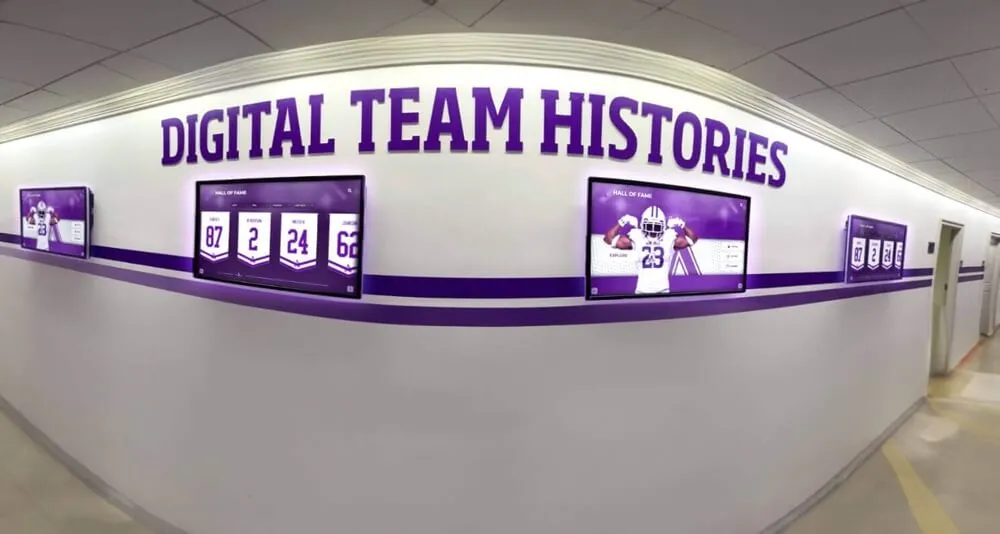
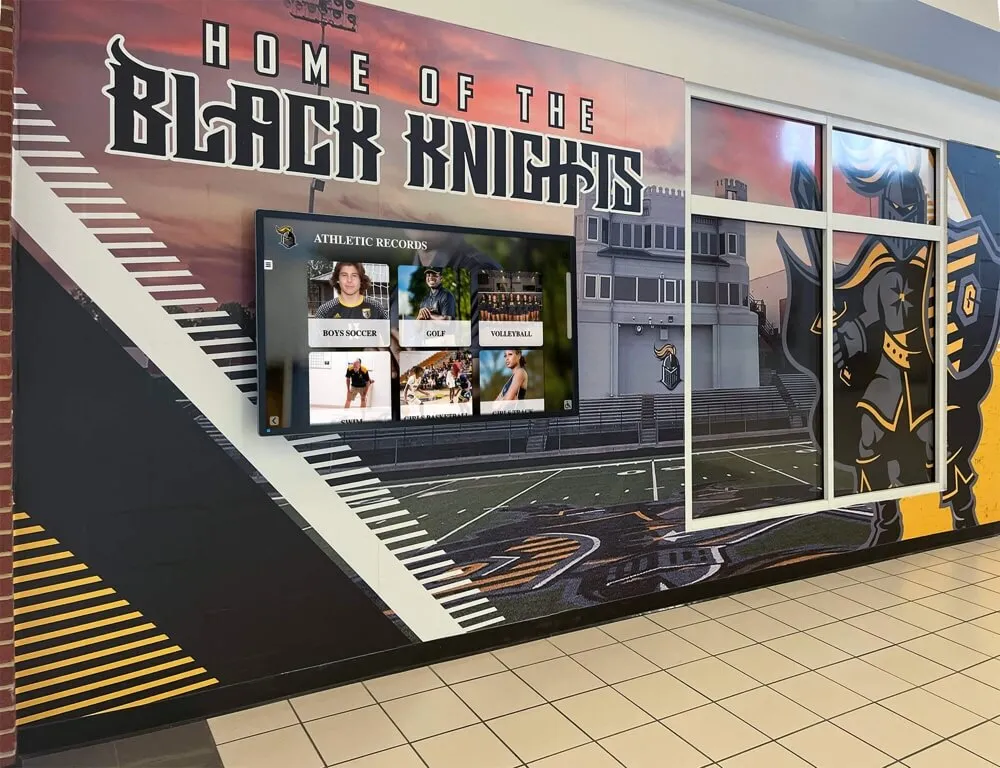
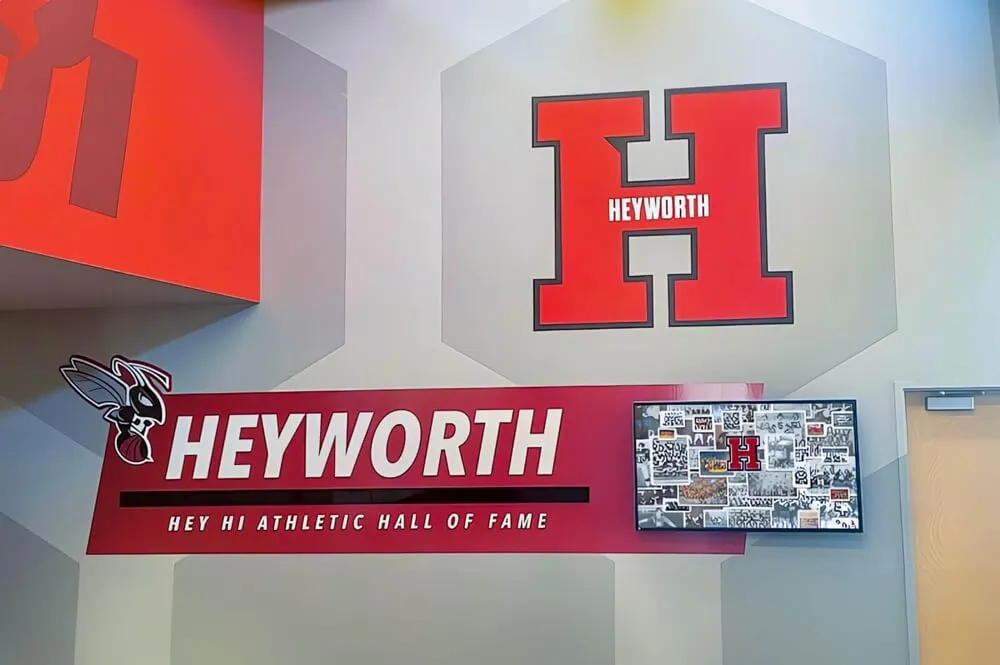
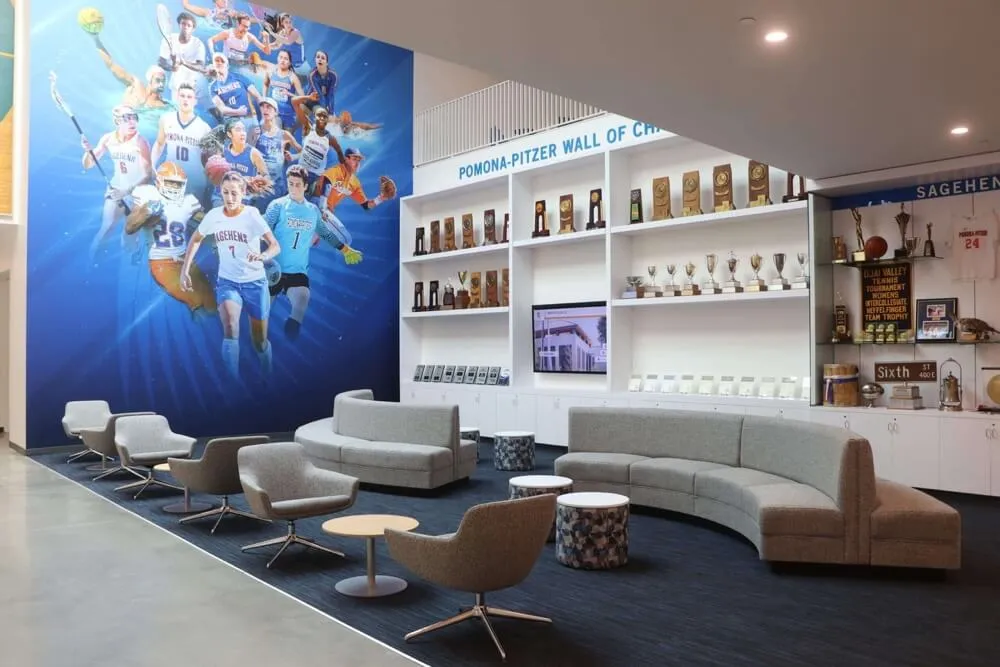
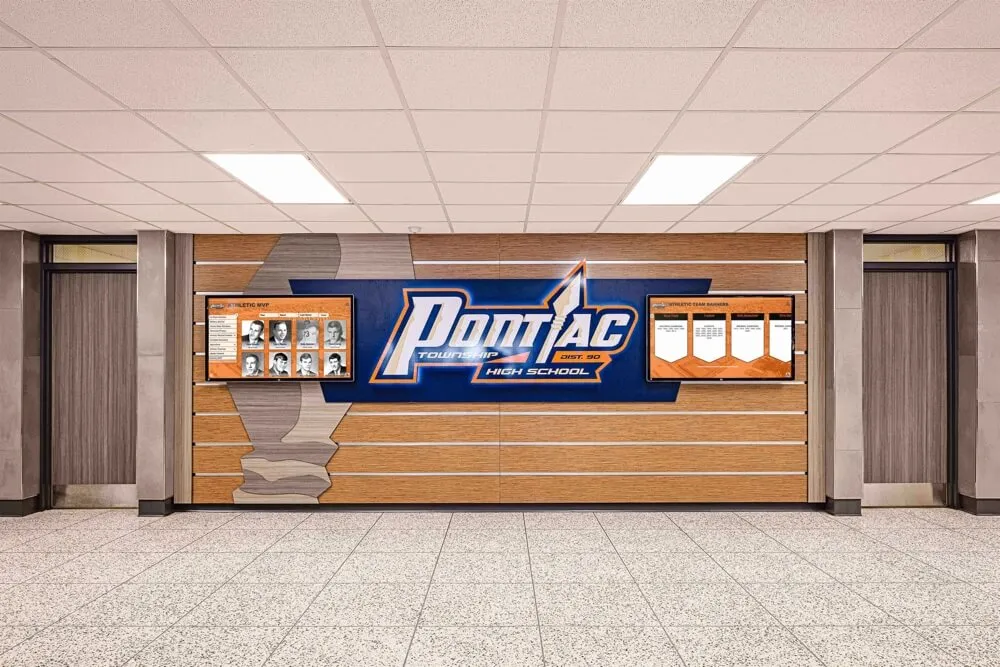
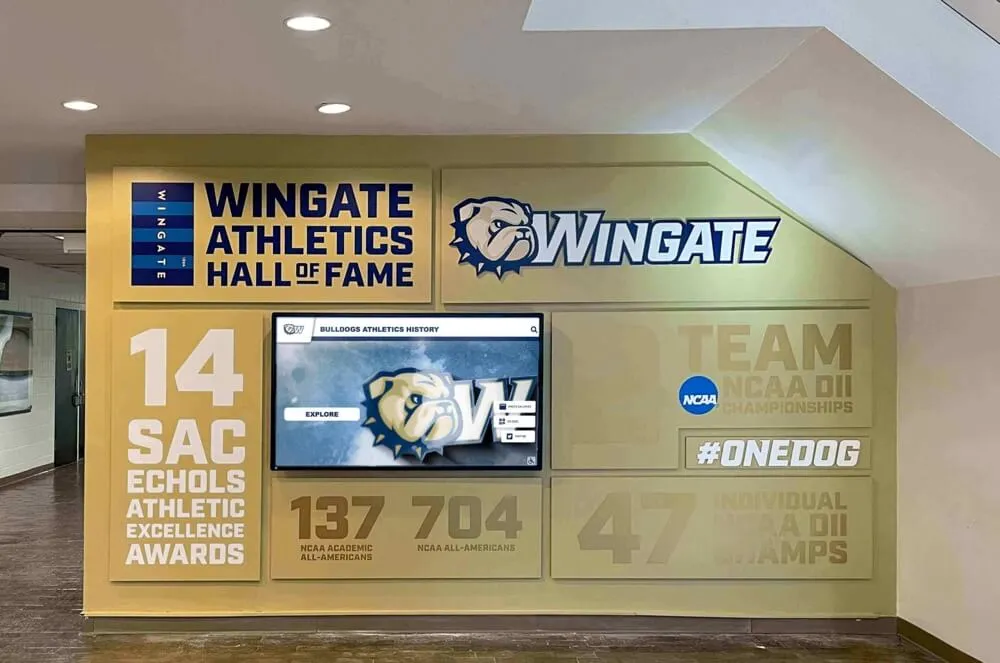
A well-branded hall of fame creates an immersive environment that celebrates coaching and athletic excellence together
Why Coaches Deserve a Dedicated Hall of Fame Display
Before exploring specific display ideas, it’s worth understanding what separates a coaches hall of fame from generic coach appreciation gestures.
The Difference Between Appreciation and Permanent Honor
Recognition events—banquets, appreciation days, season-end ceremonies—are meaningful but ephemeral. They celebrate a coach in the moment and then fade from institutional memory. A dedicated coach hall of fame display does something entirely different: it transforms a coaching legacy into a permanent part of the institution’s identity.
When a student-athlete walks past a display featuring the coach who built the program twenty years ago, they encounter history they’re now part of continuing. When a prospective athlete visits campus, a coaches hall of fame communicates that this institution values and preserves excellence over generations—not just for one season.
What Makes Coaching Legacies Worth Preserving
Coaches leave behind a unique category of institutional knowledge that no trophy or banner fully captures:
- Program-building history: How the program grew from modest beginnings into a regional or state contender
- Mentorship lineage: The chain of athletes-turned-coaches who trace their development to a specific mentor
- Philosophy and culture: The values, training systems, and competitive approaches that defined an era
- Statistical records in context: Win totals, titles, and milestones explained by the conditions of the era
A thoughtfully designed display communicates all of this, not just a name and a record.
Physical Coach Hall of Fame Display Ideas
Not every school has the budget for a full digital installation. Physical displays, when designed and maintained well, create powerful recognition spaces that stand the test of time.
Dedicated Wall Panels and Plaques
The most common approach uses individual engraved plaques or framed panels mounted along a dedicated hallway or lobby wall. Each panel typically includes a professional photo, years of service, sport(s) coached, and key achievements.
Design considerations for physical panels:
- Use consistent sizing and materials across all inductees so the display grows uniformly
- Choose materials (brushed aluminum, dark walnut, UV-resistant acrylic) that maintain appearance over decades
- Leave designated open space in the layout for future inductees rather than filling walls completely from the start
- Incorporate school colors and typography that align with other athletic branding
A row of well-designed plaques in a prominent athletic hallway creates visual impact and institutional permanence that budgets alone don’t determine.
Shield and Medallion Displays
Many athletic programs already use shield-style recognition for letterwinners or athletic halls of fame. A coaches section using the same visual language—but in a distinct size or color variant—integrates naturally while maintaining its own identity.
Shields work particularly well when mounted as a collection, allowing the display to grow with each induction class while maintaining visual cohesion. The cumulative effect of twenty or thirty shields representing decades of coaching history creates a powerful statement about program depth.
Shadow Boxes and Artifact Cases
For coaches with particularly rich memorabilia—game programs, state championship hardware, original playbooks, newspaper headlines—a shadow box or custom display case preserves physical artifacts alongside biographical information.
This approach works best for founding coaches or iconic program figures where the story benefits from tangible artifacts. It requires more space and maintenance than flat-panel displays but delivers a museum-quality experience for significant figures.
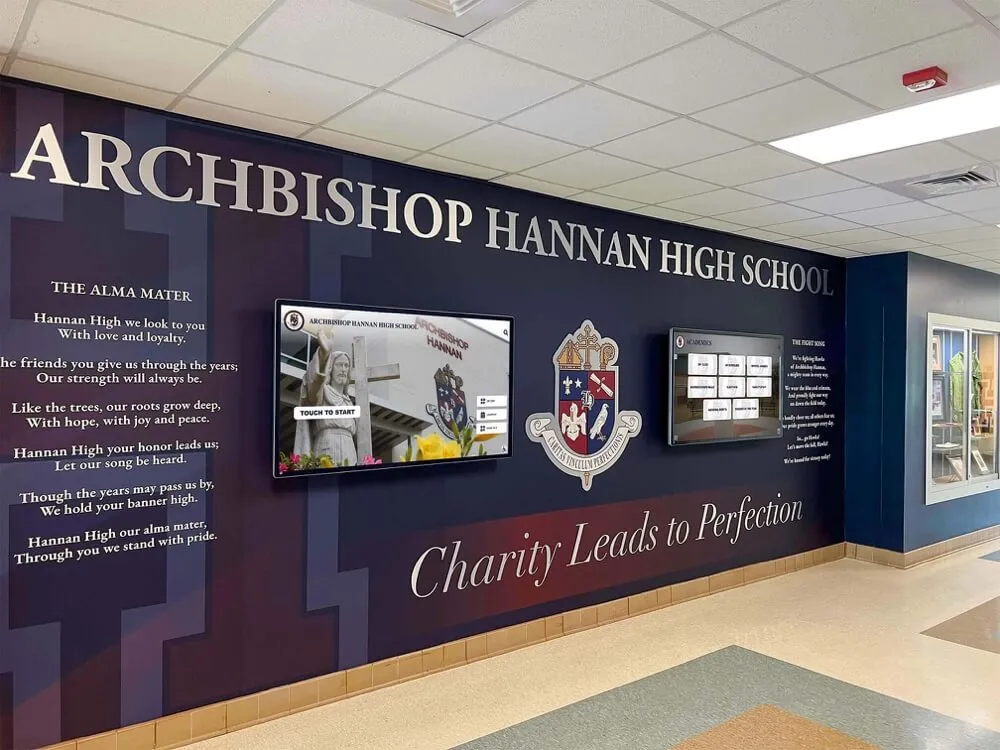
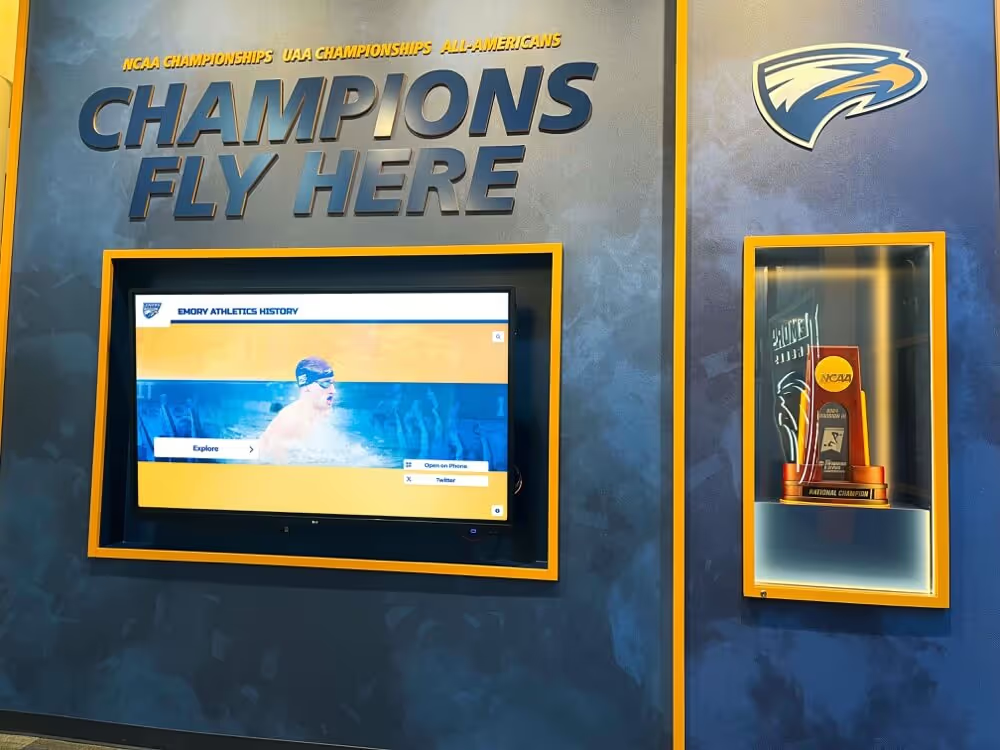
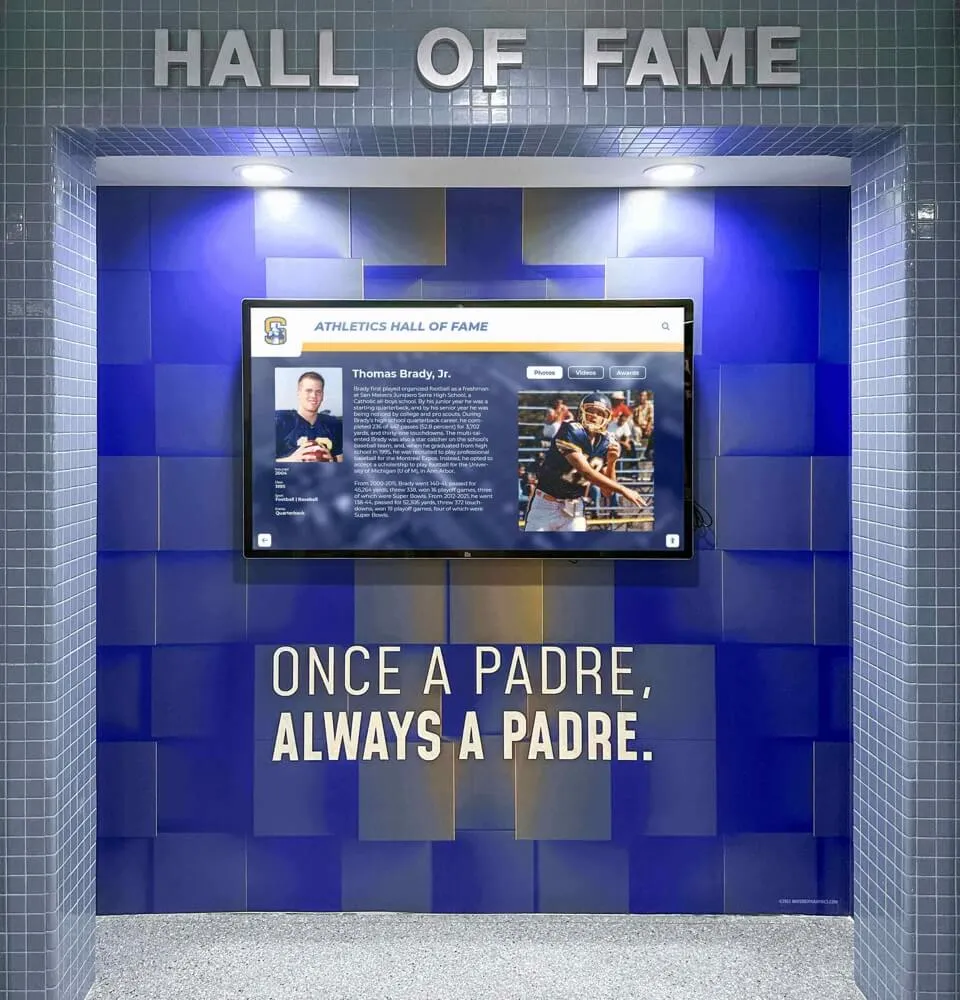
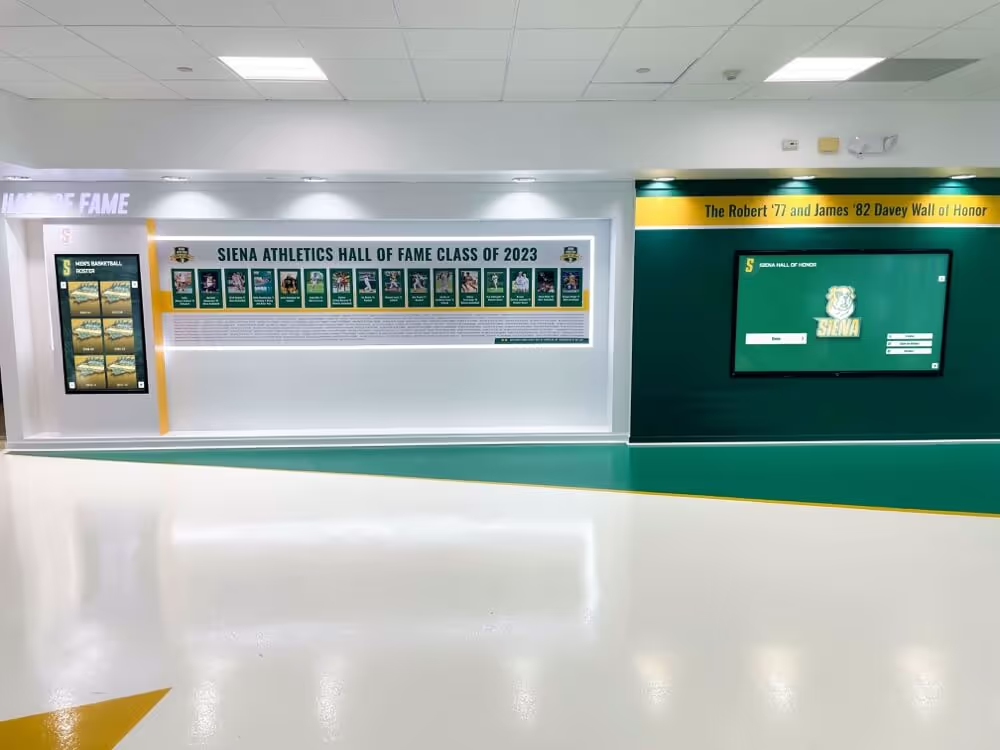
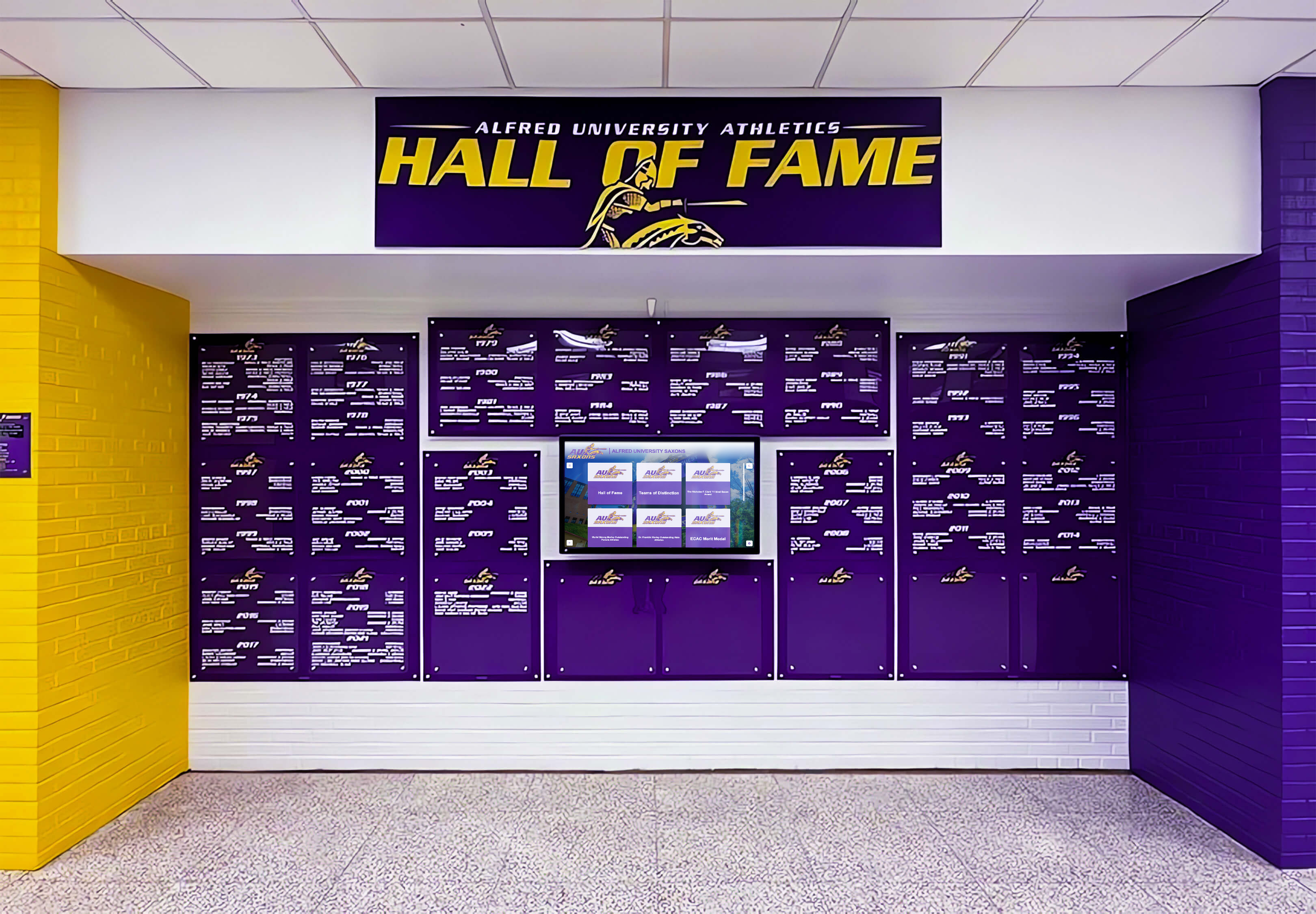
Structured panel layouts allow halls of fame to grow with each induction class while maintaining visual consistency
Digital Coach Hall of Fame Display Ideas
Digital displays open capabilities that physical plaques simply cannot match—video tributes, searchable coaching histories, audio from players describing a coach’s impact, and content that can be updated as new information emerges.
Touchscreen Kiosk Installations
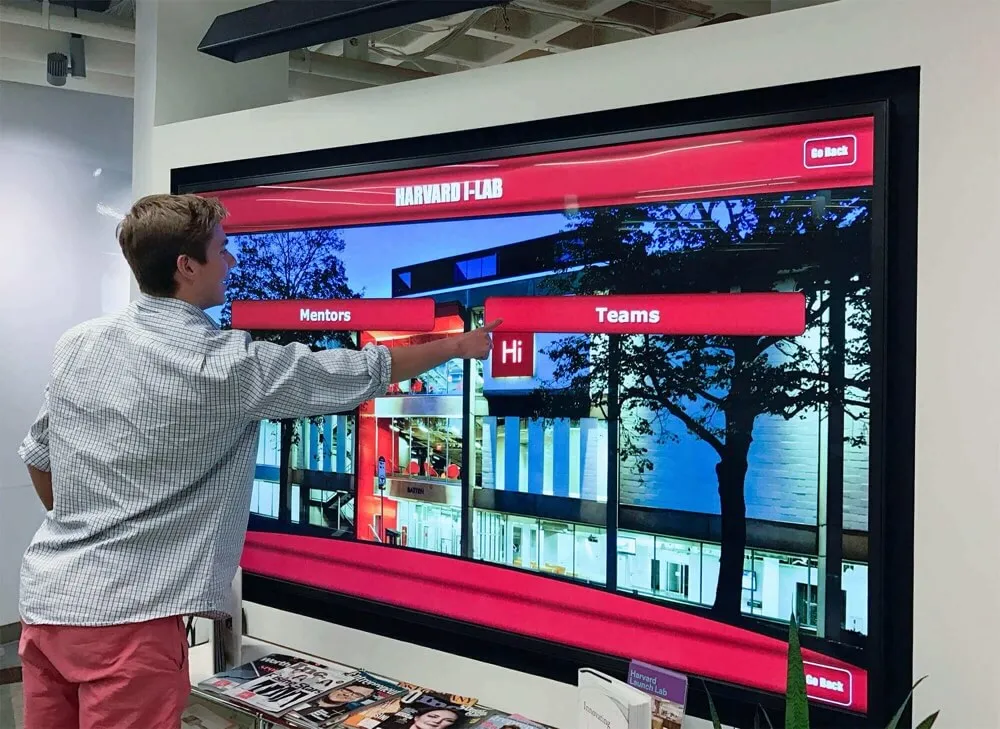
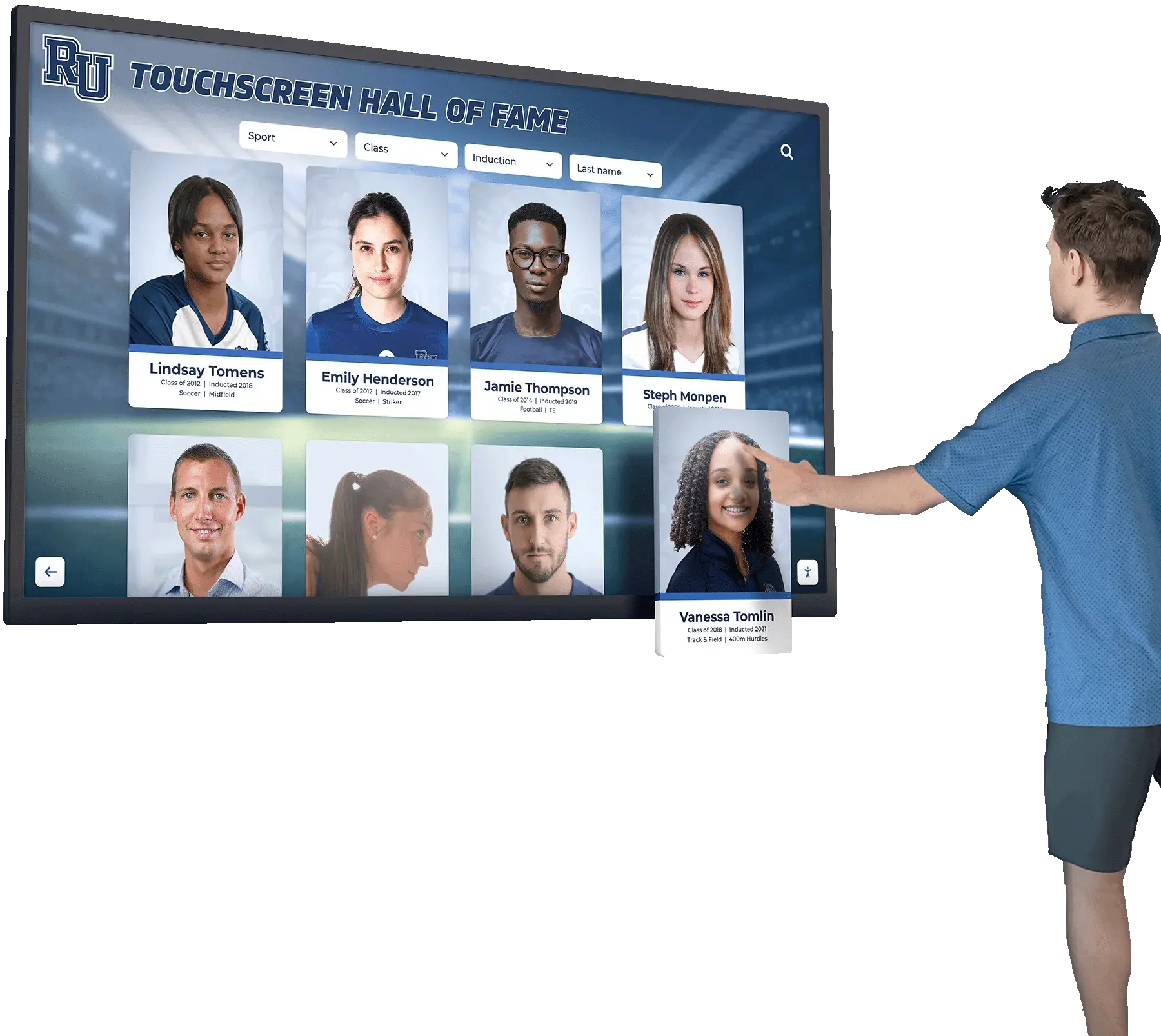
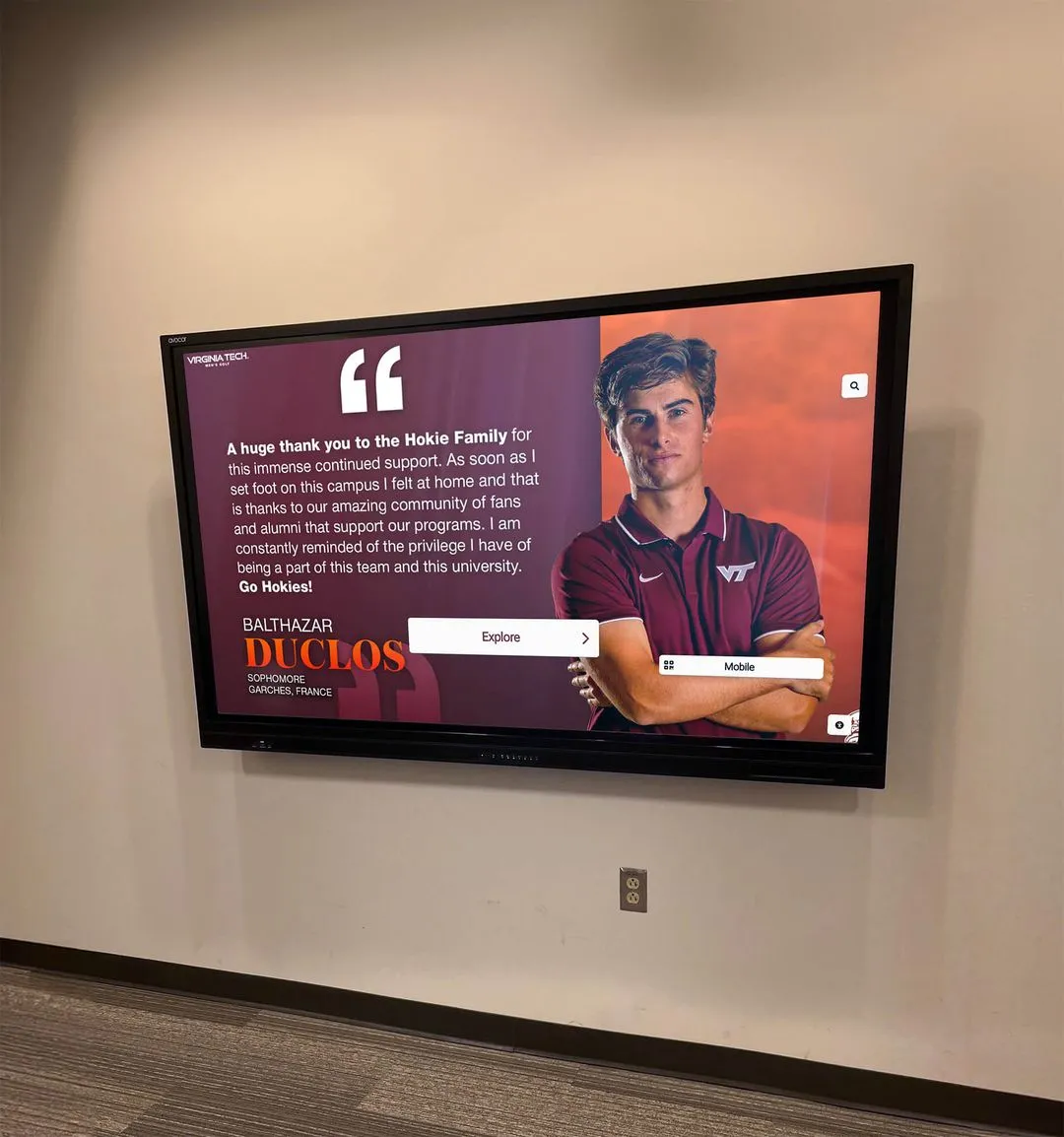
A touchscreen kiosk dedicated to coaching recognition gives visitors an active exploration experience rather than passive viewing. Users can search by sport, era, or name—discovering coaches they didn’t know to look for alongside legends they came specifically to find.
Modern interactive kiosk software enables athletic departments to build rich coach profiles without custom development. A well-configured system allows staff to add new inductees, upload updated photos, and manage content remotely without vendor involvement for routine changes.
What to include in a digital coach profile:
- High-quality professional and action photographs
- Career record and achievement summary
- Notable alumni athletes the coach developed
- Video tributes or interview footage (where available)
- Narrative biography covering background, coaching philosophy, and legacy
- Connection to other coaches in the system who mentored or were mentored by this inductee
Large-Format Video Wall Displays
For athletic facilities with open lobby spaces or prominent entry points, a large-format video wall creates a cinematic coaching tribute experience. Rotating content can feature different inductees during different seasons, spotlight milestone anniversaries, or display archival footage during game days.
Digital wall of fame design for coaching recognition works best when content is organized by era and sport, allowing viewers to understand how the coaching culture evolved across generations. Visual timelines, championship sequences, and coaching family trees communicate depth that static plaques cannot.
Hybrid Physical-Digital Systems
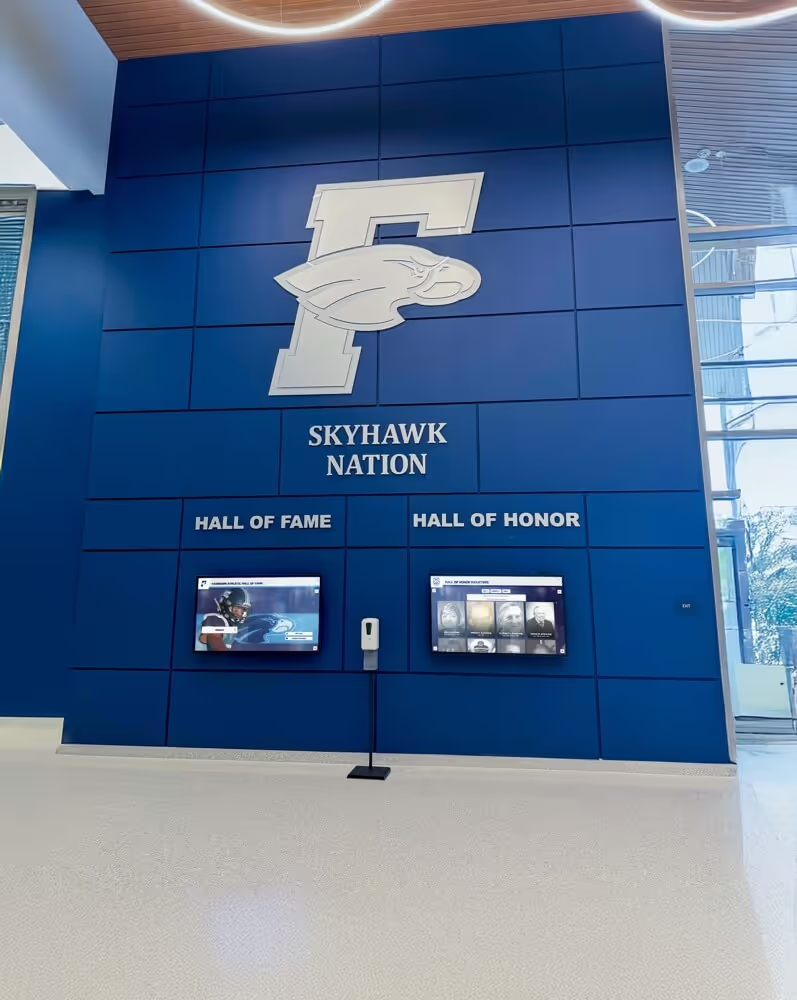
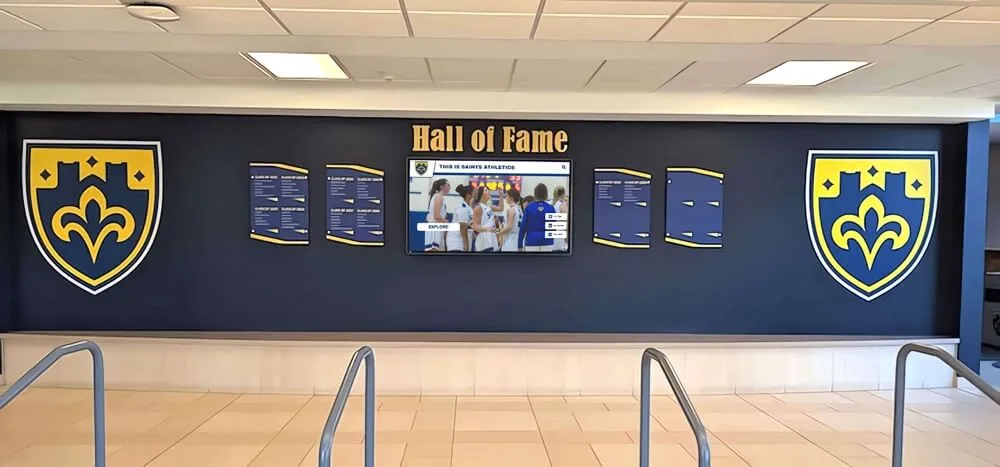
The most effective installations combine the permanence of physical recognition with the depth of digital content. A physical shield or plaque identifies each inductee on the wall—providing immediate visual recognition—while a nearby touchscreen or QR code unlocks the full multimedia biography.
This hybrid approach respects visitors who prefer browsing in-person displays while providing digital depth for those who want to go deeper. It also solves a common physical display limitation: the plaque can acknowledge the coach without attempting to compress a career’s worth of information onto a 12-inch panel.
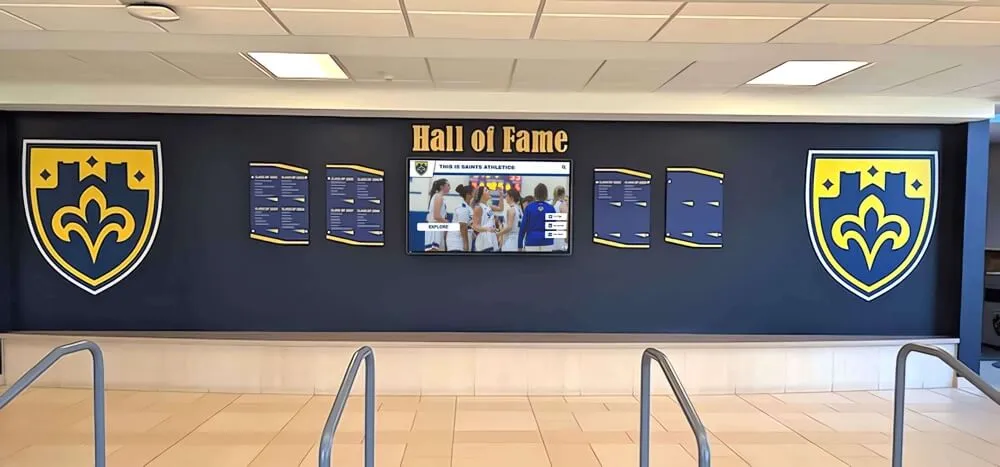
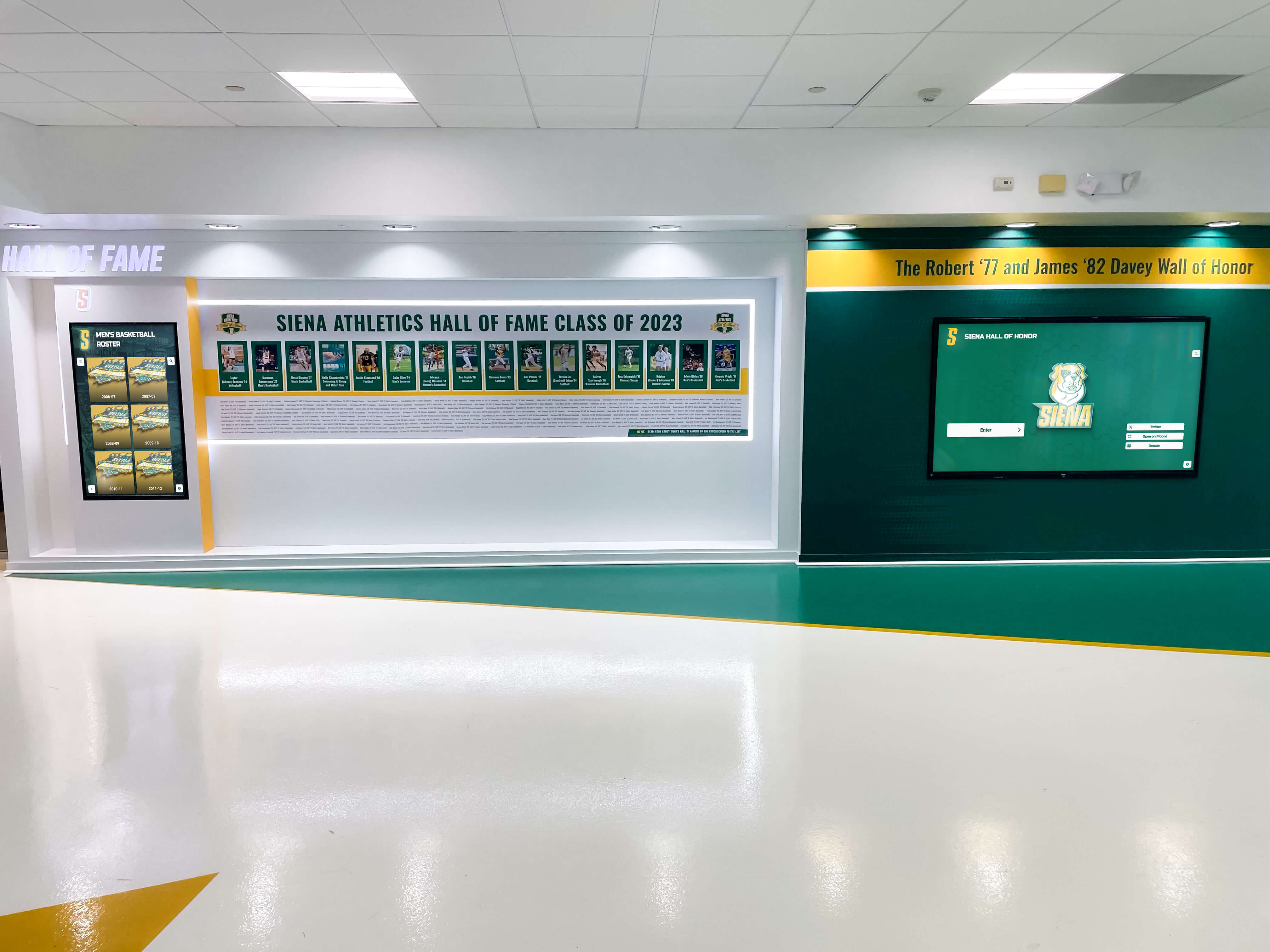
Hybrid displays combine the permanence of physical shields with the depth and flexibility of digital content
What to Include in a Coach Hall of Fame Profile
Whether physical or digital, the quality of content determines how well a display honors a coach’s legacy. Here’s a framework for building profiles that go beyond basic statistics.
Essential Information
Every coach hall of fame profile should establish foundational facts:
- Full name and years of service at the institution
- Sport(s) coached and levels (varsity, JV, youth programs)
- Career record and conference/state title summary
- Awards and honors received during tenure
- Post-coaching connections to the institution
Legacy Narrative
Statistics tell what happened; narrative explains why it mattered. A 300-word legacy statement covering the coach’s background, program-building contributions, coaching philosophy, and lasting influence creates context that numbers alone cannot.
Where possible, gather perspective from former athletes, assistant coaches, and administrators who worked alongside the inductee. Oral history interviews provide authentic voice to profiles while creating archival records with institutional value that extends well beyond the display itself.
Visual Content Strategy
Photo selection significantly impacts how compelling a profile feels:
- Action shots from game, practice, or sideline moments feel immediate and authentic
- Team photos from championship or milestone seasons ground the profile in program history
- Informal candid images humanize inductees beyond their competitive roles
- Era-appropriate context (stadium backgrounds, uniform styles, equipment) provides historical grounding
For coaches with longer tenures, a timeline of photos across decades communicates career arc and program evolution simultaneously.
Induction Criteria and Selection Process
A coaches hall of fame is only as credible as its selection process. Vague or inconsistent standards undermine the display’s prestige over time.
Establishing Eligibility Requirements
Common eligibility thresholds for coaching induction include:
- Minimum years of service at the institution (typically 5-10 years)
- Time since final season before eligibility activates (often 3-5 years), giving perspective before evaluation
- Coaching record and achievement benchmarks (though these should not be the sole criteria)
- Character and conduct standards ensuring recognition reflects values as well as wins
Schools that honor a comprehensive definition of coaching—encompassing mentorship, academic advocacy, and program culture—alongside competitive success build halls of fame that feel more meaningful and inclusive than win-total systems alone.
Nomination and Review Systems
A transparent nomination process builds community trust in induction decisions:
- Open nomination periods that allow athletes, former players, staff, and community members to submit candidates
- Selection committee with diverse representation (alumni, current staff, community members) reviewing nominations against published criteria
- Documentation standards requiring nominating parties to submit supporting information (win records, program impact narrative, character references)
- Communication protocols for announcing inductees and explaining selection rationale to the community
Schools that have paired coaches recognition with broader digital record boards often find that the statistical context these boards provide helps selection committees evaluate coaching records across different eras more fairly.
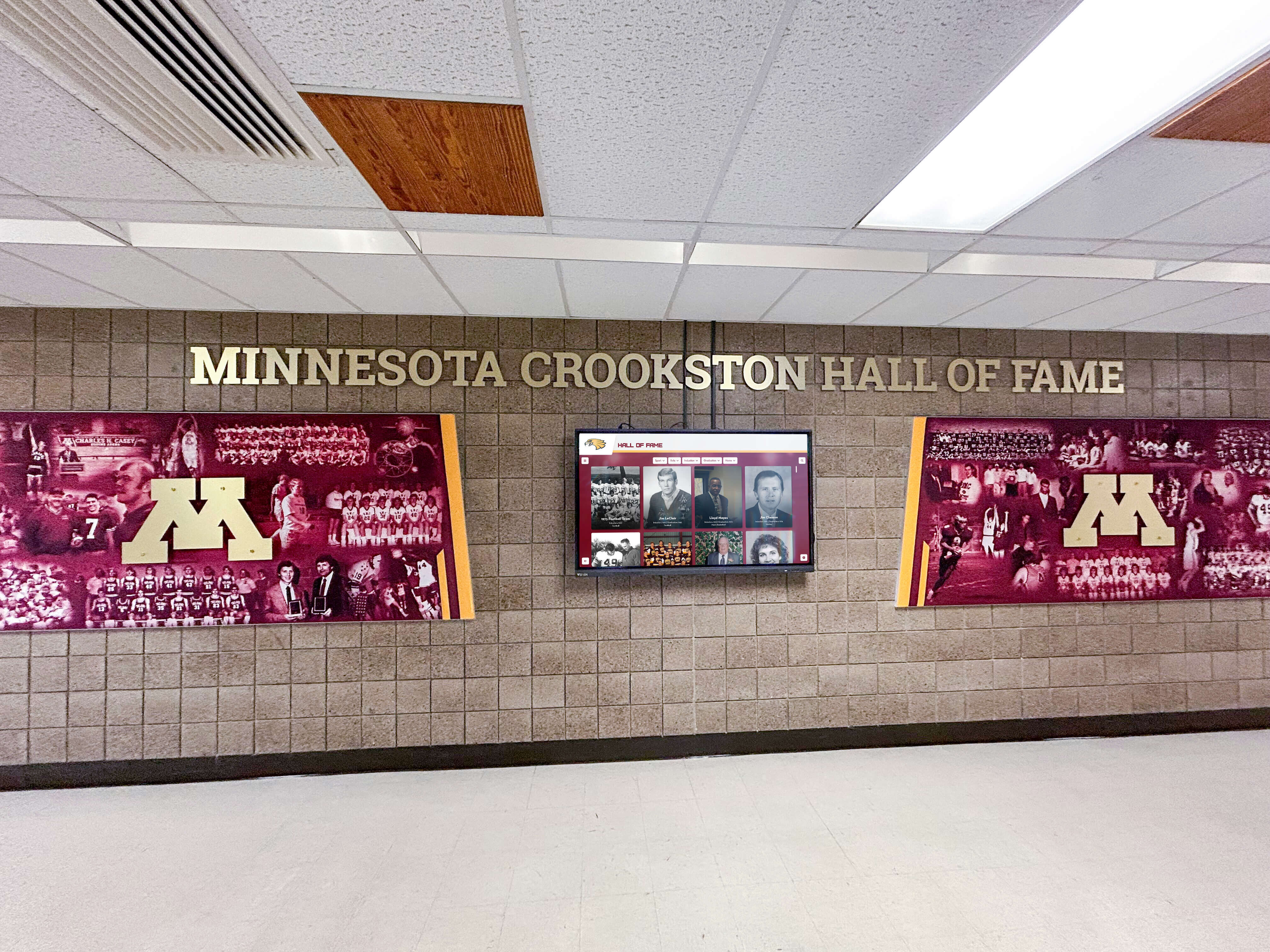
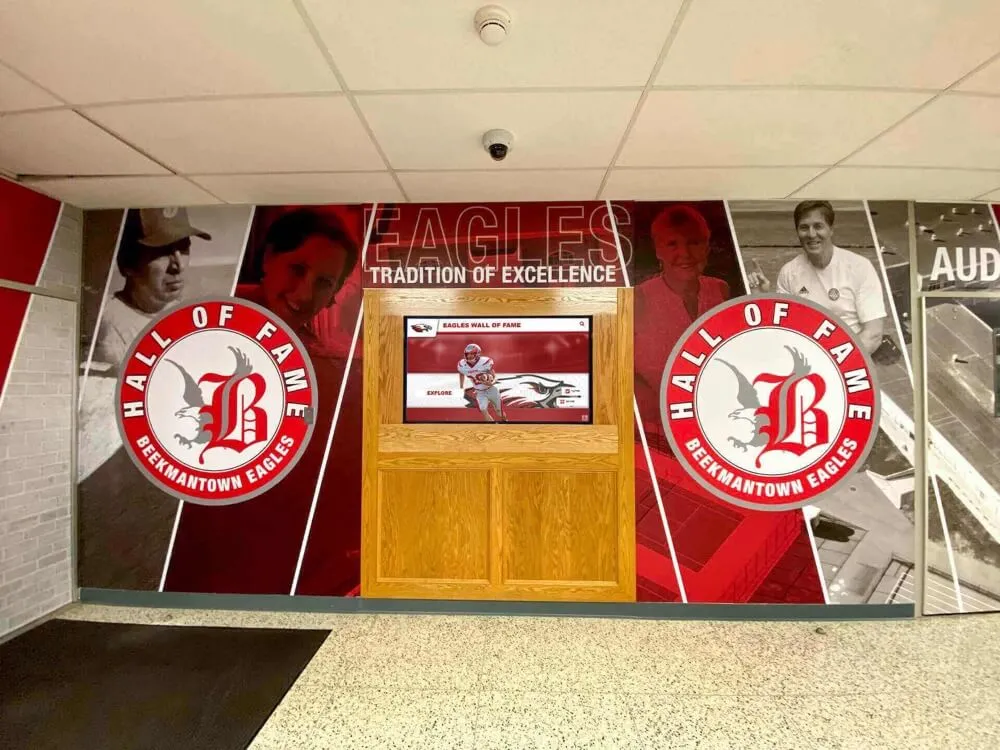
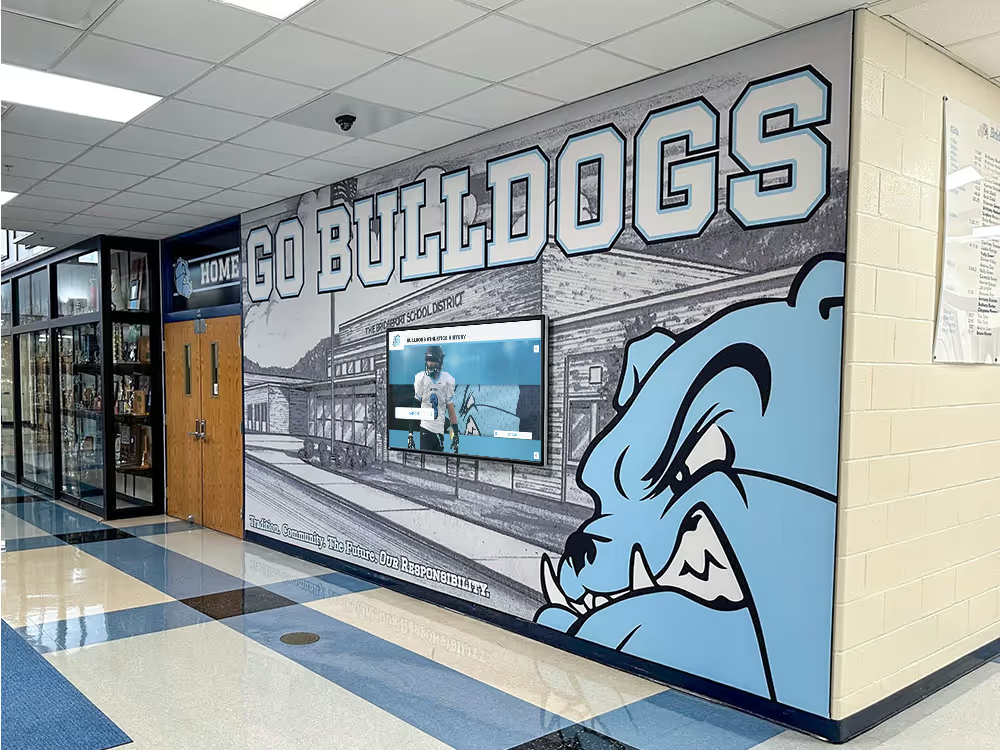
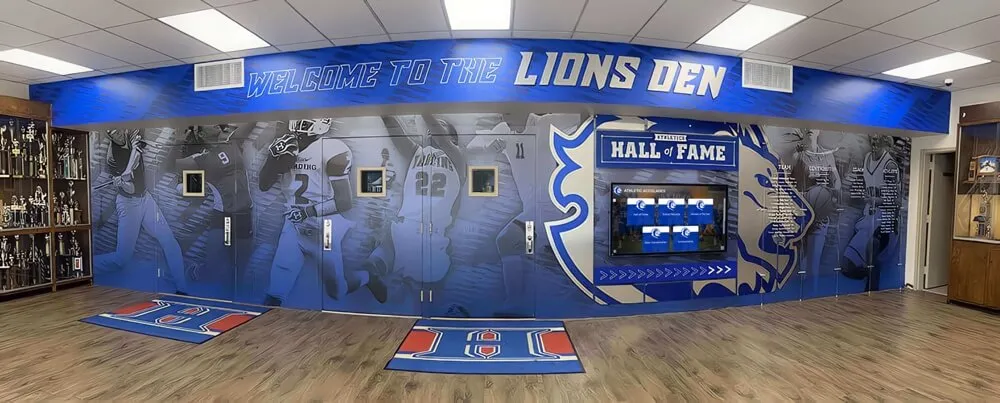
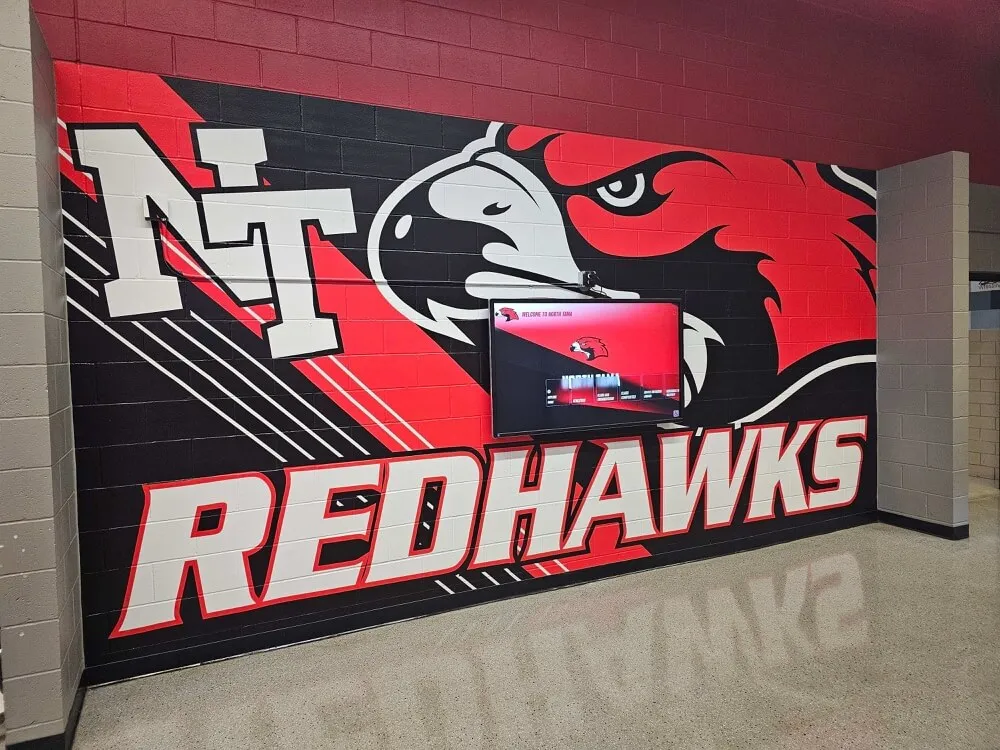
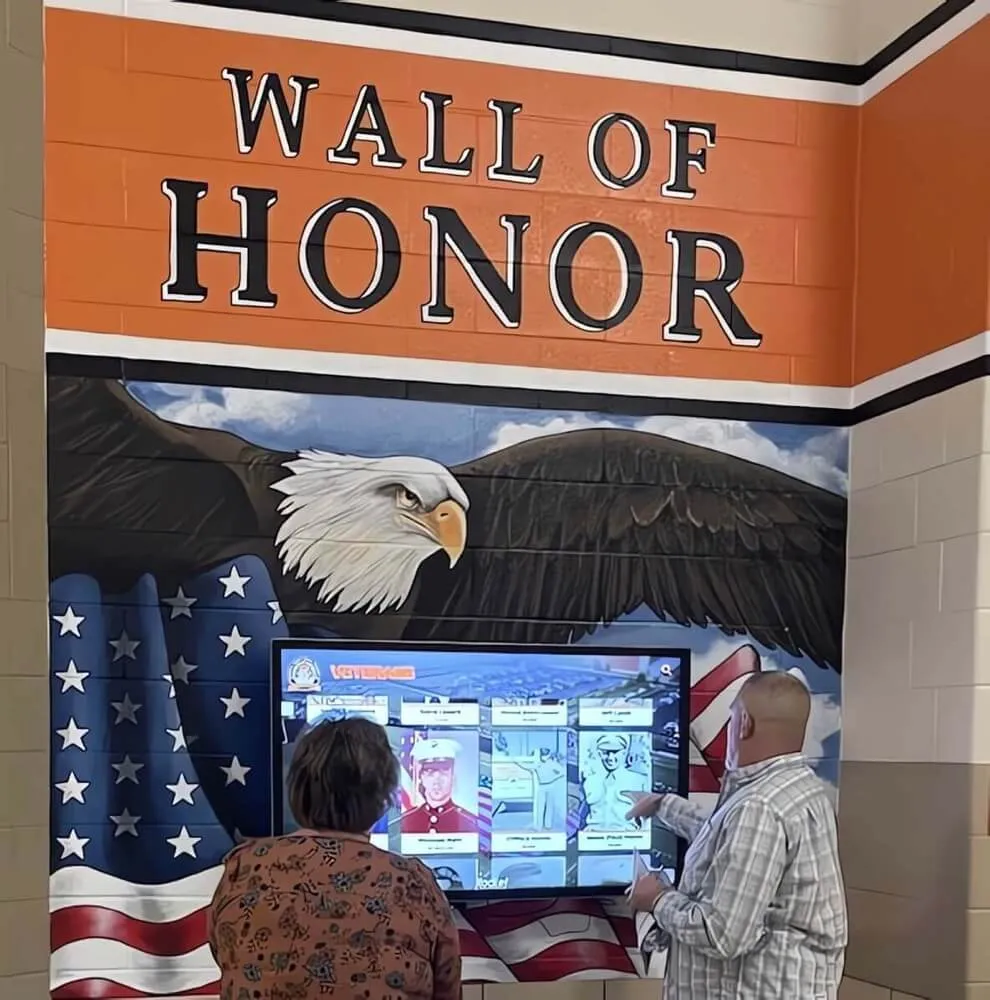
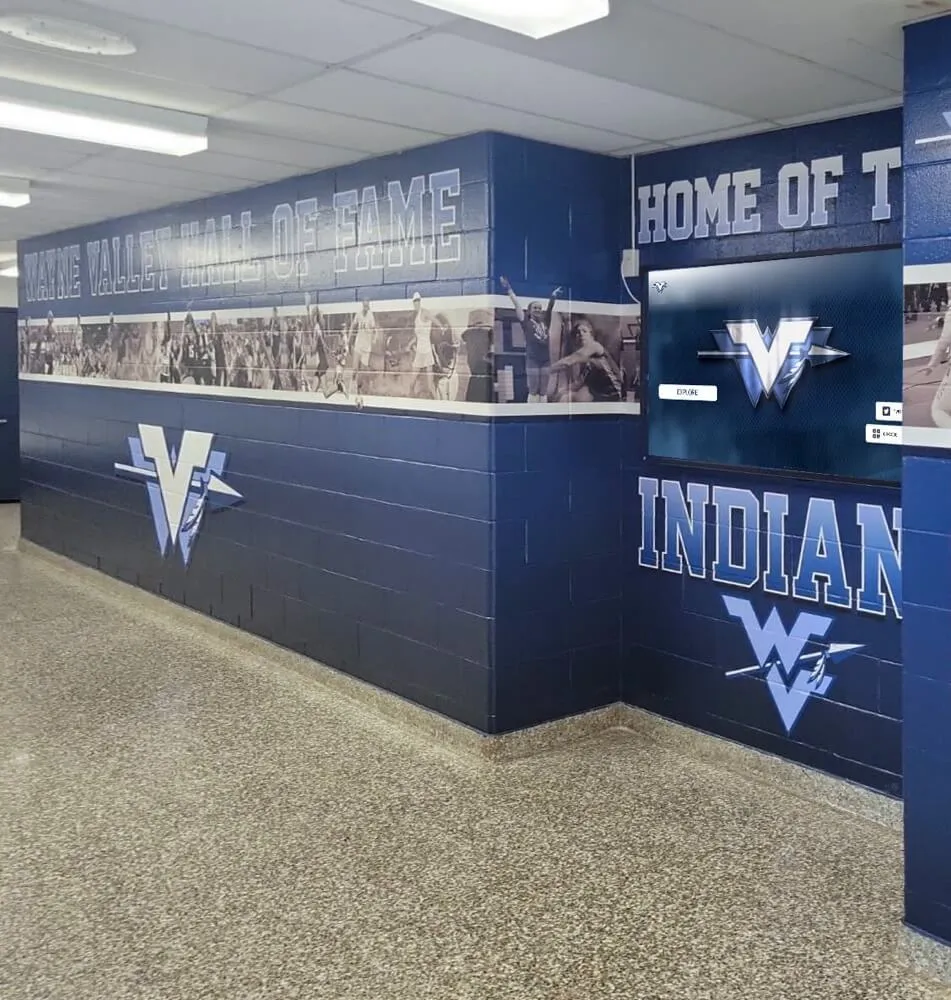
Integrating digital screens into mural-style displays creates layered recognition environments that honor multiple program elements simultaneously
Placement and Location Strategy
Where you install a coach hall of fame display shapes how many people encounter it and what impression it creates.
High-Traffic Athletic Facility Locations
Main gymnasium or arena lobby: Maximum visibility during games, events, and school visits. This location communicates institutional priority and ensures casual visitors encounter coaching recognition without seeking it out.
Athletic hallway or corridor: Creates dedicated recognition space that student-athletes pass daily. Regular exposure builds familiarity with program history over the course of an athletic career.
Fieldhouse or indoor practice facility entry: Athletes entering training spaces encounter their program’s coaching heritage before every practice—creating natural motivational context.
Administrative building near athletic department offices: Positions coaching recognition in conversations about program identity, recruitment, and alumni engagement.
Multi-Sport vs. Sport-Specific Approaches
Schools with large athletic programs sometimes create sport-specific recognition spaces—a basketball hallway, a football tunnel, a natatorium recognition wall—rather than centralizing all coaching recognition in one location.
This distributed approach places recognition closest to the sport it represents while building identity within individual program spaces. The tradeoff is reduced cross-sport discovery and potentially inconsistent implementation quality across different sports’ facilities.
A centralized approach, by contrast, creates a single destination communicating total program identity. Visitors encounter the full coaching legacy of an institution in one space, making connections across sports and eras that sport-specific installations cannot produce.
Integration With Existing Recognition Systems
Coach hall of fame displays work best when they connect to rather than compete with existing recognition infrastructure. Schools that have already established digital trophy case systems can extend the same platform to coaching profiles, creating a unified recognition ecosystem rather than disconnected siloed displays.
Linking coaching profiles to the athletes they developed, the championships they won, and the records set during their tenure creates a rich web of connections that communicates program identity more powerfully than any single display type alone.
Connecting Coaches Hall of Fame to Fundraising and Alumni Engagement
Well-designed coach hall of fame displays generate returns beyond recognition alone—they become tools for alumni engagement and donor cultivation.
The Recognition-Giving Connection
Research from advancement professionals consistently shows that alumni who feel proud of their institution’s legacy are more likely to give. A coaches hall of fame that authentically captures what made a program special speaks directly to alumni who experienced those coaches firsthand.
Understanding why honoring the past helps fund the future helps athletic departments make the case internally for investing in quality recognition infrastructure rather than treating displays as cosmetic expenses.
Induction Ceremonies as Fundraising Events
Annual induction ceremonies for coaching legends create natural fundraising opportunities. Naming the event, selling sponsorship acknowledgment on the display itself, or creating dedicated endowment funds honoring inducted coaches all generate revenue while elevating the recognition’s prestige.
Alumni who attended games coached by the honoree often travel significant distances to attend induction ceremonies—creating reunion-style events with strong giving potential.
Social Media Amplification
Digital coach hall of fame content can extend far beyond the physical display. Profile spotlights shared via social media during a coach’s sport’s season, anniversary tributes on significant milestones, and video clip compilations create engagement opportunities with alumni who never visit campus. Pairing physical and digital recognition with a robust alumni engagement strategy can significantly expand the reach and impact of recognition content originally created for physical displays.
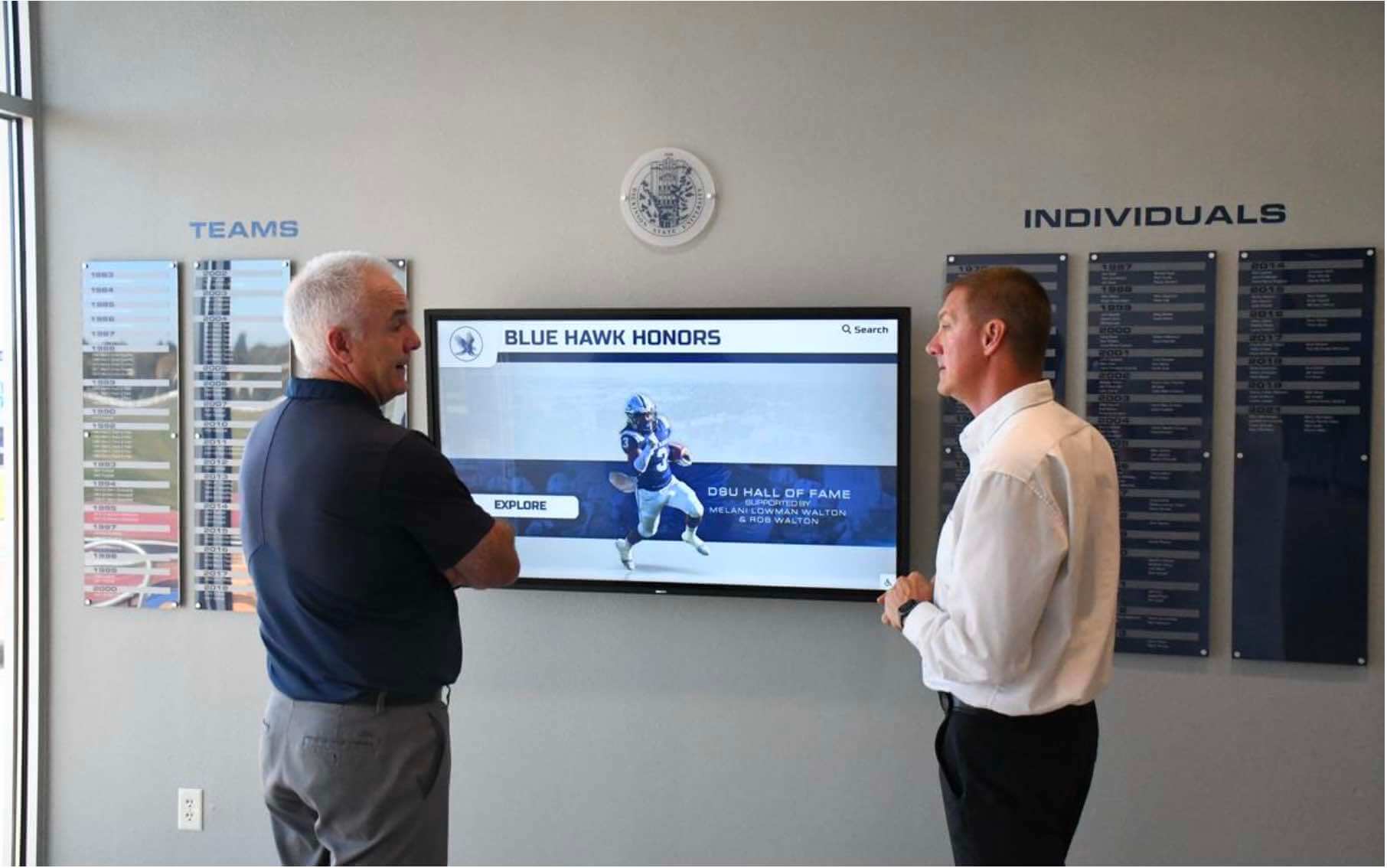
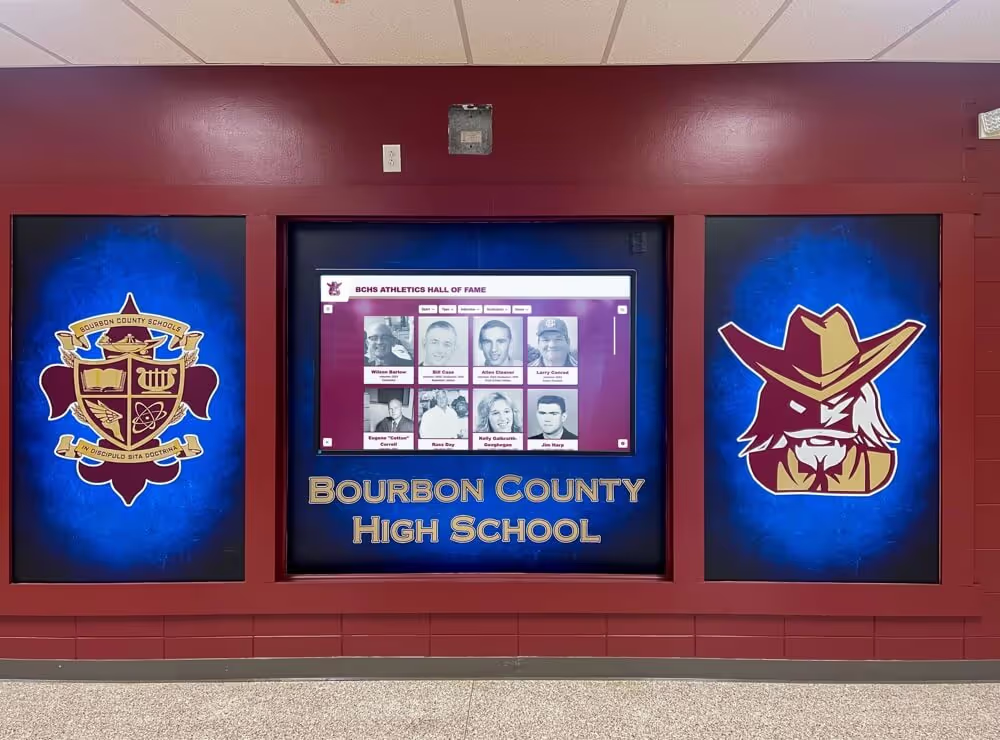
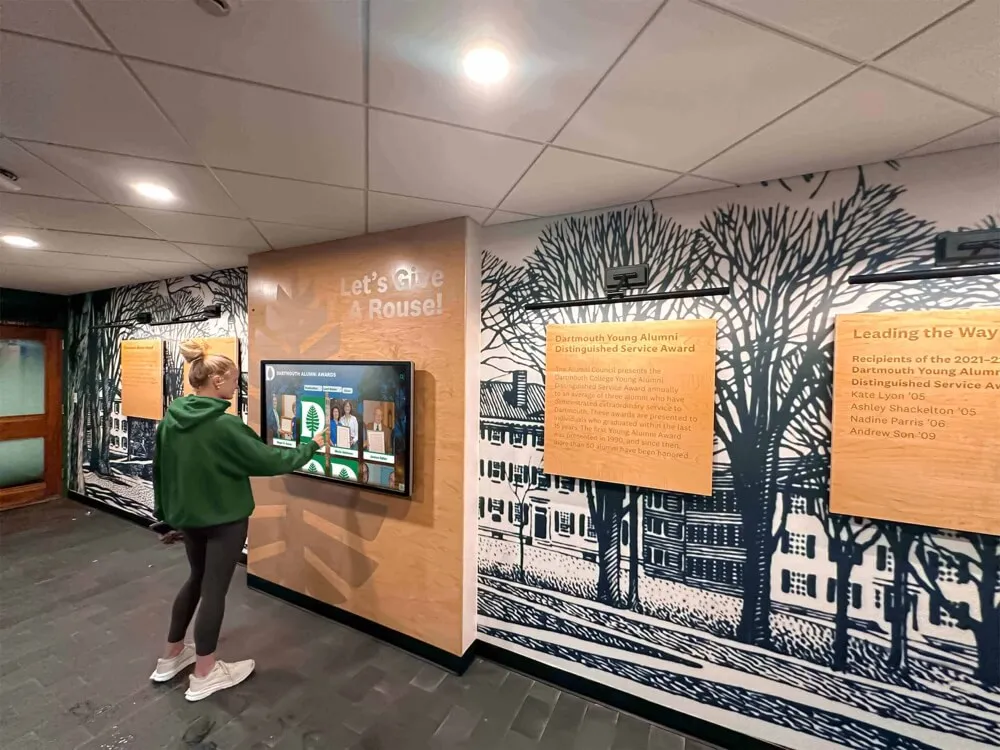
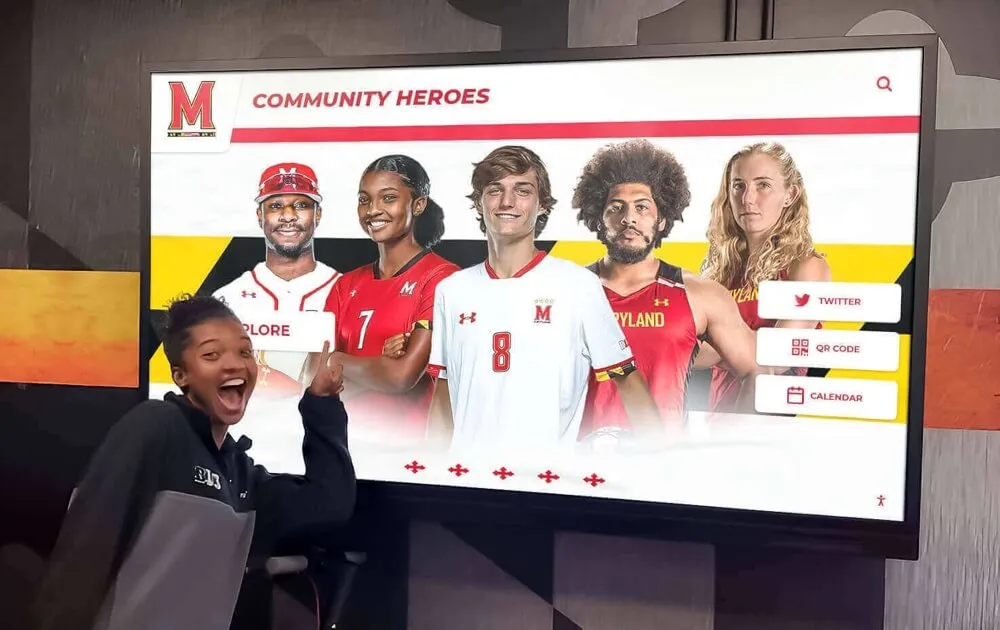
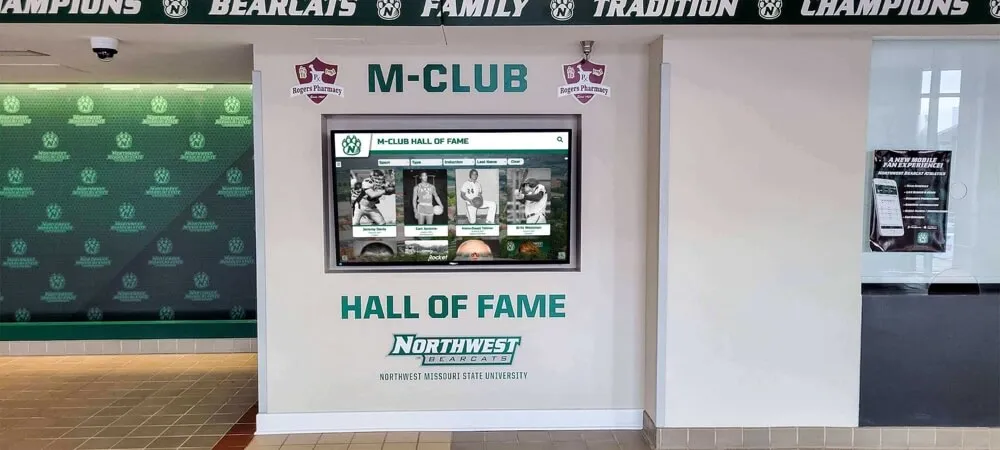
Interactive coach hall of fame displays invite visitors to explore coaching histories at their own pace
Transitioning From Static to Digital Displays
Many schools have existing physical coaching recognition that was installed years or decades ago. As those installations age, transitioning to digital platforms allows programs to preserve historical content while dramatically expanding what future recognition can accomplish.
Preserving Legacy Content
The first step in any digital transition is auditing existing physical content. This means photographing current plaques and panels, scanning or digitizing archival photos, and transcribing biographical information before physical displays are removed or relocated.
Transitioning away from expensive static gym banners and physical displays also creates an opportunity to correct historical gaps—gathering information about coaches who received limited recognition when originally inducted because technology and content standards were more limited.
Phased Implementation Approaches
Schools with budget constraints often implement digital coaching recognition in phases:
Phase 1: Install touchscreen hardware at one high-visibility location with basic coaching profiles for all existing inductees
Phase 2: Enrich profiles with additional photos, video content, and oral history interviews collected over subsequent months
Phase 3: Expand to additional locations or integrate with broader athletic recognition systems
Phased approaches allow schools to launch visible recognition capabilities immediately while building toward comprehensive systems over time.
Content Migration Considerations
Digital platforms require more content than physical plaques—but they also reward the investment. A coach profile that took three lines on a plaque becomes a multi-page digital record incorporating photos, video, biographical narrative, statistical archives, and testimonials from former athletes.
Building toward a comprehensive athletic building display system means collecting content proactively—interviewing living coaches and gathering materials while sources are available, rather than reconstructing history years after memories have faded.
Implementation Budget Framework
Coach hall of fame displays span a wide cost range depending on scale, materials, and technology choices.
Physical Display Cost Ranges
| Display Type | Approximate Range | Best For |
|---|---|---|
| Engraved plaques (per coach) | $150–$500 | Programs starting small or with limited budgets |
| Framed panel displays (per coach) | $300–$800 | Programs wanting photo-integrated recognition |
| Custom shield or medallion systems | $500–$1,500 per inductee | Athletic programs matching existing shield-style recognition |
| Shadow box / artifact cases | $800–$3,000 per coach | Iconic coaches with significant memorabilia |
Digital Display Investment Considerations
Digital systems involve both hardware and software costs, typically bundled into comprehensive solutions:
- Hardware: Commercial touchscreen displays (43–65") range from $2,000–$8,000 per unit; installation and mounting adds $500–$2,000
- Software platform: Content management systems for athletic recognition typically run $100–$400/month or $1,200–$4,800/year
- Content development: Professional photography, video production, and biography writing vary widely based on depth and number of inductees
- Ongoing maintenance: Software updates, content additions, and hardware maintenance represent ongoing annual costs
Many programs fund digital installations through capital campaigns, booster club contributions, or naming sponsorships on the display itself—where a donor funds the system in exchange for recognition in the installation.
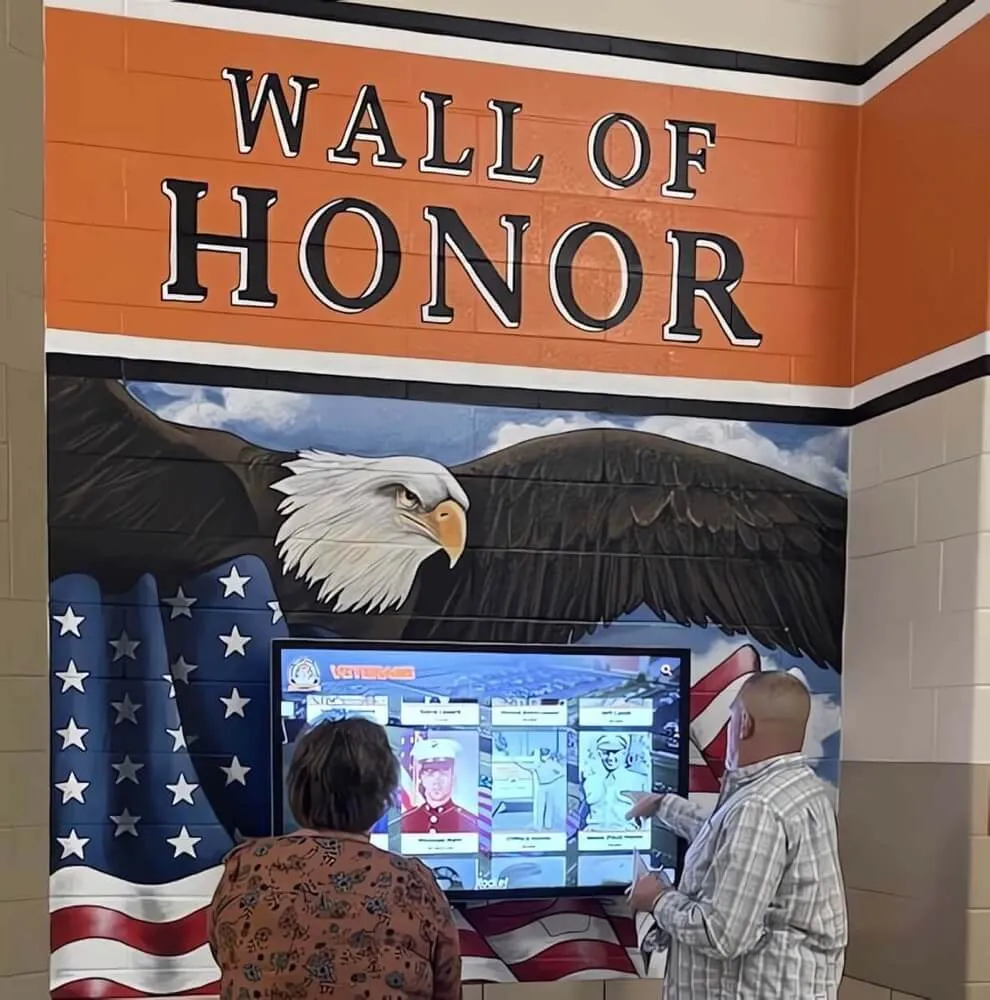
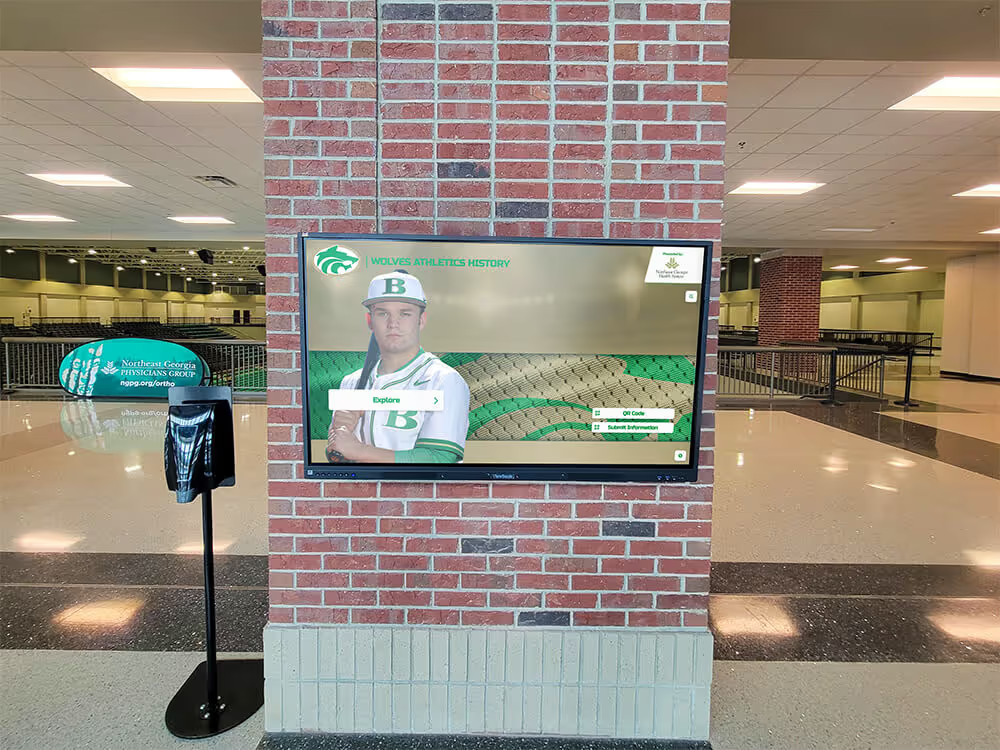
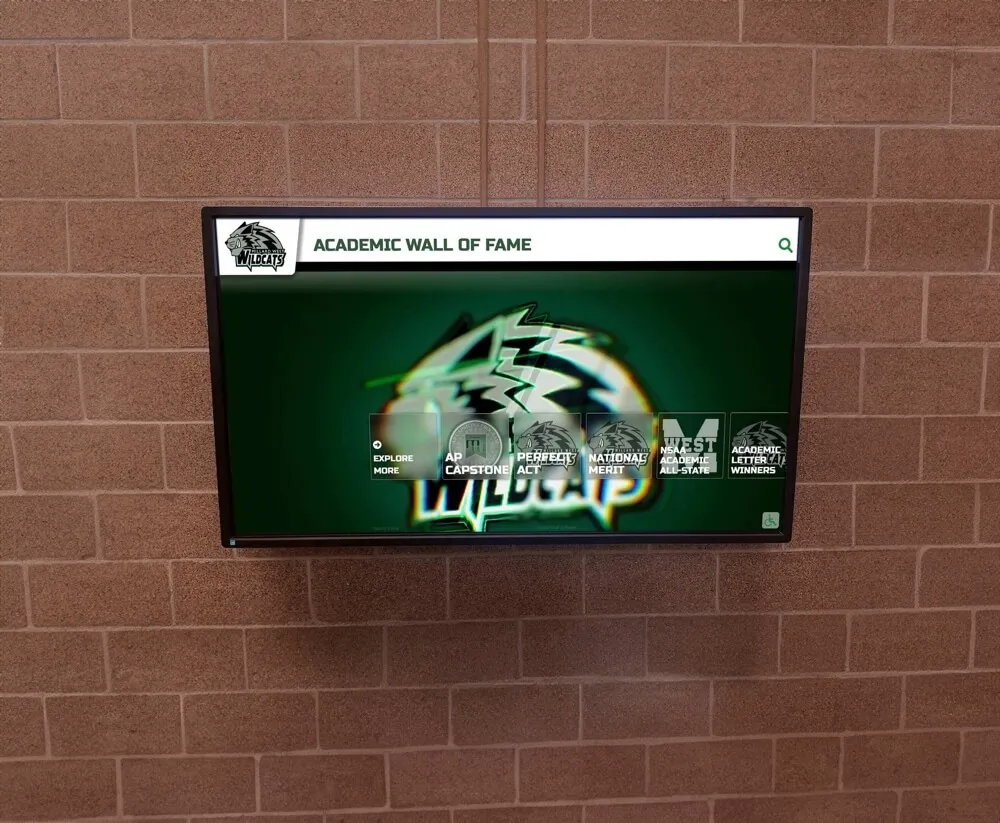
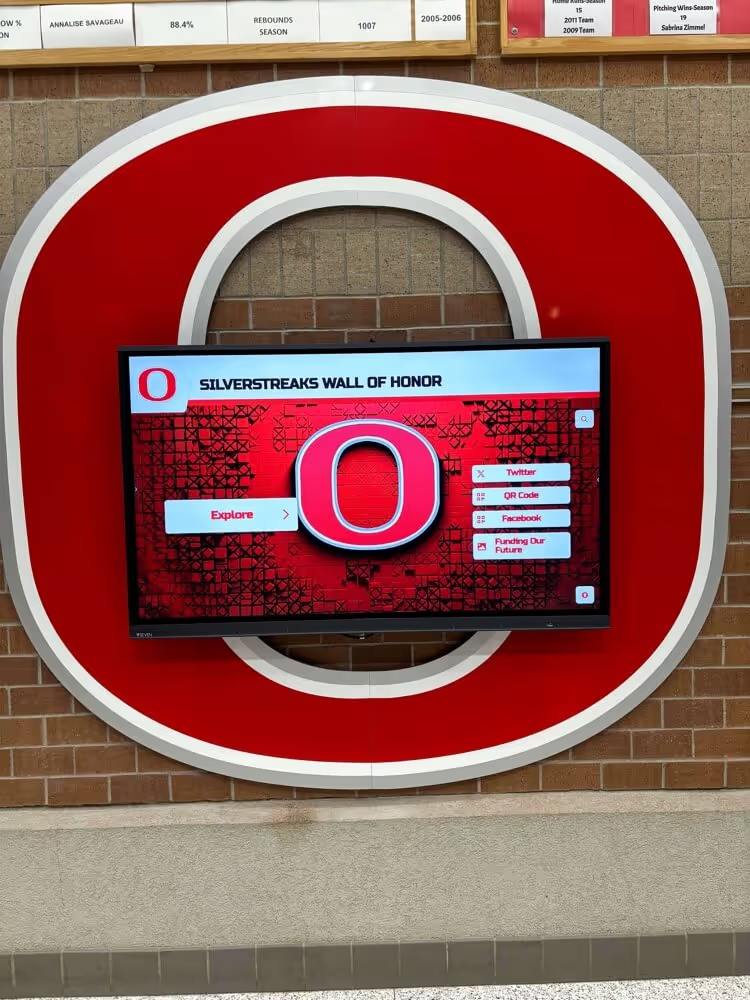
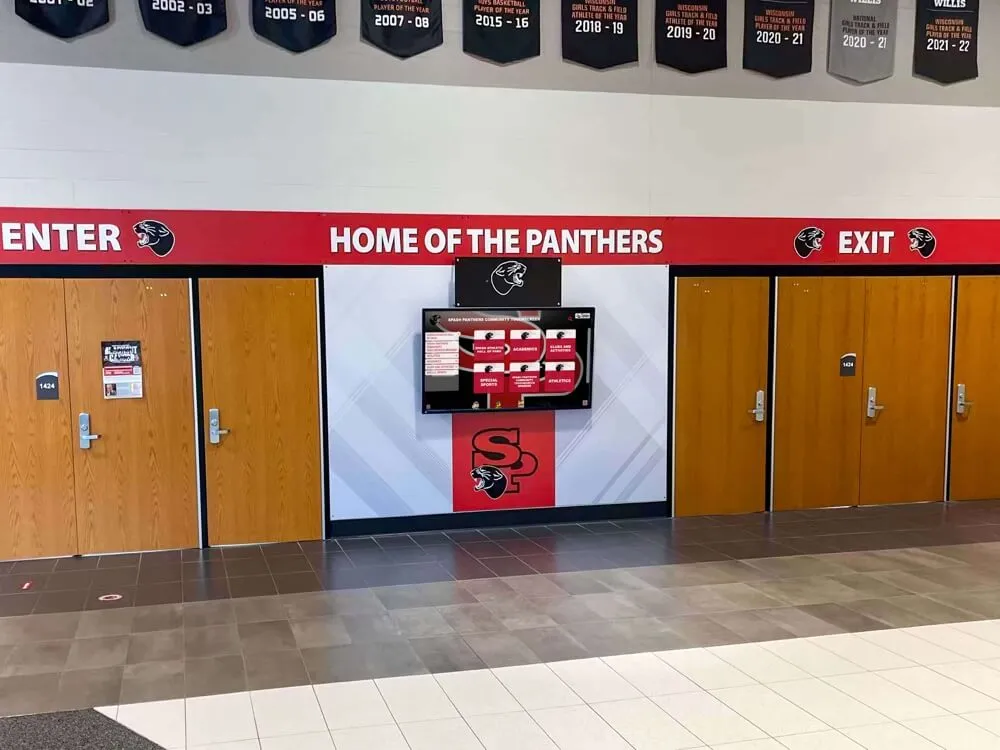
Prominent wall of honor installations with interactive components create destination spaces that draw visitors and encourage exploration
Building a Program That Lasts
The best coach hall of fame displays are designed for the long term—with governance structures, content standards, and technology platforms that remain sustainable as programs and budgets evolve.
Governance and Sustainability
Write down your selection criteria, nomination process, and induction timeline before the first class is inducted. Undocumented processes create inconsistency when the people who established them leave the institution.
Assign clear ownership of the display—who adds new inductees, who updates content when a coach passes away, who manages the physical space or digital platform. Recognition systems without clear ownership become stagnant.
Annual Induction Rhythms
Programs with strong hall of fame cultures typically hold annual induction events tied to homecoming, alumni weekend, or a signature athletic event. Consistent timing builds anticipation, creates community ritual, and provides regular opportunities to update the display with new content.
Annual rhythms also encourage proactive content collection—gathering photos, videos, and biographical information from living coaches while the opportunity exists, rather than scrambling to reconstruct legacies decades later.
Growing Without Overwhelming
As a coaches hall of fame grows, organization becomes increasingly important. Well-designed displays accommodate growth through modular layouts that expand systematically, filterable digital content that prevents overwhelming interfaces as inductee counts increase, and periodic retrospective programming that resurfaces older inductees so they receive attention proportionate to their legacies.
The most enduring coach hall of fame installations feel like they belong to the institution—reflecting its specific identity, history, and values rather than generic athletic recognition templates.
Coaches who gave decades to building programs, developing athletes, and representing school communities deserve recognition that matches the permanence of their impact. A well-designed coach hall of fame display—whether a row of carefully crafted plaques or a fully interactive touchscreen system—transforms those legacies from memories into institutional heritage.
If you’re ready to build a coaching recognition experience that honors legends while inspiring the next generation of student-athletes and coaches, Rocket Alumni Solutions works with schools and athletic departments to design, build, and install interactive hall of fame systems that grow with your program. From hardware selection and software configuration through content design and ongoing support, their team handles the full implementation so you can focus on what matters: honoring the coaches who made your program what it is.