Digital Donor Wall Design: A Complete Guide to Modern Recognition for Schools and Nonprofits
Schools, universities, hospitals, and nonprofits invest significant resources into digital donor wall design—yet many installations fall short of their potential. Beautiful hardware sits underutilized when content feels generic or outdated. Expensive interactive features go unexplored when design choices obscure navigation. Recognition displays intended to strengthen donor relationships instead become forgettable digital slideshow loops that visitors walk past without engagement.
The difference between donor walls that drive stewardship impact and those that become expensive digital picture frames lies primarily in thoughtful design decisions made before installation: how content is organized and presented, which interactive features serve genuine donor engagement versus adding complexity, what visual hierarchy guides visitors toward meaningful exploration, and how recognition frameworks accommodate growing supporter communities while maintaining individual dignity and impact.
Effective digital donor wall design balances multiple competing priorities simultaneously: honoring individual donors with appropriate prominence while celebrating collective philanthropic communities, presenting comprehensive recognition databases without overwhelming visitors, creating visually striking installations that enhance architectural environments, enabling intuitive navigation requiring no instruction, and building flexible frameworks that evolve as campaigns progress and recognition needs expand.
This comprehensive guide examines the critical design principles that transform digital donor walls from simple name displays into strategic recognition experiences, covering layout frameworks that organize complex donor data, content presentation strategies that engage visitors emotionally, interactive design patterns that encourage exploration, visual design principles appropriate for institutional environments, and scalability considerations ensuring recognition systems remain effective as supporter communities grow.
Organizations that excel at digital donor wall design think beyond listing names alphabetically. They create recognition experiences that tell compelling stories about institutional impact, make donors feel genuinely valued rather than cataloged, inspire prospective supporters through visualization of philanthropic community, and provide advancement teams with flexible tools for ongoing relationship stewardship rather than static monuments requiring complete redesign when needs change.

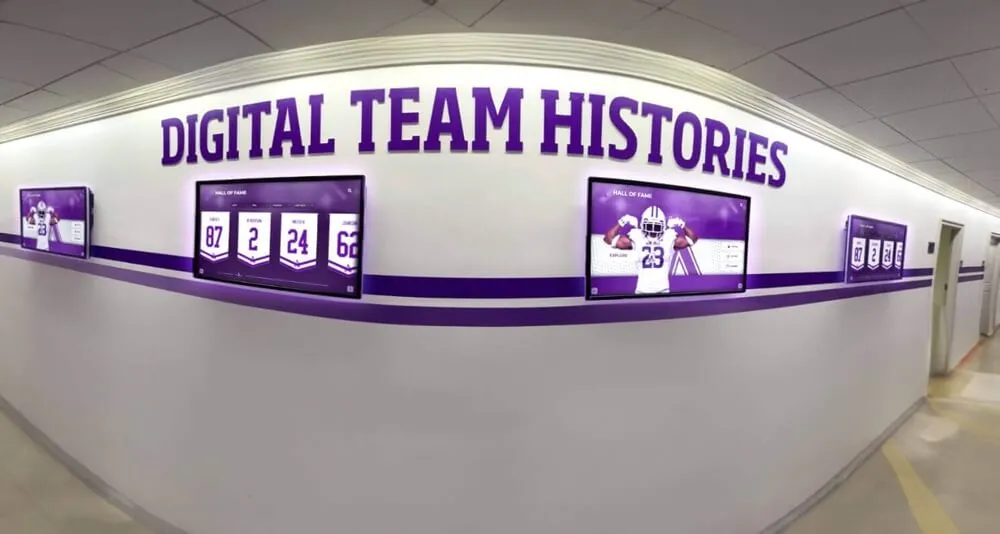
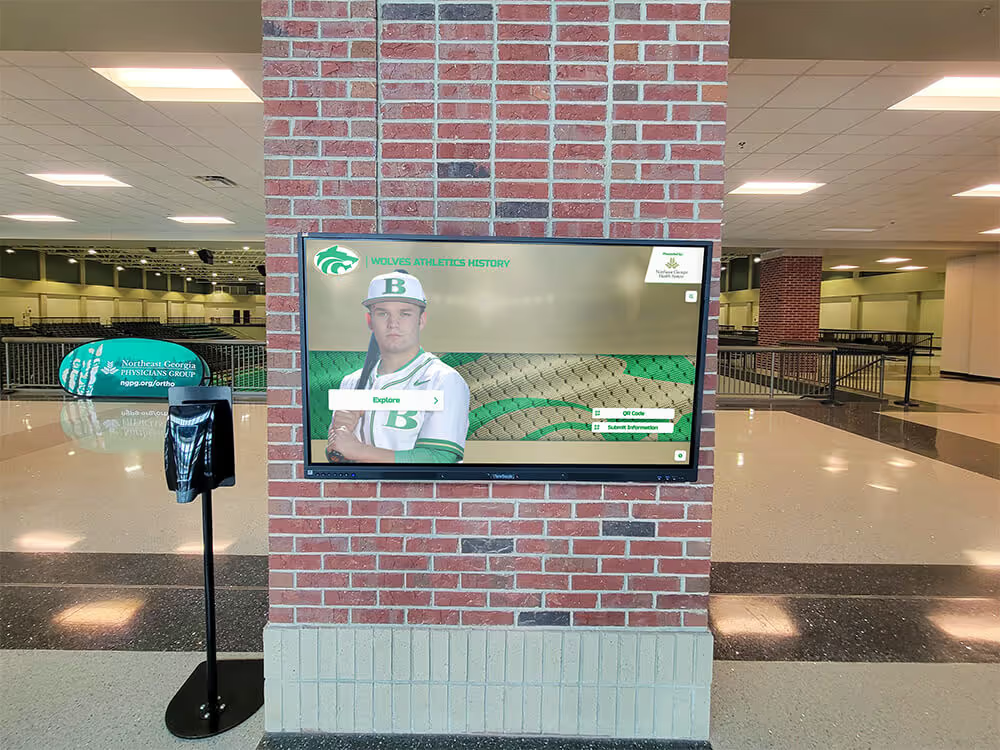
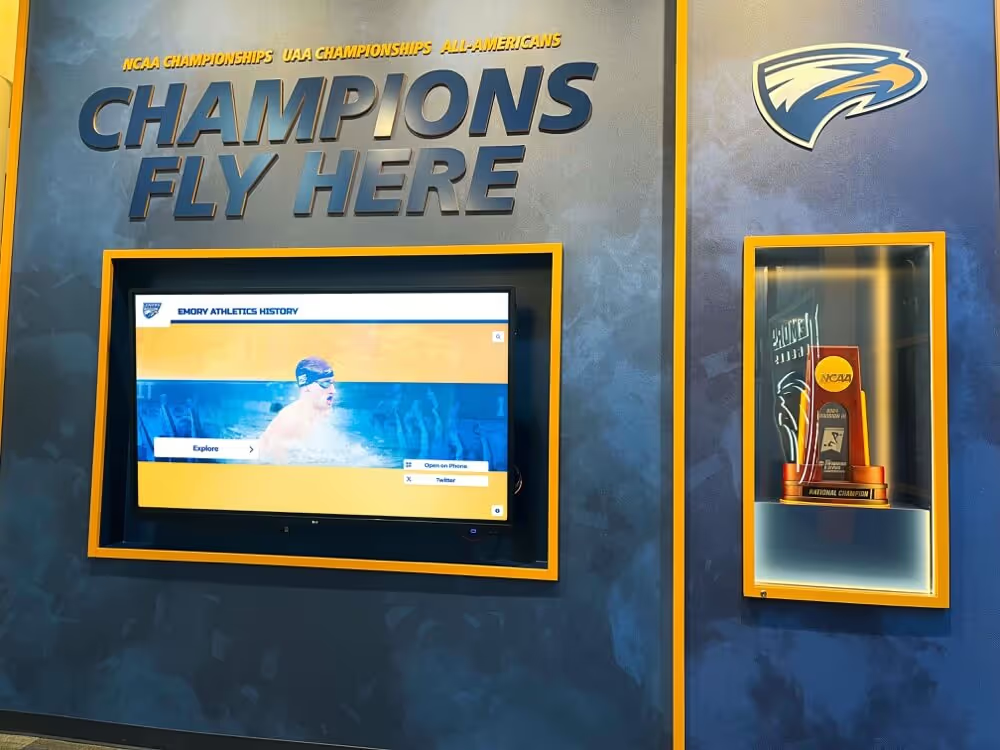
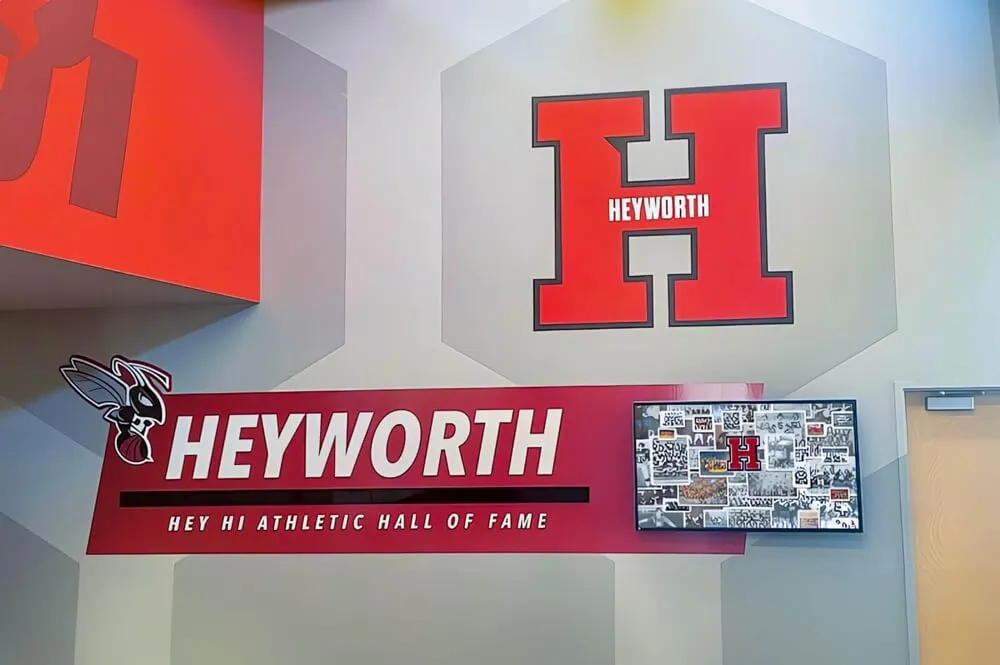
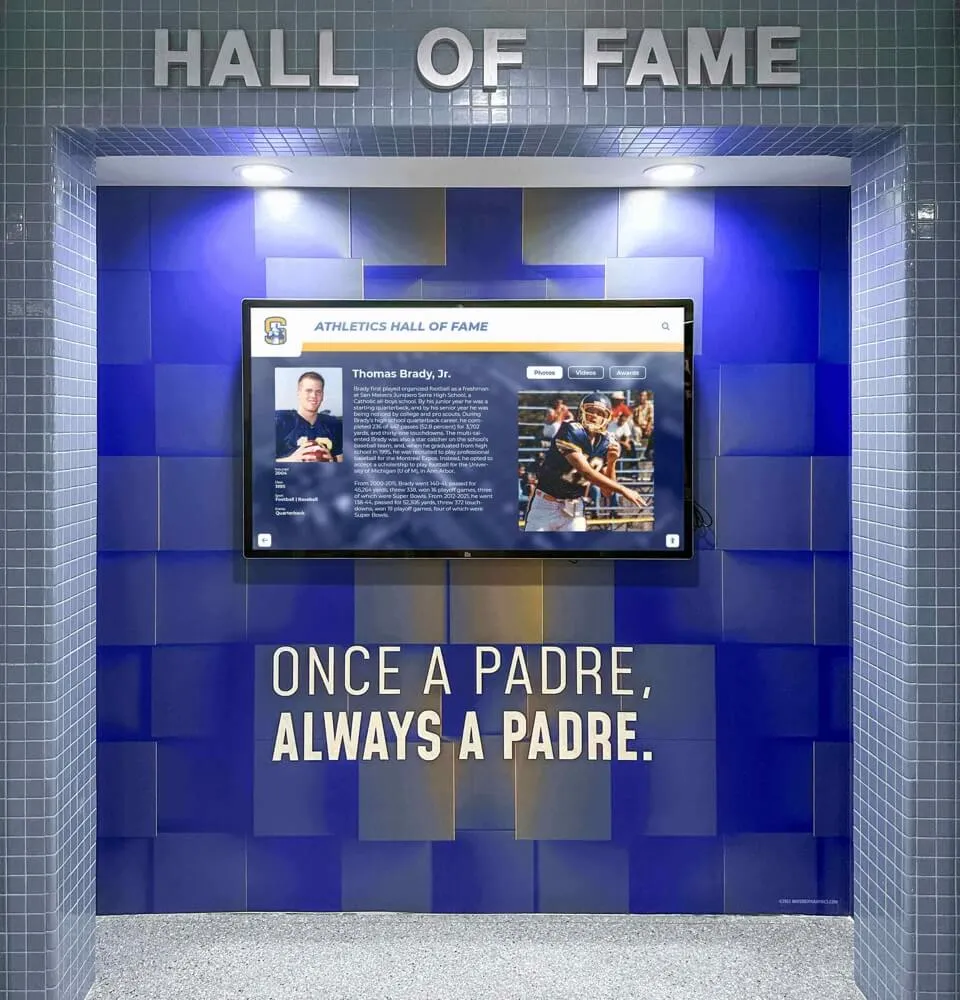
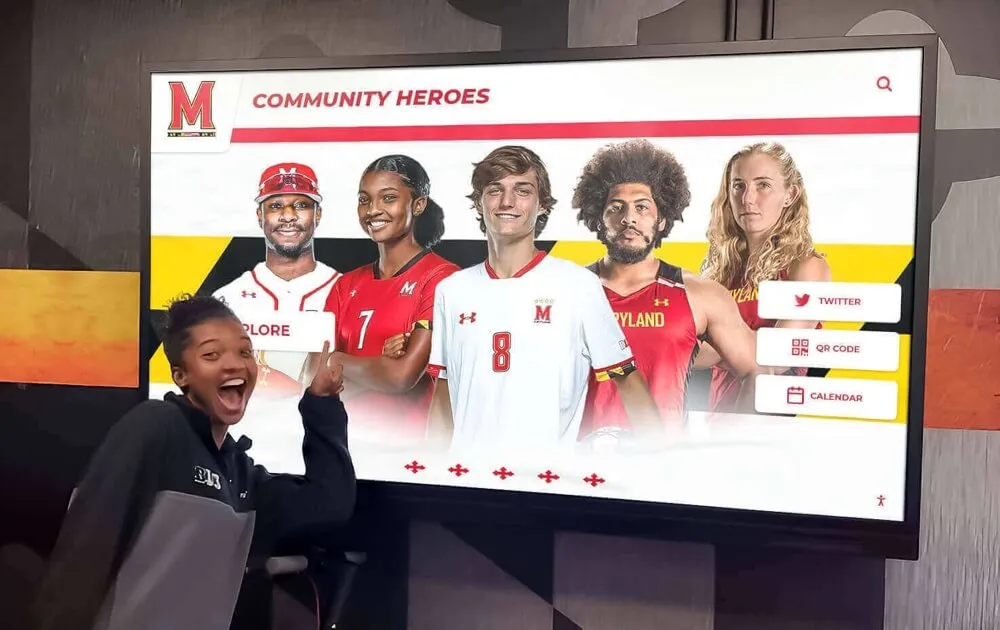
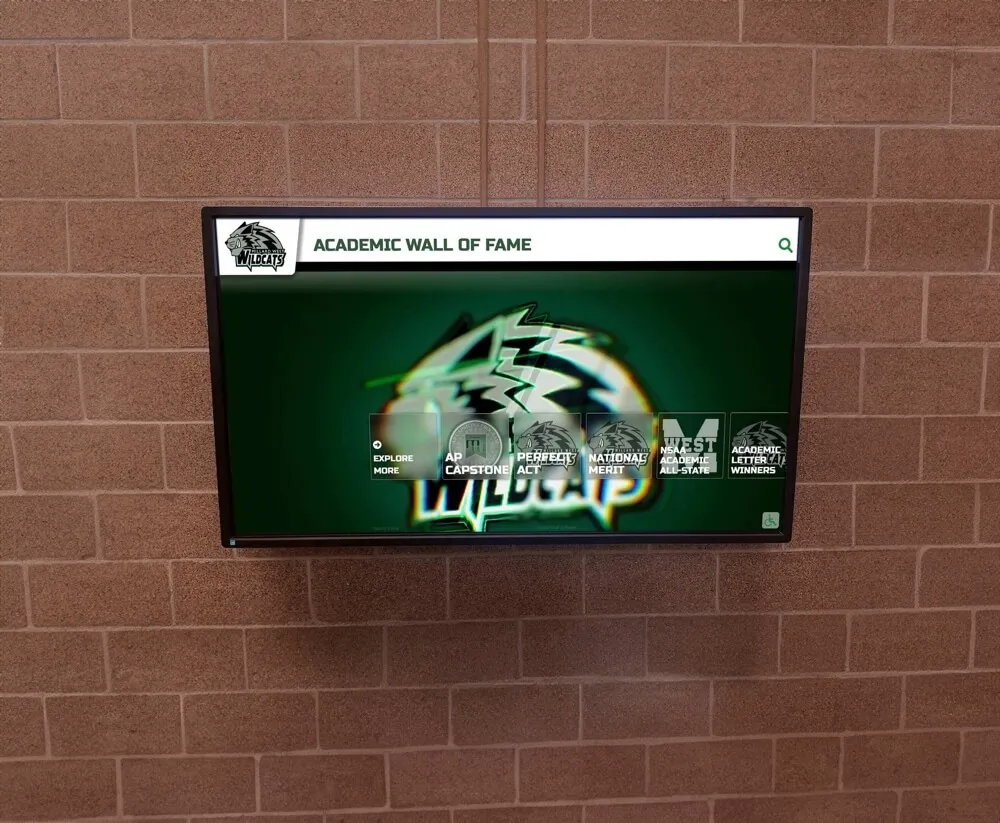
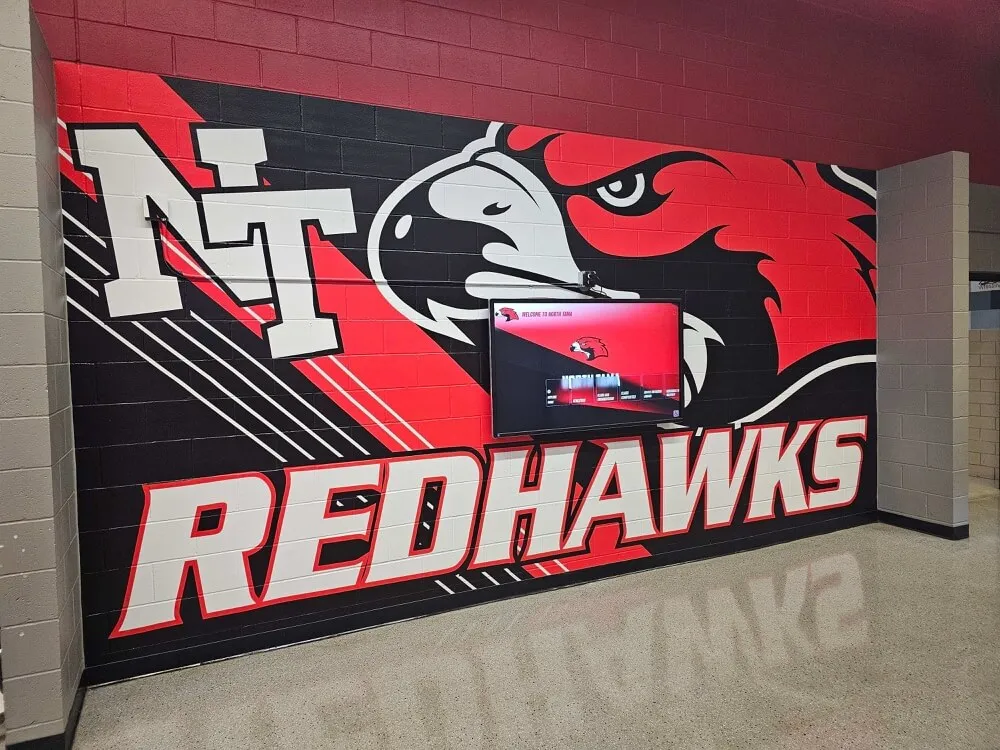
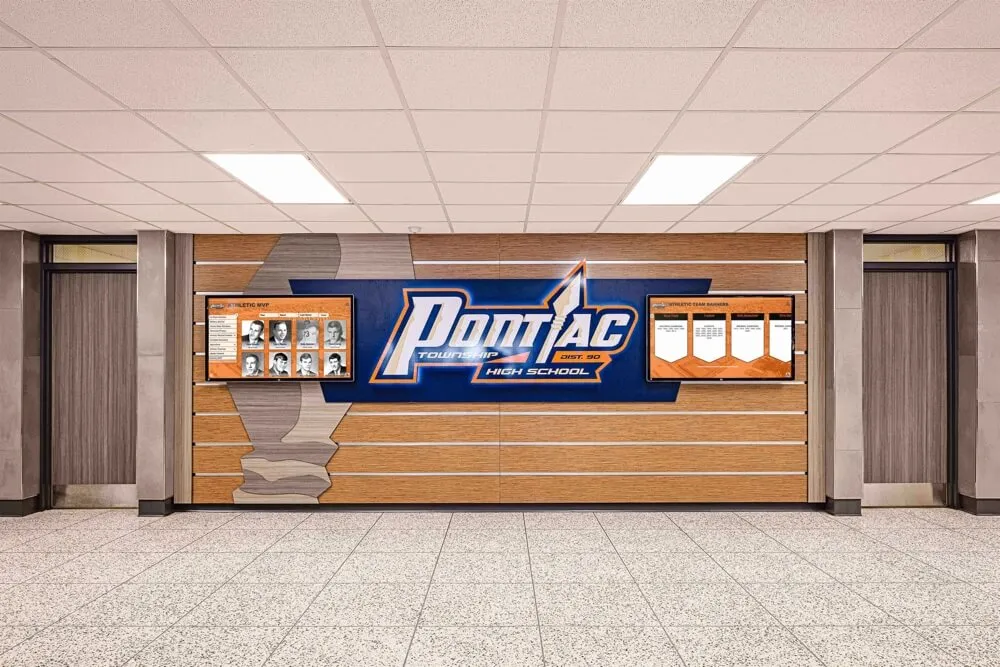
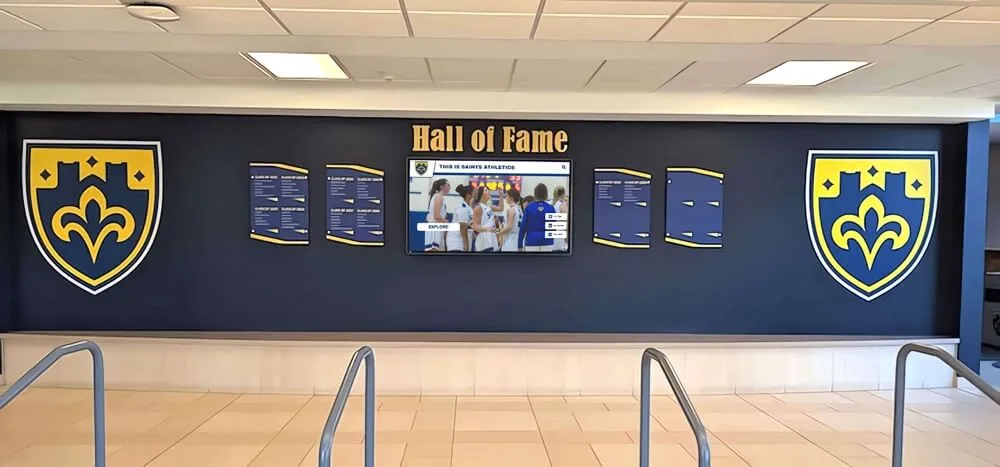
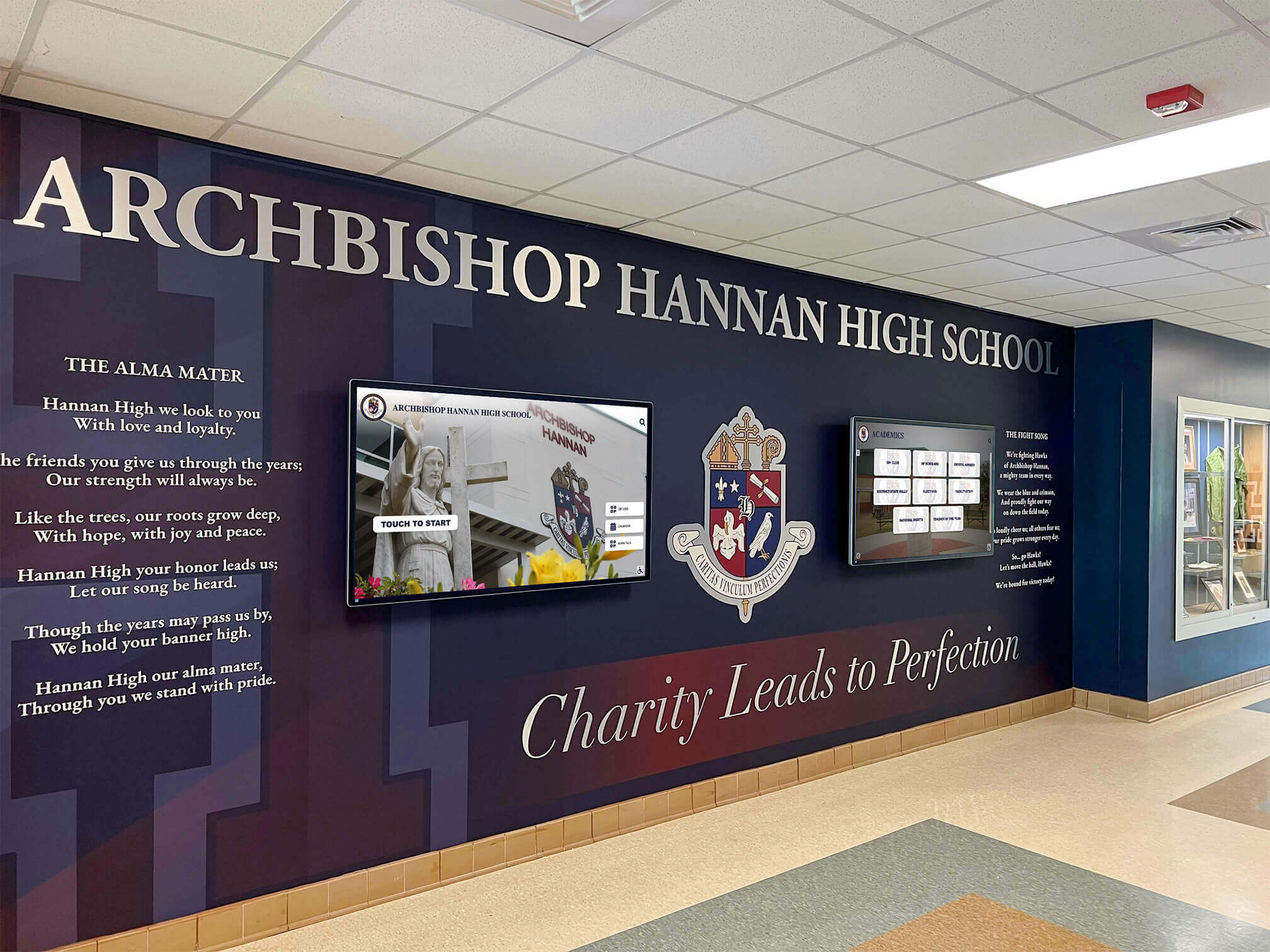
Effective digital donor wall design integrates recognition technology thoughtfully within architectural environments while maintaining visual impact
Understanding Digital Donor Wall Design Objectives
Before addressing specific design elements, successful installations begin by clarifying what donor recognition should accomplish beyond simply displaying names.
Recognition Serves Multiple Stakeholder Groups
Well-designed donor walls create value for diverse audiences with different needs and expectations:
Current Donors and Prospective Supporters
Existing donors want to see their gifts acknowledged appropriately relative to their giving level, feel their contributions are valued by the institution, understand how their support connects to institutional impact, and know they’re part of a larger philanthropic community. Prospective donors observe recognition to understand institutional gratitude culture, visualize themselves among supporters, gauge appropriate giving levels, and assess whether the institution honors commitments to acknowledge contributions.
Institutional Leadership and Advancement Staff
Development professionals need recognition tools that strengthen ongoing relationships rather than representing one-time acknowledgment, accommodate campaign growth without requiring complete redesign, enable content updates celebrating new gifts promptly, and support stewardship conversations during tours and cultivation visits.
Explore comprehensive guidance on donor recognition screen displays covering both hardware and content management considerations.
Campus Community and Visitors
Students, faculty, staff, and campus visitors experience donor walls as environmental elements that should enhance rather than detract from architectural spaces, communicate institutional values and priorities, tell compelling stories about impact, and create pride in institutional community and history.
Design choices that serve only one audience while alienating others create installations that fail to deliver full strategic value. Effective digital donor wall design finds frameworks accommodating multiple stakeholder perspectives simultaneously.
Moving Beyond Static Name Lists
The most common design failure in digital donor recognition involves simply converting traditional plaque content into digital format—alphabetized names organized by giving levels displayed in rotation. This approach wastes digital capabilities while creating recognition that feels impersonal and transactional.
Superior digital donor wall design leverages unique advantages digital technology enables:
Dynamic Storytelling Capabilities
Digital displays can incorporate donor photographs creating personal connections, biographical information humanizing supporters, impact stories connecting gifts to outcomes, historical campaign context, and multimedia elements including video testimonials when appropriate.
Unlimited Recognition Capacity
Unlike physical plaques with finite space, digital recognition accommodates unlimited supporter lists through searchable databases, filtered views by campaign or giving focus, chronological timelines, and rotating featured donor spotlights within larger comprehensive databases.
Flexible Content Organization
Digital frameworks enable multiple simultaneous recognition lenses including traditional giving level hierarchies, campaign-specific donor lists, chronological recognition by gift date, thematic organization by funding priorities, and searchable access allowing visitors to find specific donors or themselves.
Learn how institutions are implementing digital donor walls to create more engaging recognition experiences.
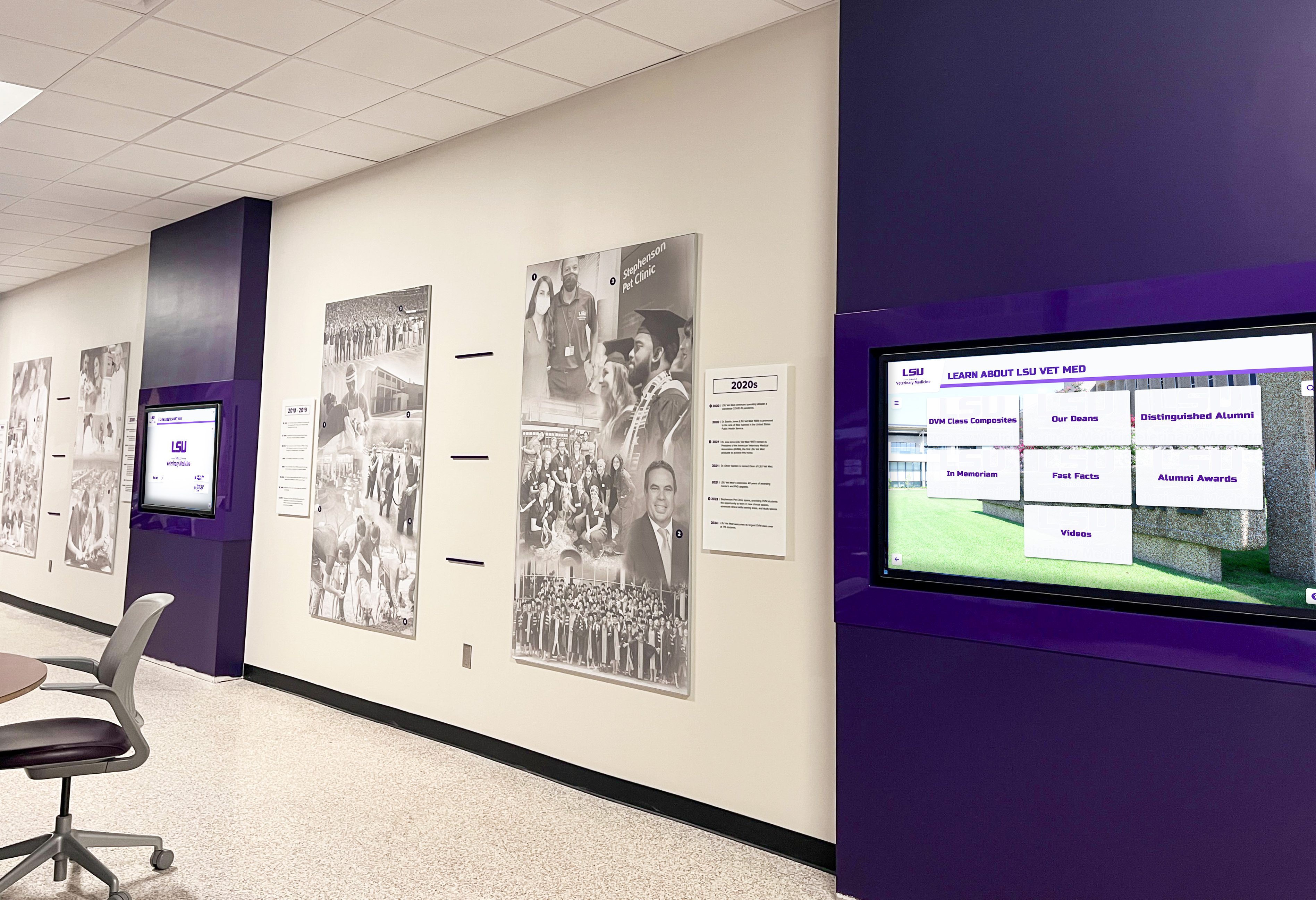
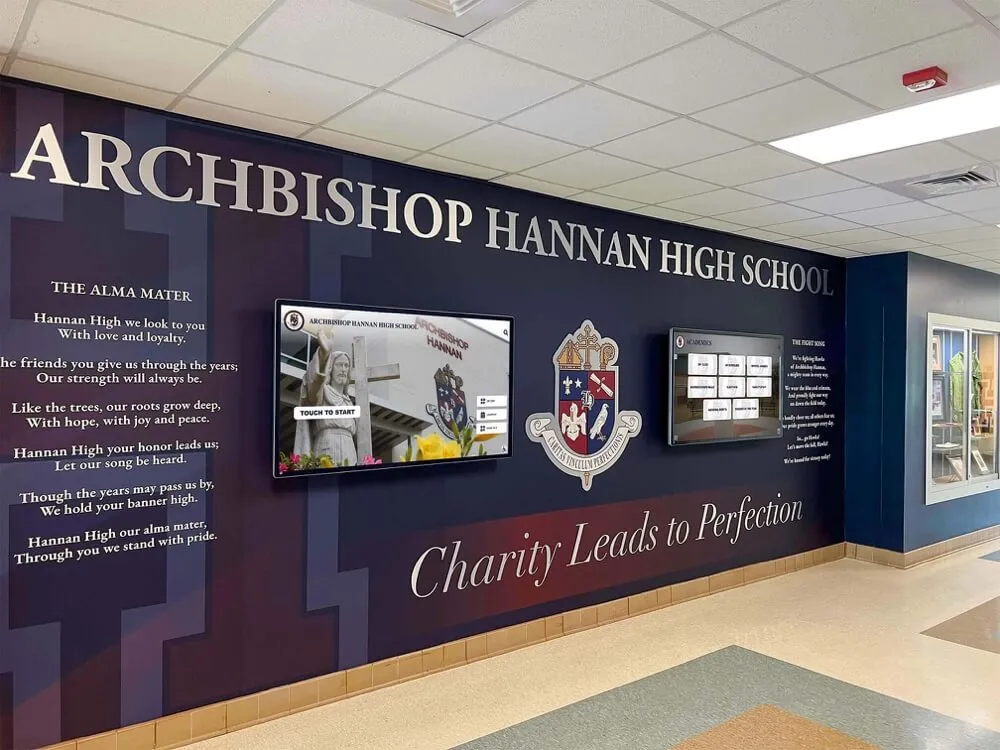
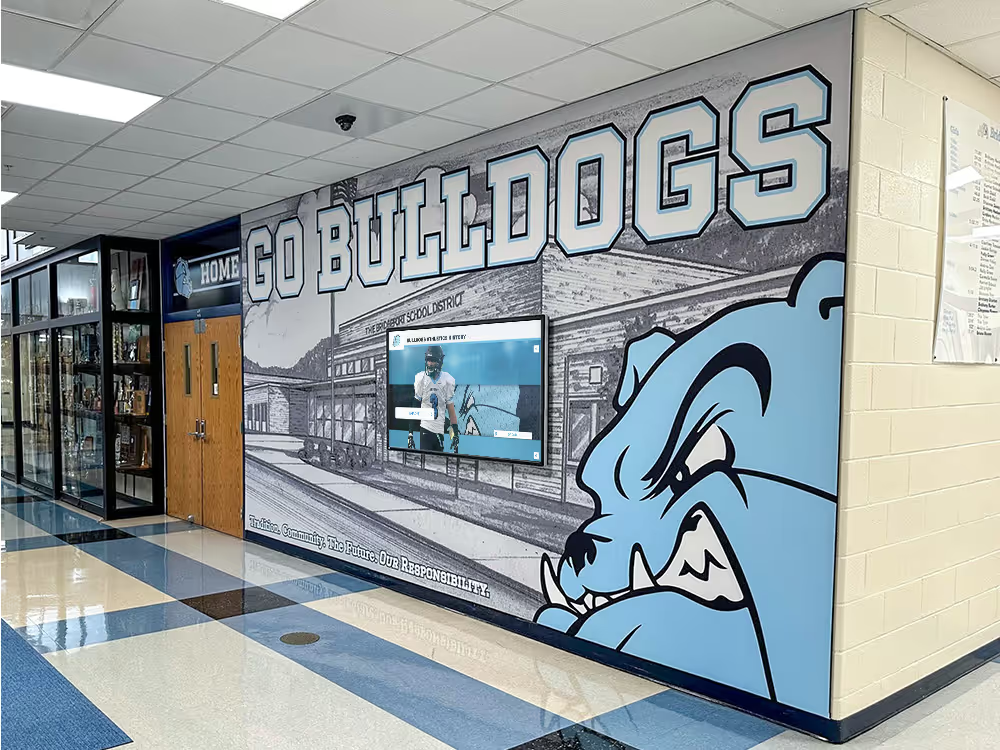
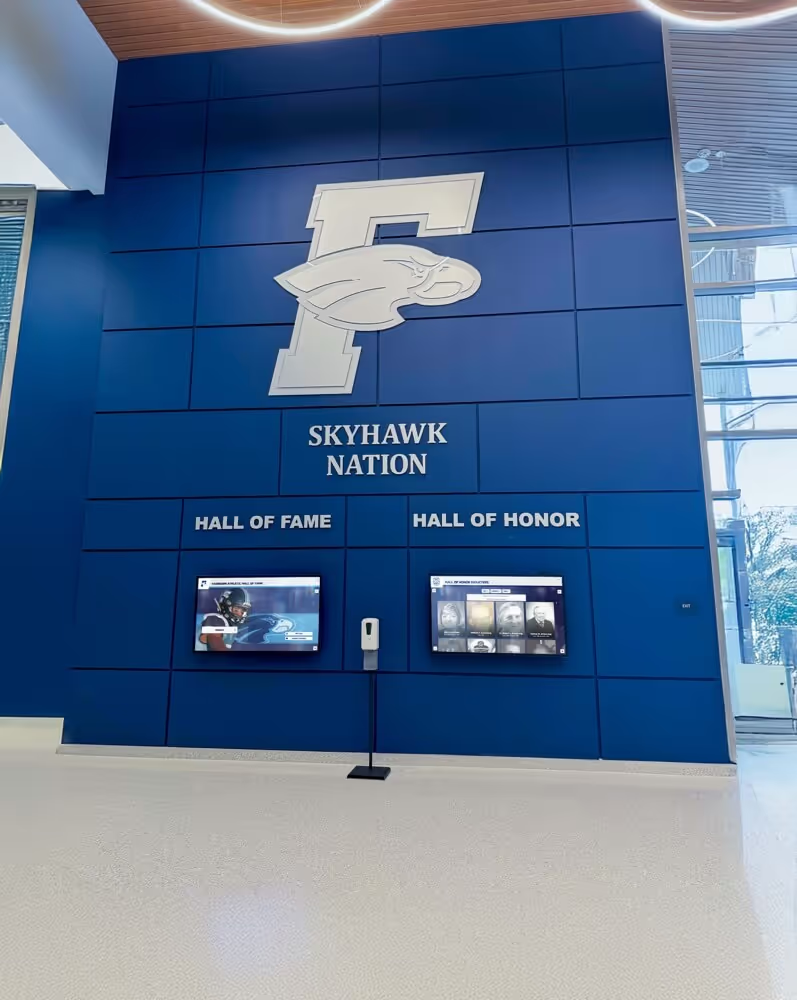
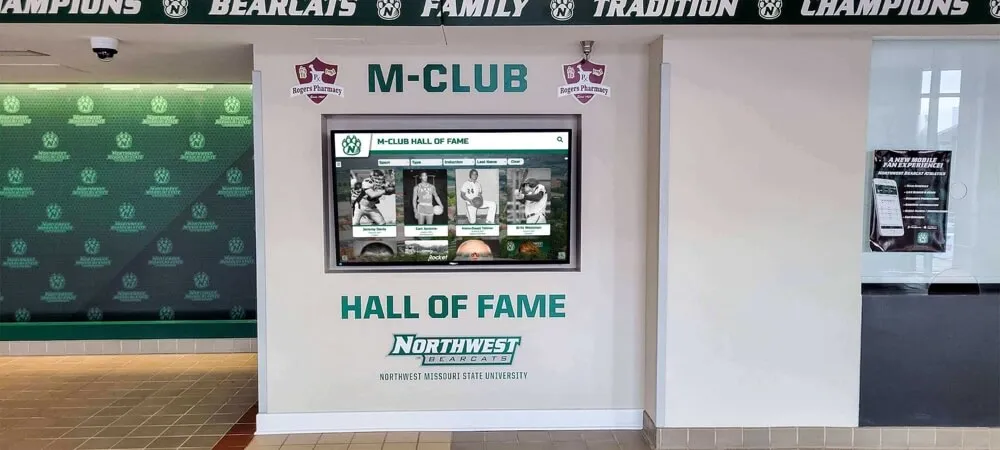
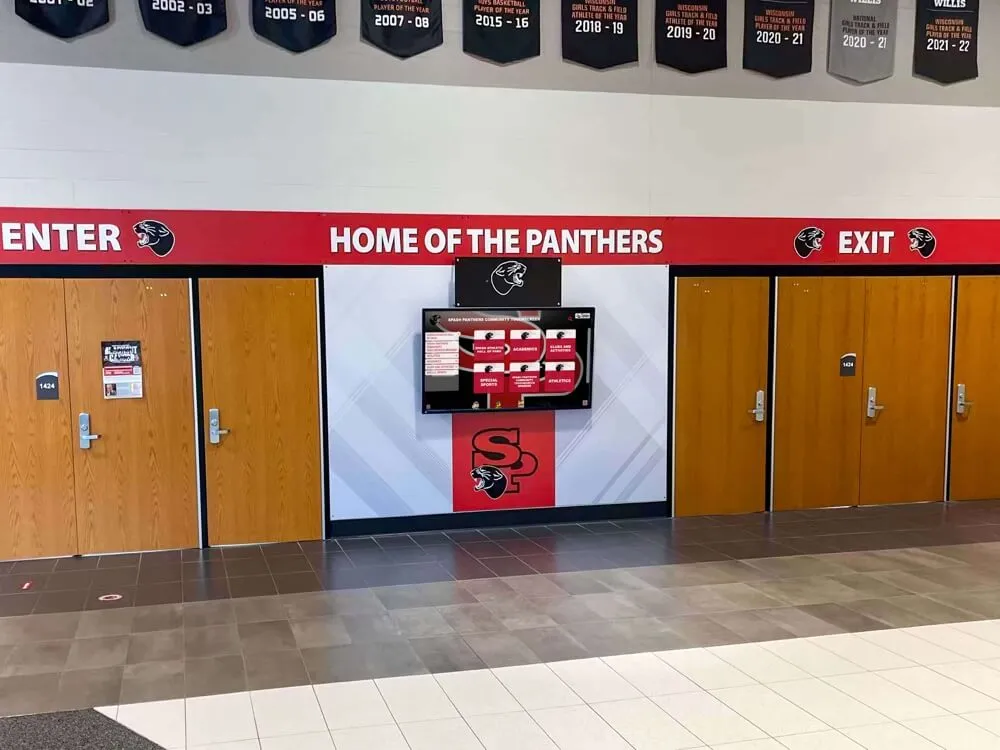
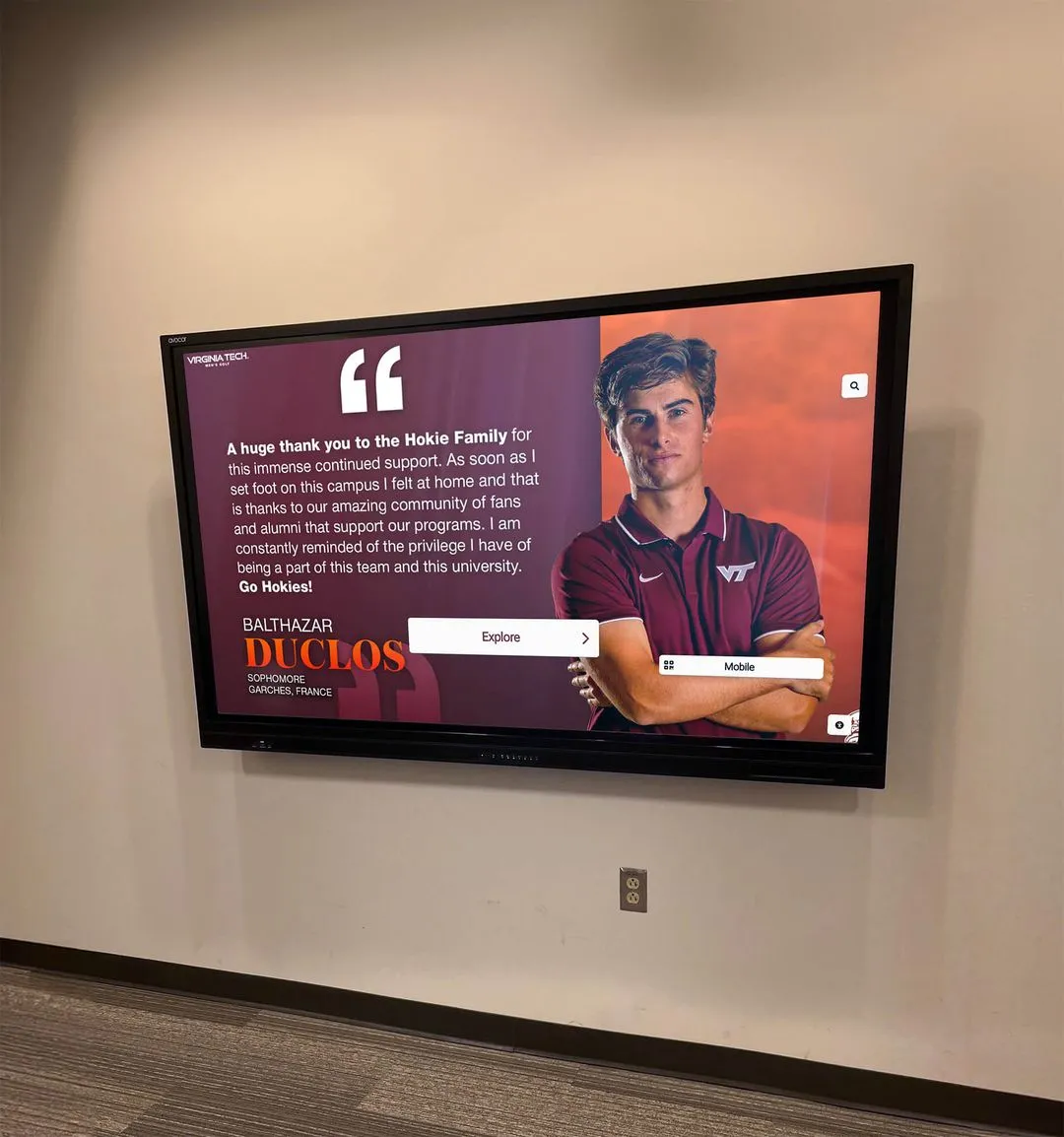
Digital donor walls can display multiple recognition programs and campaigns in shared spaces through dynamic content rotation
Core Design Principles for Donor Recognition Displays
Effective digital donor wall design rests on foundational principles that guide specific layout, content, and interaction decisions.
Principle 1: Clarity Over Complexity
The most sophisticated features become worthless when visitors cannot understand how to engage with recognition displays. Intuitive design requires:
Obvious Entry Points and Navigation
Visitors encountering interactive donor walls should immediately understand that the display is touchable, what they can explore, and how to begin. Clear design signaling includes prominent “Touch to Explore” messaging with visual cues, initial attract loops demonstrating interaction possibilities, large touch targets appropriate for all ages and abilities, and consistent navigation patterns requiring no learning curve.
When visitors must read instruction panels before engaging with donor walls, design has failed. Recognition displays should invite exploration through self-evident interfaces requiring no explanation.
Visual Hierarchy Guiding Attention
Not all donor wall content deserves equal visual emphasis. Effective hierarchy directs attention through size variations emphasizing featured content, color and contrast creating focal points, spatial relationships grouping related information, and typography establishing clear content importance levels.
Random visual treatment where all elements compete equally creates overwhelming experiences where nothing stands out. Strategic hierarchy helps visitors process complex recognition information systematically.
Progressive Disclosure Managing Information Density
Comprehensive donor databases contain more information than displays can present simultaneously without overwhelming viewers. Progressive disclosure shows essential information first while enabling deeper exploration, reveals detail only when visitors demonstrate interest, maintains clean initial presentations while providing rich content for engaged users, and prevents cognitive overload from excessive simultaneous information.
Think of donor wall design like website navigation: home screens provide overview and entry points, category screens organize by themes or campaigns, and detail screens reveal individual donor stories and information.
Principle 2: Honor Individual Donors Within Collective Community
Balancing individual recognition with celebration of philanthropic community represents a core donor wall design challenge.
Avoiding Purely Transactional Presentations
Recognition that reduces donors to names and dollar amounts feels impersonal regardless of giving level. More meaningful recognition includes personal elements like photographs when available, brief biographical context or connection statements, recognition of multi-generational family giving, acknowledgment of volunteer service alongside financial gifts, and impact statements connecting specific gifts to outcomes.
Even simple additions like including donors’ class years alongside names creates more personal connection than purely transactional name-and-amount lists.
Creating Appropriate Giving Level Differentiation
Donors contributing at significantly different levels expect recognition reflecting those distinctions. However, heavy-handed hierarchical presentation risks making recognition feel exclusive rather than inclusive.
Thoughtful approaches to giving level differentiation include dedicated feature spaces or rotation for major donors while including all supporters in comprehensive databases, layout positions providing prominence without excluding others from view, time-based rotation giving each level appropriate visibility, and filtering options allowing visitors to explore all giving segments.
The goal is acknowledging genuine contribution differences while maintaining the dignity of all supporters regardless of capacity.
Telling the Collective Story
Individual donor recognition gains meaning within context of broader philanthropic impact. Effective design weaves individual acknowledgment with collective achievement storytelling through campaign totals and participation rates, impact visualizations showing cumulative effect, historical context showing philanthropic tradition, and community messaging celebrating collective generosity.
This framing helps donors see themselves as valued members of communities working toward shared goals rather than isolated transactions.
Principle 3: Design for Long-Term Flexibility and Growth
Digital donor wall installations should serve institutions for many years across multiple campaigns. Design frameworks must accommodate change.
Scalable Content Architectures
Recognition systems designed around specific campaign donor counts become problematic when campaigns exceed projections or institutions launch additional initiatives. Scalable architectures use database-driven content rather than fixed layouts, dynamic filtering and sorting rather than hardcoded hierarchies, template-based presentation enabling consistent formatting as donor counts grow, and modular content blocks that rearrange gracefully as quantities change.
Fixed designs that look perfect for exactly 247 donors break down when the 248th contribution arrives or campaign expansion adds hundreds more supporters.
Accommodation for Multiple Campaigns
Few institutions run only one campaign. Donor wall frameworks should enable recognition of multiple concurrent or sequential initiatives through campaign filters allowing visitors to explore specific initiatives, unified donor views showing individuals’ cumulative support across campaigns, temporal organization presenting historical and current recognition, and flexible featured content highlighting active campaign priorities.
Review budget planning strategies for recognition displays that grow with institutional needs.
Content Management Without Developer Dependency
Donor recognition requires ongoing updates as new gifts arrive, campaigns progress, and recognition priorities evolve. Design frameworks dependent on developers or vendors for routine content updates create bottlenecks and expense.
Effective digital donor wall design includes content management systems enabling advancement staff to add new donors without technical assistance, update campaign totals and progress visualizations, feature specific donors or stories seasonally, and modify recognition hierarchies as giving levels change.

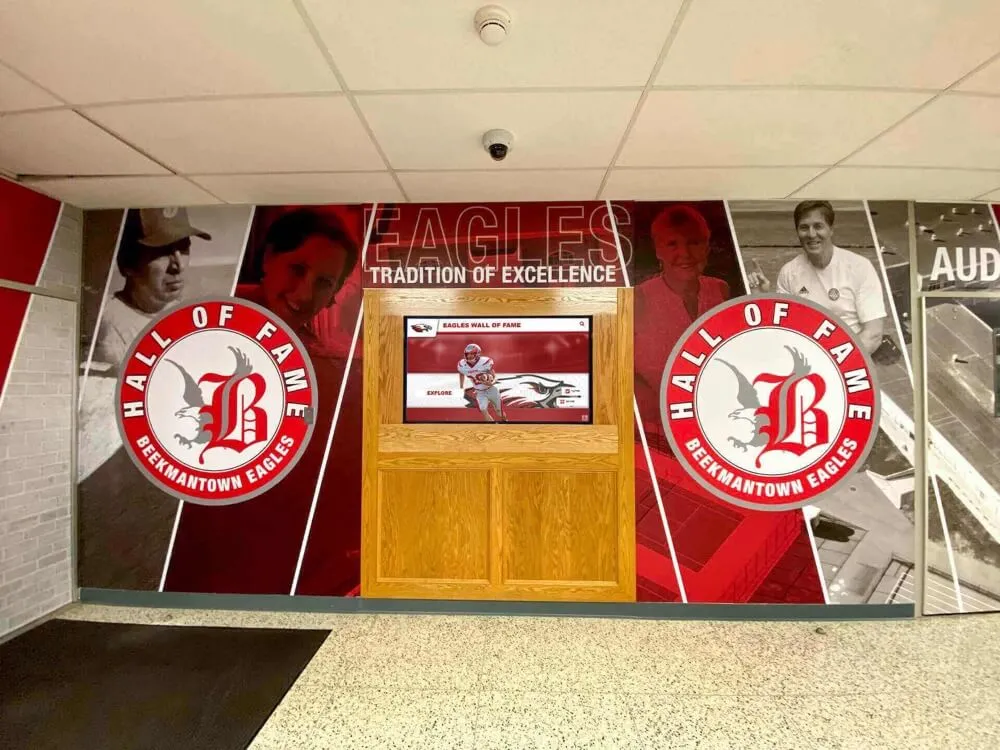
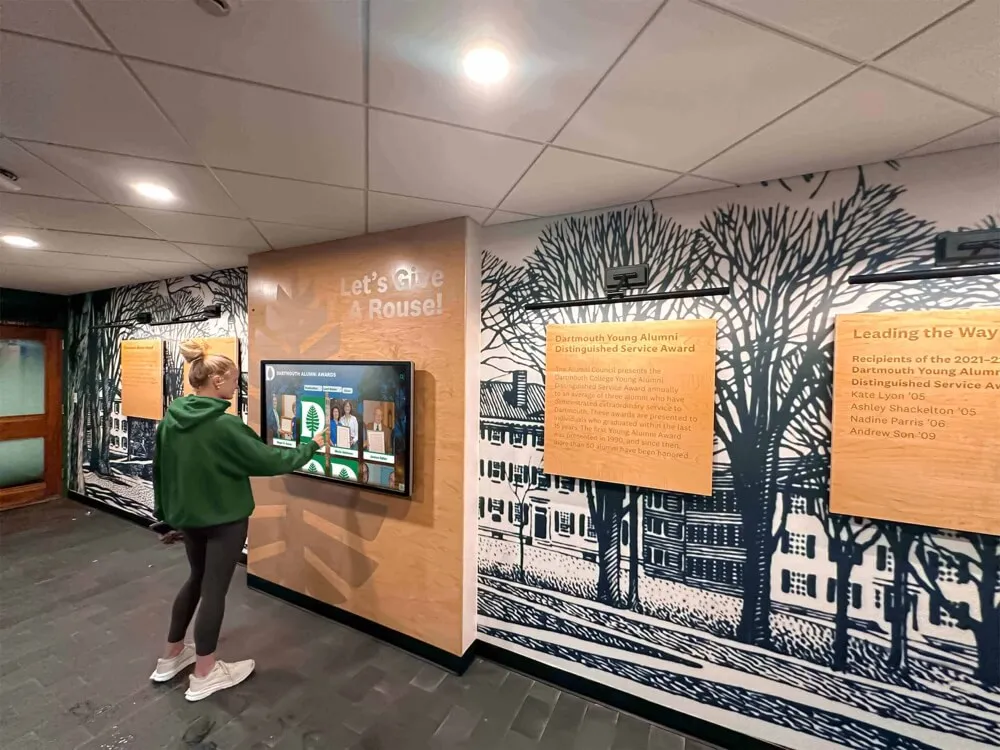
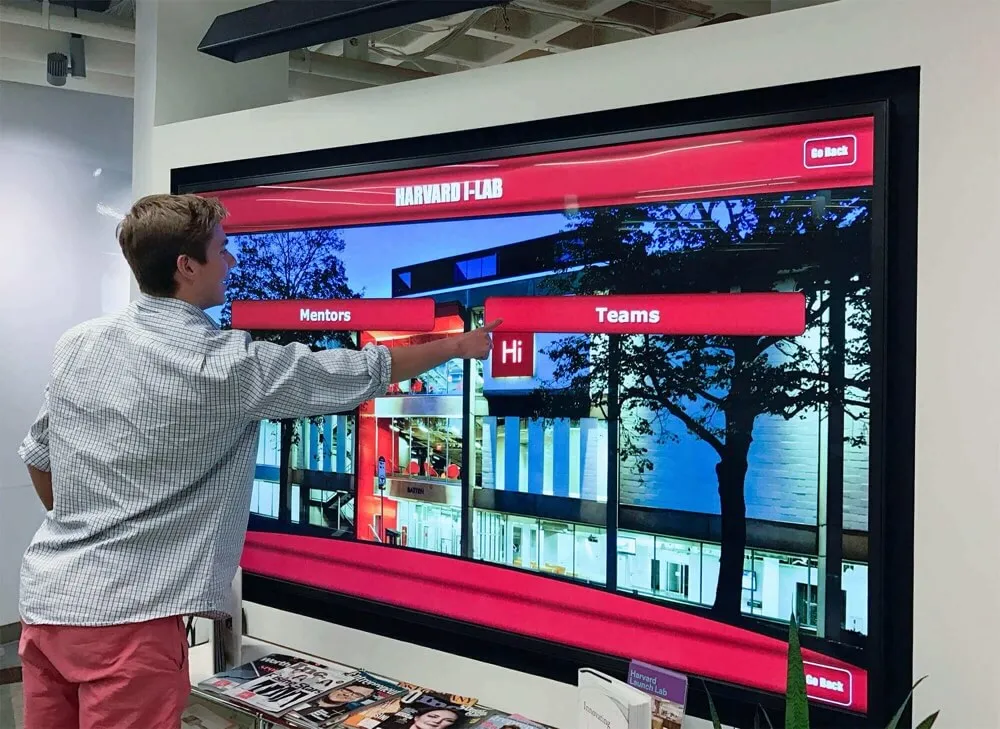
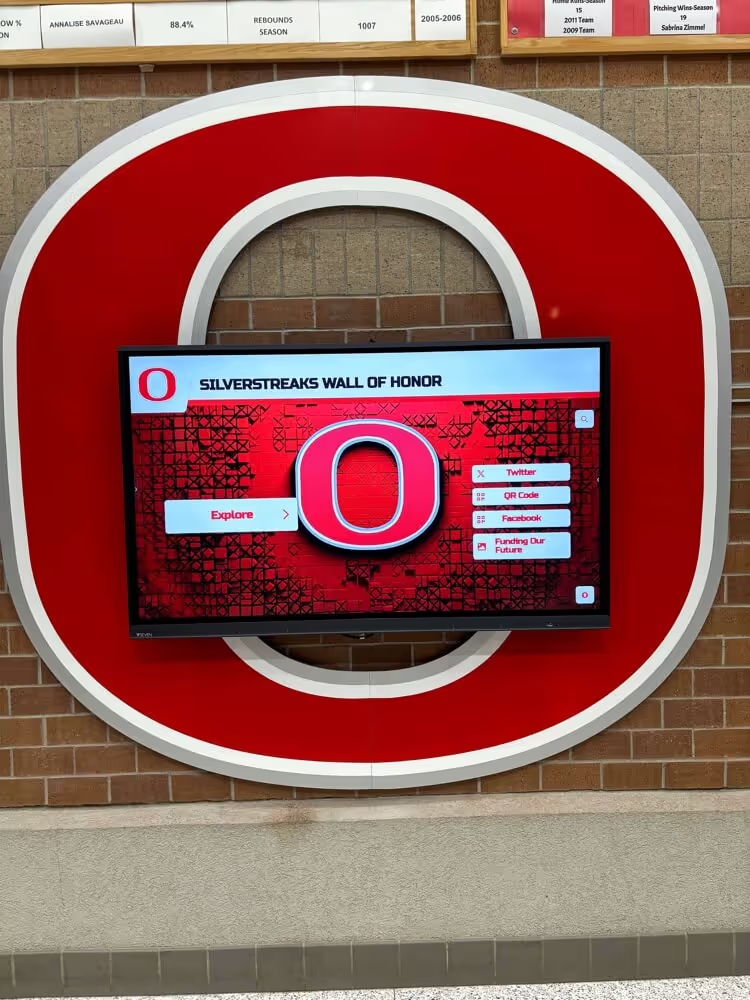
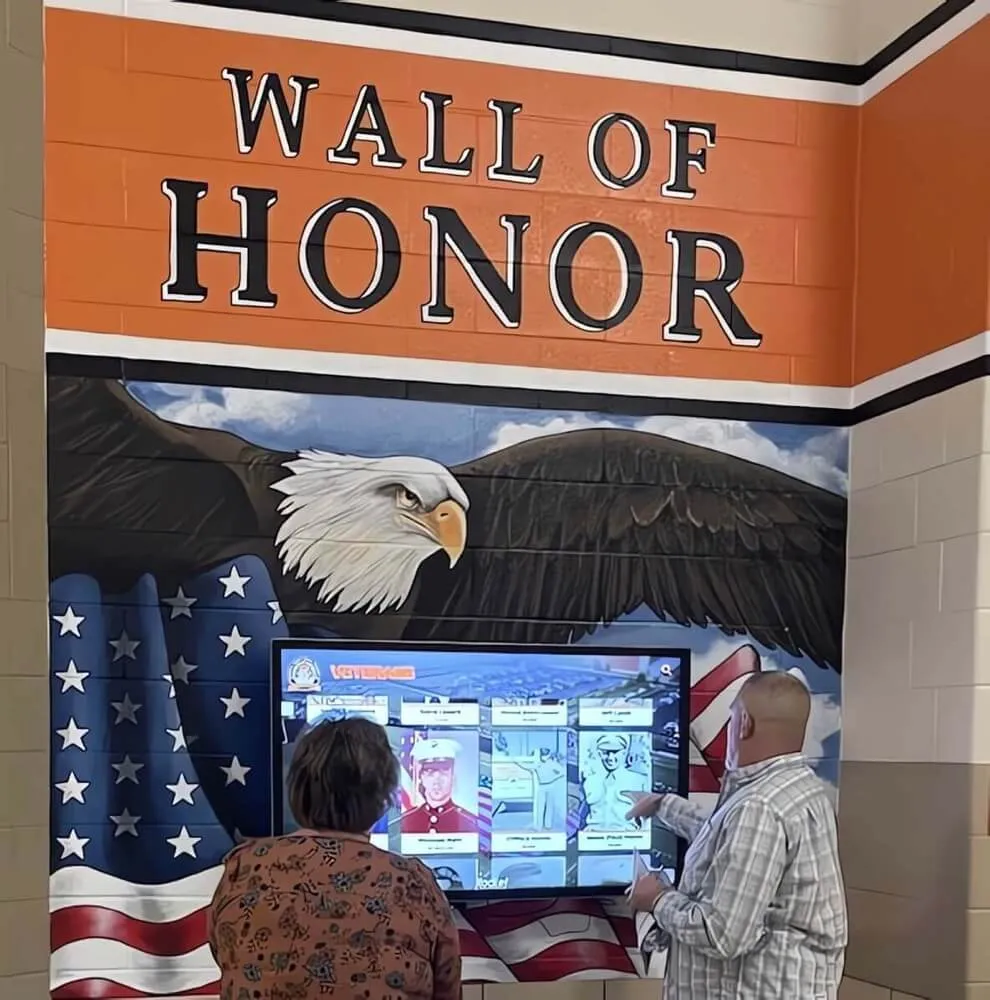
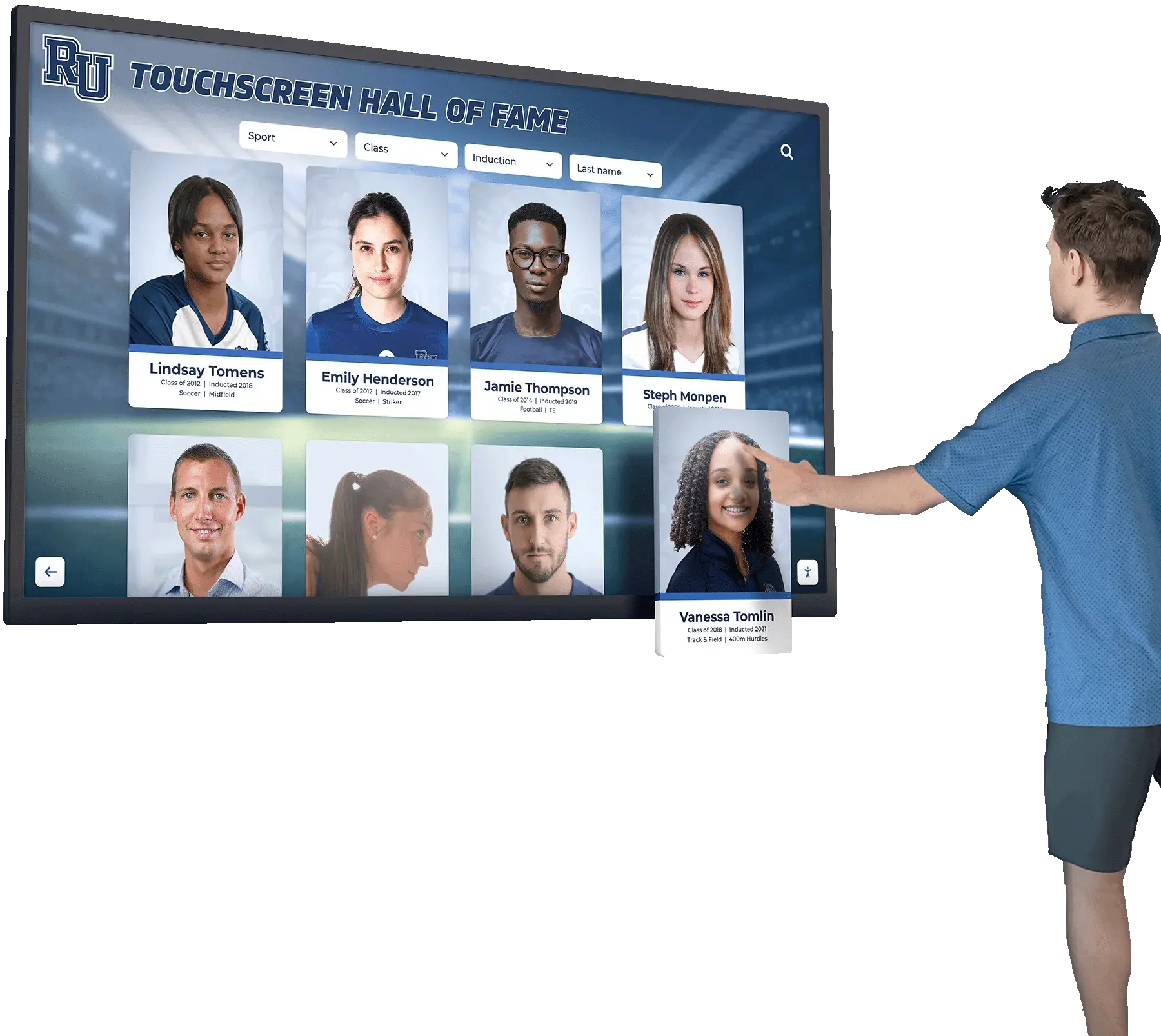
Touchscreen interaction transforms passive recognition viewing into active donor exploration and engagement
Principle 4: Accessibility and Universal Design
Recognition displays should enable engagement across diverse visitor populations including various ages and abilities.
Physical Accessibility Considerations
Donor wall installations must accommodate:
- Screen positioning and touch target heights accessible from wheelchairs
- High-contrast visual design supporting vision impairments
- Font sizing readable from typical viewing distances
- Audio alternatives or captions for video content
- Touch targets large enough for users with limited dexterity
Cognitive Accessibility and Ease of Use
Beyond physical accessibility, design should minimize cognitive barriers through simple language avoiding development jargon, predictable interaction patterns, tolerance for user errors with easy recovery, minimal memory requirements between screens, and clear feedback confirming user actions.
Complex donor databases become inaccessible when navigation requires remembering multi-step procedures or decoding institutional terminology unfamiliar to general visitors.
Layout and Information Architecture for Donor Walls
How content is organized and presented dramatically affects whether visitors engage with recognition or walk past displays without interest.
Home Screen and Attract Loop Design
The first impression visitors form determines whether they engage further or dismiss recognition displays as background noise.
Compelling Attract Loops
When no one is actively using interactive donor walls, attract loops demonstrate what’s possible and invite engagement. Effective attract content includes visual variety showing different recognition modes, movement and transitions capturing peripheral attention without being distracting, clear messaging inviting touch interaction, preview of compelling content visitors might want to explore, and automatic return to attract loop after periods of inactivity.
Attract loops that simply scroll alphabetized donor names fail to communicate value or invite exploration. Better approaches showcase featured donor stories, visualize campaign progress and impact, highlight recent gifts celebrating new supporters, and demonstrate interactive search and filter capabilities.
Strategic Home Screen Layout
Once visitors engage, home screens should provide clear pathways to content they might want to explore. Common effective organization includes:
- Featured content areas highlighting major donors, recent gifts, or campaign spotlights
- Category navigation organizing by campaign, giving level, donor type, or time period
- Search functionality enabling visitors to find specific donors or themselves
- Quick stats showing campaign totals, participation rates, or impact metrics
- “About this campaign” context explaining what donors supported
Home screens that present every donor simultaneously in small unreadable text fail to create entry points for engagement.
Donor Database Views and Filtering
Comprehensive donor lists require thoughtful organization enabling visitors to process large amounts of information systematically.
Multiple Simultaneous Organization Schemes
Effective donor databases support exploration through multiple lenses including:
- Giving level tiers from major gifts to annual fund supporters
- Chronological views showing donors by gift date or campaign phase
- Thematic organization by funding priorities or designation
- Class year or affiliation for schools and universities
- Geographic sorting for institutions with dispersed communities
- Alphabetical search when visitors seek specific names
Different visitors want different entry points. Providing multiple navigation paths accommodates diverse exploration preferences.
Discover how institutions design donor recognition walls that enable intuitive exploration of complex donor databases.
List View Design Considerations
When displaying donor lists, design choices affect readability and dignity:
- Appropriate information density balancing comprehensive inclusion with readable presentation
- Consistent formatting treating all donors within giving levels with equal visual respect
- Meaningful grouping using visual separators between giving tiers or categories
- Selective detail showing essential information in list view while linking to detail for interested visitors
- Pagination or scrolling that feels natural and doesn’t hide recognition
Donor lists formatted in tiny unreadable fonts to fit more names on single screens fail to provide meaningful recognition. Better approaches use appropriately sized typography with graceful pagination or scrolling.
Individual Donor Detail Screens
When visitors select specific donors for detailed exploration, content should reward that engagement with meaningful information.
Rich Donor Profiles
Individual donor screens can include:
- Donor photographs when available and appropriate
- Biographical information or connection to institution
- Gift details including campaign supported and giving level
- Personal statements or quotes about motivation for giving
- Recognition of cumulative support across multiple gifts
- Family or organizational information for non-individual donors
- Impact stories specific to their funding priorities when applicable
The depth of detail varies based on available information and donor privacy preferences, but even modest additions beyond names and amounts create more personal recognition.
Consistent Template Structure
While individual donor content varies, consistent layout templates ensure professional presentation and enable content management at scale. Templates provide designated spaces for photographs, biographical text, gift information, quotes or personal messages, and impact connections.
This consistency allows advancement staff to add new donor profiles using established formats rather than custom-designing every individual entry.
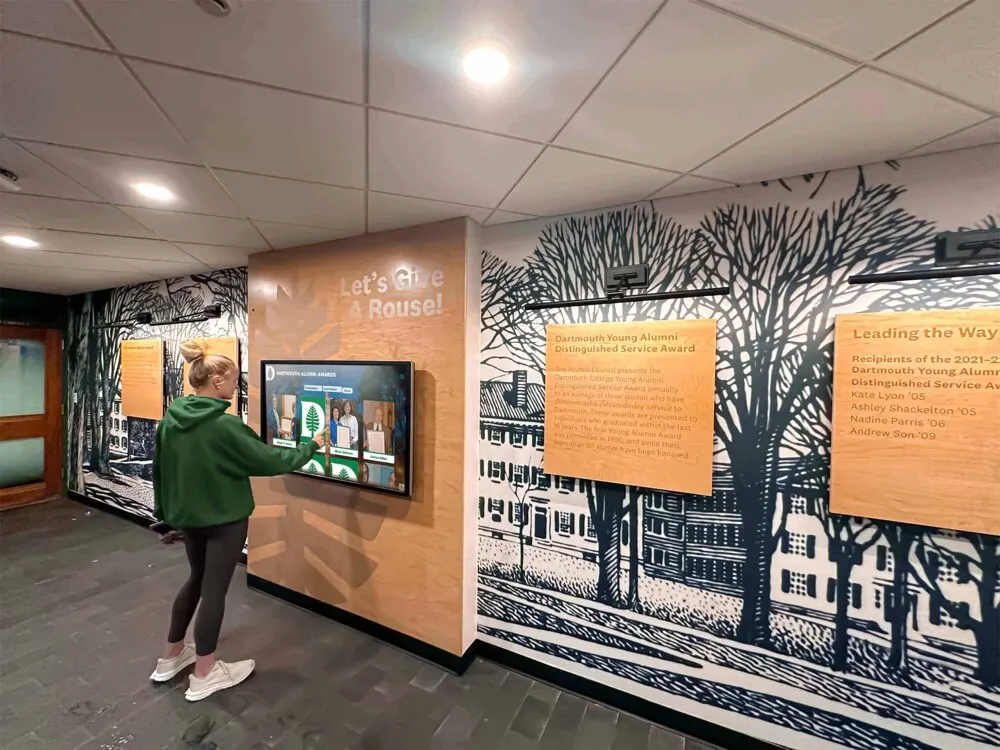
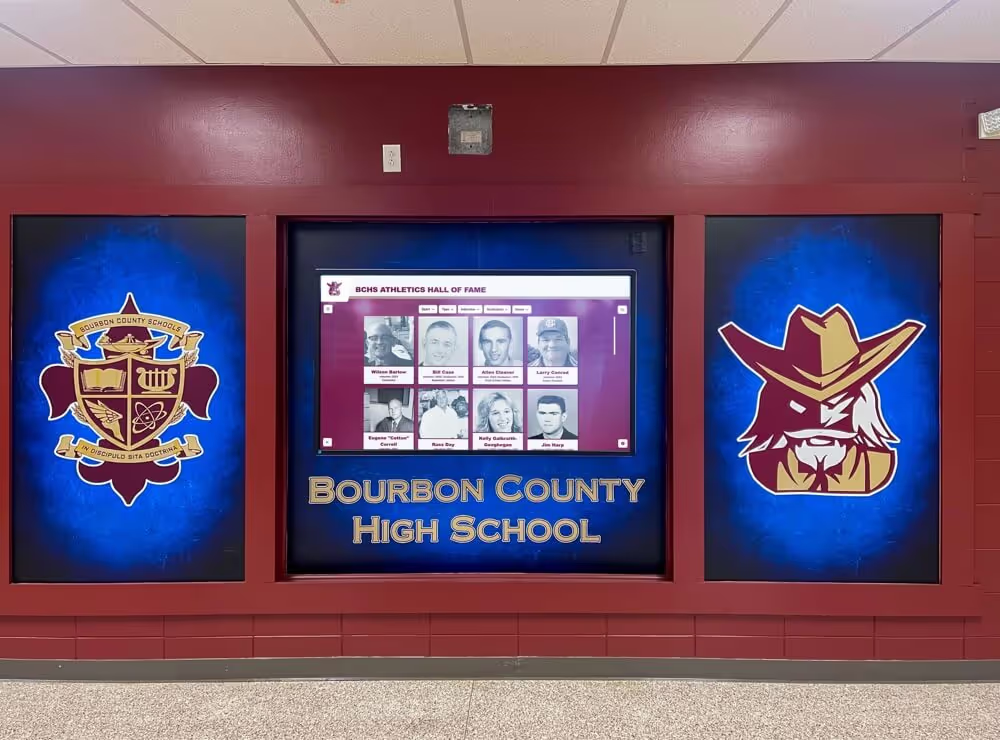
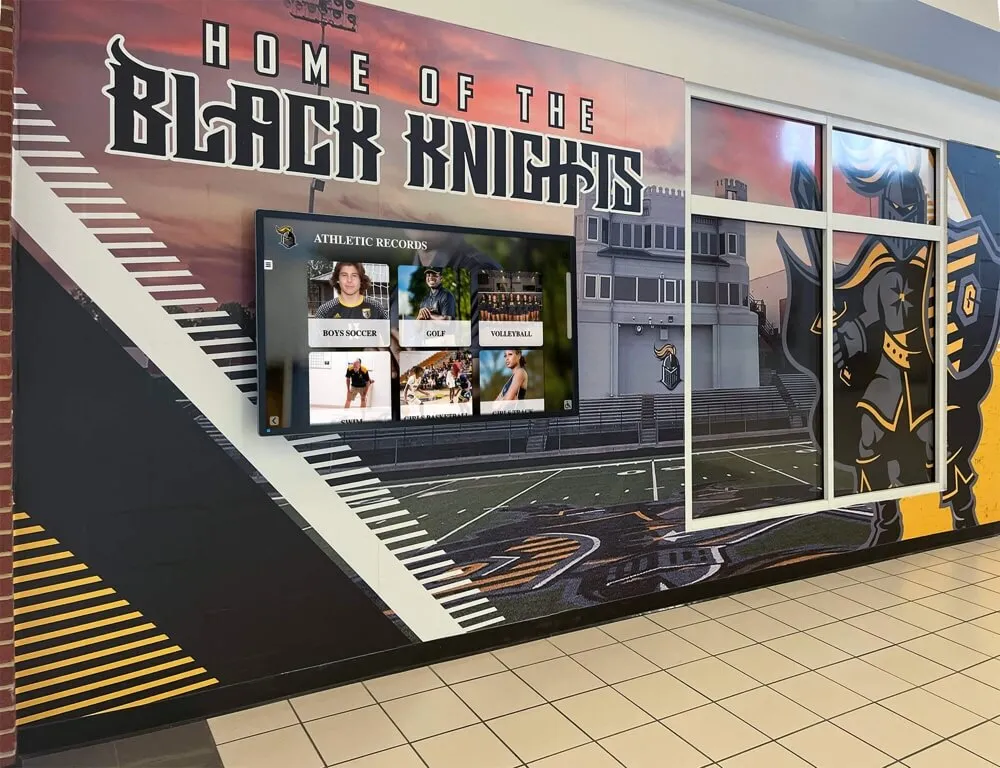
Well-designed donor walls invite natural exploration as visitors navigate campus buildings and common spaces
Visual Design Elements for Digital Donor Recognition
The aesthetic presentation of donor walls affects both emotional impact and functional usability.
Institutional Brand Alignment
Donor recognition displays exist within broader institutional visual ecosystems. Design alignment maintains professional cohesion.
Color Palette and Typography
Recognition displays should draw from institutional brand standards including primary and secondary color palettes, official typography for headings and body text, appropriate use of logos and marks, and visual style consistent with other institutional communications.
This doesn’t mean donor walls must look identical to websites or publications, but they should feel like they belong to the same institutional family through coordinated visual language.
Tone and Personality
Visual design choices communicate institutional personality through formal versus approachable aesthetics, traditional versus contemporary design language, minimal versus rich visual treatments, and serious versus warm emotional tones.
A children’s hospital donor wall might embrace colorful, warm, hopeful visual design while a law school foundation might choose more formal, traditional, serious presentation—both serving their audiences appropriately.
Photography and Imagery
Visual elements beyond text significantly affect emotional engagement with donor recognition.
Donor Photography Considerations
When including donor photographs, quality and consistency matter. Considerations include:
- Consistent aspect ratios and framing creating visual cohesion
- Photo quality standards ensuring appropriate resolution and professional appearance
- Inclusion policies determining who receives featured photography versus database-only listing
- Privacy and permission confirming appropriate use rights
- Placeholder handling for donors without available photos using consistent visual treatment
Mixing high-quality professional portraits with low-resolution snapshots creates uneven recognition feeling less professional. Consistent standards maintain dignity across all entries.
Contextual and Impact Imagery
Beyond donor portraits, imagery can include facilities or programs supported by donations, students or beneficiaries representing impact, historical photographs showing institutional heritage, campus beauty and architectural features, and campaign-specific visual themes.
These contextual images help donors see themselves as part of larger impact stories rather than isolated transactions.
Motion and Animation
Digital displays enable movement that can enhance engagement or create distraction depending on implementation.
Purposeful Motion
Effective animation serves specific purposes including:
- Attracting attention to interactive capabilities through subtle movement
- Guiding navigation with directional transitions
- Indicating interactive affordances like swipe or scroll
- Creating visual interest during automated loops
- Celebrating milestones with special animation treatments
Motion Restraint
Too much animation becomes distracting, overwhelming, or induces motion sickness in some viewers. Judicious approaches use subtle rather than aggressive motion, purposeful movement supporting specific communications, respect for visitor attention and comfort, and professional polish avoiding amateur video effects.
Donor walls with constant frantic animation feel more like advertisements than dignified recognition. Thoughtful motion enhances without overwhelming.
Readability and Typography
Text remains central to donor recognition. Typography decisions affect whether content actually gets read.
Appropriate Font Sizing
Text must be readable from typical viewing distances for your installation location. General guidelines suggest:
- Minimum 36-48pt for body text on displays viewed from 6+ feet
- 60-96pt or larger for headings and emphasis
- Even larger sizing for displays in large atriums or spaces with greater viewing distances
- Scaling based on actual measured viewing distances in your specific environment
Beautiful typography becomes worthless when visitors cannot read it from where they naturally stand. Size appropriately for actual use conditions.
Font Selection and Hierarchy
Effective typography uses limited font families avoiding visual clutter (typically 1-2 fonts maximum), clear hierarchy through size, weight, and color variations, appropriate font personality for institutional tone, and sufficient contrast ensuring readability across lighting conditions.
Donor wall text competes with architectural environments and ambient lighting. High contrast and strategic hierarchy ensure critical information remains visible and legible.
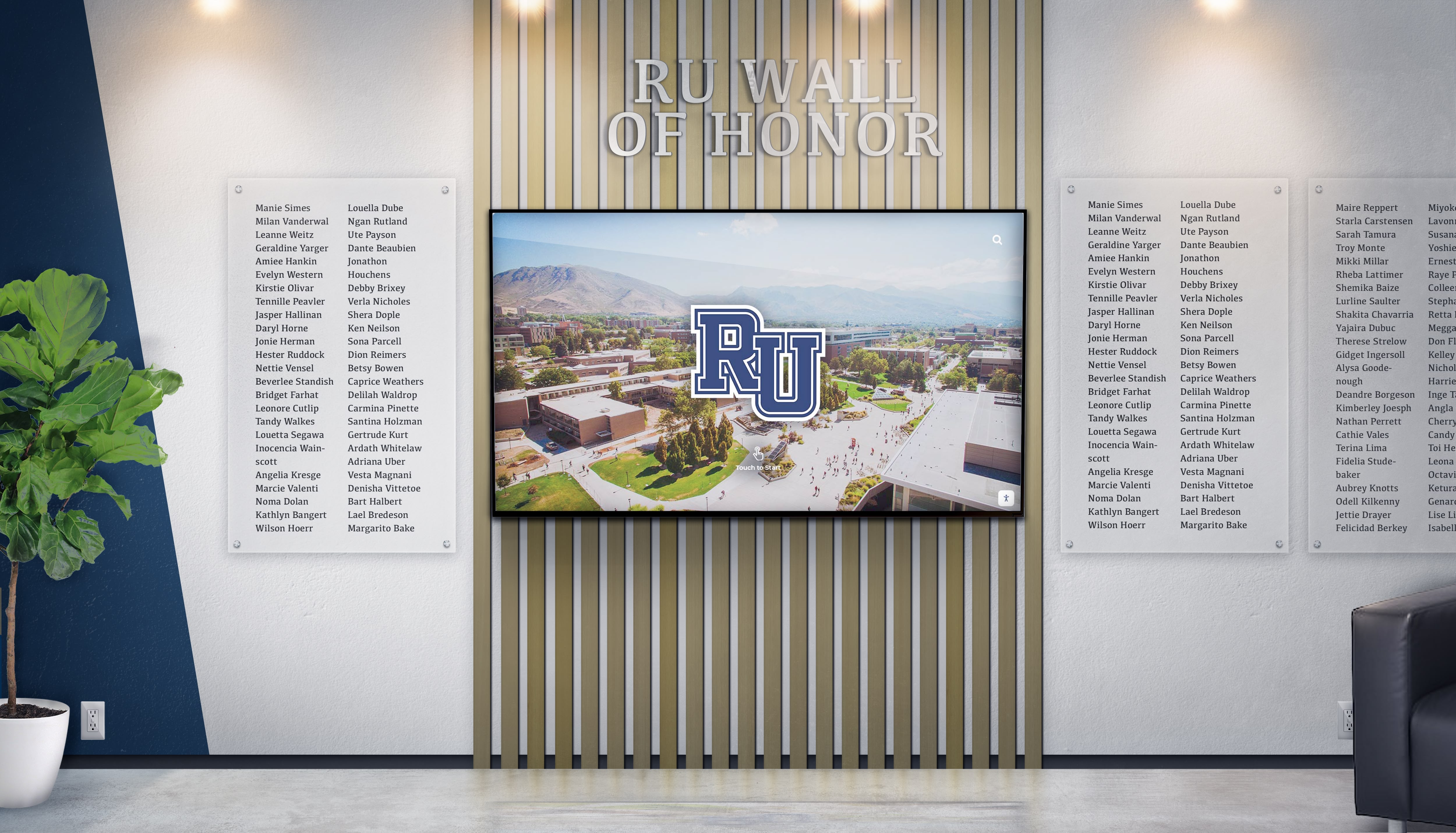
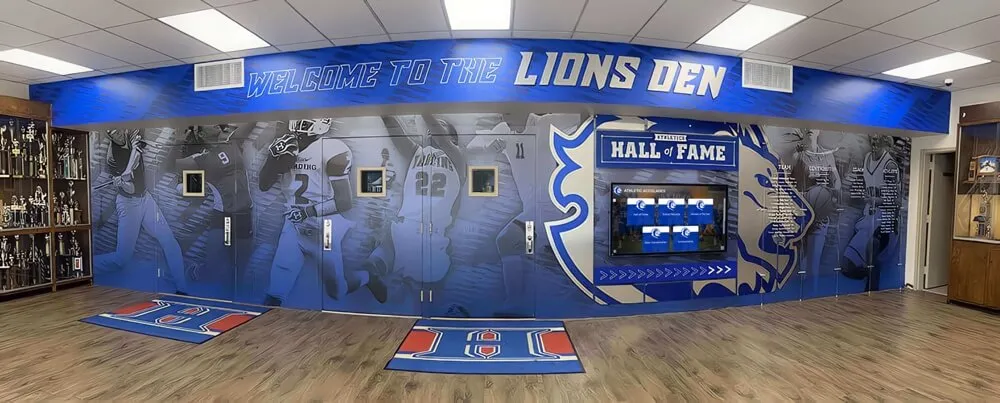
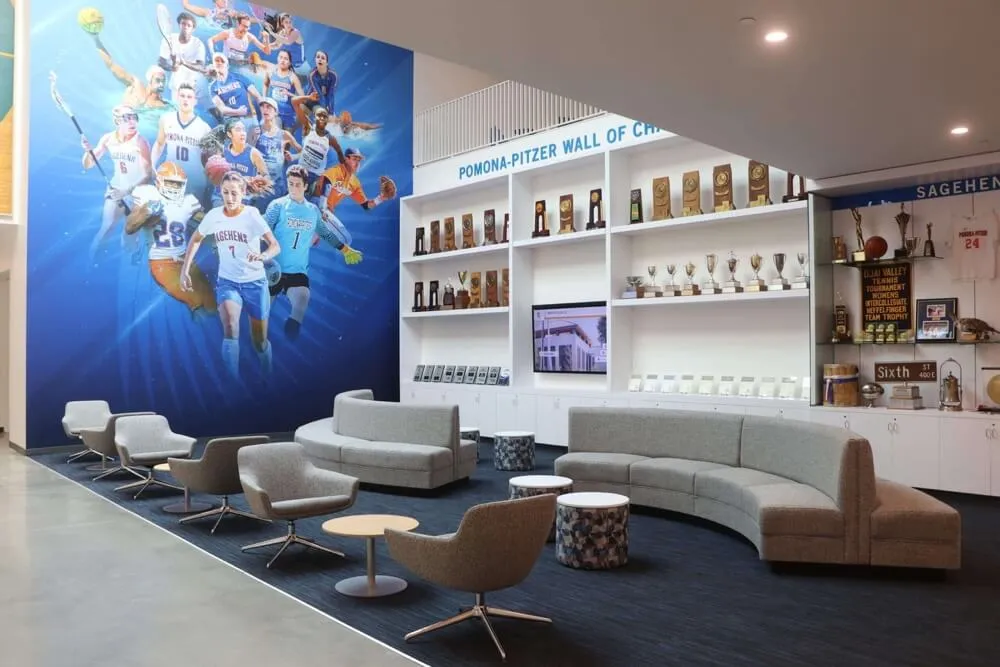
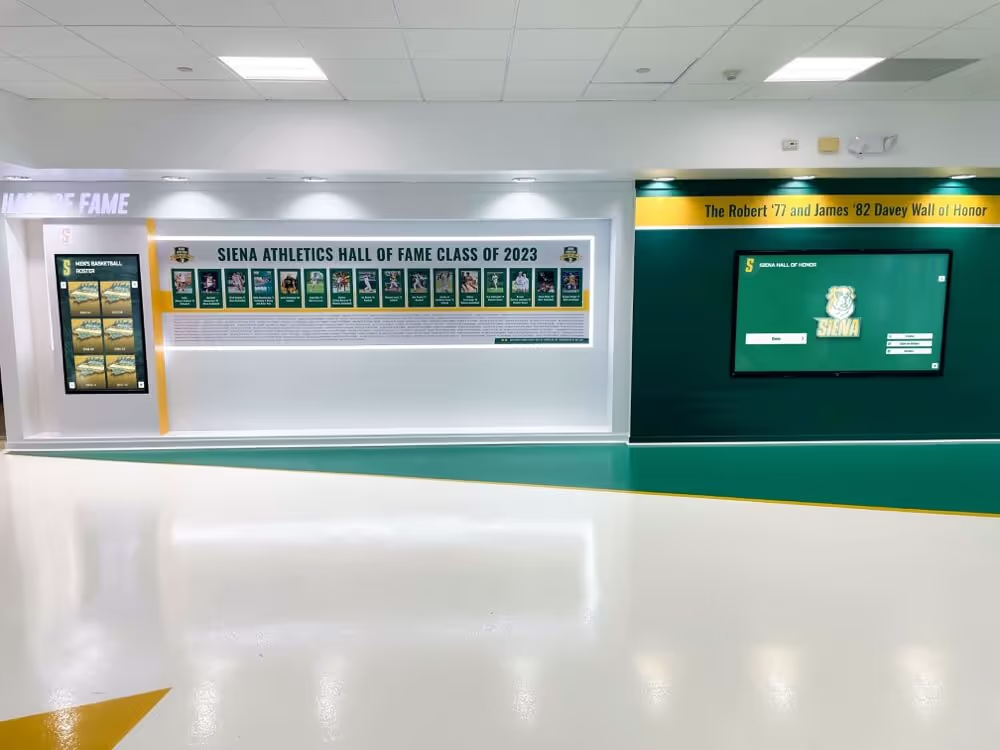
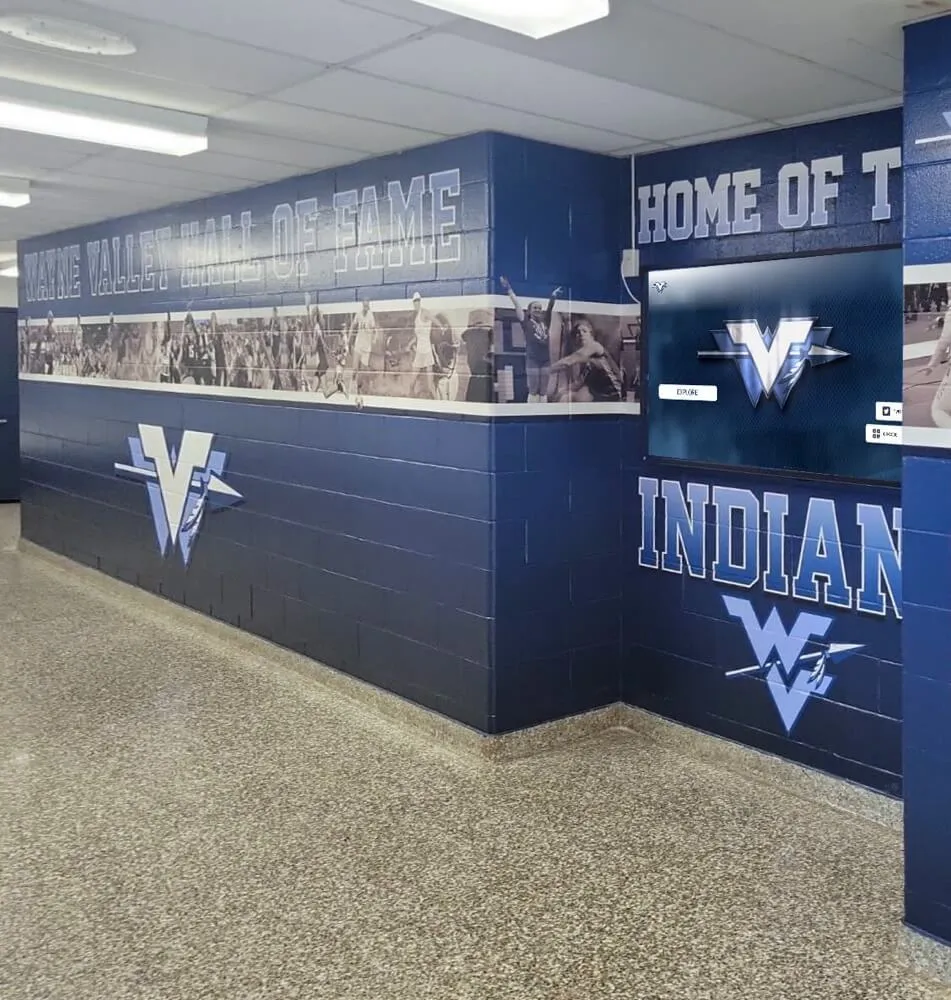
Combining digital displays with traditional elements creates recognition systems balancing technology capabilities with timeless gravitas
Interactive Features and User Experience Design
For touchscreen donor walls, interaction design determines whether sophisticated capabilities actually get used or remain undiscovered.
Navigation Patterns and Interaction Models
Visitors arrive at donor walls with interaction expectations shaped by smartphones and other touchscreen experiences. Meeting those expectations reduces learning curves.
Familiar Touch Gestures
Standard gestures visitors already know include:
- Tap for selection and navigation
- Swipe for scrolling and paging through content
- Pinch-to-zoom when examining detailed content
- Drag for repositioning maps or timelines
Introducing novel gesture requirements creates friction and abandonment. Stick with conventions visitors already understand.
Clear Navigation Affordances
Interface elements should clearly signal their interactive nature through:
- Button styling that looks pressable
- Hover states confirming touch targets (for displays supporting hover)
- Active visual feedback when elements are touched
- Conventional icons for common actions (search, filter, home, back)
- Consistent positioning for navigation controls
Visitors shouldn’t need to guess what’s tappable or how to navigate between screens. Obvious affordances enable confident exploration.
Search and Discovery Features
Large donor databases benefit from multiple pathways helping visitors find relevant content.
Donor Search Functionality
Robust search enables visitors to find themselves or specific individuals by name, class year or affiliation, giving level or campaign, and designation or funding priority.
Search is particularly valuable for alumni events when visiting graduates want to find classmates among donors, families exploring whether their gifts are properly recognized, or advancement staff using displays during tours to showcase specific donor stories.
Smart Filtering and Facets
Beyond search, filtering helps visitors explore donor communities through lenses like campaign or initiative supported, time period or gift date, giving level ranges, donor types (individual, family, organization), and geographic location when relevant.
Multiple simultaneous filters enable specific exploration (“show me all donors from 1990s graduating classes who supported athletics at major gift levels”).
Featured Content and Curation
While comprehensive databases provide access to all donors, curated featured content highlights specific stories for broader audiences. Featured content might include donor of the month or season spotlights, major milestone gifts, multi-generational family philanthropy stories, and impact stories connecting gifts to visible outcomes.
This curation ensures casual visitors encounter compelling narratives even when they don’t actively search the full database.
Explore how digital recognition walls support both discovery and directed search for different visitor needs.
Content Depth and Engagement Pathways
Interactive displays support layered content moving from overview to detail based on visitor interest.
Three-Tier Information Architecture
Effective donor walls typically organize content in progressive layers:
- Overview/Browse Level - High-level navigation, featured content, campaign summaries
- List/Category Level - Donor lists by giving level, campaign participants, filtered results
- Detail Level - Individual donor profiles, specific impact stories, campaign details
This structure allows casual visitors to engage superficially while enabling interested users to dive deep into specific content that resonates with them.
Related Content Connections
Within detail screens, connections to related content extend engagement through links to campaign information for donors’ specific gifts, similar donors or giving levels, impact stories connected to supported programs, and historical context when relevant.
These connections create exploration pathways beyond simple hierarchical navigation.
Technical Implementation and Content Management
Design concepts must translate into functional systems advancement staff can actually operate.
Content Management System Requirements
Beautiful donor wall designs fail when updating content requires developer assistance for routine changes.
User-Friendly Administrative Interfaces
Advancement staff managing donor recognition need systems enabling them to add new donors to appropriate giving levels, update campaign totals and progress metrics, change featured content highlighting specific donors or stories, modify recognition hierarchies when giving levels change, and upload photos or biographical content.
These capabilities should work through intuitive web-based interfaces requiring no technical expertise, not database queries or code editing.
Template-Based Content Entry
Rather than designing each donor entry from scratch, template systems provide consistent formats where staff simply fill in donor information following established fields and formats. Templates ensure professional consistency while enabling distributed content management across advancement teams.
Preview and Approval Workflows
Before donor recognition goes live, content should be reviewable in context through preview modes showing how new content will appear, approval checkpoints for major changes, version control allowing rollback if needed, and staging environments for testing updates.
These workflows prevent embarrassing errors in public-facing donor recognition.
Integration with Donor Databases
Manual duplication of donor data between advancement databases and recognition displays creates ongoing maintenance burdens and risks of inconsistency.
Data Integration Approaches
Depending on institutional systems, integration might involve:
- Direct database connections syncing donor data automatically
- Scheduled data imports refreshing recognition content nightly or weekly
- API integrations exchanging data between systems
- Manual export/import processes for institutions without integration capabilities
Automated approaches reduce staff workload and ensure recognition stays current with gift processing systems.
Privacy and Display Policies
Not all donors want public recognition. Integration systems should respect donor preferences for anonymity or specific recognition names, privacy settings determining which biographical information displays, opt-in requirements for photographs or detailed profiles, and special handling for sensitive gift situations.
These policies should be configurable without developer intervention as institutional practices evolve.
Performance and Reliability Considerations
Donor walls in public spaces must operate reliably without constant IT attention.
System Reliability
Recognition displays should include automatic recovery from power interruptions, scheduled reboots clearing memory issues, monitoring and alerting for technical failures, and redundancy for critical hardware components when appropriate.
Donor walls that frequently display error messages or require manual restarts create negative impressions and staff frustration.
Content Performance Optimization
Large donor databases with rich media require performance optimization including image compression and appropriate resolution, content caching reducing load times, progressive loading for large datasets, and responsive behavior even with poor network connectivity.
Visitors won’t wait 30 seconds for donor profiles to load. Performance must feel immediate even with extensive content libraries.
Designing for Stewardship Impact Beyond Installation
The most strategic donor wall designs support ongoing relationship cultivation beyond initial installation.
Seasonal and Event-Based Content Updates
Donor walls shouldn’t remain static after launch. Regular content refreshes maintain relevance and engagement.
Campaign Milestone Celebrations
As campaigns progress, recognition can celebrate achievement of dollar goals, participation benchmarks, or donor count milestones through special featured content, visual celebrations of milestones, and updated progress visualizations.
These updates keep recognition feeling current while reinforcing campaign momentum.
Seasonal Donor Spotlights
Rotating featured content highlighting specific donors or stories creates reasons for repeat engagement including monthly or quarterly donor features, anniversary recognition for legacy gifts, seasonal thematic connections, and homecoming or reunion tie-ins for educational institutions.
This rotation gives advancement staff tools for ongoing donor relationship touches when featured supporters receive notification of their spotlight.
Event Integration
During cultivation events, donor walls support advancement goals through pre-event content highlighting attendees, interactive elements for event activities or games, real-time display of event giving commitments, and post-event recognition celebrating event outcomes.
This flexibility makes donor walls active tools rather than passive background installations.
Analytics and Engagement Measurement
Understanding how visitors interact with donor walls informs content and design refinement.
Interaction Tracking
Modern donor wall systems can track which content gets explored most frequently, search terms visitors use, navigation paths through content, and session durations indicating engagement depth.
This data reveals which donor stories resonate, what navigation patterns visitors follow, where users abandon interaction, and whether featured content drives deeper exploration.
Continuous Improvement Based on Data
Analytics inform decisions about content to feature more prominently, navigation improvements based on observed user behavior, search enhancements addressing common queries, and content gaps where visitors seek information not currently available.
This iterative improvement ensures donor walls remain effective rather than becoming static installations that lose relevance over time.
See how institutions measure donor recognition display effectiveness to support ongoing stewardship strategies.
Common Design Mistakes to Avoid
Learning from frequent failures helps organizations make better decisions.
Information Overload and Visual Clutter
The most common donor wall design failure involves trying to show everything simultaneously. This creates overwhelming presentations where nothing stands out, unreadable text sized too small to fit excessive content, cognitive overload preventing visitors from processing information, and abandonment because entry points aren’t clear.
Better approaches embrace progressive disclosure, strategic emphasis through hierarchy, and generous white space supporting readability.
Neglecting the Passive Viewing Experience
Many donor wall designs optimize exclusively for active interaction while ignoring that most visitors experience displays passively while walking past rather than stopping to engage.
Effective designs work at multiple engagement levels including compelling attract loops for passive viewing, clear visual impact from typical walking distances, featured content visible without interaction, and invitations to deeper engagement for interested visitors.
Recognition displays invisible or meaningless to non-interactive viewers waste their environmental presence.
Inflexible Frameworks Requiring Redesign
Donor walls designed around specific campaign parameters break when campaigns exceed projections or institutions launch new initiatives.
Fixed designs hardcoded for exactly 200 donors fail at 201. Visual layouts optimized for three giving levels collapse when campaigns add additional tiers. Campaign-specific content frameworks cannot accommodate subsequent initiatives without complete redesign.
Scalable, flexible frameworks accommodate growth and change without requiring reinstallation or development projects for expansion.
Generic Content and Missed Storytelling
The worst donor recognition simply converts spreadsheets into digital displays—names, amounts, giving levels in endless lists. This approach ignores storytelling opportunities digital recognition enables.
Meaningful recognition includes donor motivations and connections, impact narratives connecting gifts to outcomes, institutional context explaining campaign importance, human elements creating emotional resonance, and community framing celebrating collective achievement.
Numbers and names alone create transactional rather than relational recognition.
Integration with Broader Recognition Ecosystems
Donor walls rarely exist in isolation. Design should coordinate with other recognition and communication channels.
Physical and Digital Recognition Coordination
Many institutions maintain both traditional plaques and digital displays. Coordination prevents confusion and creates coherent recognition strategies.
Thoughtful integration uses digital displays for comprehensive growing databases while traditional plaques recognize major naming gifts, consistent giving level terminology across recognition channels, coordinated visual design languages, and mutual referencing where appropriate (traditional plaques noting “see digital display for complete donor list”).
This coordination creates unified recognition programs rather than competing parallel systems.
Website and Mobile Extensions
Donor recognition increasingly extends beyond physical installations to digital channels.
Online Donor Directories
Many institutions publish donor recognition on websites using similar visual design and content from physical displays, search and filtering capabilities matching on-site installations, privacy controls allowing donors to manage their online presence, and links connecting physical and digital recognition.
This extension increases recognition visibility beyond those who physically visit facilities.
Mobile Companion Experiences
Some institutions develop mobile apps or responsive websites enabling visitors to explore donor content on personal devices, save favorite donor stories or bookmark content, share recognition on social media with appropriate permissions, and access content outside visiting hours.
Mobile extensions are particularly valuable during events when attendees want to explore recognition casually without clustering around single shared displays.
Learn about digital donor recognition walls that integrate physical and digital recognition strategies.
Working with Designers and Vendors
Successful donor wall projects result from productive collaboration between institutional stakeholders and design/technical partners.
Defining Project Scope and Requirements
Clear requirements at project outset prevent misalignment and disappointment.
Functional Requirements Documentation
Before engaging designers, clarify essential needs including donor database size and expected growth, giving level hierarchies and recognition policies, content types beyond names (photos, bios, impact stories), interactive features required versus nice-to-have, and integration needs with existing donor management systems.
Vague requirements like “we want a donor wall” produce generic solutions rather than installations serving specific institutional contexts.
Success Criteria and Measurement
Define how you’ll evaluate whether donor recognition succeeds beyond “looks nice.” Criteria might include advancement staff can update content without vendor assistance within 30 minutes, 80% of visitors understand how to interact within 10 seconds, donor surveys indicate recognition feels personal and meaningful, and system operates reliably with 99%+ uptime requiring minimal IT support.
Measurable criteria enable accountability and inform iterative improvements.
Evaluating Design Proposals
Not all donor wall vendors offer equivalent capabilities or approaches. Evaluation should assess:
Design Quality and Institutional Fit
Portfolio examples demonstrating appropriate aesthetic sensibility, understanding of donor recognition versus general digital signage, and alignment with institutional brand and culture.
Technical Capabilities and Flexibility
Content management systems enabling staff updates, scalability accommodating growth, integration possibilities with existing systems, and proven reliability and support.
Strategic Understanding
Vendors who ask about donor relationship goals, stewardship strategies, campaign contexts, and advancement team workflows versus those focused purely on hardware specifications demonstrate more strategic orientation.
The cheapest hardware proposal often delivers the least strategic value when content management, design quality, and long-term flexibility suffer.
Bringing Digital Donor Wall Design Together
Effective digital donor wall design synthesizes multiple disciplines—user experience design, information architecture, visual design, donor stewardship strategy, and technical implementation—in service of recognition that genuinely honors supporters while serving institutional advancement goals.
The best donor walls feel effortless to visitors while representing careful attention to content organization, interaction design, visual hierarchy, accessibility, and scalability. They tell compelling stories about institutional impact and philanthropic community while maintaining individual donor dignity and appropriate recognition differentiation. They provide advancement teams with flexible tools enabling ongoing content updates and stewardship touches rather than static monuments requiring complete redesign when needs change.
Most importantly, they transform donor recognition from obligatory acknowledgment into strategic engagement opportunities that strengthen relationships, inspire continued giving, and build philanthropic culture throughout institutional communities.
Organizations ready to move beyond generic name lists toward recognition experiences that create genuine stewardship value should invest time in thoughtful design planning before purchasing hardware, engage advancement teams and donor communities in defining recognition priorities, select technology partners who demonstrate strategic understanding beyond hardware sales, and build flexible frameworks anticipating growth and change rather than optimizing only for current requirements.
Create Donor Recognition That Strengthens Relationships
Rocket Alumni Solutions provides comprehensive digital donor wall solutions combining sophisticated interactive technology with intuitive content management systems advancement teams actually use. Our recognition platforms enable unlimited donor capacity, rich multimedia storytelling, multiple simultaneous campaign recognition, and ongoing content updates without vendor dependency.
Whether you’re planning your first digital donor wall or replacing outdated recognition technology, our team helps you design recognition experiences that honor supporters meaningfully while serving strategic advancement goals.