Intent: Decide — When high schools invest $15,000-$50,000 in digital hall of fame systems, they need confident answers about technology choices, vendor capabilities, budget requirements, and implementation approaches that ensure recognition programs serve students and communities for decades. This buying guide provides the comprehensive framework athletic directors, principals, and decision-makers need to evaluate options, avoid costly mistakes, and select solutions that honor achievements appropriately while remaining sustainable long-term.
Traditional trophy cases and brass plaques served schools well for generations, but they inevitably fill up, require expensive updates for every addition, limit recognition to those whose names physically fit, and offer no storytelling capability beyond static text. Meanwhile, student athletes and academic achievers whose accomplishments deserve celebration go unrecognized because wall space ran out years ago, or their sports don’t have prominent trophy case visibility.
Digital hall of fame systems solve these challenges by providing unlimited recognition capacity, instant content updates without physical changes, rich multimedia storytelling with photos and videos, searchable interfaces enabling easy discovery, and flexibility accommodating all programs and achievement types equally. When implemented thoughtfully, these systems transform recognition from space-constrained acknowledgment to comprehensive celebration that inspires current students while honoring alumni across generations.
This comprehensive buying guide walks through every decision high schools face when selecting and implementing digital hall of fame systems including technology and hardware considerations, content management platform capabilities, vendor evaluation criteria, budget and total cost of ownership analysis, implementation best practices, and long-term success factors ensuring your investment serves your school community for decades.
Whether you’re exploring digital recognition for the first time, replacing aging systems, or evaluating vendors after disappointing initial experiences, this guide provides the framework for confident decision-making that results in recognition programs your school will be proud to showcase.

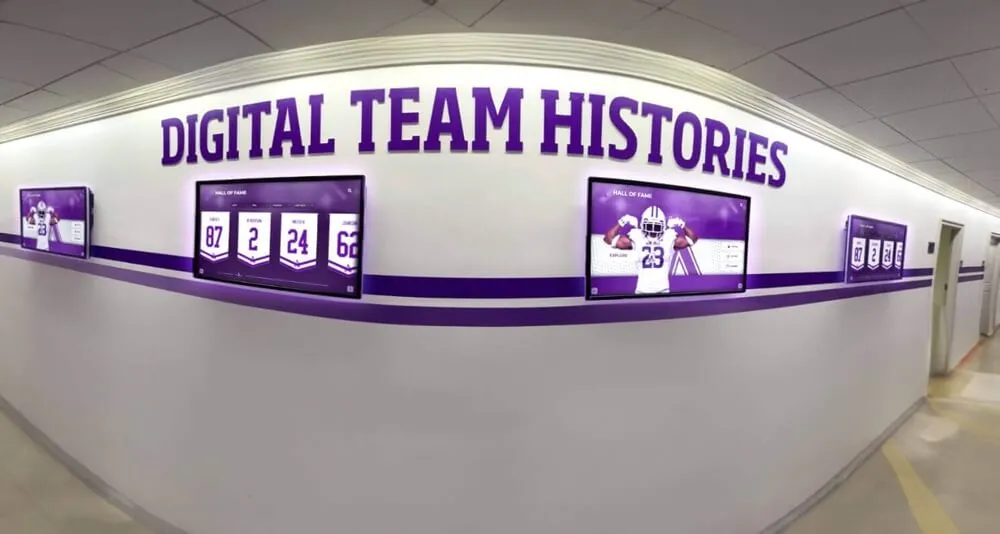
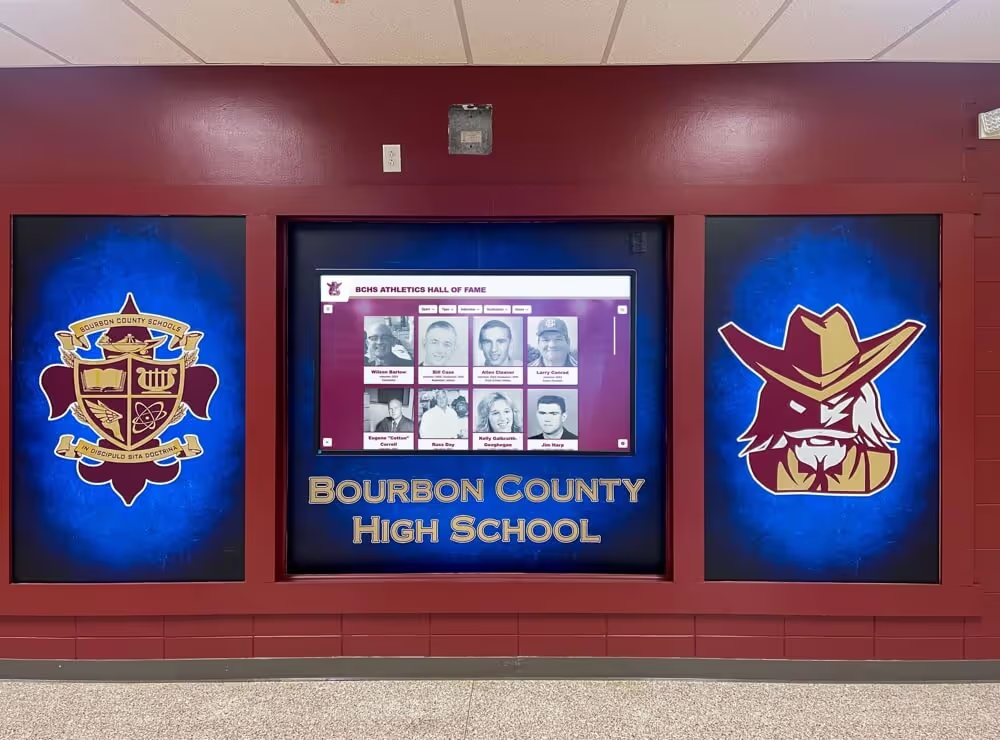
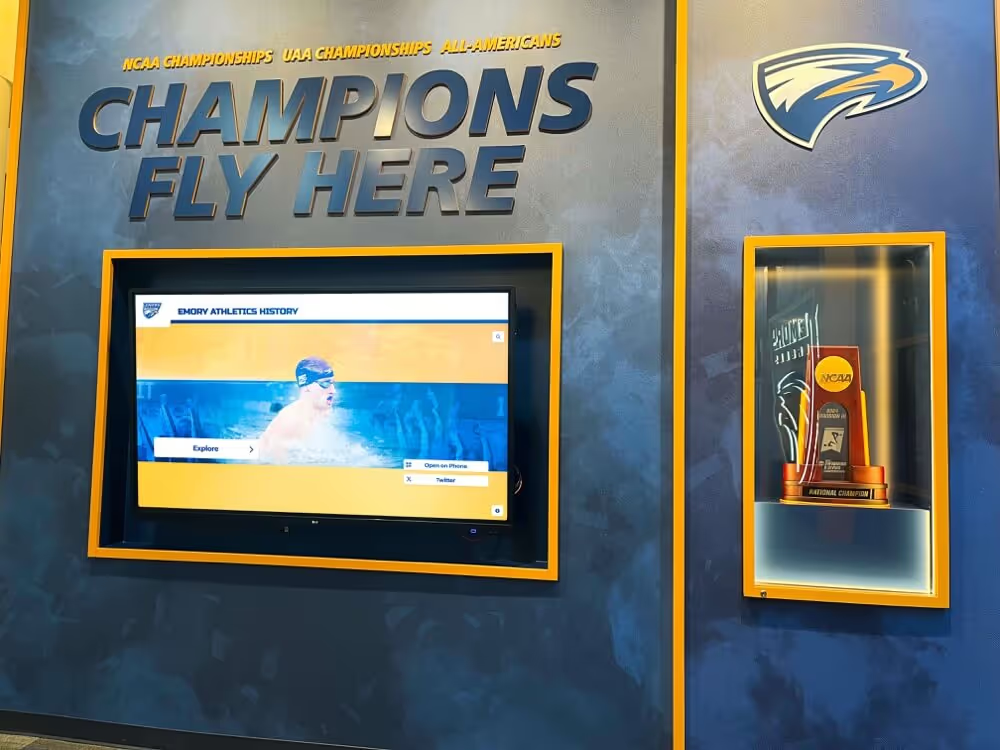
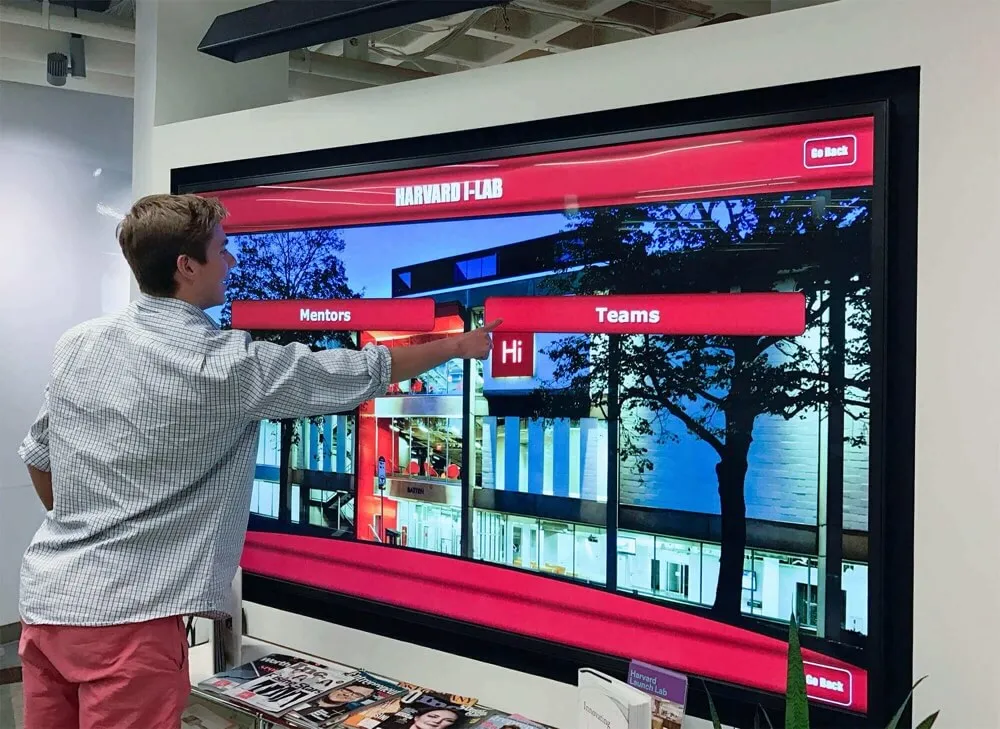
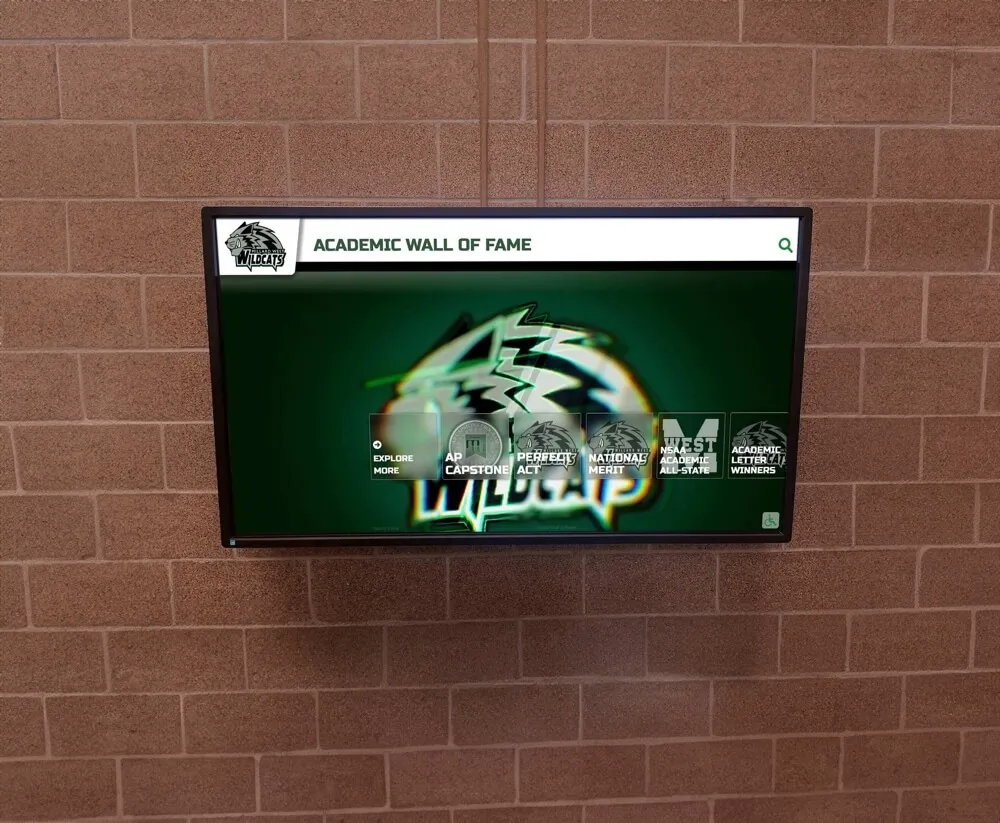
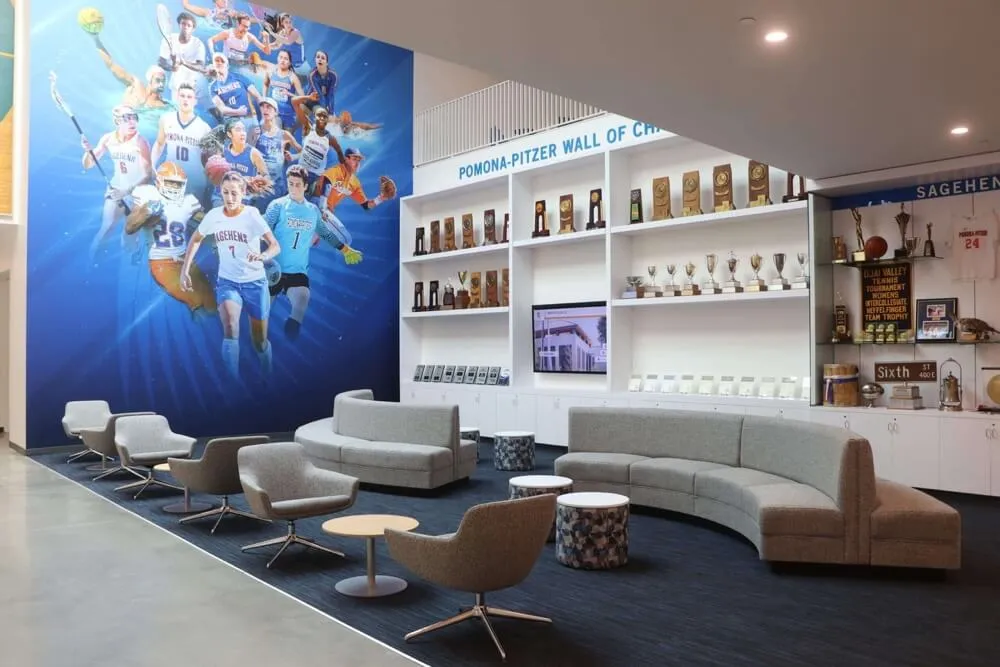
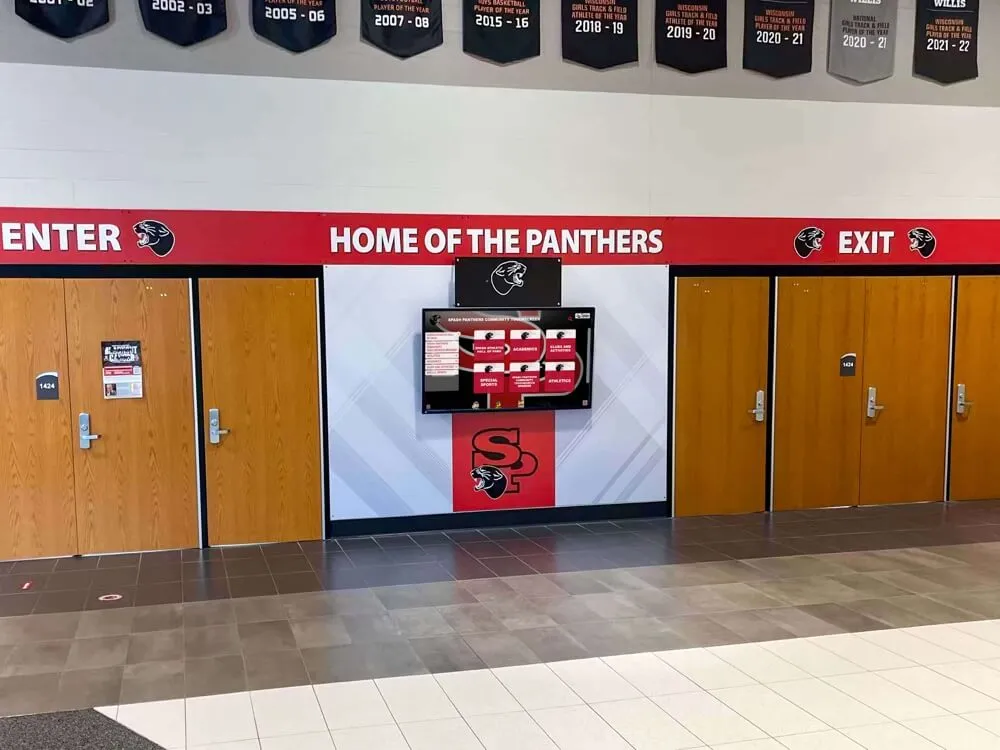
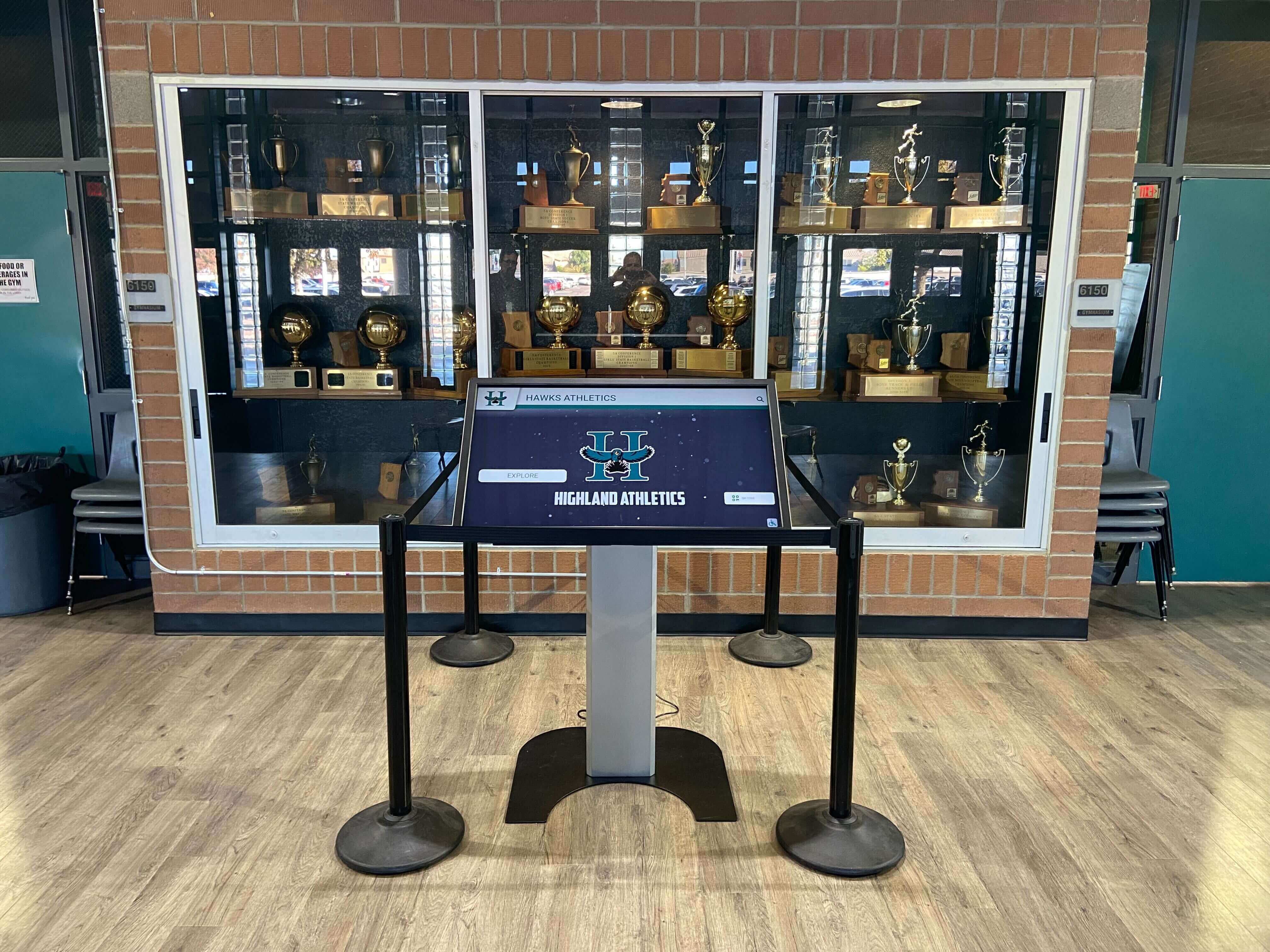
Modern digital hall of fame systems integrate seamlessly with existing trophy displays while providing unlimited recognition capacity
Understanding Digital Hall of Fame Systems: Core Components and Capabilities
Before evaluating specific products or vendors, understanding what digital hall of fame systems actually comprise helps schools identify requirements and assess options accurately.
Essential System Components
Digital recognition systems combine multiple technology elements working together:
Display Hardware
The physical screens visitors interact with represent the most visible component including commercial-grade touchscreen displays rated for continuous operation, protective enclosures or kiosks housing electronics securely, mounting systems integrating displays into walls, trophy cases, or freestanding installations, and media players or computers running content management software.
Commercial displays differ fundamentally from consumer TVs, featuring components rated for 16-24 hour daily operation rather than occasional home use. Schools purchasing consumer displays often experience failures within 1-2 years, requiring expensive replacements that undermine total cost calculations.
Content Management Platform
The software enabling content updates separates professional systems from basic slideshow approaches including cloud-based platforms accessible from any internet-connected device, intuitive administrative interfaces requiring no technical expertise, template systems ensuring consistent, professional appearance, multimedia support for photos, videos, statistics, and biographical information, search and filtering functionality enabling visitor exploration, and mobile-responsive web extensions reaching audiences beyond physical displays.
Content management capabilities determine whether your recognition system remains current and engaging over decades or becomes static and outdated within years. Prioritize platforms designed specifically for recognition rather than repurposed digital signage software lacking appropriate features.
Network Infrastructure
Reliable internet connectivity enables cloud-based management and content updates including hardwired ethernet connections providing optimal reliability, robust WiFi networks meeting bandwidth requirements, network security configurations enabling access while protecting school systems, and backup connectivity options ensuring displays function during network interruptions.
Schools sometimes discover after installation that network access requires IT department approval processes taking months, delaying go-live timelines significantly. Address connectivity requirements early in planning phases.
Data and Content
The information populating your recognition system represents substantial implementation investment including historical research gathering athlete and student achievement data, photography sourcing or creation for profiles and achievements, statistics compilation across multiple sports and programs, biographical information and story collection, and organizational frameworks determining how content is structured and presented.
Many schools underestimate content development effort, discovering that technical implementation represents only 40-50% of total project work while content research and creation consumes the remainder.
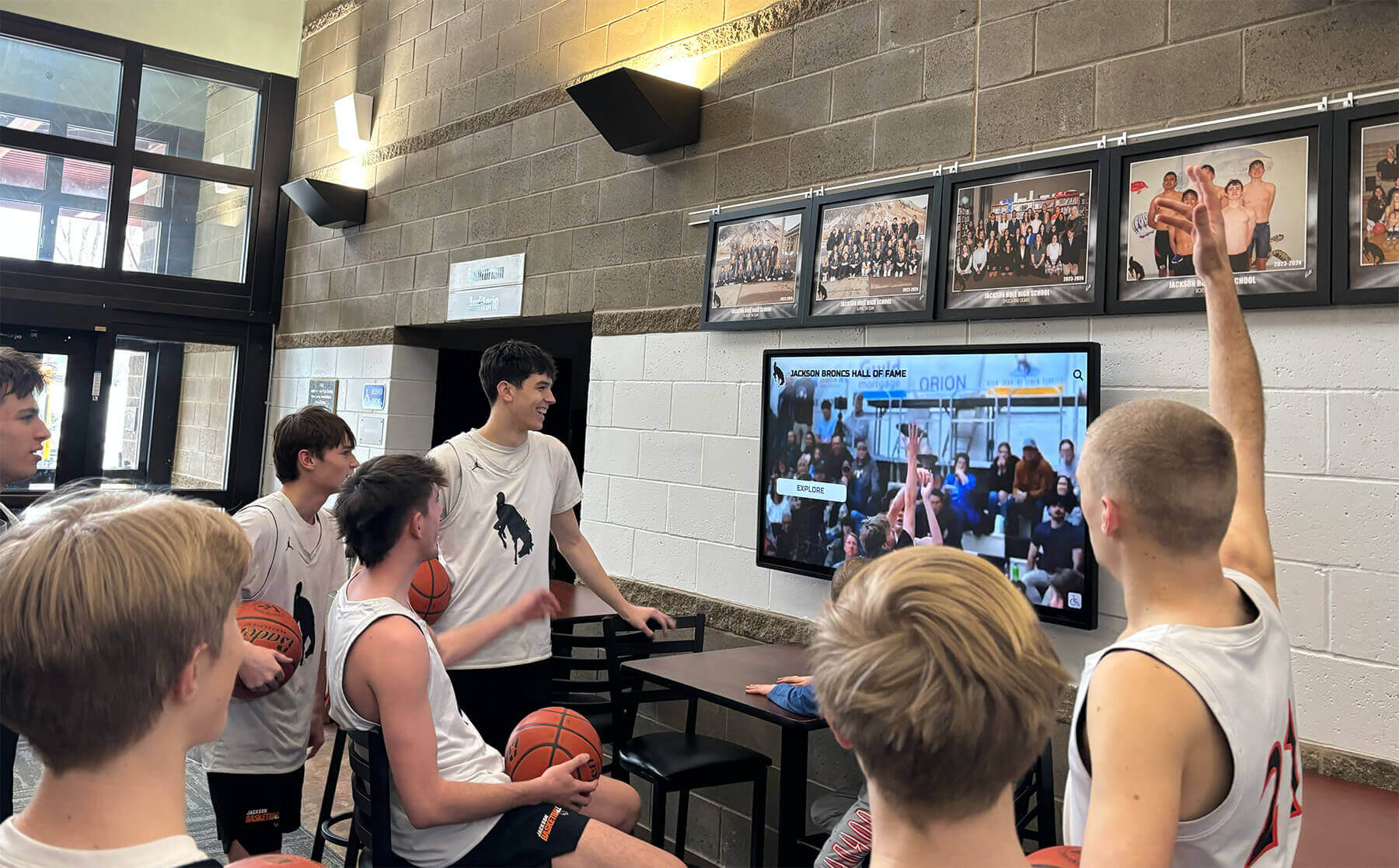
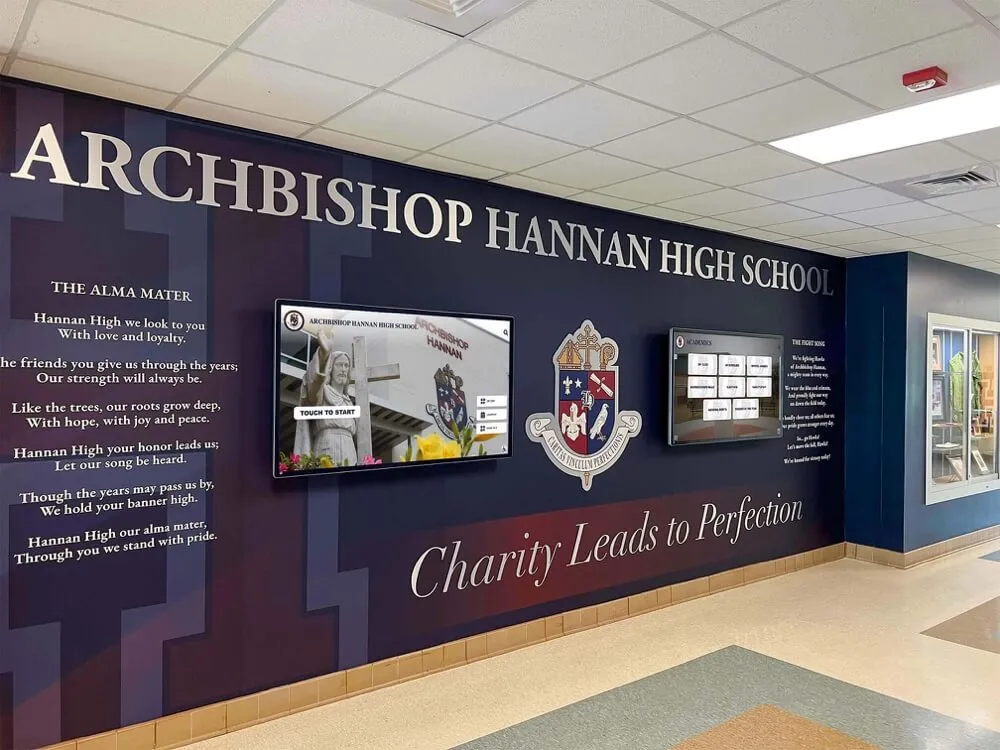
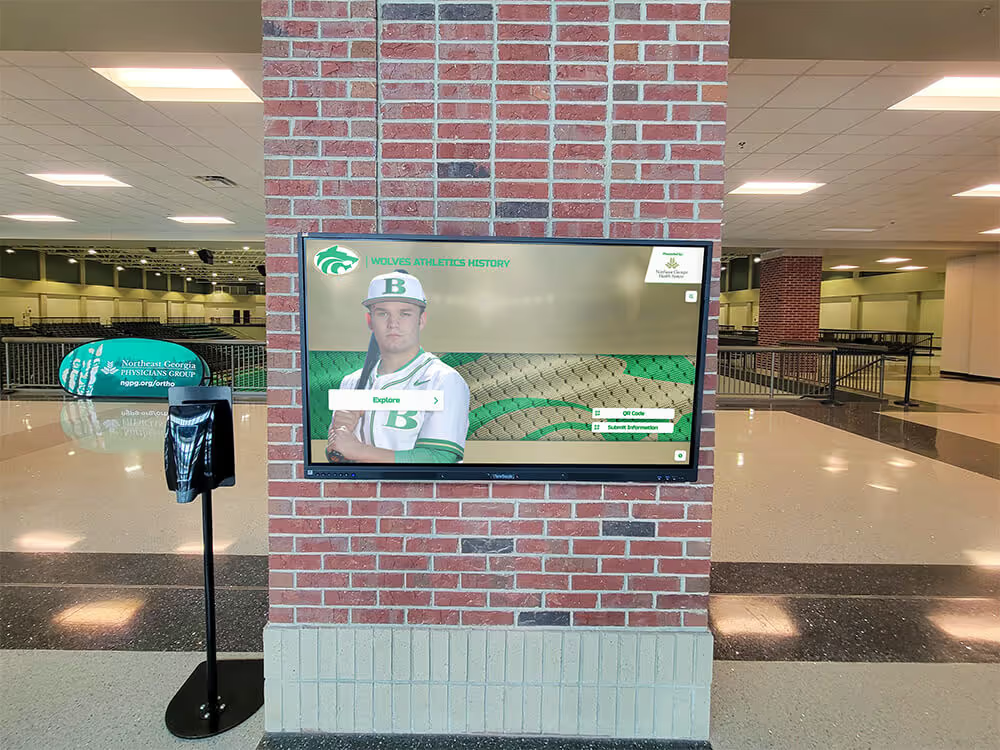
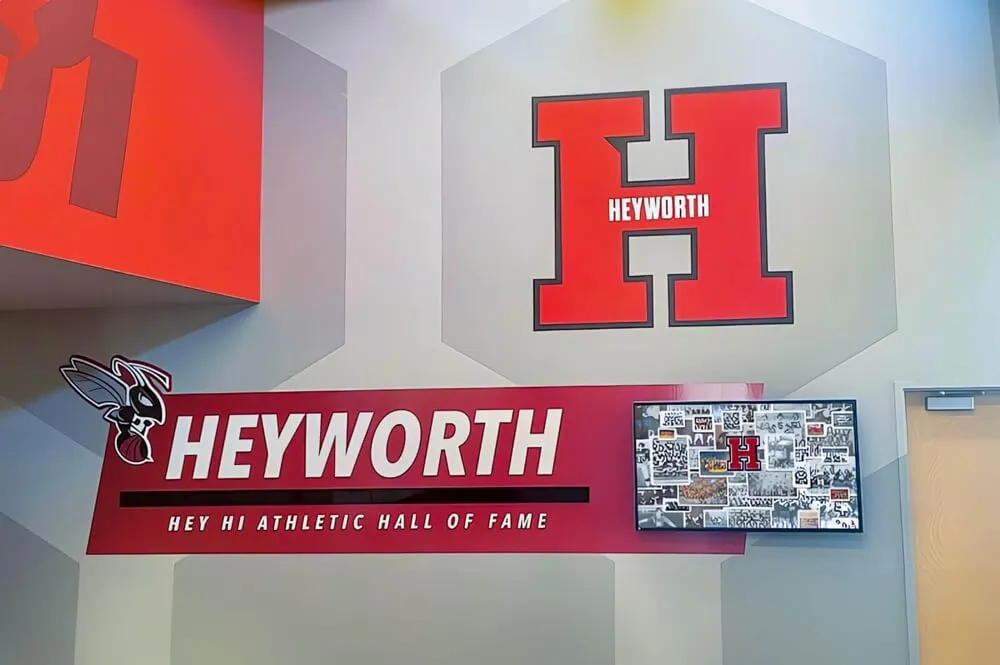
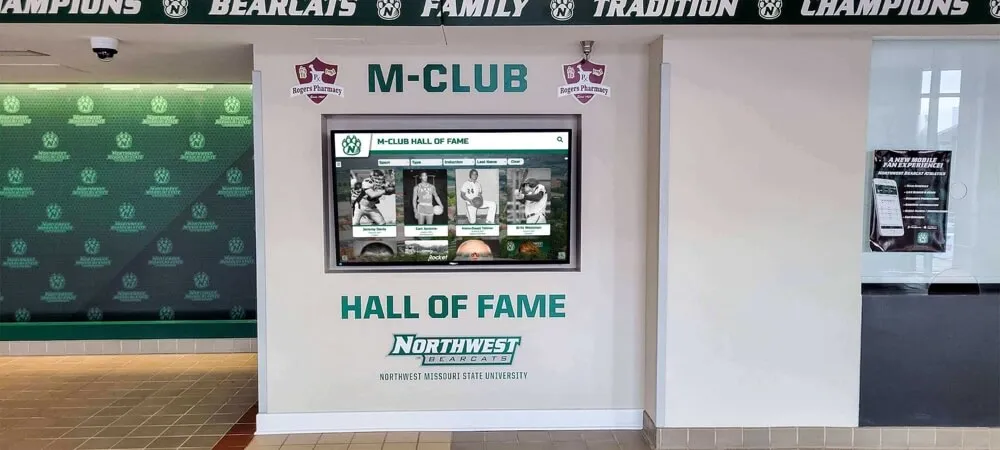
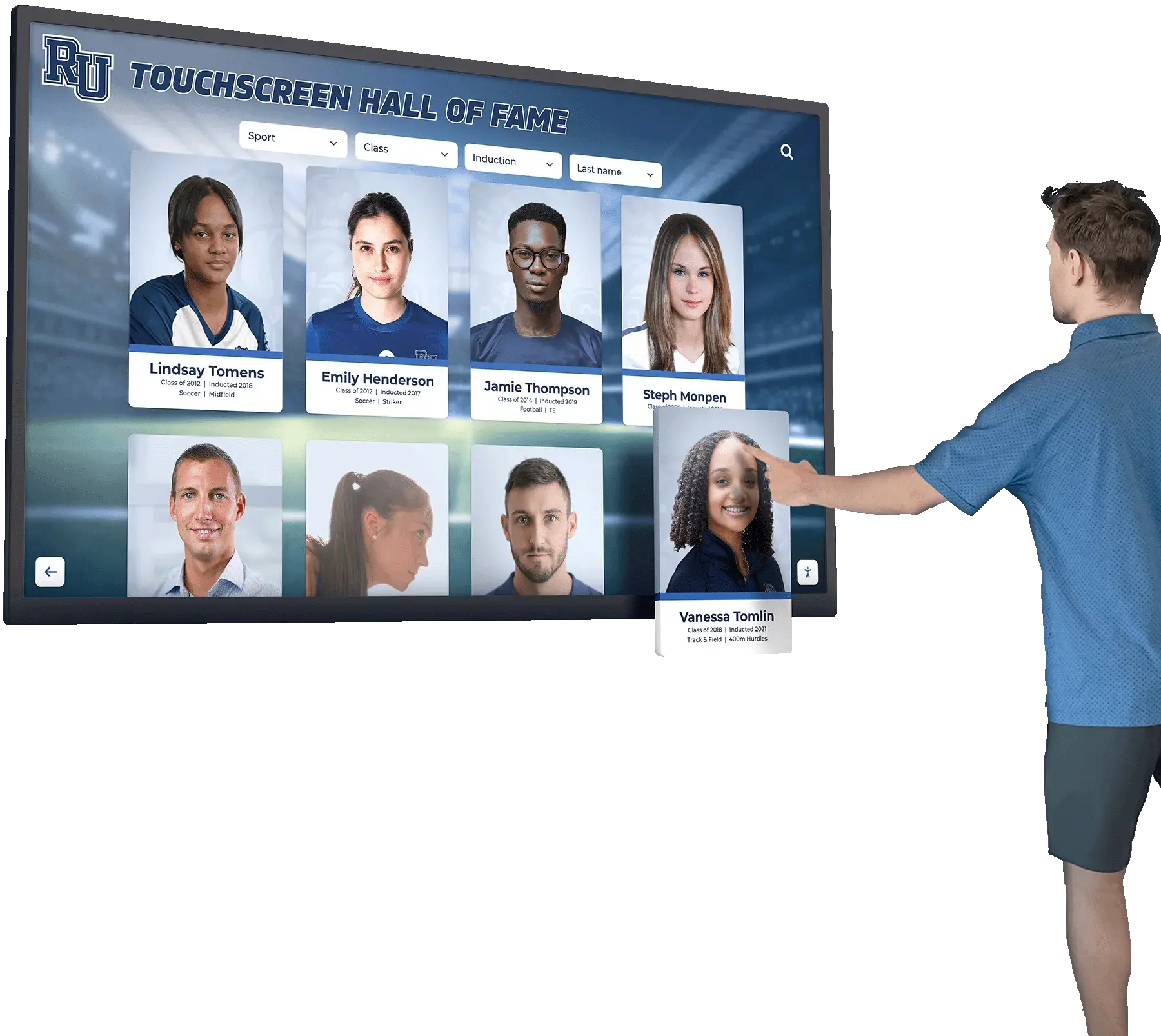
Engaging digital displays capture student attention and create pride in school athletic and academic traditions
Key Capability Categories
Understanding what digital hall of fame systems can accomplish helps schools define requirements:
Unlimited Recognition Capacity
Digital platforms eliminate space constraints that limit traditional recognition through profiles for unlimited athletes and students across all programs, comprehensive team histories spanning decades without physical space consumption, record boards tracking achievements across multiple sports and categories, and searchable databases enabling instant discovery of any individual regardless of how many others are recognized.
This unlimited capacity ensures recognition equity across programs, preventing situations where high-profile sports receive prominent trophy case placement while other programs go unacknowledged due to space limitations.
Rich Multimedia Storytelling
Digital systems enable recognition extending far beyond names and statistics including athlete photographs and action shots, video highlight reels and interviews, complete statistics and career accomplishments, biographical narratives and personal stories, team photos and seasonal documentation, and championship moments and milestone celebrations.
According to research on digital recognition effectiveness, multimedia storytelling increases visitor engagement by 300-400% compared to text-only recognition, creating meaningful connections between current students and athletic traditions.
Interactive Exploration and Discovery
Touchscreen interfaces transform passive viewing into active engagement through name search enabling family and alumni to find specific individuals, sport or program filtering showing achievements within categories, year-based browsing exploring historical timelines, record filtering highlighting top performances across metrics, and random featured profiles ensuring all recognized individuals receive visibility.
This interactivity encourages extended engagement with recognition content, with average visitor session times of 3-5 minutes versus 10-20 seconds for traditional static displays.
Real-Time Updates and Flexibility
Cloud-based management enables instant content updates without physical intervention including adding new inductees or achievement recognition immediately after ceremonies, updating records as they’re broken throughout seasons, correcting errors or updating information as needed, scheduling content to publish at specific times or events, and refreshing featured content maintaining engagement over time.
Schools implementing touchscreen software platforms report 90% reduction in administrative time maintaining recognition compared to traditional approaches requiring physical plaque orders, engraving, and installation for every update.
Web Integration and Reach Extension
Modern recognition platforms extend beyond physical displays to online accessibility including web-based versions accessible from anywhere, mobile-responsive design ensuring smartphone compatibility, social sharing enabling recognition celebration across networks, integration with school websites and communications, and analytics tracking engagement and popular content.
Web accessibility particularly benefits alumni communities, enabling graduates to explore recognition and share achievements with family and friends regardless of geographic distance from campus.
Defining Your School’s Requirements: Critical Questions Before Shopping
Thoughtful needs assessment prevents expensive mistakes and ensures selected solutions align with your school’s specific context and priorities.
Recognition Scope and Content Decisions
Who Will Be Recognized?
Determine recognition boundaries and eligibility including varsity athletes across all sports or selected programs only, academic achievement honorees and recognition criteria, hall of fame inductees selected through formal processes, record holders across various performance categories, team accomplishments and championship celebrations, and special recognition categories unique to your school traditions.
Comprehensive recognition across all programs creates equity and inclusion, but also requires more substantial content development investment. Schools sometimes begin with focused implementations (varsity athletics only, for example) with plans to expand scope over time as resources permit.
What Time Period Will Be Covered?
Historical depth significantly affects implementation scope including recent history covering past 5-10 years only, comprehensive archives extending back to school founding or athletics program establishment, phased approach beginning with recent years and adding historical content over time, or selective historical coverage highlighting significant eras, teams, or individuals.
Each additional decade of historical coverage typically adds 20-40 hours of content research and development time depending on available records and photography.
What Content Depth Is Appropriate?
Content detail varies significantly across implementations including basic profiles with names, years, and sports only, standard profiles adding statistics, accomplishments, and photographs, enhanced profiles incorporating biographical information and stories, multimedia additions including video highlights and interviews, or premium storytelling with extensive narrative content and documentation.
Content depth decisions affect both initial development investment and ongoing update effort. Many schools begin with standard profiles while developing enhanced content for hall of fame inductees or particularly notable achievements.
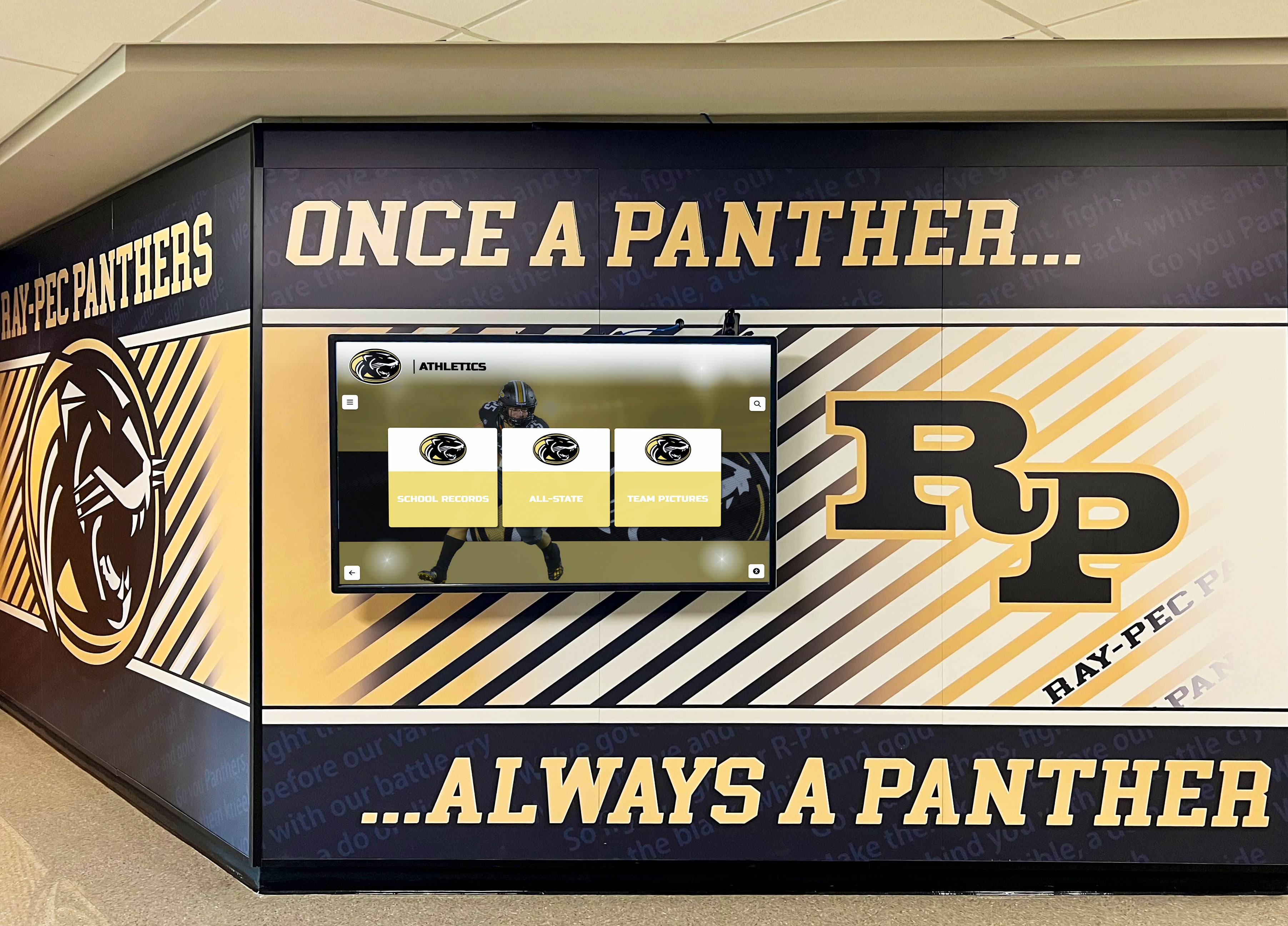
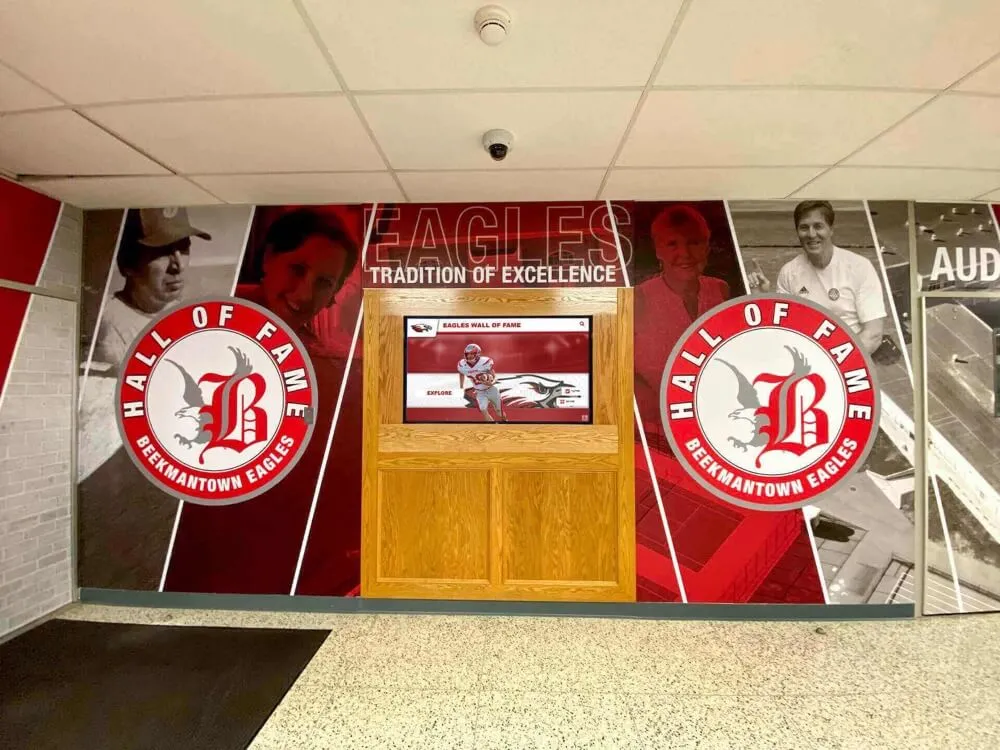
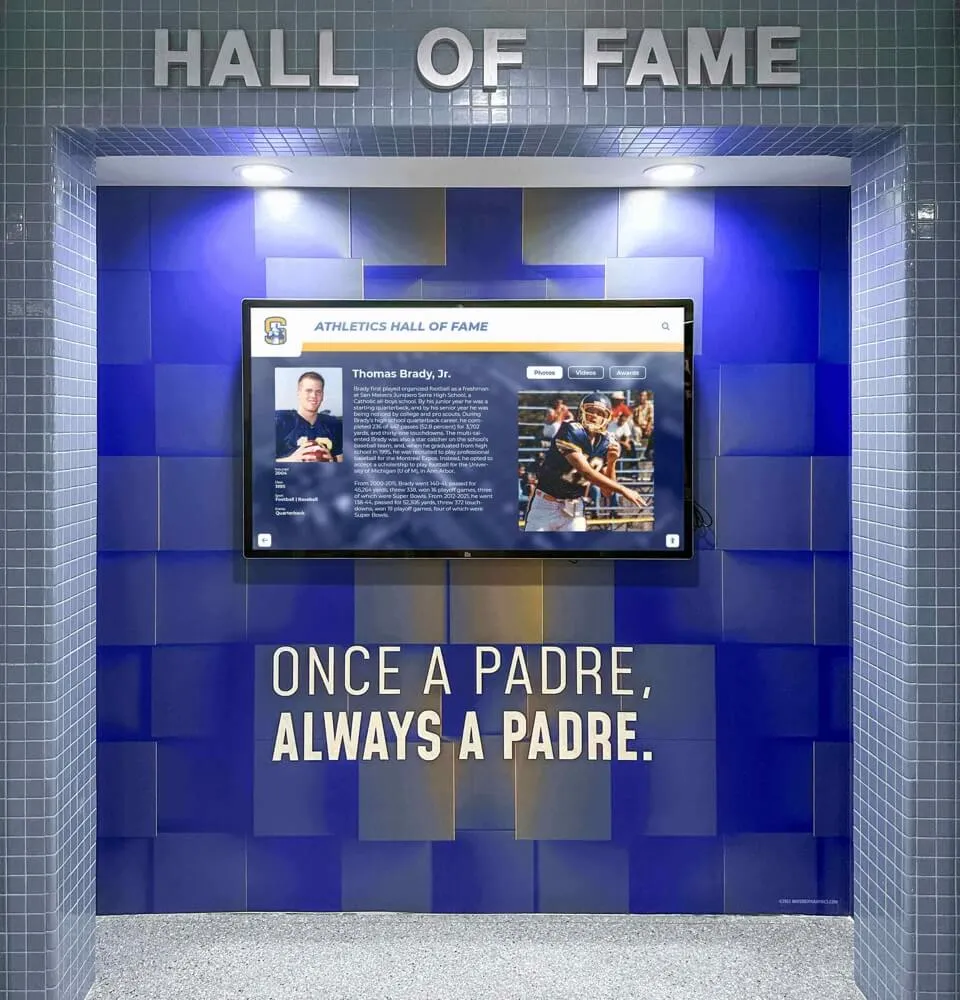
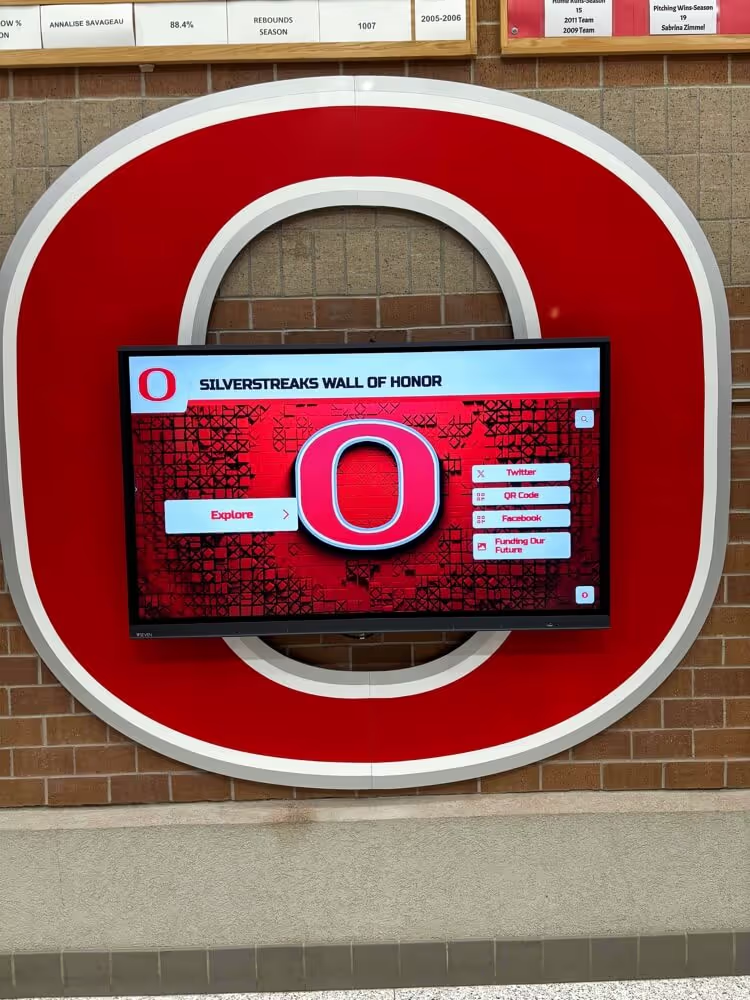
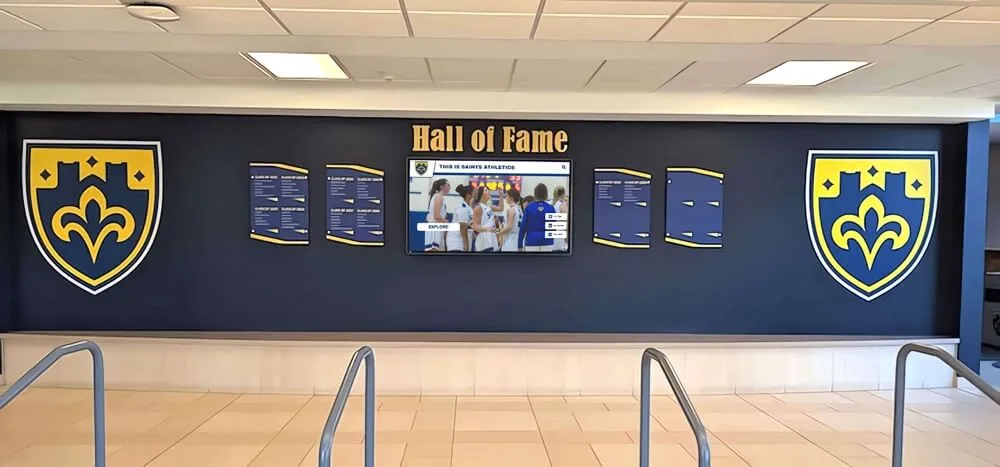
Digital displays integrate seamlessly with school aesthetics and existing recognition elements
Technical and Environmental Considerations
Where Will Displays Be Located?
Physical placement affects technology requirements including high-traffic lobbies and entries requiring durable, commercial-grade equipment, gymnasium or athletic building locations with temperature and acoustics considerations, trophy case integrations requiring specific sizing and mounting, multiple display locations requiring content management across installations, or outdoor or semi-outdoor locations demanding weather-resistant equipment.
Visit locations with tape measures, noting dimensions, lighting conditions, power outlet locations, network access points, ambient noise levels, and traffic patterns affecting display positioning and viewing angles.
What Technical Infrastructure Exists?
Assess current capabilities and requirements including network connectivity availability and bandwidth, power outlet locations and electrical capacity, IT department policies and approval processes, security requirements and access restrictions, and technical support availability for troubleshooting and maintenance.
Schools with restrictive IT policies sometimes discover their preferred solutions conflict with network security requirements, necessitating exceptions or alternative approaches that could have been addressed earlier with proper planning.
What Budget Is Realistic?
Establish comprehensive budget parameters including initial hardware and software acquisition costs, professional installation and setup expenses, content development investment requirements, training and change management resources, and ongoing subscription, maintenance, and update costs.
Many schools focus exclusively on initial acquisition costs while underestimating or ignoring ongoing expenses, leading to unsustainable implementations. Total cost of ownership over 5-7 years provides more accurate decision-making framework than initial purchase price alone.
Who Will Manage the System?
Identify responsible parties and resource availability including athletic department staff updating sports-specific content, school administrators managing overall program, technical staff handling troubleshooting and support, volunteer booster club members contributing research or updates, or external vendors providing full-service content management.
Solutions requiring specialized technical expertise prove unsustainable for schools lacking appropriate staff capabilities, leading to recognition systems that go stale within months of installation.
Technology Options: Hardware and Display Configurations
Digital hall of fame implementations vary significantly in scale, complexity, and cost depending on technology choices.
Display Format Options
Wall-Mounted Touchscreen Displays
Flat displays mounted to walls or integrated into existing trophy cases represent the most common implementation including single large-format displays (55"-85" typical), multiple coordinated displays creating video walls, displays integrated into architectural features or existing recognition areas, or displays combined with traditional plaques or trophies in hybrid approaches.
Wall-mounted displays offer clean aesthetics and efficient space utilization but require appropriate wall structure for secure mounting, accessible power and network connections, and consideration of viewing heights and angles for diverse audiences.
Freestanding Kiosk Configurations
Self-contained kiosks house displays in protective enclosures including slim profile kiosks minimizing floor space requirements, prominent architectural kiosks making bold statements, outdoor-rated kiosks for exterior or semi-exterior locations, or dual-sided kiosks serving traffic from multiple directions.
Freestanding configurations offer flexibility for locations lacking appropriate wall mounting surfaces and create prominent focal points, but require more floor space and typically cost $2,000-$6,000 more than wall-mounted alternatives.
Projection or LED Wall Installations
Large-scale implementations for dramatic impact including ultra-short-throw projector systems, modular LED tile walls creating seamless large displays, or transparent LED displays layered over trophy cases.
These premium options create stunning visual impact for schools with architectural emphasis on athletics facilities but require substantially higher investment ($30,000-$100,000+) and more complex installation and maintenance.
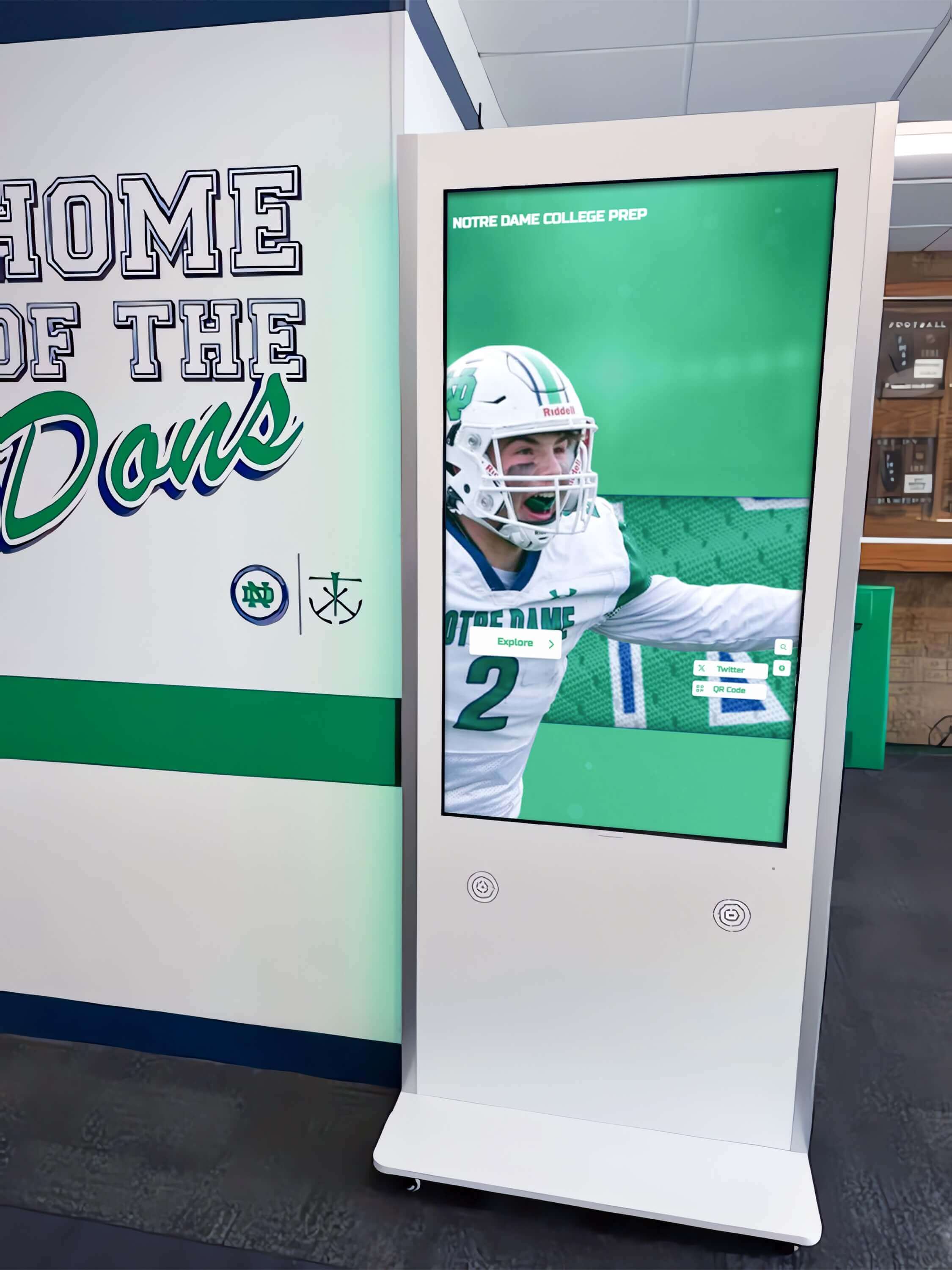
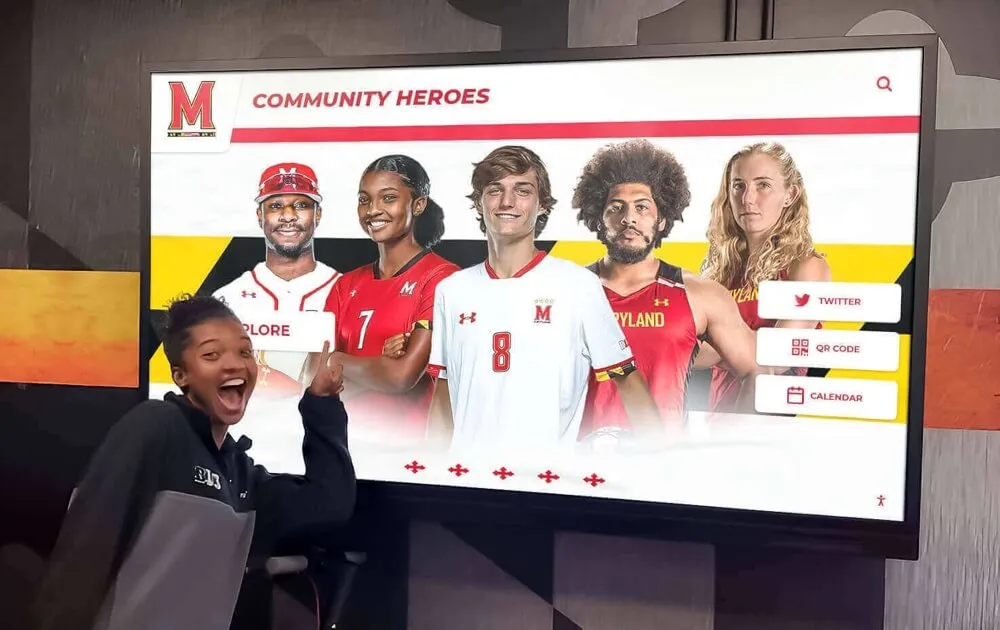
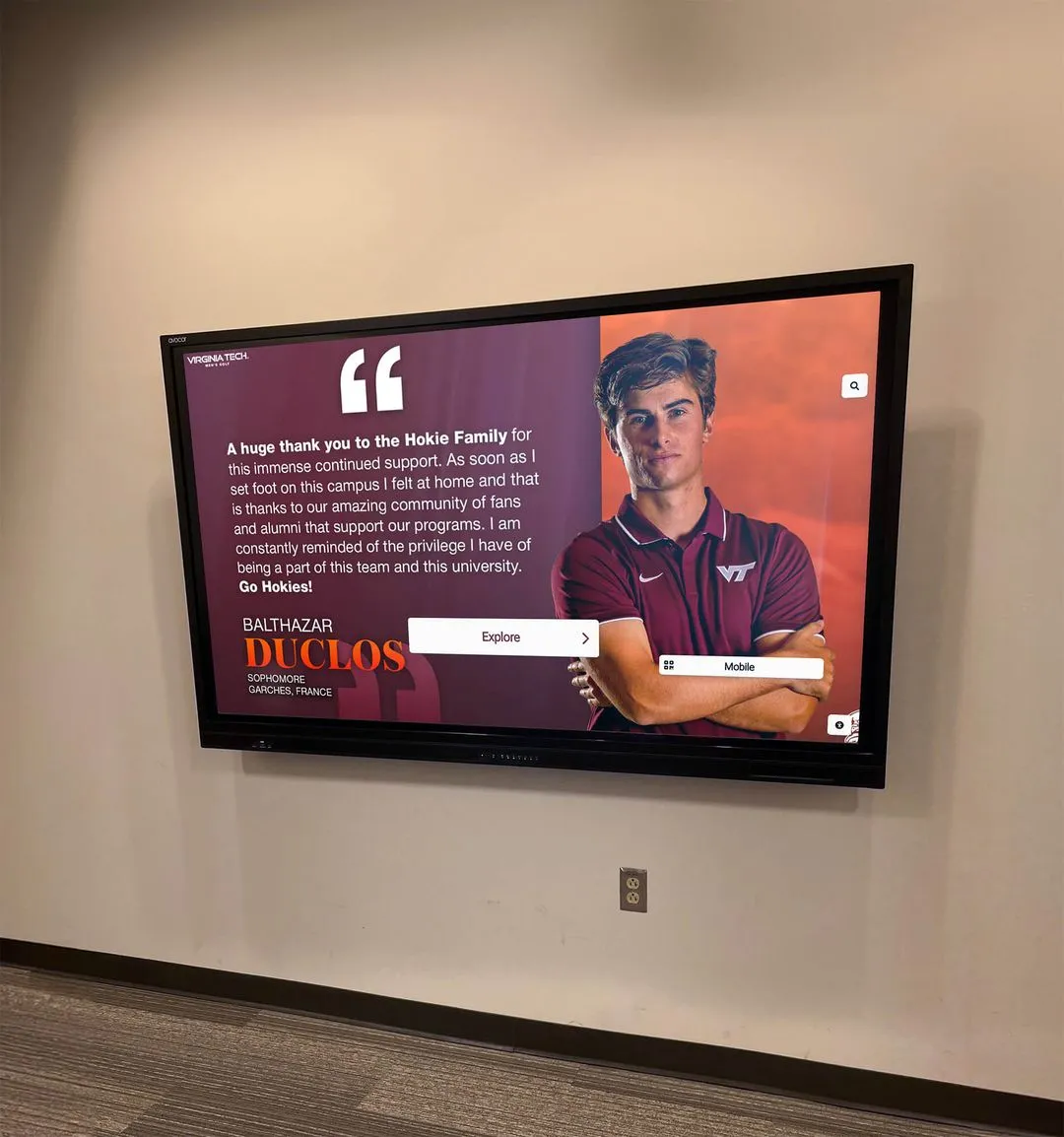
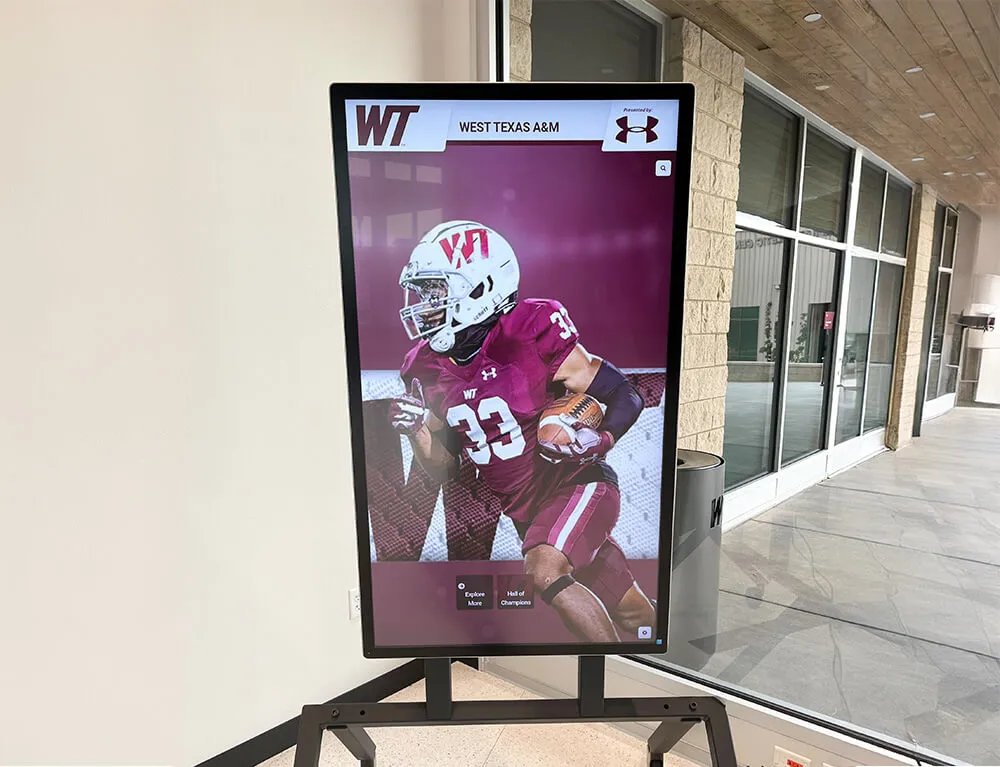
Freestanding kiosks provide flexible installation options for locations without suitable wall mounting surfaces
Hardware Quality and Durability Considerations
Commercial vs. Consumer Grade Equipment
Professional installations require commercial-rated components including displays rated for continuous 16-24 hour daily operation, extended warranties reflecting commercial use expectations (3-5 years typical), industrial-grade internal components and power supplies, and enhanced thermal management preventing overheating in continuous use.
Consumer-grade displays cost 40-60% less initially but typically fail within 18-36 months under continuous operation, requiring replacement that eliminates initial savings while creating recognition program interruptions. Penny-wise, pound-foolish equipment decisions represent the most common costly mistake schools make.
Touch Technology Options
Touchscreen responsiveness and durability vary across technologies including capacitive touch providing smartphone-like responsiveness and multi-touch capability, infrared touch offering excellent durability without overlay wear, and resistive touch providing low-cost options with acceptable but less responsive performance.
For public installations receiving heavy use, capacitive or infrared touch technologies provide optimal user experience and longevity despite higher initial cost.
Environmental Rating Requirements
Installation locations determine required durability specifications including indoor climate-controlled environments requiring standard commercial ratings, semi-conditioned gymnasiums or field houses needing extended temperature range tolerance, outdoor or semi-outdoor locations requiring IP-rated weather resistance and extended temperature ranges, or high-traffic areas demanding vandal-resistant construction and materials.
Displays installed in inappropriate environmental conditions fail prematurely, creating expensive replacement cycles and recognition program disruptions.
Connectivity and Integration
Hardware should support robust connectivity including hardwired ethernet for primary connection reliability, WiFi capability providing installation flexibility, USB ports enabling easy service and updates, HDMI or DisplayPort video inputs supporting diverse sources, and remote management capabilities enabling diagnosis and troubleshooting.
Content Management Platforms: Software Capabilities and Vendor Evaluation
While display hardware remains visible, content management software determines whether your recognition system achieves its goals over time.
Essential Software Features
User-Friendly Administrative Interfaces
Content management should be accessible to non-technical staff including intuitive dashboards requiring no coding or technical expertise, drag-and-drop content organization and editing, template systems ensuring consistent professional appearance, bulk import tools for historical data or large athlete rosters, preview functionality showing changes before publication, and role-based permissions enabling appropriate staff access.
Platforms requiring technical expertise or programming knowledge prove unsustainable for schools, resulting in recognition programs that go stale as busy staff can’t dedicate time to complex updates.
Comprehensive Content Organization
Effective platforms support diverse recognition structures including unlimited profiles for athletes, students, and other honorees, flexible categorization by sport, program, year, achievement type, or custom categories, hierarchical organization enabling navigation through team to season to individual levels, and multiple classification schemes (hall of fame inductees, record holders, championship teams, etc.) coexisting within single platform.
Platforms with rigid organizational frameworks force schools to conform content to software limitations rather than supporting natural recognition structures reflecting your traditions and priorities.
Explore comprehensive high school wall of fame approaches that demonstrate effective content organization across diverse programs.
Robust Search and Discovery
Visitor engagement depends on intuitive exploration including name search with partial match capability, filters by sport, year, achievement type, and other relevant categories, featured content rotation highlighting diverse profiles automatically, random profile displays ensuring all recognized individuals receive visibility, and related content linking connecting teams, classmates, and related achievements.
Recognition systems with poor search functionality discourage exploration, particularly in comprehensive implementations with thousands of profiles where alphabetical scrolling becomes tedious.
Multimedia Support and Flexibility
Effective storytelling requires diverse content types including photo galleries with unlimited image capacity, video integration supporting highlights, interviews, and documentary content, PDF document display for media clippings, programs, and historical artifacts, statistics and records presentation in sortable, comparable formats, and biographical narratives with rich text formatting.
Platforms limiting content to specific formats or imposing tight restrictions on file sizes or counts constrain storytelling capabilities and force compromises that diminish recognition quality.
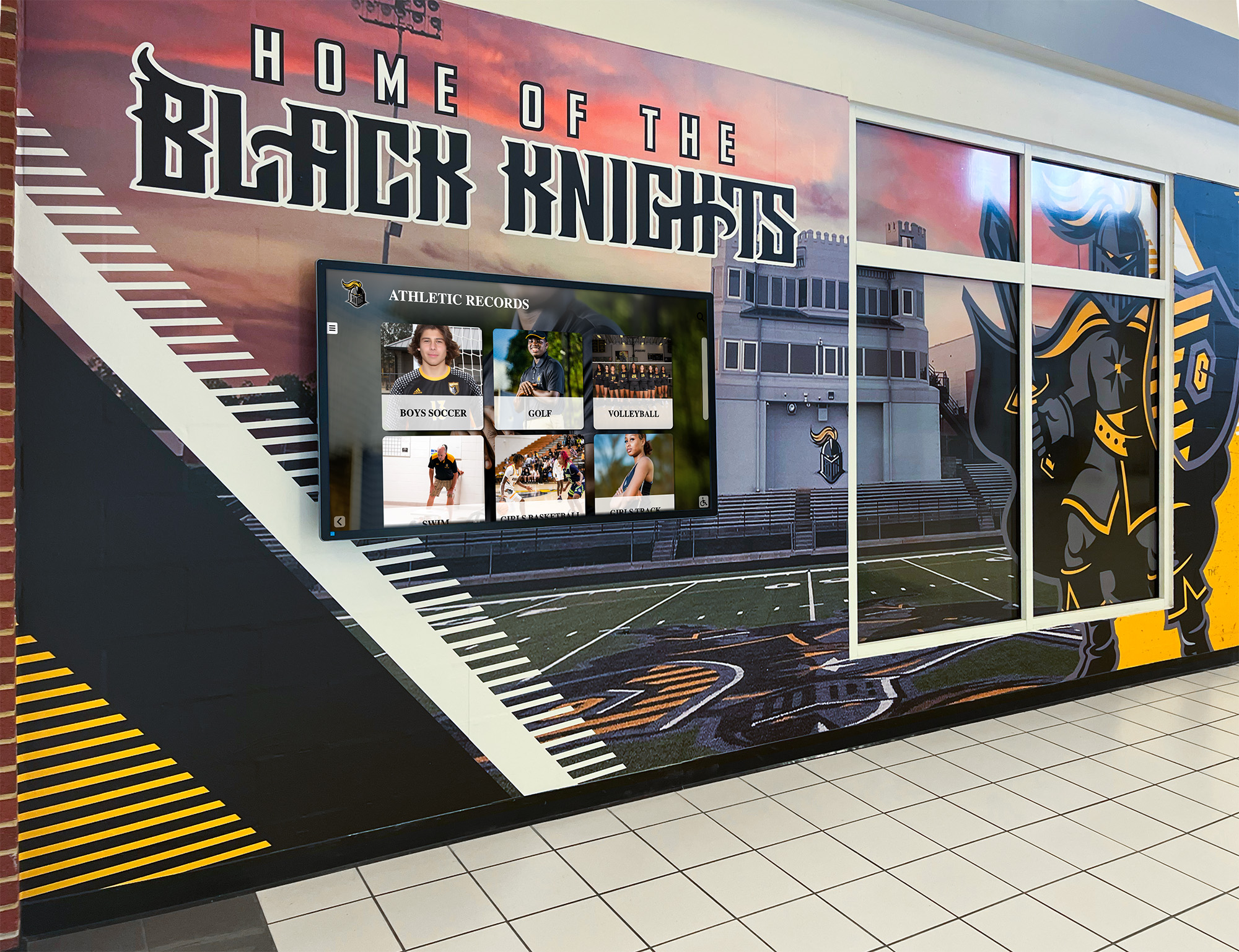
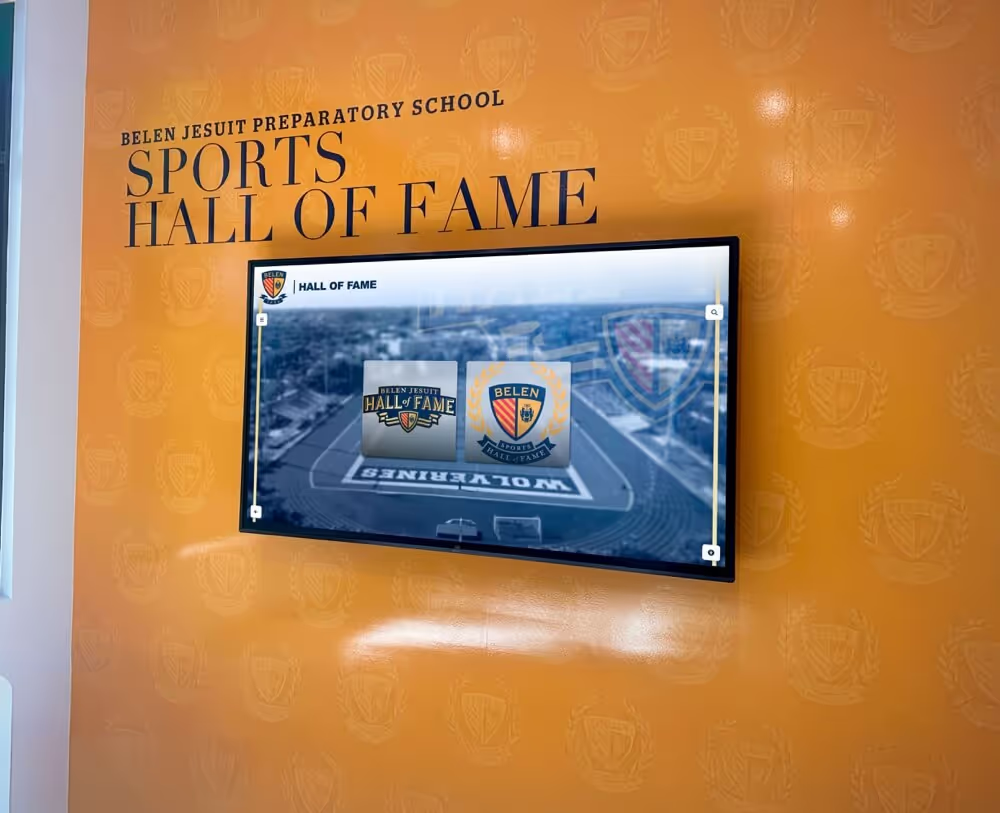
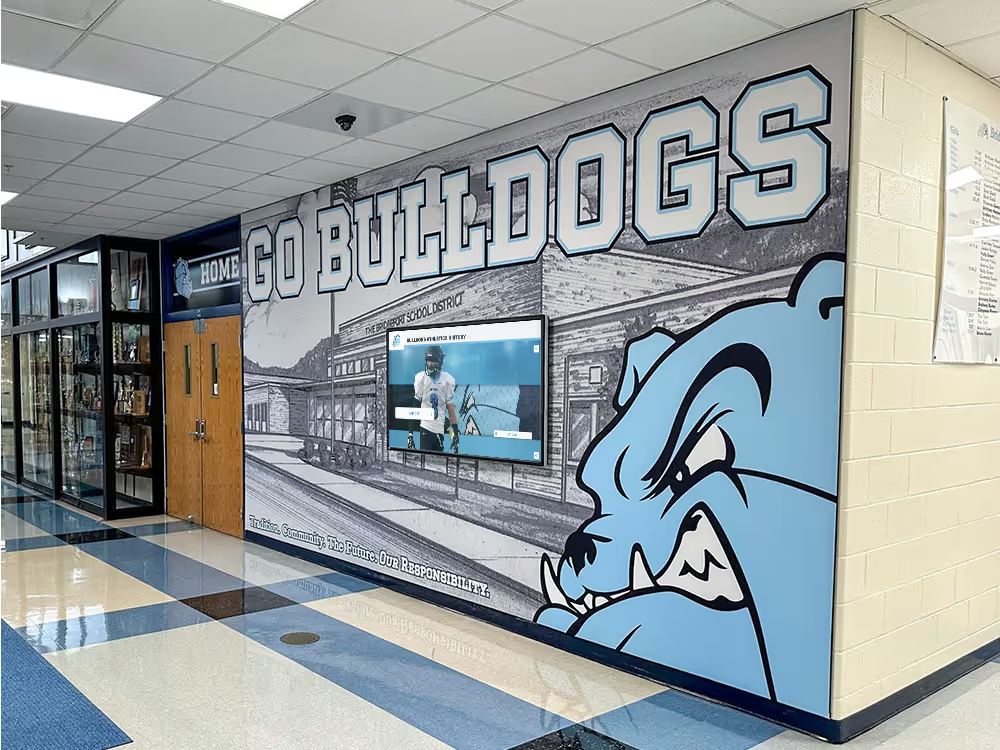
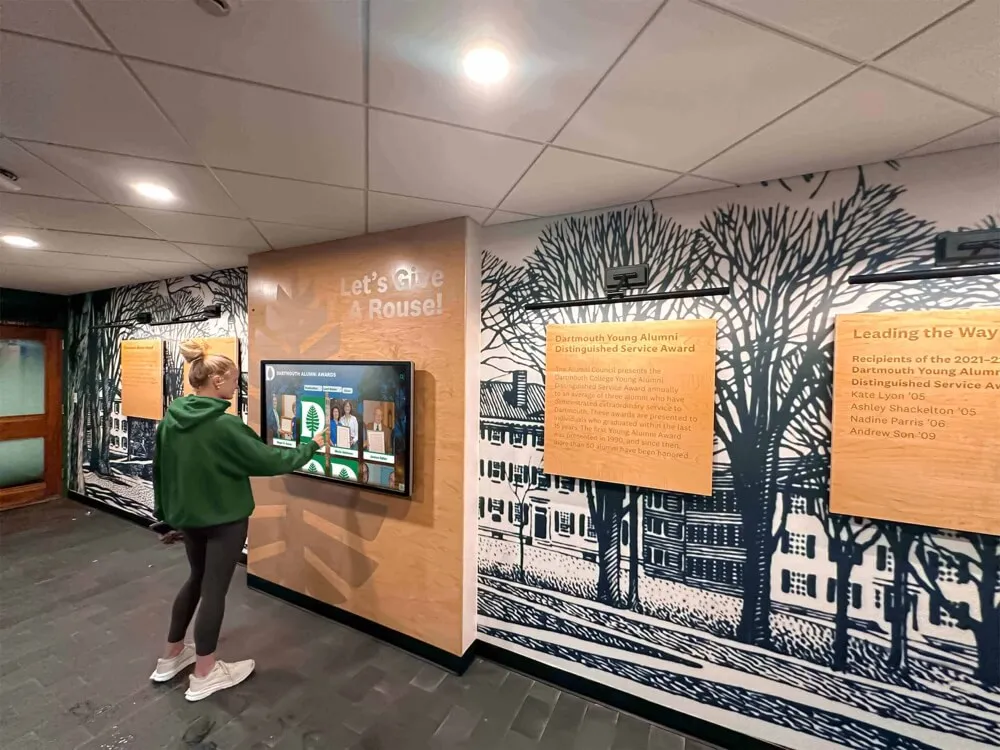
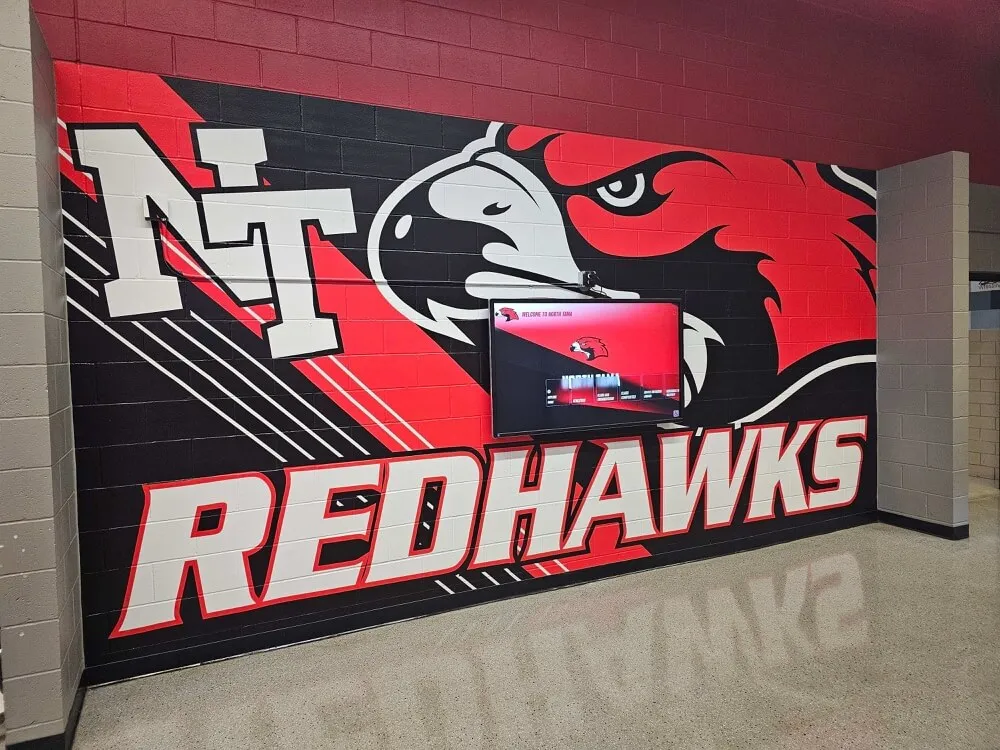
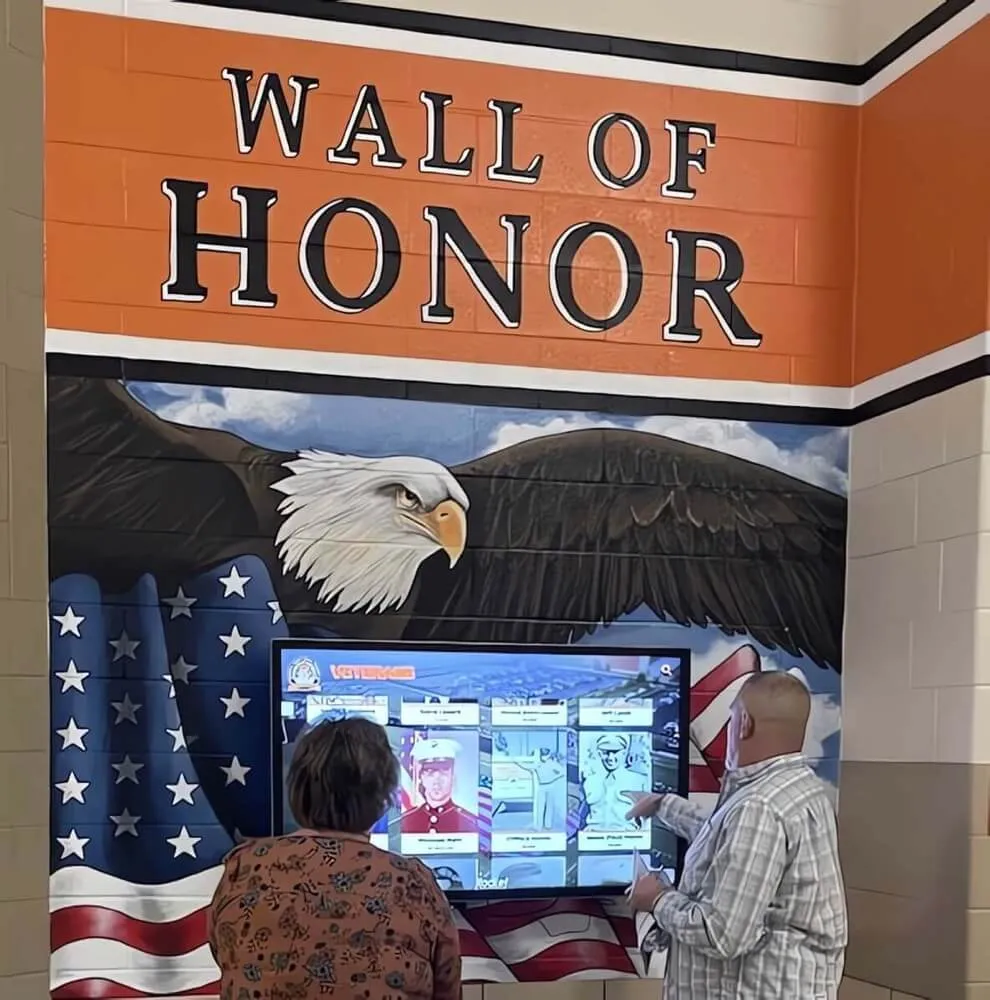
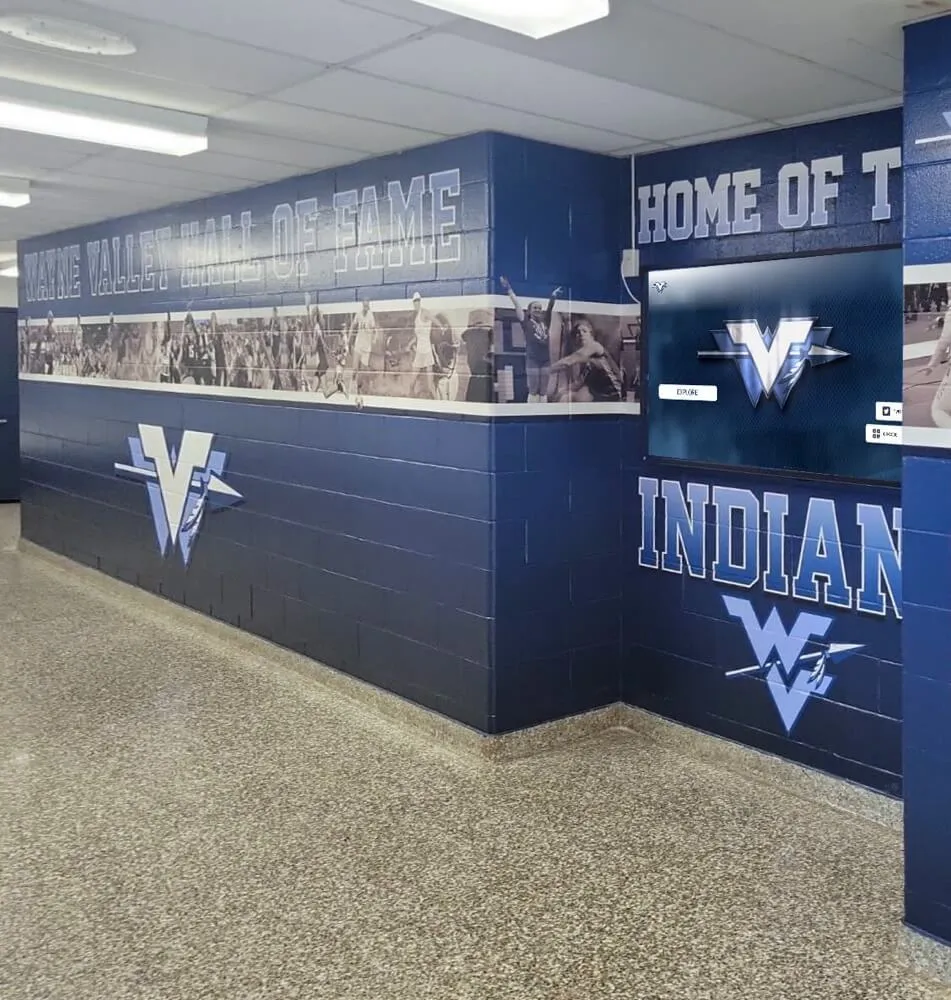
Digital displays complement traditional school murals and architectural elements while providing dynamic content flexibility
Web Integration and Extended Reach
Modern platforms extend recognition beyond physical displays including web-based public versions accessible from anywhere, mobile-responsive design ensuring smartphone and tablet compatibility, social sharing functionality enabling recognition celebration, embeddable widgets for school websites, and analytics tracking engagement and popular content.
Web accessibility amplifies recognition impact by enabling alumni worldwide to explore achievements and share content with family and friends, dramatically extending reach beyond the limited audience that physically visits school facilities.
Vendor-Specific Capabilities
Turnkey vs. DIY Approaches
Implementation models vary significantly across vendors:
Full-Service Vendor Platforms
Comprehensive solutions like Rocket Alumni Solutions provide end-to-end services including professional content management software designed specifically for recognition, initial content development assistance and ongoing support, design and template customization matching school branding, training and change management support, technical troubleshooting and platform maintenance, and long-term strategic guidance ensuring program success.
Full-service approaches cost more upfront but dramatically reduce school staff time investment and technical knowledge requirements while ensuring professional results. Schools lacking dedicated staff resources for content development and management find these approaches enable recognition programs that would otherwise remain impossible.
Self-Service Software Platforms
Some vendors provide software tools with schools managing implementation including access to recognition-focused content management platforms, template libraries and design resources, training materials and documentation, technical support for platform issues, but with schools responsible for all content research, development, photography, writing, data entry, and ongoing updates.
Self-service approaches reduce initial cost but require substantial school staff time investment. Schools with dedicated staff resources, strong volunteer bases, or limited budgets sometimes prefer these options.
Generic Digital Signage Solutions
Some schools attempt recognition implementations using general digital signage software including basic slideshow or content rotation platforms, standard digital signage content management systems, or custom-developed solutions created by technical staff or contractors.
While seemingly cost-effective, generic approaches typically lack recognition-specific features like searchable profiles, relationship linking, statistics management, and visitor interaction capabilities that make digital hall of fame systems engaging and useful. Schools often discover these limitations only after investing significant effort in unsuitable platforms.
Learn about touchscreen software considerations when evaluating platform options.
Hardware + Software vs. Software-Only
Vendors offer varying scopes including complete hardware and software integrated packages, software platforms designed for specific hardware partners, hardware-agnostic software compatible with diverse displays, or custom integration services adapting platforms to existing equipment.
Integrated packages simplify procurement and ensure compatibility but may limit choices or create vendor lock-in. Software-only options provide flexibility but require schools to manage hardware sourcing, compatibility verification, and integration.
Critical Vendor Evaluation Questions
When assessing vendors, prioritize these essential questions:
Platform Capabilities
- Does the platform support unlimited profiles without per-profile pricing that escalates costs?
- Can the system accommodate diverse recognition categories (athletics, academics, arts, etc.)?
- What multimedia capabilities are included (photos, videos, statistics, documents)?
- Is web accessibility included or available as add-on?
- What search and discovery features help visitors find specific individuals?
Content Development Support
- Does the vendor provide initial content development assistance?
- What training and documentation help schools manage ongoing updates?
- Are design templates and branding customization included?
- Can the vendor assist with historical research or data migration?
Technical Requirements and Support
- What network connectivity and bandwidth is required?
- What ongoing technical support is included?
- How are software updates and platform maintenance handled?
- What guarantees exist regarding uptime and reliability?
- Who handles troubleshooting when issues arise?
Costs and Pricing Structure
- What is total first-year cost including hardware, software, setup, and content development?
- What are annual ongoing costs for subscriptions, support, and maintenance?
- Are there per-profile, per-display, or capacity-based pricing that could escalate?
- What professional services or content development assistance is included versus priced separately?
- What is realistic total cost of ownership over 5-7 years?
Experience and References
- How many high school recognition implementations has the vendor completed?
- Can you speak with reference schools about their experiences?
- What recognition-specific expertise does the vendor bring?
- How long has the vendor been providing these solutions?
- What long-term viability indicators exist (company size, backing, customer base)?
Budget Planning: Total Cost of Ownership Analysis
Comprehensive financial planning prevents surprises and ensures sustainable implementations.
Initial Investment Components
Hardware Costs
Physical equipment represents the most visible expense:
- Commercial touchscreen displays: $2,500-$8,000 depending on size (55"-85" typical)
- Media player or computer: $500-$2,000 depending on specifications
- Mounting hardware or kiosk enclosure: $500-$6,000 depending on configuration
- Installation and setup: $500-$2,500 for professional mounting and configuration
- Network infrastructure: $500-$3,000 if connectivity upgrades required
Total hardware investment: $4,500-$21,500 per display location
Schools can reduce hardware costs through phased implementations beginning with single displays and expanding over time as budgets allow.
Software and Platform Costs
Content management capabilities vary in pricing:
- Platform setup and configuration: $1,000-$5,000 for system initialization
- Annual subscription or licensing: $1,200-$6,000 per year depending on capabilities
- Customization and branding: $1,000-$3,000 for template design and school identity integration
- Training and onboarding: $500-$2,000 for staff training and documentation
Total software costs: $3,700-$16,000 first year; $1,200-$6,000 annually thereafter
Content Development Investment
Initial content creation requires substantial effort:
- Historical research and data compilation: 40-120 hours depending on scope
- Photography sourcing or creation: $1,000-$5,000 for professional photography or licensing
- Profile writing and content development: 60-200 hours depending on depth and coverage
- Data entry and organization: 30-80 hours for information input and structuring
Schools completing content development internally invest primarily staff time valued at $2,500-$12,000. Vendors offering content development services typically charge $5,000-$20,000 depending on scope.
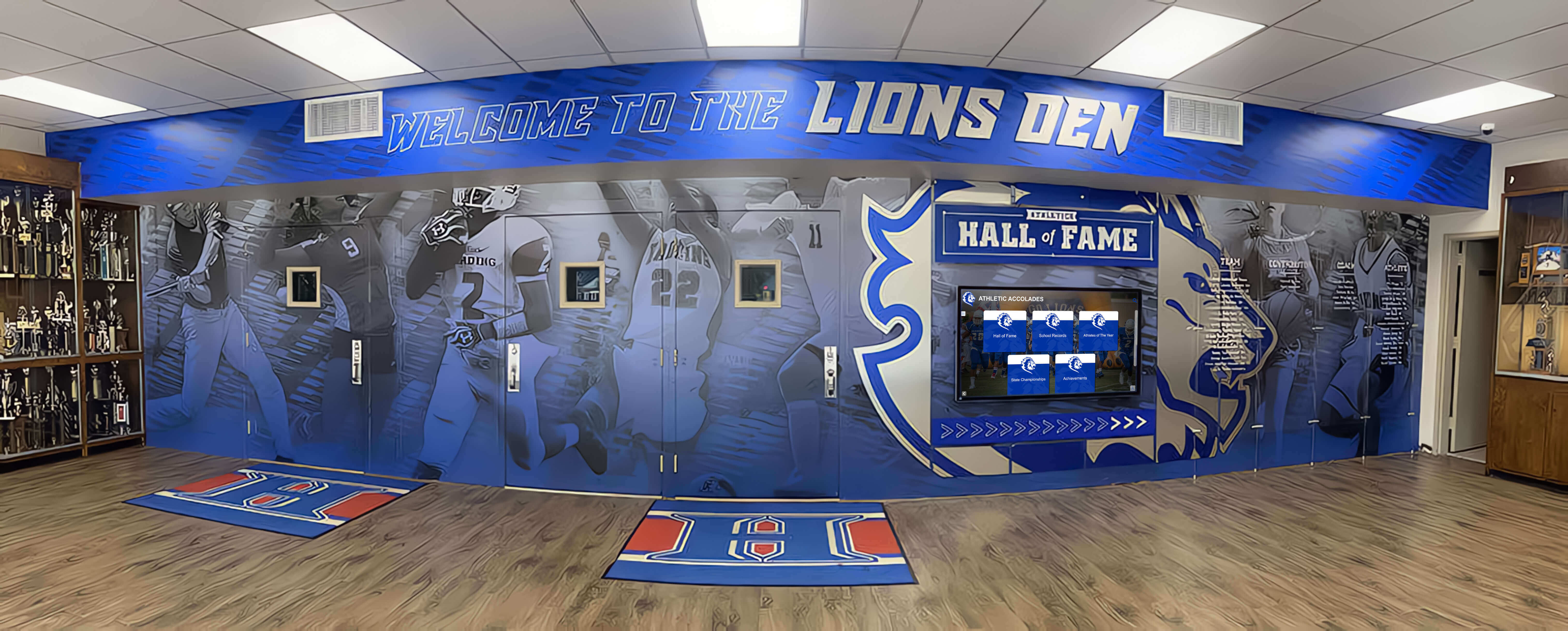
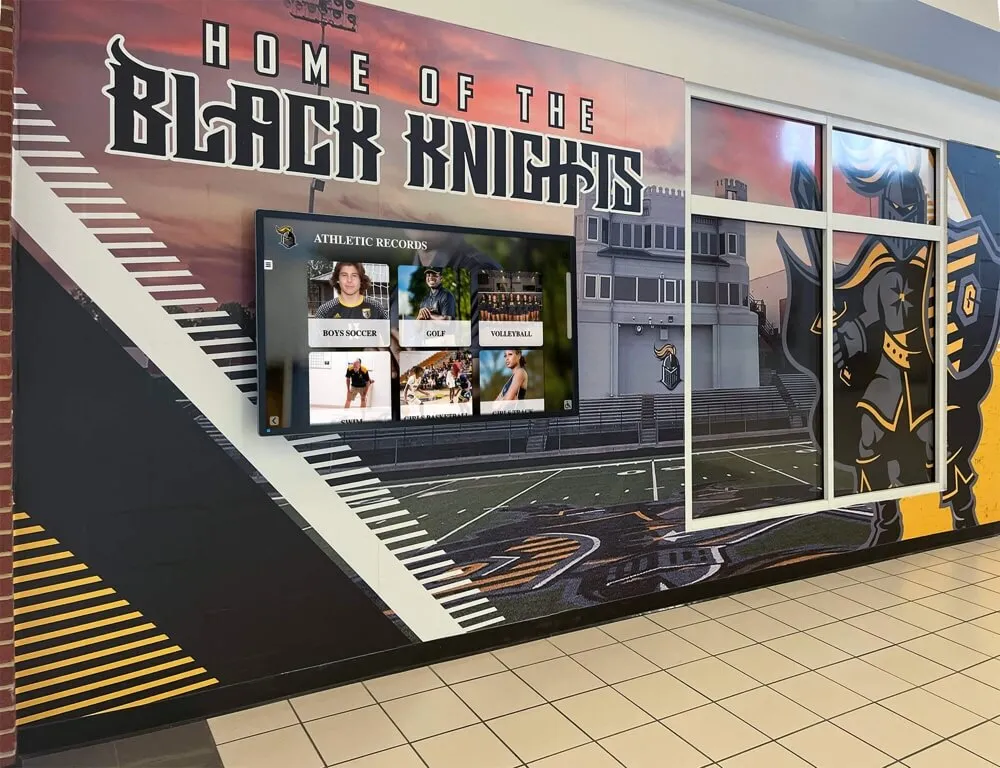
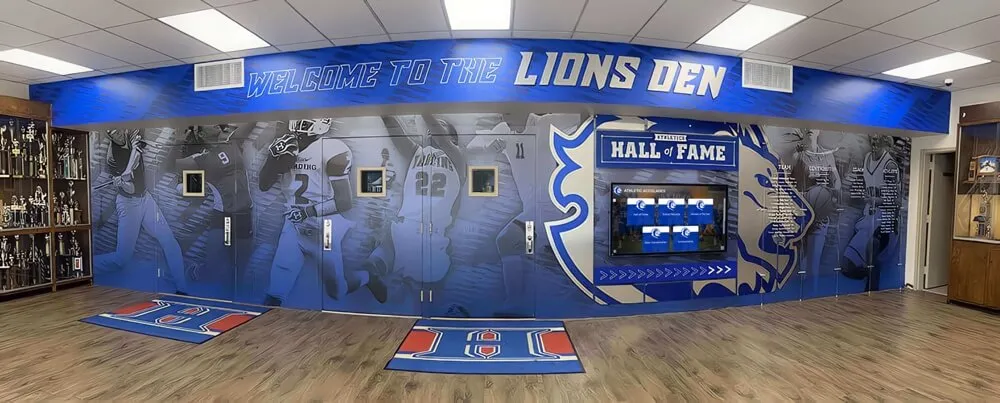
Comprehensive installations integrate digital capabilities with traditional trophy displays and school branding
Professional Services
Additional implementation support includes:
- Project management and coordination: $1,000-$3,000
- Design and aesthetic integration consulting: $500-$2,000
- Technical integration and testing: $500-$1,500
- Launch event and promotion support: $500-$2,000
Total first-year investment range: $15,000-$50,000 depending on scope, content depth, and vendor selection
Most high school implementations fall within $20,000-$35,000 range for comprehensive single-display systems with standard content development.
Ongoing Annual Costs
Sustainable budgeting accounts for continuing expenses:
Software and Platform Subscriptions
- Annual licensing or subscription: $1,200-$6,000
- Platform updates and enhancements: typically included
- Cloud hosting and data storage: typically included
- Technical support: typically included in subscription
Maintenance and Hardware
- Extended warranty or service contract: $300-$1,000 annually
- Display cleaning and basic maintenance: minimal if performed by school staff
- Anticipated hardware replacement: $500-$1,500 annually amortized over 5-7 year lifespan
Content Updates and Enhancements
- Ongoing content updates: 20-60 hours annually of staff time
- New photography and videography: $500-$2,000 annually
- Content refresh and enhancement: 10-30 hours annually
- Professional content services if outsourced: $2,000-$8,000 annually
Annual ongoing cost range: $2,500-$10,000 depending on content update frequency and services utilized
Total Cost of Ownership Comparison
5-Year Total Cost of Ownership
Comprehensive cost analysis over typical useful life:
Option 1: Budget Implementation
- Initial investment: $15,000
- Annual costs (years 2-5): $2,500 × 4 = $10,000
- 5-year total: $25,000
Option 2: Standard Implementation
- Initial investment: $25,000
- Annual costs (years 2-5): $5,000 × 4 = $20,000
- 5-year total: $45,000
Option 3: Premium Implementation
- Initial investment: $40,000
- Annual costs (years 2-5): $8,000 × 4 = $32,000
- 5-year total: $72,000
Traditional Recognition Comparison
Traditional approaches incur different cost structures:
Bronze Plaque Wall
- Initial installation: $8,000-$15,000
- Updates (10-15 over 5 years): $500-$800 each = $5,000-$12,000
- 5-year total: $13,000-$27,000
While traditional installations cost less initially, they provide limited capacity, no multimedia capability, expensive and slow updates, and no web accessibility. Digital systems offering substantially greater capability prove cost-competitive over 5-year periods while eliminating physical space constraints.
Explore digital hall of fame benefits and costs for additional perspective on investment value.
Implementation Planning: Steps to Successful Launch
Systematic implementation prevents common problems and ensures recognition programs meet expectations.
Phase 1: Planning and Requirements Definition (2-3 months)
Establish Project Team and Governance
Assign clear roles and responsibilities including project sponsor (typically athletic director or principal), project manager coordinating implementation, content development lead overseeing research and creation, technical coordinator managing IT requirements, and stakeholder representatives from athletics, administration, booster clubs, and IT.
Clear governance prevents scope creep, conflicting direction, and stalled decision-making that delays projects and inflates costs.
Define Scope and Requirements
Document detailed specifications including recognition coverage (sports, programs, time periods), content depth and profile standards, display locations and configurations, budget constraints and parameters, timeline expectations and milestones, and success criteria defining satisfactory outcomes.
Written requirements enable accurate vendor proposals and prevent misunderstandings about what’s included versus additional cost.
Secure Necessary Approvals
Obtain authorization before proceeding including budget approvals from appropriate authorities, IT department network access and security clearances, facilities approvals for installations and modifications, and board or administrative endorsements when required.
Schools sometimes invest substantial planning effort only to discover required approvals are denied, wasting time and creating frustration.
Phase 2: Vendor Selection and Contracting (1-2 months)
Issue RFP or Request Proposals
Solicit competitive proposals from qualified vendors including detailed requirements specifications, budget parameters and constraints, timeline expectations, evaluation criteria and decision process, and required references and qualifications.
Formal RFPs ensure consistent, comparable proposals enabling objective evaluation rather than subjective vendor presentations.
Evaluate Proposals Systematically
Assess vendors against consistent criteria including platform capabilities and recognition-specific features, content development support and services, technical requirements and compatibility, total cost of ownership over 5 years, vendor experience and high school references, and contractual terms and support commitments.
Many schools select vendors based primarily on initial cost, discovering later that limited capabilities, poor support, or inadequate content development assistance create unsuccessful implementations despite low purchase prices.
Verify References and Site Visits
Contact reference schools directly to assess actual experiences including ease of implementation and support quality, ongoing content management burden, technical reliability and issues encountered, student and community response and engagement, and whether schools would recommend the vendor.
Vendor-provided references skew positive, but direct conversations often reveal challenges and considerations not apparent in polished presentations.
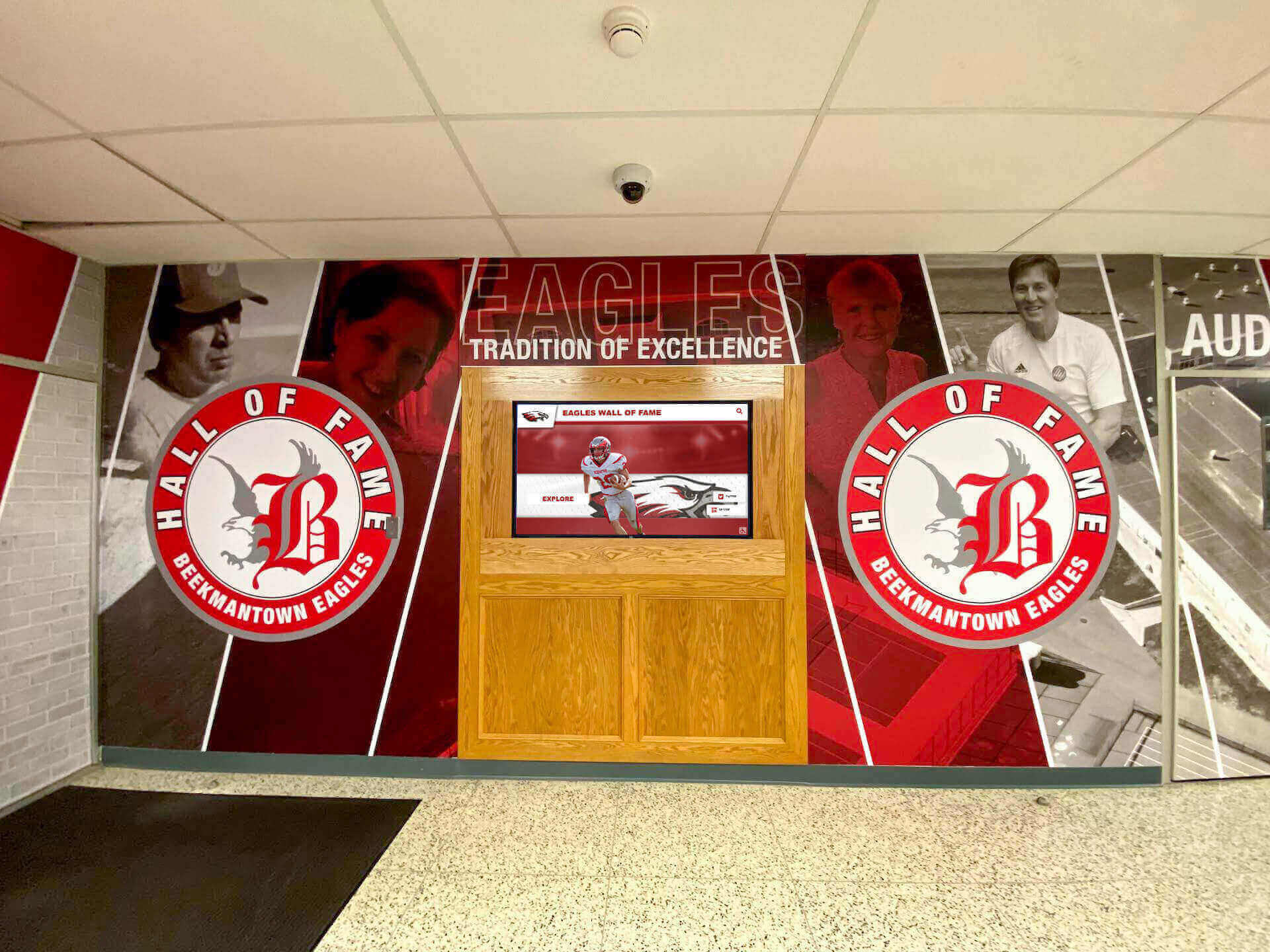
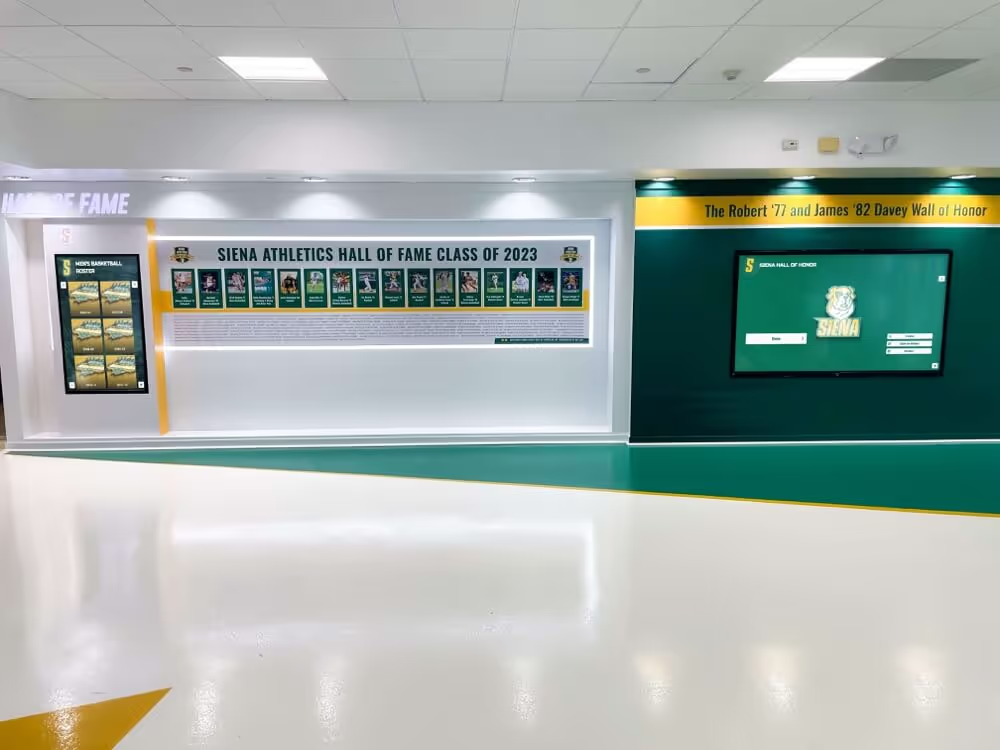
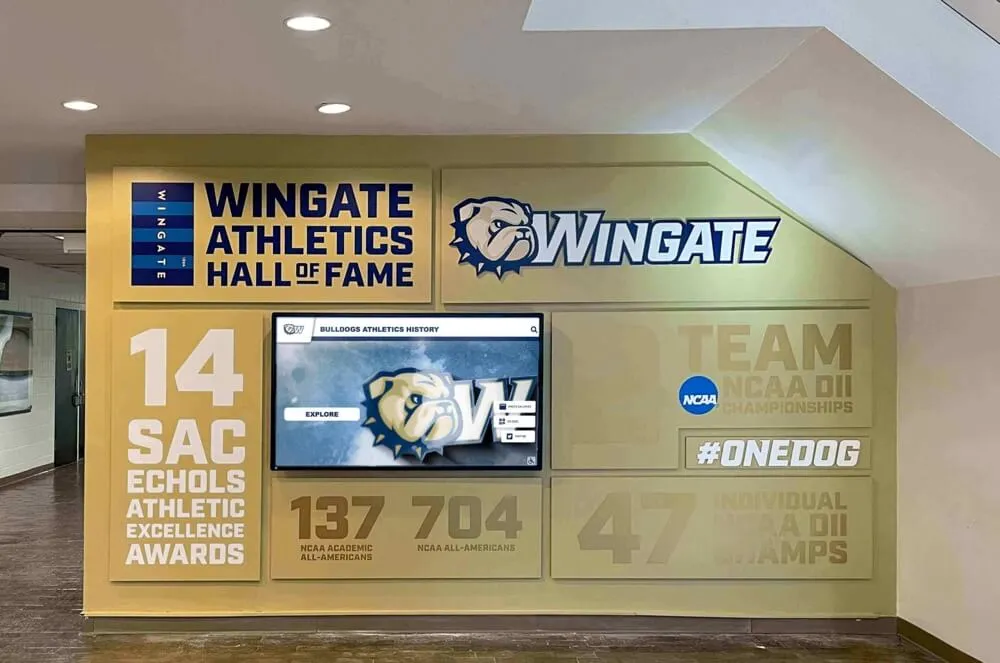
Successful implementations integrate digital technology seamlessly with school identity and existing recognition elements
Phase 3: Content Development (3-6 months, often parallel with procurement)
Historical Research and Data Compilation
Gather recognition information systematically including athletic records and statistics from programs and archives, championship team rosters and results, individual achievement and award documentation, photographic archives from yearbooks, newspapers, and school collections, and biographical information through alumni outreach and research.
Content development typically requires more time than schools anticipate. Beginning research early, even before vendor selection, prevents timeline delays.
Photography and Multimedia Asset Creation
Develop visual content supporting recognition including professional photography for current student-athletes and recently graduated alumni, photograph digitization and restoration for historical content, video interviews with notable alumni or hall of fame inductees, game or event video highlight compilation, and historical artifact photography or scanning.
Quality photography dramatically improves recognition program appeal and engagement. Allocating budget for professional photography or digitization services proves worthwhile compared to relying solely on available snapshots.
Profile and Narrative Development
Create consistent, professional content including standardized profile templates ensuring information consistency, biographical narratives telling individual stories appropriately, achievement summaries highlighting accomplishments, team descriptions and seasonal documentation, and record board context explaining significance.
Content quality directly affects recognition program effectiveness and community response. Rushed or incomplete profiles undermine implementations despite excellent technology.
Data Organization and Quality Assurance
Ensure content accuracy and completeness through systematic data verification and fact-checking, name spelling and biographical detail confirmation with alumni when possible, statistics cross-referencing against multiple sources, organizational structuring enabling intuitive navigation, and preview reviews by project team and stakeholders before launch.
Errors in recognition content create embarrassment and complaints that damage credibility. Thorough quality assurance prevents problems before they become public.
Learn about effective academic recognition program structures that translate well to athletic contexts.
Phase 4: Technical Implementation (1-2 months)
Site Preparation and Infrastructure
Prepare locations for installations including electrical work ensuring power outlet proximity, network connectivity establishment or verification, wall reinforcement or mounting surface preparation, display positioning and viewing angle optimization, and lighting assessment ensuring visibility without screen glare.
Technical preparations should occur before display delivery to prevent installation delays or suboptimal configurations discovered too late.
Hardware Installation and Configuration
Complete physical installation professionally including secure display mounting at appropriate heights and angles, kiosk placement and anchoring if applicable, media player or computer installation and configuration, network connection and testing, and touch calibration and functionality verification.
Professional installation ensures secure mounting, proper configuration, and optimal performance. DIY installations by school staff sometimes result in poor viewing angles, inadequate security, or technical problems that could have been prevented.
Software Configuration and Content Loading
Initialize content management platform including software installation or cloud platform provisioning, template customization and branding application, initial content upload and organization, search and filtering configuration, web integration setup if applicable, and comprehensive testing and quality assurance.
Budget adequate time for testing and refinement before public launch. Rushed implementations often go live with configuration issues or content problems that create poor first impressions difficult to overcome.
Training and Documentation
Ensure staff can manage system effectively including comprehensive administrator training on content management, update procedures and workflows documentation, troubleshooting guide and technical support contacts, content standards and style guide for consistency, and change management addressing process transitions from traditional approaches.
Inadequate training commonly results in recognition systems that go stale within months as busy staff can’t dedicate time to platforms they don’t understand well.
Phase 5: Launch and Promotion (1 month)
Soft Launch and Testing
Begin with limited exposure before formal announcement including staff and student preview providing usability feedback, content accuracy review catching errors before broad visibility, technical reliability testing under real-world conditions, refinement of any issues discovered, and preparation of promotional materials and communication.
Soft launches enable issue resolution before recognition programs receive full community attention.
Official Launch Event
Celebrate implementation and generate excitement including formal dedication ceremony or ribbon cutting, student and community demonstrations of system, media coverage and press releases, social media promotion and digital outreach, integration into athletic events and school activities, and recognition of project sponsors, supporters, and contributors.
Launch events create awareness and engagement while demonstrating school commitment to honoring achievement appropriately.
Ongoing Promotion and Awareness
Maintain visibility after initial launch including regular social media featuring recognized individuals, integration into school tours and orientation programs, connection to athletic events and achievement celebrations, parent and alumni communication highlighting recognition, and periodic refresh of featured content maintaining interest.
Recognition programs require ongoing promotion to maximize awareness and engagement rather than becoming invisible after initial excitement fades.
Long-Term Success Factors: Ensuring Your Investment Delivers Value
Digital hall of fame systems succeed over decades when schools establish sustainable practices and appropriate expectations.
Sustainable Content Management
Establish Clear Update Processes
Define workflows preventing content from going stale including designated staff responsible for recognition updates, regular update schedules (weekly, monthly, or seasonal), quality assurance reviews before publishing new content, communication protocols notifying appropriate parties of updates, and documentation ensuring process continuity despite staff turnover.
Recognition programs fail when update responsibility remains unclear or undefined, resulting in systems that become outdated and irrelevant within months despite substantial initial investment.
Leverage Community Resources
Reduce staff burden through appropriate involvement including booster club volunteers researching historical content, alumni submitting biographical information and photographs, student interns or service learning projects supporting updates, and retiree volunteers with time and institutional knowledge to contribute.
Schools attempting to manage all content development and updates solely through busy athletic department staff often struggle to maintain current recognition despite good intentions.
Explore school history preservation strategies that create sustainable content development approaches.
Maintain Content Quality Standards
Ensure recognition remains professional and appropriate including written style guides ensuring consistency, photograph quality requirements maintaining visual standards, fact-checking procedures preventing errors, privacy and appropriateness review protecting student and alumni interests, and regular audits identifying content gaps or needed updates.
Inconsistent or low-quality content undermines recognition program credibility and community respect.
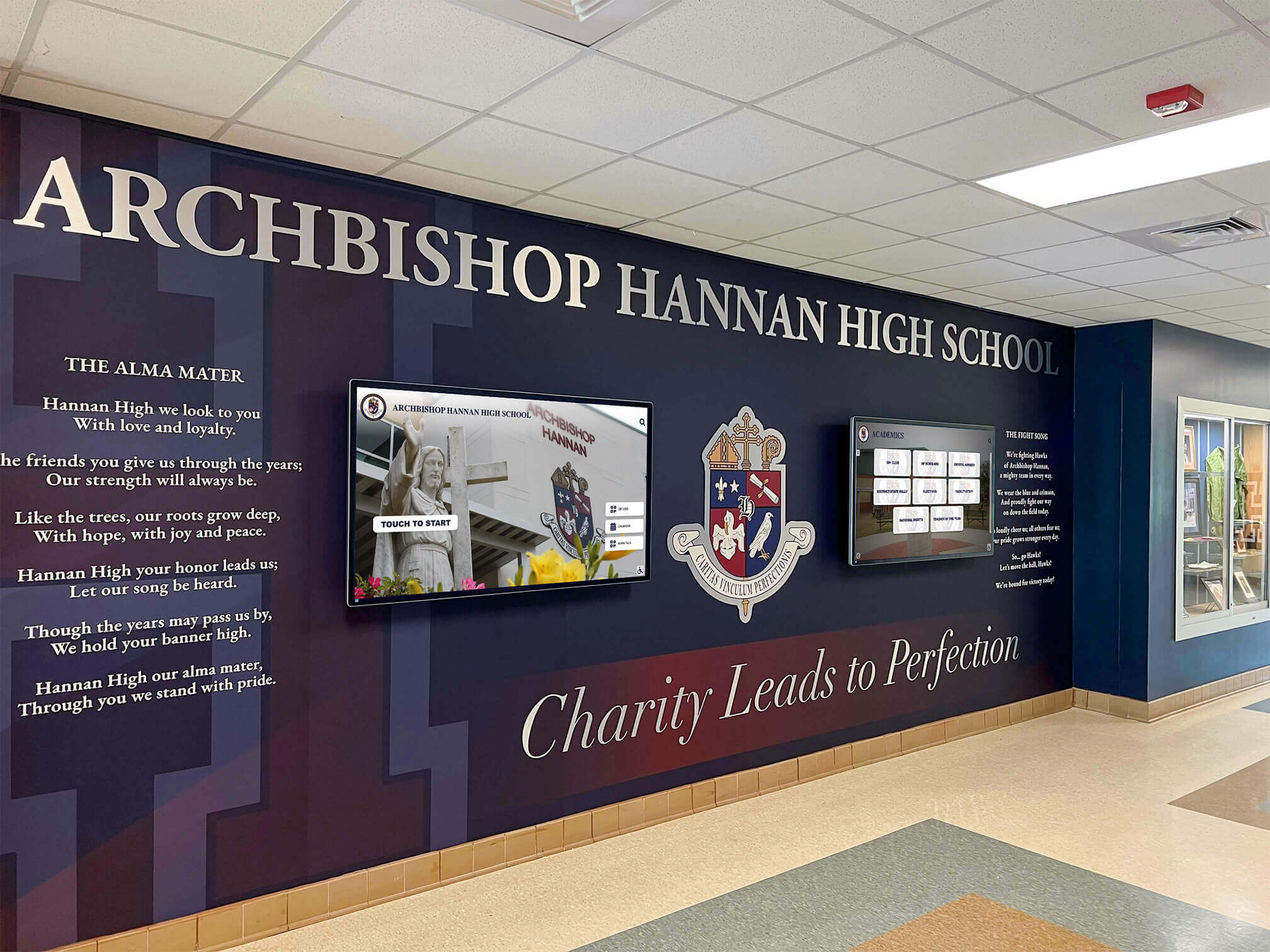
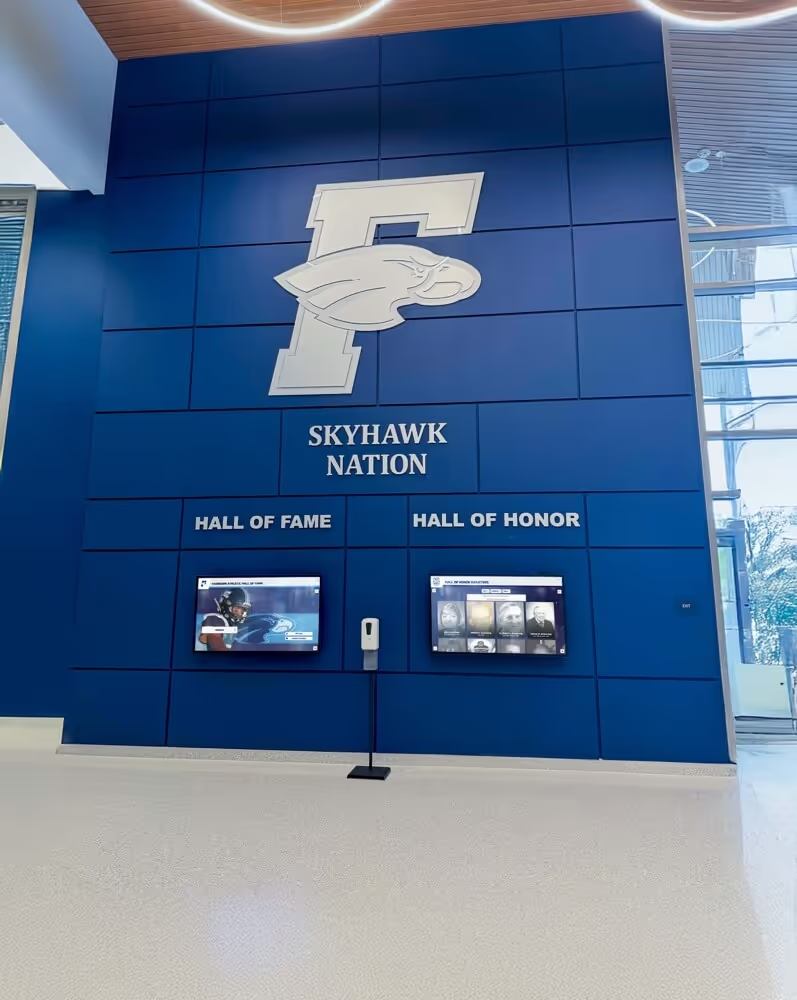
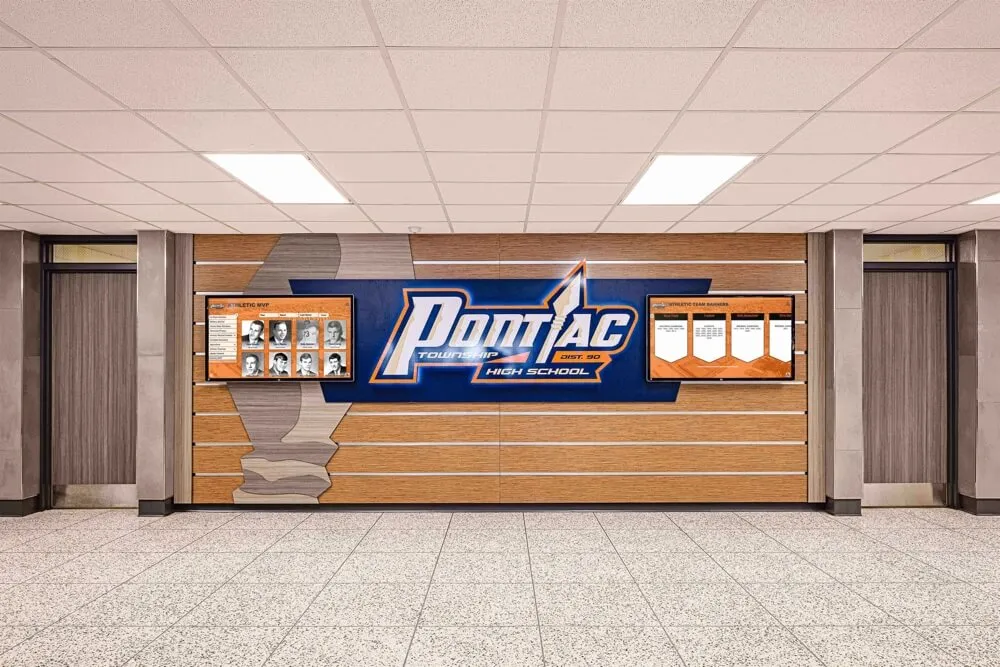
Well-integrated digital recognition enhances school identity and creates welcoming entrance environments
Technical Maintenance and Support
Establish Regular Maintenance Protocols
Preventive maintenance extends system life including weekly or monthly display cleaning and inspection, quarterly technical health checks and system updates, annual comprehensive service and optimization, prompt response to any technical issues or malfunctions, and documentation of problems and resolutions for pattern identification.
Neglected systems experience higher failure rates and shorter useful lives, undermining return on investment.
Plan for Technology Refresh Cycles
Anticipate eventual replacement needs including 5-7 year typical display hardware lifespan, periodic media player or computer upgrades, software platform migration or enhancement, and budget reserves for anticipated replacement costs.
Digital technology inevitably requires replacement over time. Schools planning for these cycles avoid scrambling for unbudgeted funds when systems reach end of useful life.
Maintain Vendor Relationships
Preserve access to support and expertise including active subscription or support agreements, participation in user groups or communities when available, regular check-ins with vendor representatives, feedback on platform enhancements or needed features, and monitoring of vendor viability and market position.
Vendor relationships provide troubleshooting assistance, platform enhancement benefits, and strategic guidance ensuring recognition systems evolve with changing needs and technologies.
Community Engagement and Awareness
Integrate Recognition into School Culture
Make recognition programs visible and valued including regular mention in athletic events and school assemblies, incorporation into school tours and prospective family visits, connection to student achievement celebrations and awards, alumni event integration and engagement opportunities, and social media and digital communication featuring recognition content.
Recognition programs achieving greatest impact become integrated into school identity and culture rather than existing as isolated installations rarely referenced or promoted.
Measure and Demonstrate Impact
Document value and justify continued investment including analytics on display and web engagement, community feedback through surveys or informal assessment, anecdotal stories of alumni or family connection and appreciation, student impact on pride and awareness of traditions, and fundraising or community support correlating with recognition visibility.
Demonstrating value helps secure ongoing budget support and organizational commitment essential for long-term sustainability.
Evolve and Enhance Over Time
Prevent stagnation through continuous improvement including periodic content refresh and enhancement, new features or capabilities as platforms evolve, expansion to additional recognition categories or programs, technology upgrades maintaining contemporary standards, and incorporation of community feedback and suggestions.
Recognition programs that remain static become less relevant and engaging over time. Successful implementations treat systems as living programs requiring attention and evolution.
Common Mistakes to Avoid: Learning from Others’ Experiences
Understanding typical problems helps schools prevent expensive errors.
Technology and Vendor Selection Mistakes
Mistake: Selecting Consumer-Grade Equipment to Save Money
Schools purchasing consumer TVs instead of commercial displays save $1,000-$2,000 initially but experience failures within 18-36 months requiring replacement that eliminates savings while creating program interruptions. Commercial equipment costs more upfront for good reason—components rated for continuous operation rather than occasional home use.
Solution: Specify commercial-grade displays with appropriate warranties. The modest cost premium provides reliability and longevity justifying the investment.
Mistake: Choosing Vendors Without Recognition-Specific Experience
General digital signage companies or IT contractors lacking recognition expertise create implementations missing critical capabilities like searchable profiles, statistics management, or relationship linking that make digital hall of fame systems engaging and useful. Schools discover limitations only after investing substantial effort.
Solution: Prioritize vendors with demonstrated recognition program experience and appropriate feature sets rather than general technology providers attempting to adapt unsuitable platforms.
Mistake: Focusing Exclusively on Initial Cost Rather Than Total Cost of Ownership
Low-cost vendors sometimes lack ongoing support, charge premium prices for updates and changes, or provide platforms requiring expensive technical expertise for management. Initial savings evaporate through hidden costs and unsustainable operational requirements.
Solution: Analyze comprehensive 5-year total cost of ownership including all support, subscription, and management costs rather than initial acquisition price alone.
Implementation and Content Mistakes
Mistake: Underestimating Content Development Effort
Schools sometimes assume vendors or technology solve content challenges, discovering that historical research, data compilation, photography sourcing, and profile writing require substantial effort regardless of technology capabilities. Implementations stall or launch with incomplete content that disappoints communities.
Solution: Realistically assess content development requirements early. Secure appropriate resources through budget allocation for professional services, volunteer mobilization, or phased implementations addressing manageable scope.
Mistake: Launching Before Content Is Ready
Pressure to demonstrate progress sometimes leads schools to launch recognition systems before content meets quality standards or covers promised scope. Poor first impressions create lasting skepticism difficult to overcome even after content improves.
Solution: Resist launch pressure until content meets quality standards and covers sufficient breadth. Better to delay launch slightly than create poor initial impression.
Mistake: Inadequate Quality Assurance
Errors in recognition—misspelled names, incorrect statistics, wrong photographs—create immediate complaints and embarrassment damaging program credibility. Schools sometimes skip thorough review in their eagerness to launch.
Solution: Implement systematic quality assurance including multiple review rounds, verification with alumni when possible, and stakeholder preview before public launch.
Long-Term Management Mistakes
Mistake: Failing to Establish Clear Update Responsibilities
Recognition programs succeed when someone owns ongoing content management. Vague or undefined responsibility results in systems that go stale despite good initial content as busy staff assumes someone else handles updates.
Solution: Clearly assign update responsibility with adequate time allocation, defined processes, and accountability measures ensuring consistent attention.
Mistake: Neglecting Technical Maintenance
Digital systems require ongoing maintenance including software updates, display cleaning, connectivity monitoring, and periodic service. Neglect leads to technical issues, reduced reliability, and premature system failure.
Solution: Establish preventive maintenance schedules and ensure responsible parties have adequate time and knowledge to perform required activities.
Mistake: Treating Recognition as One-Time Project Rather Than Ongoing Program
Schools sometimes view digital hall of fame as project completed at installation rather than ongoing program requiring continued investment and attention. Recognition becomes static, outdated, and irrelevant within years despite substantial initial investment.
Solution: Recognize that digital hall of fame success requires sustained commitment including ongoing content development, technical maintenance, community engagement, and periodic enhancement similar to athletics programs themselves.
Conclusion: Making Confident Decisions That Honor Your School Community
Digital hall of fame systems represent substantial investments—typically $20,000-$40,000 initially with $3,000-$7,000 annual ongoing costs—that serve schools and communities for decades when implemented thoughtfully. These decisions affect how your school honors achievement, celebrates tradition, builds pride, and connects generations of students and alumni across time. Getting these choices right matters profoundly.
This comprehensive buying guide provides the framework for confident decision-making addressing every critical consideration including technology capabilities and configuration options, content management platform requirements, vendor evaluation criteria and questions, comprehensive budget and total cost of ownership analysis, systematic implementation planning and execution, and long-term success factors ensuring sustained value.
Key Decision Principles
As you evaluate options and make selections, prioritize these essential principles:
Prioritize Recognition-Specific Solutions Over Generic Technology
Digital hall of fame systems serve fundamentally different purposes than digital signage or general displays. Platforms designed specifically for recognition provide searchable profiles, relationship linking, statistics management, and visitor interaction capabilities generic solutions lack. The modest cost premium for appropriate tools proves worthwhile through enhanced capability and better outcomes.
Balance Initial Costs With Long-Term Sustainability
Low-cost implementations sometimes create unsustainable operational burdens or require expensive technical expertise for management. Analyze comprehensive total cost of ownership over realistic timeframes (5-7 years) rather than initial purchase price alone. Solutions that cost more initially but include ongoing support, training, and manageable platforms often prove less expensive and more successful over time.
Invest Appropriately in Content Development
Technology enables recognition, but content creates value and impact. Allocate adequate resources—budget for professional services, time for school staff effort, or volunteer mobilization—ensuring comprehensive, high-quality content that honors your community appropriately. Excellent technology with mediocre content disappoints; adequate technology with excellent content succeeds.
Plan for Long-Term Evolution, Not Just Initial Installation
Digital hall of fame programs require sustained commitment similar to athletics programs themselves. Establish clear governance, define update processes, allocate ongoing resources, and treat recognition as living program requiring continuous attention rather than one-time project completed at installation.
Strategic Partnership Approach
Solutions like Rocket Alumni Solutions represent strategic partnerships rather than mere vendor relationships, providing comprehensive platforms combining technology, content management, training, and ongoing support specifically designed for schools. When evaluating options, consider not just initial capabilities but long-term partnership value including vendor commitment to education markets, recognition-specific expertise and feature development, customer support quality and responsiveness, and financial stability ensuring vendor viability across your system’s lifespan.
Your Recognition Program Investment
Digital hall of fame systems transform how schools honor achievement—from space-constrained physical plaques limiting recognition to a fortunate few, to unlimited digital capacity celebrating every deserving student and athlete appropriately. From static name listings providing minimal context, to rich multimedia storytelling connecting current students to institutional traditions spanning generations. From expensive, slow updates requiring physical intervention for every change, to instant cloud-based management enabling recognition currency and relevance.
These capabilities justify investment when implemented successfully. By following the framework provided in this comprehensive buying guide—defining requirements systematically, evaluating vendors objectively against consistent criteria, planning implementation thoroughly, and committing to sustainable management practices—your school can create recognition programs that honor achievement appropriately, build community pride, strengthen traditions, and inspire current and future students for decades to come.
Ready to begin exploring digital hall of fame solutions for your high school? Discover how touchscreen display technology transforms recognition, explore comprehensive hall of fame implementation strategies, or learn about school-specific digital recognition approaches that celebrate all students and programs equitably.
Your students’ achievements deserve recognition matching their dedication and accomplishments. With thoughtful planning, appropriate investment, and sustained commitment, you can create digital hall of fame programs that honor your school community appropriately while remaining sustainable and relevant for generations.