Digital yearbooks represent far more than simply scanning old books—they create interactive experiences where students explore decades of school history through touchscreen displays, searchable archives, and multimedia storytelling that brings yearbook memories to life in ways traditional print never could.
Schools implementing digital yearbook systems face critical decisions about preservation methods, display technology, accessibility, and how to make historical yearbook content discoverable and engaging for current students, alumni, and visitors. Static PDF scans sitting on forgotten servers provide minimal value compared to purpose-built interactive systems that transform yearbook archives into celebrated destinations encouraging exploration and connection.
This comprehensive guide provides school administrators, development directors, and technology coordinators with practical frameworks for implementing digital yearbook solutions that preserve institutional memory, celebrate student achievement, honor school traditions, and create meaningful connections between past and present members of your school community.
Digital yearbooks serve multiple purposes beyond simple preservation—they function as recognition systems celebrating student achievement, engagement tools connecting alumni to school history, stewardship platforms demonstrating institutional continuity, and storytelling mechanisms that communicate school culture and values to prospective families. Whether preserving decades of historical yearbooks through archival digitization or creating interactive displays showcasing current student recognition, digital yearbook systems provide flexible platforms that accommodate diverse institutional needs while remaining accessible to all community members.

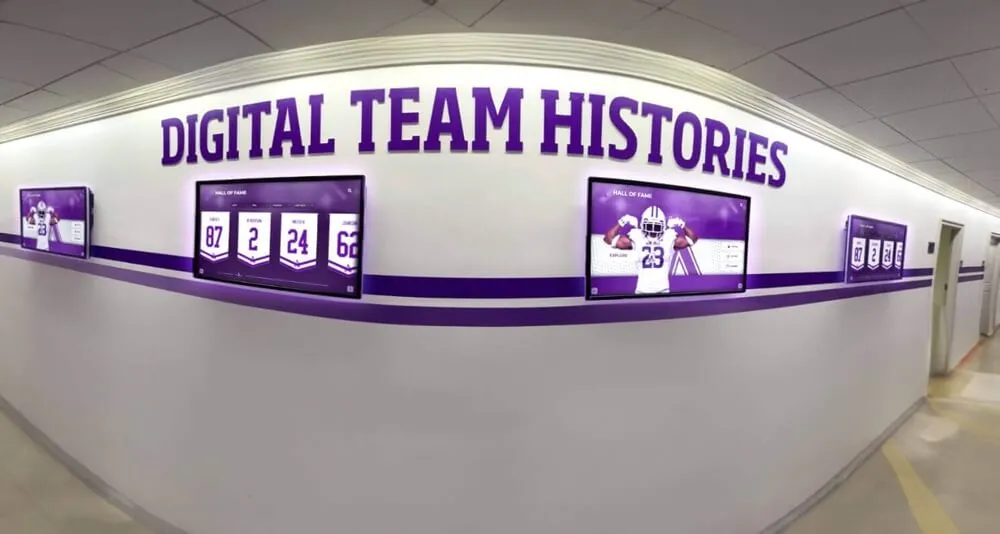
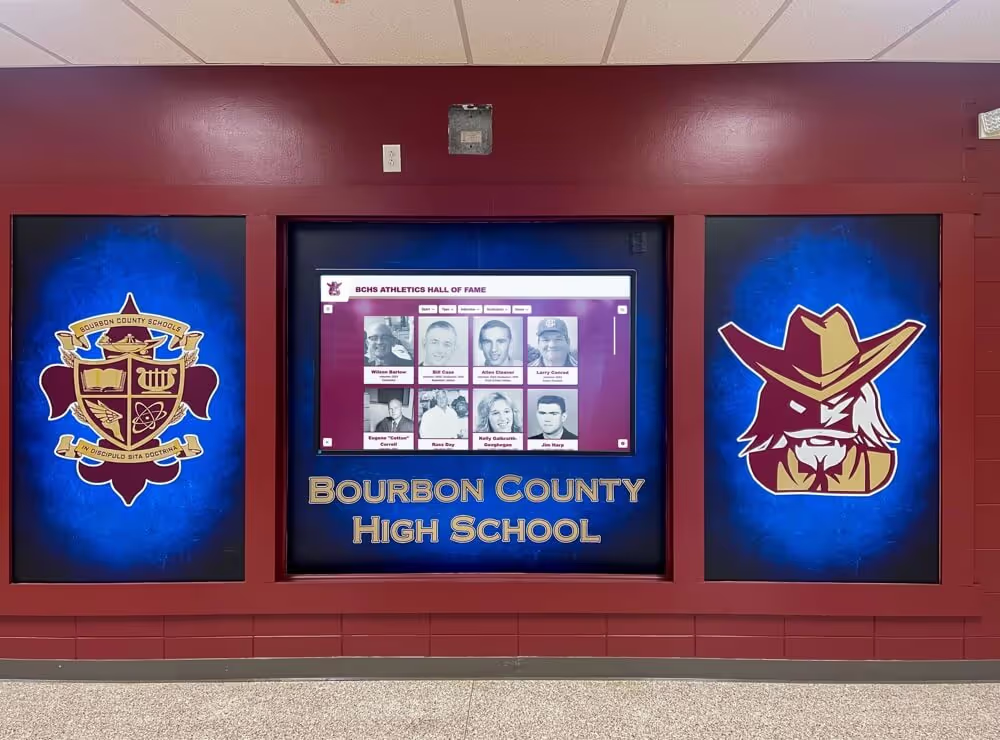
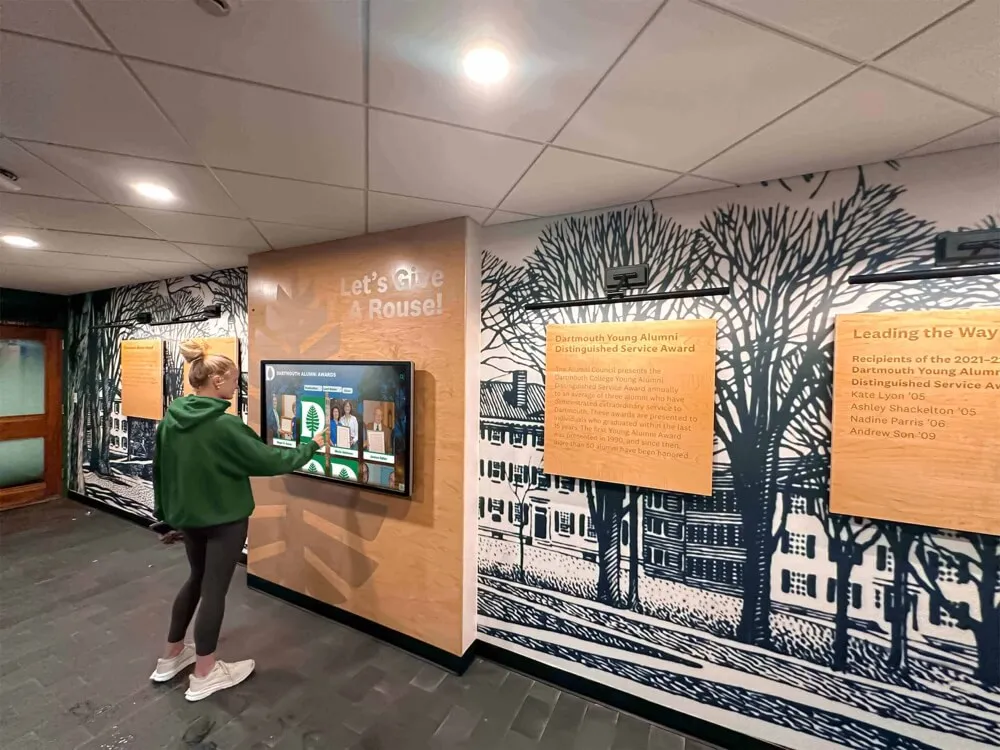
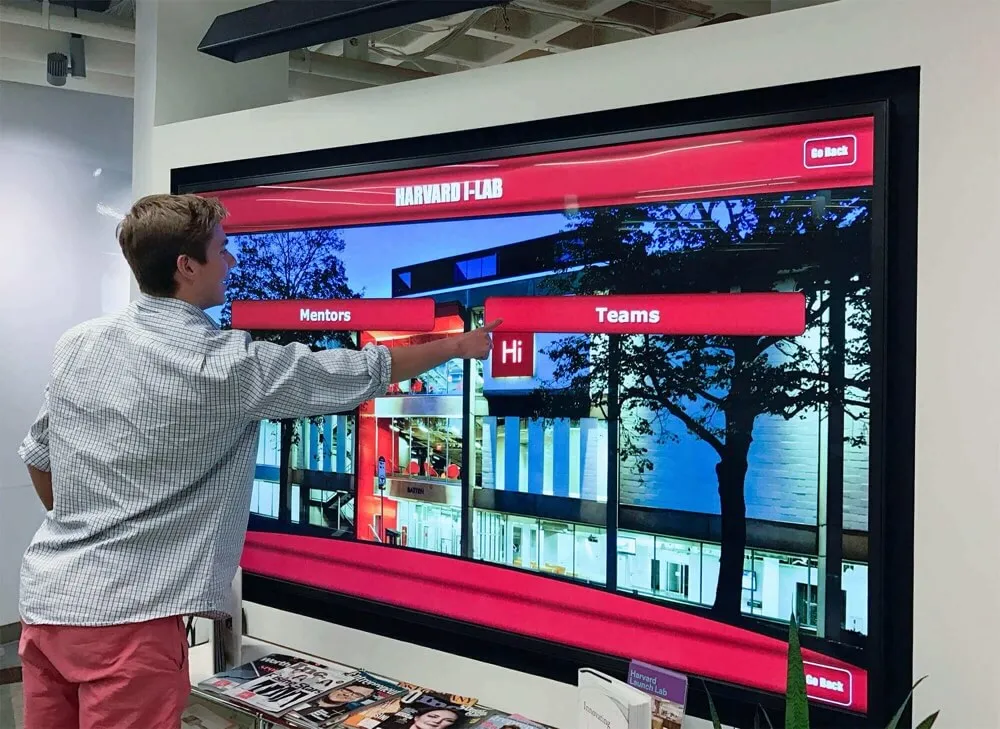
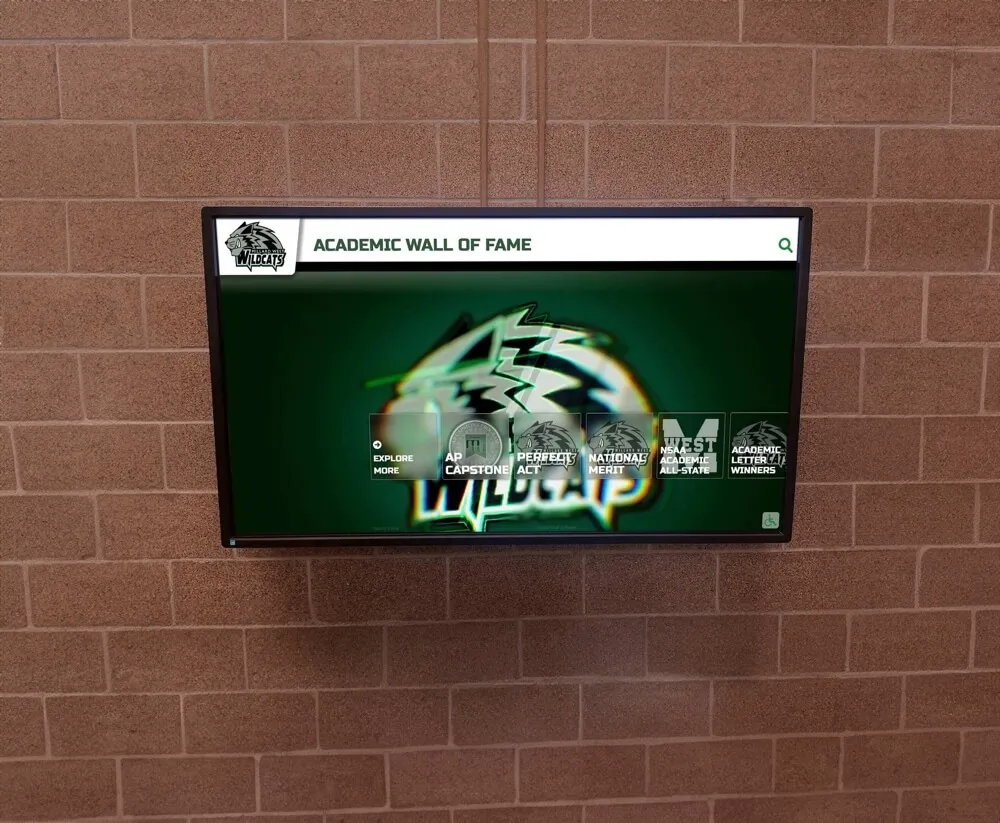
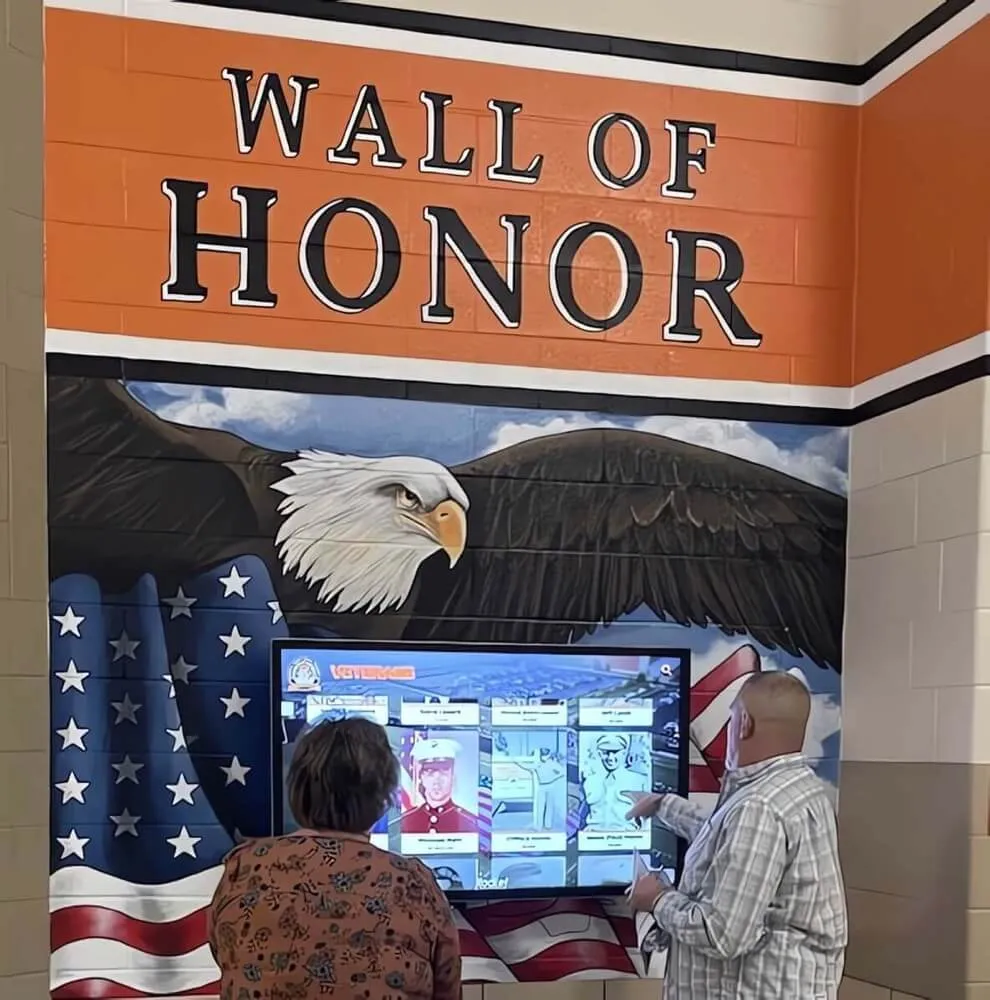
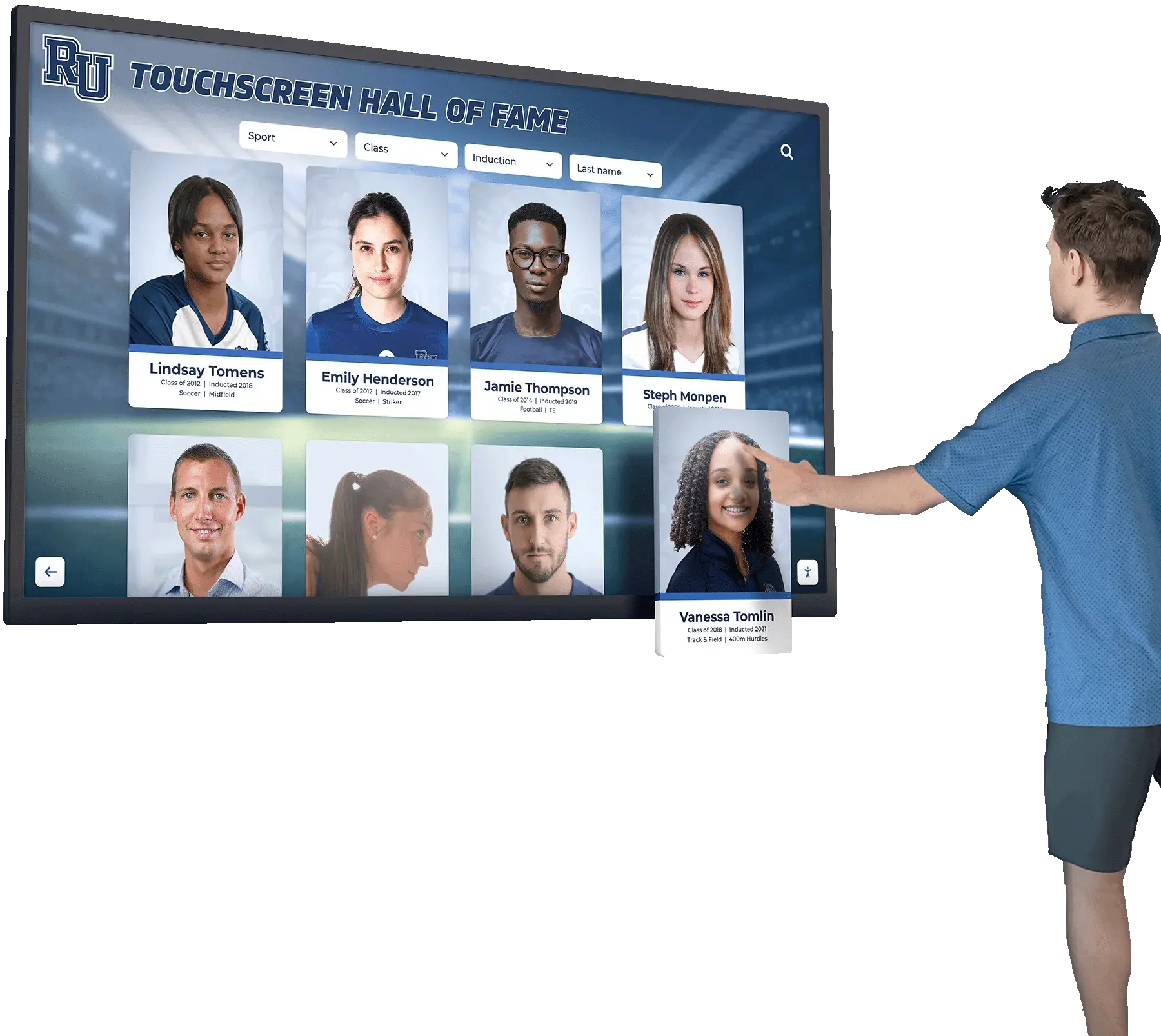
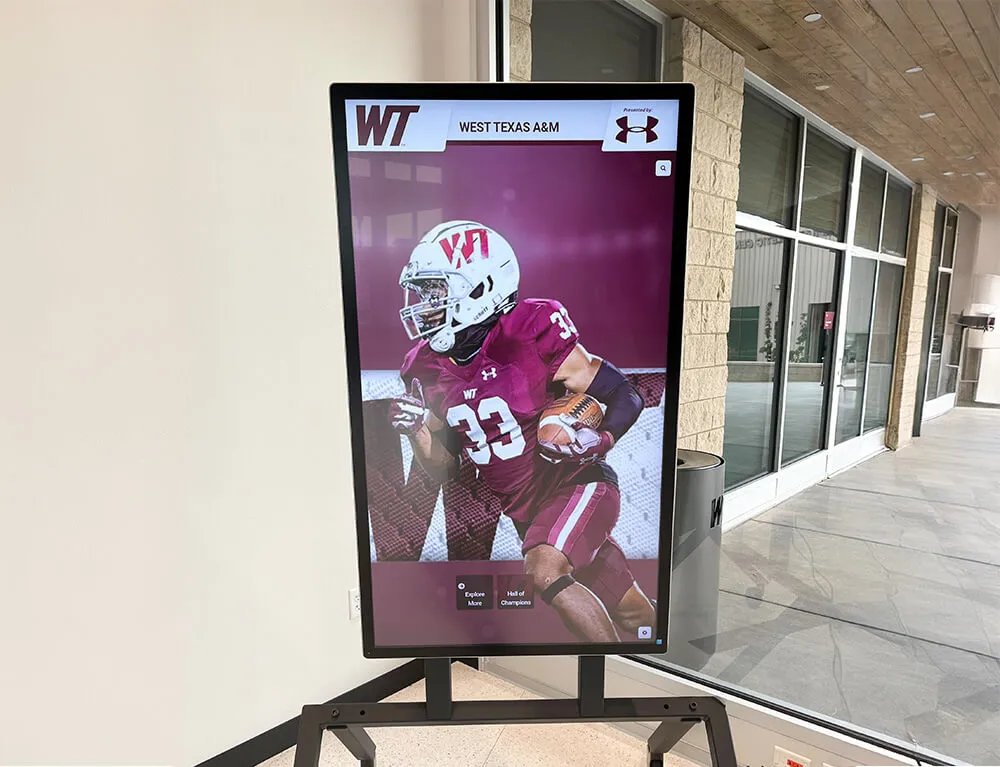
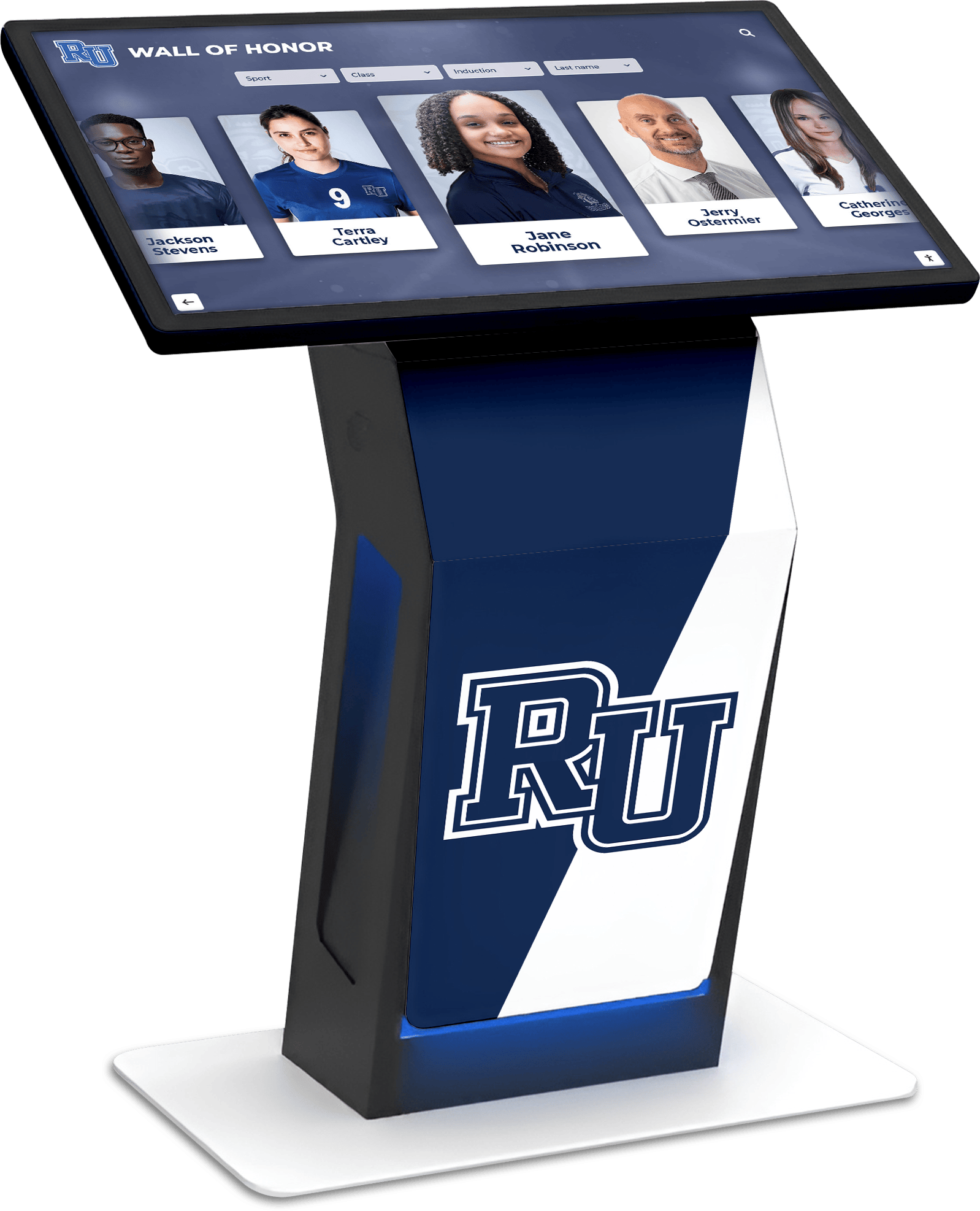
Purpose-built touchscreen displays transform yearbook content into engaging interactive experiences accessible to students, alumni, and visitors
Understanding Digital Yearbooks: Beyond Simple Scanning
Before implementing digital yearbook systems, school administrators need clear understanding of what comprehensive solutions provide versus basic scanning services that merely create static image files.
What Digital Yearbook Systems Deliver
Modern digital yearbook platforms provide interactive experiences that scanned PDFs cannot match:
Interactive Touchscreen Display Systems
Rather than relying on computers or mobile devices to view yearbook scans, dedicated touchscreen displays installed in high-traffic areas create accessible yearbook exploration stations through large-format displays enabling comfortable viewing and interaction, intuitive touch interfaces requiring no computer skills, always-available access during school hours without logins or barriers, and prominent placement ensuring visibility to students, staff, and visitors.
Single touchscreen installations can display unlimited yearbook content spanning decades of school history, with searchable interfaces enabling visitors to find specific students, classes, or activities instantly. This approach transforms yearbook content from archived documents requiring intentional seeking into celebrated institutional memory that students encounter regularly throughout their daily campus experience.
Searchable Archives and Name Recognition
The difference between browsing digital page images versus truly searchable yearbook content proves substantial for actual usage patterns. Comprehensive digital yearbook systems incorporate text recognition making every name, club, and activity searchable, facial recognition technology connecting individual students across multiple yearbooks, activity and organization indexes enabling discovery by interest areas, timeline navigation showing historical progression, and filtering capabilities by class year, student names, or content types.
When students can search their parents’ or grandparents’ names and instantly find their yearbook photos, sports team pictures, or club participation, yearbooks become living connections to family legacy rather than dusty books gathering dust in storage closets. This searchability proves particularly valuable for schools with multi-generational alumni families seeking to demonstrate continuing traditions and connections.
Learn about comprehensive digital class composite displays that complement yearbook systems with formal student portrait recognition.
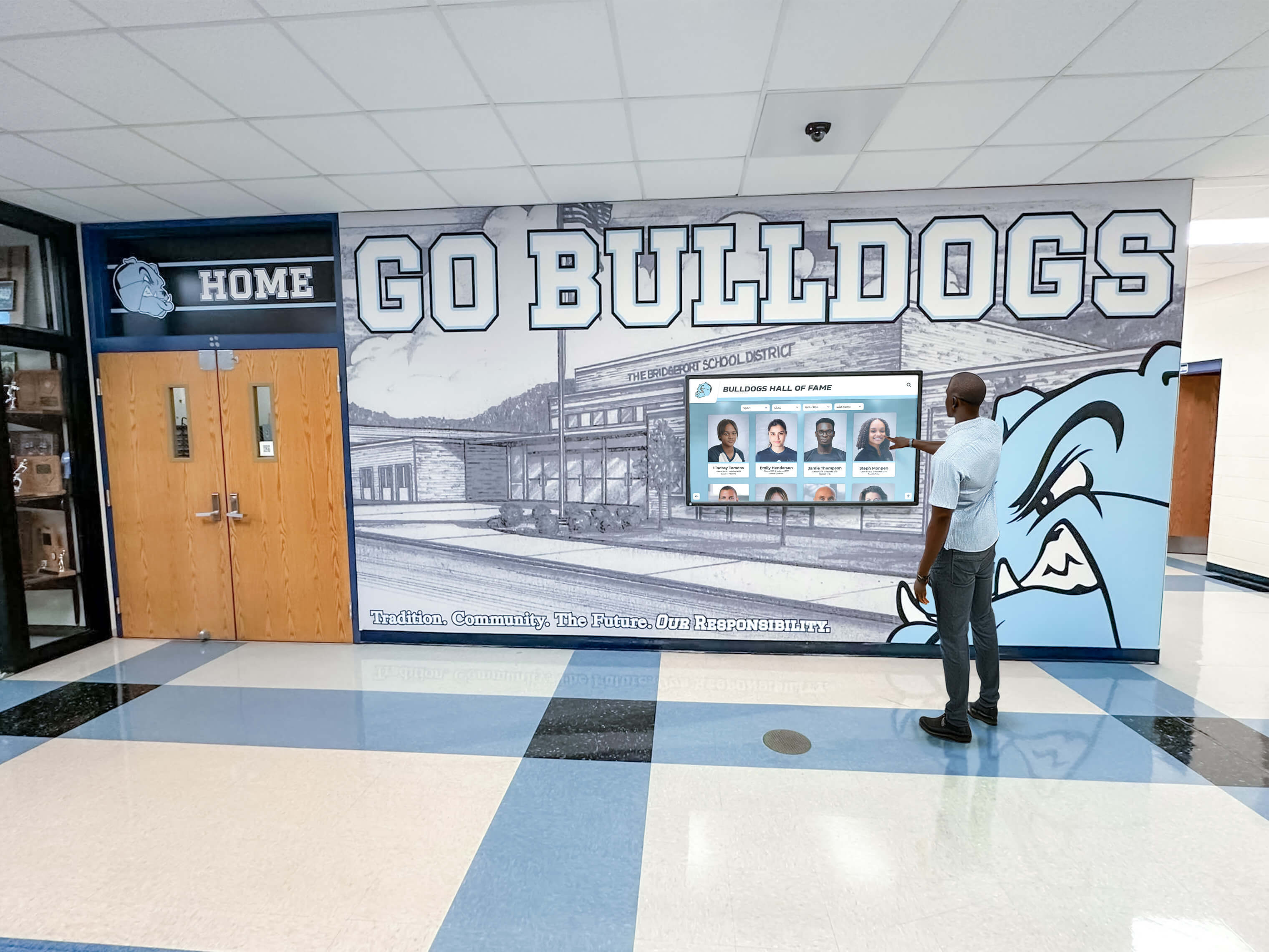
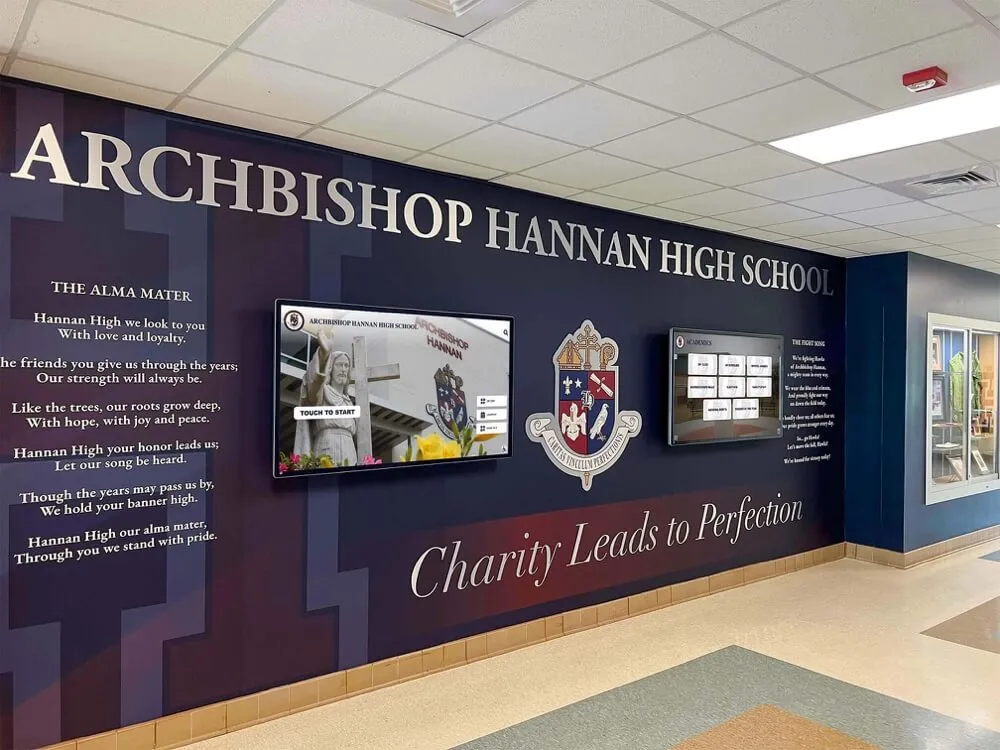
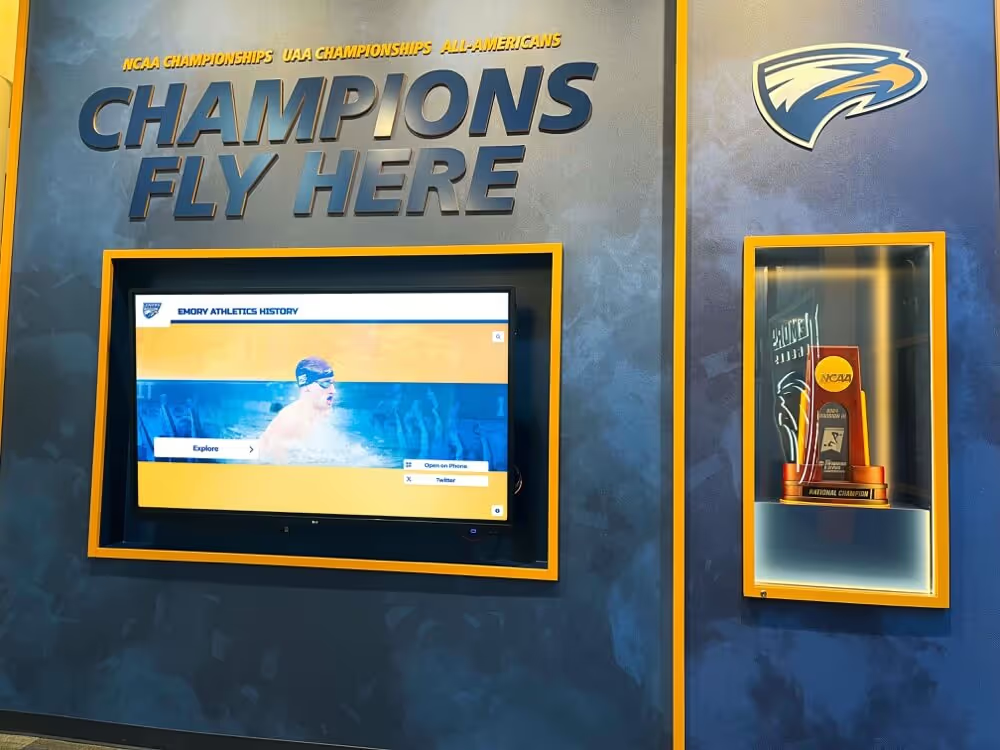
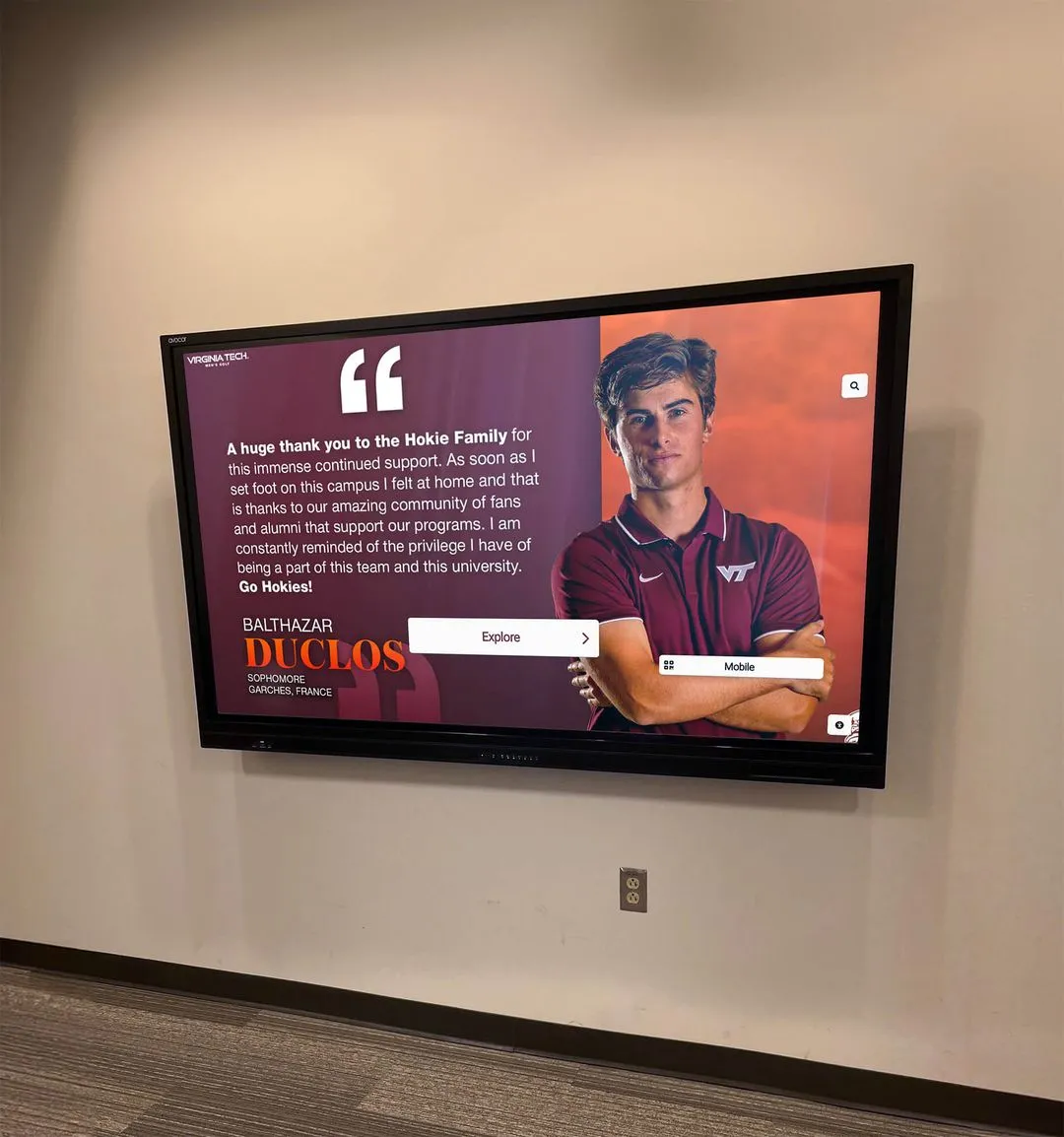
Interactive yearbook displays placed in high-traffic hallways encourage spontaneous exploration and discovery of school history
Multimedia Enrichment Beyond Static Pages
Digital platforms enable yearbook content expansion through video integration showing school events and activities, audio clips from performances or athletic announcements, supplemental photo galleries beyond printed yearbook limitations, updated information about alumni achievements, and interactive timelines connecting yearbooks across decades.
This multimedia capability transforms yearbooks from annual snapshots into comprehensive documentation of school life that continues growing and evolving beyond original publication. When current students can watch video clips from championship games their parents played in, or hear audio from concerts and performances spanning decades, yearbooks become multidimensional historical resources rather than two-dimensional photo collections.
Web-Connected Accessibility
Unlike physical yearbooks available only to those who purchased copies or can physically visit campus, web-connected digital yearbook systems extend access globally through mobile-responsive platforms accessible from any device, shareable links enabling alumni to distribute yearbook content, integration with alumni engagement platforms and school websites, social connectivity allowing commenting and memory sharing, and 24/7 accessibility regardless of physical location or library hours.
This extended reach proves particularly valuable for alumni living distant from campus who want to share school memories with their families, prospective students researching school traditions and culture, and development staff demonstrating institutional continuity to donors considering major gifts supporting ongoing school programs.
Primary Digital Yearbook Applications
Schools implement digital yearbook systems for diverse purposes requiring different technical approaches and content strategies.
Historical Yearbook Preservation and Archiving
Many schools possess decades or even centuries of yearbooks facing deterioration, limited accessibility, and vulnerability to damage or loss. Digital preservation initiatives address these challenges through professional scanning of fragile historical yearbooks, archival-quality digital files ensuring long-term preservation, backup systems protecting against catastrophic loss, and restoration capabilities repairing damaged or faded content.
According to archival preservation standards, many schools lose irreplaceable yearbook volumes annually to fires, floods, deterioration, or simple misplacement. Digital preservation creates permanent backups ensuring institutional memory survives regardless of what happens to physical volumes.
Current Student Recognition and Annual Display
Beyond historical preservation, digital yearbook systems provide contemporary recognition platforms celebrating current students through senior class composites and underclassman portraits, club and activity participation recognition, athletic team celebrations and championship documentation, academic achievement and honor roll recognition, and performing arts program spotlights.
These displays serve similar functions to traditional physical trophy cases and recognition walls while providing unlimited capacity, easy updating, and sophisticated search capabilities that physical displays cannot match. Explore comprehensive digital displays for student recognition that extend beyond yearbook content alone.
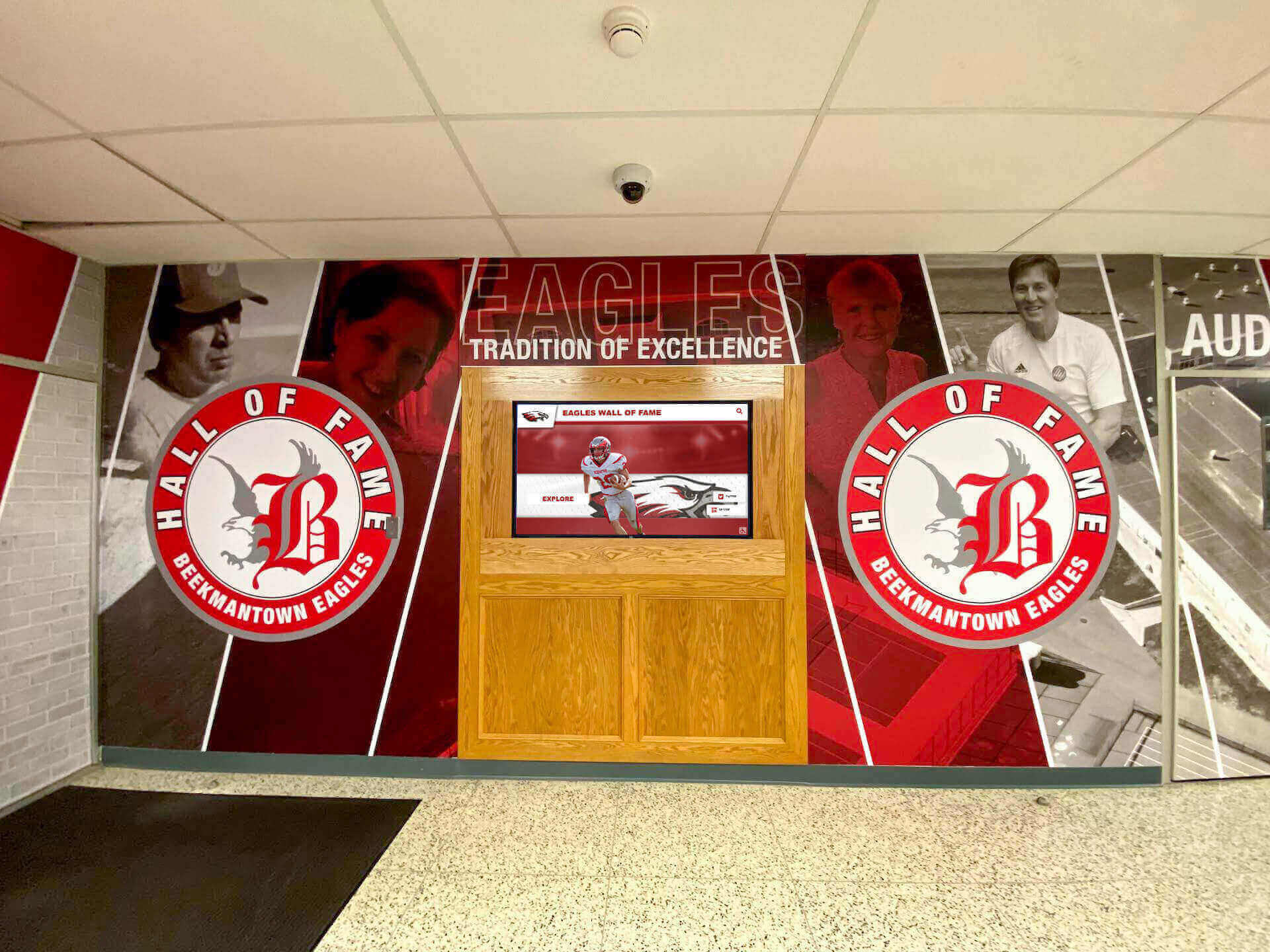
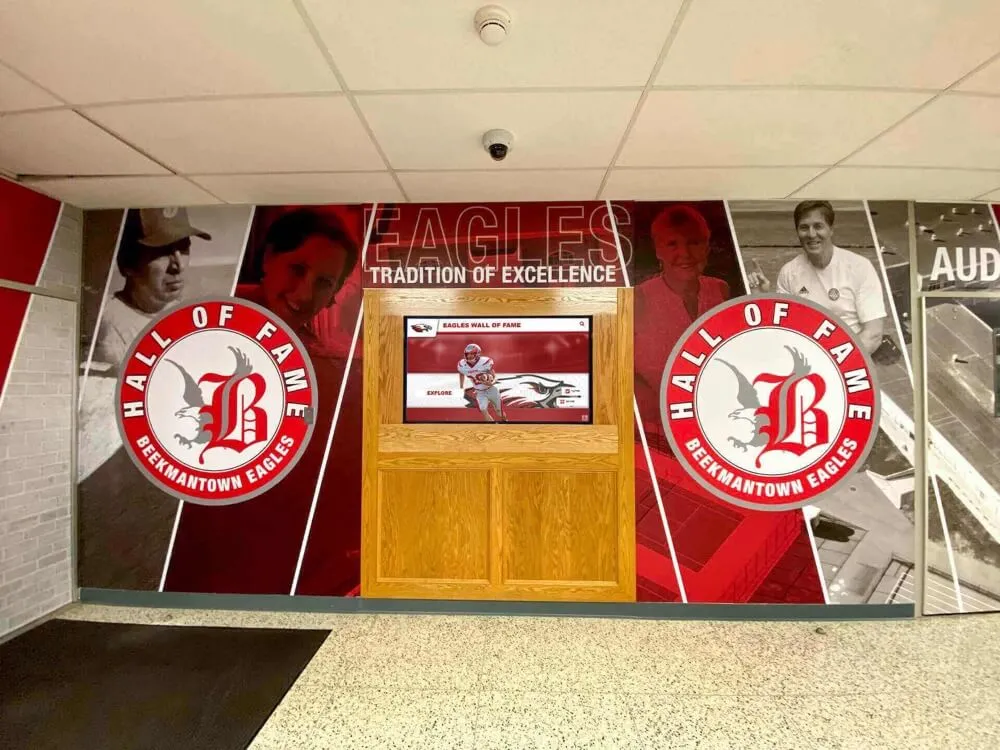
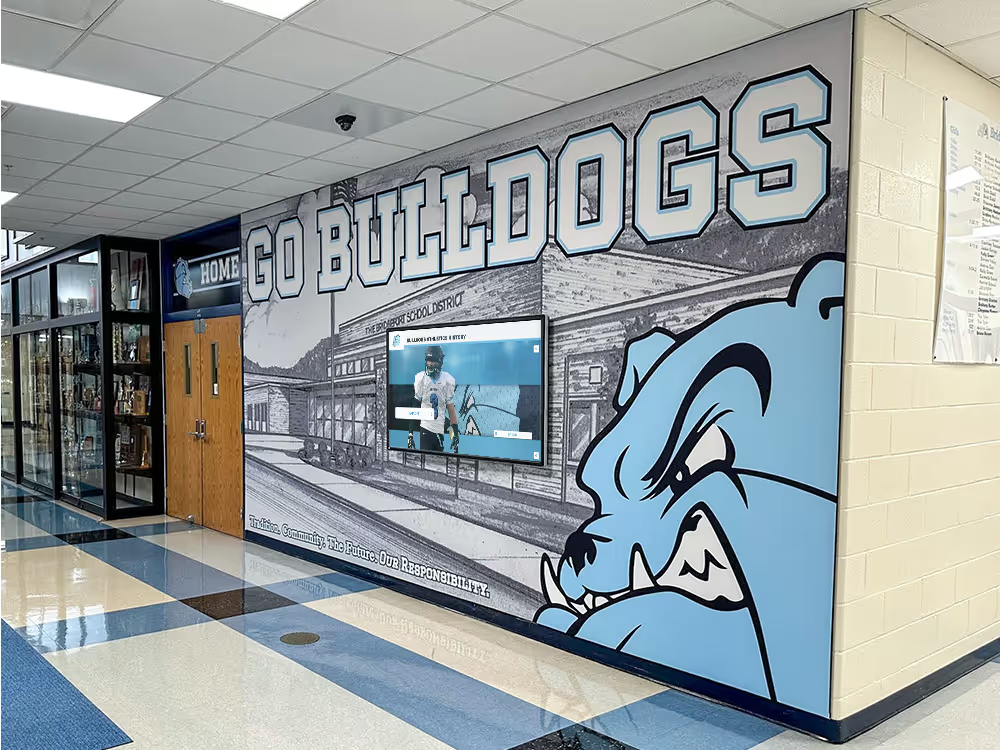
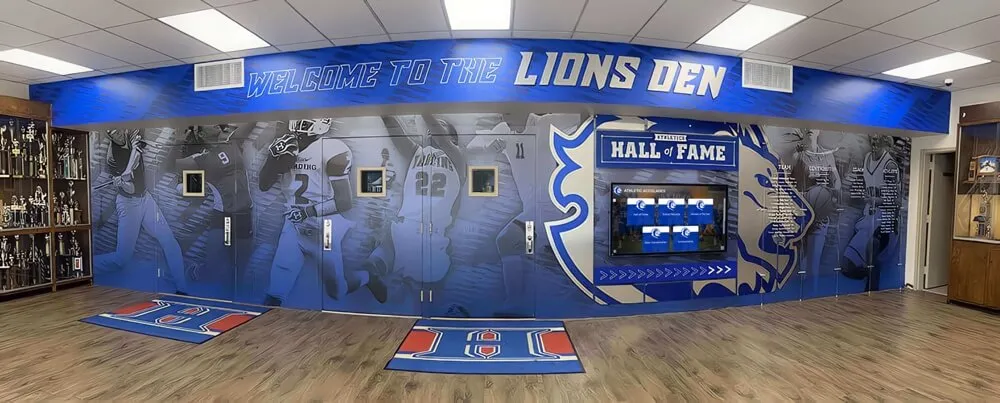
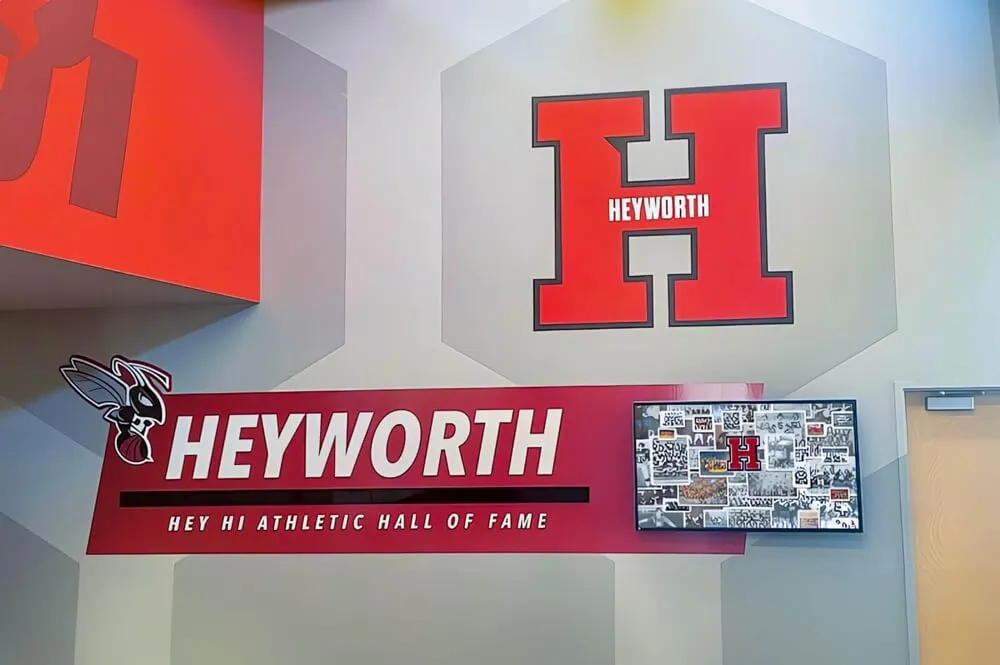
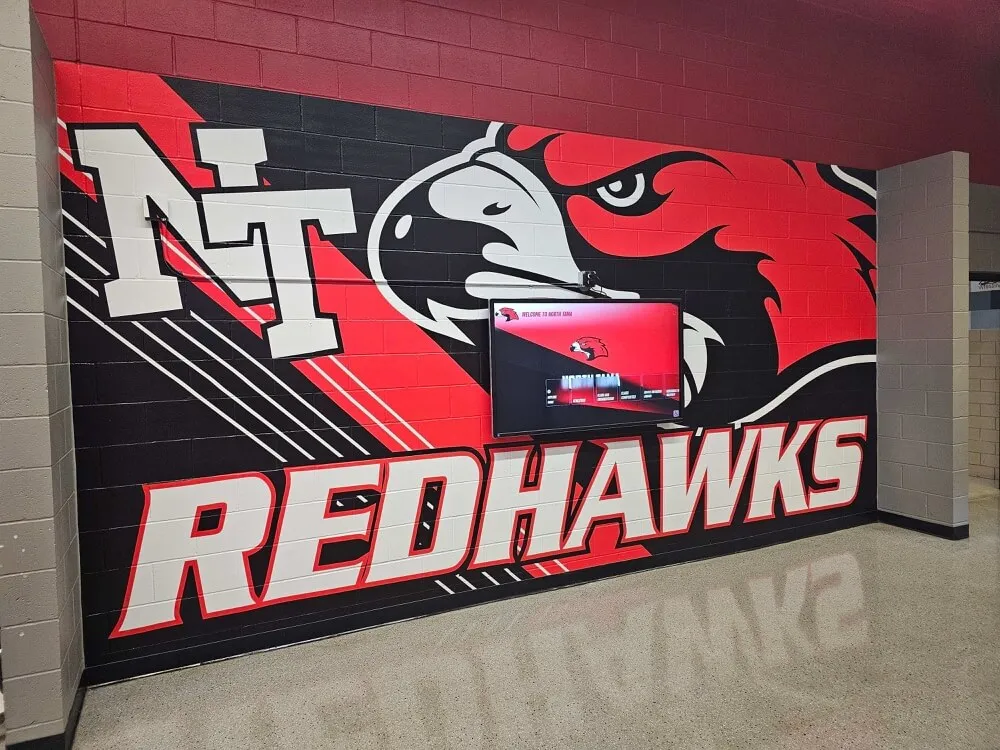
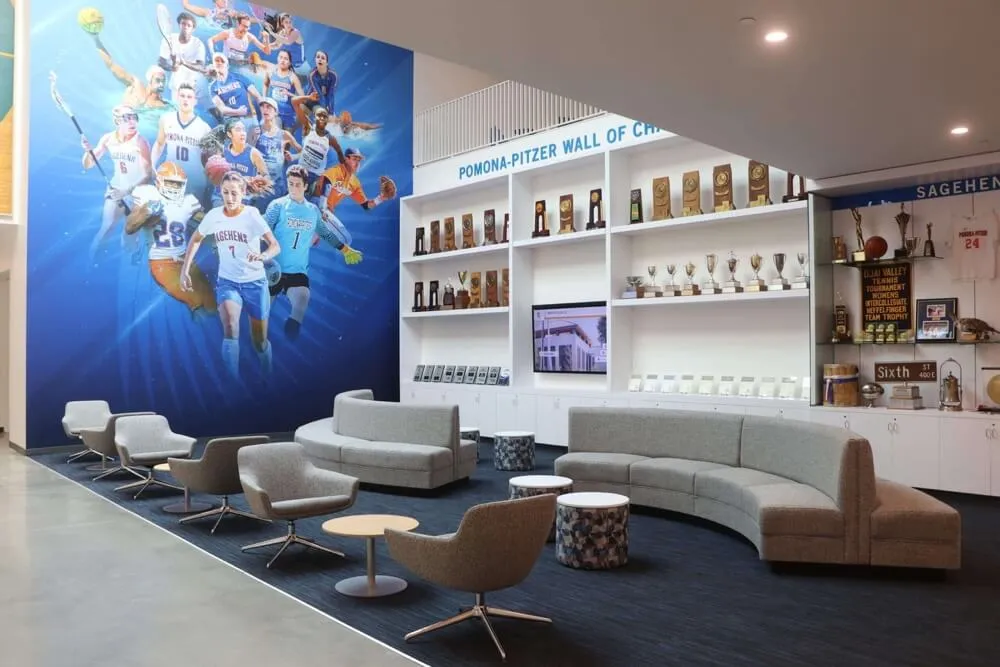
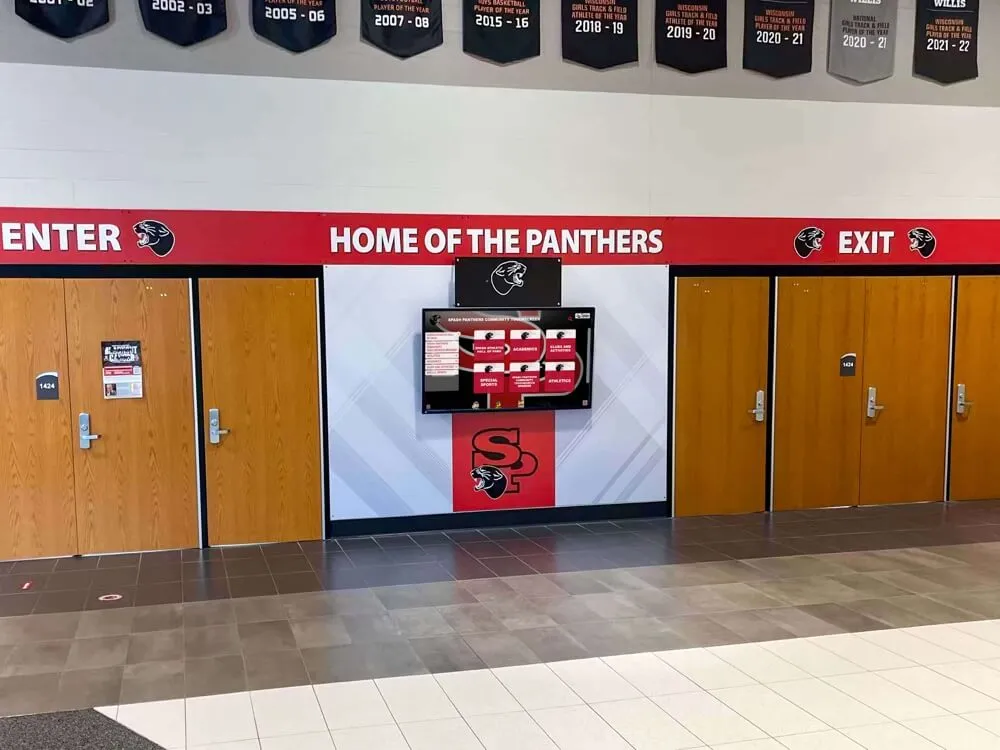
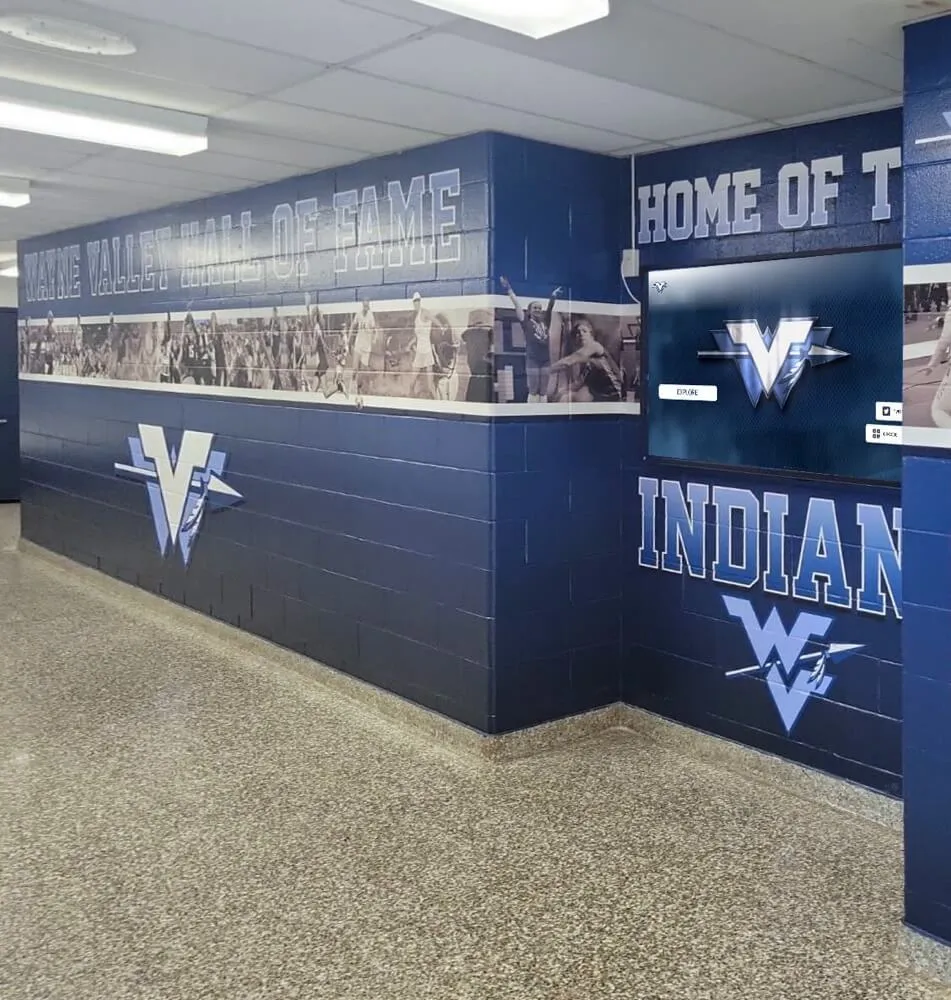
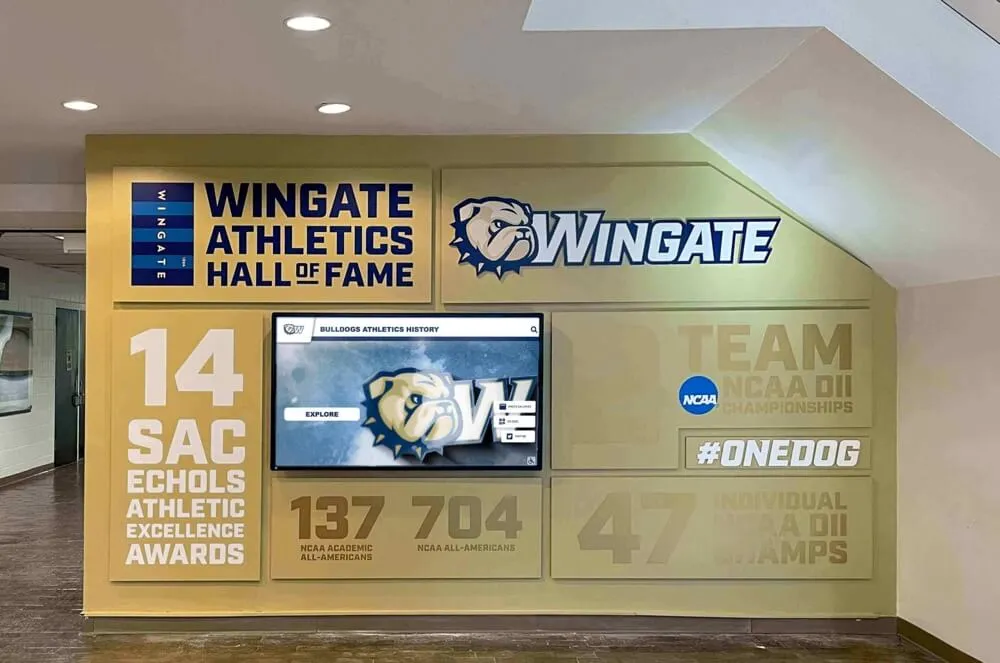
Comprehensive recognition environments integrate digital yearbook displays with traditional murals and branding creating memorable celebration spaces
Alumni Engagement and Development Support
Development and alumni relations staff use digital yearbook systems as stewardship tools through reunion planning support helping alumni reconnect with classmates, giving society recognition showing donor participation across decades, capital campaign documentation demonstrating institutional growth and progress, and legacy family recognition highlighting multi-generational school connections.
When advancement staff can quickly show prospective donors their own yearbook photos alongside current students in similar activities or spaces, they demonstrate continuing traditions and institutional values that inspire philanthropic support. Digital yearbooks become tangible evidence of school mission continuity that strengthens fundraising conversations.
Prospective Family Recruitment and Admissions
Admissions teams leverage digital yearbook content for recruitment purposes through campus tour integration showing school traditions and culture, virtual tour components for distance families, student life documentation beyond formal marketing materials, and historical depth demonstrating institutional stability and values.
Prospective families researching schools appreciate seeing authentic documentation of student life, activities, and traditions spanning decades rather than just polished marketing content. Digital yearbook systems provide this authentic glimpse into real school culture and community values.
Digital Yearbook Preservation: Scanning and Archival Strategies
Schools beginning digital yearbook initiatives typically start with historical preservation of existing physical volumes requiring systematic approaches ensuring quality and longevity.
Professional Scanning and Digitization Services
While basic scanning can be accomplished with consumer equipment, professional digitization services provide quality and features that DIY approaches cannot match:
High-Resolution Archival Scanning
Professional services provide specifications appropriate for long-term preservation through 600 DPI minimum resolution capturing fine detail, color calibration ensuring accurate reproduction, proper handling preventing damage to fragile volumes, and archival file formats designed for long-term digital preservation.
Consumer flatbed scanners rarely provide adequate resolution or color accuracy for archival purposes, and improper handling can damage irreplaceable bound volumes. Professional services use specialized book scanners that capture pages without breaking spines or applying pressure that accelerates deterioration.
Text Recognition and Searchability
The difference between image-only scans and fully searchable digital content proves substantial for actual usage. Professional digitization incorporates optical character recognition (OCR) making all text searchable, name indexing creating searchable student directories across all yearbooks, quality assurance ensuring OCR accuracy, and database integration enabling advanced search functionality.
Without text recognition, users must manually browse page by page hoping to find specific content. Searchability transforms yearbooks from browsing experiences into instant discovery tools where any name, club, or activity can be found in seconds across decades of content.
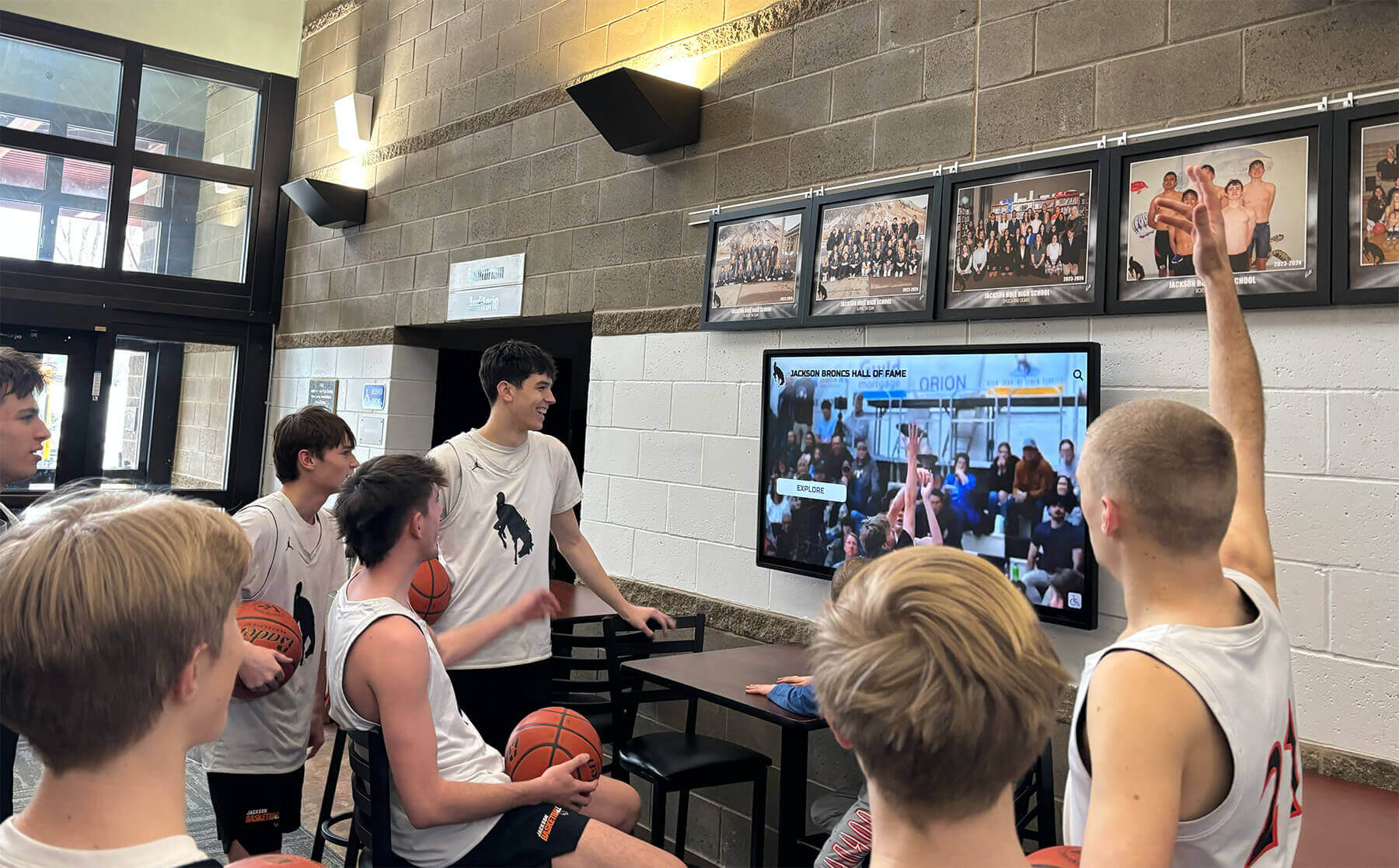
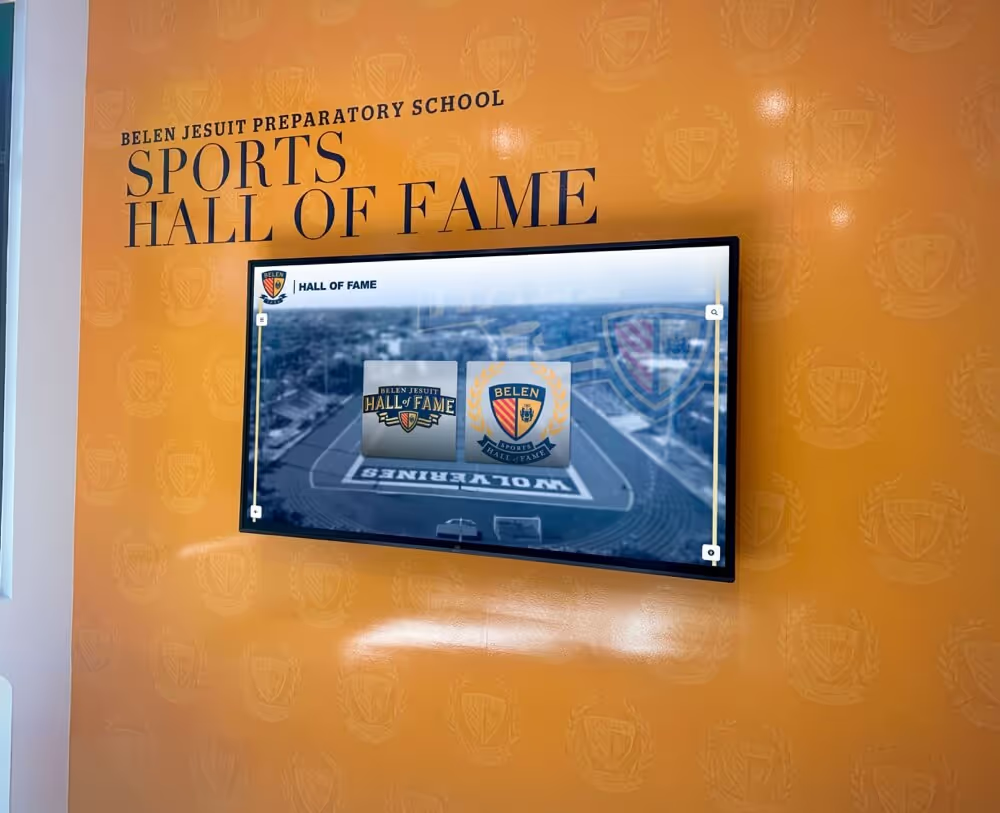
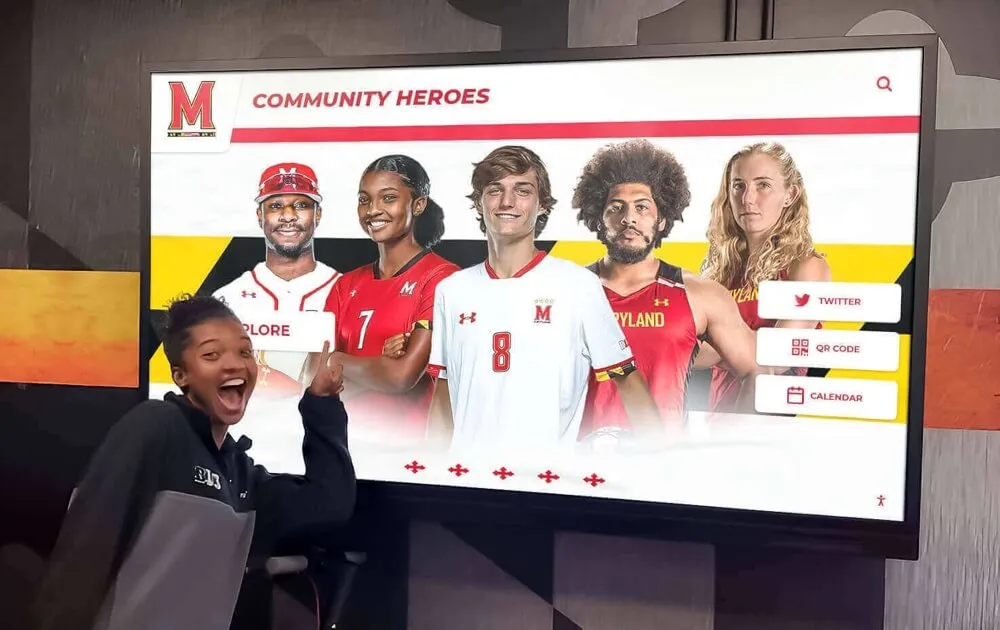
Digital displays showing yearbook content and highlights create gathering spaces where students connect with school history and traditions
Digital Restoration and Enhancement
Historical yearbooks often suffer from fading, staining, or physical damage that professional services can address through digital restoration removing stains, tears, and blemishes, contrast and color correction improving readability, page straightening and alignment, and selective enhancement making faded content legible.
These restoration capabilities enable schools to create digital archives superior in quality to deteriorating physical volumes, ensuring future generations can view yearbook content as it appeared when originally published rather than in current damaged condition.
Data Organization and Metadata
Professional digitization services provide organizational frameworks enabling effective access through year-by-year organization with proper metadata, student name indexing across all yearbooks, activity and organization categorization, graduation class directories, and integration-ready formats for various display platforms.
This organizational work proves time-consuming and requires expertise in archival standards and database design. Professional services provide this expertise ensuring digital yearbook collections remain accessible and usable decades into the future rather than becoming digital collections as inaccessible as the physical volumes they replaced.
In-House Scanning Considerations
Schools considering do-it-yourself scanning should understand limitations and requirements for quality results:
Equipment Requirements
Adequate in-house digitization requires appropriate technology including overhead book scanners preventing spine damage, high-resolution scanning capabilities (600 DPI minimum), color calibration tools ensuring accuracy, sufficient storage for large archival files, and staff time for careful systematic scanning.
Consumer flatbed scanners prove inadequate for bound yearbooks because they require pressing books flat, which breaks bindings and accelerates deterioration. Schools serious about in-house scanning need specialized book scanning equipment costing several thousand dollars minimum.
Time and Labor Considerations
Schools underestimate the time required for quality yearbook digitization. A typical yearbook requires 2-4 hours of careful scanning, additional time for quality review and correction, OCR processing and verification, metadata creation and organization, and backup and archival storage setup.
Schools with decades of yearbooks to digitize often abandon in-house projects after realizing the thousands of staff hours required. Professional services prove more cost-effective than internal staff time for projects involving more than a few yearbooks.
Learn about academic history archiving approaches that complement yearbook preservation within comprehensive historical documentation systems.
Preservation Standards and Best Practices
Whether using professional services or scanning in-house, schools should follow archival standards ensuring long-term accessibility:
File Format Selection
Archival digital files should use formats ensuring longevity through TIFF or JPEG2000 for master archival files, high-quality PDF/A for access copies, structured metadata in standard formats, and regular migration as formats evolve.
Using proprietary formats or compression schemes optimized for current web viewing often means files become inaccessible as technology changes. Archival standards prioritize formats with wide support and clear migration paths ensuring accessibility decades into the future.
Backup and Redundancy
Digital preservation requires systematic backup protecting against data loss through multiple backup copies in different physical locations, cloud storage redundancy, regular backup verification testing, and documented disaster recovery procedures.
Schools sometimes complete yearbook digitization projects only to lose files to hardware failures, ransomware attacks, or human error because they lack proper backup systems. Multiple redundant backups in different physical and cloud locations prove essential for true preservation.
Long-Term Accessibility Planning
Creating digital files represents only the beginning of preservation. Schools must plan for ongoing accessibility through regular file format migration as technology evolves, metadata standards maintenance, software independence avoiding proprietary systems, and organizational continuity plans surviving staff turnover.
Without ongoing stewardship, digital yearbook collections become inaccessible as file formats become obsolete, software stops running on new computers, and institutional knowledge about file organization disappears when key staff members leave. Successful digital preservation requires permanent organizational commitment, not one-time projects.
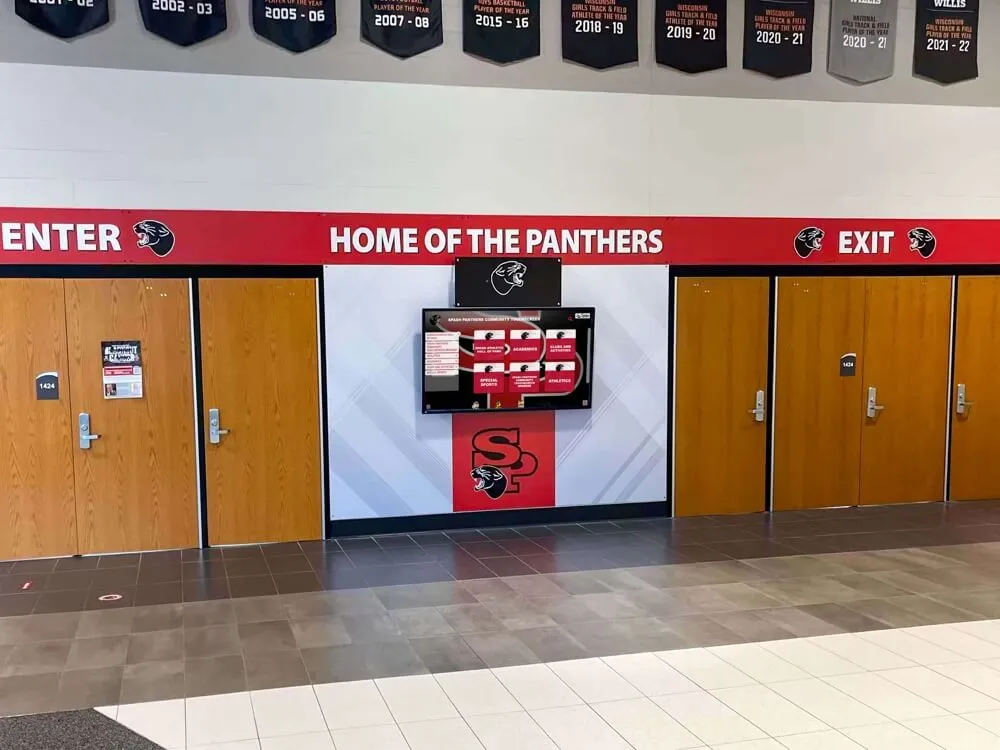
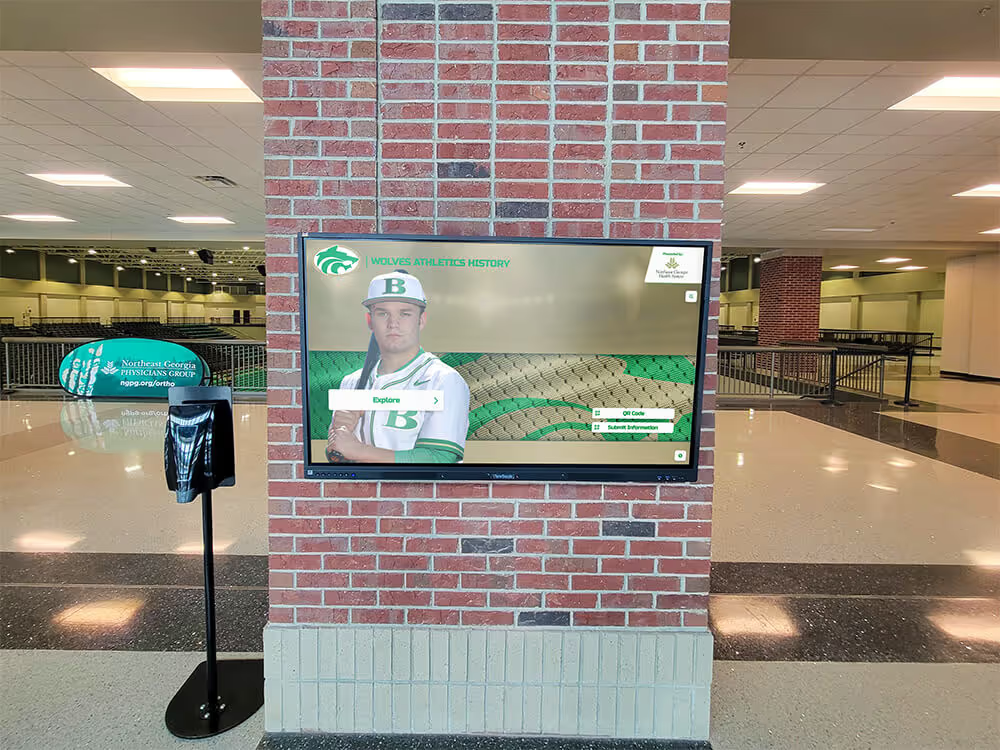
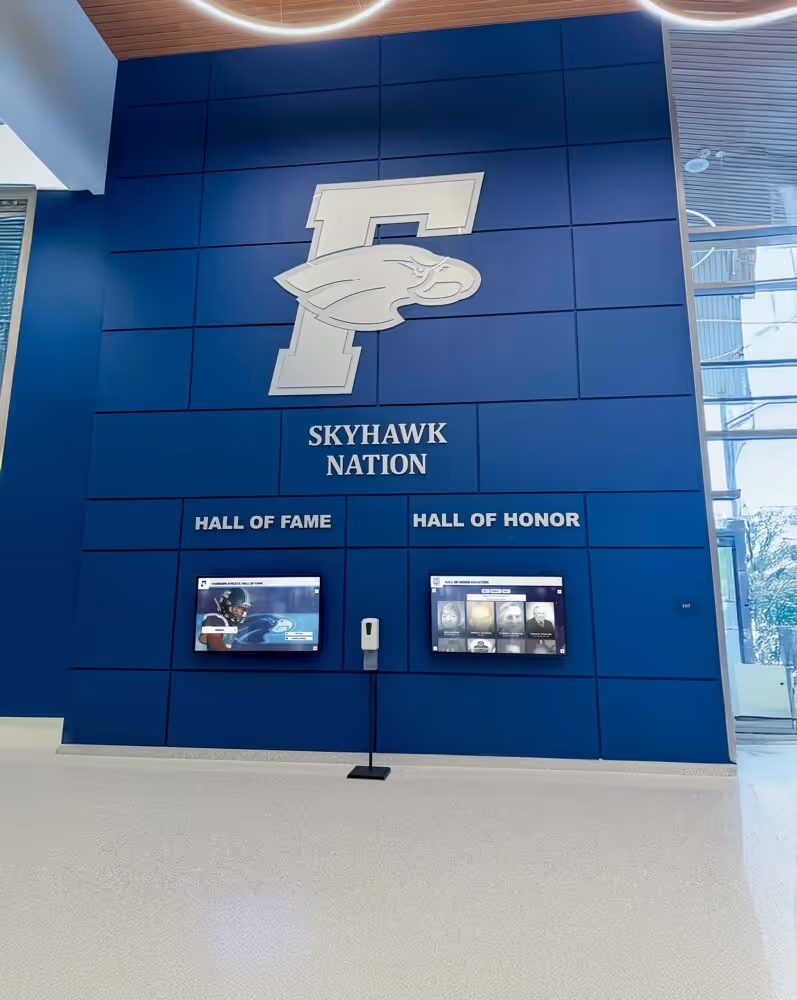
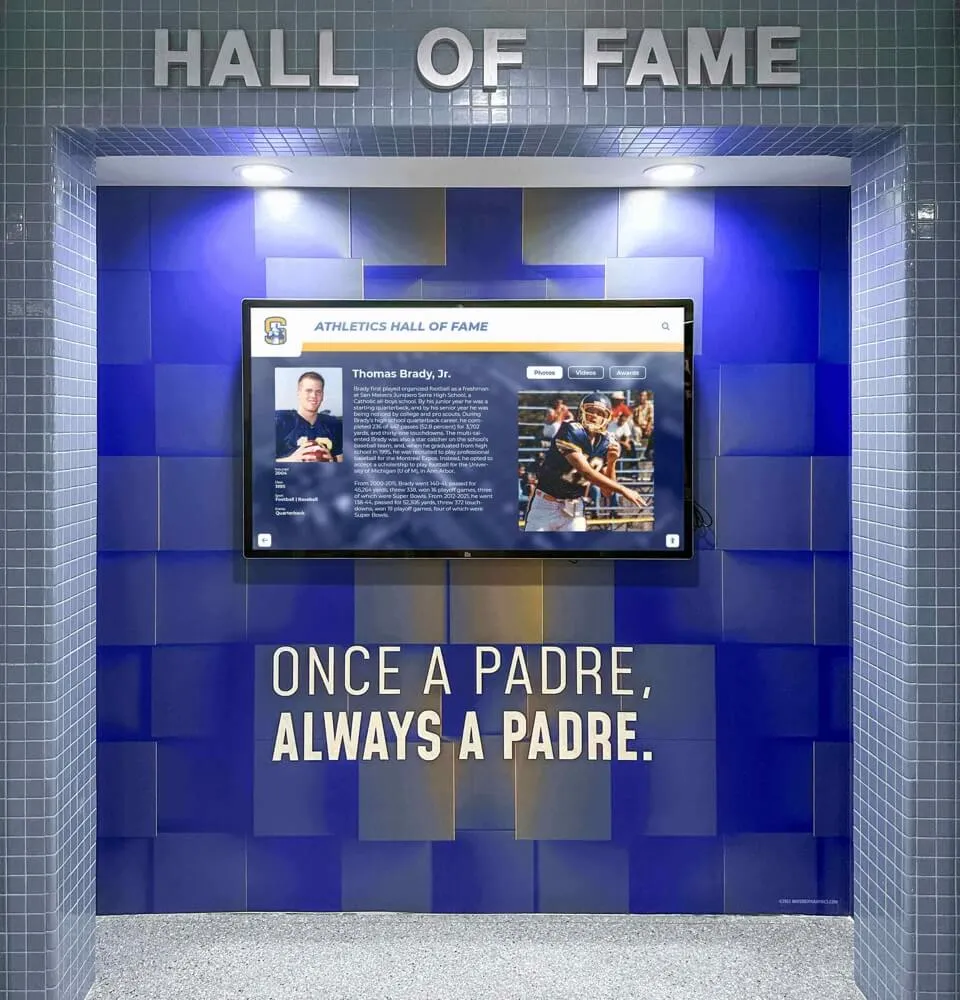
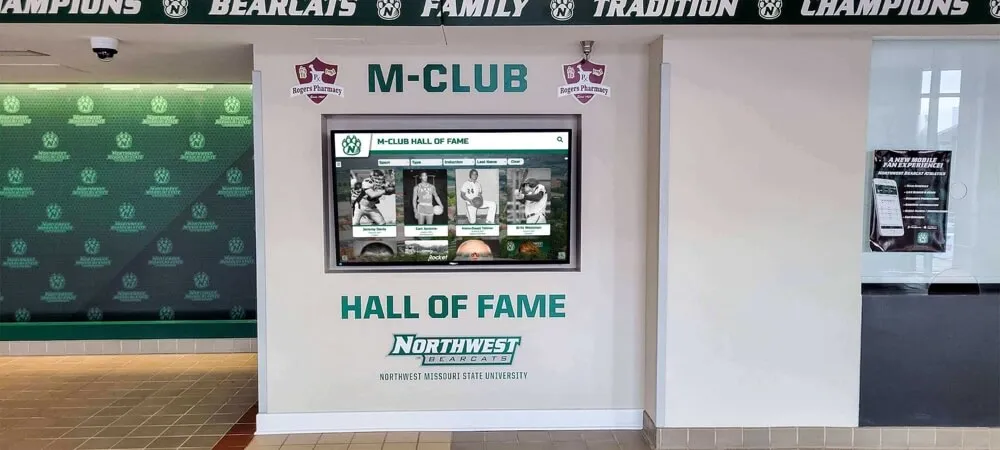
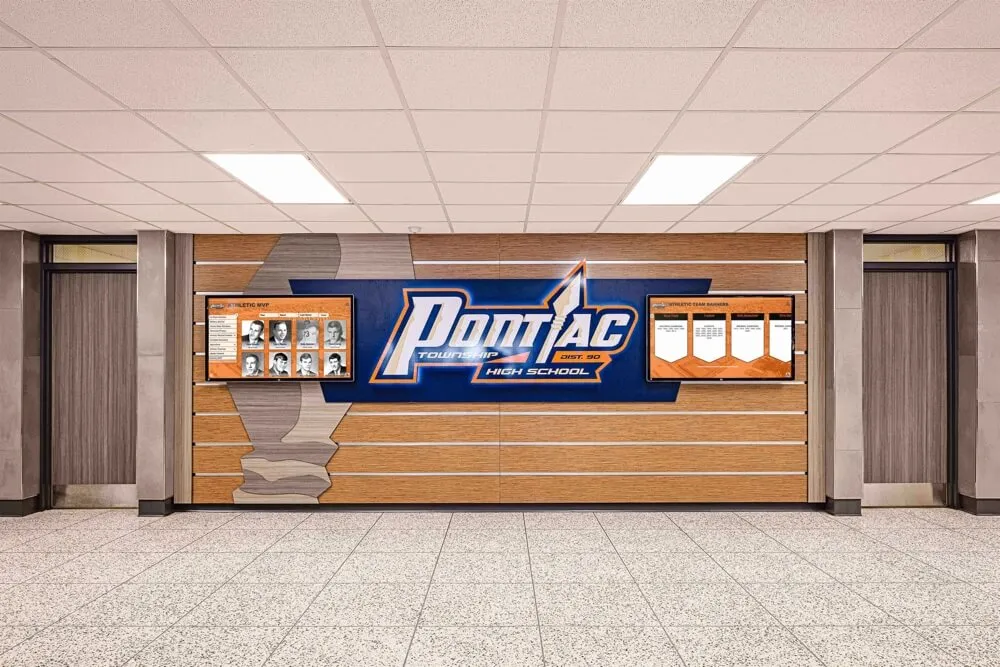
Digital yearbook displays integrate seamlessly with traditional school architecture while providing modern accessibility and interactivity
Interactive Yearbook Display Systems: Technology and Implementation
Preserved digital yearbook content becomes valuable to school communities primarily through accessible display systems encouraging regular exploration and engagement.
Touchscreen Display Hardware Selection
Choosing appropriate display technology significantly affects user experience and long-term satisfaction:
Commercial-Grade Touchscreen Requirements
School environments require durable displays designed for continuous operation through commercial panels rated for 16+ hours daily use, 10-point capacitive touch supporting intuitive gestures, anti-glare treatment reducing reflection in varied lighting, impact-resistant screens withstanding daily student use, and vandal-resistant construction appropriate for school settings.
Consumer televisions with touch overlays prove inadequate for school installations requiring sustained reliability and durability. Commercial displays cost more initially but last significantly longer and require less maintenance than consumer alternatives repeatedly replaced after brief service lives.
Display Size and Viewing Distance
Yearbook displays should accommodate comfortable viewing for multiple simultaneous users through 55-65 inch displays for individual interaction stations, 75+ inch screens for group viewing areas, proper mounting heights enabling access by all ages, and viewing distance calculations ensuring readability.
Undersized displays force users uncomfortably close while preventing multiple people from viewing simultaneously. Properly sized displays enable comfortable interaction and accommodate the spontaneous small groups that form around popular content.
Computing and Software Requirements
Interactive yearbook displays require adequate computing power for smooth performance through dedicated media players or computing systems, sufficient processing power handling high-resolution images, adequate storage for local content caching, reliable network connectivity enabling remote management, and professional content management software designed for yearbook applications.
Generic digital signage software lacking yearbook-specific features proves frustrating to use and often gets abandoned. Purpose-built systems like Rocket Alumni Solutions provide interfaces optimized specifically for yearbook browsing, search, and discovery rather than requiring adaptation of generic slideshow software never intended for interactive exploration.
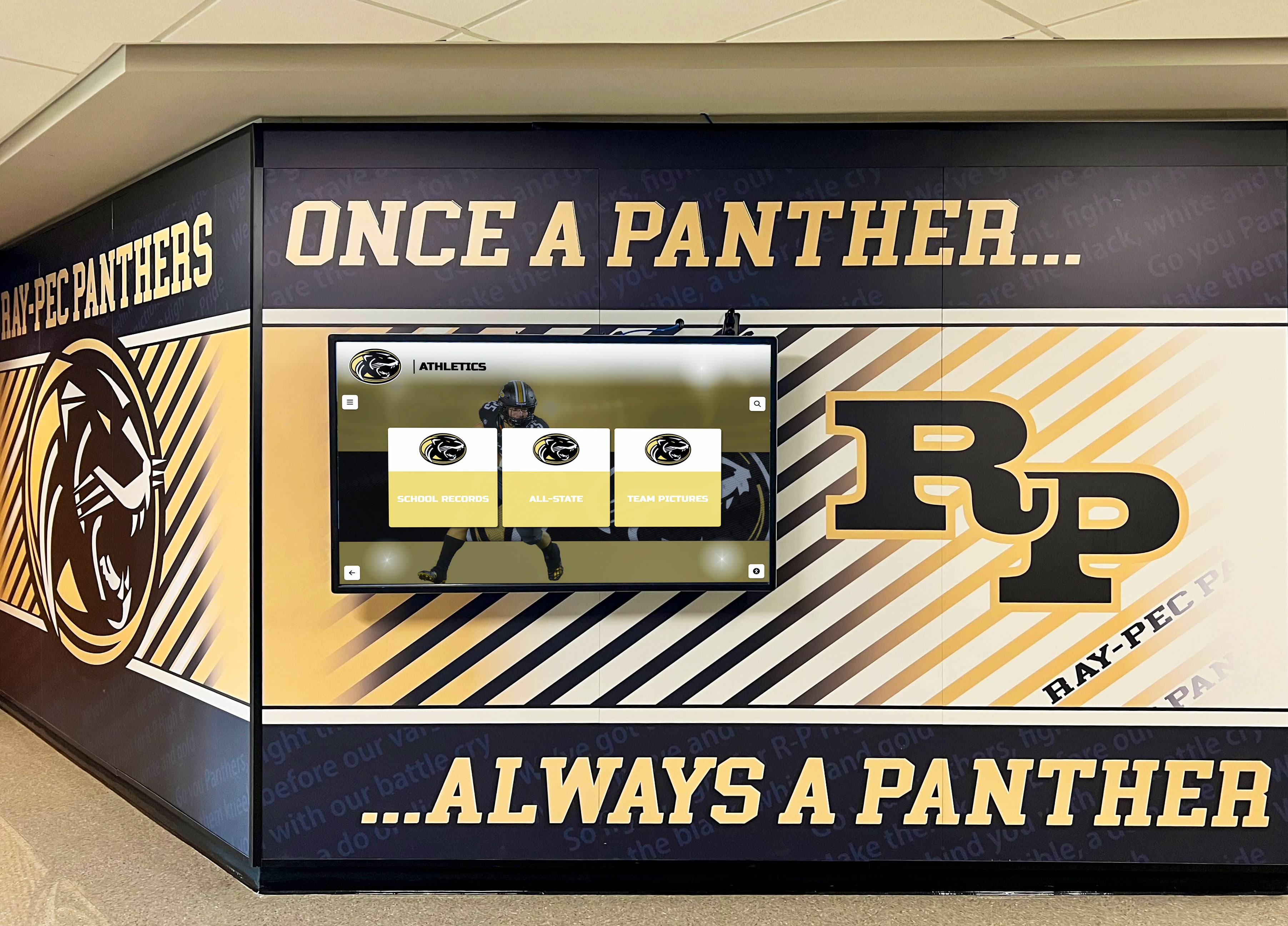
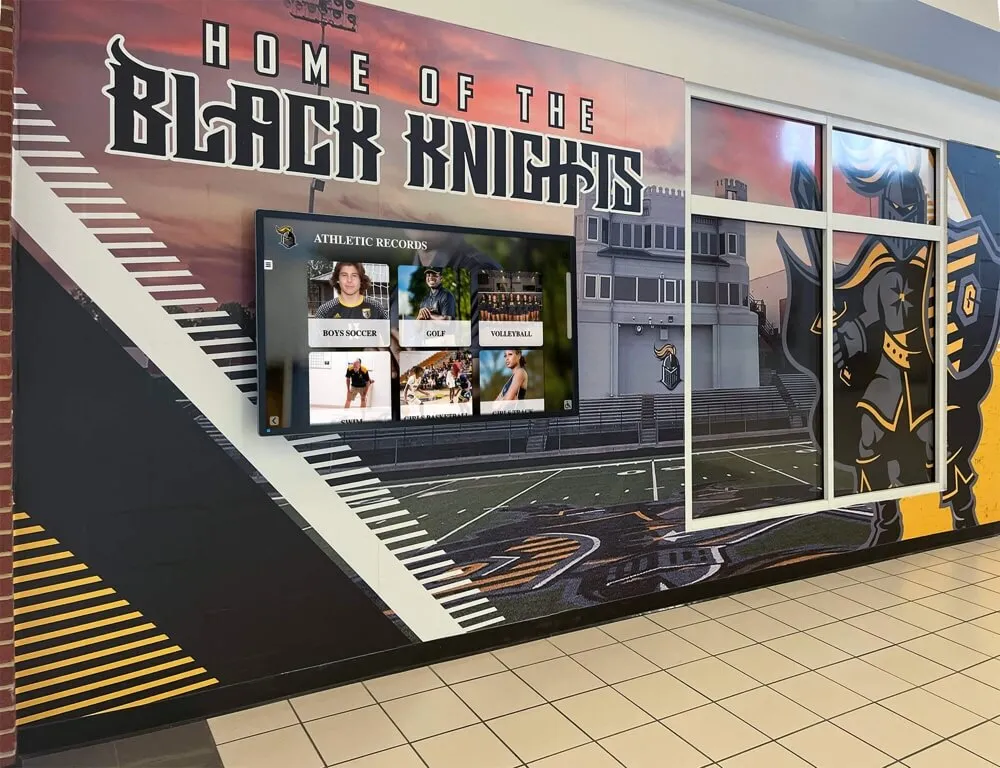
Strategic display placement in high-traffic corridors maximizes yearbook system visibility and encourages spontaneous exploration by passing students
Installation Planning and Physical Integration
Professional installation ensures reliable operation and appropriate integration within school environments:
Location Selection and Placement Strategy
Display effectiveness depends heavily on thoughtful placement through high-traffic area selection maximizing exposure, adequate space for comfortable viewing and interaction, appropriate lighting avoiding screen glare, protection from weather if placed near exterior doors, and proximity to network infrastructure enabling connectivity.
Yearbook displays tucked into remote corners get ignored regardless of content quality. Prime lobby locations, main hallway intersections, cafeteria entrances, and outside athletic facilities ensure maximum visibility encouraging regular engagement.
Mounting and Physical Installation
Secure installation requires professional attention to structural mounting supporting display weight long-term, ADA-compliant heights enabling wheelchair access, cable management concealing power and data lines, ventilation preventing computing system overheating, and tamper-resistant hardware appropriate for school environments.
Working with experienced audiovisual installers familiar with education settings ensures installations meet safety requirements while avoiding common problems that create maintenance headaches or accessibility barriers.
Network Infrastructure and Connectivity
Interactive displays require reliable connectivity through wired ethernet connections providing stable bandwidth, wireless backup connectivity where hardwired proves impractical, adequate network security protecting yearbook systems, content delivery network support enabling fast loading, and remote management access enabling off-site troubleshooting.
Insufficient bandwidth or unreliable connectivity ruins user experiences with slow-loading images, frozen interfaces, and frequent system failures. Proper network infrastructure prevents these predictable problems from undermining yearbook system value.
Content Management Platform Requirements
Backend systems managing yearbook content determine day-to-day operational experience and long-term sustainability:
User-Friendly Administrative Interfaces
School staff need content management systems they can operate without specialized technical training through browser-based interfaces requiring no special software, drag-and-drop content upload and organization, intuitive search and tagging tools, preview functionality showing changes before publication, and role-based permissions enabling appropriate staff access.
Solutions requiring programming knowledge or complex database management rarely get maintained properly after initial enthusiastic launch periods. Sustainable yearbook systems provide administrative tools that typical school staff can operate confidently without constant IT department support.
Discover how digital yearbook systems deliver benefits beyond traditional print formats.
Flexible Content Organization
Yearbook content management should support diverse organizational approaches through chronological year-by-year navigation, student name-based searching and indexing, activity and organization categorization, class and graduation year grouping, and customizable featured content showcasing priority materials.
This organizational flexibility enables schools to surface yearbook content in ways matching how users actually think about and seek information rather than forcing users to adapt to rigid structures reflecting database design rather than human memory and association patterns.
Search and Discovery Features
Effective yearbook systems make content discoverable through full-text search finding any name or term, facial recognition connecting individuals across years, activity and organization indexes, tag-based browsing and filtering, and suggested content recommendations based on viewing patterns.
Without robust search functionality, digital yearbooks become mere page-flipping exercises barely better than physical books. Comprehensive search transforms yearbooks into discovery platforms where users can explore connections, patterns, and historical progressions they would never find through sequential browsing.
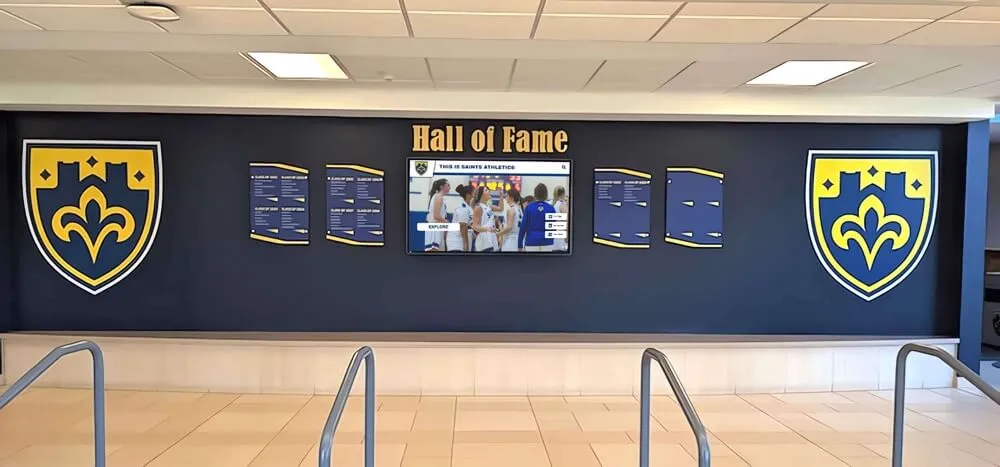
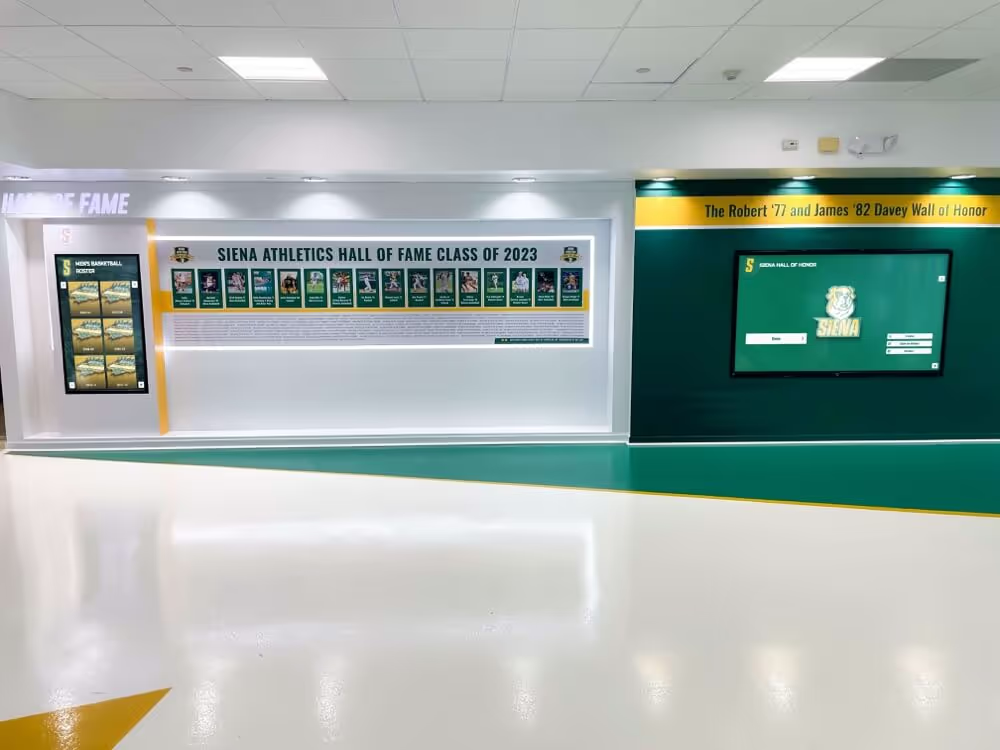
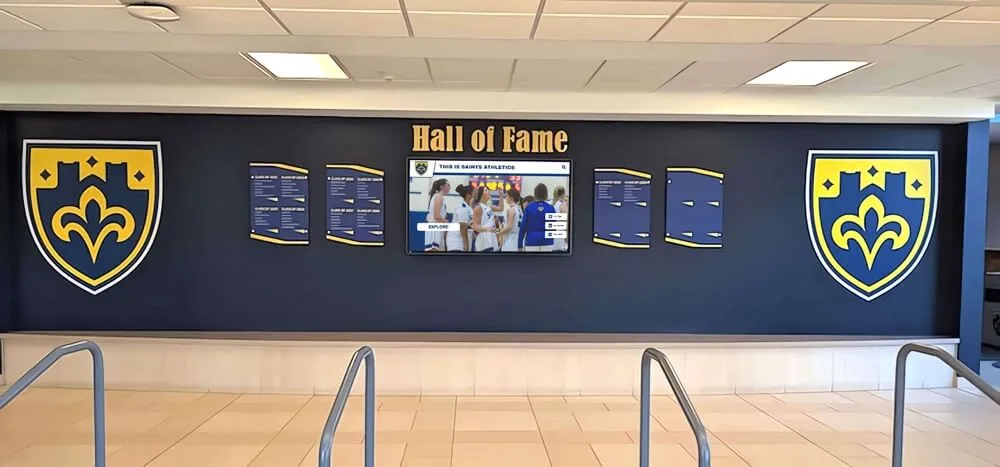
Integrated designs combine digital yearbook displays with traditional physical recognition elements creating comprehensive celebration environments
Creating Engaging Digital Yearbook Experiences
Technical implementation matters less than actual user engagement—successful digital yearbook systems focus relentlessly on creating experiences that encourage regular exploration and discovery.
Interface Design and User Experience
Intuitive interface design proves critical for systems meant to be used without instruction or training:
Simplified Navigation and Touch Interaction
Yearbook displays should require zero instruction through obvious touch targets and gestures familiar from smartphones, consistent navigation patterns across all screens, clear labeling explaining interface elements, minimal text entry requirements, and prominent search functionality enabling quick discovery.
Overly complex interfaces designed by technically-oriented staff often prove incomprehensible to actual users less comfortable with technology. Simple, obvious interfaces get used while complex feature-rich systems get ignored.
Visual Design and Aesthetic Appeal
Professional visual design encourages engagement through school branding and color integration, clean layouts avoiding visual clutter, high-quality image presentation, appropriate typography ensuring readability, and thoughtful animation adding polish without distraction.
Generic, unpolished interfaces signal low institutional priority and discourage engagement. Professional design communicating that schools value yearbook content and the students it represents creates positive impressions encouraging exploration and use.
Content Highlighting and Feature Rotation
Static displays showing identical content indefinitely lose their ability to attract attention. Dynamic presentations maintain interest through rotating featured content showcasing different yearbook years, current student spotlights connecting past to present, anniversary highlights marking significant milestones, reunion-related content timed to alumni gatherings, and seasonal variations maintaining freshness and relevance.
This dynamic content approach transforms displays from static installations into living elements of school culture that students notice and engage with regularly because content changes and evolves rather than becoming invisible background elements.
Making Content Discoverable and Accessible
Digital yearbook value depends entirely on whether users can find content they want to see:
Comprehensive Name Indexing
Every student mentioned in every yearbook should be findable through searchable names across all yearbook volumes, multiple name variations and nicknames, maiden name cross-references for alumni, phonetic search handling spelling variations, and clear results showing all appearances of searched individuals.
When students discover they can instantly find their parents, grandparents, siblings, or friends by searching names, yearbook displays become destination features rather than ignored kiosks gathering dust.
Explore comprehensive approaches to school historical timeline displays that contextualize yearbook content within broader institutional narratives.
Activity and Organization Indexing
Beyond individual names, yearbook content should be searchable by activities and interests through sports team indexes showing all team photos and rosters, club and organization listings across all years, activity type categorization enabling exploration by interest areas, championship and achievement highlights, and event documentation connecting yearbooks across decades.
This organizational indexing enables thematic exploration—students interested in theater can browse decades of drama club photos, while athletes can explore the progression of sports programs across school history.
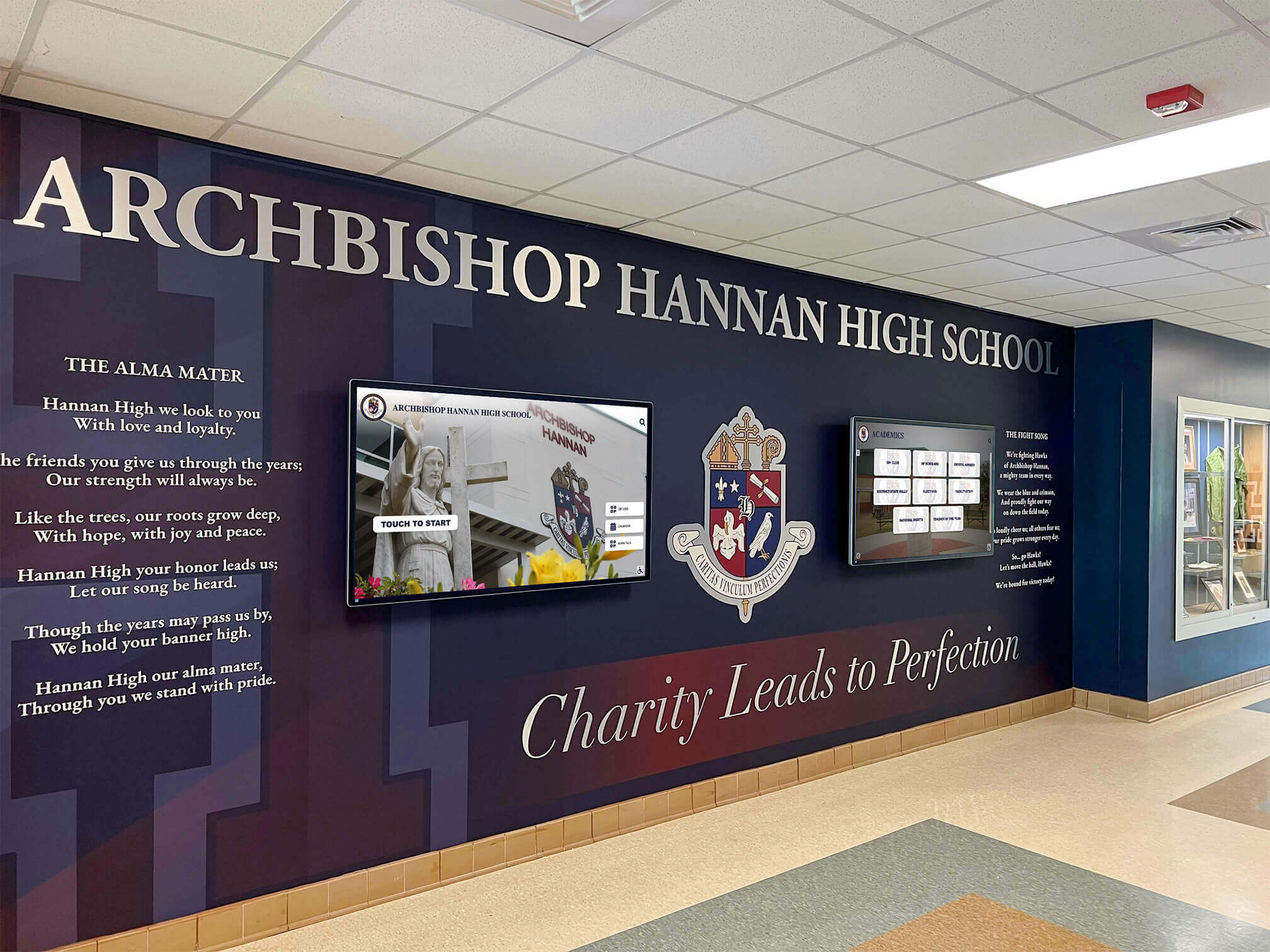
Prominent lobby installations ensure yearbook displays become central features of school environment rather than overlooked additions
Class and Graduation Year Navigation
Yearbook browsing frequently begins with specific years requiring easy navigation through chronological timeline displays showing all available years, decade grouping for historical collections spanning centuries, reunion year highlighting for significant anniversaries, and graduation class directories enabling quick access to senior class content.
Clear year-based navigation serves the common use case where alumni return to campus seeking their own yearbooks or parents want to show their children yearbook pages from their school days.
Multimedia Enrichment and Supplemental Content
Digital platforms enable yearbook enhancement beyond original printed content:
Video Integration and Historical Footage
Schools with archived video content can supplement yearbook pages with championship game footage and athletic highlights, performing arts recordings from concerts and shows, school event documentation from assemblies and ceremonies, historical footage showing campus evolution, and alumni testimonial videos reflecting on school experiences.
This video integration transforms yearbooks from snapshot collections into comprehensive multimedia documentation of school life that conveys experiences and atmospheres that still photographs alone cannot capture.
Audio Content and Historical Recordings
Audio archives complement visual yearbook content through school song and fight song recordings across decades, interview clips with notable alumni or long-serving faculty, historical radio broadcast excerpts from significant school events, and message recordings from milestone anniversary celebrations.
These audio elements particularly appeal to older alumni for whom familiar songs and voices trigger powerful nostalgia and emotional connection to school memories.
Supplemental Photo Collections Beyond Yearbook Limitations
Print yearbooks face space constraints forcing difficult editorial decisions about which photos to include. Digital platforms eliminate these limitations enabling unpublished outtakes and alternative shots, expanded team and group photos showing all participants, event photo galleries with dozens or hundreds of images, classroom and faculty photos beyond yearbook coverage, and crowd submissions of personal photos supplementing official content.
This expanded content creates more inclusive documentation ensuring more students receive recognition and visibility than space-constrained print yearbooks could ever provide.
Integrating Digital Yearbooks Within School Recognition Programs
Digital yearbook systems function most effectively when integrated within comprehensive recognition strategies celebrating student achievement and school culture.
Connecting Historical and Current Student Recognition
Effective integration links past and present student experiences:
Multi-Generational Family Recognition
Schools with significant multi-generational enrollment can celebrate family connections through legacy student identification showing family members across decades, shared activity participation highlighting continuing family traditions, reunion event support connecting alumni families, and visual timelines showing family involvement progression.
When current students see their parents, grandparents, or siblings in historical yearbooks, they develop stronger identification with school traditions and increased sense of belonging to ongoing communities rather than isolated cohorts.
Learn about comprehensive alumni engagement strategies that extend beyond yearbook access alone.
Tradition and Continuity Demonstration
Digital yearbook systems help communicate institutional values and enduring traditions through activity and organization progression showing decades of program continuity, achievement comparison across eras, visual documentation of campus evolution, and celebration of milestone anniversaries and significant historical moments.
This historical context helps students understand they participate in traditions and institutions larger than their immediate cohorts, building appreciation for schools as enduring communities rather than temporary educational conveniences.
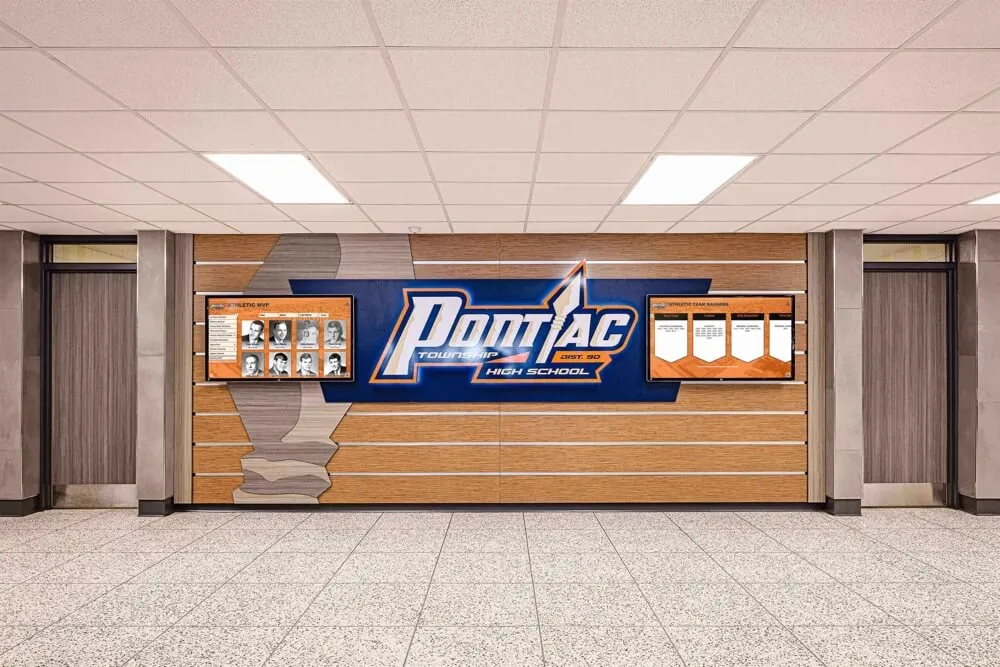
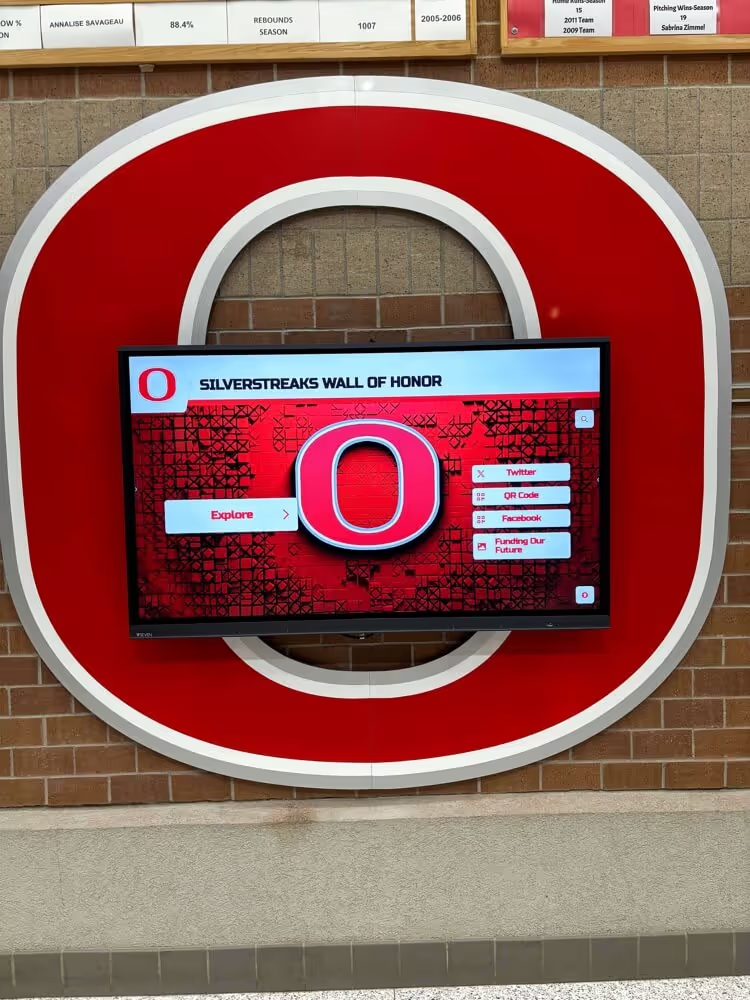
Comprehensive recognition environments integrate digital yearbook displays with traditional physical honor boards creating multi-layered celebration spaces
Current Student Recognition Enhancement
Digital platforms enable current student celebration exceeding traditional yearbook limitations through real-time achievement recognition throughout school year, expanded photo coverage beyond annual yearbook constraints, multimedia documentation including video and audio, social media integration enabling sharing and celebration, and interactive formats encouraging peer recognition and commenting.
This expanded recognition demonstrates that schools value all students and activities, not just those receiving limited space in print yearbooks produced after most of school year has passed.
Alumni Engagement and Development Applications
Development and alumni relations staff leverage digital yearbook systems for stewardship and engagement:
Reunion Planning and Attendance Support
Digital yearbook access supports reunion coordination through classmate connection assistance helping alumni find and contact peers, nostalgia generation through accessible historical content, pre-reunion engagement building excitement before gatherings, on-site displays at reunion events encouraging reminiscence, and post-reunion sharing extending engagement beyond event itself.
Alumni relations staff report that digital yearbook access substantially increases reunion attendance because alumni can reconnect with classmates and relive school memories before deciding whether to attend gatherings.
Donor Recognition and Stewardship Integration
Digital displays can incorporate donor recognition alongside yearbook content through giving society rosters showing donor participation across decades, campaign recognition celebrating fundraising milestone achievements, named scholarship recognition connecting donors to supported students, facility donor recognition showing contributors to capital projects, and legacy society celebration honoring planned giving commitments.
This integration demonstrates donor impact within context of ongoing school mission while showing that philanthropic support has sustained institutions across generations of students.
Capital Campaign Documentation and Historical Context
When schools conduct capital campaigns, digital yearbook systems provide powerful tools for demonstrating need and impact through facility evolution documentation showing campus changes across decades, program growth visualization demonstrating expansion enabled by donor support, enrollment trend documentation, achievement progression showing institutional advancement, and comparative presentations showing current needs within historical context.
This historical framing helps prospective donors understand capital needs within the context of ongoing institutional development rather than isolated current requests disconnected from school legacy.
Admissions and Prospective Family Recruitment
Admissions teams use digital yearbook content for recruitment purposes:
Authentic Student Life Documentation
Prospective families researching schools appreciate seeing genuine student experience documentation through decades of authentic activity photos beyond marketing materials, student leadership and achievement demonstration, club and organization participation evidence, tradition and school culture visibility, and alumni success stories with historical context.
This authentic content provides prospective families with realistic impressions of school culture and student experiences beyond polished admissions materials that may not reflect actual day-to-day campus life.
Campus Tour Integration and Virtual Access
Digital yearbook displays improve campus visit experiences while extending reach to distance families through physical displays enriching in-person campus tours, virtual access for families unable to visit campus, historical context improving prospective family understanding, and differentiation demonstrating institutional depth competitors may lack.
Schools with centuries of history can use digital yearbook systems to communicate institutional stability and enduring traditions that appeal to families seeking educational environments with proven track records and clear value systems.
Discover how school open house experiences incorporate digital yearbook displays to impress prospective families.
Implementation Planning and Project Management
Successful digital yearbook deployment requires systematic planning ensuring projects deliver intended value within realistic budgets and timelines.
Defining Project Scope and Goals
Begin with clear articulation of what digital yearbook systems should accomplish:
Primary Objective Identification
Schools should establish clear priorities guiding implementation decisions through preservation focus emphasizing historical archival and backup, engagement objectives prioritizing interactive access and regular use, recognition goals celebrating current student achievement, development support for alumni relations and fundraising, or admissions enhancement for prospective family recruitment.
Different priorities suggest different implementation approaches—pure preservation may require only scanning services and basic web access, while engagement objectives demand touchscreen displays and sophisticated search functionality. Clear goal definition prevents scope creep and budget overruns from attempting to achieve too many objectives simultaneously.
User Needs Assessment and Stakeholder Input
Gather perspectives from diverse constituencies who will use digital yearbook systems through student input on desired features and search capabilities, alumni feedback on historical content and accessibility preferences, faculty and staff perspectives on recognition and celebration priorities, development staff requirements for donor stewardship, admissions team needs for recruitment support, and technology staff considerations regarding infrastructure and maintenance.
Comprehensive stakeholder engagement ensures yearbook systems serve actual needs rather than reflecting assumptions about what users want that may not match reality.
Budget Development and Resource Allocation
Establish realistic financial expectations covering all implementation costs through professional scanning services for historical yearbook digitization, hardware costs for touchscreen displays and computing systems, software platform licensing and setup fees, installation expenses for professional mounting and configuration, ongoing operational costs including maintenance and support, and internal staff time for content management and coordination.
Schools sometimes focus exclusively on initial implementation costs without budgeting for ongoing operational expenses, creating unsustainable programs that deteriorate after initial launch enthusiasm fades.
Vendor Selection and Service Evaluation
Choosing appropriate providers significantly affects implementation success and long-term satisfaction:
Digitization Service Provider Assessment
For schools outsourcing yearbook scanning, evaluate providers on scanning quality and resolution specifications, OCR accuracy and searchability features, handling procedures protecting fragile volumes, turnaround time and project coordination, data delivery formats and archival standards, and pricing transparency and all-inclusive costs.
Solutions like Rocket Alumni Solutions provide comprehensive platforms designed specifically for educational recognition contexts, offering advantages over generic digital signage providers that lack education-specific features and understanding of school needs.
Display Hardware and Software Selection
Technology decisions should balance capabilities, costs, and long-term sustainability through commercial-grade display quality and durability, purpose-built yearbook management software rather than adapted generic solutions, intuitive administrative interfaces requiring minimal training, reliable vendor support and maintenance options, and proven track records in educational installations.
Generic consumer technology adapted for school applications rarely delivers reliable long-term service, while purpose-built educational technology provides features, durability, and support appropriate for institutional contexts.
Integration and Compatibility Considerations
Yearbook systems should integrate appropriately within existing school technology ecosystems through website integration enabling embedded yearbook access, single sign-on compatibility with school authentication systems, mobile app integration if schools have institutional apps, data export capabilities enabling content reuse, and open standards avoiding proprietary lock-in.
These integration capabilities enable yearbook content to reach users through multiple channels while avoiding technology silos that isolate yearbook systems from broader school communication platforms.
Implementation Timeline and Milestones
Realistic project planning prevents common pitfalls undermining digital yearbook initiatives:
Phase One: Planning and Vendor Selection (Weeks 1-4)
Initial project phase establishes foundations through stakeholder needs assessment and goal definition, vendor research and proposal requests, budget finalization and funding approval, project team formation and role assignment, and preliminary timeline development.
Rushing this planning phase often means discovering mid-project that critical requirements were missed or that budgets prove inadequate for actual needs.
Phase Two: Content Digitization (Weeks 4-20)
Yearbook scanning timelines depend heavily on collection size through physical volume collection and inventory, professional scanning and OCR processing, quality review and error correction, metadata creation and content organization, and archival storage and backup implementation.
Historical collections spanning decades typically require several months for quality digitization regardless of whether schools handle scanning internally or use professional services. Realistic timeline expectations prevent frustration and premature project abandonment.
Phase Three: Display Installation and Configuration (Weeks 16-20)
While content digitization proceeds, display installation can often occur in parallel through hardware procurement and delivery, site preparation including electrical and network infrastructure, professional mounting and installation, software configuration and content loading, and testing and quality assurance verification.
Phase Four: Launch and Training (Weeks 20-22)
Successful launches prepare users and establish ongoing management processes through staff training on content management systems, student orientation to yearbook display features, launch event or unveiling ceremony, promotional communications to school community, and feedback collection informing refinements.
Ongoing: Maintenance and Content Updates (Week 22+)
Sustainable yearbook systems require continuing stewardship through regular content additions including new yearbook volumes, system maintenance and technical support, backup verification and archival integrity monitoring, usage monitoring and optimization, and community engagement maintaining awareness and use.
Measuring Success and Demonstrating Value
Systematic assessment demonstrates digital yearbook value while identifying improvement opportunities.
Usage Metrics and Engagement Analytics
Modern digital yearbook platforms provide data revealing how users interact with content:
Physical Display Interaction Data
For touchscreen installations, track usage through daily session counts and interaction frequency, average session duration indicating engagement depth, search term analysis revealing what users seek, content view patterns showing popular yearbook years or sections, and peak usage times informing content update scheduling.
These metrics help schools understand whether yearbook displays achieve intended engagement goals while identifying opportunities to enhance content or placement based on actual usage patterns.
Web Access and Remote Engagement
Beyond physical displays, monitor online yearbook access through web platform visits and unique visitors, geographic distribution showing where remote visitors originate, device analytics revealing mobile versus desktop preferences, social share frequency indicating content amplification, and referral sources showing how visitors discover yearbook access.
Web analytics demonstrate yearbook reach extending beyond physical campus while revealing whether alumni and distance families engage with historical content as intended.
Qualitative Feedback and User Satisfaction
Beyond quantitative metrics, gather perspectives on yearbook system value:
Student and Alumni Surveys
Periodic assessment of user satisfaction through feature usefulness and interface usability ratings, content quality and completeness feedback, search effectiveness and discovery experiences, suggestions for enhancement and expansion, and overall satisfaction with yearbook accessibility.
This qualitative feedback provides context for usage metrics while revealing opportunities to improve yearbook systems based on actual user experience rather than assumptions about what constitutes effective design.
Stakeholder Impact Assessment
Evaluate how yearbook systems support institutional objectives through admissions team feedback on recruitment value, development staff perspectives on donor engagement effectiveness, faculty and staff views on student recognition impact, technology team assessment of maintenance requirements, and administrative evaluation of return on investment.
Conclusion: Transforming Yearbook Archives Into Living School Memory
Digital yearbooks represent far more than technological upgrades to dusty storage closets—they transform how schools preserve institutional memory, celebrate student achievement, engage alumni communities, and communicate traditions and values to current and prospective families. When schools implement digital yearbook systems thoughtfully, they create recognition platforms that honor every student appropriately, tell compelling stories about school culture and community, remain accessible to all stakeholders regardless of location, and strengthen connections between past, present, and future members of school communities.
The strategies explored in this guide provide school leaders with comprehensive frameworks for digital yearbook implementation balancing multiple objectives including preservation of fragile historical volumes through professional archival digitization, celebration of current student achievement through expanded recognition capacity, alumni engagement supporting development goals and reunion attendance, prospective family recruitment demonstrating authentic school culture, and sustainable operations ensuring long-term value rather than abandoned technology projects.
Transform Your School's Yearbook Archives
Discover how digital yearbook display solutions can help you preserve institutional memory, celebrate student achievement, engage alumni communities, and create interactive experiences that bring school history to life for current and future generations.
Explore Yearbook SolutionsSchools considering digital yearbook initiatives should begin with clear goal definition understanding what yearbook systems must accomplish, comprehensive needs assessment evaluating current preservation status and accessibility gaps, realistic budget development accounting for all implementation and operational costs, and stakeholder engagement ensuring yearbook systems reflect community needs and priorities. With thoughtful planning, appropriate technology selection, and commitment to sustainable content management, digital yearbook systems provide recognition and preservation platforms serving school missions for decades while adapting to changing needs and expanding content as institutions evolve.
Whether implementing first digital preservation initiatives for century-old yearbook collections, enhancing existing scanned archives with interactive display systems, or creating comprehensive recognition platforms celebrating both historical and current student achievement, digital yearbook solutions provide tools needed to preserve school memory and celebrate student accomplishments with prominence, accessibility, and permanence they deserve. The investment in yearbook digitization and display infrastructure pays returns through enhanced school culture, strengthened alumni engagement, improved prospective family recruitment, and preserved institutional memory ensuring future generations can explore and appreciate the rich histories of schools and the students who came before them.
Ready to explore digital yearbook solutions for your school? Learn more about digital class composite presentations that complement yearbook systems, discover comprehensive approaches to school history preservation, or talk to our team to discuss how digital yearbook platforms can preserve your school’s memory while creating engaging recognition experiences celebrating the students, traditions, and values that define your educational community.