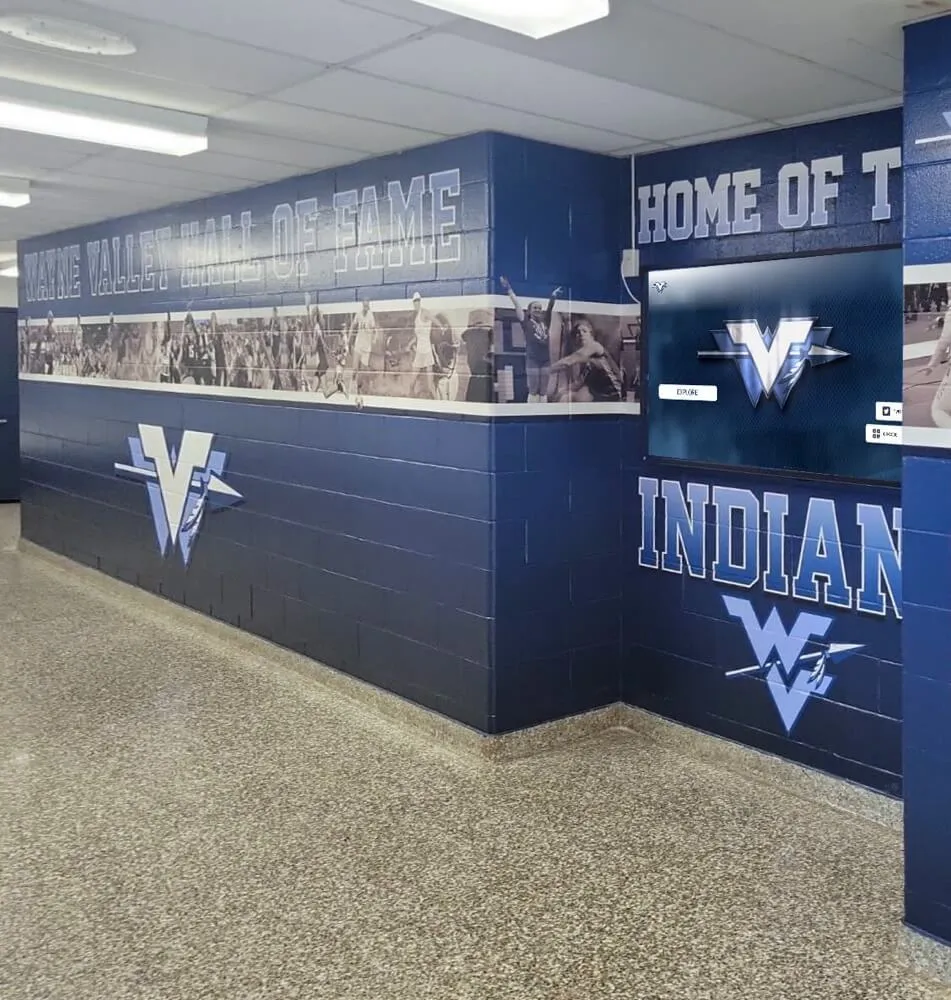
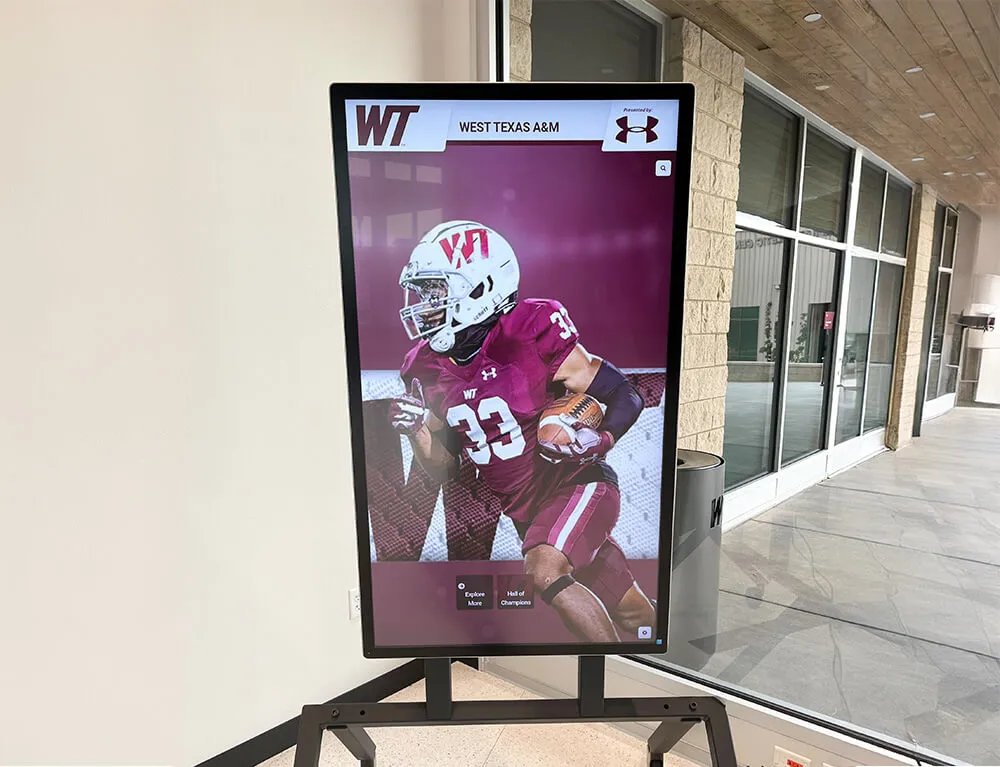
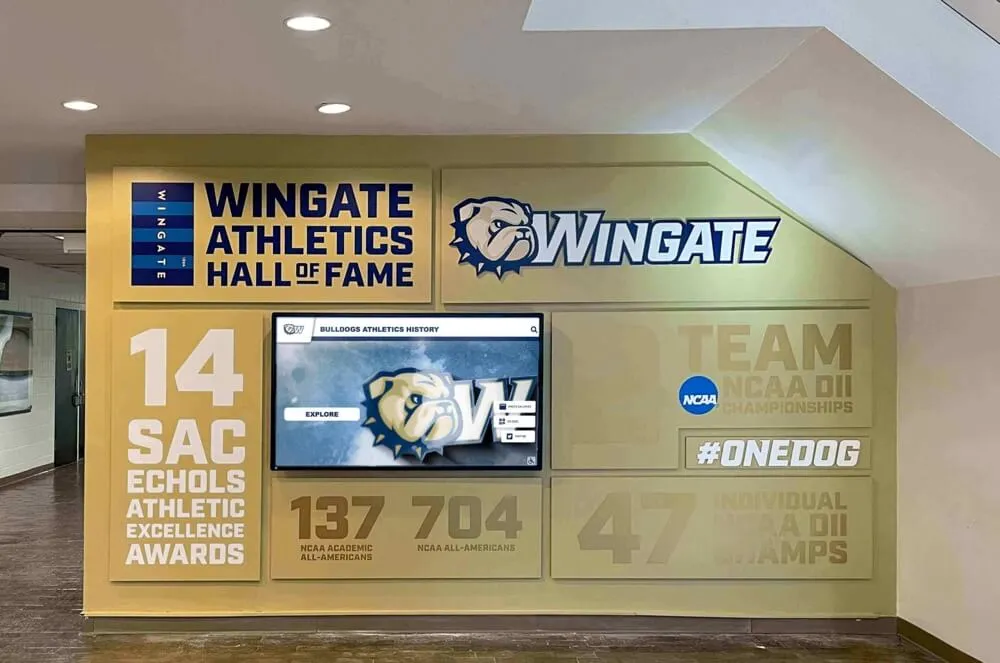
Division III athletics represents the purest form of college sports—student-athletes who compete for the love of the game while pursuing rigorous academic degrees, programs that prioritize education over athletics, and institutions committed to holistic student development. D3 athletes dedicate countless hours to training, practice, and competition while maintaining full academic course loads, often without the scholarships, media attention, or elaborate facilities their Division I counterparts enjoy. These student-athletes deserve recognition that honors their dedication, preserves their achievements, and inspires future generations—yet Division III programs face unique challenges in creating meaningful recognition systems.
Athletic directors at Division III institutions navigate significant budget constraints, limited staff resources, and competing priorities for scarce funding. Traditional recognition approaches—expensive trophy cases, custom plaques, and championship banners—consume valuable wall space that quickly reaches capacity. Meanwhile, the absence of athletic scholarships and limited media coverage means D3 programs must work harder to create pride, build team culture, and attract dedicated student-athletes who choose institutions based on overall experience rather than financial incentives or professional sports aspirations.
This comprehensive guide examines how Division III athletics programs can implement effective digital recognition systems that celebrate athlete achievements, preserve program history, and build institutional pride—all while working within realistic budget constraints and limited resources that define the D3 experience.
The Division III athletics landscape has evolved significantly in recent years. According to NCAA Division III Facts and Figures, there are 442 Division III institutions with approximately 188,000 student-athletes competing across 28 sports. These programs face mounting pressures including financial sustainability concerns, mental health resource limitations, and the challenge of providing recognition experiences comparable to larger Division I programs despite operating with substantially smaller budgets.

Division III programs deserve recognition systems that honor the unique dedication of student-athletes who compete without athletic scholarships
The Unique Recognition Challenges Facing Division III Athletics
Understanding the specific obstacles D3 programs encounter helps identify solutions that address authentic needs rather than importing approaches designed for better-resourced Division I environments.
Budget Constraints and Competing Priorities
Division III athletics operate on budgets that often represent a fraction of what Division I programs spend. According to Athletic Business research, Division III athletic administrators are asked to do more with less compared to institutions with budgets that could be two to three or more times their own.
The Financial Reality
Division III athletics have small operating budgets, with most funding coming through individual team fundraisers and direct alumni donations to the athletic department. Budget constraints may mean using uniforms one more year, purchasing inferior equipment, or going without training tools. Perhaps the biggest issue is trying to hire elite-level, culture-changing coaches with limited payroll resources.
These financial pressures make expensive recognition investments difficult to justify. A custom trophy case might cost $15,000-25,000 before installation, consuming budget that could fund equipment, travel, or coaching salaries. Traditional bronze plaques run $200-400 each, making comprehensive recognition of historical athletes financially prohibitive when programs need to honor hundreds of deserving individuals across decades of competition.
Competing for Limited Resources
Athletic directors must balance recognition priorities against essential operational needs including equipment replacement and safety upgrades, facility maintenance and improvements, team travel and competition expenses, coaching staff compensation, and compliance with Title IX and gender equity requirements. In this environment, recognition systems often rank lower than immediate operational necessities despite their importance for program culture and recruitment.
Limited Media Exposure and the Recognition Gap
Division III athletics receive substantially less media coverage than Division I programs, creating challenges for athlete recognition and program visibility.
The Visibility Challenge
At Division III schools with less name recognition, sports teams receive little fanfare beyond their campuses. According to Urban Institute research, school officials increasingly see athletics as a key to institutional survival, yet limited media exposure makes it difficult to showcase program achievements to prospective students, alumni, and donors.
Without athletic scholarships, Division III programs attract student-athletes through the promise of quality education, positive team culture, and meaningful athletic experiences. Recognition systems play a crucial role in demonstrating that D3 programs value their athletes’ achievements and create environments where dedication receives appropriate celebration—even without ESPN coverage or social media hype.
The NIL Recognition Disparity
The rise of Name, Image, and Likeness (NIL) opportunities has created new recognition challenges for Division III athletics. According to RallyFuel research on Division II and III NIL opportunities, D2 and D3 athletes struggle to get good deals, and without media coverage, athletes can’t get national or local recognition, which limits their chances for sponsorships. D2 and D3 programs often can’t afford the marketing staff or resources, which makes it hard for athletes to promote themselves.
While Division III rules limit certain NIL activities, effective recognition systems help D3 athletes build personal brands and professional portfolios that serve them beyond their college athletic careers—compensating partially for the sponsorship opportunities unavailable at this level.
Space Limitations and Physical Constraints
Division III facilities often face significant space constraints that limit traditional recognition approaches.
The Trophy Case Crisis
Athletic facilities at many D3 institutions feature limited hallway space, shared facilities serving multiple programs, and aging buildings not designed for modern recognition displays. Trophy cases that once seemed adequate now overflow with decades of achievements, forcing difficult decisions about what receives display space and what gets relegated to storage.
As programs continue competing and achieving, this space shortage intensifies. Adding new trophy cases requires not just purchase costs but often facility modifications, electrical work for lighting, and limited available wall space already claimed for other institutional priorities.
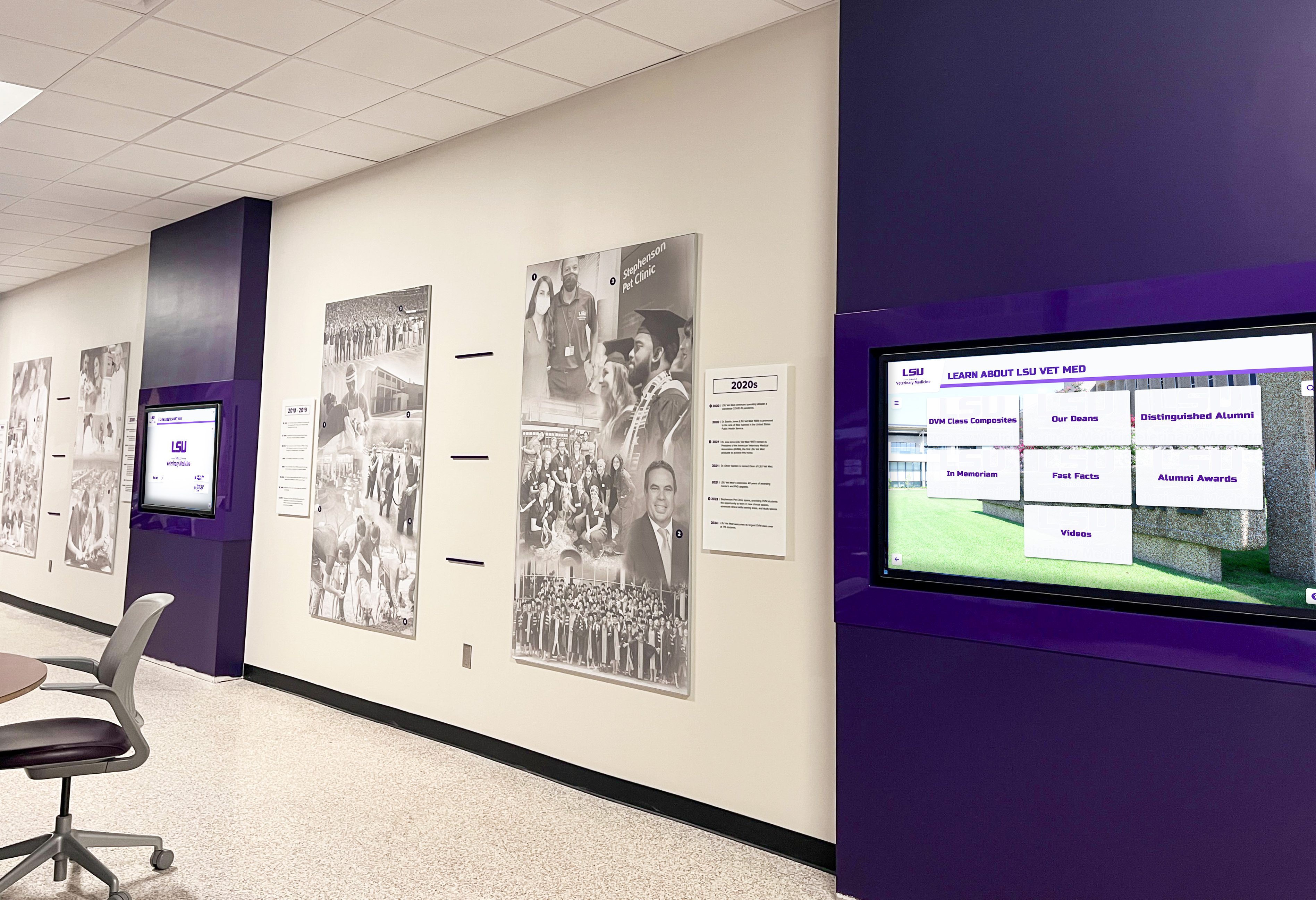
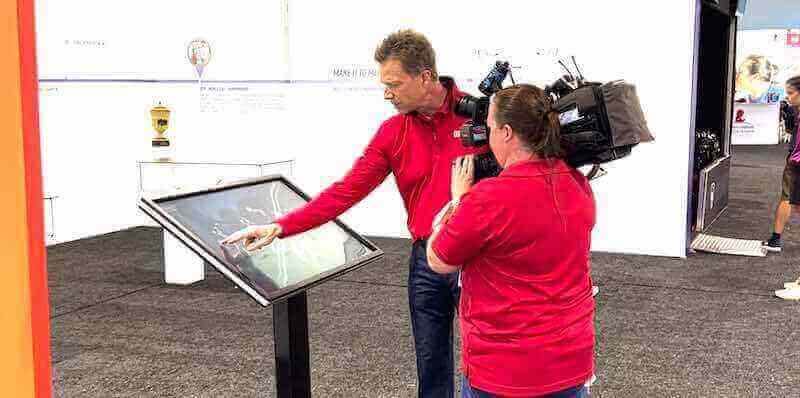
Digital recognition systems overcome space limitations by displaying unlimited achievements in compact installations
The Historical Archive Challenge
Many Division III programs have rich histories spanning decades or even a century of competition. Comprehensive recognition honoring all deserving athletes, teams, and achievements would require physical space simply unavailable in most facilities. This creates frustrating situations where recent achievements receive prominent display while historical legends fade into forgotten archives—not because their accomplishments matter less, but because physical space constraints force impossible choices.
Staffing and Resource Constraints
Division III athletics typically operate with smaller staff than Division I programs, creating challenges for recognition system maintenance.
The Maintenance Reality
Athletic department staff at D3 institutions often wear multiple hats—athletic directors who also coach teams, sports information directors handling multiple sports with limited help, and administrative staff managing numerous responsibilities beyond recognition program maintenance. Implementing recognition systems requiring significant ongoing staff time proves impractical regardless of initial appeal.
Traditional recognition approaches require ordering custom plaques for each new achievement, coordinating with engravers and manufacturers, physically installing new elements while maintaining appearance, and regularly cleaning and maintaining display areas. These tasks compete with more urgent operational priorities in resource-constrained environments.
Recognition systems succeed at Division III institutions only when they respect realistic staff capacity rather than creating ongoing maintenance burdens that well-intentioned programs cannot sustain long-term.
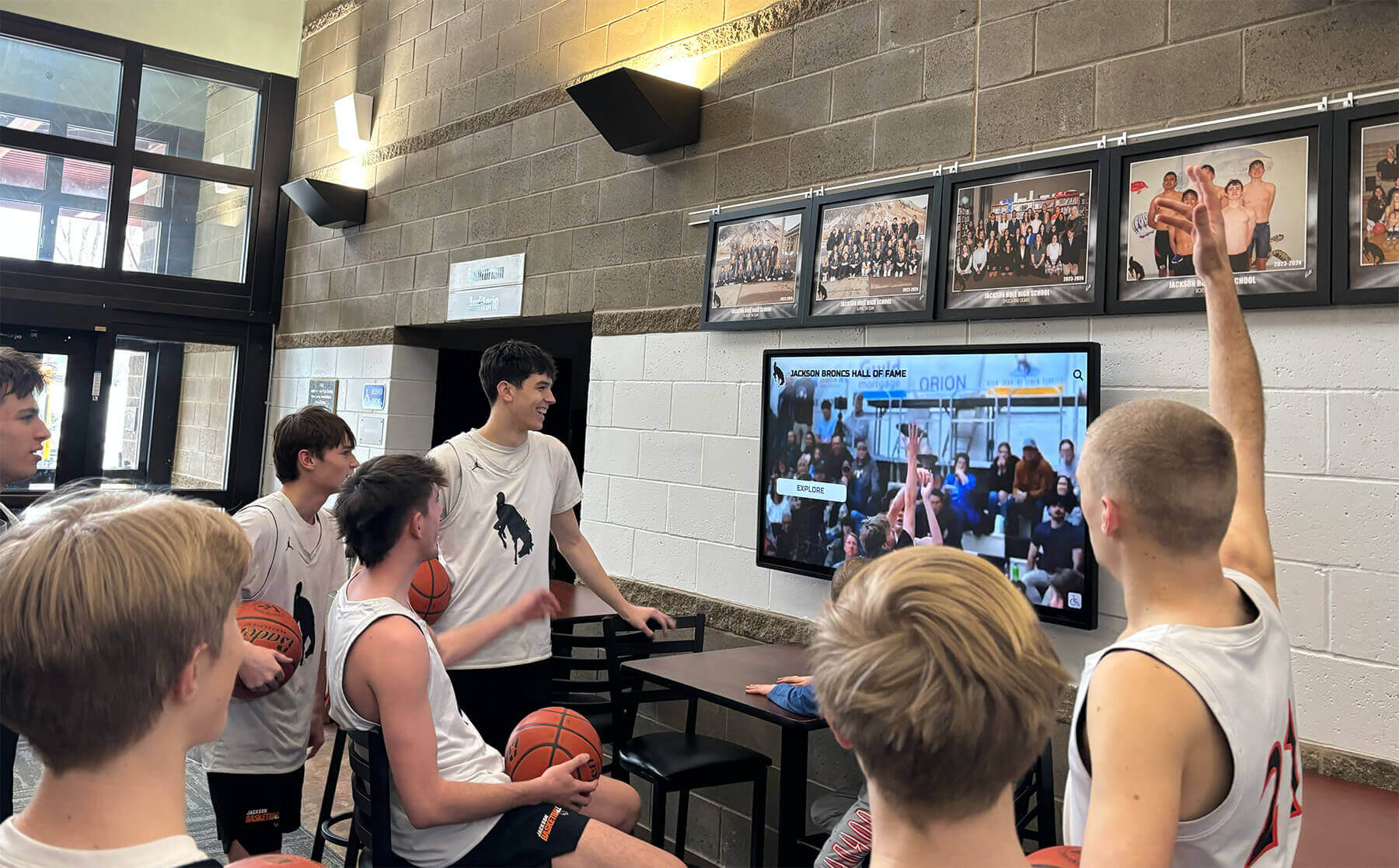
Recognition systems must respect limited staff resources by minimizing ongoing maintenance requirements
Why Digital Recognition Systems Work for Division III Programs
Digital recognition platforms address many challenges facing D3 athletics while providing capabilities that traditional approaches cannot match.
Overcoming Space Limitations
Digital displays transform how Division III programs handle space constraints while expanding recognition capacity dramatically.
Unlimited Recognition in Compact Space
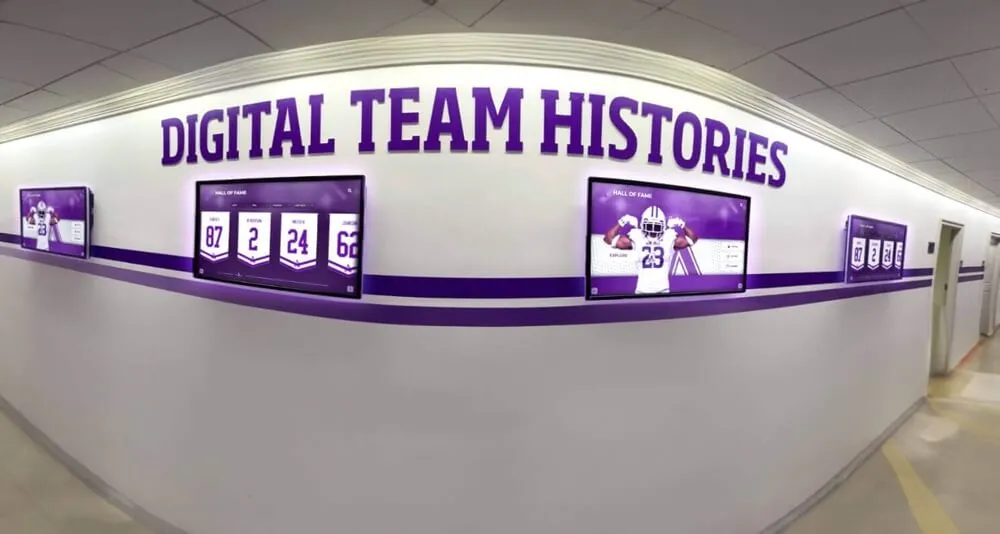
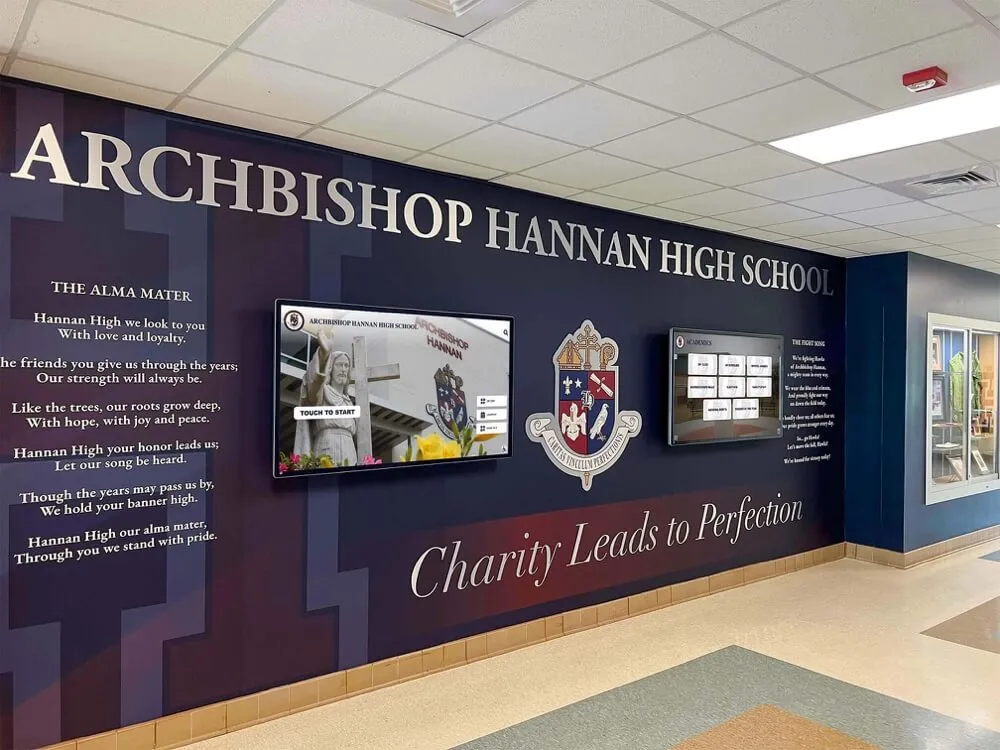
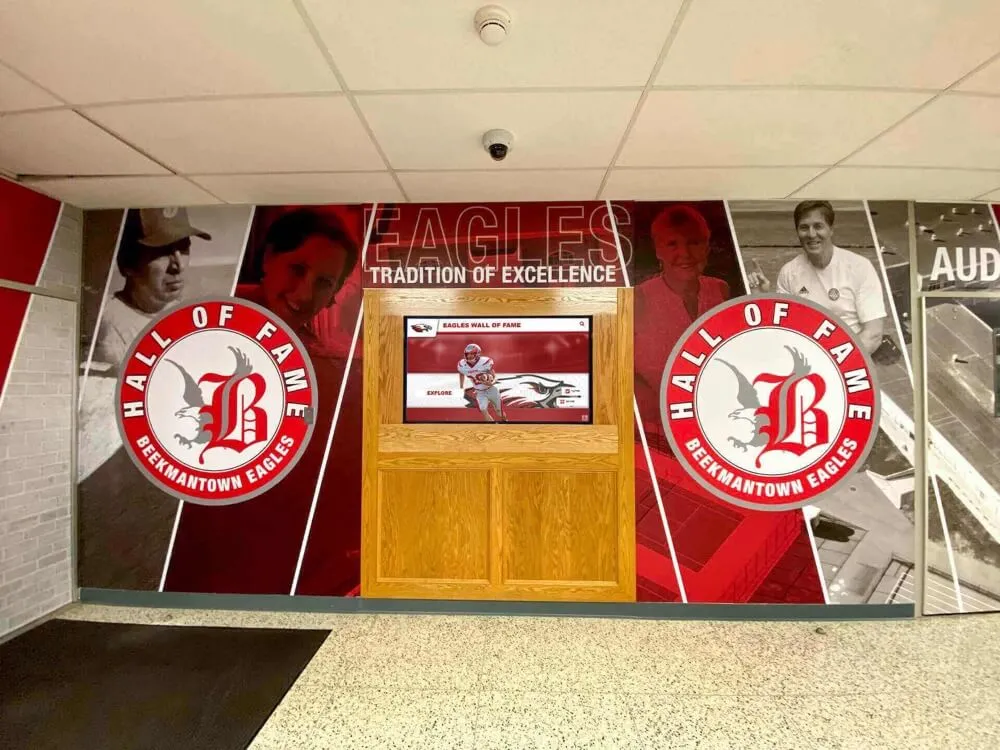
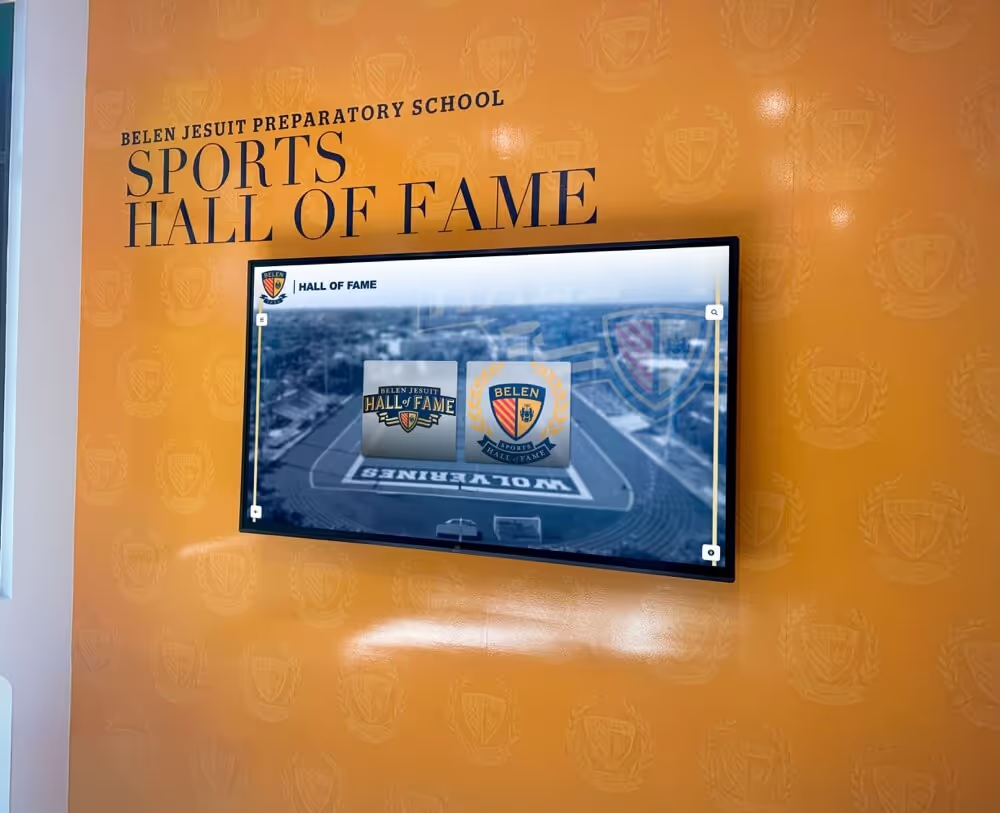
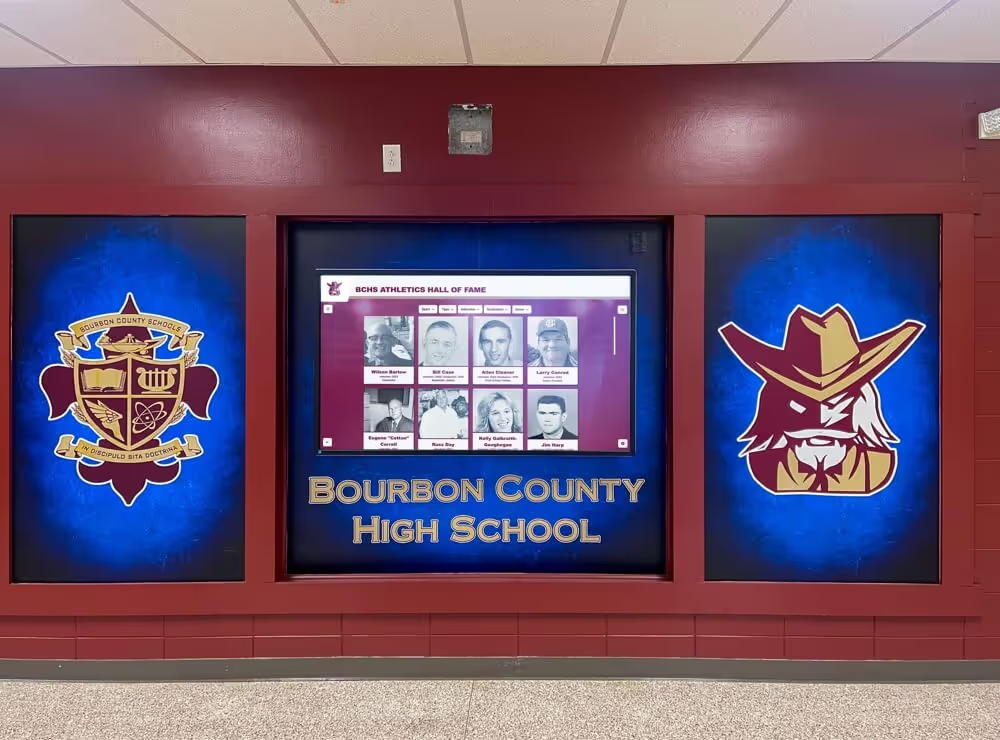
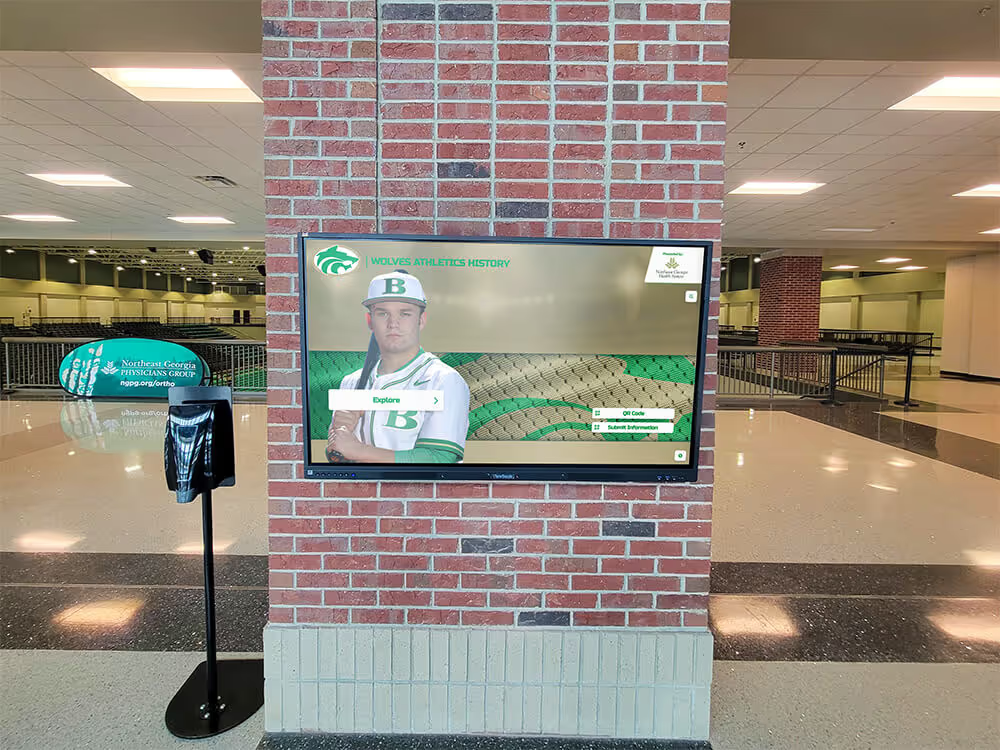
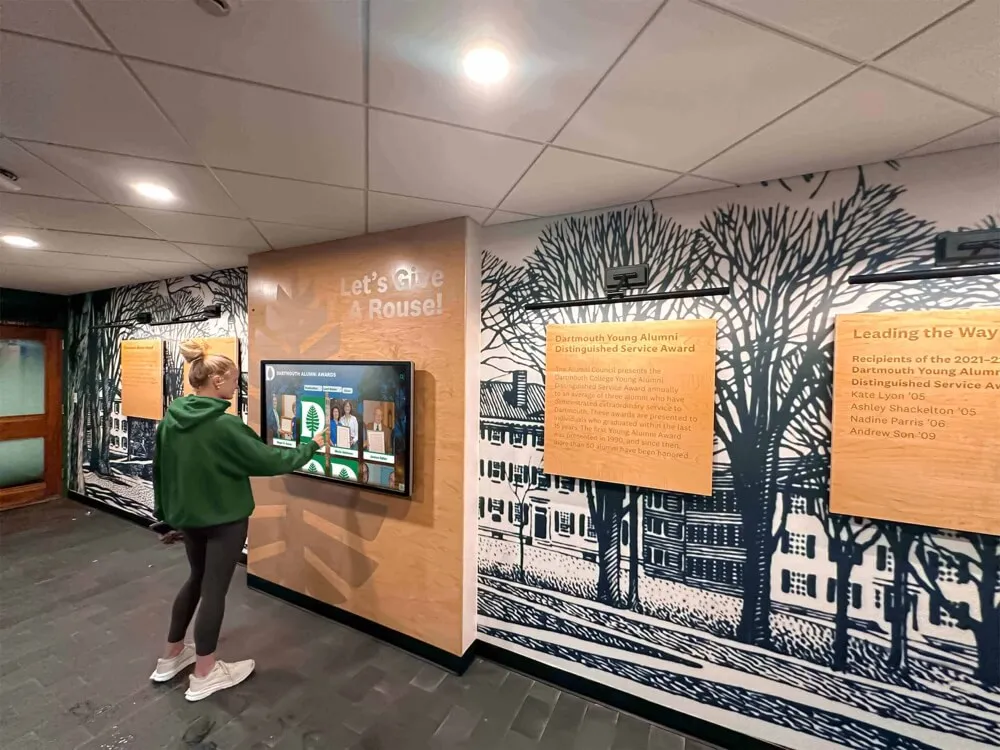
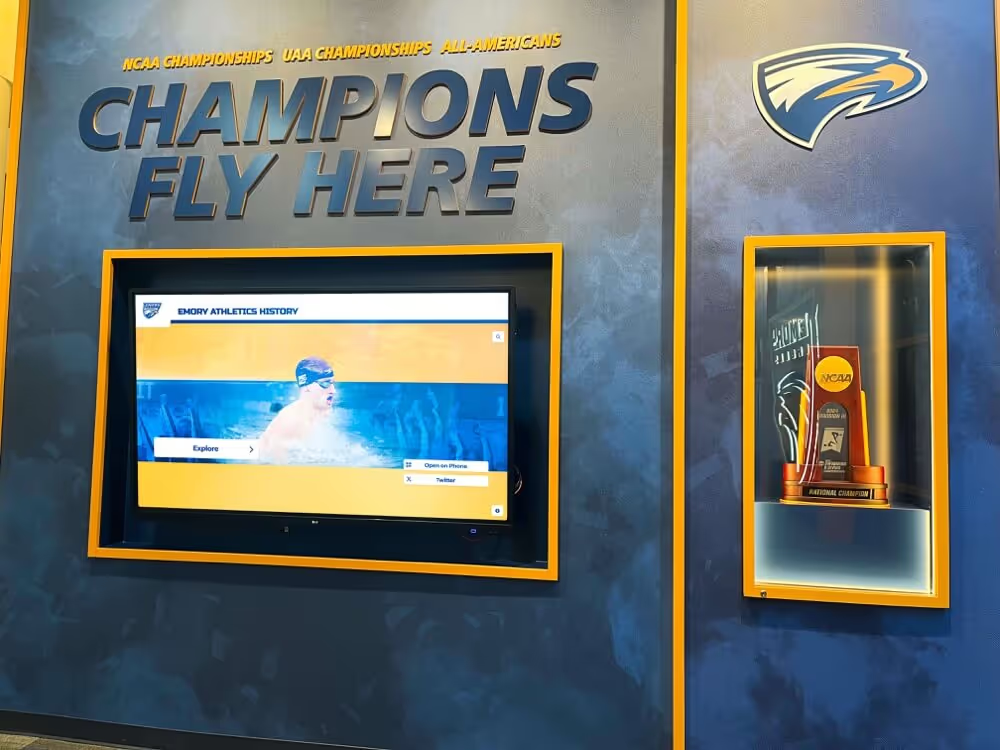
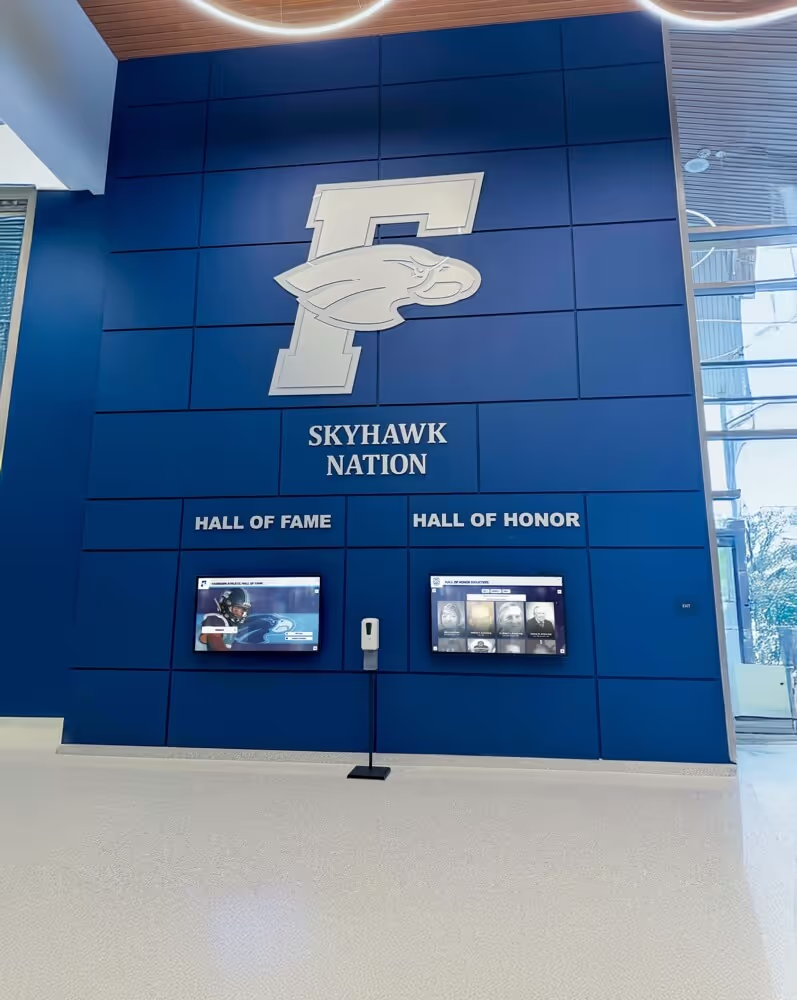
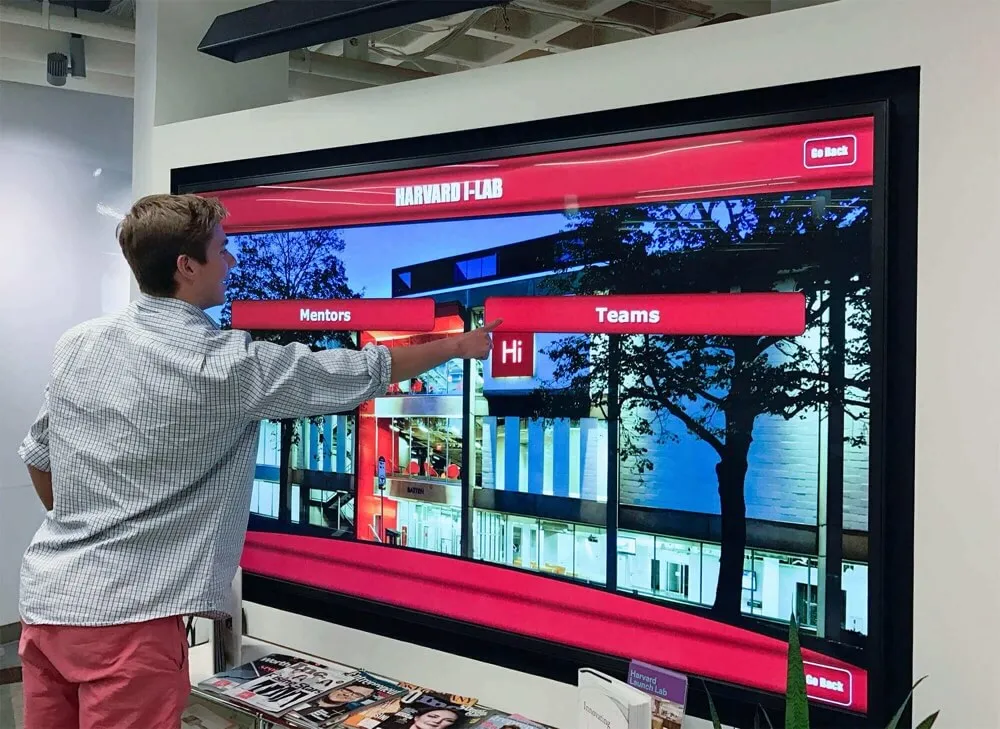
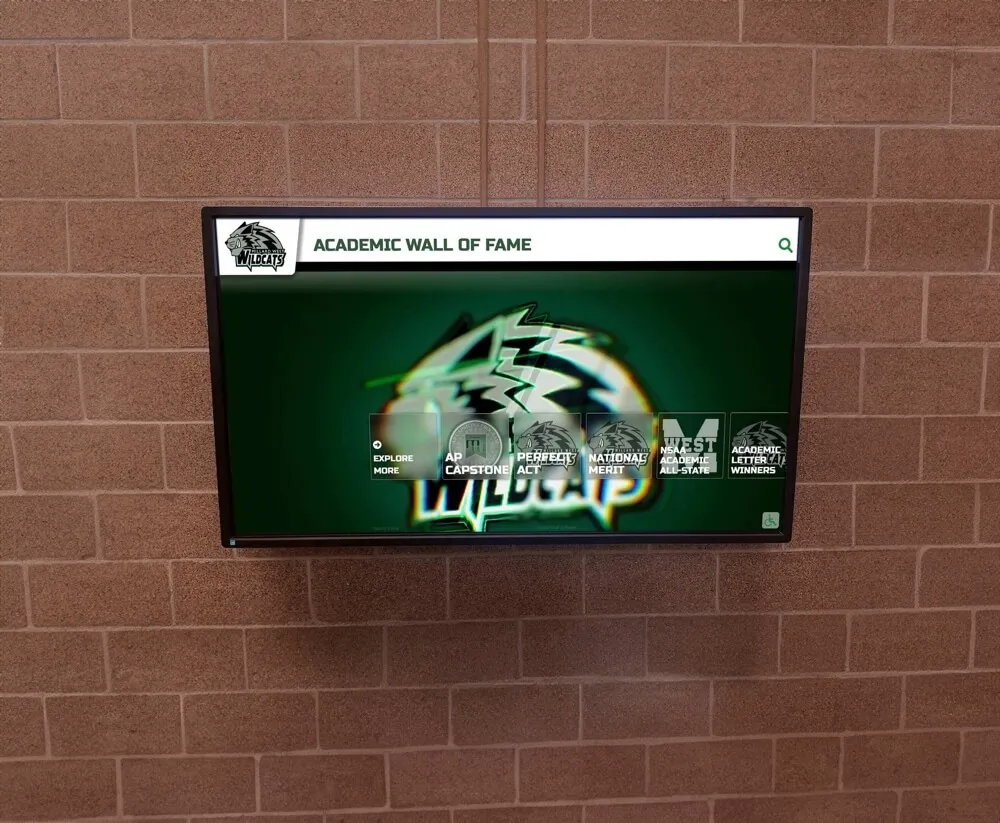
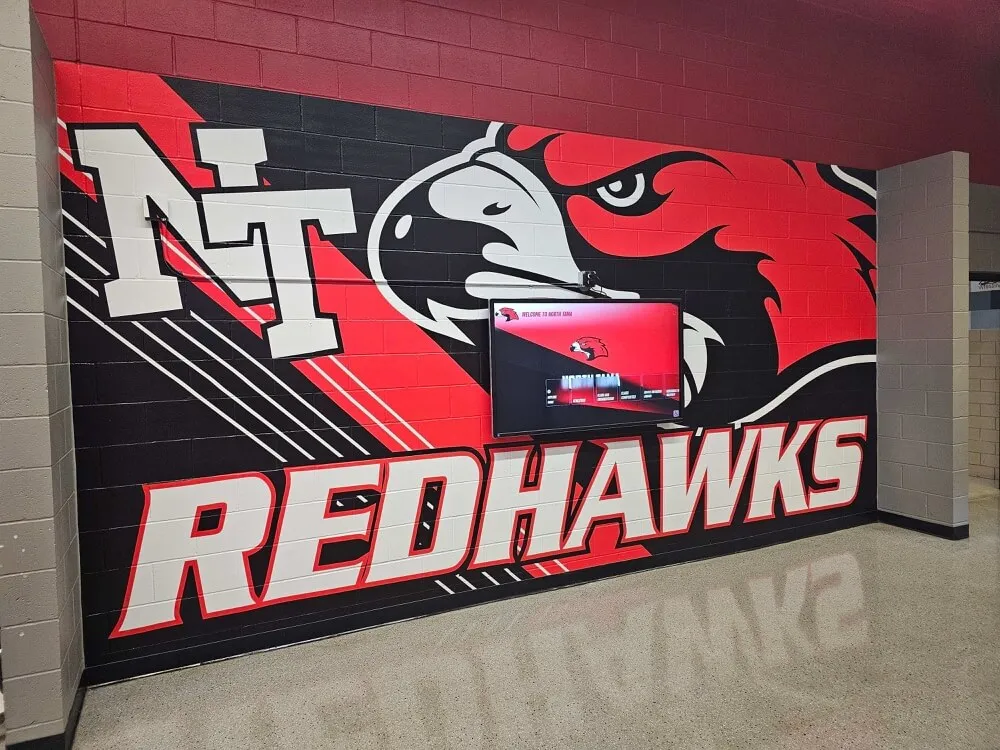
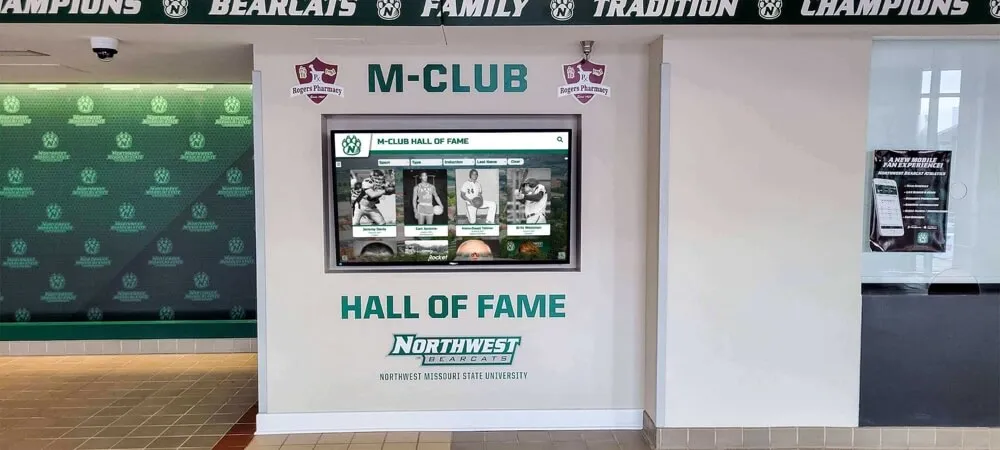
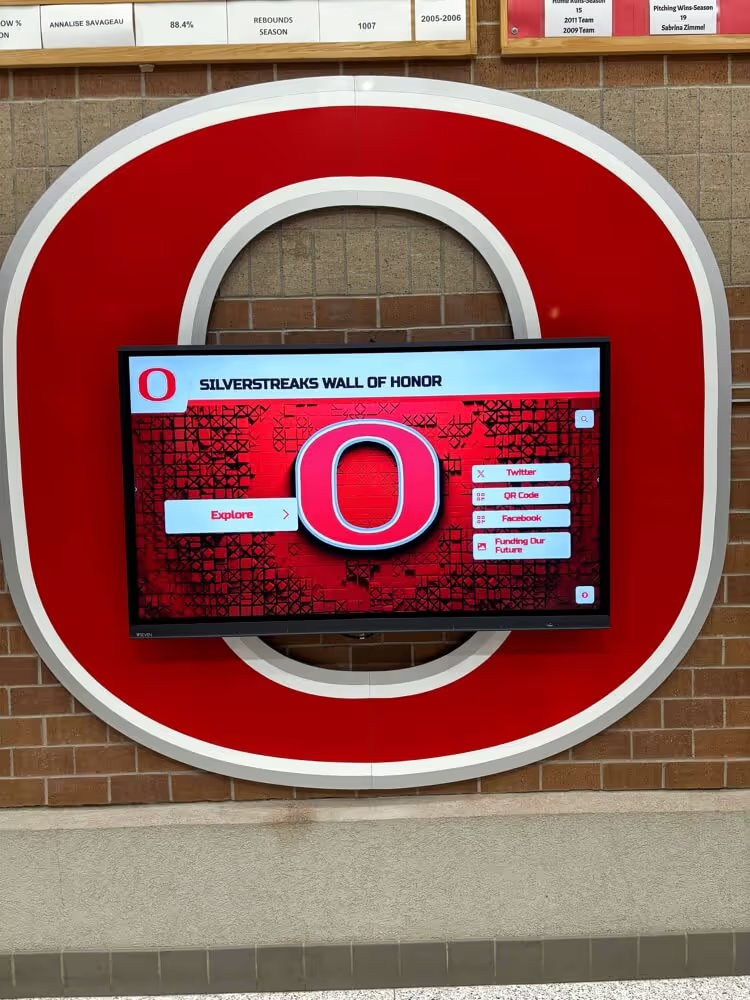
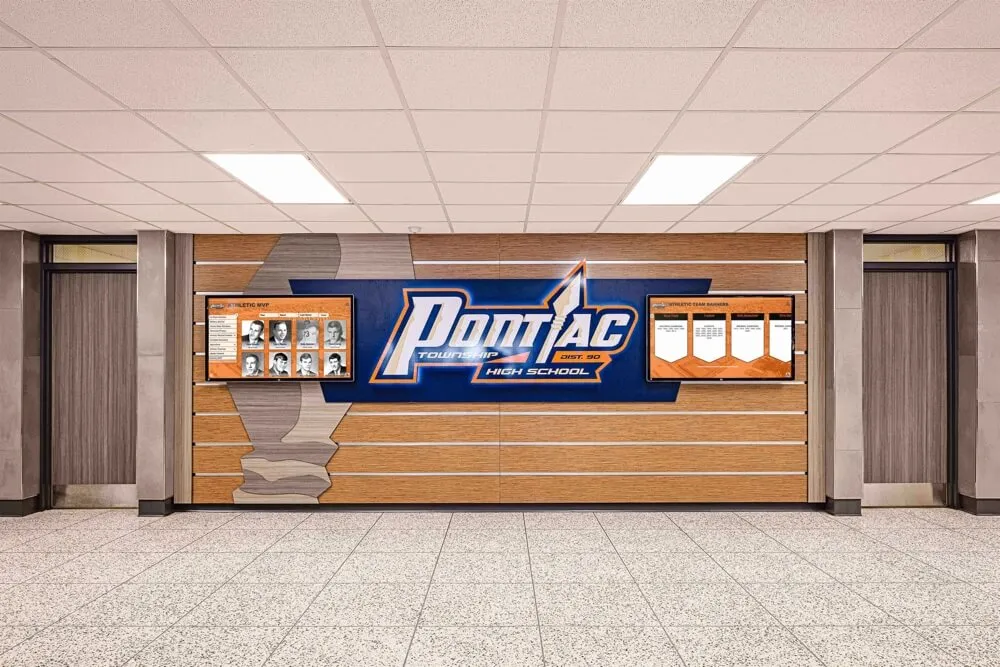
A single 55-inch touchscreen display occupies approximately 50 inches of wall width and 30 inches of height—roughly equivalent to one medium-sized framed print. Yet this compact installation can showcase thousands of athlete profiles, hundreds of championship teams, decades of records and achievements, comprehensive historical archives, and seasonal highlights and celebrations. The contrast between physical space required and recognition capacity delivered makes digital systems particularly valuable for space-constrained D3 facilities.
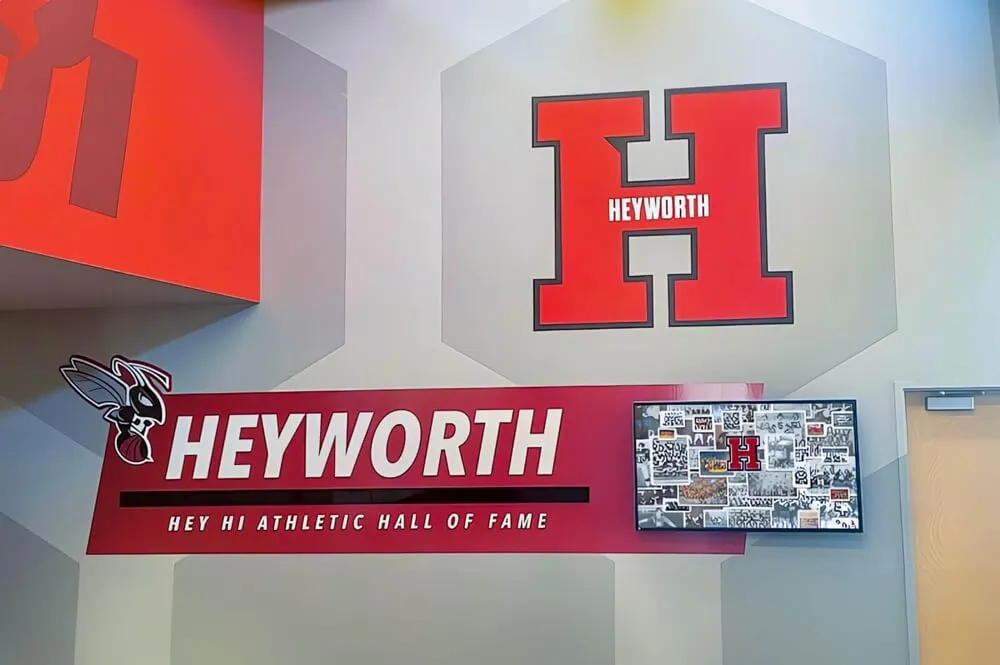
Programs implementing digital record boards for schools discover they can honor every deserving athlete and team without the space limitations that force traditional trophy cases to exclude worthy achievements. This comprehensive recognition proves especially meaningful at Division III institutions where every student-athlete makes significant sacrifices to compete without athletic scholarships.
Flexible Installation Options
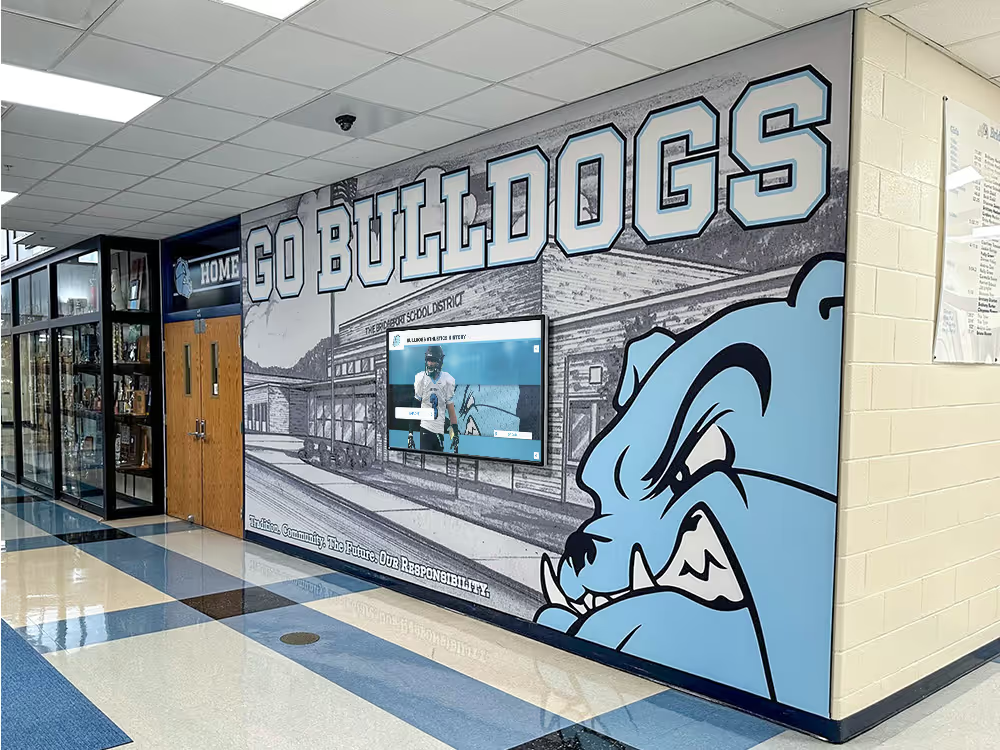
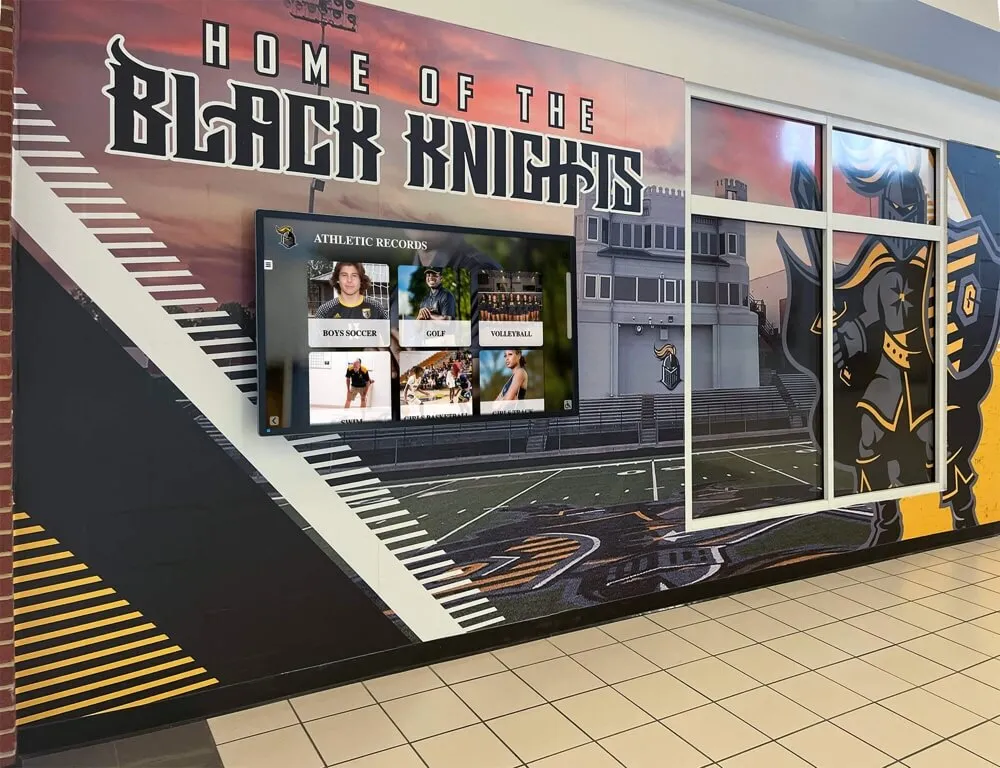
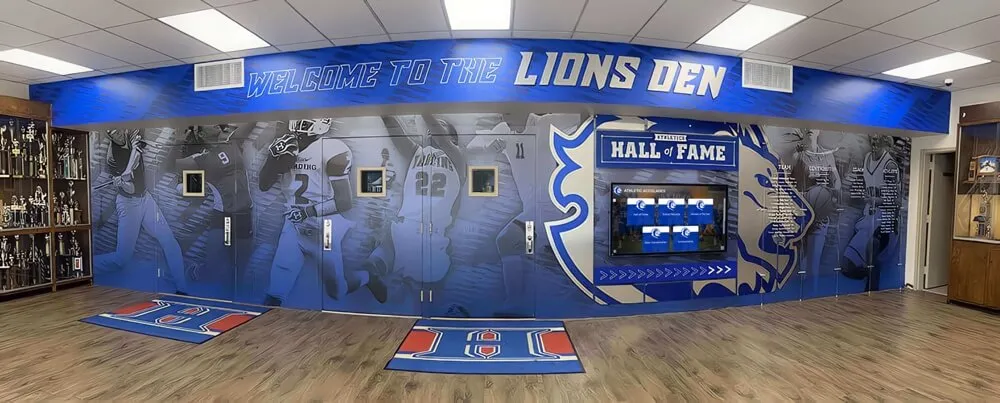
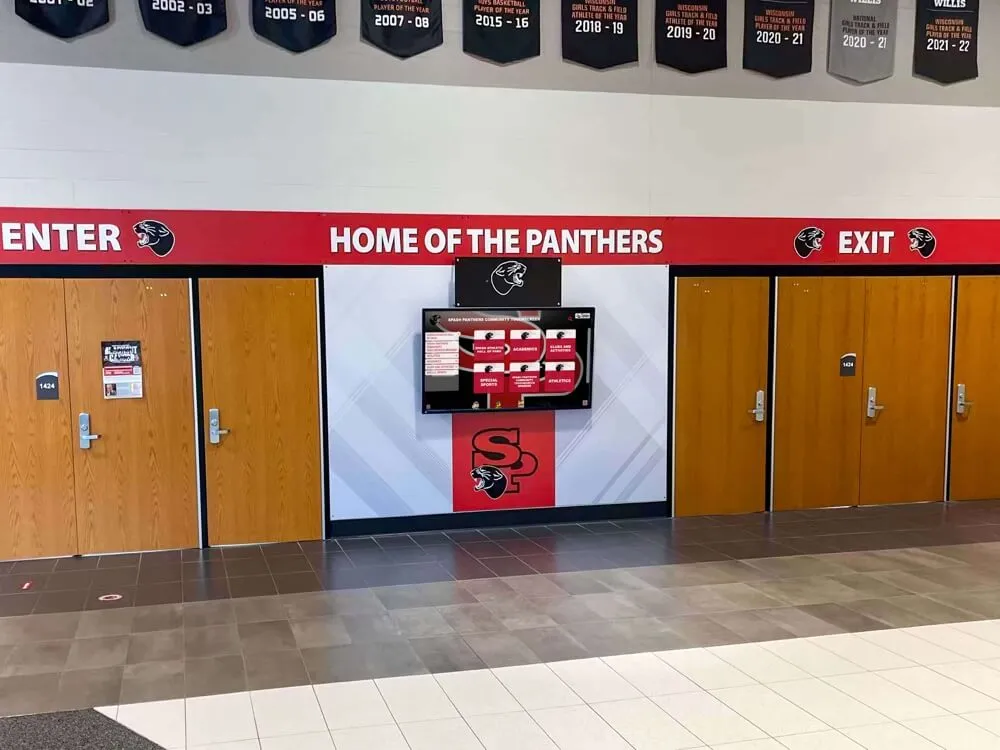
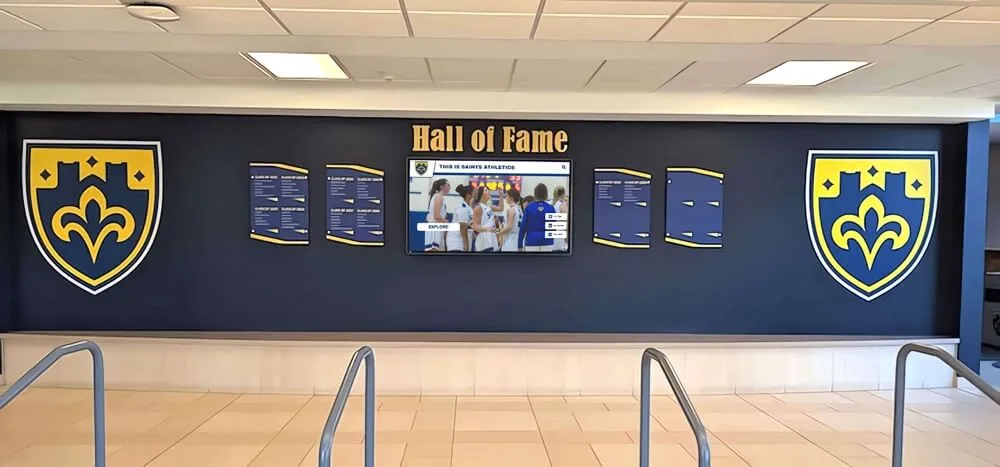
Digital recognition systems work in diverse facility environments including main athletic building lobbies, hallways connecting multiple facilities, weight rooms and training areas, academic buildings with athletics connections, and even temporary installations for special events. This flexibility helps D3 programs maximize recognition impact regardless of facility limitations.
Budget-Friendly Recognition at Scale
While digital systems require initial investment, they often prove more cost-effective than traditional approaches when evaluated over multi-year timeframes.
Total Cost of Ownership Advantages
Consider comprehensive recognition honoring 500 athletes across a Division III program’s history. Traditional bronze plaques at $300 each total $150,000—prohibitively expensive for most D3 budgets. Even basic engraved plaques at $50 each total $25,000, not including display infrastructure, installation, or ongoing additions.
Purpose-built digital recognition platforms like Rocket Alumni Solutions provide comprehensive systems including professional touchscreen hardware, unlimited content capacity, intuitive content management software, and ongoing support for total investments often less than traditional trophy case installations—while eliminating the per-person incremental costs that make comprehensive traditional recognition financially impossible.
Eliminating Ongoing Per-Achievement Costs
Traditional recognition incurs costs with every new achievement—ordering custom plaques, coordinating with manufacturers, managing shipping and installation, and finding space for additions. These incremental costs accumulate significantly over years of competition across multiple sports.
Digital systems eliminate per-achievement costs after initial implementation. Adding new athlete profiles, championship teams, or record achievements requires only staff time for content entry—no manufacturing costs, no shipping fees, no installation expenses. This cost structure makes comprehensive recognition sustainable even with limited budgets.
Programs exploring basketball hall of fame recognition discover digital approaches enable recognition scope impossible with traditional methods given D3 budget realities.
Enhancing Recruitment and Athlete Experience
Division III athletics rely heavily on creating positive experiences and strong program culture to attract dedicated student-athletes who choose institutions without athletic scholarship incentives.
Making Recognition a Recruitment Asset
Prospective student-athletes touring Division III campuses evaluate overall program quality and institutional commitment to athletics. Modern, professional digital recognition systems communicate several powerful messages: the institution invests in athletics despite D3 budget constraints, the program values and celebrates athlete achievements, technology and innovation characterize the athletic experience, and historical athletes remain honored and remembered decades after graduation.
According to Athletic Business insights on recruiting with digital displays, digital recognition displays signal that programs invest in modern technology, and when recruits see interactive touchscreen systems showcasing athlete achievements, they recognize that the program values recognition. Many athletic programs organize digital displays by college level (Division I, Division II, Division III) to demonstrate pathways for athletes with different competitive aspirations.
These perception impacts prove particularly valuable for Division III programs competing for quality student-athletes against programs offering athletic scholarships or Division I prestige.
Building Team Culture and Pride
Current student-athletes benefit from recognition systems that celebrate their achievements and connect them to program history. Digital displays showing championship teams, record holders, and distinguished alumni create pride in program tradition while setting performance standards for current competitors.
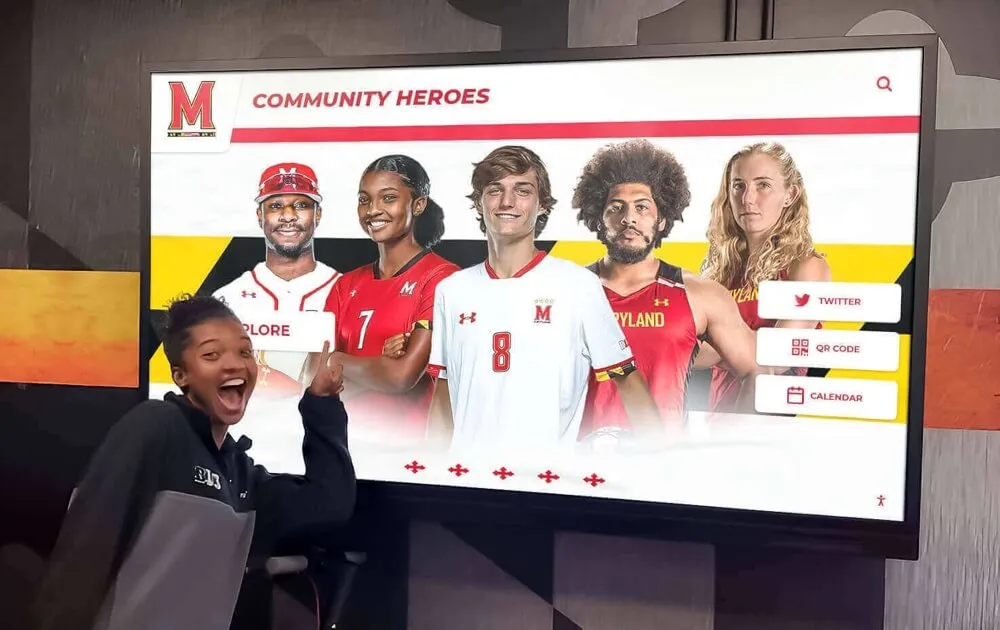
Interactive features enable athletes to explore teammates’ achievements, discover program records they might pursue, learn about historical legends who competed before them, and share accomplishments with family and friends through engaging displays. These interactions strengthen team culture and reinforce the message that individual and team achievements matter and receive lasting recognition—powerful motivators for athletes competing without professional sports aspirations or media attention.
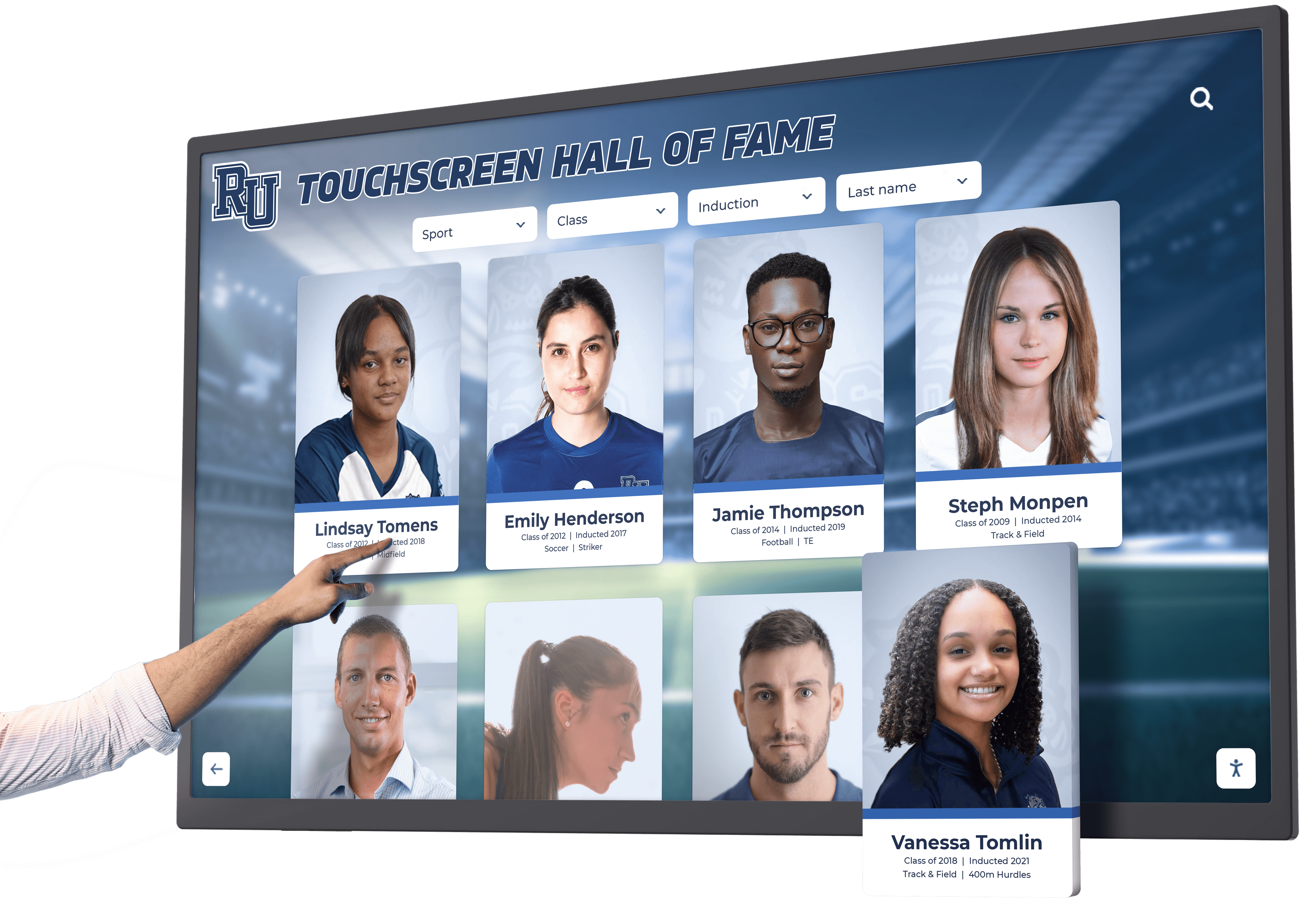
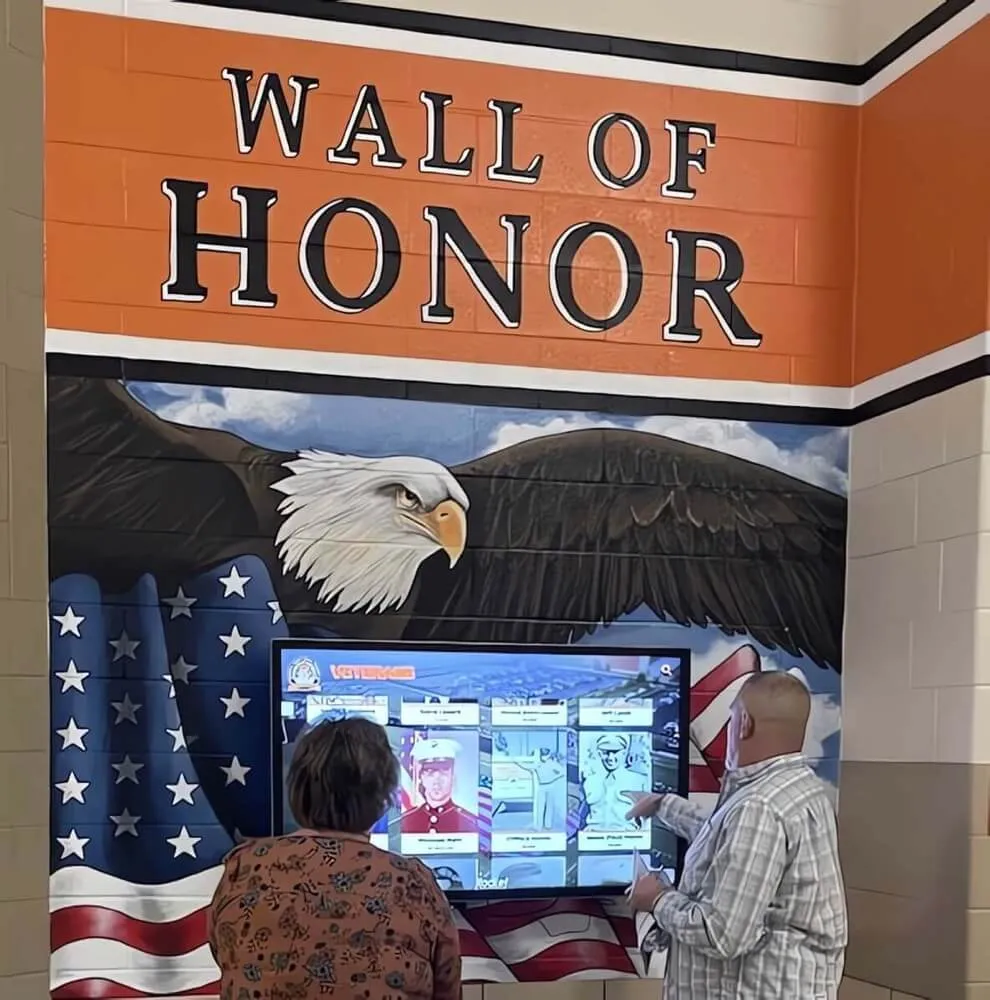
Interactive recognition systems create engaging experiences that build program pride and strengthen athlete connections to institutional tradition
Supporting Alumni Engagement and Fundraising
Division III athletics often rely on alumni donations for program support—recognition systems strengthen alumni connections that drive philanthropic giving.
Keeping Alumni Connected
Digital recognition systems can include comprehensive historical coverage honoring athletes from across decades of competition. Alumni visiting campus discover their achievements still receive prominent recognition despite occurring years or decades earlier—creating powerful emotional connections to institutions and programs.
Interactive features enable alumni to search for themselves, explore former teammates and competitors, review championship seasons they participated in, and share discoveries with family members who never saw them compete. These engaging experiences strengthen alumni loyalty and create positive associations with institutions.
Creating Fundraising Opportunities
Recognition systems can acknowledge alumni athletic giving through dedicated sections honoring major donors, recognition categories highlighting supporter contributions, and featured content showcasing how donations impact current programs. These acknowledgments encourage continued giving while demonstrating appreciation for alumni support.
Programs implementing donor recognition strategies discover that visible, professional recognition of contributions encourages additional philanthropic support—particularly important for Division III programs where alumni giving significantly impacts program sustainability.
Essential Features for Division III Recognition Systems
Not all digital recognition platforms serve Division III needs equally—certain capabilities prove particularly valuable given the unique D3 environment.
User-Friendly Content Management
Division III athletic department staff typically lack dedicated technology personnel or significant time for complex content management—systems must accommodate realistic staff capacity.
Why Accessibility Matters
The most sophisticated recognition platform delivers no value if staff cannot realistically maintain content. D3 programs need systems where busy athletic directors, sports information directors, or administrative staff can add new athlete profiles, update championship teams, modify records and achievements, and upload photos and media without requiring IT support, extensive training, or significant time investment per update.
Purpose-built platforms like Rocket Alumni Solutions prioritize content management accessibility. Customers consistently praise the software as “very user friendly with a variety of options” and note that “the software makes it easy for any novice to create an appealing and user friendly experience.” This accessibility proves essential for Division III programs where staff time represents the scarcest resource.
Key Content Management Features
Effective systems for D3 athletics should provide:
- Intuitive visual interfaces requiring minimal technical knowledge
- Bulk import capabilities for adding multiple athletes or teams simultaneously
- Template-based content creation ensuring consistency without design work
- Autosave functionality preventing work loss during interruptions
- Preview capabilities showing exactly how content will appear before publishing
- Simple image handling with automatic resizing and optimization
These features transform content management from time-consuming burden into manageable routine task fitting realistically into busy staff schedules.
Comprehensive Search and Navigation
Recognition systems serve little purpose if users cannot effectively find content—search quality determines whether comprehensive databases prove useful or merely overwhelming.
Search That Serves User Needs
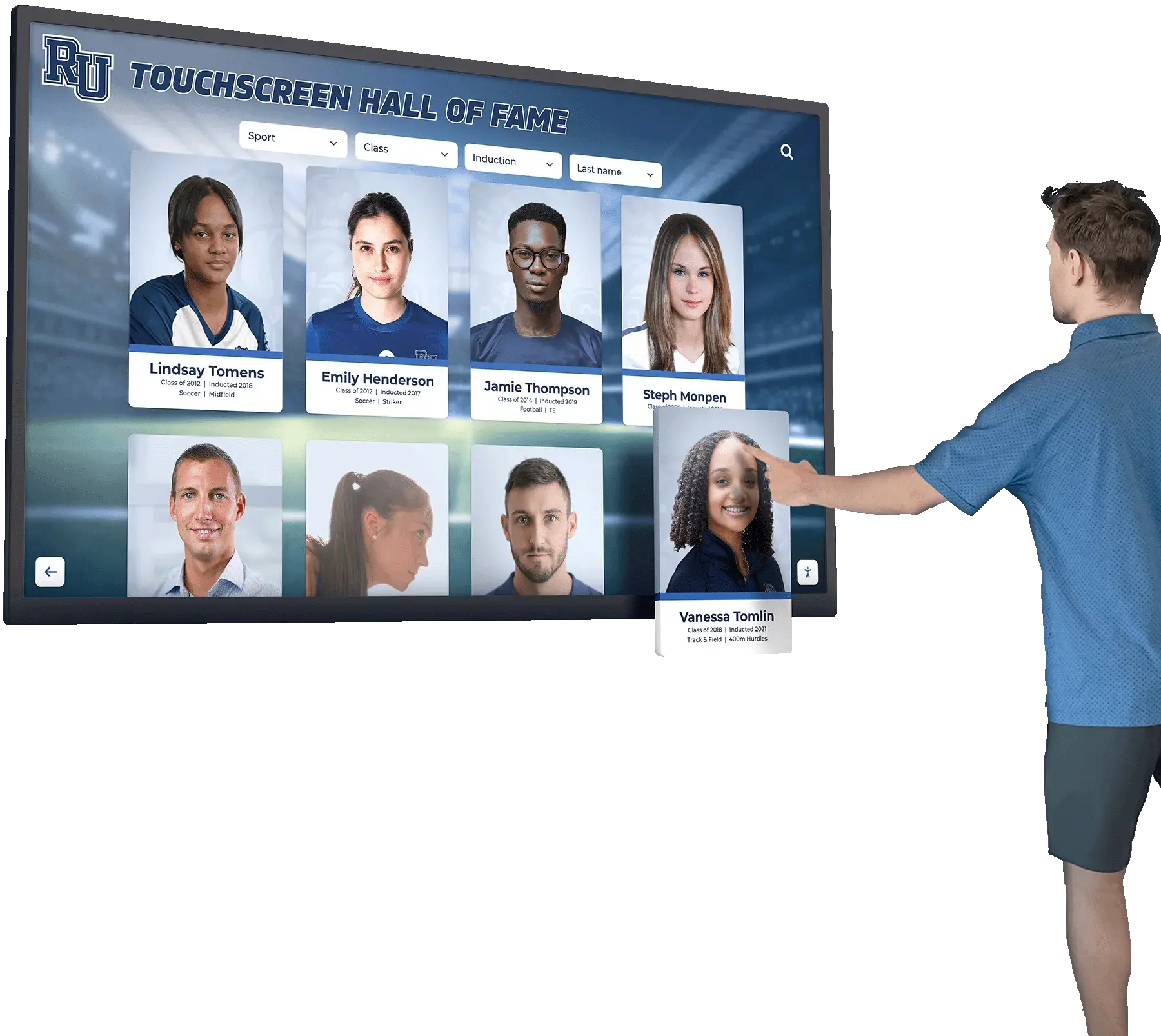
Student-athletes, alumni, and visitors should be able to find specific individuals by name, locate all athletes from particular graduation years, discover achievements in specific sports, browse championship teams chronologically, and identify record holders in various categories—all through intuitive search that feels as easy as using Google.
Effective search accommodates misspellings and nickname variations, provides instant results as users type, suggests relevant alternatives for unsuccessful searches, and enables filtering results through multiple criteria simultaneously. These capabilities transform static databases into engaging exploration experiences.
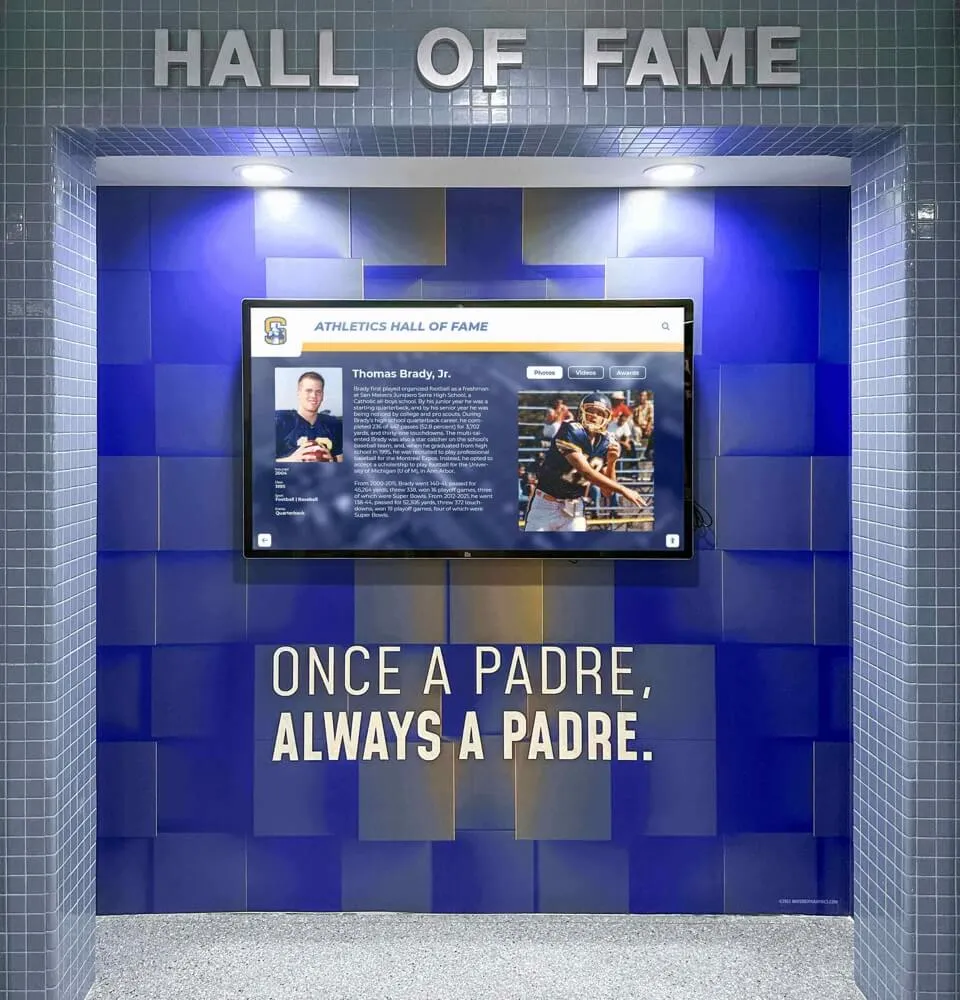
Programs implementing football hall of fame displays discover that powerful search and navigation determine whether comprehensive historical content creates value or simply overwhelms users unable to find specific information efficiently.
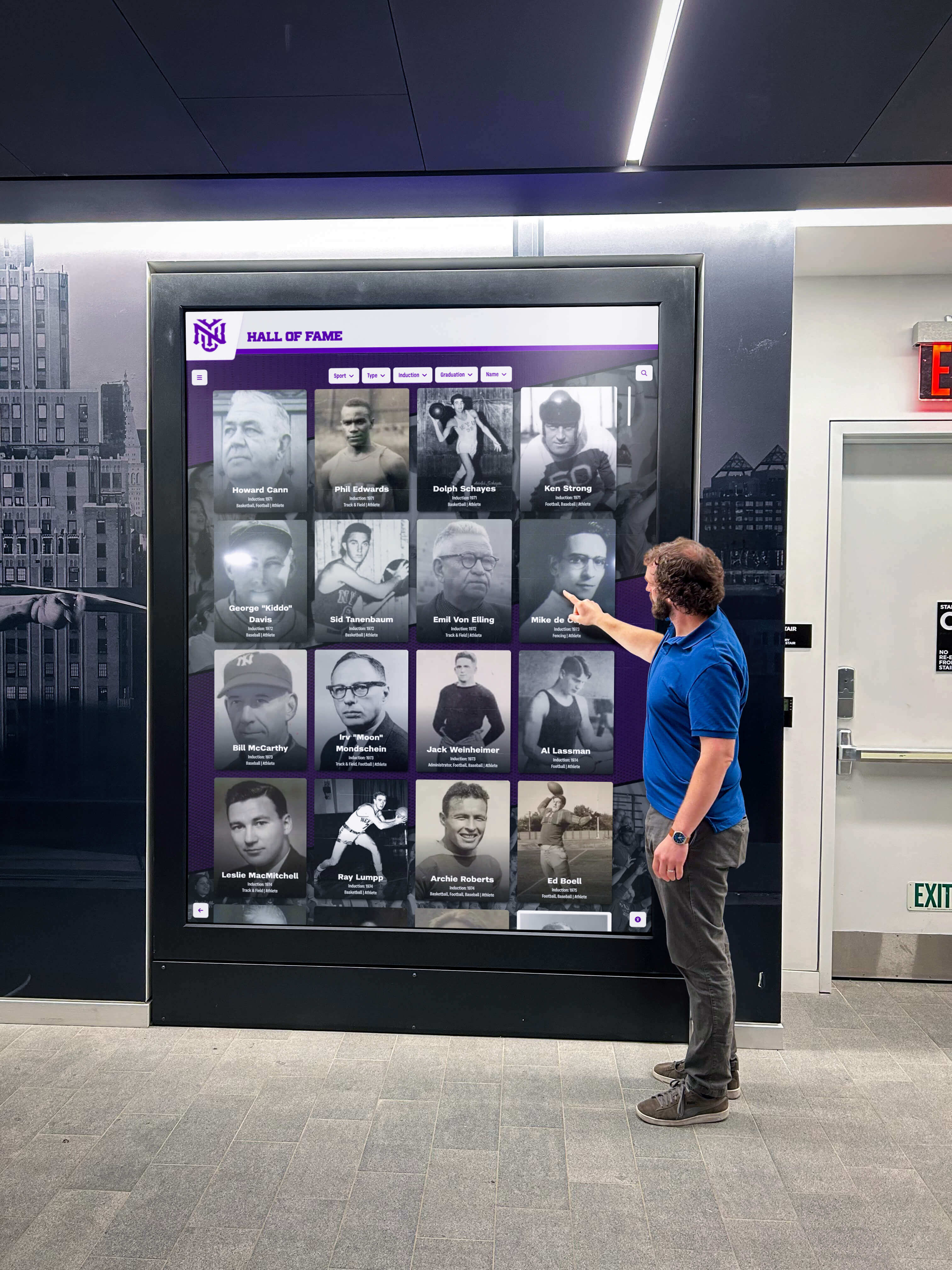
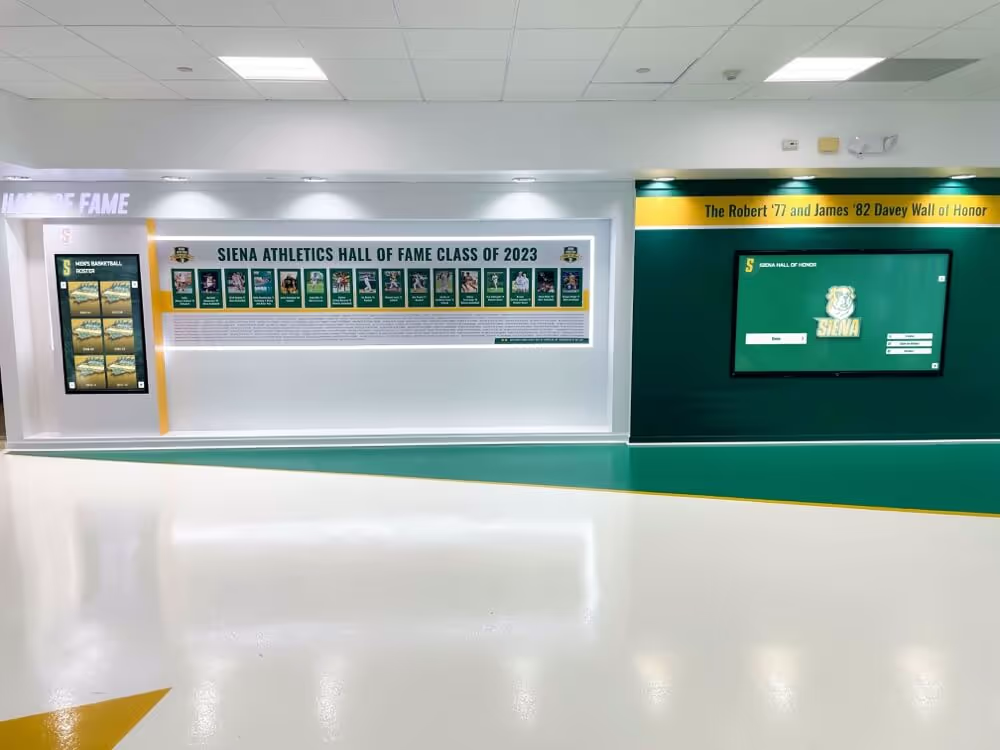
Intuitive search and navigation transform comprehensive recognition databases into engaging exploration experiences
Mobile and Social Media Integration
Division III athletics may lack television coverage, but student-athletes and programs maintain active social media presences—recognition systems should support digital engagement.
Extending Recognition Beyond Campus
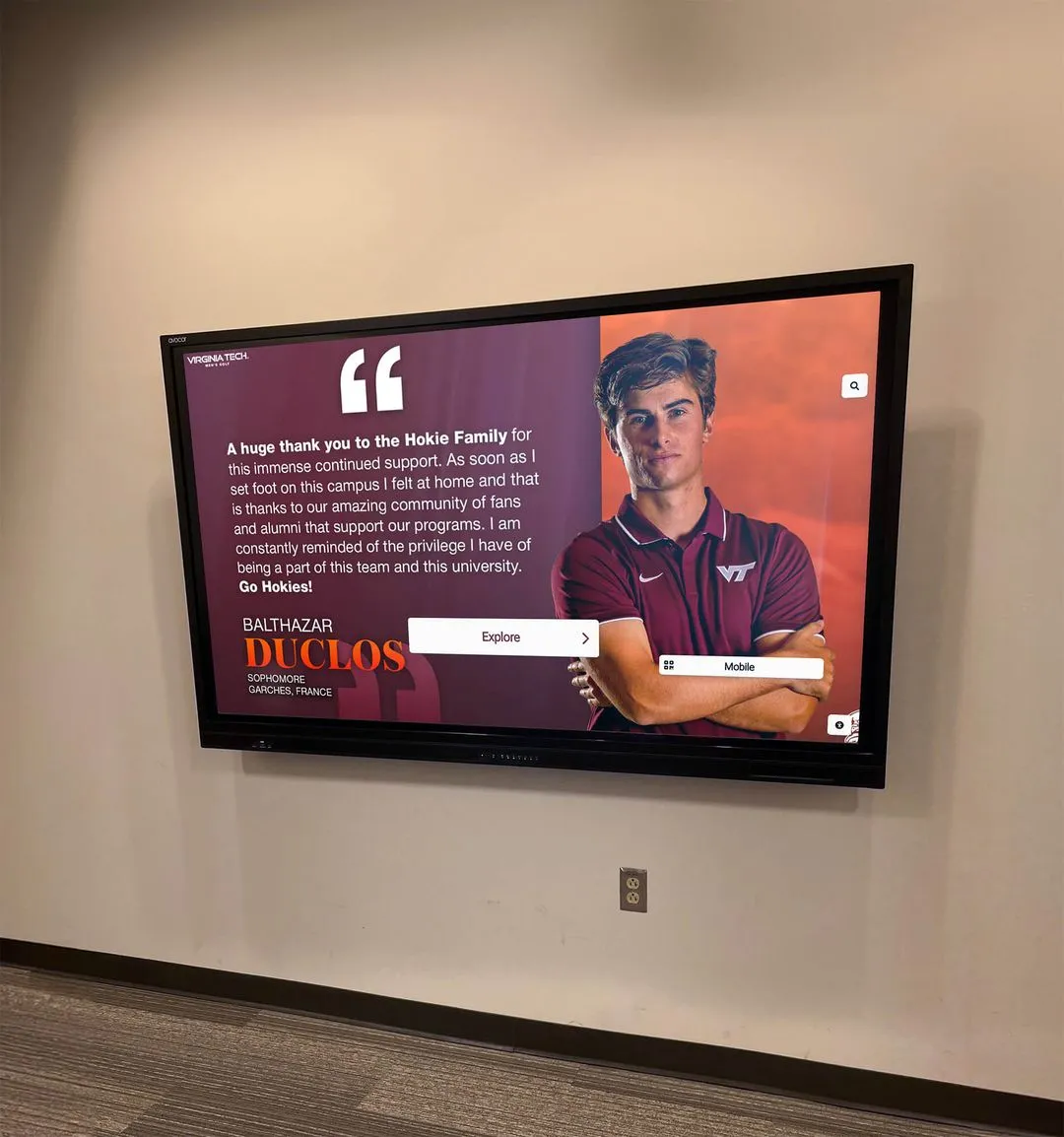
Modern digital recognition platforms can generate shareable athlete profile cards for social media, provide mobile-responsive web access to recognition content, enable easy screenshot and sharing of achievements, and create content suitable for athletics website integration. These features help Division III programs extend recognition beyond physical campus installations to reach broader audiences through digital channels where D3 athletics increasingly build followings.
Student-athletes appreciate recognition systems that enable them to share achievements with family, friends, and professional networks—partially compensating for the media coverage limitations that characterize Division III athletics compared to higher divisions.
Multi-Sport and Program Flexibility
Division III athletic departments typically manage numerous sports with varying recognition needs and traditions—systems must accommodate diverse programs.
Serving Diverse Program Needs
Recognition platforms should flexibly support multiple sports with distinct achievement categories, varying program histories and traditions, different coaching philosophies about recognition, sport-specific statistics and records, and both team and individual accomplishments. This flexibility ensures single systems serve comprehensive departmental needs rather than requiring separate solutions for different sports.
Effective platforms allow sport-specific customization while maintaining consistent institutional branding and cohesive user experiences across different athletic programs within the same department.
Implementation Strategies for Budget-Conscious D3 Programs
Even cost-effective digital systems require thoughtful implementation planning to maximize value within Division III resource constraints.
Phased Content Development
Comprehensive historical recognition covering decades of Division III athletics represents substantial content development work—phased approaches make projects manageable.
Starting Strategic, Building Systematically
Rather than attempting complete historical coverage before launch, implement recognition displays in strategic phases:
Phase 1: Recent Excellence and Major Highlights
- Last 5-10 years of competition across all sports
- Championship teams and conference titles from recent decades
- Current school records and notable achievements
- Distinguished recent alumni with significant post-college accomplishments
This initial phase demonstrates system value and generates excitement while requiring manageable content development work.
Phase 2: Systematic Historical Addition
- Add specific sports or time periods systematically
- Prioritize programs with available historical documentation
- Leverage alumni assistance identifying historical achievements
- Fill gaps in recent coverage identified after initial launch
Phase 3: Comprehensive Archive Completion
- Work backward chronologically through remaining program history
- Document historical achievements requiring additional research
- Complete comprehensive coverage honoring all deserving athletes
Phased approaches enable earlier launches that build momentum and demonstrate value while spreading content development effort across realistic timeframes given limited staff resources.
Programs developing historical content can apply strategies from guides on creating college history timelines to organize and present decades of athletic achievement effectively.
Leveraging Existing Content and Data
Division III programs often possess substantial historical information in various formats—effective implementation leverages these existing resources rather than recreating content from scratch.
Identifying Available Content Sources
Most D3 athletic departments maintain media guides and team rosters, statistical databases and record books, historical photographs and team photos, alumni databases with contact information, and athletic department publications and newsletters. Converting these existing resources into digital recognition content proves more efficient than researching and recreating information already documented elsewhere.
Efficient Content Conversion
Purpose-built recognition platforms typically support bulk content import from spreadsheets or databases. Sports information directors can export existing data, format according to platform specifications, and import hundreds of athlete profiles or team records simultaneously—vastly more efficient than manual one-by-one entry.
For historical photographs, systematic scanning projects create digital archives simultaneously preserving fragile originals while generating content for recognition displays.
Building Alumni Involvement
Division III alumni often feel strong connections to their athletic experiences—many welcome opportunities to contribute to recognition efforts while strengthening ongoing institutional relationships.
Alumni as Content Resources
Historical athletes can help identify missing achievements from their eras, provide personal photos supplementing official athletics archives, share stories and context enriching basic statistical records, verify information accuracy preventing embarrassing errors, and promote recognition displays among their alumni networks generating engagement and appreciation.
Creating structured opportunities for alumni contribution—online forms for submitting historical information, dedicated email addresses for photo submissions, or alumni committee participation in content development—generates valuable content while strengthening alumni connections that support long-term athletic program sustainability.
Coordinating with Institutional Advancement
Athletic recognition connects naturally to broader institutional advancement priorities including alumni engagement, donor cultivation, and enrollment management.
Creating Synergies Across Departments
Rather than treating athletic recognition as purely sports initiative, coordinate with advancement professionals who manage alumni relations and engagement, development staff cultivating athletic giving, admissions teams recruiting student-athletes, and marketing personnel promoting institutional identity. This cross-departmental coordination can generate shared funding for recognition projects serving multiple institutional priorities, collaborative content development leveraging diverse resources, integrated promotion maximizing recognition system visibility, and strategic alignment ensuring recognition supports broader institutional objectives.
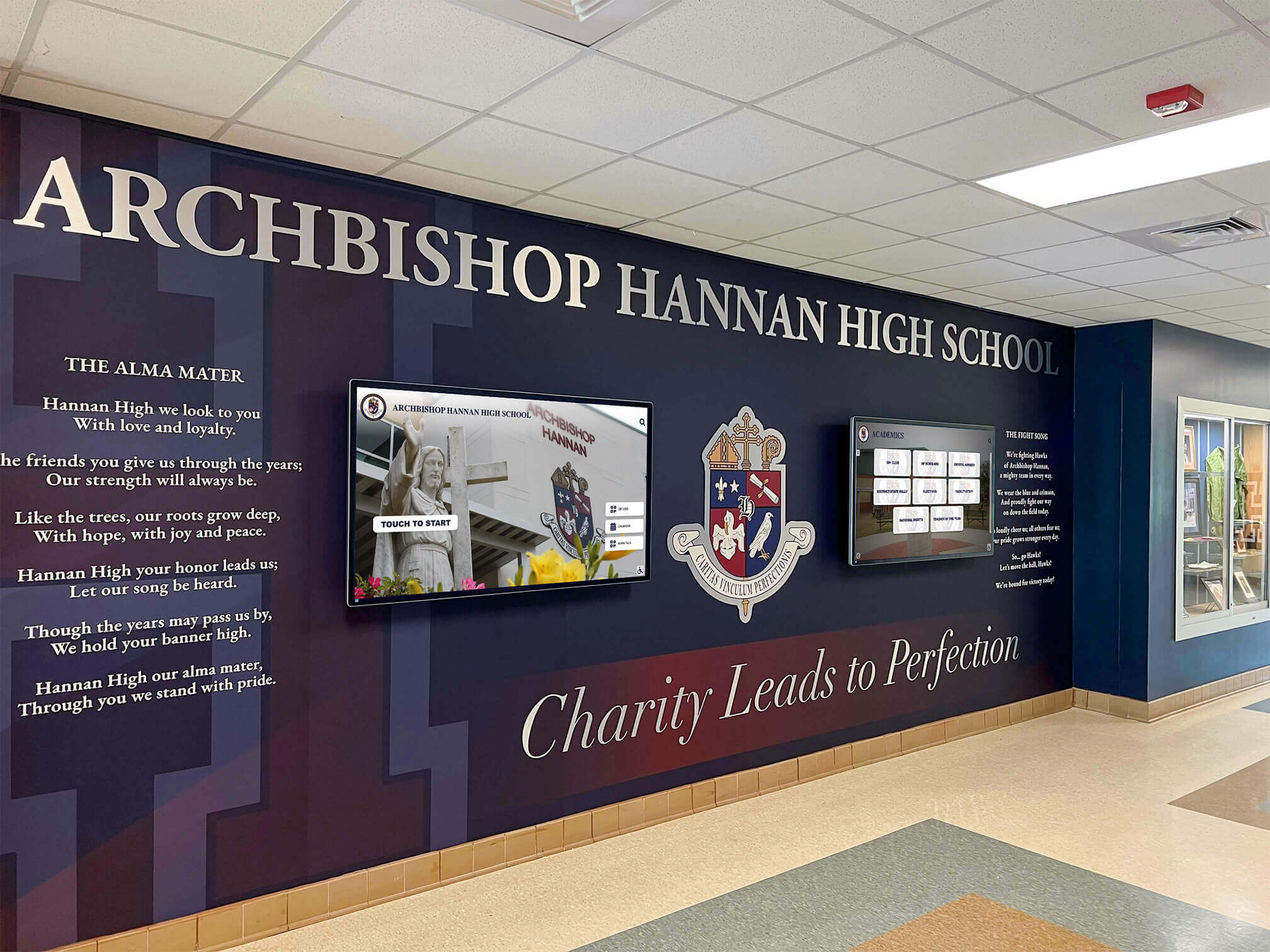
Athletic recognition systems often serve broader institutional priorities beyond athletics alone
Division III institutions increasingly recognize that athletics contributes to enrollment management, alumni engagement, and institutional identity—recognition systems supporting these broader objectives attract investment from multiple budget sources rather than relying exclusively on athletic department funding.
Funding Strategies for Division III Recognition Projects
Creative funding approaches help Division III programs implement recognition systems despite tight athletic budgets.
Naming Rights and Sponsorship Opportunities
Recognition displays can generate revenue or offset costs through various sponsorship arrangements.
Appropriate Sponsorship Models
While maintaining appropriate boundaries given Division III principles, programs can offer display naming rights to major donors or sponsors, category sponsorships recognizing supporters of specific sports, alumni class sponsorships connecting giving campaigns to recognition initiatives, and local business partnerships appropriate for D3 commercial activity limitations.
These sponsorships provide funding while acknowledging supporter contributions through visible recognition—creating mutual value that makes projects financially feasible.
Alumni Giving Campaigns
Many Division III alumni remember their athletic experiences as defining elements of college years—targeted giving campaigns focusing on recognition projects often generate strong response.
Effective Campaign Positioning
Position recognition projects as opportunities for alumni to honor teammates and coaches, preserve program history for future generations, modernize athletics facilities and experiences, and leave lasting legacies celebrating team and program achievements. These messages resonate with athletic alumni who feel strong emotional connections to college sports experiences.
Digital recognition platforms’ ability to acknowledge donor contributions through dedicated recognition sections or featured content creates additional incentive for campaign participation.
Grant Opportunities and Institutional Support
Recognition projects serving broader institutional priorities beyond athletics alone may qualify for funding sources unavailable for purely athletic initiatives.
Positioning for Institutional Investment
Recognition systems supporting student recruitment and enrollment, alumni engagement and donor cultivation, institutional history preservation, and technology innovation initiatives align with priorities institutional leadership funds even at budget-conscious Division III colleges.
Framing recognition projects as investments in these broader objectives—rather than purely athletic expenditures—opens funding possibilities beyond athletic department budgets alone.
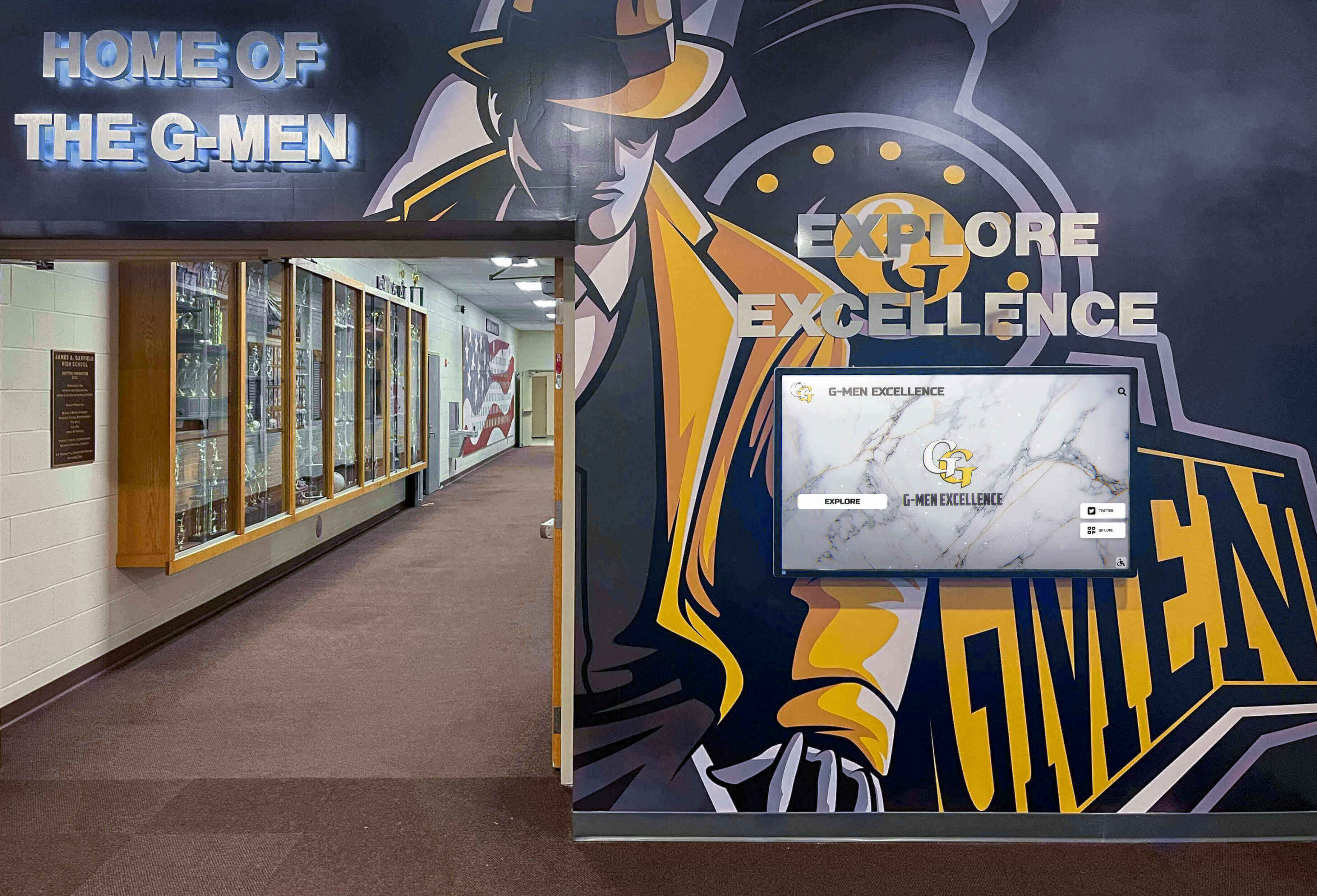
Strategic funding approaches help Division III programs implement comprehensive recognition systems despite budget constraints
Avoiding Common Implementation Mistakes
Division III programs can learn from others’ experiences to avoid expensive missteps that undermine recognition initiatives.
Don’t Rush Platform Selection
Budget pressure sometimes encourages choosing lowest-cost options without thorough evaluation—these short-term savings often prove expensive long-term.
The Cheap Solution Trap
Repurposed digital signage platforms may cost less initially than purpose-built recognition software, but they typically lack essential features including robust search and filtering capabilities, intuitive content management for non-technical staff, content relationship connections (team rosters, related achievements), and user interface designs appropriate for interactive recognition.
These limitations create frustrating user experiences, staff maintenance burdens, and systems that languish unused after initial implementation excitement fades—wasting initial investments regardless of low purchase prices.
Schools should read guides like why schools regret rushing into digital hall of fame software before making platform decisions based primarily on initial cost rather than long-term value and appropriate feature sets.
Avoid Underestimating Content Development
The most common recognition project failure stems from underestimating content development time and resource requirements.
Realistic Time Assessment
Athletic directors envisioning comprehensive recognition covering decades of program history must accurately assess content development requirements including gathering athlete information and achievement details, locating or creating photos for every profile, entering content into recognition systems, verifying accuracy before publication, and maintaining and updating content over time.
For example, creating a quality athlete profile might require 15-30 minutes including research, data entry, photo editing, and review. Honoring 500 historical athletes represents 125-250 hours of content development work—substantial commitment for small D3 staffs managing numerous other responsibilities.
Programs that launch recognition displays before completing sufficient content development create disappointing initial impressions that undermine projects. Better to implement thoughtful phased approaches with polished initial content than attempt comprehensive coverage that launches incomplete or with poor quality that embarrasses rather than honors athletes.
Don’t Neglect Ongoing Maintenance Planning
Recognition systems require ongoing attention to remain current and valuable—implementation plans must address long-term maintenance realistically.
Sustainable Maintenance Approaches
Identify specific staff members responsible for recognition updates, establish regular update schedules (weekly, monthly, or seasonal), create streamlined workflows minimizing time requirements, and develop content submission processes enabling coaches to provide achievement information efficiently.
Without clear maintenance responsibility and realistic processes, recognition displays gradually become outdated—displaying last year’s achievements while current accomplishments go unrecognized. This neglect undermines the investment’s value and creates perception that programs don’t actually prioritize recognition despite expensive system implementations.
Why Rocket Alumni Solutions Serves Division III Programs Effectively
Division III athletic directors researching digital recognition options should understand how purpose-built platforms specifically address D3 needs and constraints.
Designed for Resource-Constrained Environments
Rocket Alumni Solutions was created specifically for schools and organizations that need professional recognition systems without enterprise budgets or dedicated technology staff—exactly the Division III reality.
Practical Design Priorities
The platform prioritizes capabilities that matter most for programs with limited resources including genuinely intuitive content management requiring minimal training, bulk import capabilities enabling efficient historical content addition, flexible deployment options working with diverse facility environments, and responsive support ensuring programs receive help when needed without expensive consulting requirements.
This focus on practical usability rather than complex features makes the platform particularly appropriate for Division III environments where staff time represents the scarcest resource and sustainable solutions matter more than impressive features requiring extensive training or maintenance.
Budget-Conscious Total Cost of Ownership
While specific pricing varies based on implementation requirements, Rocket Alumni Solutions structures offerings to provide comprehensive functionality at price points realistic for Division III athletic budgets—often less than traditional trophy case installations while providing dramatically more recognition capacity and ongoing value.
Transparent, Predictable Costs
The company provides clear pricing without hidden fees or surprise charges—enabling accurate budget planning essential for resource-conscious D3 programs. Support and platform improvements come included rather than requiring additional ongoing fees for basic assistance or feature access.
This transparent cost structure and focus on value helps Division III programs make recognition investments sustainable long-term rather than creating financial obligations that strain already tight budgets.
Proven Success with Similar Programs
Schools and organizations implementing Rocket Alumni Solutions consistently report successful outcomes across the dimensions that matter most for Division III athletics including content management accessibility enabling small staffs to maintain recognition effectively, engaging user experiences that attract student-athlete and alumni interaction, professional presentation quality that enhances rather than detracts from institutional image, and responsive ongoing support that prevents technical issues from becoming recognition system abandonment.
Customers praise the platform for being “very user friendly” and note it “makes it easy for any novice to create an appealing and user friendly experience”—exactly the accessibility Division III programs require given limited staff resources and technical expertise.
The consistent customer satisfaction across diverse institutions provides confidence that the platform delivers on promises rather than disappointing after implementation—critical assurance for Division III programs that cannot afford expensive mistakes.
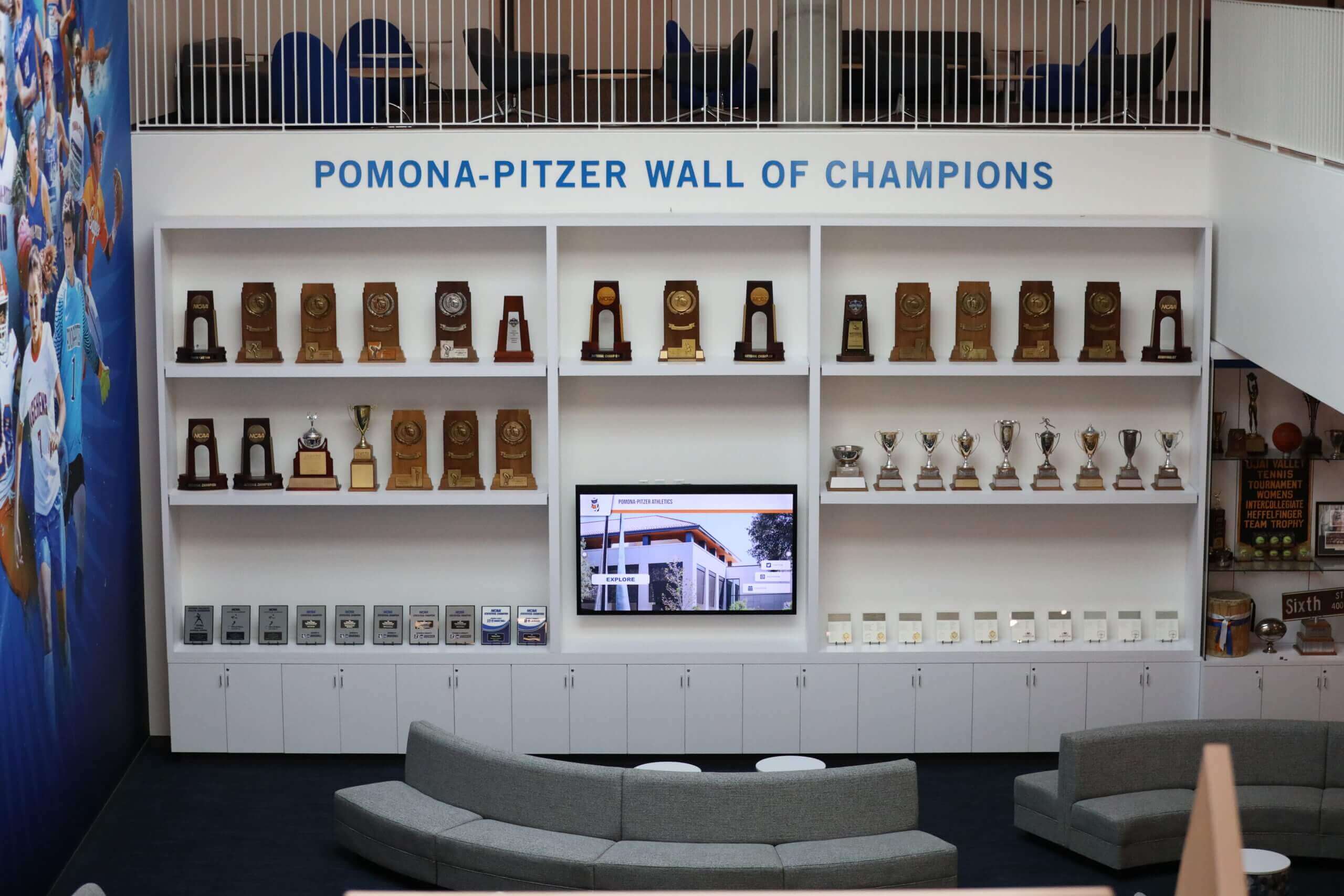
Purpose-built recognition platforms designed specifically for educational athletics deliver capabilities and value appropriate for Division III environments
Conclusion: Creating Recognition Systems That Honor D3 Student-Athletes
Division III student-athletes dedicate themselves to athletics with remarkable commitment despite competing without scholarships, professional aspirations, or significant media attention. They balance demanding training schedules with rigorous academic programs, prioritize team success and personal growth over individual glory, maintain amateur athletic ideals while peers at other divisions pursue professional careers, and create positive team cultures and traditions that define college experiences.
These student-athletes deserve recognition systems that honor their achievements, preserve their contributions to program traditions, inspire current competitors through historical excellence examples, and maintain connections to institutions throughout alumni lives. Yet Division III athletic directors face significant challenges implementing comprehensive recognition given budget constraints, limited staff resources, facility space limitations, and competing priorities for scarce funding.
Discover Recognition Solutions Designed for Division III Athletics
Explore how Rocket Alumni Solutions provides purpose-built digital recognition platforms that address Division III budget constraints, staffing realities, and space limitations while creating professional systems that honor student-athlete dedication and build program pride.
Schedule a ConsultationDigital recognition systems address many Division III challenges effectively by eliminating space constraints through unlimited digital capacity, reducing long-term per-athlete recognition costs compared to traditional approaches, requiring minimal ongoing staff time with intuitive content management, and supporting recruitment, team culture, and alumni engagement objectives simultaneously.
Successful implementation requires thoughtful platform selection prioritizing usability over features, realistic content development planning using phased approaches, creative funding strategies leveraging multiple institutional priorities, and ongoing maintenance plans respecting available staff capacity. Programs that invest effort in proper planning dramatically increase their likelihood of recognition systems that serve institutions effectively for years.
Division III athletics represents college sports at its best—student-athletes competing for love of sport and personal growth within supportive educational environments. These programs and athletes deserve recognition systems that celebrate their unique contributions and preserve their achievements with the same care and professionalism they demonstrate through dedication to academic and athletic excellence.
Ready to explore recognition solutions designed specifically for Division III athletics challenges? Learn about additional considerations including exciting hallway displays for schools, digital storytelling for athletic programs, and state championship recognition strategies that demonstrate comprehensive approaches to celebrating athletic achievement effectively within realistic resource constraints.