Donor Recognition Display Buying Guide: Hardware, Content, and Stewardship Choices in 2026
Donor recognition displays represent significant investments for schools, universities, hospitals, and nonprofits—typically ranging from several thousand to over fifty thousand dollars depending on size, technology, and integration complexity. Yet many organizations approach these purchases focused solely on upfront hardware costs while overlooking critical factors that determine long-term value: content management requirements, ongoing stewardship capabilities, upgrade pathways, and how recognition technology integrates with broader development strategies.
The wrong recognition display creates ongoing frustration through complicated content updates requiring vendor assistance for simple changes, static presentations that donors scroll past without engagement, limited capacity forcing difficult decisions about whose names appear, hardware obsolescence requiring complete replacement within a few years, and missed stewardship opportunities where recognition becomes a one-time installation rather than an ongoing relationship tool.
The right donor recognition display becomes a strategic asset supporting fundraising goals, honoring supporters in meaningful ways that strengthen relationships, providing flexible content management enabling timely updates celebrating new gifts, creating engaging presentations that donors and visitors actually explore, and offering upgrade pathways protecting technology investments as needs evolve and capabilities advance.
This comprehensive buying guide examines the critical decisions organizations face when selecting donor recognition displays, covering hardware considerations from screen types to mounting options, content management systems enabling easy updates versus those requiring technical expertise, stewardship features that transform static displays into dynamic relationship tools, and strategic questions that ensure recognition technology serves institutional goals rather than creating new complications.
Organizations that excel at donor recognition technology make informed decisions balancing immediate needs with long-term flexibility, prioritize content management capabilities alongside hardware specifications, and select solutions supporting ongoing stewardship relationships rather than static installations that lose relevance as campaigns progress and donor communities evolve.

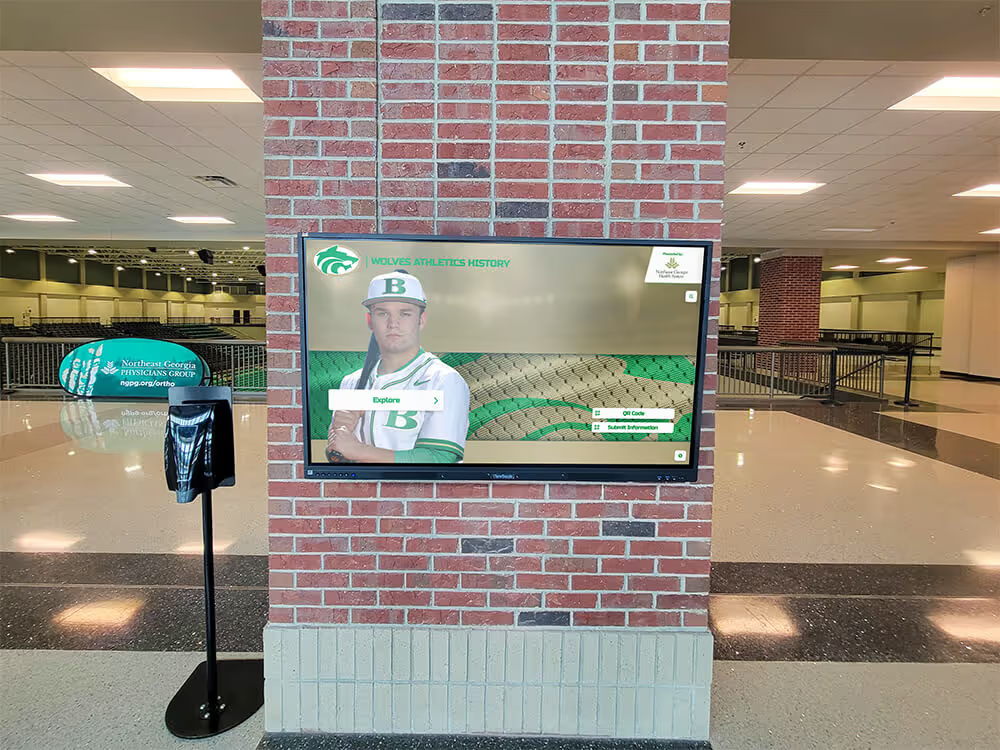
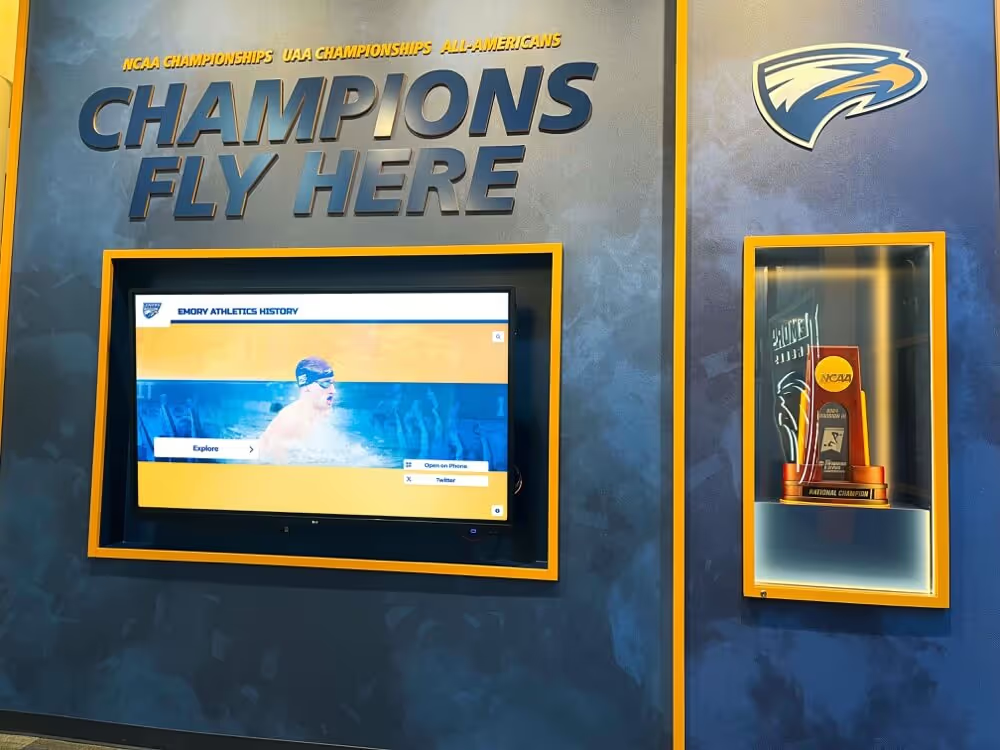
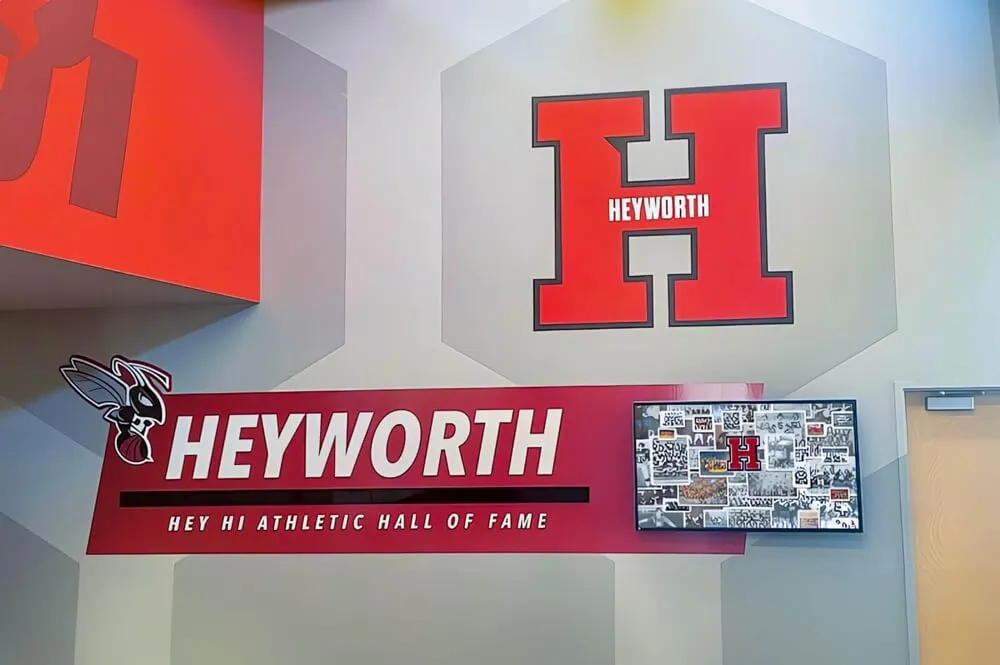
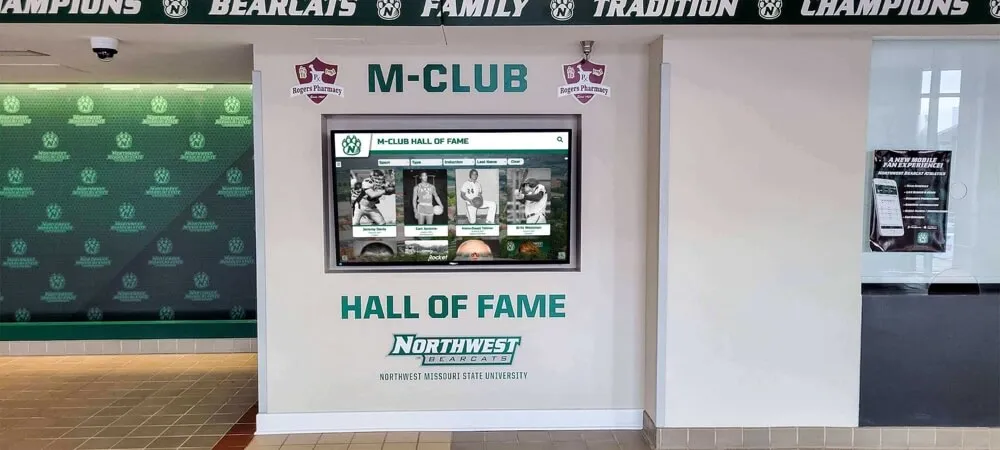
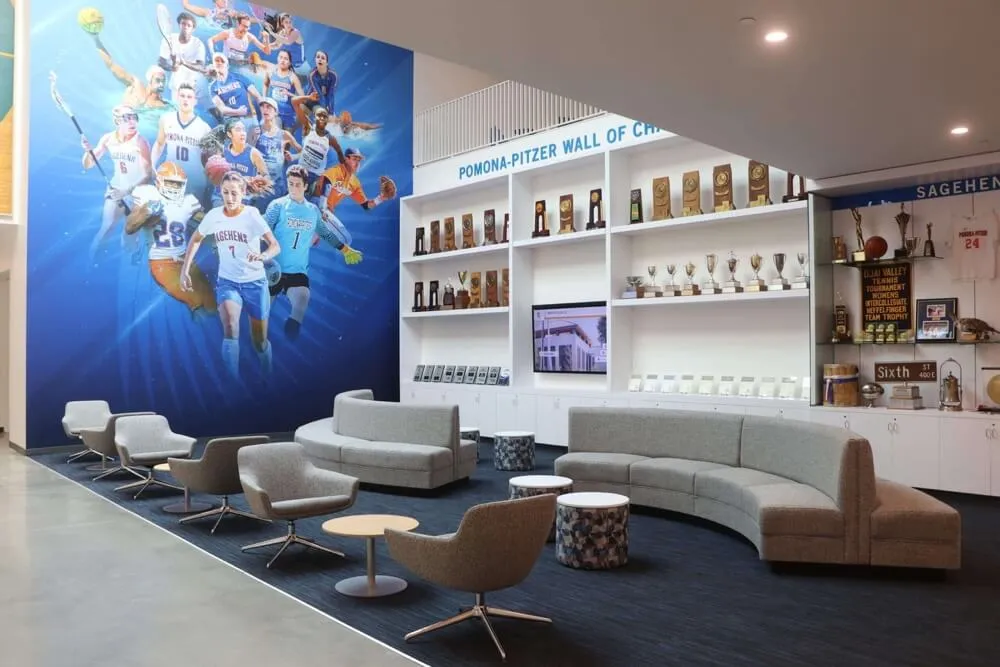
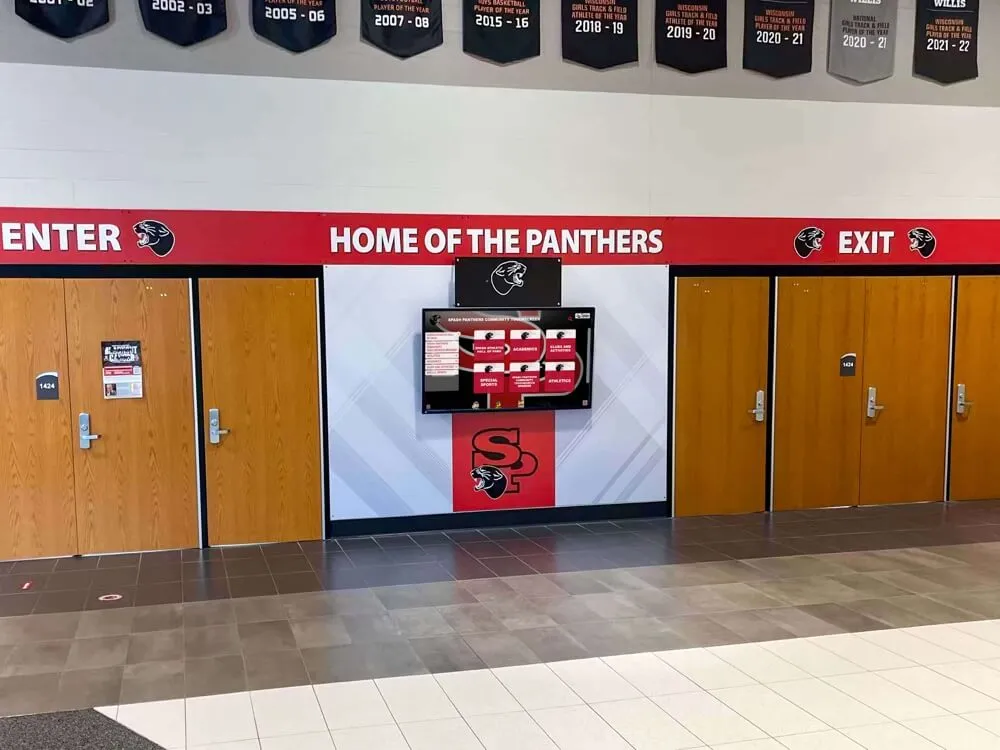
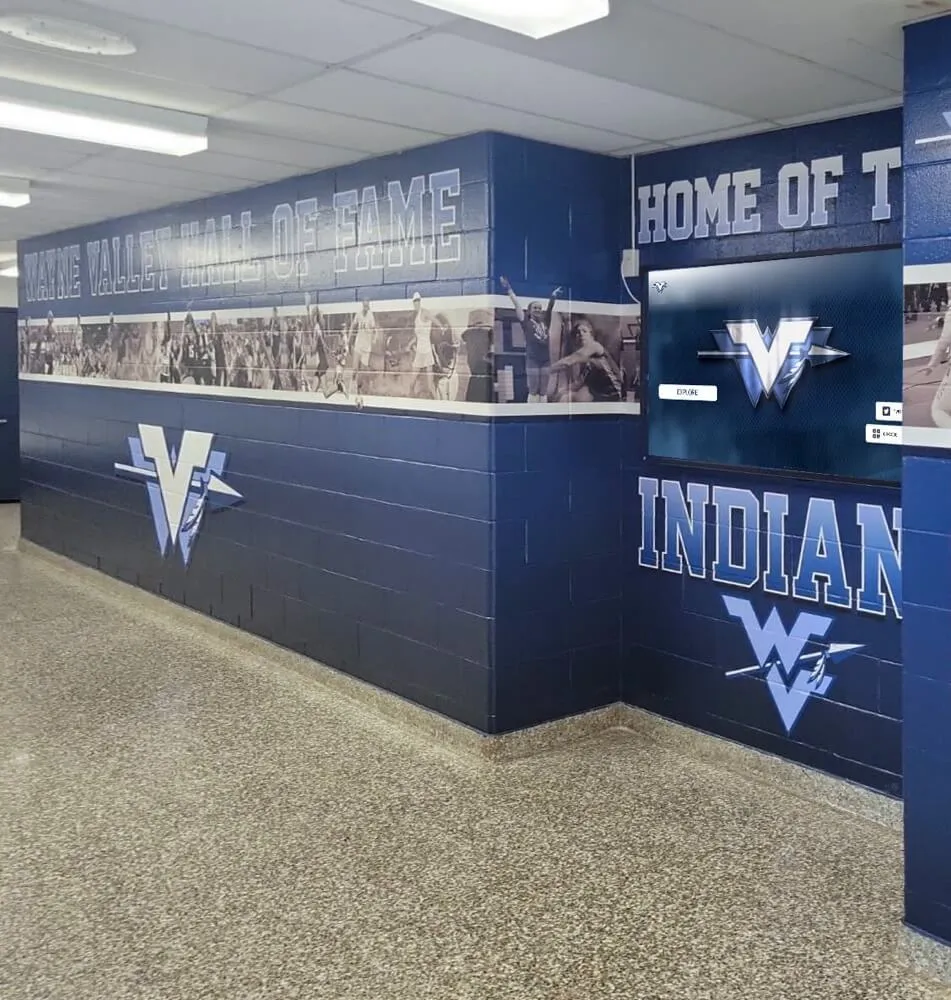
Modern donor recognition displays combine visual impact with flexible content management for ongoing stewardship engagement
Understanding Donor Recognition Display Categories
Recognition technology spans multiple formats with distinct capabilities, limitations, and ideal applications. Understanding these categories helps organizations match solutions to specific needs rather than selecting inappropriate technology.
Digital vs. Traditional Recognition Walls
The fundamental decision involves choosing between digital displays and traditional physical recognition approaches:
Traditional Donor Walls
Physical plaques, engraved materials, and architectural installations provide permanent recognition through:
- Bronze or metal plaques individually mounted or incorporated into wall designs
- Engraved glass, acrylic, or stone panels displaying donor names and giving levels
- Donor bricks creating walkways or walls from individual commemorative units
- Architectural elements like named rooms, gardens, or building features
- Printed graphics combining photography with donor acknowledgment
Traditional approaches offer timeless aesthetics, zero ongoing technology requirements, and tangible permanence many donors value. However, they present significant limitations including finite capacity requiring physical expansion when recognition space fills, expensive modification processes when updates are needed, static presentations without storytelling capabilities, and inability to recognize different donor groups in the same space.
Explore comprehensive donor wall ideas examining both traditional and digital approaches.
Digital Donor Recognition Displays
Electronic displays using screens, projectors, or LED technology provide dynamic recognition through software-managed content. Digital displays offer unlimited recognition capacity through scrolling or searchable databases, instant content updates without physical modifications, multimedia storytelling incorporating photos, videos, and biographical information, multiple recognition programs sharing the same hardware, and searchable interfaces enabling visitors to find specific donors or themselves.
The tradeoff involves ongoing technology dependencies, potential obsolescence as hardware ages, power requirements, and the need for content management systems and ongoing content updates to maintain relevance.
Hybrid Recognition Approaches
Many successful installations combine physical and digital elements, using traditional materials for major donors or permanent naming opportunities while digital displays handle growing contributor lists, campaign updates, and storytelling that physical plaques cannot accommodate.
This combination provides the gravitas and permanence major donors expect while offering the flexibility and capacity that digital technology enables. Learn more about integrated digital hall of fame systems combining multiple recognition programs.
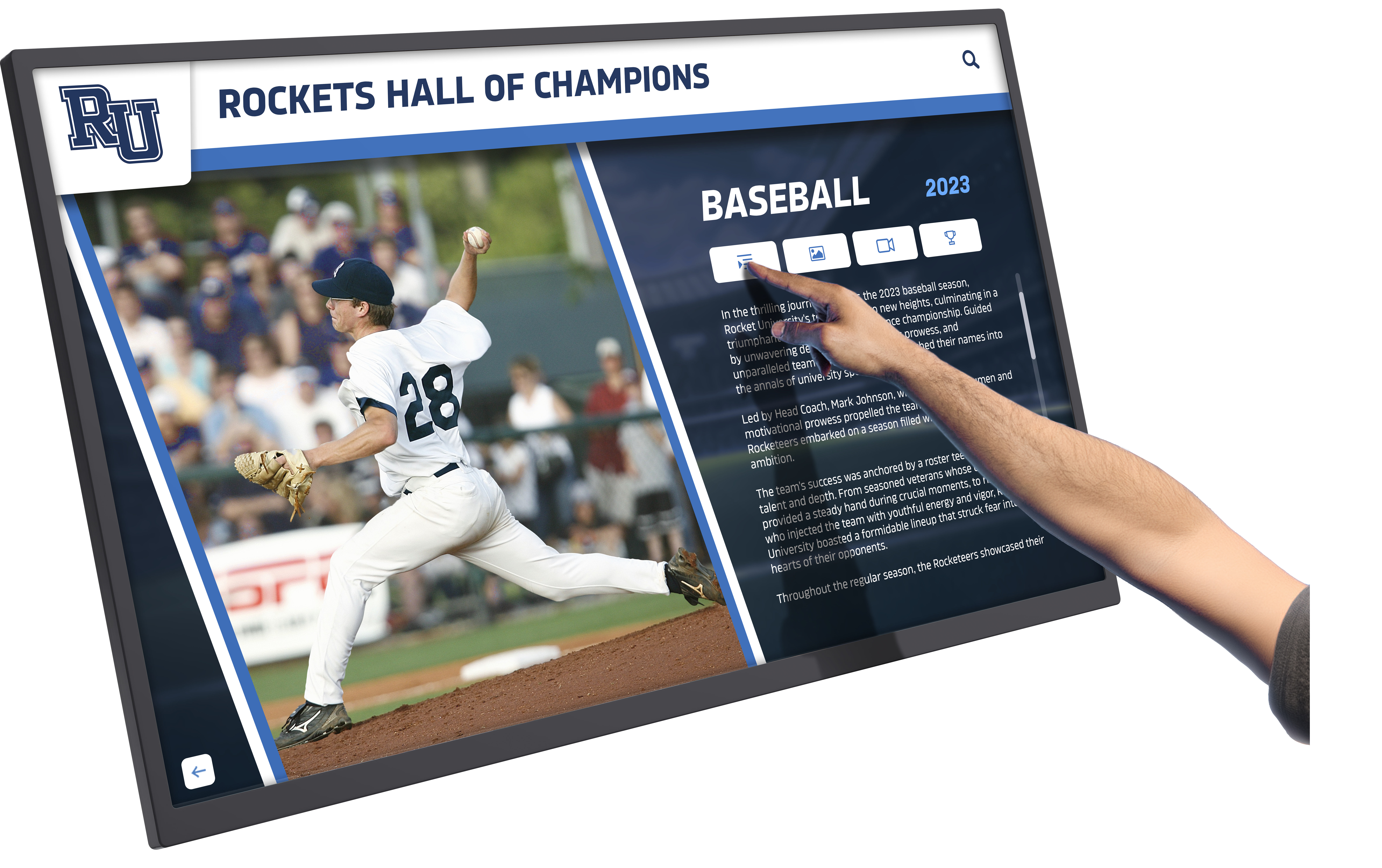
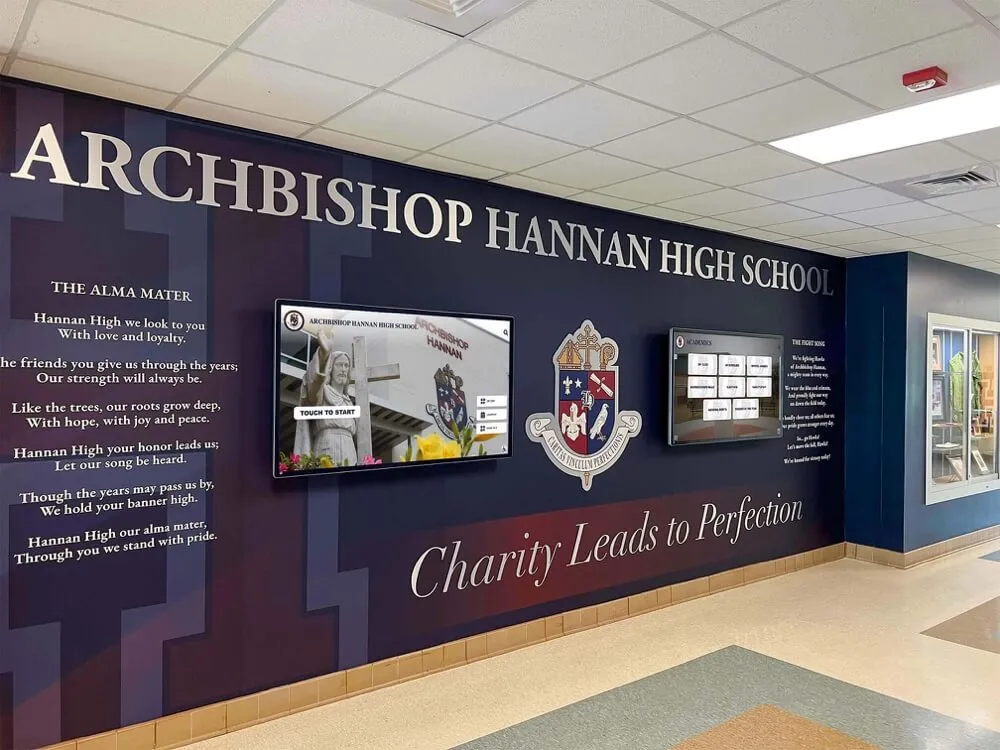
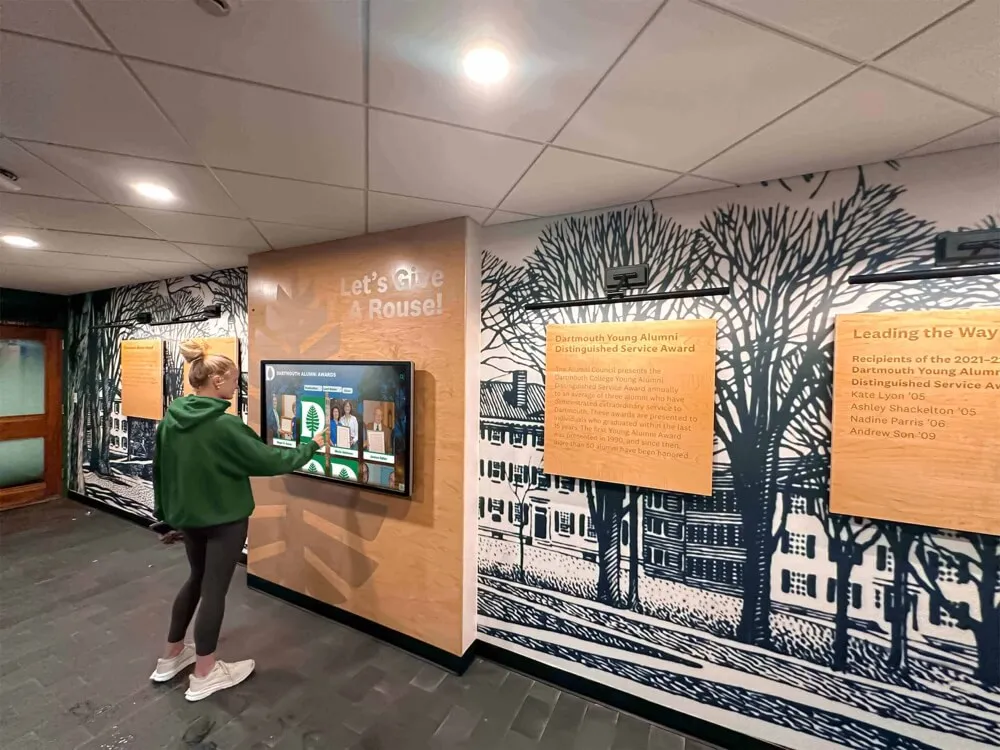
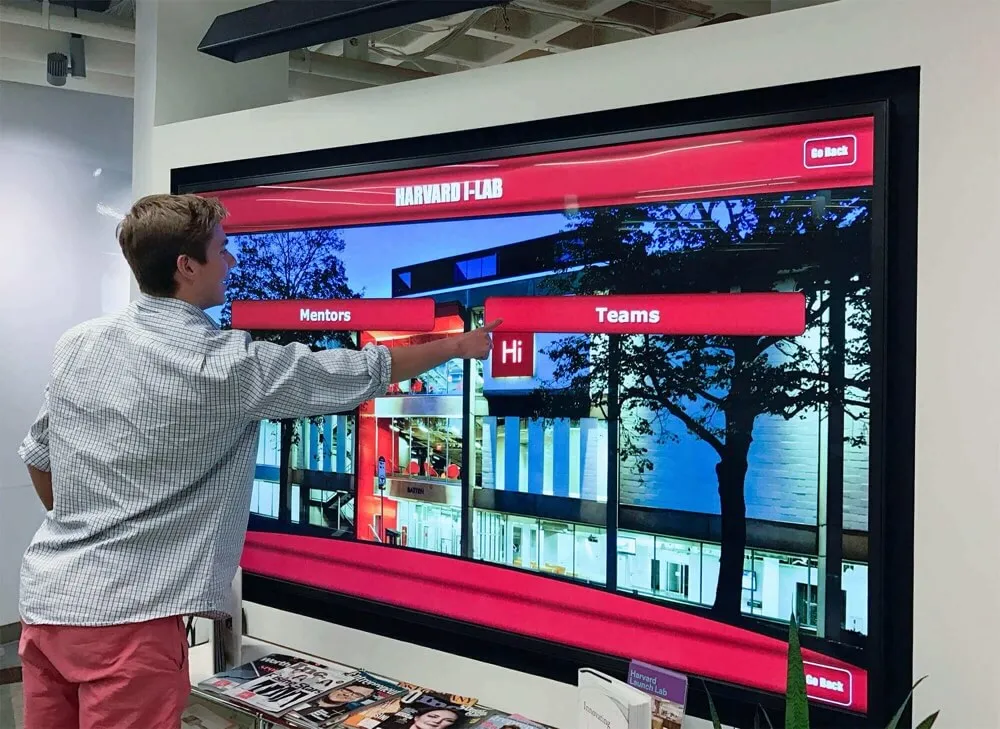
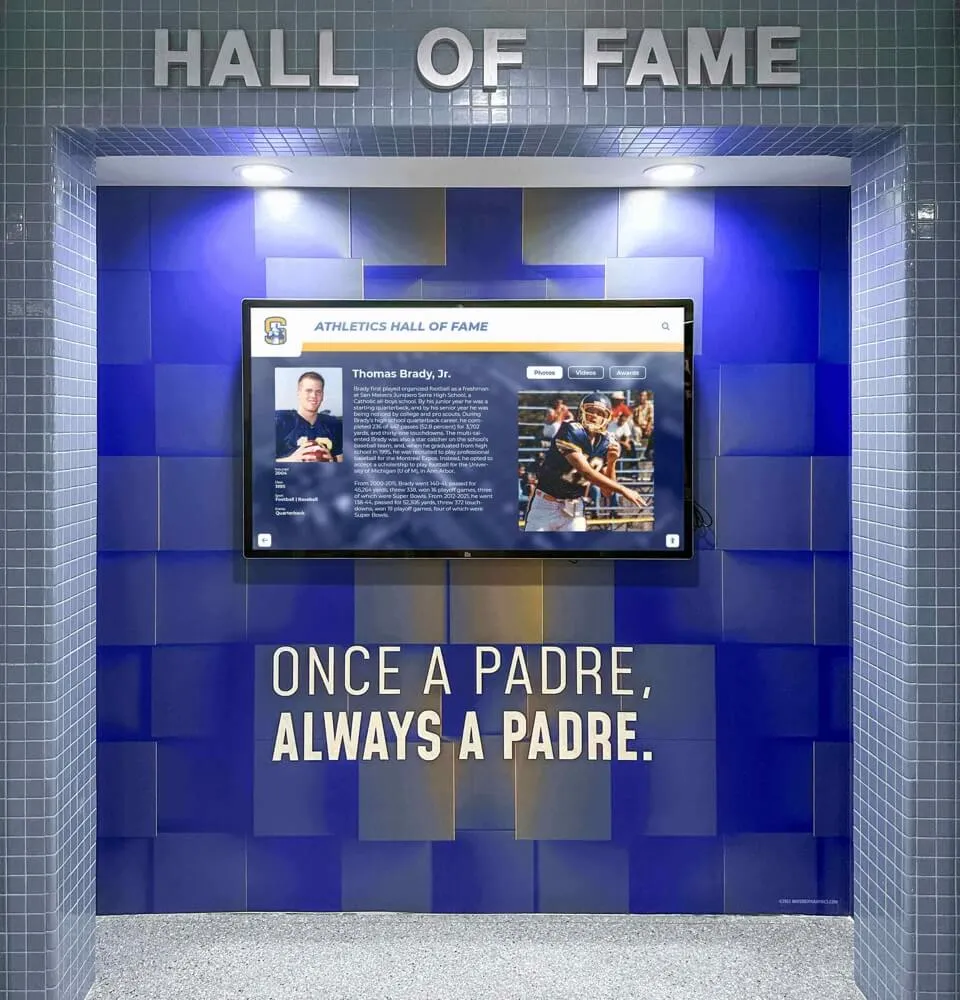
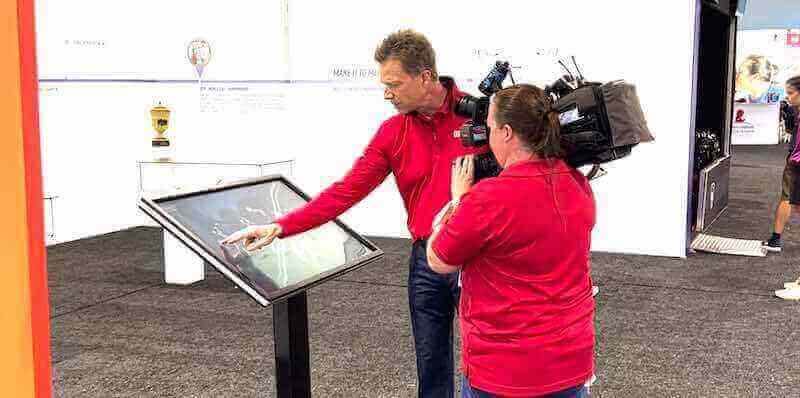
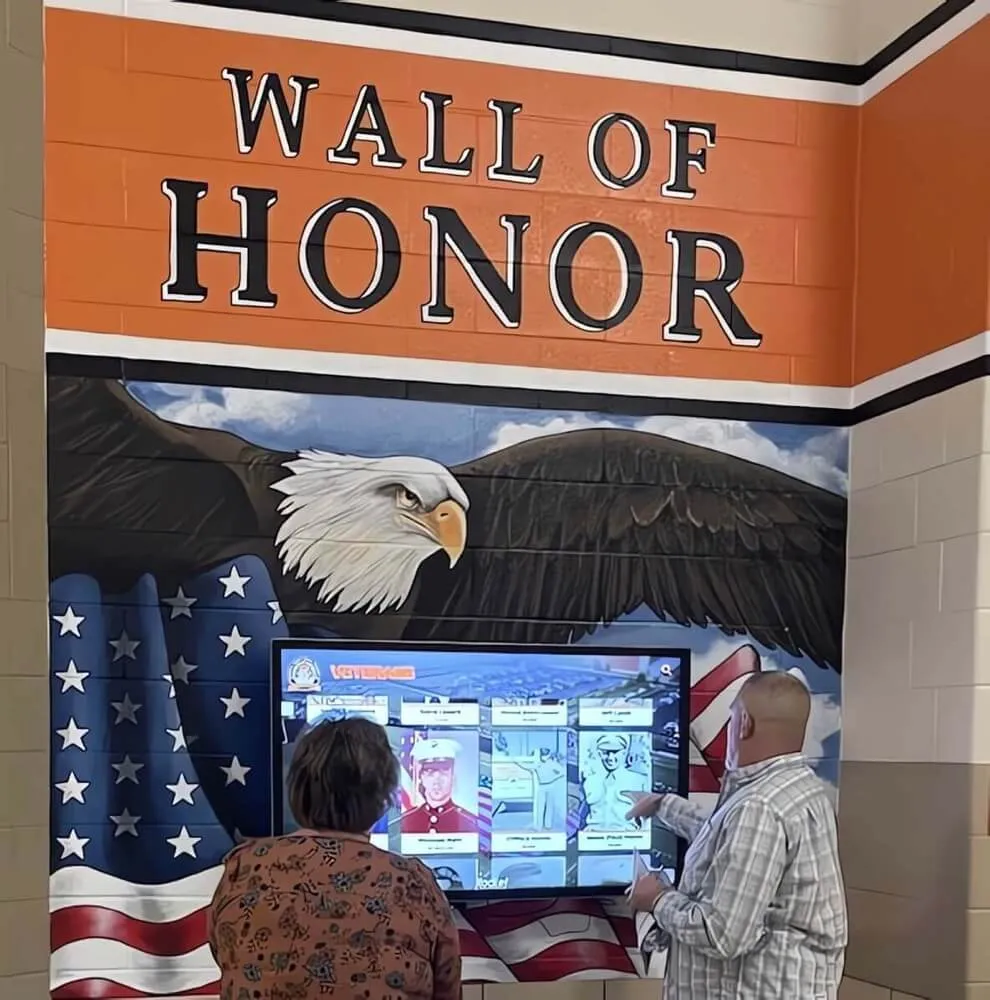
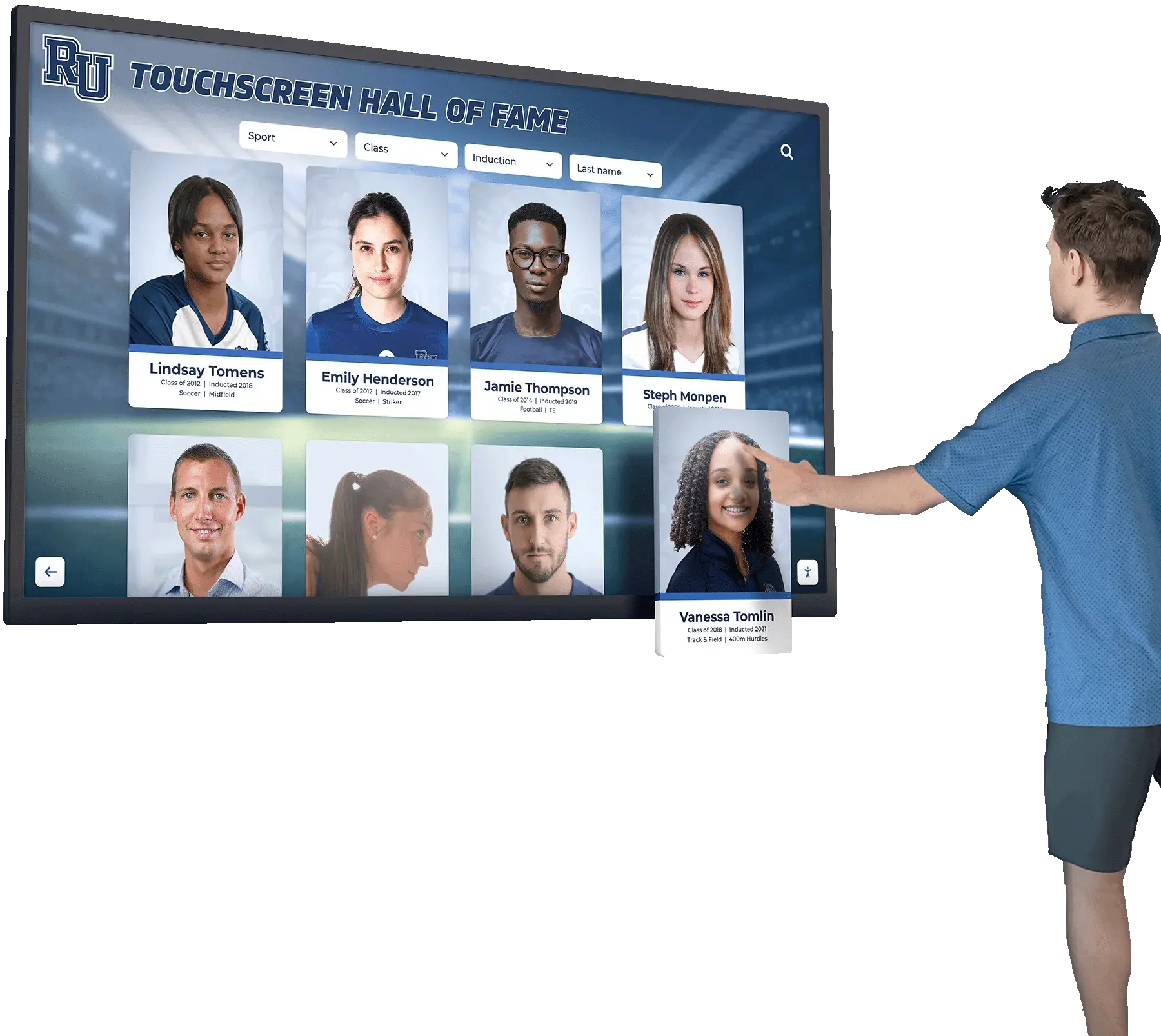
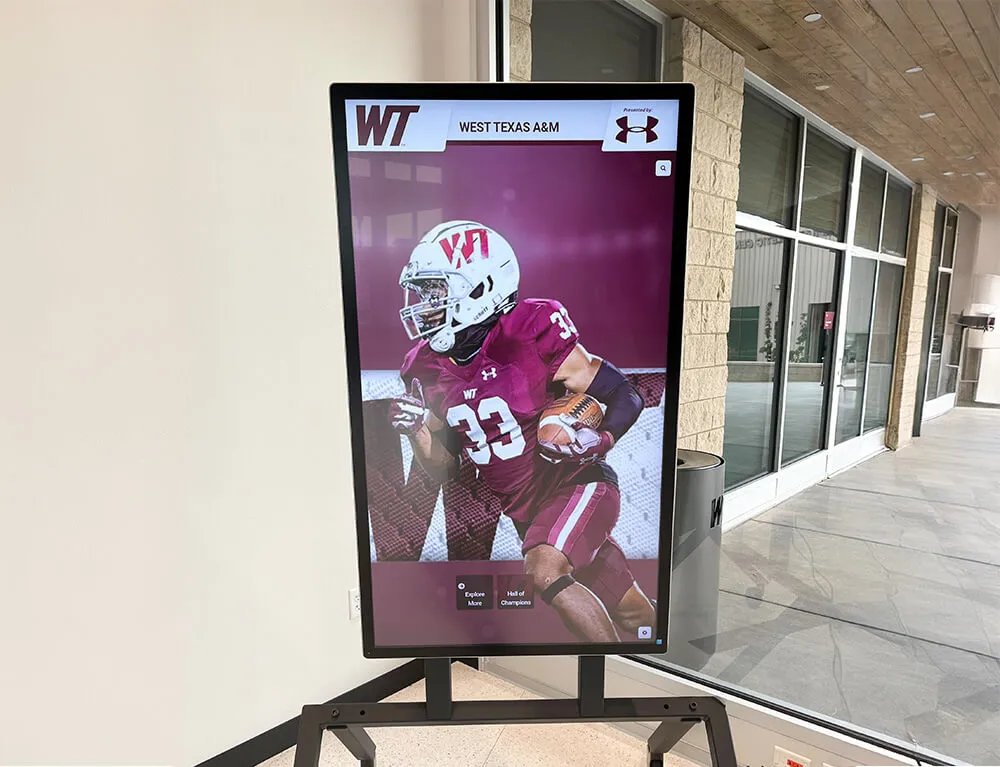
Interactive touchscreens enable donors and visitors to explore recognition content, search for names, and engage with campaign stories
Touchscreen Interactive vs. Passive Display Systems
Within digital recognition, organizations choose between interactive and passive presentation approaches:
Touchscreen Interactive Systems
Interactive displays using capacitive touch technology enable visitor engagement through searching donor databases, exploring campaign information, viewing photo galleries and videos, filtering by giving levels or recognition categories, and accessing detailed donor stories and impact information.
Touchscreen capabilities transform recognition from passive viewing into active exploration. When alumni visit campus and can search for classmates in the donor database, when prospective donors see themselves potentially listed among supporters, or when visitors explore the impact stories connected to major gifts, recognition becomes an engagement tool rather than static acknowledgment.
Interactive systems work particularly well for comprehensive donor databases with hundreds or thousands of supporters, recognition programs incorporating rich media content and storytelling, high-traffic locations where many visitors will engage, applications requiring search functionality to find specific names, and environments where staff can demonstrate capabilities during tours.
Passive Display Systems
Non-interactive displays present curated content through automated loops, slideshows, or video presentations without visitor control. Passive systems suit applications where simple recognition suffices without detailed exploration, lower-traffic locations where interactive features wouldn’t see frequent use, budget constraints making touchscreens cost-prohibitive, or security concerns in unsupervised areas where touch technology might suffer vandalism.
Passive displays typically cost significantly less than interactive systems while still providing dynamic content updates, multimedia recognition, and unlimited capacity through scrolling presentations.
Screen Size and Resolution Considerations
Display visibility and impact correlate strongly with screen size and resolution quality:
Screen Sizes and Viewing Distances
Effective recognition requires appropriate screen sizing for viewing distances. Industry standards suggest:
- 32-43 inch displays for viewing distances under 6 feet (small offices, intimate spaces)
- 49-55 inch displays for 6-10 foot viewing distances (typical hallways, lobbies)
- 65-75 inch displays for 10-15 foot viewing distances (large lobbies, atriums)
- 85+ inch displays or video walls for 15+ foot viewing distances (gymnasiums, auditoriums)
Undersized displays in large spaces fail to create impact or enable comfortable viewing, while oversized displays in small spaces overwhelm architectural proportions and waste budget on unnecessary specifications.
Resolution and Image Quality
Modern displays offer various resolution options affecting text clarity and image quality:
- 1080p Full HD (1920x1080): Minimum acceptable standard for professional displays, adequate for screens under 50 inches
- 4K Ultra HD (3840x2160): Current industry standard providing crisp text and images on larger displays, essential for screens 55 inches and above
- 8K (7680x4320): Emerging technology providing exceptional clarity but offering minimal practical benefit for recognition applications at current price premiums
For donor recognition displaying primarily text and photographs, 4K resolution on appropriately sized displays provides excellent clarity without unnecessary specification inflation.
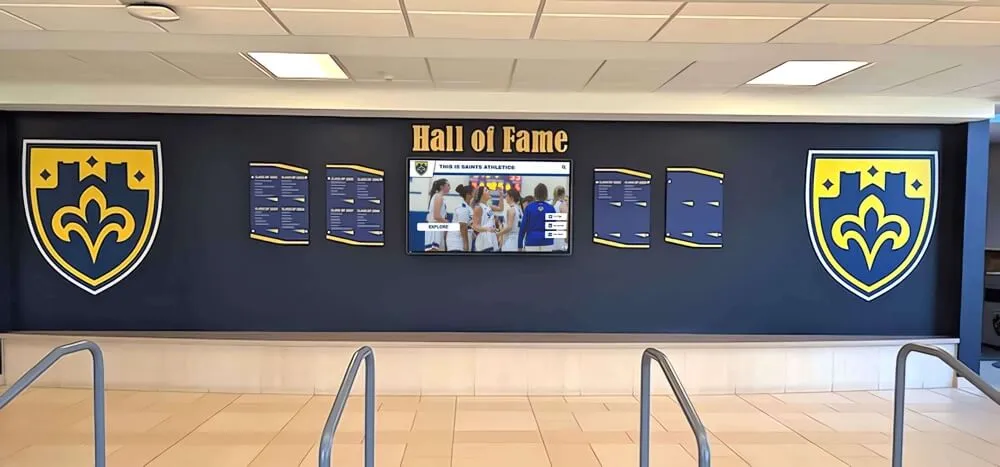
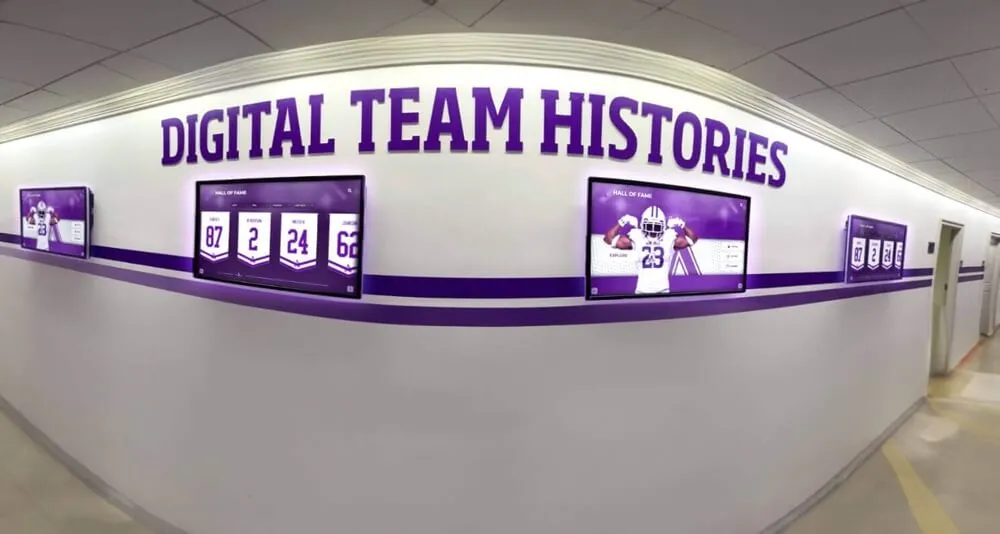
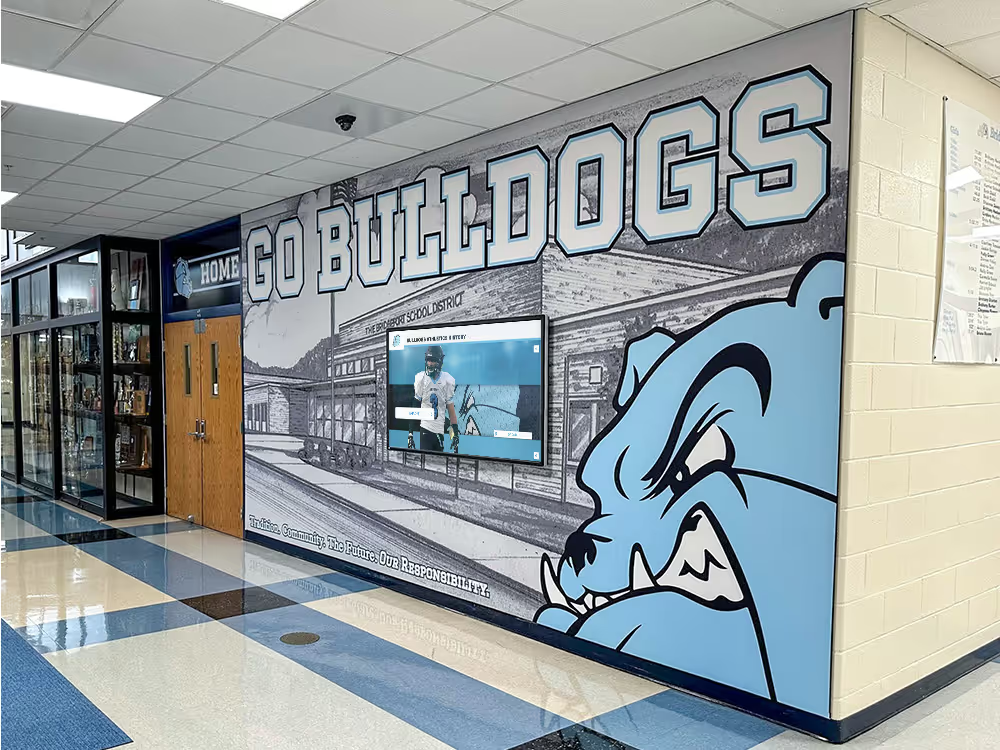
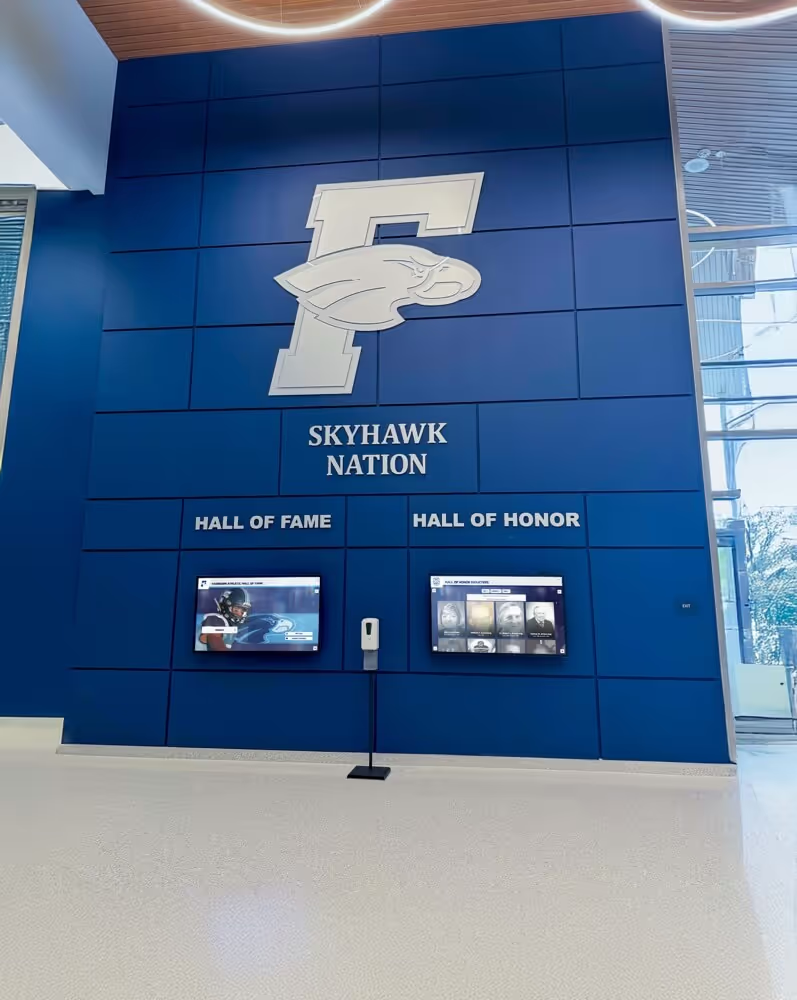
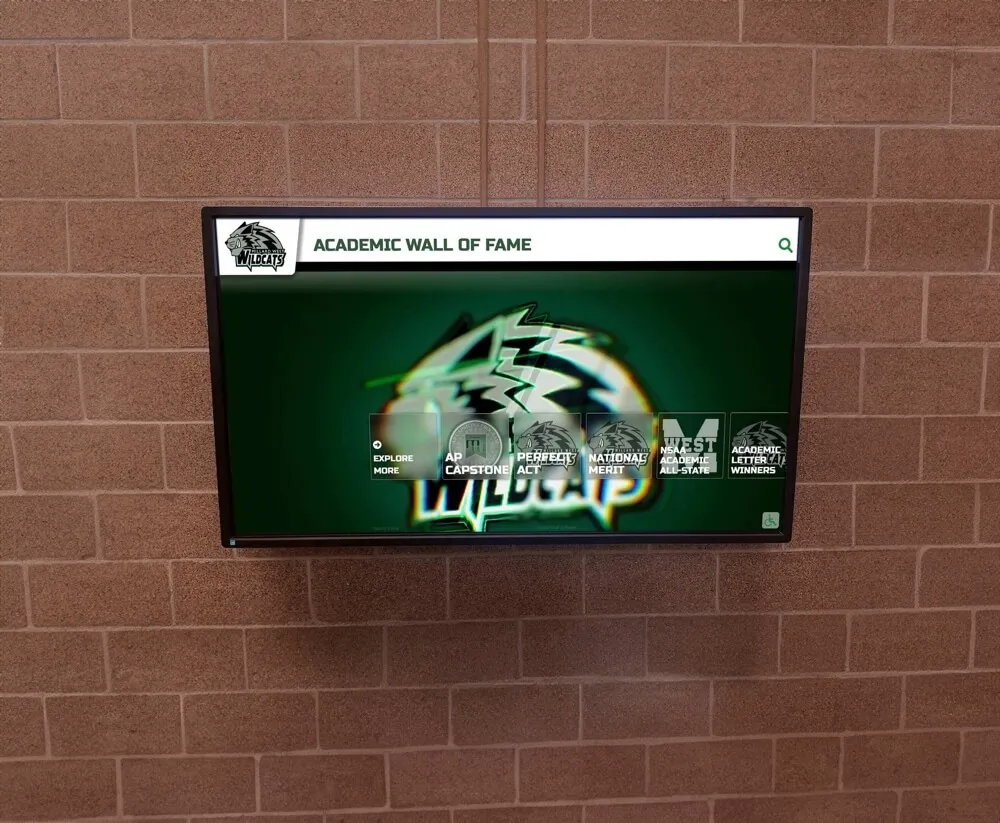
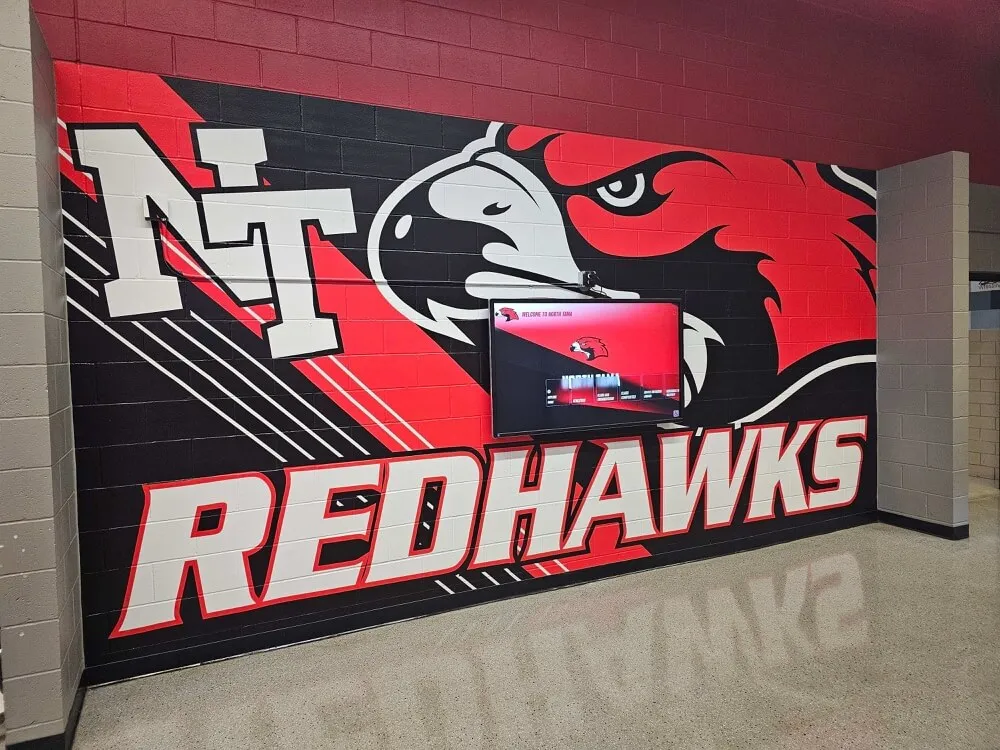
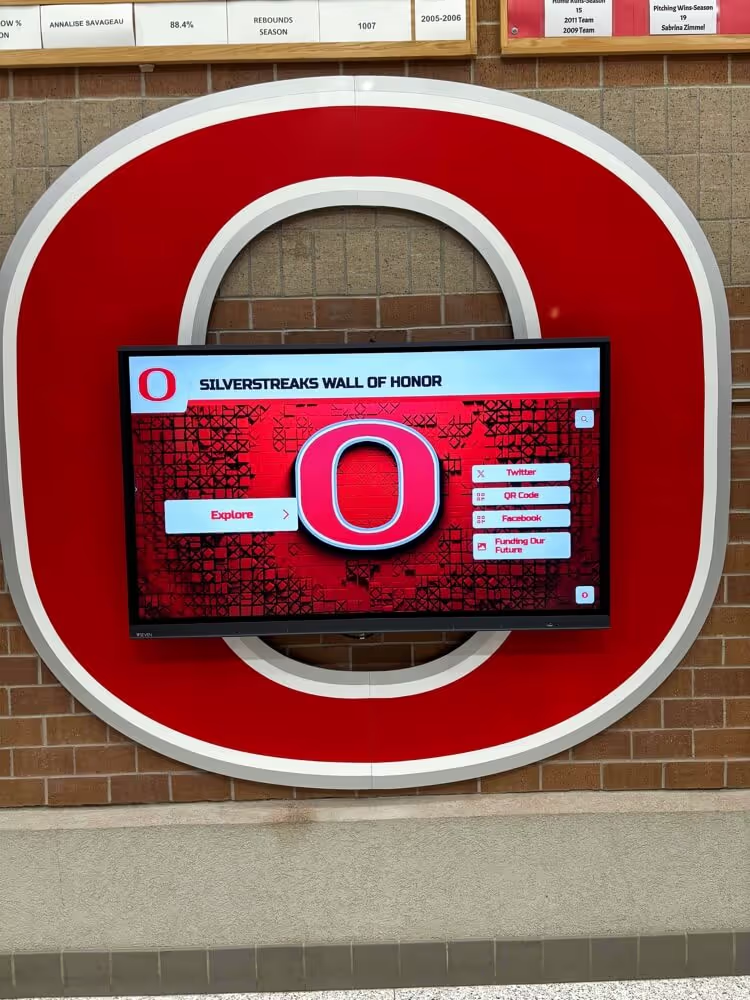
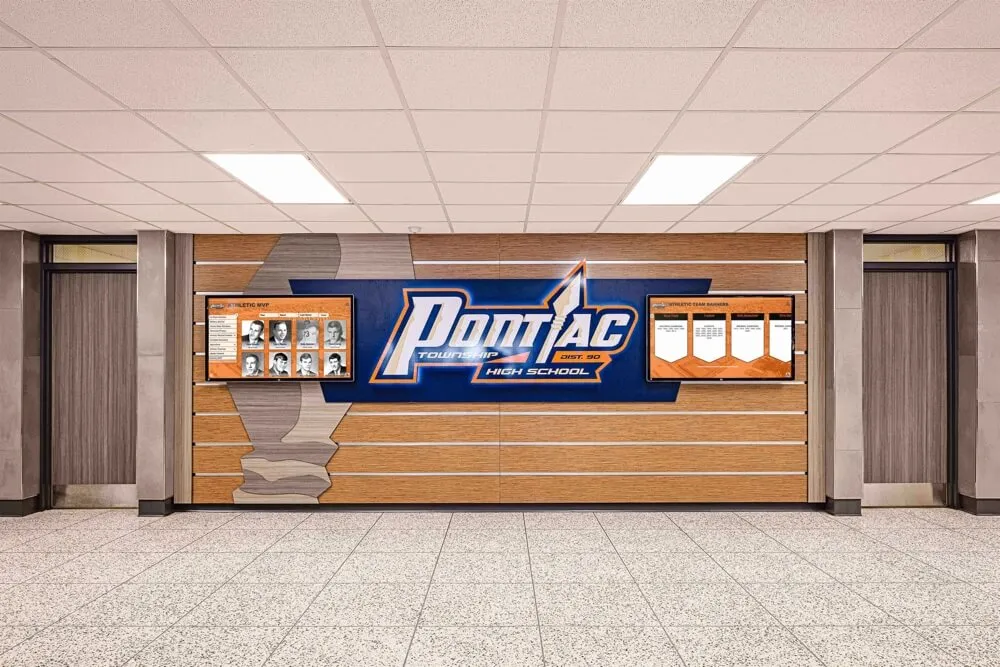
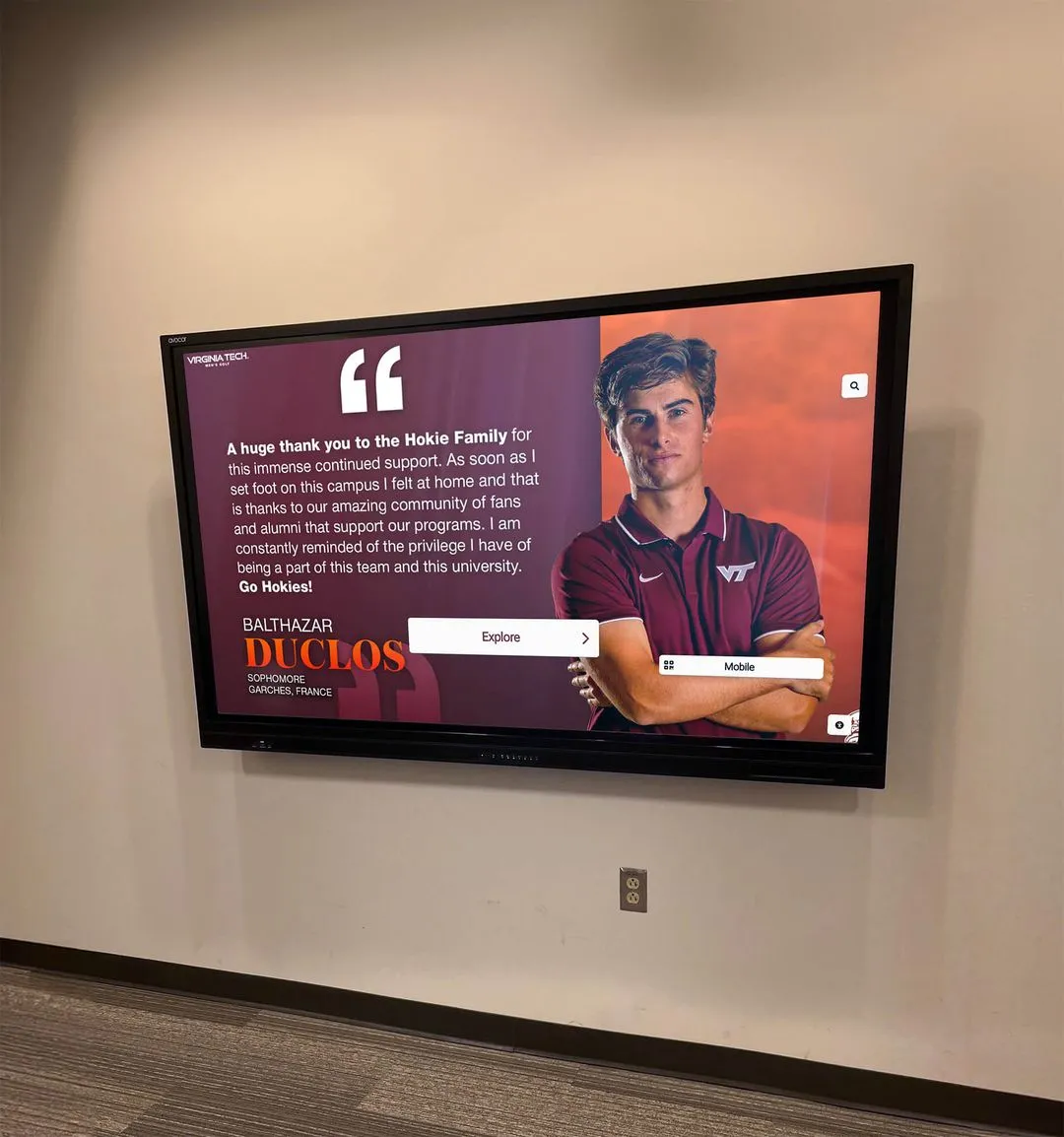
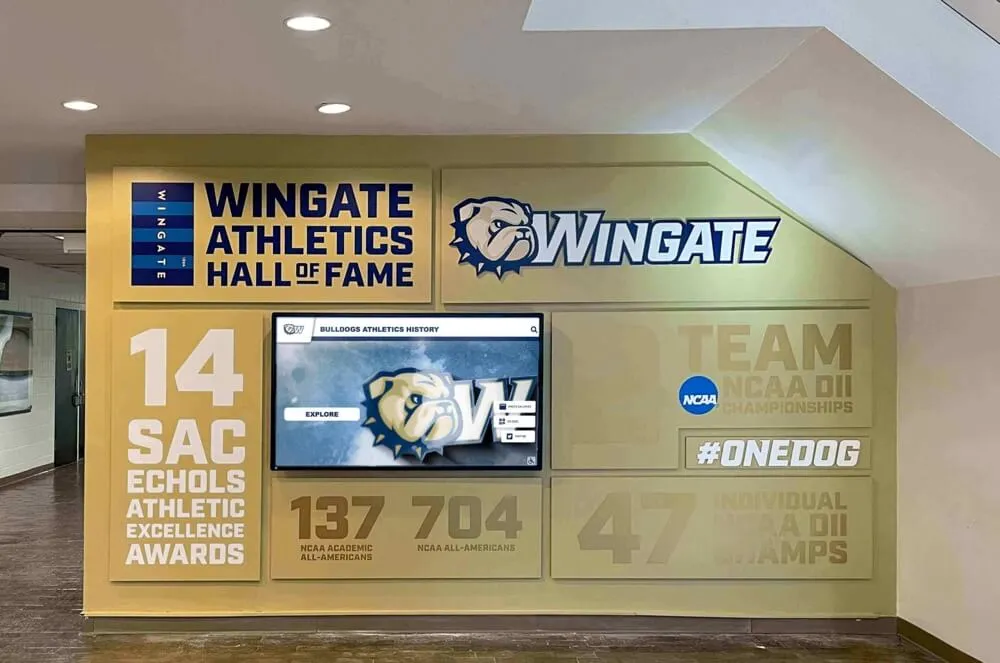
Wall-mounted displays integrate into architectural environments while providing flexible digital recognition capabilities
Hardware Selection: Critical Specifications and Options
Beyond basic categories, specific hardware specifications significantly impact long-term satisfaction, reliability, and total cost of ownership.
Commercial vs. Consumer Display Technology
Organizations must choose between consumer televisions and commercial-grade displays designed for institutional applications:
Consumer Display Limitations
Standard televisions marketed to residential users present multiple issues in institutional environments:
- Operating hours rated for 8-12 hours daily rather than continuous operation
- Lack of portrait orientation support for vertical mounting
- Consumer warranties excluding commercial use
- Built-in “smart” features creating security vulnerabilities and obsolescence
- Thermal management inadequate for enclosed installations or extended runtime
- Shorter lifespans requiring replacement after 3-5 years of institutional use
While consumer displays cost significantly less initially, their limitations create hidden costs through premature failure, replacement requirements, and capabilities mismatched to institutional needs.
Commercial Display Advantages
Professional displays engineered for commercial applications provide:
- Operating ratings for 16-24 hour daily operation or continuous runtime
- 3-5 year commercial warranties reflecting industrial reliability expectations
- Portrait and landscape orientation support with appropriate thermal management
- Commercial-grade components built for institutional longevity
- Display lifespans of 50,000-100,000 hours supporting 7-10+ years of service
- Optional features like built-in media players, scheduling systems, and remote management
The higher upfront cost of commercial displays typically delivers better total cost of ownership through extended service life, reduced maintenance, and reliability appropriate for institutional applications.
Mounting and Installation Considerations
Recognition displays require thoughtful mounting decisions affecting aesthetics, security, and maintenance access:
Wall Mounting Options
Standard wall mounts attach displays directly to structural surfaces through:
- Fixed mounts: Low-profile brackets holding displays flush against walls, providing clean aesthetics in finished spaces
- Tilt mounts: Adjustable brackets enabling angle optimization for viewing positions, useful when displays mount above or below eye level
- Articulating mounts: Full-motion arms enabling display repositioning, typically unnecessary for fixed recognition installations
Wall mounting works well for hallways, lobbies, and locations with appropriate structural surfaces, but requires professional installation ensuring proper support for display weight, concealed wiring meeting electrical codes, and access considerations for future maintenance or replacement.
Freestanding Kiosk Installations
Self-contained kiosks house displays in floor-standing enclosures providing structural support, integrated computers, and finished aesthetics without wall mounting. Kiosks offer advantages including:
- Placement anywhere without wall attachment requirements
- Integrated cable management and equipment housing
- Options for branding through custom colors and graphics
- Portability enabling repositioning as needs change
- Security enclosures protecting equipment from tampering
Explore touchscreen kiosk software options for interactive installations.
Kiosks typically cost more than simple wall-mounted installations due to enclosure fabrication, but provide turnkey solutions particularly valuable for locations lacking appropriate wall surfaces or where mobility matters.
Integrated Architectural Installations
Premium installations integrate displays into comprehensive architectural designs incorporating custom millwork, coordinated graphics, lighting design, and branded environmental elements. These installations create signature recognition environments but require significant budget allocation for design and fabrication beyond display technology itself.
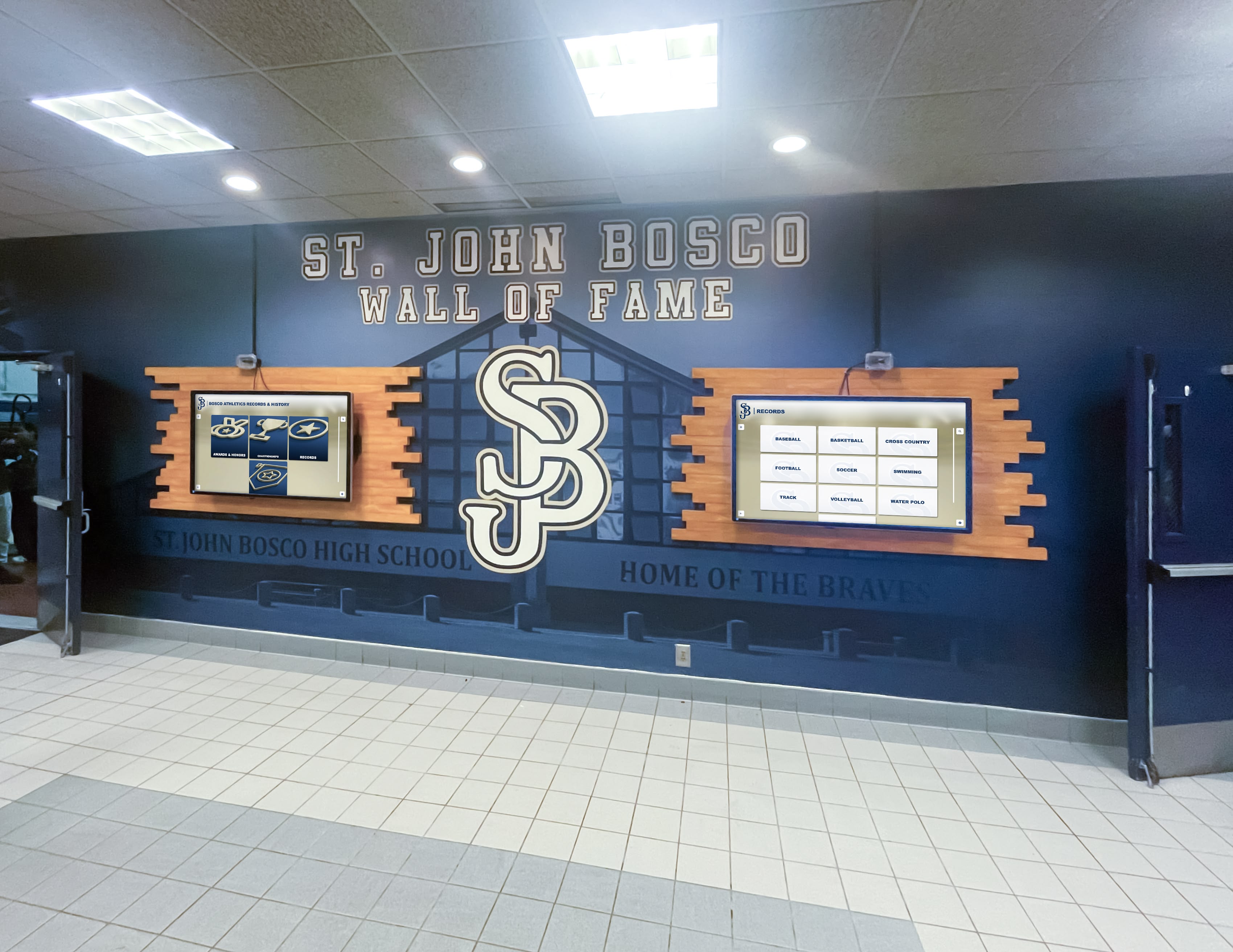
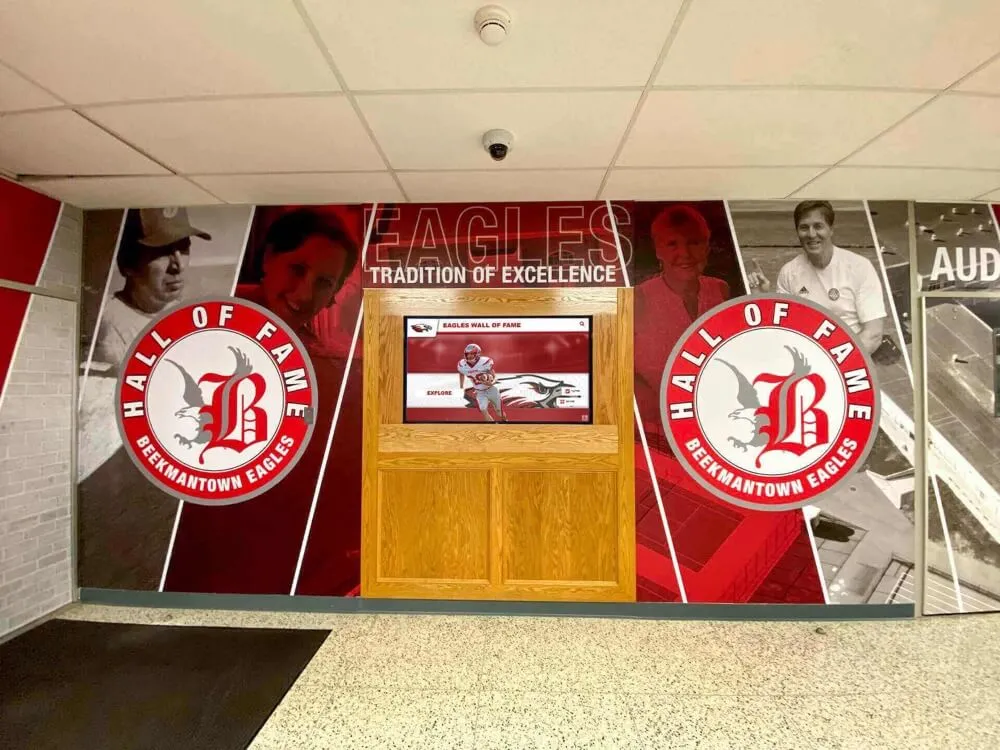
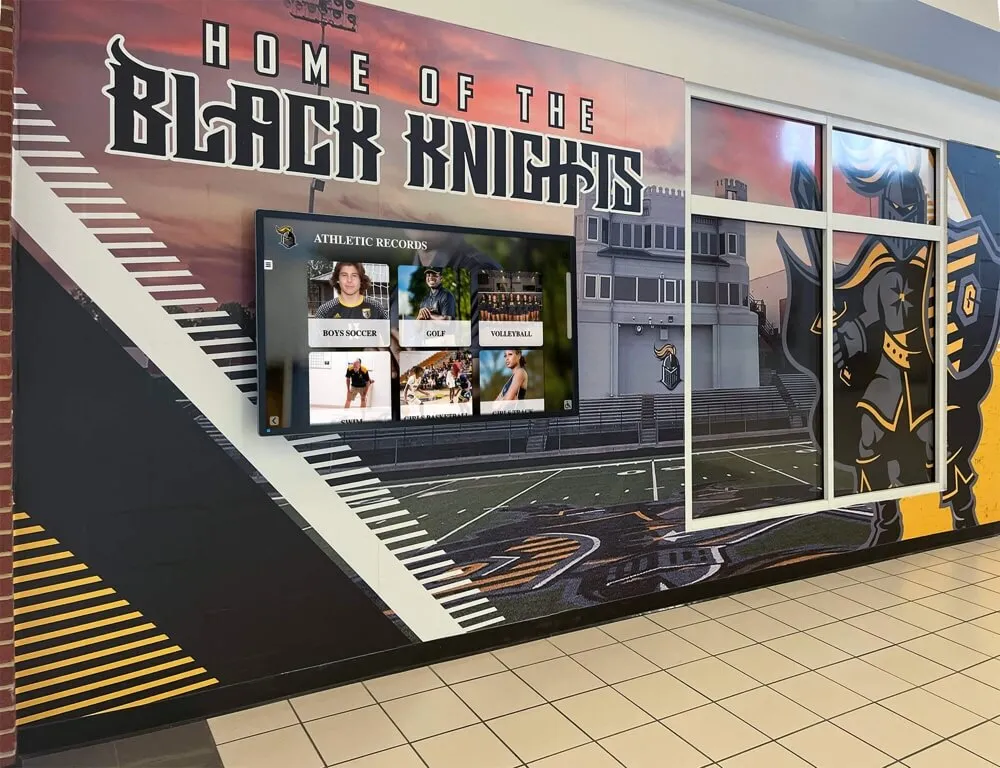
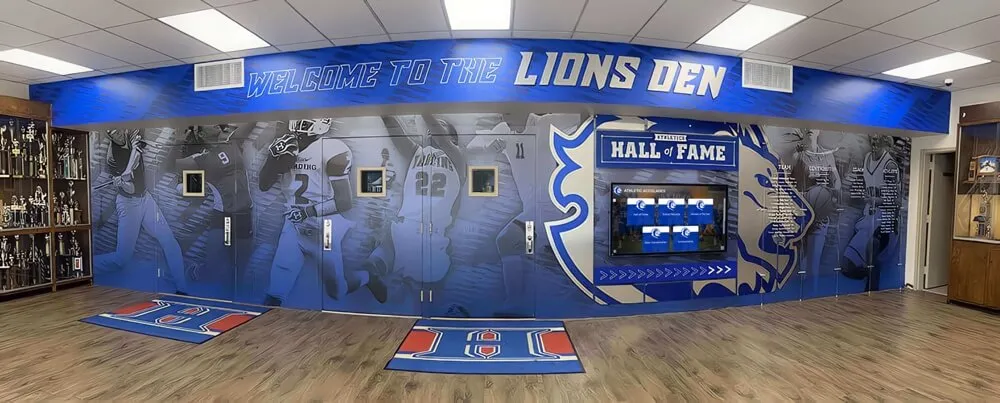
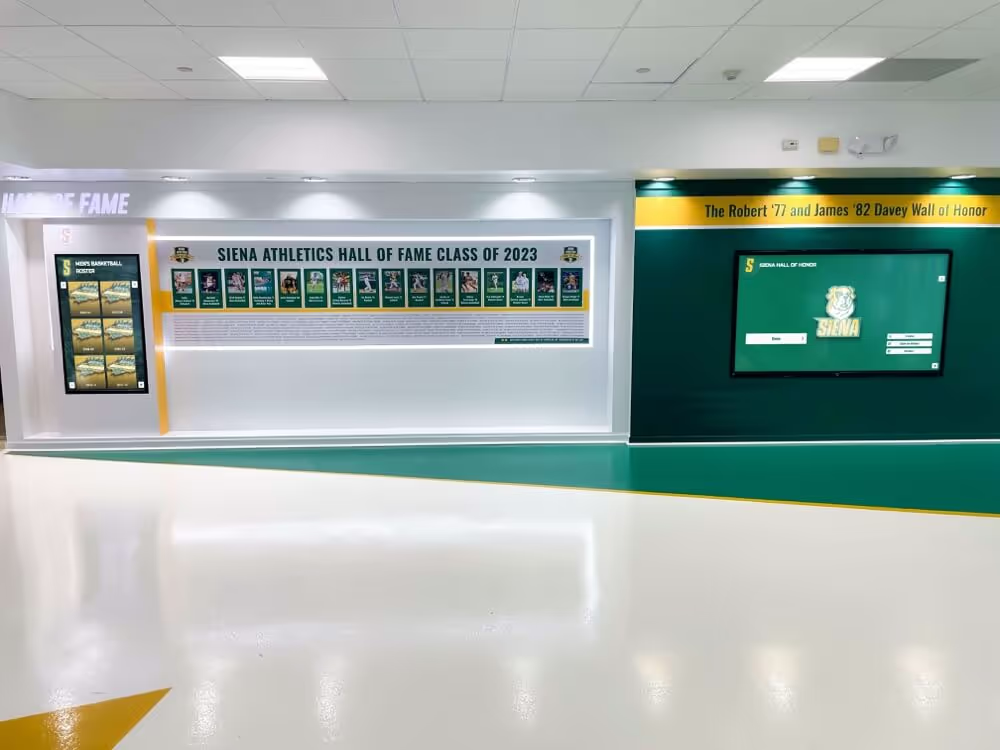
Multi-screen installations create impactful recognition environments while providing content flexibility across multiple display zones
Touch Technology and Durability
Interactive displays require selecting appropriate touch technology balancing sensitivity, durability, and cost:
Capacitive Touch Technology
Modern capacitive touchscreens using the same technology as smartphones and tablets provide:
- High sensitivity requiring only light touches
- Multi-touch support enabling pinch, zoom, and gesture controls
- Excellent optical clarity without screen layers degrading image quality
- Long operational lifespans with no pressure-sensitive components to wear out
Capacitive touch represents current industry standard for quality interactive installations, though it costs more than alternative technologies.
Infrared Touch Technology
Infrared systems using invisible light beams across screen surfaces offer:
- Lower cost than capacitive alternatives
- No screen surface treatment required, enabling standard displays with touch frames
- Durability unaffected by screen damage
- Large size scalability making very large touchscreens economical
Infrared touch works well for budget-conscious installations or very large interactive displays where capacitive technology becomes cost-prohibitive.
Vandal Resistance and Public Space Durability
Displays in unsupervised public areas require consideration of vandal-resistant features including tempered glass overlays protecting screens from impact, sealed enclosures preventing access to connections and components, and tamper-resistant mounting hardware preventing theft or displacement.
Organizations must balance openness encouraging engagement with security appropriate for specific environments—supervised school lobbies require less protection than completely unsupervised public spaces.
Content Management Systems: The Critical Decision Most Organizations Overlook
Hardware capabilities matter little if organizations cannot effectively manage recognition content. Content management systems (CMS) vary dramatically in capabilities, ease of use, and long-term cost implications.
Self-Service vs. Vendor-Dependent Content Updates
The most consequential CMS decision involves who can update recognition content:
Self-Service Content Management
Systems designed for organizational self-service provide web-based interfaces where authorized staff update recognition content without vendor involvement through:
- Intuitive dashboards for adding new donors, editing information, and removing outdated content
- Template-based layouts ensuring visual consistency without design expertise
- Media libraries for organizing photos and videos
- Preview capabilities showing changes before publication
- User permission systems controlling who can edit specific content areas
Self-service systems eliminate ongoing vendor fees for content updates, enable timely recognition of new gifts within hours or days rather than weeks, empower development staff to maintain current information, and support frequent content refinement based on donor feedback or organizational priorities.
Vendor-Dependent Systems
Some recognition display providers require vendor assistance for all content changes, creating ongoing dependencies where simple donor name additions require submitting change requests, waiting for vendor scheduling, paying per-update fees or maintaining service contracts, and accepting delays between gift receipts and public recognition.
While vendor-managed updates ensure professional quality, they create friction discouraging frequent updates, additional costs making comprehensive recognition economically challenging, and delays that diminish recognition impact when supporters wait months to see their names acknowledged.
Organizations should explicitly ask vendors whether content updates require vendor involvement, what costs apply to content changes, whether in-house staff can be trained for self-service updates, and how quickly typical content changes can be implemented.
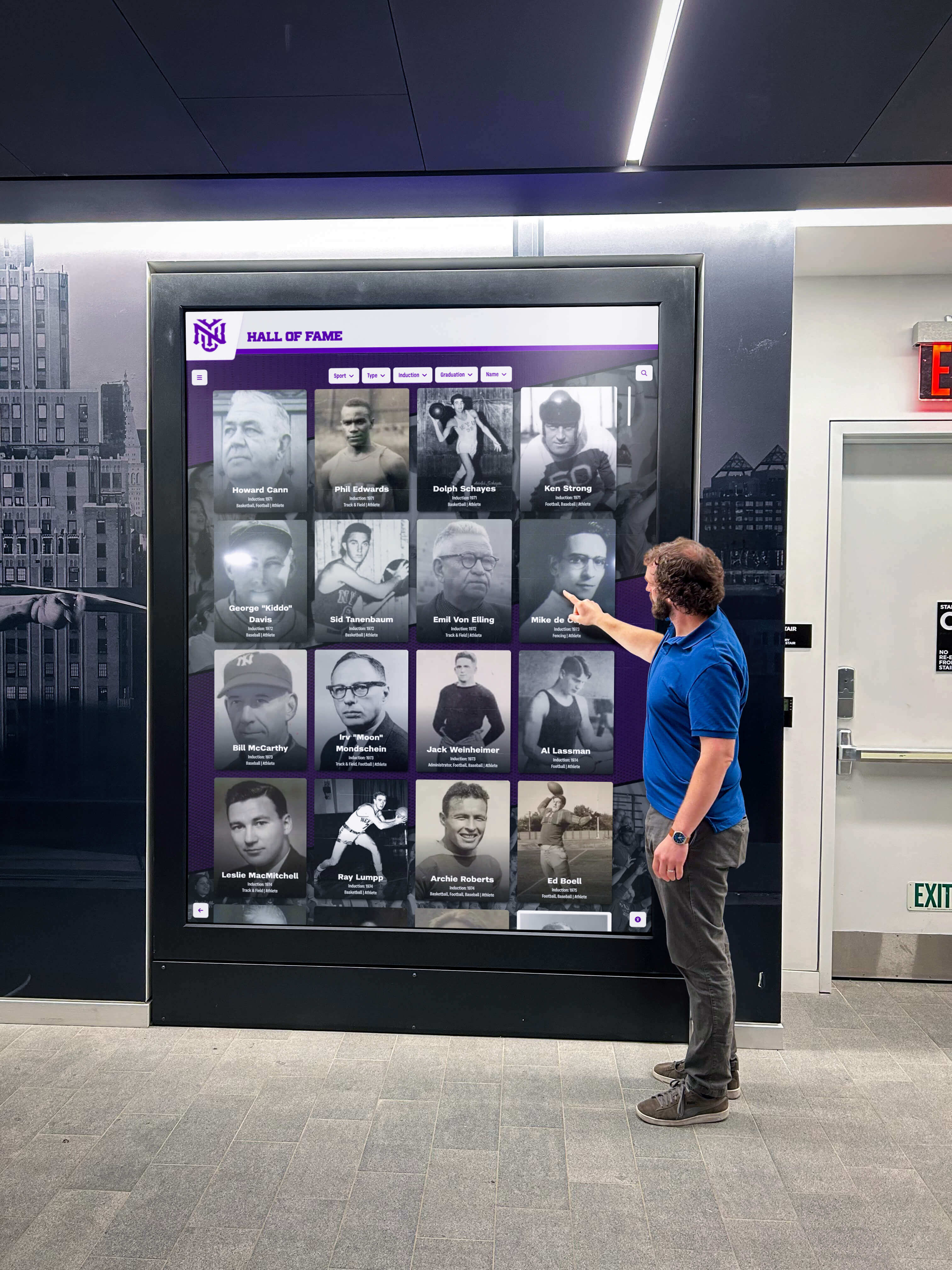
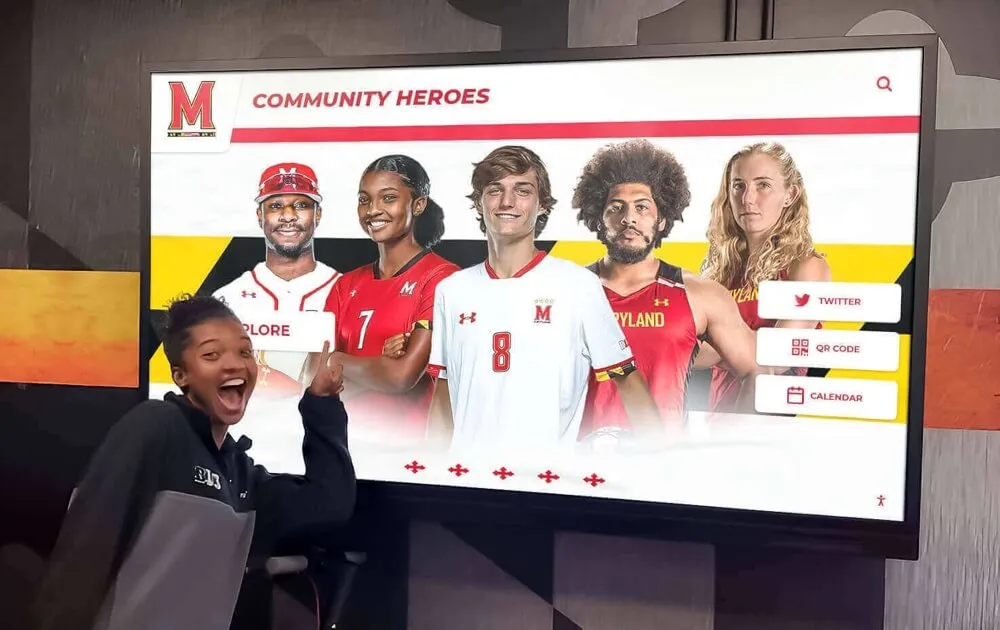
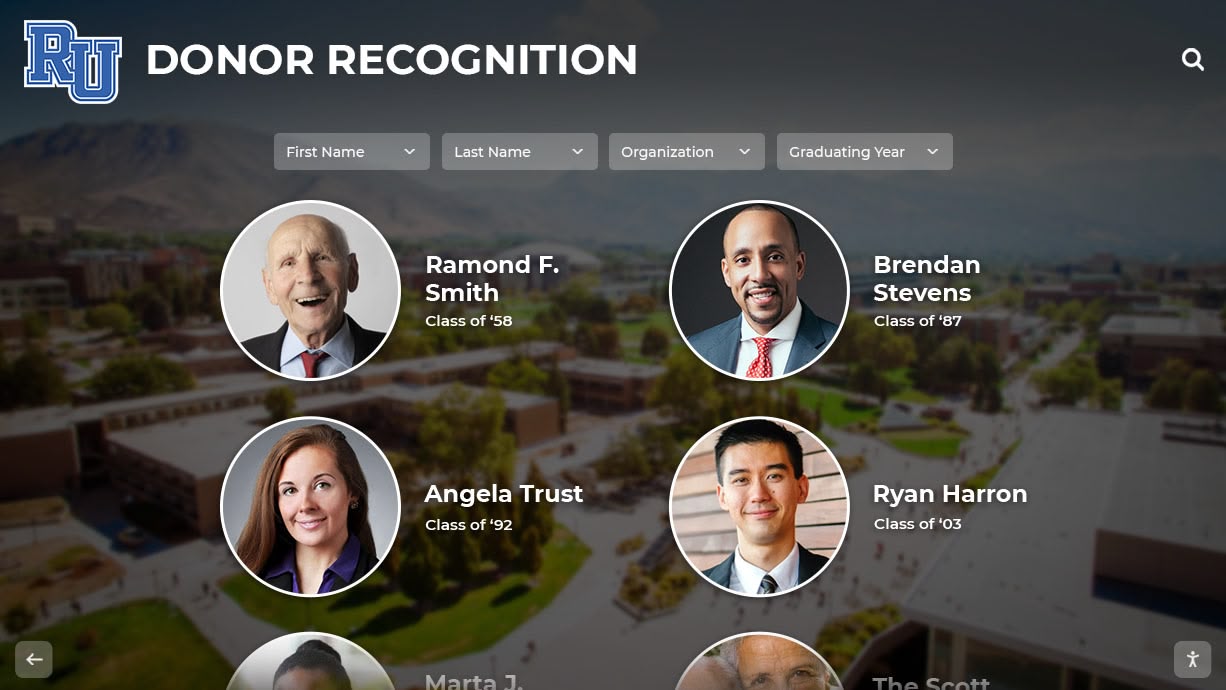
Engaging recognition experiences require intuitive interfaces and current content that visitors actually want to explore
Database Integration and Donor Data Synchronization
Advanced recognition systems integrate with development databases, automating content updates and ensuring accuracy:
Direct Database Integration
Some systems connect to institutional databases (CRM systems, donor management software) automatically synchronizing recognition content with official records. Integration provides:
- Automatic recognition updates when gifts are recorded
- Consistent data between development systems and public recognition
- Elimination of duplicate data entry reducing errors
- Real-time or scheduled synchronization based on organizational preferences
Database integration suits larger institutions with established development databases and technical capabilities supporting system connections. Smaller organizations may find integration complexity and cost outweigh benefits.
Manual Data Import/Export
Organizations without direct integration capabilities may use systems supporting data import from spreadsheets or CSV files, enabling bulk updates without individual manual entry while maintaining separation from primary databases.
Content Approval Workflows
Recognition content requires careful accuracy verification before publication to avoid embarrassing errors or donor relations issues:
Built-in Approval Processes
Sophisticated systems include workflow features where content changes enter draft status awaiting approval, designated approvers receive notifications of pending changes, multiple review levels accommodate organizational hierarchies, and audit trails document who created and approved specific content.
Approval workflows prevent premature publication of unverified information while maintaining agility through electronic routing rather than slow email-based review processes.
Version Control and Change History
Systems tracking content history enable organizations to review what information was displayed during specific time periods—critical for resolving donor questions about when recognition appeared or what information was shown.
Recognition Content Strategy: What to Display and How
Effective donor recognition requires strategic content decisions beyond simply listing names and gift amounts.
Giving Level Structures and Tiered Recognition
Most recognition programs organize donors into giving levels providing structured acknowledgment:
Traditional Cumulative Giving Levels
Recognition tiers based on lifetime cumulative giving (amounts like $1,000+, $5,000+, $25,000+, $100,000+, etc.) acknowledge sustained support over time while encouraging donors to advance through giving level progression.
Digital displays easily accommodate unlimited giving levels without the physical space constraints of traditional donor walls, enabling granular recognition that acknowledges supporters at every level rather than only major gift donors.
Campaign-Specific Recognition
Capital campaigns often create separate recognition categories for campaign gifts distinct from cumulative giving. Digital displays can present multiple recognition programs simultaneously—switching between lifetime giving recognition, current campaign status, and specific fund acknowledgments—using the same hardware.
Discover creative approaches to donor recognition examples spanning different organizational types and giving programs.
Anonymous Donor Handling
Some contributors prefer anonymous recognition or acknowledgment without gift amounts. Thoughtful recognition systems accommodate privacy preferences while still honoring support through categories like “Anonymous Donor,” listing without amounts, or complete exclusion based on individual preferences.
Multimedia Storytelling and Impact Narratives
Effective digital recognition moves beyond name lists to tell stories connecting gifts to organizational impact:
Donor Profiles and Biographical Information
Enhanced recognition incorporating donor photographs, brief biographical information, quotes about motivation for giving, and personal connections to the organization transforms acknowledgment from transactional lists to meaningful relationship celebration.
Profiles work particularly well for major donors, planned giving commitments, and longtime supporters whose stories inspire others while honoring individual generosity.
Project and Impact Documentation
Recognition displays documenting how gifts created specific outcomes provide meaningful context connecting donor generosity to visible results through:
- Before/after photographs of facilities donors funded
- Student testimonials about scholarship support
- Program outcomes made possible by donor investment
- Videos showcasing facilities, programs, or initiatives donor support enabled
Impact documentation serves dual purposes: honoring donors through demonstrating their gifts’ significance while simultaneously making the case for future support by showing prospective donors the tangible outcomes their contributions could create.
Searchability and Personalization Features
Interactive displays gain significant value through search capabilities enabling visitors to find specific information:
Name Search Functionality
Allowing visitors to search donor databases helps supporters find themselves and family members, enables prospects to explore giving levels and recognition categories, assists development staff demonstrating recognition during cultivation conversations, and creates engagement through interactive exploration rather than passive viewing.
Search features work best with intuitive interfaces requiring minimal instruction, auto-complete suggestions helping users with spelling, and clear result presentation showing where donors appear across multiple recognition categories.
QR Codes and Mobile Integration
Some advanced recognition systems generate personal QR codes enabling donors to share their recognition via mobile devices, link to detailed giving profiles or impact reports, and create opportunities for social media sharing extending recognition beyond physical display locations.
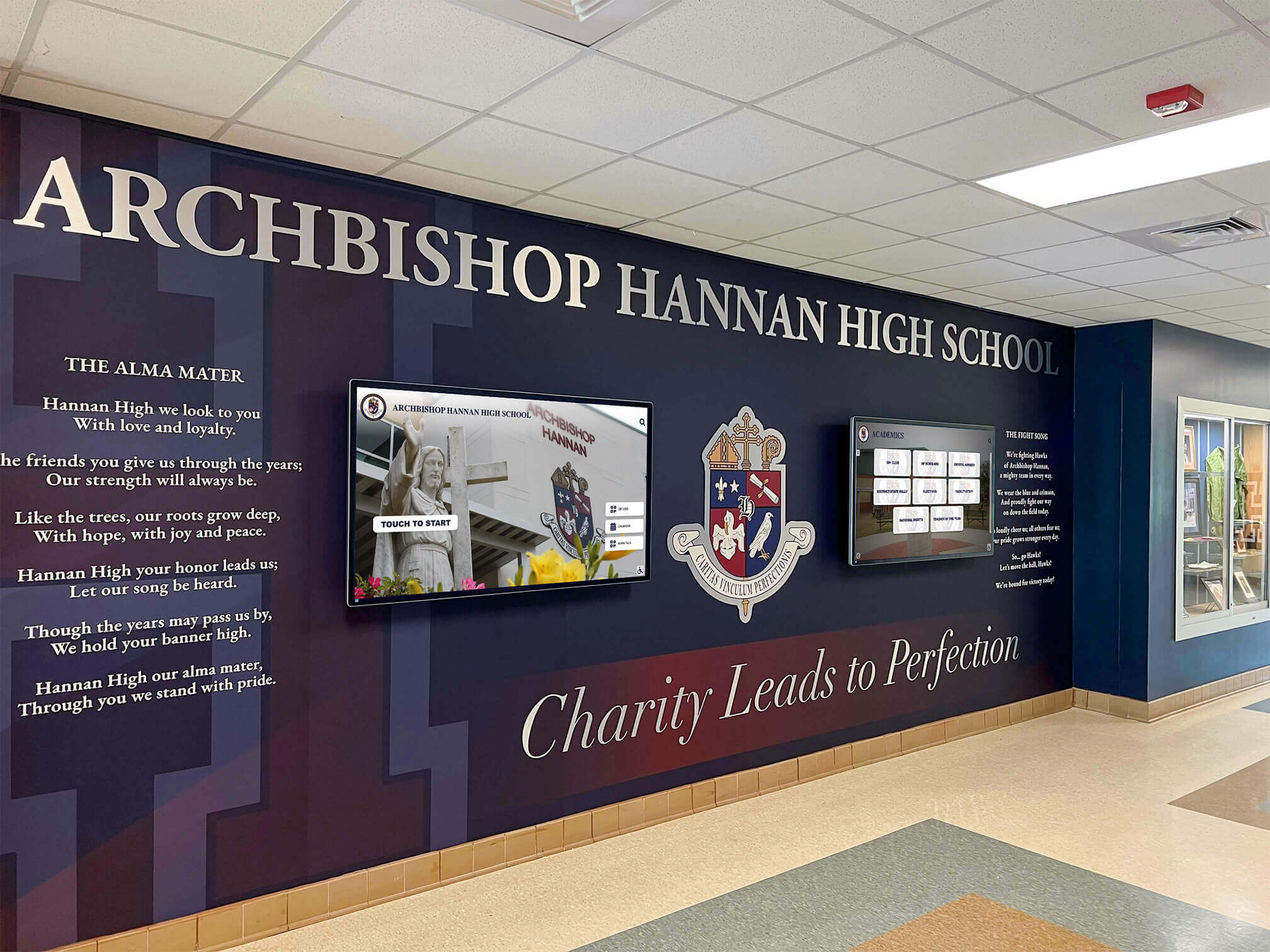
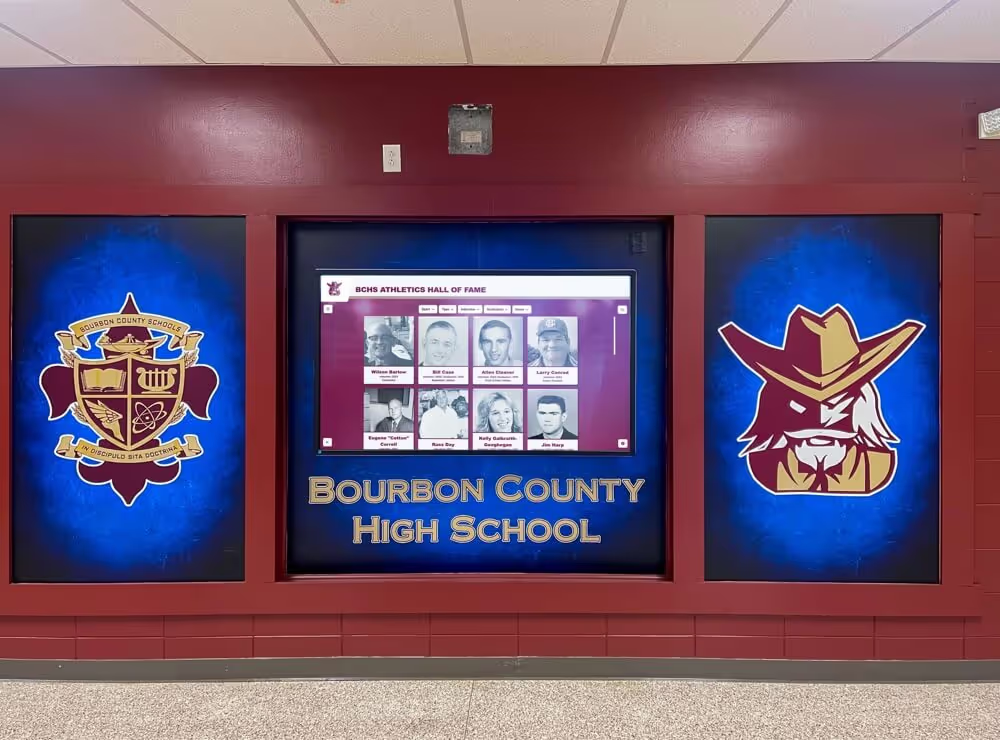
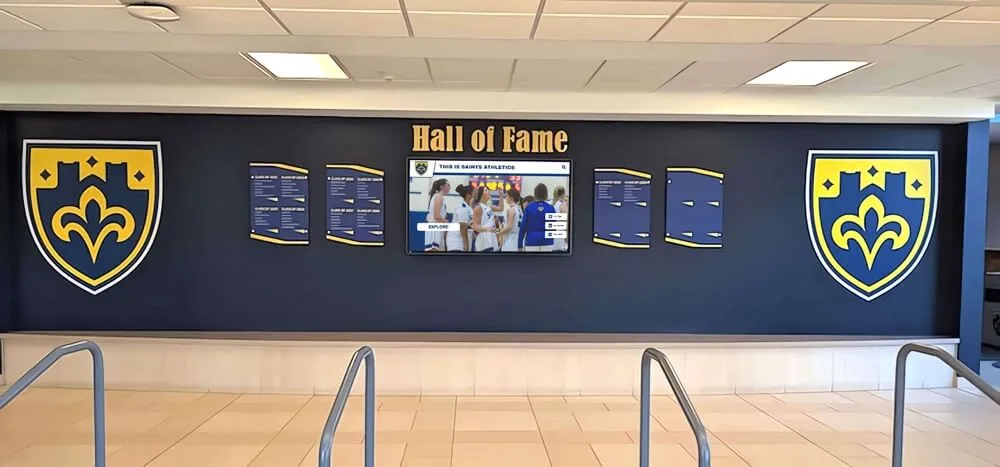
Comprehensive recognition installations integrate digital displays with architectural branding, creating cohesive environments honoring institutional identity and donor support
Stewardship Capabilities: Recognition as Ongoing Engagement
The most successful donor recognition displays function as stewardship tools supporting ongoing relationships rather than static one-time acknowledgments.
Dynamic Content and Timely Updates
Recognition impact depends heavily on content currency and relevance:
Campaign Progress Visualization
During active fundraising campaigns, recognition displays can showcase real-time or regularly updated campaign progress through thermometers or progress bars showing goals and current status, countdown timers building urgency as campaign deadlines approach, recent gift acknowledgments celebrating momentum, and naming opportunity availability showing remaining recognition options.
Dynamic campaign content maintains donor engagement and creates social proof encouraging additional giving when supporters see active participation from their peer communities.
Event-Based Recognition Updates
Tying recognition content to institutional calendars increases relevance and engagement through homecoming weekend spotlights on alumni donors, graduation season recognition of scholarship funders, athletic event displays highlighting sports program supporters, and giving day real-time updates celebrating participation.
Learn how institutions create engaging experiences through school lobby design ideas incorporating recognition and institutional storytelling.
Personalized Donor Communication Opportunities
Advanced recognition systems create personalized stewardship moments:
Anniversary Recognition
Acknowledging donor giving anniversaries through special recognition displays on milestone dates (5 years of annual support, 10-year anniversary of major gift, etc.) demonstrates institutional attention and gratitude for sustained commitment.
Automated systems can rotate anniversary recognition without manual intervention, ensuring every donor receives periodic spotlight attention.
Thank You Messages and Impact Updates
Periodically featuring specific donor stories with detailed thank you messages and impact reports provides meaningful acknowledgment beyond name listing while creating shareable content donors can photograph and share with family or on social media.
Engagement Metrics and Recognition Analytics
Sophisticated systems track visitor engagement providing insights into recognition effectiveness:
Usage Analytics
Interactive displays can monitor which content receives most engagement, how long visitors spend exploring different sections, what search terms people use most frequently, and how many visitors engage versus pass by displays.
This data helps organizations refine content strategies, identify popular recognition categories, and demonstrate ROI from recognition technology investments through quantified engagement metrics.
Budget Considerations and Total Cost of Ownership
Recognition display investments extend beyond initial hardware purchase to include ongoing costs and long-term value considerations.
Initial Investment Components
Complete recognition display budgets include multiple cost categories:
Hardware Costs
- Display panels: $1,000-$15,000+ depending on size, commercial vs. consumer grade, and touch capabilities
- Computers/media players: $500-$3,000 for dedicated systems running display content
- Mounting hardware: $200-$2,000 for wall mounts or $3,000-$15,000+ for custom kiosks
- Installation: $500-$5,000+ depending on electrical requirements, wall preparation, and labor complexity
Software and Content
- Content management system: $2,000-$10,000+ for software licensing (or subscription models)
- Initial content creation: $2,000-$10,000+ for professional design, data migration, and customization
- Training: $500-$2,000 for staff training on content management
Optional Enhancements
- Architectural integration and custom millwork: $5,000-$50,000+
- Coordinated graphics and branding: $1,000-$10,000+
- Professional A/V installation: $2,000-$10,000+
Total initial investments typically range from $5,000-$15,000 for basic wall-mounted passive displays to $25,000-$75,000+ for comprehensive interactive recognition installations with architectural integration.
Ongoing Costs and Maintenance
Long-term ownership includes recurring expenses:
Software and Support
- Annual software licensing or SaaS subscriptions: $500-$3,000+
- Technical support contracts: $500-$2,000+ annually
- Content management services if not self-service: $100-$500+ per update
Hardware and Infrastructure
- Electricity: Minimal (typically $50-$200 annually)
- Replacement parts as needed (touch screen repairs, computers, etc.)
- Hardware replacement every 7-10 years
Content Updates
- Staff time for self-service content management
- Professional content creation for major updates or redesigns
- Photography and videography for enhanced recognition profiles
Organizations should calculate total cost of ownership over expected display lifespan (typically 7-10 years) rather than focusing only on upfront costs.
ROI Considerations and Value Measurement
Measuring recognition display ROI involves both quantifiable and qualitative factors:
Quantifiable Metrics
- Fundraising results during and after installation (increased gift size, donor retention, new donor acquisition)
- Engagement metrics from interactive displays showing visitor interaction rates
- Event attendance and participation in recognized programs
- Social media mentions and sharing of recognition content
Qualitative Benefits
- Donor satisfaction and perceived stewardship quality
- Institutional reputation and fundraising credibility
- Community engagement and pride
- Differentiation from peer institutions
Successful recognition installations typically generate positive ROI through retained and expanded giving relationships, though direct attribution remains challenging to quantify precisely.
Technology Longevity and Upgrade Pathways
Recognition technology investments should provide value for years while accommodating future enhancement:
Modular vs. Integrated System Architectures
System design affects upgrade flexibility:
Modular Systems
Solutions separating display hardware, computers, software, and content enable component-level upgrades. Organizations can replace outdated computers without changing displays, update software without hardware replacement, or swap displays while retaining existing content and management systems.
Modularity provides upgrade flexibility and protects investments by enabling incremental improvements rather than complete replacement when specific components become obsolete.
Integrated Proprietary Systems
Some vendors provide complete solutions where hardware, software, and content management integrate tightly—creating simple initial deployment but limiting future flexibility when components become outdated or organizational needs change.
Future-Proofing Considerations
Several factors affect how well recognition displays age:
Content Management Independence
Systems where organizations own and control content data (rather than it residing solely within vendor systems) enable migration to different display platforms if vendor relationships end or better technology emerges.
Organizations should ask vendors about data export capabilities, content ownership, and portability before purchase.
Standard Hardware Compatibility
Recognition systems built on standard display interfaces (HDMI, DisplayPort) and commercial-grade hardware accommodate replacement with newer technology when original components fail or become obsolete. Proprietary hardware creates vendor lock-in and forced complete replacement.
Software Update Policies
Understanding whether software receives ongoing updates supporting new display hardware, security patches, and feature enhancements prevents premature obsolescence. Subscription software models typically include continuous updates, while perpetual licenses may require repurchase for major version upgrades.
Selecting the Right Vendor and Solution
Recognition display decisions extend beyond technology specifications to vendor capabilities and institutional fit:
Questions to Ask Prospective Vendors
Critical vendor evaluation questions include:
Content Management
- Can our staff update content without vendor assistance?
- What training and support enable successful self-service updates?
- How quickly can we add newly received gifts to recognition displays?
- Does the system integrate with our existing donor database?
Technology and Support
- Do you use commercial-grade displays or consumer televisions?
- What warranties cover hardware components?
- Who provides technical support and during what hours?
- What happens if hardware fails—replacement timeframes and costs?
Costs and Ownership
- What ongoing costs apply beyond initial purchase (subscriptions, support contracts, update fees)?
- Do we own our content data and can we export it?
- What upgrade options exist as needs change or technology advances?
- Are there client references we can contact about their experience?
Customization and Flexibility
- Can the system accommodate our specific recognition categories and giving programs?
- Does the solution support multiple concurrent recognition programs (annual giving, capital campaigns, planned giving)?
- What content types can we incorporate (photos, videos, documents, links)?
Institutional Fit and Strategic Alignment
Beyond technology capabilities, recognition displays should align with institutional culture and development strategies:
Organizational Capacity
Organizations with limited technical staff may prioritize turnkey solutions with extensive vendor support, while those with in-house IT capabilities might prefer open platforms offering maximum customization.
Development Strategy
Recognition displays should support specific fundraising goals whether building annual giving programs requiring frequent donor additions, managing capital campaigns with finite completion dates, cultivating planned giving through legacy society recognition, or acknowledging diverse constituencies from alumni to community partners.
Physical Environment
Solutions must work within available spaces considering architectural styles and constraints, traffic patterns and viewing distances, lighting conditions affecting screen visibility, and institutional branding requirements.
Budget Reality
Organizations should select solutions they can fully implement and maintain rather than stretching budgets for capabilities they cannot properly utilize or support long-term.
Conclusion: Making Informed Recognition Display Decisions
Selecting donor recognition displays requires balancing immediate needs with long-term flexibility, hardware capabilities with content management realities, and technological sophistication with organizational capacity for ongoing stewardship and maintenance.
Organizations that invest time understanding their specific recognition requirements, carefully evaluate content management capabilities beyond hardware specifications, prioritize self-service content updates enabling timely donor acknowledgment, consider total cost of ownership rather than only initial purchase prices, and select vendors aligned with institutional culture and capacity make recognition technology decisions that serve development goals for years to come.
The most effective recognition displays become strategic stewardship tools supporting ongoing donor relationships rather than static installations that quickly become outdated. When development staff can easily update content, when donors see themselves acknowledged promptly after gifts, when recognition tells compelling stories connecting generosity to impact, and when displays remain current through organizational evolution, recognition technology delivers return on investment through strengthened donor relationships supporting sustained philanthropic engagement.
Ready to explore modern donor recognition solutions designed for self-service content management and long-term stewardship flexibility? Rocket Alumni Solutions provides comprehensive recognition displays combining professional hardware, intuitive content management, and scalable platforms serving schools, universities, and nonprofits of all sizes.