Donor recognition levels shape how supporters experience your capital campaign—long before a single brick is laid or a plaque is installed. The names you assign to your giving tiers signal belonging, legacy, and aspiration to prospects weighing the most significant gifts of their philanthropic lives. For K-12 advancement directors, choosing the right tier names is equal parts strategy and stewardship: get them right, and your gift chart fills from the top down; default to generic labels, and major-gift conversations start with convincing donors the opportunity is worth their stretch.
This guide delivers a practical framework your advancement team can adapt immediately—including a ready-to-use naming matrix, psychological rationale for tier language, and implementation notes for displaying donor recognition levels on both traditional and digital recognition systems.
The names on your donor wall communicate institutional values before anyone reads the fine print on a gift agreement. “Founders Circle” signals permanence. “Champions Society” signals community. “Friends of Lincoln” signals belonging. Each frame activates a different donor motivation—and activating the right motivation is the difference between a commitment and a “we’ll think about it.”
Structuring donor recognition levels for a K-12 capital campaign means balancing four competing priorities: honoring transformational lead gifts with distinction, giving mid-level donors an aspirational tier to stretch toward, welcoming annual-fund supporters into the campaign family, and keeping your recognition wall uncluttered enough to read at a glance.

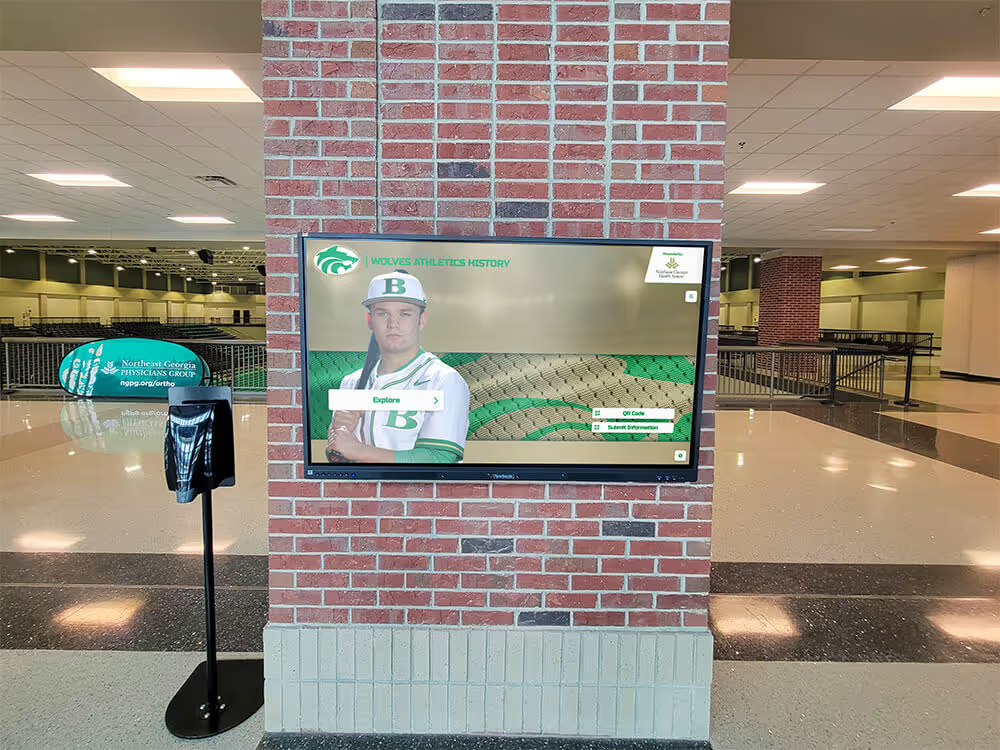
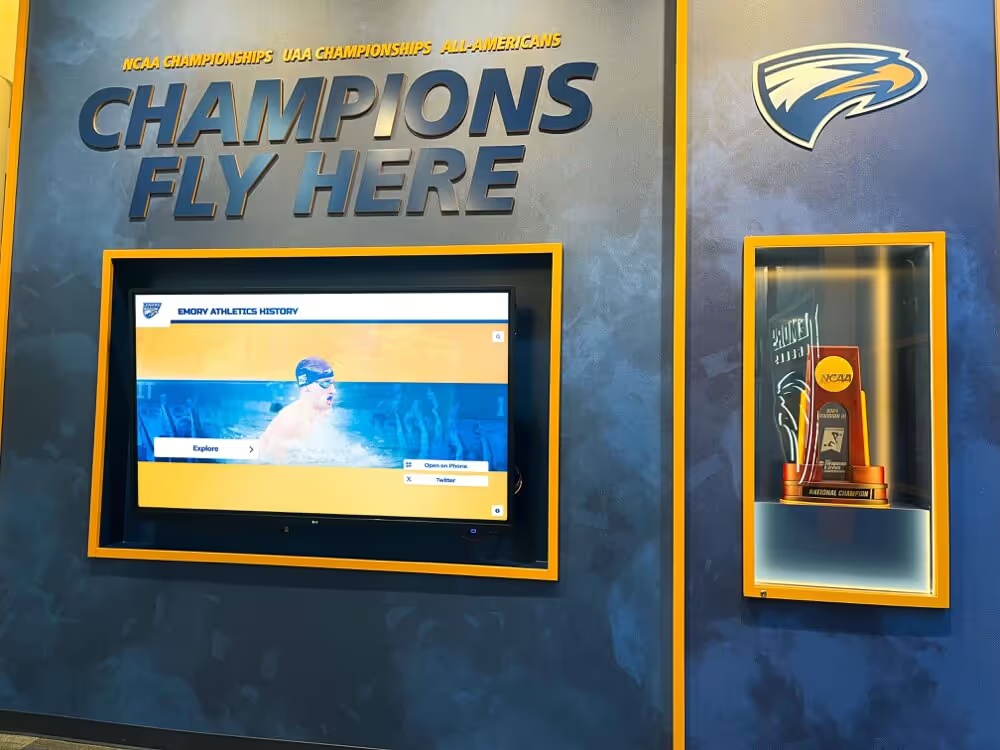
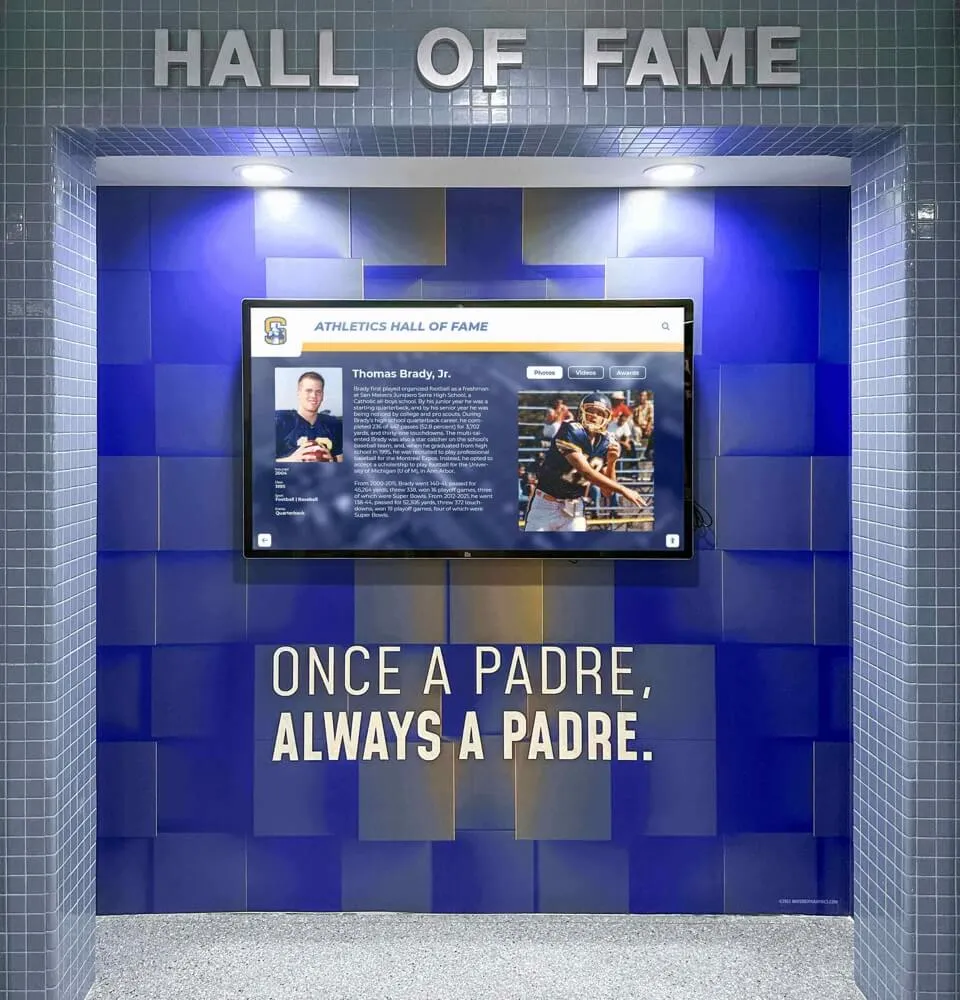
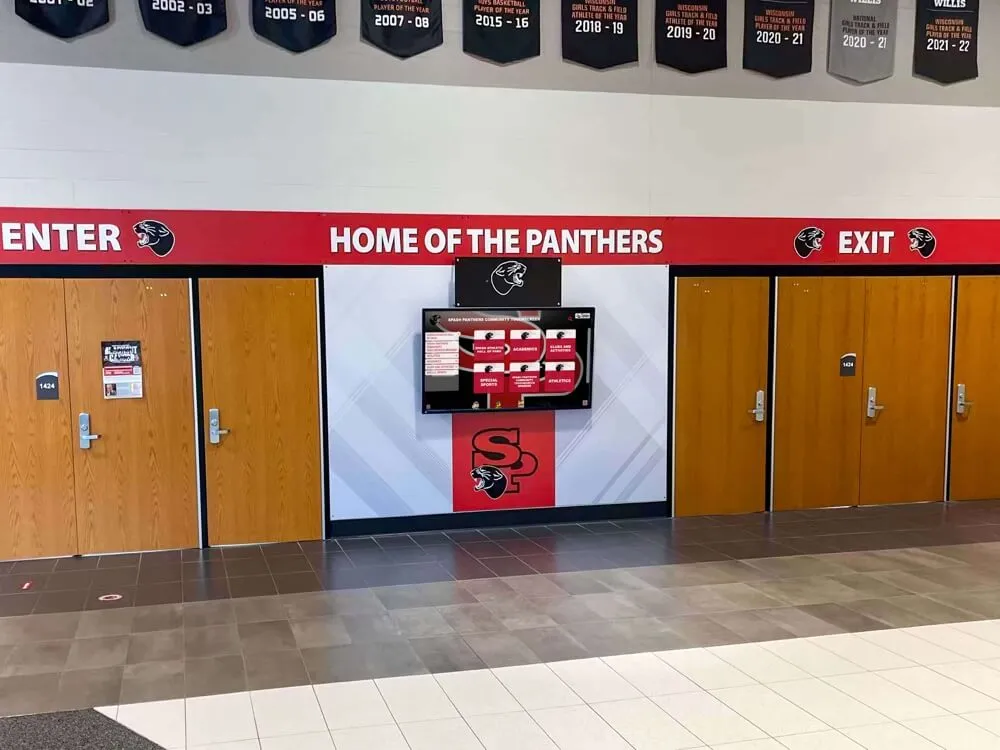
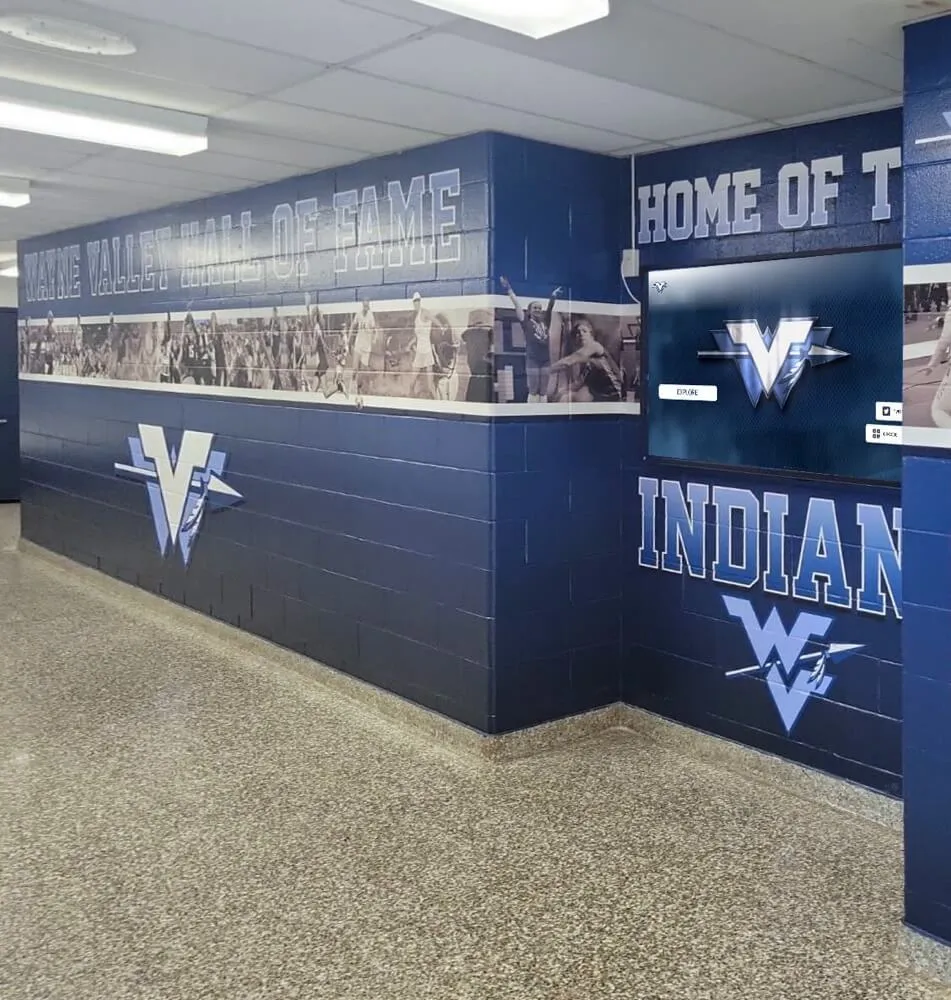
Recognition walls with clear tier labeling guide donors toward meaningful giving conversations from the first campaign visit.
When to Build Donor Recognition Levels
Before naming a single tier, confirm your advancement team has clarity on three things.
Campaign goal and gift chart. Your gift chart determines how many donors you need at each level—and therefore how many tiers you need. A $1.2 million gymnasium renovation requiring one $200,000 lead gift, two at $100,000, and a ladder of smaller gifts calls for a different tier architecture than a $5 million performing arts center campaign.
Facility and program naming inventory. Naming rights to physical spaces—the library wing, the science lab, the auditorium lobby—are distinct from tier membership benefits. Your tier structure should complement, not duplicate, your naming rights inventory. A donor can hold a Founders Society membership and have their family name on the media room; these are parallel recognition tracks that should not be conflated in solicitation conversations.
Campaign timeline. Tier names announced in a silent phase must hold their meaning through a public phase and beyond dedication. Avoid naming tiers after a specific campaign dollar goal (e.g., “The One Million Circle”) because adjusting the goal mid-campaign forces awkward nomenclature changes.
When your gift chart, naming rights inventory, and timeline are documented, tier naming becomes straightforward. Attempting to name tiers before these elements are finalized locks your advancement team into structures that may conflict with your fundraising mechanics later. Explore comprehensive donor wall planning frameworks to understand how recognition architecture aligns with campaign structure before you commit to names.
The Psychology Behind Tier Naming
Donors at the major-gift level are rarely motivated by the dollar amount itself. Research in nonprofit advancement practice consistently shows that major donors give because they want to be part of something meaningful, be remembered for something lasting, and belong to a community of like-minded contributors.
Your tier names carry that emotional weight. Consider the difference between these two solicitation moments:
“We’d love for your family to join the $50,000 Giving Level.”
versus
“We’d love for your family to become part of the Founders Circle.”
The second frame creates identity. The prospect isn’t writing a check—they’re joining a founding cohort. That psychological shift is why tier naming deserves deliberate attention before your case statement goes to print.
Three emotional levers your tier names can activate:
Legacy and permanence. Names like Founders, Cornerstone, Heritage, and Pillar activate a donor’s desire to be part of something that will outlast them. These names work especially well at the top tier for donors making the campaign’s lead gifts.
Community and belonging. Names like Champions, Eagles Circle (or your school mascot), and School Family activate social identity—the sense that joining this group means joining the best supporters your community has produced. These names work well at the mid-level tiers.
Gratitude and inclusion. Names like Friends, Supporters, and Community Builders activate generosity without implying that smaller gifts are less valued. These names work at the entry tiers and ensure every campaign donor feels welcomed regardless of gift size.
Five Naming Frameworks That Resonate in K-12 Settings
Most K-12 campaigns gravitate toward one of five naming conventions. Each carries different associations and suits different institutional identities.
1. Legacy Framework
Top to bottom: Founders → Pioneers → Heritage → Builders → Friends
Best for: Schools with deep history, reunion-year campaigns, or facilities being named for longtime benefactors. The legacy framework signals that this campaign continues a philanthropic tradition rather than starting something new.
2. Community Identity Framework
Top to bottom: [Mascot] Legacy Circle → Champions → Supporters → Community → Neighbors
Best for: Schools whose brand is tied to a beloved mascot or strong local identity. “Eagle Legacy Circle” for Eagle Creek Academy resonates more deeply than a generic label because it ties recognition directly to school pride.
3. Building Blocks Framework
Top to bottom: Cornerstone → Keystone → Pillar → Foundation → Community Beam
Best for: Campaigns building or renovating a physical facility. The construction metaphor makes tier relationships self-explanatory—the Cornerstone donors are literally the ones making the rest possible.
4. Academic Distinction Framework
Top to bottom: Chancellor’s Circle → Dean’s Society → Honors Council → Scholar’s Guild → Academic Community
Best for: High school foundations raising funds for academic programs, libraries, or STEM centers where intellectual prestige is a core donor motivation. This framework also resonates with faculty and parent donors who respond to academic language.
5. Aspiration Framework
Top to bottom: Visionaries → Champions → Advocates → Supporters → Friends
Best for: First-time capital campaigns or schools without an established major-gift culture. The aspiration framework creates forward momentum without requiring institutional history to give the names meaning.
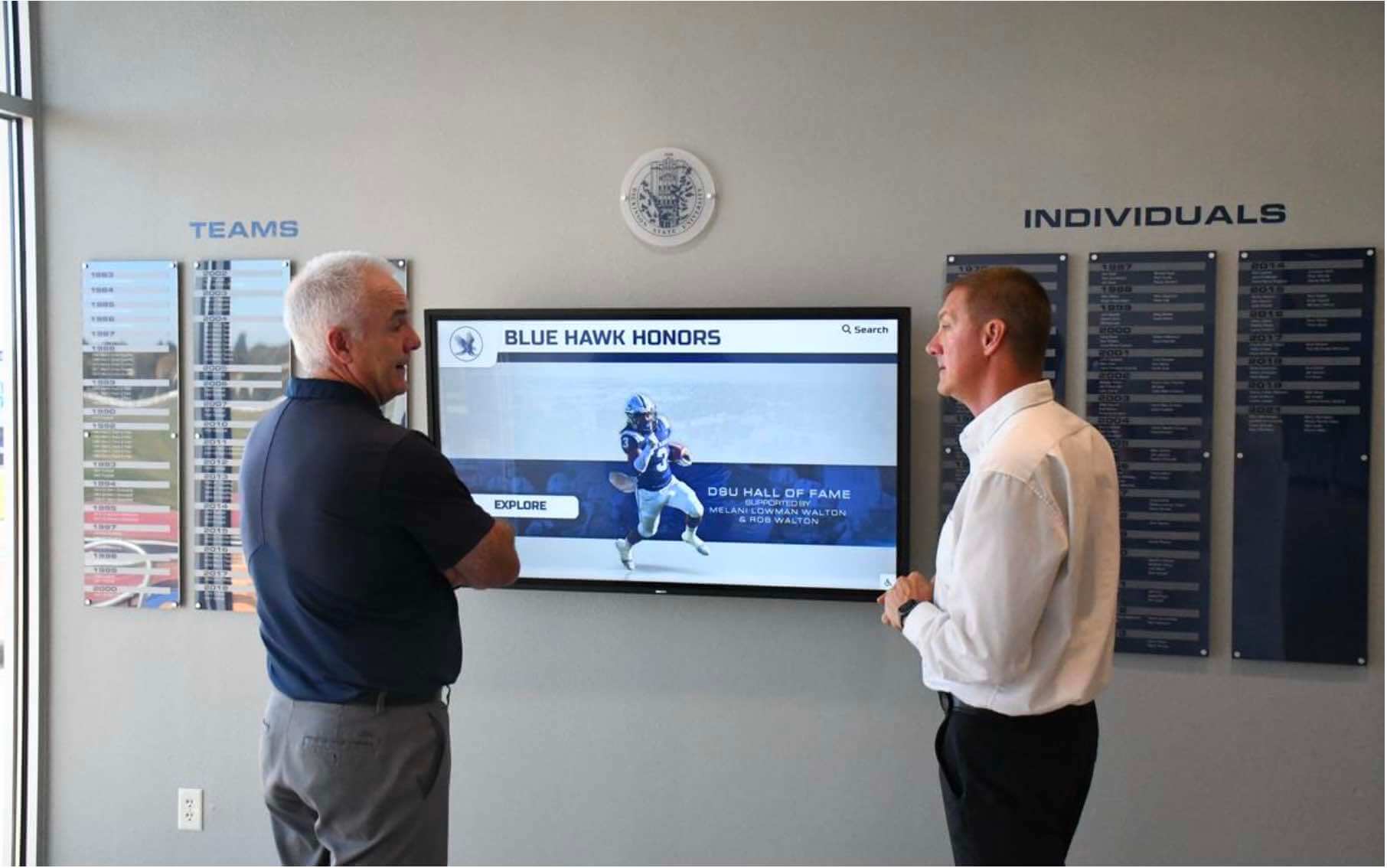
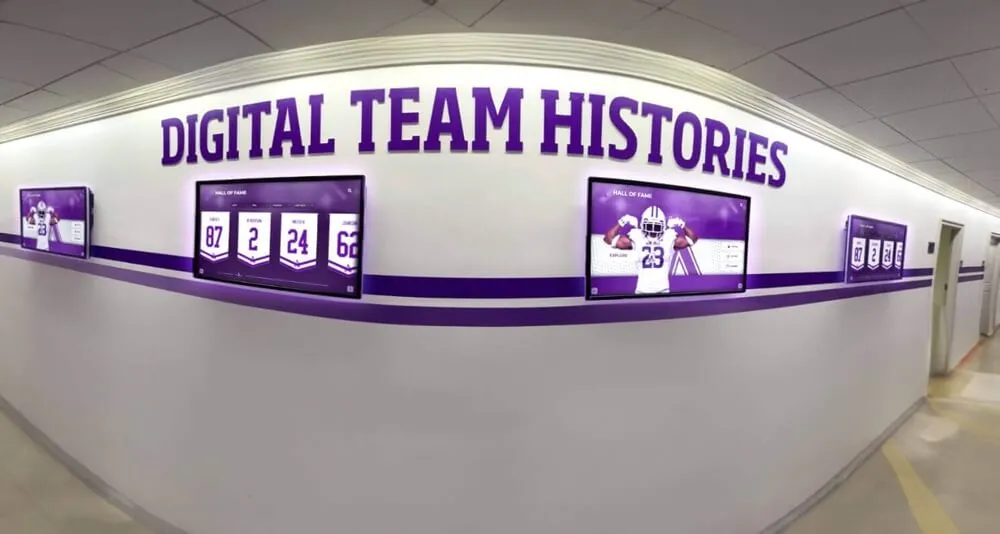
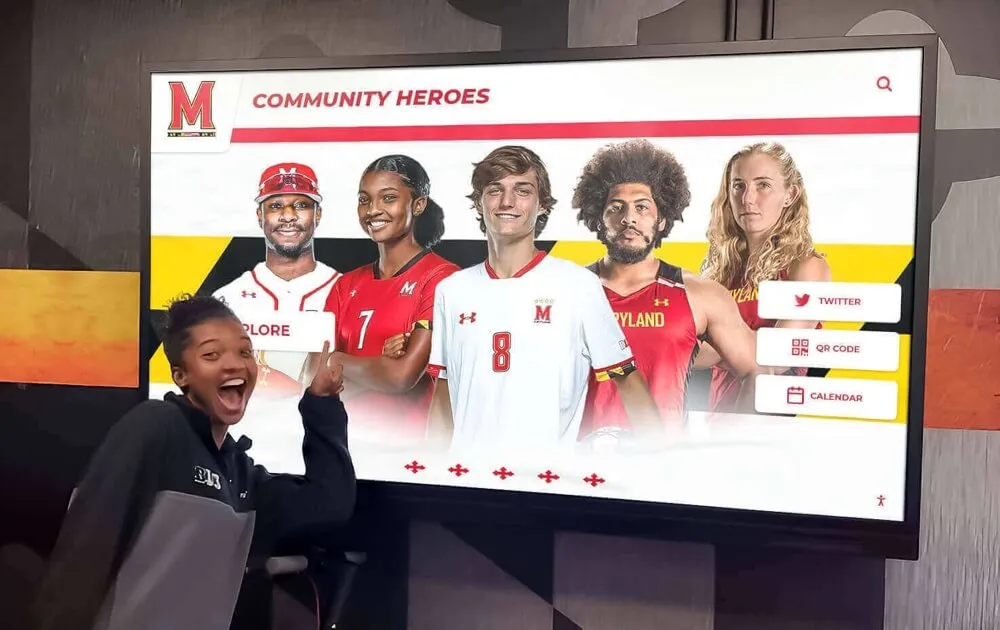
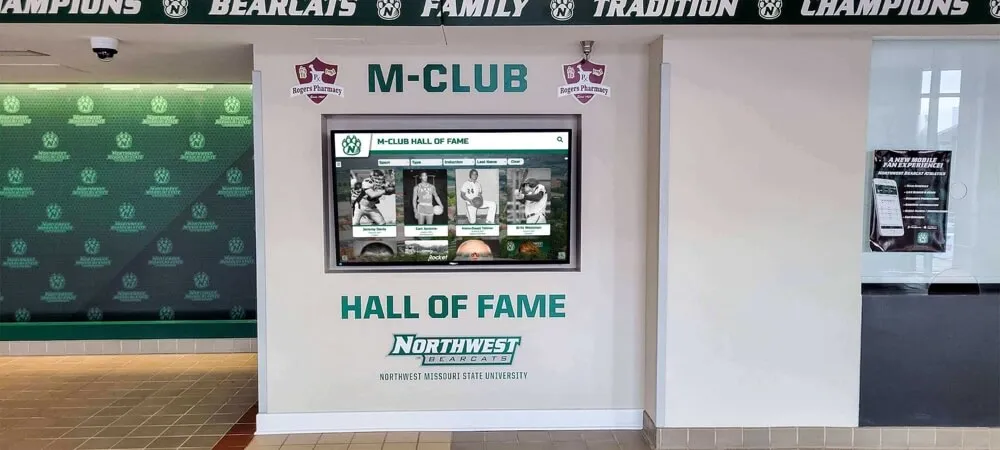
Advancement teams reviewing tier structure on digital displays can confirm visual hierarchy before campaign launch.
Choosing Your Gift Thresholds
Tier thresholds should follow from your gift chart—not precede it. Gift charts for K-12 capital campaigns typically require approximately 60–80% of the campaign goal to come from 10–20% of donors. Your top tier should accommodate the donors making your lead gifts, with meaningful multipliers separating each level below.
A practical starting framework scaled by campaign goal:
Campaigns under $1 million:
- Tier 1 (Founders): $100,000+
- Tier 2 (Champions): $50,000–$99,999
- Tier 3 (Patrons): $25,000–$49,999
- Tier 4 (Supporters): $10,000–$24,999
- Tier 5 (Friends): $1,000–$9,999
- Tier 6 (Community): Under $1,000
Campaigns $1–5 million:
- Tier 1 (Founders): $500,000+
- Tier 2 (Champions): $250,000–$499,999
- Tier 3 (Patrons): $100,000–$249,999
- Tier 4 (Benefactors): $50,000–$99,999
- Tier 5 (Supporters): $10,000–$49,999
- Tier 6 (Friends): Under $10,000
Campaigns $5–15 million:
- Tier 1 (Founders): $1,000,000+
- Tier 2 (Champions): $500,000–$999,999
- Tier 3 (Patrons): $250,000–$499,999
- Tier 4 (Benefactors): $100,000–$249,999
- Tier 5 (Supporters): $25,000–$99,999
- Tier 6 (Friends): Under $25,000
Maintain clear multipliers between tiers—each level should require roughly double the minimum of the level below it. This spacing makes the gift table feel rational rather than arbitrary and helps planned-giving conversations when donors are calibrating their commitment level.
Your Ready-to-Use Tier Naming Matrix
Your advancement team can adapt the following matrix for gift agreements, the case statement, and donor wall panel layout. Substitute your chosen tier names from the frameworks above; the structure is campaign-size agnostic.
DONOR RECOGNITION LEVELS — K-12 CAPITAL CAMPAIGN TEMPLATE
====================================================================

TIER 1 | [Founders Circle / Visionaries / Cornerstone Society]
Gift Range: [$100,000+] or your lead-gift threshold
Wall Placement: Premium panel, lobby or atrium
Benefits:
  - Named space or facility opportunity (where applicable)
  - Permanent premium wall panel with individual profile
  - VIP invitation to groundbreaking and dedication events
  - Annual stewardship update from the head of school or superintendent

TIER 2 | [Champions Society / Pillars / Heritage Society]
Gift Range: [$50,000–$99,999] or 50% of Tier 1 minimum
Wall Placement: Primary donor wall, distinguished row
Benefits:
  - Room or program naming opportunity (where applicable)
  - Prominent listing with campaign impact statement
  - Invitation to dedication event and campaign celebrations
  - Bi-annual stewardship communication

TIER 3 | [Patrons / Keystone Society / Dean's Society]
Gift Range: [$25,000–$49,999] or 25% of Tier 1 minimum
Wall Placement: Primary donor wall
Benefits:
  - Recognition society membership
  - Listing on primary donor wall with giving level notation
  - Invitation to major campaign milestones
  - Annual campaign impact letter

TIER 4 | [Benefactors / Advocates / Honors Council]
Gift Range: [$10,000–$24,999] or 10% of Tier 1 minimum
Wall Placement: Primary donor wall or digital panel
Benefits:
  - Listing on donor wall
  - Campaign honor roll in print and digital materials
  - Invitation to campaign celebration events

TIER 5 | [Supporters / Scholars / Community Champions]
Gift Range: [$5,000–$9,999] or 5% of Tier 1 minimum
Wall Placement: Digital donor display
Benefits:
  - Listing on digital donor wall
  - Campaign honor roll
  - Annual thank-you acknowledgment

TIER 6 | [Friends / Neighbors / Community Builders]
Gift Range: Under $5,000 or your entry threshold
Wall Placement: Digital honor roll
Benefits:
  - Digital honor roll listing
  - Annual campaign update letter
  - Gratitude acknowledgment from school leadership

====================================================================
Customization notes:
- Replace bracketed tier names with your chosen naming framework
- Adjust gift ranges to align with your campaign gift chart
- Add mascot-specific branding to tier names where appropriate
- Confirm naming opportunity alignment with available physical spaces
- Include this matrix in all major gift solicitation packets
Share this matrix with prospects during solicitation so they understand exactly where their commitment places them—and what community they are joining by saying yes. Creative donor wall designs that inspire giving offer visual examples of how this tier architecture translates to actual wall installations.
How to Name Tiers That Align with Your School’s Identity
The best tier names pass a simple test: if you said the top tier name aloud in a parent meeting and everyone immediately understood its significance, the name is working. If you had to explain it, the name isn’t doing its job.
A few practical guardrails for your naming process:
Involve school leadership early. Your head of school and board chair will say these tier names in solicitation conversations. If the names feel forced or inauthentic to them, that discomfort will surface in meetings with major prospects. Nominal consensus on tier language before the case statement is printed prevents awkward mid-campaign revisions.
Avoid names that date quickly. Names tied to a specific anniversary, a retiring principal, or a dollar milestone become confusing after the moment passes. Prefer timeless language that will hold meaning on a donor wall for 25 years.
Test against your mascot and school values. “The Phoenix Society” resonates at a school with a phoenix mascot and a resilience-focused culture. At a school known for academic precision, “The Scholar’s Circle” may resonate more. Your tier names should feel written for your institution specifically, not lifted from a university major-gift program.
Reserve the top tier for genuine lead gifts. It is tempting to label a $10,000 gift “Founders” to make a moderate gift feel transformational—but doing so undermines the exclusivity that makes the top tier meaningful to prospects capable of giving $250,000. Founders should mean founding, not participating.
Displaying Donor Recognition Levels on Your Donor Wall
Your tier names mean nothing if your wall layout fails to communicate them clearly to every visitor who passes through your lobby. Donor wall design for tiered campaigns requires decisions about visual hierarchy, physical placement, and label language.
Visual hierarchy principles for tiered donor walls:
The highest tier should be most visually prominent—largest type, most central placement, or both. This isn’t vanity; it is visual communication that tells donors and prospects what major giving means to your institution. Visitors who see “Founders Circle” displayed with obvious distinction draw the correct inference: this school honors its largest supporters appropriately.
Each tier should be clearly labeled with the tier name (not just the dollar amount) and include a visual divider—a ruled line, a change in panel color, or a variation in font size—that makes the hierarchy immediately legible without requiring a legend.
Spacing for future additions. Physical donor walls are notoriously under-spaced. Plan for at least 30–40% more space than your projected number of names at launch. Capital campaigns routinely add donors beyond initial projections, and a wall with no room for additions forces either expensive retrofits or awkward addendum panels.
Name format and accuracy. Confirm every donor’s preferred name format before installation. Inconsistent formatting—“The Smith Family” versus “John and Mary Smith”—creates visual noise and, more importantly, communicates carelessness to the donors you are honoring. Your gift agreement should include a name-confirmation step.
Explore modern donor wall ideas for contemporary visual frameworks that balance tier hierarchy with aesthetic appeal in school settings.
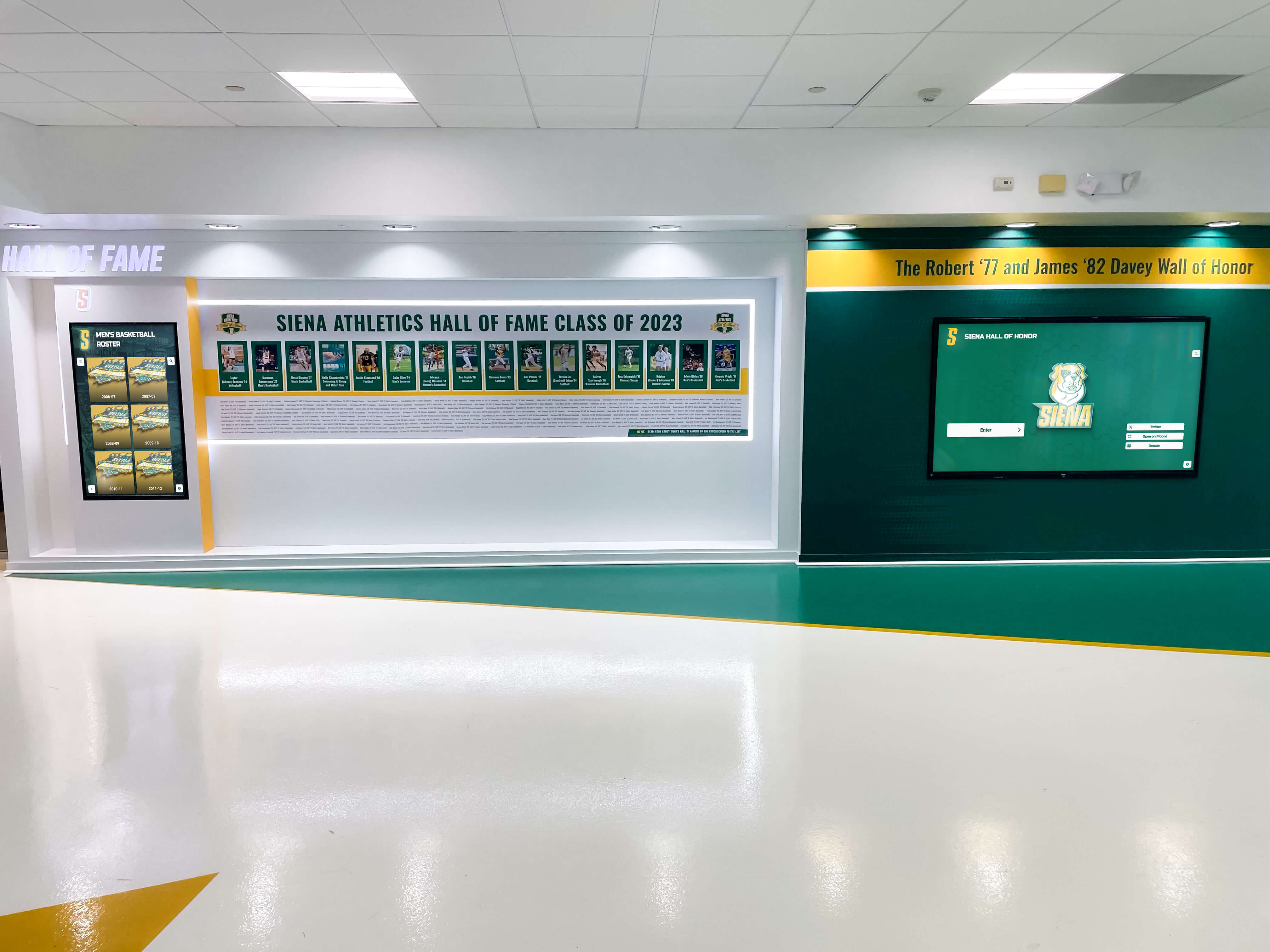
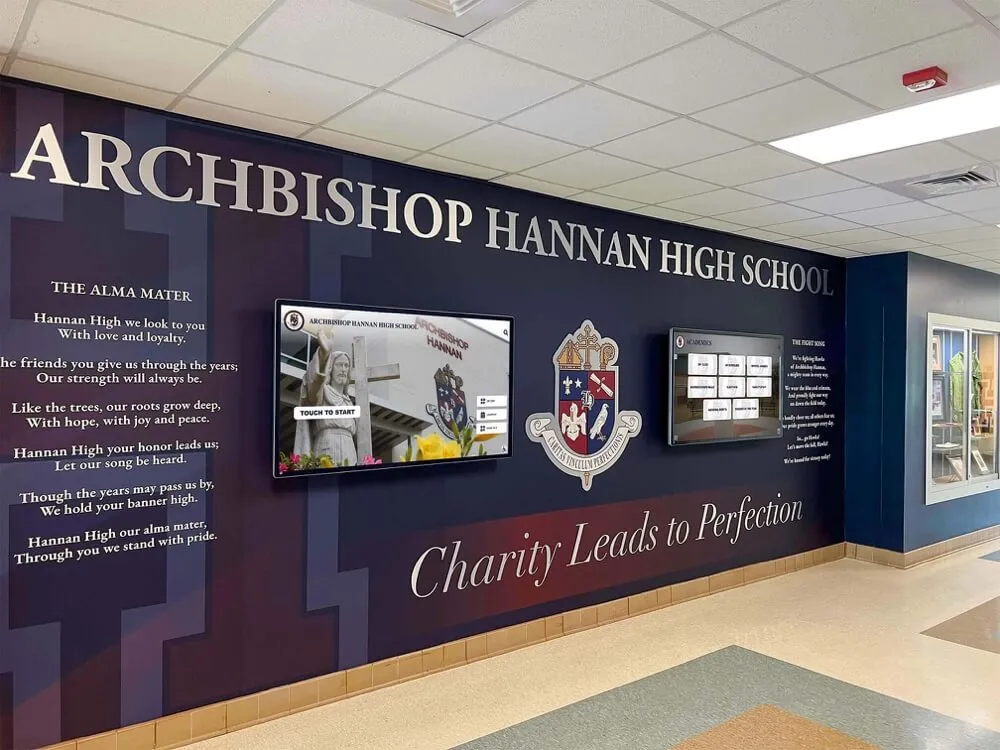
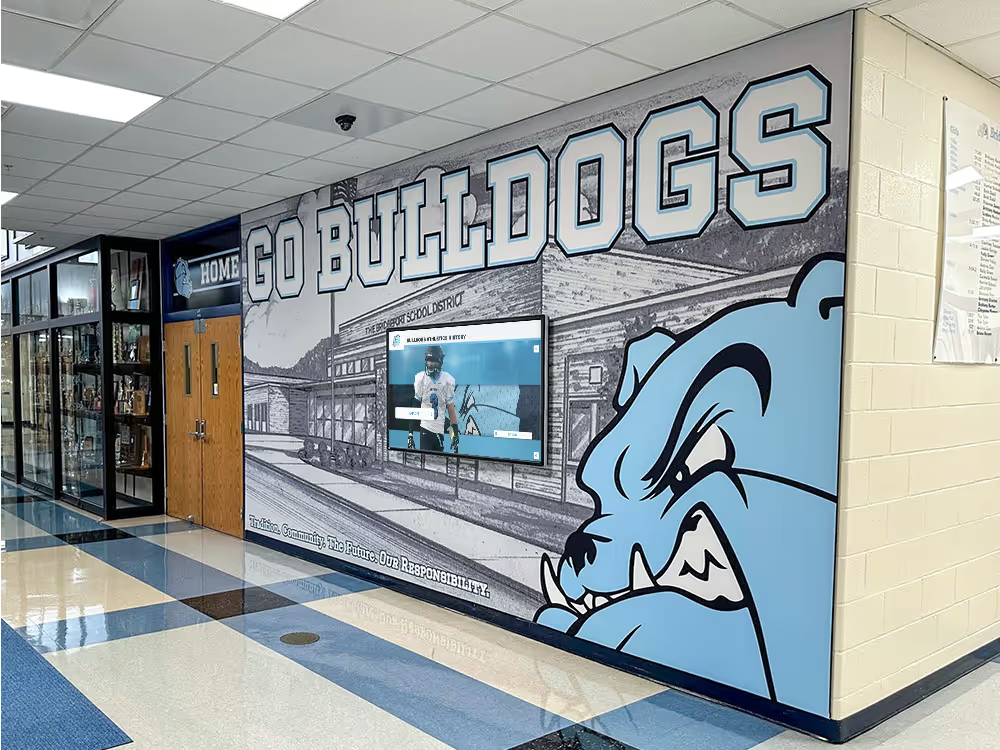
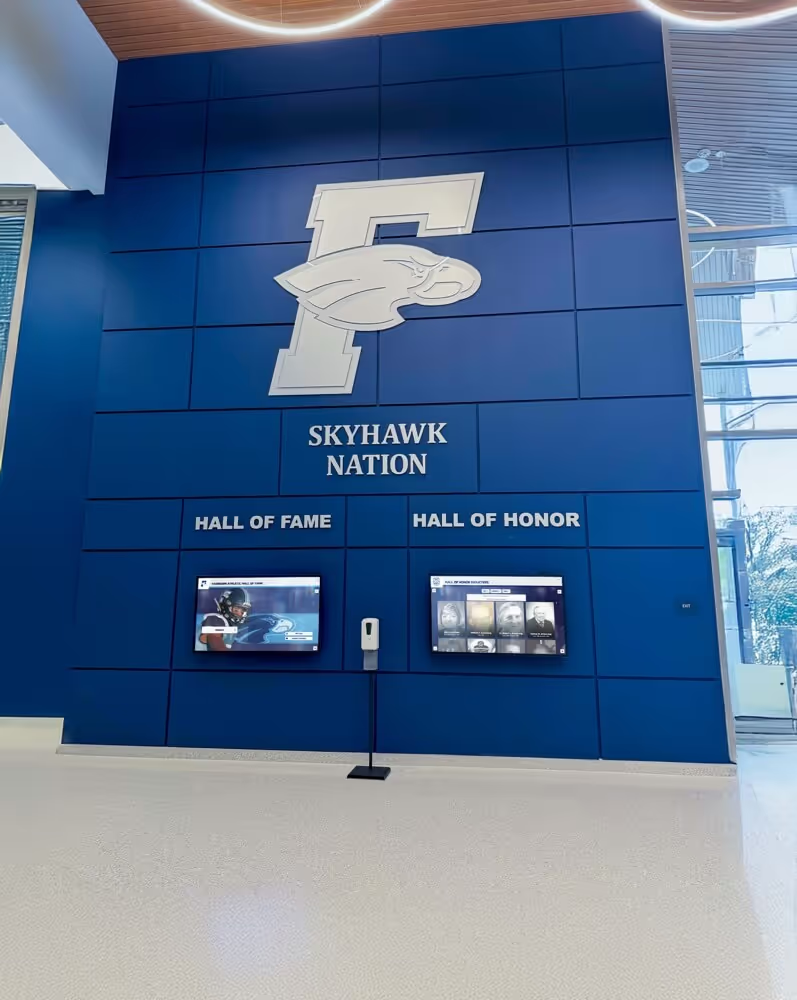
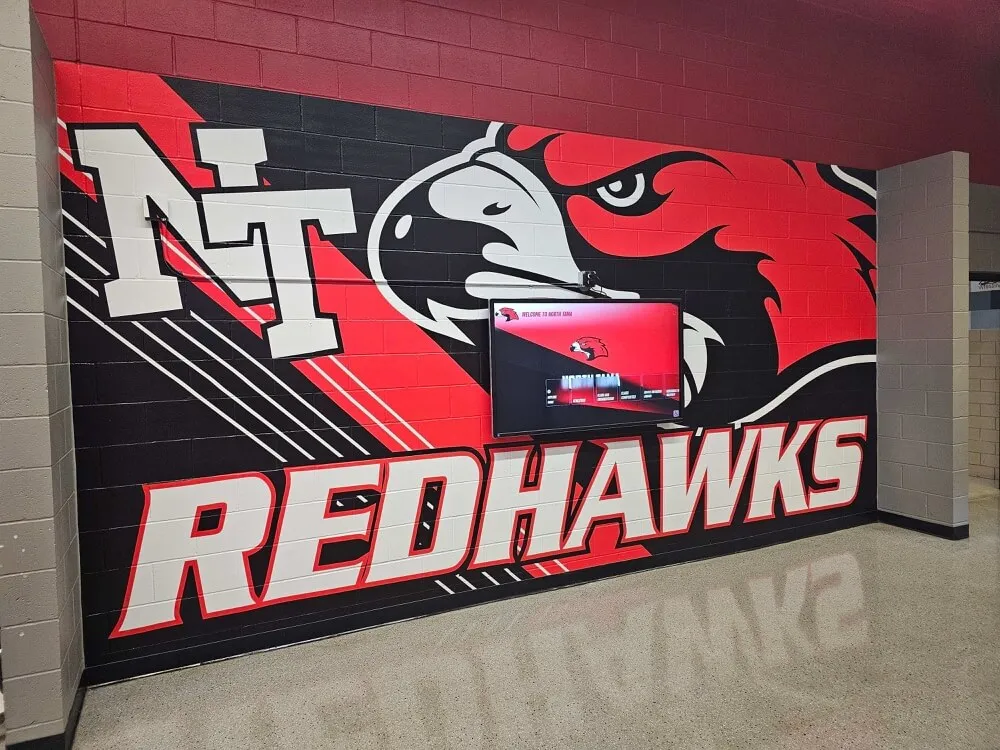
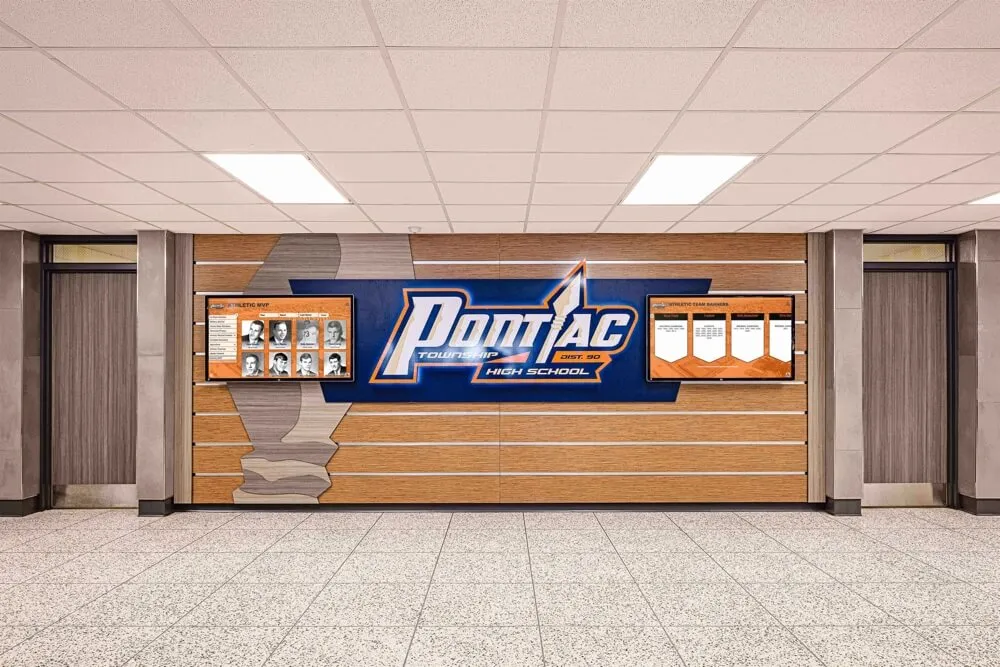
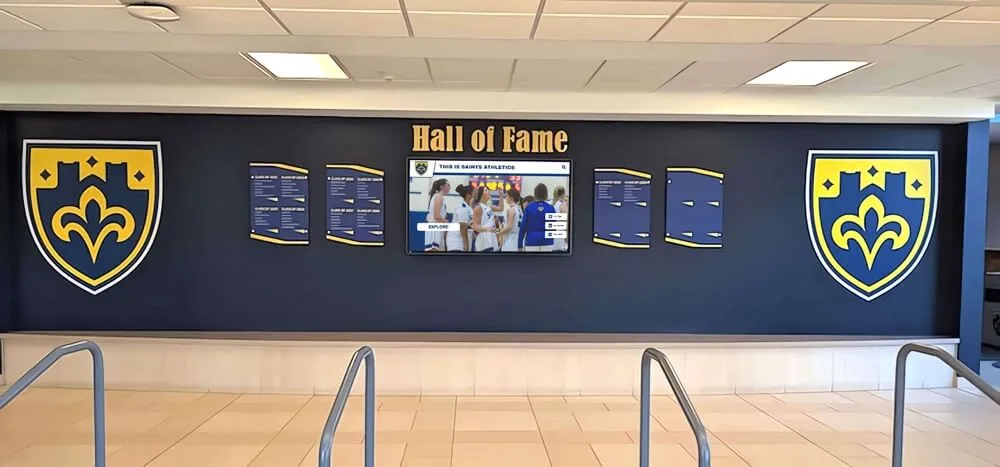
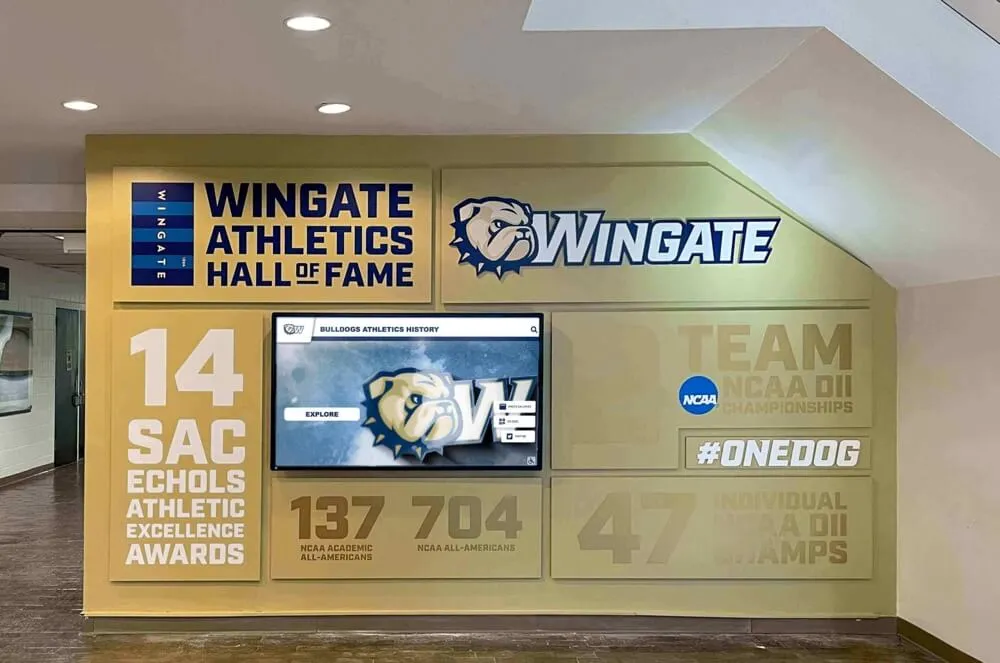
Physical donor walls with clearly labeled tier sections create immediate visual hierarchy, guiding every visitor's understanding of your philanthropic community.
Bringing Tiers to Life with Digital Donor Walls
Physical donor walls establish permanence and prestige. Digital donor walls do something static installations cannot: they tell the story behind each tier and make every donor—regardless of giving level—feel genuinely seen.
When a digital recognition system powers your lobby display, each tier can appear as a dedicated module on your touchscreen kiosk or lobby screen. Visitors navigate to the Founders Circle and see individual donor profiles—names, photos, and optional impact statements—rather than a list of names in a fixed column. A community donor in the Friends tier is as accessible and honored as the lead gift family in the Founders Circle; the interactive system maintains appropriate visual priority for higher tiers while ensuring no contributor is invisible.
Digital systems address three structural challenges that physical walls cannot solve:
Unlimited capacity. Capital campaigns regularly acquire more donors than initially projected. A digital donor recognition system accommodates every addition without requiring physical expansion or space reallocation.
Effortless updates. Corrections to donor names, additions as pledge payments are fulfilled, and tier upgrades when donors increase their commitments—all require no physical intervention on a digital platform. Your advancement office manages updates remotely, and changes appear on-screen immediately.
Campaign progress visualization. Beyond static name recognition, digital donor walls can display campaign progress toward goal, giving-level breakdowns, and impact milestones. This live context transforms your lobby display from a backward-looking acknowledgment into a forward-looking fundraising tool—inviting visitors to see where the campaign stands and what contributions still make possible.
For guidance on donor wall planning specifically for nonprofits and K-12 institutions, see the overview of donor walls for nonprofits and schools. For the design process from initial concept through installation, how to design a digital donor wall walks through each decision point your advancement team will face.
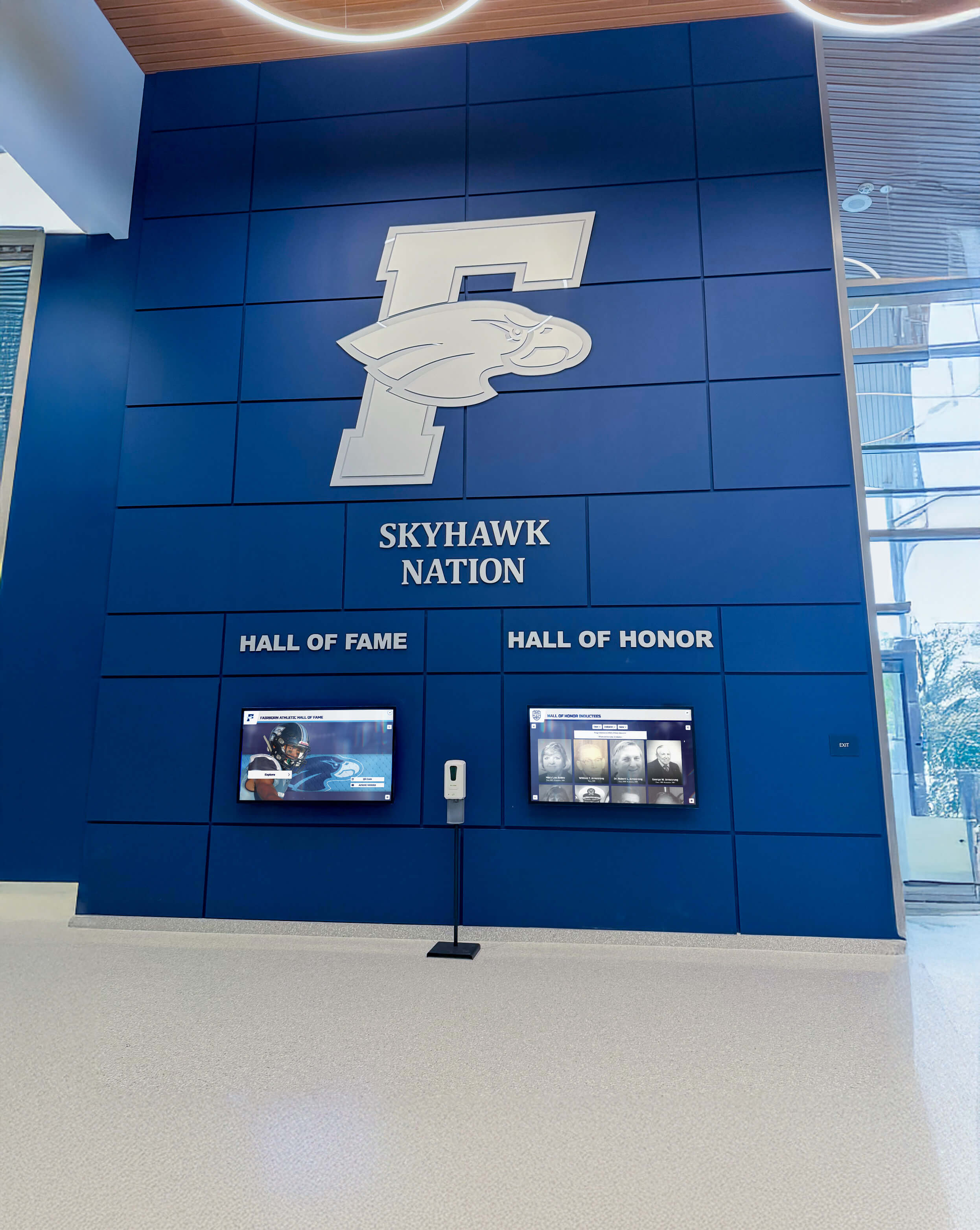
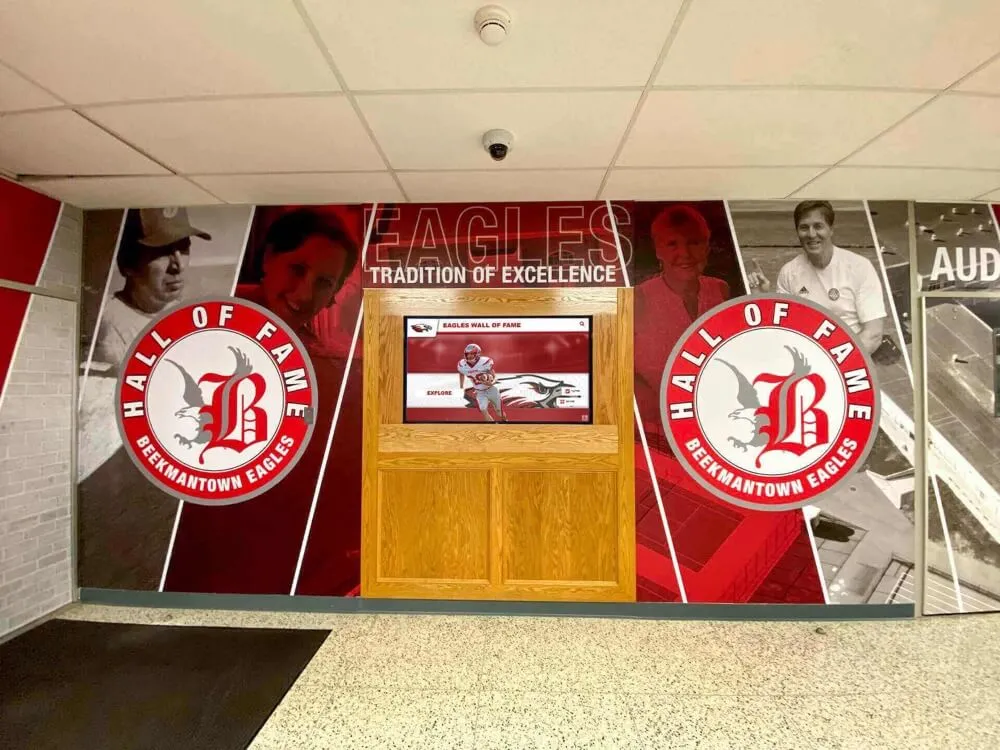
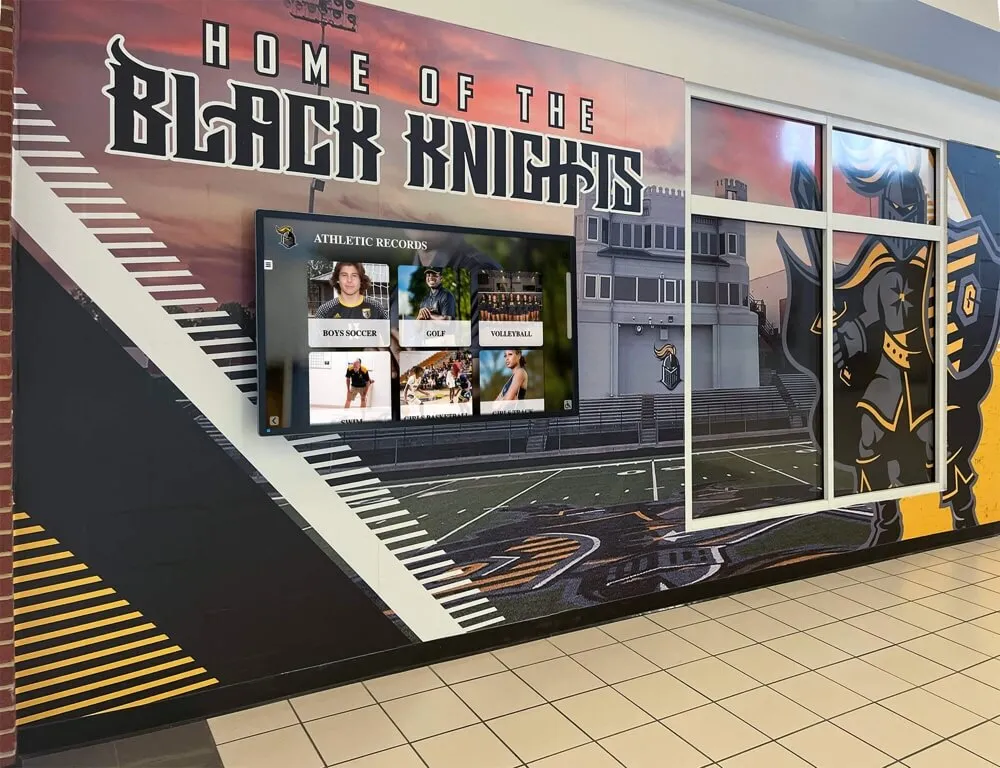
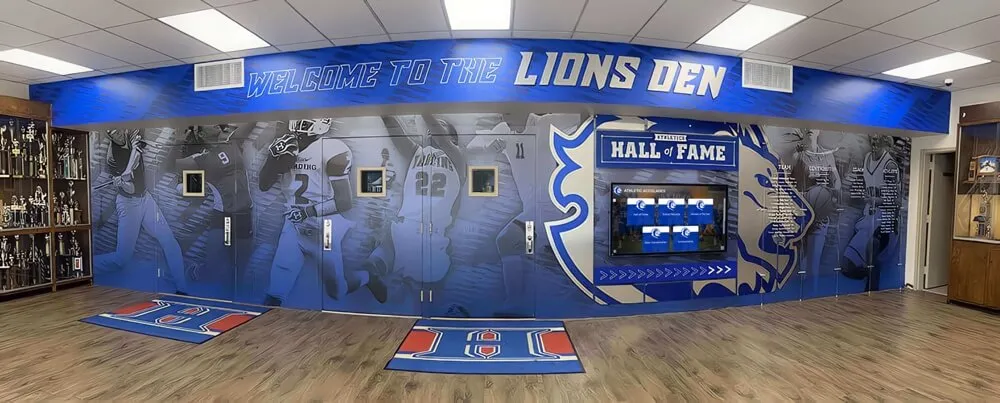
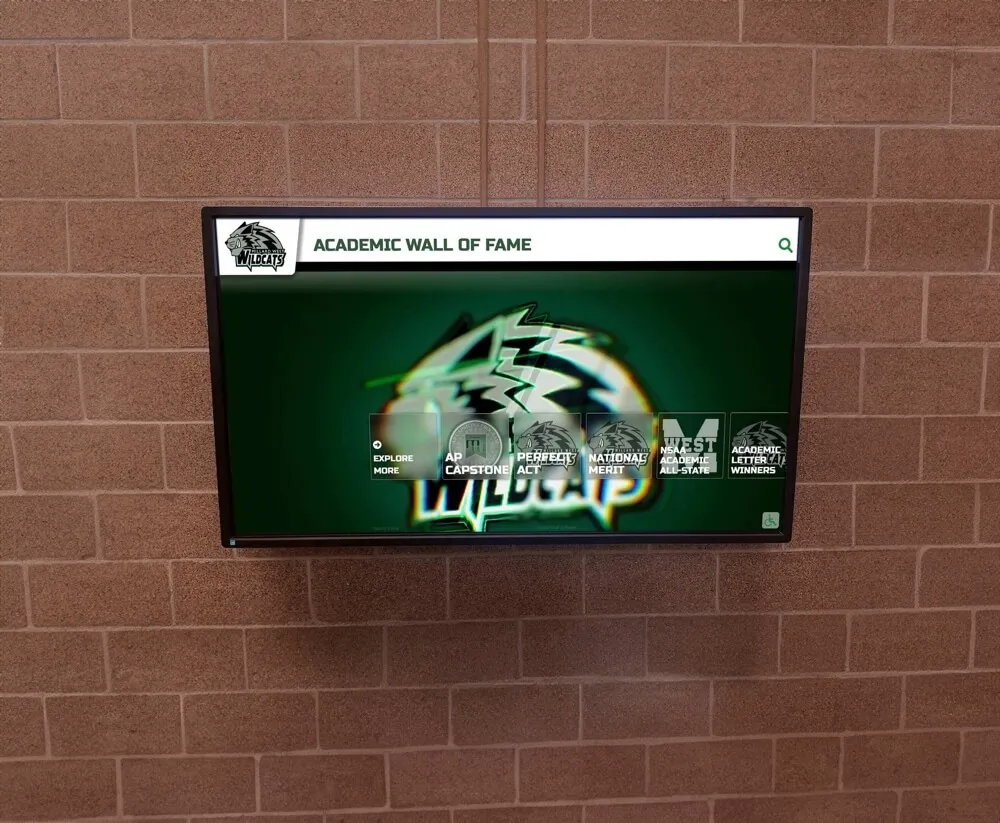
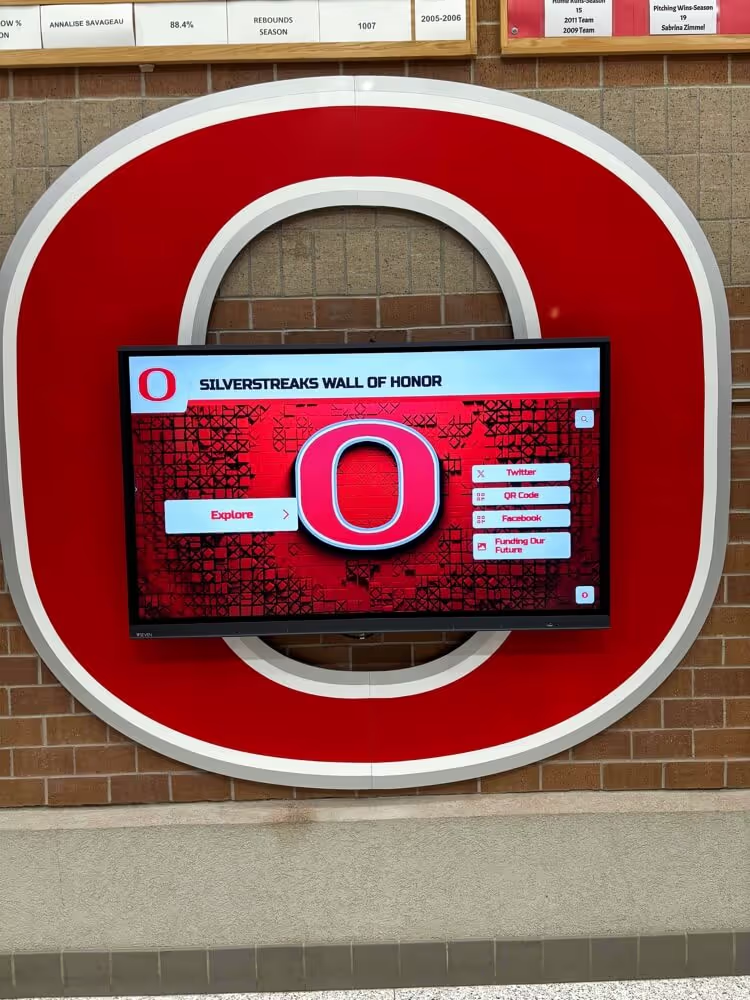
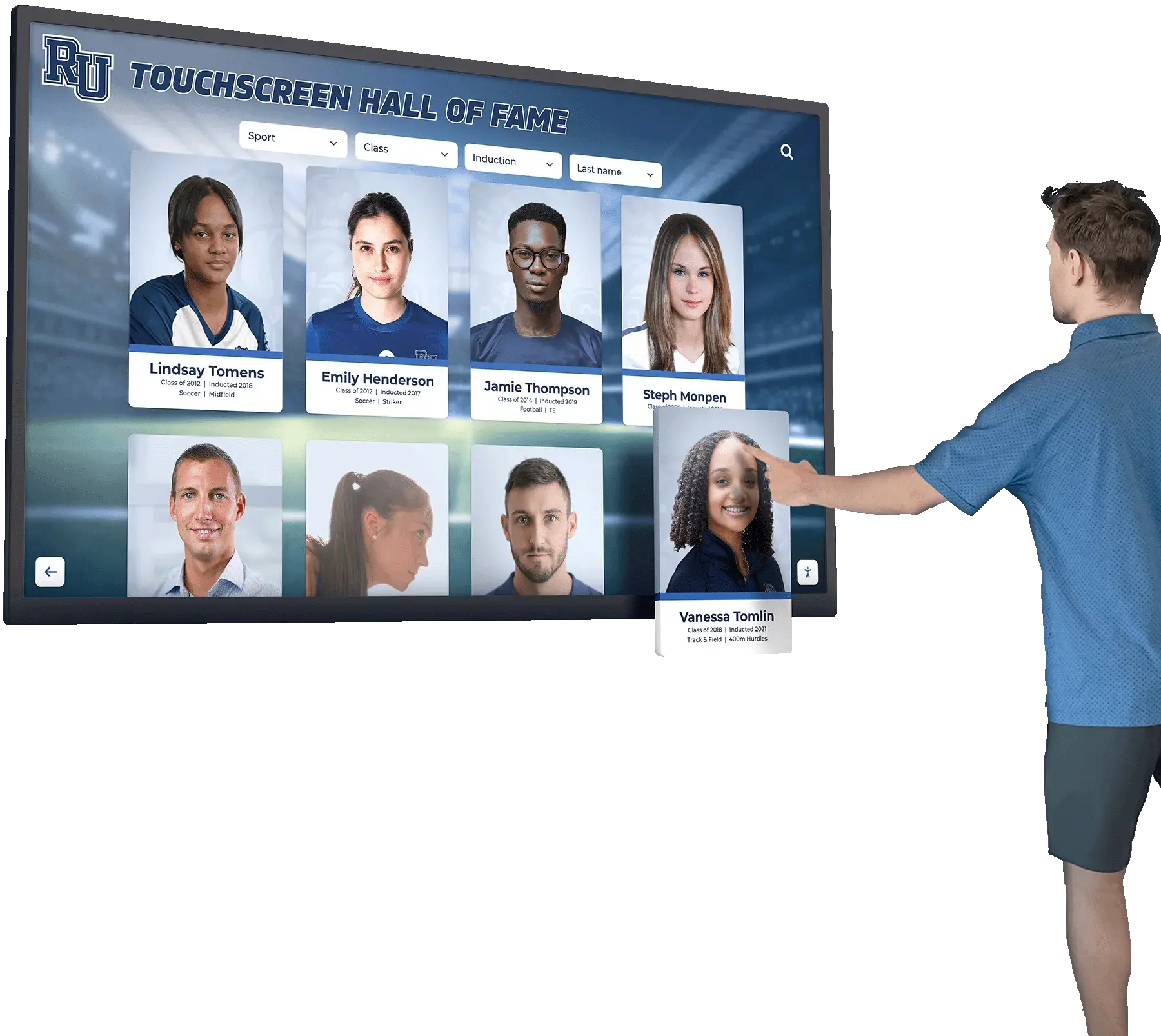
Digital lobby displays bring donor recognition levels to life with interactive profiles, campaign progress tracking, and effortless tier updates.
Stewardship Across All Tiers: Beyond the Wall
Your recognition tier structure creates a stewardship architecture, not just a wall layout. Each tier should have a corresponding stewardship calendar—specific touchpoints your advancement team commits to throughout the year following a gift.
Top-tier stewardship (Founders and Champions):
- Annual personal update from the head of school or superintendent
- Invitation to construction milestones, groundbreakings, and ribbon cuttings
- Named-space dedication event with family invited
- Multi-year impact reporting connected to the specific program or facility funded
Mid-tier stewardship (Patrons and Benefactors):
- Annual campaign impact letter
- Invitation to dedication event
- Recognition society membership communications
- Acknowledgment at campaign gala or annual giving celebration
Entry-tier stewardship (Supporters and Friends):
- Annual thank-you acknowledgment
- Digital honor roll listing
- Campaign milestone updates
- Invitation to open-house or celebration events where capacity allows
Planning your campaign gala as a recognition event? A gala planning guide for schools and nonprofits outlines the logistics of honoring donors across all tiers in a single evening. For schools building a longer-term giving culture beyond a single capital campaign, recognition solutions that build school community belonging provides a framework for sustaining donor relationships year over year.
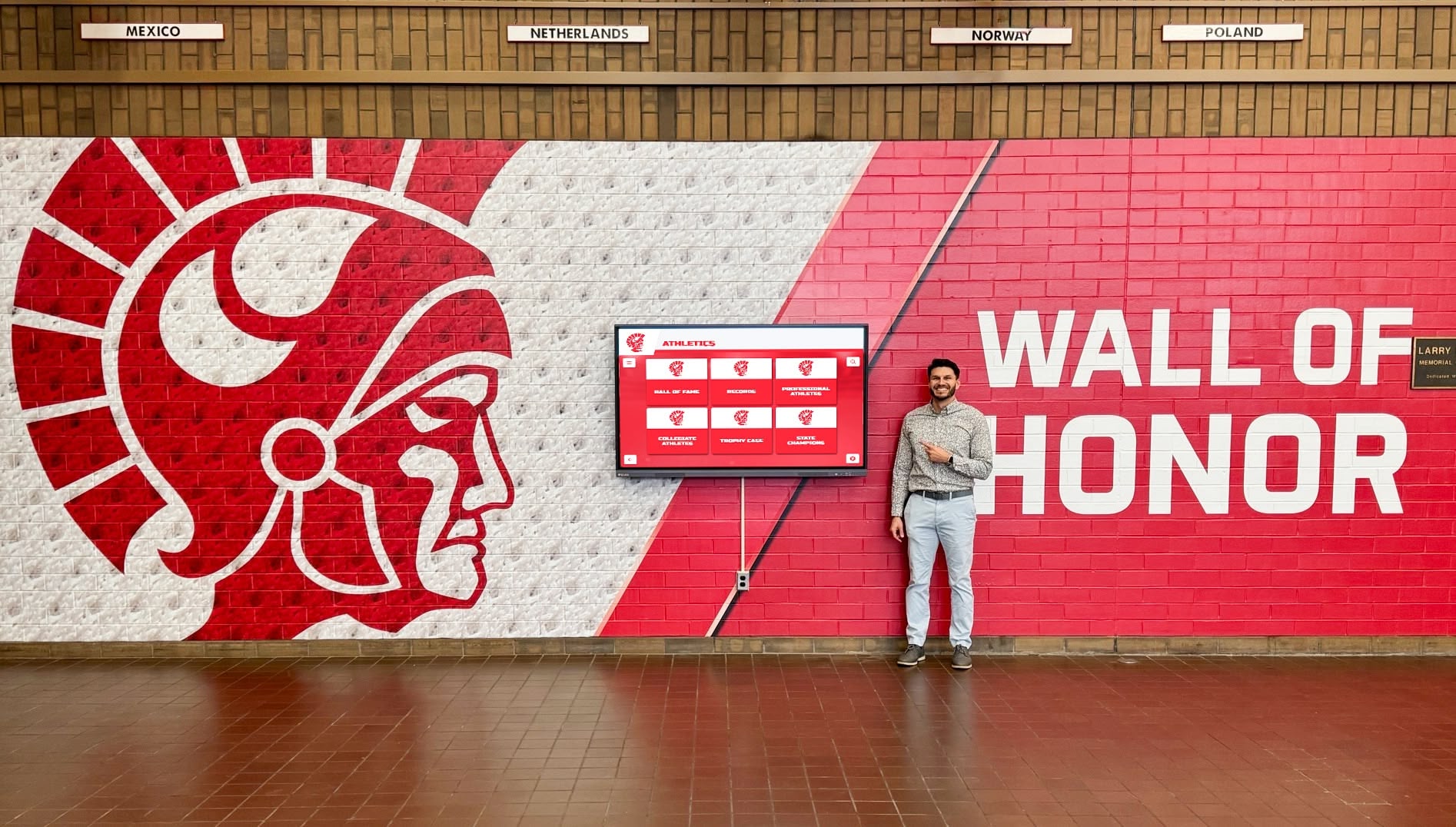
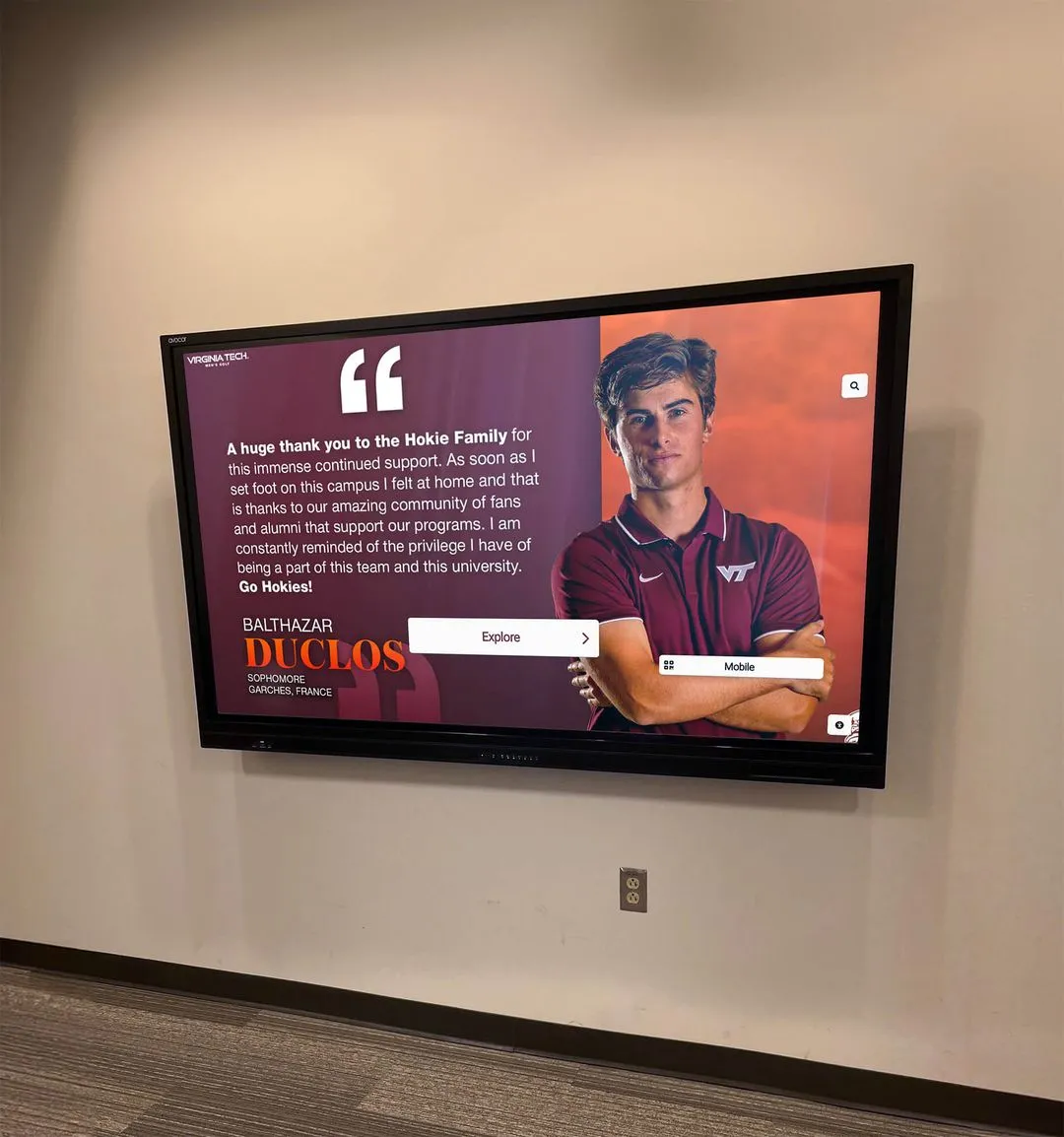
Stewardship begins at the wall and extends into a year-round communication cadence for every donor recognition tier.
Your digital donor wall makes stewardship delivery more responsive. When a Tier 3 donor upgrades to Tier 2 following an additional pledge, a DonorsWall administrator updates the donor’s recognition placement immediately—without waiting for a fabrication cycle or a physical wall modification. The donor receives instant confirmation that their increased commitment has been recognized, reinforcing the relationship between giving and acknowledgment at exactly the right moment.
Additional Considerations for K-12 Foundations
K-12 capital campaigns involve stakeholders who don’t always appear in university-scale fundraising literature: parent giving communities, local business donors, multi-generational alumni, and district foundation boards. Each cohort responds differently to donor recognition levels.
Parent donors often give at the Supporters or Friends tier and primarily want to know that every contribution matters. Ensure your entry-tier name signals genuine welcome rather than consolation. “Community Builders” or “School Family” communicates belonging; “General Donors” does not.
Alumni donors may span multiple generations and campaign cycles. An alumnus who gave at the Friends level in a prior campaign may be positioned for a Patrons-level commitment in your current campaign. Your digital donor wall enables a browsable giving history that acknowledges prior support while showcasing the current campaign structure.
Corporate and local business donors sometimes prefer recognition that distinguishes their philanthropic role from individual family donors. Consider whether a parallel “Corporate Partners” tier serves your campaign, or whether business donors integrate naturally into your standard tier architecture with an added designation.
For schools developing broader alumni engagement programs alongside a capital campaign, alumni engagement software features that build lifelong connection through recognition outlines how recognition platforms sustain the giving relationship beyond any single campaign cycle. For academic institutions extending recognition culture from classroom achievement into fundraising, an academic recognition comprehensive guide covers the connective tissue between honoring students and honoring donors.
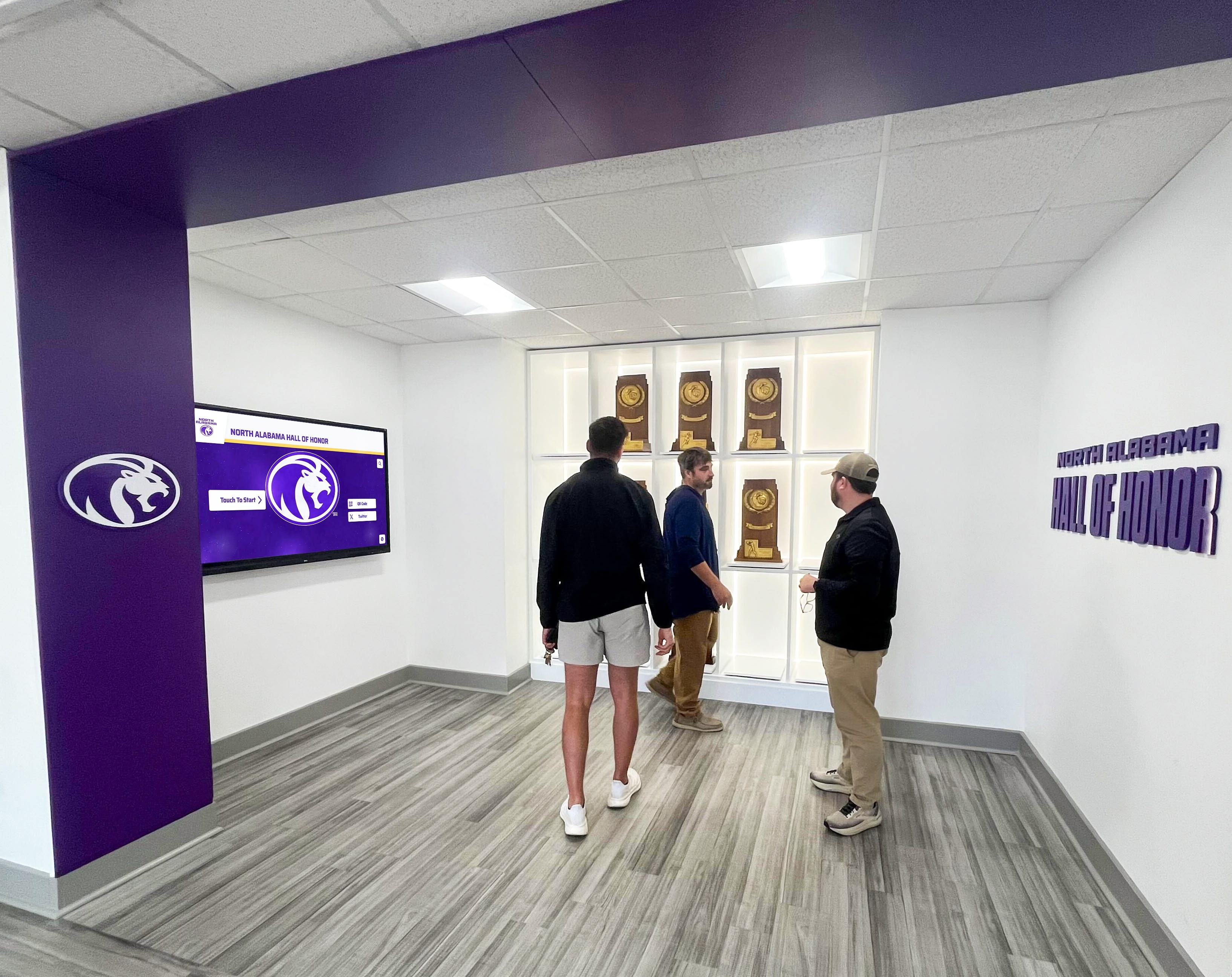
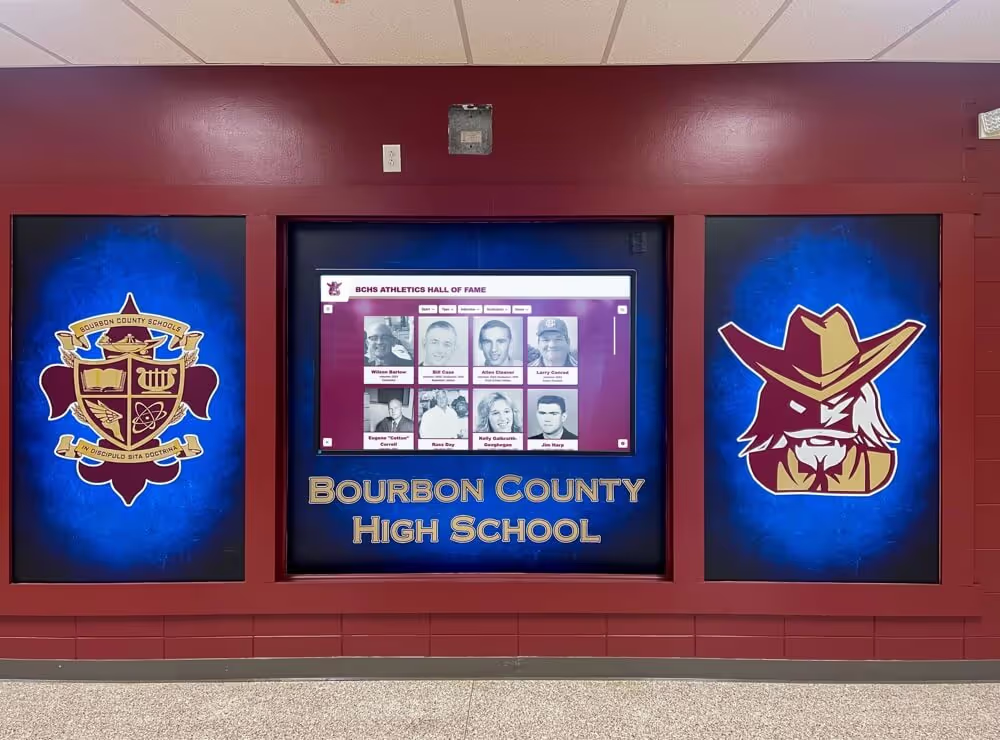
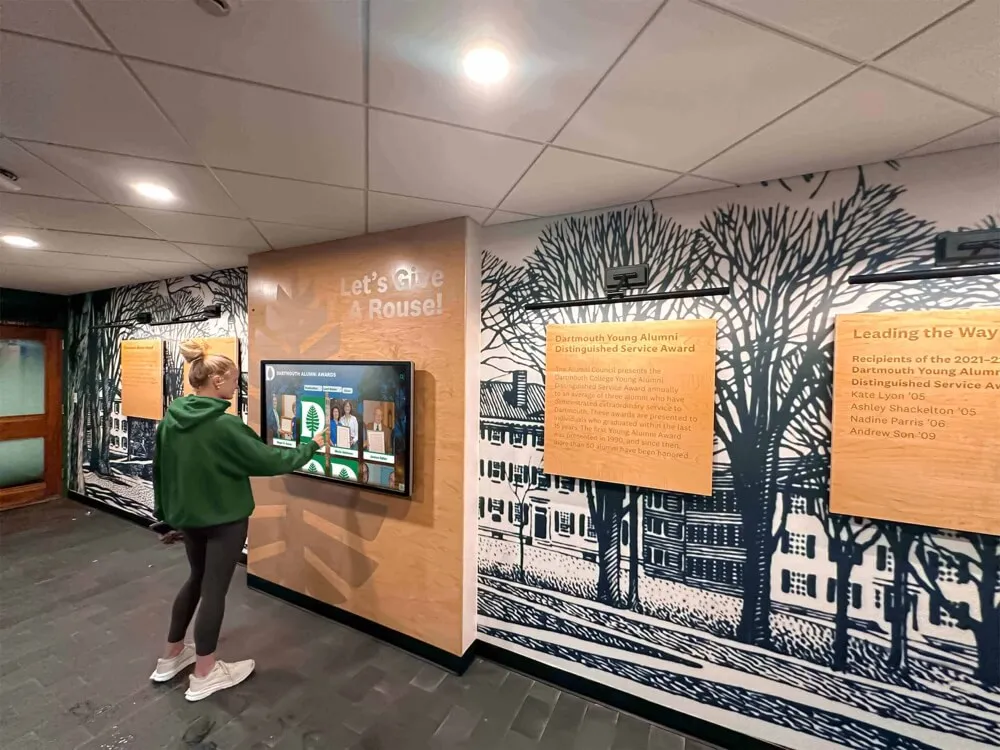
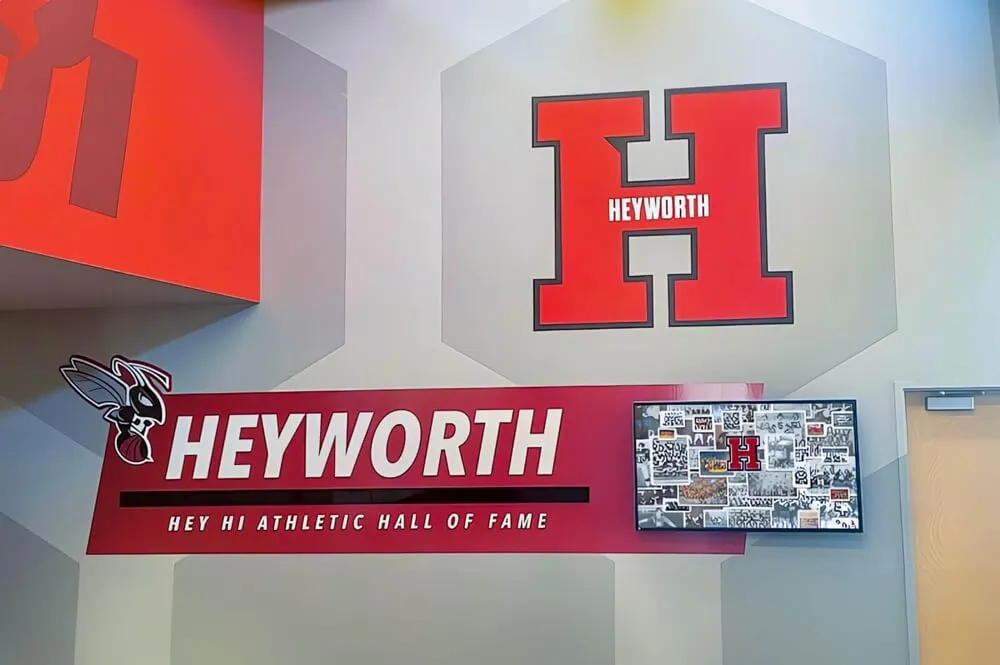
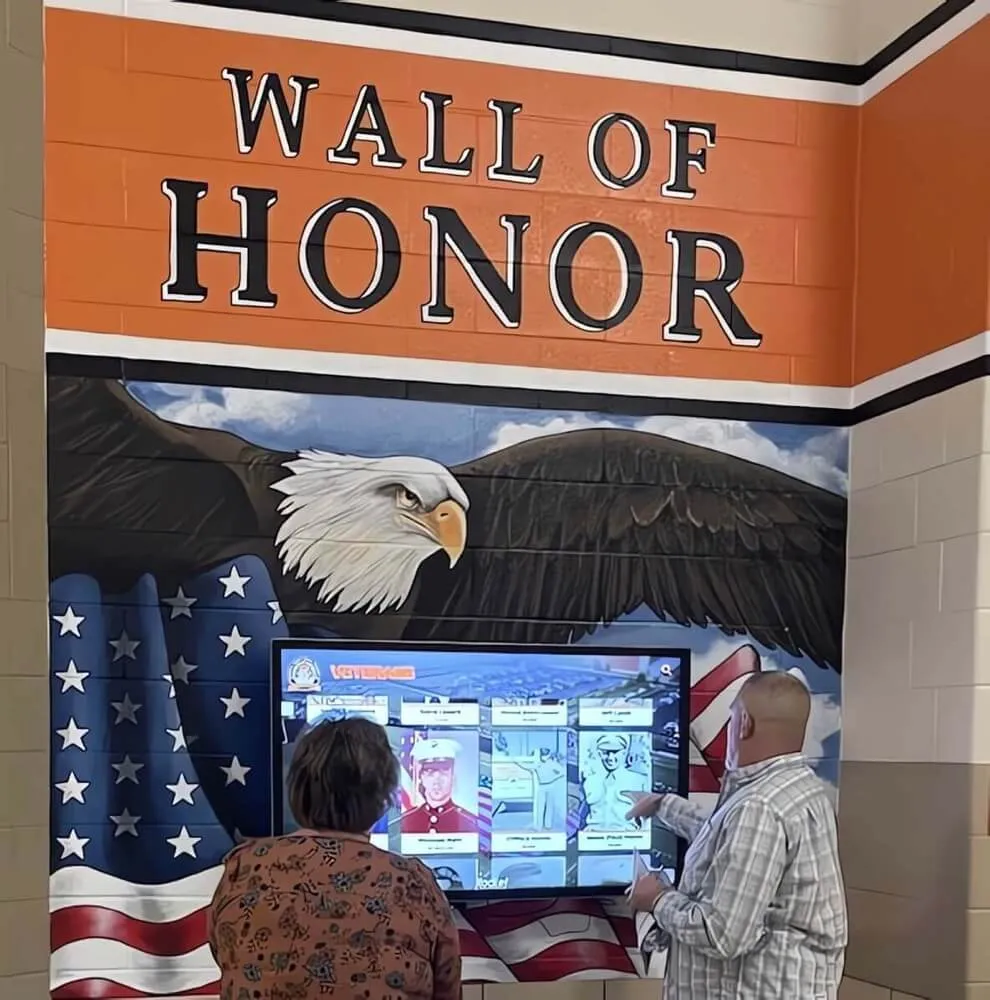
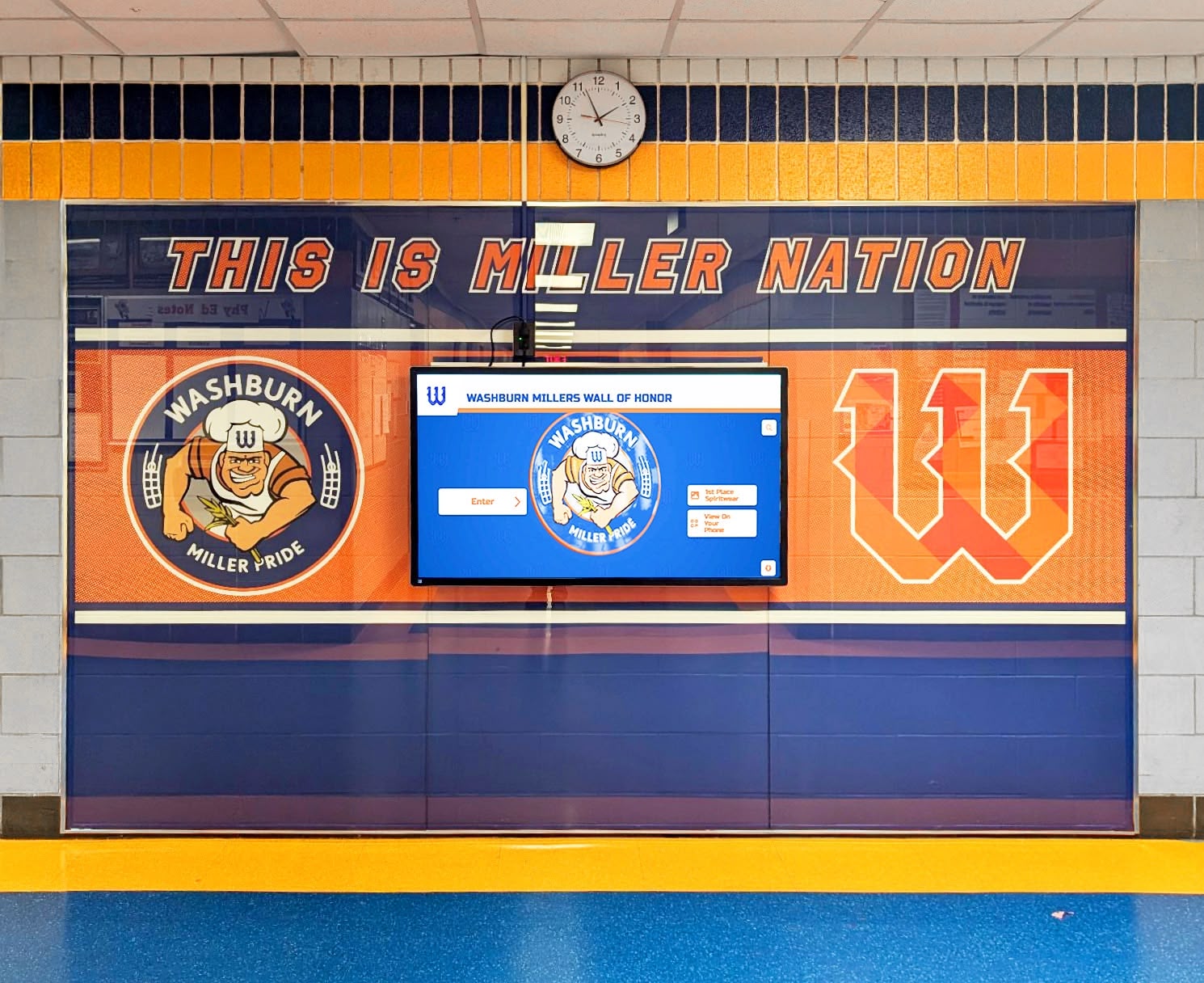
Recognition halls that integrate donor tiers with broader institutional pride reinforce the connection between philanthropy and school identity.
Frequently Asked Questions
How many donor recognition levels should a K-12 capital campaign have?
Most K-12 campaigns use five to seven tiers. Fewer than five creates inadequate differentiation between gift sizes; more than seven creates a wall that is visually confusing and difficult to navigate. Your gift chart is your guide: you need one tier for every meaningfully distinct giving level your campaign is trying to fill.
Should we name tiers after dollar amounts or use aspirational names?
Aspirational names consistently outperform dollar-amount labels in solicitation contexts. Asking a donor to “join the Founders Circle” frames the gift as an opportunity; asking them to “give at the $100,000 level” frames it as a transaction. Use aspirational names on your donor wall and in solicitation materials; reference dollar amounts in your gift agreements and internal gift chart documents.
What happens to tier placement when a donor upgrades their gift?
When a donor increases their commitment—either through an additional pledge or by meeting a fulfillment milestone—their placement on the wall and in all campaign materials should upgrade to reflect the new level. Digital donor recognition systems handle this immediately through a single content update. For physical walls, budget for supplementary panels or engraving capacity to accommodate tier upgrades without disrupting the wall’s visual coherence.
Building a Recognition Culture One Tier at a Time
Donor recognition levels are the architecture of your campaign’s philanthropic community—the structure that tells every prospective donor where they fit, what their investment means, and what it means to be part of the group of people who made something extraordinary possible at your school.
K-12 advancement directors who design these tiers with intention—aligning names to institutional identity, thresholds to campaign mechanics, and stewardship touchpoints to donor expectations—don’t just fill their gift charts. They build donor communities that return, upgrade, and invite others to join. That is the compound interest of good recognition strategy.
The tier naming matrix in this guide is a starting point. The lasting work is building the display, the stewardship calendar, and the recognition culture that makes every donor at every level feel like a genuine part of the school’s future.
Ready to design a donor recognition wall that brings your tier structure to life? Connect with the Rocket Alumni Solutions team to explore DonorsWall’s dynamic tier displays, campaign progress visualization, and ADA-compliant digital recognition systems built specifically for K-12 capital campaigns.