Donor recognition signs serve as permanent, visible expressions of gratitude that honor supporters while inspiring continued giving. For schools navigating capital campaigns, facility improvements, scholarship programs, and annual fund initiatives, thoughtfully designed donor signs transform philanthropy from transactional giving into lasting recognition that strengthens community connections and donor relationships.
Many schools struggle with donor recognition approaches that feel either inadequate—hastily printed plaques that minimize contributions—or overwhelming—complex installations requiring extensive budgets and maintenance. Development officers need recognition solutions that honor supporters meaningfully, fit institutional aesthetics, accommodate various giving levels, and remain flexible as campaigns evolve and new donors join the community.
This comprehensive guide explores donor recognition sign design strategies, wording examples, material options, placement considerations, and best practices that help schools create recognition displays serving both gratitude and advancement goals.
Schools that implement effective donor recognition create cultures of philanthropy where giving receives appropriate acknowledgment, supporters feel genuinely appreciated, and visible recognition inspires additional contributions through social proof and community visibility. Recognition systems combining traditional signage with modern digital displays offer the permanence donors value alongside the flexibility development programs require.

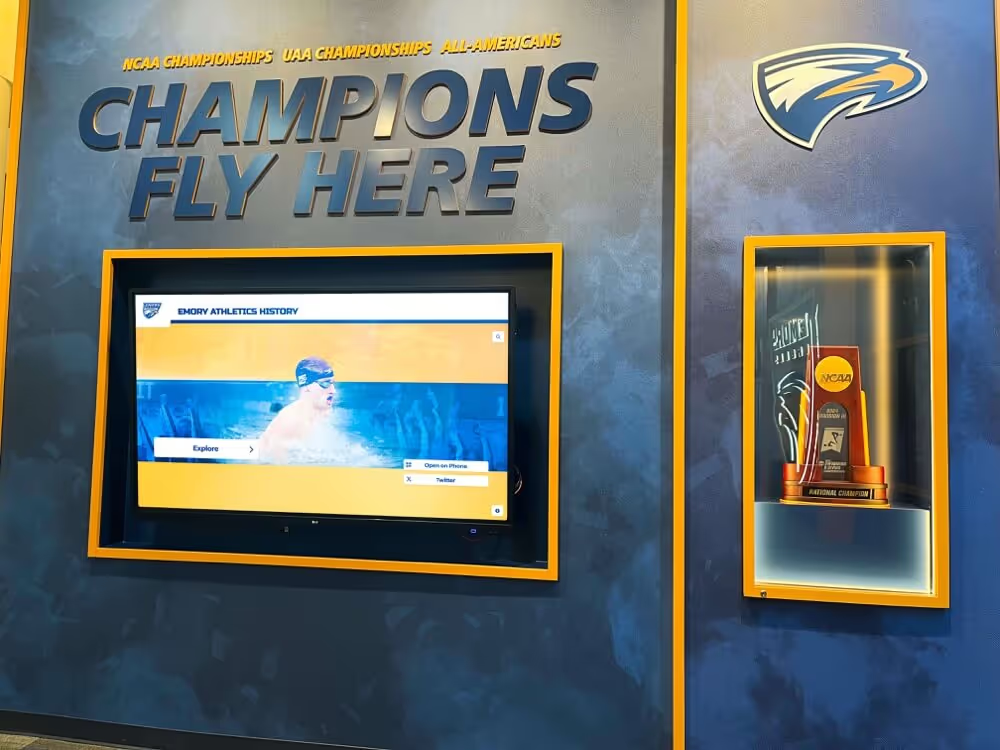
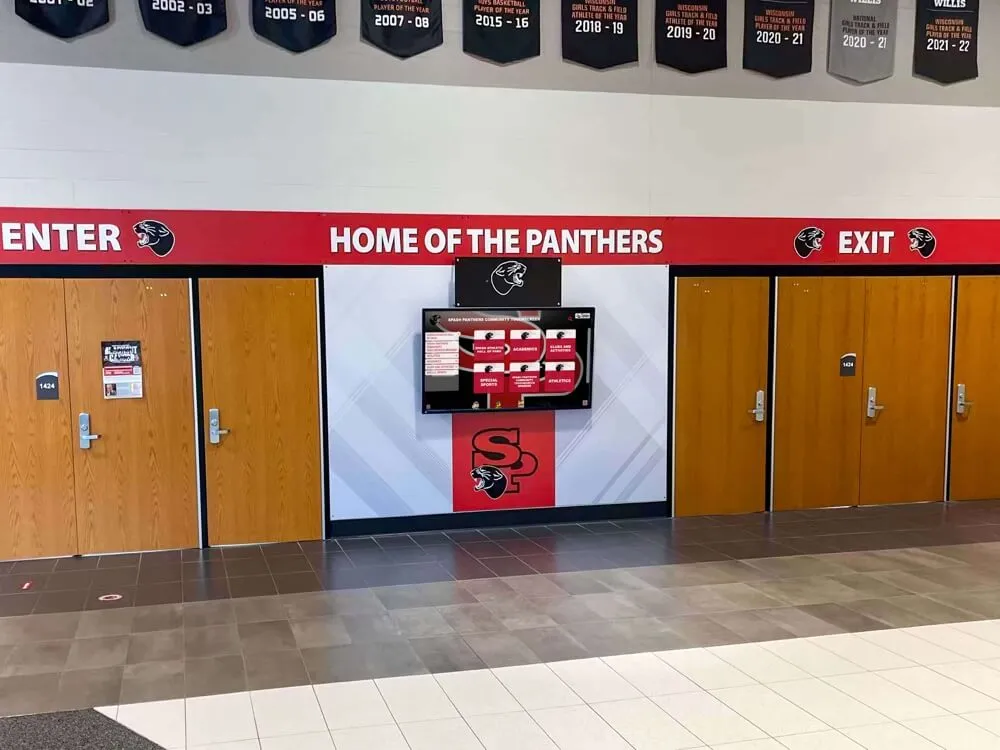
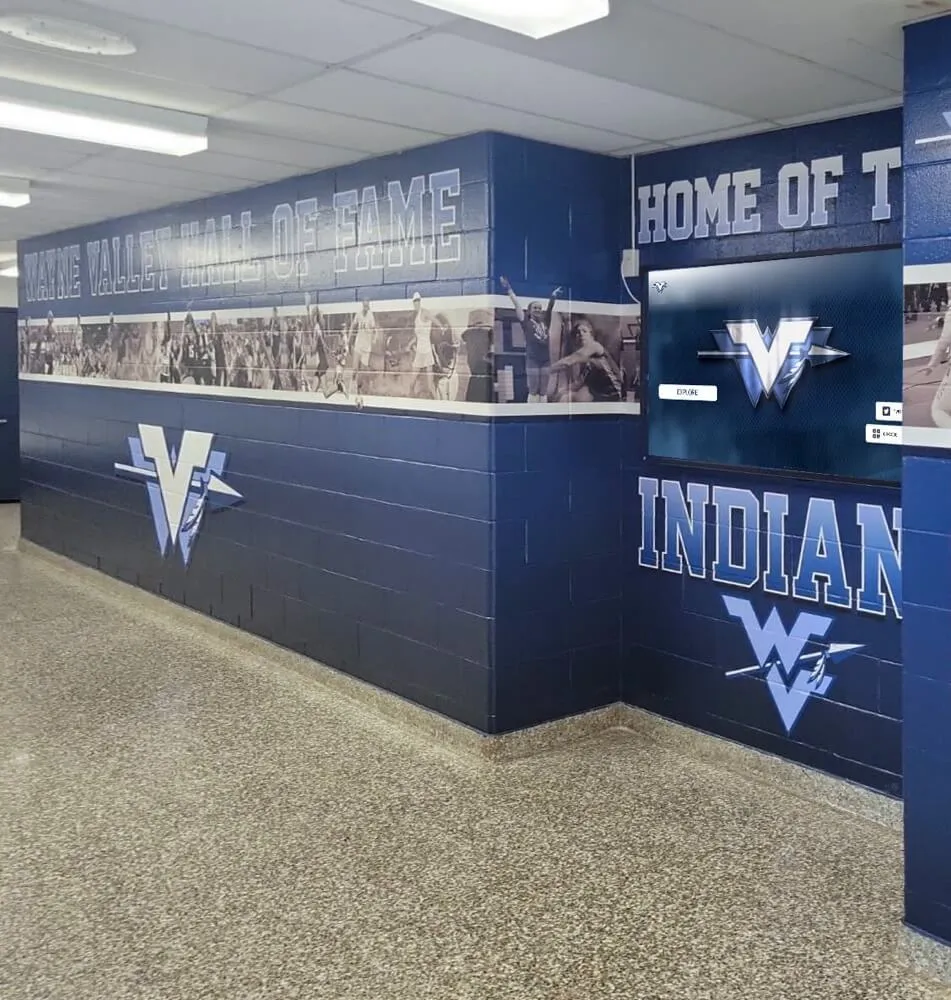
Traditional donor recognition walls create permanent, prestigious acknowledgment that honors supporters for generations
Why Donor Recognition Signs Matter for School Fundraising
Understanding how donor recognition impacts giving behavior and institutional advancement helps schools design recognition strategies aligned with development goals.
The Psychology of Donor Recognition
Effective donor recognition leverages fundamental human motivations that drive philanthropic behavior:
Social Recognition and Status
- Public acknowledgment fulfills human needs for appreciation and recognition
- Named recognition creates lasting legacy beyond individual lifetimes
- Visible placement signals community standing and philanthropic leadership
- Peer visibility demonstrates values and inspires similar giving from others
- Recognition placement communicates institutional gratitude proportional to contribution levels
Stewardship and Donor Retention
Recognition serves as tangible stewardship demonstrating that contributions receive appropriate acknowledgment. Development research consistently shows that donors who feel adequately recognized give more frequently, increase gift sizes over time, and maintain longer relationships with institutions. Recognition signs create perpetual stewardship—new donors see honored predecessors, current supporters visit their names during campus visits, and future prospects witness the school’s gratitude culture.
Learn more about comprehensive donor stewardship best practices that extend beyond recognition displays.
Fundraising Impact and Social Proof
Visible donor recognition creates powerful fundraising momentum through social proof—the principle that people look to others’ behavior when making decisions. When prospects see established community members listed as supporters, giving becomes normalized rather than exceptional. Recognition displays showcasing comprehensive donor participation encourage additional contributions by demonstrating that “people like me support this institution.”
Capital campaign success often correlates directly with recognition visibility. Major campaigns featuring prominent donor walls, named spaces, and visible acknowledgment systems consistently outperform campaigns lacking comprehensive recognition strategies.
Recognition Sign Advantages Over Other Formats
While schools employ various recognition approaches—events, publications, digital acknowledgments—physical signs offer distinct advantages:
Permanence and Longevity
- Signs create lasting recognition surviving decades beyond initial installation
- Physical presence ensures continuous visibility regardless of digital access
- Durability demonstrates institutional commitment to honoring supporters
- Permanent placement signals that contributions matter in perpetuity
- Multi-generational impact as alumni return and see recognition enduring
High Visibility and Community Impact
- Strategic placement ensures thousands of annual impressions
- Lobby installations reach visitors, students, staff, and community members
- Athletic facility recognition engages event attendees and tournament visitors
- Library and academic building signs connect donors with daily student experiences
- Multiple touchpoints create comprehensive recognition throughout campus
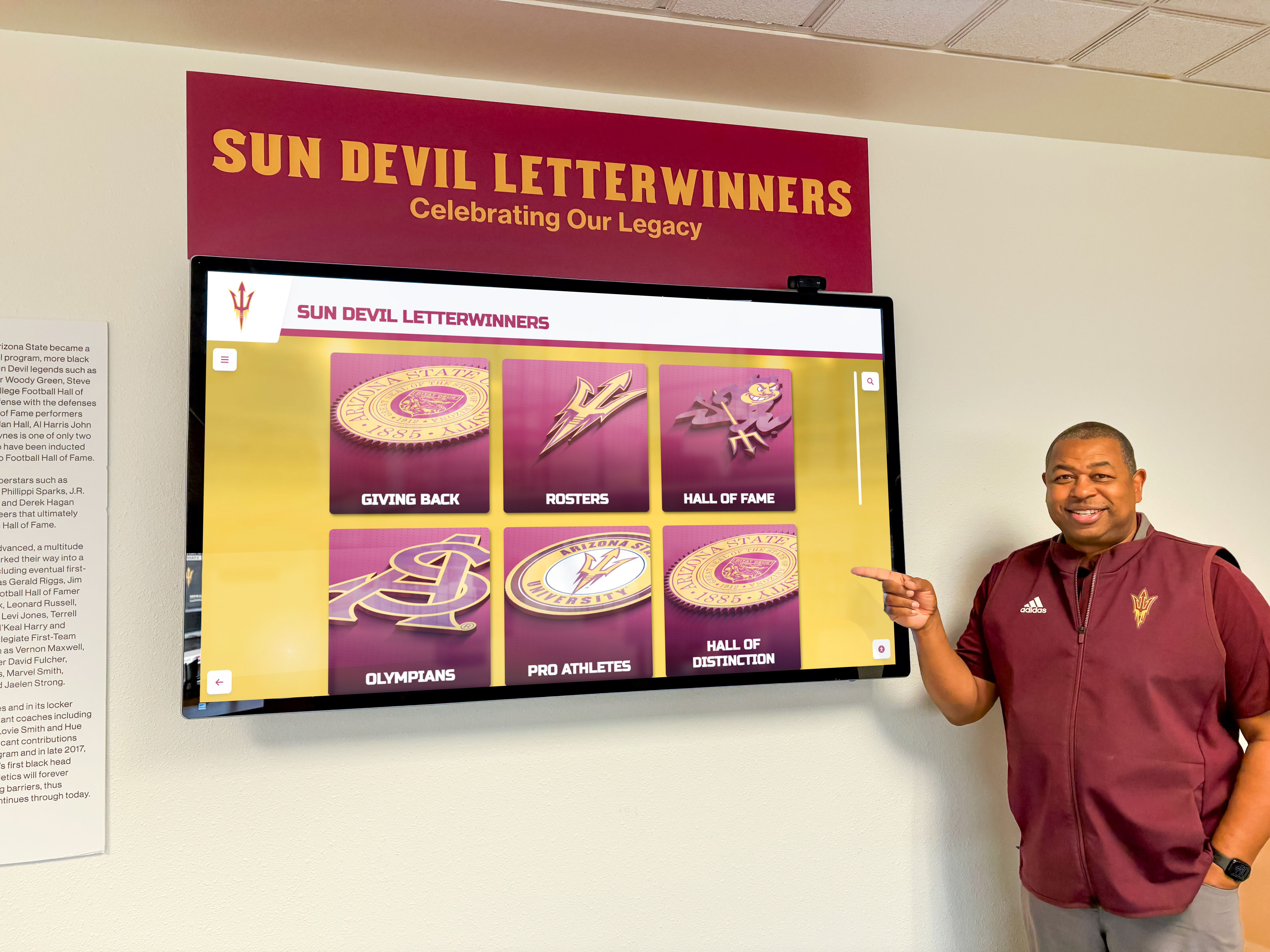
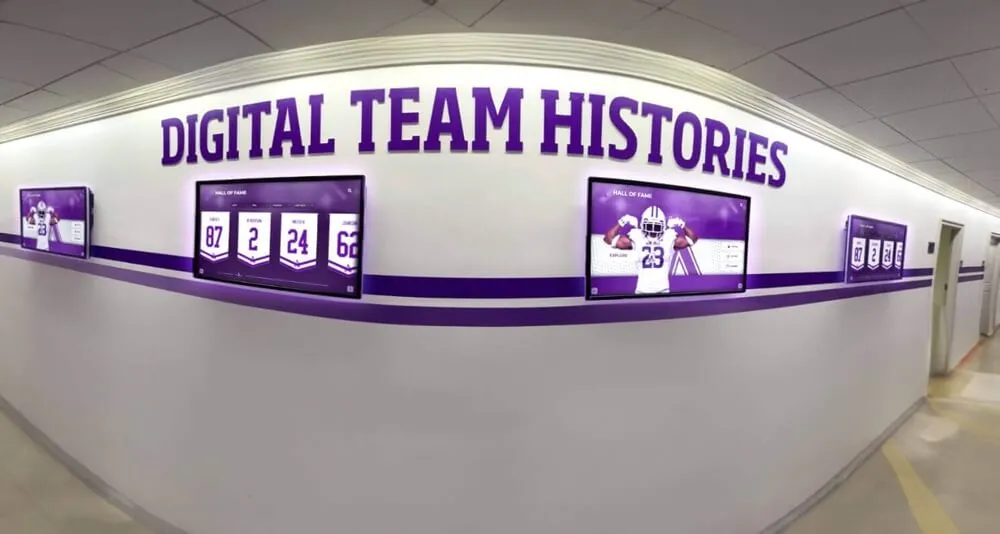
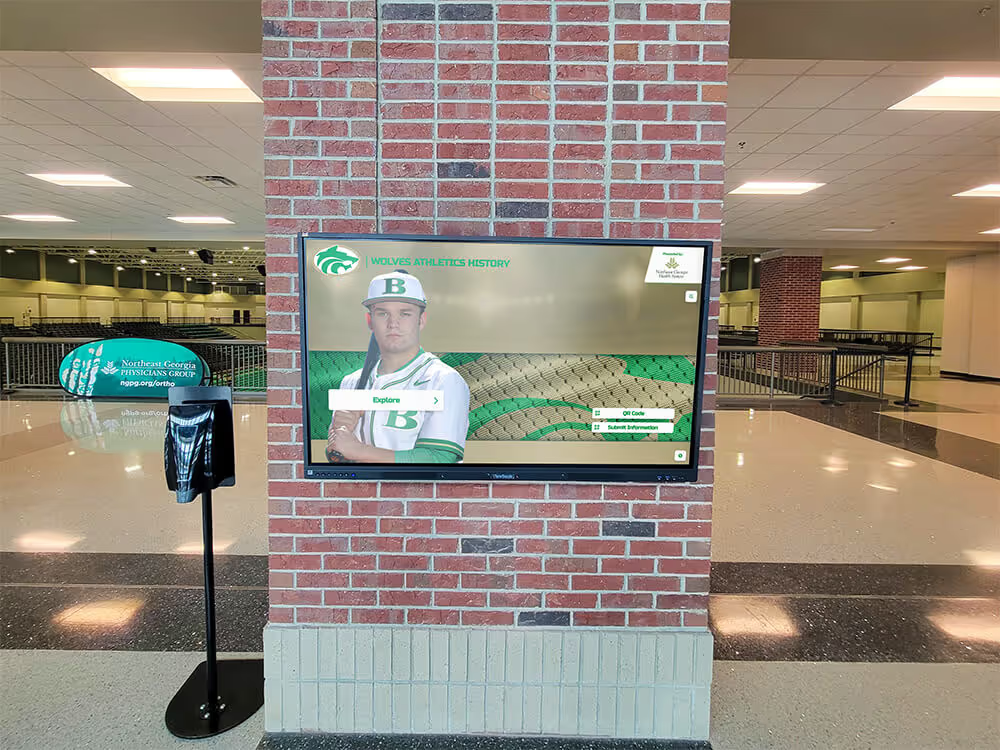
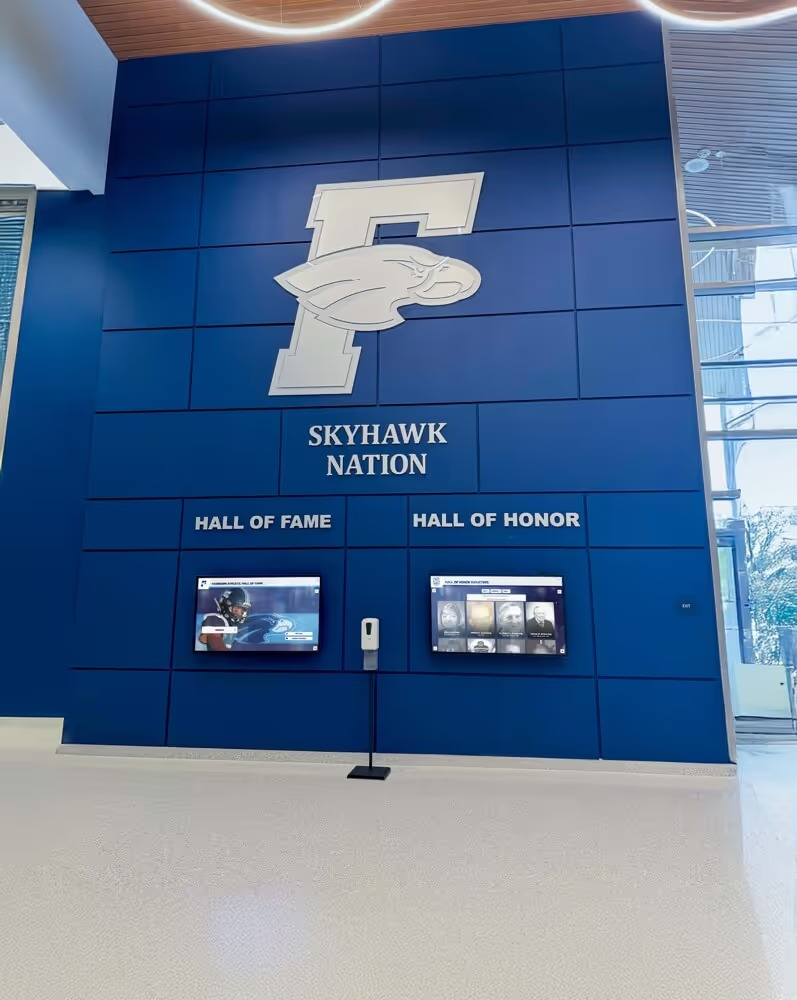
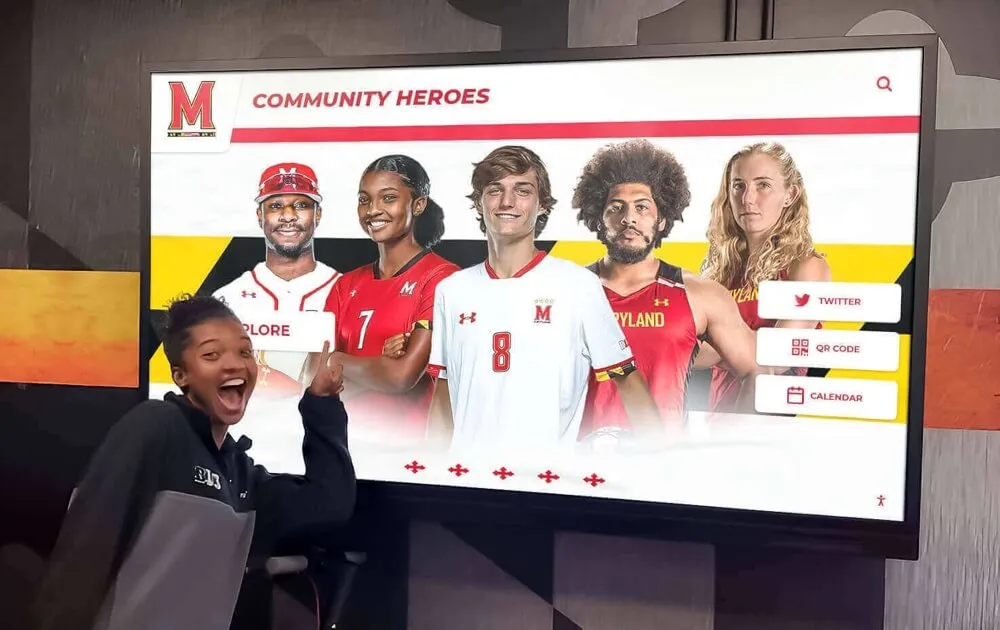
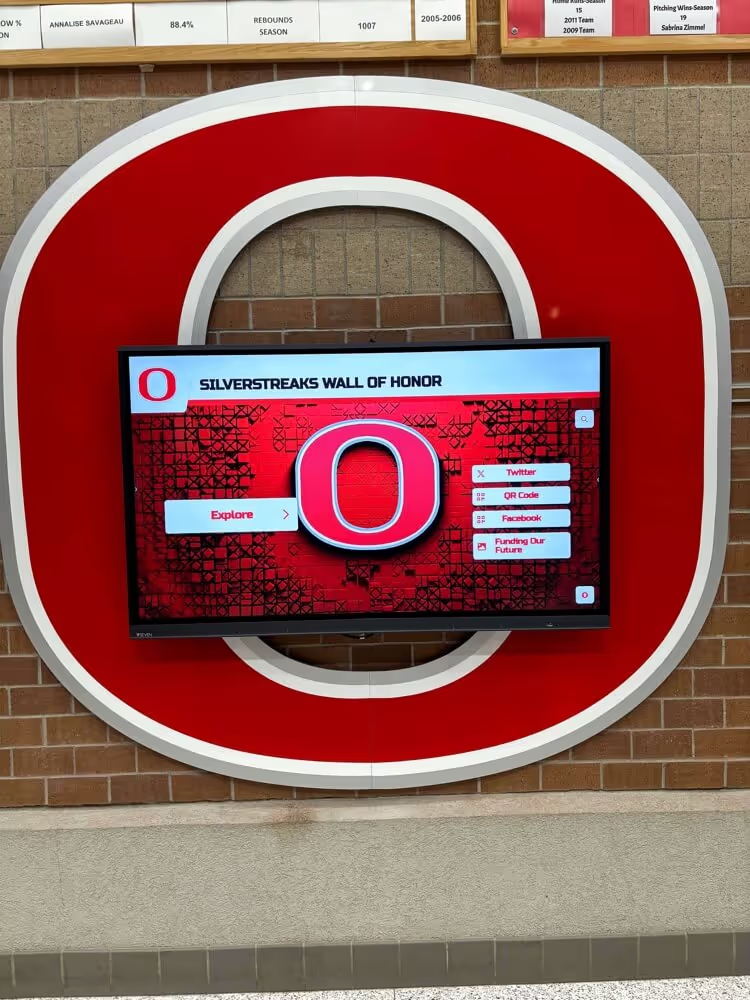
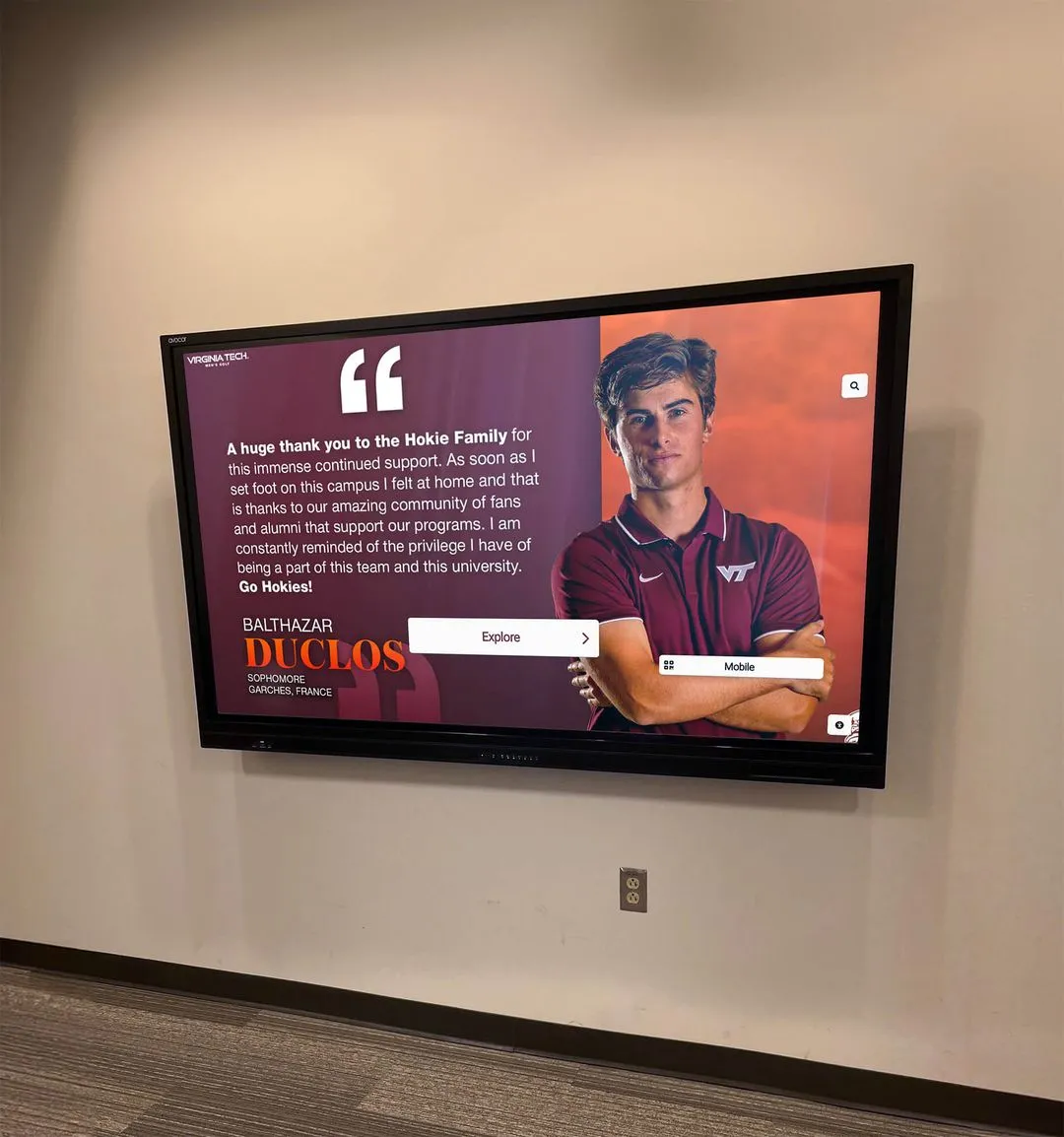
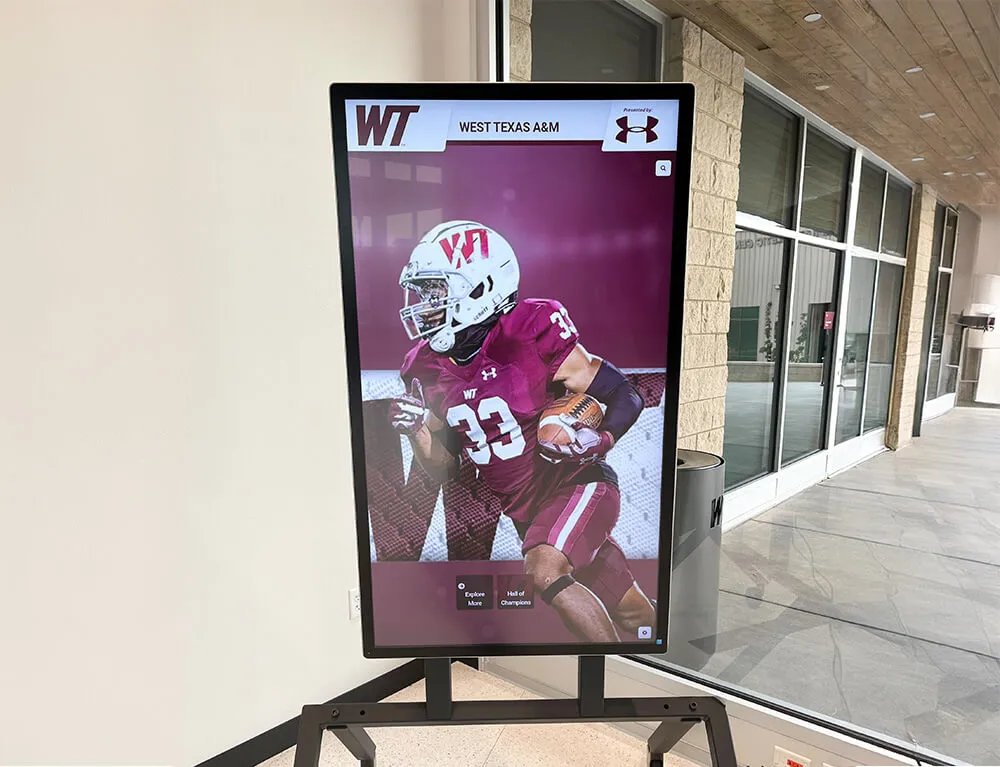
Modern digital recognition displays combine traditional permanence with flexibility to update content as campaigns progress
Flexibility Across Giving Levels
Recognition signs accommodate diverse contribution ranges through varied formats, sizes, and placement locations. Major donors receive named spaces and prominent individual plaques, mid-level contributors appear on comprehensive donor walls with classified giving levels, and annual fund supporters gain recognition through grouped acknowledgment displays. This tiered approach ensures all supporters receive appropriate recognition matched to contribution levels.
Donor Recognition Sign Design Ideas for Schools
Effective donor sign design balances aesthetic quality, institutional branding, recognition functionality, and budget considerations.
Traditional Plaque and Wall Systems
Classic recognition plaques remain popular for their prestigious appearance and proven effectiveness:
Individual Donor Plaques
- Metal plaques (bronze, brass, aluminum) with engraved text and borders
- Wood plaques featuring routed or engraved lettering with protective finishes
- Acrylic plaques offering modern aesthetics with customizable colors
- Stone or marble plaques providing maximum prestige for transformational gifts
- Ceramic tile plaques creating cohesive installations with architectural character
Grouped Donor Walls
Comprehensive donor walls organize multiple contributors into coordinated displays:
- Giving level sections grouping donors by contribution ranges
- Alphabetical arrangements within giving categories for easy location
- Chronological organization showing multi-year campaign progression
- Thematic grouping by fund purpose (athletics, academics, facilities)
- Expandable systems allowing plaque additions as campaigns grow
Traditional donor walls work particularly well in high-traffic areas like main lobbies, athletic facility entrances, performing arts center foyers, and library common spaces where visibility maximizes recognition impact.
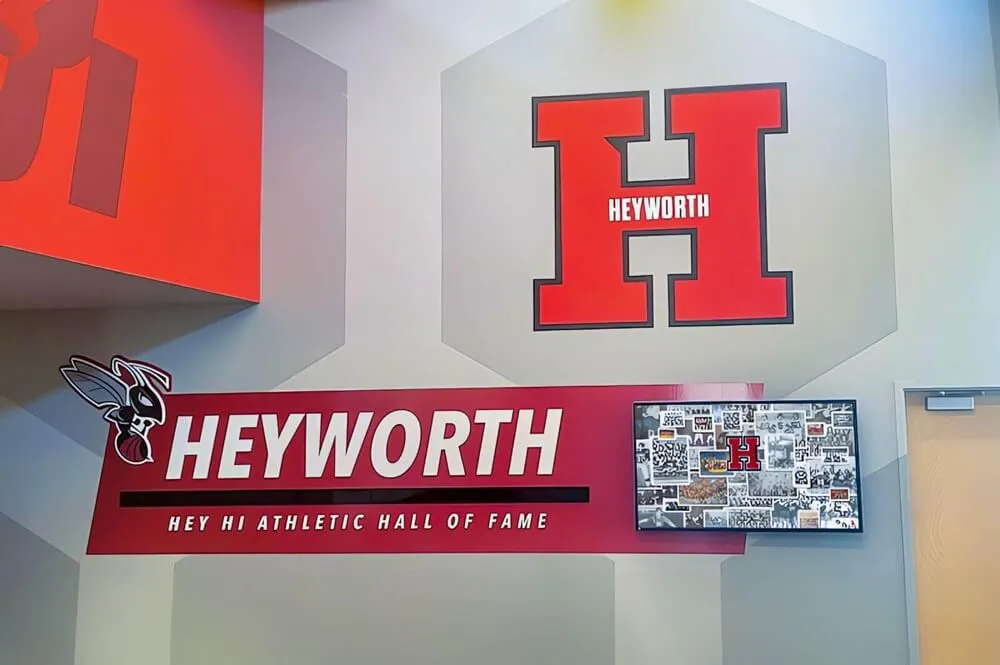
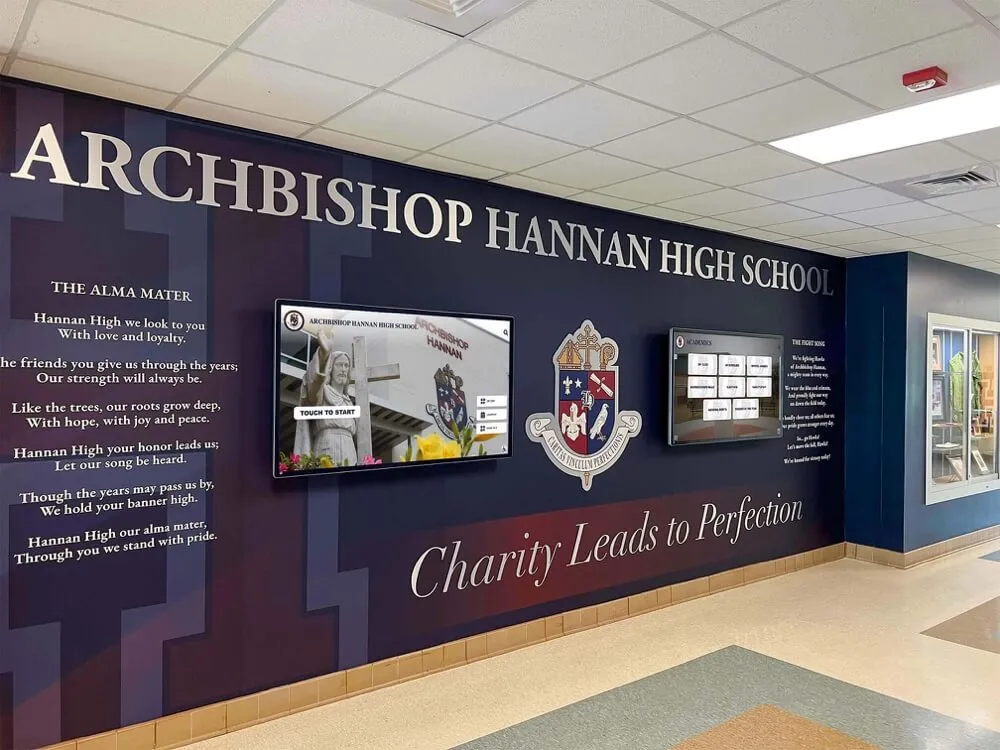
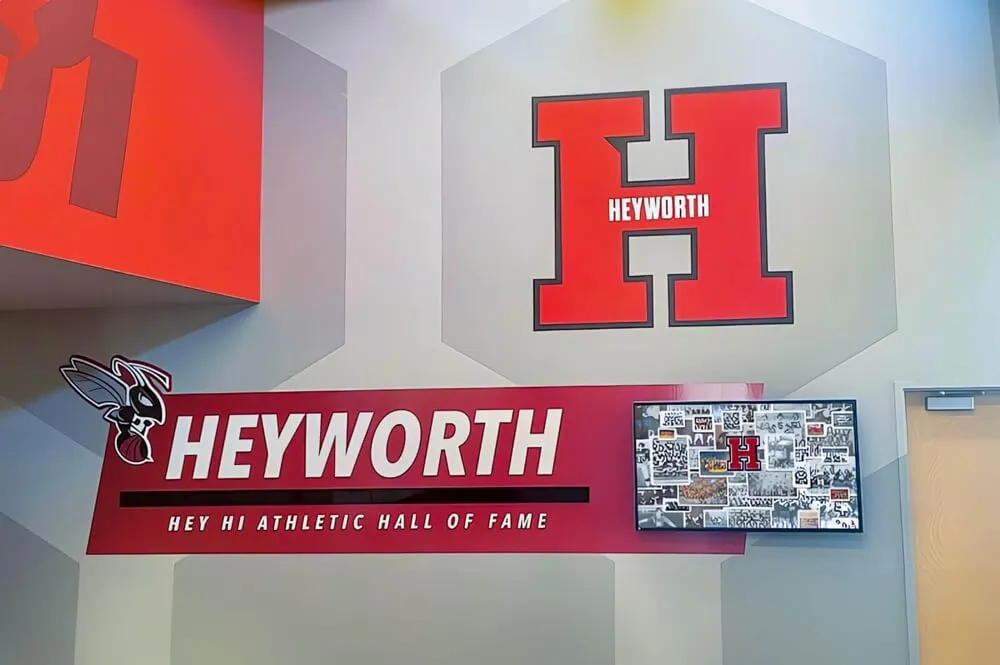
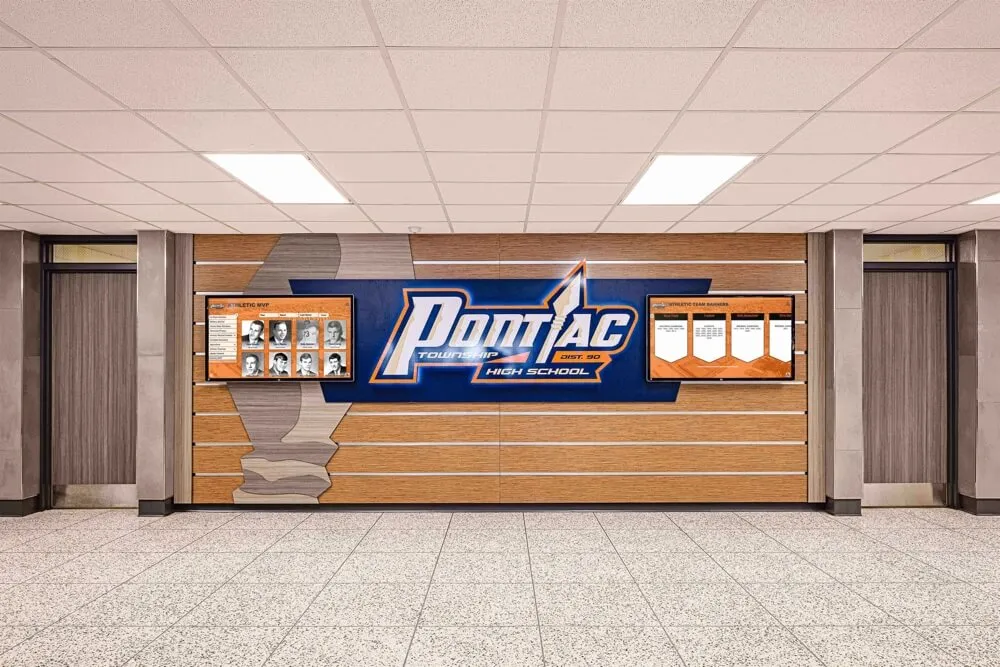
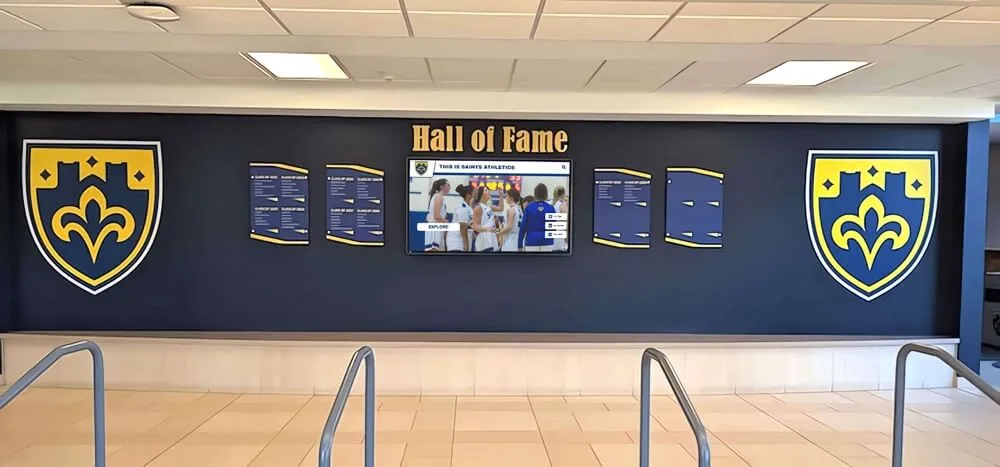
Coordinated recognition walls create cohesive displays honoring multiple donors with consistent design language
Digital Donor Recognition Displays
Modern digital recognition combines traditional permanence with contemporary flexibility:
Interactive Touchscreen Walls
Digital donor walls offer unique advantages for active campaigns and growing recognition needs. Interactive displays allow unlimited donor listings without physical space constraints, support rich content including photos and impact stories, enable instant updates as new donors contribute, and provide searchable interfaces helping visitors locate specific names.
Schools implementing digital recognition through platforms like Rocket Alumni Solutions benefit from professional installation, content management systems allowing easy updates, and integration with existing donor databases streamlining recognition accuracy.
Explore comprehensive digital donor recognition wall design strategies that maximize both recognition impact and advancement goals.
Digital Display Advantages
- No physical space limitations as donor lists grow over time
- Easy content updates accommodating campaign additions and corrections
- Rich multimedia content including donor photos, quotes, and impact stories
- Interactive features allowing donors to explore giving history and fund purposes
- Cost-effective expansion compared to adding physical plaques repeatedly
Hybrid Recognition Systems
Many schools implement hybrid approaches combining physical and digital elements:
- Permanent physical plaques honoring transformational gifts and named spaces
- Digital displays managing comprehensive annual fund and mid-level donor recognition
- Coordinated design languages ensuring visual cohesion between formats
- Strategic placement positioning both elements for complementary visibility
- Flexible systems accommodating various recognition needs and budget levels
Creative and Themed Recognition Approaches
Beyond traditional formats, creative recognition designs reflect institutional character and campaign themes:
Architectural Integration
- Named bricks or pavers creating recognition pathways
- Window etchings or glass manifestations in prominent architectural features
- Custom metalwork incorporating donor names into building design elements
- Tree or garden dedications connecting philanthropy with campus beautification
- Donor-named spaces with integrated signage matching building aesthetics
Athletic and School Spirit Themes
Recognition displays incorporating school branding create cohesive campus environments:
- Mascot imagery surrounding donor acknowledgment sections
- School color schemes reinforcing institutional identity
- Athletic championship imagery connecting donors with program success
- Historic photos showing facility evolution made possible through philanthropy
- Jersey-style numbering or sport-specific design elements for athletic donors
Discover how highlighting donor recognition through themed displays strengthens both gratitude expression and school pride.

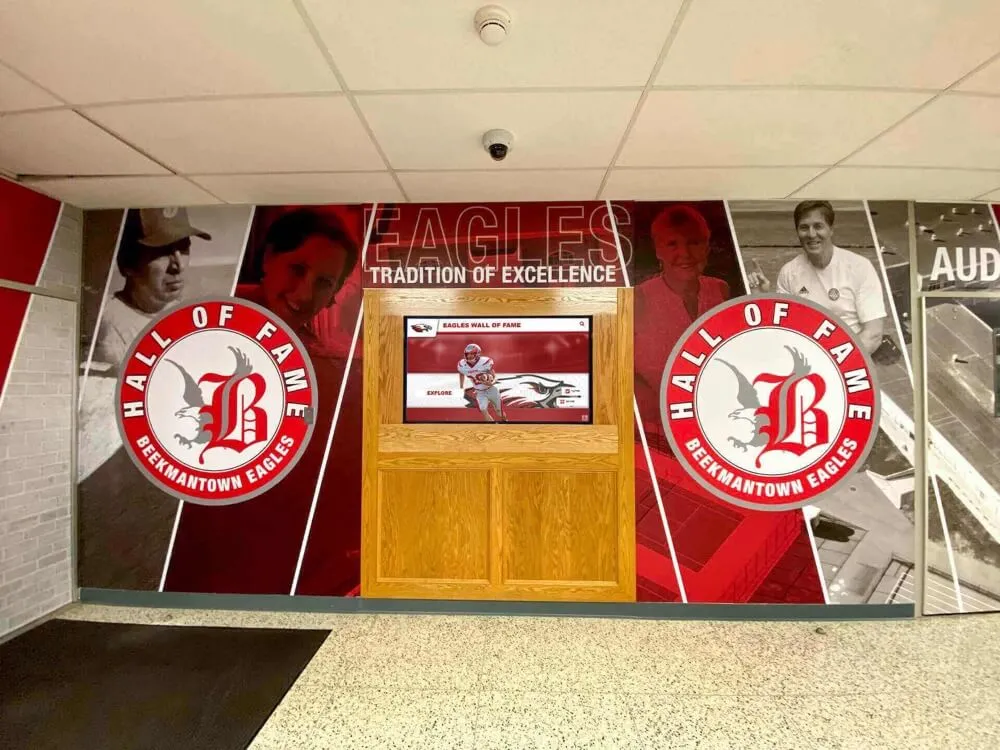
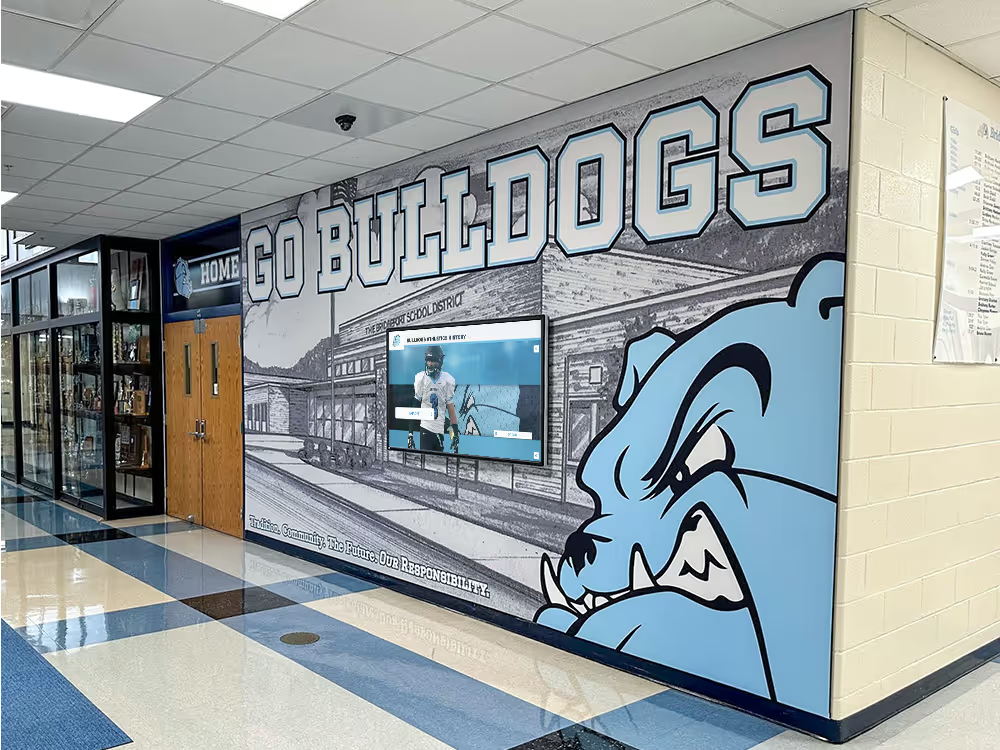
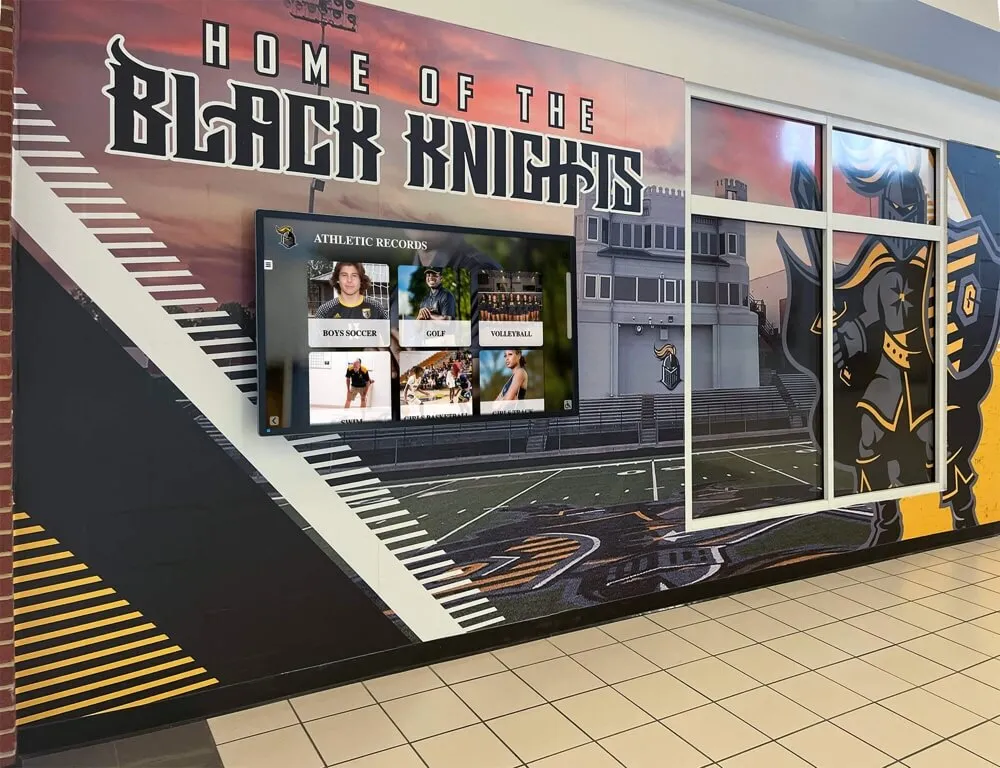
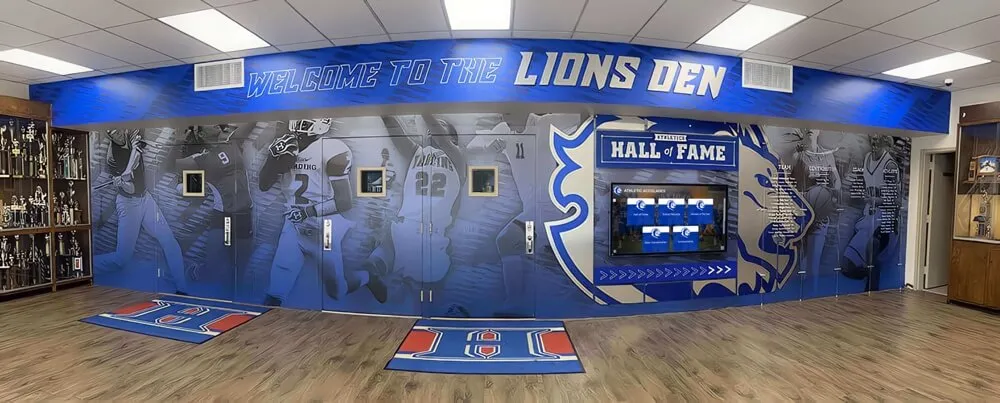
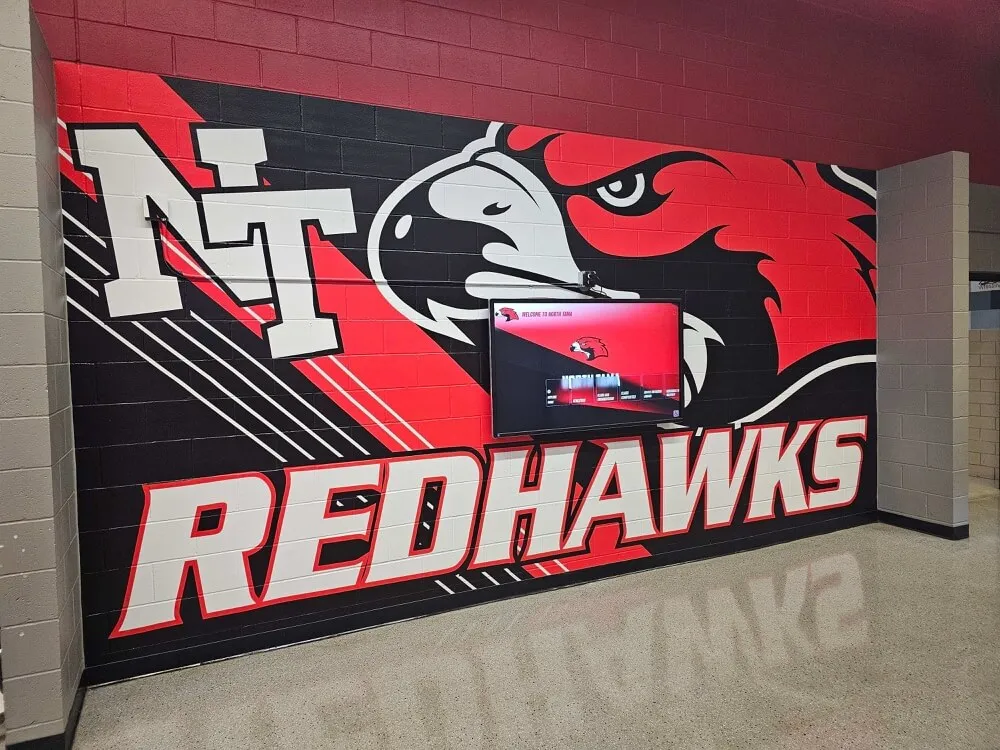
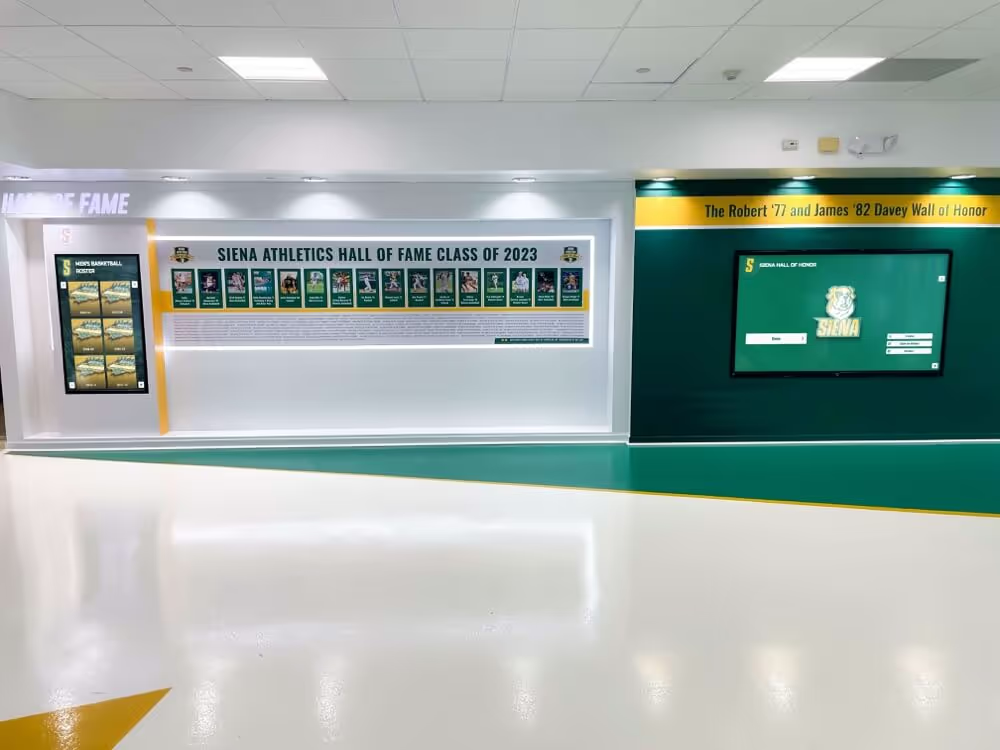
Athletic recognition walls often combine championship celebration with donor acknowledgment, connecting supporters with program success
Donor Recognition Sign Wording Examples and Best Practices
Effective recognition wording strikes the right balance between gratitude expression, donor acknowledgment, and institutional messaging.
Wording Examples by Recognition Type
Different recognition formats require distinct messaging approaches:
Major Gift Recognition (Named Spaces)
For transformational gifts warranting named rooms, buildings, or program areas:
“The [Donor Name/Family] [Space Type] In recognition of generous support advancing [specific purpose] [Year]”
Example: “The Johnson Family Science Center — In recognition of transformational support preparing tomorrow’s innovators — 2024”
“This [space type] is dedicated in honor of [Donor Name] whose visionary philanthropy ensures [specific impact] [Institution Name] — [Year]”
Example: “This Athletic Training Facility is dedicated in honor of Robert and Susan Martinez whose visionary philanthropy ensures every student-athlete receives championship-level support — Lincoln High School — 2025”
Donor Wall Title and Header Text
Recognition walls require compelling titles introducing the display purpose:
- “Wall of Honor — Celebrating Supporters of Lincoln High School”
- “Builders Society — Honoring Those Who Invest in Excellence”
- “Legacy Circle — Recognizing Gifts Ensuring Perpetual Impact”
- “Champions of [Institution Name] — With Gratitude to Our Donors”
- “Cornerstone Supporters — Building Tomorrow Through Philanthropy Today”
Giving Level Category Labels
Organizing donors by contribution tiers requires clear, aspirational category names:
For Annual Giving Programs:
- Platinum Circle: $10,000+
- Gold Circle: $5,000-$9,999
- Silver Circle: $2,500-$4,999
- Bronze Circle: $1,000-$2,499
- Friend: $500-$999
For Capital Campaigns:
- Founding Visionaries: $1,000,000+
- Transformational Partners: $500,000-$999,999
- Leadership Society: $250,000-$499,999
- Builder’s Circle: $100,000-$249,999
- Cornerstone Club: $50,000-$99,999
Category naming should reflect institutional voice—traditional schools might prefer “Benefactor” and “Patron” while contemporary institutions might choose “Innovator” or “Changemaker.”
Wording Tone and Style Guidelines
Recognition messaging communicates institutional values through language choices:
Balancing Gratitude and Dignity
Donor recognition should express genuine appreciation without excessive sentimentality:
✓ “With gratitude to supporters whose generosity ensures every student thrives” ✗ “We are overwhelmed with emotion and cannot adequately express our tearful thanks”
✓ “Honoring visionary philanthropy advancing educational excellence” ✗ “Amazing donors who are absolutely incredible and deserve all the praise”
Inclusive Language Considerations
Recognition wording should accommodate diverse donor types and motivations:
- Use “supporters” rather than assuming all donors are alumni
- Include “in honor of” and “in memory of” options for tribute gifts
- Recognize family gifts appropriately: “The Martinez Family” vs. “Robert Martinez”
- Consider anonymous donor preferences: “Anonymous Benefactor” as standard option
- Acknowledge organizational donors: “Acme Corporation” alongside individual names
Time-Sensitive Language
Avoid wording that becomes dated or inaccurate over time:
✗ “Current supporters” (recognition should feel perpetual, not temporary) ✗ “Recent donors” (becomes inaccurate as years pass) ✓ “Supporters of the Class of 2024 Capital Campaign” (specific, historically accurate) ✓ “Leadership Circle Members 2020-2025” (clearly timebound when appropriate)
Learn from proven donor acknowledgment letter templates that balance appreciation with professionalism.
Material Options and Durability Considerations
Selecting appropriate materials ensures recognition signs maintain appearance and functionality throughout expected lifespans.
Traditional Material Choices
Different materials offer distinct aesthetic and practical characteristics:
Metal Plaques
- Bronze: Premium appearance, develops natural patina, extremely durable (50+ year lifespan)
- Brass: Bright gold appearance, requires periodic polishing, traditional prestige
- Aluminum: Lightweight, weather-resistant, cost-effective, modern appearance
- Stainless steel: Contemporary aesthetic, exceptional durability, minimal maintenance
Metal plaques work well for both indoor and outdoor installations, with bronze particularly popular for exterior donor recognition maintaining appearance despite weather exposure.
Wood Recognition Displays
- Rich, warm appearance fitting traditional institutional aesthetics
- Various species offering different colors and grain patterns
- Requires protective finishes and climate-controlled indoor placement
- Engraved or routed lettering creates dimensional interest
- Budget-friendly compared to metal while maintaining quality appearance
Acrylic and Modern Materials
- Contemporary aesthetic appealing to modern architectural settings
- Customizable colors, finishes, and fabrication methods
- Lighter weight simplifying installation compared to stone or metal
- Cost-effective for large-scale recognition walls with many donor names
- Suitable for both individual plaques and comprehensive display systems
Stone and Marble
Natural stone materials convey maximum prestige for transformational gifts:
- Granite: Exceptional durability, variety of colors, suitable for outdoor installation
- Marble: Classic elegance, requires indoor placement, premium appearance
- Limestone: Softer appearance, warm tones, indoor use recommended
- Slate: Contemporary look, natural texture, durable indoor/outdoor applications
Stone recognition typically reserved for major gifts, named spaces, and signature recognition installations where investment matches contribution significance.
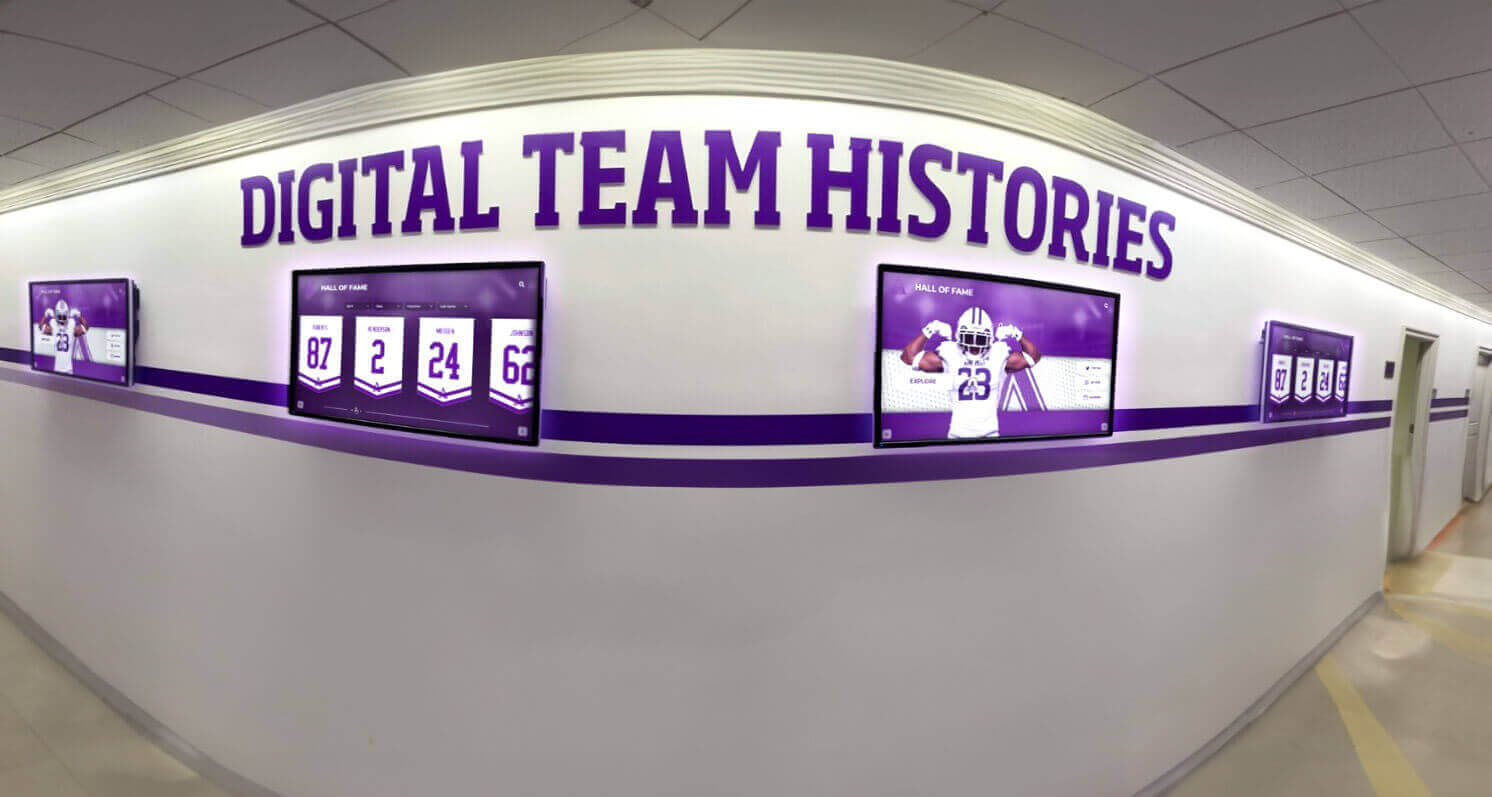
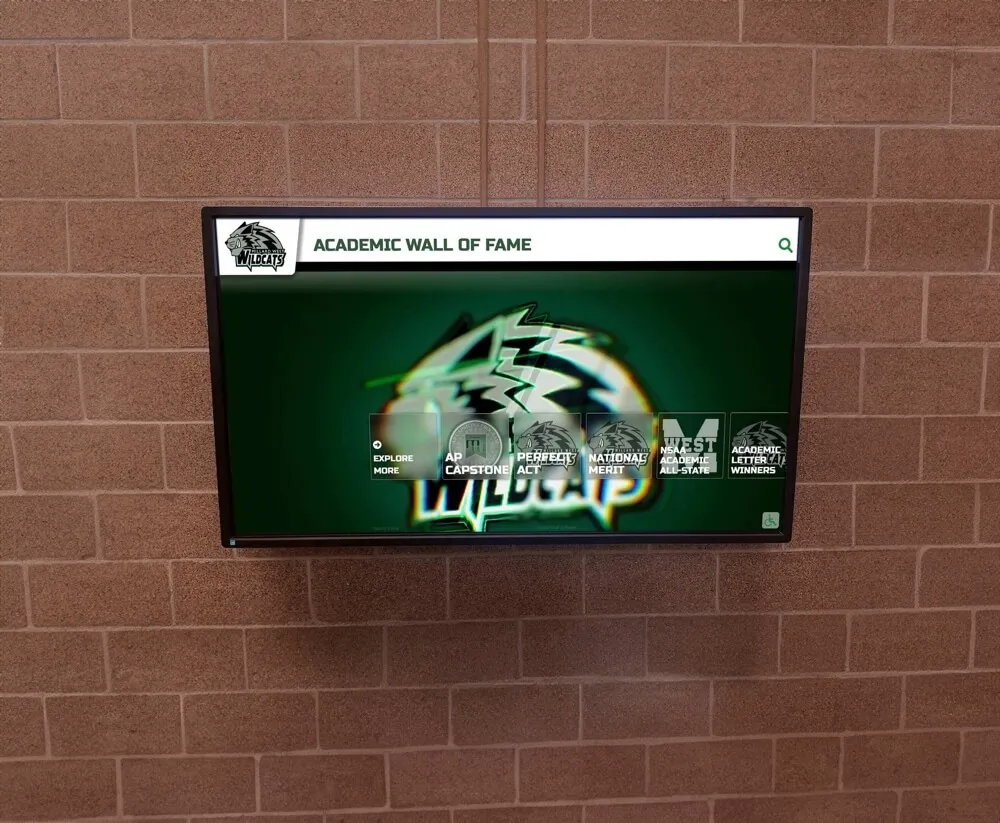
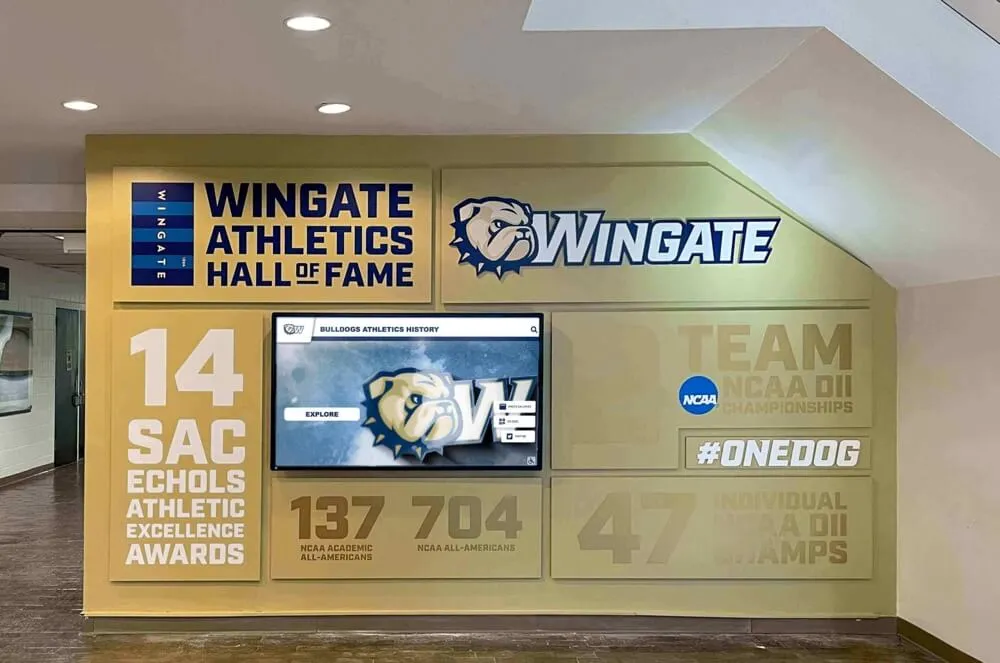
Digital recognition systems offer virtually unlimited scalability as donor programs grow over time
Durability and Maintenance Requirements
Long-term recognition requires materials and finishes appropriate for placement environments:
Indoor vs. Outdoor Considerations
- Indoor plaques accommodate broader material range including wood and delicate finishes
- Outdoor recognition requires weather-resistant materials: bronze, granite, aluminum
- UV-resistant finishes prevent fading in sun-exposed locations
- Moisture resistance essential for outdoor or high-humidity placements
- Temperature fluctuation tolerance for unconditioned spaces
Cleaning and Maintenance Needs
- Metal plaques: periodic cleaning with appropriate cleaners, brass may require polishing
- Wood: dust removal, occasional finish touch-ups maintaining appearance
- Acrylic: gentle cleaning avoiding scratches, more frequent attention than metal
- Stone: periodic sealing for marble, minimal maintenance for granite
- Digital displays: screen cleaning, software updates, technical maintenance
Establishing maintenance schedules preserves recognition appearance ensuring donors receive lasting, well-maintained acknowledgment rather than deteriorating displays.
Placement Strategies for Maximum Impact and Visibility
Strategic recognition placement maximizes donor appreciation while serving advancement goals through high-visibility positioning.
High-Traffic Location Identification
Optimal donor recognition locations balance visibility with appropriate dignity:
Primary Placement Locations
- Main entrance lobbies ensuring every campus visitor encounters recognition
- Athletic facility entrances connecting donors with program success they enable
- Performing arts center foyers acknowledging supporters of creative programs
- Library common areas linking philanthropy with academic achievement
- Cafeteria or student center spaces maximizing daily student impressions
Secondary Recognition Opportunities
- Administrative office corridors where donors visit during meetings
- Alumni gathering spaces reinforcing philanthropic culture
- Conference rooms and meeting areas hosting donor events
- Outdoor pathways and plaza areas connecting campus buildings
- Specific program areas (science labs, art studios) funded by targeted gifts
Analyze campus traffic patterns identifying locations with maximum impressions while maintaining appropriate recognition dignity—donor walls shouldn’t feel like advertisements but rather integral campus elements.
Coordinating with Architecture and Design
Recognition signs should enhance rather than conflict with architectural environments:
Design Coordination Principles
- Match materials and finishes to existing building design vocabulary
- Respect architectural scale—recognition proportional to surrounding spaces
- Consider sightlines ensuring recognition visible from natural approach angles
- Integrate lighting highlighting recognition while fitting building systems
- Coordinate colors with institutional branding and architectural palettes
Working with Architects and Designers
Major recognition installations benefit from professional design collaboration:
- Engage architects early in facility planning for built-in recognition spaces
- Consult designers ensuring recognition systems match campaign aesthetics
- Coordinate with contractors for structural support and electrical requirements
- Plan installation timing avoiding conflicts with construction schedules
- Document design standards enabling consistent future additions
Professional design elevates recognition from afterthought additions to intentional campus elements worthy of the philanthropy they honor.
Explore how school display cases and modern alternatives integrate recognition into comprehensive campus design strategies.
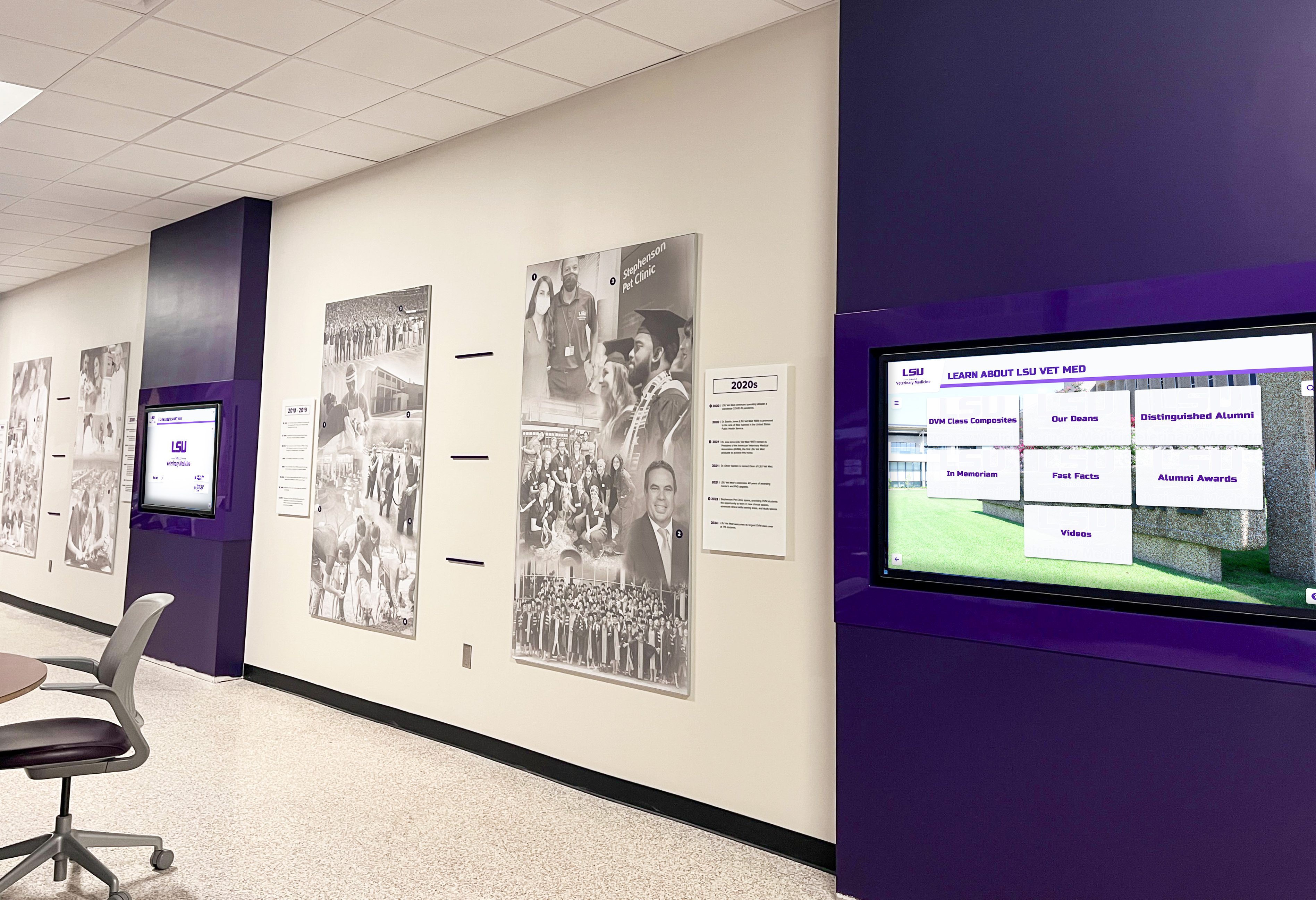
Recognition systems coordinated with institutional branding and architectural design create cohesive campus environments
Digital vs. Traditional Donor Recognition Signs
Understanding the advantages and limitations of both approaches helps schools select optimal recognition strategies.
When Traditional Signs Work Best
Physical plaques and permanent installations excel in specific situations:
Ideal Traditional Recognition Scenarios
- Named building or space dedications requiring permanent, prestigious acknowledgment
- Transformational gifts warranting maximum recognition prestige
- Outdoor placements where digital displays face weather and vandalism challenges
- Historic buildings where digital installations conflict with architectural character
- Donor preferences explicitly requesting traditional recognition formats
Traditional Approach Advantages
- Perceived permanence and prestige exceeding digital alternatives
- No ongoing technology maintenance, software updates, or power requirements
- Works in any environment without electricity or network connectivity
- Familiar format aligned with donor expectations and recognition traditions
- One-time installation costs without recurring technology expenses
When Digital Recognition Makes Sense
Digital donor walls offer distinct advantages for evolving recognition needs:
Digital Recognition Benefits
- Unlimited scalability as donor lists grow without physical space constraints
- Easy content updates accommodating new donors, corrections, and campaign changes
- Rich multimedia content including photos, impact stories, and giving history
- Searchable interfaces helping donors locate their names in extensive lists
- Interactive features engaging visitors beyond passive reading
- Cost-effective per-donor recognition for comprehensive annual fund programs
Ideal Digital Implementation Situations
- Active campaigns with frequently changing donor lists
- Annual giving programs recognizing hundreds or thousands of contributors
- Schools wanting to showcase donor impact through stories and multimedia
- Institutions comfortable with contemporary technology in recognition
- Situations where physical space limitations constrain traditional wall capacity
Discover comprehensive digital donor recognition wall solutions and implementation strategies.
Hybrid Approaches Combining Both Formats
Many schools implement integrated systems leveraging both traditional and digital strengths:
Effective Hybrid Strategies
- Permanent bronze plaques for major donors and named spaces
- Digital displays managing comprehensive annual fund and mid-level recognition
- Traditional donor wall headers with digital content areas showing current campaigns
- Physical recognition in historic buildings, digital displays in contemporary facilities
- Coordinated design ensuring visual consistency between formats
Hybrid approaches accommodate diverse donor preferences—traditionalists receive classic plaques while technology-comfortable supporters appreciate digital innovation—while providing advancement offices maximum flexibility managing recognition programs.
Best Practices for Donor Recognition Sign Implementation
Successful recognition programs follow proven practices ensuring both donor satisfaction and institutional advancement goals.
Donor Recognition Policies and Guidelines
Establishing clear recognition policies prevents issues and ensures consistency:
Written Recognition Standards
- Minimum gift thresholds for various recognition levels and formats
- Naming opportunities guidelines for spaces, programs, and initiatives
- Recognition duration policies (perpetual vs. term-limited acknowledgment)
- Anonymous donor accommodation procedures
- Recognition name formatting standards (individual vs. family vs. organizational)
Approval Processes and Timelines
- Gift agreement procedures documenting recognition commitments
- Institutional approval chains for naming decisions and recognition placements
- Timeline expectations from gift receipt to recognition installation
- Donor input opportunities on name presentation and placement
- Change procedures for corrections, updates, or donor-requested modifications
Pledge vs. Realized Gift Recognition
Policies should address whether recognition requires completed gifts or acknowledges pledges:
- Some institutions recognize multi-year pledges immediately upon commitment
- Others wait for pledge completion before permanent recognition installation
- Intermediate solutions place pledge-based names on digital displays, moving to permanent recognition upon completion
- Clear policies prevent donor confusion and institutional challenges with unfulfilled pledges
Accuracy and Quality Control
Recognition accuracy demonstrates institutional competence and respect for donors:
Verification Procedures
- Multi-level proofreading checking spelling, titles, and recognition text
- Donor review opportunities confirming name presentation preferences
- Database cross-checks ensuring recognition matches gift records
- Installation inspections verifying correct placement and appearance
- Post-installation donor notification with photos showing recognition
Common Accuracy Challenges
- Name spelling variations and donor preferences (William vs. Bill)
- Titles and honorifics (Dr., Rev., etc.) requiring verification
- Family vs. individual recognition decisions
- Corporate name accuracy including punctuation and legal suffixes
- Memorial and tribute gift attribution to appropriate honorees
Mistakes in donor recognition create significant stewardship problems requiring expensive corrections—prevention through thorough verification proves far more cost-effective than remediation.
Ongoing Recognition Management
Recognition programs require continued attention beyond initial installation:
Regular Maintenance Schedules
- Cleaning protocols maintaining appearance and readability
- Inspection routines identifying damage or deterioration requiring repair
- Digital system updates ensuring technology remains current
- Landscape maintenance around outdoor recognition installations
- Lighting checks ensuring recognition remains well-illuminated
Program Evolution and Updates
- Annual review of giving level thresholds adjusting for inflation
- Campaign completion procedures transitioning recognition to permanent status
- Policies for adding new donors to existing recognition systems
- Periodic redesign consideration refreshing dated recognition aesthetics
- Decommissioning protocols when buildings close or programs end
Donor Stewardship Integration
Recognition signs support broader stewardship programs:
- Include recognition photos in donor acknowledgment communications
- Invite donors to recognition unveiling events celebrating installation
- Share recognition images on social media (with permission) celebrating supporters
- Reference recognition in annual impact reports connecting gifts with outcomes
- Use recognition tours during fundraising visits with prospective donors
Understand how recognition fits comprehensive donor stewardship frameworks strengthening long-term donor relationships.
Budget Considerations and Cost Expectations
Understanding recognition costs helps schools plan appropriate investments matching fundraising goals and institutional resources.
Traditional Recognition Cost Ranges
Physical recognition signs span wide price ranges depending on materials and complexity:
Individual Plaques
- Basic engraved acrylic plaques: $50-$150 per plaque
- Mid-range brass or aluminum plaques: $150-$400 per plaque
- Premium bronze plaques: $400-$1,000+ per plaque
- Custom stone or marble plaques: $500-$2,000+ per plaque
- Specialized designs or architectural integration: $1,000-$5,000+ per element
Comprehensive Donor Walls
- Modular plaque systems (20-50 names): $3,000-$8,000
- Mid-scale coordinated walls (50-150 names): $8,000-$20,000
- Large architectural installations (150+ names): $20,000-$50,000+
- Signature recognition features with custom design: $50,000-$150,000+
Costs vary significantly based on material choices, design complexity, installation requirements, and geographic location affecting labor rates.
Digital Recognition Investment Levels
Digital donor walls require different budget structures including technology and content:
Digital Display Hardware
- Entry-level touchscreen systems: $5,000-$12,000
- Professional-grade interactive displays: $12,000-$25,000
- Large-format or multi-display systems: $25,000-$50,000+
- Premium installations with custom integration: $50,000-$100,000+
Software and Content Development
- Recognition software platforms: $1,000-$5,000 annually
- Custom content design and development: $3,000-$15,000
- Database integration and setup: $2,000-$8,000
- Professional content photography and production: $2,000-$10,000
Ongoing Costs
- Annual software licensing or subscription fees
- Content updates and maintenance
- Technical support and warranty coverage
- Eventual hardware replacement (5-10 year cycles)
While digital systems involve higher initial technology costs and ongoing expenses, they often prove cost-effective per-donor for institutions recognizing hundreds or thousands of supporters where physical plaques would require extensive wall space.
Return on Investment Considerations
Recognition investments should be evaluated against fundraising impact:
Recognition ROI Factors
- Donor retention improvements among recognized supporters
- Increased giving from donors receiving appropriate acknowledgment
- New donor acquisition influenced by visible recognition culture
- Major gift closure rates improved by showcasing recognition programs
- Campaign momentum generated by social proof of donor participation
Development research suggests every dollar invested in effective donor recognition generates $3-$8 in increased contributed revenue through improved retention, upgraded gifts, and inspired new donors. Schools should view recognition as fundraising infrastructure, not mere expense.
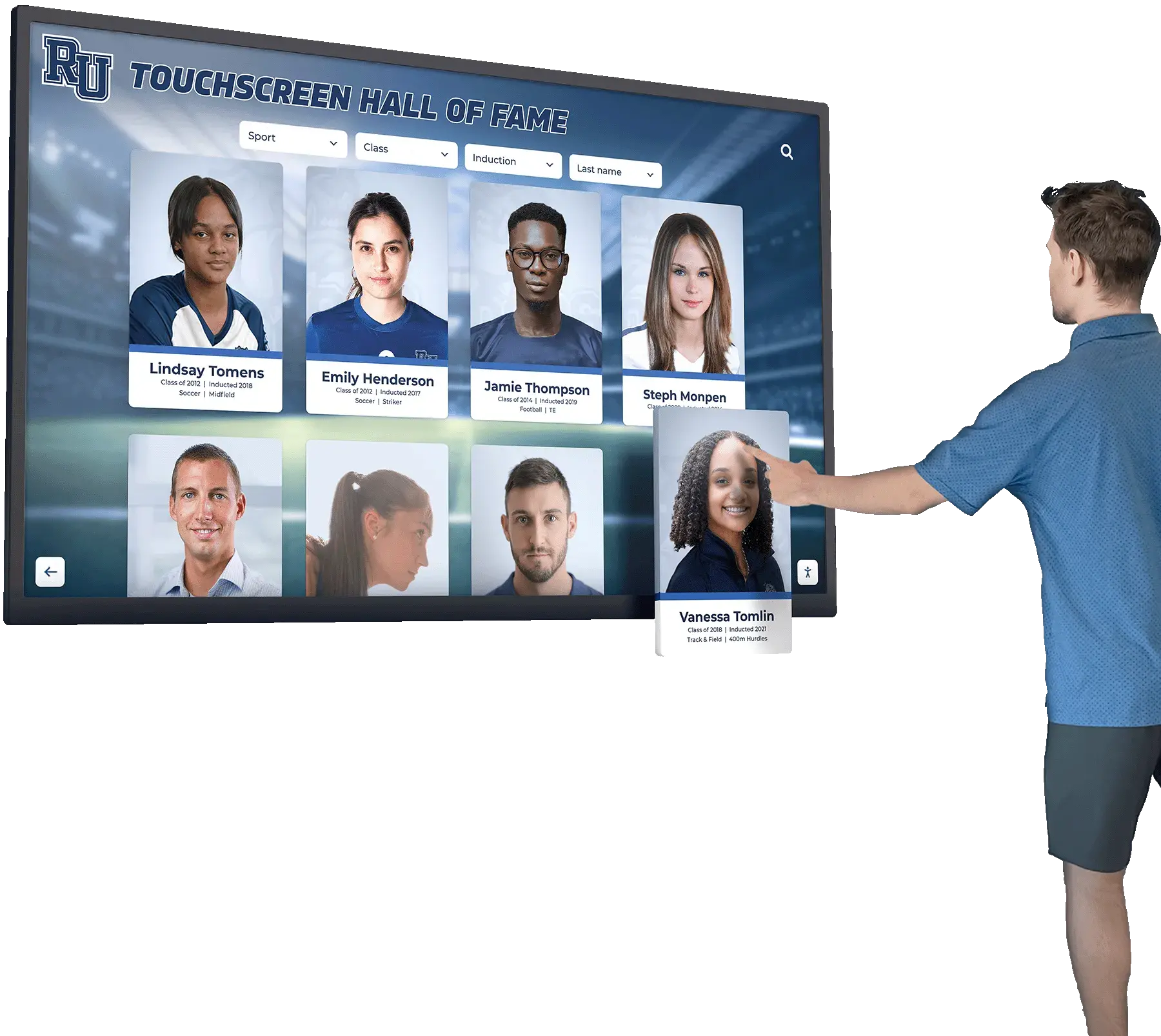
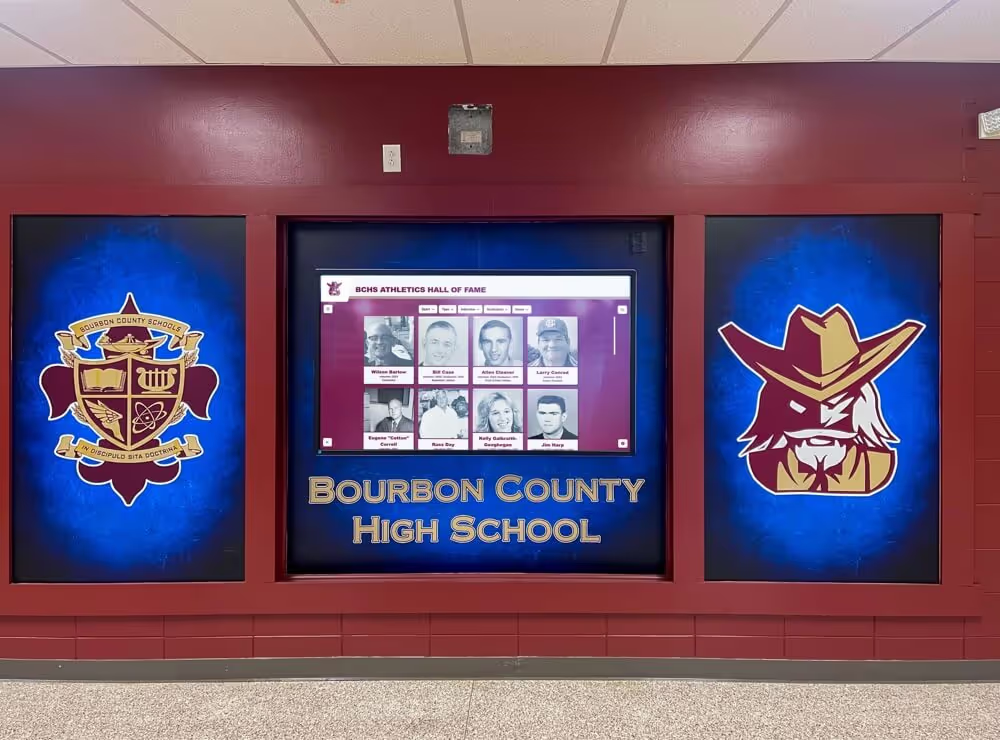
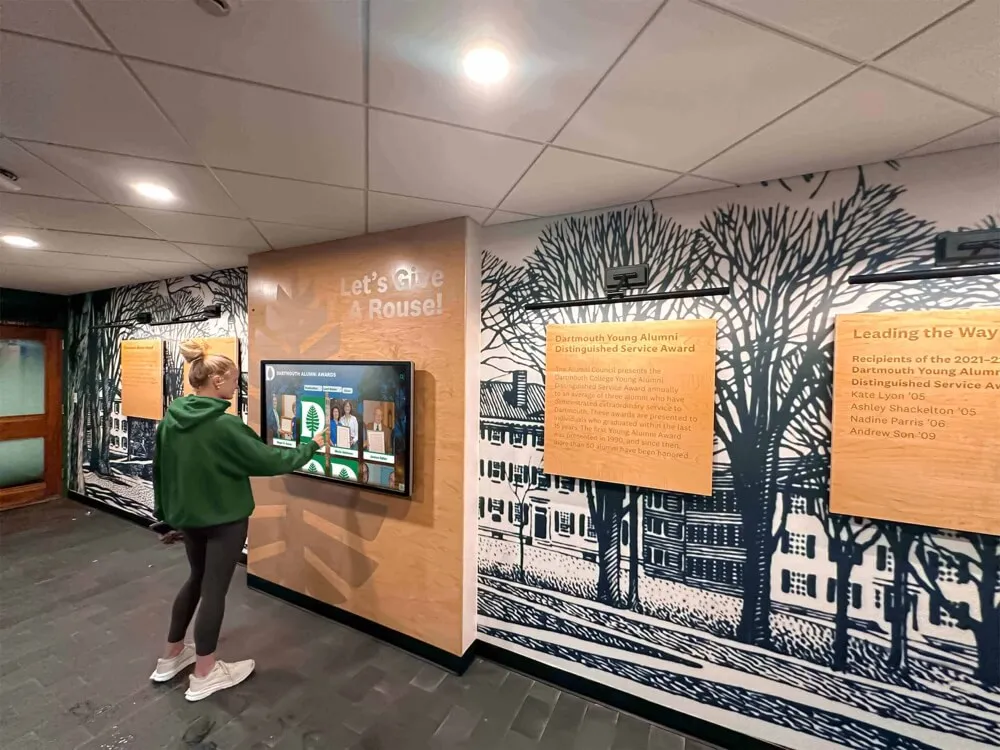
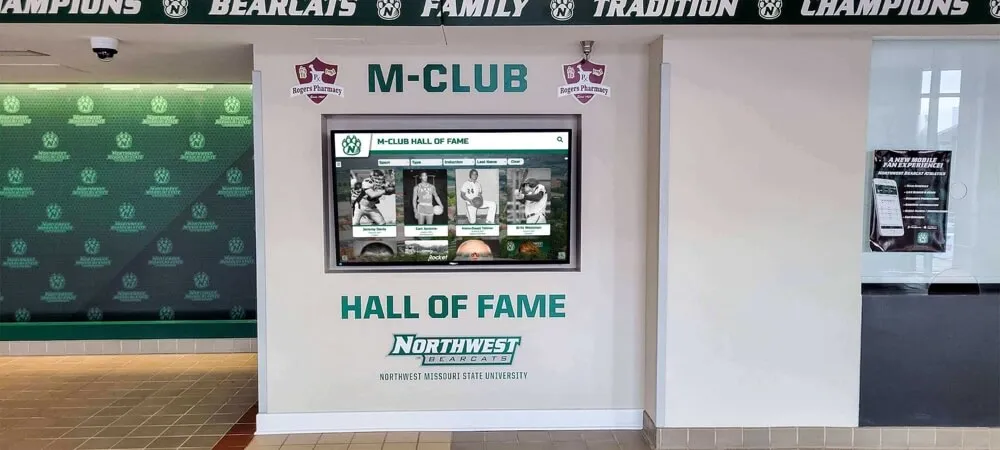
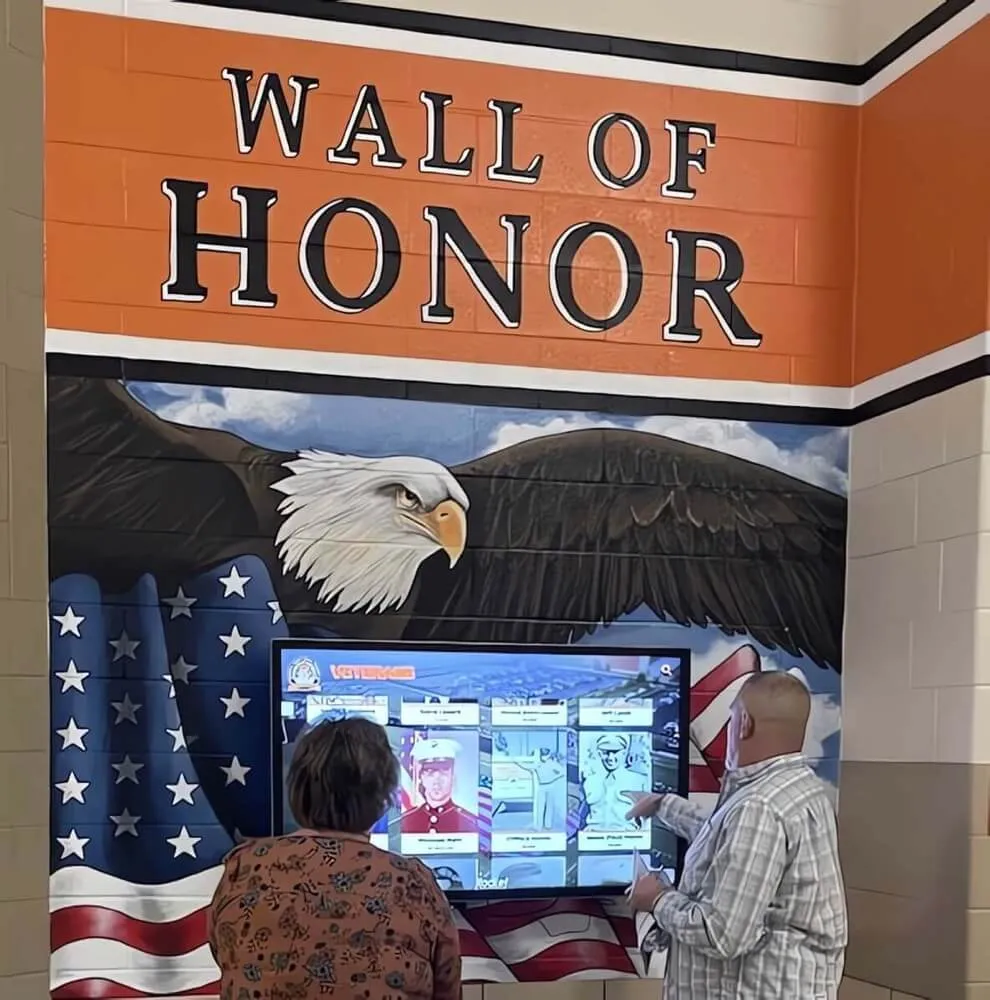
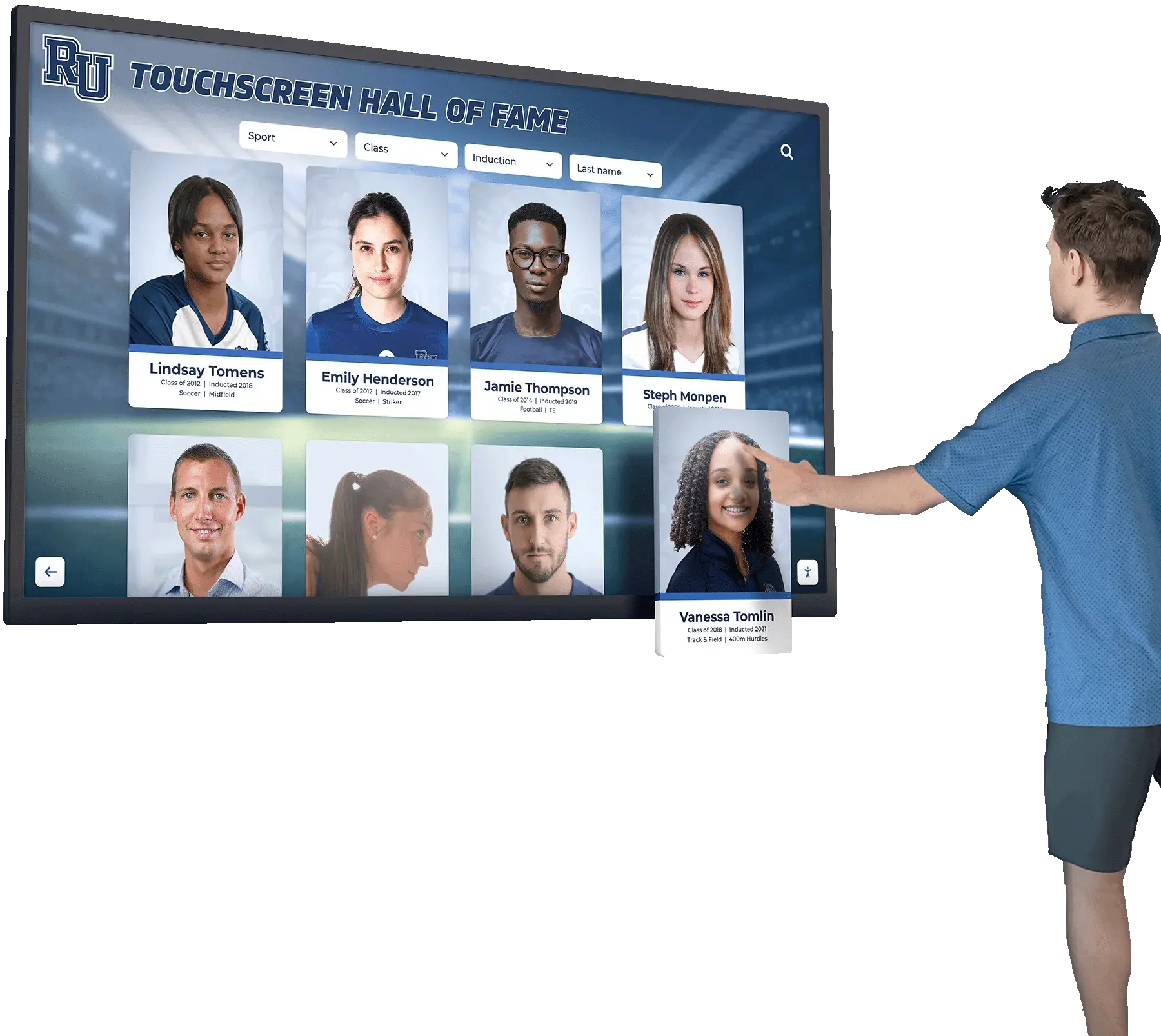
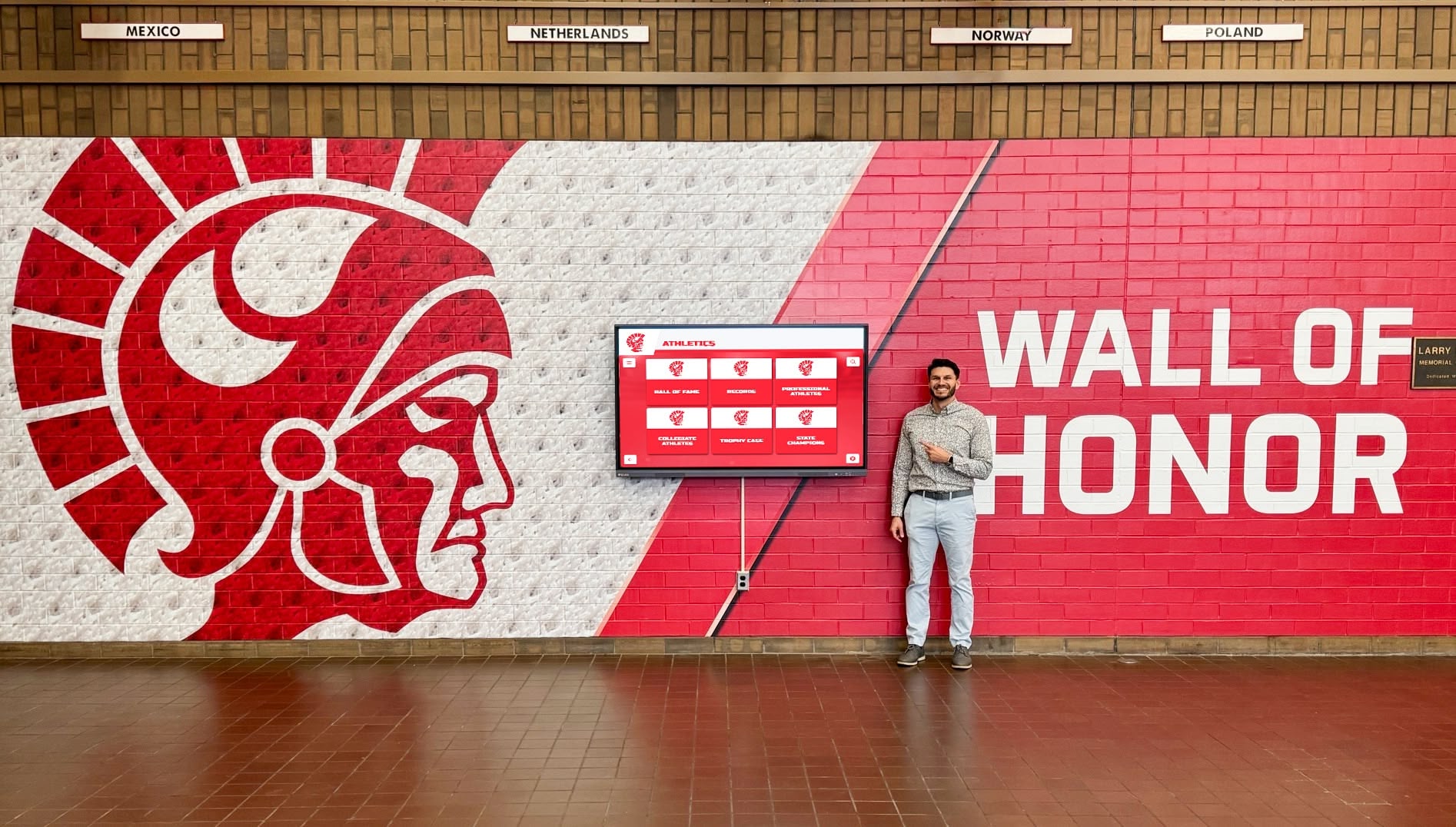
Interactive recognition systems engage visitors while providing unlimited scalability for growing donor programs
Common Donor Recognition Sign Mistakes to Avoid
Learning from common recognition pitfalls helps schools implement more effective programs:
Design and Placement Errors
Insufficient Expansion Planning
Many schools install donor walls without adequate expansion capacity, quickly running out of space as campaigns succeed. Recognition systems should accommodate 50-100% growth beyond initial donors, include expansion areas in original design, or utilize digital systems offering unlimited scalability.
Poor Visibility and Lighting
Recognition placed in dim corridors, peripheral locations, or areas with poor sightlines fails to serve donor appreciation or fundraising goals. Prime recognition deserves prime placement with excellent lighting ensuring names remain readable and displays photograph well for stewardship communications.
Inconsistent Recognition Standards
When different campaigns or facilities implement incompatible recognition systems, the result feels disjointed rather than cohesive. Institutional recognition standards should establish consistent materials, typography, formatting, and design languages across all donor acknowledgment.
Wording and Content Problems
Excessive or Inadequate Text
Recognition signs requiring paragraph-length reading discourage engagement while overly sparse displays may feel insufficient. Optimal recognition balances concise gratitude with appropriate context—donors want acknowledgment, not dissertations, but complete sentences rather than just name lists.
Dated or Temporary Language
Phrases like “current campaign” or “recent donors” become inaccurate as time passes. Recognition wording should remain accurate indefinitely or clearly indicate specific timeframes: “Capital Campaign 2023-2025” maintains accuracy while “recent supporters” becomes false over time.
Ambiguous Giving Level Labels
Vague category names like “Silver Supporters” without indicated dollar ranges leave viewers uncertain about recognition thresholds. Clear communication of giving levels serves both donor clarity and fundraising transparency.
Implementation and Management Issues
Inadequate Proofreading
Misspelled donor names, incorrect dates, or text errors in permanent installations create serious stewardship problems requiring expensive corrections. Multi-level verification procedures prevent errors far more cost-effectively than fixing installed mistakes.
Failure to Update Recognition
Donor walls showing only decade-old campaigns signal inactive advancement programs rather than thriving philanthropy. Regular updates—whether adding physical plaques or refreshing digital content—demonstrate ongoing fundraising success and active donor engagement.
Ignoring Donor Preferences
Some donors prefer anonymous recognition, specific name formatting, or family vs. individual attribution. Soliciting and honoring these preferences demonstrates the personalization sophisticated donors expect from institutions seeking their support.
Creating Your School’s Donor Recognition Strategy
Implementing effective donor recognition requires strategic planning aligning recognition with advancement goals:
Assessment and Planning Steps
Evaluate Current Recognition
- Audit existing donor recognition identifying gaps and opportunities
- Survey donors about recognition preferences and satisfaction
- Analyze campus locations for recognition placement potential
- Review recognition policies ensuring clarity and consistency
- Benchmark against peer institutions for best practice insights
Define Recognition Objectives
- Articulate primary goals: donor retention, acquisition, or campaign momentum
- Establish recognition level structure aligned with fundraising priorities
- Determine budget allocations balancing recognition investment with advancement resources
- Set timeline expectations for recognition design, production, and installation
- Identify stakeholders requiring involvement: development, facilities, communications, institutional advancement
Select Appropriate Recognition Formats
- Match recognition approaches to donor preferences and institutional culture
- Consider traditional, digital, or hybrid systems based on needs analysis
- Evaluate material options against budget, durability, and aesthetic requirements
- Plan scalable systems accommodating campaign growth and future donors
- Ensure accessibility compliance meeting ADA and inclusion standards
Implementation and Launch
Professional Design and Production
- Engage qualified designers ensuring professional recognition appearance
- Work with experienced fabricators delivering quality materials and installation
- Coordinate with facilities teams planning installation logistics and timing
- Develop content management systems for digital recognition platforms
- Create documentation establishing recognition standards for future consistency
Stewardship and Communication Integration
- Plan recognition unveiling events celebrating donor contributions
- Develop photography and videography showcasing recognition for communications
- Integrate recognition images into donor acknowledgment and stewardship materials
- Train advancement staff on recognition programs and donor communication
- Create donor experience opportunities visiting and photographing recognition
Ongoing Program Management
- Establish maintenance schedules preserving recognition appearance and functionality
- Develop update procedures adding new donors as campaigns progress
- Monitor recognition effectiveness through donor feedback and giving patterns
- Plan periodic refreshes maintaining contemporary appearance and relevance
- Document best practices and lessons learned informing future recognition decisions
Schools creating comprehensive recognition strategies transform donor acknowledgment from reactive obligation into proactive advancement tool strengthening philanthropic culture and inspiring continued support.
Discover how modern digital donor recognition displays fit comprehensive recognition strategies.
Conclusion: Recognition That Honors Donors and Advances Institutional Mission
Effective donor recognition signs represent far more than acknowledgment obligations—they create lasting expressions of gratitude, inspire continued philanthropy, demonstrate institutional values, and strengthen the communities connecting schools with supporters who believe in their missions.
Schools implementing thoughtful recognition programs understand that honoring donors appropriately serves both ethical imperatives and strategic advancement goals. Recognition done well retains existing supporters, inspires new donors, provides tangible stewardship, and creates visible testimony that philanthropy matters deeply to institutional culture and success.
Whether choosing traditional bronze plaques offering timeless prestige, modern digital displays providing unlimited flexibility, or hybrid approaches combining both formats’ strengths, the essential principles remain constant: honor supporters meaningfully, maintain recognition quality, ensure accessibility and visibility, and create systems serving both current acknowledgment and future growth.
As schools navigate increasingly competitive fundraising landscapes, donor recognition represents investment in advancement infrastructure—the visible, permanent systems that transform transactional giving into lasting relationships and one-time contributions into multi-generational philanthropic legacies.
Ready to create a donor recognition program that honors supporters while inspiring continued giving? Rocket Alumni Solutions offers comprehensive digital donor recognition systems combining professional design, interactive technology, and flexible content management—helping schools recognize supporters effectively while maintaining the scalability advancement programs require. Explore how modern recognition displays strengthen donor relationships and advance institutional missions.