Donor Spotlight Video Ideas: Storytelling Beyond the Donor Wall
Donor spotlight videos are becoming one of the most powerful stewardship tools in a school advancement team’s playbook—and for good reason. A bronze plaque on a wall conveys permanence; a two-minute video conveys humanity. When donors see their names displayed on a recognition wall, they feel honored. When they see their story told on screen—their voice, their reasons for giving, the students whose lives changed because of their generosity—they feel understood. That distinction is the gap between a one-time gift and a lifetime of philanthropy.
This guide delivers ten concrete donor spotlight video ideas that advancement directors, development officers, and school communications teams can produce without a Hollywood budget. Each idea includes a format recommendation, suggested length, and notes on how to weave the finished video back into your digital and physical donor recognition ecosystem.
The donor wall has always served a dual purpose: honoring contributors and inspiring prospective givers who walk by. But a wall—even a beautifully designed digital wall—is a passive medium. Video is active. It breathes. A well-produced donor spotlight can circulate on your school website, play on lobby displays, feature in your annual report email, and live permanently in a digital recognition platform where families and alumni can revisit it for years. That longevity makes video one of the highest-return stewardship investments a development office can make.

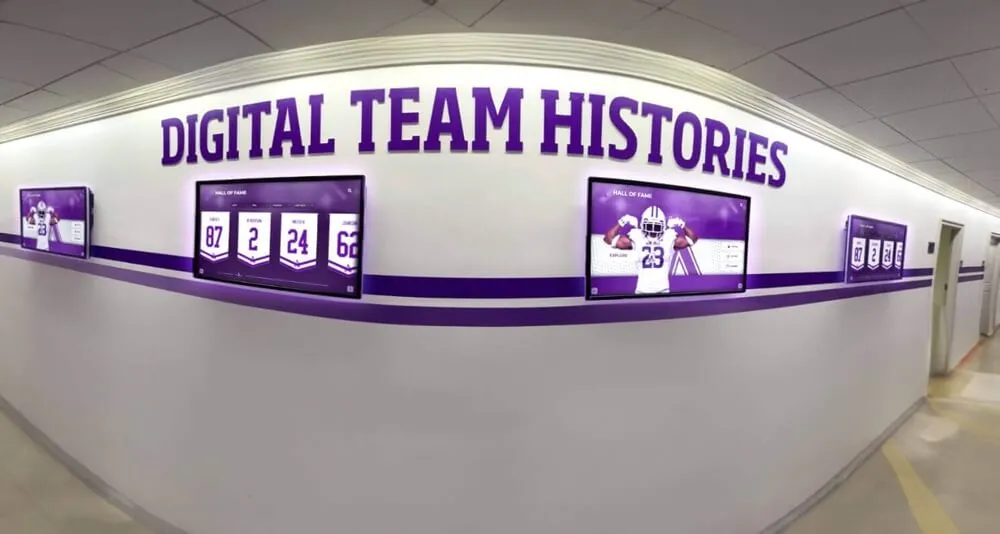
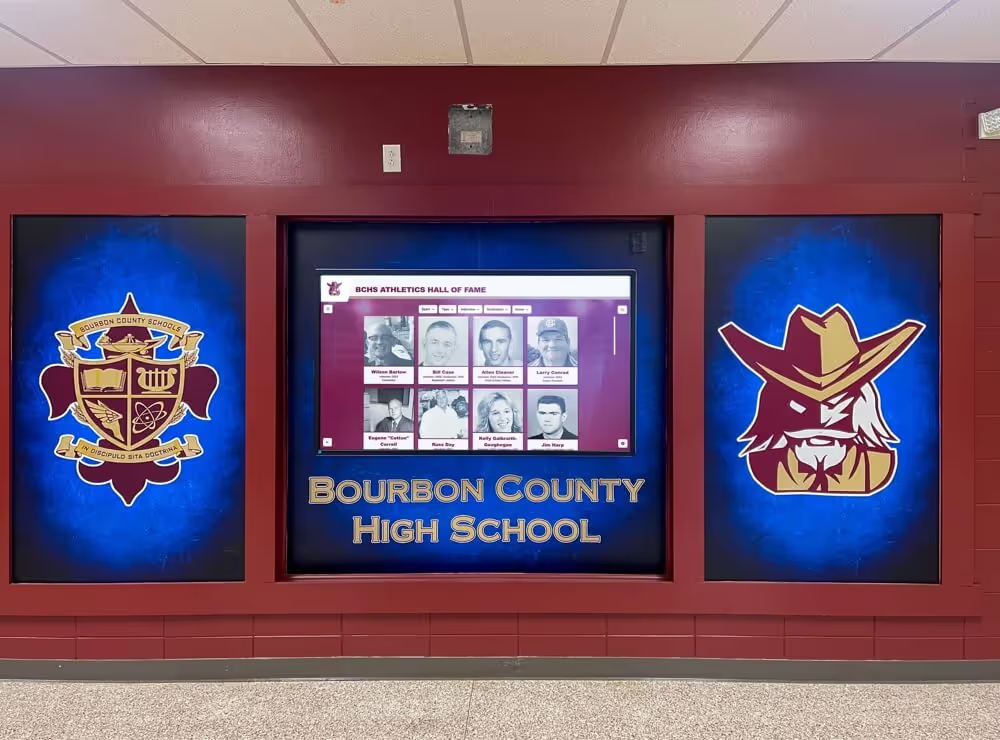
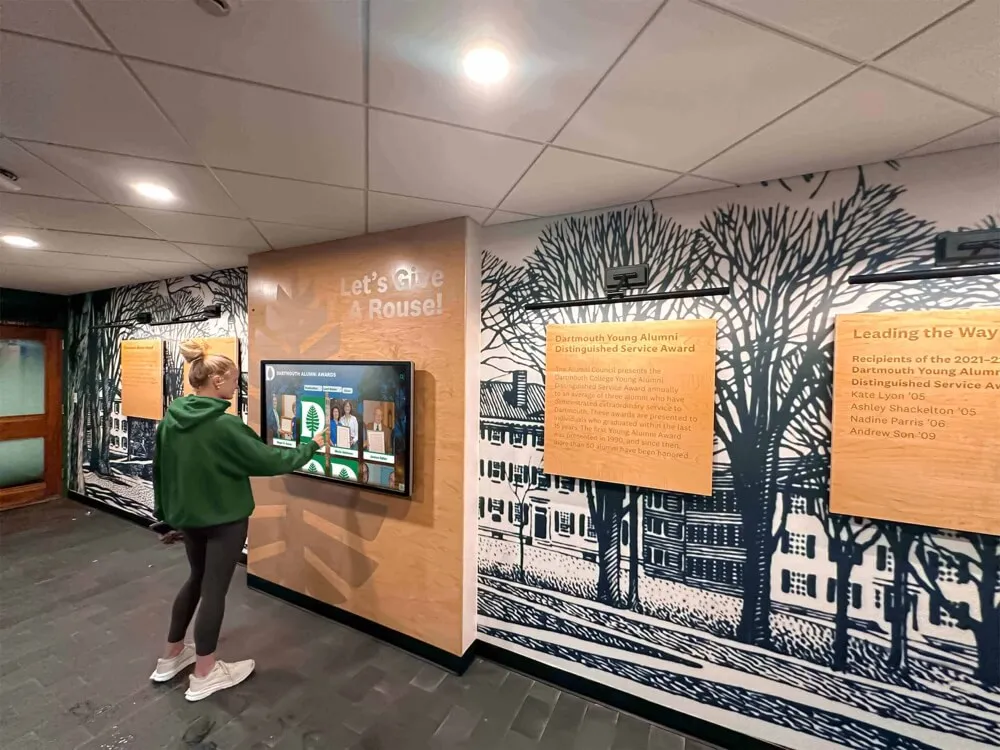
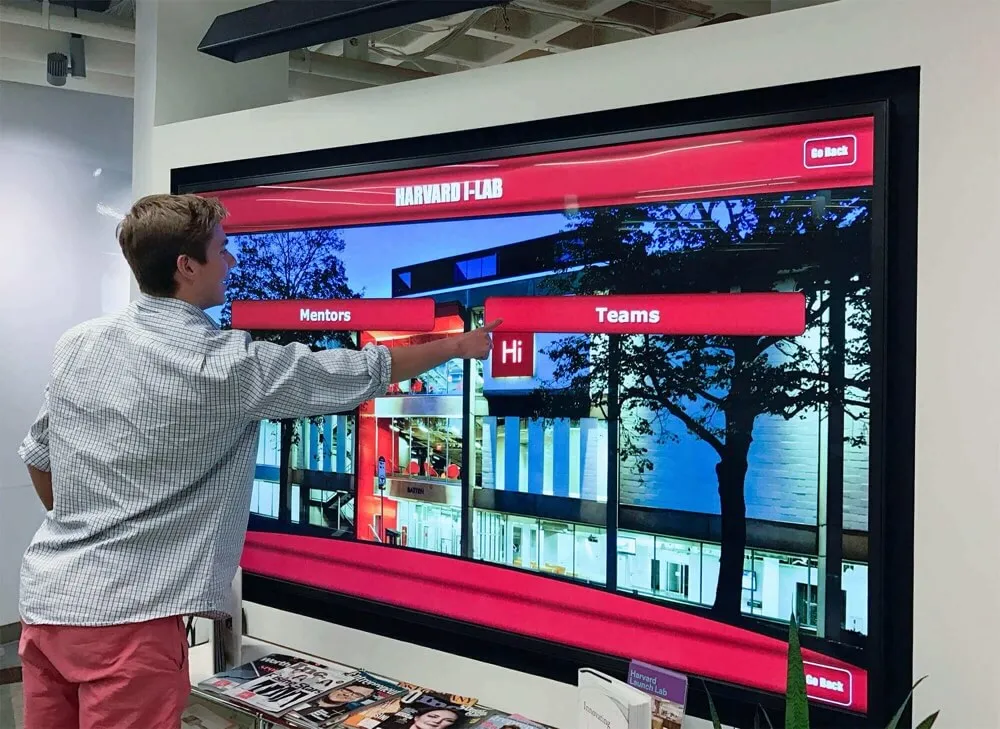
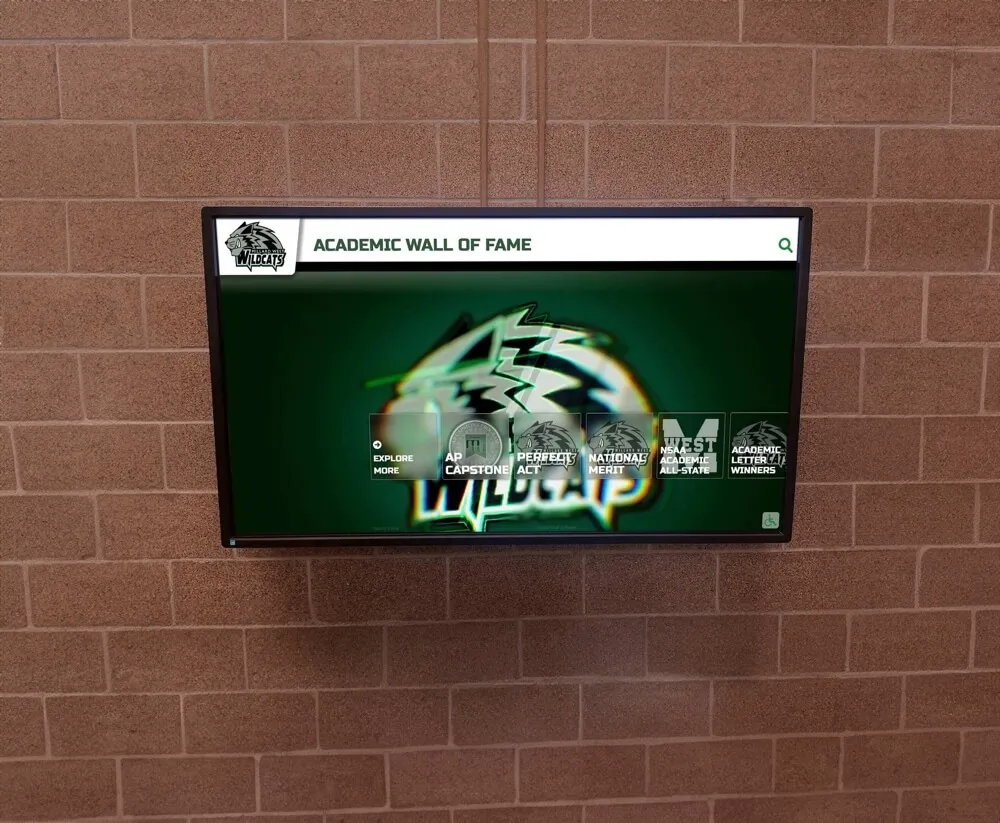
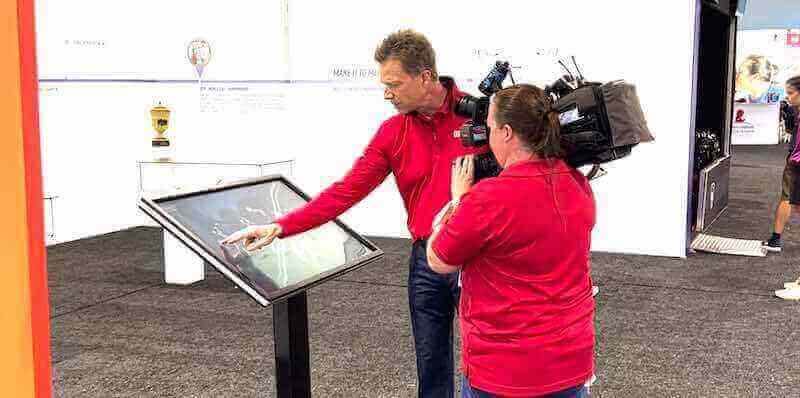
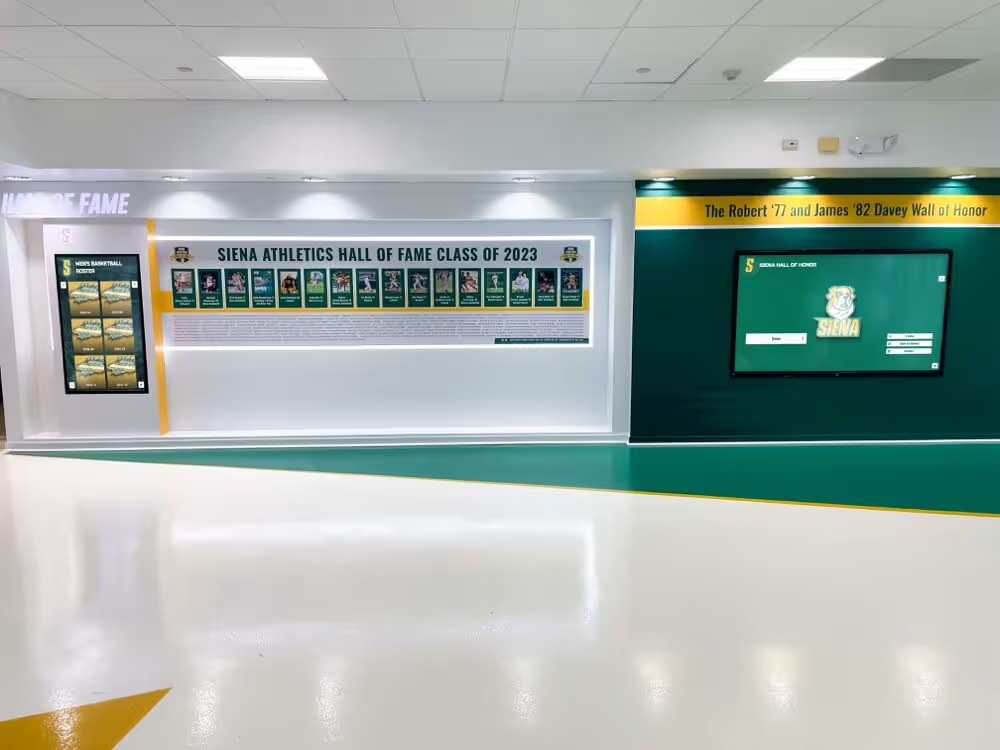
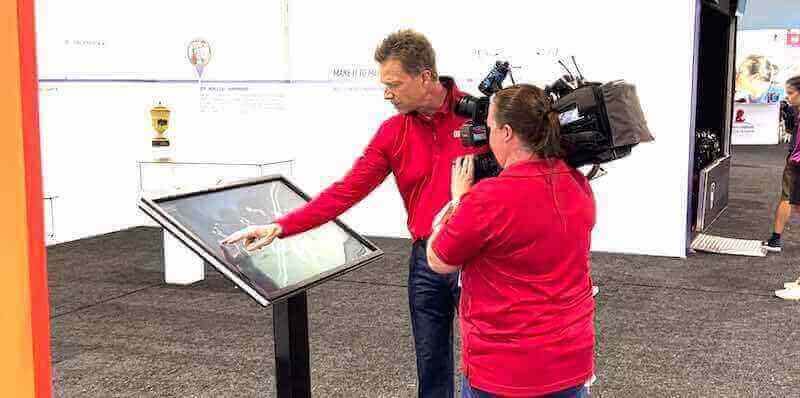
Pairing video production with existing digital recognition displays creates compelling donor content that tells a complete story.
Why Video Storytelling Deepens Donor Relationships
Before diving into specific donor spotlight video ideas, it helps to understand why video works so differently than print recognition. Research in behavioral philanthropy consistently shows that donors are more motivated by emotional connection to impact than by any other factor. A name on a wall communicates presence; a video communicates purpose.
Three dynamics make donor spotlight videos uniquely effective:
Social proof at scale. When a prospective major donor sees a peer—someone from their professional community, their graduating class, their neighborhood—explaining why they gave, it reframes the ask from institutional obligation to community participation. The existing donor becomes an implicit ambassador without you having to script a pitch.
Permanence with circulation. A plaque stays in one hallway. A video lives everywhere you distribute it. Major gift officers report that sharing a donor spotlight video in a cultivation meeting—“here’s what another family in our community said about their experience”—opens conversations that templated brochures never could.
Reinforcement for the donor themselves. Donors who participate in a spotlight video often report that the experience deepened their own commitment to the institution. The act of articulating their reasons for giving, on camera, in front of their peers, creates a public identity as a philanthropist—an identity most donors then feel motivated to live up to at the next gift conversation.
Pair these videos with a robust recognition display strategy—explore digital donor recognition display options for your lobby or hallway—and you have a recognition ecosystem that works 24 hours a day.
10 Donor Spotlight Video Ideas Worth Producing
1. The Origin Story Interview
Format: Single-camera sit-down interview, 2–3 minutes Best for: Mid-level and major donors with a long relationship with your institution
Ask the donor one simple question: “What brought you back?” Whether they’re an alumnus who attended 30 years ago or a community member whose children went through your program, the story of their first connection to your institution is almost always more emotionally resonant than any amount of impact data.
Structure the video in three beats: their connection to the institution before giving, the moment they decided to make a gift, and what they hope the gift achieves. Keep editing tight; two and a half minutes of genuine reflection outperforms five minutes of polished talking points every time.
Production note: Film on school grounds when possible—a hallway they walked as a student, a facility their gift helped build. Ambient institutional context adds emotional weight without a single additional word of narration.
2. The Impact Reveal
Format: Before-and-after montage with brief donor interview, 90 seconds–2 minutes Best for: Capital campaign donors whose gifts funded a specific project
Show the space or program before the gift, then reveal what the donor’s contribution made possible. This structure works especially well for facility gifts—a renovated gym, a new science lab, a restored theater—where the visual contrast is immediate and obvious.
The donor appears briefly at the end to reflect on the completed project. Keep their portion to 30–45 seconds; let the visuals do the heavy lifting. This format also works beautifully as a thank-you video sent to the donor immediately after a project opens.
If your school already maintains a digital donor wall, the impact reveal video integrates naturally into the donor’s profile within that system—click on a donor’s name, and the video plays automatically alongside their recognition details.
3. Student Gratitude Video
Format: Multiple students speaking directly to camera, 2–4 minutes Best for: Scholarship donors, program supporters, and annual fund contributors
Ask three to five students who directly benefited from a donor’s gift to speak briefly—60 to 90 seconds each—about what that support meant. If a scholarship allowed a student to attend who otherwise could not have, that story is your most powerful stewardship asset.
Edit for variety: one student talks about academic impact, one about extracurricular access, one about community belonging. Together they paint a comprehensive picture of the gift’s reach.
Script guidance: Avoid over-coaching students. The most affecting student gratitude videos sound unrehearsed. Brief students on the donor’s gift and ask them to share one specific memory or moment it made possible. Specificity—“I wouldn’t have been able to attend the state forensics tournament”—beats generality—“it meant so much to me”—every time.
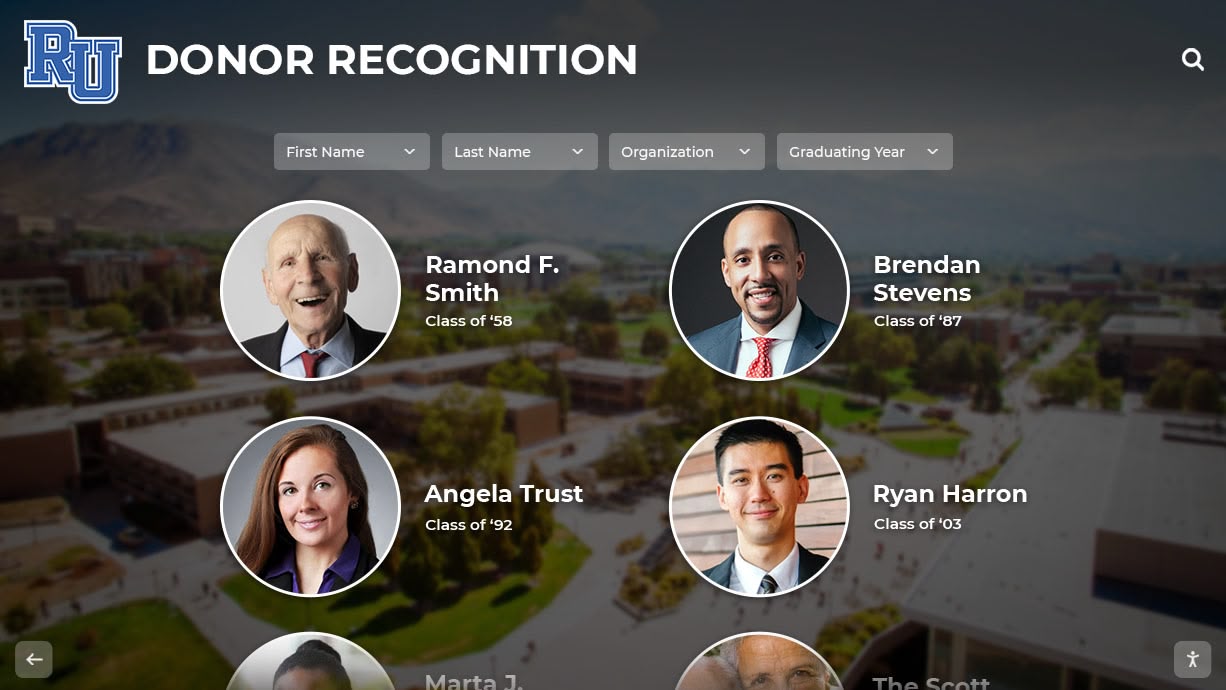
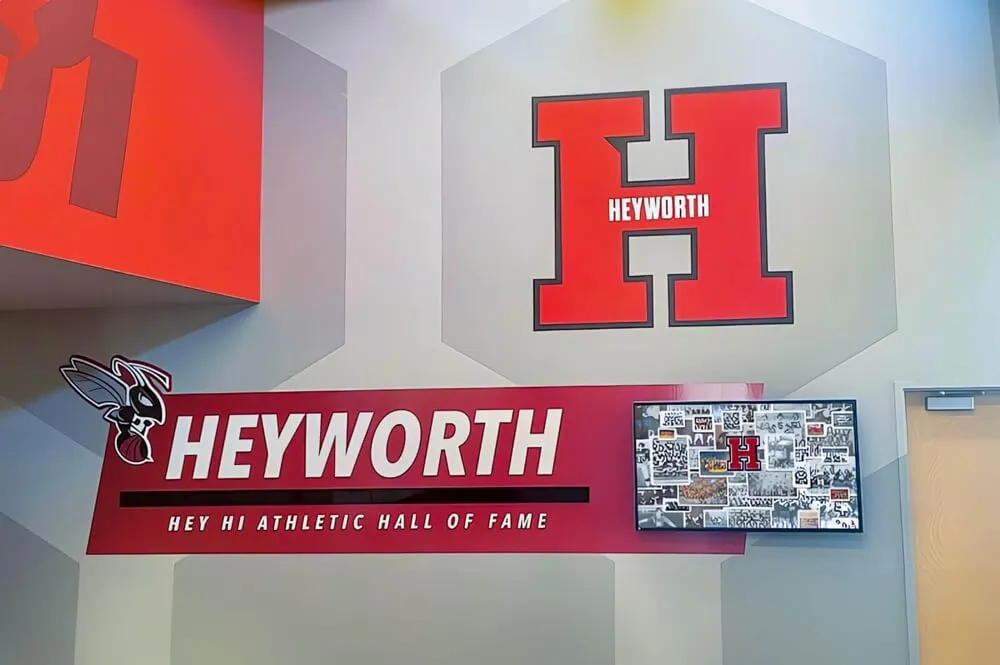
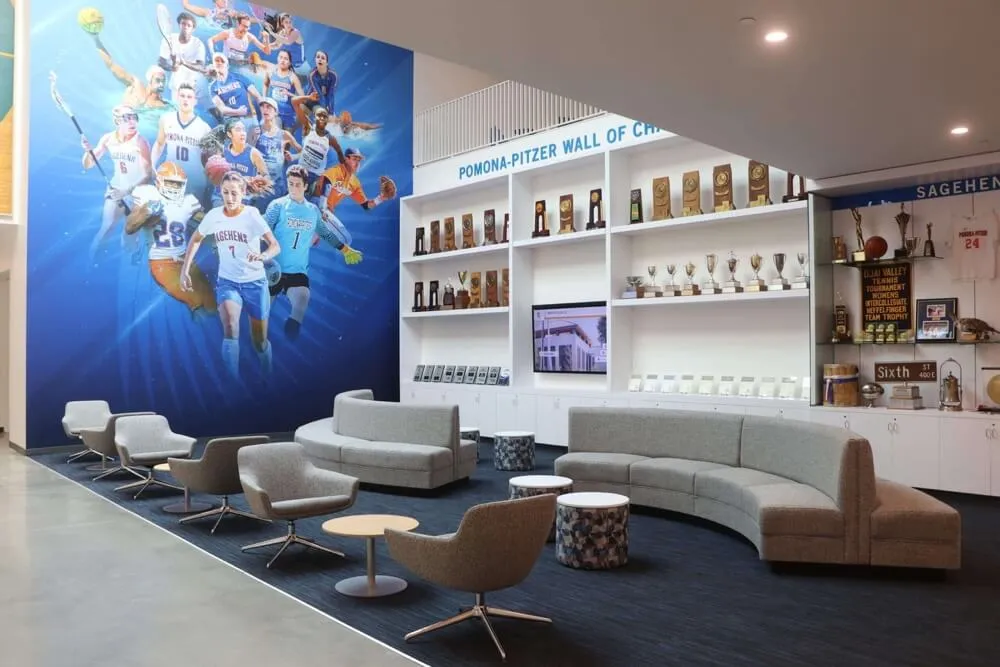
Alumni donor spotlights connect the campus experience to long-term institutional loyalty and continued philanthropic engagement.
4. The Named Space Tour
Format: Walking tour with donor narrating, 2–3 minutes Best for: Donors who funded naming rights to a physical space
Invite the donor back to walk through the space that carries their family’s name. Let them narrate: what the space was before, what it means to them now, what they hope students will experience there for the next 50 years.
This format works at every scale—from a naming gift on a single classroom to a new athletic facility. The intimacy of the donor standing in the space they funded, describing their own feelings about it, is impossible to replicate in print.
Combine this with a strong donor recognition plaque strategy—the plaque creates the permanent anchor, and the video tells the story behind it.
5. The Anniversary Milestone Reflection
Format: Single-interview format, 3 minutes Best for: Donors celebrating a round-number anniversary of their first gift—5, 10, 20, or 25 years
Mark the milestone with a video that asks: “What has changed in the decade since your first gift?” and “What has stayed the same?” This format is especially effective for donors who have given annually because it surfaces the cumulative impact that’s easy to miss year by year.
Advancement teams can use this video format to reactivate donors who have lapsed—produce the video as an invitation back into engagement rather than a direct re-solicitation, and let the emotional content of their own reflection do the cultivation work.
6. Multi-Generation Legacy Story
Format: Two-camera interview with parent and child (or grandparent and grandchild), 3–4 minutes Best for: Families with multi-generational connections to your institution
Ask a parent and their adult child—now themselves an alumnus of your school—to sit together and talk about what the institution means to their family. Ask the older generation what they wanted their child to experience; ask the younger generation what they actually did experience. Let the conversation happen naturally between them.
These videos are among the most sharable your advancement team will produce. They speak directly to prospective donors who are themselves alumni parents—the exact audience most likely to make a legacy gift.
For institutions exploring student spotlight ideas more broadly, the multi-generation format adapts naturally to current student recognition as well.
See How Digital Donor Walls Bring Spotlights to Life
DonorsWall integrates video spotlights directly into your digital recognition display—so every visitor who taps a donor's name can watch their story. Book a walkthrough to see it in action.
Request a DonorsWall Demo7. The Capital Campaign Reveal Retrospective
Format: Documentary-style with multiple voices, 4–5 minutes Best for: Post-campaign stewardship at campaign close
After a capital campaign closes and the project opens, produce a short documentary that captures the arc of the effort: where the institution started, what donors made possible, and what the future looks like from here. Feature three to five donors at different giving levels so the video resonates across your full donor community—not just major gift contributors.
This format serves double duty: as a stewardship piece for existing donors and as a cultivation tool for the next campaign. Keep an updated version in your lobby display rotation using digital display technology so the story stays visible long after the campaign closes.
8. The Day-in-the-Life Feature
Format: Observational documentary following a student beneficiary, 3–4 minutes Best for: Scholarship donors and program supporters
Follow a scholarship recipient through a representative school day, letting the camera show rather than tell how donor support shapes their experience. The student speaks briefly at the beginning and end; the middle of the video is observational footage of classes, practice, labs, or performances that their scholarship made accessible.
Narration from the student—brief, unglamorous, honest—grounds the video in reality. “Without this scholarship, I’d be working 30 hours a week instead of playing in the orchestra” is the kind of line no copywriter could invent.
This format also lends itself well to alumni engagement programming: the day-in-the-life video can be shared at alumni events, annual fund campaigns, and class reunion programming to make the human case for continued giving.
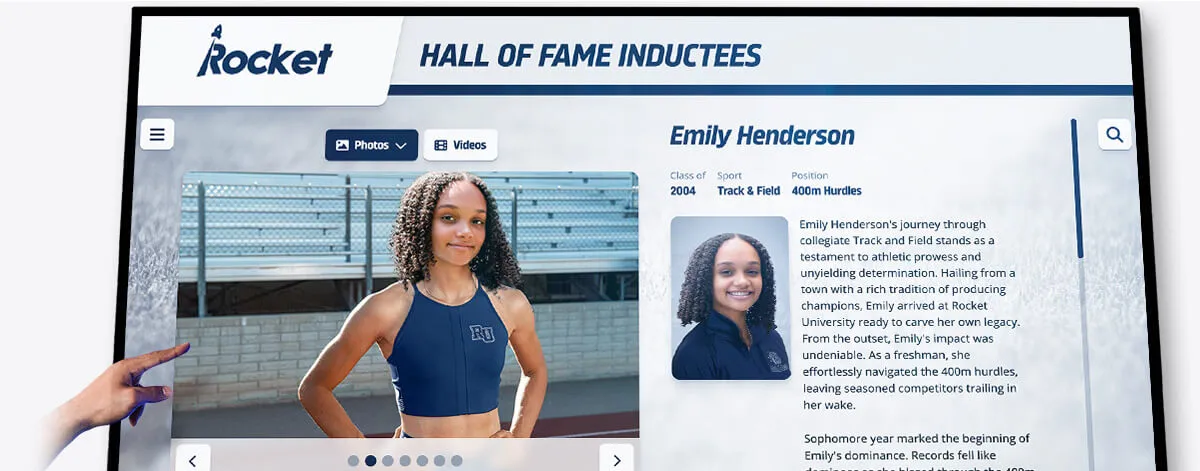
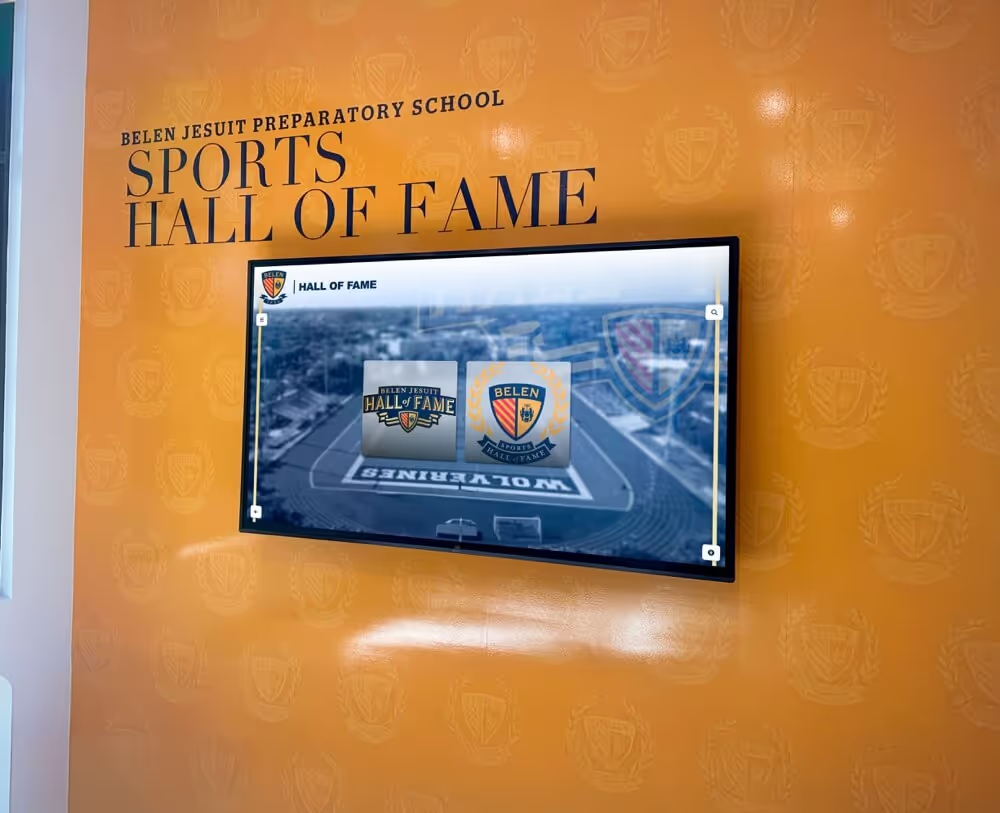
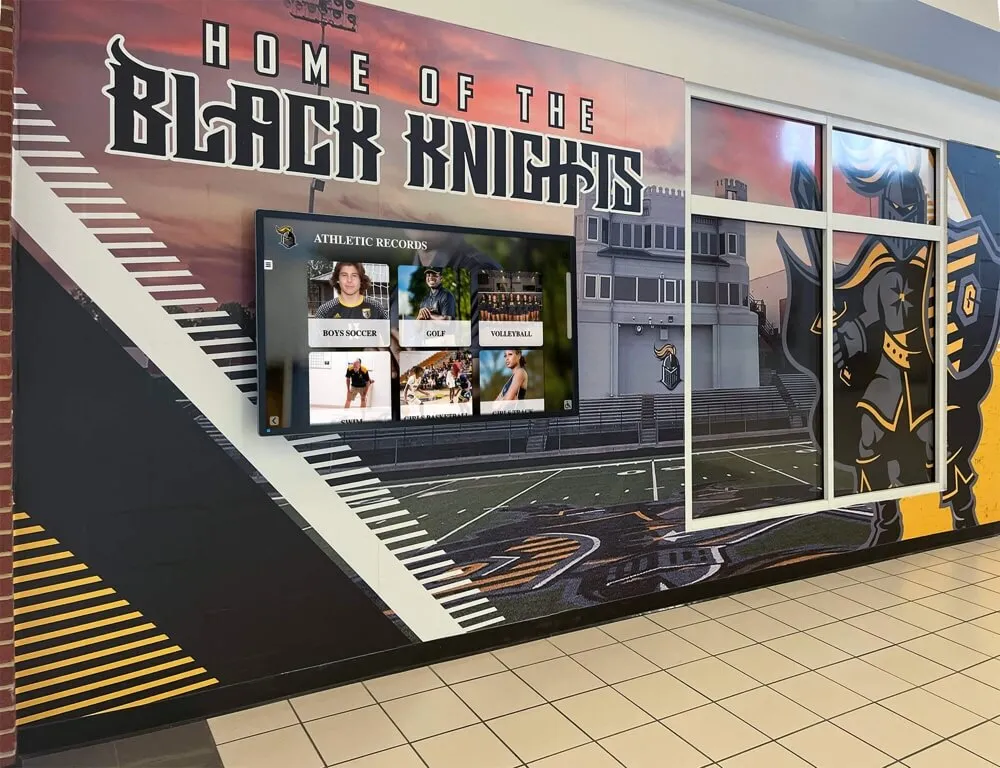
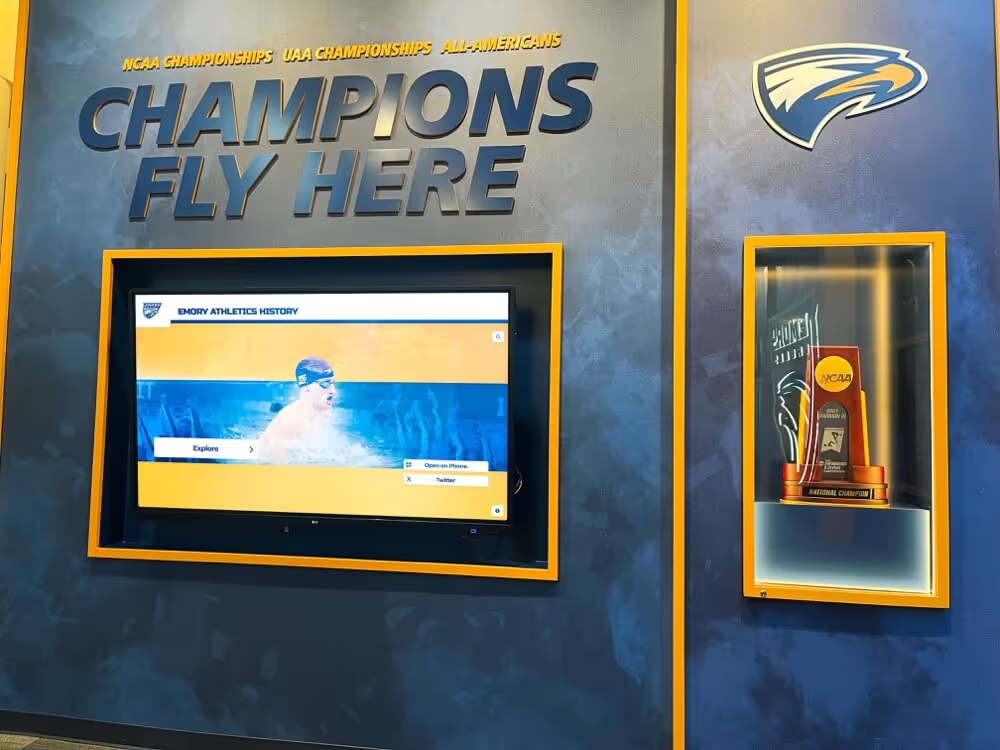
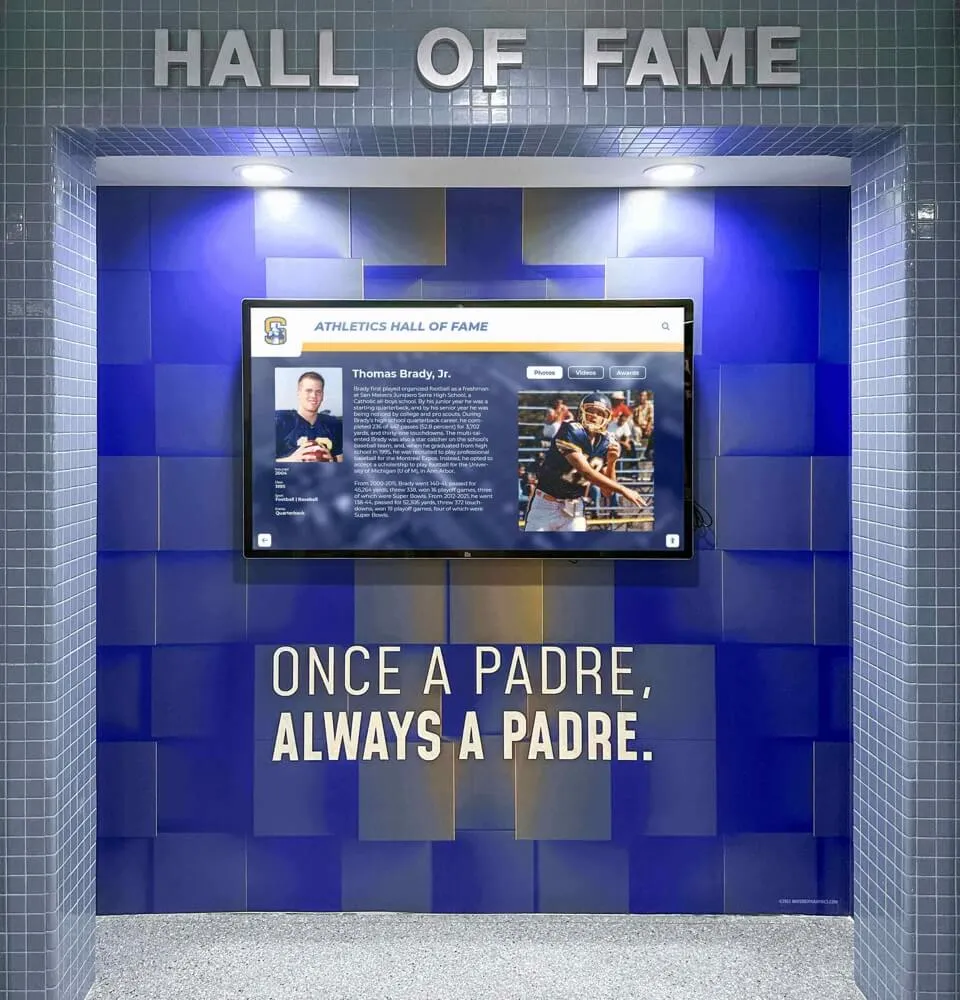
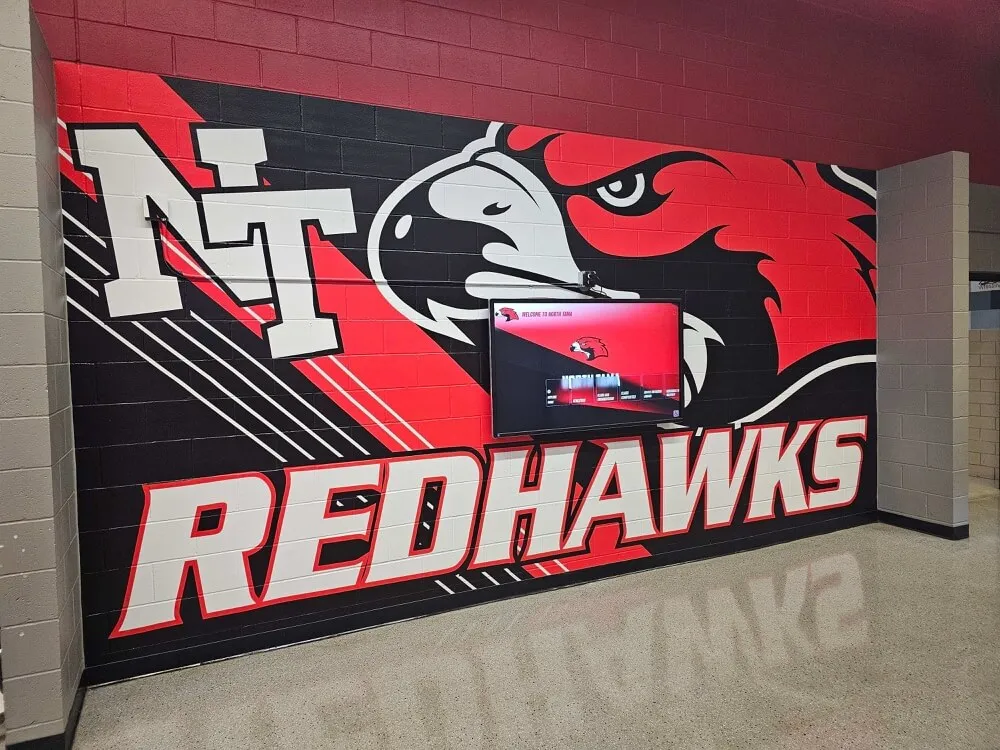
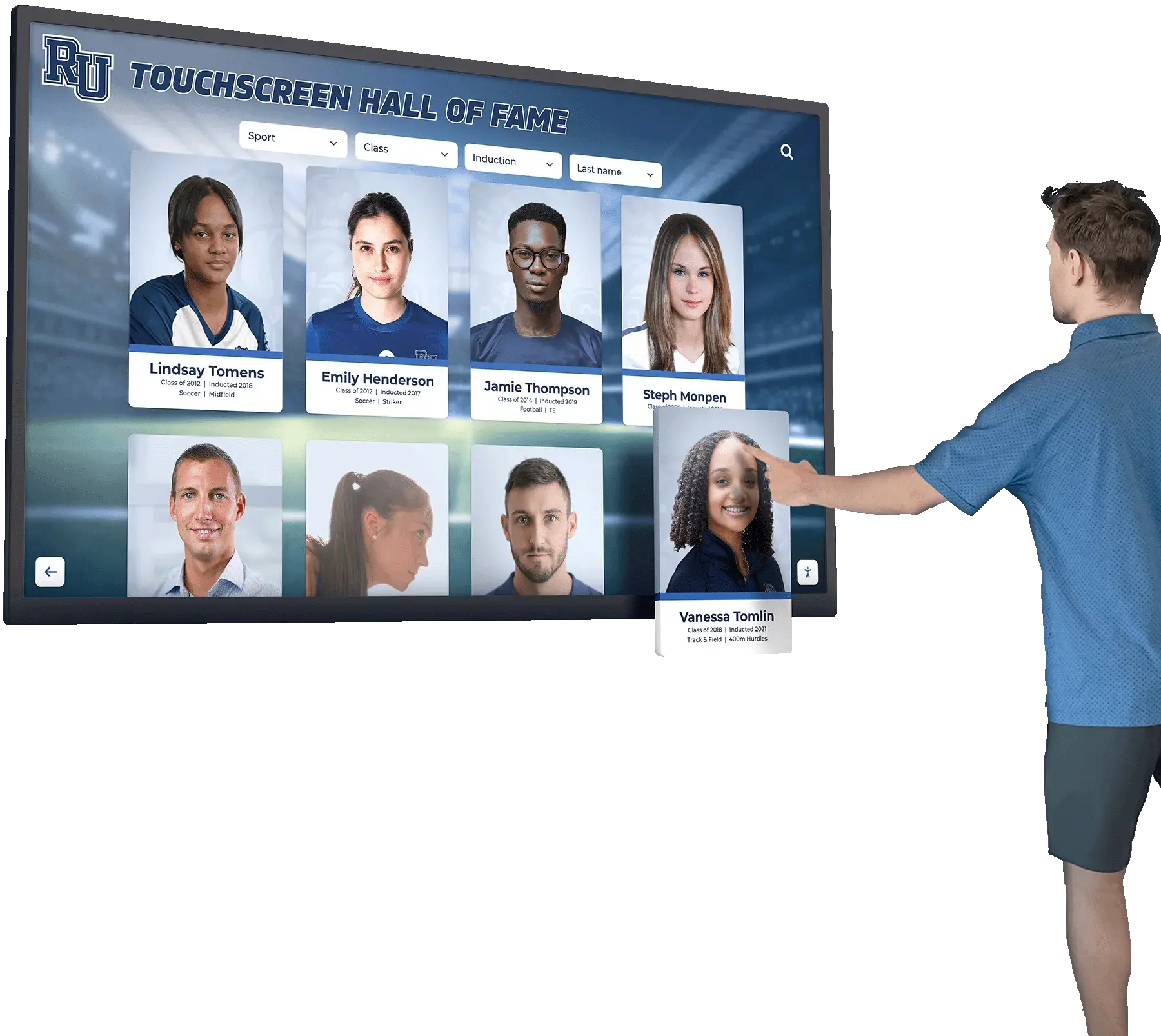
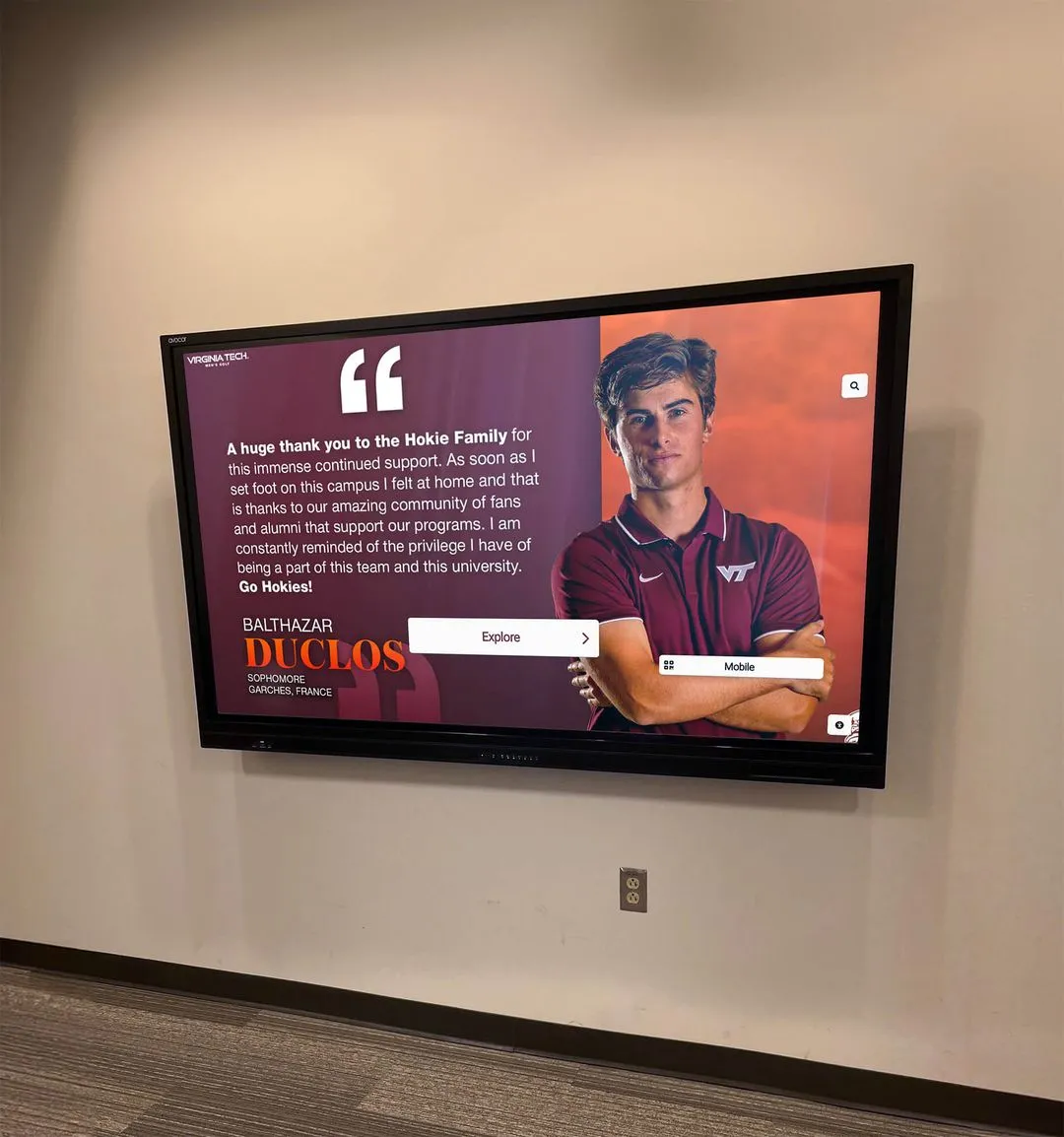
Individual profile displays on touchscreen systems show how digital platforms naturally support spotlight-style recognition—for athletes and donors alike.
9. The Peer Champion Invitation
Format: Informal, phone-camera-friendly format, 60–90 seconds Best for: Annual fund campaigns and peer-to-peer fundraising drives
Ask a longtime donor to record a brief, casual video inviting their peers—classmates, colleagues, neighbors—to give. Keep production deliberately informal: shot on a phone in good light, delivered in conversational language. Over-produced peer solicitation videos feel institutional; the format loses its power when it stops feeling personal.
Brief the donor on two points: mention your own giving and why, then invite the viewer to join you. That’s the entire script. The informality is the feature, not a bug—it signals that a real person made a real decision to record this and send it.
These videos distribute well via email, text campaigns, and class-giving platforms. They convert at higher rates than institutional video appeals precisely because they feel peer-generated, not staff-generated.
10. The Memorial Tribute Spotlight
Format: Mixed-format tribute with family interview and archival imagery, 3–5 minutes Best for: Memorial gifts made in honor of a deceased alumnus, faculty member, or community figure
Memorial gifts often represent a donor family’s most emotionally significant giving decision. Honor that significance with a tribute video that documents the person being remembered: their connection to your institution, what they valued, and why the family chose to memorialize them through a gift that benefits students.
If available, incorporate archival photographs, yearbook images, or institutional records. Ask family members to share specific memories—not eulogies, but stories. “He used to say that this school saved his life” tells a more powerful story than “He was a devoted alumnus.”
For guidance on writing tribute language that works equally well in video narration, the memorial tribute writing framework provides a practical starting structure. A well-crafted tribute lives permanently in your digital recognition system, ensuring that the person being honored remains visible to generations of students who never knew them.
Production Essentials for Schools on a Budget
You do not need a professional production crew to produce effective donor spotlight videos. Modern smartphones shoot in 4K. Inexpensive lapel microphones eliminate the ambient noise that undermines otherwise solid footage. Natural light from a window is almost always sufficient. What matters more than equipment is intentionality: quiet location, good light, a conversational interviewer, and enough recording time to capture genuine moments.
Pre-production checklist:
- Confirm filming location at least one week ahead
- Prep the donor with 3–5 open-ended questions, not a script
- Scout lighting and audio conditions in advance
- Arrange any necessary campus access for b-roll footage
- Brief any students appearing on camera and obtain permission forms
Post-production priorities:
- Keep the finished cut tight—aim for 10% shorter than your first edit
- Add subtitles for accessibility and silent autoplay environments
- Export in both landscape (16:9) and square (1:1) formats for different platforms
- Thumbnail selection matters: choose a frame that shows the donor’s face clearly
On interviewing donors: The best donor spotlights feel like eavesdropping on a conversation, not watching a prepared statement. Spend the first five minutes of every interview session talking without rolling—let the donor get comfortable with the equipment and the interviewer before you capture anything you plan to use. The best material often comes after the formal questions when the camera is still running and the donor’s guard has come down.
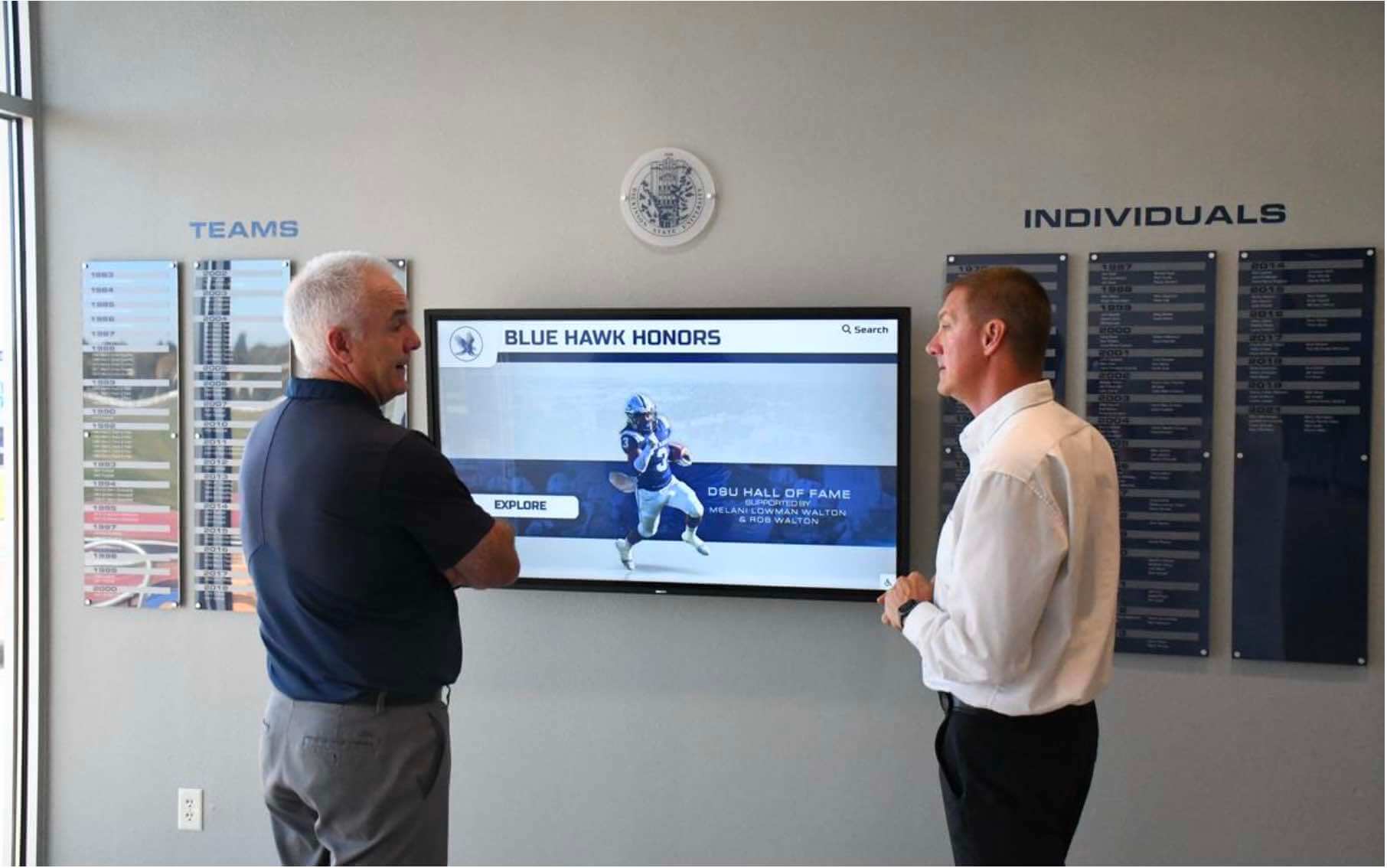
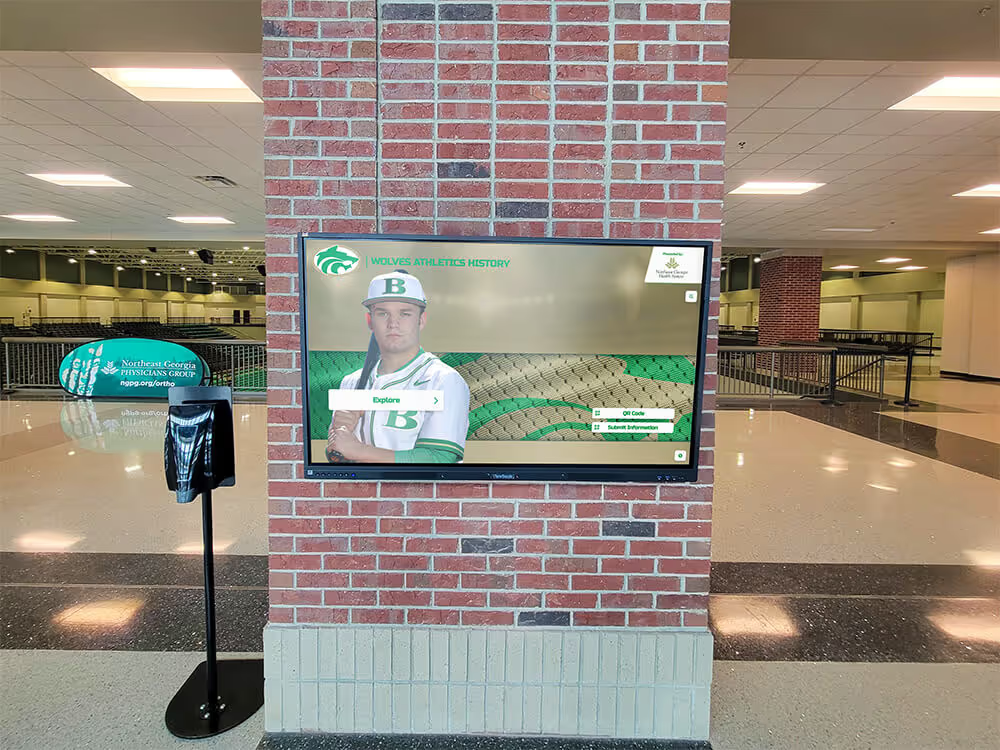
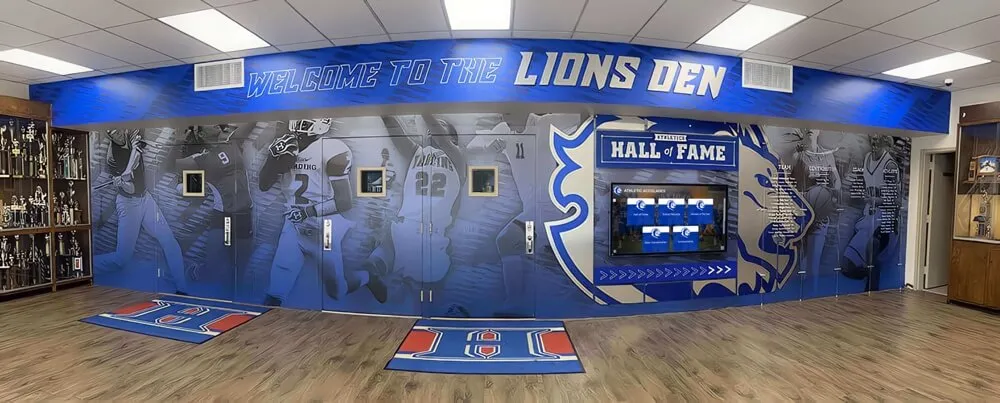
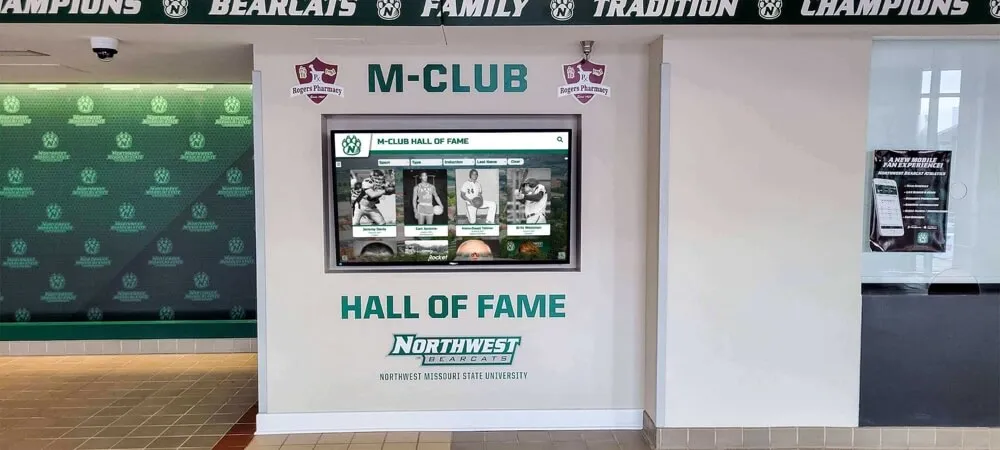
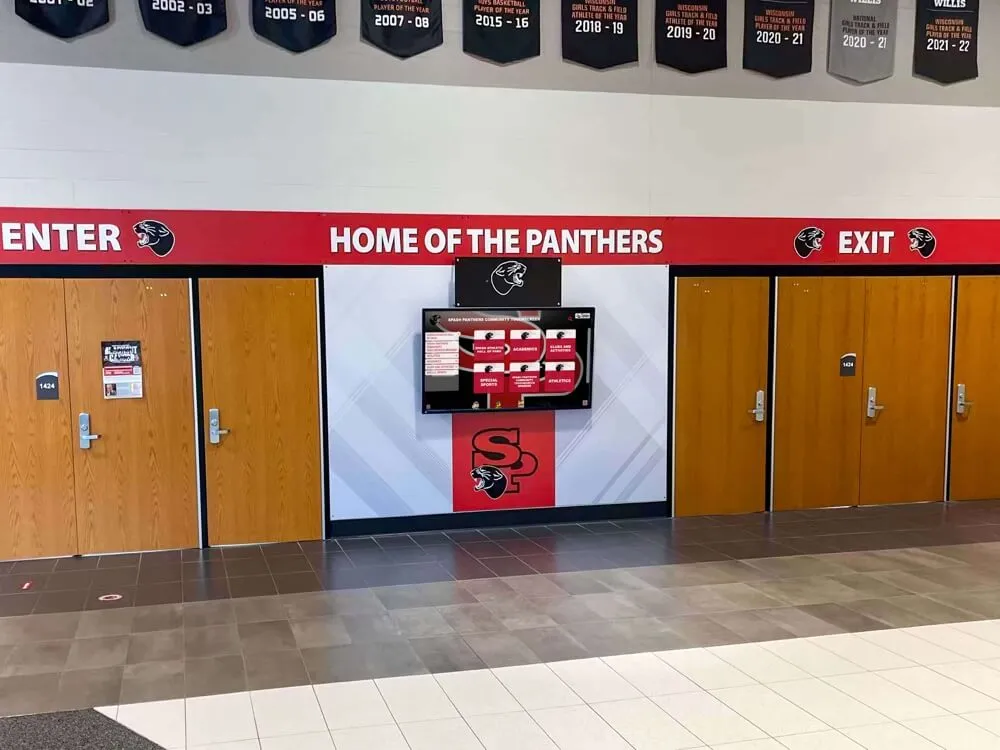
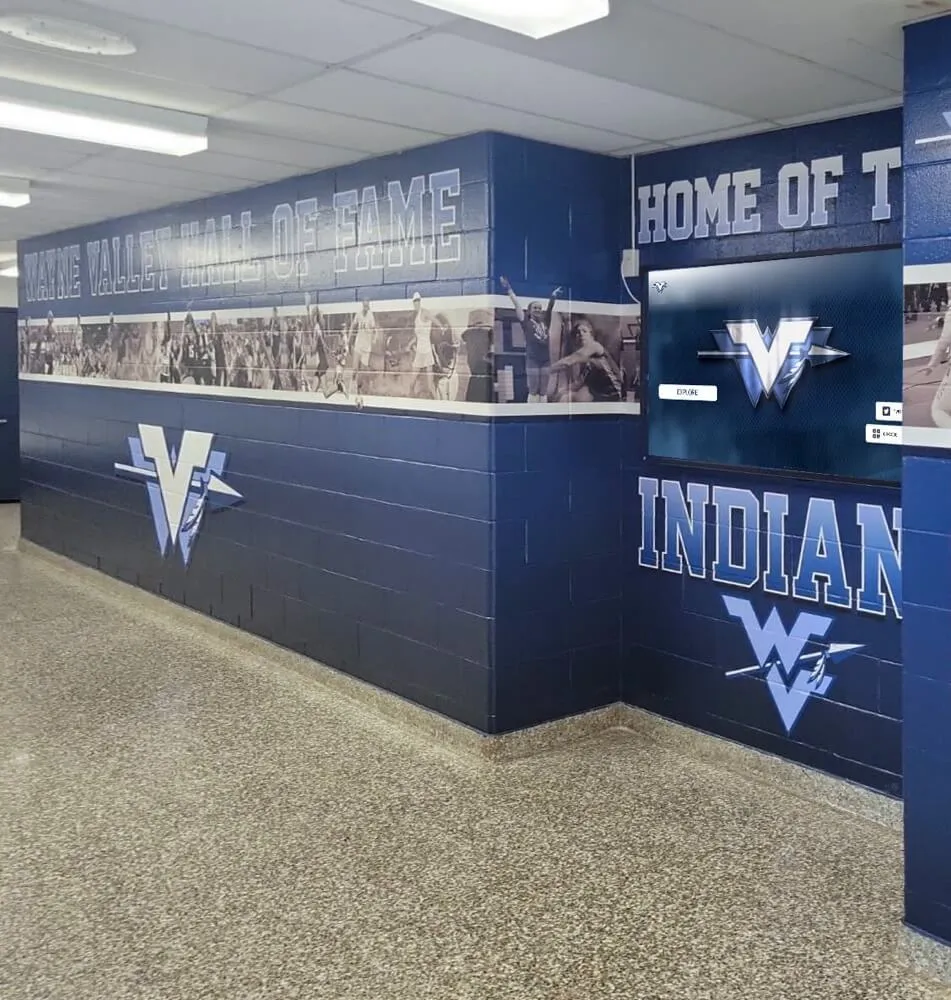
Digital recognition displays create natural opportunities to feature donor spotlight videos alongside traditional name recognition.
Connecting Spotlight Videos to Your Recognition Ecosystem
Producing a great donor spotlight video is only half the equation. Distribution determines whether that content reaches the audiences who will be moved by it.
Lobby displays: If your institution uses a digital donor recognition platform, spotlight videos can be embedded directly in a donor’s profile. When prospective donors, students, or faculty touch a donor’s name on the display, the video plays automatically—creating a recognition experience that goes far beyond a name and gift amount.
Annual fund campaigns: A donor spotlight video released at the start of an annual fund drive outperforms any written appeal. Time releases to coincide with campaign launches, Giving Tuesday, class-giving competitions, or homecoming.
Major gift cultivation: Share relevant spotlight videos with major gift prospects during the relationship-building phase—before any solicitation conversation. “I’d love to share a quick video of what one of our donor families said about their experience” is a natural, low-pressure way to deepen engagement.
Board meetings and donor events: Screen one donor spotlight video at every board meeting and donor recognition event. It keeps the human impact of philanthropy visible to the people most responsible for institutional fundraising strategy.
Social media: Clip 30–60 second excerpts from longer spotlight videos for Instagram Reels, LinkedIn, and Facebook. Ensure you have distribution rights and donor permission for public posting before publishing on social channels.
The underlying recognition infrastructure matters here. Schools with robust donor wall systems can embed, update, and archive video content alongside traditional recognition elements—ensuring that spotlights stay discoverable long after the initial release.
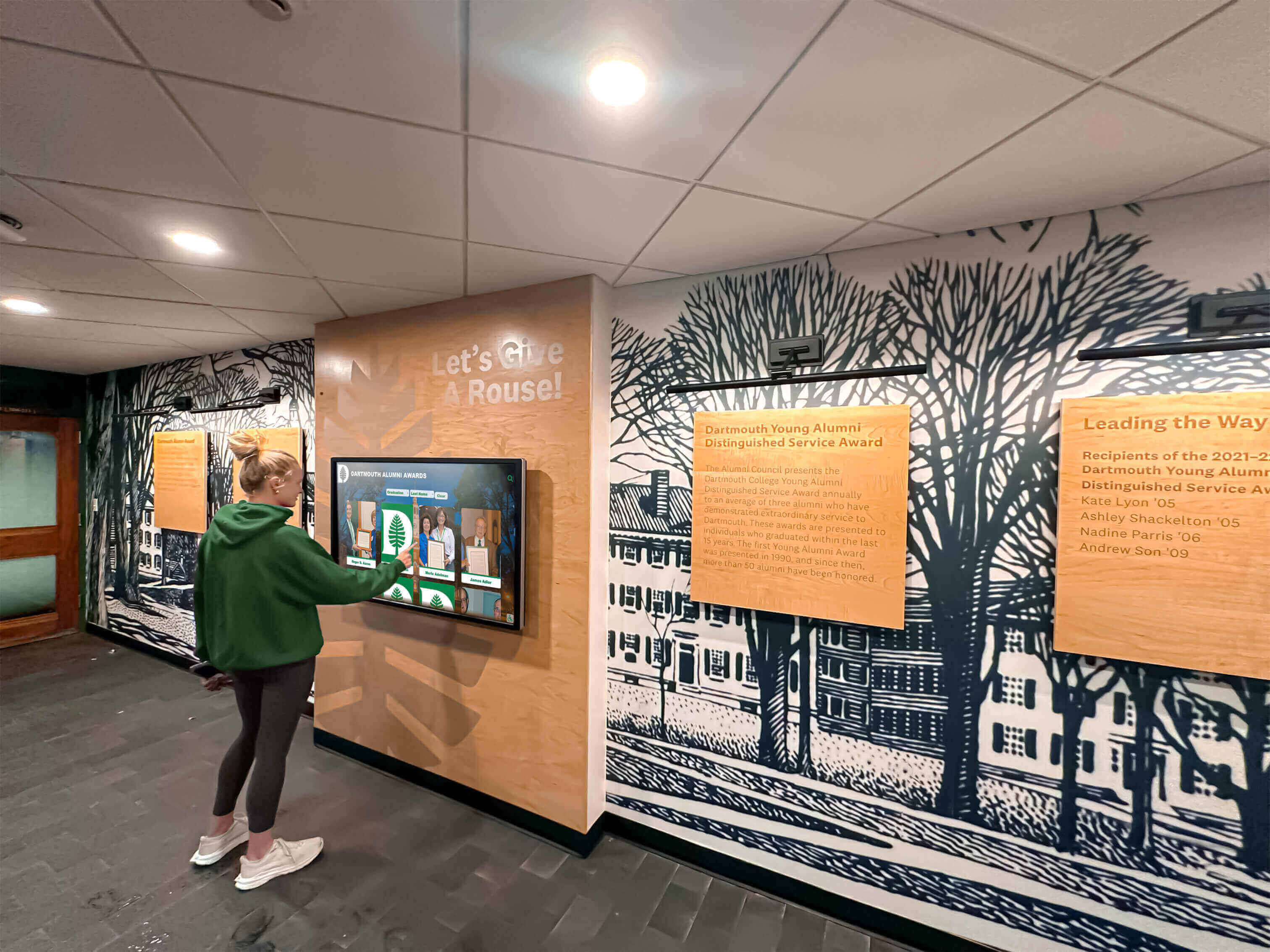
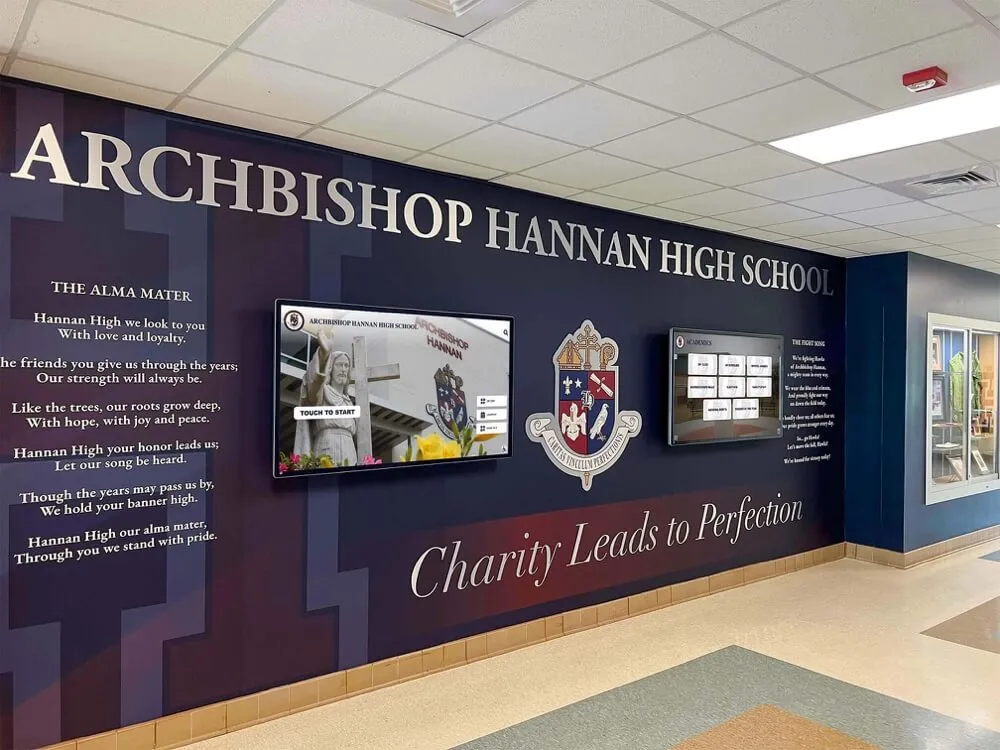
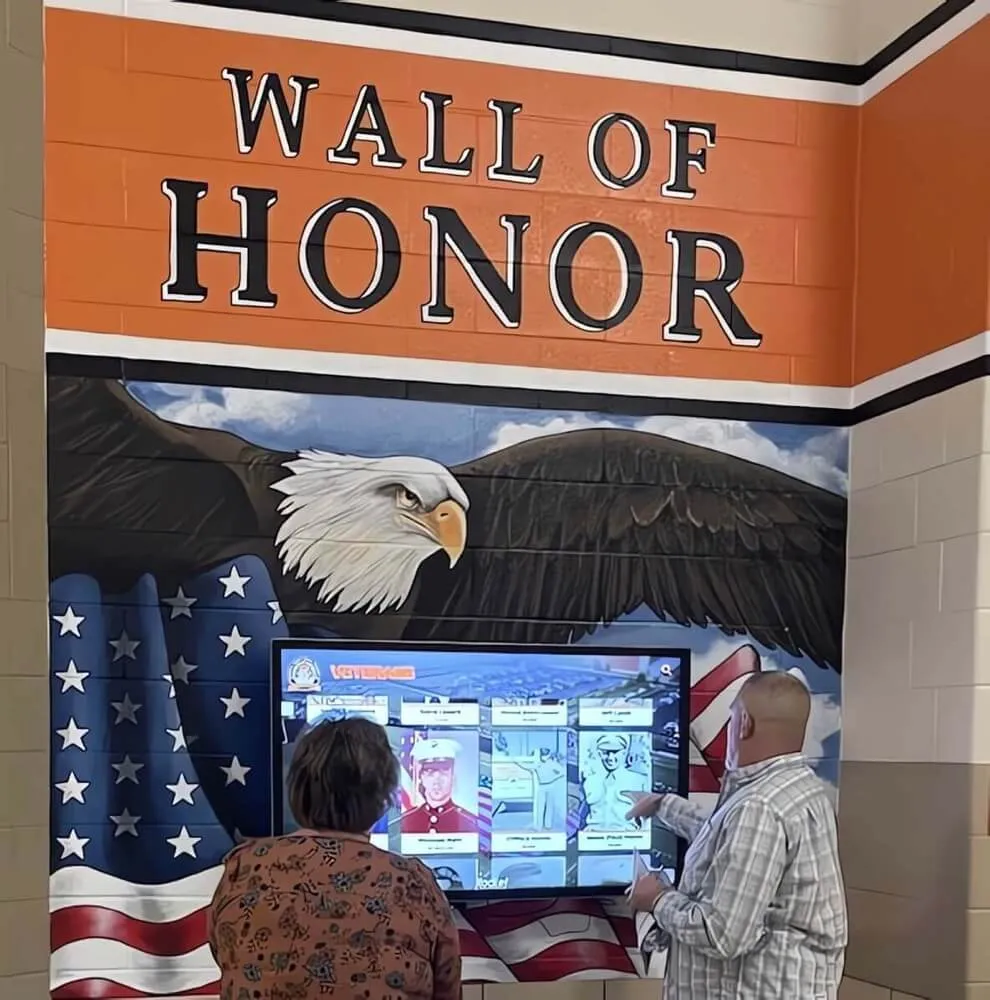
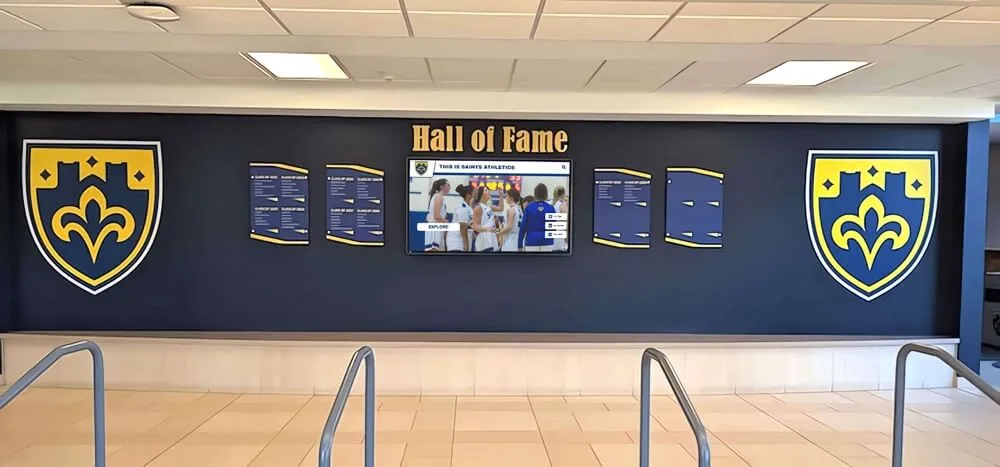
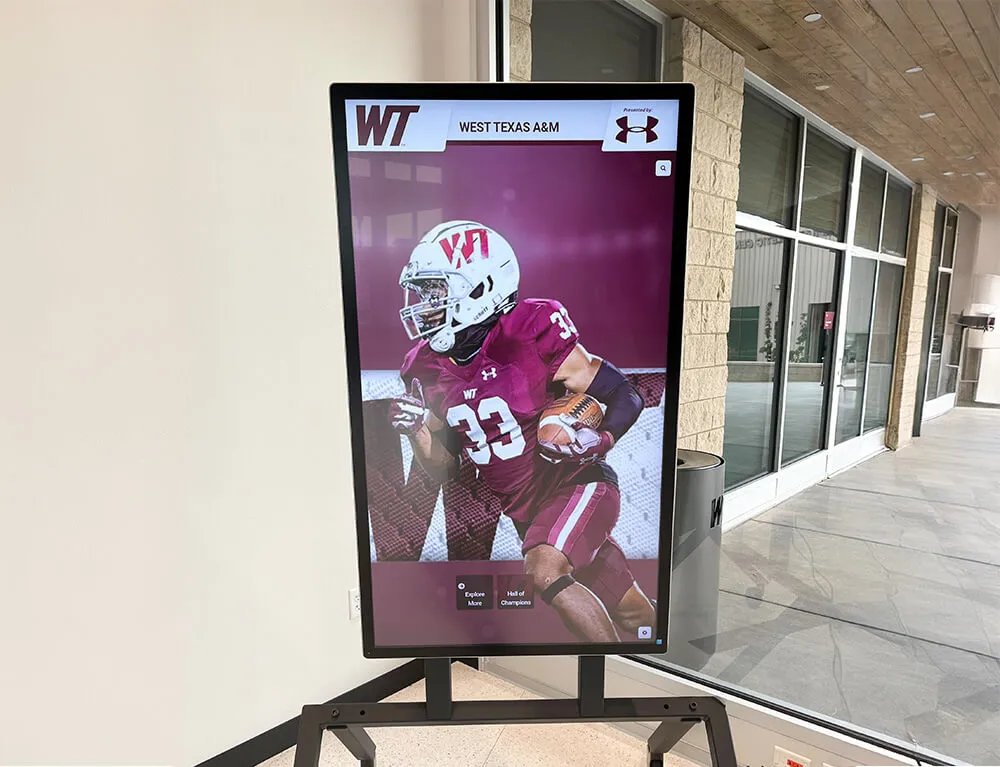
Students engaging with digital recognition platforms encounter donor stories organically as part of everyday campus life.
Building a Sustainable Spotlight Program
The schools that get the most from donor spotlight videos treat them as a program, not a project. A development office that produces one video per quarter—eight to ten videos per year—builds a content library that serves stewardship, cultivation, campaign, and communications needs simultaneously.
Plan your video calendar around institutional milestones: campaign closes, major facility dedications, scholarship award ceremonies, homecoming, reunion weekends, and fiscal year end. These natural moments give you production hooks and built-in audiences.
Create a simple intake process that identifies spotlight candidates early. Ask gift officers to flag donors who are articulate, emotionally connected to the institution, and whose giving story reflects themes your advancement team wants to reinforce. Not every donor wants to be on camera—but many are honored to be asked, and the ones who say yes tend to produce your best content.
For institutions building out a broader recognition display strategy, digital hall of fame platforms designed for schools provide the technical infrastructure to house, organize, and display video content alongside traditional name recognition—making it practical to maintain a growing video library without a separate technical investment.
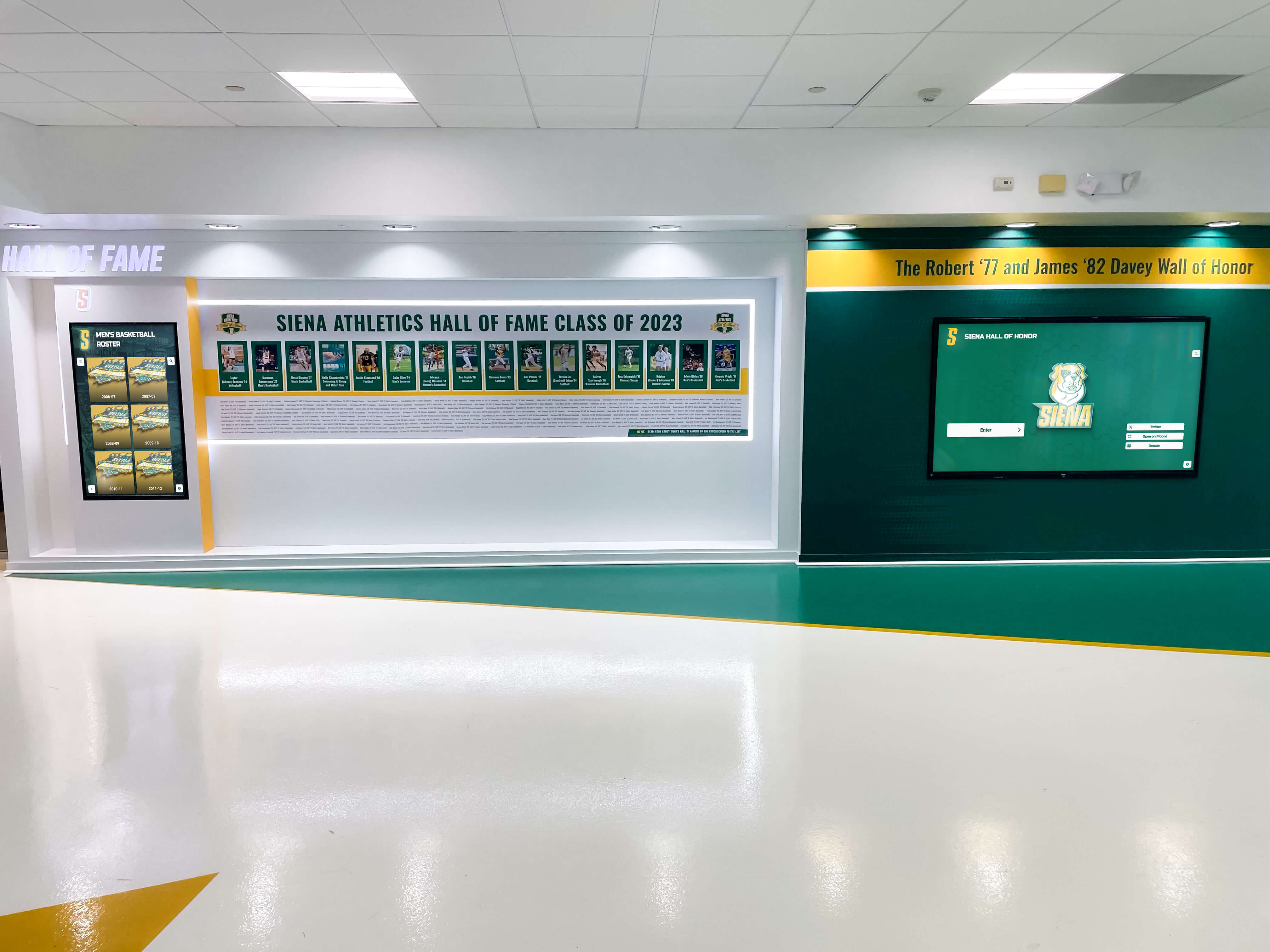
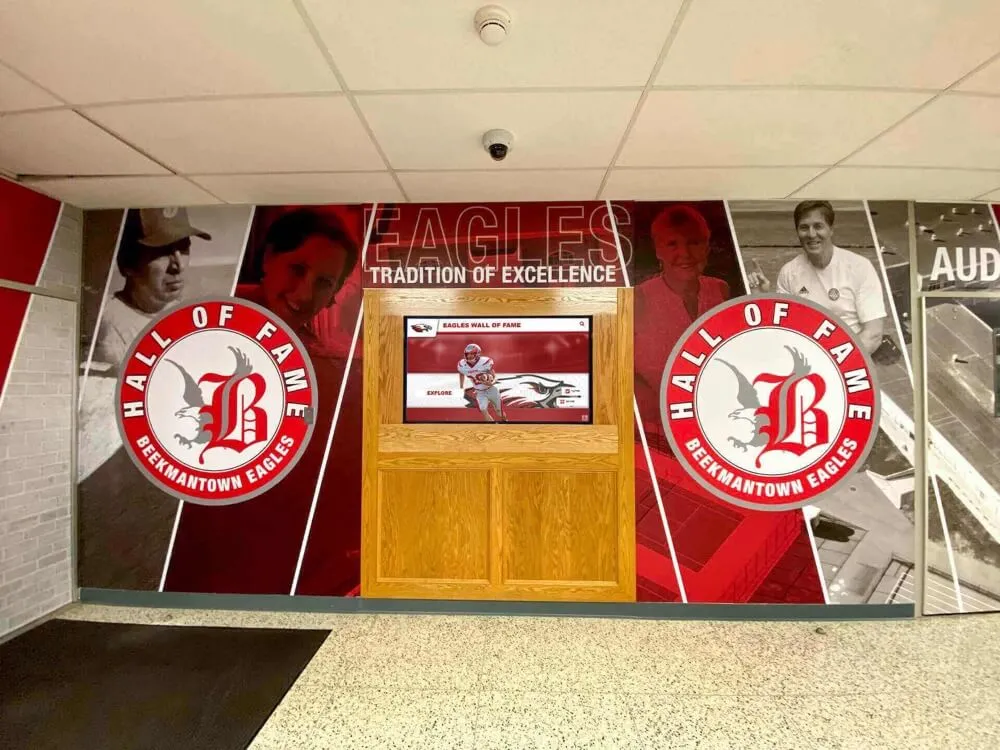
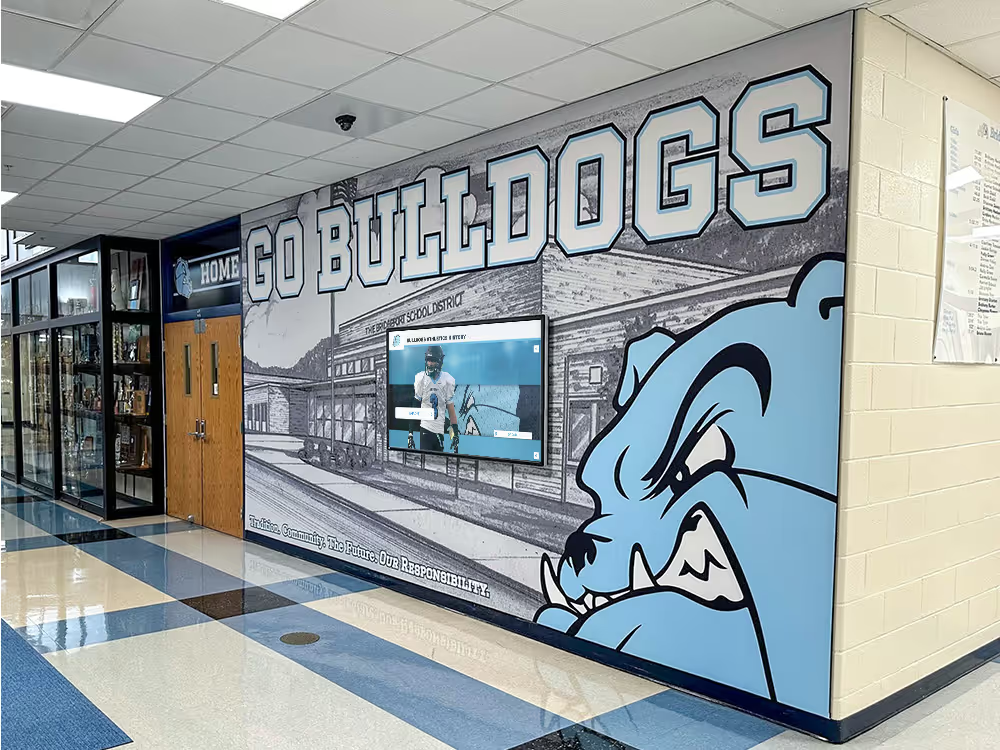
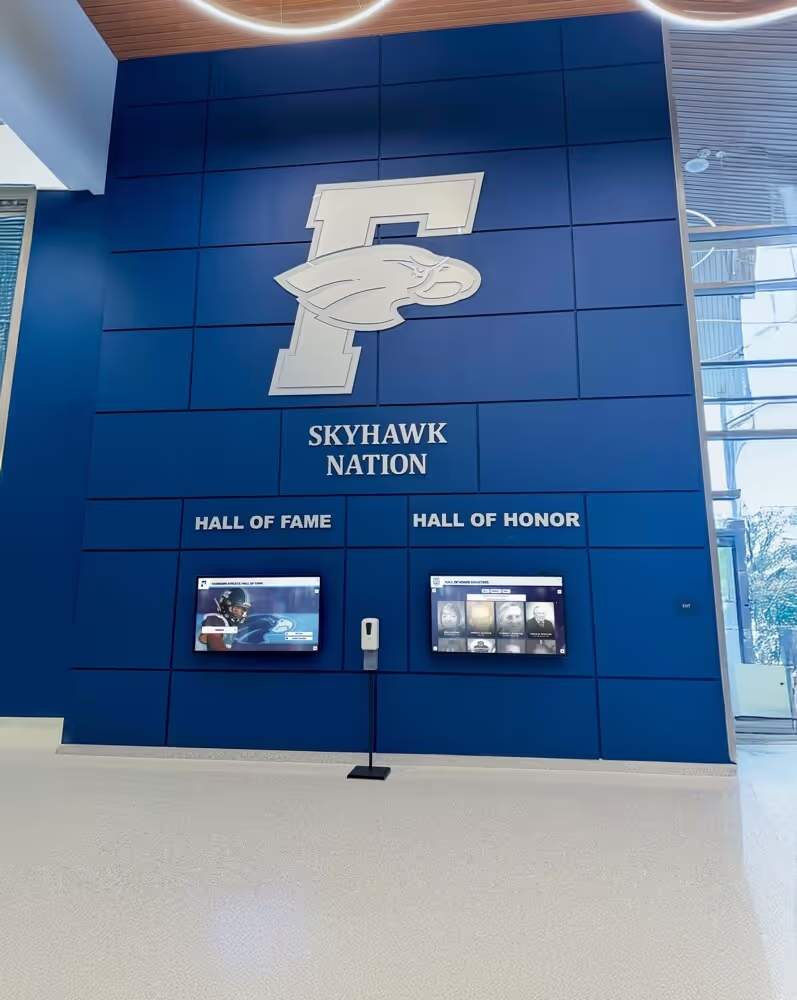
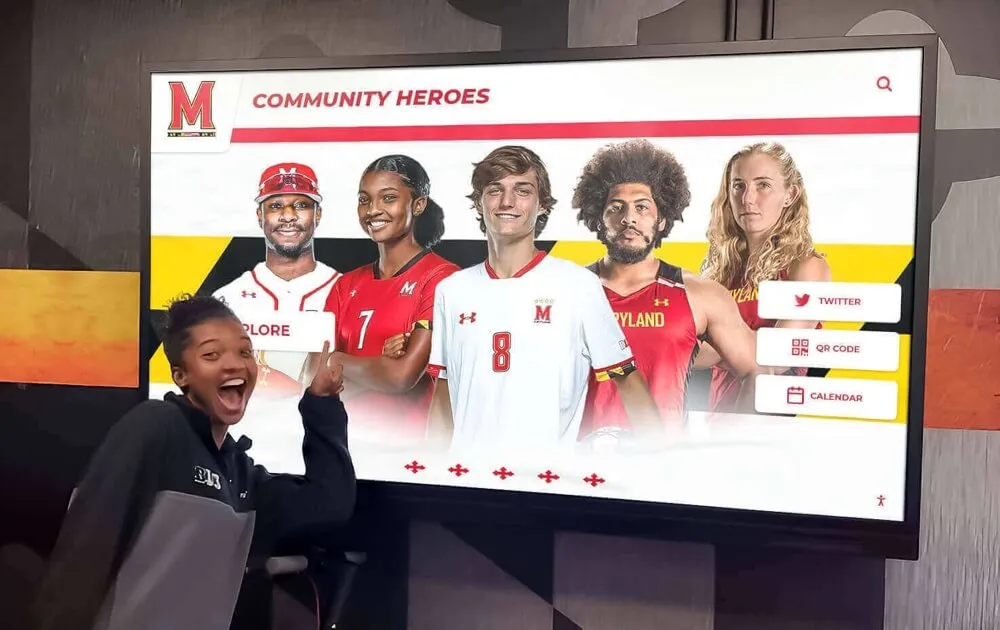
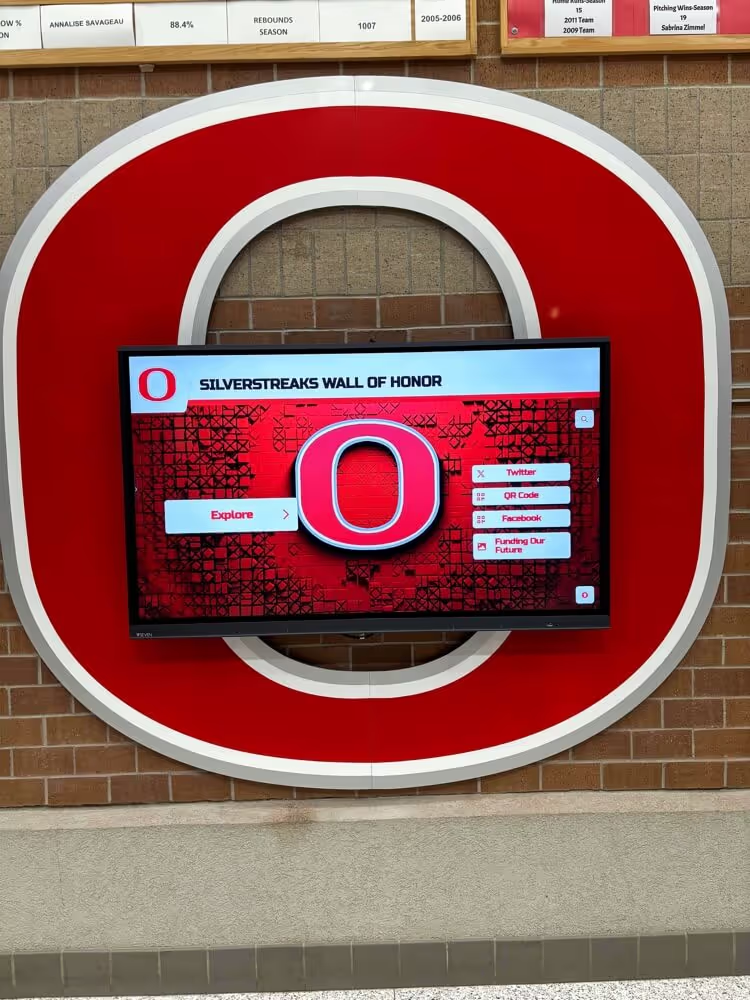
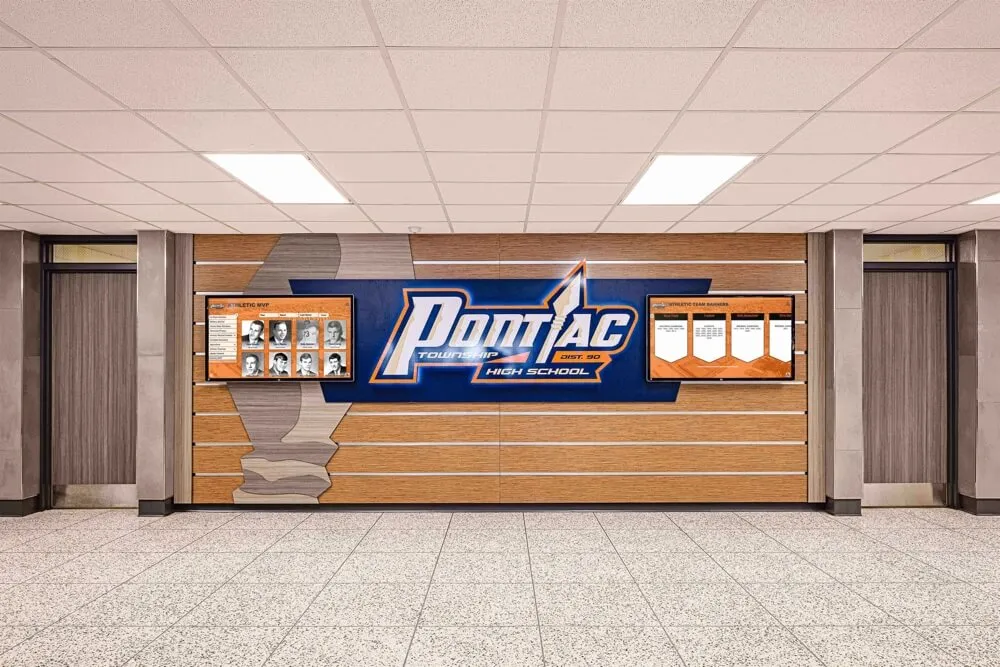
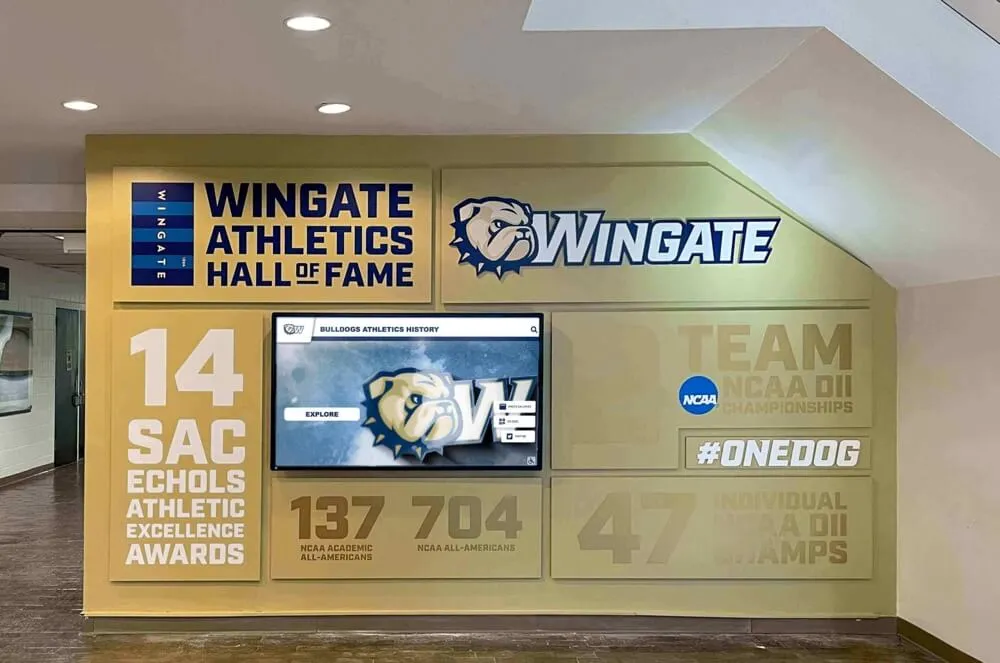
Integrated recognition displays allow schools to honor donors, athletes, and alumni through a single cohesive presentation system.
The Wall and the Story Working Together
Physical and digital donor walls answer the question: who gave? Donor spotlight videos answer the question: why did they give—and what happened because they did? Both answers matter. Neither is complete without the other.
The most effective donor recognition programs treat these media as partners, not competitors. The wall provides permanence and public visibility; the video provides depth and emotional resonance. A donor who sees both—their name displayed prominently alongside a digital record of their story—experiences recognition at a level that motivates continued engagement, increased giving, and advocacy to peers.
Schools investing in recognition infrastructure that supports both static naming and video content are building stewardship systems designed for the way donors actually process gratitude: not as a single transaction, but as an ongoing relationship with an institution that remembers them, tells their story, and means it.
Ready to Build a Recognition System That Tells Every Story?
DonorsWall by Rocket Alumni Solutions integrates video spotlights, dynamic giving tiers, and ADA-compliant digital displays into a recognition platform built specifically for schools, universities, and nonprofits. See how it works with a personalized walkthrough.
Book Your DonorsWall Demo