Every school corridor, hospital lobby, and nonprofit headquarters is a potential stage for your most important story: the one about the people whose generosity made your mission possible. A well-designed donor wall tells that story permanently, publicly, and powerfully—turning every passerby into a witness to the philanthropic culture your organization has built.
Yet many advancement teams invest in recognition displays without a clear planning framework, and the results disappoint. Names appear too small to read. Tiers feel arbitrary. Static plaques fill up before a campaign ends. The wall that was meant to honor donors instead sits forgotten in a side hallway that no one walks through.
This guide gives your team the planning frameworks, design principles, and content templates to build a donor wall that earns its space—honoring supporters at every giving level while serving as an active stewardship tool for years to come.
A donor wall is more than a list of names. Done well, it is an institutional commitment: a permanent declaration that generosity is visible, valued, and permanent in your organization’s culture. Done poorly, it is an expensive liability that donors notice only when their name is misspelled.
The difference lies in how thoroughly you plan before the first panel is installed or the first pixel is lit.

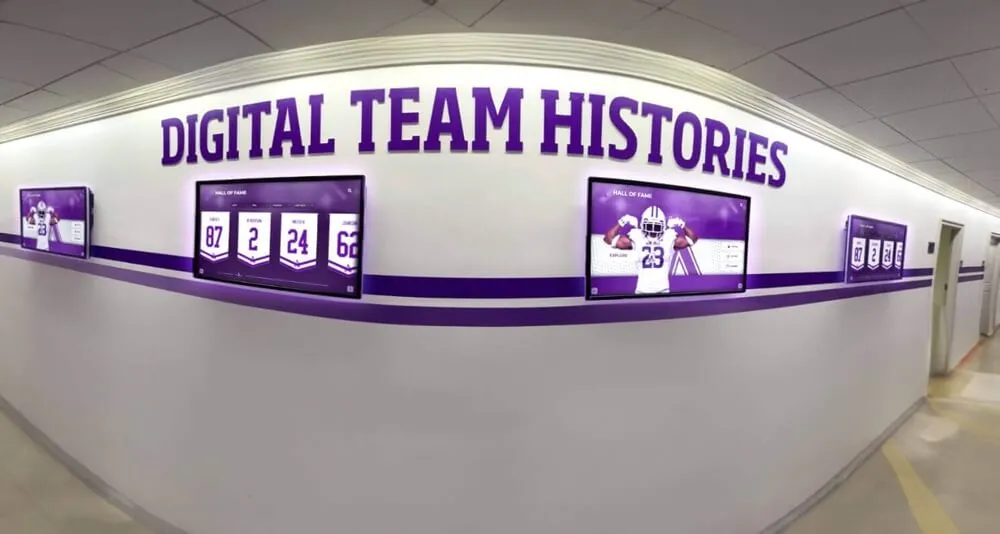
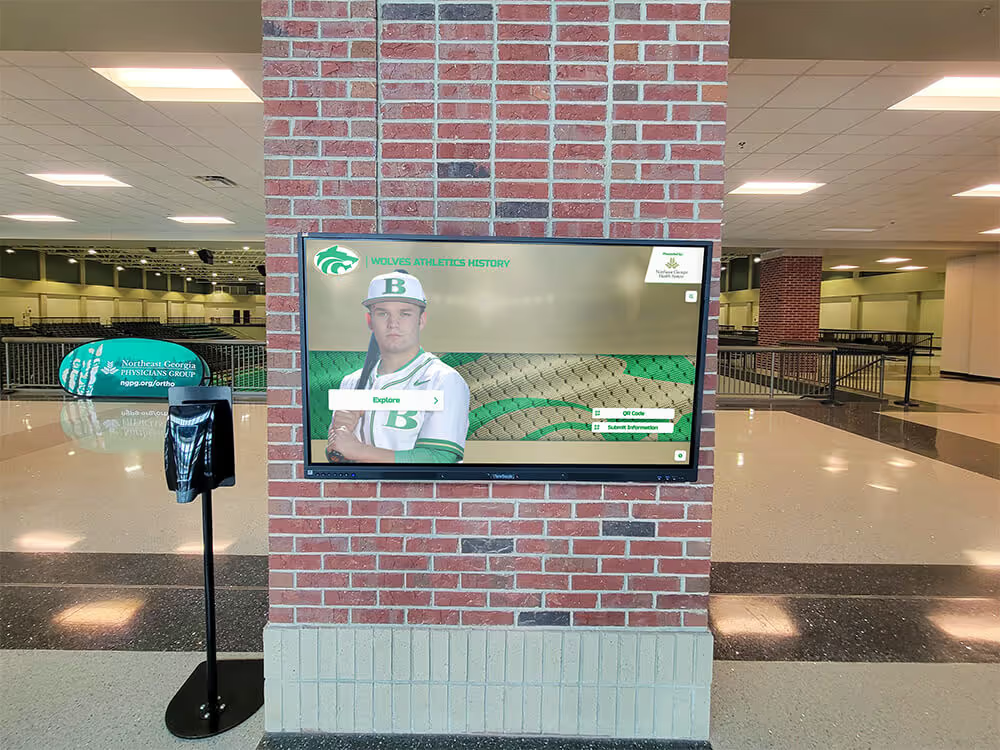
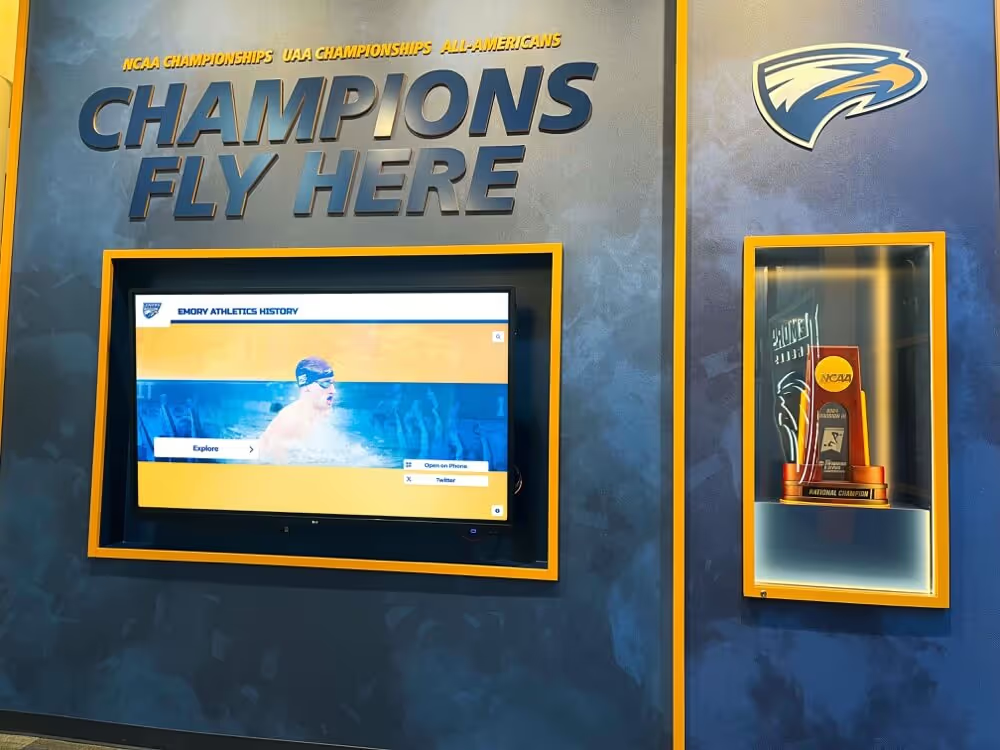
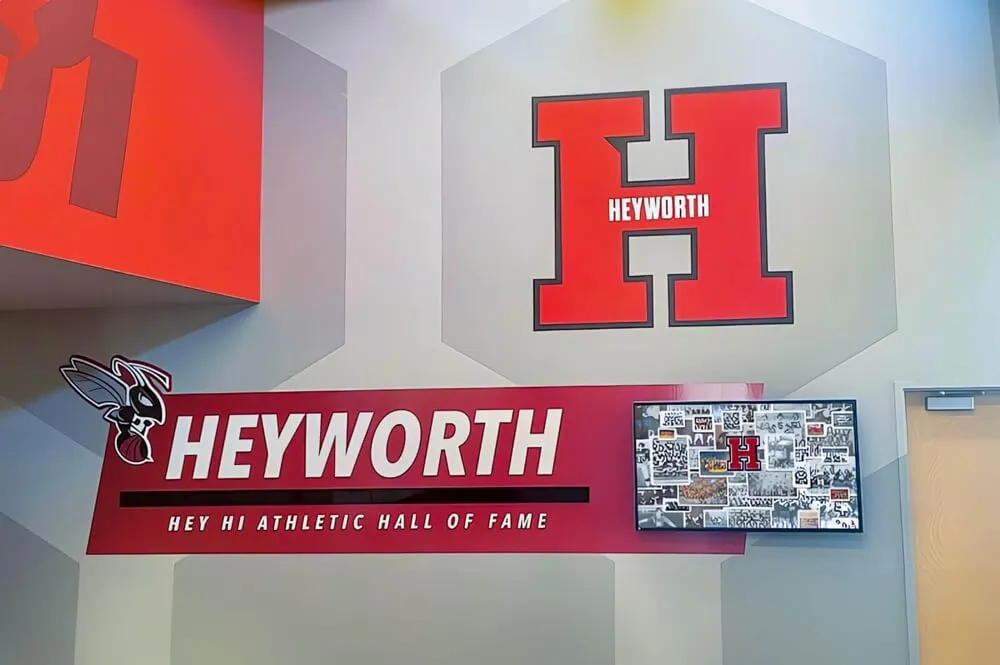
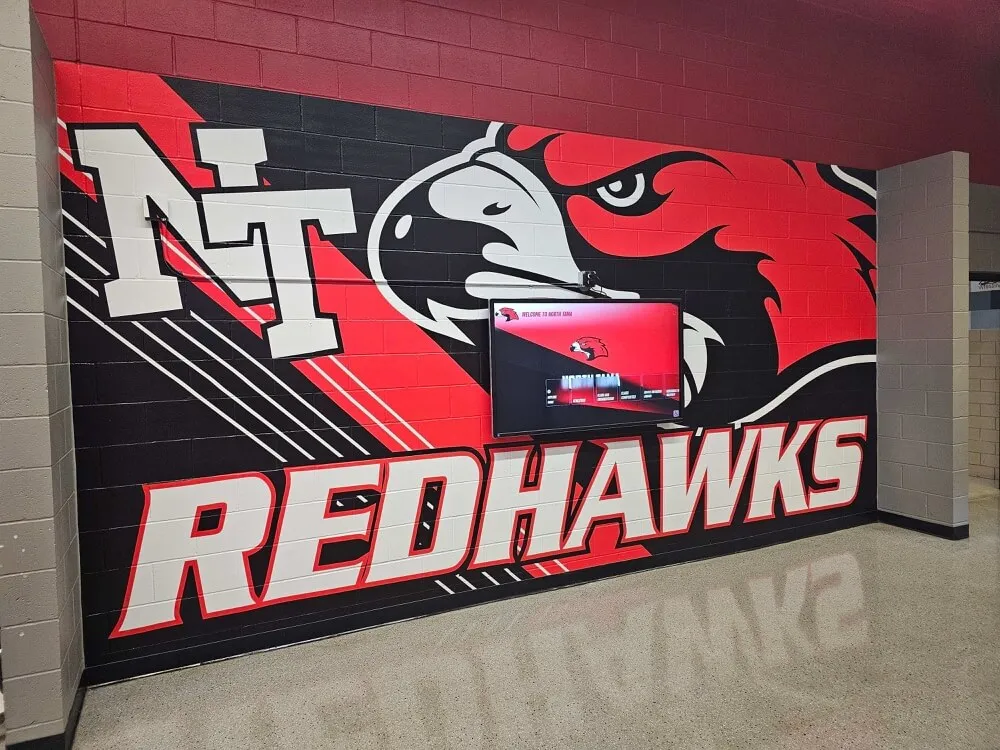
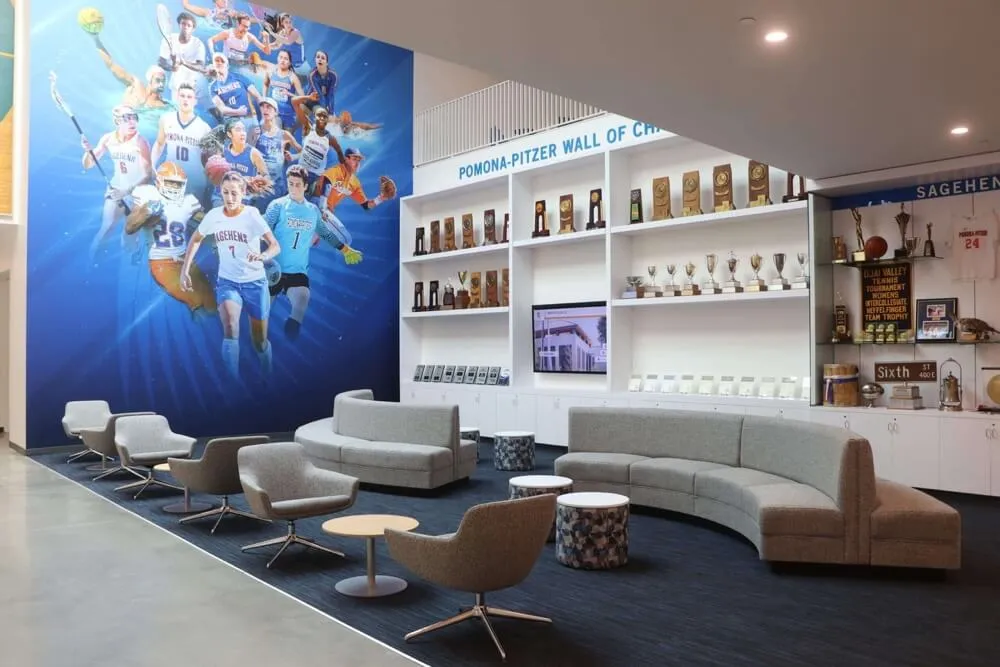
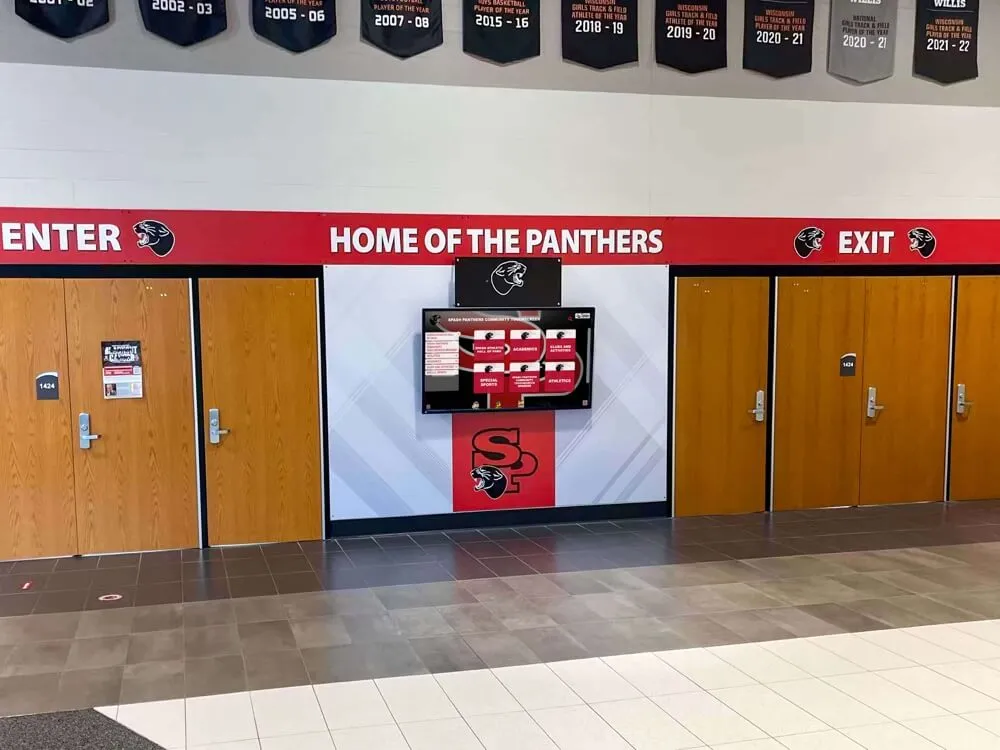
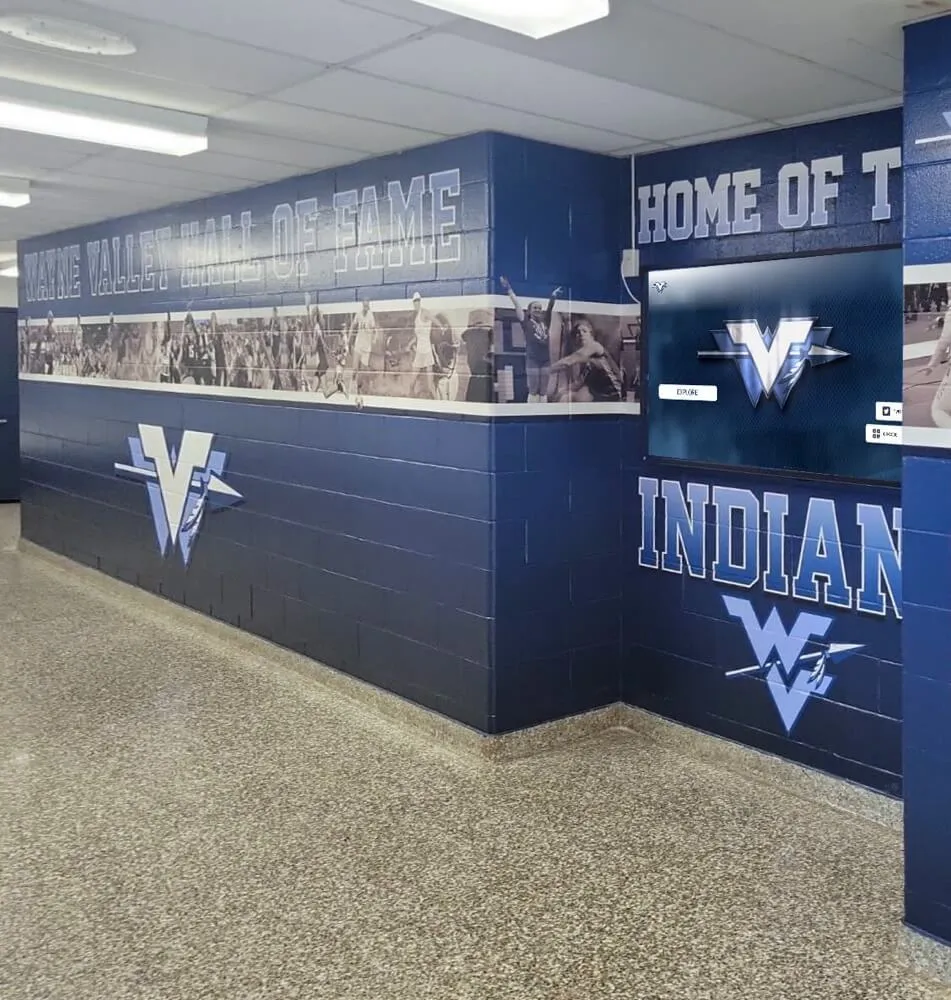
A prominently placed, thoughtfully designed donor wall signals to every visitor that generosity is celebrated and permanent in your institutional culture
What Is a Donor Wall and Why It Matters
A donor wall is a dedicated recognition installation—physical, digital, or hybrid—that publicly acknowledges individuals, families, foundations, and corporations who have supported an organization’s mission through financial gifts or pledges.
At its best, a donor wall accomplishes four simultaneous objectives:
1. Honoring commitments made. Recognition is the fulfillment of a promise made during solicitation. When donors give in exchange for a named space or public acknowledgment, a well-executed donor wall delivers on that promise with appropriate dignity.
2. Inspiring prospective donors. Visitors who see the names of respected community members among a wall’s honorees receive powerful social proof that giving to this organization is the right thing to do—and that it will be appropriately acknowledged.
3. Reinforcing institutional culture. A donor wall embedded in your organization’s most-trafficked space communicates values: generosity matters here, legacy is honored here, community is built here.
4. Sustaining the relationship. Every time a donor returns to campus or visits the facility, they encounter their own name—and the names of peers—in a context that reaffirms their decision to give. That positive reinforcement is a stewardship touchpoint that requires no additional staff effort.
Modern donor wall ideas have expanded far beyond engraved plaques. Today’s recognition displays can include searchable databases, campaign progress visualizations, donor photography, video testimonials, and real-time updates—all of which deepen the stewardship impact without requiring additional staff communication.
Types of Donor Walls: Physical, Digital, and Hybrid
Before choosing design elements, your team must decide what kind of donor wall will best serve your organization’s goals, budget, and community.
Physical Donor Walls
Traditional physical donor walls use engraved plaques, etched glass panels, cast metal letters, or laser-cut acrylic to present donor names in a permanent, tactile format. They communicate permanence and gravitas in ways digital screens alone cannot replicate.
Strengths of physical installations:
- Convey timelessness and institutional weight
- Require no power or network infrastructure
- Never display error messages or go offline
- Have an aesthetic that donors often prefer for major gifts
Limitations to plan for:
- Fixed capacity requiring new panels as campaigns grow
- Expensive to update when donor preferences change (name corrections, posthumous additions)
- Cannot display campaign progress, photos, or dynamic content
- Adding new tiers or campaigns requires significant new installations
Physical donor walls work well as permanent fixtures for naming gift honorees, endowment donors, and cornerstone campaigns where the list of honorees is relatively stable and the permanence of the medium matches the significance of the gift.
Digital Donor Walls
Digital recognition displays present donor content on screens—standalone kiosks, wall-mounted panels, or multi-screen installations—driven by software platforms that enable ongoing content management. Highlighting donor recognition through digital means unlocks capabilities impossible with physical media.
Strengths of digital installations:
- Unlimited capacity for donor entries with no physical expansion required
- Content updates manageable remotely by advancement staff, not IT vendors
- Rich media capabilities: photography, video testimonials, campaign progress bars
- Multiple campaigns or recognition programs displayed simultaneously
- ADA-compliant interfaces with adjustable text sizing and audio descriptions
- Interactive search enabling donors to find themselves and their giving history
Limitations to plan for:
- Require power, network connectivity, and periodic hardware maintenance
- Higher initial investment than a single physical plaque panel
- Aesthetic may feel less permanent to major gift donors accustomed to physical inscriptions
- Need content governance protocols to stay accurate and current
Digital donor walls excel in environments with ongoing campaigns, large and growing donor bases, multiple recognition programs running simultaneously, or organizations that want to tell rich donor stories beyond names and amounts.
Hybrid Donor Walls
The most effective installations for many schools and nonprofits combine both formats: permanent physical elements anchoring major naming gifts and cornerstone campaigns alongside digital screens expanding recognition to annual fund donors, recent gift recipients, and campaign progress visualization.
This approach honors the permanence expectations of transformational donors while offering unlimited, dynamic capacity for the broader giving community. Digital wall of honor plaques in hybrid configurations also allow organizations to reference the broader digital database from physical inscriptions—directing visitors to explore the full community of support on the interactive screen nearby.
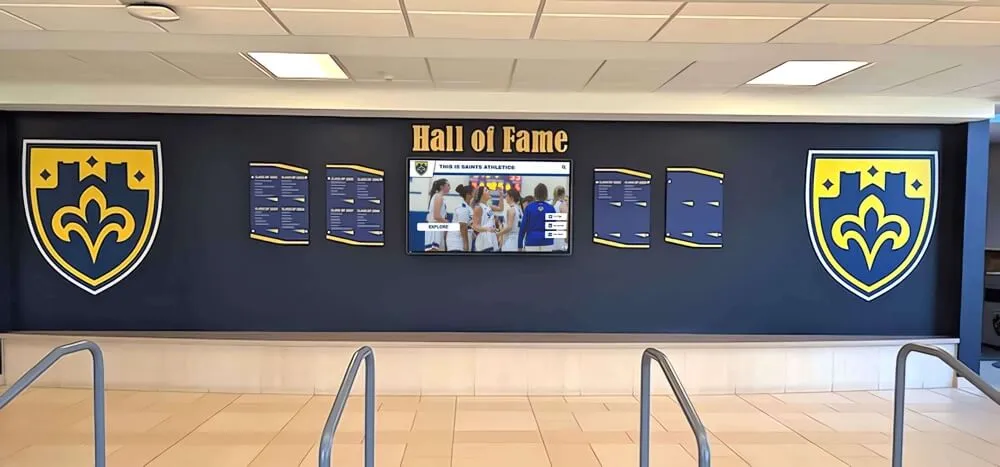
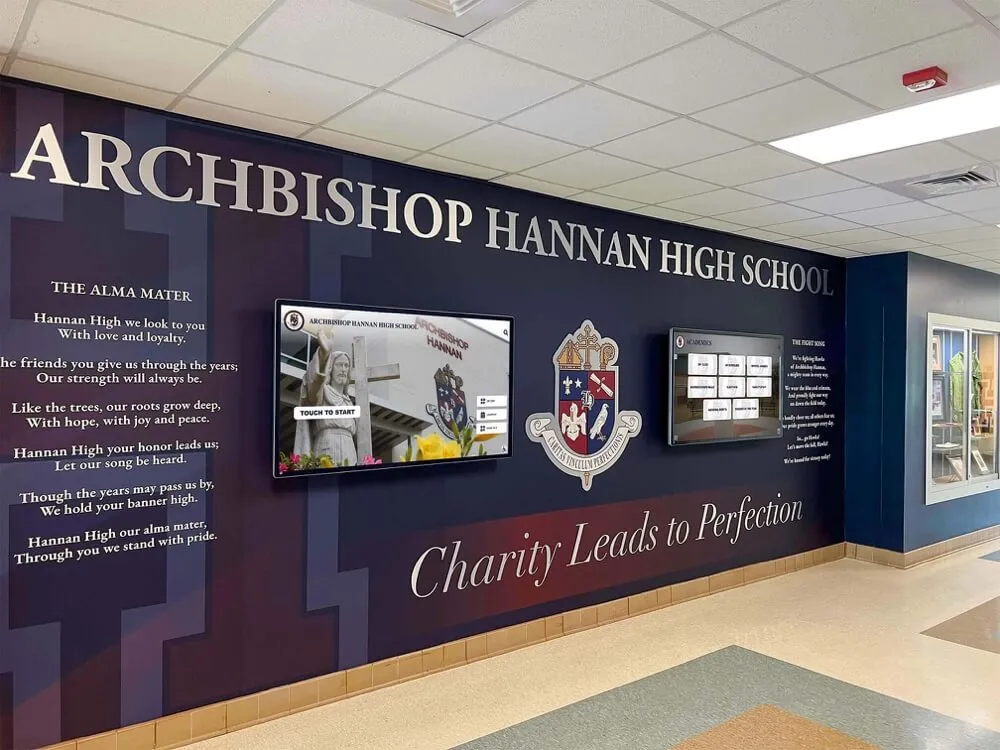
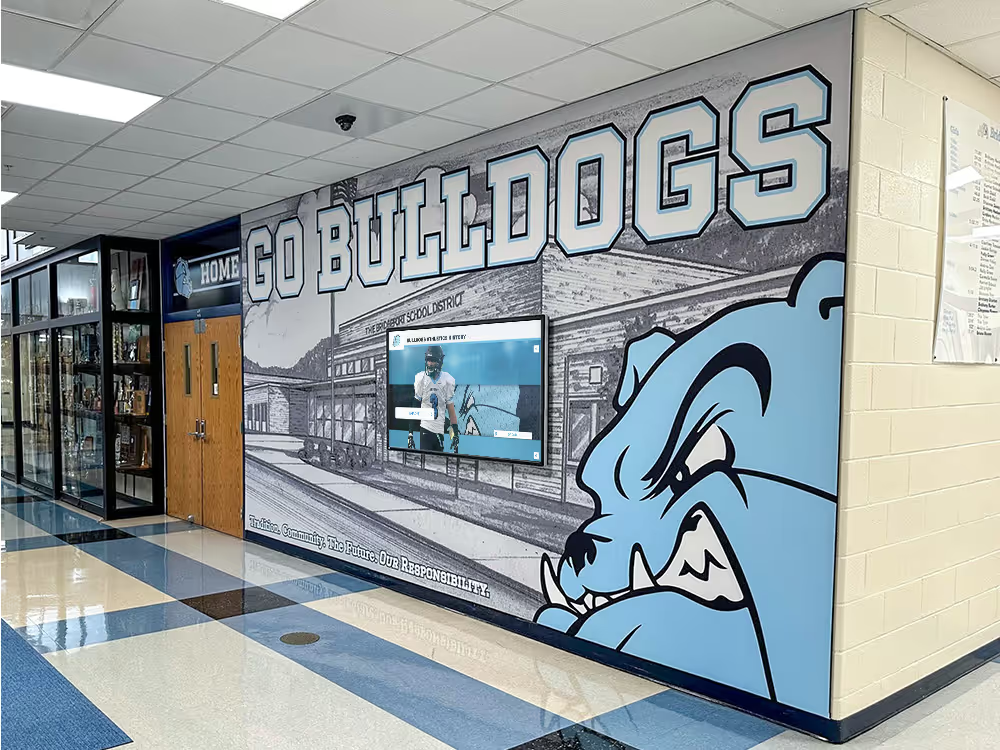
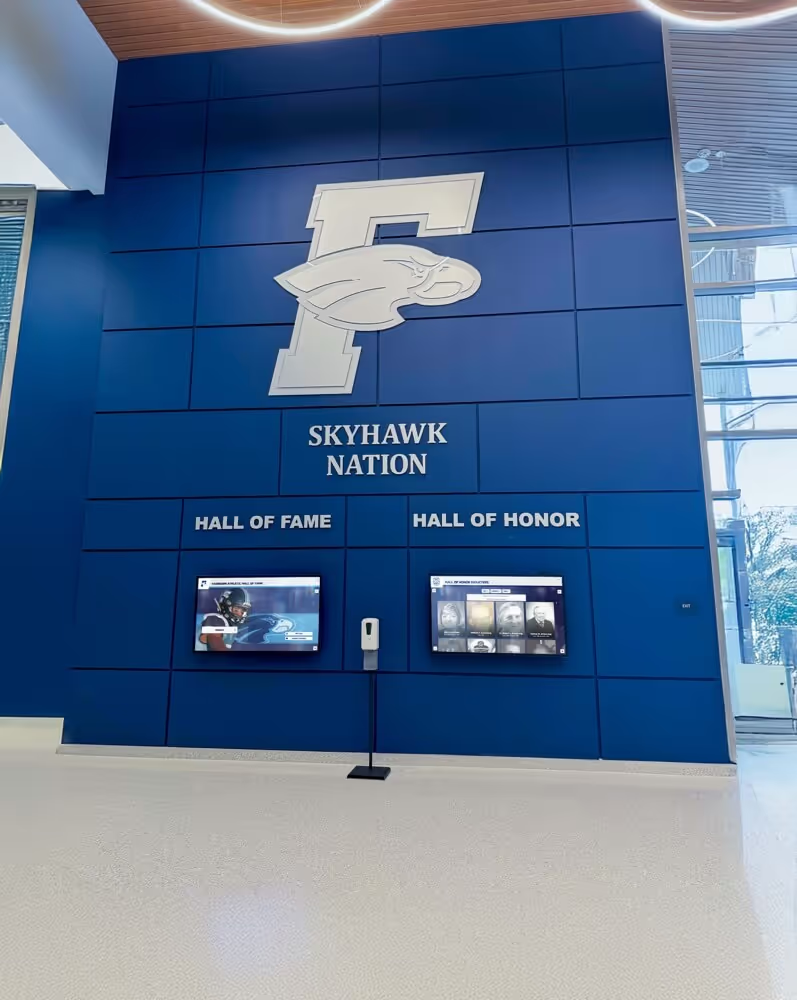
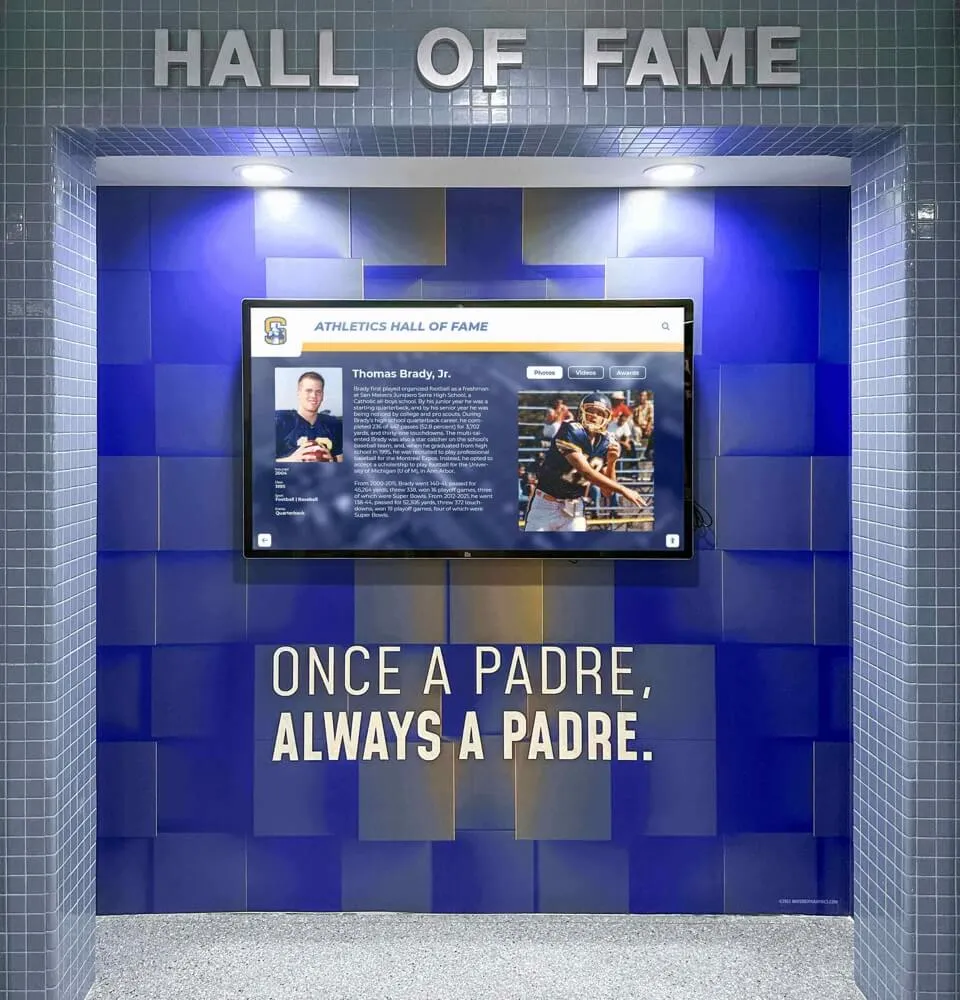
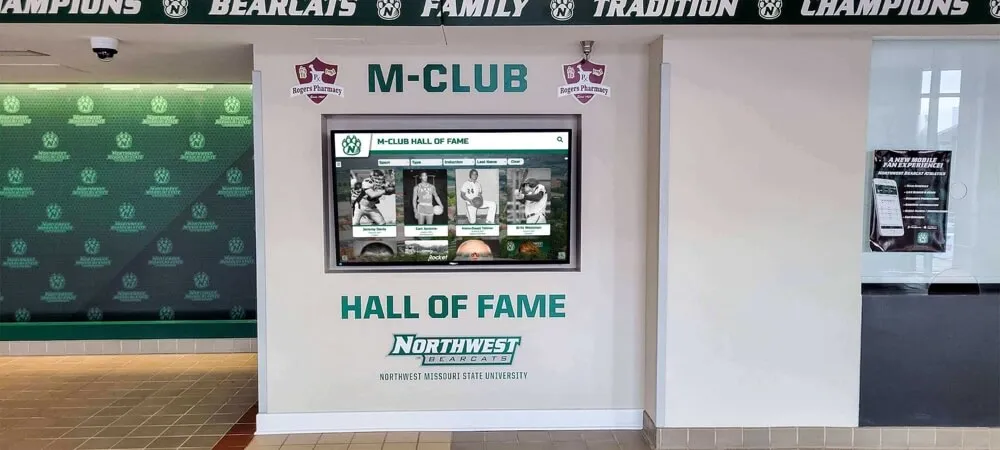
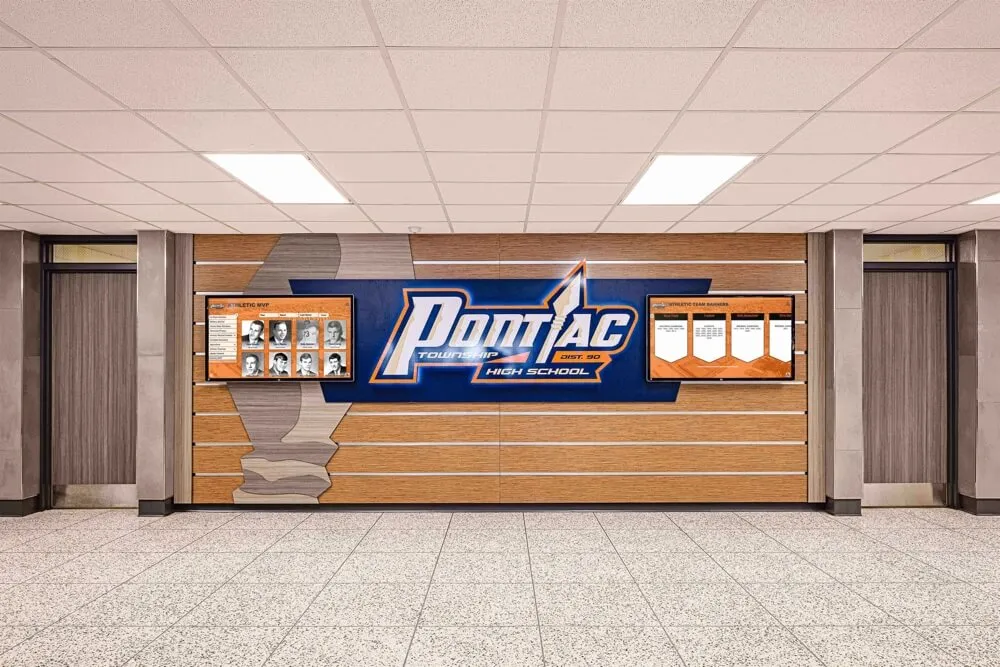
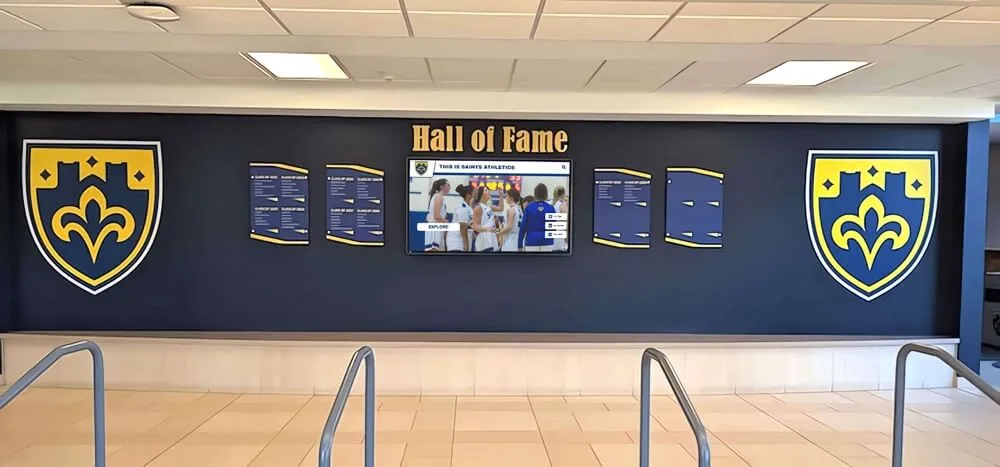
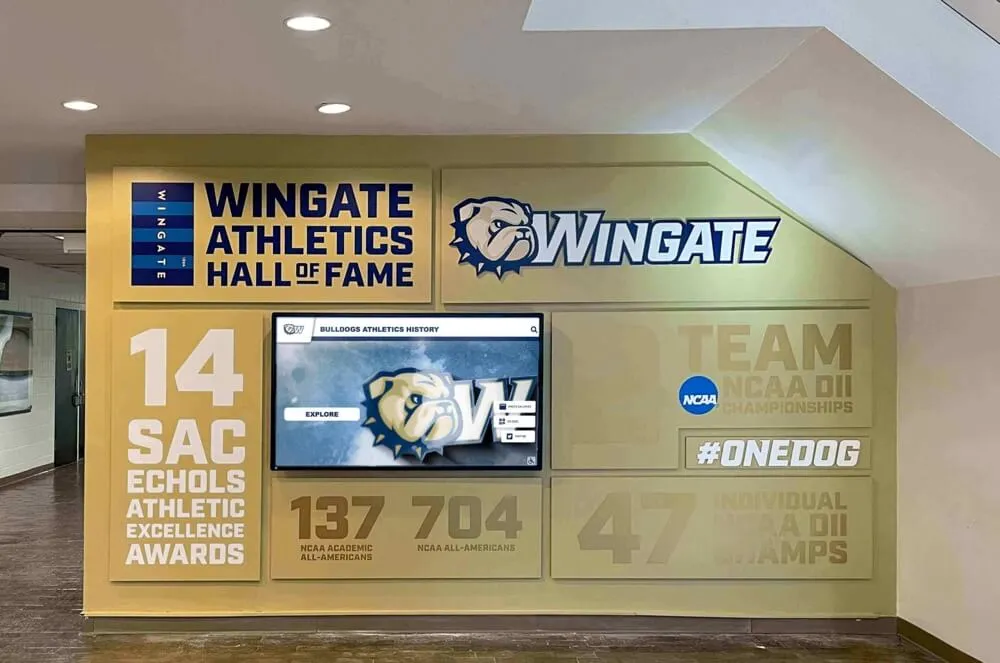
Hybrid installations combine the permanence of physical recognition elements with the flexibility and scale of digital displays
Core Design Principles for Effective Donor Walls
Regardless of the medium you choose, effective donor wall design rests on a handful of principles that separate recognition installations that earn their space from those that disappoint donors and collect dust.
Principle 1: Hierarchy That Honors Without Excluding
Tiered recognition is the backbone of every donor wall. Donors at different giving levels expect recognition that reflects the difference in their contributions—but poorly calibrated hierarchy can make lower-level donors feel like second-class supporters.
Effective tier structures follow these guidelines:
- Every giving level gets genuine recognition. If a donor sees their name in tiny 8pt font at the bottom of a packed list while $100,000+ donors appear in 3-inch custom fabricated letters, the subconscious message is that their gift barely mattered. Use appropriate size differentiation without relegating mid-level donors to unreadable type.
- Tier names should carry meaning, not just convey amount. “Friends of the Mission,” “Community Builders,” and “Legacy Circle” communicate belonging and aspiration; “$1–$499” and “$500–$999” communicate nothing beyond transaction size.
- Cumulative giving pathways reward loyalty. Track lifetime giving, not just single-gift amounts. A donor who gives $500 annually for ten years deserves recognition that reflects their $5,000 cumulative investment.
Donor recognition display ideas that pair tiered naming with cumulative tracking create systems where retention is baked into the recognition structure itself—donors who see themselves one tier short of the next level up have a compelling, personal reason to renew.
Principle 2: Placement That Earns Views
The most beautifully designed donor wall delivers zero stewardship value if no one walks past it. Traffic is recognition’s multiplier.
High-impact placement locations for schools:
- Main lobby and entrance foyers
- Athletic facilities, gymnasiums, and field houses
- Libraries and academic commons
- Alumni reception areas and advancement offices
- Hallways connecting primary academic buildings
High-impact placement for nonprofits:
- Public-facing reception and lobby areas
- Event and gathering spaces where donors attend functions
- Program delivery spaces where donors can see impact directly
- Board meeting rooms for governance-level recognition
Avoid secondary hallways, basement corridors, or spaces accessible only to staff. If your donor wall isn’t on the path that constituents actually walk, it isn’t doing stewardship work.
Principle 3: Content That Tells a Story Beyond Names
A list of names and amounts is a spreadsheet, not a recognition display. Meaningful donor walls include contextual content that connects gifts to impact and gives donors a sense of the community they’ve joined.
Strong donor wall content includes:
- Campaign framing text explaining what donors collectively supported and why it mattered
- Impact callouts describing what a specific gift level funded in tangible terms
- Donor photography (with permission) that humanizes recognition
- Giving milestones and campaign totals that celebrate collective achievement
- Founding donor spotlights that tell the origin story of your organization’s philanthropic community
Recognition displays that combine name lists with storytelling content generate significantly more visitor engagement than pure name panels—and create naturally longer dwell time that reinforces the stewardship messages your advancement team has invested in crafting.
Principle 4: Scalability Built In From the Start
The most common and most expensive design mistake in donor wall planning is building for today’s donor count without accounting for tomorrow’s growth.
A physical plaque that looks perfectly proportioned for 85 donors becomes visually chaotic when 200 more names need to be added. A digital system designed for one campaign creates presentation problems when a second, larger campaign launches. A tier structure calibrated for last year’s major gift threshold may misalign with next year’s capital campaign parameters.
Planning for scalability means:
- Choosing materials or platforms that allow additions without requiring a complete redesign
- Building tier structures around organizational giving history, not current campaign snapshot
- Selecting digital platforms with unlimited donor capacity and multiple campaign support
- Building “white space” into physical installations that future panels can fill gracefully
Wall of fame ideas for schools and nonprofits that plan for multi-year growth from the start save significant budget and avoid the donor relations challenge of explaining why their name looks different in the expanded version than it did in the original installation.
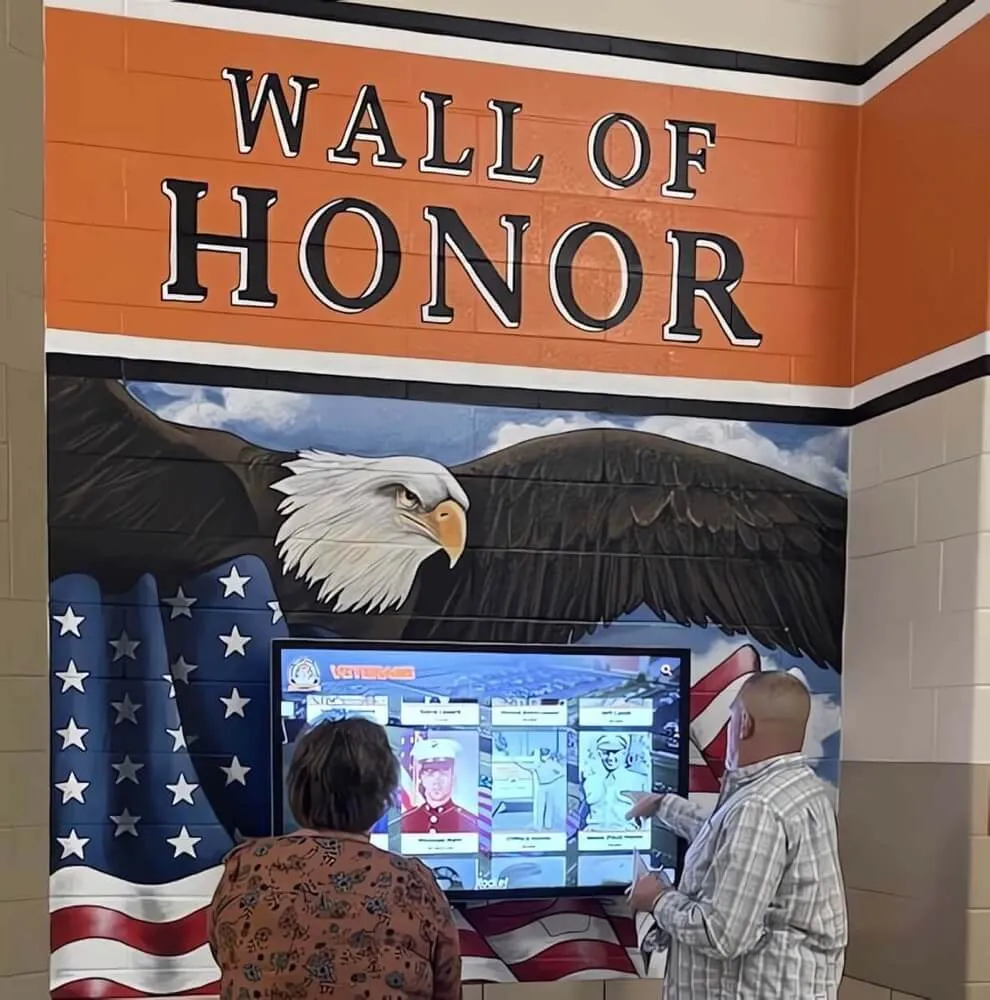
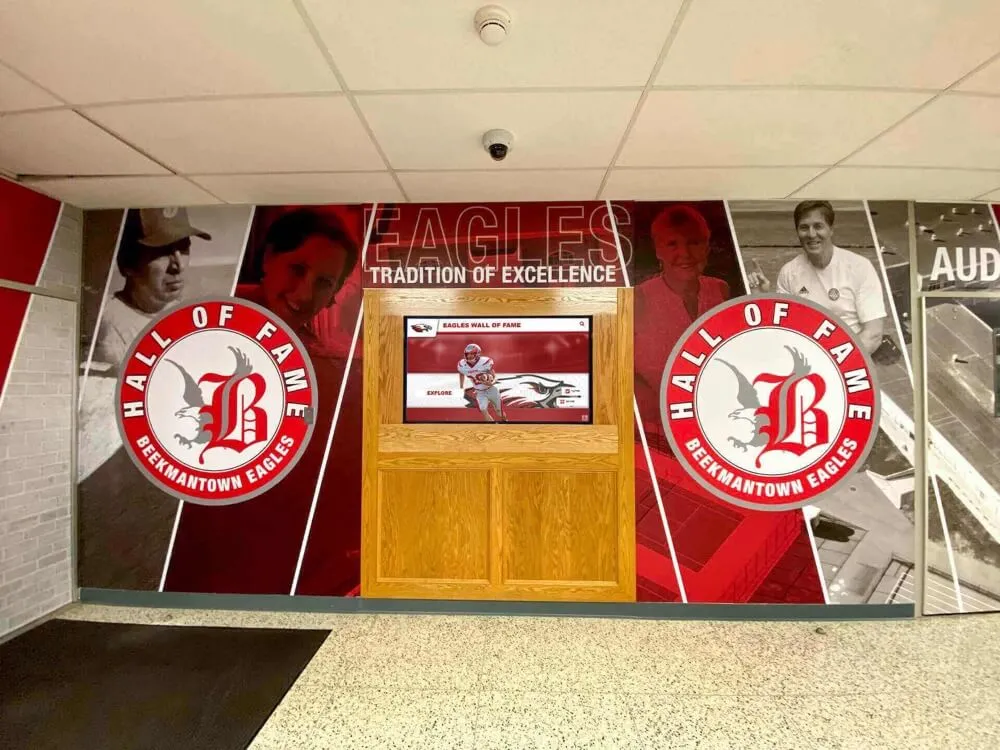
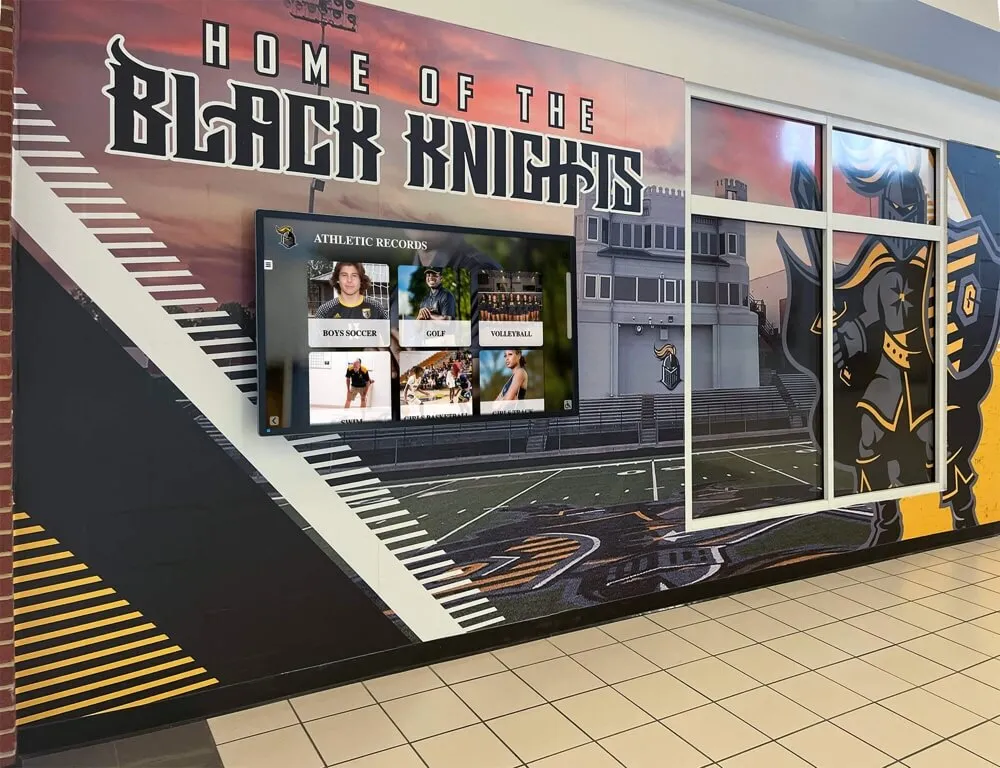
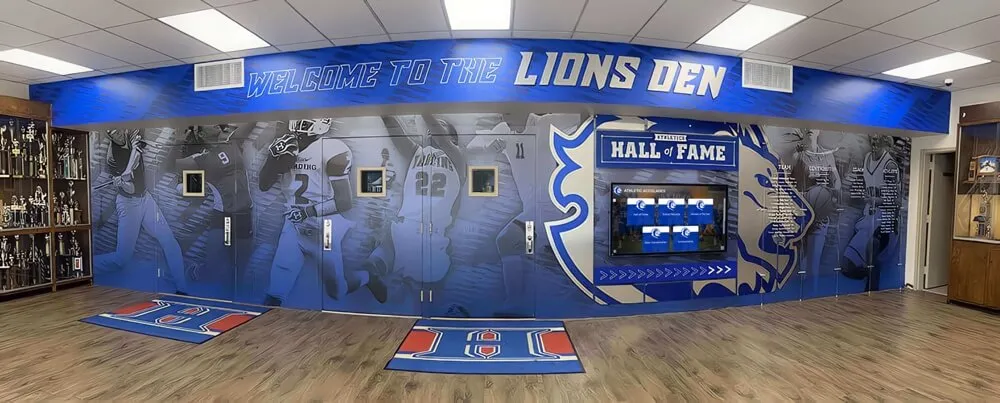
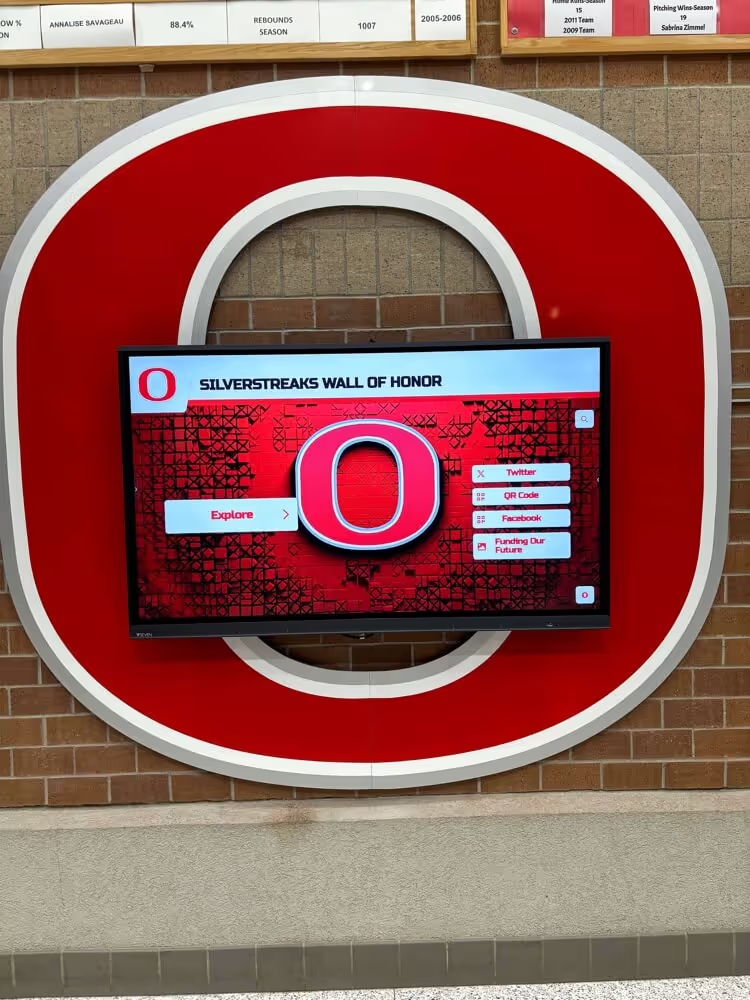
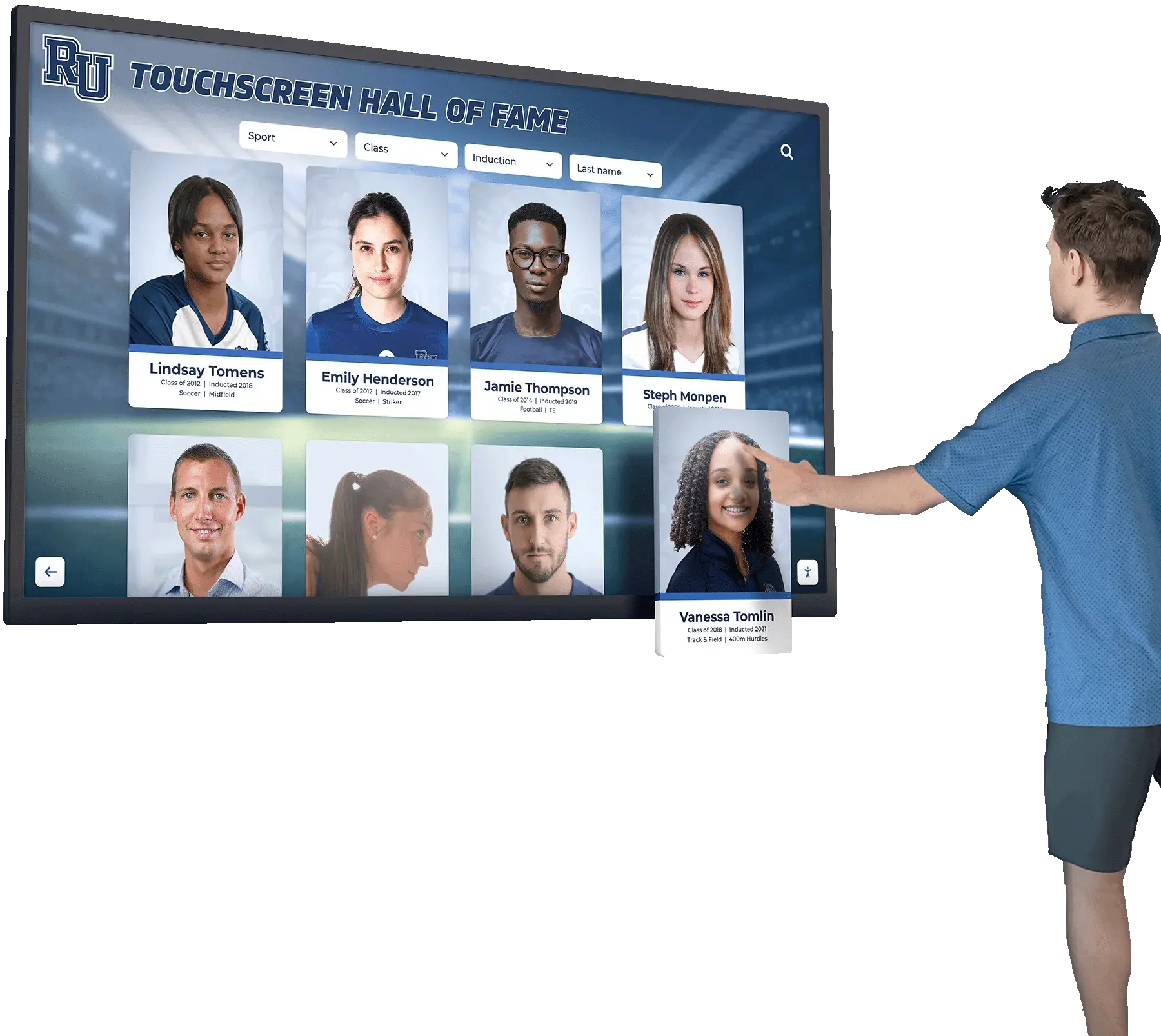
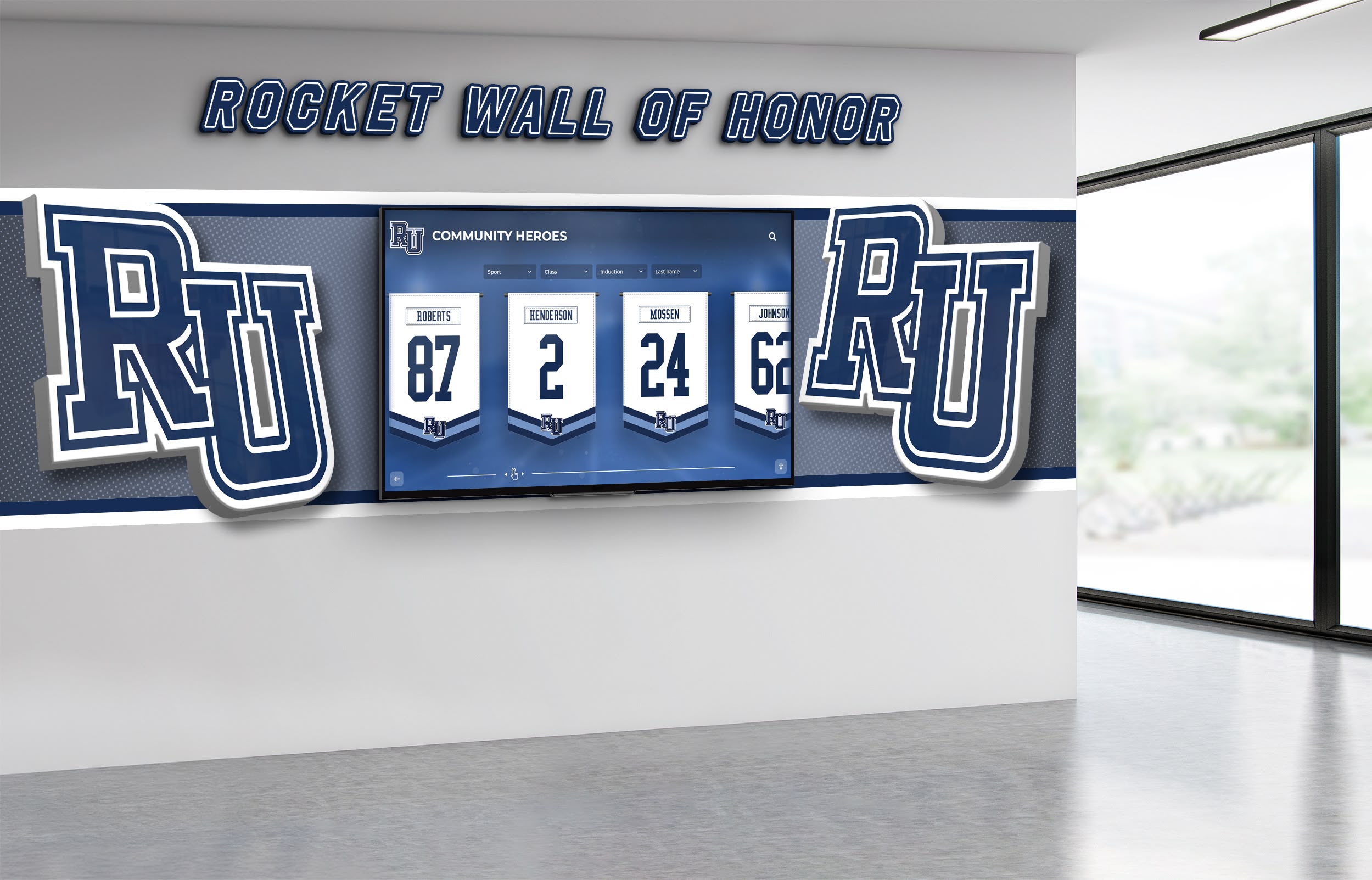
Well-placed interactive donor walls become destinations that visitors naturally gravitate toward—generating stewardship value every time someone new engages with the display
Donor Wall Recognition Tier Framework
Use the following framework as a starting point for designing recognition tiers aligned with your organization’s giving history and campaign objectives. Customize all naming, thresholds, and benefit structures before publication.
╔══════════════════════════════════════════════════════════════════════════╗
║           DONOR WALL RECOGNITION TIER PLANNING FRAMEWORK                ║
╠═══════════════════╦═══════════════════╦════════════════════════════════╣
║ Tier Name         ║ Suggested Range   ║ Recognition Treatment          ║
╠═══════════════════╬═══════════════════╬════════════════════════════════╣
║ Community Friends ║ $1 – $499         ║ Listed on digital display;     ║
║                   ║                   ║ annual report listing;         ║
║                   ║                   ║ personalized acknowledgment    ║
╠═══════════════════╬═══════════════════╬════════════════════════════════╣
║ Community         ║ $500 – $2,499     ║ All above + featured name      ║
║ Builders          ║                   ║ panel on donor wall;           ║
║                   ║                   ║ invitation to recognition      ║
║                   ║                   ║ event; handwritten note from   ║
║                   ║                   ║ executive director or head     ║
╠═══════════════════╬═══════════════════╬════════════════════════════════╣
║ Legacy Partners   ║ $2,500 – $9,999   ║ All above + named feature      ║
║                   ║                   ║ recognition in lobby or main   ║
║                   ║                   ║ hall; VIP event access;        ║
║                   ║                   ║ personal leadership call       ║
╠═══════════════════╬═══════════════════╬════════════════════════════════╣
║ Founding Circle   ║ $10,000 –         ║ All above + individual donor   ║
║                   ║ $49,999           ║ profile with photo and bio on  ║
║                   ║                   ║ digital display; named program ║
║                   ║                   ║ or space opportunity;          ║
║                   ║                   ║ annual stewardship report      ║
╠═══════════════════╬═══════════════════╬════════════════════════════════╣
║ Heritage Patron   ║ $50,000+          ║ All above + permanent physical ║
║                   ║                   ║ inscription; facility/program  ║
║                   ║                   ║ naming rights; advisory board  ║
║                   ║                   ║ invitation; perpetual digital  ║
║                   ║                   ║ profile with rich media        ║
╚═══════════════════╩═══════════════════╩════════════════════════════════╝

CUSTOMIZATION NOTES:
• Adjust dollar thresholds to reflect your organization's giving pyramid
• Tier names should align with your mission language and community culture
• Conduct a pre-launch donor audit to assign all existing donors appropriately
• Publish the tier structure in solicitation materials so donors know what
  recognition to expect before making their gift
• Review and update thresholds after each major campaign cycle
• Track cumulative lifetime giving for tier upgrades to reward long-term loyalty
Installation Considerations: What Your Donor Wall Needs to Succeed
Even the most beautiful design fails if the installation falls short. Installing digital displays in schools and nonprofits requires planning across several practical dimensions that design firms and vendors sometimes underemphasize.
Power and network access. Digital donor walls require reliable power and—for remote content management—either a network connection or a remote access solution. Budget for conduit runs during renovation projects rather than surface-mounting visible cables after the fact.
Lighting conditions. Lobby environments often include significant natural light from windows and skylights. Screens that look beautiful in a vendor’s showroom may wash out completely in your space. Specify anti-glare glass and appropriate brightness ratings for your lighting conditions before ordering hardware.
ADA compliance. Touch-interactive elements must meet height and reach-range requirements for wheelchair users. Interactive donor walls with touch interfaces should position primary interaction zones between 15 and 48 inches from the finished floor level, per ADA guidelines. Consider audio descriptions for screen content and ensure visual designs meet WCAG contrast standards.
Viewing distances. Text size on donor wall displays must be legible from the distances at which visitors actually stop to look—not from 12 inches in front of the screen. Conduct a sightline evaluation in your actual space and verify minimum readable distances before finalizing typography specifications.
Maintenance access. Understand what happens when hardware requires service. Donor walls mounted flush into millwork or behind custom facades may require architectural modification for panel replacement. Specify service access panels and understand your vendor’s on-site support terms before signing contracts.
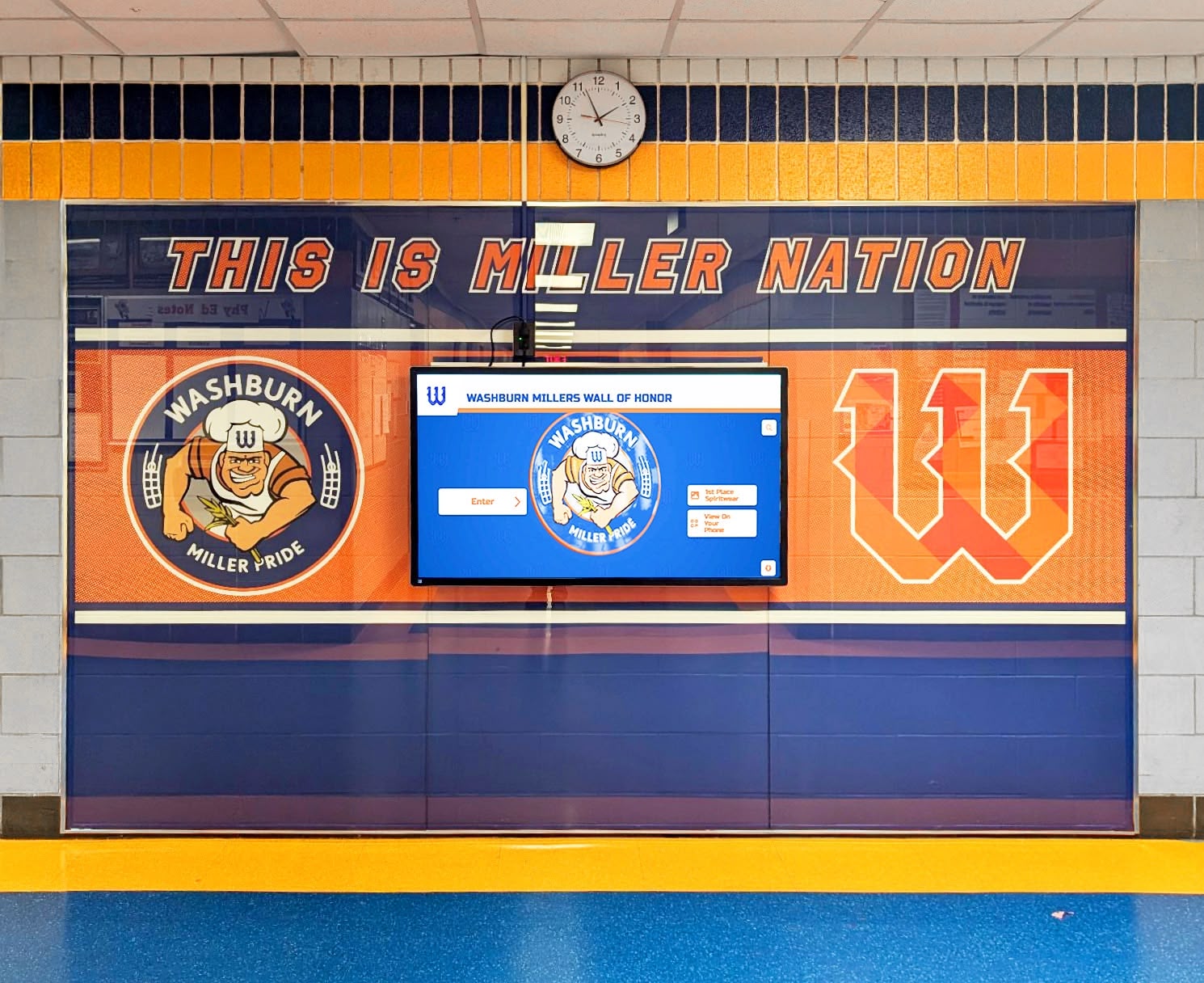
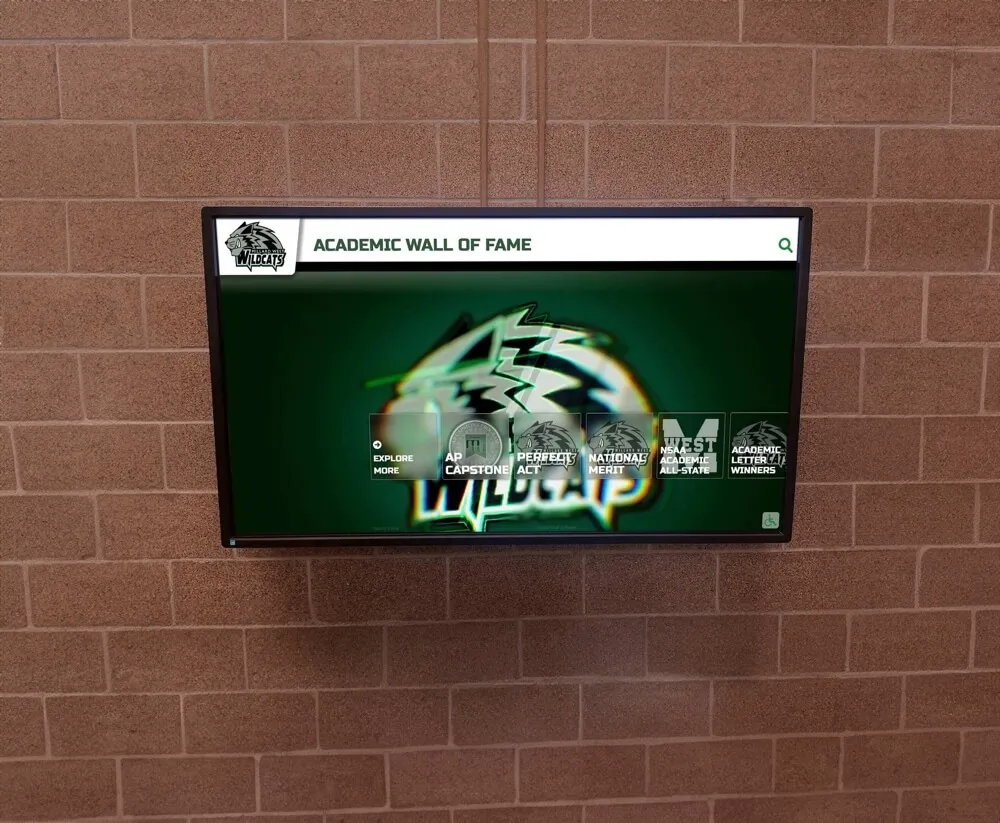
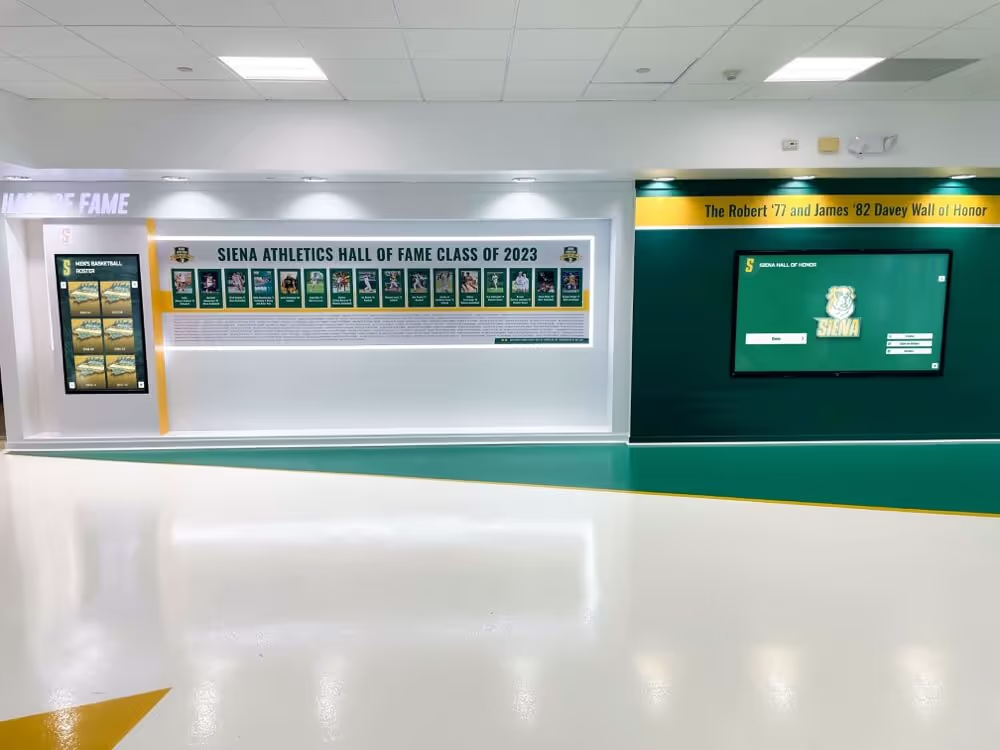
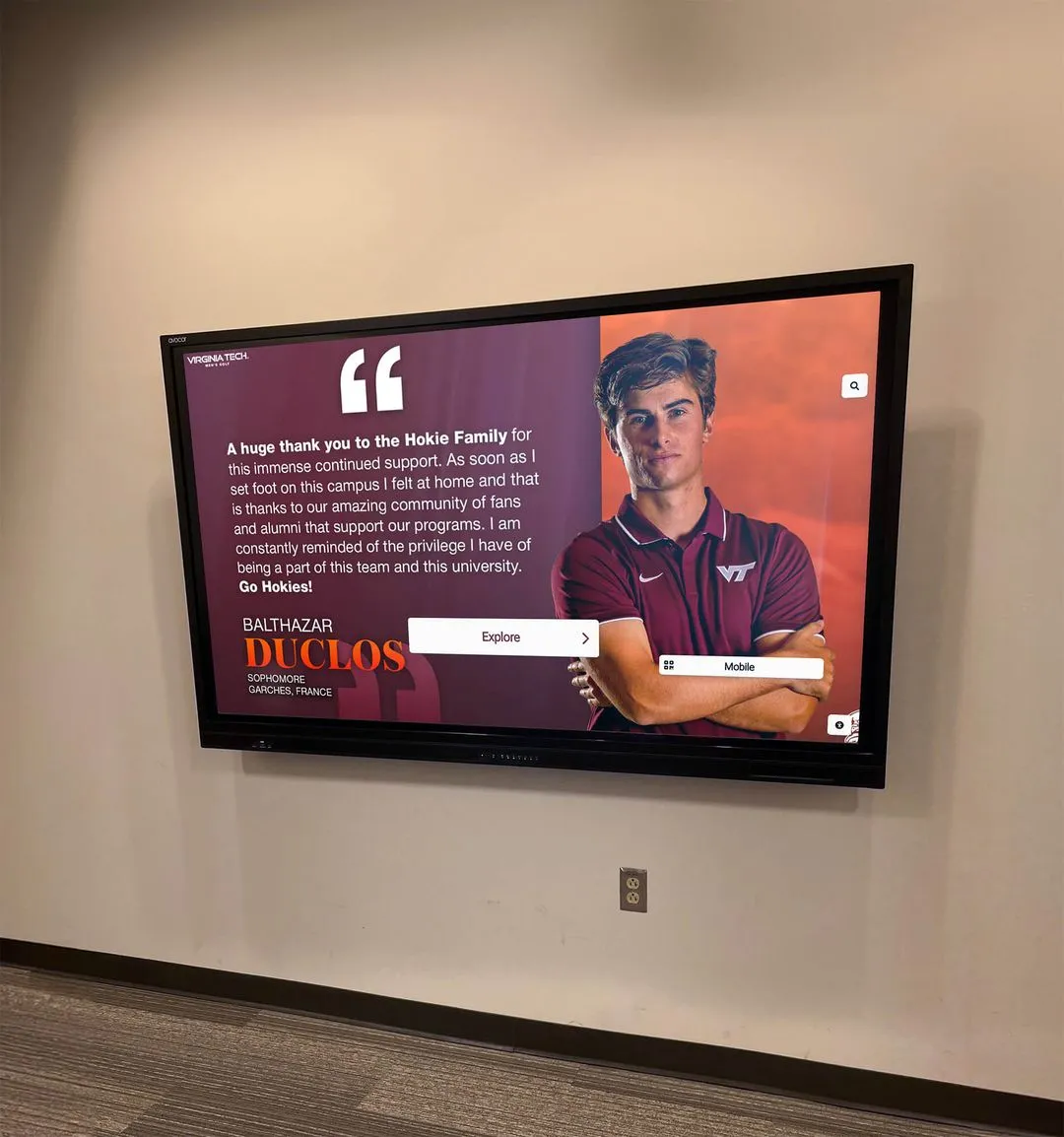
Thoughtful hardware placement—considering lighting, viewing distance, and accessible mounting heights—is as important as visual design in creating effective donor walls
Digital Donor Wall Advantages for Growing Organizations
For organizations with multiple ongoing campaigns, large supporter communities, or ambitious growth plans, digital donor walls offer capabilities that justify the additional investment over traditional physical-only installations.
Unlimited, updatable donor capacity. Every advancement team eventually faces the painful conversation of explaining to donors why the wall is “full.” Digital platforms eliminate this constraint entirely. Adding new donors takes minutes, not fabrication orders.
Campaign progress visualization. Live thermometers, participation rate displays, and milestone celebrations are only possible digitally. These elements transform a static list into a live fundraising communication tool—particularly valuable during capital campaigns when momentum is strategically important.
Multiple concurrent recognition programs. Many organizations need to display annual fund donors, capital campaign contributors, endowment society members, and named scholarship holders simultaneously. Digital platforms support tabbed navigation or filtered views that give each recognition category appropriate space without visual competition.
Remote content management. Advancement staff can update recognition displays from anywhere—adding new donors immediately after gift processing rather than waiting for the next fabrication cycle or vendor service visit. This timeliness matters: donors who see their names added promptly feel respected; those who wait months feel afterthought.
Donor storytelling beyond names. Custom memorial plaque ideas and tribute profiles can include photographs, biographical context, personal giving motivation statements, and connections to specific funded programs—depth of recognition impossible in traditional inscription formats.
Digital history archiving. Organizations accumulate decades of donor history. Digital history archive functionality allows all historical donors to be included in searchable databases—so a donor who gave in 1987 appears alongside a donor who gave last month, preserving institutional memory while continuing to honor long-term loyalty.
Interactive touchscreen platforms—like those offered by Rocket Alumni Solutions—combine all of these capabilities in purpose-built platforms for schools and nonprofits, with ADA-compliant interfaces, remote content management, and unlimited donor capacity built to serve advancing communities for many years.
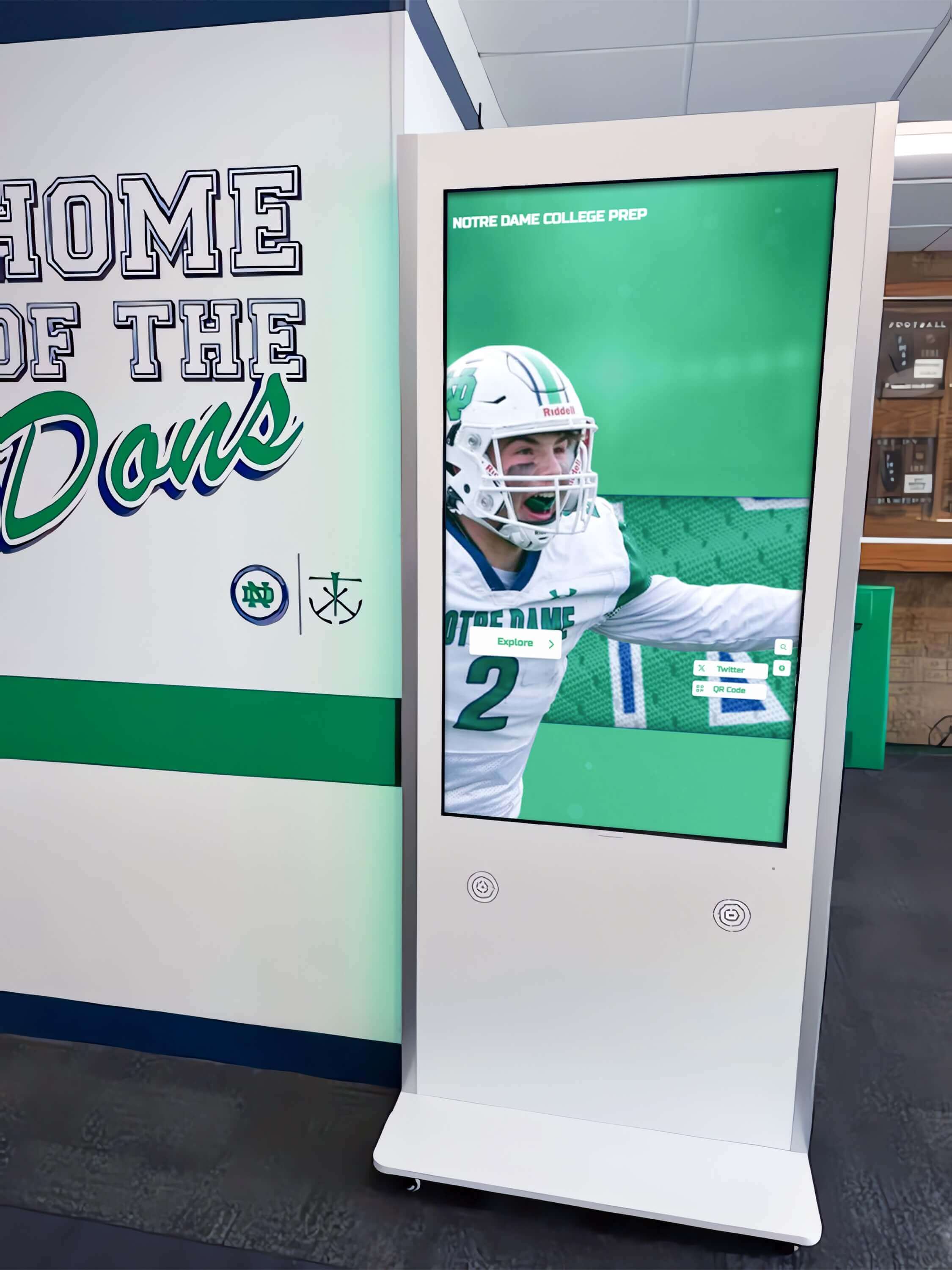
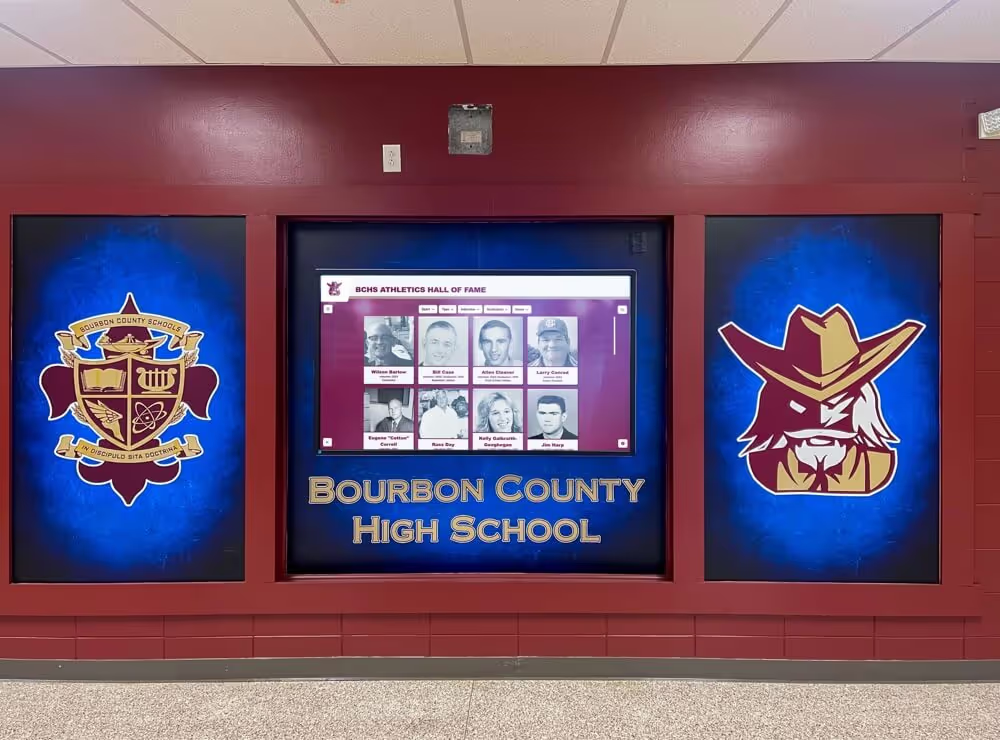
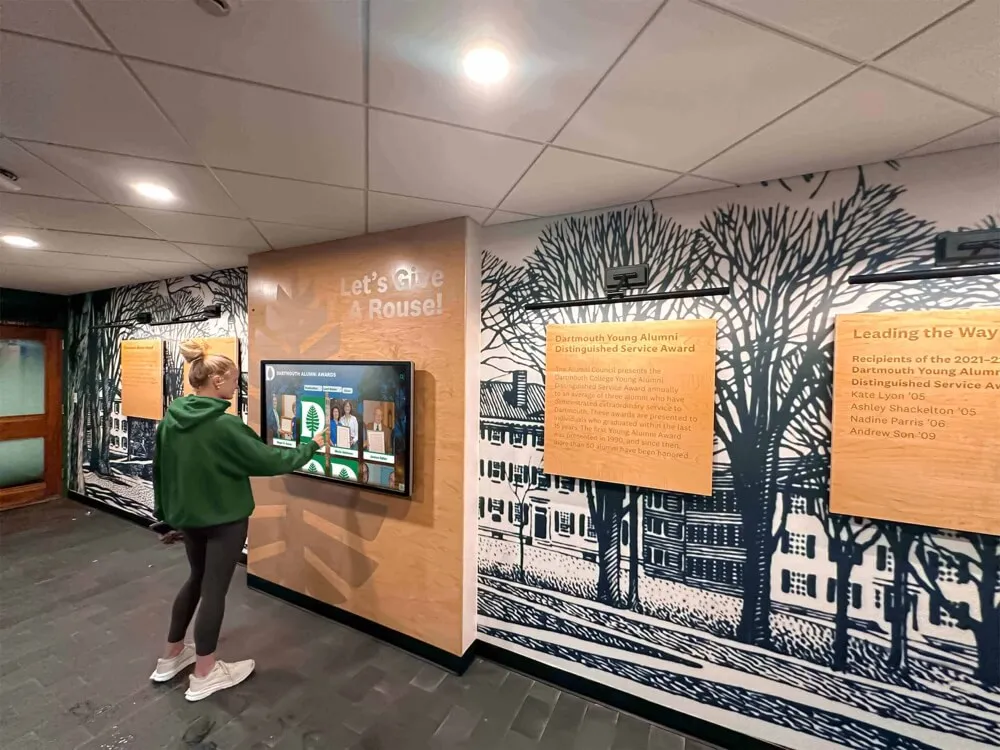
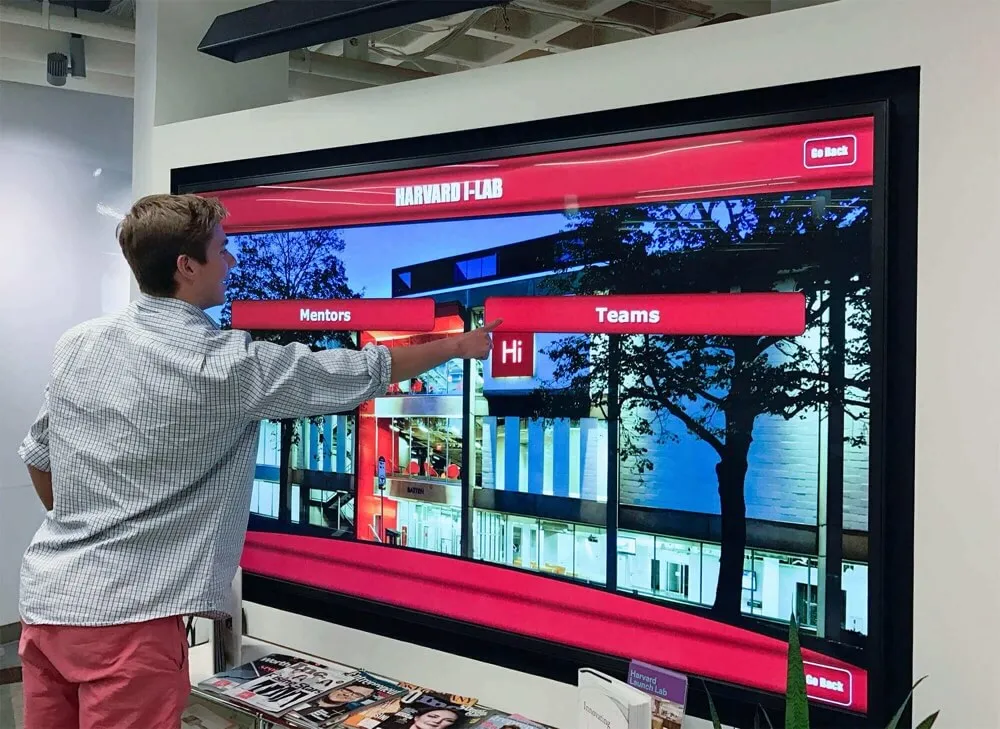
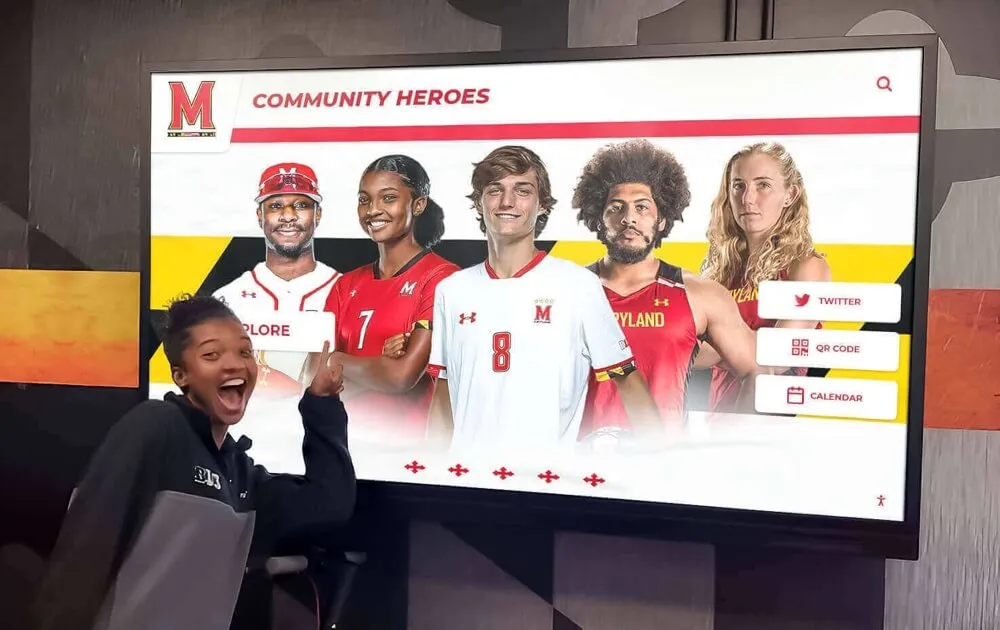
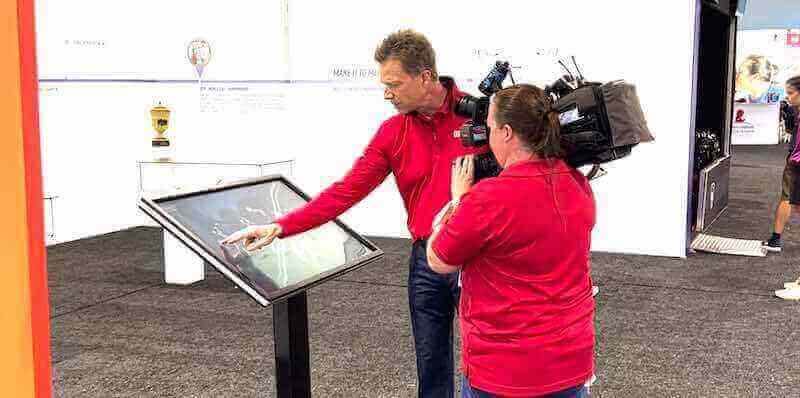
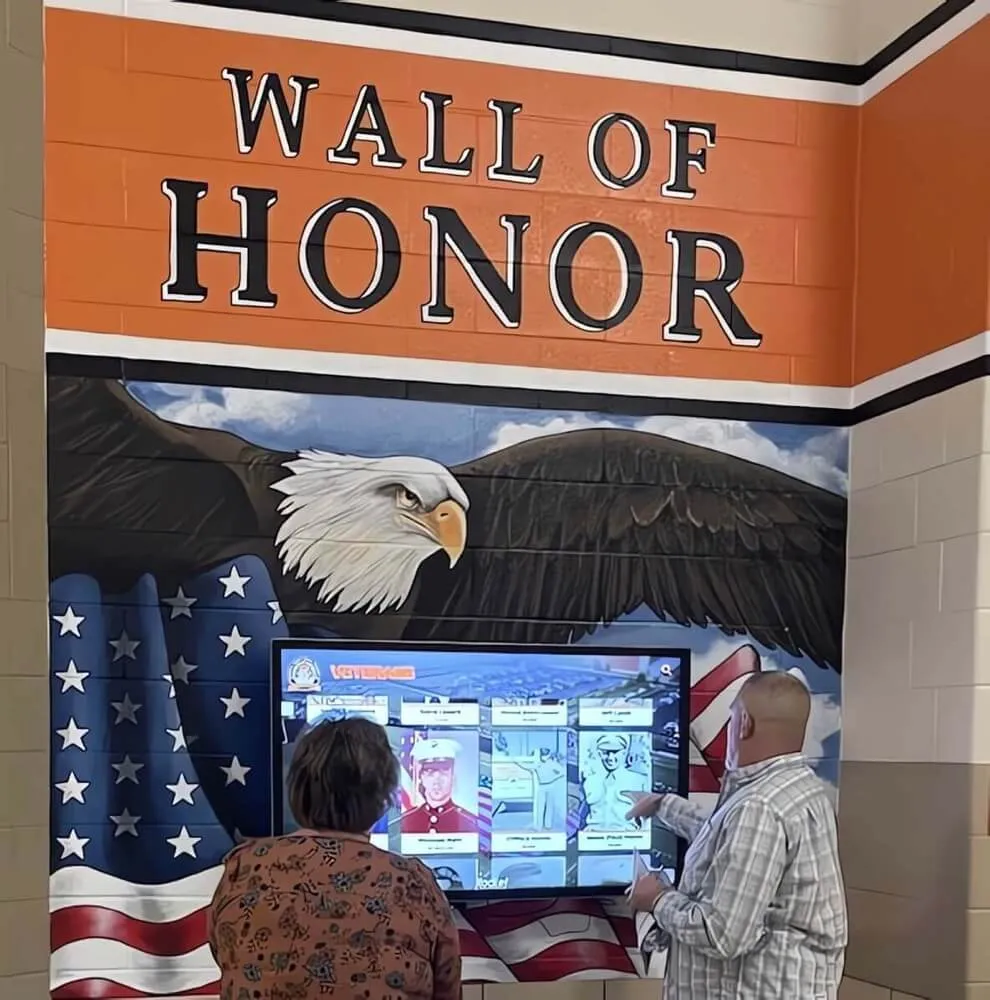
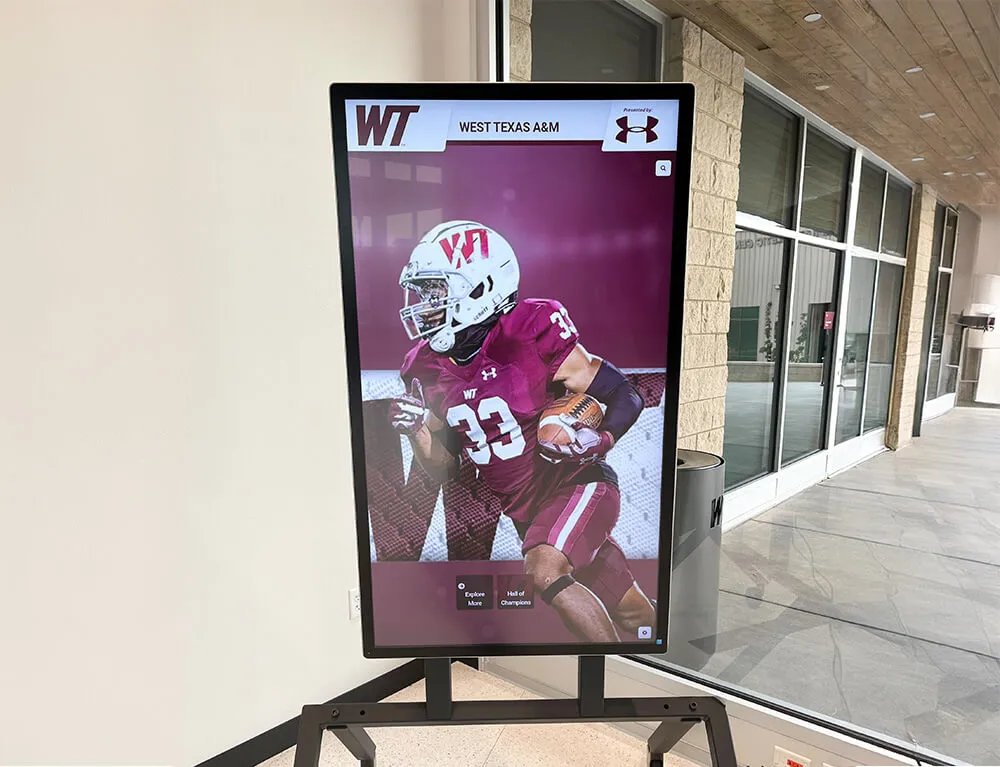
Interactive touchscreen donor walls invite exploration—visitors naturally search for familiar names, spend more time with the display, and carry the stewardship message further than passive viewers
Donor Wall Content Template: What to Include and Where
Before launching any recognition installation, plan your content architecture using a framework that organizes what appears on the wall and how it’s maintained.
DONOR WALL CONTENT PLANNING TEMPLATE

SECTION 1: CAMPAIGN IDENTITY HEADER
• Campaign or program name (required)
• Tagline or mission statement (1-2 sentences)
• Total raised or participation milestone (update periodically)
• Date range covered (e.g., "Gifts received 2018–present")

SECTION 2: TIER NAVIGATION
• List all recognition tiers by name (not by dollar amount in public view)
• Indicate total donors at each tier level
• Link to full donor lists by tier

SECTION 3: FEATURED DONOR SPOTLIGHT (ROTATE PERIODICALLY)
• Donor name and photo (with permission)
• Brief giving motivation statement (2-3 sentences maximum)
• Program or space their gift supported
• Refresh monthly, quarterly, or at event milestones

SECTION 4: COMPREHENSIVE DONOR DATABASE
• All donors organized by tier, then alphabetically
• Include class year, graduation year, or affiliation where relevant
• Filter options: tier, campaign year, designation
• Search function by name

SECTION 5: IMPACT STATEMENTS (BY TIER OR CAMPAIGN)
• What each tier of giving collectively funded
• Program or capital improvement made possible
• Student, patient, or community outcomes supported
• Avoid invented statistics; use verifiable organizational data only

SECTION 6: HOW TO GIVE (FOR KIOSK OR INTERACTIVE INSTALLATIONS)
• Brief invite to join the donor community
• QR code or URL to giving page
• Contact information for major gift inquiries

CONTENT GOVERNANCE NOTES:
• Assign one staff member as primary content owner
• Establish update frequency for each section above
• Create approval workflow for new donor entries before display
• Document privacy policy for photo usage and biographical content
• Audit full database annually for accuracy and tier alignment
Common Donor Wall Mistakes to Avoid
Learning from frequent planning failures saves organizations from expensive redesigns and, more importantly, from donor relations problems that erode the relationship recognition is meant to strengthen.
Misspelled or incorrectly formatted names. A donor whose name appears incorrectly on a permanent installation does not feel honored—they feel overlooked and irritated. Before any installation goes live, verify every name with the donor or their contact record. For physical installations, build in a proof-review step with time for corrections before fabrication.
Inconsistent tier treatment across campaigns. Organizations that launch new recognition tiers without auditing how they align with previous campaigns create situations where long-term donors appear at lower levels than newer donors whose gifts are technically smaller. Conduct a cumulative giving review before establishing new tier thresholds.
Launching before all donors are included. Donors who attend an unveiling event and discover their name isn’t on the wall yet experience the opposite of recognition. Ensure complete donor lists are finalized, verified, and loaded before any public launch or unveiling event.
Installing in low-traffic spaces. Donor walls that no one sees produce no stewardship value. If the only available wall space is in a secondary location, invest in directional signage that brings visitors to the recognition installation.
No content update plan. A digital donor wall that hasn’t been updated in two years signals institutional inattention just as clearly as a physical wall that’s visibly full. Establish a content governance protocol with ownership, update schedules, and review processes before your system goes live.
Fundraising ideas for schools that build recognition into the fundraising structure from the start—rather than treating it as an afterthought once gifts arrive—consistently outperform campaigns that treat recognition as administrative overhead.
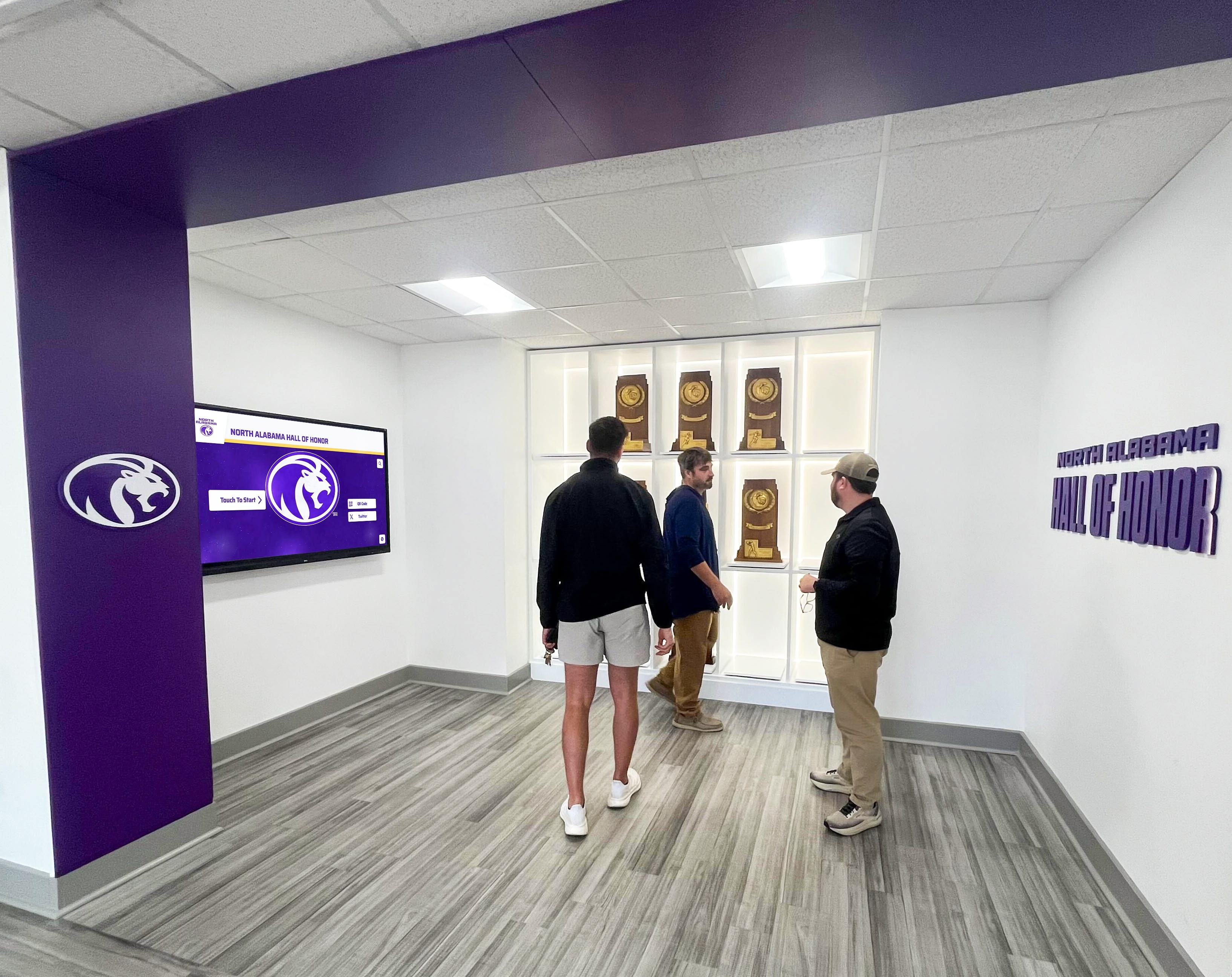
Recognition spaces that bring community members together—donors, alumni, staff, students—create the shared pride that transforms individual transactions into collective culture
Donor Wall Launch and Ongoing Stewardship Calendar
A successful donor wall launch is an event in itself—an opportunity to deepen relationships with supporters whose names will appear and to inspire prospective donors who attend. Build your rollout around this calendar framework:
60 days before launch: Finalize donor database; complete all name verification; assign content owner and establish update protocols; draft unveiling event invitations.
45 days before launch: Proof all content with appropriate internal reviewers; resolve any disputes about tier placement, name formatting, or giving level assignment; confirm installation date with vendor.
30 days before launch: Send unveiling event invitations to all donors being recognized; brief leadership on recognition remarks; prepare media or social communications plan.
Unveiling event: Personally acknowledge major donors; give brief remarks connecting the wall to organizational mission; photograph donors with their recognition for stewardship use; capture testimonials from honored supporters.
30 days post-launch: Send stewardship communication to all recognized donors featuring images from the unveiling; include note about ongoing ability to update their recognition with new gifts.
Ongoing (quarterly minimum): Add new donors promptly after gift processing; rotate featured spotlight content; update campaign progress metrics; audit existing entries for accuracy.
Build a Donor Wall That Earns Its Space
Rocket Alumni Solutions provides schools, universities, and nonprofits with digital donor wall platforms that combine unlimited recognition capacity, rich storytelling tools, remote content management, and ADA-compliant interfaces designed for institutional environments. Our platforms support multiple simultaneous campaigns, cumulative giving tracking, campaign progress visualization, and donor profile depth that static plaques simply cannot achieve.
Whether you’re launching a first formal recognition installation or replacing an outdated physical plaque wall that’s run out of room, our team works with your advancement office to design a recognition experience that honors every supporter meaningfully and serves your stewardship strategy for years to come.