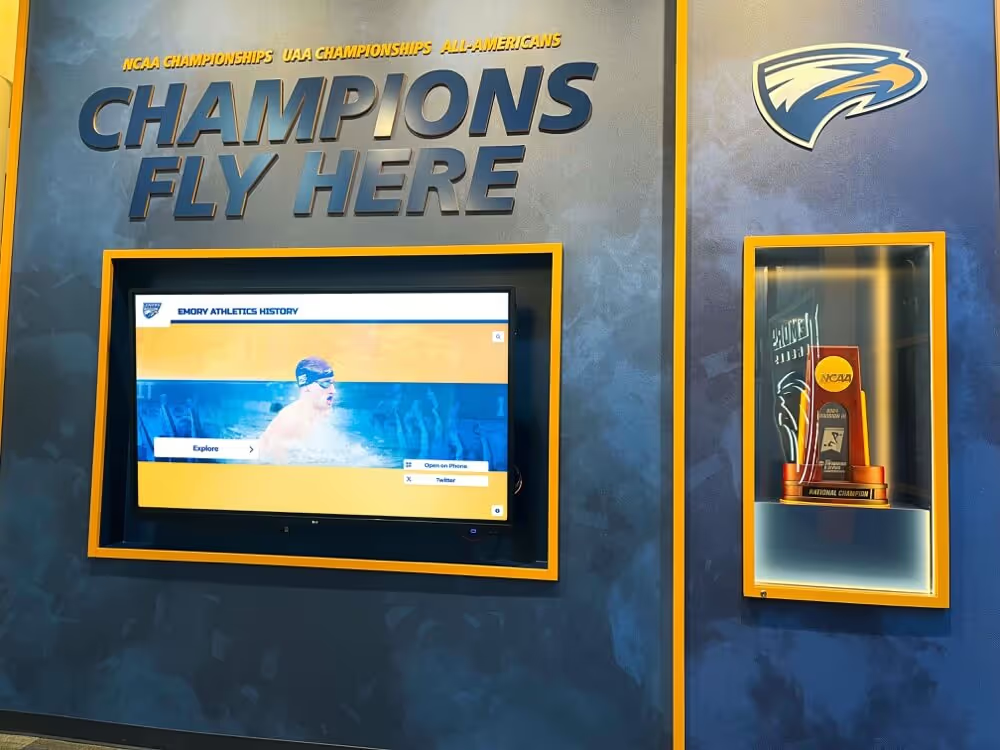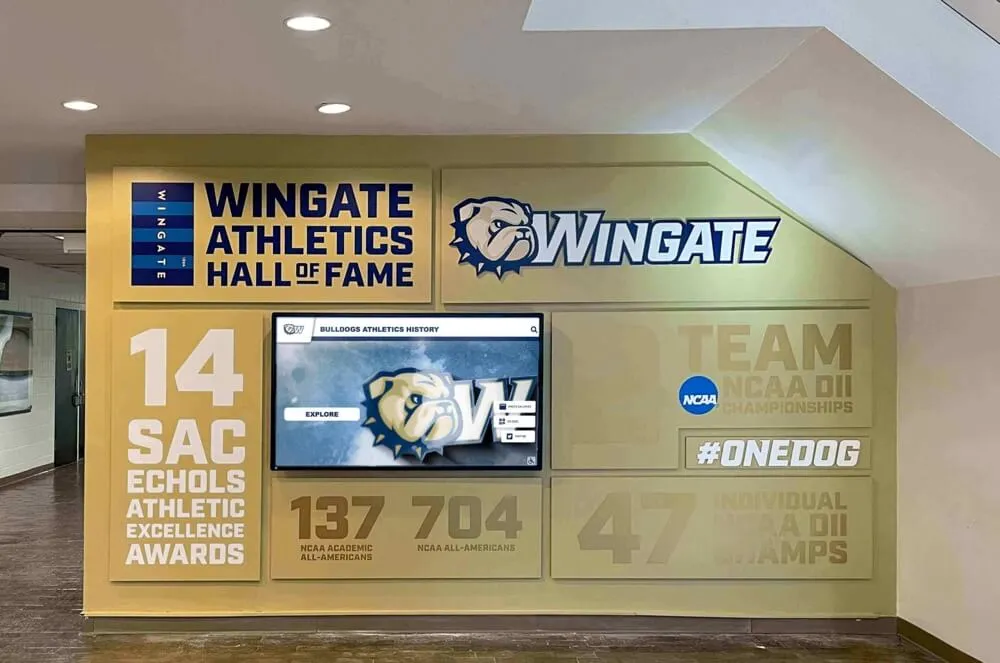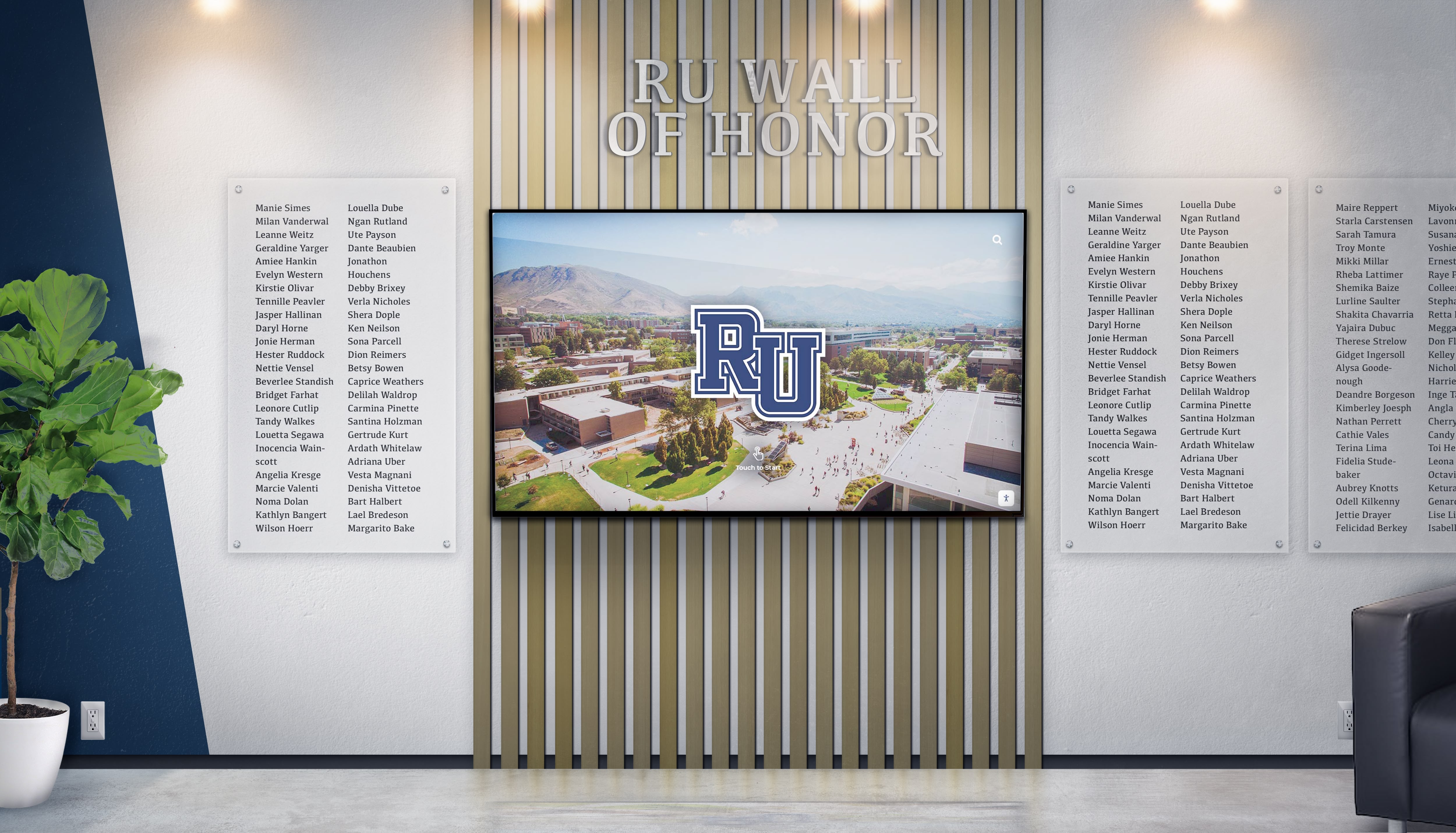
Schools investing in donor wall ideas discover that thoughtful recognition displays do more than acknowledge past contributions—they inspire future giving by demonstrating how philanthropy creates tangible impact on student experiences, facility improvements, and educational opportunities. The most effective donor recognition walls transform routine acknowledgment into compelling stories that motivate continued support from alumni, parents, and community members.
Many schools struggle with donor walls that feel like afterthoughts—static plaques tucked in forgotten hallways, outdated displays with faded names, or recognition systems so inflexible that adding new donors requires expensive renovations. These missed opportunities cost schools more than aesthetic appeal; they sacrifice the motivational power that visible, dynamic donor recognition brings to advancement efforts and capital campaigns.
This comprehensive guide explores modern donor wall ideas for schools that honor contributors meaningfully, accommodate growth efficiently, and create recognition experiences that strengthen donor relationships while inspiring the next generation of giving.
Effective donor recognition balances honoring individual contributions with celebrating collective impact. Schools that excel at donor walls understand that recognition serves strategic advancement purposes—building donor loyalty, demonstrating campaign progress, creating social proof for prospective contributors, and establishing giving cultures that span generations. Solutions combining traditional elegance with digital flexibility deliver recognition systems that evolve alongside school advancement programs.

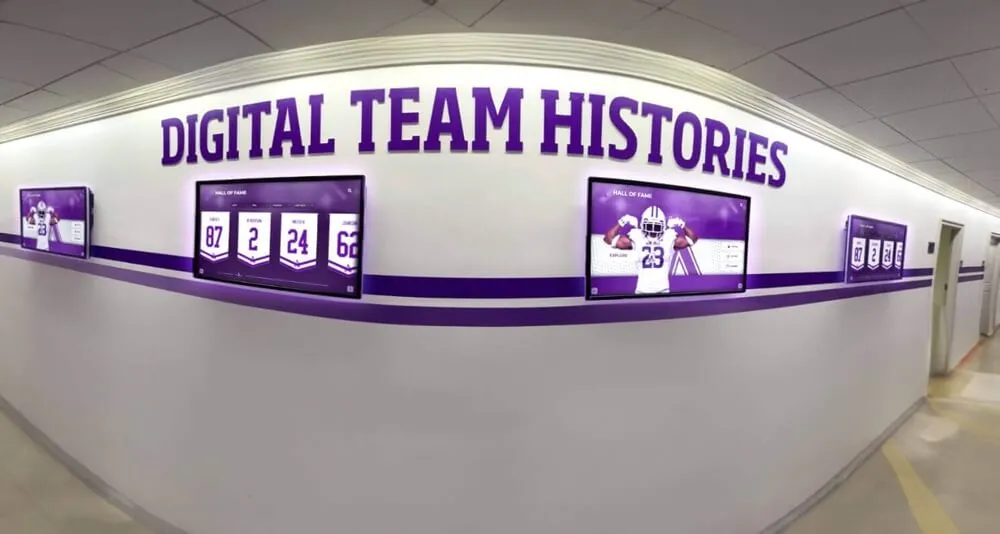
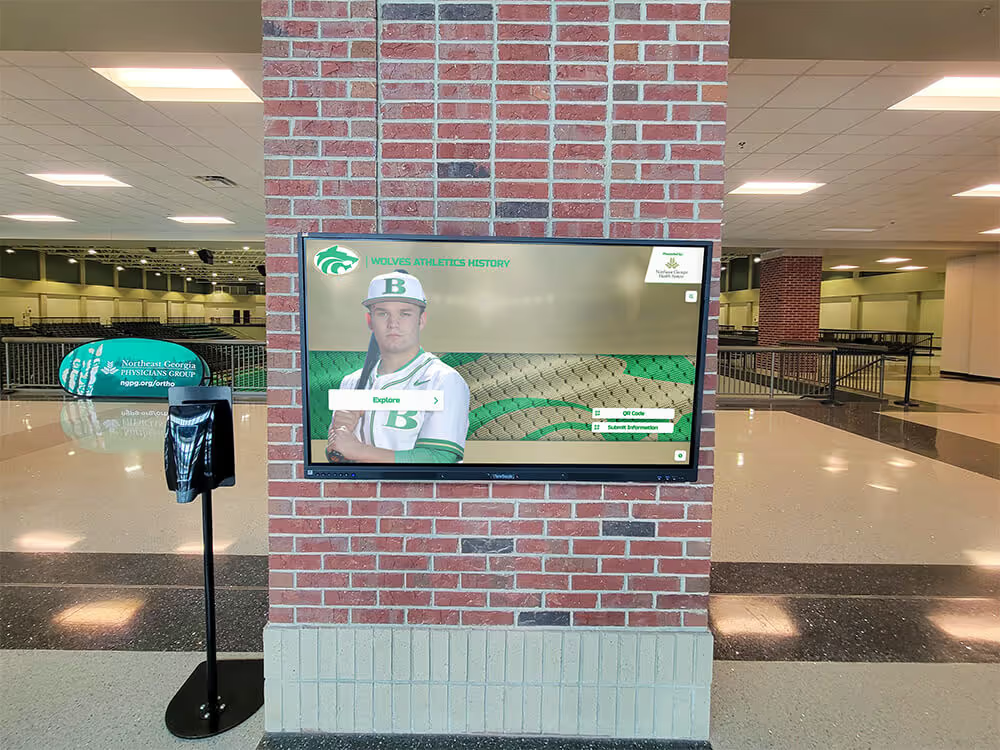
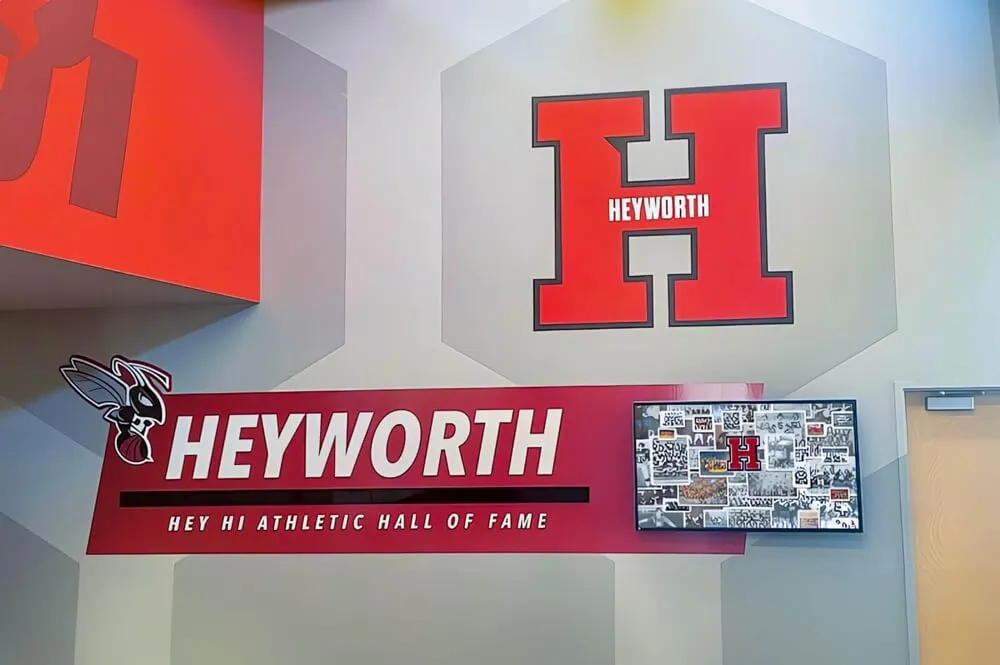
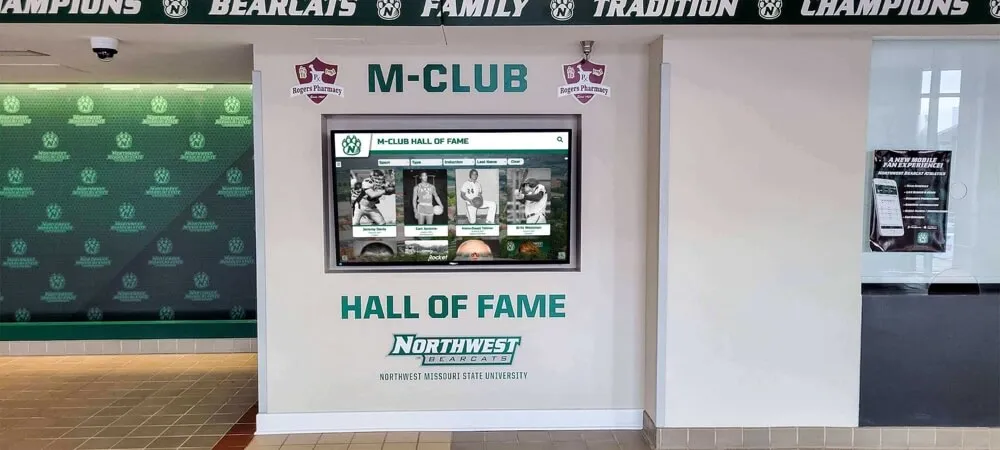
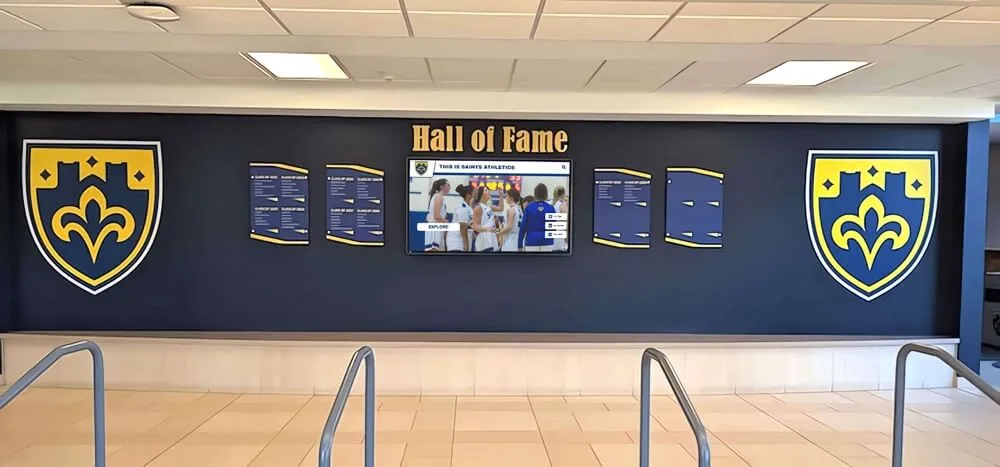
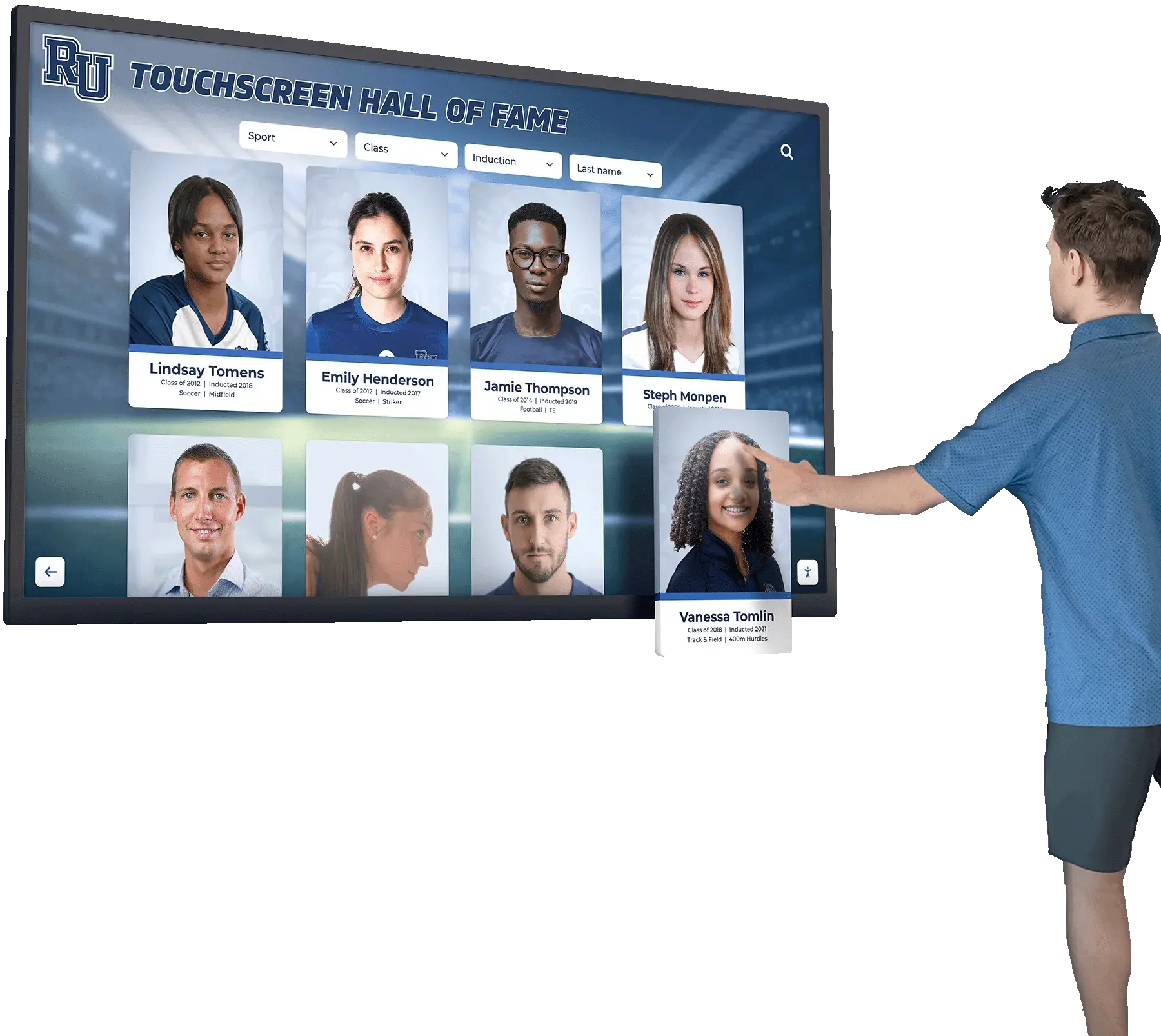
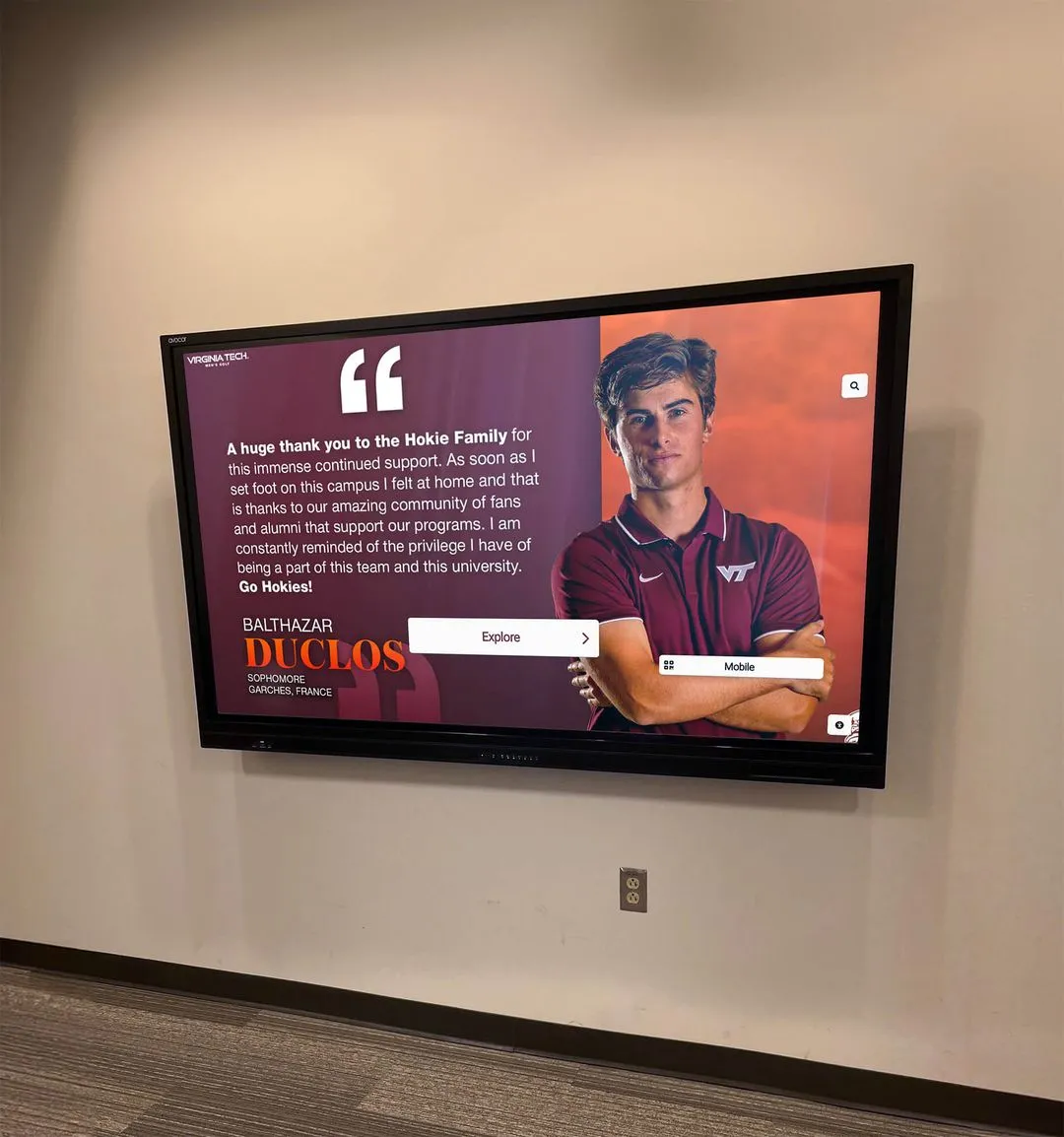
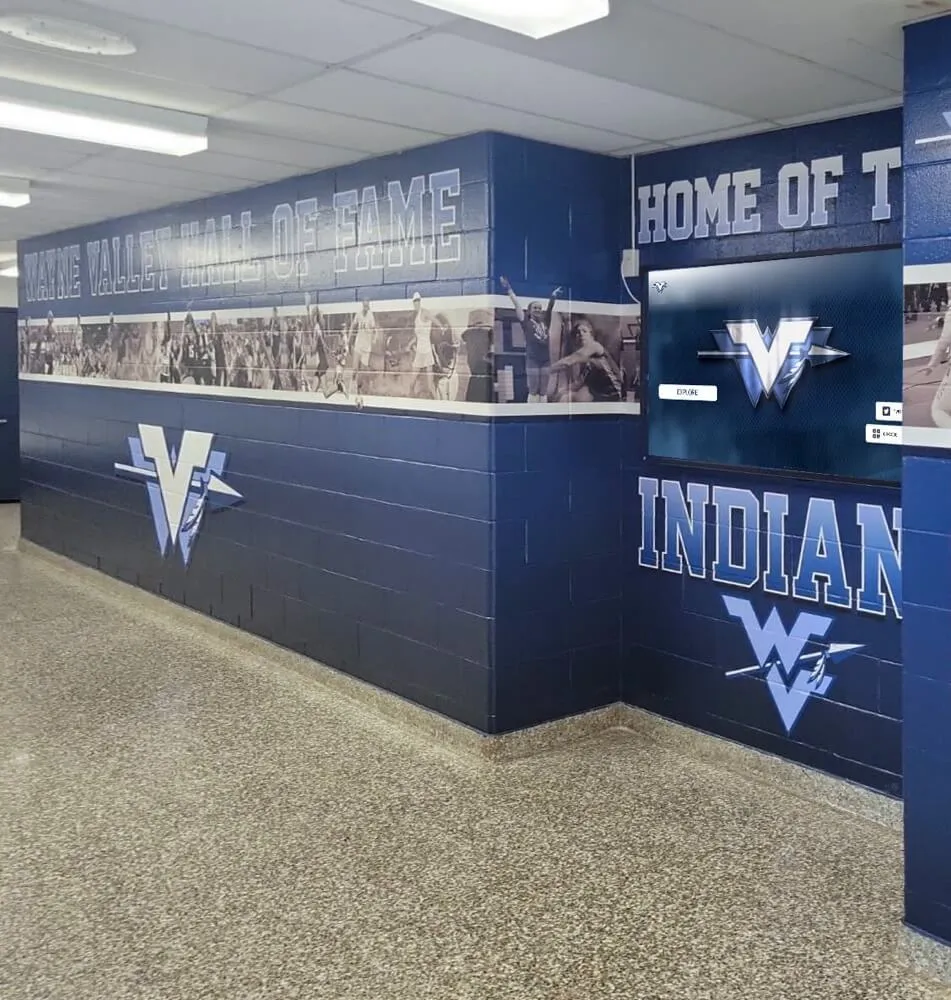
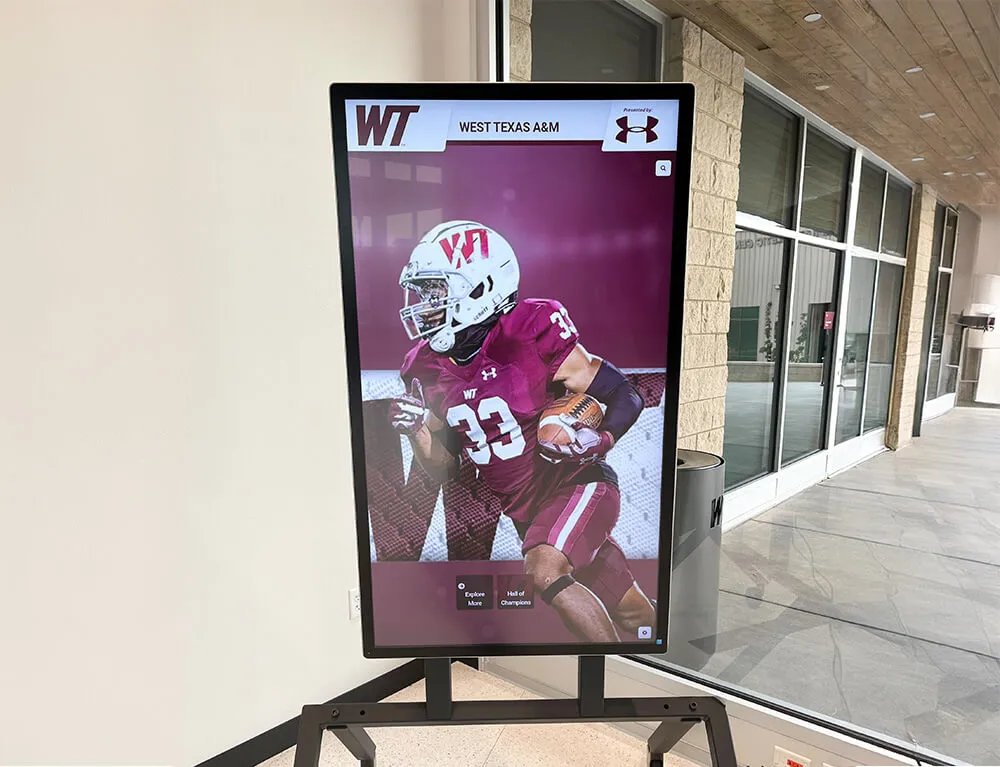
Contemporary donor walls combine traditional name recognition with digital displays that showcase campaign progress and donor impact stories
Why Modern Donor Wall Ideas Matter for School Advancement
Understanding how donor recognition influences giving behavior helps advancement teams design walls that drive fundraising success rather than simply fulfill acknowledgment obligations.
The Psychology of Donor Recognition
Recognition shapes donor relationships in ways that extend far beyond simple thank-you gestures:
Social Proof and Giving Motivation
- Visible donor names demonstrate widespread community support
- Recognition levels create aspirational targets for prospective contributors
- Seeing peers acknowledged motivates similar giving from their networks
- Public displays transform private donations into community conversations
- Recognition visibility signals institutional appreciation and stewardship
Donor Retention Through Appreciation
- Acknowledged donors give again at higher rates than unrecognized contributors
- Quality recognition experiences strengthen emotional connections to institutions
- Visible appreciation demonstrates that gifts matter and create real impact
- Recognition sustains donor engagement between active solicitation cycles
- Appreciation visibility influences estate planning and legacy gift decisions
Learn more about nonprofit donor recognition displays that inspire continued giving across educational and charitable organizations.
Traditional Donor Walls vs. Modern Recognition Systems
Comparing conventional approaches with contemporary options reveals advantages of flexible recognition systems:
Traditional Donor Wall Limitations
Physical plaques and engraved walls served recognition needs effectively for decades, but present challenges in modern advancement environments:
- Fixed capacity requiring expensive expansion when donor lists grow beyond original design
- Engraving changes demand costly professional services for adding or updating names
- Static displays provide no context about campaign goals, project impact, or giving opportunities
- Maintenance challenges as aging materials deteriorate, tarnish, or become damaged
- Limited storytelling capacity beyond donor names and contribution levels
Modern Recognition Wall Advantages
Contemporary donor walls address these limitations while preserving the dignity and permanence donors expect:
- Unlimited digital capacity accommodating growth without physical expansion
- Instant content updates managed in-house without engraving costs or delays
- Multimedia storytelling connecting contributions to tangible outcomes and student impact
- Interactive features engaging visitors with campaign information and giving opportunities
- Hybrid designs combining traditional elegance with digital flexibility
Explore comprehensive donor recognition wall ideas integrating physical and digital elements for maximum impact and efficiency.
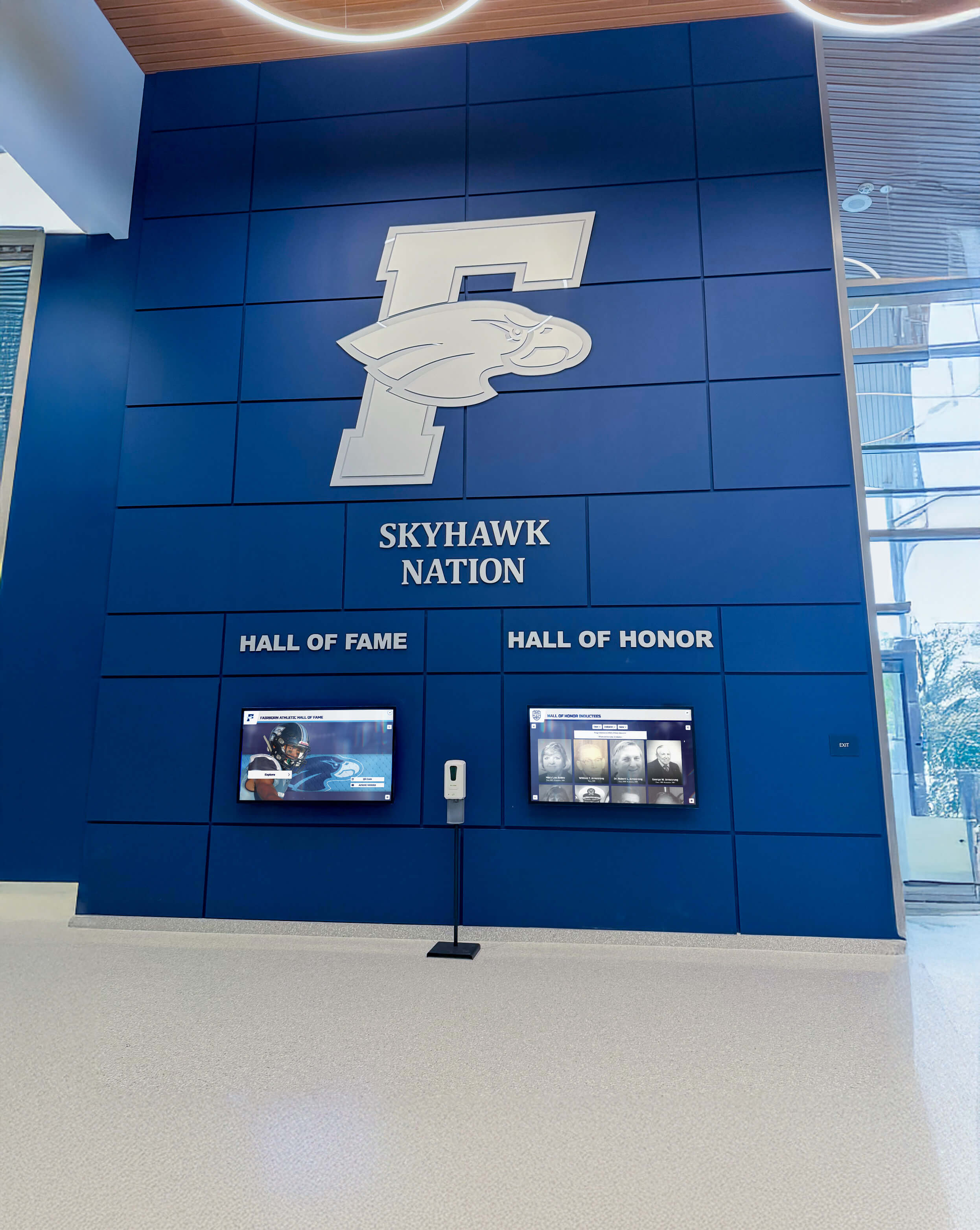
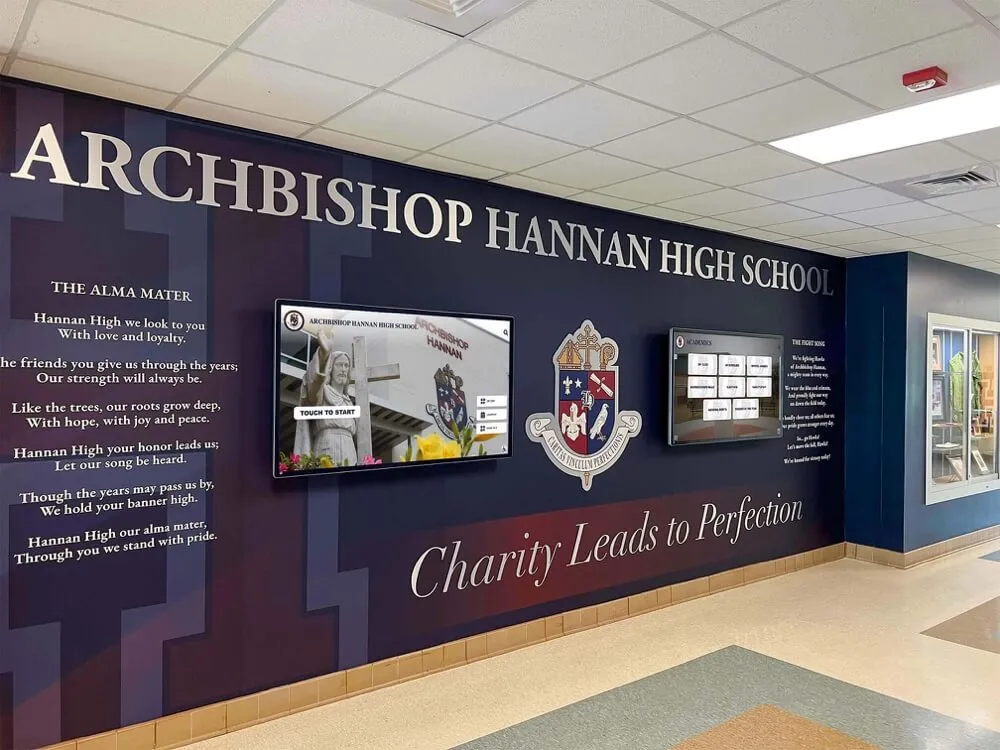
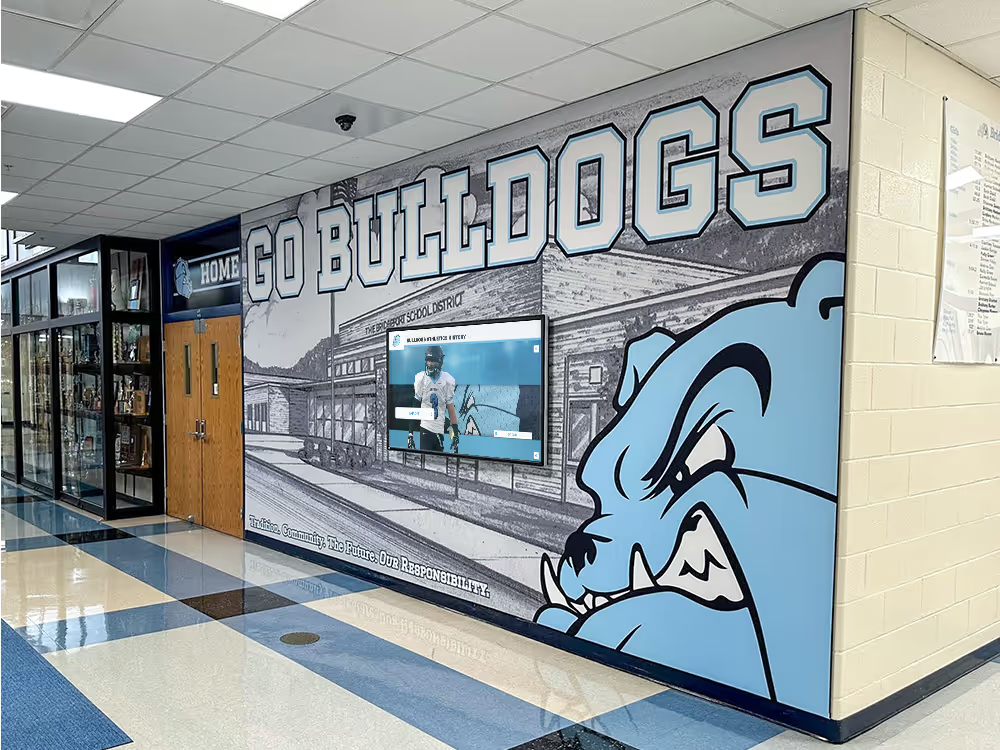
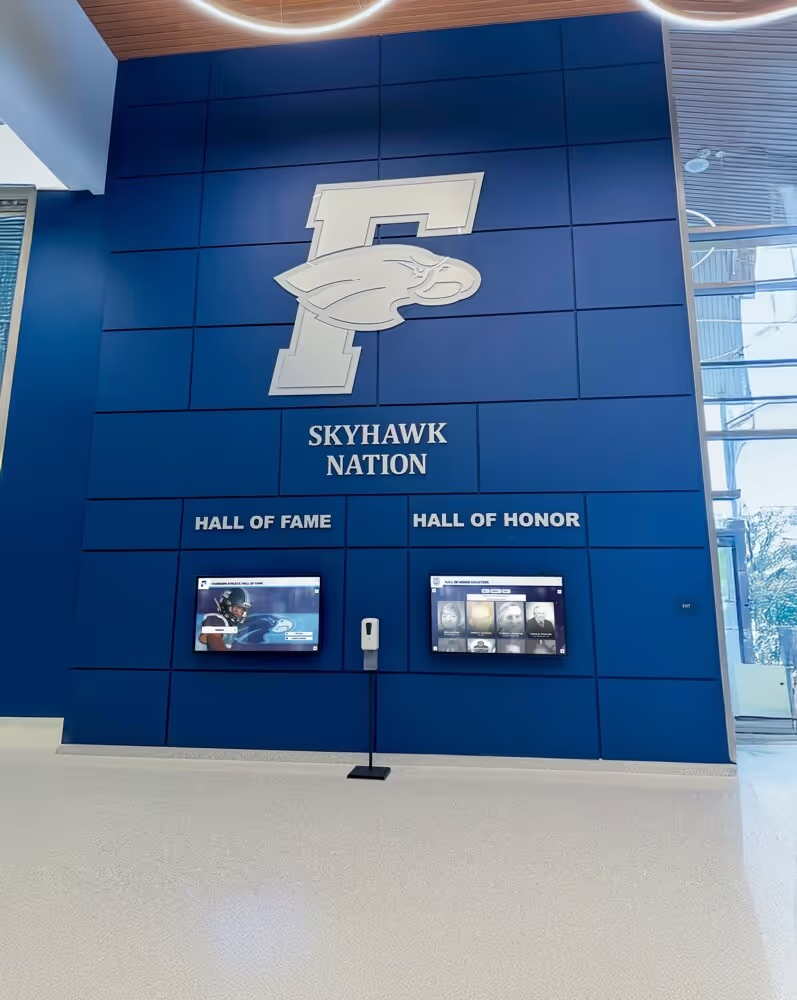
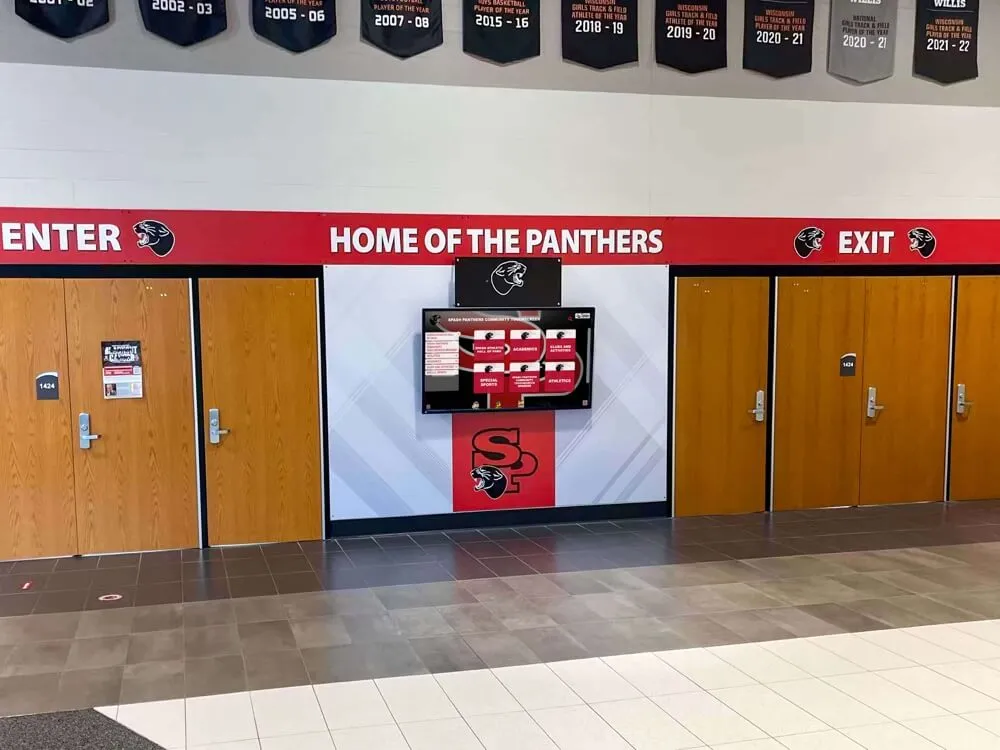
Strategic donor wall placement in high-traffic areas maximizes visibility and creates positive impressions for prospective donors
Essential Elements of Effective School Donor Walls
Successful recognition walls share core characteristics that honor contributors while supporting advancement objectives.
Location and Visibility Considerations
Donor wall placement significantly impacts recognition effectiveness and fundraising outcomes:
High-Traffic Location Selection
- Main entrance lobbies where all visitors encounter donor recognition immediately
- Athletic facility entrances celebrating supporters of sports programs and stadium improvements
- Performing arts center foyers honoring patrons of music, theater, and arts education
- Library main floors recognizing supporters of learning resources and academic programs
- Administrative building reception areas visible to prospective donors during meetings
Architectural Integration
Recognition displays should feel intentionally designed into facility architecture rather than awkwardly added afterward. Professional installations consider wall materials, lighting conditions, surrounding decor, sight lines and viewing distances, and accessibility for all community members.
Schools planning major renovations or new construction should involve advancement teams early in architectural discussions to reserve premium recognition wall locations.
Donor Recognition Levels and Naming Opportunities
Clear giving level structures help donors understand contribution expectations and available recognition:
Typical Recognition Tiers
- Benefactor ($100,000+) — Premium naming rights and dedicated recognition features
- Patron ($50,000-$99,999) — Major donor status with prominent wall placement
- Sponsor ($25,000-$49,999) — Substantial recognition in primary donor displays
- Supporter ($10,000-$24,999) — Meaningful acknowledgment in comprehensive donor lists
- Friend ($1,000-$9,999) — Inclusion in annual giving recognition programs
Naming Opportunity Categories
Different giving levels typically correspond to various naming rights:
- Facility naming (buildings, wings, major spaces)
- Room and classroom naming
- Specific program or initiative naming
- Endowment fund naming
- Recognition wall or display section naming
Advancement teams should establish naming policies addressing recognition duration, name change procedures, and future gift requirements for perpetual recognition.
Design Principles for Lasting Impact
Recognition wall design influences how donors perceive institutional professionalism and appreciation quality:
Visual Hierarchy and Organization
- Clear recognition level differentiation through size, placement, or design treatment
- Logical donor grouping by giving level, campaign year, or designation
- Professional typography ensuring readability at viewing distances
- School branding integration reinforcing institutional identity
- Elegant materials communicating permanence and respect
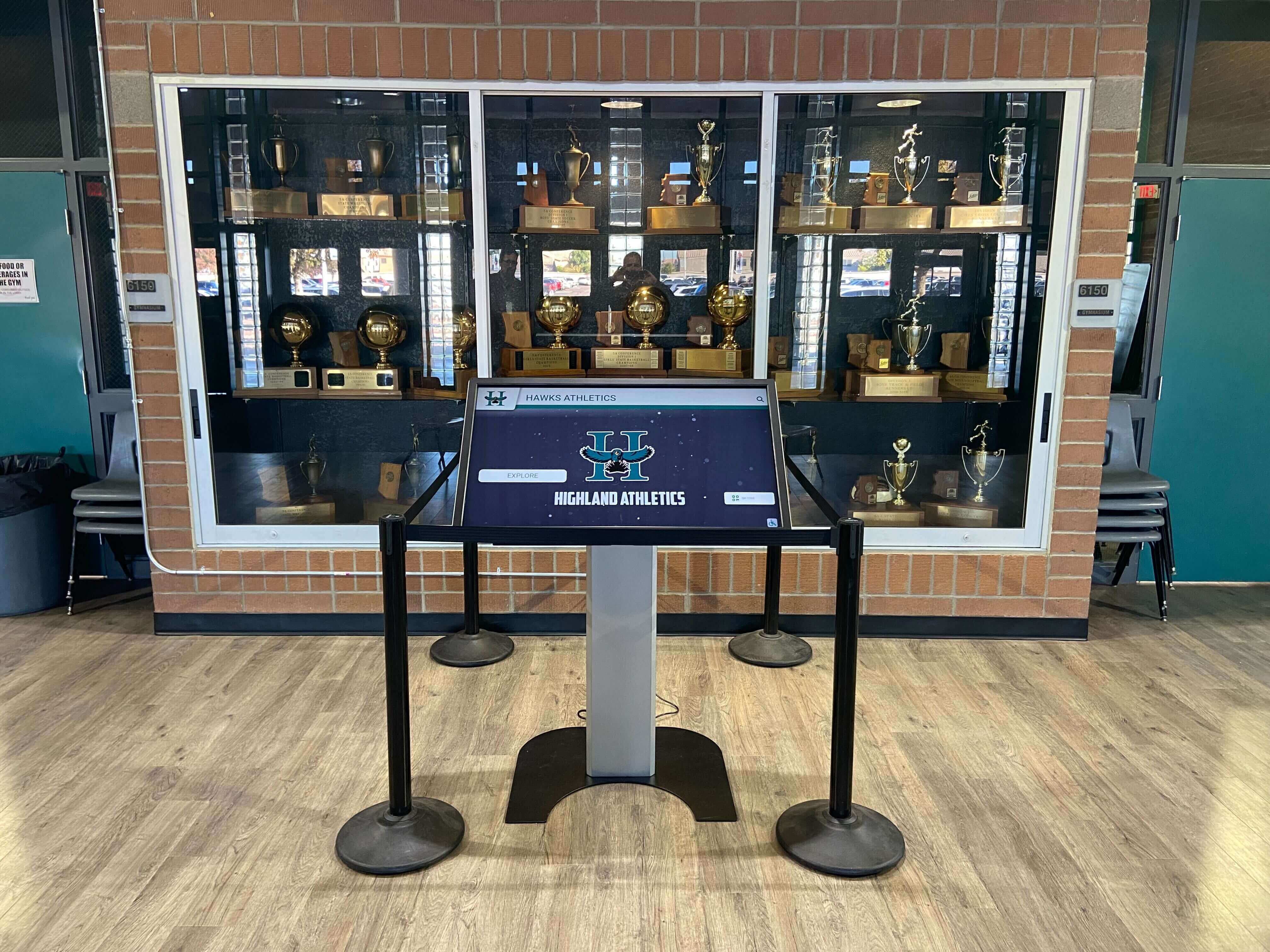
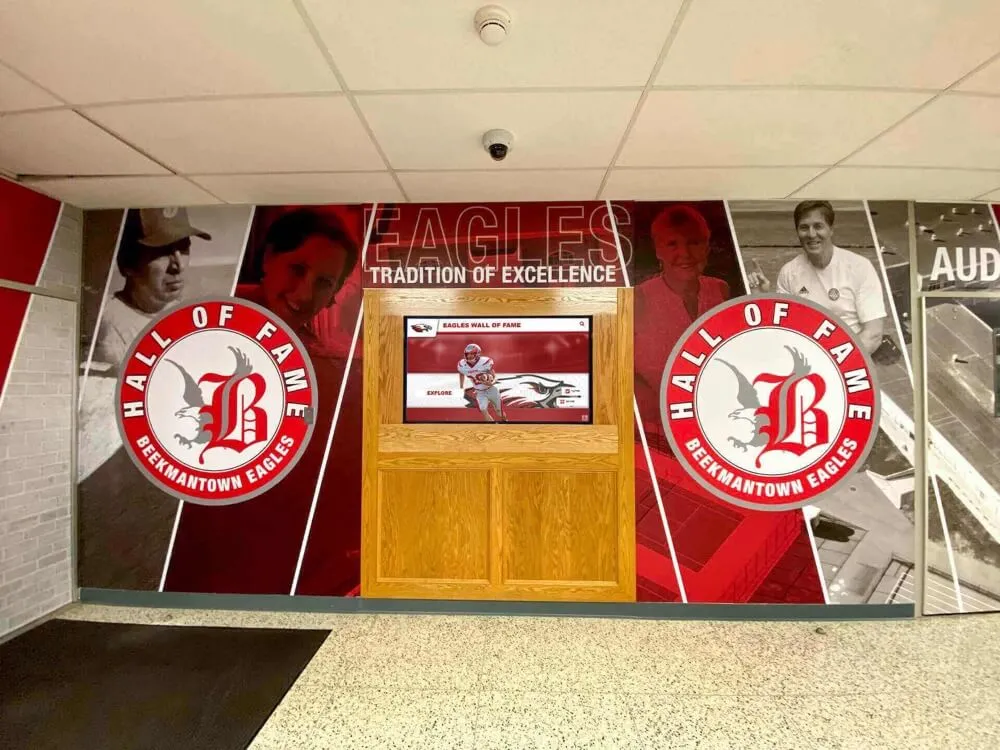
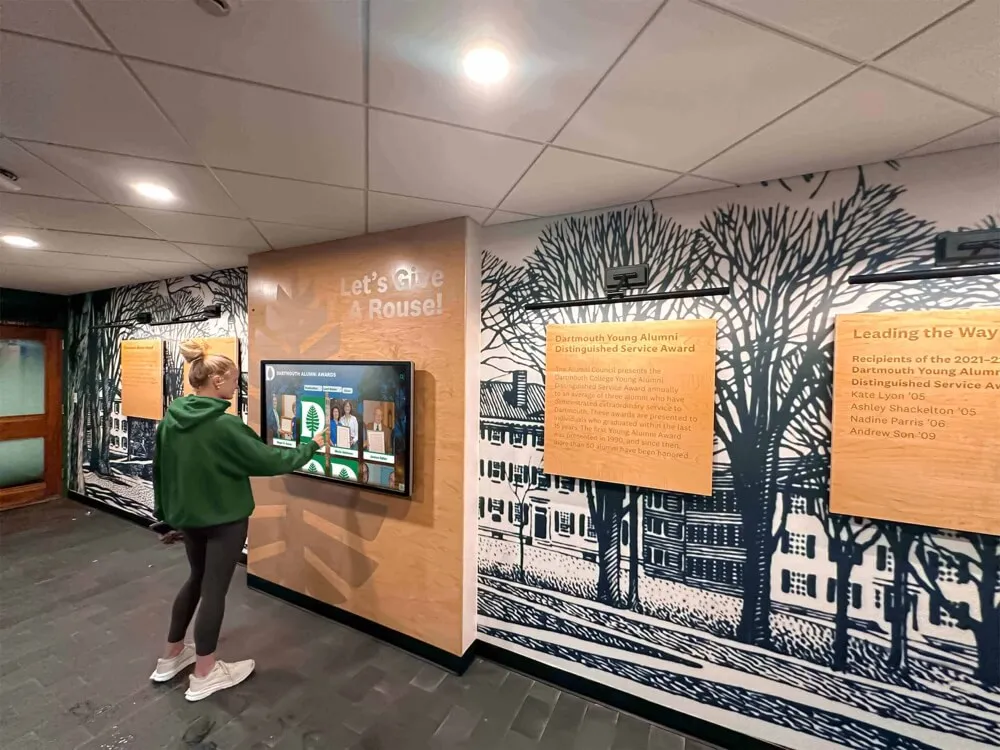
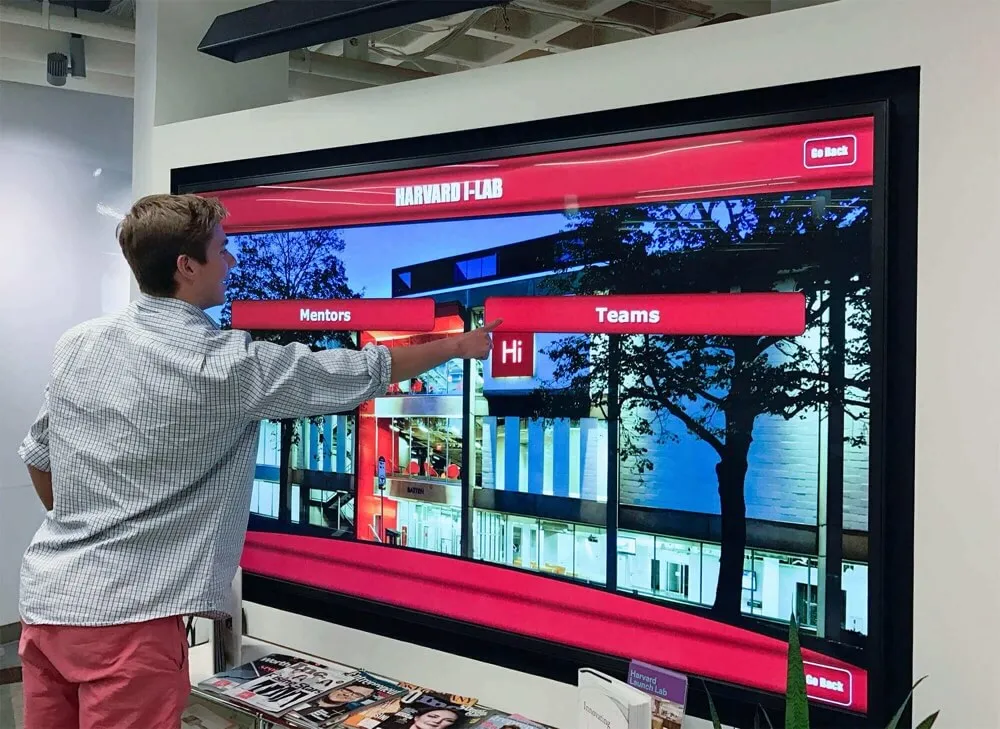
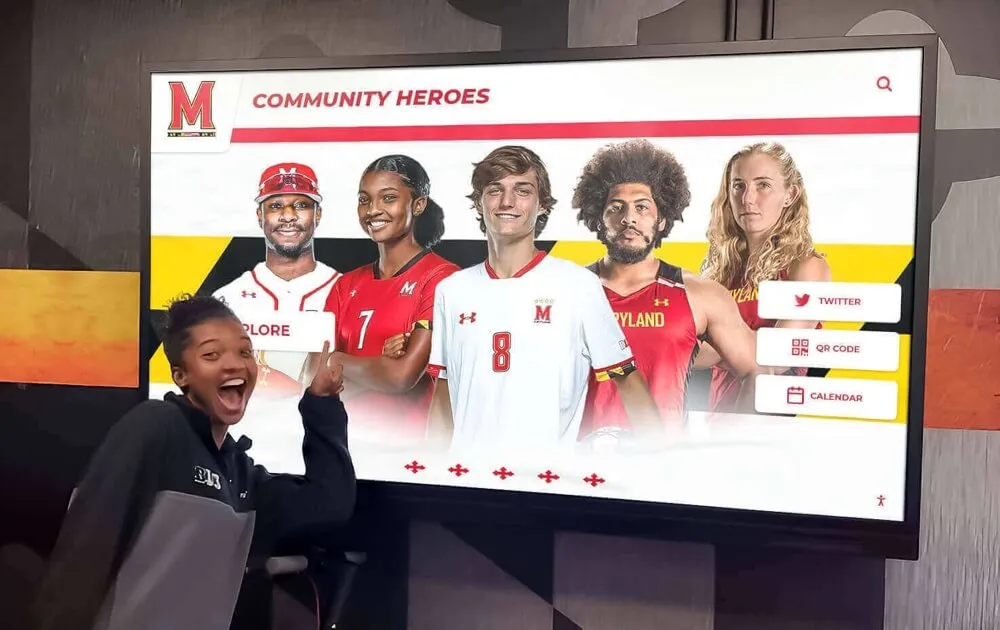
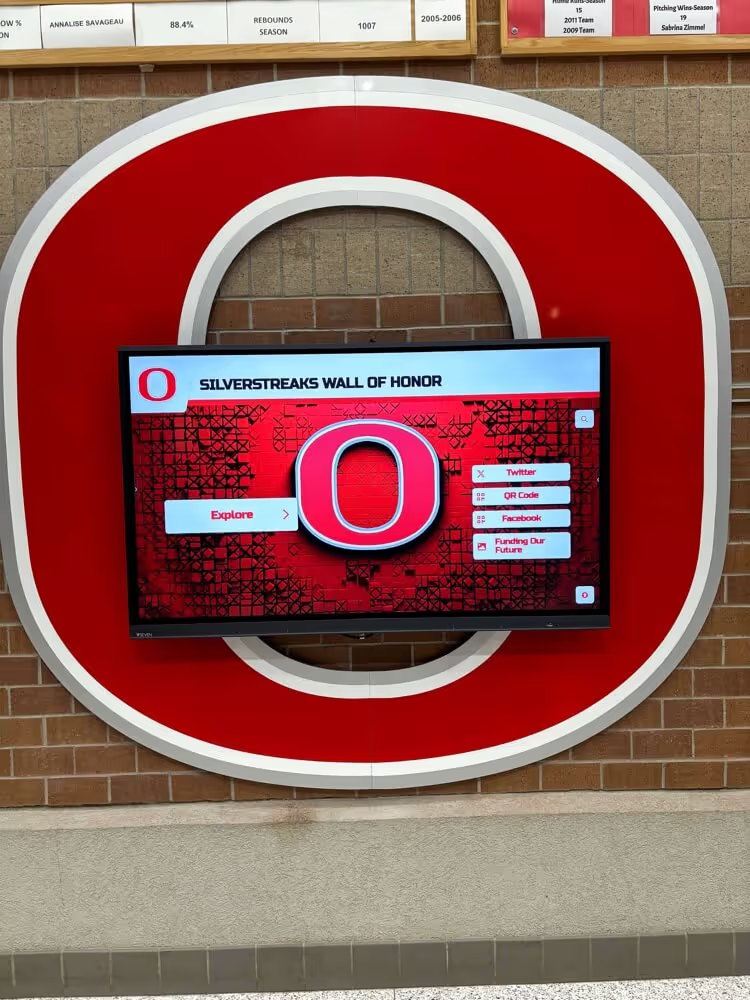
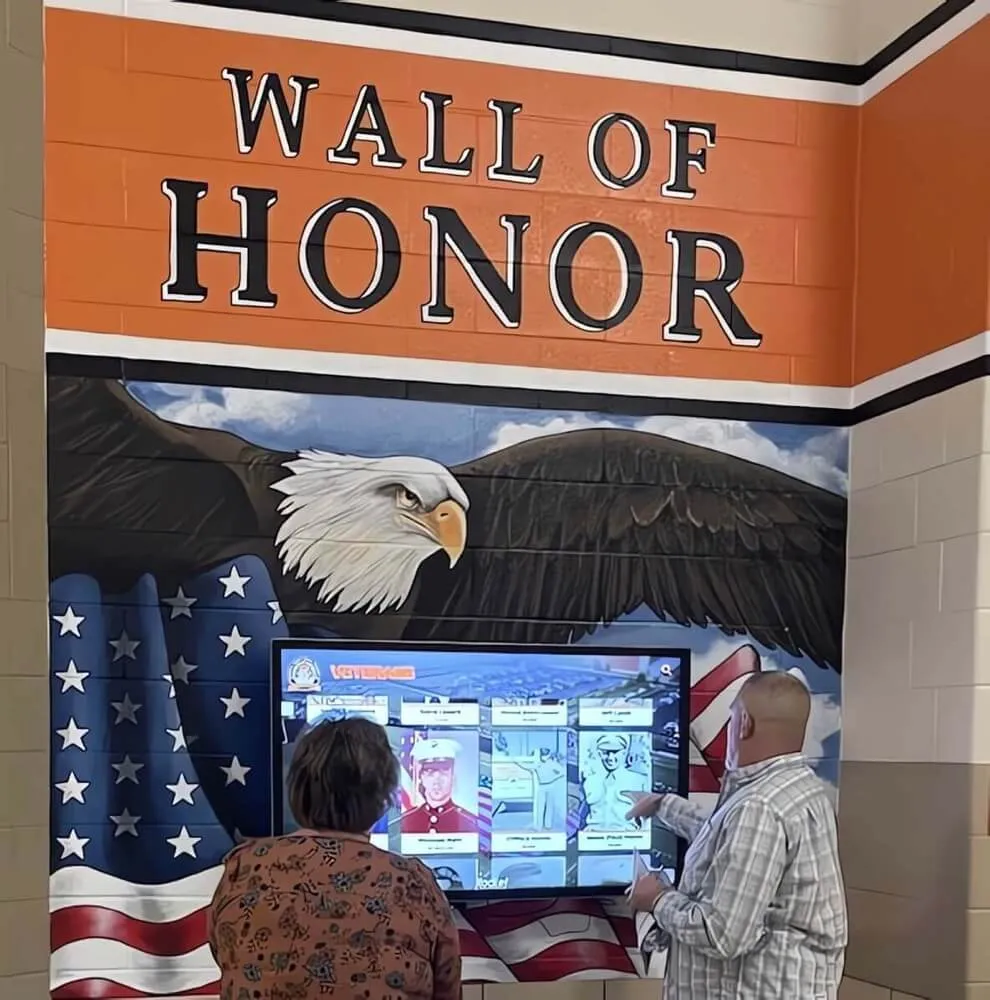
Interactive donor displays allow visitors to explore detailed information about contributors, campaigns, and funding impact
Aesthetic Longevity
Design choices should remain visually appropriate for decades:
- Classic design elements that age well rather than trendy treatments that date quickly
- Neutral color palettes complementing facility architecture across renovations
- Quality materials resistant to wear, fading, and environmental damage
- Flexible systems accommodating future growth without compromising original design integrity
- Timeless recognition approaches balancing tradition with contemporary professionalism
Creative Donor Wall Ideas for Different School Environments
Different facilities and campaign focuses call for recognition approaches tailored to specific contexts.
Athletic Facility Donor Walls
Sports program supporters respond well to recognition displays celebrating athletic excellence alongside philanthropic support:
Stadium and Arena Recognition
- Donor names integrated into facility branding and team graphics
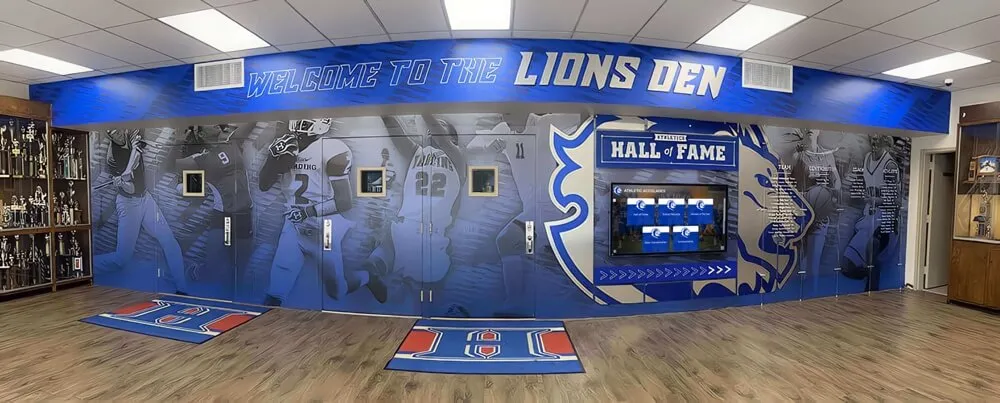
- Recognition walls featuring championship histories alongside contributor lists
- Digital displays rotating between donor acknowledgment and team highlights
- Naming opportunities for specific facility elements (press box, training rooms, locker rooms)
- Recognition connecting donors to athletic program success metrics and student-athlete achievements
Athletic programs with strong booster organizations benefit from donor walls that demonstrate how contributions directly impact competitive success, facility quality, and student-athlete experiences.
Discover how digital hall of fame displays can complement donor recognition in sports facilities.
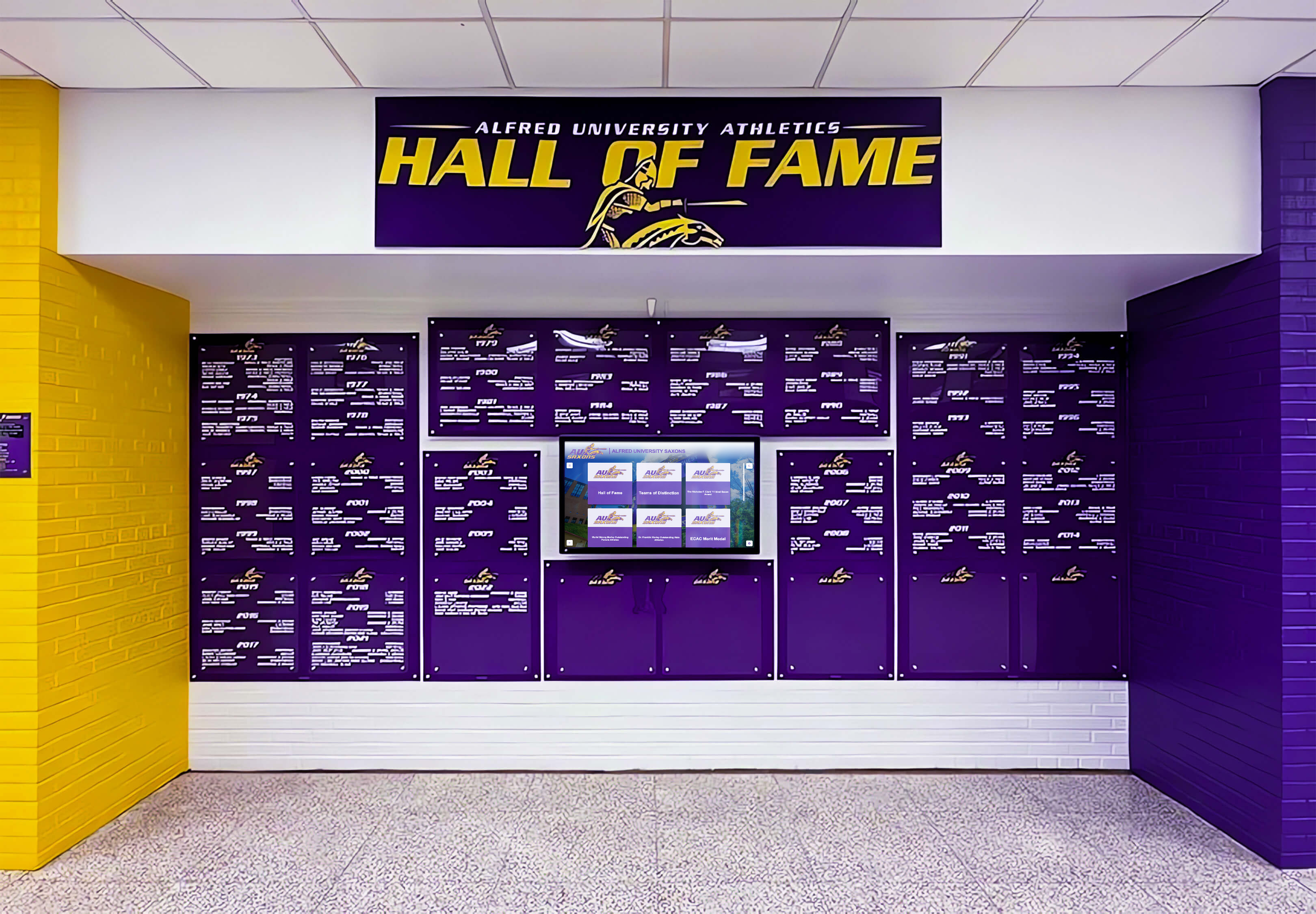
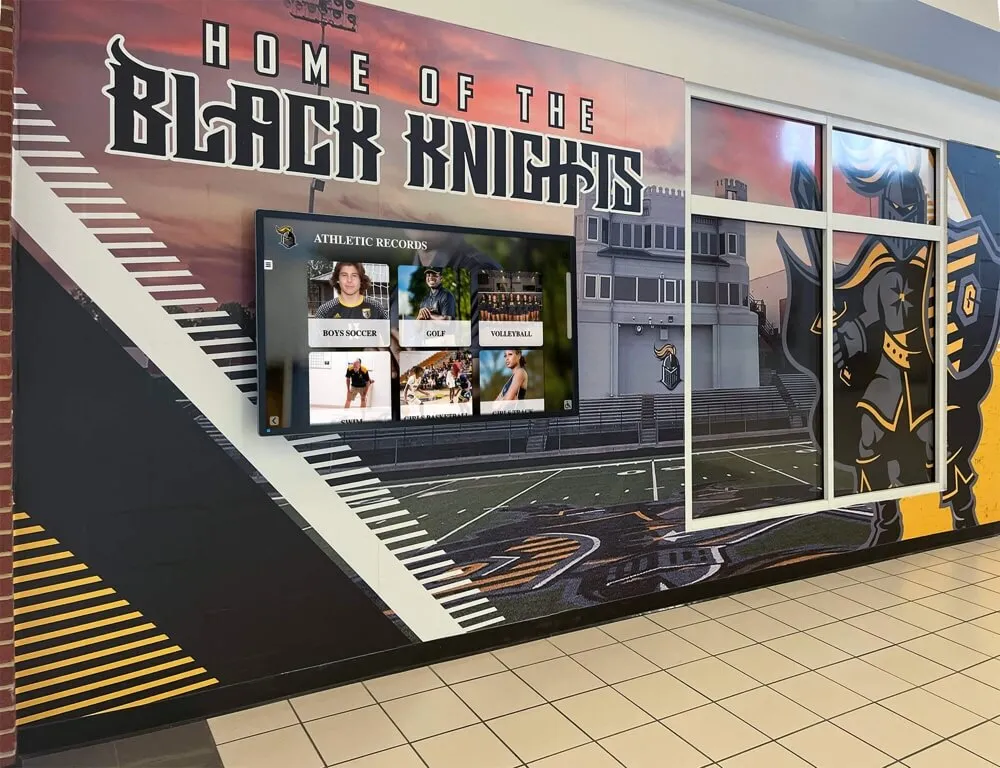
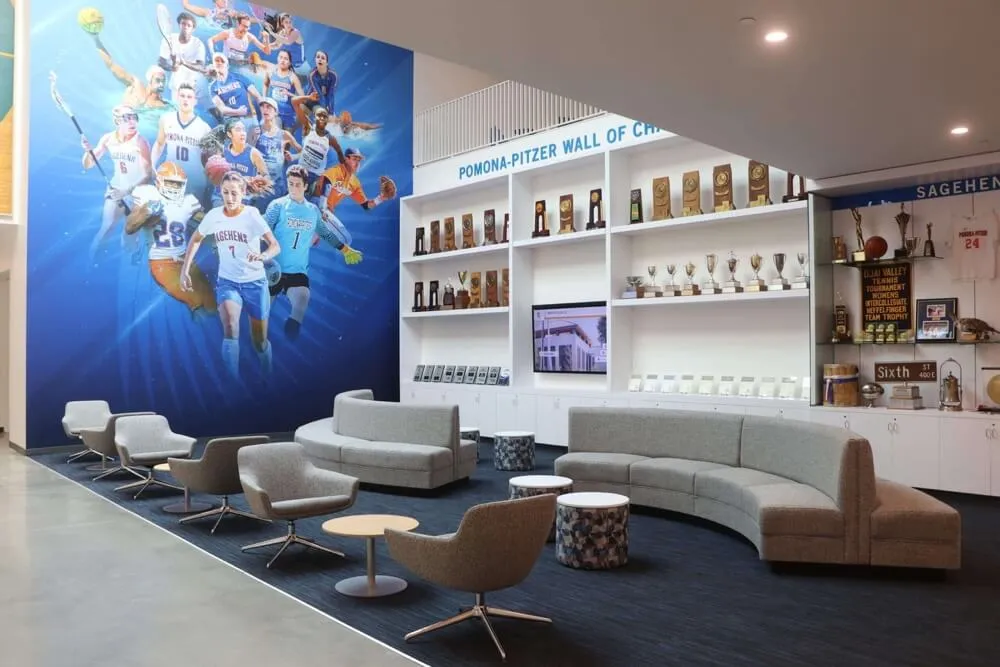
Athletic facility donor walls create connections between philanthropic support and competitive excellence
Academic Building Donor Recognition
Buildings dedicated to specific academic disciplines benefit from recognition displays reflecting educational mission:
STEM Building Recognition Displays
- Modern, technology-forward recognition systems reflecting innovative curricula
- Interactive displays showcasing research, student projects, and program outcomes
- Recognition connecting donor support to specific equipment, labs, or research initiatives
- Digital systems featuring student and faculty achievement alongside donor acknowledgment
- Design aesthetics complementing contemporary learning environments
Arts and Humanities Facility Walls
Performing arts centers, music buildings, and liberal arts facilities call for recognition approaches celebrating creativity:
- Elegant traditional materials (wood, bronze, marble) honoring classical education values
- Recognition displays integrated into gallery and exhibition spaces
- Donor acknowledgment connected to student performances, exhibitions, and productions
- Naming opportunities for performance spaces, studios, practice rooms, and galleries
Academic building donor walls should tell stories connecting philanthropic support to educational outcomes, student success, and curriculum innovation.
Library and Learning Commons Recognition
Libraries serve entire school communities, making them ideal donor recognition locations:
Comprehensive Donor Wall Advantages
- High traffic from all student populations regardless of program or interest
- Quiet, contemplative environments appropriate for thoughtful donor acknowledgment
- Natural connections between philanthropy and learning resource access
- Recognition opportunities at various giving levels (rooms, collections, technology, furniture)
- Long dwell times allowing visitors to engage with detailed recognition content
Modern learning commons combining traditional library functions with collaborative study spaces, technology centers, and academic support services create particularly strong donor recognition opportunities connecting support to visible student benefit.
Learn about elementary school recognition boards that can adapt donor wall concepts for younger student populations.
Campaign-Specific Recognition Installations
Capital campaigns focused on specific initiatives benefit from dedicated recognition displays:
Scholarship Fund Donor Walls
- Recognition connecting donor names to student recipients and their success stories
- Digital displays featuring scholarship recipient profiles, academic achievements, and testimonials
- Recognition grouped by endowment fund, scholarship criteria, or donor intent
- Visual storytelling demonstrating direct impact of financial aid support on access and opportunity
Facility Improvement Campaign Walls
Recognition for building renovations, equipment purchases, or campus improvements:
- Before-and-after imagery demonstrating donor impact on physical facilities
- Recognition displays located in or adjacent to funded improvements
- Donor acknowledgment connected to specific project elements (HVAC, technology, accessibility)
- Visual presentation of campaign goals, progress, and completion milestones
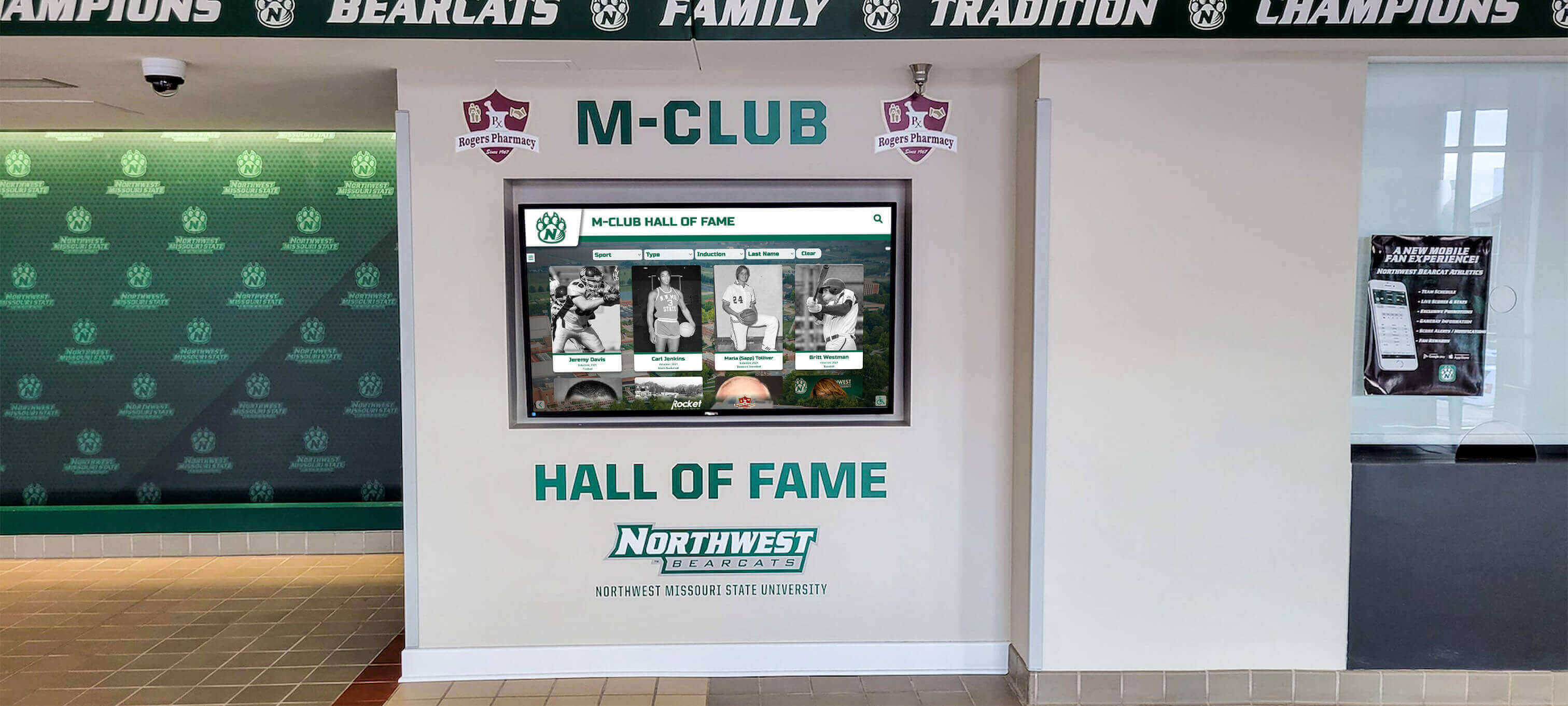
Campaign-specific donor walls demonstrate progress toward funding goals while honoring contributors at all giving levels
Digital Donor Walls: Flexibility Meets Tradition
Digital recognition systems address traditional donor wall limitations while maintaining the dignity and permanence donors expect.
Advantages of Digital Donor Recognition
Technology-enabled donor walls offer capabilities impossible with static displays:
Unlimited Scalability
- Digital systems accommodate unlimited donor names without physical expansion
- Recognition capacity grows seamlessly as campaigns progress and supporter bases expand
- No space constraints limiting recognition for annual giving programs with hundreds of contributors
- Ability to recognize donors across multiple campaigns, years, and designation categories
- Easy reorganization as recognition priorities or presentation preferences change
Content Flexibility and Updates
Digital displays eliminate engraving costs and delays:
- Instant updates adding new donors, correcting errors, or refreshing content
- In-house management requiring no specialized engraving or fabrication services
- Seasonal or event-specific content highlighting relevant campaigns or giving opportunities
- Recognition content versions for different audiences, events, or campaign phases
- Easy removal or archival of outdated campaign information as priorities evolve
Enhanced Storytelling Capabilities
Multimedia content creates richer recognition experiences:
- Donor testimonials explaining giving motivations and institutional connections
- Video content showing funded projects, student beneficiaries, or program outcomes
- Image galleries demonstrating tangible impact of philanthropic support
- Interactive exploration allowing visitors to discover detailed information about specific donors or campaigns
- Campaign progress visualization showing fundraising momentum and goal achievement
Explore digital donor display ideas that maximize recognition flexibility while maintaining professional presentation standards.
Hybrid Recognition Systems: Best of Both Worlds
Many schools choose recognition approaches combining traditional materials with digital flexibility:
Physical and Digital Integration
Hybrid donor walls preserve the permanence donors value while gaining digital advantages:
- Architectural framework using quality materials (wood, metal, stone) establishing dignified presence
- Digital screens embedded within traditional design elements
- High-level donor recognition on permanent physical plaques
- Comprehensive donor lists, campaign updates, and storytelling content on digital displays
- Design cohesion ensuring digital elements complement rather than clash with traditional materials
Implementation Examples
Effective hybrid approaches include:
- Bronze naming plaques for major donors alongside digital screens showing comprehensive campaign rosters
- Engraved donor recognition at entrance level with detailed interactive displays in adjacent spaces
- Traditional donor wall header and framework with digital content panels updating automatically
- Physical recognition for endowment donors with digital storytelling about fund impact
- Permanent naming plaques for facilities with digital displays showing annual fund contributors
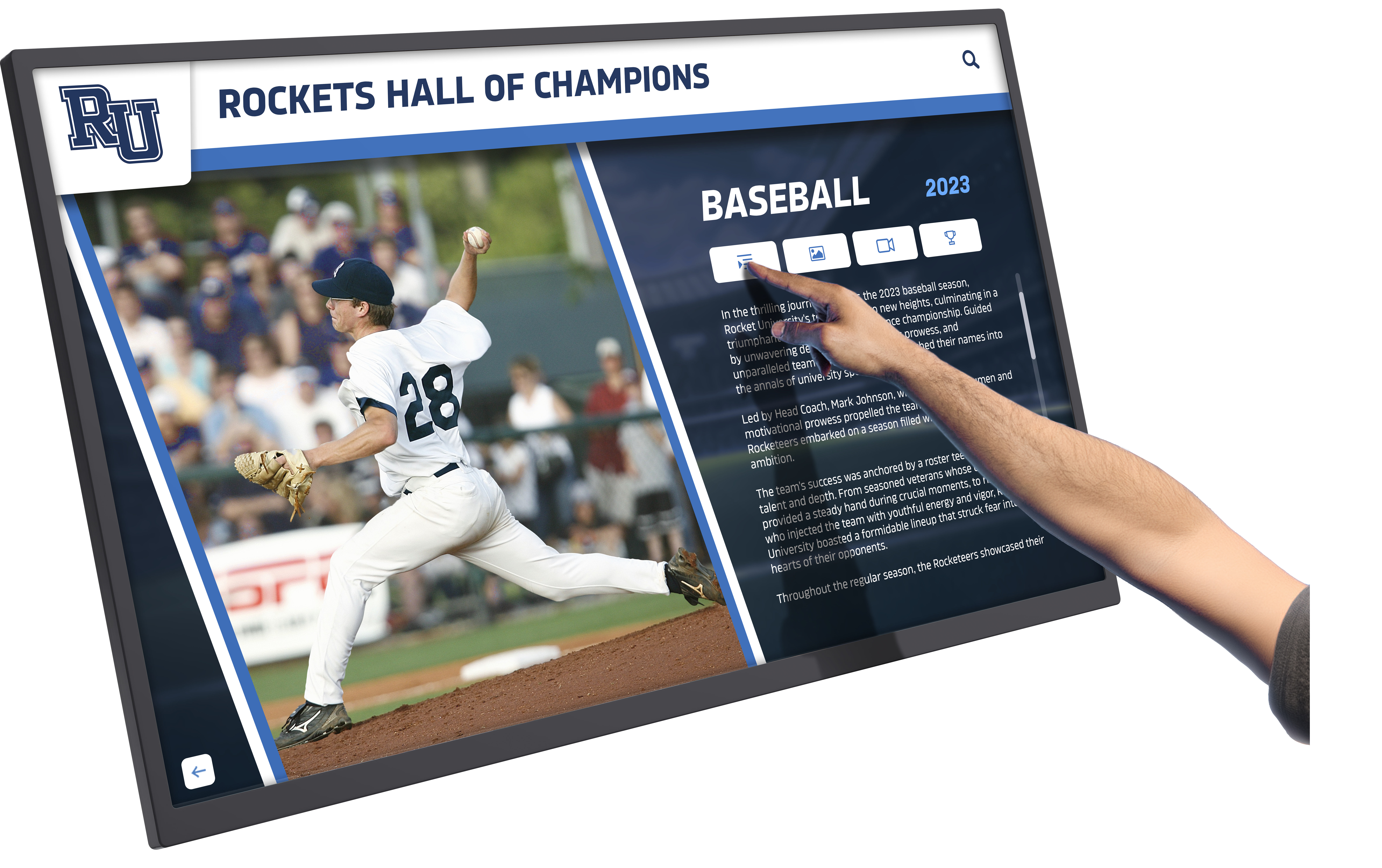
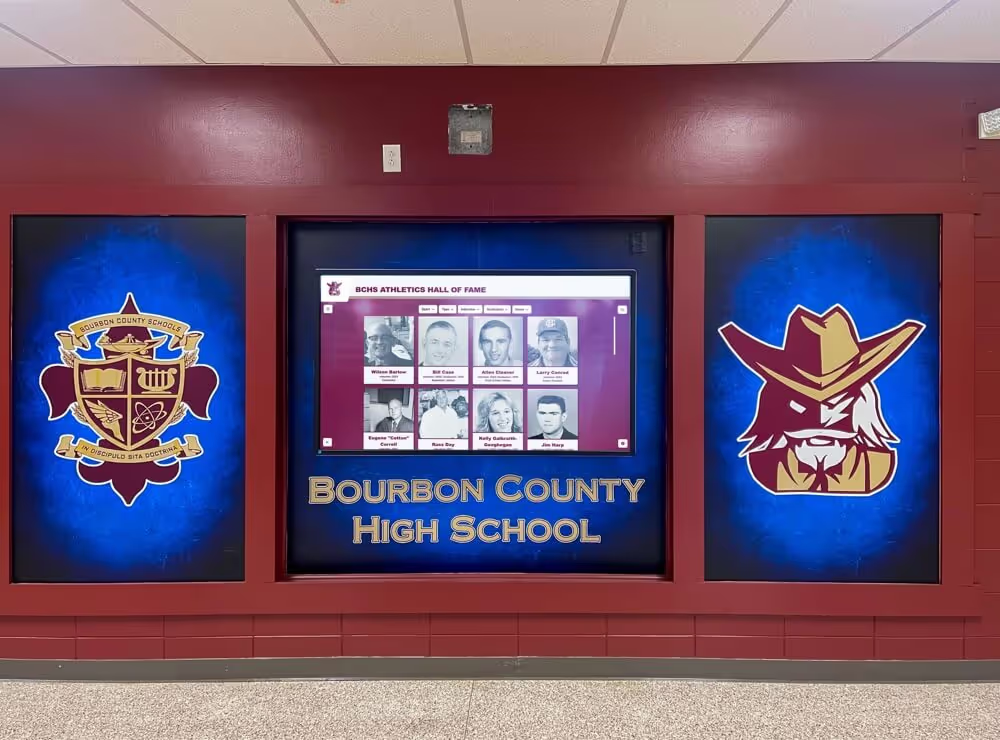
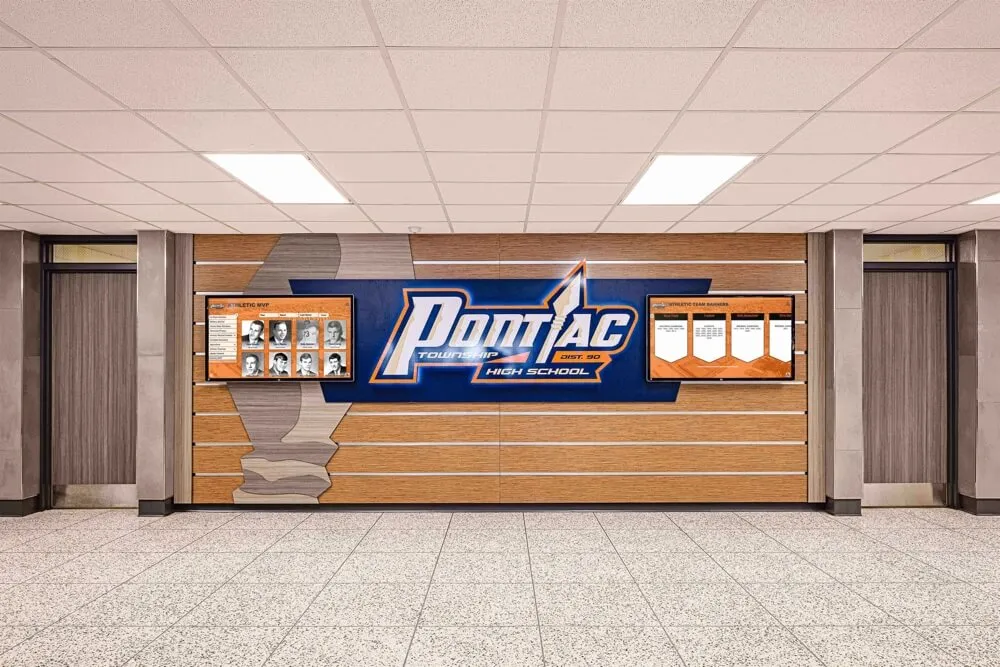
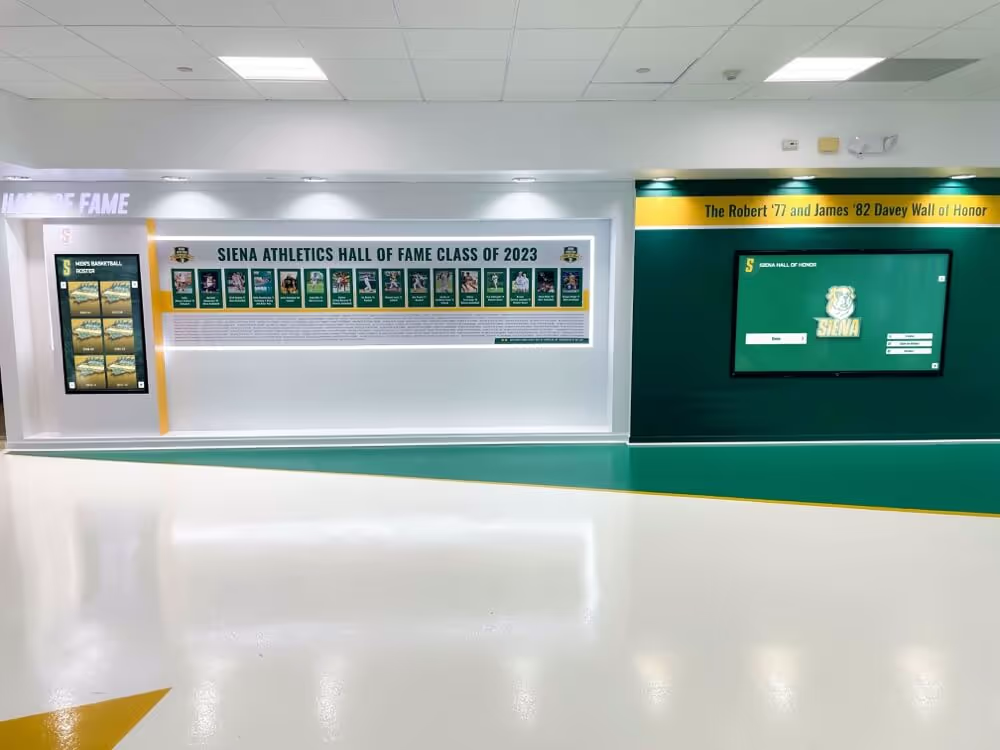
Hybrid recognition systems combine the permanence of traditional materials with the flexibility and storytelling capacity of digital displays
Touchscreen Interactive Donor Displays
Interactive recognition walls invite engagement beyond passive viewing:
Interactive Feature Examples
- Touch-activated donor profiles providing detailed information about contribution history
- Search functionality allowing visitors to locate specific donor names quickly
- Campaign information screens explaining giving opportunities and project details
- Impact stories featuring students, programs, or facilities funded by donor support
- Giving level information helping prospective donors understand recognition benefits
Interactive displays work particularly well in locations where visitors naturally pause—lobbies, reception areas, or dedicated recognition galleries where dwell time permits exploration.
Learn more about interactive touchscreen displays that can enhance donor recognition while serving additional campus communication needs.
Implementing Your School Donor Wall Project
Successful donor recognition installations require careful planning addressing advancement goals, budget realities, and long-term maintenance.
Planning and Design Process
Effective donor walls begin with thorough planning involving key stakeholders:
Stakeholder Involvement
- Advancement team defining recognition priorities, donor lists, and campaign messaging
- Facilities staff addressing architectural integration, electrical requirements, and installation logistics
- Marketing and communications ensuring brand consistency and visual quality
- Major donors whose input provides perspective on recognition preferences and expectations
- School leadership approving recognition policies, naming rights, and investment levels
Design Development Steps
Professional donor wall projects typically follow structured processes:
- Needs Assessment — Determine donor lists, recognition levels, growth projections, and content requirements
- Site Analysis — Evaluate location options, viewing conditions, architectural constraints, and technical requirements
- Concept Design — Develop recognition approaches balancing advancement goals with aesthetic and budget parameters
- Donor Preview — Share design concepts with major contributors ensuring recognition meets their expectations
- Final Design — Refine approved concepts into detailed specifications ready for fabrication and installation
- Installation Planning — Schedule work minimizing disruption while ensuring proper installation quality
- Content Population — Load donor information, campaign details, and multimedia content into displays
- Launch Event — Celebrate installation with recognition ceremony honoring contributors and unveiling displays
Budget Considerations for Different Approaches
Recognition wall costs vary dramatically based on materials, technology, and complexity:
Traditional Donor Wall Costs
- Basic engraved plaques: $50-$150 per donor name
- Bronze or metal recognition walls: $15,000-$75,000 for comprehensive installations
- Custom architectural recognition: $50,000-$200,000+ for major installations
- Ongoing costs: Engraving additions at $75-$200 per name
Digital Recognition System Costs
- Entry-level digital displays: $8,000-$15,000 for single-screen systems
- Professional donor wall displays: $20,000-$45,000 for comprehensive installations
- Premium interactive touchscreen systems: $35,000-$75,000+ with custom content development
- Ongoing costs: Minimal (content updates managed in-house, standard display maintenance)
Hybrid Recognition Investments
Combined approaches typically range $30,000-$100,000+ depending on scale, materials, and technology integration.
Budget planning should address not only initial installation costs but long-term expenses including content updates, maintenance, and eventual replacement or refresh cycles.
Content Strategy and Donor Data Management
Recognition effectiveness depends on accurate, current donor information and compelling content:
Donor Information Management
- Establishing reliable data sources from advancement databases
- Defining recognition name formats, giving level criteria, and display categories
- Creating update processes ensuring timely recognition of new donors
- Maintaining historical records as campaigns complete and recognition evolves
- Privacy considerations for donors preferring anonymous or discrete recognition
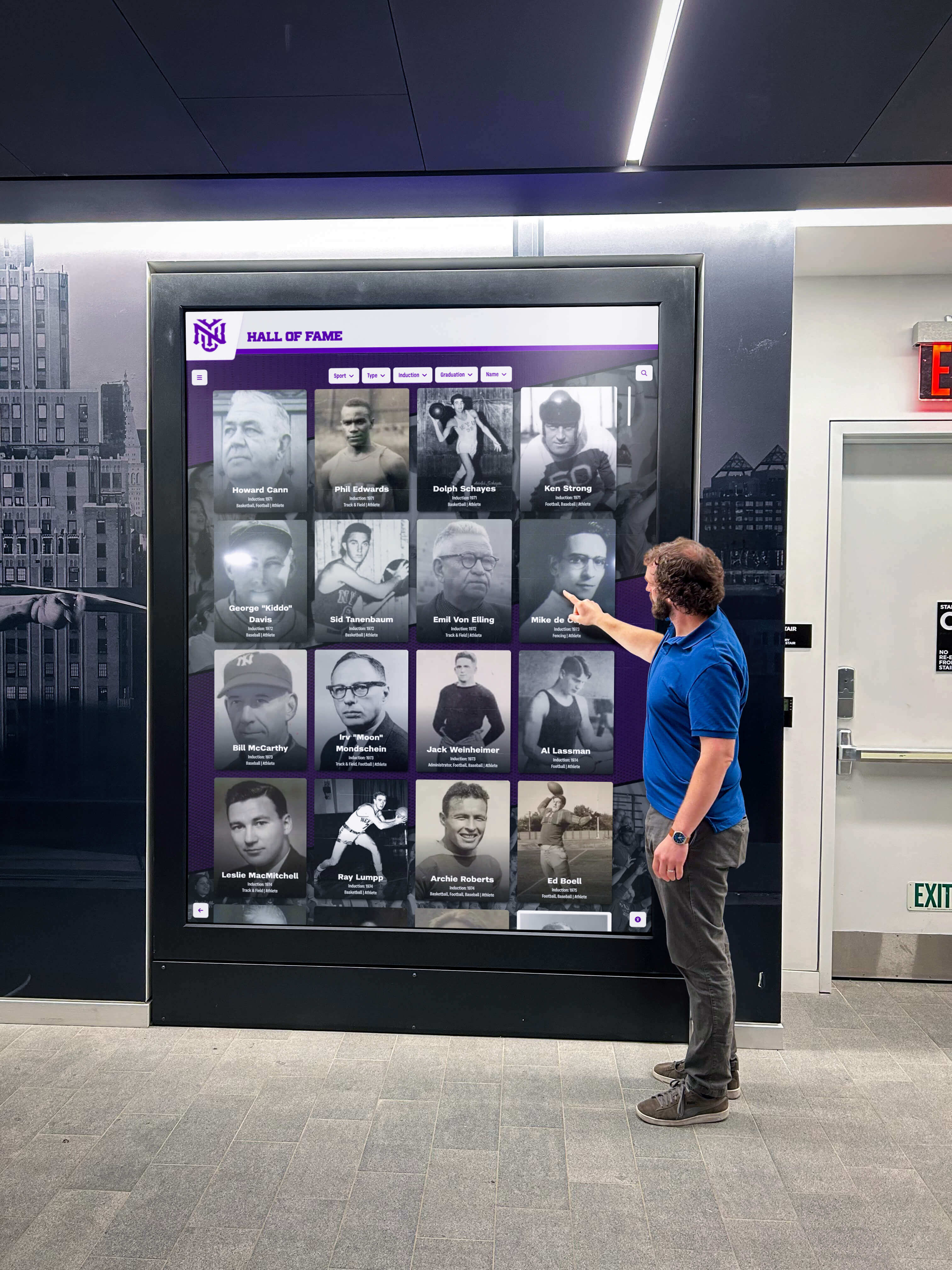
Effective donor displays invite exploration and create positive recognition experiences for contributors and visitors alike
Content Development
Beyond donor names, effective recognition walls include:
- Campaign descriptions explaining funding priorities and impact
- Progress indicators showing fundraising momentum and goal achievement
- Impact stories demonstrating how contributions benefit students and programs
- Giving opportunity information encouraging additional support
- Historical context connecting current campaigns to institutional legacy
Schools implementing digital recognition should plan for ongoing content creation maintaining fresh, relevant displays rather than static installations that quickly feel dated.
Maintenance and Long-Term Management
Recognition displays require ongoing attention maintaining professional presentation:
Physical Maintenance Requirements
- Regular cleaning preserving display appearance and readability
- Lighting maintenance ensuring proper illumination at all viewing hours
- Material care preventing deterioration, tarnishing, or damage
- Surrounding area upkeep maintaining dignified recognition environment
- Periodic assessment identifying needed repairs or updates
Digital System Management
- Content updates adding new donors and campaign information
- Software maintenance ensuring reliable operation and security
- Hardware monitoring preventing display failures or degraded performance
- Backup systems protecting donor data and content libraries
- Technology refresh planning for eventual display replacement as equipment ages
Schools should assign clear responsibility for donor wall oversight ensuring displays receive the attention necessary to maintain donor confidence and recognition quality.
Best Practices for Donor Wall Success
Schools with exemplary donor recognition programs share common approaches maximizing advancement impact.
Honoring All Giving Levels
Effective recognition acknowledges contributors across the entire giving spectrum:
Inclusive Recognition Philosophy
- Major donors receive premium recognition befitting significant investments
- Mid-level supporters gain meaningful acknowledgment proportional to contributions
- Annual fund donors find their names included demonstrating that all gifts matter
- Recognition tiers clear and logical without creating perceived indignities
- Cumulative giving recognition honoring sustained support over time
Donors excluded from recognition systems due to capacity limitations often reduce future giving. Digital systems excel at comprehensive inclusion impossible with space-constrained physical walls.
Connecting Recognition to Impact
The most motivating donor walls demonstrate tangible outcomes of philanthropic support:
Impact Storytelling Elements
- Specific examples of how contributions funded programs, scholarships, or facilities
- Student testimonials expressing gratitude and describing donor impact on their education
- Program outcomes showing academic results, competitive achievements, or opportunity expansion
- Facility improvements demonstrating visible campus enhancements funded by contributions
- Community benefits illustrating how school advancement serves broader public good
Recognition that tells compelling impact stories inspires additional giving far more effectively than simple name lists.
Explore creative donor wall designs that prioritize storytelling alongside contributor acknowledgment.
Regular Updates and Refresh Cycles
Recognition displays require ongoing attention maintaining relevance and motivation:
Update Frequency Recommendations
- Real-time updates during active campaigns showing fundraising momentum
- Monthly additions as new donors reach recognition thresholds
- Quarterly content refreshes highlighting seasonal programs or upcoming events
- Annual comprehensive reviews ensuring accuracy and removing outdated campaign information
- Multi-year refresh cycles updating design treatments, technology, or display locations
Stale donor walls communicating that recognition ended years ago undermine current fundraising efforts and donor confidence.
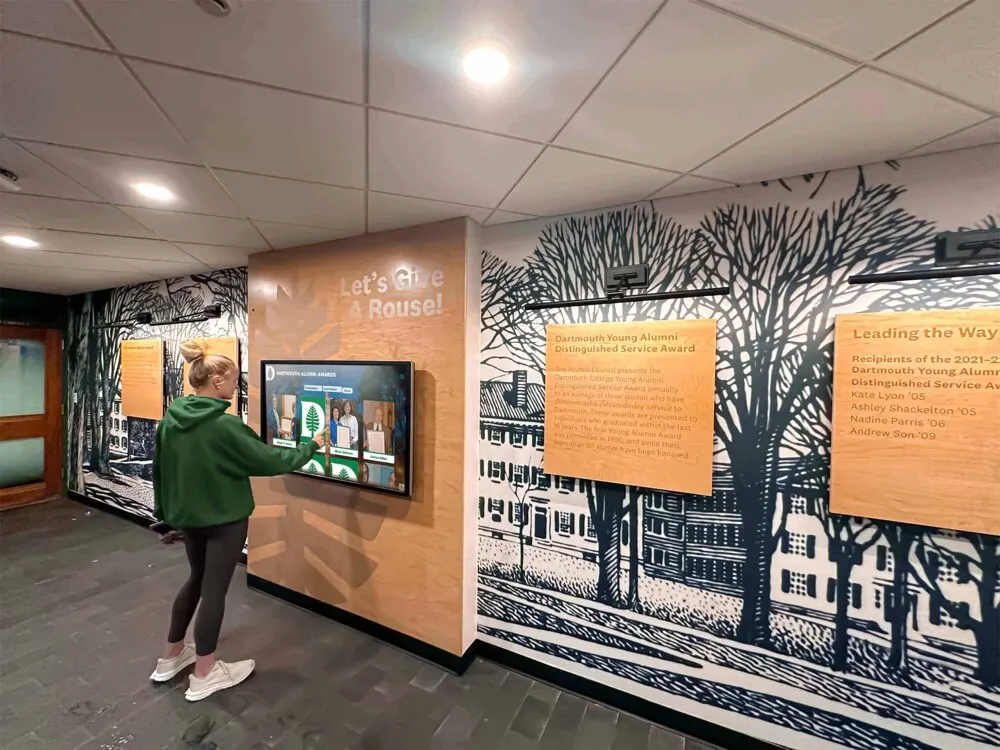
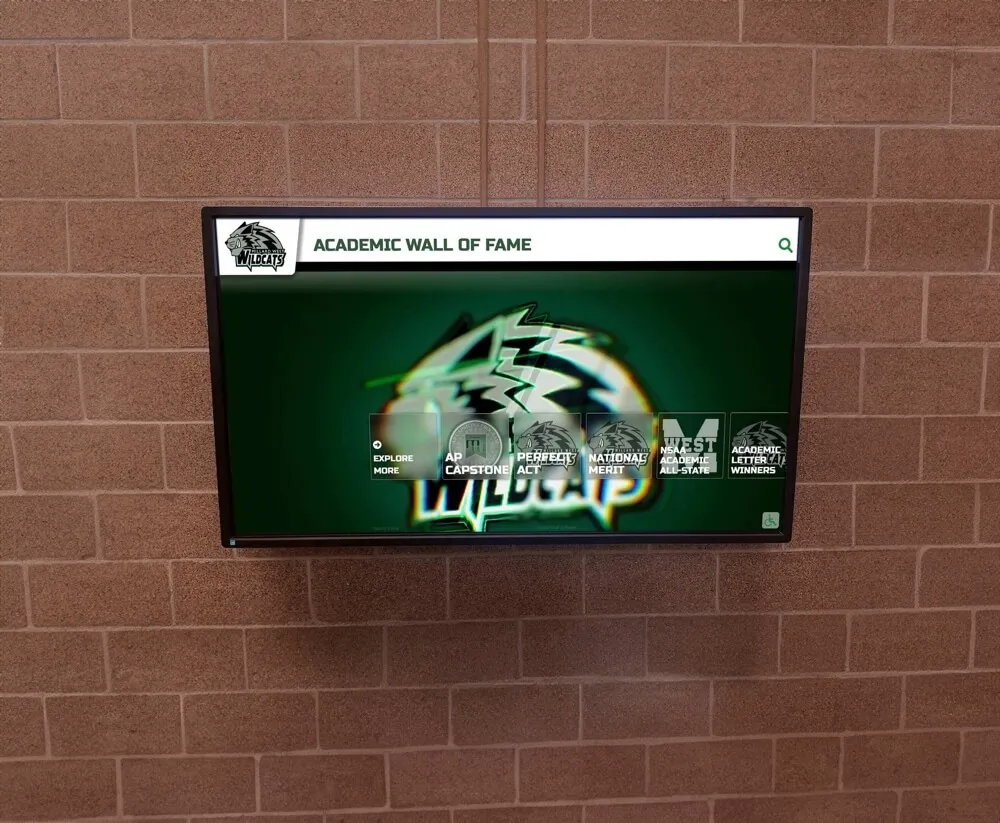
Regular content updates keep donor recognition displays relevant and engaging for returning visitors
Privacy and Recognition Preferences
Respecting donor wishes regarding recognition visibility strengthens relationships:
Privacy Consideration Categories
- Donors preferring complete anonymity with no public acknowledgment
- Contributors comfortable with recognition in private donor lounges but not public spaces
- Supporters accepting name inclusion but declining naming rights or premium placement
- Donors requesting specific name formats, family recognition, or memorial dedications
- Contributors with evolving privacy preferences as circumstances change
Advancement teams should document recognition preferences carefully, respect stated wishes, and create processes for preference updates as donor situations evolve.
Measuring Donor Wall Impact on Advancement Results
Effective recognition programs assess how donor walls influence giving behavior and campaign success.
Key Performance Indicators
Quantifiable metrics help evaluate recognition investment value:
Giving Behavior Metrics
- Donor retention rates comparing recognized vs. unrecognized contributors
- Upgrade rates showing donors increasing giving levels over time
- Recognition-attributed gifts where donors cite appreciation as giving motivation
- Legacy gift commitments following major recognition installations
- Social engagement around donor wall unveilings and recognition events
Campaign Performance Indicators
Recognition walls should positively impact broader advancement metrics:
- Campaign goal achievement rates and timeline performance
- New donor acquisition during active recognition visibility
- Matching gift participation when donors see peer recognition
- Unrestricted vs. restricted giving ratios as recognition demonstrates institutional priorities
- Volunteer engagement from recognized donors serving in advancement leadership
Donor Feedback and Satisfaction
Qualitative assessment complements quantitative metrics:
Feedback Collection Methods
- Donor surveys assessing recognition satisfaction and preferences
- Informal conversations during recognition events or donor visits
- Advancement officer observations during facility tours including donor wall locations
- Third-party perception studies comparing recognition approaches
- Social media monitoring for donor acknowledgment and sharing behavior
Schools learning that donors find recognition meaningful, appropriate, and motivating can invest confidently in enhanced programs. Conversely, feedback revealing dissatisfaction should prompt immediate attention preventing damage to donor relationships.
Trends Shaping Future Donor Recognition
Understanding emerging approaches helps schools future-proof recognition investments.
Personalization and Customization
Technology enables donor recognition experiences tailored to individual contributors:
Personalized Recognition Examples
- QR codes linking to detailed donor profiles, giving histories, or impact stories
- Mobile app integration allowing donors to view personal recognition from devices
- Customized content for donor visits highlighting their specific contributions
- Personalized thank-you messages or impact updates displayed when donors approach recognition walls
- Individual donor galleries showcasing photos, testimonials, or legacy information
Sustainability and Values Alignment
Recognition materials and approaches increasingly reflect institutional values:
Sustainable Recognition Practices
- Digital displays reducing material consumption compared to traditional plaque production
- Recycled or sustainably sourced materials for physical recognition elements
- Energy-efficient display technology minimizing environmental impact
- Design longevity reducing replacement frequency and associated waste
- Recognition messaging connecting donor support to sustainability initiatives
Integration with Broader Campus Systems
Donor walls increasingly connect to comprehensive campus communication networks:
Integrated Recognition Systems
- Digital displays serving multiple functions (donor recognition, wayfinding, event promotion, emergency alerts)
- Content management systems coordinating messaging across campus display networks
- Data integration connecting recognition displays to advancement databases for automatic updates
- Analytics tracking recognition display engagement and viewer behavior
- Campus app integration extending recognition visibility beyond physical installations
Learn about academic recognition programs that can complement donor wall systems with student achievement celebration.
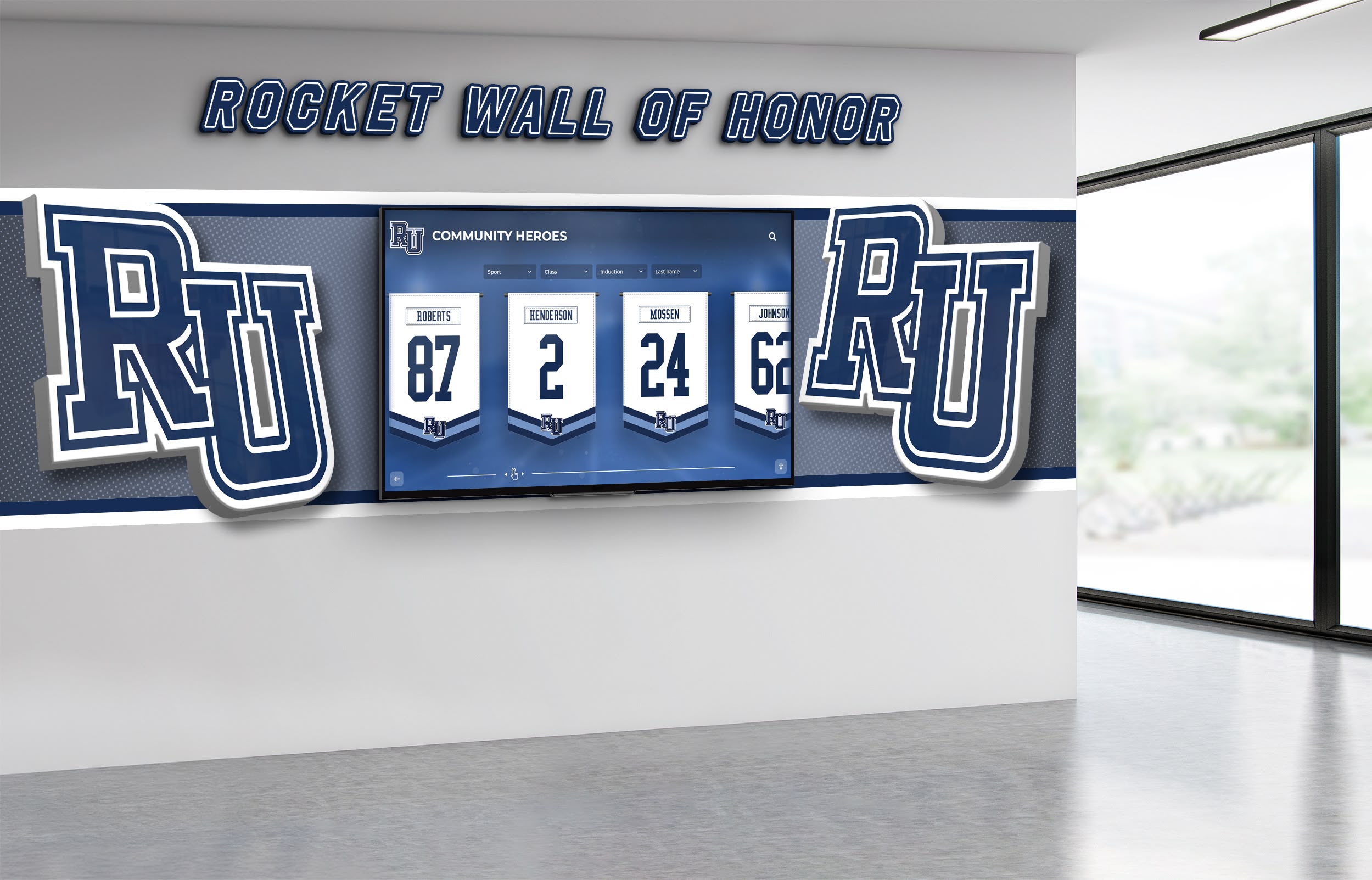
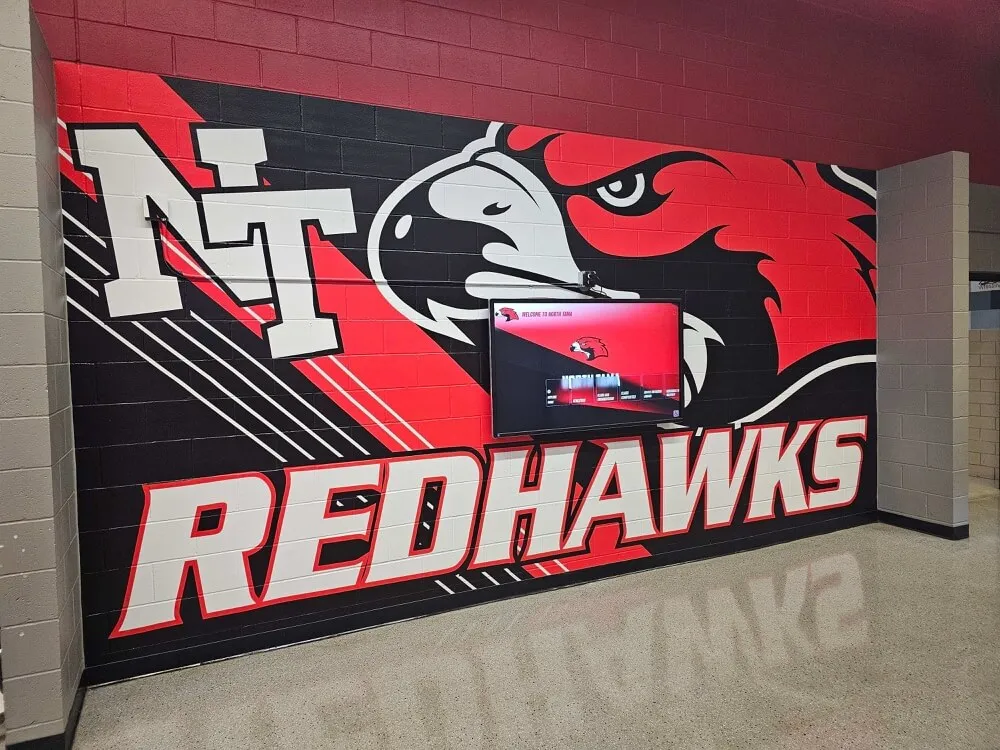
Contemporary recognition systems integrate seamlessly with broader campus communication infrastructure and institutional branding
Common Donor Wall Mistakes to Avoid
Learning from recognition failures helps schools implement more effective programs.
Insufficient Planning for Growth
Many schools underestimate future donor list expansion:
Growth Planning Failures
- Fixed-capacity designs requiring expensive expansion within years of installation
- Recognition levels that quickly fill preventing new donor additions
- Inflexible materials making updates cost-prohibitive
- Location selections without space for eventual expansion
- Budget allocations covering installation but not long-term management
Schools should plan donor recognition for the supporter base they aspire to build, not merely the current donor count.
Poor Location Choices
Recognition placement dramatically affects donor perception and advancement impact:
Location Mistakes
- Secondary hallways or remote areas where donor walls receive minimal visibility
- High-traffic locations where nobody actually pauses to view recognition
- Spaces subject to environmental damage, poor lighting, or maintenance challenges
- Areas scheduled for renovation making recognition installation temporary
- Locations creating donor perception that recognition was an afterthought
Prime real estate demonstrates institutional commitment to donor appreciation. Relegating recognition to leftover spaces communicates the opposite message.
Inconsistent Recognition Standards
Unclear policies create donor confusion and dissatisfaction:
Recognition Consistency Issues
- Giving levels and recognition criteria changing between campaigns
- Inconsistent name formats, recognition placement, or acknowledgment timing
- Special treatment for certain donors creating perceived favoritism
- Recognition promises that staff cannot fulfill due to design or budget limitations
- Policies addressing recognition removal, name changes, or recognition duration
Advancement teams should establish clear, written recognition policies applied consistently across all campaigns and donor relationships.
Neglecting Ongoing Maintenance
Recognition displays requiring regular attention often deteriorate:
Maintenance Failure Consequences
- Faded, damaged, or poorly maintained displays suggesting donor support no longer matters
- Broken digital screens or outdated content undermining recognition credibility
- Dirty, poorly lit, or cluttered recognition areas communicating lack of care
- Failure to add new donors promptly discouraging ongoing support
- Deferred repairs creating increasingly expensive problems over time
Donors evaluating whether institutions will steward significant gifts well observe how schools maintain existing recognition. Neglected donor walls damage confidence and future fundraising.
Creating Recognition Walls That Drive Continued Giving
The most successful school donor walls transform acknowledgment from administrative obligation to strategic advancement tool.
Effective donor recognition tells compelling stories connecting philanthropic support to student success, educational excellence, and community impact. When contributors see their names displayed alongside tangible evidence of what their giving accomplished—scholarships funding first-generation students, facilities enabling championship teams, technology supporting innovative learning, programs expanding opportunity—they gain deep satisfaction motivating continued investment in institutional mission.
Schools designing donor walls should prioritize visibility, inclusivity, flexibility, storytelling, and maintenance ensuring recognition systems serve advancement goals for decades. Whether choosing traditional elegance, digital innovation, or hybrid approaches combining both, the guiding principle remains constant: donors who feel genuinely appreciated, appropriately recognized, and connected to meaningful impact become lifelong supporters inspiring others to join them.
Modern donor walls combining physical presence with digital flexibility deliver recognition experiences honoring tradition while embracing innovation. These systems accommodate unlimited growth, enable instant updates, facilitate rich storytelling, and create engagement opportunities impossible with static displays—all while maintaining the dignity and permanence donors expect and deserve.
Ready to create a donor recognition system that inspires continued giving while honoring your school’s supporters with the appreciation they deserve? Rocket Alumni Solutions specializes in digital recognition displays combining traditional elegance with modern flexibility, helping schools celebrate donors, demonstrate impact, and build advancement programs that thrive for generations.