



Phi Alpha Theta, the international history honor society, represents one of the most prestigious academic organizations for undergraduate and graduate students passionate about historical scholarship. With more than 970 chapters across the United States and beyond, this distinguished society connects over 400,000 members who share a commitment to excellence in historical study, research, and academic achievement.
Yet many qualified history students remain unaware that a Phi Alpha Theta chapter exists at their university or how to become involved in this valuable academic community. Students miss opportunities for scholarships, research grants, networking connections, and professional development simply because they don’t know how to locate their campus chapter or understand membership pathways that could enhance both their undergraduate experience and future graduate school applications.
Finding and joining your local Phi Alpha Theta chapter opens doors to exclusive academic opportunities unavailable through standard coursework alone—from presenting research at regional conferences and competing for national awards to connecting with fellow historians and building relationships with faculty advisors who can shape your academic trajectory.
This comprehensive guide provides everything you need to successfully locate Phi Alpha Theta chapters, understand membership requirements, navigate the joining process, and maximize the benefits this distinguished honor society offers to serious history students.
For students pursuing history degrees or developing serious interests in historical scholarship, Phi Alpha Theta membership represents far more than another line on a resume. This established academic organization provides concrete pathways to research funding, publication opportunities, professional networking, and recognition that distinguish committed historians from students merely fulfilling degree requirements.

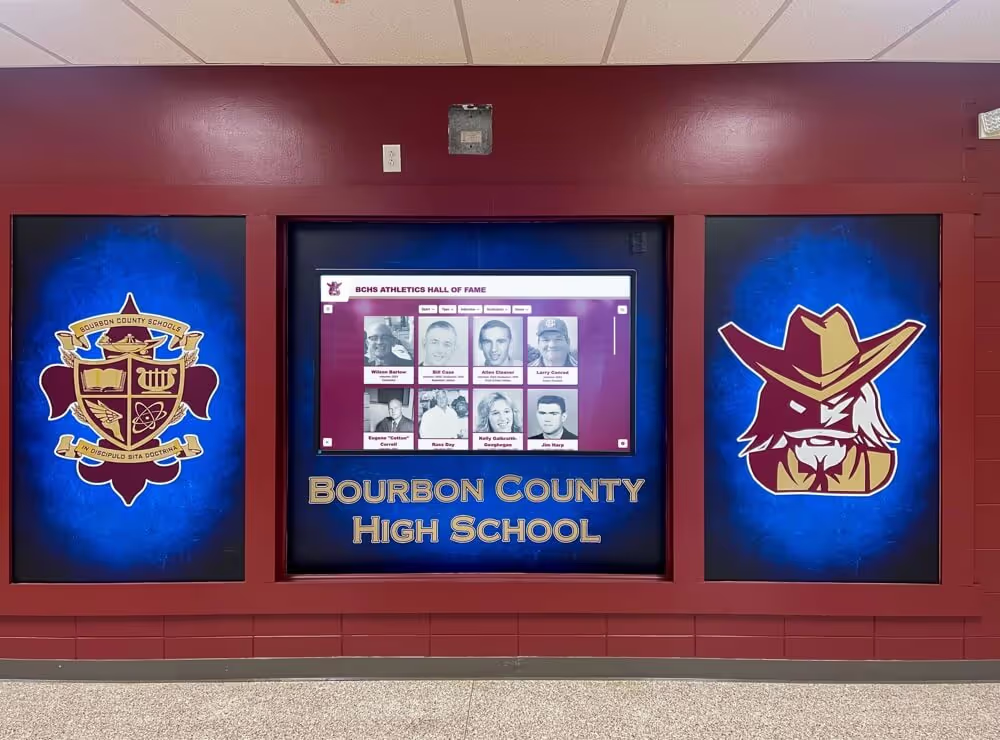
Modern campus technology helps students discover academic opportunities including honor societies and recognition programs
Understanding Phi Alpha Theta: History and Mission
Before searching for chapters, understanding the organization’s history, structure, and purpose helps students recognize the value membership provides.
Founding and Historical Development
Phi Alpha Theta was established on March 17, 1921, at the University of Arkansas by Professor Nels Andrew Cleven. Professor Cleven, inspired by the structure and community benefits of Greek social fraternities and sororities, recognized that history students needed similar organized communities focused specifically on historical scholarship, academic excellence, and professional development rather than social activities.
Initially called the University Historical Society when students first gathered on March 14, 1921, the organization adopted the Greek letters Phi Alpha Theta in April 1921. This name selection reflected the society’s academic focus and scholarly mission distinguishing it from social Greek organizations.
From this single founding chapter, Phi Alpha Theta expanded steadily throughout the 20th century and into the 21st, establishing chapters at universities and colleges across the United States and internationally. Today, the society maintains its national headquarters at the University of South Florida, which also hosts editorial offices for The Historian, the organization’s prestigious quarterly academic journal.
Organizational Mission and Values
Phi Alpha Theta’s core mission centers on promoting excellence in the study and teaching of history. The society achieves this mission by recognizing and rewarding outstanding historical scholarship among students, encouraging research and publication, fostering professional relationships among historians at all career stages, and creating communities where passionate history students connect with peers and mentors sharing their intellectual interests.
The organization values academic rigor, intellectual curiosity, scholarly integrity, interdisciplinary approaches to historical understanding, and commitment to advancing historical knowledge through both traditional and innovative methodologies.
Current Scope and Reach
With approximately 970 active chapters and more than 400,000 members initiated since founding, Phi Alpha Theta represents one of the largest and most established discipline-specific honor societies in American higher education. Each year, roughly 9,000 new members join through campus chapters nationwide.
The society’s reach extends to diverse institutional types including large research universities, regional comprehensive universities, liberal arts colleges, and community colleges that partner with four-year institutions. This broad institutional representation ensures that qualified history students across varied educational contexts can access membership benefits.

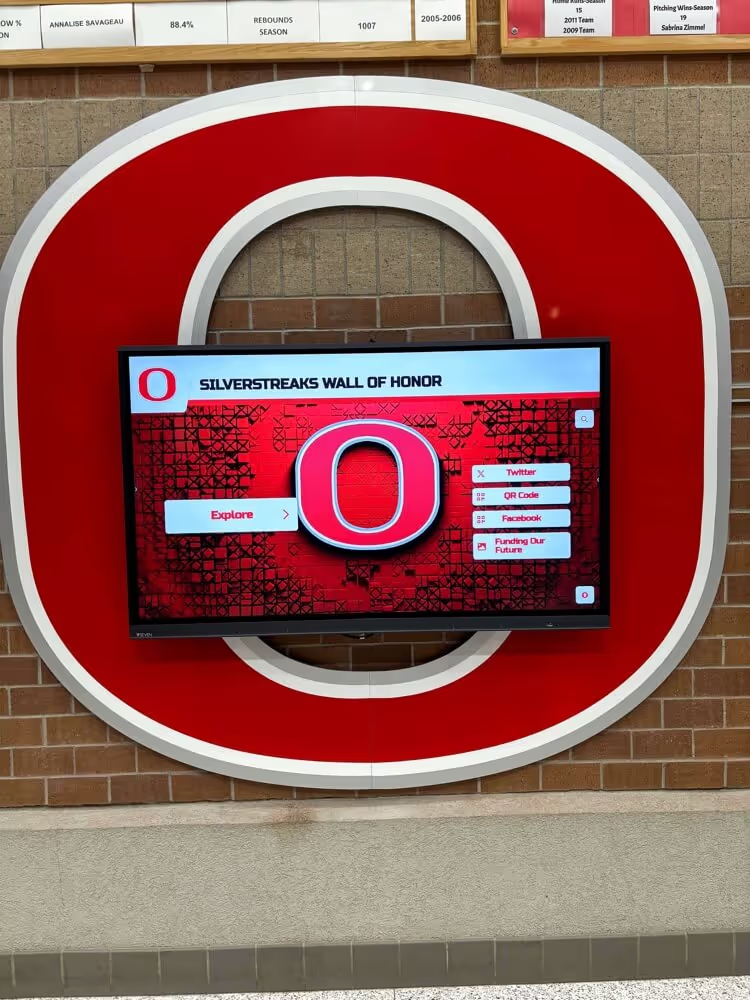
Honor societies like Phi Alpha Theta provide formal recognition of academic excellence in specialized disciplines
Organizational Structure
Phi Alpha Theta operates through a tiered governance structure including the national organization headquartered at the University of South Florida, regional divisions that coordinate conferences and chapter support, individual campus chapters that serve local student members, and chapter advisors who are typically history department faculty members.
Each campus chapter maintains autonomy in organizing local activities, selecting new members within national guidelines, and creating programming that serves their specific student community while aligning with broader organizational mission and standards.
How to Find Phi Alpha Theta Chapters at Your University
Locating the Phi Alpha Theta chapter at your institution or nearby universities requires systematic research through multiple channels.
Using the Official Chapter Locator
The most direct method for finding Phi Alpha Theta chapters involves the organization’s official online chapter locator tool, available at phialphatheta.org/chapter-locator.
Step-by-Step Chapter Search Process
Navigate to the Phi Alpha Theta website and access the chapter locator tool. The locator organizes chapters by geographic region and state, enabling efficient searching based on your location. Browse the alphabetical state listings to find your institution. The locator provides contact information for chapter advisors, typically history department faculty members who serve as primary points of contact.
Regional Organization
Chapters are grouped into regional divisions including states like Alabama, Arkansas, California North, California South, Colorado, Florida, Georgia, and all other U.S. states, plus some international chapters. This regional organization reflects how the society coordinates conferences and provides chapter support through geographic proximity.
When searching, pay attention to chapter designations—some larger universities maintain multiple chapters designated by Greek letters (Alpha chapter, Beta chapter, etc.), while most institutions have a single chapter.

Campus information systems increasingly help students discover academic organizations and opportunities
Contacting Your History Department Directly
If the online chapter locator proves difficult to navigate or provides outdated information, direct contact with your university’s history department often yields faster, more accurate results.
Identifying Department Contacts
Visit your history department’s website to locate contact information for the department chair, undergraduate program coordinator, or academic advisor. These individuals typically maintain current information about all departmental academic organizations including Phi Alpha Theta.
Many history departments feature dedicated webpage sections highlighting student organizations, honor societies, and co-curricular opportunities. Look for sections titled “Student Organizations,” “Honors and Awards,” “Student Opportunities,” or similar headings that may list Phi Alpha Theta with current chapter advisor information.
Questions to Ask Department Staff
When contacting history department personnel, ask specific questions including whether an active Phi Alpha Theta chapter exists at your institution, who serves as the current chapter advisor, when the chapter typically inducts new members, what membership requirements apply, and how interested students can learn more about joining.
Administrative staff in history departments typically handle these inquiries regularly and can quickly connect you with appropriate faculty advisors or provide information about upcoming information sessions.
Exploring Campus Student Organization Directories
Most universities maintain comprehensive directories of recognized student organizations that may list active Phi Alpha Theta chapters.
University Student Affairs Resources
Check your institution’s student affairs or student life website, which typically includes searchable databases of all officially recognized student organizations. These directories often provide organization descriptions, meeting times and locations, contact information for current student officers, and faculty advisor details.
Search these directories using terms like “Phi Alpha Theta,” “history honor society,” “history organizations,” or browse alphabetical listings. Campus student organization databases may include more current contact information than external chapter locators that depend on periodic updates from member institutions.
Campus Involvement Fairs and Events
Many universities host involvement fairs, particularly at the beginning of academic terms, where student organizations recruit new members. Phi Alpha Theta chapters frequently participate in these events, providing opportunities to meet current members and faculty advisors, learn about membership requirements and benefits, ask questions about chapter activities, and complete preliminary interest forms.
Attending these events offers advantages over remote research by enabling personal interaction with chapter representatives who can provide detailed, institution-specific information about local opportunities.
Checking Academic Honor Society Databases
Third-party honor society databases and validation services maintain information about legitimate academic honor societies including chapter locations.
Using Honor Society Verification Resources
Organizations like the Association of College Honor Societies maintain lists of recognized honor societies with institutional affiliations. These resources help students distinguish legitimate academic honor societies like Phi Alpha Theta from questionable organizations sometimes confused with honorary societies or commercial “honor” membership services of limited value.
While not primarily designed as chapter locators, these databases can confirm whether Phi Alpha Theta maintains active presence at specific institutions and provide context about the society’s legitimacy and reputation compared to other academic organizations.

Universities increasingly combine digital displays with traditional plaques to celebrate student achievements and organizational affiliations
Understanding Phi Alpha Theta Membership Requirements
Phi Alpha Theta maintains rigorous academic standards ensuring membership signifies genuine scholarly achievement rather than merely completing minimal requirements.
Undergraduate Student Eligibility Criteria
Undergraduate students must meet specific academic benchmarks established at the national level, though individual chapters may apply additional local requirements.
Core Academic Requirements
According to official Phi Alpha Theta standards, undergraduate students must complete a minimum of 12 semester hours (typically four courses) in history. These credits can be earned through various pathways including traditional classroom courses, online history courses, Advanced Placement history credits, or transfer credits from other institutions. Students need not major in history—the society welcomes qualified students from all majors who demonstrate strong interest and achievement in historical study.
Grade Point Average Standards
Undergraduate candidates must maintain a 3.0 overall cumulative grade point average and at least a 3.1 average specifically in history courses. These GPA thresholds ensure membership reflects consistent academic achievement rather than isolated strong performances.
Additionally, undergraduate candidates must rank in the top 35% of their overall class. This percentile requirement recognizes that student bodies at different institutions may have varying average GPAs, ensuring standards remain appropriately rigorous across diverse institutional contexts.
Credit and Standing Considerations
The 12 semester hour requirement typically means students have completed at least four history courses before becoming eligible for membership. Most students reach this threshold during their sophomore or junior years, particularly history majors or students with strong interests in historical study who take history courses beyond general education requirements.
Some chapters may consider students approaching the 12-hour threshold who will complete required credits during the semester of induction, though practices vary by institution. Prospective members should clarify timing expectations with local chapter advisors.
Graduate Student Eligibility Requirements
Graduate students pursuing master’s or doctoral degrees in history face different eligibility criteria reflecting advanced study expectations.
Graduate Academic Benchmarks
Graduate student candidates must complete a minimum of 12 semester hours toward their Master’s degree in history, maintain a grade point average above 3.5 in graduate coursework, and complete approximately 30% of their institution’s requirements for the Master’s degree by the time of induction.
These standards ensure graduate members have established clear commitment to graduate-level historical scholarship and demonstrated capacity for sustained excellence at advanced levels before receiving membership recognition.
Doctoral Student Considerations
Students pursuing doctoral degrees typically join Phi Alpha Theta during their Master’s programs, as the membership criteria focus primarily on Master’s-level requirements. However, doctoral students who did not join during Master’s study and whose institutions maintain active chapters may inquire about membership options with local chapter advisors.
Lifetime membership means that students joining during undergraduate or Master’s programs maintain full membership status throughout doctoral study and professional careers without additional applications or dues at the national level.
Chapter-Specific Additional Requirements
While national standards establish baseline eligibility, individual chapters may implement additional local requirements reflecting departmental cultures and chapter traditions.
Supplemental Criteria Variations
Some chapters require attendance at chapter meetings or events before induction, completion of specific types of history courses beyond the 12-hour minimum, submission of a history research paper demonstrating writing ability, faculty recommendations from history professors, or participation in chapter activities before full membership conferral.

Interactive displays help students explore academic achievement pathways and organizational involvement opportunities
Verifying Local Requirements
When investigating membership at your specific institution, ask chapter advisors about any additional requirements beyond national standards. Understanding complete expectations prevents surprises during the application process and enables proper preparation.
Most chapters maintain relatively straightforward membership processes aligned with national standards, recognizing that overly burdensome local requirements may discourage qualified students from joining.
Special Circumstances and Accommodations
Students with unique academic circumstances should discuss situations with chapter advisors to understand how requirements apply to their specific cases.
Transfer Students and AP Credits
Students who transfer between institutions or bring substantial AP credits may meet history course requirements through combinations of credits from multiple sources. Phi Alpha Theta typically accepts all history credits counting toward degree requirements regardless of source, provided students meet GPA and percentile standards at their degree-granting institution.
Double Majors and Interdisciplinary Programs
Students majoring in interdisciplinary fields incorporating historical study should clarify whether their history-focused coursework counts toward the 12-hour requirement. Most interpretations favor inclusion of courses with substantial historical content even if listed under other department codes, but policies vary by institution.
The Membership Application and Induction Process
After confirming eligibility and locating your campus chapter, understanding the membership process ensures smooth progression toward induction.
Typical Membership Timeline
Most Phi Alpha Theta chapters follow predictable annual cycles for identifying, selecting, and inducting new members.
Annual or Semester Induction Cycles
Many chapters conduct formal induction ceremonies once or twice annually, commonly in spring semesters or academic years. Some active chapters hold both fall and spring inductions, enabling eligible students to join whenever they meet requirements rather than waiting extended periods.
Chapter advisors typically begin identifying eligible students several months before planned induction ceremonies, reviewing student records to create invitation lists or announcing application windows for interested students who meet criteria.
Application Window Considerations
Students approaching eligibility thresholds should contact chapter advisors early in semesters when they’ll complete requirements. Proactive communication ensures inclusion in upcoming induction cycles rather than missing deadlines and waiting additional terms.
Some chapters maintain informal interest lists, allowing students who nearly meet requirements to register interest and receive notifications when eligibility is confirmed and applications open.
Application Procedures
Application procedures vary somewhat by chapter but typically follow general patterns.
Invitation vs. Application Models
Some chapters operate primarily through faculty invitation—department faculty review student records, identify eligible students, and extend formal invitations to apply for membership. This model ensures qualified students receive information even if unaware of the organization.
Other chapters use open application models where the history department or chapter announces membership opportunities, and interested eligible students submit applications during designated windows. This approach requires more student initiative but enables self-motivated students to pursue membership actively.
Many chapters blend both approaches, sending invitations to clearly eligible students while also accepting applications from others who believe they meet requirements.
Required Documentation
Application packages typically include completed membership application forms, current unofficial transcripts showing history coursework and GPAs, brief personal statements explaining interest in history and membership motivations, and faculty recommendations or endorsements in some cases.
Chapters generally keep application requirements relatively streamlined, recognizing that qualified students have demonstrated academic seriousness through their coursework and grades rather than requiring elaborate supplemental materials.

Honor societies increasingly utilize both digital and physical displays to celebrate member achievements
Membership Fees and Financial Considerations
Joining Phi Alpha Theta involves modest one-time costs that provide lifetime membership and benefits.
National Initiation Fees
The standard one-time national initiation fee is typically $50, which includes official membership certificate, subscription to The Historian quarterly journal, lifetime national membership status, and eligibility for all member benefits including scholarships, awards, and conference participation.
This one-time fee structure means no recurring annual dues at the national level—once initiated, students maintain full membership throughout their lives without additional national fees.
Local Chapter Dues
Individual chapters may assess small additional local dues or fees supporting chapter activities, local events, or refreshments at meetings and induction ceremonies. These local amounts vary widely but typically remain modest, often $10-25 annually or one-time, if charged at all.
Students with financial concerns should discuss options with chapter advisors. Some institutions provide financial assistance for honor society memberships, and chapters may offer fee waivers or payment plans ensuring financial circumstances don’t prevent qualified students from joining.
Value Proposition Considerations
The $50 national fee provides substantial value considering lifetime membership status, journal subscription, scholarship and award eligibility, and professional networking access. For serious history students, particularly those pursuing graduate study or history-related careers, membership benefits significantly exceed the modest initiation investment.
Induction Ceremonies and Traditions
Formal induction ceremonies mark official entry into Phi Alpha Theta membership and often become memorable moments in students’ academic journeys.
Typical Ceremony Elements
Induction ceremonies vary by chapter but commonly include formal ceremony components with traditional elements, presentation of membership certificates, optional academic regalia or honor cords for graduating seniors, remarks by history faculty about scholarship importance, and opportunities for new members to introduce themselves and share historical interests.
Many ceremonies conclude with receptions enabling new members to socialize with faculty advisors, current members, and fellow inductees. These gatherings facilitate relationship-building that extends beyond the formal ceremony.
Family and Guest Attendance
Chapters typically welcome family members, friends, and guests to induction ceremonies. These occasions provide opportunities for families to celebrate students’ academic achievements in formal settings that validate scholarly accomplishment.
Photography, certificates, and ceremony programs create tangible mementos students can preserve alongside other academic milestones throughout their educational journeys.
Maximizing Your Phi Alpha Theta Membership Benefits
Membership value depends substantially on active engagement with opportunities the society provides beyond the initial credential.
Academic and Professional Development Opportunities
Phi Alpha Theta creates pathways for advancing historical scholarship and professional preparation unavailable through standard coursework alone.
Research Presentation Opportunities
All student members remain eligible to present research papers at approximately 40 regional conferences held annually across the United States. These one-day meetings bring together chapters from geographic areas, with more than 700 student papers presented each year.
Regional conferences provide invaluable experience in academic presentation, professional feedback from historians, networking with students from other institutions, and low-stakes practice before potentially presenting at larger national conferences.
Additionally, members can present at the society’s biennial national convention, a prestigious opportunity showcasing research to audiences including faculty historians, graduate students, and accomplished scholars from across the country and internationally.
Organizations should consider academic recognition programs that celebrate student research achievements and conference presentations.
Publication Pathways
Beyond presentations, Phi Alpha Theta supports student publication through The Historian journal, which occasionally features outstanding student research alongside professional historical scholarship. Publication in this peer-reviewed journal represents a significant credential for undergraduate or graduate students, particularly those pursuing doctoral programs or academic careers.
Individual chapters may also maintain student history journals publishing member research. These chapter-level publications provide excellent publication experience and evidence of scholarly productivity for graduate school applications and curricula vitae.
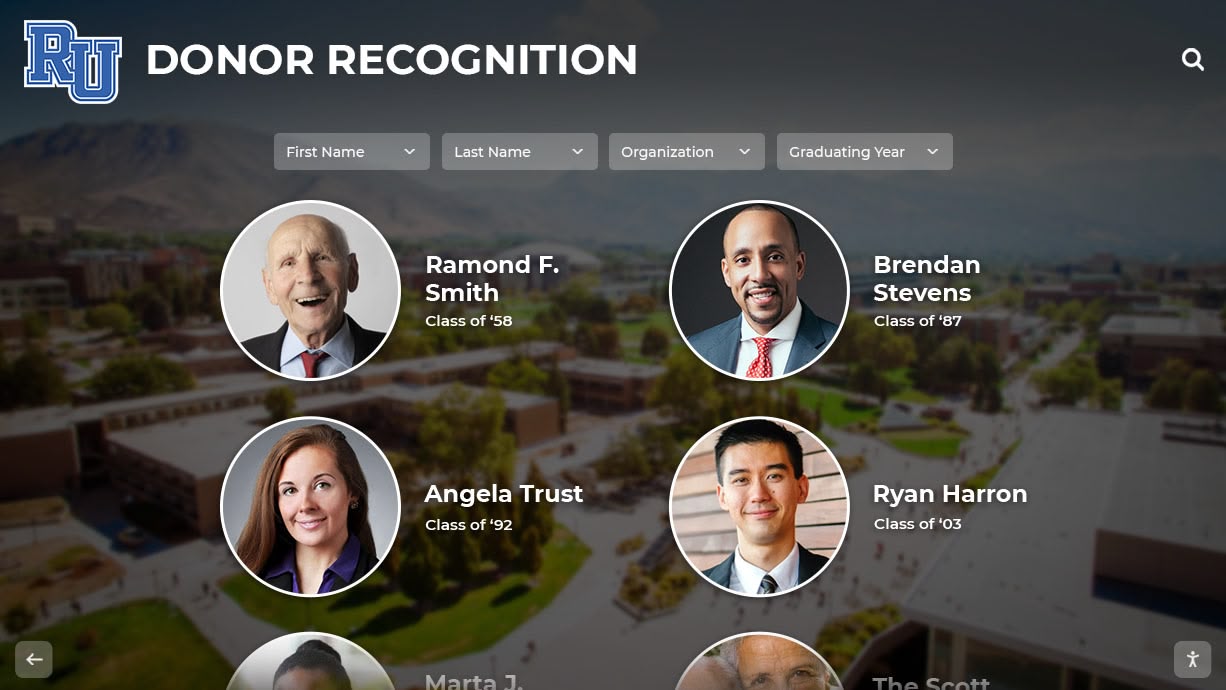
Universities increasingly use digital recognition displays to celebrate academic achievements and organizational affiliations
Scholarships, Awards, and Research Funding
Phi Alpha Theta awards more than 25 scholarships and prizes annually exclusively to members, representing substantial financial support for historical study and research.
Graduate Study Scholarships
The society offers several scholarships supporting graduate education including the A.F. Zimmerman Scholarship of $1,250 for students entering graduate school for the first time pursuing Master’s degrees in history, the John Pine Memorial Award of $1,000 for graduate student members pursuing advanced graduate study, and four additional awards of $750 each for either new graduate students or those in advanced graduate programs.
These competitive scholarships recognize academic excellence while providing financial support that reduces educational costs and enables students to focus on scholarly work rather than exclusively on funding concerns.
Paper Competition Prizes
Multiple paper prizes recognize outstanding student historical writing including the Lynn W. Turner Prize of $500 awarded annually to the best undergraduate history paper submitted to Phi Alpha Theta, the Nels Andrew Cleven Founder’s Paper Prizes of $350 each awarded to two outstanding undergraduate history papers annually, and various regional and specialized paper prizes recognizing excellence in specific historical fields or methodological approaches.
Winning these competitive prizes provides both financial awards and prestigious credentials that distinguish applications for graduate programs, scholarships, and employment opportunities.
Learn about comprehensive approaches to showcasing student achievement that include research awards and academic recognition.
Research Grants and Travel Support
Members can compete for research funding supporting archival research, travel to historical sites, conference attendance, and other scholarly activities. These grants enable students to undertake research projects requiring resources beyond what many undergraduates or graduate students could otherwise afford.
Travel grants specifically support conference attendance, ensuring financial constraints don’t prevent qualified students from presenting research at regional or national meetings and benefiting from professional networking these gatherings provide.
Networking and Mentorship Opportunities
Phi Alpha Theta membership connects students with diverse networks spanning undergraduate peers, graduate students, faculty advisors, and professional historians.
Faculty Advisor Relationships
Chapter advisors are history faculty members who can serve as mentors, provide guidance on graduate school selection and applications, write recommendation letters based on deeper knowledge gained through society interaction, suggest research topics and methodologies, and facilitate connections with other scholars and institutions.
Active engagement with chapter advisors through meetings, events, and research consultations yields relationships extending beyond typical classroom interactions, often proving valuable throughout students’ academic and professional trajectories.
Peer Network Development
Local chapter involvement connects students with peers sharing serious historical interests. These relationships often evolve into study groups, research collaborations, graduate school planning partnerships, and lasting friendships with individuals who understand academic passions beyond what broader peer groups may share.
Regional and national conferences expand peer networks to include students from other institutions, creating connections across geographic areas and institutional types that enrich perspectives and create potential collaborations.
Professional Historian Connections
Conference attendance, journal engagement, and chapter events featuring guest speakers provide opportunities to meet professional historians including graduate students in advanced programs, recent PhDs beginning academic careers, established faculty members, public historians, archivists, museum professionals, and historians working in diverse non-academic settings.
These connections help students understand diverse career pathways available to history degree holders beyond the professor track, while also facilitating mentorship from professionals who have navigated pathways students may wish to pursue.
Resume Enhancement and Graduate School Applications
Phi Alpha Theta membership provides concrete credentials that strengthen applications for graduate programs, scholarships, and employment opportunities.
Graduate Program Application Value
Graduate school admission committees recognize Phi Alpha Theta membership as evidence of academic excellence in historical study, sustained commitment to history beyond required coursework, engagement with professional historical community, and initiative in pursuing scholarly opportunities beyond classroom expectations.

Digital displays increasingly showcase academic honors and organizational memberships that celebrate scholarly achievement
Membership becomes particularly valuable when combined with active participation—presenting at conferences, winning paper prizes, holding chapter leadership positions, or publishing in student journals. These activities demonstrate scholarly engagement that prediction models suggest correlates with graduate school success.
Professional Credential Building
For students pursuing non-academic history careers or careers outside history, Phi Alpha Theta membership demonstrates intellectual rigor, specialized knowledge, commitment to excellence, and capability for sustained achievement in demanding fields.
Employers across sectors value these traits, making honor society membership a subtle but meaningful credential on resumes even when positions don’t directly involve historical work.
Regional Conferences and National Convention Opportunities
Phi Alpha Theta’s conference structure provides systematic opportunities for students to present research and engage with broader historical communities.
Understanding Regional Conference Structure
The society organizes approximately 40 regional conferences annually across the United States, bringing together chapters from geographic areas for one-day meetings focused on student research presentation and networking.
Regional Conference Formats
Regional meetings typically feature concurrent panel sessions where students present 15-20 minute papers followed by Q&A, faculty discussants providing constructive feedback on presentations, keynote speakers or featured addresses by distinguished historians, awards ceremonies recognizing outstanding papers and achievements, and informal networking opportunities during breaks and receptions.
The one-day format makes regional conferences accessible to students who might find multi-day national conventions financially or logistically challenging. Most regional meetings occur at member institutions within driving distance for students from surrounding areas.
Presentation Benefits and Preparation
Presenting at regional conferences provides invaluable professional development including experience translating written research into effective oral presentations, practice fielding questions and defending arguments, exposure to how historical conferences function, feedback from faculty and peers that can strengthen research, and credentials demonstrating scholarly engagement beyond coursework.
Students preparing presentations should work with faculty advisors to select appropriate research projects, craft effective 15-20 minute presentations from longer research papers, develop visual aids or handouts if appropriate, practice presentations multiple times before conferences, and prepare for anticipated questions about methodology, sources, or arguments.
Institutions implementing digital recognition displays often celebrate students who present at regional and national conferences, providing campus visibility for scholarly achievements.
Eligibility and Registration
Only Phi Alpha Theta members can present papers and compete for prizes at regional conferences, though conferences may welcome interested non-member attendees as audience members. This membership requirement incentivizes joining for students with research they wish to present.
Registration typically requires minimal fees covering meals, materials, and logistics. Faculty advisors guide students through registration processes and often coordinate group attendance from institutional chapters.
Biennial National Convention
Every two years, Phi Alpha Theta hosts a multi-day national convention at rotating locations, typically major cities with significant historical connections and conference facilities.
National Convention Programming
National conventions feature substantially larger scales than regional meetings including hundreds of paper presentations across multiple days, keynote addresses by distinguished historians, special sessions on graduate programs and career pathways, meetings of the national governing council and committees, awards ceremonies recognizing top papers and chapter achievements, and extensive networking opportunities bringing together students, faculty, and historians from across the country and internationally.
The multi-day format enables deeper immersion in historical scholarship and professional community than one-day regional meetings provide.
Planning for National Convention Attendance
National convention attendance requires more substantial planning and resources than regional conferences including travel costs for transportation and lodging potentially involving flights and multi-night hotel stays, registration fees somewhat higher than regional conferences though still modest for large academic conventions, time commitments spanning several days requiring coordination with academic schedules, and advance planning for paper submissions and presentation preparations.
Despite greater investment required, students consistently report that national convention attendance provides transformative experiences showcasing the breadth of historical scholarship, connecting with students and faculty from institutions nationwide, experiencing professional conferences similar to those they might attend as graduate students or professors, and building confidence in their capabilities as emerging historians.
Maximizing Conference Participation Value
Simply attending conferences provides value, but strategic approaches maximize benefits from these professional development opportunities.
Active Engagement Strategies
Students should attend diverse panel sessions beyond their specialization areas to broaden historical knowledge, ask thoughtful questions during Q&A to engage with presenters and demonstrate intellectual curiosity, exchange contact information with students and faculty whose work relates to their interests, attend social events and receptions where informal networking occurs, visit local historical sites and museums if time permits, and debrief with faculty advisors and peers after conferences to process experiences and insights.
Following Up After Conferences
Conference value extends beyond the events themselves when students follow up on connections made, revise presented papers incorporating feedback received, submit polished papers for publication or prize competitions, maintain contact with students and faculty met, and plan participation in future regional or national conferences.
These follow-up activities transform one-time conference attendance into ongoing professional development and relationship-building that compounds value over time.

Solutions like Rocket Alumni Solutions help institutions celebrate academic achievements and organizational involvement through engaging digital displays
What to Do If Your Institution Lacks a Phi Alpha Theta Chapter
Students at institutions without active chapters have options for accessing membership and benefits.
Starting a New Chapter at Your Institution
History departments at institutions without chapters can petition to establish new Phi Alpha Theta chapters if sufficient student interest and faculty support exist.
Chapter Formation Process
Starting a chapter typically requires identifying a faculty member willing to serve as chapter advisor (usually a history department faculty member), demonstrating sufficient number of students meeting eligibility requirements to form viable chapter, submitting formal petition to national headquarters with required documentation, paying initial chapter charter fees, and planning inaugural induction ceremony once charter is approved.
The national organization provides detailed guidance for chapter formation available on the Phi Alpha Theta website. Interested students should approach history department chairs or faculty members to gauge interest in pursuing chapter establishment.
Benefits of Starting Chapters
For students willing to invest effort in chapter formation, founding a new chapter provides unique leadership experiences, legacy creation at their institutions that benefits future students, potential for shaping chapter culture and activities from inception, and particularly impressive credentials for graduate school applications or resumes.
Institutions benefit from chapters by enhancing departmental prestige, providing students with valuable co-curricular opportunities, creating structured pathways for recognizing excellent history students, and building connections with broader historical communities through regional and national Phi Alpha Theta structures.
Explore academic recognition program implementation strategies that can incorporate honor society formation.
Exploring Alternative History Honor Societies
While Phi Alpha Theta represents the most established history honor society, alternatives exist at some institutions.
Disciplinary Honor Societies
Some universities maintain local or regional history honor societies not affiliated with Phi Alpha Theta. These organizations may provide similar benefits within their institutional contexts, including academic recognition, scholarly community, and resume credentials, though without access to national conferences, publications, or scholarship opportunities that Phi Alpha Theta membership provides.
Students should evaluate local alternatives based on active programming, faculty support, peer involvement, and credential value for their specific goals.
Multidisciplinary Honor Societies
General academic honor societies like Phi Beta Kappa (liberal arts), Phi Kappa Phi (all disciplines), or Golden Key International Honour Society accept outstanding students across disciplines including history. While lacking discipline-specific programming, these prestigious societies provide academic recognition and some similar networking and scholarship opportunities.
History students at institutions without Phi Alpha Theta chapters might join multidisciplinary societies while working to establish history-specific chapters for future students.
Participating as an Associate Member
Some active chapters may consider special arrangements for students at nearby institutions lacking their own chapters, though policies vary substantially by chapter.
Cross-Institutional Participation Options
Students might inquire whether chapters at nearby institutions would consider associate membership arrangements, guest attendance at chapter meetings or events, participation in regional conferences even without formal membership, or mentorship from faculty advisors at institutions with chapters.
These informal arrangements depend entirely on individual chapter policies and faculty advisor willingness, but inquiring costs nothing and occasionally yields creative solutions for motivated students.
Staying Active in Phi Alpha Theta After Graduation
Lifetime membership means engagement opportunities extend well beyond undergraduate or graduate student years.
Alumni Involvement Opportunities
Many chapters welcome alumni participation in meetings, events, and mentorship activities when members remain in geographic areas after graduation.
Giving Back to Chapters
History professionals who found value in student membership can give back by serving as guest speakers at chapter meetings sharing career pathways, mentoring current student members, providing internship or employment connections, supporting scholarship funds financially if able, and attending regional conferences to support student presentations and provide professional feedback.
These contributions help sustain vibrant chapters that provide future students with valuable experiences current professionals once benefited from.
Learn about alumni engagement strategies that help institutions maintain connections with distinguished graduates.
Continuing Professional Development
Professional historians can maintain engagement with Phi Alpha Theta through subscription to The Historian journal for current scholarship, attendance at biennial national conventions as professional members, participation in regional conference planning or paper judging, service on national committees if appointed, and ongoing networking with professional colleagues connected through Phi Alpha Theta networks.
For academics, maintaining Phi Alpha Theta engagement throughout careers provides opportunities to mentor emerging scholars while staying connected to broader historical communities beyond immediate institutional contexts.
Celebrating Your Membership
History professionals should list Phi Alpha Theta membership on curricula vitae in honors and awards sections, include membership in professional biographies and bios, mention membership when relevant during networking or career conversations, and display certificates or membership recognition in offices or professional spaces.
This visibility reminds students and colleagues of your scholarly credentials while normalizing academic honor society membership as expected for serious scholars.
Celebrate Academic Excellence and Organizational Achievements
Discover how digital recognition solutions can help your institution showcase honor society members, academic award recipients, and distinguished scholars through engaging displays that inspire future generations.
Explore Recognition SolutionsConclusion: Maximizing Your History Scholarship Journey Through Phi Alpha Theta
Phi Alpha Theta membership represents far more than another line on resumes or curricula vitae—it provides concrete pathways to scholarship funding, research presentation opportunities, professional networking, faculty mentorship, and recognition that distinguish committed historians from students merely completing degree requirements. With more than 970 chapters nationwide and robust structures supporting regional conferences, national conventions, and member benefits, this established honor society delivers substantial value to serious history students willing to engage actively with opportunities membership provides.
Finding and joining your local Phi Alpha Theta chapter begins with systematic research using the official chapter locator, history department inquiries, campus organization directories, and direct faculty contact. Understanding membership requirements—including the 12 semester hour minimum, GPA thresholds, and class standing criteria—helps students plan coursework and academic strategies ensuring eligibility when desired. The modest one-time membership fee of approximately $50 provides lifetime status and access to ongoing benefits justifying this small investment many times over for students pursuing historical scholarship seriously.
Maximizing membership value requires moving beyond passive credential collection to active engagement including presenting research at regional or national conferences, applying for competitive scholarships and paper prizes, developing relationships with faculty advisors and peer members, participating in chapter activities and leadership, and building professional networks that extend throughout careers. Students who approach Phi Alpha Theta as an active professional development opportunity rather than merely an honor to list discover transformative experiences that shape academic trajectories and career possibilities.
For institutions lacking chapters, motivated students and supportive faculty can establish new chapters that benefit not only founding members but countless future students who will access these valuable opportunities. The chapter formation process, while requiring initial effort and coordination, creates lasting legacies while providing unique leadership experiences for founding students.
Whether you’re a history major preparing for graduate school, a student from another discipline with serious historical interests, or a faculty member seeking to enhance departmental offerings, Phi Alpha Theta provides structured pathways for recognizing, developing, and celebrating historical scholarship. Take the time to locate your chapter, understand membership pathways, and plan engagement strategies that will maximize the substantial benefits this distinguished honor society offers to dedicated students of history.
Ready to explore your Phi Alpha Theta options? Visit the official Phi Alpha Theta chapter locator to find chapters near you, learn about comprehensive approaches to celebrating student academic achievement, or discover how institutions can showcase academic honor society members through modern digital recognition displays.