Giving Tuesday has become a global movement for generosity, bringing together millions of people to support causes they care about on the Tuesday after Thanksgiving. For schools, nonprofits, and foundations, this single day represents a critical opportunity to energize communities, honor generous supporters, and drive meaningful action that fuels missions throughout the year.
Yet many organizations approach Giving Tuesday with fragmented strategies—running campaigns through disconnected platforms, recognizing donors through temporary social media posts that quickly disappear, and missing opportunities to create lasting visibility for the generous individuals who step forward to give. When recognition efforts remain scattered across email lists and fleeting digital posts, organizations lose the chance to build momentum, inspire peer giving, and create the centralized hub that transforms single-day campaigns into sustained engagement.
Rocket Alumni Solutions serves schools, colleges, universities, and nonprofits by providing digital recognition displays that showcase donors, highlight giving campaigns, and create central hubs where communities can see who has contributed while being inspired to give back themselves. This approach transforms Giving Tuesday from isolated transaction to visible celebration that drives continued action.
This comprehensive guide explores how to create effective Giving Tuesday donor pages and recognition systems that showcase contributors, centralize campaign information, drive additional giving through social proof, and build sustainable recognition infrastructure serving your organization beyond a single day. Whether you’re planning your first Giving Tuesday campaign or seeking to enhance established efforts, these strategies provide frameworks for recognition that maximizes both immediate impact and long-term donor engagement.

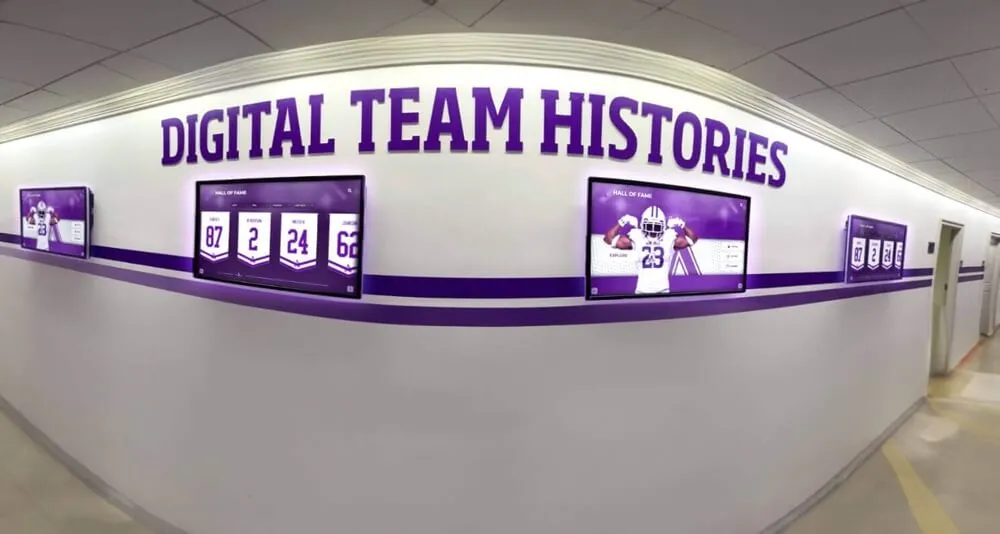
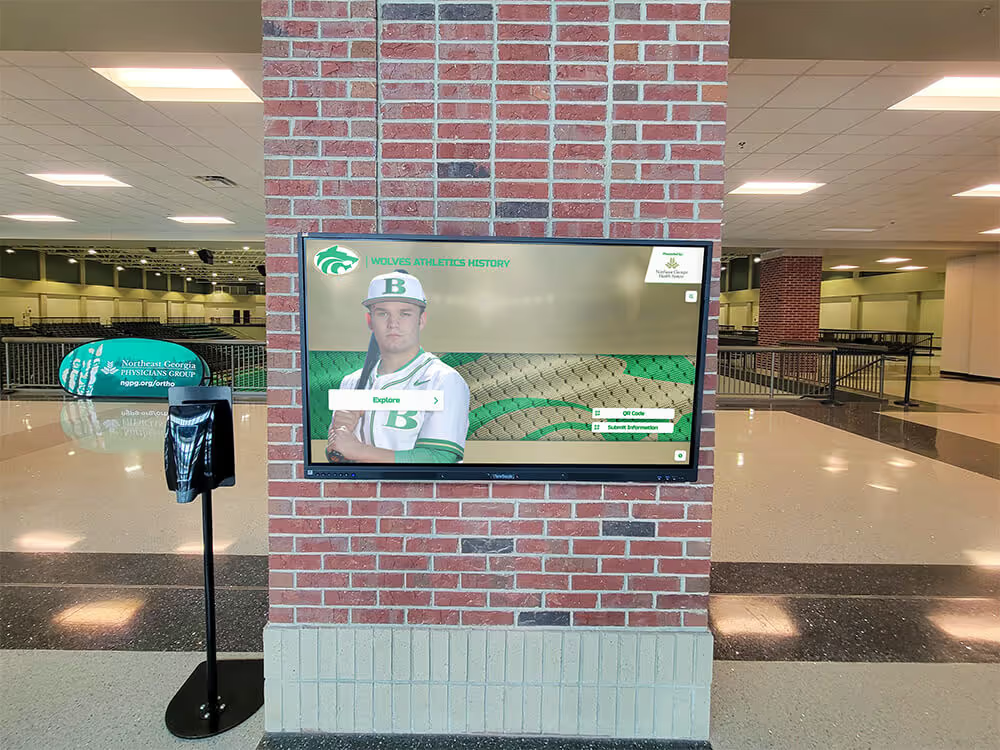
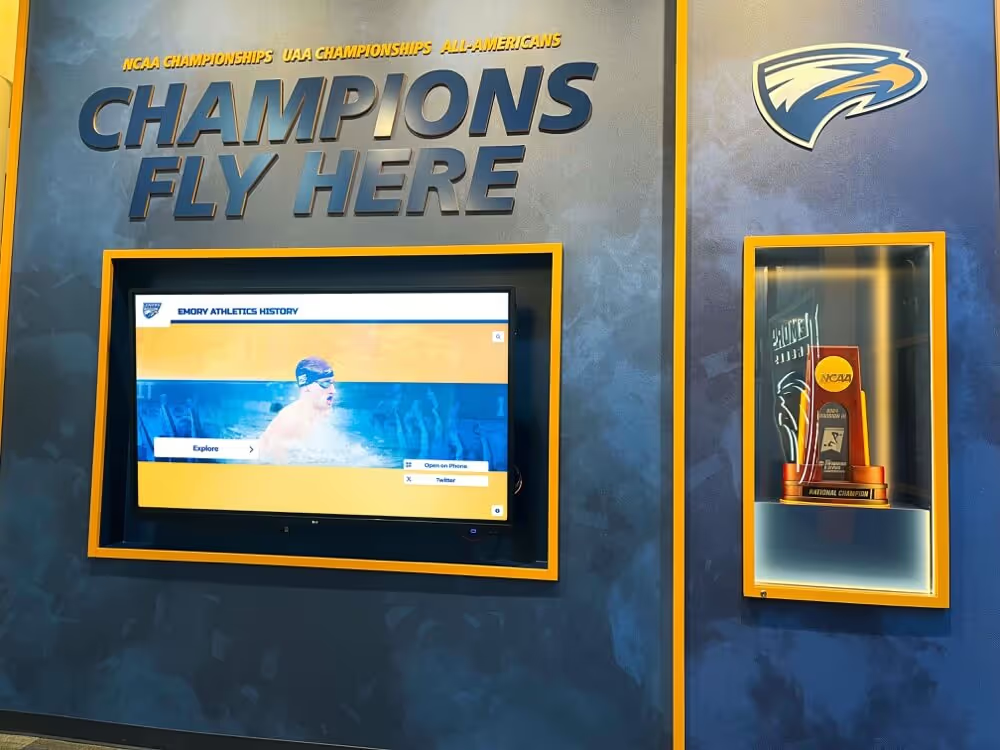
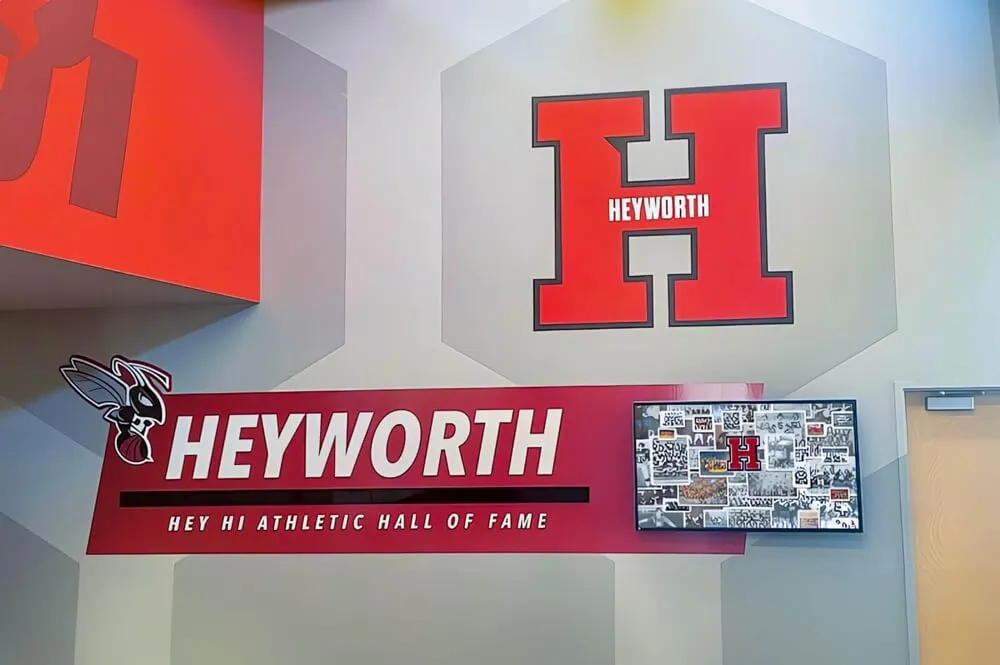
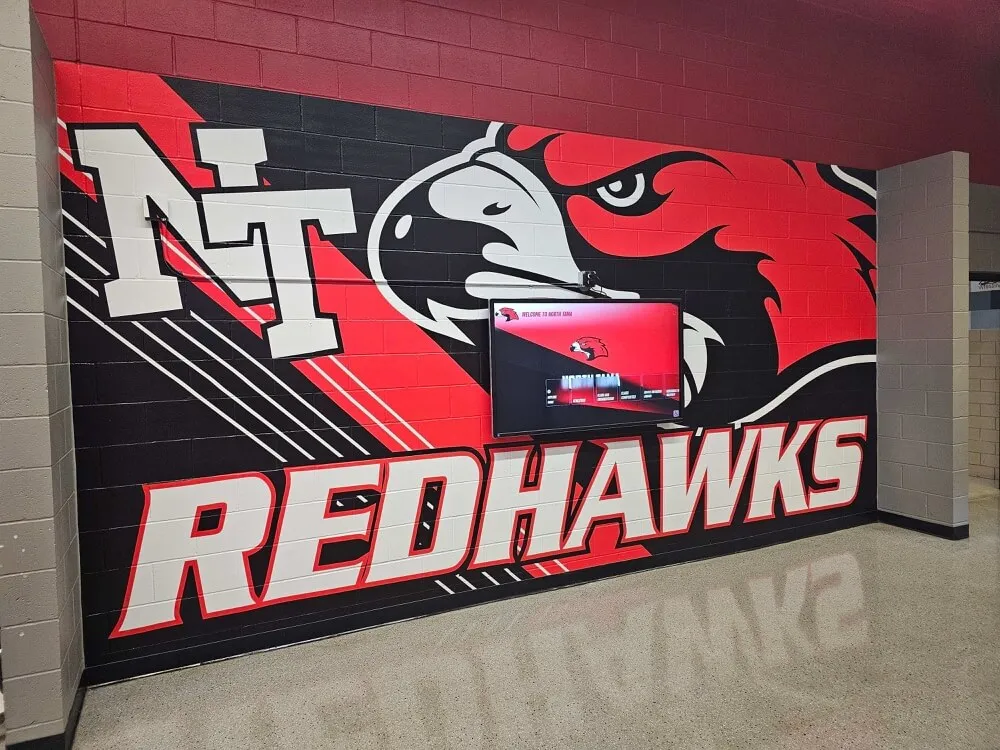
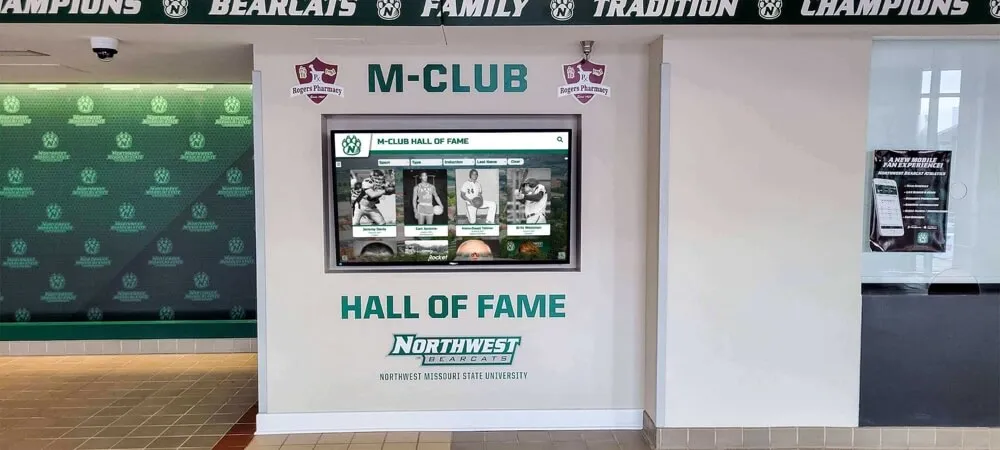
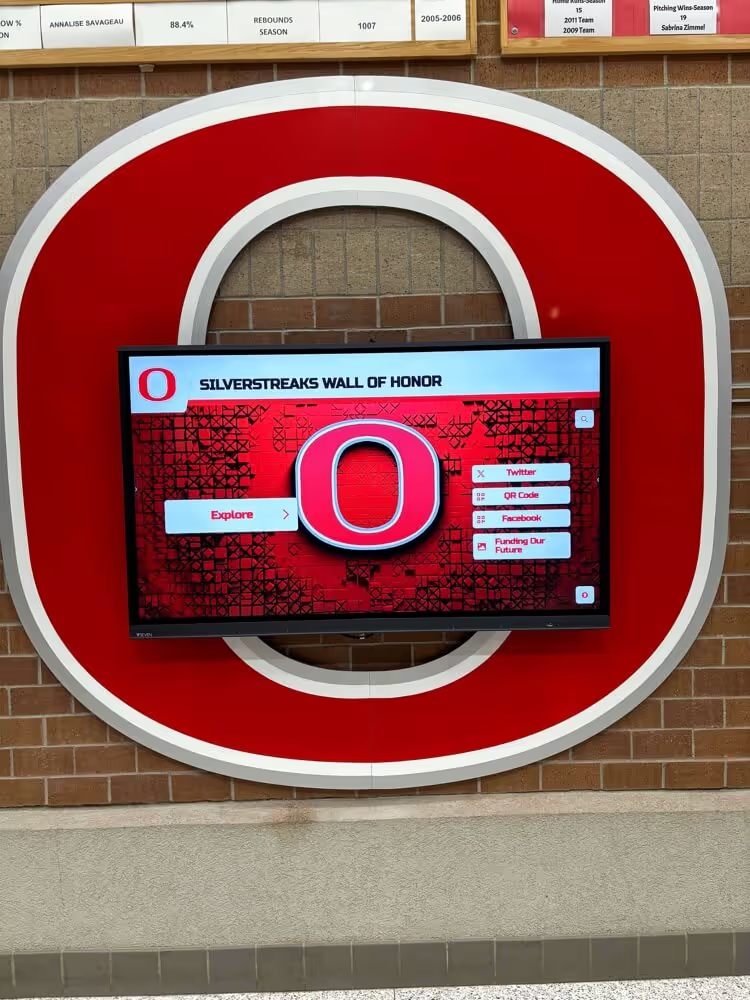
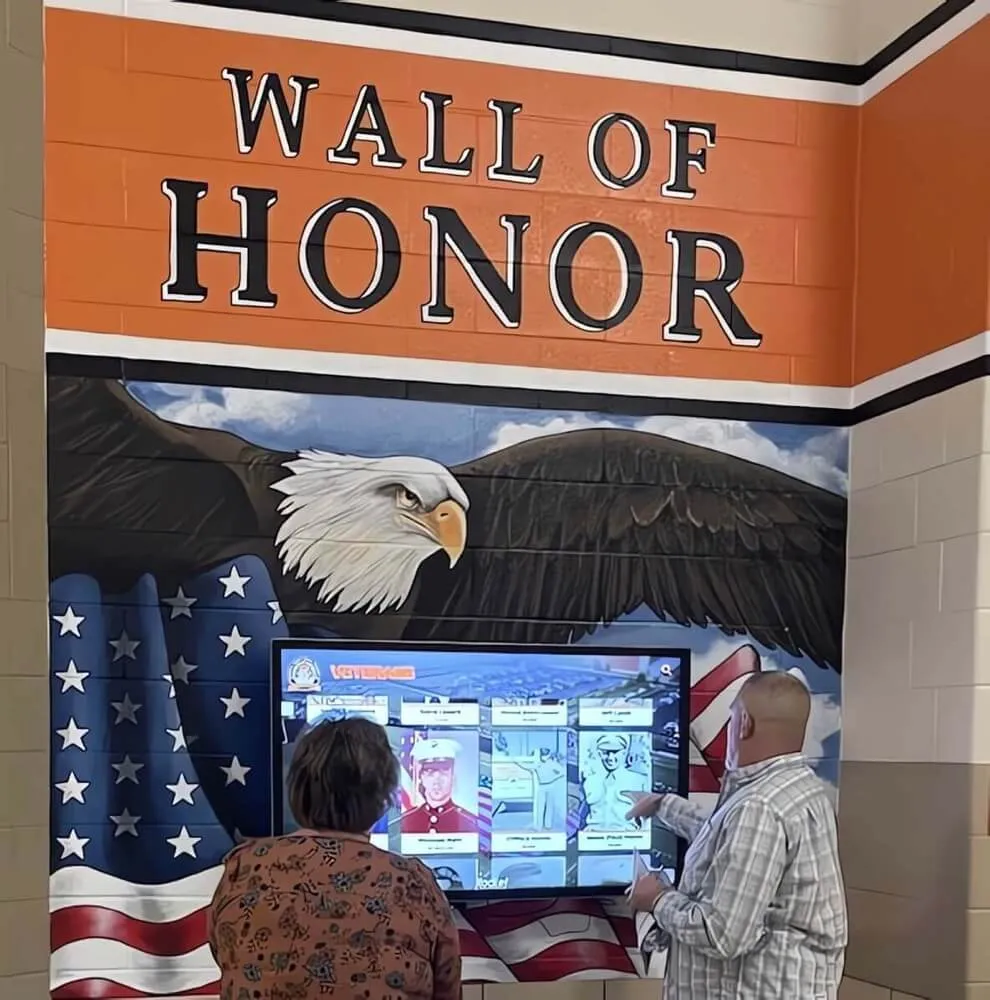
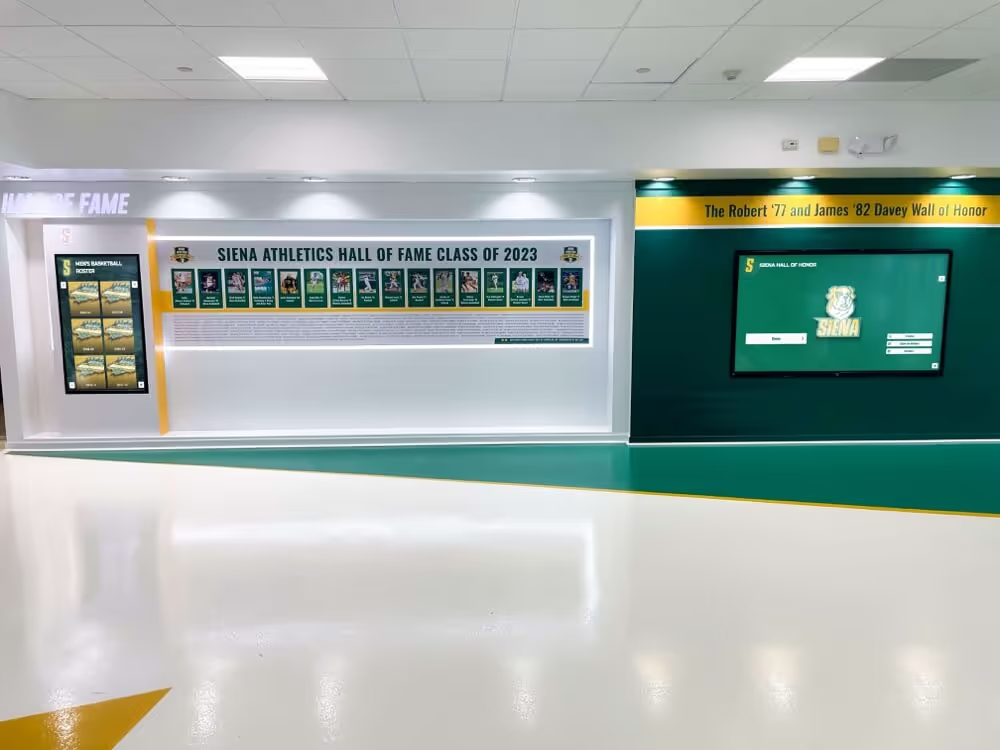
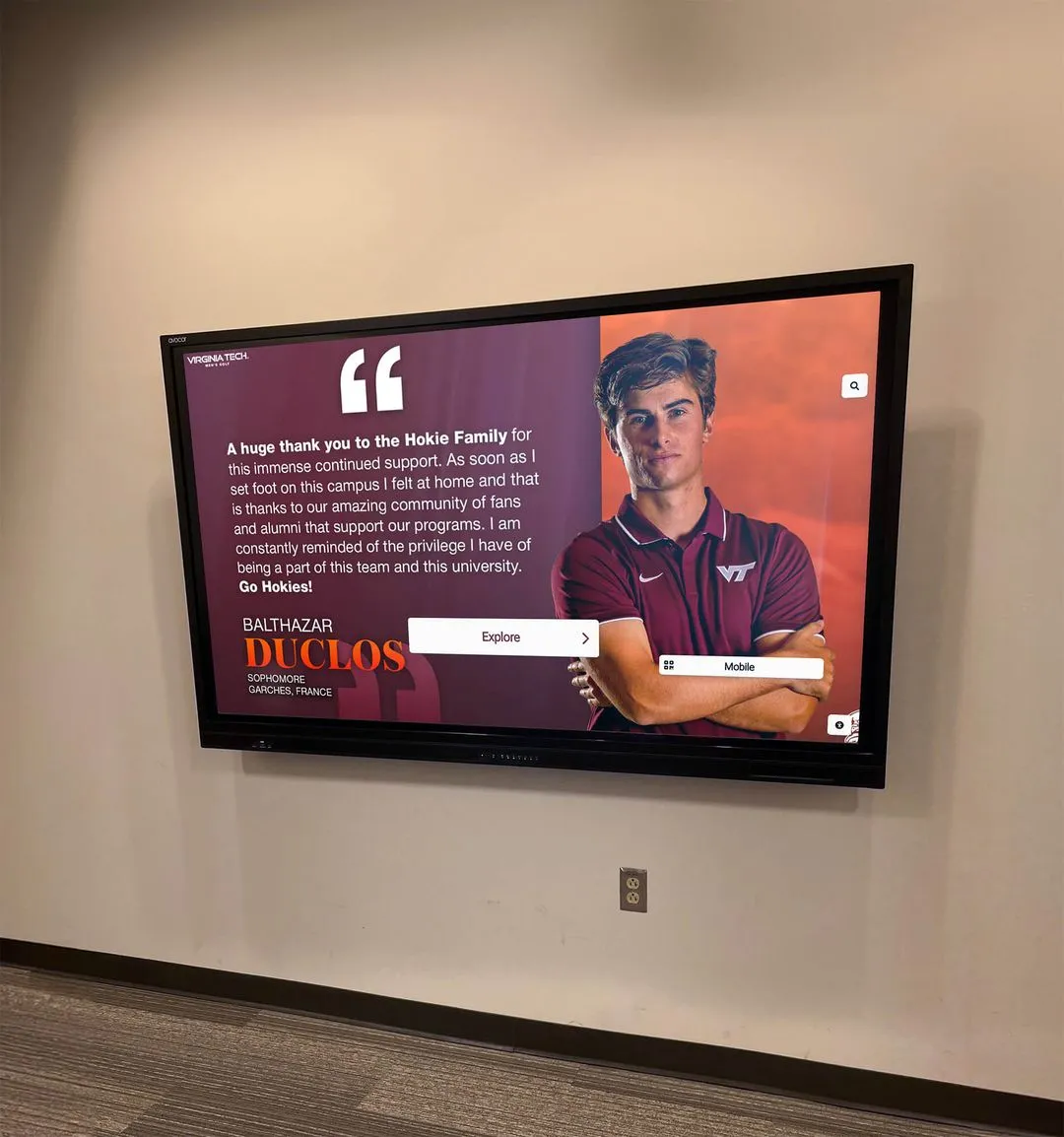
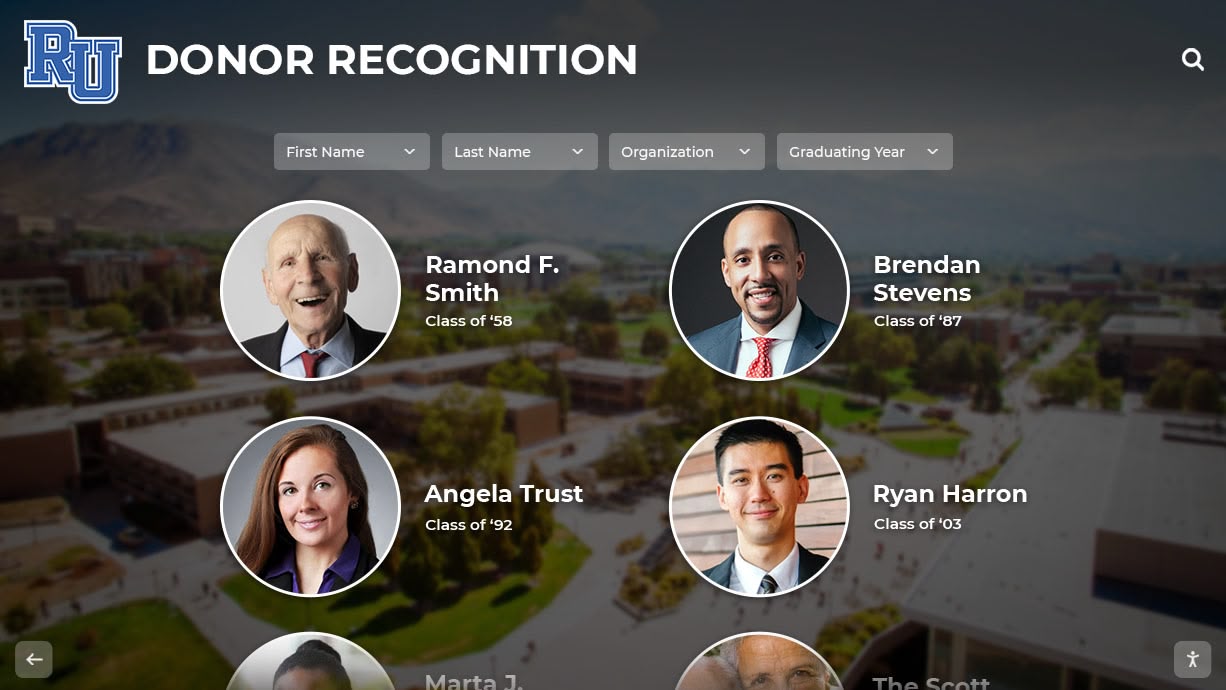
Modern donor recognition displays create central hubs celebrating contributors while inspiring continued generosity
Understanding Giving Tuesday: The Movement and Your Opportunity
Before exploring recognition strategies, understanding what makes Giving Tuesday uniquely powerful helps organizations design campaigns that maximize this special day’s potential.
The Global Giving Tuesday Movement
Giving Tuesday emerged in 2012 as a response to consumer-focused Black Friday and Cyber Monday, creating a day dedicated to generosity and giving back. What began as a grassroots movement has grown into a global phenomenon spanning more than 100 countries.
According to Giving Tuesday’s official data, the movement generated billions in donations and millions of volunteer hours across its history. In the United States alone, recent Giving Tuesday campaigns have raised substantial funds through online giving platforms, with participation continuing to grow each year.
Why Giving Tuesday Matters for Your Organization
This concentrated day of giving offers distinct advantages including heightened donor attention and engagement when communities actively seek giving opportunities, peer influence and social proof as visible participation inspires others to contribute, matching gift amplification when sponsors multiply individual donations, media coverage opportunities that extend campaign visibility beyond your direct audience, and community building moments when supporters unite around shared causes.
For schools, colleges, and educational foundations, Giving Tuesday provides ideal timing to engage alumni, current families, and community members during the holiday season when philanthropic sentiment runs high and people reflect on gratitude and giving back.
The Challenge of Fragmented Recognition
Despite Giving Tuesday’s potential, many organizations struggle with recognition that fails to maximize the day’s opportunities:
Temporary Visibility That Disappears Quickly
Most organizations recognize Giving Tuesday donors through social media posts that vanish from feeds within hours, email thank-you messages that arrive privately and create no public visibility, temporary campaign pages that come down after the event concludes, and scattered acknowledgment across multiple platforms without centralized recognition hubs.
This fragmented approach means donors experience brief acknowledgment rather than sustained celebration, potential donors miss seeing peer participation that might inspire their own giving, campaign momentum dissipates immediately rather than building over time, and organizations lose opportunities to leverage recognition as ongoing stewardship and engagement tool.
Missing the Centralization Opportunity
Rocket Alumni Solutions serves numerous clients who have discovered the power of centralizing Giving Tuesday recognition through digital displays that create permanent donor pages showcasing all contributors, integrate with existing giving platforms so recognition updates automatically as gifts arrive, provide year-round visibility in high-traffic locations rather than temporary campaign-only acknowledgment, and inspire future giving by demonstrating community participation and philanthropic culture.
Several organizations using Rocket’s advanced integration tools link recognition displays directly to donor databases and giving pages, ensuring not only that folks see who has donated but that this visibility hopefully drives them to want to give back themselves. Centralizing everything creates a streamlined approach all around.
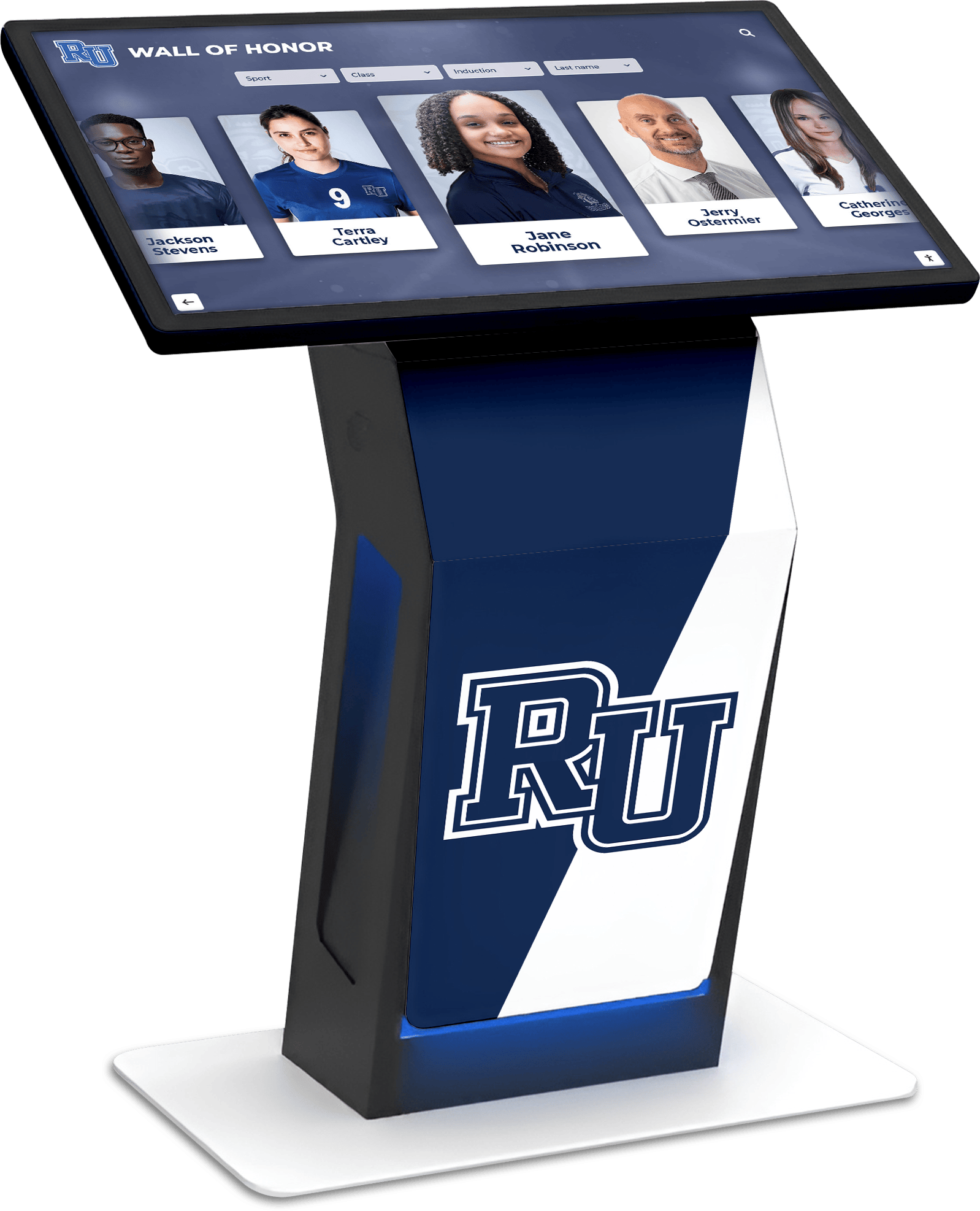
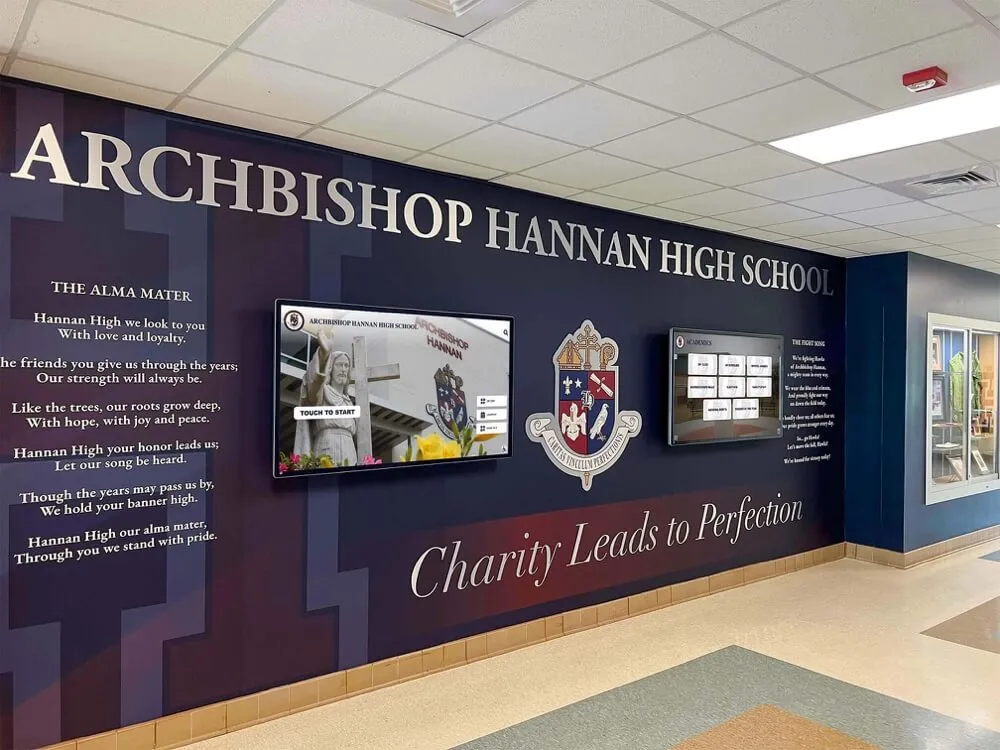
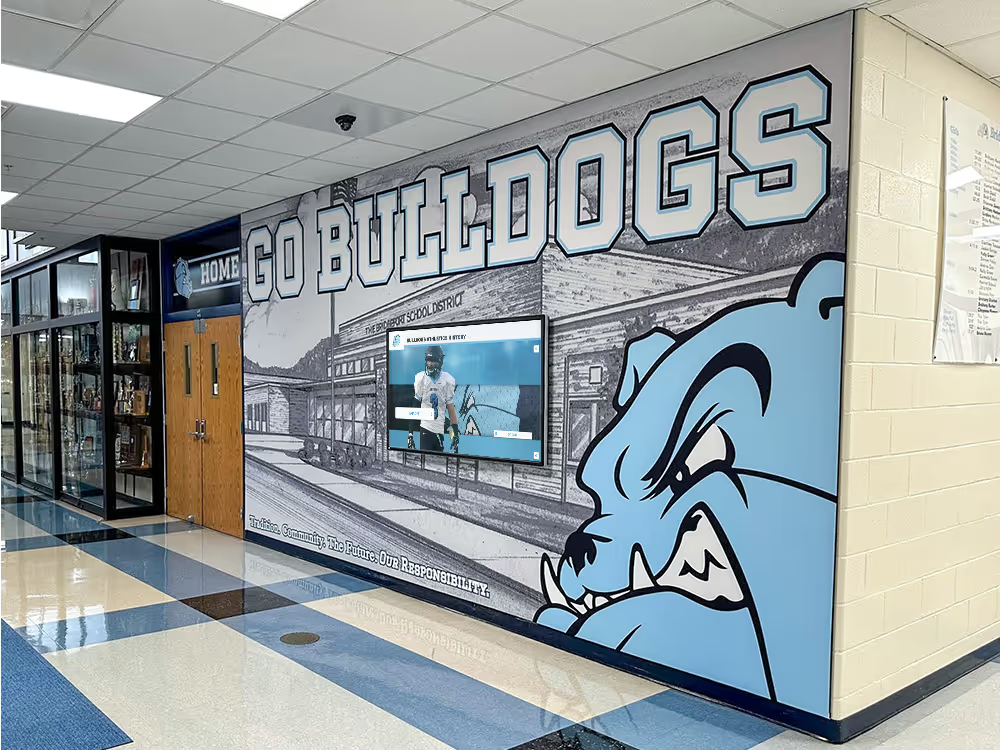
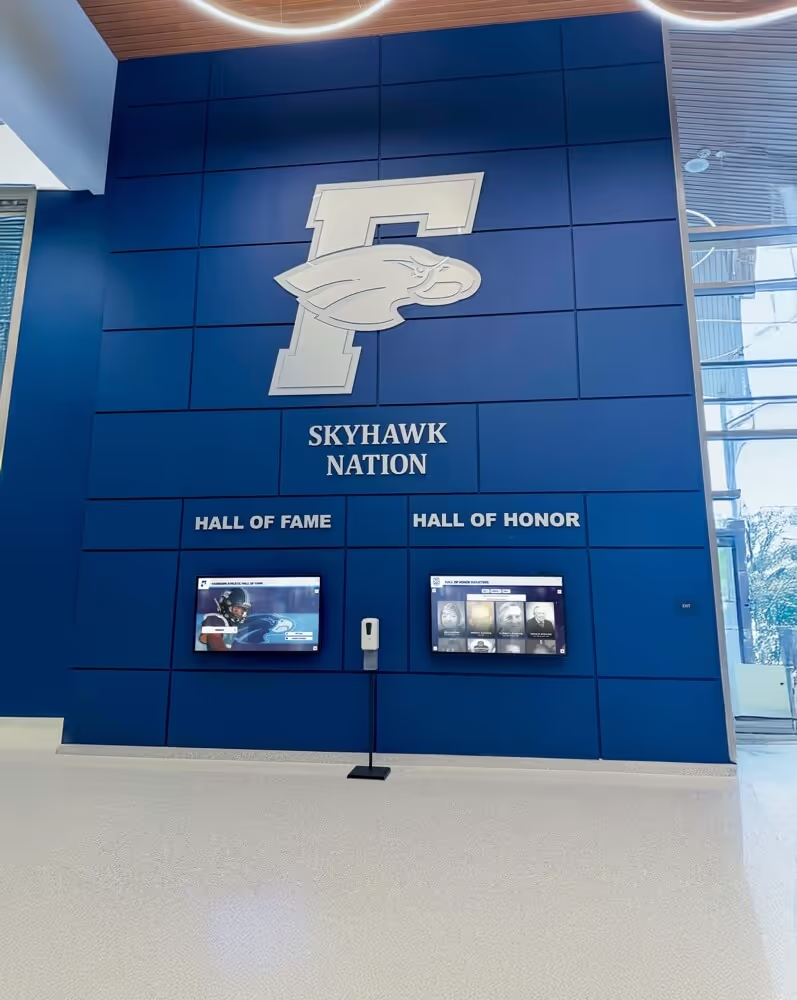
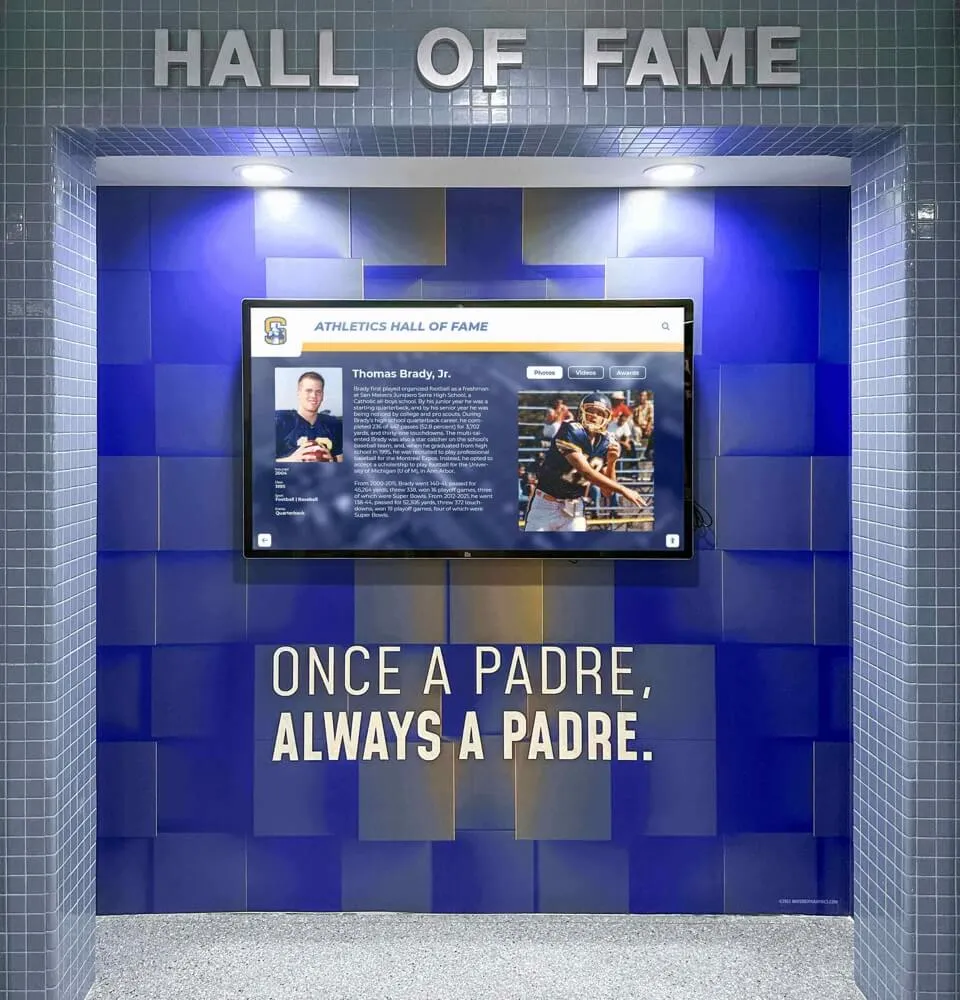
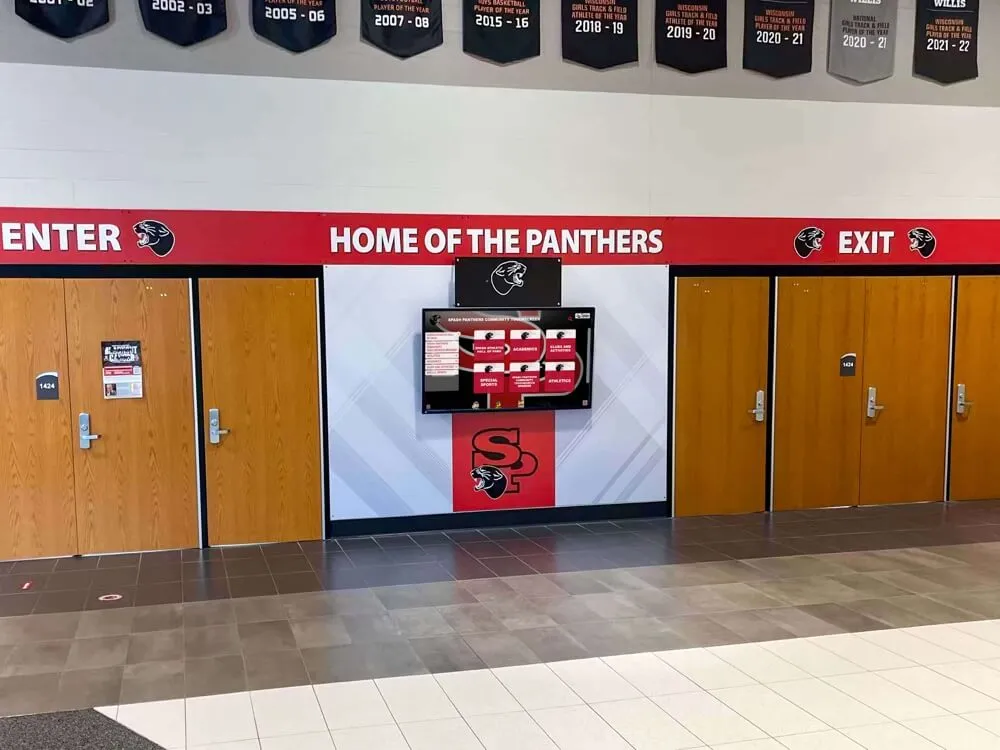
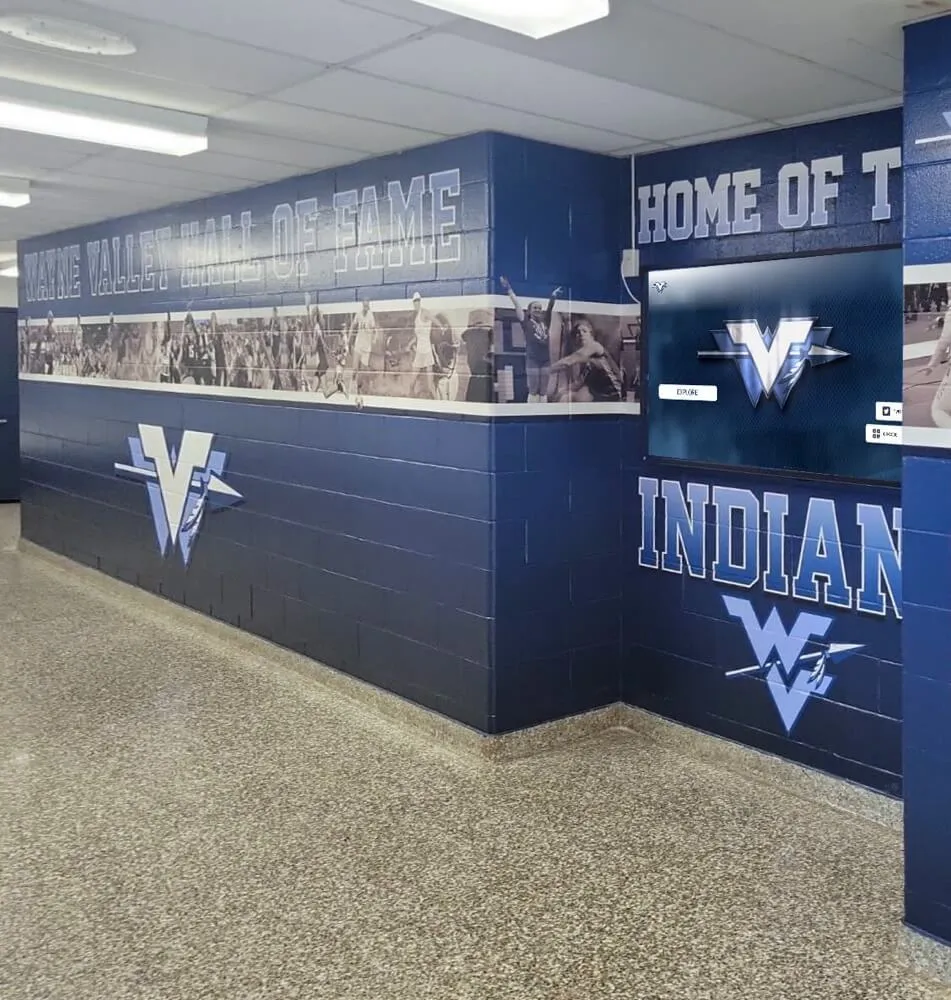
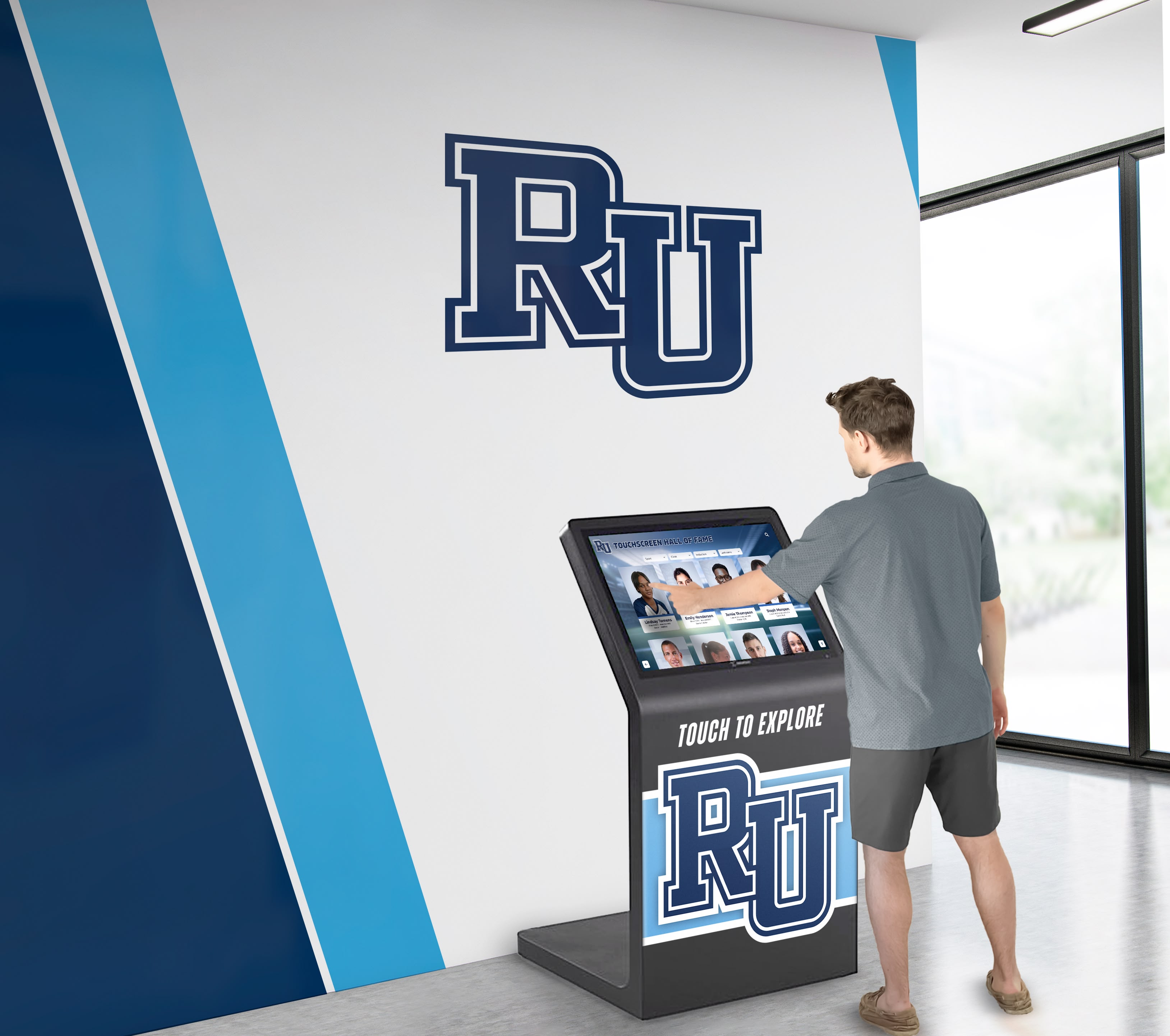
Interactive displays centralize campaign information and donor recognition in accessible, engaging formats
Strategic Framework: Giving Tuesday Donor Pages That Drive Action
Effective Giving Tuesday recognition requires more than listing names—it demands strategic design that celebrates contributors while inspiring others to participate.
Core Elements of Effective Donor Pages
Comprehensive donor pages should incorporate several essential components:
Real-Time or Near-Real-Time Donor Recognition
The most effective Giving Tuesday campaigns provide immediate visibility for contributors including donor names appearing on recognition displays within minutes or hours of giving, giving level designations showing participation tiers and impact, cumulative campaign progress tracking demonstrating community momentum, matching gift multipliers highlighting when contributions are doubled or tripled, and milestone celebrations marking when campaigns reach specific goals or donor counts.
This real-time acknowledgment creates excitement and urgency, demonstrating to potential donors that others are participating and the campaign is building momentum. According to nonprofit fundraising research, visible social proof significantly increases giving likelihood, with people more likely to donate when they see peers contributing.
Clear Campaign Goals and Progress Visualization
Donor pages should communicate campaign objectives transparently including specific fundraising targets with rationale for amounts sought, purpose explanations showing exactly what donations will fund, progress meters visualizing how close campaigns are to goals, donor count milestones celebrating participation regardless of gift size, and matching gift status showing how sponsors are amplifying contributions.
When potential donors understand exactly what their gifts will accomplish and see that others are participating, they’re more likely to contribute. Transparency about goals and impact builds trust while visualization creates excitement that static text descriptions cannot match.
Multiple Giving Options and Clear Calls to Action
Effective donor pages make giving easy through prominent “Give Now” buttons linking directly to secure donation pages, multiple giving level options from modest to major gifts, recurring donation opportunities for sustained support, tribute and memorial gift designations allowing donations in honor of loved ones, and employer matching gift information helping donors maximize contributions.
The key is reducing friction between inspiration and action—when donors feel moved to give, the path to contribution should be immediate and obvious.

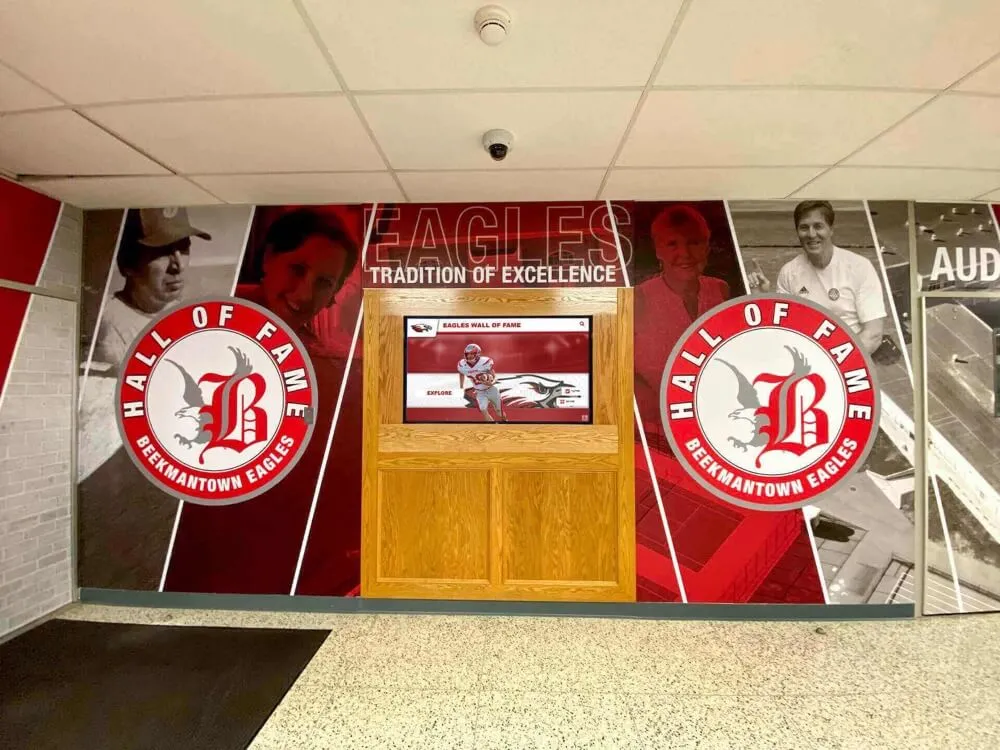
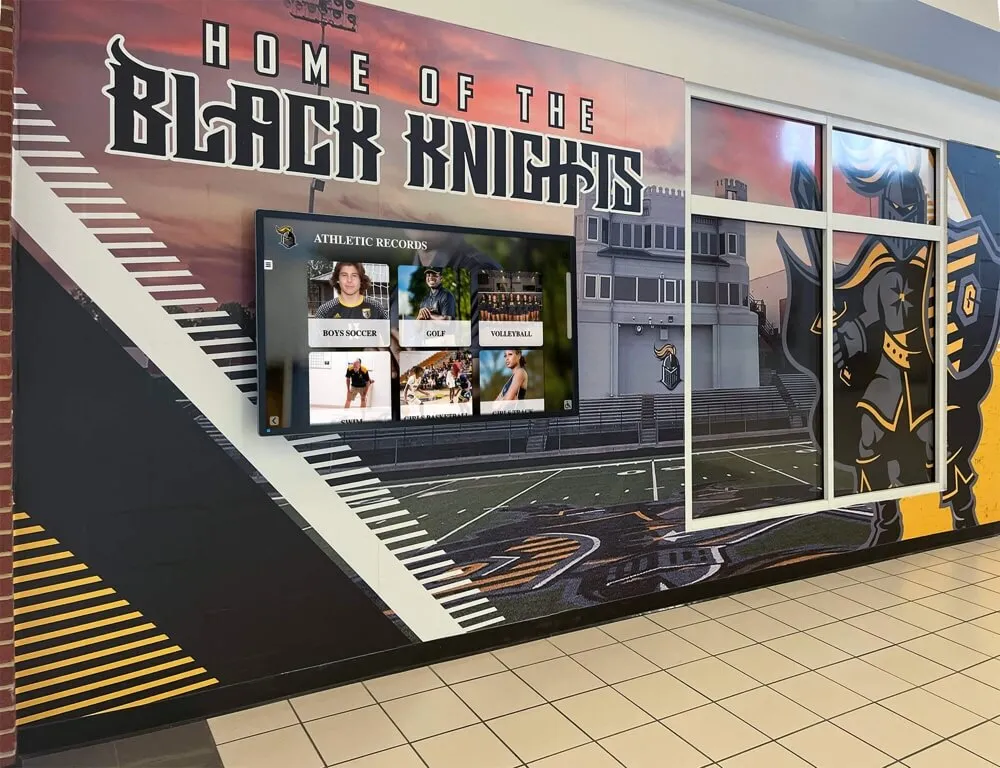
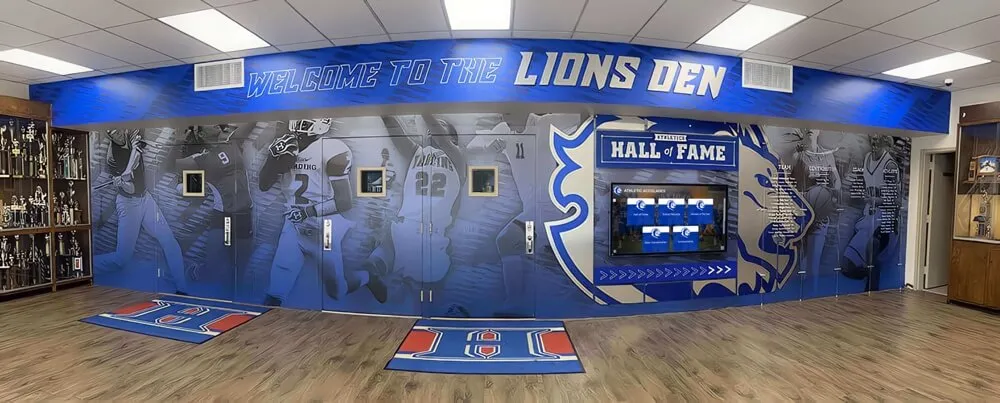
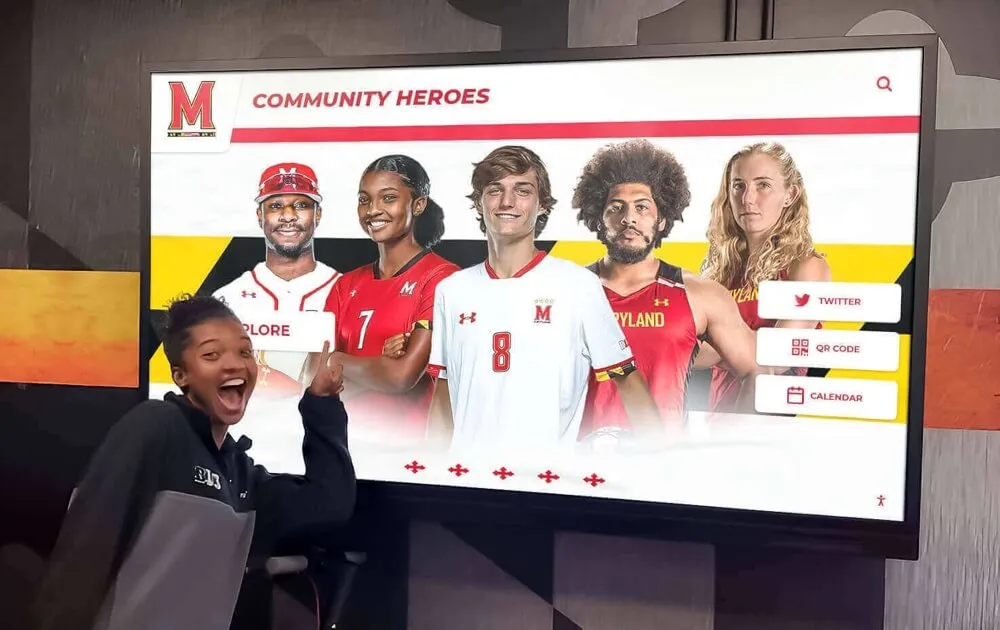
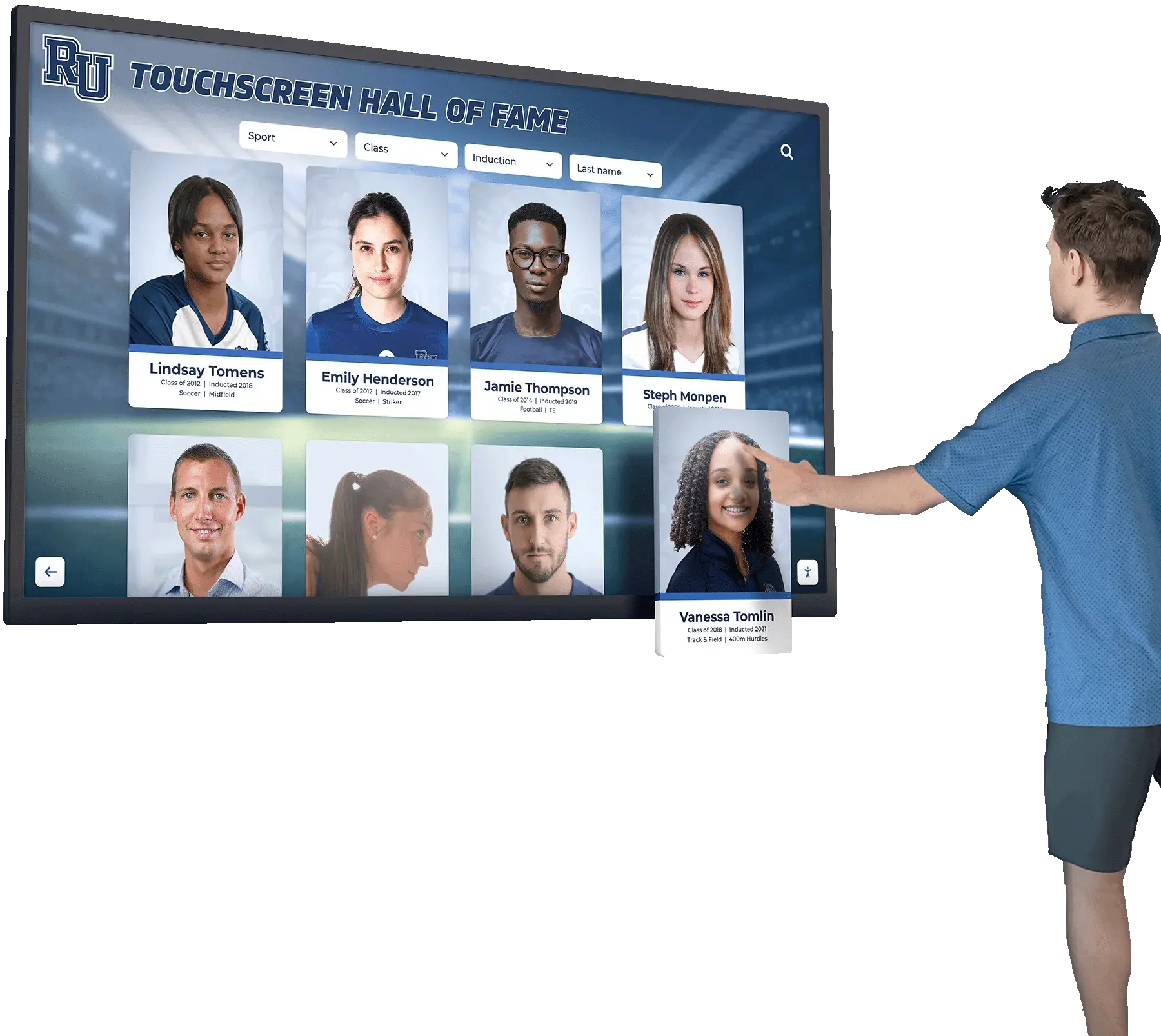
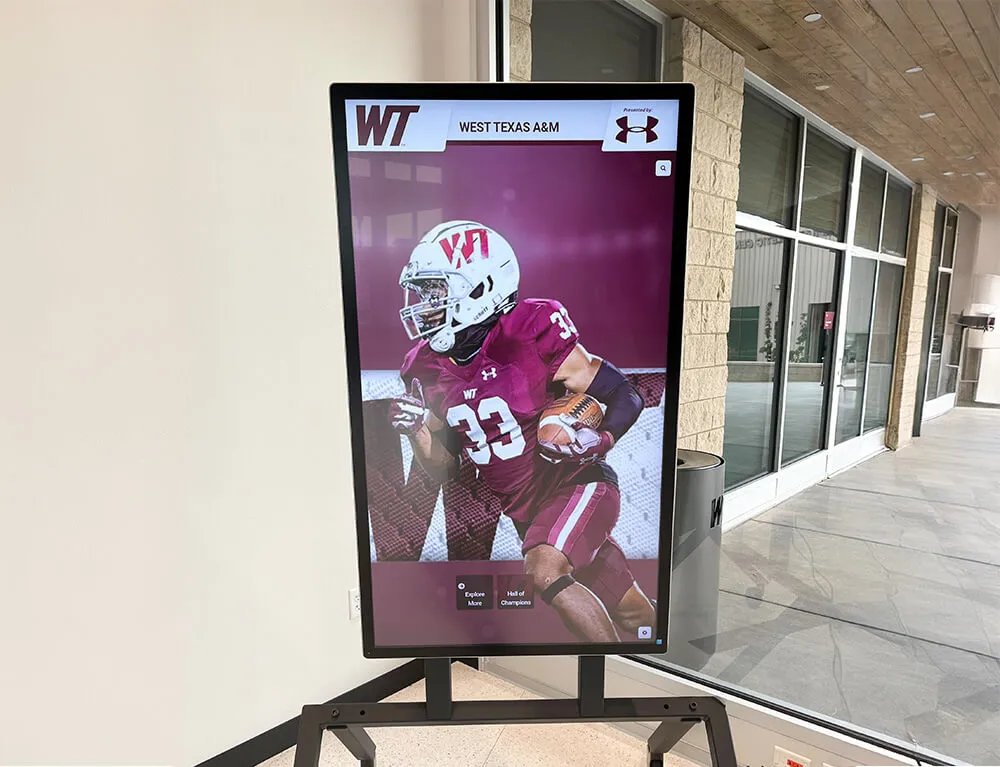
Interactive displays allow exploration of donor recognition while providing clear pathways to giving
Integration Strategy: Connecting Recognition to Giving Platforms
The most powerful Giving Tuesday approaches integrate donor recognition displays with giving platforms, creating seamless experiences where visibility and action connect directly.
Technical Integration Approaches
Organizations can implement several integration strategies depending on technical capabilities:
API-Based Integration
Many modern giving platforms provide APIs (Application Programming Interfaces) that allow donor information to flow automatically to recognition displays including real-time or near-real-time donor data transfer as gifts are processed, automatic giving level assignment based on contribution amounts, campaign progress calculations updating continuously, and donor opt-in respect honoring privacy preferences.
Solutions like Rocket Alumni Solutions offer advanced integration capabilities that connect with popular fundraising platforms including Blackbaud, Classy, Givebutter, and others, enabling automatic recognition updates without manual data entry.
Manual Update Workflows
Organizations without API access can still create effective recognition through streamlined manual processes including scheduled updates every 1-2 hours during Giving Tuesday, bulk import tools that process donor lists quickly, pre-formatted templates minimizing data entry time, and assigned staff responsibility ensuring consistent updates.
While manual approaches require more effort, they still enable near-real-time recognition that capitalizes on Giving Tuesday momentum.
Hybrid Approaches
Many organizations implement hybrid systems combining automated updates for online giving through integrated platforms with manual additions for offline donations received via check, cash, or phone, corporate matching gift processing, pledge commitments, and special recognition requests requiring customization.
This flexibility ensures comprehensive recognition regardless of how donors choose to contribute.
Creating the Central Hub: Beyond Temporary Campaign Pages
The most successful organizations view Giving Tuesday not as isolated event but as anchor moment within year-round engagement strategies:
Permanent Digital Recognition Displays
Rather than temporary campaign microsites that disappear after Giving Tuesday, consider permanent digital donor walls that serve multiple purposes including Giving Tuesday donor showcase updated in real-time during campaigns, year-round donor recognition for all contributors regardless of when gifts arrive, multi-campaign support showcasing various fundraising initiatives, historical archives preserving donor recognition across years, and capital campaign integration connecting annual giving to major projects.
Digital recognition systems from providers like Rocket Alumni Solutions eliminate the capacity constraints of traditional physical donor walls, allowing unlimited donor inclusion while maintaining visual appeal and easy navigation through searchable interfaces.
Physical Placement Strategy
Location matters tremendously for recognition effectiveness. Consider installing digital donor displays in high-traffic areas where both recognition and inspiration occur including main building lobbies where all visitors encounter donor celebration immediately, student centers and gathering spaces where community members regularly congregate, admissions and advancement offices where prospective families and donors visit, athletic facilities and performance venues connecting giving to programming, and libraries or academic buildings linking contributions to educational mission.
Prominent placement signals that your organization genuinely values philanthropy while ensuring maximum visibility for recognized donors and potential future contributors.

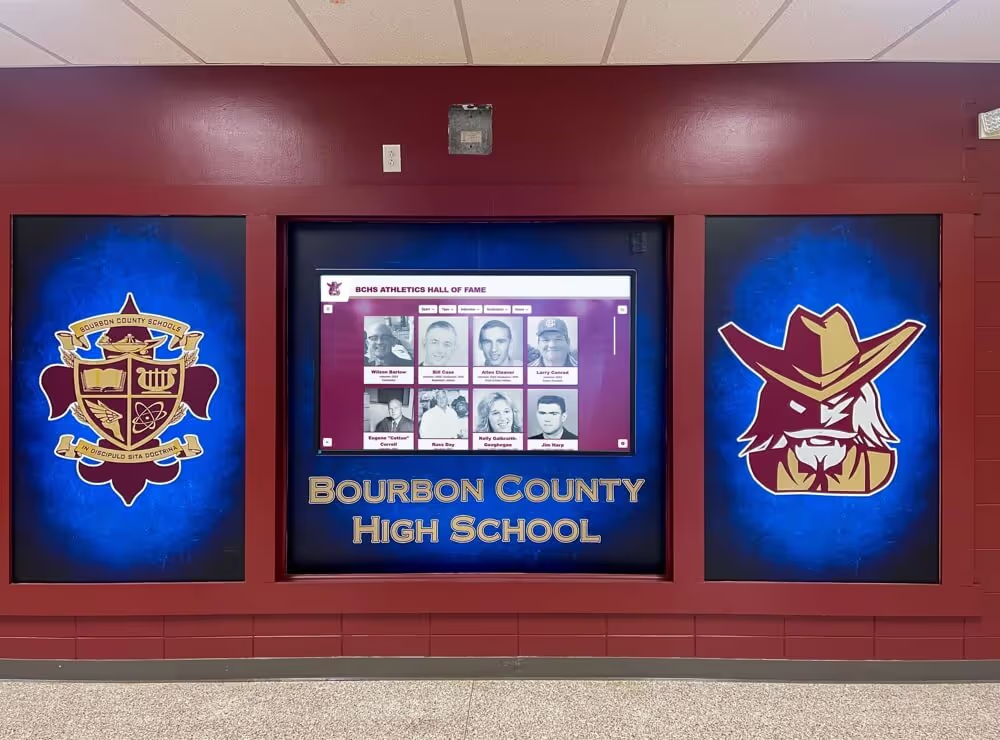
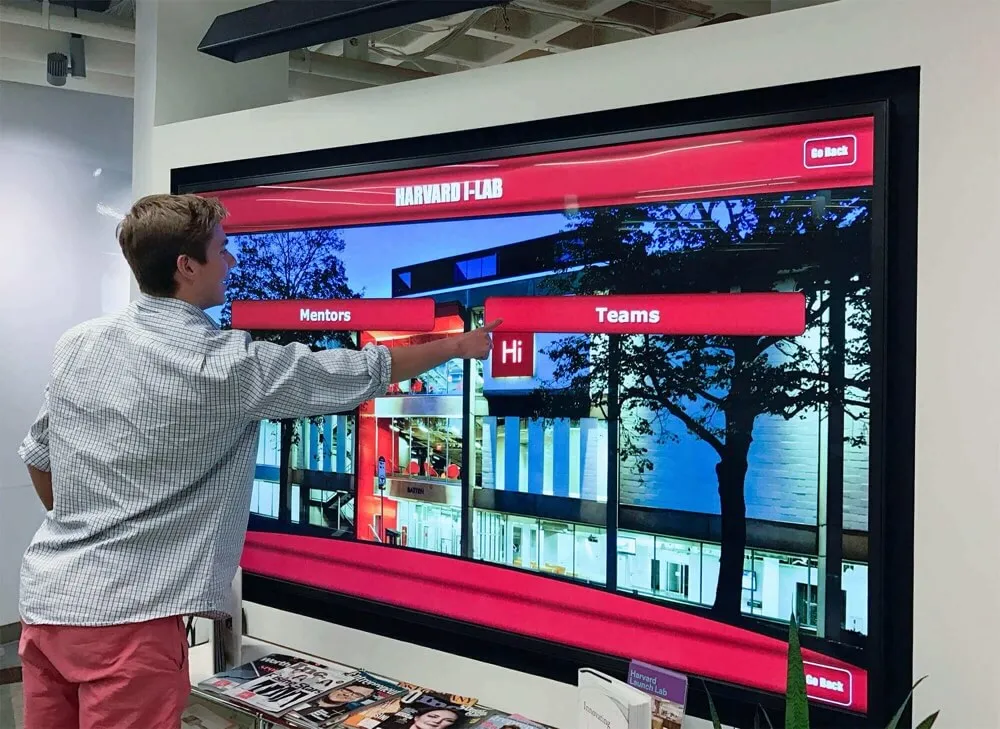
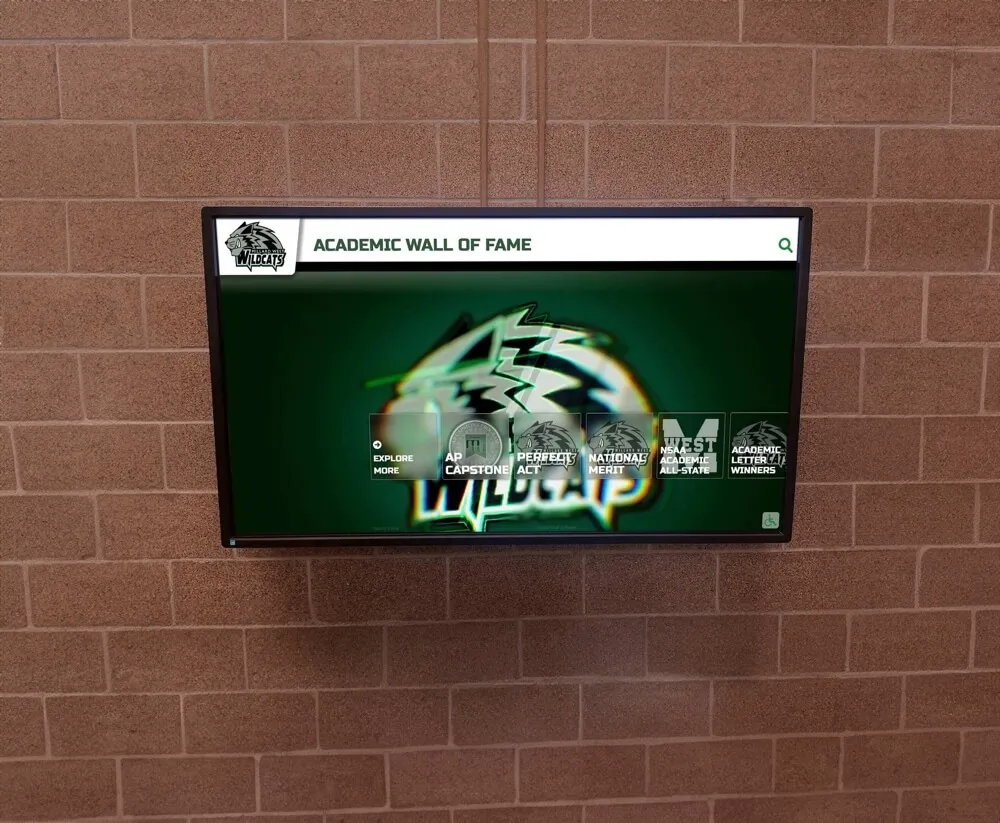
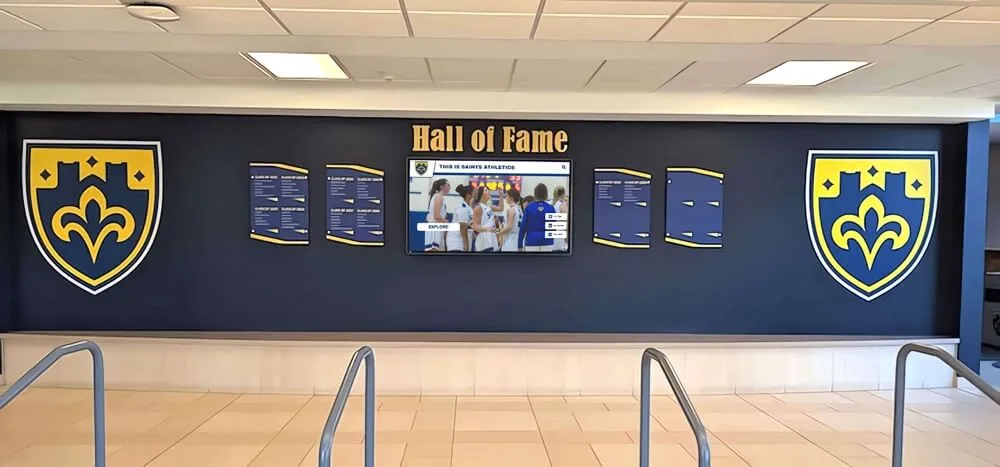
Strategic placement in comfortable, high-traffic spaces maximizes recognition impact and donor engagement
Implementation Guide: Building Your Giving Tuesday Recognition System
Successful Giving Tuesday donor pages require thoughtful planning and systematic execution across several key phases.
Pre-Campaign Planning (4-8 Weeks Before)
Begin Giving Tuesday preparation well in advance to ensure smooth execution:
Define Campaign Goals and Recognition Tiers
Establish clear objectives including specific fundraising targets based on organizational needs and community capacity, donor participation goals emphasizing broad engagement beyond just dollar totals, recognition level structure with naming conventions for giving tiers, matching gift strategies coordinating with sponsors willing to amplify contributions, and success metrics defining how you’ll measure campaign effectiveness beyond funds raised.
Many schools and nonprofits establish giving societies or clubs corresponding to Giving Tuesday donation levels, creating identity and community among supporters at various contribution amounts. For example, you might create a “Founder’s Circle” for gifts of $1,000+, “Leadership Society” for $500-999, “Champion’s Club” for $250-499, and “Supporter Recognition” for all contributions under $250.
Prepare Recognition Infrastructure
Ensure technical systems are ready including digital donor wall setup or configuration if implementing new systems, integration testing between giving platforms and recognition displays, content templates prepared for different donor recognition scenarios, staff training on update procedures and troubleshooting, and communication plans coordinating how recognition will be promoted.
If you’re implementing permanent digital recognition displays, allow adequate lead time for hardware installation, software configuration, initial content development, and staff familiarization with management platforms. Solutions like those from Rocket Alumni Solutions typically require 4-8 weeks for full implementation including design, installation, training, and launch support.
Develop Campaign Messaging and Materials
Create compelling campaign communications including campaign narrative explaining why giving matters and what funds will support, donor testimonials from past contributors explaining why they give, impact stories demonstrating outcomes previous donations enabled, visual assets including photos, videos, and graphics for promotion, and social media content calendars planning pre-campaign, during-campaign, and post-campaign posts.
Effective messaging balances emotional appeal with concrete information about how gifts create impact, inspiring potential donors while helping them understand exactly what their contributions will accomplish.
Campaign Day Execution (Giving Tuesday)
When Giving Tuesday arrives, systematic execution ensures smooth operations:
Real-Time Recognition Updates
Maintain current donor visibility through regular updates according to your predetermined schedule, prompt troubleshooting of any technical issues that arise, milestone celebrations as campaigns reach goal percentages or donor counts, social media amplification sharing recognition display photos and donor appreciation, and staff coordination ensuring coverage throughout the day.
Many organizations assign specific team members to manage recognition updates during Giving Tuesday, treating it as a special event requiring dedicated attention rather than expecting staff to handle updates alongside regular responsibilities.
Momentum Building Communications
Throughout Giving Tuesday, maintain communication that builds excitement including early morning campaign launch announcements energizing communities, mid-morning progress updates showing momentum building, lunch-hour milestone celebrations highlighting achievements, afternoon matching gift reminders emphasizing opportunities to double impact, late afternoon urgency messaging encouraging final participation before day ends, and evening gratitude communications thanking all contributors regardless of amount.
This consistent communication maintains visibility throughout the day while providing multiple opportunities for people to encounter campaign information when they’re ready to give.
Donor Stewardship in Real-Time
Beyond public recognition, ensure individual donors receive personal acknowledgment including automated thank-you emails immediately upon gift processing, receipt documentation for tax purposes, confirmation that recognition will appear on donor displays, information about how gifts will be used, and invitation to continue engaging beyond Giving Tuesday.
Prompt acknowledgment demonstrates professionalism and gratitude while research shows that donors who receive timely thank-you communications are significantly more likely to give again.
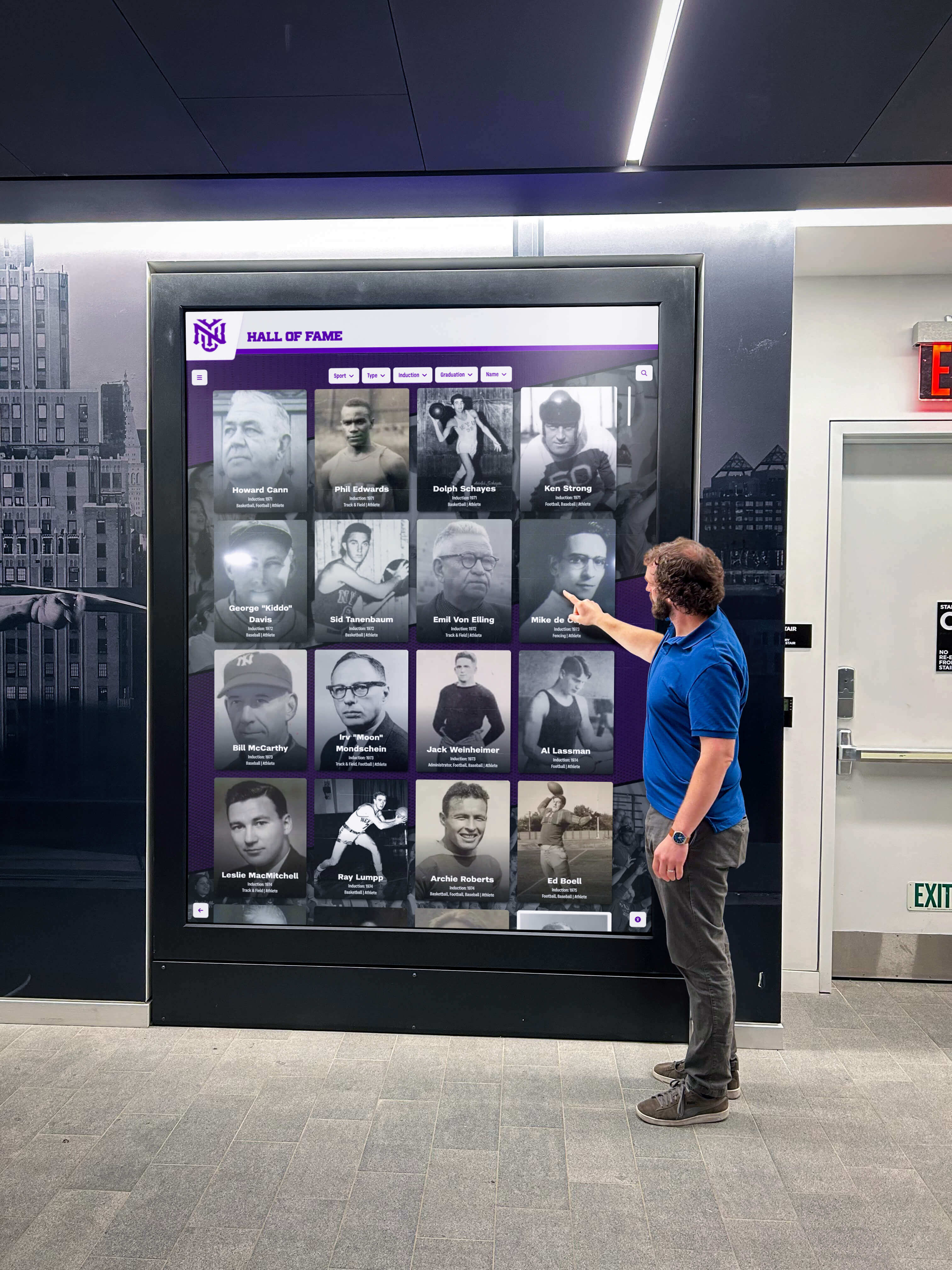
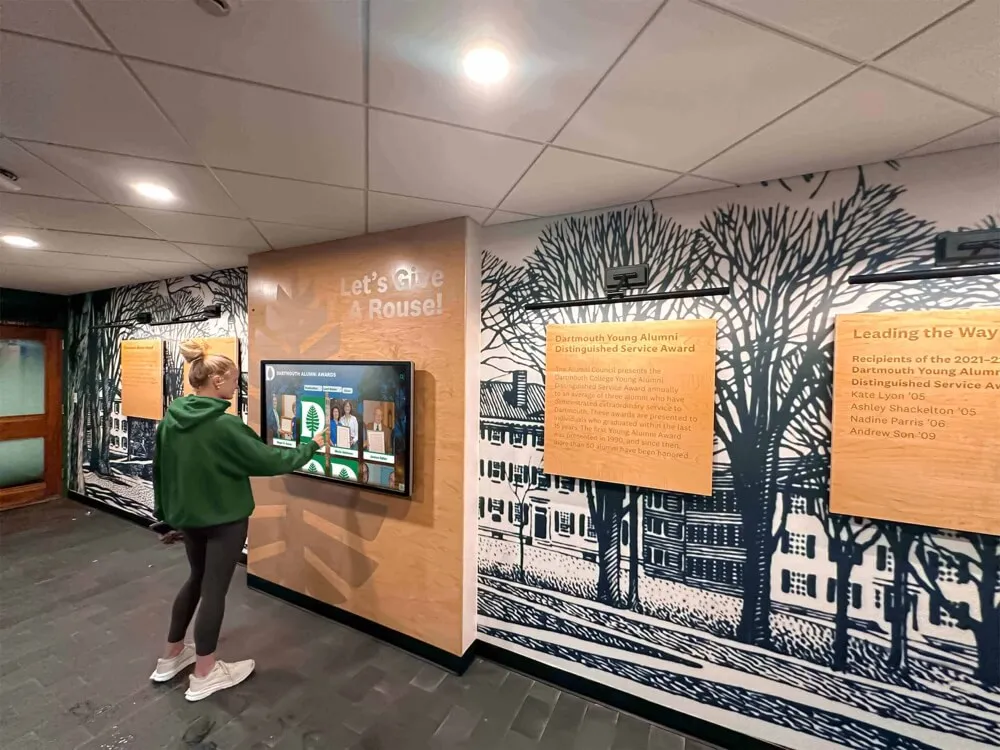
Engaging recognition displays invite exploration and celebrate philanthropic community participation
Post-Campaign Follow-Up (Week After and Beyond)
Giving Tuesday success extends far beyond the single day itself:
Comprehensive Final Recognition
Within a week of Giving Tuesday, complete final recognition updates including all donors who contributed throughout the day, final campaign results and total impact achieved, matching gift applications and processed multipliers, special recognition for volunteer campaign leaders, and celebration messaging thanking entire community.
This complete recognition demonstrates that your organization follows through on commitments while providing closure to the campaign that allows transition to ongoing stewardship.
Impact Reporting and Storytelling
In subsequent weeks and months, communicate how Giving Tuesday donations create impact through specific examples of programs, projects, or individuals supported, budget allocation transparency showing how funds are used, progress updates as initiatives funded by giving are implemented, photo and video documentation of outcomes, and continued donor appreciation connecting gifts to results.
According to donor retention research, demonstrating impact represents one of the most powerful stewardship tools, with donors who understand outcomes of their giving significantly more likely to contribute again. Organizations that excel at impact reporting build lasting relationships that extend far beyond single campaigns.
Integration Into Year-Round Donor Recognition
Rather than treating Giving Tuesday donors as separate campaign participants, integrate them into comprehensive recognition systems including permanent donor wall inclusion regardless of whether giving occurred during specific campaign, cumulative giving tracking as donors contribute across multiple campaigns and years, recognition society or club membership based on giving history, exclusive updates and engagement opportunities for recognized donors, and invitation to participate in future giving opportunities.
This integration signals that Giving Tuesday wasn’t just isolated fundraising event but entry point into ongoing relationship with your organization and its mission.
Content Strategy: What to Include on Giving Tuesday Donor Pages
Effective donor pages require thoughtful content that celebrates contributors while inspiring additional participation.
Donor Recognition Content Components
Comprehensive donor recognition should include several essential elements:
Individual Donor Information
Each recognized donor deserves appropriate acknowledgment including full name as they prefer to be recognized, giving level or society designation, gift date showing when contribution occurred, optional tribute or memorial dedication if applicable, and donor location (city/state) when privacy preferences allow.
Always respect donor privacy preferences, providing opt-out options for those who prefer anonymous giving or limited public recognition. Many giving platforms allow donors to indicate recognition preferences during donation process, which should be honored in all public displays.
Giving Level Designations
Clear giving tiers help donors understand participation structure including specific dollar ranges with associated recognition levels, cumulative giving options counting lifetime support rather than only single gifts, tribute society naming conventions that create identity and community, special designations for founding donors or campaign leadership, and first-time donor recognition celebrating new supporters regardless of gift size.
Tiered recognition creates aspirational giving pathways, encouraging donors to increase contributions to reach next recognition level while ensuring all participants receive appropriate acknowledgment.
Campaign Progress Visualization
Effective donor pages communicate campaign momentum through visual progress bars showing percentage of goal reached, donor count milestones celebrating participation breadth, matching gift multiplier status highlighting sponsor amplification, countdown timers during Giving Tuesday creating urgency, and comparison to previous campaigns demonstrating growth.
These visual elements create excitement and urgency while providing social proof that inspires additional participation through bandwagon effect where people are more likely to act when they see others doing so.

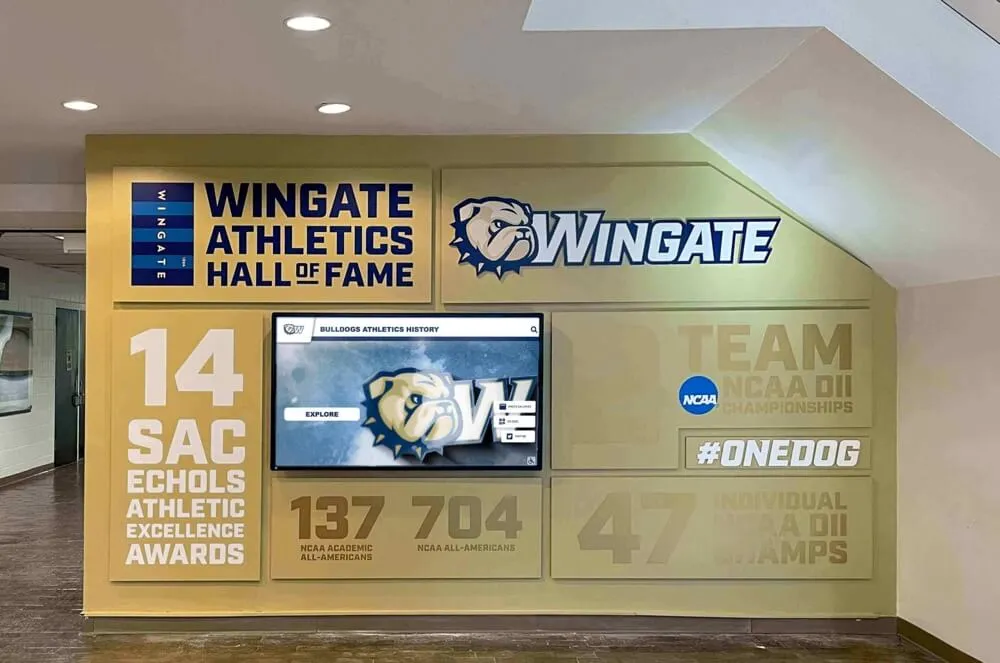
Comprehensive recognition systems can showcase donors alongside institutional achievements and history
Impact and Mission Connection Content
Beyond donor listings, effective recognition connects giving to outcomes:
Purpose and Impact Statements
Donor pages should clearly articulate why giving matters including specific programs or initiatives Giving Tuesday funds support, student, client, or beneficiary stories demonstrating real impact, outcome metrics showing measurable results previous donations created, leadership perspectives from organizational heads explaining campaign significance, and long-term vision connecting immediate giving to sustained mission advancement.
When potential donors understand exactly what their gifts will accomplish and see concrete evidence that contributions create meaningful change, they’re more likely to give generously.
Visual Storytelling Elements
Complement text with compelling visuals including photographs of students, programs, or facilities donations support, video testimonials from beneficiaries or program participants, before/after images showing transformation created by giving, infographics explaining budget allocation and impact, and social media feeds showing real-time campaign activity.
Research consistently demonstrates that visual storytelling resonates more powerfully than text alone, with donors responding more strongly to concrete images and personal stories than abstract descriptions of organizational needs.
Call-to-Action Integration
Throughout donor pages, maintain clear pathways to giving including prominent “Give Now” buttons above the fold, recurring donation options for sustained support, specific giving amount suggestions based on program costs, tribute giving opportunities allowing donations in honor or memory of loved ones, and employer matching information helping donors maximize contributions.
The goal is ensuring that when visitors feel inspired to give, the path to contribution is immediate and obvious without requiring navigation to different pages or platforms.
Advanced Strategies: Maximizing Giving Tuesday Impact Through Recognition
Organizations seeking exceptional results implement sophisticated approaches that leverage recognition for maximum campaign effectiveness.
Peer-to-Peer Recognition and Challenge Campaigns
Harness social dynamics to amplify participation:
Class or Cohort Competition
For schools, colleges, and alumni associations, create competitive dynamics including class year participation challenges measuring which graduation years achieve highest giving rates, school or college challenges within universities competing for participation, reunion year special campaigns encouraging milestone classes to demonstrate support, and leaderboard displays showing which groups are leading in participation or total giving.
These friendly competitions create community pride and motivation while encouraging peer influence where class leaders rally their cohorts to participate. According to alumni giving research, peer solicitation and competition significantly increase participation rates compared to only institutional appeals.
Department or Program Competition
Within organizations, create internal challenges including academic department participation contests, athletic team or program support challenges, student organization fundraising competitions, staff or faculty giving initiatives, and volunteer group or auxiliary organization campaigns.
These internal competitions spread ownership of fundraising beyond development offices while building organizational culture that values philanthropy and community support.
Matching Gift Amplification
Maximize donor impact through strategic matching approaches including leadership gift matches where major donors agree to match community contributions, challenge matches requiring threshold participation before matching activates, time-limited matching creating urgency with short windows, percentage matching offering partial matches for larger donor bases, and tiered matching increasing match percentages as thresholds are reached.
Matching gifts provide powerful psychological motivation, with research showing donors are more likely to give and give larger amounts when they know contributions will be doubled or tripled by sponsors.
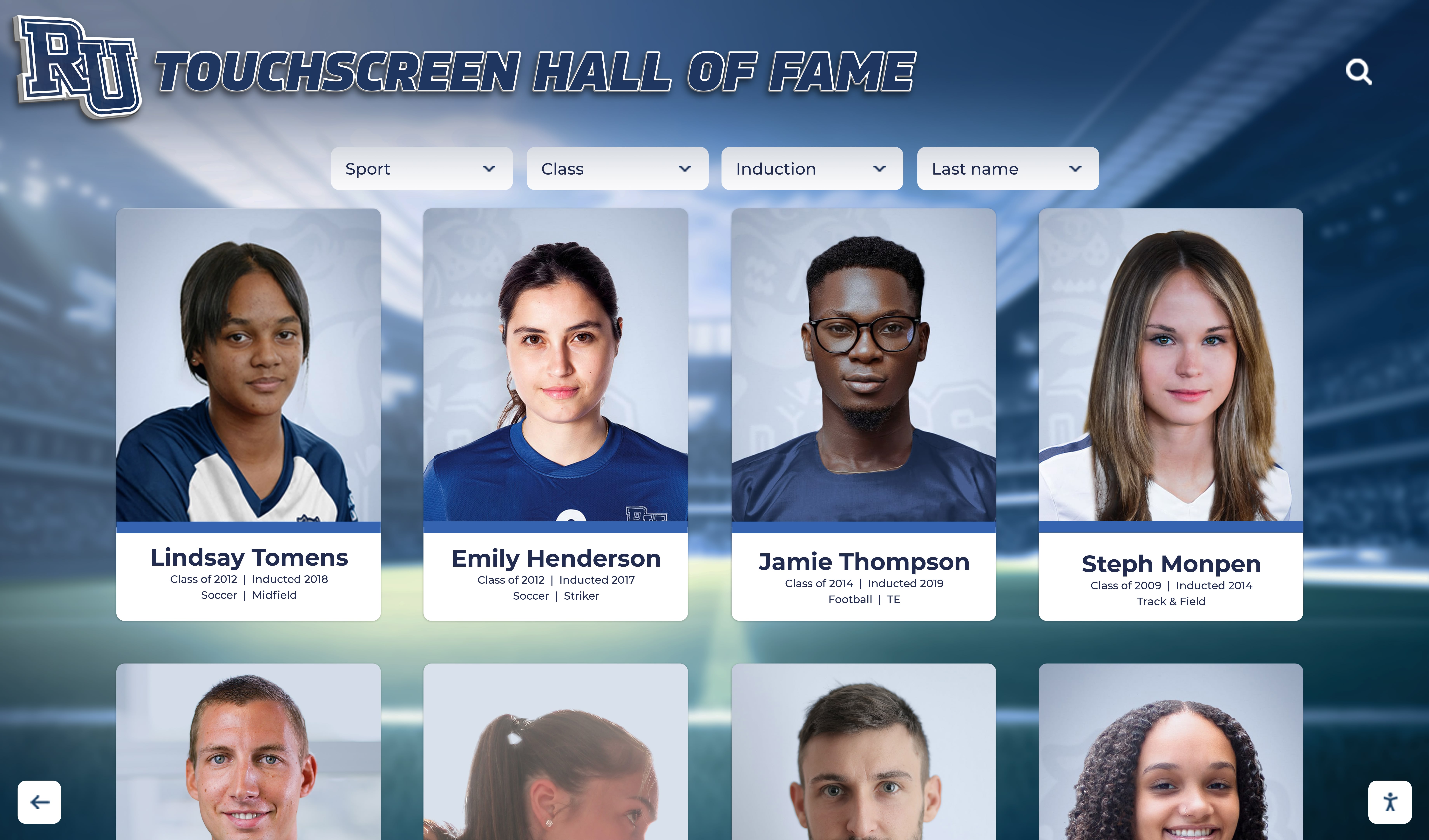
Interactive displays enable rich donor profiles and storytelling beyond simple name listings
Multi-Channel Recognition Integration
Extend recognition impact across multiple platforms:
Physical and Digital Recognition Coordination
Create cohesive recognition experiences through digital displays in physical locations updated in real-time during campaigns, web-based donor pages accessible globally for distributed communities, mobile-responsive recognition allowing smartphone access, social media recognition celebrating donors publicly (with permission), and email updates incorporating donor acknowledgment and campaign progress.
This multi-channel approach ensures donors receive recognition regardless of how they engage with your organization while maximizing visibility for peer influence effects.
Integration With Existing Recognition Programs
Connect Giving Tuesday to broader donor appreciation systems including comprehensive donor walls recognizing all giving regardless of timing, annual report acknowledgment listing all fiscal year contributors, donor society or circle membership based on cumulative giving, special event invitations for recognized supporters, and personalized stewardship connecting donors to programs they fund.
When Giving Tuesday serves as entry point into comprehensive recognition ecosystem rather than isolated campaign, donors experience sustained appreciation that builds lasting relationships.
Accessibility and Inclusion Considerations
Ensure recognition reaches all community members through web accessibility standards supporting screen readers and assistive technology, multilingual recognition when serving diverse populations, various giving methods including online, phone, mail, and in-person, anonymous giving options respecting privacy preferences, and recognition formats accommodating diverse cultural approaches to public acknowledgment.
Inclusive recognition approaches expand participation by welcoming all potential donors regardless of technological comfort, language, disability status, or cultural background.
Technology Platforms: Choosing Recognition Solutions for Giving Tuesday
Selecting appropriate technology determines recognition program success.
Essential Platform Capabilities
Effective Giving Tuesday recognition systems should offer several core features:
User-Friendly Content Management
Development staff need intuitive administrative interfaces including simple donor addition and editing without technical expertise required, bulk import tools processing donor lists efficiently, customizable templates maintaining visual consistency, preview functionality showing changes before publication, and role-based permissions allowing appropriate staff access.
Platforms requiring technical expertise for routine updates create bottlenecks that prevent timely recognition, undermining real-time acknowledgment essential for Giving Tuesday momentum.
Integration and Connectivity
Modern recognition systems should connect with other platforms including API access to popular giving platforms for automated donor data transfer, webhook support enabling real-time updates when gifts are processed, export capabilities moving data to reporting or stewardship systems, web embeds allowing recognition display on multiple pages or sites, and social media sharing facilitating donor celebration across channels.
These integration capabilities reduce manual effort while ensuring recognition stays current without constant staff attention.
Flexible Display and Search Capabilities
Visitor-facing recognition should provide rich functionality including searchable donor directories enabling finding specific contributors, filtering by giving level, campaign, or designation, alphabetical and chronological browsing options, featured donor profiles showcasing select supporters with enhanced content, and mobile-responsive interfaces working across all devices.
When recognition systems make exploring donor contributions easy and engaging, they create opportunities for peer influence where seeing others’ participation inspires additional giving.
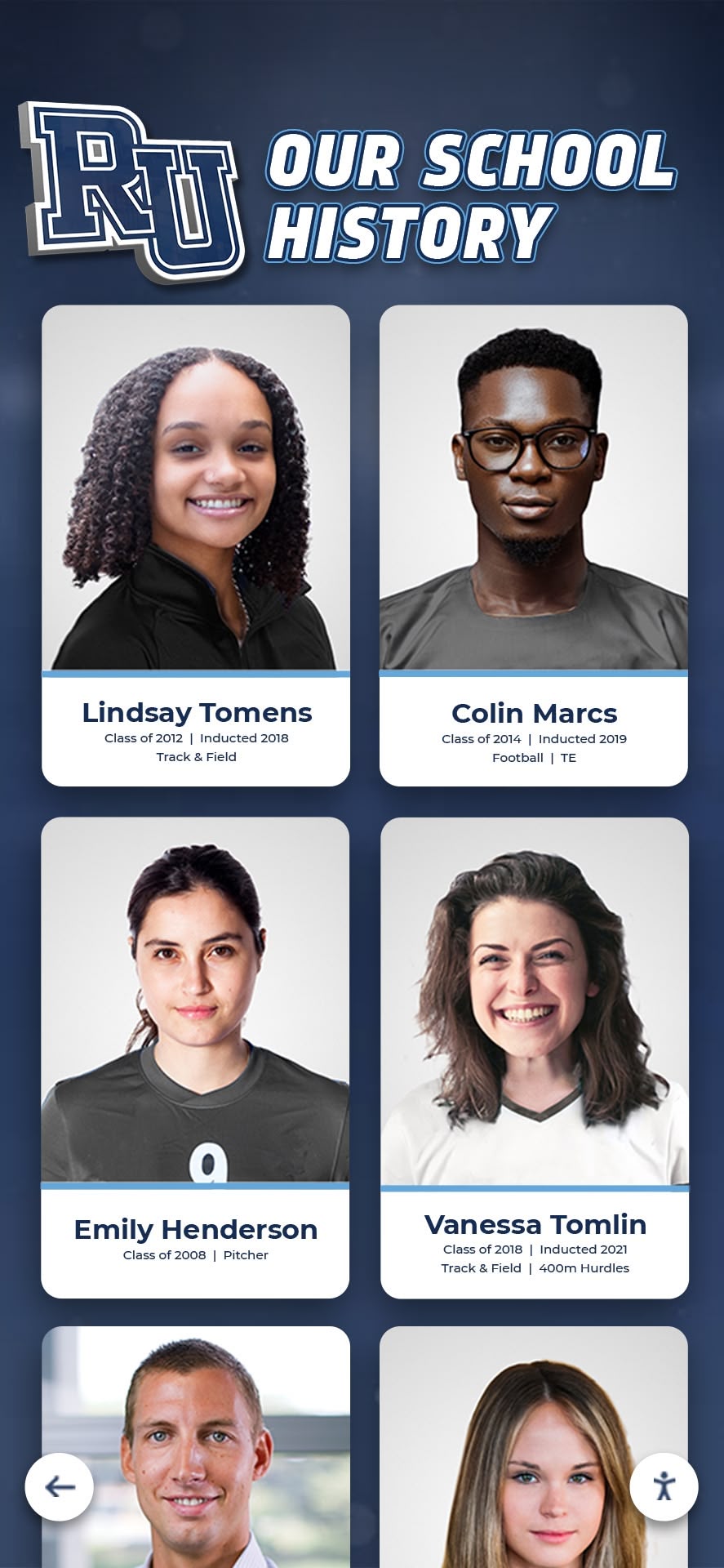
User-friendly interfaces encourage exploration of donor recognition by all community members
Rocket Alumni Solutions: Purpose-Built for Educational Institutions
For schools, colleges, universities, and educational foundations, Rocket Alumni Solutions provides comprehensive digital recognition platforms designed specifically for institutional needs:
Advanced Integration Capabilities
Rocket’s platform connects with major giving platforms including automated donor data transfer as gifts are processed, customizable field mapping aligning donor information with recognition display needs, real-time or scheduled updates depending on campaign requirements, and bi-directional communication allowing recognition platform to inform giving pages.
Several clients utilizing Rocket’s advanced integration tools link displays directly to donor and giving pages so not only do folks see who has donated, but this visibility hopefully drives them to want to give back themselves. Centralizing everything creates a streamlined approach all around.
Comprehensive Recognition Features
Beyond basic donor listing, Rocket enables rich recognition through multimedia donor profiles incorporating photos, videos, and testimonials, historical archives preserving recognition across years and campaigns, multiple campaign support managing various fundraising initiatives simultaneously, tribute and memorial designations honoring loved ones, and customizable recognition tiers matching your giving program structure.
Full-Service Implementation Support
Rocket provides end-to-end support including hardware selection and installation for physical displays, software configuration and customization matching your branding, content migration and historical data import, staff training on content management platforms, and ongoing technical support ensuring reliable operation.
This comprehensive approach allows organizations to implement sophisticated recognition systems without requiring internal technical expertise or development resources.
Organizations interested in exploring how digital donor recognition displays can enhance Giving Tuesday and year-round fundraising should consider platforms like Rocket Alumni Solutions that specialize in educational and nonprofit applications.
Measuring Success: Giving Tuesday Recognition Program Assessment
Systematic evaluation ensures recognition programs achieve intended goals while identifying improvement opportunities.
Quantitative Success Metrics
Track measurable indicators of recognition program effectiveness:
Fundraising Performance Indicators
Primary campaign metrics include total dollars raised compared to goals and previous years, number of donors participating showing breadth of community engagement, average gift size indicating depth of support, matching gift utilization measuring amplification success, conversion rate of visitors to donors, and first-time donor acquisition counting new supporters.
These fundamental metrics demonstrate whether campaigns achieved financial and participation objectives while providing baseline for future comparison.
Recognition System Engagement
Assess how community members interact with recognition displays through page views and unique visitors to online donor pages, time spent exploring recognition content, search queries indicating which donors people seek, social shares spreading recognition to broader networks, and physical display interactions for touchscreen kiosks in facilities.
High engagement suggests recognition creates genuine interest while inspiring potential donors through visible peer participation.
Donor Retention and Loyalty
Beyond immediate campaign results, assess long-term impact including Giving Tuesday donor retention rates in subsequent years, gift progression as donors increase contributions over time, multi-year giving participation showing sustained engagement, conversion to major gift prospects among consistent annual donors, and planned giving inquiries from donors building deeper relationships.
Since acquiring new donors costs significantly more than retaining existing supporters, recognition programs that improve donor loyalty provide substantial return on investment beyond single campaign results.
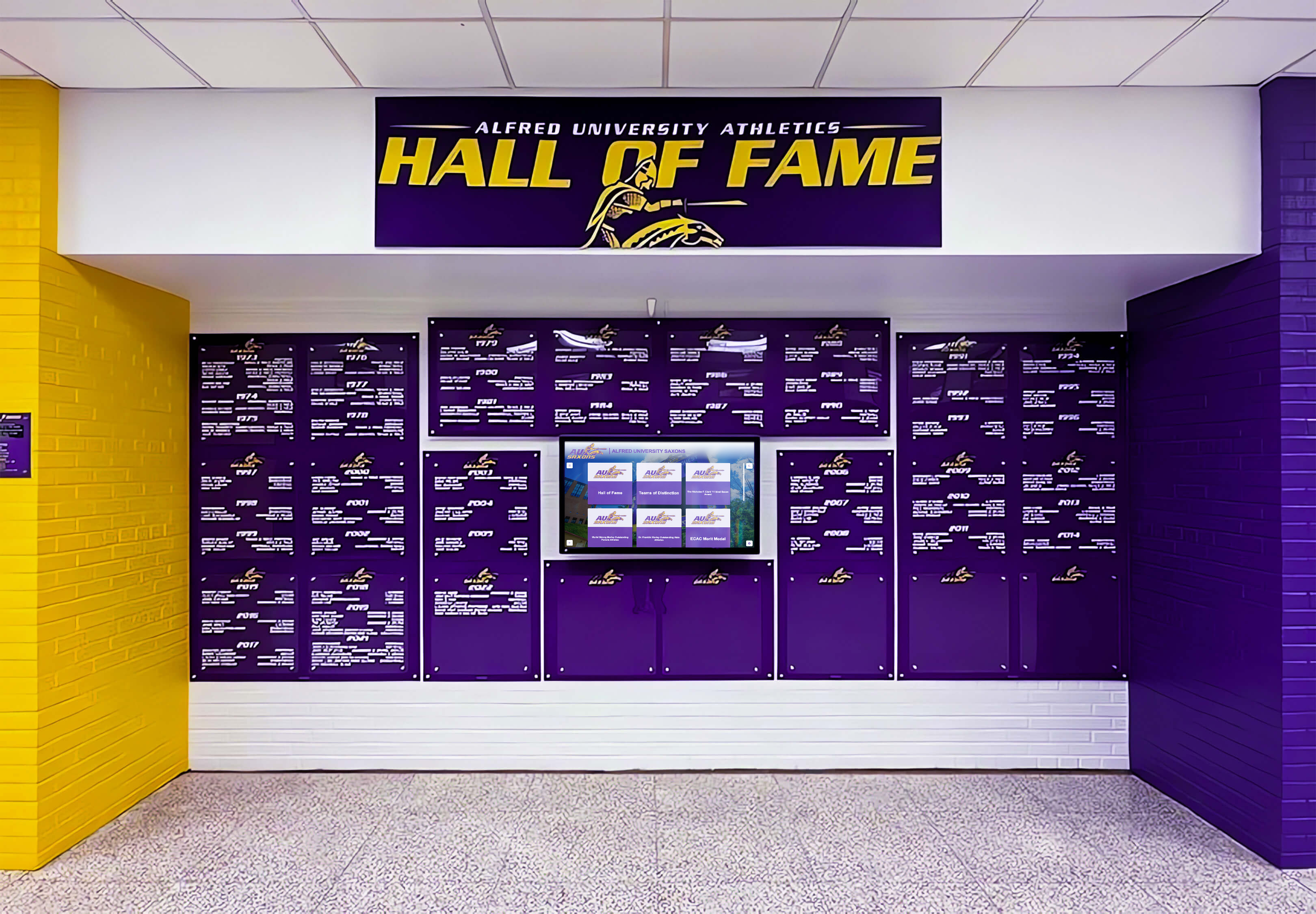
Comprehensive recognition systems preserve donor acknowledgment alongside institutional history and achievement
Qualitative Assessment Approaches
Complement quantitative metrics with qualitative feedback:
Donor Satisfaction and Perception
Gather donor perspectives through post-campaign surveys asking about recognition experience, focus groups with various donor segments discussing recognition preferences, informal conversations during stewardship visits, testimonials and comments voluntarily provided, and observation of donor reactions to recognition displays.
Understanding how donors perceive and value recognition helps refine approaches for maximum relationship-building impact.
Staff and Volunteer Feedback
Campaign team perspectives provide operational insights including ease of recognition system management and updates, technical issues or challenges encountered, suggestions for improved workflows or capabilities, adequacy of training and support resources, and overall satisfaction with recognition implementation.
Since staff and volunteers manage recognition systems, their experience directly affects program effectiveness and sustainability.
Community Response and Cultural Shift
Assess broader impact on organizational culture through prospective donor and volunteer comments about philanthropic environment, media coverage mentioning donor recognition programs, peer organization interest in your approaches, integration of recognition into tours and presentations, and anecdotal stories about recognition inspiring giving.
When recognition programs help shift organizational culture toward greater appreciation of philanthropy, they create long-term value extending far beyond measured fundraising results.
Common Challenges and Solutions
Understanding typical Giving Tuesday recognition difficulties helps organizations prevent or address problems:
Technical and Integration Challenges
Challenge: Integration Complexity and Data Synchronization
Organizations sometimes struggle connecting giving platforms with recognition displays, experiencing delays in donor data transfer, errors in information synchronization, or technical failures during high-volume Giving Tuesday activity.
Solution: Thorough Pre-Campaign Testing and Backup Plans
Conduct comprehensive integration testing weeks before Giving Tuesday, process test donations through complete workflows, verify data accuracy and timing, identify potential failure points, and establish backup manual update procedures. Consider platforms like Rocket Alumni Solutions that provide integration support and troubleshooting during critical campaign periods.
Challenge: Real-Time Update Performance During High Volume
Some systems struggle with performance during peak Giving Tuesday activity when hundreds of donations arrive within hours.
Solution: Scalable Infrastructure and Staged Updates
Select recognition platforms designed for high-volume performance, implement caching and optimization reducing server load, consider slightly delayed updates (15-30 minutes) reducing processing strain while maintaining near-real-time feel, and communicate update schedules so donors understand recognition timing.
Content and Recognition Management
Challenge: Balancing Comprehensive Recognition With Visual Appeal
When hundreds of donors contribute, recognition displays can become overwhelming without thoughtful organization.
Solution: Tiered Display and Search Functionality
Implement featured donor highlights showcasing select contributors with enhanced profiles, searchable directories allowing finding specific donors without listing all simultaneously, filtering capabilities organizing donors by level, campaign, or designation, and rotating featured content ensuring all donors receive visibility over time.
Digital platforms handle large donor volumes far better than physical displays with fixed capacity constraints.
Challenge: Maintaining Recognition Accuracy and Privacy
Organizations occasionally encounter donor name misspellings, duplicate entries, privacy preference violations, or incorrect giving level designations.
Solution: Systematic Quality Assurance Processes
Establish data validation workflows before publishing updates, implement donor self-service portals allowing recognition preference updates, maintain clear privacy opt-out mechanisms, conduct regular recognition audits identifying errors, and respond promptly to donor correction requests.
Accuracy demonstrates respect for donors while maintaining trust essential for ongoing relationships.
Sustainability and Resource Challenges
Challenge: Recognition System Maintenance Beyond Giving Tuesday
Organizations sometimes implement sophisticated Giving Tuesday recognition only to let systems become outdated when immediate campaign pressure subsides.
Solution: Integration Into Year-Round Stewardship
Treat recognition displays as permanent donor stewardship infrastructure rather than temporary campaign tools, establish regular update schedules for ongoing maintenance, assign clear staff responsibility for recognition management, integrate with comprehensive advancement calendars, and leverage recognition platforms for multiple campaigns throughout years.
When recognition systems serve multiple purposes beyond single campaigns, they receive the sustained attention necessary for long-term effectiveness. Explore comprehensive approaches to donor stewardship and engagement that extend beyond individual campaigns.
Recognition infrastructure should serve year-round donor appreciation, not just single campaign events
Best Practices: Principles for Effective Giving Tuesday Recognition
Learning from successful programs helps organizations maximize recognition impact:
Start With Mission and Impact, Not Just Recognition
Focus on Why Giving Matters
The most effective Giving Tuesday campaigns emphasize mission and impact rather than recognition itself. Donors give because they care about causes, not primarily to see their names displayed. Lead communications with compelling stories about what donations accomplish, concrete examples of impact previous giving created, specific programs or individuals contributions will support, and organizational vision that gifts help achieve.
Recognition serves as acknowledgment and appreciation, but mission inspiration drives the actual giving decisions.
Respect Donor Preferences and Privacy
Provide Meaningful Choice in Recognition
Not all donors want public acknowledgment. Offer clear options including public recognition with full name and information, recognition using first initial and last name only, anonymous giving with no public identification, tribute designations redirecting recognition focus, and easy processes for updating preferences.
Respecting donor wishes builds trust while honoring diverse motivations for charitable giving.
Create Sustainable Systems That Serve Beyond Single Campaigns
Think Long-Term Infrastructure
Rather than implementing temporary Giving Tuesday solutions that become obsolete after campaigns conclude, invest in sustainable recognition infrastructure serving multiple purposes including year-round donor acknowledgment regardless of campaign timing, support for diverse fundraising initiatives from annual giving to capital campaigns, historical archives preserving donor recognition across years, integration with comprehensive advancement strategies, and scalability accommodating organizational growth.
Solutions like those from Rocket Alumni Solutions provide platforms designed for long-term institutional use, not just temporary campaign deployment.
Maintain Consistent Communication and Transparency
Follow Through on Recognition Commitments
Organizations that excel at donor recognition consistently deliver on promises including timely recognition updates according to stated schedules, accurate information reflecting donor preferences, impact reporting showing how gifts create outcomes, ongoing stewardship maintaining relationships beyond campaign, and responsive correction of any errors or issues.
When donors trust that your organization follows through on commitments, they’re more likely to give again and increase support over time.
Leverage Recognition to Inspire Future Giving
View Recognition as Stewardship Tool
The best recognition programs don’t just acknowledge past giving—they inspire future contributions through visible social proof demonstrating community participation, impact stories connecting donations to outcomes, aspirational giving level structures encouraging increased support, celebration creating positive emotional associations with philanthropy, and inclusive acknowledgment welcoming all donors regardless of gift size.
When recognition systems create culture where giving is celebrated and visible, they become powerful tools for sustaining and growing philanthropic support over time.
Taking Action: Implementing Your Giving Tuesday Recognition Strategy
Organizations ready to enhance Giving Tuesday donor recognition can begin with systematic planning:
Immediate Planning Steps (4-8 Weeks Before Giving Tuesday)
Start your preparation with concrete actions:
Define Clear Campaign Goals: Establish specific fundraising targets, donor participation objectives, recognition tier structure, and success metrics guiding your campaign.
Assess Current Recognition Capabilities: Evaluate existing donor acknowledgment approaches, identify gaps or limitations, and determine what infrastructure improvements will create greatest impact.
Research Recognition Solutions: Explore digital donor wall platforms designed for your organization type, compare capabilities and pricing, review customer references from similar institutions, and assess integration with existing giving platforms.
Develop Campaign Timeline: Create detailed schedule for pre-campaign planning, launch day execution, and post-campaign follow-up with clear responsibility assignments.
Prepare Messaging and Materials: Develop compelling campaign communications emphasizing mission impact, design visual assets for promotion, and create donor acknowledgment templates.
Technology Selection Considerations
When evaluating recognition platforms, prioritize solutions that offer integration with your giving platform for automated updates, user-friendly content management requiring minimal technical expertise, scalability supporting growing donor bases, mobile-responsive interfaces accessible across devices, comprehensive support during implementation and campaigns, and reasonable pricing fitting your budget.
Organizations seeking purpose-built solutions for educational institutions should explore Rocket Alumni Solutions, which specializes in digital recognition displays for schools, colleges, and universities with advanced integration capabilities and full-service implementation support.
Building Long-Term Recognition Infrastructure
Rather than viewing Giving Tuesday as isolated event, position it within comprehensive donor recognition strategy including permanent digital displays serving year-round acknowledgment, integration with annual giving and capital campaign recognition, connection to broader alumni or community engagement programs, systematic impact reporting demonstrating outcomes, and sustained stewardship maintaining relationships.
This strategic approach maximizes return on recognition investments while building philanthropic culture that sustains your organization across decades.
Conclusion: Creating Recognition That Drives Sustained Generosity
Giving Tuesday represents extraordinary opportunity—a moment when communities actively seek meaningful ways to give back, when social proof and peer influence create powerful motivation, and when visible recognition can inspire continued generosity extending far beyond a single day. Organizations that approach this opportunity strategically, creating donor pages and recognition systems that showcase contributors while driving action, transform Giving Tuesday from isolated fundraising event into sustained engagement that builds lasting relationships.
The strategies explored in this guide provide frameworks for recognition that serves multiple purposes simultaneously: honoring generous donors appropriately regardless of gift size, creating social proof that inspires additional participation, centralizing campaign information in accessible hubs, demonstrating impact that validates donor investment, and building infrastructure serving your organization beyond single campaigns.
Rocket Alumni Solutions serves as ideal partner for schools, colleges, universities, and nonprofits seeking to maximize Giving Tuesday impact through recognition displays that showcase donors, integrate with giving platforms, and create central hubs where communities see who has contributed while being inspired to give back themselves. Several clients utilize Rocket’s advanced integration tools to link displays directly to donor and giving pages, centralizing everything in a streamlined approach that drives continued action.
Your Giving Tuesday donors’ generosity creates impact extending throughout your fiscal year and beyond. They deserve recognition that matches their contributions—thoughtfully planned, beautifully executed, and sustained long after campaign day concludes. With strategic planning, appropriate technology, and sustained commitment, you can create donor pages and recognition systems that celebrate every supporter while building cultures of generosity essential for long-term organizational success.
Transform Your Giving Tuesday Recognition
Discover how digital donor recognition displays can help you showcase contributors, drive action through visible peer participation, and create central hubs that serve your organization year-round.
Request a DonorsWall StoryboardReady to explore recognition solutions for your next Giving Tuesday campaign? Learn more about modern donor recognition approaches or discover how interactive recognition displays celebrate supporters across diverse organizational settings. You can also schedule a consultation to discuss your specific needs and see demonstrations of how centralized recognition creates streamlined approaches that drive sustained giving.