High school hallway design plays a far more significant role in student experience than many educators realize—these transitional spaces where students spend hundreds of hours annually shape school culture, influence motivation, and either reinforce or undermine institutional values. Thoughtfully designed hallways transform from mere circulation routes into engaging environments that celebrate achievement, communicate identity, inspire excellence, and create the positive atmosphere essential for productive learning communities.
Yet most high schools struggle with hallways that fail to maximize their potential as educational and cultural spaces. Generic corridors with blank walls convey institutional indifference, overcrowded bulletin boards create visual chaos rather than meaningful communication, outdated trophy cases overflow with dusty awards nobody examines, and missed opportunities to celebrate diverse student achievements leave many feeling invisible and undervalued within their own school community.
This comprehensive guide explores proven strategies for high school hallway design that creates genuine impact—from strategic space planning and recognition integration to lighting design, wayfinding systems, and digital display implementation that transforms corridors into dynamic spaces actively supporting educational mission, building school pride, and celebrating the diverse accomplishments that define successful student experiences.
Modern high school hallway design balances multiple objectives including efficient student circulation during passing periods, meaningful recognition celebrating achievements across all domains, clear wayfinding helping visitors and new students navigate campus, school branding reinforcing institutional identity and values, and flexible spaces adapting to evolving needs without expensive renovations.

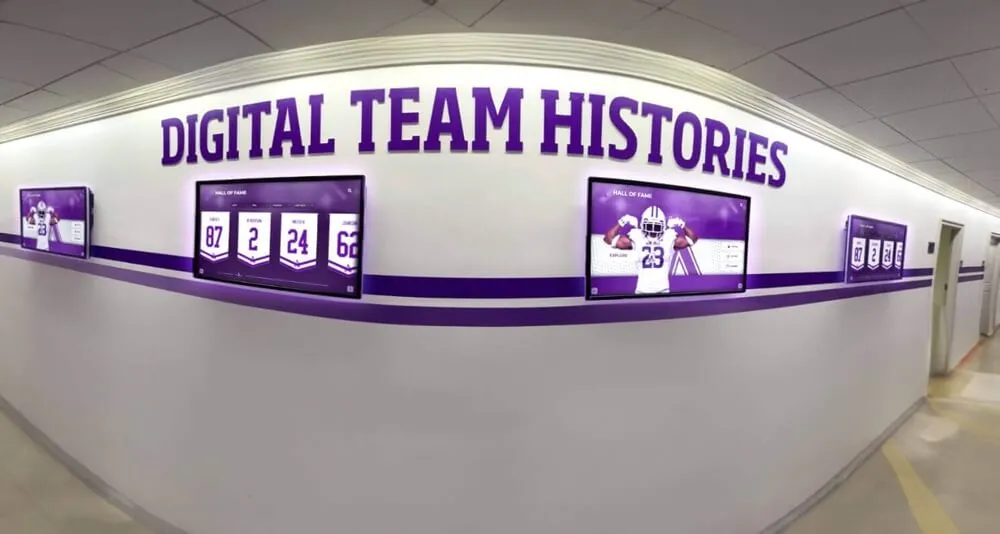
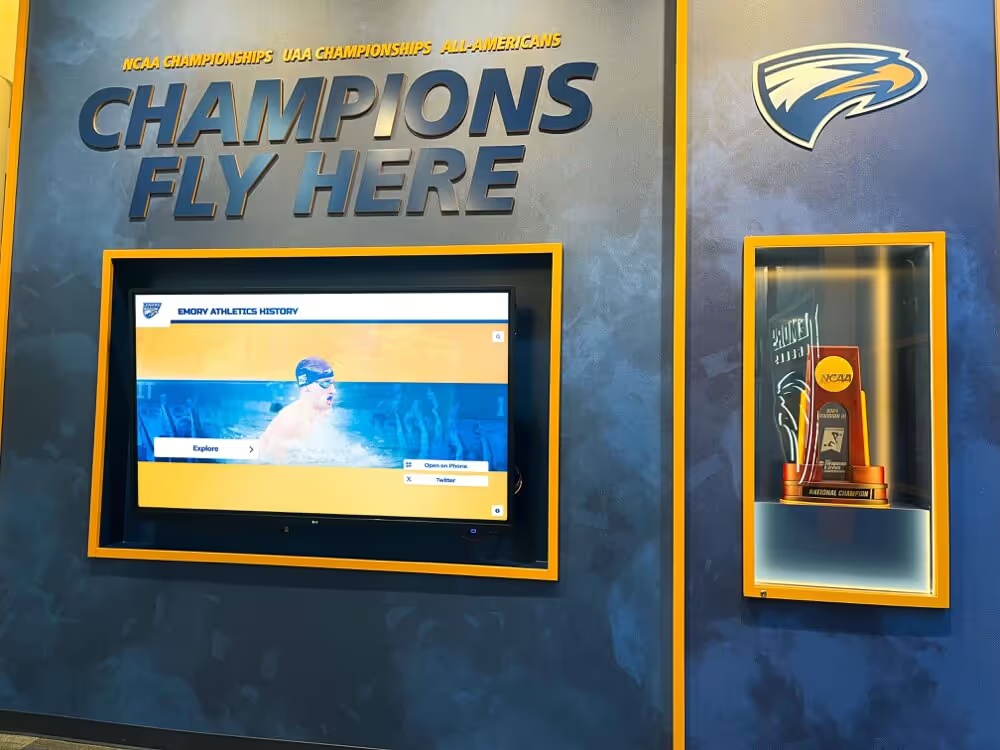
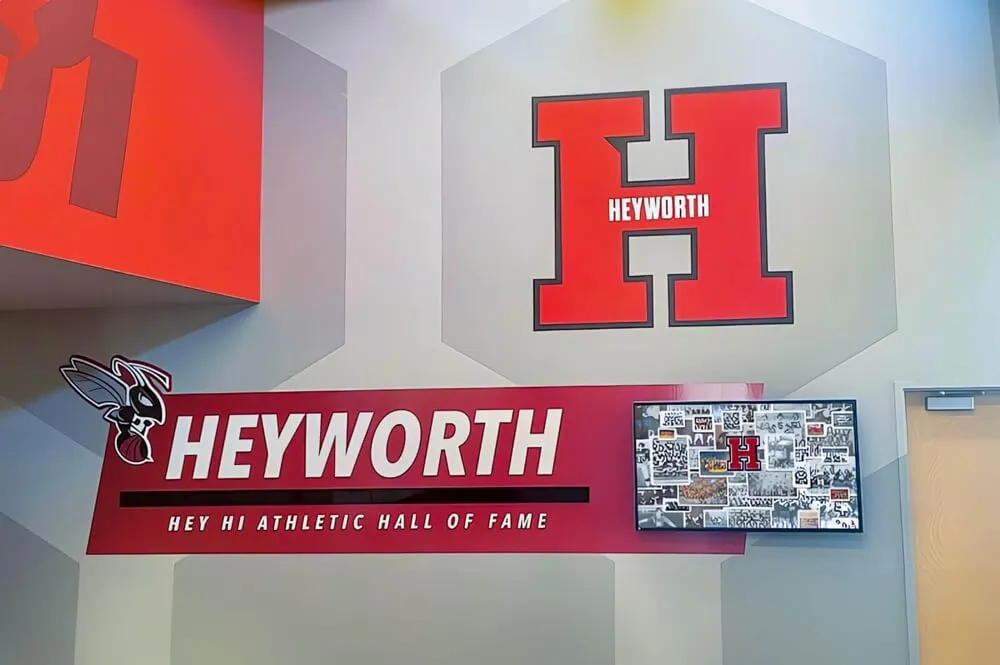
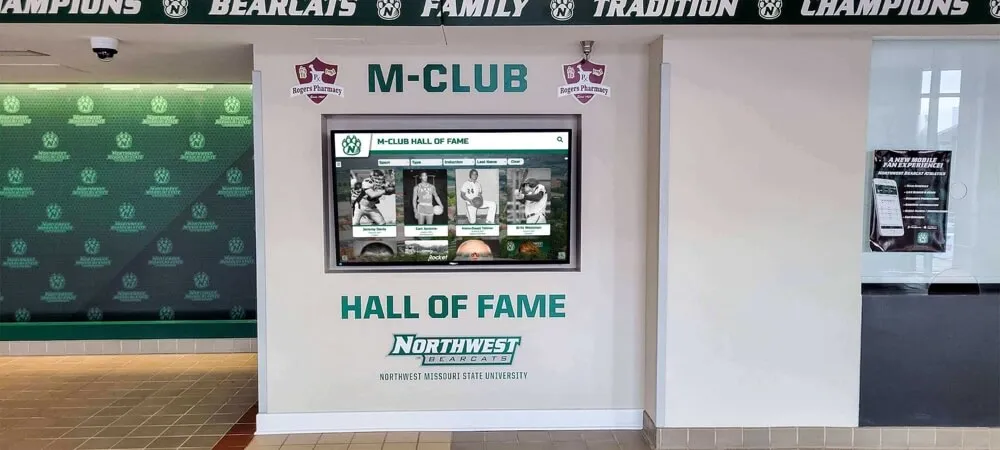
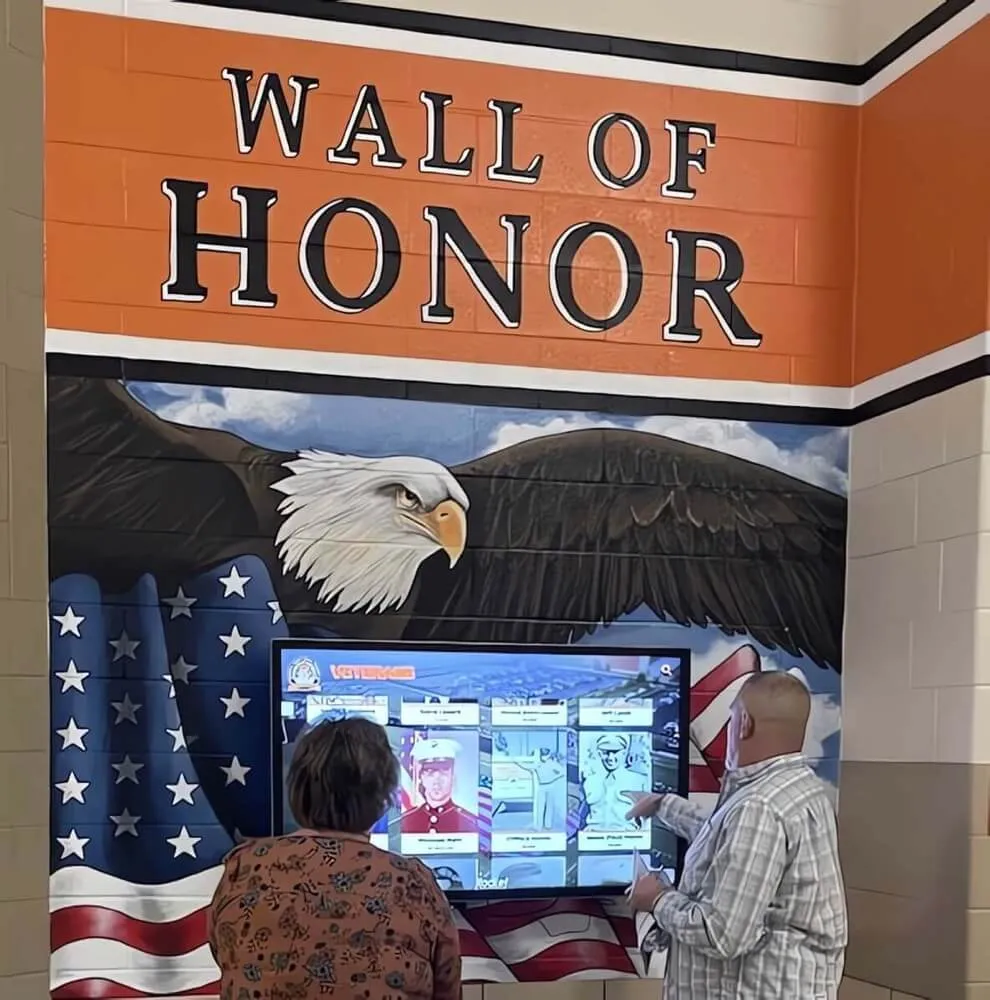
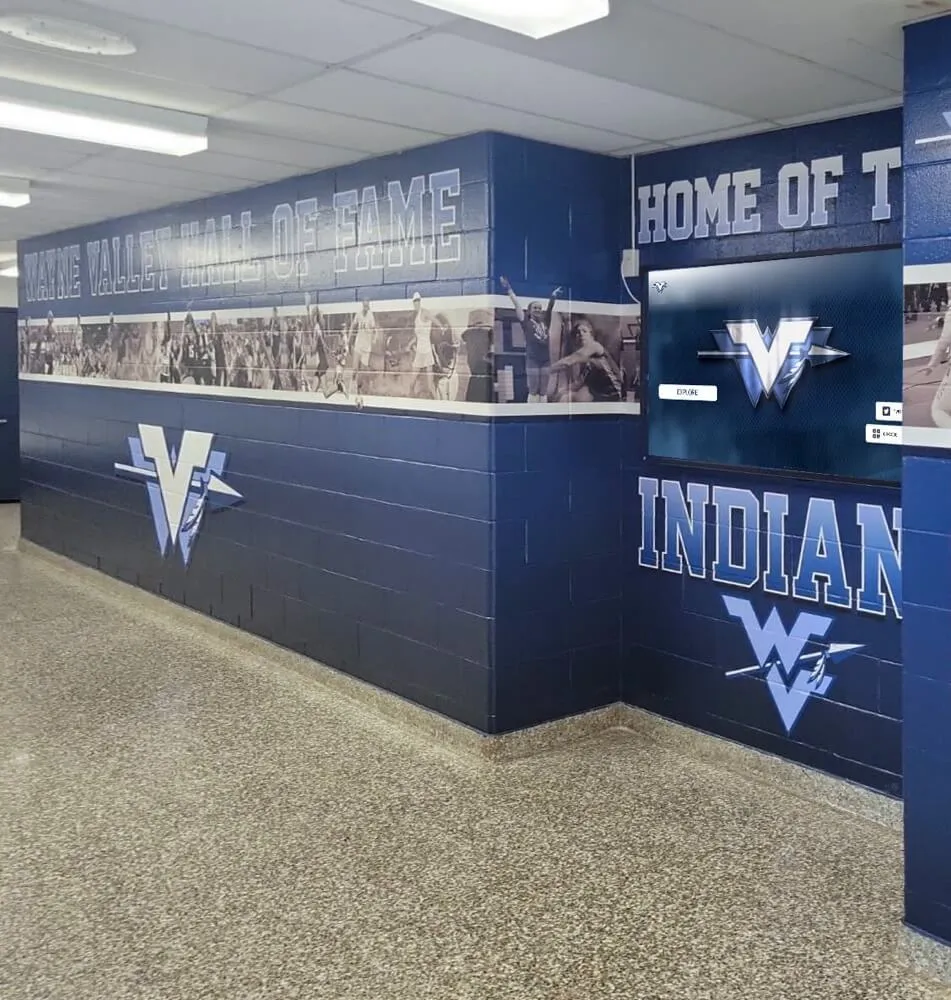
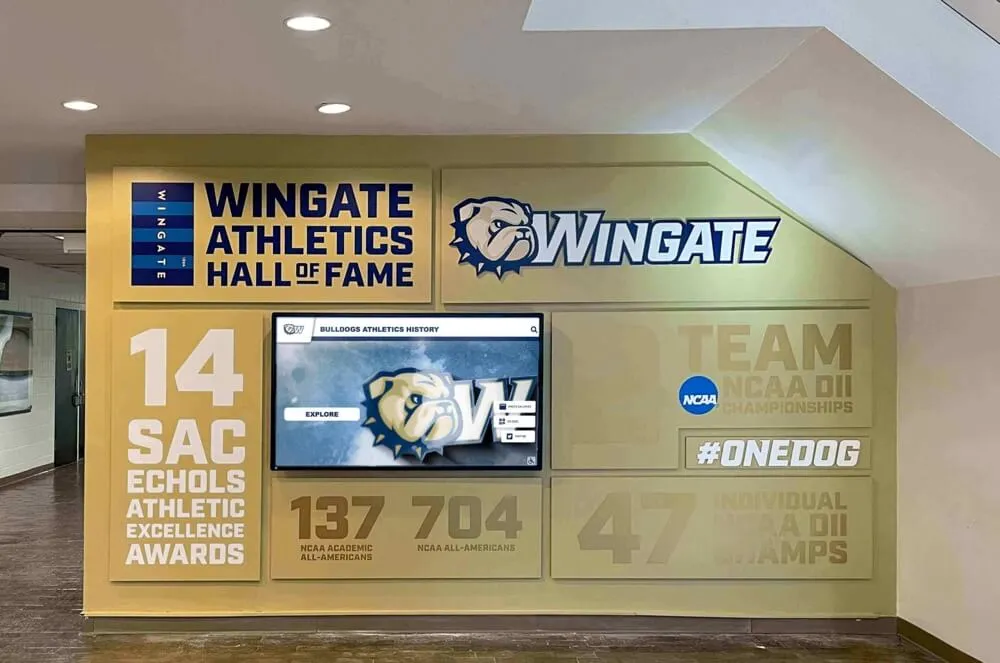
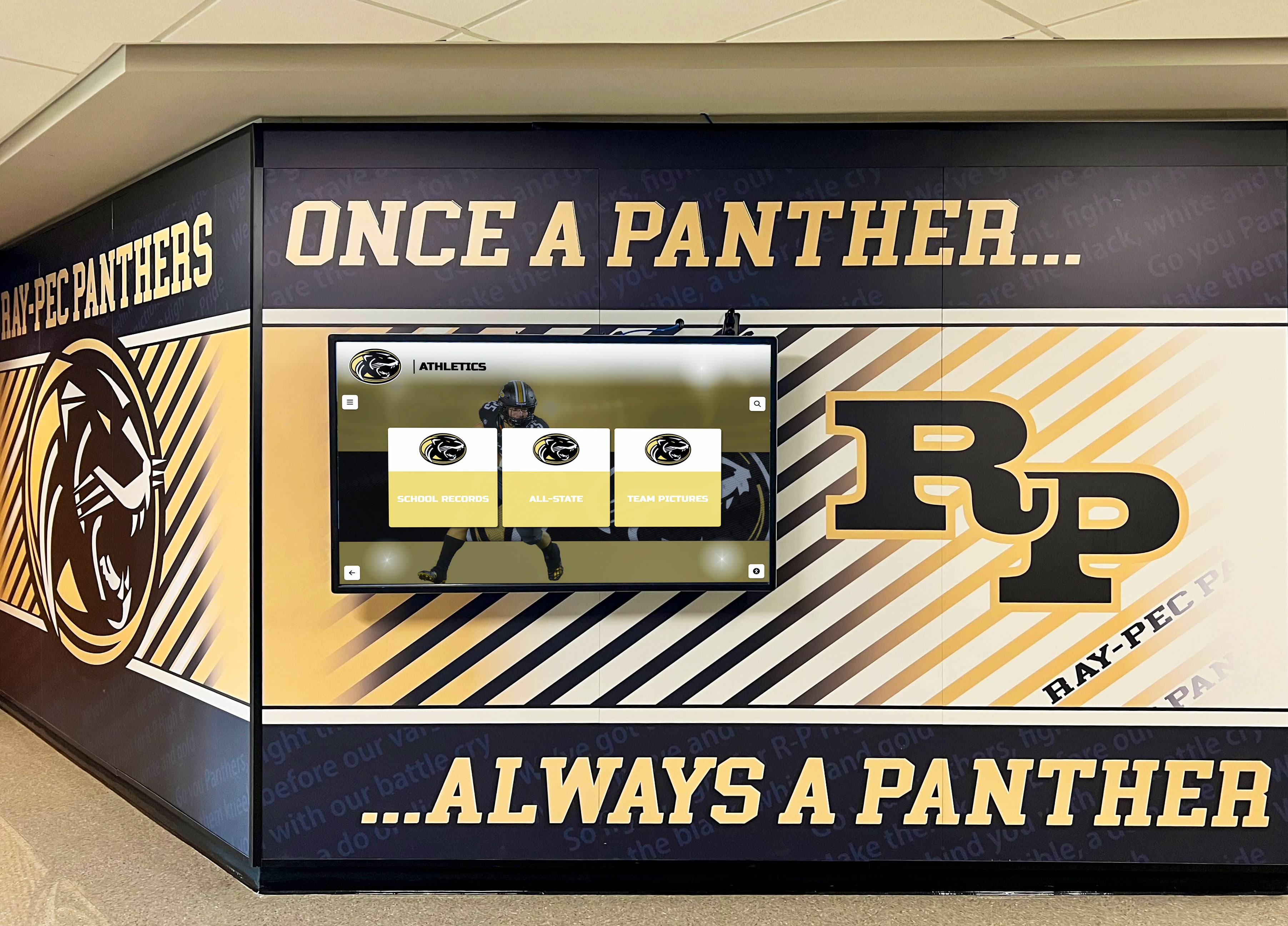
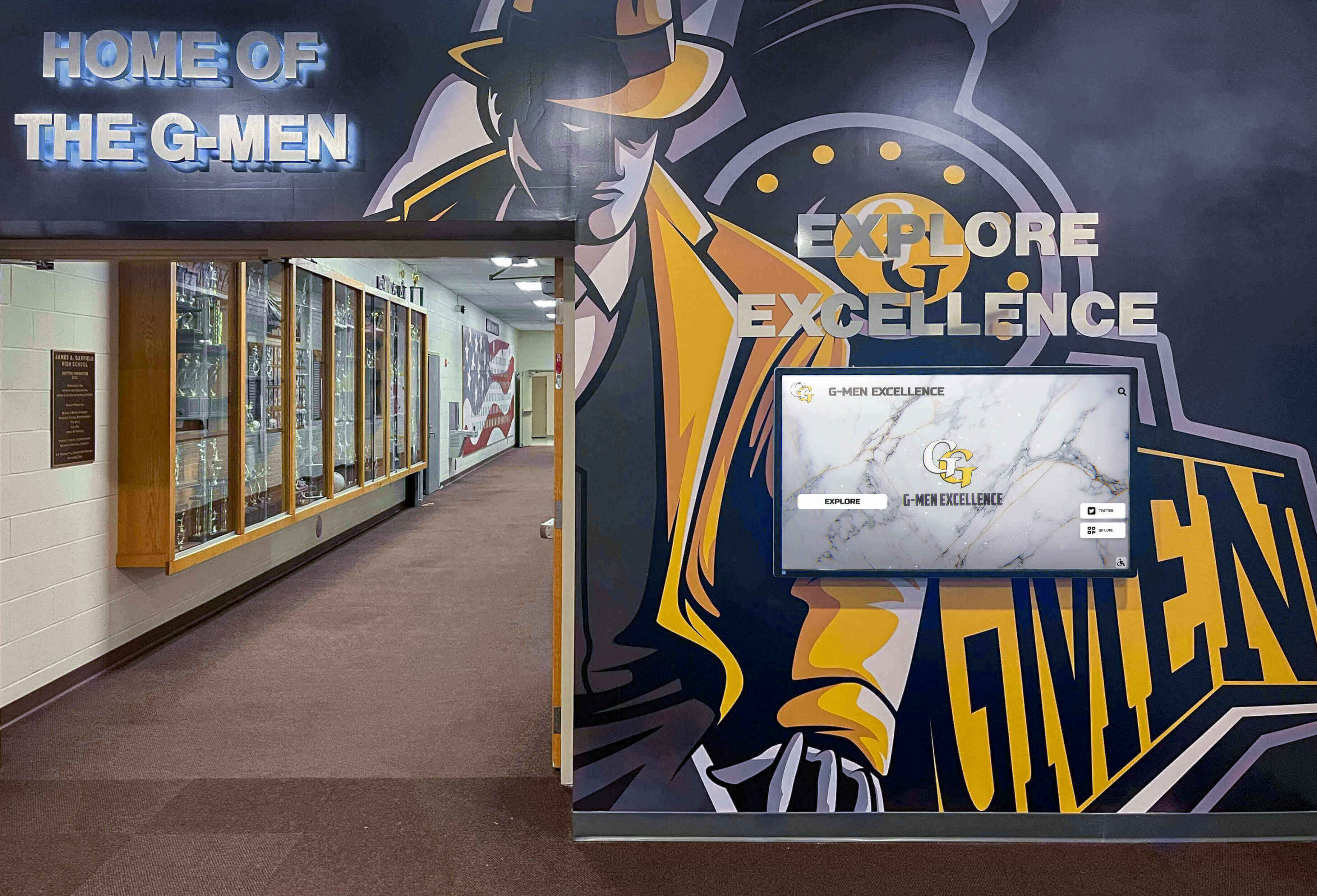
Integrated hallway design combines traditional murals with modern digital displays creating comprehensive student recognition
Understanding the Strategic Value of High School Hallways
Before diving into specific design strategies, understanding why hallway design matters helps schools make informed decisions about space improvements and resource allocation.
Hallways as Cultural Communications Channels
High school hallways function as constant communication platforms reaching every student, staff member, and visitor multiple times daily. What schools choose to display in these highly visible spaces sends powerful messages about institutional priorities and values.
The Hidden Curriculum of Hallway Design
Every design choice communicates lessons that students absorb unconsciously:
- What receives prominent display signals what the school genuinely values versus what appears only in mission statements
- Whose achievements get celebrated reveals whether recognition truly encompasses all students or concentrates on narrow definitions of success
- How professionally recognition appears demonstrates whether the school treats student accomplishments with genuine respect
- How current displays remain shows whether the institution maintains engaged connection with student life or operates on autopilot
- How welcoming spaces feel influences whether students experience genuine belonging or institutional alienation
When hallways prominently feature diverse student achievements through professional, current displays, they communicate that the school genuinely values excellence across all domains—academics, athletics, arts, service, and leadership. When hallways remain bland or showcase only certain types of success, they subtly communicate that only some students and achievements truly matter.
Impact on School Climate and Culture
Research in educational psychology consistently demonstrates that environmental design significantly influences student attitudes, behavior, and achievement. Well-designed hallways contribute to positive school climate through visible celebration creating achievement motivation, professional presentation communicating high standards, clear organization reducing chaos and anxiety, appropriate branding fostering school pride and belonging, and welcoming atmosphere supporting mental health and engagement.
Conversely, neglected hallway environments contribute to negative perceptions—dingy, chaotic corridors signal that nobody cares about the physical environment, potentially influencing how students treat facilities and each other.
Learn about comprehensive approaches to school pride building through environmental design and recognition programs.
Supporting Multiple Stakeholder Needs
Effective high school hallway design serves diverse users with different needs and priorities.
Student Experience Enhancement
Students spending significant time in hallways benefit from environments that provide clear navigation preventing late arrivals and anxiety, inspiring recognition showing paths to achievement, comfortable atmosphere reducing institutional stress, interesting visual elements preventing monotony, and social spaces enabling positive peer interaction during passing periods.
Hallways designed with student needs central to planning demonstrate respect for student experience rather than treating corridors as afterthoughts receiving leftover budget and attention.
Staff Operational Requirements
Faculty and administrators need hallways supporting supervision during passing periods with clear sight lines, emergency egress meeting safety codes and evacuation requirements, adequate width preventing dangerous congestion, durable materials withstanding intensive daily use, and integrated security features protecting student safety.
Balancing aesthetic goals with practical operational requirements prevents design solutions that look impressive but create management problems for staff responsible for daily school operations.
Visitor and Community Impressions
Families touring schools during enrollment decisions, community members attending events, and prospective employees evaluating workplace environment all form immediate impressions based on hallway appearance. Professional, welcoming corridors communicate competence and pride while dingy, chaotic hallways raise concerns about overall school quality regardless of actual educational programming excellence.
Strategic hallway design recognizing impression management value supports enrollment, community relations, and staff recruitment goals beyond immediate student benefit.
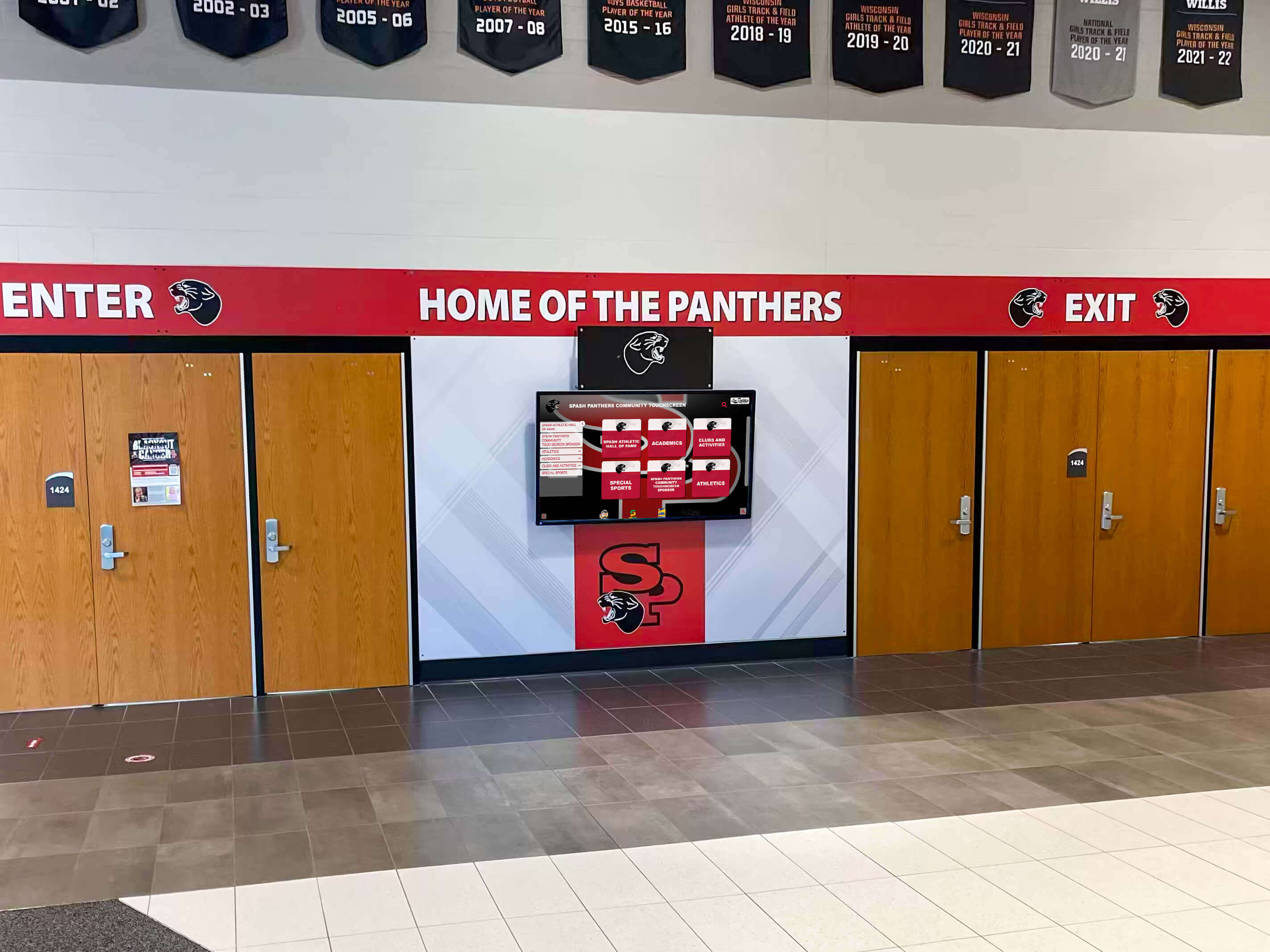
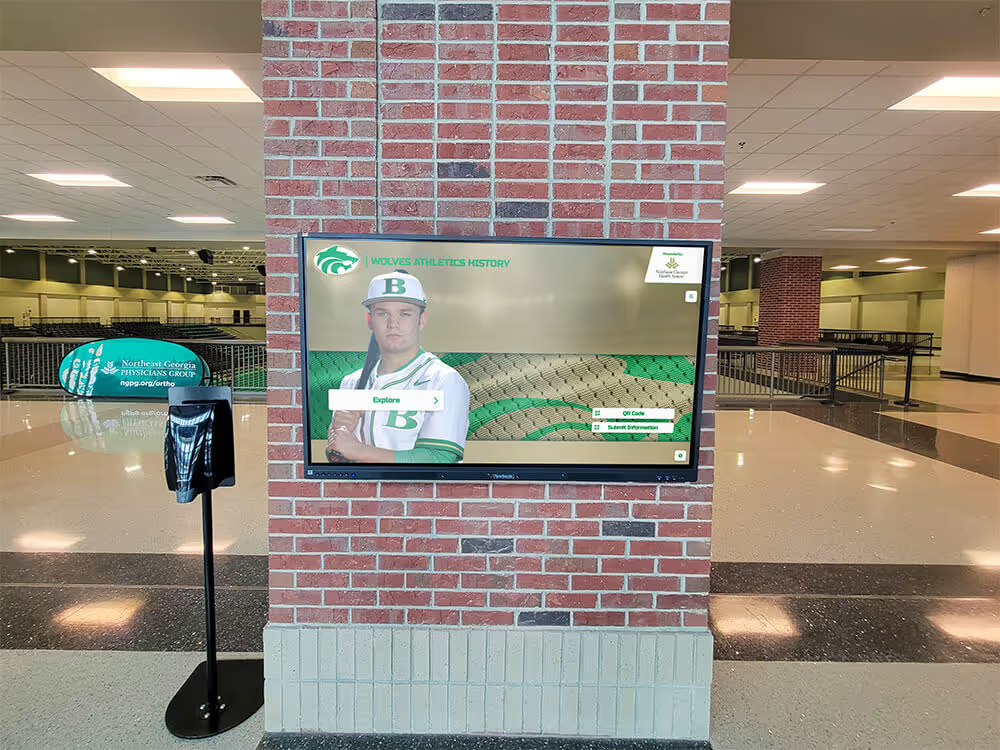
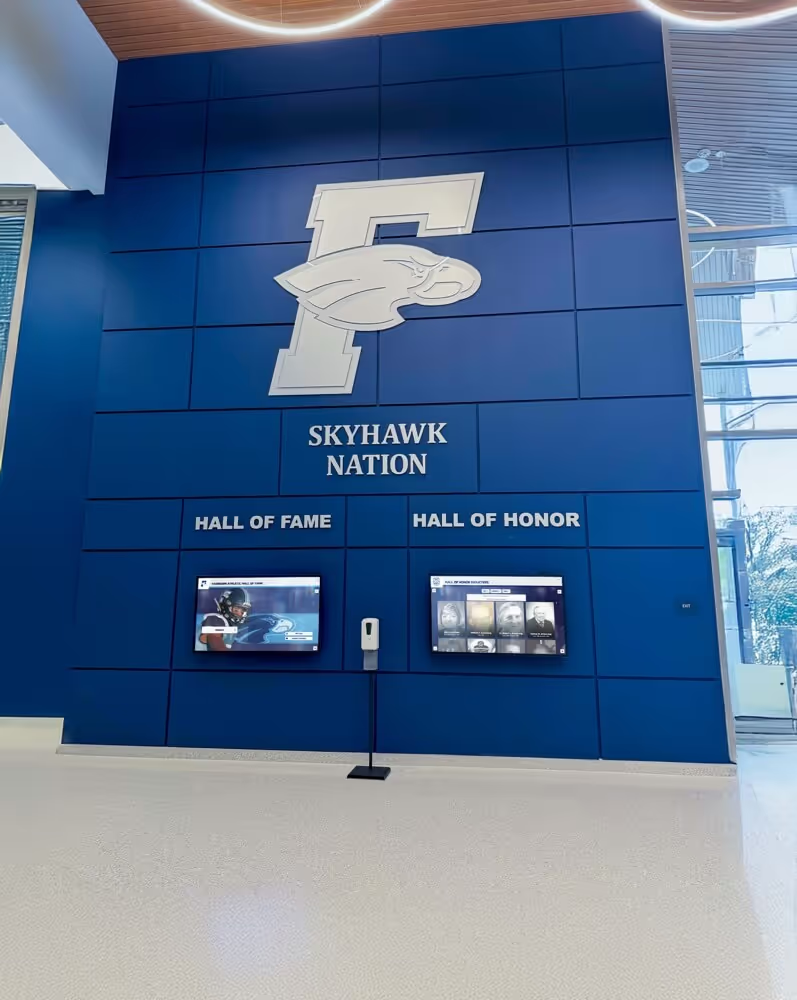
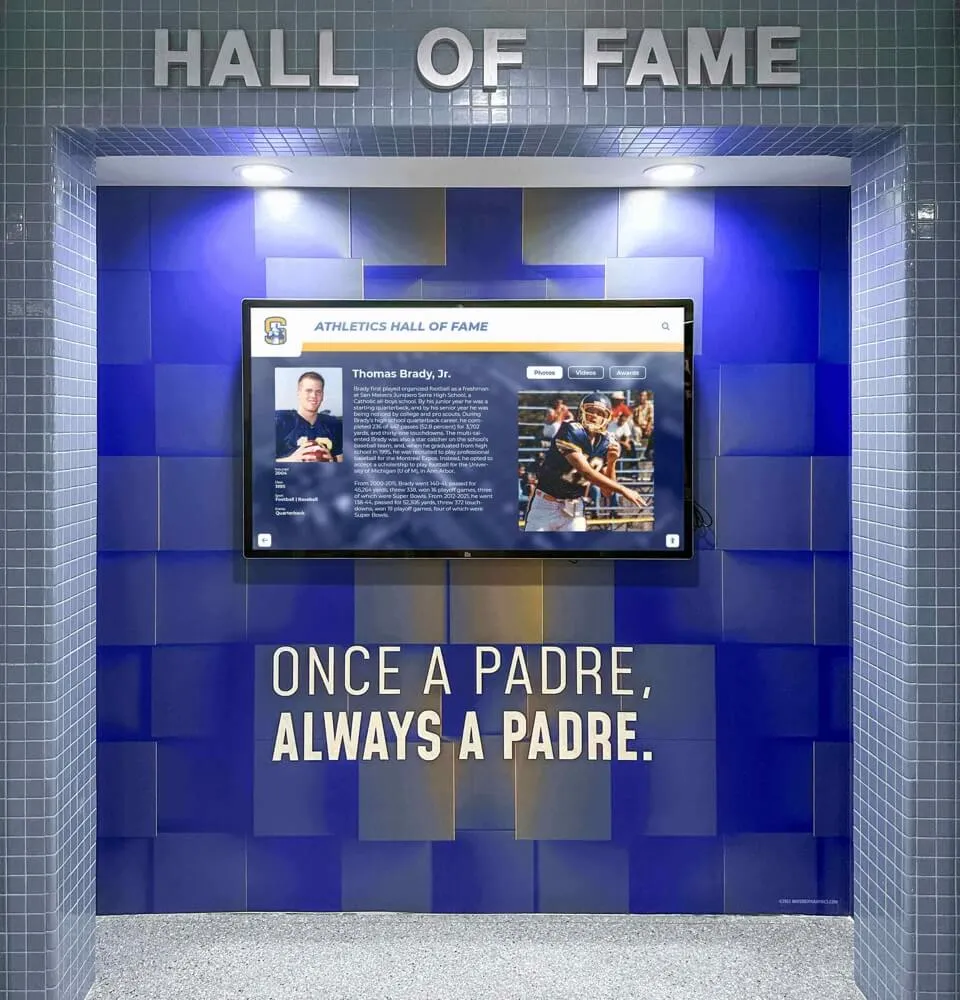
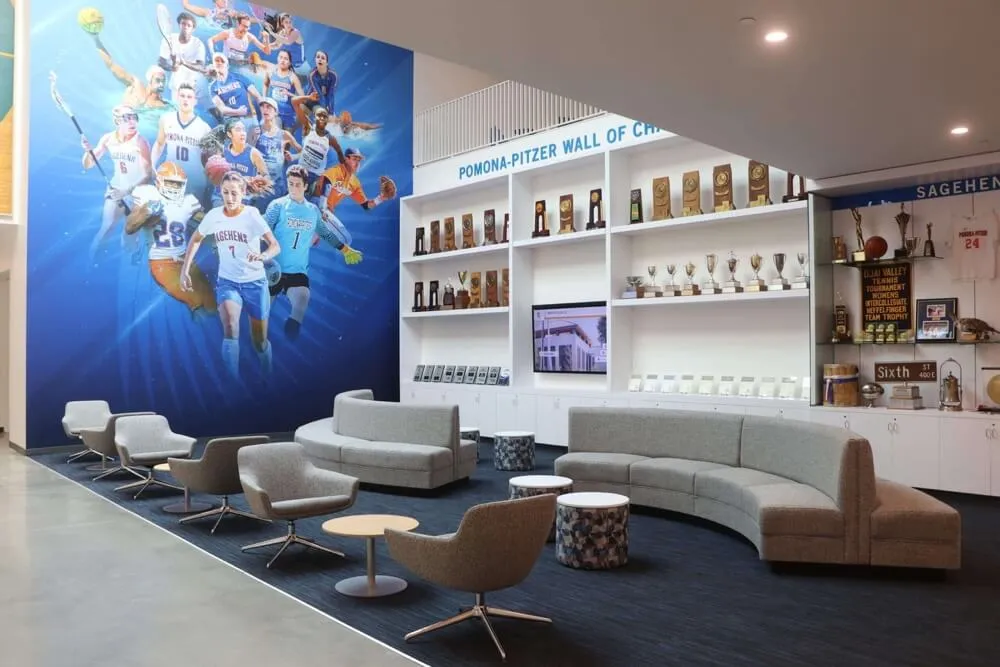
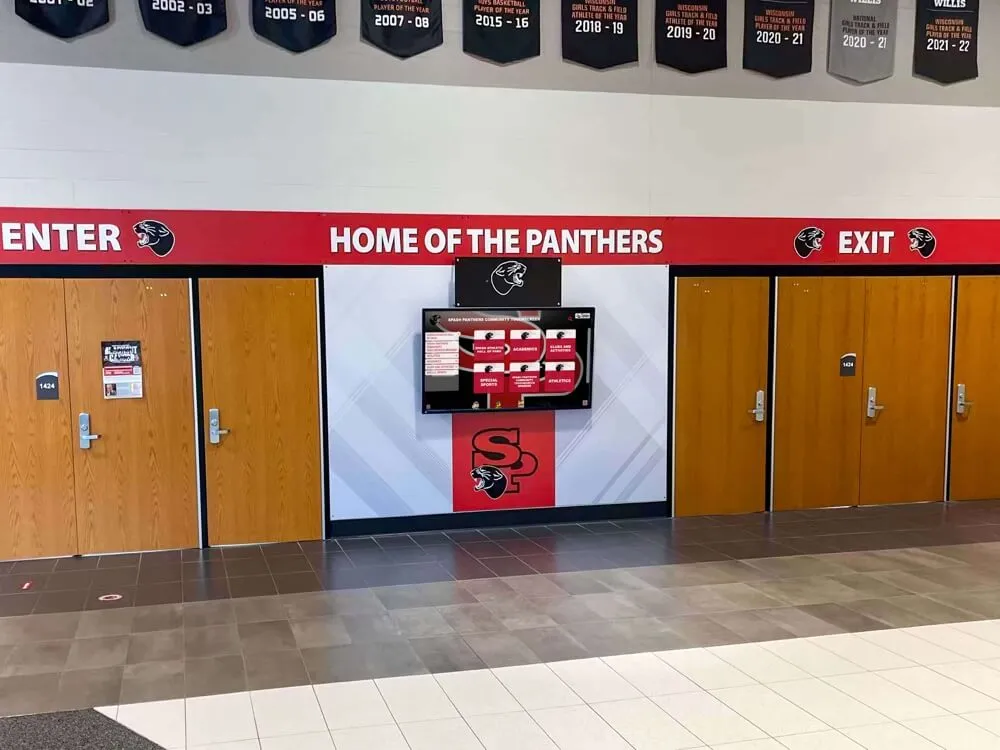
Entrance hallways create immediate impressions communicating school pride and welcoming atmosphere to all visitors
Core Design Principles for High School Hallways
Successful hallway design integrates fundamental principles creating spaces that work effectively while inspiring students and building positive culture.
Strategic Space Planning and Circulation
Functional hallway design begins with understanding circulation patterns and space utilization throughout daily schedules.
Analyzing Traffic Flow Patterns
Map typical student movement during passing periods identifying high-traffic corridors requiring maximum width, bottleneck locations needing improved circulation, low-traffic areas suitable for gathering spaces, intersections requiring clear sight lines for supervision, and spaces near specific facilities like cafeterias or gyms experiencing concentrated use.
This analysis prevents design choices that inadvertently obstruct circulation or create congestion points compromising safety and punctuality.
Width and Clearance Standards
Educational facilities guidelines typically recommend minimum corridor widths based on capacity:
- Main hallways: 8-10 feet minimum for schools under 500 students; 10-12 feet for larger schools
- Secondary corridors: 6-8 feet for lower-traffic routes
- Accessible clearance: Minimum 60 inches clear width for ADA compliance
- Display placement: Recessed or positioned to maintain required circulation clearance
Meeting these standards prevents congestion while ensuring accessibility for students with mobility devices or other physical needs.
Designated Gathering Spaces
Where circulation patterns and width allow, integrate intentional gathering zones enabling positive social interaction including alcoves with benches near lockers, widened corridor sections accommodating small groups, comfortable seating near libraries or common areas, display spaces with viewing room encouraging engagement, and supervised locations appropriate for student congregation during breaks.
These gathering spaces reduce hallway congestion while providing appropriate venues for the social interaction essential to positive adolescent development.
Color, Branding, and Visual Identity
Strategic use of color and branding elements creates cohesive aesthetic while reinforcing school identity throughout hallway environments.
School Color Integration
Incorporate institutional colors through accent walls creating focal points in high-visibility areas, floor treatments or painted lines guiding wayfinding, lockers or trim elements adding color without overwhelming spaces, recognition displays using school colors in framing and graphics, and coordinated signage maintaining consistent visual language.
Balance is crucial—color should feel energizing and unified rather than overwhelming. The goal involves evoking school pride through sophisticated design rather than theme park intensity that may appeal to some students but feels juvenile to others.
Mascot and Logo Placement
School mascots and logos provide natural branding opportunities through entrance murals welcoming students and visitors, department area graphics identifying academic wings, athletic corridor displays celebrating team achievements, large-format graphics at key intersections and decision points, and floor medallions or ceiling features in prominent locations.
Professional execution matters tremendously—amateur painted mascots or poorly executed graphics undermine rather than enhance school pride. Investment in quality design and implementation signals institutional commitment to excellence.
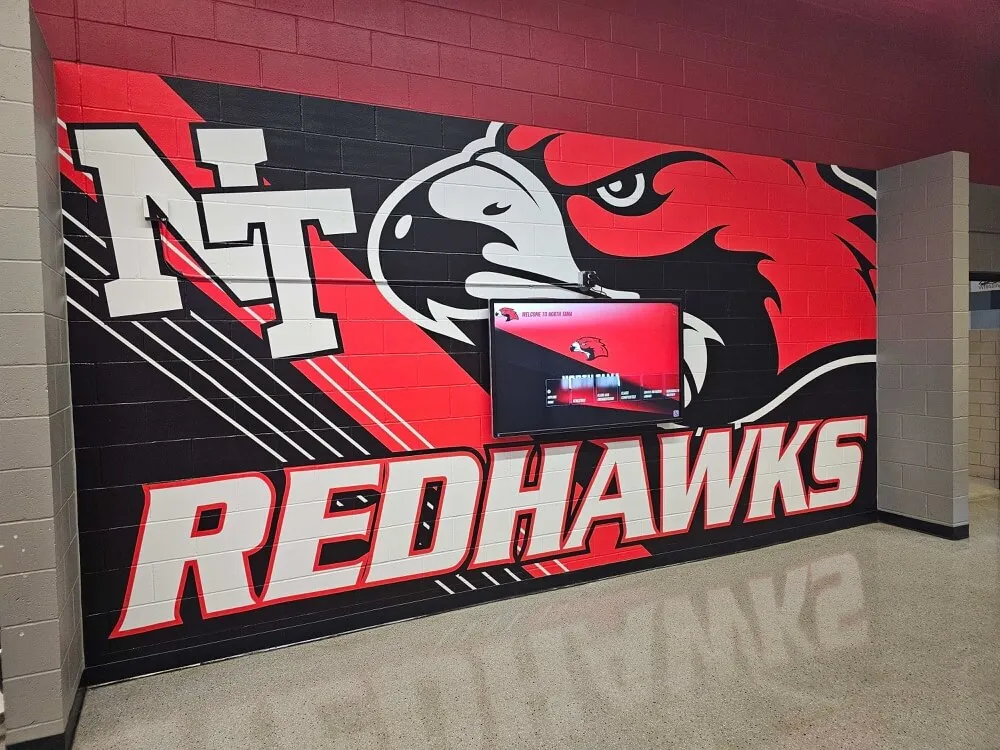
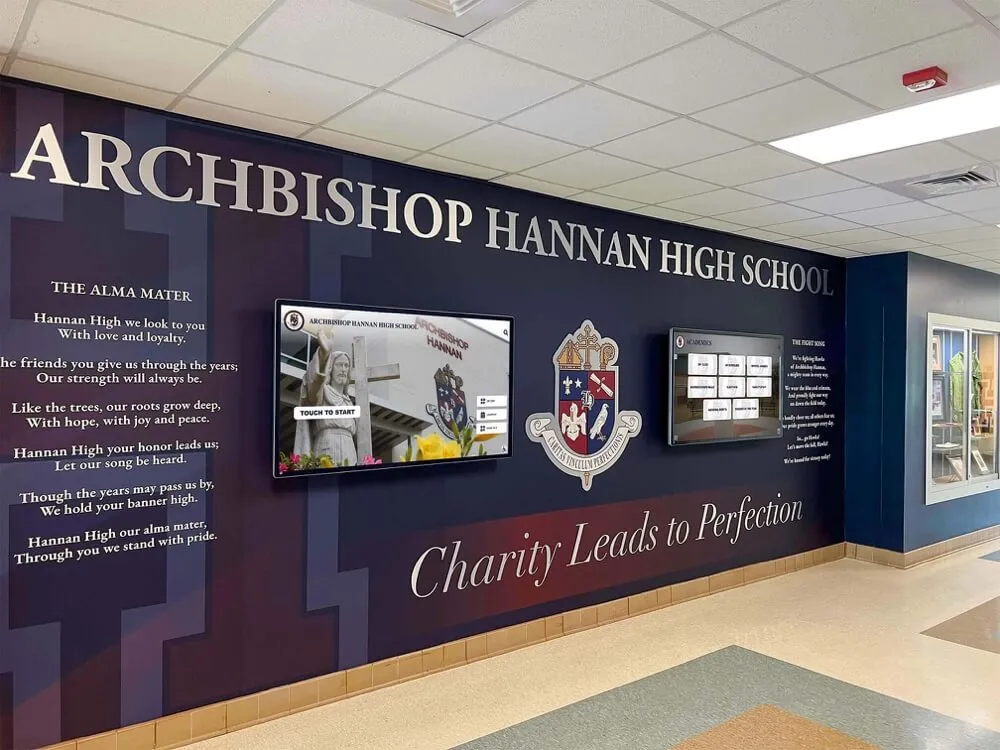
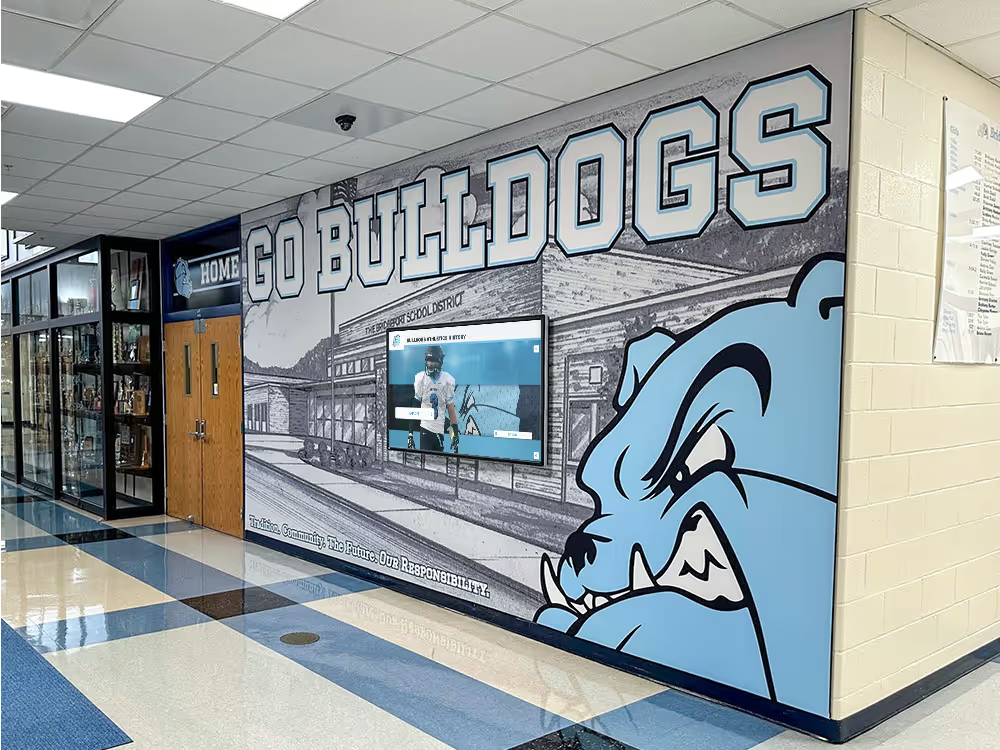
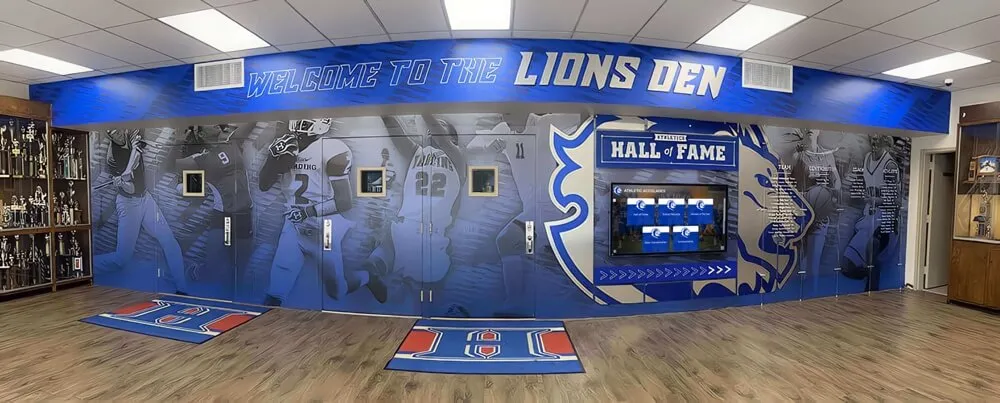
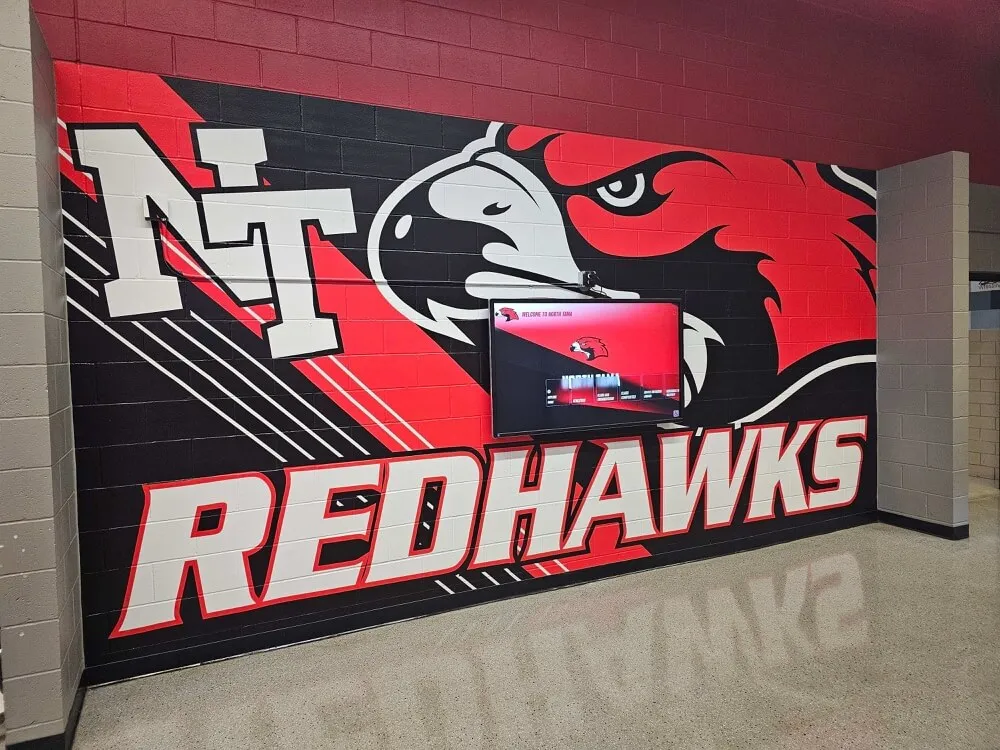
Professional murals combining school branding with modern displays create impressive hallway focal points
Departmental Identity and Wayfinding
Use consistent design language helping visitors and new students navigate campus through color coding by academic department or building wing, iconic graphics representing different program areas, clear signage at intersections indicating destinations, consistent visual language across all wayfinding elements, and integration with digital directories or interactive maps.
This visual organization reduces navigation anxiety while helping large campuses feel more manageable and less institutionally overwhelming.
Explore comprehensive digital signage content ideas applicable to hallway displays.
Lighting Design and Atmosphere
Lighting profoundly impacts how hallway spaces feel and function—appropriate illumination creates welcoming atmosphere while supporting visibility and safety.
Natural Light Maximization
Where architectural design allows, maximize natural light through windows connecting to courtyards or exterior spaces, clerestory windows bringing daylight deeper into buildings, glass doors enabling visual connection to outdoor areas, light-colored finishes reflecting available natural light, and strategic placement of recognition displays where natural light enhances rather than creates glare.
Natural light improves mood, reduces energy costs, and creates more pleasant environments compared to exclusively artificial illumination.
Artificial Lighting Strategies
Where natural light remains limited, implement thoughtful artificial lighting including adequate general illumination meeting recommended foot-candle levels, accent lighting highlighting recognition displays and artwork, task lighting at lockers or study areas, appropriate color temperature creating warm, welcoming atmosphere (3000-3500K), and energy-efficient LED systems reducing operational costs.
Avoid harsh fluorescent lighting that creates institutional feel—modern LED systems offer excellent light quality with superior efficiency and longevity.
Lighting for Digital Displays
When integrating digital recognition systems, consider lighting conditions carefully including ambient light levels appropriate for screen visibility, avoiding direct sunlight creating screen glare, positioning displays perpendicular to windows when possible, using anti-glare screen treatments where needed, and adjustable display brightness accommodating different times and conditions.
Poor lighting placement undermines digital display investments by making screens difficult or impossible to view comfortably.
Recognition and Display Strategies for Hallways
High school hallways provide ideal venues for celebrating student achievement when recognition receives thoughtful planning and professional implementation.
Academic Recognition Display
Celebrating intellectual achievement communicates that academic excellence represents a core institutional value deserving prominent visibility.
Honor Roll Recognition
Traditional honor roll displays often consist of printed lists posted temporarily then discarded. Modern approaches include digital displays showcasing honor roll students with photos, wall installations featuring recognition across multiple marking periods, interactive touchscreens enabling exploration of academic achievements, rotational displays ensuring all honor levels receive visibility, and online extensions allowing families to view recognition remotely.
Digital solutions like those from Rocket Alumni Solutions eliminate physical space constraints while enabling rich recognition including student photos, achievement descriptions, and comprehensive historical archives showing academic excellence across years.
Discover strategies for honor roll recognition programs that integrate effectively with hallway displays.
Academic Competition Success
Showcase achievements in academic competitions including state and national competition results, team photos and individual recognition for quiz bowl, Science Olympiad, math competitions, debate team accomplishments, National Honor Society membership, AP Scholar designations, and career and technical education certifications.
These displays communicate that intellectual achievement receives celebration comparable to athletic success—an important message in schools where athletics sometimes overshadow academics in recognition and resource allocation.
Scholarship Recognition
Celebrate students earning college scholarships through senior scholarship recipient displays, cumulative totals showing institutional success in scholarship attainment, featured profiles of significant scholarship recipients, and historical tracking showing scholarship trends across years.
This recognition demonstrates pathways to college affordability while motivating younger students to pursue their own scholarship opportunities.
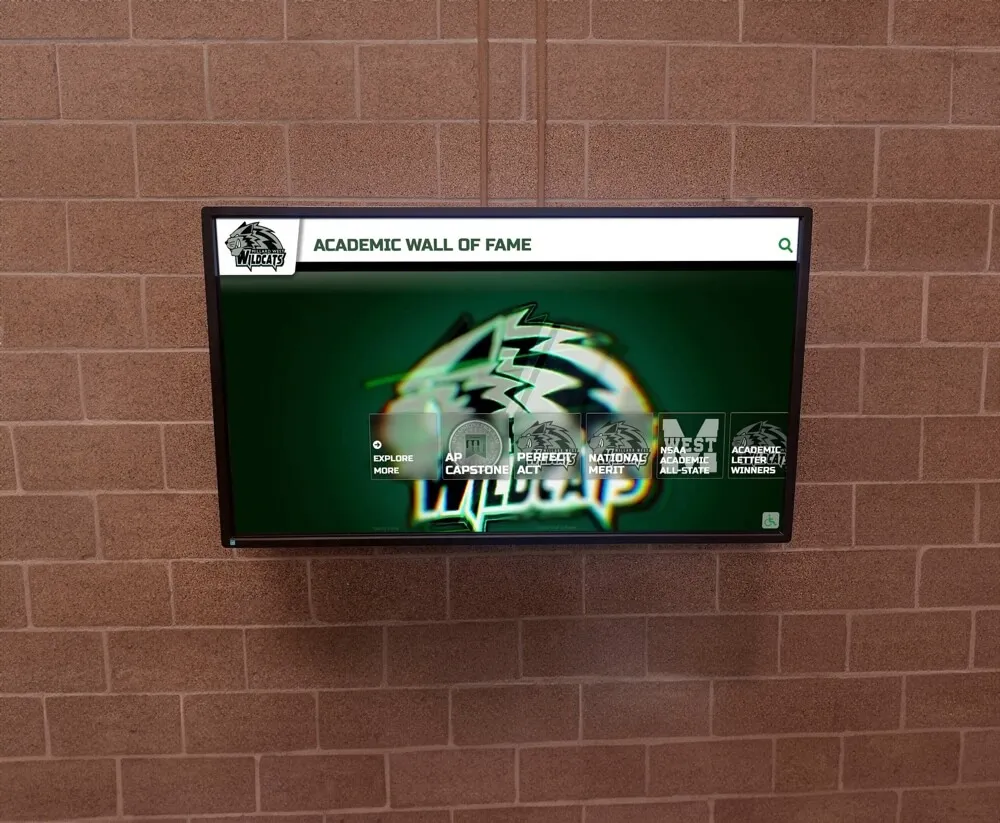
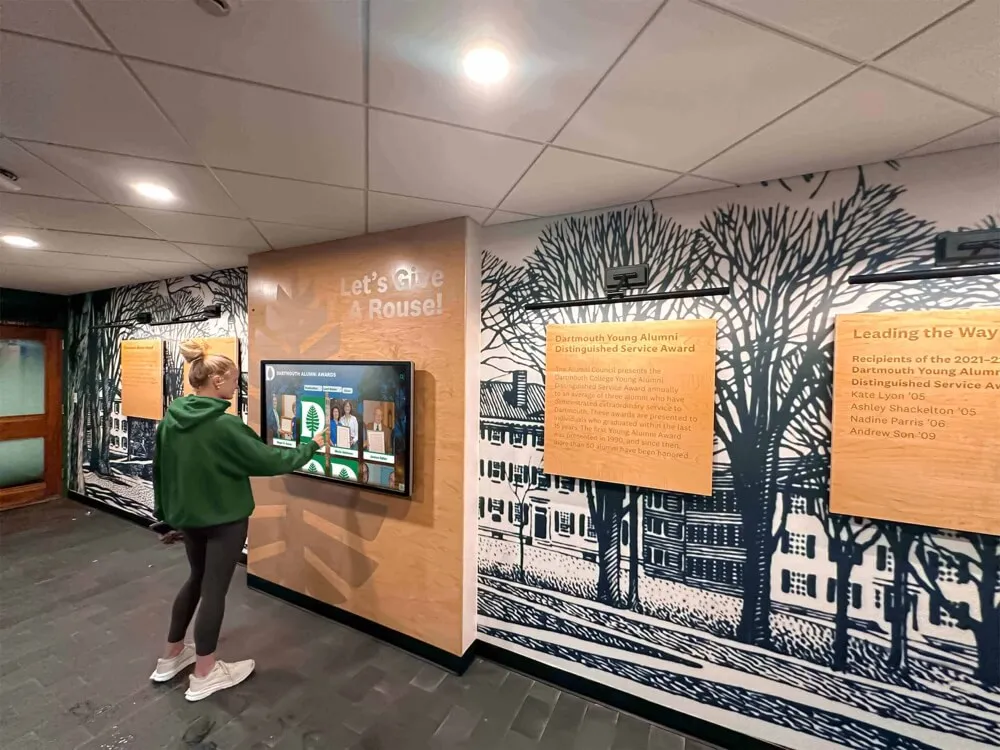
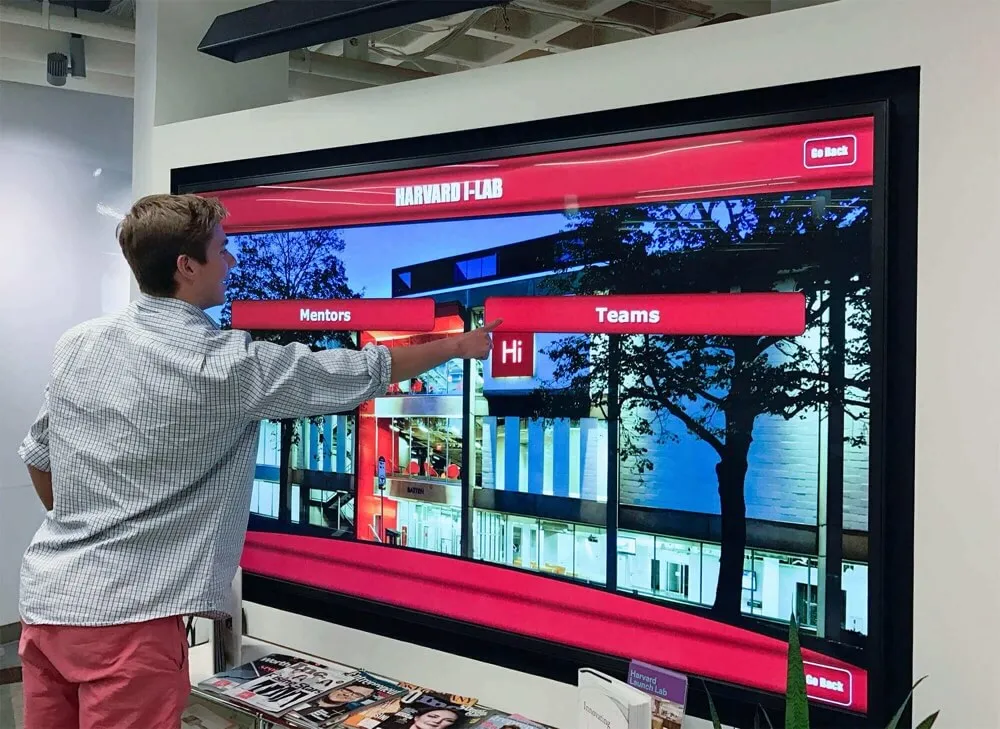
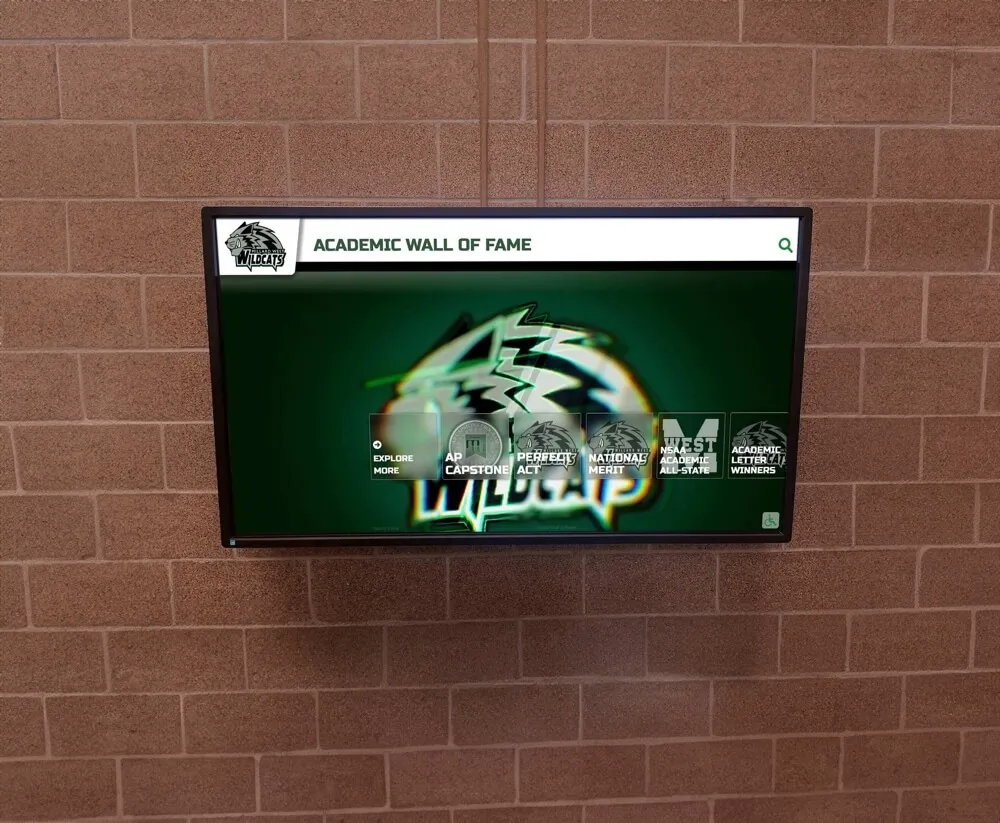
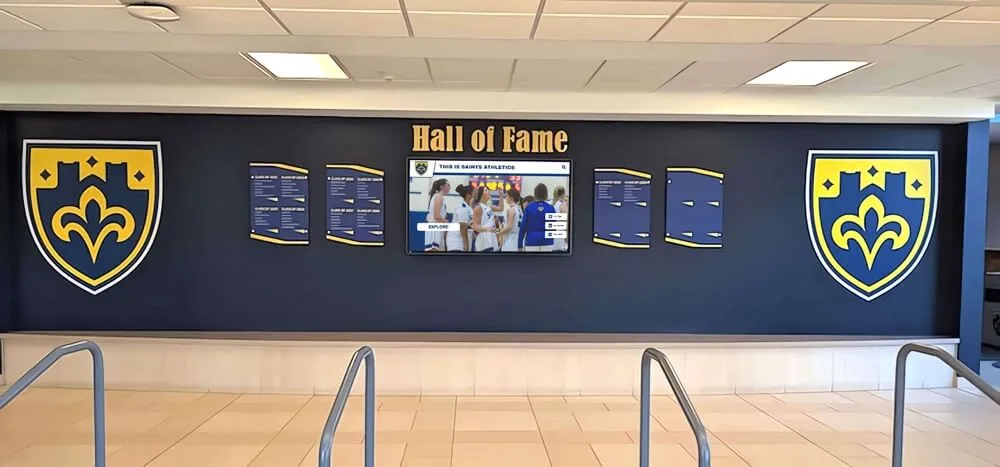
Digital academic recognition displays bring intellectual achievement visibility comparable to athletic success
Athletic Achievement Celebration
Athletic corridors provide natural venues for celebrating team and individual success while preserving program history.
Championship Recognition
Document team success through conference championship recognition, state tournament participation and placement, historical winning seasons and records, rivalry game victories, and individual athlete accomplishments like all-state selections.
Traditional approaches using championship banners work effectively when maintained properly, but digital displays enable more comprehensive recognition without physical space limitations forcing difficult decisions about which achievements receive visibility.
Record Holder Recognition
Celebrate individual athletic records including school records across all sports and events, seasonal records and milestone achievements, career accomplishment recognition like 1,000-point scorers, and comparison to historical records showing achievement context.
Digital displays enable easy updates when records fall while preserving historical context showing achievement progression across decades.
Explore approaches for state championship displays celebrating team success.
Athlete of the Week/Month Programs
Regular recognition programs maintain current relevance through rotating athlete features highlighting recent performances, photos and achievement descriptions, sport-specific recognition during different seasons, and historical archives of past recognition recipients.
These ongoing programs keep athletic recognition fresh and current rather than becoming static historical displays that students stop noticing.
Senior Athlete Recognition
Honor graduating athletes through senior athlete profiles and photos, four-year achievement compilations, college commitment celebrations, career statistics and highlights, and special recognition for multi-sport athletes.
This recognition validates four-year commitment while providing closure for graduating athletes and aspirational examples for younger students beginning their athletic journeys.
Learn about senior sports banner templates for hallway display.
Performing Arts and Co-Curricular Recognition
Comprehensive hallway recognition celebrates achievements beyond academics and athletics, demonstrating that schools value diverse talents and contributions.
Music and Performing Arts Achievement
Recognize artistic excellence through all-state music selections, theater production cast and crew recognition, dance team achievements and competition success, individual and ensemble competition results, concert photos and performance documentation, and student composition or creative work showcase.
Digital displays enable multimedia presentation incorporating performance video clips, bringing artistic achievements to life in ways static photos cannot match.
Club and Activity Recognition
Celebrate student involvement beyond classroom and competition through student government representatives and leadership, club competition success like robotics or debate, community service hour milestones, career and technical student organization achievements, and special recognition for students demonstrating exceptional leadership.
This broad recognition communicates that the school values diverse contributions and pathways to excellence rather than narrow definitions of student success.
Character and Citizenship Recognition
Honor students exemplifying positive character including character education award recipients, kindness and compassion recognition, peer mentoring and tutoring contributors, attendance excellence and improvement, and students overcoming adversity or demonstrating resilience.
This recognition reinforces that schools value the complete student development including character, citizenship, and personal growth alongside traditional achievement metrics.
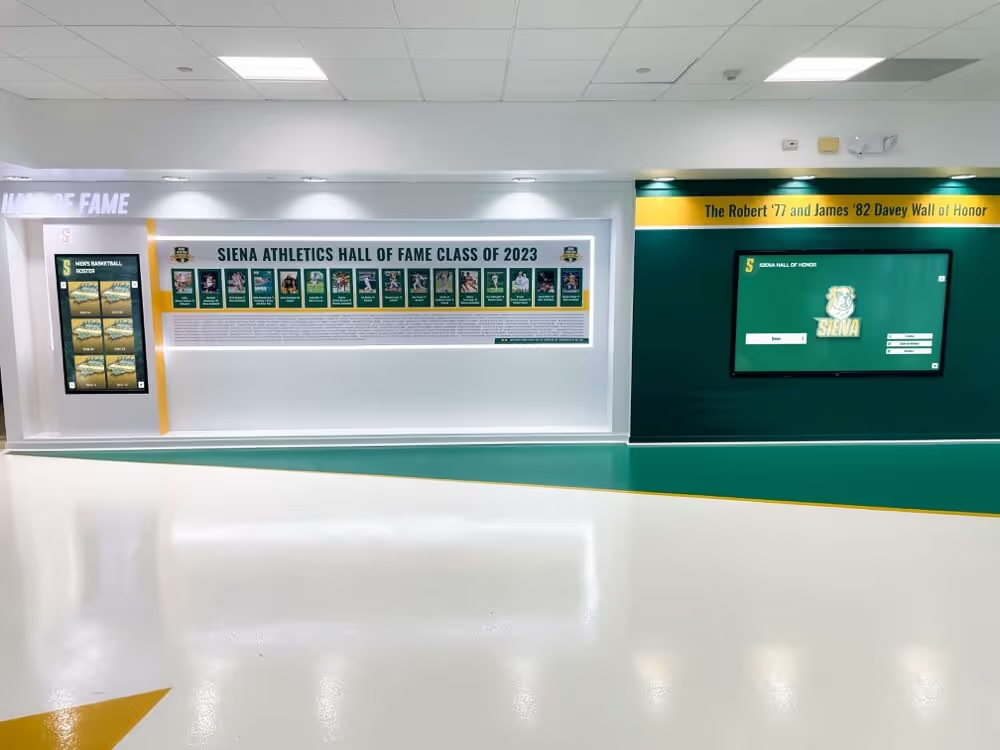
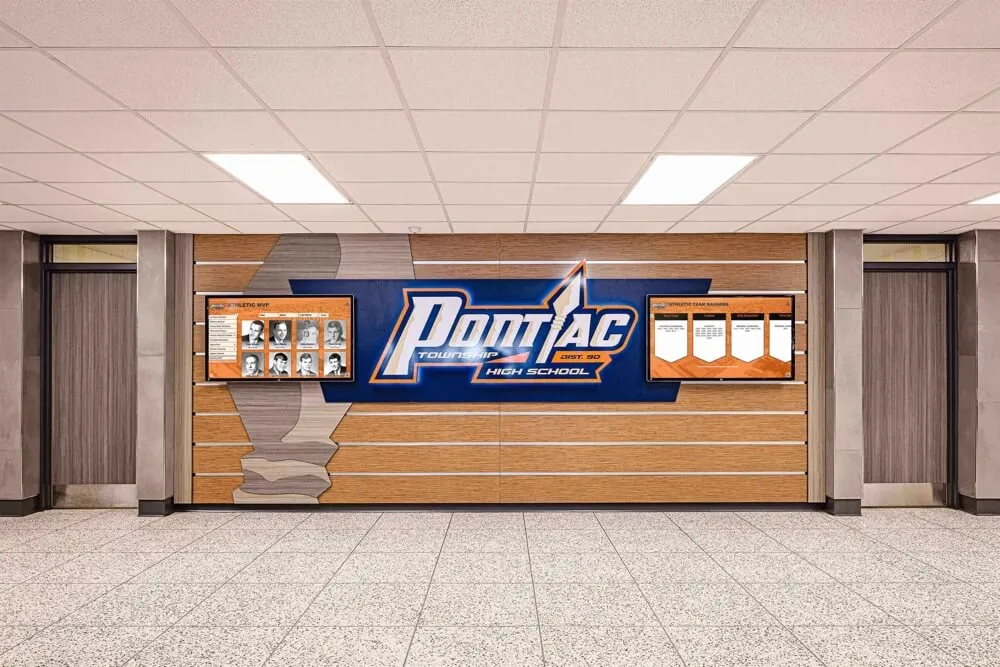
Comprehensive hallway design integrates multiple recognition approaches celebrating diverse student achievements
Digital Display Integration in Hallway Design
Modern digital recognition systems offer significant advantages over traditional static displays when integrated thoughtfully into hallway environments.
Benefits of Digital Recognition in Hallways
Digital displays address multiple limitations inherent in traditional hallway recognition approaches.
Unlimited Recognition Capacity
Traditional trophy cases and wall plaques accommodate finite achievements before running out of space. Digital systems recognize unlimited students across all achievement categories without physical constraints, ensuring every deserving accomplishment receives appropriate celebration regardless of available wall space.
Solutions like Rocket Alumni Solutions provide unlimited profile capacity, enabling comprehensive recognition honoring complete institutional traditions while seamlessly adding new achievements each semester.
Dynamic Content and Easy Updates
Physical recognition requires vendor coordination, production time, and installation labor for every update. Digital systems enable instant recognition within minutes of achievement through cloud-based content management requiring no technical expertise, scheduled publication aligning with ceremonies and announcements, immediate corrections when errors are identified, and regular content rotation maintaining visual interest and engagement.
This update flexibility ensures recognition remains current and relevant rather than growing stale when update processes create delays diminishing recognition impact.
Rich Multimedia Storytelling
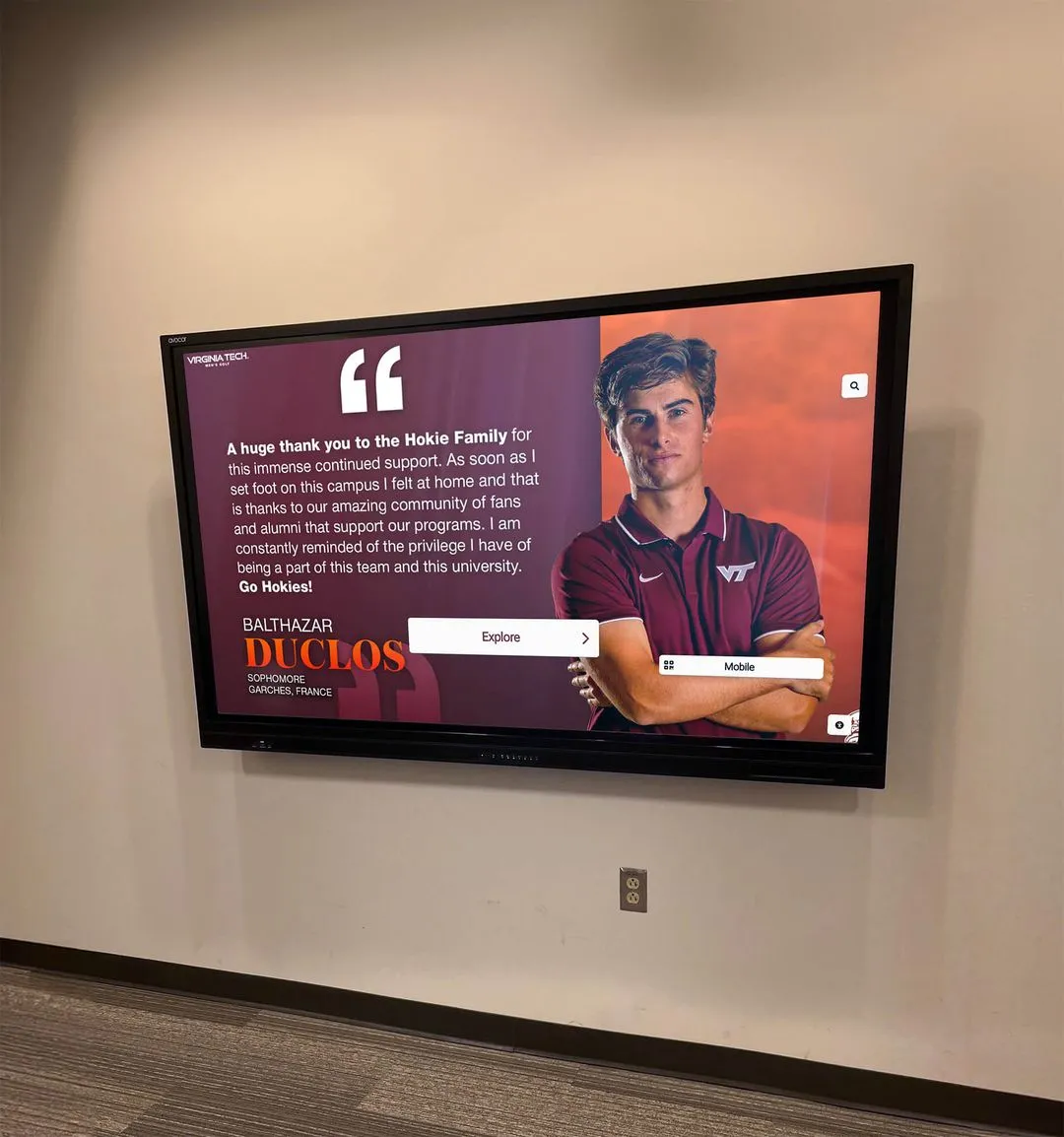
Traditional plaques provide name and achievement year with minimal context. Digital recognition creates engaging stories through high-quality photos bringing recognition to life, achievement descriptions explaining context and significance, statistics and performance data demonstrating excellence, video clips showcasing performances or competitions, and personal reflections from recognized students.
This multimedia richness creates emotional connections while helping viewers understand what each achievement actually represents and why it matters.
Interactive Exploration and Engagement
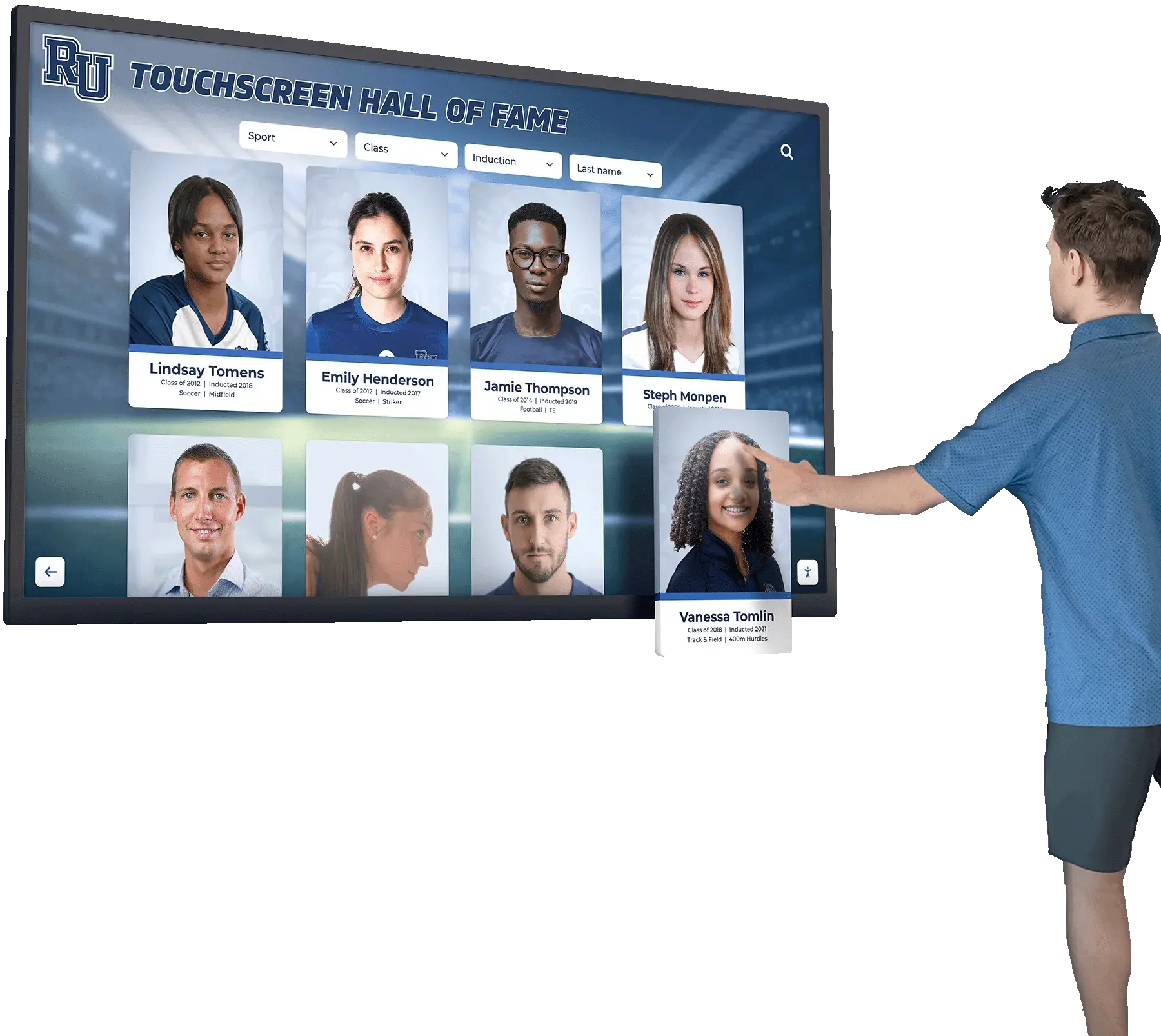
Static displays force viewers to scan everything seeking specific information. Interactive touchscreens enable intuitive exploration through search functionality finding specific students quickly, filtering by achievement type, sport, or year, chronological browsing showing program evolution, related content connections showing teammate or classmate achievements, and social sharing capabilities enabling family celebration.
This interactivity transforms passive viewing into active engagement, increasing time spent with recognition while making comprehensive archives accessible rather than overwhelming.
Learn about touchscreen display placement strategies for optimal hallway integration.
Strategic Digital Display Placement
Thoughtful placement maximizes digital display impact and engagement within hallway environments.
High-Traffic Location Selection
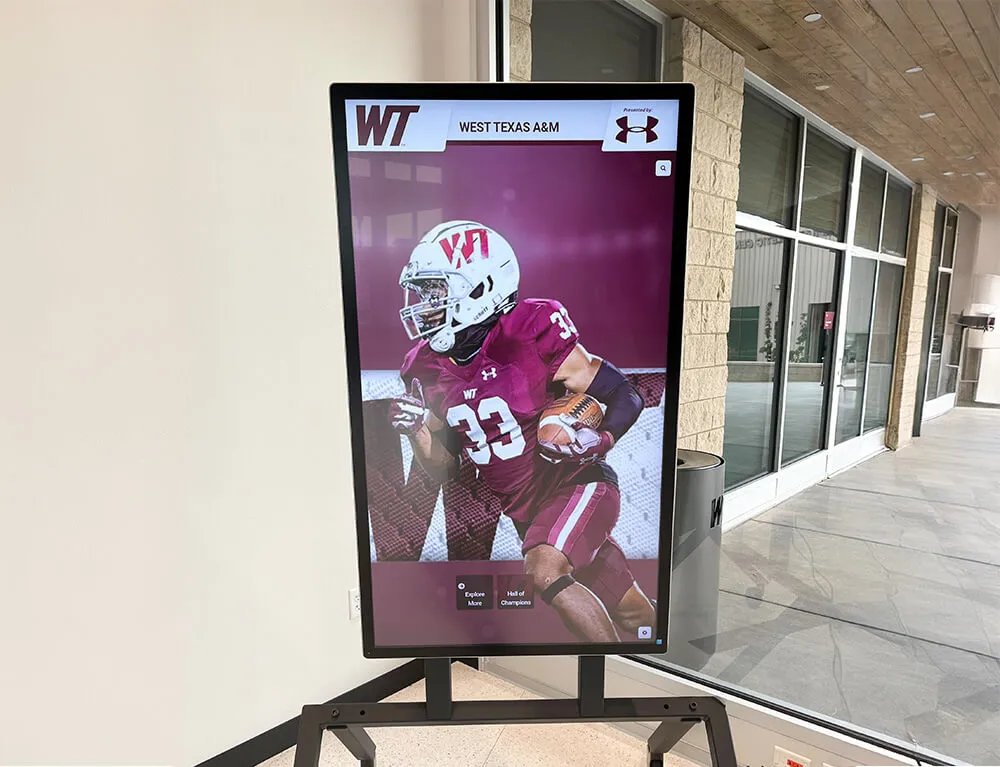
Position digital displays where students pass regularly including main entrance hallways greeting all arrivals, cafeteria approach corridors with sustained daily traffic, athletic facility entrances and locker room areas, performing arts centers and auditorium lobbies, and intersections connecting different building wings.
Prime placement ensures recognition reaches maximum audience while reinforcing messages about what the school values and celebrates.
Viewing Experience Optimization
Consider user experience when positioning displays including mounting heights appropriate for standing viewing (48-60 inches to screen center), adequate viewing distance for display size (minimum 4-6 feet), avoiding direct sunlight or bright windows creating glare, comfortable standing space for multiple simultaneous viewers, and nearby seating where possible encouraging extended browsing.
Poor placement undermines expensive technology investments by creating uncomfortable or impractical viewing experiences that discourage engagement.
Integration with Surrounding Design
Digital displays should feel integrated with hallway aesthetics rather than appearing as afterthought additions through coordinated framing or surround design complementing architectural style, wall color selection enhancing rather than competing with screens, coordinated signage explaining display purpose and encouraging interaction, complementary traditional elements like murals or physical displays, and proper lighting highlighting displays while preventing glare.
Thoughtful integration creates cohesive hallway environments where digital and traditional elements work together harmoniously.
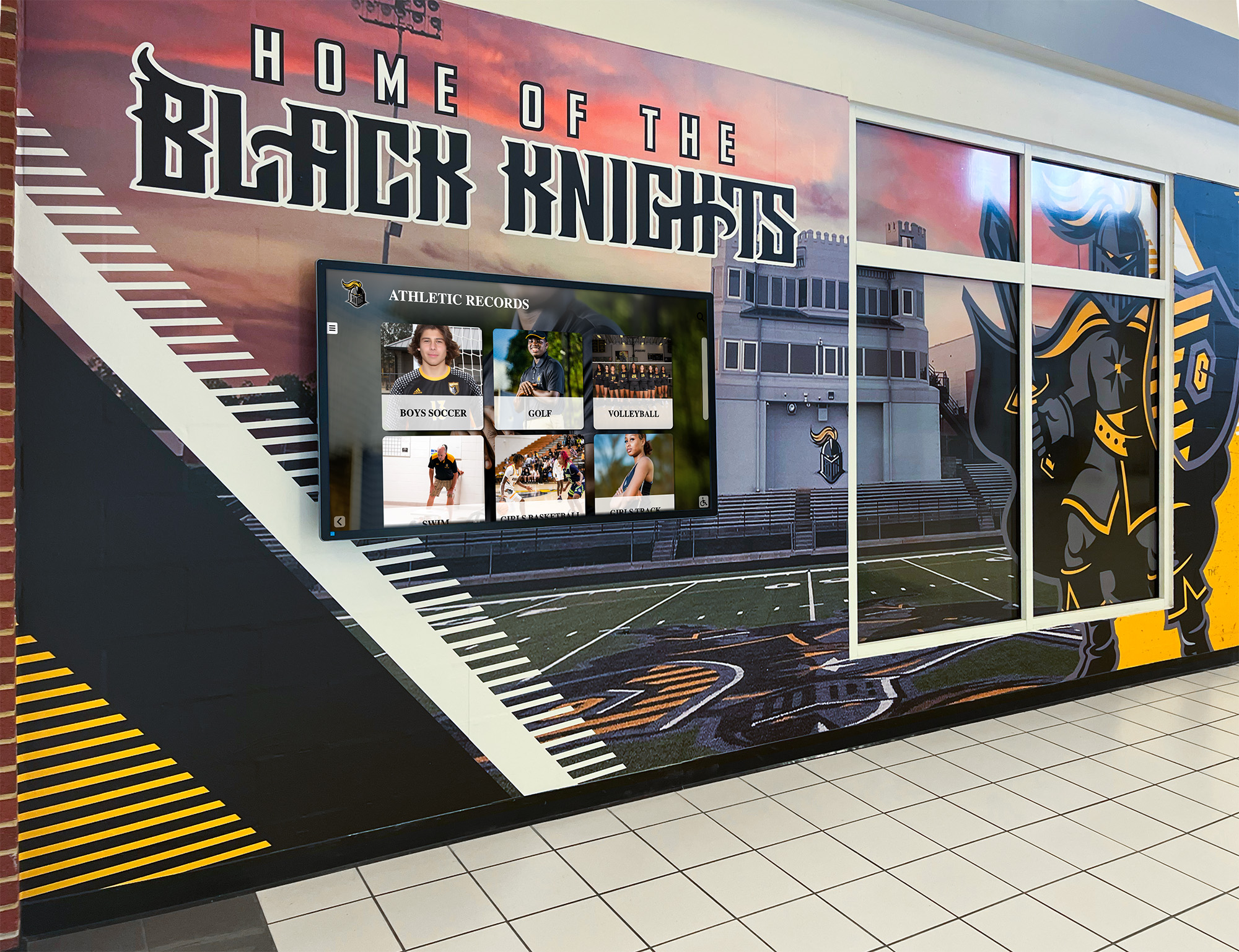
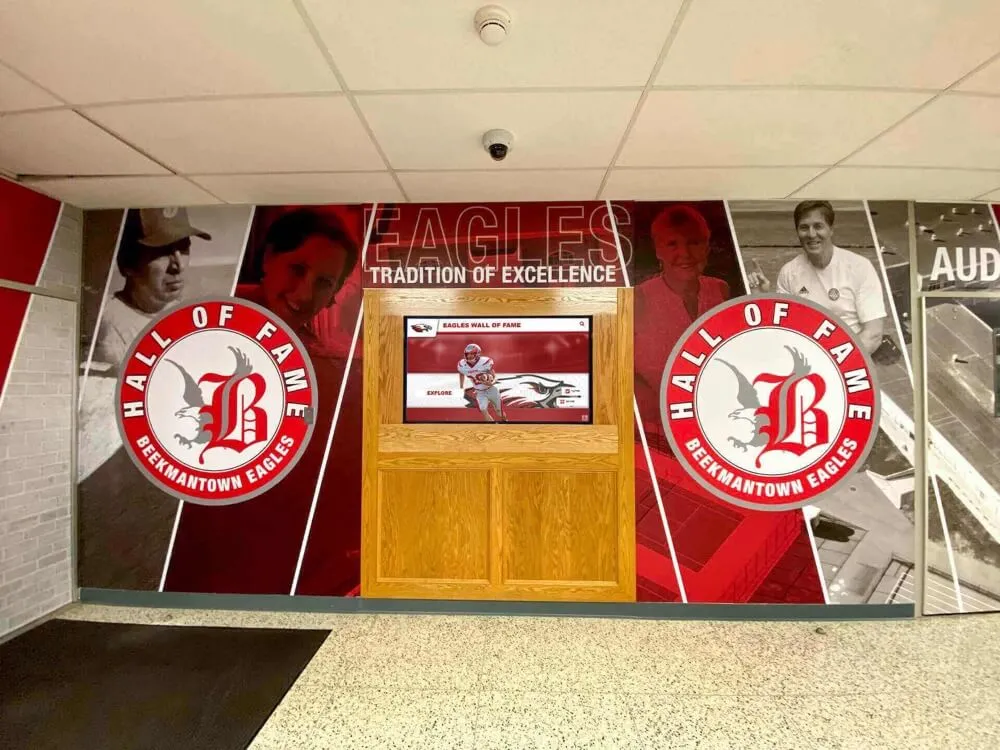
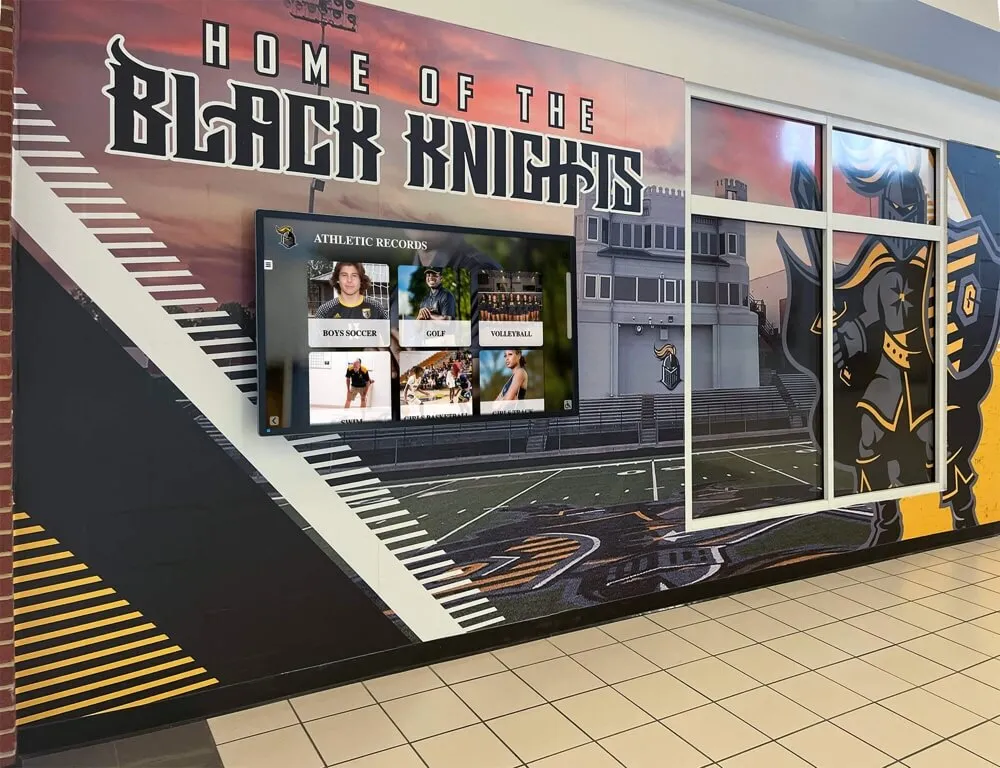
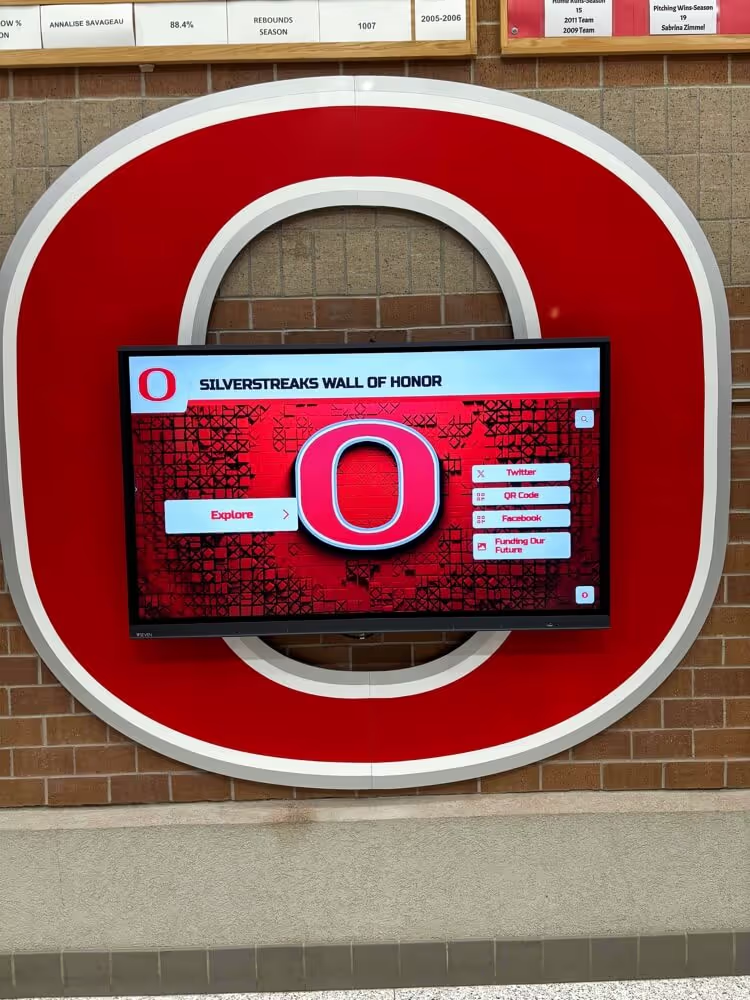
Seamless integration of digital displays within traditional hallway murals creates modern recognition environments
Content Management for Hallway Displays
Sustainable recognition requires efficient content management preventing displays from becoming outdated or stale.
Establishing Update Workflows
Create clear processes ensuring consistent content management including assignment of responsibility to specific positions, regular update schedules by recognition category, quality assurance procedures preventing errors before publication, training for multiple staff members preventing single-point dependency, and documentation of processes surviving personnel changes.
Clear workflows prevent recognition from lapsing when responsibilities remain ambiguous or dependent on individuals who inevitably transition to different roles.
Balancing Current and Historical Content
Maintain engagement through strategic content mixing including featured recognition highlighting recent achievements, historical archives preserving institutional tradition, rotational displays ensuring various achievements receive periodic prominence, seasonal relevance aligning with current activities, and anniversary commemorations celebrating significant milestones.
This balanced approach keeps content feeling both current and respectful of tradition—acknowledging history while remaining relevant to current students.
Measuring Engagement and Impact
Modern digital systems provide analytics demonstrating recognition value including interaction metrics showing usage patterns, popular content revealing what resonates with viewers, time-of-day patterns informing optimal content scheduling, search query data showing what visitors seek, and correlation analysis connecting recognition to broader engagement indicators.
Data-driven management enables continuous improvement optimizing recognition effectiveness over time while providing evidence justifying ongoing investment to budget decision-makers.
Practical Hallway Design Considerations
Beyond recognition and aesthetics, successful hallway design addresses numerous practical requirements ensuring spaces function effectively while remaining safe and maintainable.
Materials and Durability
High schools experience intensive daily use requiring durable materials withstanding constant traffic and occasional abuse.
Flooring Selection
Choose flooring balancing durability, maintenance, and acoustic performance including commercial-grade vinyl composition tile (VCT) offering excellent durability and easy maintenance, polished concrete providing modern aesthetic with superior longevity, epoxy or urethane coatings creating durable colored floor graphics, carpet tile in lower-traffic areas providing acoustic benefits, and rubber flooring near entrances managing moisture and providing slip resistance.
Avoid residential-grade materials that deteriorate rapidly under commercial traffic loads, requiring expensive premature replacement.
Wall Surface Treatments
Select wall finishes accommodating frequent impact and cleaning including commercial-grade paint with semi-gloss or satin finishes enabling easy cleaning, impact-resistant wall protection at high-contact areas, vinyl wall covering providing durability in high-abuse locations, acoustic treatment where sound control provides benefit, and protective materials near athletic facilities and gymnasiums experiencing equipment impact.
Budget for proper wall preparation—poor surface prep undermines expensive finish materials through premature failure requiring costly remediation.
Locker Considerations
Lockers represent significant hallway real estate deserving thoughtful consideration including adequate ventilation preventing odor accumulation, appropriate size for student storage needs, durable coatings resisting vandalism and wear, color coordination with broader hallway aesthetics, and recessed installation where possible reducing circulation obstruction.
Some progressive schools eliminate or reduce lockers entirely, dedicating recovered space to recognition displays, gathering areas, or broader circulation routes. This decision depends on institutional culture and student needs but merits consideration during renovation planning.
Safety and Accessibility Requirements
Legal requirements and ethical obligations demand hallways serving all users safely regardless of physical capabilities.
ADA Compliance Standards
Ensure accessibility through minimum 60-inch clear width for wheelchair passage, protruding object restrictions limiting wall-mounted elements, accessible signage with tactile and Braille components, appropriate color contrast for low-vision users, and elevator access between levels for multi-story buildings.
Compliance represents minimum obligation—universal design principles suggest designing for broadest possible usability rather than merely meeting minimum legal standards.
Emergency Egress and Safety
Maintain safety through clearly marked exit signage and evacuation routes, adequate corridor width for efficient emergency evacuation, fire-rated materials meeting building code requirements, unobstructed circulation paths at all times, and security camera coverage enabling supervision and incident investigation.
Never compromise safety for aesthetic goals—student wellbeing must remain paramount in all design decisions.
Slip Resistance and Floor Safety
Prevent injuries through appropriate slip-resistant flooring especially near entrances, adequate drainage and matting managing moisture during weather, proper lighting eliminating trip hazards, regular maintenance addressing damaged flooring promptly, and clear marking of elevation changes or potential hazards.
Liability concerns and ethical responsibility both demand prioritizing safety throughout hallway design and maintenance.
Accessible hallway design ensures all students can comfortably engage with recognition displays and navigate spaces safely
Maintenance and Longevity Planning
Design choices significantly impact ongoing maintenance burden and long-term operational costs.
Ease of Cleaning
Select materials and designs facilitating efficient maintenance including smooth surfaces resisting dirt accumulation, finishes tolerating common cleaning chemicals, adequate floor-to-ceiling height for practical cleaning, minimal crevices collecting dust and debris, and durable materials maintaining appearance despite frequent cleaning.
Difficult-to-clean designs create ongoing burden while deteriorating quickly as maintenance staff struggle with impractical specifications.
Vandalism Resistance
Minimize damage through anti-graffiti coatings on vulnerable surfaces, impact-resistant materials at high-risk locations, security camera coverage deterring destructive behavior, prompt repair normalizing respect for facilities, and school culture initiatives building pride reducing vandalism motivation.
Vandalism represents both financial burden and cultural symptom—addressing root causes through pride-building and engagement creates more sustainable solutions than purely defensive material selection.
Planned Refresh Cycles
Budget for periodic updates maintaining fresh appearance including paint refresh every 5-7 years depending on wear, flooring replacement or refinishing on appropriate schedules, recognition display content rotation preventing stagnation, technology updates as systems age, and proactive replacement before deterioration creates negative impressions.
Planned maintenance prevents hallways from gradually declining into shabby condition requiring expensive emergency renovations when deterioration finally becomes unacceptable.
Budget Strategies and Implementation Approaches
High school hallway renovations require realistic budgeting and creative implementation strategies delivering maximum impact within constrained resources.
Understanding Renovation Costs
Hallway improvement investments vary dramatically based on scope and existing conditions.
Cost Factors Influencing Budget
Total investment depends on square footage of hallway space, extent of existing conditions requiring remediation, quality level of selected materials and finishes, recognition system implementation approach, technology integration scope and complexity, professional design and project management fees, and geographic location influencing labor and material costs.
Typical Investment Ranges
Basic refreshes including paint, lighting upgrades, and simple recognition displays typically range $15-40 per square foot. Comprehensive renovations incorporating flooring replacement, technology integration, and extensive recognition systems generally require $50-100+ per square foot. Complete reconstructions addressing structural or major system issues can exceed $150-200 per square foot.
A typical 2,000 square foot main hallway renovation might require investment ranging from $30,000 for basic refresh to $200,000+ for comprehensive transformation depending on scope and specifications.
Phased Implementation Strategies
Budget constraints rarely allow simultaneous renovation of all hallway spaces. Phased approaches deliver incremental value while building momentum for continued investment.
Phase 1: High-Impact Priority Areas
Focus initial investment on highest-visibility corridors creating immediate impression improvements including main entrance hallways greeting all visitors, cafeteria approach corridors with sustained daily traffic, athletic corridors serving competition attendees and recruits, and administrative office areas representing institutional quality.
Strategic phase one implementation creates visible transformation demonstrating renovation value while generating enthusiasm supporting additional phases.
Phase 2: Academic and Program Areas
Expand improvements to academic corridors and specialized program areas including department-specific hallways serving particular academic disciplines, performing arts and creative program spaces, career and technical education corridors, and secondary circulation routes connecting different buildings or wings.
Phase 3: Completion and Refinement
Final phases address remaining spaces and enhancement opportunities including lower-traffic corridors and back areas, outdoor covered walkways and transition spaces, specialized recognition installations, and technology enhancements across renovated areas.
Phased implementation enables progress despite limited annual budgets while allowing refinement based on experience from earlier phases.
Funding Sources and Creative Financing
Multiple funding approaches support hallway renovation investments.
Traditional Funding Mechanisms
Most schools access funding through capital improvement budgets and bond programs, district facilities maintenance allocations, state matching programs for facility improvements, and reallocation of operational savings from energy-efficient upgrades.
Development and Fundraising Approaches
Creative advancement strategies can partially fund recognition-focused improvements including naming opportunities for renovated corridors or recognition displays, class gift campaigns from graduating seniors, alumni giving campaigns specifically supporting facility improvements, booster organization contributions for athletic corridor enhancements, and corporate sponsorships from community business partners.
Recognition system investments particularly lend themselves to philanthropic funding since donors can see direct impact of contributions through named displays celebrating students.
Grant Opportunities
Explore external funding including educational foundation grants supporting learning environment improvements, corporate giving programs from businesses supporting education, state and federal programs funding facility modernization, technology grants supporting digital display integration, and community foundation funds supporting local school improvement.
Grant applications succeed when connecting hallway improvements to documented educational outcomes—improved school climate, increased student engagement, enhanced safety, or other measurable objectives aligning with funder priorities.
Discover how schools fund digital recognition systems through creative funding approaches.
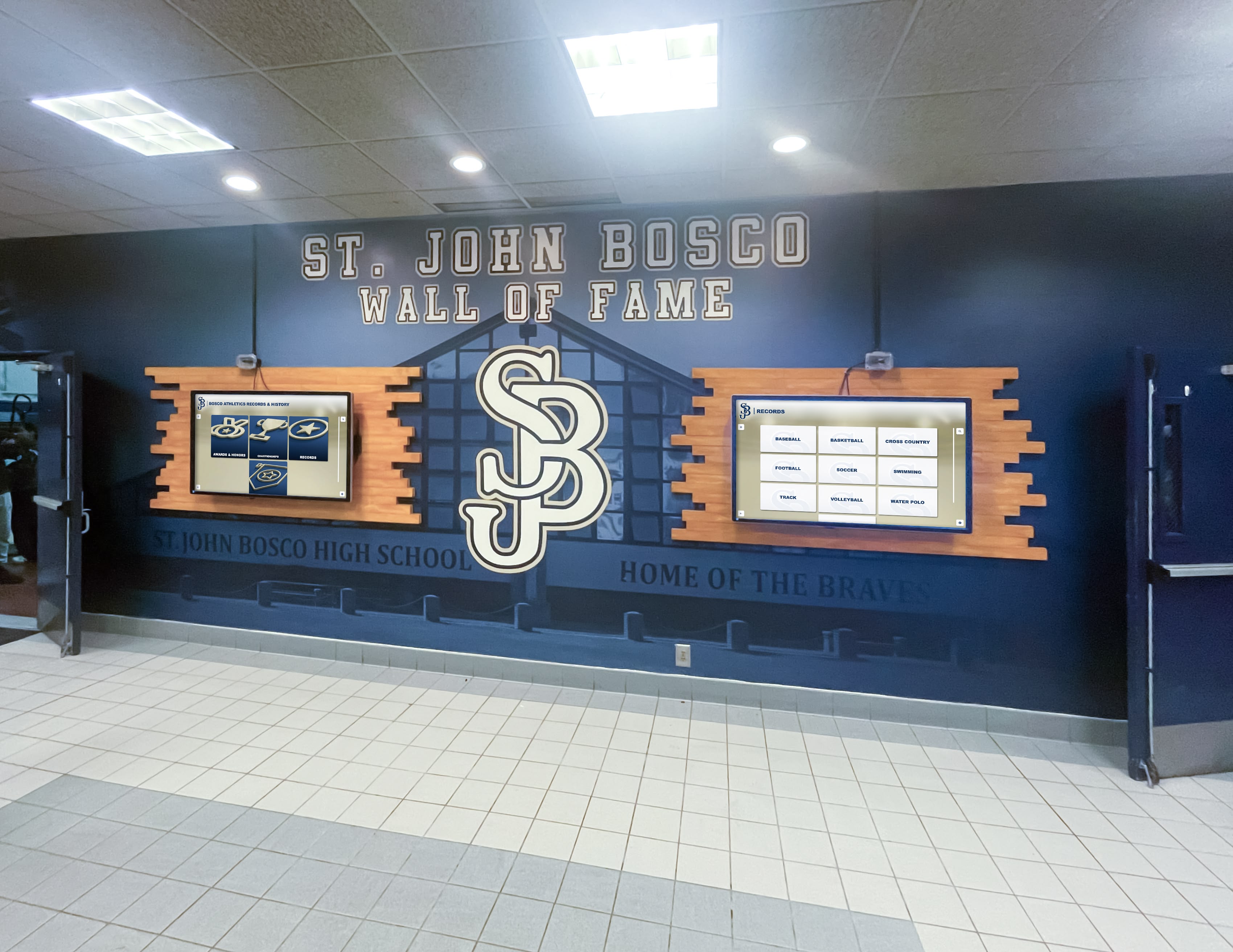
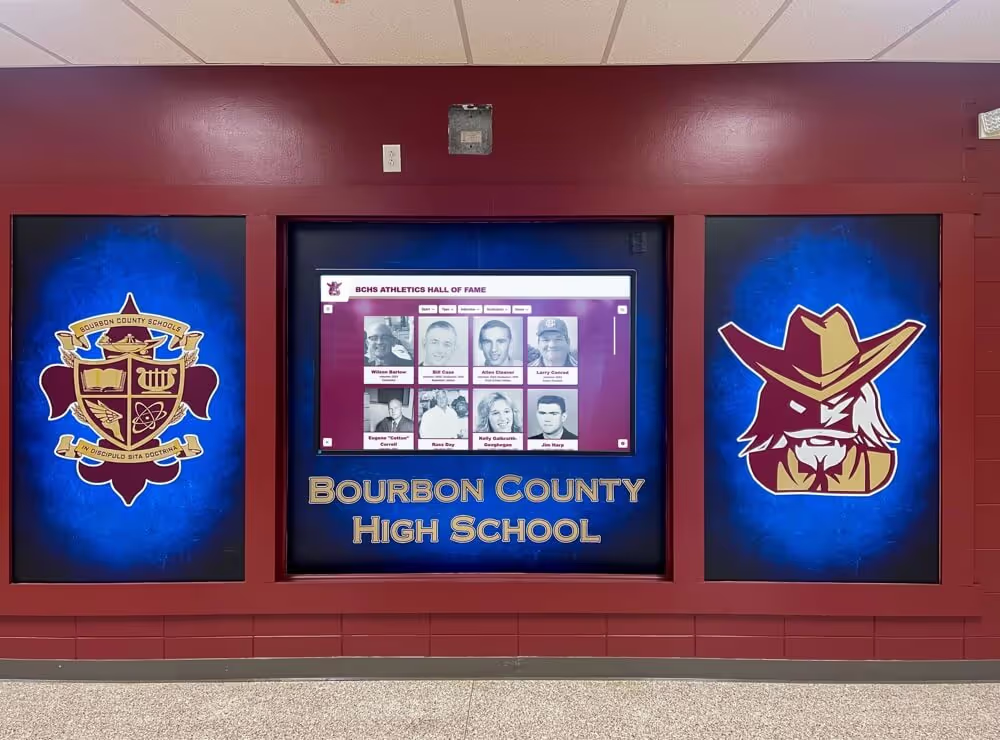
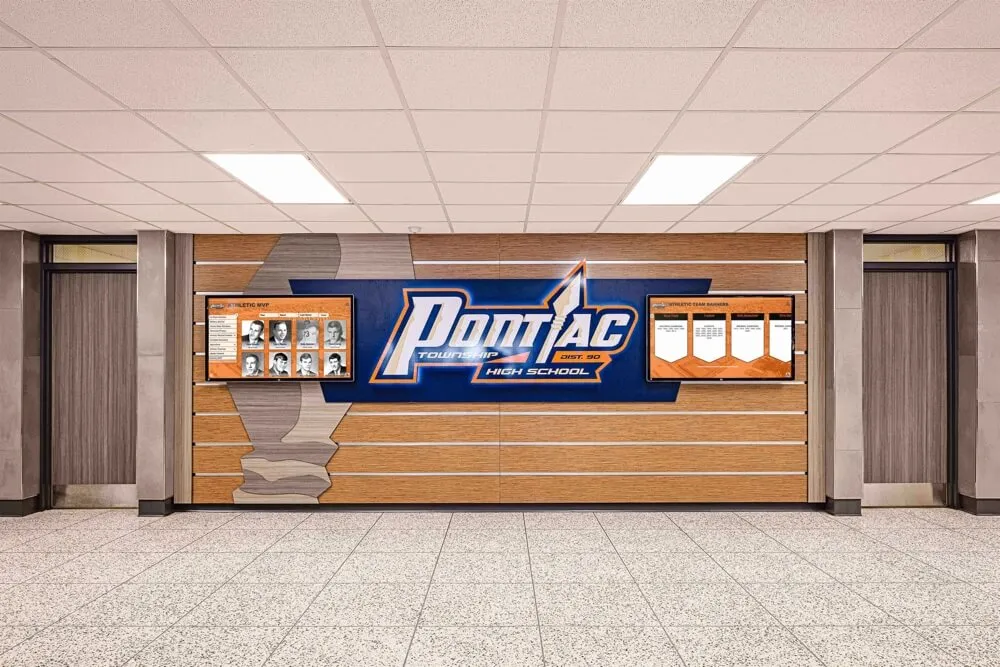
Comprehensive hallway renovations integrate multiple design elements creating engaging spaces that celebrate diverse student achievements
Creating Hallways That Build School Culture
Successful high school hallway design requires balancing aesthetic vision with practical constraints, recognition goals with circulation requirements, and institutional priorities with limited budgets. The most effective implementations share common characteristics including student needs guiding design decisions rather than purely adult preferences, comprehensive recognition celebrating diverse achievements across all domains, professional execution communicating respect for students and accomplishments, practical durability ensuring spaces remain impressive despite intensive daily use, and sustainable maintenance preventing gradual deterioration from initial quality.
When schools invest thoughtfully in hallway environments, they create spaces that actively support educational mission by celebrating excellence, inspiring achievement, building community, communicating values, and creating the positive atmosphere essential for productive learning environments. These spaces become more than circulation routes—they transform into dynamic environments that students genuinely notice, engage with, and remember long after graduation.
Transform Your School Hallways with Modern Recognition
Discover how Rocket Alumni Solutions can help you create engaging hallway spaces that celebrate all student achievements through interactive digital displays featuring unlimited recognition capacity, multimedia content, and intuitive exploration that inspires excellence across your entire school community.
Explore Recognition SolutionsThe strategies explored throughout this guide provide comprehensive frameworks for hallway design addressing multiple objectives simultaneously—efficient circulation, meaningful recognition, clear wayfinding, school branding, and welcoming atmosphere. Implementation requires commitment, coordination, and investment, but the returns justify these requirements through strengthened school culture, improved student engagement, enhanced community perception, and the tangible demonstration that your institution genuinely values student accomplishments across all domains.
Whether planning modest refreshes of existing corridors or comprehensive renovations transforming entire hallway systems, begin with clear vision of intended outcomes and priorities. Engage diverse stakeholders including students, staff, families, and community members ensuring designs serve actual needs rather than abstract aesthetic preferences. Consider both immediate impact and long-term sustainability, selecting materials and systems that maintain quality despite intensive use. And remember that hallway design represents investments in culture and climate—intangible but invaluable outcomes affecting every aspect of school life from achievement motivation to teacher retention to enrollment.
Your students deserve environments that honor their accomplishments, inspire their continued excellence, and communicate genuine institutional commitment to their success across all dimensions. With thoughtful planning, appropriate investment, and sustained maintenance, you can create high school hallway spaces that actively support educational mission while building the positive culture essential for student success and community pride.
Ready to begin transforming your school hallways? Explore comprehensive digital hall of fame solutions designed specifically for high schools, discover team recognition strategies applicable to hallway displays, and learn about student council recognition that integrates effectively with comprehensive hallway design creating spaces that celebrate leadership alongside athletic and academic achievement.