Building a competitive high school swim team requires more than access to a pool and qualified coaching. Successful programs combine strategic recruitment, comprehensive training approaches, strong team culture, and systematic recognition that celebrates achievements from personal bests to state qualifications. Yet many schools struggle to develop swimming programs that attract talent, retain athletes across seasons, and create the competitive culture necessary for sustained success.
Athletic directors and coaches face unique challenges in swimming compared to traditional team sports. How do you recruit athletes to a sport many haven’t tried? What infrastructure investments ensure programs can train effectively? How can you create team identity and culture in an individual sport? Where does recognition fit into building program momentum and celebrating diverse achievements from individual records to relay victories?
This comprehensive guide provides actionable frameworks for building high school swim teams that develop competitive athletes, create positive team culture, and establish recognition systems celebrating the unique achievements that define swimming excellence—from breaking pool records to qualifying for state championships.
Swimming presents unique opportunities for high school athletic programs. Unlike sports requiring extensive prior experience, motivated athletes can develop competitive swimming skills through focused training even without elementary or middle school backgrounds. Well-structured programs leverage this accessibility while creating pathways from recreational swimmers to championship-level competitors through systematic skill development and appropriate recognition of progress at every level.

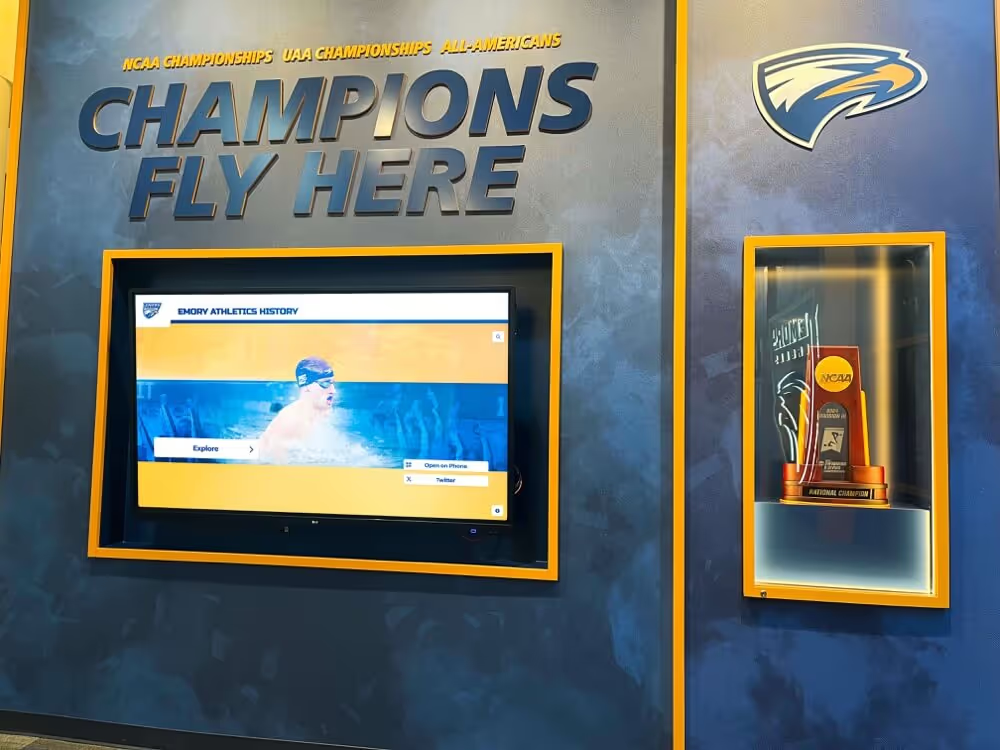
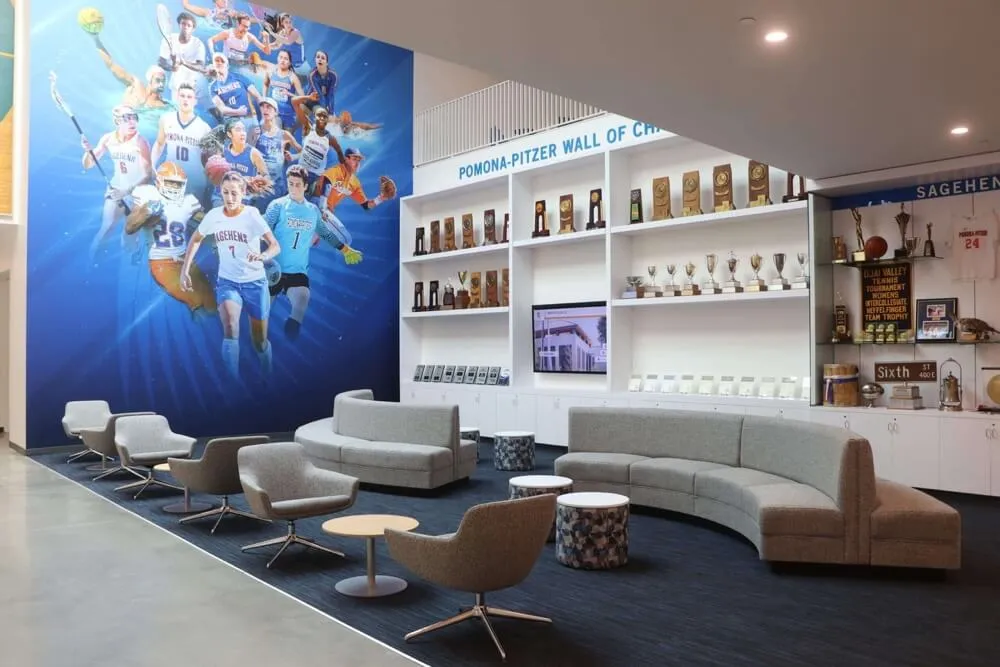
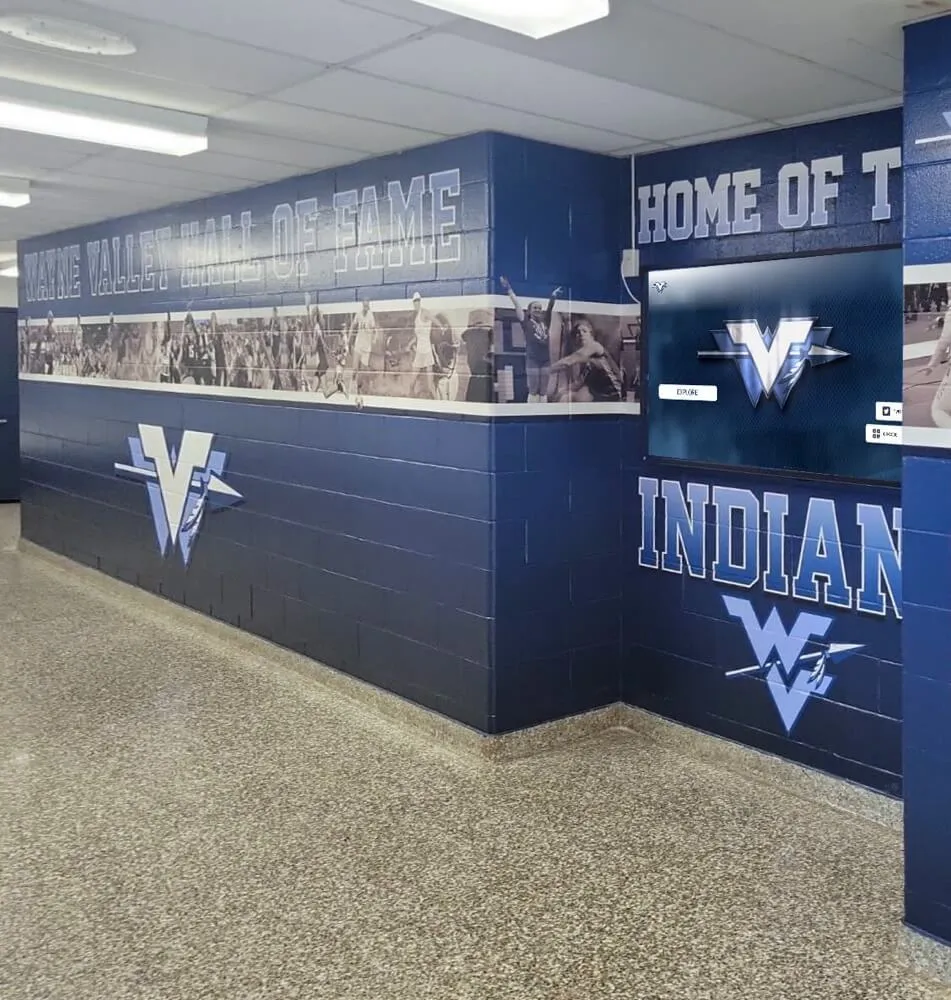
Championship achievements deserve prominent recognition that celebrates team success and individual excellence in competitive swimming programs
Understanding High School Swimming Program Structure
Before building competitive teams, coaches and administrators need clarity about swimming program fundamentals and how the sport differs from traditional team athletics.
Season Structure and Competition Format
High school swimming follows distinct competitive structures that shape training and team management.
Regular Season Competition
Most programs compete through dual meets between two schools featuring swimmers in individual events (typically 50m/100m freestyle, backstroke, breaststroke, butterfly, plus 200/500 freestyle and 200 IM) and relay events (200 medley relay, 200 freestyle relay, 400 freestyle relay). Swimmers typically compete in two individual events plus relays, with scoring systems awarding points to top finishers that determine team winners.
This dual meet structure creates weekly competition opportunities that build experience while allowing coaches to strategically position swimmers in events maximizing team scoring and individual development.
Championship Season Competition
The competitive season builds toward championship meets including conference or league championships, sectional or regional qualification meets, and state championship competitions. Championship meets differ from dual meets by typically swimming preliminaries and finals, featuring all-star competitions with top swimmers from multiple schools, and creating higher-pressure environments testing mental preparation alongside physical capability.
Programs build season training progressively toward peak performance at championship meets while using regular season competition for skill development, race strategy refinement, and experience accumulation.

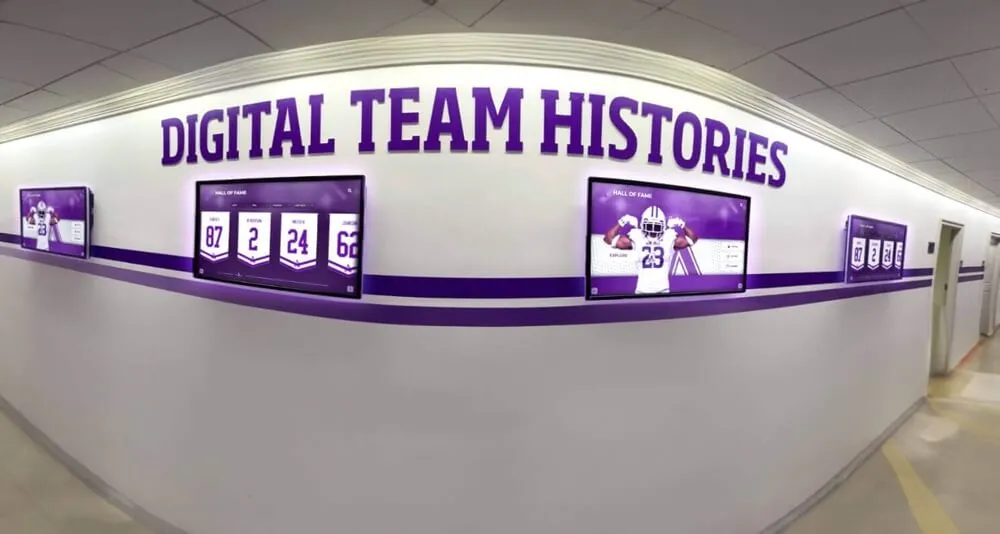
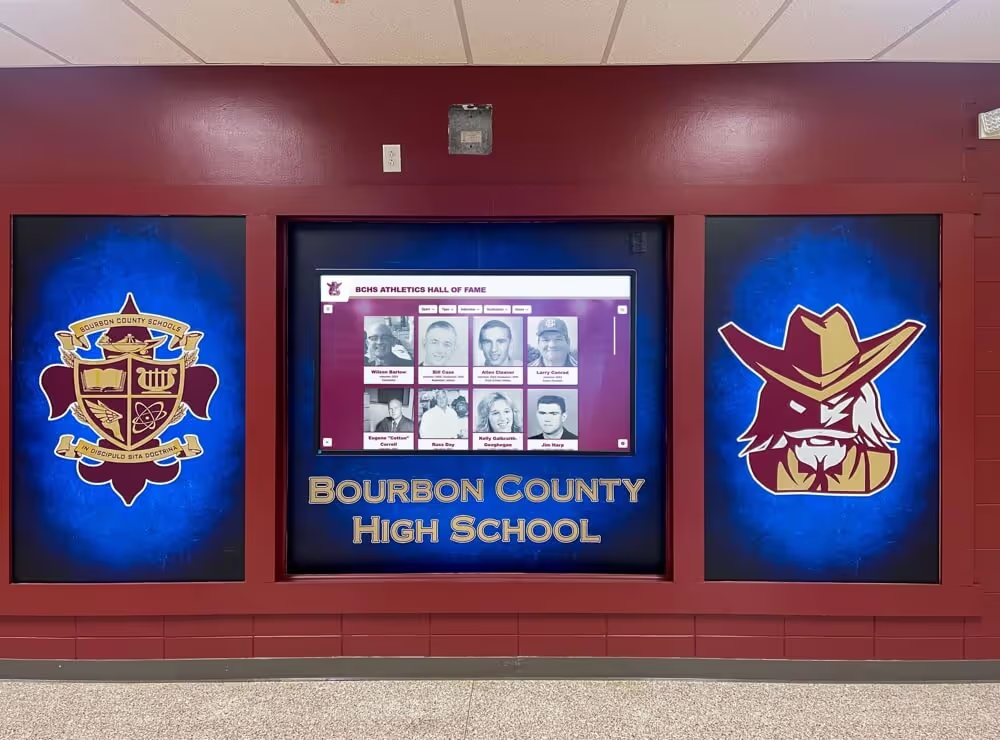
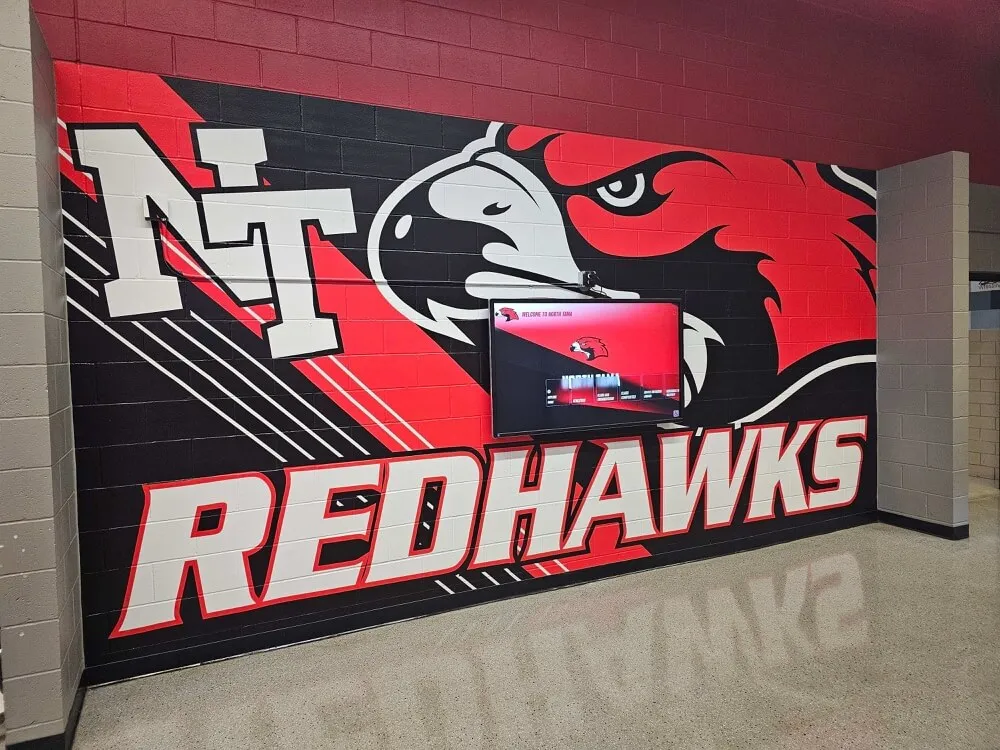
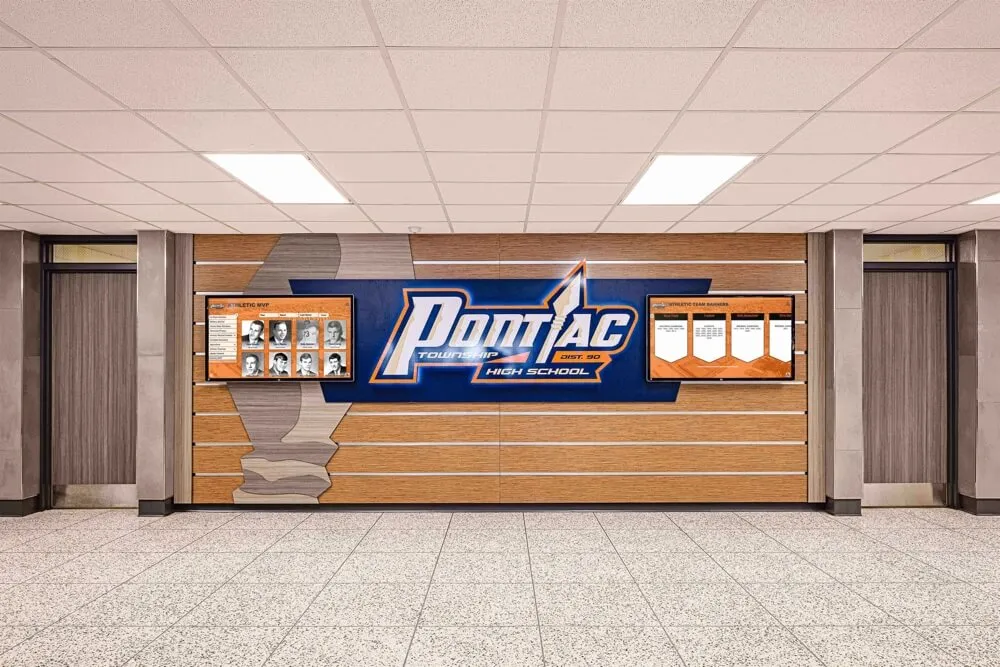
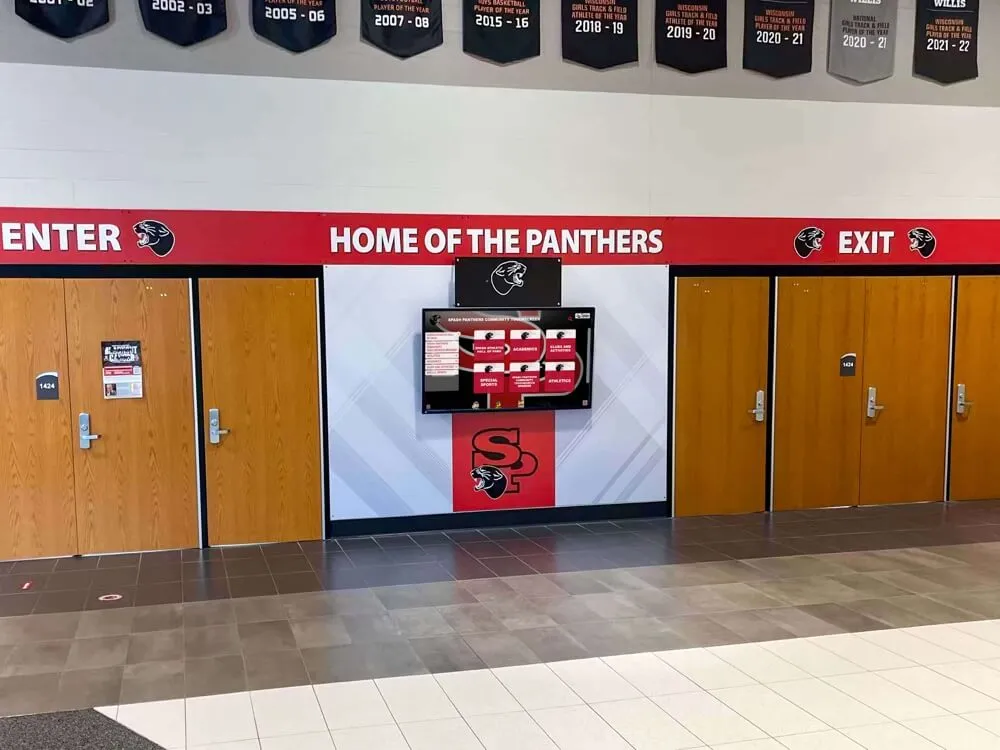
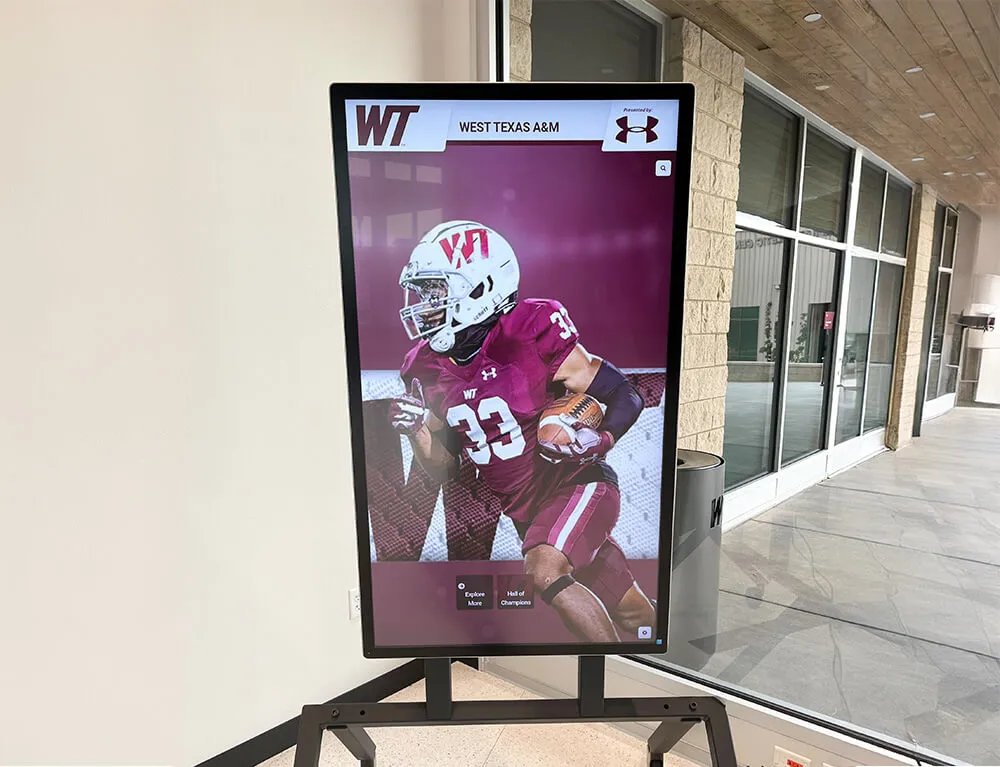
Digital recognition displays celebrate swimming achievements alongside other athletic programs, creating unified athletic identity while honoring sport-specific excellence
Boys and Girls Program Coordination
Many schools operate separate boys and girls swim teams with different competitive seasons (fall vs. winter, or winter vs. spring depending on state association rules). Some smaller schools combine programs creating co-ed teams that practice together while competing in separate gender-specific meets. Understanding your state’s season structure affects facility scheduling, coaching assignments, and how you build program continuity across different competitive calendars.
Swimming Facility Requirements and Partnerships
Facility access represents the most significant infrastructure challenge for high school swim teams.
School-Owned Pool Facilities
Schools with dedicated aquatic facilities enjoy significant advantages through unrestricted practice scheduling, home meet hosting capability, and opportunities for community programming generating facility revenue and program visibility. However, pool ownership requires substantial investment in facility maintenance, staffing including lifeguards and facility managers, utility costs for heating and water treatment, and compliance with safety regulations.
These operational demands explain why many schools pursue alternative facility partnership arrangements rather than building dedicated pools.
Community and Partnership Facilities
Most high school programs access pools through partnerships with community recreation centers, YMCA or YWCA facilities, municipal aquatic centers, local colleges or universities, or country clubs with competitive swimming facilities. Successful partnerships involve negotiated practice time blocks, shared facility maintenance considerations, meet hosting arrangements and visitor accommodation, and coordination with facility schedules and other user groups.
Facility partnerships require strong relationship management but enable competitive swimming programs without massive infrastructure investment. Learn more about creating successful athletic programs through strategic partnerships.
Practice Schedule Optimization
Limited facility access makes practice scheduling critical through early morning practices (5:30-7:00 AM) before school, after-school training blocks (3:30-5:30 PM), strategic use of available pool time for maximum training effectiveness, and coordination with other programs sharing facilities.
Most competitive programs practice 5-6 days weekly with 90-120 minute sessions, requiring creative scheduling to secure adequate pool time within facility constraints and student schedules.
Recruitment and Team Building Strategies
Growing high school swim teams requires proactive recruitment since many potential swimmers lack prior competitive experience.
Identifying and Recruiting Potential Swimmers
Cast wide recruitment nets recognizing that swimming prowess isn’t always obvious in non-aquatic settings.
Middle School Feeder Programs
Establish connections with middle school physical education departments to identify students with swimming ability, coordinate swimming units in PE curricula exposing students to competitive swimming, host middle school swim clinics and introduction sessions, and create summer programming bridging middle school participation to high school teams.
Early exposure and relationship building create pipelines of athletes entering high school already interested in competitive swimming and familiar with coaching staff.
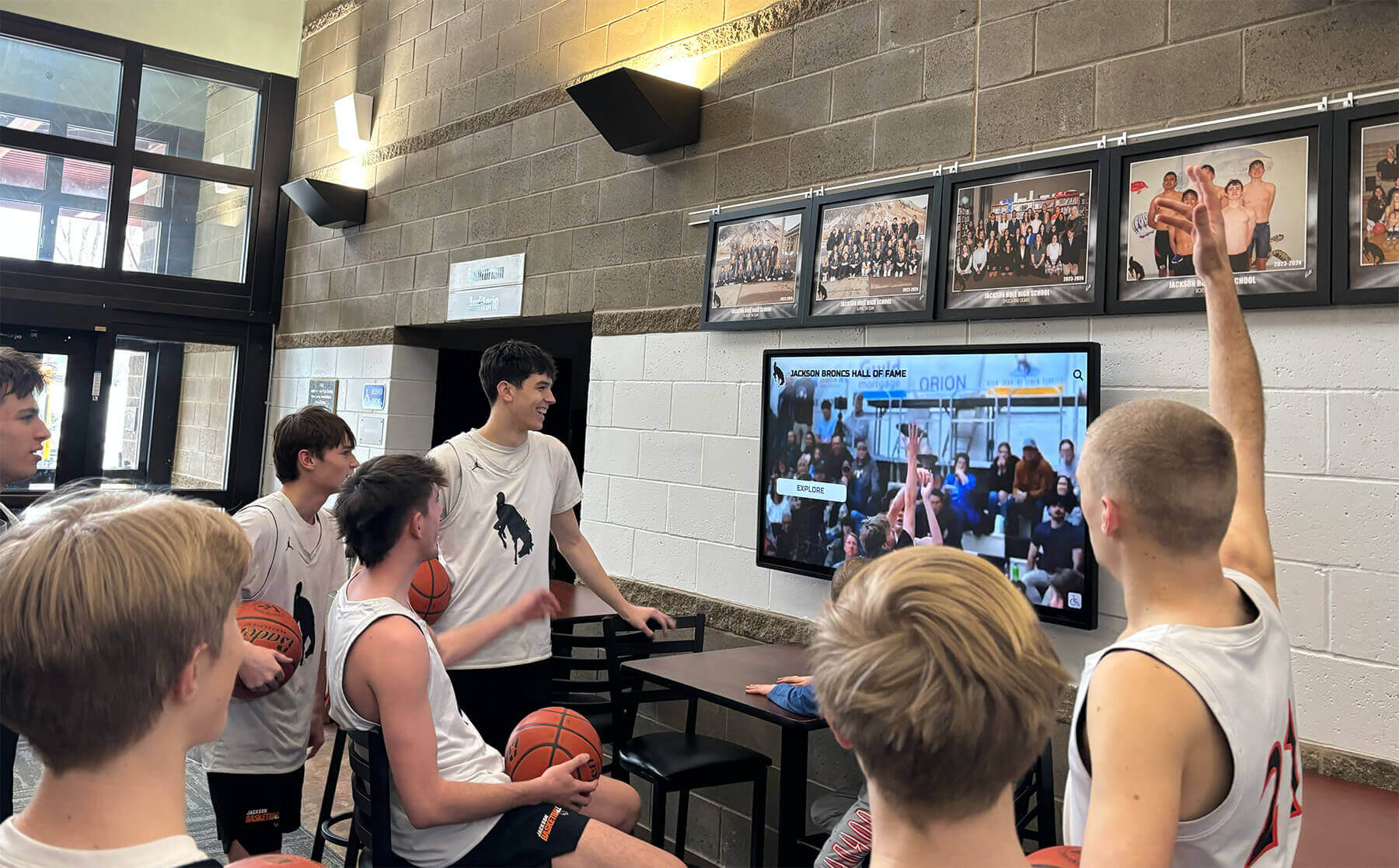
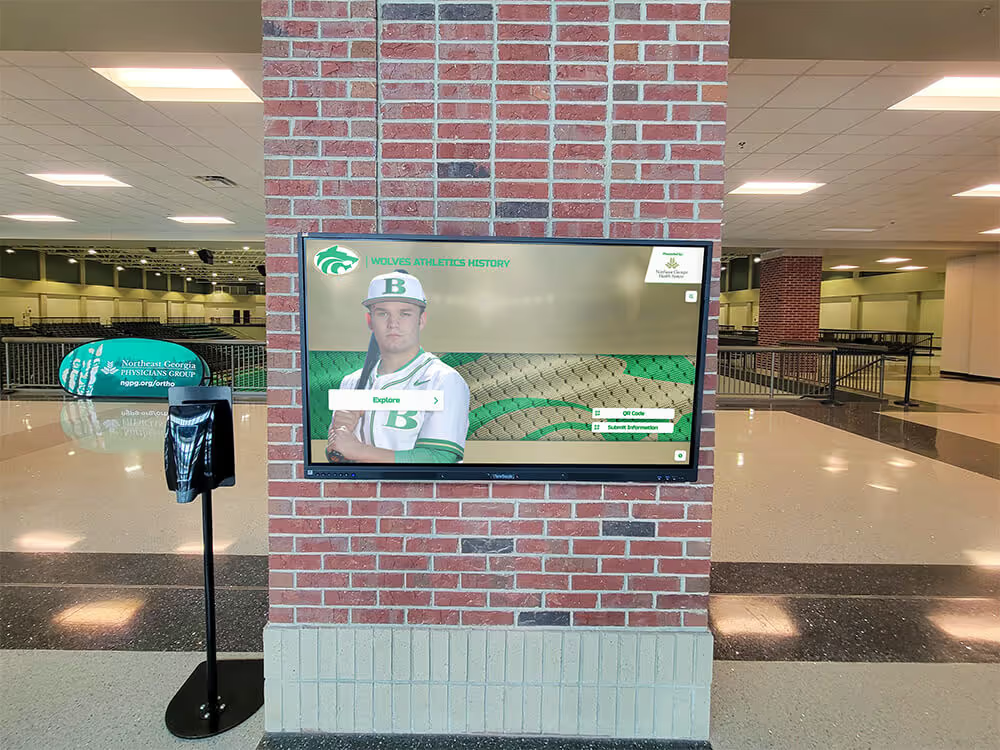
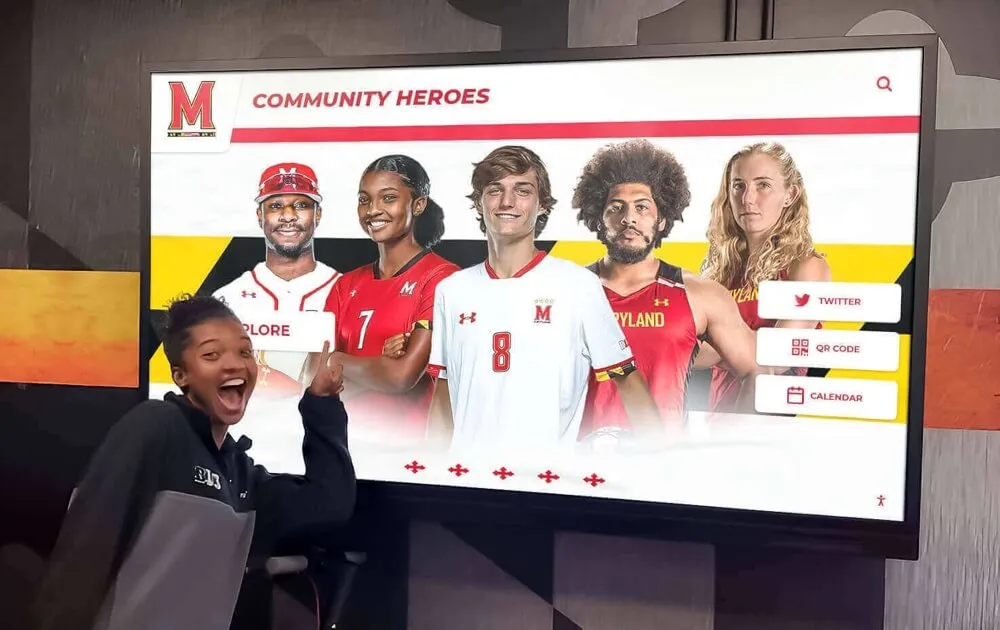
Recognition displays showcasing athletic achievements inspire student athletes across all sports and create aspirational targets for team members
Non-Traditional Athlete Recruitment
Target recruitment beyond obvious competitive swimmer populations including students from recreational swimming lessons or summer swim teams, athletes seeking additional sport participation beyond their primary focus, physically fit students interested in individual sport opportunities, and students specifically interested in college athletic opportunities in swimming.
Swimming’s individual nature and measurable improvement metrics appeal to motivated students who may not fit traditional team sport profiles but can thrive in structured competitive environments.
School-Wide Awareness Campaigns
Build program visibility through recognition displays celebrating swimming achievements in high-traffic areas, promotional campaigns during school assemblies or pep rallies, social media content showcasing team culture and accomplishments, and open practice sessions inviting prospective swimmers to observe or try out.
Consistent visibility normalizes swimming within school athletic culture and attracts students who might not otherwise consider the sport.
Creating Inclusive Multi-Level Team Structure
Successful programs accommodate swimmers at various skill levels while maintaining competitive standards.
Varsity, Junior Varsity, and Developmental Tiers
Structure teams with clear progression pathways through varsity positions for most competitive swimmers, JV opportunities for developing athletes building toward varsity, developmental squads or novice groups for beginners, and flexible movement between levels as swimmers improve throughout seasons.
This tiered structure prevents talented beginners from being overwhelmed while ensuring advanced swimmers receive appropriate competitive challenge and training intensity.
Individual Progression Recognition
Beyond traditional varsity/JV structures, recognize individual improvement regardless of competitive level through personal best achievement tracking and celebration, time drop recognition from early to late season, benchmark milestone achievements (first 50 free under 30 seconds, first legal 100 IM, etc.), and progress-based awards alongside competitive achievement recognition.
These improvement-focused recognition categories ensure all swimmers experience acknowledgment for meaningful progress regardless of absolute competitive level. Explore comprehensive approaches to academic and athletic recognition programs that celebrate diverse achievement dimensions.
Team Culture Building Activities
Create cohesive team identity through team bonding activities outside practice, mentorship programs pairing experienced and novice swimmers, team goal setting for both competitive results and culture objectives, social media presence showcasing team personality, and traditions creating memorable shared experiences across skill levels.
Strong team culture differentiates swimming from solitary pool training and creates social motivation supplementing individual competitive drive.
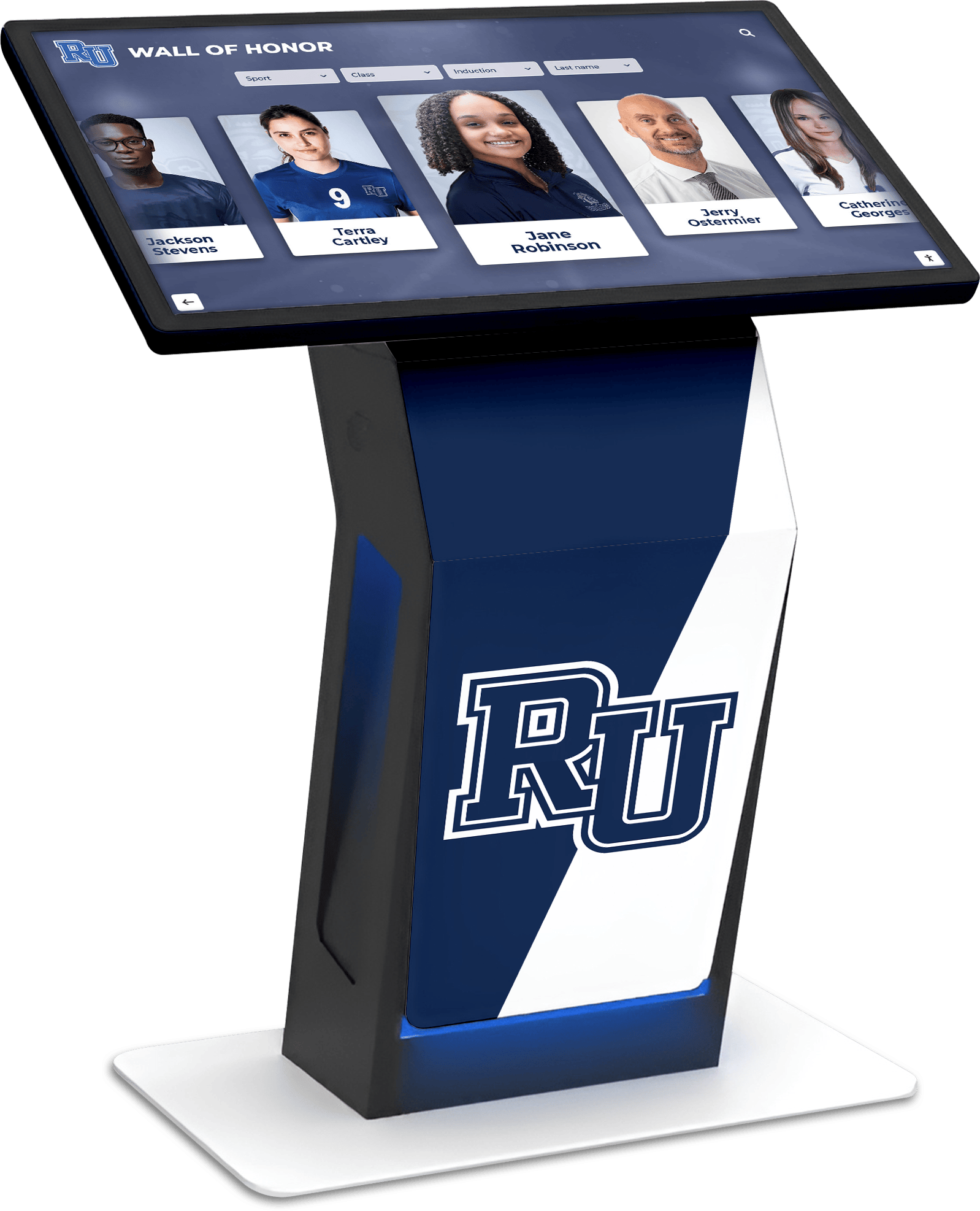
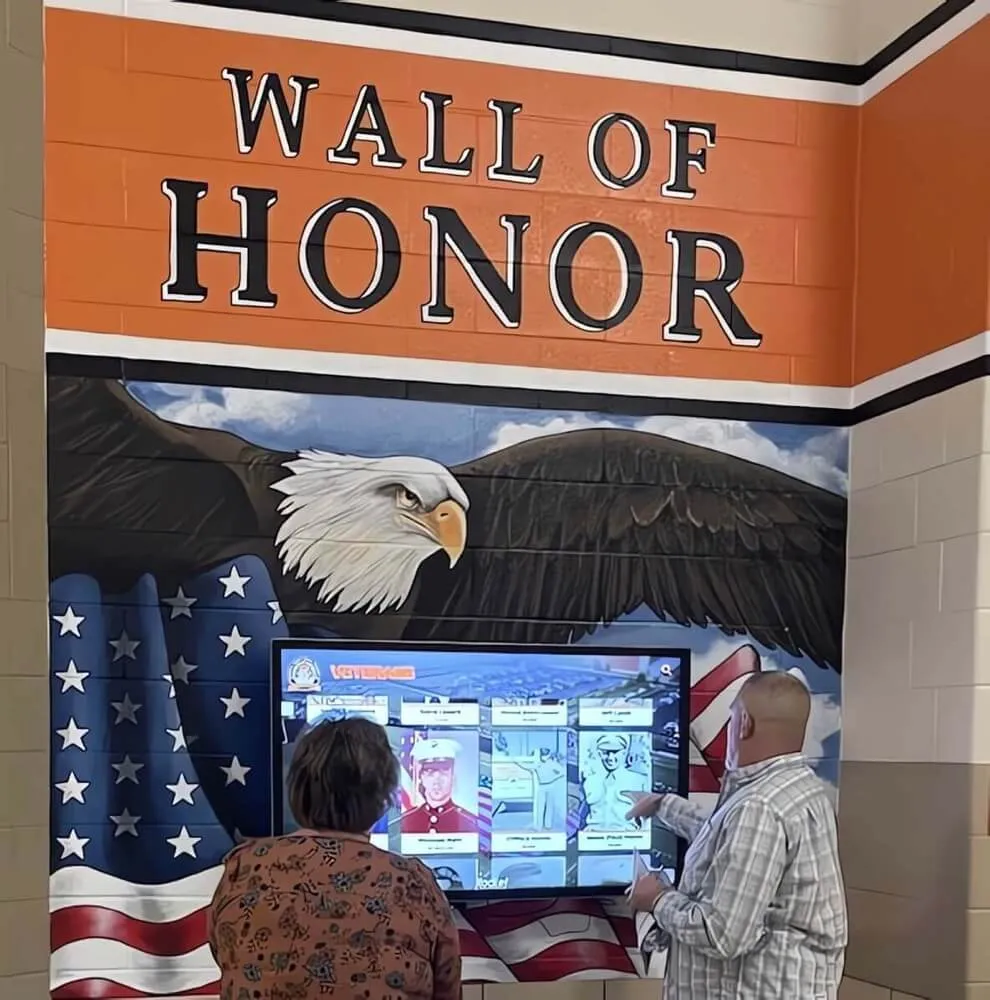
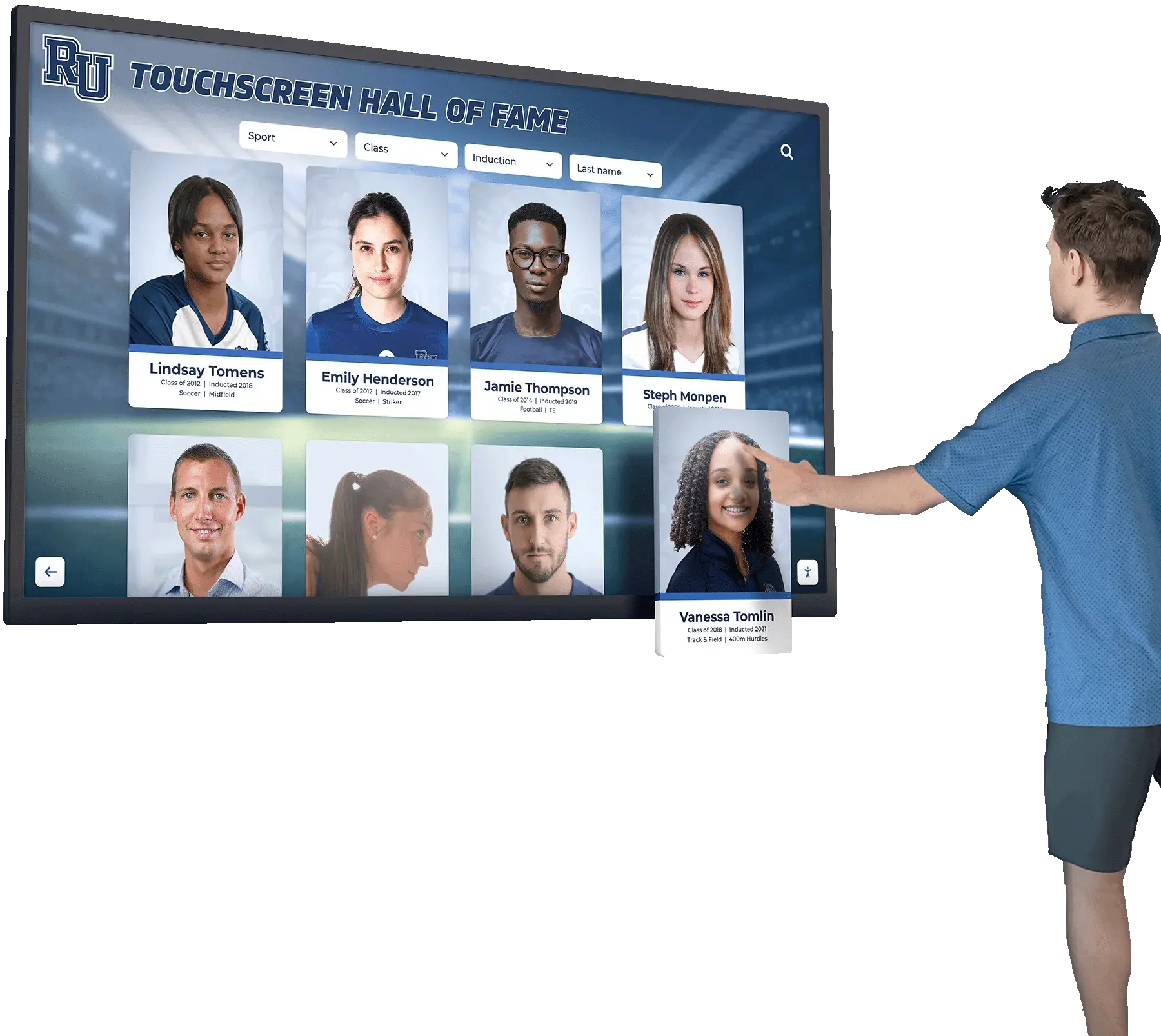
Interactive kiosks enable swimmers and families to explore team records, individual achievements, and program history through engaging digital interfaces
Training and Development Frameworks
Effective coaching transforms recreational swimmers into competitive athletes through systematic skill development and strategic training periodization.
Technical Skill Progression Systems
Swimming success depends on proper stroke technique across all competitive strokes.
Stroke Development Priorities
Focus technical training on freestyle foundation as the most versatile and frequently raced stroke, backstroke development emphasizing body position and underwater work, breaststroke technique which many swimmers find most challenging, butterfly progression building strength and rhythm, and individual medley (IM) integration combining all strokes.
Most programs prioritize freestyle and backstroke early since proper technique develops faster than breaststroke and butterfly which require more specific strength and timing.
Starts, Turns, and Underwater Work
Competitive swimming extends beyond stroke technique to include explosive start mechanics and reaction time, efficient turn technique in flip turns and open turns, underwater dolphin kicks and streamlining, and finish technique ensuring full legal completion.
Races are often won or lost on turns and underwater work rather than pure stroke speed, making these technical elements essential training priorities.
Drills and Technical Refinement
Implement systematic drill progressions targeting specific technique elements through stroke-specific drill sets isolating technical components, video analysis showing swimmers their technique for self-correction, partner feedback sessions developing peer coaching skills, and technique-focused training sets at slower speeds emphasizing form.
Regular technical emphasis prevents development of bad habits that become difficult to correct once ingrained through thousands of repetitions.
Training Periodization and Season Planning
Strategic training progression optimizes performance timing for championship competition.
Season Phase Structure
Organize training around distinct phases including pre-season conditioning building aerobic base and technique foundation, early season volume emphasis through high-yardage training, mid-season intensity introduction adding race-pace and threshold training, taper phase reducing volume while maintaining intensity before championships, and championship competition with peak performance focus.
This periodized approach prevents early season burnout while building fitness progressively toward end-of-season peak performance when state qualifications and records occur.
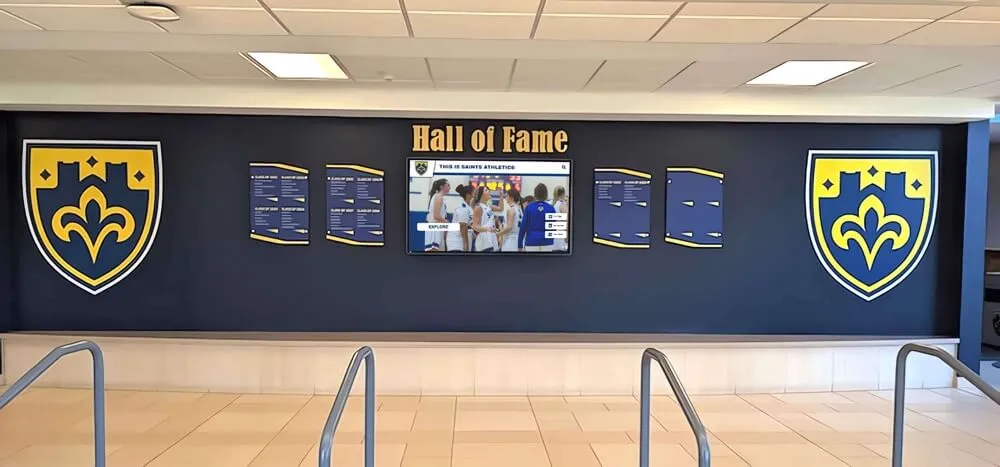
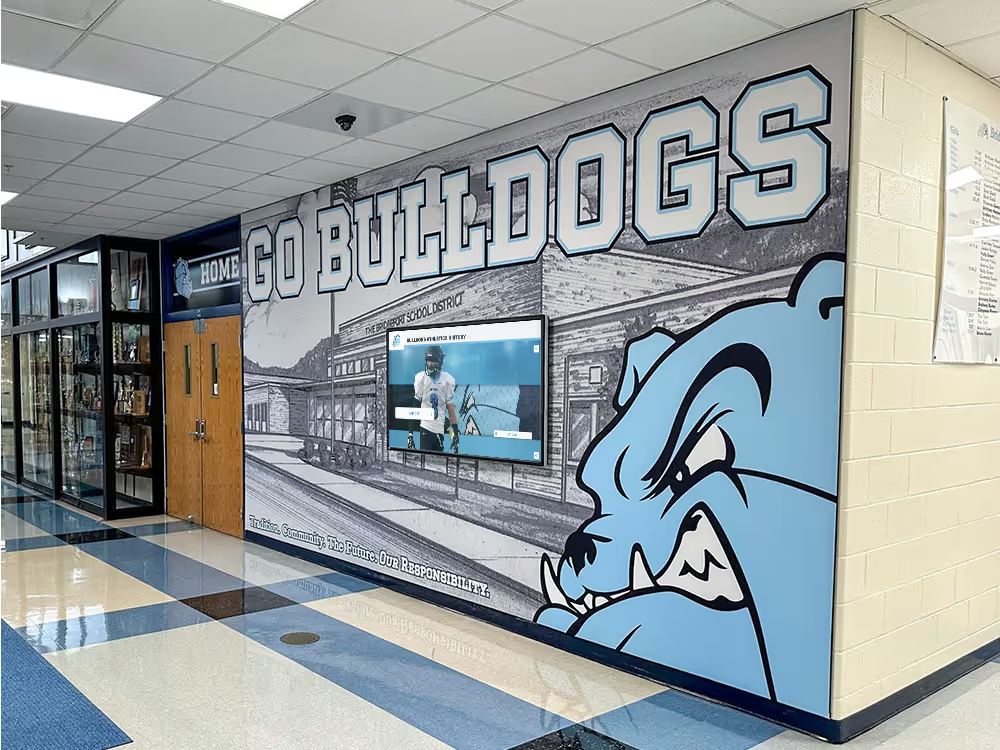
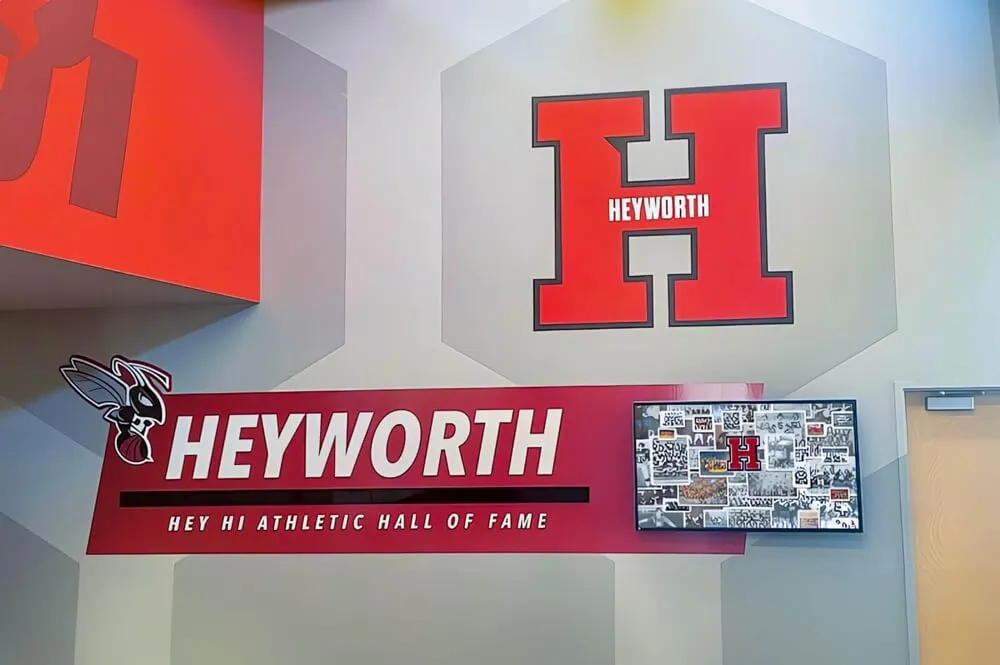
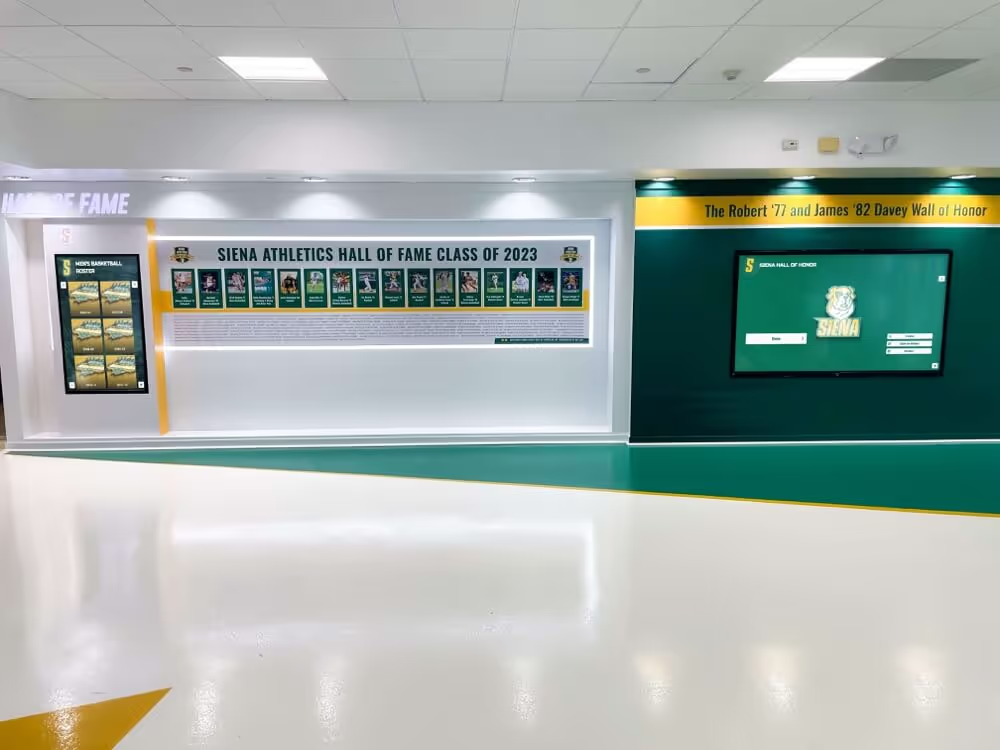
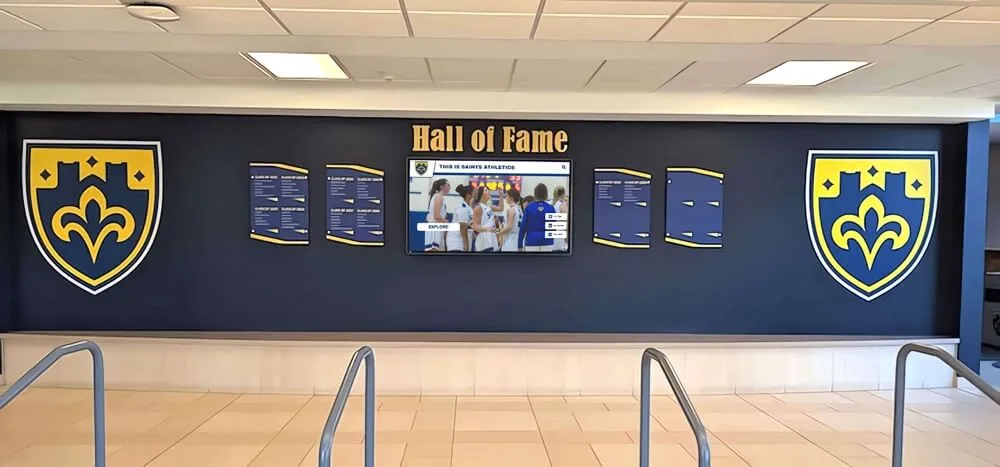
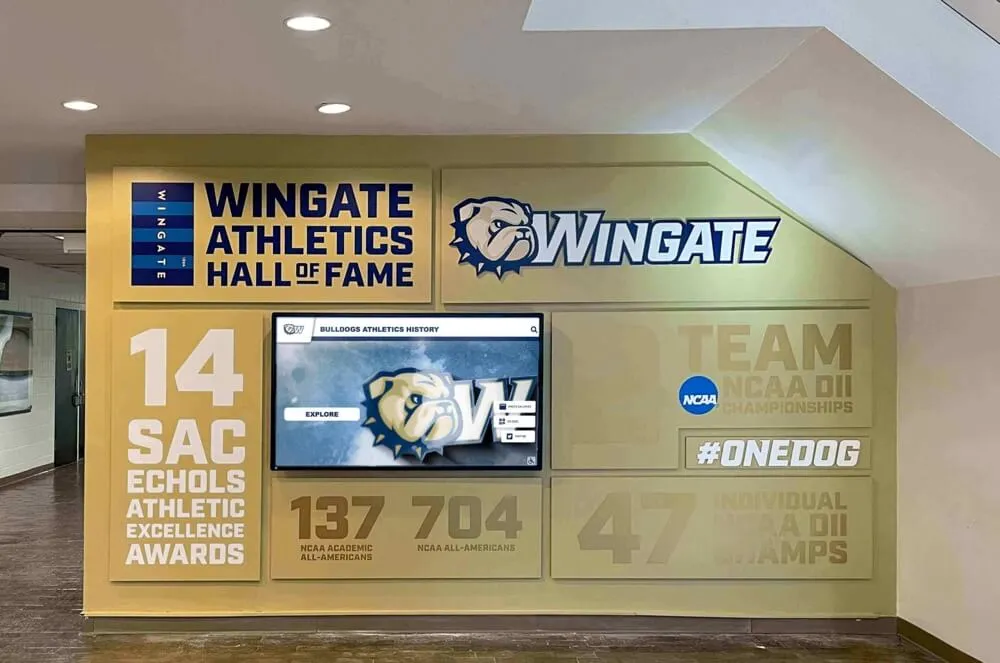
Branded athletic recognition creates visual identity celebrating swimming achievements within comprehensive athletic program frameworks
Training Set Types and Purpose
Structure practices using varied set types targeting different physiological adaptations through long aerobic sets building endurance base, threshold sets at lactate threshold developing sustained speed, VO2 max sets at near-maximal intensity improving top-end speed, race pace work simulating competition intensity and pacing, and recovery sets facilitating physiological adaptation.
This training variety prevents monotony while ensuring comprehensive fitness development across all energy systems swimmers utilize in competition.
Individualized Training Within Team Context
Balance team training cohesion with individual athlete needs through differentiated interval rest periods by fitness level, stroke-specific training for individual event specialists, distance vs. sprint focus based on individual event profiles, and modified training for swimmers managing minor injuries.
Effective individualization within group training maximizes development for all athletes rather than forcing uniform training that may be too easy for advanced swimmers or overwhelming for beginners.
Strength, Flexibility, and Injury Prevention
Comprehensive athletic development extends beyond pool training.
Dryland Training Programs
Supplement water training with land-based conditioning including core strength work supporting body position and rotation, shoulder stability and mobility preventing injury, leg strength for starts and turns, flexibility work maintaining range of motion, and general conditioning complementing pool training.
Most programs incorporate 2-3 dryland sessions weekly either before practice or as separate sessions, with intensity and volume adjusted to avoid overtraining when combined with water workouts.
Injury Prevention and Management
Address swimming’s specific injury risks through shoulder health protocols preventing overuse injuries, proper stretching and mobility work, gradual training progression avoiding sudden volume spikes, attention to stroke technique reducing repetitive stress, and appropriate rest and recovery between training sessions.
Swimming’s high-repetition nature makes injury prevention critical since chronic issues can sideline athletes for extended periods or permanently affect competitive capabilities.
Competition Strategy and Meet Management
Success at meets requires preparation extending beyond physical training to race strategy and mental preparation.
Event Selection and Strategic Placement
Maximize both individual and team success through thoughtful event assignment.
Individual Event Optimization
Help swimmers identify best events through training set performance analysis, body type and physiological profile consideration, personal preference and enjoyment factors, and strategic thinking about college recruiting implications for upperclassmen.
While some swimmers excel clearly in specific events, many competitive swimmers can perform well in multiple events requiring strategic selection based on season goals and meet context.
Relay Composition Strategy
Optimize relay performance through proper stroke order in medley relays (backstroke, breaststroke, butterfly, freestyle), strategic swimmer placement in freestyle relays, backup relay combinations for versatility, and relay-specific practice including exchange practice and race strategy.
Relays contribute significantly to team scoring and create collaborative opportunities within an otherwise individual sport, making relay strategy critical for team success.
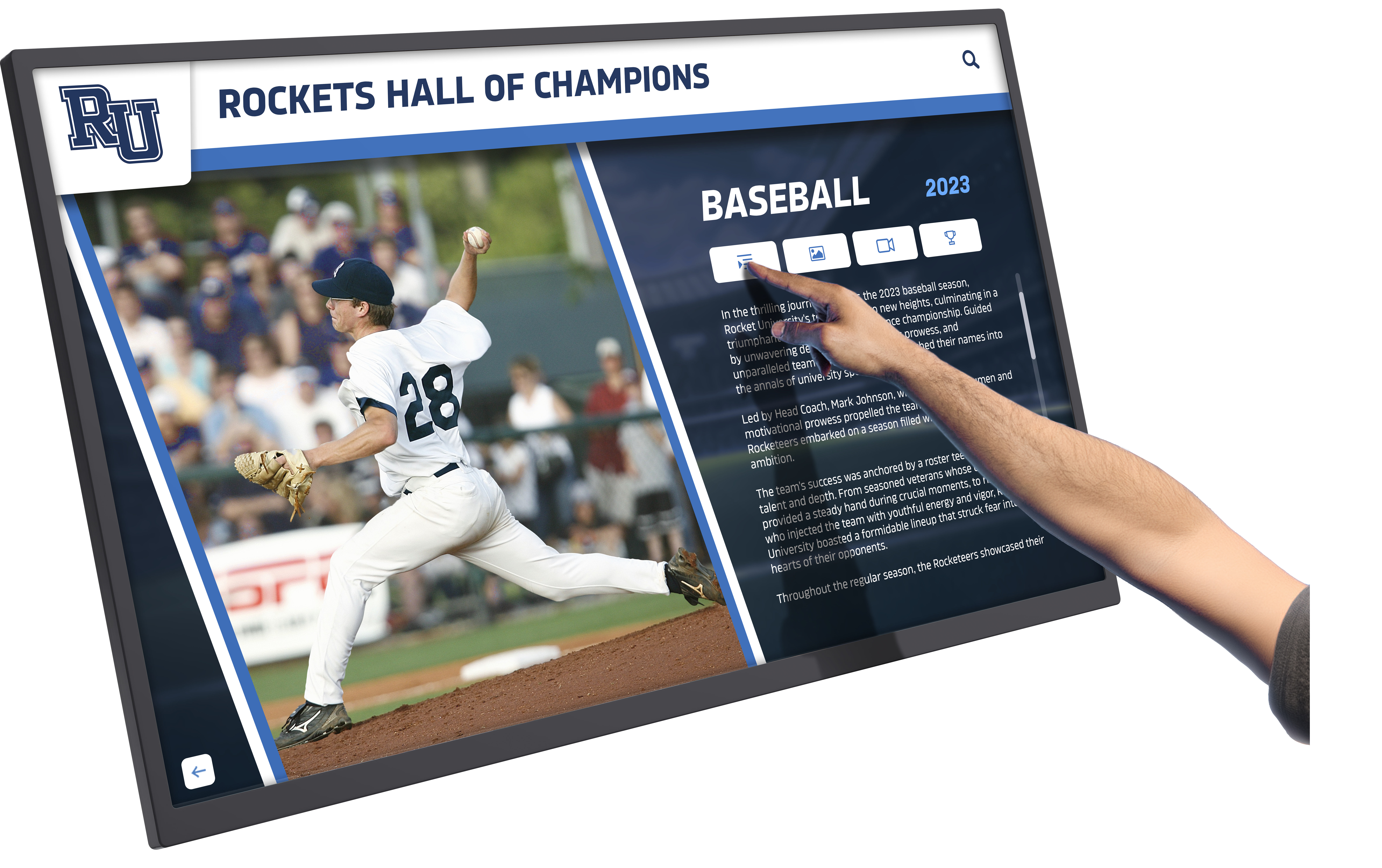
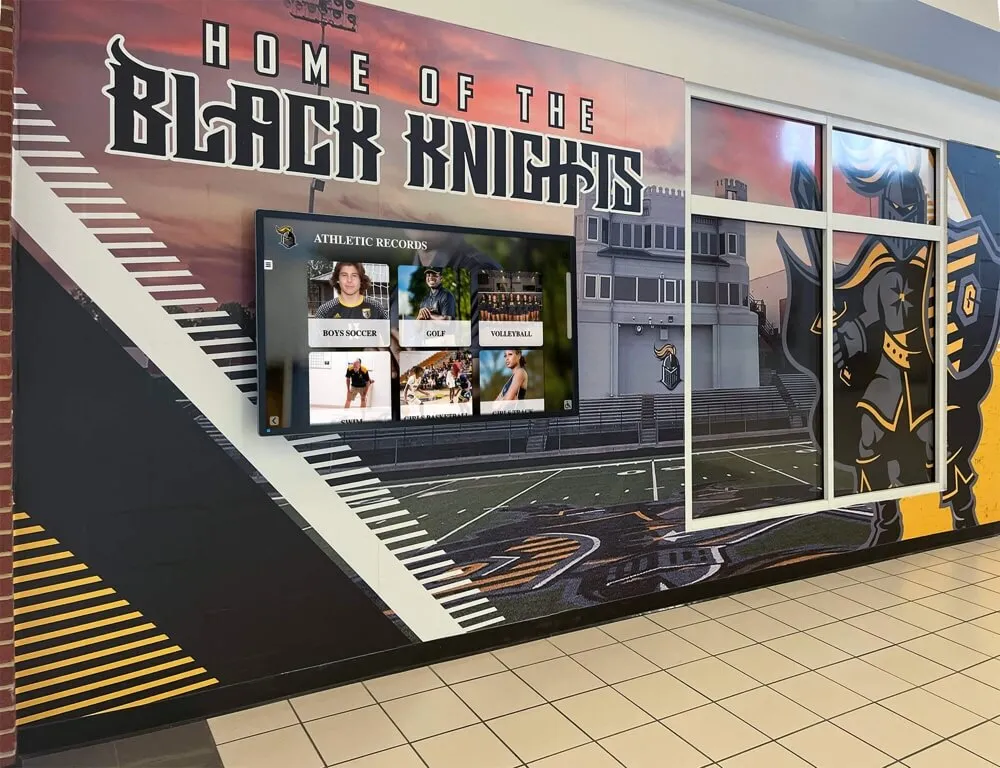
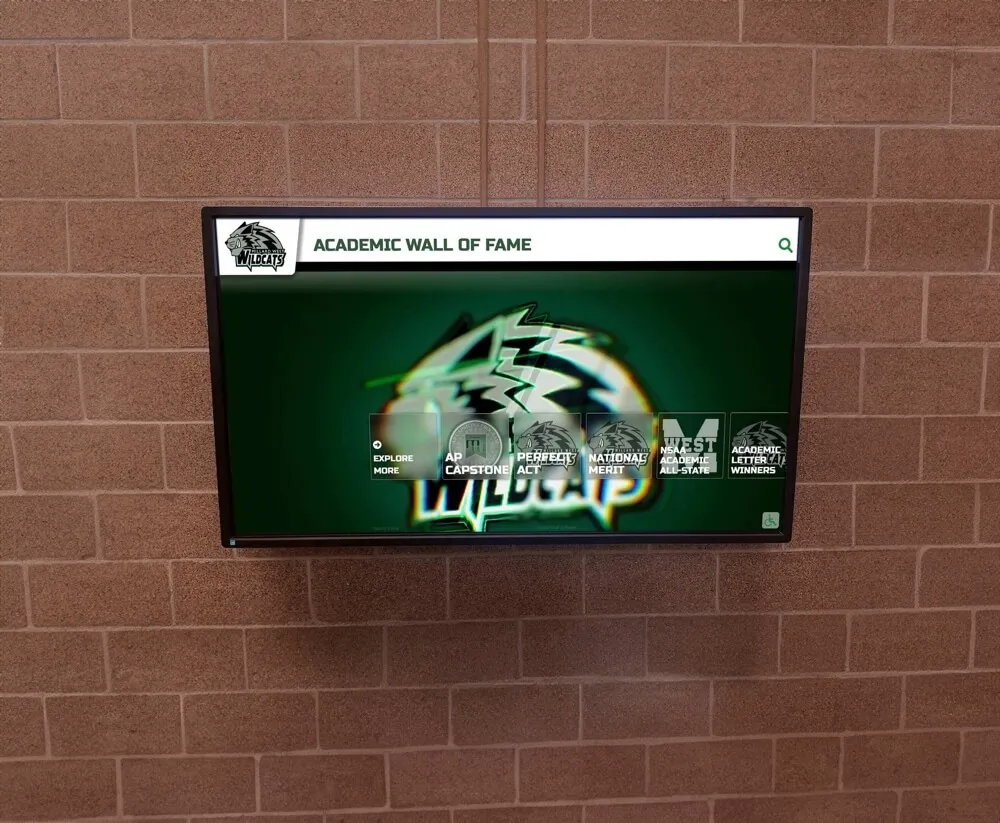
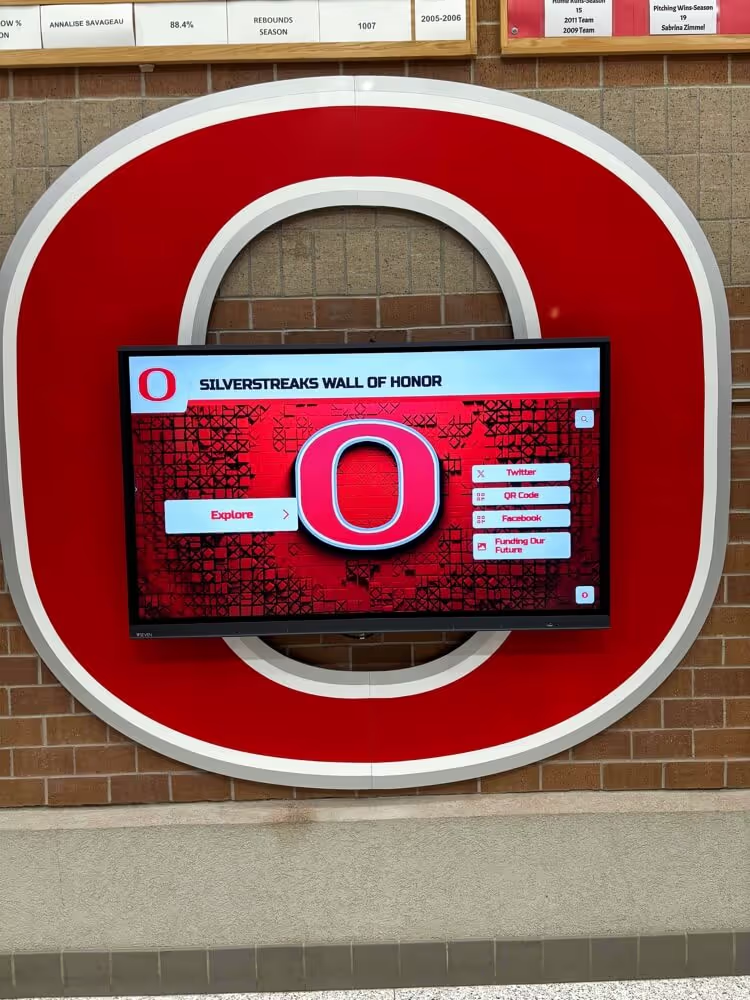
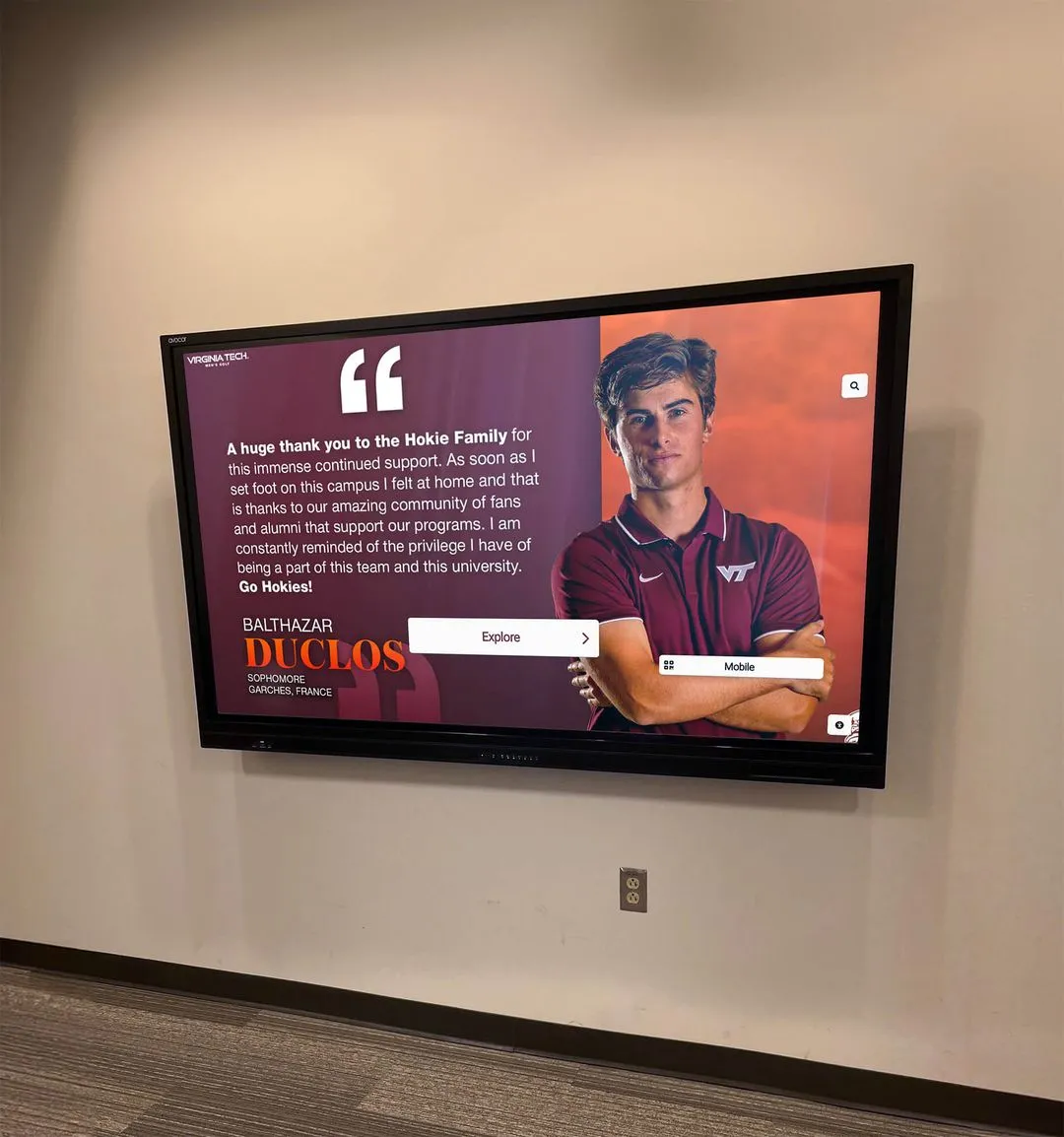
Digital record boards enable swimmers to explore their achievements, track progress toward records, and understand historical program performance standards
Team Scoring Considerations
In dual meet formats, consider strategic event placement to maximize team point totals through placing strong swimmers where they’ll score highest, strategic use of exhibition swims when allowed, balancing individual achievement goals with team scoring needs, and depth assessment determining where team has competitive advantages.
While individual achievement matters, dual meet success depends on cumulative team performance requiring coaches to balance individual and team priorities strategically.
Mental Preparation and Race Day Performance
Physical capability alone doesn’t guarantee optimal competitive performance.
Pre-Race Mental Preparation
Develop mental skills through visualization techniques imagining successful race execution, pre-race routine development creating consistency and focus, breathing and relaxation strategies managing nervous energy, positive self-talk and confidence building, and race plan clarity understanding strategy and pacing.
Mental preparation separates swimmers with similar physical capabilities, particularly in high-pressure championship situations where psychological factors significantly impact performance.
Warm-Up and Preparation Protocols
Optimize physiological readiness through structured warm-up routines including easy swimming activating muscles, stroke work reinforcing technique cues, race pace work priming systems for competition intensity, and appropriate rest between warm-up and race.
Proper warm-up significantly affects race performance, particularly in sprint events where muscles must be fully activated and ready for maximal effort from the starting horn.
Recognition Systems and Achievement Celebration
Systematic recognition motivates swimmers while celebrating diverse accomplishments across skill levels and event specialties.
Individual Achievement Recognition Categories
Comprehensive recognition honors multiple achievement dimensions beyond simple win-loss records.
Time-Based Achievement Standards
Create objective recognition thresholds including personal best achievement regardless of place finish, qualifying times for championship meets, state championship qualifying standards, school record achievements by event, and time drop milestones from season start to championship performance.
Time-based standards ensure swimmers compete against objective benchmarks rather than only relative competition, creating achievement opportunities even when facing superior opponents.
Competitive Achievement Recognition
Beyond time standards, recognize competitive success through all-conference selections, all-state honors, event podium finishes at championship meets, individual event victories, and advancement to higher-level championship competitions.
These competitive achievements demonstrate excellence relative to direct competitors and carry particular significance for college recruiting and program prestige.
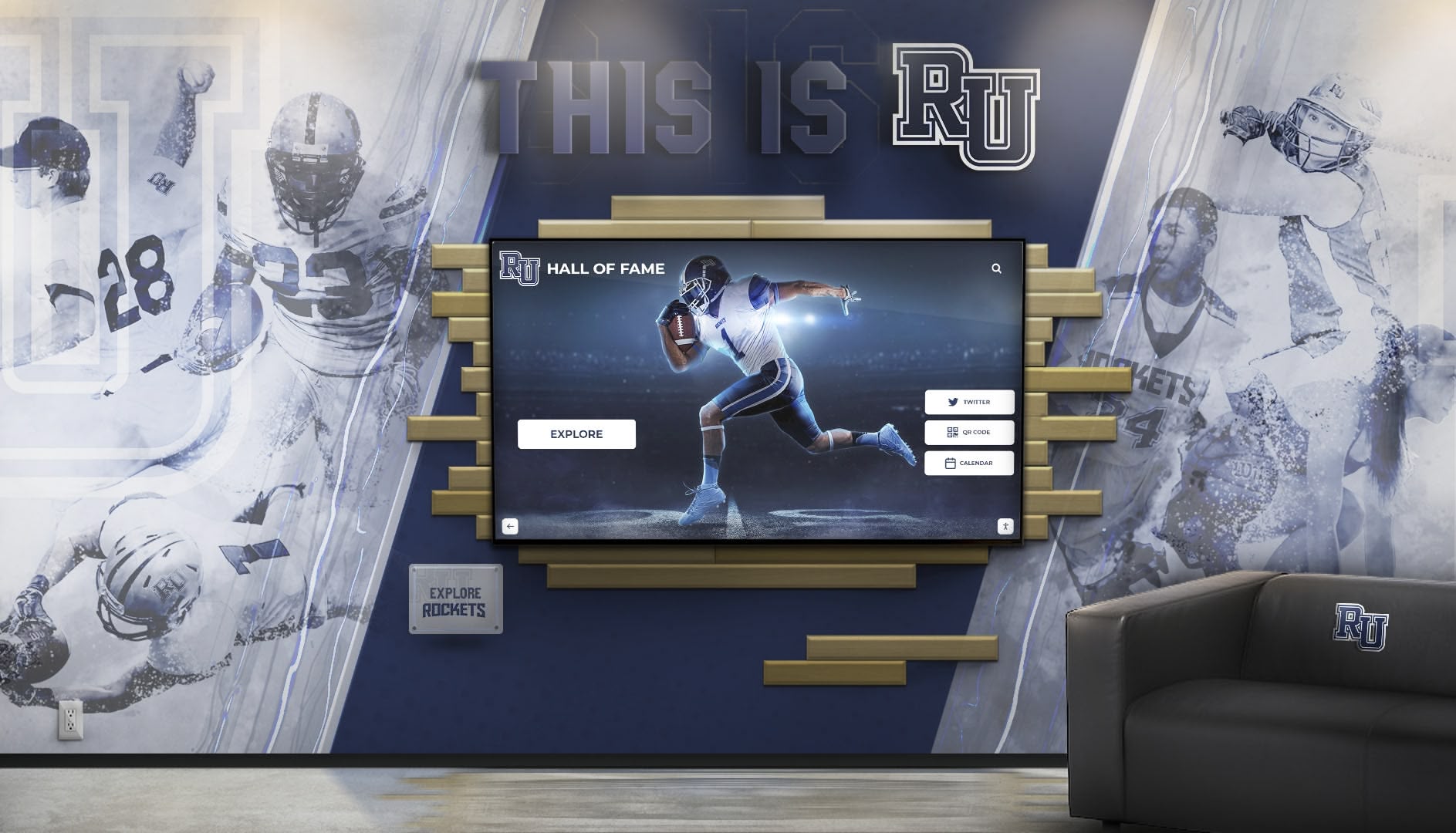
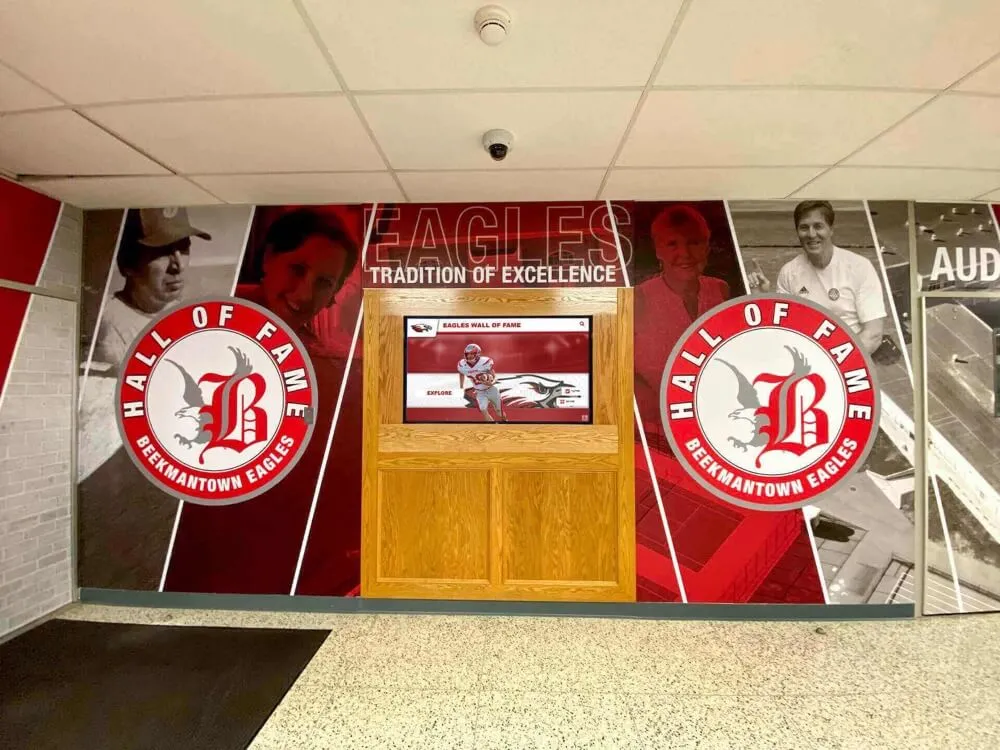
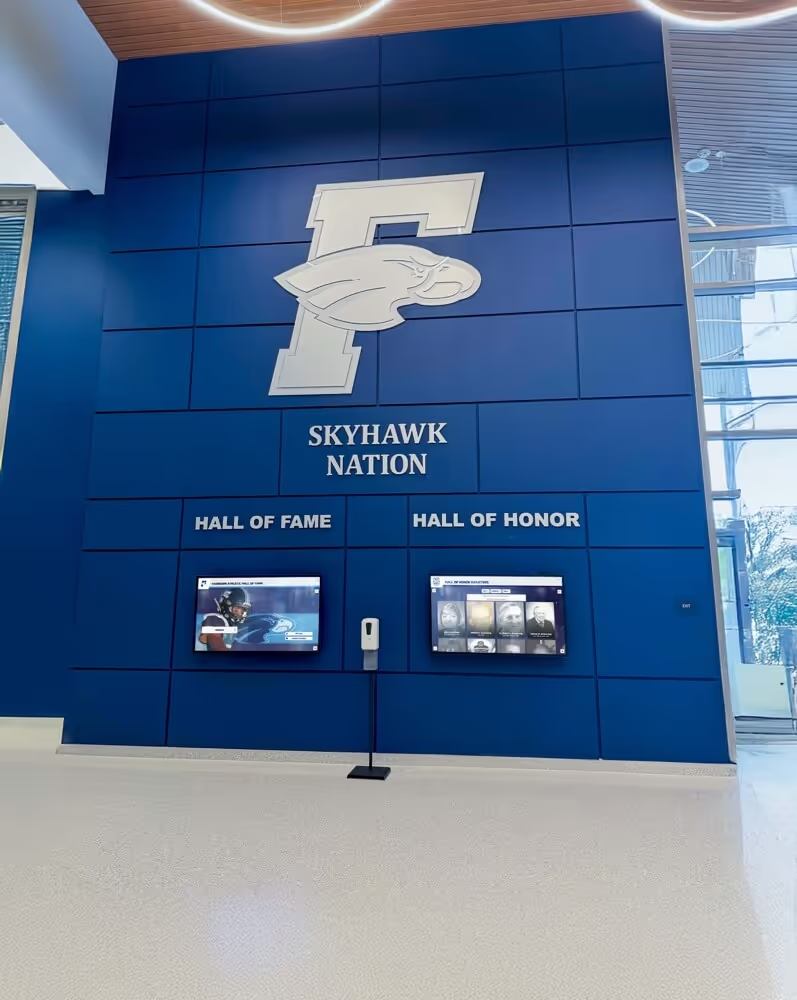
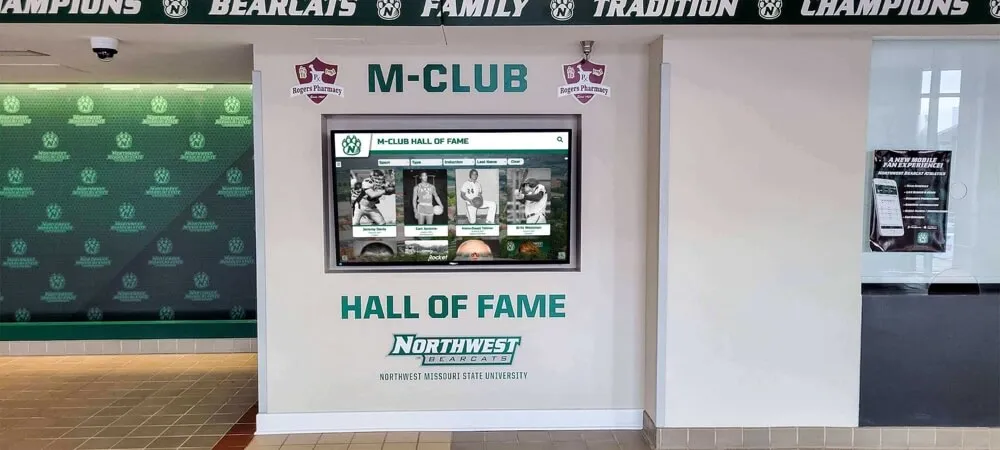
Prominent lobby placements ensure swimming achievements receive visibility equal to other athletic programs while welcoming visitors with program pride
Character and Team Contribution Awards
Acknowledge dimensions beyond pure competitive performance including most improved swimmer recognition, team leadership and mentorship, consistent practice attendance and work ethic, sportsmanship and positive competitive approach, and relay performance and team scoring contributions.
These character-based awards ensure recognition opportunities exist for swimmers who may not achieve top competitive standards but contribute meaningfully to program culture and team success.
Team Achievement Recognition
Celebrate collective success alongside individual accomplishments.
Team Performance Milestones
Recognize team-level achievements including dual meet win-loss records and conference standings, relay event victories and records, team point totals at championship meets, improvement in competitive standings year-over-year, and breakthrough team achievements like first conference championship or state meet qualification.
Team achievements create shared pride and collective identity supplementing individual competitive focus.
Historical Record and Tradition Preservation
Maintain comprehensive program documentation through digital swim record boards showing school records by event, relay record tracking with team member identification, championship meet results archives, notable alumni swimmer recognition, and coaching legacy documentation.
This historical preservation connects current swimmers to program tradition while providing aspirational targets through clearly visible records and achievements.
Modern Digital Recognition Solutions
Traditional recognition approaches struggle with swimming’s event-specific and time-based achievement structure requiring frequent updates.
Advantages of Digital Recognition Displays
Solutions like Rocket Alumni Solutions address swimming’s unique recognition needs through unlimited event-by-event record capacity without physical space constraints, easy updating when records fall without physical plaque replacement, detailed swimmer profiles including multiple event times and achievements, searchable databases enabling quick location of specific swimmer or event records, and visual presentation with photos and performance graphs tracking improvement.
These digital capabilities prove particularly valuable for swimming where dozens of individual event records across genders, age groups, and pool lengths create massive information volume impossible to display comprehensively through traditional plaques. Learn more about creating collegiate athletic experiences for high school programs.
Strategic Recognition Display Placement
Maximize recognition impact through display installation in high-traffic school areas reaching broad student populations, placement at pool facilities where swimmers see achievements daily, integration with school athletic recognition systems, and web-accessible versions enabling alumni engagement and family access.
Strategic placement ensures recognition influences not just direct participants but creates awareness throughout school communities while inspiring prospective swimmers considering joining the program.
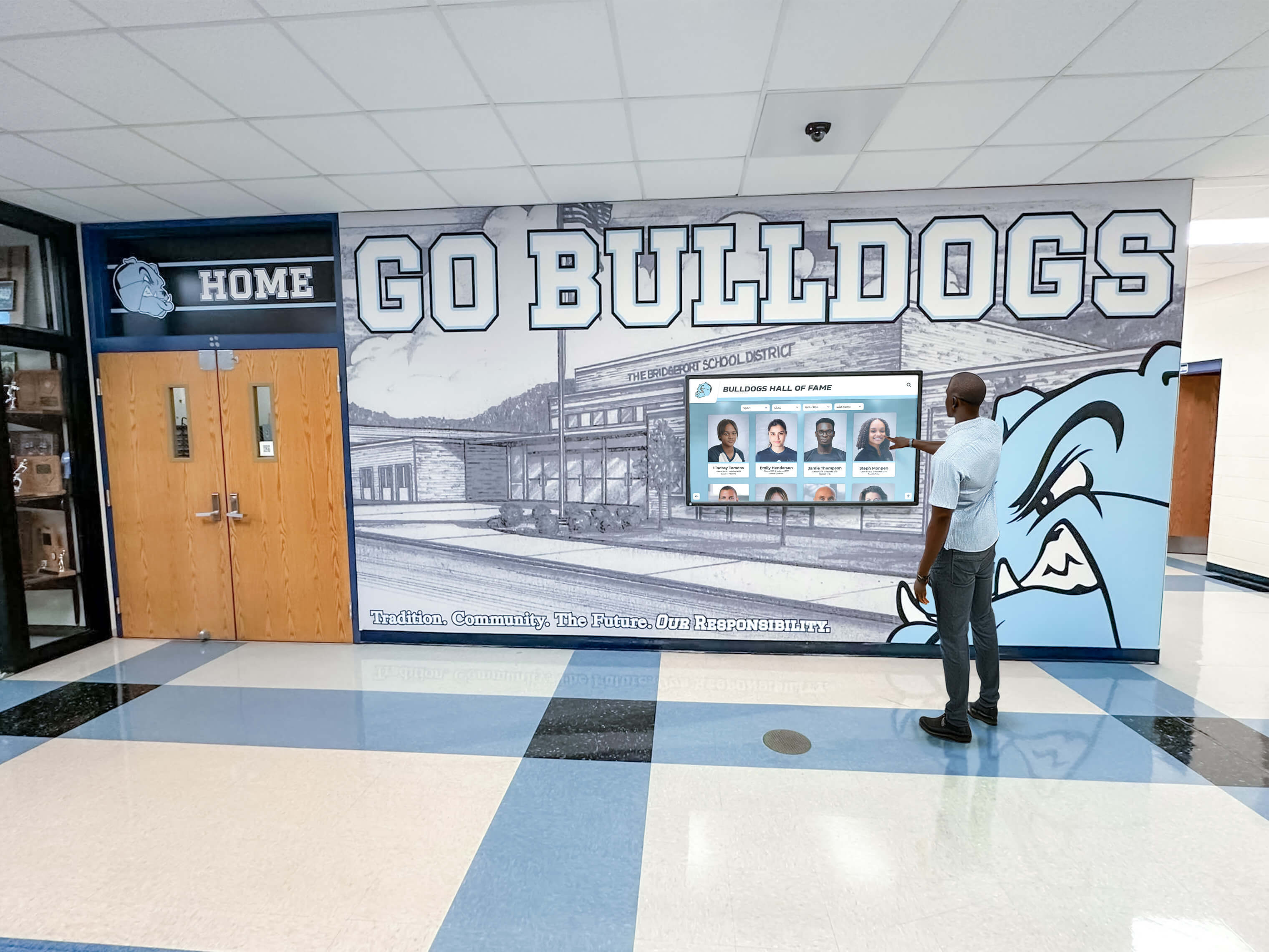
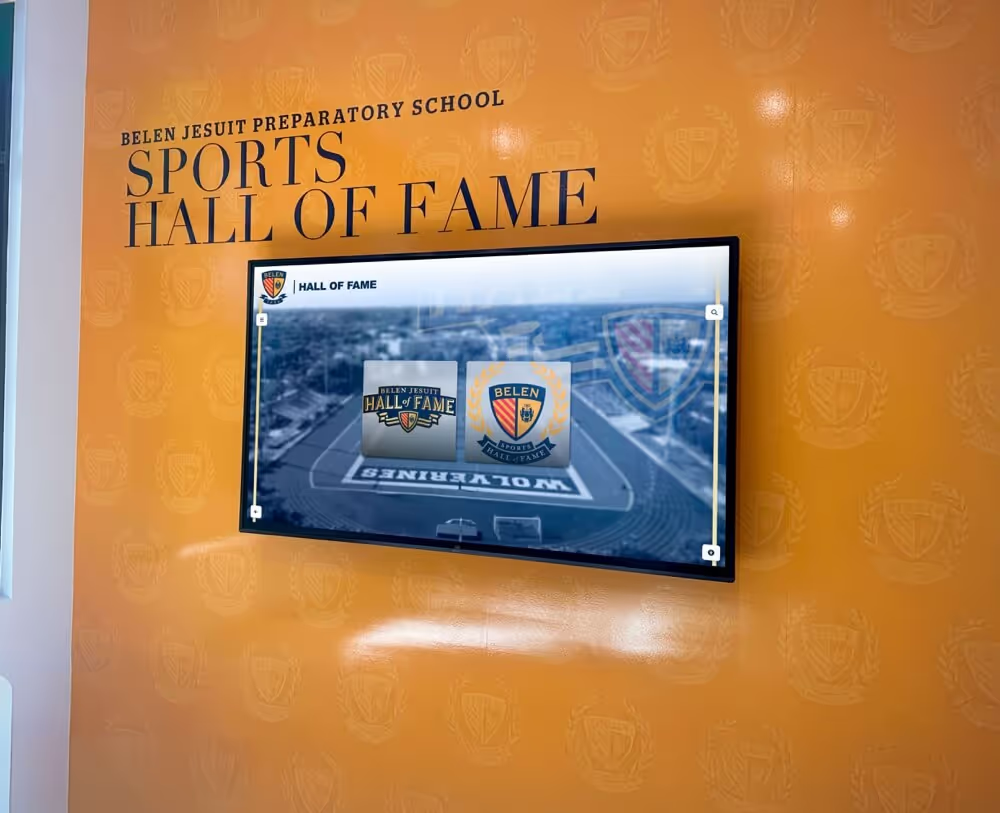
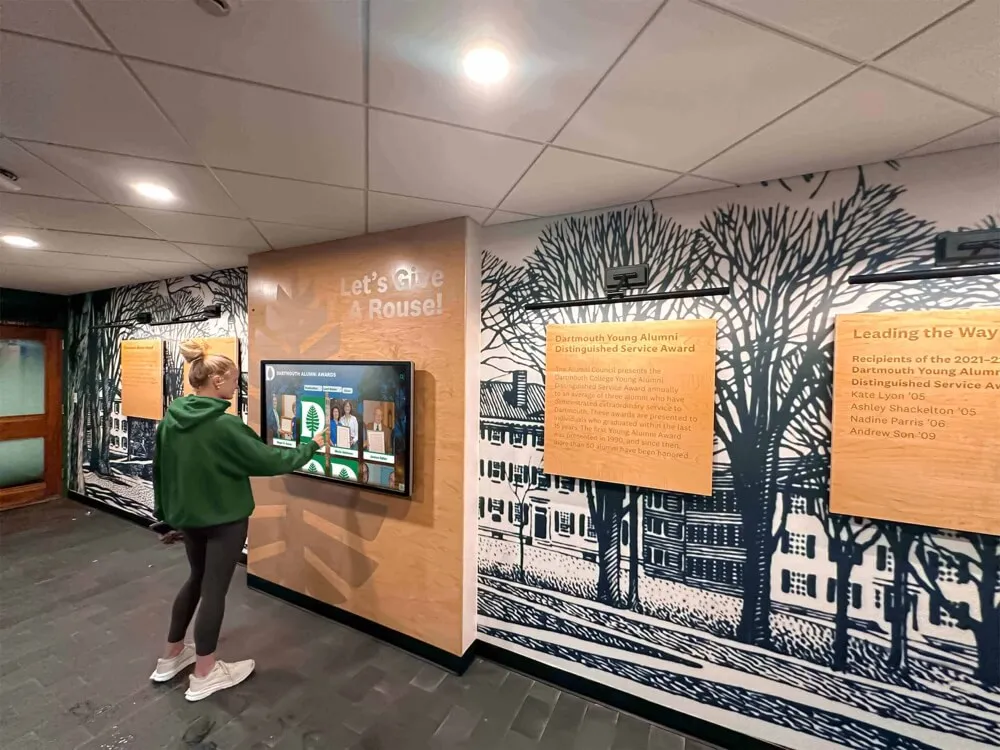
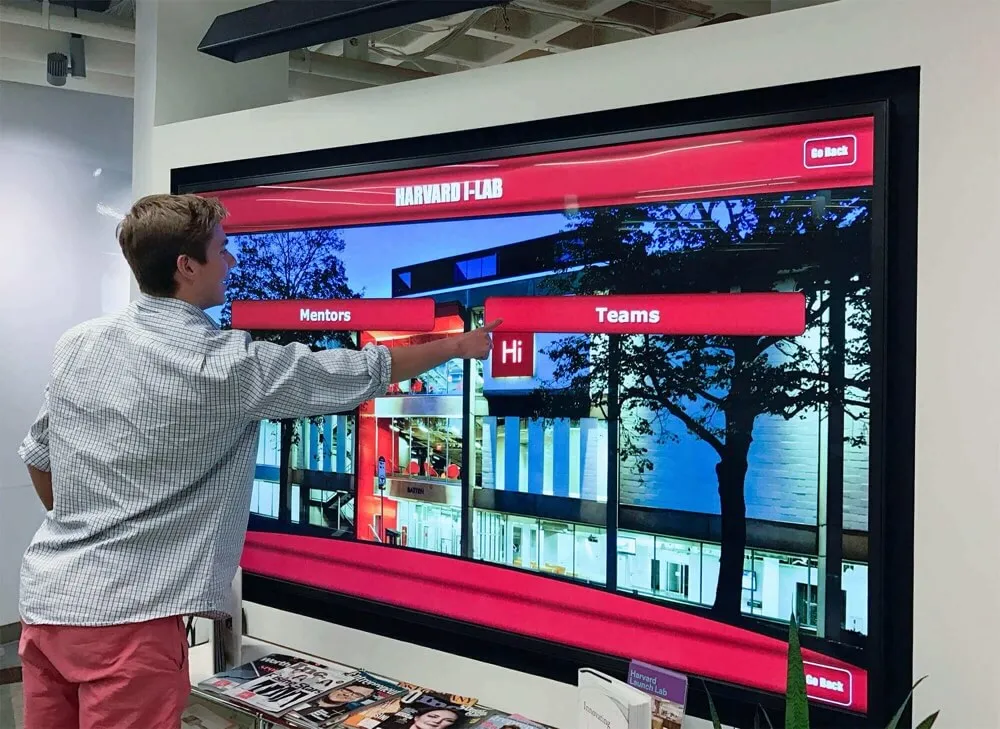
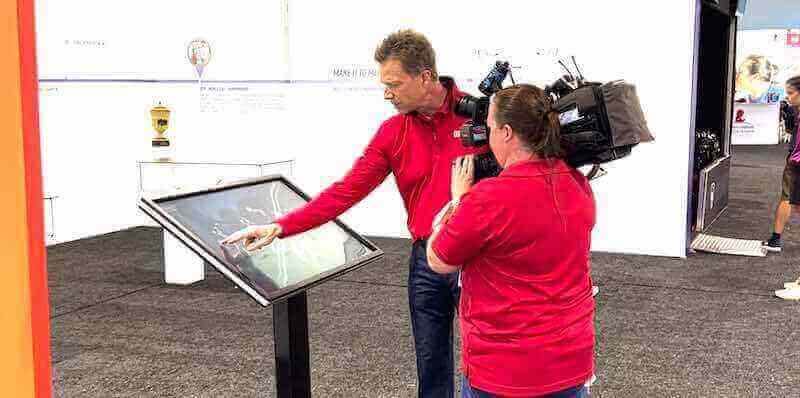
User-friendly touchscreen interfaces enable swimmers, families, and visitors to independently explore achievements and records at their own pace
Season-End Celebration and Award Programs
Formal recognition events create memorable celebrations honoring individual and team achievements.
Awards Banquet Planning and Structure
Successful end-of-season celebrations balance formal recognition with team enjoyment.
Award Category Development
Create comprehensive award structures recognizing diverse accomplishments through most valuable swimmer awards by gender or team, most improved swimmer recognition, event-specific excellence awards (fastest sprinter, distance swimmer, etc.), stroke specialist recognition, relay excellence awards, team leadership and captain awards, academic achievement recognition, and special awards for unique team contributions.
Broad award categories ensure most swimmers receive some form of recognition rather than limiting awards to only top competitive performers.
Ceremony Format and Athlete Recognition
Design ceremonies balancing appropriate formality with accessibility through welcome and season overview by coaching staff, team and individual achievement highlights, award presentations with explanation of each category’s significance, athlete remarks from seniors or team captains, coach reflections on season and individual swimmer growth, and social time enabling family connection with coaching staff and other families.
Successful ceremonies celebrate achievements while creating enjoyable experiences swimmers remember positively long after their high school careers conclude. Explore comprehensive end-of-year award approaches for athletic programs.
Senior Recognition and Legacy Celebration
Provide special acknowledgment for graduating swimmers through individual senior profiles highlighting career achievements, reflection on personal growth and memorable moments, recognition of college recruiting commitments, presentation of special senior awards or mementos, and contribution to team culture and program development.
Thoughtful senior recognition honors their commitment while providing closure as they transition from high school athletics to next chapters.
Integrating Recognition With Program Development
Connect seasonal celebration with ongoing program building and recruiting.
Showcase Team Culture for Prospective Swimmers
Use awards ceremonies to demonstrate program values attracting new team members through inviting prospective swimmers and families to observe, highlighting diverse recognition categories showing opportunities at all skill levels, demonstrating positive team culture and swimmer enjoyment, and providing specific information about program expectations and opportunities.
Awards ceremonies showcase program personality and culture in ways that written descriptions or practice observations cannot, making them effective recruiting tools when thoughtfully planned.
Building Alumni Connection and Mentorship
Engage graduated swimmers through invitations to current team events, opportunities to share college swimming or career experiences, mentorship connections with current swimmers, and ongoing recognition of post-high school achievements.
Alumni engagement provides role models for current swimmers while maintaining connection between program history and current team, strengthening tradition and institutional memory.
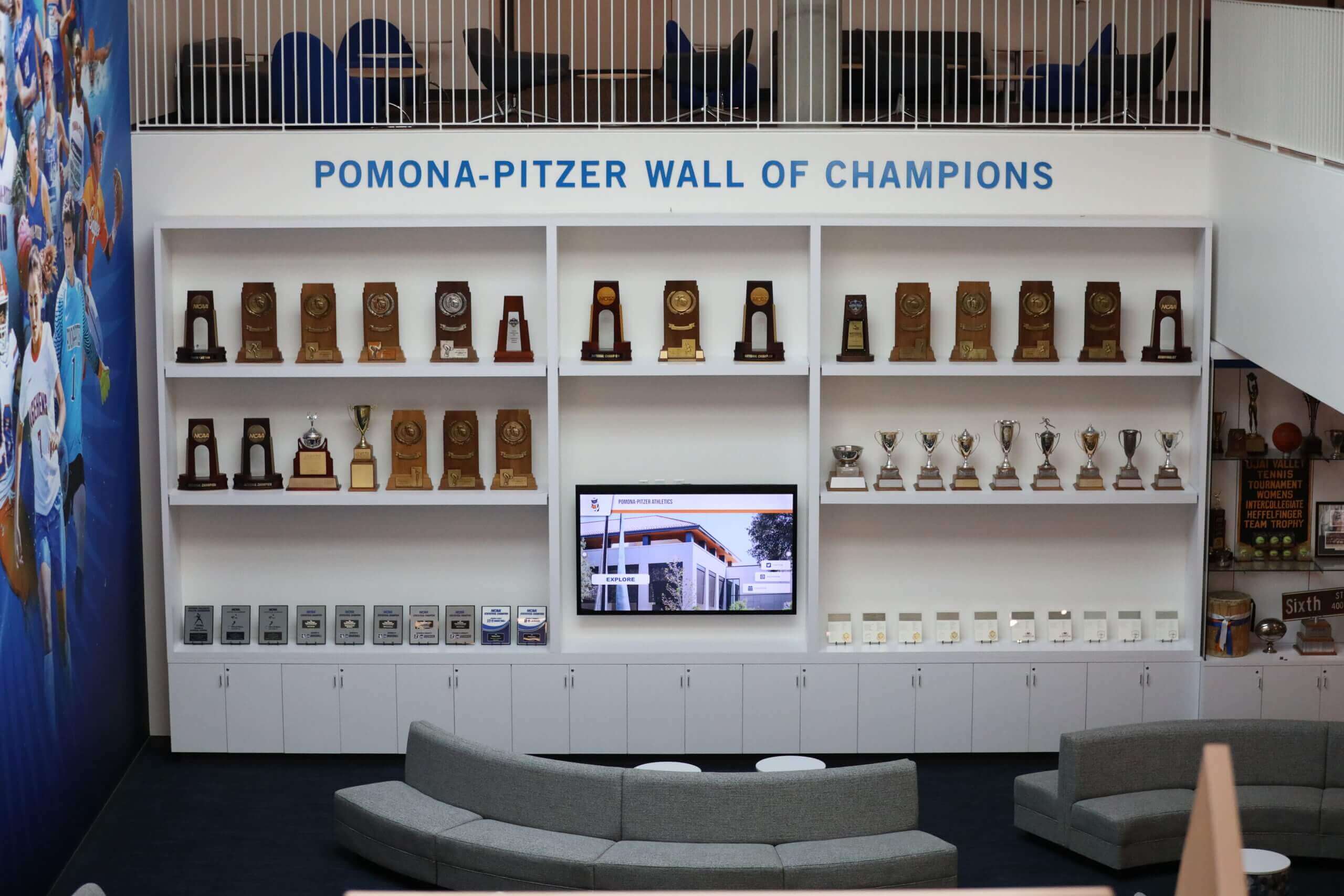
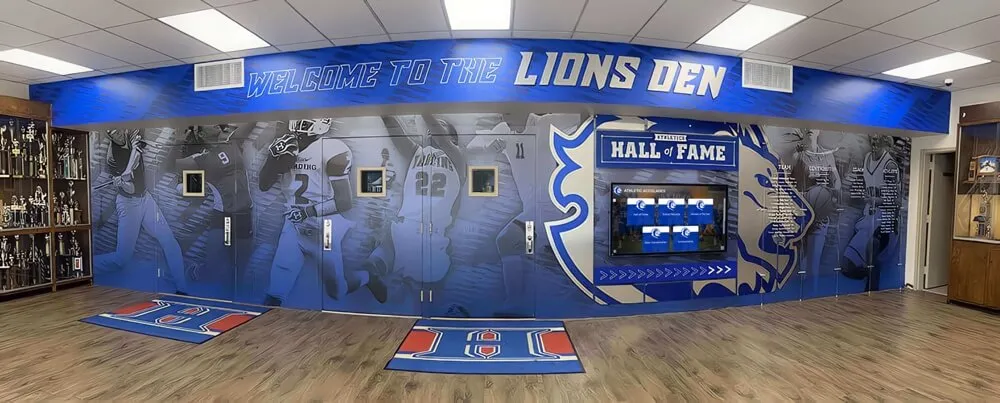
Recognition spaces combining trophies, digital displays, and comfortable areas create destinations where teams gather and celebrate shared achievements
Budget Management and Resource Development
Building competitive swim programs requires strategic resource allocation and creative funding approaches.
Essential Program Expenses and Prioritization
Understand core costs enabling basic program operation before expanding to enhanced offerings.
Non-Negotiable Budget Items
Allocate resources for facility rental fees and pool access, competitive swimsuit and equipment needs, meet entry fees and competition travel, coaching stipends attracting and retaining qualified staff, and basic team equipment (starting blocks if not facility-provided, pace clocks, kickboards, pull buoys).
These baseline expenses enable basic competitive operation—programs must secure these fundamentals before pursuing enhancement investments.
Strategic Enhancement Investments
Once basic operation is funded, consider investments generating long-term value including digital recognition systems celebrating achievements, team apparel building identity and pride, upgraded training equipment enhancing practice effectiveness, video analysis tools supporting technical development, and expanded competition schedules providing additional experience.
Strategic enhancement investments differentiate developing programs from established competitive programs while improving athlete experience and development outcomes.
Fundraising and Community Support Strategies
Supplement school athletic budgets through creative revenue generation.
Swim-Specific Fundraising Approaches
Generate program revenue through swim-a-thon fundraisers where swimmers collect per-lap pledges, swim lesson programs taught by team members, community swim clinics introducing sport to younger swimmers, corporate sponsorships from local businesses, and booster club development coordinating family volunteer efforts.
Successful fundraising requires planning and volunteer coordination but can generate substantial resources supplementing school athletic department budgets.
Resource Sharing and Partnership Approaches
Reduce costs through strategic collaboration including shared equipment purchases with feeder programs or partner schools, volunteer coaching assistance from community swimmers or parents, facility partnership negotiations reducing rental costs, group purchasing of swimsuits and equipment, and alumni network engagement for financial and mentorship support.
Resource sharing and creative partnerships enable programs to operate effectively despite tight budget constraints while building broader community investment in program success.
Building Sustainable Long-Term Programs
Short-term success matters less than creating programs that thrive across coaching transitions and enrollment fluctuations.
Succession Planning and Institutional Knowledge
Prevent program disruption from coaching changes or organizational transitions.
Documented Systems and Procedures
Create written documentation including season planning templates and training progressions, meet management protocols and logistics, equipment inventory and maintenance schedules, fundraising playbooks and donor databases, and historical records and athlete database systems.
Written systems enable program continuity when coaching or athletic director changes occur, preventing loss of institutional knowledge that often causes program disruption during leadership transitions.
Assistant Coach Development and Pipeline
Build coaching sustainability through assistant coach training and mentorship, opportunities for assistant coaches to lead specific team levels, clear succession planning for head coaching positions, volunteer coach engagement from parent or alumni volunteers, and connection with local swim club coaching community.
Coaching pipeline development ensures qualified leadership continuity while preventing program collapse when head coaches retire or transition to other positions.
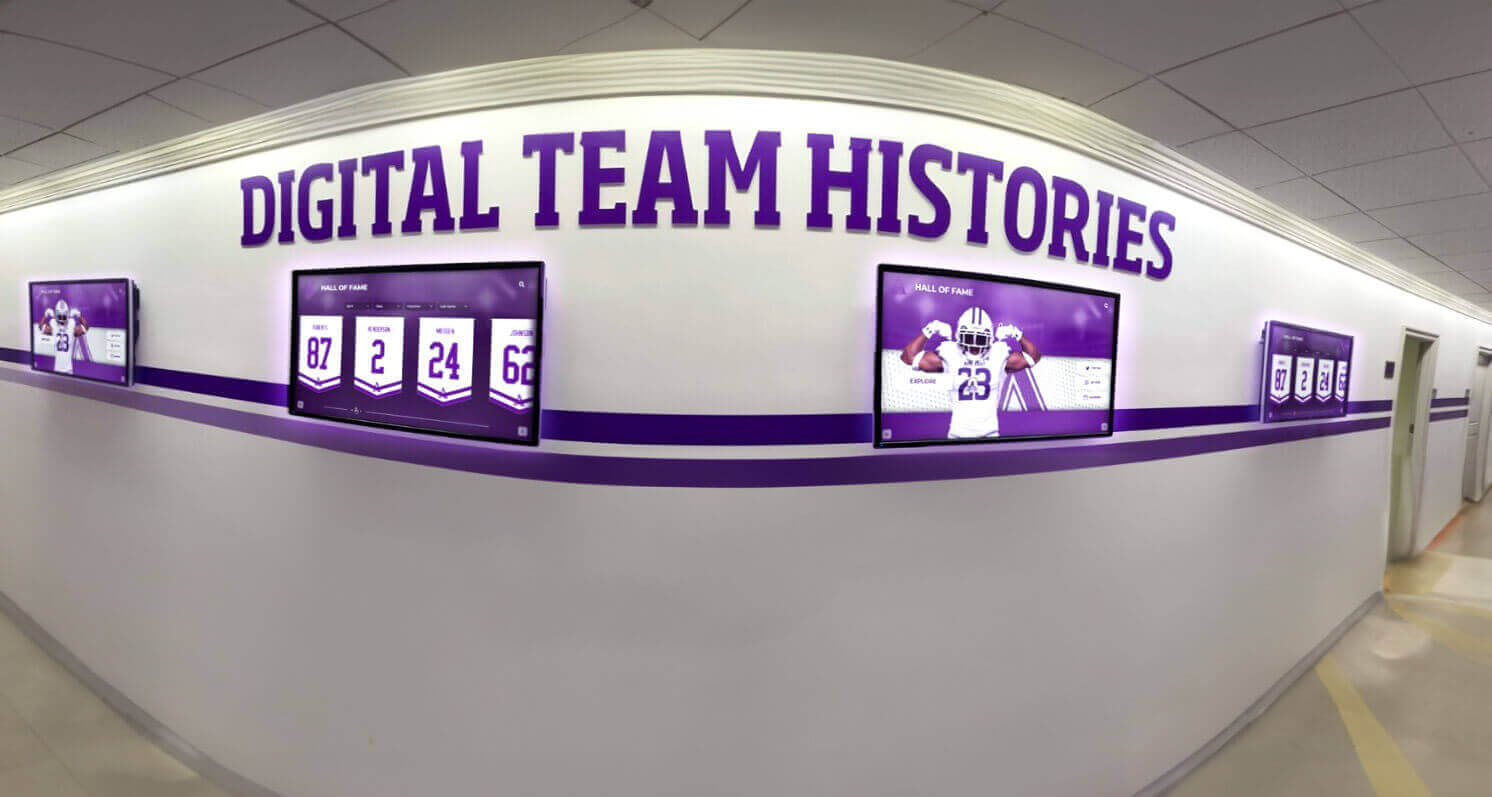
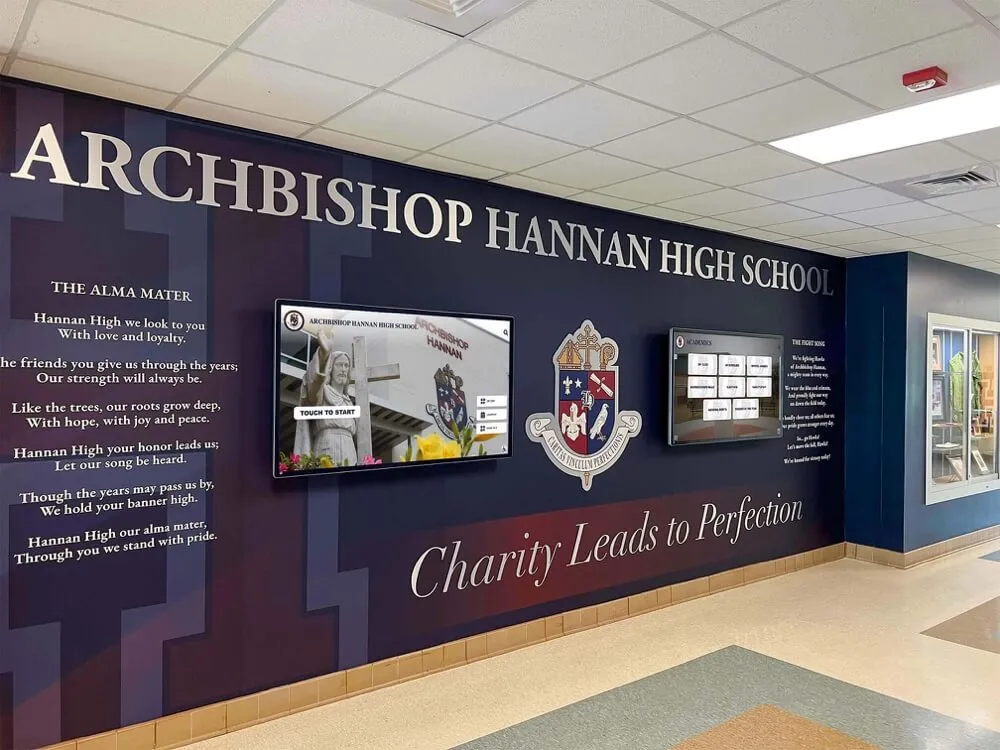
Coordinated display installations create recognition corridors celebrating swimming history alongside other athletic programs throughout school facilities
Measuring Program Success Beyond Win-Loss Records
Evaluate program health through multiple indicators beyond competitive results alone.
Participation and Retention Metrics
Track program vitality through total roster size year-over-year, athlete retention from freshman to senior years, diversity of participation across school population, ratio of experienced to novice swimmers, and feeder program connection strength.
Healthy programs grow participation while retaining athletes across high school careers rather than cycling through swimmers who leave after single seasons.
Skill Development and Achievement Indicators
Monitor developmental effectiveness through percentage of swimmers achieving personal bests, average time improvement from early to late season, number of state-qualifying performances, school records broken or approached, and college athletic placement for interested seniors.
These achievement metrics demonstrate whether training systems effectively develop competitive capabilities regardless of absolute competitive results against stronger opponent programs.
Cultural and Community Connection Measures
Assess program health through swimmer satisfaction and team culture surveys, family engagement and booster club participation, school-wide awareness of swimming program achievements, alumni connection and program involvement, and community perception of program quality and school athletics.
Strong programs build positive cultures and community connections that sustain programs through competitive ups and downs while creating environments where swimmers thrive both athletically and personally.
Conclusion: Building Championship Culture and Lasting Programs
Successful high school swim teams require more than talented athletes and pool access. Championship programs strategically combine recruitment systems that identify and develop swimmers at all skill levels, comprehensive training approaches that build technical proficiency and competitive fitness, positive team culture that creates identity and motivation within an individual sport, and systematic recognition celebrating diverse achievements from personal bests to state championships. These interconnected elements create programs that attract athletes, develop competitive capabilities, and build traditions sustaining success across coaching transitions and enrollment fluctuations.
The frameworks explored in this guide provide practical pathways for coaches and administrators building swimming programs from scratch or enhancing existing teams seeking competitive improvement. From facility partnerships enabling practice access to digital recognition systems celebrating achievements, from training periodization optimizing championship performance to budget strategies funding program operations, these evidence-based approaches address the unique challenges swimming presents compared to traditional team sports while leveraging opportunities for rapid skill development and measurable individual progress.
Transform Your Swim Team Recognition Program
Discover how modern digital recognition solutions can help you celebrate every swimmer achievement—from first personal bests to state championship records—while building the program culture and pride that attracts athletes and sustains competitive excellence.
Explore Recognition SolutionsWhether starting a new swimming program in schools without established teams, rebuilding programs seeking renewed competitive success, or enhancing recognition systems in established programs, the strategies outlined provide actionable frameworks. Begin with honest assessment of current program strengths and improvement opportunities, realistic goal setting aligned with available resources and athlete populations, strategic facility partnerships ensuring adequate training access, and systematic recognition infrastructure celebrating achievements creating program momentum and school-wide visibility.
With thoughtful planning addressing swimming’s unique requirements, appropriate investment in both training systems and recognition infrastructure, and commitment to positive culture building, high school swim teams provide exceptional opportunities for athletic development. Swimming offers accessible entry points for motivated athletes regardless of prior experience while creating measurable achievement pathways from beginner to champion. The combination of individual accountability and team culture, objective time-based goals and competitive racing, and diverse achievement dimensions from sprints to distance events creates rich environments where diverse student athletes can discover competitive success while developing discipline, goal-setting capabilities, and resilience transferring far beyond pool achievements.
Ready to build your program? Explore comprehensive approaches to athletic recognition, discover digital record board solutions specifically designed for swimming, learn about creating championship athletic environments, or schedule a consultation to discuss how purpose-built recognition platforms can celebrate your swimmers’ achievements while building the competitive culture and program pride that attracts athletes and sustains excellence across seasons and coaching tenures.