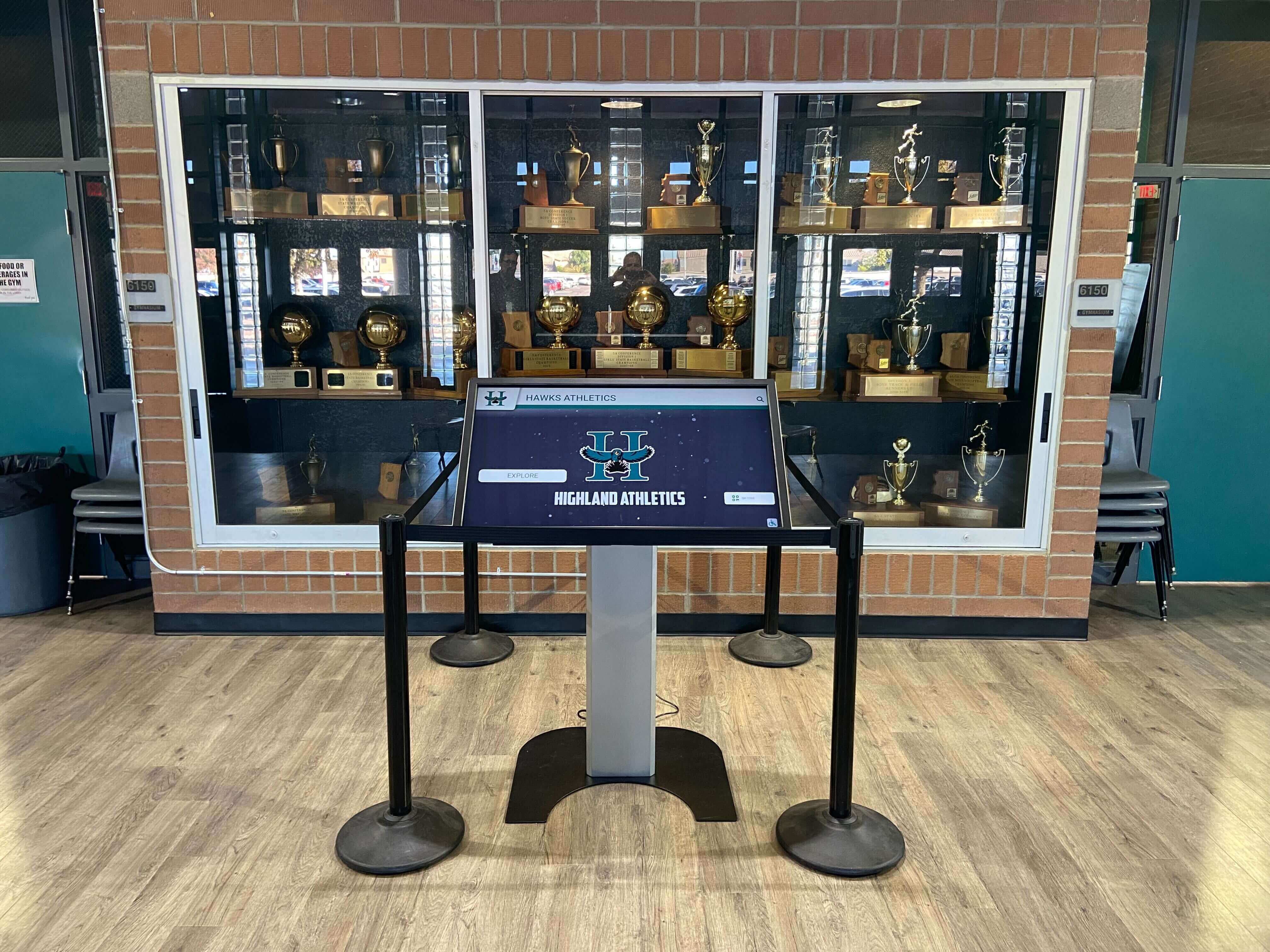
Every high school accumulates decades of achievements worth celebrating—championship trophies, academic awards, student accomplishments, and memorable moments that define institutional excellence. Yet many schools struggle with limited trophy case space that forces impossible decisions about which achievements deserve visibility, aging display cases that no longer reflect school pride effectively, and static presentations that fail to engage today’s digitally-oriented students.
Traditional trophy cases served schools well for generations, but their inherent limitations increasingly conflict with modern recognition needs. Physical space constraints mean countless achievements remain boxed in storage, trophies tarnish and deteriorate over time despite care, and static glass displays cannot tell the rich stories behind each award or create the interactive experiences that resonate with contemporary students.
This comprehensive guide explores innovative high school trophy case ideas that overcome traditional limitations while honoring school heritage, from creative physical display strategies to cutting-edge digital recognition solutions that provide unlimited capacity, engage students through interactive technology, and preserve achievement history permanently for future generations.
When facilities managers and athletic directors evaluate trophy case options, the right solutions balance practical constraints with aspirational goals—maximizing recognition visibility within available space, creating displays that inspire current students and impress visitors, maintaining flexibility to accommodate future achievements, and potentially transitioning toward recognition systems that scale sustainably across decades of continued school excellence.

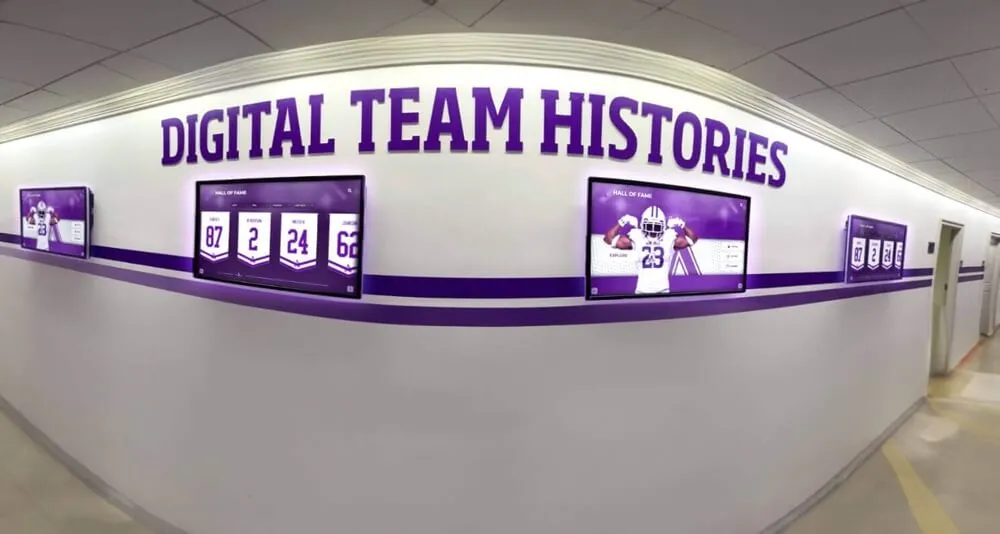
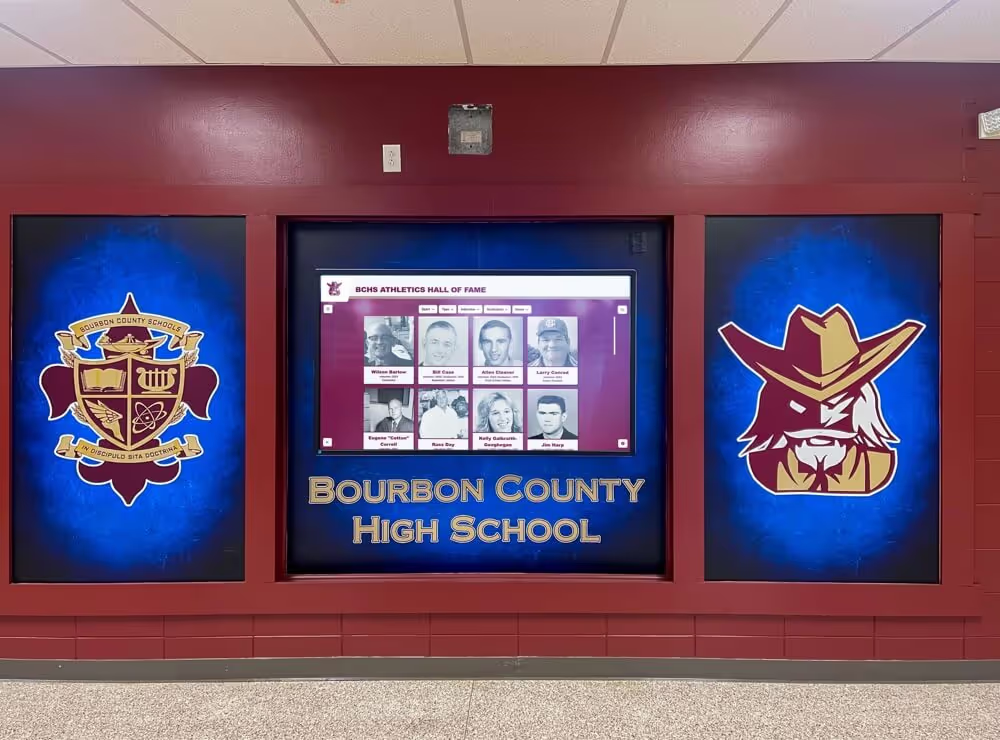
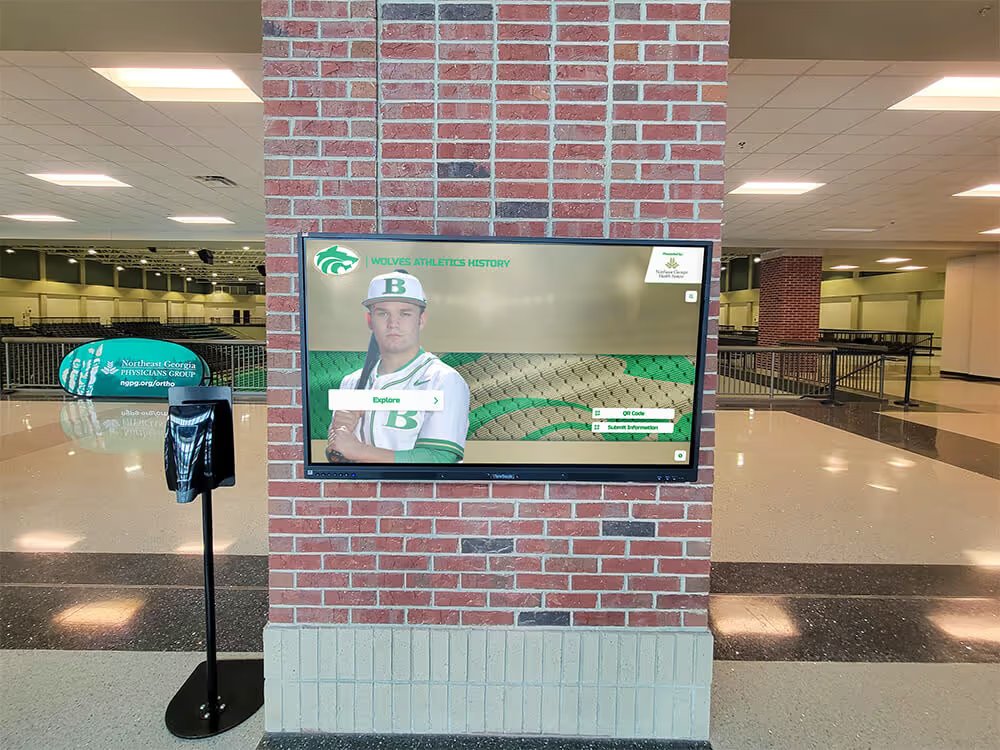
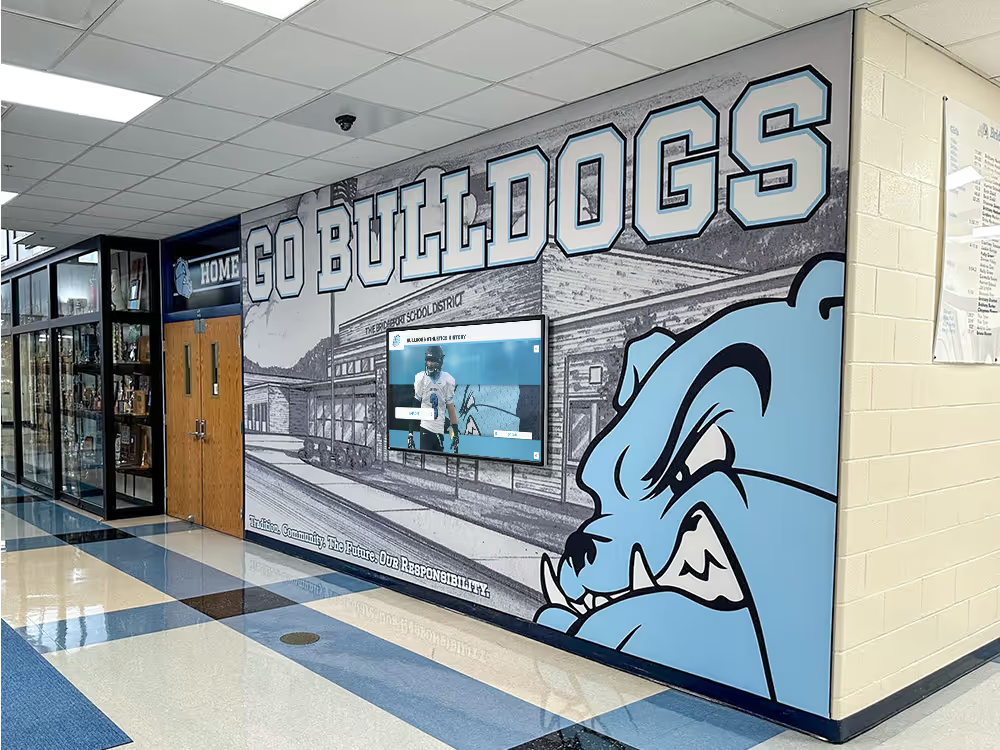
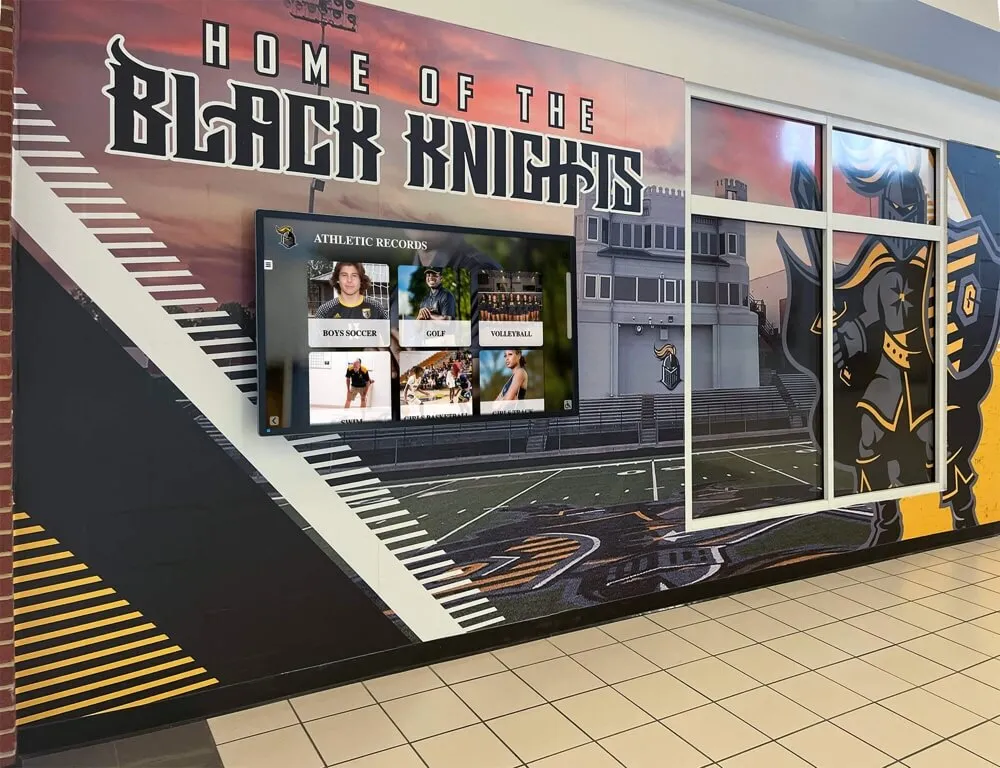
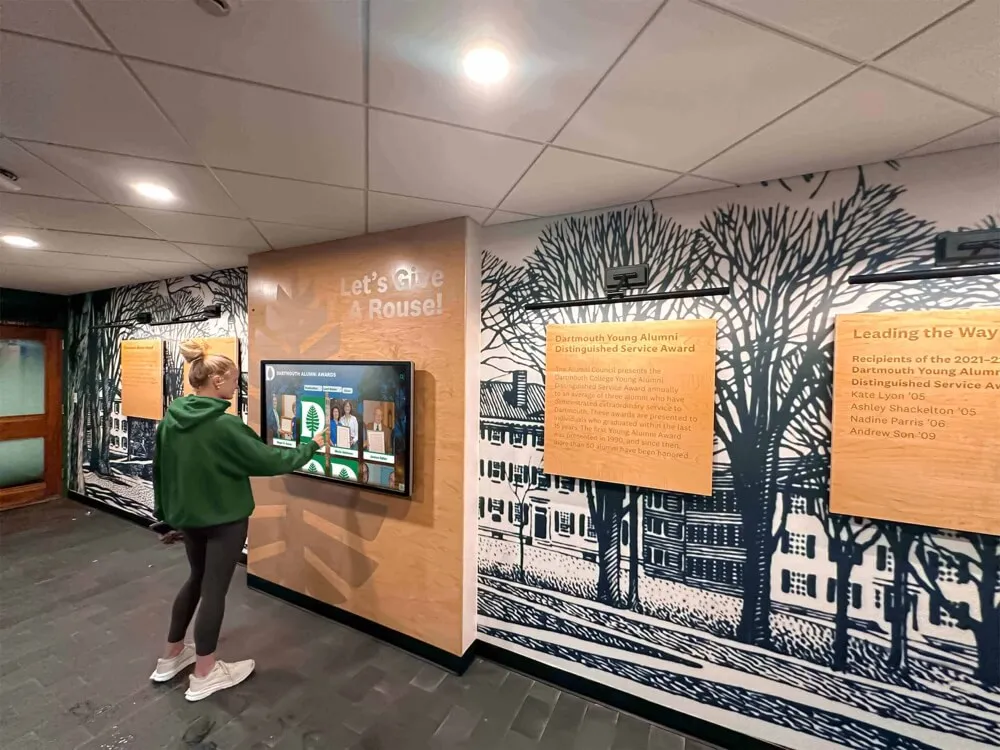
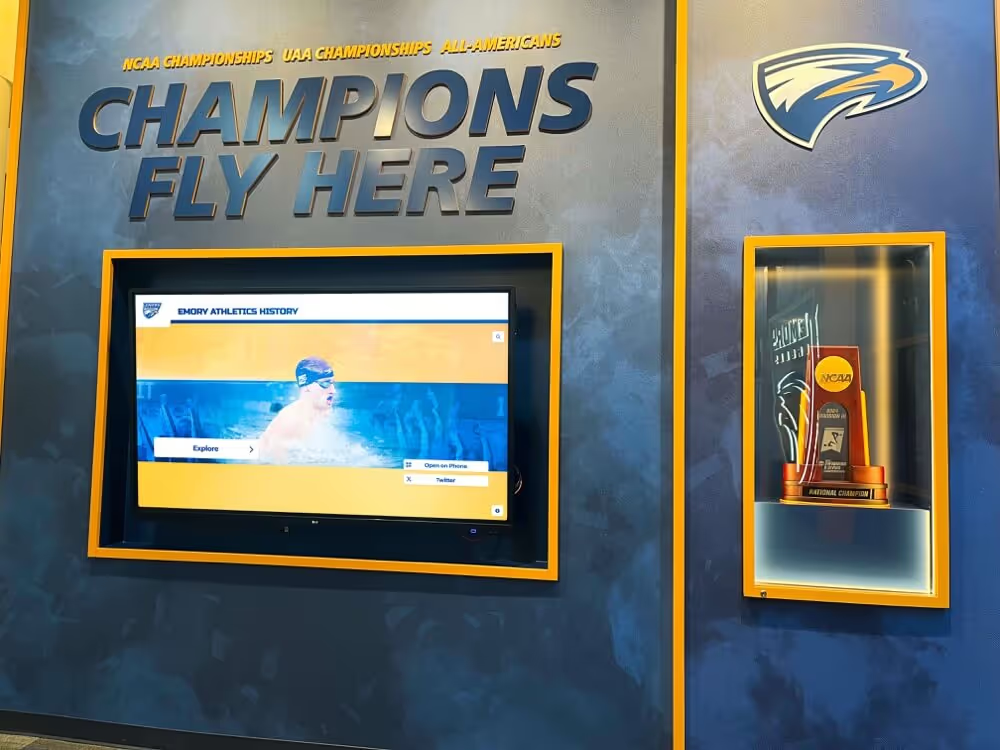
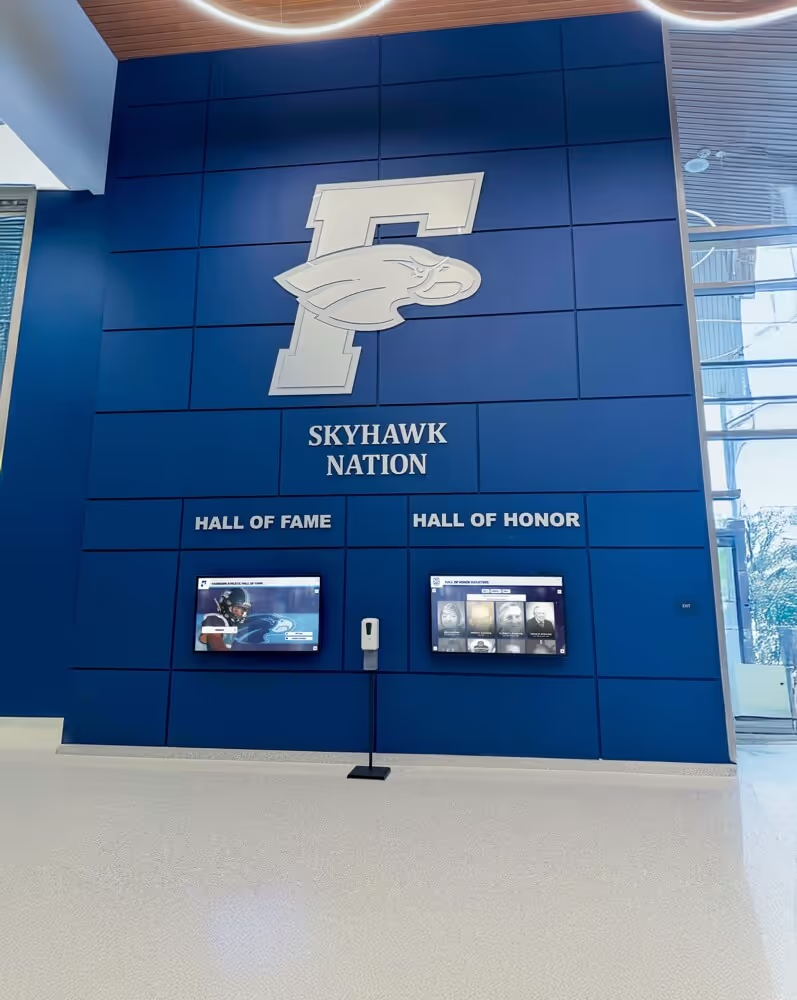
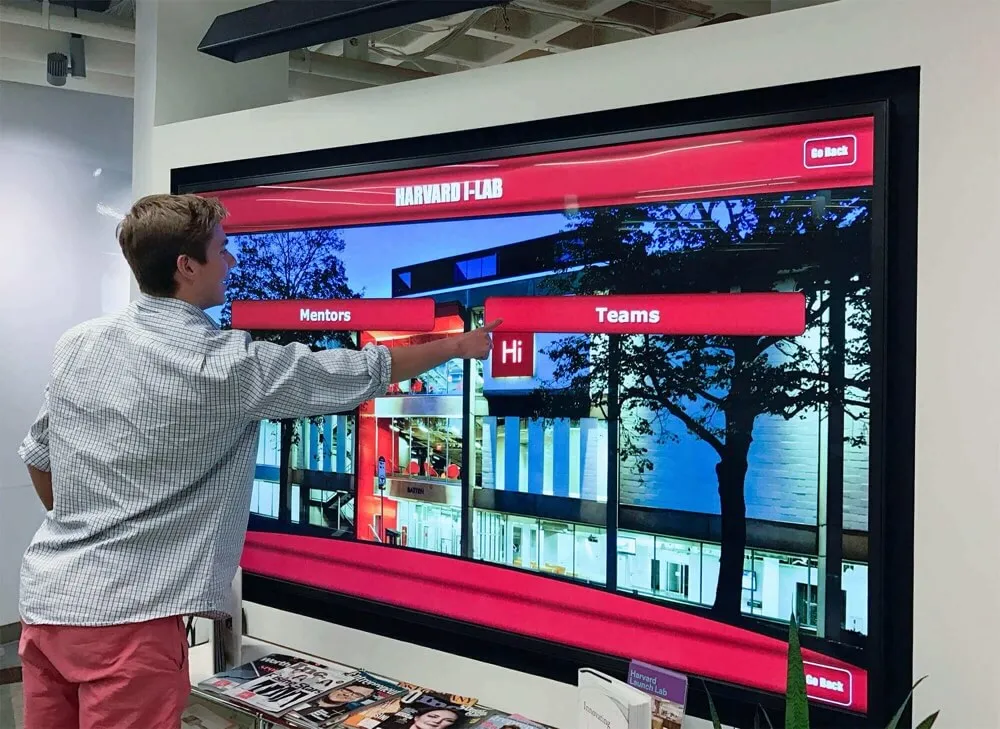
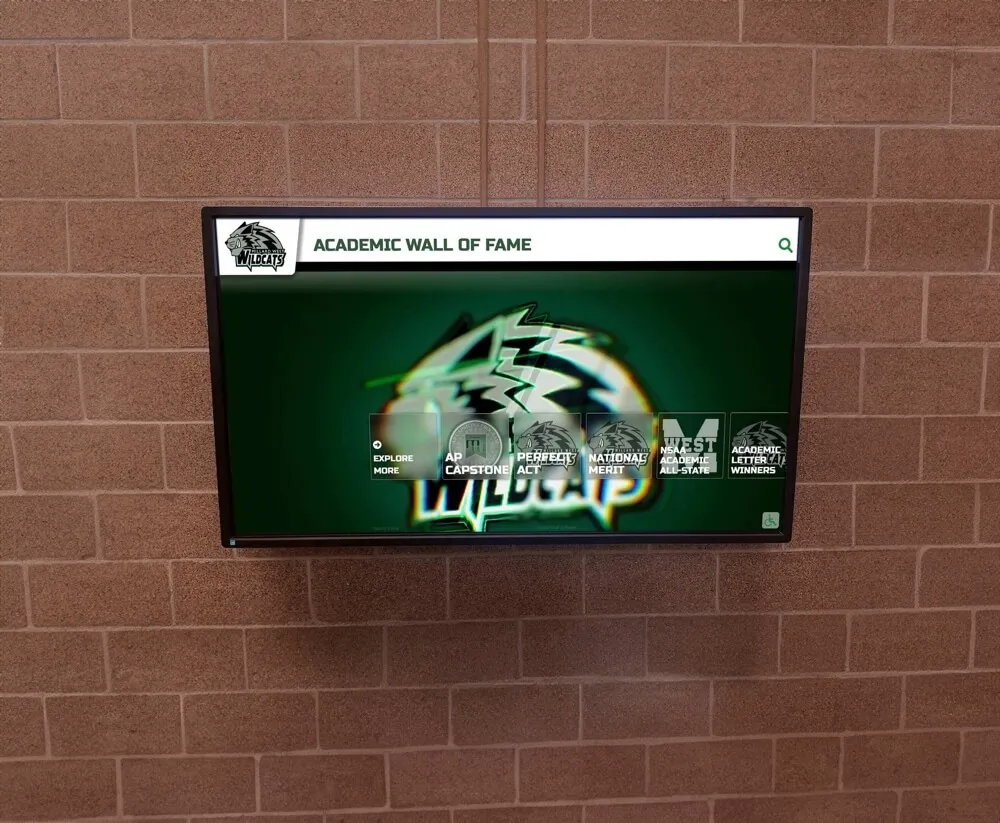
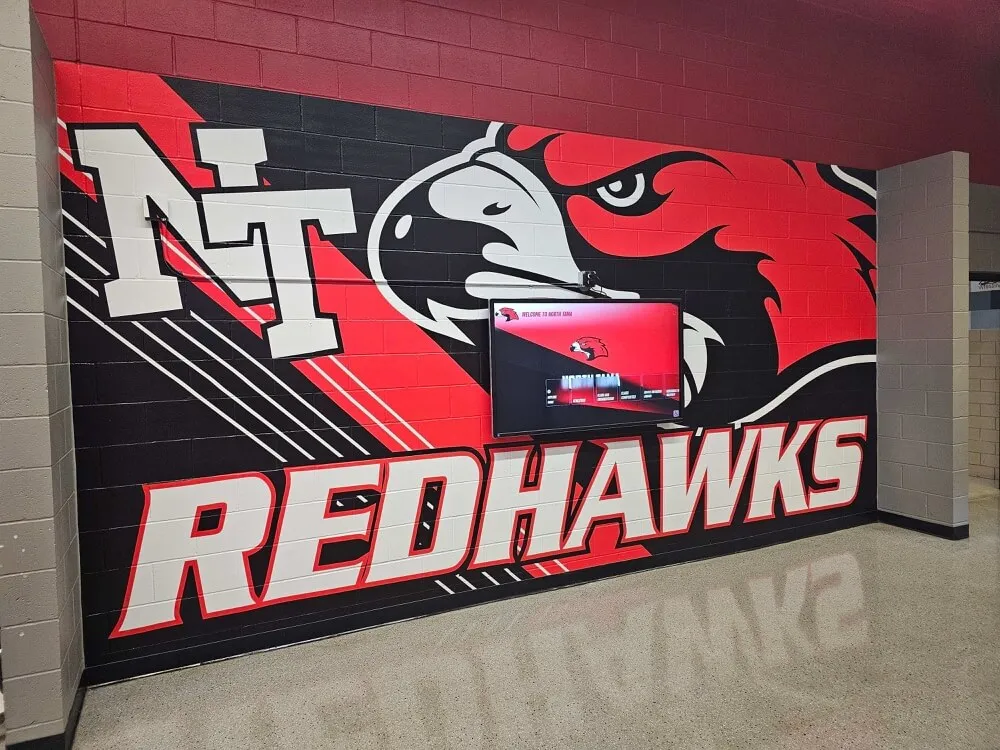
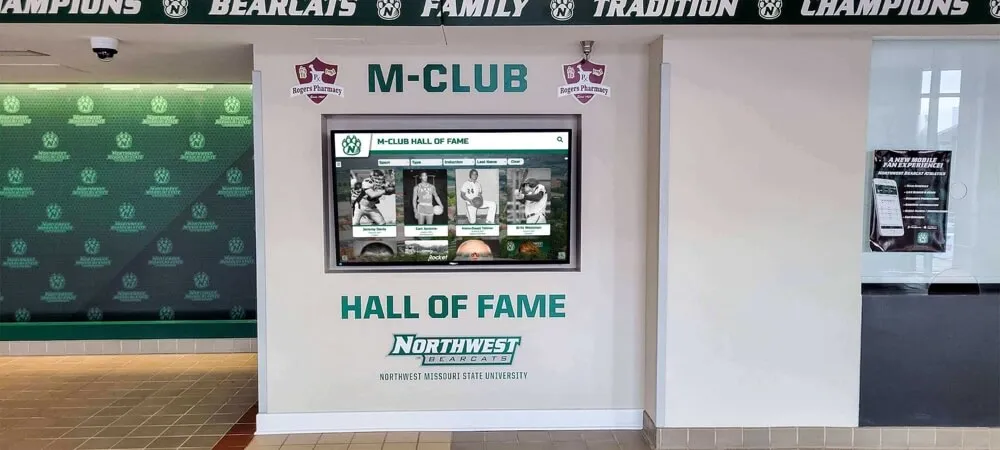
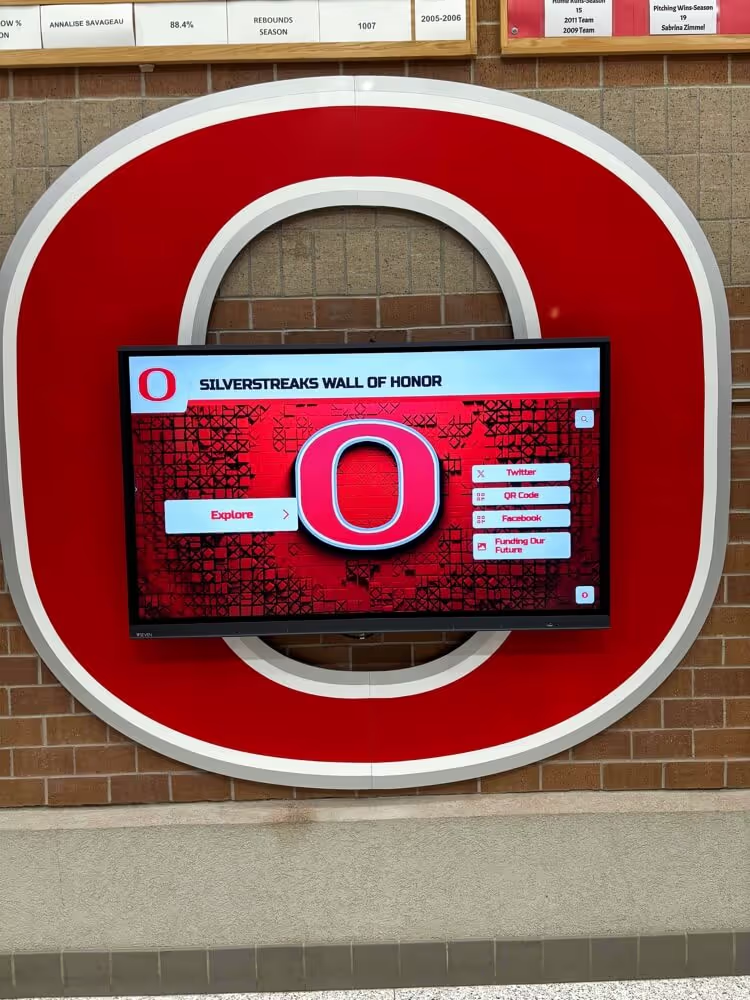
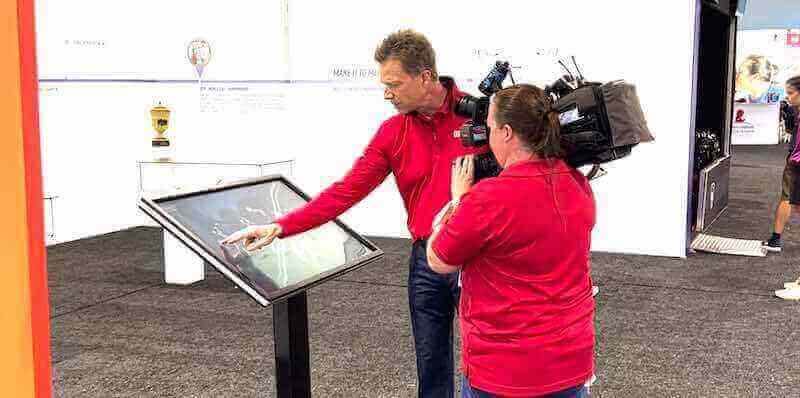
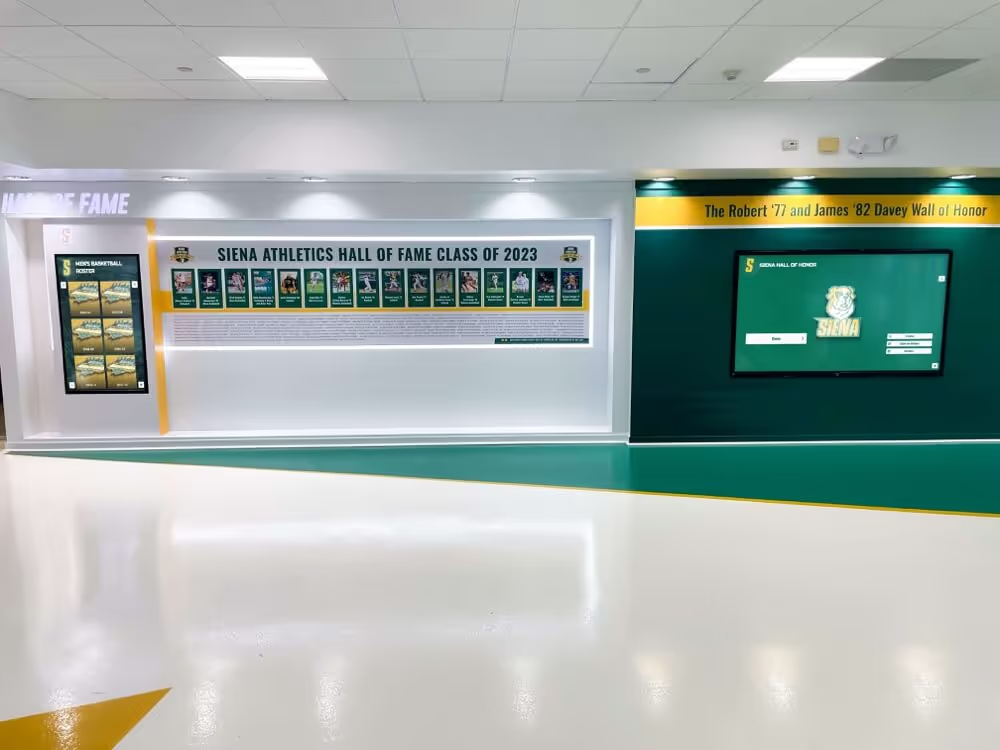
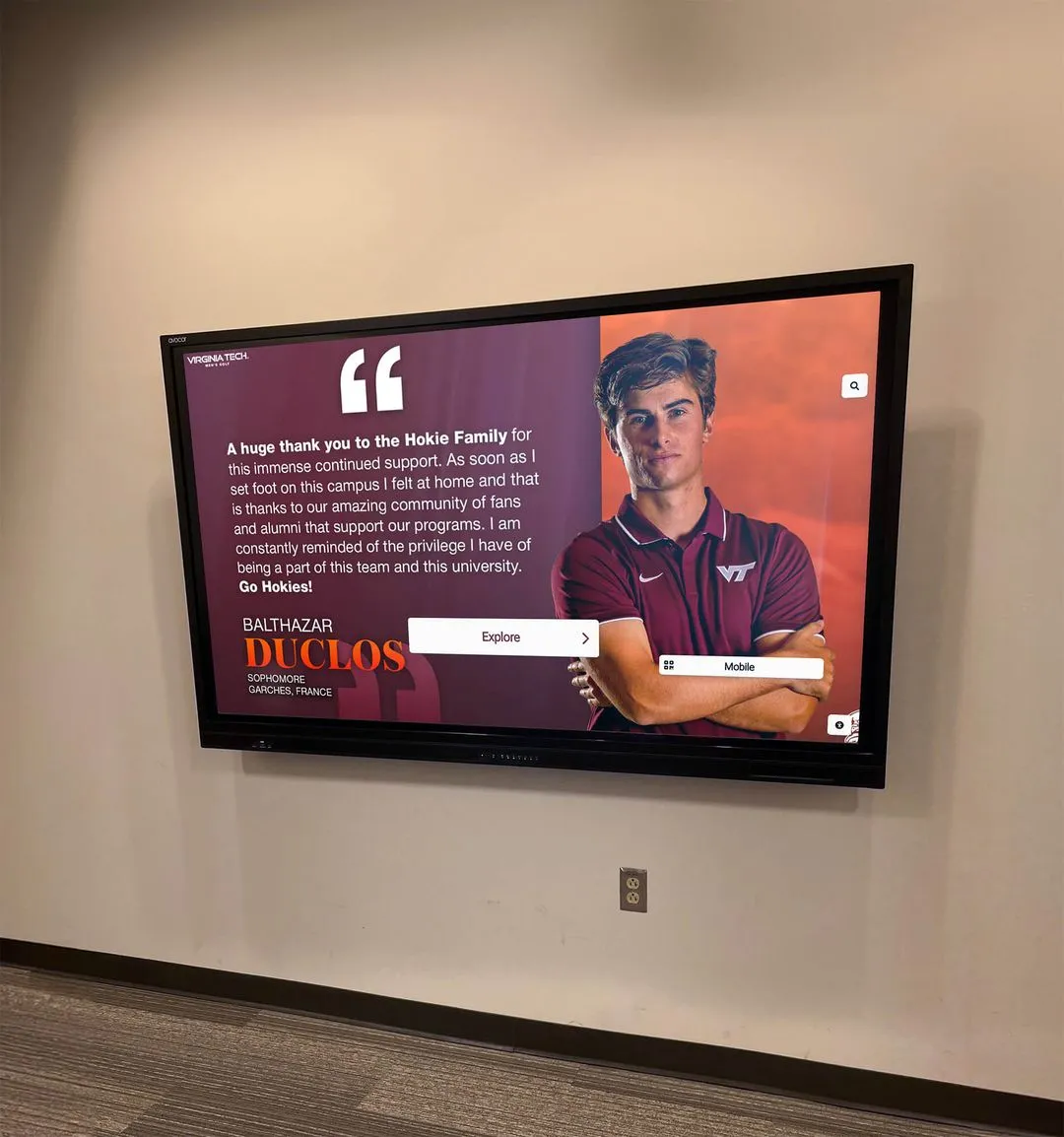
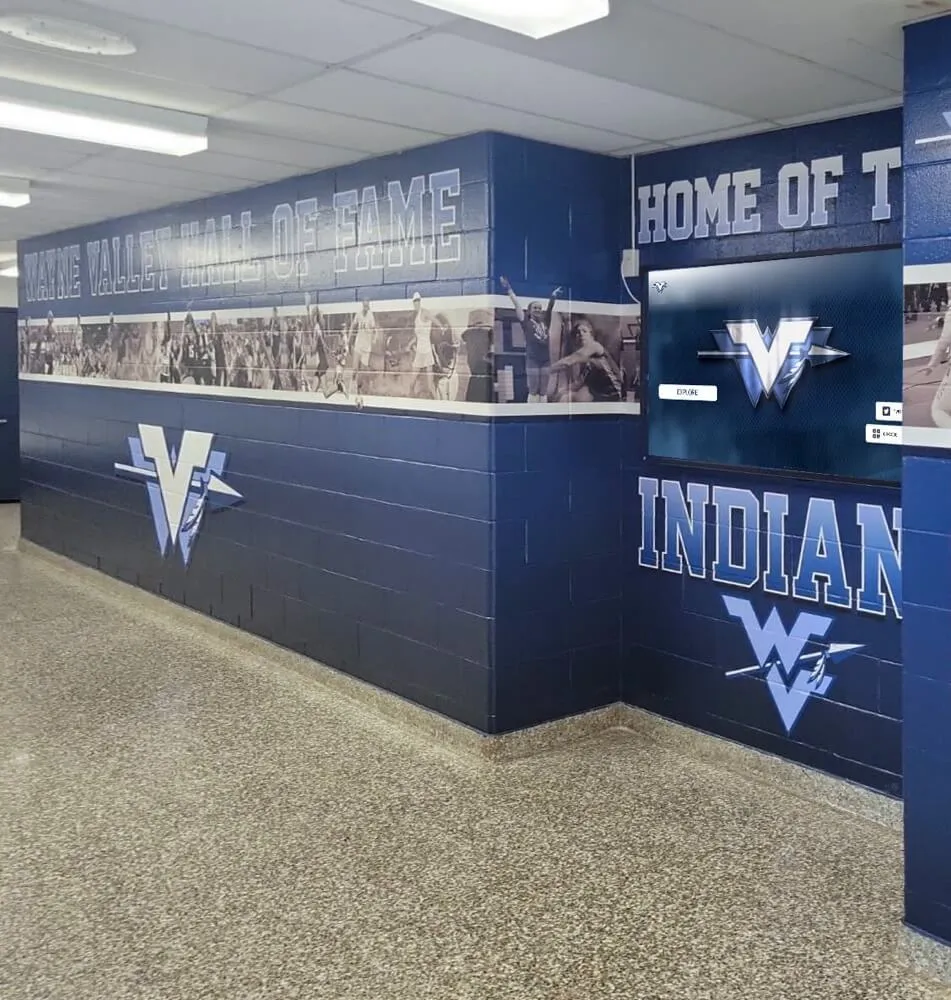
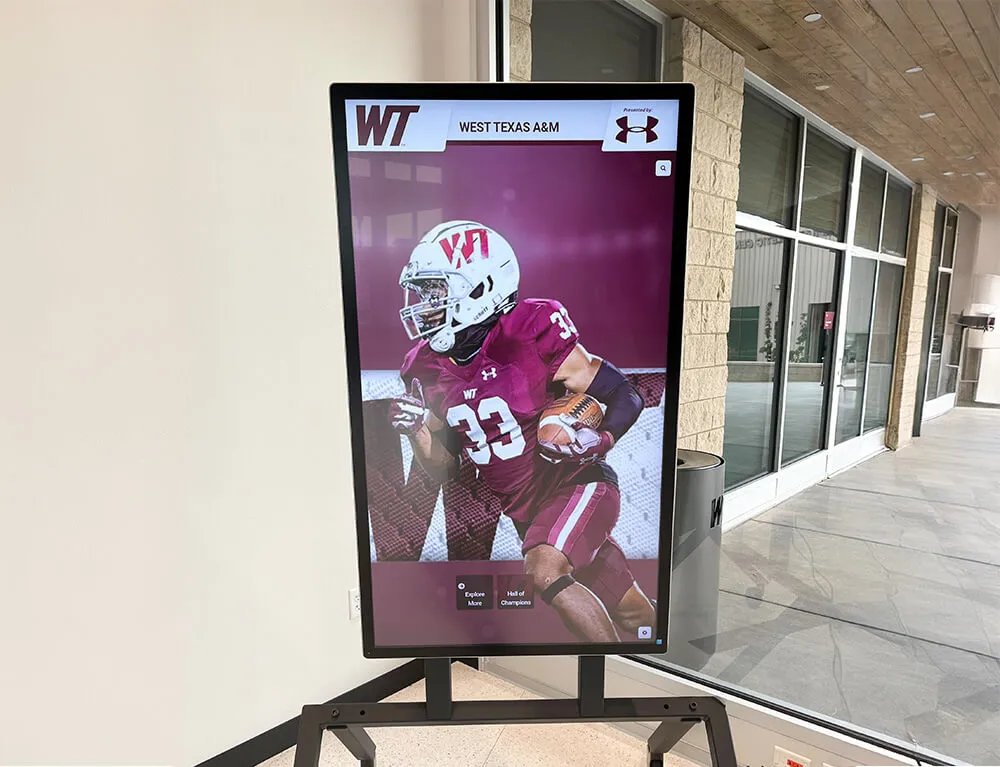
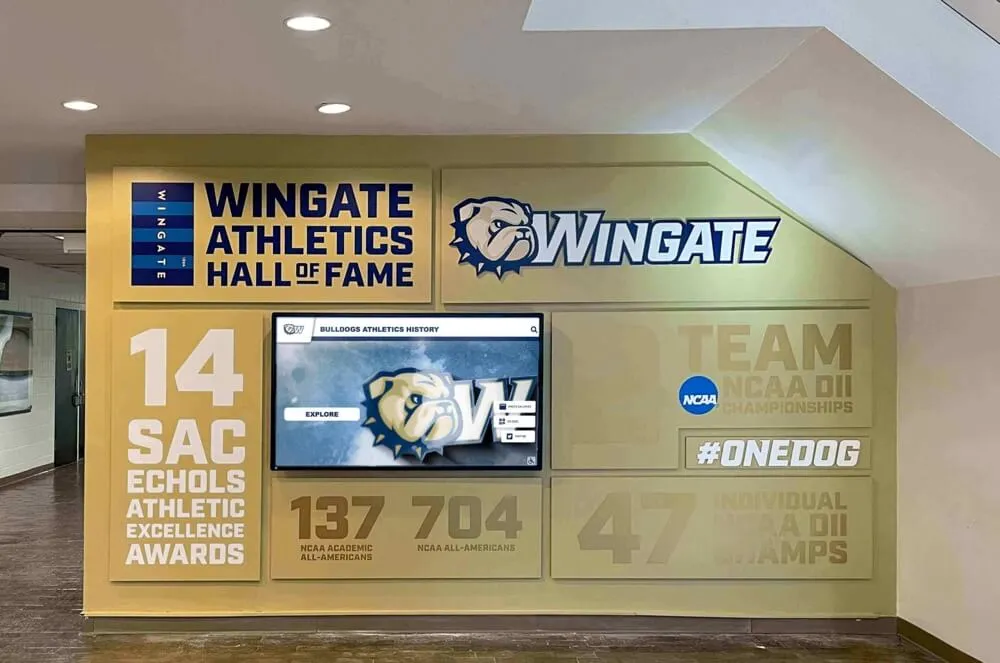
Modern trophy case solutions integrate digital technology with traditional display spaces for enhanced recognition capacity
Understanding the Traditional Trophy Case Challenge
Before exploring innovative solutions, recognizing why conventional trophy cases increasingly struggle to meet school recognition needs helps justify investment in alternative approaches.
Physical Space Limitations
The fundamental challenge facing traditional trophy cases involves finite physical capacity that cannot grow alongside accumulating school achievements:
Inevitable Capacity Constraints
Even generously sized trophy case installations eventually fill completely, forcing recognition coordinators to make painful decisions about which achievements warrant continued display and which must be removed. Every school championship, individual award, or team recognition displaces something else—a zero-sum recognition approach that inevitably leaves deserving achievements invisible.
Schools with rich athletic traditions face particularly acute space pressure. A successful multi-sport program might win dozens of conference championships, regional titles, and state competitions annually. Within a few years, traditional cases overflow, forcing removal of historical awards to accommodate recent achievements—effectively telling past champions their accomplishments no longer matter enough for visibility.
Storage vs. Display Dilemma
Most schools maintain storage areas filled with trophies, plaques, and awards removed from overfull cases. These boxed achievements represent genuine accomplishments—state championships, individual records, team milestones—but remain completely invisible to students, families, and visitors. The recognition value of these awards approaches zero when they sit unseen in storage closets.
This creates a recognition paradox where schools possess extensive achievement documentation but can display only a small fraction at any given time. Student-athletes who earned recognition see their trophies relegated to storage within years, diminishing the motivational and inspirational value that public recognition provides.
Maintenance and Deterioration Challenges
Physical trophy cases require ongoing maintenance while the awards themselves deteriorate despite preservation efforts:
Environmental Factors
Trophies and plaques face constant environmental challenges including dust accumulation requiring regular cleaning, moisture and humidity causing tarnishing and corrosion, sunlight exposure fading colors and materials, temperature fluctuations affecting materials differently, and enclosed case environments sometimes accelerating rather than preventing deterioration.
Schools report frustration with trophies that tarnish despite enclosed display, plaques where text becomes illegible over decades, and materials that simply break down over time regardless of preservation efforts.
Physical Access Requirements
Maintaining traditional trophy cases demands physical access for cleaning, rearranging displays, adding new achievements, and repairing damage. This seemingly simple requirement creates ongoing burdens—facilities staff must unlock cases, carefully remove and replace items, coordinate with athletic departments about display organization, and allocate time during already busy schedules for trophy case maintenance.
During particularly busy seasons, trophy case updates get deferred indefinitely, leaving recent achievements unrecognized for months while staff juggle competing priorities with limited time and resources.
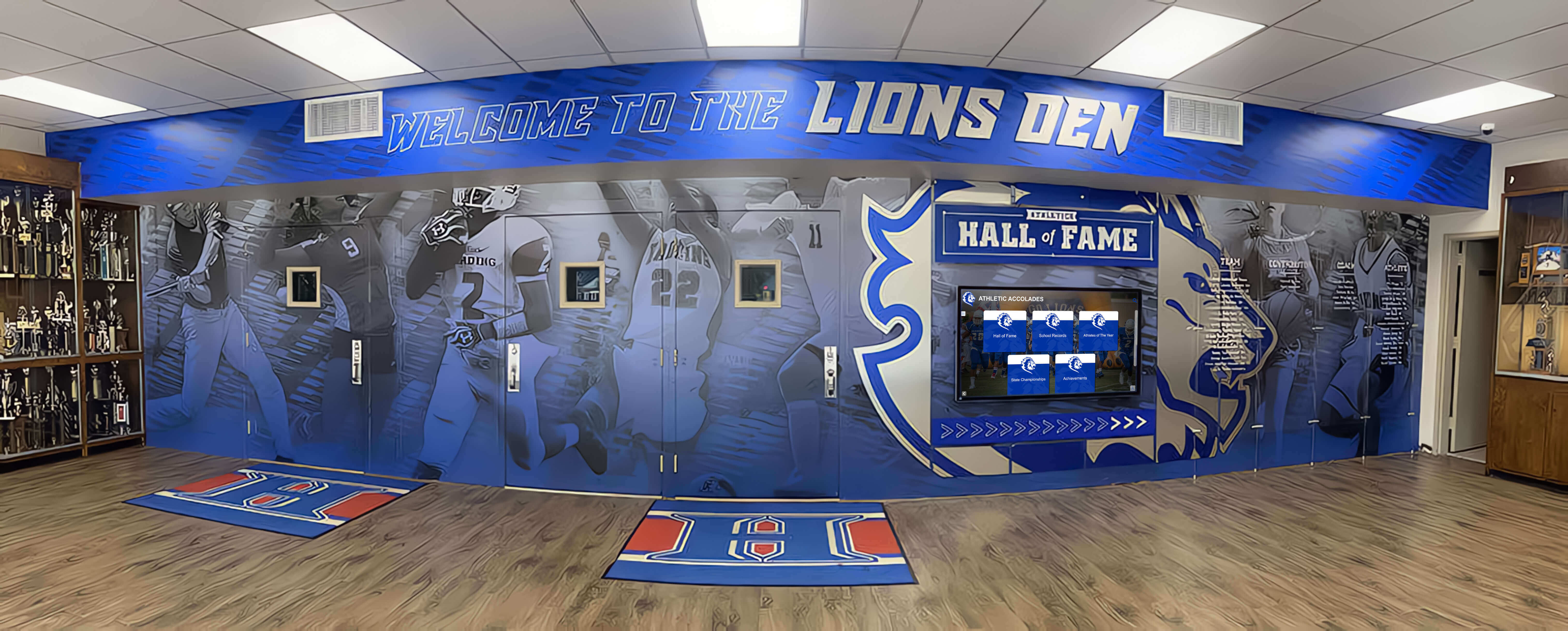
Traditional trophy cases offer familiar recognition but face inevitable space and maintenance constraints
Limited Storytelling Capability
Perhaps the most significant limitation involves traditional cases’ inability to provide context and tell achievement stories effectively:
Surface-Level Recognition
Physical trophies typically display minimal information—achievement type, year, and perhaps team or individual names. Viewers seeing championship trophies might not understand the competition level, the dramatic game or season story, the individuals who contributed, or the broader significance within school or sport history.
This surface-level recognition reduces rich achievement narratives to anonymous objects that visitors glance at briefly before moving on, missing opportunities to create emotional connections that inspire current students and build school pride effectively.
Static Presentation
Traditional displays cannot rotate content seasonally, provide different information to different audiences, incorporate video highlights, link teammates and related achievements, or adapt presentation for various purposes throughout the school year.
During homecoming, schools might want to emphasize historical athletic tradition. During recruitment periods, showcasing diverse achievement types attracts prospective students. Throughout the year, featuring current season content maintains relevance. Traditional trophy cases cannot accommodate these varied needs without constant physical rearrangement.
Creative Traditional Trophy Case Ideas
Before transitioning to digital alternatives, schools can maximize traditional trophy case effectiveness through thoughtful design and organization strategies.
Strategic Organization Approaches
How you arrange traditional trophy cases significantly impacts both visual appeal and recognition effectiveness:
Chronological Timeline Displays
Organize trophy cases as visual timelines showing achievement progression across decades, creating narrative structure that helps viewers understand school tradition evolution. Arrange trophies from oldest to newest reading left to right or top to bottom, include decade markers and historical context notes, and group achievements within time periods showing concentrated success eras.
This chronological approach transforms trophy cases from cluttered collections into historical narratives demonstrating sustained institutional excellence across generations, helping current students understand they’re part of ongoing traditions rather than isolated moments.
Sport-Specific Sections
Dedicate case sections to individual sports, allowing each program to showcase its history comprehensively without competitions for limited space creating inter-sport tensions. Within each sport section, include championship trophies from all levels, individual achievement awards, coaching milestone recognition, and program history notes providing context.
This organization enables fair representation across all athletic programs regardless of trophy size variations, ensures emerging sports receive appropriate recognition alongside established programs, and creates clear navigation helping viewers find specific sports they’re interested in exploring.
Achievement Type Categories
Rather than organizing by sport or time, group achievements by type including state championships regardless of sport, conference titles across programs, individual records and honors, academic achievement awards, and community service recognition.
This categorical approach enables schools to create focused displays celebrating state championship tradition collectively, emphasizing the school’s competitive excellence regardless of which sport achieved it, while ensuring academic and character achievements receive visibility equal to athletic recognition.
Learn more about comprehensive recognition approaches in digital trophy display systems that overcome traditional organizational constraints.
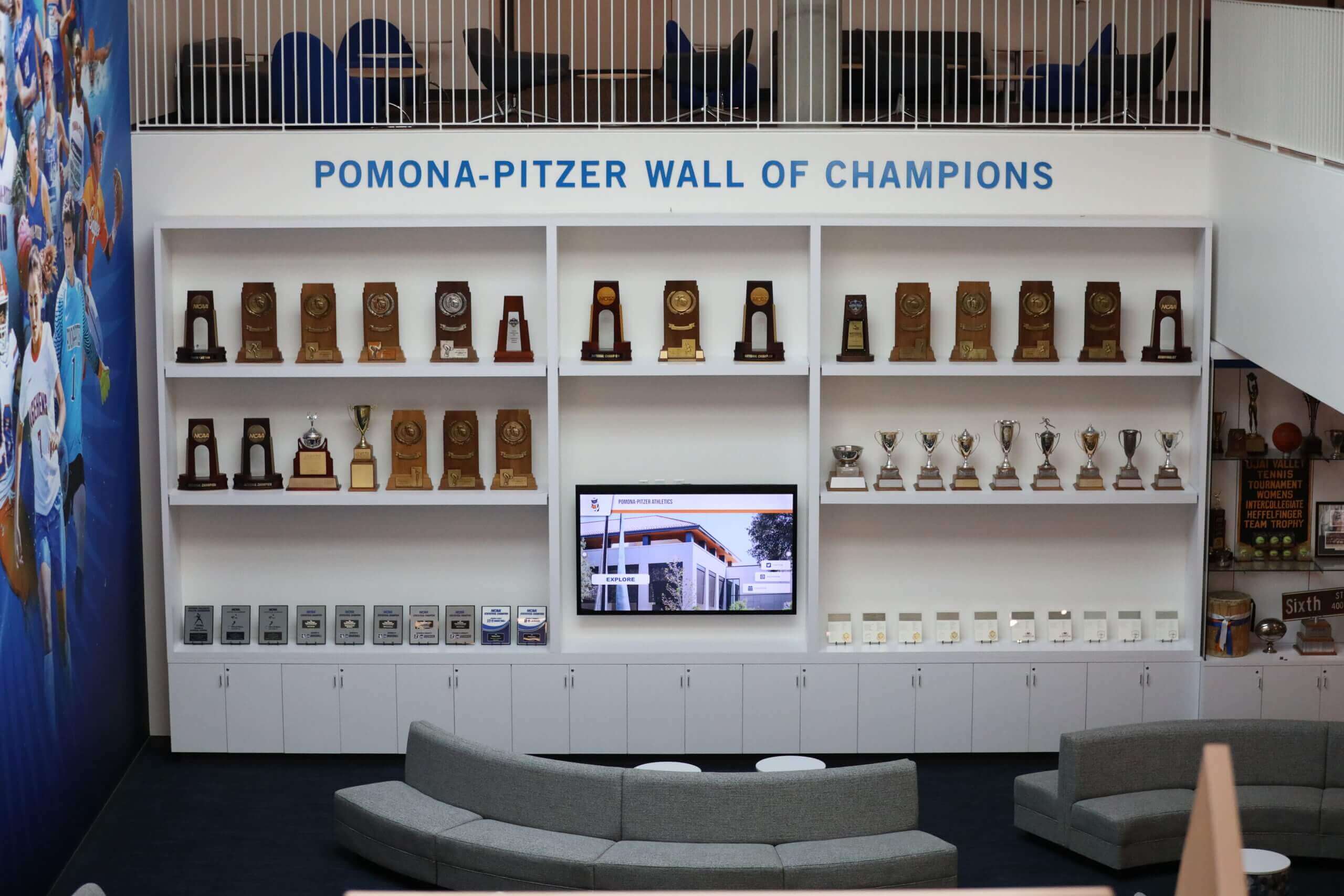
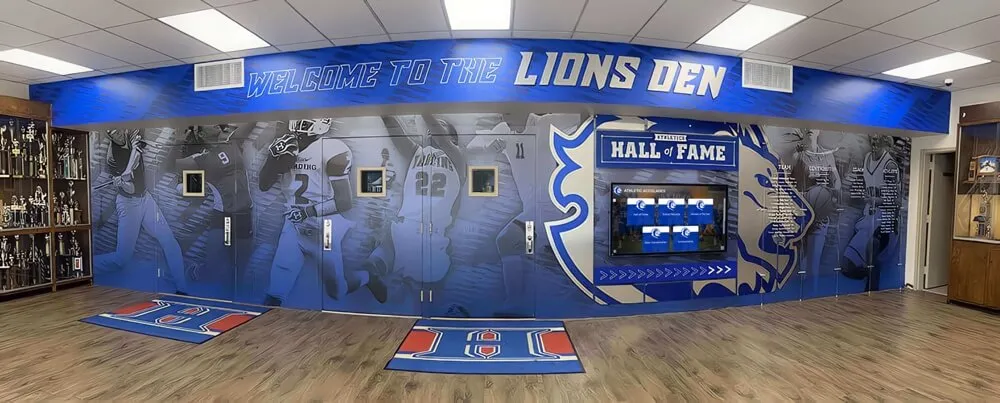
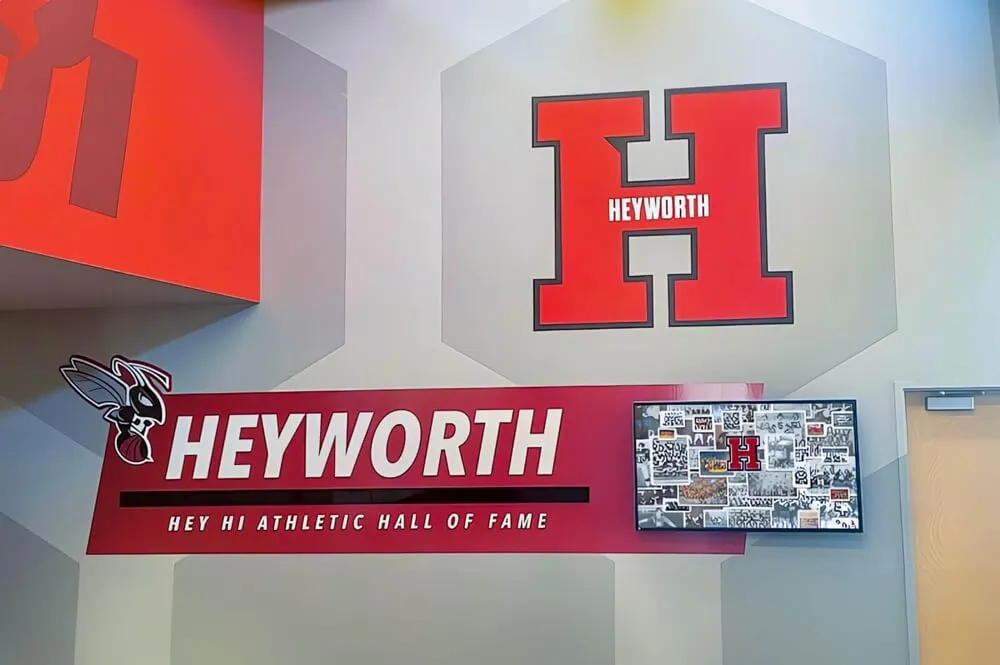
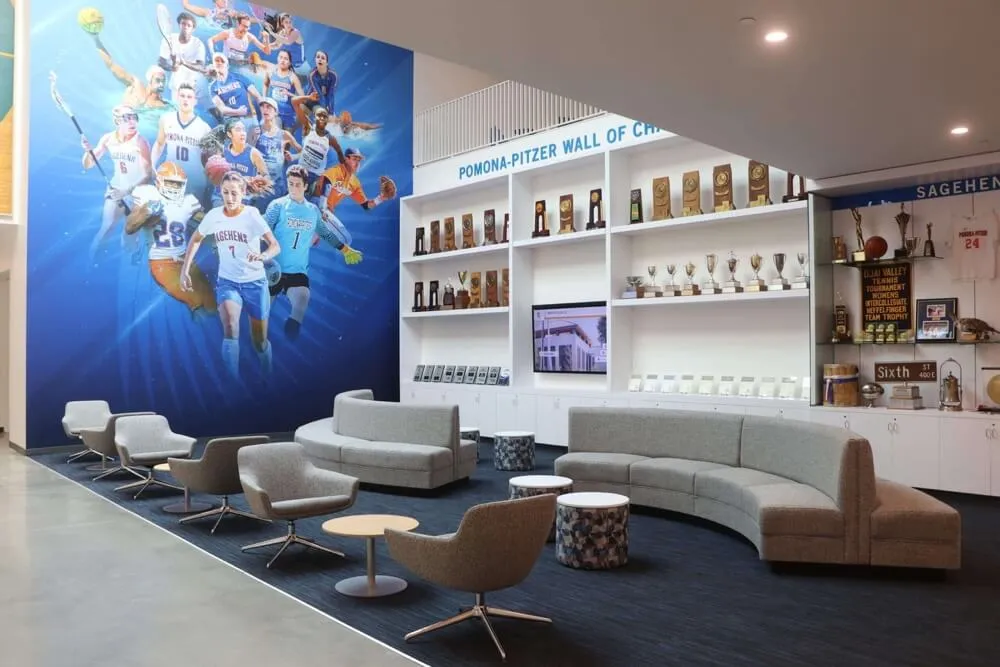
Dedicated trophy display spaces with organized sections create engaging recognition experiences
Maximizing Physical Space
When space constraints limit traditional trophy case capacity, creative approaches help showcase more achievements:
Rotation Display Systems
Rather than attempting to display everything simultaneously, implement rotation schedules that periodically change case contents including seasonal rotations emphasizing current sports, anniversary displays featuring milestone year achievements, reunion displays during alumni events, and historical theme months exploring different school history eras.
Rotation ensures every achievement eventually receives display time while maintaining fresh, current content that students engage with rather than ignoring familiar static displays they pass daily.
Vertical Space Utilization
Many schools underutilize vertical space, focusing trophy cases at eye level while leaving wall space above and below empty. Floor-to-ceiling trophy cases dramatically increase capacity, wall-mounted trophy shelves extend beyond traditional case dimensions, and creative mounting using shadow boxes and individual display platforms fills previously empty wall areas.
Vertical expansion requires ensuring upper displays remain visible and accessible for maintenance while maintaining aesthetic appeal across the entire vertical span rather than creating top-heavy or cluttered appearances.
Creative Display Formats
Think beyond standard glass-front cases to alternative formats including open shelf displays for non-fragile items, mounted individual trophies on plaques directly on walls, shadow box frames creating dedicated spaces for significant awards, hanging banners commemorating championships and achievements, and wall-mounted acrylic displays showing photos and smaller items.
These varied formats create visual interest while accommodating diverse achievement types that may not fit traditional case dimensions effectively.
Enhancing Traditional Cases
Simple enhancements make traditional trophy cases more engaging and informative:
Improved Labeling and Context
Replace minimal trophy plate inscriptions with comprehensive labeling including achievement details and competition context, individual contributor recognition, season records and statistics, coach and key player identification, and historical significance notes.
Enhanced labeling transforms anonymous trophies into stories that viewers connect with emotionally, understanding not just what was won but who achieved it, how they accomplished it, and why it mattered to school history.
Photo Integration
Combine physical trophies with photographs showing action shots from championship games, team photos from winning seasons, individual award recipients in context, and historical images connecting achievements to school history and facilities.
Visual context brings static trophies to life, helping viewers connect abstract awards to real people, genuine emotions, and specific moments rather than seeing anonymous metal objects divorced from human achievement stories.
Lighting and Aesthetics
Professional presentation elevates trophy case impact through focused lighting highlighting key achievements, consistent background colors unifying displays, strategic spacing preventing cluttered appearances, and regular cleaning maintaining professional presentation standards.
Schools report that simple lighting upgrades dramatically improve trophy case visibility and impact, transforming neglected displays into focal points that capture visitor attention and demonstrate institutional pride in achievement recognition.
Explore creative recognition ideas in student awards programs that extend beyond traditional athletic trophies.
Modern Digital Trophy Case Solutions
Digital recognition technology addresses traditional trophy case limitations while creating engagement impossible with physical displays, offering compelling alternatives for forward-thinking schools.
Understanding Digital Display Advantages
Before implementing digital solutions, understanding specific benefits helps justify investment and set appropriate expectations:
Unlimited Recognition Capacity
The most transformative advantage involves eliminating physical space constraints entirely. A single 55-inch digital display can showcase detailed profiles for thousands of achievements, individuals, and teams without removing anything to accommodate new recognition. Every championship throughout school history receives comprehensive documentation, individual records across all sports and activities get preserved permanently, and academic achievements receive visibility equal to athletic recognition.
Schools implementing digital trophy cases discover freedom to recognize comprehensively rather than selectively, honoring every achievement without painful decisions about what deserves visibility and what must be hidden in storage.
Rich Multimedia Storytelling
Digital platforms enable content impossible with physical trophies including high-resolution photos showing achievements in context, video highlights capturing championship moments, athlete and coach interviews reflecting on experiences, complete team rosters with individual recognition, detailed statistics and achievement documentation, and historical context connecting achievements to broader school narratives.
This multimedia capacity transforms recognition from static object displays to engaging stories that capture attention, create emotional connections, and inspire current students through understanding how achievements were accomplished rather than simply seeing trophy results.
Interactive Exploration Experiences
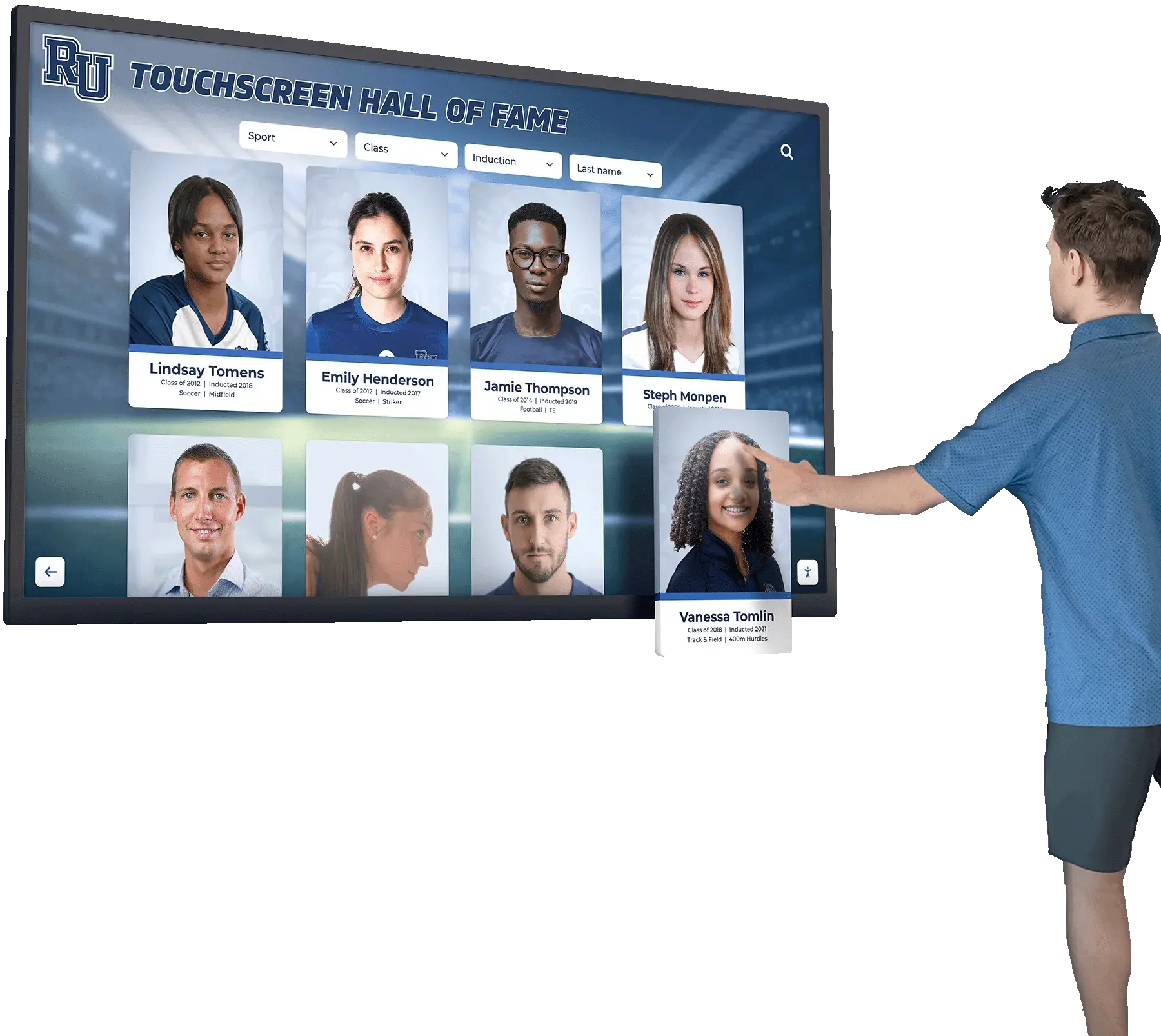
Touchscreen functionality creates active engagement rather than passive viewing through powerful search enabling visitors to find specific individuals or achievements instantly, filtering by sport, year, achievement type, or other categories, detailed individual profiles telling complete achievement stories, related content linking connecting teammates and contemporary achievements, and self-directed exploration letting visitors pursue their specific interests.
Schools implementing interactive trophy displays report visitors spending 5-10 minutes actively exploring recognition content compared to 30-60 seconds glancing at traditional cases—dramatically increased engagement that maximizes recognition impact and visibility.
Learn about interactive display design in touchscreen experience optimization that maximizes student engagement and usability.
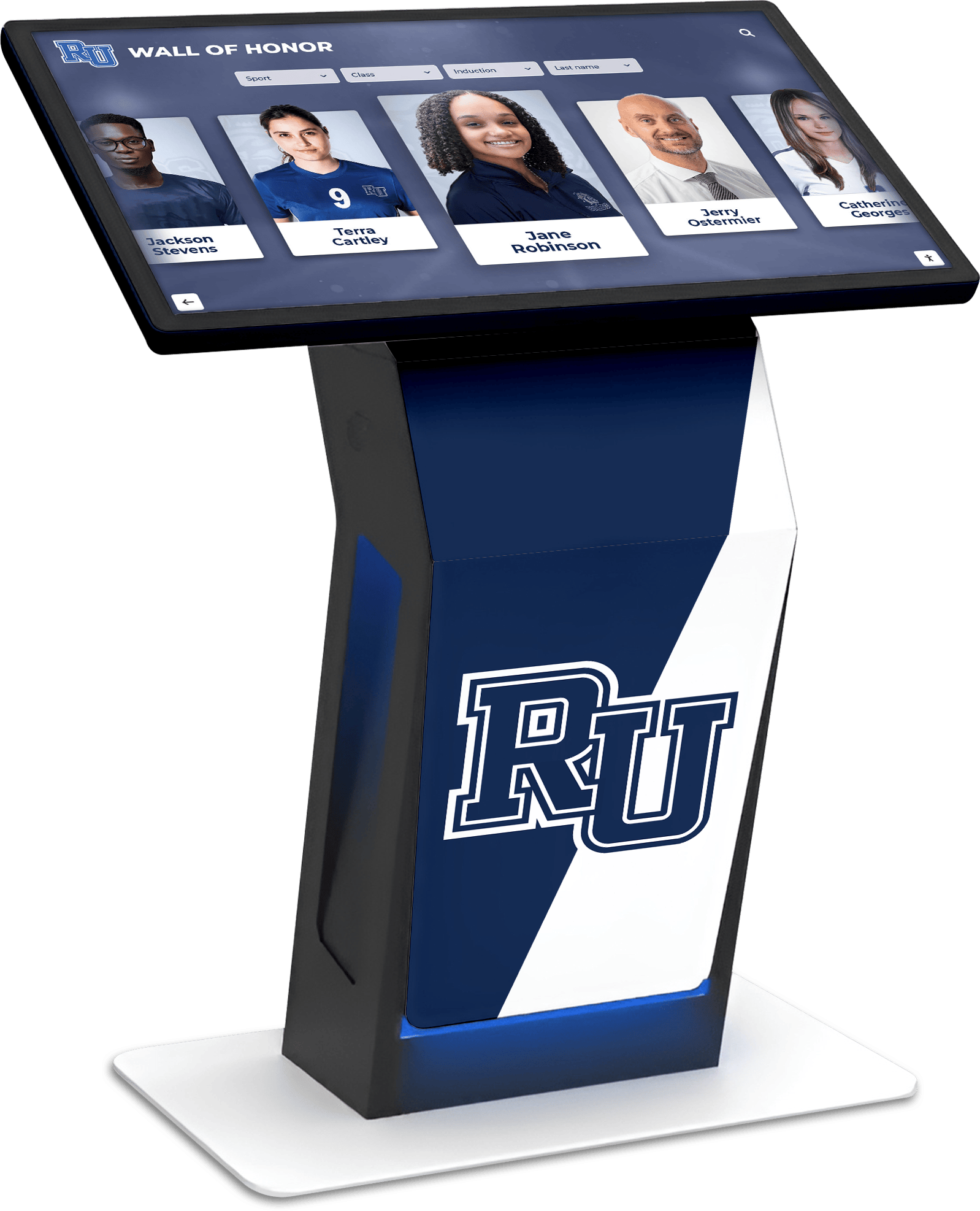
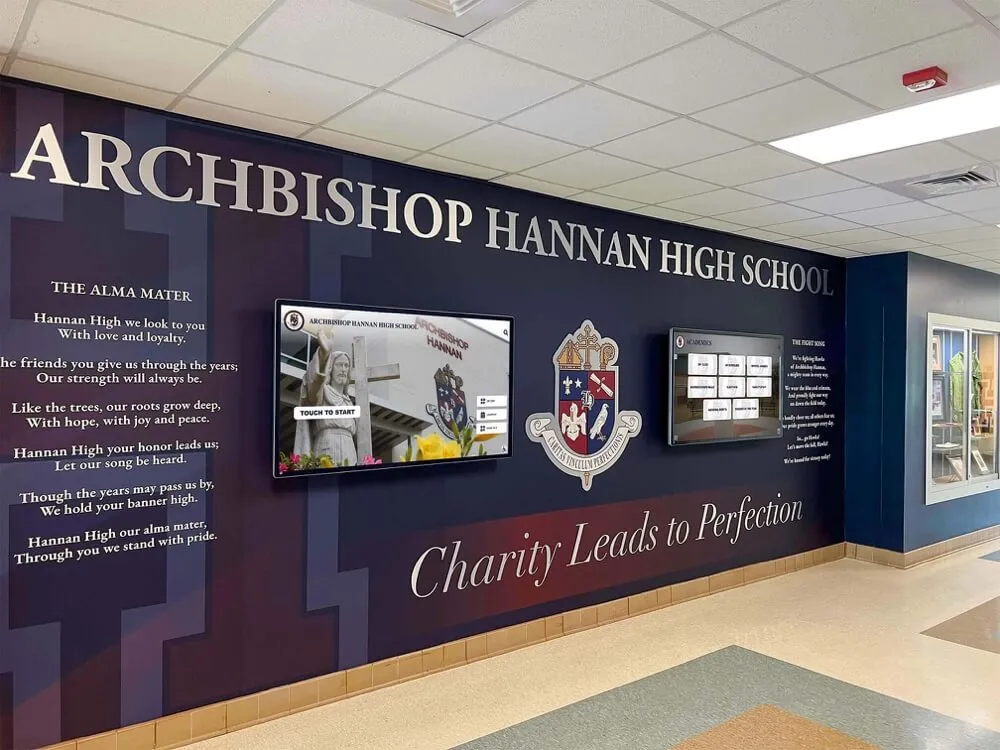
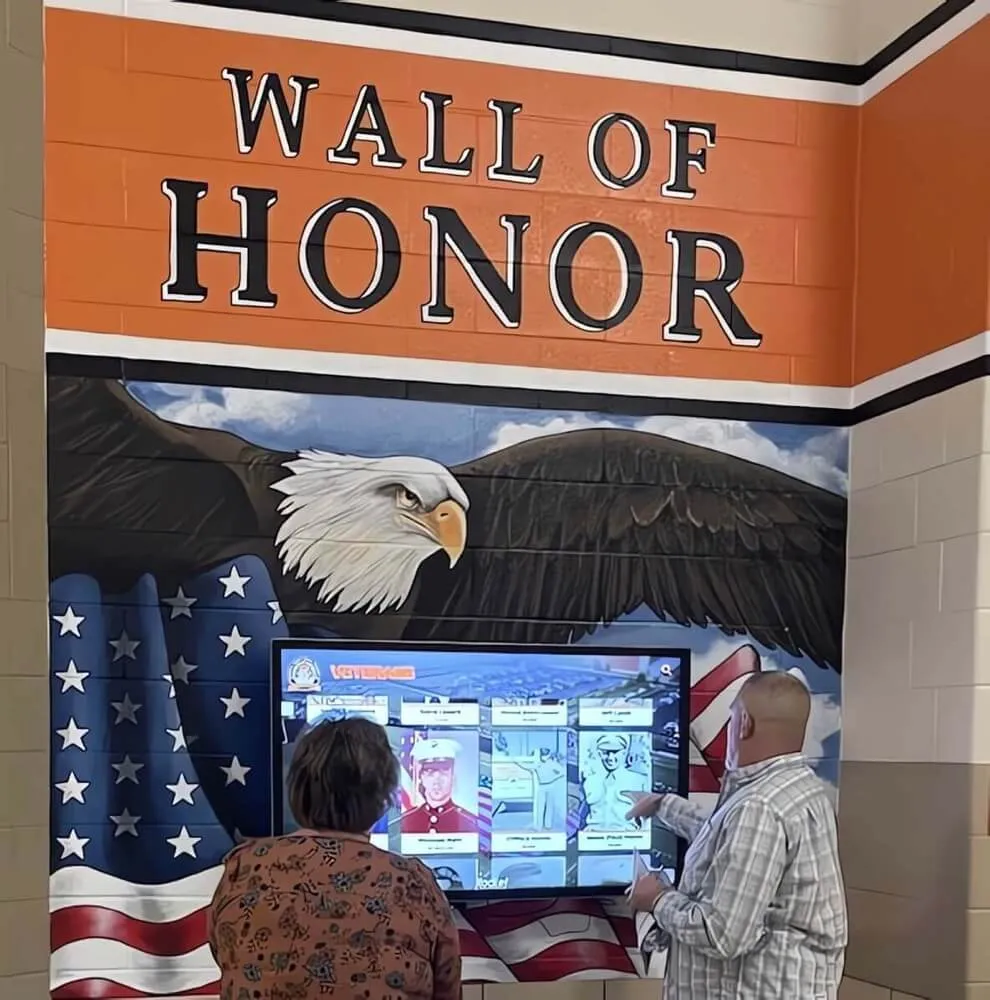
Digital touchscreen displays enable unlimited recognition capacity and interactive exploration impossible with physical cases
Digital Display Implementation Options
Schools can implement digital recognition through various configurations matching different needs, budgets, and spaces:
Wall-Mounted Touchscreen Displays
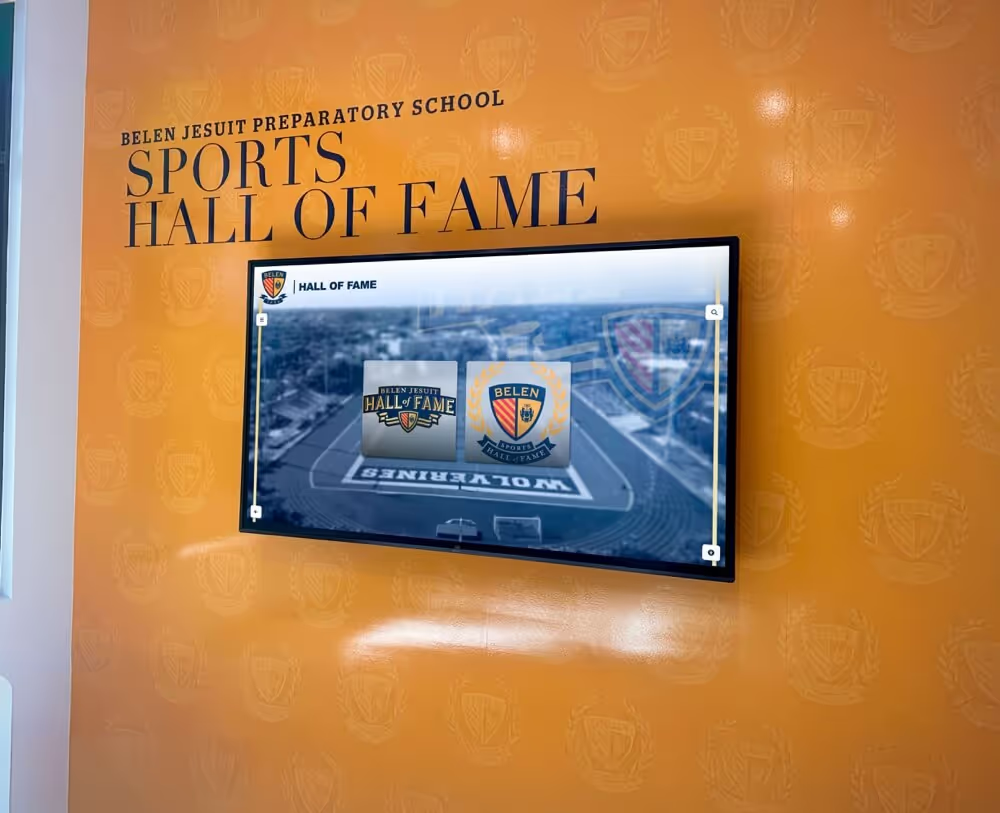
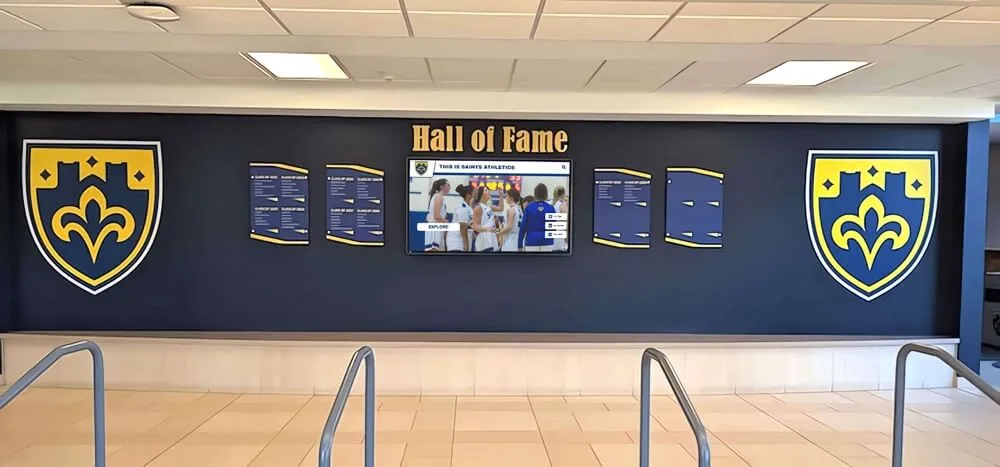
Professional installations integrate touchscreens directly into hallway or lobby walls, creating sleek recognition focal points including commercial-grade displays rated for continuous public operation, professional mounting ensuring security and proper viewing angles, intuitive touch interfaces accessible to all ages and abilities, and cloud-based content management enabling remote updates from any device.
Wall-mounted displays work particularly well for main entrance lobbies, athletic facility hallways, and locations where floor space is limited but wall space accommodates substantial installations.
Freestanding Interactive Kiosks
Purpose-built kiosks create striking recognition installations featuring custom fabrication matching school colors and branding, integrated displays at optimal viewing and interaction heights, built-in cable management and equipment housing, weighted bases ensuring stability during public interaction, and optional mobility when recognition needs to move between locations.
Kiosks prove effective for lobbies, athletic facilities, alumni centers, and locations where architectural constraints prevent direct wall mounting. Their distinct visual presence creates recognition landmarks that attract attention and invite exploration.
Integrated Hybrid Installations
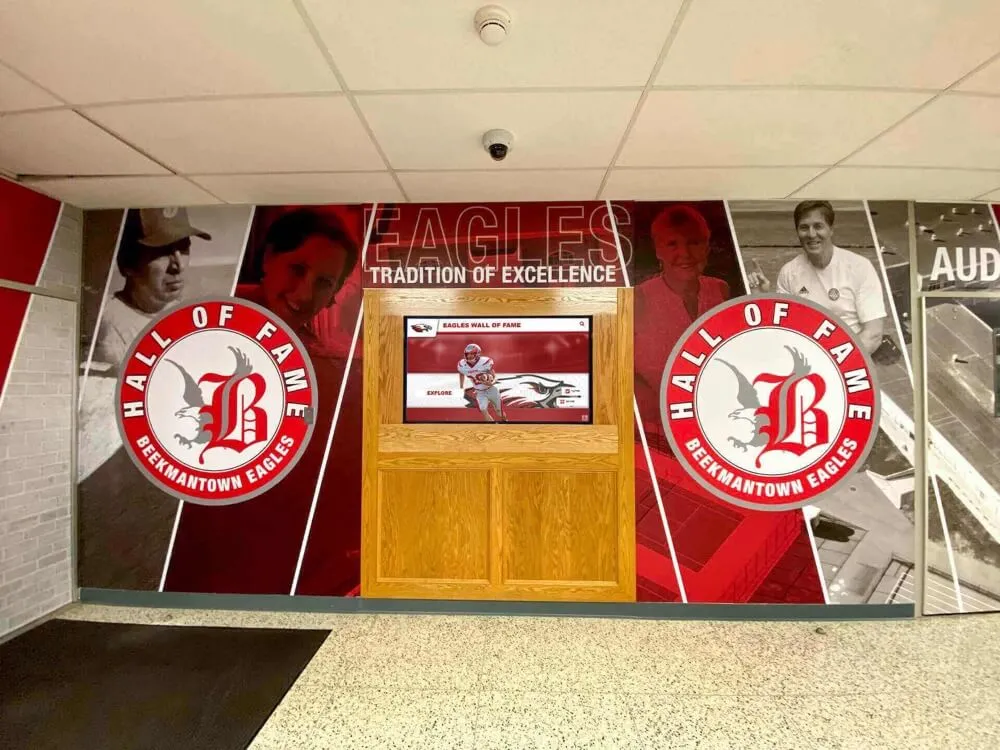
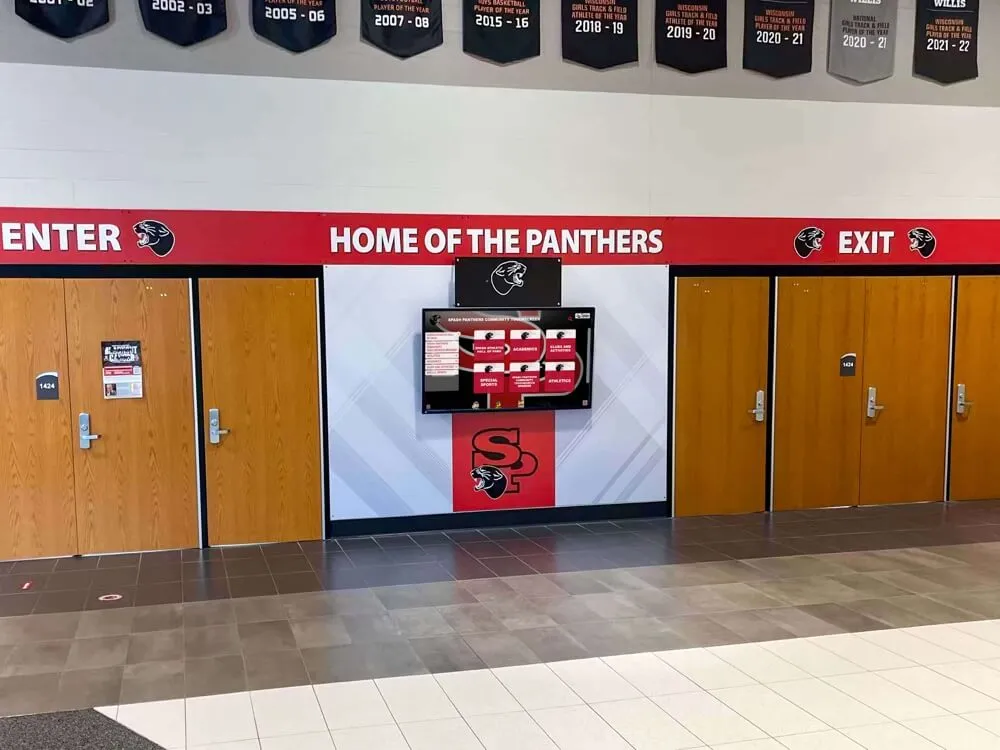
Many schools preserve traditional trophy case infrastructure while adding digital capability through custom integration solutions that retrofit displays into existing case openings, maintain architectural consistency with surrounding spaces, combine select physical trophies with digital content, and create hybrid recognition merging traditional familiarity with digital advantages.
This integration approach enables recognition modernization while respecting historical architectural features and preserving sentimental connections to familiar trophy case locations.
Digital Display Networks
Larger schools often implement connected display networks rather than single installations including primary lobby centerpiece creating main recognition focal point, athletic facility displays within sports context, academic wing displays celebrating scholarly achievement, and commons area displays reaching daily student traffic.
Cloud-based management enables centralized control while customizing content appropriate for each location’s specific context and audience, maximizing recognition visibility across diverse campus areas.
Explore implementation strategies in school digital display systems that create comprehensive recognition programs.
Content Development for Digital Trophy Cases
Technology enables platforms, but thoughtful content creates meaningful recognition experiences:
Individual Achievement Profiles
Comprehensive individual profiles transform name lists into engaging recognition including professional or action photos showing achievements in context, complete biographical information and achievement details, career statistics and records when applicable, team or group affiliations connecting related achievements, personal statements or reflections on experiences, video content including highlights or interviews, and current information for distinguished alumni.
These detailed profiles ensure recognition feels personal and meaningful rather than generic list inclusion that fails to honor individual achievement appropriately.
Team and Championship Documentation
Celebrate collective achievements alongside individual accomplishments through complete rosters with player and coach recognition, season records and detailed achievement summaries, key game or performance highlights with video, championship game or competition narratives, historical significance and record-breaking achievements, and coaching staff and support personnel recognition.
Comprehensive team documentation ensures everyone who contributed to championships receives appropriate credit, building team culture while honoring collective effort that athletic achievement requires.
Historical Timeline Development
Digital platforms enable chronological narratives showing achievement progression across school history including decade-by-decade achievement evolution, coaching tenure documentation across eras, facility development and program growth, school record progression over time, and dynasty periods and exceptional teams in institutional context.
Timeline presentations help current students understand they’re part of ongoing traditions while demonstrating sustained institutional excellence across generations rather than isolated recent successes.
Multimedia Integration
Leverage digital capability through championship game or competition video highlights, coach and athlete interview recordings, photo galleries documenting achievement journeys, historical footage from school archives, and audio content including school songs or historic broadcasts.
Rich multimedia content creates emotional engagement that static physical displays cannot achieve, bringing achievement stories to life and inspiring current students through understanding how excellence was achieved rather than simply seeing trophy results.
Discover content strategies in digital storytelling for athletic programs that maximize recognition impact and engagement.
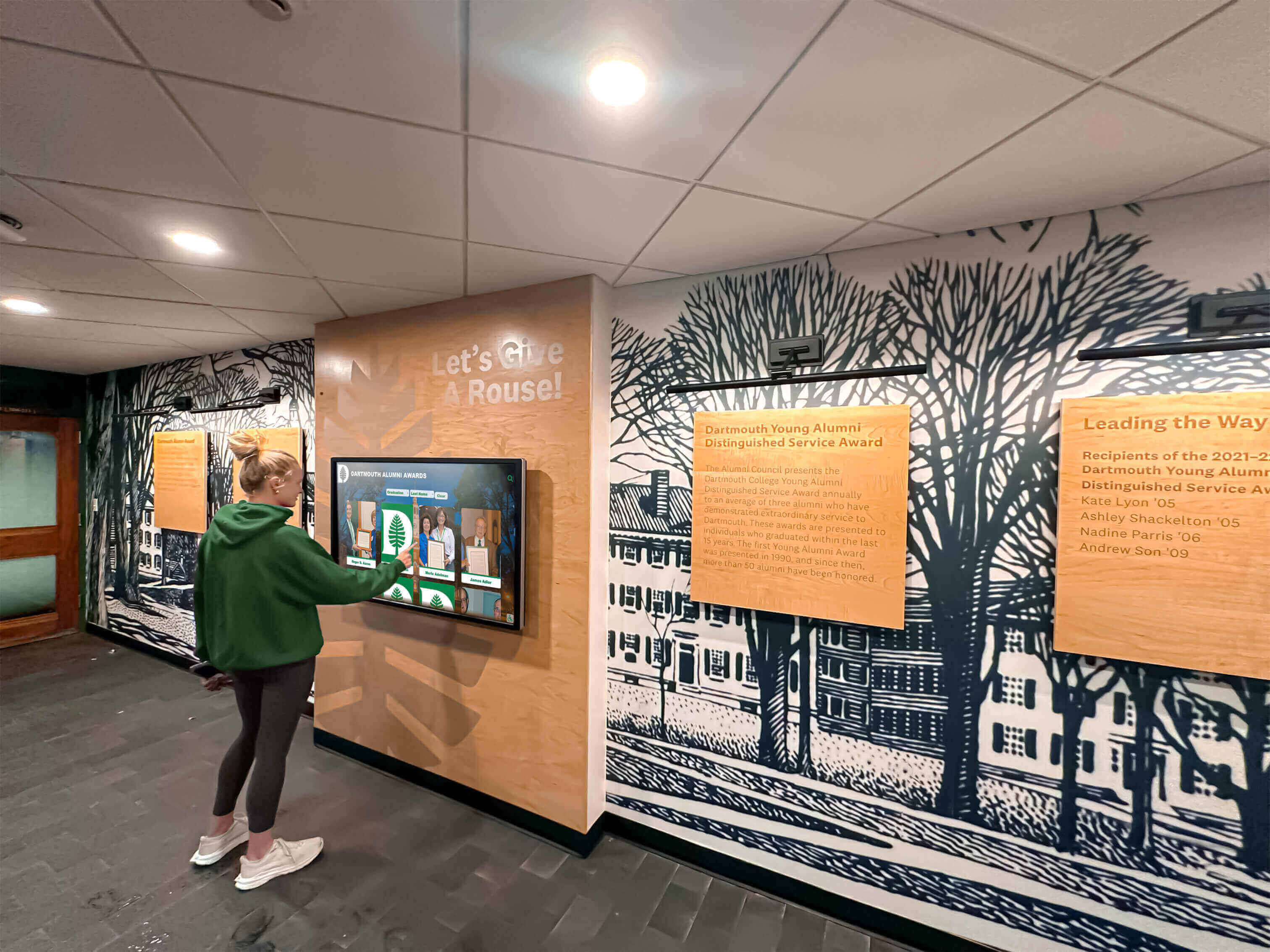
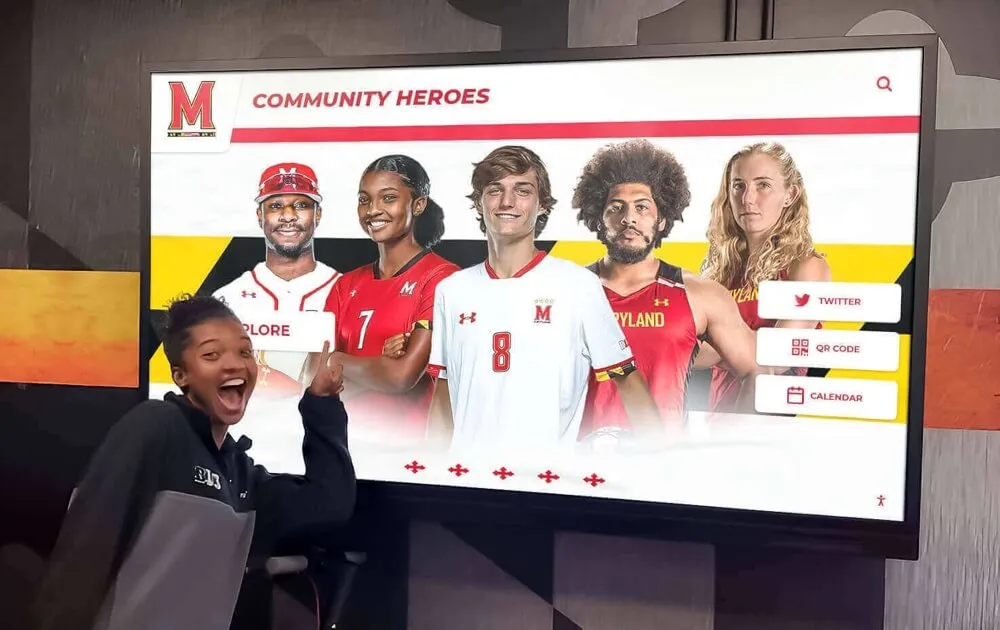
Interactive digital displays engage students in active exploration rather than passive viewing of achievement history
Hybrid Approaches: Combining Traditional and Digital
Many schools find optimal solutions combine physical trophy displays with digital recognition, leveraging advantages of both approaches:
Preserving Physical Trophy Significance
Physical trophies carry tangible emotional weight that digital images cannot fully replicate. The most meaningful hybrid approaches maintain select physical trophy displays for state championships and major milestones, historically significant awards from school founding eras, especially beautiful or unique trophy designs, recently earned achievements during their “moment,” and rotating featured trophy displays that periodically change.
Physical displays preserve traditional trophy case familiarity while digital systems provide unlimited capacity for comprehensive recognition beyond what physical space accommodates.
Digital Enhancement of Physical Displays
Integrate digital screens adjacent to traditional trophy cases providing detailed context that physical plaques cannot include comprehensive championship game narratives, complete team rosters and individual recognition, coach reflections and achievement stories, video highlights bringing championships to life, and historical context explaining significance within school tradition.
This physical-digital integration maintains familiar trophy visibility while overcoming their storytelling limitations through adjacent digital content that deepens understanding and engagement.
Complementary Recognition Systems
Deploy traditional and digital recognition for different purposes including physical trophies for current season achievements during their peak visibility period, digital archives preserving all historical achievements permanently, rotating physical displays during reunions and special events, and comprehensive digital databases enabling year-round exploration and discovery.
This complementary approach ensures nothing gets lost to storage while maintaining the physical trophy moments that athletic programs and students value during championship celebrations.
Learn about integrated recognition in trophy preservation approaches that honor both physical artifacts and comprehensive digital documentation.
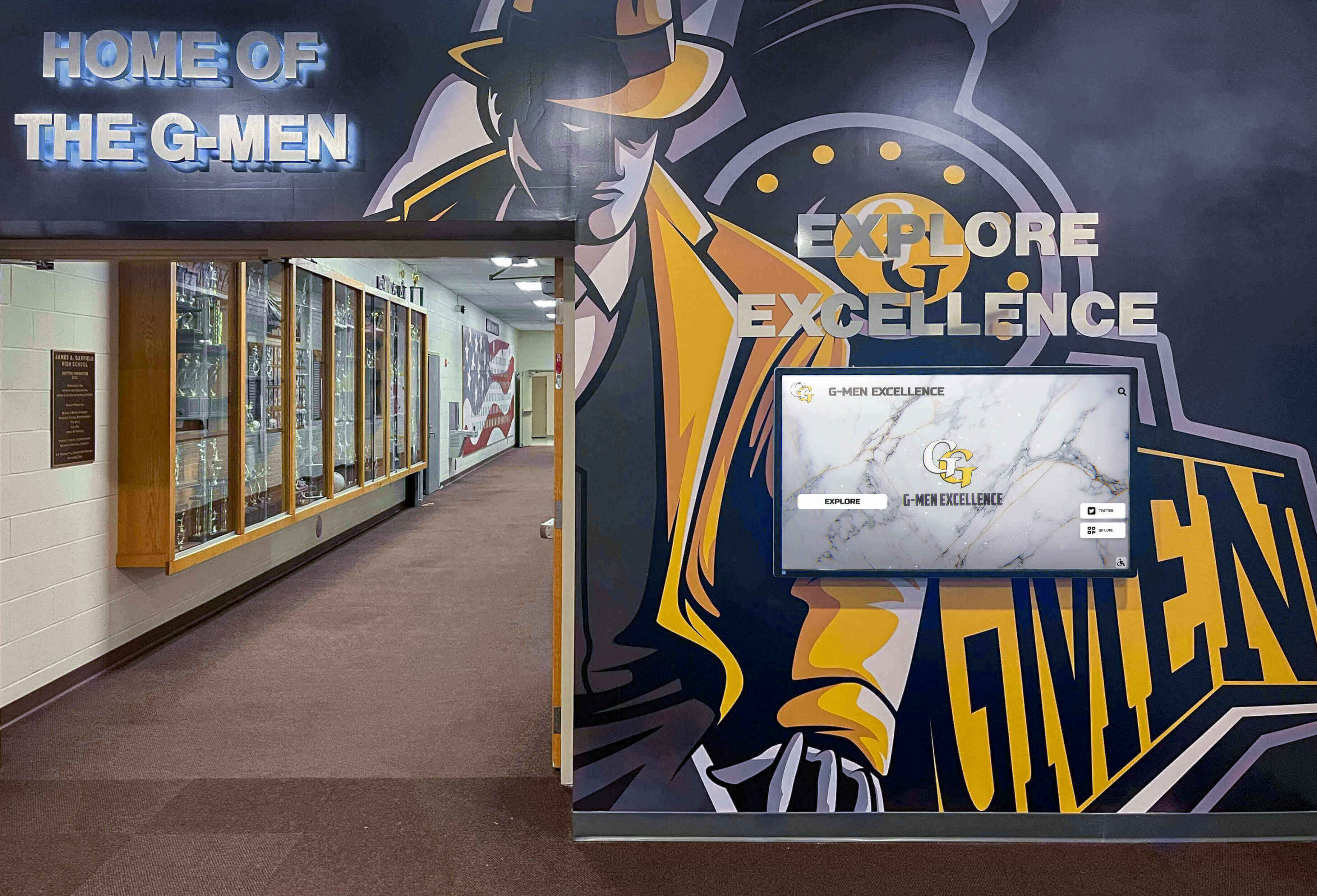
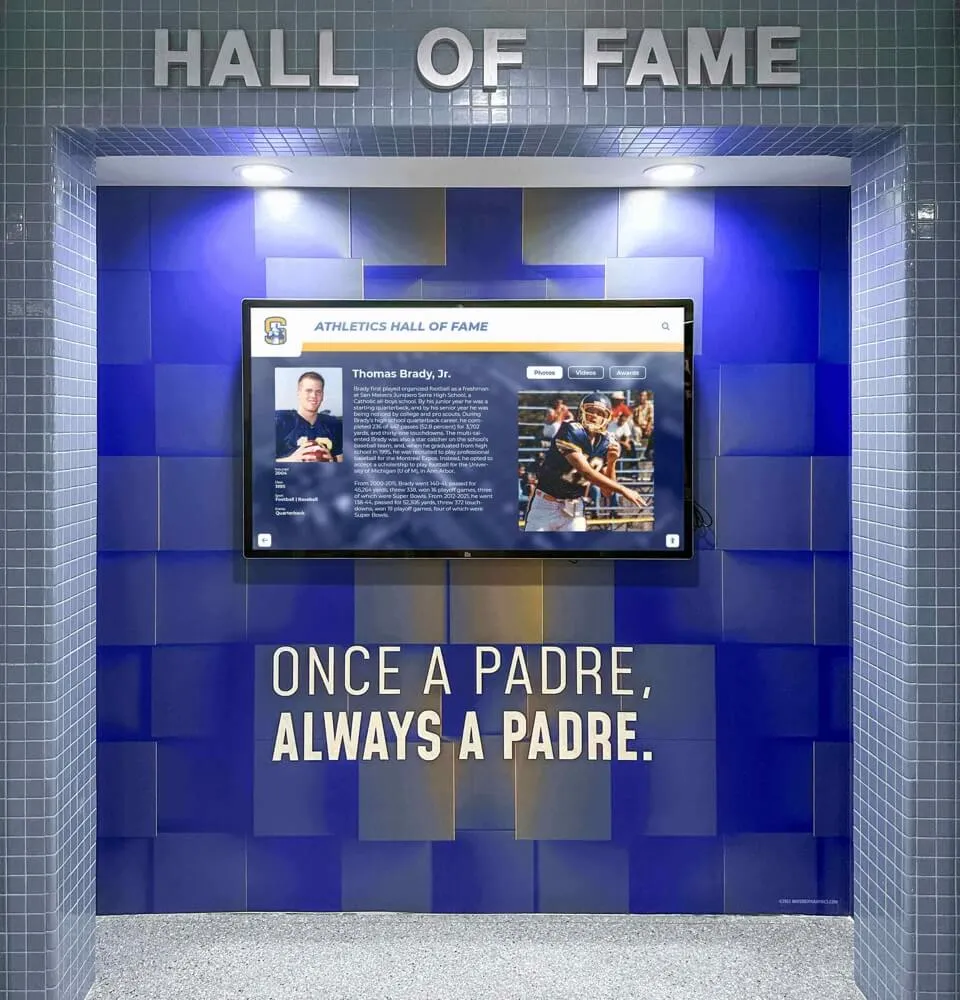
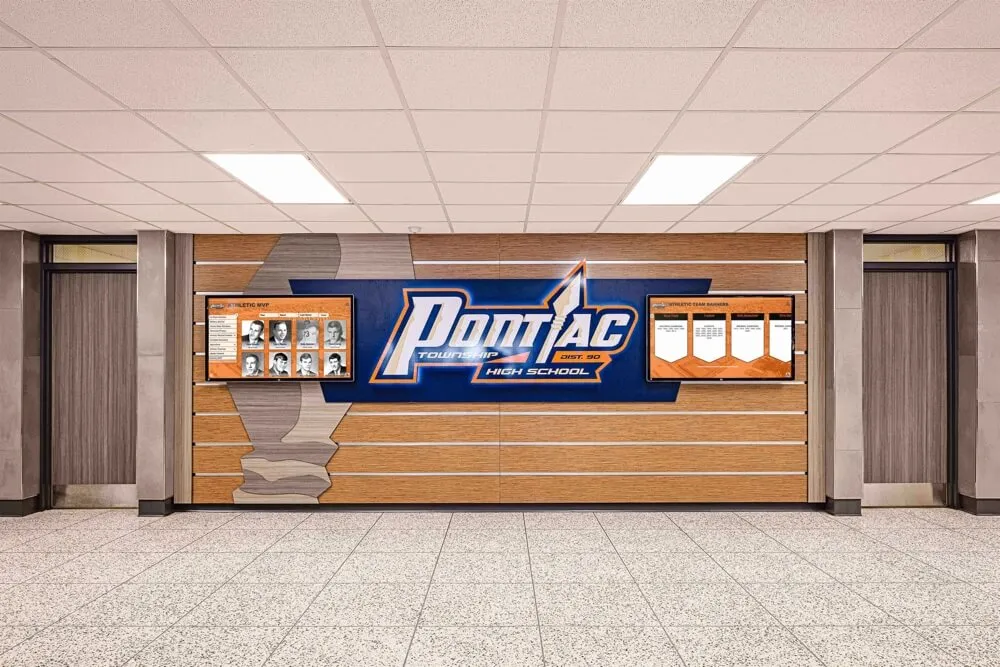
Hybrid installations preserve traditional trophy cases while adding digital capacity and enhanced storytelling
Budget Considerations and Funding Strategies
Understanding financial implications helps schools plan realistic trophy case improvements regardless of resource constraints:
Traditional Trophy Case Costs
Physical trophy case investments include:
Initial Installation
- Standard glass-front cases: $2,000-$8,000 depending on size and quality
- Custom built-in installations: $5,000-$20,000 for architectural integration
- Wall-mounted display systems: $1,000-$5,000 for materials and installation
- Lighting upgrades: $500-$3,000 for professional illumination
- Signage and labeling: $300-$1,500 for professional identification
Ongoing Maintenance
- Regular cleaning and upkeep: Staff time or $200-$500 annually contracted
- Case repairs and updates: $100-$500 annually for wear and damage
- New trophy accommodation: Physical reorganization and label creation
- Environmental control: Potential humidity control or protection measures
Traditional trophy cases require moderate initial investment with ongoing maintenance demands and inevitable space limitations requiring eventual expansion or difficult recognition decisions.
Digital Display Investment
Digital recognition solutions involve different cost structures:
Hardware and Installation
- Commercial touchscreen displays: $4,390-$4,990 for complete systems
- Professional installation services: $1,000-$3,000 including mounting and configuration
- Freestanding custom kiosks: $6,000-$12,000 with branded fabrication
- Network infrastructure: $500-$2,000 if enhanced connectivity needed
Software and Services
- Recognition platform licenses: $1,680-$3,500 annually for comprehensive systems
- Cloud-based content management: Typically included in platform subscriptions
- Initial content development: $2,000-$5,000 for historical digitization and setup
- Training and support: Often included with platform subscriptions
Digital solutions involve higher initial investment but provide unlimited capacity, eliminate physical maintenance, enable remote management, and offer reusability across decades without physical degradation requiring replacement.
Funding and Resource Development
Many schools successfully fund trophy case improvements through:
Athletic Department Budgets
Include recognition infrastructure in regular athletic department capital planning, allocating funds annually toward recognition improvements, prioritizing systems providing long-term value and sustainability, and treating recognition as essential program element rather than optional enhancement.
Booster Club and Athletic Association Support
Engage booster organizations in funding recognition projects that celebrate achievements booster support enabled, presenting trophy case improvements as visible, lasting investments, demonstrating how enhanced recognition supports recruitment and program reputation, and acknowledging major donors through recognition system naming opportunities.
School Foundation and Capital Campaigns
Include recognition infrastructure in broader capital campaigns, positioning trophy cases as alumni engagement and donor stewardship tools, emphasizing how comprehensive recognition inspires current students while honoring institutional history, and offering naming opportunities for recognition spaces and systems.
Corporate and Community Sponsorships
Approach local businesses about sponsoring recognition systems through direct financial support for installations, in-kind services like installation or fabrication, equipment or materials donations, and ongoing support partnerships for system maintenance.
Grant Applications
Research grant opportunities supporting educational technology, student engagement initiatives, facility improvements, and historical preservation projects that recognition systems advance.
Explore funding strategies in choosing digital recognition providers that help schools maximize value within budget constraints.

Professional recognition installations demonstrate institutional investment in celebrating achievement comprehensively
Implementation Planning and Project Management
Successful trophy case initiatives require systematic planning addressing assessment, stakeholder engagement, and phased implementation:
Needs Assessment and Goal Definition
Begin by understanding current recognition challenges and defining desired outcomes:
Current State Evaluation
- Inventory existing trophy cases and physical recognition
- Document achievements currently displayed versus hidden in storage
- Survey stakeholders about recognition priorities and concerns
- Assess available space for expansion or alternative approaches
- Evaluate budget resources and funding availability
Goal Setting Establish clear objectives including increasing recognition capacity for comprehensive achievement celebration, improving engagement through modern presentation approaches, creating sustainable systems accommodating future growth, enhancing school pride and student inspiration, and supporting recruitment through impressive achievement displays.
Clear goals inform technology selection, budget development, and implementation priorities while providing metrics for assessing initiative success post-implementation.
Stakeholder Engagement
Successful projects engage key constituencies throughout planning and implementation:
Athletic Director and Coaching Staff
Involve athletic leadership in planning ensuring recognition serves program needs, gathering historical achievement documentation, determining content priorities and organizational approaches, and building support for changes to familiar trophy case traditions.
Facilities Management
Coordinate with facilities teams on installation logistics, space allocation and architectural constraints, power and network infrastructure requirements, and ongoing maintenance responsibilities and requirements.
Administration and Board
Secure leadership support through presenting business case demonstrating value, connecting recognition to strategic priorities including student engagement and alumni relations, clarifying budget requirements and funding strategies, and obtaining necessary approvals for installations and expenditures.
Students and Alumni
Gather input from primary recognition beneficiaries about what matters most in achievement celebration, which achievements should receive priority recognition, how recognition influences school pride and connection, and interest in supporting recognition initiatives through fundraising or volunteering.
Broad stakeholder engagement builds support while ensuring implementations serve diverse constituency needs effectively.
Phased Implementation Approach
Rather than attempting comprehensive recognition transformation immediately, systematic phasing manages costs and complexity:
Phase 1: Planning and Design (Months 1-3)
- Conduct needs assessment and stakeholder engagement
- Define goals and success metrics
- Evaluate technology options and vendors
- Develop preliminary design concepts
- Create detailed project budgets and timelines
- Secure necessary approvals and funding
Phase 2: Content Development (Months 3-6)
- Inventory and digitize historical achievement documentation
- Photograph physical trophies and create digital records
- Compile team rosters and individual achievement details
- Gather multimedia content including photos and videos
- Organize content for intuitive navigation and discovery
- Create initial content for system launch
Phase 3: Installation and Launch (Months 6-9)
- Procure hardware and complete physical installations
- Configure software platforms and integrate content
- Train staff on content management and system operation
- Conduct testing ensuring reliable operation and usability
- Plan and execute launch event generating awareness and excitement
- Promote new recognition systems to all constituencies
Phase 4: Expansion and Optimization (Ongoing)
- Gather feedback and usage analytics
- Expand content based on priorities and availability
- Add features and functionality as needs emerge
- Train additional staff ensuring sustainable management
- Assess impact on school pride and stakeholder satisfaction
- Plan future recognition enhancements and expansions
Phased approaches distribute costs and workload across manageable timeframes while enabling learning from early experiences before making additional investments.
Learn about implementation best practices in school history software selection that ensures sustainable recognition programs.
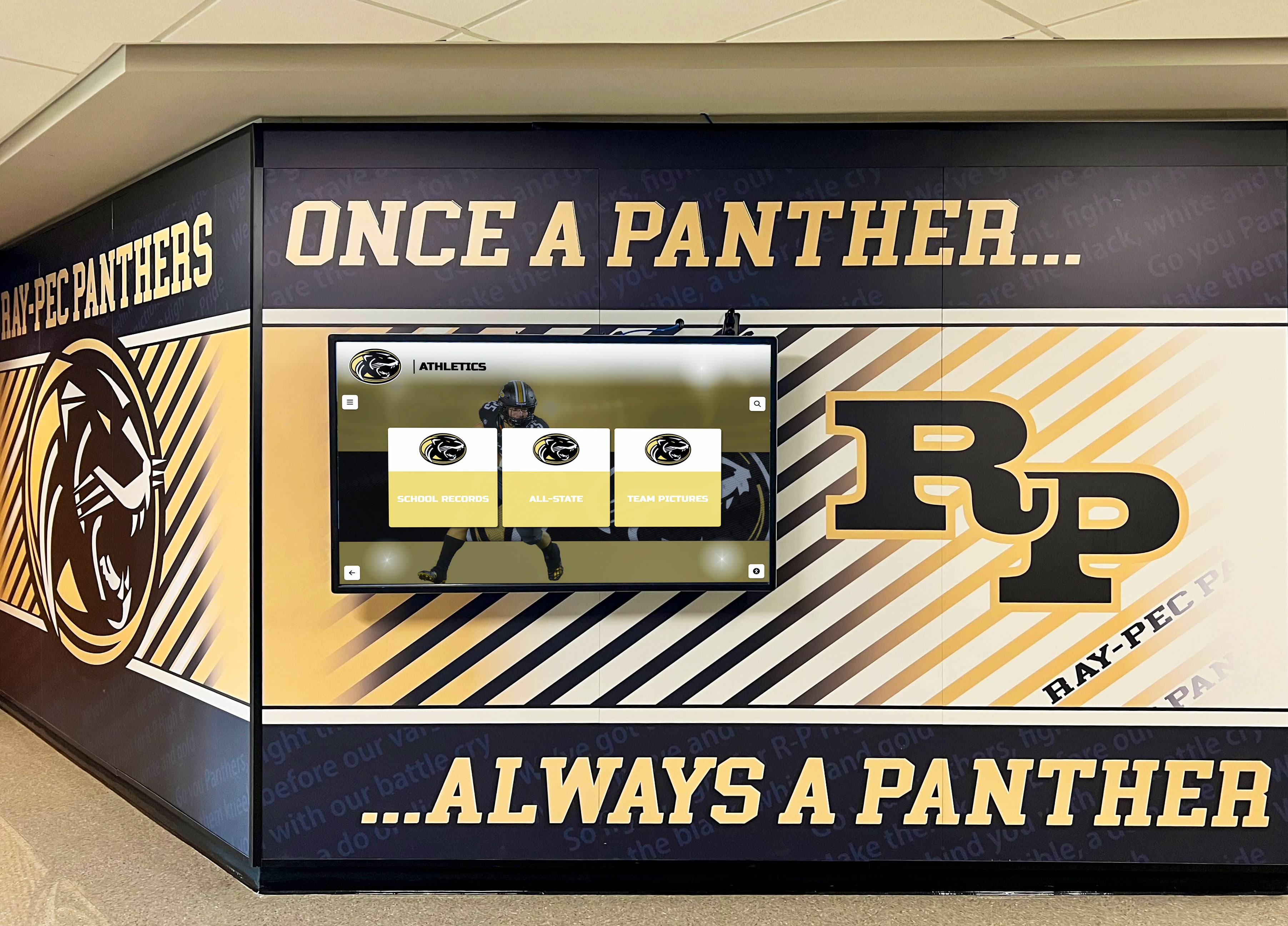
Professional installation creates recognition focal points that celebrate achievement while enhancing school environments
Recognition Beyond Athletics: Comprehensive Achievement Celebration
While athletic trophies often dominate school recognition, comprehensive trophy case approaches celebrate diverse achievement types:
Academic Excellence Recognition
Balance athletic recognition with academic achievement celebration including honor roll and academic distinction recognition, academic competition successes and team championships, National Merit Scholars and similar honors, perfect attendance and citizenship awards, subject-specific achievement recognition, and distinguished alumni in academic and professional fields.
Academic recognition demonstrates institutional values extending beyond athletics while inspiring students across diverse interests and aptitudes to pursue excellence in their specific passion areas.
Arts and Activities Achievement
Celebrate non-athletic activities through theater and performing arts recognition, visual arts excellence and exhibition participation, music performance and competition achievements, student publication excellence and journalism awards, robotics and STEM competition successes, and service learning and community contribution recognition.
Comprehensive recognition ensures all students find pathways to recognition and celebration regardless of whether their talents lie in athletics, academics, arts, or service—building inclusive school cultures where diverse excellence receives appropriate honor.
Character and Leadership Recognition
Beyond achievement metrics, recognize character including student government and leadership positions, peer mediation and conflict resolution contributions, diversity and inclusion leadership, character award recipients and role models, and overcoming adversity and resilience recognition.
Character recognition honors the values schools aim to develop alongside academic and athletic excellence, demonstrating that who students become matters as much as what they achieve.
Explore comprehensive recognition in academic honor programs that celebrate diverse student achievements beyond athletics.
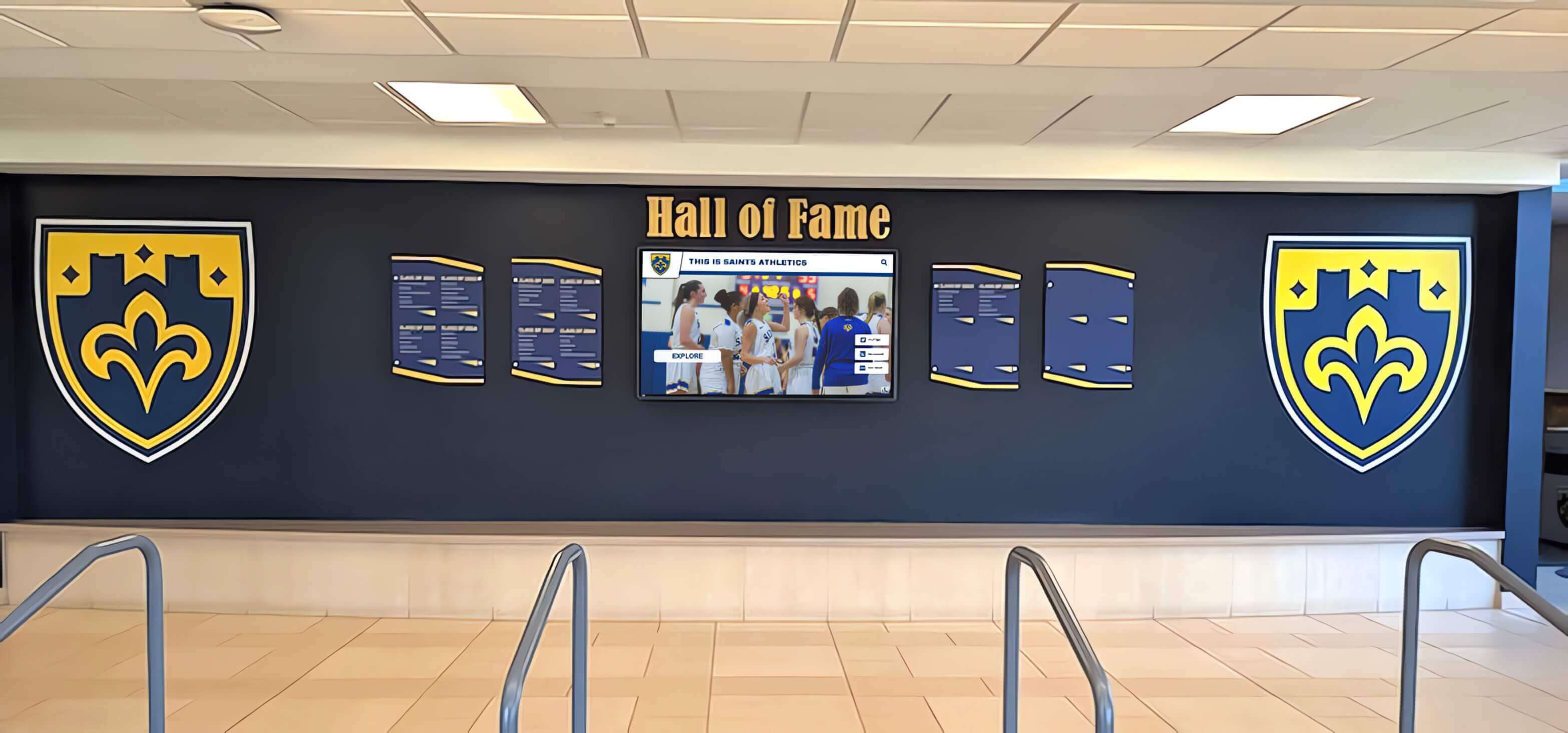
Comprehensive recognition systems celebrate achievements across athletics, academics, arts, and character
Rocket Alumni Solutions: Purpose-Built Recognition Platform
Purpose-built digital recognition platforms provide capabilities generic technology cannot match, specifically designed for educational institutions’ recognition needs:
Comprehensive Recognition Features
Rocket Alumni Solutions offers specialized systems designed specifically for schools including unlimited recognition profiles without storage constraints or capacity limitations, professional multimedia presentation supporting photos and video, intuitive search and filtering enabling instant content discovery, web-accessible recognition extending reach beyond physical displays, mobile-responsive design ensuring accessibility across all devices, and proven implementations across 700+ schools and organizations nationwide.
Unlike generic digital signage requiring extensive customization, purpose-built platforms understand school recognition contexts, providing appropriate organizational structures, common recognition categories, and workflows that match how schools actually operate.
Simplified Content Management
Cloud-based administrative interfaces enable efficient recognition management including drag-and-drop content development requiring no technical expertise, bulk import capabilities for adding historical achievements efficiently, scheduled publishing automating seasonal recognition updates, role-based permissions allowing appropriate staff access, automatic backup protecting against data loss, and responsive support understanding educational contexts and recognition challenges.
Schools report dramatic time savings managing recognition through purpose-built platforms compared to generic content management systems requiring technical knowledge and extensive ongoing maintenance.
Implementation and Support Services
Comprehensive implementation services ensure successful recognition programs including site assessment and placement recommendations, commercial hardware procurement and configuration, professional mounting and installation services, network integration and connectivity setup, initial content development assistance, staff training ensuring sustainable management, and ongoing customer success support.
Turnkey services eliminate technology implementation burden while ensuring professional results matching institutional quality standards and creating recognition systems that genuinely serve school communities effectively.
Discover more about comprehensive recognition platforms in touchscreen software solutions designed specifically for educational recognition.
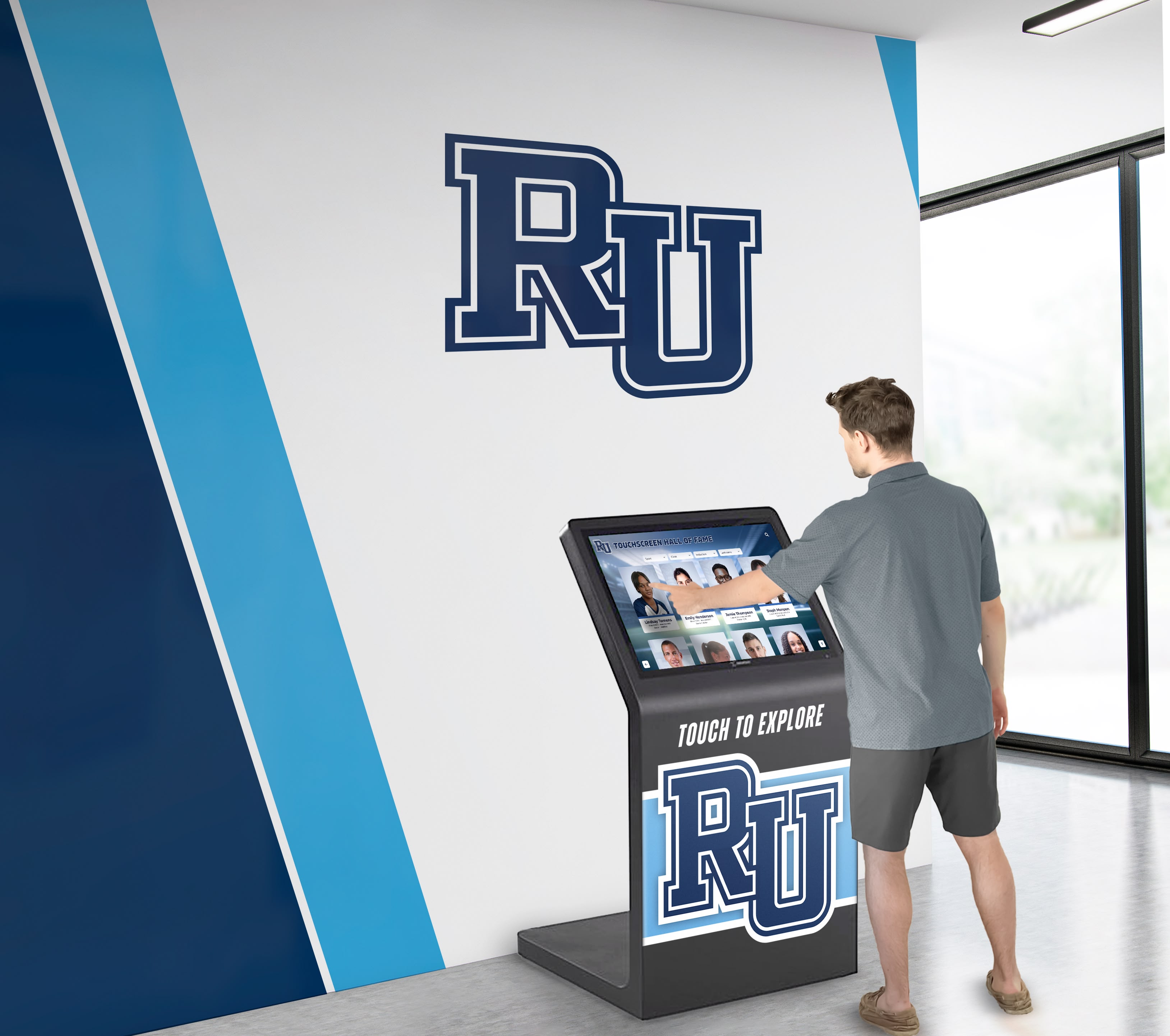
Purpose-built recognition platforms provide intuitive, engaging experiences specifically designed for school communities
Maintaining Long-Term Recognition Value
Successful trophy case systems require ongoing attention ensuring recognition remains current, comprehensive, and valued:
Content Management Workflows
Regular Update Processes
Establish systematic workflows including season-end achievement compilation and recognition, annual academic honor updates, quarterly featured achievement rotations, ad hoc processes for unexpected achievements and honors, and historical documentation projects adding archived achievements systematically.
Predictable workflows ensure consistent recognition quality rather than relying on ad hoc efforts producing uneven coverage depending on available time during particular periods.
Clear Responsibility Assignment
Designate specific individuals with formal recognition coordination duties including overall program oversight and strategic planning, content development and additions ensuring timely recognition, display maintenance and monitoring verifying proper operation, promotion and awareness building, and stakeholder feedback gathering and response.
Without clear accountability, recognition programs gradually decline as competing demands consume available time and attention.
Technology Maintenance
System Upkeep
Maintain reliable operation through regular software updates ensuring security and feature access, display cleaning and physical maintenance preserving professional appearance, network connectivity monitoring preventing service interruptions, content backup verification protecting against data loss, and hardware inspection identifying issues before failures.
Establish service agreements with vendors providing proactive maintenance rather than waiting for failures requiring emergency response disrupting recognition visibility.
Community Engagement
Ongoing Promotion
Maintain recognition visibility through highlighting new additions in school communications, featuring historical achievements during relevant occasions, promoting recognition systems during campus tours and recruitment, engaging alumni through recognition updates and additions, and celebrating milestone recognitions with special events.
Year-round visibility ensures recognition systems remain valued resources rather than novelty attractions that fade after initial interest declines.
Feedback and Improvement
Continuously improve recognition through gathering stakeholder feedback about content and systems, analyzing usage data showing engagement patterns, identifying content gaps and enhancement opportunities, incorporating suggestions from students, staff, and alumni, and staying current with technology and recognition best practices.
Responsive improvement demonstrates ongoing institutional commitment to recognition excellence while ensuring systems evolve alongside changing community needs and expectations.
Learn about sustainable programs in customer success approaches that ensure long-term recognition value and engagement.
Conclusion: Transforming Recognition for Today’s Schools
High school trophy case ideas have evolved far beyond traditional glass-front displays holding physical trophies—modern recognition solutions provide unlimited capacity, create engaging interactive experiences, preserve achievement history permanently, tell rich multimedia stories, and scale sustainably across decades of continued school excellence.
Traditional trophy cases served schools admirably for generations, but their inherent limitations increasingly conflict with contemporary recognition needs. Physical space constraints force impossible decisions about which achievements warrant visibility, static displays fail to engage digitally-oriented students effectively, and maintenance demands consume limited staff resources while awards deteriorate despite preservation efforts.
Modernize Your Trophy Case Display
Discover how digital recognition solutions like Rocket Alumni Solutions help schools preserve unlimited achievements, engage students through interactive technology, and create sustainable recognition programs that honor excellence comprehensively.
Explore Recognition SolutionsMaking the Right Choice for Your School
The optimal trophy case approach depends on specific school circumstances including available budget resources and funding capabilities, existing physical infrastructure and space constraints, content volume requiring recognition and display, stakeholder preferences balancing tradition with innovation, technical capacity for managing digital systems, and long-term vision for recognition program evolution.
Many schools find hybrid approaches combining select physical trophy displays with digital systems provide ideal balance—preserving tangible trophy significance while overcoming capacity limitations through unlimited digital recognition capacity.
Starting Your Trophy Case Transformation
Begin trophy case improvements through systematic assessment understanding current challenges and opportunities, stakeholder engagement building support and gathering input, goal definition clarifying what recognition should achieve, technology exploration evaluating available solutions, phased planning managing costs and complexity, and pilot implementation testing approaches before broader commitment.
Whether enhancing traditional trophy cases through creative organization and presentation improvements or implementing modern digital recognition systems providing unlimited capacity and engagement, thoughtful trophy case planning ensures schools honor achievements appropriately while inspiring current students through understanding the excellence traditions they inherit and can extend through their own dedication and accomplishments.
Your school’s achievements—championship athletics, academic excellence, artistic accomplishments, and character development—deserve recognition that matches their significance. Modern trophy case solutions finally make comprehensive, engaging, permanent achievement celebration practical and sustainable for schools of all sizes and resources, ensuring that every accomplishment receives the visibility and honor it deserves while inspiring future generations of students to pursue the excellence that their predecessors achieved.
Ready to explore trophy case options for your school? Learn about hall of fame approaches or discover how schools successfully modernize recognition displays to celebrate achievement comprehensively while engaging contemporary students effectively.