Intent: Define
High school walls of fame represent powerful recognition programs that celebrate achievement, inspire excellence, and create lasting connections between institutions and communities. These displays honor outstanding students, exceptional athletes, distinguished alumni, and generous donors whose contributions shape educational experiences and institutional legacies across generations.
Yet many high schools struggle with recognition that truly strengthens school spirit and alumni relationships. Traditional plaques quickly fill available wall space, forcing difficult decisions about whose achievements receive acknowledgment. Static displays offer no storytelling capability to communicate the depth of honorees’ accomplishments. Recognition programs lack systematic selection criteria, creating perceptions of favoritism or inconsistency. Meanwhile, deserving individuals whose achievements merit celebration go unacknowledged due to physical space constraints and outdated recognition approaches.
This comprehensive guide explores evidence-based strategies for planning and implementing high school walls of fame that honor diverse achievement types, create meaningful recognition experiences, maintain selection integrity, and build sustainable programs serving schools for decades.
Effective high school recognition extends beyond simply displaying names on walls. Successful programs create systematic approaches that celebrate achievement across academics, athletics, arts, community service, and alumni contributions while inspiring current students through visible examples of excellence their predecessors achieved. Schools that excel at recognition create cultures where accomplishment receives appropriate acknowledgment and outstanding performance becomes aspirational for emerging generations.

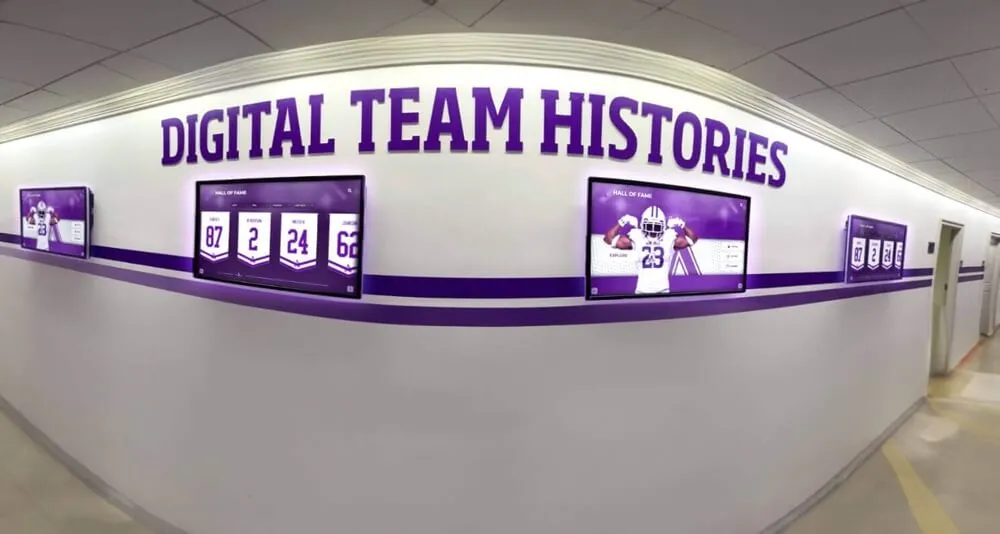
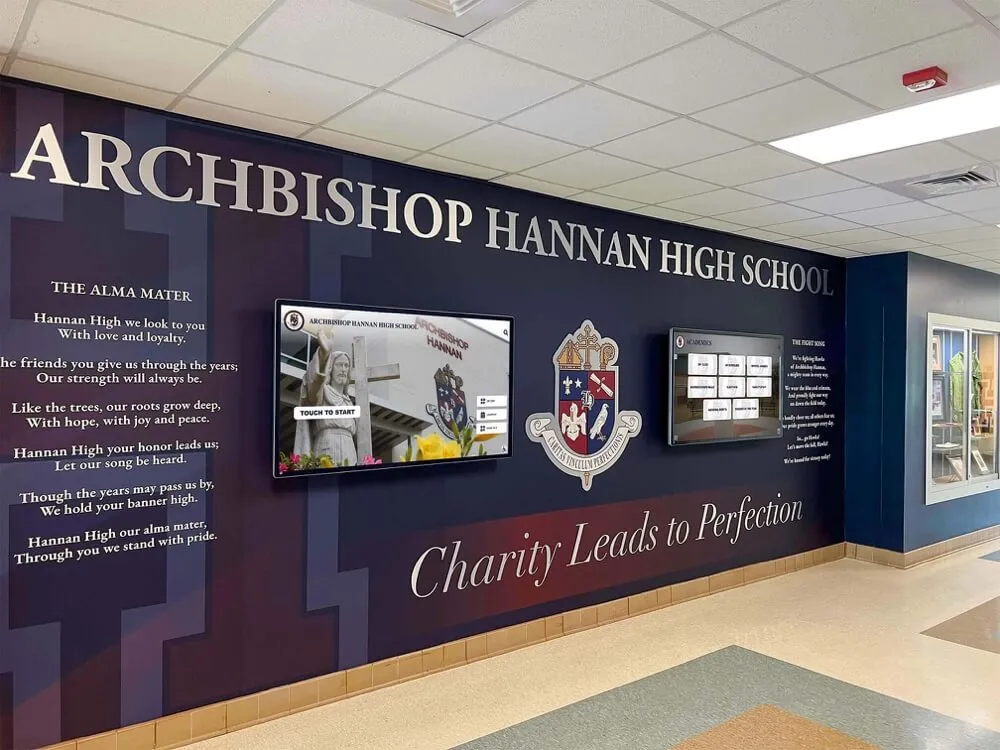
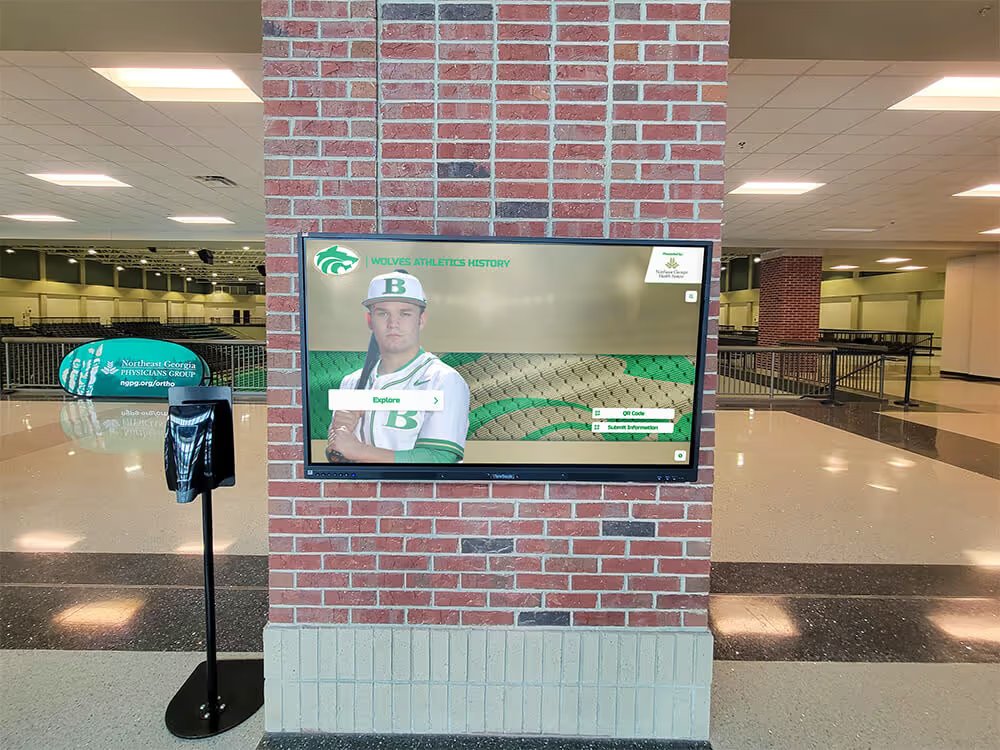
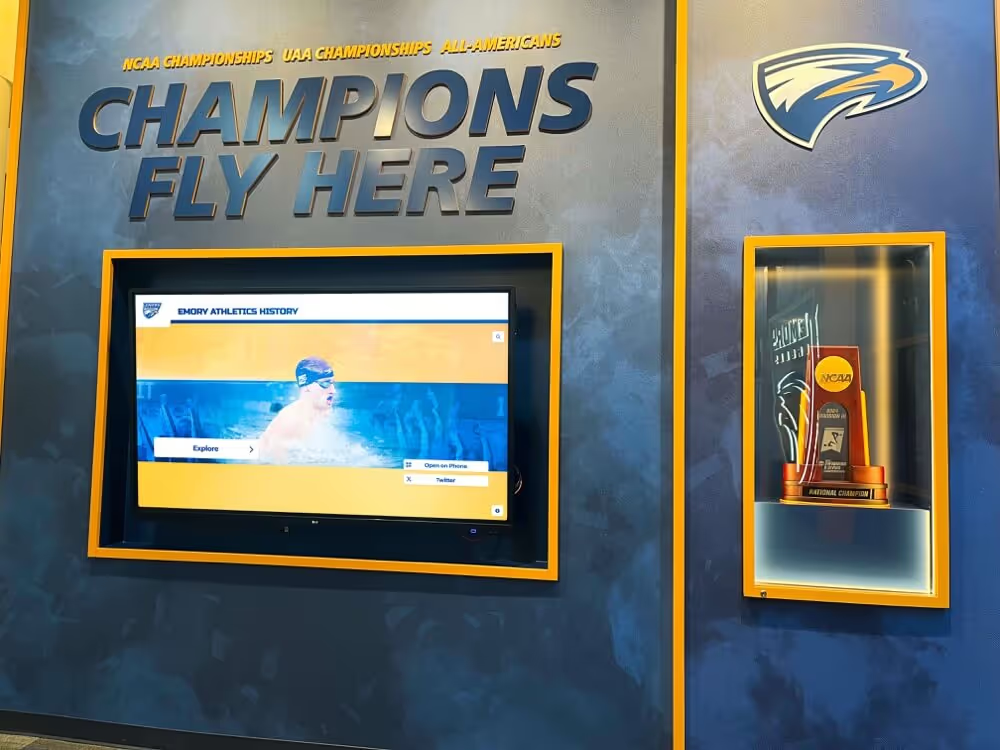
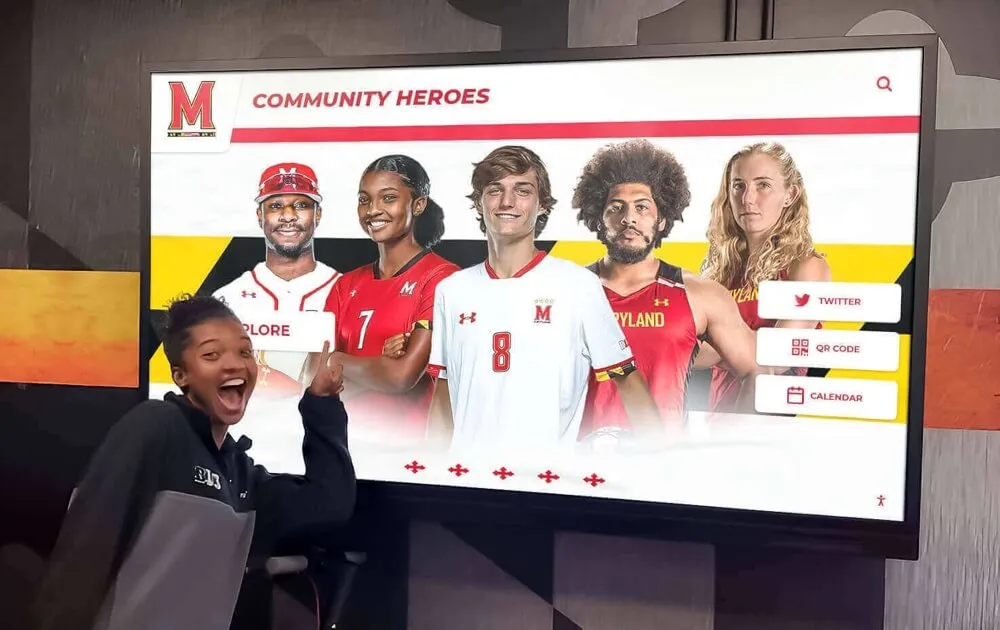
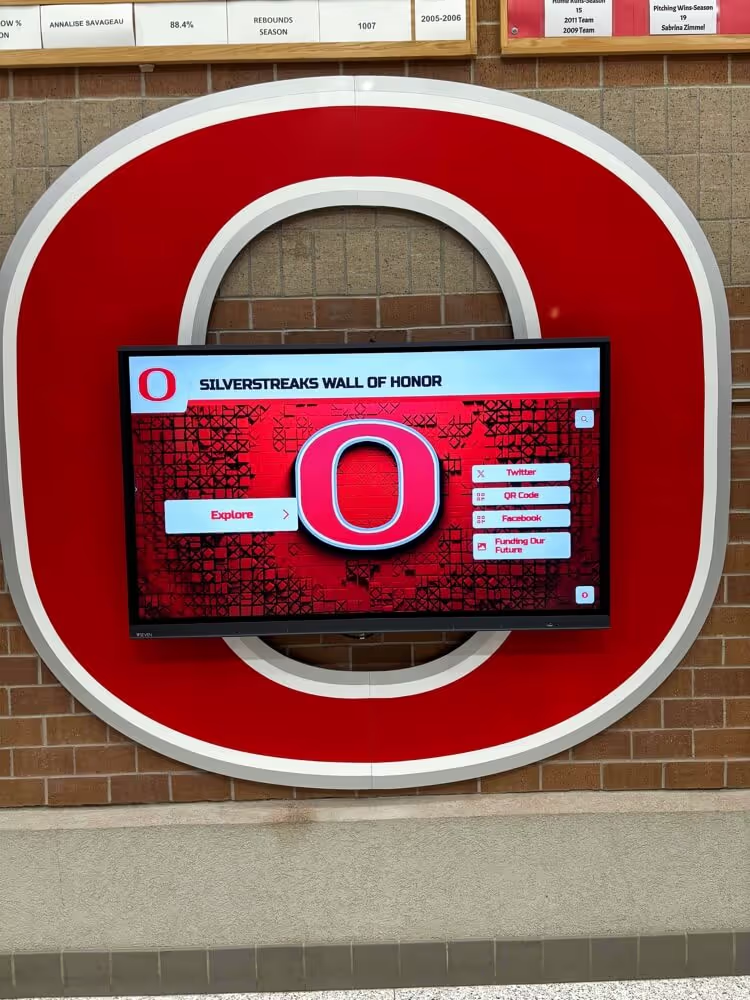
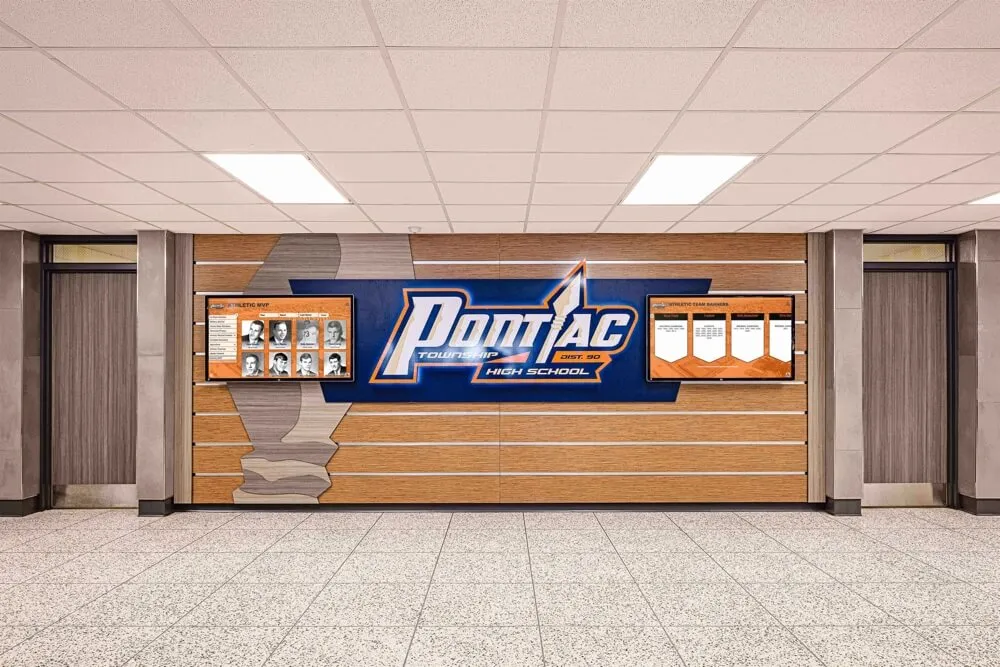
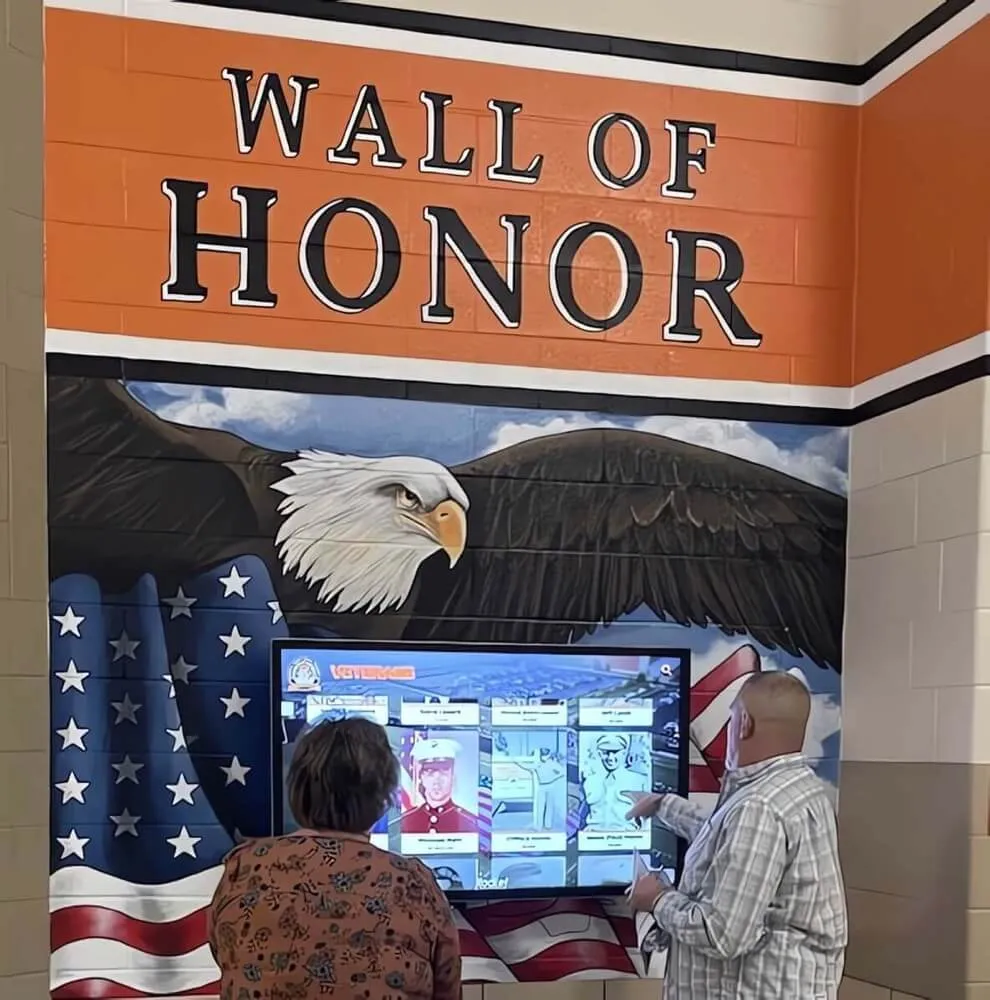
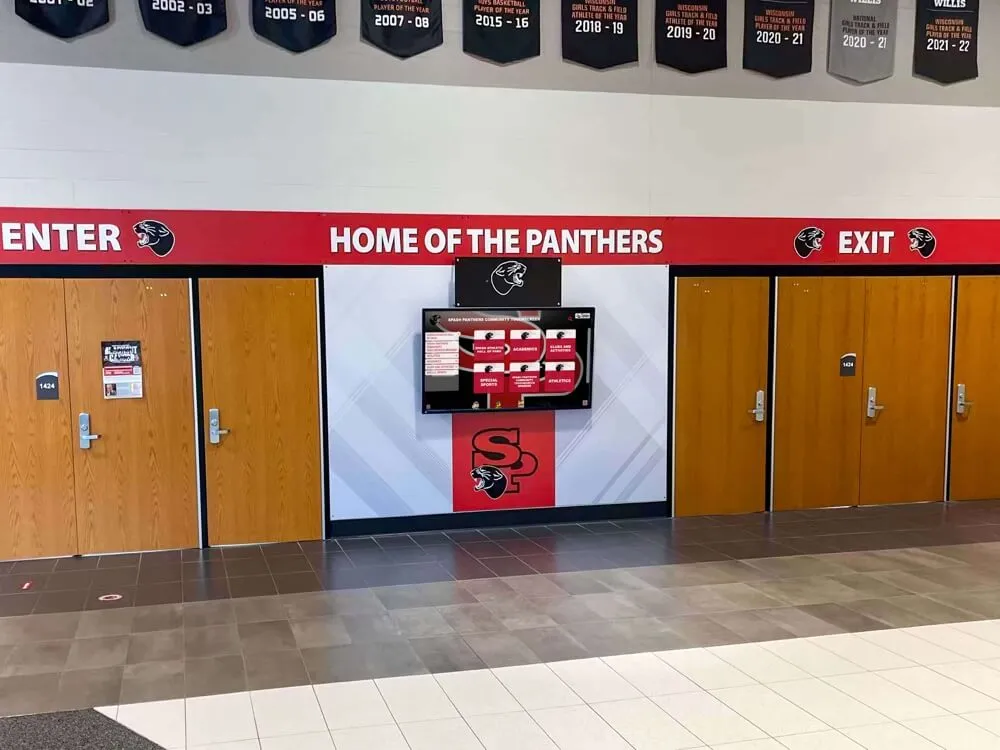
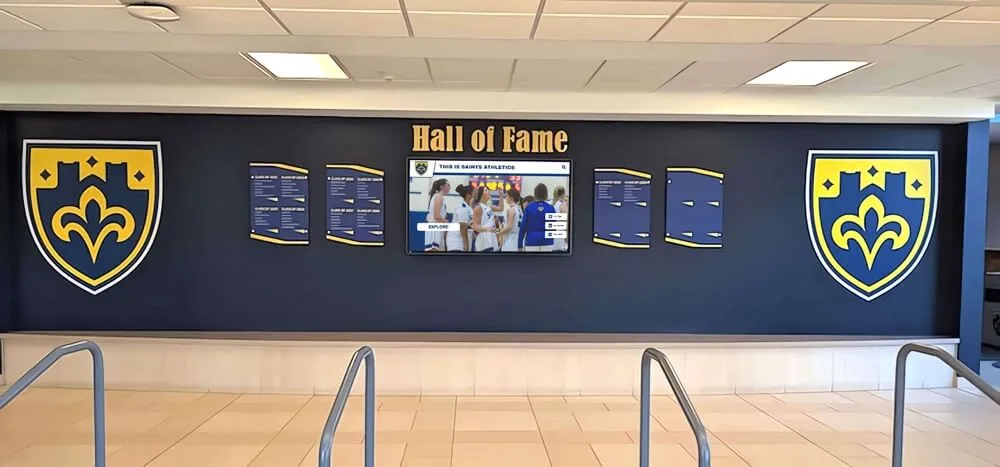
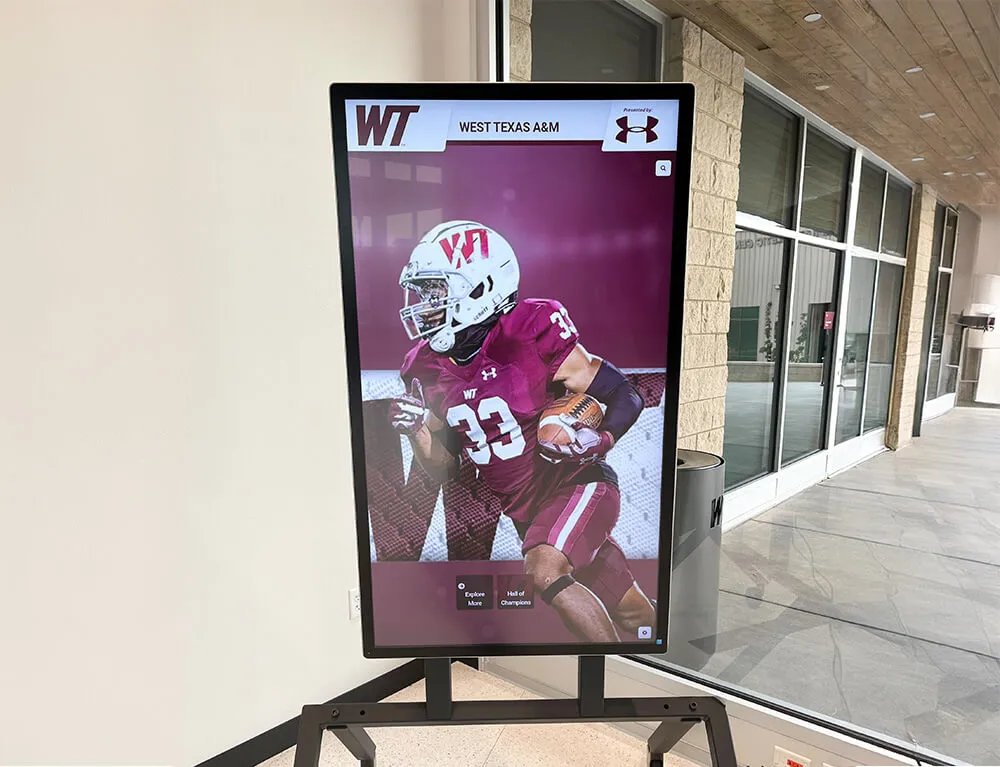
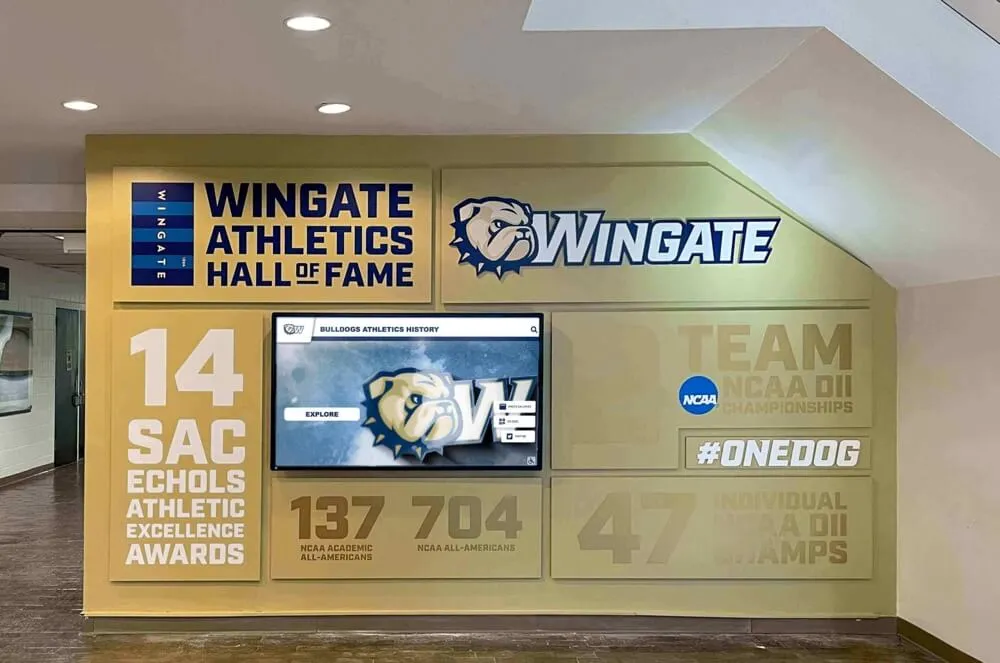
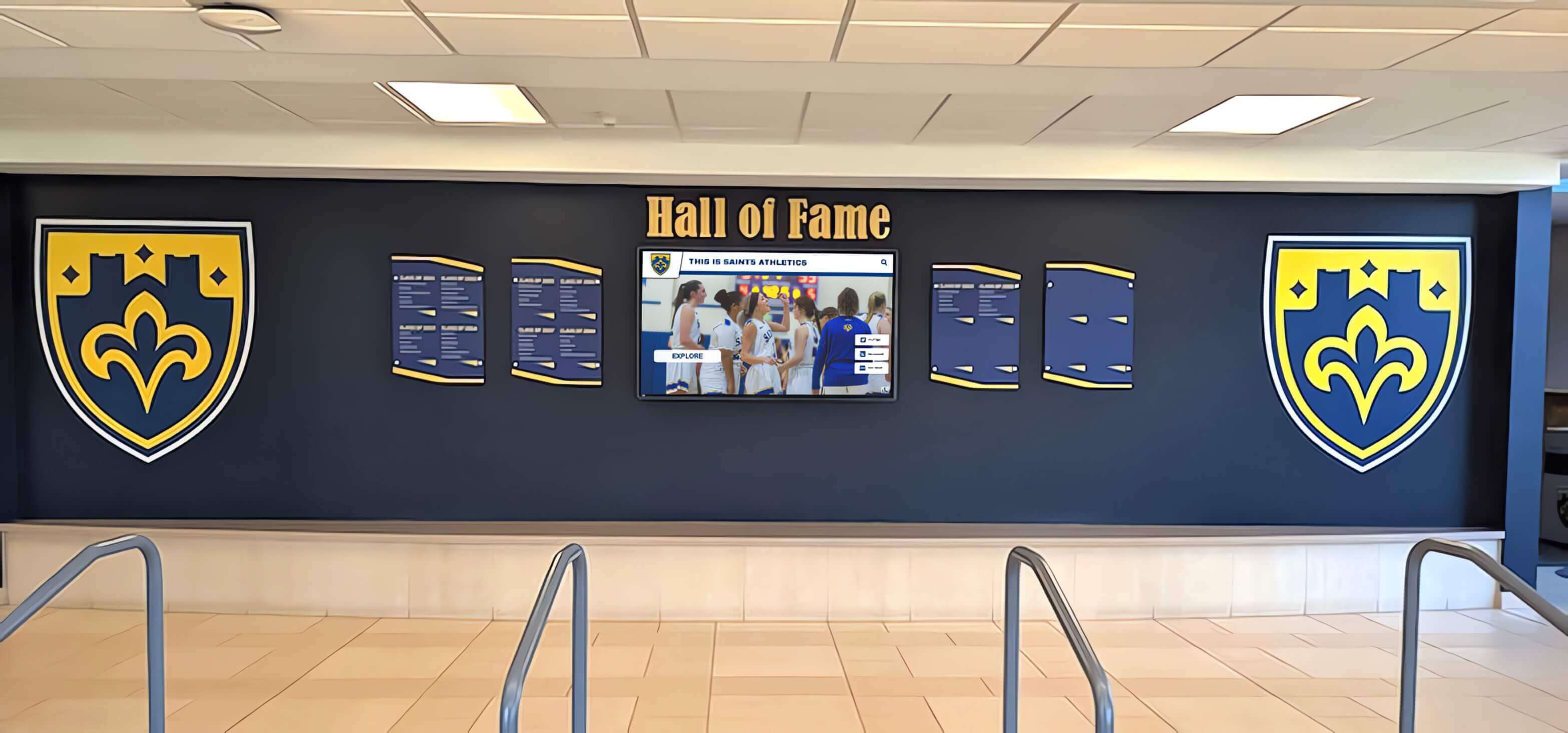
Modern high school recognition displays celebrate achievement while inspiring future excellence through visible acknowledgment
Understanding High School Walls of Fame: Purpose and Impact
Before exploring specific implementation strategies, understanding what makes high school recognition programs fundamentally valuable helps administrators design approaches aligned with institutional missions and community values.
The Educational Value of Recognition Programs
High school walls of fame serve multiple important functions within educational communities:
Celebrating Achievement and Excellence
Recognition programs provide formal acknowledgment of outstanding accomplishment in athletics, academics, performing arts, leadership, and community service. This public celebration validates the hard work, dedication, and talent students demonstrate while honoring the legacy of alumni who achieved distinction after graduation. When schools systematically recognize excellence, they signal institutional values and priorities while demonstrating that achievement receives appropriate acknowledgment.
Inspiring Current Students Through Role Models
Visible recognition of past achievement creates powerful motivation for current students. When students see alumni who excelled academically, dominated athletic competition, contributed artistically, or achieved professional distinction after graduation, these examples demonstrate what’s possible through dedication and effort. Recognition programs transform abstract excellence into concrete examples students can aspire to match or exceed.
According to research on recognition psychology, visible celebration of achievement creates social proof that motivates similar performance. When students regularly encounter recognition displays showcasing diverse forms of excellence, they internalize that outstanding performance represents realistic expectations rather than exceptional anomalies.
Strengthening Alumni Connections
Wall of fame programs create lasting bonds between graduates and their schools. Alumni honored through recognition programs maintain stronger emotional connections to institutions, resulting in higher engagement rates, increased philanthropic support, and greater willingness to mentor current students or provide career networking opportunities.
The relationship between recognition and alumni engagement is well-documented. According to advancement research, inducted alumni give at significantly higher rates than unrecognized peers, and appropriate honor strengthens emotional connections that motivate voluntary financial support and continued institutional involvement.
Building School Pride and Community Identity
Recognition programs contribute to school culture and community identity by celebrating institutional history and achievement traditions. Walls of fame become visible manifestations of school values, communicating what matters to educational communities while creating pride among students, staff, alumni, and community members about institutional excellence and impact.
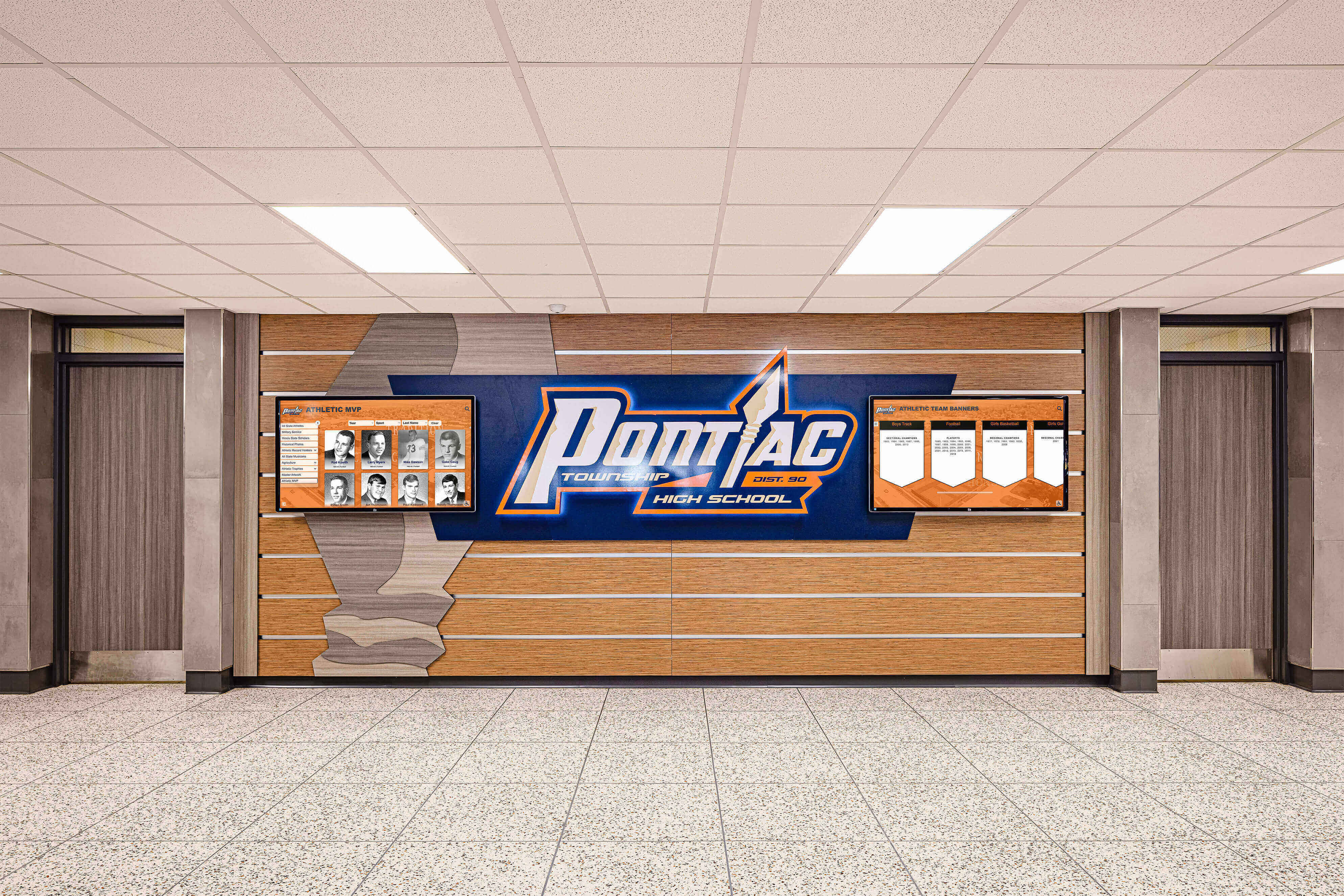
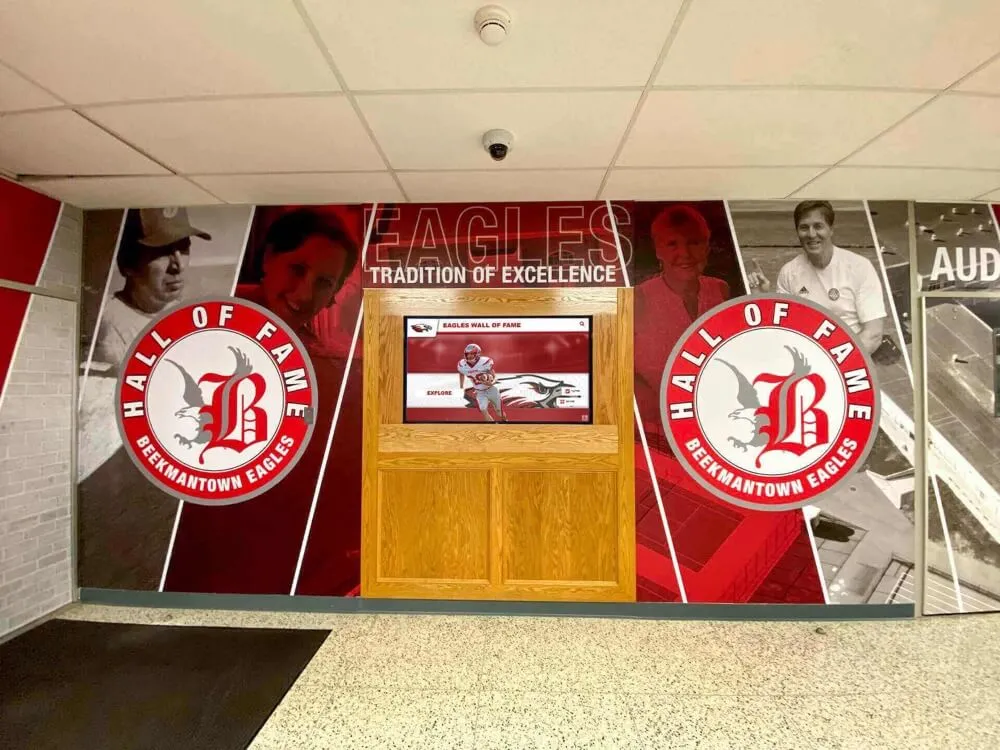
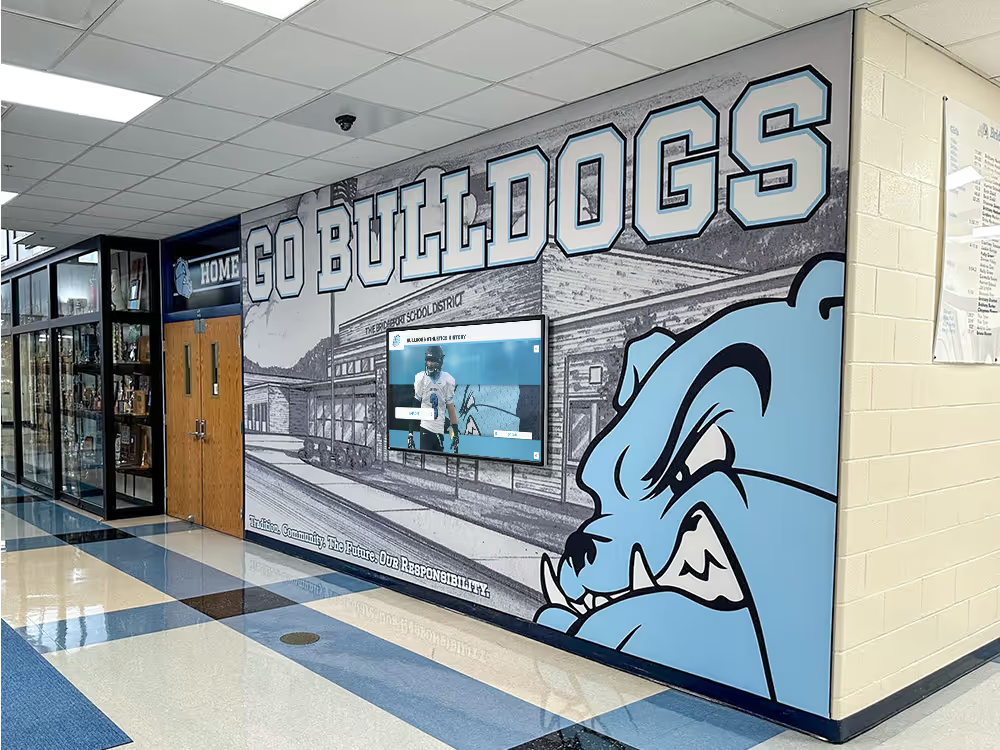
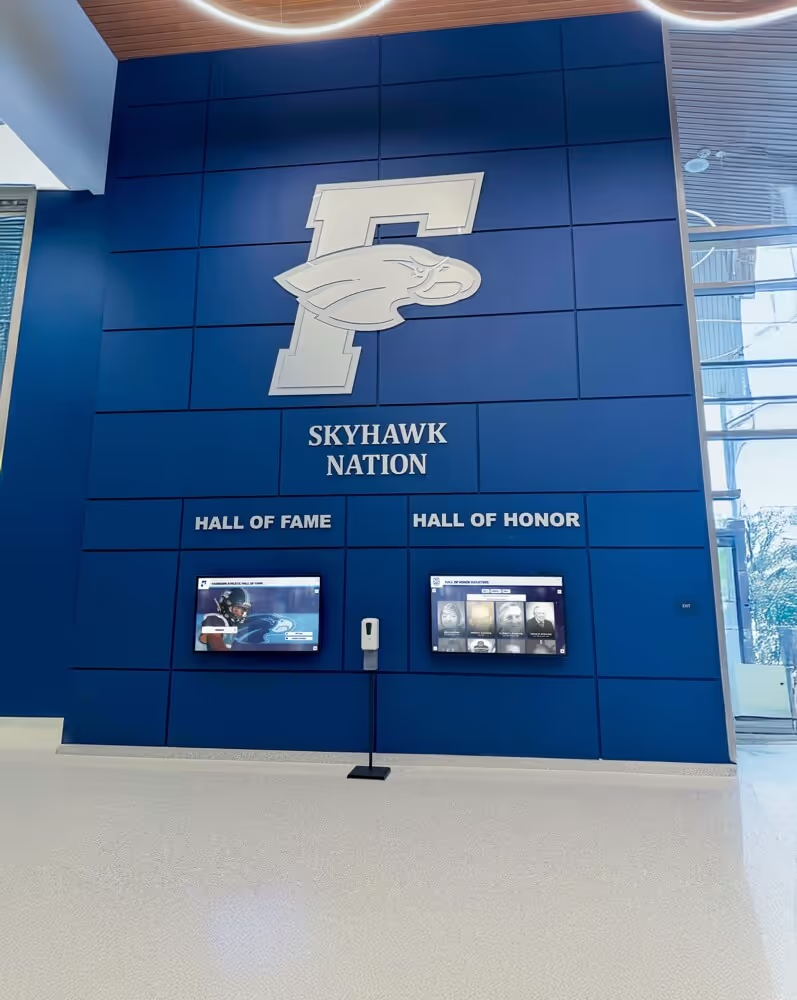
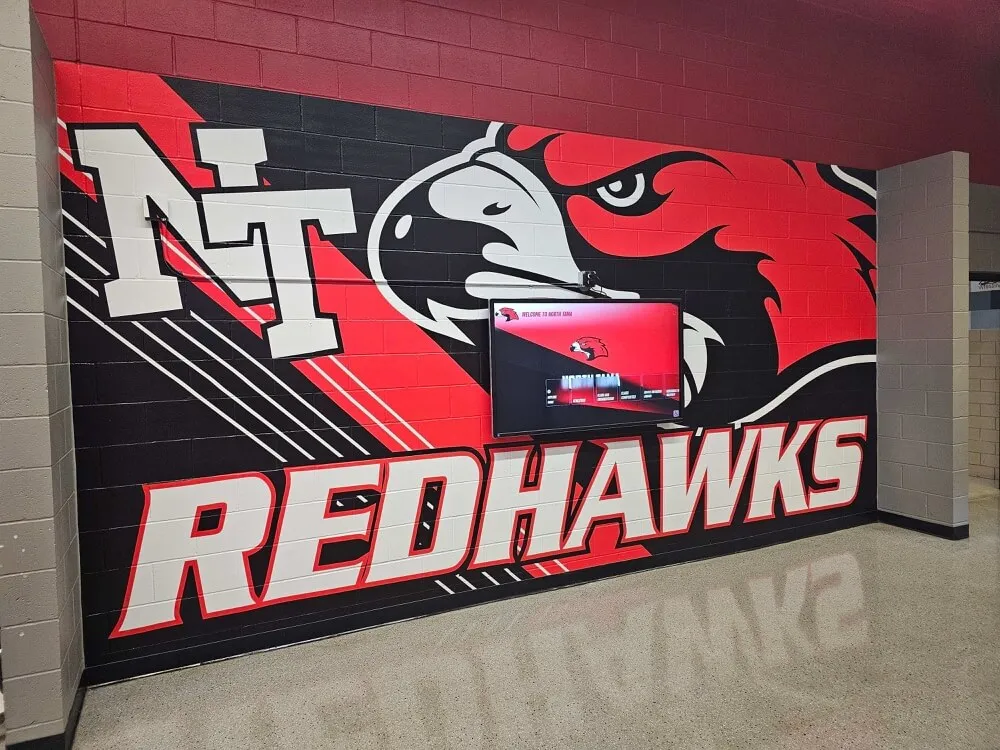
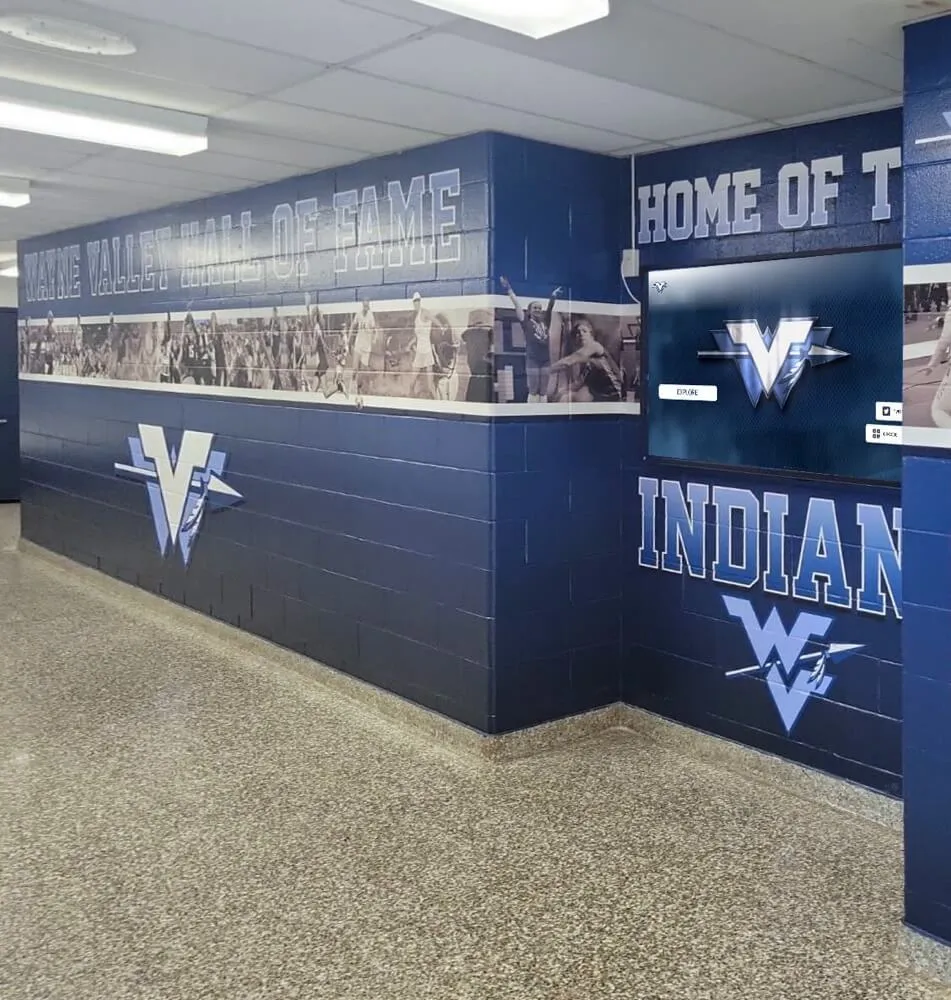
Athletic recognition walls celebrate competitive excellence while honoring program traditions and achievement history
Common Types of High School Recognition Programs
High schools implement various wall of fame categories addressing different achievement dimensions:
Athletic Hall of Fame
Most common recognition programs honor athletic achievement including individual athletes who achieved all-state recognition or exceptional performance, championship teams that won conference, regional, or state titles, record-holding athletes in various sports, coaches who built successful programs or achieved career milestones, and multi-sport athletes demonstrating versatility and excellence.
Athletic recognition generates significant community interest while celebrating competitive excellence and program traditions that unite generations of alumni around shared athletic identity.
Academic Wall of Fame
Recognition celebrating intellectual achievement including valedictorians and salutatorians, National Merit Scholars and AP Scholars, perfect SAT or ACT score recipients, students earning prestigious academic scholarships, research competition winners, and academic team champions in debate, quiz bowl, or similar competitions.
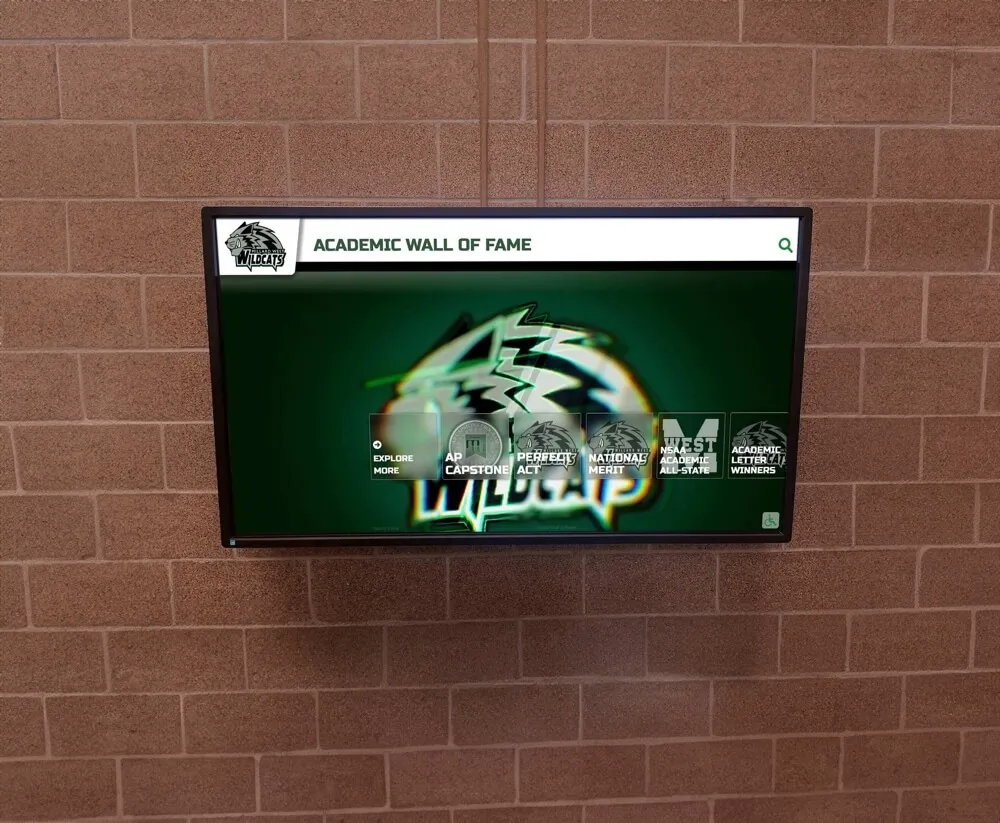
Learn about comprehensive approaches to academic recognition programs that celebrate diverse intellectual achievements.
Performing Arts Recognition
Programs honoring artistic achievement including all-state musicians and vocalists, lead theatrical performers in major productions, art competition winners, distinguished directors or instructors, and performing groups achieving exceptional recognition at competitions or festivals.
Distinguished Alumni Hall of Fame
Recognition celebrating graduates who achieved exceptional professional success or community impact after leaving high school including civic leaders making significant community contributions, professional achievement in various fields, military service recognition, philanthropic leadership supporting schools or communities, and entrepreneurial success creating businesses or employment opportunities.
Donor Recognition Walls
Specialized programs acknowledging philanthropic contributions supporting facilities, programs, scholarships, or general operations. These displays typically organize donors by giving levels while connecting financial support to tangible outcomes like new buildings, athletic facility improvements, scholarship recipients, or program enhancements.
Explore comprehensive donor recognition approaches that celebrate philanthropic support effectively.
Multi-Category Recognition Systems
Many schools implement comprehensive programs combining multiple recognition types within unified systems. Digital recognition platforms enable celebrating diverse achievement categories without requiring separate physical installations for each program type, creating efficient comprehensive recognition systems.
Establishing Selection Criteria: Building Credible Recognition Programs
Clear, transparent selection standards ensure hall of fame credibility and fairness while establishing meaningful recognition thresholds that maintain prestige and create defensible decisions.
Developing Core Eligibility Requirements
Systematic eligibility criteria establish fundamental qualifications for consideration:
Time Since Graduation Requirements
Most recognition programs require waiting periods ensuring adequate perspective on achievements and their lasting significance. According to the National Federation of State High School Associations, common approaches include:
- Ten years must have passed since graduation for individual athletes or students
- At least five years for coaches, administrators, or staff members
- Championship teams become eligible after ten-year anniversaries
- Distinguished alumni typically require minimum 15-year waiting periods
These time requirements prevent recency bias while ensuring honorees’ achievements demonstrate lasting impact rather than temporary success or popularity.
Achievement Threshold Standards
Recognition programs establish minimum accomplishment levels warranting consideration including:
Athletic Achievement Standards
- All-state, all-conference, or all-district recognition
- School record holders demonstrating exceptional performance
- Team captains who provided leadership during successful seasons
- Athletes earning collegiate athletic scholarships
- Multiple-year varsity letter winners in demanding programs
- Championship team membership or contributions
Academic Achievement Standards
- Class ranking in top percentiles (typically top 5-10%)
- National Merit Scholar or similar prestigious academic recognition
- Perfect or near-perfect standardized test scores
- Major academic scholarship recipients
- Significant research or competition achievements
- Sustained academic excellence across multiple years
Character and Citizenship Requirements
The best recognition programs extend beyond pure achievement metrics to consider character, integrity, and citizenship. Effective criteria specifically require honorees demonstrate:
- High degree of character and integrity during school years and beyond
- Positive role model status appropriate for student emulation
- Upstanding citizenship as students and worthy of recognition
- No serious disciplinary issues or policy violations
- Contributions to school community beyond individual achievement
- Continued positive reputation and community standing
This character component ensures recognition celebrates individuals worthy of the honor rather than simply those with impressive statistics who may lack qualities schools want to exemplify.
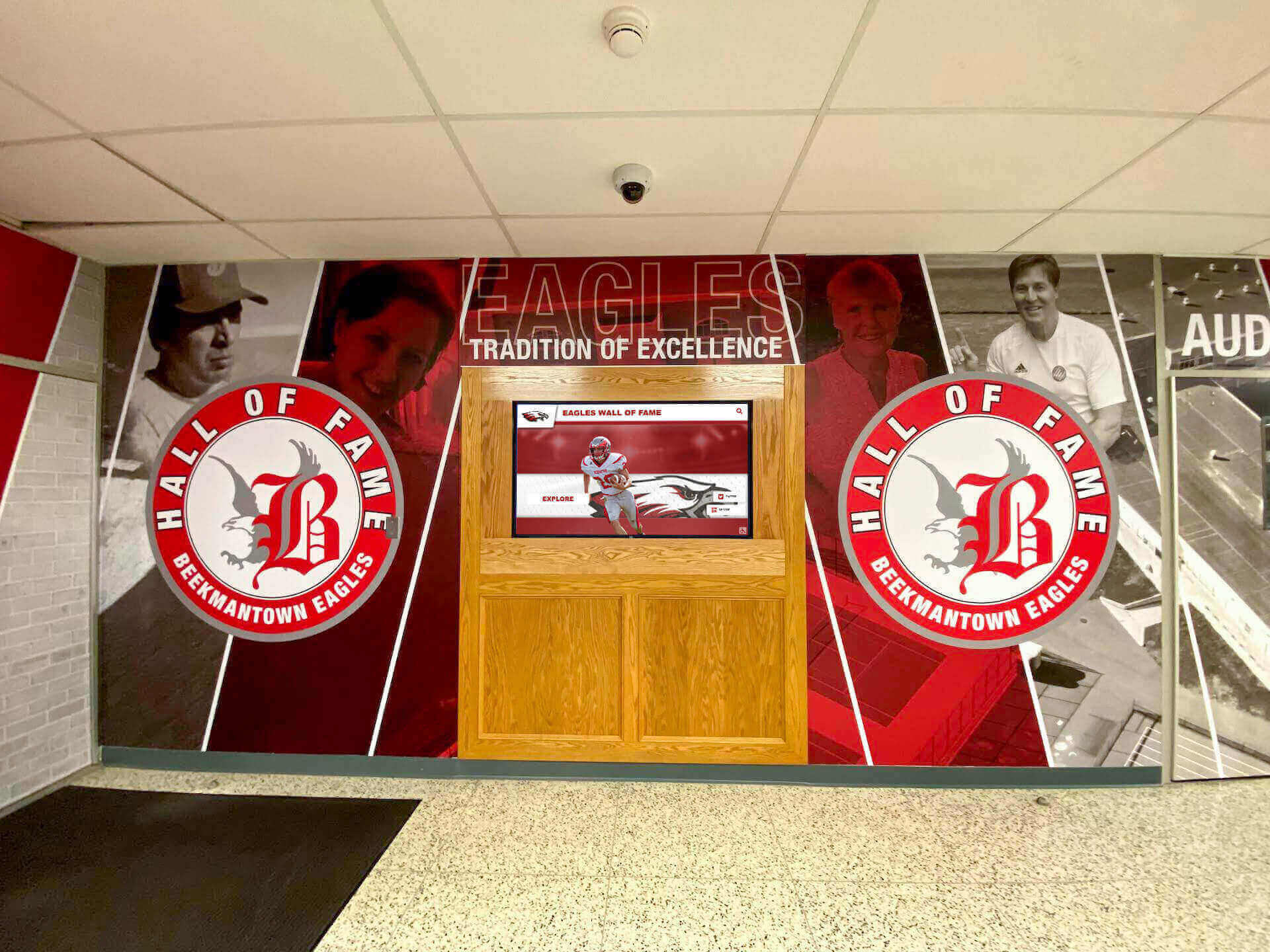
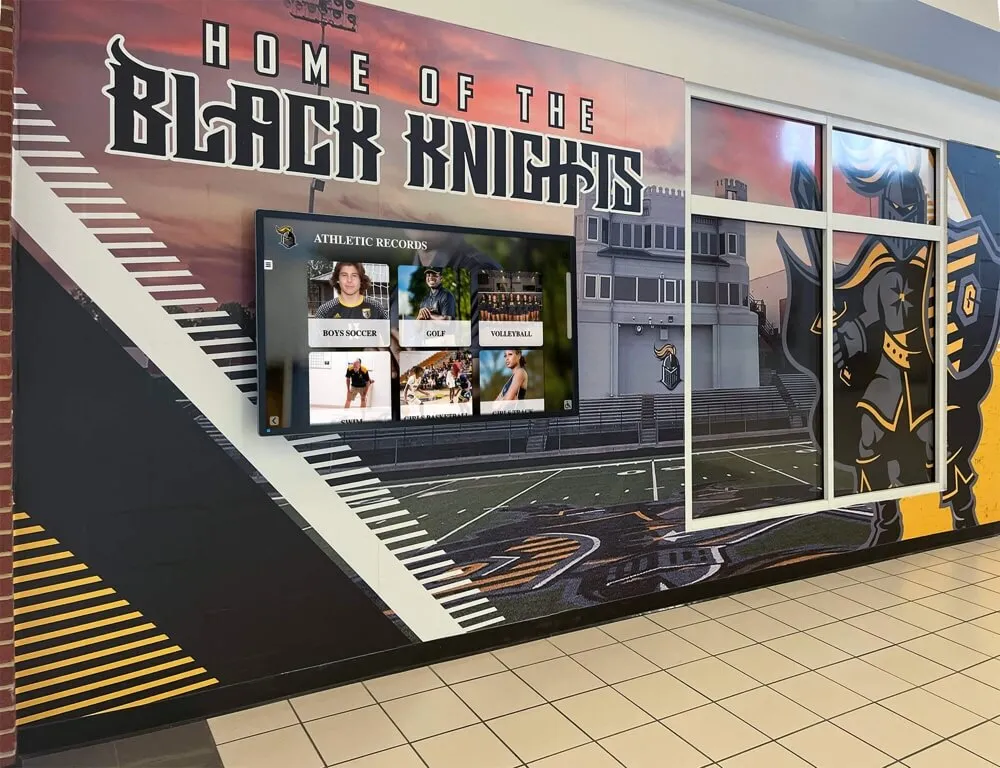
Systematic selection criteria ensure recognition programs maintain credibility while honoring diverse achievement types
Creating Selection Committee Structure
Formal committees provide structure and credibility to recognition decisions:
Committee Composition
Typical selection committees include:
- Athletic director or activities director serving as chair
- School administrators providing institutional perspective
- Current or former coaches with program knowledge
- Alumni association representatives ensuring graduate input
- Booster club or parent organization members
- Long-tenured faculty or staff with institutional memory
- Possibly student representatives for certain categories
According to best practices, committees should include 5-9 members to provide diverse perspectives while remaining manageable for decision-making processes. Clear bylaws should document committee composition, term lengths, and procedures for filling vacancies.
Decision-Making Processes
Effective committees establish systematic approaches including:
- Annual nomination periods with specific deadlines
- Standardized nomination forms capturing required information
- Review criteria scoring systems enabling objective evaluation
- Required percentage or unanimous approval thresholds
- Limits on annual induction numbers maintaining selectivity
- Appeals processes for contentious decisions
- Documentation requirements creating decision records
Transparency and Communication
Selection processes should balance appropriate confidentiality with transparency about criteria and procedures. Schools should publicly document eligibility requirements and selection criteria, nomination processes and deadlines, committee composition and structure, while maintaining confidentiality about specific deliberations, unsuccessful nominations, and individual voting records.
This balance enables stakeholders to understand and trust selection processes while protecting committee members from inappropriate pressure and allowing candid discussions about sensitive situations.
Recognition Display Design: Traditional and Modern Approaches
Physical installations create visible permanent acknowledgment of achievement while communicating institutional values and priorities.
Traditional Physical Recognition Walls
Classic approaches remain popular for their permanence and prestige:
Engraved Plaque Systems
Traditional recognition features individual plaques mounted to walls or display boards, typically organized by induction year or achievement category. This timeless approach provides:
- Classic aesthetic appeal familiar to communities
- Permanent acknowledgment resistant to technology obsolescence
- Straightforward visual hierarchy distinguishing categories
- Tangible quality communicating recognition importance
However, plaque systems present significant limitations including fixed capacity restricting future additions, expensive and time-consuming updates requiring new fabrication, no capability for storytelling beyond names and achievement dates, physical space constraints limiting comprehensive recognition, and aesthetic challenges as displays reach capacity with empty spaces or mismatched additions.
Trophy Case Recognition
Many schools integrate recognition into trophy cases displaying championship trophies, retired jerseys, and recognition elements. These installations provide:
- Natural gathering points in athletic facilities or main lobbies
- Visual connection between current teams and historic achievement
- Protection from vandalism or deterioration
- Prominent placement ensuring high visibility
Trophy case recognition works especially well for athletic programs but may not suit academic or alumni recognition as effectively.
Photographic Recognition Displays
Photo-based recognition walls feature portraits of inductees alongside names and achievement descriptions. These displays provide:
- Personal connection through visual identification
- More engaging presentation than text-only listings
- Storytelling opportunities through captions and descriptions
- Attractive aesthetic when professionally designed
Photo displays require careful planning for consistency in image quality, sizing, and format as recognition programs grow over years.
Learn about comprehensive digital trophy walls that overcome traditional display limitations.
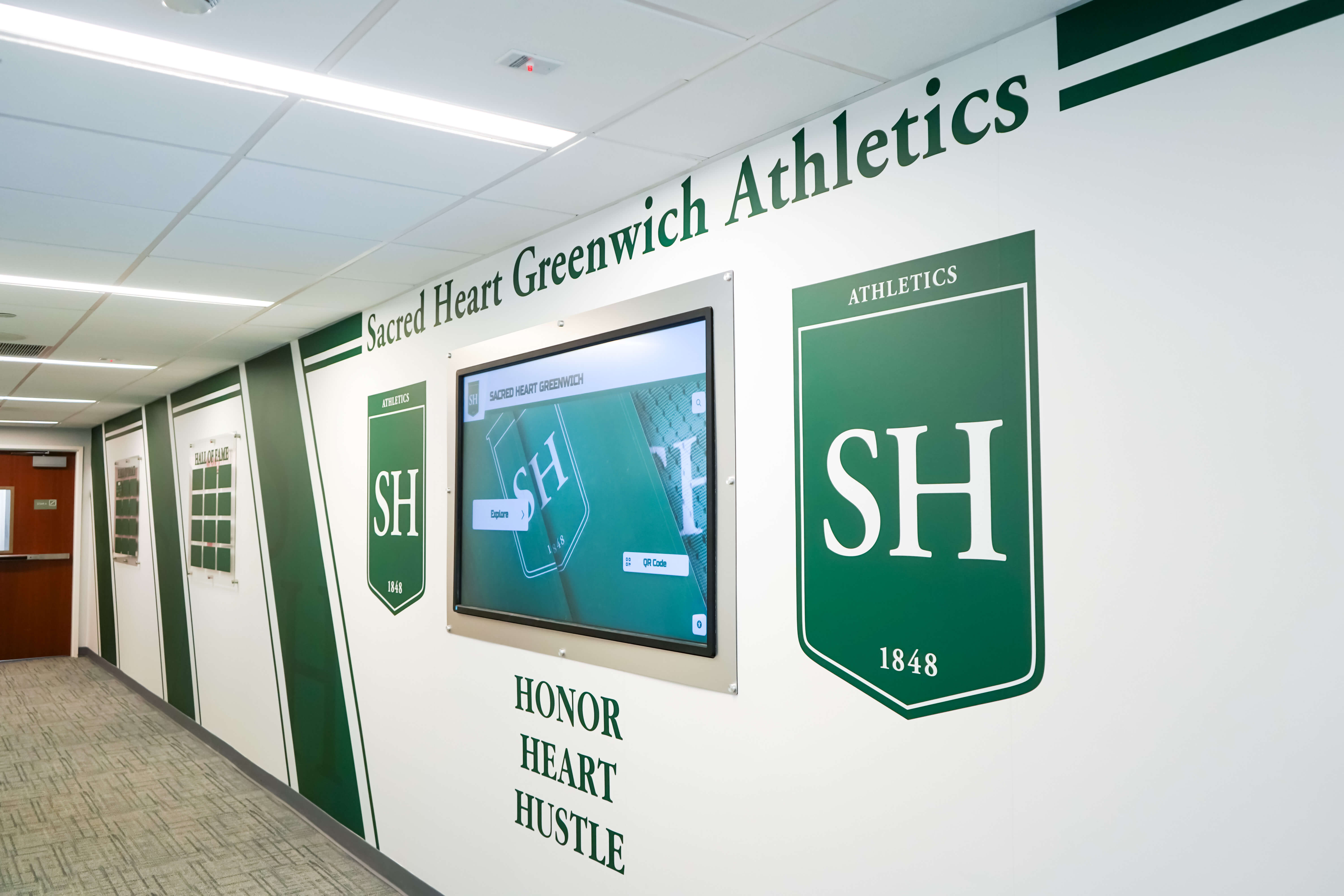
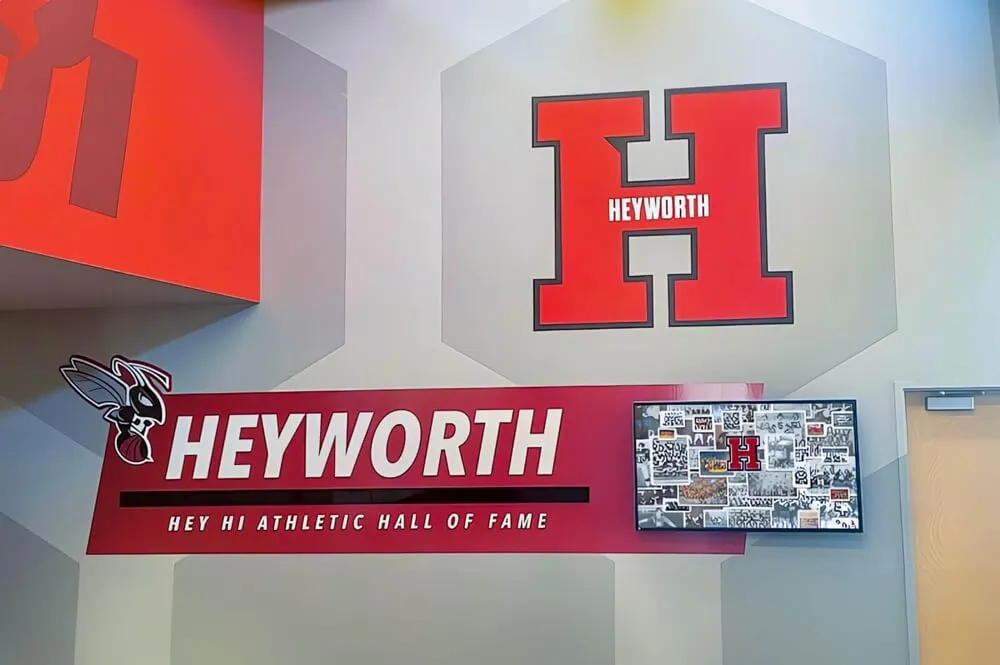
Traditional recognition walls create permanent architectural presence honoring institutional achievement history
Digital Recognition Systems: Modern Solutions
Contemporary digital displays overcome traditional limitations while offering capabilities impossible with static installations:
Unlimited Recognition Capacity
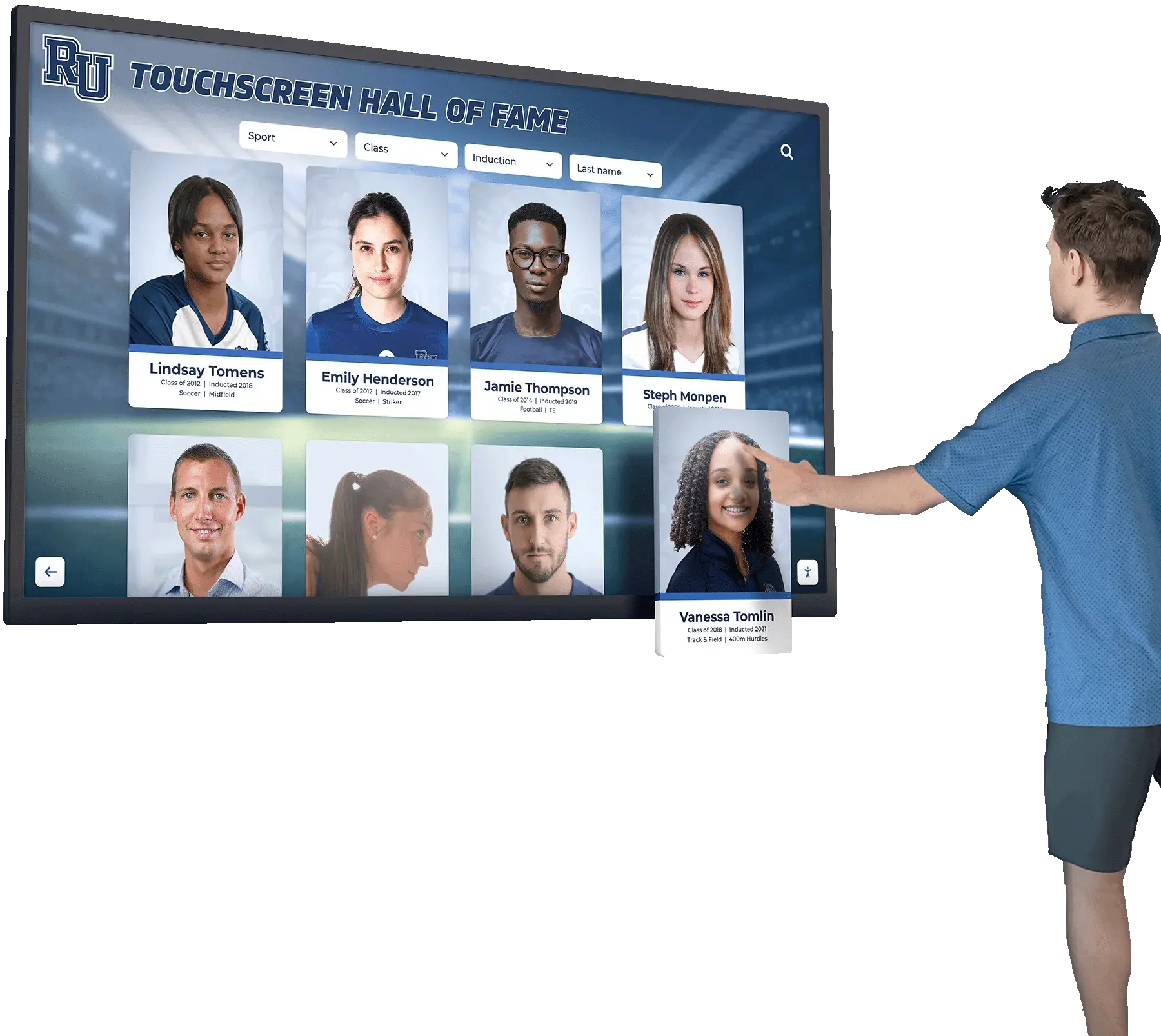
Digital walls of fame accommodate unlimited honorees without physical space constraints, eliminating difficult decisions about whose achievements receive acknowledgment when recognition space runs short. Single displays can showcase hundreds or thousands of individuals across multiple achievement categories, with searchable interfaces enabling visitors to find specific honorees instantly.
Solutions like Rocket Alumni Solutions provide comprehensive digital recognition platforms combining touchscreen kiosks with cloud-based content management, enabling schools to honor every deserving individual regardless of available wall space.
Rich Multimedia Storytelling
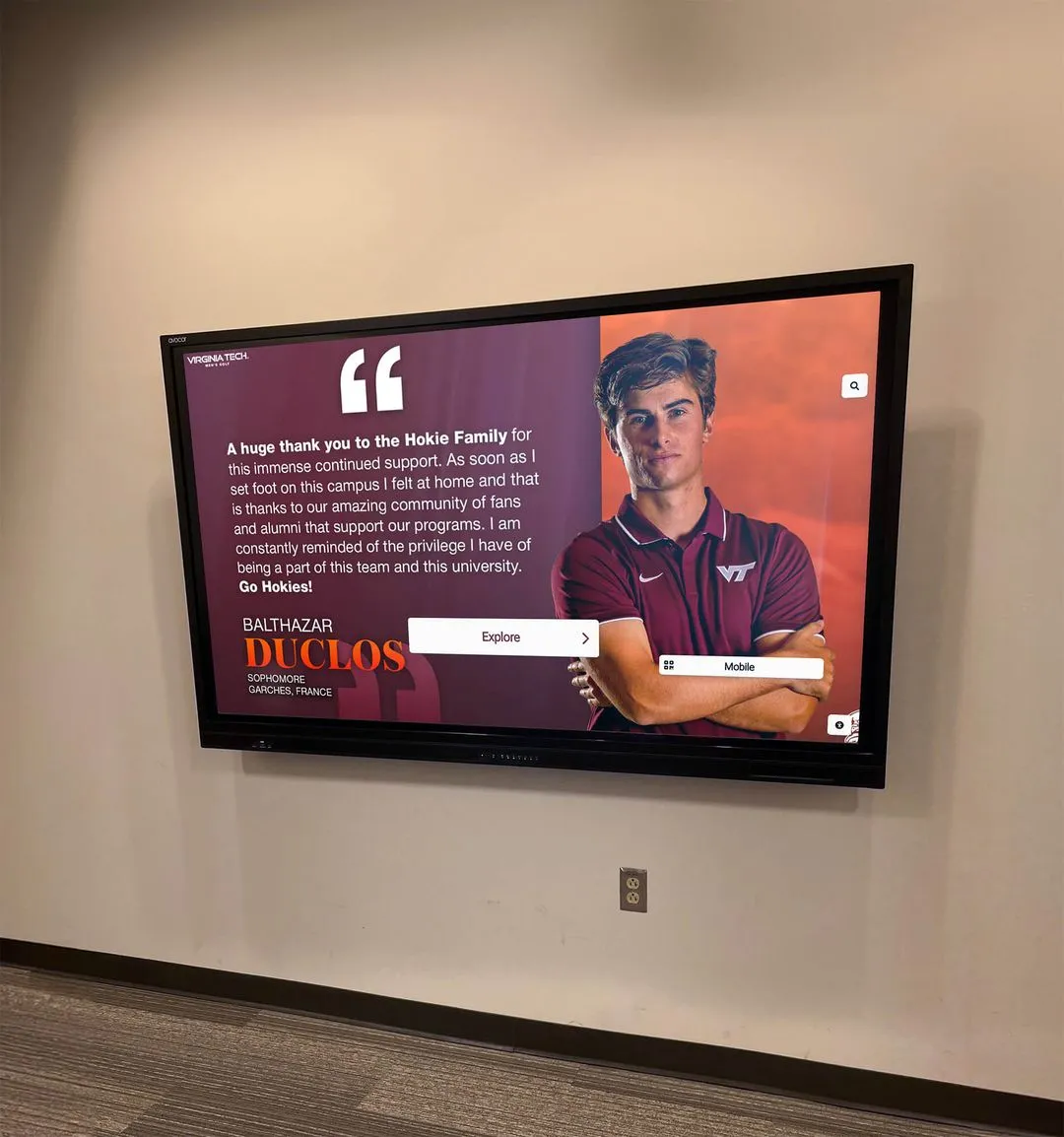
Digital systems enable recognition extending far beyond name listings including:
- Honoree photographs and biographical information
- Video interviews or acceptance speeches
- Career achievement summaries and highlights
- Statistics documenting athletic or academic records
- Historical context connecting achievements to school history
- Interactive timelines showing achievement progression
- Social media integration allowing sharing and engagement
This multimedia capability transforms recognition from simple acknowledgment to meaningful storytelling that communicates the depth of honorees’ accomplishments and their impact on school communities.
Effortless Updates and Maintenance
Cloud-based management platforms enable instant recognition updates from any internet-connected device, eliminating the delays, expenses, and physical labor traditional walls require for modifications. School staff can:
- Add new inductees in minutes rather than months
- Correct errors or update information immediately
- Refresh content maintaining engagement over time
- Schedule recognition to go live during ceremonies
- Reorganize content without physical reinstallation
Organizations implementing interactive touchscreen software report 90% reduction in recognition maintenance time compared to traditional plaque systems.
Flexible Multi-Category Integration
Digital platforms enable celebrating diverse achievement types within unified systems without requiring separate physical installations for athletics, academics, performing arts, distinguished alumni, and donor recognition. Single displays can accommodate all categories with intuitive navigation enabling exploration of different recognition programs.
This comprehensive approach creates central recognition destinations celebrating all forms of excellence rather than fragmenting acknowledgment across multiple locations.
Web Integration and Mobile Access
Modern recognition extends beyond physical displays to online accessibility enabling alumni and community members worldwide to explore recognition from anywhere. Web-accessible recognition provides:
- 24/7 access versus limited facility hours
- Mobile-responsive design ensuring smartphone accessibility
- Social sharing capabilities allowing honorees to celebrate recognition
- Search engine visibility connecting school pride to online presence
- Integration with alumni networking platforms
- Virtual attendance at induction ceremonies
This expanded reach amplifies recognition impact while enabling graduates who moved away to remain connected to school achievement traditions.
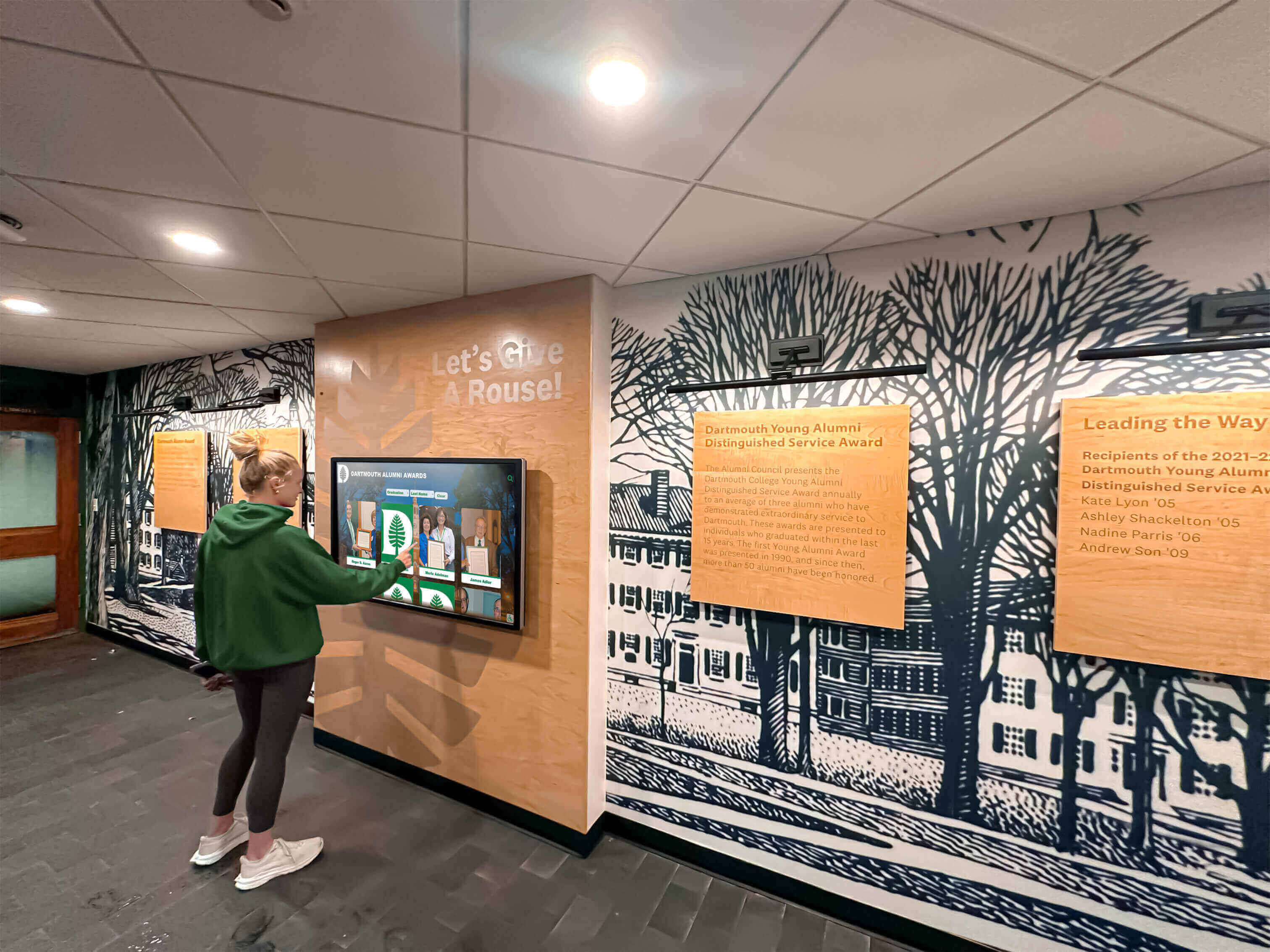
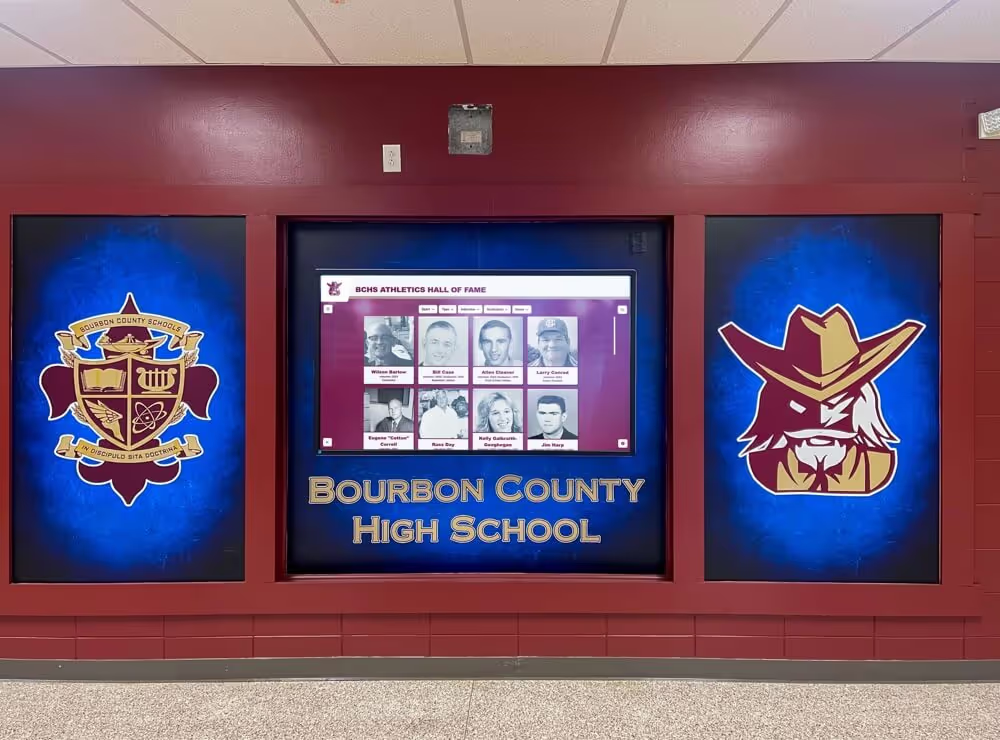
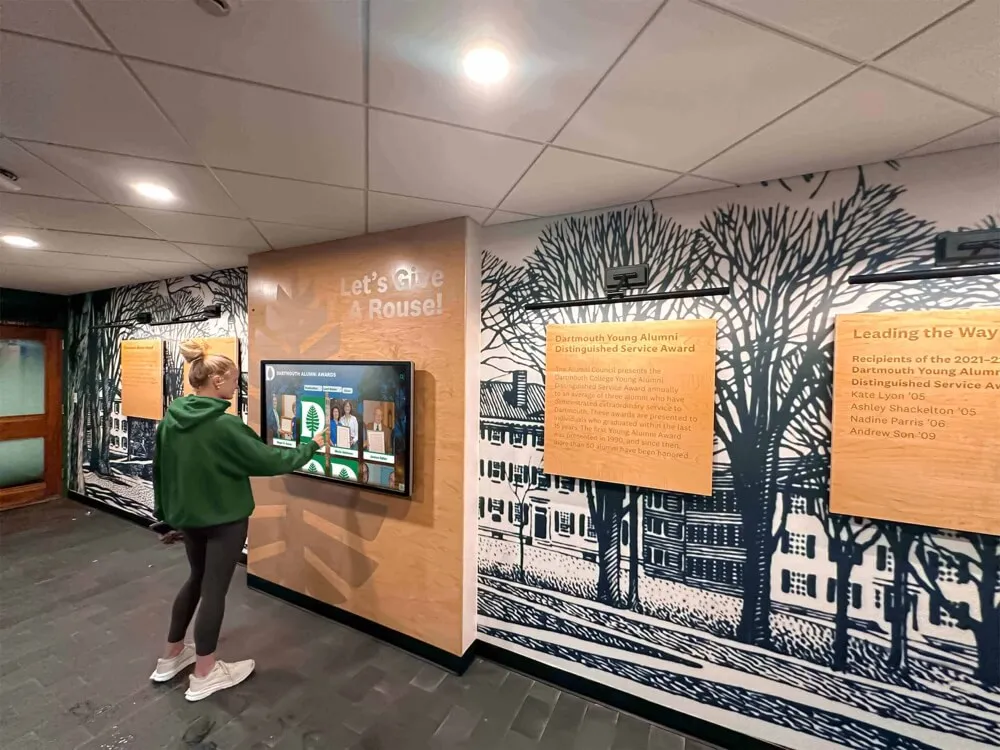
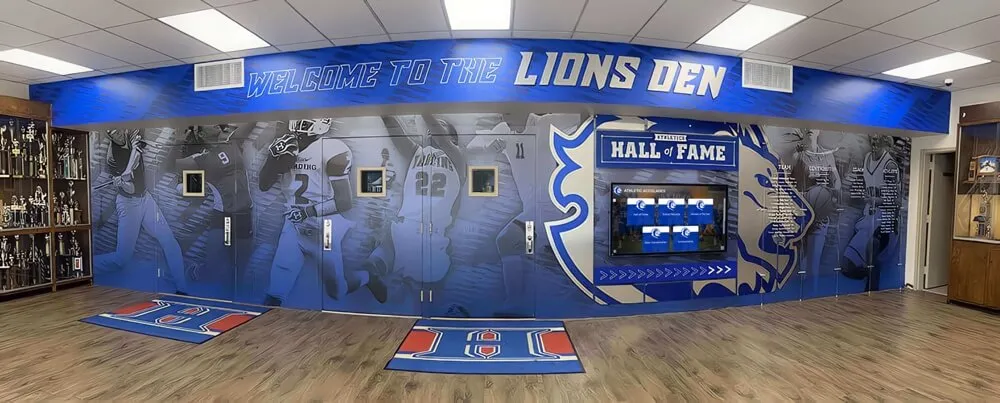
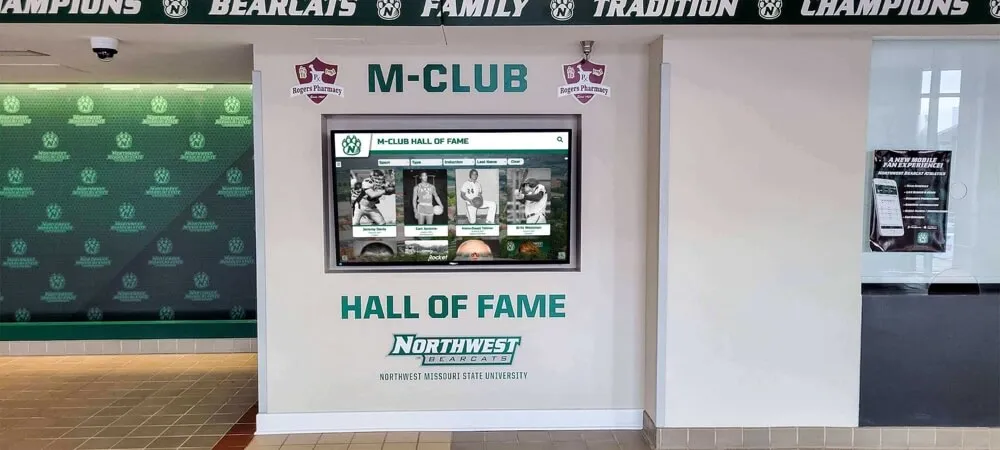
Interactive digital recognition creates engaging experiences that connect current students with institutional achievement history
Hybrid Recognition Approaches
Many schools implement systems combining traditional and digital recognition advantages:
Physical Recognition for Founding Inductees
Initial inductees or highest-honor categories receive premium physical recognition including engraved plaques for early honorees, dedicated spaces or architectural elements, permanent materials communicating recognition prestige, and traditional aesthetic meeting community expectations.
Digital Systems for Comprehensive Inclusion
Digital displays complement physical installations by accommodating all additional inductees without space limitations, providing searchable interfaces enabling easy discovery, supporting multimedia content impossible with static plaques, and facilitating effortless updates as programs continue evolving.
This combination honors founding members appropriately while ensuring comprehensive recognition impossible with physical-only systems constrained by space limitations. Schools implementing this approach report high satisfaction from both traditional-minded alumni and technology-embracing community members.
Explore comprehensive digital hall of fame design that balances tradition with innovation.
Implementation Planning: Building Sustainable Recognition Programs
Successful wall of fame programs require thoughtful planning and systematic execution ensuring recognition systems meet school needs effectively.
Program Development Timeline
Systematic implementation prevents common problems:
Planning Phase (6-9 months before launch)
Initial planning establishes program foundations including:
- Recognition philosophy and program objectives articulation
- Selection criteria development and policy documentation
- Committee formation and bylaws establishment
- Budget development and funding identification
- Display design and location selection
- Community engagement and feedback gathering
- Board approval and administrative support securing
Comprehensive planning prevents mid-implementation discoveries that force backtracking or compromise program quality.
Pre-Launch Phase (3-6 months before ceremony)
Implementation activities prepare for inaugural induction including:
- Nomination solicitation through multiple channels
- Application review and candidate evaluation
- Selection decisions and honoree notification
- Display fabrication, installation, or system configuration
- Induction ceremony planning and logistics
- Communication materials and publicity development
- Historical research documenting founding inductees
Launch Phase (ceremony through 3 months after)
Formal program inauguration and initial operations including:
- Induction ceremony execution
- Media coverage and community celebration
- Display activation and public unveiling
- Honoree engagement and stewardship initiation
- Program documentation and evaluation
- Lessons learned capture for future refinement
Ongoing Operations (annual cycle)
Sustainable program management including:
- Annual nomination period announcement
- Candidate evaluation and selection
- Induction ceremony planning and execution
- Display updates and maintenance
- Program assessment and improvement
- Alumni and community engagement
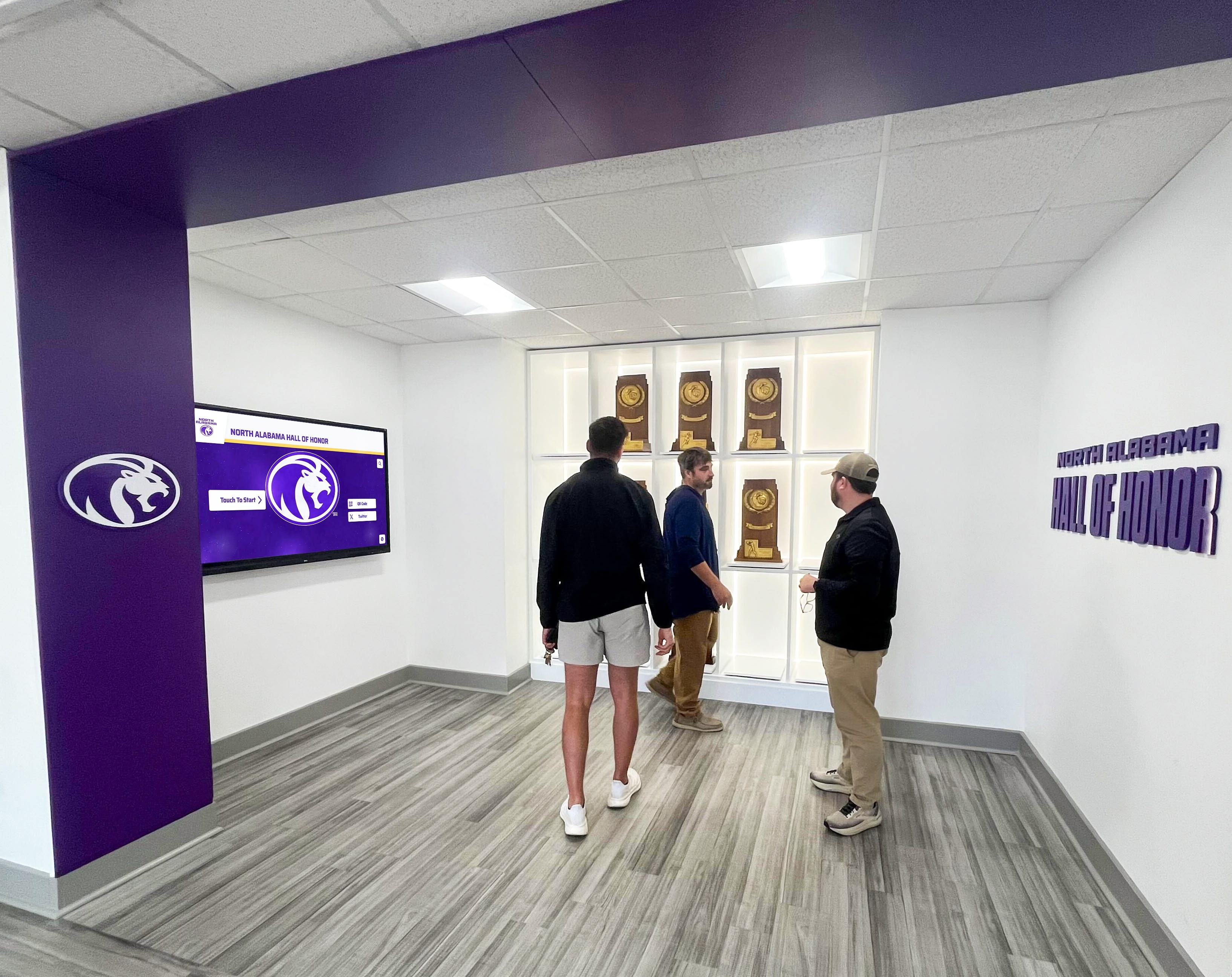
Formal induction ceremonies celebrate honorees while strengthening community connections to school achievement traditions
Funding and Budget Considerations
Adequate resources ensure recognition quality matches program importance:
Initial Implementation Costs
Recognition program startup expenses typically include:
- Display design and fabrication: $5,000-$50,000 depending on approach
- Digital system acquisition if applicable: $10,000-$30,000
- Installation and mounting: $1,000-$5,000
- Induction ceremony expenses: $2,000-$10,000
- Communication materials and publicity: $500-$2,000
- Administrative time and project management
Total initial investment typically ranges from $15,000-$75,000 depending on display scope, digital system inclusion, and ceremony scale.
Annual Operating Costs
Ongoing program expenses include:
- Annual induction ceremony: $1,500-$5,000
- Display updates and maintenance: $500-$3,000 for traditional plaques
- Digital system subscriptions: $600-$2,400 for cloud-based platforms
- Recognition plaques or gifts for inductees: $100-$500 per honoree
- Communication and publicity: $300-$1,000
- Administrative time and committee operations
Annual costs typically range from $3,000-$12,000 depending on induction class size and recognition approach.
Funding Sources
Common funding mechanisms include:
- Booster club or parent organization sponsorship
- Alumni association financial support
- Individual donor contributions or naming opportunities
- School operational budget allocation
- Fundraising campaigns or giving days
- Corporate or business sponsorships
- Memorial gift programs
Recognition programs naturally attract philanthropic support when appropriately framed, as alumni often willingly fund recognition systems honoring their graduation classes, achievement categories, or specific programs they valued. Learn about fundraising for digital recognition systems that create sustainable funding.
Display Location and Placement Strategy
Strategic placement maximizes recognition visibility and impact:
High-Traffic Location Selection
Recognition displays should occupy spaces where maximum community members encounter them including:
- Main building entries and lobbies
- Athletic facility gathering areas
- Gymnasium or auditorium lobbies
- Administrative hallways with visitor traffic
- Alumni center or advancement office areas
Poor placement in back corridors or low-visibility locations undermines recognition effectiveness by suggesting schools don’t genuinely value achievement they claim to honor.
Multiple Display Considerations
Larger schools or those with diverse program categories might implement multiple recognition displays including:
- Athletic facility displays for sports achievement
- Academic building recognition for intellectual accomplishment
- Performing arts center displays for artistic excellence
- Central location for distinguished alumni recognition
- Development office donor recognition walls
Multiple displays enable category-specific placement while potentially creating thematic recognition destinations throughout campuses.
Accessibility and Inclusion
Recognition displays must accommodate all community members including:
- Appropriate mounting heights and sight lines for wheelchair users
- Readable font sizes and high contrast for visual accessibility
- Adequate lighting ensuring visibility
- Clear circulation space allowing comfortable viewing
- Multilingual options for diverse communities when appropriate
Solutions like touchscreen kiosk software provide accessibility features ensuring inclusive recognition experiences.
Nomination and Selection Processes: Operational Excellence
Systematic processes ensure consistent, fair, and credible recognition decisions.
Nomination Procedures
Structured nomination systems encourage community participation while gathering necessary information:
Open Nomination Periods
Most programs designate annual nomination windows including:
- Announced start and end dates creating urgency
- Typically 4-8 week windows providing adequate time
- Consistent timing year-over-year establishing traditions
- Multiple promotion channels ensuring awareness
Nomination Sources and Eligibility
Programs should welcome nominations from diverse sources including:
- Alumni nominating former classmates or themselves
- Current faculty or staff with institutional knowledge
- Community members recognizing outstanding contributions
- Family members honoring relatives
- Current students nominating worthy candidates
Clear policies should specify who can nominate candidates, whether self-nominations are permitted, and any special nomination categories or processes.
Required Nomination Information
Standardized forms gather consistent candidate information including:
- Nominee identification and graduation year
- Achievement category or recognition program
- Specific accomplishments warranting recognition
- Supporting documentation or statistics
- Character and citizenship information
- Contact information for nominee (if living)
- Nominator identification and contact information
Comprehensive nomination forms enable committees to evaluate candidates consistently while reducing follow-up research requirements.
Nomination Submission Methods
Accessible submission processes encourage participation including:
- Online forms through school websites
- Printed forms available at school offices
- Email submissions to designated addresses
- Physical drop-off at school locations
- Potentially posthumous nomination provisions
Multiple submission options ensure technology barriers don’t prevent worthy candidates from consideration.
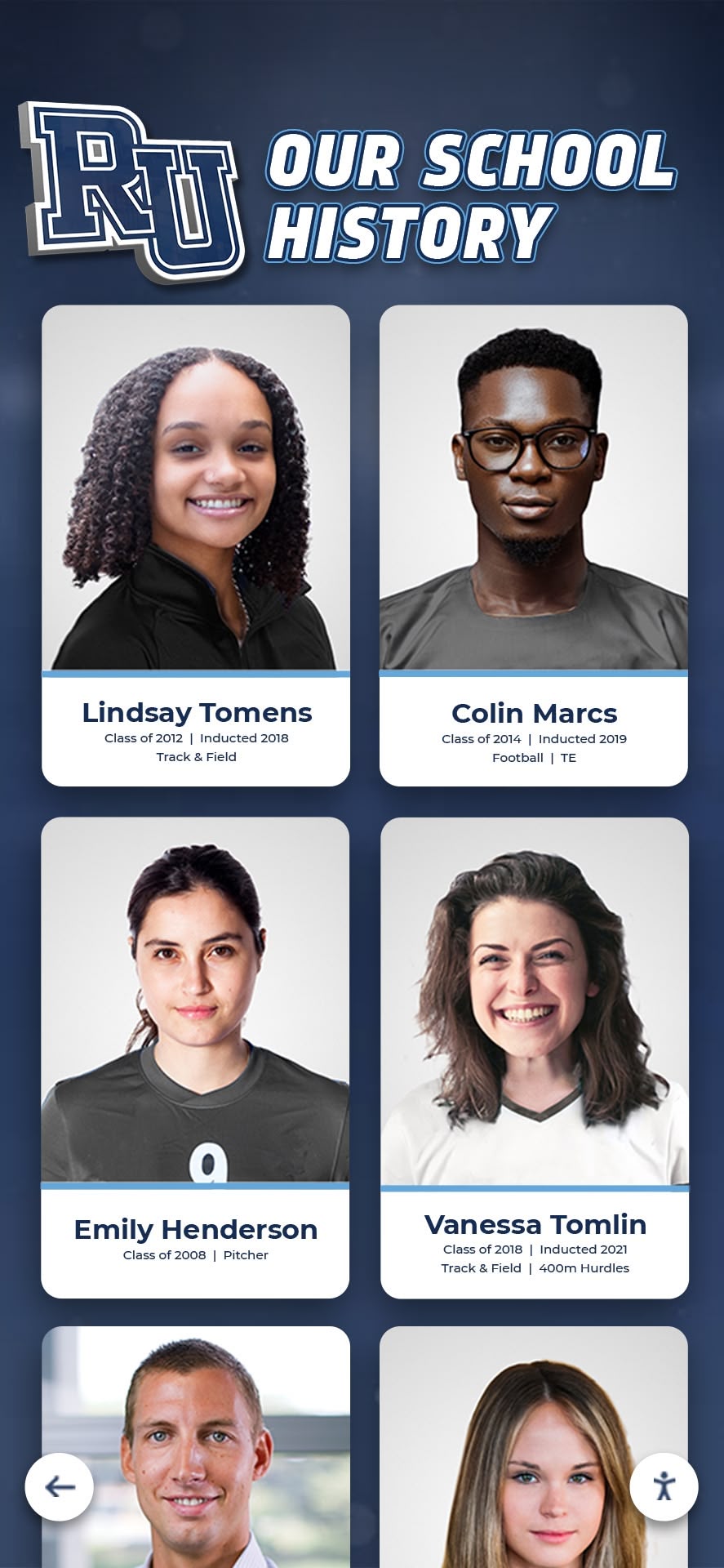
Comprehensive nomination documentation preserves achievement history while supporting selection committee decisions
Committee Review and Selection
Systematic evaluation ensures consistent, defensible decisions:
Candidate Evaluation Framework
Structured review processes typically include:
- Initial screening verifying eligibility requirements
- Full committee review of qualified candidates
- Scoring systems enabling objective comparison when applicable
- Discussion of borderline or contentious cases
- Voting procedures with defined approval thresholds
- Documentation of decisions and rationales
Balancing Objective and Subjective Criteria
Effective evaluation considers both measurable achievements and intangible qualities including:
- Quantifiable accomplishments like statistics or awards
- Comparative performance relative to peers or school records
- Sustained excellence versus single exceptional achievements
- Character, leadership, and citizenship factors
- Lasting impact on programs or institutions
- Role model appropriateness for current students
This balanced approach prevents purely statistical decisions that might overlook worthy candidates while avoiding subjective favoritism.
Managing Difficult Selection Scenarios
Committees occasionally face challenging situations requiring thoughtful handling including:
- More qualified candidates than available induction slots
- Candidates with exceptional achievement but character concerns
- Deceased candidates requiring sensitive handling
- Controversial figures whose achievements merit recognition despite complicated legacies
- Pressure from influential community members
- Recency bias toward recent graduates
Clear policies established during program development provide frameworks for navigating these situations consistently and defensibly.
Induction Ceremonies and Honoree Engagement
Formal ceremonies celebrate recognition while strengthening community connections:
Ceremony Planning Elements
Successful induction events include:
- Formal program with speeches and presentations
- Individual honoree recognition with biographical summaries
- Opportunities for inductees to address audiences
- Display unveiling or activation
- Reception enabling community interaction
- Photography and videography documentation
- Media coverage amplifying recognition visibility
Ceremony scale should match community size and program prestige while remaining financially sustainable.
Ongoing Honoree Stewardship
Recognition responsibilities extend beyond induction including:
- Periodic communication with living inductees
- Inclusion in school events and milestone celebrations
- Opportunities to mentor current students
- Invitations to speak or participate in programs
- Recognition in school publications and communications
- Stewardship cultivating continued school engagement
These ongoing relationships strengthen alumni connections while providing valuable role models and resources for current students.
Special Considerations and Best Practices
Certain situations require thoughtful approaches ensuring appropriate, sensitive acknowledgment.
Honoring Deceased Individuals
Posthumous recognition creates unique considerations:
Posthumous Induction Policies
Programs should establish clear approaches for deceased candidates including:
- Whether posthumous induction is permitted
- Any modifications to standard criteria or timelines
- Family involvement in nomination and ceremony
- Sensitive communication about recognition purposes
- Memorial or tribute designation options
Family Engagement
When honoring deceased individuals:
- Contact family members before public announcements
- Invite family participation in ceremonies and recognition
- Provide opportunities for family to share memories or stories
- Respect family privacy preferences
- Consider memorial scholarship connections
Sensitive handling ensures recognition honors both deceased honorees and surviving family members appropriately.
Addressing Character or Ethical Concerns
Occasionally candidates’ post-graduation actions raise recognition questions:
Handling Controversial Candidates
When achievement clearly warrants recognition but character concerns emerge:
- Consider achievements during school years separate from later actions
- Evaluate whether concerns rise to disqualification level
- Assess role model appropriateness for current students
- Consult legal counsel for serious ethical or legal issues
- Document decisions and rationales carefully
Recognition Reconsideration
Rare circumstances might necessitate recognition reconsideration including:
- Criminal convictions for serious offenses
- Ethical violations contradicting institutional values
- Behavior demonstrating unworthiness of honor
- Recognition errors discovered after induction
Clear policies established during program development prevent ad hoc decisions during difficult situations.
Team versus Individual Recognition
Athletic programs particularly face decisions about team recognition:
Team Recognition Approaches
Programs honoring team achievements typically:
- Establish criteria for qualifying teams (championships, records, etc.)
- Determine whether entire rosters receive individual recognition
- Balance team acknowledgment with individual athlete recognition
- Consider coaching recognition alongside team honors
- Define induction timing (immediately after achievement or after waiting period)
Individual versus Team Recognition Balance
Effective programs ensure both individual excellence and team achievement receive appropriate acknowledgment without one category dominating recognition or creating perceived inequities.
Measuring Recognition Program Success
Regular assessment ensures programs achieve intended goals and justify resource investment.
Quantitative Success Indicators
Measurable metrics track program performance:
Participation and Engagement Metrics
- Nomination submission volume and diversity
- Induction ceremony attendance trends
- Display visitor engagement (for digital systems with analytics)
- Social media engagement with recognition content
- Website traffic to recognition pages
Alumni Relations Impact
- Inducted alumni engagement and giving rates
- Overall alumni participation in school activities
- Survey responses about recognition program awareness
- Reunion attendance among inducted classes
- Volunteer participation from recognized alumni
Community Perception
- Media coverage quantity and sentiment
- Stakeholder satisfaction surveys
- Recognition program reputation assessments
- Comparative prestige versus peer institutions
Qualitative Assessment
Non-quantitative indicators provide important context:
Stakeholder Feedback
- Alumni satisfaction with recognition experiences
- Current student awareness and inspiration
- Faculty and staff program perception
- Community member understanding and appreciation
- Inductee testimonials about recognition meaning
Cultural Impact
- Recognition program contribution to school identity
- Achievement inspiration for current students
- Tradition strength and community connection
- Values communication through recognition choices
Regular assessment enables continuous improvement ensuring recognition programs remain meaningful, effective, and aligned with school missions and community expectations.
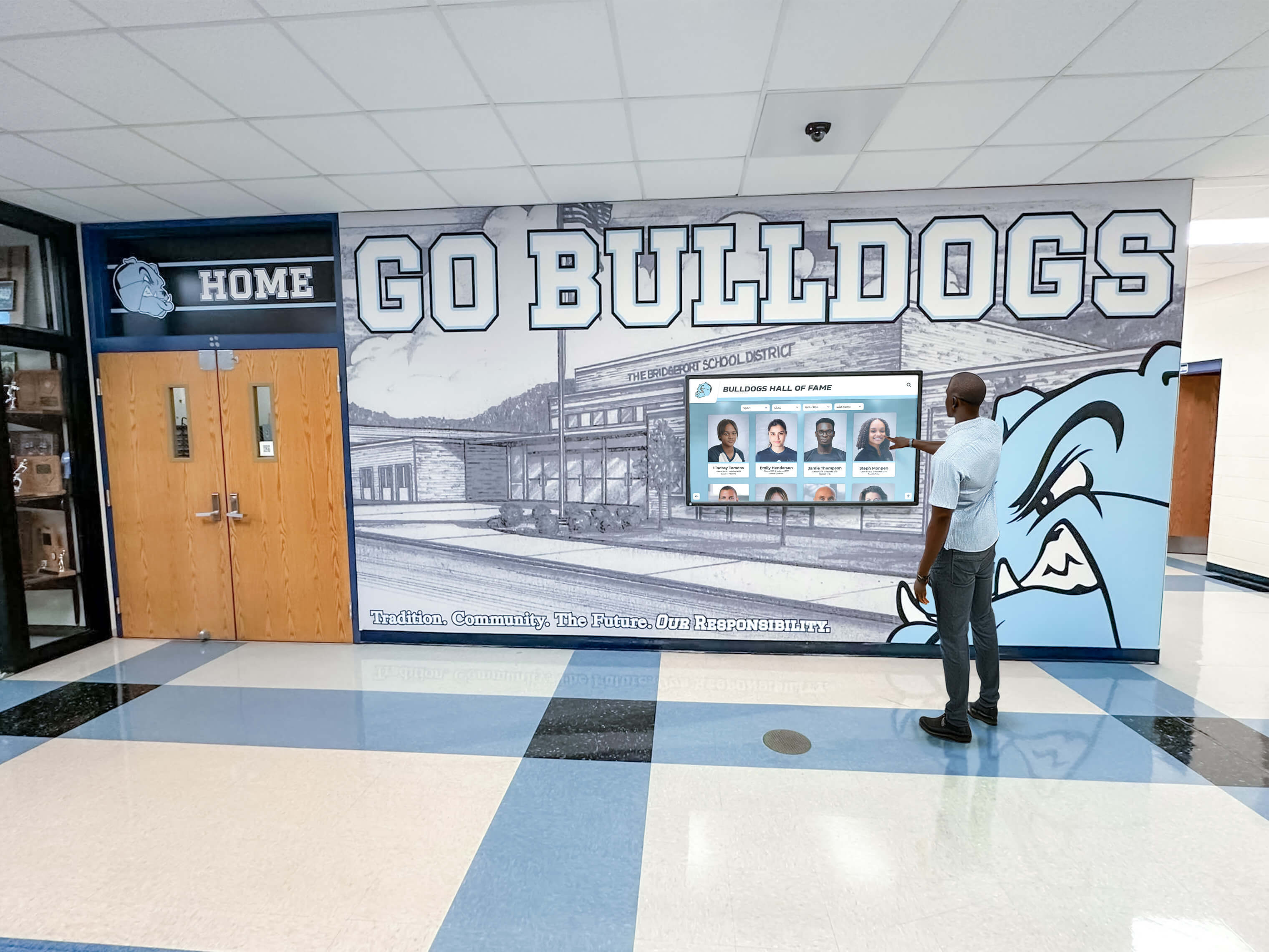
Successful recognition programs create lasting engagement while inspiring excellence among current students
Conclusion: Building Cultures of Excellence Through Recognition
High school walls of fame represent far more than displays listing accomplished individuals—they embody institutional values around excellence, create lasting connections between schools and communities, inspire current students through tangible achievement examples, and build cultures where outstanding performance receives appropriate celebration across generations.
When schools invest thoughtful planning, adequate resources, and sustained commitment in recognition programs, they create systems that honor achievement appropriately while ensuring every deserving individual receives acknowledgment regardless of achievement category or available physical space. The strategies explored in this guide provide comprehensive frameworks for wall of fame programs that balance multiple priorities including inspiring excellence through visible recognition, maintaining selection credibility through transparent criteria, creating engaging recognition experiences through modern technology, ensuring sustainable operations through systematic processes, and building lasting alumni connections through continued engagement.
Transform Your School Recognition Program
Discover how modern digital recognition solutions can help you celebrate every achievement category while building thriving cultures of excellence and school pride.
Explore Recognition SolutionsRecognition as Strategic Investment
Schools should view wall of fame programs not as optional extras but as strategic investments in school culture, alumni engagement, and institutional identity. Students who see achievement appropriately celebrated develop stronger motivation to excel. Alumni who receive recognition maintain lifelong connections to institutions, translating into volunteer engagement, philanthropic support, and professional networking that benefits current students. The return on recognition investment, measured in sustained community connection and cultural impact, dramatically exceeds initial costs when programs are executed thoughtfully and maintained consistently.
Technology Transformation
Modern digital recognition systems fundamentally transform what’s possible in high school walls of fame by eliminating space constraints that historically limited comprehensive inclusion, enabling rich multimedia storytelling impossible with traditional plaques, facilitating effortless updates maintaining accuracy and currency, extending recognition reach through web accessibility connecting global alumni communities, and creating engaging interactive experiences that inspire current students.
Solutions like Rocket Alumni Solutions provide comprehensive platforms addressing recognition needs across all achievement categories while offering sustainable systems that serve for decades without the deterioration and obsolescence challenges traditional physical-only recognition faces.
Implementation Pathway
Schools planning recognition programs should follow systematic approaches including recognition philosophy articulation and policy development, selection criteria establishment and committee formation, display design decisions balancing tradition and innovation, budget development and funding identification, nomination and selection process systematization, induction ceremony planning and community engagement, and ongoing program assessment and continuous improvement.
This methodical approach prevents common problems that plague programs where recognition becomes afterthought rather than strategic priority planned comprehensively from inception.
Long-Term Commitment
Wall of fame program responsibilities extend perpetually beyond initial implementation, requiring ongoing nomination solicitation and selection processes, consistent induction ceremony execution, display maintenance ensuring information accuracy and physical condition, honoree stewardship building lasting relationships, program evolution responding to changing needs and opportunities, and tradition preservation across decades and generations.
Your students’ and alumni’s achievements create school identity and community pride. They deserve recognition matching their accomplishments’ significance—thoughtfully planned, professionally executed, properly maintained, and perpetually honored. With strategic planning, adequate investment, and sustained commitment, you can create recognition systems that celebrate every achievement category while building the culture of excellence essential for educational communities that inspire students and connect alumni across generations.
Ready to begin planning your high school wall of fame program? Explore comprehensive athletic hall of fame creation strategies or discover approaches for digital recognition displays that overcome traditional limitations while celebrating achievement effectively.
Sources: