You’ve been asked to deliver a graduation speech—perhaps as valedictorian, class president, faculty representative, or guest speaker. The honor carries weight: graduates deserve words that resonate, families want inspiration their children will remember, and you face the challenge of saying something meaningful without falling into clichés about journeys, doors opening, or futures being bright.
The pressure intensifies when you realize graduation speeches often disappoint. Audiences endure generic platitudes that could apply to any graduating class in any year. Speakers default to safe, forgettable remarks rather than risking authentic perspectives that might actually matter. Graduates check phones rather than listening, and within hours, most ceremony content disappears from memory.
This comprehensive guide demonstrates how to write a graduation speech that genuinely connects with your audience through authentic storytelling, meaningful insights, appropriate humor, and practical wisdom graduates can actually use. Whether speaking to elementary students, high school seniors, or college graduates, these frameworks help you craft remarks that resonate during ceremonies and persist in memory long after.
Effective graduation speeches balance inspiration with authenticity, celebration with challenge, and personal narrative with universal insight. The best commencement addresses acknowledge the actual experiences graduates lived while providing perspective that helps them navigate transitions ahead. Rather than prescribing formulas guaranteeing success or promising that achievement follows specific paths, powerful graduation speeches validate complexity while offering genuine encouragement for uncertain futures.

Graduation moments deserve words that honor achievement while creating lasting inspiration for future success
Understanding Your Speaking Context and Audience
Before writing a single word, clarify your specific speaking situation, audience composition, and ceremony constraints shaping appropriate content.
Identifying Your Speaker Role
Your position relative to graduates fundamentally affects appropriate speech content, tone, and perspective:
Student Speaker (Valedictorian, Salutatorian, Class President)
Student speakers address peers from shared experience. Your credibility stems from having lived the journey you’re describing, navigating the same challenges, learning from the same teachers, and experiencing the same institutional culture. You speak with your classmates rather than to them, using “we” to acknowledge shared identity while recognizing diverse individual experiences within your class.
Student speeches often incorporate more humor, specific inside references meaningful to your class, acknowledgment of shared struggles and triumphs, and peer-to-peer encouragement based on mutual understanding. However, avoid excluding audience members who didn’t attend your school—parents, family members, faculty, and younger students watching should still connect with your message.
Faculty or Administrator Speaker
Speaking as principal, superintendent, or distinguished faculty member positions you as institutional representative who watched graduates develop across years. Your perspective encompasses broader historical context about graduating classes, institutional values and traditions you’ve stewarded, professional wisdom from decades observing young people navigate life transitions, and authority to speak on behalf of the educational community.
Faculty speeches typically adopt more formal tone while still incorporating warmth and specific observations about this particular graduating class. You balance institutional gravitas with personal connection developed through teaching, mentoring, or leading students.
Guest Speaker (Alumni, Community Leader, Invited Celebrity)
External speakers bring fresh perspective and inspiration beyond school community. Your value lies in life experience demonstrating paths available beyond graduation, professional expertise offering career insights, community standing providing broader context, or inspirational story illustrating meaningful principles.
Guest speakers must work harder establishing connection with audiences who lack relationship with you. Explicitly acknowledge your connection to the school (alumni status, community role, children who attended, professional partnership) while demonstrating genuine interest in this specific graduating class rather than delivering generic speeches you could present anywhere.
Learn how academic achievement recognition creates comprehensive celebration extending beyond ceremony moments.

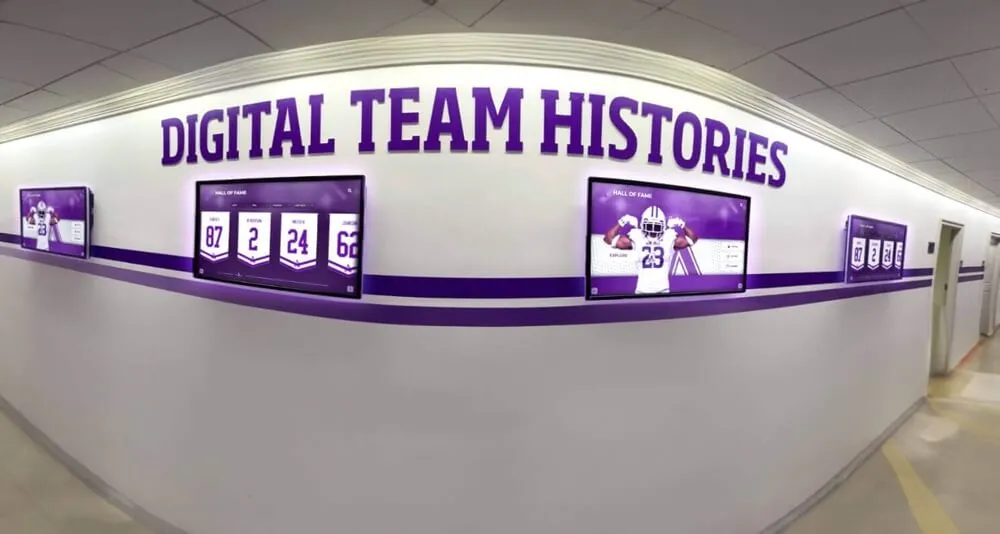
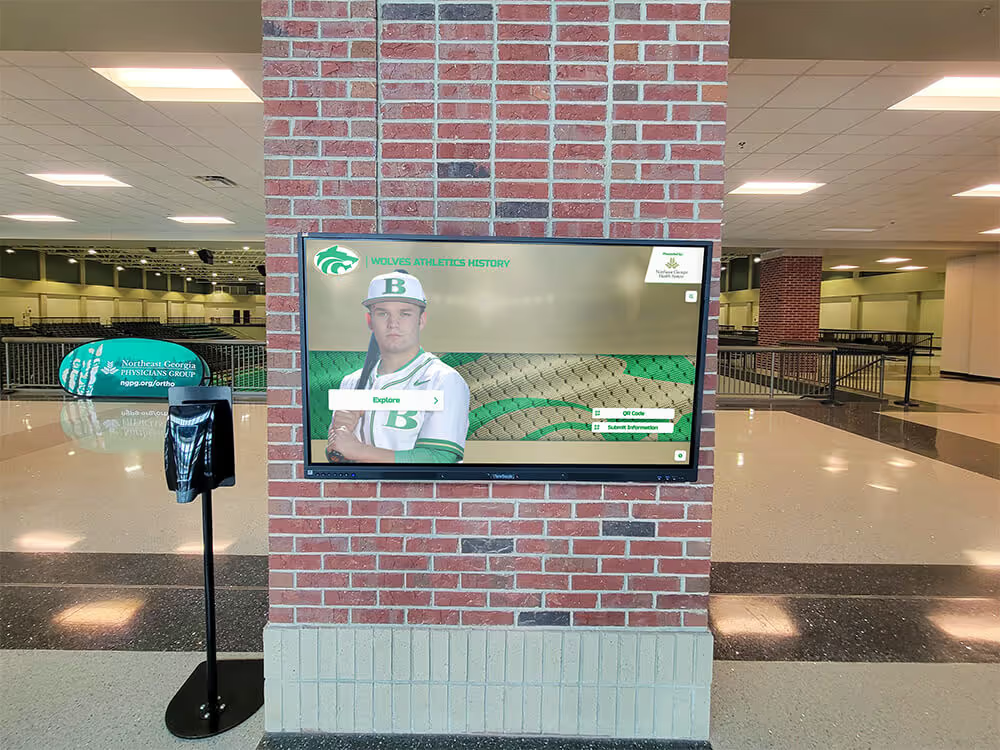
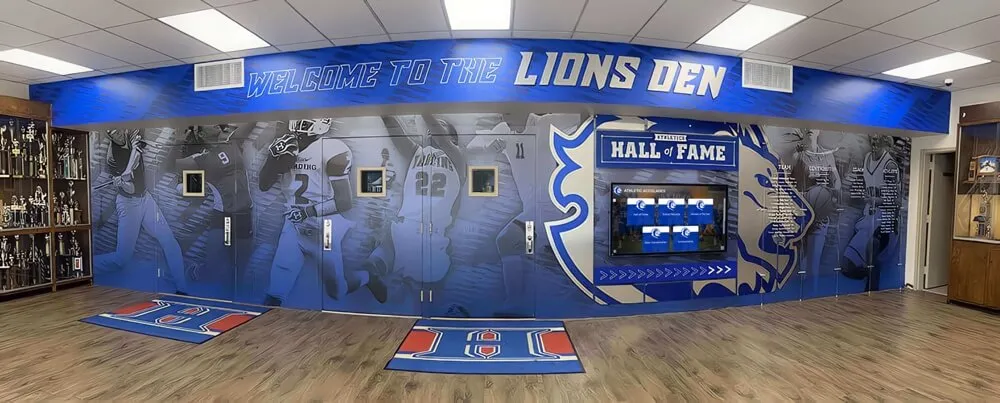
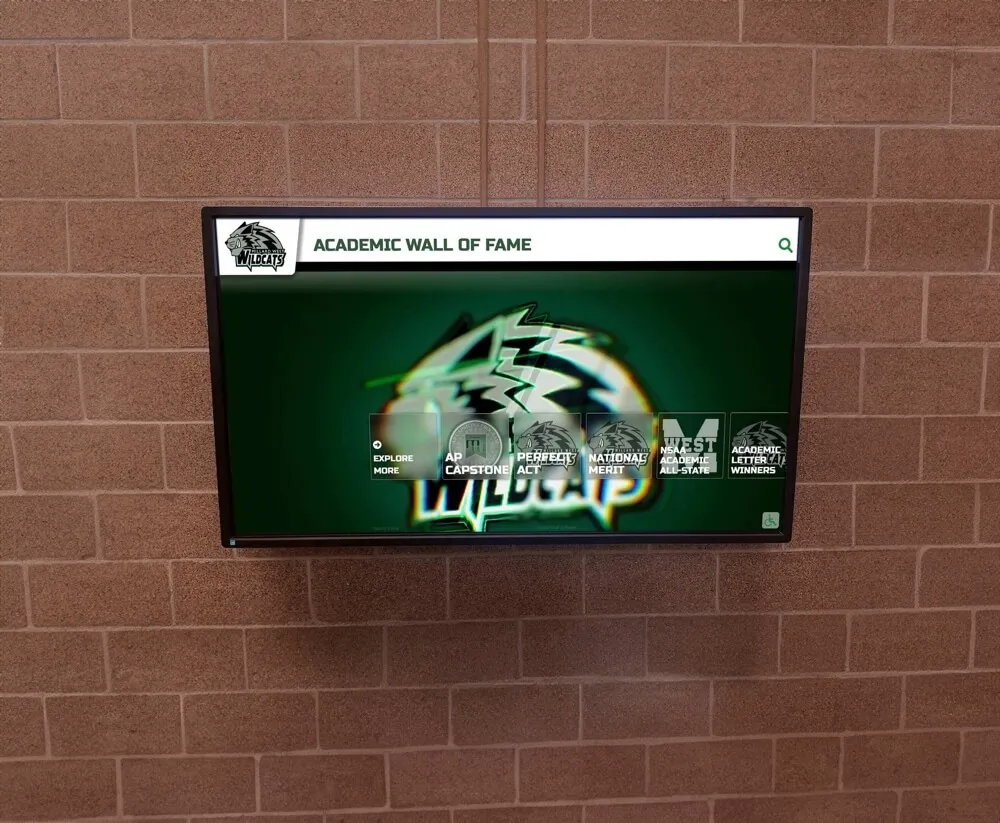
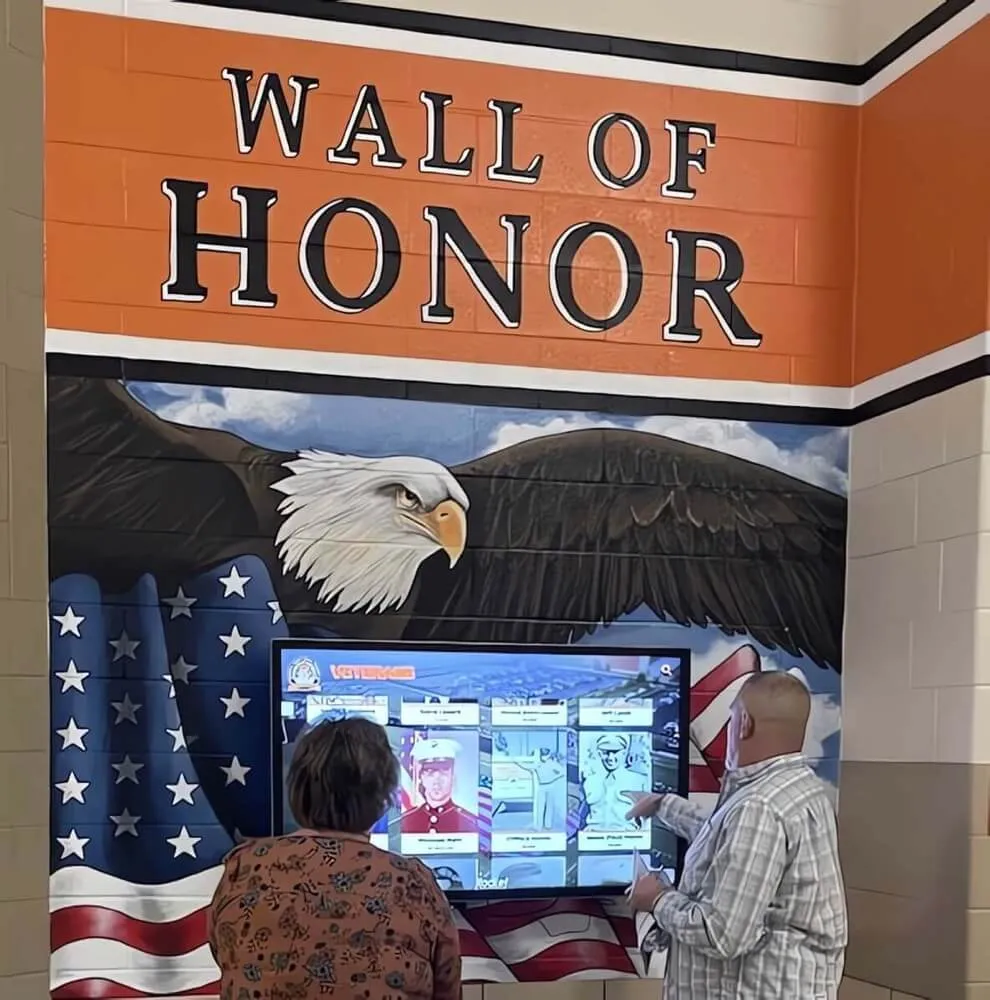
Recognition systems preserve graduation memories alongside ongoing achievement celebration
Analyzing Your Audience
Effective speeches speak to the room you’re actually addressing, not an imagined audience:
Primary Audience: Graduates
Graduates represent your main audience, but acknowledge their developmental stage and current emotional state. High school seniors face excitement mixed with anxiety about independence and uncertainty. College graduates might feel overwhelmed by career pressure and student loan reality. Elementary or middle school students need age-appropriate language recognizing their comprehension level.
Consider what graduates actually experienced during their time at your institution:
- What challenges defined their years? (Pandemic disruption, social movements, local events, institutional changes)
- What achievements should you acknowledge? (Championships, academic honors, community service, arts accomplishments)
- What makes this class unique? (Class size, diversity, specific programs they pioneered, shared experiences)
- What concerns them most about next steps? (College decisions, career uncertainty, leaving friends, family expectations)
Secondary Audiences: Families, Faculty, Community
Graduation audiences include parents and grandparents wanting validation that tuition investment and parenting effort mattered, younger siblings observing what their futures might hold, faculty who dedicated careers to student development, and community members supporting local schools.
Effective speeches acknowledge these constituencies without centering them. Brief recognition that “parents sacrificed to make this moment possible” or “teachers challenged you to achieve beyond what seemed possible” validates these stakeholders while keeping focus on graduates.
Clarifying Ceremony Constraints
Logistical parameters shape appropriate speech structure:
Time Limitations
Most graduation speeches should last 8-12 minutes maximum, with elementary/middle school addresses at the shorter end and high school/college speeches potentially extending slightly longer. Exceeding 15 minutes tests even enthusiastic audiences’ patience. Calculate realistic timing: adults speak approximately 125-150 words per minute, so a 10-minute speech requires roughly 1,250-1,500 words of written content.
Program Position
Determine where your speech falls within ceremony flow. Speaking early in programs allows longer remarks before audience fatigue sets in, while closing addresses must be particularly punchy since attendees have already sat through multiple speakers, awards, and diploma presentations.
Environmental Factors
Consider whether you’re speaking in climate-controlled auditorium or outdoor venue where weather affects comfort, during afternoon heat or evening coolness, in intimate setting or massive stadium, with professional sound system or modest microphone setup, to audience seated close or hundreds of feet away.
These factors influence appropriate speech length, humor style (intimate jokes work better in small venues), and delivery approach (grand gestures suit stadiums while subtlety works in auditoriums).
Explore how valedictorian recognition celebrates academic achievement alongside graduation celebrations.
Crafting a Compelling Opening Hook
Your speech’s first 30-60 seconds determine whether audiences engage or tune out. Strong openings grab attention, establish tone, and create anticipation for what follows.
Opening Approaches That Work
Personal Anecdote or Story
Begin with brief, vivid story illustrating the theme you’ll develop throughout your speech. Effective opening stories are:
- Specific rather than generic (names, places, details that make them real)
- Brief enough to complete within 60-90 seconds maximum
- Connected to graduating class experience or universal coming-of-age themes
- Leading naturally into your speech’s main message
Example: “Three years ago during my first week of high school, I got completely lost trying to find Room 247 for biology. I wandered the third floor for fifteen minutes, finally arriving twenty minutes late to discover I’d needed the second floor the whole time. Mr. Peterson just smiled and said, ‘Welcome—you’ll figure it out.’ And we did. This class figured out how to navigate much more than confusing hallways.”
Surprising Fact or Statistics
Open with unexpected information relevant to graduates’ situation that makes audiences think differently:
Example: “By age 27, the average person will have had 4.2 different jobs. By 30, they’ll have changed careers—not just jobs, but entire career fields—at least twice. I share this not to overwhelm you, but to liberate you. The path ahead isn’t straight, and that’s not failure—it’s normal.”
Thought-Provoking Question
Pose genuine question that makes audiences reflect rather than rhetorical question with obvious answer:
Example: “What if I told you that nothing you accomplished to get here actually matters? Your GPA, your test scores, your activities list—all irrelevant. Before you panic, let me explain what does matter…”
Humor or Light Self-Deprecation
Appropriate humor relaxes audiences and demonstrates you’re human. Self-deprecating humor works particularly well, showing you don’t take yourself too seriously:
Example: “When Principal Davis asked me to speak today, I thought, ‘Really? You want the person who once asked if the Pacific Ocean was in the Atlantic during geography class?’ But here we are, proving that everyone eventually finds their strengths.”
Discover comprehensive approaches to class officer recognition honoring student leadership.
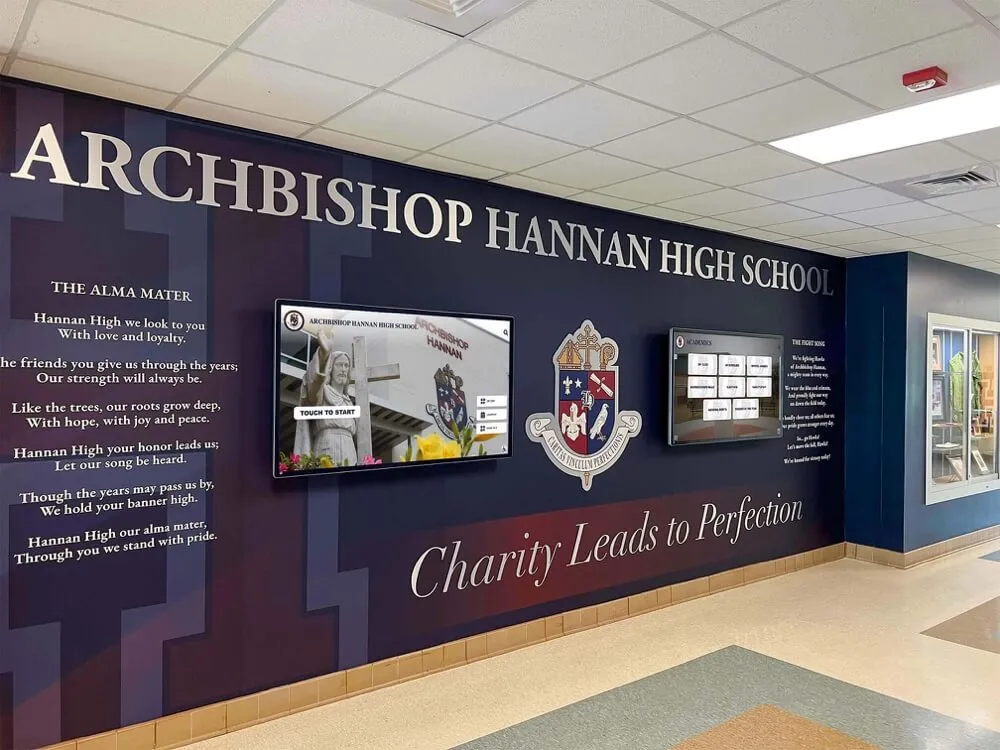
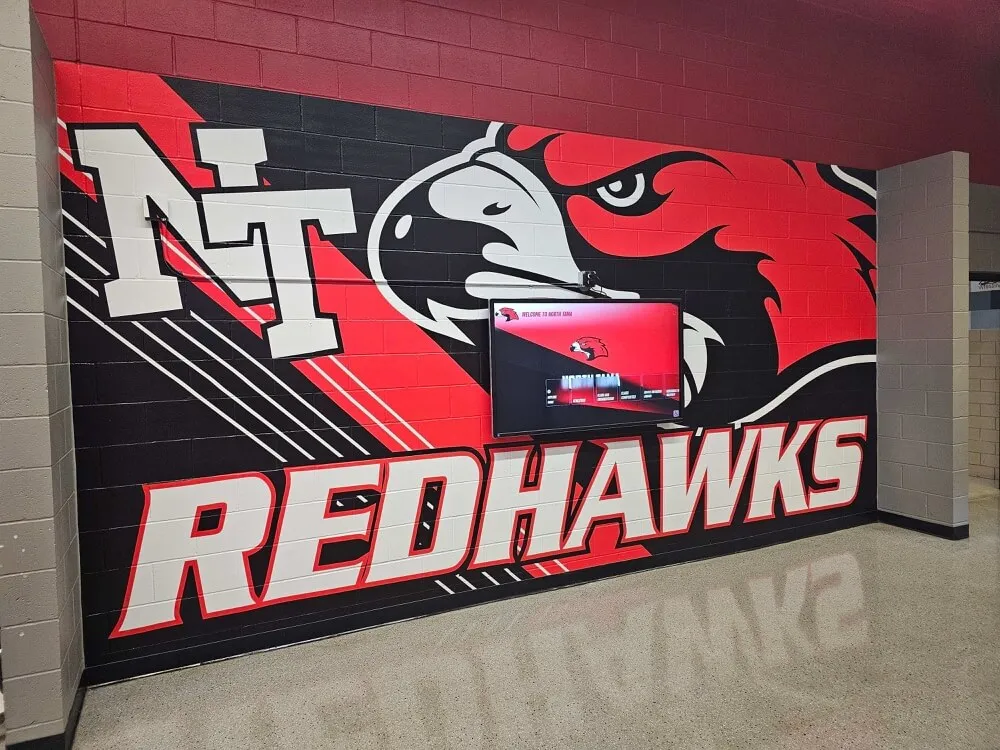
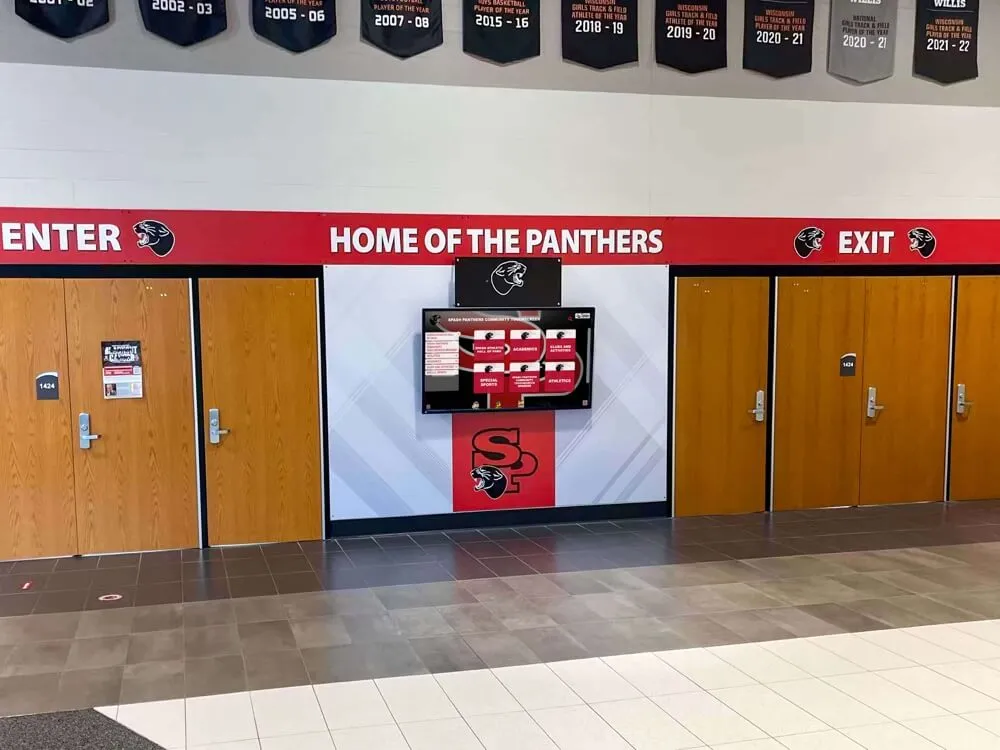
Recognition displays preserve graduating class achievements and memories that speakers reference in ceremony addresses
Opening Mistakes to Avoid
Dictionary Definitions
Never open with “Webster’s Dictionary defines graduation as…” This cliché signals unoriginal thinking while insulting audiences who already understand basic vocabulary.
Apologies or Self-Deprecation Overdone
Brief self-deprecating humor works, but don’t open by extensively apologizing for perceived inadequacy, promising you’ll be brief (just be brief), or telling audiences you’re nervous (they’ll assume speakers have practiced).
Generic Observations
Avoid openings that could apply to any graduation anywhere: “Today is a special day” or “You’ve worked hard to be here” or “As you stand at this crossroads…” These platitudes immediately signal forgettable speech ahead.
Long Thank-You Lists
Don’t open with extensive acknowledgment of every administrator, board member, and committee present. Brief institutional acknowledgment belongs later; grab attention first.
Developing Your Core Message and Structure
Strong graduation speeches build around central theme or message that unifies all content, preventing scattered remarks that jump between unconnected topics.
Identifying Your Central Theme
Your speech should make one main point that audience members could summarize in a single sentence. Common effective themes include:
Embracing Uncertainty and Change
Acknowledge that graduates face unpredictable futures where traditional paths no longer guarantee success. Encourage adaptability, resilience, and viewing uncertainty as opportunity rather than threat.
Defining Personal Success
Challenge pressure to meet external definitions of success. Encourage graduates to identify what meaningful achievement looks like for them rather than defaulting to conventional markers (prestigious careers, financial benchmarks, social status).
Learning from Failure and Setbacks
Share stories of productive failure that led to growth, pivot, or unexpected opportunity. Give graduates permission to fail forward rather than expecting perfect, linear progression.
Maintaining Connections and Community
Emphasize relationships and communities that sustained them during school years. Encourage nurturing those connections while building new communities in next life stages.
Finding Purpose Beyond Achievement
Distinguish between accomplishing impressive things and living meaningful lives. Encourage reflection about values, contribution, and impact beyond résumé building.
Balancing Ambition with Wellbeing
Acknowledge pressure to achieve while validating importance of mental health, relationships, and balance. Give graduates permission to prioritize wellbeing alongside ambition.
The Power of Persistence and Effort
Celebrate the sustained effort required to reach graduation. Encourage continued commitment even when progress feels slow or obstacles appear overwhelming.
Learn about senior recognition programs celebrating achievement milestones during graduation seasons.
Building Three-Part Speech Structure
Most effective speeches follow modified three-part structure:
Part 1: Shared Experience and Acknowledgment (2-3 minutes)
Open by establishing connection with graduates through acknowledging their actual experience:
- Specific challenges this class navigated together
- Unique circumstances affecting their years (pandemic, school changes, community events)
- Achievements worth celebrating
- Growth you’ve witnessed
- Honest acknowledgment of difficult moments alongside triumphs
This section says “I see you. I understand what you experienced. Your journey mattered.”
Part 2: Core Message and Insights (5-7 minutes)
Develop your central theme through:
- Personal stories illustrating your message (from your life or students’ experiences)
- Specific examples making abstract concepts concrete
- Research or expert perspectives adding credibility (brief, not academic lecture)
- Acknowledgment of complexity and nuance rather than oversimplification
- Connection between your message and graduates’ upcoming transitions
This section delivers the substance audiences will remember—the “so what?” that makes your speech worth hearing.
Part 3: Looking Forward and Call to Action (2-3 minutes)
Close by helping graduates imagine applying your insights:
- Specific, actionable suggestions they can implement
- Permission to take imperfect action rather than waiting for certainty
- Encouragement that balances realism with optimism
- Memorable summary statement or phrase they’ll carry with them
- Return to opening story or image, showing progression or resolution
This section moves from inspiration to action, giving graduates tools not just feelings.

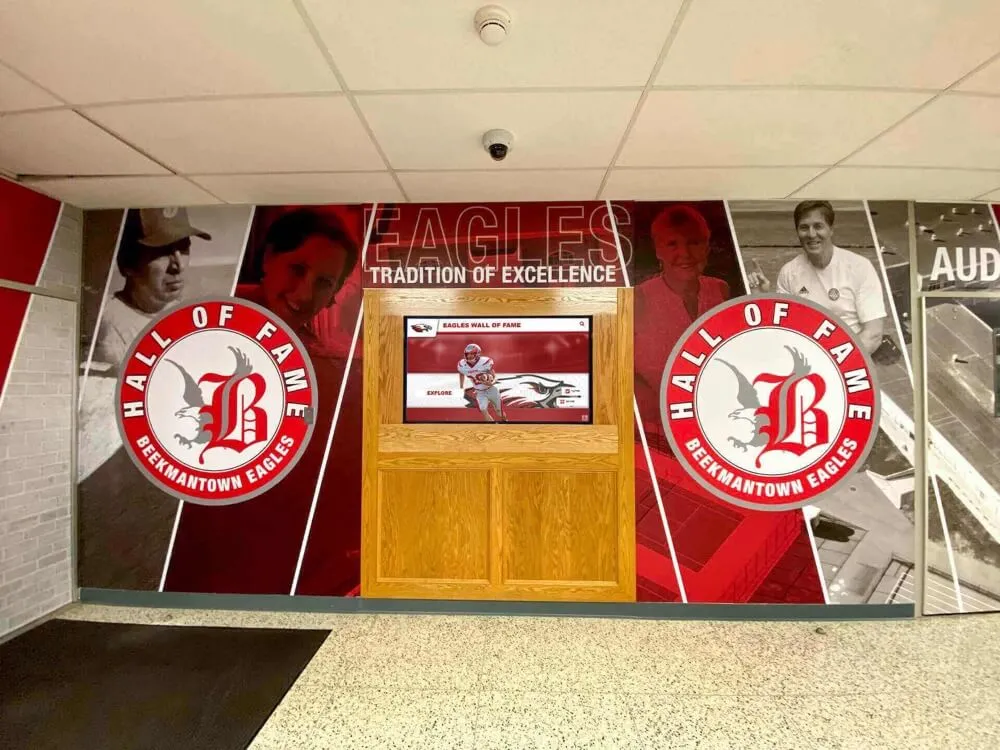
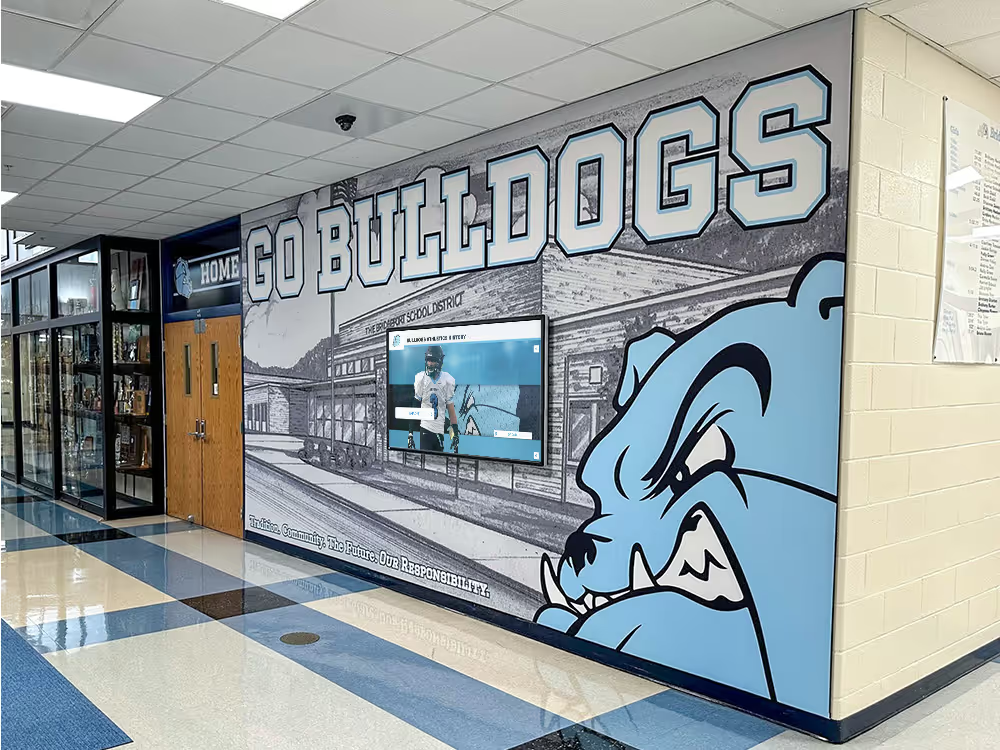
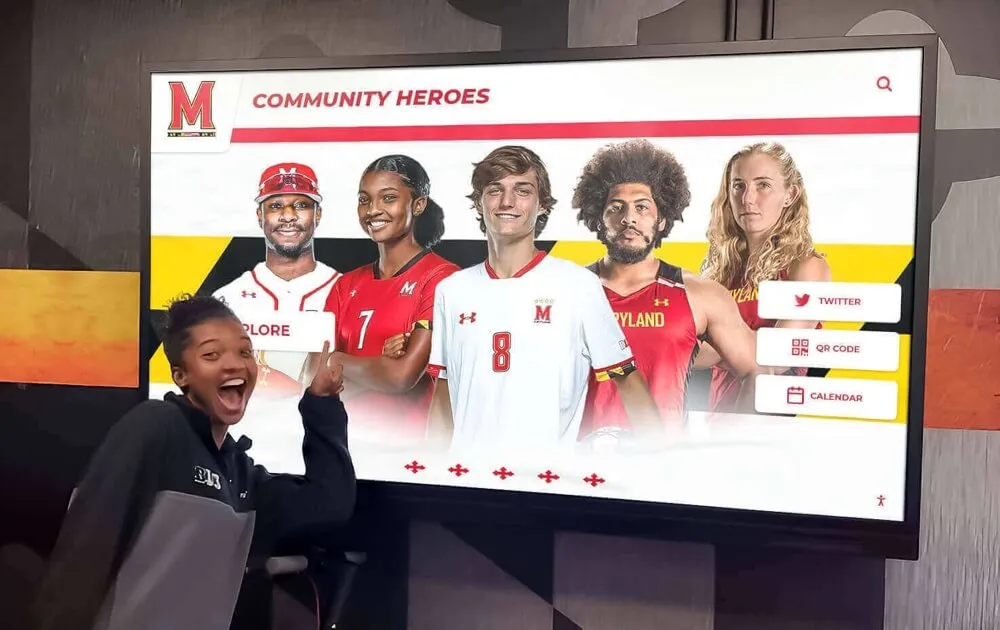
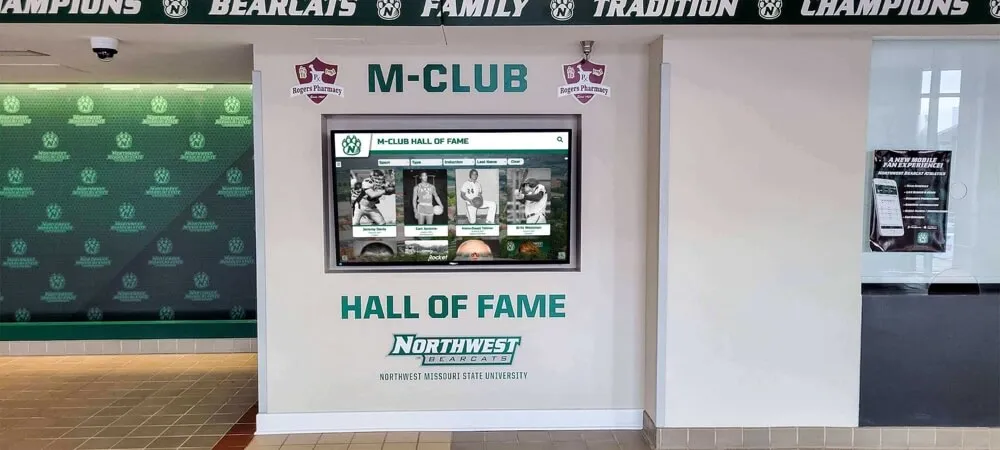
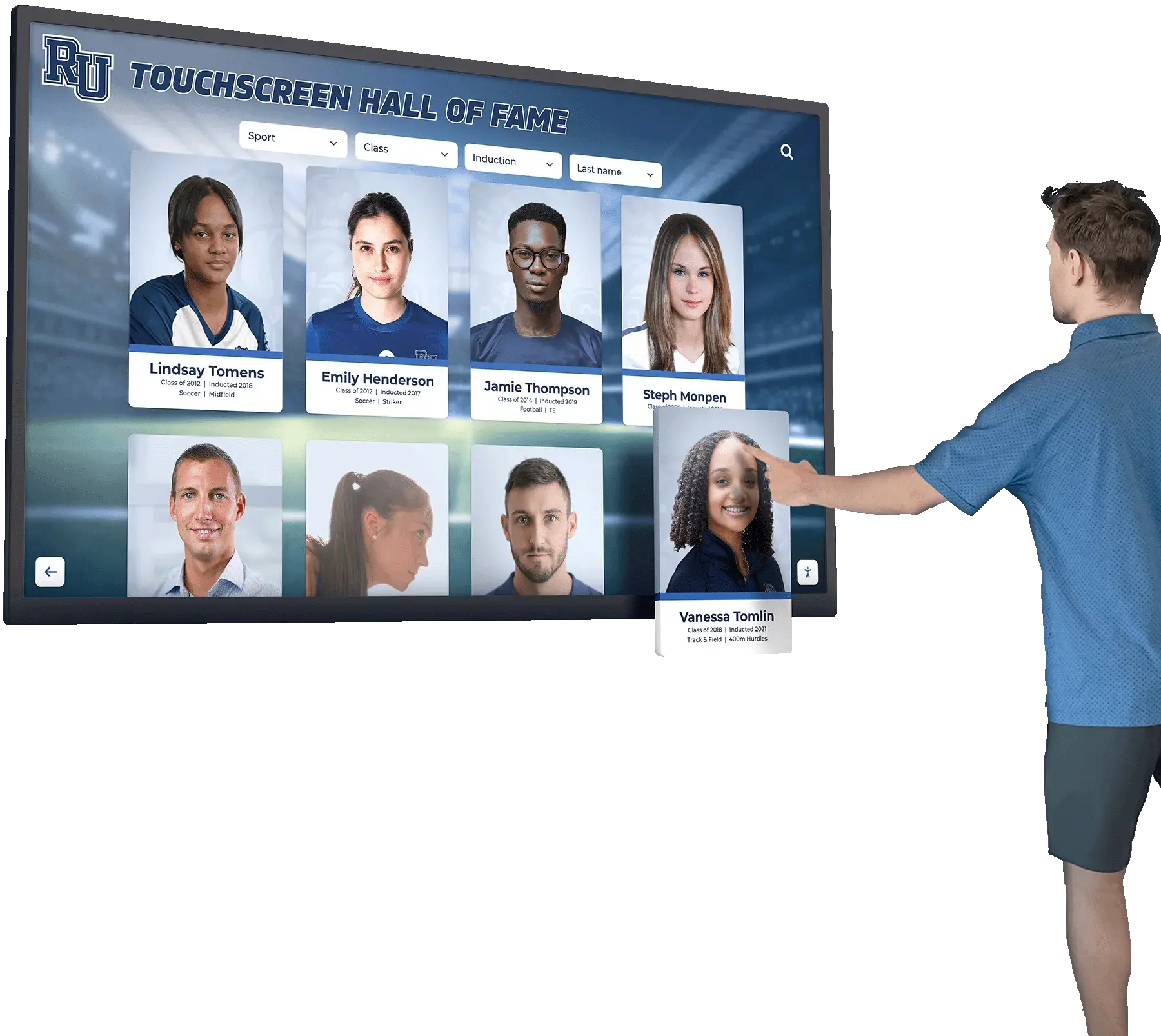
Modern recognition systems celebrate graduates alongside ongoing achievement documentation
Maintaining Narrative Flow
Ensure smooth transitions between sections:
Use Signposting Language
Help audiences follow your logic: “I want to share three specific lessons from these past four years…” or “This brings me to the most important point…” or “Let me tell you what that experience taught me…”
Connect Ideas Explicitly
Don’t assume audiences will make mental leaps. Show how each section relates to what preceded it: “That story about getting lost reflects something bigger about how we navigate uncertainty…” or “All of this matters because…”
Return to Recurring Images or Phrases
If you opened with specific metaphor or story, reference it again in middle and closing sections. This repetition creates satisfying structure where speech comes full circle.
Writing Authentic and Memorable Content
Generic platitudes guarantee forgettable speeches. Authenticity and specificity create impact.
The Power of Specific Details
Transform abstract concepts into concrete images audiences can visualize and remember:
Replace Generic Language with Specifics
Instead of: “You’ve overcome many challenges to be here today.”
Write: “Some of you completed calculus while working twenty hours weekly at Target to help your families. Others navigated severe anxiety to deliver presentations that terrified you. Some lost parents, grandparents, or friends during these years but kept showing up. Some of you came to school hungry but stayed late for tutoring anyway.”
The specifics honor actual student experiences rather than glossing over them with pleasant generalities.
Name People, Places, and Moments
Reference specific teachers who made differences, particular traditions meaningful to your school, actual events graduates remember. This grounds your speech in shared reality rather than abstract observation:
“Remember when Mrs. Johnson spent her entire lunch period helping Tyler understand oxidation-reduction reactions? Or when our football team lost homecoming but our student section still cheered overtime like we were winning? Those moments taught us more about character than any speech can.”
Use Sensory Language
Help audiences see, hear, and feel what you’re describing:
Instead of: “The school building holds memories.”
Write: “You can still smell the cafeteria’s mystery meatloaf Thursdays and hear the squeak of sneakers in the gym during assemblies. The locker combinations you spun thousands of times—14-26-8—are probably still in your muscle memory.”
These details create emotional resonance that abstract language cannot achieve.
Explore comprehensive senior celebration strategies that honor graduating students.
Incorporating Stories Effectively
Stories engage audiences more powerfully than abstract advice, but use them strategically:
Choose Stories That Illustrate Rather Than Decorate
Every story should advance your message, not just entertain. Ask whether each anecdote demonstrates your central theme or merely fills time.
Keep Stories Brief and Focused
Graduation speech stories should last 60-120 seconds maximum. Get to the point quickly:
- Set context in one sentence
- Describe what happened in 3-4 sentences
- Extract the lesson explicitly
Don’t meander through unnecessary background information or tangential details.
Balance Personal and Universal
Your stories should reveal enough personal detail that they feel authentic while remaining relevant to graduates’ experiences. Connect personal anecdotes to broader truths:
“When I failed organic chemistry sophomore year, I thought my dream of medical school died. But that failure forced me to question whether I actually wanted medicine or just liked the idea of being ‘doctor.’ That distinction—between what we think we want and what actually fulfills us—matters more than any single grade.”
Include Others’ Stories
If speaking as faculty or administrator, share student stories (with permission) that exemplify your message. If speaking as student, acknowledge that your experience doesn’t represent everyone’s journey.
Balancing Inspiration with Authenticity
Graduation speeches should encourage without sugarcoating reality:
Acknowledge Genuine Challenges
Don’t pretend the world is simpler than it actually is. Graduates respect speakers who validate complexity:
“Some of you are graduating with six college acceptances and full scholarships. Others still don’t know where you’re going in the fall or how you’ll pay for it. Some have dream job offers; others have applications out but no callbacks yet. All of those realities exist simultaneously in this room, and all of them are okay.”
Avoid Toxic Positivity
Phrases like “everything happens for a reason” or “just stay positive and you’ll succeed” dismiss real struggles. Replace with more nuanced encouragement:
Instead of: “If you work hard, you can achieve anything.”
Write: “Working hard matters, but so does luck, timing, privilege you might not even recognize, and being willing to adjust course when circumstances change. Success rarely follows straight lines.”
Give Permission to Be Imperfect
Many graduates face crushing pressure to have everything figured out. Release them from that burden:
“You don’t need to know exactly what you want to do with your life at eighteen. Most adults still don’t have it completely figured out, and we’re doing fine. What matters is being willing to explore, pivot, and keep learning.”
Learn about National Honor Society recognition during graduation celebrations.
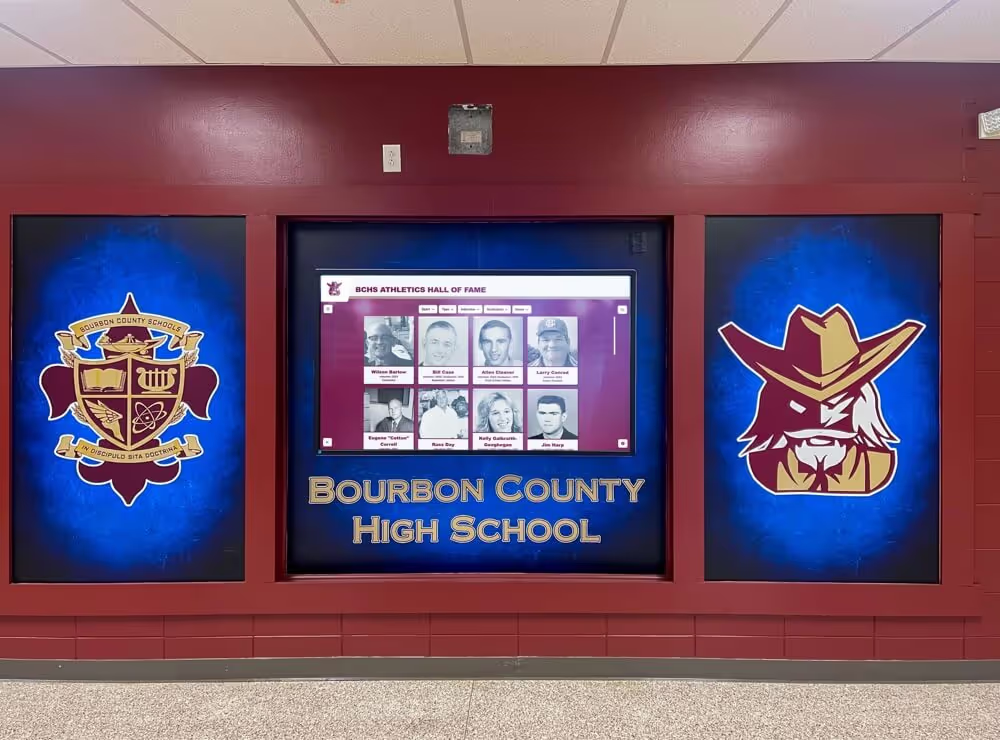
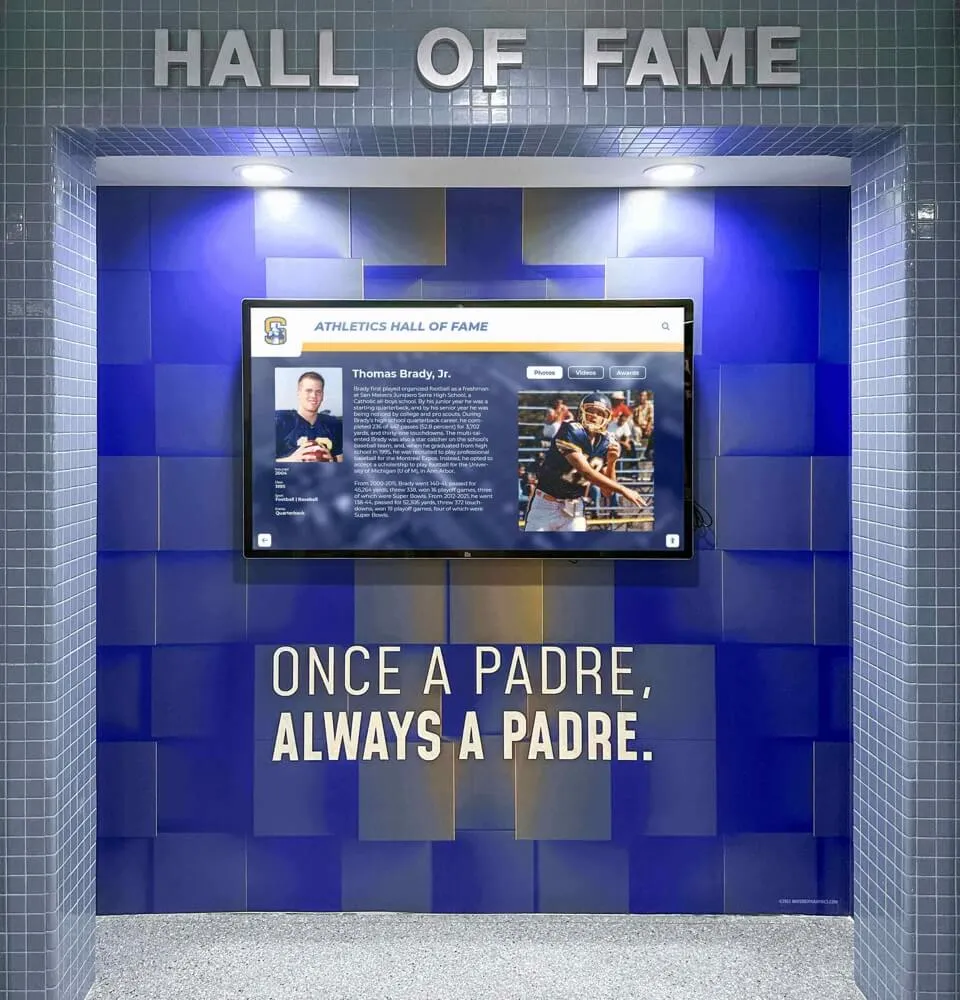
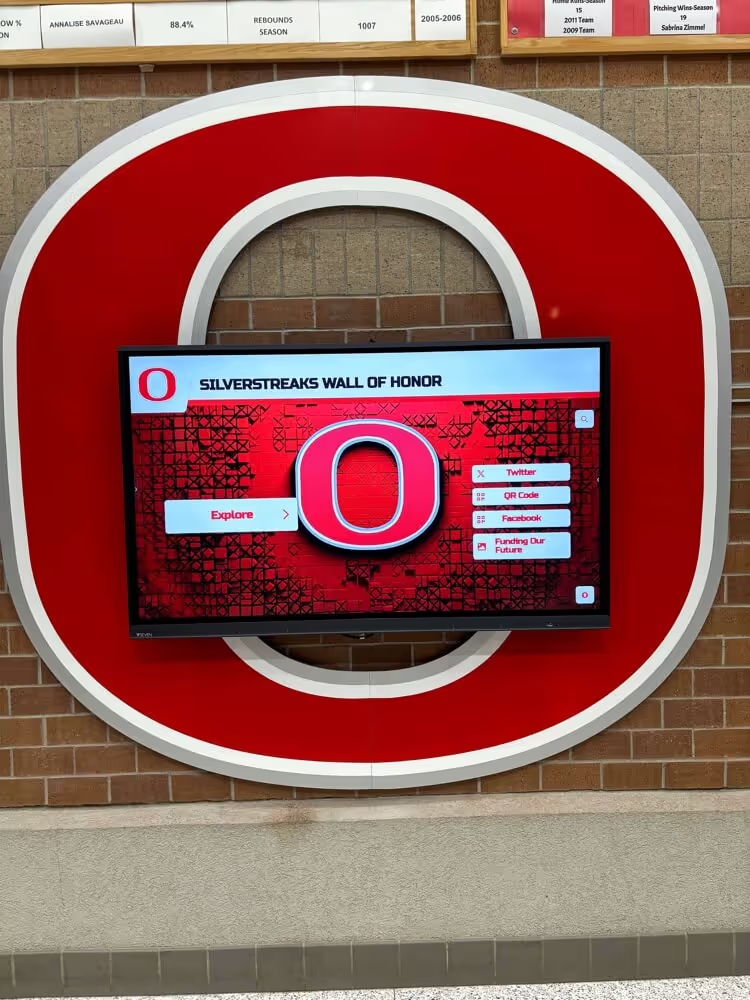
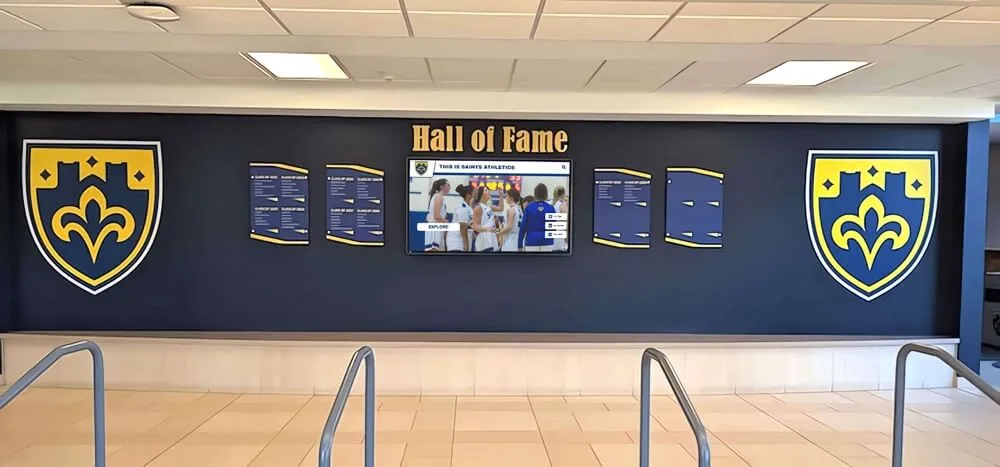
Permanent recognition installations preserve graduating class legacies alongside institutional heritage
Using Humor Appropriately
Well-placed humor relaxes audiences, demonstrates personality, and makes speeches memorable—but misused humor can derail entire addresses.
Types of Humor That Work
Self-Deprecating Humor
Gentle jokes about your own mistakes or foibles work well:
“I peaked early—won the school spelling bee in fifth grade and it’s been downhill since. Turns out correctly spelling ‘onomatopoeia’ didn’t prepare me for calculus.”
Observations About Shared Experience
Comment on universal aspects of graduating class experience everyone recognizes:
“We’ve all perfected the art of looking attentive during assemblies while actually making weekend plans. Principal Davis, if you’re wondering why three hundred students all suddenly had to check the time on their phones simultaneously during that fire safety presentation, that’s why.”
Gentle Institutional Teasing
Light, affectionate jokes about school traditions, cafeteria food, or minor frustrations work if tone remains loving rather than bitter:
“Future generations will discover the Mystery Meat Mondays menu and assume we were a civilization in decline. But we survived, and that resilience will serve us well.”
Callback Humor
Reference joke or observation from earlier in your speech for added impact:
If you opened with story about getting lost finding Room 247, later reference: “And yes, I eventually found Room 247. Took three years, but I’m persistent.”
Humor Approaches to Avoid
Controversial Topics
Avoid humor about politics, religion, sex, race, gender, or anything potentially divisive. Graduation isn’t the forum for edgy comedy.
Inside Jokes Too Specific
Brief references to school-specific traditions work, but don’t tell extended stories requiring extensive background knowledge that excludes most audience members.
Humor at Others’ Expense
Never mock specific students, teachers, or community members even jokingly. Self-deprecating humor is safe; targeting others is risky.
Trying Too Hard
If humor doesn’t come naturally to you, don’t force it. Sincere, heartfelt speeches without jokes succeed better than awkward attempts at comedy.
Inappropriate Content
Avoid anything involving alcohol, drugs, or illegal activities even if presented humorously. What seems funny to teenagers might appall parents and administrators.
Discover athletic banquet planning that includes graduation celebrations.
Preparing for Effective Delivery
Even brilliant writing fails without strong delivery. Preparation transforms written words into powerful spoken communication.
Practicing Your Speech
Read Aloud Multiple Times
Reading silently and speaking aloud engage different mental processes. Read your speech aloud at least 10-15 times to:
- Identify awkward phrasing that looks fine on paper but sounds strange spoken
- Catch tongue-twisters or difficult word combinations
- Internalize content so delivery feels natural rather than memorized
- Develop comfortable rhythm and pacing
Time Yourself Accurately
Calculate actual speaking time using realistic pace. Most speakers rush when nervous, so if your practice version runs 10 minutes, expect ceremony delivery might compress to 8-9 minutes. Build in slight buffer allowing for emotional moments when you might pause.
Practice with Feedback Audience
Deliver your speech to friends, family, or trusted teachers who will give honest feedback:
- Does the opening grab attention?
- Where do they seem to lose focus?
- What parts create strongest emotional response?
- Is anything confusing or unclear?
- Are transitions smooth?
- Does the closing feel satisfying?
Record Yourself
Video recording reveals verbal tics (excessive “um,” “like,” “you know”), awkward gestures, poor posture, or distracting habits you don’t notice while speaking. Review recordings critically and adjust accordingly.
Managing Speech Mechanics
Develop Comfortable Relationship with Notes
Decide whether to memorize completely, speak from outline, or read from full manuscript:
Full memorization works for shorter speeches (under 5 minutes) and exceptional public speakers comfortable speaking without reference materials. Risk: if you lose your place, recovery can be difficult.
Speaking from outline with key points and transitions written out enables more natural, conversational delivery while providing security blanket preventing major omissions. Ideal for experienced speakers.
Reading from manuscript ensures you don’t forget important content but risks sounding stiff and breaking connection with audience through constant paper reference. If choosing this approach, practice enough that you can maintain substantial eye contact rather than reading word-for-word.
Print Large, Easy-to-Read Text
If using notes or manuscript, format for easy reading:
- 14-16 point font minimum
- Double or triple spacing
- Bold for emphasis
- Slash marks indicating pauses
- All caps for WORDS REQUIRING EMPHASIS
- Page numbers in case papers get shuffled
Mark Breathing and Pause Points
Indicate where to breathe and pause for effect with visual cues in your text. Natural pauses after key statements create impact and give audiences time to process.
Plan Microphone Positioning
Determine microphone type (podium-mounted, handheld, lavalier) and practice accordingly. Handheld microphones require one occupied hand and consistent distance from mouth. Lavalier mics allow hands-free movement. Podium mics restrict movement radius.
Learn about athletic achievement celebration that includes graduation recognition.
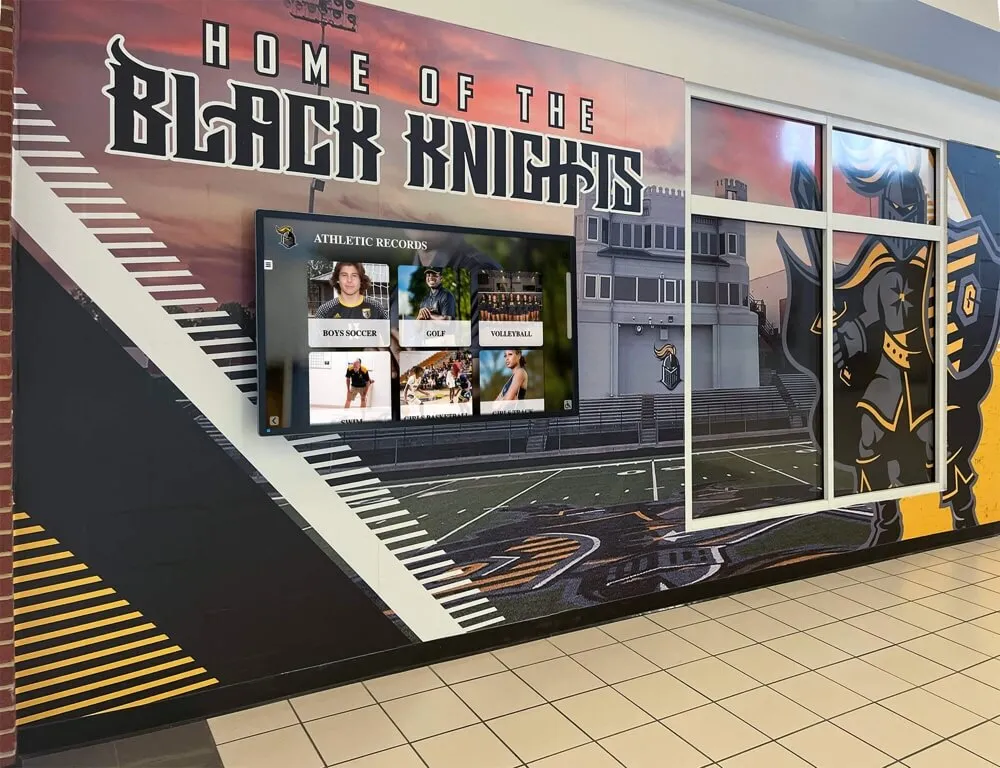
Strategic recognition systems preserve graduation memories that speakers reference in commencement addresses
Delivering with Confidence
Establish Connection Through Eye Contact
Rather than staring at back wall or reading continuously from notes, make genuine eye contact with different audience sections:
- Scan entire audience including sides and back sections
- Hold eye contact with individuals for 2-3 seconds before moving on
- Return periodically to friendly faces providing encouraging feedback
- Include graduate section, family area, and faculty section in your gaze
Eye contact transforms speech from performance into conversation.
Use Purposeful Gestures
Natural hand gestures emphasize points and create visual interest:
- Use open, expansive gestures for big ideas
- Bring hands together for intimate or serious moments
- Gesture toward graduates when addressing them specifically
- Keep gestures above waist and visible to entire audience
Avoid:
- Keeping hands locked behind back or in pockets throughout
- Pointing at audience members
- Repetitive nervous gestures (adjusting hair, glasses, clothing)
- Gestures that don’t match content
Manage Vocal Variety
Monotone delivery loses audiences quickly. Vary:
- Volume: louder for emphasis, softer for intimate moments
- Pace: slow down for important points, speed up slightly during lighter content
- Pitch: vary tone rather than maintaining single register throughout
- Pauses: strategic silence creates impact and gives audiences processing time
Handle Nerves Constructively
Some nervousness actually improves performance by sharpening focus. Destructive anxiety, however, undermines delivery. Manage performance anxiety through:
- Deep breathing exercises before taking stage
- Remembering your audience wants you to succeed
- Focusing on service—your speech serves graduates—rather than performance
- Converting “I’m nervous” self-talk into “I’m excited”
- Accepting that perfection isn’t the goal; connection is
Preparing for Unexpected Moments
Plan Recovery from Mistakes
If you lose your place, stumble over words, or forget content:
- Pause briefly rather than filling silence with “um” while you collect thoughts
- Acknowledge minor mistakes with grace: “Let me say that more clearly…”
- Consult notes without apologizing: simply glance down, find your place, and continue
- Never announce “I’m so nervous” or “Sorry, I messed up”—most audiences won’t notice unless you highlight mistakes
Manage Emotional Moments
If content moves you emotionally and you feel tears coming:
- Pause and take slow breath
- Look up briefly to prevent tears from falling
- It’s okay to show emotion, but ensure you maintain enough composure to continue
- Have water glass available if needed
Adapt to Audience Response
If joke falls flat, acknowledge briefly and move on rather than trying to explain or recover. If audiences laugh longer than expected, pause and wait rather than speaking over them. If they seem restless, consider slightly condensing content (skip planned example or shorten conclusion) rather than rigidly adhering to full prepared remarks when audiences clearly need you to finish.
Closing Your Speech Memorably
Strong closings leave lasting impressions. Weak conclusions squander the attention and connection you’ve built.
Effective Closing Strategies
Return to Opening Story or Image
If you opened with specific anecdote or metaphor, reference it again showing progression:
“I told you about getting lost trying to find Room 247. What I didn’t mention is that while wandering lost, I discovered the art room where I ended up spending every free period for four years, eventually deciding to pursue design in college. Sometimes the best destinations are the ones we find while we’re lost. I hope you find extraordinary things in unexpected places.”
Issue Clear Call to Action
Give graduates specific, actionable advice they can implement:
“Here’s what I’m asking you to do: In the next week, reach out to one person who supported you these past four years—a teacher, coach, friend, family member—and tell them specifically how they helped you. Not generic thank you, but ‘Remember when you…’ Be specific. Practice gratitude as action, not sentiment.”
Use Memorable Phrase or Quotation
Conclude with succinct statement capturing your message:
“So as you leave here, remember: Your worth isn’t determined by what you accomplish, but by how you treat people while accomplishing it. Success without kindness is just achievement—and that’s not nearly enough.”
If using quotation from someone else, ensure it genuinely supports your message rather than just sounding impressive.
Paint Picture of Future Impact
Help graduates visualize applying your insights:
“Ten years from now, you’ll gather for reunion. Some of you will have achieved exactly what you planned. Others will have completely different lives than you imagine today. All of you will have faced challenges you can’t yet anticipate and discovered strengths you don’t know you possess. And when you gather, what will matter isn’t comparing achievements, but recognizing that you supported each other, maintained integrity, and became people you’re proud to be.”
Combine Gratitude with Challenge
Thank graduates for privilege of addressing them while challenging them to action:
“Thank you for letting me share these thoughts today. But honestly, my words matter far less than what you do with them. So here’s my challenge: Take one idea from today—just one—and actually apply it this summer. Don’t let this be another speech that inspired you briefly and then disappeared. You’ve got too much potential to waste it on passive inspiration.”
Explore comprehensive school achievement recognition celebrating graduation milestones.

Permanent recognition spaces honor graduation achievements alongside ongoing institutional excellence
Closing Mistakes to Avoid
Introducing New Topics
Your conclusion synthesizes and reinforces your message. Don’t introduce new ideas requiring explanation—that signals you should have ended sooner.
Apologizing for Length
Never say “I know this ran long” or “Sorry for keeping you.” If you’ve exceeded time, simply conclude gracefully. Apologizing highlights the problem rather than mitigating it.
Multiple False Endings
Some speakers give conclusion signal (“In closing…”) then continue talking for several more minutes. Signal conclusion once and actually conclude within 60-90 seconds.
Vague Generic Wishes
Avoid endings like “I wish you all the best” or “Go forth and change the world” that could apply to anyone. Be specific to this graduating class and your actual message.
Trailing Off Weakly
Don’t let your speech peter out with hesitant “So…yeah…that’s what I wanted to say.” End decisively with clear final statement signaling completion.
Adapting Your Speech for Different Grade Levels
Effective graduation speeches match audience developmental level and life circumstances.
Elementary School Graduations (5th-6th Grade)
Content Considerations
- Use concrete rather than abstract concepts
- Keep total speech to 5-7 minutes maximum
- Include age-appropriate humor (silly not sophisticated)
- Avoid complex vocabulary requiring explanation
- Focus on immediate future (middle school) rather than distant horizons
- Emphasize growth they can observe (“You’ve gotten taller and your thinking got bigger too”)
- Reference specific school experiences they all share
Appropriate Themes
- Being brave trying new things
- The importance of kindness and including others
- Making mistakes is how we learn
- Everyone has different strengths
- You’re ready for middle school challenges
Middle School Graduations (8th Grade)
Content Considerations
- Acknowledge emerging independence while recognizing need for support
- Address social-emotional challenges alongside academics
- Validate that middle school is genuinely difficult period
- Look ahead to high school with realistic optimism
- Keep speech to 8-10 minutes
- Use more sophisticated humor while remaining age-appropriate
- Reference social media/technology experiences they understand
Appropriate Themes
- Finding your identity while staying true to yourself
- Navigating peer pressure and making good choices
- Building healthy friendships and relationships
- Managing stress and academic pressure
- High school is fresh start for reinvention
High School Graduations
Content Considerations
- Acknowledge diverse post-graduation paths (college, military, workforce, gap year)
- Address anxiety about independence and uncertainty
- Balance inspiration with practical wisdom
- Include more sophisticated humor and cultural references
- Speech can extend 10-12 minutes for particularly important moments
- Reference shared experience of major world events affecting their years
- Validate complexity of transition to adulthood
Appropriate Themes
- Defining success on your own terms
- Embracing uncertainty and change
- Maintaining relationships while building new ones
- Finding purpose beyond achievement
- Recovering from setbacks and failure
- Mental health and wellbeing matter
College Graduations
Content Considerations
- Acknowledge student loan debt, career anxiety, and economic uncertainty
- Address tension between idealism and practical necessity
- Speak to wider range of ages (traditional students, adult learners, graduate students)
- Include more sophisticated intellectual content
- Reference professional challenges they’ll face
- Acknowledge political/social context affecting their generation
- Can extend slightly longer (12-15 minutes) given formal nature
Appropriate Themes
- Using your education to serve beyond yourself
- Balancing ambition with integrity
- Finding meaningful work vs. just prestigious positions
- Lifelong learning and intellectual curiosity
- Leading with values in complex world
- Building careers that sustain you financially and spiritually
Preserving Graduation Memories and Recognition
Your speech represents one moment in comprehensive graduation celebration. Strategic institutions preserve ceremony content alongside ongoing achievement recognition.
Creating Lasting Recognition Systems
Rather than limiting graduation acknowledgment to ceremony day, forward-thinking schools implement permanent systems that:
Document Graduating Class Achievements
Digital recognition platforms enable schools to comprehensively showcase each graduating class including individual student profiles, academic and extracurricular achievements, graduation statistics and college acceptances, memorable moments and class history, and photos from graduation ceremonies.
These archives ensure graduating classes remain part of institutional memory rather than fading after students depart.
Integrate Graduation Recognition with Broader Achievement Celebration
Comprehensive platforms combine graduation recognition with academic honors, athletic achievements, arts and activities excellence, community service recognition, and alumni success stories.
This integration demonstrates how graduation represents one milestone within continuous achievement journey rather than isolated endpoint.
Enable Remote Access and Family Engagement
Cloud-based recognition systems allow alumni, families, and distant relatives to access graduation content indefinitely through searchable databases, multimedia content including speeches and ceremony videos, mobile-friendly interfaces for on-demand access, and social sharing capabilities enabling graduates to celebrate with extended networks.
Solutions like Rocket Alumni Solutions provide comprehensive digital recognition platforms designed specifically for educational institutions, enabling schools to honor every graduate appropriately while maintaining professional recognition standards.
Provide Permanent Venue for Commencement Addresses
Rather than letting graduation speeches disappear after ceremonies, digital platforms preserve commencement addresses through full speech transcripts searchable by year, video or audio recordings when available, speaker biographies providing context, and connection to graduating classes addressed.
This archiving ensures powerful messages continue inspiring future students rather than limiting impact to those present at original ceremonies.
Learn about comprehensive digital recognition solutions honoring achievement across institutional contexts.
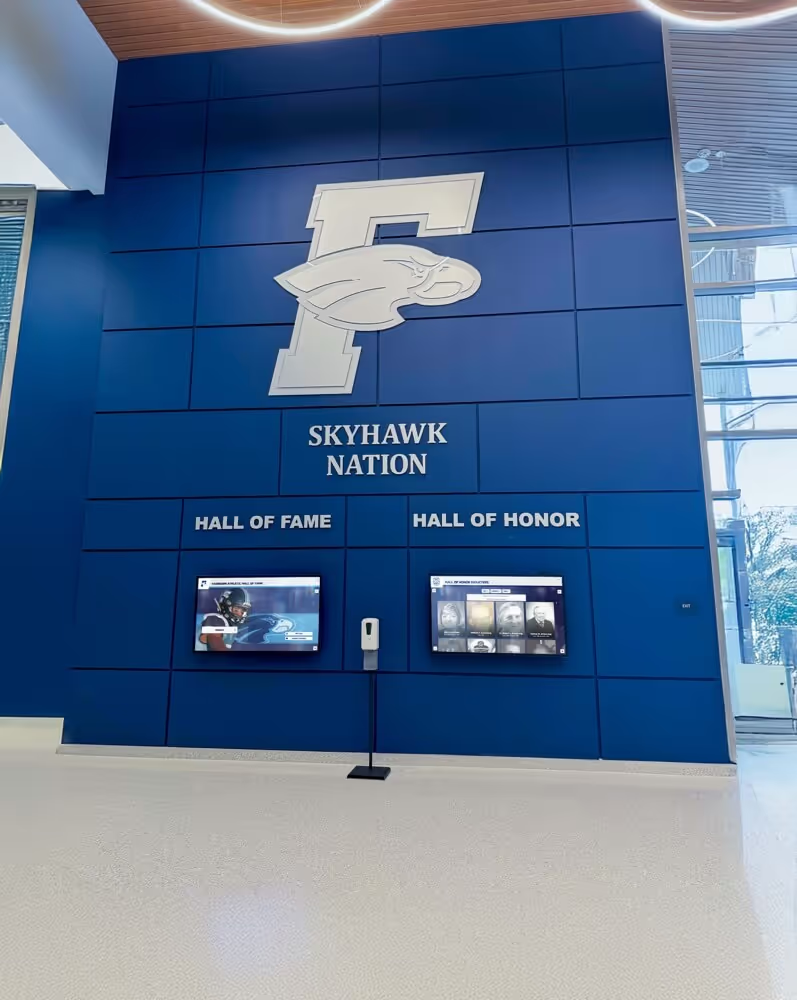
Digital recognition systems preserve graduation speeches and honoree information indefinitely beyond ceremony dates
Conclusion: Making Your Words Matter
Writing graduation speeches that genuinely inspire your audience requires moving beyond generic platitudes to authentic, specific, meaningful content that honors graduates’ actual experiences while providing wisdom they can genuinely apply. The frameworks explored throughout this guide—from understanding your specific context and audience, to crafting compelling openings and closings, to developing authentic content balancing inspiration with realism—provide the tools you need to create commencement addresses that resonate during ceremonies and persist in memory long after.
The Elements of Memorable Graduation Speeches
Speeches that matter share common characteristics:
- Authenticity over performance: They sound like real human beings talking, not politicians delivering prepared remarks
- Specificity over generality: They reference actual experiences, name real people, and ground insights in concrete details
- Wisdom over advice: They offer perspective and framework rather than prescriptive steps guaranteeing success
- Challenge alongside encouragement: They honor graduates by respecting their intelligence and capacity rather than simply offering reassurance
- Humility over authority: They acknowledge speaker limitations and complexity of life rather than claiming to have figured everything out
Your Speech Opportunity
Being asked to address graduates represents genuine privilege and responsibility. Your words can validate challenges students navigated, provide permission to embrace imperfection, offer frameworks for understanding transition, and inspire approaches to upcoming chapters. That impact justifies the time you’ll invest crafting and practicing your remarks.
Don’t squander this opportunity with safe, forgettable platitudes when you could offer something that actually matters. The graduates sitting before you—whether they’re sixth graders heading to middle school or college seniors entering professional careers—deserve better than recycled clichés about journeys, dreams, and bright futures.
They deserve to hear words acknowledging their actual experiences, validating their legitimate concerns, celebrating their genuine achievements, and offering honest perspectives about the complex, uncertain, sometimes wonderful, occasionally difficult paths ahead.
Start With Your Message
As you begin writing, identify the single most important insight you want graduates to carry with them. What truth, perspective, or wisdom actually matters? What can you share from your experience—whether as their peer, teacher, or distinguished guest—that might genuinely help them?
Build everything around that core message. Every story you tell, every example you share, every joke you make should advance that central theme. And when you’ve said what matters, stop talking. Graduation audiences will appreciate your respect for their time almost as much as the content you deliver within it.
Your graduates’ achievements represent countless hours of effort, growth through challenges, and commitment to excellence. They deserve commencement addresses that honor those journeys with words worthy of the moment. With thoughtful preparation, authentic content, and confident delivery, you can create graduation speeches that genuinely inspire audiences while creating lasting impact extending far beyond ceremony day.
Preserve Your Graduation Legacy
Discover how modern recognition solutions help schools celebrate graduates and preserve commencement addresses permanently while creating engaging experiences honoring achievement across all institutional milestones.
Explore Recognition SolutionsAs you finalize your graduation speech, remember that perfection isn’t the goal—connection is. Graduates will forget your perfect word choices or eloquent phrases, but they’ll remember how your words made them feel. They’ll remember if you seemed genuine or were just performing. They’ll remember whether you actually saw them or delivered generic remarks that could have addressed any graduating class anywhere.
Make them feel seen. Make them feel celebrated. Give them something genuine they can carry forward. That’s how you write a graduation speech that actually matters.